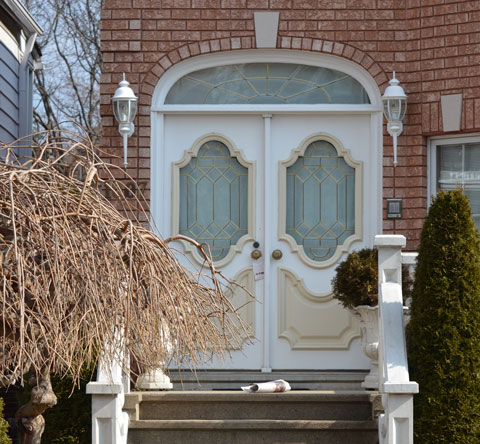
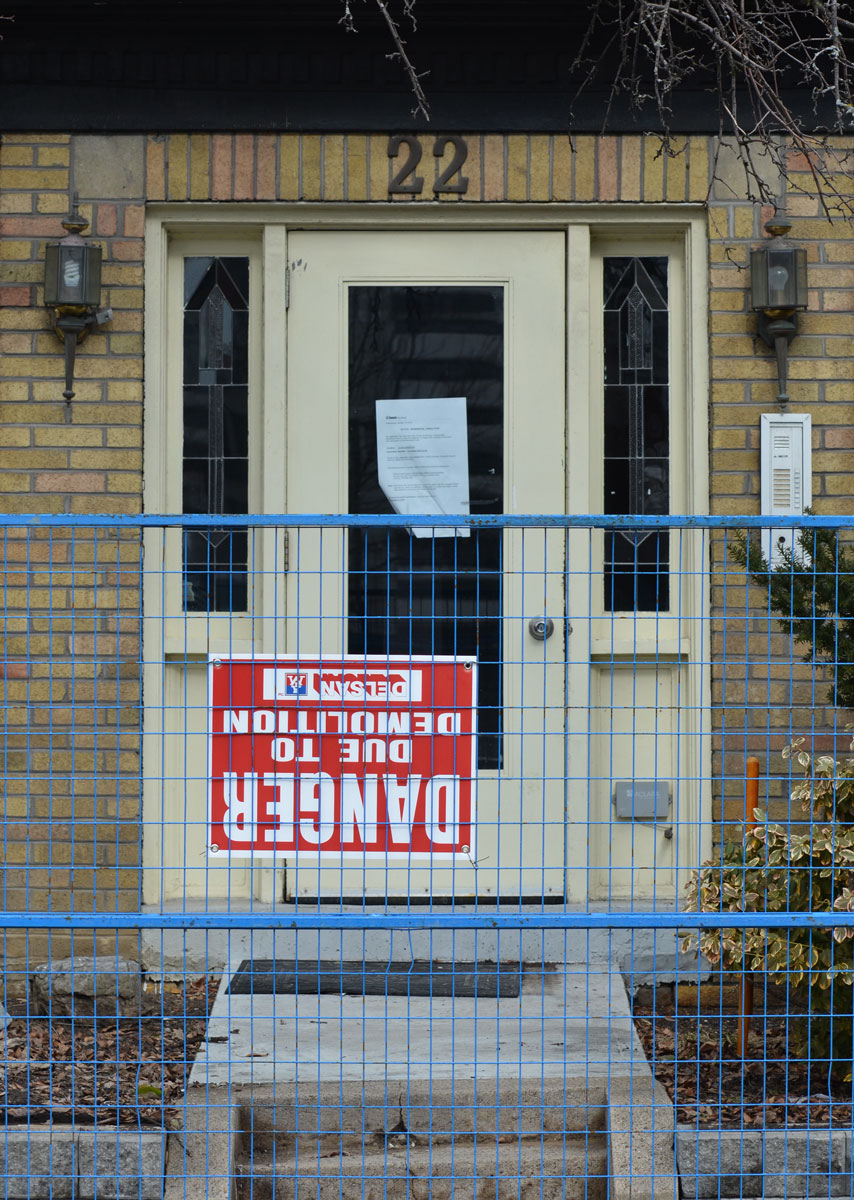
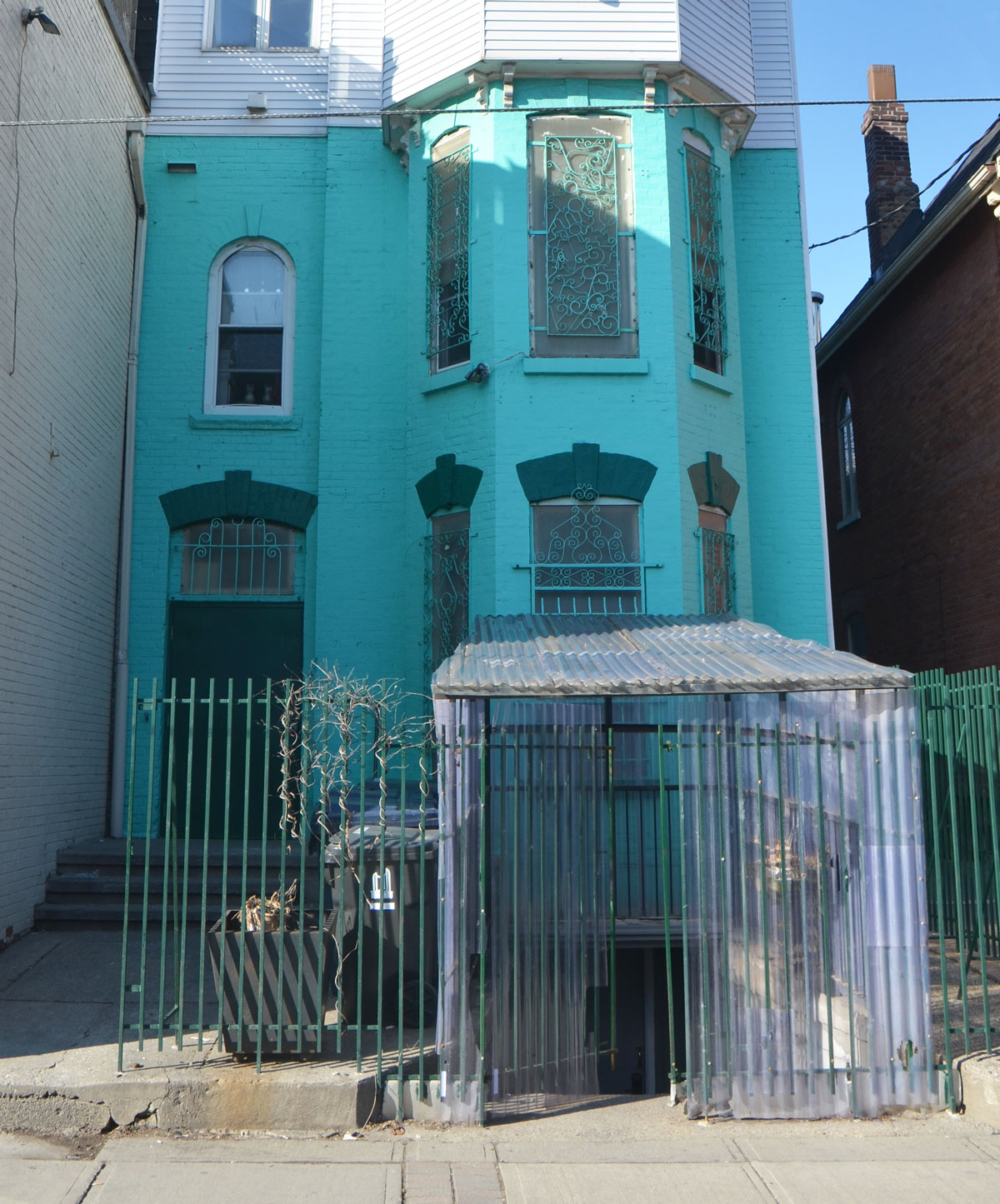
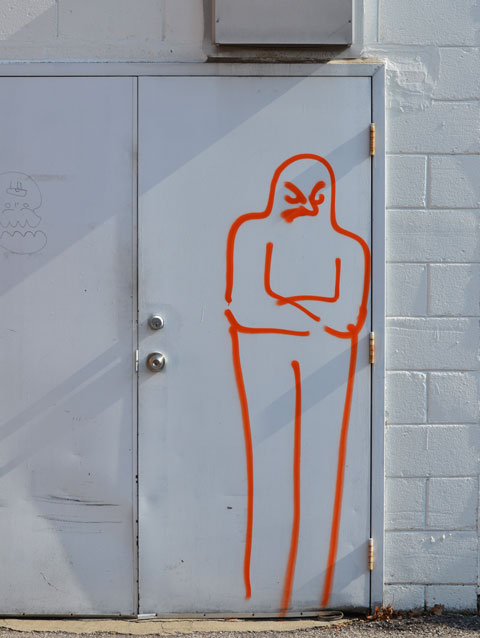
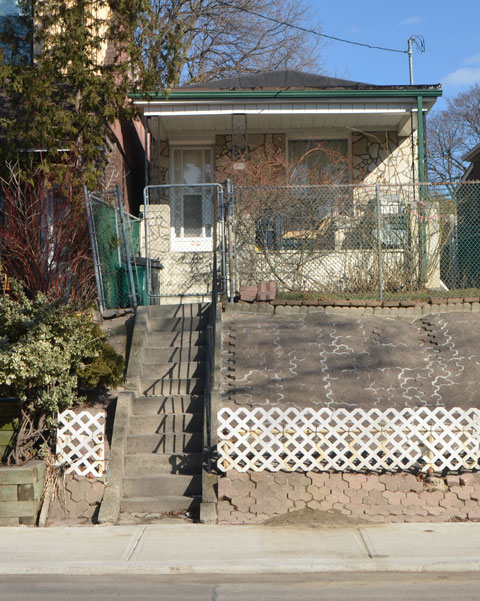
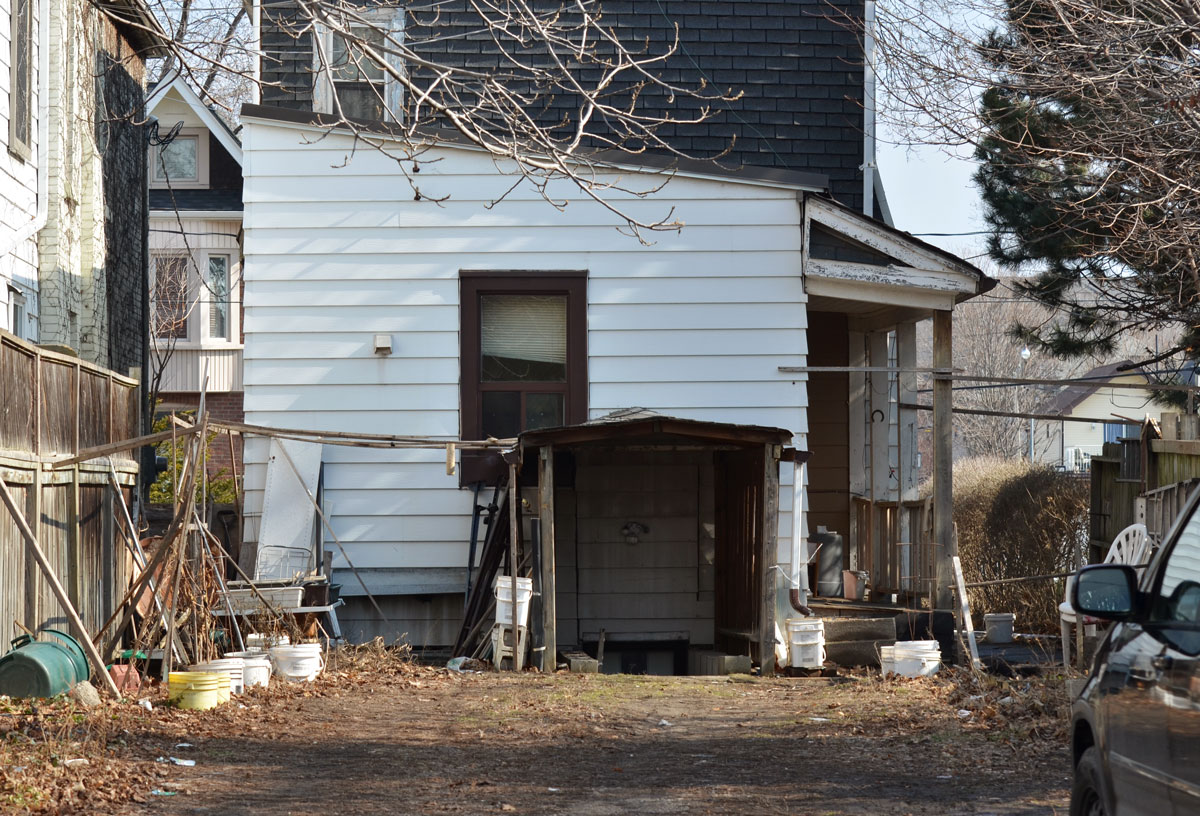
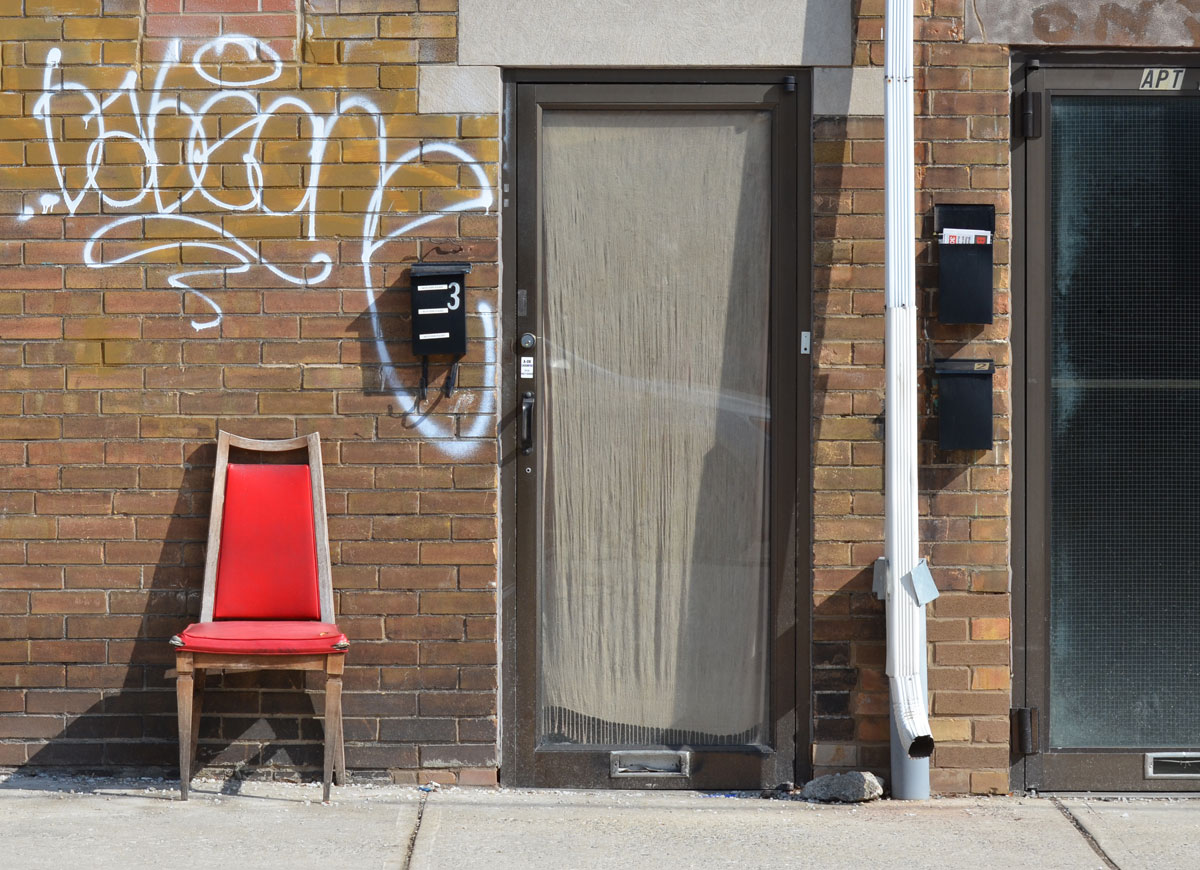
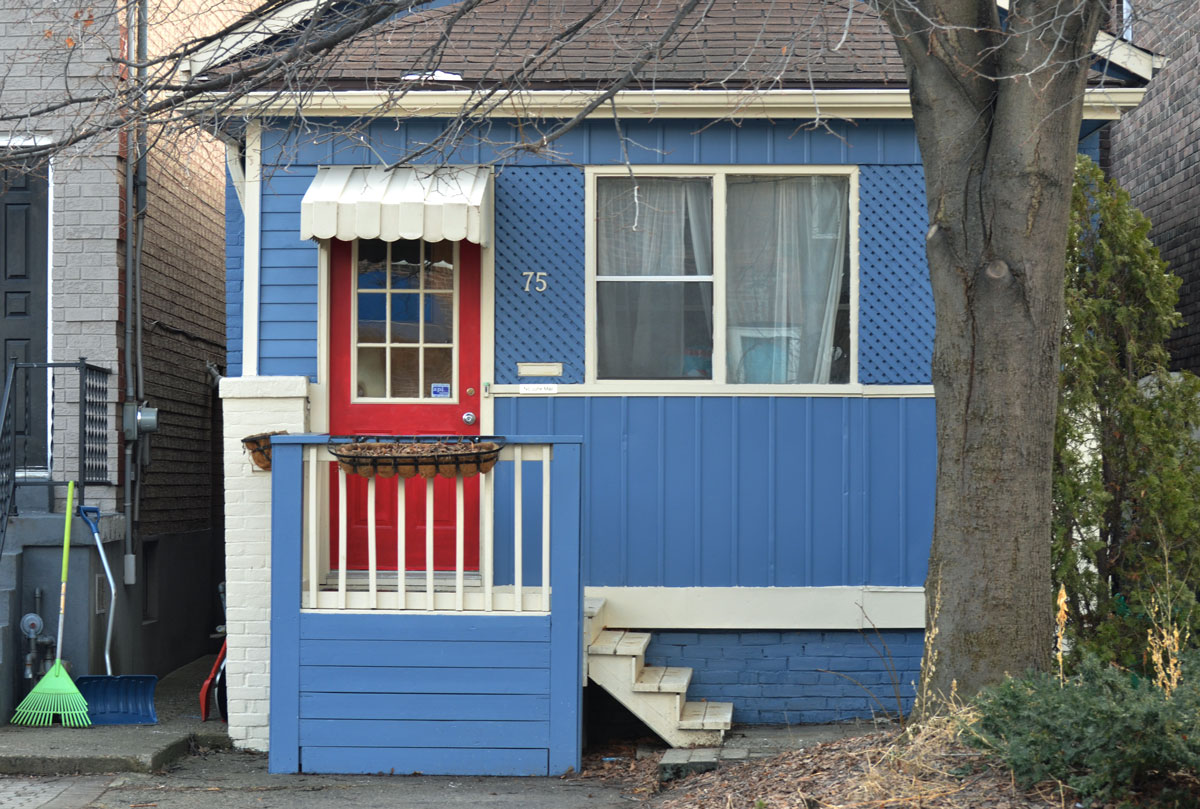
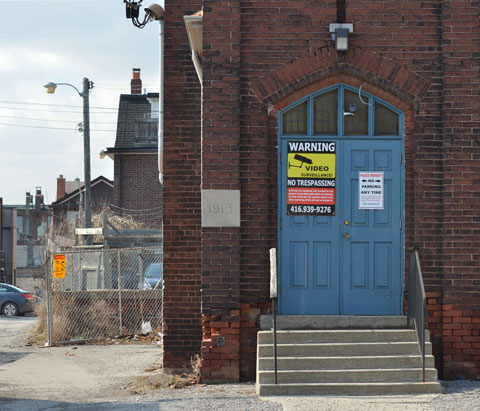
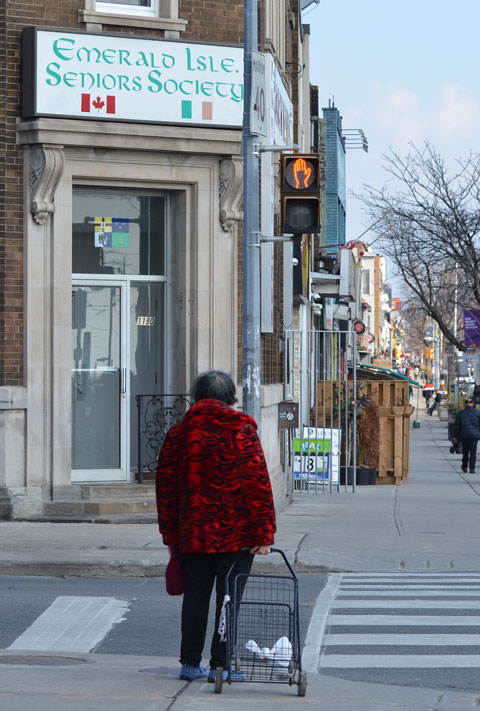
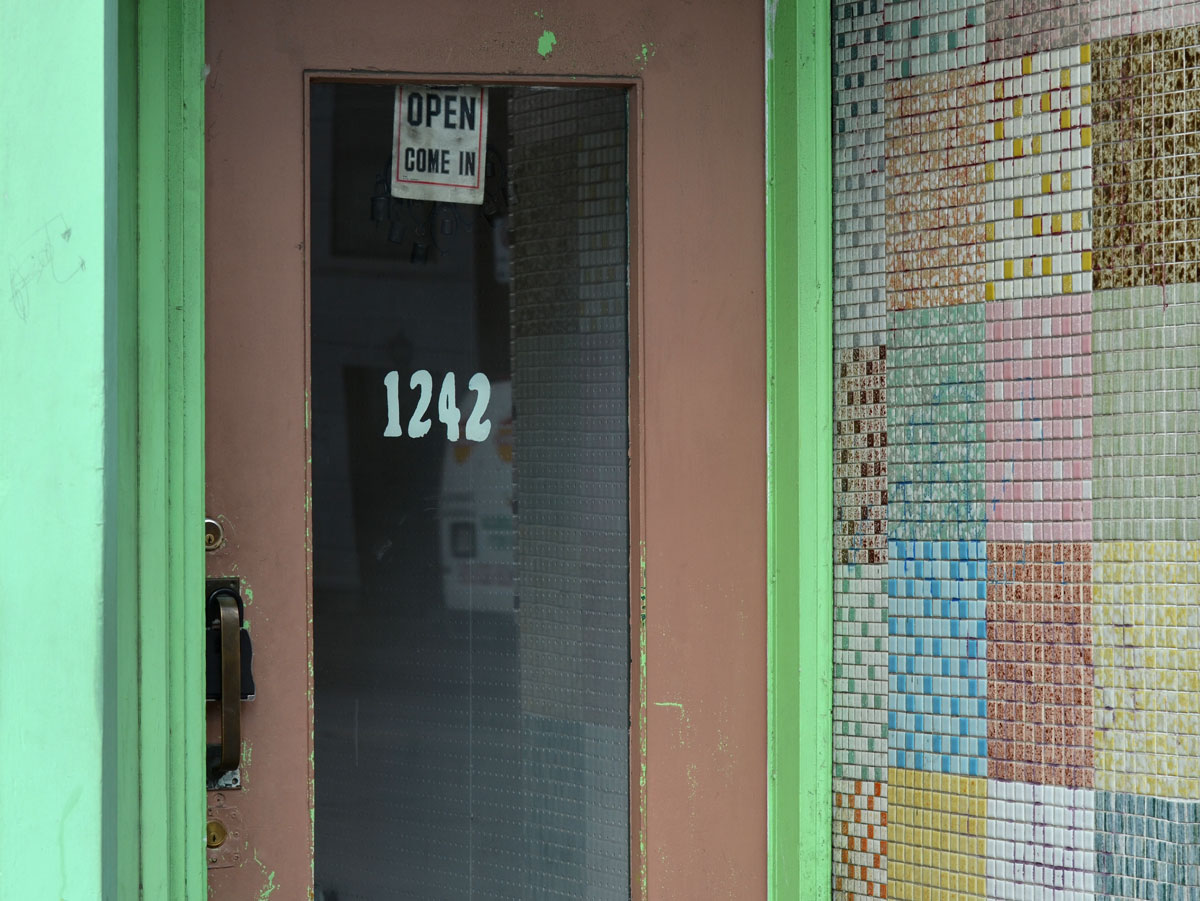
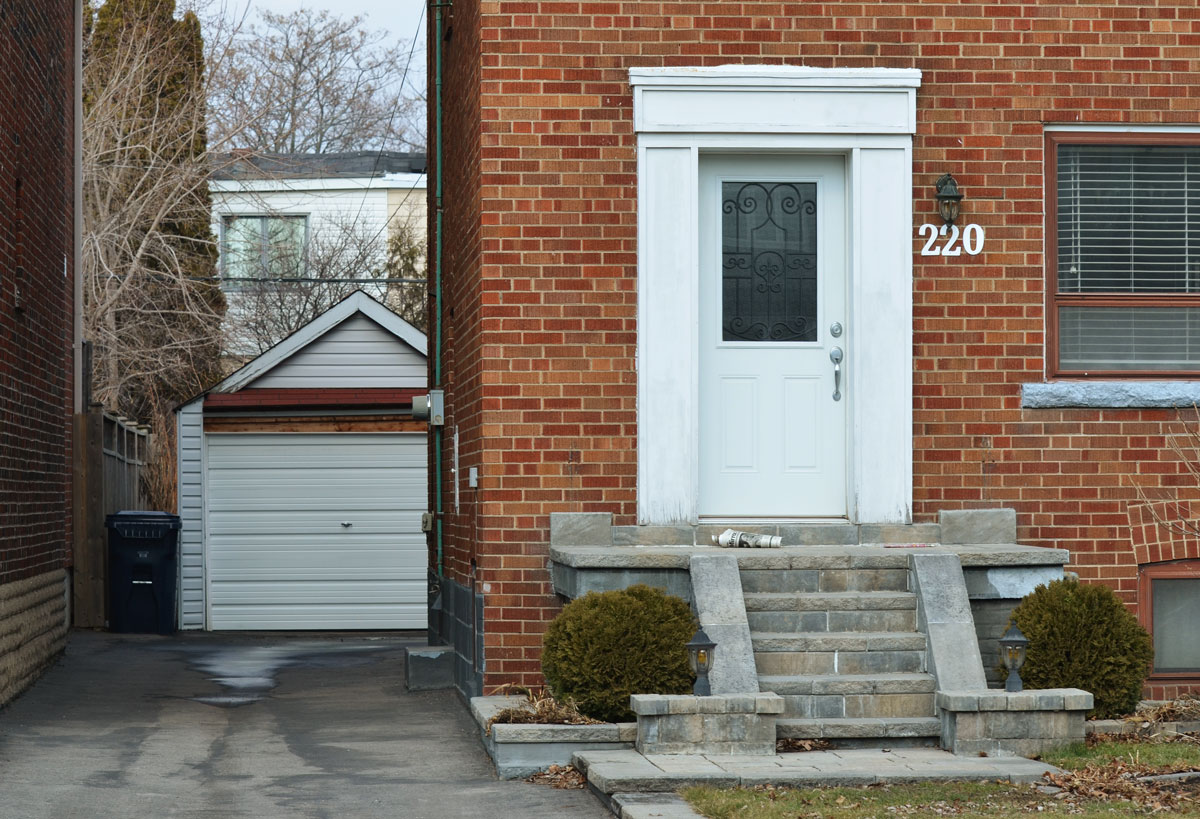
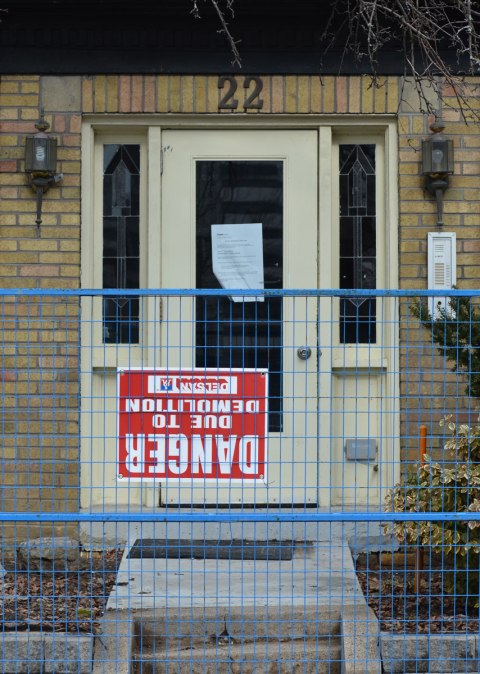
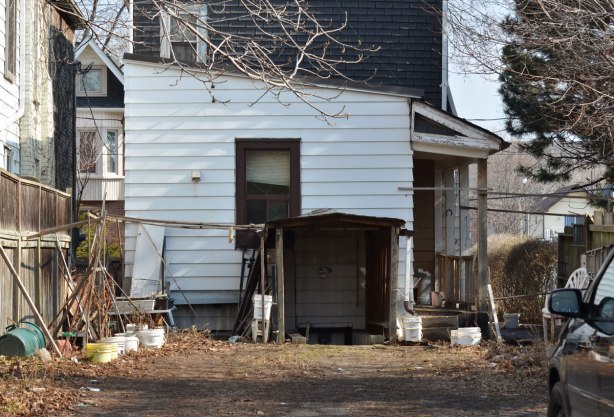
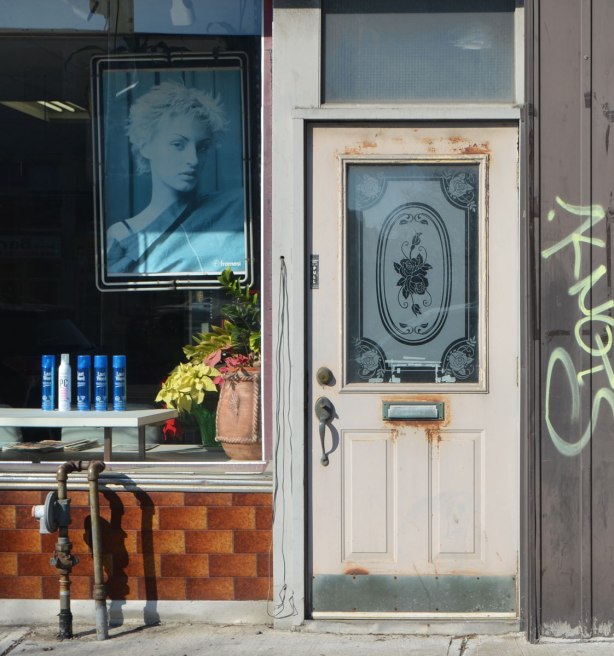
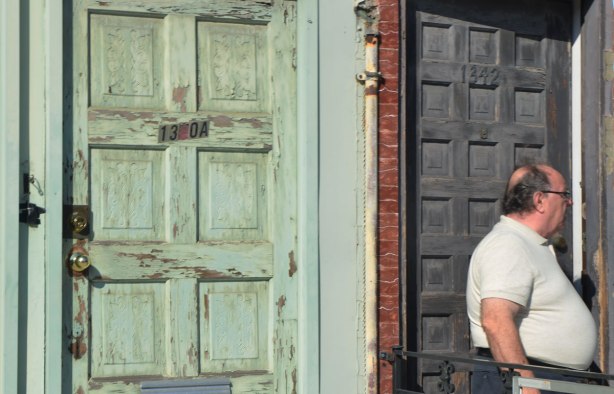
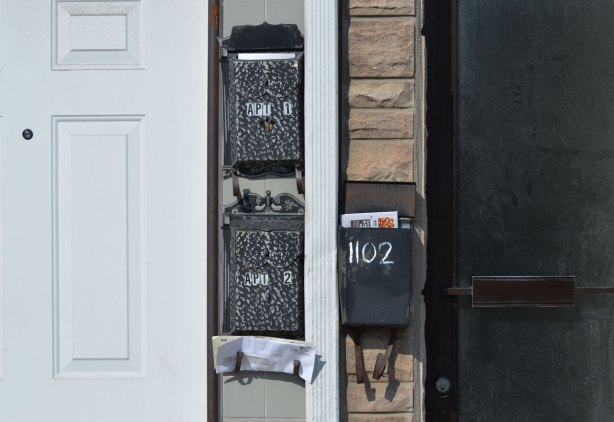
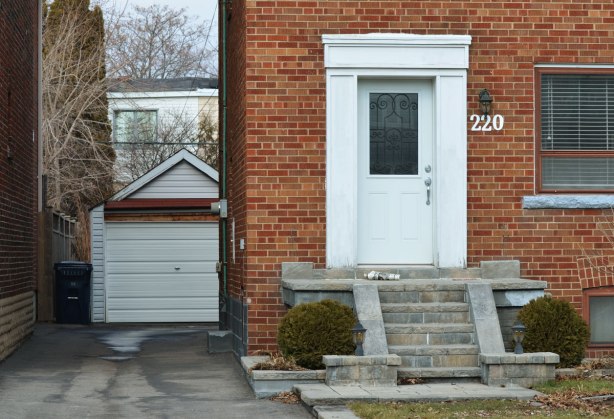
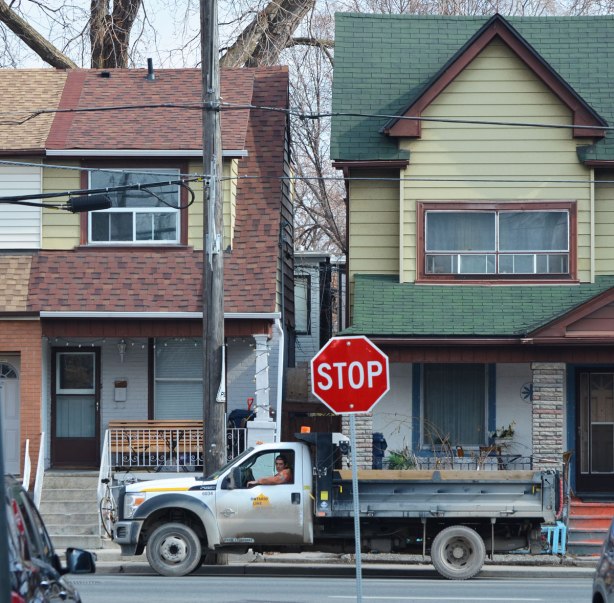
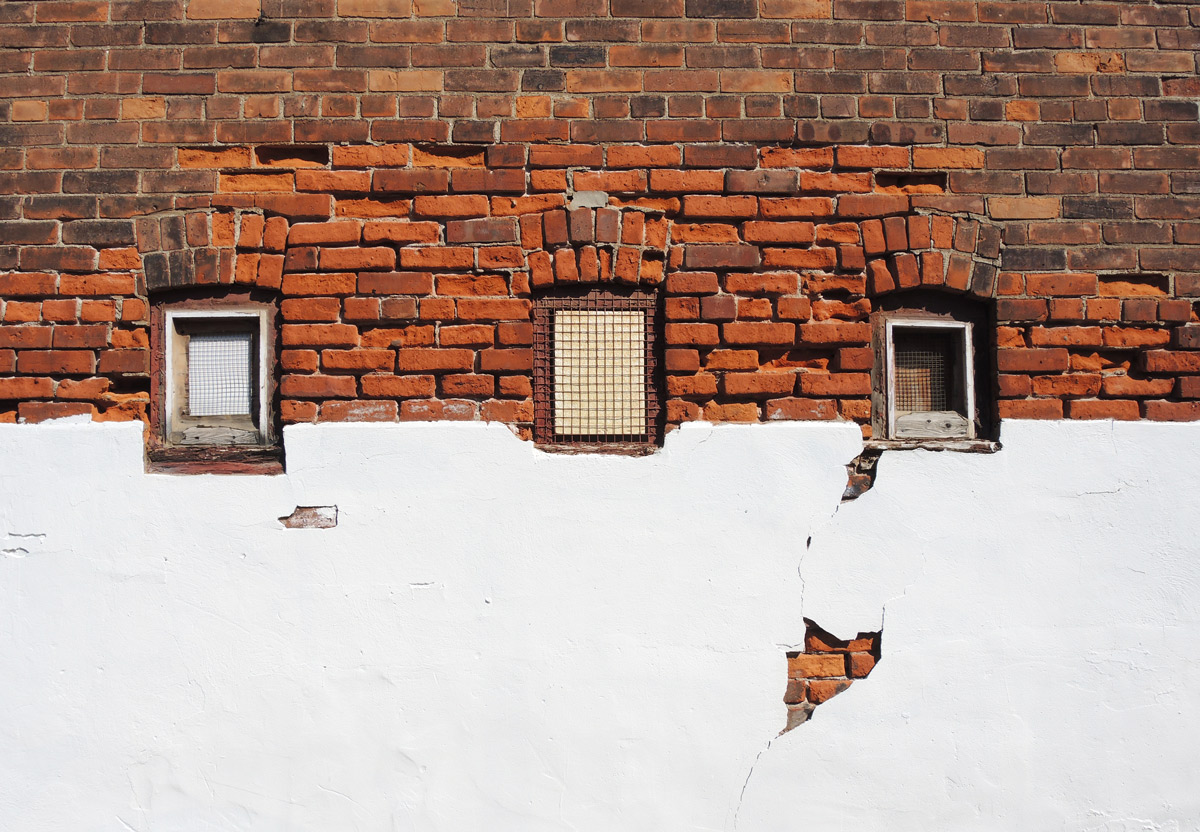
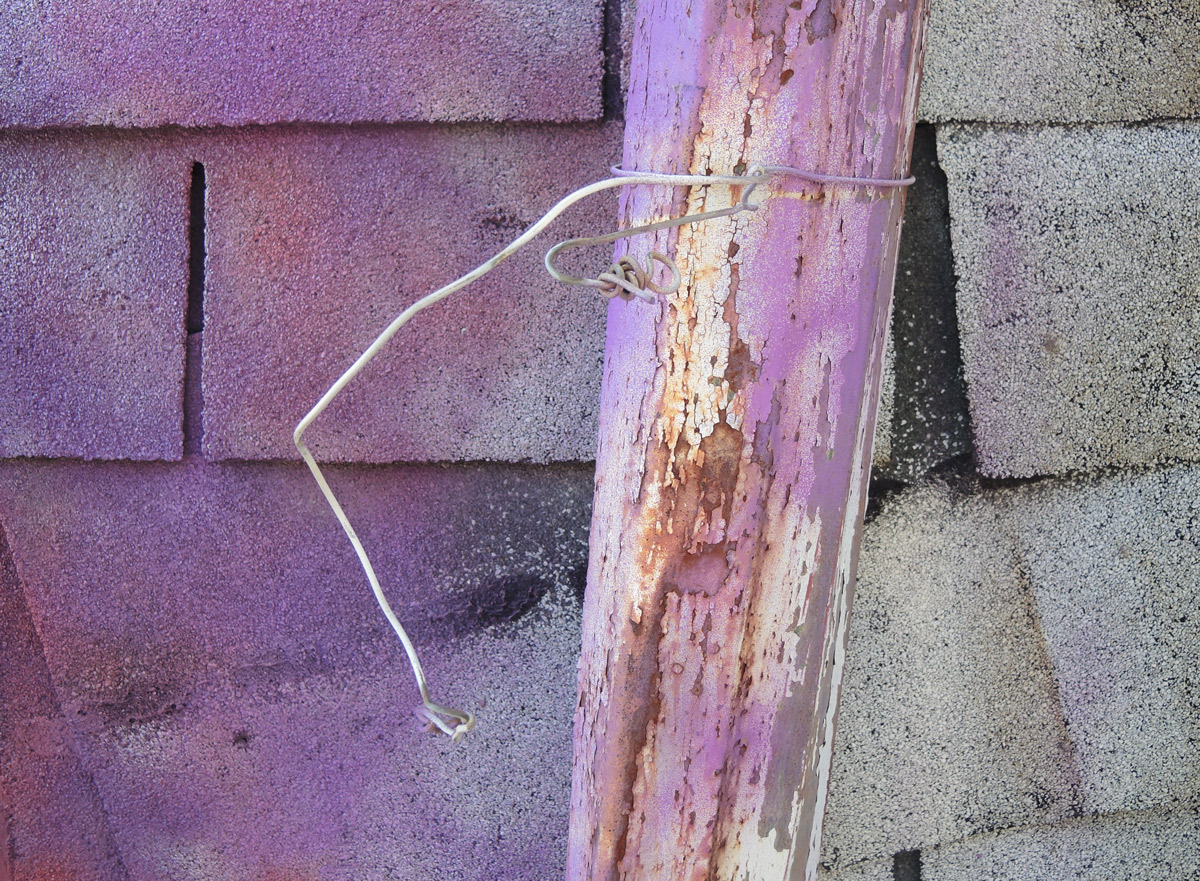
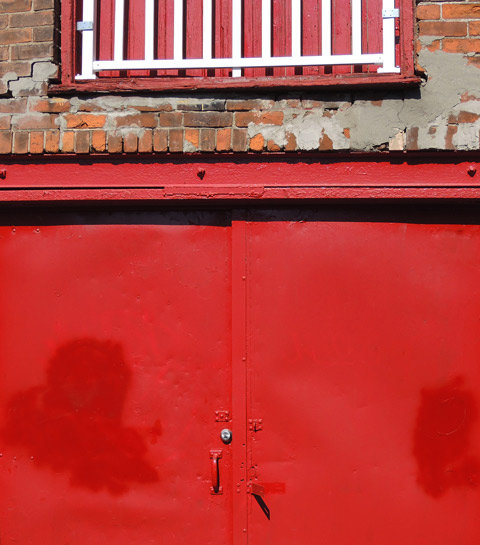
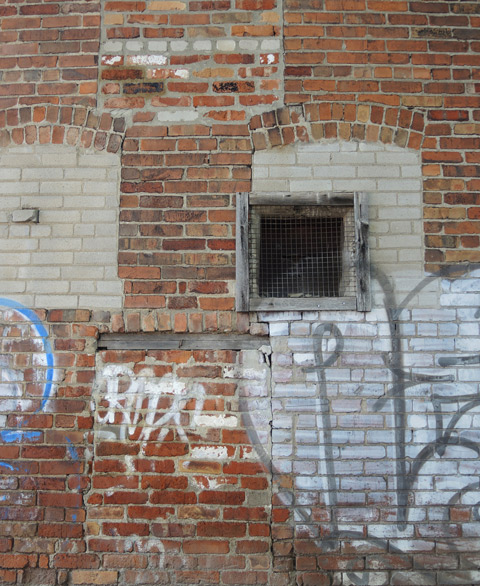
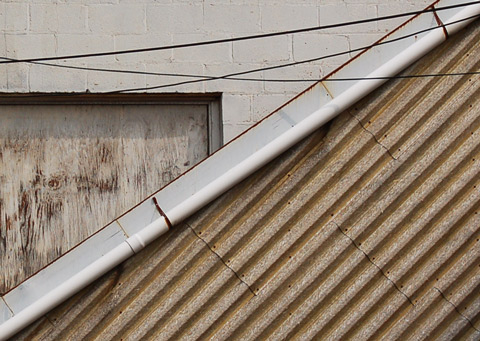
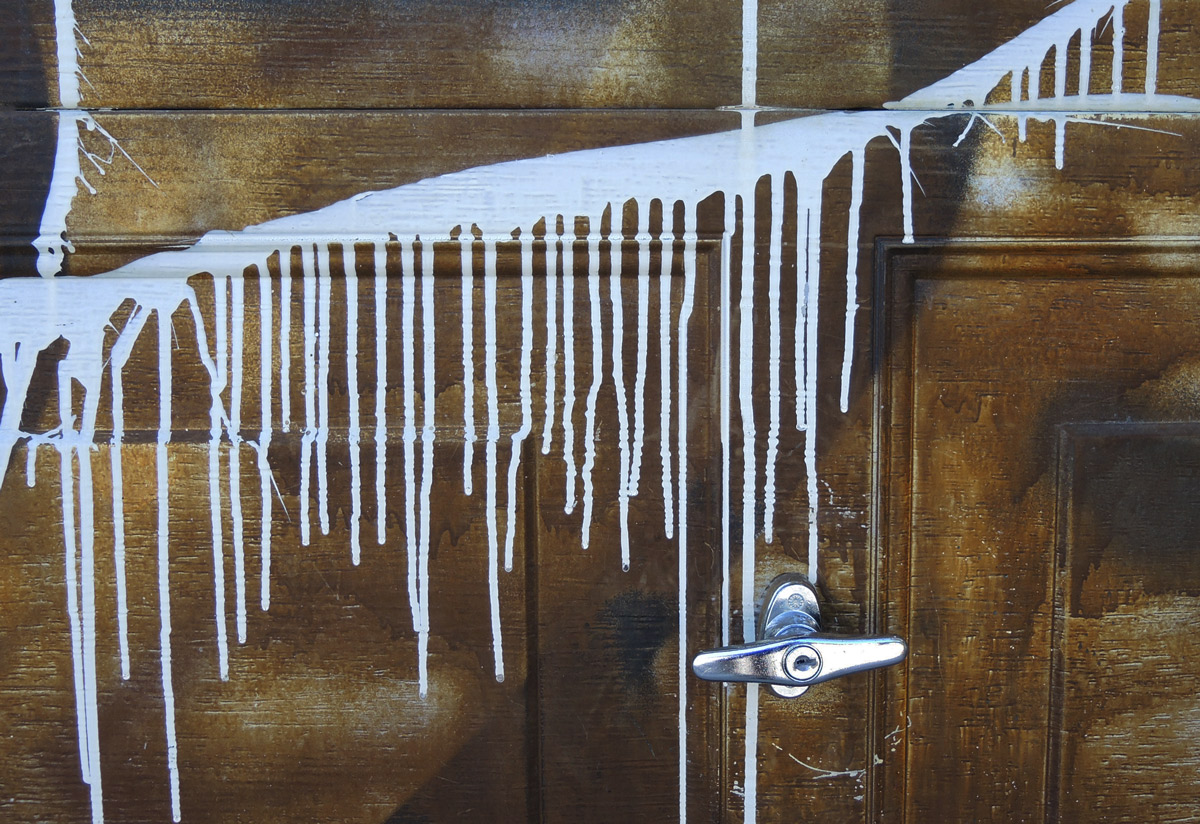
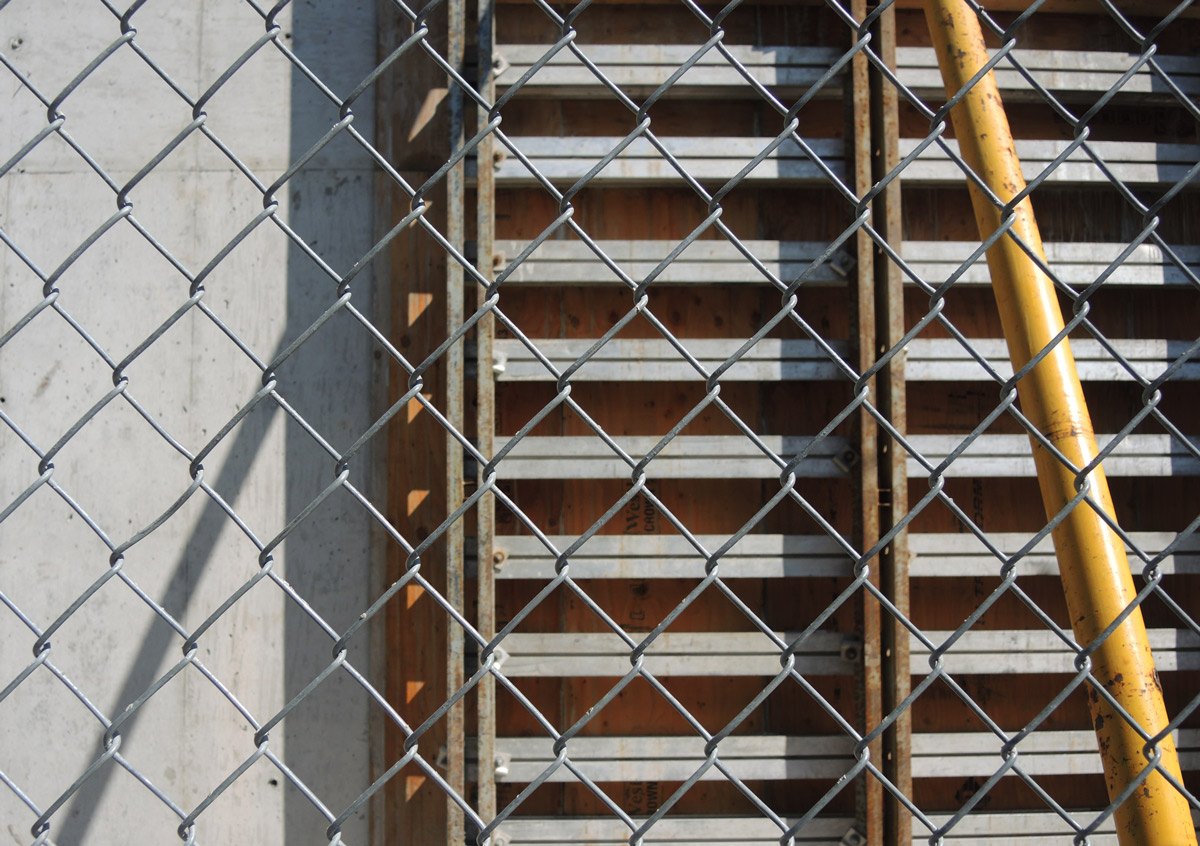
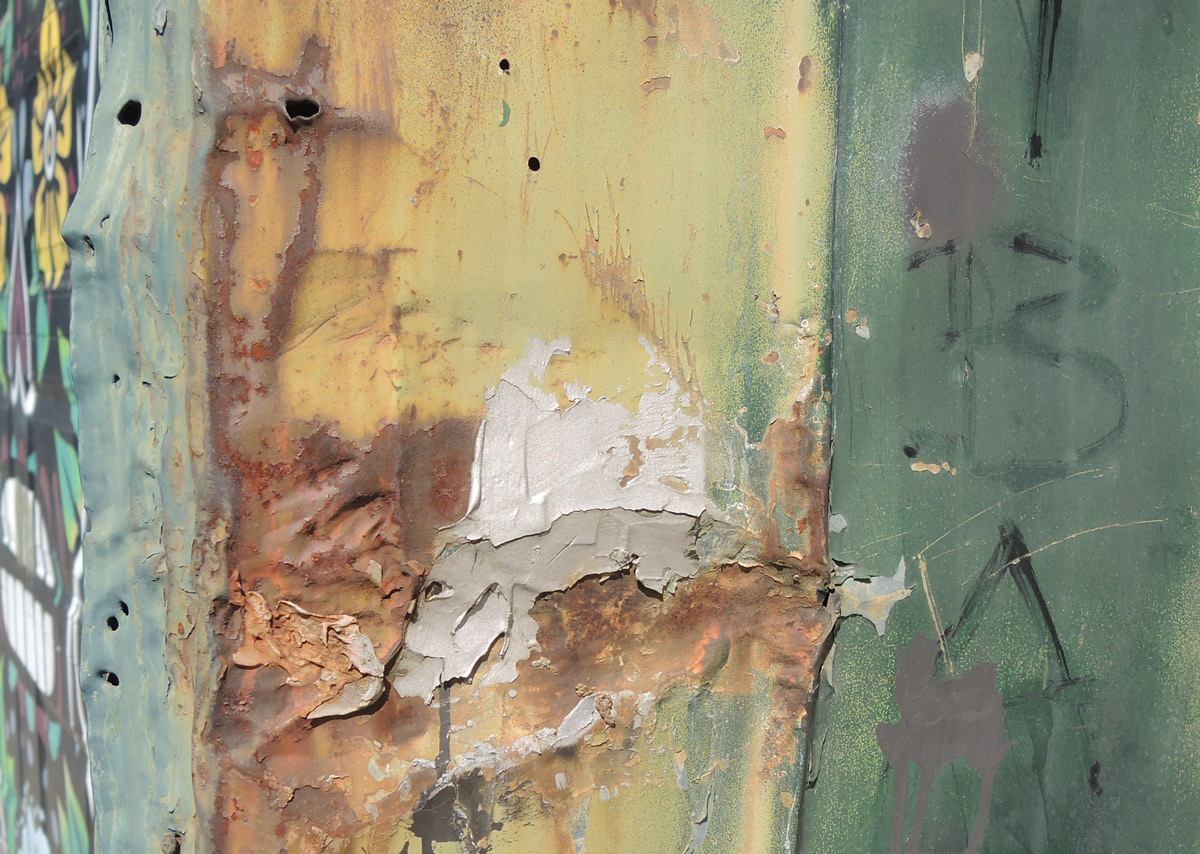
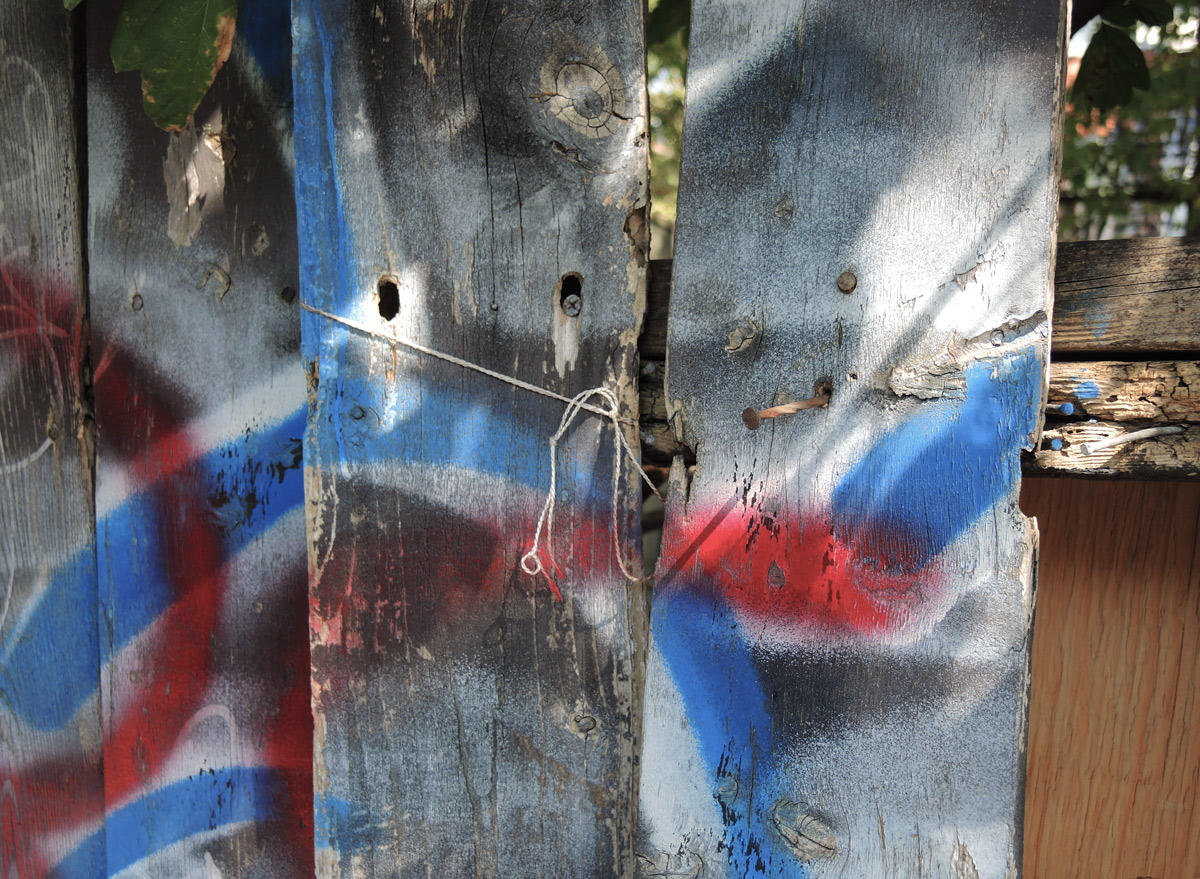
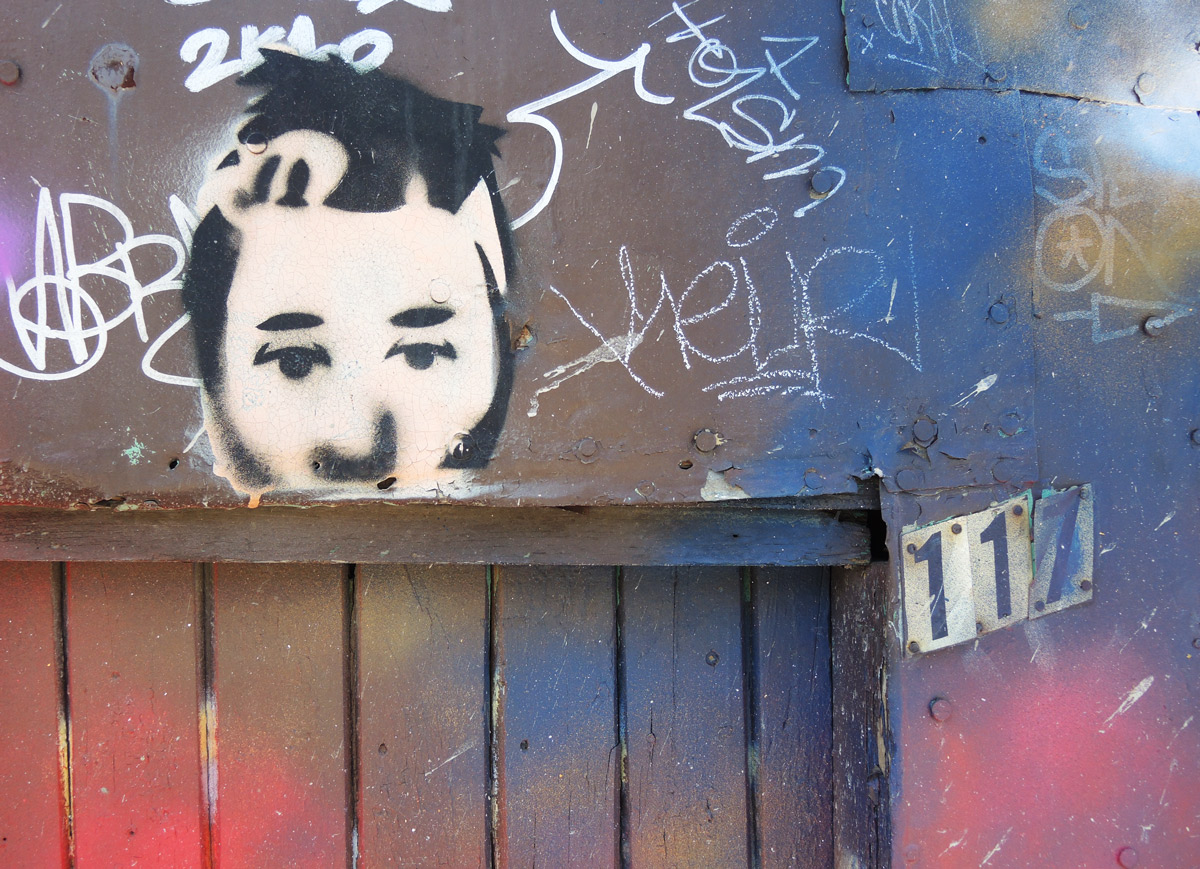
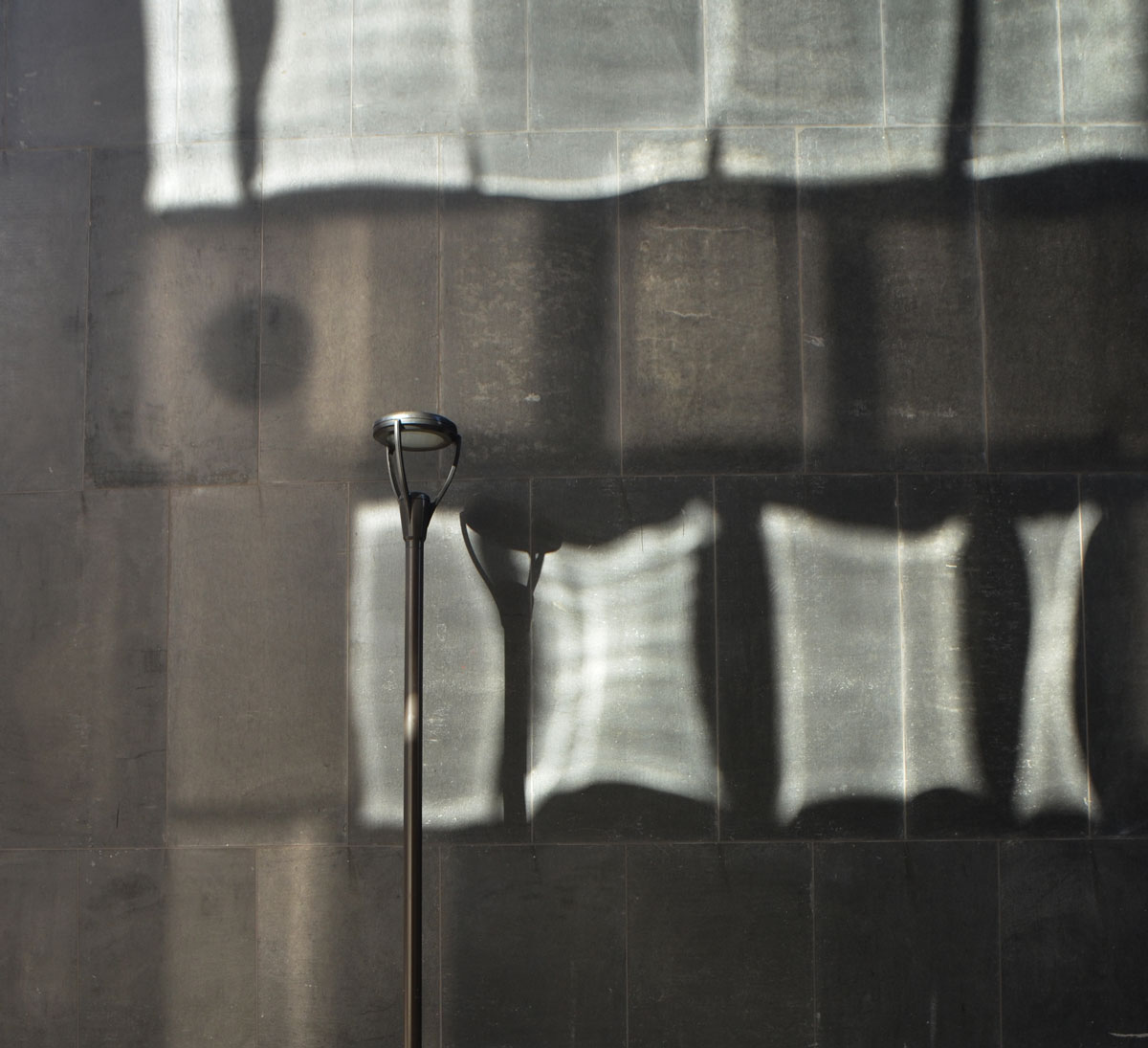
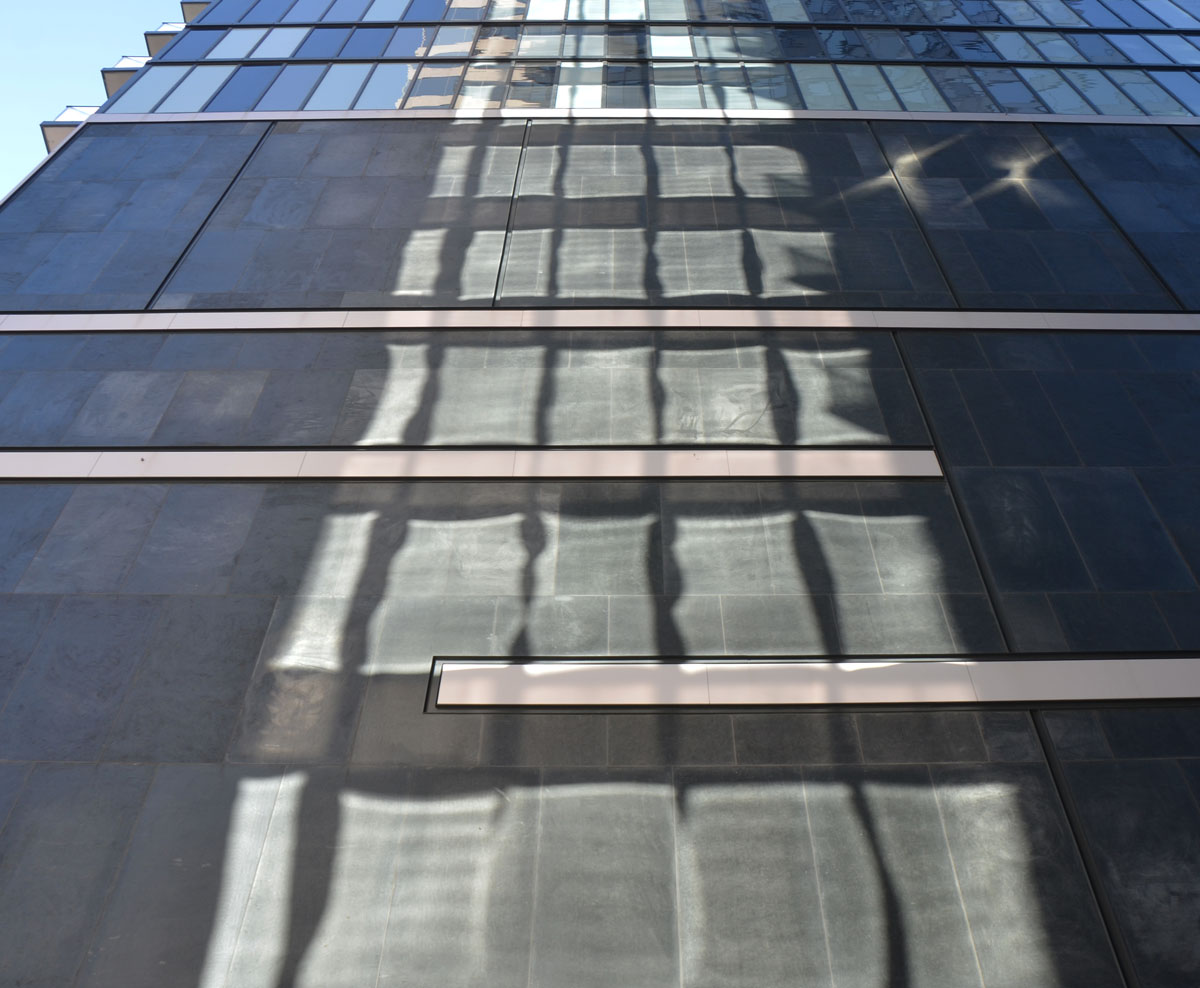
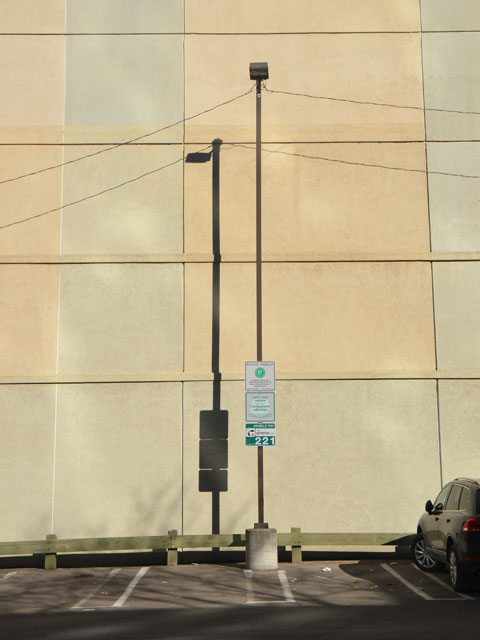
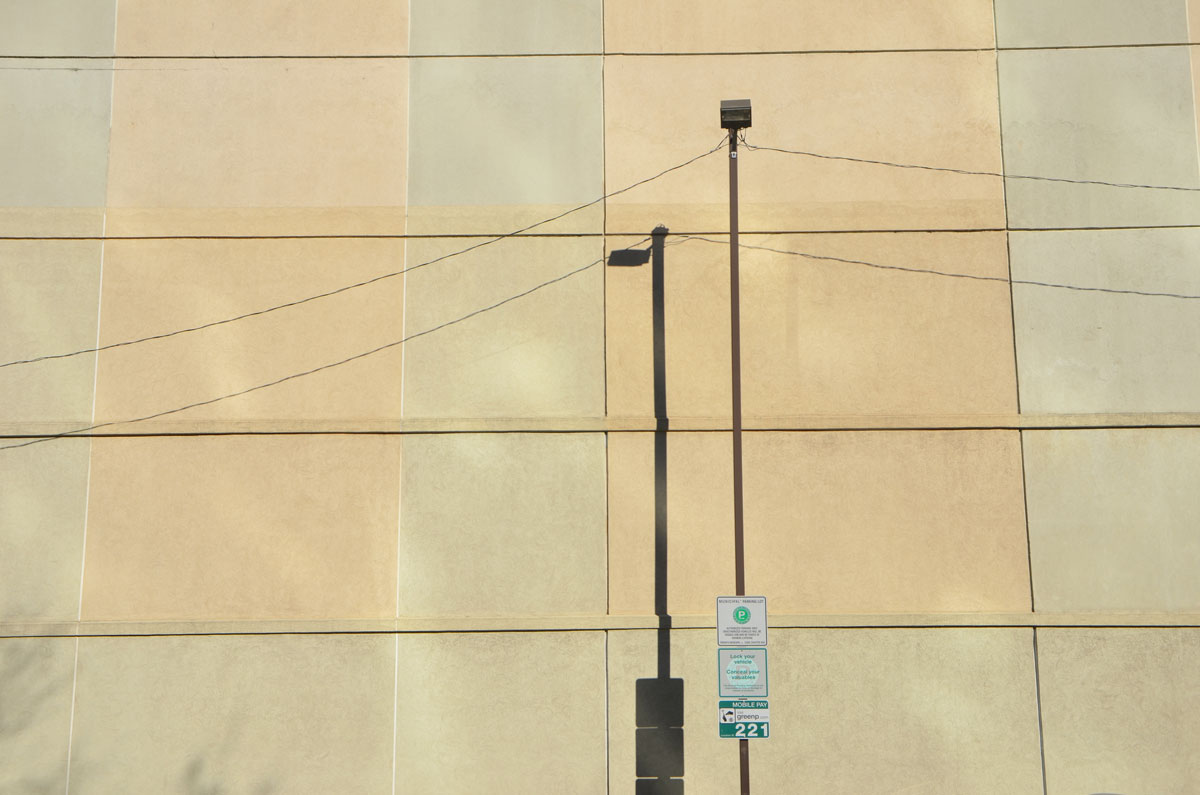
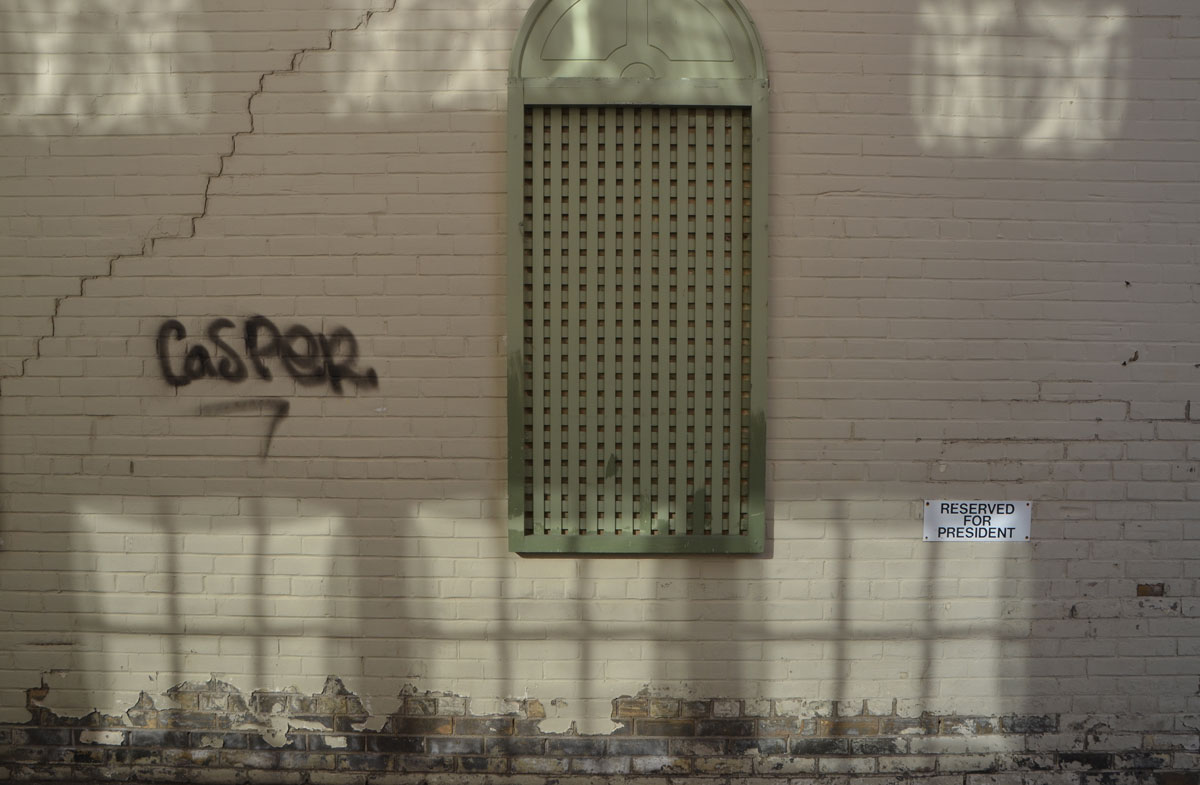
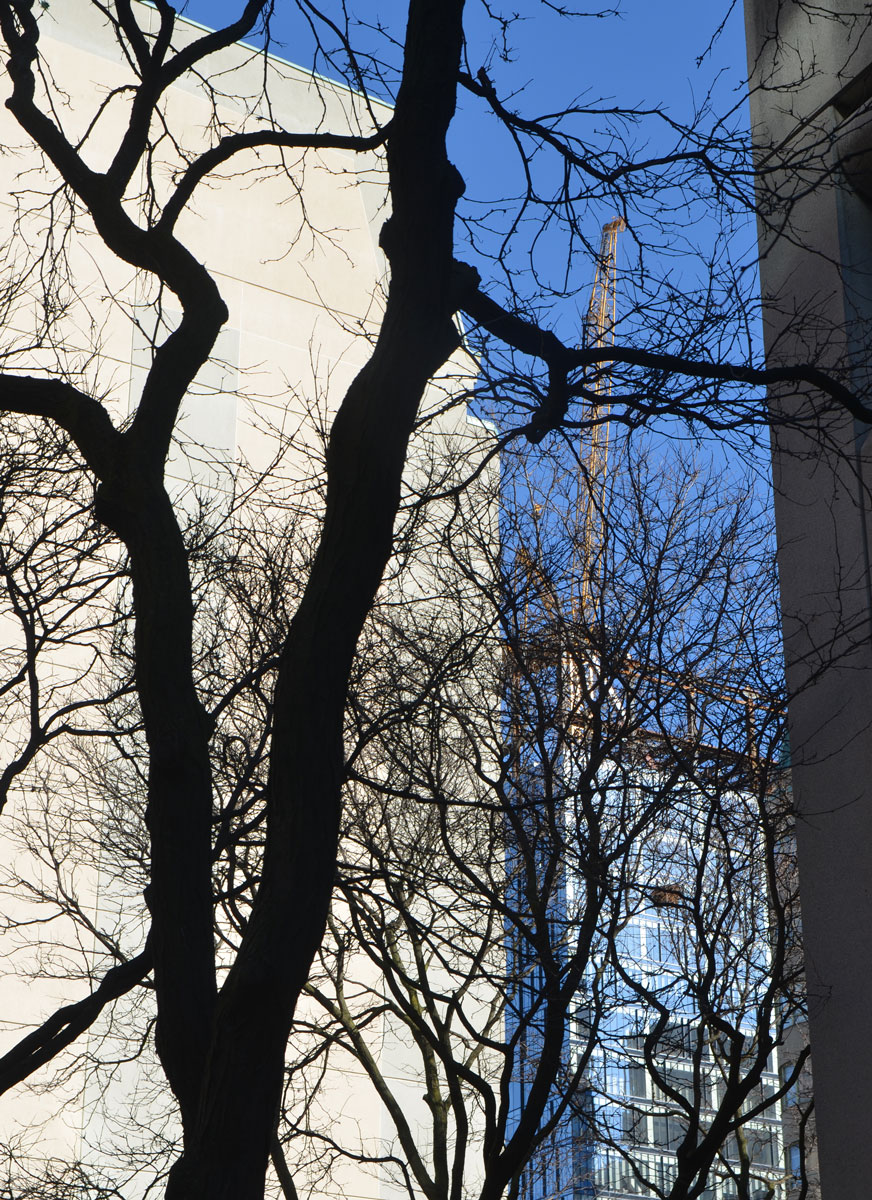
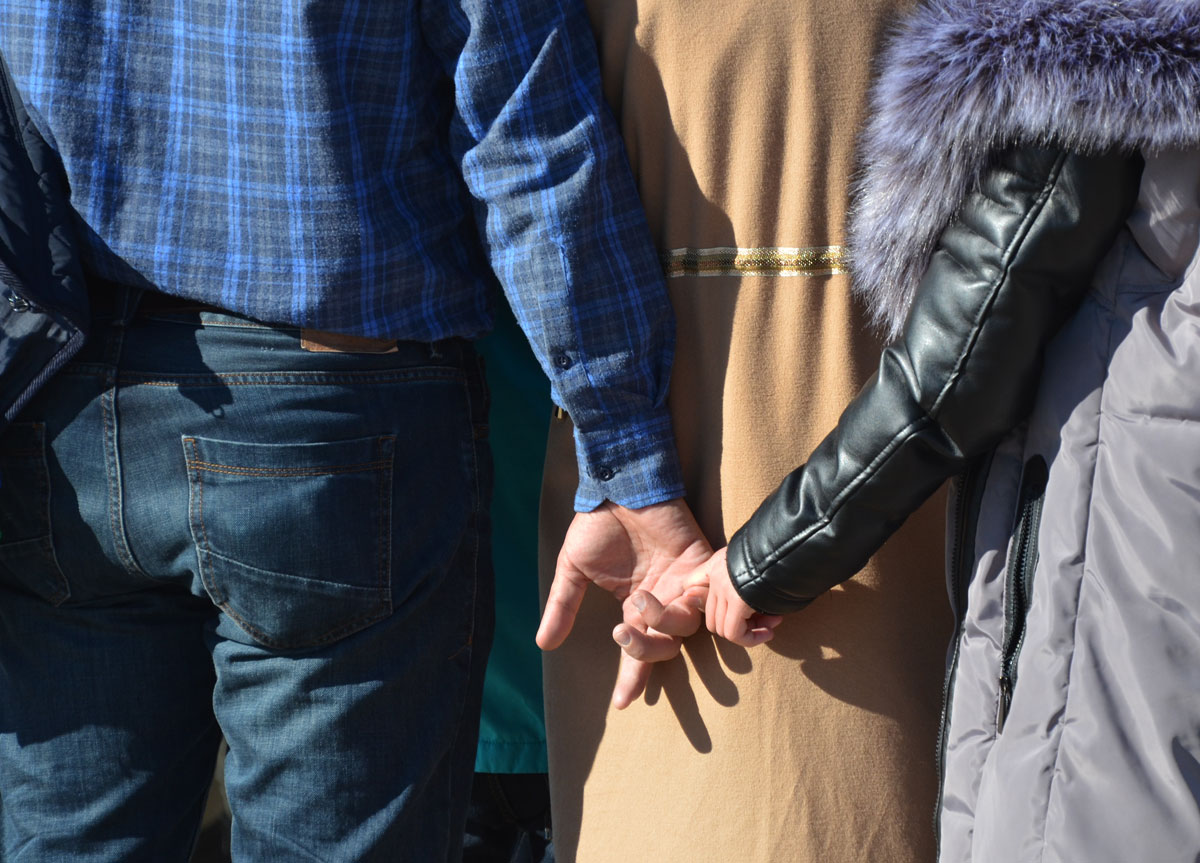
Sunny September days make good walking in the alleys days. Here are some of the walls I saw and the compositions that they make. The textures of wood and metal, bright colours as well as subdued ones, the effects of light and shadow, as well as shapes and patterns – these are some of the things that catch my eye and make me stop. Throw a little nature into the mix and the following photos are the result.
Posts Tagged ‘trees’
from Brickworks to Corktown
Posted: July 11, 2017 in landmarks, nature, transportationTags: abandoned, anser, bikes, Brickworks, bridge, cyclist, DOn River, Don Valley parkway, DVP, faces, fence, graffiti, kayak, Lever Brothers, path, people, railway, river, Sunlight Park, trail, trees, Unilever, unused, water, woods
A walk along the Don River.
The Don Valley Brick Works (or Evergreen Brickworks) is an old clay quarry and brick factory that operated between 1889 and 1984. Today the site consists of 16 heritage buildings and an adjacent 16-hectare public park known as Weston Family Quarry Garden that includes wetlands, hiking trails, and wildflower meadows.
below: Interior of the kiln building. Some of the kilns have been removed to create a larger open area and year round event space.
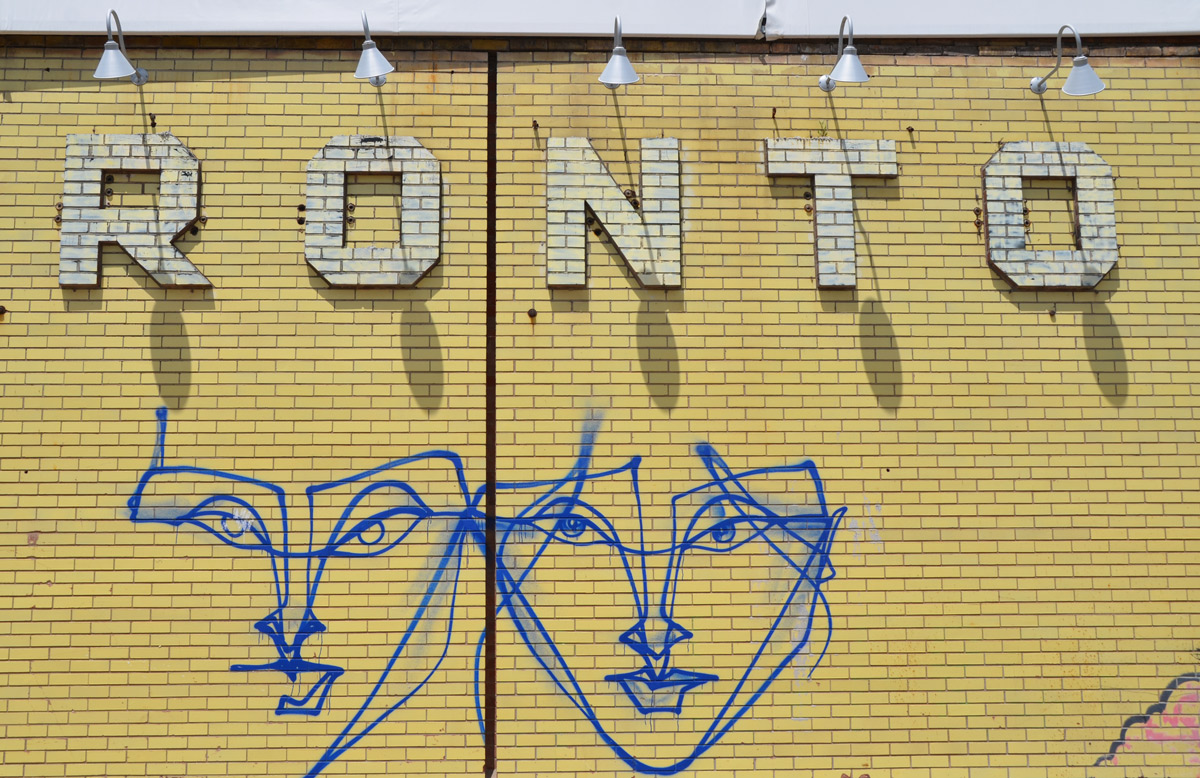
below: anser faces on the exterior yellow brick wall.
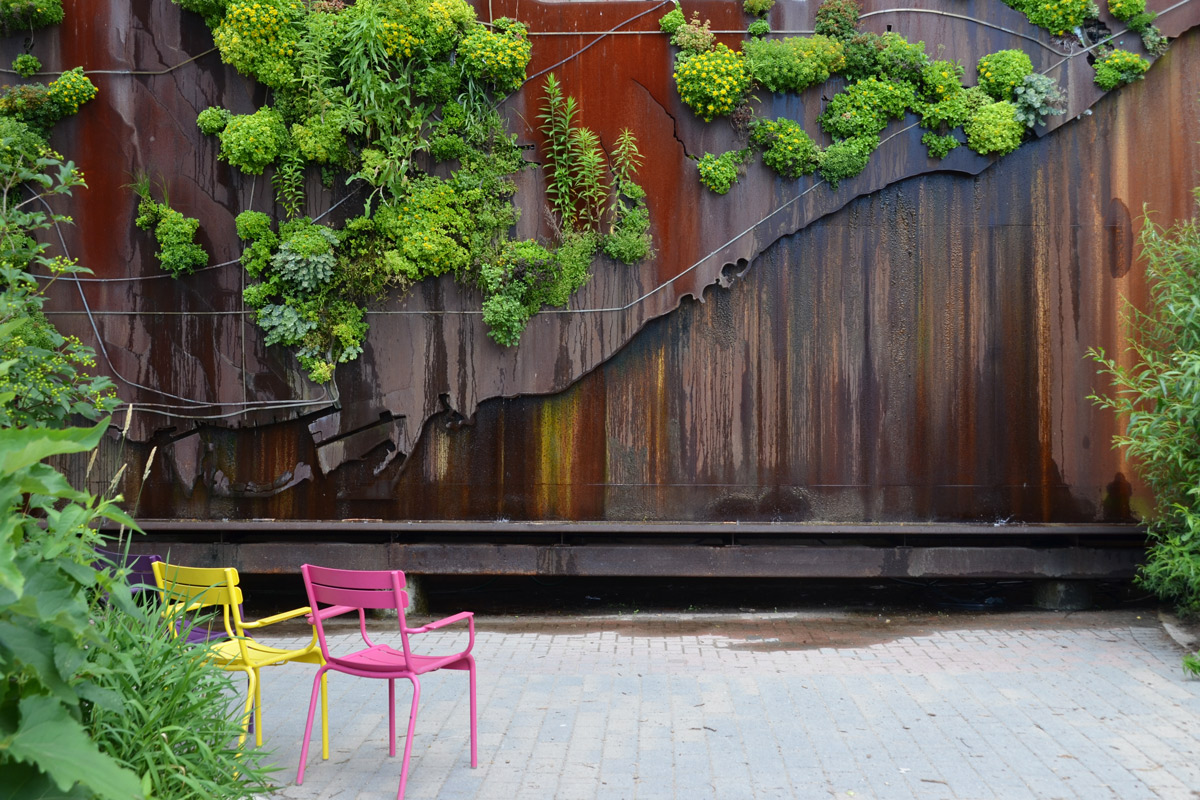
below: The Brickworks “living map” of Toronto is looking very healthy. It is “Watershed Consciousness” by Ferruccio Sardella and it depicts the rivers and ravines in the city. Some of the greens are looking a little tall (like they don’t belong there? a few strays?).
below: Bullrushes growing in the wetland area around the pond.
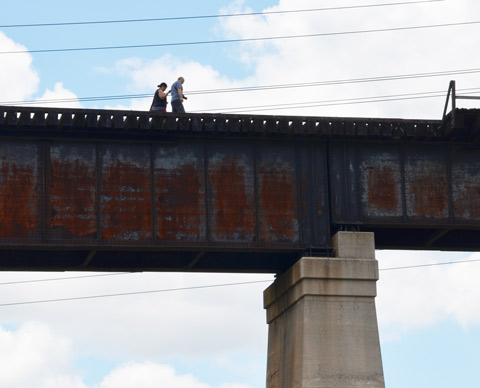
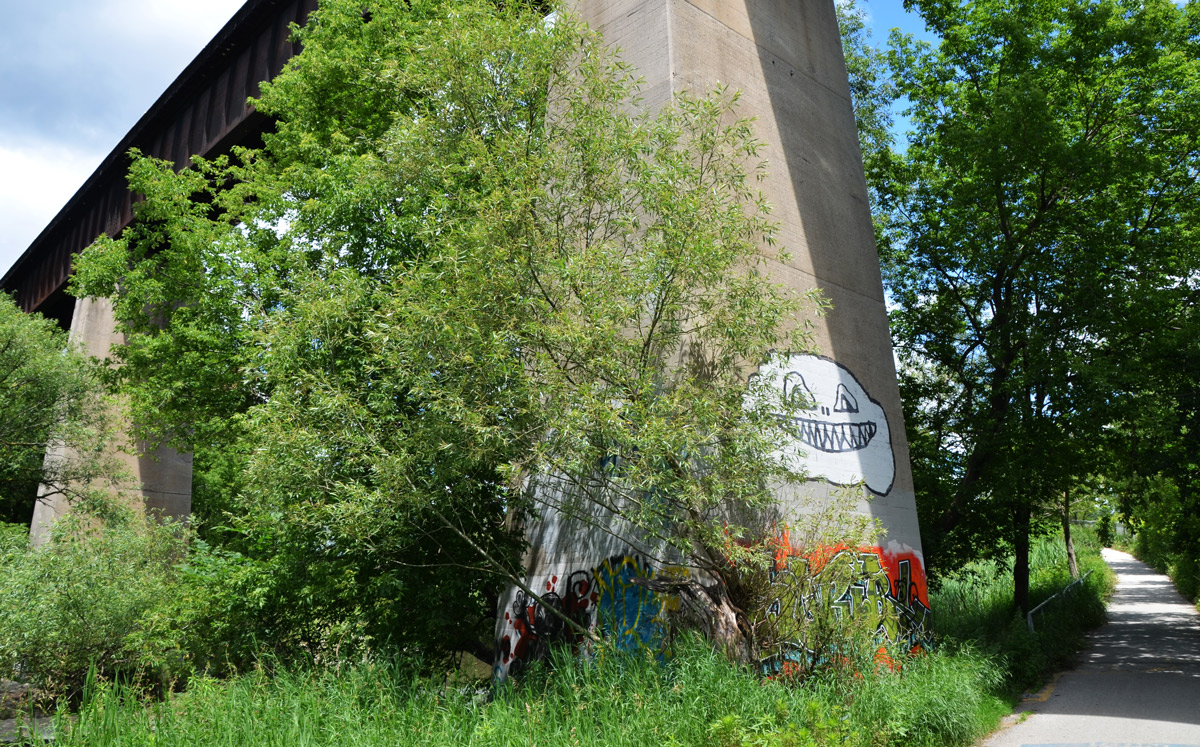
below: Ideas! I’ve been meaning to find the end of this bridge and walk at least part of it – if I do, I’ll let you know! It’s the bridge that you see beside the Brickworks. It was built in 1928 and is 335m long. It is part of the Don Branch of the CPR and it ran from Leaside Junction to the downtown core until the line was closed in 2007.
After a short visit at the Brickworks, including a quick bite to eat at the Farmers Market, we headed south. The first part of the walk was back along Bayview to Pottery Road since Brickworks is on the west side of the Don River and the trail is on the east side. I didn’t take any pictures – walking along a major road that doesn’t have a sidewalk needs all of your attention. There is a bike path that parallels Bayview on the east side but getting to it was either a long detour or a dash across the road and over a barrier. We made the decision to stay on the west side and cross with the lights at Pottery Road.
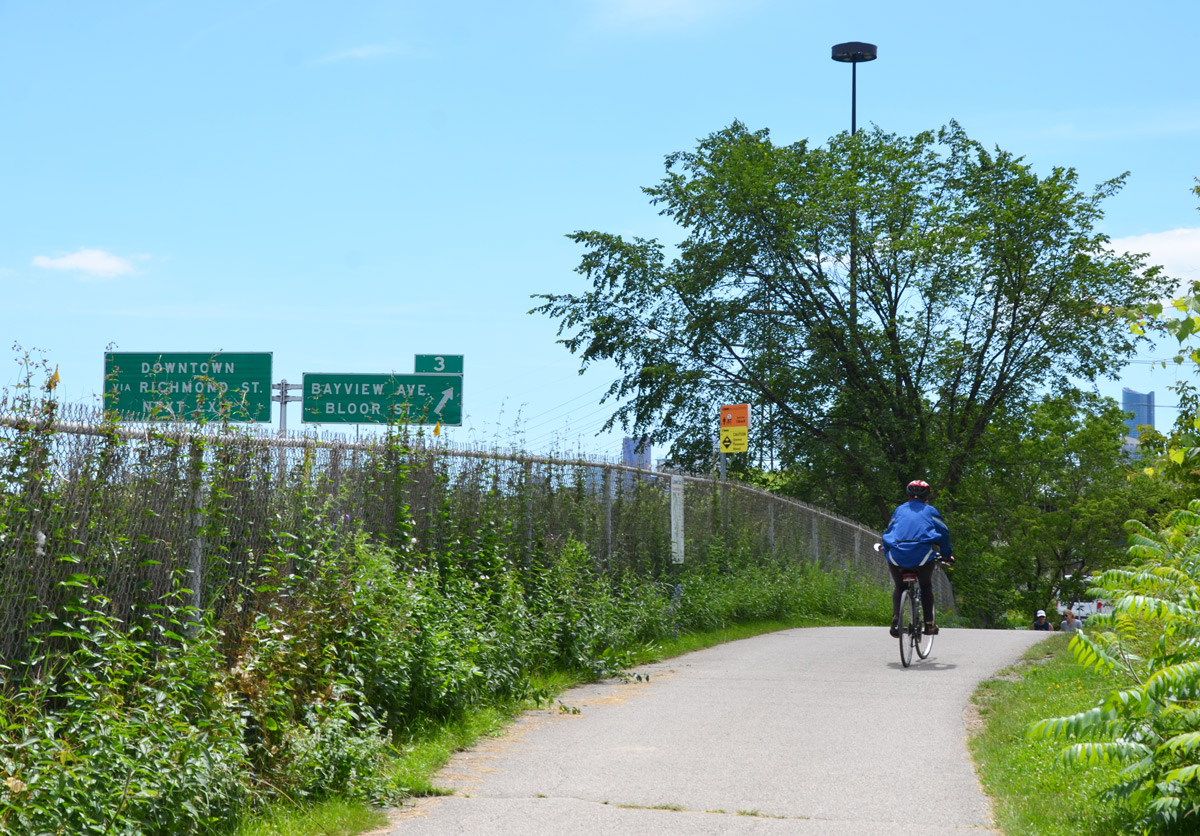
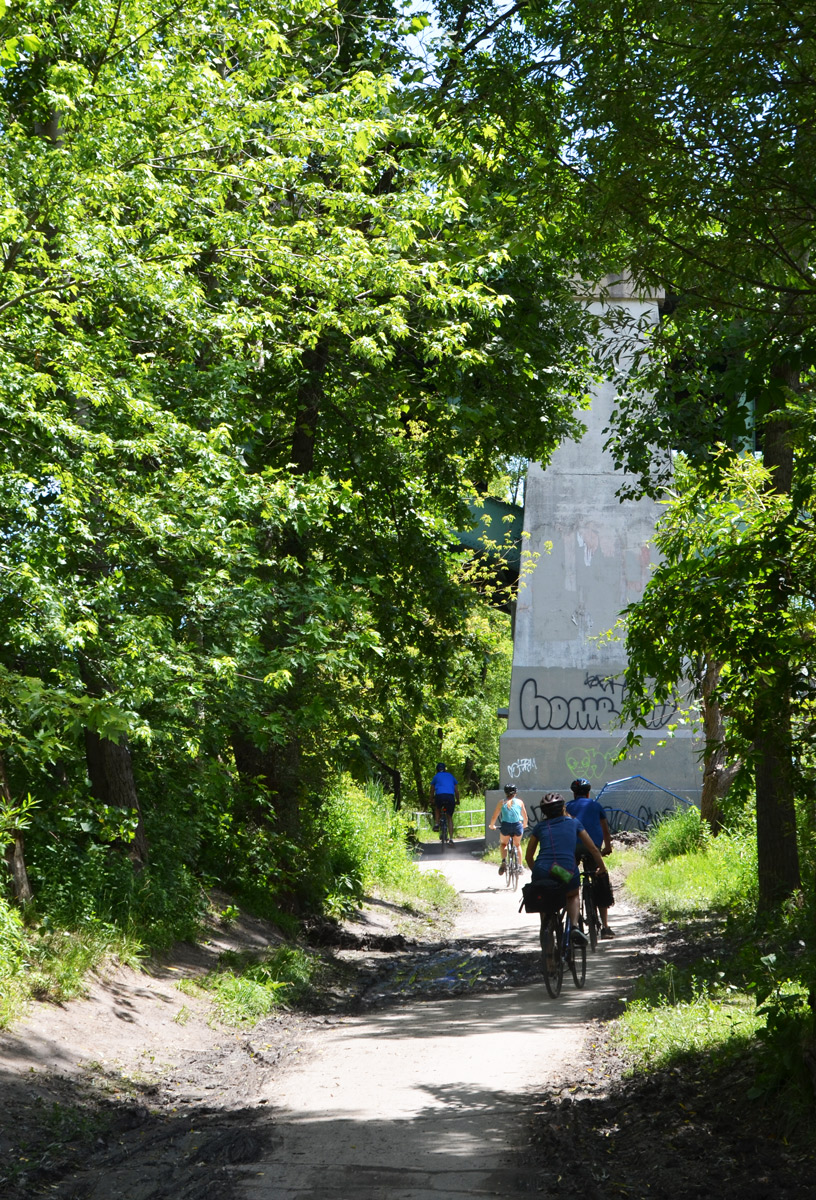
below: Although the path is through the ravine and it runs beside the Don River, it also runs adjacent to the Don Valley Parkway. There are only a few places on the trail where you can see the highway but there is a constant rumbling noise from the cars passing by.
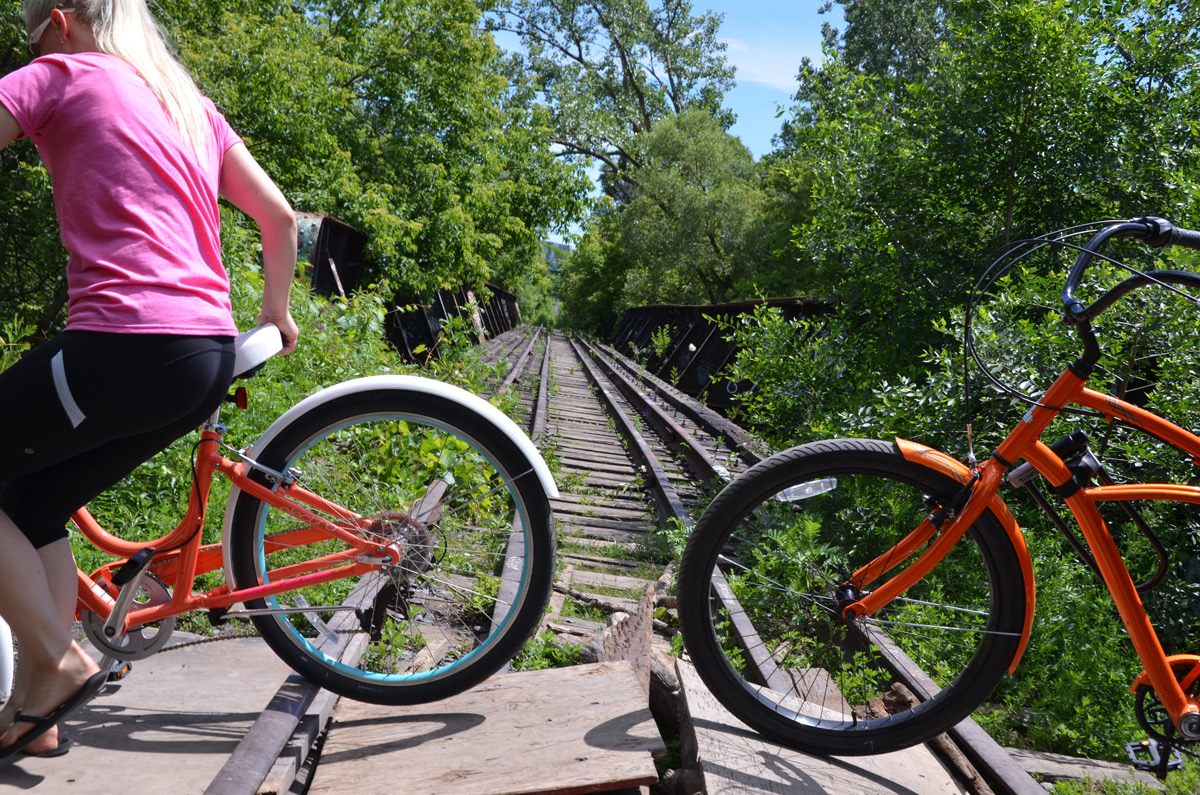
below: This is the same railway line as the bridge shown above but farther down the valley. A very makeshift bike crossing.
below: Standing at the same spot as the above photo, but turned around 180 degrees… You can see how overgrown the old tracks are.
below: Two different railway lines run down the Don River Valley. The line shown here, the CN Bala subdivision line, is very active including use by GO trains that service the Oriole, Richmond Hill, and Newmarket route. The Bala subdivision tracks continue all the way to Sudbury.
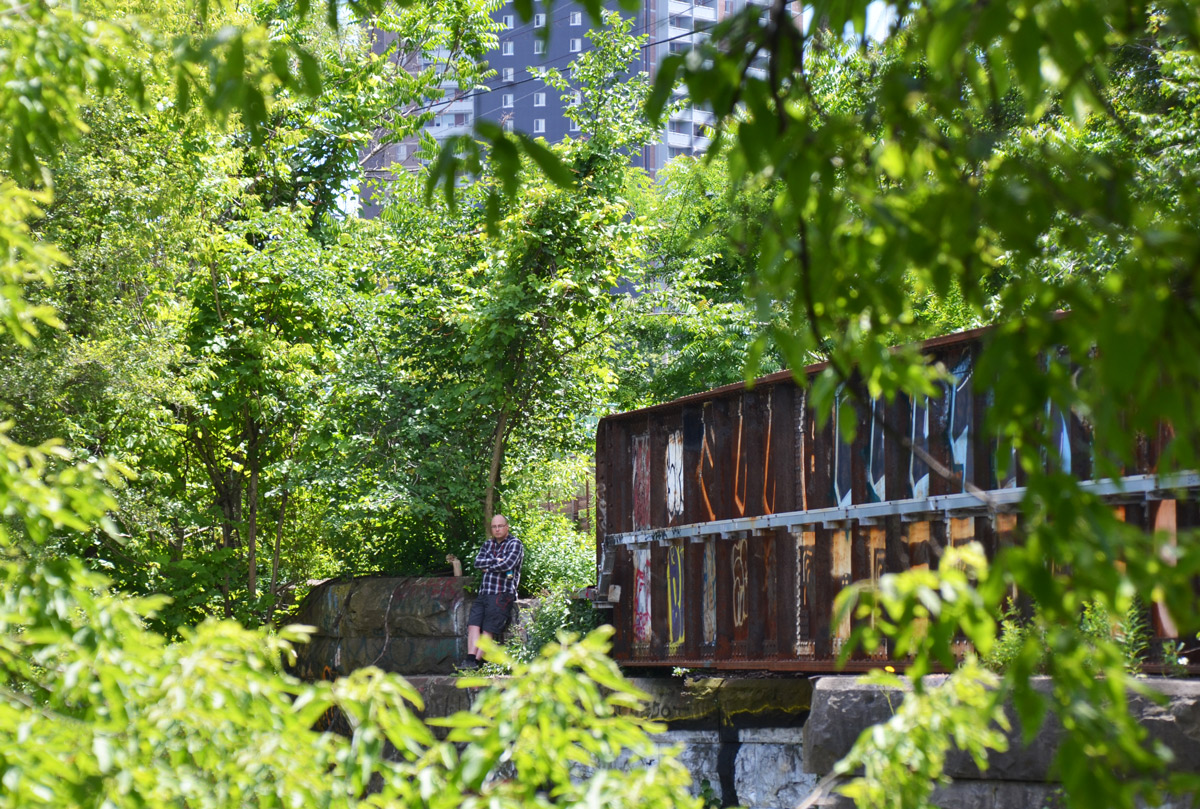
below: A quiet spot by the abandoned tracks.

below: There are a few spots along the trail where there was damage from the high water levels in the spring. Most if the problems are with the banks od the river. The trail itself is in good shape.
below: Kayaking on the river.
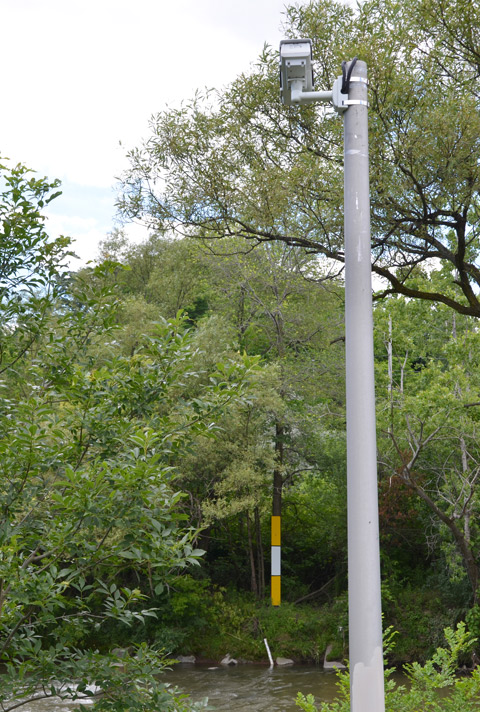
below: Keeping an eye on the water level.
below: Does anyone know what the 6 drum shaped things are?
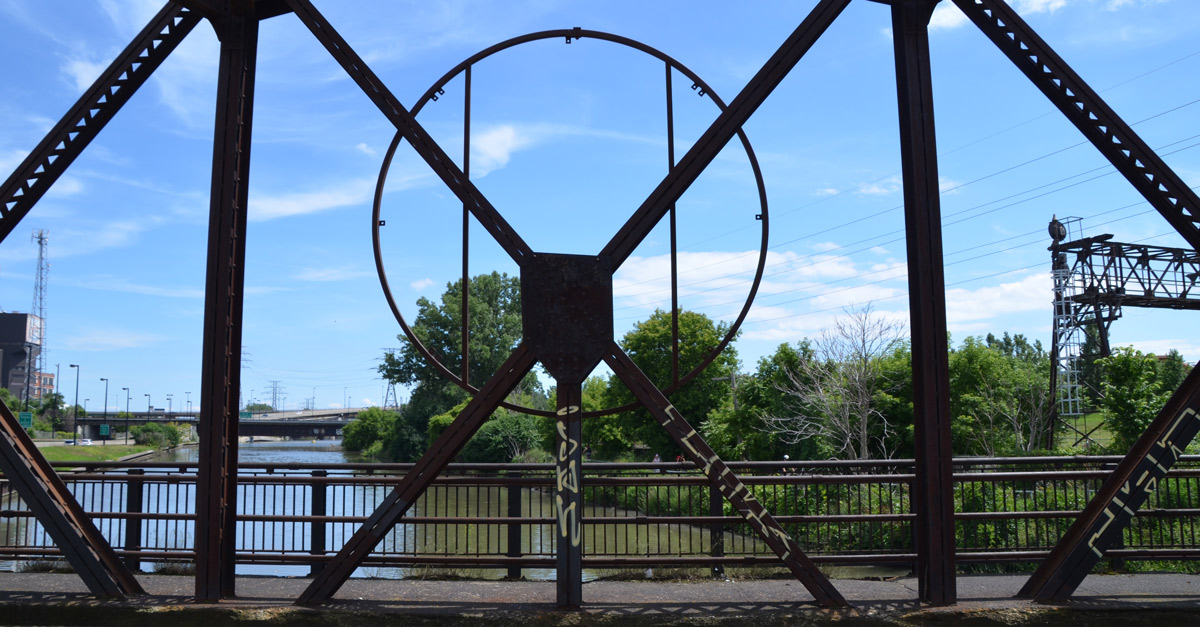
below: Standing on the old metal bridge across the Don River at Eastern Avenue, looking south. When the Don Valley Parkway was built, it cut through Eastern Avenue. Eastern was rerouted, swinging north a bit before crossing over the DVP and splitting into Richmond, Adelaide, and Eastern. (depending in which direction you’re travelling). If you stand on the bridge and look directly east, there is still a road there that dead ends at the highway. It is now Sunlight Park Road and it is provides access to the BMW dealership that you can see as you drive past on the DVP.
I couldn’t see any park in that area so I decided that if there is a Sunlight Park it’s teensy tiny. Luckily I didn’t stop there – I did some research and discovered that Sunlight Park was actually the first baseball stadium built in Toronto. It was built in 1886 and was first known as the Toronto Baseball Grounds – four storeys, wood, and the home of the Toronto baseball team from 1886 to 1897. And where is Sunlight in all this? The stadium became known as Sunlight Park after the Sunlight Soap factory that was built by the Lever Brothers in 1900/01 in the same area. The stadium was demolished in 1913.
below: The building in the background was the Lever Brothers (the Unilever) soap factory. There is now a sign on the building that says firstgulf.com – they are the development company that owns the site. NOW magazine published an interesting story about the building as it looks at the moment (with lots of great pictures!). The path through the striped underpass joins the Don River Trail to Corktown Commons.
Stay safe. Protect the plants (and the humans!)
water water everywhere
Posted: June 18, 2017 in landmarks, locations, natureTags: amusement park, beach, benches, Centre Island, Centreville, ducks, flooding, green, Lake Ontario, lifeguard station, people, picnic benches, rain, sandbags, signs, swans, Toronto Islands, trees, Ward's Island, water
Lake Ontario is still higher than normal and one of the areas of the city most affected by this is Centre Island. All of the islands have been flooded to some extent but the low lying Centre Island was the worst hit.
below: Sandbags along the shoreline by the Ward’s Island ferry dock.
below: Sandbags in the water too.
below: Ward’s Island beach
Although the water level has gone down a bit since early May, large sections of Centre Island are still flooded. The ferries to Centre Island and Hanlons Point are not running and the Centreville amusement park is closed.
below: The Centreville train tracks are under water.
below: Waiting for the next train arriving on platform one. The train is late and it may be a long wait.
below: Making the bees go round!
below: The ducks are happy! So are the geese, swans, and other wildlife (if you can call them wild!). Carp have been seen spawning in the flooded areas.
below: This is the view across to the Royal Canadian Yacht Club which is on its own island. Two chairs hang overhead. In the background is the Toronto skyline.
below: The constantly changing Toronto Skyline as it is today.
below: Waiting for the water to recede. The Centre Island website says that the amusement park and all facilities (food vendors, washrooms, etc) are closed until further notice.
coming and going, Bayview doors
Posted: June 1, 2017 in construction, locations, old buildingsTags: abandoned, Bayview, bungalow, construction, demolition, development, doors, empty, flag stones, houses, North York, patio, porch, townhouses, trees
Relentless
Ubiquitous
These are two apt words to describe construction in Toronto, or to be more precise, the tearing down of older houses and building smaller condo units or townhouses in their place. We are experiencing the downsizing of living space as land values continue climbing upwards.
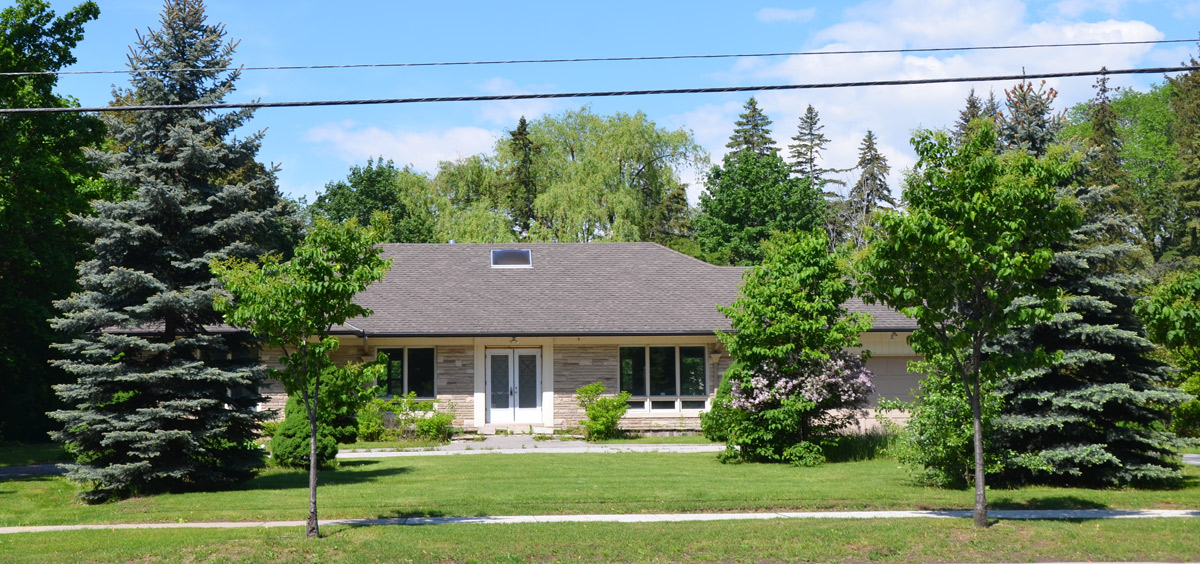
I drove past this Bayview Avenue house on the weekend and was intrigued by the look of it – a pale yellow, once grand older house now sitting empty. Many of the mature trees that were in its front yard have been cut down so the house is now easily visible from the street. I went back to that section of Bayview Avenue with my camera yesterday morning.
There wasn’t much of a chain across the front yard so it was easy to walk up to the house. It looks like the front door hasn’t been used in quite some time. The window appears to have an old fashioned storm window on the outside although the shutters look more modern. I’d love to know the history of the house (How old is it? I suspect that it was built when this section of Bayview was still on the fringes of the city and before Bayview became 5 lanes wide but I don’t know for sure.)
Right next door is this large bungalow:
Originally built as a family home, this became the Bayview Hebrew School of the Arts in 2008. The school is relocating and the building now sits empty.
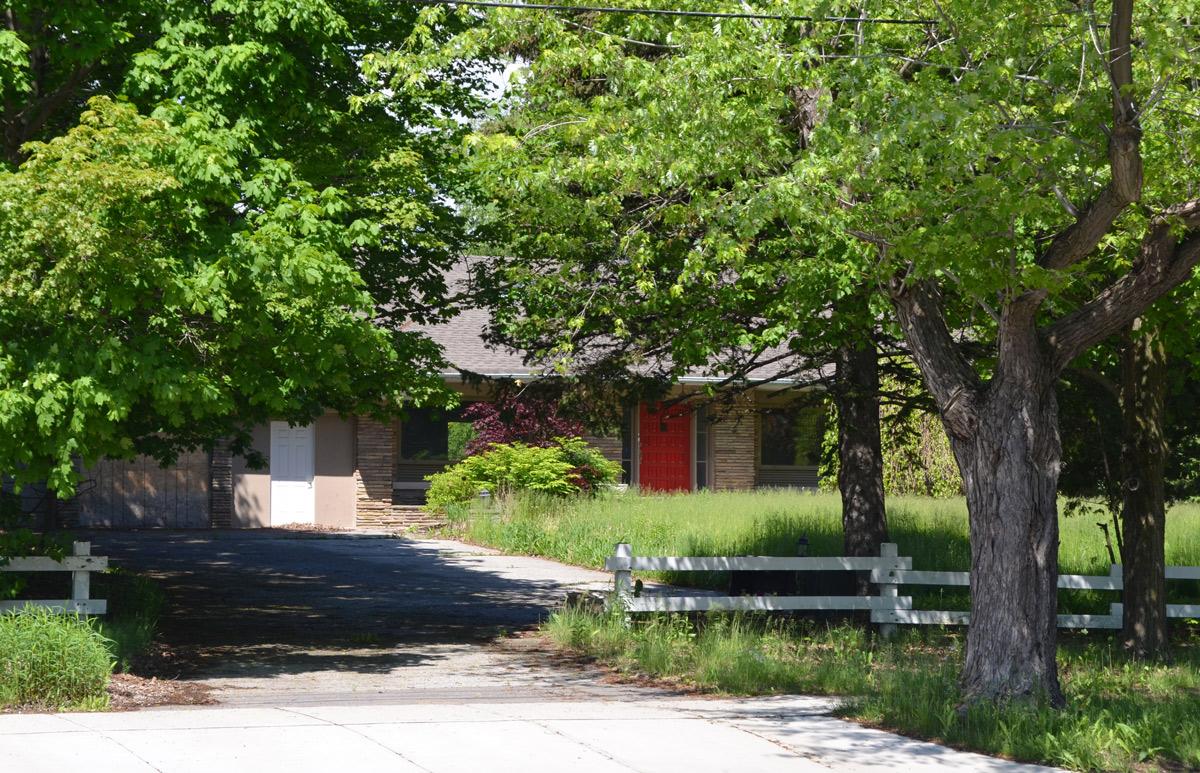
Just up the street was this house. It looks empty but there was a recycling bin beside the garage and some curtains in the windows so I didn’t wander up to the front door…. even though I really like that red door! There was no chain across the driveway, nor were there any “keep out” signs. Neither of those things would stop me, but they are good indicators that no one lives there anymore. Google street view of this address is from August 2015 and at that time there was a for sale sign on the property.
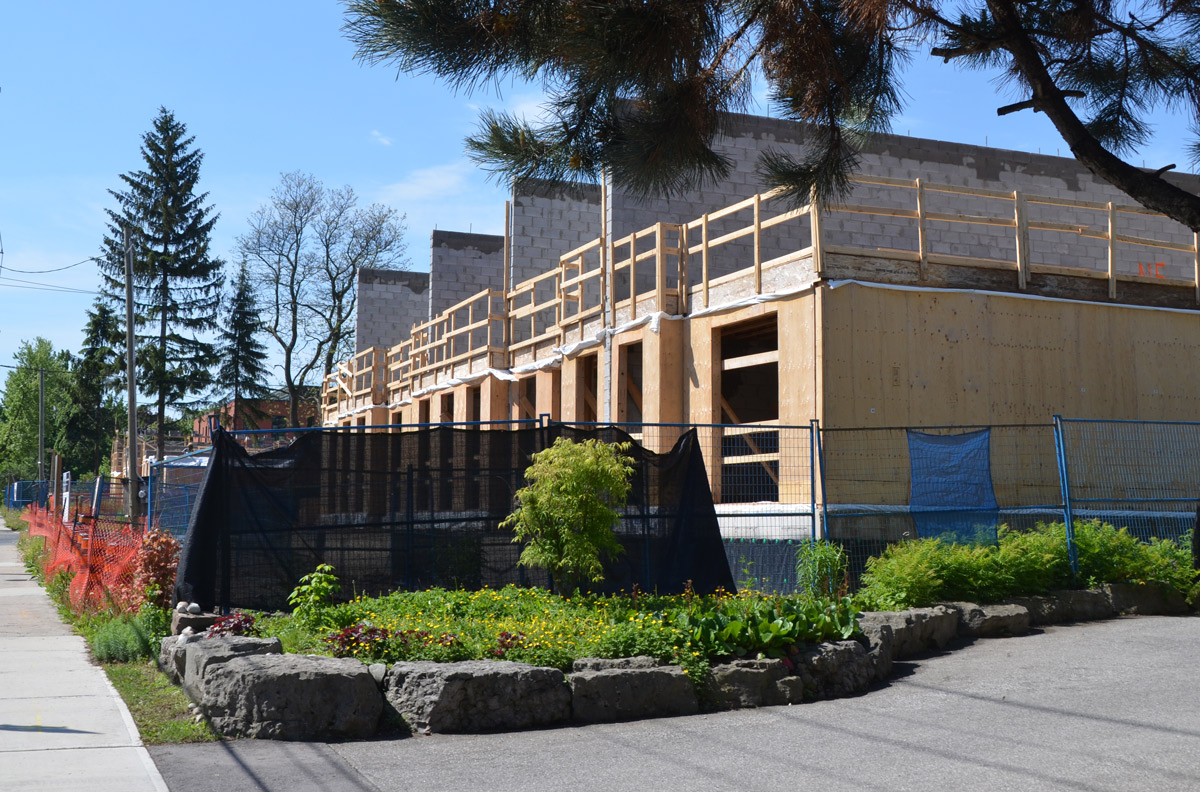
The above are the “going” half of the title of this blog post. The “coming” are these doors under construction; they too are on this part of Bayview Avenue. Side by side front doors with a concrete layer between them – two of a row of five townhouses. One day (soon?) someone will be able to walk in their front door and go up a level or two, to floors that haven’t yet been built.
This is the development that caused an uproar a year ago when they illegally clear cut two lots – cutting down about 30 large trees including a linden tree that was close to 150 years old in the process. According to the City of Toronto Municipal Code Chapter 813, Article III, conviction for cutting down a mature tree results in a “minimum fine of $500.00 and a maximum fine of $100,000.00 per tree involved in an offense; a special supplementary fine of $100,000.00 is also possible.” (source).
In October 2016, Format Group (the developers involved) paid a fine of $155,064. This amount includes $657.30 per tree to cover city inspection costs and $116,600 for the planting of 200 new trees — mostly at other sites.
The two lots will be developed into 11 3-storey townhouses and 4 single family houses. All units have already sold.
Before I leave the area, there is something similar going on across the street.
First – there is this empty house sitting on a corner lot at Bayview and Wilket. This one property is the future home of seven 3-storey townhouses as well as one single detached house. Does anyone want to do the math on the potential profit – one house for 8 units in a time where even a townhouse sells for more than a million.
Second – this sign has also appeared nearby. When I checked their website I found this description: “Located in north Toronto, The Bridle Path is synonymous with prestige and exclusive luxury. Known for its spectacular homes and refined neighbourhood character, it’s no wonder that this is the place that Toronto’s discerning elite prefer to call home. Now, on Bayview Ave. in the heart of the Bridle Path neighbourhood, Kingsmen Group is excited to introduce a new luxury townhome community that embodies the very essence of refined prestige living. Register today for more information coming soon.”
There is so much wrong with that paragraph. I wouldn’t call this part of Bayview a part of the Bridle Path neighbourhood; you might be able to make an argument that it’s on the fringes of said neighbourhood but that would be stretching it. “Prestige” and “luxury” are words that are so overused that they are almost meaningless with respect to Toronto real estate. It seems silly to compare a townhouse on Bayview with the homes on the Bridle Path but I guess that’s what sells. Actually, you could probably sell them without such a comparison!
Oh dear, I want to call this a Thursday Doors post so I’d best call it quits here. I’ve probably already strayed too far off topic! For more information on the Thursday Doors project see here.
making peace, on display
Posted: May 31, 2017 in events, locations, public artTags: art, Canary district, corktown commons, disarmament, display, environment, exhibit, images, International Peace Bureau, IPB, justice, Kamajor, Making Peace, memorial, Nelson Mandela, outdoor, Pankhurst, peace, photos, suffragette, trees, voting rights, women, words
‘Making Peace’ is a traveling exhibit that is being shown in Toronto at the moment. It was produced by the International Peace Bureau (IPB) and was first shown in in 2010 as a celebration of the 100th anniversary of the 1910 Nobel Peace Prize that was awarded to IPB. It’s purpose is to promote peace as well as educate and inform.
It can be seen until the end of June on Front Street East in the Canary District (by Corktown Commons, east of the Distillery District). In Toronto, the exhibit involves short four-sided pillars that line the sidewalk and each side of every pillar has a photo with a description or a quote from a famous person. There is also a temporary gallery in an indoor space ‘loaned’ to the exhibit by one of the developers in the Canary District.
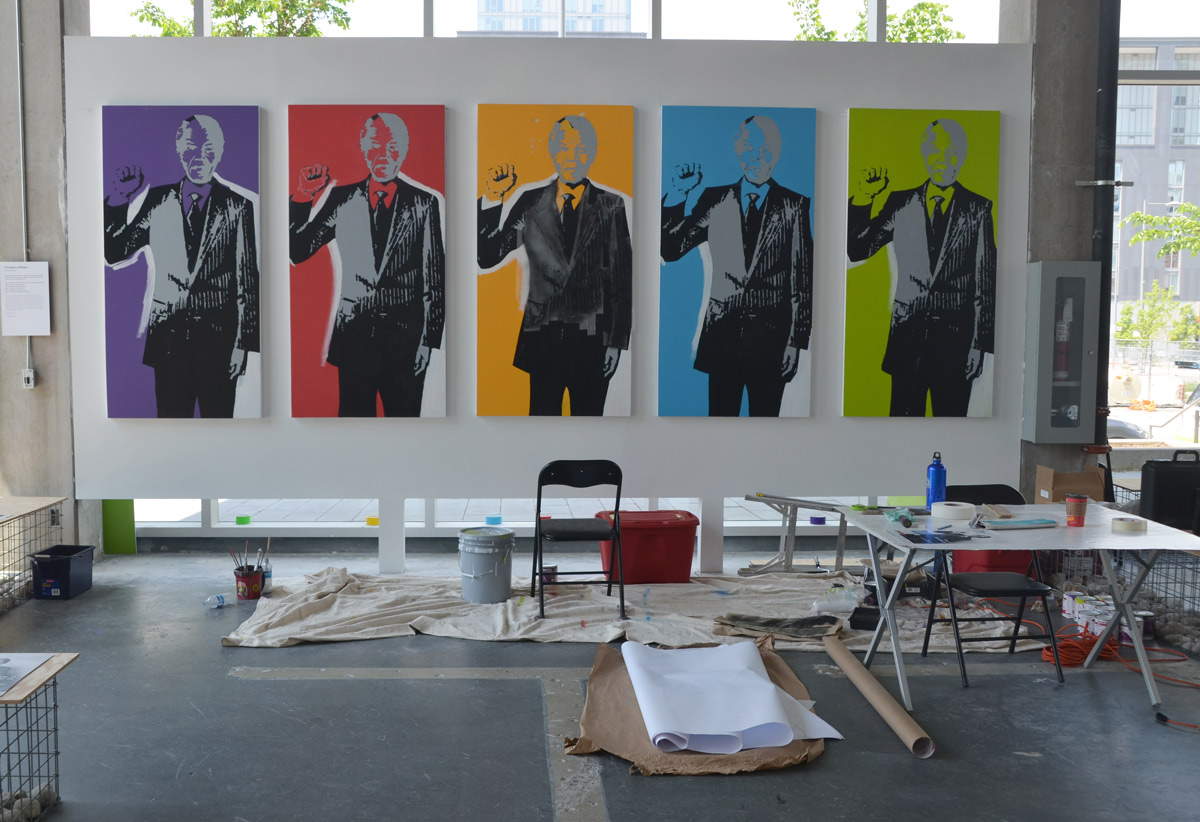
below: A painting in progress by Ford Medina showing Nelson Mandela in five colours. These colours carry over into the outdoor exhibit and each colour represents the five main elements that IPB considers necessary for peace:
1. disarmament and nonviolence (purple)
2. conflict prevention and resolution (red)
3. economic and social justice (orange)
4. human rights, law and democracy (blue)
5. environment and sustainable development (green)
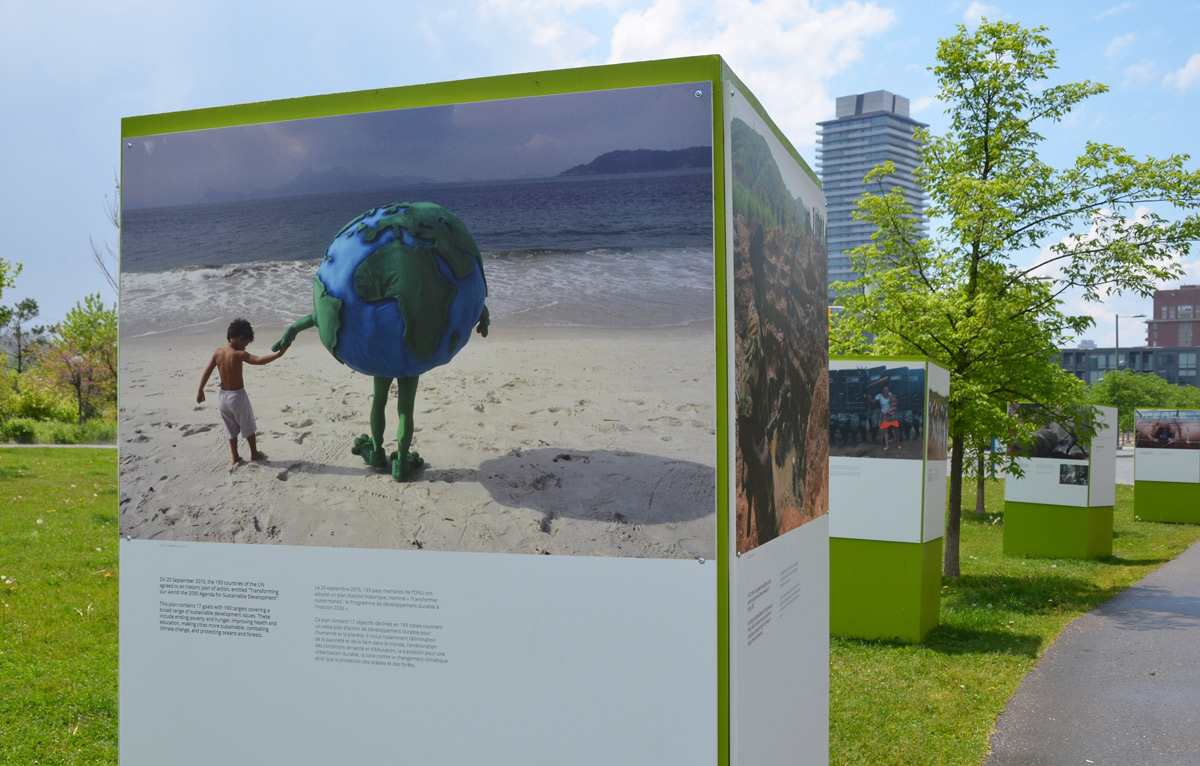
below: The display extends into Corktown Commons. Here the pillars are green as this is the section for the fifth element named above, the environment.
below: Photo by Ribeiro Antonio. The words that accompany this photo are: ” On 25 September 2015, the 193 countries of the UN agreed to an historic plan of action, entitled ‘Transforming our world: the 2030 Agenda for Sustainable Development’. This plan contains 17 goals with 169 targets covering a broad range of sustainable development issues. These include ending poverty and hunger, improving health education, making cities more sustainable, combating climate change, and protecting oceans and forests.” If you are interested in this, there is more information on the UN website.
below: Blue is for human rights, law, and democracy and here you have an old black and white photograph of Sylvia Pankhurst (1882-1960), a British campaigner, apparently taken when she was in Australia speaking out on behalf of woman’s rights as part of the Suffragette movement. The Suffragettes (or Women’s Social and Political Union or WSPU) was founded by a small group of women in 1903, including Sylvia, but during WW1 Sylvia was expelled from the WSPU because of her pacifist views and anti-war actions. Her sister Adela shared similar views – she immigrated to Australia where campaigned against the First World War.
below: Two photos. The one on the right, of the woman holding the flower in front of the armed soldiers, was taken at a Peace March against the Vietnam War in Washington DC in 1967. The photo on the left was taken in 2001 and is the back of a Kamajor fighter in Sierra Leone. They played a role in the civil war that occurred in that country between 1991 and 2002.
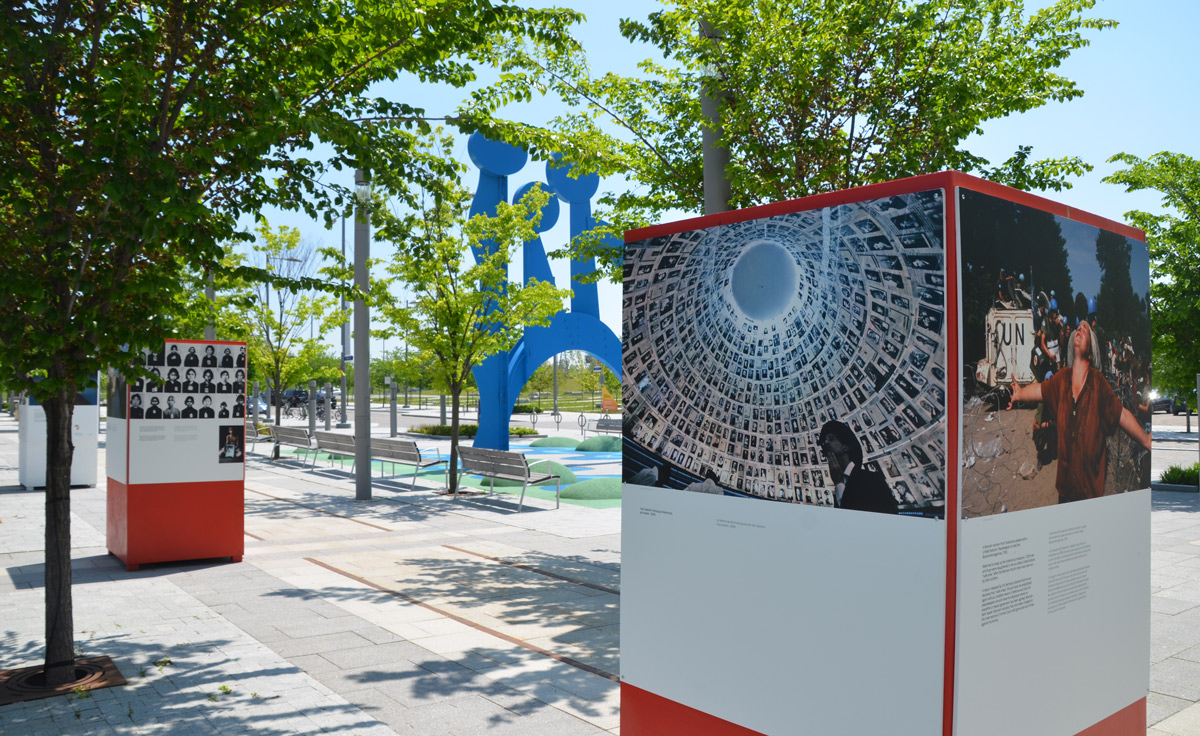
below: A couple of the red pillars on Front Street with the blue sculpture, “The Water Guardians ” behind them. The images on the closest pillar are of inside the Holocaust Memorial in Jerusalem as well as UN peacekeepers in Bosnia.
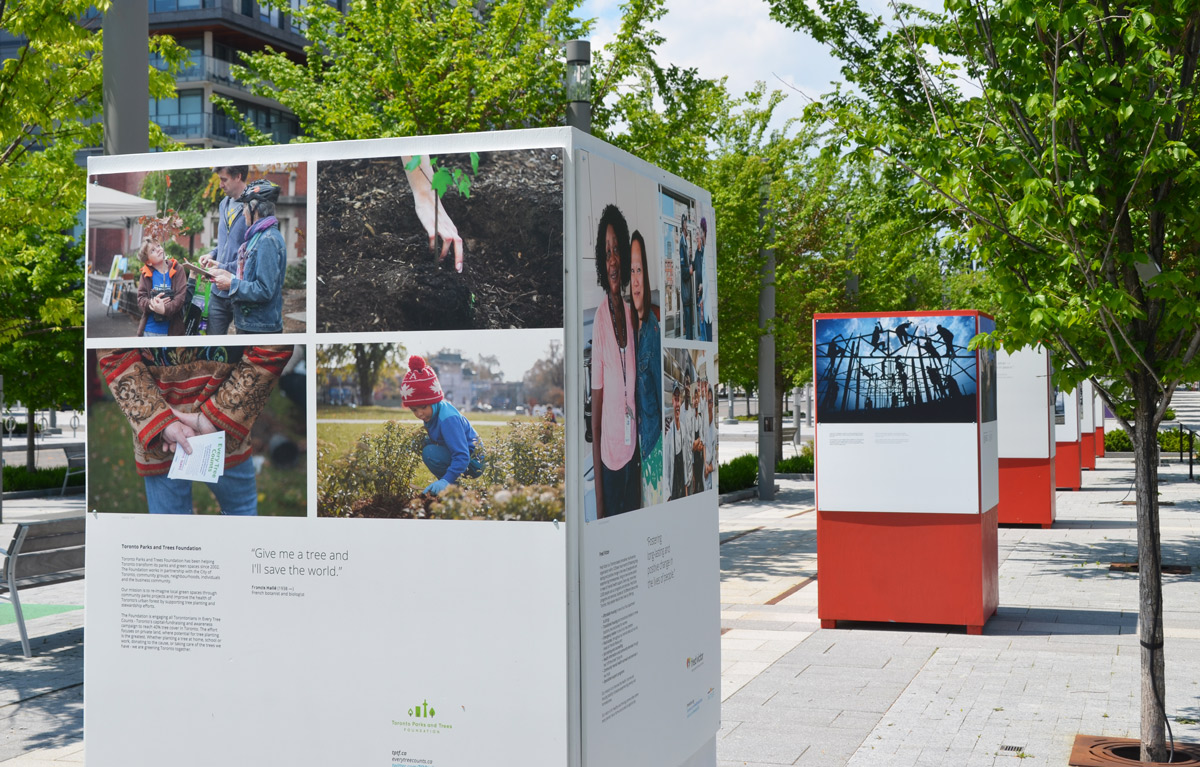
below: Closer to home, this pillar celebrates the work of the Toronto Parks and Trees Foundation. Working with the city as well as with community groups, businesses, and individuals, they help to increase Toronto’s tree cover.
“Earth provides enough to satisfy every man’s need, but not every man’s greed.” Gandhi
below: Homeless migrant worker, China
The exhibit continues until mid-September.
sunlight and shadows on a winter morning
Posted: March 6, 2017 in abstract, reflections, shadows, windows and wallsTags: abstract, balconies, blue sky, buildings, downtown, exterior, grass, half house, light, lines, outside, patterns, peaked roof, posts, reflected light, reflectionsonies, shadow, trees, winter
Early Saturday morning was cold but beautiful –
brilliant blue overhead with the sun still low in the sky.
below: Striped grass
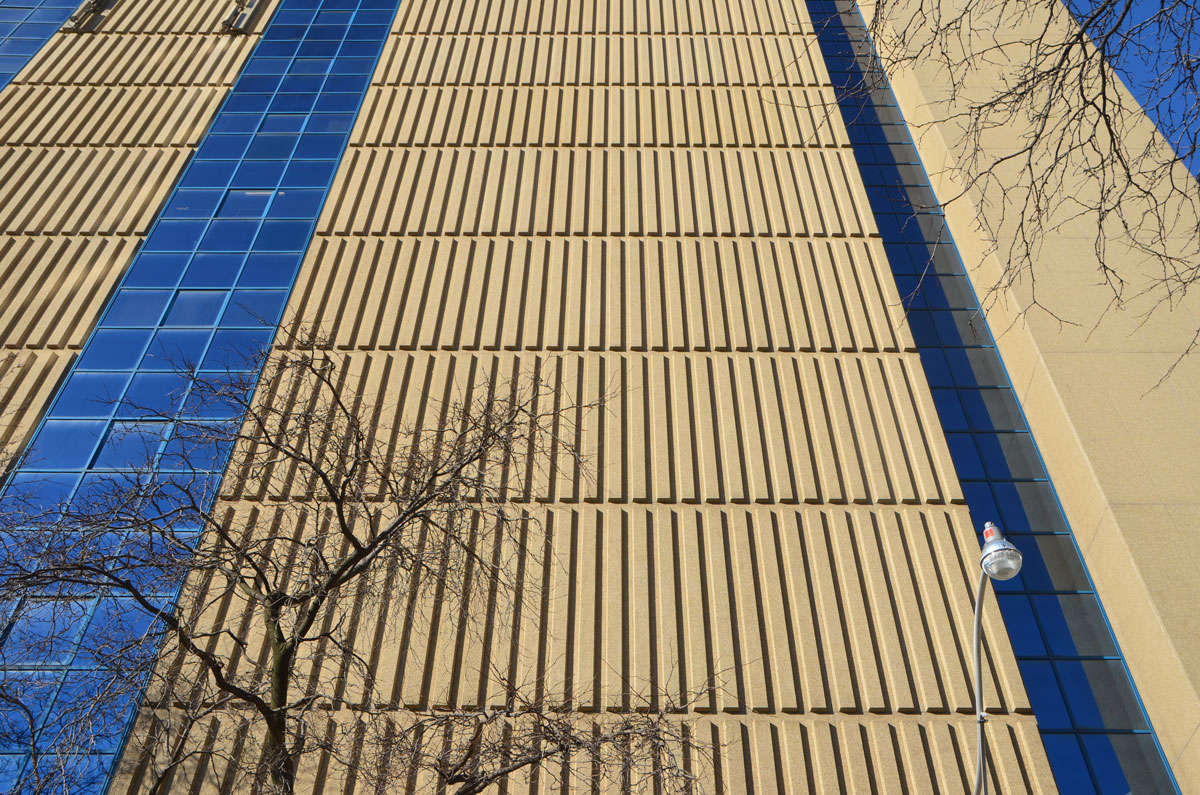
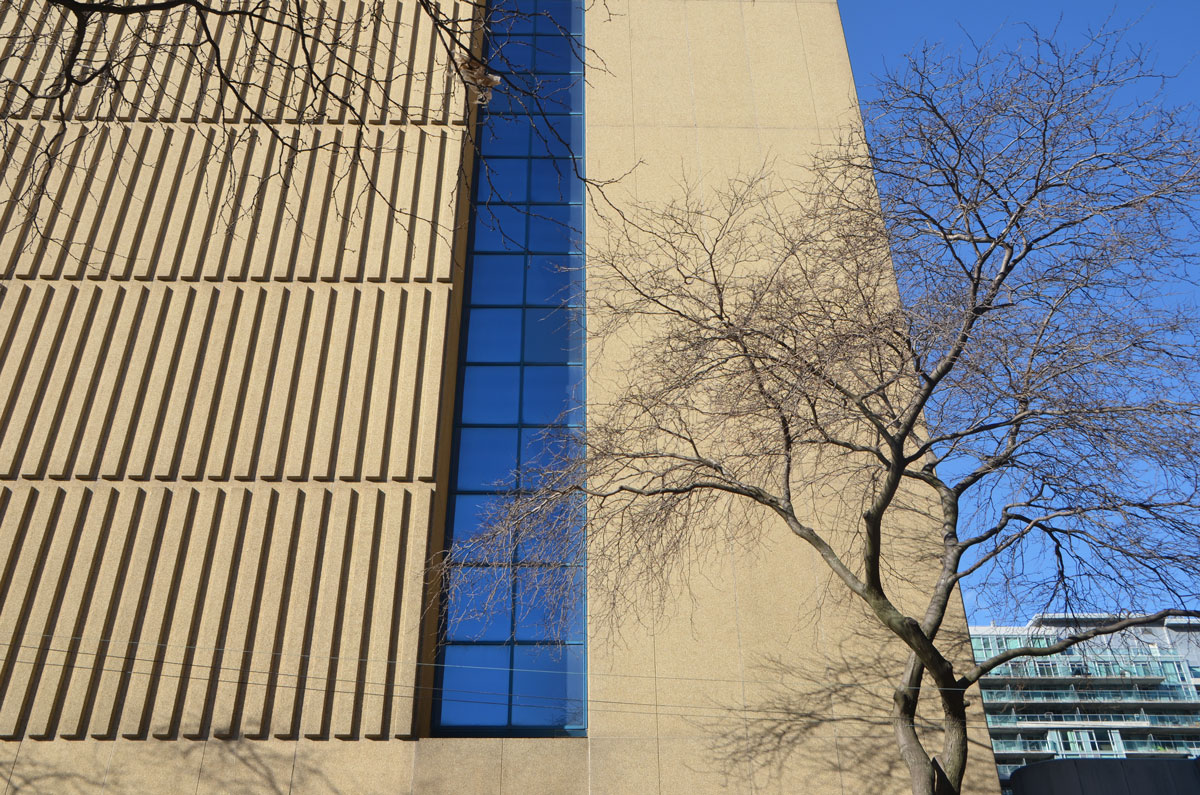
below: This is the Bell building from the Simcoe Street side. The blue glass, vertical lines in the concrete, blue sky and strong tree shapes made for an interesting few minutes while I experimented with different angles and views.
below: The ghostly look of reflected light
below: A single pole and its shadow, alone on a wall.
below: Three reflected windows reserved for the president.
below: A half house, a fun find. Once this was a semi-divided house where the shared wall created the peak at the front of the house. With its partner gone, the remaining house looks incomplete.
below: A tree in silhouette seems to dance in front of the other buildings.
below: Phantom balconies, mirages on the concrete.
from Castle Frank to Cabbagetown
Posted: March 3, 2017 in alleys, doors, graffiti and street art, history, locations, old buildings, stores, transportation, windows and wallsTags: angel, apartment buildings, architecture, Bloor St. East, bridge, cabbage, Castle Frank, Christmas wreath, door, flamingos, ghost sign, gothic cottage, graffiti, high rise buildings, Jesus, Mary, mural, rainbow shoelaces, religious, Ryan Dineen, station, statues, stores, street, streetcar, subway, the Daily Herald, trees, TTC, umbrellas, urban, window, winter, words, workers cottage
Another nice day, another ramble.
below: My starting point the other day was Castle Frank subway station (Bloor Street East, close to the top of Parliament Street). This station opened in 1966 although the entrance that you see in the photo was an addition that was added only a few years ago.
below: An interesting round window in the station entrance. You can see part of the window in the picture above, peaking from around the side of the tree trunk.
below: The subway “tunnel” between Sherbourne and Castle Frank stations isn’t really a tunnel at all. This view surprised me – I know that I have driven under this structure on Rosedale Valley Road. I don’t recall knowing that it was for the subway.
below: “It’s never too cold for rainbow shoelaces.” Sage advice for the winter time.
below: Graffiti under the bridge… even though I am drawn to bridges I didn’t go down the hill to investigate. That can be another blog post at another not so muddy time. This spot can be accessed from the Rekai Family Parkette which is at the SE corner of Bloor and Parliament, tucked in between Bloor and St. James Cemetery.
below: More graffiti seen from the parkette.
below: St. James Cemetery was opened in July of 1844 at a time when the population of Toronto was around 18,000 and most of them lived south of Queen Street. The cemetery would have been out in the country but now, more than 150 years later, the cemetery is in the middle of the city. There are 89,000 interments here including two of my great x 2 (or 3?) grandparents and some of their descendants (they’re not shown in the picture though!).
below: A little reminder that Christmas wasn’t all that long ago.
The fastest route from Castle Frank to Cabbagetown is straight down Parliament Street. But of course, the direct route is rarely the one that I take. The area is full of little alleys and lanes and they all call to me.
below: These animals are part of a mural painted in support of Riverdale Farm which is nearby.
below: Reading the news, many newses.
below: In Flos Williams Lane there are a number of stenciled words. “Guilty until proven rich” I first saw here a couple of years ago. I don’t walk this lane very often so I’m not sure how long ago the other sayings appeared.
below: Like most walks, there were interesting windows to be seen.
below: …and doors too. A very bright orange door!
below: But unlike most walks, there was a giant gecko or lizard.
One of the appeals of Cabbagetown is the number of older houses, many of which are heritage buildings.
below: This house was built in 1858 and its first resident was Charles MacKay, a customs official who lived here from 1858 to 1865. The infill line of townhouses behind it are a much more recent development.
below: Cabbagetown has more of these ‘workers cottages’ or ‘gothic cottages’ than anywhere else I’ve walked. This arrangement of three identical houses in a row is especially rare (but not unique, at least not yet).
below: This cottage is in the middle of another threesome but they are not identical. The yellow door on the pale blue house is a wonderful colour combination. A little bit of sunshine.
below: Even though it has been renovated and an addition added to the back, this house still retains some of its historical roots.
below: And more history… I was attracted to this building by the beautiful double doors. Once I was close to the house, I noticed the ghost sign hiding behind the tree branches. The Daily Herald is no longer but it the mark it made here remains. A mysterious mark though because I can find no record of such a publication. In fact, probably “the sign had been part of a play or film that the home’s owner was involved in and he installed the sign on an act of whimsy.” (source, bottom of page) You gotta love whimsy!
below: Whimsy you say? Bright pink flamingo whimsy in a store window. They look like they’re ready for a rainy day.
below: There were also some store windows that were a bit more serious.
below: I think that Carlton and Parliament is one of the most colourful intersections in the city and I always enjoy passing this way. This is the view if you are standing in the middle of Carlton street and looking east towards Parliament.
below: This large colourful mural on the wall of Cabbagetown Corner Convenience, NE corner of Carlton and Parliament, has become a landmark since it was painted by Ryan Dineen in 2005.
below: The 506 Carlton streetcar makes its left turn from Parliament. It’s never a quick and easy turn. In fact, it’s usually frustratingly slow.

And in case you were wondering, yes, you can find cabbages in cabbagetown. This big one is on the Cabbagetown mural on the side of the LCBO building.
And yes, there is a lot more to Cabbagetown than this…
and I will use that as an excuse to return another time!
we’ll start with ravens and flamingos
Posted: February 22, 2017 in alleys, graffiti and street art, old buildingsTags: alley, alphabet, artist, black birds, boy, Bruno Smoky, buildings, College Street, cowboys, creatures, crows, dogs, Dufferin Grove, faces, fiya, flamingos, graffiti, J Bizzel, Johnathan Ball, junk, Katia Engell, lane, mud, mural, painting, park, people, ravens, reflections, Runt, shalak, spray paint, stores, street art, sunshine, trees, truck, water, witches, woman, words
below: I doubt she’s saying that she loves the sunshine THIS MUCH! but I’d like to think she is. That’s certainly what was going through my head for most of the weekend so I’m going to pretend that she agrees with me!… especially since I am writing this as the rain falls outside my window.
But back to those ravens and flamingos that I promised you…..
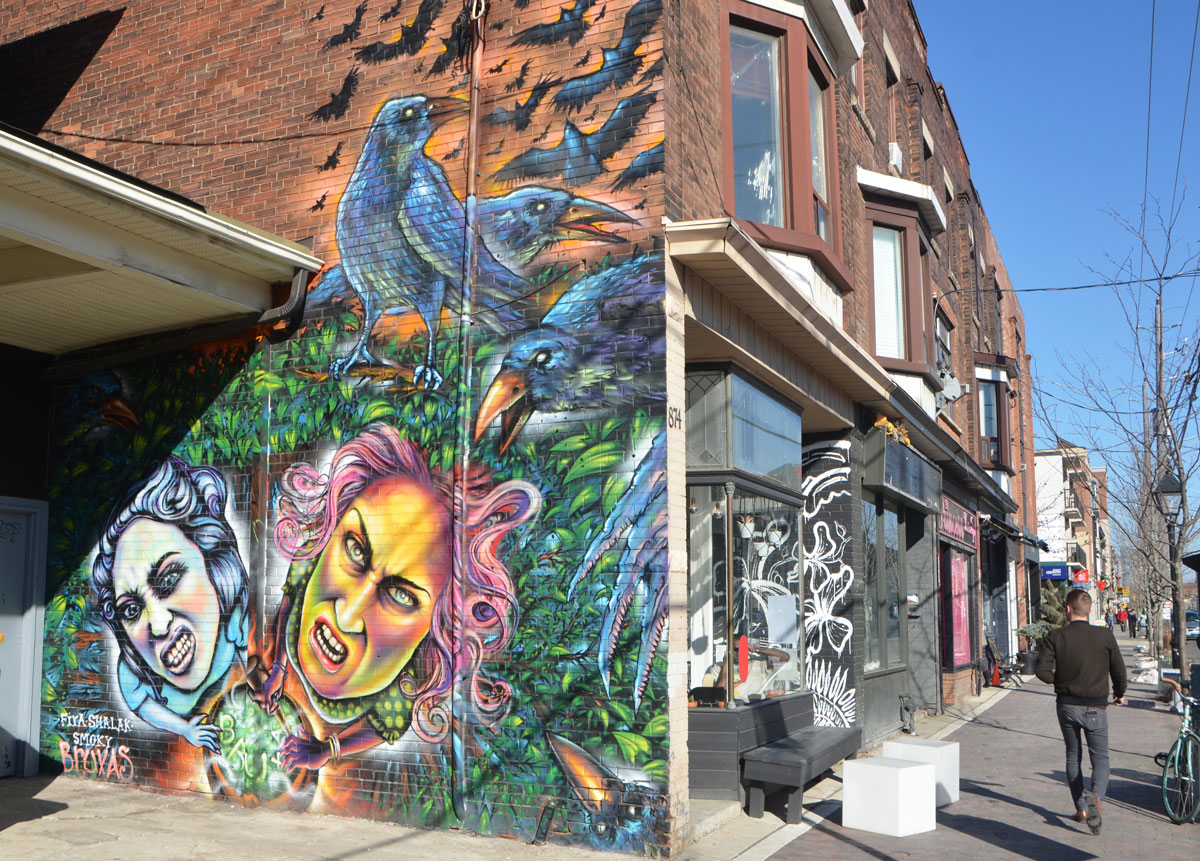
below: But not everyone’s happy. Witches brewing with ravens and crows nearby. There always seems to be symbolism associated with these large black birds so I went searching for information. Ravens and crows are found throughout most of the northern hemisphere so many diverse cultures have their own mythologies surrounding these birds. The best summary I found was this, “On the negative side, Raven represents the profane, the devil, evil spirits, the trickster and thief, war and destruction, death and doom, the void. Yet in many cultures Raven also represents deep magic, the mystery of the unknown, death and transformation, creation, healing, wisdom, protection, and prophecy. ” (source) We don’t know exactly what Fiya Bruxa, Shalak, and Bruno had in mind when they painted this mural but I doubt that it was something positive – those witches look rather angry and nasty.
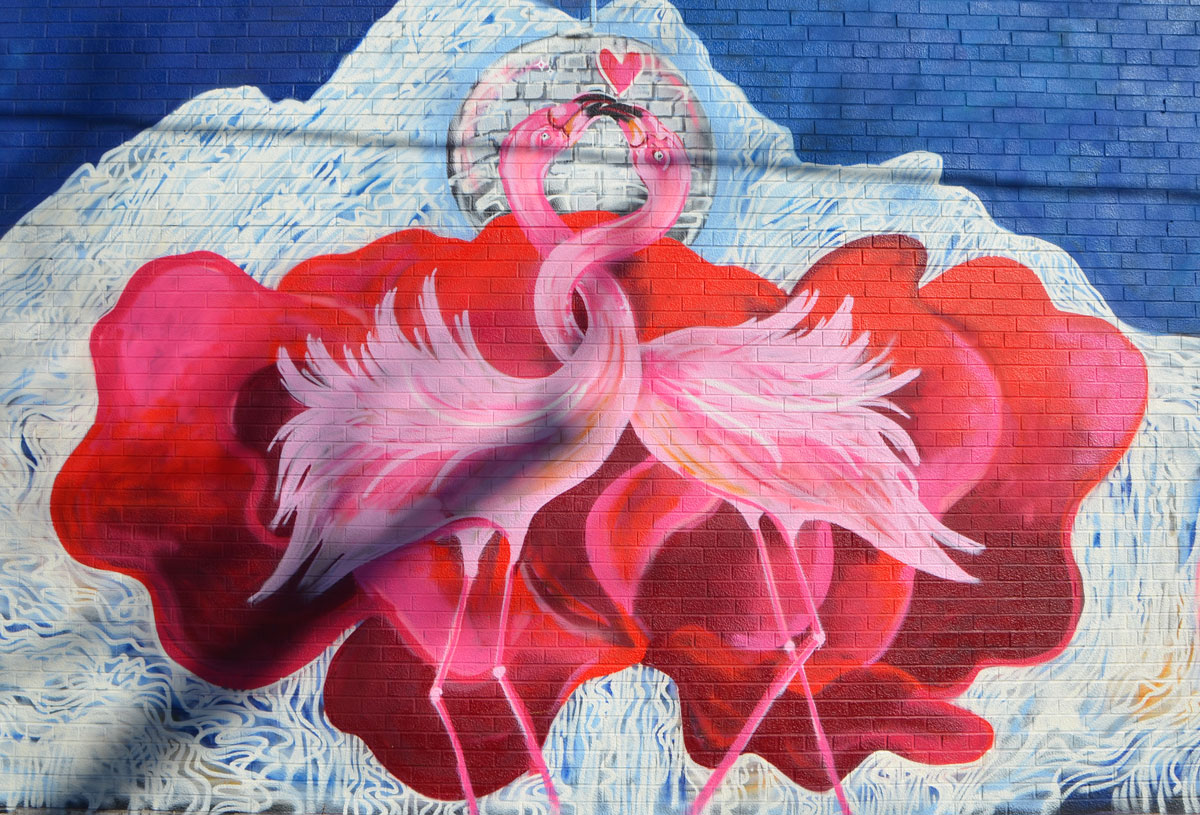
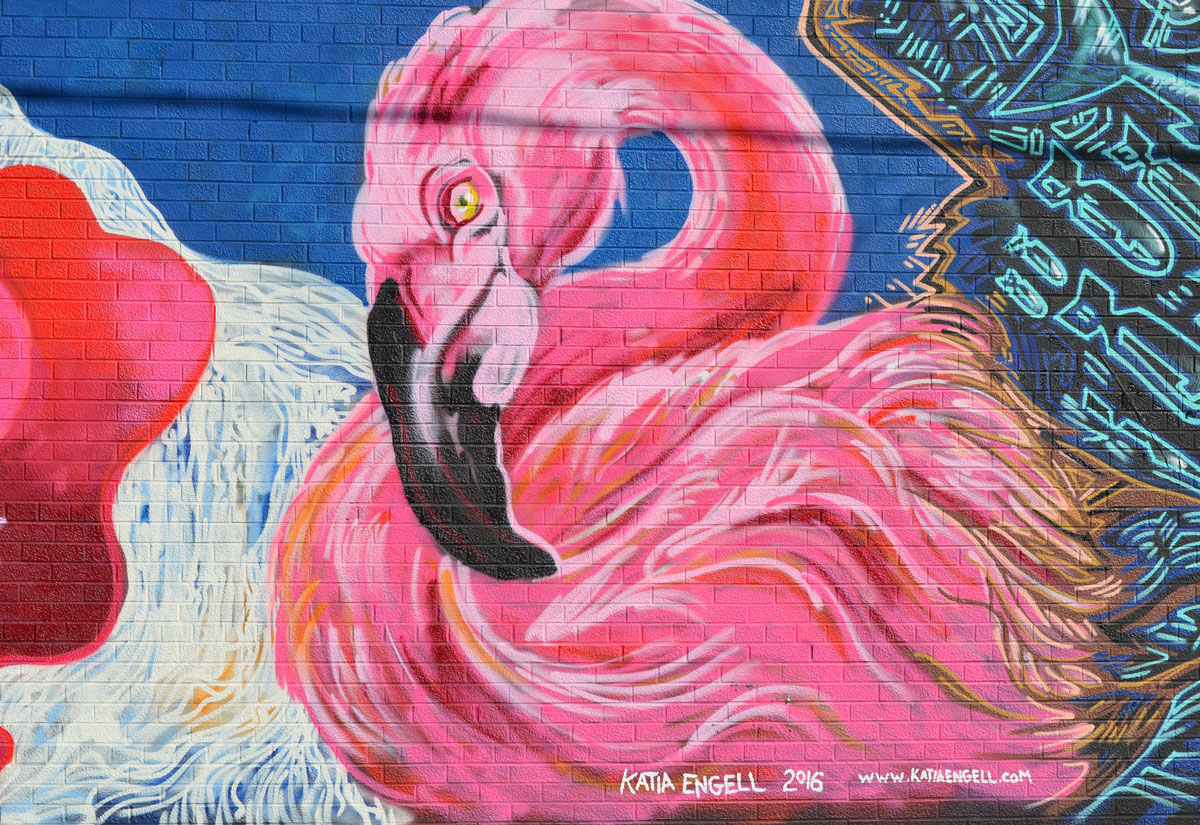
below: From the vengeful looking faces above to these hopelessly romantic flamingos is just a matter of a few steps along College Street. They’re the center part of a larger mural by Katia Engell.
There are 4 flamingos altogether and they are in between two other murals.
In the picture below you can just see the yellow of an alphabet mural by runt
below: Too many things in the way makes for an awkward photo but you can still see enough of it to play the game of what creature goes with what letter! R is for robot dog? Z is for zlithering thingy with rings?
below: J is for jumping purple blob? C is for coughing-up- dinnersaurus?
And look, an alley to explore……
Wait! Before going down the alley I want to take a few steps backwards. Remember that I mentioned that the flamingos were between two murals? This is what is on the other side…..
below: Three cowboys in a mural signed by J Bizzel 4 Shizzel.
The one with his shirt off is the one under the air conditioner.
below: This strange but happy fellow was waiting in the alley.
below: If you look closely at this painting, you will notice that the wavy lines continue behind the bars of the railing and that there is only a small distance between the railing and the wall. That was not a simple paint job.
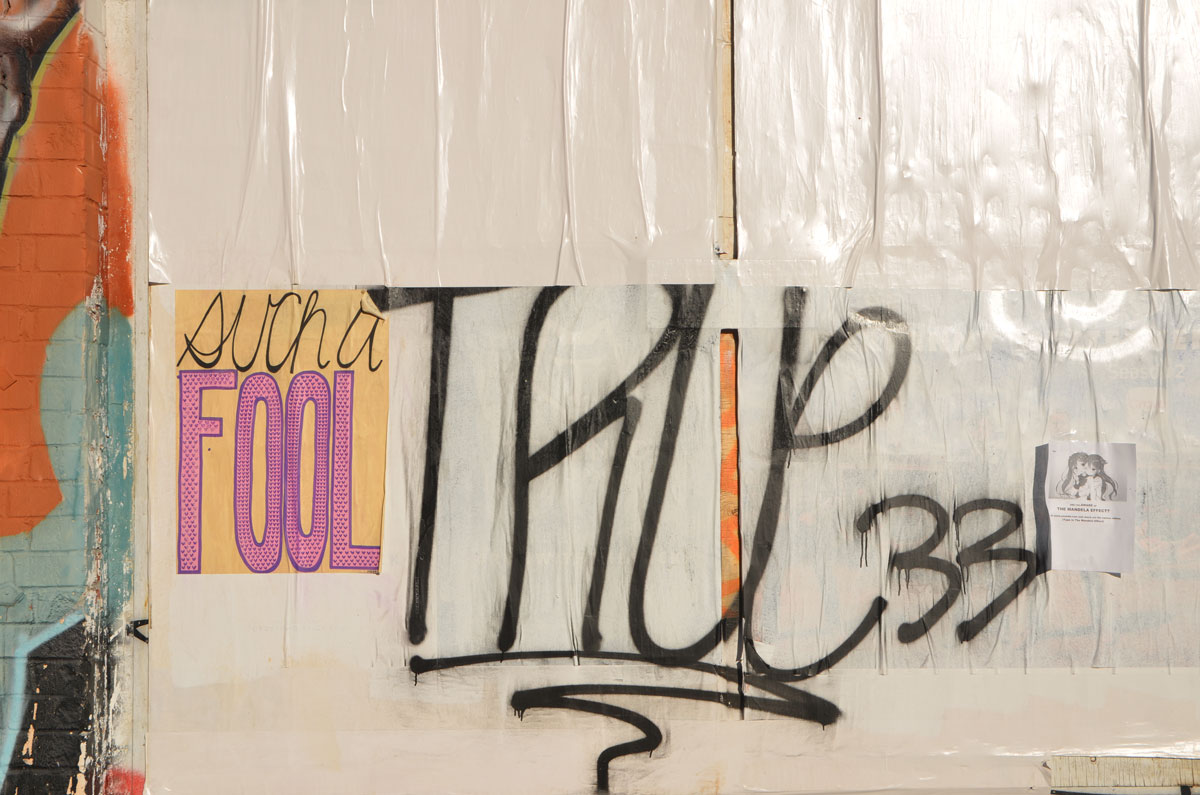
below: ‘Such a fool’ and someone to agree with it.
below: I’m not too sure what to say about this one. Vermut? or Vermouth? Too much vermouth and you take your clothes off, versmut? Bad joke.
That’s the end of our little tour.
Find a sunny spot and pull up a chair and rest your feet for a few minutes.
Tomorrow there will be puddles to go splashing through…
but that’s a story for another day.