


Spadina has many faces – It starts at Eglinton as Spadina Road where it runs south through Forest Hill. It’s journey southward then continues through a number of different parts of the city including a spot where there is a block missing at Casa Loma. Pedestrians can use the Baldwin Stairs but traffic has to detour around the castle. At Bloor it changes to Spadina Avenue and widens to allow streetcar access down the middle of the road. Here, it is also the western edge of the University of Toronto.
Just north of College Street, Spadina becomes Spadina Crescent as it forms a circle around what is now the Daniels Faculty of Architecture building. South of College Street to Dundas the neighbourhood is somewhat eclectic with a mix of Kensington Market and Chinatown.


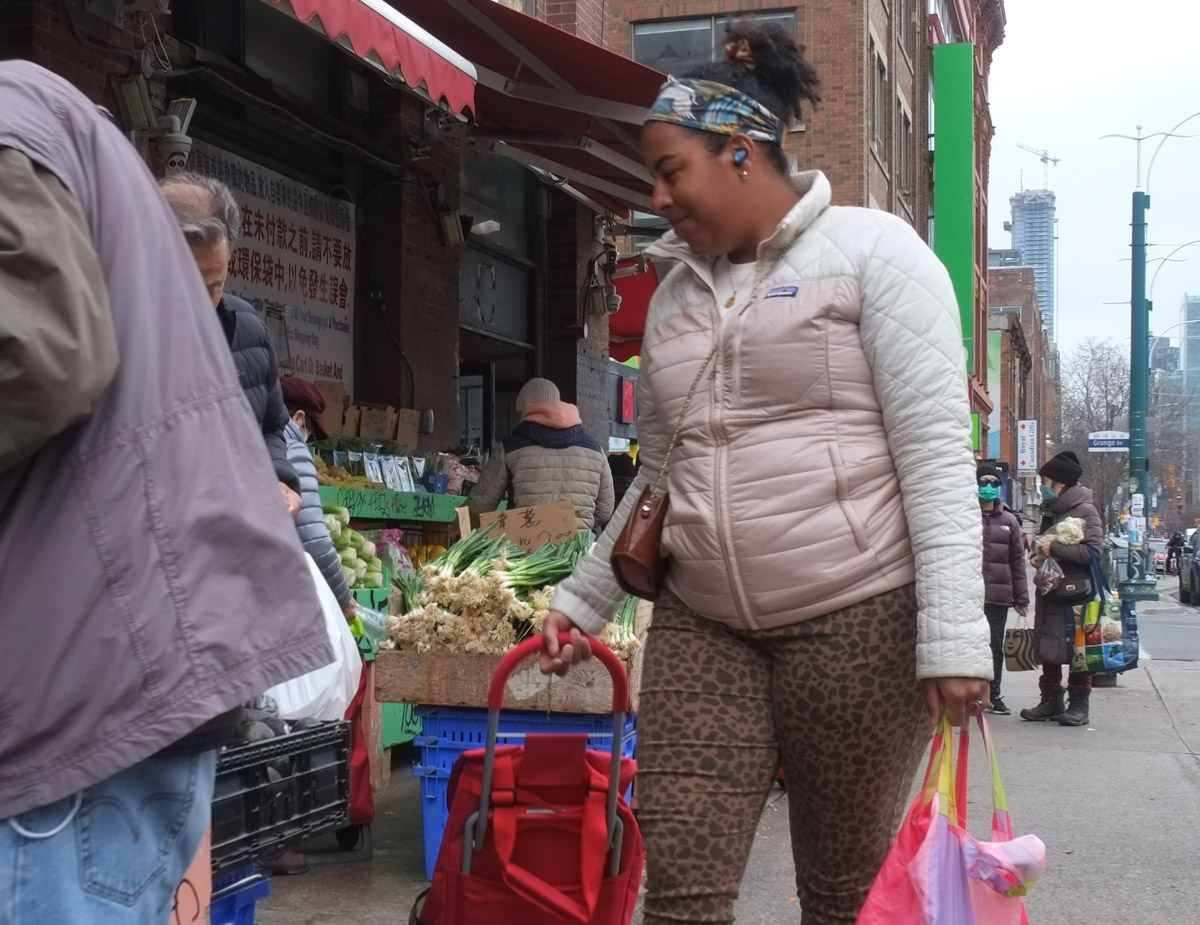
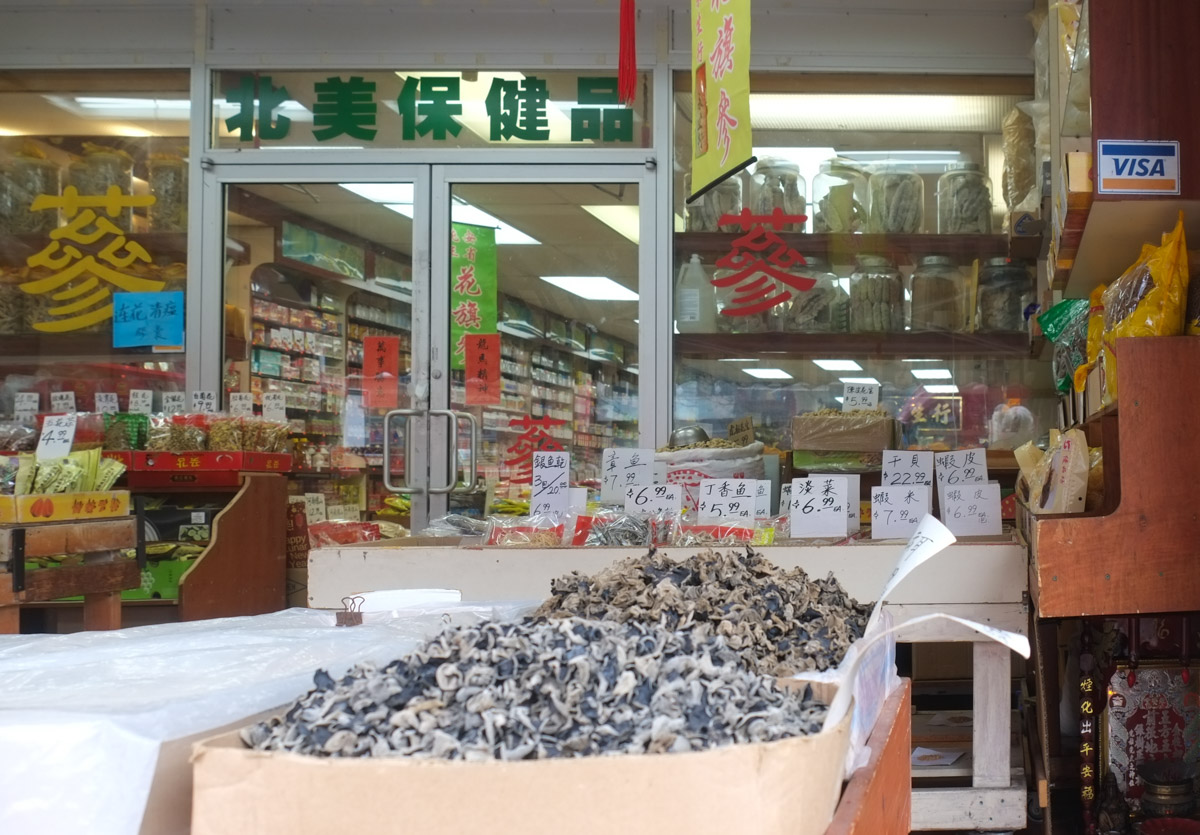

below: Celtuce and asparagus for sale. Celtuce was new to me – I’ve never seen it before. It is also called also called stem lettuce, celery lettuce, asparagus lettuce, or Chinese lettuce. Unlike other lettuces, it is the stem that is eaten (although the leaves are also edible).

below: Collaborative mural under the window, the work of June Kim and Curtia Wright. East meets West, painted back in October.
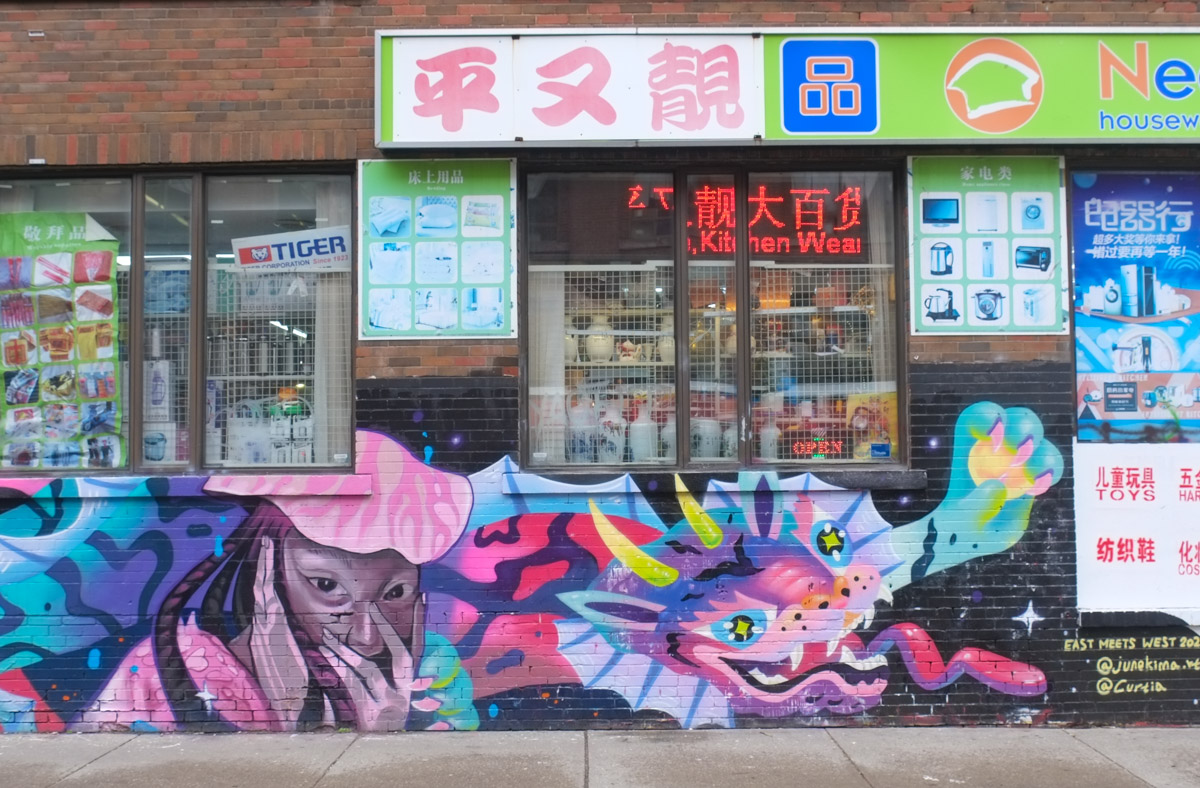
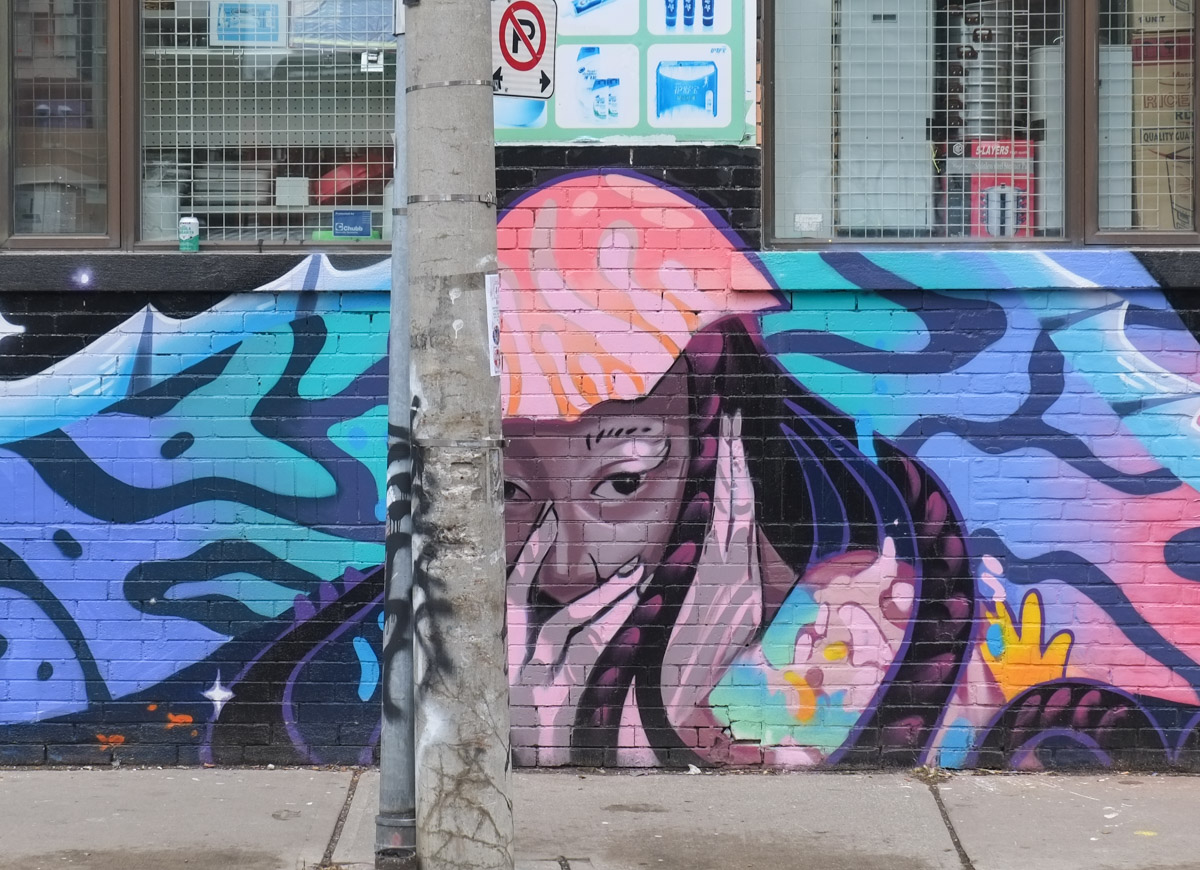
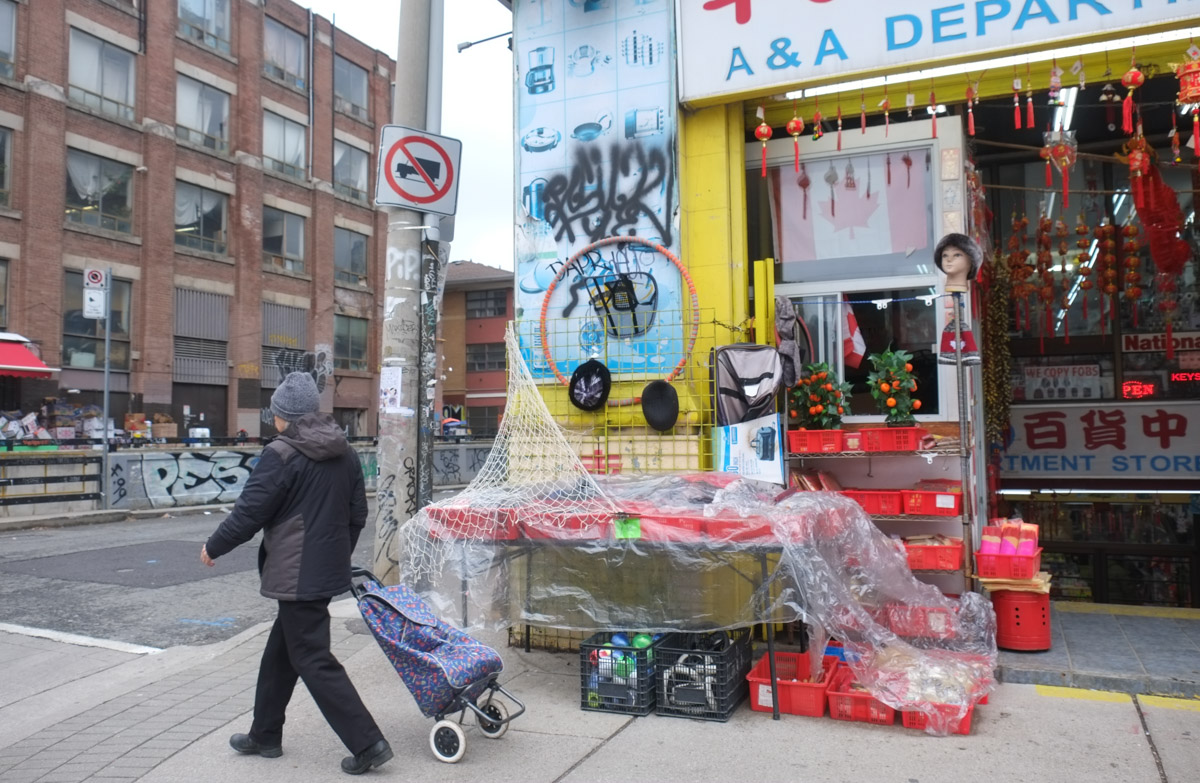

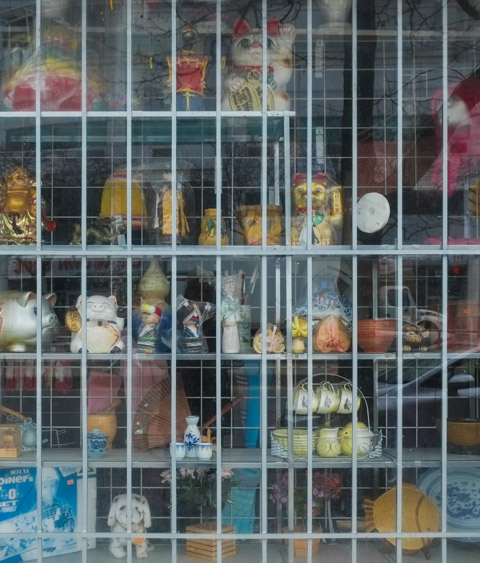
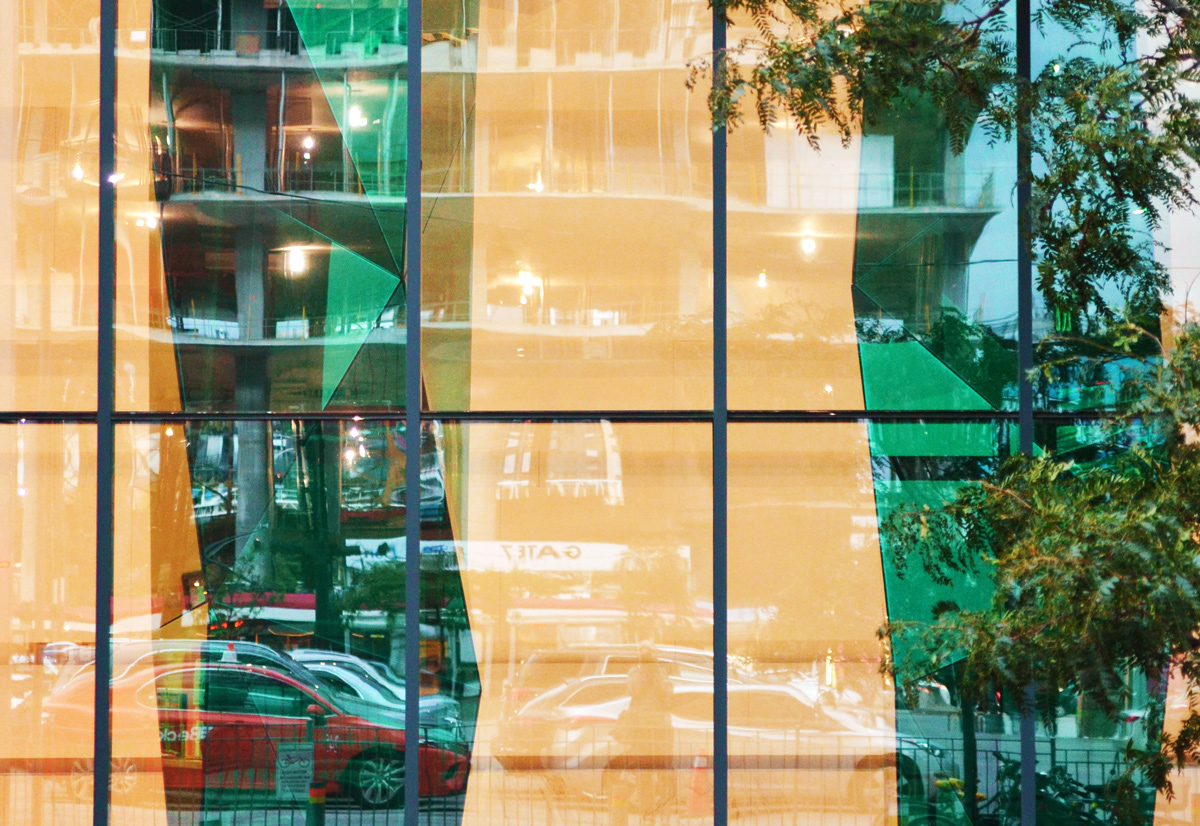
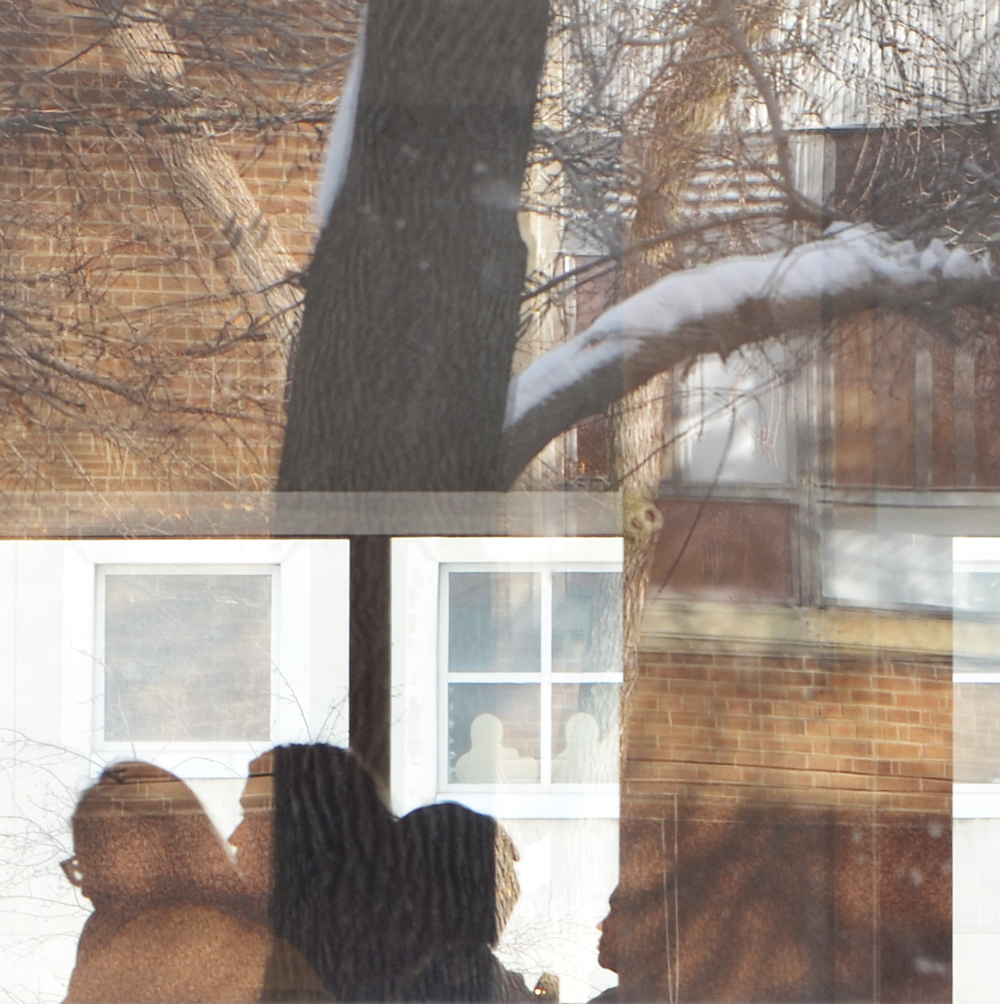
below: Holy Chinatown window Batman!

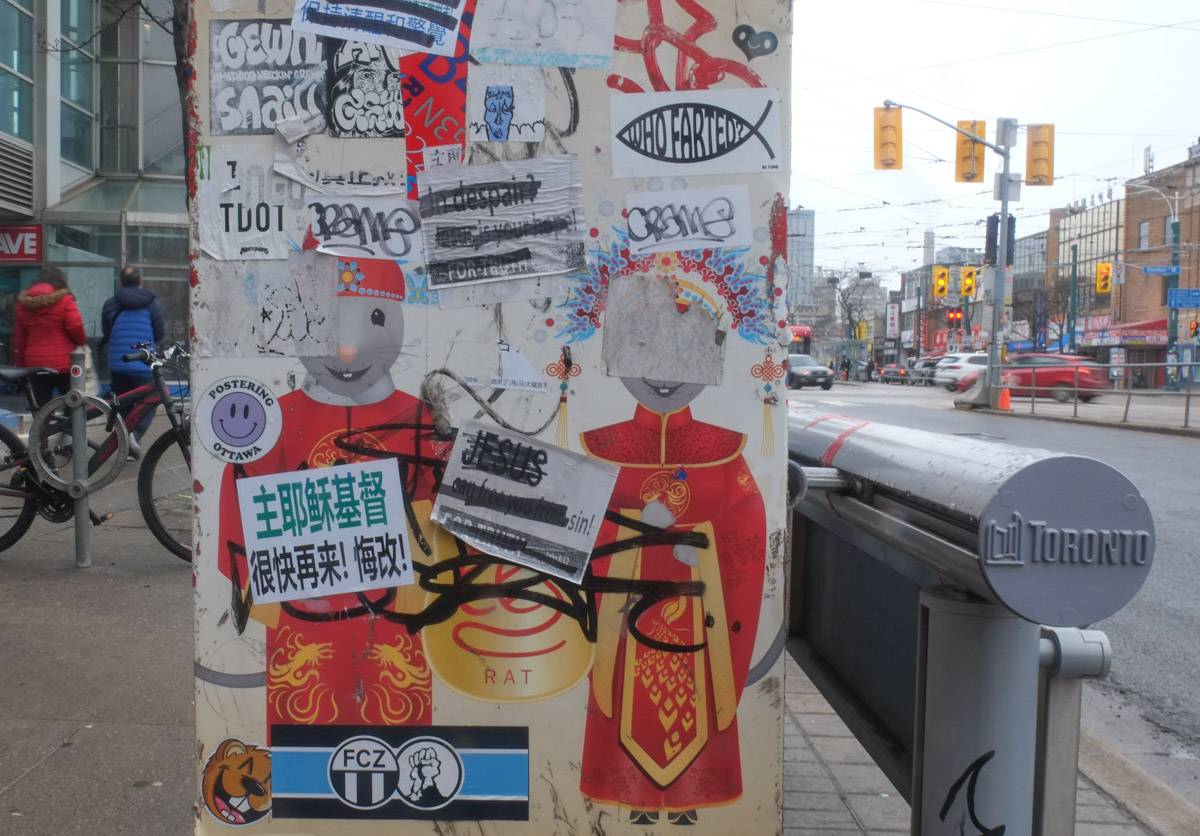
below: A Canada Post mailbox decorated originally with an image of the Year of the Rat (from Lunar New Year calendar) stamp issued in 2020.
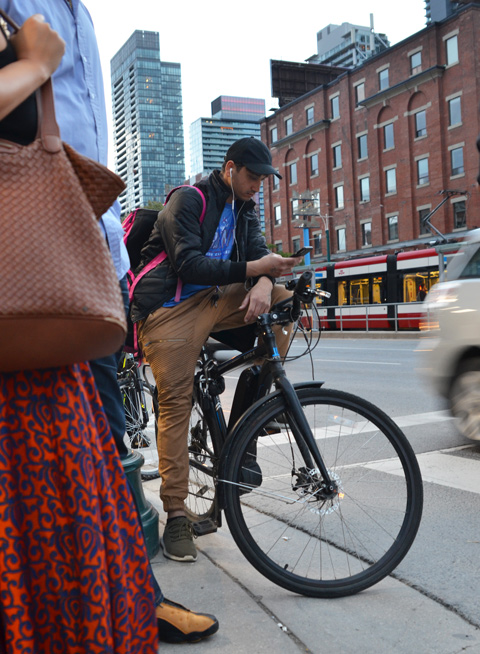
below: Waiting for the streetcar


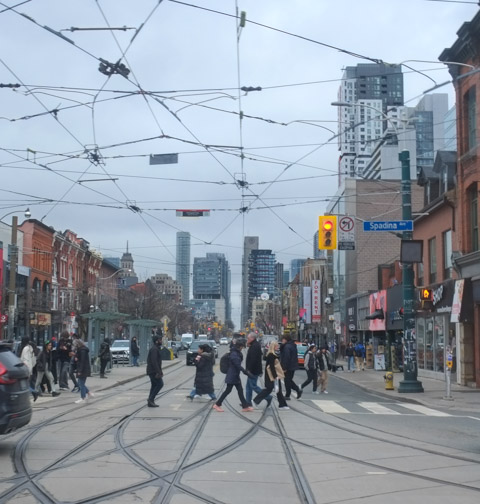
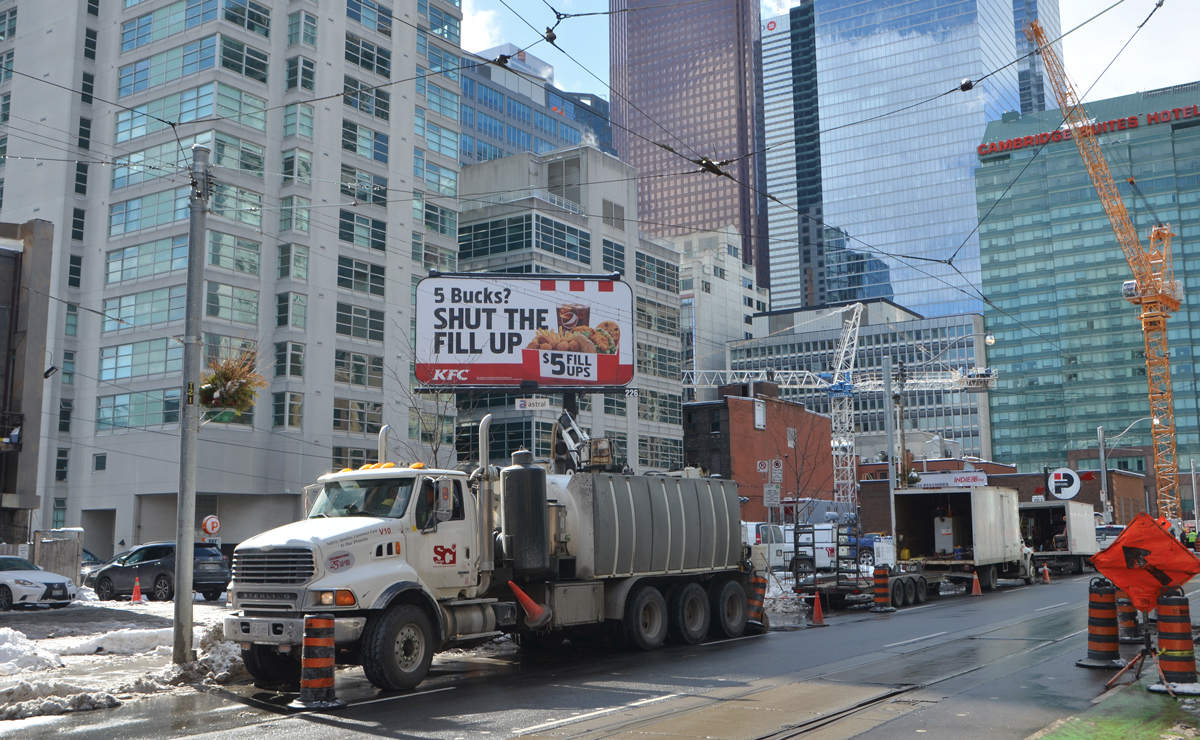
below: Looking eastward along Queen Street West with a web of streetcar wires overhead and many tracks underfoot. The new Ontario Line subway will cross here with a new Queen-Spadina station being planned. Between Sherbourne (Moss Park) and Spadina the Ontario Line will be under Queen Street. West of here the tracks will swing south to a station at King and Bathurst.
below: Another eastward looking view, this time from a bit farther south at Adelaide, a street that has become canyon-like as it makes it way through the older brick buildings in foreground and then the taller glass buildings as it gets closer to Yonge Street and the downtown core.
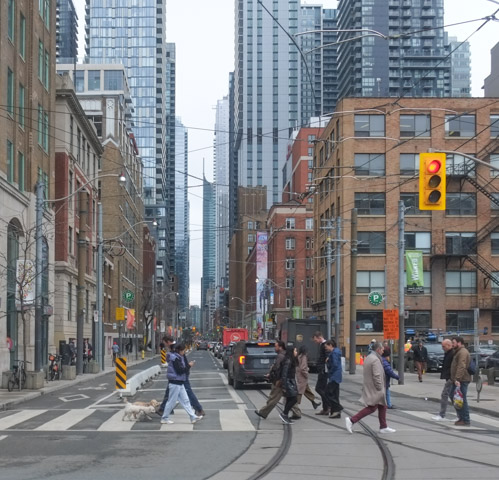
below: And a little bit more south again… the CN Tower rises into the fog as it peeks out between two glass condo buildings at King and Spadina. South of King is the new development “The Well” that opened recently. I have blogged about it previously (Well, Well, Well, 27 Nov 2023)

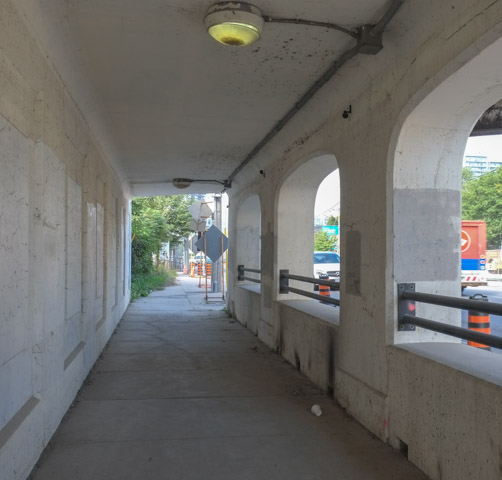
Spadina is also a major access point to Lakeshore Blvd and the Gardiner Expressway. This section of the road is rather barren if you are on foot (unless you are a concrete aficionado LOL)
below: Another eastward view – Both Lakeshore Blvd westbound (but not eastbound!) and the Gardiner Expressway are elevated and they run parallel as they cross over Spadina.

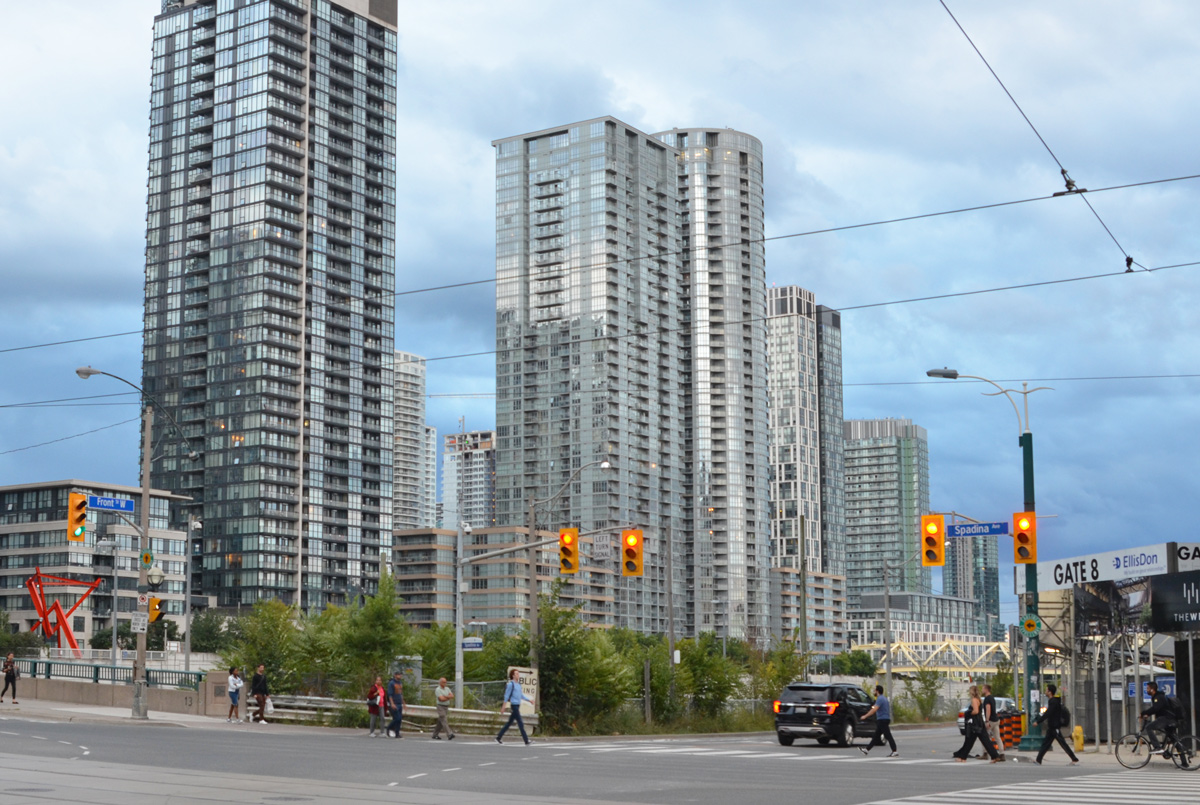
below: Standing on the northwest corner of Spadina and Queens Quay. This is where Spadina ends – at the waterfront with some of the docks and parks that have been redeveloped in recent years.

below: Looking north up Spadina from Queens Quay.

below: Look! Continue walking towards the waterfront but be careful crossing the bike lanes of the Martin Goodman Trail!

below: Spadina Wave Deck

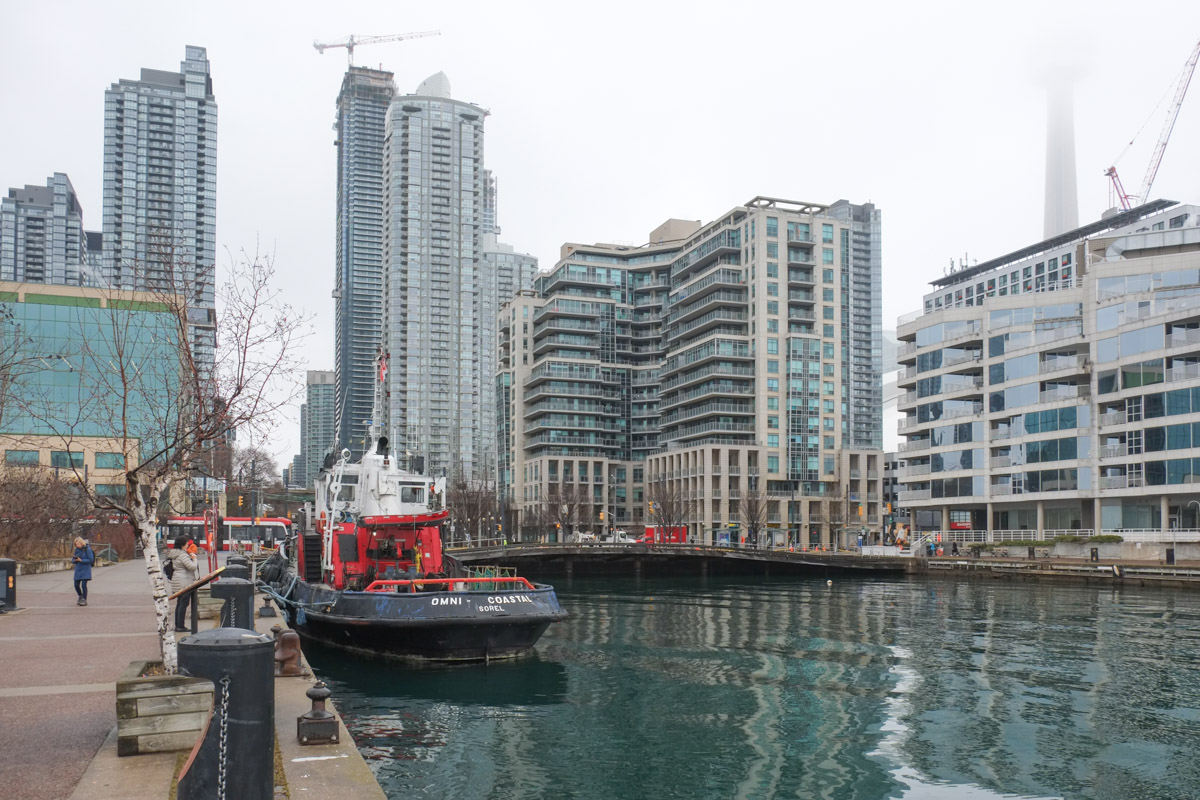
below: The Omni Coastal, a tug boat, is docked at Spadina Quay.


below: Pulling back a little farther… the CN Tower is still hiding in the fog.
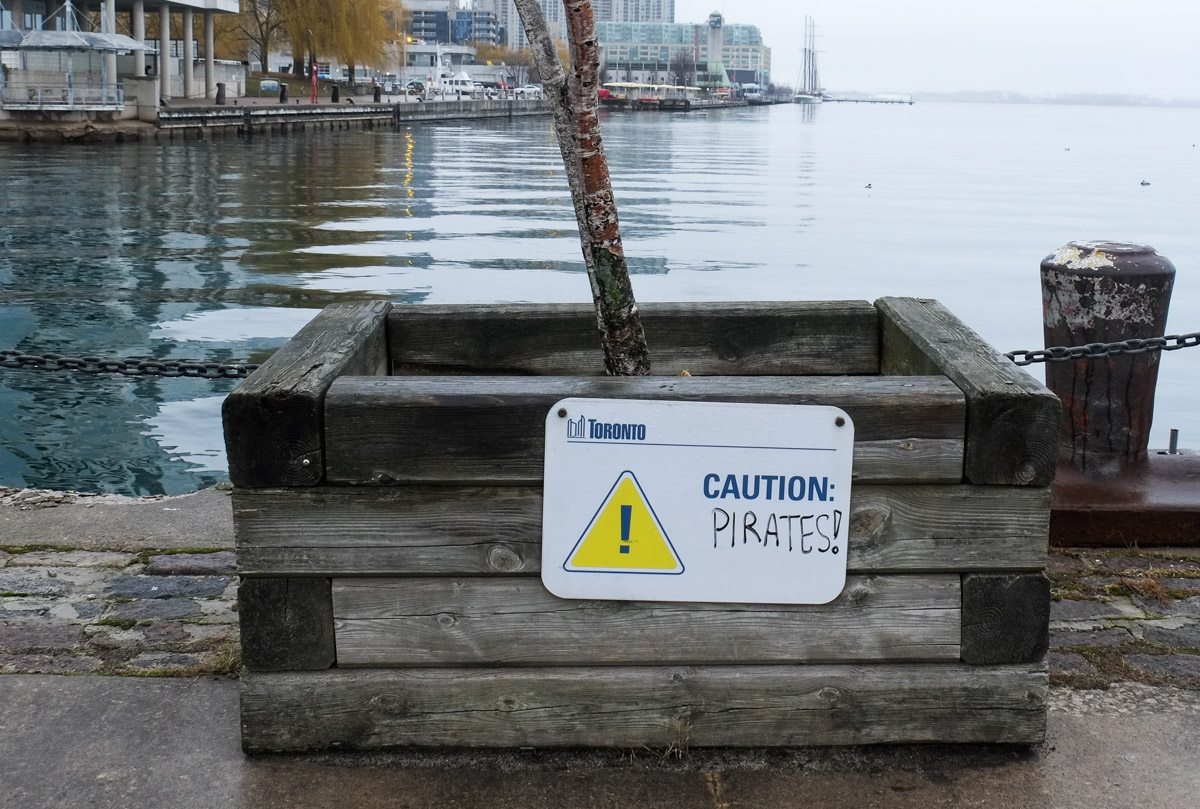
below: Ahoy matey!
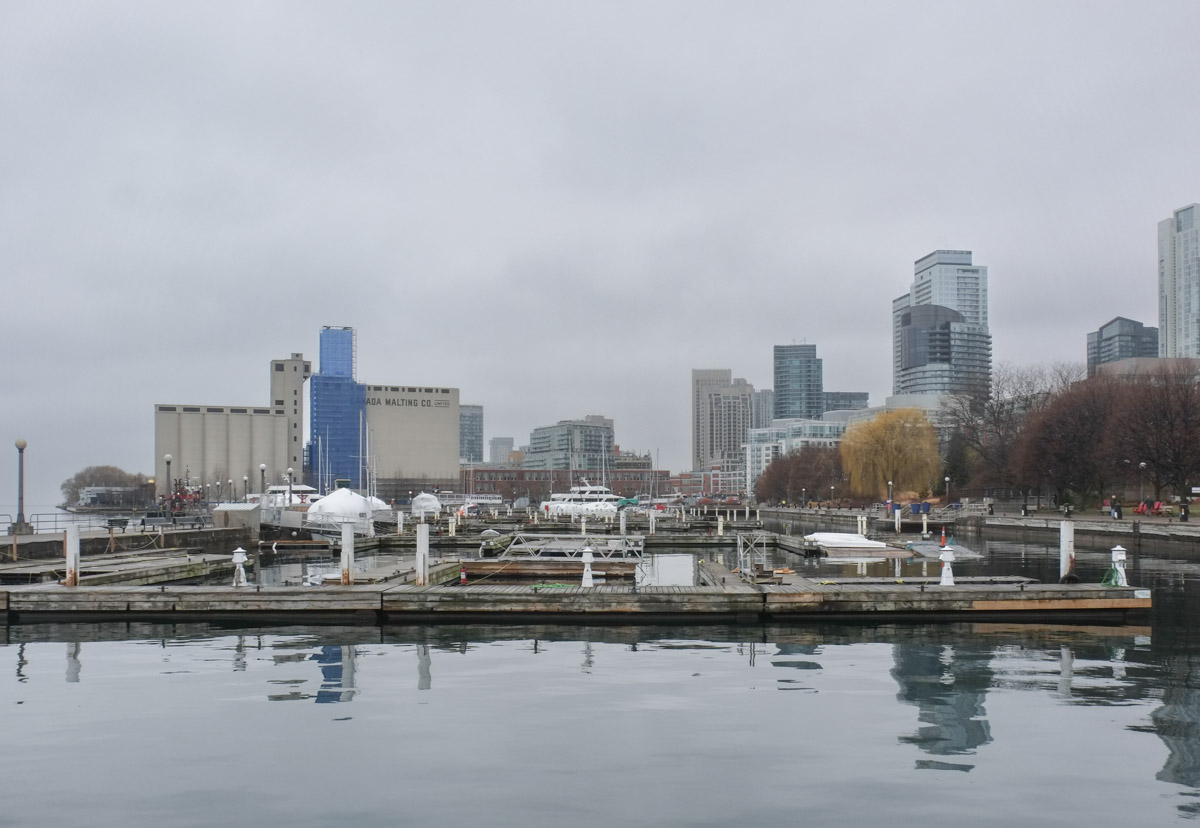
below: It’s a much quieter scene in the winter when fewer boats are here. In the background, the Canada Malting Company silos still stand strong.
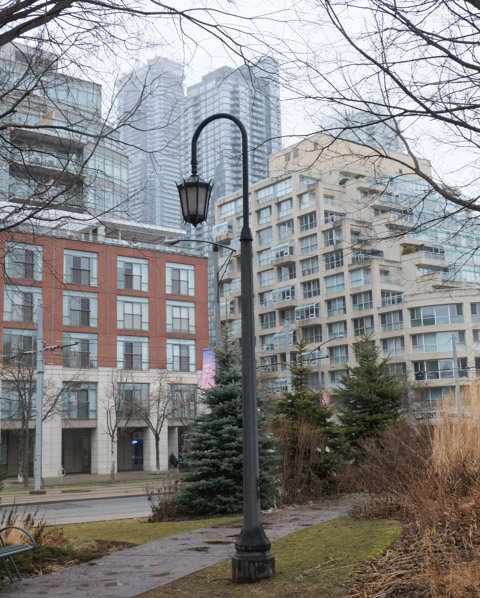
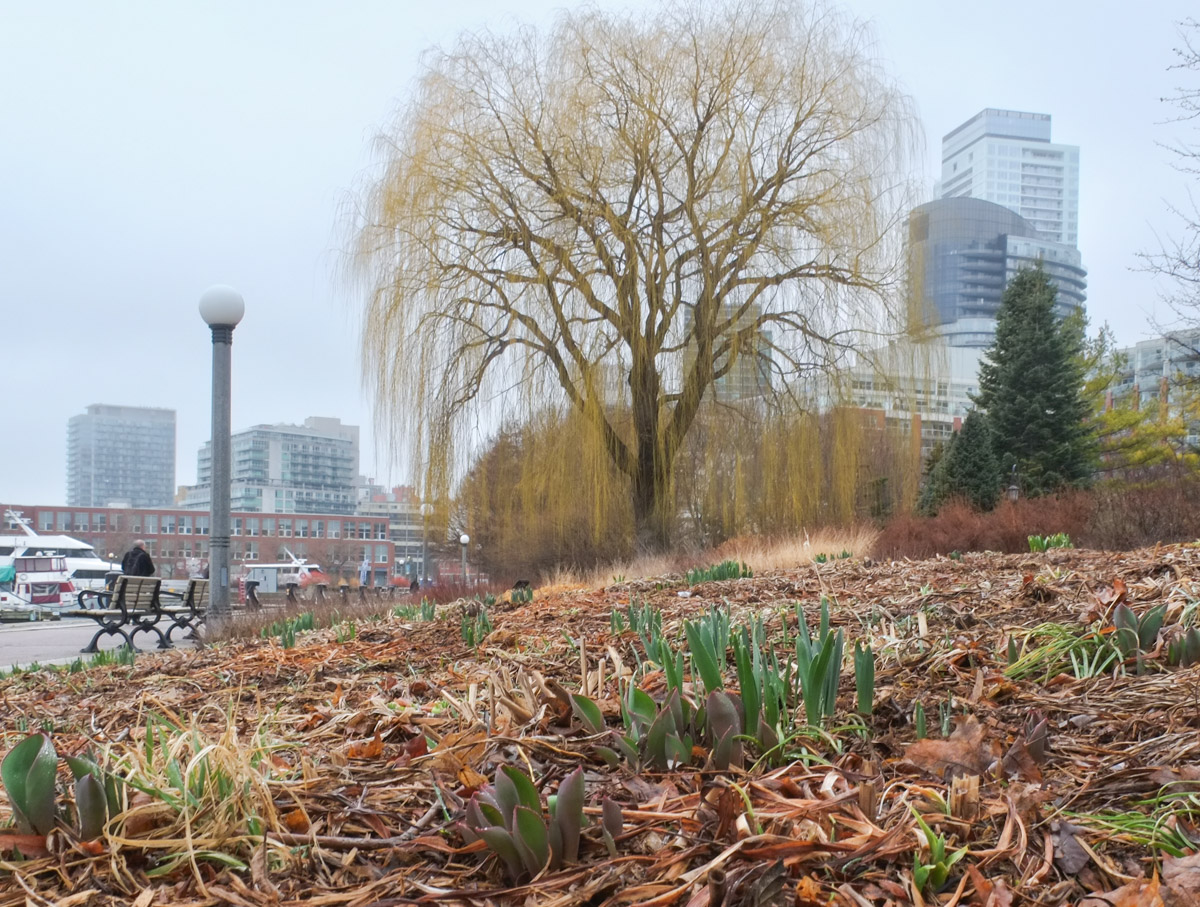
below: Looking for the signs of spring and finding the beginnings of tulips and daffodils in the Music Garden
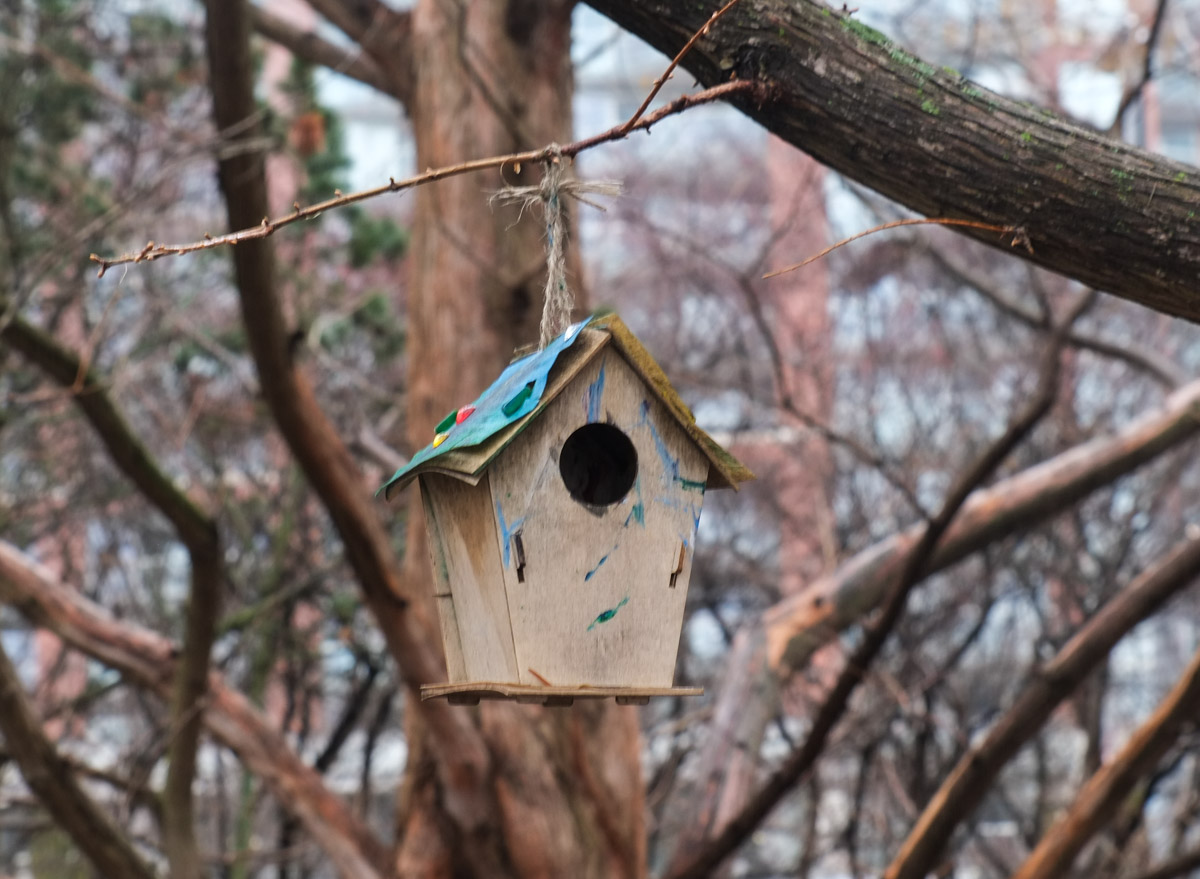
below: Some useful information: “Bathrooms, Where can they be found?” Number one on the list is Billy Bishop Airport and I can attest to the fact that yes, they have bathrooms (check in the ferry terminal building).

below: Another red tugboat in the fog – this one is the Radium Yellowknife.

below: The silos have been under wraps as they have been renovated.

below: Built on reclaimed land in the early 1900s, the silos have been empty since 1987 and had fallen into disrepair. Although they are now missing a couple of letters, the silos are in much better shape. I am not sure if there is any use planned for the structures but the site is being turned into a park, Bathurst Quay Common.

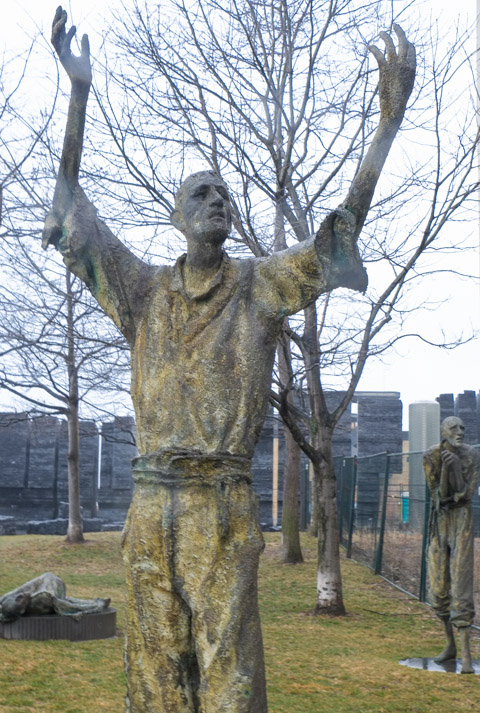
below: If you walk past the silos, you come to Ireland Park with its memorial to those who fled the Irish famine in the 1840s. The park also has seven sculptures cast in bronze by Rowan Gillespie of Dublin Ireland. The installation is called ‘Arrival’. These figures match an earlier installation on the Customs House Quay in Dublin, ‘Famine’ (1997). A third installation in Tasmania Australia completes the trilogy.

below: Along the exterior walls of the silos, a few signs have been posted that tell the story of Irish immigration to Canada. This is one of those signs.
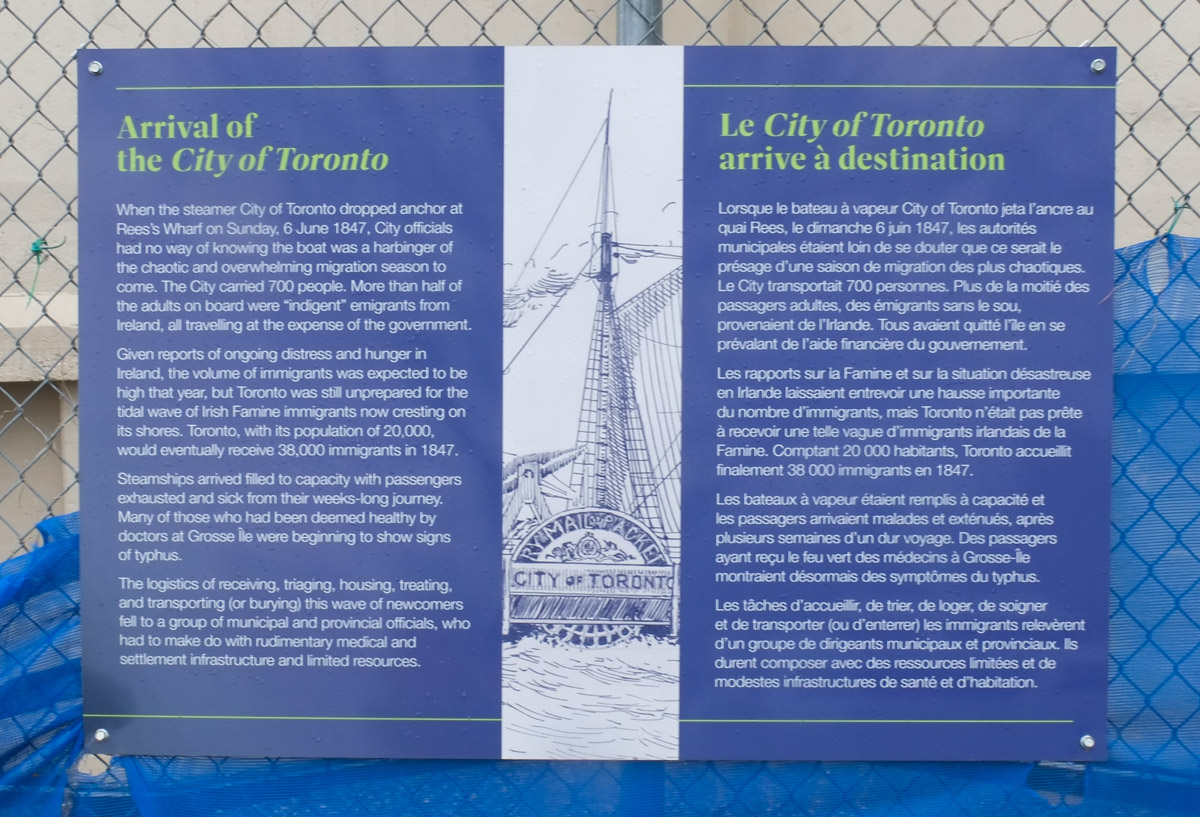
Arrival of the City of Toronto – When the steamer City of Toronto dropped anchor at Rees’s Wharf on Sunday, 6 June 1847, City officials had no way of knowing the boat was a harbinger of the chaotic and overwhelming migration season to come. The City carried 700 people. More than half of the adults on board were “indigent” migrants from Ireland, all traveling at the expense of the government.
Given reports of ongoing distress and hunger in Ireland, the volume of immigrants was expected to be high that year, but Toronto was still unprepared for the tidal wave of Irish Famine immigrants now cresting its shores. Toronto, with its population of 20,000 would eventually receive 38,000 immigrants in 1847.
Steamships arrived filled to capacity with passengers exhausted and sick from their weeks-long journey. Many of those who had been deemed healthy by doctors at Grosse Ile were beginning to show signs of typhus.
The logistics of receiving, triaging, housing, treating and transporting (or burying) this wave of newcomers fell to a group of municipal and provincial officials, who had to make do with rudimentary medical and settlement infrastructure and resources.
































































 as I walk Toronto