Posts Tagged ‘TTC’

What to do on a cold day when the wind is vicious and blows right through you?   It blows through my hat, my ears and my brain.  It makes my head hurt.  Not the ideal walking day even with all my winter layers on.   I have been thinking about my walk along Sheppard Avenue and some of the issues with public transit and while doing so I realized that I had never been on the Scarborough Rapid Transit.  With all the talk about Sheppard subway vs LRT, I decided that maybe I should check it out.  So instead of a walk, I went for a ride and took the SRT to McCowan and back.

First I had to get to the SRT which starts at Kennedy subway station.
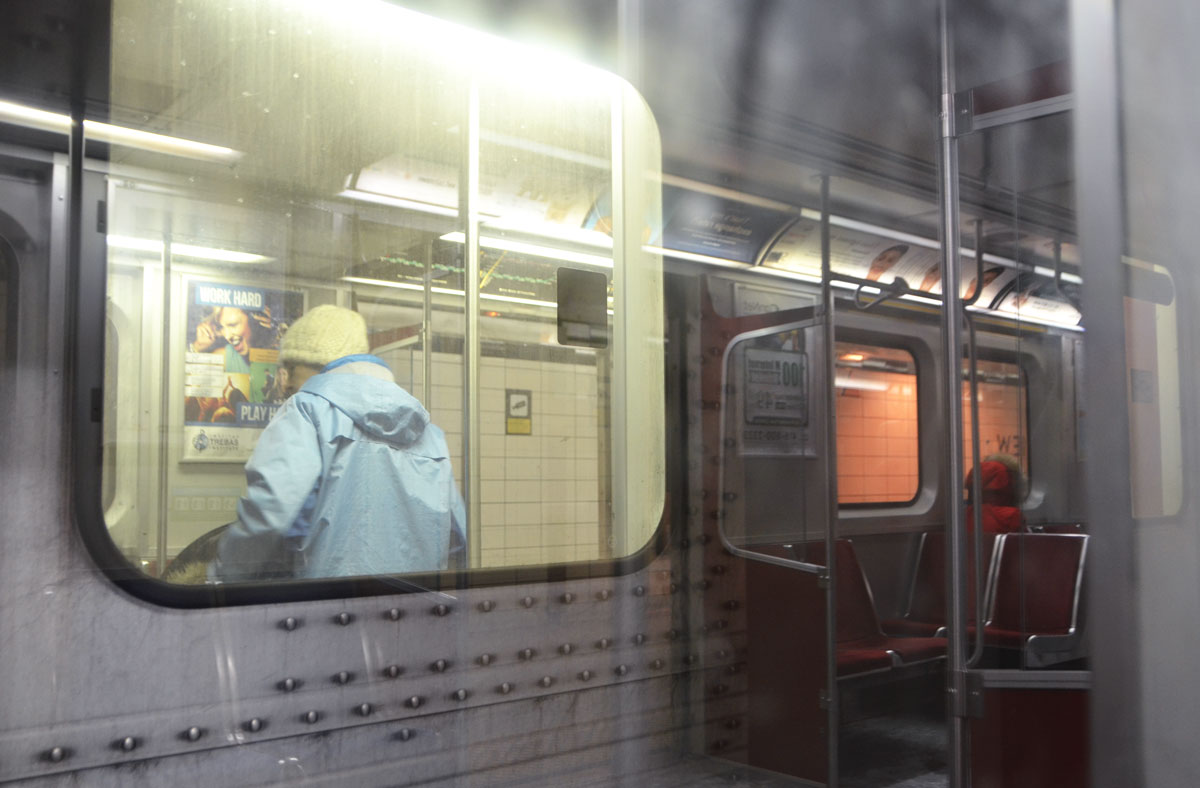
reflections of a woman in a red jacket sitting on the subway, reflected in the window beside a woman who is standing on the platform

At Kennedy I was a lost tourist as I searched for the route between the subway and the SRT.  Here the SRT trains run above street level so it took a couple of escalators and some stairs to reach the platform.

below: Standing on the platform and waiting for the train.  Kennedy station is at Kennedy & Eglinton and I think that this is the view looking east from there.

SRT tracks curve away from platform, outside, apartment building in the background, some snow on the tracks

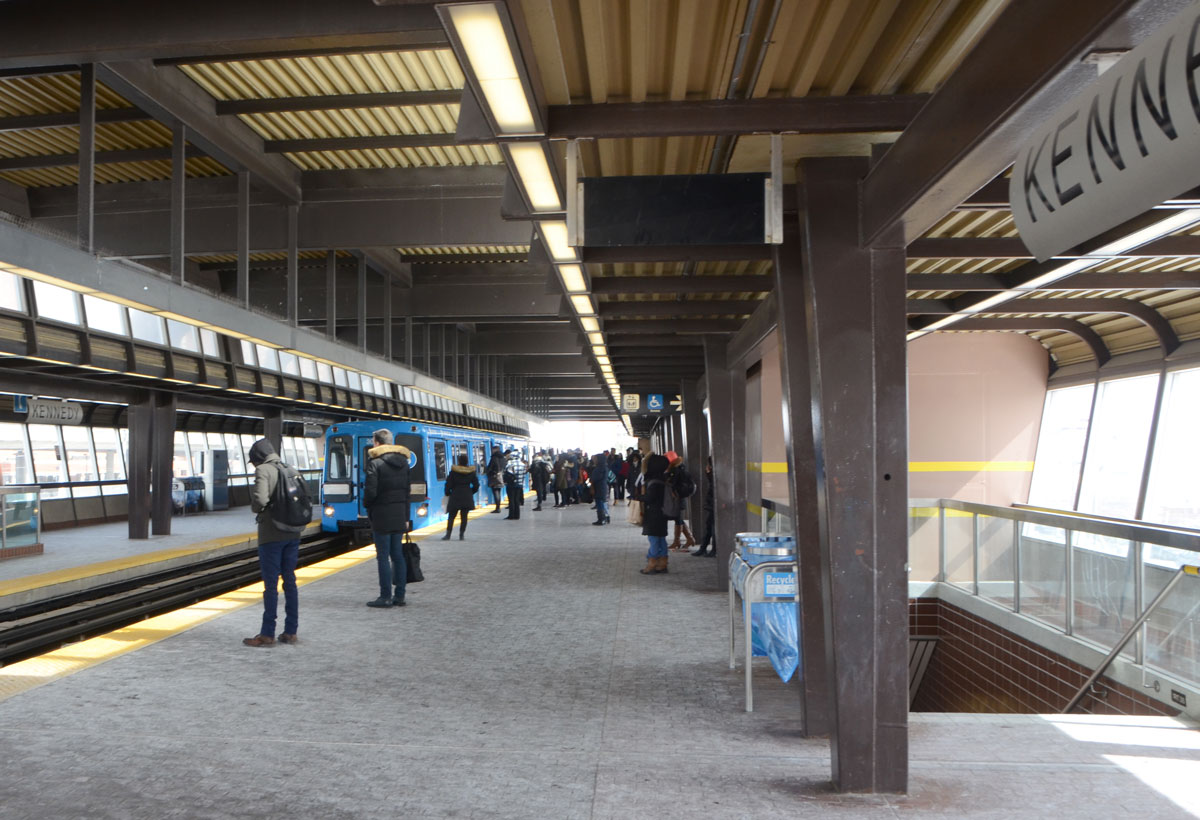
below: The train arrives.

platform at Kennedy SRT station with people waiting as a blue train arrives

below: Leaving Kennedy station.   The first part of the route is north and runs parallel to the CNR & Stouffville GO line train tracks.     The red and white cars are the original colour from when the SRT opened in 1985.  In 2015 the TTC began painting the cars blue to match the colour scheme that now goes with “Line 3” on the TTC maps.  They also began two switch over the name of the SRT to Line 3 Scarborough.
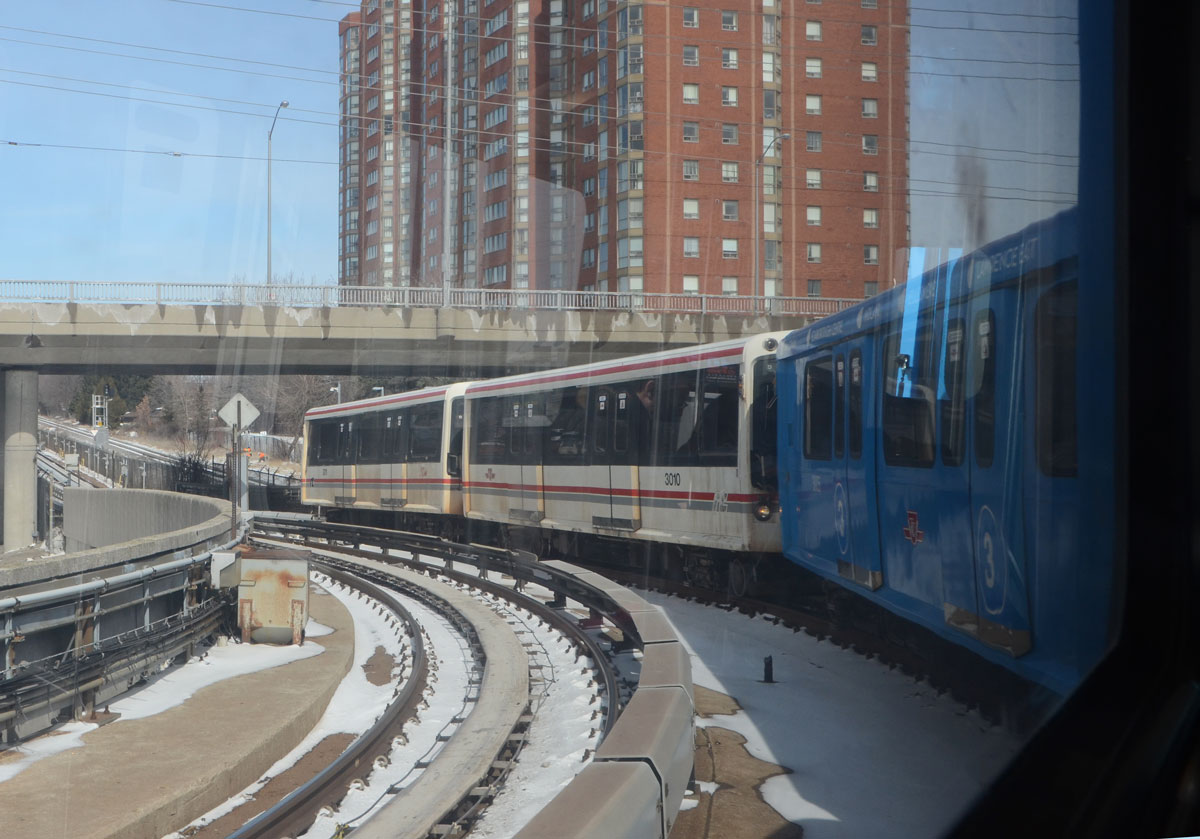
the Scarborough RT train as it leaves Kennedy station, the track curves so you can see the front of the train out the window

below: I wasn’t the only tourist on the train!  After being on the subway, it felt a bit like being on a toy train.  The cars are smaller.  The trains are powered by linear induction motors which are quite different from conventional motors.  They push themselves along the tracks using alternating flat magnets.   That’s a very simplistic description of the science of induction motors but I’m sure that you can use google to find more information if you are interested!

looking down the length of an SRT car, two young women are looking out the back window. seats down either side, red on one side and blue on the other

below: The Scarborough RT,  also referred to as TTC line 3, covers  6.4 km on its route from Kennedy station to McCowan station.  There are six stops, Kennedy, Lawrence East, Ellesmere, Midland, Scarborough Centre, and McCowan.  Note the blue colour on the map!

a map of the SRT route is on the wall behind two red seats of an SRT car, view out the window is not easy to see but it is the platform at Lawrence East station

below: Ellesmere station. Apparently it is the least used station in the system, less even than Bessarion.

interior wall of Ellesmere station, covered (plastic?) glass wall, large black letters saying Ellesmere, and a bright red bench, snow on the curved translucent roof

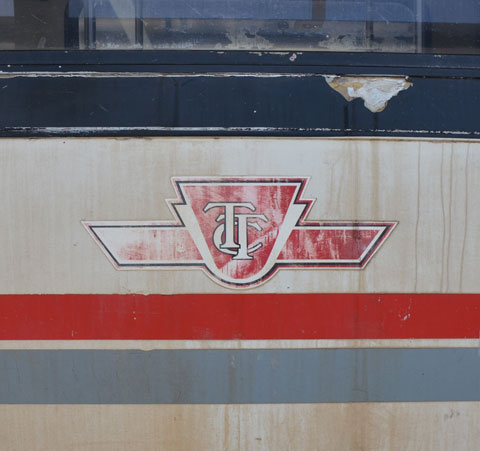
faded TTC symbol on the exterior of a rapid transit vehicle

below: Looking out the back window.  The tracks are standard gauge whereas the subway runs on tracks that are wider so the TTC can’t run their subway cars on these tracks.

looking out the dirty window at the back of a SRT vehicle, tracks and some cityscape

below: This is the view at McCowan station, the end of the line. Although it was a very quiet ride to McCowan, the train was full on the ride back to Kennedy with Scarborough Centre being the most crowded station.   It took 40 minutes to go from McCowan to Bloor/Yonge.

a SRT train is stopped at McCowan station,

***

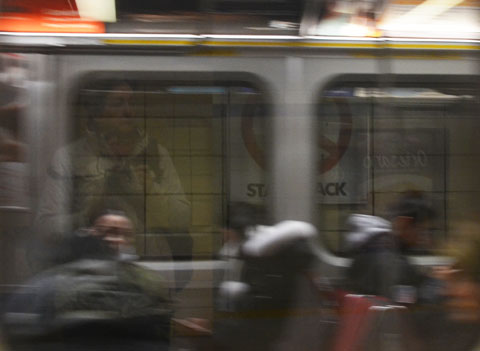
blurry person standing on the platform at Greenwood station, with reflections of people sitting on the subway

reflections in the subway window along with people sitting on the train

Right now, the section of Sheppard Avenue East between Yonge and Leslie streets is a mix of old, middle aged and new – a hodge podge of sizes, styles and uses.   It’s neither ugly nor pretty.  It’s not sure if it’s city or  suburban.

below: The intersection of Bayview and Sheppard from the southwest.

main road with traffic, coming to an intersection, with a tall building in the background

You’ll probably never hear anyone say, “Hey, let’s go for a walk along Sheppard”.  So why was I there?   I’ve driven along this stretch many times but I have never walked it.  Have I been missing something?

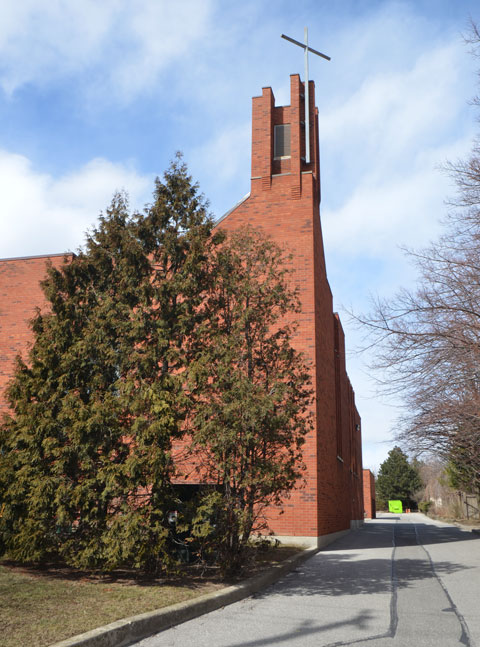
below: A short distance west of Bayview is the modern brick St. Elizabeth of Hungary Roman Catholic Church, or ÁrpádHázi Szt. Erzsébet Római Katolikus Templom according to their sign.  Sunday mass is in Hungarian.   If you are driving past on Sheppard Ave, it’s easy to miss the simple steeple and cross that marks this building as a church.

steeple of St. Elizabeth of HUngary RC church, modern brick building with simple cross on the top

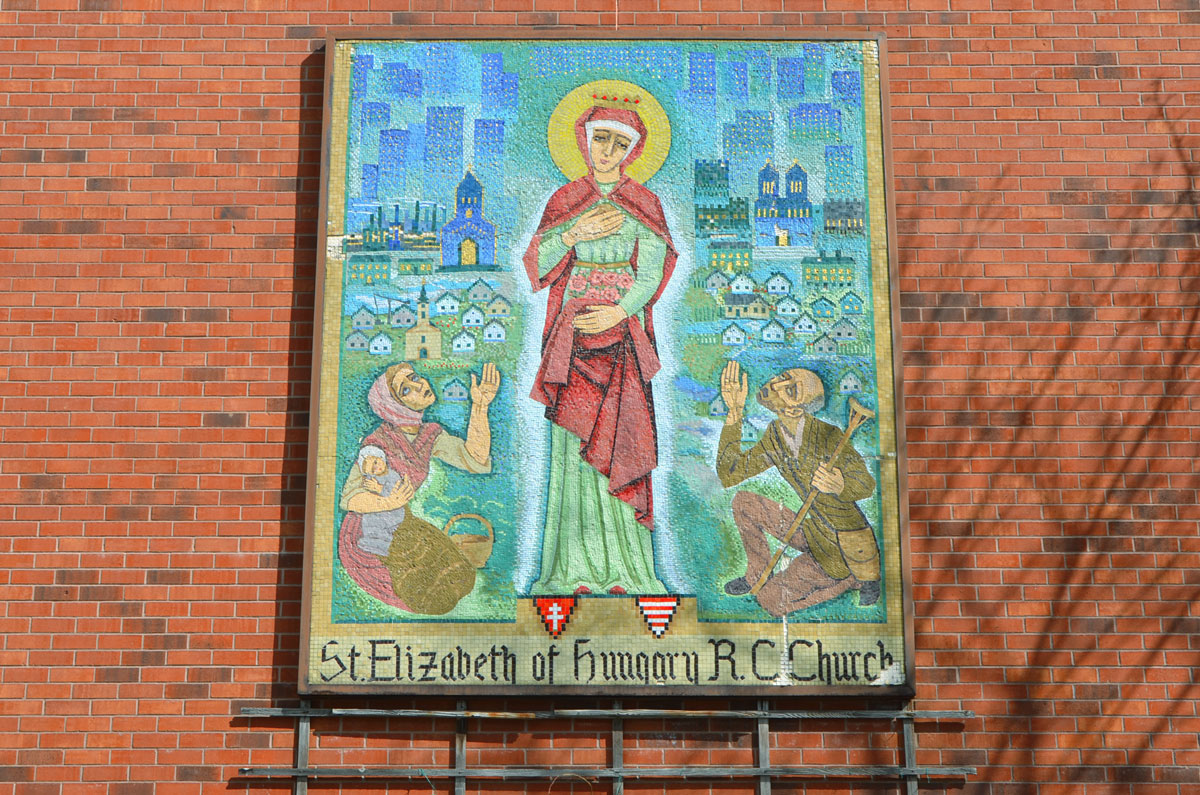
below: A large mosaic adorns one of the exterior walls.

mosaic on the exterior brick wall of St. Elizabeth of Hungary RC Church showing St. Elizabeth and two people kneeling beside her.

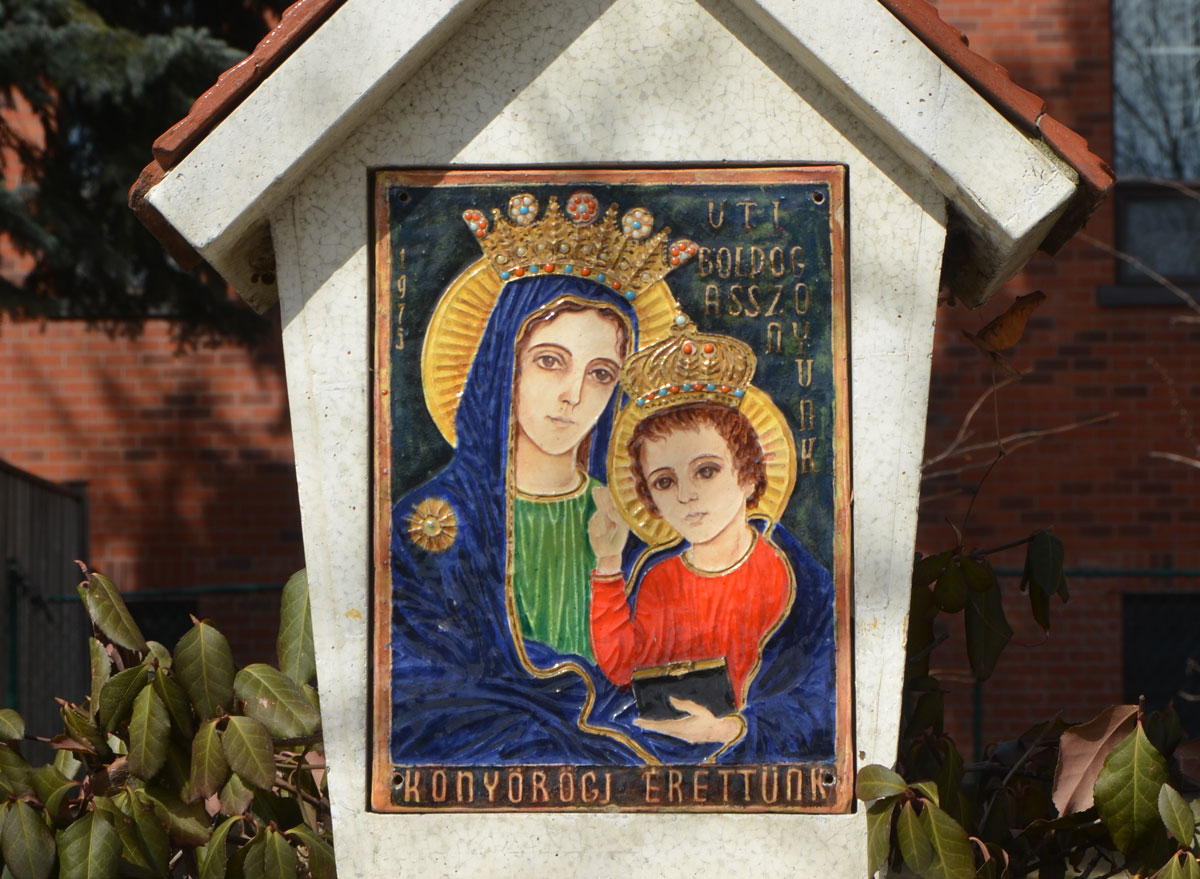
below: A small shrine is in front of the church.

small picture of Mary and baby Jesus in bright colours, on a small shrine in front of a church

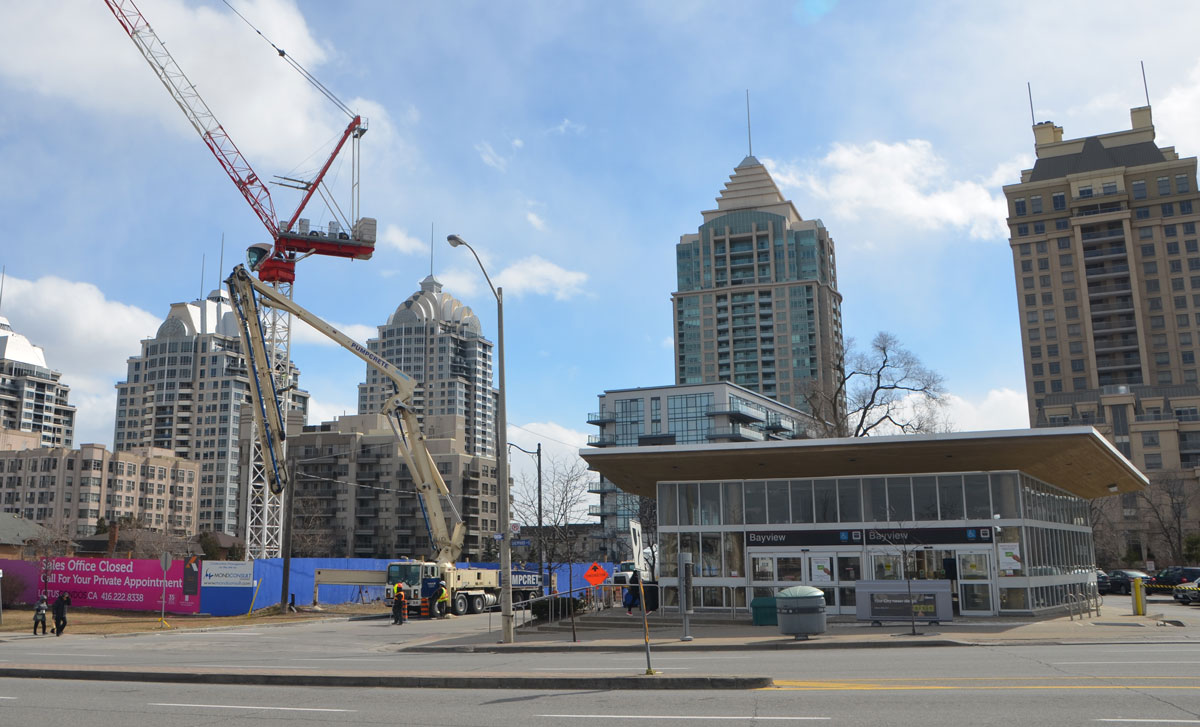
below: The south entrance to Bayview subway station.  There are no escalators at this entrance  – instead, there is an elevator and a LOT of stairs.

south entrance to Bayview subway station with tall residential buildings behind and a construction site beside

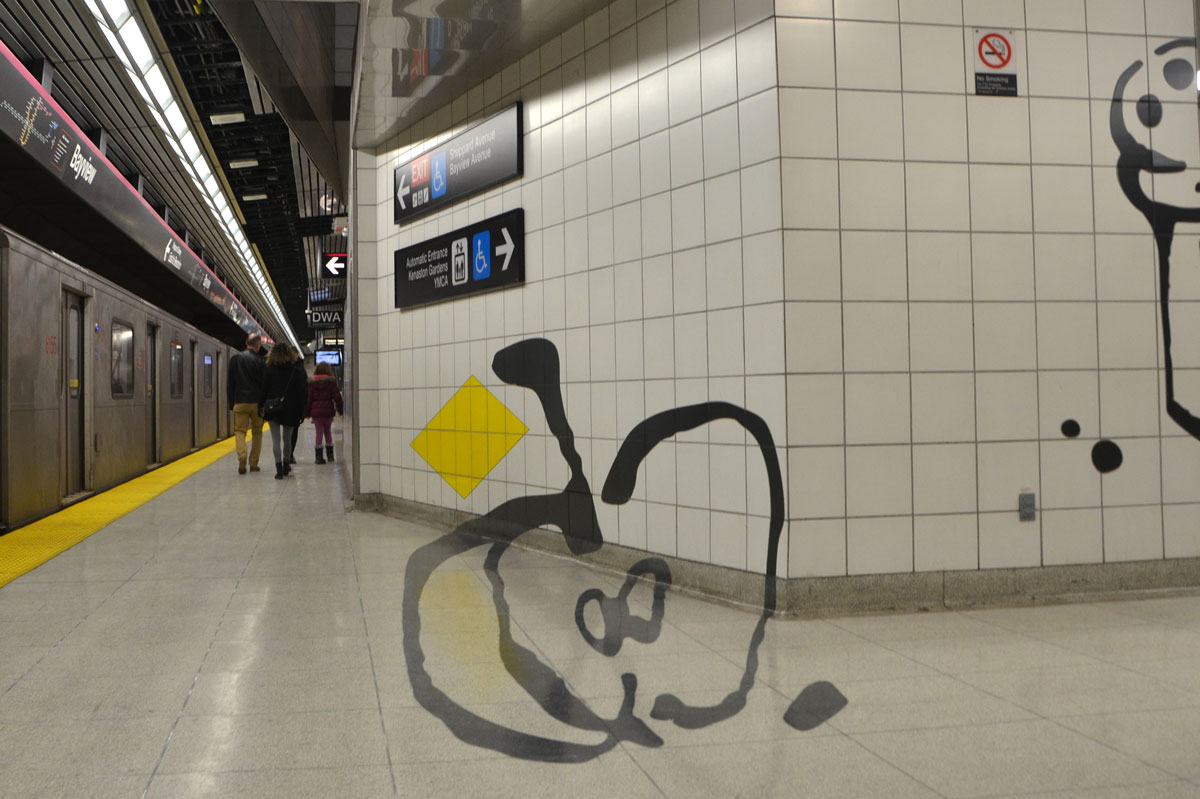
below: The artwork at Bayview station is by Panya Clark Espinal, titled ‘From Here Right Now’.  Half an apple lies on the platform.

art on a subway platform, a line drawing of a very large apple that has been cut in half, on the wall and floor of the station

below: A salt or pepper shaker on the wall.  I’ve only shown two of the images in the series.  There are 24 in total and they are scattered throughout the  station.

art on a subway platform wall, a salt or pepper shaker in black on white tiles

below: There is a small park behind the south entrance to Bayview subway station, Kenaston Garden Parkette where I saw this tree in bud.   The first signs of spring are always wonderful to see.   Today it’s -12C outside so I hope the tree is okay.

pussy willow buds on a tree

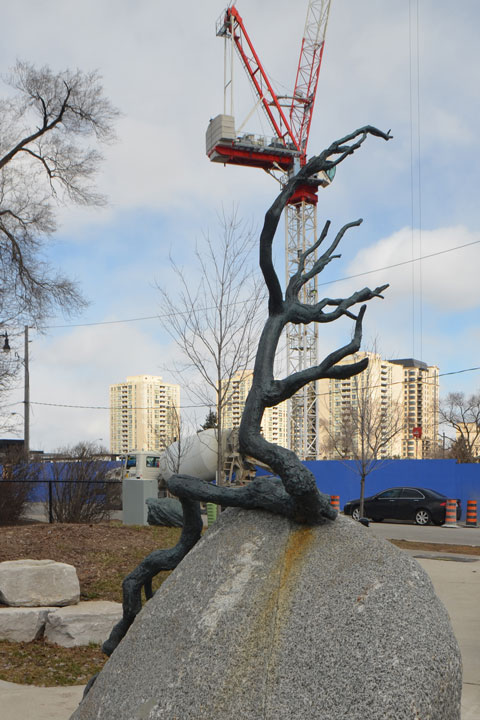
below: This little park was designed by Wilk Associates Landscape Architecture and it incorporates a large number of rocks including a glacial boulder found on the site.   A bronze sculpture of a tree clinging to a rock  by Reinhard Reitzenstein is one of the features of the park.

small sculpture in a park of a sapling on a rock with its roots growing over the surface of the rock

below: If you stand in the park and look east,  you can’t miss the construction.

small sculpture in a park of a sapling on a rock with its roots growing over the surface of the rock - crane and construction site in the background

a convex mirror beside a black and yellow caution sign, condos are reflected in the mirror

the front and side of a large truck is in the foreground, right side, with a construction site beyond

Construction is everywhere on Sheppard Avenue.

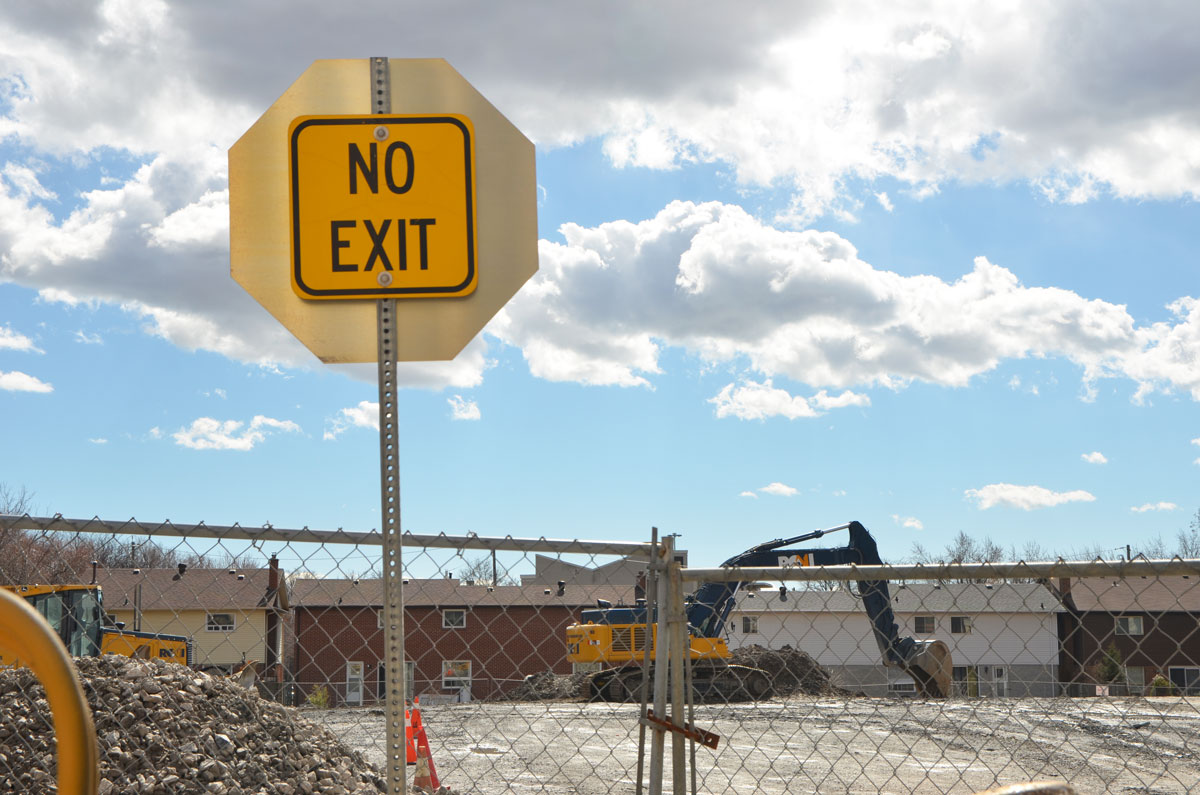
below: All of the houses on Cusack Court are now gone.  Only the ‘No Exit’ sign remains.

a construction site where the houses on a a whole street have been demolished. The no exit sign for the street still remains., the site is behind a chainlink fence

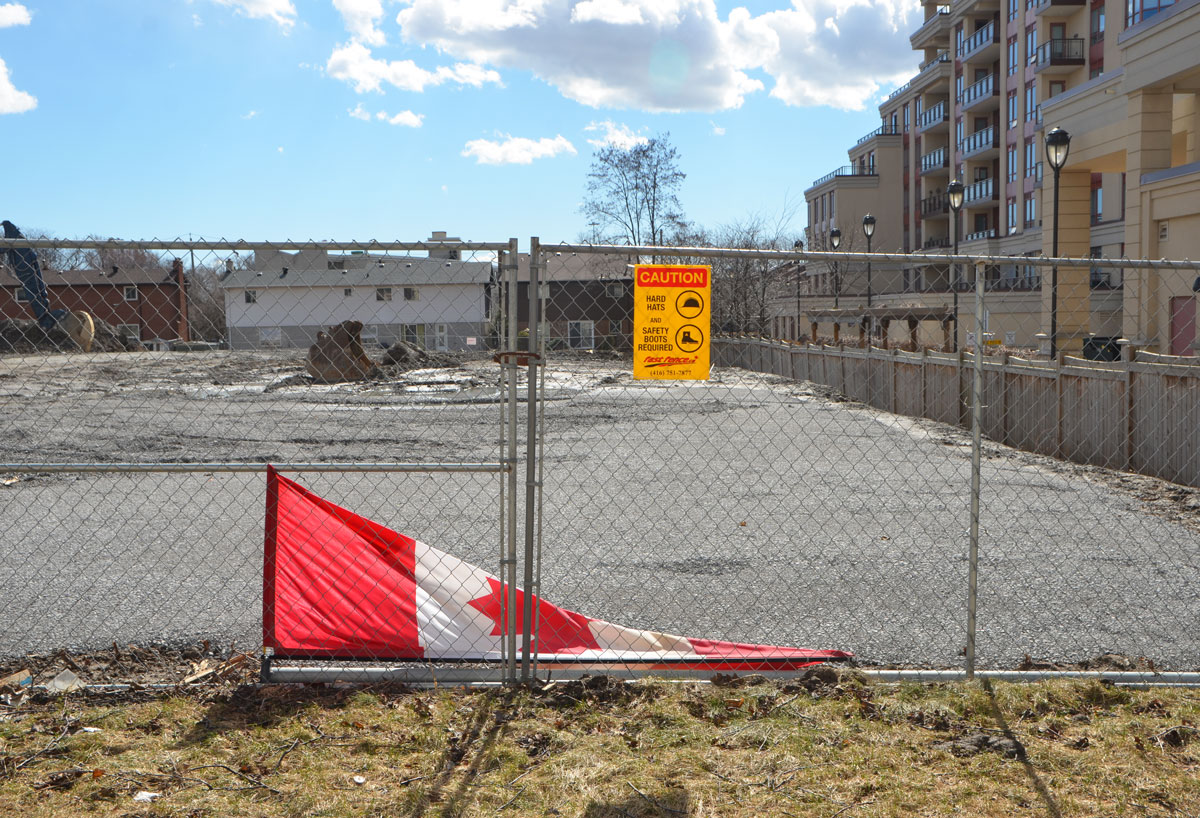
a banner of the Canadian flag has fallen over and is lying on the ground behind a chainlink fence

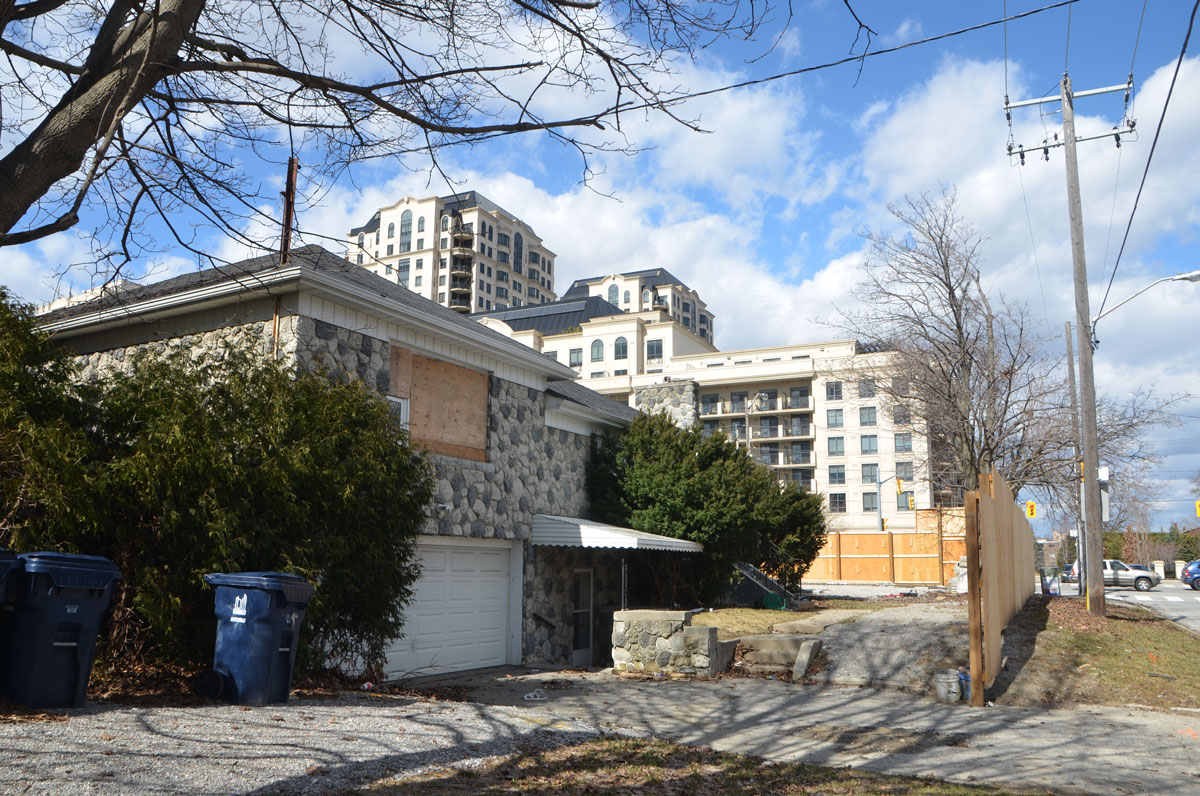
below: The single family homes on the south side of Sheppard are slowly being demolished to make way for condo developments.  At the corner of Sheppard Ave East and Greenbriar  the proposed development of 184 residential units is the subject of an OMB prehearing on the 8 May 2017  (case number PL161113).

a boarded up house, split level, built in the 1950s, is in the foreground, condos and apartment buildings are behind it

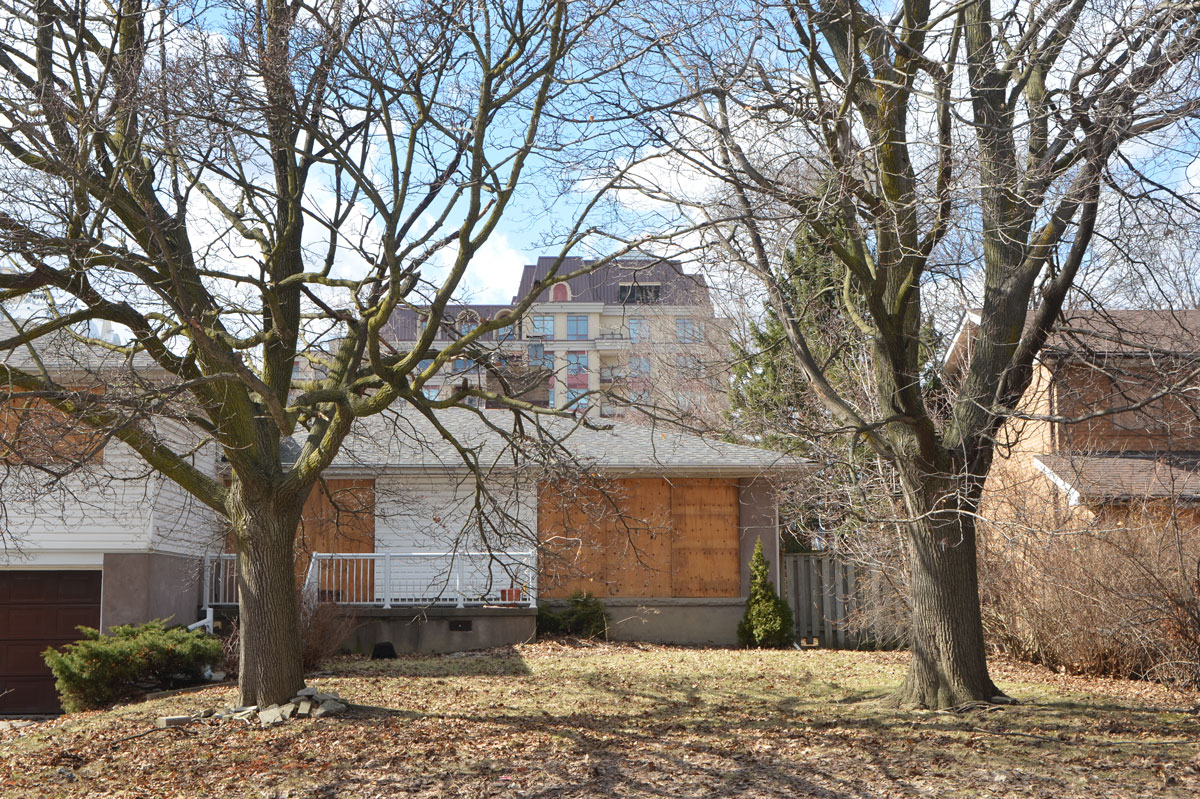
below: Five houses are empty and waiting to be demolished to make way for two buildings, 11 and 6 storeys, mixed use (i.e. retail at street level) and incorporating a few townhouses.  In other words, the same old same old.

a boarded up house, split level, built in the 1950s, is in the foreground, condos and apartment buildings are behind it

below:  I said “same old same old” above because these types of buildings are popping up all over  many major roads that are outside the downtown core.  I suspect that Sheppard Avenue will be lined with structures like this one that’s already been built on the north side of Sheppard.

across the street is a 10 storey residential building, cars on the street, small trees in the foreground

Many people make the argument that there isn’t the density to support a subway along Sheppard.  I am of the opinion that if they’re not wrong now, they soon will be.   Development and public transit are dependent on each other, a symbiotic relationship if you will.   If you are affected by the construction along Eglinton for the new Crosstown line, you might agree that waiting for density only increases the problems and inconvenience (and cost?) of building new subway lines.   Also, have you seen photos of what the area around Davisville or Finch (and others) stations looked like when the subway opened there?   What is the required density?  Why do we want to funnel even more people towards the overcrowded Yonge line anyhow?   Is there an end to the questions we can ask?

And that’s another reason for my walk here…. to make note of the construction that is occurring whether we agree with it or not and to document some of  the changes.

below:  Two low rise apartment buildings.

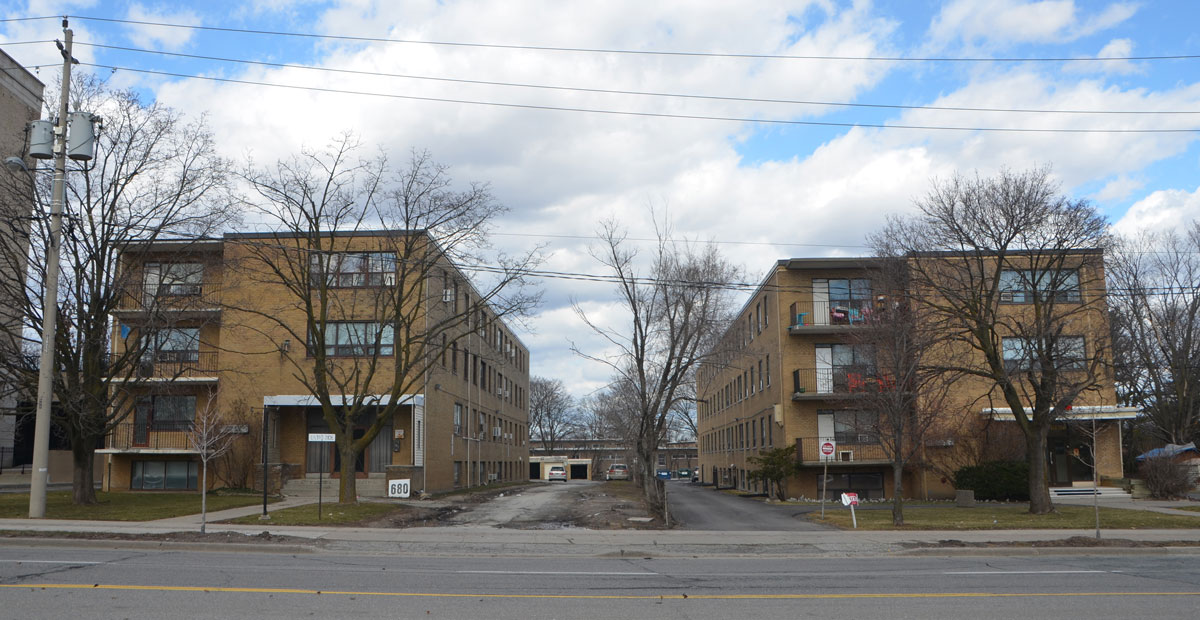
two three storey brick apartment buildings with balconie in the front, taken from across the street

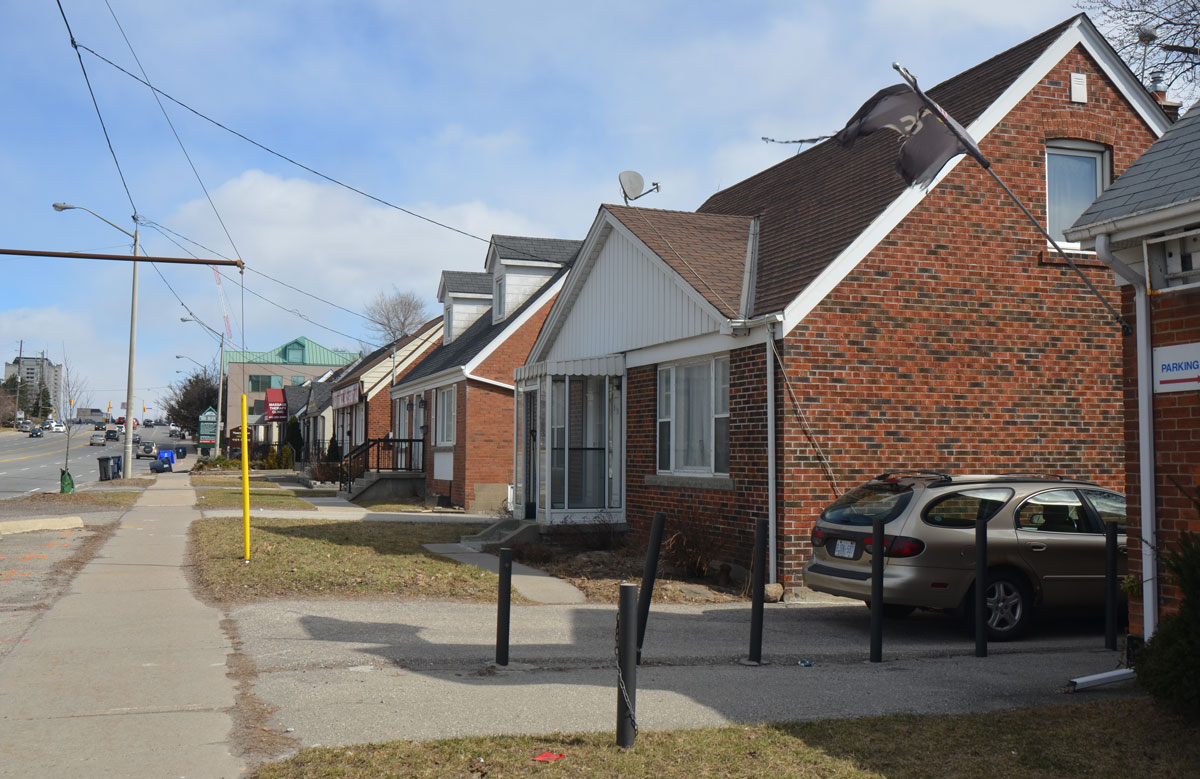
below: Once upon a time there were a lot of these little houses along Sheppard (even more so on the west side of Yonge Street).  At least one of these is still used as a family home but most are now offices or businesses.

a few small brick houses on the south side of Sheppard Ave

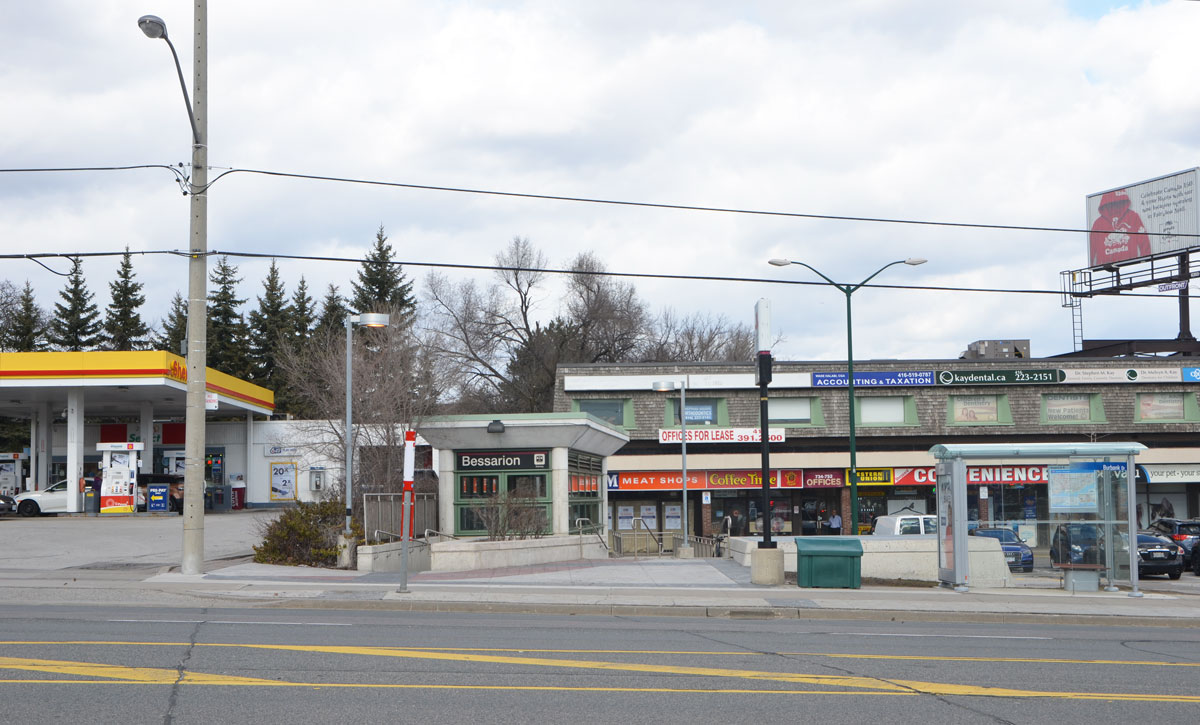
below: The north entrance to Bessarion station

looking across the street to the small north entrance to Bessarion subway station, with a small two storey plaza beside it

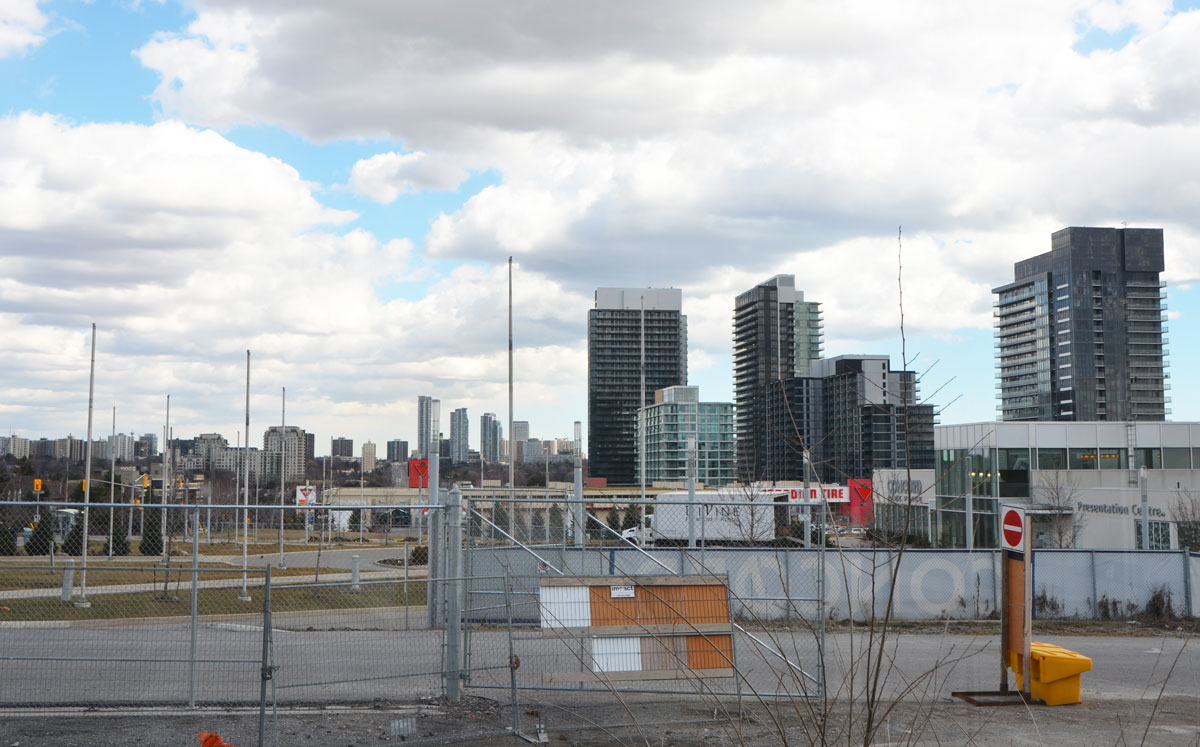
below: Looking east from Bessarion.  You can see as far as the condos on Don Mills Road.

looking west from Bessarion subway station towards Leslie Street and beyond,

   There is a reason that you haven’t seen many people in these pictures and it’s not because I waited for people to get out of the way.   Sheppard Avenue is a “major arterial road” under Toronto’s road classification system and traffic movement is its major function.  20,000+ cars are expected to use it every day.

I don’t like to say it, but why would you be walking along Sheppard anyhow?

below: Bayview Village parking lot at the NE corner of Bayview and Sheppard.

parking lot of a mall, Bayview village with surrounding buildings in the background.

As you might know, scroll down to the next blog post to see some pictures of Bessarion station!


This looks like an ordinary entrance into a TTC subway station.  It is.
It’s Bessarion station on Line 4, the Sheppard Line.

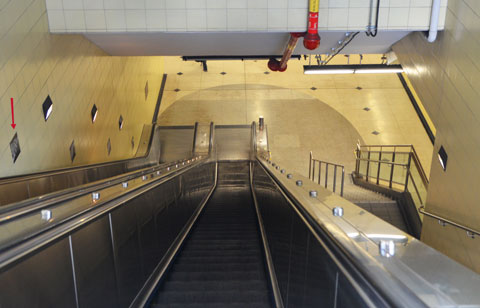
escalator down into Bessarion station

The red arrow points to one of a series of little photographs of hands that run beside the escalator to street level.

I’d be willing to bet that none of you have been to Bessarion subway station.  If you’ve heard of the station it’s probably in the context of complaints that no one uses the station so why did the city spend so much money building it.   One of the reasons for the low volume of traffic is that there are no bus routes (besides Sheppard) that serve this station.  Apparently in 2014 an average of 2380 people used the station on weekdays.  If true, then 2379 plus me where there today (although the stats may have increased since then).    I took some pictures for you – you will now have an idea of what the station looks like without having to go there.

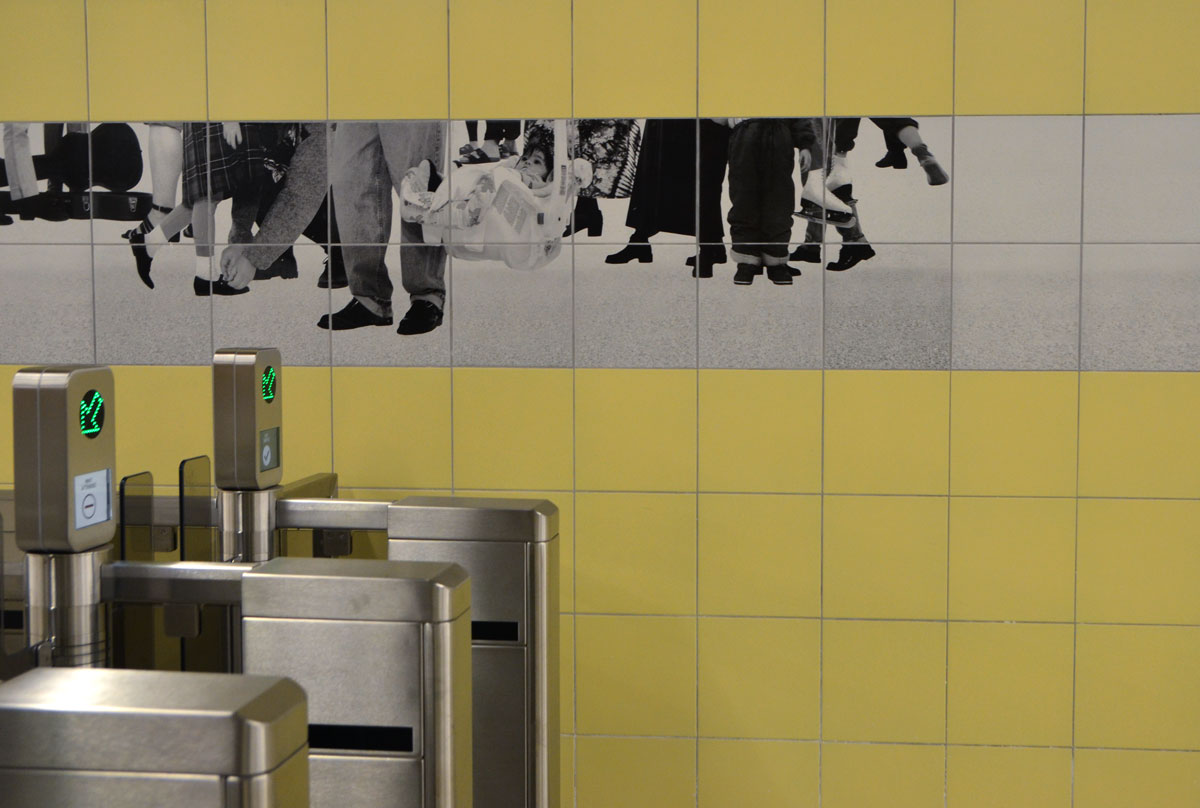
photos of peoples legs and feet in black and white on tiles on a yellow tiled subway station wall, over the metal turnstiles for entry into the station, artwork by Sylvie Belanger

below: An art installation called ‘Passing’ dominates the yellow walls of the station concourse level.  It consists of a band of black and white photographs of legs and feet taken by Sylvie Belanger.  The little pictures of hands that I mentioned at the beginning of this blog are also part of this installation.

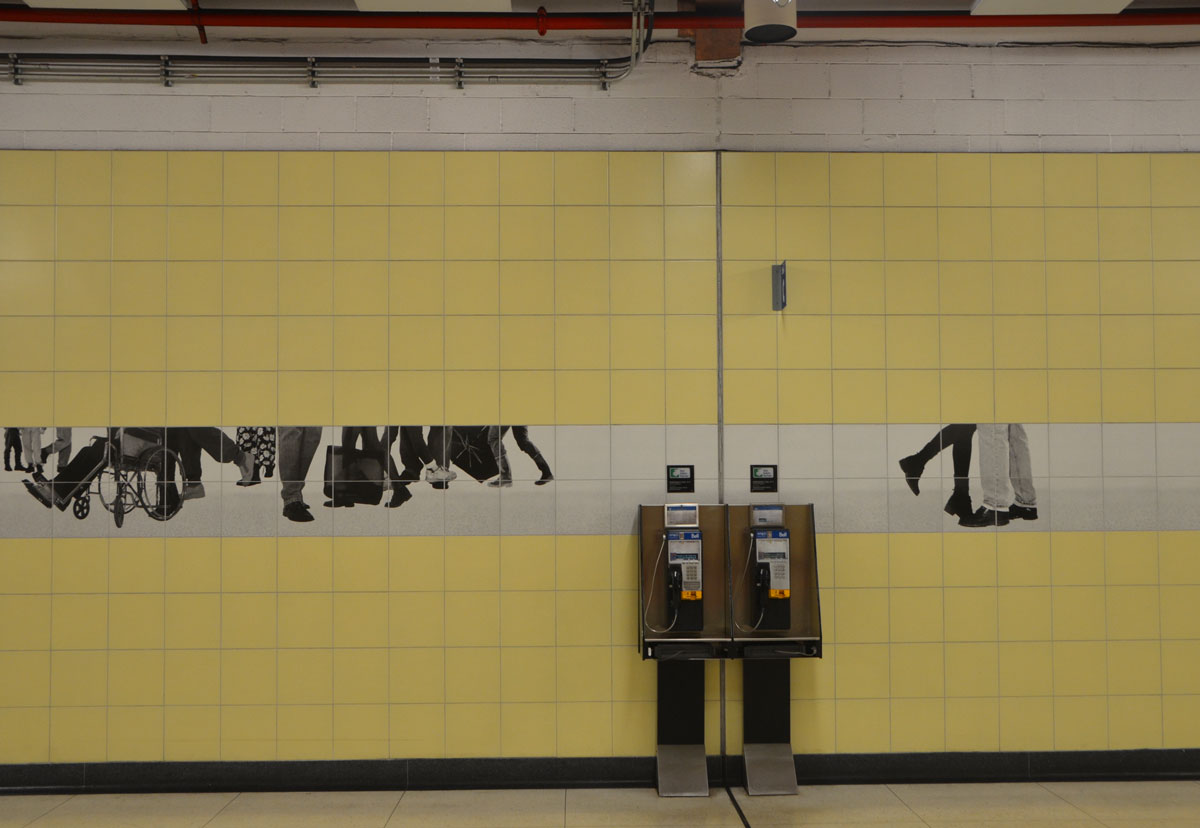
photos of peoples legs and feet in black and white on tiles on a yellow tiled subway station wall, over and beside two Bell pay phones, artwork by Sylvie Belanger

below: The pictures of legs and feet run around the whole concourse level of the station.

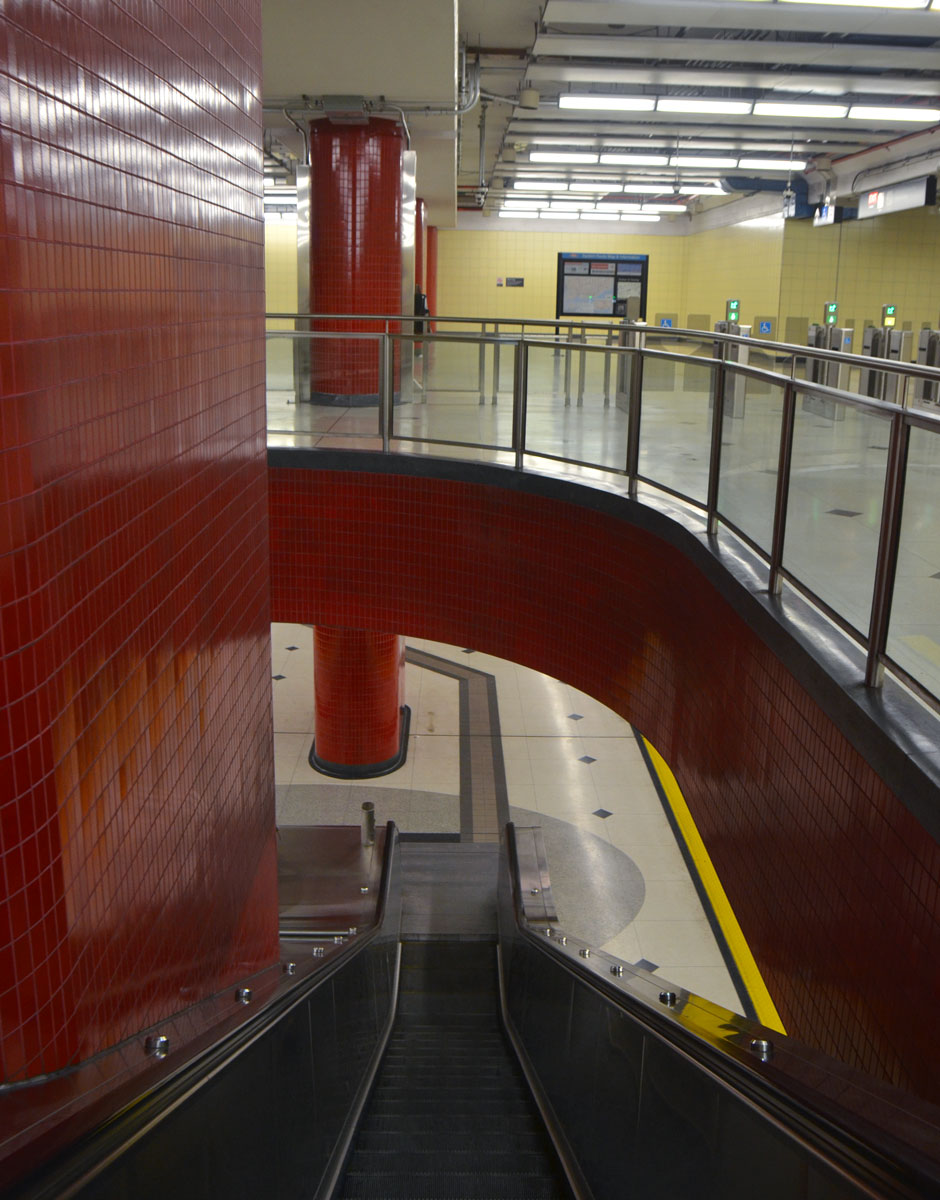
below: Down the escalator to the lower level.

looking down the main escalator at Bessarion subway station, the upper level has yellow walls and the lower level (track level) can also be seen.

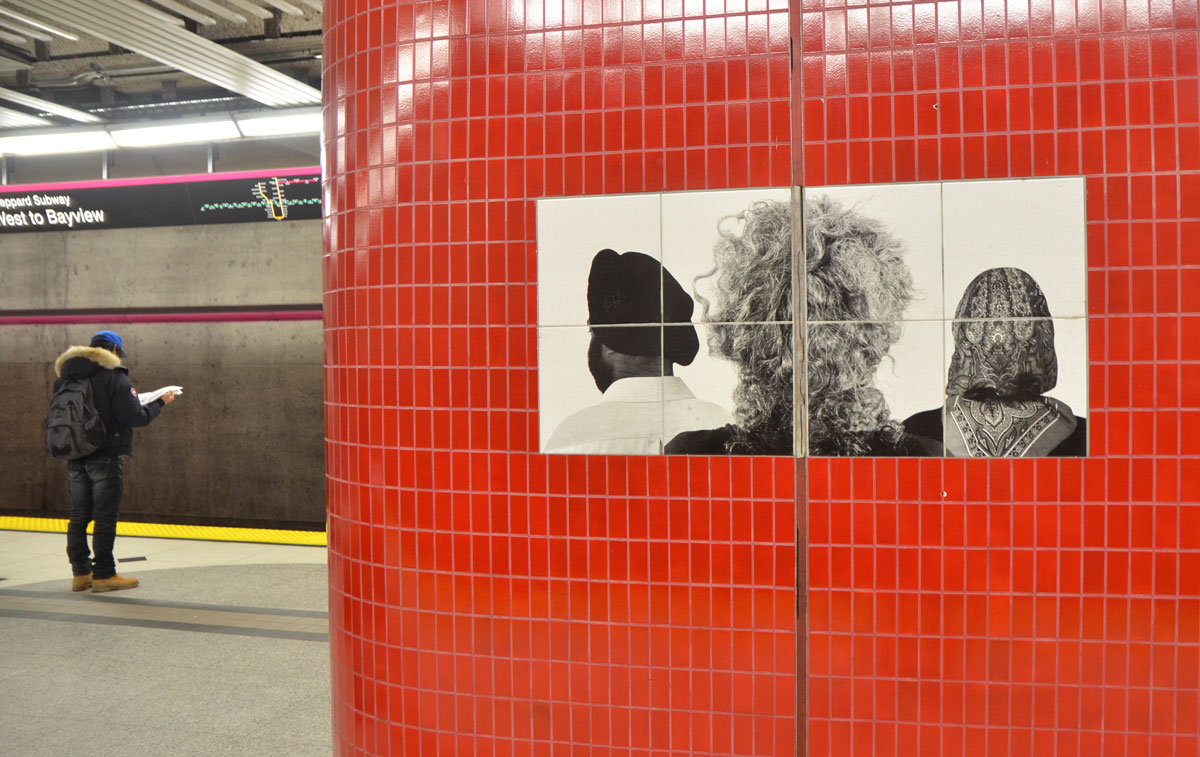
below: I was not alone!

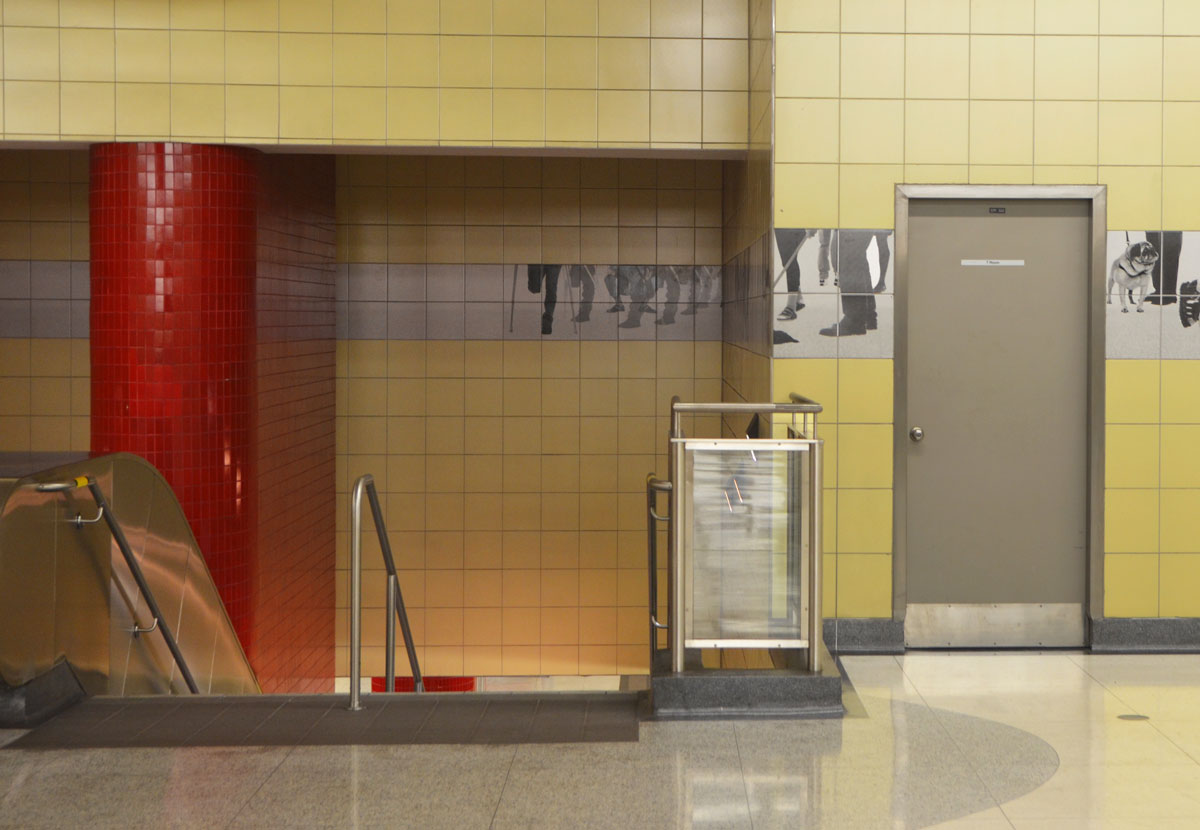
pillar covered in red tiles and with a black and white photo of the back of three peoples head, a man with a turban and a woman in a head scarf and someone with curly hair.

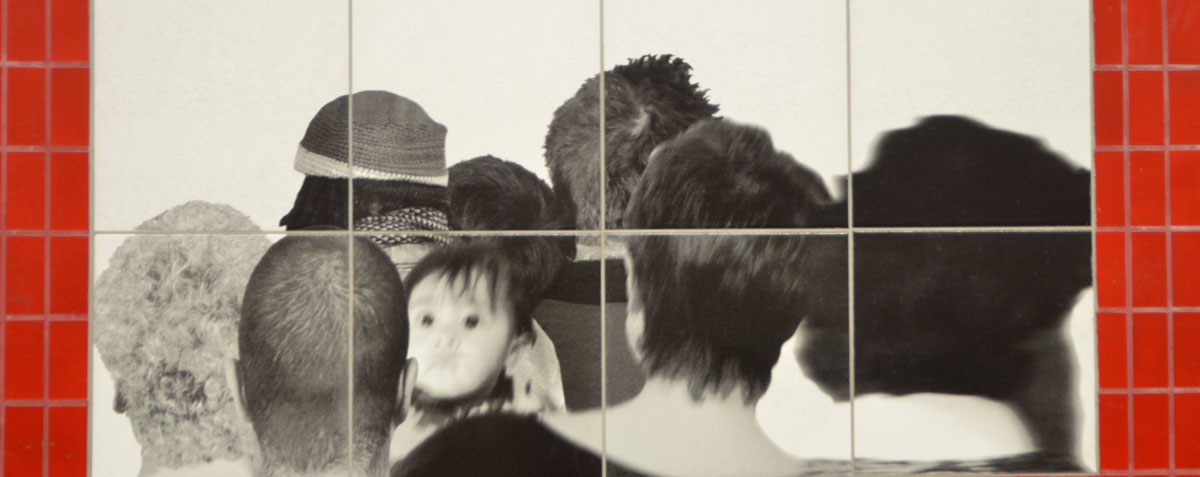
below: The artwork at track level is a continuation of the photographs by Sylvie Belanger.  This time the pictures are of the backs of people’s heads and they are incorporated into the red pillars.

close up of black and white photo of the back of peoples heads, one child's face turns to the camera and is slightly out of focus, Passing by Sylvie Belanger at Bessarion subway station

below: The outer walls are bare concrete and there are very few ads or posters on the walls.

from the subway platform at Bessarion subway station looking toward the concrete wall at the edge of the tracks, signs for the station, and direction signs.

Another nice day, another ramble.

below: My starting point the other day was Castle Frank subway station (Bloor Street East, close to the top of Parliament Street).  This station opened in 1966 although the entrance that you see in the photo was an addition that was added only a few years ago.

photo taken from sidewalk on north side Bloor Street East, just outside of Castle Frank subway station, looking west towards downtown. Subway station in the foreground, high rise buildings in the background

below: An interesting round window in the station entrance.  You can see part of the window in the picture above, peaking from around the side of the tree trunk.

a round window with a metal grille inside. Grille is made of trapezoid shapes in a repeating pattern.

below: The subway “tunnel” between Sherbourne and Castle Frank stations isn’t really a tunnel at all.  This view surprised me – I know that I have driven under this structure on Rosedale Valley Road.  I don’t recall knowing that it was for the subway.

Downtown Toronto is in the distance. The subway tunnel between Sherbourne and Castle Frank stations is in the foreground. It's really a covered bridge as it passes over Rosedale Valley Road.

below: “It’s never too cold for rainbow shoelaces.”  Sage advice for the winter time.

words spray painted on a low concrete fence, It's never too cold for rainbow shoelaces.

below: Graffiti under the bridge…  even though I am drawn to bridges I didn’t go down the hill to investigate.  That can be another blog post at another not so muddy time.   This spot can be accessed from the Rekai Family Parkette which is at the SE corner of Bloor and Parliament, tucked in between Bloor and St. James Cemetery.

graffiti under the arches of a bridge, white skull painting, lots of trees, winter time but no snow. No leaves on the trees, brown ground.

below: More graffiti seen from the parkette.

graffiti on the side of a concrete bridge, based on the letter P C and E.

below: St. James Cemetery was opened in July of 1844 at a time when the population of Toronto was around 18,000 and most of them lived south of Queen Street.   The cemetery would have been out in the country but now, more than 150 years later, the cemetery is in the middle of the city.  There are 89,000 interments here including two of my great x 2 (or 3?) grandparents and some of their descendants (they’re not shown in the picture though!).

many tombstones in a cemetery, different shapes and sizes, a couple of crosses, a couple of rectangles with rounded tops, a tall one in the shape of a skinny keyhole, trees in the background, no leaves

below: A little reminder that Christmas wasn’t all that long ago.

a small statue of an angel sitting on a pedestal in a cemetery, a Christmas wreath in green with red bows and brown pine cones is behind the angel.

The fastest route from Castle Frank to Cabbagetown is straight down Parliament Street.  But of course, the direct route is rarely the one that I take.  The area is full of little alleys and lanes and they all call to me.

below: These animals are part of a mural painted in support of Riverdale Farm which is nearby.

on Darling Lane (street sign in the picture), a mural of two horses, part of a larger mural featuring farm animals

below: Reading the news, many newses.

a street art piece, a bench and man are painted on a wall, the man is holding a newspaper that is a made of paste ups of the word news many times.

below: In Flos Williams Lane there are a number of stenciled words.  “Guilty until proven rich” I first saw here a couple of years ago.  I don’t walk this lane very often so I’m not sure how long ago the other sayings appeared.

below: Like most walks, there were interesting windows to be seen.

two windows on a red brick house with stone foundation, basement window and first storey window. The upper one has a red curtain

below: …and doors too. A very bright orange door!

a very bright orange front door.

below: But unlike most walks, there was a giant gecko or lizard.

a life like model of a giant green gecko on the small roof over a window of a pet store.

One of the appeals of Cabbagetown is the number of older houses, many of which are heritage buildings.

below: This house was built in 1858 and its first resident was Charles MacKay, a customs official who lived here from 1858 to 1865.  The infill line of townhouses behind it are a much more recent development.

an old historic brick house with black and white trim, a small statue in the front yard, set back from the sidewalk, large tree,

below:  Cabbagetown has more of these ‘workers cottages’ or ‘gothic cottages’ than anywhere else I’ve walked.   This arrangement of three identical houses in a row is especially rare (but not unique, at least not yet).

a row of three gothic cottages joined together, all pale yellow with dark green trim

below:  This cottage is in the middle of another threesome but they are not identical.  The yellow door on the pale blue house is a wonderful colour combination.  A little bit of sunshine.

a gothic cottage painted pale blue with white trim,also a bright yellow front door.

below:  Even though it has been renovated and an addition added to the back, this house still retains some of its historical roots.

a renovated and modernized gothic cottage with an addition out the back.

below: And more history…  I was attracted to this building by the beautiful double doors.  Once I was close to the house, I noticed the ghost sign hiding behind the tree branches. The Daily Herald is no longer but it the mark it made here remains.   A mysterious mark though because I can find no record of such a publication.  In fact, probably “the sign had been part of a play or film that the home’s owner was involved in and he installed the sign on an act of whimsy.”  (source, bottom of page)  You gotta love whimsy!

an old brick building, two storeys, now a house, with double doors in a dark teal colour. Ghost sign above the window that says Daily Herald

below: Whimsy you say?  Bright pink flamingo whimsy in a store window.   They look like they’re ready for a rainy day.

three bright flamingo heads as umbrella handles in a shop window. Pink flamingos and pink umbrellas.

below:  There were also some store windows that were a bit more serious.

store window, selling statues of religios figures, many statues of Mary and Jesus.

below:   I think that Carlton and Parliament is one of the most colourful intersections in the city and I always enjoy passing this way.  This is the view if you are standing in the middle of Carlton street and looking east towards Parliament.

looking down Carlton street towards parliment, brick stores directly ahead, some cars on the street,

below: This large colourful mural on the wall of Cabbagetown Corner Convenience,  NE corner of Carlton and Parliament, has become a landmark since it was painted by Ryan Dineen in 2005.

mural on the side of a building in cabbagetown. people in old fashioned clothing plus swirls of colour. street scene beside it, people on sidewalk walking in front of stores.

below: The 506 Carlton streetcar makes its left turn from Parliament.   It’s never a quick and easy turn.  In fact, it’s usually frustratingly slow.

TTC streetcar, Carlton car, turns from Parliament street onto Carlton, stores, sidewalk and people in the background, reflections in street car windows.
And in case you were wondering, yes, you can find cabbages in cabbagetown. This big one is on the Cabbagetown mural on the side of the LCBO building.

painting of a cabbage in a mural

And yes, there is a lot more to Cabbagetown than this…
and I will use that as an excuse to return another time!

Someone has redone the signs in Bathurst subway station….
now they look like they belong at Honest Eds store!

sign maker from Honest Eds store has redone some of the signs in Bathurst subway station plus, he has added some Honest Ed type promo signs around the station - the direction sign to subway and to exits.

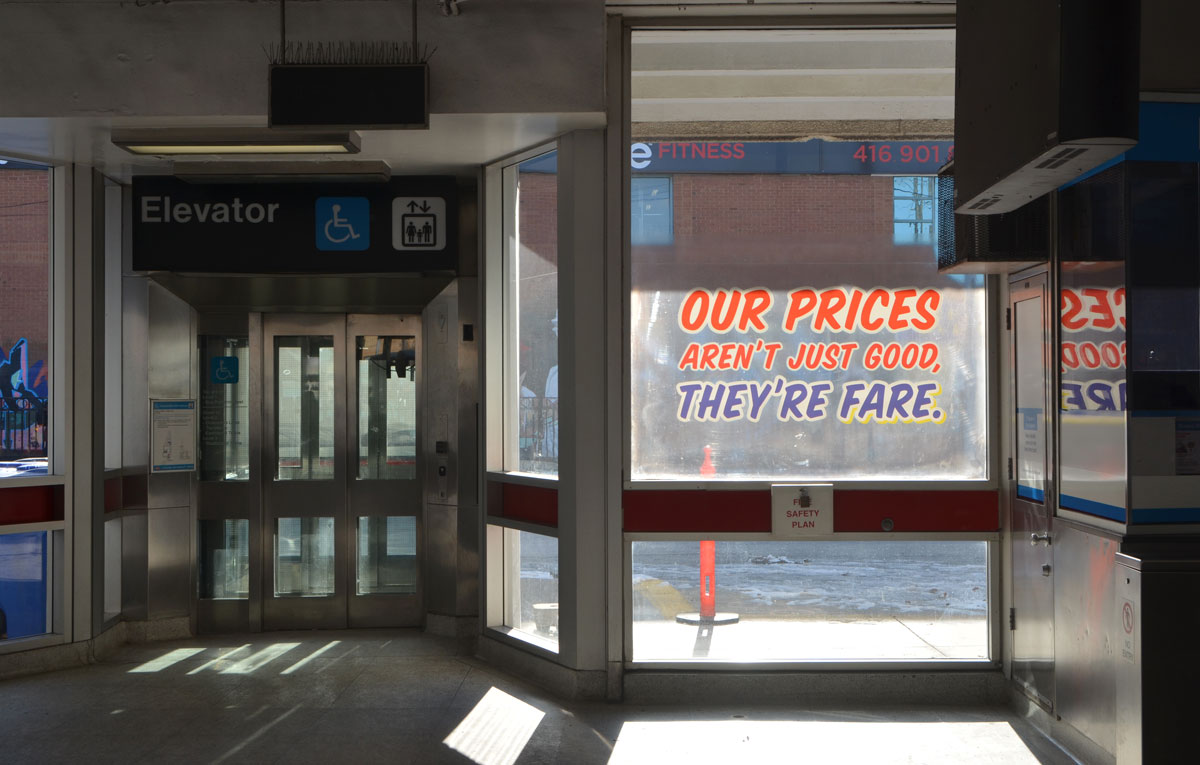
… and when I came up to street level I discovered that the station has been decorated with Honest Eds type ‘adverts’ complete with awful puns

sign maker from Honest Eds store has redone some of the signs in Bathurst subway station plus, he has added some Honest Ed type promo signs around the station - on the window of the station, Our prices aren't always good but they're fare

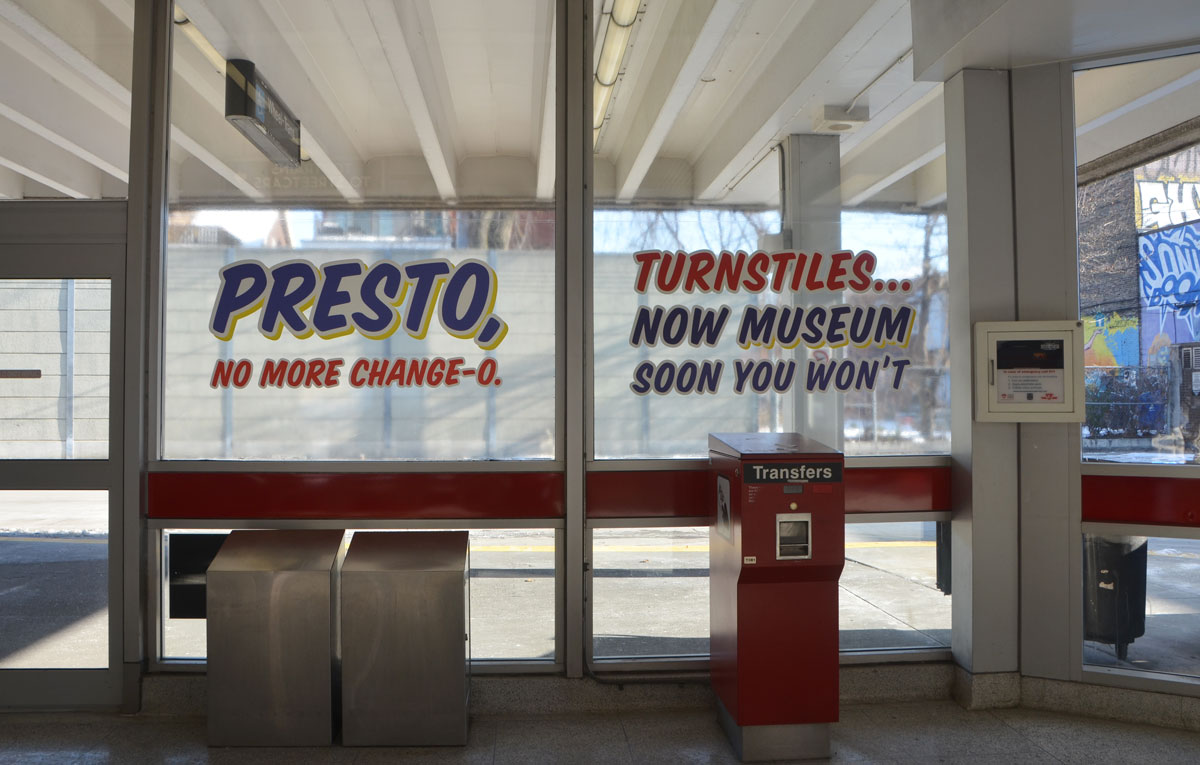
…. including word play based on subway station names such as “Turnstiles, now museum, soon you won’t”.  Groan.  Smile.

sign maker from Honest Eds store has redone some of the signs in Bathurst subway station plus, he has added some Honest Ed type promo signs around the station - on the window of the station are two signs, one says Presto no more change-o and the other says Turnstiles now museum soon you won't

below: The main entrance to the station now looks like an Honest Eds window.

sign maker from Honest Eds store has redone some of the signs in Bathurst subway station plus, he has added some Honest Ed type promo signs around the station - on the window of the station, The window beside the main entrance has been covered with fake ads.

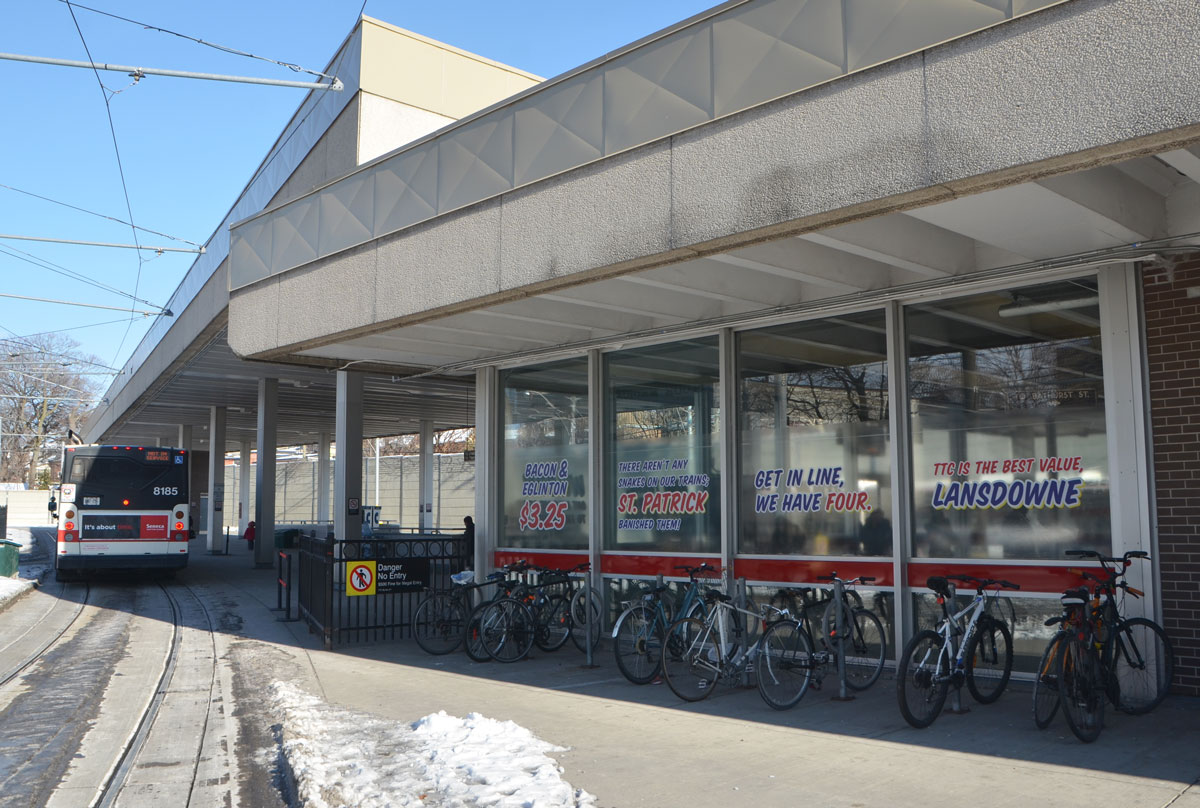
below: They aren’t too easy to read in this picture, but the two signs on the left are, first, “Bacon & Eglinton $3.25” and second, “There aren’t any snakes on our tracks, St. Patrick banished them”.   Were you expecting better?  [laughing]

sign maker from Honest Eds store has redone some of the signs in Bathurst subway station plus, he has added some Honest Ed type promo signs around the station - on the window of the station, exterior of station by streetcar and bus loop has four signs in the windows that are puns based on the names of TTC stations.

Nearby is the real Honest Ed’s store, a landmark for many years.  Eighteen months ago, I posted some pictures of the store and at the end of that post I mentioned that the store was scheduled to close at the end of 2016.  Well, the end of 2016 is drawing nigh and Honest Ed’s is slowly winding down.  The decorating of Bathurst Station is part of the good-bye process.

At the moment, the interior of the store is a shadow of its former self.  It is still in business but the goods are getting scarce.  There are definitely still bargains to be had.  I have a new hat that I bought there today, red polar fleece, that set me back 50 cents… plus tax.

interior of Honest Eds store as it gets ready to close down. a bin of lipstick and other makeup. Someone has written the word Riley in pink lipstick on the side of the bin

interior of Honest Eds store as it gets ready to close down. A bin of men's underwear for $4.99

interior of Honest Eds store as it gets ready to close down. The bedding section is being torn apart and dismantled

below: Ed Mirvish and a crowd of shoppers back in the day.
The picture still hangs in one of the many corners of the store.

interior of Honest Eds store as it gets ready to close down. An old picture of Ed Mirvish surrounded by a crowd of people hangs on a wall above a Bell payphone.

interior of Honest Eds store as it gets ready to close down. a few shower curtains on display as well as some checkered tea towels. The rest of the shelves and wall space are empty

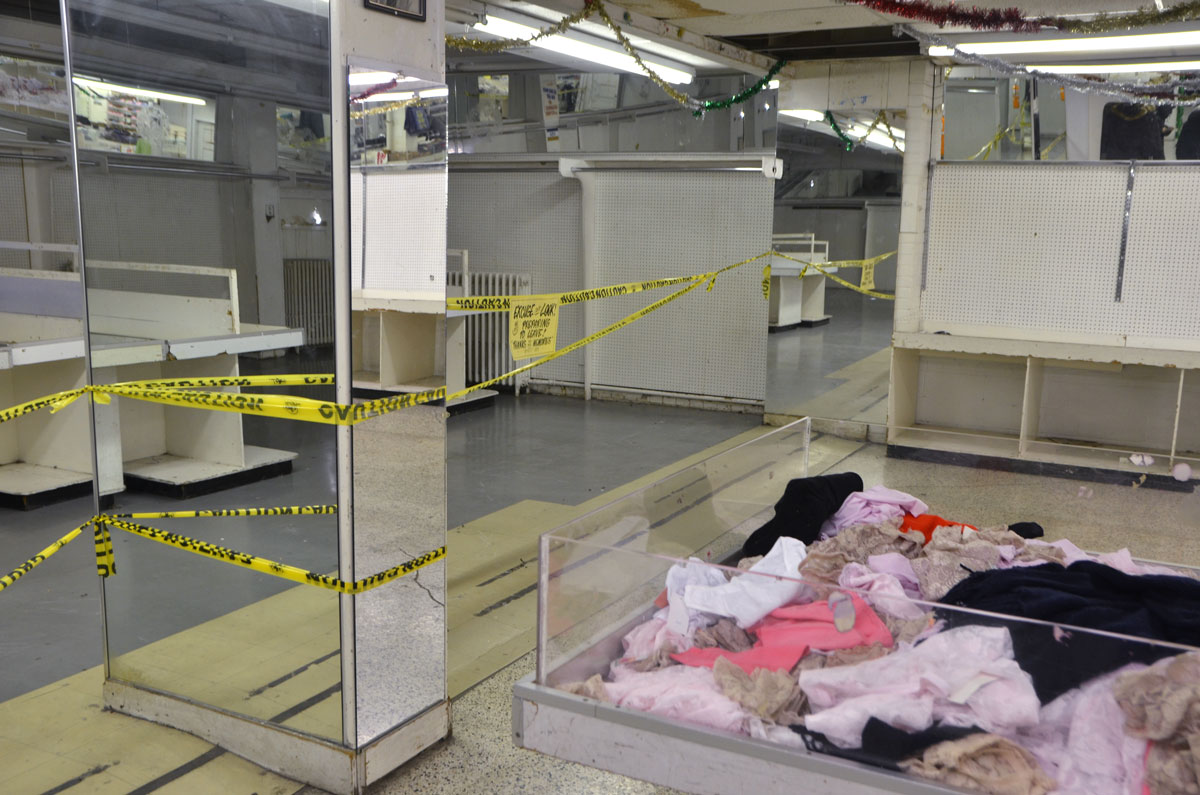
interior of Honest Eds store as it gets ready to close down. ladies underwear in a bin for sale, surrounded by empty bins and wall space, lots of mirrors. Yellow caution tape marks off a section of the store that is now closed.

interior of Honest Eds store as it gets ready to close down. a black and white photo of a young woman on a wall beside a convex mirror showing the stairwell. also an ad printed right on the mirror for bradasol lozenges

below: Photo taken from the walkway between the two buildings that make up Honest Ed’s store.  Looking south.

looking down at an icy alley where four people are walking between buildings, sign on building says Honest Eds Annex,

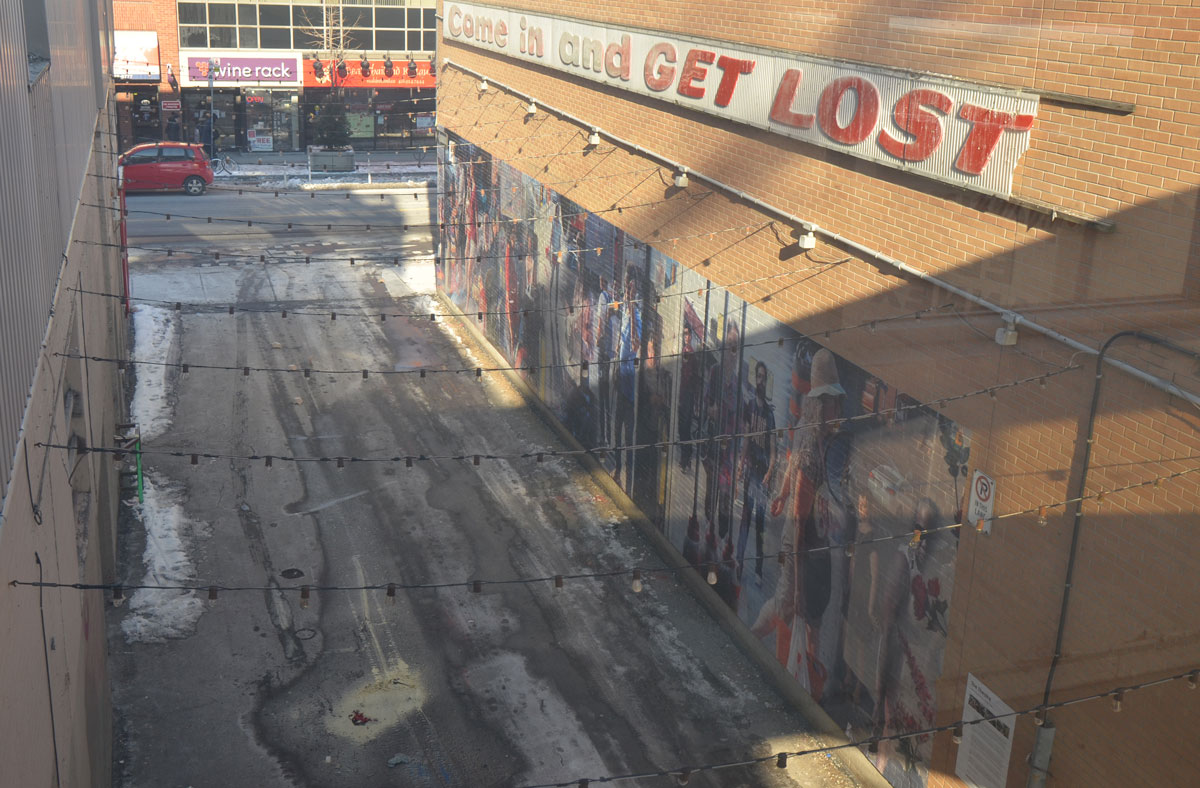
below: From the same vantage point, but looking north.  From here I spotted a new mural.

looking down on an alley, there is a mural along the side of one of the buildings.

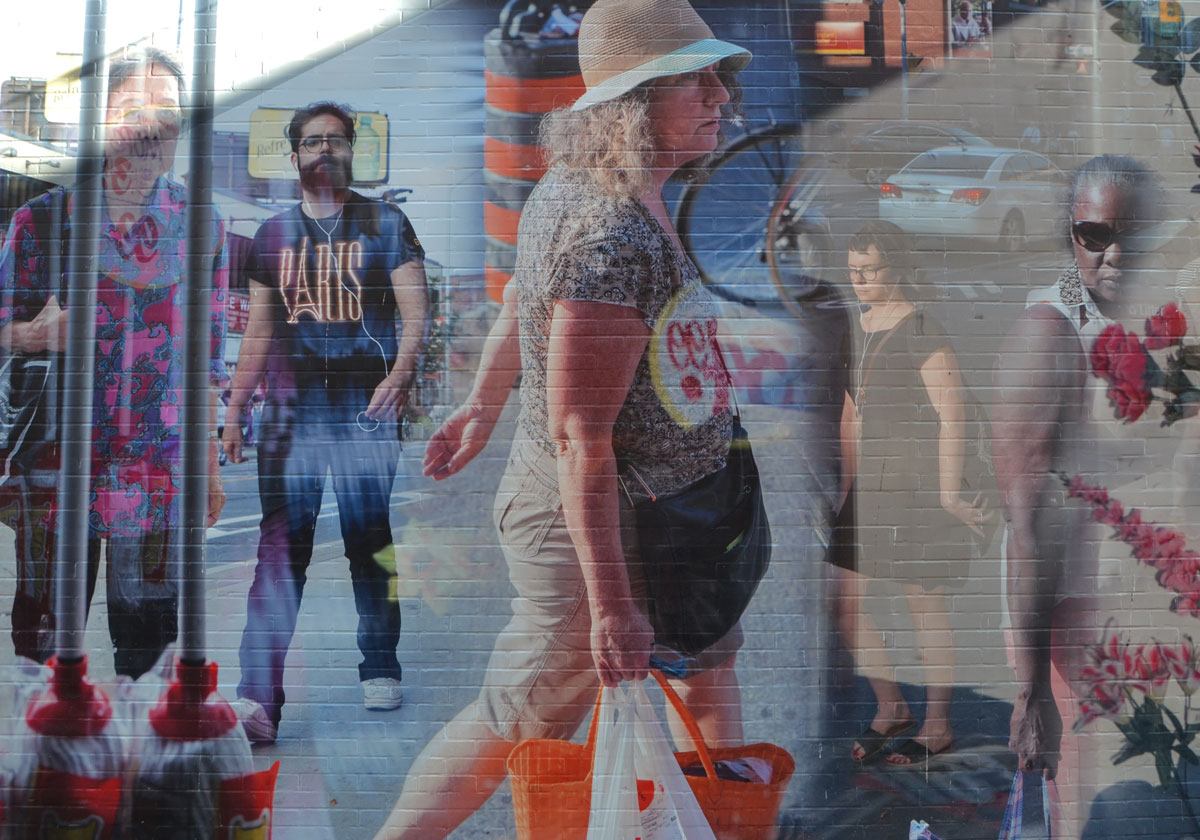
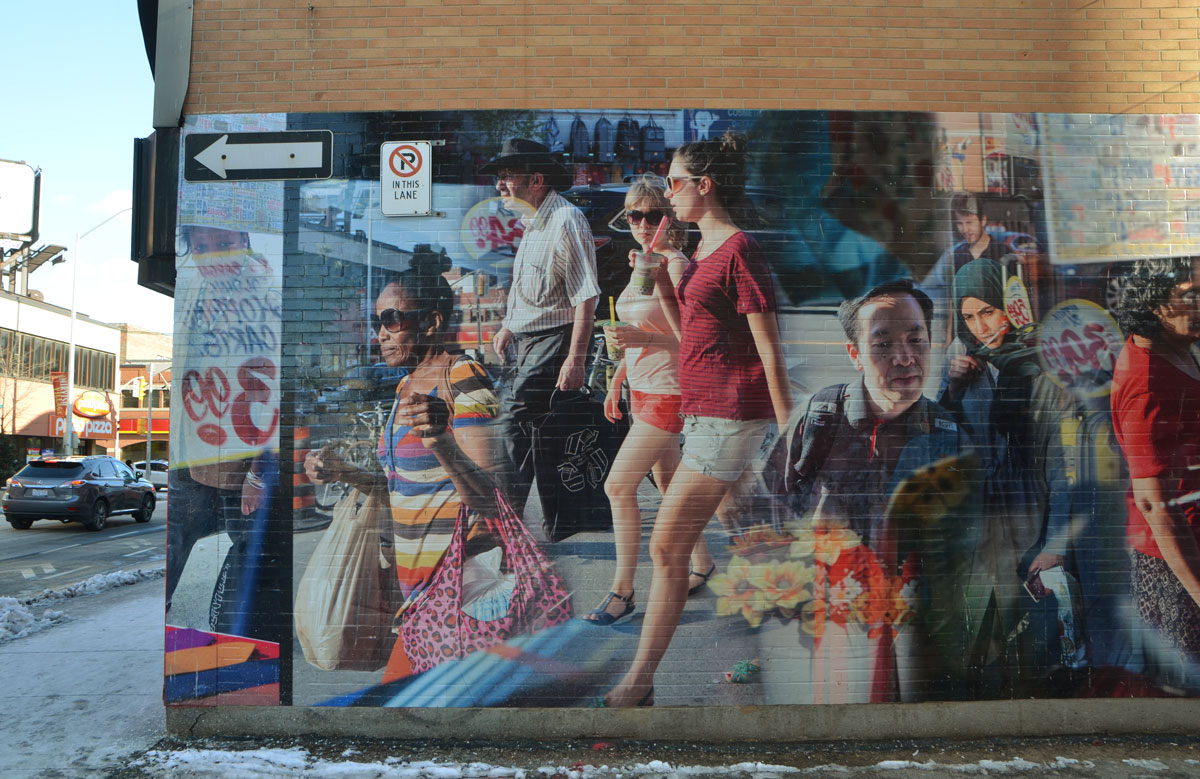
below: The mural is a large scale photo montage of people passing by the Bloor Street windows of Honest Ed’s. It catches the reflections of both the window contents and the life on the street.  It is “The Theatre” and it is the creation of Matthew Monteith.

part of a mural in Honest Eds Alley by Matthew Monteith showing people walking past the windows of Honest Ed's store, large scale photo

part of a mural in Honest Eds Alley by Matthew Monteith showing people walking past the windows of Honest Ed's store, large scale photo

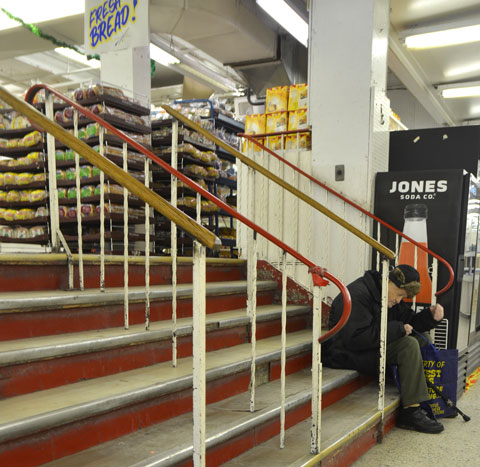
interior of Honest Eds store as it gets ready to close down. an old man with a cane sits on the steps between two sections of the store

Back in mid October I blogged about the new murals on the south side Wilson Ave as it passes under the Allen Expressway (where Wilson subway station is).

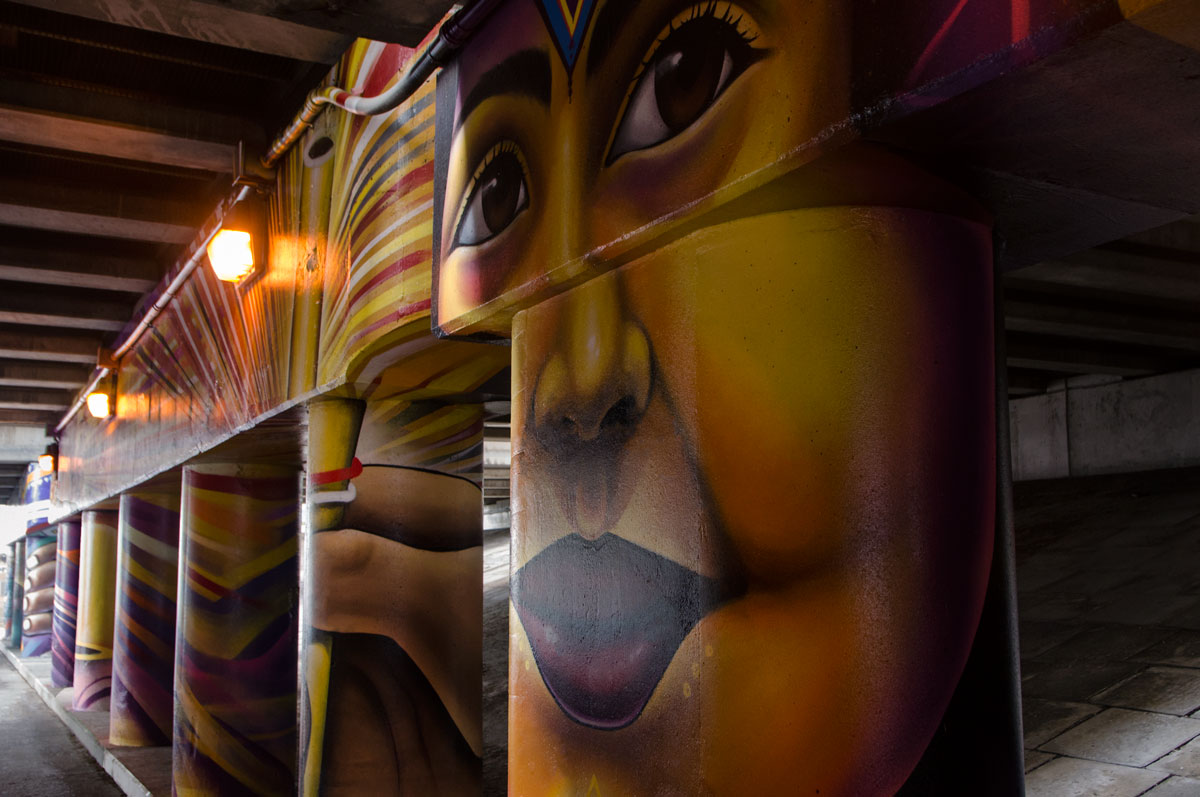
below: Looking across Wilson Avenue to part of the mural on the south side.

looking across Wilson Avenue, under the Allen Expressway towards a mural that has been painted on the pillars and supports on the other side. A face is painted there.

When I was there last,  the murals on the north side were not completed.   The other day I remembered that I hadn’t seen the finished work, so I took the subway back to Wilson station to see what the pillars on the north side look like.   There is more light on the north side as there are entrances to the subway along the sidewalk here.   There is also more pedestrian traffic.

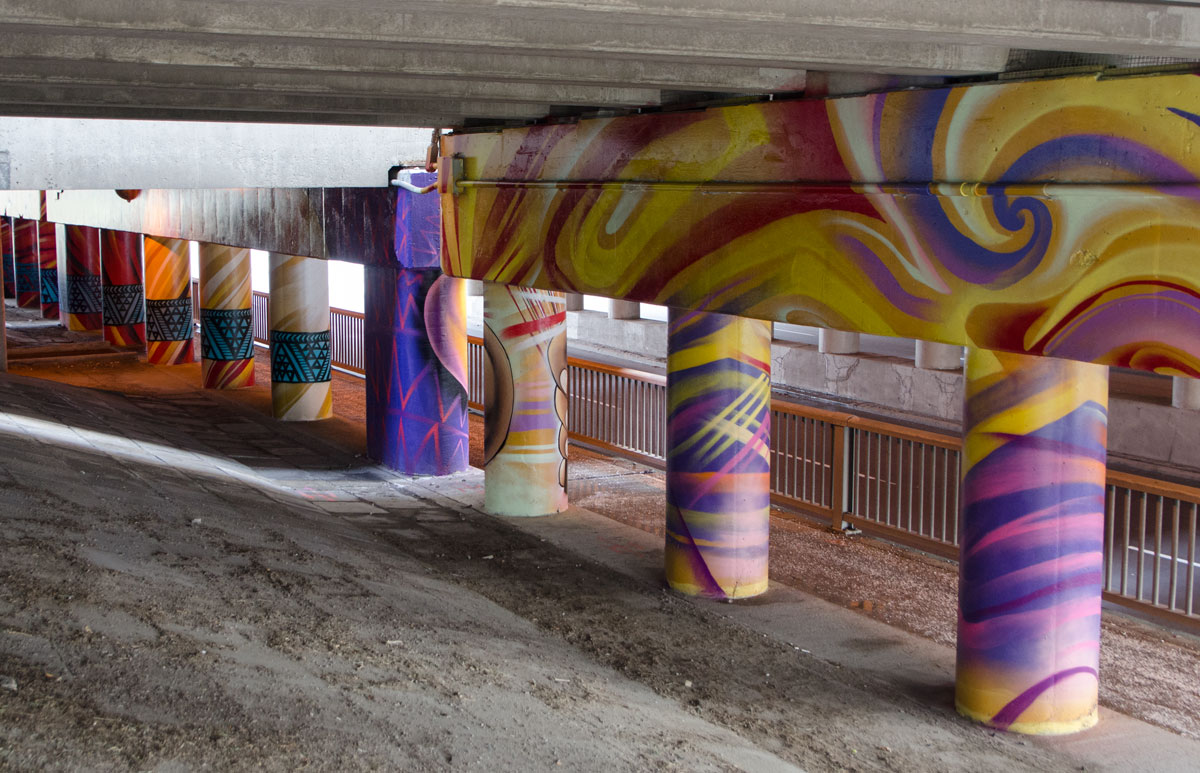
pillars and supports under an overpass that have been painted in bright colours by smoky and shalak

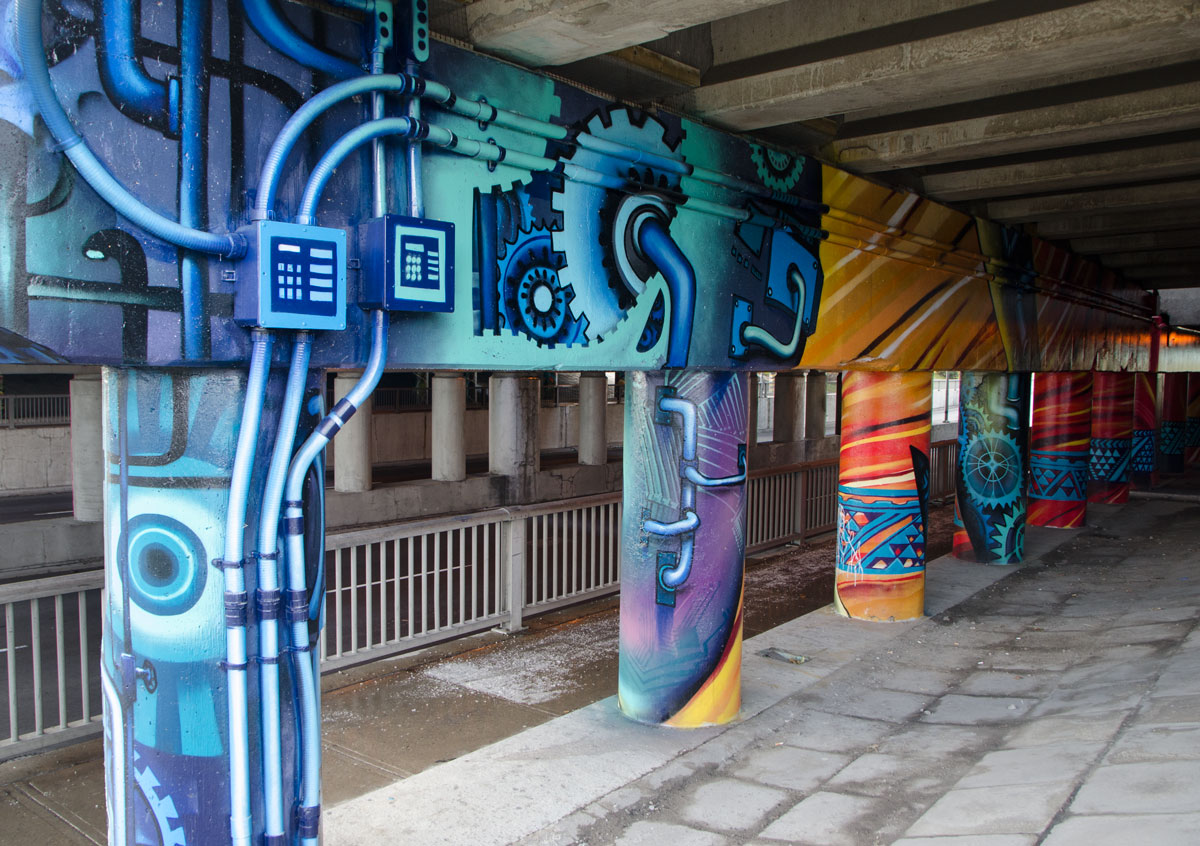
This side was also painted by shalak and smoky (as was the south side).

pillars and supports under an overpass that have been painted in bright colours by smoky and shalak - swirls of purples and yellows

below: In the center by one of the well-lit subway entrances.

pillars and supports under an overpass that have been painted in bright colours by smoky and shalak - red pillars with blue geometric patterns in a band around it near the bottom

pillars and supports under an overpass that have been painted in bright colours by smoky and shalak

pillars and supports under an overpass that have been painted in bright colours by smoky and shalak - a face showing eyes and top of nose

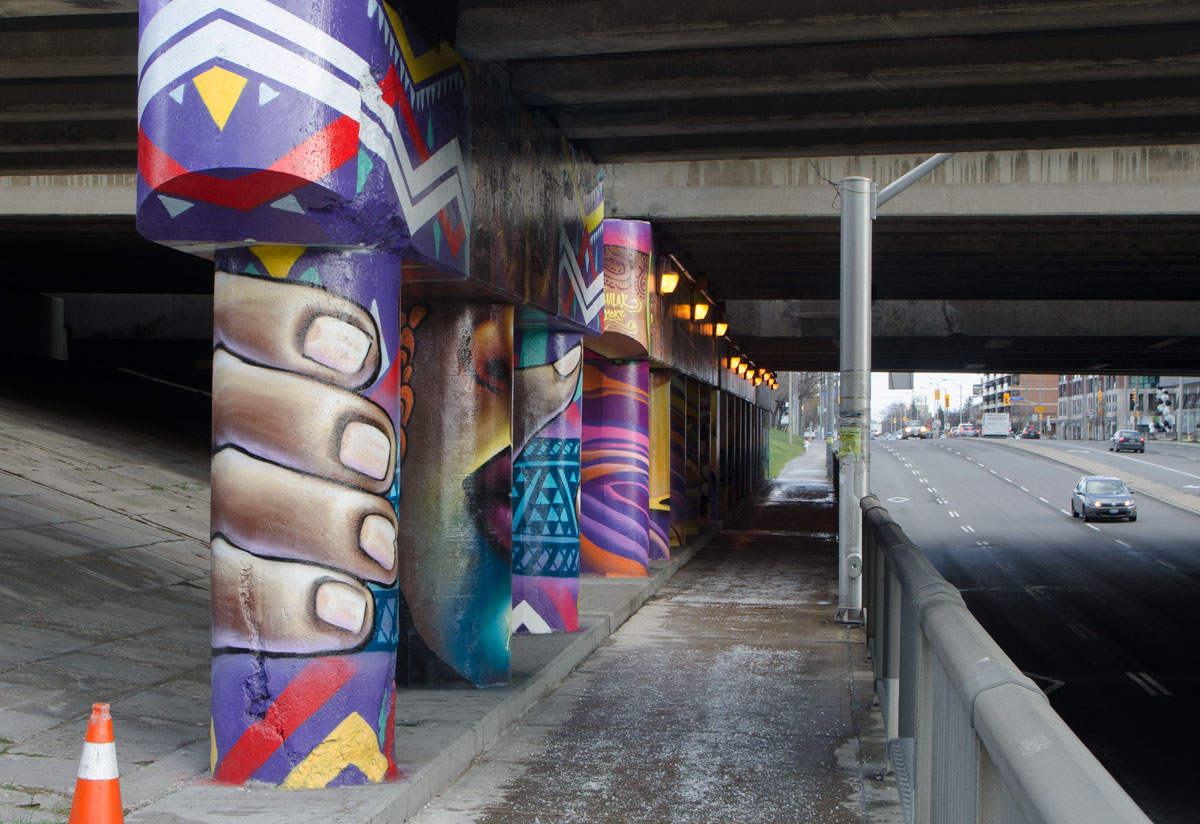
below: Looking east along Wilson Avenue.

pillars and supports under an overpass that have been painted in bright colours by smoky and shalak - a large face in the center pillar, with hands gripping the outer pillars on each side of the face

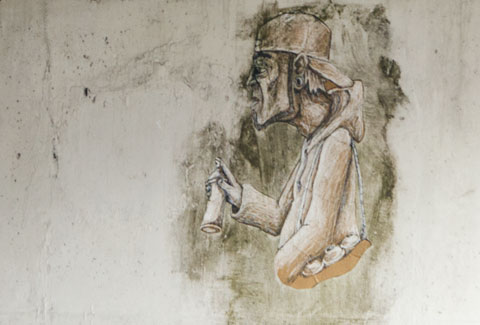
below: A little street artist with his can of spray paint has been left in a corner.
He’s not easily spotted.

a grey tones painting of a man with a spray can in his hand, from the waist up


In the lead role, the hero of our story, the Tim Hortons coffee cup, a bright red Canadian icon with its usual black top and brown sleeve.  He gets around.  The city is his playground.  Whether it’s standing out against a minimalist black and white background….

an empty red Tim Hortons coffee cup sits on a white ledge on a white wall with a black door on either side of it.

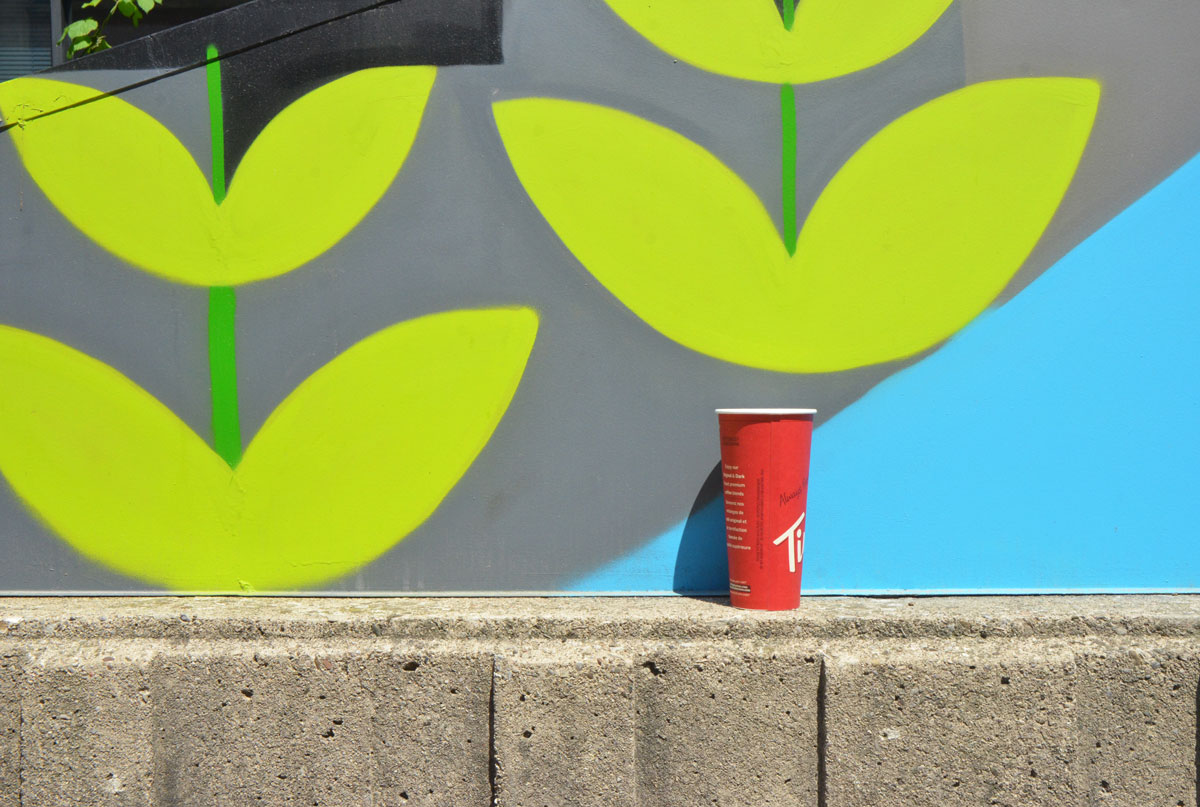
or trying hard to fit into the colours of the city.

painting of stems with leaves, stylized, with a red Tim Hortons coffee cup at the bottom of one of the stems.

There are times when he’s on top of the world. King of the castle so to speak.

a red tim horton cup on a grey metal box on the street, traffic including a TTC streetcar are in the background

.. and he rides in style with his private seat on the TTC.

an empty red tim hortons coffee cup lies on a red TTC streetcar seat. No one is sitting there.

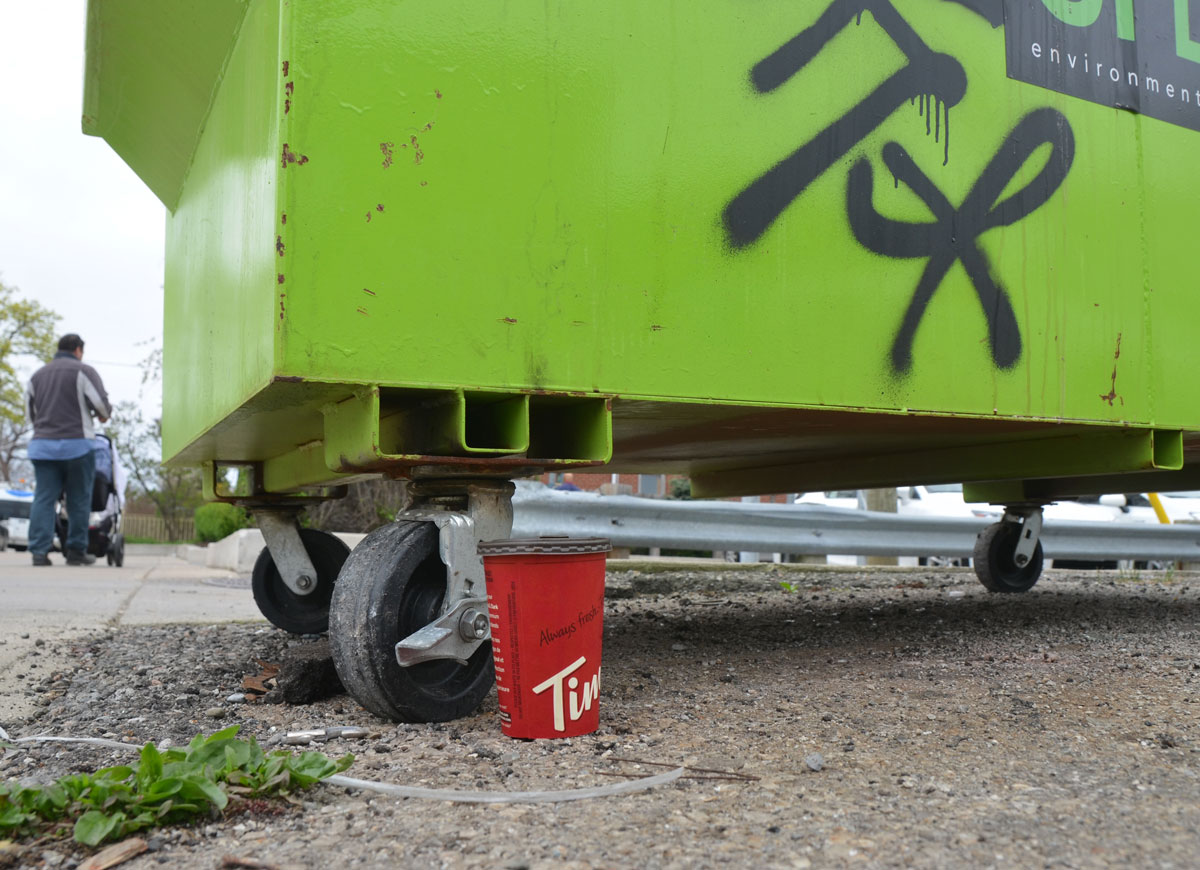
But it’s not always an easy life. Sometimes he’s down in the dumps facing hurdles that are too high.   He’s left feeling abandoned and neglected.  Vacant.

a tim hortons cup discarded onto a gravel section of a vacant lot, behind a chainlink fence

And he has even considered ending it all.

a red tim hortons cup standing on the ground beside a green rubbish bin

But he’s an urban guy.   He knows that life is what you make of it.

a red ti hortons coffee cup sits on a ledge, people around it, all with their backs to the cup

 And there are always others just like him that he can count on for a chat or for a shoulder to cry on.

Two red Tim Hortons coffee cups beside two water supply

He has many fine traits.  He can be a curious fellow but he knows his limits.

an empty red tim hortons cup lies discarded on the ground, beside yellow police tape

He knows that sometimes you have to be patient… but that doors usually open.

a red tim hortons coffee cup sits on the stone step in front of a double set of doors. on a street

He’s frequently warm and often ready to lend a hand.  In case of fire, he’s there!

a red tim hortons cup sits on a red shelf beside fire emergency equipment

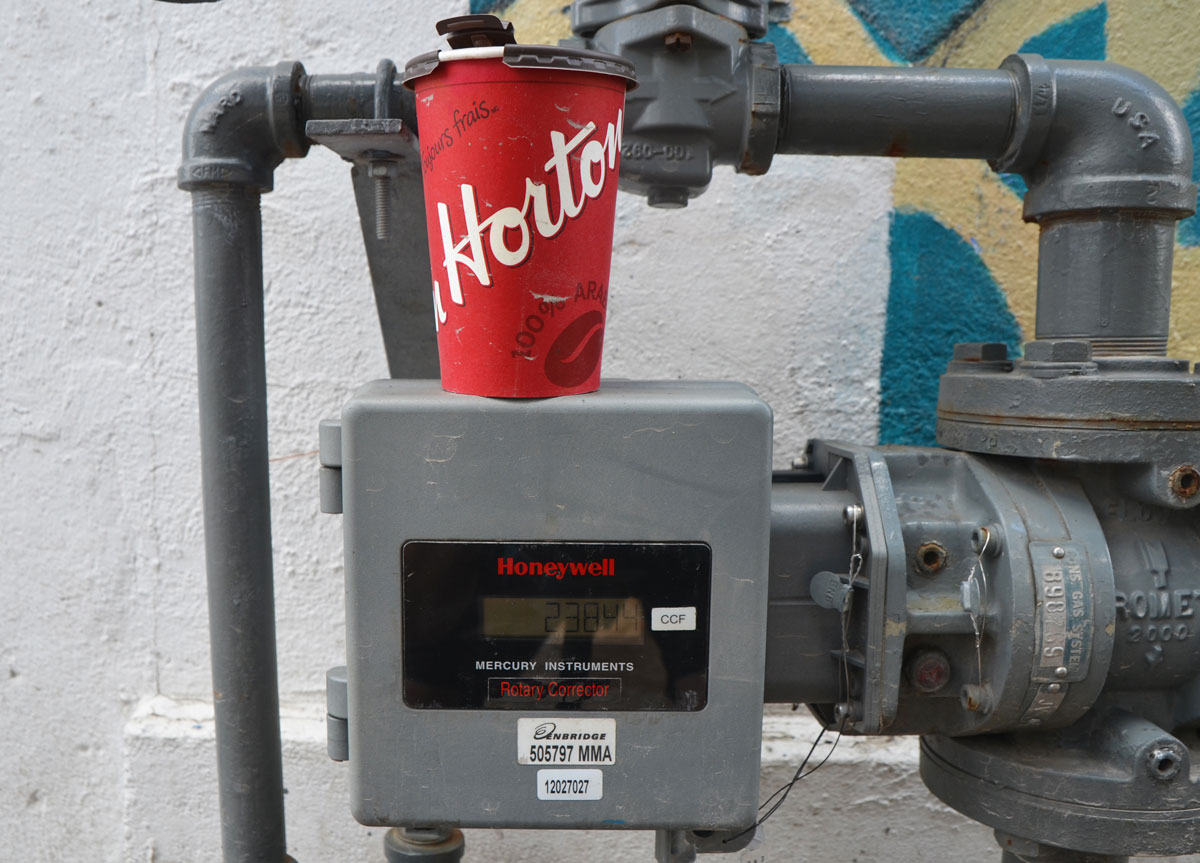
You’ll find him in many places around the city, watching, waiting, and keeping an eye on the situation in his own quiet way.  He too is part of this city.

a red tim hortons coffee cup sits on top of a grey Honeywell meter outdoors

Casting by Tim Hortons.
No cups were disturbed in the making of this story.
Look for the sequel, ‘A Tim’s Christmas’ playing in a street near you.


This is another meandering blog post… a post about being out and about on yet another wonderful autumn day, going wherever my feet and eyes take me.

below: The first picture of my day was this intriguing wall made of old wooden doors.  Bathurst Street.

a tall narrow wall about three storeys high made of old white doors.

below: A small elicser mural tucked away at the end of a parking lot.   The man has his back to the viewer but I can’t figure out what’s behind him or what he might be doing.

small mural on a fence, a man's head is back to the viewer

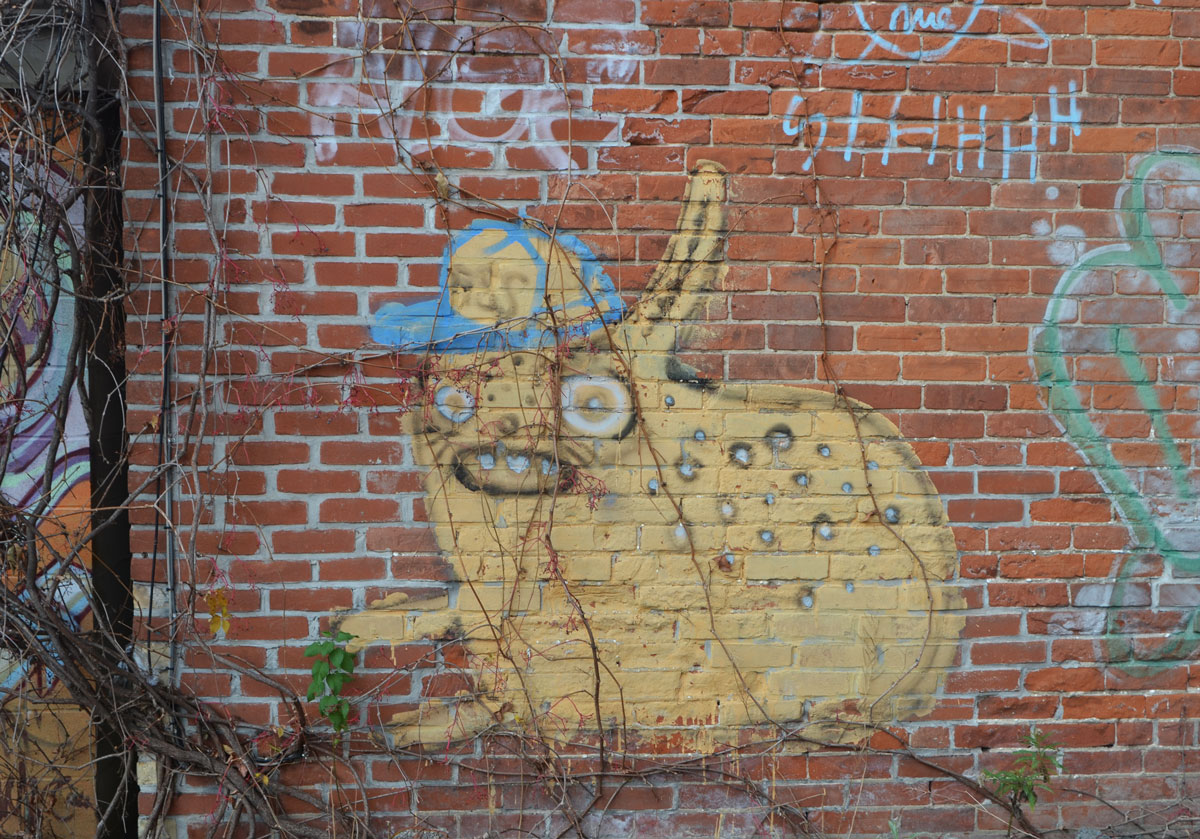
below: The leaves have fallen off the vines to reveal a yellowish creature with his baseball cap askew.

graffiti painting of a yellow animal like creature wearing a blue and yellow baseball cap. The creature is yellow. On a red brick wall, with spots on its back

below: Toronto’s tallest icon framed by a construction crane.

CN Tower in the distance, condo construction in the foreground, with a red crane

below: And on a similar note, a vacant lot cleared and ready for the next stage of its life.

a box beside a fence that has been scrawled over with blue spray paint. Behind it is a fence around a vacant empty lot. There are some small trees growing in front of the fence.

below: No more cranes here (and not many vacant lots either for that matter).  A view showing how much development there has been on the south side of the railway tracks.   Fort York is between the tracks and the condo towers.

a VIA Rail train passes by on one set of many tracks, in the background is Fort York and then a series of new condo buildings.

below: And what’s this? An old blue canoe beached on the tracks?

looking at the scene from a above, a blue canoe has been used to plant plants in. It lies across an old railway track, a chainlink fence separates the canoe from the main railway tracks that still function.

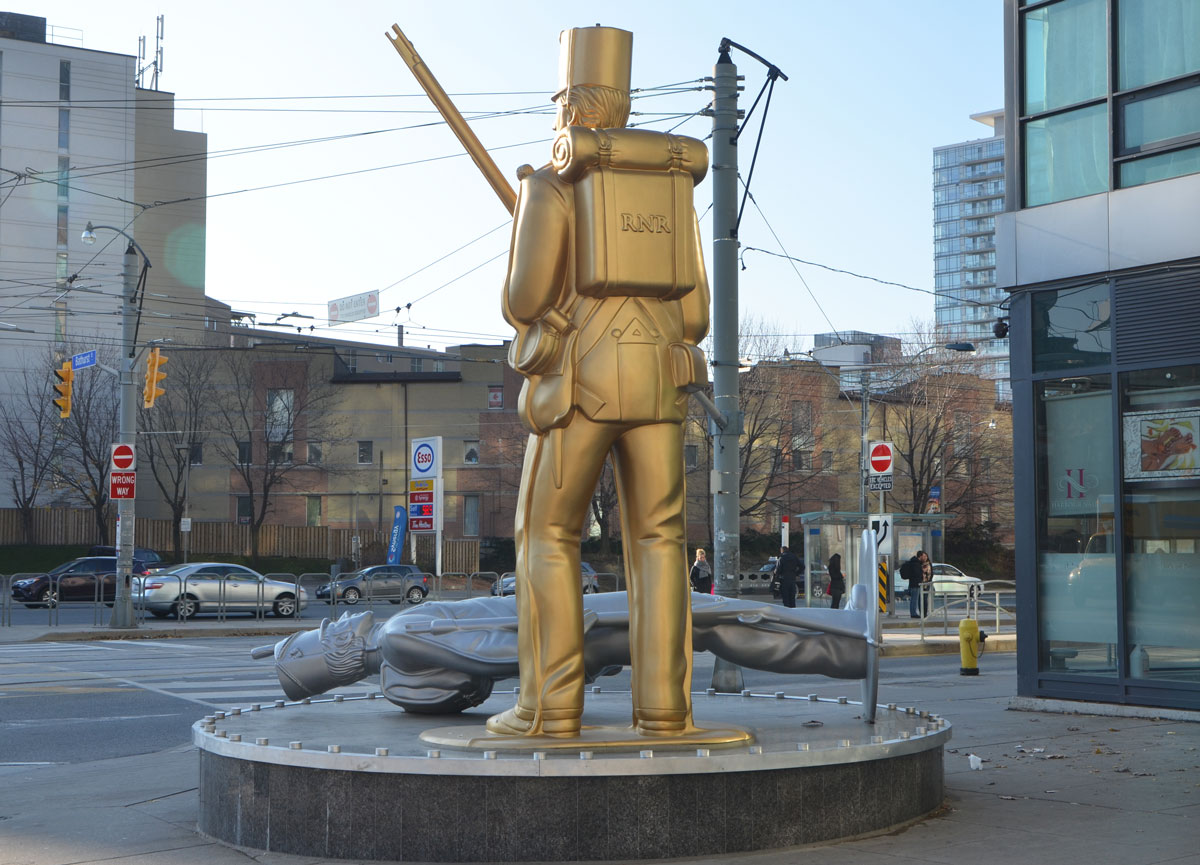
below: Standing guard over Bathurst Street, Fleet street and the Lakeshore, is one larger than life gold replica of a Royal Newfoundland Regiment and his fallen silver American foe. A sculpture by Douglas Copeland entitled “A Monument to the War of 1812”, a nod to nearby Fort York and the history of Toronto.

Douglas Copeland's sculpture of two tin soldiers, a gold one standing with backpack on and rifle in hand, and a silver one lying on its back on the ground, uniforms circa War of 1812, seen from the back, figures are much large than life sized and they are on a corner at an intersection, Bathurst St. and Fleet St.

below: My favorite example of bad grammar still exists!  Off-leash dog area at Coronation Park.

a wood fence around a dog park, in autumn with lots of leaves on the ground, on the fence is a white sign with black letters re the Toronto municipal code 608,

A beautiful day in the park.  A slight November nip was in the air but it was sunny and the sky was a brilliant shade of blue.  Coronation Park is named in honour of the coronation of King George VI who was crowned on 12 May 1937.  At that time nearly 150 trees were planted here.

Apparently, an oak tree was planted to honour the king.  Surrounding it, a ring of silver maples was planted.  This was to symbolize the countries of the British Empire.  I wish I had known that bit of trivia before I walked through the park because now I am curious if these trees are still there.   Some of the trees are quite substantial.

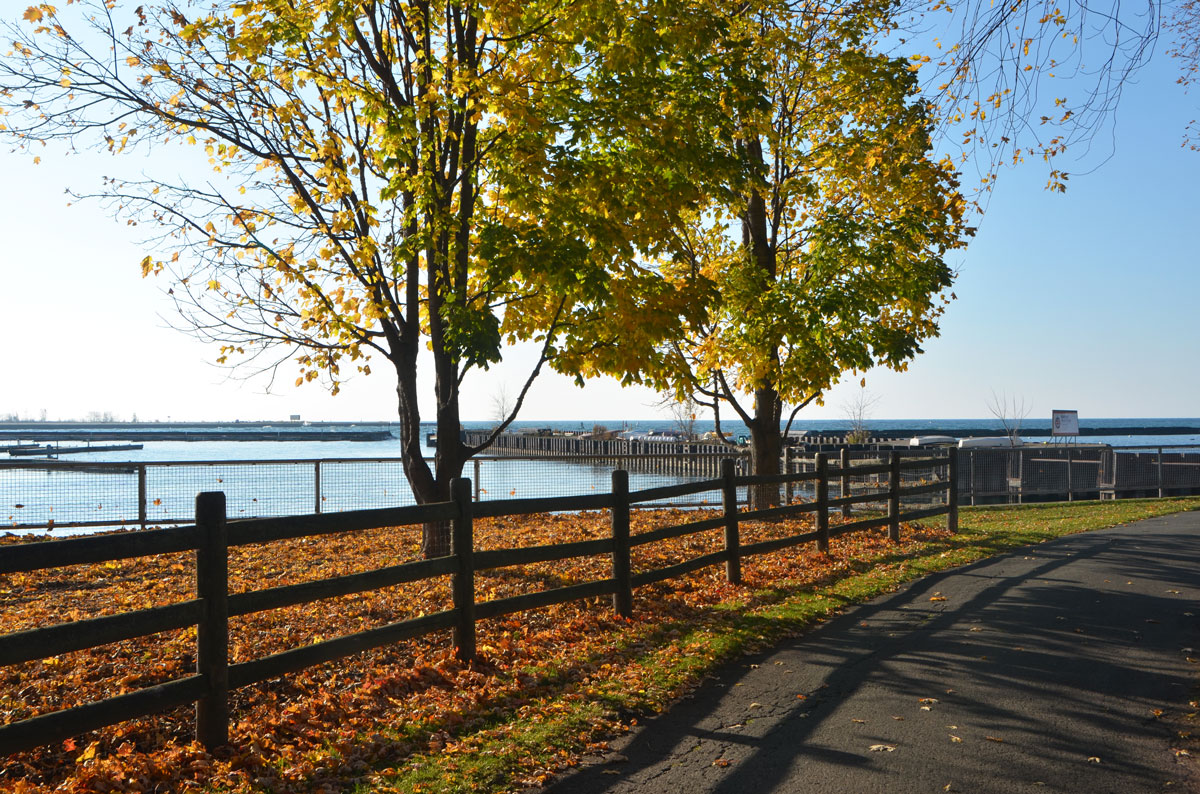
below: Long shadows for the morning sun, low in the sky.

morning in the park, autumn, trees with some leaves still on, many leaves on the ground, wood railing fence, shadows, Lake Ontario, path, Coronation Park.

below: Looking back towards the city center, past the empty docks of the National Yacht Club to the residences on Stadium Road.   A small group of people were making a video in the dog park.

morning in the park, autumn, trees with some leaves still on, many leaves on the ground, wood railing fence, shadows, Lake Ontario, path, Coronation Park. a small group of people in the distance are filming a video

below: This Victory Peace Monument was unveiled on 14 November 1995 to commemorate the 50th anniversary of the end of World War 2 and honour those who died in that war.   It was designed by John McEwen; the bronze pieces resemble the bow of a ship.

Metal partial cylindrical shapes on a concrete circular monument. World War 2 memorial

below: On the inside of one of the bronze pieces is a map of eastern Canada and the Atlantic Ocean.  Each boat on the map represents a ship or U-boat that was sunk during the war.  The Canadian ships are located on the map at “their last known position”.  I hadn’t realized that so many ships were lost so close to North America.

relief map of eastern Canada and the Atlantic Ocean, in bronze on a WW2 memorial. Little ships are shown on the ocean where they were sunk during WW2.

Trees were also planted to represent the four divisions of the Canadian Expeditionary Force (WW1) and its units as well as those who fought in the Fenian Raids of 1866-1870, the Northwest Rebellion of 1885, and the Boer War (1899-1902).  Once upon a time, brass plaques were placed at the foot of each tree to indicate the units the tree stood for.  If any plaques remain, I didn’t see them.

below: Another memorial is close by, a  “Memorial to Lieut. Tommy Hobbs gallant British Canadian soldier in the Great War 1914 – 1918.  Died on active service November 10, 1940.  Beloved and remembered by his comrades.”   Tommy Hobbs was involved in the creation of this park.

a memorial in a park made of a small pile of rocks. The top rock is inscribed, memorial to Tommy Hobbs, died 1940, in Coronation Park

below: A little farther on I noticed another rock, one that was painted red.   The bronze plaque on the rock says that 20 trees have been planted here in commemoration of the G20 Summit held in Toronto in 2010.

a large rock with a bronze plaque on it. The rock has been crudely painted red

below:  A 30 foot tall Inukshuk stands looking out over Lake Ontario.  Approximately 50 tonnes of mountain rose granite was used to create the Inukshuk, which was made by Inuit artist Kellypalik Qimirpik from Cape Dorset, Nunavut.

a tall stone inuksuk on a raised mound of warth

below: Streetcars across the baseball outfield.

Looking across the outfield of a baseball diamond towards a street. A line of mature trees by the street with two red and white TTC streetcars on the street, condo towers behind.

below: A closer look at that brown octagonal structure in the middle of the streetcar loop for the 509 and 511 cars.  Apparently it’s the Queens Wharf lighthouse, one of a pair built in 1861.

a brown structure, the Queens WHarf Lighthouse, sits on a patch of grass beside TTC streetcar tracks in front of a new condo.

The lighthouses marked the entrance to the Toronto Harbour from 1861 until the Western Channel was built in the early 1900’s.   This one stood on Queen’s Wharf which used to be at the foot of Bathurst Street, adjoining Fort York.  The wharf was built by the military; in 1833 it was a pier 42 feet long.    The pier no longer exists; a hundred years ago it was buried under what is now Bathurst Quay.

below:  A picture of an historical map (1886 or 1887) of the area showing Toronto Harbour, Fort York and the railway lands.  Queen’s Wharf is the pier on the left.   At that time, Front Street was the southern most street in this part of the city.   All the present day development south of the train tracks is on reclaimed land.

picture of historical map of part of Toronto Harbour from 1886, showing Fort York, Front St., and Bathurst St., and the railway lands and wharves into Lake Ontario,

below:   Taken from google maps, what the layout of the city looks like now.   As you can see, there have been many changes!

present day map taken from google maps of Coronation Park and Bathurst Quay including Fort York

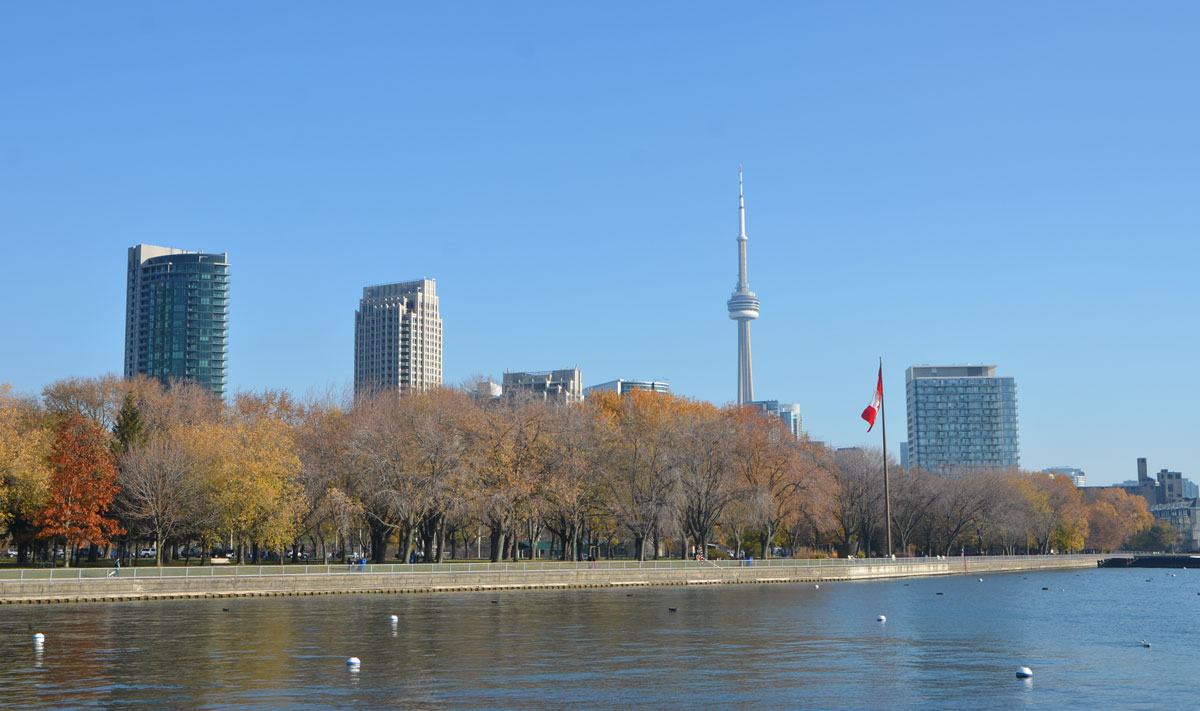
Lake Ontario in the foreground, trees in Coronation Park in the middle and Toronto skyline in the distance with the CN Tower and a large Canadian flag.
a sticker of a rainbow in a heart shape. A small purple heart is in the center, then a blue heart is drawn around it, moving outwards in rainbow colours.

mosaic artwork in greens and yellows

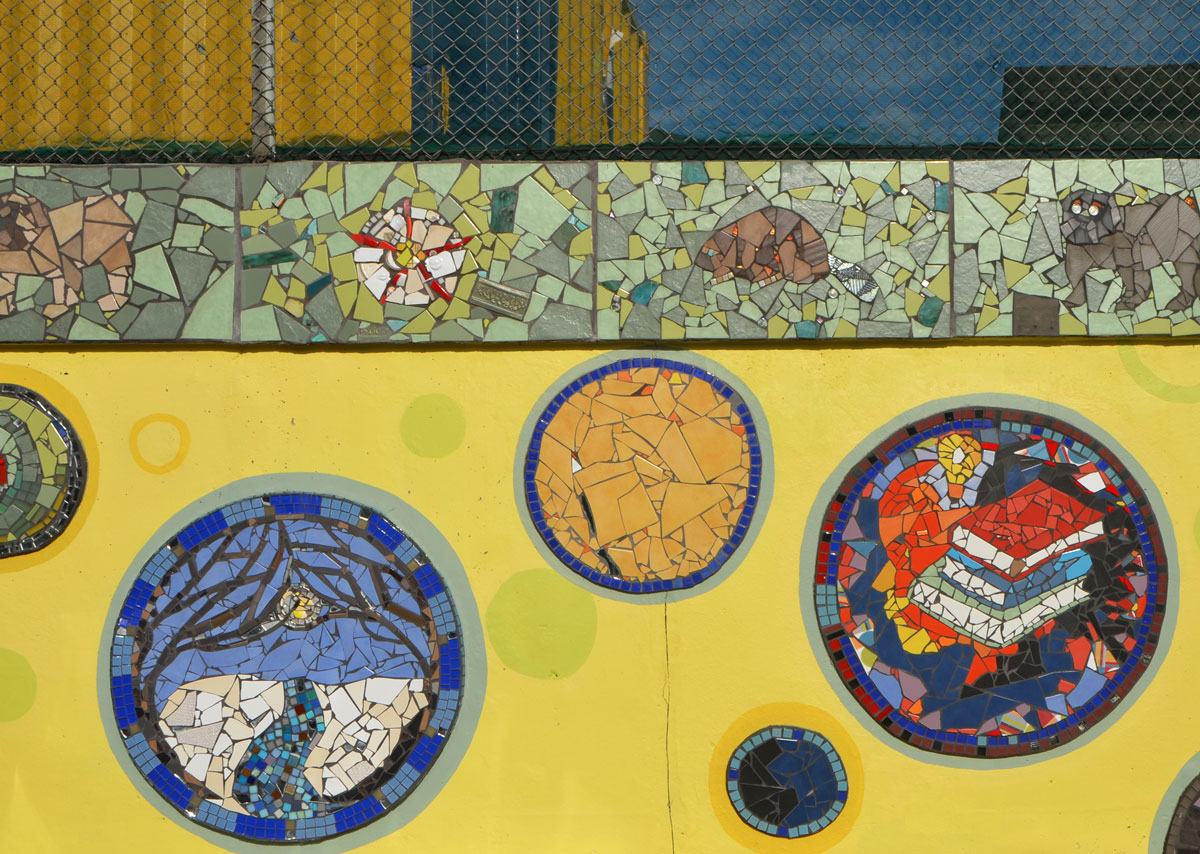
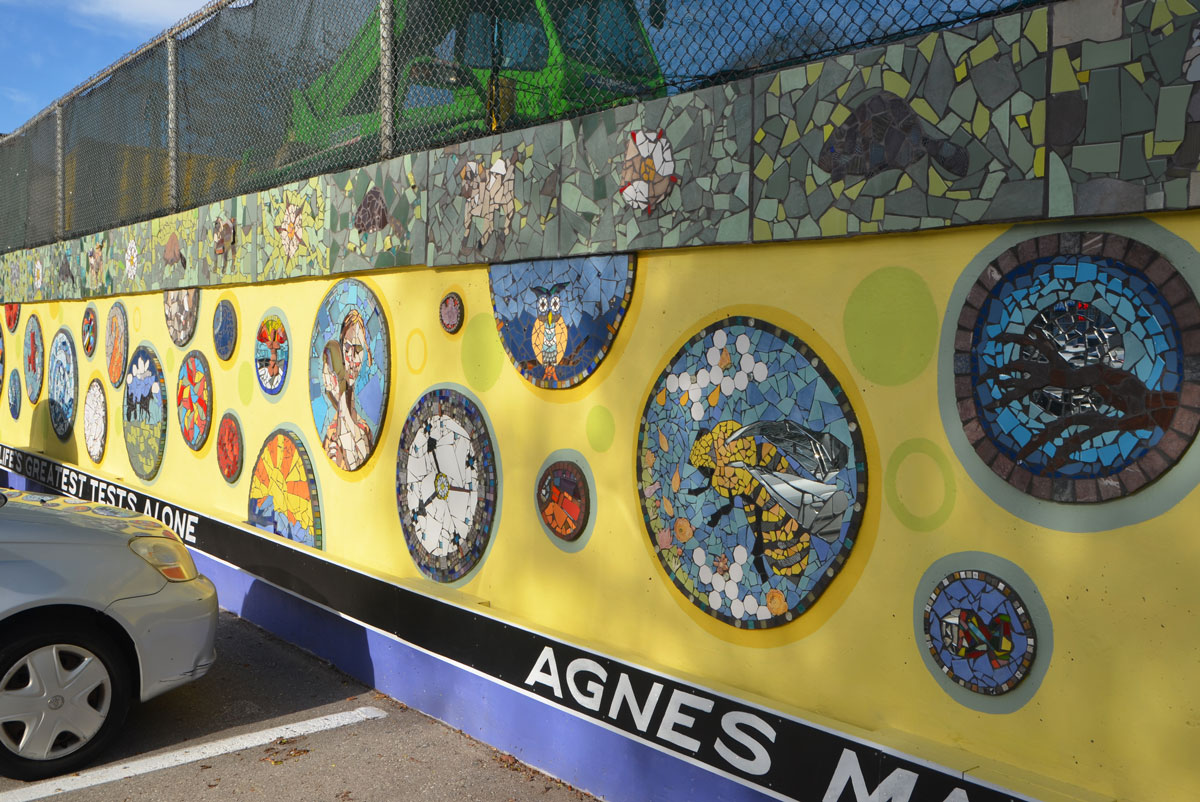
Coxwell subway station is still in the midst of its renovations and upgrades.  As part of the project, the wall on the west and south sides of the station have been painted a bright yellow.   This yellow was then the canvas for a large number of mosaic creations.

some of the mosaic medallions on the Coxwell mosaic mural

below: The new mosaic mural covers the wall alongside the pathway that leads from Coxwell station to the Danforth.  The murals painted on the side of the Sunset Grill restaurant, on the opposite wall of the path, were there previously.

yellow Coxwell pathway mosiac mural with the murals from the restaurants beside the pathway

below: A beaver made from bits and pieces – with round eye and two large teeth.

a beaver made with mosaic tiles and pieces of glass

below: At the corners of the mural are seed pods that have released their seeds to the wind.

mosaic representation of a large seed pod that hs released its seeds.

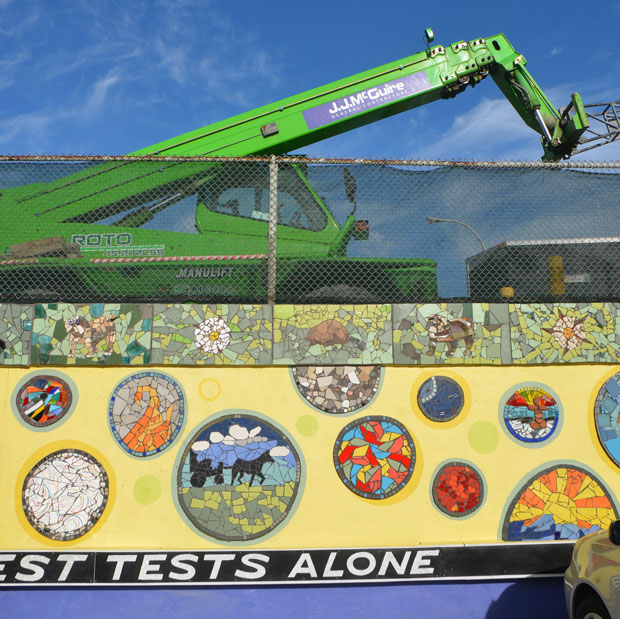
below: The south side of the subway station is adjacent to a Green P parking lot on Danforth.  Along this wall, a quote by Agnes MacPhail has been added below the mural.  “We meet all life’s greatest tests alone”.  Agnes MacPhail (1890-1954) was the first woman to be elected to the Canadian House of Commons where she served from 1921 to 1940.  After her time in federal politics, she represented the provincial riding of York East in the Ontario Legislature.  In 1951 she was responsible for Ontario’s first equal pay legislation.

A wall with a chainlink fence above it, a large green construction crane is behind the wire fence. The wall has been covered with a mural, yellow background and mosaic pictures on it. A quote runs along the bottom at ground level, white letters on black background, quote by Agnes MacPhail

A wall with a chainlink fence above it, a large green construction crane is behind the wire fence. The wall has been covered with a mural, yellow background and mosaic pictures on it. A quote runs along the bottom at ground level, white letters on black background,

below: West side of the wall, looking towards Strathmore Blvd.

west side of the mural, yellow wall, Coxwell station, mosaic pictures

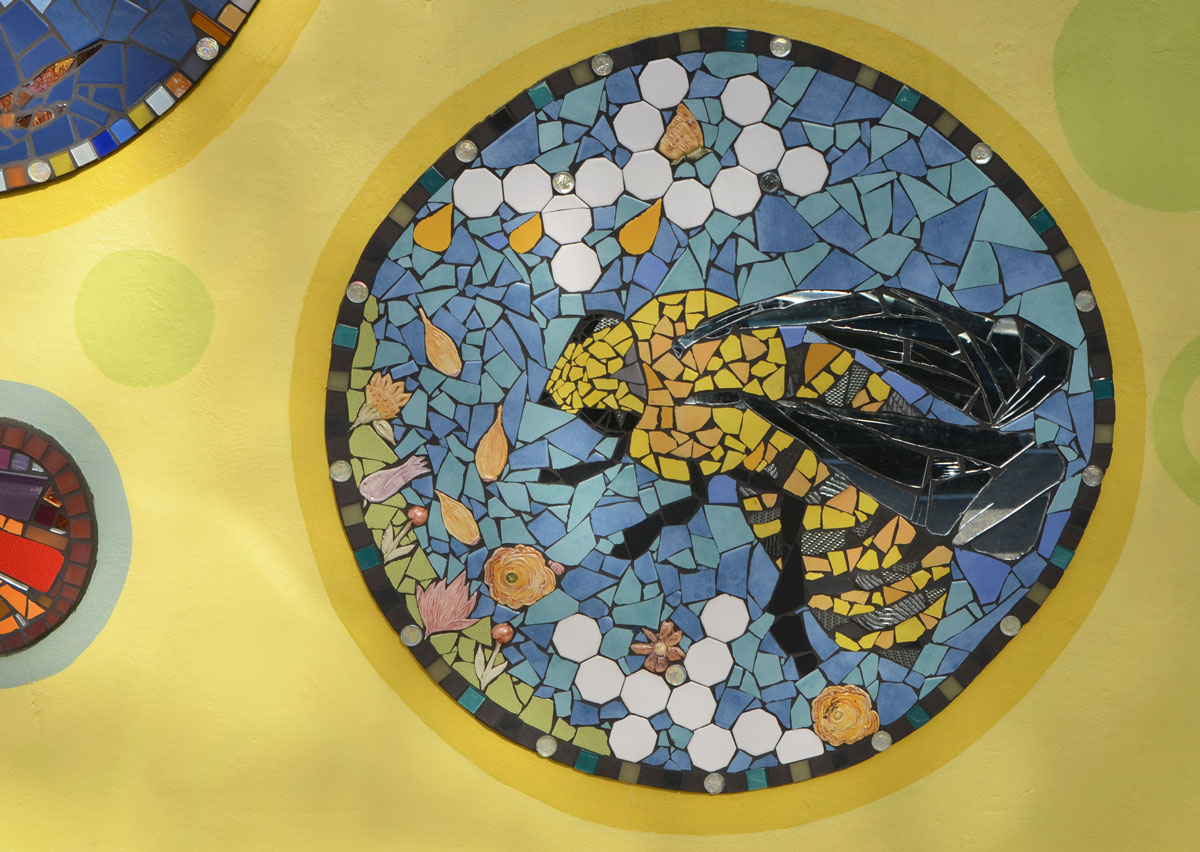
below: A mosiac bee amongst the flowers…

a circular mosaic picture of a bee amongst white and orange flowers on a blue background, all on a yellow wall. Part of a larger mural

below: … and a real bee sitting beside a mosaic red rose.

mosaic picture of a red rose with green foilage, with a real wasp sitting on it.

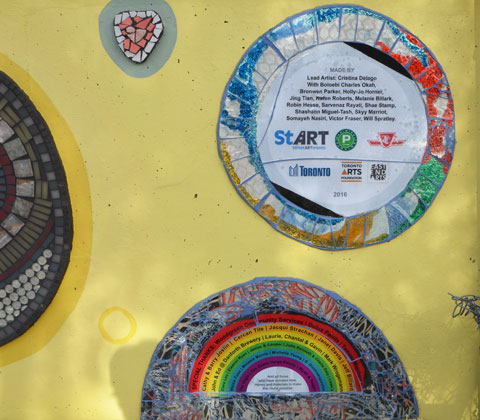
below: Two mosaic pieces, a circle with the names of the artists and a semi-circle rainbow with the names of those who contributed to the creation of the mural.  The transcription of the words is given below.

on a yellow wall, some circles made of mosaics. One is the list of people who made the whole mosaic mural and the other is a semi-circle, rainbow colours, of people of contributed to the mural

Lead Artist: Cristina Delago,
With Boloebi Charles Okah, Bronwen Parker, Holly-Jo Horner, Jing Tian, Karen Roberts, Melanie Billark, Robin Hesse, Sarvenaz Rayati, Shae Stamp, Shashann Miguel-Tash, Skyy Marriot, Somayeh Nasiri, Victor Fraser, Will Spratley.

Special Thanks: Woodgreen Community Services, Dulux Painter, Tomasz Majcherczyn, Cathy & Barry Joslin, Cercan Tile, Jacqui Strachan, City Councillor Janet Davis, Jeff Billiard, John & Ed at Danforth Brewery, Mark Wrogemann, Clara Lou, Eleanor Ryan, James & Cooper, John Kenneth & Cherie Daly, Lowe’s, Maisie Fuss, Melanie Morris, Michelle Yeung, S. Dimitrakpoulos,  The Vogls, The Zeelie-Varga Family, Wyatt & Teagan, as well as Laurie, Chantal and Gavin

blog_small_details_mosaic

As you all know, the TTC is replacing their older streetcars with new longer Bombardier streetcars.   Or at least they are trying to 🙂  Because they are longer, they don’t fit into existing “garages”, hence the new Leslie Barns facility.  Located on Leslie St., south of Queen, it is the new streetcar “home”.  It is where streetcars are parked, maintained and repaired.  It has been in operation since Nov 2015 but the first chance the public got to peak inside the finished complex was at Doors Open on the 28th of May.

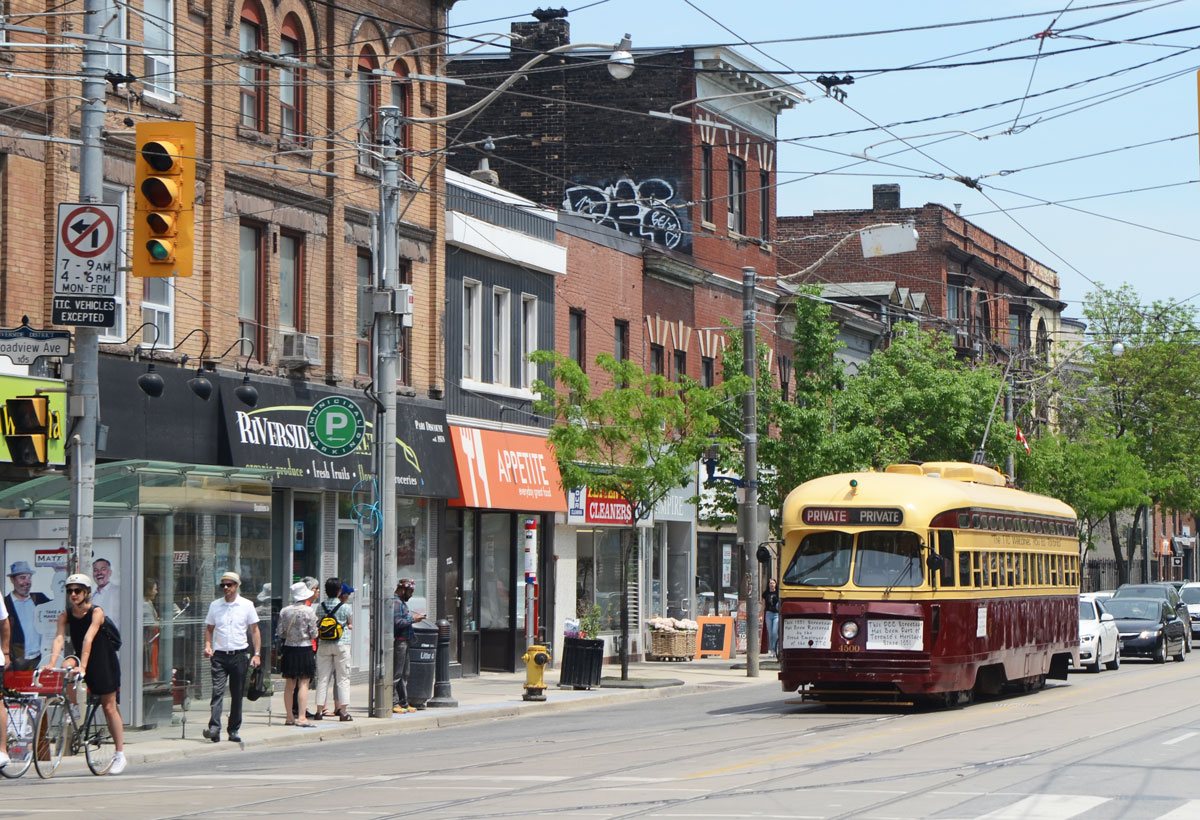
below: While waiting for a streetcar at the corner of Queen and Broadview on the way to visit the Leslie Barns, I saw this renovated TTC streetcar from the 1950’s.

An old restored TTC streetcar, maroon and yellow, on Queen St. East

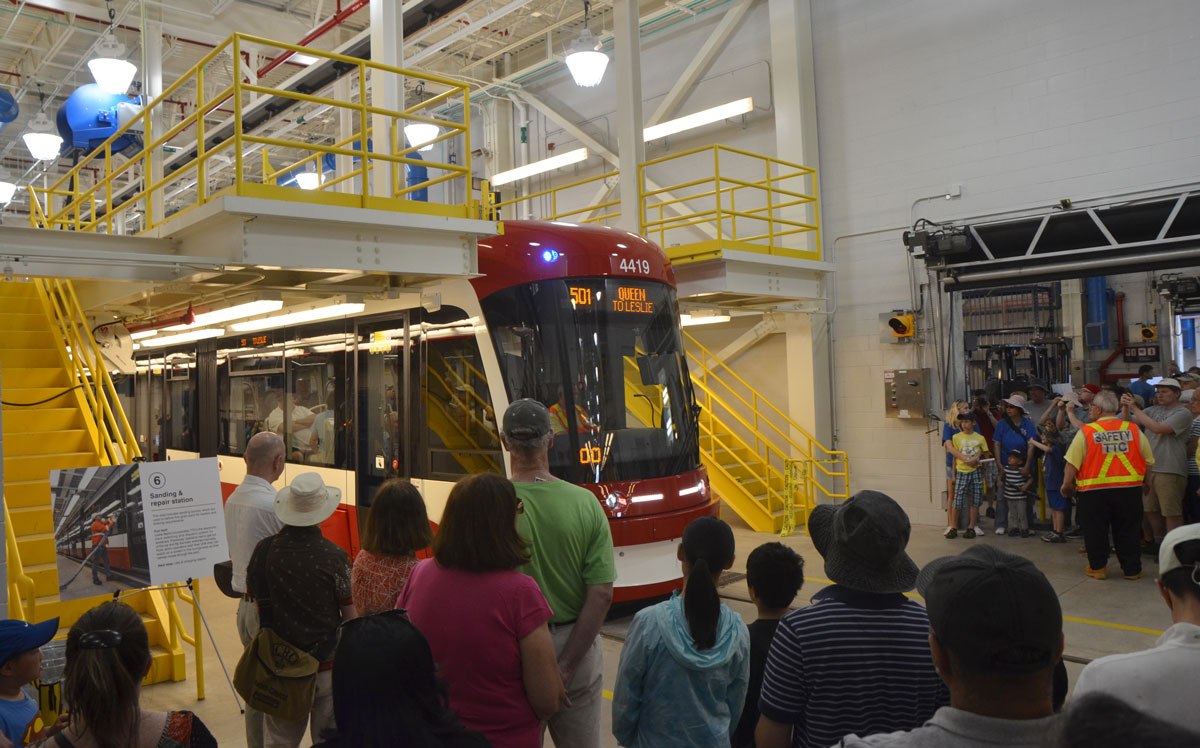
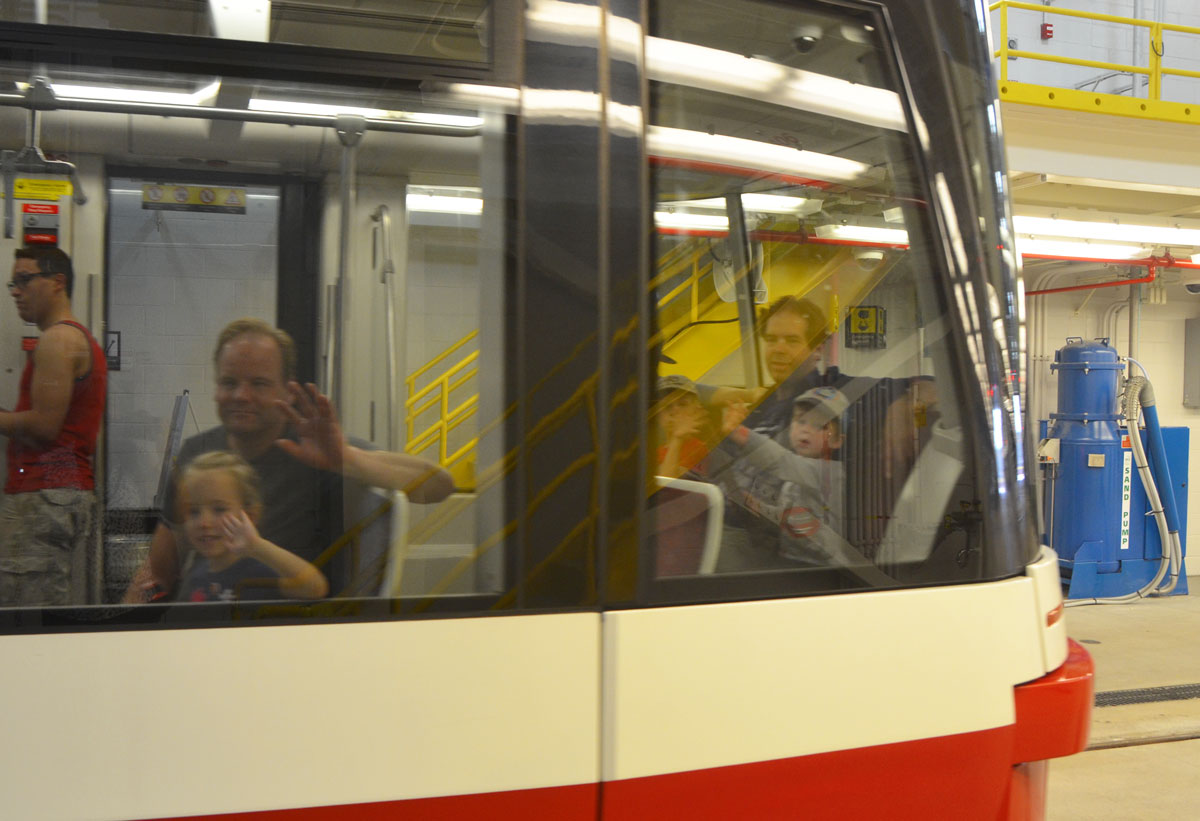
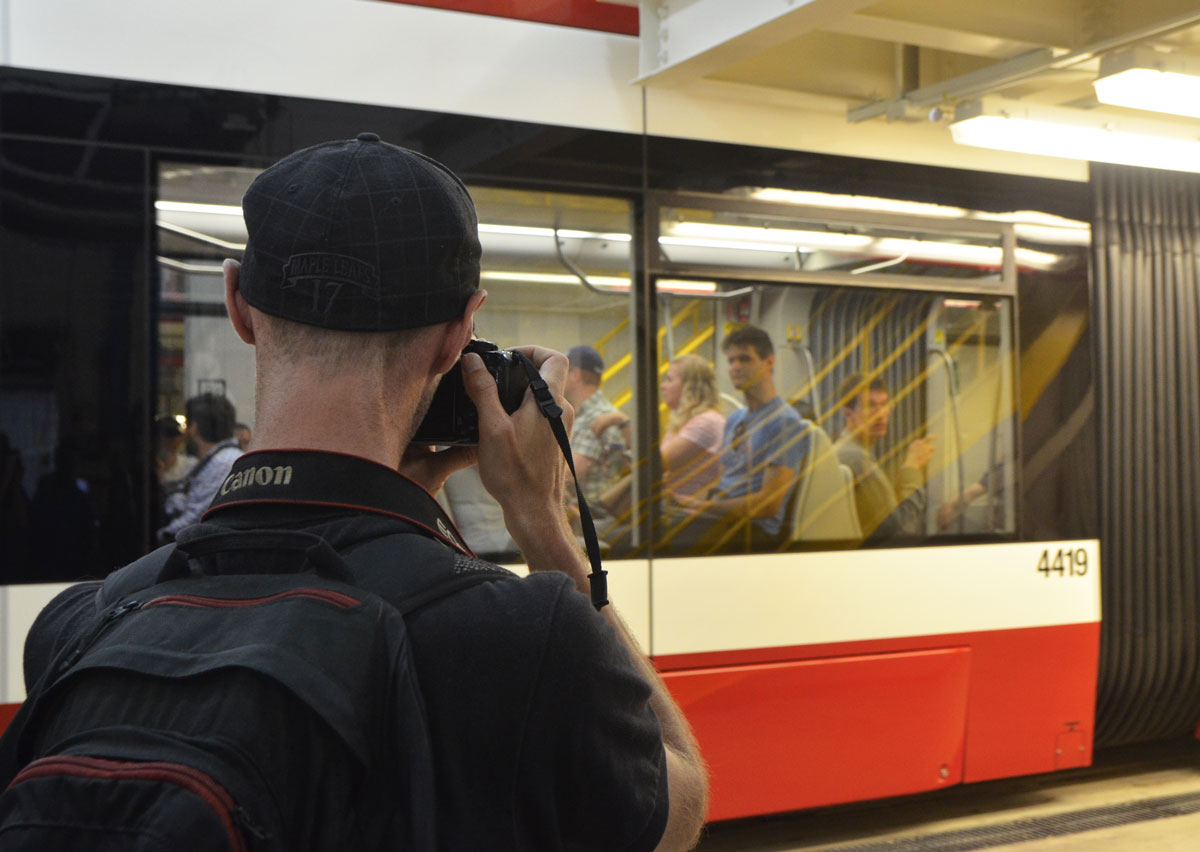
below:  The streetcar tour involved riding a new streetcar through a maintenance bay in the building and then around the parking lot out back.

People at Doors Open in TOronto, at the TTC LEslie Barns streetcar facitlity, lining up for , or just getting off of, streetcar tours, riding the new streetcars around Leslie Barns

A group of people inside Leslie Barns streetcar facility, standing aside to make way for a new streetcar that is taking other people on a tour.

people riding in a new streetcar, photo taken from the outside, most of them are waving

A man in black T-shirt and black cap is taking a picture of people riding in the new streetcar, inside Leslie Barns at Doors Open

below: Exterior, parking space for at least 100 streetcars

the massive concrete parking lot for streetcars with all the overhead wires. The building that houses the workshops and cleaning and office for the ttc is in the background.

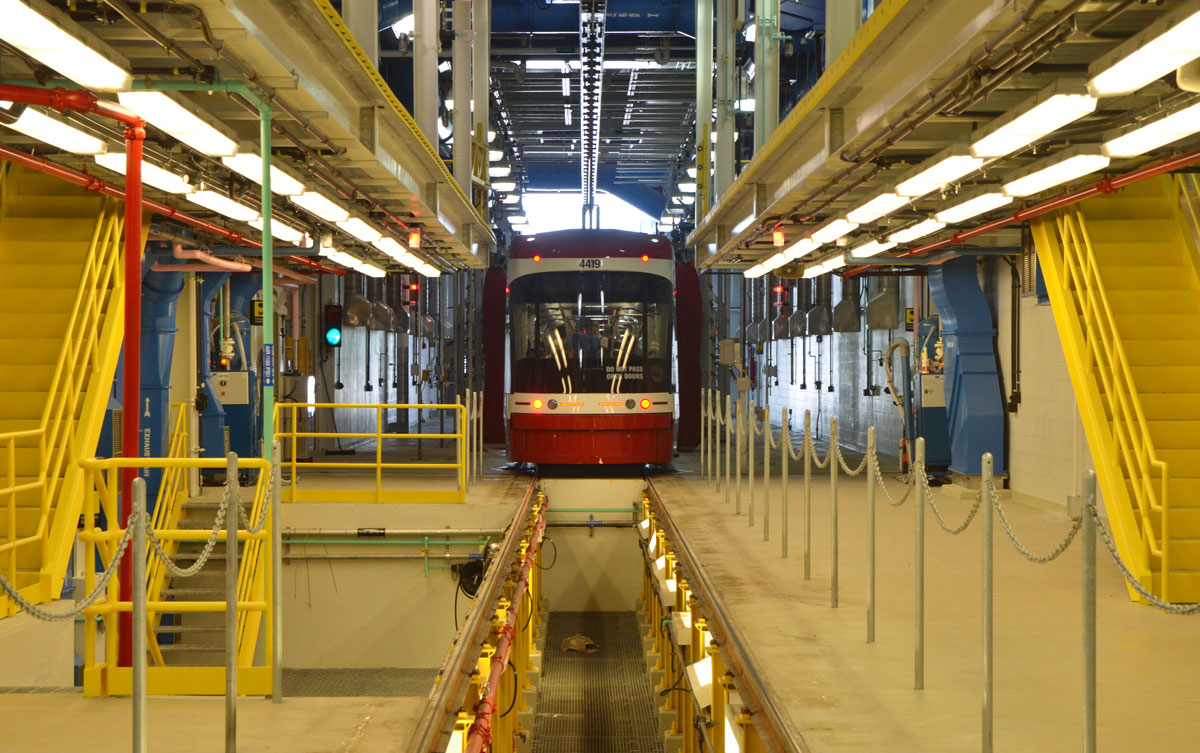
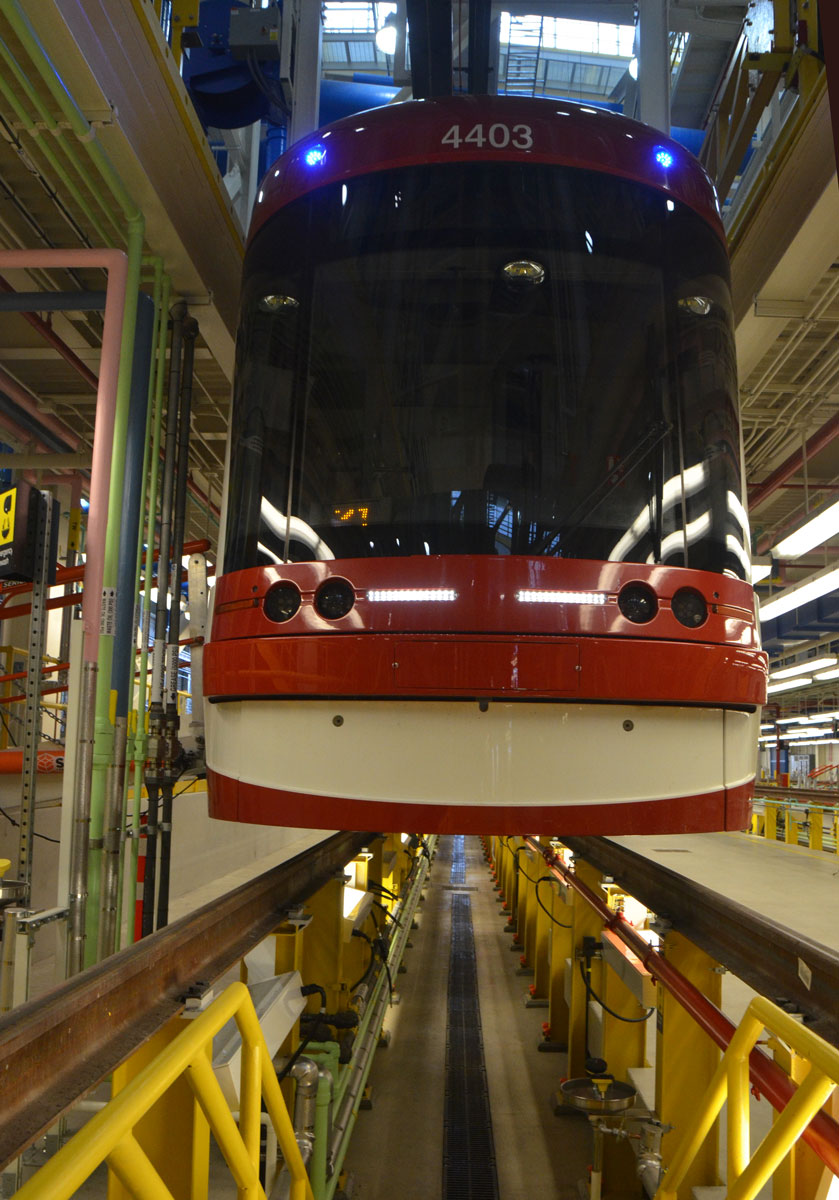
below: Special bays have been constructed with space for workers to access both the underneath and the top of the streetcars.  Because the cars have been designed to ride low, a lot of their workings such as the HVAC and propulsion systems are built into the roof of the car.

the back of a new streetcar as it passes through interior of Leslie Barns streetcar facility, a large, tall interior space with lots of pipes

A streetcar sits in a repair bay of the Leslie Barns, space underneath the streetcar for workers to go down and work on the underside of the streetcar.

below: It’s a big space!  …. 17,510 square metres (188,500 sq ft) in fact.

interior of Leslie Barns streetcar facility, a large, tall interior space with lots of pipes

below: A spic and span shiny paint room

interior of the paint room at Leslie Barns, where streetcars go to get painted.

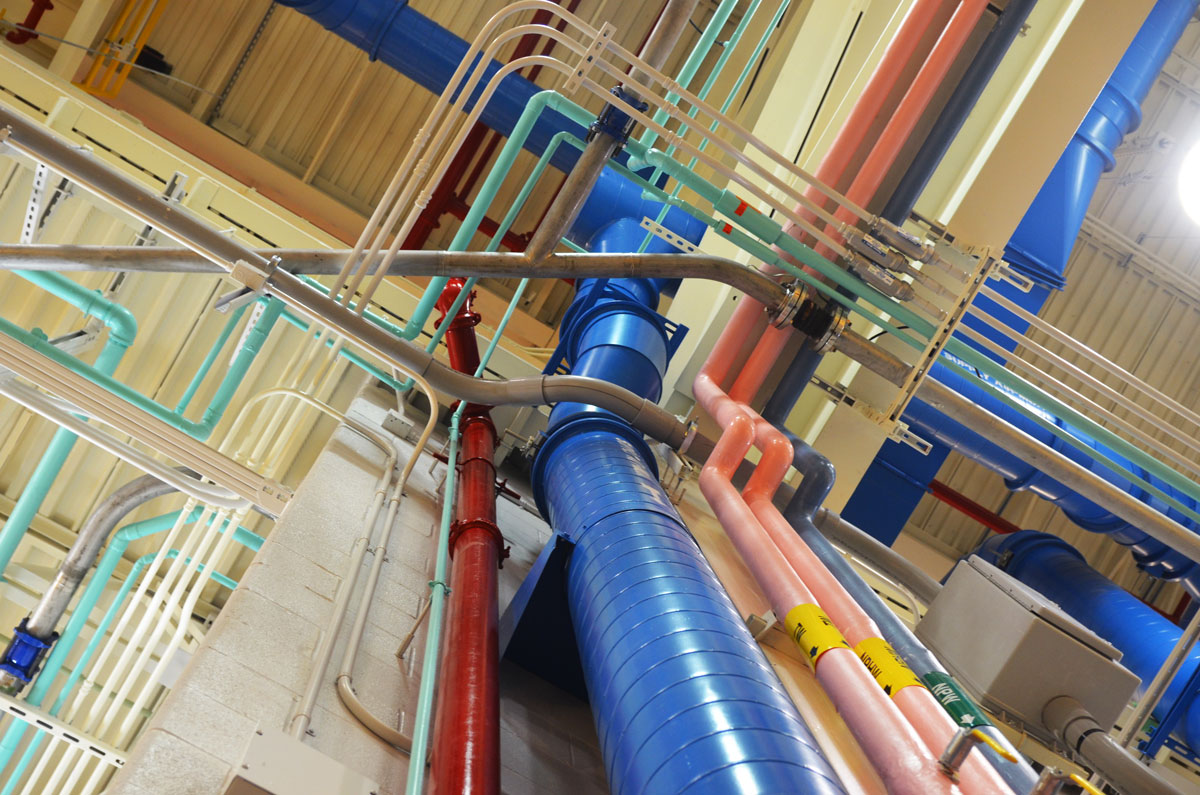
below: A myriad of colour coded pipes

A myriad of pipes running up walls and across the ceiling, blue, pink, red, grey, all colour coded, interior, Leslie Barns

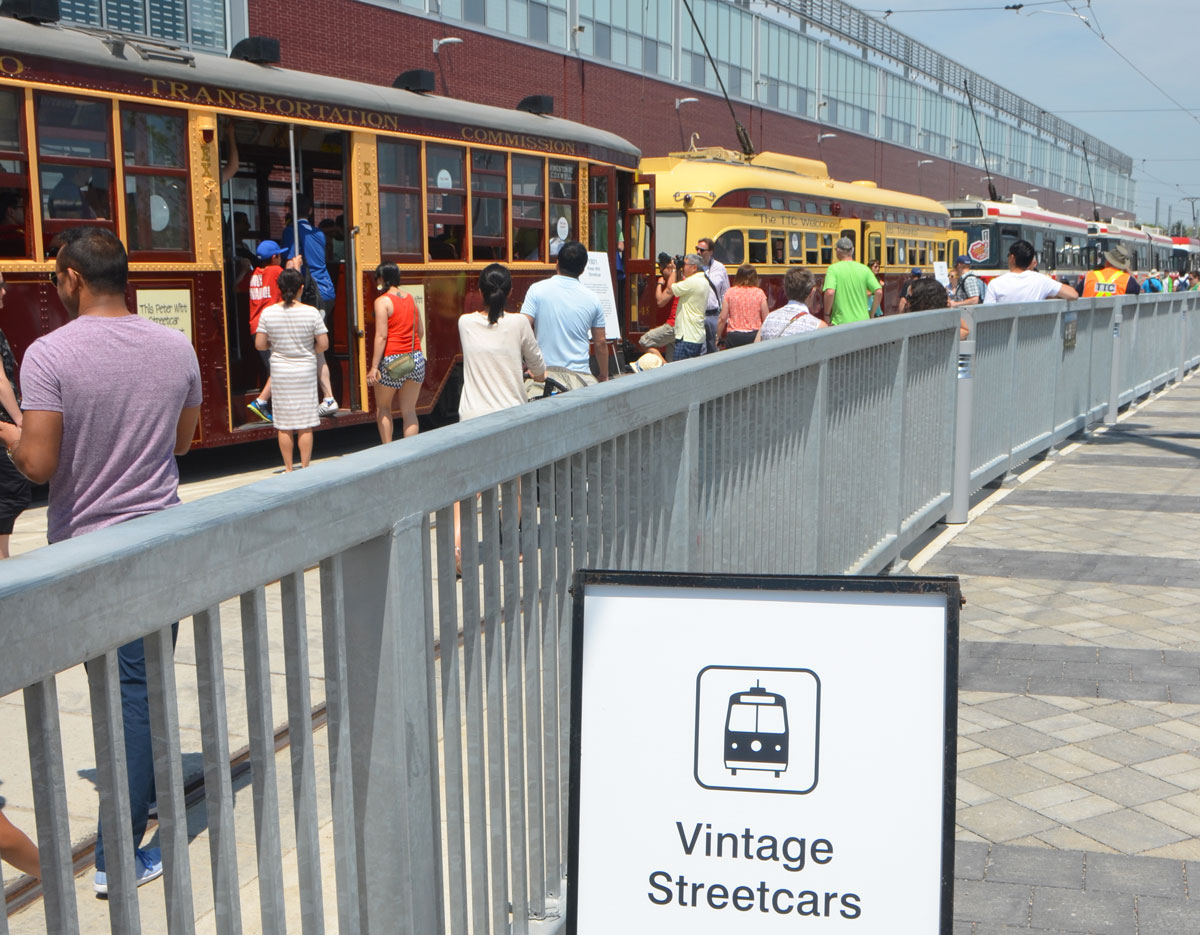
below: There were renovated vintage streetcars on display.  On the left is a 1921 Peter Witt streetcar and next to it is a PCC streetcar from the early 1950’s.

a number of people waiting to go inside old renovated vintage TTC streetcars

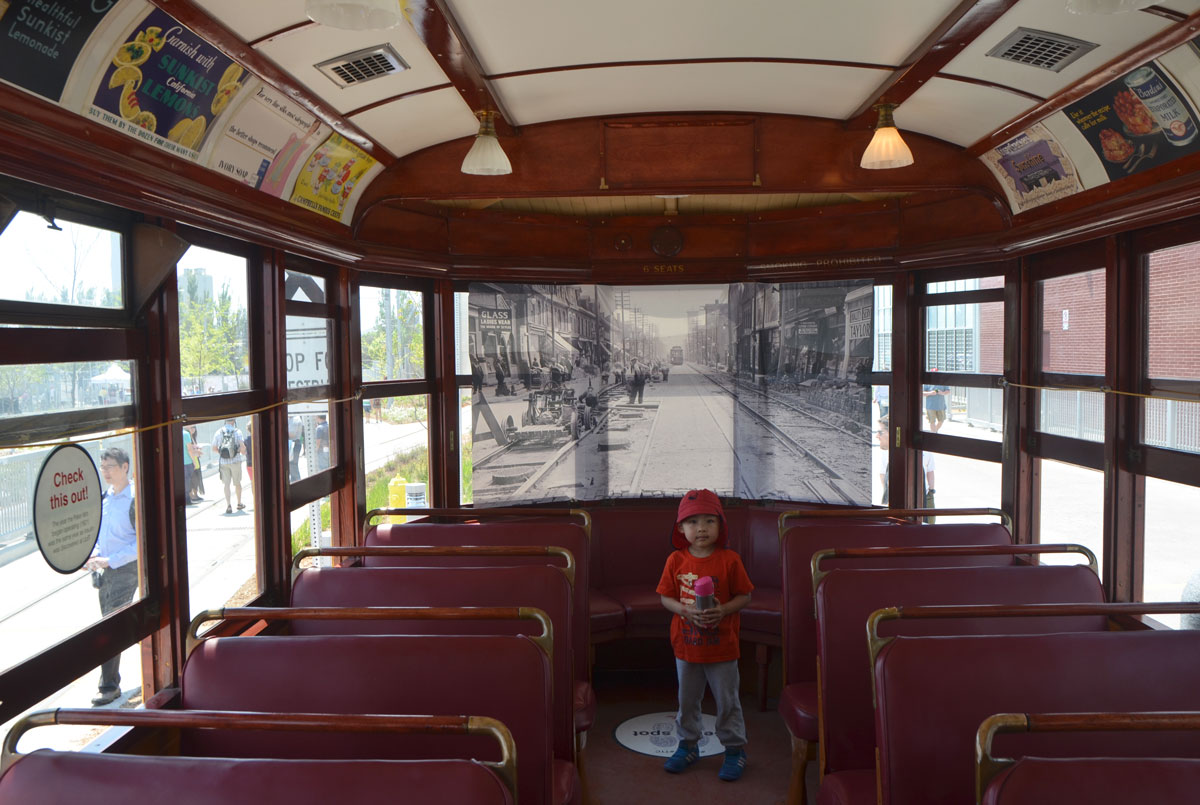
below: Interior of a refurbished Peter Witt streetcar with its wood trim.  The Witt cars were built for the newly formed TTC in 1921.  They entered service on Broadview in October of that year.  By 1923 they were operating on seven routes.  The last Witt streetcar was retired in 1963.

A young boy stands in the back of an old restored ttc streetcar. A black and white picture of an old street scene has been put across the back window to show you what the view out the window might have looked like at the time the streetcar was functional. Old ads on the upper part of the interior, wood trim

below: Looking out the window of a PCC streetcar built in 1951.  PCC stands for Presidents’ Conference Committee, which was a group of operators from the USA and Canada  who got together in 1938 to design a new electric railway car.  By the late 1950s, the TTC owned the largest fleet of PCC’s in the world.  The last one was retired in 1995.

A young boy wearing a hat looks out the window of an old restored streetcar while his father takes a picture out the window

below: Streetcar wire maintenance truck.

a special TTC truck sits outside Leslie Barns TTC facility on Doors Open day, the truck is designed to run on streetcar tracks and is used to repair tracks and wires. There are people looking at the truck

#DOT16 | #TTC