Posts Tagged ‘waterfront’

Did you do something lazy like sleep in and then stay in your jammies all day?
Did you stay home and stay warm?

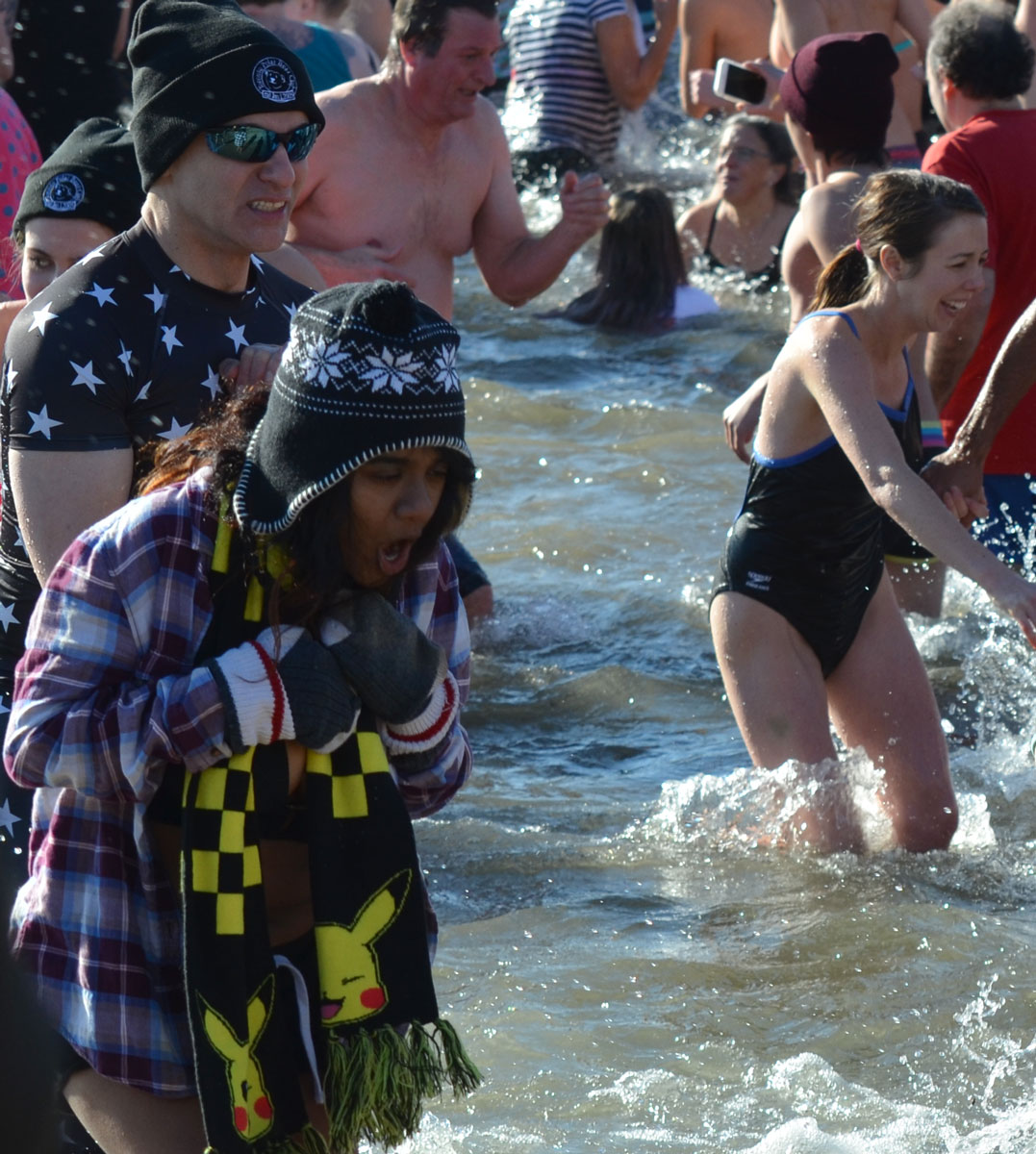
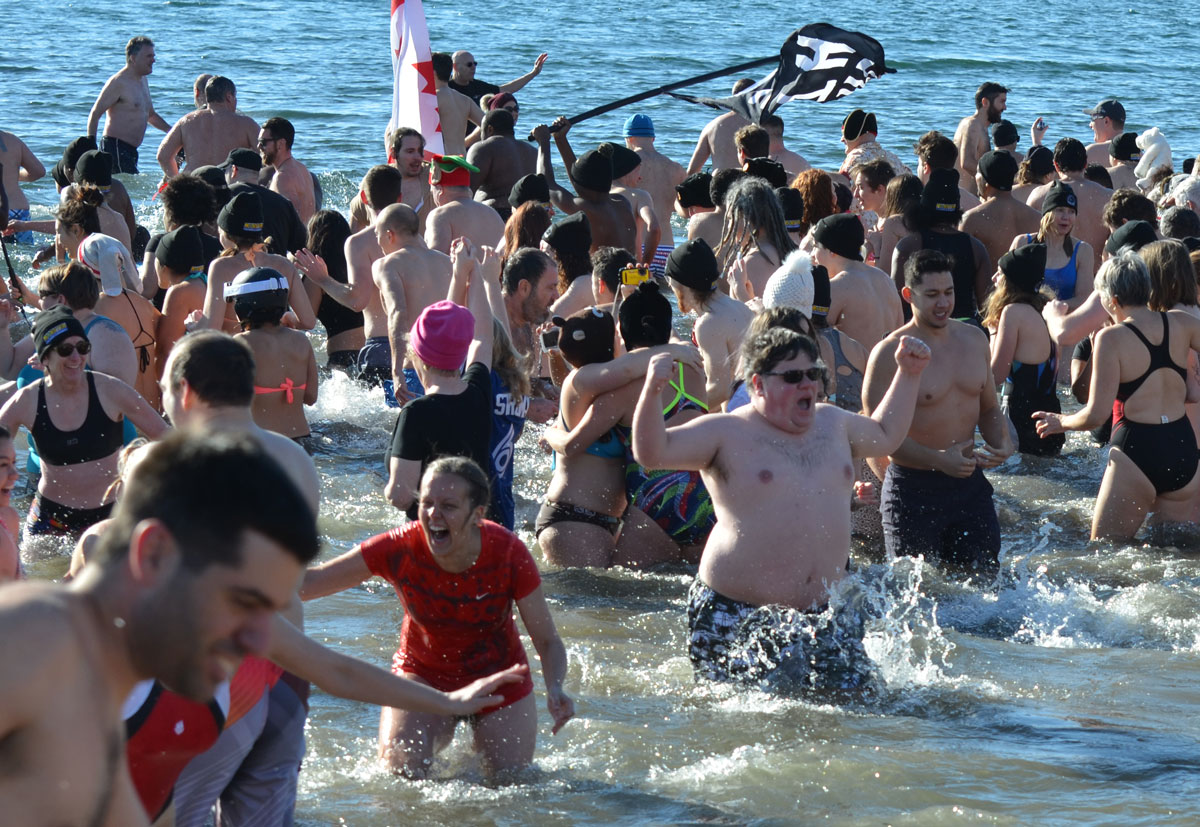
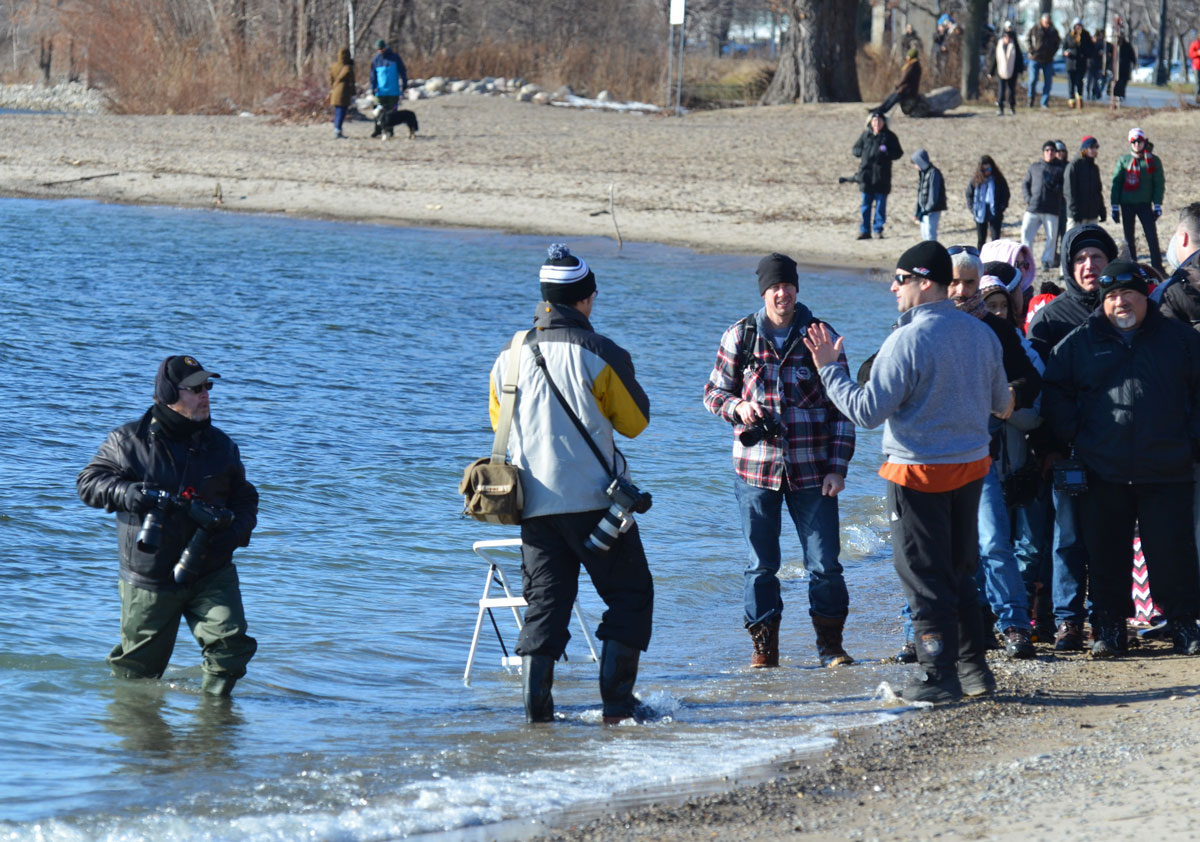
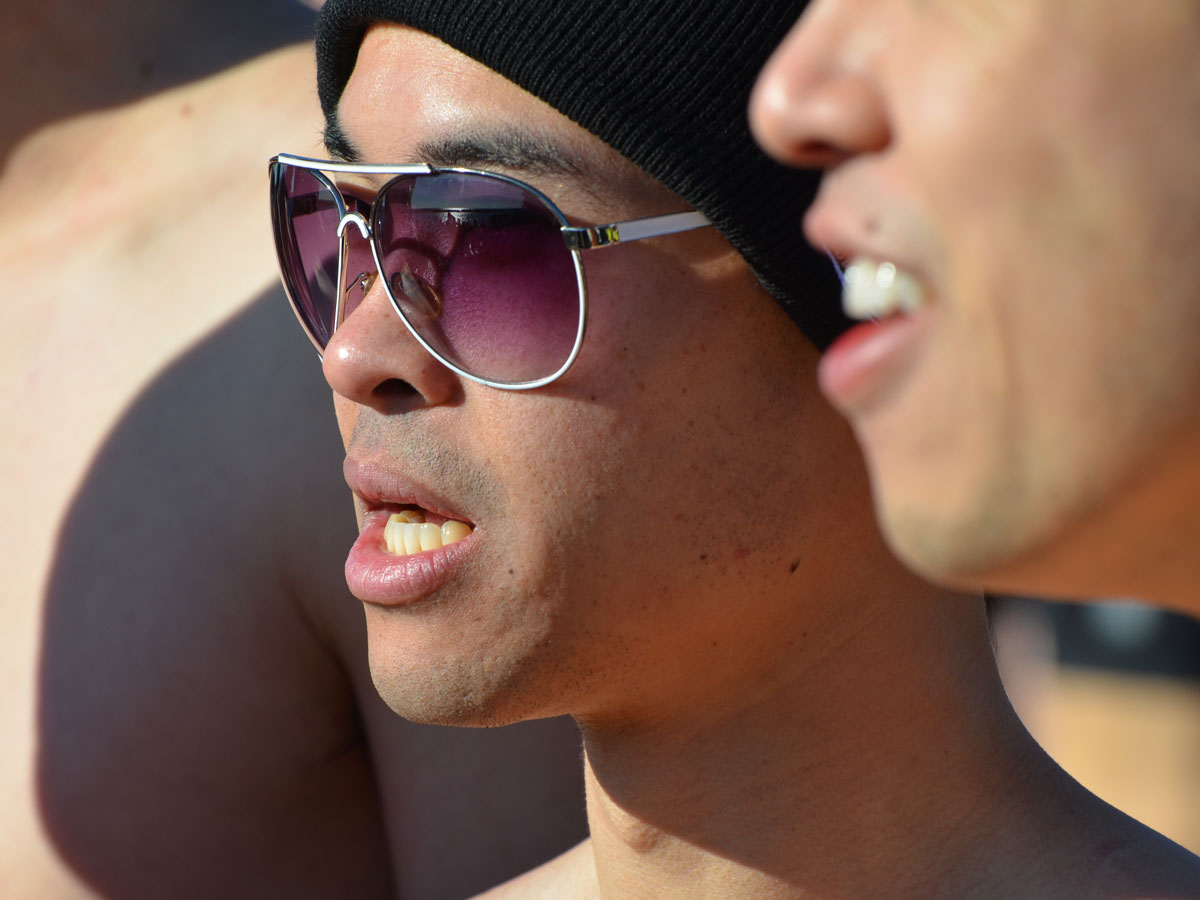
I know a few people that did just the opposite! More than 60 people took the plunge and got wet, frigid cold wet that is. The 12th annual Polar Bear dip at Sunnyside Park was well attended this year and these are some of the brave and crazy people who were there (and the less brave and crazy who came to watch, support, and take pictures of the swimmers).


people participating in the 12th annual polar bear dip at Sunnyside Park in Toronto, in the icy cold water of Lake Ontario

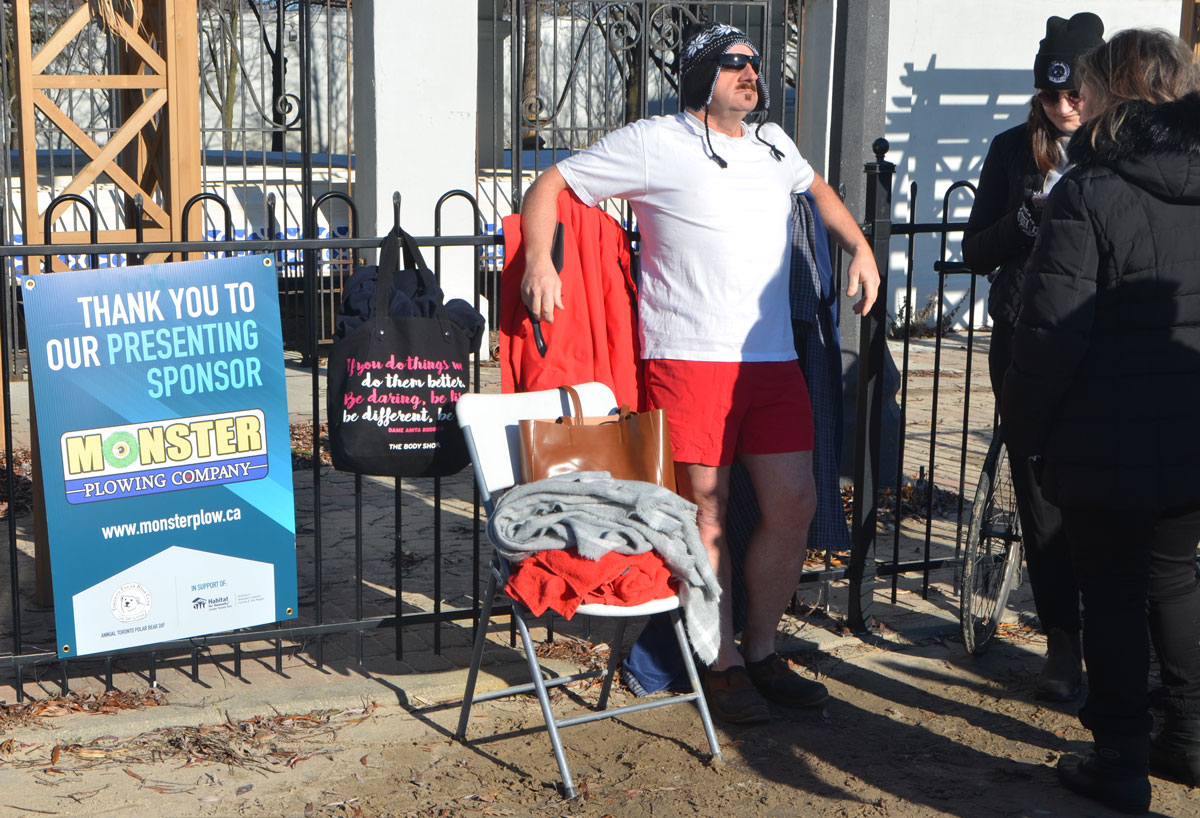
below: The event is a fundraiser for Habitat for Humanity and over $64,000 was raised this year. Habitat for Humanity had a team who participated, they could be spotted wearing orange T-shirts and orange hard hats.
people participating in the 12th annual polar bear dip at Sunnyside Park in Toronto, in the icy cold water of Lake Ontario - Habitat for Humanity team wore orange T shirts and orange hard hats

people participating in the 12th annual polar bear dip at Sunnyside Park in Toronto, in the icy cold water of Lake Ontario

people participating in the 12th annual polar bear dip at Sunnyside Park in Toronto, in the icy cold water of Lake Ontario - members of bearded villains team

people participating in the 12th annual polar bear dip at Sunnyside Park in Toronto, in the icy cold water of Lake Ontario

blog_crowds_water_polar_bear

blog_fuzzy_brown_robe_guy

people participating in the 12th annual polar bear dip at Sunnyside Park in Toronto, in the icy cold water of Lake Ontario

people participating in the 12th annual polar bear dip at Sunnyside Park in Toronto, in the icy cold water of Lake Ontario

people participating in the 12th annual polar bear dip at Sunnyside Park in Toronto, in the icy cold water of Lake Ontario

people participating in the 12th annual polar bear dip at Sunnyside Park in Toronto, in the icy cold water of Lake Ontario

people participating in the 12th annual polar bear dip at Sunnyside Park in Toronto, in the icy cold water of Lake Ontario

people participating in the 12th annual polar bear dip at Sunnyside Park in Toronto, in the icy cold water of Lake Ontario

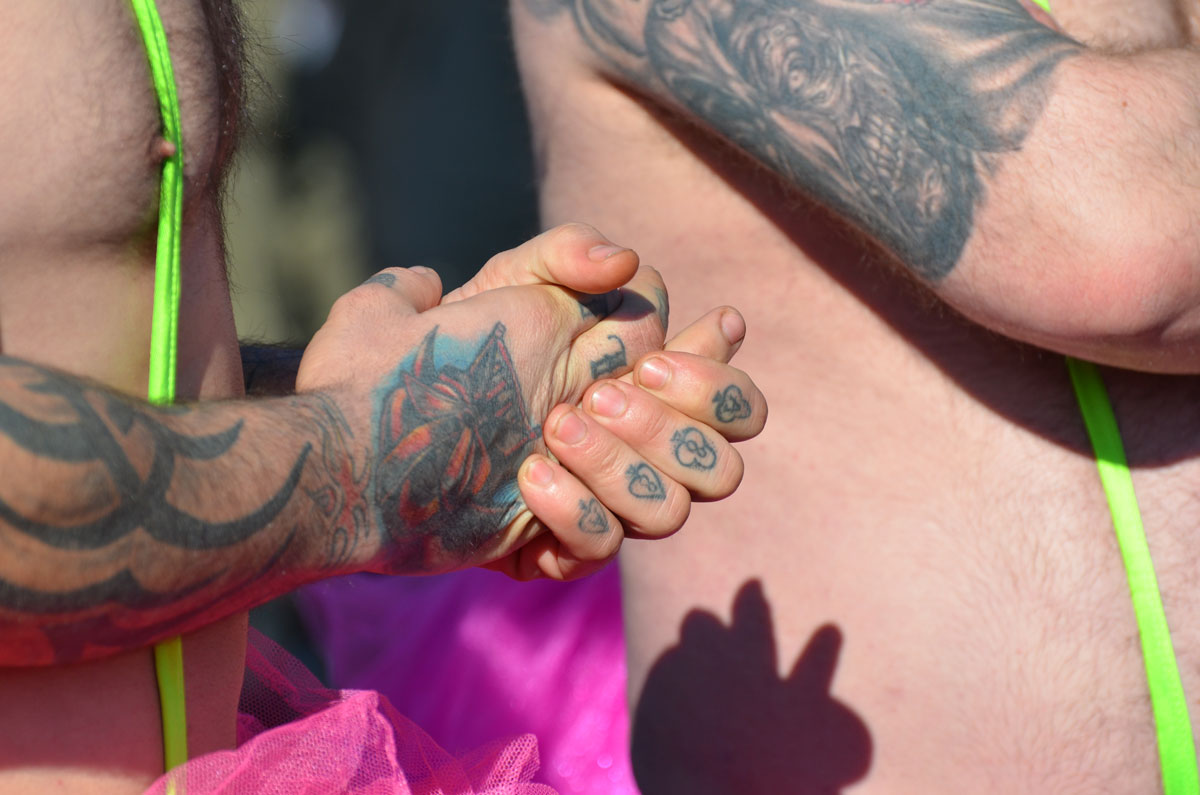
people participating in the 12th annual polar bear dip at Sunnyside Park in Toronto, in the icy cold water of Lake Ontario - a man with large black beard and many tattoos is wearing a pink tutu held up with bright green cord

people participating in the 12th annual polar bear dip at Sunnyside Park in Toronto, in the icy cold water of Lake Ontario

people participating in the 12th annual polar bear dip at Sunnyside Park in Toronto, in the icy cold water of Lake Ontario

people participating in the 12th annual polar bear dip at Sunnyside Park in Toronto, in the icy cold water of Lake Ontario

people participating in the 12th annual polar bear dip at Sunnyside Park in Toronto, in the icy cold water of Lake Ontario - a series of 3 shots as a boy gets into the water

people participating in the 12th annual polar bear dip at Sunnyside Park in Toronto, in the icy cold water of Lake Ontario - a man does the front crawl in the water

people participating in the 12th annual polar bear dip at Sunnyside Park in Toronto, in the icy cold water of Lake Ontario - a swimmer with a Santa outfit sort of, apron and tie

people participating in the 12th annual polar bear dip at Sunnyside Park in Toronto, in the icy cold water of Lake Ontario

people participating in the 12th annual polar bear dip at Sunnyside Park in Toronto, in the icy cold water of Lake Ontario

people participating in the 12th annual polar bear dip at Sunnyside Park in Toronto, in the icy cold water of Lake Ontario

#dothedip | #topolarbear

This is another meandering blog post… a post about being out and about on yet another wonderful autumn day, going wherever my feet and eyes take me.

below: The first picture of my day was this intriguing wall made of old wooden doors.  Bathurst Street.

a tall narrow wall about three storeys high made of old white doors.

below: A small elicser mural tucked away at the end of a parking lot.   The man has his back to the viewer but I can’t figure out what’s behind him or what he might be doing.

small mural on a fence, a man's head is back to the viewer

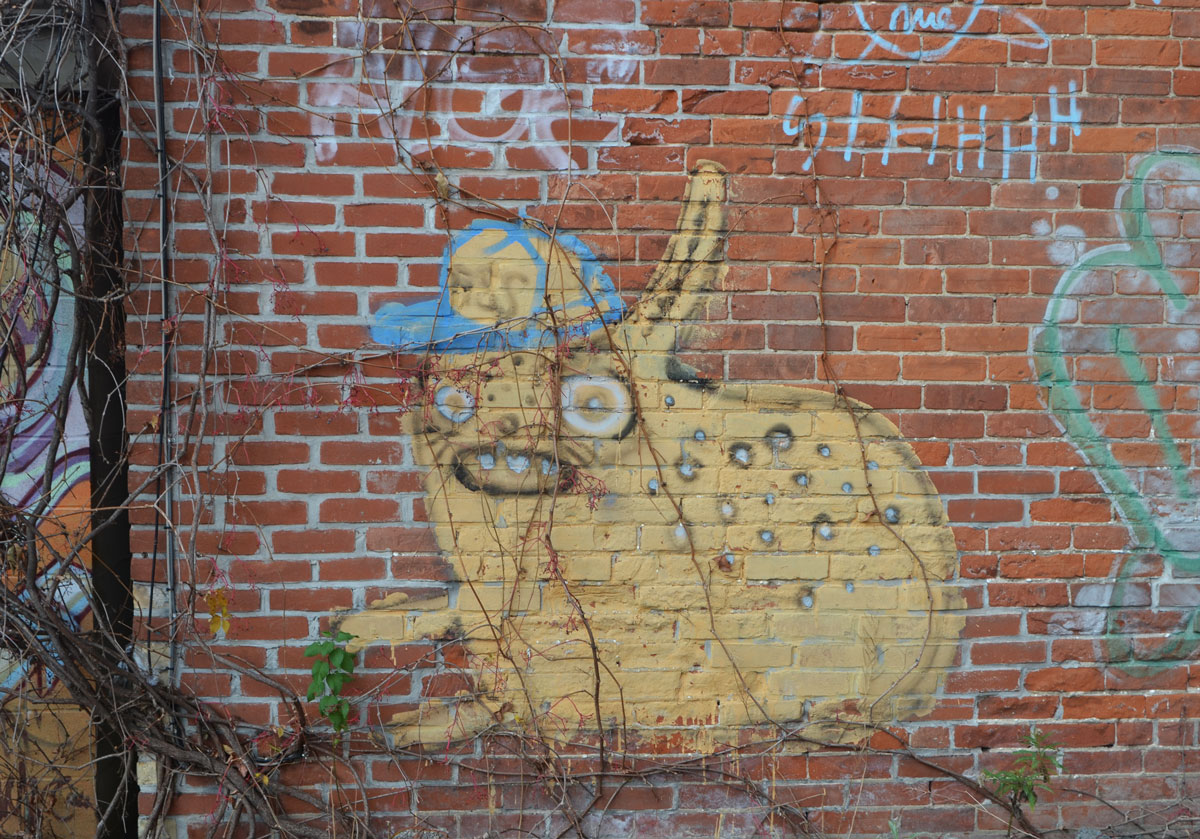
below: The leaves have fallen off the vines to reveal a yellowish creature with his baseball cap askew.

graffiti painting of a yellow animal like creature wearing a blue and yellow baseball cap. The creature is yellow. On a red brick wall, with spots on its back

below: Toronto’s tallest icon framed by a construction crane.

CN Tower in the distance, condo construction in the foreground, with a red crane

below: And on a similar note, a vacant lot cleared and ready for the next stage of its life.

a box beside a fence that has been scrawled over with blue spray paint. Behind it is a fence around a vacant empty lot. There are some small trees growing in front of the fence.

below: No more cranes here (and not many vacant lots either for that matter).  A view showing how much development there has been on the south side of the railway tracks.   Fort York is between the tracks and the condo towers.

a VIA Rail train passes by on one set of many tracks, in the background is Fort York and then a series of new condo buildings.

below: And what’s this? An old blue canoe beached on the tracks?

looking at the scene from a above, a blue canoe has been used to plant plants in. It lies across an old railway track, a chainlink fence separates the canoe from the main railway tracks that still function.

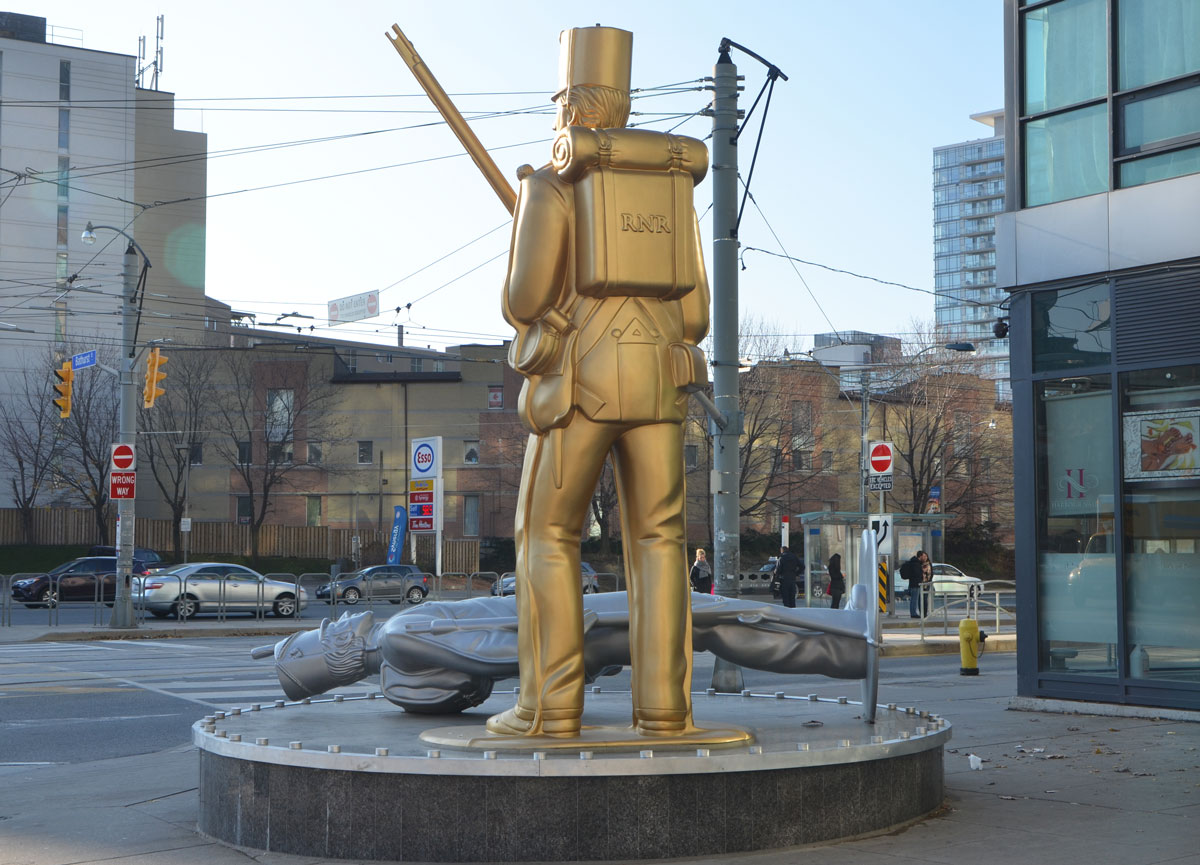
below: Standing guard over Bathurst Street, Fleet street and the Lakeshore, is one larger than life gold replica of a Royal Newfoundland Regiment and his fallen silver American foe. A sculpture by Douglas Copeland entitled “A Monument to the War of 1812”, a nod to nearby Fort York and the history of Toronto.

Douglas Copeland's sculpture of two tin soldiers, a gold one standing with backpack on and rifle in hand, and a silver one lying on its back on the ground, uniforms circa War of 1812, seen from the back, figures are much large than life sized and they are on a corner at an intersection, Bathurst St. and Fleet St.

below: My favorite example of bad grammar still exists!  Off-leash dog area at Coronation Park.

a wood fence around a dog park, in autumn with lots of leaves on the ground, on the fence is a white sign with black letters re the Toronto municipal code 608,

A beautiful day in the park.  A slight November nip was in the air but it was sunny and the sky was a brilliant shade of blue.  Coronation Park is named in honour of the coronation of King George VI who was crowned on 12 May 1937.  At that time nearly 150 trees were planted here.

Apparently, an oak tree was planted to honour the king.  Surrounding it, a ring of silver maples was planted.  This was to symbolize the countries of the British Empire.  I wish I had known that bit of trivia before I walked through the park because now I am curious if these trees are still there.   Some of the trees are quite substantial.

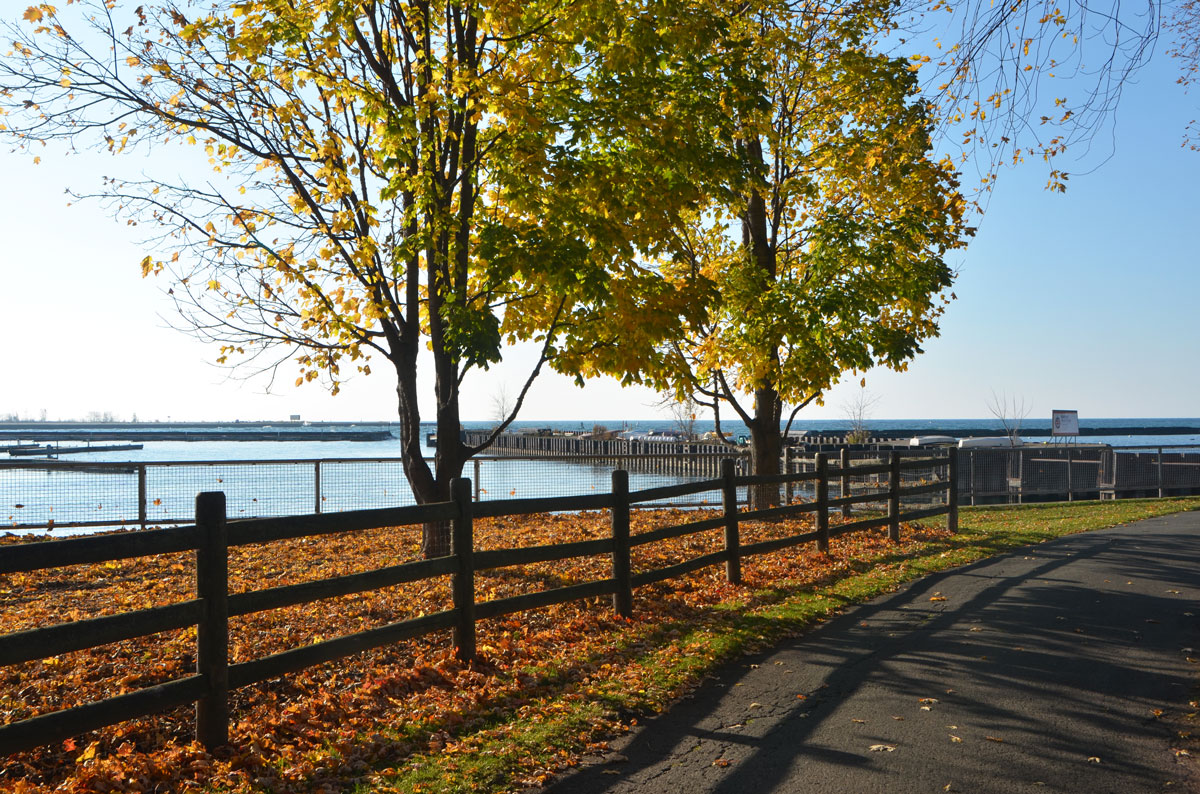
below: Long shadows for the morning sun, low in the sky.

morning in the park, autumn, trees with some leaves still on, many leaves on the ground, wood railing fence, shadows, Lake Ontario, path, Coronation Park.

below: Looking back towards the city center, past the empty docks of the National Yacht Club to the residences on Stadium Road.   A small group of people were making a video in the dog park.

morning in the park, autumn, trees with some leaves still on, many leaves on the ground, wood railing fence, shadows, Lake Ontario, path, Coronation Park. a small group of people in the distance are filming a video

below: This Victory Peace Monument was unveiled on 14 November 1995 to commemorate the 50th anniversary of the end of World War 2 and honour those who died in that war.   It was designed by John McEwen; the bronze pieces resemble the bow of a ship.

Metal partial cylindrical shapes on a concrete circular monument. World War 2 memorial

below: On the inside of one of the bronze pieces is a map of eastern Canada and the Atlantic Ocean.  Each boat on the map represents a ship or U-boat that was sunk during the war.  The Canadian ships are located on the map at “their last known position”.  I hadn’t realized that so many ships were lost so close to North America.

relief map of eastern Canada and the Atlantic Ocean, in bronze on a WW2 memorial. Little ships are shown on the ocean where they were sunk during WW2.

Trees were also planted to represent the four divisions of the Canadian Expeditionary Force (WW1) and its units as well as those who fought in the Fenian Raids of 1866-1870, the Northwest Rebellion of 1885, and the Boer War (1899-1902).  Once upon a time, brass plaques were placed at the foot of each tree to indicate the units the tree stood for.  If any plaques remain, I didn’t see them.

below: Another memorial is close by, a  “Memorial to Lieut. Tommy Hobbs gallant British Canadian soldier in the Great War 1914 – 1918.  Died on active service November 10, 1940.  Beloved and remembered by his comrades.”   Tommy Hobbs was involved in the creation of this park.

a memorial in a park made of a small pile of rocks. The top rock is inscribed, memorial to Tommy Hobbs, died 1940, in Coronation Park

below: A little farther on I noticed another rock, one that was painted red.   The bronze plaque on the rock says that 20 trees have been planted here in commemoration of the G20 Summit held in Toronto in 2010.

a large rock with a bronze plaque on it. The rock has been crudely painted red

below:  A 30 foot tall Inukshuk stands looking out over Lake Ontario.  Approximately 50 tonnes of mountain rose granite was used to create the Inukshuk, which was made by Inuit artist Kellypalik Qimirpik from Cape Dorset, Nunavut.

a tall stone inuksuk on a raised mound of warth

below: Streetcars across the baseball outfield.

Looking across the outfield of a baseball diamond towards a street. A line of mature trees by the street with two red and white TTC streetcars on the street, condo towers behind.

below: A closer look at that brown octagonal structure in the middle of the streetcar loop for the 509 and 511 cars.  Apparently it’s the Queens Wharf lighthouse, one of a pair built in 1861.

a brown structure, the Queens WHarf Lighthouse, sits on a patch of grass beside TTC streetcar tracks in front of a new condo.

The lighthouses marked the entrance to the Toronto Harbour from 1861 until the Western Channel was built in the early 1900’s.   This one stood on Queen’s Wharf which used to be at the foot of Bathurst Street, adjoining Fort York.  The wharf was built by the military; in 1833 it was a pier 42 feet long.    The pier no longer exists; a hundred years ago it was buried under what is now Bathurst Quay.

below:  A picture of an historical map (1886 or 1887) of the area showing Toronto Harbour, Fort York and the railway lands.  Queen’s Wharf is the pier on the left.   At that time, Front Street was the southern most street in this part of the city.   All the present day development south of the train tracks is on reclaimed land.

picture of historical map of part of Toronto Harbour from 1886, showing Fort York, Front St., and Bathurst St., and the railway lands and wharves into Lake Ontario,

below:   Taken from google maps, what the layout of the city looks like now.   As you can see, there have been many changes!

present day map taken from google maps of Coronation Park and Bathurst Quay including Fort York

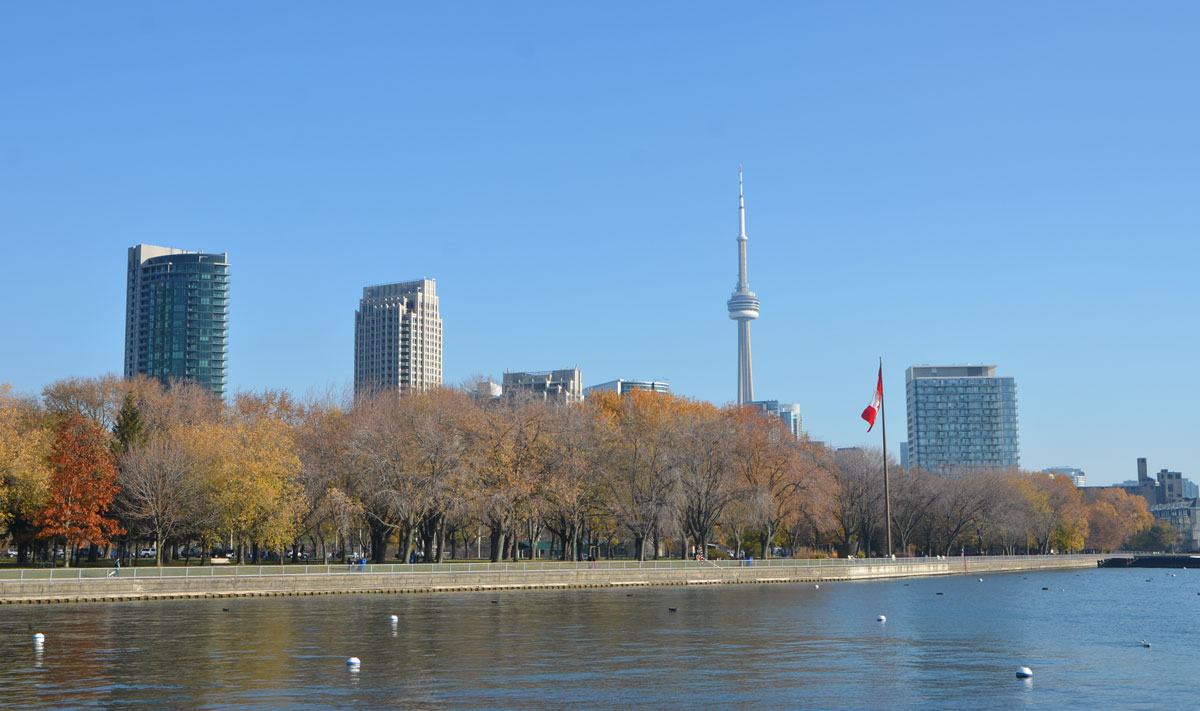
Lake Ontario in the foreground, trees in Coronation Park in the middle and Toronto skyline in the distance with the CN Tower and a large Canadian flag.
a sticker of a rainbow in a heart shape. A small purple heart is in the center, then a blue heart is drawn around it, moving outwards in rainbow colours.

July is almost over – yes, summer is flying by.
So far, it’s been a good one!

below: Staying cool and having fun in the Yonge Dundas square fountains

young children play in the fountains at dundas square

below: A giant bite from a giant watermelon slice

a woman attempts to take a bite out of another woman who is wearing a giant watermelon costume

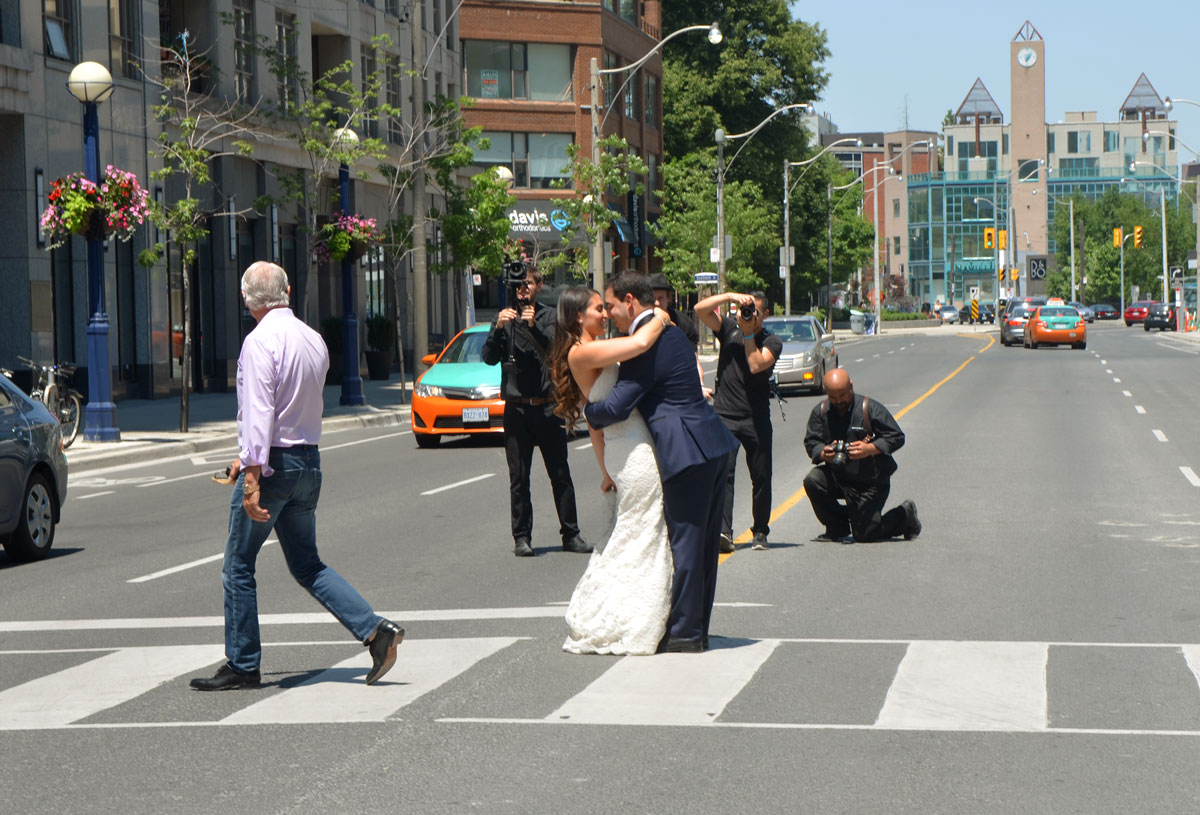
below: A Bay Street hug and kiss.

a photo shoot on Bay St., downtown Toronto. The bride and groom are kissing on the crosswalk in the middle of the intersection. People turning to look.

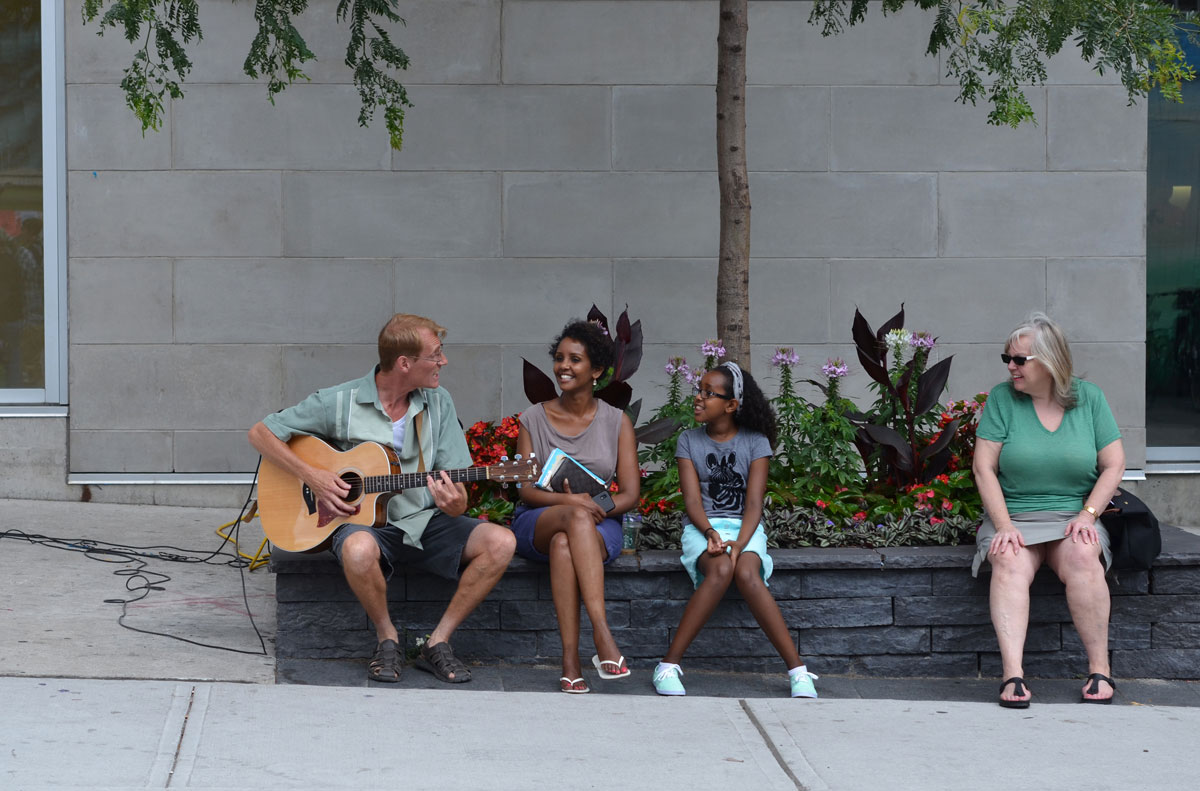
below: An impromptu serenade

a young man plays a guitar for a mother and daughter, sitting on the edge of a planter outside. Another woman is watching

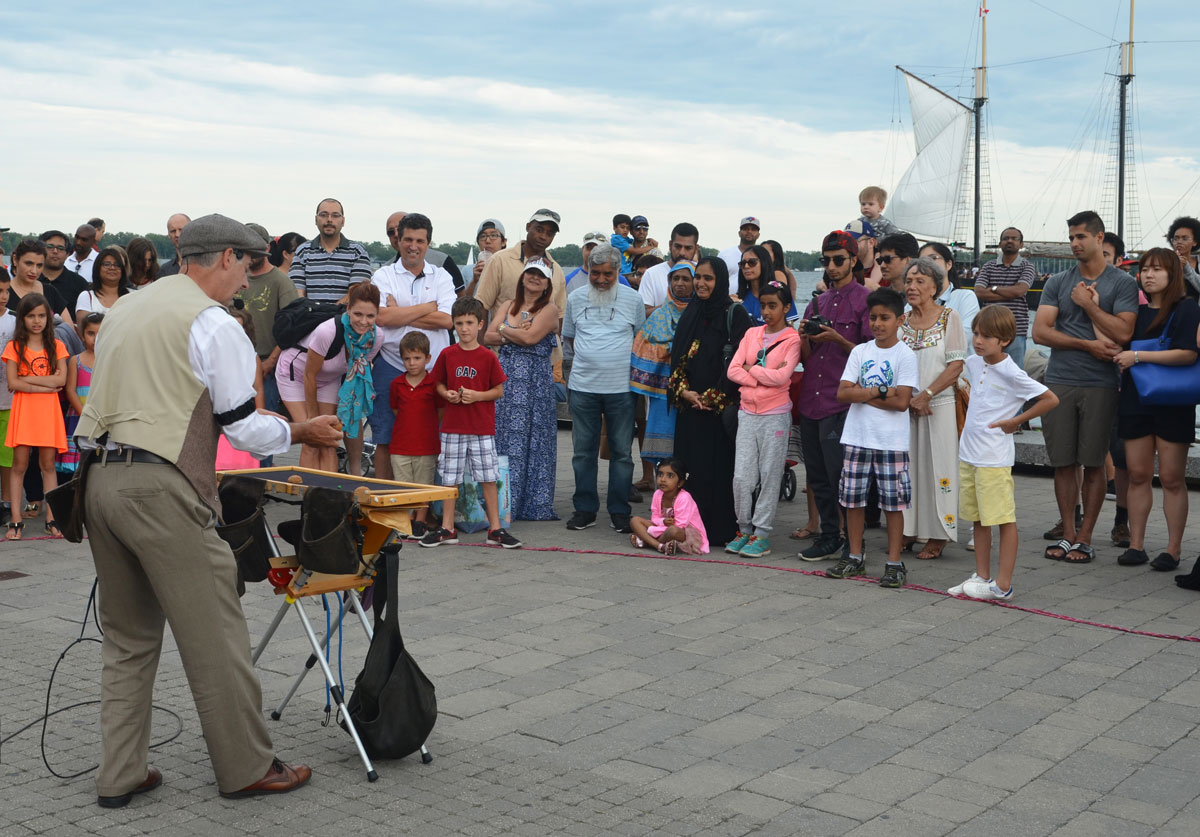
below: Watching the entertainment at the waterfront – it’s magical

a magician entertains a crowd on the waterfront, many people are watching, men, women and kids

below: Making comfort at Afrofest, Woodbine Park

a couple are lounging on a large light blue foamy thing, amongst a crowd at an outdoor music festival

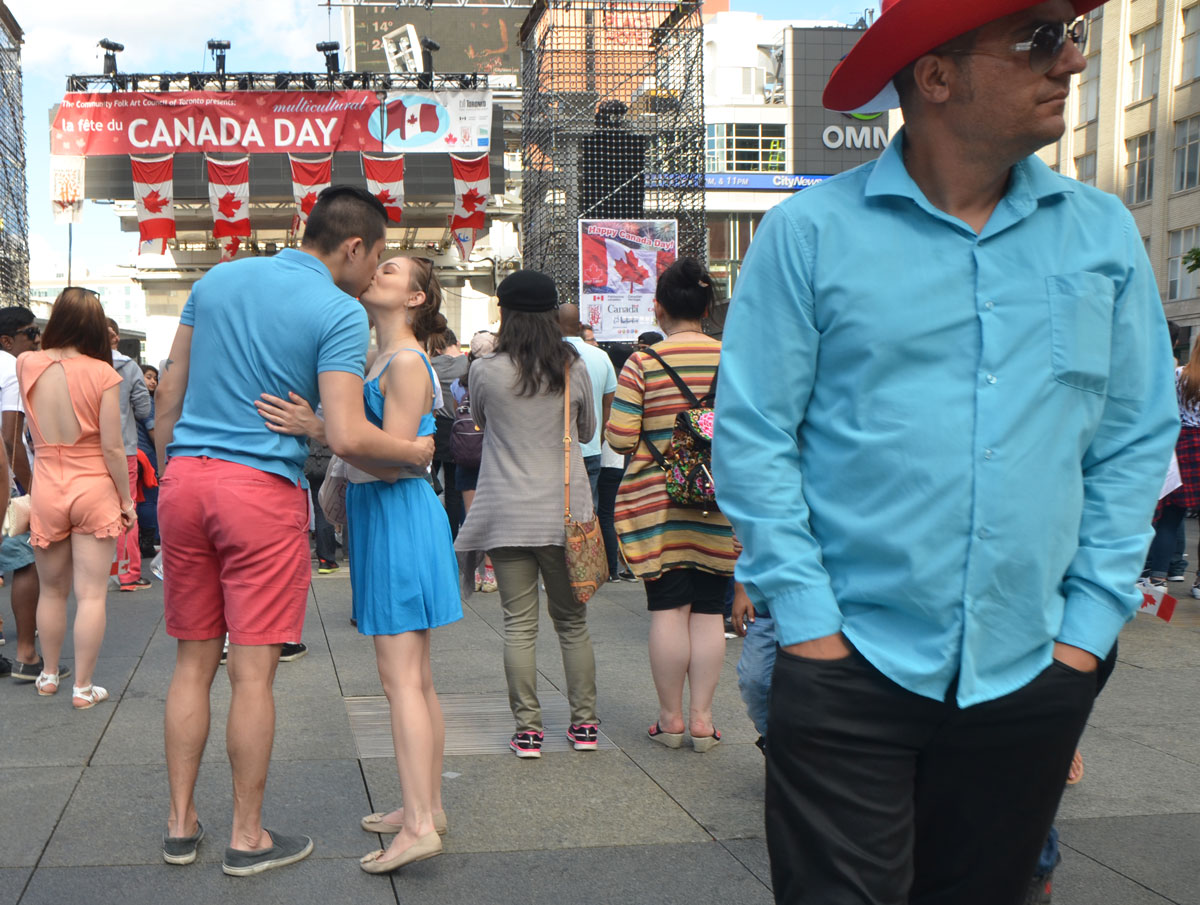
below: A Canada Day kiss.

A man in a red cowboy hat in the foreground on the right, a couple kissing on the left. People watching a show on a stage in the background with Canadian flags and a banner that says Happy Canada Day

below: Leave your message by the outdoor facilities!

Two lines of Johnny on the spots, facing each other, in the middle is a small message board on a metal pole, outdoors, green leaves above

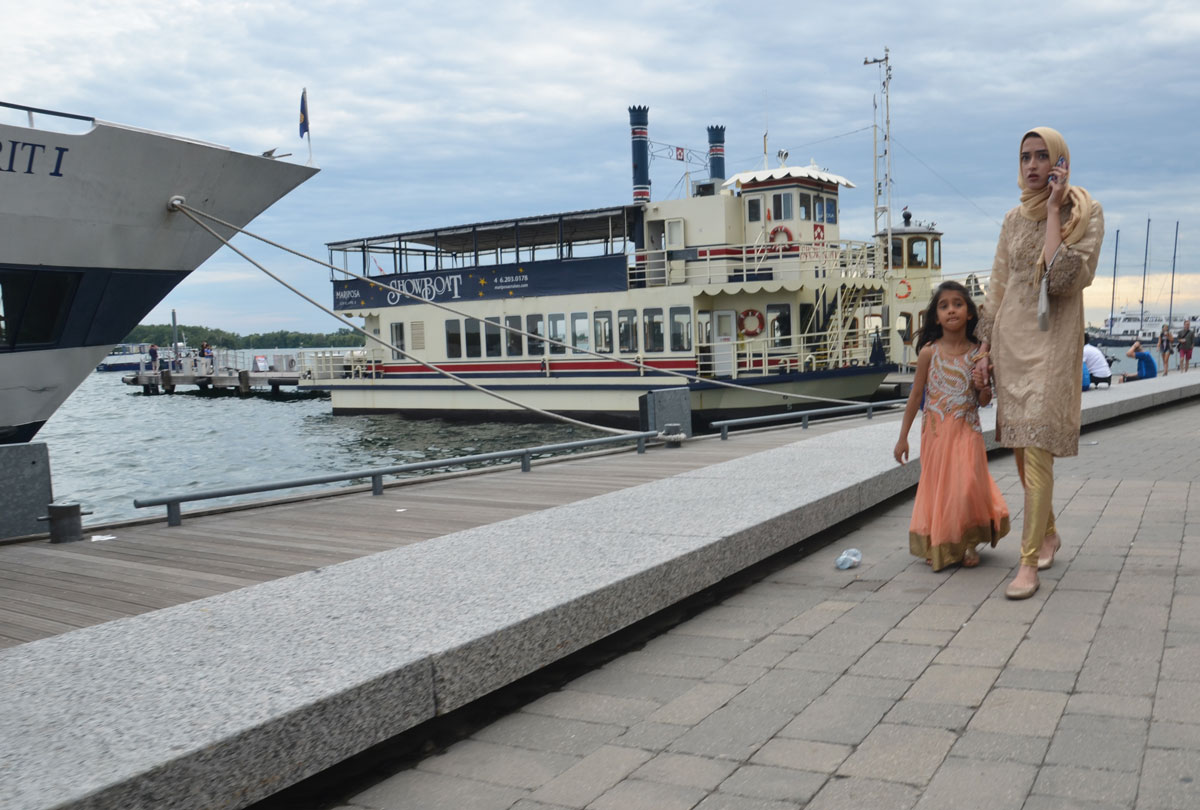
below: A mother and daughter stroll on the waterfront

A mother and daughter in sarees walk hand in hand along the waterfront. Paddle wheeler boat for scenic tours behind them, mother on a phone

below: Posing, Pride fun

Pride weekend, two policemen with rainbow sunglasses and small rainbow flags pose with two men in drag, wearing green dresses, one in a curly blond wig and the other in a black wig

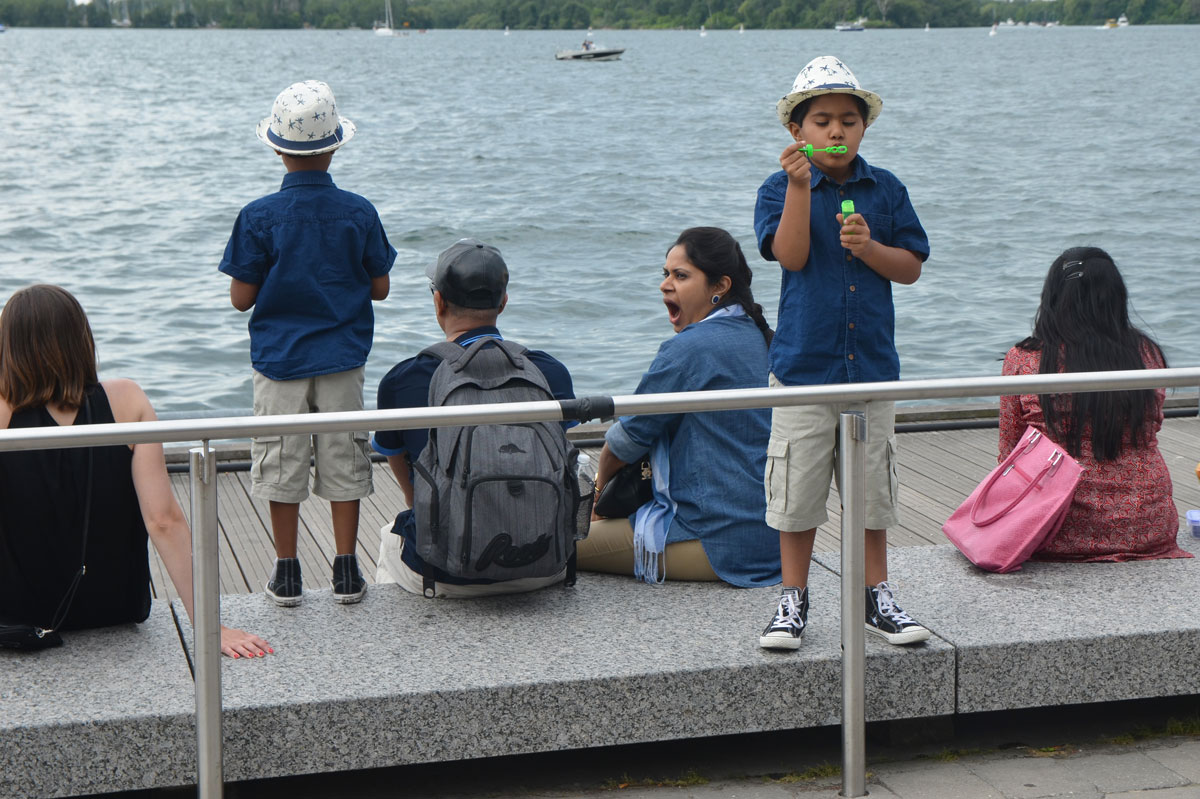
below: Blowing bubbles by the lake.

A family sits by the lake, two young sons in matching fedoras. Mother is yawning, father and one son have backs to camera, other son is blowing bubbles towards the camera

Happy August everyone!

Many legs and feet on a red carpet outdoors. People dressed for hot weather, only face in the picture, a young girl looks bored as she looks at the camera

The Frederick G. Gardiner Expressway, commonly just called the Gardiner, has been in the news a lot lately.  This 18 km stretch of road between the city and the lake was completed in 1965 after years of planning and building.  At the time that it was built, Toronto’s waterfront was largely industrial and there wasn’t much objection to having a 4 to 6 lane expressway, with many sections elevated, built there.   The railway had begun the process of dividing the city from its waterfront a hundred years previously.

As the city changes and grows, more and more people live in the downtown core.  Industry has moved out and residents have moved in.  For so long the land south of the Gardiner as well as under the Gardiner was neglected, especially from a city planning point of view.  But now, the city is looking differently at that swath of land.  The far east elevated section between the Don Valley Parkway and Leslie Street was demolished in 2001 and there have been calls for the next section (Jarvis to the DVP) to be demolished as well.   There has been some controversy as to whether to demolish it or move it… and if move it, where to? I am not even sure what the plans are at the moment.   On the other hand, the western section of the elevated expressway (Strachan to Spadina) will remain standing.  Work is underway to refurbish the structure – the city doesn’t want any more stories of pieces of concrete dropping onto cars beneath!  Plans are being implemented to use the land under the Gardiner much more efficiently.  To make it work for the public.

The Bentway is the name that has been given to this new park, or public space, beneath the Gardiner Expressway from Strachan 1.4 kilometres east to Spadina. The first phase is due to open Canada Day 2017 and it involves the stretch between Strachan and Bathurst.  Many of you have probably driven on the Gardiner but do any of you know what is under it now?  Let’s take a look.

below: The Gardiner passes over Strachan Avenue which  in turn passes over the railway tracks.

bridge over a street, many orange and black construction cones down the center of the road, some pedestrians on the sidewalk

below:  On Strachan Ave looking west.   Condo development in this area has extended right to the railway line.  The Exhibition GO train station is in the distance.  You can also see the Gardiner to the left of the tracks.  Here the north side of the under part of the expressway is walled in and the enclosed space is used by Exhibition Place.  At this time there is no plan for the Bentway to extend this far; I have used this photo to provide more context as to the location of the park.

railway tracks in the center of the picture, condos on the right. On the left is the elevated Gardiner expressway, but under it is a concrete wall that makes it look more like a concrete building than a road

below: A closer look at the Gardiner on the west side of Strachan Avenue.  Maybe there is potential to expand the park westward? to Exhibition GO station? And by the way, those concrete structures holding up the expressway – those are called ‘bents’ and that is why the park is called what it is.
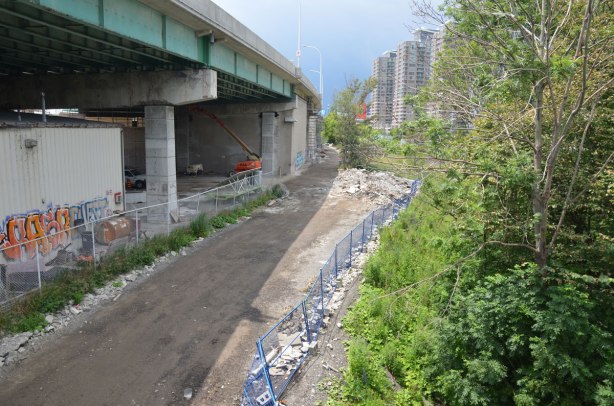
a dirt road runs alongside the Gardiner Expressway, some condos in the distance

below: This photo was taken as I stood on Garrison Common and looking towards Strachan Avenue.  This will be the western end of the new park. You can see the underside of the Gardiner as it passes over Strachan Ave which in turn is also a bridge.  This bridge once crossed the Grand Trunk Railway tracks that were built in the 1850s.  New entrances to the park are planned that incorporate the present sloped embankment of the bridge.

The elevated Gardiner Expressway passes over Strachan Ave which in turn has a bridge over what used to be a rail line. The bottom part of the bridge is covered with graffiti. The whole area is a construction site at the moment.

below: A quick aside:  It’s a slightly different angle, but here is a photo of the Strachan Avenue bridge from 1959, before the Gardiner was built.  I suspect that there has been upgrades made to the bridge since then.  Photo credit: R.L. Kennedy, found online (also a good source for the history of the Grand Trunk Railway in Toronto).  Garrison Common is to the right.
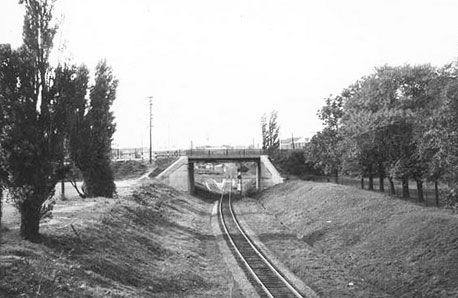
vintage photo from 1959, GTR tracks pass besidde Garrison Common park and under the bridge at Strachan Ave

Garrison Common is the green space surrounding Fort York.  It will abut (be continuous with?) the new Bentway.  Fort York is a National Historic Site and on its 43 acre site are original buildings from the War of 1812 as well as an 1813 battle site.  Did you know that the Americans beat us here in 1813 and controlled the city of York (as Toronto was known then) for a few days?

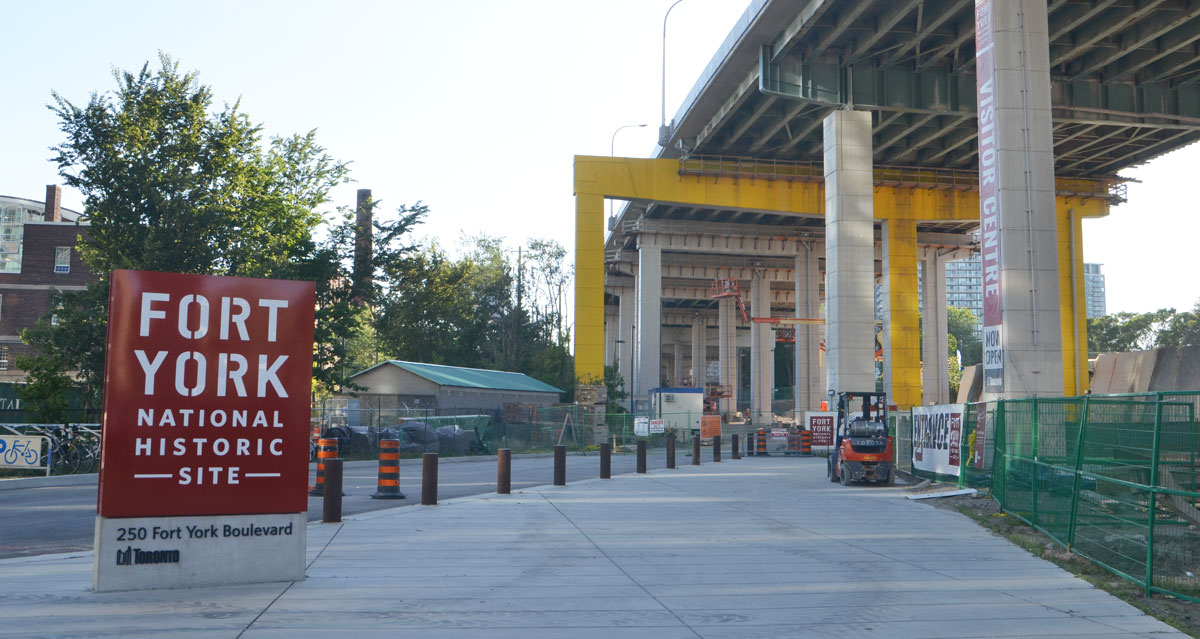
below: The new Fort York Visitors Centre is now open. There is still being work done both inside and outside, but it is open to visitors. For so long the fort was hidden away and difficult to get to; it is nice to see it receiving more attention.

entrance to Fort York, under the Gardiner, still a construction site but nearing completion

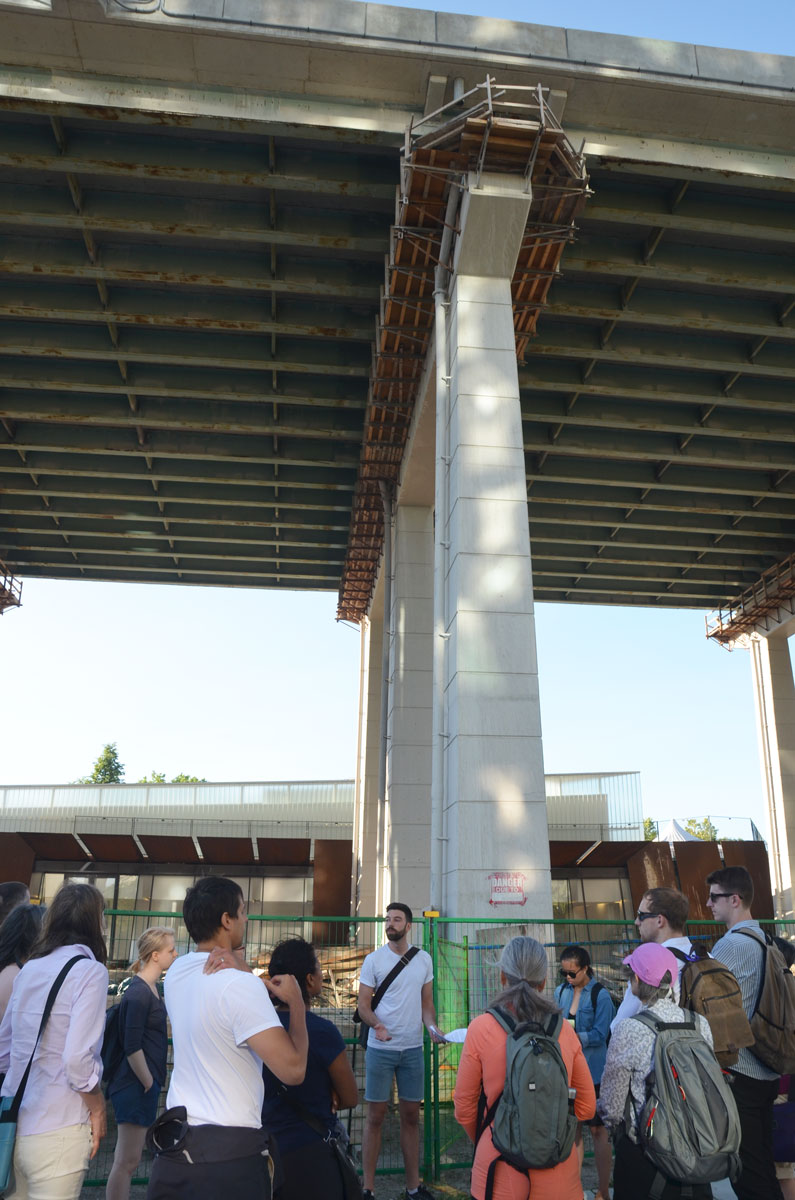
below: Jake from Park People, one of the groups helping to design the new park, stands under the Gardiner as he talks to a group of us on a tour.    Here, by Fort York, the Gardiner is the equivalent of 5 storeys from ground level, the highest it reaches as it crosses the city.
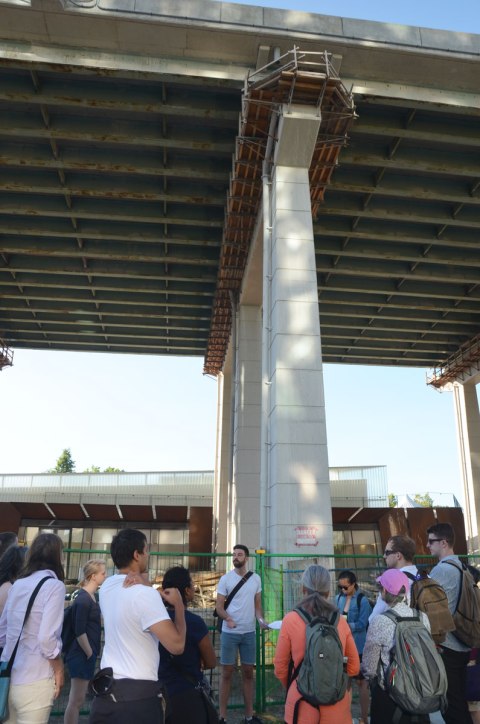
a man is standing in front of a group of people on a walking tour, he is standing under the Gardiner Expressway where it is 5 storeys above ground level.

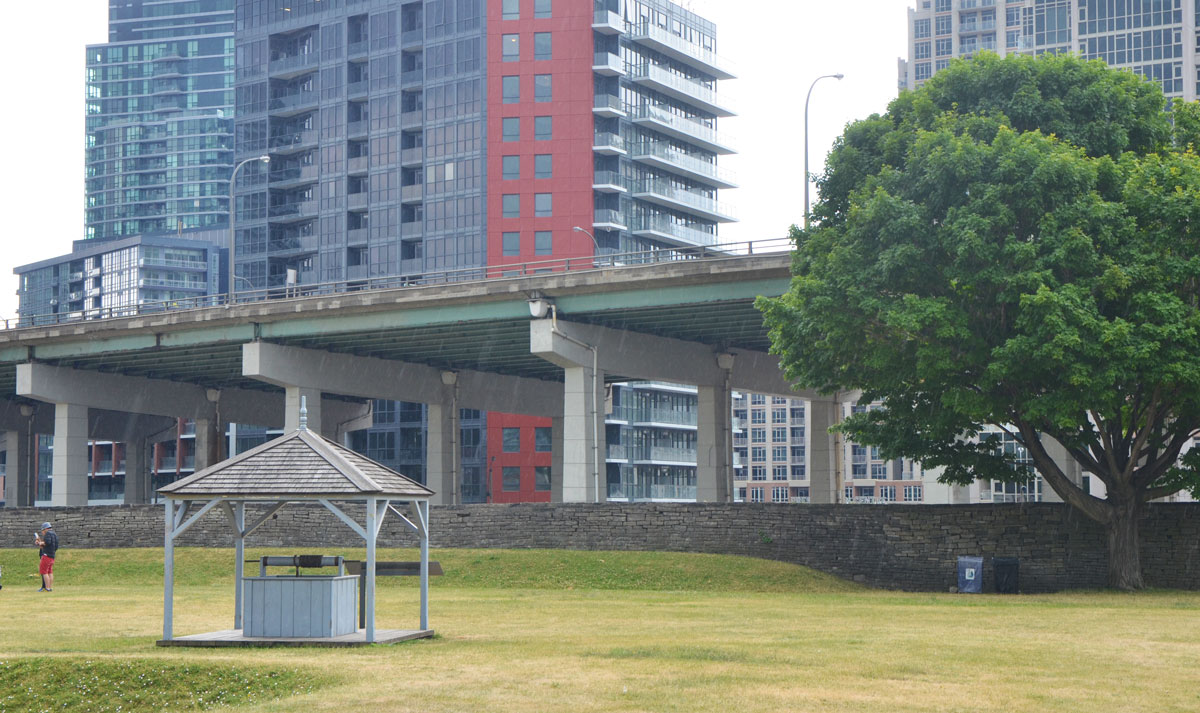
below: Standing on the grounds of Fort York.  The Bentway will be beyond the stone wall.  You can get a good idea of the spacing between the bents.  These spaces are being referred to as ‘rooms’ and there are 55 of them between Strachan and Spadina.
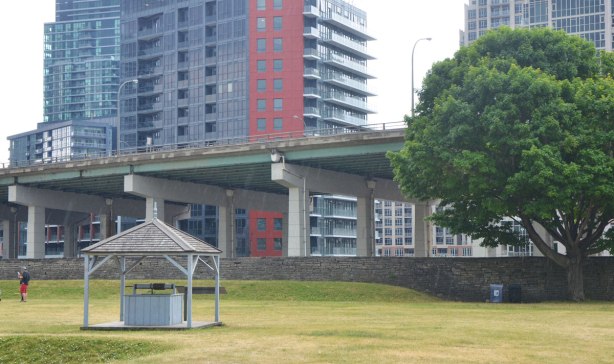
from the grounds of Fort York looking south to the Gardiner and the condos built beyond it. Grass field in the foreground.

below: One obstacle is the fact that Fort York Blvd passes under the Gardiner on a diagonal.  Plans are to build a pedestrian/cycle bridge over the street.  Also in the photo, note the TTC bus – Fort York and vicinity are finally on a bus route.  Route 121 runs between the Portlands and Fort York via Union Station.

fort york blvd is in the foreground, a TTC bus and a car are on it, the Gardiner is to the right and a short condo building is in the background along with the CN tower

below: The section under the Gardiner Expressway between Bathurst Street and Fort York Blvd is not city owned. It is owned, and has already been developed, by the Onni Group who built the Garrison at Fort York condominiums on either side of it.  This is the eastern end of phase 1.
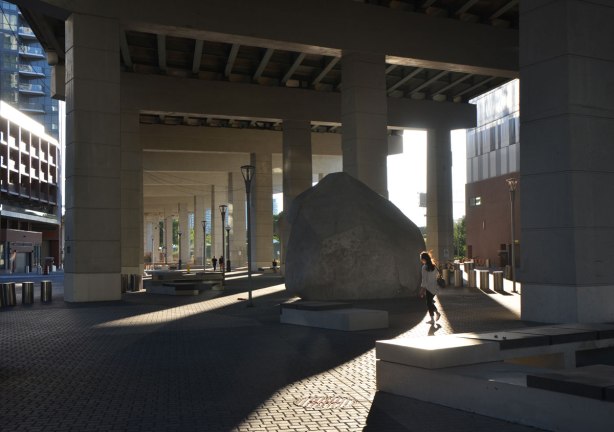
evening, low angle sunlight shines under the Gardiner Expressway where it has been developed with paving stones and some large rocks.

below: Northbound traffic on Bathurst passes under the Gardiner.
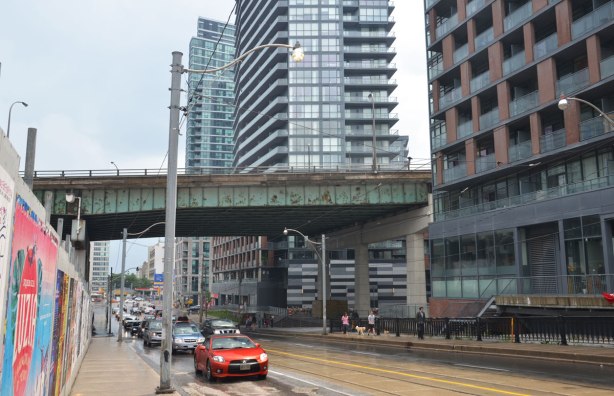
some traffic on Bathurst street on a rainy day, as the street passes under the Gardiner Expressway, condos on the right, construction hoardings on the left.

Phase 2 of the park’s development involves land between Bathurst and Spadina. This is an area that is undergoing a lot of changes at the moment, i.e. a lot of construction.

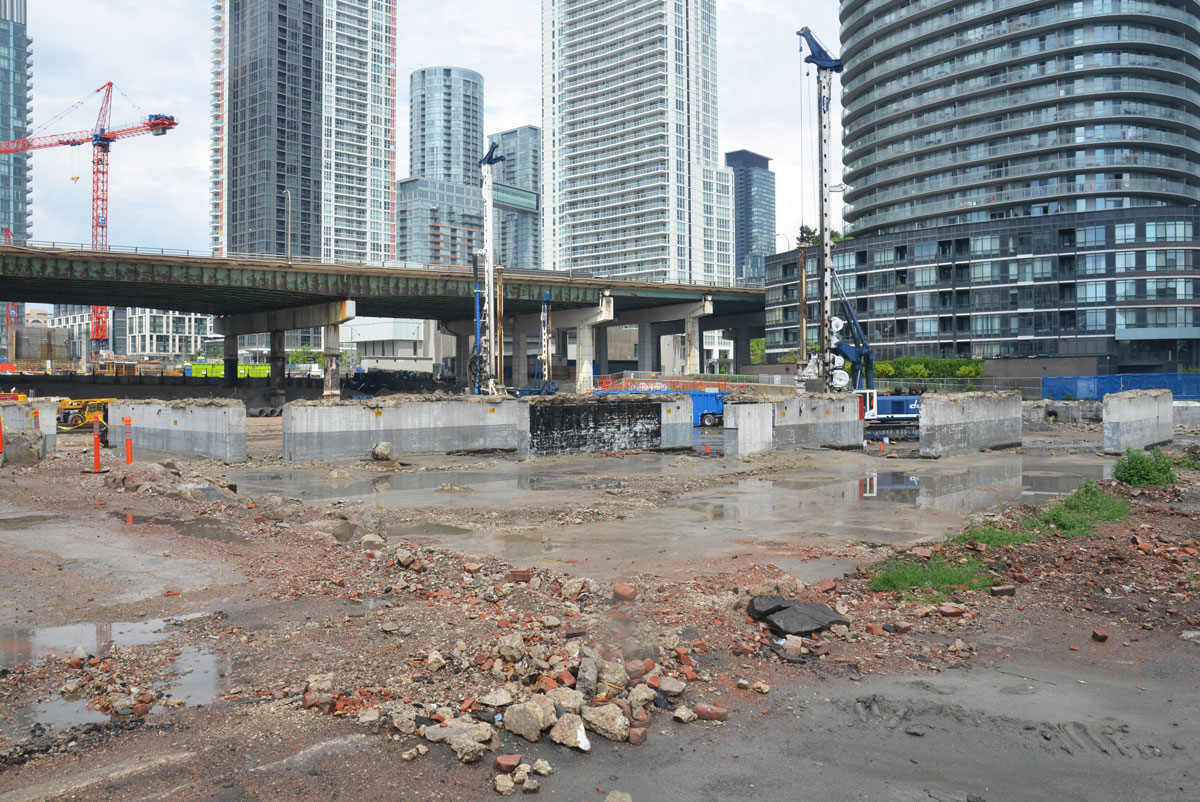
below: Immediately south of the Gardiner on the northeast corner of Bathurst and Lakeshore is a construction site.  Demolition of the old 1928 Loblaws warehouse building is now complete.  The facade of the old building was disassembled rather than demolished; after cleaning and refurbishing of the bricks, it will be rebuilt in its original location.  Two condo towers are planned for the space between Loblaws and the Gardiner.  Yes, more condo towers to face the Gardiner and add to the tunnel effect that you get when you drive on the expressway.

construction site in downtown Toronto, Gardiner Expressway runs behind the site, rubble in the foreground, a few remaining remnants of the old Loblaws building that was there, high rises in the background.

below: The development of this site is a collaboration between a number of developers.  I found a photo of one rendition (source) of what the space under the Gardiner will look like here in the future.  Public space including a cafe are part of the plans.  Check back in a couple of years to see what really happens here!
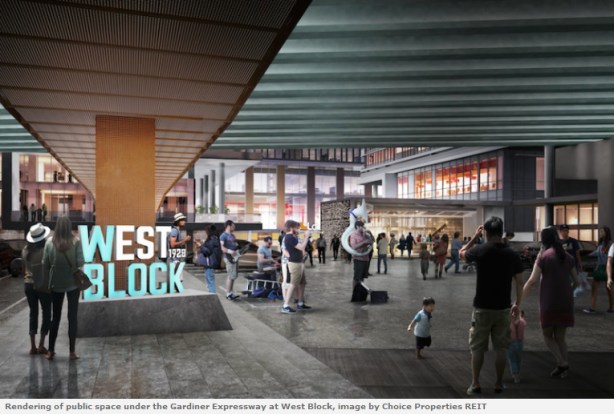
artist's rendering of what a planned development for under the Gardiner would look like, part of a larger condo and retail development.

below:  Standing on Bathurst Street, looking east along what will be Housey Street.  This is just north of where the Loblaws development (above) will be.  As you can see, you can’t walk there yet.

the elevated road, the Gardiner Expressway passes over a construction site on the right, a new street being built on the left.

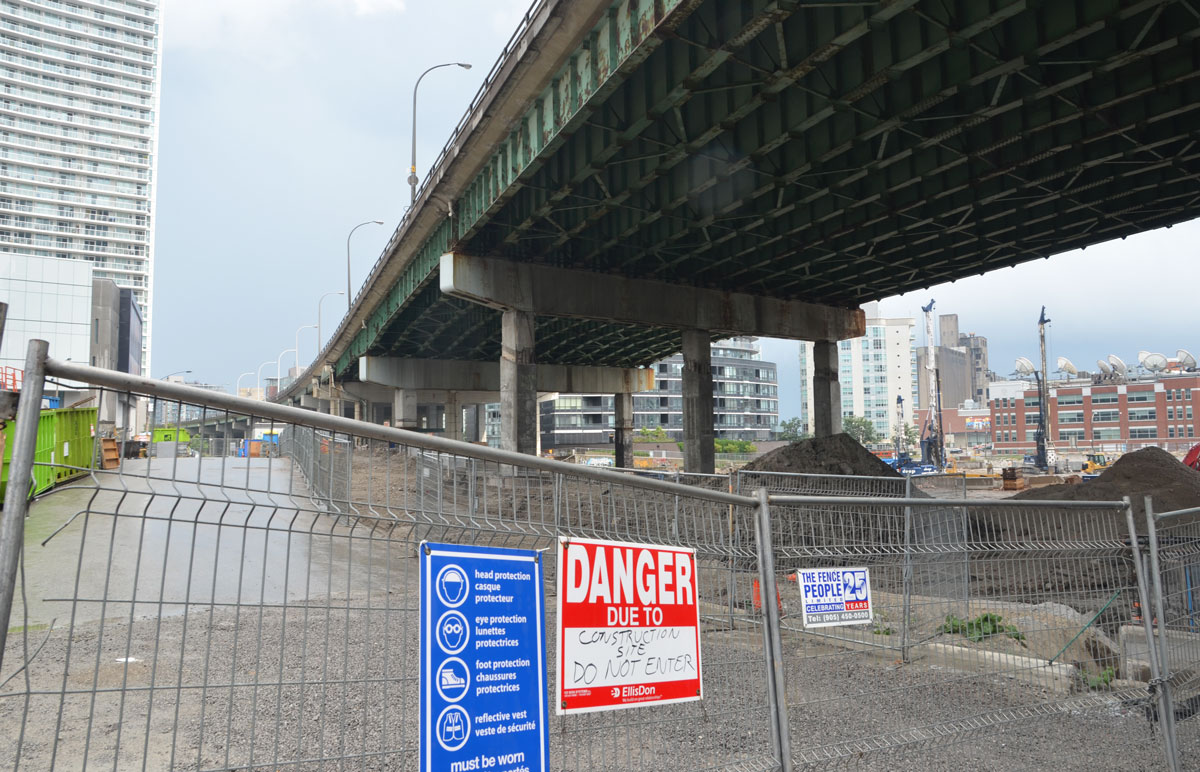
below: Southeast corner of Bathurst and Fort York Blvd.  This is the section of land just north of Housey Street.  Construction hoardings and cranes – familiar sights in this area.  It also means that taking photos of under the Gardiner here are difficult!
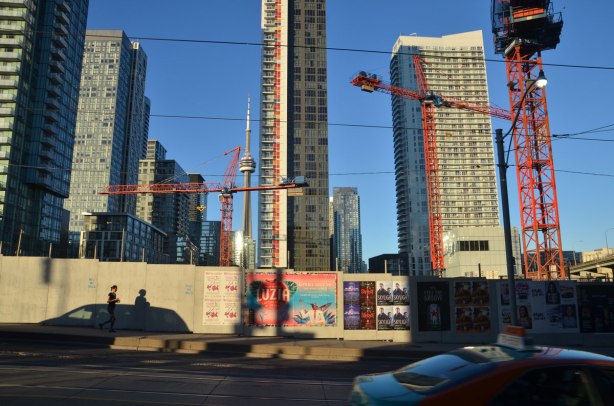
late afternoon, long shadows, yellowish tint to the photo, looking east from Bathurst, south of Front, north of the Gardiner, wood construction hoardings with posters on it, many orange cranes, some condos already built, a woman jogging past, cars on the street.

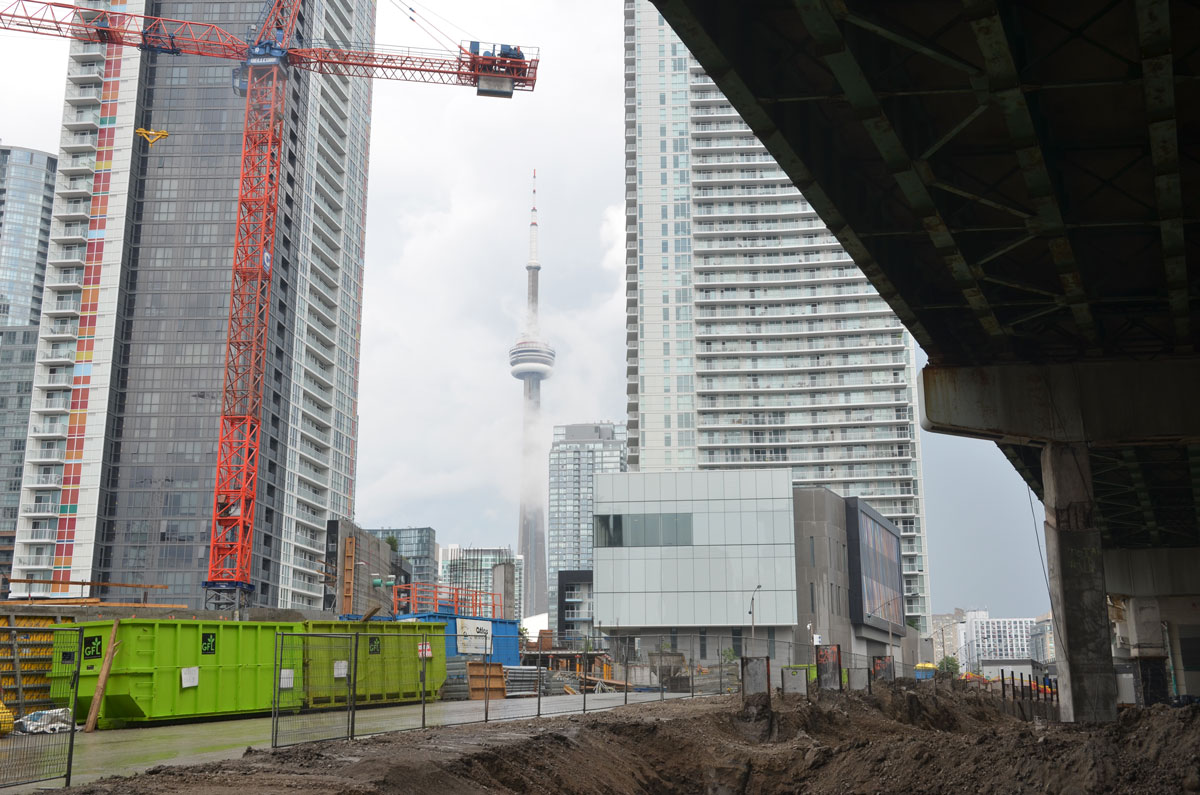
below: Development north of the Gardiner between Bathurst and Dan Leckie Way.
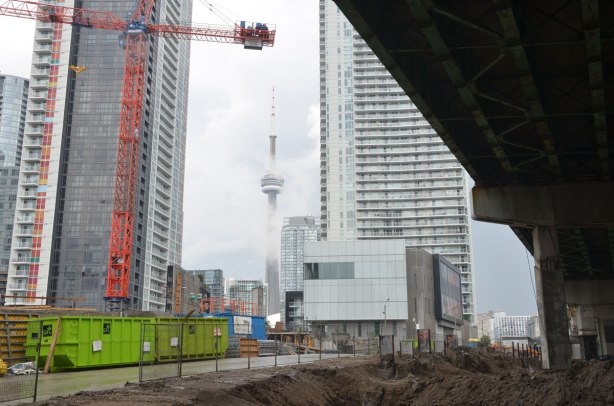
construction site under the Gardiner, cranes and condos being developed on the left, CN tower in the fog in the distance.

Dan Leckie Way is a north-south road that runs under the Gardiner just east of Bathurst.  It is the western boundary of Canoe Landing Park.  This park is north of the Gardiner and the Lakeshore.

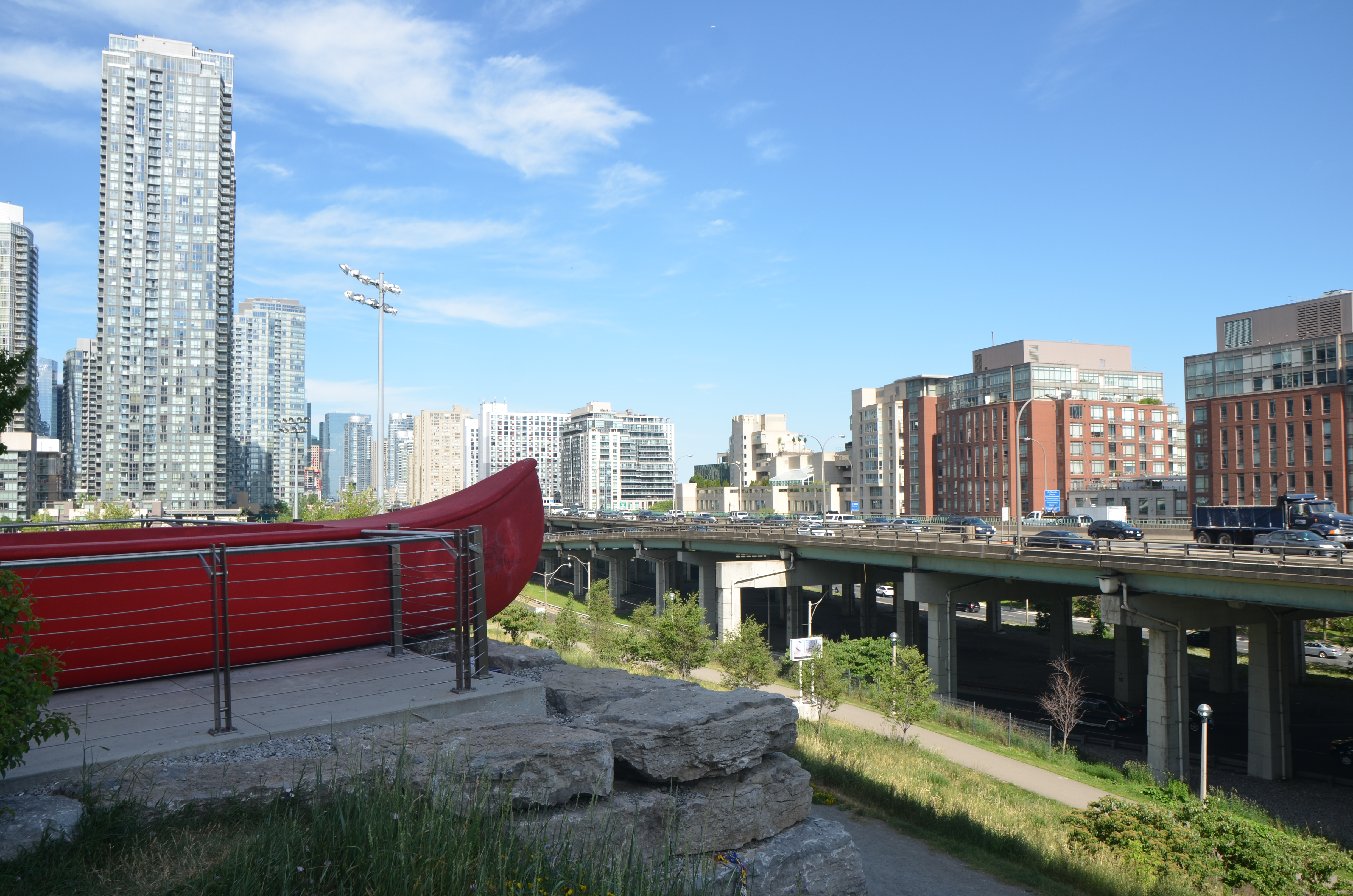
below: ‘Tom Thomson’s Canoe’, by Douglas Coupland sits at the highest point of land in the area; it’s almost at the same level as the Gardiner and is very visible as you drive by.   This park extends down the hill.
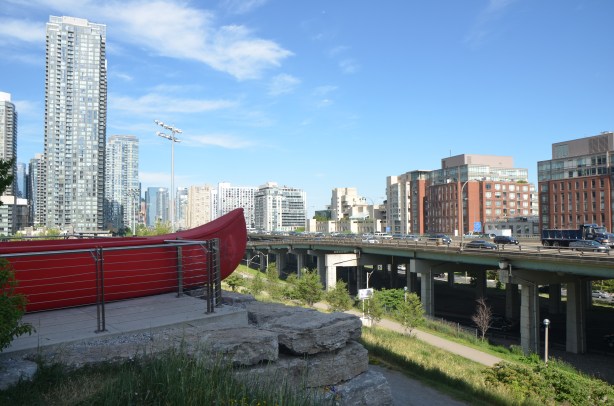
The end of a large red canoe, an artwork by Douglas Coupland called 'Tom Thomson's Canoe' sits in a park, high above the surrounding scenery. Looking southwest towards the elevated Gardiner Expressway and the condo developments south of it.

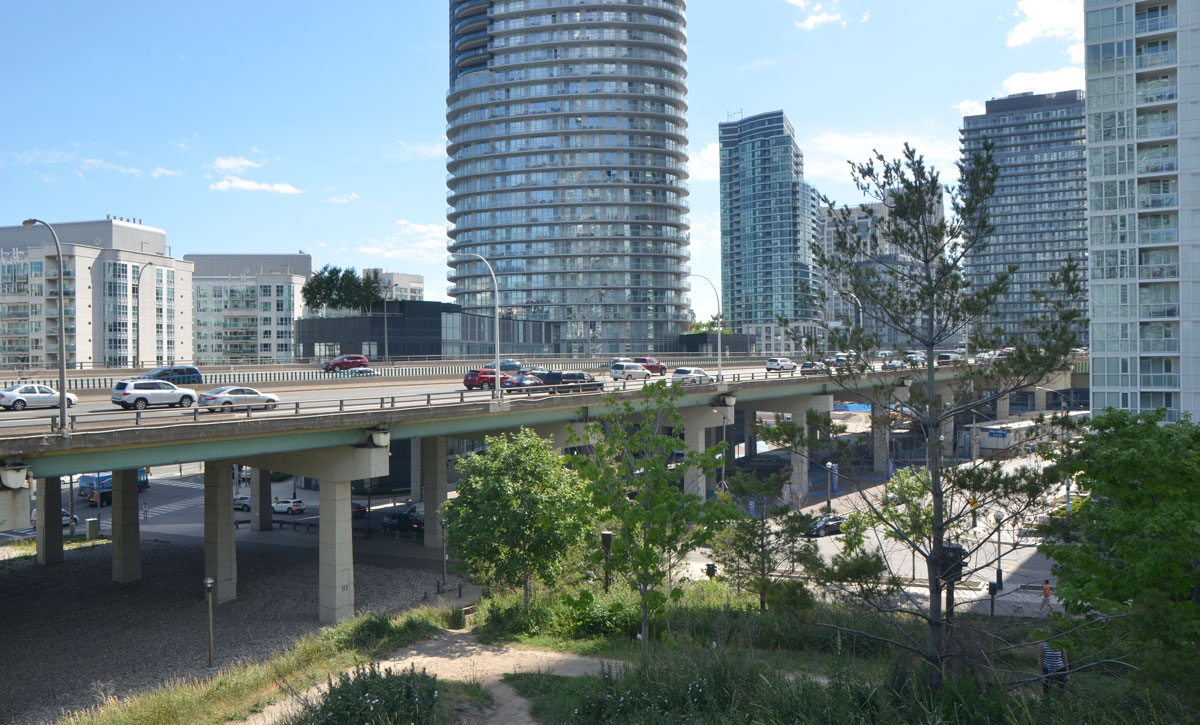
below: Looking the other way from the same vantage point. The street running under the Gardiner here is Dan Leckie Way . Up until this point the Lakeshore is south of the Gardiner.
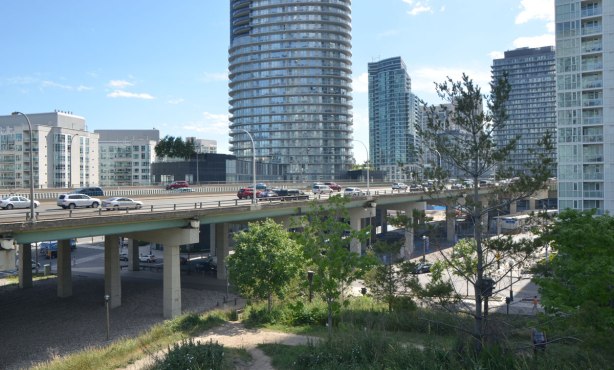
The elevated Gardiner Expressway with traffic is in the middleground, some trees and parkland in the foreground, and condo developments in the background.

At Dan Leckie Way, the Lakeshore is still south of the Gardiner and the space under the expressway is wide open.   By Spadina, one major block east, the situation changes.   The Lakeshore splits and westbound traffic lanes go north of the Gardiner and eastbound lanes stay south.  Shortly after Spadina, the Lakeshore runs under the Gardiner and there is no room for any further development under the road.

below: Standing on Spadina, just south of the Gardiner and looking west.  Here there is a lot of road to cross for pedestrians on Spadina.  Not only has the Lakeshore split to run on either side of the Gardiner, but there are also ramps between the Gardiner and the Lakeshore.
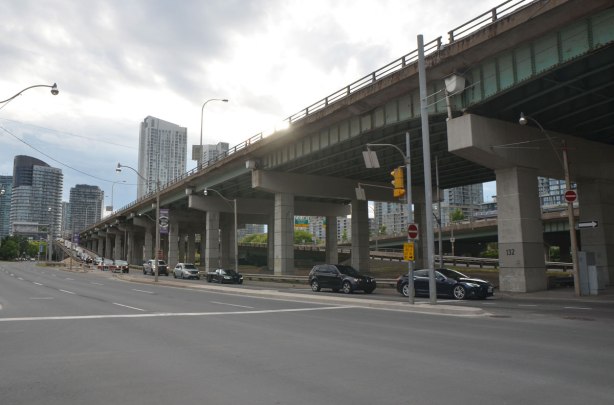
major road with traffic under an elevated expressway in a city, long ramp from the upper level to the lower. Gardiner Expressway and Lakeshore Blvd in Toronto, at Spadina looking west

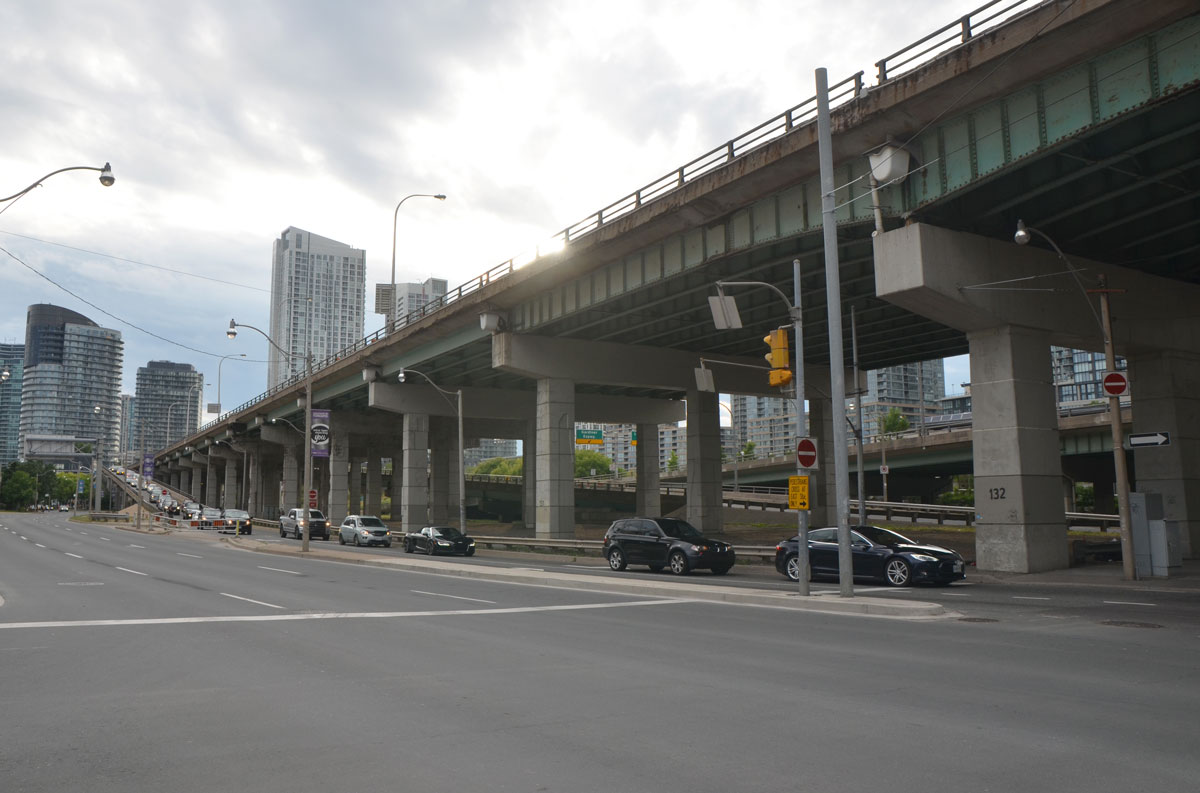
below:   Still on Spadina, and still looking west, but now under the Gardiner.  The space under the road is not as high as it was previously.  Its lower and darker and not as inviting.   It will be interesting to see what phase 2 of the Bentway development will look like in this space.  I am not sure when it will to be finished but I will keep an eye on it!
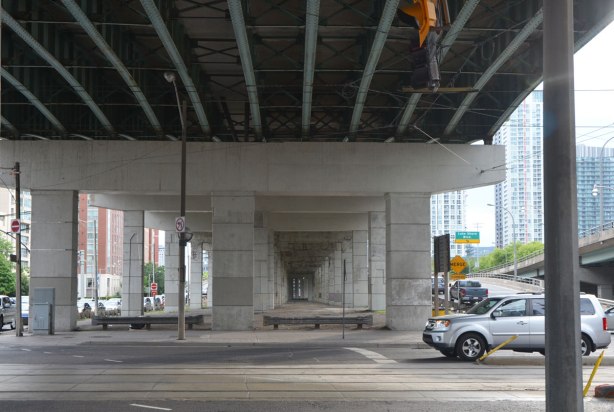
under an elevated section of the Gardiner Expressway, at Spadina.

As for the eastern Gardiner, what does that look like?  Well, that’s a whole other blog post!

 Project: Under Gardiner  On this site you’ll find detailed maps and diagrams of this area as well as information about the plans for the various sections of the space.


A sweet post.

This is what 37,000 tons of raw sugar looks like.
The Raw Sugar Shed at Redpath Sugar is 27m high,  155m long, and 43 m wide.  It’s a big space!

a man is leaning on a temporary metal barricade in front of a very large pile of raw sugar in a large warehouse.

Raw sugar is brought to the Redpath Sugar facility by ship.  When it is off-loaded from the ship it is brought into the warehouse by conveyor belts that run down the middle of the ceiling.

below: There isn’t a ship in the harbour at the moment so the green crane waits.

a little girl in the foreground, standing beside a squared opening in the harbour for ships to come in, beside the Redpath Sugar refinery building on the waterfront with its green cranes and greenish blue building

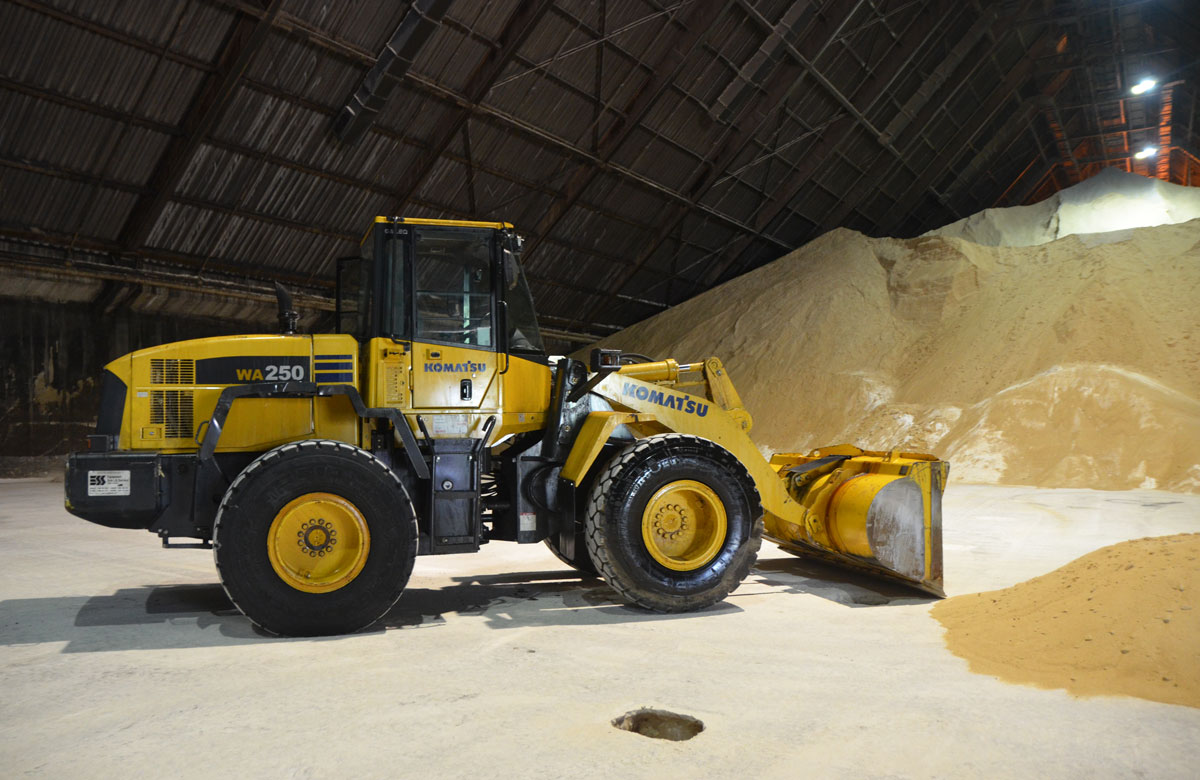
below:  You can see a holes in the foreground of the next photo.  This is one of many holes in the floor of the Raw Sugar Shed.  The raw sugar is pushed through these holes to another series of conveyor belts below.

a large yellow front end loaded is parked inside a warehouse. A large pile of raw sugar is in the background.

three warning signs on the outside of a door of the Redpath Sugar shed, a warehouse for storing raw sugar. One says "Beware of Heavy Equipment", the second says "Sound horn before entering" and the third says "Canadian Government Customs Bonded Warehouse no. 60"

below: Photo taken from the entrance to the Raw Sugar Shed, taken at Doors Open.  Raw sugar is taken by conveyor belt (upper far right) to the processing plant next door.

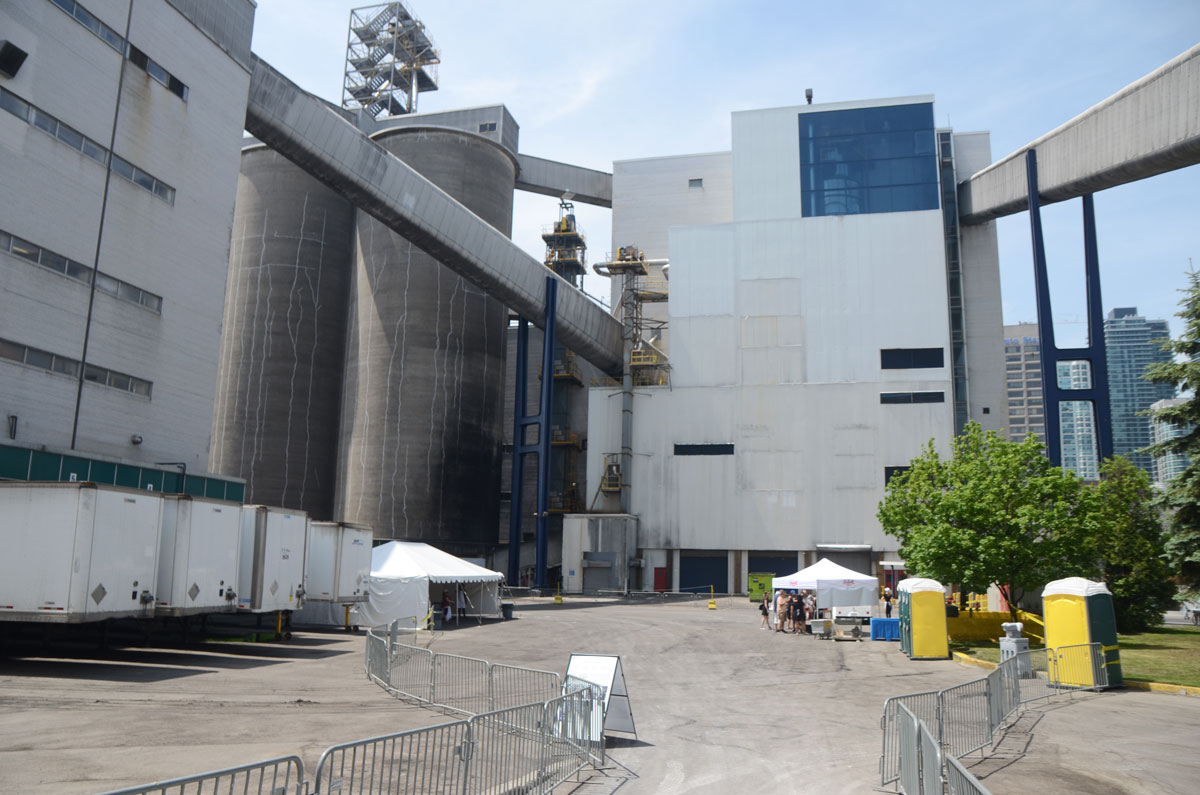
sugar processing area of Redpath Sugar refinery, some white tents and metal barricades for crowd control as it is Doors Open day.

close up of the white Redpath Sugar processing plant, grey metal covers on conveyor belt tunnels and vents

below: A lingering remnant, railway crossing signs from when a railway ran here.
A guard sits by the entrance to Redpath Sugar.

a wire fence with barbed wire across the top, behind the fence is round yellow railway crossing sign as well as a large blue metal pole and a small shrub. There is also an old warning sign for a railway that once ran past here.

The railway serviced the industries that were built along the Toronto waterfront,  The LBCO, Loblaws, the ‘Toronto Star’ newspaper, Molson Breweries, Dominion Malting and others, relied on the railways.   Completed in 1959, the Redpath refinery was the last industry built along the waterfront.  You can just see the railway tracks in the photo below, running between Queens Quay East and the Redpath building where they dead end.  Since the tracks only dead ended there in 1985, that helps date the picture.   Rail service ended in 2008.

aerial view of the East Wharf portion of the Toronto wateterfront, vintage photo from the 1970's or 1980's

photo credit: Originally from City of Toronto Archives but found online at Old Time Trains.

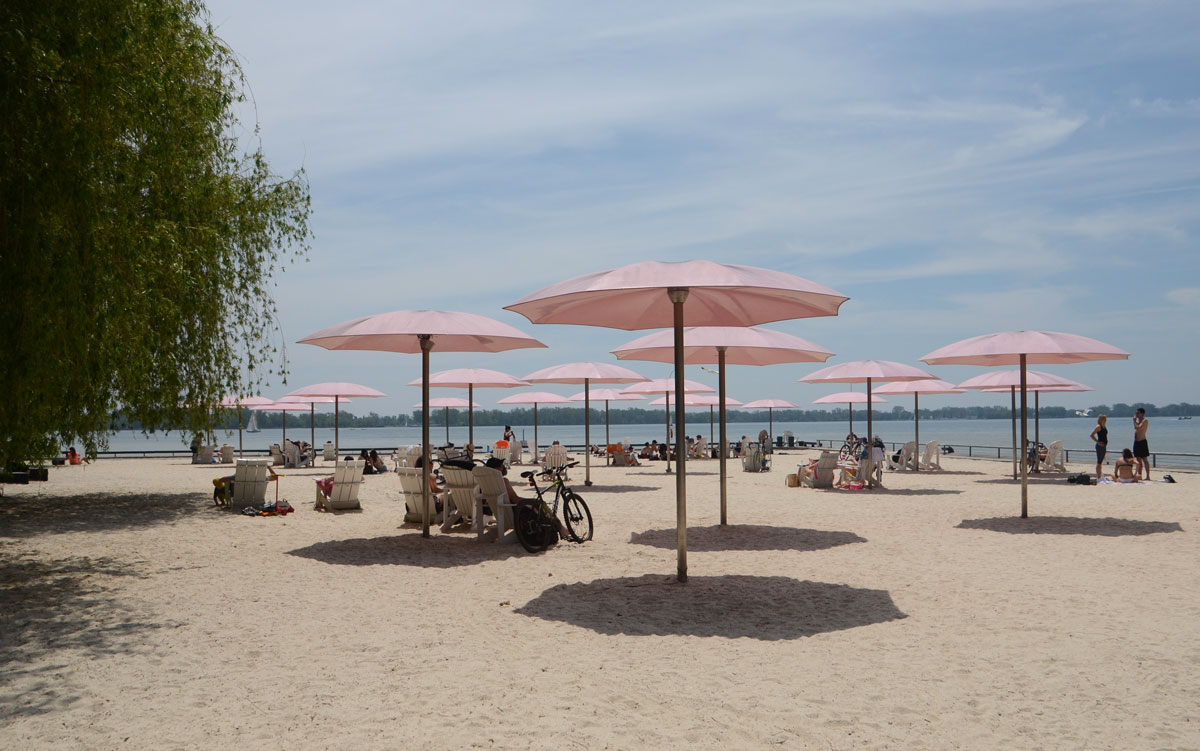
Today, Redpath Sugar is one of the last industries operating on the waterfront; The area around it is rapidly being redeveloped, including the space right next door that is aptly called Sugar Beach.

people sitting on white chairs under pale pink umbrellas at Sugar Beach. sand, water and blue sky, beside Lake Ontario

a man sits on a chair between a blue shipping containter and a building,

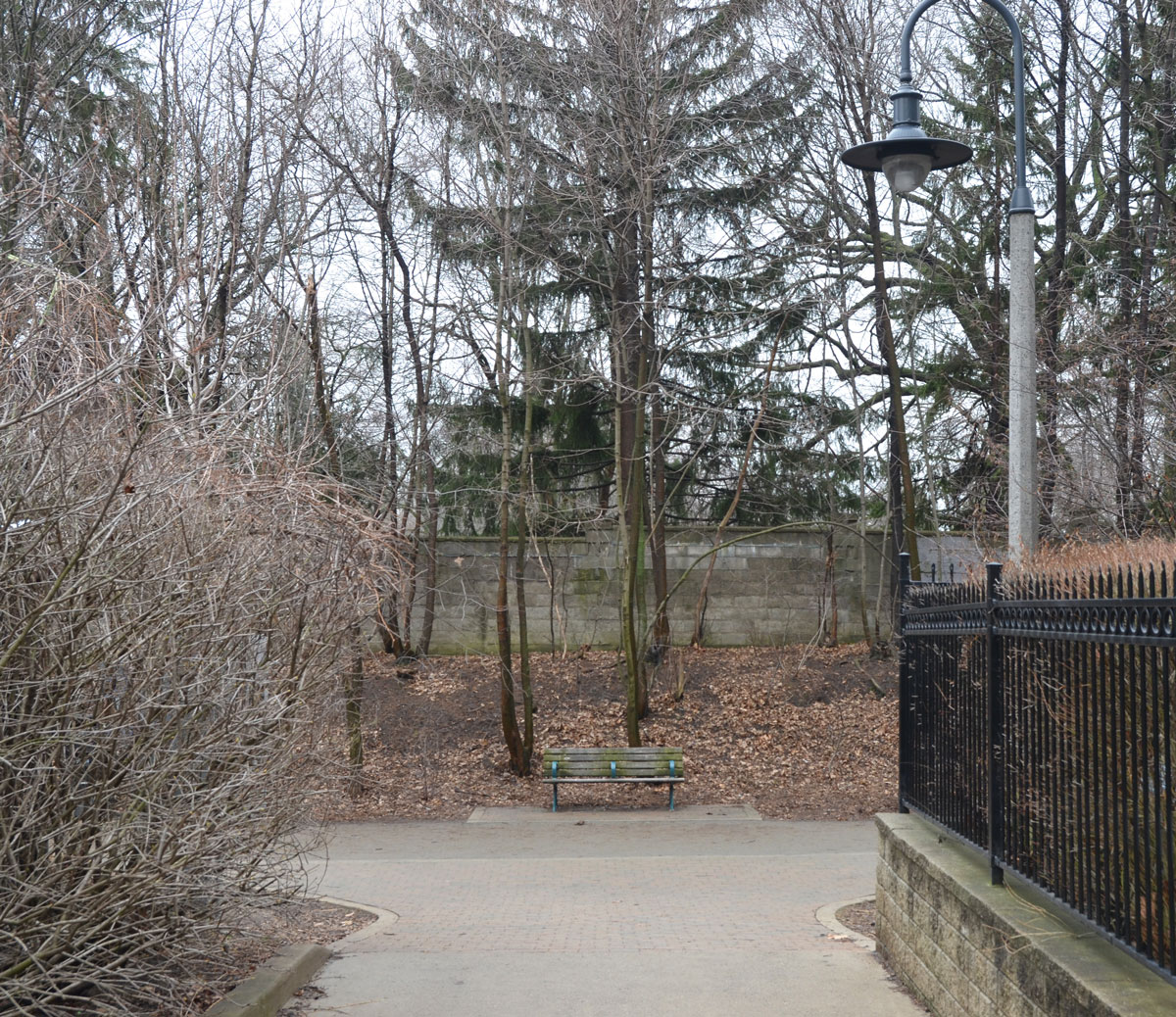
There is time between winter and spring that is a dreary time of greyness and dullness.  It is a time when the the snow is gone but nature hasn’t come out of hibernation.  It is also a time best forgotten.

between winter and spring, the snow has melted, there are no leaves on the trees, the weather is grey, looking down a path that comes to an end in front of a bench. Behind the bench are trees, dead leaves on the ground, and a grey stone fence. dreary, grey

Luckily we don’t have to wait long.

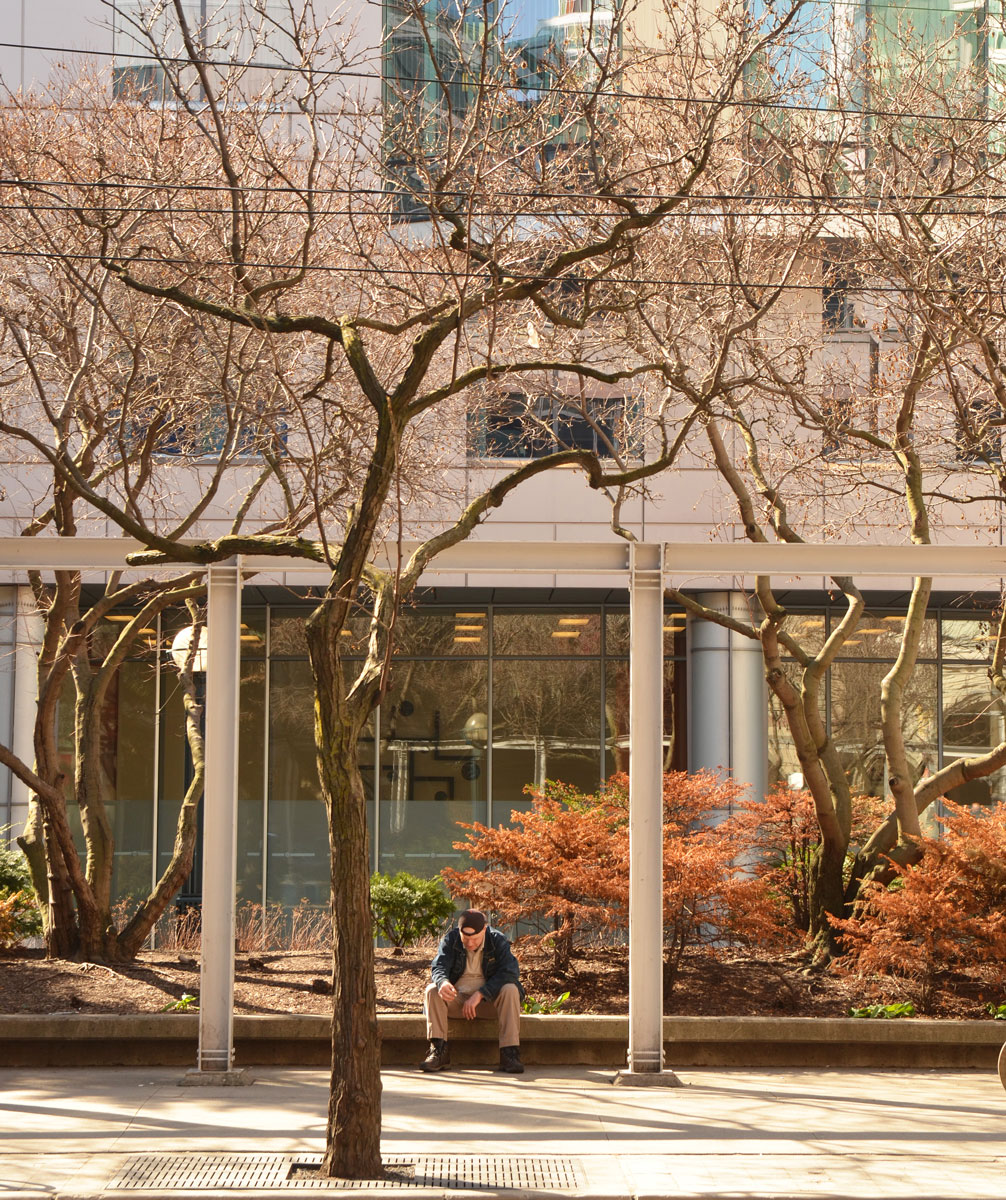
A man sits on the edge of a large planter with trees and shrubs in it in front of Roy Thomson Hall. There are no leaves on the tree yet.

… just a little longer ….

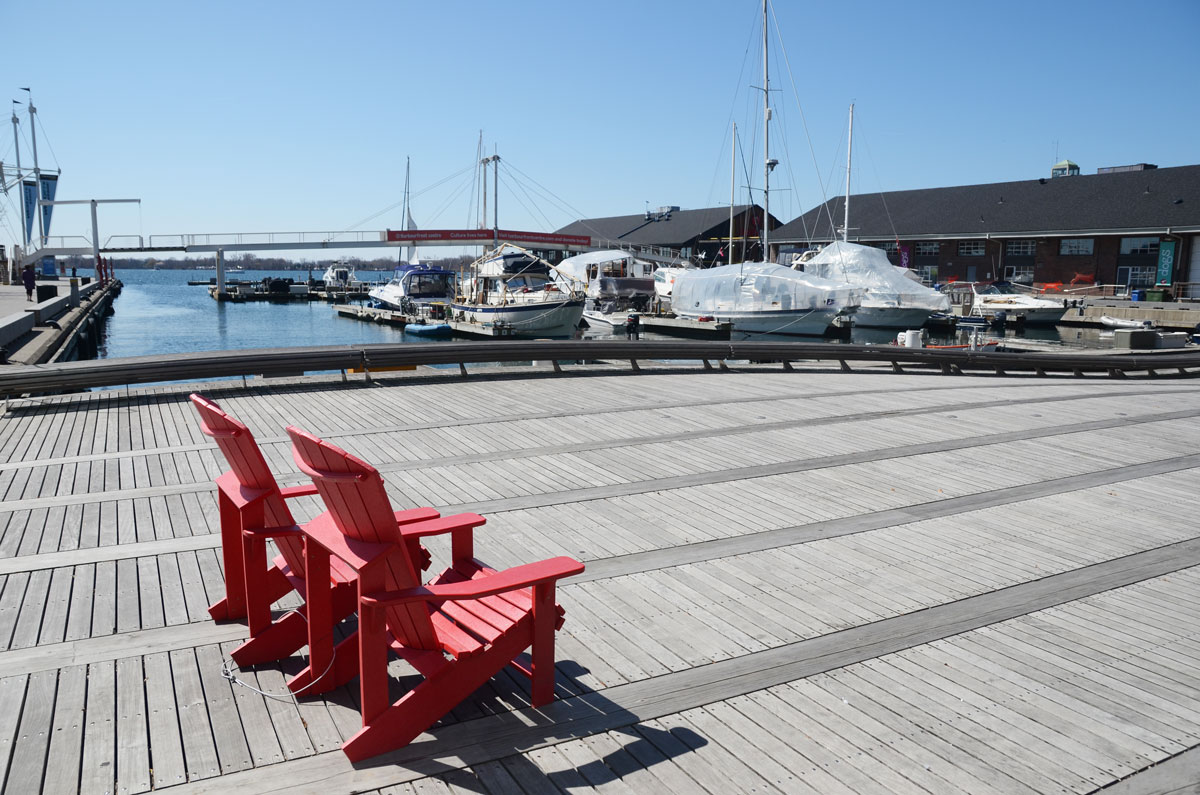
Two red Muskoka chairs sit on the Wave Deck at the waterfront in Toronto. Boats in the harbour are in the background, some with plastic wrap still on them from winter storage.
or if you can’t wait, there’s always plastic!

a garden full of fake flowers, colourful plastic flowers instead of real flowers.

From the time the first spring flowers start to show

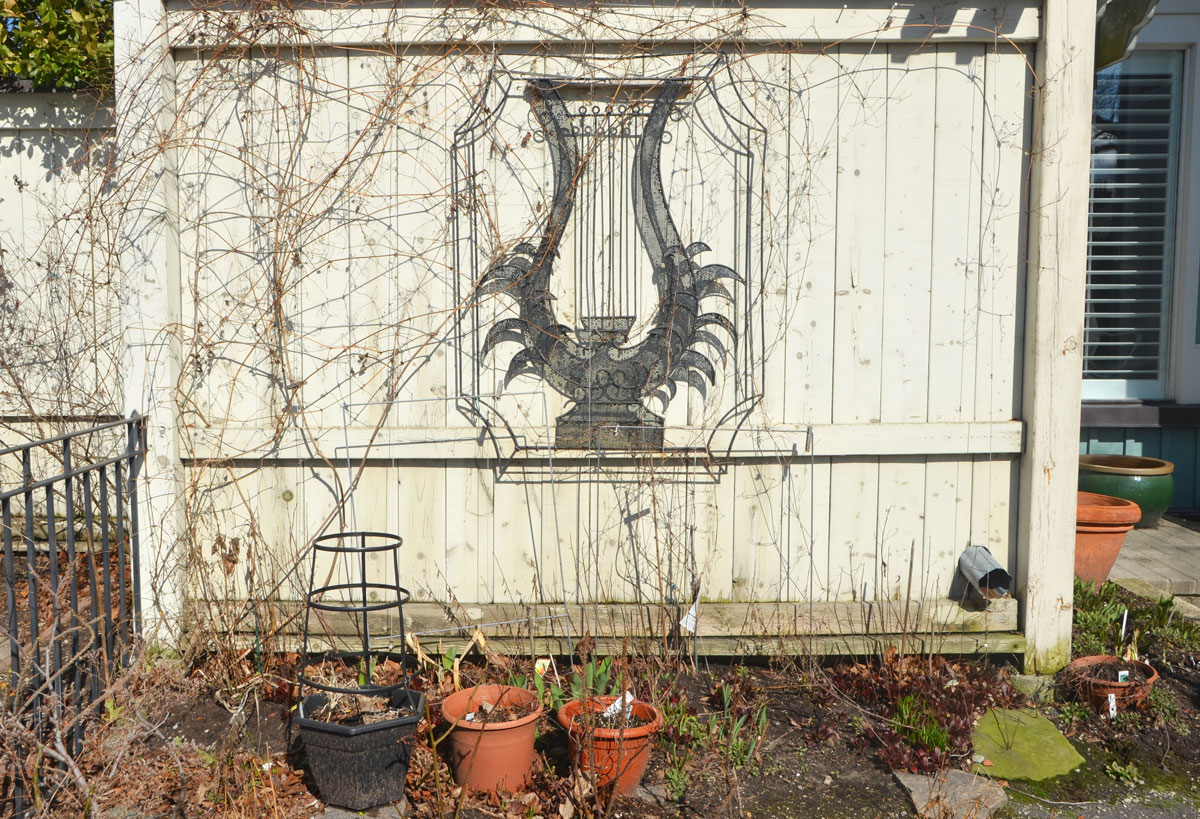
A small white fence with some empty planters in front of it. Old vines are on it (no leaves). There is a frame for plants to cling to in the shape of a lyre that is attached to the fence

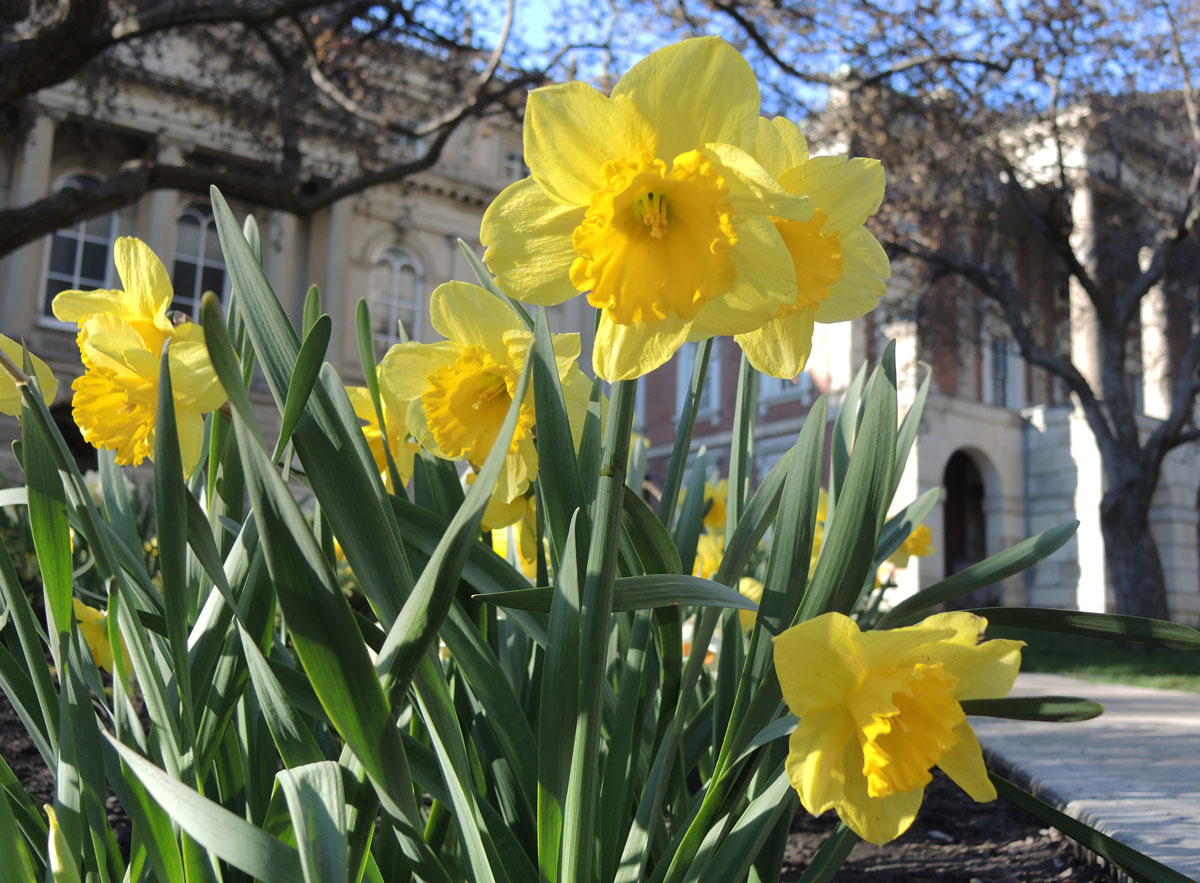
until the time they are in full bloom is usually only a matter of days.

A group of bright yellow daffodils in the sunshine in full bloom with the front of Osgoode Hall on a warm sunny spring day. Blue sky.

Trees too soon show their colours.  The yellows of the willow trees usually appear first.

downtown Toronto, the white curved roof of the Rogers Centre with the CN Tower beside it. WIllow trees and grassy park are in front.
Almost daily the trees are greener…

Budding leaves - The light yellowish green new spring growth on a tree that is growing beside a greenish blue tinted window. Some tree reflections in the window too.

… or full of flowers.

looking upwards from below the branches of a magnolia tree in full bloom. Lots of pink and white flowers, no leaves, on the tree. Bright blue sky in the background. A sunny spring day.

And for another year we forget the last grey days of winter

A rack of geraniums in bloom for sale sitting outside a store. The sidewalk by the store is shaded with white, green and red umbrellas.


It was a nippy morning at Cherry Beach today. The ice has been off Lake Ontario for a while now and the snow that fell this past week has melted. There was only a small clue that winter is still clinging on.

icicles hang from a stick that is embedded in the sand beside a lake. pebbles, water.

The morning started off grey but it wasn’t long before the sun came out.

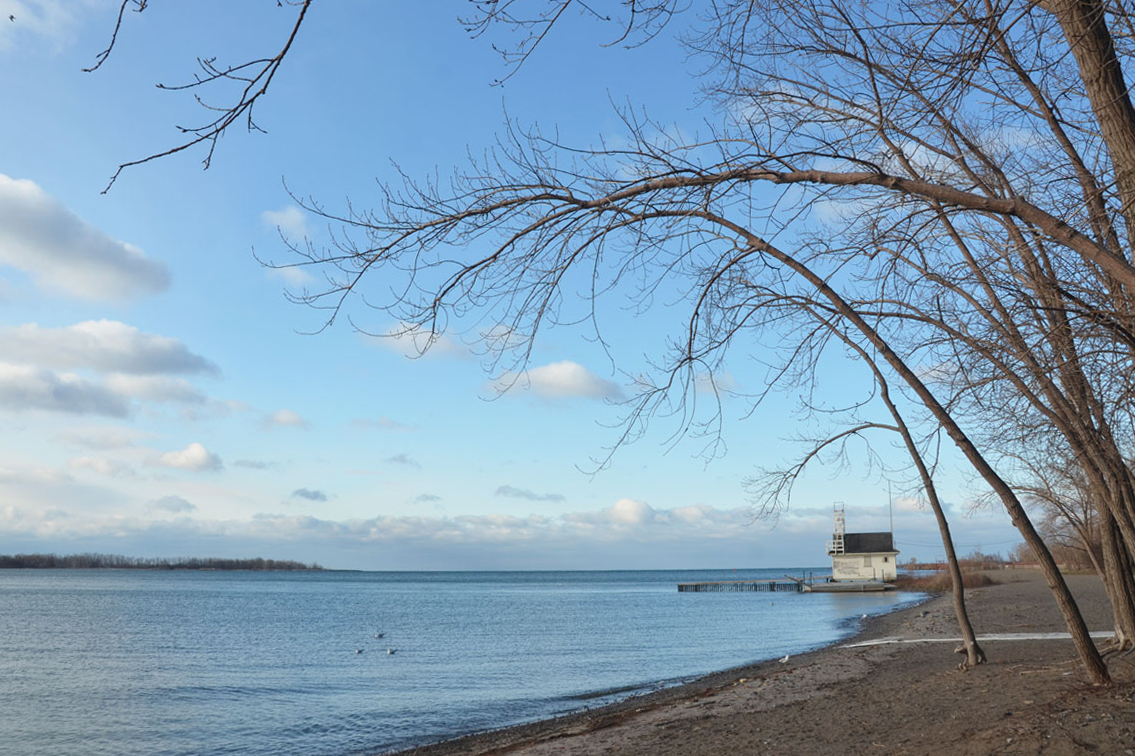
below: Cherry Beach lifesaving station in the distance.

Cherry Beach lifesaving station in the distance, shoreline of Lake Ontario

(Except for a few airplanes and the shouts of a lacrosse tournament in the distance) the only sounds on the beach were the chirps and tweets of birds and the squawking of seagulls.
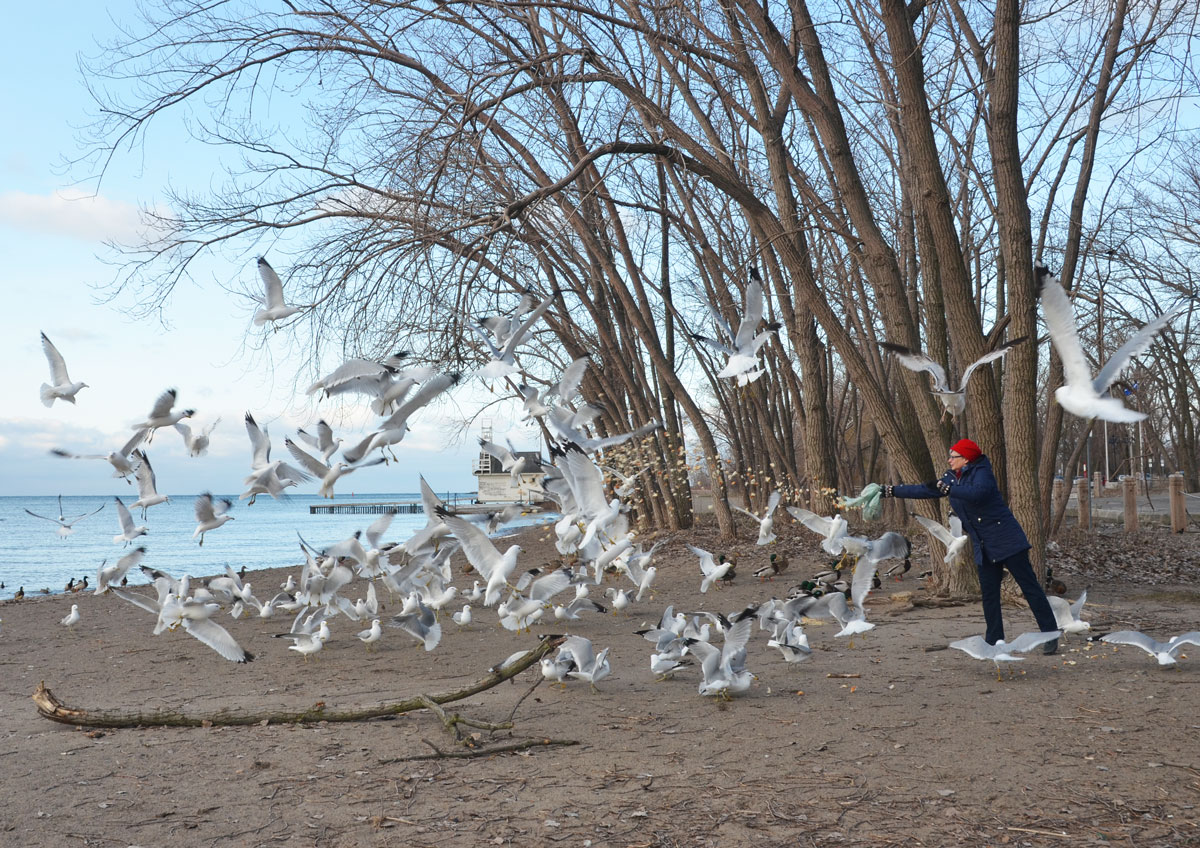
The noises increased when food arrived!

a woman wearing a bright red hat is feeding the seagulls, ducks and other birds at Cherry Beach. sand, water, Lake Ontario. There are lots of seagulls.

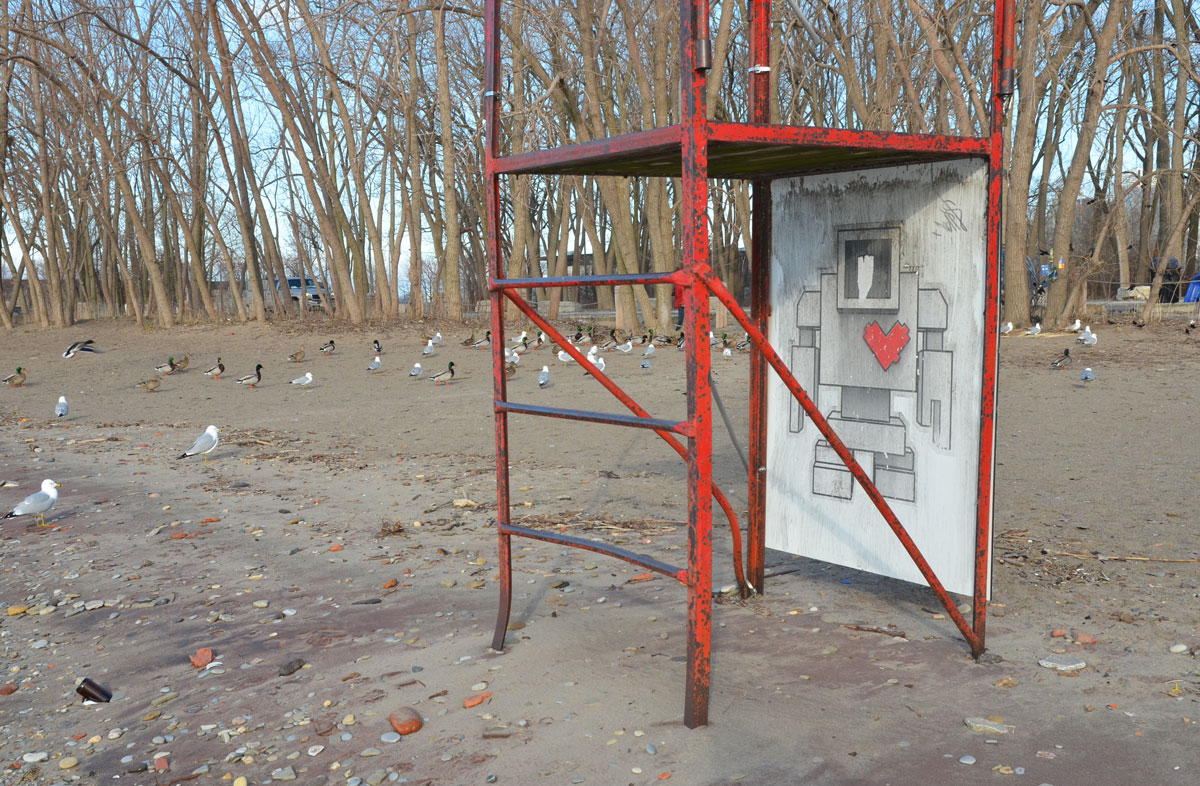
There was even a lovebot hanging out at the beach, standing tall at the lifeguard chair.

an empty red metal frame lifeguard chair on the beach in early spring, no leaves on the trees. Cherry Beach, Lake Ontario. There is a large lovebot wheatpaste on the lifeguard chair.

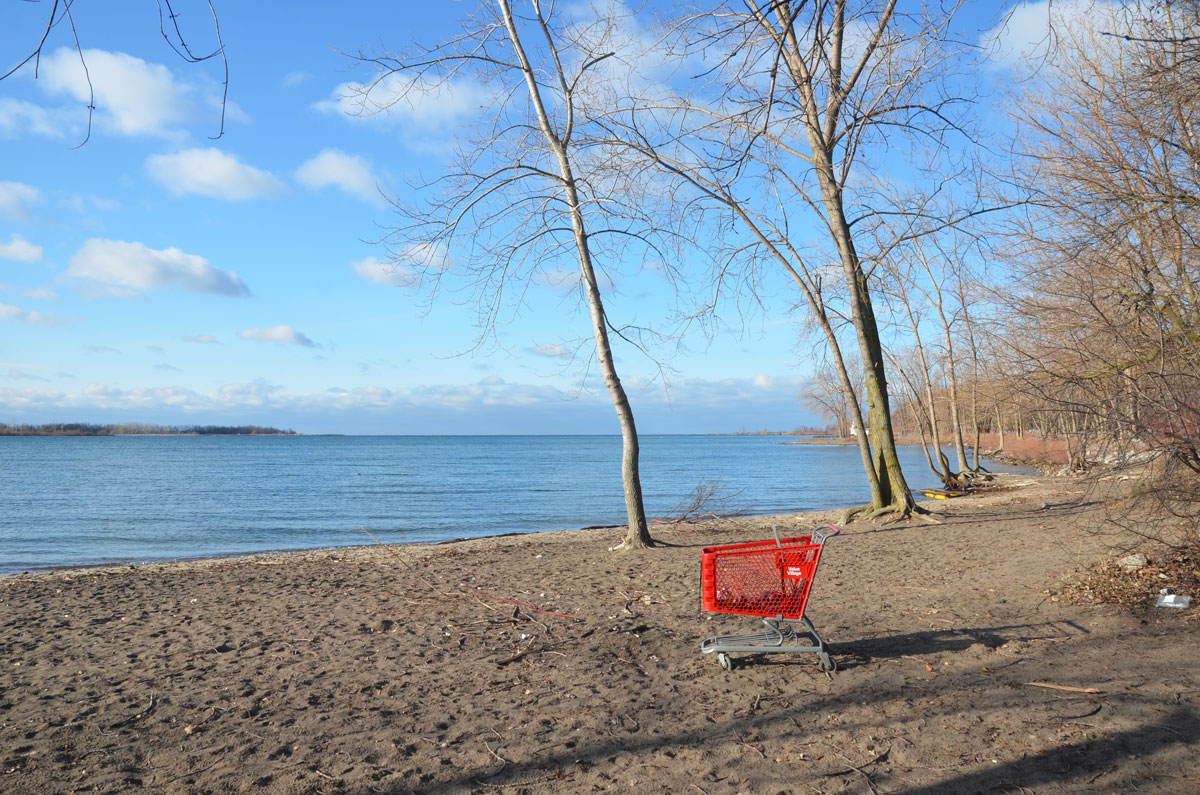
an abandoned red plastic shopping cart with a Value Village label on a beach, long shadows, a few trees, Cherry Beach, Lake Ontario. There are some empty cans in the cart

A spindly leafless tree with knotted gnarly roots above the ground, on the beach beside Lake Ontario. small waves catching the sunlight, morning sun, small rocks and pebbles on the beach

three yellow tires attached to lumber have washed up on the shore and gotten caught in the roots of a shoreline tree, Cherry Beach, Lake Ontario.

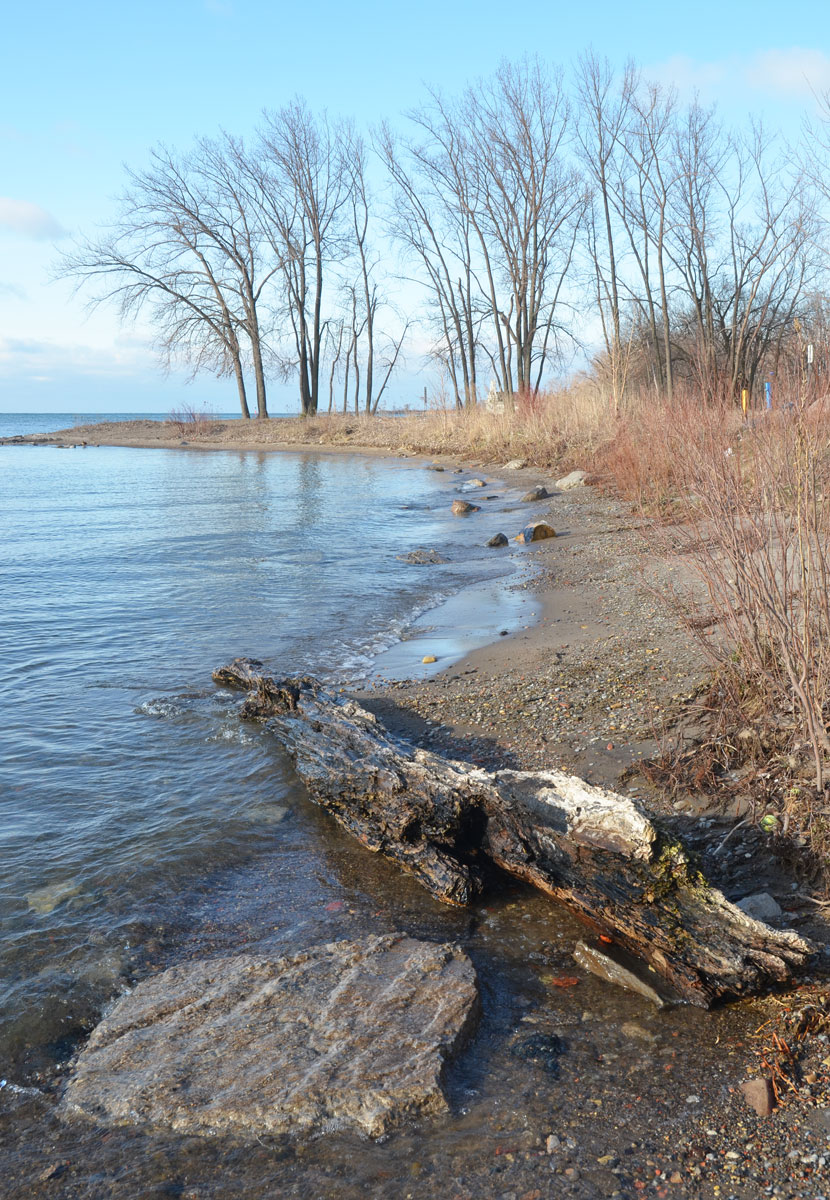
driftwood log, rocks, trees and sand on a beach

shoreline of Lake Ontario, driftwood, sand, trees, shrubs, in spring, no leaves

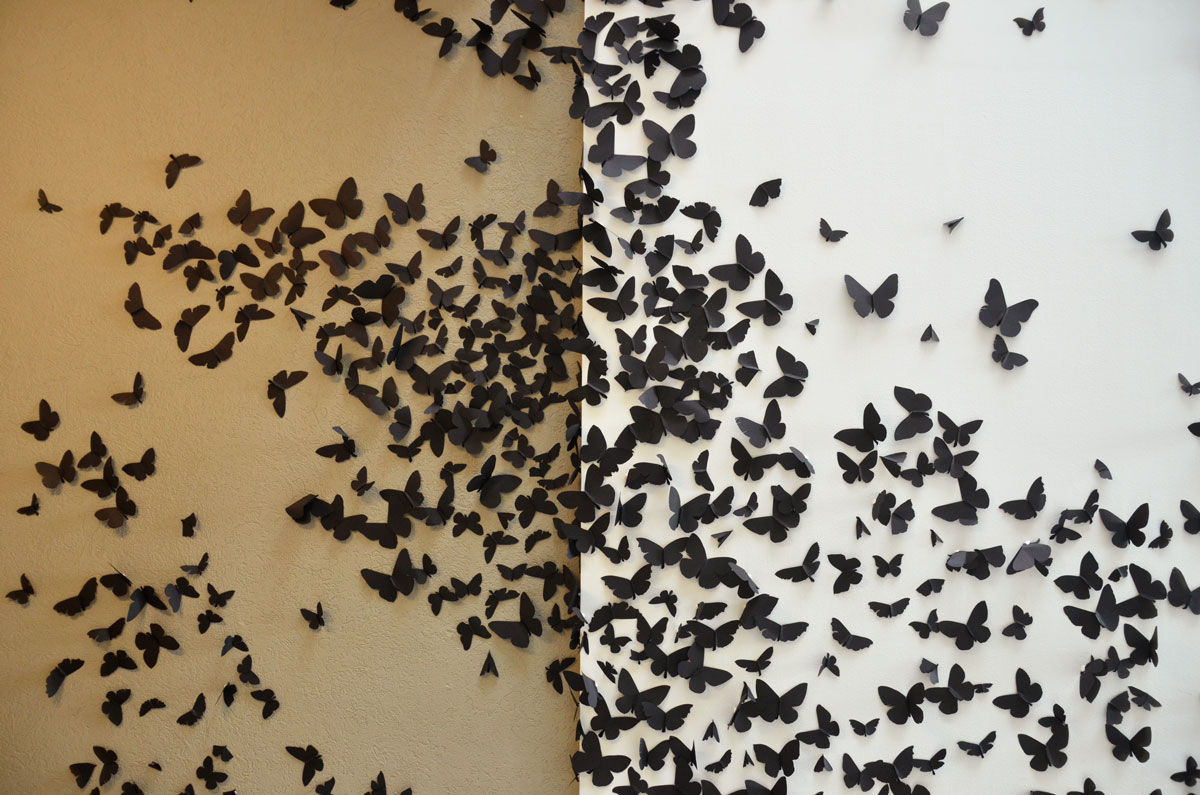
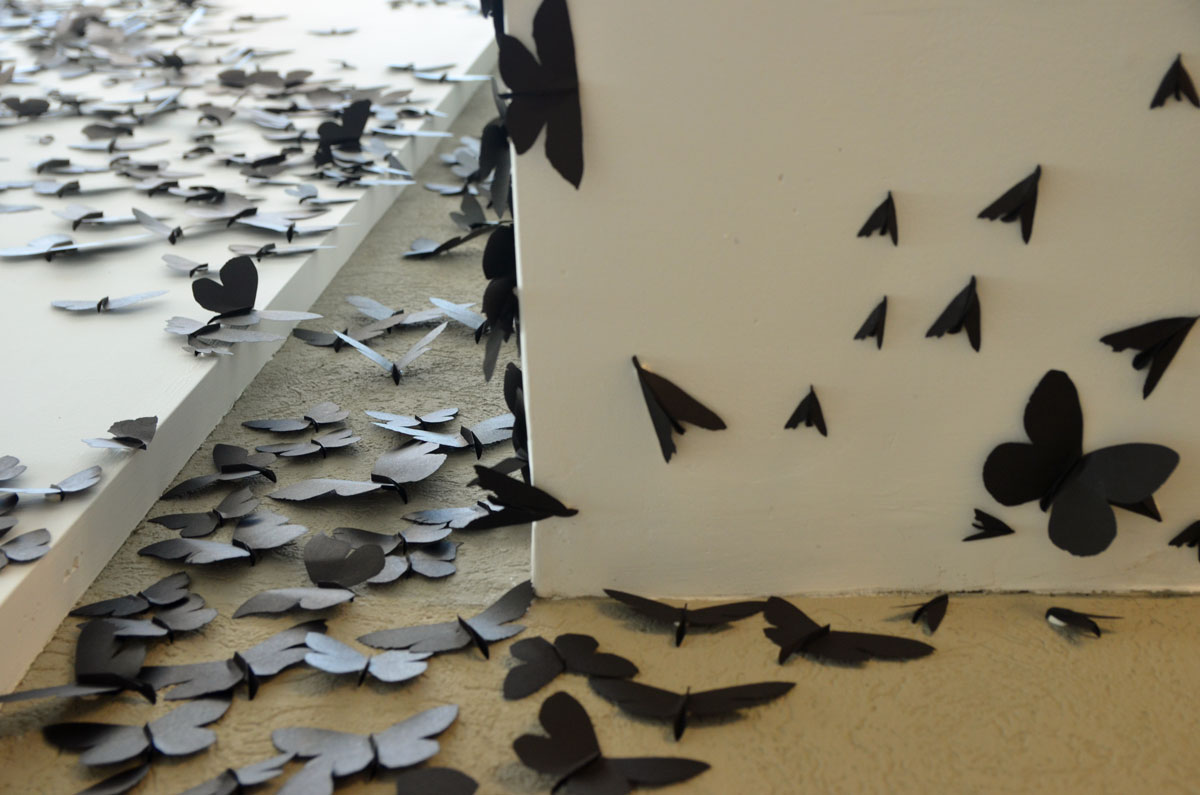
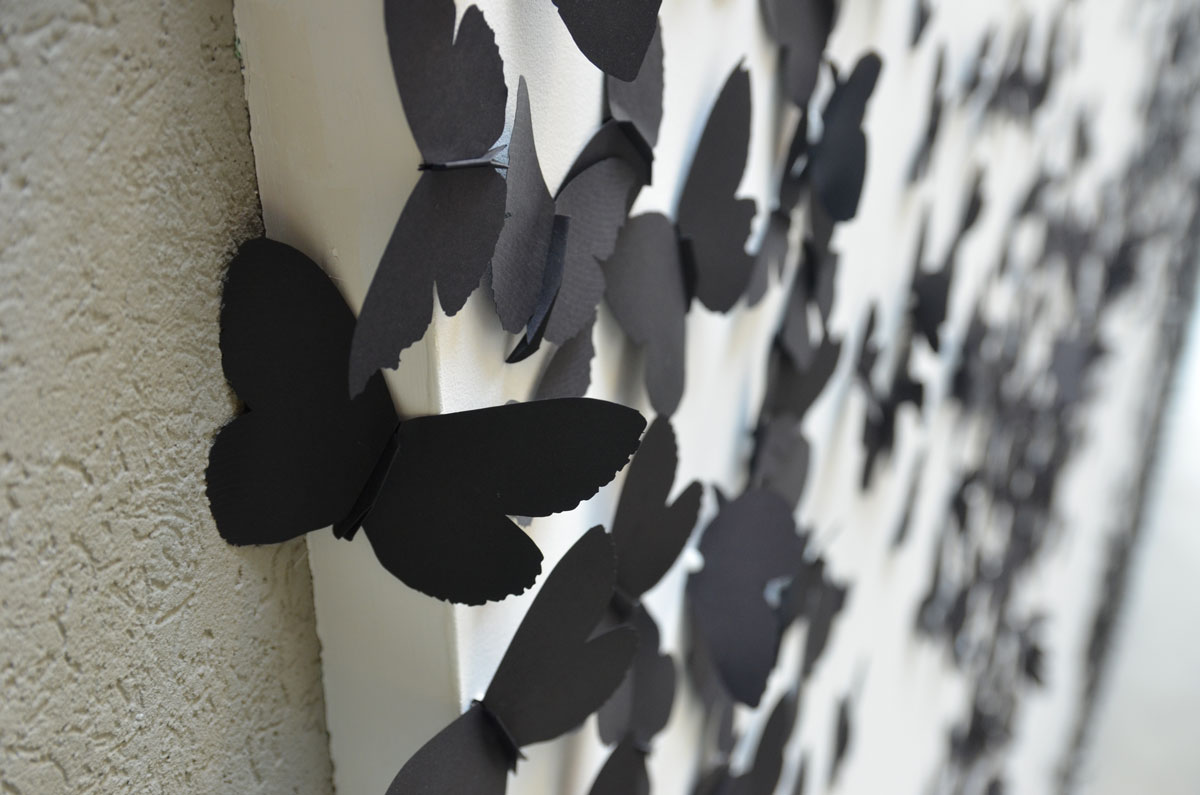
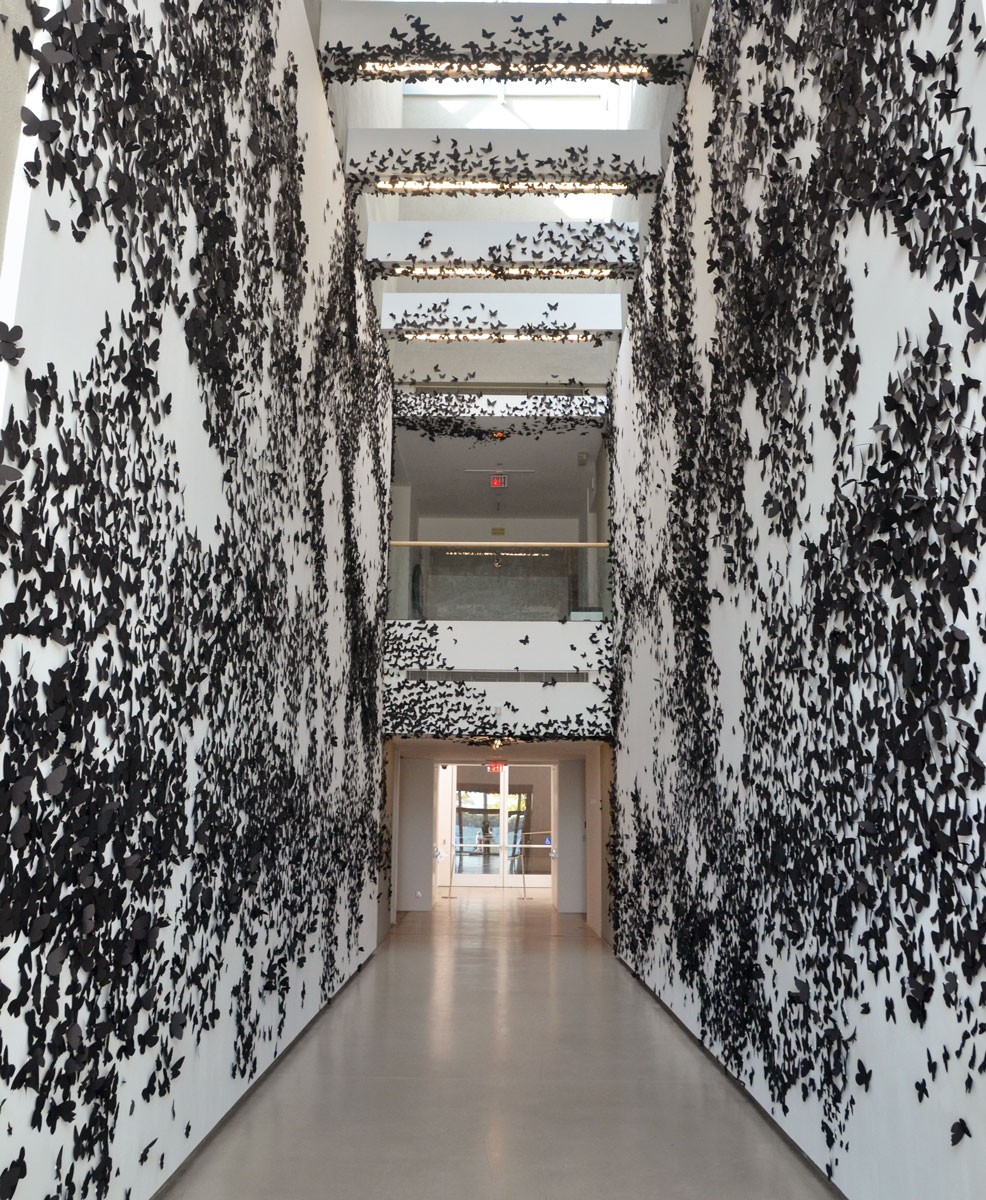
The exhibit is called ‘Black Cloud’ and it consists of thirty thousand black moths, each one individually attached to the walls and ceiling of the clerestory of the The Power Plant Gallery.   Artist Carlos Amorales has reproduced the shapes and sizes of thirty six different species of moth with black paper.  They swarm towards the lights and they congregate in the corners.  It’s a fascinating display both in the overall composition and in the attention to small details.   This installation first appeared at an art gallery in Paris in 2007.

A wall covered with black paper moths, part of an art installation called Black Cloud by Carlos Amorales

A wall covered with black paper moths, part of an art installation called Black Cloud by Carlos Amorales where 30,000 black paper moths are stuck to the walls and ceilings of a hallway - looking up at all the moths on the ceiling

A wall covered with black paper moths, part of an art installation called Black Cloud by Carlos Amorales where 30,000 black paper moths are stuck to the walls and ceilings of a hallway - looking at the corner of the hall, where the wall meets the ceiling

A wall covered with black paper moths, part of an art installation called Black Cloud by Carlos Amorales where 30,000 black paper moths are stuck to the walls and ceilings of a hallway - this picture is a close up of some of the moths

As much as I liked the display, I was glad they weren’t real moths!

A hallway covered with black paper moths, part of an art installation called Black Cloud by Carlos Amorales where 30,000 black paper moths are stuck to the walls and ceilings of a hallway

#PPBlackCloud

 Waterfront Outdoor Photo Exhibit

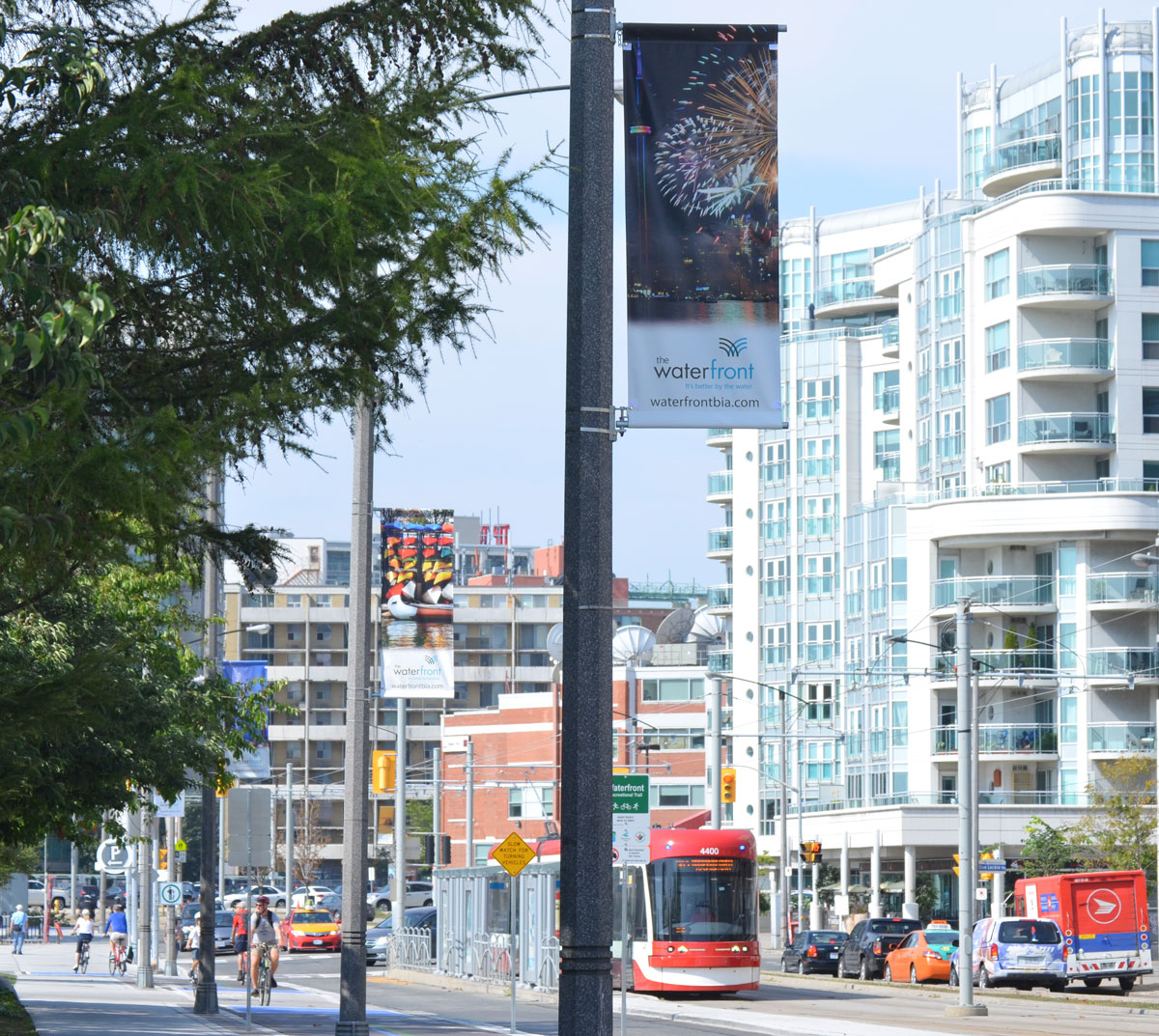
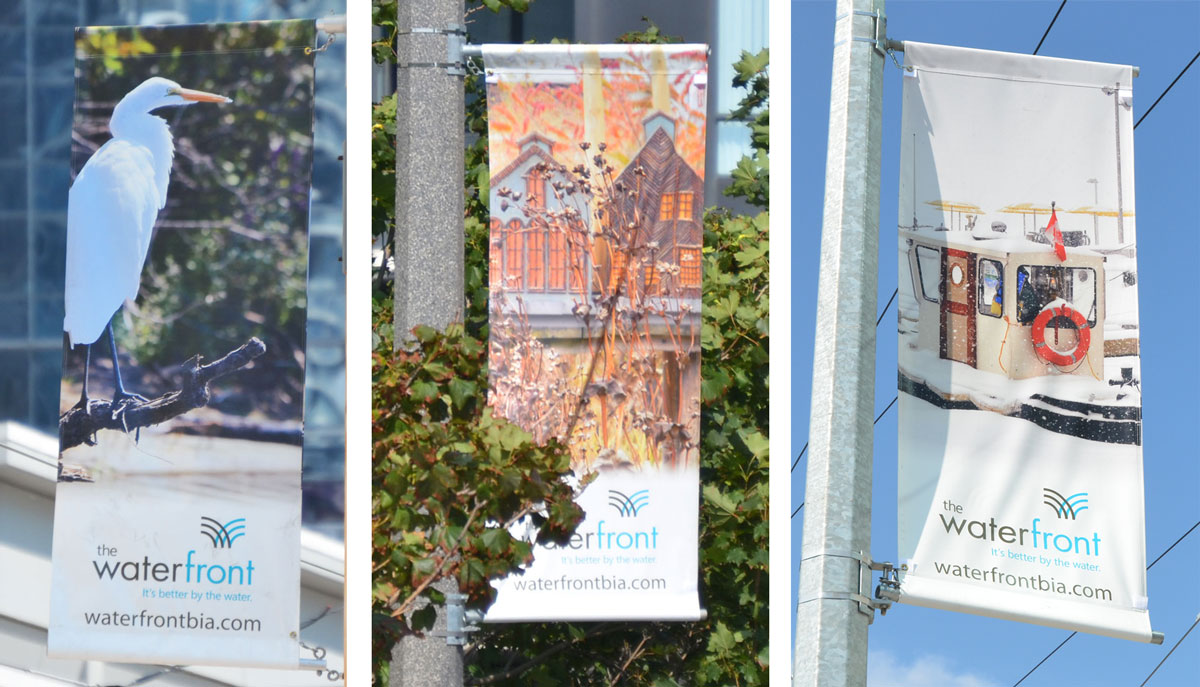
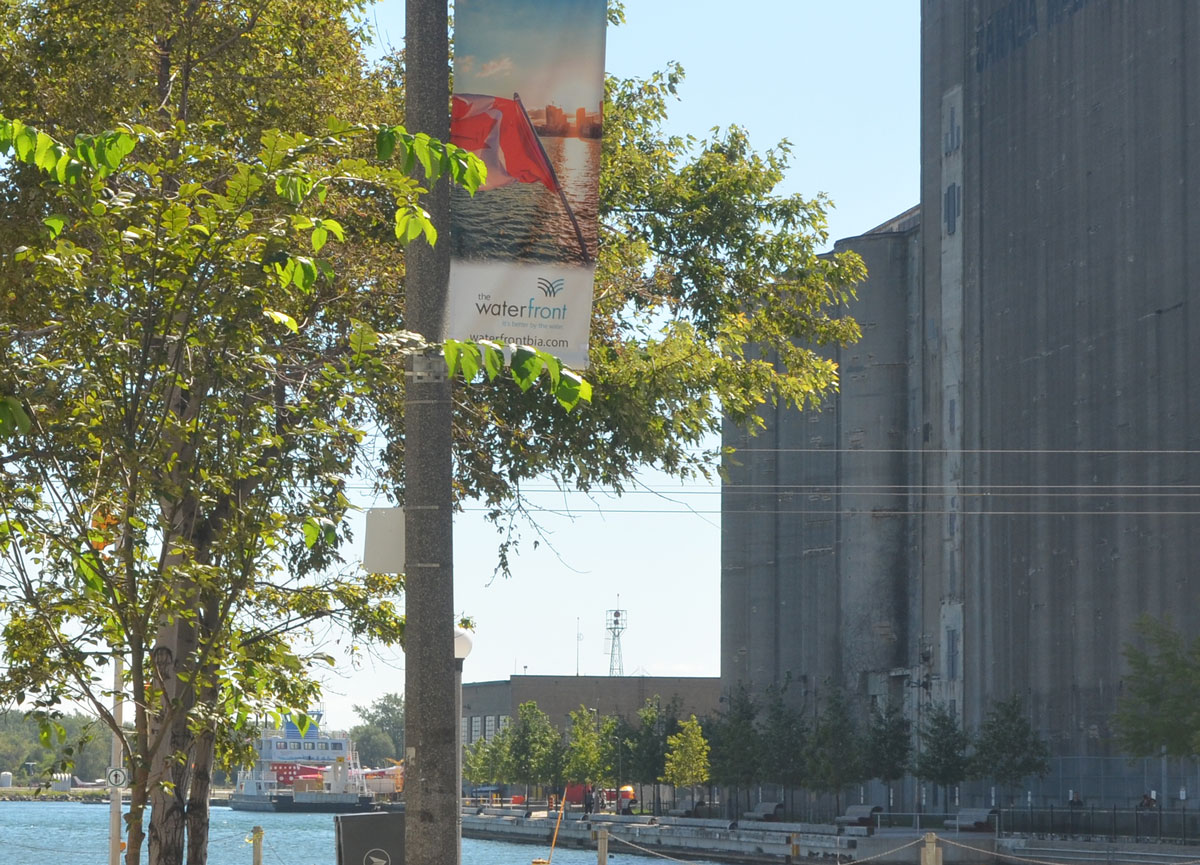
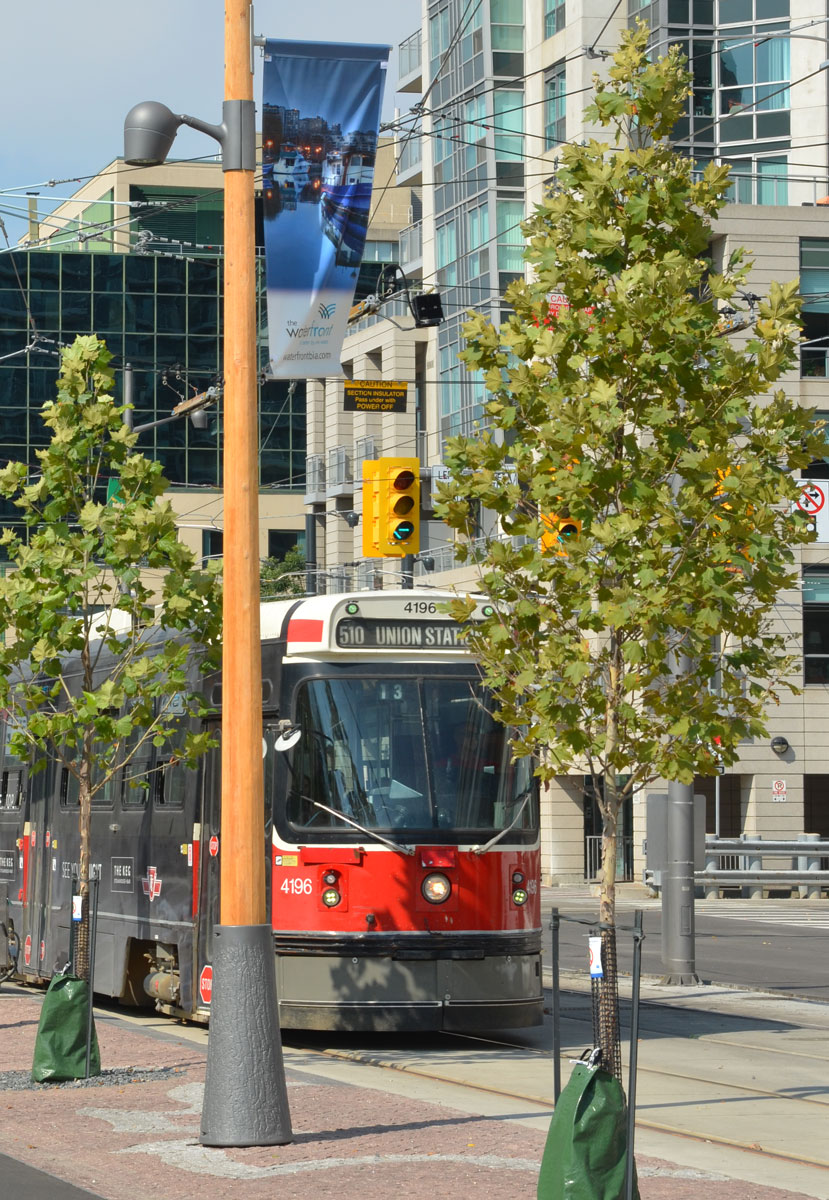
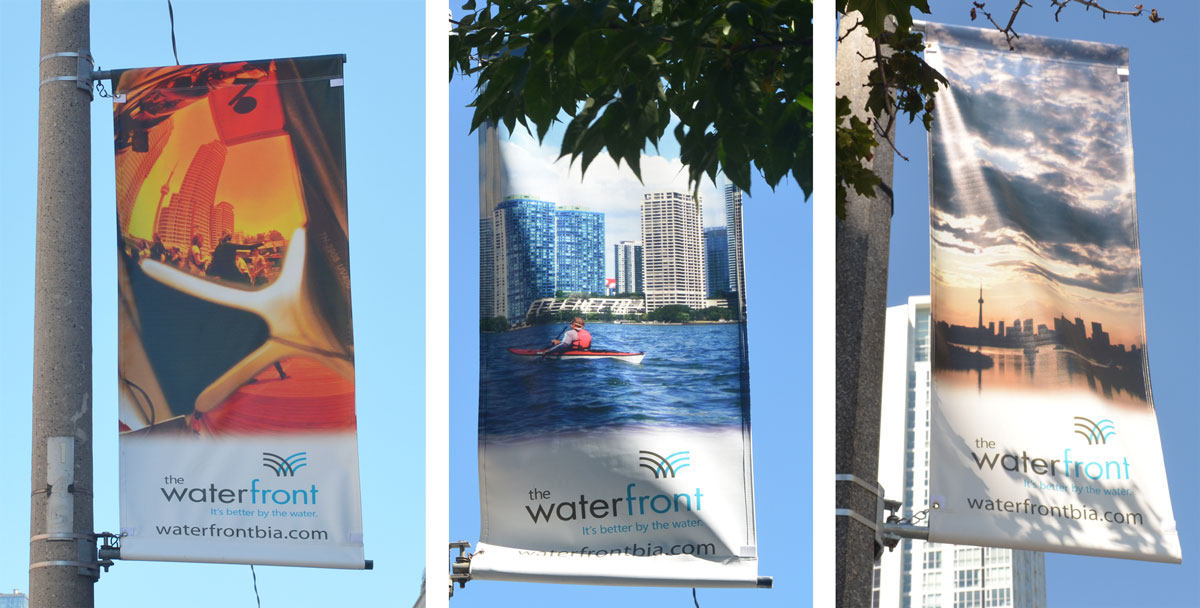
For the past four years, the Waterfront BIA has organized a photography contest.  East year fifty finalists are chosen.  This year they have organized a photo exhibit of a different kind.  One hundred and fourteen images were chosen from the 200 finalists from their previous photo contests.  These images were used (and cropped!) to make vertical banners, 5 ft x 2 ft in size.   The banners are made of vinyl and the same image is on both sides.
below: You can see many of the banners on Queen’s Quay between Yonge and Bathurst.

Looking west on Queens Quay towards Bathurst street. New TTC streetcar is in the photo as well as a number of condos and other buildings on the north side of the street

Picture of round orange life ring on the edge of the waterfront in Toronto.

Three pictures in one. Each of the pictures is of a banner hanging from a pole outside. On the left is a picture of seagull, in the middle is a picture of two houses and on the right is a winter waterfront scene

A pole with a vinyl banner with a colourful picture of boats. Also on the pole is a street sign that says Yo Yo Ma Lane

looking towards the waterfront. A banner with a picture of the Canadian flag is on a post by a tree in the foreground. The old silos for Canada Malting Company are in the background as is a boat moored beside the silos.

A banner with a picture of a seagull on it. In the background of the banner picture is the CN Tower. In the background of this photo, there is also the CN Tower.


below: Sometimes it’s difficult to see the banners amongst all the other things along Queen’s Quay

TTC streetcar on Queens Quay

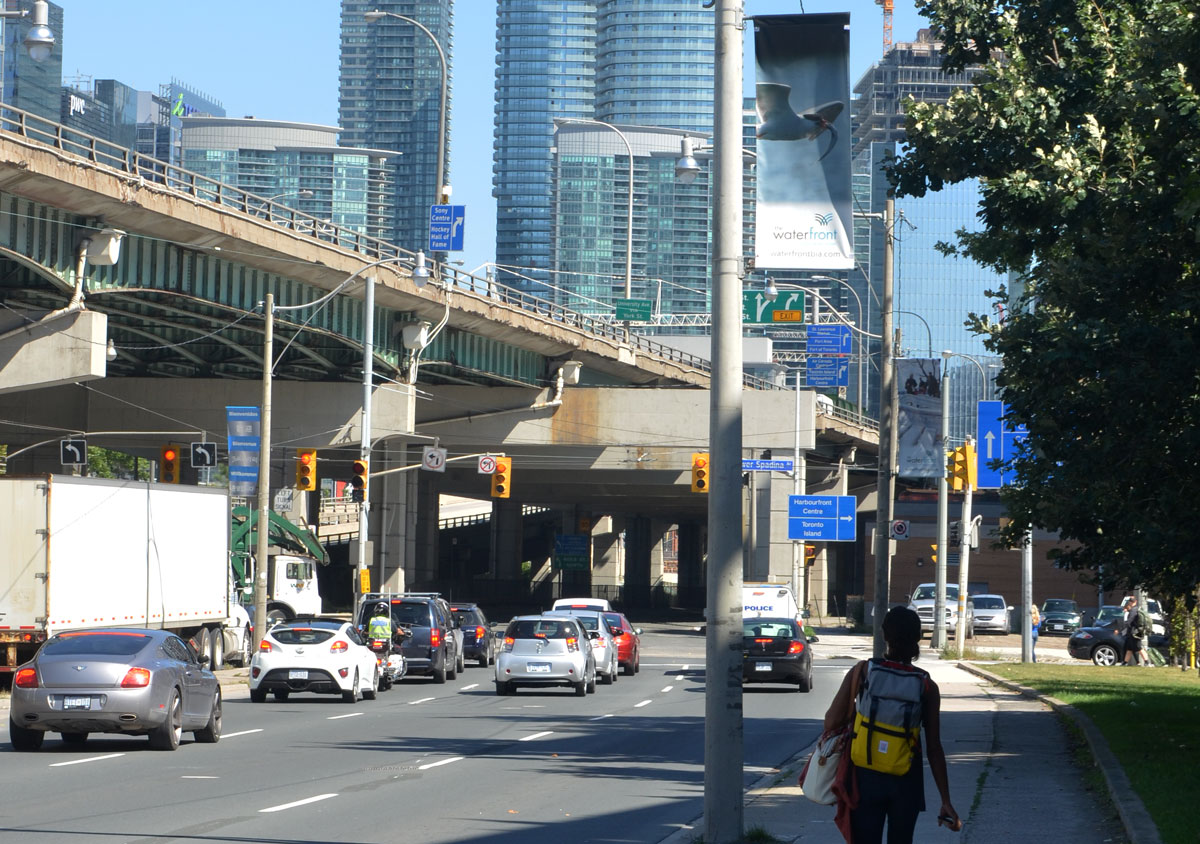
below: There are also some banners on Lakeshore Blvd between Bathurst and Spadina.

A woman is walking on a sidewalk, away from the camera, beside the Lakeshore Blvd in Toronto. There are a few cars on the road. There are skyscrapers in the background. The elevated highway, the Gardiner Expressway, is also in the picture.

A composite of three pictures, each of a vertical banner hanging from a pole outdoors along a street. One banner is a kayaker in the harbour in front of the Toronto skyline. Another is a sunset over Toronto skyline on a cloudy day

we take selfies

Posted: September 1, 2015 in people
Tags: , , , , , , , , ,

We take selfies, lots of selfies.

I watched a family struggle to take a selfie of the four of them that they were all happy with.  I offered to take their picture for them.  Simultaneously, the husband said “no thanks” and the wife handed me the phone and said “We’d love that”.  The husband rolled his eyes a bit and remarked on how useless selfies were but how we seemed to need to take them.   This post is dedicated to him.

 A family dressed in red and white are taking a selfie at a Canada Day celebration at Dundas Square in Toronto

A group of four young women are taking a selfie just before running in the colour me rad race

A woman in a head scarf is taking a selfie while she stands with some other people by a firetruck.

A woman in a pink T-shirt is holding a frame that people are supposed to stand in when they take a selfie. It gives the name of the festival, Franco, and the instagram hasthtag. Except that she is holding it upside down

blog_selfie_kultura

A family of four is in the intersection of Yonge and Bloor on the Sunday of Open Streets when the street was closed to traffic. The kids are on scooters.

An Asian man (India heritage) is taking a picture of his family with a selfie stick as they walk in a parade down Yonge Street. His wife is holding a child. Other are walking behind them and holding a banner.

Two women are standing together as they take a selfie at Nathan Phillips Square during the pillow fight that was held there. One woman is holding a phone, the other woman is holding a pillow.

A woman with a brightly coloured umbrella is taking a selfie with three people at the Pride Parade in Toronto. The people are dressed from head to tow in white as part of an HIV awareness campaign, HIV is anonymous (and so are the people totally covered in white)

A couple is taking a selfie at a protest march. SOmeone is holding a sign that says Green Jobs Now behind them.

A man is sitting on a white chair under a pink umbrella on Sugar Beach. Behind him are two people standing on a rock taking a selfie together

A couple dressed in red and white are taking a selfie beside each other in front of the 3D Toronto sign at Nathan Phillips square. Two other people are to the right, also taking pictures. They could be taking a selfie or their camera could be pointed away from them.

A man is taking a selfie as another man wraps his head in a light blue turban.

A group of three people taking a selfie with a selfie stick. Mom is looking as sad as possible, daughter is holding a little dog and sticking out her tongue, dad is just staring at the phone.

Two young women take a selfie with a phone that has a minion cover on it. They are at buskerfest in Toronto and they are posing with a character that is covered in pieces of shiny reflective material

Two women taking a selfie at a yogathon, they are standing. Other people around them are sitting on mats, waiting for the event to begin.

blog_selfie_yogathon_thru_legs

A young man poses as he sits on the barrier beside Lake Ontario

People taking selfies - a man with a selfie stick at a car show on the Danforth. He is standing in front of a row of cars with their front hoods up.

People taking selfies - two young women are on top of The Archer sculpture in Nathan Phillips Square. Downtown skyscrapers are in the background

What do we do with all these selfies?