Sharing Dance
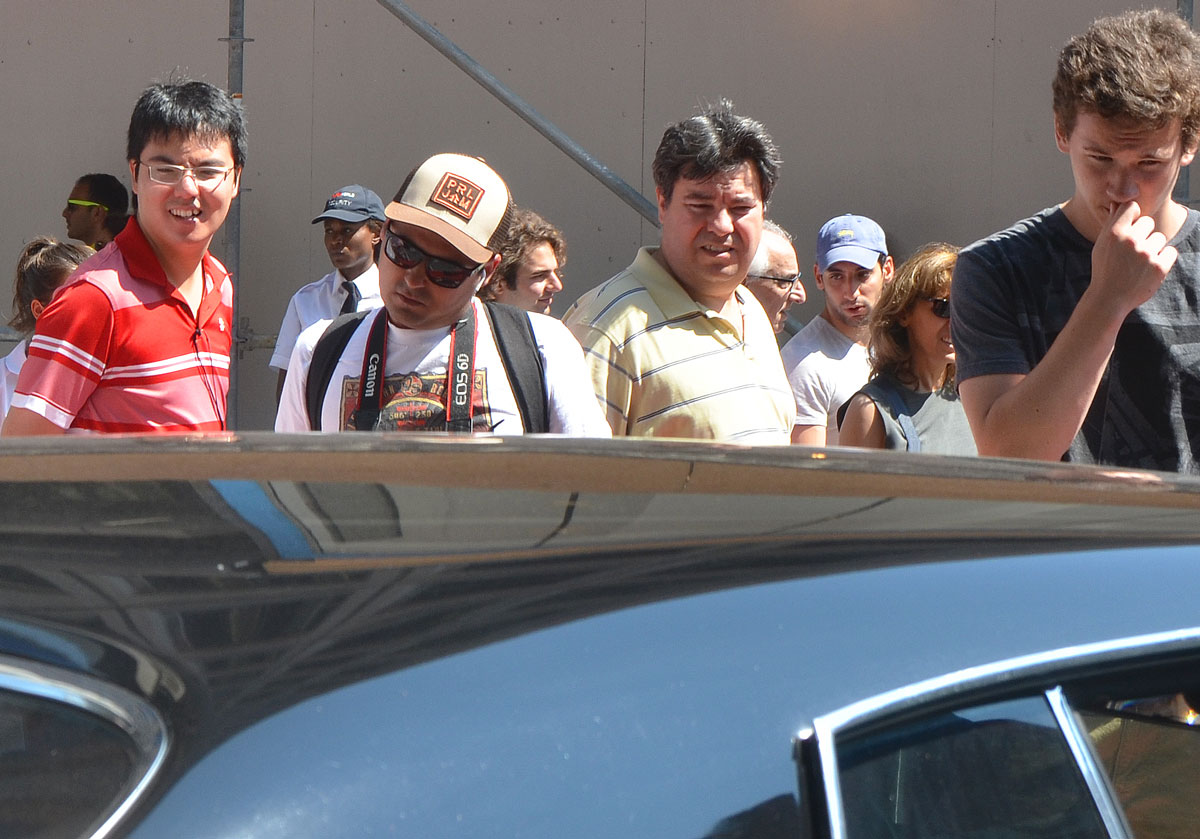
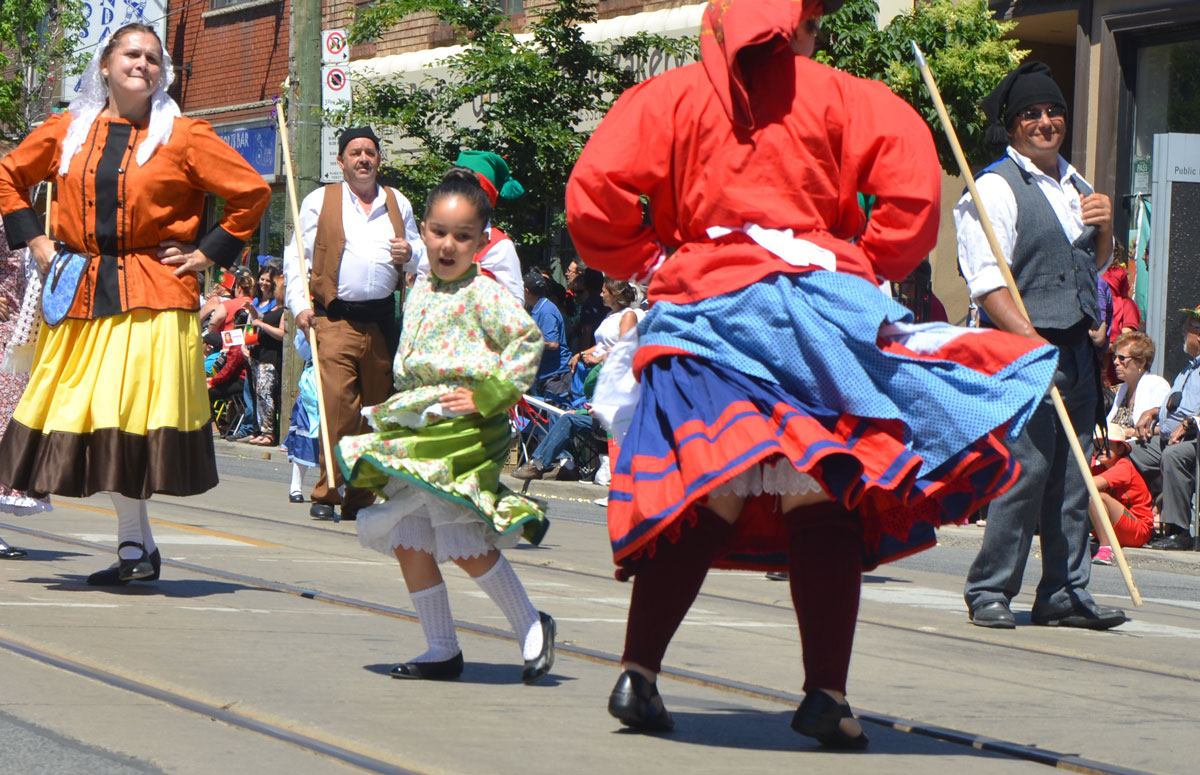
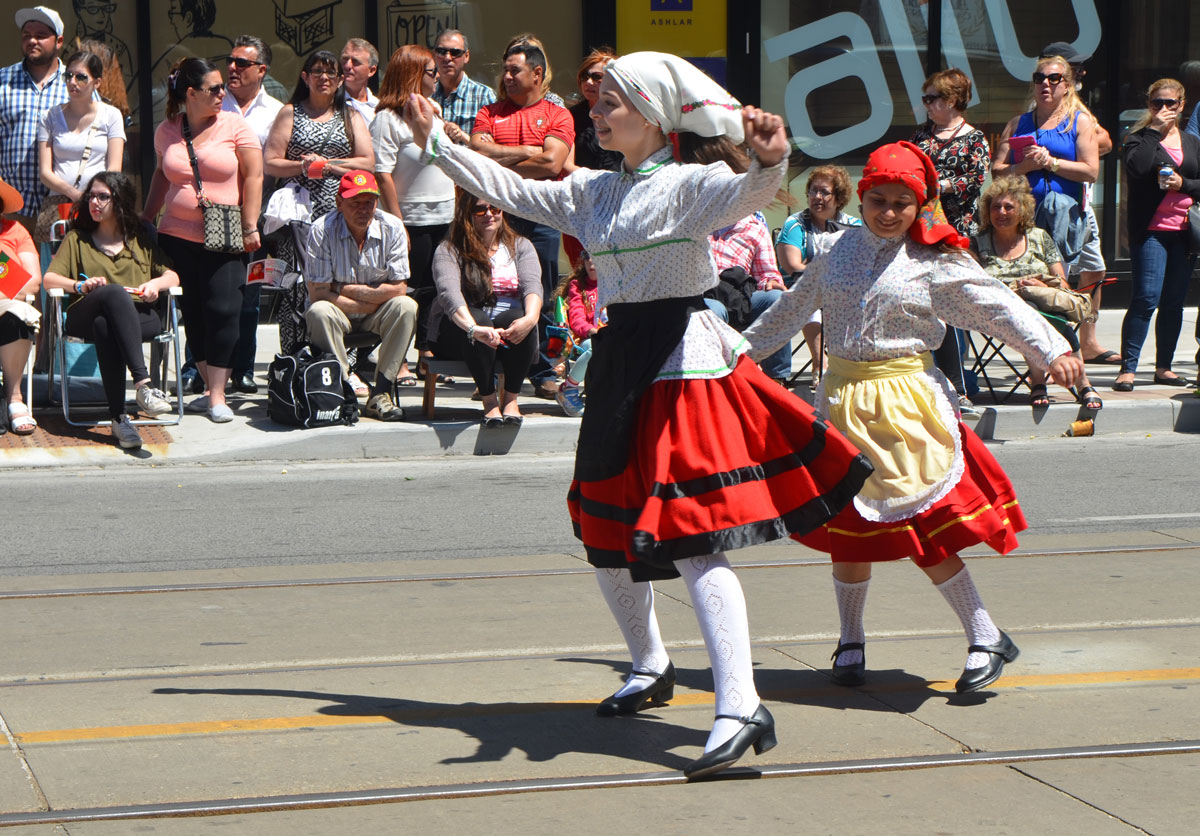
Organized by the National Ballet School,
the 3rd annual Sharing Dance event was held at Yonge Dundas Square.
A chance to laugh a little and learn a few moves.
#sharingdance
This is another post about an exhibit from the CONTACT Photography Festival. I know that it’s now June and CONTACT was in May, but I wanted to post these photos. I actually took them early in May as you can probably tell by how many clothes the people in the pictures are wearing. They’re certainly not dressed for the warmer weather we’ve been having lately. I have had trouble deciding what to write in this post.
There is a parking lot at the NE corner of Front and Spadina with some billboards in it. Maybe you saw them as you drove or walked past but maybe you passed by and missed them. There are so many things on the street vying for our attention and a billboard is just another piece of street ‘furniture’.
For the month of May, an installation titled ‘What it Means to be Beautiful’ by Mickalene Thomas occupied a number of billboard spaces at the above mentioned corner. All the images are portraits of women and are “shown within the context of street advertising, where women are constantly bombarded with narrow notions of female beauty.” A sample of the billboards:
Part of the reason that I hesitated to write this post was the fact that the iphone 6 ad campaign was on at the same time. It was a campaign that used photos taken with the phone and the ads were very visual and used very few words. In my opinion, they are more eye catching and visually appealing than Thomas’s work. I found a few of them to show here (below). I know that there were many more but unless I was consciously looking for ads, I didn’t notice them as billboards are one of the things that I block out as I walk. That led to a few thoughts about what catches a viewer’s attention on the street – Faces? Colours? Contrast?
There is more going on in Thomas’s photos and collages than just visual appeal but I still question the validity of asking the viewer to look at them in the context of street advertising. Is it fair to compare her images to ads produced by, and in aid of, a large corporation? Would it have been better to exhibit her work in different form or a different place? I don’t have the answers for those questions. Do you?
And now I will go back to ignoring billboards as I walk.
A sweet post.
This is what 37,000 tons of raw sugar looks like.
The Raw Sugar Shed at Redpath Sugar is 27m high, 155m long, and 43 m wide. It’s a big space!
Raw sugar is brought to the Redpath Sugar facility by ship. When it is off-loaded from the ship it is brought into the warehouse by conveyor belts that run down the middle of the ceiling.
below: There isn’t a ship in the harbour at the moment so the green crane waits.
below: You can see a holes in the foreground of the next photo. This is one of many holes in the floor of the Raw Sugar Shed. The raw sugar is pushed through these holes to another series of conveyor belts below.
below: Photo taken from the entrance to the Raw Sugar Shed, taken at Doors Open. Raw sugar is taken by conveyor belt (upper far right) to the processing plant next door.
below: A lingering remnant, railway crossing signs from when a railway ran here.
A guard sits by the entrance to Redpath Sugar.
The railway serviced the industries that were built along the Toronto waterfront, The LBCO, Loblaws, the ‘Toronto Star’ newspaper, Molson Breweries, Dominion Malting and others, relied on the railways. Completed in 1959, the Redpath refinery was the last industry built along the waterfront. You can just see the railway tracks in the photo below, running between Queens Quay East and the Redpath building where they dead end. Since the tracks only dead ended there in 1985, that helps date the picture. Rail service ended in 2008.

photo credit: Originally from City of Toronto Archives but found online at Old Time Trains.
Today, Redpath Sugar is one of the last industries operating on the waterfront; The area around it is rapidly being redeveloped, including the space right next door that is aptly called Sugar Beach.
Hi!
I haven’t blogged much this week because I have been busy redesigning my website, As I Walk Toronto. It is now online. I still have photos to add to it, but I think this version of the site provides a better foundation on which to grow.
All feedback is welcome! If you find any links that don’t work, please let me know.
Thanks
‘Cutlines’, an exhibit of old photographs from the Globe & Mail,
part of the CONTACT Photography Festival
below: A small sample of the 175 vintage black and white photos from the vast collection held by the Globe and Mail newspaper on display.
below: The exhibit is being held at the Press Hall on Wellington Street (near Spadina). This old building is slated for demolition in the near future as the Globe and Mail is in the midst of moving to a new home. Prints were in cabinets in the center of the room while other images were projected high on the walls.
The Globe & Mail has amassed a collection of about 750,000 photographs. As they transition from print to digital images, they are ‘cleaning house’ with respect to their photo archives. About 100,000 of the prints are going to be digitized and a portion of those donated to the new Canadian Photography Institute at the National Gallery of Canada in Ottawa.
below: Some of the pictures were covered with red, with what is known as a rubylith mask. When the images were printed, the portions covered in red remained as they were while the rest of the picture could be changed to suit the needs of the story of the day.
below: The woman with the two trophies, bottom left, is Marilyn Bell who swam across Lake Ontario. I know that the man beside her is from a story about a cowboy championship of some sort in Calgary and my apologies for not remembering more of the details.
On view at 425 Wellington St. West until 26 June 2016
#CONTACT16
Canstruction is a non-profit competition where teams create sculptures of canned and packaged food that is then donated to food banks. The event is held in many cities around the world including Toronto. Since its inception in 1992, Canstruction has contributed more than 17.5 million pounds of food to food programs globally.
Planning for the 17th annual Toronto Canstruction began in January. The “build night” where the teams come together to build the sculptures was held on the 16th of May at the Toronto Dominion Centre. The sculptures are now in the many lobbies of the TD Centre buildings and they will remain on view until the 21st of May. At that time they will be “decanstructed”.
A sample of this year’s entries:
below: A winning emoji, ‘EmojiCAN’ built by GM BluePlan Engineering Ltd. Emojis, the little symbols popularized by social media, understood by everyone no matter what language they speak.
below: ‘Let’s End Hunger by All Measures’ by Walsh Canada. “Food Banks Canada estimates that in 2015 852,137 Canadians turned to food banks each month for food. The need for food banks spiked in 2009 and has hovered at record levels ever since.”
below: A lovebot made of cans by Cecconi Simone Ltd.
below: A close up of part of ‘Hungerbling’ by Hatch. It features Drake and comes with lyrics.
You used to call me on my cell phone
Late night when you need my food
Call me on my cell phone
Late night when you need my food
And I know when that hunger bling
That can only mean one thing
I know when that hunger bling
That can only mean one thing”
below: ‘CANadian MAyPoLE’ by Candevcon Limited. “We often dance around the issue of hunger, but this time the children have the formula to fight it.”
below: Close up of ‘Perspectives on Hunger and Heroes’ by ARUP. A tribute to the late David Bowie since “hunger has many faces”.
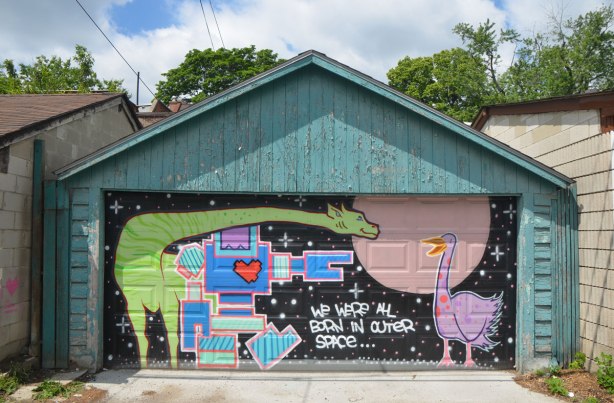
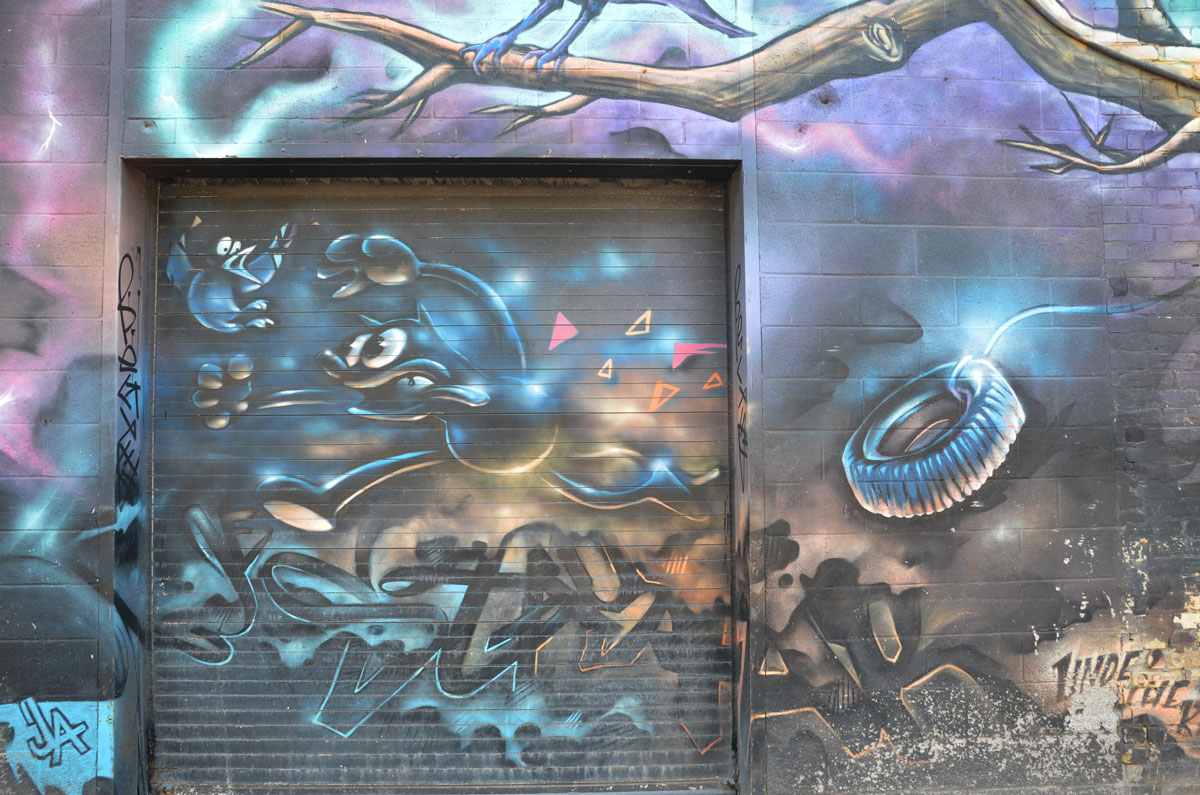
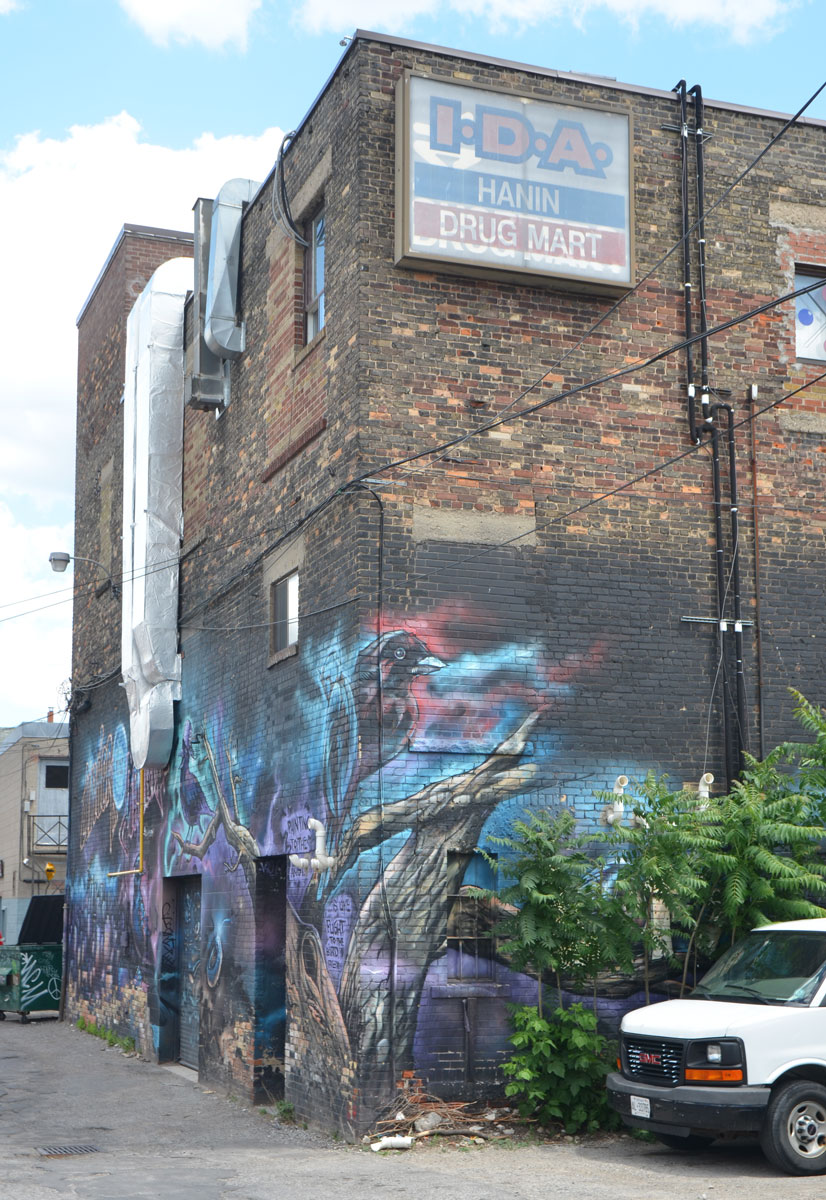
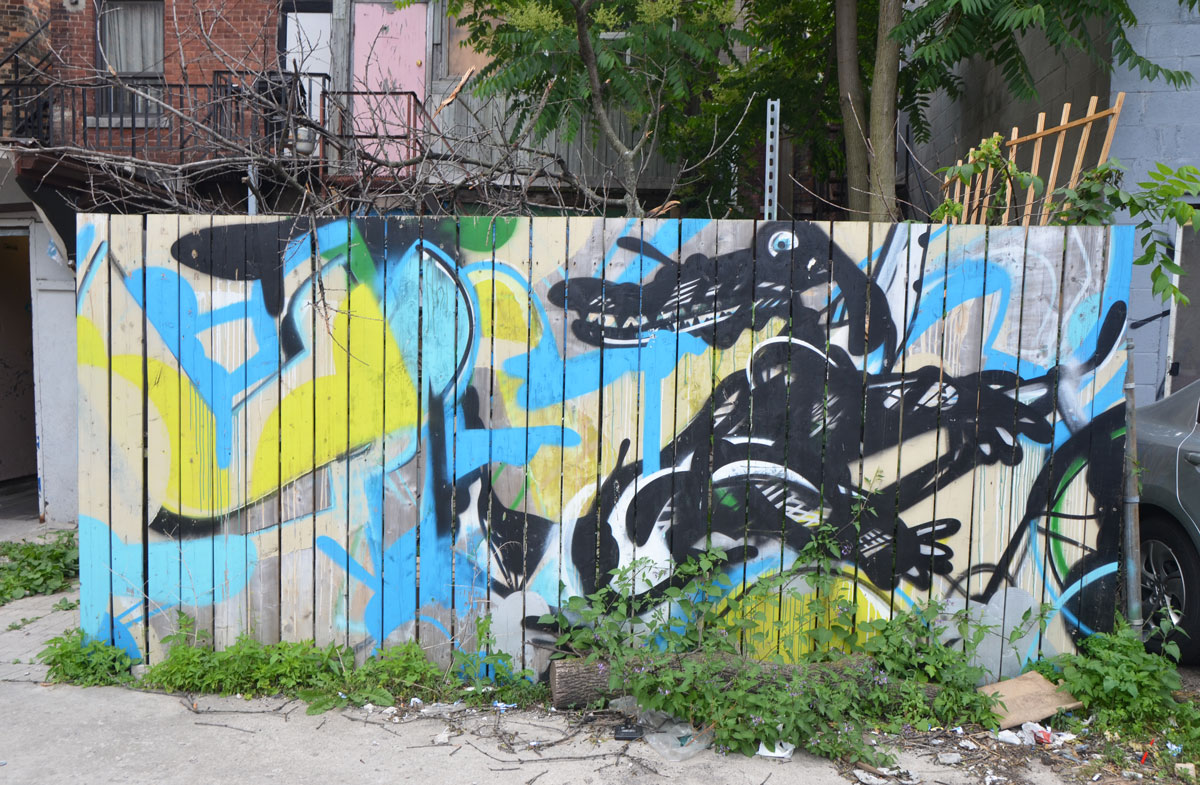
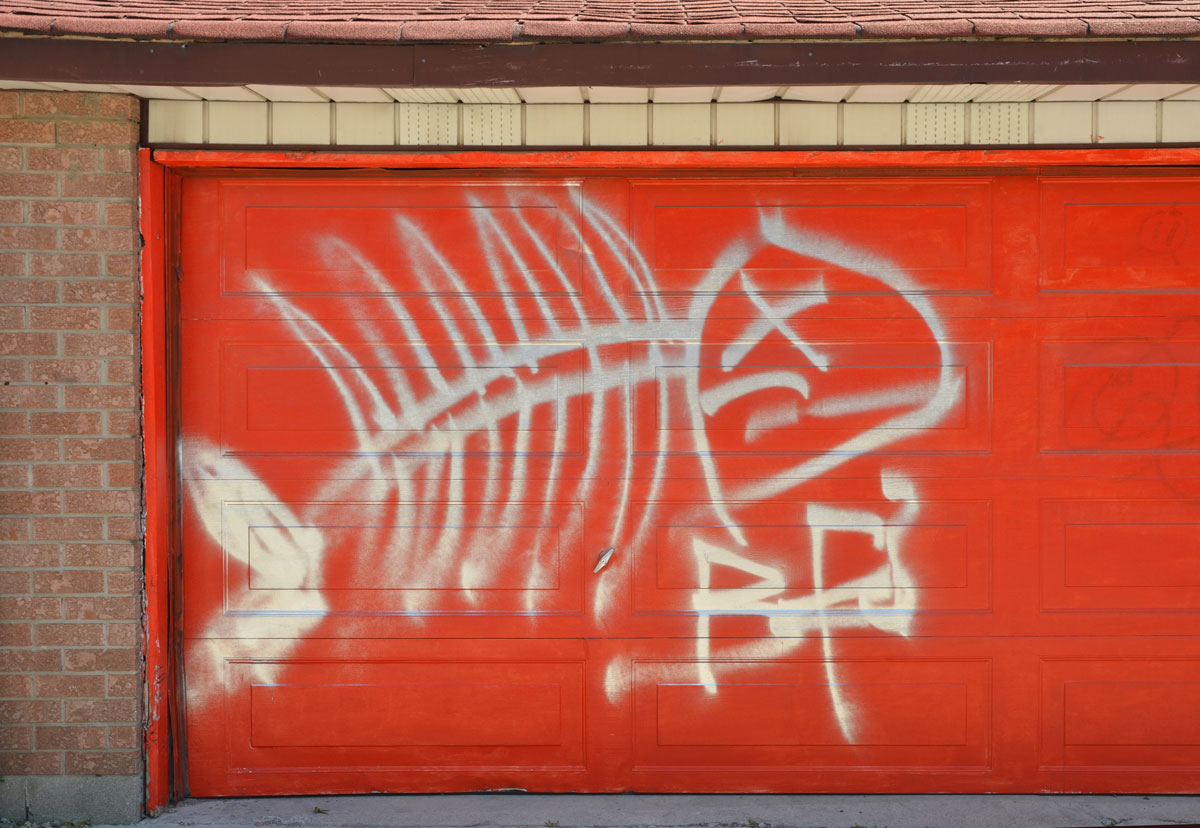
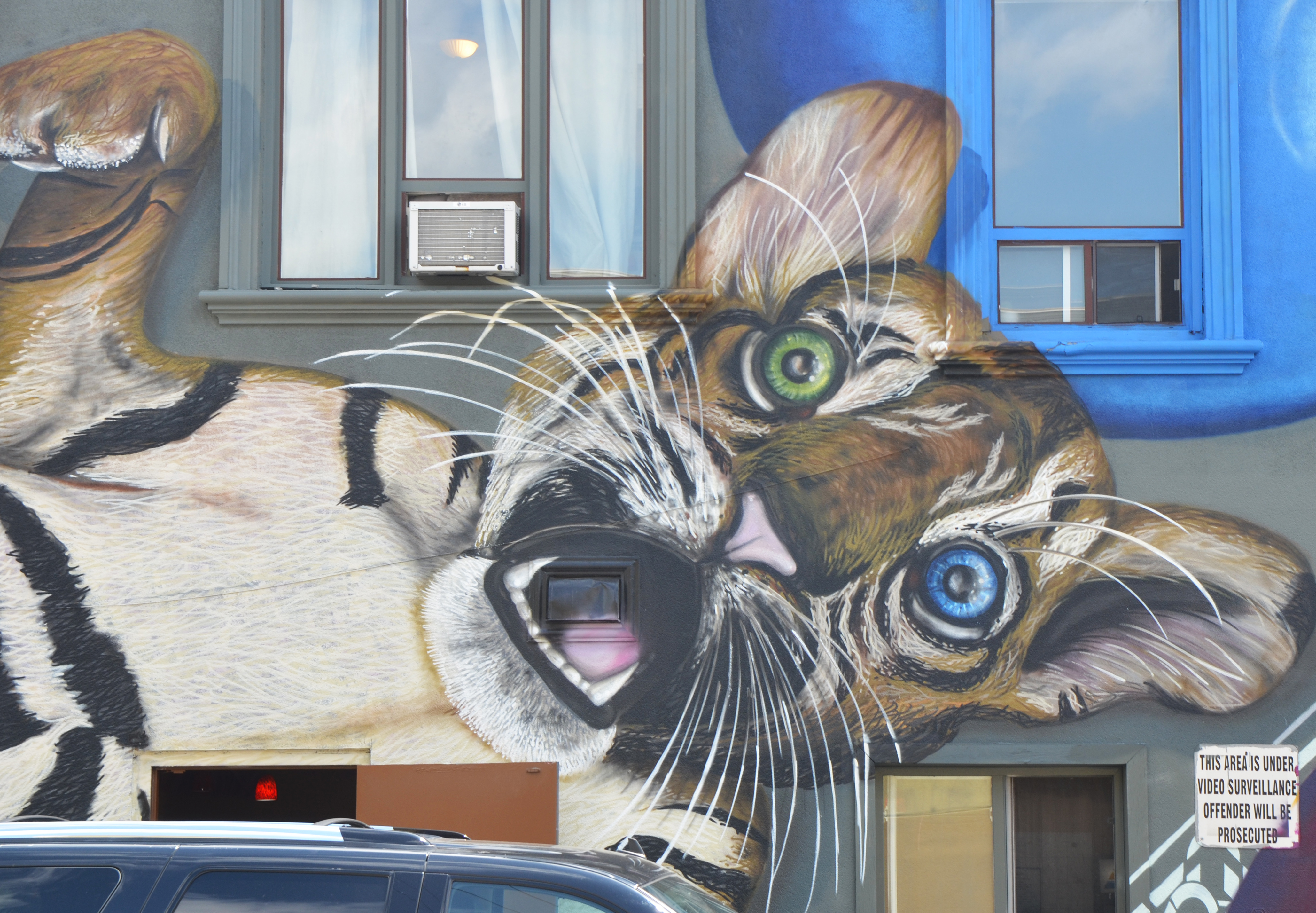
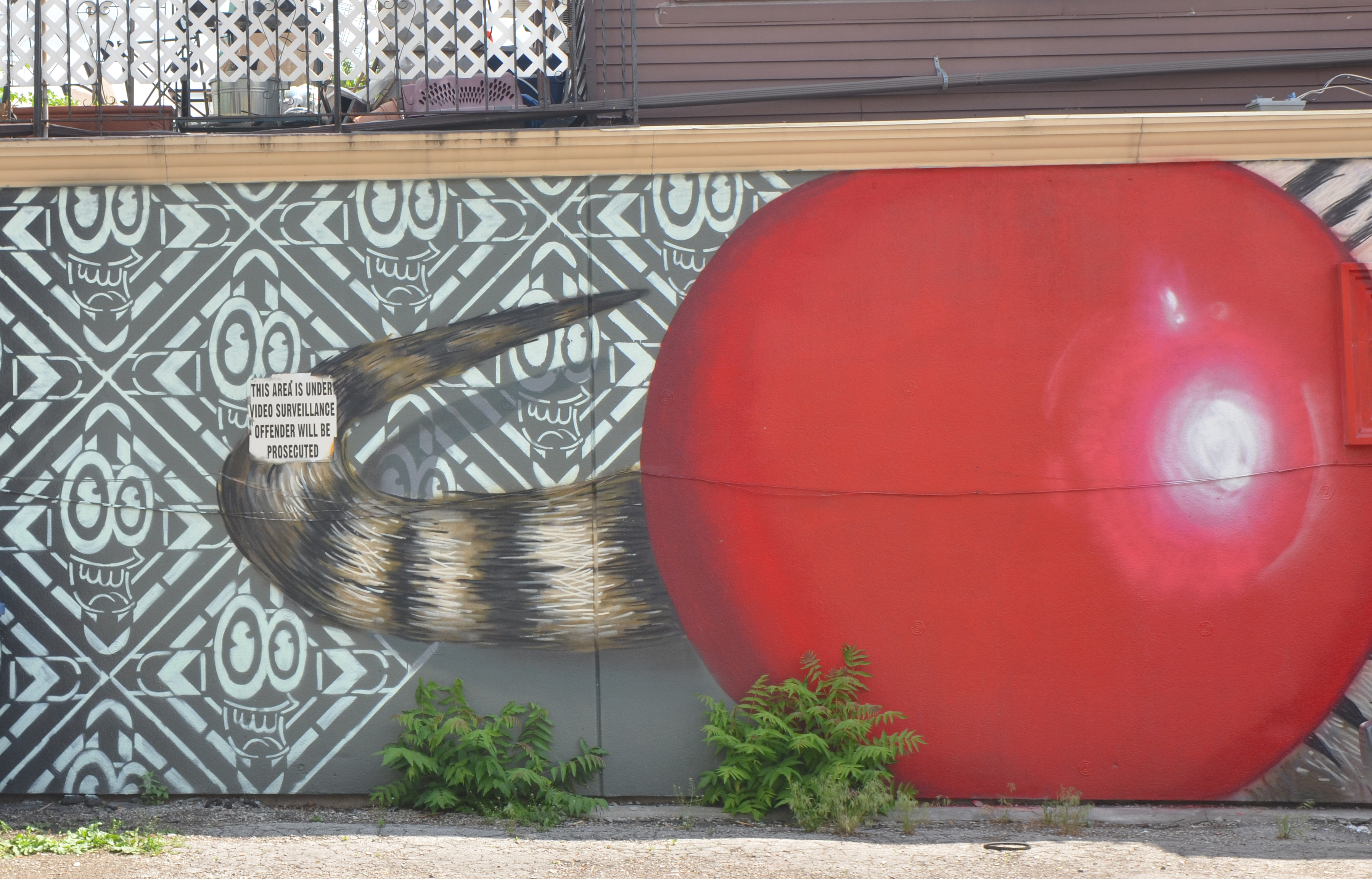
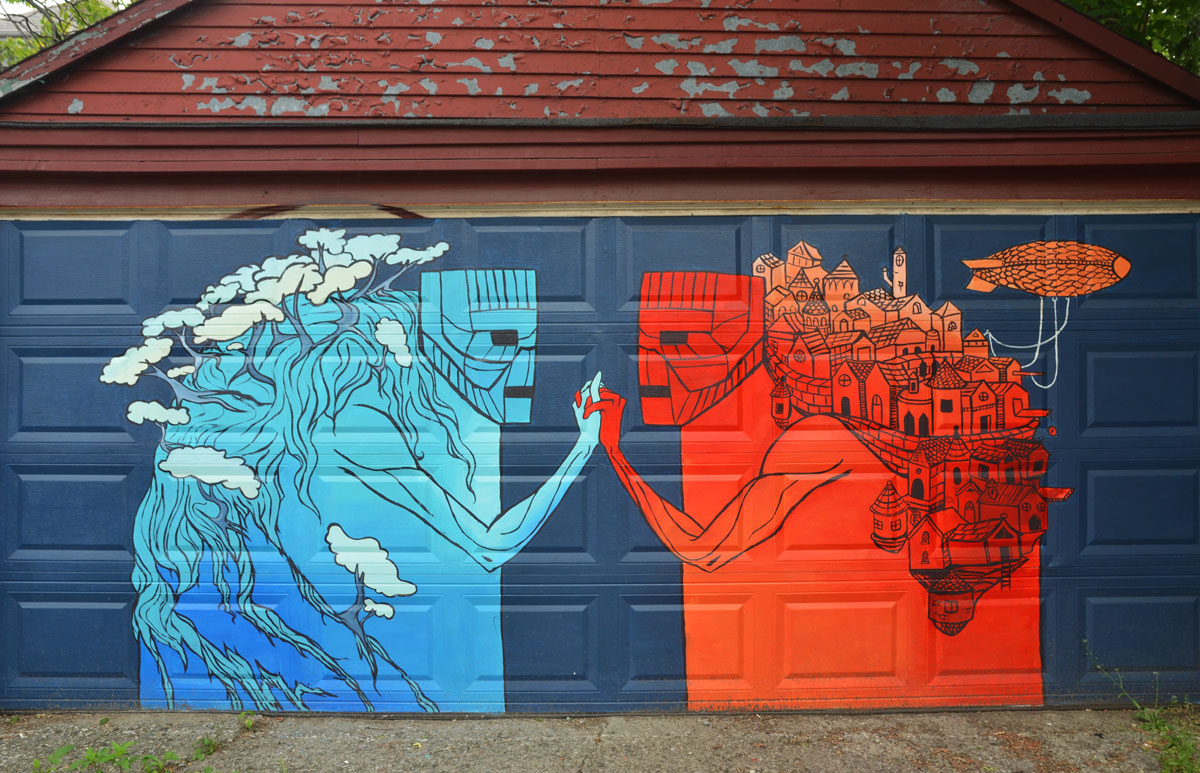
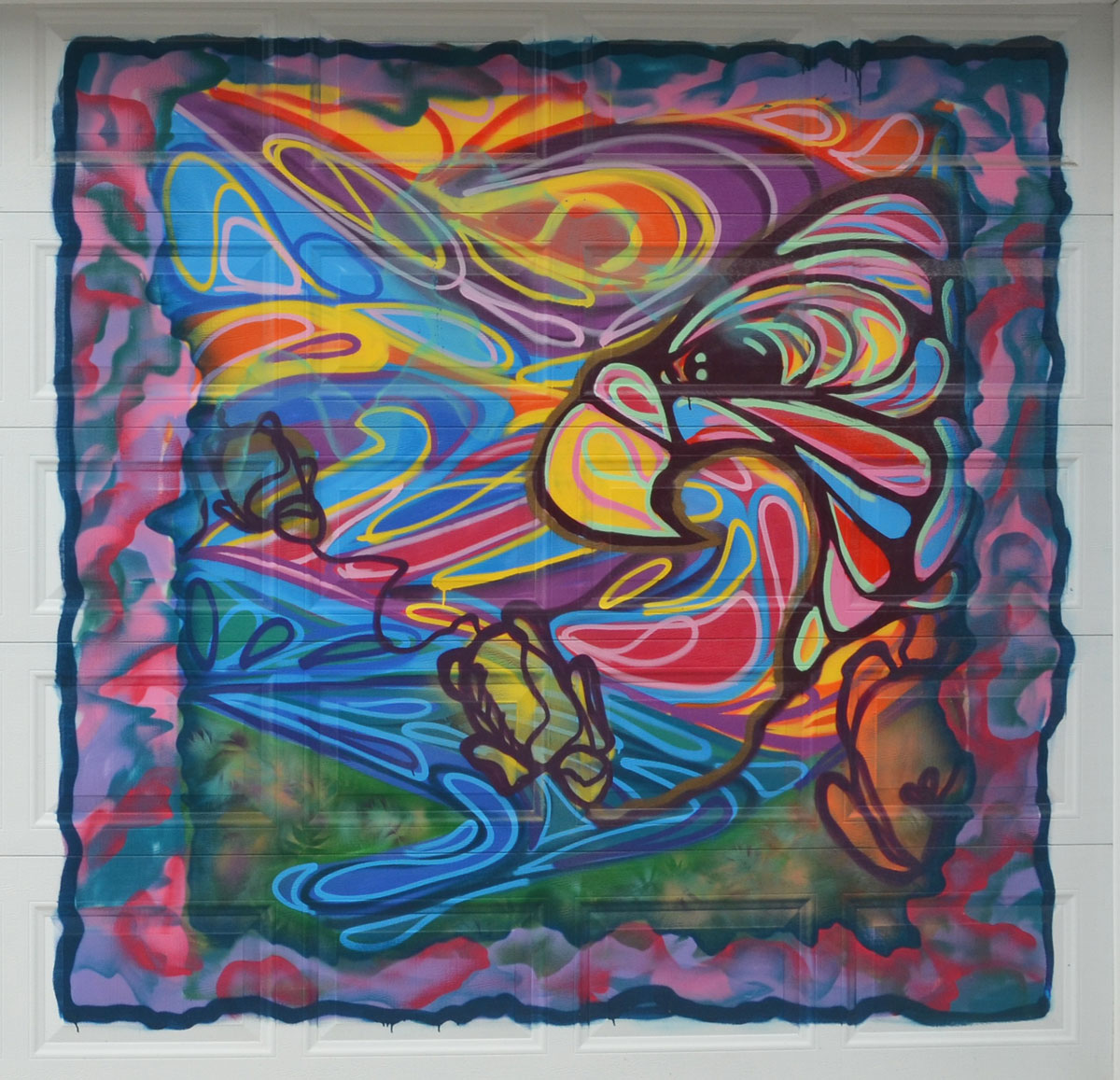
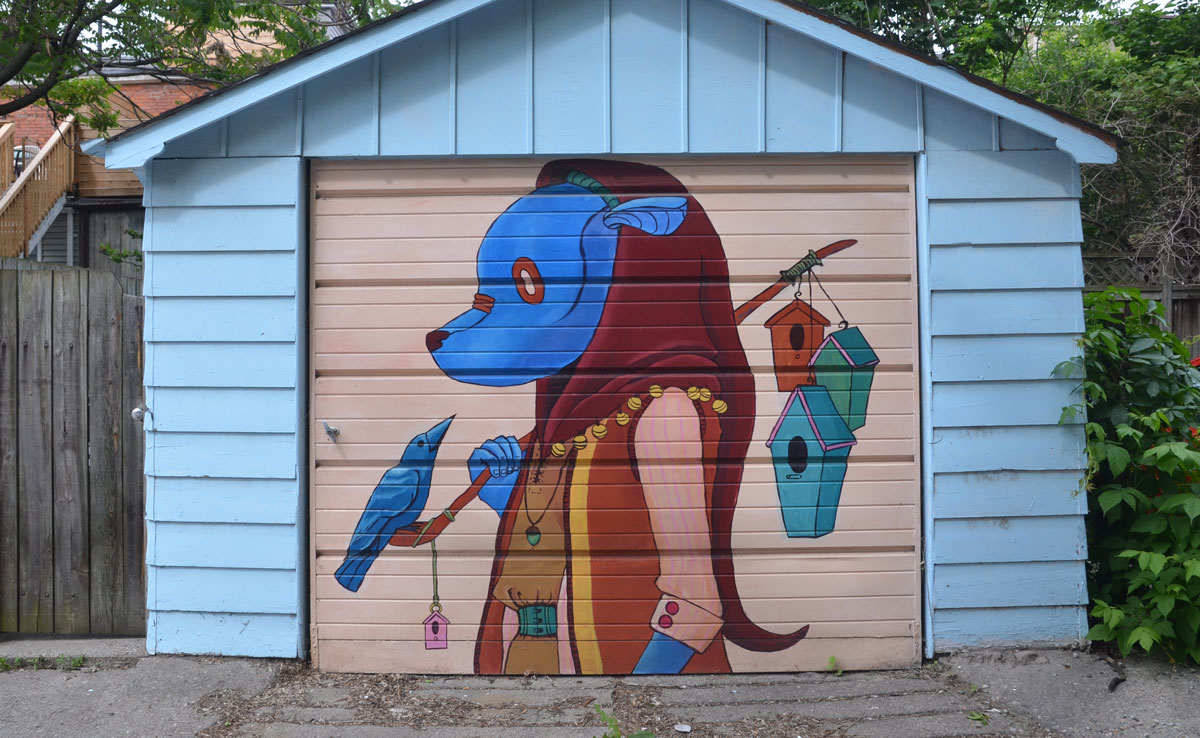
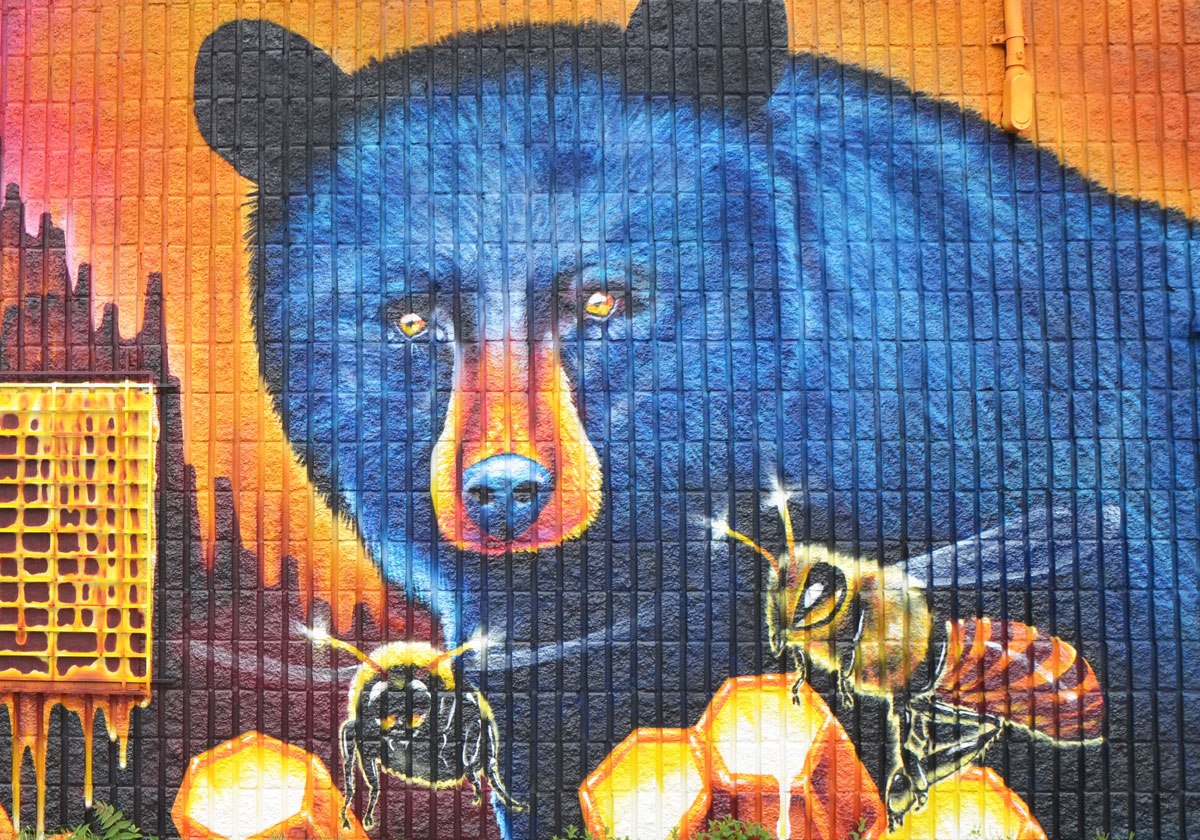
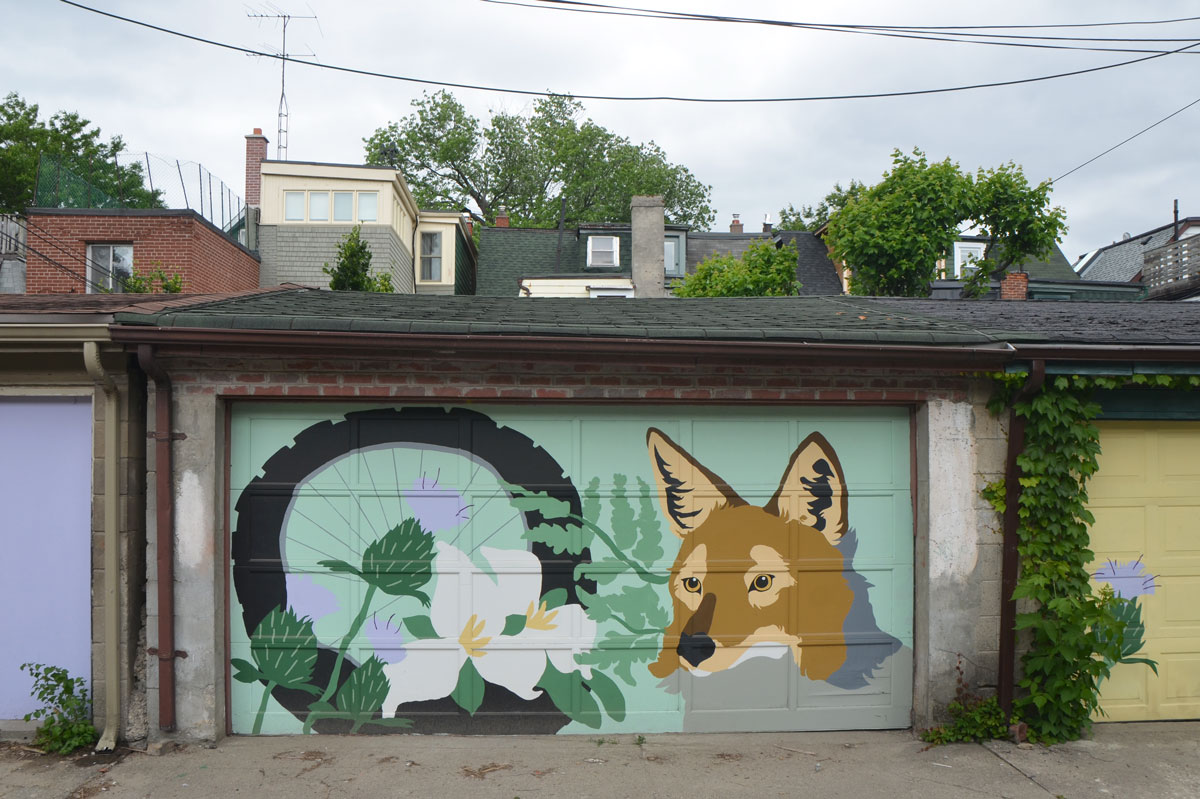
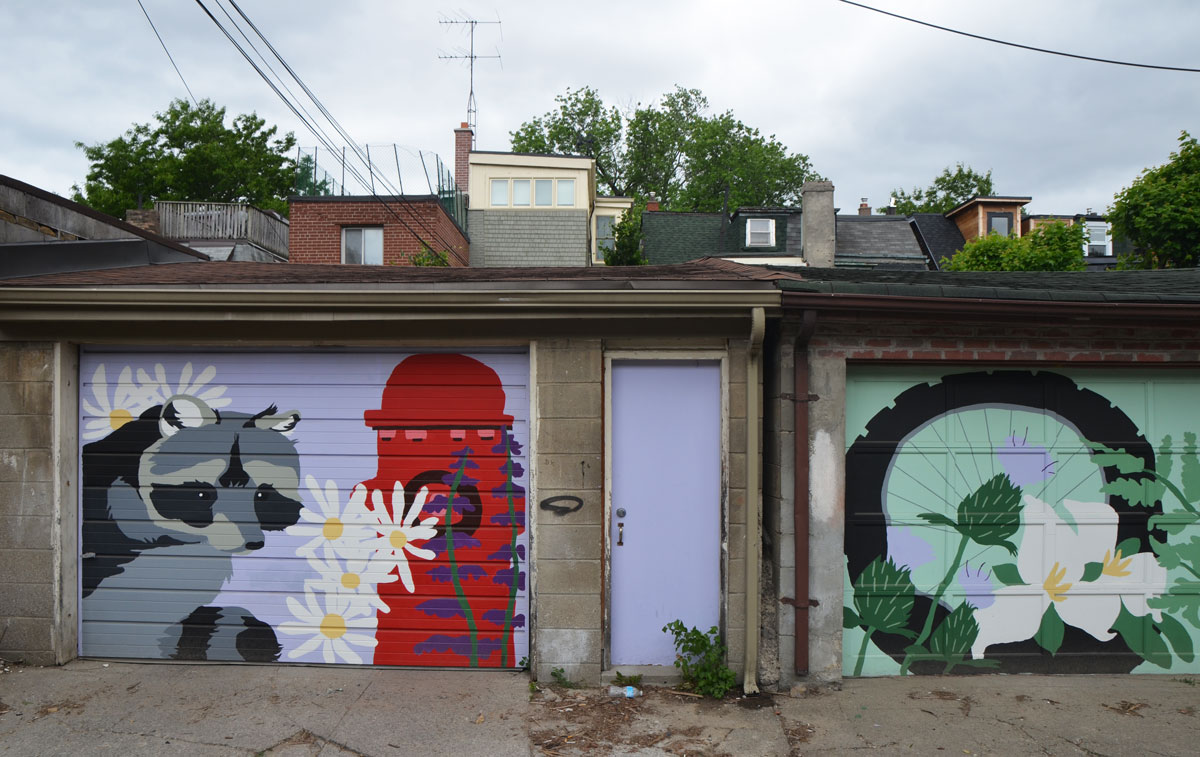
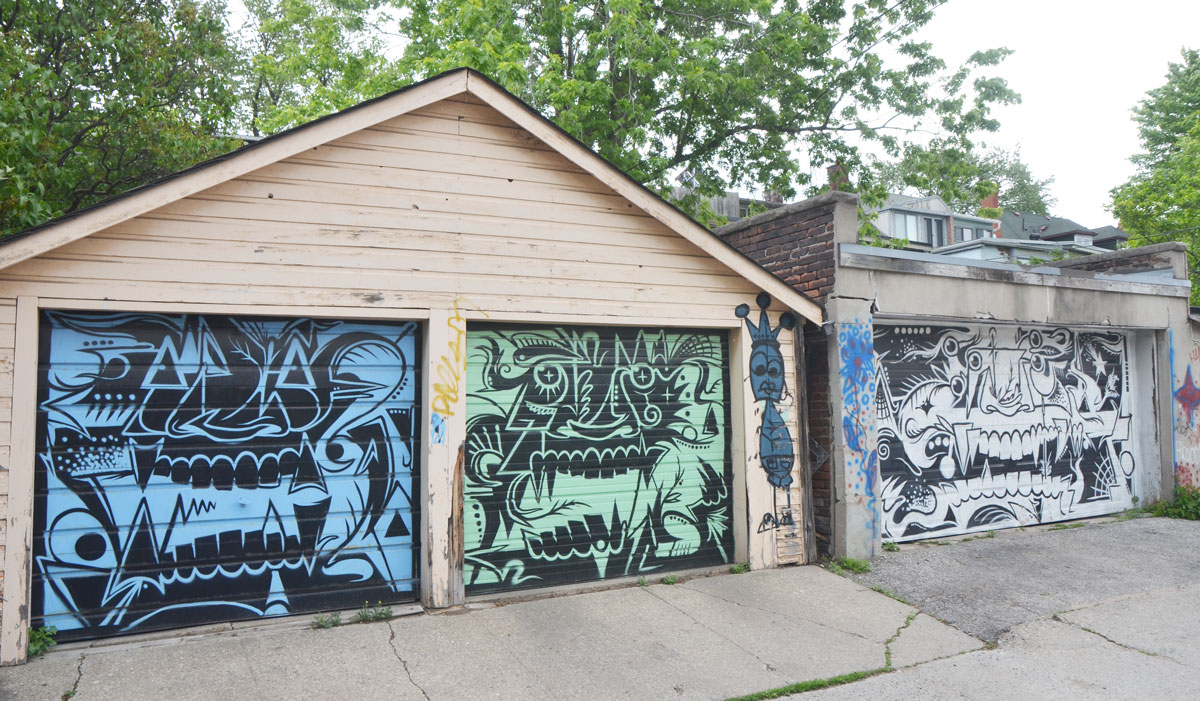
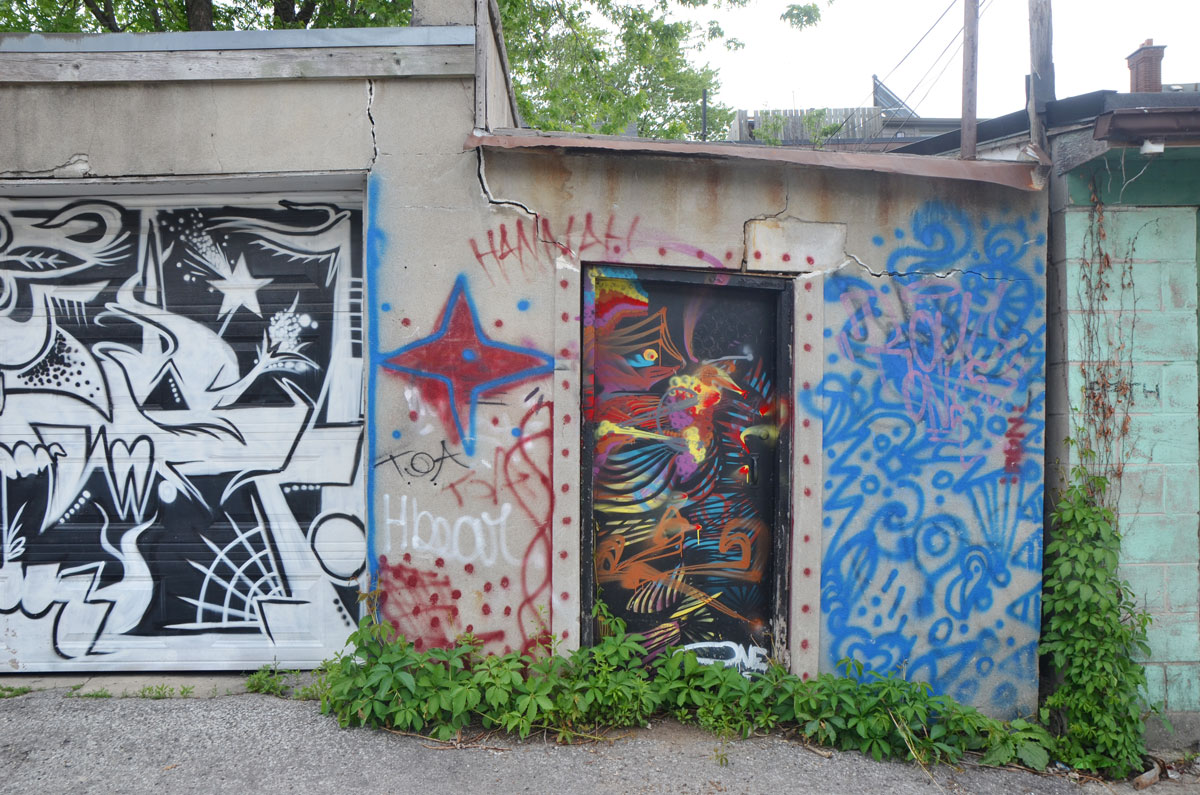
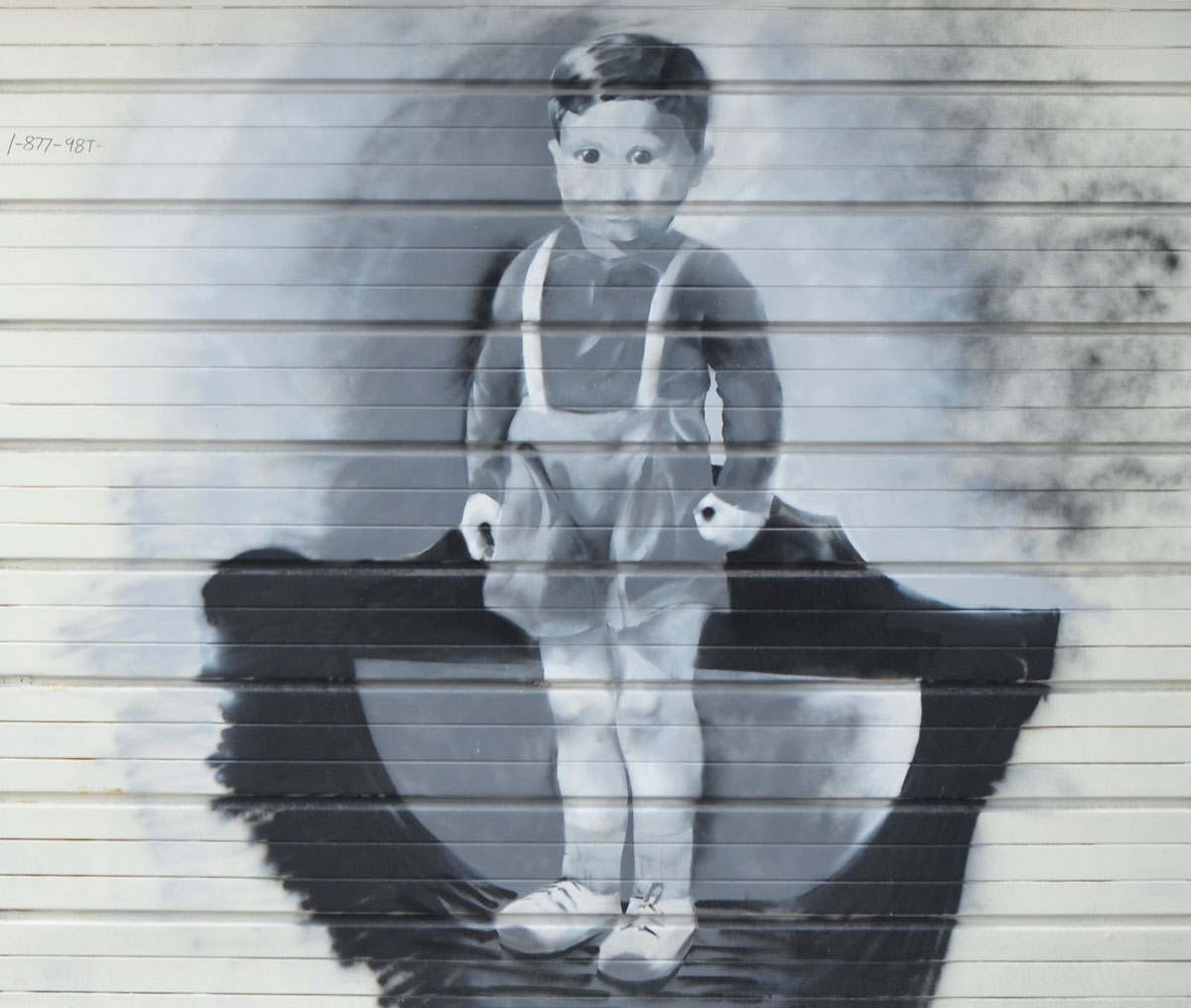
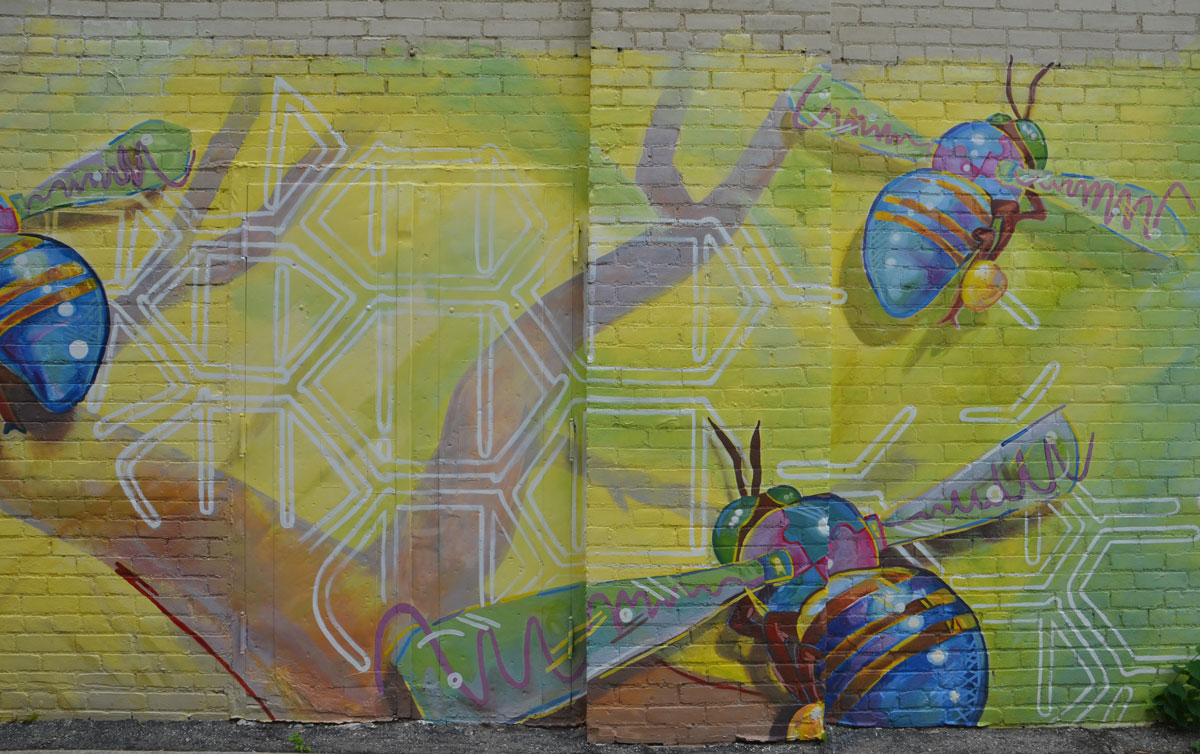
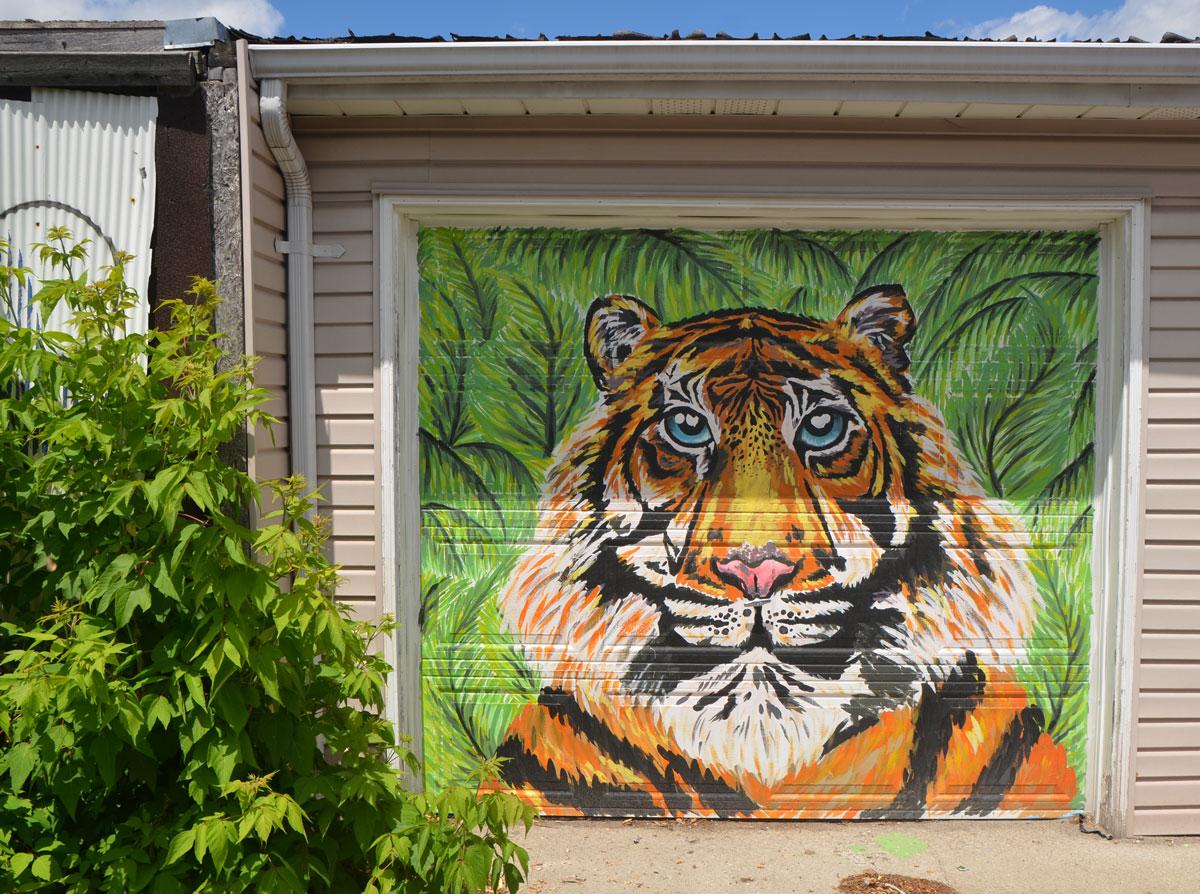
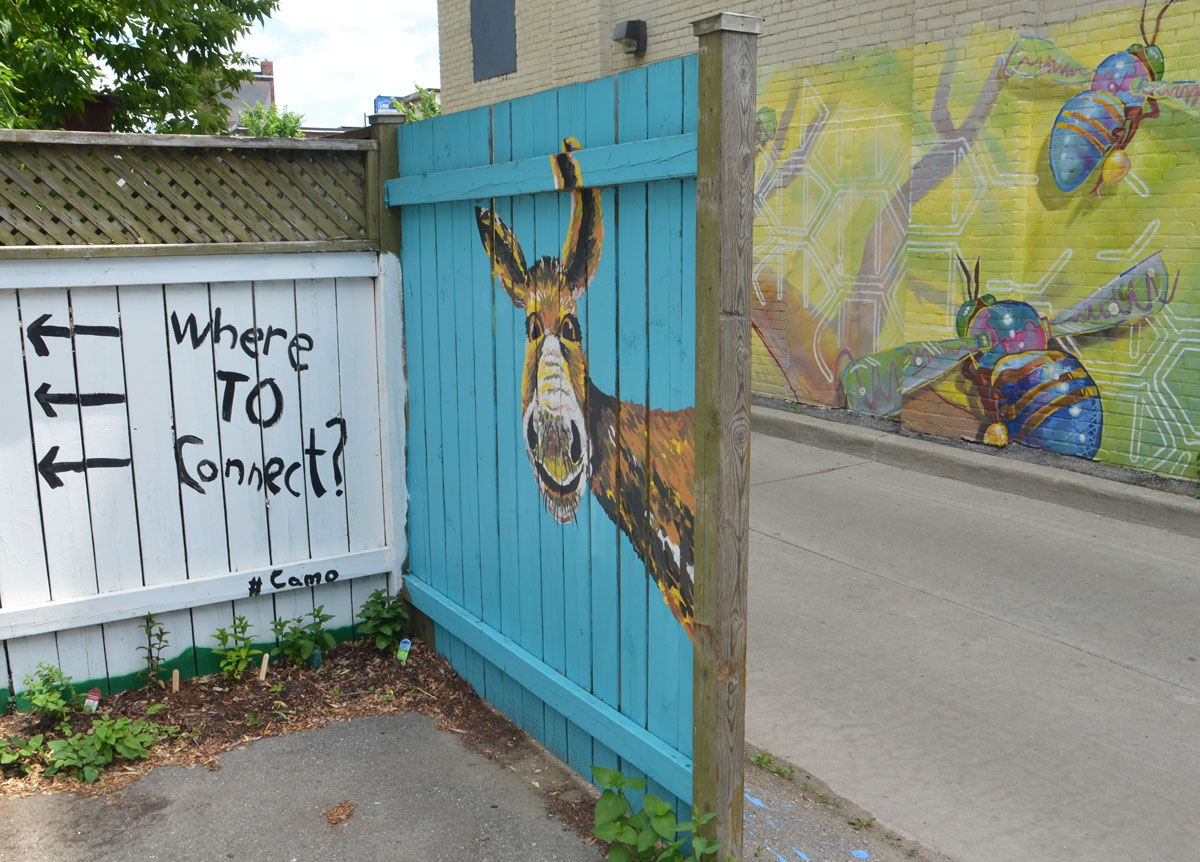
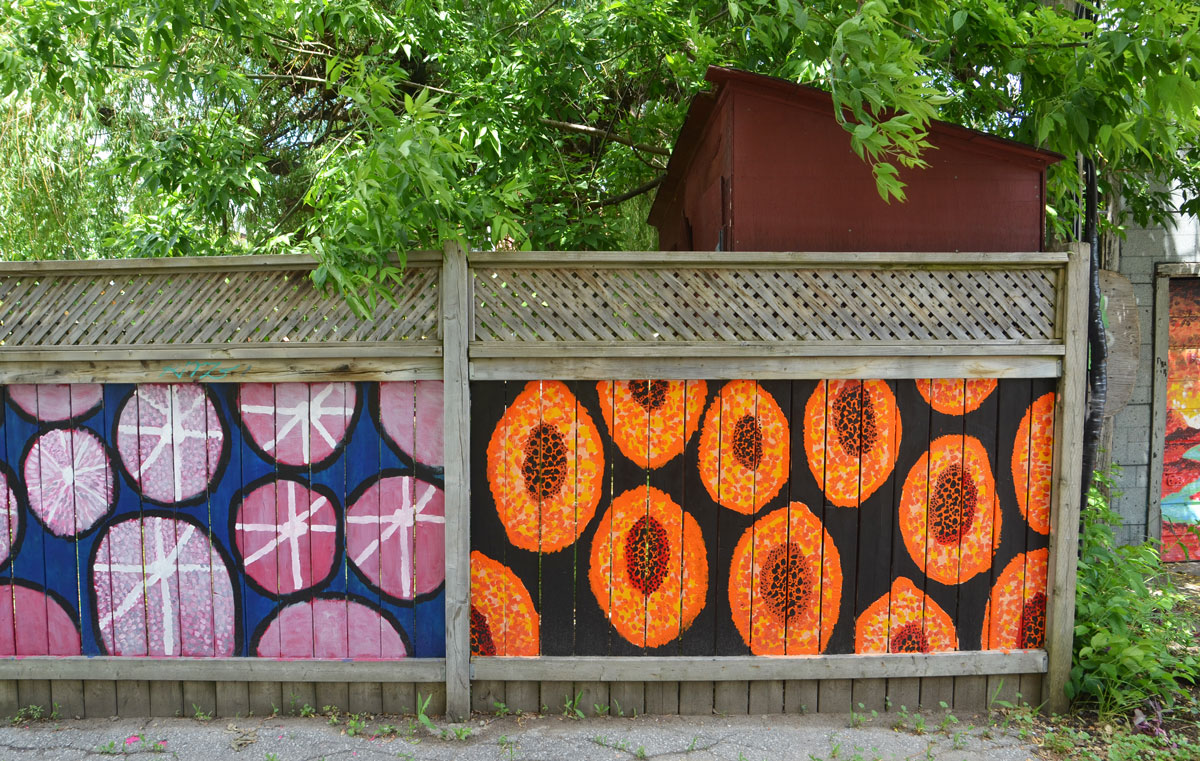
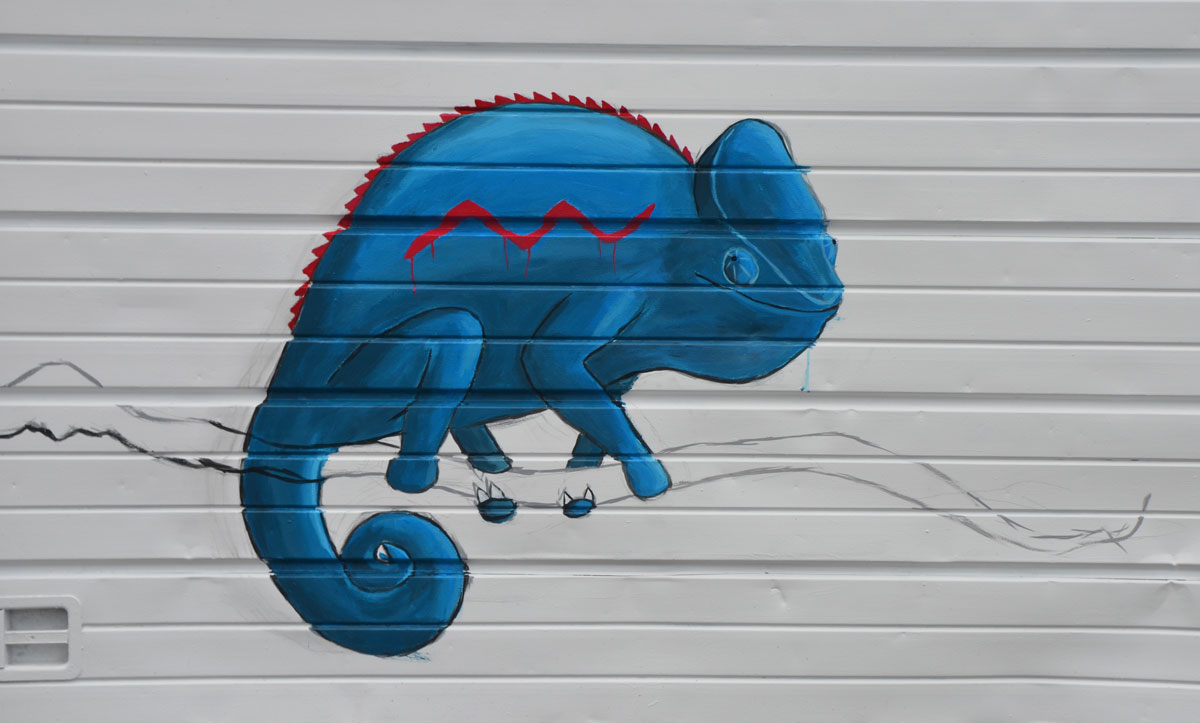
This blog post is about a flock of birdos, meaning that I found a lot of alley garages decorated with paintings by street artist birdo. Or maybe ‘a menagerie of birdos’ would be a more accurate description as most of the pictures were of different animals such as elephant, cat, dog, coyote, and mouse along with a number of different birds.
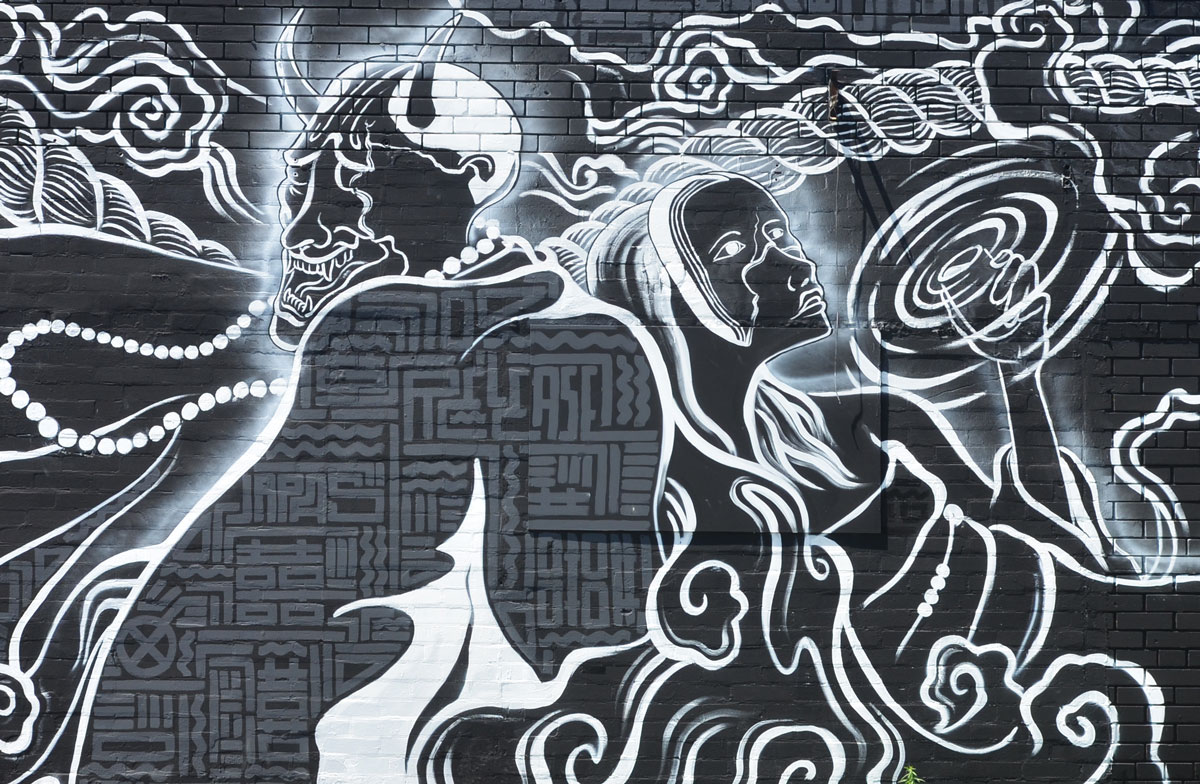
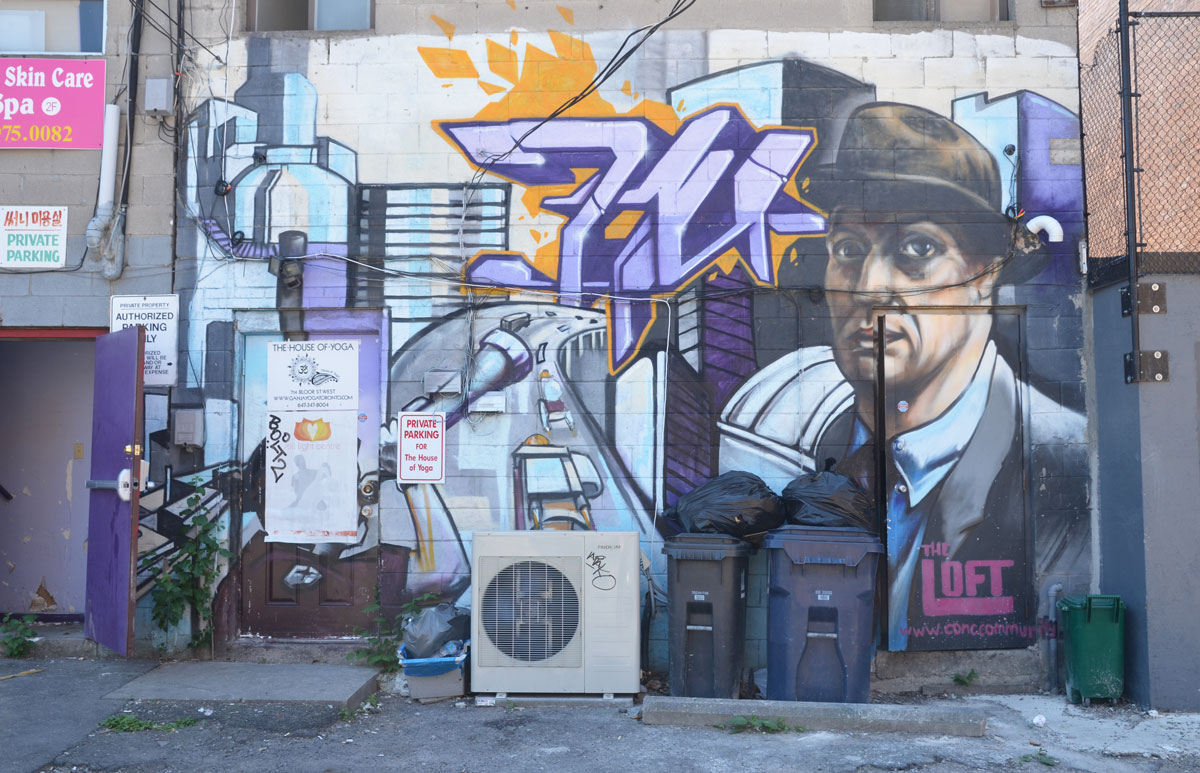
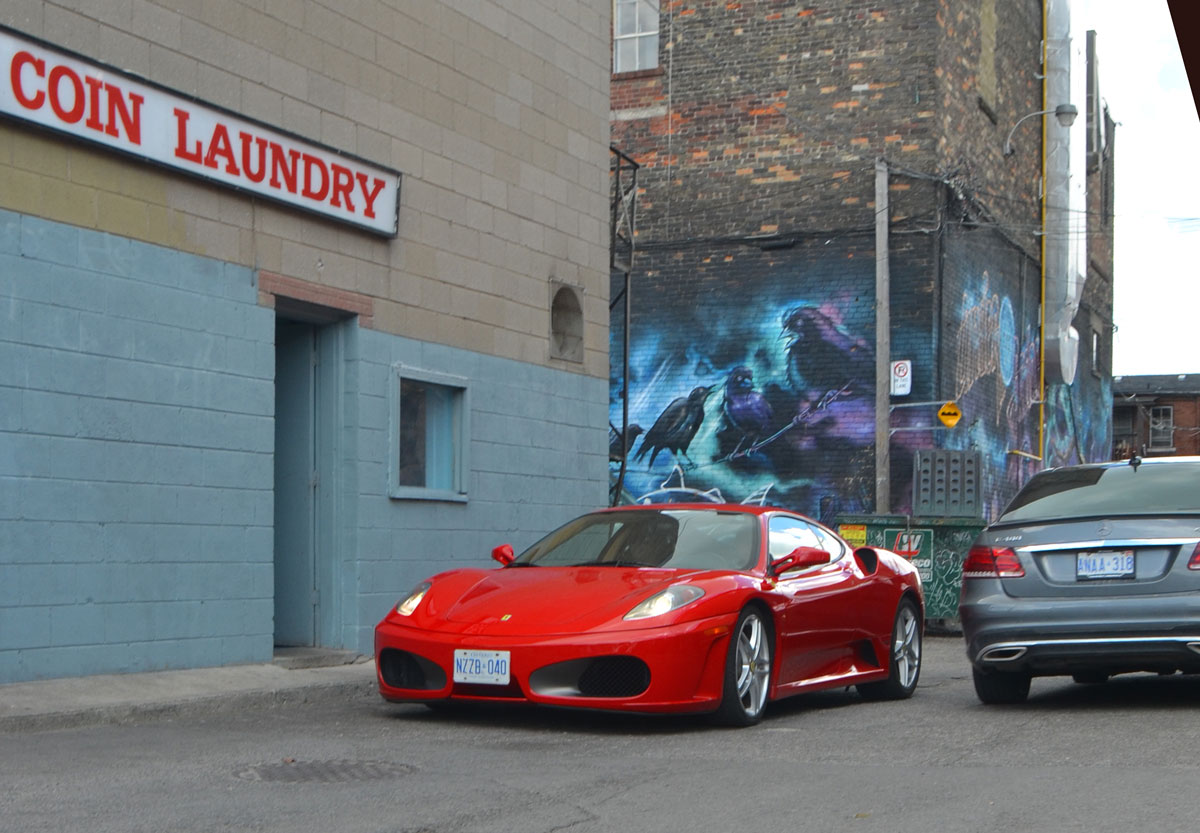
These photographs were are all taken in alleys behind the south part of Dovercourt Road (between Queen and Sudbury streets). The majority of the paintings that I saw were result of birdo’s work but there were examples of and I have included them in this post too.
below: Two birdo birds with eggs, with a slice of mushroom and pepperoni pizza by Shalak.
below: Howling at the moon, with a cactus and a scorpion too.
below: Blue dog, pink lava lamp
below: A rooted turtle and cool owl with sparkly shades
below: “Just a robot that doesn’t like technology”