As you all know, the TTC is replacing their older streetcars with new longer Bombardier streetcars.   Or at least they are trying to 🙂  Because they are longer, they don’t fit into existing “garages”, hence the new Leslie Barns facility.  Located on Leslie St., south of Queen, it is the new streetcar “home”.  It is where streetcars are parked, maintained and repaired.  It has been in operation since Nov 2015 but the first chance the public got to peak inside the finished complex was at Doors Open on the 28th of May.

below: While waiting for a streetcar at the corner of Queen and Broadview on the way to visit the Leslie Barns, I saw this renovated TTC streetcar from the 1950’s.
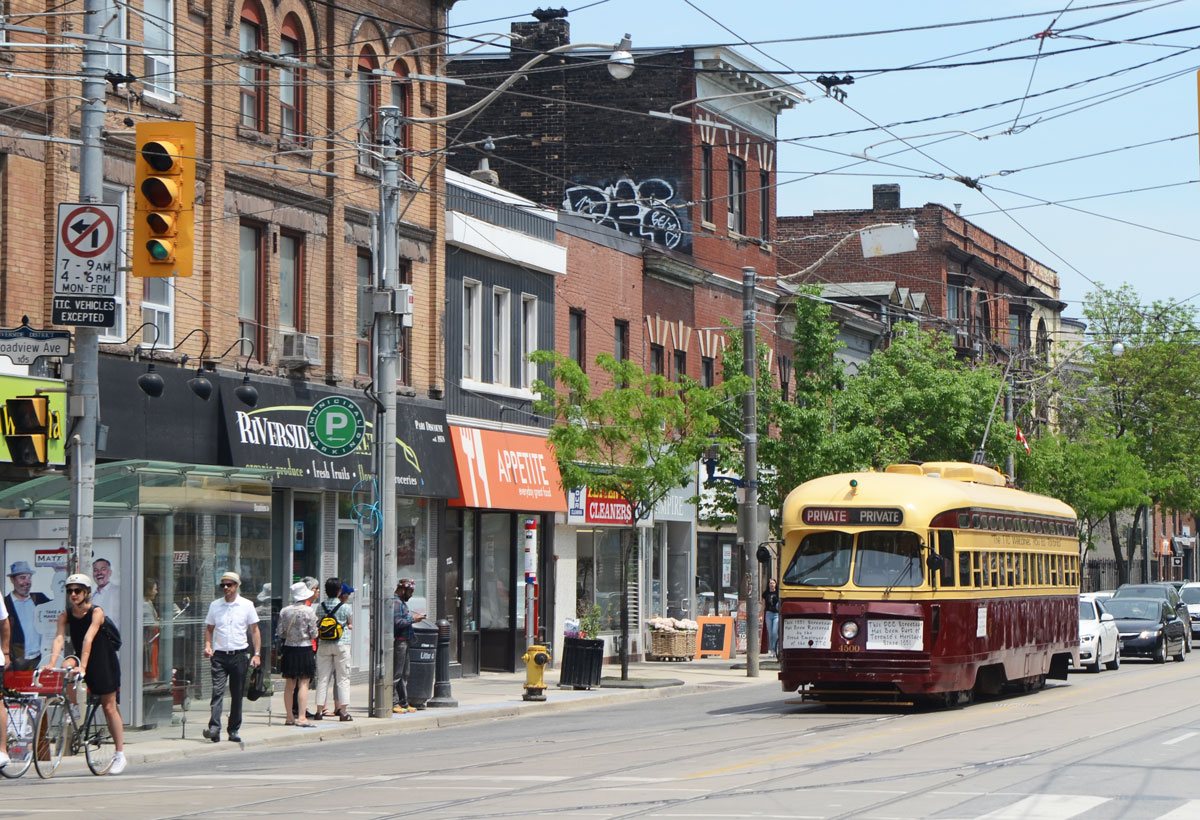
An old restored TTC streetcar, maroon and yellow, on Queen St. East

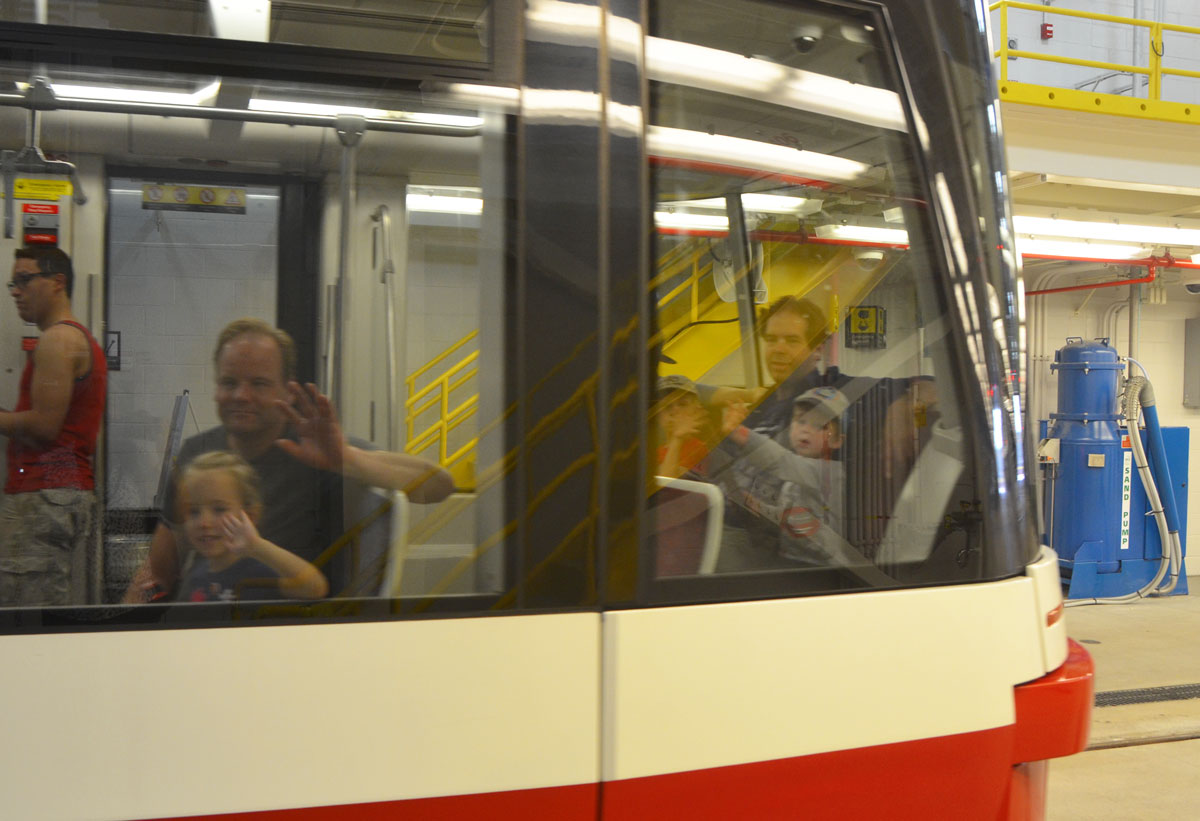
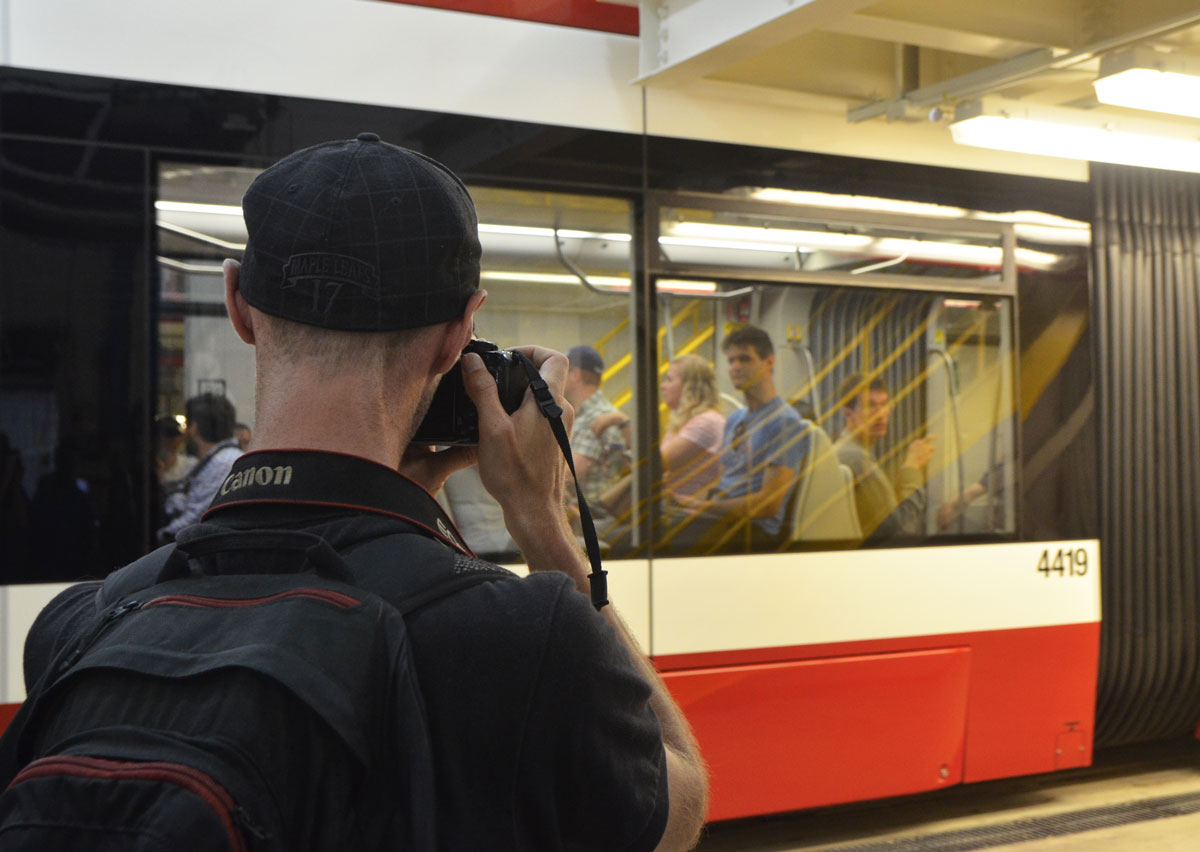
below:  The streetcar tour involved riding a new streetcar through a maintenance bay in the building and then around the parking lot out back.

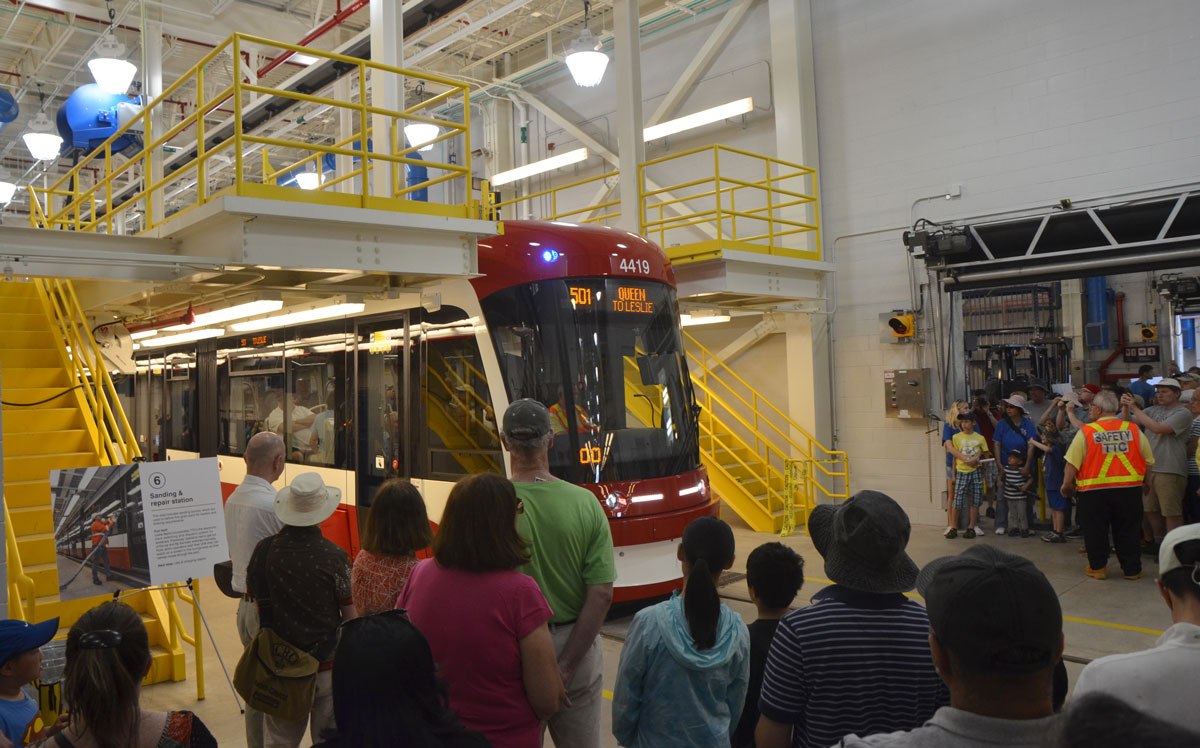
People at Doors Open in TOronto, at the TTC LEslie Barns streetcar facitlity, lining up for , or just getting off of, streetcar tours, riding the new streetcars around Leslie Barns

A group of people inside Leslie Barns streetcar facility, standing aside to make way for a new streetcar that is taking other people on a tour.

people riding in a new streetcar, photo taken from the outside, most of them are waving

A man in black T-shirt and black cap is taking a picture of people riding in the new streetcar, inside Leslie Barns at Doors Open

below: Exterior, parking space for at least 100 streetcars

the massive concrete parking lot for streetcars with all the overhead wires. The building that houses the workshops and cleaning and office for the ttc is in the background.

below: Special bays have been constructed with space for workers to access both the underneath and the top of the streetcars.  Because the cars have been designed to ride low, a lot of their workings such as the HVAC and propulsion systems are built into the roof of the car.
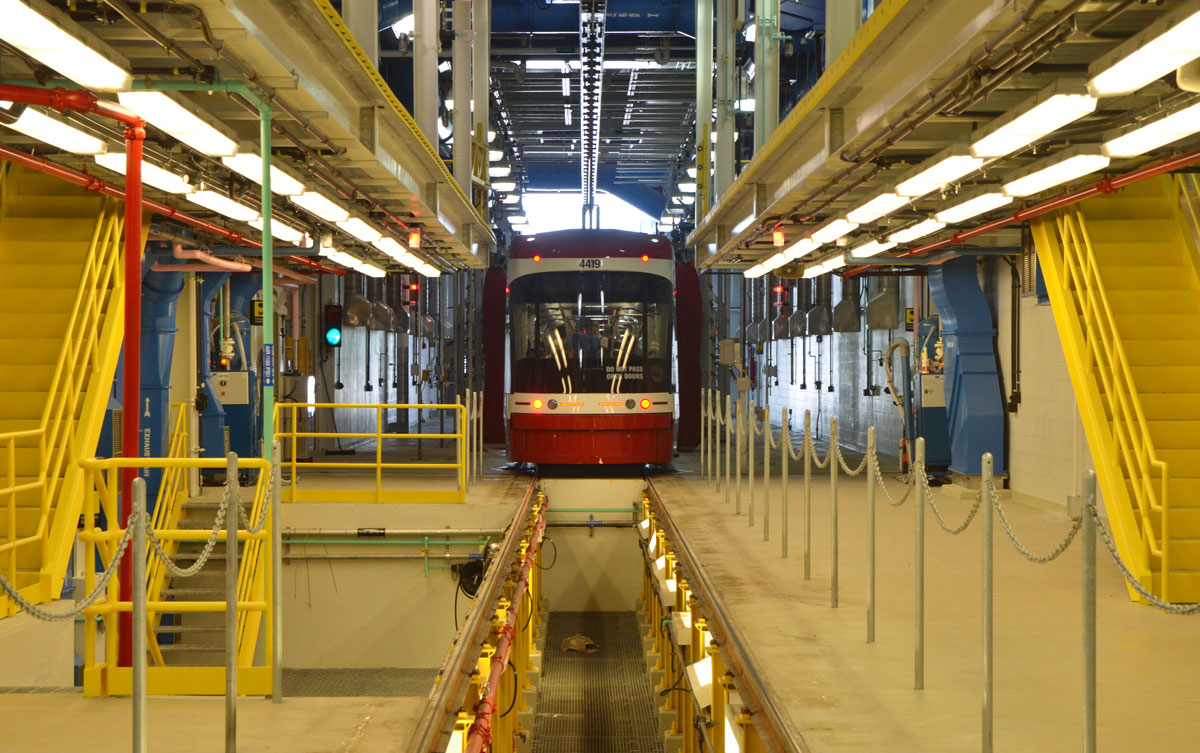
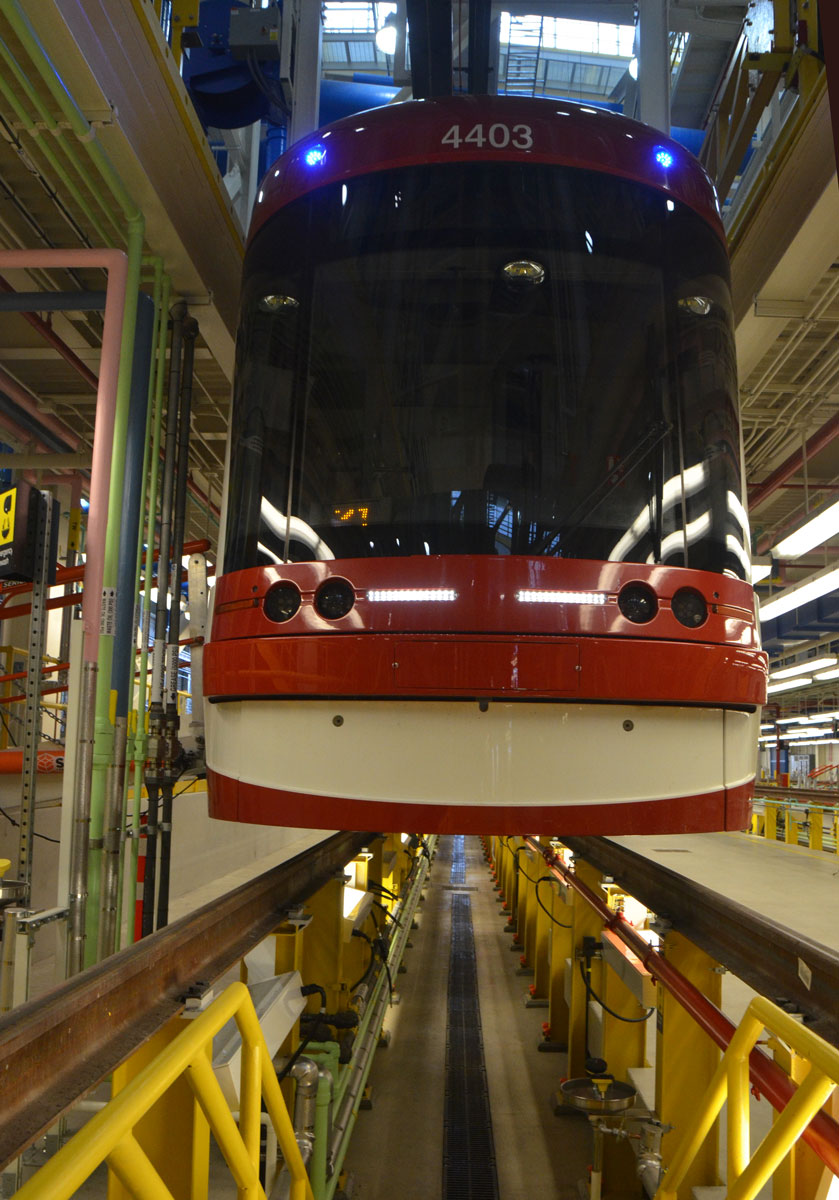
the back of a new streetcar as it passes through interior of Leslie Barns streetcar facility, a large, tall interior space with lots of pipes

A streetcar sits in a repair bay of the Leslie Barns, space underneath the streetcar for workers to go down and work on the underside of the streetcar.

below: It’s a big space!  …. 17,510 square metres (188,500 sq ft) in fact.

interior of Leslie Barns streetcar facility, a large, tall interior space with lots of pipes

below: A spic and span shiny paint room

interior of the paint room at Leslie Barns, where streetcars go to get painted.

below: A myriad of colour coded pipes
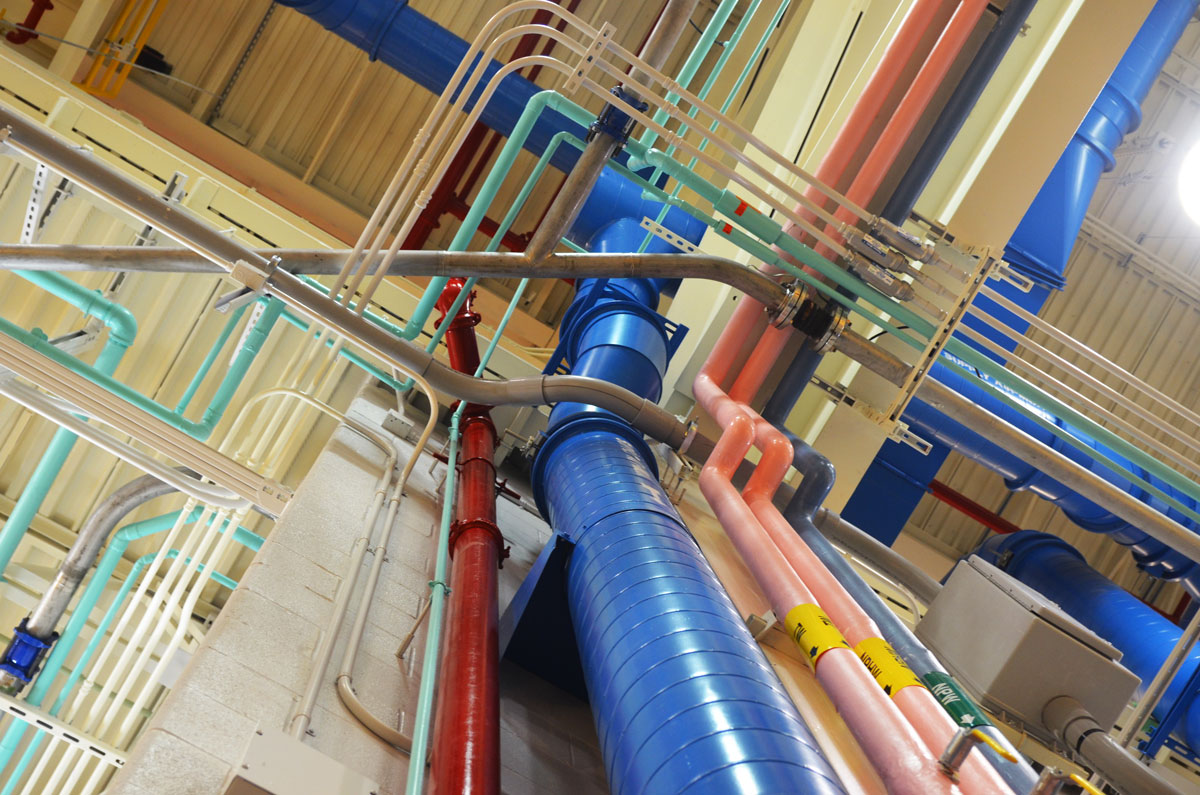
A myriad of pipes running up walls and across the ceiling, blue, pink, red, grey, all colour coded, interior, Leslie Barns

below: There were renovated vintage streetcars on display.  On the left is a 1921 Peter Witt streetcar and next to it is a PCC streetcar from the early 1950’s.
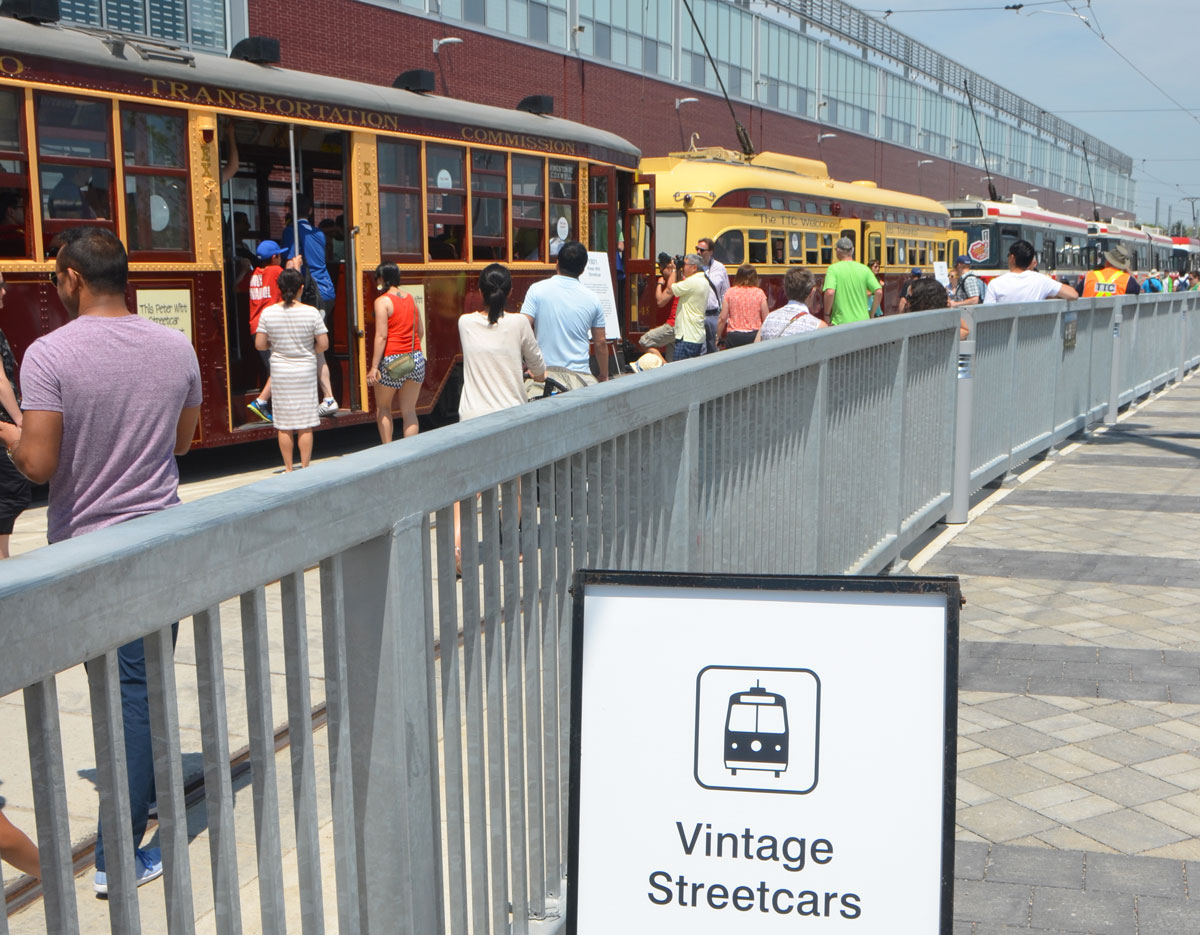
a number of people waiting to go inside old renovated vintage TTC streetcars

below: Interior of a refurbished Peter Witt streetcar with its wood trim.  The Witt cars were built for the newly formed TTC in 1921.  They entered service on Broadview in October of that year.  By 1923 they were operating on seven routes.  The last Witt streetcar was retired in 1963.
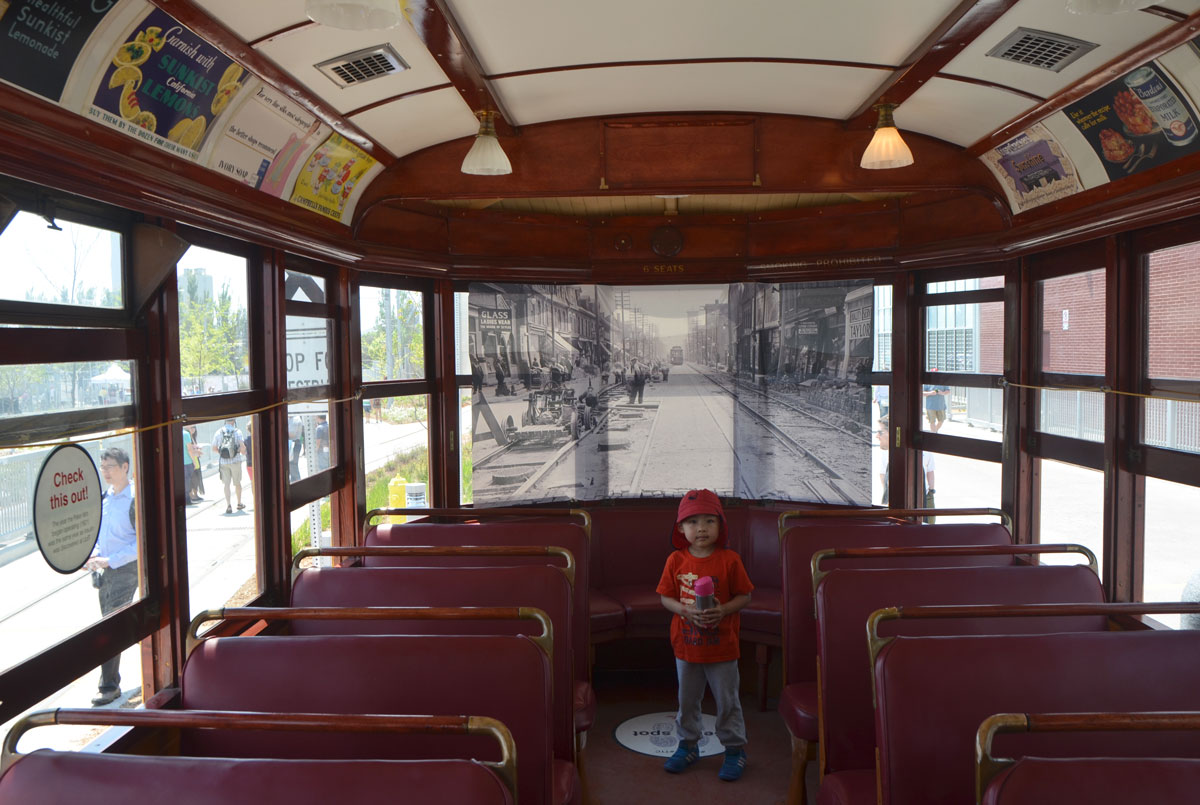
A young boy stands in the back of an old restored ttc streetcar. A black and white picture of an old street scene has been put across the back window to show you what the view out the window might have looked like at the time the streetcar was functional. Old ads on the upper part of the interior, wood trim

below: Looking out the window of a PCC streetcar built in 1951.  PCC stands for Presidents’ Conference Committee, which was a group of operators from the USA and Canada  who got together in 1938 to design a new electric railway car.  By the late 1950s, the TTC owned the largest fleet of PCC’s in the world.  The last one was retired in 1995.

A young boy wearing a hat looks out the window of an old restored streetcar while his father takes a picture out the window

below: Streetcar wire maintenance truck.

a special TTC truck sits outside Leslie Barns TTC facility on Doors Open day, the truck is designed to run on streetcar tracks and is used to repair tracks and wires. There are people looking at the truck

#DOT16 | #TTC
Sharing Dance
Organized by the National Ballet School,
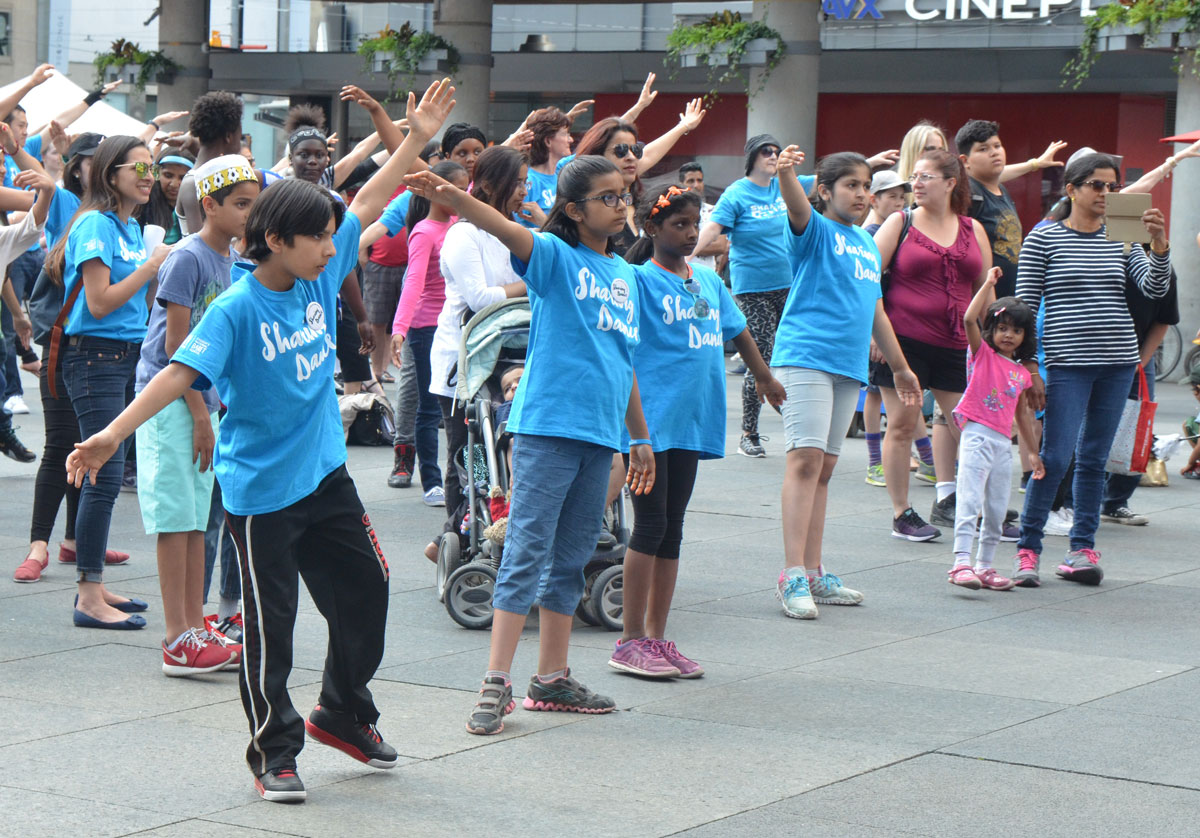
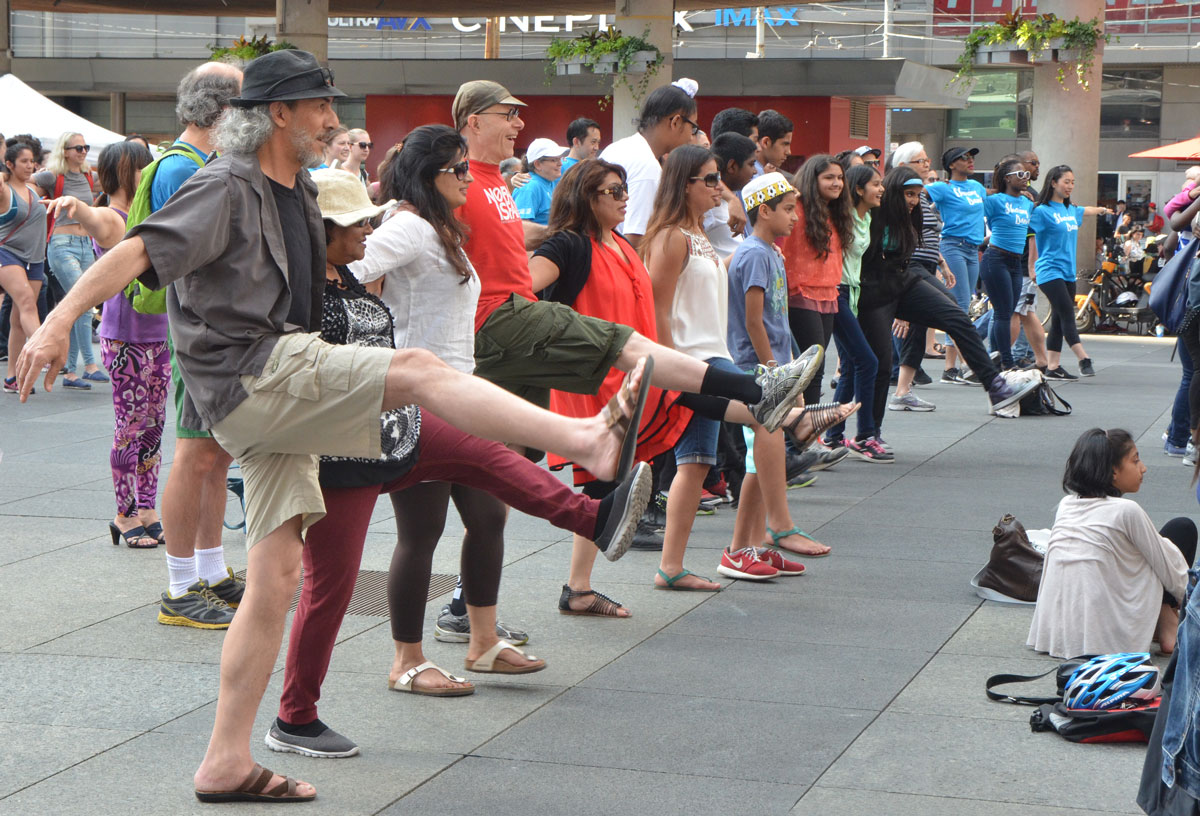
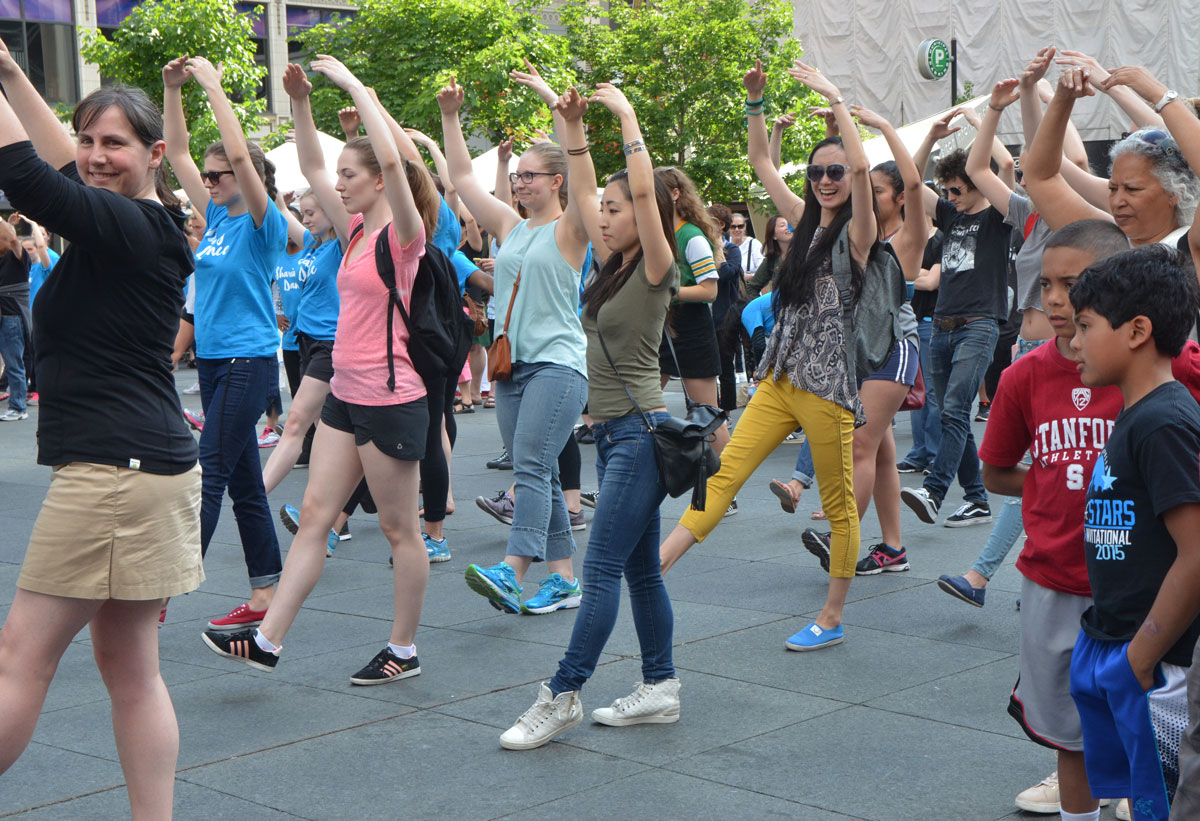
the 3rd annual Sharing Dance event was held at Yonge Dundas Square.

A chance to laugh a little and learn a few moves.

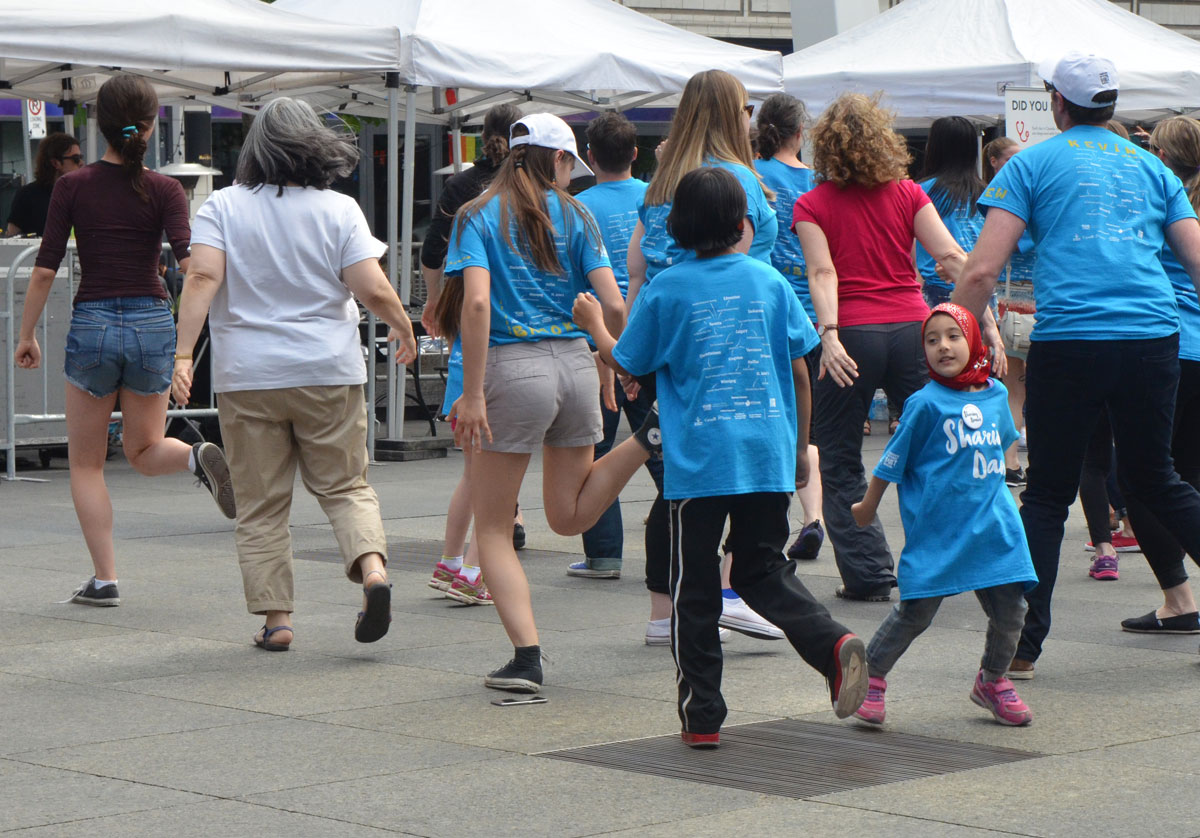
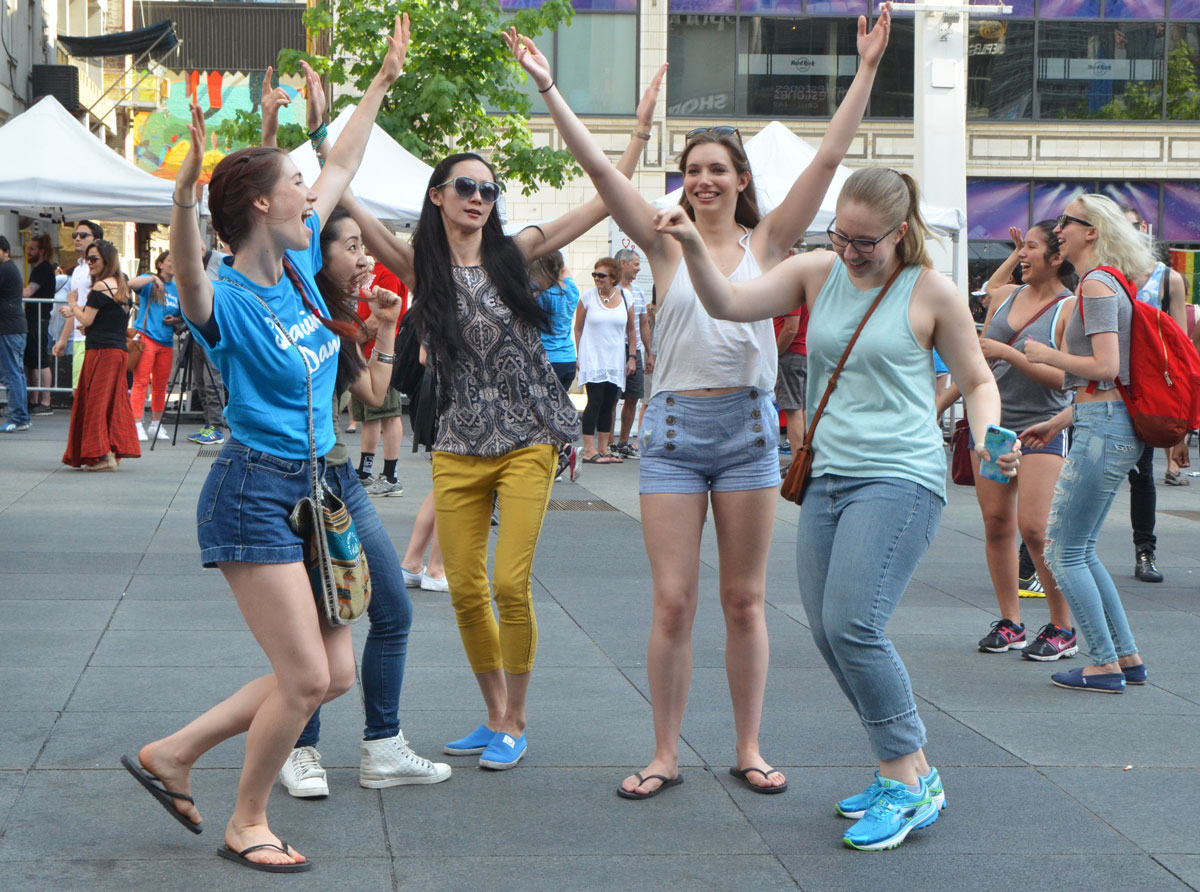
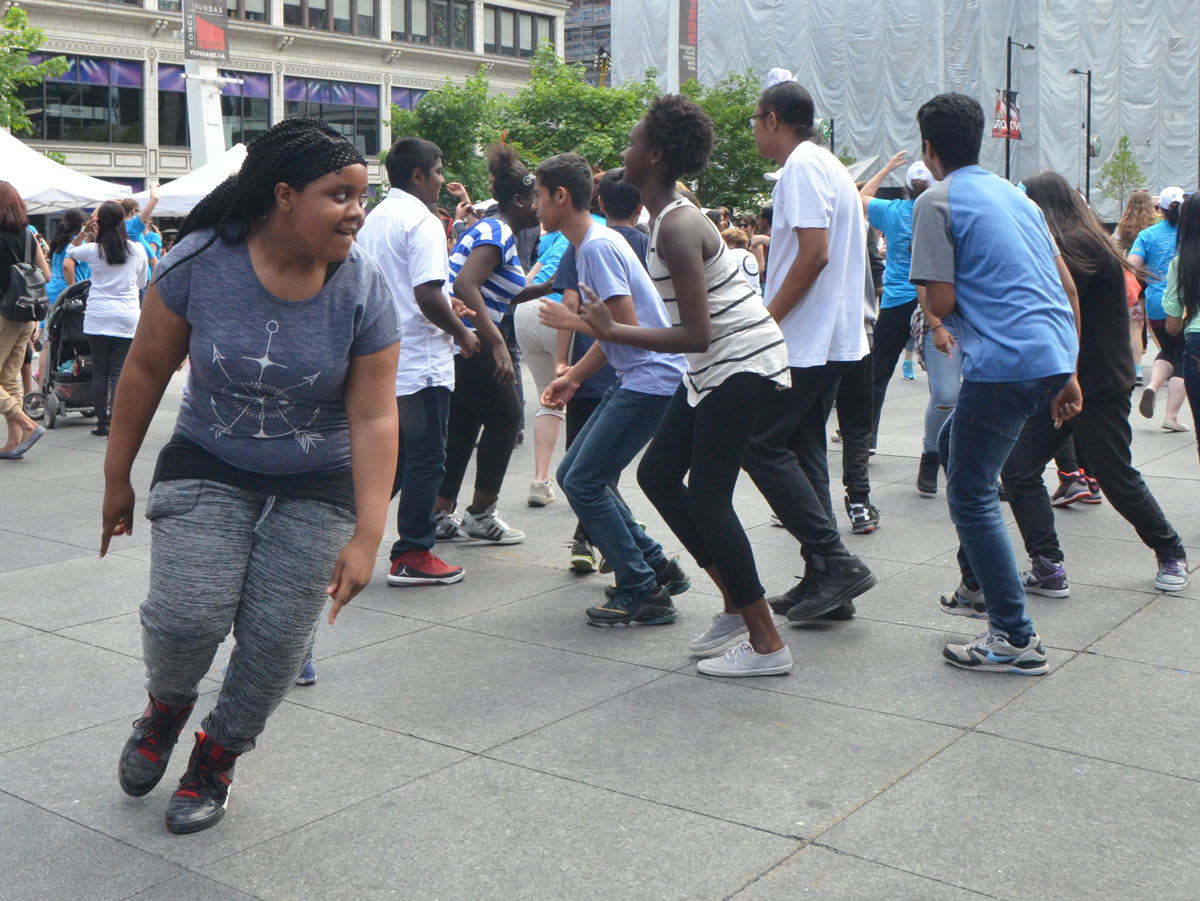
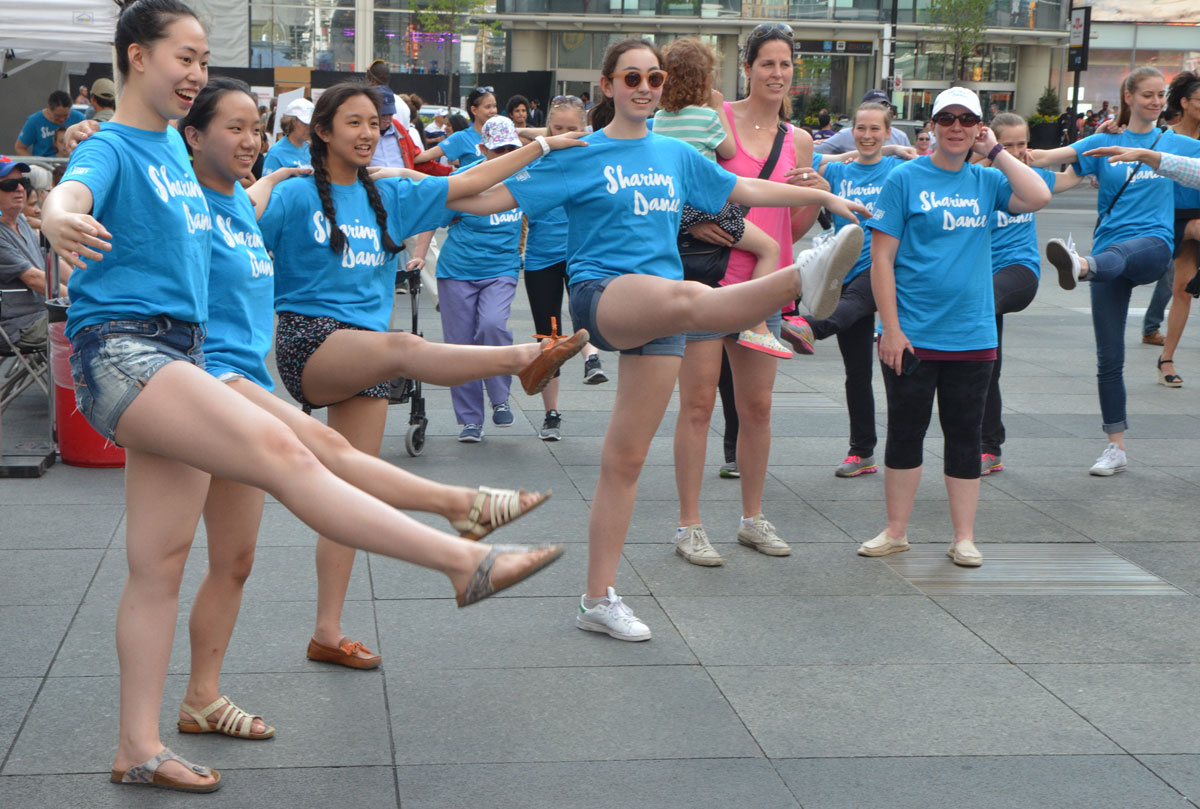
people dancing at Yonge Dundas Square as a group, part of an event called Sharing Dance

people dancing at Yonge Dundas Square as a group, part of an event called Sharing Dance - a woman in a tie dyed T-shirt and orange cap dances on her own while others watch

people dancing at Yonge Dundas Square as a group, part of an event called Sharing Dance - kids

people dancing at Yonge Dundas Square as a group, part of an event called Sharing Dance

people dancing at Yonge Dundas Square as a group, part of an event called Sharing Dance - one little girl is facing the opposite direction from the others

people dancing at Yonge Dundas Square as a group, part of an event called Sharing Dance - a middle aged couple

people dancing at Yonge Dundas Square as a group, part of an event called Sharing Dance - a kick line of 5 or 6 young women

people dancing at Yonge Dundas Square as a group, part of an event called Sharing Dance - a younger woman helps an older woman with a walker to lift her knees in ballet moves

people dancing at Yonge Dundas Square as a group, part of an event called Sharing Dance - 5 young women with the arms in the air

people dancing at Yonge Dundas Square as a group, part of an event called Sharing Dance - hands in the air

people dancing at Yonge Dundas Square as a group, part of an event called Sharing Dance - running in a circle

people dancing at Yonge Dundas Square as a group, part of an event called Sharing Dance - a couple dancing together

people dancing at Yonge Dundas Square as a group, part of an event called Sharing Dance - young women in blue t-shirts, arms linked, kicking

people dancing at Yonge Dundas Square as a group, part of an event called Sharing Dance - one knee up

people dancing at Yonge Dundas Square as a group, part of an event called Sharing Dance

people dancing at Yonge Dundas Square as a group, part of an event called Sharing Dance

people dancing at Yonge Dundas Square as a group, part of an event called Sharing Dance - a mother is taking a photo of her daughter for instagram

#sharingdance

This is another post about an exhibit from the CONTACT Photography Festival.   I know that it’s now June and CONTACT was in May, but I wanted to post these photos.  I actually took them early in May as you can probably tell by how many clothes the people in the pictures are wearing.  They’re certainly not dressed for the warmer weather we’ve been having lately.  I have had trouble deciding what to write in this post.

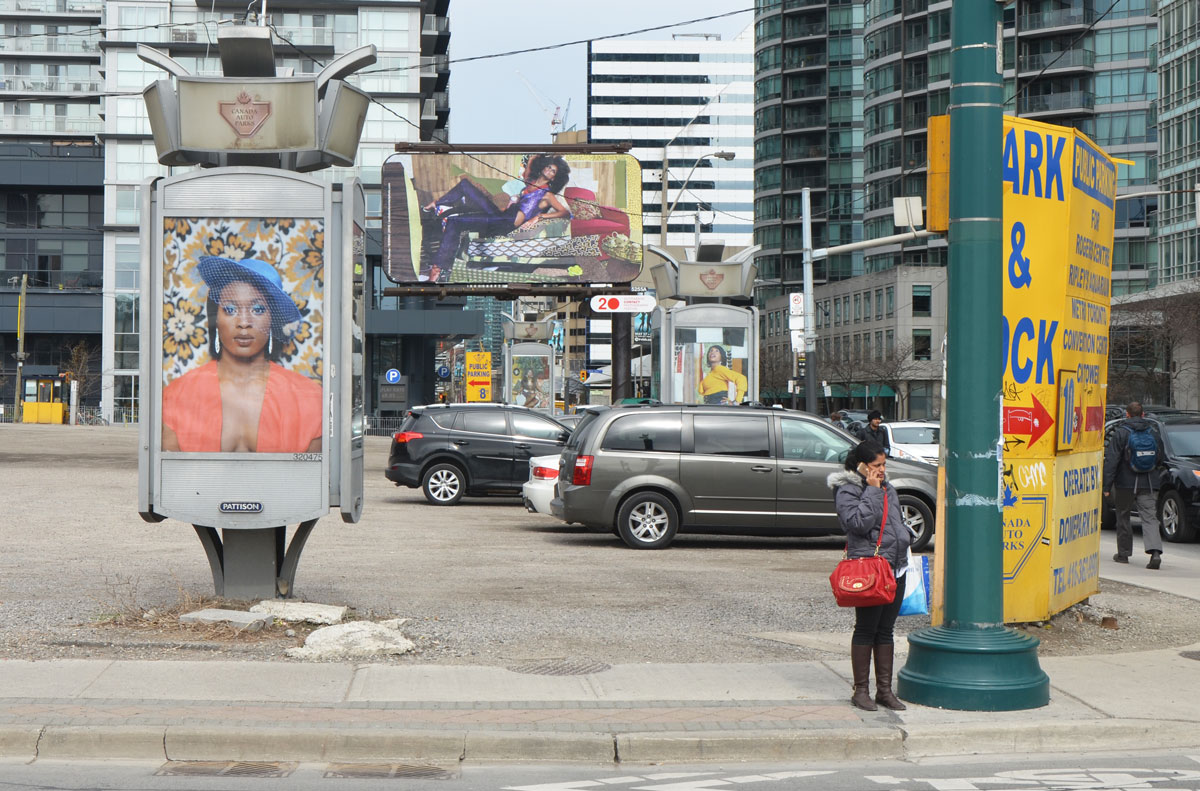
There is a parking lot at the NE corner of Front and Spadina with some billboards in it.   Maybe you saw them as you drove or walked past but maybe you passed by and missed them.   There are so many things on the street vying for our attention and a billboard is just another piece of street ‘furniture’.

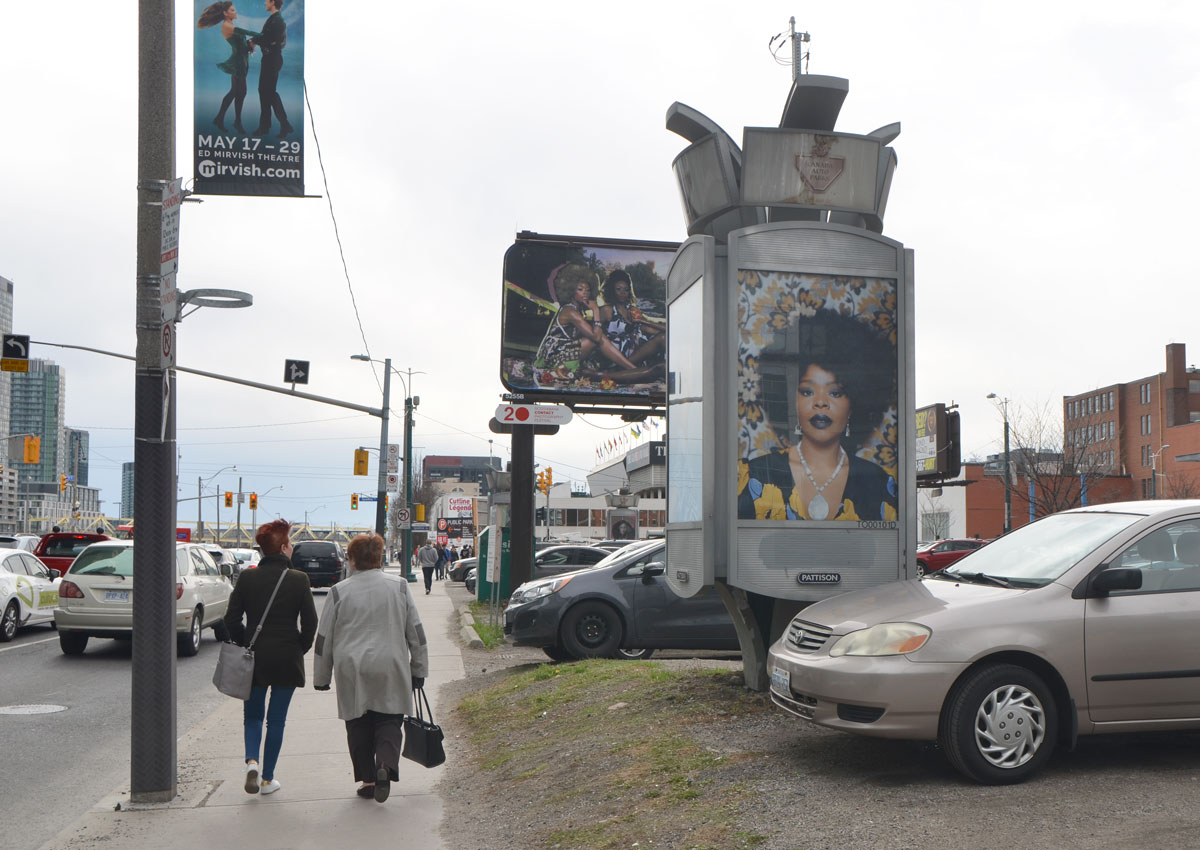
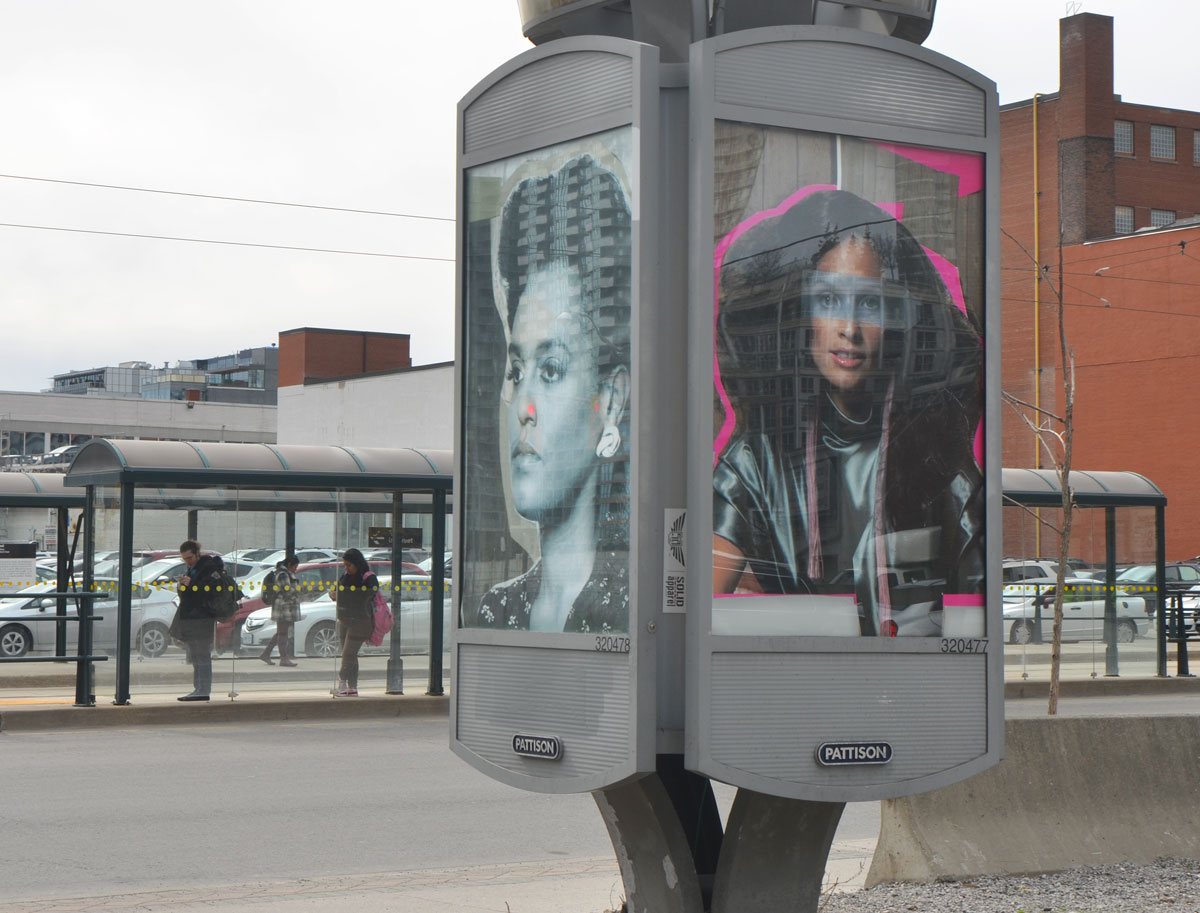
For the month of May, an installation titled ‘What it Means to be Beautiful’  by Mickalene Thomas occupied a number of billboard spaces at the above mentioned corner.   All the images are portraits of women and are “shown within the context of street advertising, where women are constantly bombarded with narrow notions of female beauty.”   A sample of the billboards:


part of an art installation, portrait of a black woman in profile, with a shaved head, on a billboard, by Mickalene Thomas, in a parking lot in downtown Toronto

part of an art installation, portrait of a black woman wearing a blue hat on a billboard, by Mickalene Thomas, in a parking lot in downtown Toronto. A woman stands on the corner talking on her phone. Another, large, billboard is in the background.

Two women walk past part of an art installation, portrait of a black woman on a billboard, by Mickalene Thomas, in a parking lot in downtown Toronto

Two portraits of black women, in a billboard space in a parking lot, with people waiting for a streetcar in glass bus shelters in the background.

part of an art installation, portrait of a black woman on a billboard, by Mickalene Thomas, in a parking lot in downtown Toronto, A group of people wait for a green light at the intersection in the background, tall condos too.

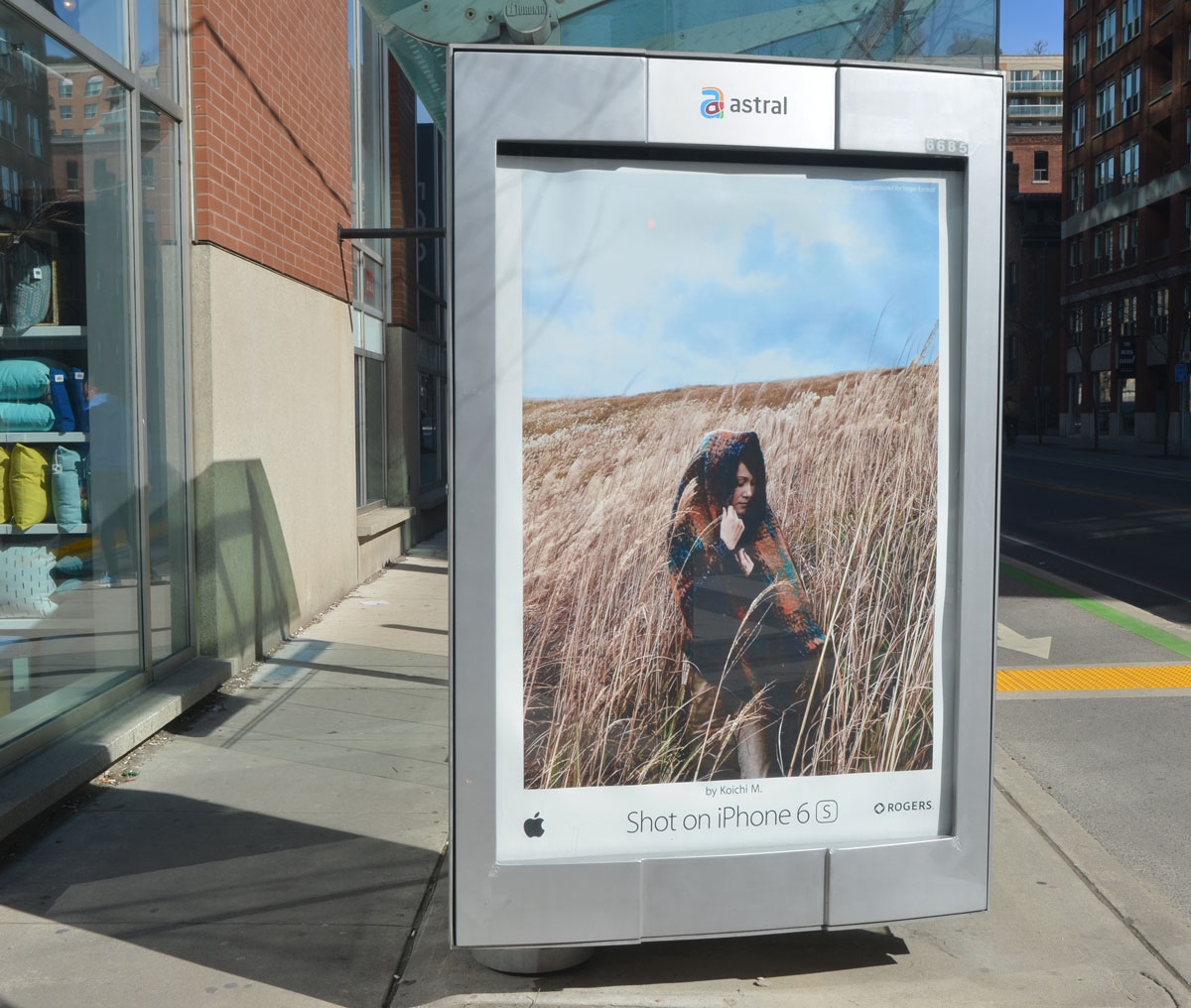
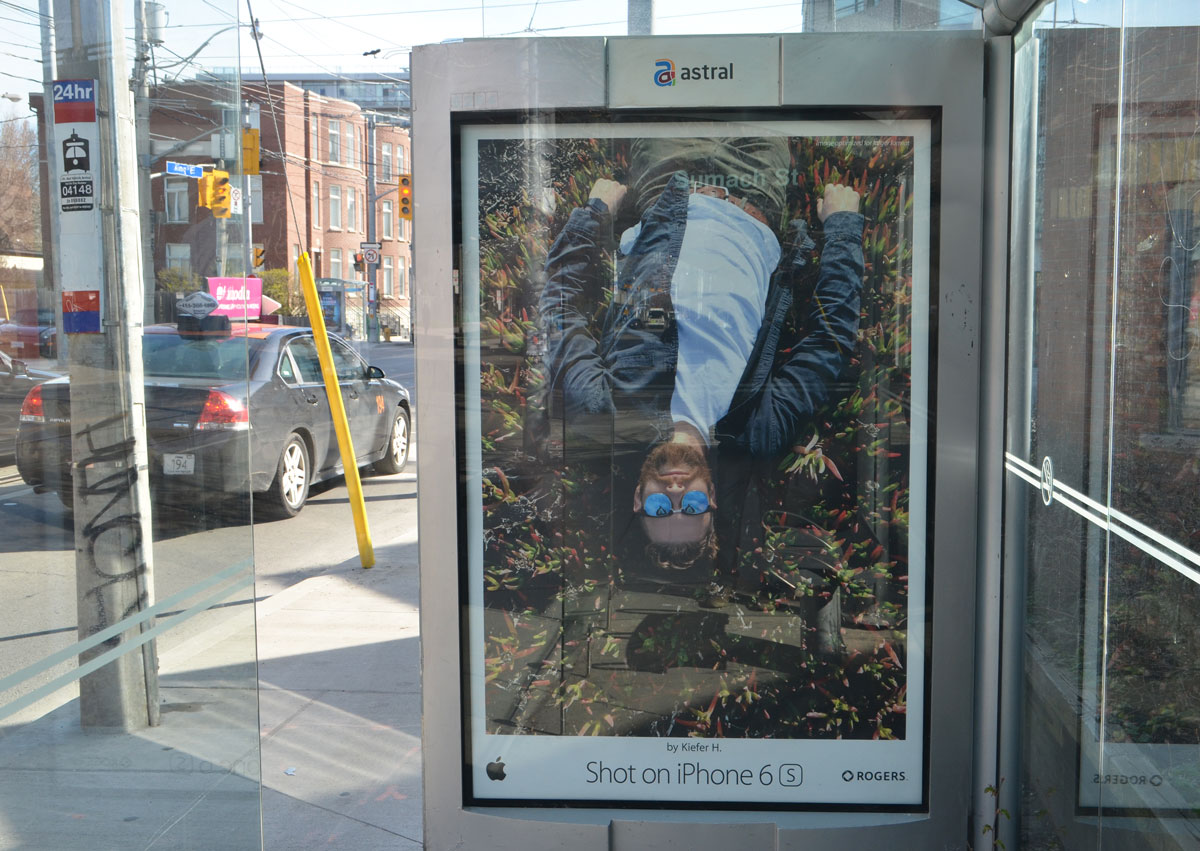
Part of the reason that I hesitated to write this post was the fact that the iphone 6 ad campaign was on at the same time.  It was a campaign that used photos taken with the phone and the ads were very visual and used very few words. In my opinion, they are more eye catching and visually appealing than Thomas’s work. I found a few of them to show here (below).  I know that there were many more but unless I was consciously looking for ads, I didn’t notice them as billboards are one of the things that I block out as I walk.  That led to a few thoughts about what catches a viewer’s attention on the street –   Faces?  Colours?  Contrast?

There is more going on in Thomas’s photos and collages than just visual appeal but I still question the validity of asking the viewer to look at them in the context of street advertising.   Is it fair to compare her images to ads produced by, and in aid of, a large corporation?   Would it have been better to  exhibit her work in different form or a different place?  I don’t have the answers for those questions.  Do you?


iphone ad on a bus stop wall showing a woman in a field

iphone 6 ad on a bus stop wall of a woman lying in a field of pumpkins. Her head is surrounded by pumpkins.

an iphone ad on a bus stop wall of a man lying on the ground. He is upside down in the picture

And now I will go back to ignoring billboards as I walk.

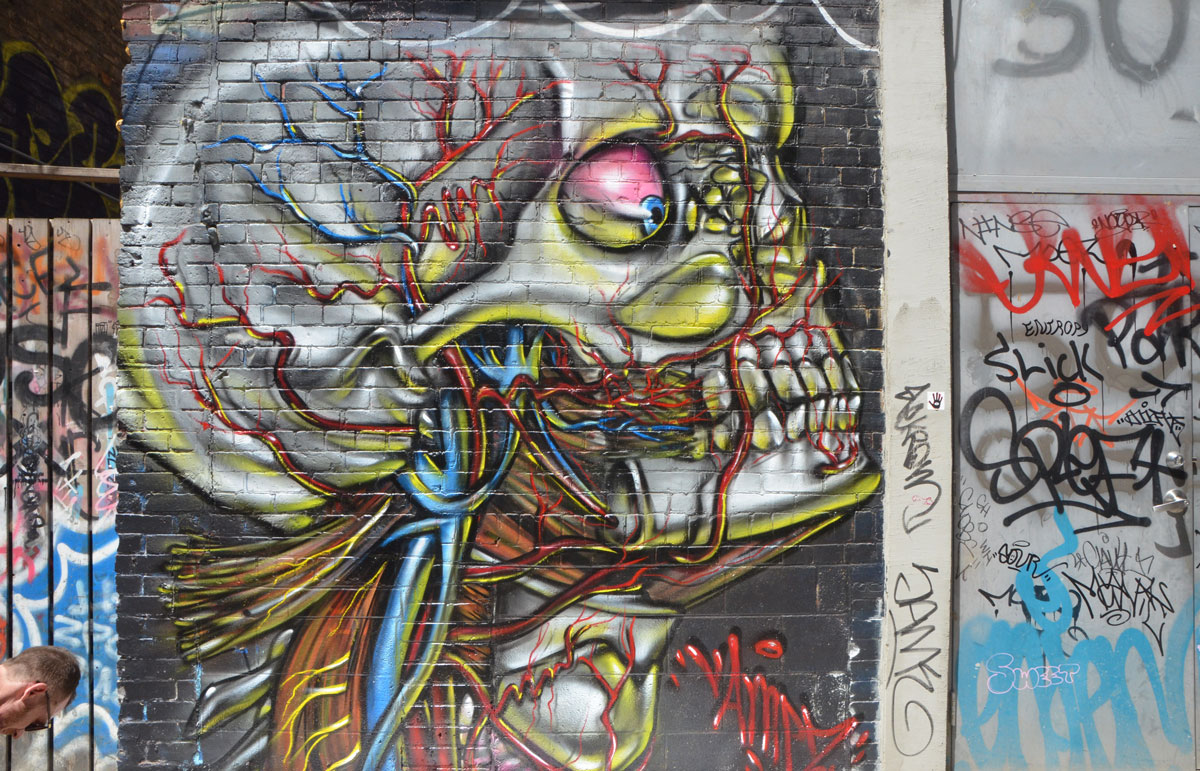
Today’s blog starts with an anatomy lesson as illustrated by vampz on a wall in Graffiti Alley – the arterial and venous blood flow of the head and neck.

street art painting of a larger than life, realistic depiction of the blood supply to the human head. Skull with eyeball, teeth, some neck muscles as well as arterial and venous blood vessels. In profile.

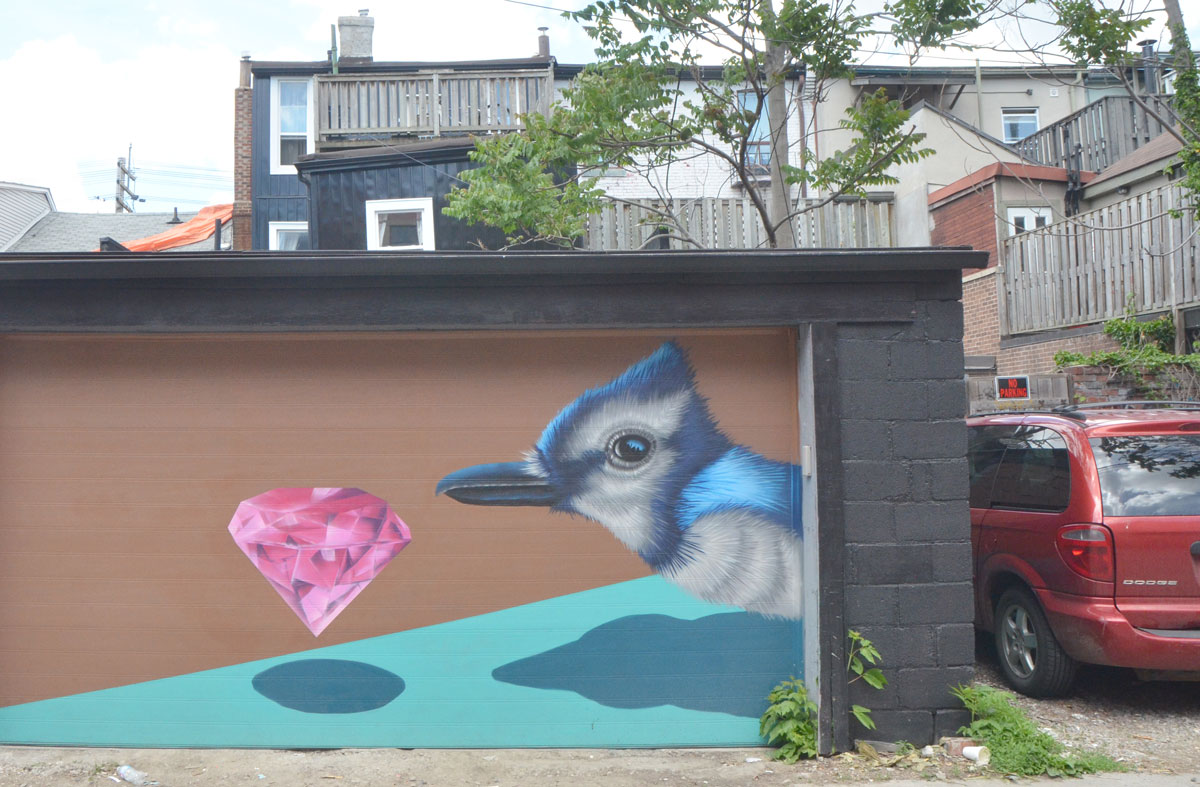
I walked the alleys behind Queen St West today to see if there was anything new.  The biggest new pieces were the above head and a new birdo creation, pictured below.  A realistic looking blue jay and a floating pink gem.

a garage decorated with a mural by birdo, of a realistic blue jay and a pink cut gem floating in front of the bird.

  below: The back part of the blue jay is on the side wall of the garage
which produces an interesting 3D effect.

a garage decorated with a mural by birdo, of a realistic blue jay and a pink cut gem floating in front of the bird. The front part of the bird is on the garage door and the back part of the bird is on the side wall.

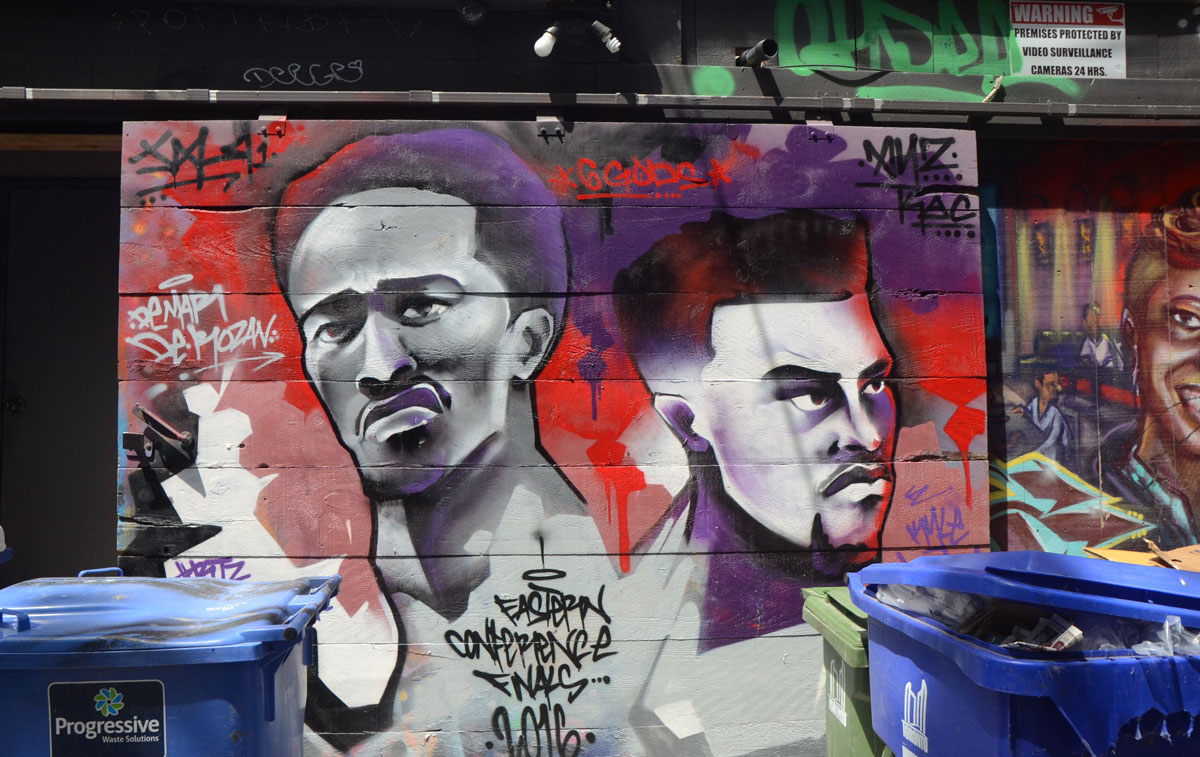
below: This tribute to the basketball Raptors and their appearance in the 2016 Eastern Conference Finals is also a new addition.  DeRozan is pictured on the left and my apologies for not knowing the player on the right.  Unfortunately, it was too close to garbage day and the bins were overflowing so I couldn’t move them out of the way.  Next time.

streetart mural in tribute to Toronto Raptors basketball team and their presence in the Eastern Conference Finals in 2016. The heads of two black basketball players on a red and purple background.

below: And unfortunately, garbage was an issue today.

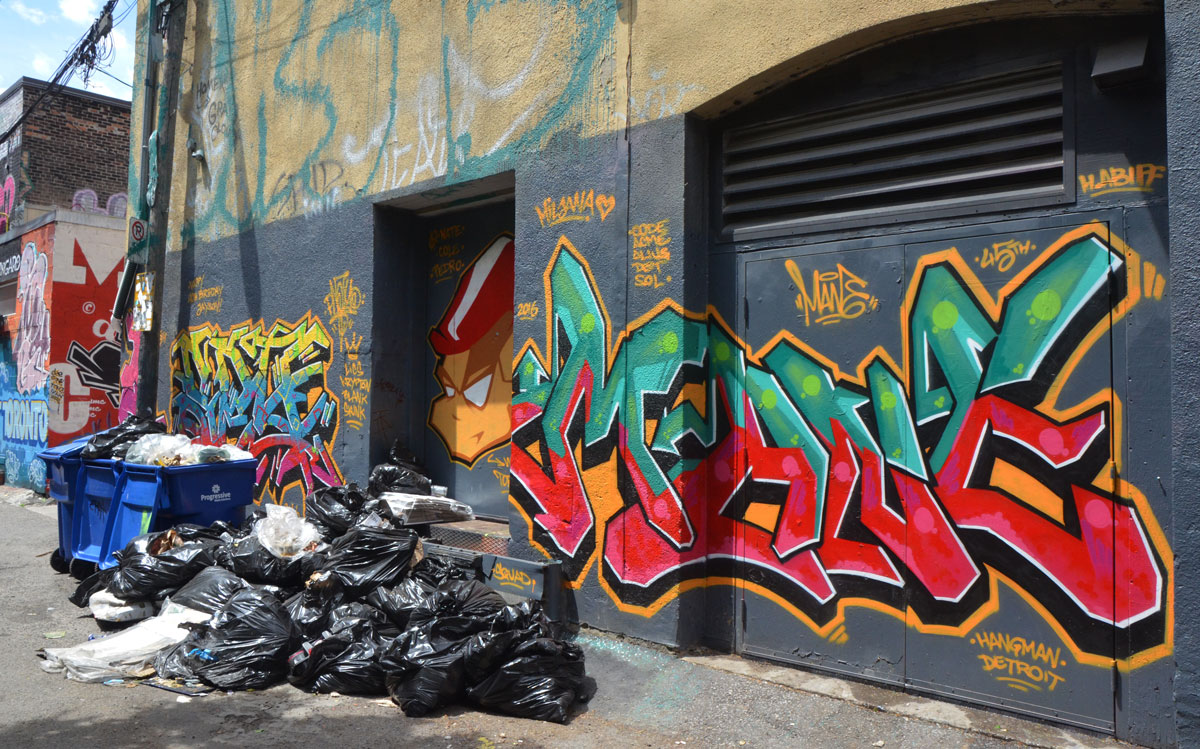
a bin of garbage plus a pile of garbage bags in front of a street art piece, a face and a tag in green and red, signed hangman, detroit.

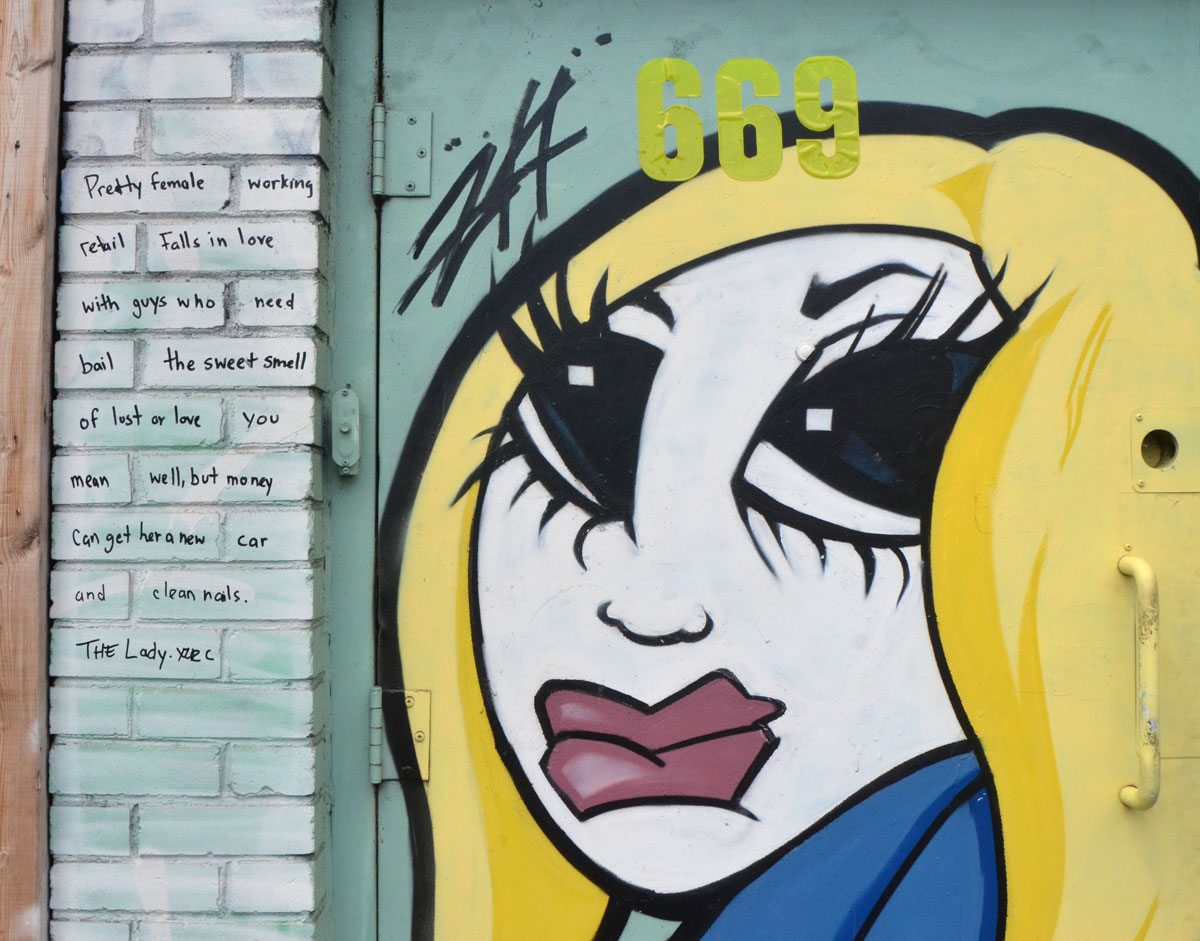
below: The face isn’t new to the alley, but the words are.
Written by a woman with priorities!

Pretty female working retail falls in love with guys who need bail
the sweet smell of lust or love
you mean well, but money can get her a new car and clean nails.
The Lady”

number 669 in lime green letters above a stylized woman's face with yellow hair and a blue top. Someone has written words on the brick wall beside the painting.

below: Love Department featuring Phoebe.
You can find more of her on instagram @phoebenewyork

A little paper paste up of a large headed girl with black hair and a large red heart on her head. on a pink background with the words Love Department. Stuck on a garage door painted in pink and blue shapes

below: Even a simple smile will do most of the time.

under the rusted metal of a wire grill over a window, on a wall that was painted in black and orange street art, there is a small white line drawing of a girl's head

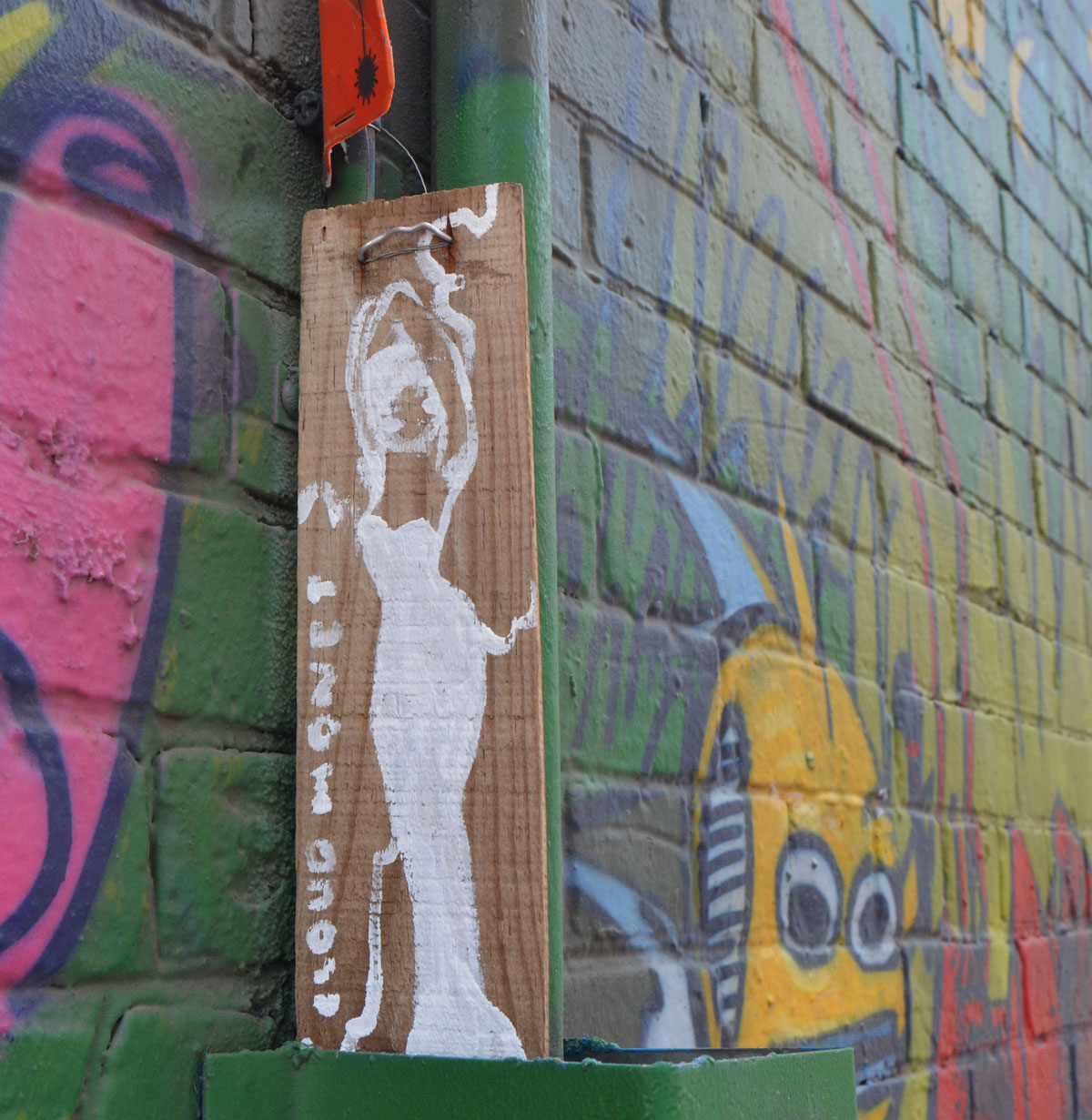
below: Cloud Monet and the woman in white, or Who you lookin’ at Mr. Fish?

small vertical drawing of a woman, drawn in white, wearing a long form fitting dress, standing, on brown, tied to a wall with a mural laready painted on it.

a painted piece of street art has been partially covered with many vertical lines in black marker, producing an interesting pattern over the colours below.

Three hinges have been bent forward so they are flat, multicoloured graffiti behind them, words written on the hinges except for the bottom one which has a question mark on it.

below: A couple of stikmans.  No anatomical realism here!

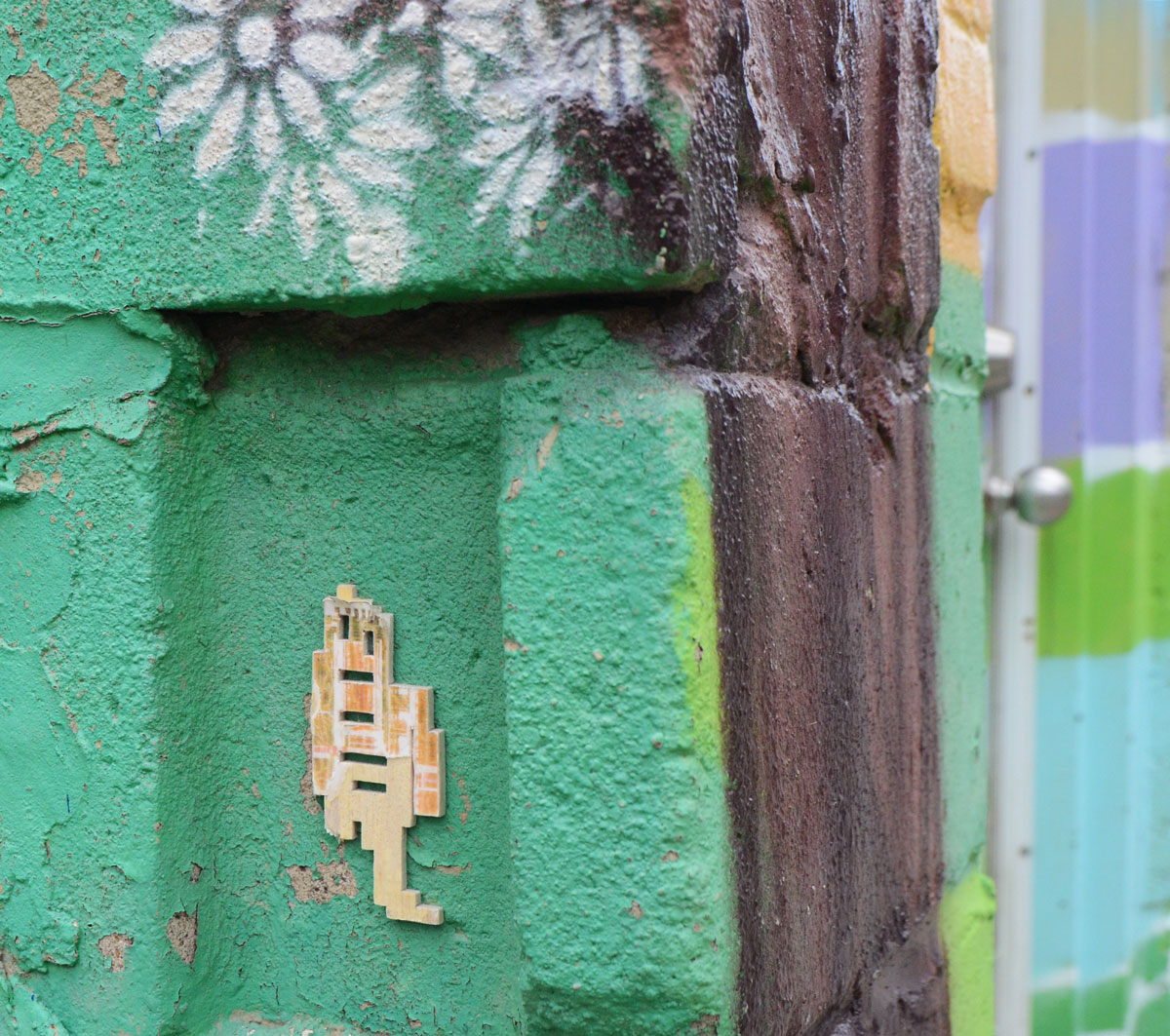
a little wooden stikman with only one leg on a green concrete block wall, with white stencilled daisies above him, street art in an alley

a very pale blue stikman on a very pale blue window and wall.

below: A bit of mystery.  I’m not sure if it’s a stikman or if it’s a newcomer to the alley

orange coloured stikman, double, foot to foot, in a pink wall with foam insulation on both sides of him

below: Pull up a seat and rest a bit, we’re almost done.

cast off furniture in a lane, two chairs, a TV, a small yellow set of drawers, a mop,

below: The final words on today’s walk.  Someone’s not happy!

graffiti wods on a red and white wall, "Graffiti Sucks"

A sweet post.

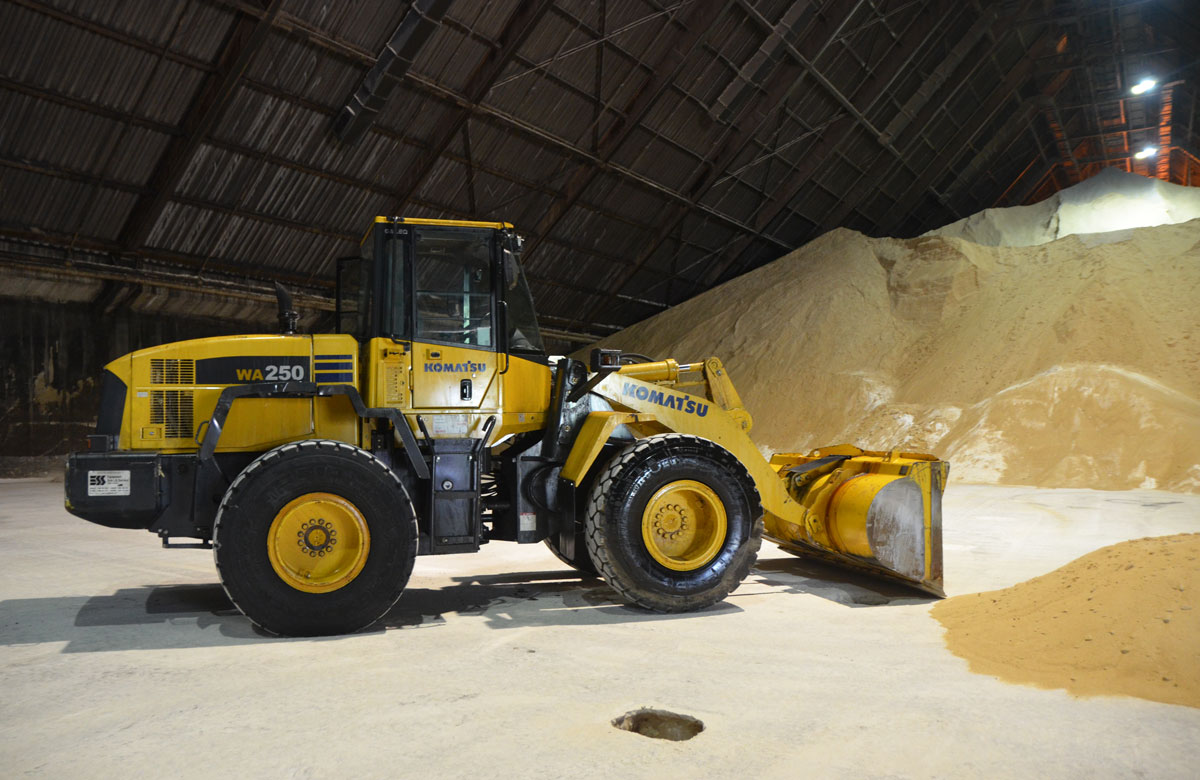
This is what 37,000 tons of raw sugar looks like.
The Raw Sugar Shed at Redpath Sugar is 27m high,  155m long, and 43 m wide.  It’s a big space!

a man is leaning on a temporary metal barricade in front of a very large pile of raw sugar in a large warehouse.

Raw sugar is brought to the Redpath Sugar facility by ship.  When it is off-loaded from the ship it is brought into the warehouse by conveyor belts that run down the middle of the ceiling.

below: There isn’t a ship in the harbour at the moment so the green crane waits.

a little girl in the foreground, standing beside a squared opening in the harbour for ships to come in, beside the Redpath Sugar refinery building on the waterfront with its green cranes and greenish blue building

below:  You can see a holes in the foreground of the next photo.  This is one of many holes in the floor of the Raw Sugar Shed.  The raw sugar is pushed through these holes to another series of conveyor belts below.

a large yellow front end loaded is parked inside a warehouse. A large pile of raw sugar is in the background.

three warning signs on the outside of a door of the Redpath Sugar shed, a warehouse for storing raw sugar. One says "Beware of Heavy Equipment", the second says "Sound horn before entering" and the third says "Canadian Government Customs Bonded Warehouse no. 60"

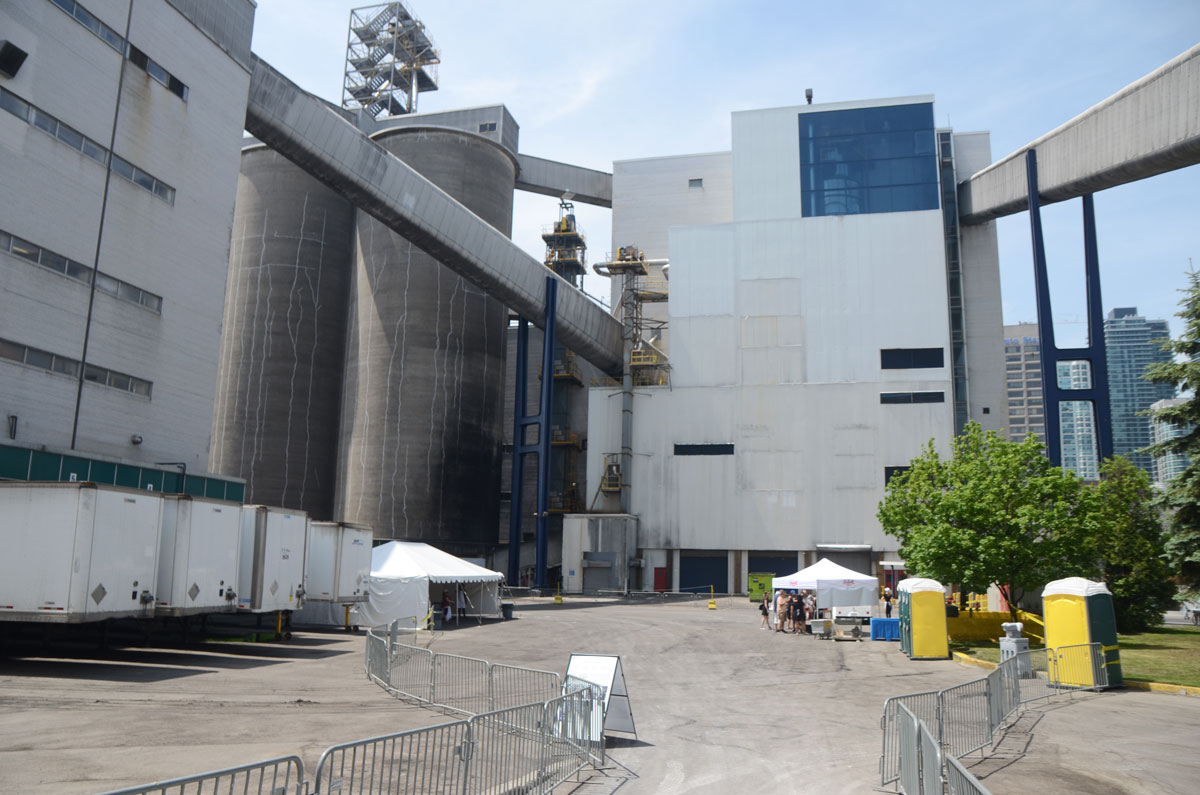
below: Photo taken from the entrance to the Raw Sugar Shed, taken at Doors Open.  Raw sugar is taken by conveyor belt (upper far right) to the processing plant next door.

sugar processing area of Redpath Sugar refinery, some white tents and metal barricades for crowd control as it is Doors Open day.

close up of the white Redpath Sugar processing plant, grey metal covers on conveyor belt tunnels and vents

below: A lingering remnant, railway crossing signs from when a railway ran here.
A guard sits by the entrance to Redpath Sugar.

a wire fence with barbed wire across the top, behind the fence is round yellow railway crossing sign as well as a large blue metal pole and a small shrub. There is also an old warning sign for a railway that once ran past here.

The railway serviced the industries that were built along the Toronto waterfront,  The LBCO, Loblaws, the ‘Toronto Star’ newspaper, Molson Breweries, Dominion Malting and others, relied on the railways.   Completed in 1959, the Redpath refinery was the last industry built along the waterfront.  You can just see the railway tracks in the photo below, running between Queens Quay East and the Redpath building where they dead end.  Since the tracks only dead ended there in 1985, that helps date the picture.   Rail service ended in 2008.

aerial view of the East Wharf portion of the Toronto wateterfront, vintage photo from the 1970's or 1980's

photo credit: Originally from City of Toronto Archives but found online at Old Time Trains.

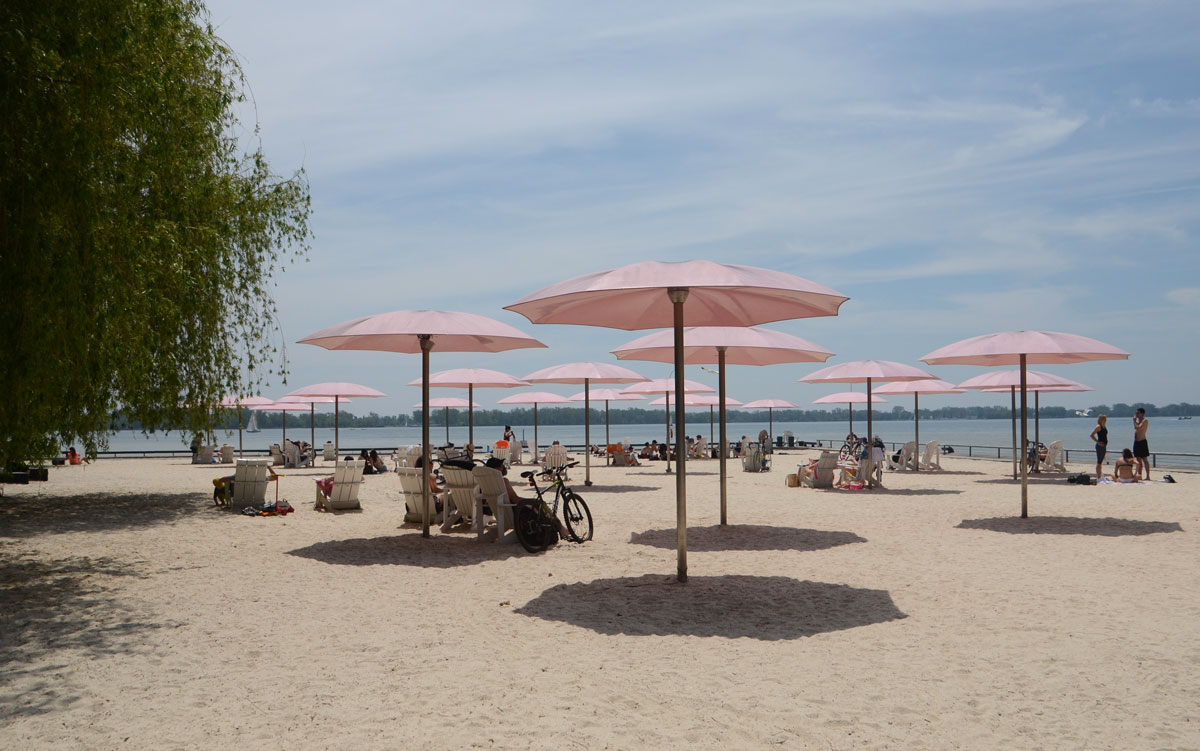
Today, Redpath Sugar is one of the last industries operating on the waterfront; The area around it is rapidly being redeveloped, including the space right next door that is aptly called Sugar Beach.

people sitting on white chairs under pale pink umbrellas at Sugar Beach. sand, water and blue sky, beside Lake Ontario

a man sits on a chair between a blue shipping containter and a building,

redevelopment

Posted: May 27, 2016 in general Toronto

Hi!

I haven’t blogged much this week because I have been busy redesigning my website, As I Walk Toronto.  It is now online.  I still have photos to add to it, but I think this version of the site provides a better foundation on which to grow.

All feedback is welcome!  If you find any links that don’t work, please let me know.

Thanks


Well, this May 2 4 weekend has been splendidly sunny and fabulously warm!  I hope you’ve had the chance to take advantage of it, whether sitting on a patio with a cold drink and friends, or out enjoying the the greenness that has bloomed all around us.   It’s been a great few days to get up close and take a good look at nature.

looking down at a piece of concrete at water's edge, in the concrete is a cut off hollow pole, there are pebble and water in the hole.

below: Old moss covered metal seems to reach out of Lake Ontario like claws.

old bent metal embedded in concrete but partially inderwater. Moss is growing over it and making it look green

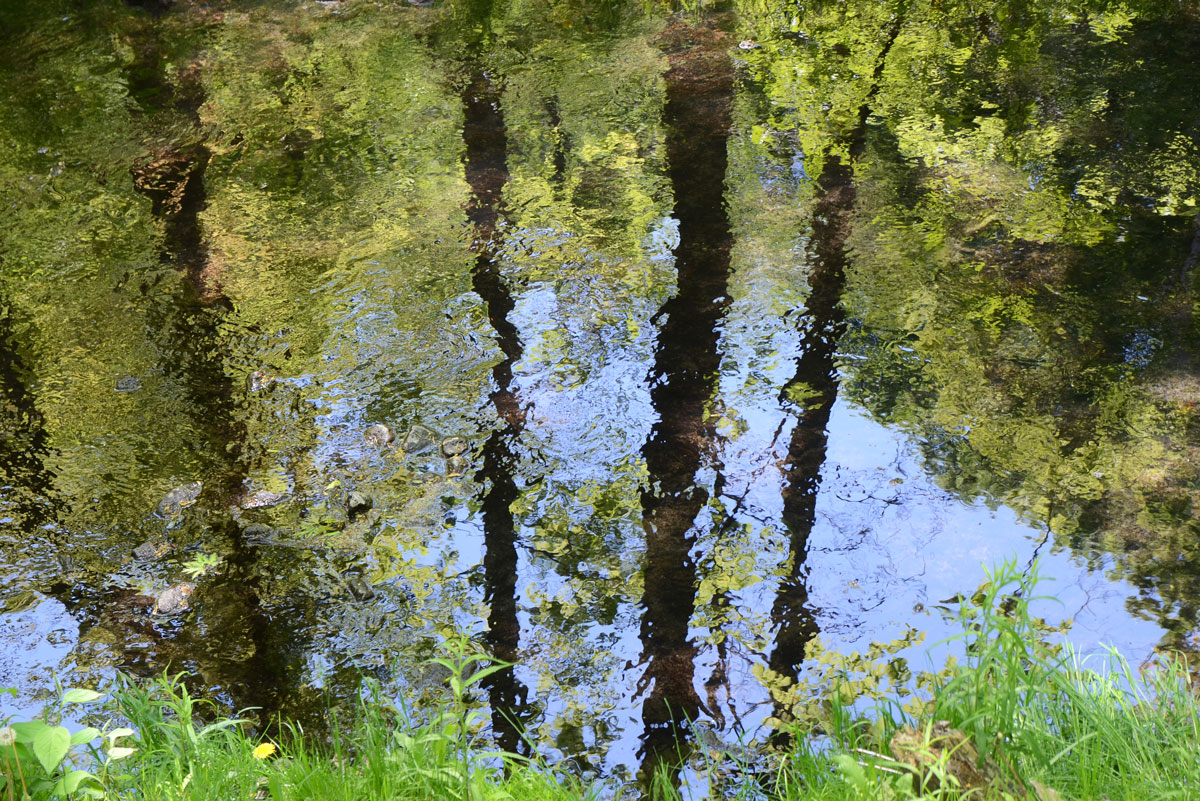
below: Reflections in the Yellow Creek, Beltline trail.

reflections of trees and blue sky in a creek, blue water, dark brown tree trunks and mottled greens of the leaves, in a ravine, in the city

below: Wet pebbles with the beginnings of green moss growing on them shine in the morning sun.

pebbles in greys and browns in the water near the shoreline of Lake Ontario. The pebbles closest to the shore are bright green with the beginnings of moss growth

below: Greater celandine, a yellow flowering plant, blooms along the railing of Milkmans Lane.

yellow flowers in bloom in the ravine, against a railing post, with shadows cast on the wood, large green leaves

below: New growth unfolds in the sunshine.

small maple tree with lots of new red leaves that have just come out. Grey rocks blurry in the background

below: The dark pink blossoms were at their peak this week.

 many pink blossoms on the branch of a tree

below: Green and brown mosses sway with the water currents along the shore of Lake Ontario.

looking in the water beside some rocks. There is moss and algae in green, yellow, rust and brown swirling in the water of Lake Ontario

the end of a shovel is in the ground, behind a chainlink fence. The sun is shining and making reflections. The reflection of the chainlink fence is on the shovel.

below: The snow fences have been bundled up and put away for the summer.

rolls of wood slat snow fences bundled away for the summer in large rolls. 4 rolls viewed from the end.

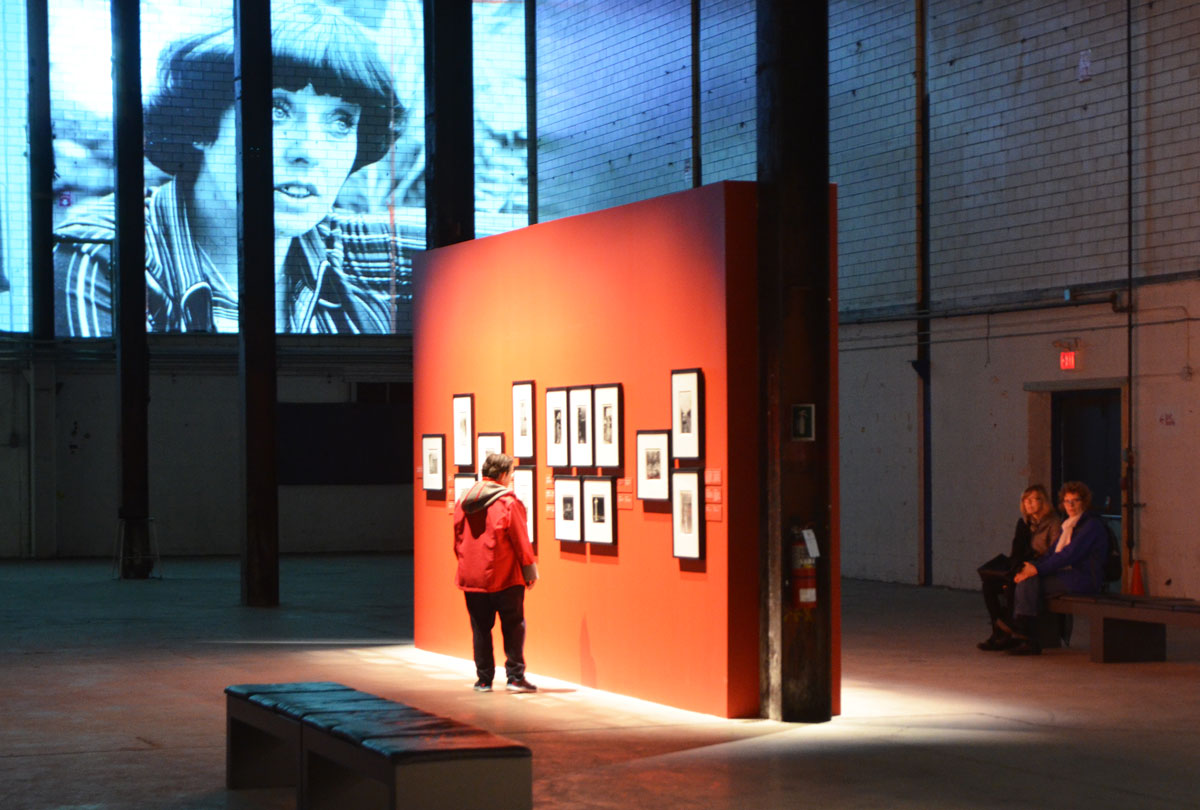
‘Cutlines’, an exhibit of old photographs from the Globe & Mail,
part of the CONTACT Photography Festival

people standing in a large room, the old Press Hall at the Globe and Mail newspaper, looking at an exhibit of old photos. Some photos are being projected onto a wall

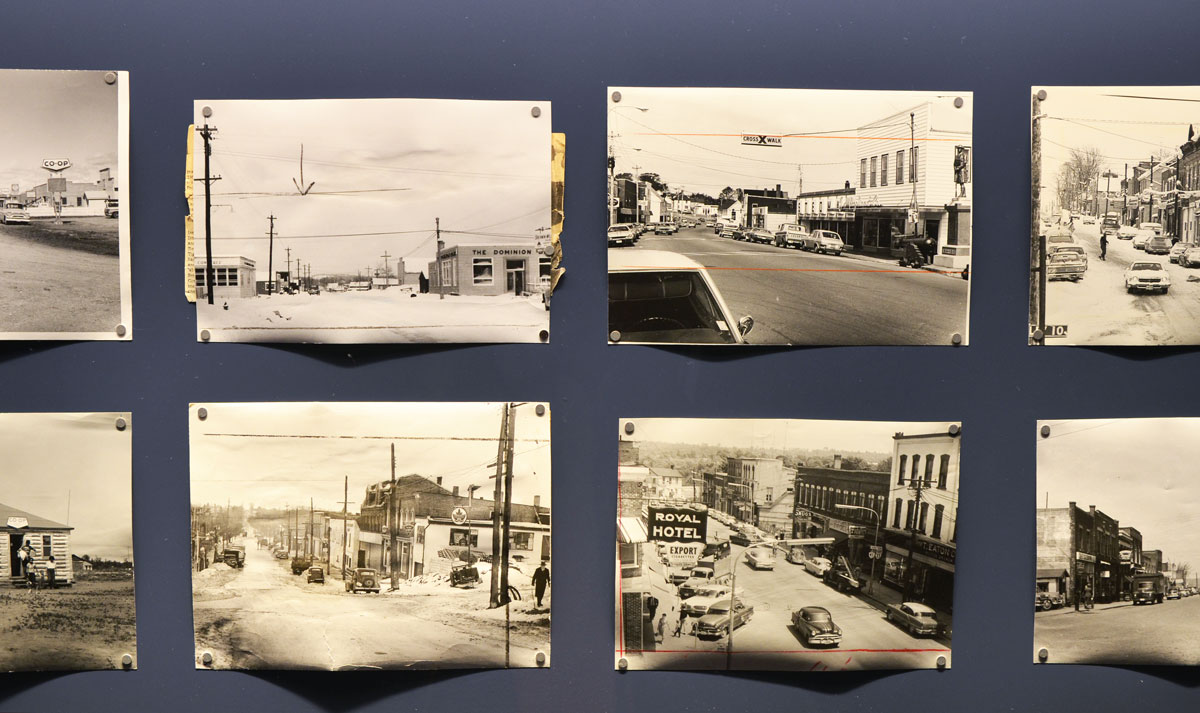
below: A small sample of the 175 vintage black and white photos from the vast collection held by the Globe and Mail newspaper on display.

old photographs, black and white, of small towns, in a display case, as part of an exhibit called Cutlines, old photos from the Globe and Mail collection

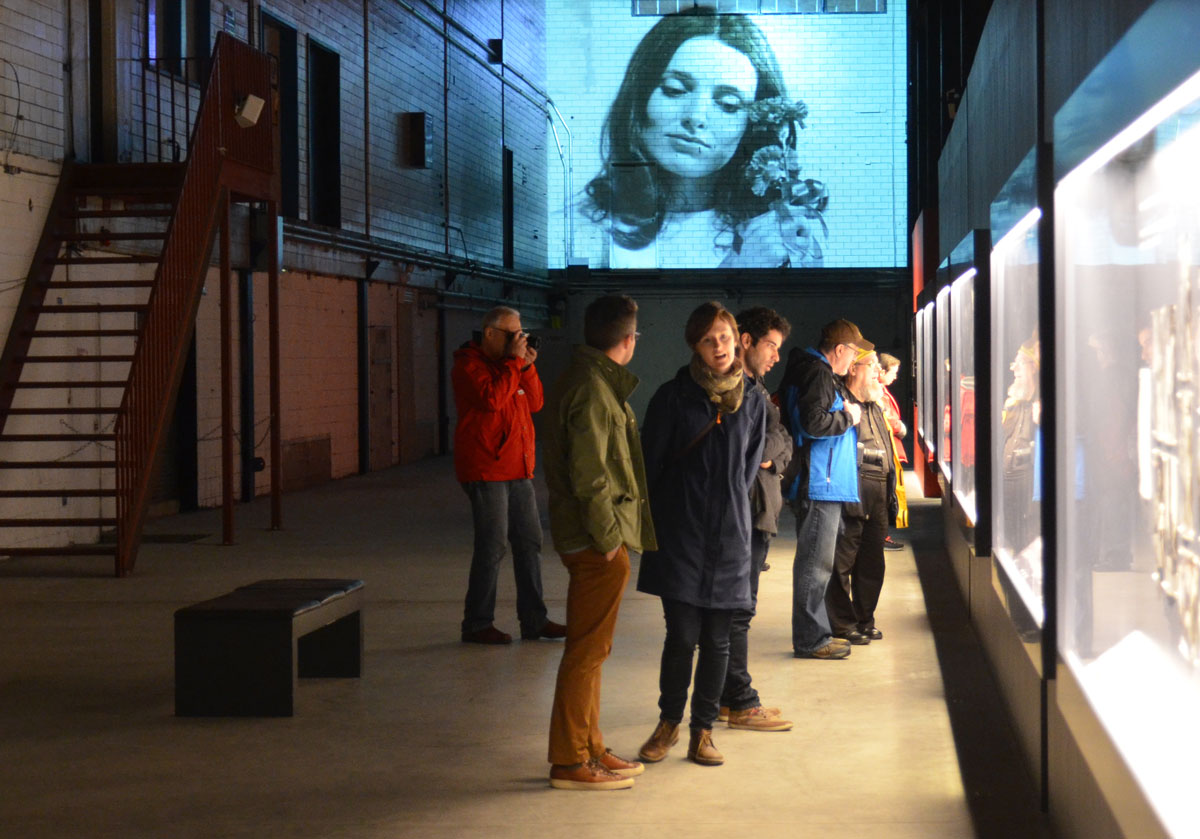
below:  The exhibit is being held at the Press Hall on Wellington Street (near Spadina).  This old building is slated for demolition in the near future as the Globe and Mail is in the midst of moving to a new home.  Prints were in cabinets in the center of the room while other images were projected high on the walls.

people standing in a large room, the old Press Hall at the Globe and Mail newspaper, looking at an exhibit of old photos. Some photos are being projected onto a wall

The Globe & Mail has amassed a collection of about 750,000 photographs.  As they transition from print to digital images, they are ‘cleaning house’ with respect to their photo archives.  About 100,000 of the prints are going to be digitized and a portion of those donated to the new Canadian Photography Institute at the National Gallery of Canada in Ottawa.

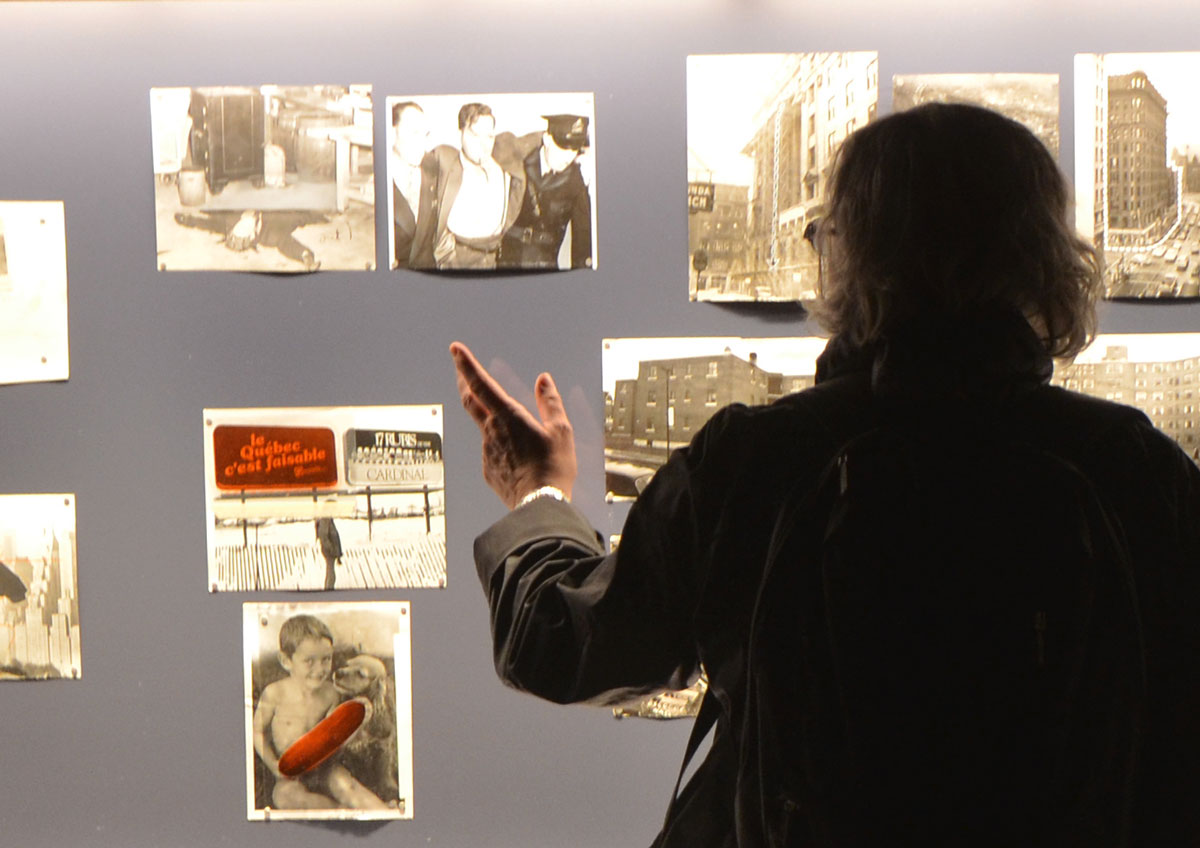
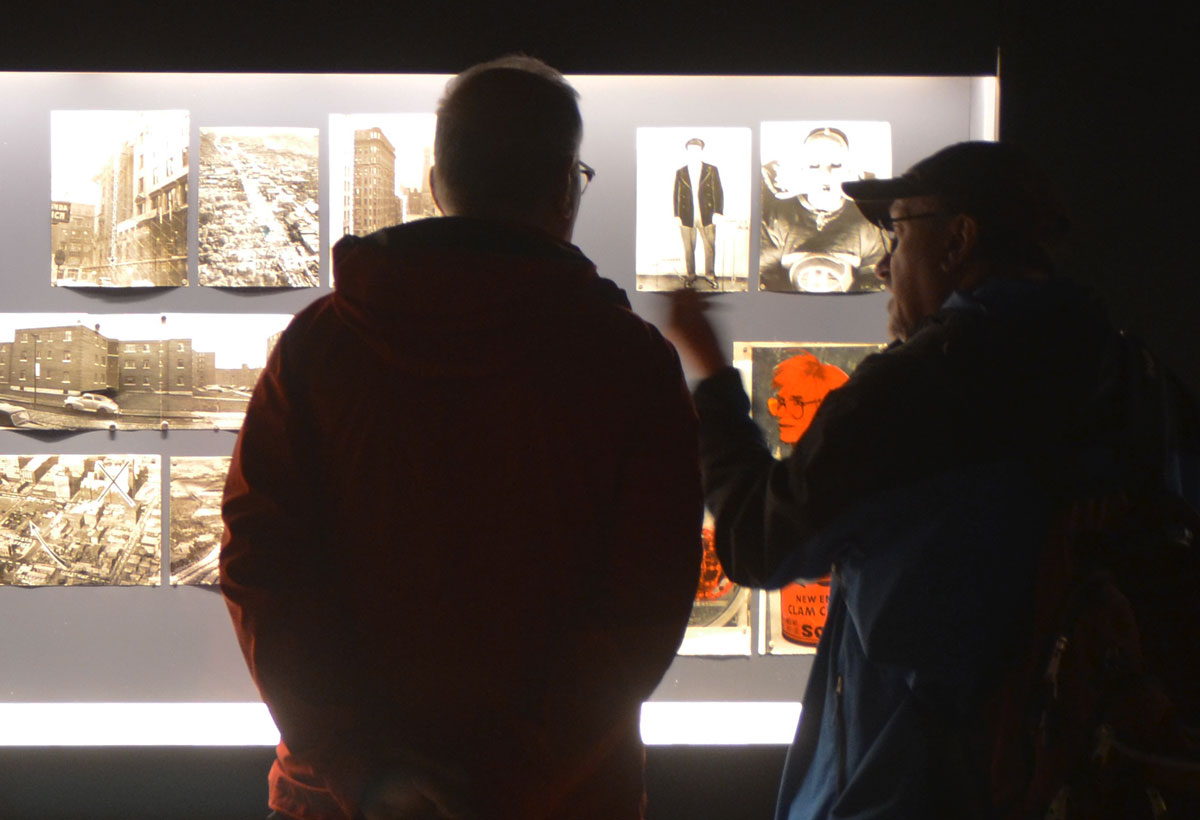
below: Some of the pictures were covered with red, with what is known as a rubylith mask.  When the images were printed, the portions covered in red remained as they were while the rest of the picture could be changed to suit the needs of the story of the day.

silhouette of a woman standing in front of a lit display case of old photographs

people standing in a large room, the old Press Hall at the Globe and Mail newspaper, looking at an exhibit of old photos. Some photos are being projected onto a wall

people standing in a large room, the old Press Hall at the Globe and Mail newspaper, looking at an exhibit of old photos. Some photos are being projected onto a wall

people standing in a large room, the old Press Hall at the Globe and Mail newspaper, looking at an exhibit of old photos. Some photos are being projected onto a wall

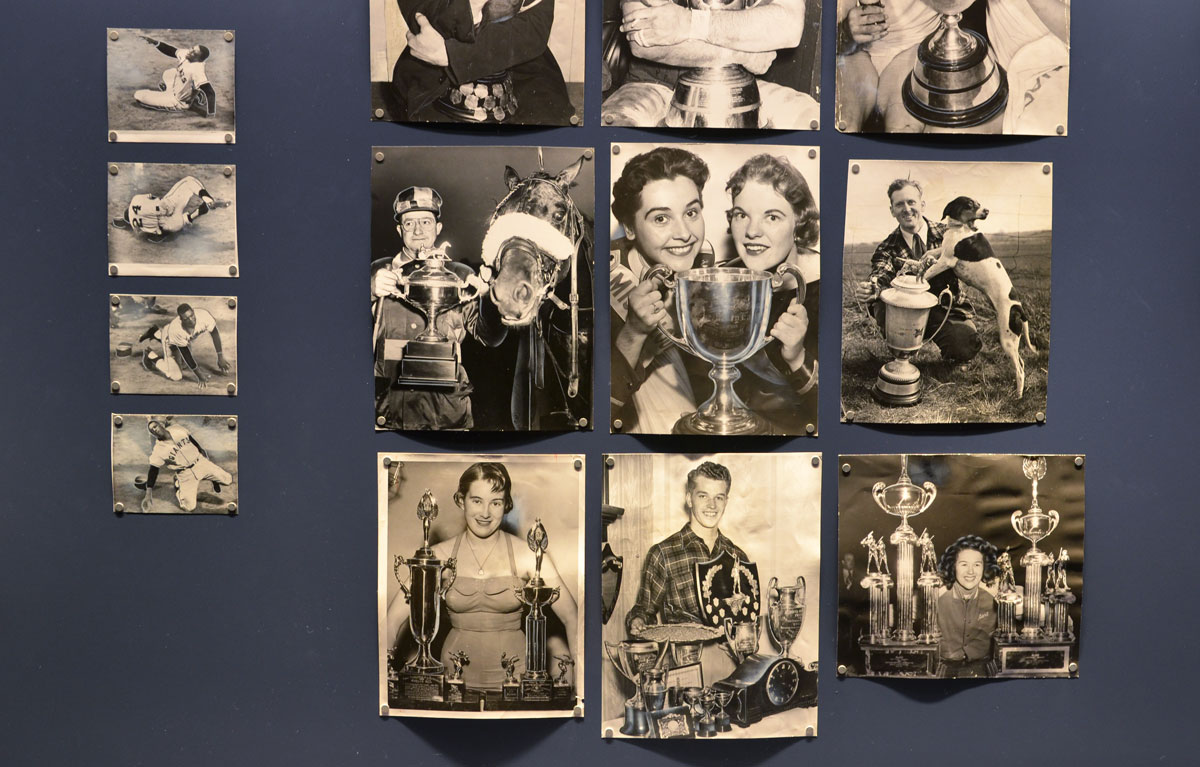
below: The woman with the two trophies, bottom left, is Marilyn Bell who swam across Lake Ontario.  I know that the man beside her is from a story about a cowboy championship of some sort in Calgary and my apologies for not remembering more of the details.

old photographs, black and white, of people with trophies, in a display case, as part of an exhibit called Cutlines, old photos from the Globe and Mail collection

silhouette of two men standing in front of a lit display case of old photographs

On view at 425 Wellington St. West until 26 June 2016

#CONTACT16

Spring is in the air. 

the word love is written in lights in capital letters in a window of a store. Reflected in the window is a group of older people sitting on benches across from the window

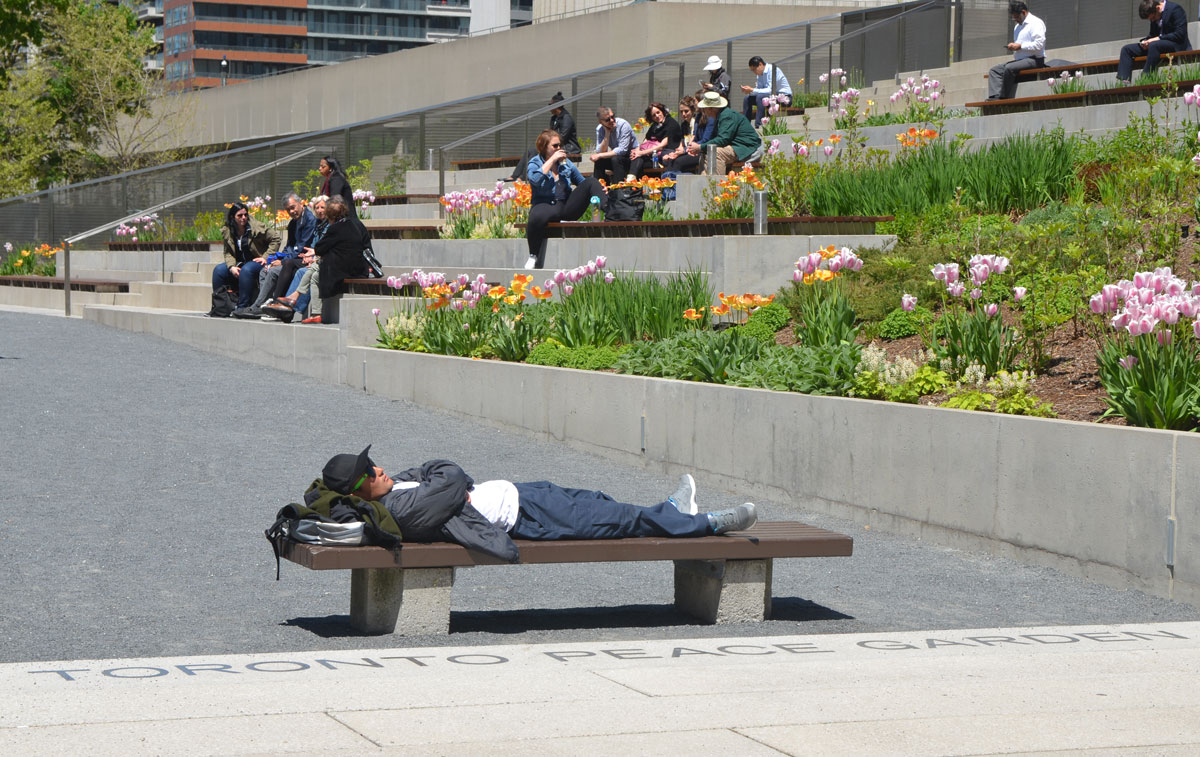
A young man is lying on a bench in the Toronto peace garden, the words of which are written beside him, metal inlay in the stone on the ground.

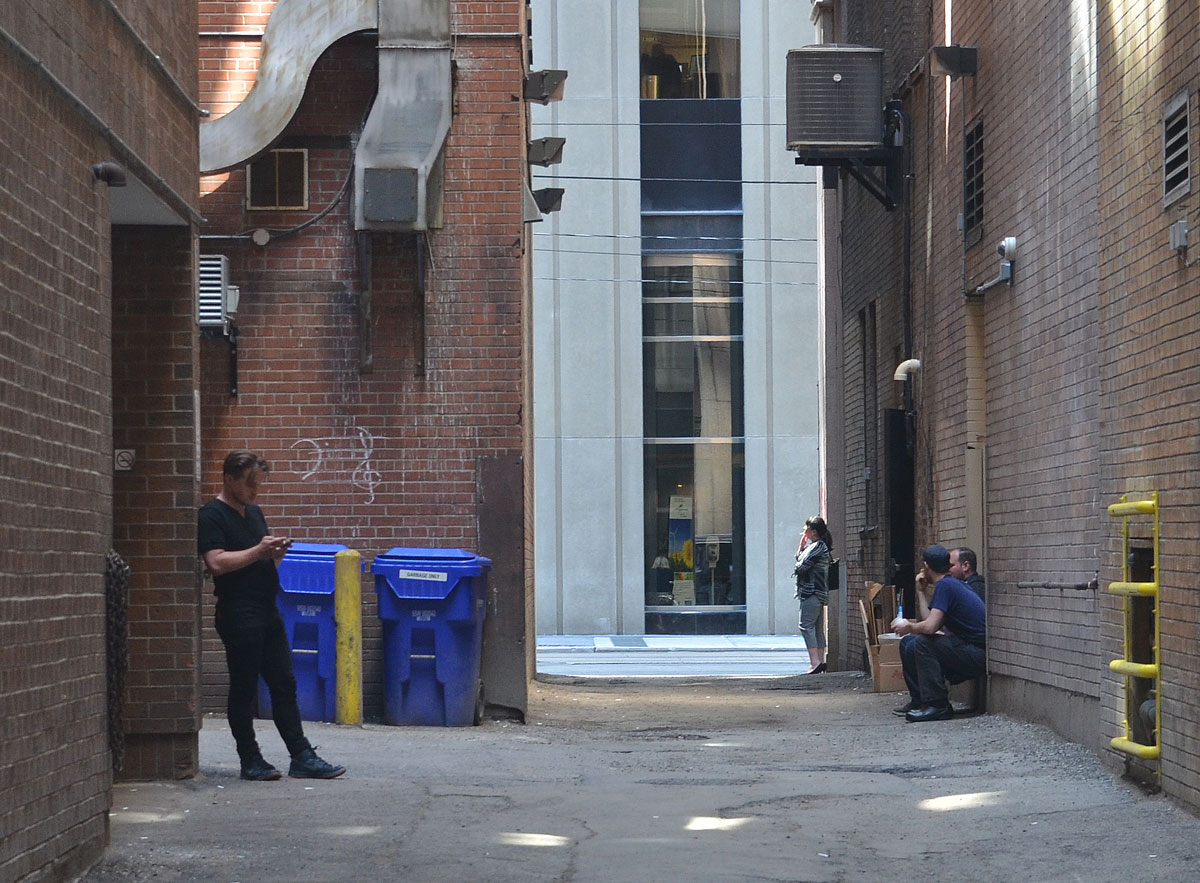
people sitting and standing in an alley, one man is on his cellphone, tall buildings on either side of the lane as well as at the end of the lane

A woman in black high heel shoes is sitting on a low stone wall outside. You can only see her from the thigh down. He legs are crossed at the ankle.

three people sitting outside, two men who are talking together and a woman who is sitting on her own, they are in a square and are surrounded by tall glass buildings, half in shadow and half in light

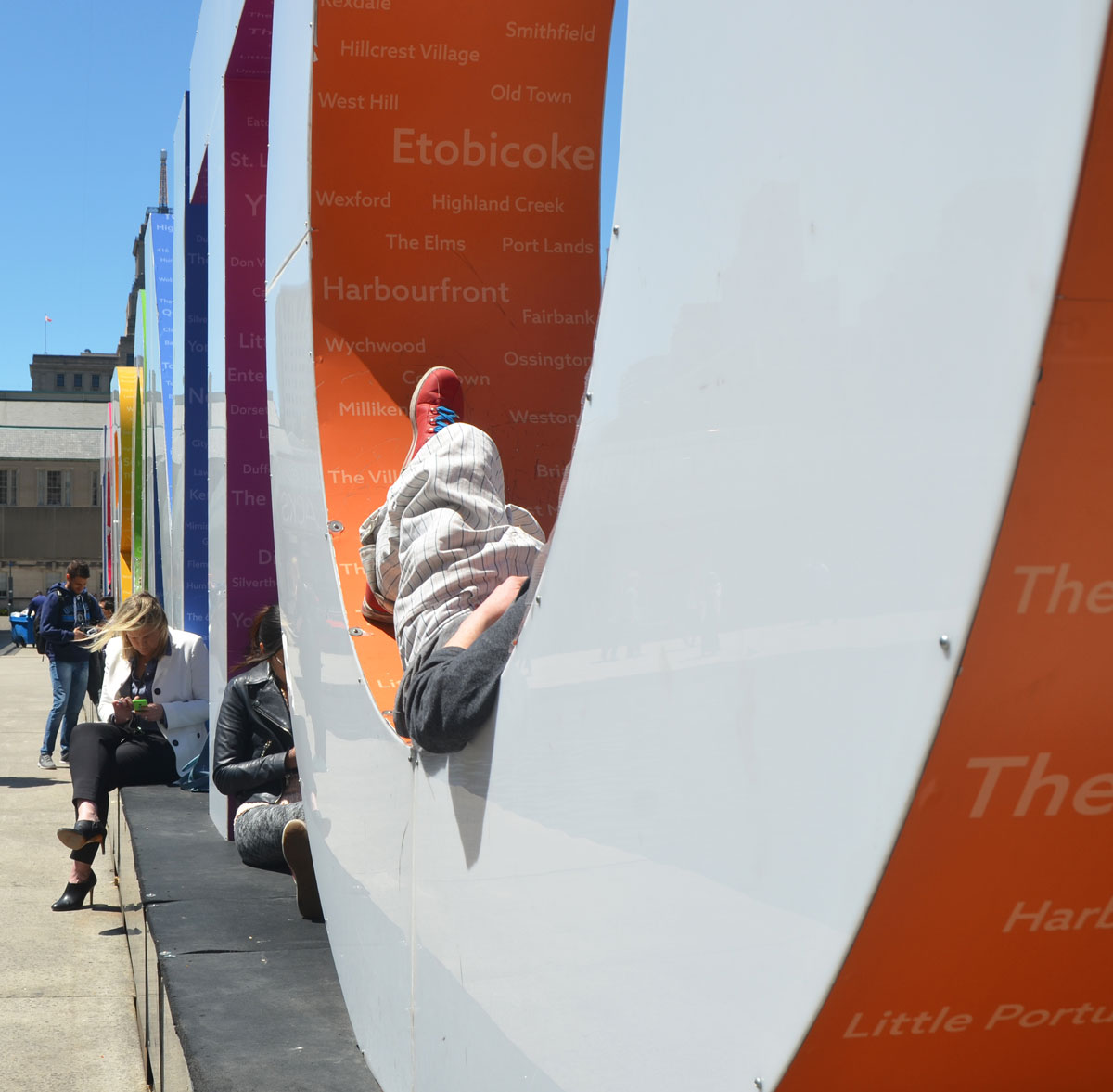
a young man is lying in the the O of the Toronto 3D sign. The O is orange, you can't see the man's face but you can see one red shoe and his light coloured pant leg.

blog_resting_O_toronto3D_sign

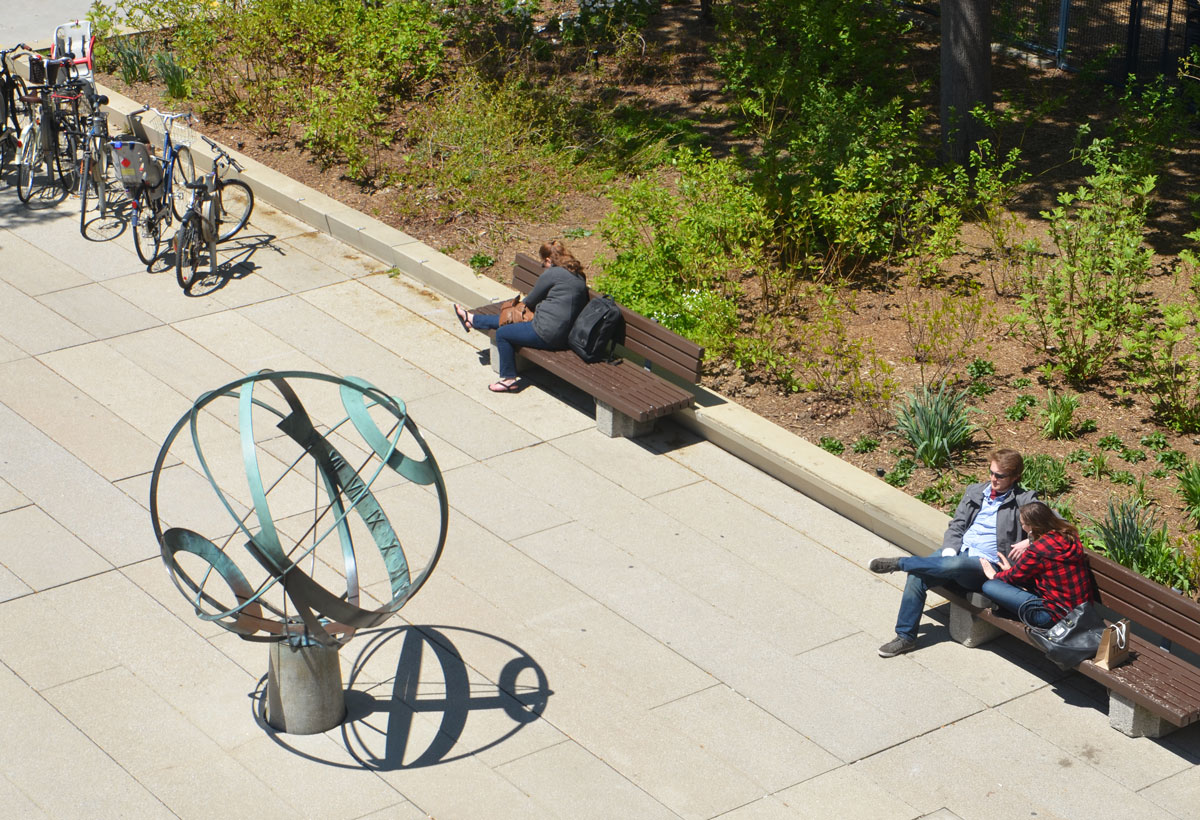
blog_sundial_nathan_phillips_square

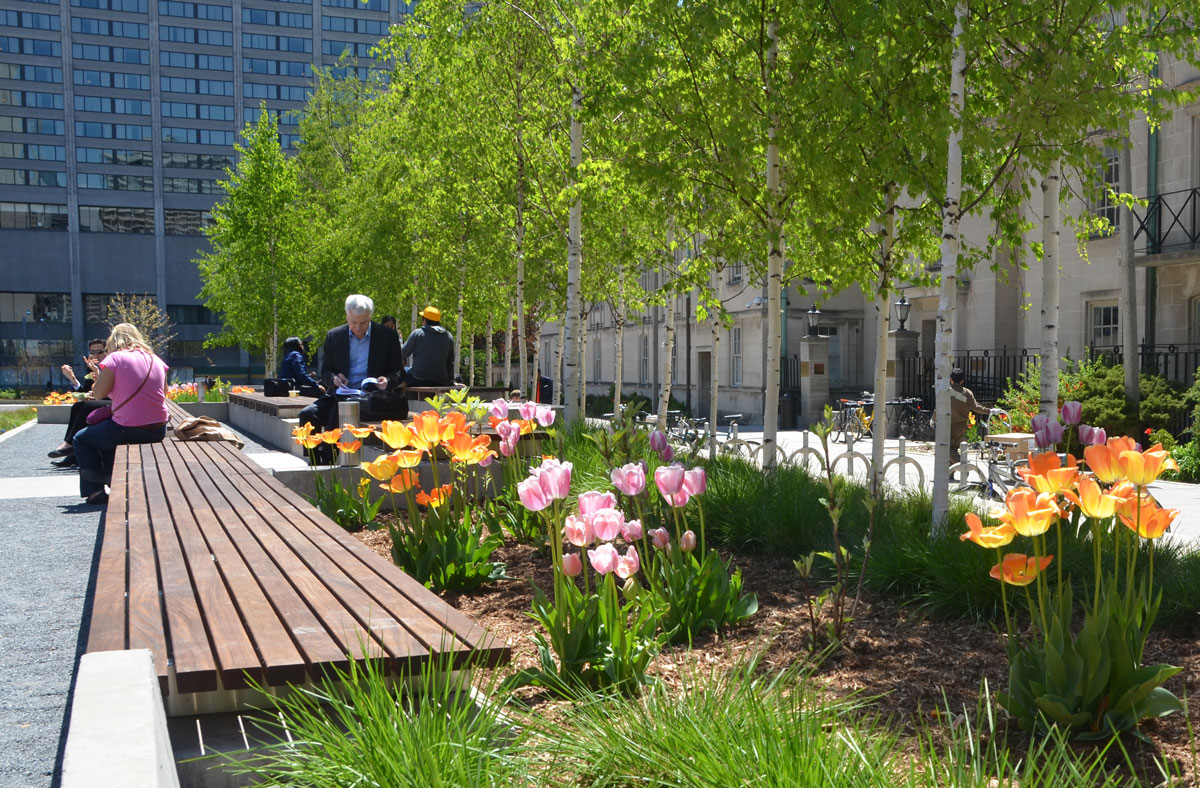
people sitting on benches amongst the tulips and birch trees of the peace garden at Nathan Phillips Square

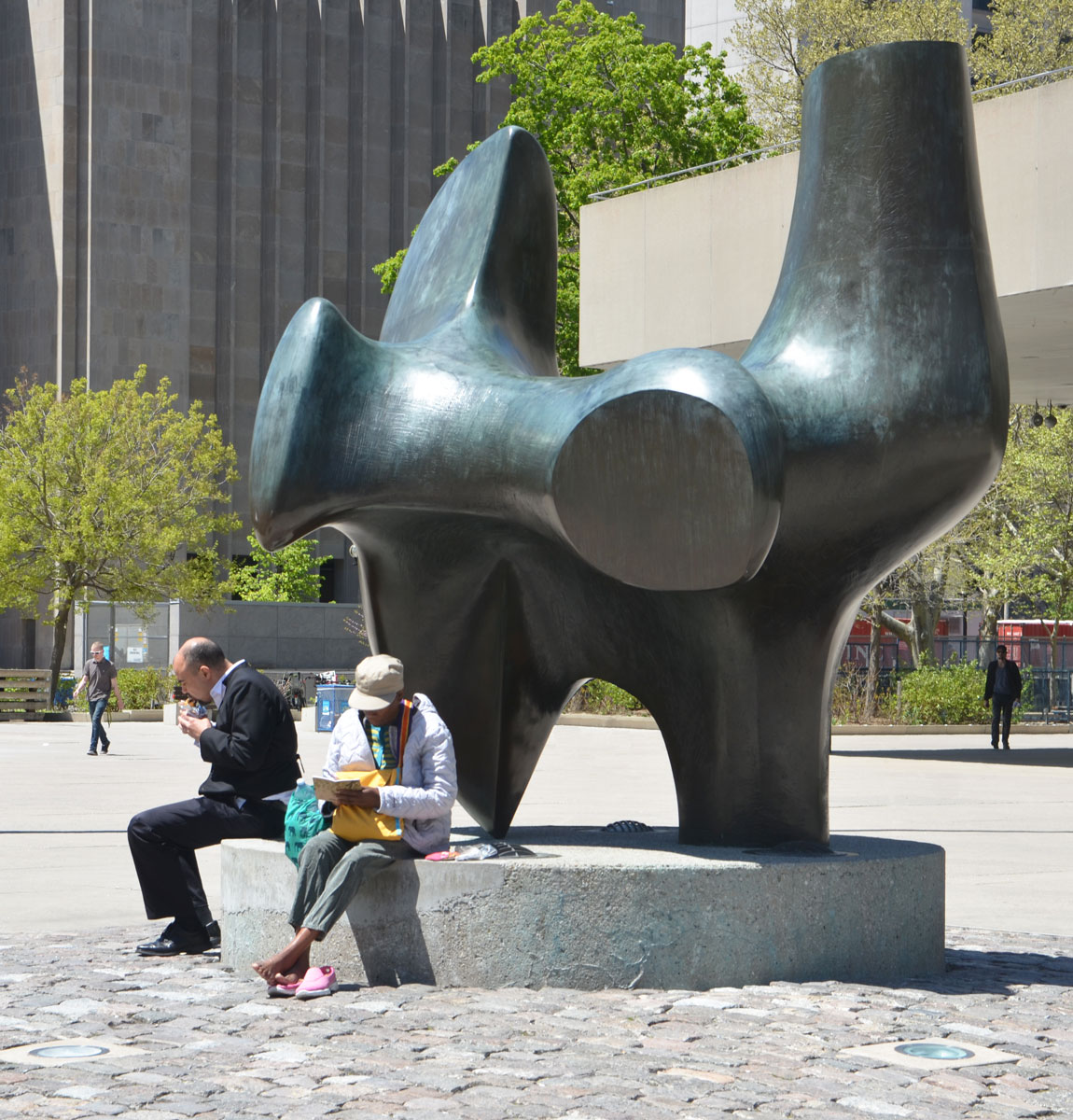
Two people sitting at the base of Henry Moore's 'Archer' sculpture at Nathan Phillips Square. One man is eating and the other is reading.

I’ll be lazing on a sunny
lazing on a sunny
lazing on a sunny afternoon.
(with apologies to Queen)

Canstruction is a non-profit competition where teams create sculptures of canned and packaged food that is then donated to food banks.  The event is held in many cities around the world including Toronto.  Since its inception in 1992, Canstruction has contributed more than 17.5 million pounds of food to food programs globally.

Planning for the 17th annual Toronto Canstruction began in January.  The “build night” where the teams come together to build the sculptures was held on the 16th of May at the Toronto Dominion Centre.  The sculptures are now in the many lobbies of the TD Centre buildings and they will remain on view until the 21st of May.  At that time they will be “decanstructed”.

A sample of this year’s entries:

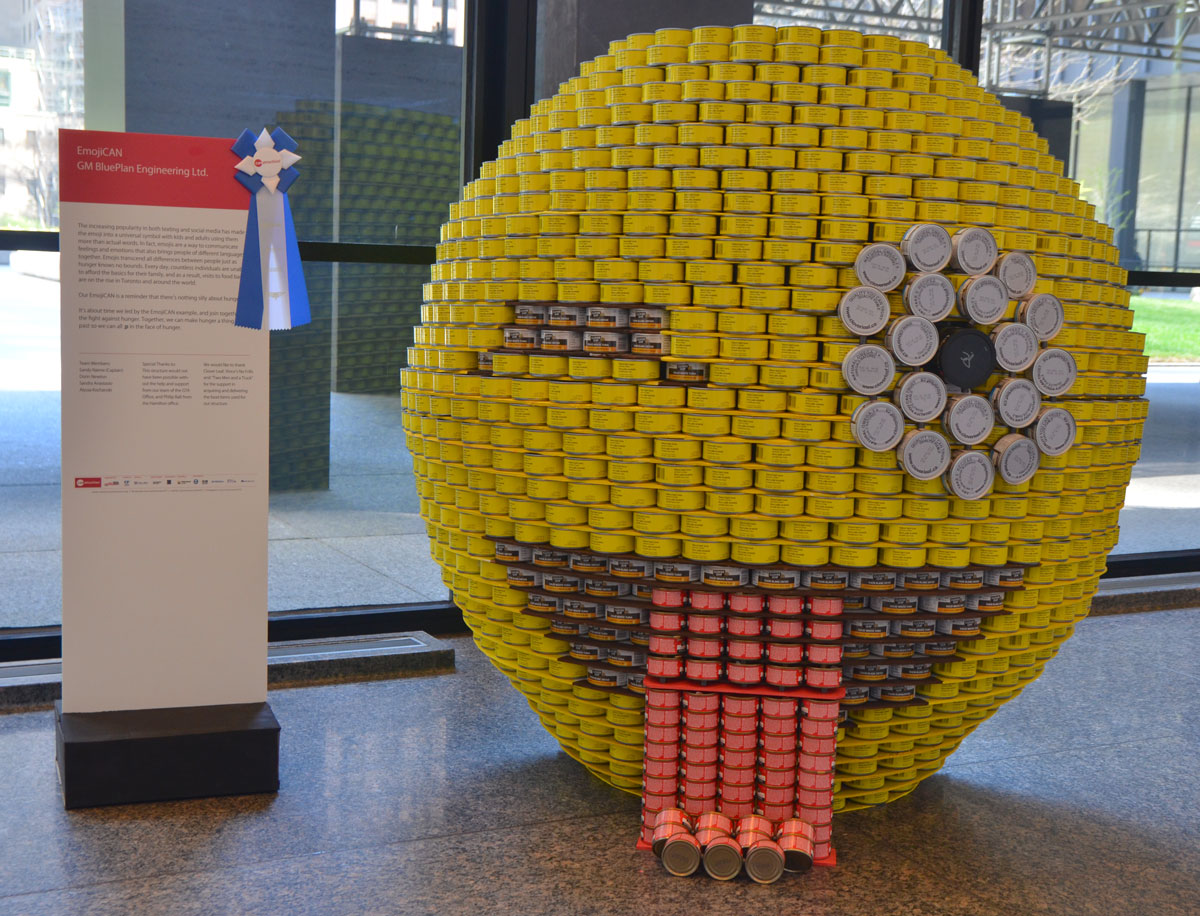
below: A winning emoji, ‘EmojiCAN’ built by GM BluePlan Engineering Ltd.  Emojis, the little symbols popularized by social media, understood by everyone no matter what language they speak.

made of canned food, a large yellow circle meant to look like an emoji, winking with it's tongue out. It's about 5 feet high.

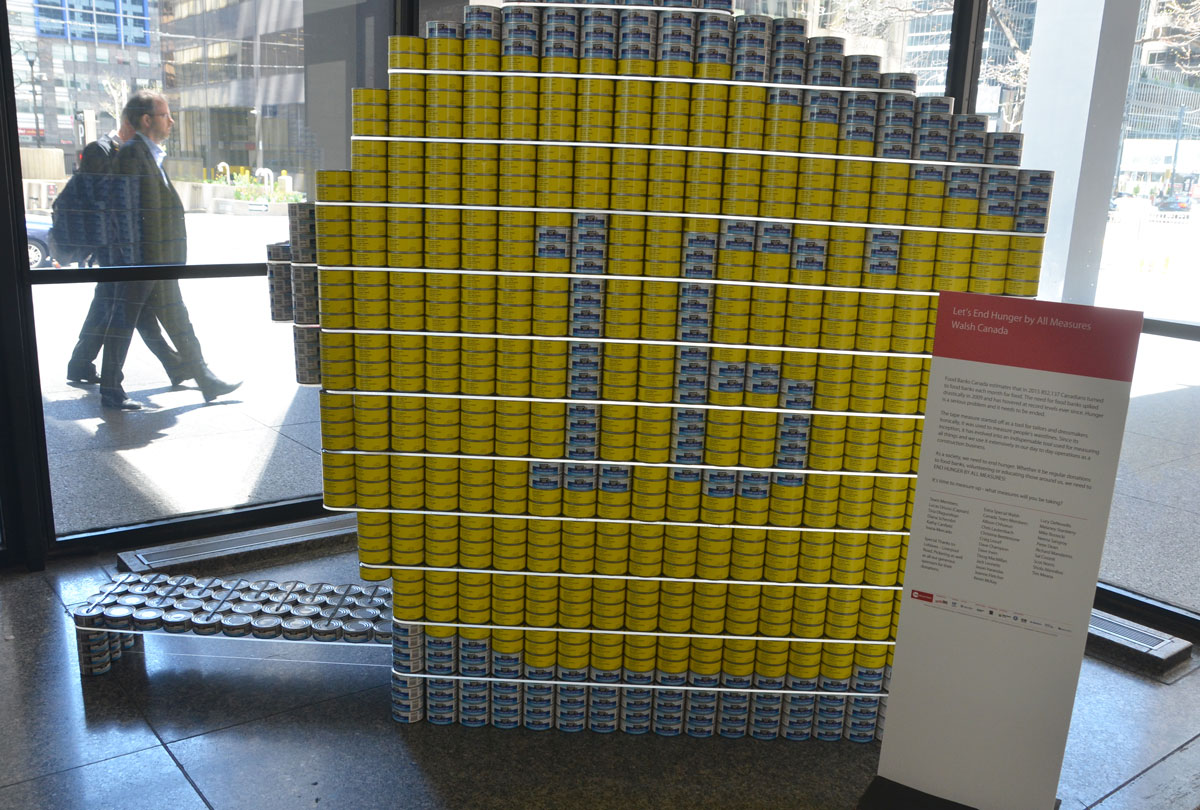
below: ‘Let’s End Hunger by All Measures’ by Walsh Canada. “Food Banks Canada estimates that in 2015 852,137 Canadians turned to food banks each month for food. The need for food banks spiked in 2009 and has hovered at record levels ever since.”

a large measuring tape (round and yellow) made of tin cans full of food to be donated.

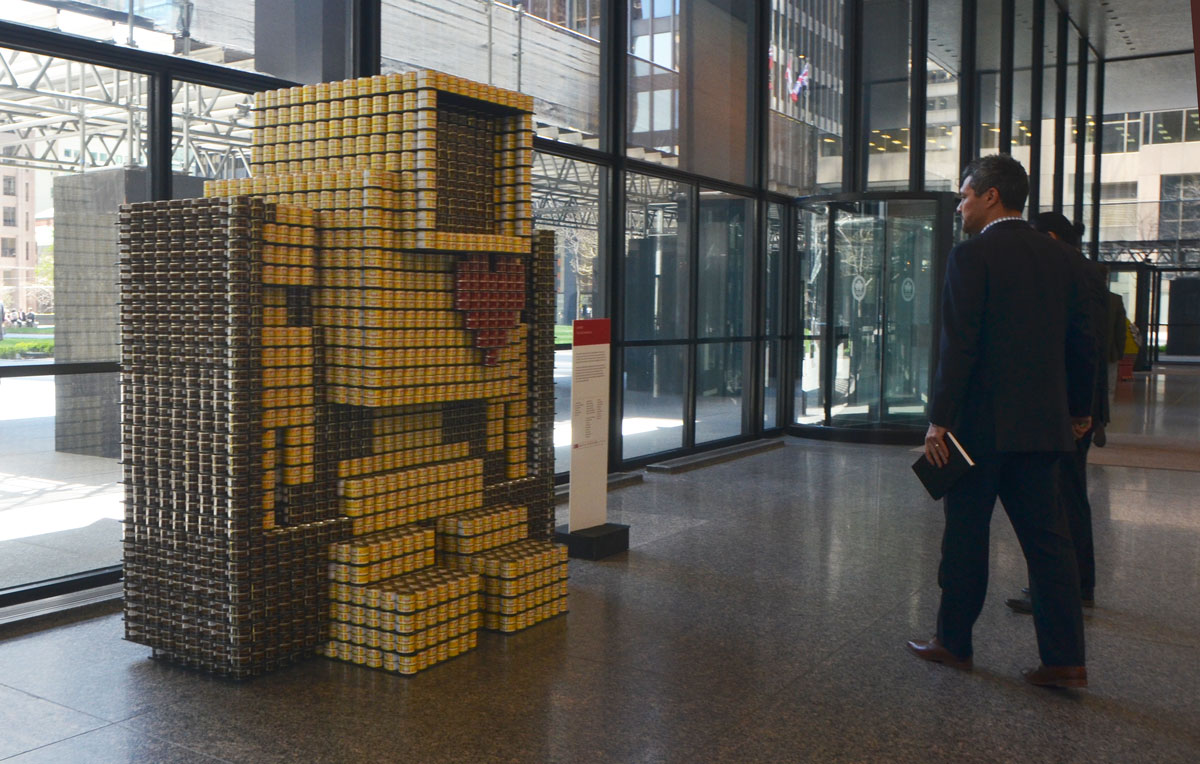
below: A lovebot made of cans by Cecconi Simone Ltd.

A large 3D lovebot, about 6 feet tall, made of canned food stands in the lobby of the TD centre, it's an entry in the Canstruction event. Two men in suits are looking at it.

below: A close up of part of ‘Hungerbling’ by Hatch.  It features Drake and comes with lyrics.

You used to call me on my cell phone
Late night when you need my food
Call me on my cell phone
Late night when you need my food
And I know when that hunger bling
That can only mean one thing
I know when that hunger bling
That can only mean one thing”


made of cans, part of an entry for Canstruction 2016, pinkish cans of Heinz Disney , with a paper cut of a man's face. Simple body made of wrapped food.

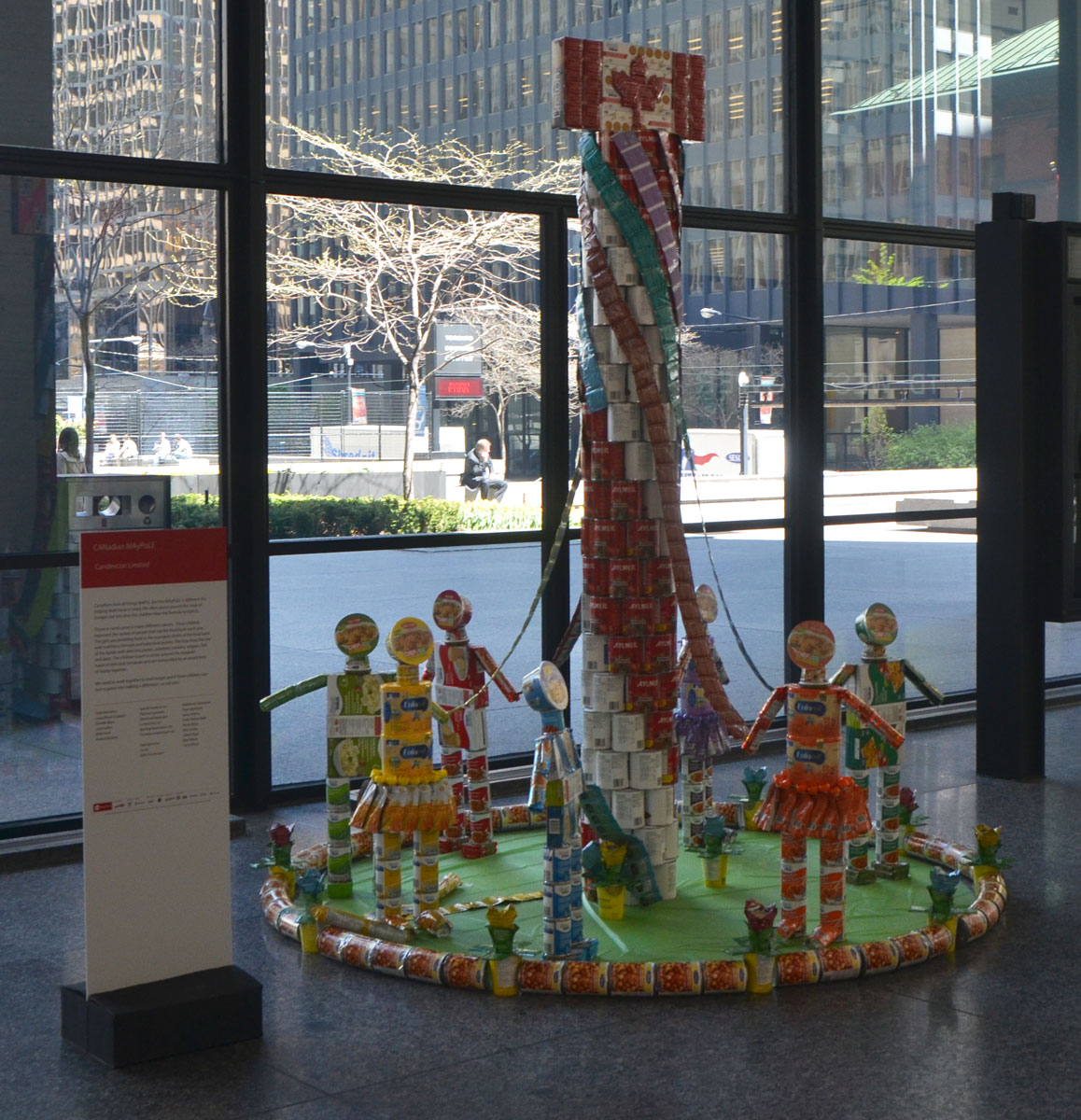
below: ‘CANadian MAyPoLE’ by Candevcon Limited.  “We often dance around the issue of hunger, but this time the children have the formula to fight it.”

models of children made with packaged food. A girl is made with orange enfamil containers, bowl of noodles for head, tubes with orange packaging as a skirt, and cyclindrical packages of cookies as arms

blog_canstruction_canadian_maypole

below: Close up of ‘Perspectives on Hunger and Heroes’ by ARUP.  A tribute to the late David Bowie since “hunger has many faces”.

part of a large 3D design made of canned food in white, blue and pink with a few black details.