Posts Tagged ‘reflections’

Spring is in the air. 

the word love is written in lights in capital letters in a window of a store. Reflected in the window is a group of older people sitting on benches across from the window

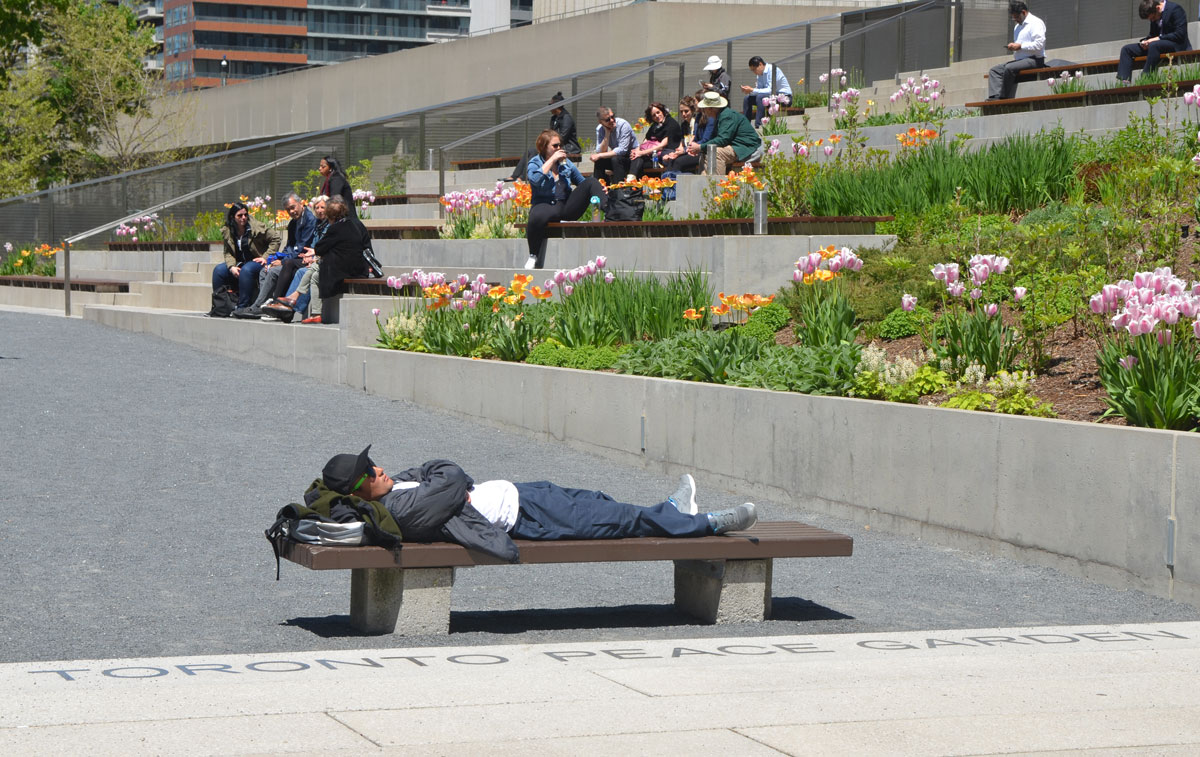
A young man is lying on a bench in the Toronto peace garden, the words of which are written beside him, metal inlay in the stone on the ground.

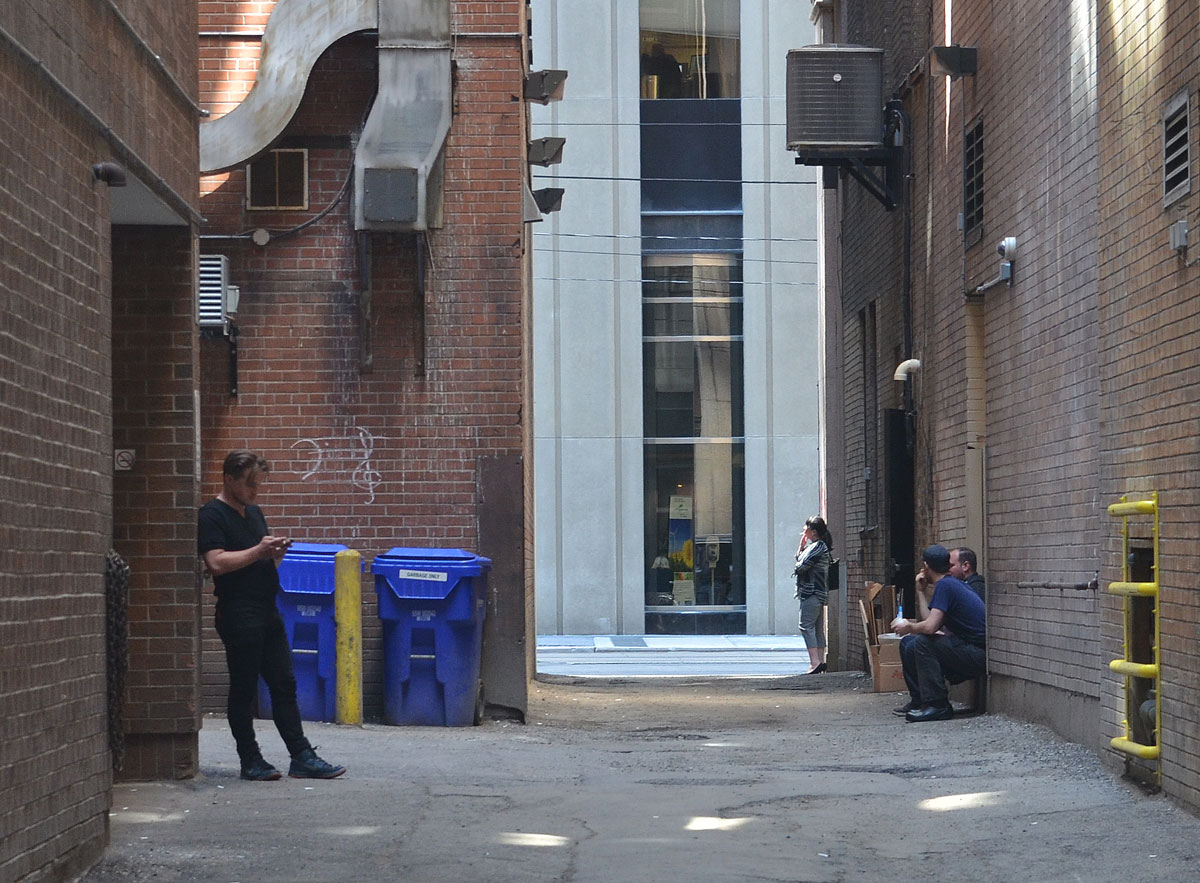
people sitting and standing in an alley, one man is on his cellphone, tall buildings on either side of the lane as well as at the end of the lane

A woman in black high heel shoes is sitting on a low stone wall outside. You can only see her from the thigh down. He legs are crossed at the ankle.

three people sitting outside, two men who are talking together and a woman who is sitting on her own, they are in a square and are surrounded by tall glass buildings, half in shadow and half in light

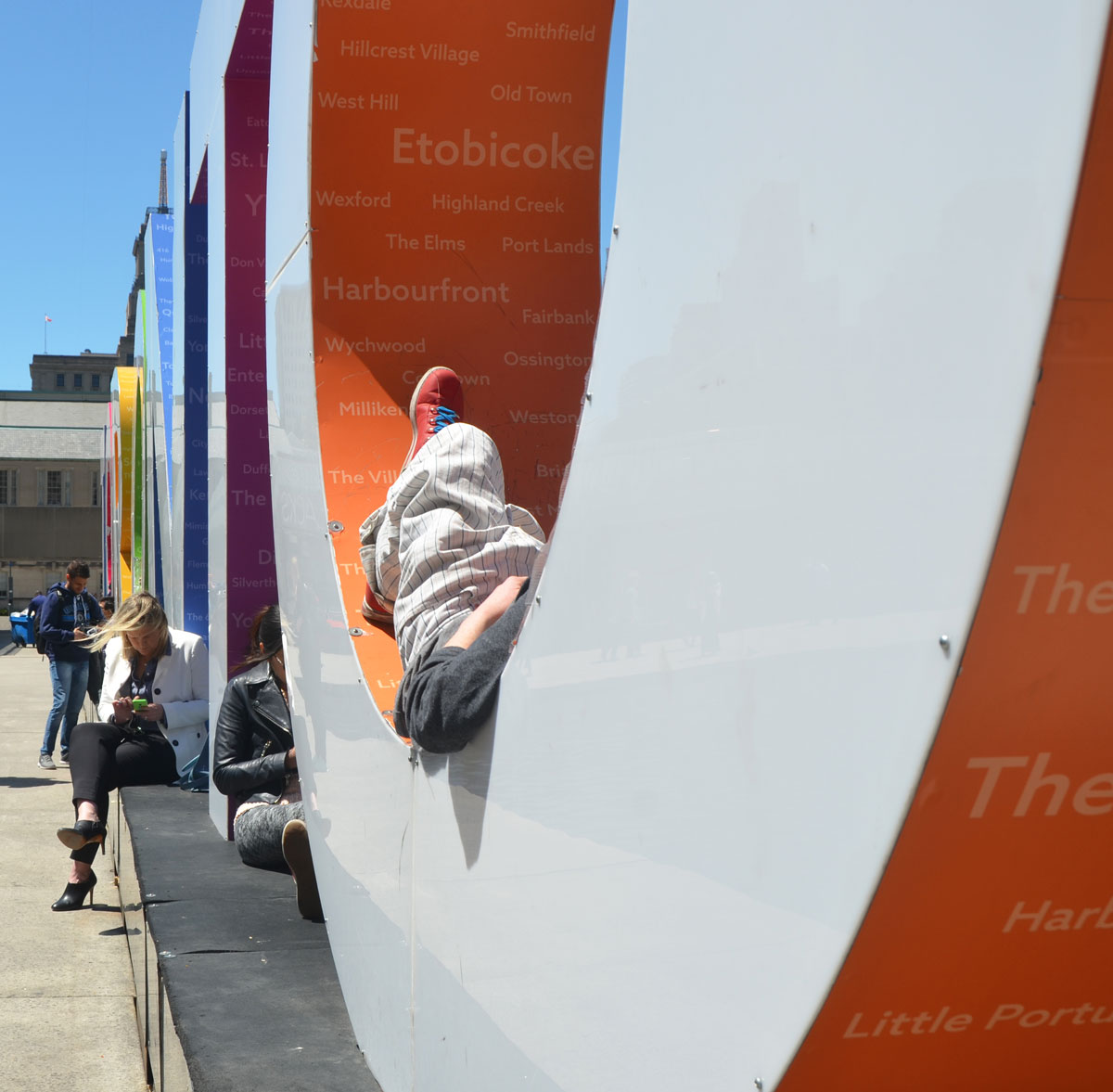
a young man is lying in the the O of the Toronto 3D sign. The O is orange, you can't see the man's face but you can see one red shoe and his light coloured pant leg.

blog_resting_O_toronto3D_sign

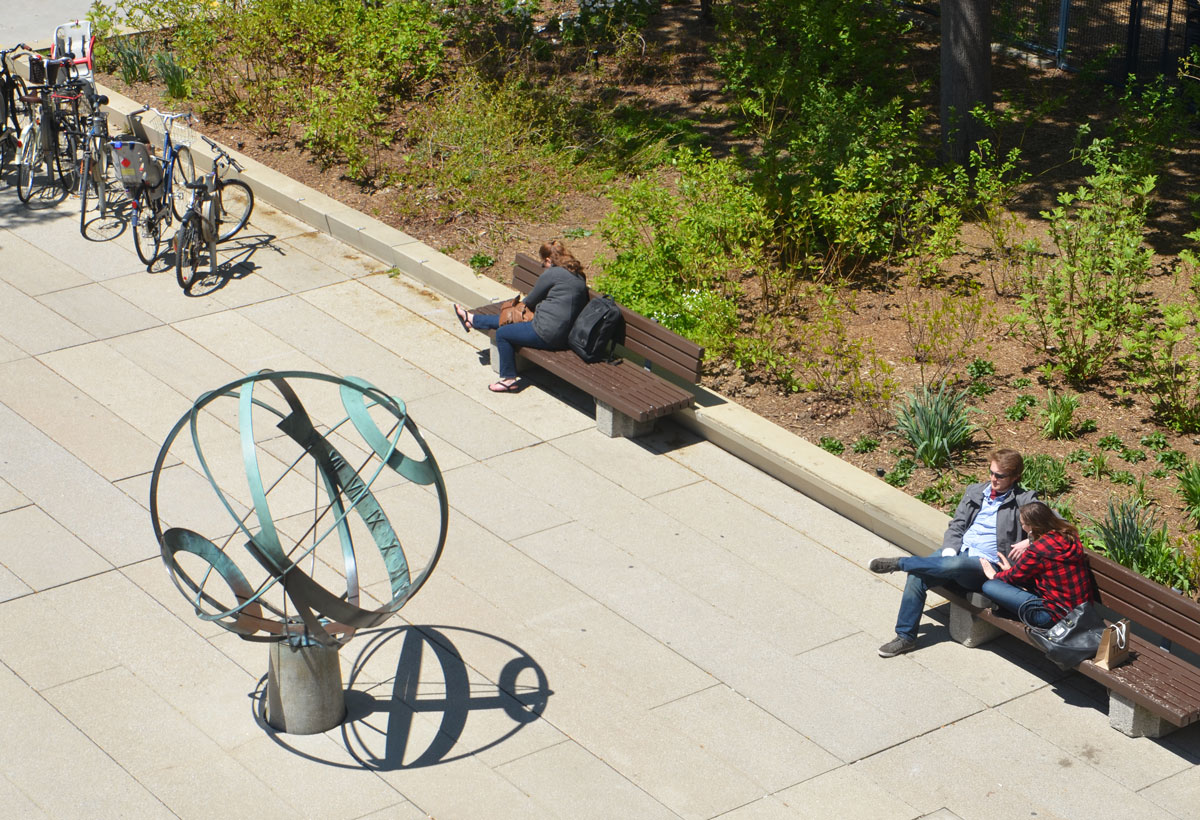
blog_sundial_nathan_phillips_square

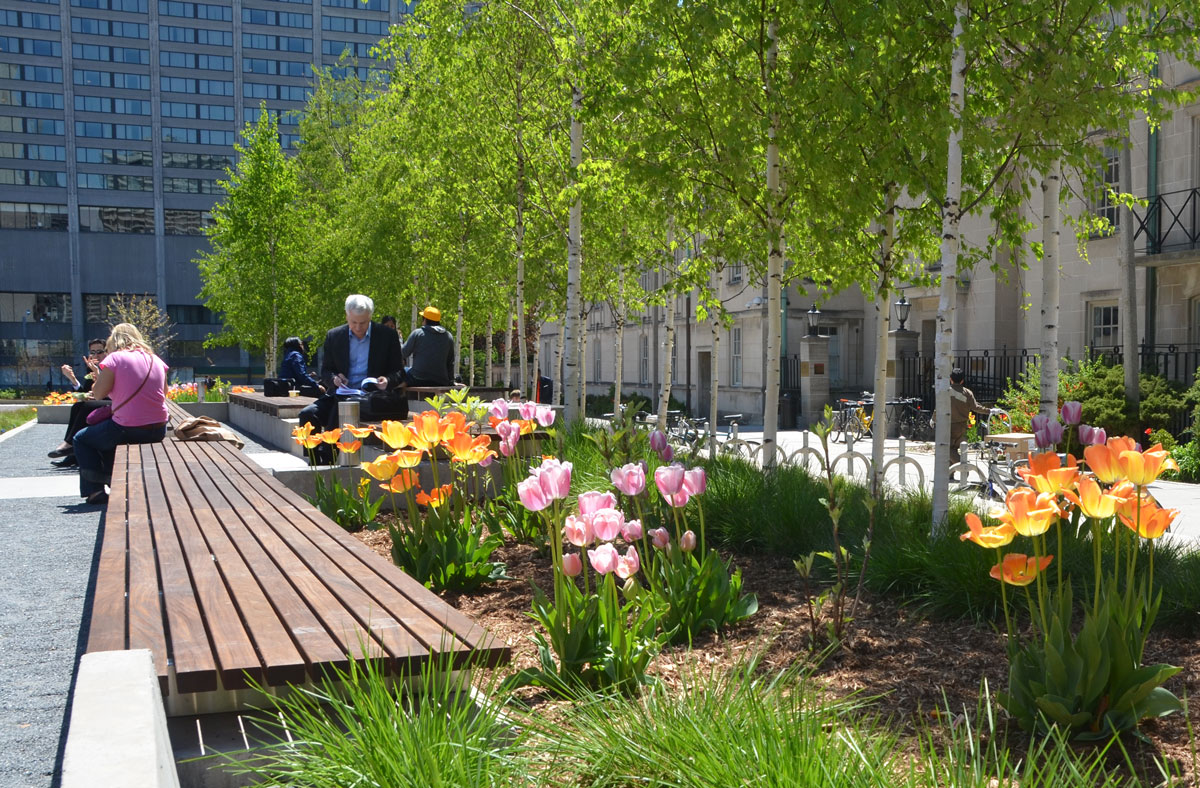
people sitting on benches amongst the tulips and birch trees of the peace garden at Nathan Phillips Square

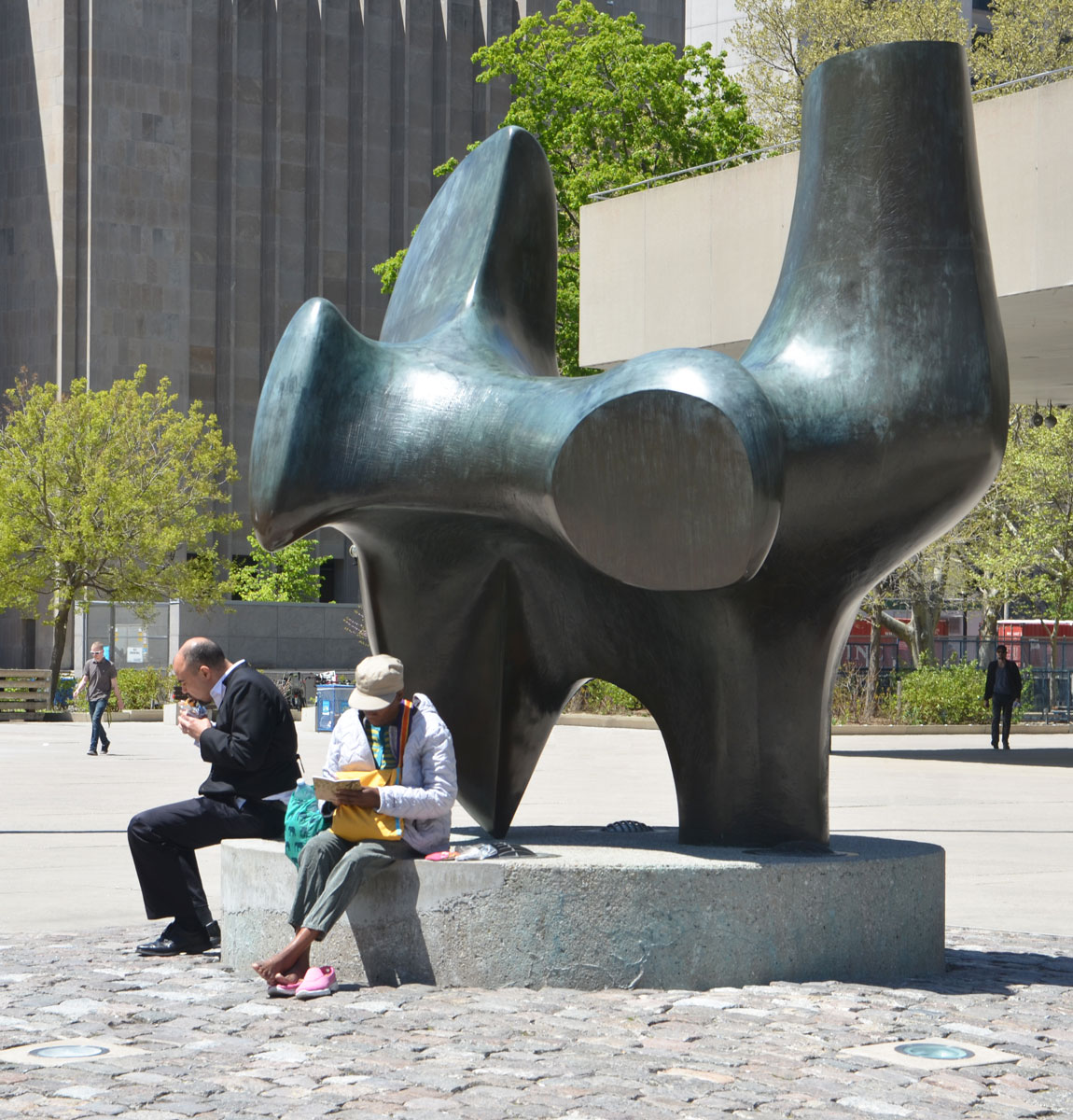
Two people sitting at the base of Henry Moore's 'Archer' sculpture at Nathan Phillips Square. One man is eating and the other is reading.

I’ll be lazing on a sunny
lazing on a sunny
lazing on a sunny afternoon.
(with apologies to Queen)

Have you ever noticed how many trees there are in this city?
Have you ever stopped to examine the visual relationship between trees and architecture, the patterns of leafless branches superimposed on straight man-made lines?
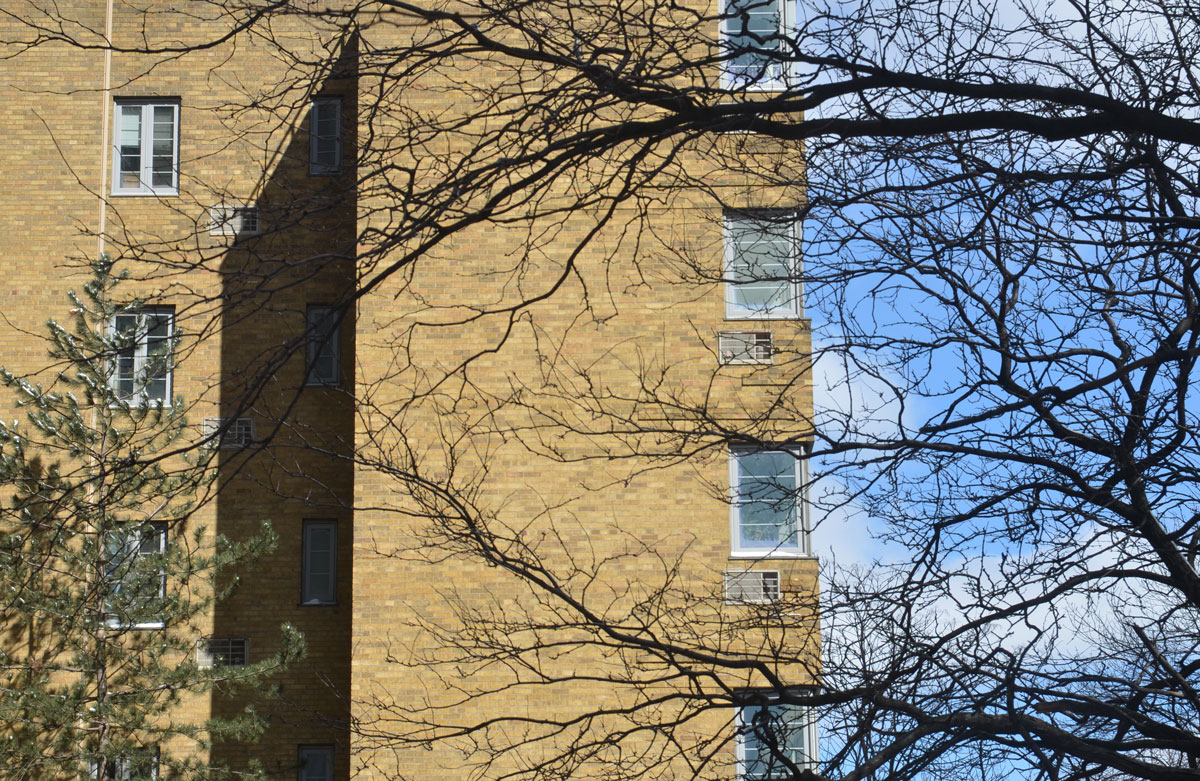
Horizontal branches of a tree growing in front of a low rise yellowish brown brick apartment building. Balconies, jutting out with the bright blue sky behind.

For the past couple of weeks I have been keeping an eye open for such relationships while I walk.   As it turns out, there are lots to be found…. and some are even interesting  🙂

Part of a mature tree, looking upwards, the greenish steeple of St. Basils church can be seen through the branches. No leaves on the tree. A very tall condo building under construction is also in the picture.

Just for fun I googled “How many trees are there in Toronto?”.  I got answers!  One link was particularly useful:  available in pdf from the City of Toronto’s website is a report titled, “Every Tree Counts: A Portrait of Toronto’s Urban Forest” (updated in 2013).   It is estimated that Toronto has about 10.2 million trees and they provides a tree canopy over between 26% and 28% of the city.
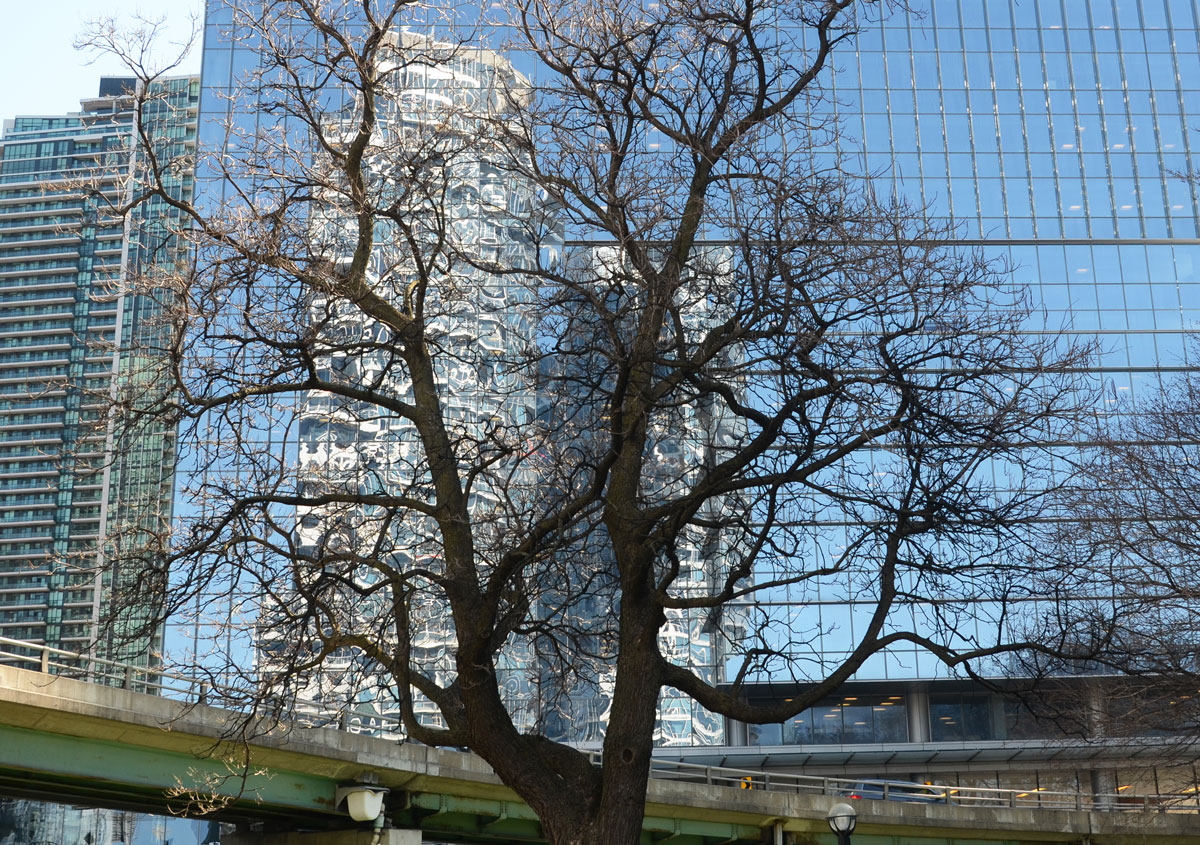
A large mature tree with no leaves, early spring, grows in front of a large glass building that has a reflection of another large building its windows.

There are at least 116 different tree species in the city.  The 10 most common species account for close to 58% of the total.   We have a lot of maple trees – Norway Maple, Sugar Maple, and Manitoba Maple were the top 3 species.  Next in the list were Green Ash, White Spruce, Silver Maple, American Elm, Eastern White Cedar, Austrian Pine, and White Ash.

When Dutch elm disease devastated the city’s elm trees in the 1960s and 1970s many were replaced by Norway maples.  These proved to be hardy but they were also very invasive and damaging to ravines and other natural spaces.  As a result they are rarely planted on city property anymore.  Still, they represent 15% of Toronto’s tree coverage.
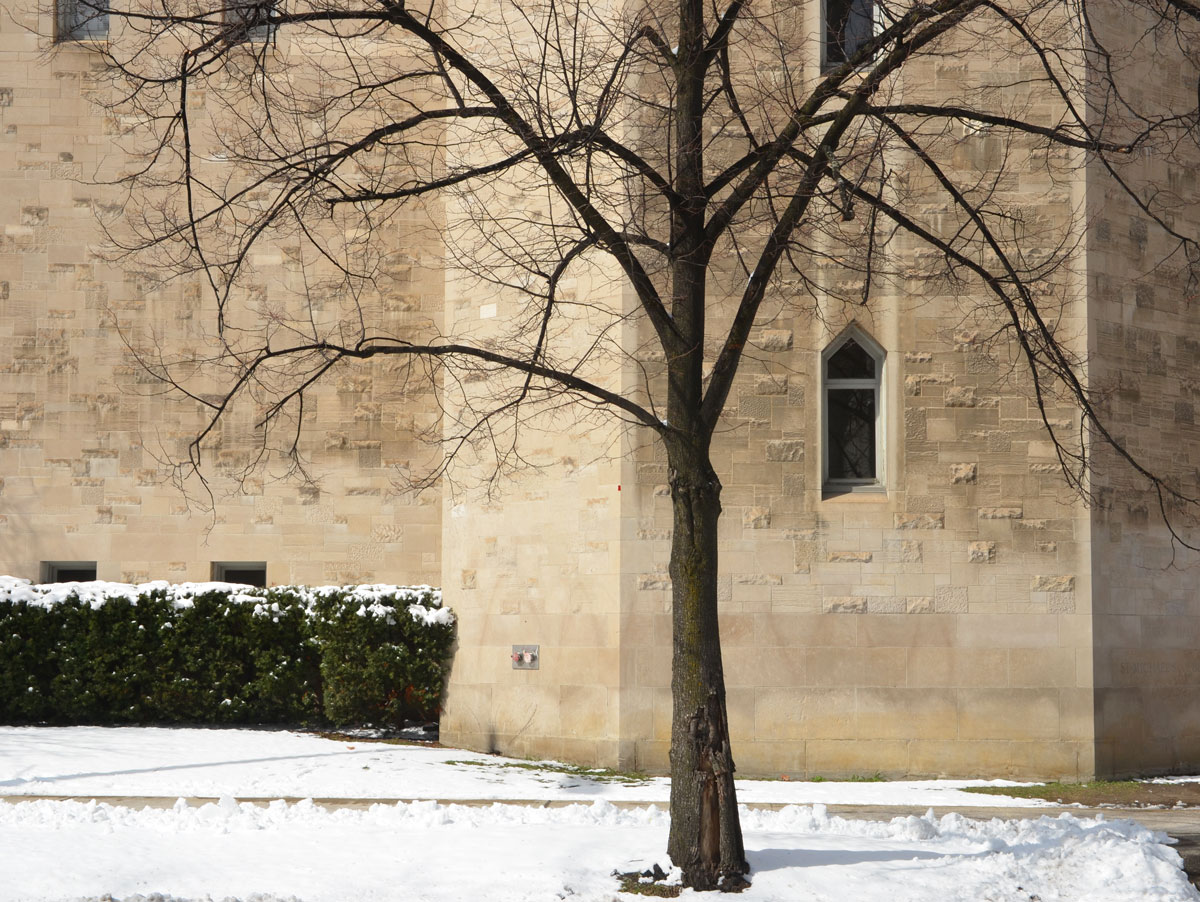
A lone smallish sized tree in winter is growing in front of a stone building on the University of Toronto campus, snow on the ground.

Of the total tree population, 6.1 million (60%) trees are on private property, 3.5 million (34%) trees are in parks and ravines, and 0.6 million (6%) trees are on city streets.
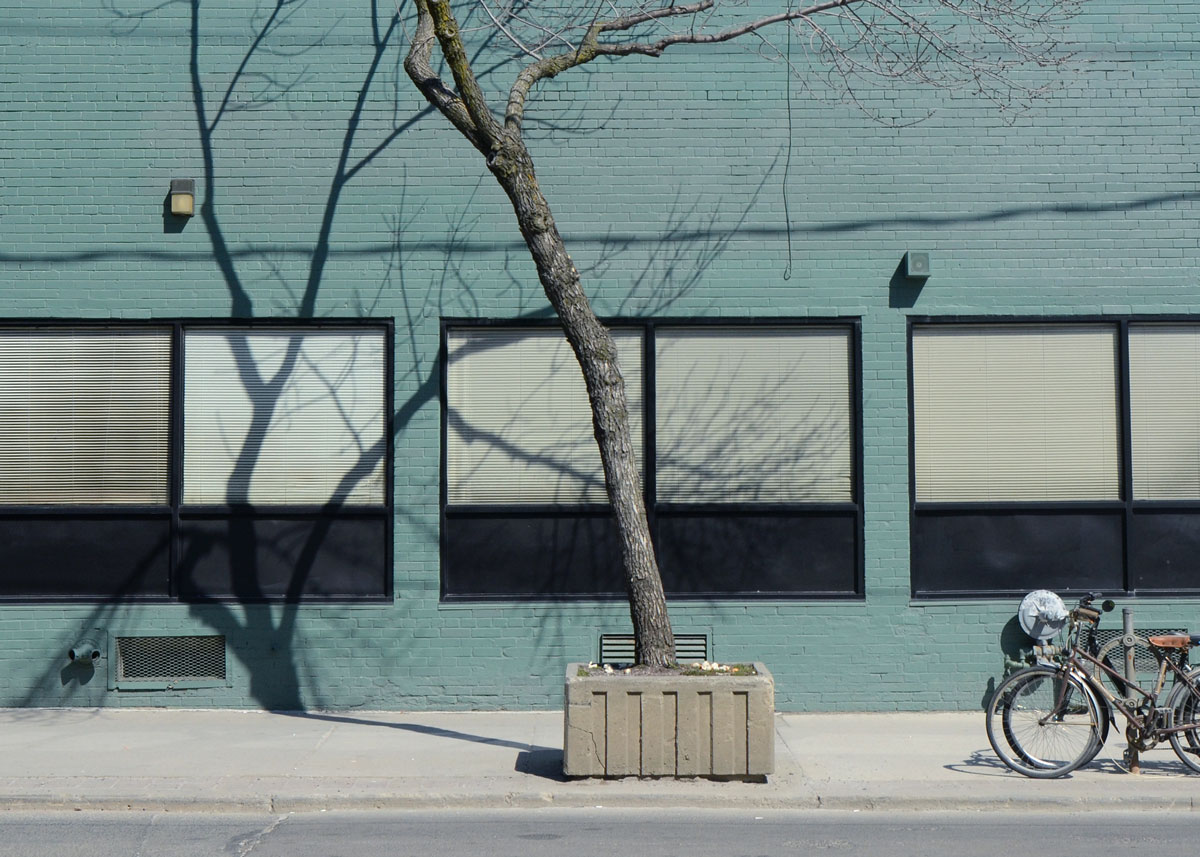
A tree in a concrete planter in front of a tral coloured building. It's a sunny day so there is a shadow of the tree on the building.

Trees make a significant contribution to our life.  Not only do they look nice, but they also provide benefits.  They provide shade in the summer and they help improve the air quality.  They help prevent erosion in our ravines and they provide habitat for insects, birds and animals.  Our parks would be poorer places without trees.
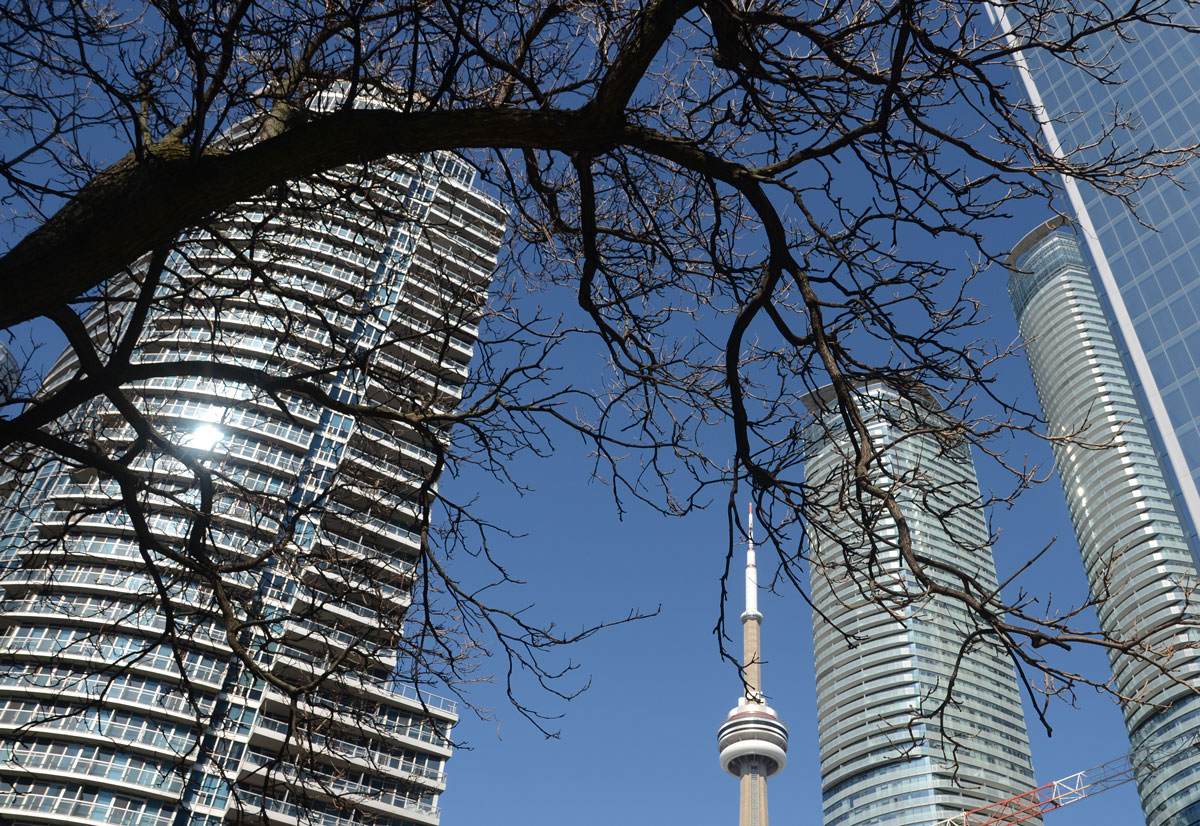
A large branch of a tree in the foreground, condos and the CN tower in the background. The curve of the tree branch looks like its wrapping itself around one of the tall condos.

One goal that the city has is to increase the canopy cover over Toronto to 30%.  To this end, between 2004 and 2012 the city and its partners planted almost 100,000 trees per year.   That’s almost 900,000 trees.   Not all survive but progress is being made.  Tree cover increased slightly (1.3%) between 1999 and 2009.

below: A map of Toronto showing the tree canopy in each neighbourhood
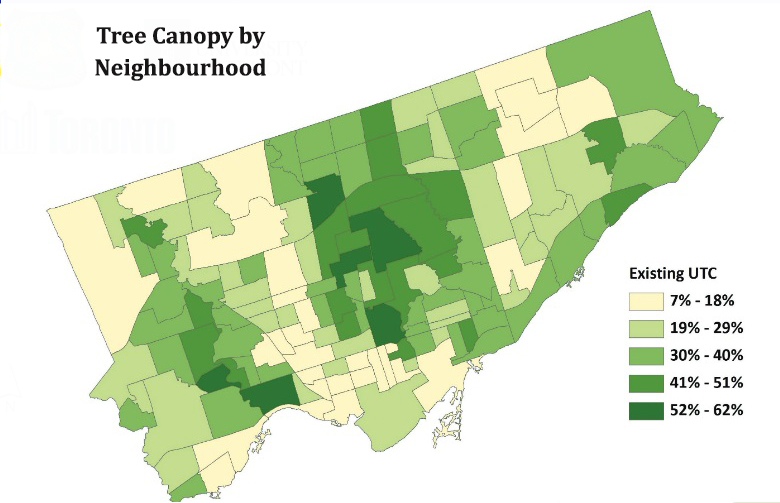
A map of Toronto showing the percentage of each neighbourhood covered by tree canopy from almost white (very few trees) to dark green (a lot of trees)

in winter, some snow, part of a large leafless tree in front of an office building with a sloght curve in it.

Take a moment to look at the trees you pass, yes, look up!  Especially in the next week while the branches are still bare.  Better still, look up often and watch the changes unfold as the trees bud and bloom.  At this time of year the trees change quickly and before you know it the city will be transformed.
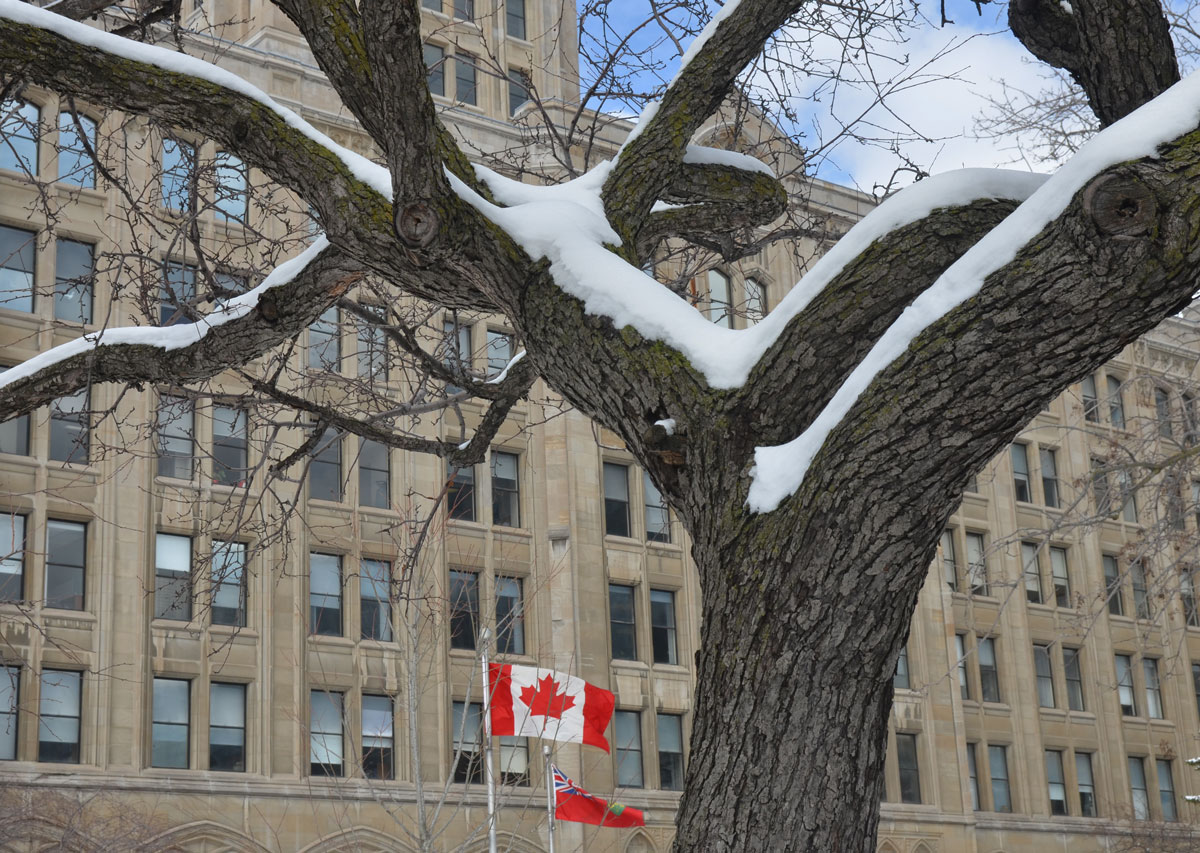
winter tree in front of a stone government building on Queens Park Circle, A Canadian flag and an Ontario flag are flying in front of the building.

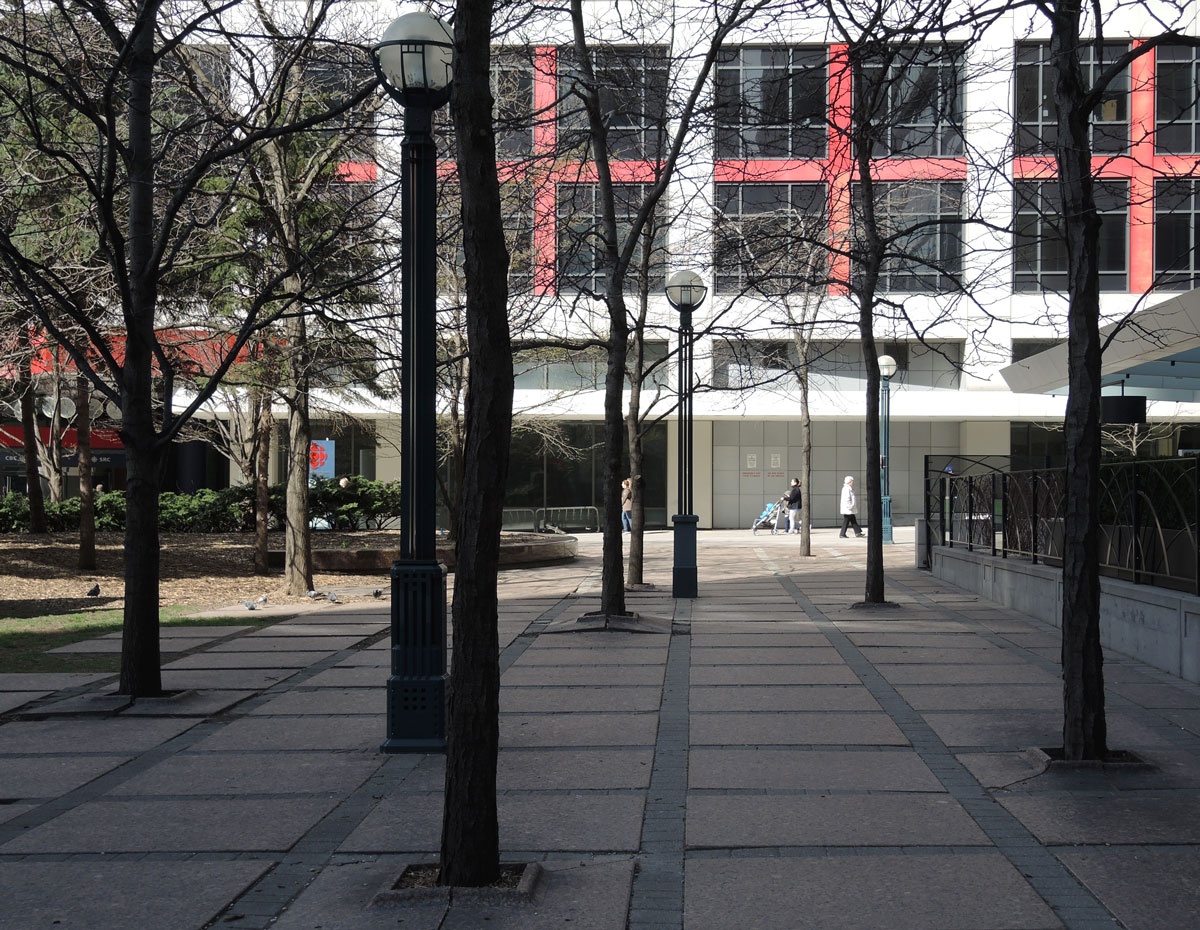
A number of leafless trees and three lamp posts in Simcoe Place, downtown Toronto, with the CBC building in the background

A man's legs as he walks across the pond on Ryerson campus. Very little water is therem lots of reflections of the trees and buildings around. He is wearing jeans and bright orange running shoes.

leafless tree branches above an older red brick house with a mansard black slate roof and a feww yellow brick details

An art installation ‘Nest Egg’ by Brendan McNaughton
at the Corkin Gallery, Distillery District

The title of this blog post is taken from a description of McNaughton’s work on the Corkin gallery website, “The relationship between plutocrats and proletariats is central to his art practice.”  A plutocrat is a person who is powerful because they are wealthy.  Money equals power.  Proletariat on the other hand is a class of people, the working class, a class without money and without power.

below: A gold axe.  With its blade in a column, on a pedestal?  That’s not a passive positioning of the axe, i.e. it’s not just lying around.  Someone has swung it.
Axe as a symbol of the working class?  Juxtapositioned with gold, a symbol of money?
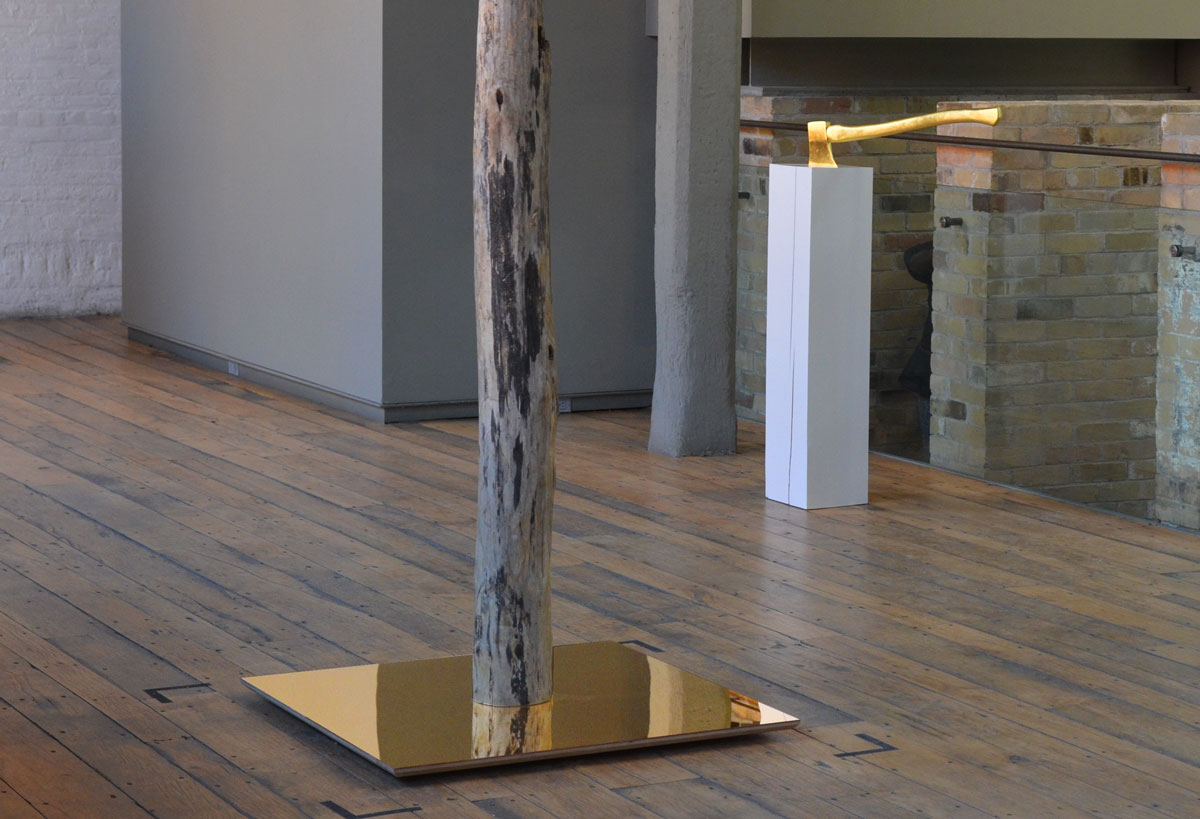
picture taken inside an art gallery - a tree trunk stands in the middle of a gold toned mirror, in the background, a gold plated (or gold colured) axe with its blade in the top of a white rectanguar column

below: A couple of the pieces were mirrors. But they were mirrors with a difference – slightly concave in shape, with a hint of gold, and marred by ragged shaped holes.  The resulting reflections are distorted and flawed.
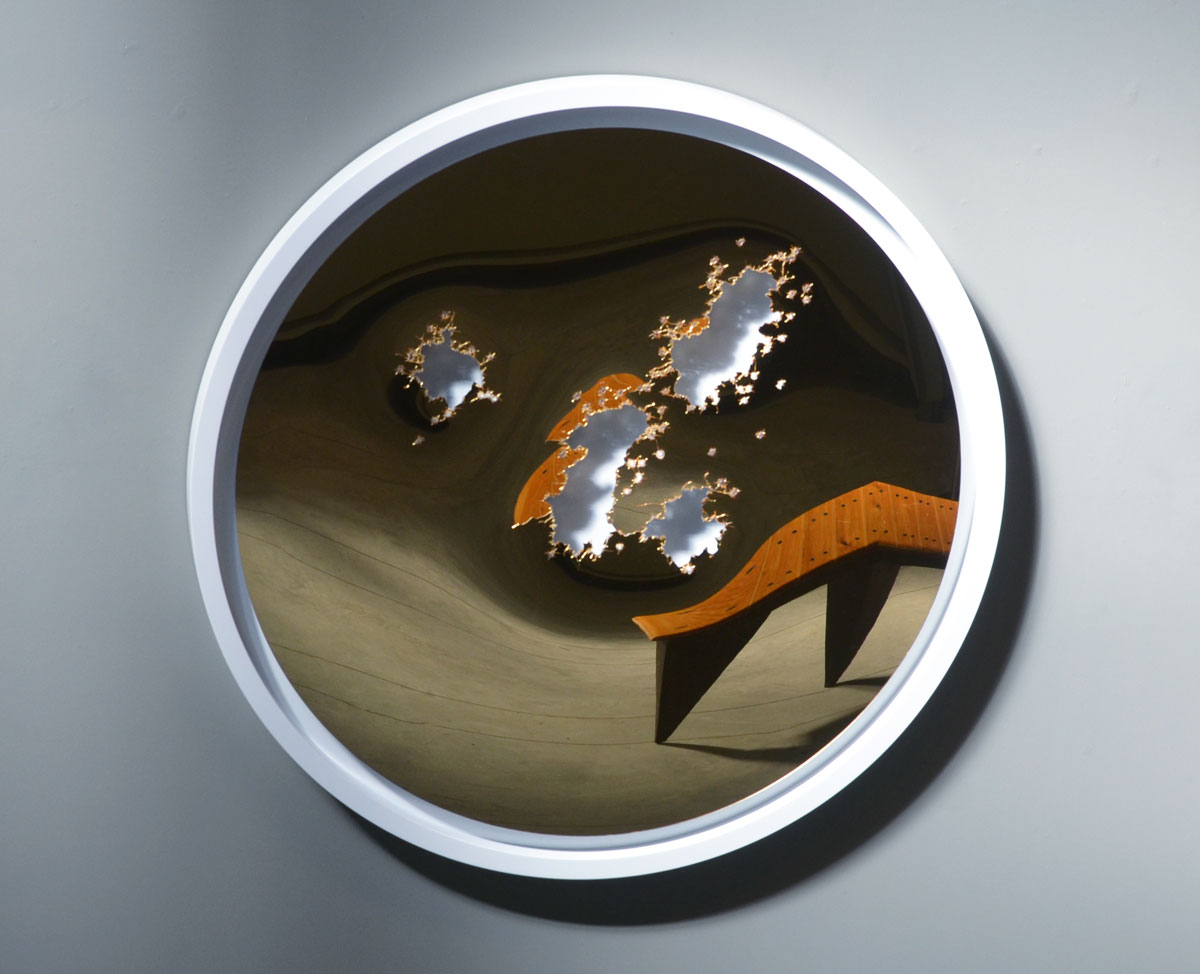
an artwork by Brendan McNaughton of a slightly concave mirror but with a few torn holes in it. A bench is reflected in the mirror but because the mirror isnt't flat, the bench is distorted.

below: ‘Blue Chip’ a sculpture by Brendan McNaughton as viewed through one of his mirrors.  The expression ‘blue chip’ has become synonymous with high quality stocks, usually ones from the New York Stock Exchange.   Originally the expression meant stocks with higher prices because, if the story is correct, blue chips in poker are traditionally associated with the highest value.
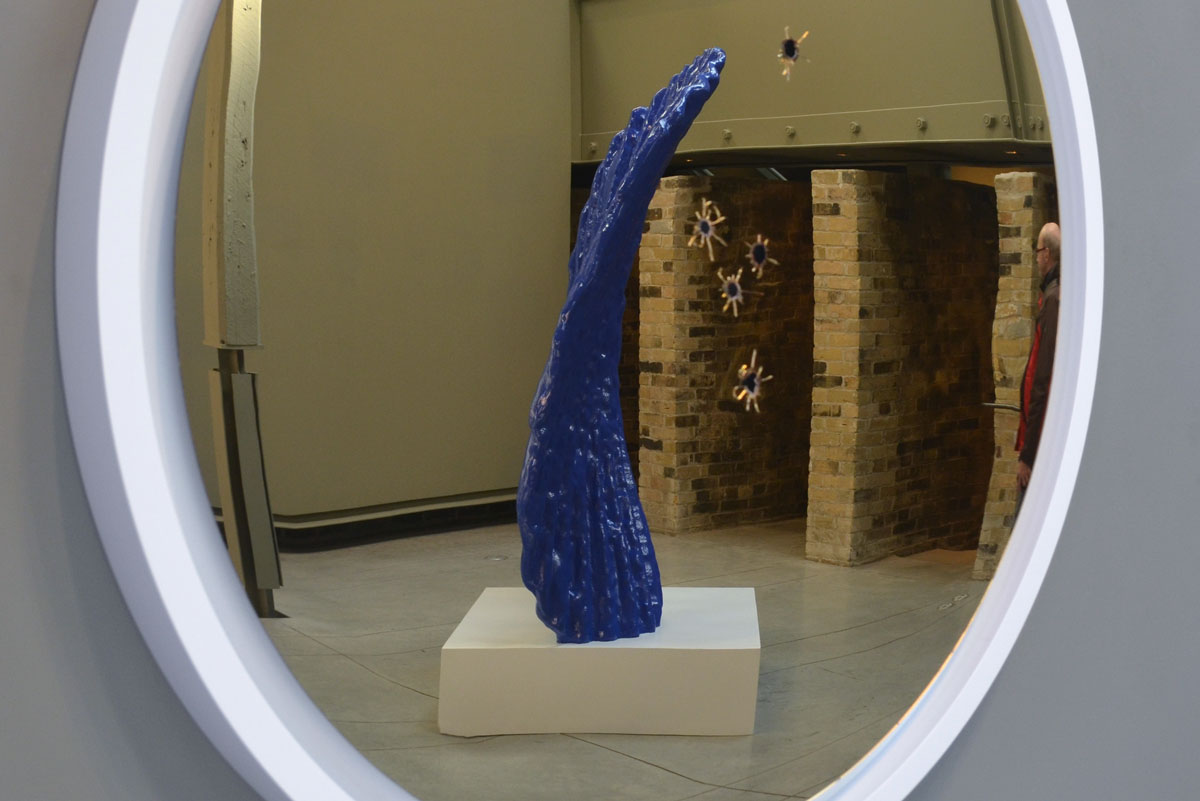
Blue Chip, a sculpture by Brendan McNaughton, as viewed through an oval shaped mirror which is actually another art piece by the same artist.

below: The colour gold is very prevalent in this installation as are reflective surfaces.

picture taken inside an art gallery - a tree trunk stands in the middle of a gold toned mirror, also a mirror is on the top of each trunk, in the background are four panels of wrinkled gold

below: Parts of three wrinkly gold panels. There are actually four of these reflective square panels.  They are all the same size and colour but the surface patterns are slightly different.  Once again, the reflections are distorted.  Wealth distorts your view?

three square panels of reflective gold, wrinkled, material with reflections of people in them.

below: There was a group of what appeared to be photography students visiting the gallery at the same time that I was there. As I was standing beside this piece, looking for different and/or interesting angles and reflections, one of the students remarked on how he liked it when ordinary items were used in out of the ordinary ways. He then said that he wondered if it was …. and then he paused. I finished his sentence with the word ‘art’. He laughed and said yes, but that he was always afraid to say such things out loud. I gave him permission to ask “is it art?” as loud and as often as he wanted.

picture taken inside an art gallery - a tree trunk stands in the middle of a gold toned mirror,

picture taken inside an art gallery - a tree trunk stands in the middle of a gold toned mirror,

Installation ends May 1st

Wisdom of the Poor: Communal Courtyard,
an art installation by Chinese artist Song Dong,
Art Gallery of Ontario

This installation is made from parts of 100 old wardrobes collected from traditional Beijing neighbourhoods, or hutongs, like the one in which Song Dong grew up in.  These neighbourhoods, and their communal way of life, are disappearing.
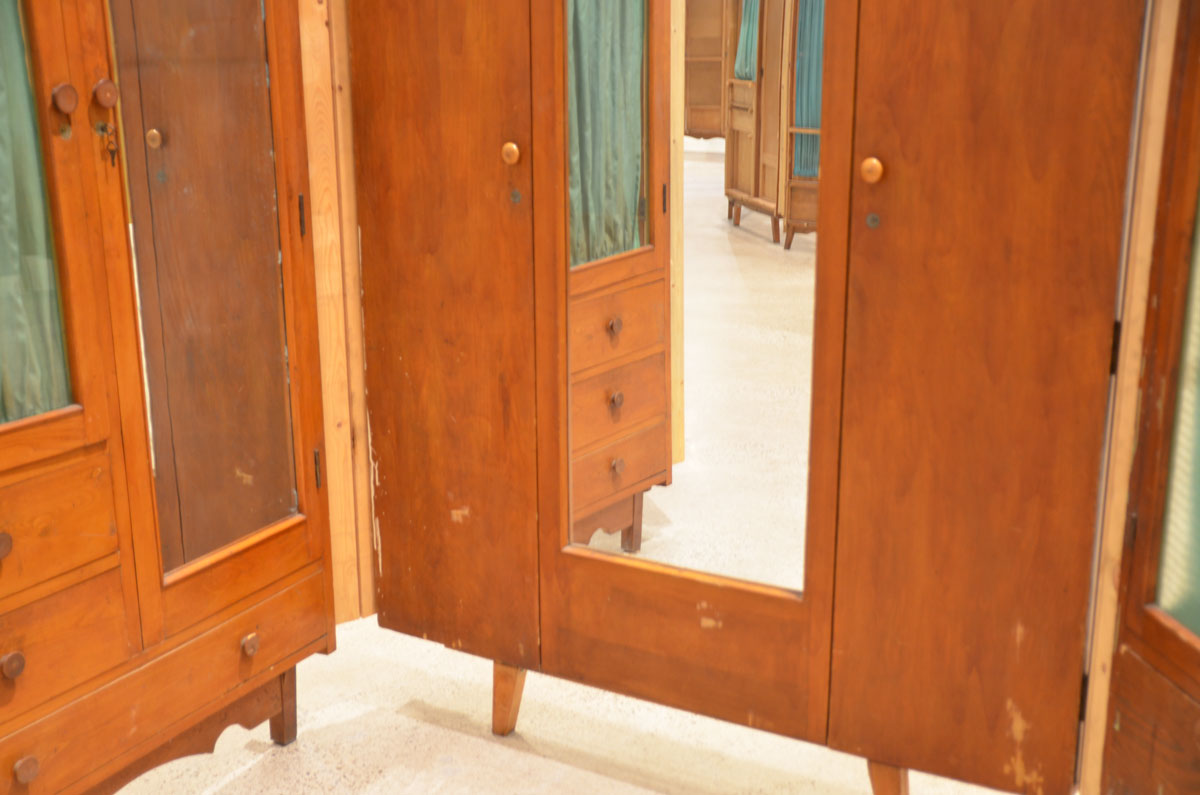


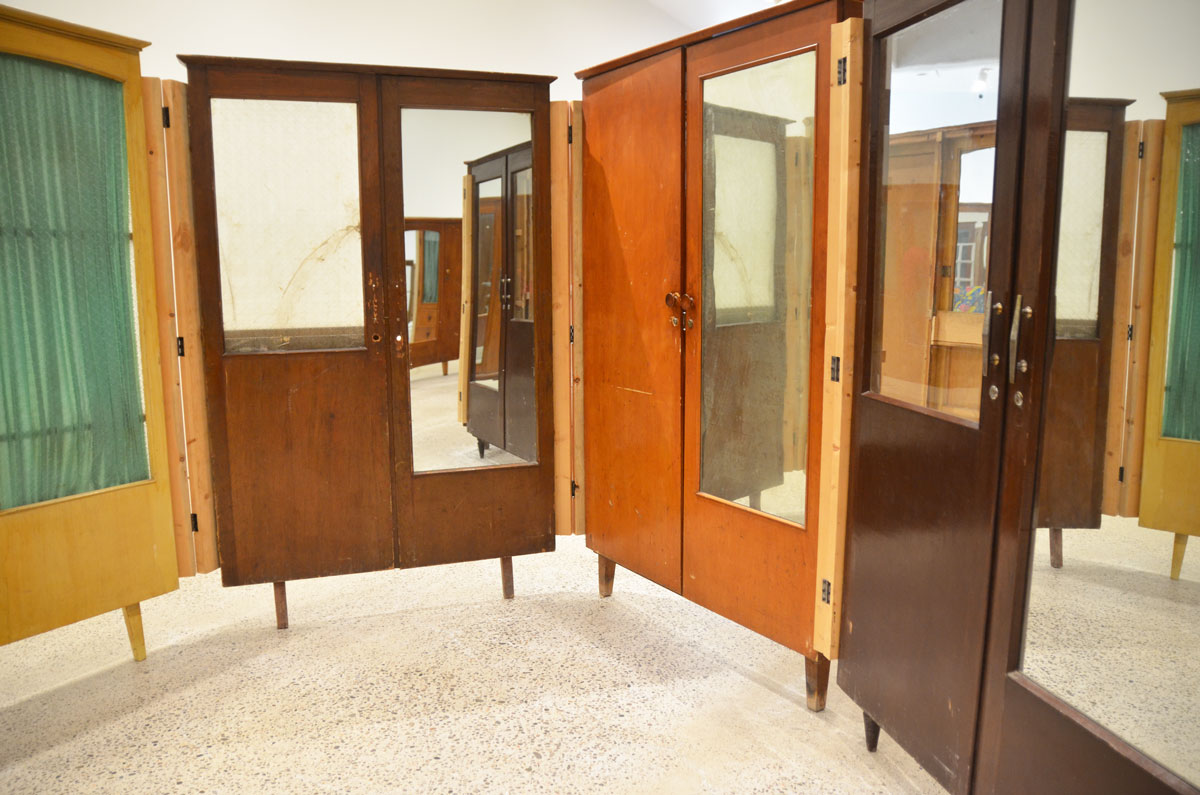
part of an art installation by Chinese artist Song Dong using vintage wooden wardrobe doors with mirrors and curtains, reflections
The pieces of the wardrobes are arranged with the backside towards the viewer.  The arrangement is such that you can not see the front side of most of the wardrobes.
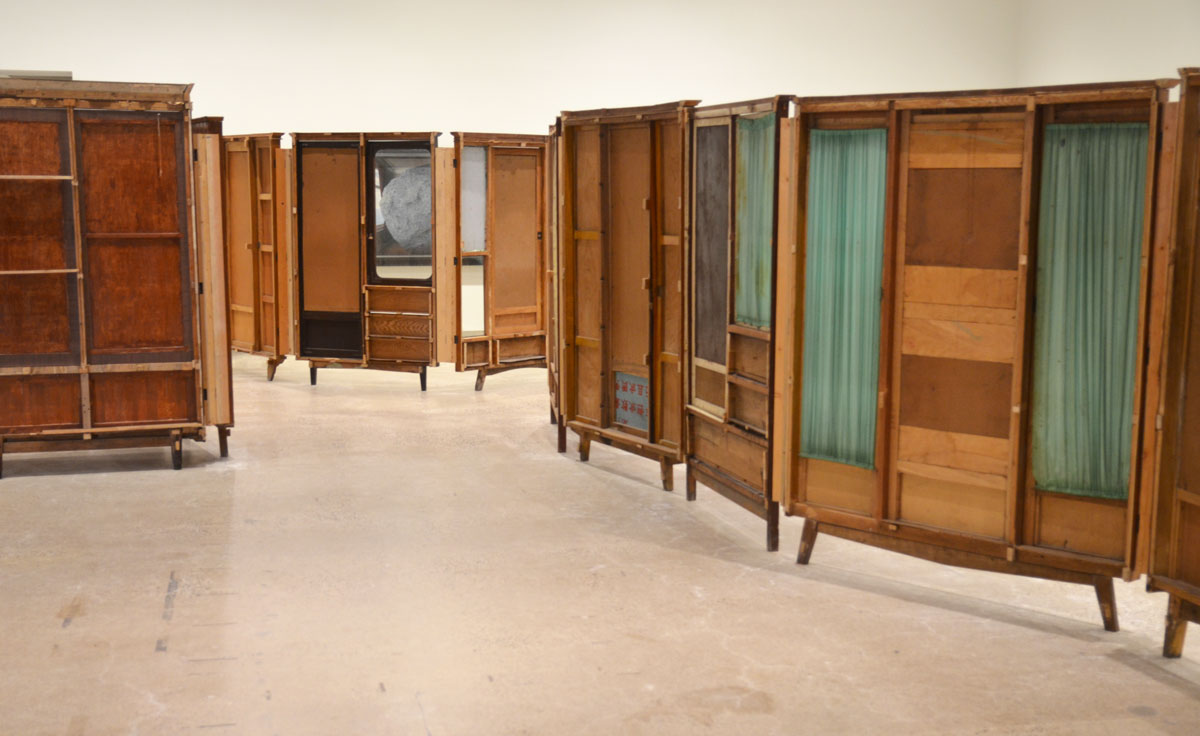
part of an art installation by Chinese artist Song Dong using vintage wooden wardrobe doors with mirrors and curtains, reflections
There are two circles of wardrobes that you can enter – where you can now stand in the courtyard so to speak.   The wardrobes become stand-ins for the fronts of houses that once faced onto courtyards in the old hutongs of Beijing.

part of an art installation by Chinese artist Song Dong using vintage wooden wardrobe doors with mirrors and curtains, reflections of a foot in one of the mirrors
A wardrobe was one of the items that the Chinese government provide to all families.  They are all similar yet different.  All have mirrors.  Most are made of the same colour wood and most have green curtains.  They all have little legs and they are all about the same height.
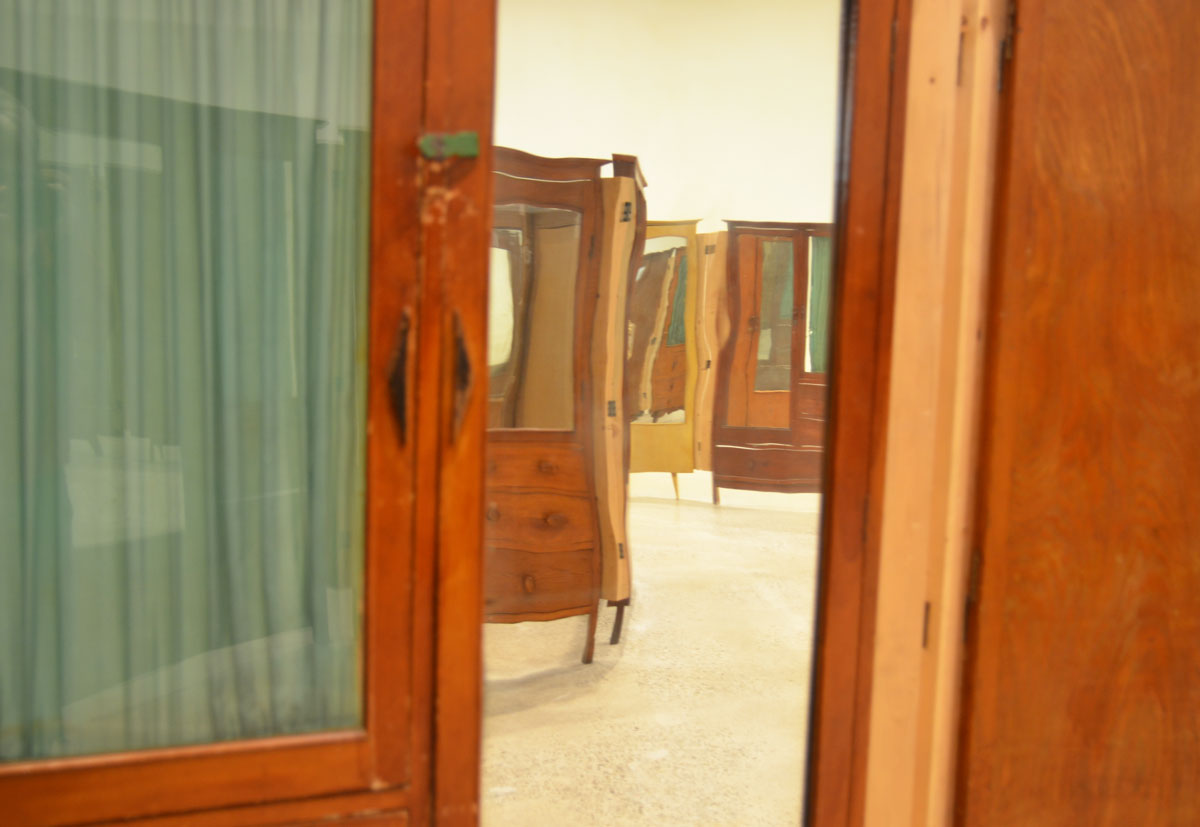
part of an art installation by Chinese artist Song Dong using vintage wooden wardrobe doors with mirrors and curtains, reflections
Wardrobes are personal articles and former owners have left their marks on many of them…. a different fabric in the window or a picture glued onto the wood.
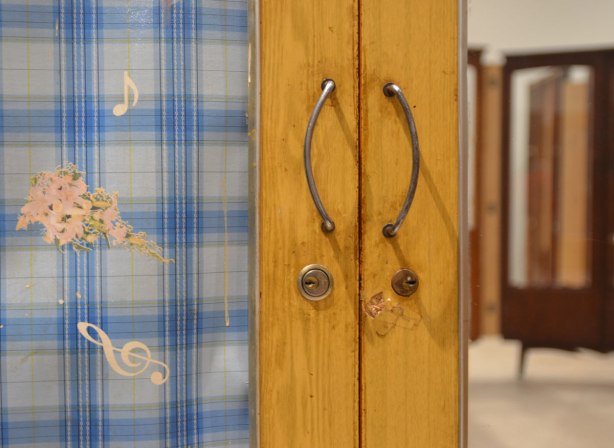
part of an art installation by Chinese artist Song Dong using vintage wooden wardrobe doors with mirrors and curtains, reflections, door handles, key holes and a curtain that is a blue and white plaid and has musical notes on it.

part of an art installation by Chinese artist Song Dong using vintage wooden wardrobe doors with mirrors and curtains, reflections, wardrobes arranged in a curved shape
part of an art installation by Chinese artist Song Dong using vintage wooden wardrobe doors with mirrors and curtains, reflections

This installation also appeared in the Venice biennale in 2011 although the wardrobes were arranged differently.  For the exhibit at the AGO, there are a number of items that appear within the ‘courtyards’ created by the wardrobes.  For the viewer, these items can only be viewed through the windows of the wardrobes.  One of the items, below, is a series of three paintings of the Canadian ballerina Karen Kain.

part of an art installation by Chinese artist Song Dong using vintage wooden wardrobe doors with mirrors and curtains, reflections. through one of the windows there is a painting of Karen Kain on the wall

In another, bikes

part of an art installation by Chinese artist Song Dong using vintage wooden wardrobe doors with mirrors and curtains, reflections, through two of the windows there is a bike

part of an art installation by Chinese artist Song Dong using vintage wooden wardrobe doors with mirrors and curtains, reflections, door knobs and frosted glass and a white curtain

This installation remains at the AGO until 17 July 2016

The plan was to start walking westward from Eglinton subway station.

below:  The first photo I took was right after I got off a bus at the station.   With the ongoing reconstruction at Eglinton, there is now easy access to the old bus bays.  There is still a fence around them, but at least they can be seen and photographed.  These bays have not been used since 2004 and the area has been fenced off and unused since then.  Now they sit empty in the shadow of the ever increasing tall buildings around them.
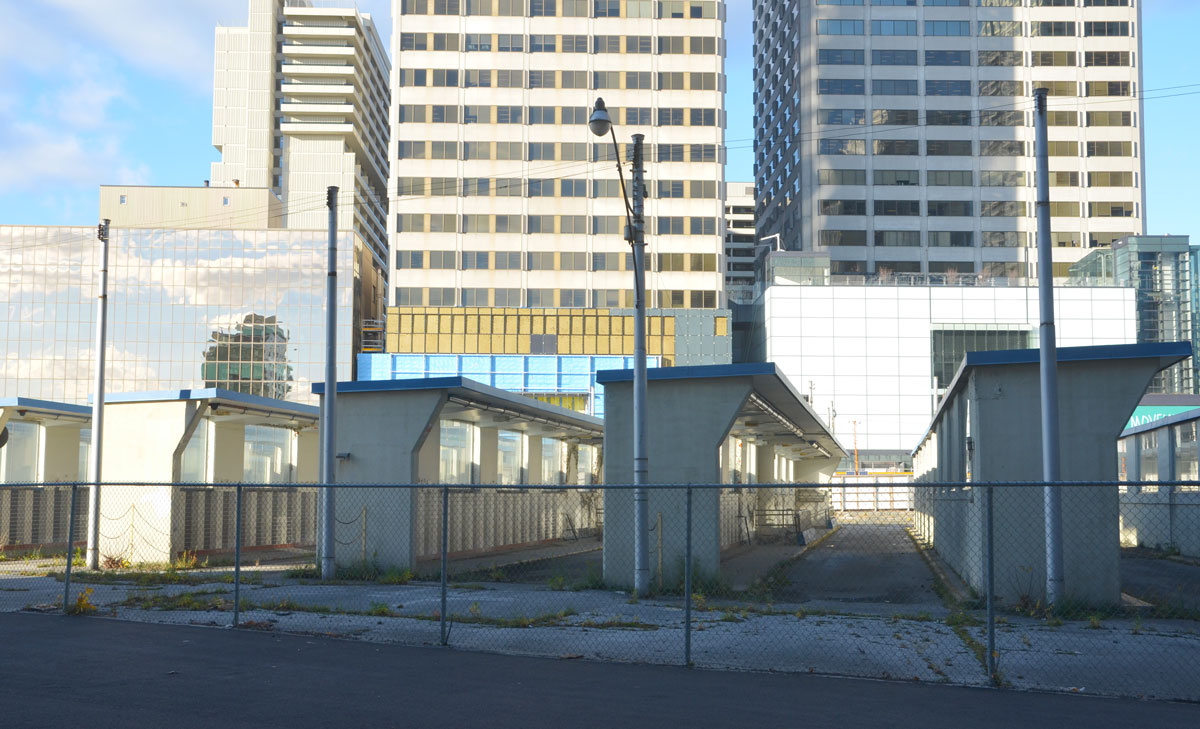
abandoned bus bays at Eglinton subway station in the foreground and the newer taller buildings in the area in the background

abandoned part of Eglinton subway station, behind chain link fence

below: Looking west along Eglinton Avenue after the completion of Eglinton station in 1954.  The street running north-south just beyond the bus bays is Duplex Avenue.  There is now a police station on the SE corner of that intersection.   On the NW corner you can see the brick Toronto Hydro-Electric Building with its large front ‘door’.  It is still there.
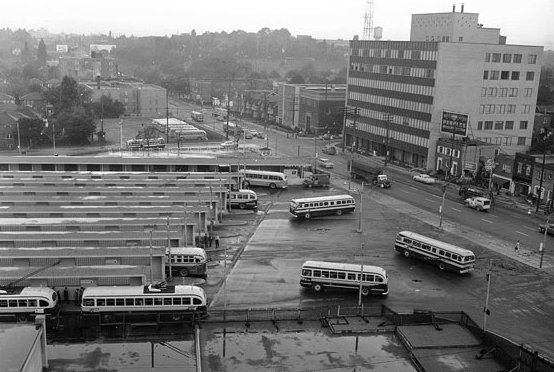
historical black and white photo, aerial, from Yonge Street looking west along Eglinton Ave showing the bus bays at Eglinton subway station, up to Duplex Ave is shown clearly.

source: City of Toronto Archives, online

.

below: (taken later in the afternoon, on the way home) The intersection of Eglinton and Duplex from west side with the brick Toronto Hydro-Electric building now between glass buildings.
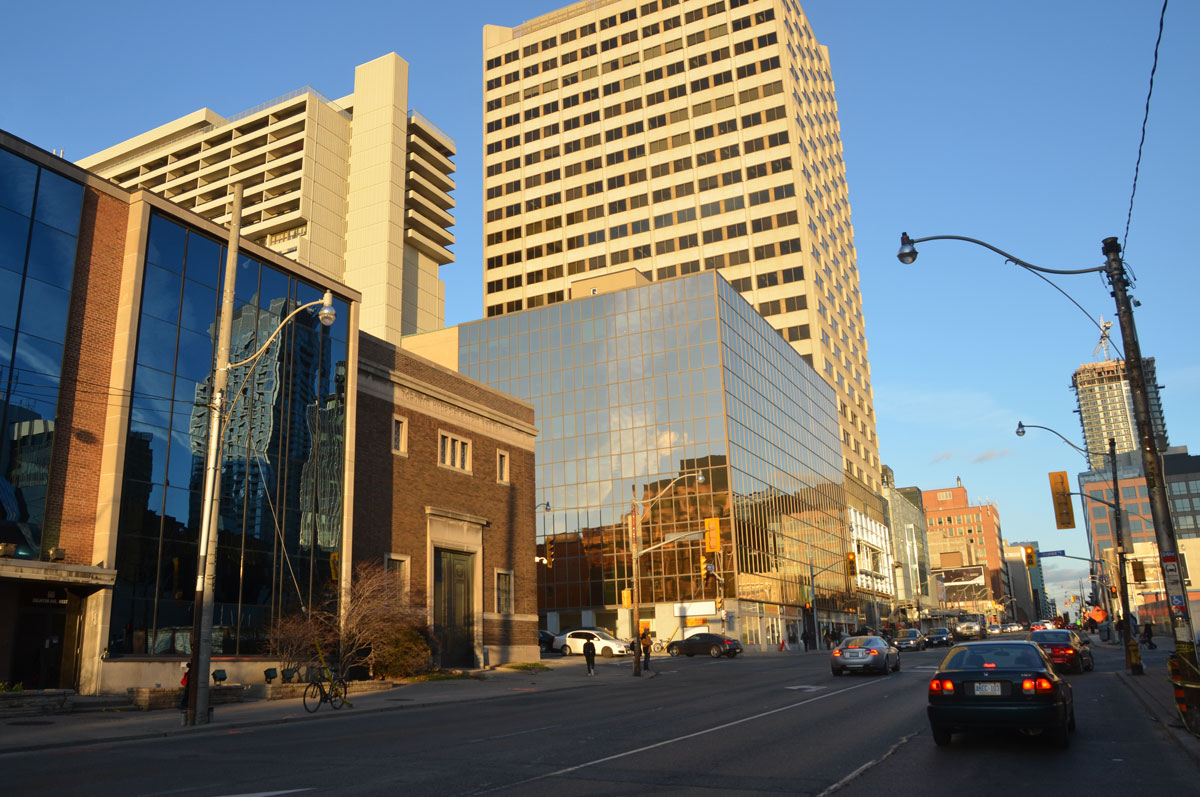
looking east along Eglinton Avenue towards Yonge street with Duplex Ave in the foreground. The old Toronto Hydro-Electric building is in the picture, with a newer structure with a glass front beside it. New buildings between Duplex and Yonge on the north side of Eglinton are also in the picture.

below: After leaving Eglinton station, this caught my eye.  The glass cube-like building on the NE corner of Eglinton and Duplex reflects the afternoon sun onto the walls of the Toronto Hydro-Electric building across the street.

brick building with wavy shadows on it cast by the sun being reflected off the glass building across the street

brick building with wavy shadows on it cast by the sun being reflected off the glass building across the street

below: On Duplex, right behind this brick building is an intriguing building.  The highly textured concrete exterior and the 3D patterned wall are suggestive of the 1960s although I could be wrong.  It’s ugly yet fascinating at the same time.   Now that the leaves have fallen from the trees in front of it, the pattern of trapezoids, diamonds and rectangles is revealed…. as is the dirt and grime on the concrete.  The fact that there are no windows and doors facing the street provides a clue that this is yet another Toronto Hydro building.

Three tree with no leaves are in front of a concrete wall that is built in 3D pattern of trapezoids and rectangles. There are no windows or doors.

Somethings old

below: A sign with an old Toronto HU (Hudson) exchange phone number.  HU1 would be 481.  This number is probably from the late 1950s.  In the early days, Toronto phone numbers had only 6 digits.  In the mid 1950s a seventh digit was added and then between 1961 and 1966 the letter prefixes were phased out, replaced by numbers.
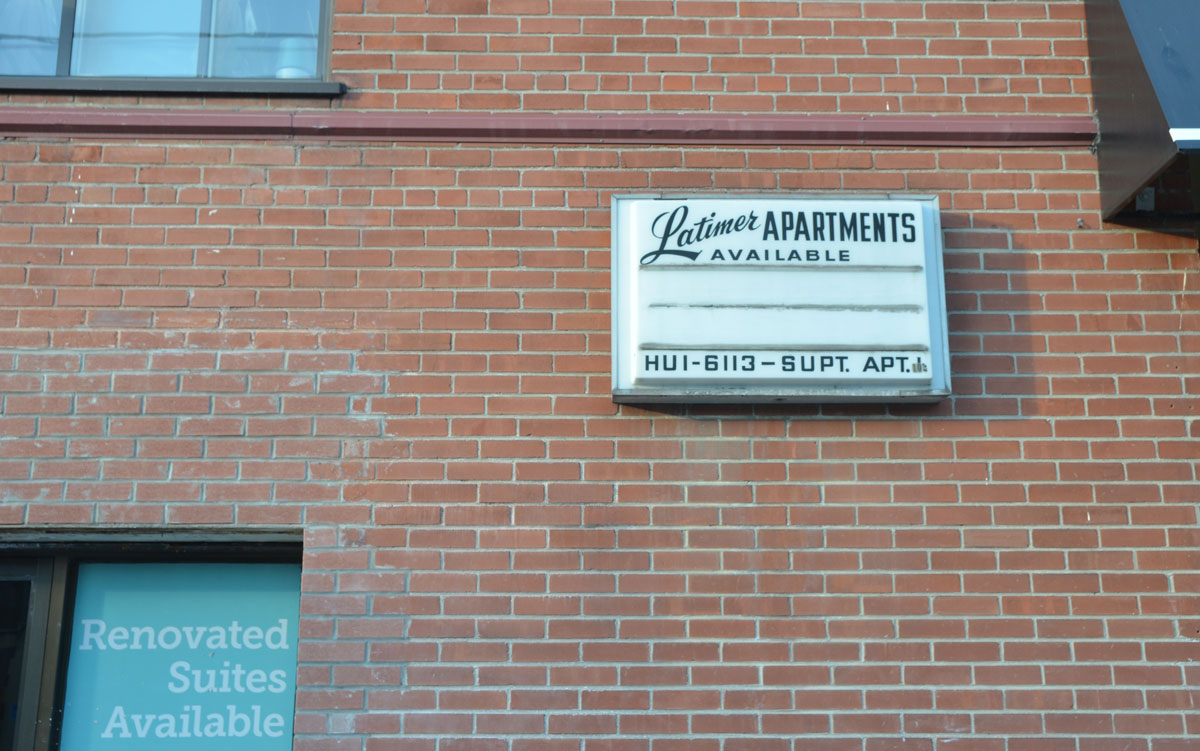
old sign on the side of an small apartment building, the Latimer Apartments, with an old Toronto phone number starting with the letters HU

below:  The Eglinton Grand, art deco building from 1936; National Historic site since 2003.
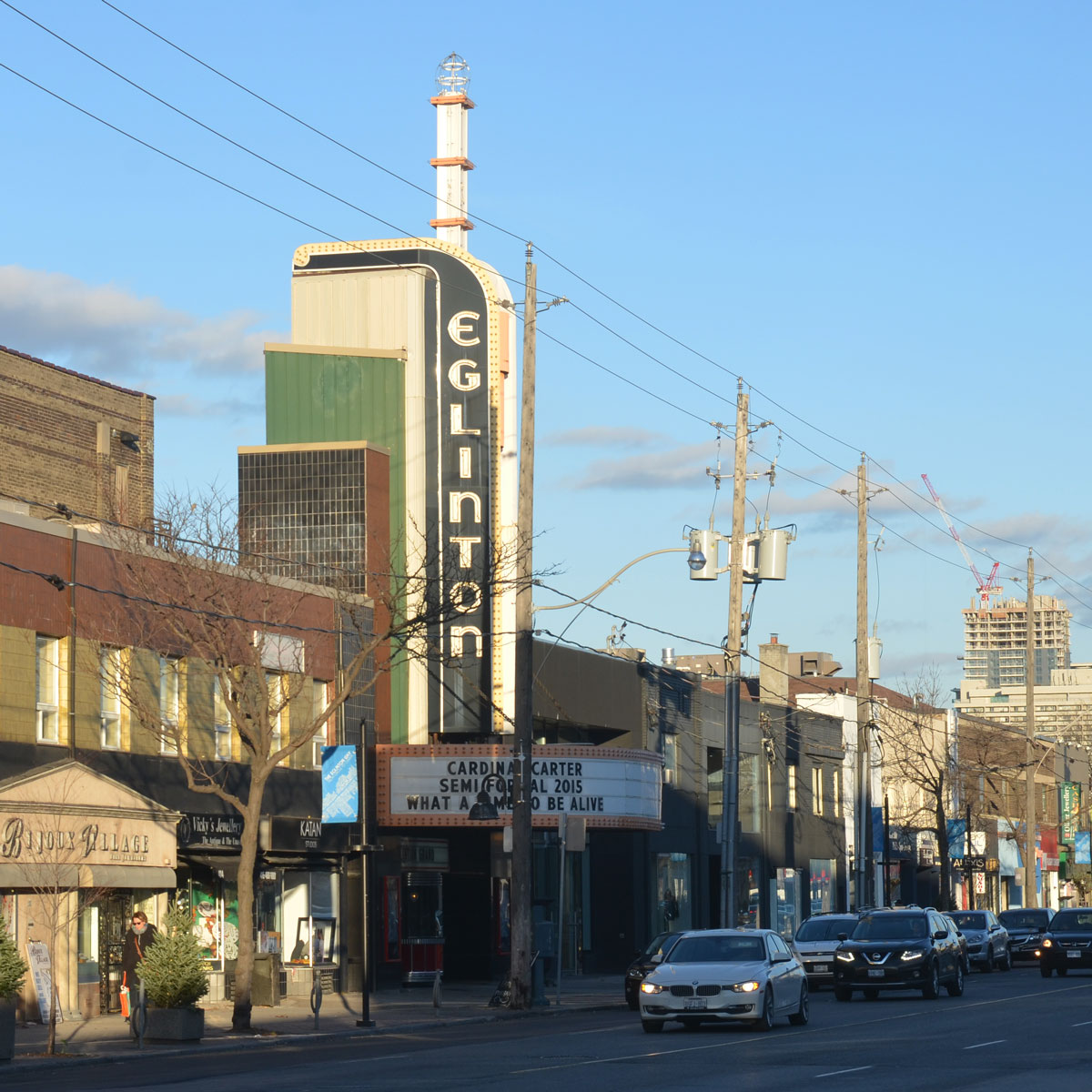
The Eglinton Grand, a cinema theatre built in art deco style in 1936.

 Somethings new

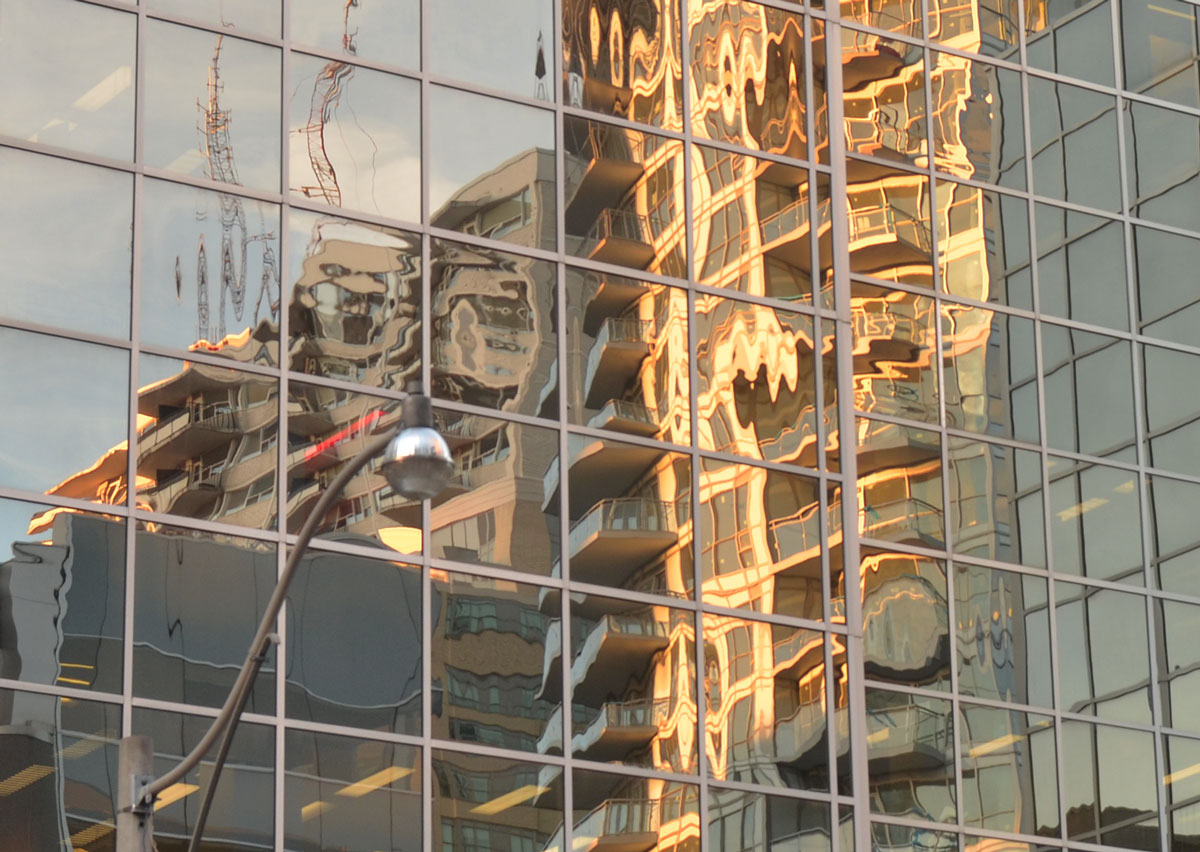
many curved and disjointed reflections of buildings in a tall glass building. Afternoon sun so there's a yellowish tint to the reflections

 And some window ‘shopping’ to do

below: Marbles wedged between glass make an excellent decorative touch.
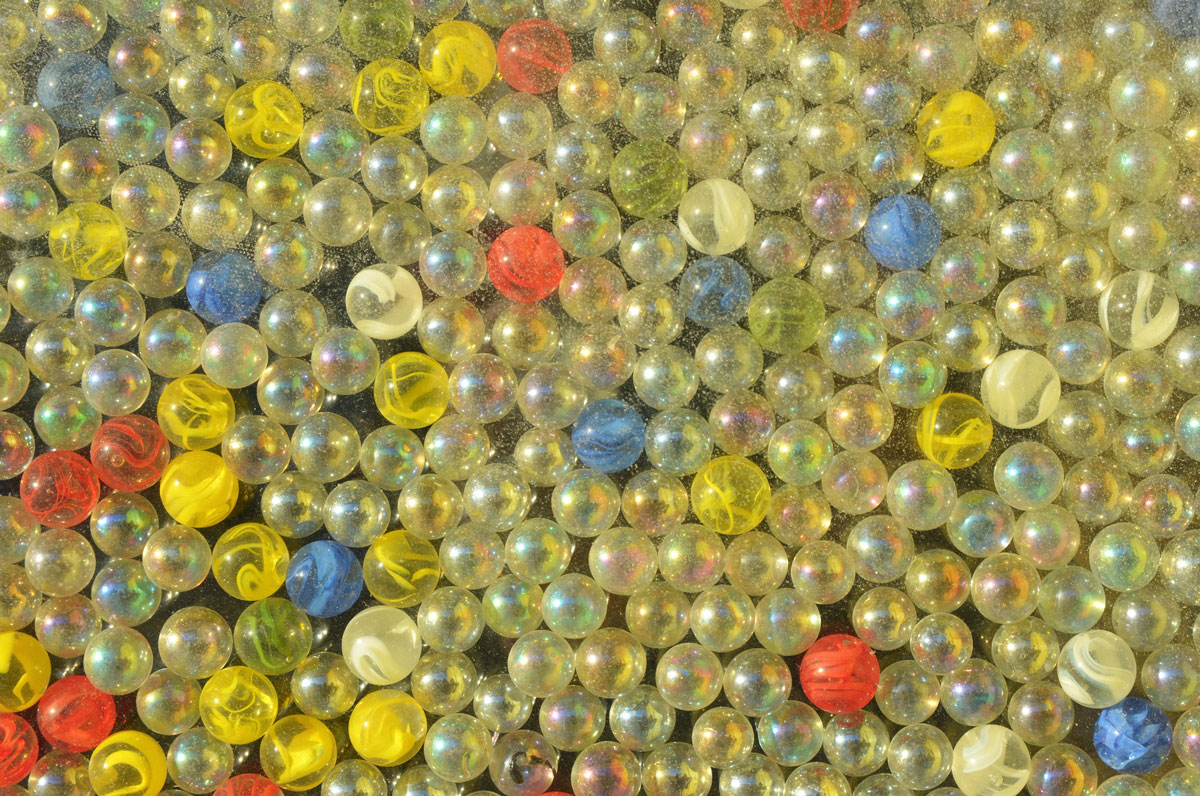
a layer of marbles wedged into a window to look a bit like stained glass

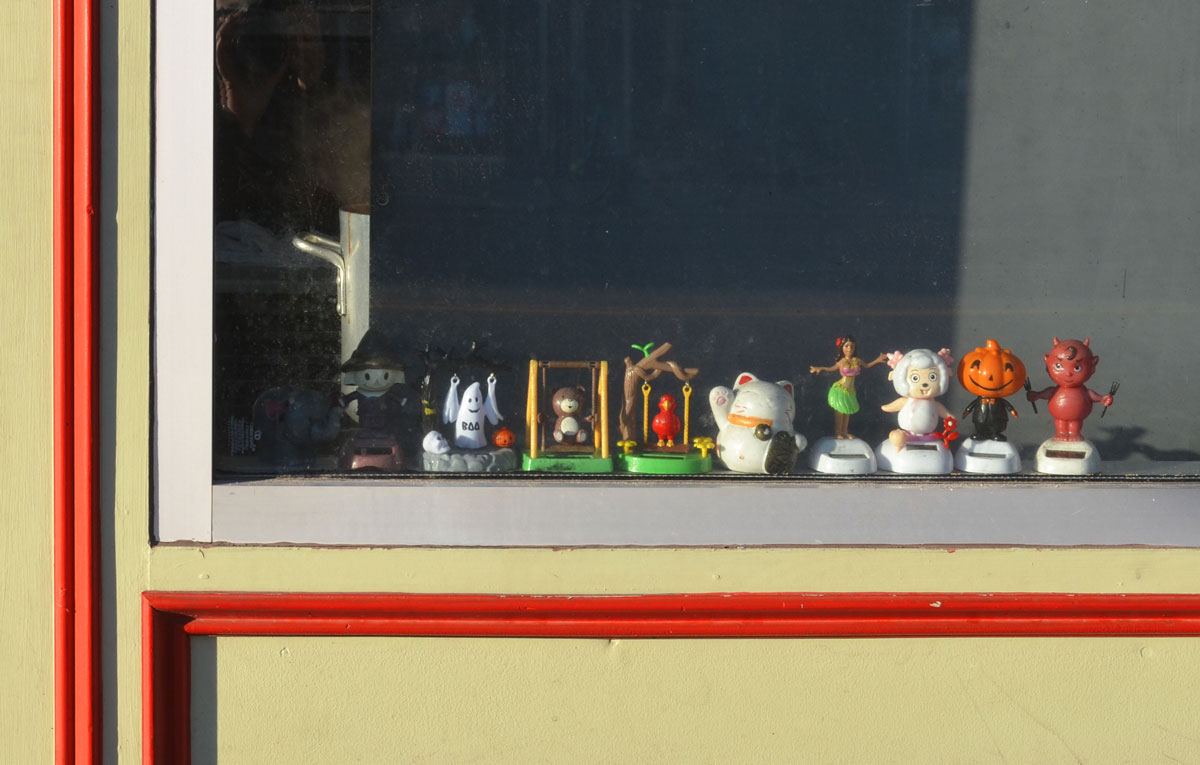
A line of toy figurines on a window sill in the window of a restaurant

below: little Japanese wooden dolls in the window of the Sake Bar
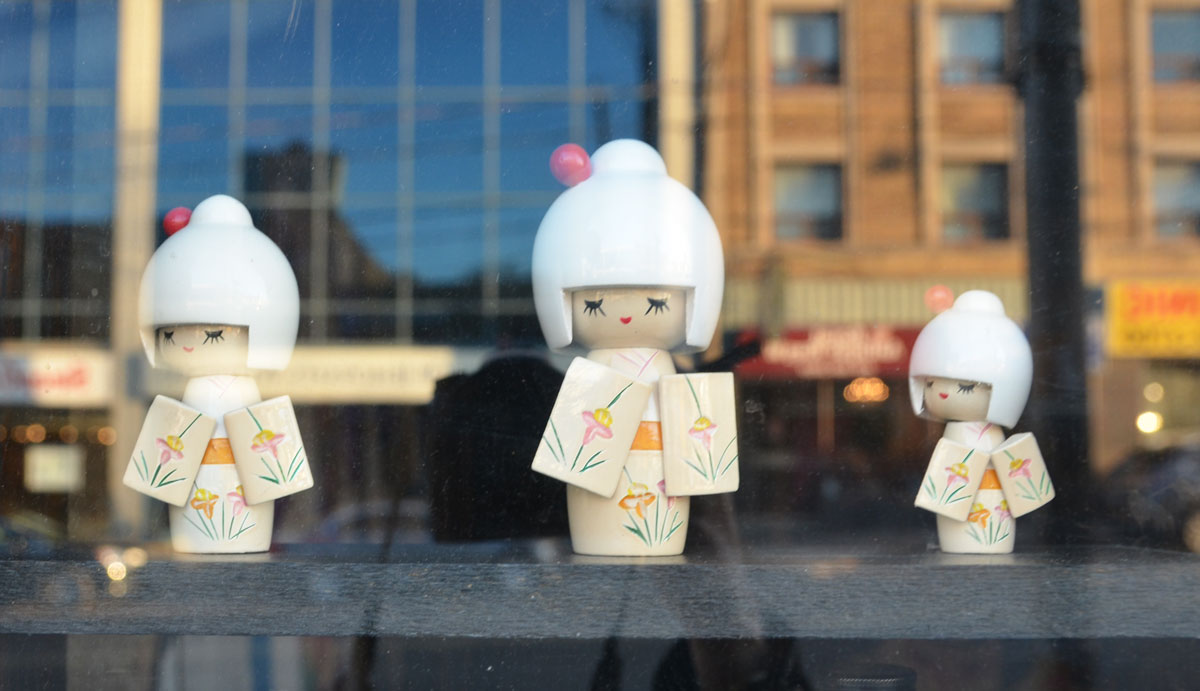
three little Japanese wooden dolls with white hair and white kimonos standing inside a window. Reflections of the stores across the street are behind them.

below:  And even a lovebot hangs out here

a 3D concrete lovebot stands on the sidewalk beside a store as people walk by

below:  A little chuckle at this sign….
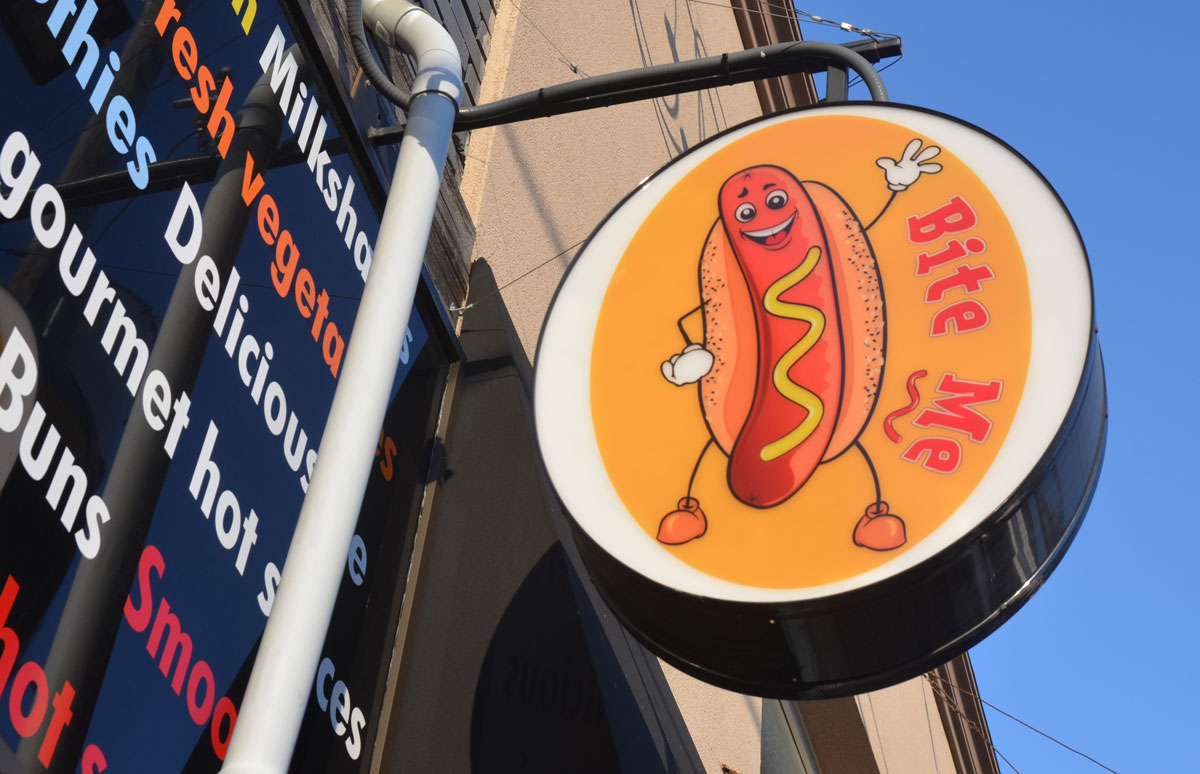
I small sign hanging over a doorway of a hot dog restaurant called Bite Me

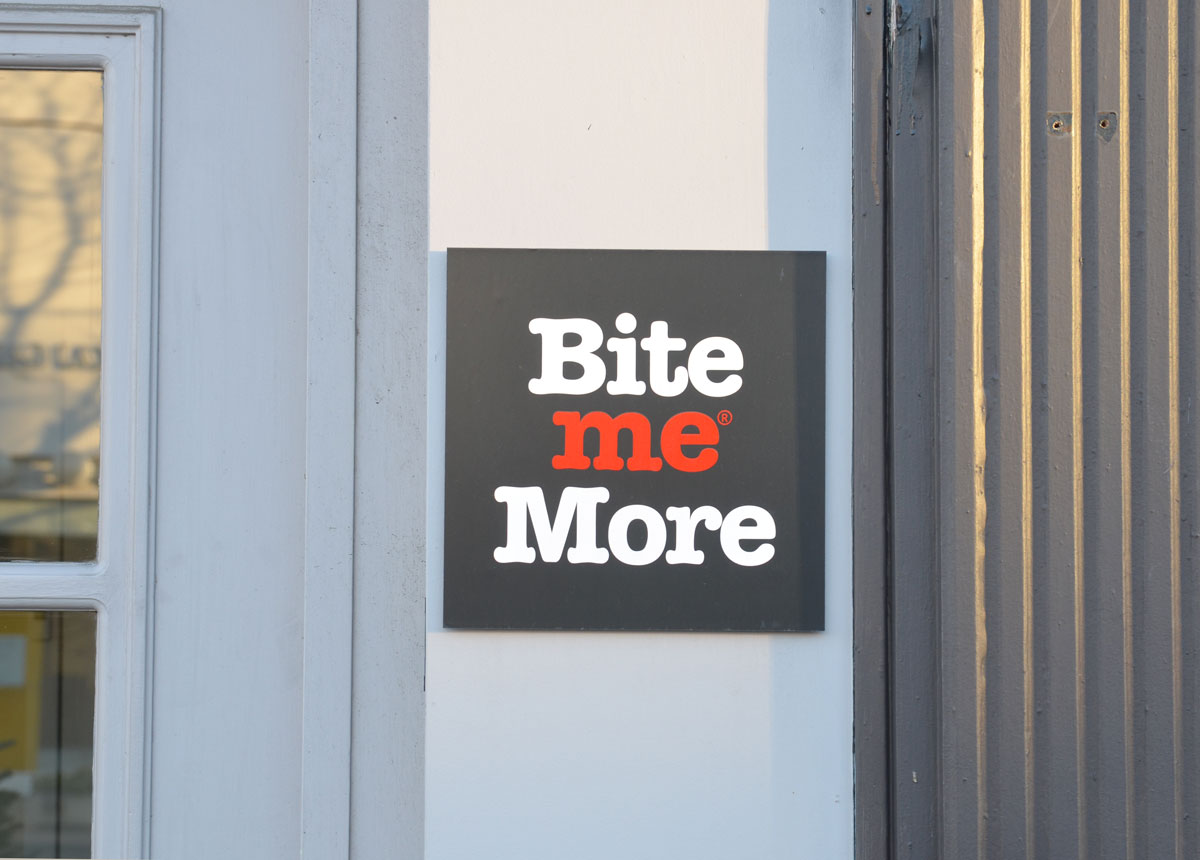
below:  And then later I saw this.

A sign on the wall outside a store that says Bite Me More

sticker on a pole on a sidewalk. One man is kicking another, pixelated picture, with the letters X G G L on it.

Rather than wait for a bus I decided to keep walking home but unfortunately it’s that time of year when the daylight hours are just too short.   One last look at where I had just been before putting my camera away and heading home.

very late afternoon sun, as it disappears behind buildings, looking down a street, sun is reflecting off some windows, a large part of the street is in shadow, a TTC is there, with its lights on, some construction on the street, some cars,

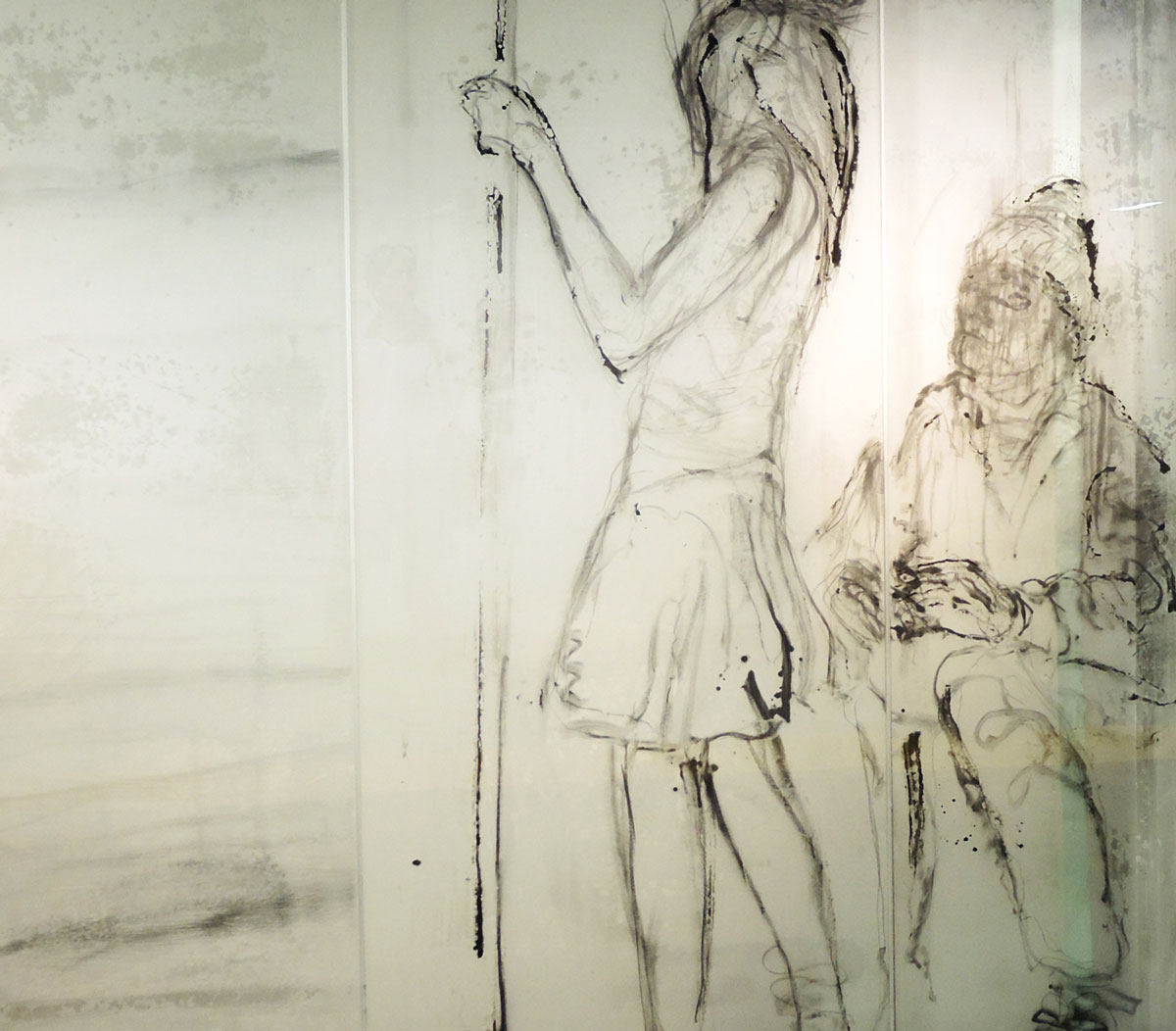
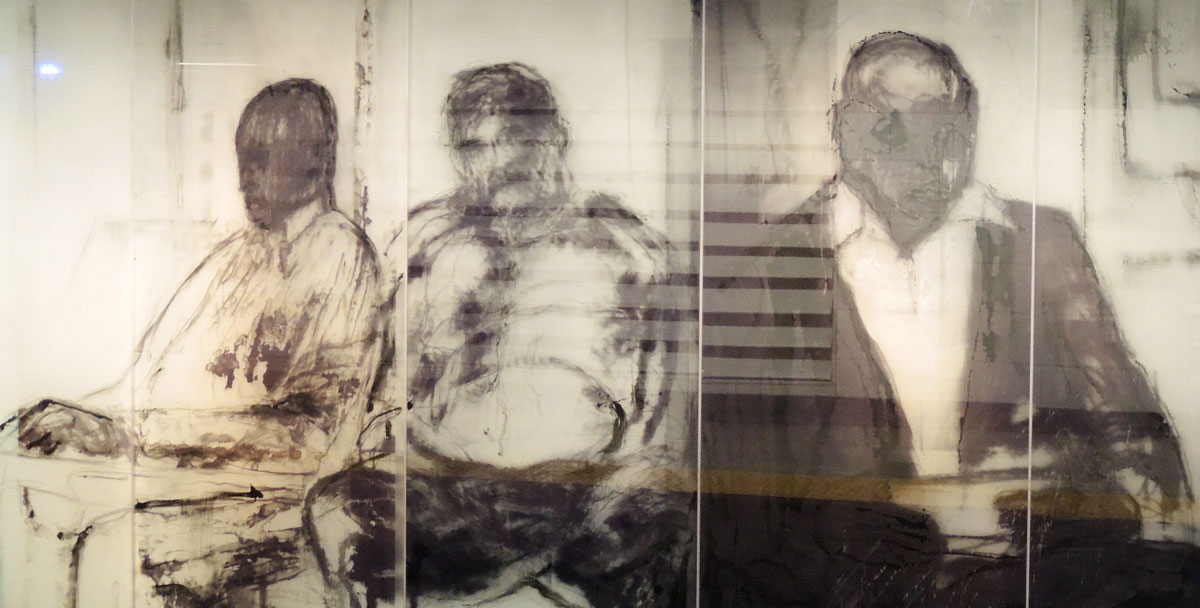
A while back, I posted some photos of ‘Zones of Immersion’,  Stuart Reid’s art installation at Union Station.   Now that it is completed, I decided to revisit it.  There has been some talk about how depressing it is.
I’ll let you decide whether it is depressing or not.

If you are on the ‘northbound to Finch’ platform you get a clear view of all the panels.
If you are on the ‘northbound to Downsview’ platform you can only see some of the glass panels.

I’ve now been back a number of times and this is what I saw:
1) Of the figures with discernible gender, 12 or 13 were male.
2) The males are of different ages and shapes.
3) The number of females outnumber males by at least 2:1.
4) Almost all (or even all?) of the women are young.  They are all thin, if not gaunt.
5) There is one child…. with a finger up his/her nose.
6) Only two or three figures are smiling.

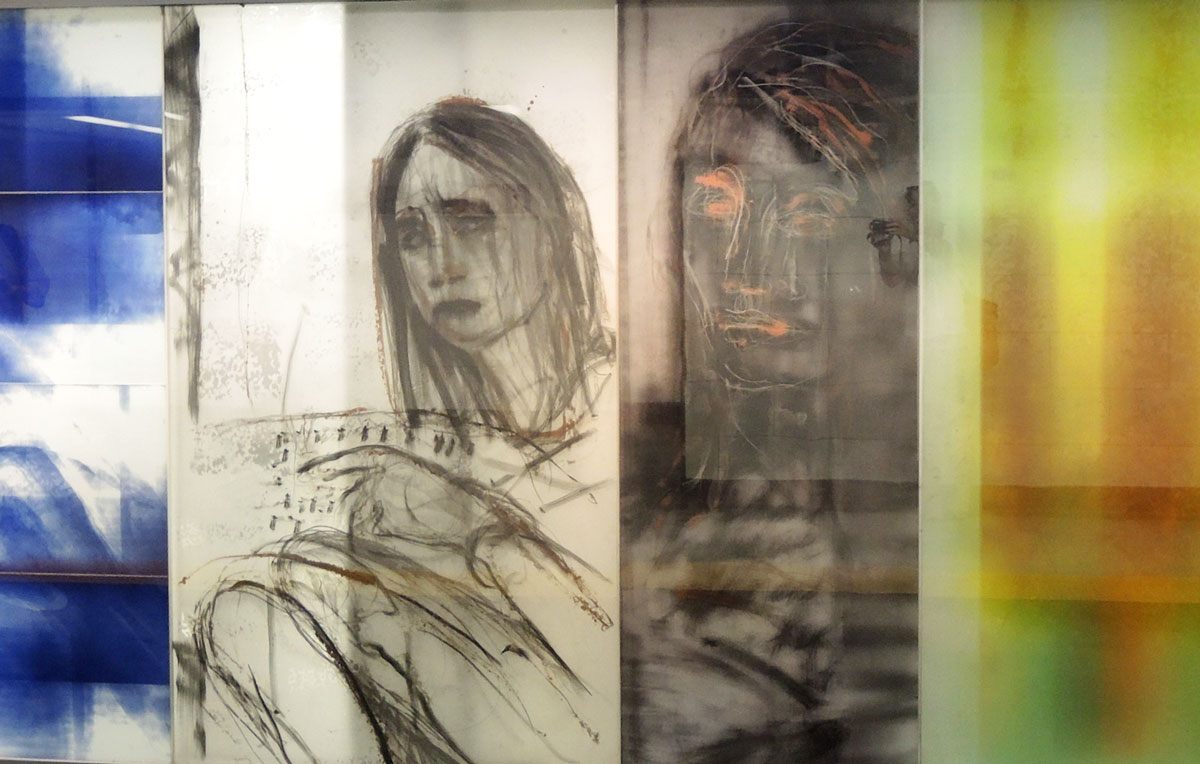
 

Part of an art installation at Union Station, paint on glass panels - a rough drawing, black outline with some grey shading of a couple

paintings on glass panels, Union Station art installation, two women. One on the left looks very sad, like she's been crying. The other woman is painted very dark grey with a few red highlights.

Looking along a subway platform at Union Station, the far wall is an art installation, paintings on glass panels of people

part of an art installation, paintings on glass panels,

part of an art installation, paintings on glass panels, a woman's head in dark blues and blacks, heavy paint around the eyes

part of an art installation, paintings on glass panels, a large face in red
blog_union_art_thinking

part of an art installation, paintings on glass panels, three men sitting on a subway

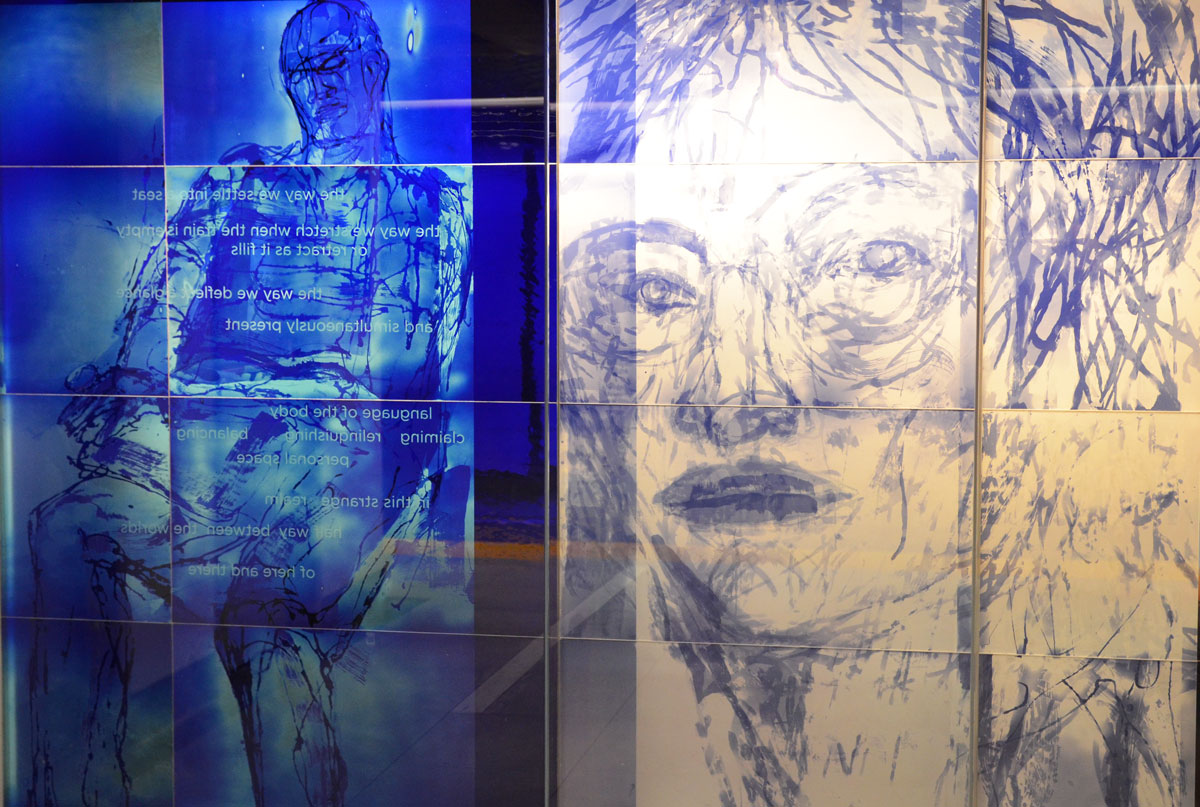
part of an art installation, paintings on glass panels, on the left are white words on blue background, on the right are two women in profile

“the way we settle into a seat
the way we stretch when the train is empty
and retract as it fills
the way we deflect a glance and simultaneously present
language of the body claiming, relinquishing and balancing
personal space in the interstitial realm
halfway between the worlds of here and there”

part of an art installation, paintings on glass panels, a woman in yellow on a green and blue background, a man is waiting for the subway and his reflection is in the photo

part of an art installation, paintings on glass panels, woman standining

The panels that can be seen on the ‘northbound to Downsview’ platform are seen as the reverse of those viewed from the other platform.

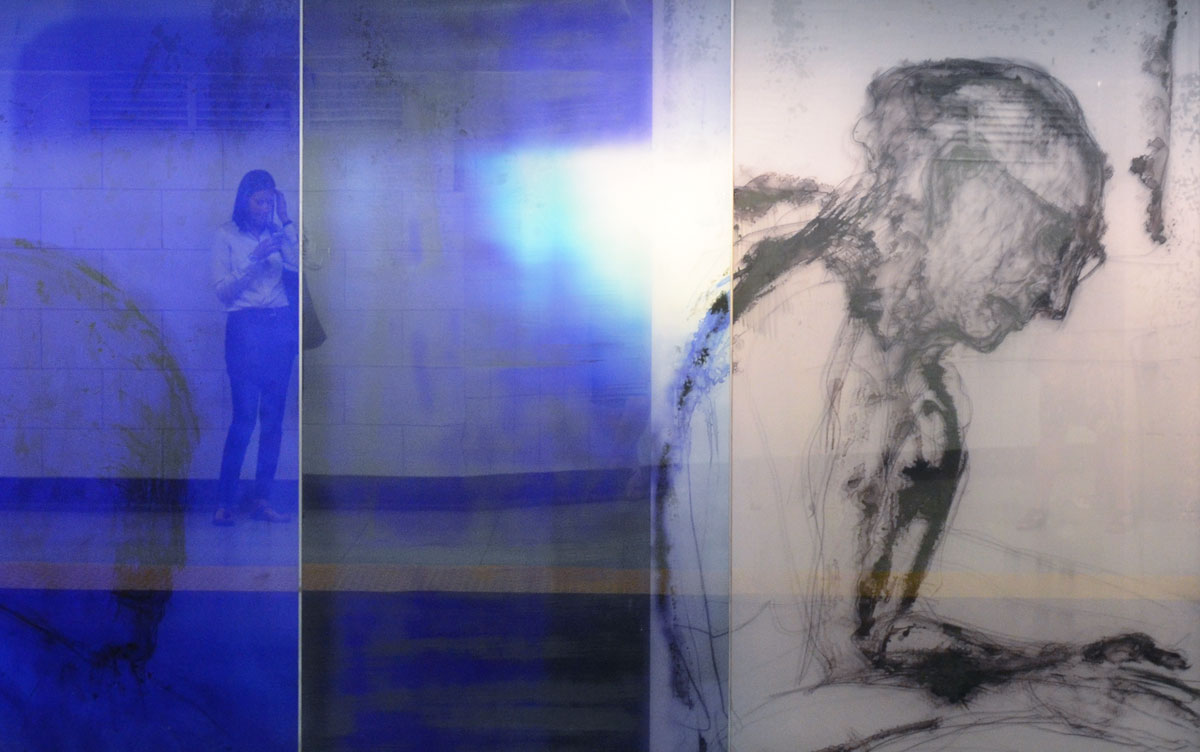
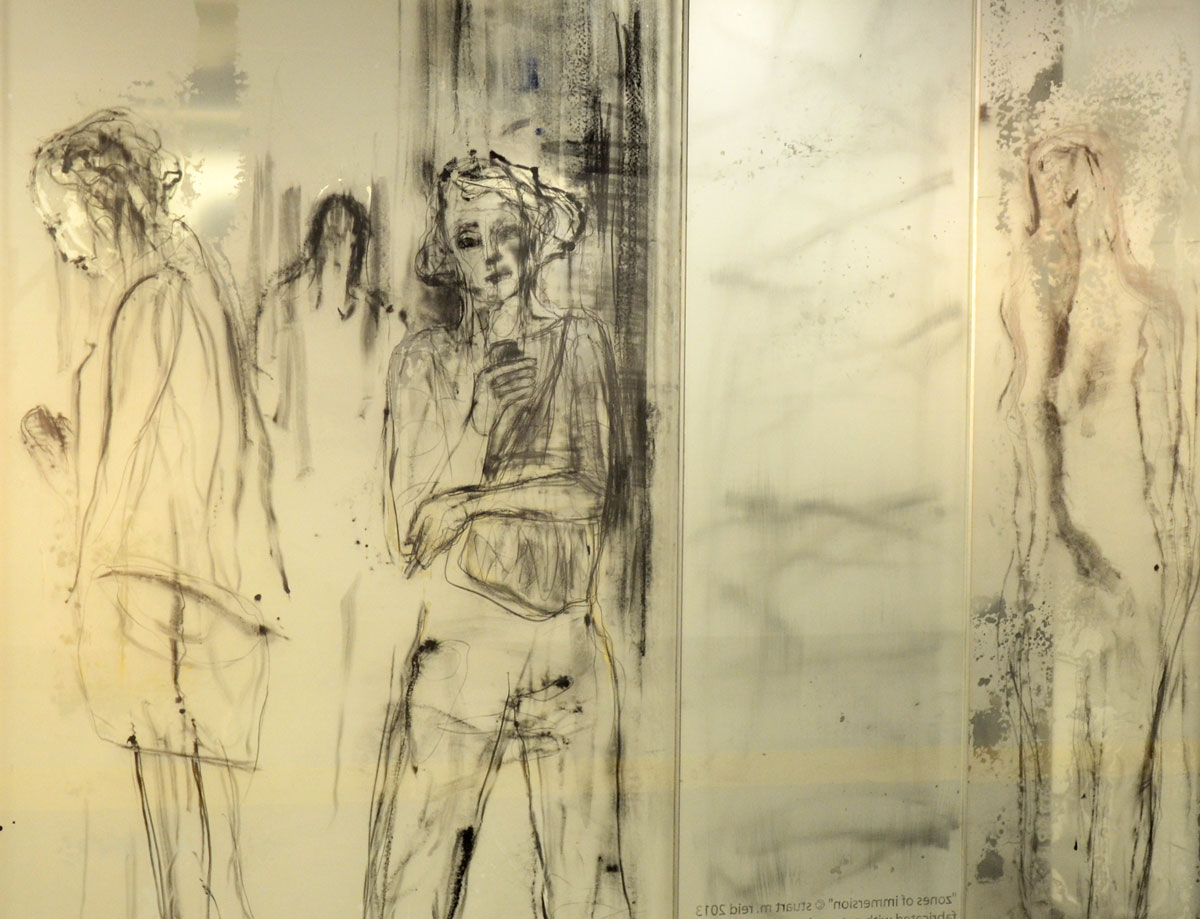
black and white painting on glass of a woman holding a mobile phone

part of an art installation, paintings on glass panels, upper part of a man sitting and reading, in profile, on the left is the reflection of a woman waiting for the subway
“slicing through the clay of the earth’s first skin
steel rails and electric lines
going from      going to
slicing through time and distance
darkness and light
station by station
releasing us into the city’s fabric
stop by stop
after a days labour
taking us home”

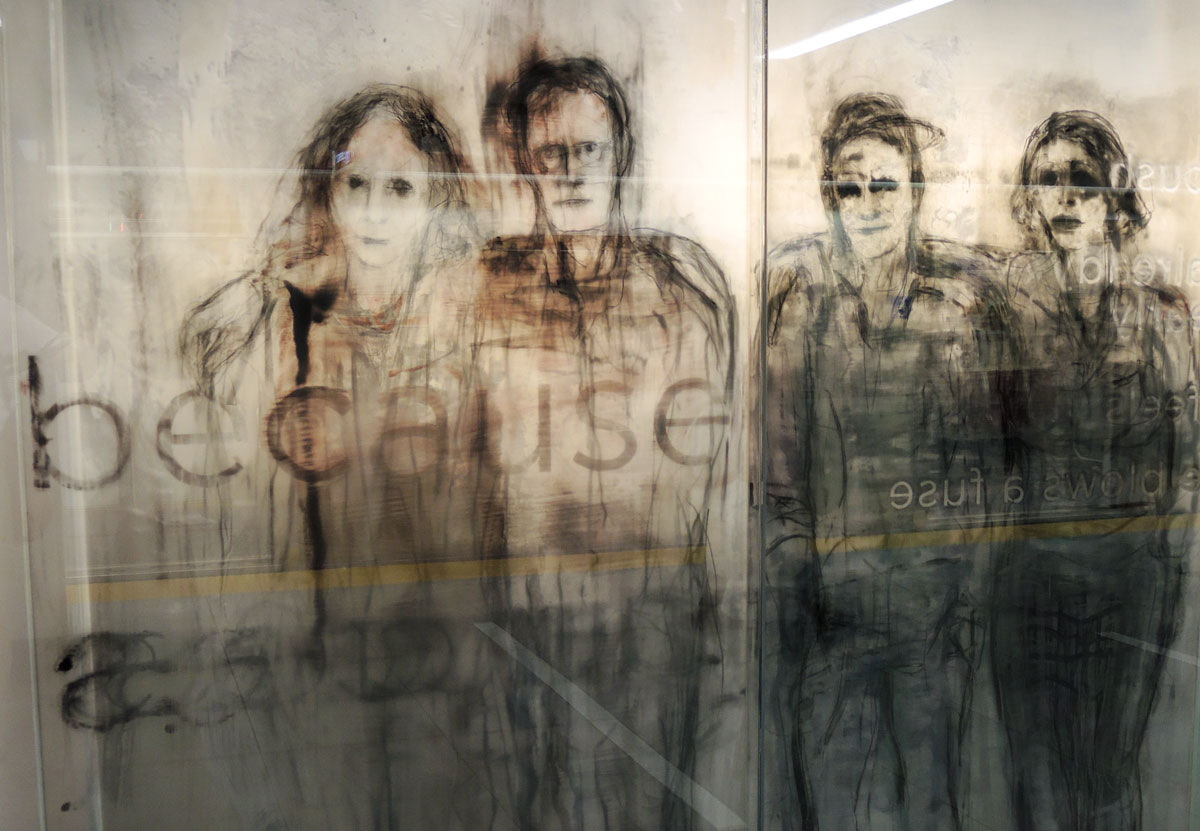
part of an art installation, paintings on glass panels, four women sitting on the subway

part of an art installation, paintings on glass panels, a group of people standing. The word because is also visible in the picture

part of an art installation, paintings on glass panels, a woman sitting on the subway with a child on her lap. The child has a finger up its nose

part of an art installation, paintings on glass panels, on the left side is a man on blue and on the right is a woman's head drawn in blue

painting on glass panels, two women, on the left is standing, on the right is pointing to the left.

(added in October) I got off the subway at Union Station today.  There were three guys in front of me.  One of them stopped and pointed to the nearest painting which happened to be the one above.  As he pointed he said “See what I mean, if that doesn’t make you want to jump… “.


I’m happy to be corrected if you can prove me wrong.


On a warm sunny Saturday in April.
People out and about in Kensington enjoying the day.

Two women are posing in front of a mural in a Kensington lane while a man takes a picture and another man watches.

In a dead end Kensington lane with a car parked at the end of the lane.  There is street art on both sides of the alley.  One man is leaning against the wall on one side, taking a photo of a man who is leaning against the other wall.

Reflections of people walking on the sidewalk, reflected in the side windows of a red vehicle.

A couple is posing for engagement photos.  She is sitting on the hood of a red and white Mini Cooper.  He is leaning against the front of the car.  The car has big eyelashes over the front headlights.  The car is parked on a street in Kensington.

A couple is sitting on the sidealk outside a row of boarded up houses.  The houses are brick and are painted in bright yellow, orange and red.

A couple is sitting by a window inside a restaurant.  The exterior wall of the building is covered in a mural of brightly coloured little monsters.  A woman is standing outside by the window as she checks her phone.

Sugar Beach on a November afternoon.

A time when you have your choice of seats to sit and watch the clouds race past and the wind whip the branches of the trees around.

Sugar beach with its white chairs and pink umbrellas, looking over the sand towards Lake Ontario

Late afternoon beside grey Lake Ontario.

Sugar beach with its white chairs and pink umbrellas, there are no people here, and the lake is looking a little grey.

The first hint of sunset appears in the sky.

Sugar beach with its white chairs and pink umbrellas is in the foreground and the city is behind it.

Darker skies over the city as the rain clouds pass by.

Sugar beach with its white chairs and pink umbrellas is in the foreground. The Toronto skyline is in the background, including the CN tower.

With the city behind.

Sugar beach with its white chairs and pink umbrellas, with a four storey building behind as well as some willow trees

The low sun of late afternoon is reflected off the umbrella stands as well as the glass of the Corus building behind.

Sugar beach with its white chairs and pink umbrellas,

Since most of the city woke up to snow flurries this morning, I thought I would take a quick look back over the past month.  October was a beautiful month with many clear sunny days.  The leaves on the trees turned wonderful colours this autumn and the colours lingered for a few weeks.

Blue skies, autumn colours

A man is suspended from the roof of a tall building by a rope.  He has a bucket and he is washing windows.  The CN Tower is close by and seems to loom in the background.

Washing windows in the shadow of the CN Tower.
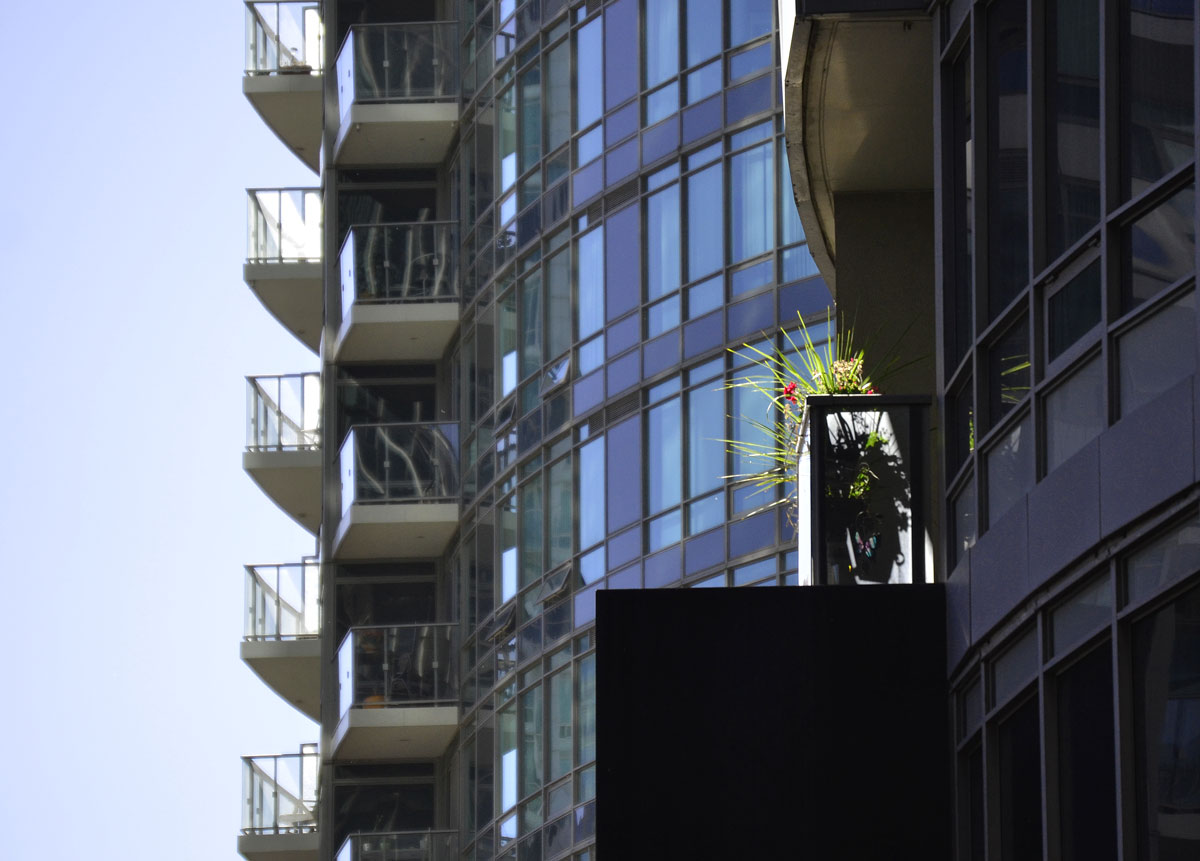
Two tall condo buildings.  Sun is reflecting off the balconies of the condo in background.  In the foreground is a balcony with a large plant.  Sun is shining directly on the plant so it looks like it is in a spotlight.

Afternoon on the balcony. Condos on Blue Jays Way.

.
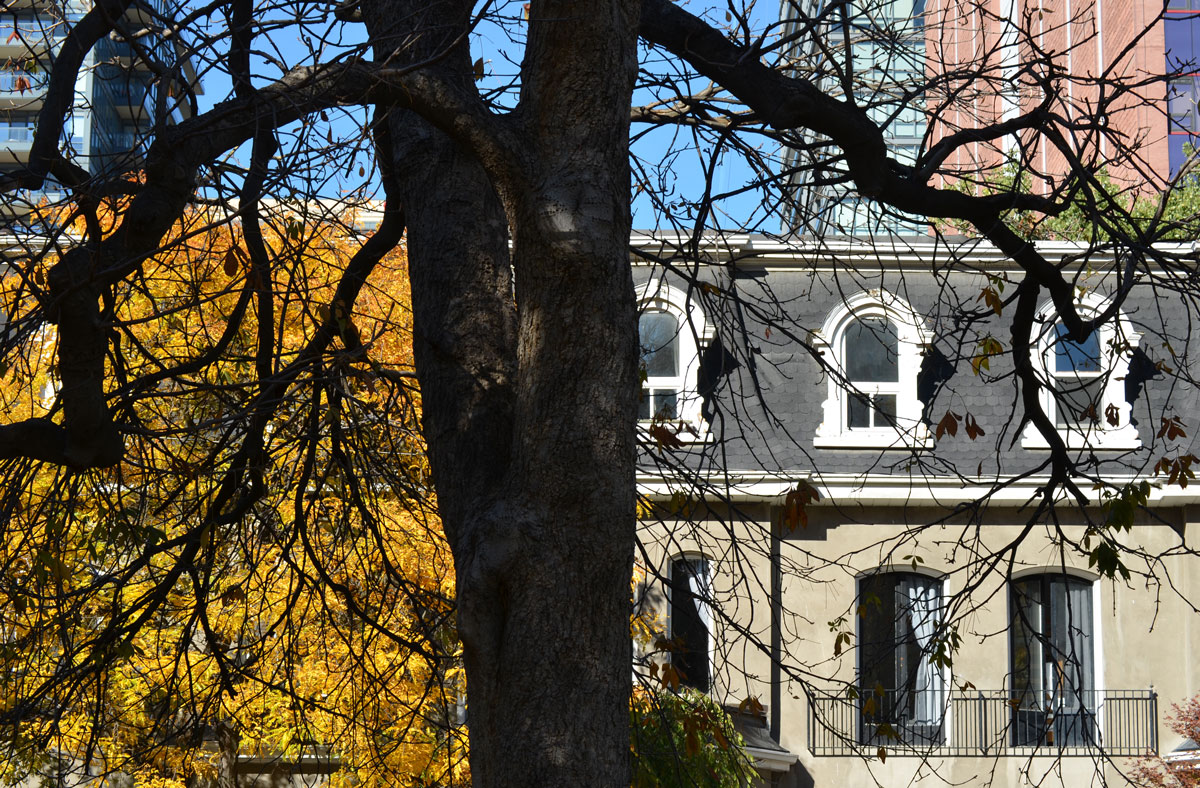
older row houses in the background along with a tree covered in yellow and gold leaves.  A large tree that has already lost its leaves is in the foreground.

Clarence Square

.

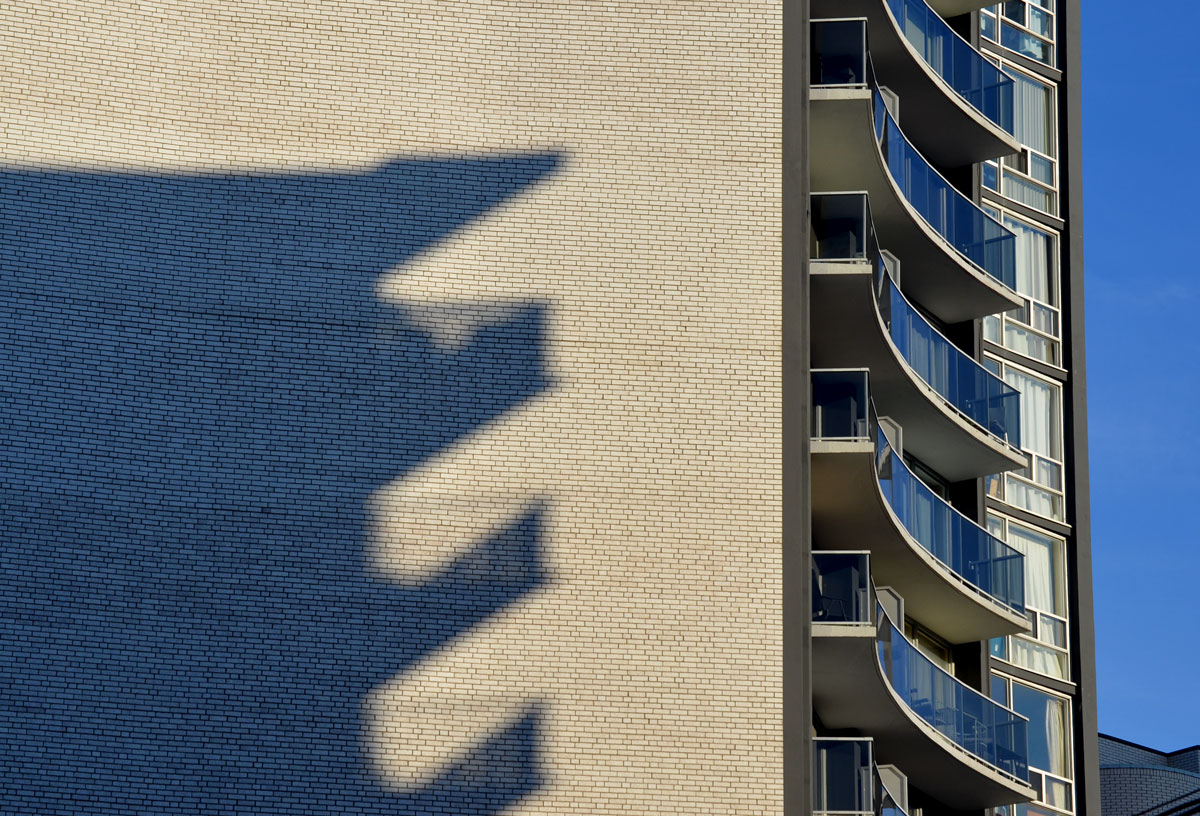
Tall light grey brick apartment building with cirved bluish balconies.  On one wall is the large shadow of another building with balconies.

Shadows of building on building, Roehampton Ave.

.

Just a collection of walls that caught my interest as I walked in the past few weeks.


reflections in the window of the OPG (Ontario Power Generation) building, a curved glass structure.

diamond blues


grey concrete wall

patches, cracks, and drips under a  bridge


close up of a maroon coloured drain pipe down the side of a house that is red and orange.

vibrant orange with drain pipe


Four storey brick building with large windowes with rounded arched shaped tops.  Yellow brick details around the tops of the windows.

Pattern of arches at George and Adelaide


close up of a concrete wall that has black paint (or something like black paint) spilled on the lower part of it.

black and white under grey


Close up showing part of a wood pallet that is leaning against a grey brick wall.

wood on brick, browns and greys