Posts Tagged ‘public art’

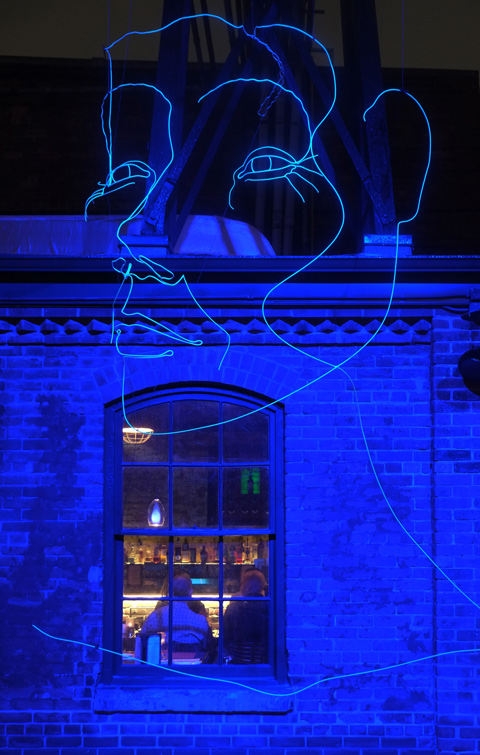
Once again, the Distillery District is lighting up the cold winter nights with their LightFest featuring a number of lit art installations.


blue lights shine against an exterior brick wall of a restaurant, window - looking in the window you can seen people sitting at a table. A large art installation of a woman's face outline in blue light hovers above the window.

below: The LOVE locks have been enhanced with a cursive band of colour.

a band of blue light writes the word love in cursive, laid on top of a LOVE sign that is covered with locks.

below: There is no fire breathing dragon like there was last year, but there is an enormous 35 foot polar bear standing outside Balzacs.  Apparently it gets lit up later in the evening (or any other time except when I was there?).   He is made from the hoods of old cars and is the creation of Don Kennel.

a sculpture of a very large polar bear standing on its hind feet, in white, with black claws and facial features, distillery district, evening

below: Well, duh, of course it is!  LOL.  There is no context to this picture so you can’t tell that it’s like a large hockey puck, about 4 feet (about 1.2 metres) high if my memory is correct (i.e. it could be a bit higher).

a round white light with words written on it in capital letters, black, Centre of the Universe

below: Some of the installations are just for show (like the rods here) but some are more interactive.  For instance, the ring of orange and yellow lights that you can see in the background are large enough for people to walk through.

below: Another interactive installation is this little stained glass and acrylic enclosure by Taylor Dean Harrison.  When you are inside it looks like you are surrounded by stained glass.  Or, as I overheard one boy call it, lizard skin.

light art installation at Distillery District, like a small tent or hut that you can go inside, tiny triangle of colour, by artist Taylor Dean Harrison, looks like stained glass

artwork featuring tiny triangle of colour, by artist Taylor Dean Harrison, looks like stained glass. Close up detail shot

As usual, this is only a taste of what it there.  You can explore the works of 30 different artists at the Distillery District until the 3rd of March.


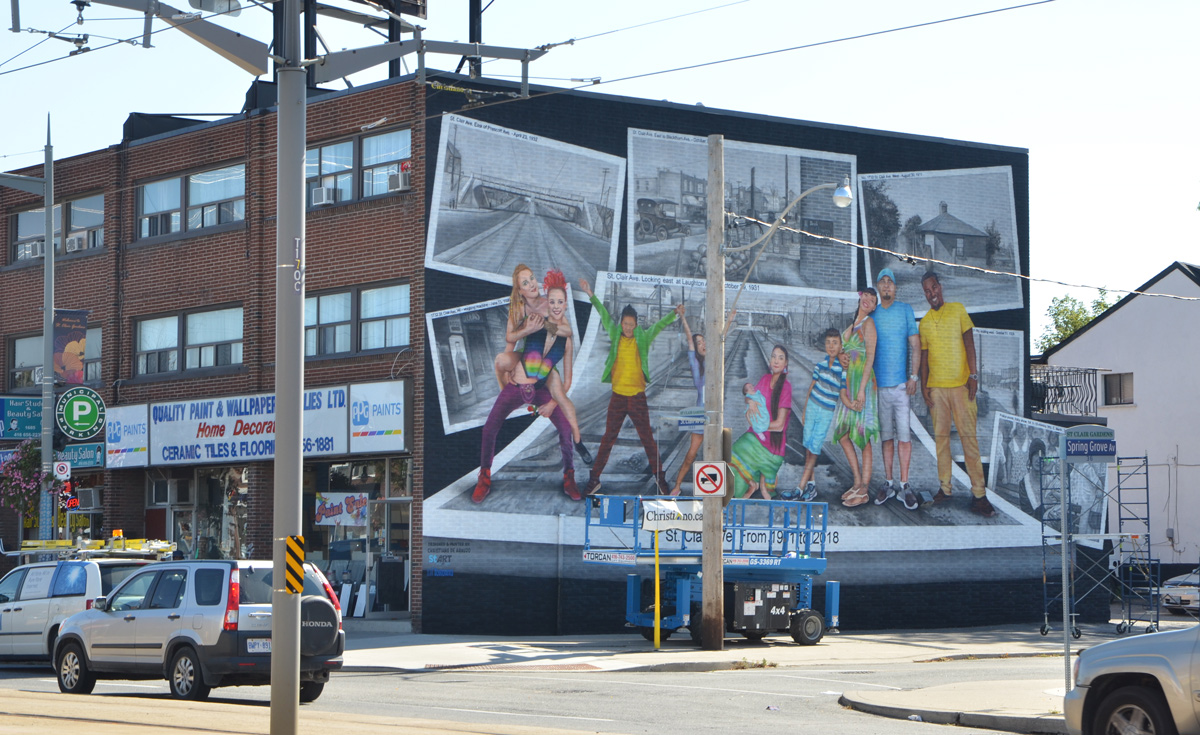
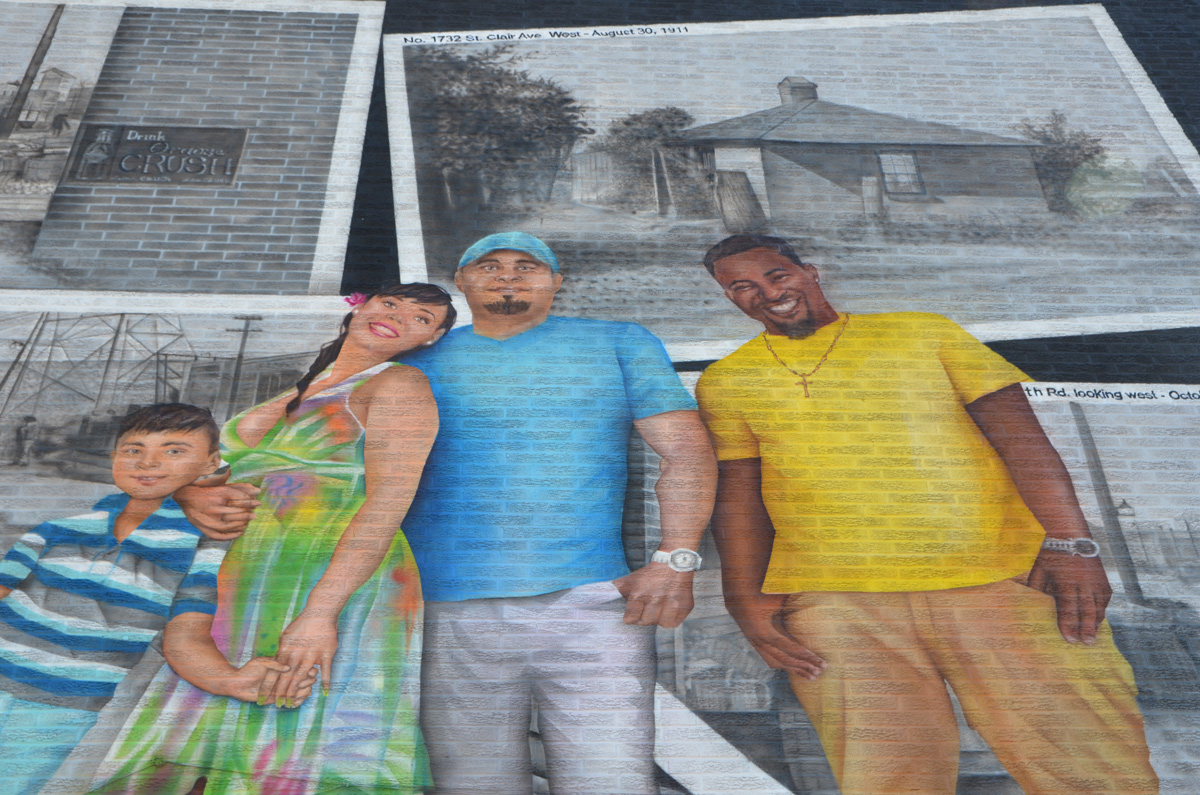
From the monochrome past to the coloured present – there’s a new mural on the corner of St. Clair West and Spring Grove painted by Christiano De Araujo.    Old black and white photos of the area and its people provide the background for a group of ten very modern and diverse people.

looking diagonally across the intersection of St. Clair West and Spring Grove Rd to a new mural that has just been finished on the side a building, painted by Christiano De Araujo.

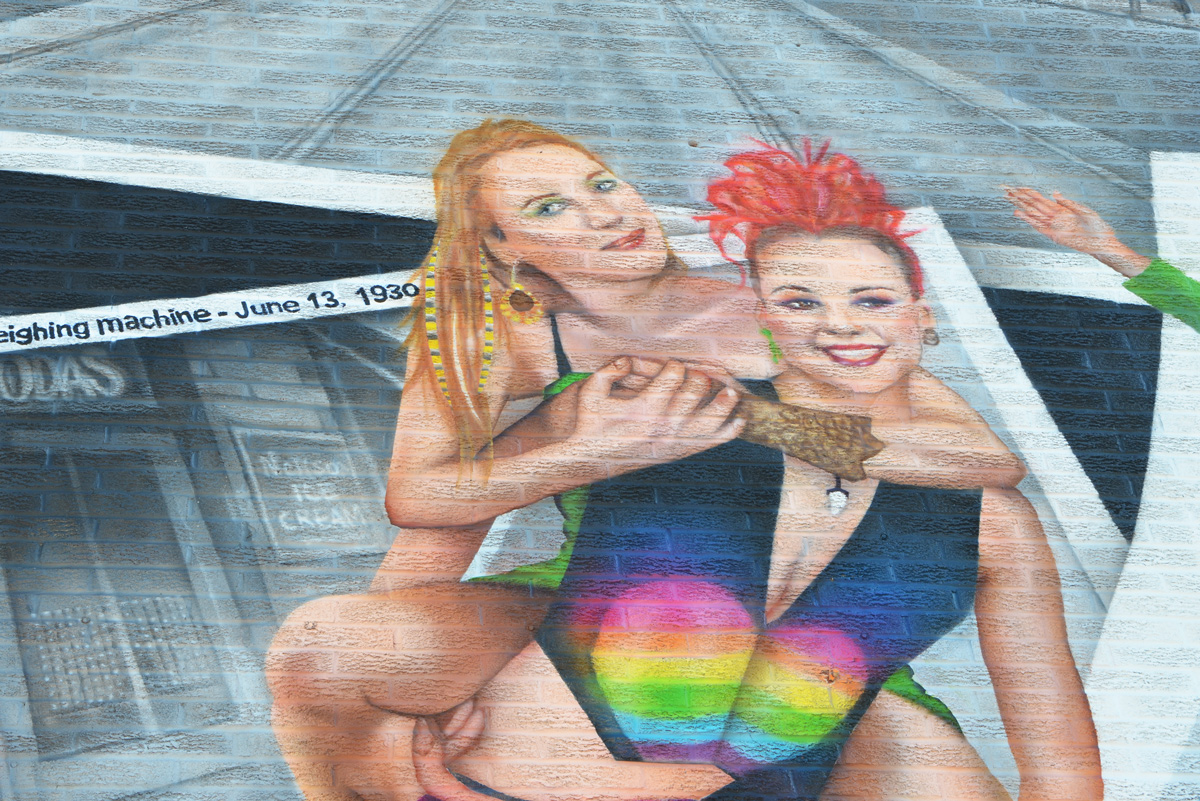
painting of two young women, one blond and one withshort curly bright red hair, on top of painting of black and white vintage photos

painting of a black and white photo from 1930 of a woman holding a baby

below: The top photo is 1732 St. Clair West in 1911.

painting, in colour, of a group of people standing in front of paintings of some old monochrome historical pictures of the St. Clair area

below: On the top, very left corner, the black and white photo is a street scene – It’s St Clair Ave looking east from Prescott Avenue, under the railway bridge and beyond.  The bridge was built in 1931 and the photo was taken shortly after that.

new mural on the side of a 2 storey building, a series of vintage black and white photos of the area and people, with paintings of 8 modern people in colour

This is a StART (StreetARToronto) project

Yesterday started damp and grey but then flipped to bright and sunny.   Almost spring-like even.   So off to the beach I went.

mural of people enjoying the beach, surfing, jogging on the boardwalk.

Well, not that kind of beach.   It does look warm though doesn’t it?  Yesterday it was more like this:

below: Looking towards Lake Ontario from Kew Beach Ave.  Lots of trees and lots of what looks like grass but is more like mud.   Squish, squish as I walked gingerly across the water logged ground, trying to keep my shoes clean.

large park beside Lake Ontario at Kew Beach, Toronto, large mature leafless trees, spring, grass is brownish colour, some people in the distance, walking on the boardwalk,

The goal?  To check out this year’s warming stations art installations.  Lots of others had the same idea as it turns out.   Some kids, some dogs, but that’s okay.

below: Interacting with “Nest” both on the outside…..

a woman model poses beside an art installation on the beach

below: …. and on the inside. Like all the other warming stations, this one is built around a lifeguard station.

kids climbing on a lifeguard station that is inside Nest, an art installation that is open to the sky at the top of the lifeguard chair.

below: The structure is covered with netting-like fabric on the inside and webbing on the outside.  It was designed by a team from Ryerson University – Adrian Chiu, Arnel Espanol, and Henry Mai.

an older couple examine the fabric that is on the inside of Nest, a warming station at Kew Beach

below: A sign of the times, a pink pussy hat makes its appearance as “Pussy Hut”

large oversized pink pussy hat as an art installation on the beach

two little girls inside the large pink pussy hut warming station

below: “What’s all the fuss about?”

a small black and white dog with a blue neoprene vest and a red coat with 4 legs

below:  A large square made of many pieces of hanging red fabric, anchored at the bottom with plywood.  This is “Obstacle” by Kien Pham.

Obstacles, by Kien Pham, an art installation part of warming stations 2018 in Toronto, by Lake Ontario, consists of many large flaps of red fabric that you can walk between.

a girl in pink jacket with pink hood stands between large flaps of red fabric that is part of Obstacles, an art installation


below: “Revolution” by a design team from OCAD university. It consists of 36 vertical red poles with conical metal pieces that twirl. You can look through them or speak through them, or just walk amongst the red poles.

people walking amongst an an art installation of small conical tubes like megaphones on red poles of differing heights.

looking down a metal tube

an art installation of small conical tubes like megaphones on red poles of differing heights, lake in background

below: Red!

a mother holds her young son's hand as they stand together on a beach overlooking Lake Ontario, backs to the camera

below: “Rising Up” by University of Guelph, School of Environmental Design and Rural Development.  The design was inspired by the topography of the Don Valley.

a white and brown dog on a leash in the foreground, people and kids climbing on a wooden structure which is actually an art installation called Rising Up

looking through part of rising up, a wood structure built on the beach, a couple walks hand in hand between the art installation and Lake Ontario

rising up, an installation part of warming stations at kew beach, beside lake ontario

below: Ooops!  One has blown over and collapsed already (it was quite windy).  Ironically it was called “Wind Station” (designed by Paul van den Berg and Joyce de Grauw).  When it was first constructed, it was in the shape of a nuclear cooling tower and you could go inside.  The little plastic windmills continue to blow in the wind.

a few people in the background, they are looking at white wood and white plastic toy windmills lying on the ground. it is a collapsed art installation, part of warming stations at kew beach, by Lake Ontario

below: Not everyone was looking at the warming stations.

a lone person standing on a beach, looking out over Lake Ontario, back to camera, in full wetsuit, holding onto a surf board under his (or her) arm, another surfboard sits on the sand.

below: This is ‘Make Some Noise’, designed by Alexander Greiss and Jorel Heid. Apparently it is based on based on the intonarumori, an invention of the Italian futurist Luigi Rusollo in 1914. An intonarumori generates noise. Rusollo envisioned noise music replacing traditional forms of music but he was not successful and none of his contraptions survived.

people on the beach checking out the art installation, Make Some Noise, a large yellow and black vertical box, with four large black loudspeakers

a child with a red jacket is trying to climb inside a large black speaker, conical shaped, on the side of a black and yellow art installation at the beach, warming stations, Kew Beach, lake ontario is in the background.

below: This is one side of the box. The red is a handle that can be turned thus generating noise. I don’t think that it was working. Each side had a handle and a black speaker.

close up detail of one side of Make Some Noise, an art installation, yellow and black diagonal stripes, narrow and close together

Stay warm!


Saturday, December 17th 2017
The day six new TTC subway stations opened.

So, of course, off we went on a subway adventure….  An exploration of the TYSSE, or in other words, the Toronto York Spadina Subway Extension.   I have presented the stations in order that I visited them, from north to south – Vaughan, Highway 407, Pioneer Village, York University, Finch West, and Donwsview Park.  It’s not every day that new subway stations come along… and these have been a long time coming!


below:  The northernmost station on Line 1 is now Vaughan Metropolitan Centre.
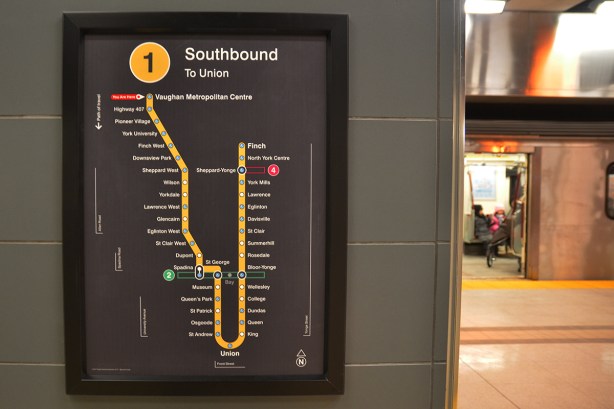
map of line 1 of the TOronto subway system, with red "you are here" arrow at the top left hand side, for Vaughan subway station.

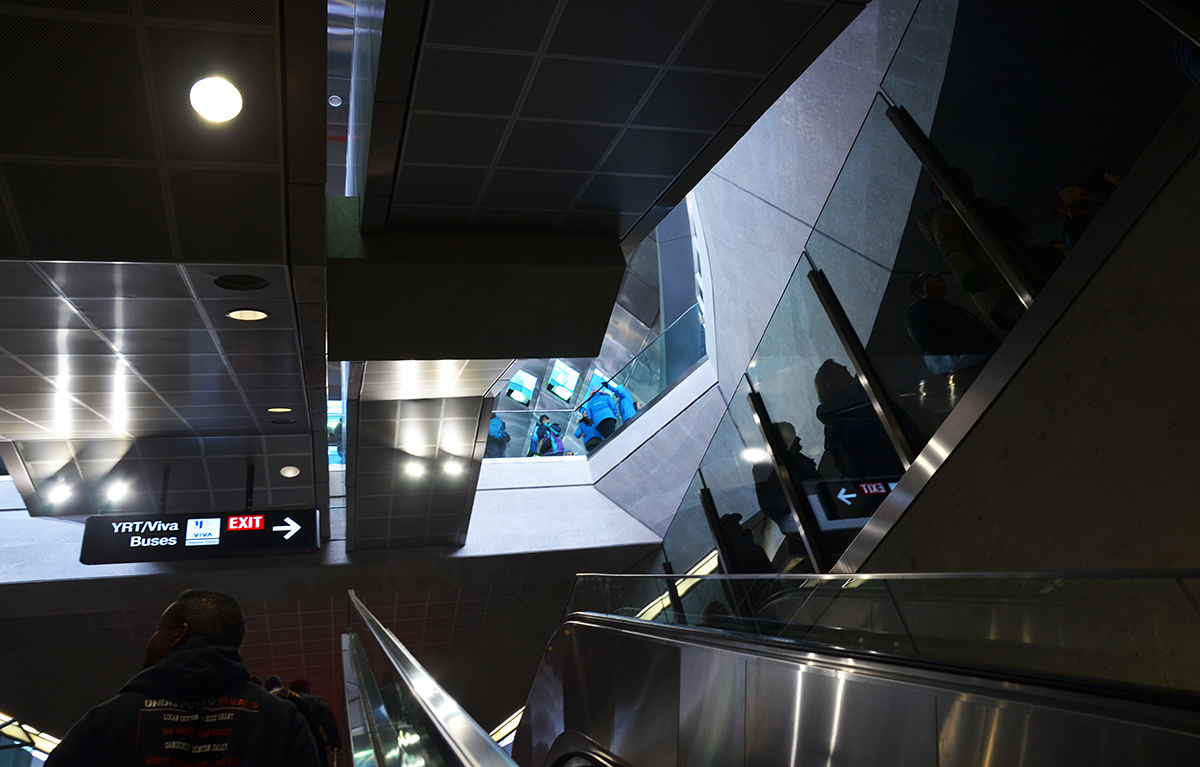
below: ‘Atmospheric Lens’ by Paul Raff Studio is the artwork that is incorporated into the roof of the station.  It features skylights and reflective panels.  The yellow is reflections from a glowing disk mounted on top of the elevator shaft – you can’t actually see the disk, just its reflection.

reflective ceiling of Vaughan subway station, with people going up the escalator towards it, taking pictures.

escalators and shiny walls of Vaughan subway station

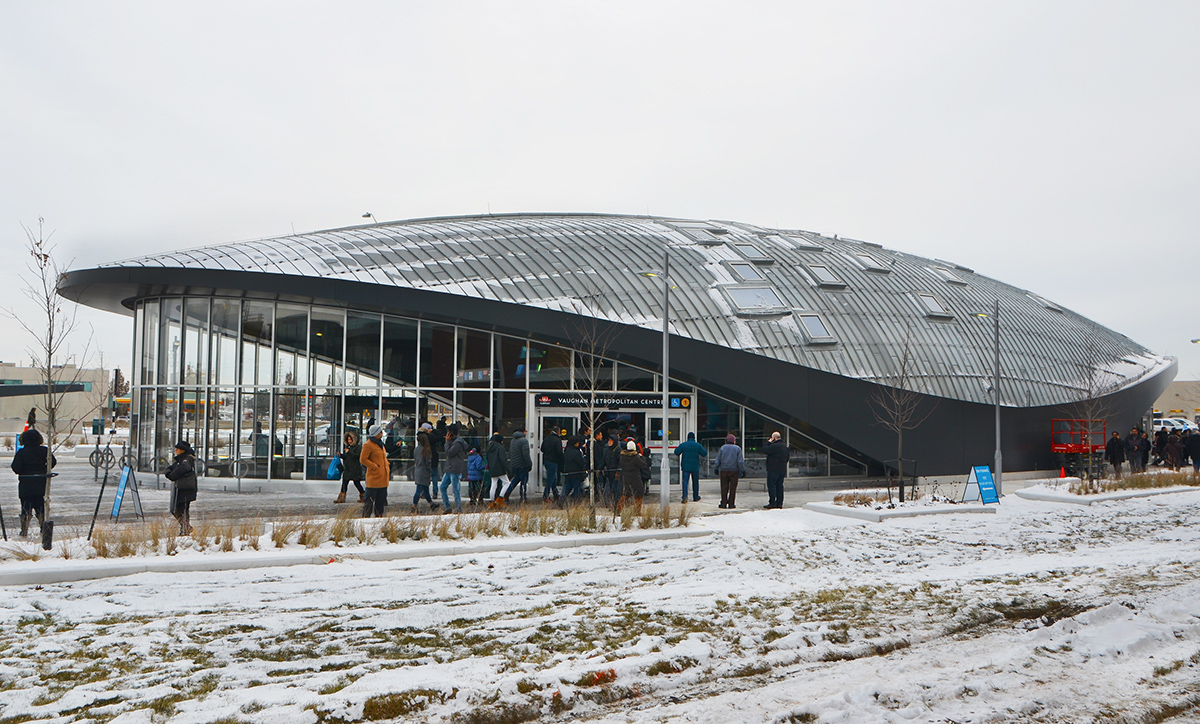
below: Vaughan Metropolitan Centre station, from the outside

exterior view of the dome like Vaughan TTC subway station, some snow on the ground, some people standing around outside the doors.

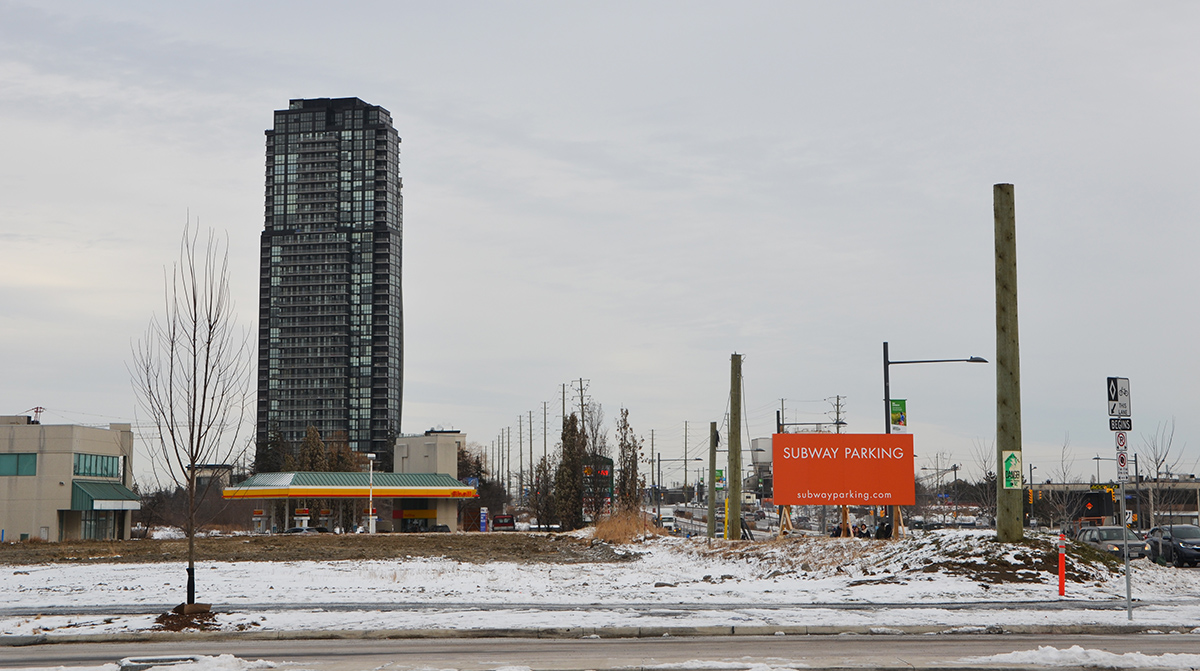
The rest of the ‘metropolitan centre’ needs a bit of work… as does the parking that this orange sign mentions.   I was surprised at how undeveloped that this part of Vaughan is.  This is the view to the east of the station.  On the west there is a development of “big box” stores some of which have just been built.  Smart Vaughan – get the subway and then build around it rather than disrupt an already built city with years of construction and the consequent traffic problems (i.e. building the Eglinton Crosstown link)
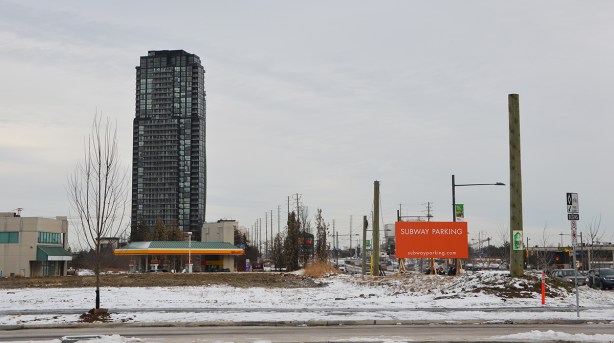
suburbia - empty field with orange sign that says Subway parking. one tall building, a gas station, a street,

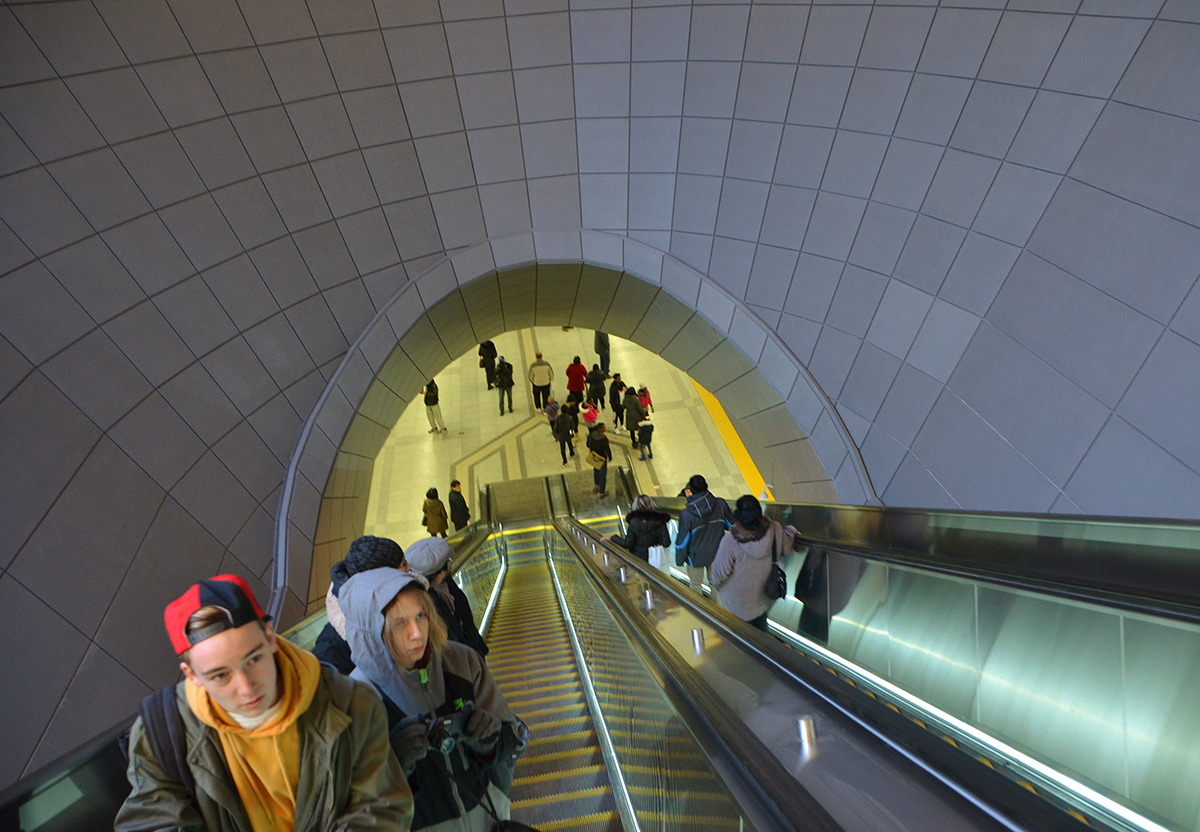
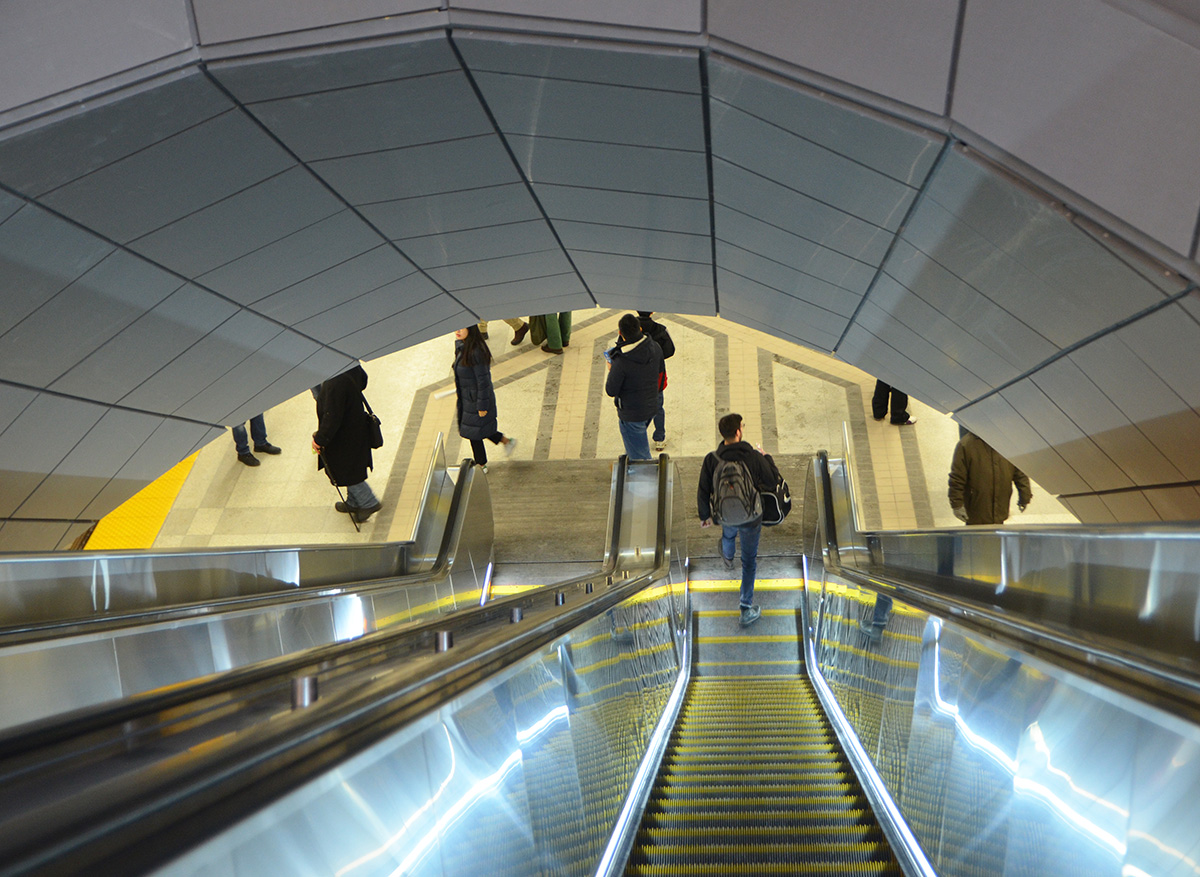
All six stations are quite deep and all six require two escalator rides to get to street level (or you can climb a lot of stairs!… stairs are not always an option though).  There are plenty of elevators.
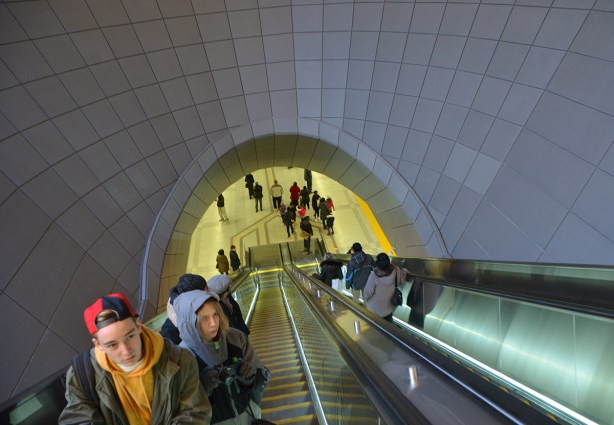
people on a very long escalator at one of the new TTC subway stations in Toronto

below:  The walls are concrete beside the subway tracks.  Each station has its name on the wall similar to this at Highway 407 station (just south of the 407 at Jane Street).
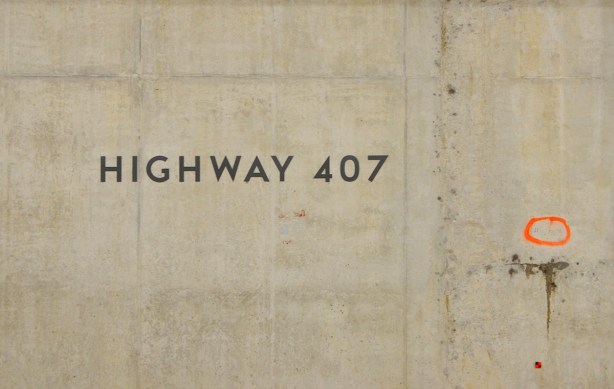
concrete wall of the subway, with words highway 407 on the wall, at the new Highway 407 subway station TTC

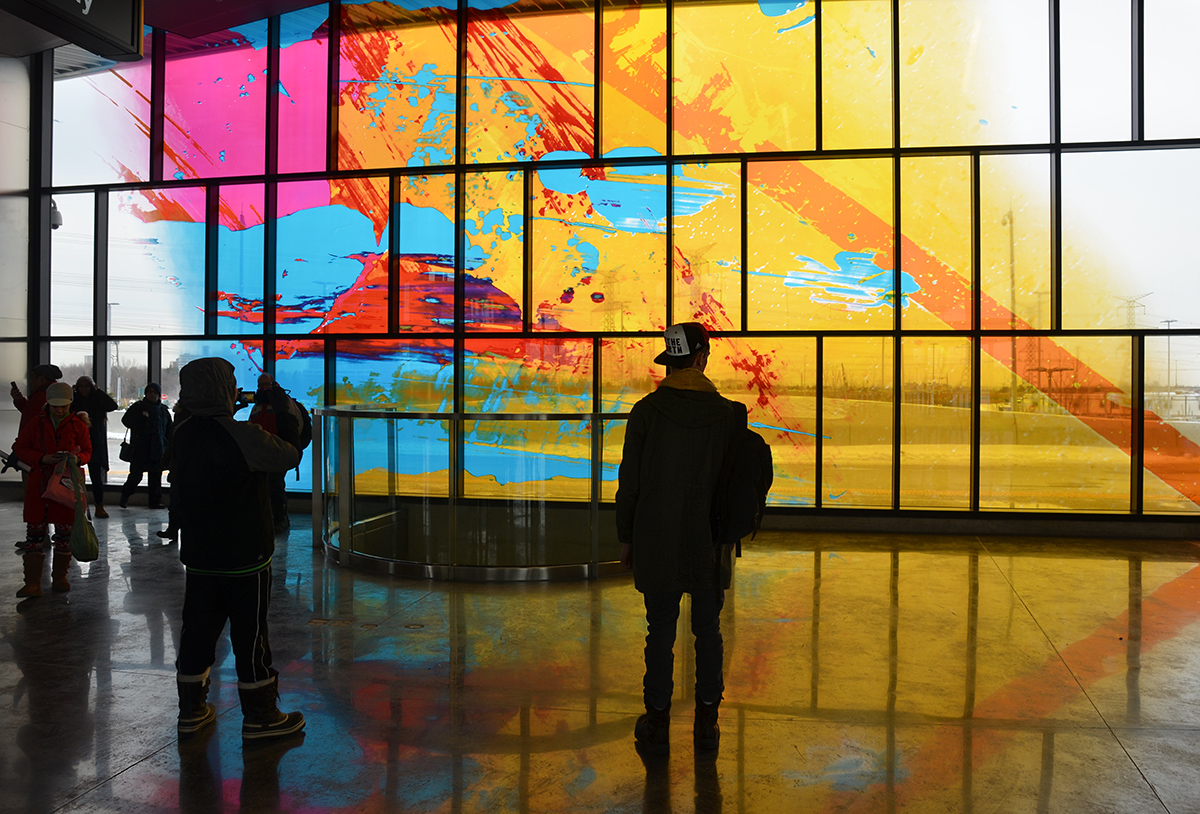
below: A large coloured glass window dominates the area at the top of the escalators (by the bus station) at Highway 407.   This artwork is by David Pearl and is one of two pieces that he did for this station.

people standing and looking at a large painted window, abstract in yellows, turquoise andpink, large window, at subway station, sunlight outside

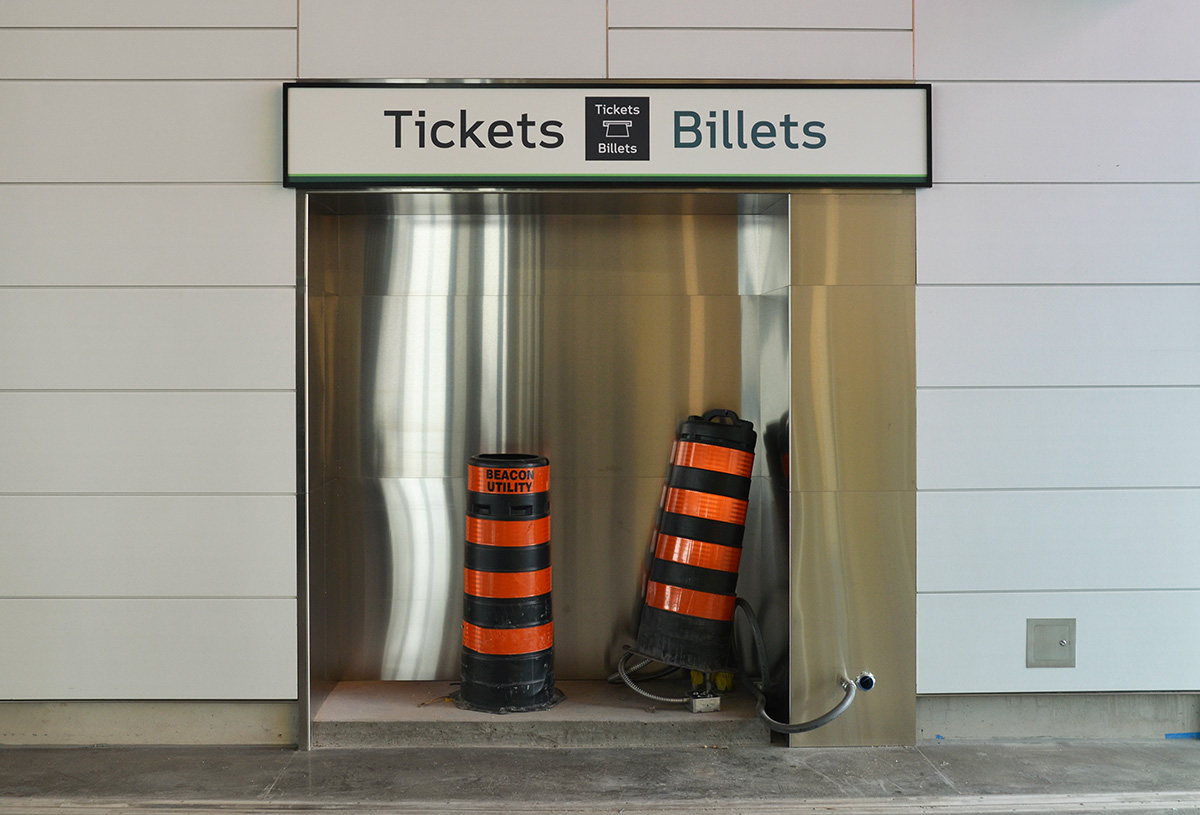
below: Highway 407 has a large GO Transit bus terminal as well.  There is still some work to be done on that part!  The worrisome part of all this is that the two stations at the end of the line are transportation hubs designed to help those commuting into Toronto.  Yes, they funnel even more people into an already overcrowded subway.  Note to the city of Vaughan – please use this as an opportunity to increase the reasons why people would commute north!
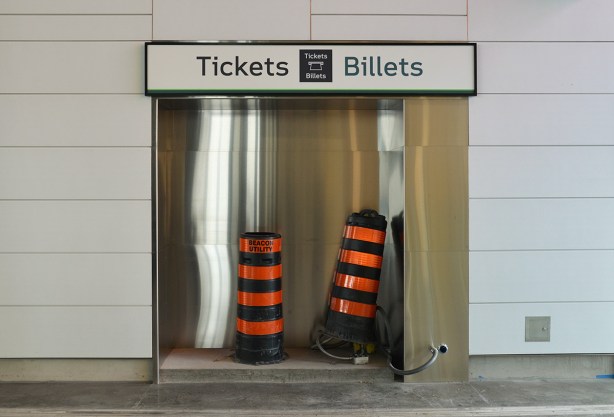
unfinished part of the subway station, indent in wall with sign tickets billets but the niche is empty except for two large black and orange striped construction cones

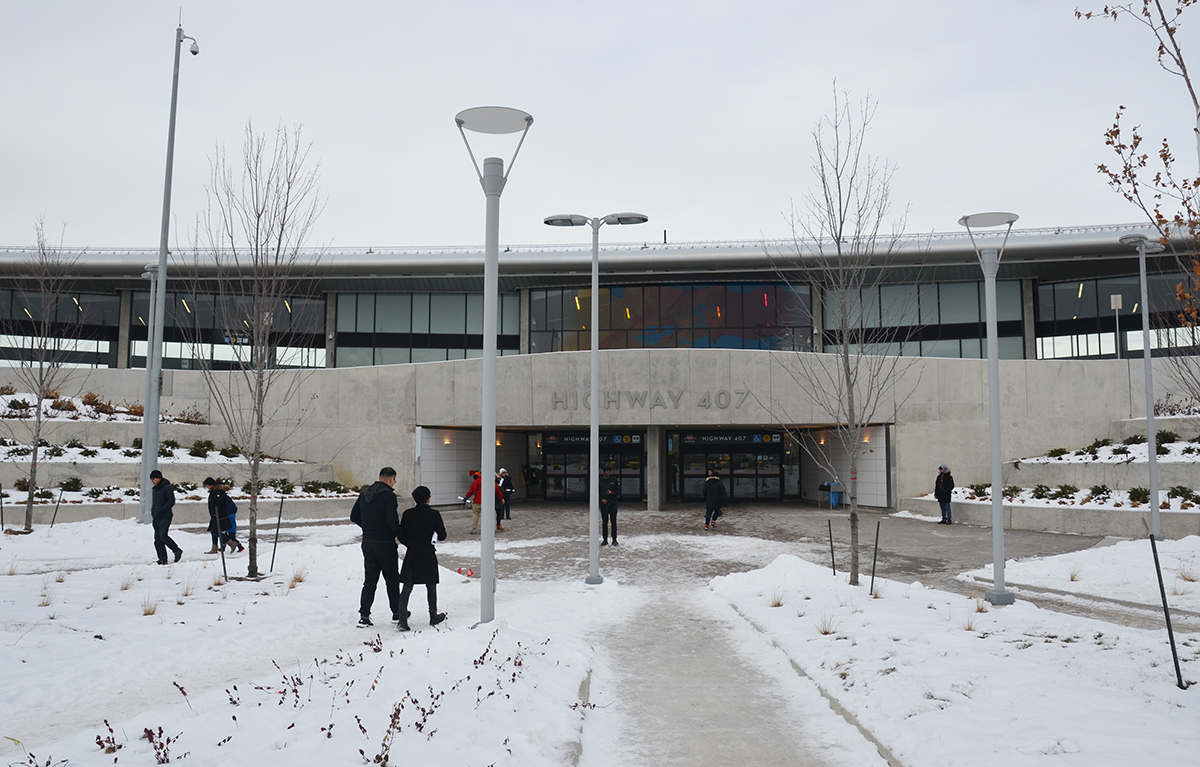
below:  One of the entrances to Highway 407 – the center window is the same as the coloured window above (it looks much better from inside!).  On either side are GO Transit bus terminals.  Behind me when I took the photo is a large parking lot for about 600 cars.   Functional but not necessarily pretty – it may look better from other angles but it was a cold day and it seemed like a long walk to get to the other sides).
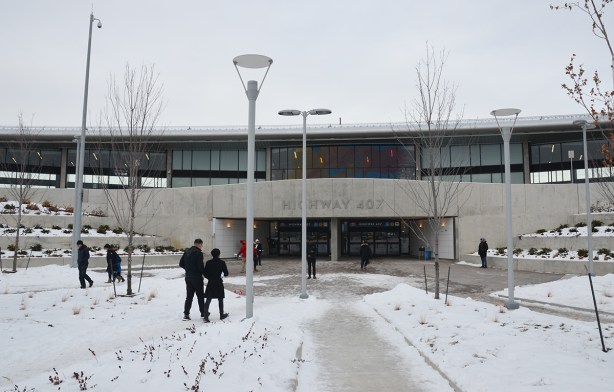
people walking towards the entrance to HUghway 407 TYSSE station, a low concrete and glass building.

below: The new bus loop at Pioneer Village Station.  There are actually 2 bus terminals here – one for the TTC and one for YRT buses.   This station is on Steeles between Jane and Keele.   Originally this station was going to be called Steeles West – mercifully the TTC actually showed some creativity and came up with a better name.  All the ‘West’ stations drive me crazy.
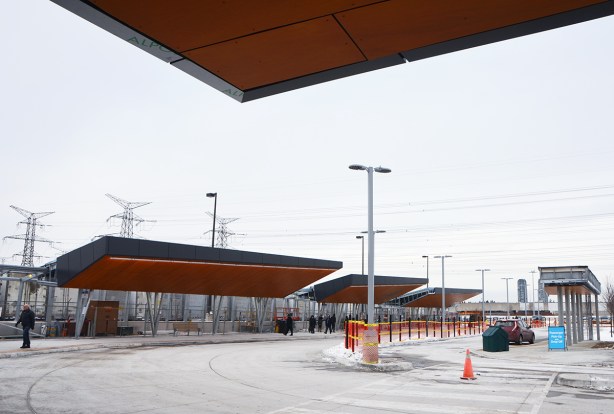
exterior at new Pioneer Village TTC subway station at Steeles Ave., new bus loops with wood overhangs, still under construction

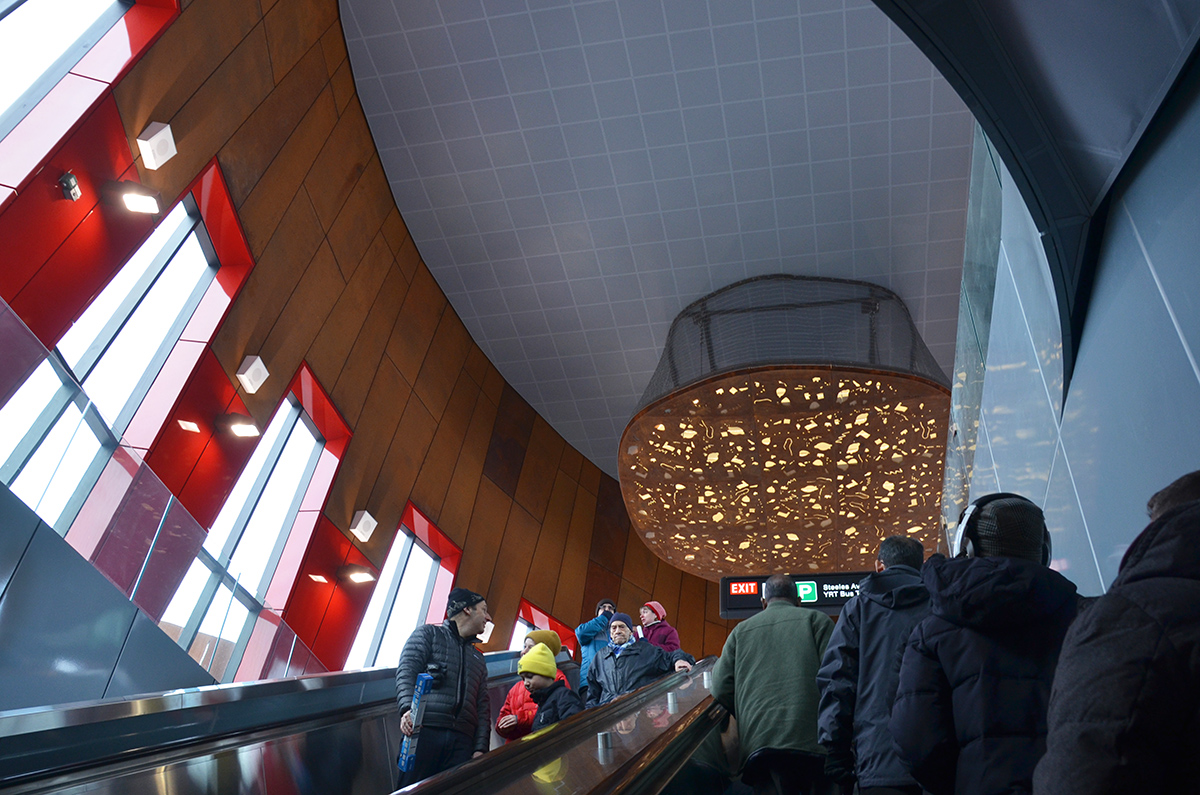
below: Coming up the escalator in the Pioneer Village station towards the large light in the ceiling.   The dominant features of the station are the large vertical windows and the red and wood cladding.   The red and wood are continued to the exterior as well.
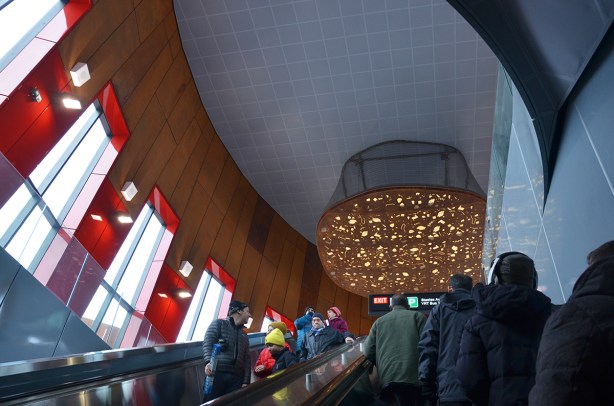
interior of Pioneer Village subway station, top of one of the escalators, vertical windows looking outside, some red glass as accents, a large light artwork on the ceiling, people on the escalators

below:  Close up of part of the exterior.
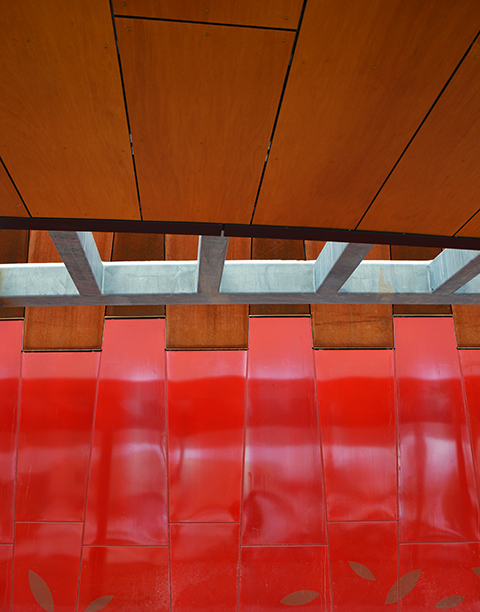
abstract of the exterior walls of Pioneer Village subway station, red panels with wood roof and grey steel beams

below: Looking up into one of the skylights
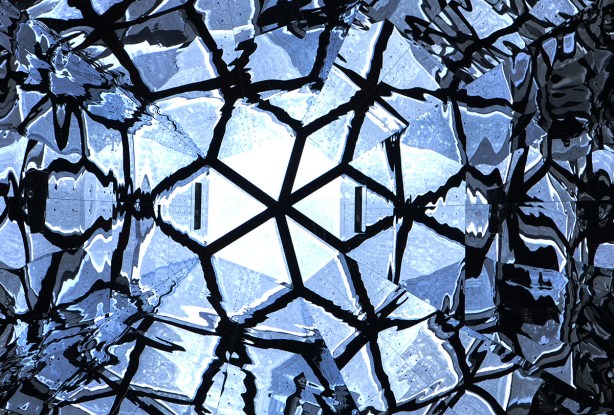
abstract geometrics, triabngles and diamonds, reflective surfaces in a cone shaped skylight, in blacks and blues,

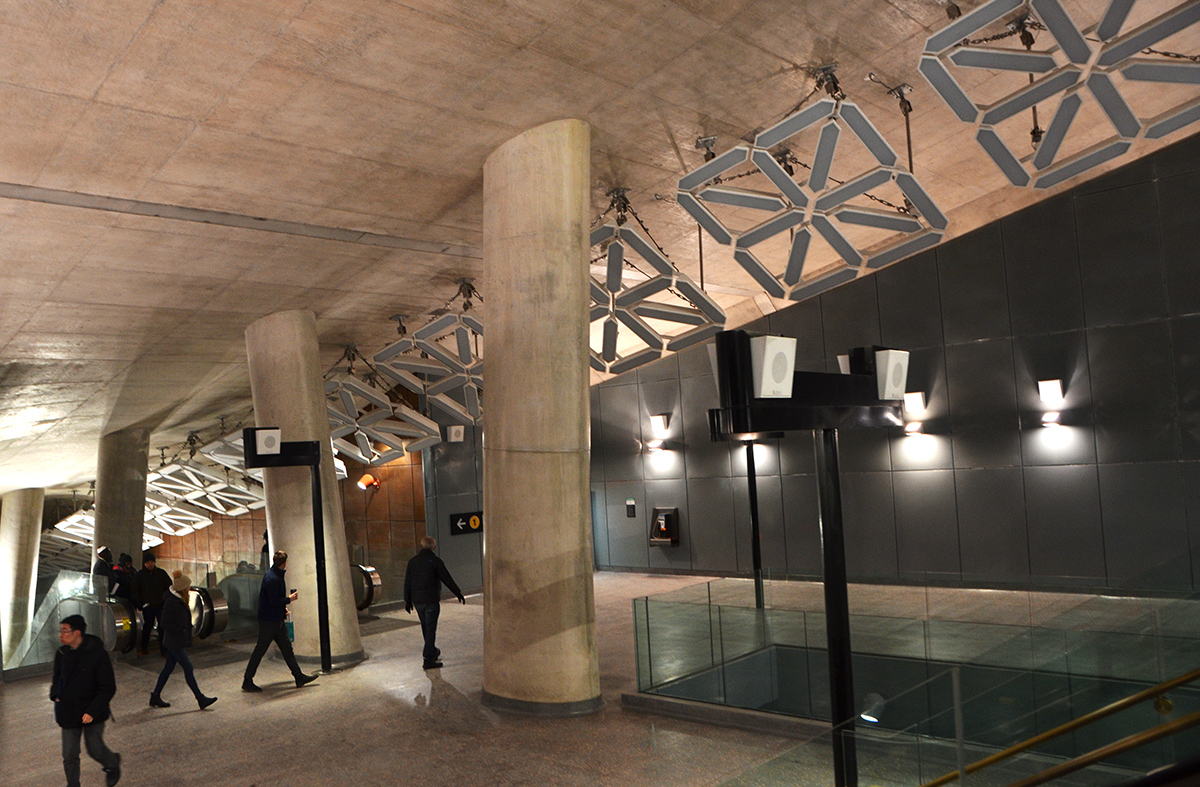
below: The main artwork at Pioneer Village station is “LightSpell” by German artists Tim and Jan Edler.   It’s an interactive installation that also helps provide light in the station.  This photo shows some of the 40 elements that make up the installation. By lighting certain sections of each element, letters of the alphabet can be formed, and in turn, words can be written.   Numbers and other special characters can also be lit.  In addition, the intensity of the light can be automatically controlled to maintain a constant light level in the station.   There are also a lot of speakers on black poles in this area but that is a mystery for another day.
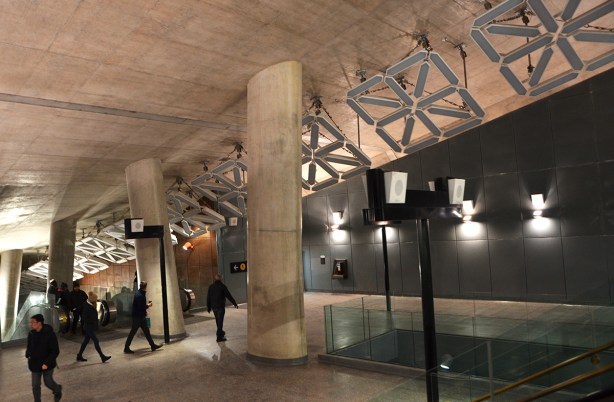
art installation, LightSpell by Jan andTim Edler hangs over th escalator at Pioneer Village TTC subway station,

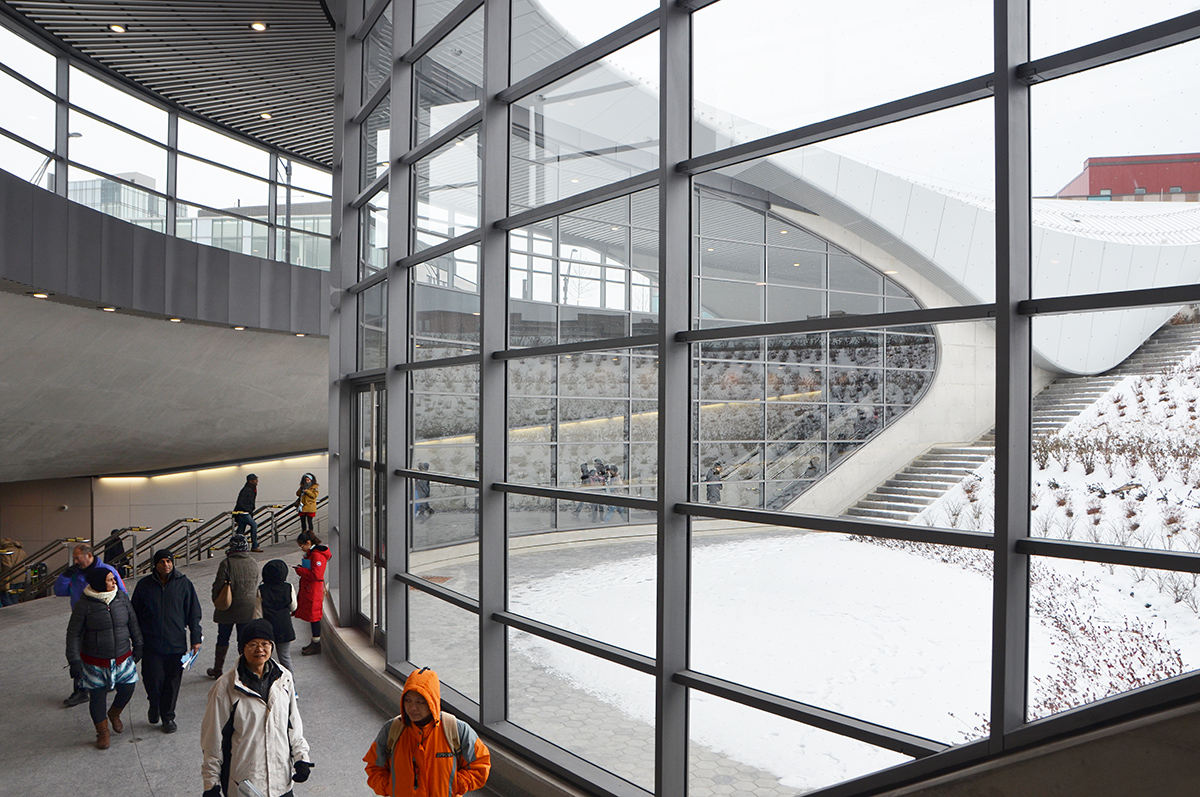
below: Inside York University station which is right on campus.  The stairs and escalators to the trains are in the center.  On both ends of the curved structure are the exits.

large round high window of concourse level of new York University subway station, snow on the ground outside, people inside

looking down the escalator at York University station,

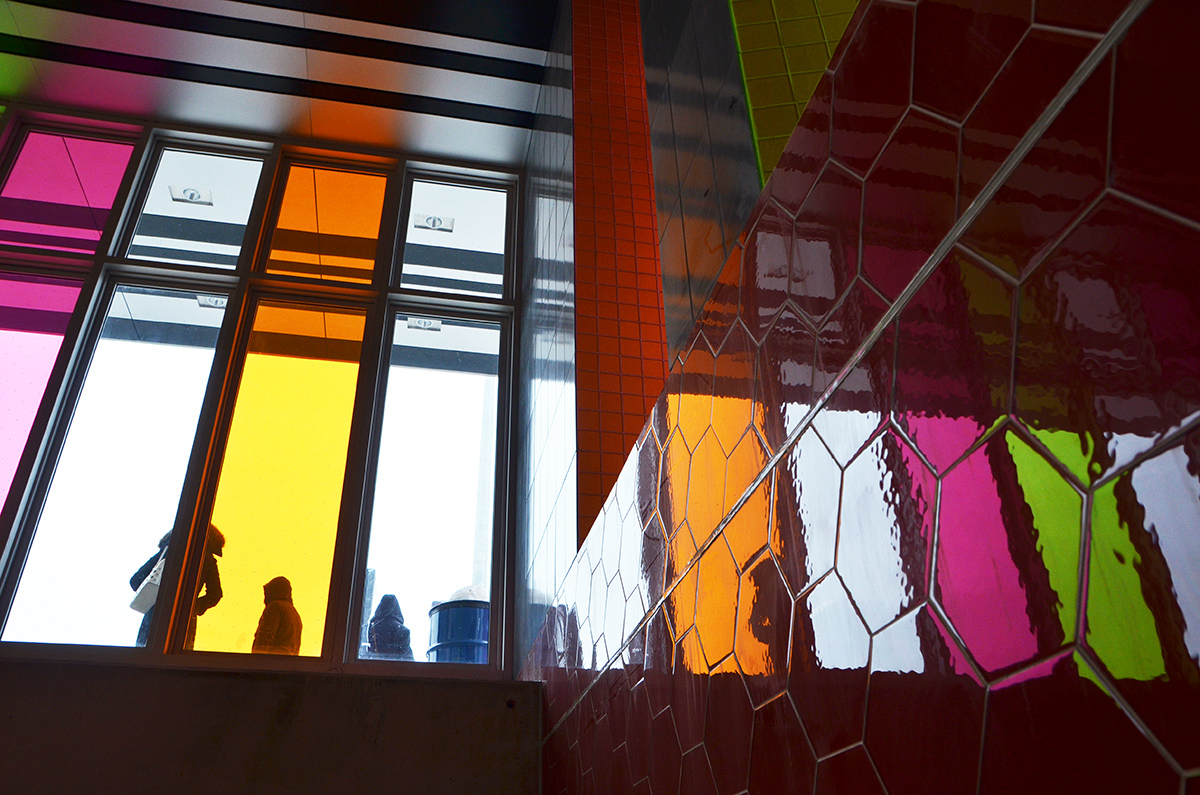
below: At Finch West station there are bright and shiny red hexagonal tiles on many of the interior walls.  (Argh, there’s that ‘west’ again)
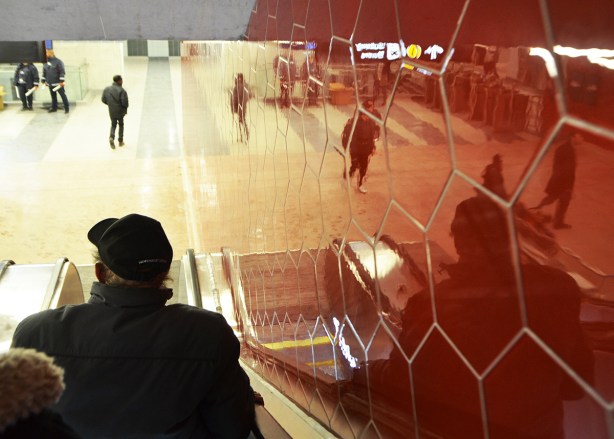
shiny red hexagonal shaped tiles line the wall beside an escalator at the new York University subway station on TTC line 1

below: As you go up to street level, you are greeted by a flood of coloured light.
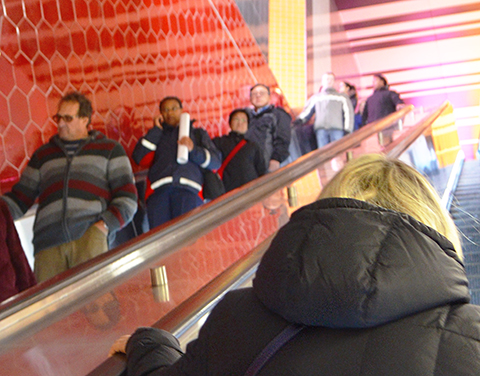
people on an escalator, red hexagonal tiles on the wall beside them, lots of streaks of pink and yellow light above them at the top of the escalator, Finch West subway station TTC, toronto

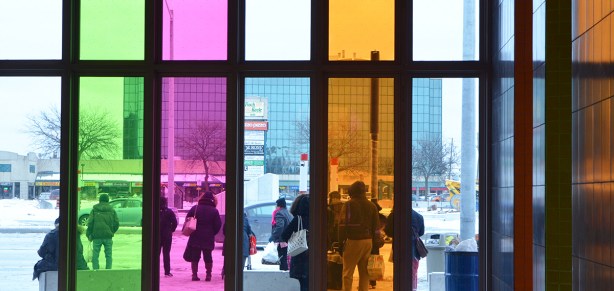
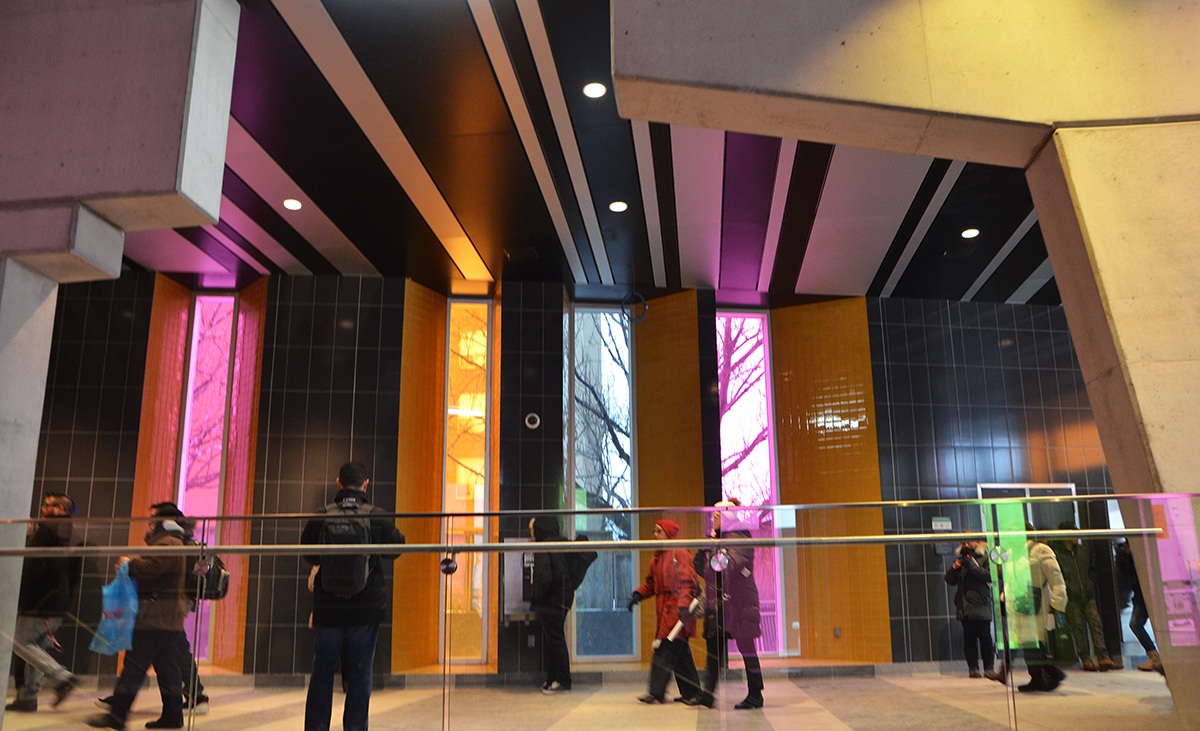
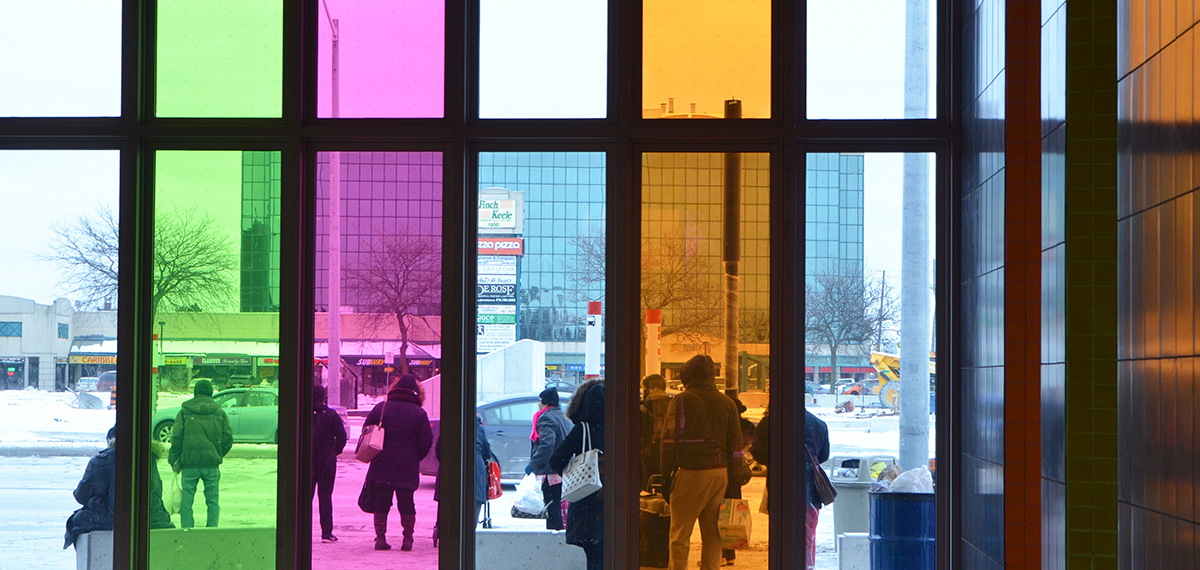
below: The light comes from tall sunlit windows of different colours.  Stripes of grey and white tile on the floor and ceiling add to the slightly surreal effect.
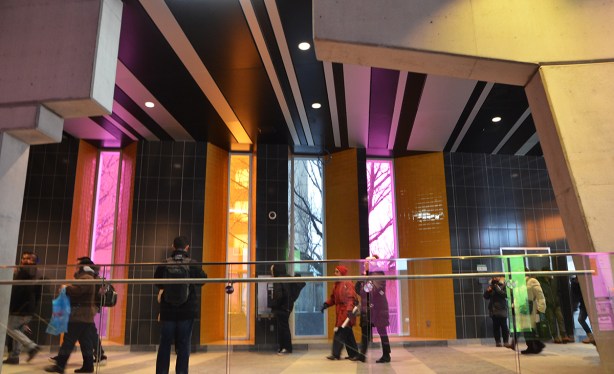
people passing through Finch West station with its tall vertical windows covered in colours, pink, blue and yellow, also with its stripes of white and dark grey tiles
Expect to see many photos taken at this station in the future!  The light and colour makes for some interesting effects.

coloured glass at Finch West station

coloured glass at Finch West station

man standing in front of coloured glass at Finch West station

… and I have probably gotten carried away.  There’s still one more new station so let’s take a look at it – Downsview Park.

below: Looking up…
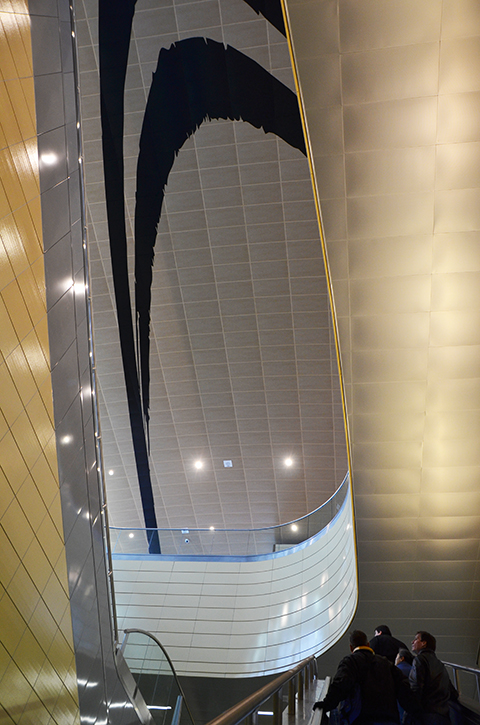
looking up over the heads of some people going up the escalator at Downsview Park subway station

below: … and looking waaaay down at Downsview Park station.
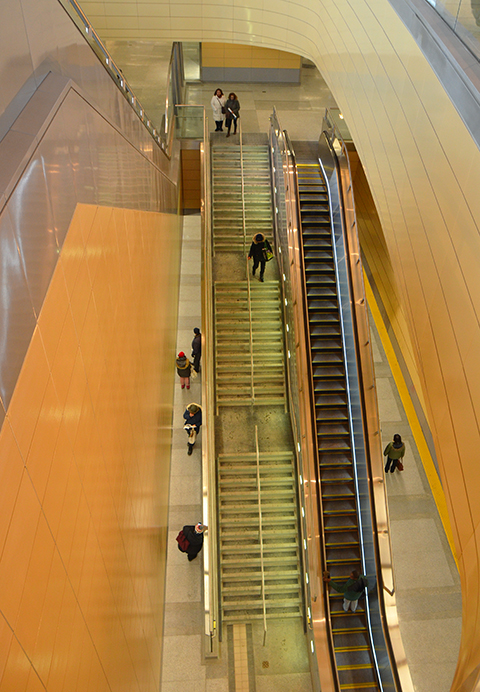
looking down two levels of the new Downsview Park subway station, long escalator and flight of stairs

below: Eventually (soon?) GO trains between Union Station and Barrie will connect with the subway here.   The subway actually runs under the GO railway tracks here.  The street level of Downsview Park station is two halves, one on each side of the GO tracks.


looking out a set of glass doors that is locked closed with a danger sign on the door.   Future GO transit exit at Donwsview Park TTC subway

below: I am going to end with this.  Part observation and part editorializing –  a sign seemingly in the middle of nowhere.  I look at this and think of old pictures I have seen of the Yonge line when it was first built.  It serviced parts of Toronto like Davisville and Summerhill that were of fairly low density but the city and/or province had the foresight to build that far north anyhow.  If you read the TTC websites about these new stations, there is a lot of talk about planning for future development and making that future development transit friendly.  A great idea.  Now, let’s apply that thinking to Scarborough…. and what do you get?  A lot of naysayers with arguments about density.  Grumble grumble oh how poor we are.   And don’t even get me started on Mike Harris and how he cancelled the Eglinton line in 1995.  Twenty two years later we’re building it at extra cost and with extra traffic disruption.  Sigh.
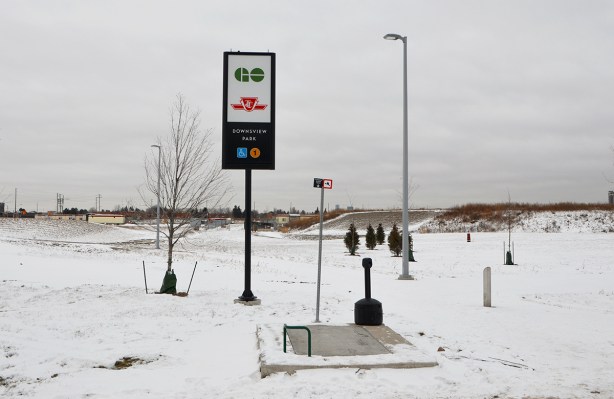
GO Transit and TTC subway sign in the middle of snow covered field

If you go looking for Henry Moore at the corner of Dundas and McCaul, you will be disappointed.

green construction fence around a small part of the sidewalk at the corner of Dundas and McCaul, equipment inside, one small gingko tree, building says Art Gallery of Ontario

Instead, you have to walk around the corner.

yellow pedestrian crossing sign that has been altered to look like 2 art students, one with a cardboard tube and the other with a portfolio case

After residing at the corner of Dundas and McCaul since 1974,  Henry Moore’s sculpture “Large Two Forms” was moved to the newly renovated Grange Park on the 3rd of June.   Grange Park is behind the Art Gallery of Ontario as well as OCADU (Ontario College of Art and Design University).

 the Henry Moore sculpture, Large Two Forms, in Grange Park behind the Art Gallery of Ontario , a couple on a bench beside it

The new setting suits the sculpture.  There is more room for people to interact with the sculpture and the park makes a more picturesque background for those who like to take photos.

 the Henry Moore sculpture in Grange Park behind the Art Gallery of Ontario - Large Two Forms, with the blue wall of the AGO in the background

a girl in orange shorts and purple shoes stands on top of the Henry Moore sculpture in Grange Park behind the Art Gallery of Ontario

I’d be interested in knowing if the AGO has any plans for the now empty corner at Dundas and McCaul.  Was the construction pictured above just to remove the platform that the sculpture used to be on?  Or is there more to it than that?

Also, I don’t mean to spoil your fun, but how long will it be until a “do not climb” sign appears in Grange Park?   I’m not advocating for one – I just know how the city acts on things like this.   Part of me says, “Quick, get your selfie from on top of the sculpture while you can!”

A little extra that I discovered this morning.   As I wrote this blog post I kept thinking about “Down By the Henry Moore”, a song from my past.   All I could recall was the title.   I found a great version of it on youtube –  the song was written and sung by Murray McLauchlan and was released in 1974.   The Henry Moore referred to in the song is the one in front of City Hall but the video on youtube has some fabulous old picture of Toronto!  Many thanks to john allore who made the video and uploaded it to youtube.  I really enjoyed seeing the old images, down memory lane and all that.   If you are interested, this is the link;  it will open youtube in a new page.  You may have to suffer through a few seconds of ads and you have my apologies for that.

Cliffside is an area around Kingston Road in the west  side of the city and the ‘cliff’ in the name refers to the Scarborough Bluffs.    The murals in this post are all on Kingston Road just west of Midland Ave.    They are the result of work of Mural Routes, an organization “dedicated to the creation, development and promotion of public wall art” since 1990.

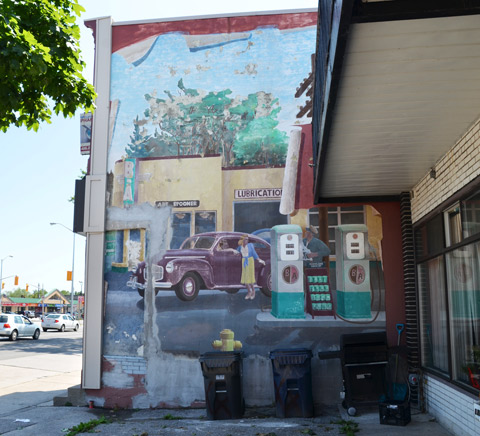
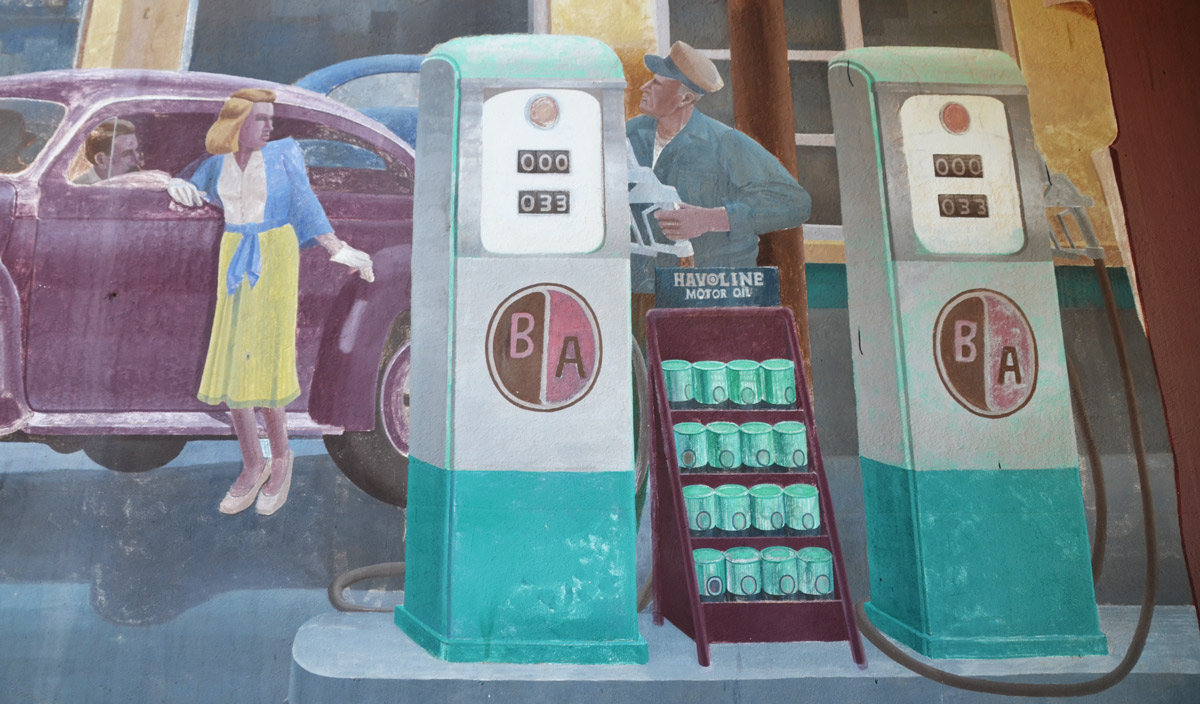
below: ‘Spooners Garage’ by Phillip Woolf, 1992.   Art Spooner’s garage in Cliffside was built in 1926 (and rebuilt in 1947).   The mural has two parts, each showing a different time period.  They face each other.

mural of gas station, Spooners Garage, from the 1920s or 1930s

mural of gas station, Spooners Garage, from the 1920s or 1930s

below:  … and the later version

part of a mural showing a gas station from the 1940s or 1950s

part of a mural showing a gas station from the 1940s or 1950s

below: ‘H.M. Schooner, Onondaga c. 1793’ by Jeff Jackson 1992.  The Onondaga was built near Kingston in 1790 and it served with the Provincial Marine until 1797.  It was the ship in which John Graves Simcoe and his wife Elizabeth sailed across Lake Ontario to York (now Toronto) to establish the capital of Upper Canada.

painted mural of a schooner from the 1790s sailing on Lake Ontario

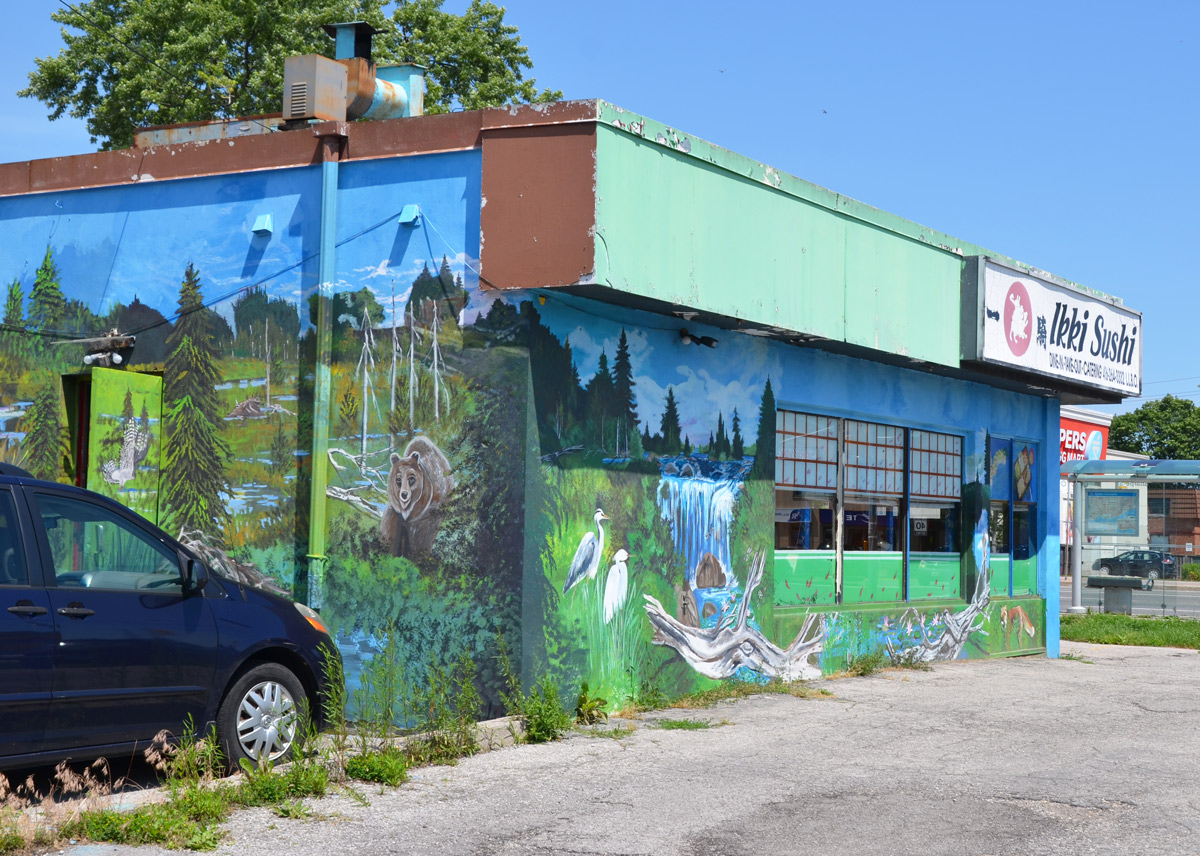
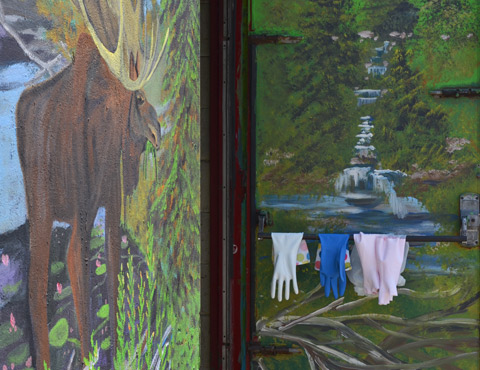
below: ‘Let’s Take a Walk on the Wildside’ by B.C. Johnson, 2016.   Canadian plants and animals cover all four sides of Ikki Sushi – herons, bears, moose, beaver, and fox among the pine trees. Creeks, swamp, and waterfalls can also be seen.  More of Johnson’s work can be seen at Sandown Lane Cliffside blog post

Ikki Sushi restaurant covered with a mural with scenes of Canadian flora and fauna,

back of restaurant with open door. Ikki Sushi restaurant covered with a mural with scenes of Canadian flora and fauna, inside of door is painted too

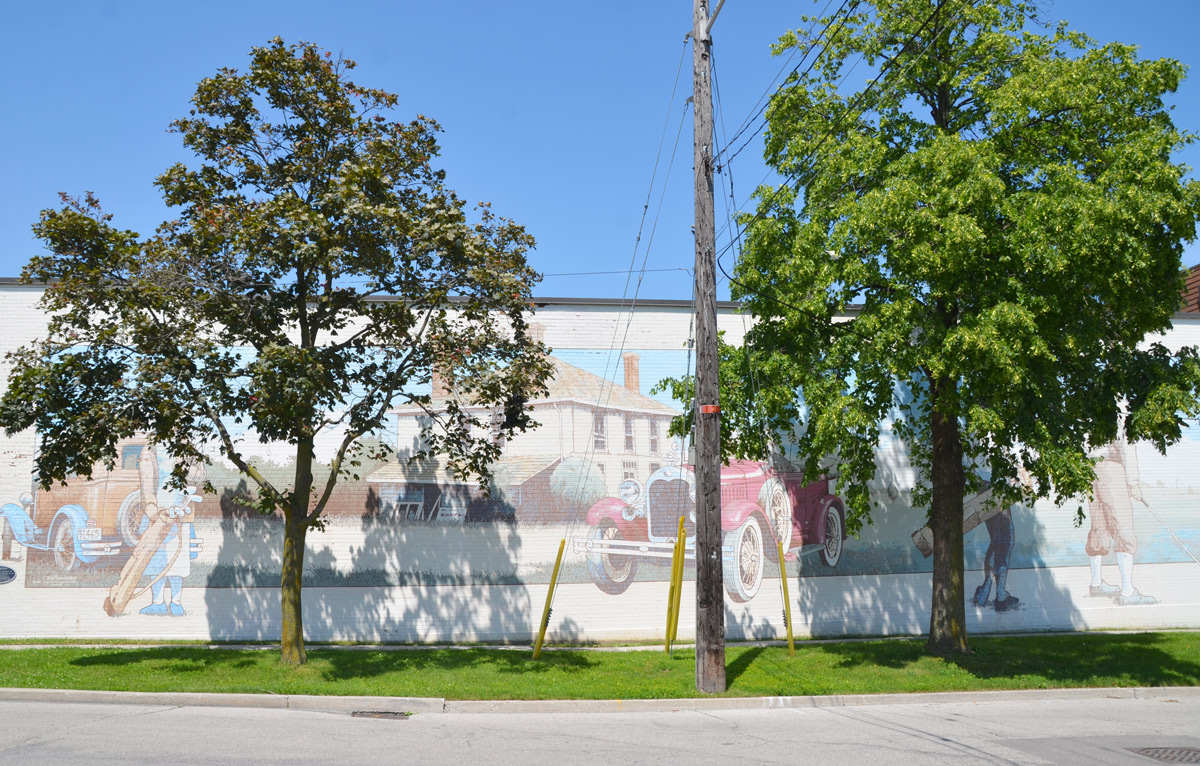
below: ‘Cliffside Golf Course’ by Dan Sawatzky, 1991.   Founded by George McCordick in 1931, the Cliffside Golfcourse was south of Kingston Road and overlooked Lake Ontario.    It closed in 1950.  The mural is faded and partially obscured by two trees.

two trees obscure a faded mural

below: The words on the mural tell the story of the golf course.

mural of two men golfing. One is swinging a golf club and the other has a golf bag slung over his shoulderh

red vintage car in a mural

mural, woman from the 1930's standing behind a vintage car and holding a set of golf clubs

The last two murals have appeared in a previous blog post that I wrote once upon a time when I didn’t know how many Scarborough murals there were.  Even now I’ve hardly scratched the surface.

below:  ‘The Half Way House’ by John Hood, 1990.  The mural is at the corner of Midland Avenue & Kingston Road which is where the inn and stage coach stop was located.   The  building was moved to Black Creek Pioneer Village in 1965.

mural depicting the Half Way House, an old inn that used to be at the corner of Kingston Road and Midland. Two men are sitting on the stairs in front of the mural

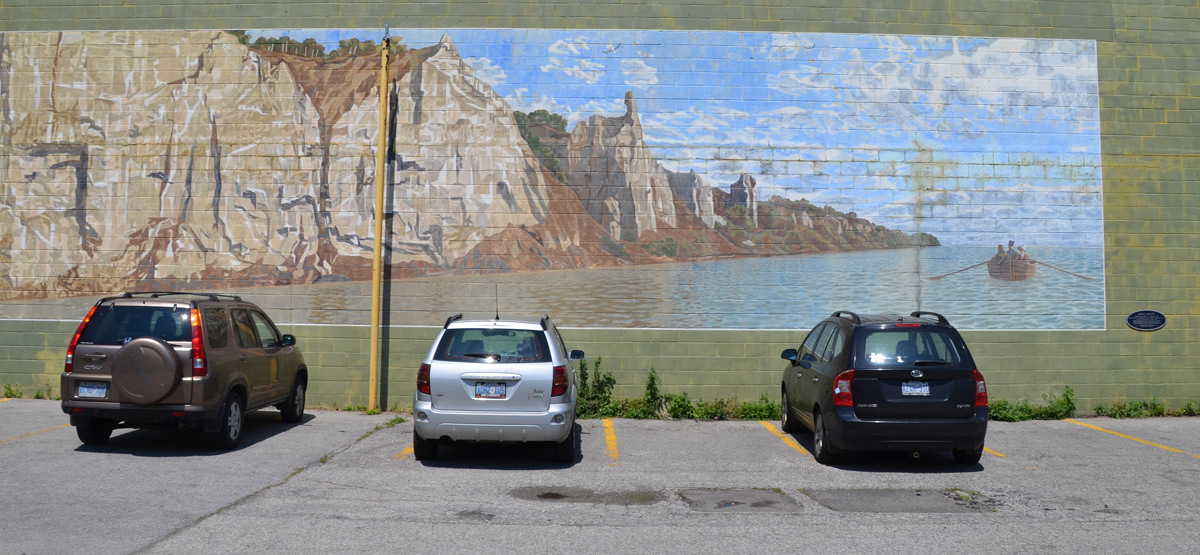
below: ‘The Bluffs as Viewed by Elizabeth Simcoe c. 1793’ by Risto Turunen, 1992.   The story is that Elizabeth Simcoe was so impressed by the view of the cliffs she persuaded her husband, John Graves Simcoe, to name the area after Scarborough England where there are similar cliffs.

Three cars are parked in front of a large mural of the Scarborough Bluffs, there is a small row boat on Lake Ontario in front of the cliffs.

There are more murals on old Kingston Road both to the east and west of these, but that will be a story for another day.

also see: Heritage Trail Mural 8 – Old Kingston Road 

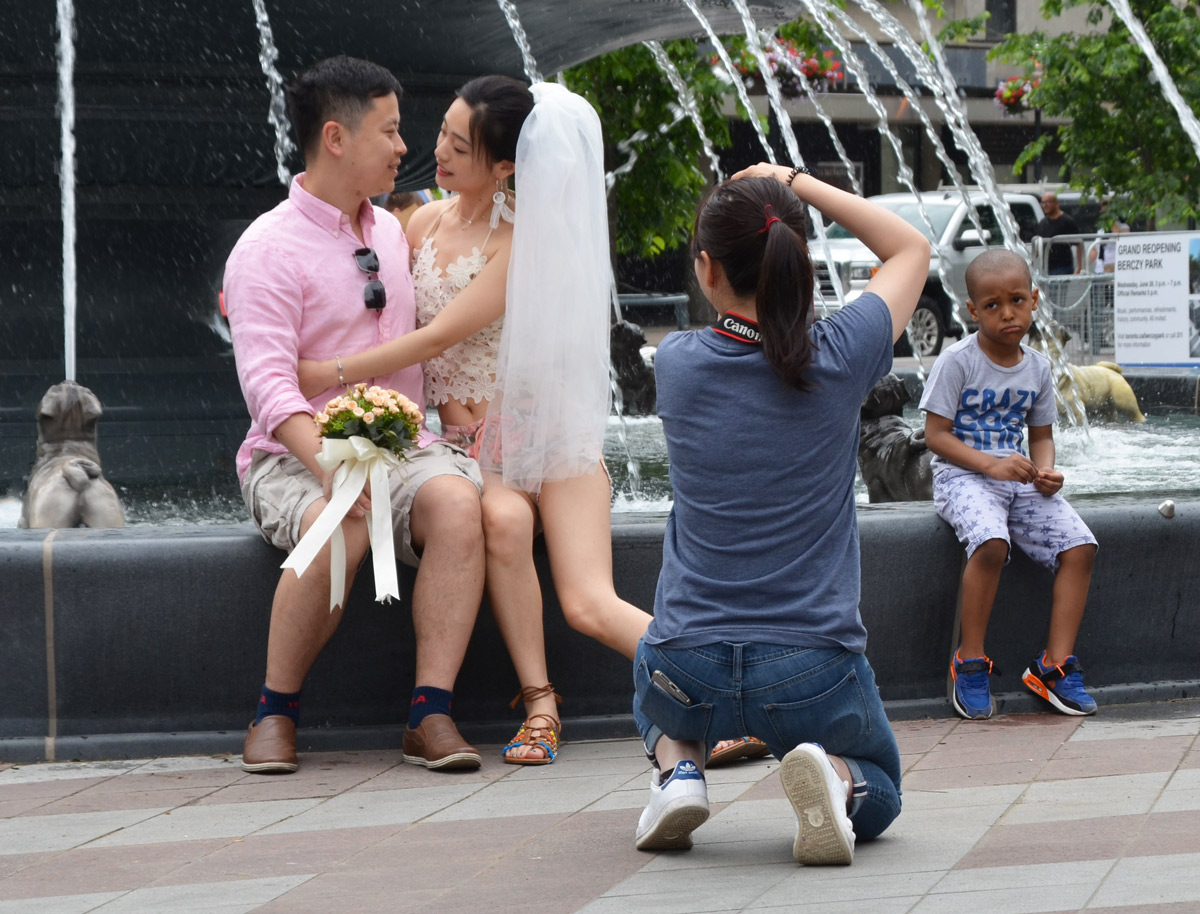
The facelift of Berczy Park has been completed and although the park only reopened a short time ago, it has already become a popular spot.

a photographer is taking engagement pictures of an Asian young couple as they sit on the edge of the fountain at Berczy park. The fountain features sculptures of dogs that spout water into the fountain. A young boy is also sitting on the edge of the fountain. He is looking forlornly at the photographer, looks like he's feeling left out.

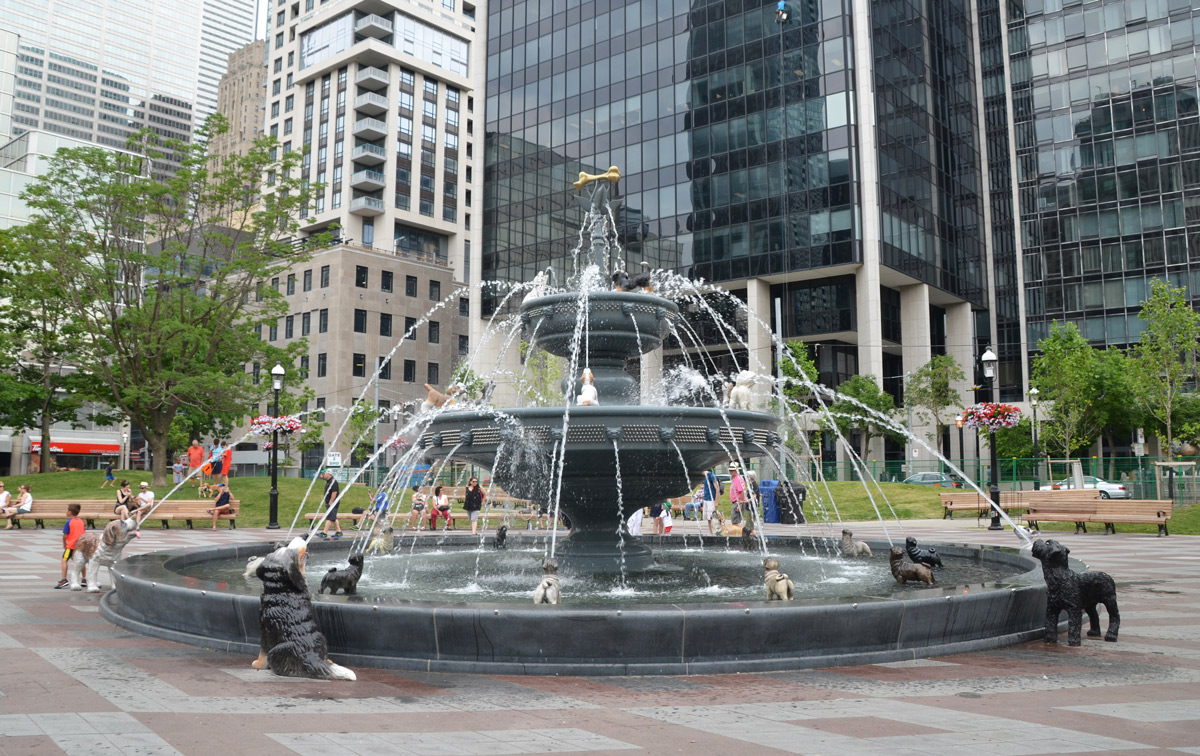
The highlight of the park is the refurbished fountain.  Sculptures of dogs big and small spout water into the fountain – or maybe they’re drinking from the fountain?  There is one cat that sits quietly on the base of the sculpture seemingly unaware of the canine antics.

the new fountain in Berczy park, many sculptures of dogs that are spouting water into the fountain

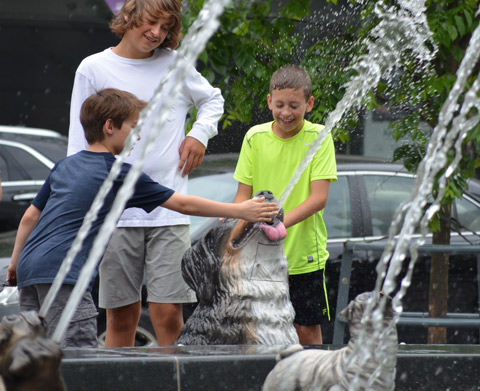
Three boys playing with the water spouting out of a dog's (sculpture) mouth and into a fountain. One is spraying the other while a third watches

two little kids playing in a fountain, a young girl and a young boy. The boy is spraying water while the girl watches

Besides the fountain, there is new landscaping, trees, plants, and benches.

mural of windows and facadde on the back of the flatiron building with the redesigned Berczy park planting and benched in front of it

This sculpture was a feature of the original park but it’s been moved to a different location.   It is the work of Almuth Lukenhaus-Lackey.

sculpture of a family - father, mother and child in a park, with new garden plantings around it, hostas mostly

The plaque by this sculpture says “This sculpture was donated by the Electrical Society of Mecklenburg Upper Canada Inc., with the financial assistance of The Consumers’ Gas Company Limited and the The Council of Metropolitan Toronto, in memory of Johan Albrecht Ulrich Moll, better known as William Berczy, born December 10, 1744 in Wallerstein Germany. He was co-founder of York (Toronto) in 1794 when John Graves Simcoe was Lieutenant Governor of Upper Canada. His younger son, Charles Albert Berczy, was the first president of The Consumers’ Gas Company, from 1847 to 1856, and Postmaster of Toronto. His older son, William Bent Berczy was a Member of the Legislative Assembly of Upper Canada and like his father and mother, a gifted painter.”

I only spent a short time at the park on the weekend but I’m sure that I’ll be back!

Right now, the section of Sheppard Avenue East between Yonge and Leslie streets is a mix of old, middle aged and new – a hodge podge of sizes, styles and uses.   It’s neither ugly nor pretty.  It’s not sure if it’s city or  suburban.

below: The intersection of Bayview and Sheppard from the southwest.

main road with traffic, coming to an intersection, with a tall building in the background

You’ll probably never hear anyone say, “Hey, let’s go for a walk along Sheppard”.  So why was I there?   I’ve driven along this stretch many times but I have never walked it.  Have I been missing something?

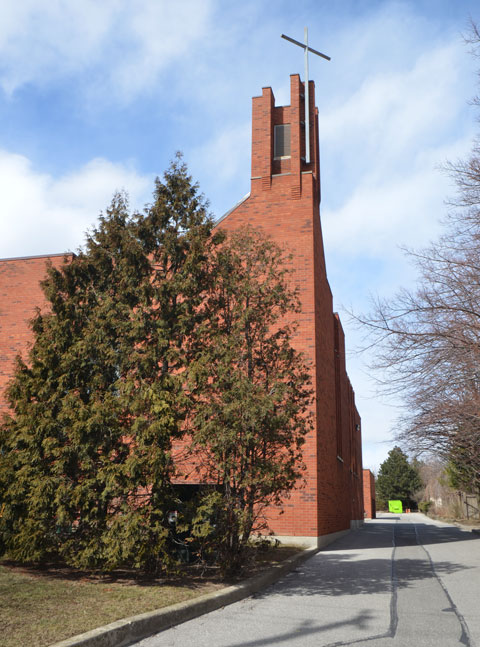
below: A short distance west of Bayview is the modern brick St. Elizabeth of Hungary Roman Catholic Church, or ÁrpádHázi Szt. Erzsébet Római Katolikus Templom according to their sign.  Sunday mass is in Hungarian.   If you are driving past on Sheppard Ave, it’s easy to miss the simple steeple and cross that marks this building as a church.

steeple of St. Elizabeth of HUngary RC church, modern brick building with simple cross on the top

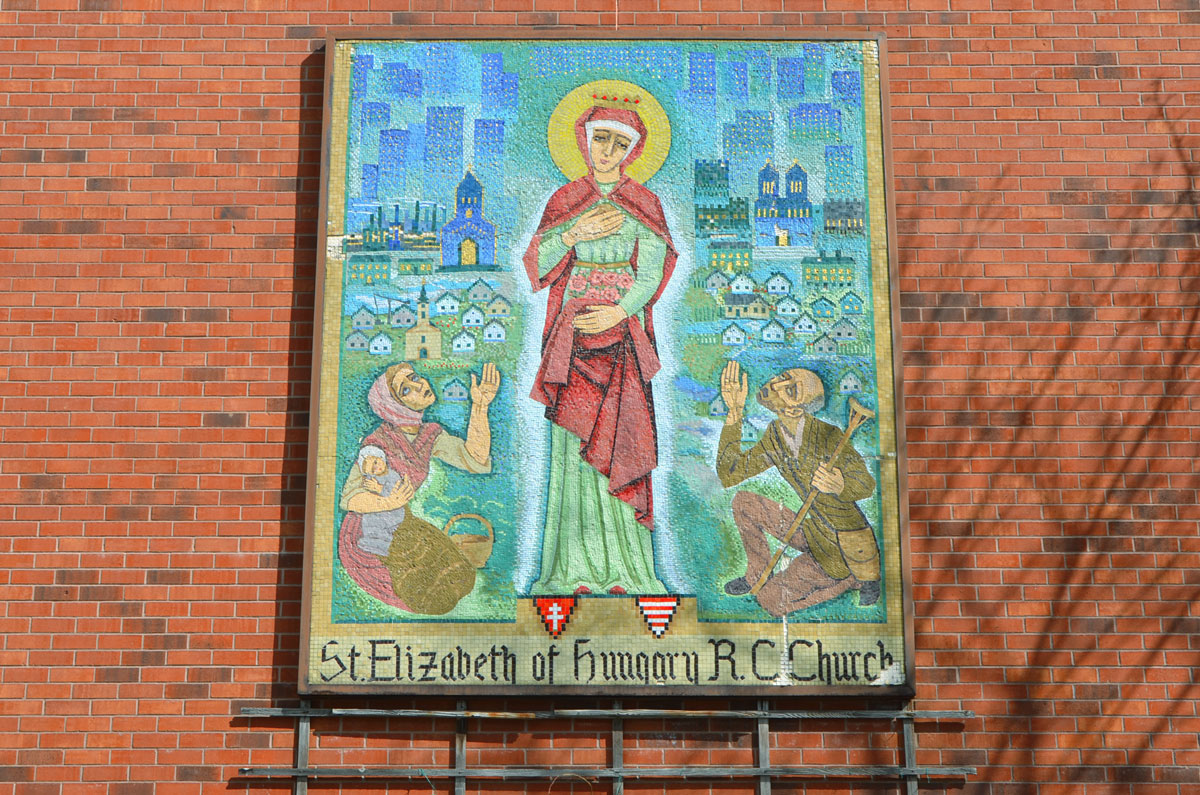
below: A large mosaic adorns one of the exterior walls.

mosaic on the exterior brick wall of St. Elizabeth of Hungary RC Church showing St. Elizabeth and two people kneeling beside her.

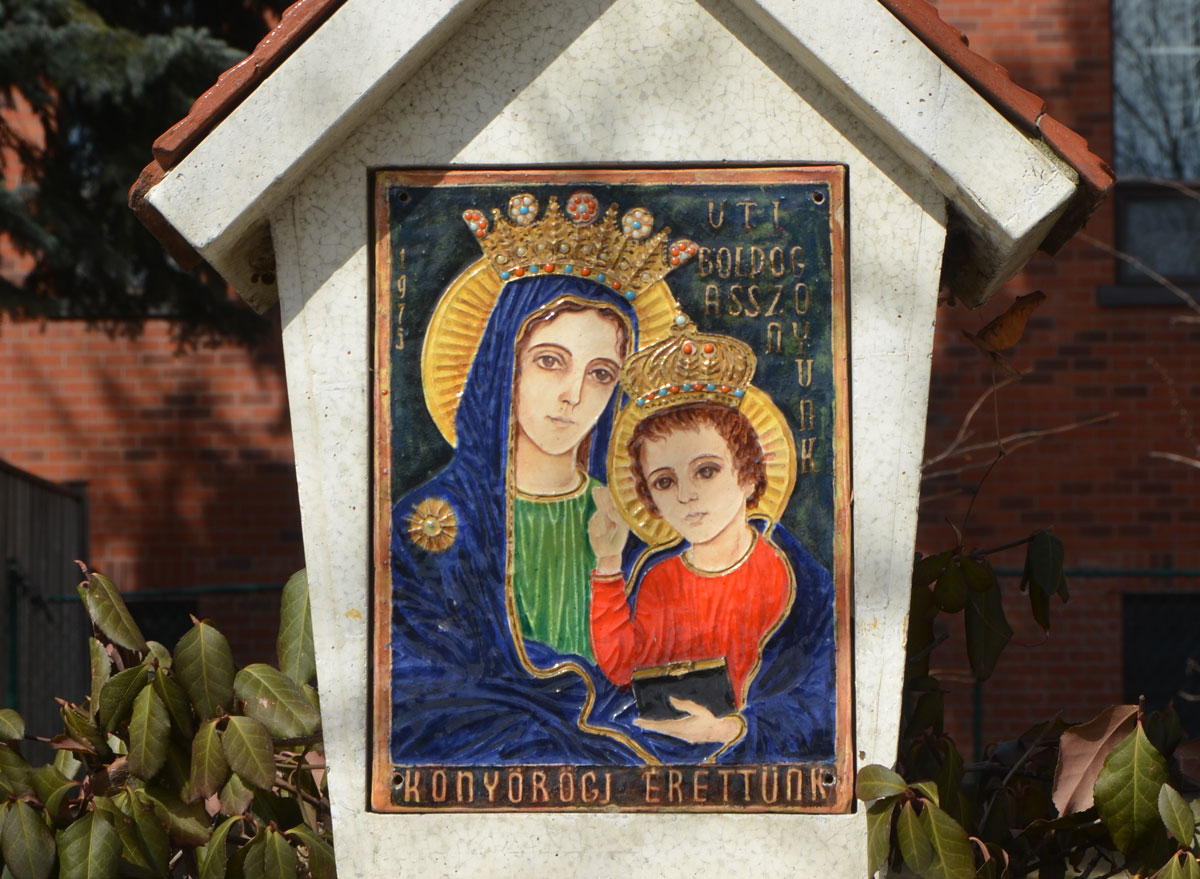
below: A small shrine is in front of the church.

small picture of Mary and baby Jesus in bright colours, on a small shrine in front of a church

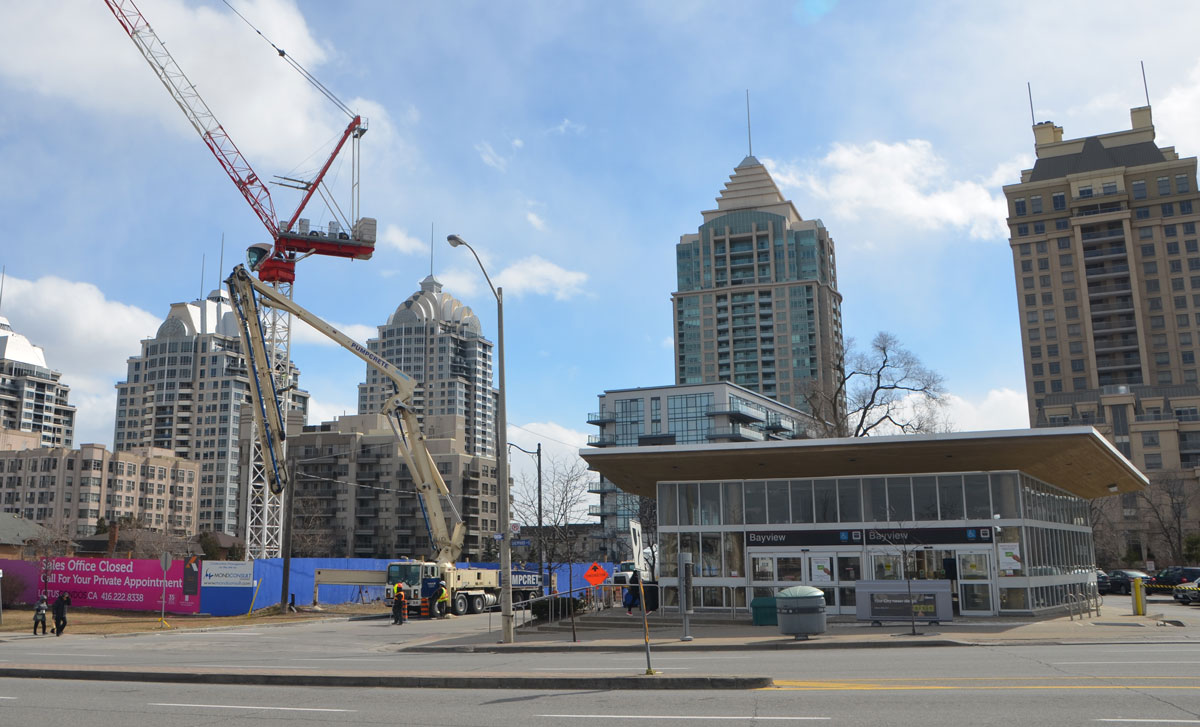
below: The south entrance to Bayview subway station.  There are no escalators at this entrance  – instead, there is an elevator and a LOT of stairs.

south entrance to Bayview subway station with tall residential buildings behind and a construction site beside

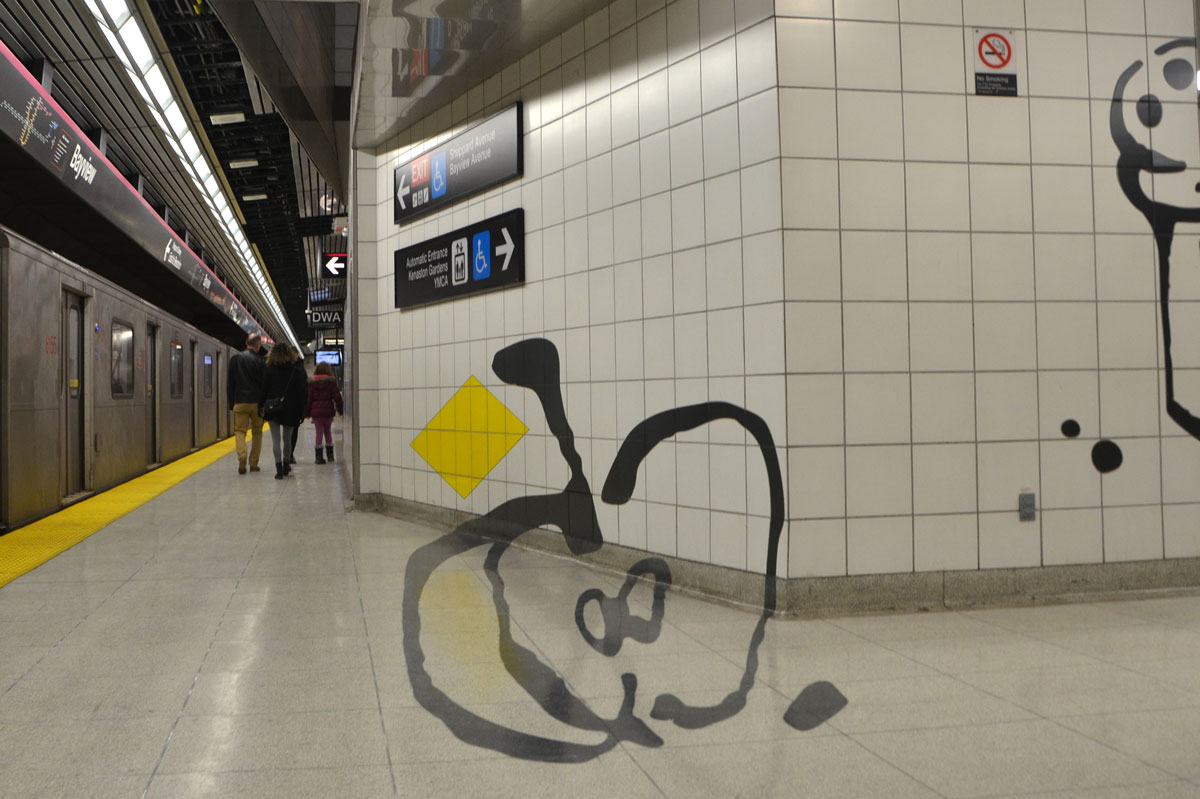
below: The artwork at Bayview station is by Panya Clark Espinal, titled ‘From Here Right Now’.  Half an apple lies on the platform.

art on a subway platform, a line drawing of a very large apple that has been cut in half, on the wall and floor of the station

below: A salt or pepper shaker on the wall.  I’ve only shown two of the images in the series.  There are 24 in total and they are scattered throughout the  station.

art on a subway platform wall, a salt or pepper shaker in black on white tiles

below: There is a small park behind the south entrance to Bayview subway station, Kenaston Garden Parkette where I saw this tree in bud.   The first signs of spring are always wonderful to see.   Today it’s -12C outside so I hope the tree is okay.

pussy willow buds on a tree

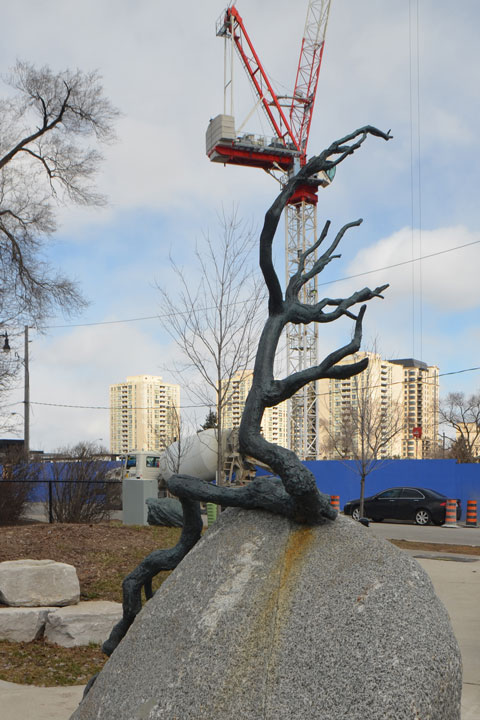
below: This little park was designed by Wilk Associates Landscape Architecture and it incorporates a large number of rocks including a glacial boulder found on the site.   A bronze sculpture of a tree clinging to a rock  by Reinhard Reitzenstein is one of the features of the park.

small sculpture in a park of a sapling on a rock with its roots growing over the surface of the rock

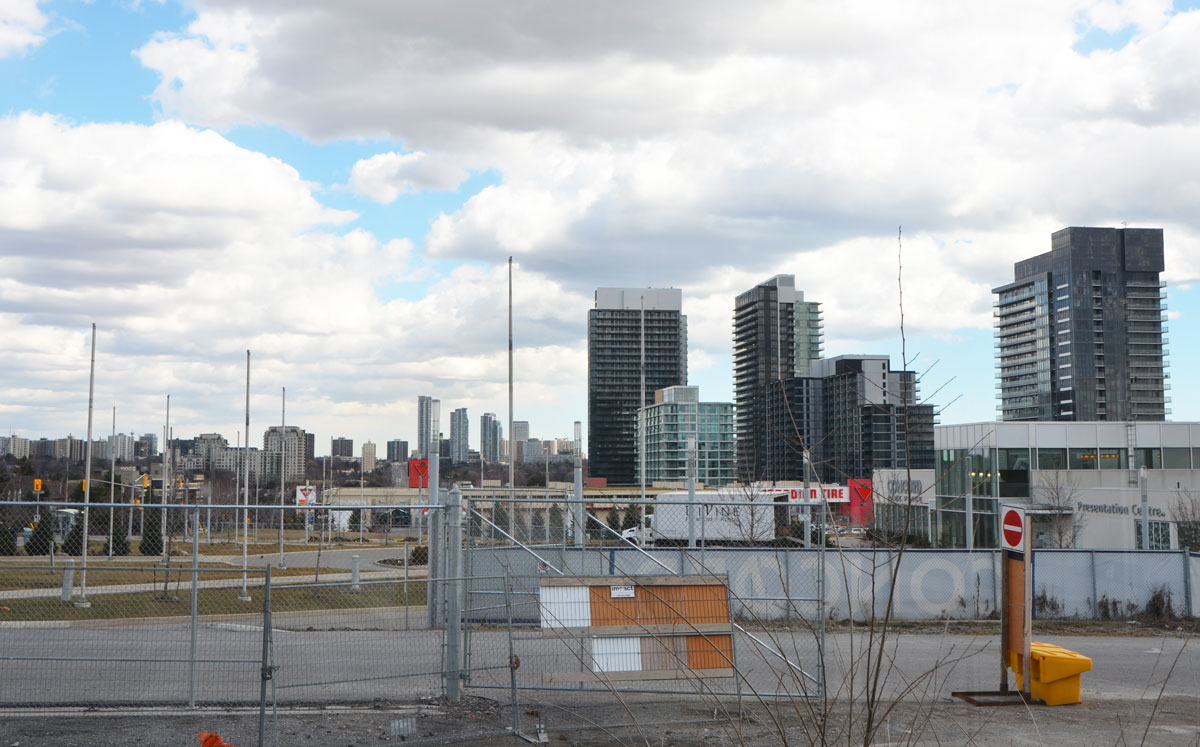
below: If you stand in the park and look east,  you can’t miss the construction.

small sculpture in a park of a sapling on a rock with its roots growing over the surface of the rock - crane and construction site in the background

a convex mirror beside a black and yellow caution sign, condos are reflected in the mirror

the front and side of a large truck is in the foreground, right side, with a construction site beyond

Construction is everywhere on Sheppard Avenue.

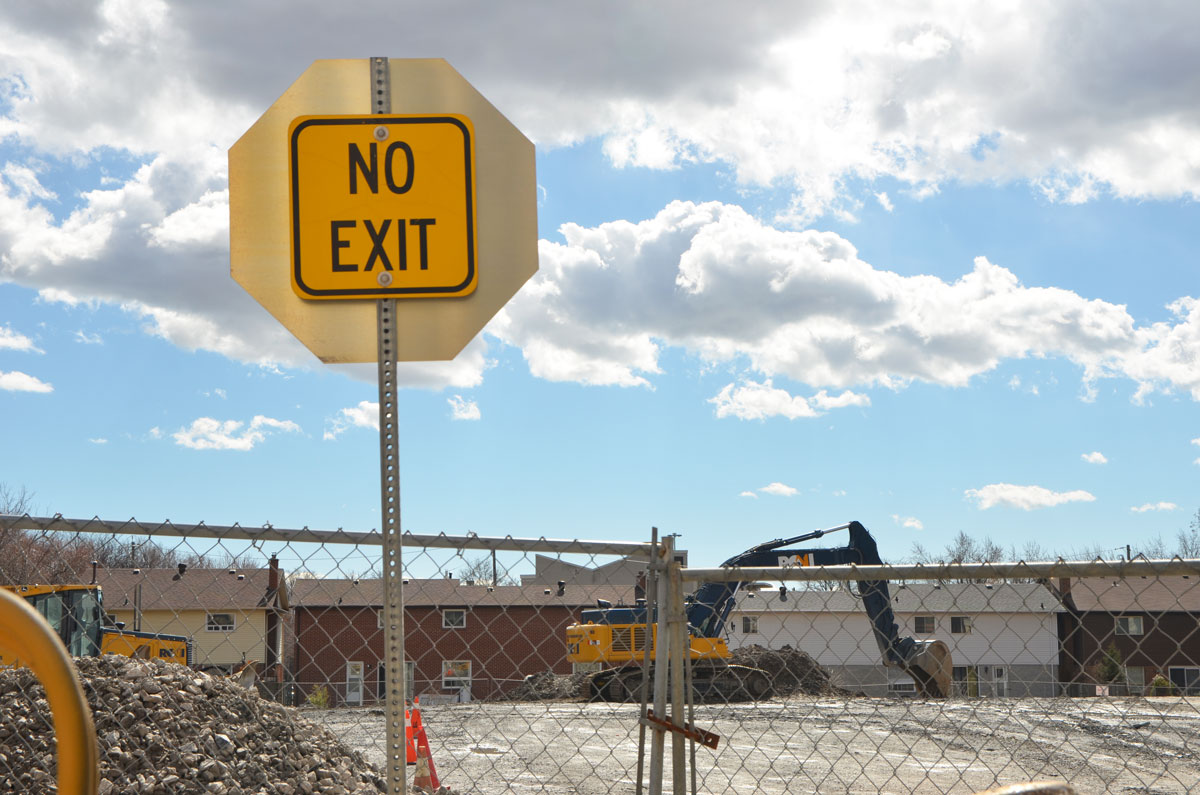
below: All of the houses on Cusack Court are now gone.  Only the ‘No Exit’ sign remains.

a construction site where the houses on a a whole street have been demolished. The no exit sign for the street still remains., the site is behind a chainlink fence

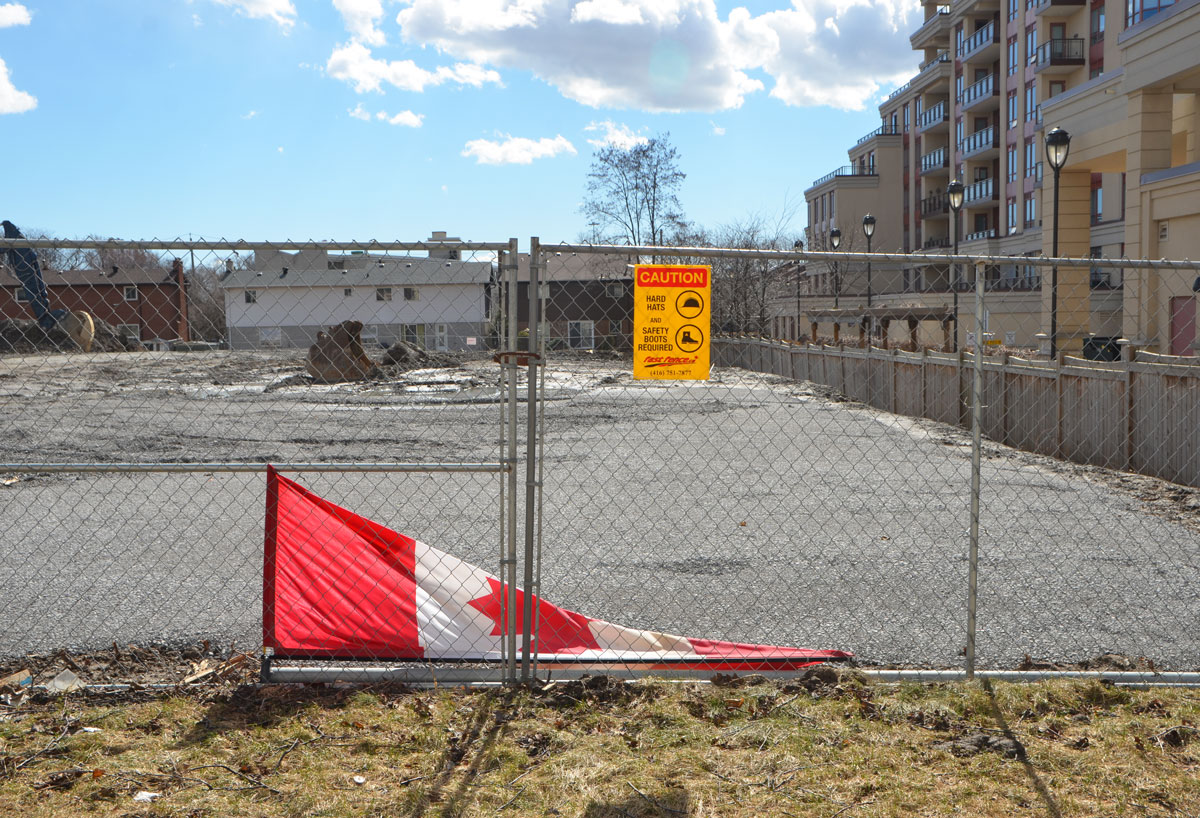
a banner of the Canadian flag has fallen over and is lying on the ground behind a chainlink fence

below: The single family homes on the south side of Sheppard are slowly being demolished to make way for condo developments.  At the corner of Sheppard Ave East and Greenbriar  the proposed development of 184 residential units is the subject of an OMB prehearing on the 8 May 2017  (case number PL161113).

a boarded up house, split level, built in the 1950s, is in the foreground, condos and apartment buildings are behind it

below: Five houses are empty and waiting to be demolished to make way for two buildings, 11 and 6 storeys, mixed use (i.e. retail at street level) and incorporating a few townhouses.  In other words, the same old same old.

a boarded up house, split level, built in the 1950s, is in the foreground, condos and apartment buildings are behind it

below:  I said “same old same old” above because these types of buildings are popping up all over  many major roads that are outside the downtown core.  I suspect that Sheppard Avenue will be lined with structures like this one that’s already been built on the north side of Sheppard.

across the street is a 10 storey residential building, cars on the street, small trees in the foreground

Many people make the argument that there isn’t the density to support a subway along Sheppard.  I am of the opinion that if they’re not wrong now, they soon will be.   Development and public transit are dependent on each other, a symbiotic relationship if you will.   If you are affected by the construction along Eglinton for the new Crosstown line, you might agree that waiting for density only increases the problems and inconvenience (and cost?) of building new subway lines.   Also, have you seen photos of what the area around Davisville or Finch (and others) stations looked like when the subway opened there?   What is the required density?  Why do we want to funnel even more people towards the overcrowded Yonge line anyhow?   Is there an end to the questions we can ask?

And that’s another reason for my walk here…. to make note of the construction that is occurring whether we agree with it or not and to document some of  the changes.

below:  Two low rise apartment buildings.

two three storey brick apartment buildings with balconie in the front, taken from across the street

below: Once upon a time there were a lot of these little houses along Sheppard (even more so on the west side of Yonge Street).  At least one of these is still used as a family home but most are now offices or businesses.

a few small brick houses on the south side of Sheppard Ave

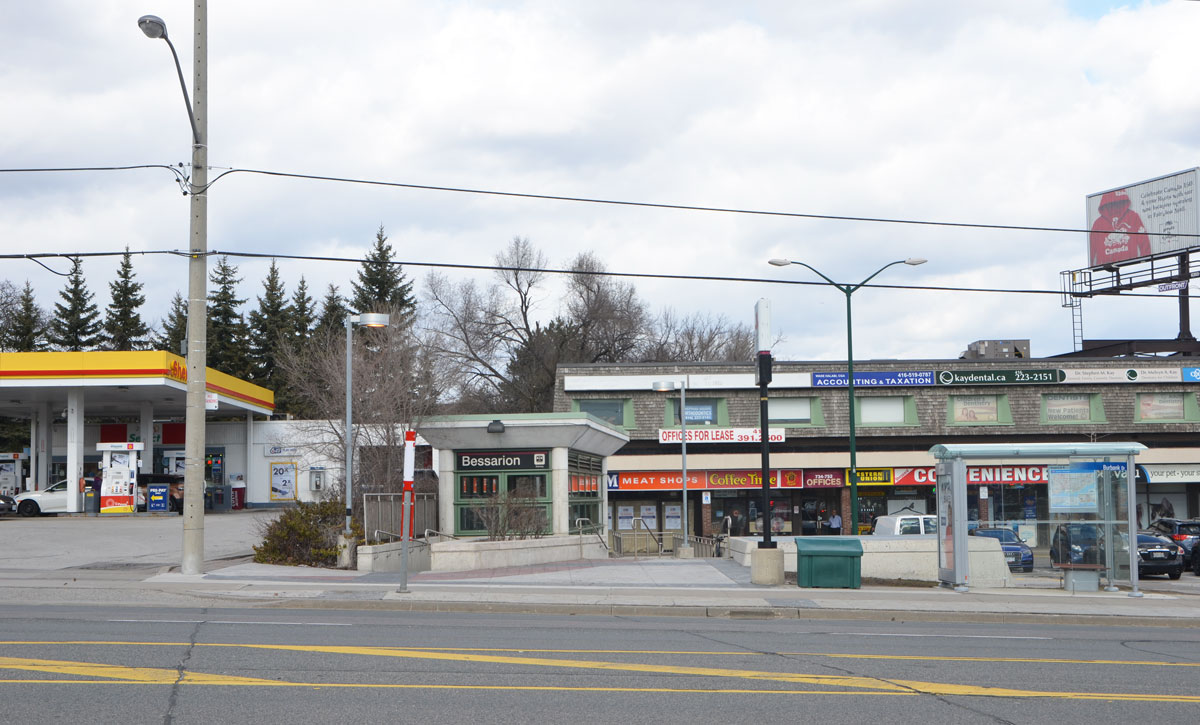
below: The north entrance to Bessarion station

looking across the street to the small north entrance to Bessarion subway station, with a small two storey plaza beside it

below: Looking east from Bessarion.  You can see as far as the condos on Don Mills Road.

looking west from Bessarion subway station towards Leslie Street and beyond,

   There is a reason that you haven’t seen many people in these pictures and it’s not because I waited for people to get out of the way.   Sheppard Avenue is a “major arterial road” under Toronto’s road classification system and traffic movement is its major function.  20,000+ cars are expected to use it every day.

I don’t like to say it, but why would you be walking along Sheppard anyhow?

below: Bayview Village parking lot at the NE corner of Bayview and Sheppard.

parking lot of a mall, Bayview village with surrounding buildings in the background.

As you might know, scroll down to the next blog post to see some pictures of Bessarion station!


The finishing touches are being put on five installations for the new Ice Breakers event along Queens Quay West and the waterfront.  Everything will be up and running this weekend and the installations will remain until the event ends on the 26th of February.    Ice Breakers is the result of a collaboration between the Waterfront BIA and Winter Stations (the people that brought the winter warming stations installations to the Beaches)

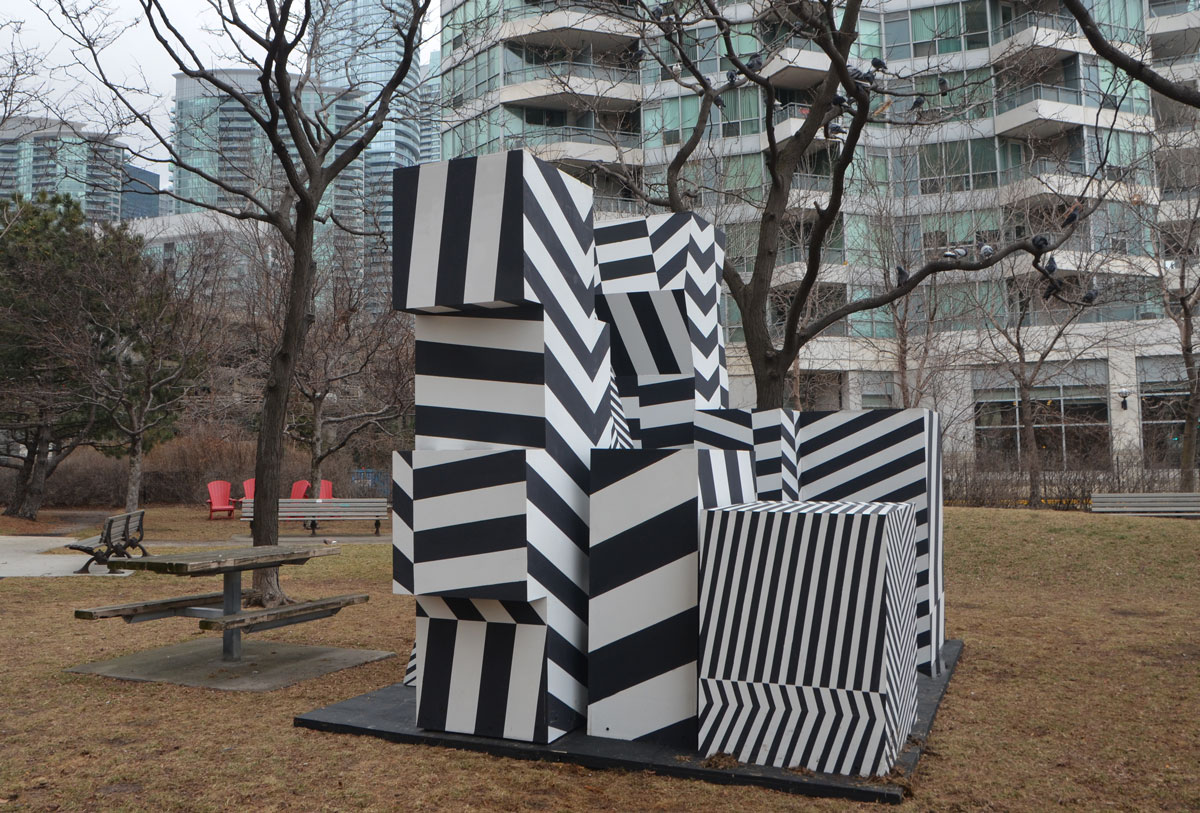
below: The first installation that I saw was ‘Incognito’ which stands out in Rees Street Parkette on Queens Quay.   It is by Curio Art Consultancy and Jaspal Riyait.

a public art installation in a park, winter time but no snow, no leaves on the trees, muddy brown grass, condo in the background. Artwork is a series of shapes stacked in a pile, all shapes are painted in black and white wide stripes. The stripes are horizontal, vertical and diagonal in the resulting structure, called incognito, by Jaspal Riyait and Curio

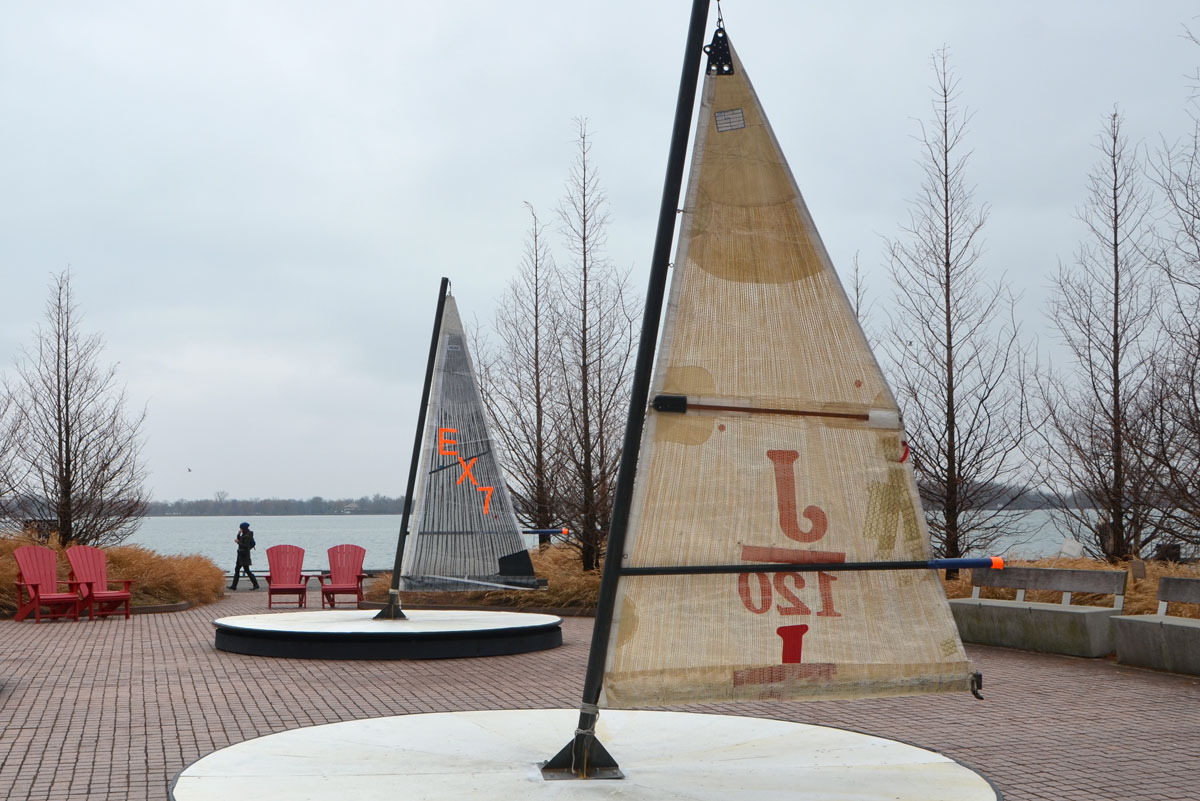
below: Set your sails and round you go!  Sailboats that go in circles.  ‘Leeward Fleet’ by RAW design sailing at Canada Square.

with the lake in the background, art installation beside Lake Ontario on Toronto's waterfront, called Leeward Fleet, by RAW consulting, two (of three) round platforms with a small sail in the middle. The boom of the sail is the handle for turning the platforms round and round like a merry go round.

art installation beside Lake Ontario on Toronto's waterfront, called Leeward Fleet, by RAW consulting, two (of three) round platforms with a small sail in the middle. The boom of the sail is the handle for turning the platforms round and round like a merry go round. CN Tower in the background as well as some of the downtown condos.

below: ‘Icebox ‘ is a black box on HTO beach which is where the yellow umbrellas are.  Alan and Alex of Anex Works were putting the finishing touches on it when I walked by.   Polymetis designed it, but Anex Works built it.  In fact, they are the ones responsible for construction of most of these installations.   I didn’t take any photos inside the box in part because it’s not complete… but the inside walls are made from hardened spray foam insulation and that’s all I’m going to tell you.  This one will be more fun if it’s a surprise.   I definitely plan to go back later in the month to check out the finished product.   And yes, it is reminiscent of the black box that was one of the Warming Stations in 2015, Hot Box, because it was the same artist (or group of artists).

black box on a beach with muskoka chairs and yellow umbrellas,

reflections of the yellow umbrellas of H T O beach on the black shiny sides of Icebox, an art installation at the beach

below: From across the street it looks like two hands gesturing like “It was this big!”
Or perhaps they are holding that grey building up?

looking across Queens Quay west to the buildings and condos in downtown, the edge of the Skydome (Rogers Center) is just visible, two large hands rise upwards as part of an art installation.

below:  The hands are made of wood.  The palms are covered in a shiny gold coloured material that will reflect the light that shines from the bottom of each hand.   “Tailored Twins” by Ferris + Associates.

two large wooden hands face each other, beside the sidewalk, condos behind, the plams are covered with shiny gold,

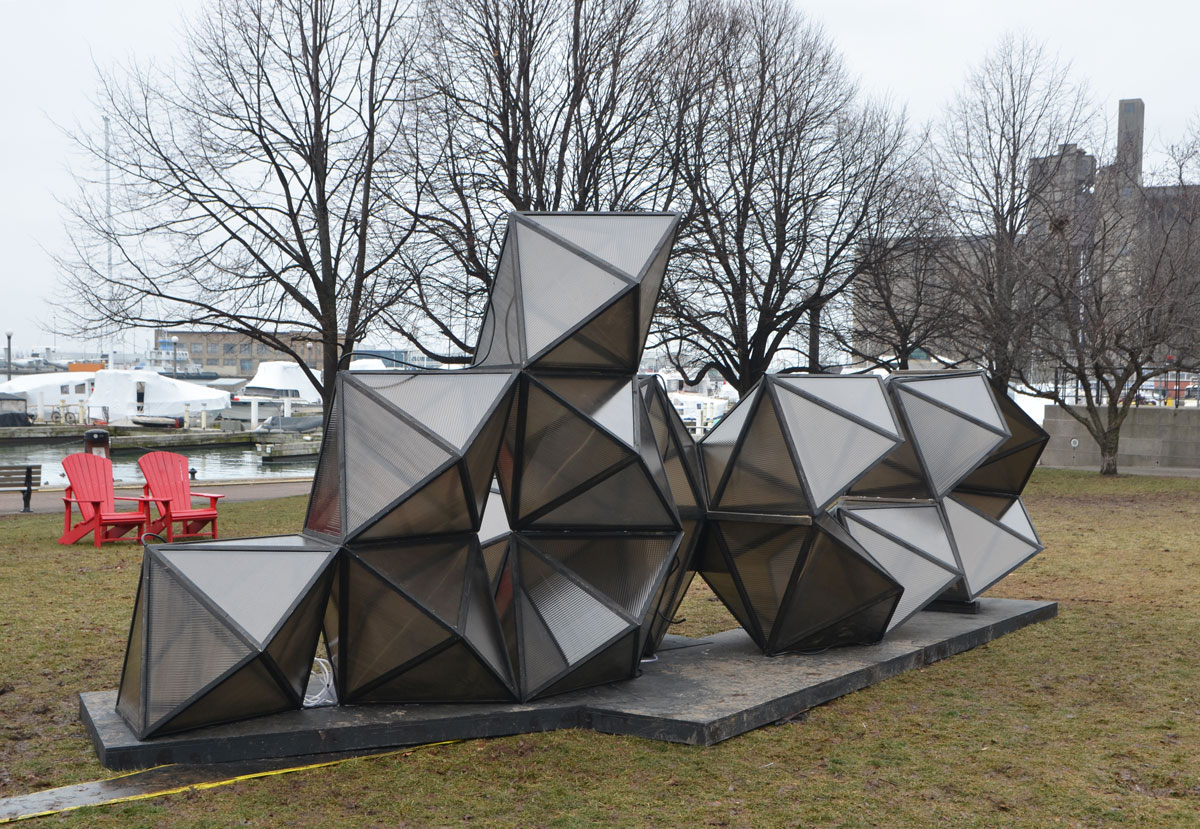
below: And last, an installation that probably looks much better in the dark when each diamond shaped module is lit from inside.   This is ‘Winter Diamonds’ and it was designed by Platant, a Danish design and artistic consultancy.  Their website is in Danish but it does have some interesting pictures on it, including an installation similar to this that was in Copenhagen last winter (I think!)

public art installation in a park along Lake Ontario, diamond shapes stacked in a pile, 10 pieces altogether, 5 on the bottom, 4 on the next row and one on top, grey in colour, bare trees and boats covered for the winter are in the background.

#TOicebreakers | #TOwaterfront

Note: Winter Stations returns to Balmy, Kew and Ashbridges Bay beaches on the 20th of February.

reflections of the yellow umbrellas of H T O beach on the black shiny sides of Icebox, an art installation at the beach

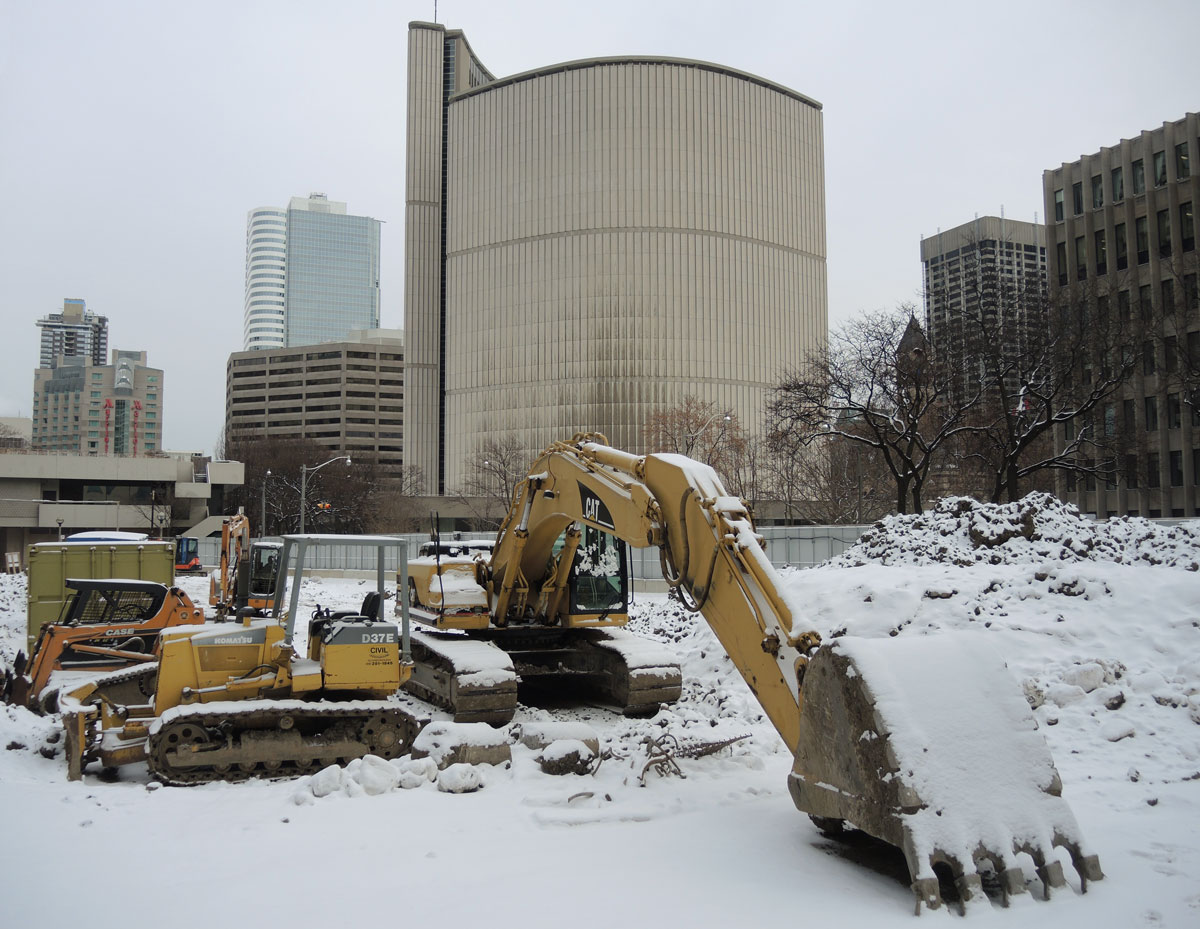
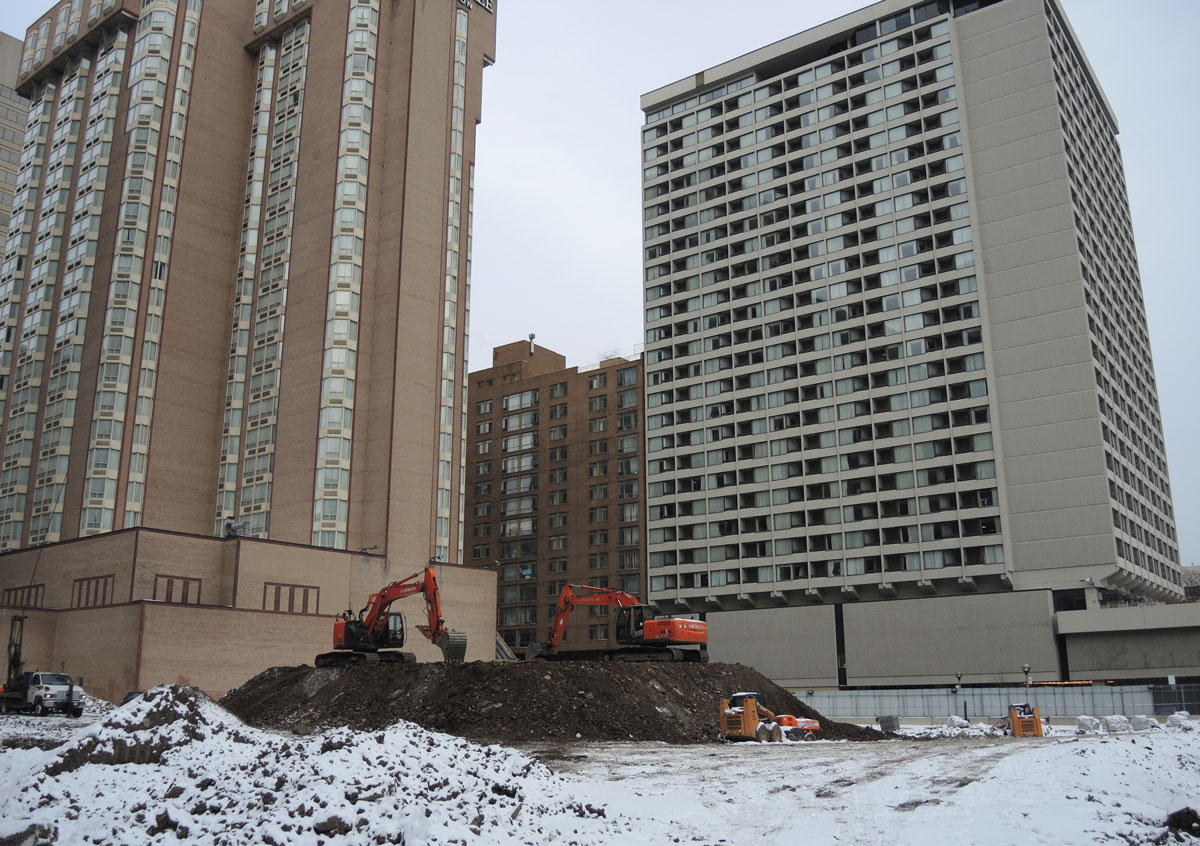
Tucked into a space between City Hall and the Court House, is a construction site.  Up until recently it was a parking lot.  Soon it will be a new Court House.  Like all construction sites in Toronto, it is surrounded by hoardings to separate it from the streets and sidewalks.
a yellow digger, not working at the moment, sits in a vacant lot, slightly snow covered, the back of Toronto City Hall is in the background.

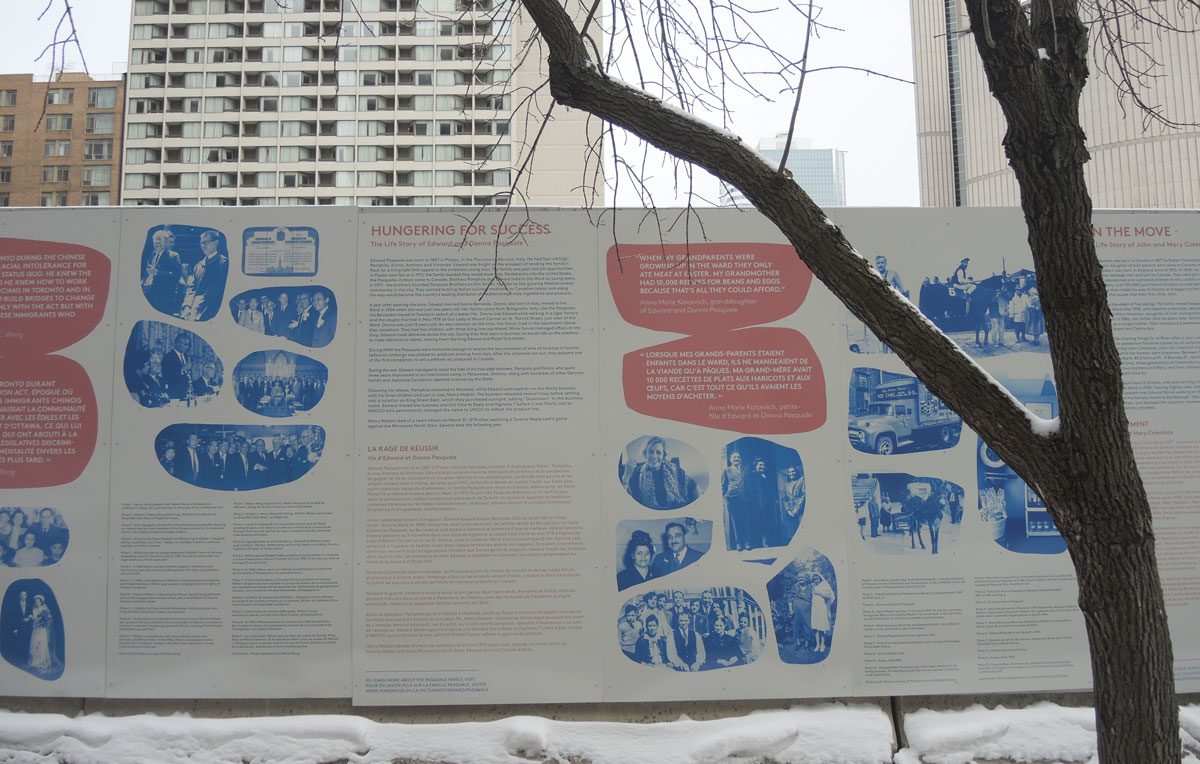
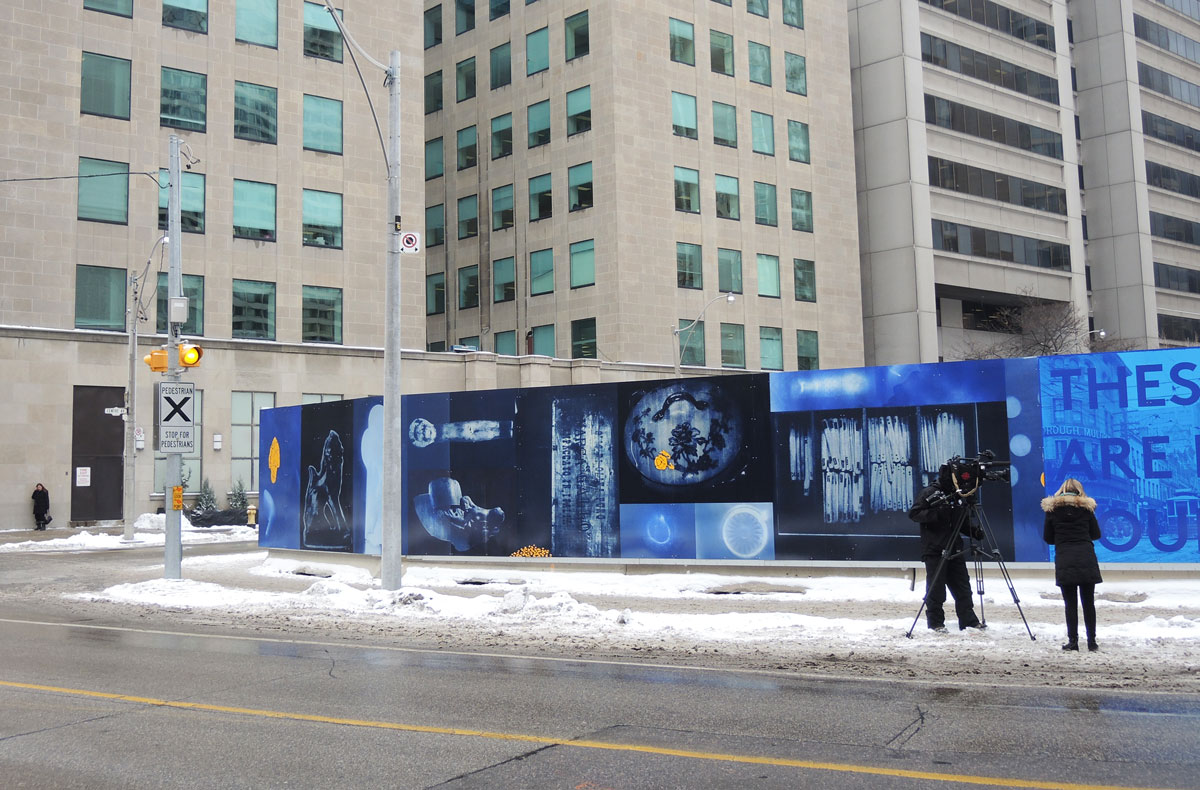
On two sides of the lot, the hoardings have been covered with a mural that was commissioned by Infrastructure Ontario.  It is “Picturing the Ward”and it is an exhibit about the area that once existed here, The Ward.  It was an area where many immigrants first settled.  It was roughly in the rectangle formed by College St., Yonge St., Queen St., and University Ave.   In the 1830’s it was home to Blacks escaping slavery, it saw waves of Irish, Eastern European Jews, Italians, and Chinese to name a few.

On the west side (along Centre Avenue), there are old photos, newspaper clippings, and stories of individuals who once lived in the area.   The content was collected and curated by the Toronto Ward Museum, a new ‘museum without walls’  in the city.   PATCH (part of The STEPS Initiative) designed and installed the mural.  The stories are in both English and French.

below: A segment of the mural with a story titled “Hungering for Success”.   It is the story of Edward and Donna Pasquale nee Bernardo.  Both were born in Italy and both were brought to the Ward by their parents.  They met here and married in 1918.  Edward and his brother Pamphilo founded Pasquale Brothers store on Elm Street.   During WW2 Pamphilo spent three years imprisoned in an internment camp in Petawawa along with other Italian, German, and Japanese Canadians that the government considered enemies of the state.  Edward remained in Toronto running the store.

part of larger mural, small tree branch in front, tall office building behind, mural has old photos in blue tones as well as a lot of words about the history of the area

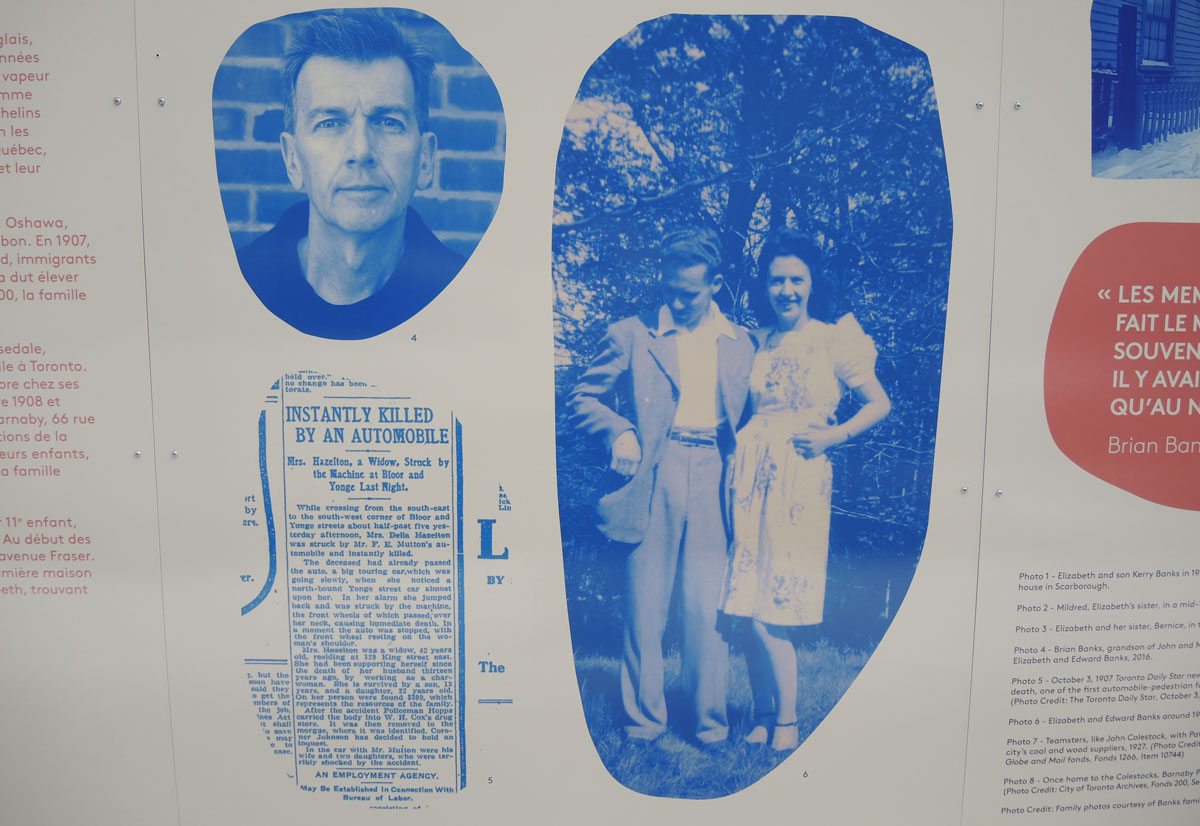
below: The newspaper story from ‘The Toronto Star’ of 3rd October 1907 describes the death of Mrs. Hazleton, a widow with two children, who was hit by a car at Yonge & Bloor.  The car was driven by Mr. F.E. Mutton.  Yes, back then the driver of the car was named in the newspaper.

old photos in blue tones on a mural, along with a picture of an old newspaper clipping describing an automobile accident at Yonge & Bloor in which someone died.

below: The middle section is a collage of cyanotypes (an old photographic process which results in blue pictures) produced by PA System (aka Alexa Hatanaka and Patrick Thompson) .  The images are of artifacts uncovered during the excavation of the area along with some heirlooms contributed by former Ward residents.  A couple of CBC people were braving the cold that day too!

part of mural on a snowy corner, photos in blue tones, a CBC cameraman and reporter are standing on the sidewalk in front of the mural

below: The south side of the hoardings are along Armoury Street.  This section is called, These Stories Are Not Unlike Your Stories. Old photographs of the area have been reproduced in shades of blue.  Orange ‘bubbles’ contain stories.  Most of the photographs are from the City of Toronto Archives although some come from private sources.

part of a larger mural in Toronto, blue photos, with words written in large capital letters, These Stories Are Not Unlike Your Stories

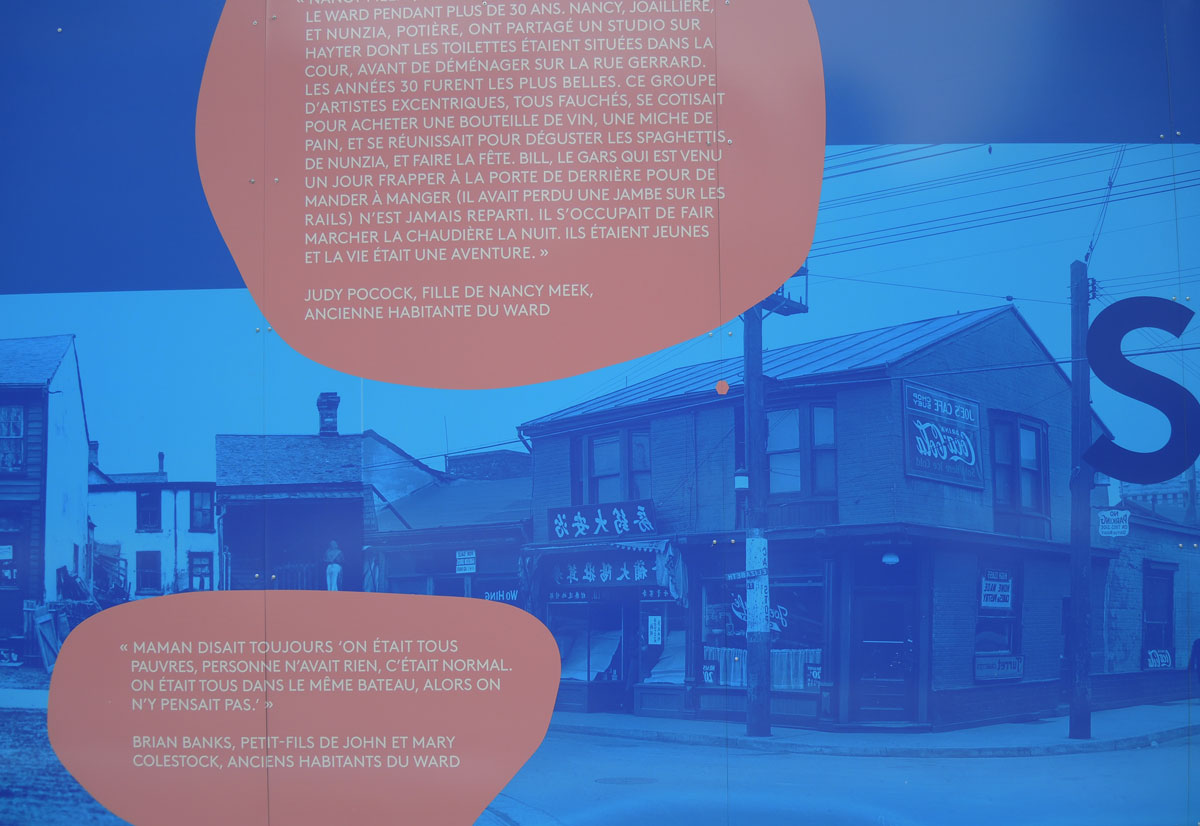
below: On one side, the pictures are printed in reverse and the accompanying words are in French.  The French stories are translations of the English ones.

part of larger mural, reprints in blue tones of historical photos from city archives of ould buildings from the part of the city called The Ward that was demolished in the 1950's to make way for new City Hall

below: The people who lived in The Ward were poor and their housing was sub-standard.  In 1911 a report by the city’s Department of Health described how bad the living conditions were for the people here.  Largely because of that report, demolition of the area started soon after to make space for office towers and government buildings.  I’m not sure how long parts of The Ward survived, but it was in the 1950’s that the original Chinatown along Elizabeth Street was demolished to make way for Nathan Phillips Square.

part of larger mural, reprints in blue tones of historical photos from city archives of ould buildings from the part of the city called The Ward that was demolished in the 1950's to make way for new City Hall

below: Some of the orange bubbles contain quotes from descendants of former residents of the area.  The bottom quote is: “My mom use to say, ‘We were all poor.  No one had anything.  It was normal.  Everyone was in the same position so we didn’t worry about it too much.'”  by Brian Banks, grandson of John & Mary Colestock, former residents.


part of larger mural, reprints in blue tones of historical photos from city archives of ould buildings from the part of the city called The Ward that was demolished in the 1950's to make way for new City Hall

below: There is still a lot of work to be done on the site!   The mural will be on view until at least October of next year. If you are interested in the details of the mural, more about the people featured, or the events described, then the best place to start looking is the section of the Toronto Ward Museum website that is devoted to this project.

two red diggers on top of a pile of dirt on a snow covered vacant lot, large multirise buildings in the background