Posts Tagged ‘history’

On the southwest corner of Danforth and Greenwood is a mural that extends over the lower storey of a number of brick buildings.   Back in the late 1800’s and early 1900’s Greenwood Ave. was home to quite a few brick works such as the John Price Brickyard, the Taylor Brickyard, and the Joseph Russell Brickyard.  You’ll notice that these are the same as the names on the signs above the mural.   Just south of this building is Greenwood Park, also once a brickyard.


looking across the street to a row of brick store fronts, two storeys high.  The bottom storey has been painted with a mural that has a yellow background.

Close up pictures of some of the details in the mural:

part of mural that depicts a street scene - two kids are playing on a red wagon, a woman is walking a dog and a woman with a cane is waiting at a bus shelter.

part of mural that depicts a street scene - a little girl pulls a boy in a red wagon while other kids are playing on the sidewalk

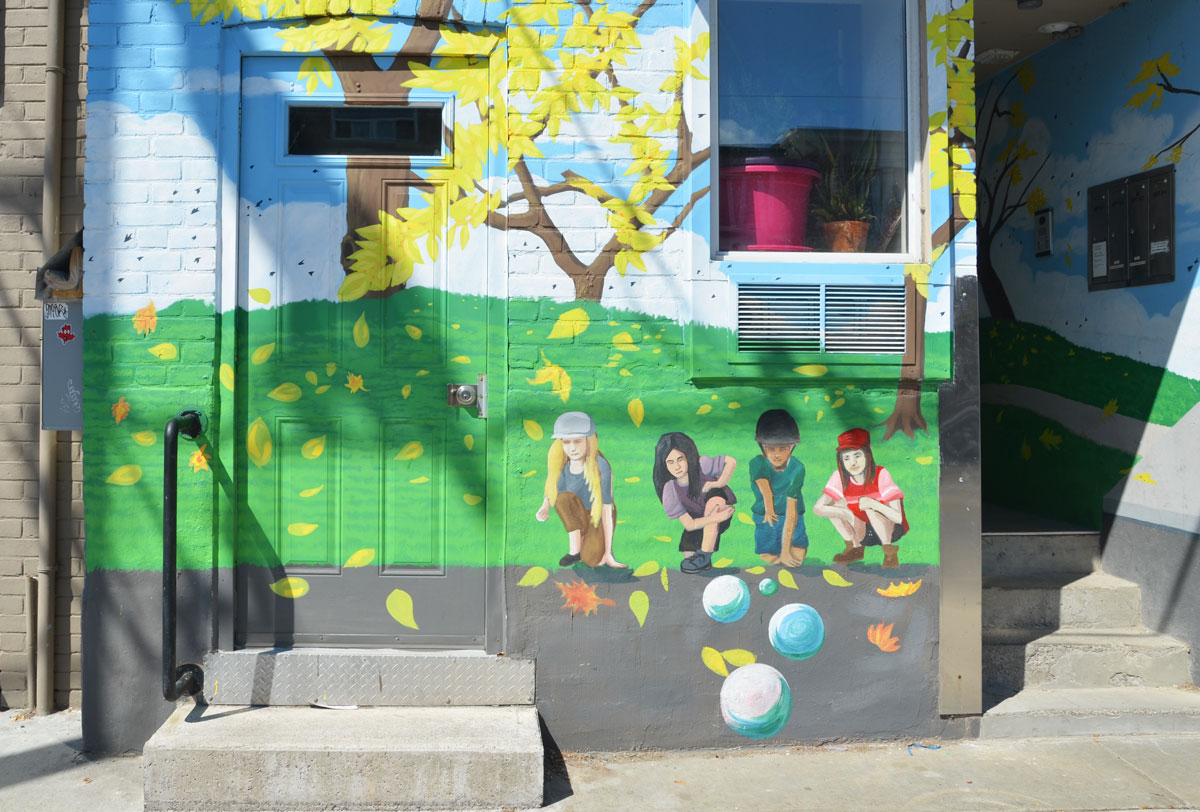
part of mural that depicts a street scene - four kids are playing marbles


Robert Home Smith (1877 – 1935) was a lawyer, business man, civil servant, and land developer.   In the early 1900’s he acquired 3000 acres of land along the Humber River, from Lake Ontario north to what is now Eglinton Ave. 

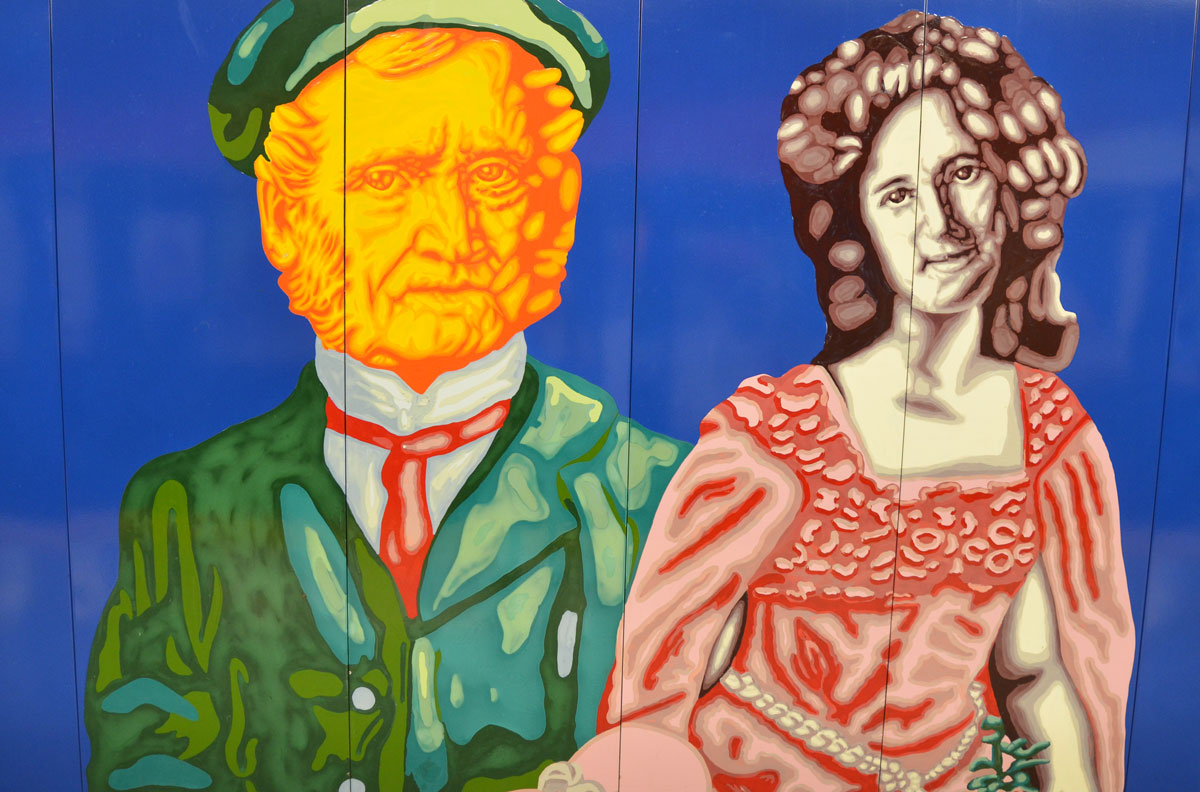
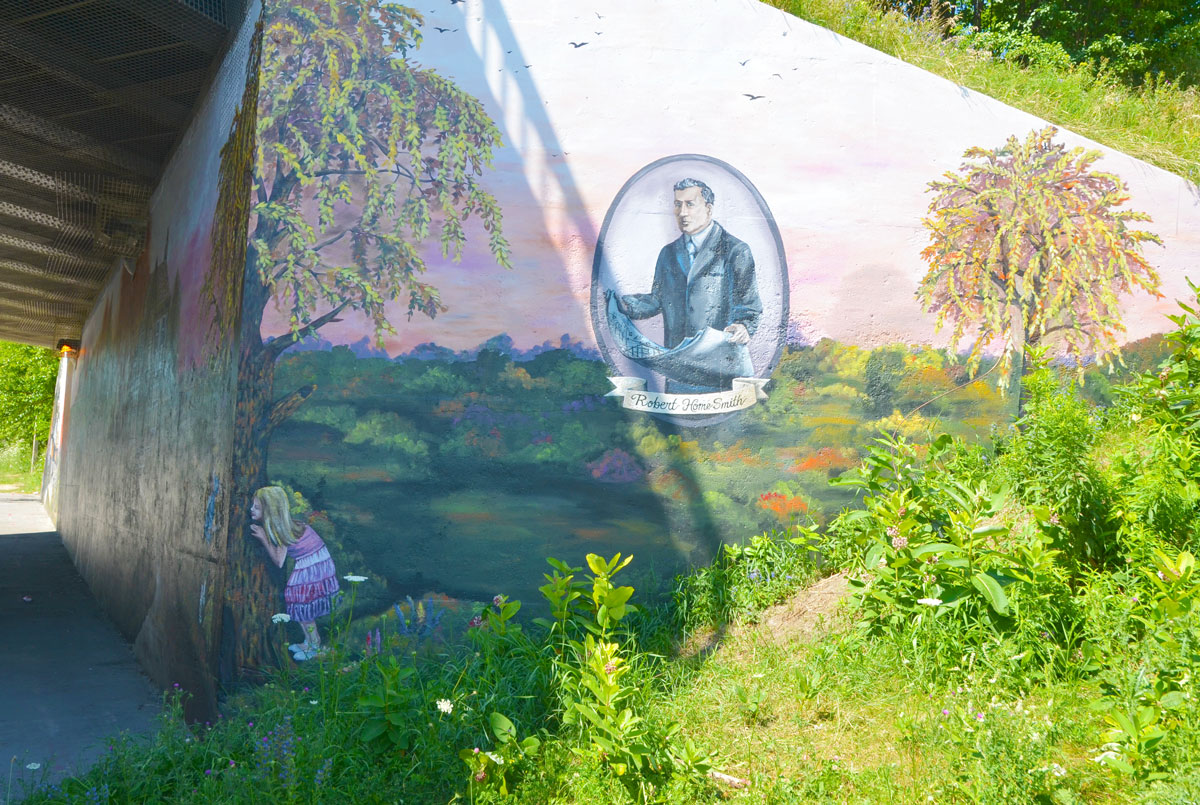
 A mural has been painted by Emilia Jajus on Royal York Road as it passes under the train tracks close to Dundas West.  The east side of the underpass is finished and it depicts Robert Home Smith and some of the effects that he had on the area.

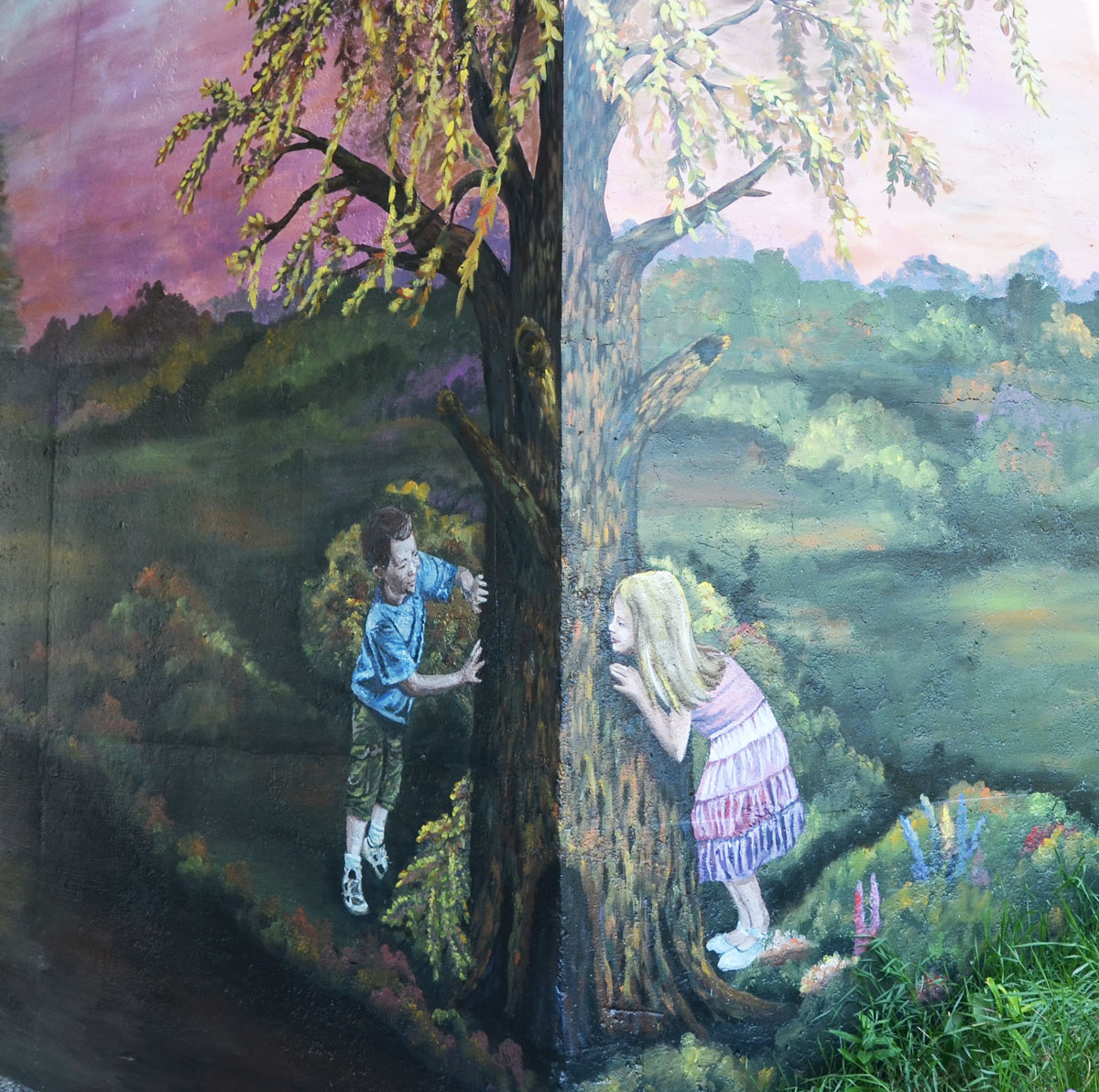
below:  At the south end of the mural there is a portrait of Robert Home Smith.  A young girl can be seen hiding behind the trunk of a large tree.   Because the tree is painted on the corner, you can’t see the young boy who is hiding on the other side of the tree until you get closer to the mural.

part of a mural on an underpass, including a portrait of a man, Robert Home Smith

part of an historical mural on an underpass, two kids are playing, one on either side of a large tree that has been painted on the corner.

 below: Part of the mural, fishing in the Humber River by the bridge at the Old Mill.  The bridge was built in 1916 after an older bridge was washed out in a storm.  It is still there.

part of a mural showing a stone bridge over a river, the Humber River.  A man is fishing in the river from the shore.

Part of the land that he owned was the site of the King’s Mill.  This mill was built in 1793 on orders from Lieutenant Governor John Graves Simcoe.  It was to mill lumber for the proposed town of York.    Here, Home Smith built the Old Mill Hotel as well as the  the Old Mill Tea Room.  The tea room was opened on 4 Aug 1914, the same day that Britain declared war on Germany.

below:  Part of the mural, the Old Mill Hotel

part of a mural that shows the Old Mill hotel, a tudor style two storey building with the lower part being made of stone

below: The Old Mill hotel in 1945

Copy of a 1945 photo of the Old Mill hotel in Toronto

photo from the City of Toronto Archives

Robert Home Smith planned to develop the land on both sides of the Humber River (known as the Humber Valley Surveys) into residential lots that were aimed at affluent buyers.  Although he died before the completion of this project, the neighbourhood of Kingsway as well as parts of Swansea, Baby Point, and Humber Village, still stand.

part of a mural showing a two storey stone house with fake tudor upper storey, in autumn, with tree with orange leaves beside the house.

The parkland that is adjacent to the Humber River as it curves around Baby Point is named Home Smith Park in memory of this man.

below:   A poor quality photo showing a view of the whole mural.   A replacement photo is needed, one taken on a day when there aren’t so many shadows!

picture of a mural painted an the wall of an underpass.

Honest Ed’s

 In 1948 Edwin Mirvish opened his ‘Honest Ed’s Famous Bargain House’ on the southwest corner of Bloor and Bathurst streets.  Honest Ed’s was not only one of the first department stores in the city but also one of the first to offer discount prices on its merchandise.

below: Honest Ed’s, from across the intersection of Bloor and Bathurst streets.

Looking across an intersection of Bloor and Bathurst streets towards Honest Eds store with its big orange, yellow and black signs on grey cladding.  Running around the store, about the level of the top of the first storey, are signs (red lettering on white background) that read "Only the Floors are crooked" , "There's no place like this place, any place", "Come in and Get Lost" and lastly, "A Bargain Centre like this happens only once in a lifetime"

photo taken 25 March 2015


below: The same intersection in 1948 when Honest Ed’s Famous Bargain House opened.  As you can see, the exterior was covered with signs with humorous sayings from the beginning.

historical black and white photo of Honest Eds store at Bloor and Bathurst.

photo from Honest Eds store via a 2013 article in The Grid TO

Along with the discount merchandise, Ed Mirvish filled his store with pictures and posters, especially movie posters.   The stairwell walls are covered.

movie posters as well as other kinds of posters in a stairwell at Honest Eds, including a large red poster with a picture of 'Honest Ed Mirvish'.
reflections in a round mirror in a staircase at Honest Eds store showing the stairs, railing and various pictures and posters hanging on the walls

A stairwell at Honest Eds store with a large black and red sign that reads "Honest Ed's an Idiot, his prices are cents-less"
You can buy almost anything at Honest Ed’s!  Clothes, shoes, toys, household items, groceries, hardware, prescriptions, souvenirs, … and so on.

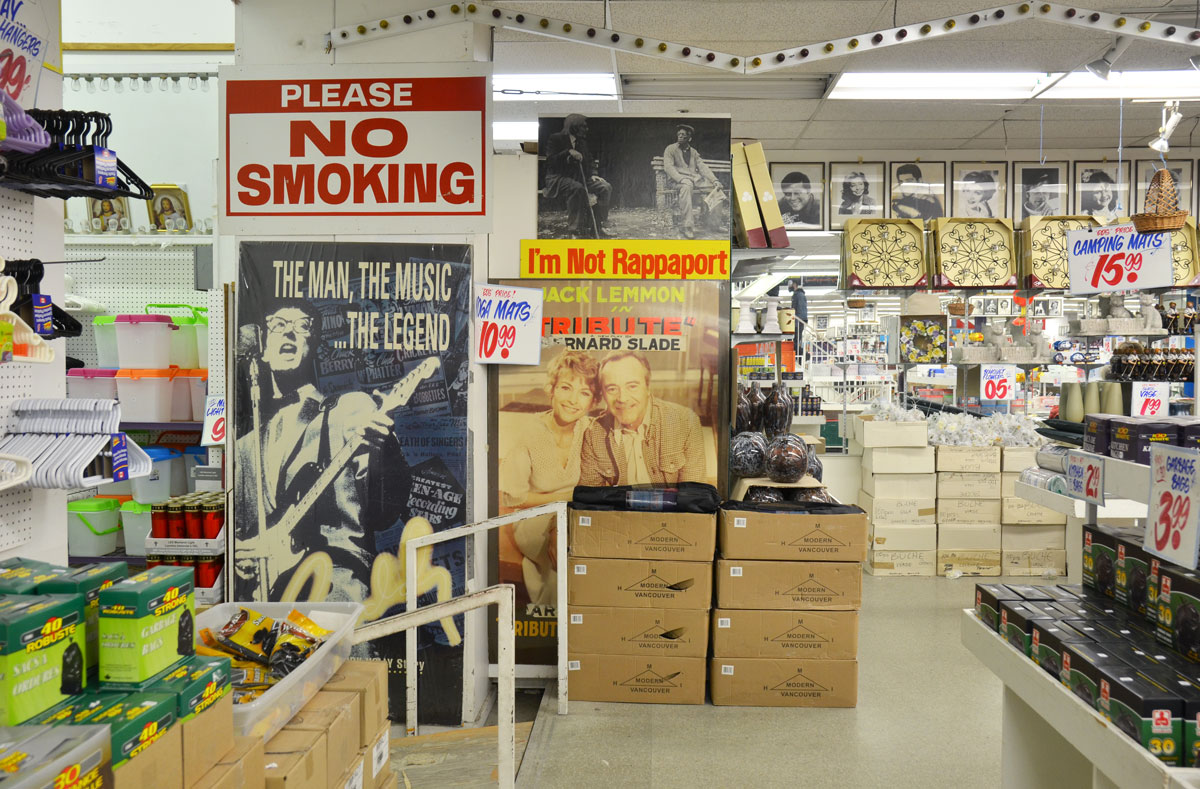
Interior photograph of Honest Eds store with its eclectic mix of merchandise.  Big No Smoking sign on the wall, some old movie posters on the wall too.

aisle in a discount bargain store.  White wooden shelves and bins, lots of red signs, cashier sign as well.  Honest Eds interior, ground floor, kitchen ware,

There are hundreds of pictures of actors and other famous (and no so famous!) people.

kitchen wares for sale laid out on white table like shelves.  Large pillar in the middle of the store with a sign warning you that you are on camera.  Seven pictures of movie stars adorn the pillar.  Lots of merchandise for sale in the background.

Jeans for sale, on tables in Honest Eds store.  Large black and white posters on the wall along with a colour full length portrait of a woman in a long dress.

All of the signs in the store are hand painted.  In March 2014, Honest Ed’s had a sale of all their signs and the profits ($17,000) from this sale were donated to Victim Services Toronto.
Another sign sale is scheduled for 11 April 2015 starting at 8 a.m.  If you want to buy a sign, arrive early and expect to wait as it is a very popular event.

Sandals for sale at Honest Eds, on white shelves.  There is a mirror behind and in the reflection is most of the shoe department of the store.

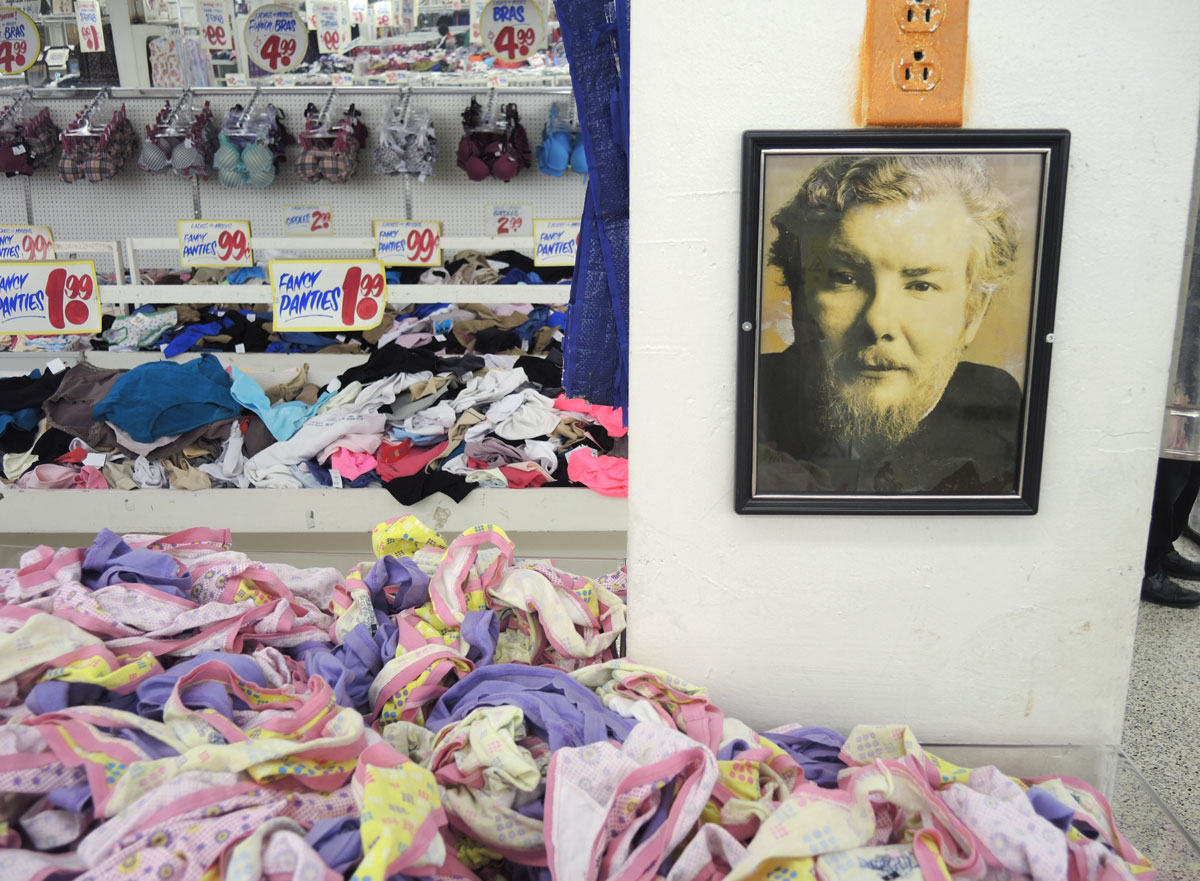
bins of panties for sale, a wall display and long horizontal mirror in the background.  Beside the bin in the foreground is a white pillar on which there is a black and white picture of a man from the shoulders up.

Signs in a store window.  One says "Honet Ed can't cook but his customers never get a raw deal" and the other is a page showing all the special prices available at the store.  It is printed like a newspaper page and there is a lot of information on it.

A bin full of brightly coloured kids running shoes in greens, blues, reds, etc

In October 2013, the property was sold to a developer but as you can see from the sign in the photo below, the store is still open.  It will remain open until the end of 2016.  It’s been open for 67 years and will remain open for another 21 months.
The southeast corner of Markham and Bloor.  The corner of Honest Eds store with its red framed windows and loud garish signs.

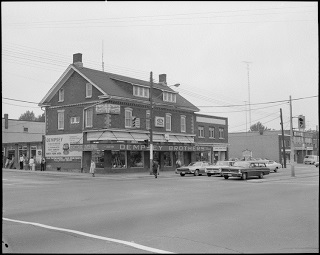
In the early 1900’s brothers George and William Dempsey bought a store on the northwest corner of Yonge and Shepard from the Sheppard family.  It became known as Dempsey Brothers.

 below: The store in the 1960s

An old black and white photo of Dempseys store which was on the NW corner of Yonge & Sheppard.  It was a large 2 storey brick building with a porch across the front of the building.  You can see Yonge St. in this photo and some of the old cars that were stopped at the intersection.

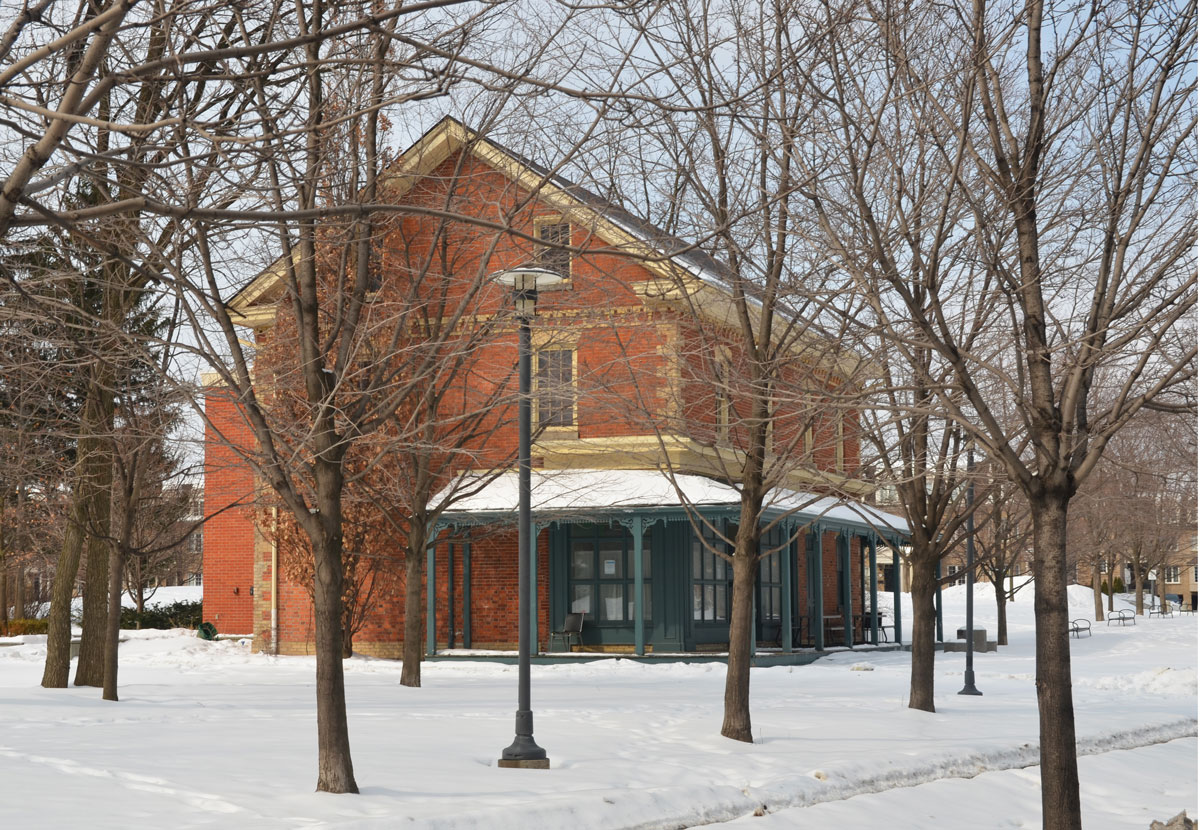
In 1989 the property was sold to developers but the store remained on that corner until 1996.  At that time it was moved a few blocks north to a site on Beecroft Ave; the site is now known as Dempsey Park.  The building was renovated and became the home of the North York Archives, an arrangement that didn’t last long.  In 1998 Mike Harris and the provincial Conservative government of the day amalgamated the old city boroughs into one City of Toronto.  North York ceased to exist and their archives merged with those of the new city.  Instead, the old Demspey Brothers store is home to Beecroft Learning Centre.

old Dempsey store, restored and now in a park setting.  Two storey brick house with some yellow brick trim, porch that wraps around the front of the building.  Surrounded by trees, winter time so no leaves and there is snow on the ground.

The restored Dempsey Brothers store, now at 250 Beecroft Avenue.


Where Dempsey’s once stood, there is now this….

Northwest corner of Yonge and Sheppard in March of 2015, low rise building angled across the corner with McDonalds and 7 11 stores.  Tall apartment building behind.  The intersection is of two 6 lane roads so it is big and wide.

… a 7 Eleven and a McDonalds. I doubt that anyone thinks “nice corner” when they look at it.


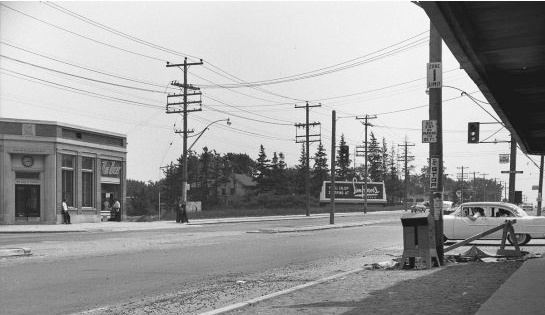
below: Looking southeast from the front of Dempsey Brothers store many years ago.

An old black and white photo from 1955 showing the intersection of Yonge and Sheppard.  Not much development, an old car is waiting at a street light.

The billboard is an ad for Simpsons, a department store that is long gone.


For a long time, a grocery store stood where the billboard is in the above photo.  But now that corner is changing again.


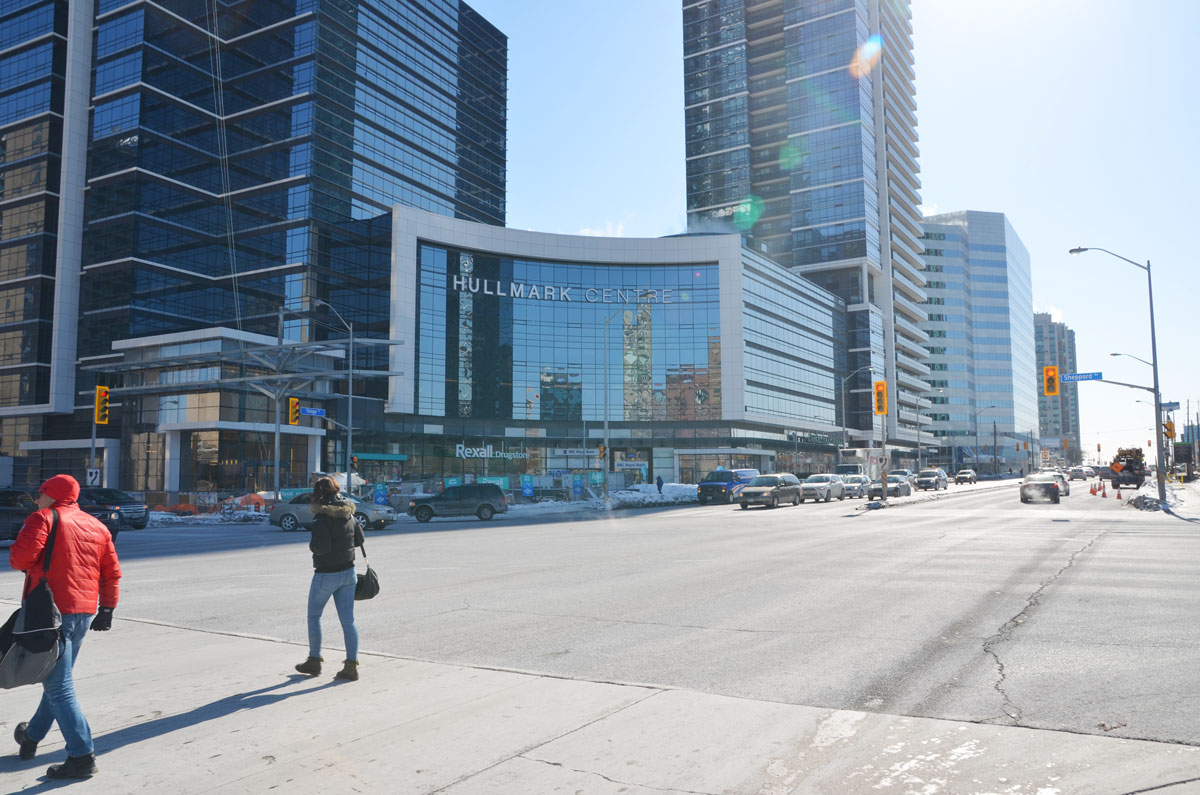
below:  An attempt to replicate the location and angle of the above photo

Looking diagonally across an intersection towards two tall buildings with a midsize building with a curved front in between them.
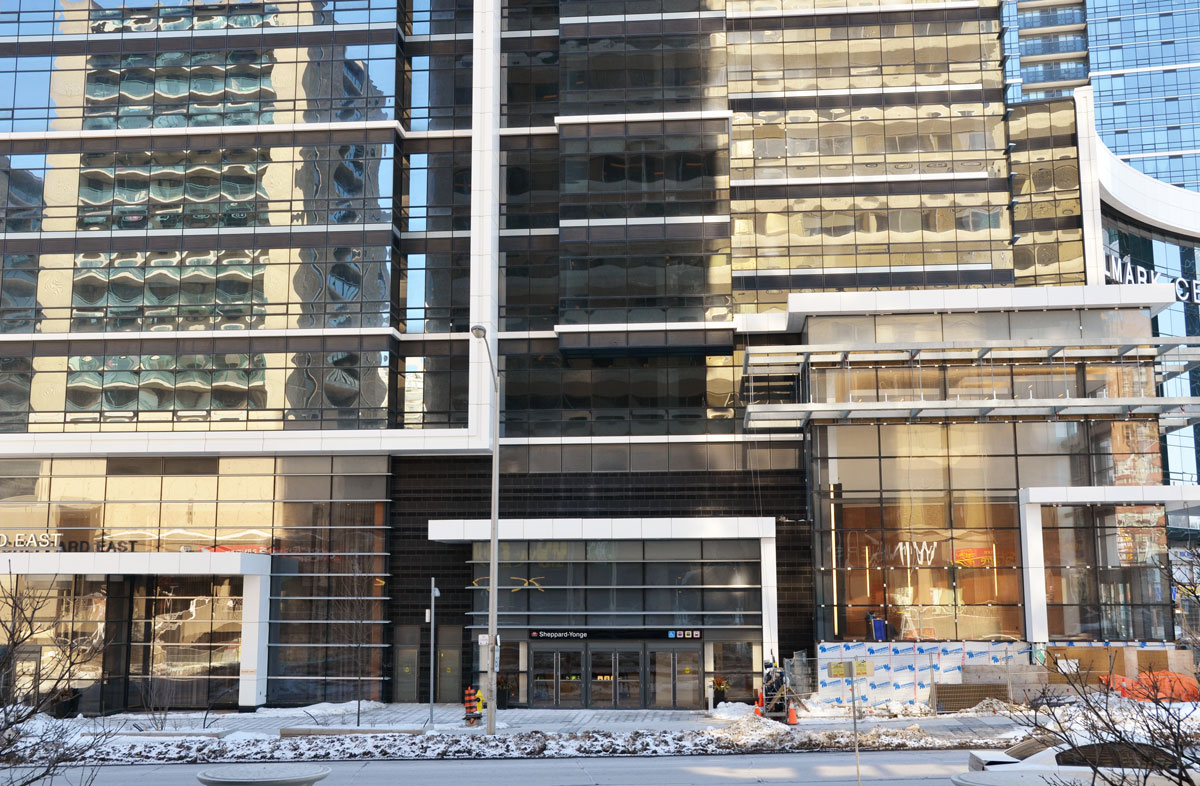
below:  Looking south across Sheppard Ave. East at the north side new Hullmark Centre including the new subway entrance. 

looking at glass buildings where there is a lot of reflections.  An entrance to Sheppard subway station is part of the building.

below:  Looking north up Yonge Street from just south of Sheppard Avenue.
The new Whole Foods store is the first building on the right.

view looking north on Yonge St.  from just south of Sheppard Ave.
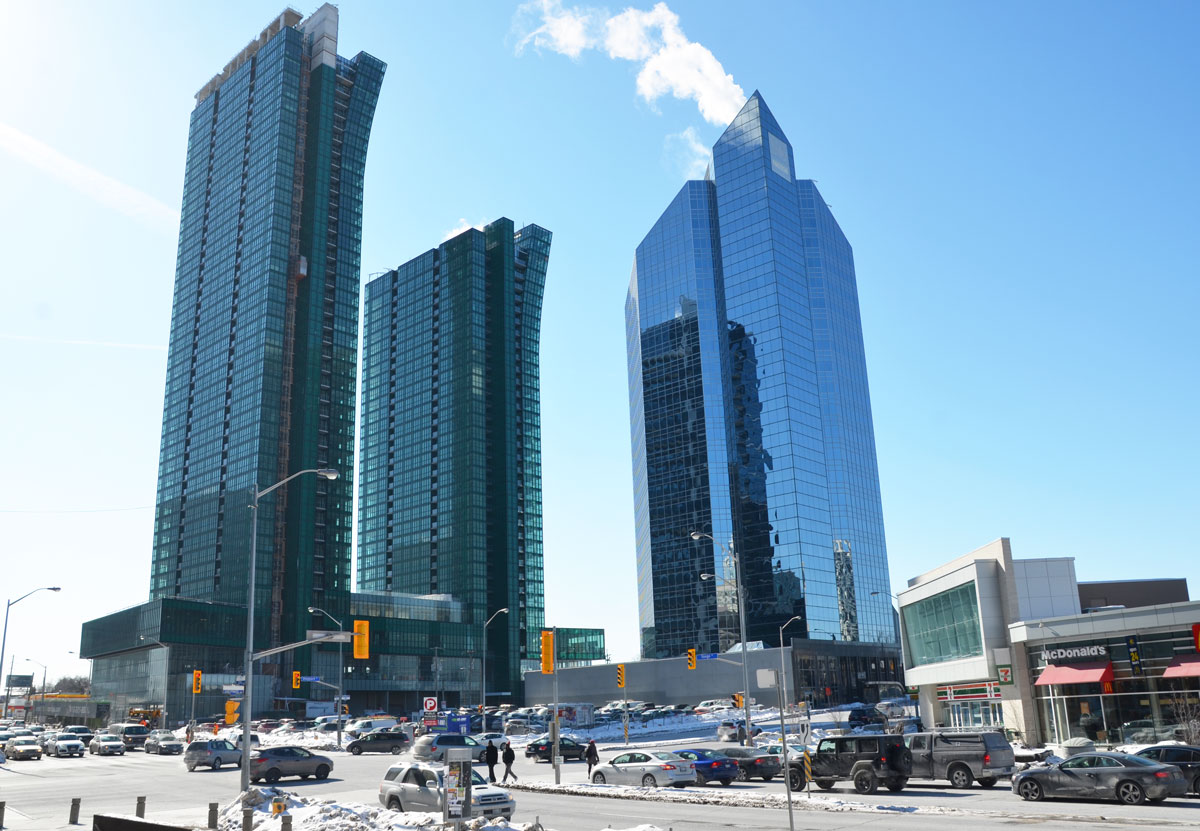
The southwest corner is also undergoing major changes.

below: The greenish coloured Emerald development is almost complete.  And yes, the tops of the buildings are meant to curve that way!

Two tall condos under construction beside a tall bluish colour commercial building.  The condos are a greenish colour and they are curve outwards a bit at the top.

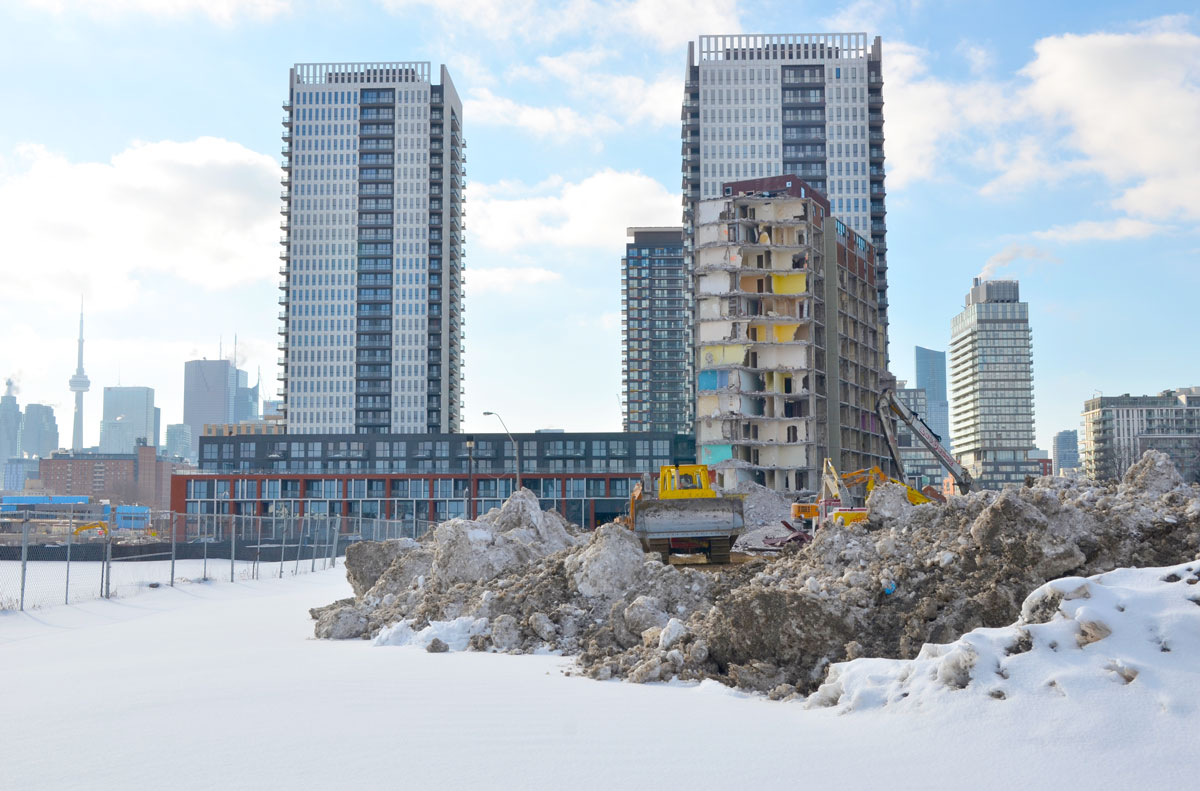
Along with many other people, I have been watching the demolition on the southeast corner of Dundas & Sumach streets, part of the Regent Park redevelopment.  This 14 storey apartment building was designed by Peter Dickinson; it was built in the late 1950s.


January 31st, 2015

I first saw this building being demolished on a grey day at the end of January.
I’m not sure when the demolition actually started.

A large 14 storey brick clad apartment building in the initial stages of being demolished.

Looking north up Sumach Street.


View of the interior of some of the apartments that were exposed when the exterior brick was removed.  Some of the rooms are painted in bright colours, purples, pinks and greens.

The colours of past lives.


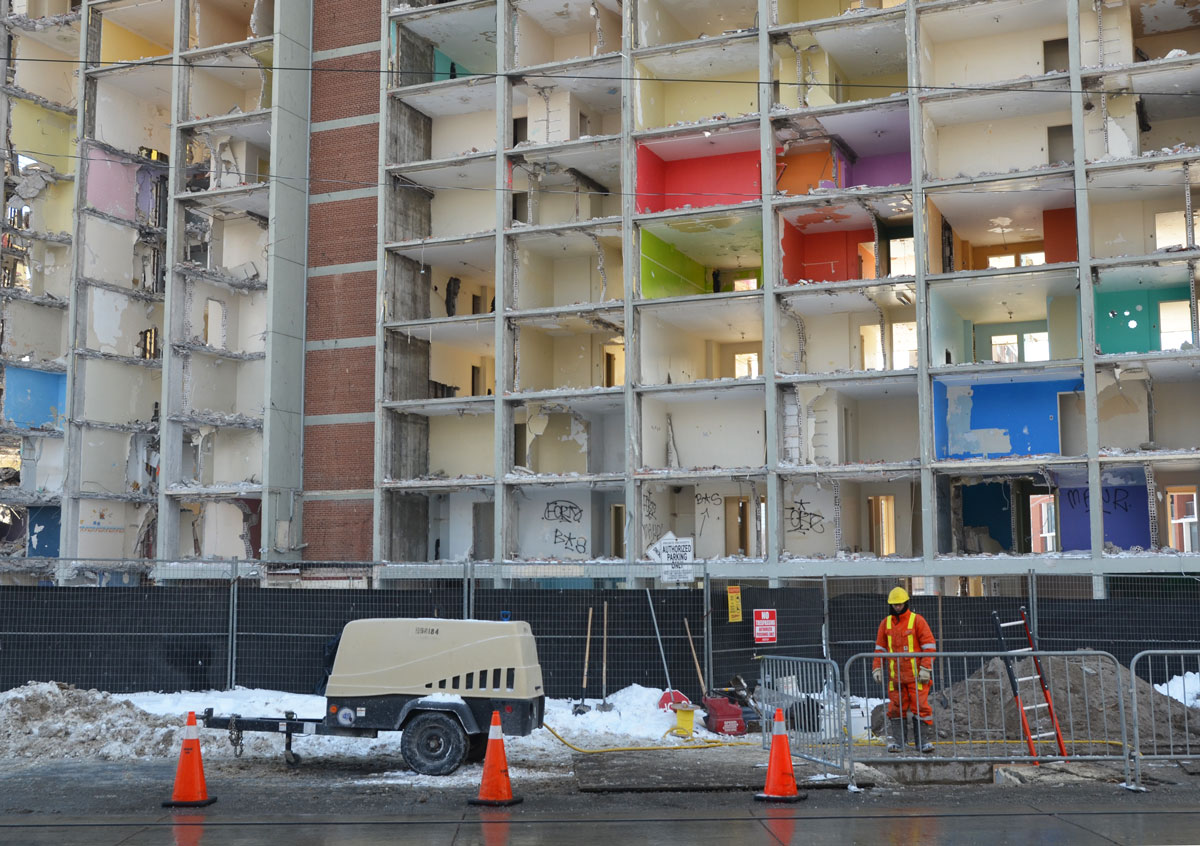
 3 February

A workman dressed in orange coveralls works on the street in front of a building being demolished

It would have been a cold job, working outside during the coldest February on record.


Part of a 14 stprey apartment building that is being demolished.  The exterior walls have been removed and some of the interior walls are buckling.

In the midst of demolition.


blog_demolition


10 February

Two very large cranes are being used to demolish a large apartment building on the corner of Dundas and Sumach streets.  Some men in bright yellow vests are directing traffic as some of the debris is falling towards Sumach street.

Looking across the intersection of Dundas and Sumach.


A purple and yellow sign against a metal fence that says Regent Park Revitalization Phase 3 has started.  Demolition of an apartment in the background.

A view from the south.


Hydraulic crane and truck and other machinery used in the demolition of the building.

Looking west from River Street.


Vacant lot in the forground with demolition of a building in the middle.  In the background are the new buildings that have been built in that area

Another view from River Street.


12 February

Two large cranes are demolishing an apartment building.


17 February

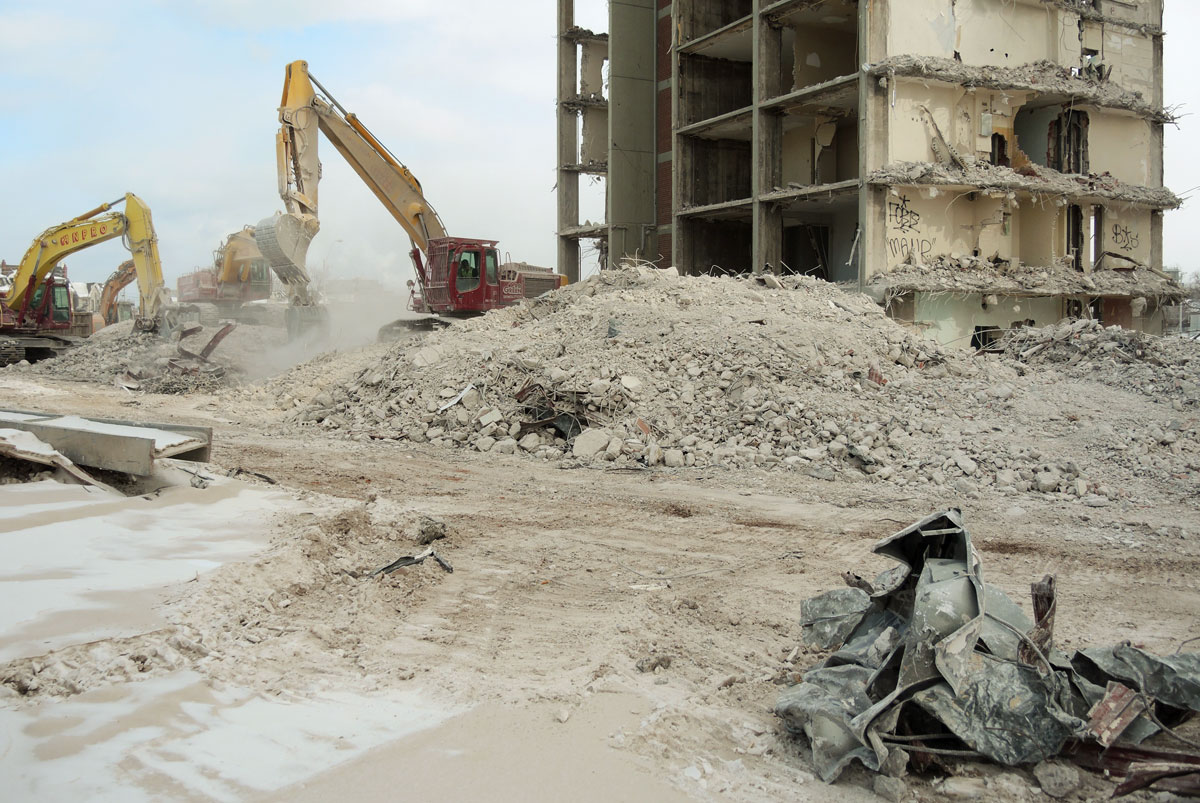
A lot of rubble, concrete, metal and brick, from the demolition of a building lies in front of the partially demolished building.

Looking into the remains of a partially demolished building.  The pipes that used to run between the walls vertically are now exposed.


23 February

Machinery is being used to sift through the debris and rubble from a building demolition

27 February

A man is taking a picture of a demolition in progress of an apartment building.

There were always a number of people taking pictures whenever I was there.


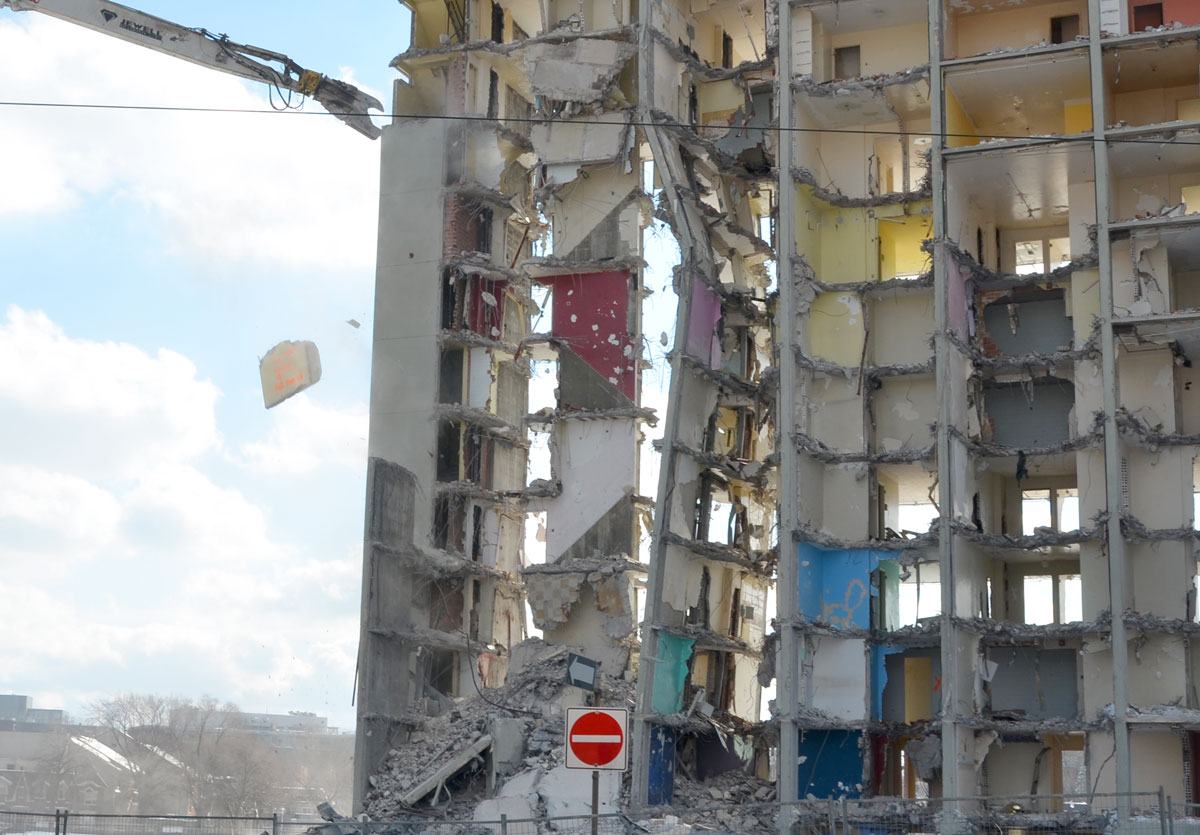
As part of the upper stories of an apartment are brought down, a cloud of dust forms as the debris hits the ground.

dust storm in the sunlight


28 February

vacant lot, truck, and remains of a building being demolished

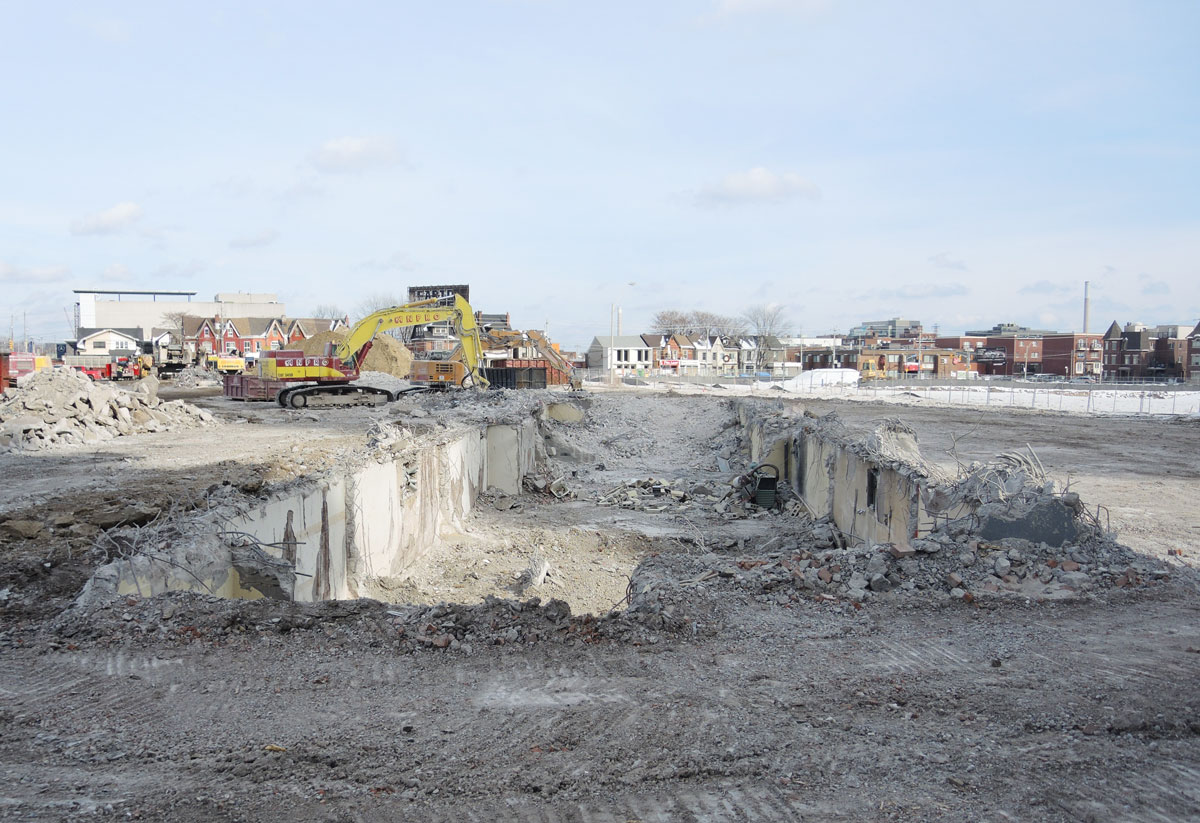
… after 5 weeks, 6 March

A large hole in the ground where a building once stood, vacant land is around it.  A street of houses in the distance, machinery to one side.

Just another hole in the ground.

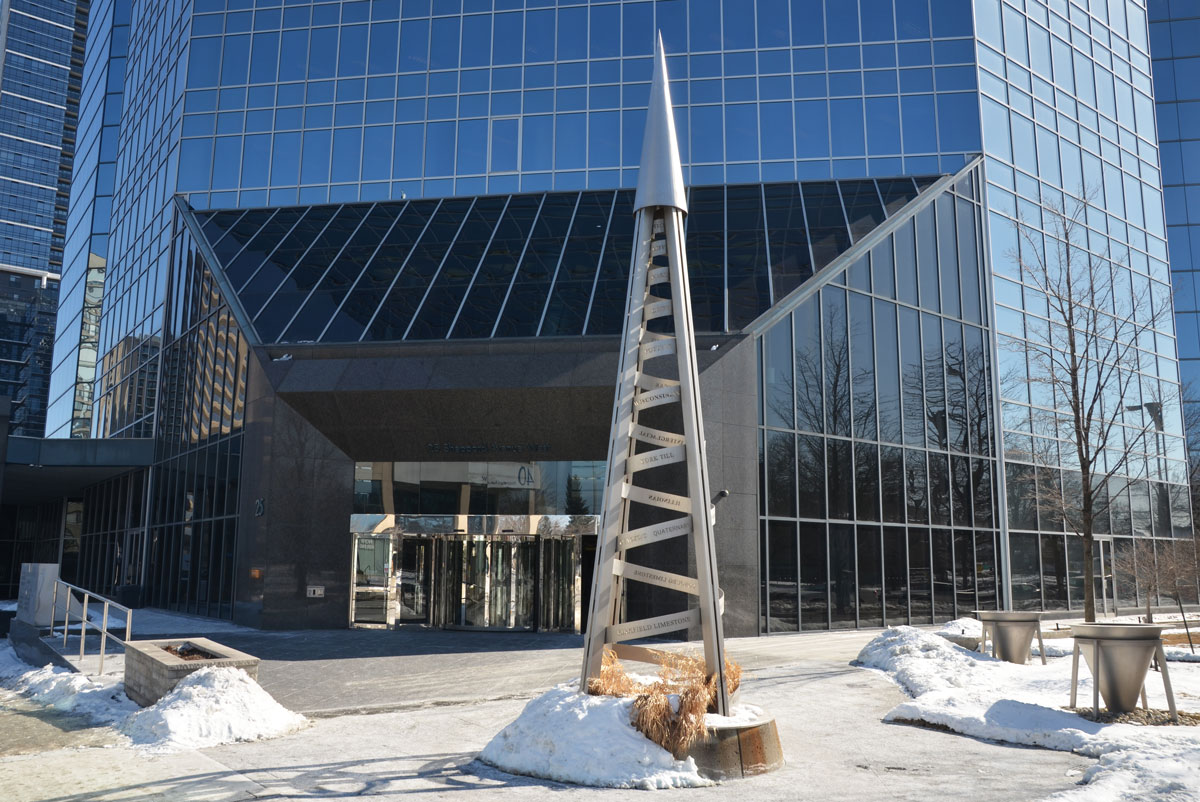
Time Cone
by Brad Golden and Lynn Eichenberg, 1996.
With help from Christopher Dewdney, poet.

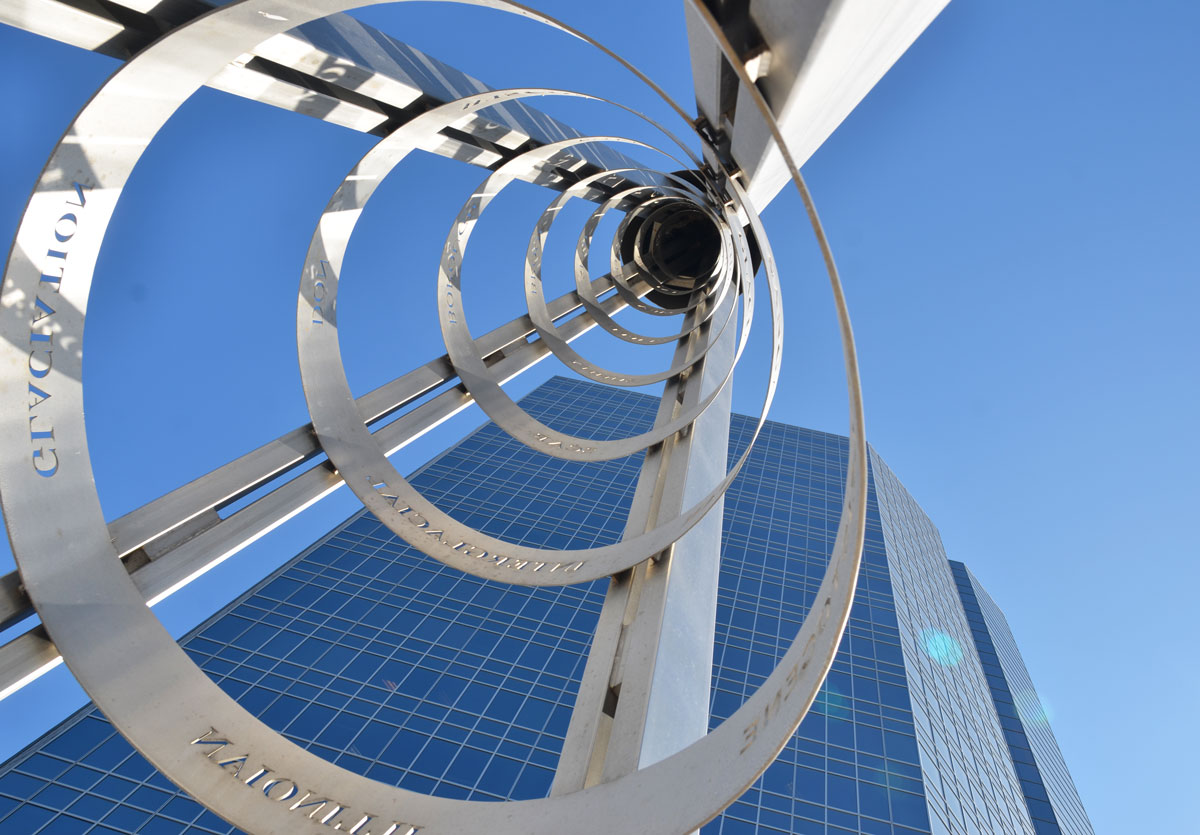
In front of 25 Sheppard Ave West on the SE corner of Sheppard and Beecroft.

A tall bluish coloured glass building takes up the background.  A tall conical shaped sculpture is in front of it.

A 15 cm stainless steel ribbon, supported by four steel beams, winds its way up to the cone at the top.   Cut out of the steel are words that pertain to the geology of  the area.  ‘Precambrian’ is the bottom word.  Other words include Pleistocene Glaciation, Gull River Limestone, Cenozic, Don, and Thorncliffe Till.

Looking up inside a sculpture that is a ribbon of stainless steel that winds up a conical hape, supported on 4 sides by stainless steel bars.

extra: In geology, ’till’ is unsorted unstratified material deposited directly by glacial ice.

Last Folio, A Living Monument to the Holocaust
An exhibit of photographs by Yuri Dojc,

at the Art Gallery of Ontario

Yuri Dojc was born in Slovakia but is now based in Toronto.
Starting in the 1990’s he has returned to Slovakia a number of times in search of traces of Jewish life from prior to WW2.

a close up of a photograph of an old book, open, with the pages on one side all curled up.   The photo is taken from the top of the book.

Details of one of the photographs in the exhibit.

There are only eight photographs in this exhibit but each one tells a story.   Narratives of loss and of life interrupted.
But also stories of memory and remembrance.

 More information about the Last Folio project.


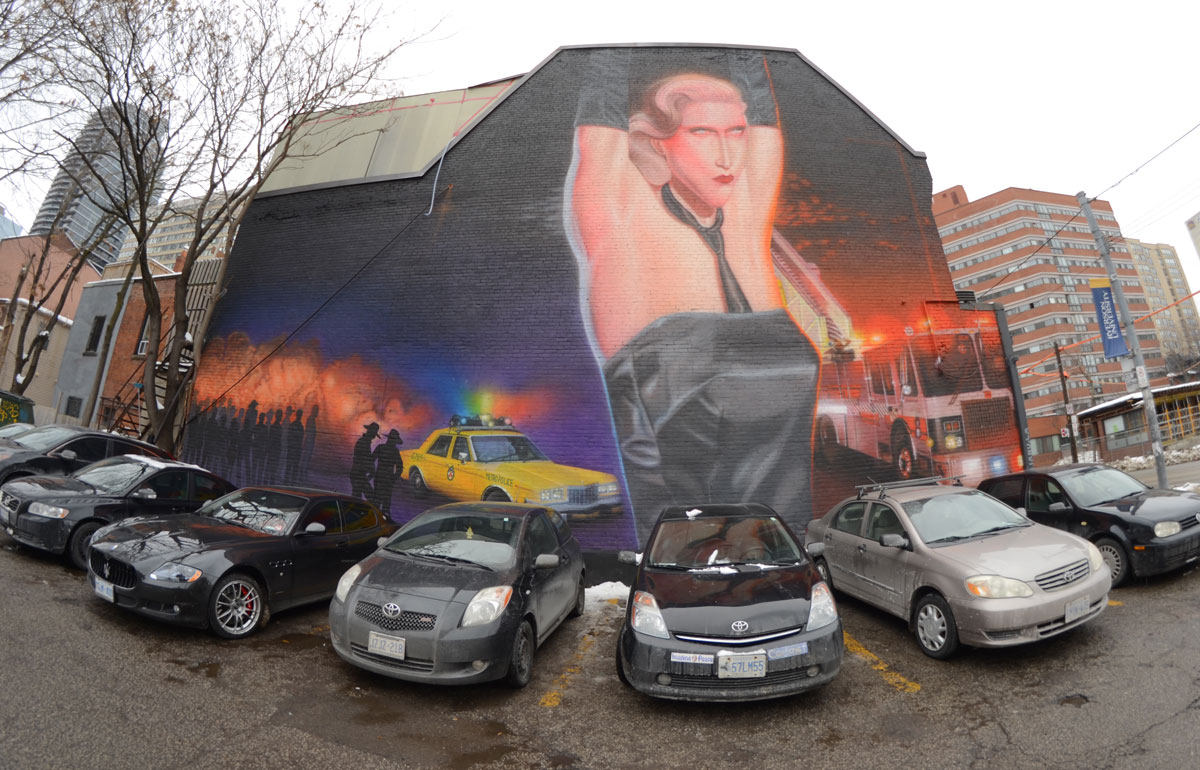
The Bathhouse Raids by Christiano De Araujo is a mural on Church Street just south of Carlton.
Completed in the fall of 2013, it was the largest of the Church St. Mural Project pieces commissioned for WorldPride 2014.

The following photos were taken with a very wide angle lens
because of the size of the mural and because there are always cars parked in front of it.

large mural on the side of a building.  A number of cars are parked in front of it.  The mural depicts the bathhouse raids, an event in Toronto's history where police raided gay bath house and arrested those they found inside.  A yellow Toronto police car, a fire truck with its lights on are both in the picture.  An oversized person is in the center, hands held over her/his head.

On the 5th of February, 1981, Toronto police raided four bathhouses in what was known as ‘Operation Soap’.
Around 300 men were arrested.  Most charges connected to the incident were eventually dropped or discharged, although some bathhouse owners were fined.

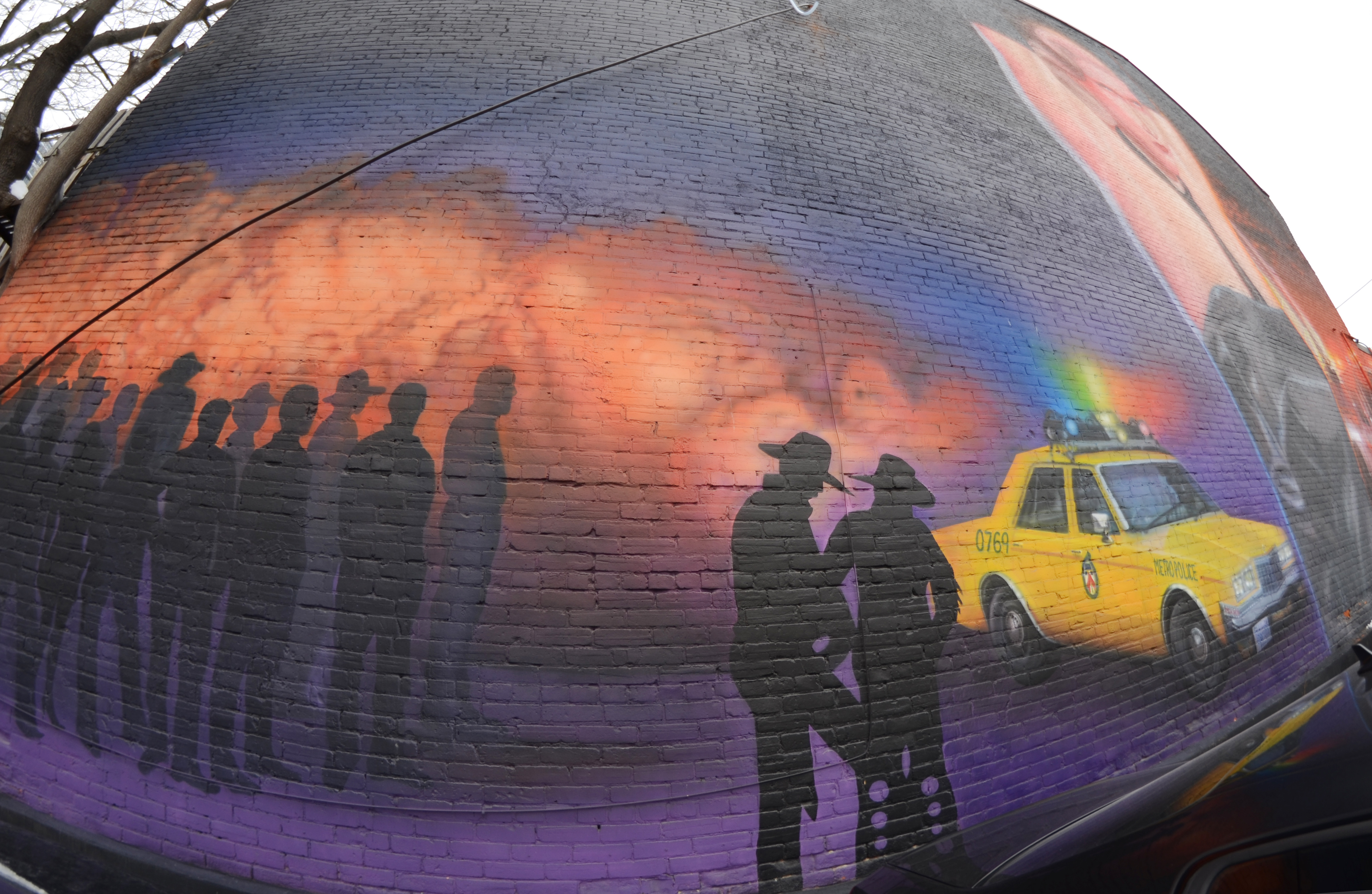
part of a large mural showing a yellow Toronto police car from the 1980's, a couple of policemen and a crowd of men standing just back of the police car

part of a large mural showing a yellow Toronto police car from the 1980's, a couple of policemen and a crowd of men standing just back of the police car

The event marked a major turning point in the history of the LGBT community in Canada.
The raids led to protests – the night after the raids, 3,000 people marched on 52 Division police headquarters and on Queen’s Park, smashing car windows and setting fires.  That spring the city held its first Pride Parade.

right hand side of the bathhouse raid mural on Church St. showing a firetruck with its red flashing lights on

Douglas Coupland’s
everywhere is anywhere is anything is everything
at the Museum of Contemporary Canadian Art, Queen St. West
until 19 April 2015

Secret Handshake
What makes Canadians Canadian?
What do we identify with that others don’t recognize?

close up of part of a quilt.  One of the squares is made from fabric with a Toronto Maple Leafs hockey player on it.  Old chrome hubcaps have been added to the quilt.

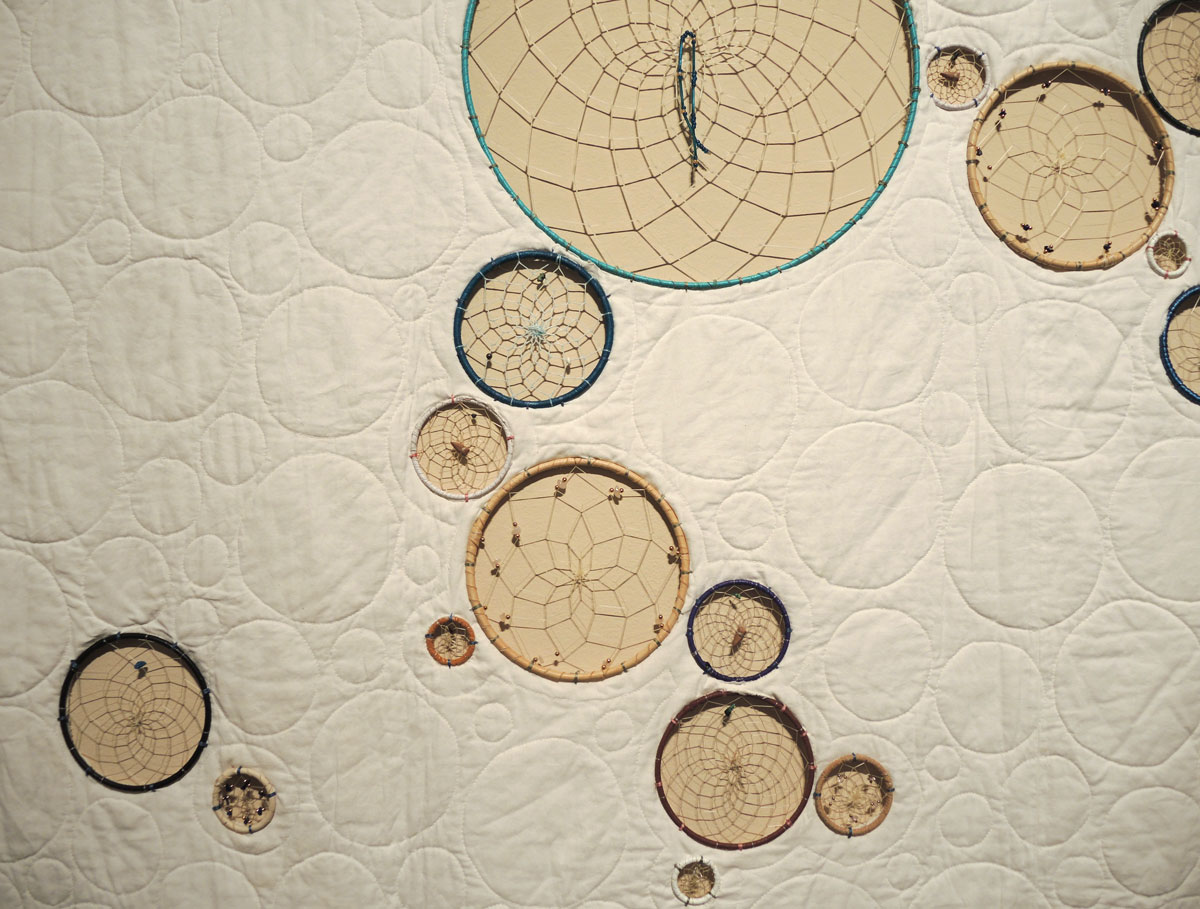
A quilt made of plain beige fabric into which dreamcatchers of various sizes have been incorporated.
A low hutch with three drawers.  The handle of each drawer is on old pepsi advertisement on an old bar from a door - the kind of bar that you would push on to open the door.

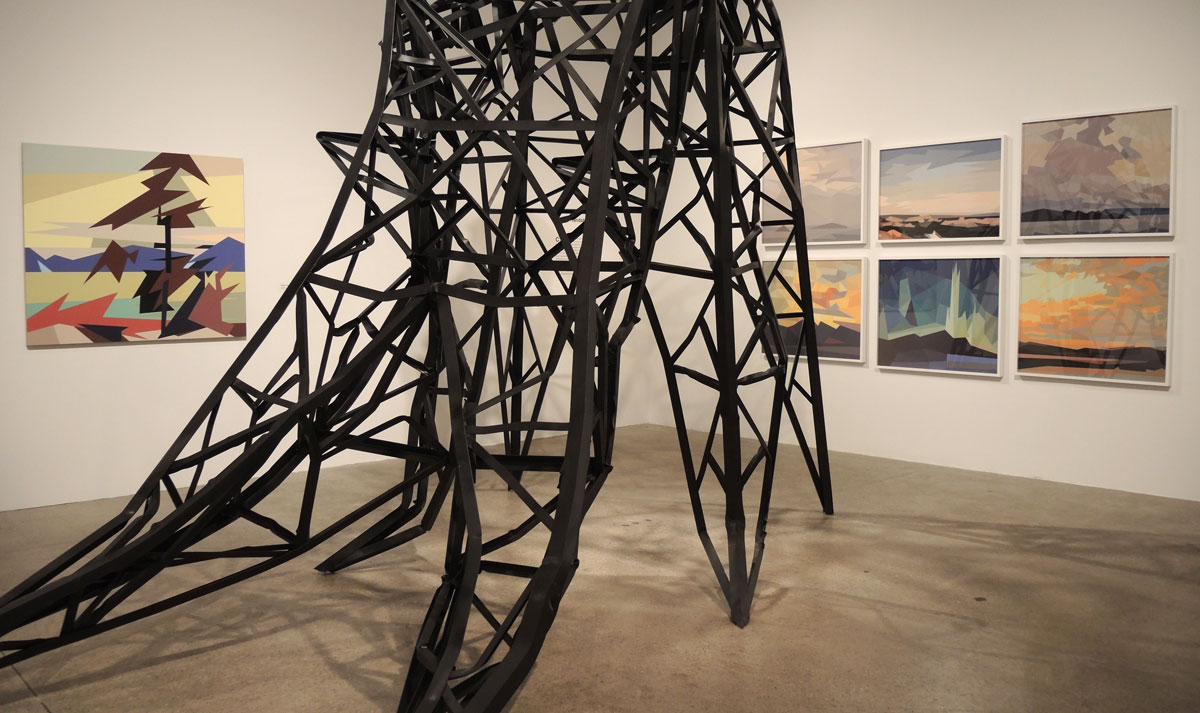
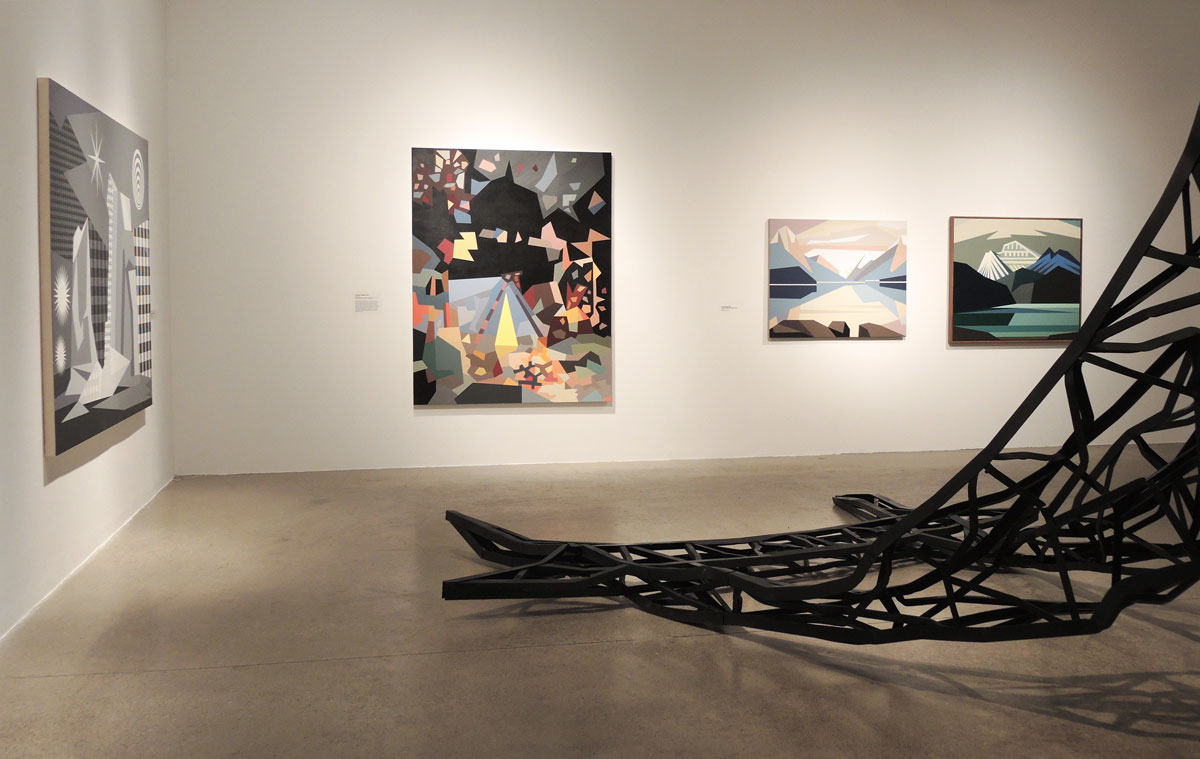
 One of the rooms of the exhibit features Coupland’s re-imagining of famous Canadian paintings,  paintings by Tom Thomson and Lawren Harris of the Group of Seven to name a couple.
In the center of the room is a black metal structure that is supposed to represent a damaged hydro transmission tower reminiscent of the ones damaged by the eastern Canada ice storm of 1998.

A large metal structure that is supposed to represent  a damaged hydro (electricity) transmission tower is in the center of a room.  There are paintings on the walls.

A large metal structure that is supposed to represent  a damaged hydro (electricity) transmission tower is in the center of a room.  There are paintings on the walls.

***

Growing up Utopian

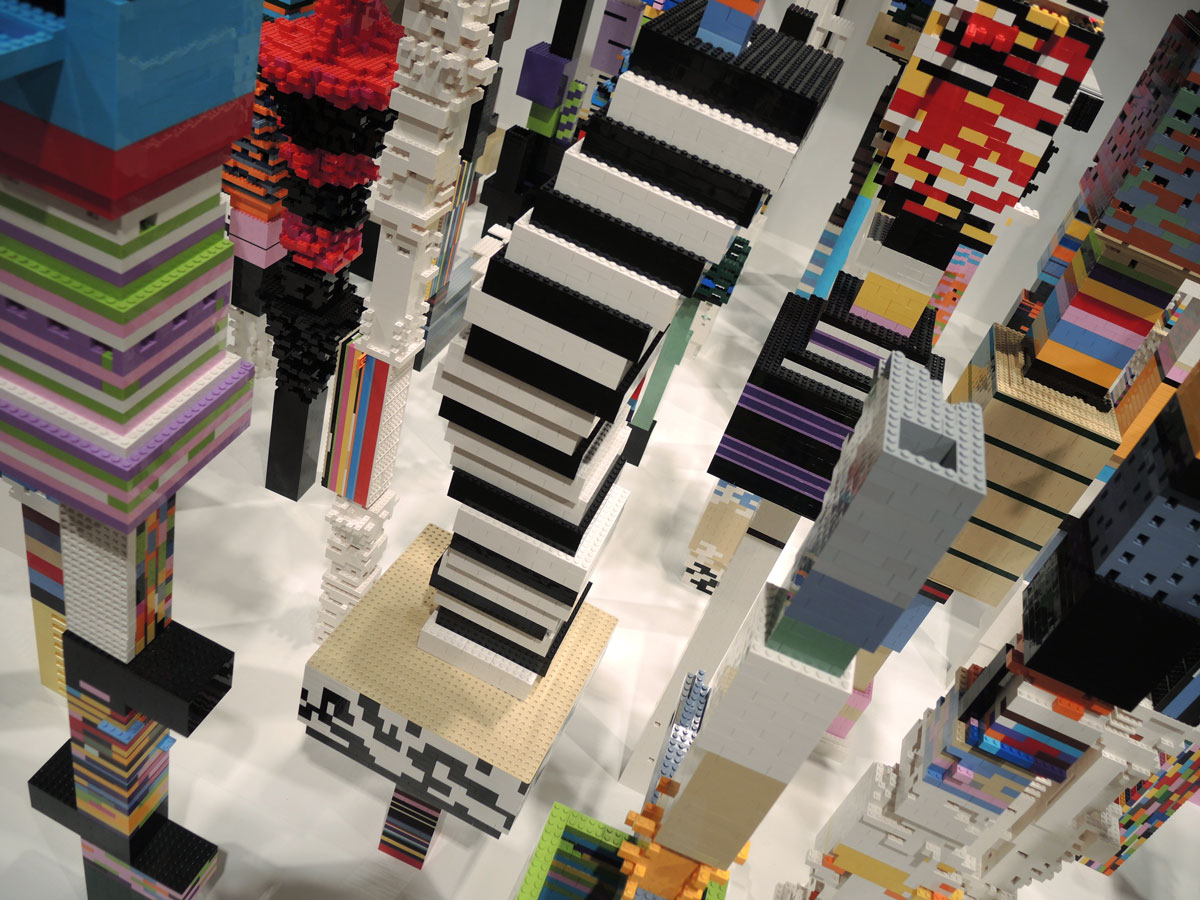
A portion of three Douglas Coupland creations are visible.  In the foreground are numerous lego houses complete with yards and garages all laid out in a grid.  In the background are wood shelves with household articles from the past.  In the middle are lego towers in bright stripes and interesting shapes.
below: Towers, 2014
An urban jungle of imaginative lego towers created from selected parts of towers that were “crowd-sourced” at building events at the Vancouver Art Gallery.

Close up of some of the brightly coloured lego towers in the art exhibit

below: 345 Modern House, 2014
One hundred identical houses built from a kit that was first issued in 1969.

A grid of white lego bungalows with black roofs with detached garages, green lego lawns and red fences.


.

Honest Eds, a Toronto icon, at the corner of Bathurst and Bloor since 1948

Standing on Bloor street looking south through the alley beside Honest Eds store.  There is a glass covered walkway between the buildings on either side of the alley.  On the side of the wwalkway is a sign that syas 'Honest Ed Alley'.  The alley leads to a parking lot.

Looking south from Bloor Street towards the parking lot behind Honest Eds.

There are a few murals on the buildings that back onto the parking lot.

mural on a two storey light grey brick building showing musicians.

Trumpet players on the back of the Victory Cafe at the corner of  Markham and Lennox Streets

large mural of a woman with boxing gloves on.   Beside her is a picture of a large dog's face.

Woman with boxing gloves has been on the back of Trainers Fitness for a few years.  The newer dog is painted on the back of A Leg Up Pet Services. 

The back of two buildings with a narrow passageway between the two.  Both are two storeys high.  The one on the left is painted light purple and has the words Southern Accent written in yellow letters.  The one on the right is a mural of a man paddling a canoe down a tropical river, with a monkey and a parrot also in the picture.

Purple behind Southern Accent restaurant and a mural painted by Christie Ossington Neighbourhood Centre through their LOFT program.