


Open Streets,
Yonge and Bloor Streets,
Sunday 16th August 2015


below: Slow bike race

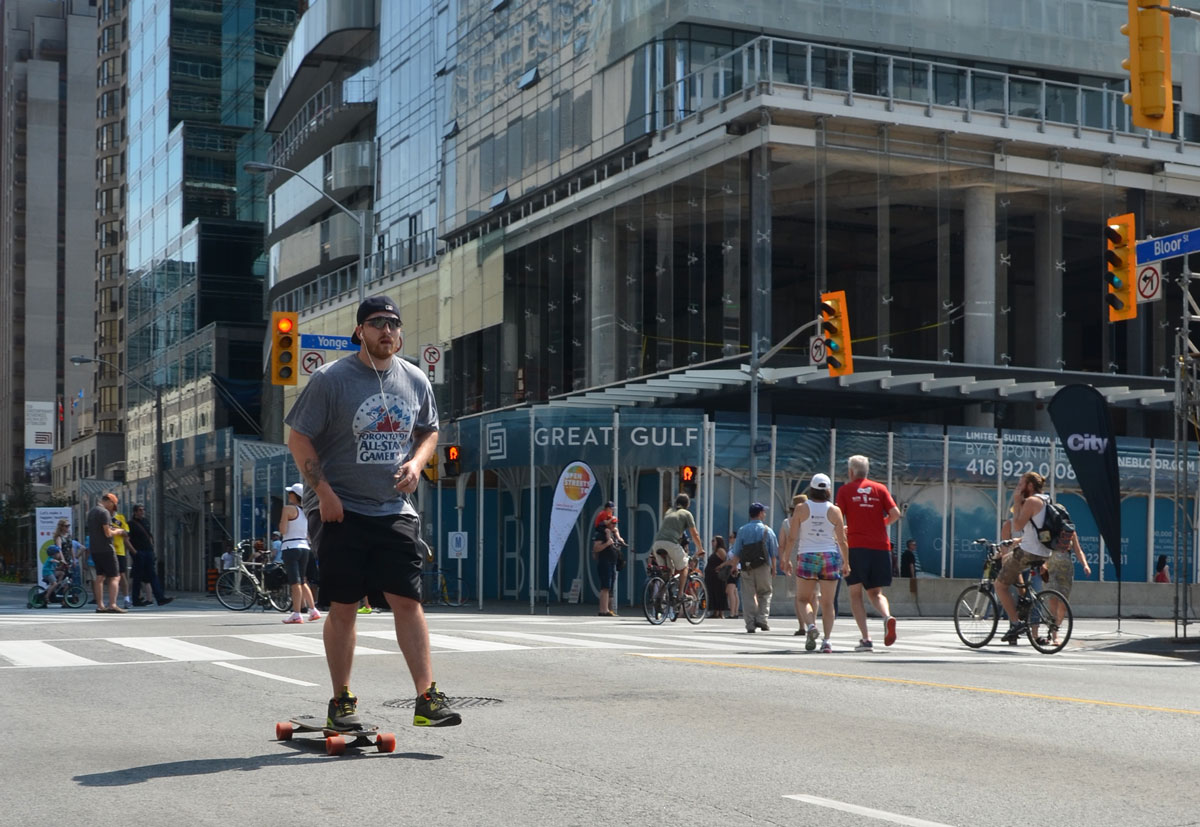

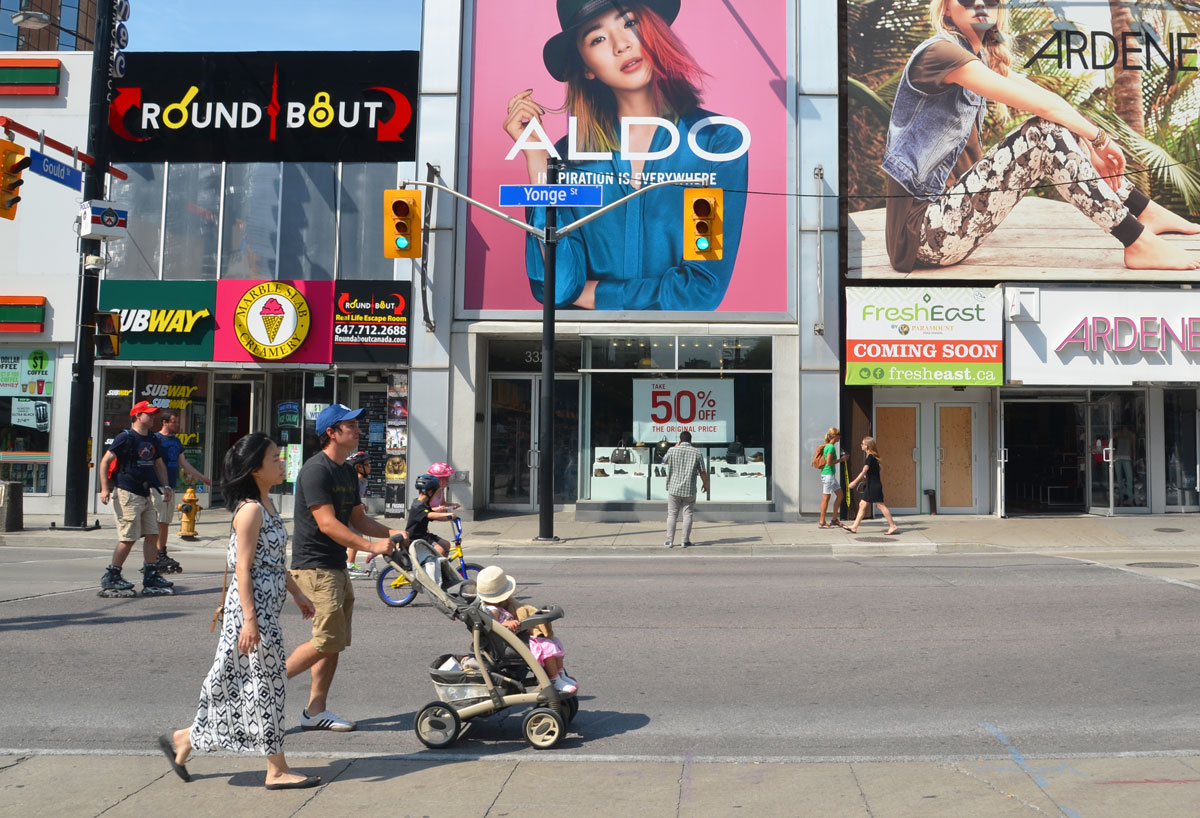

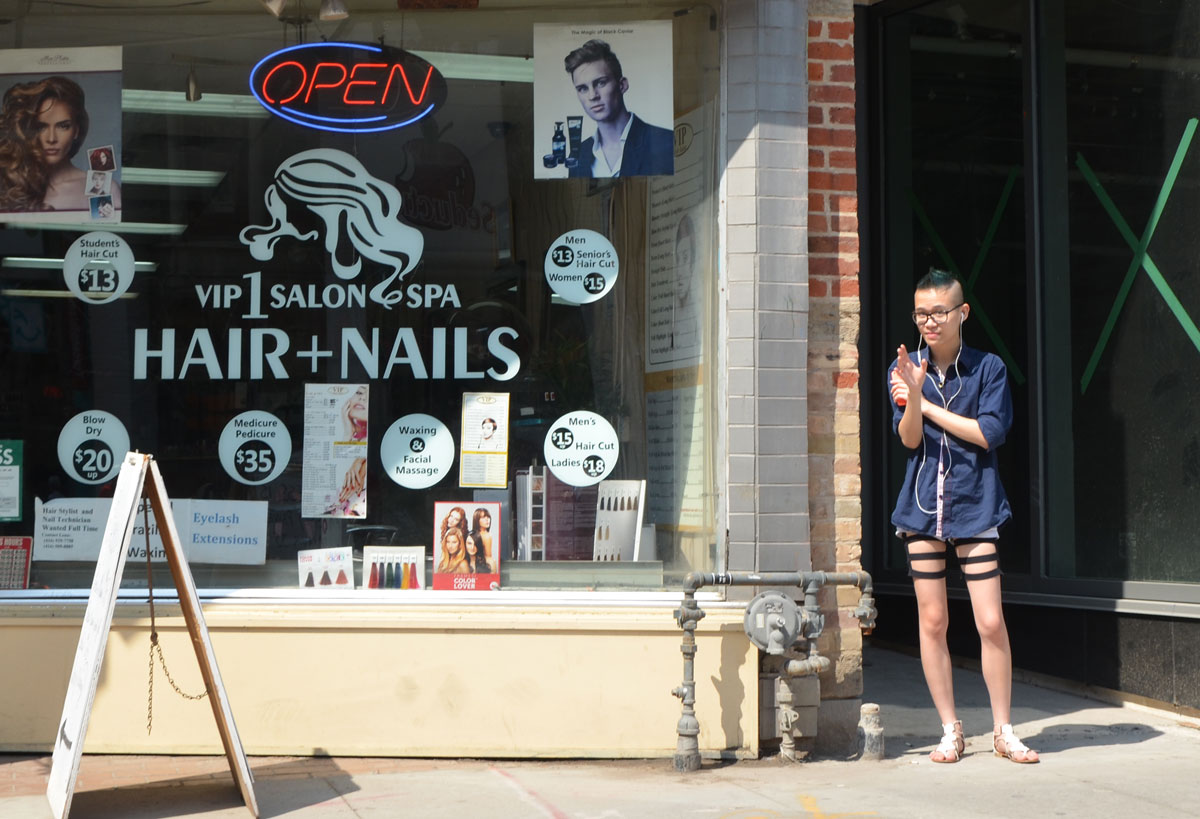

#OpenStreetsTO
Open Streets,
Yonge and Bloor Streets,
Sunday 16th August 2015
below: Slow bike race
#OpenStreetsTO
FORTY ONE the Esplanadian Connection,
an exhibit inspired by the book ‘FORTY ONE Neighbours’
The book was published earlier this year and there was a book launch at St. Lawrence Hall back in April. The book is a collection of 41 portraits, one person from each country participating in the Pan Am and Parapan Games. Each portrait is also of a person with a connection to the Esplanade community. Fifty three students/authors from The Esplanade neighbourhood wrote the stories.
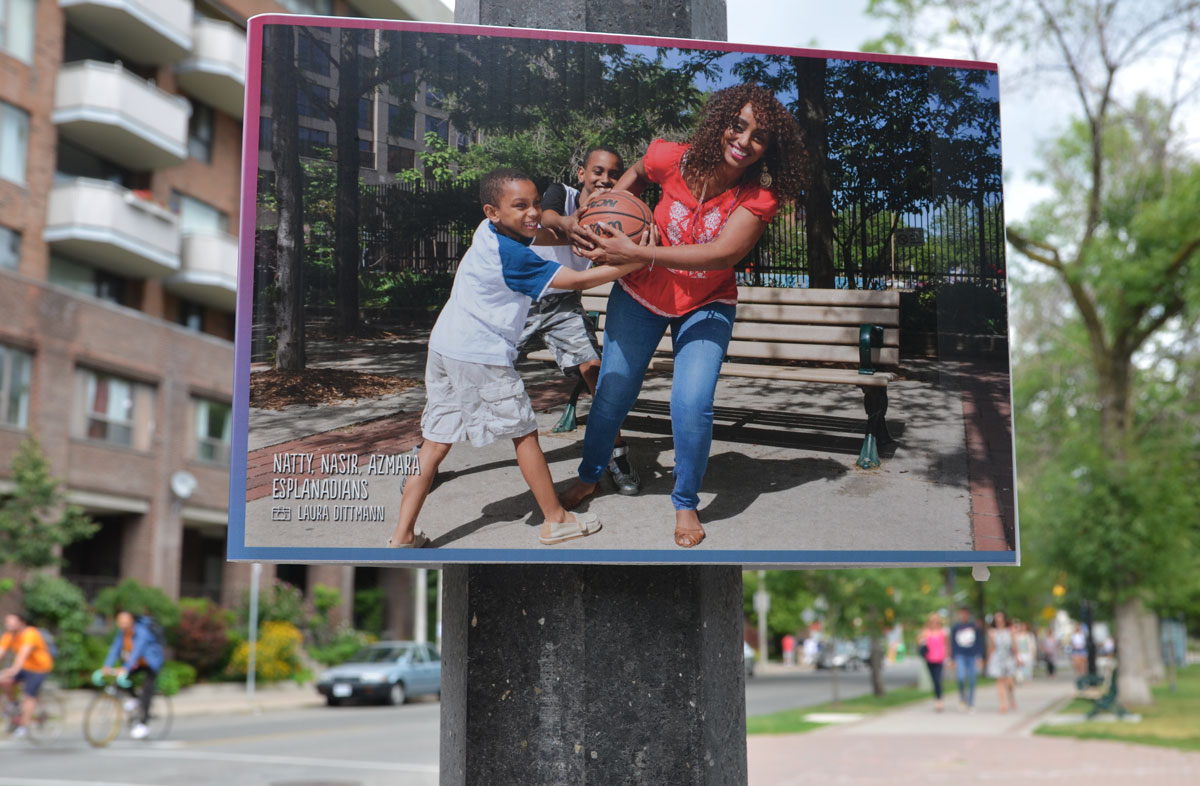
For the exhibit, the portraits were re-enacted by local residents.
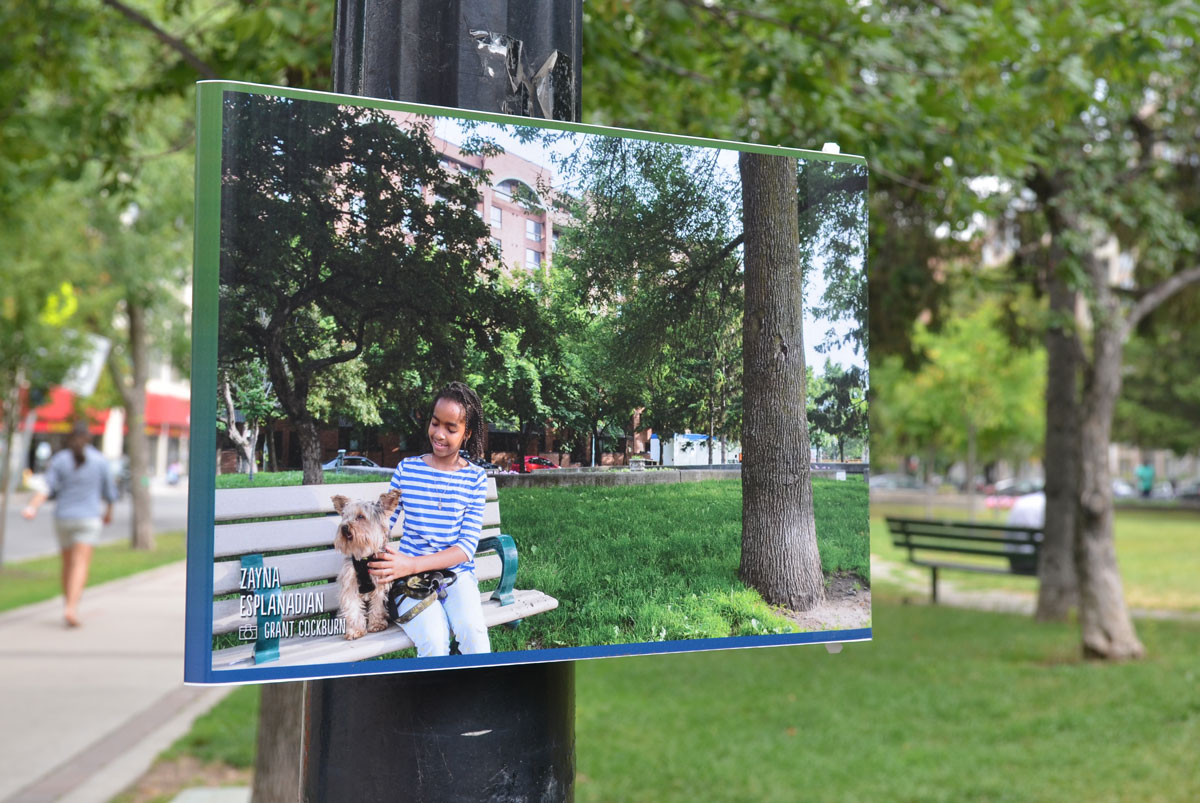
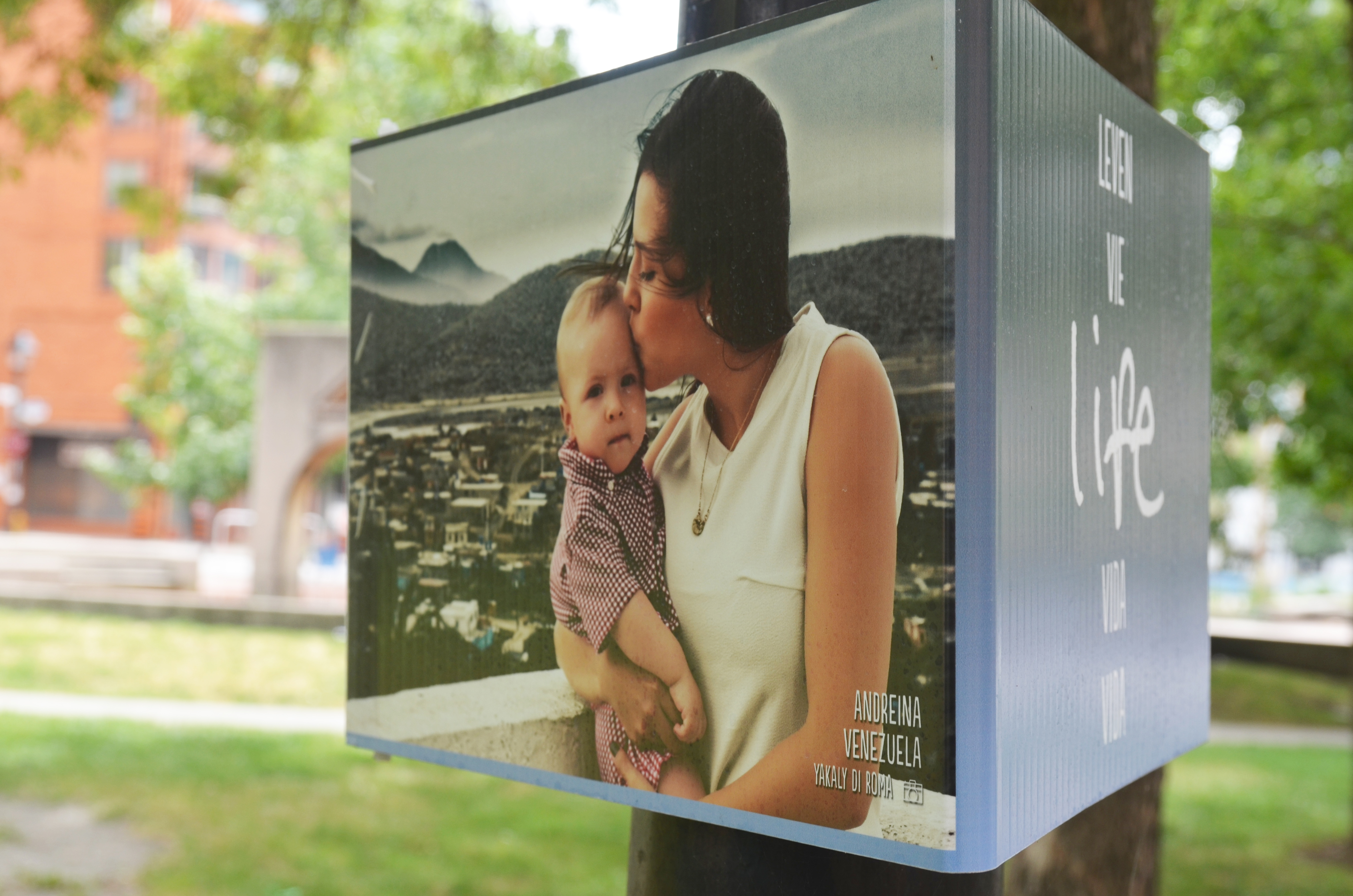
Each portrait consists of three sides. Two sides have photographs on them – one side with a Esplanadian person or family and the other side with a PanAmerican resident.

The third side has one word written in five languages.
From top to bottom – Dutch, French, English, Spanish and Portuguese.
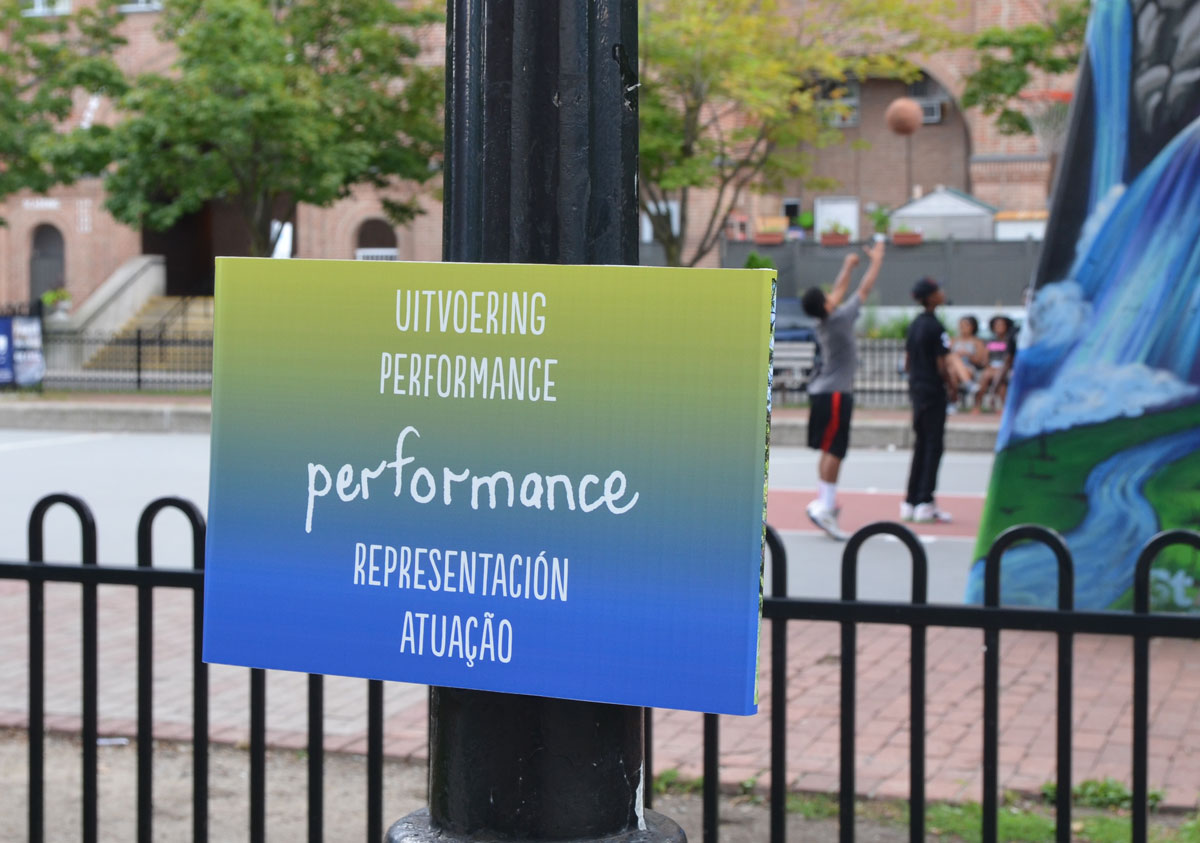
The words were chosen from the stories in the book, one symbolic word from each portrait.
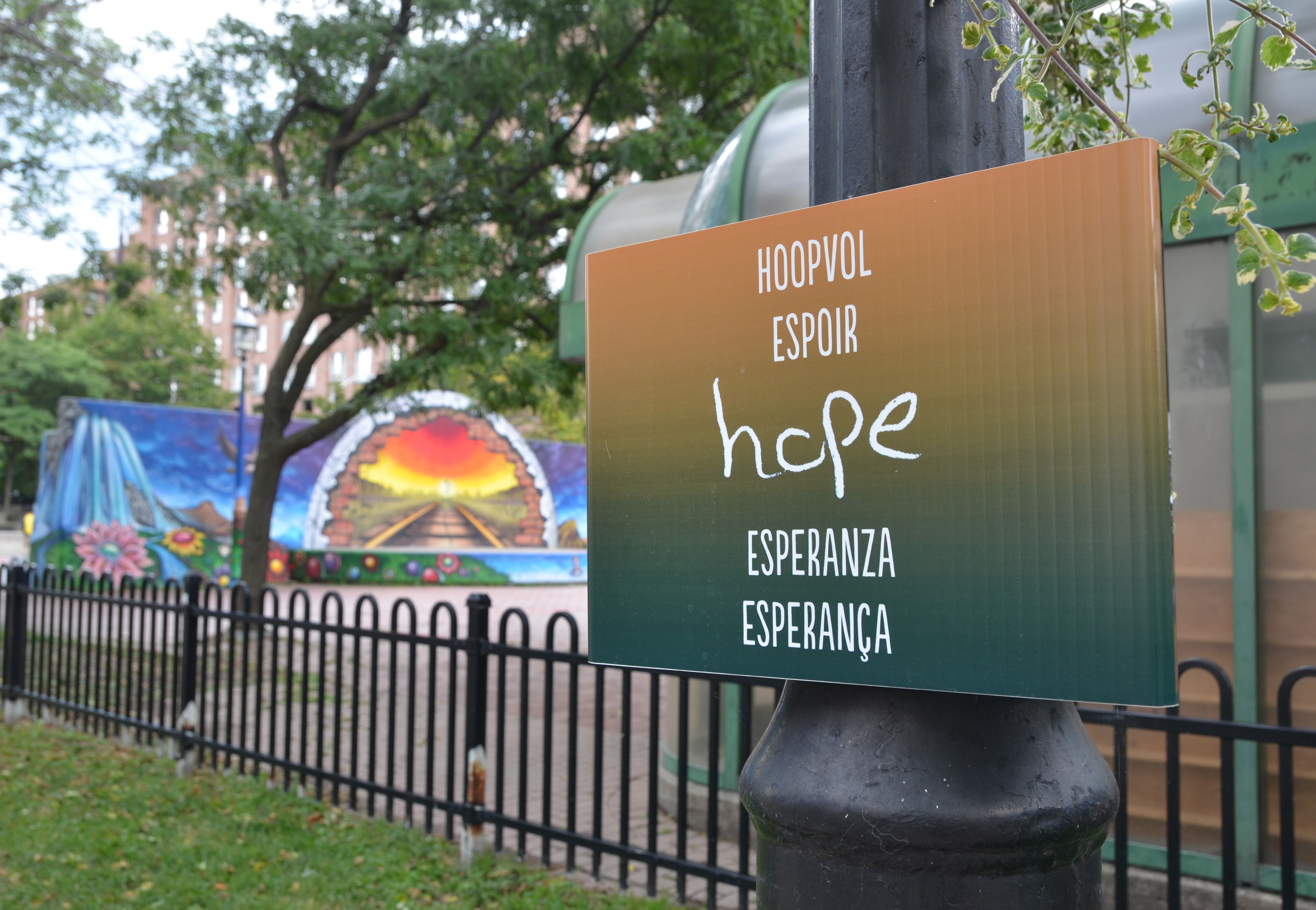
The signs are mounted on lamp posts along the Esplanade.
A few things seen while walking Dundas West (and the alleys behind it) near Dufferin Street.
below: Dundas Street West, looking east from Dufferin Street, March 2015

below: At the corner of Sheridan Ave and Dundas West.
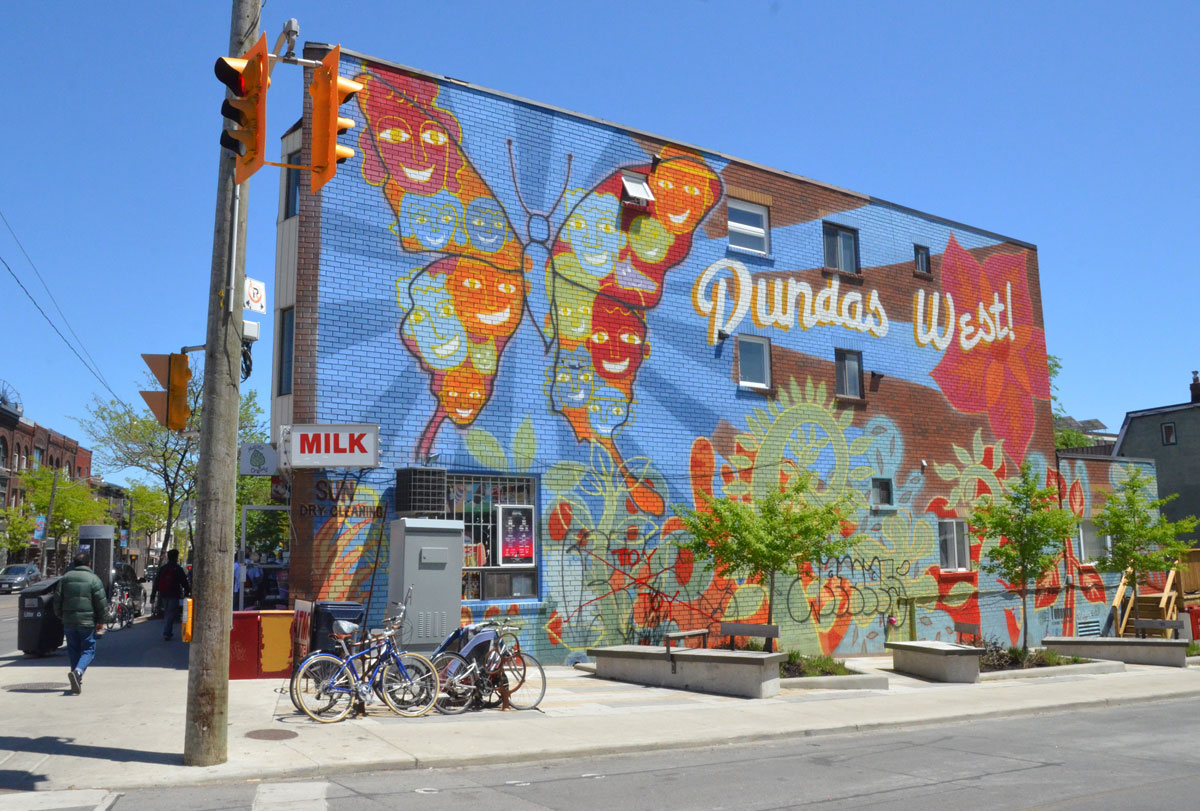
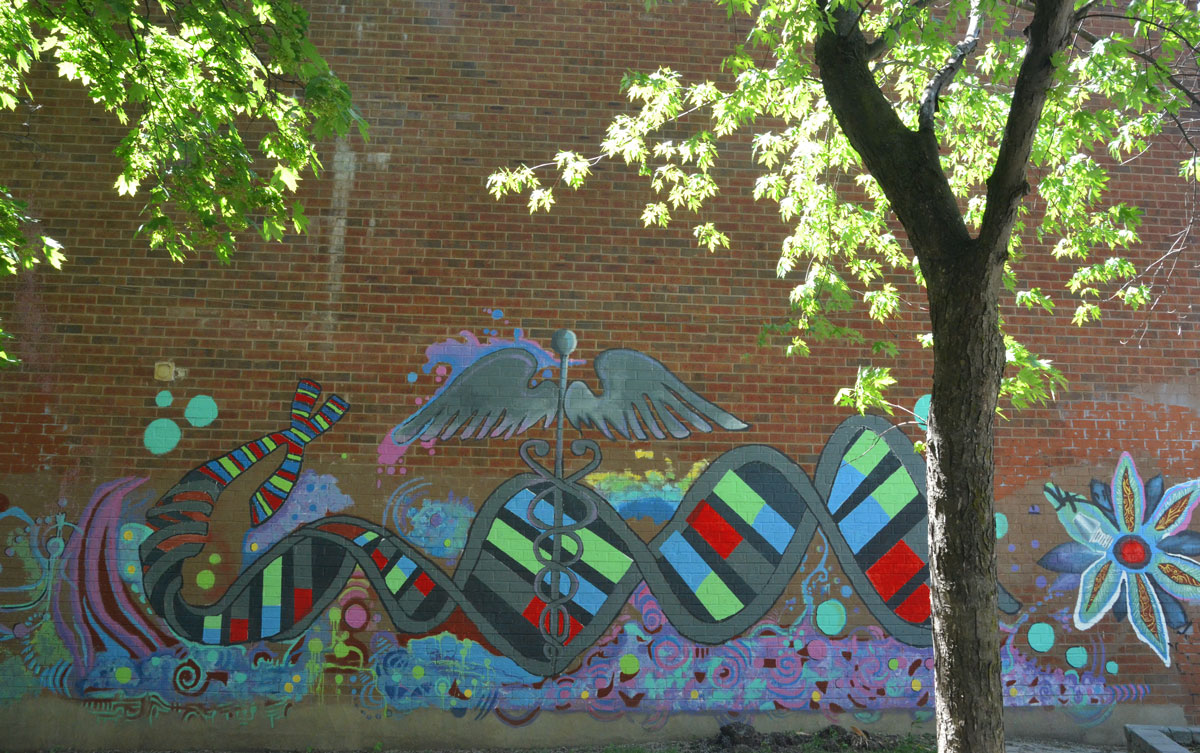
below: A mural by Jarus


below: Solicitors will be fed to the chihuahua

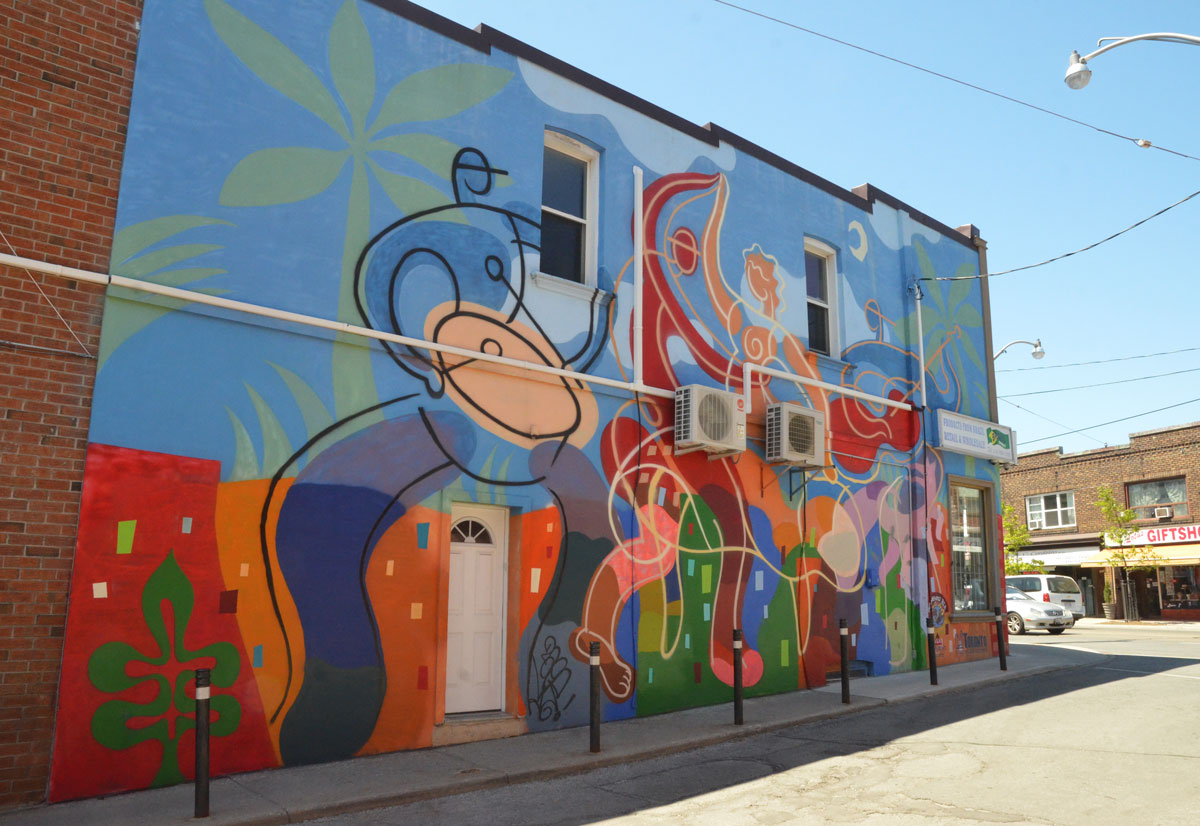
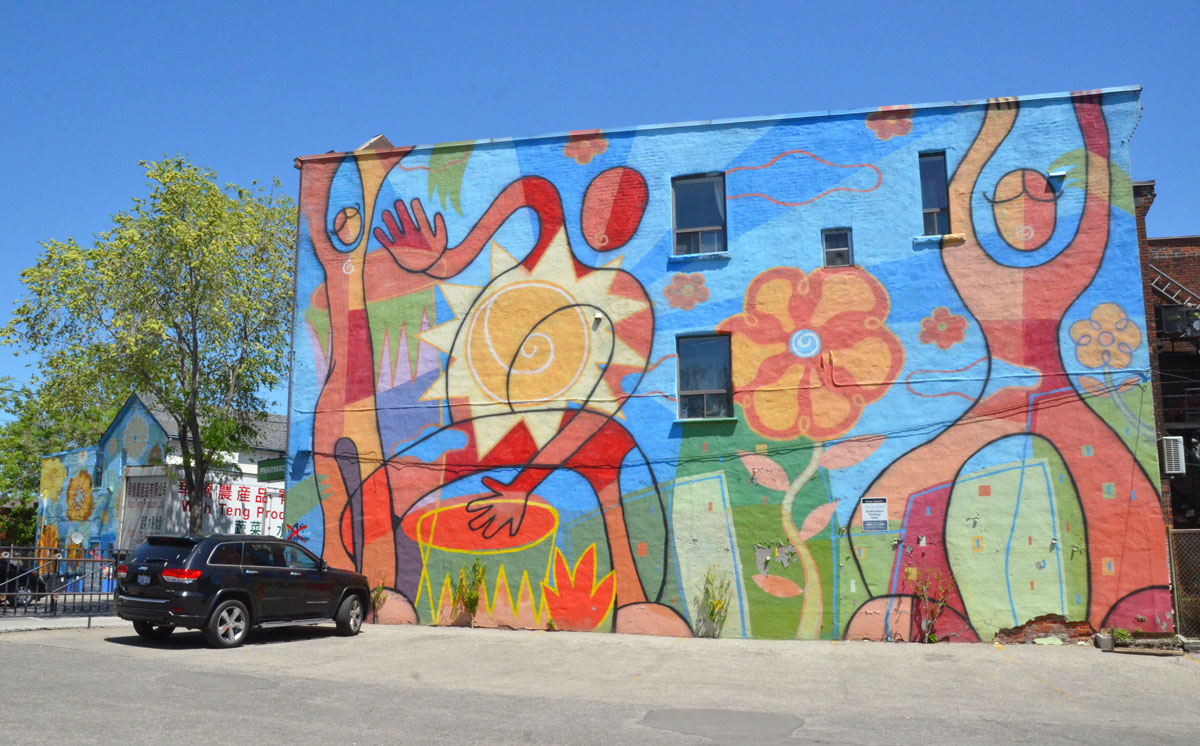


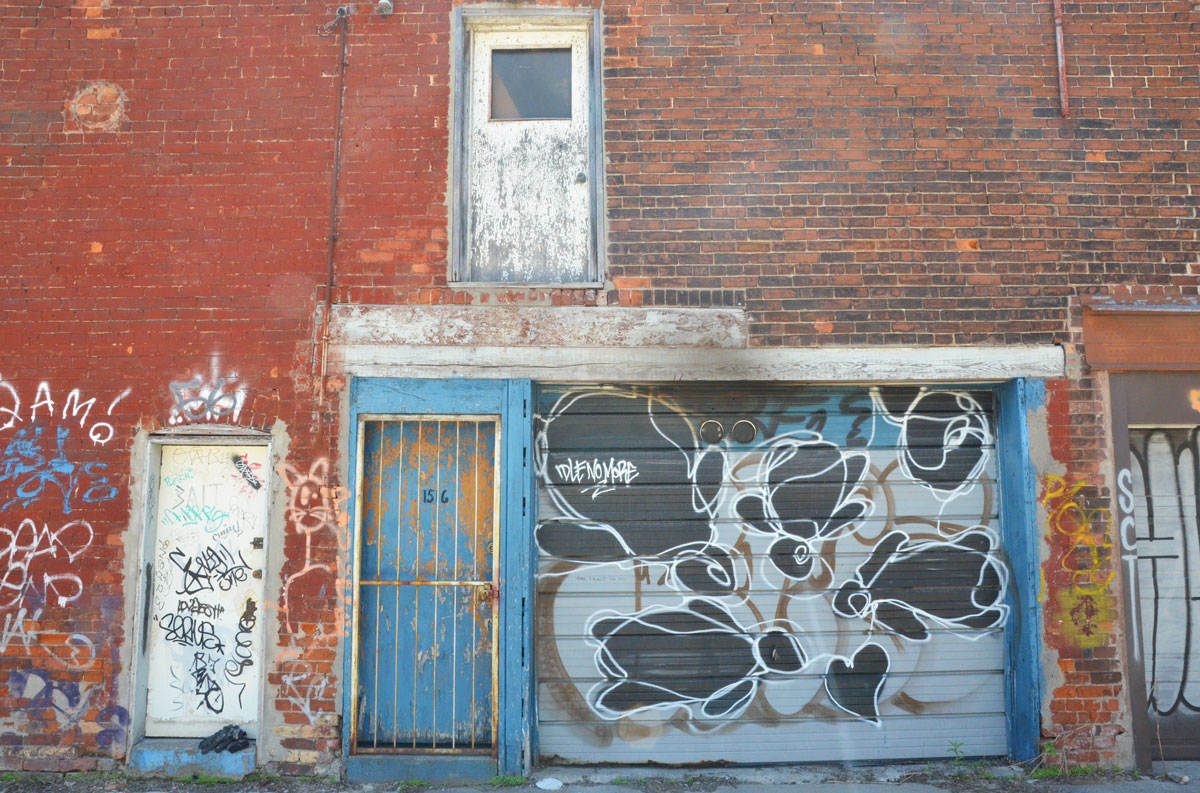

below: Kick out the jams

Stephen Andrews POV
an exhibit at the Art Gallery of Ontario
Stephen Andrews is a Toronto artist whose career began in photography and the exhibit now on at the AGO does include a few excellent 8×10 photographs. The main part of the exhibit though are approximately 20 (mostly large) paintings of his.

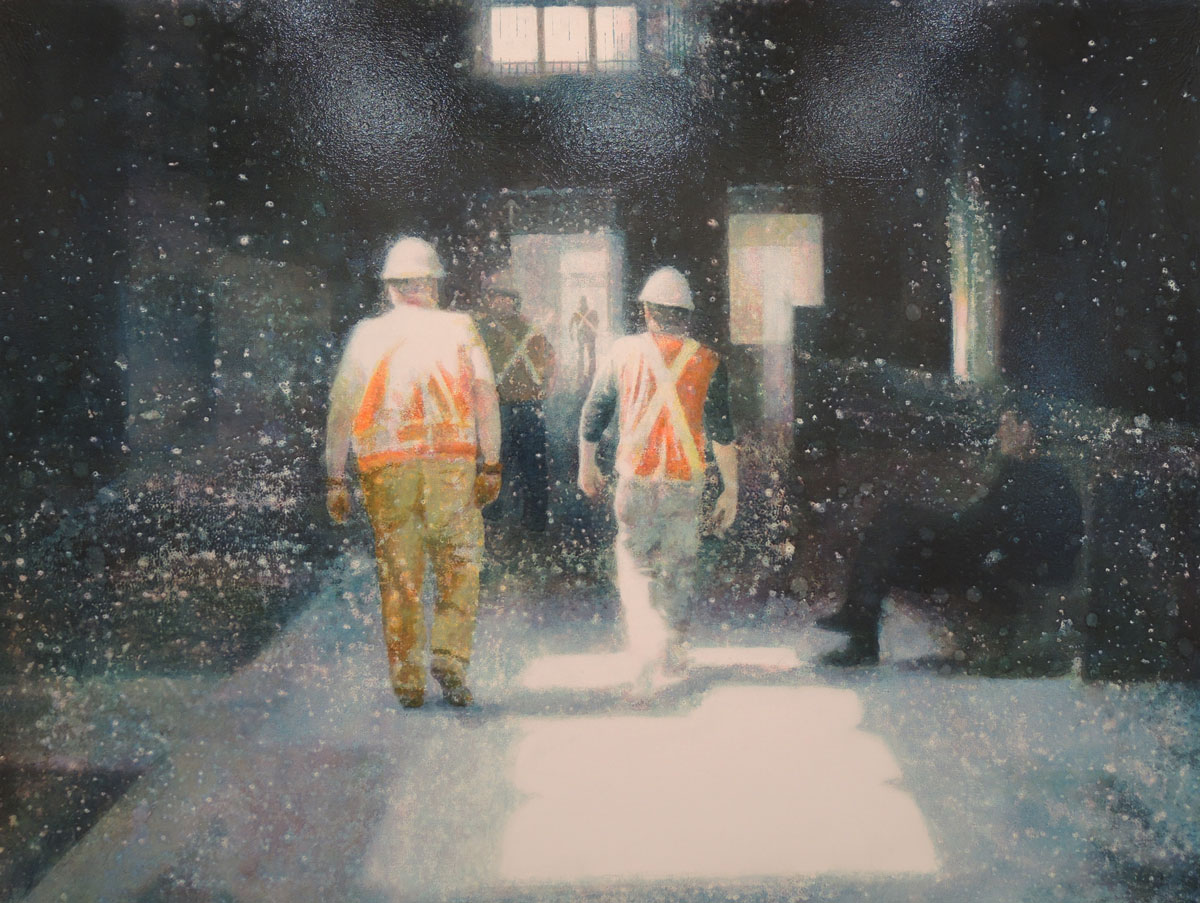
below: ‘X-men at Union’, 2013, oil on canvas
Construction workers at Union Station, Toronto
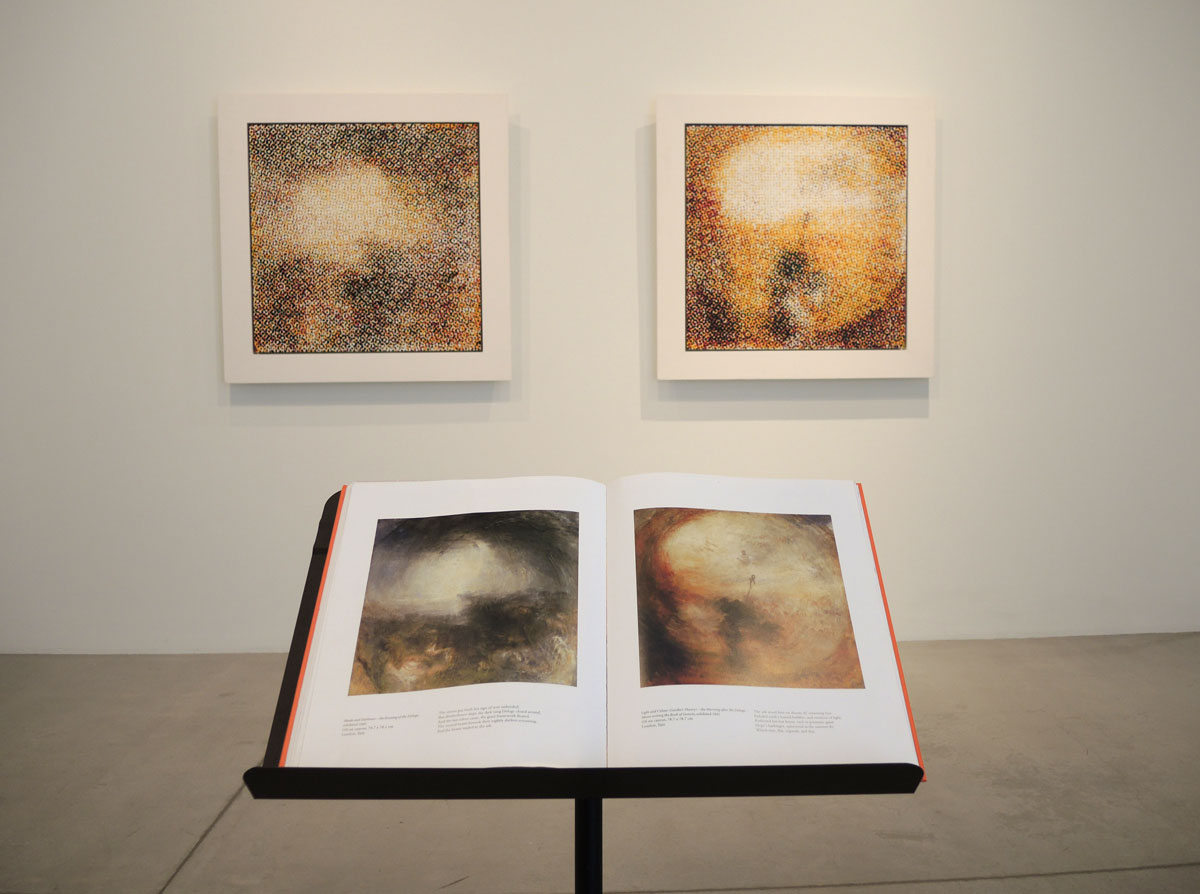
below: ‘After Before/After After’ oil on wood panels
The two paintings on the wall were based on landscapes by J.M.W. Turner that depicted scenes before and after the flood described in the bible (or before and after chaos). Andrews has painted his with dots in only four colours, yellow, magenta, cyan and black
below: detail from ‘Crossing’, 2011, oil on canvas

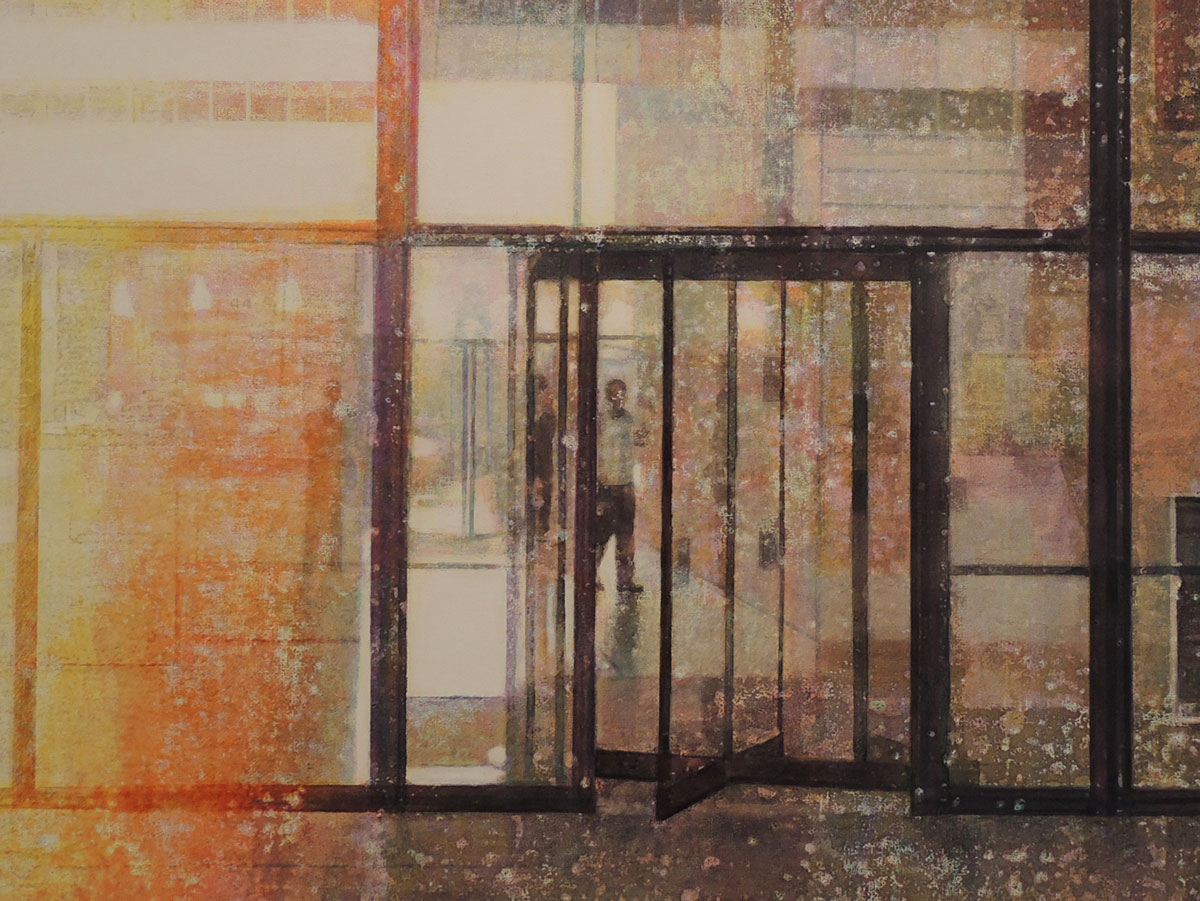
below: close up of part of ‘Entrance/Exit’, 2014, oil on canvas
“Art Loves Fashion! Fashion Loves Art!”
Retailer H&M is presently renovating the southwest corner of Yonge & Dundas. On the Dundas St. side of the development, the hoardings have provided a space for an art exhibit. It is an outdoor digital gallery of images produced by students in OCAD’s Digital Painting/Expanded Animation (DPXA) program.
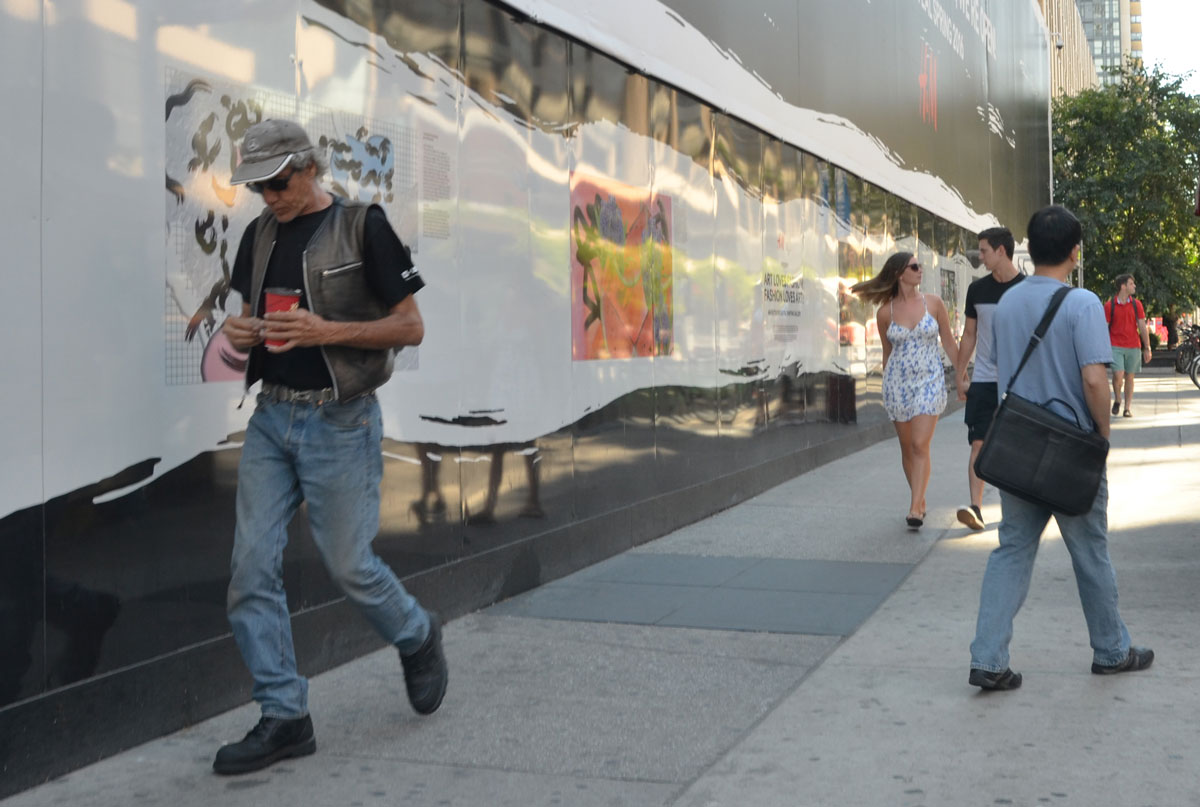
below: ‘Nude Collage’ by Arshia Salesi

below: Resting against ‘Indeterminate Peony’ by Trudy Erin Elmore.
To the left is ‘Nonscape V’ by Monica Moraru

below: A woman walks past ‘Streetcar Style’ by Avery Kua.
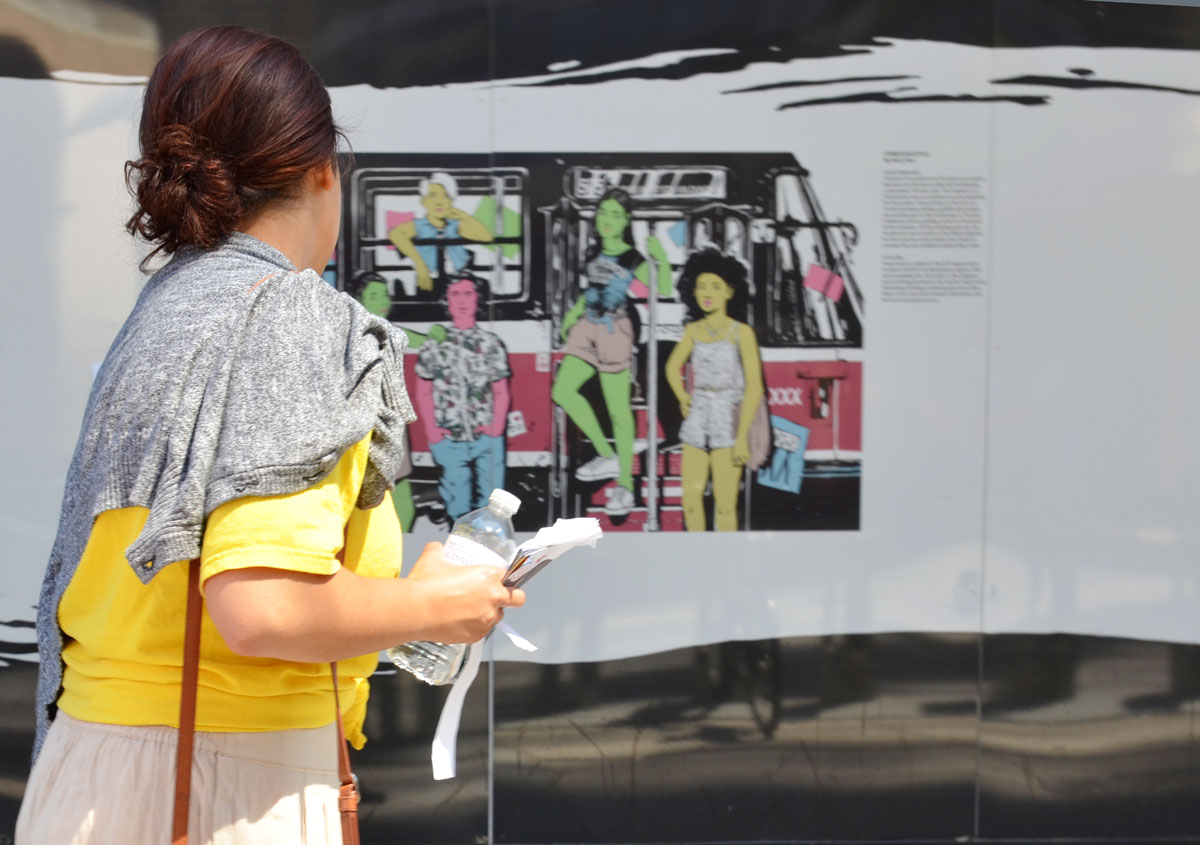
below: ‘Blocked!’ by Ghazaleh Baniahmad
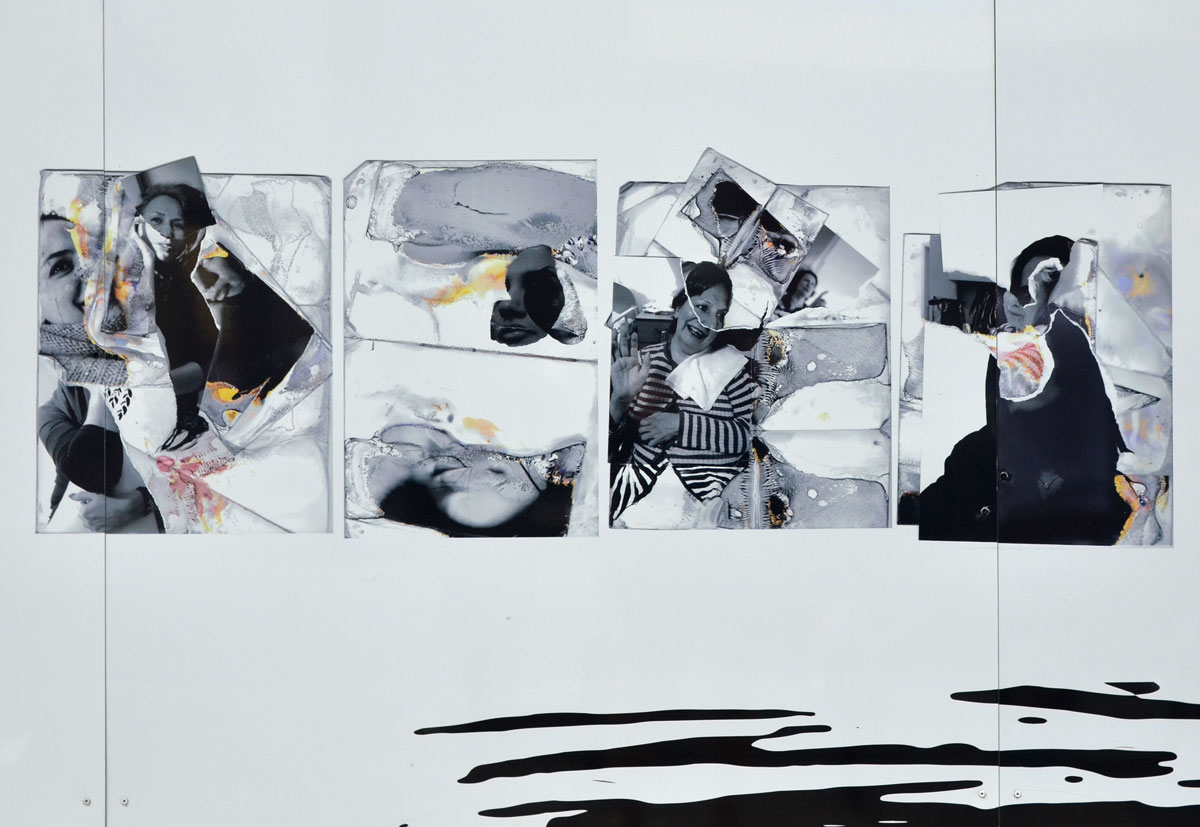
below: ‘Ascend’ by Niya Vaillancourt

below: ‘The New Patronage’ by Cat Bluemke
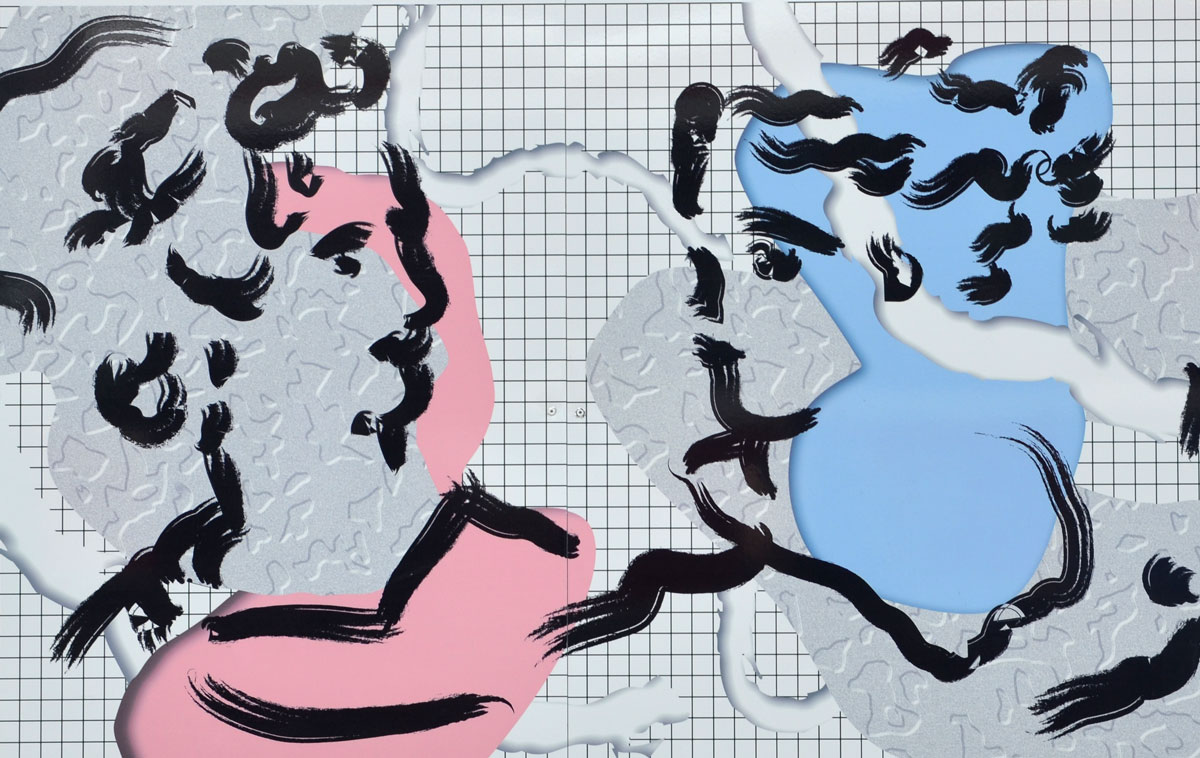
below: Sign making below ‘ Cloth and Jewels’ by Samet Choudhury

Murals and street art seen in a nameless alley in Kensington Market area,
near Kensington Ave and St Andrew Street.
It’s the alley that Mona Lisa watches over the entrance to.


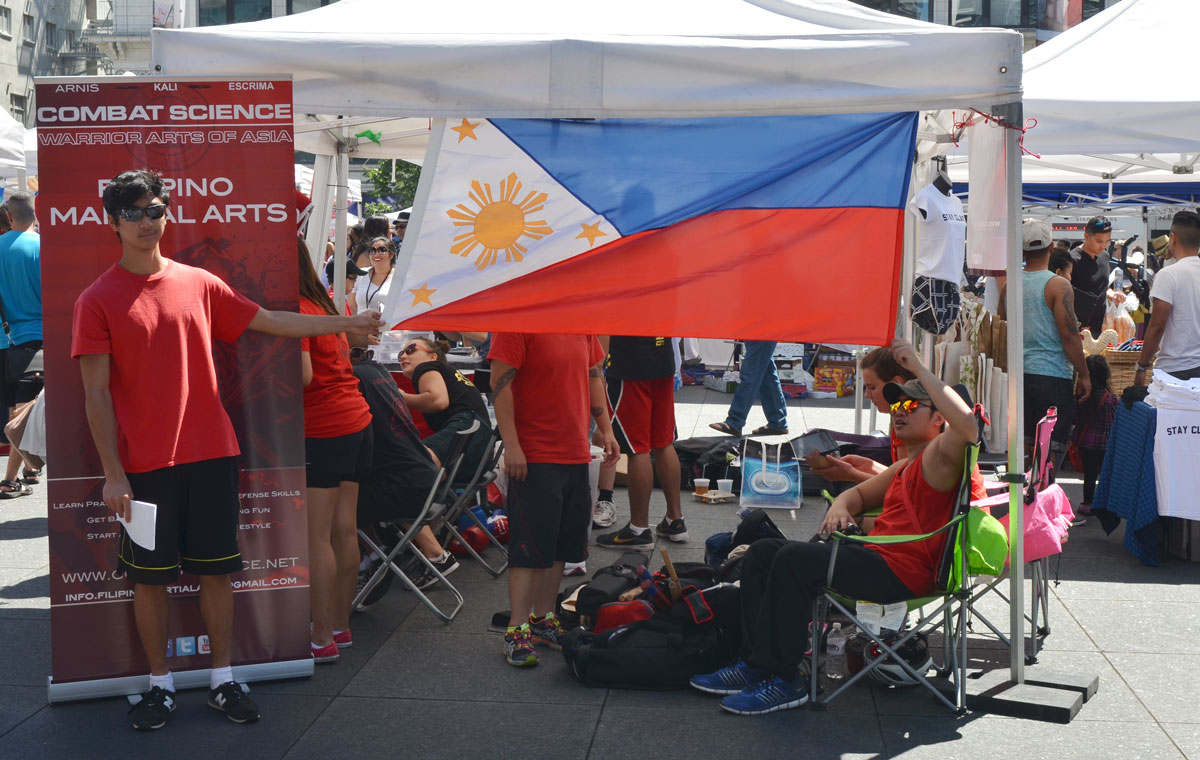
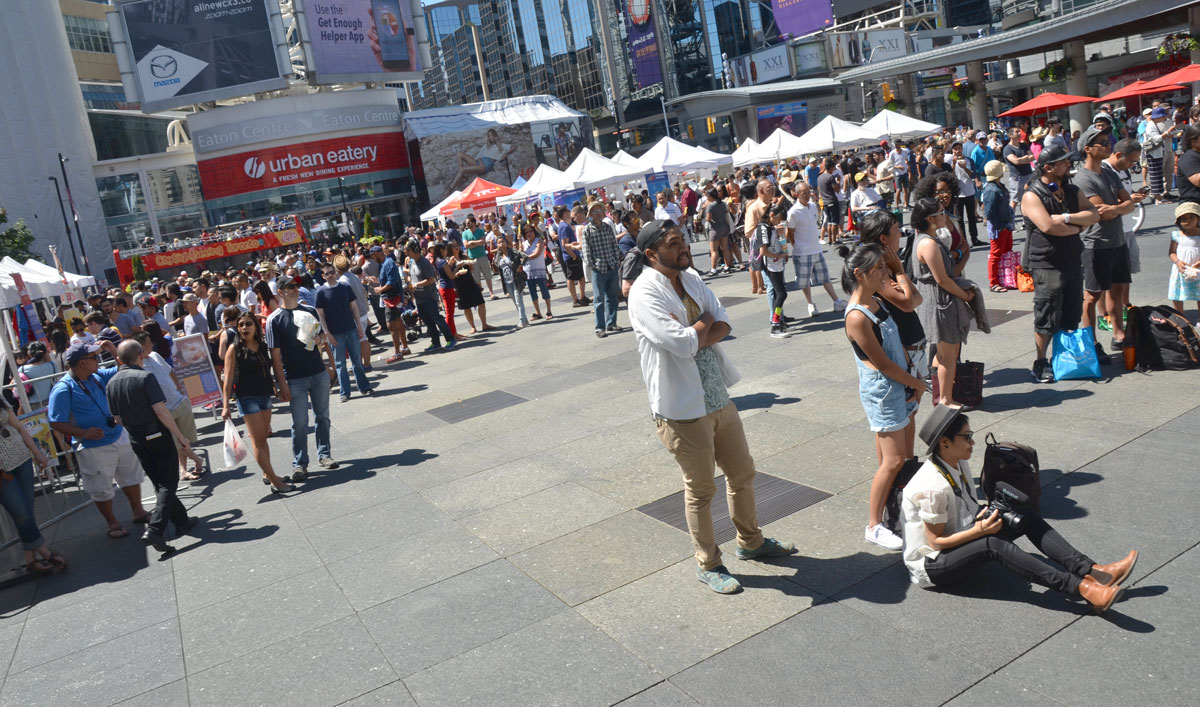
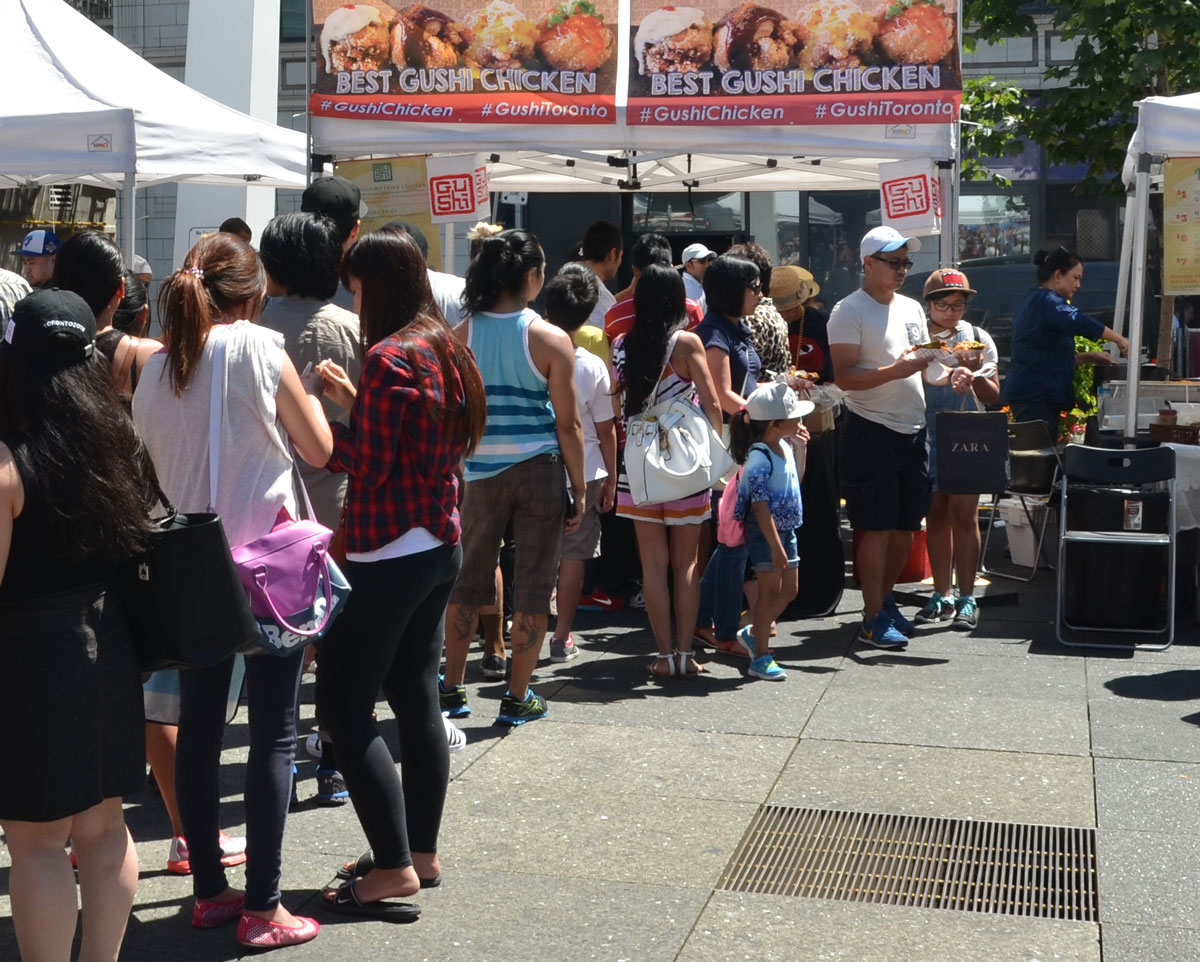
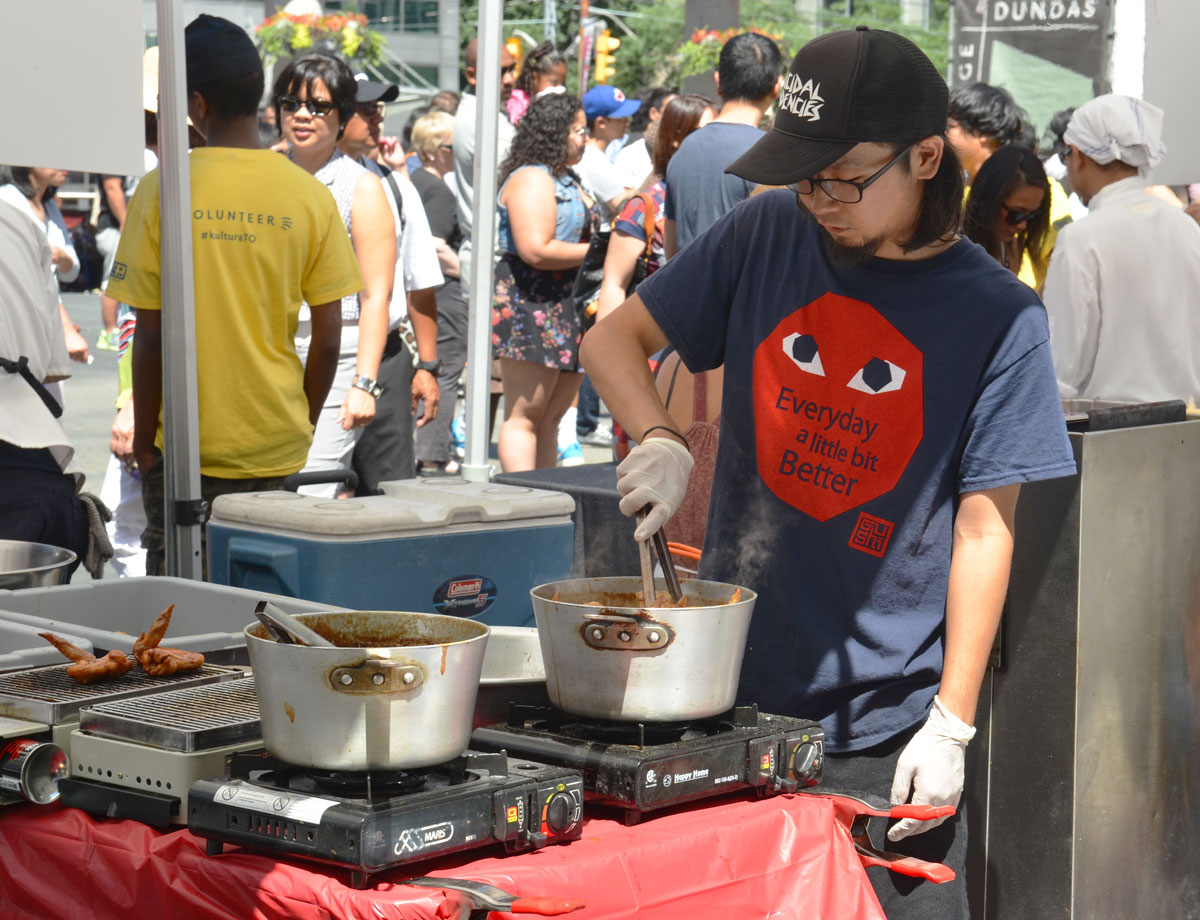
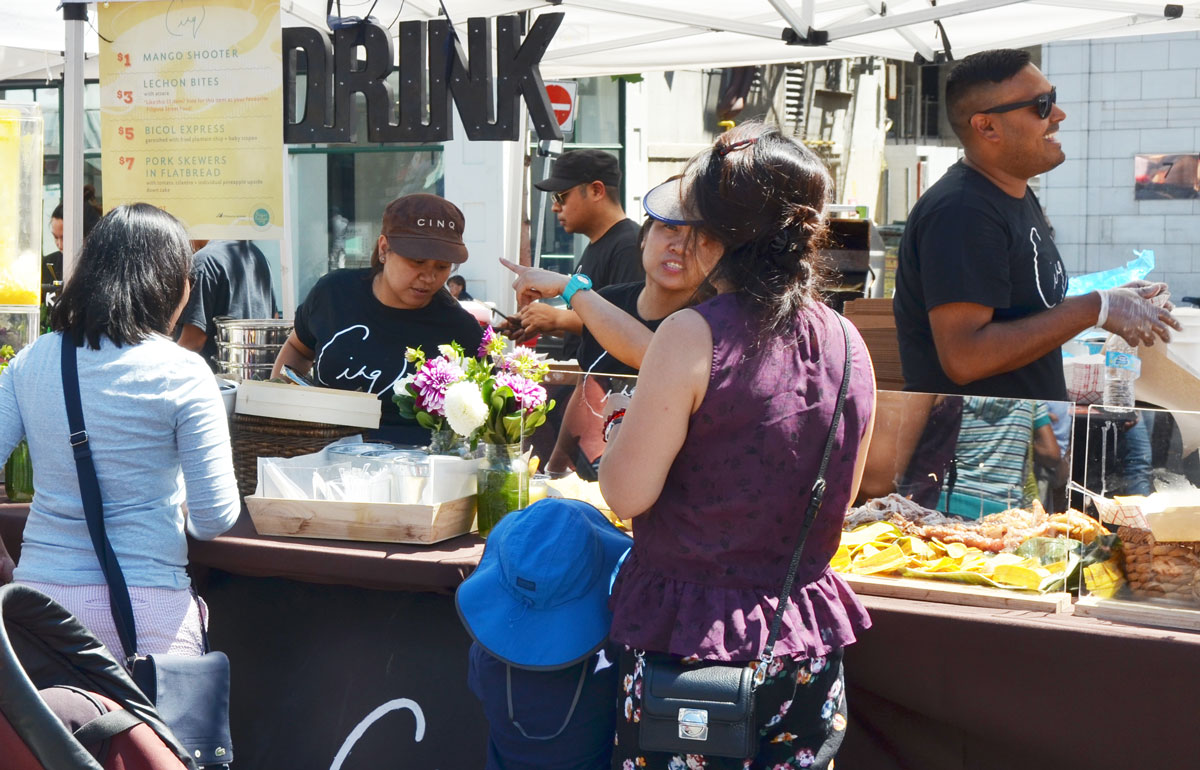
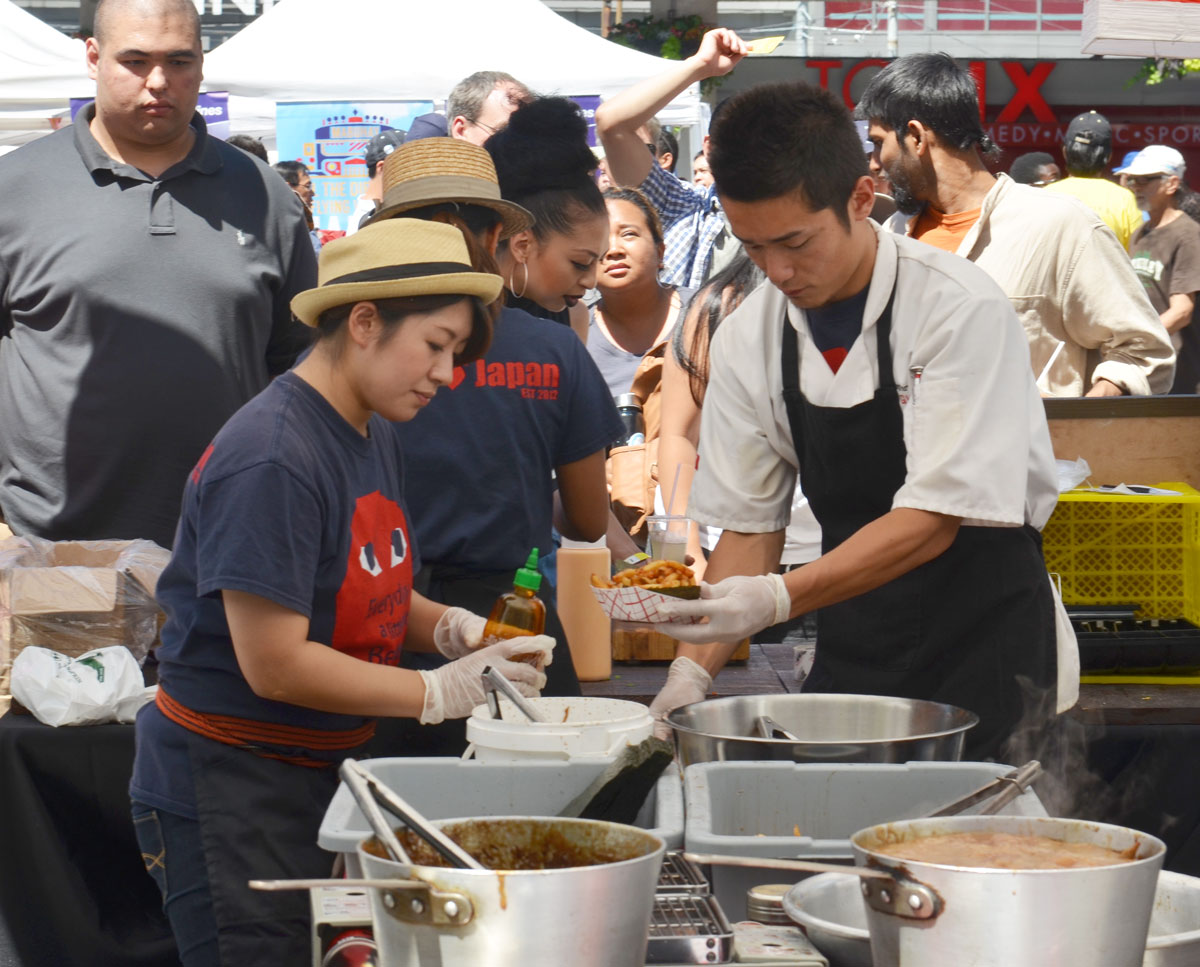
10th Annual Kultura Festival
This Filipino arts festival was 4 days long;
I caught some of it on its last day, 9th August, at Yonge Dundas Square.


The Lonsdales from Vancouver
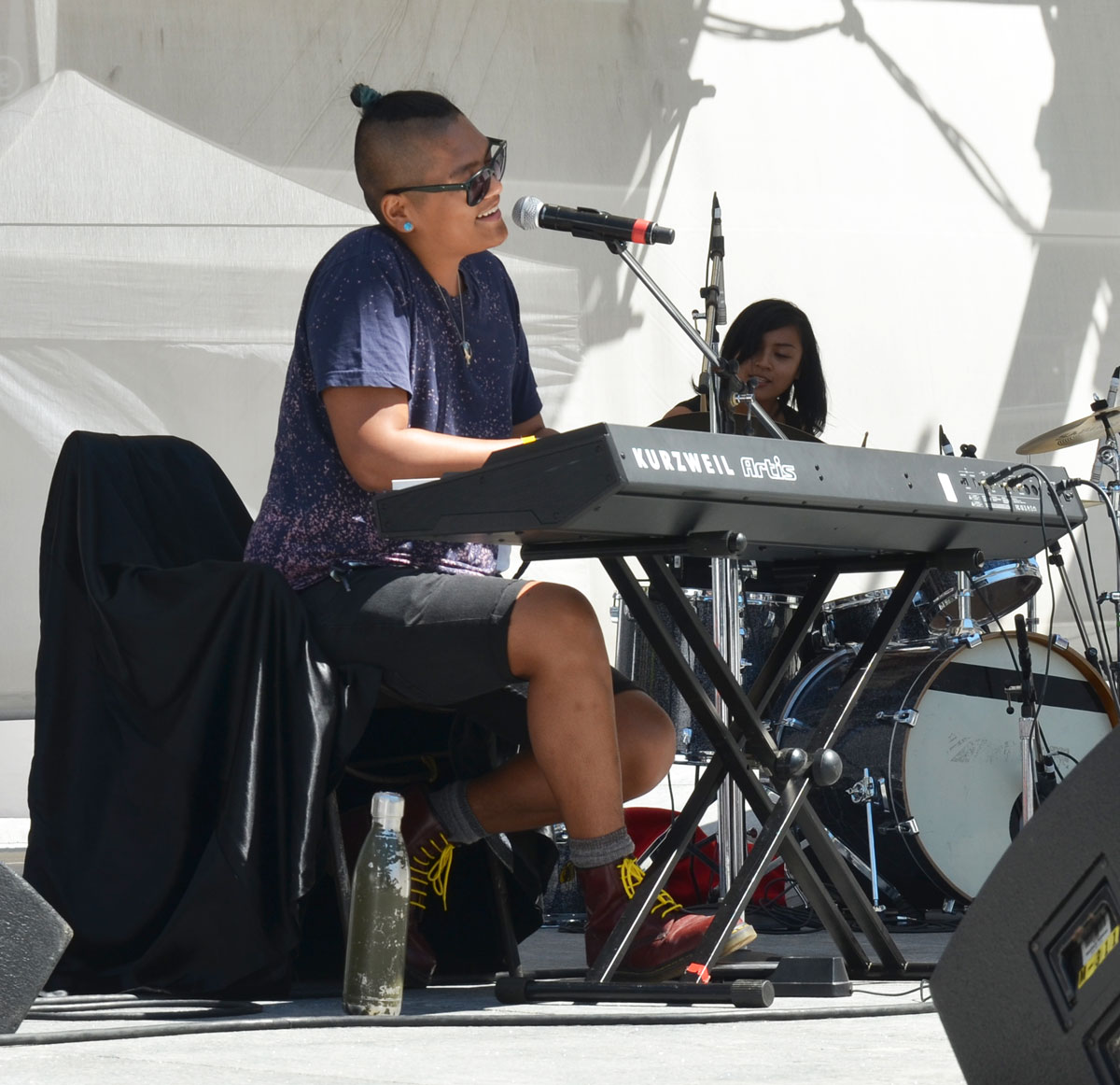
Sean Kua
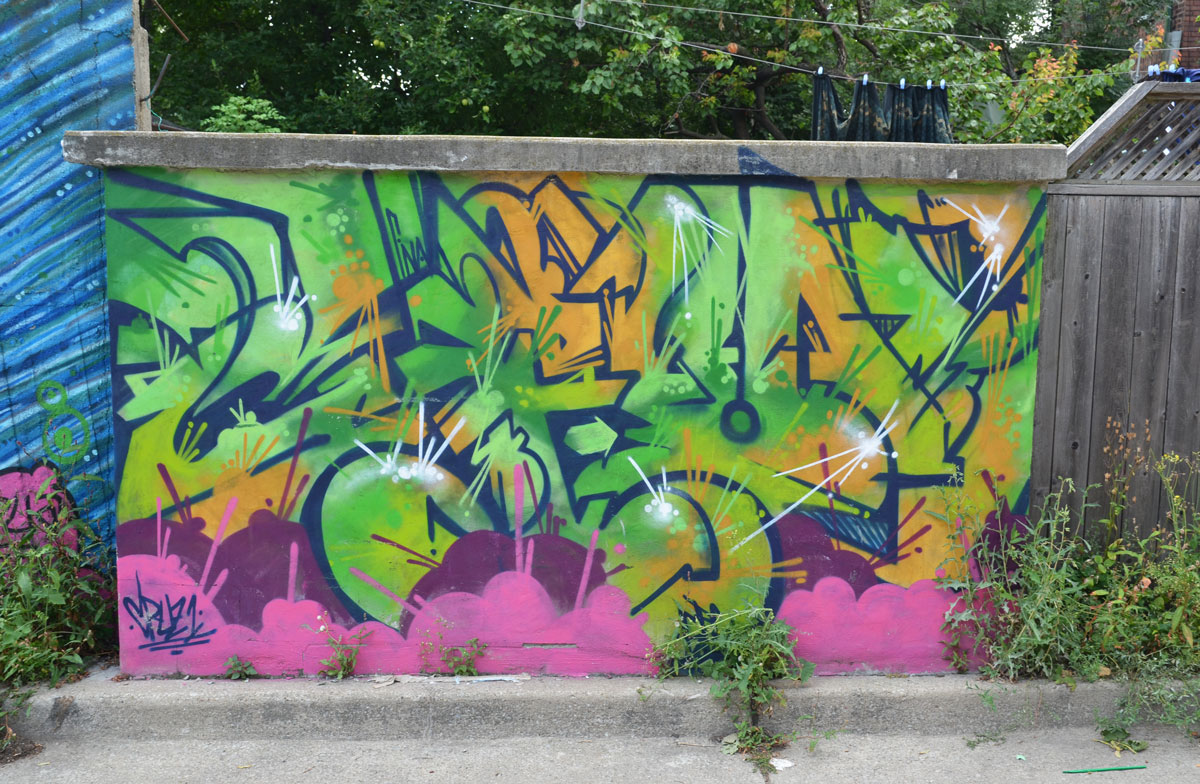
I was sorting through older photos recently when I discovered some of street art and graffiti that I saw in an alley near Trinity Bellwoods Park. The photos were taken in February so there is lots of snow in them. I thought that it would be silly to write a blog post in August using cold and snowy photos so I went back the other day to retake the pictures.

The alley is at the north end of Trinity Bellwoods Park, running behind Dundas West between Montrose and Grace. The east end of the alley turns north to exit at Dundas West.
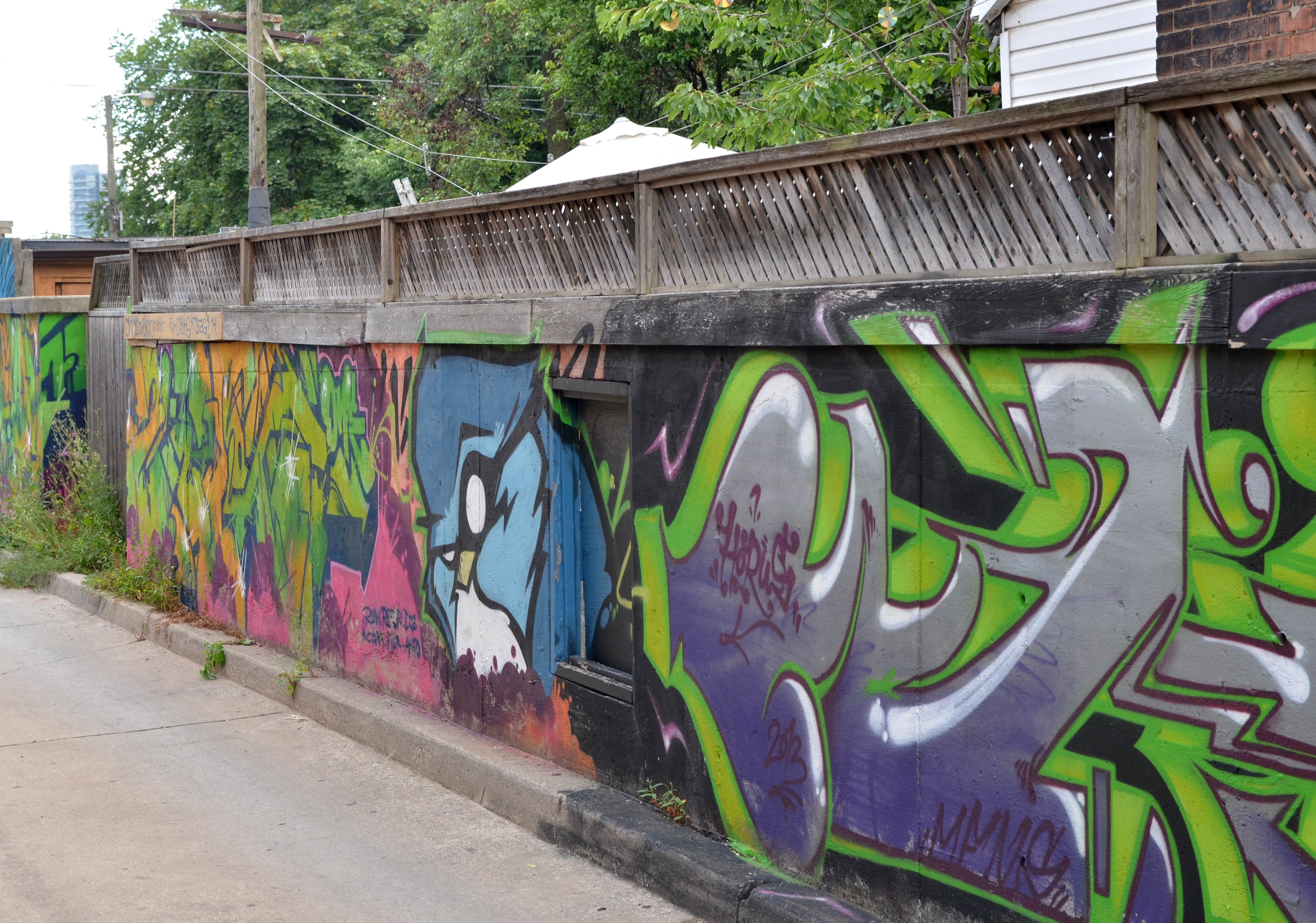
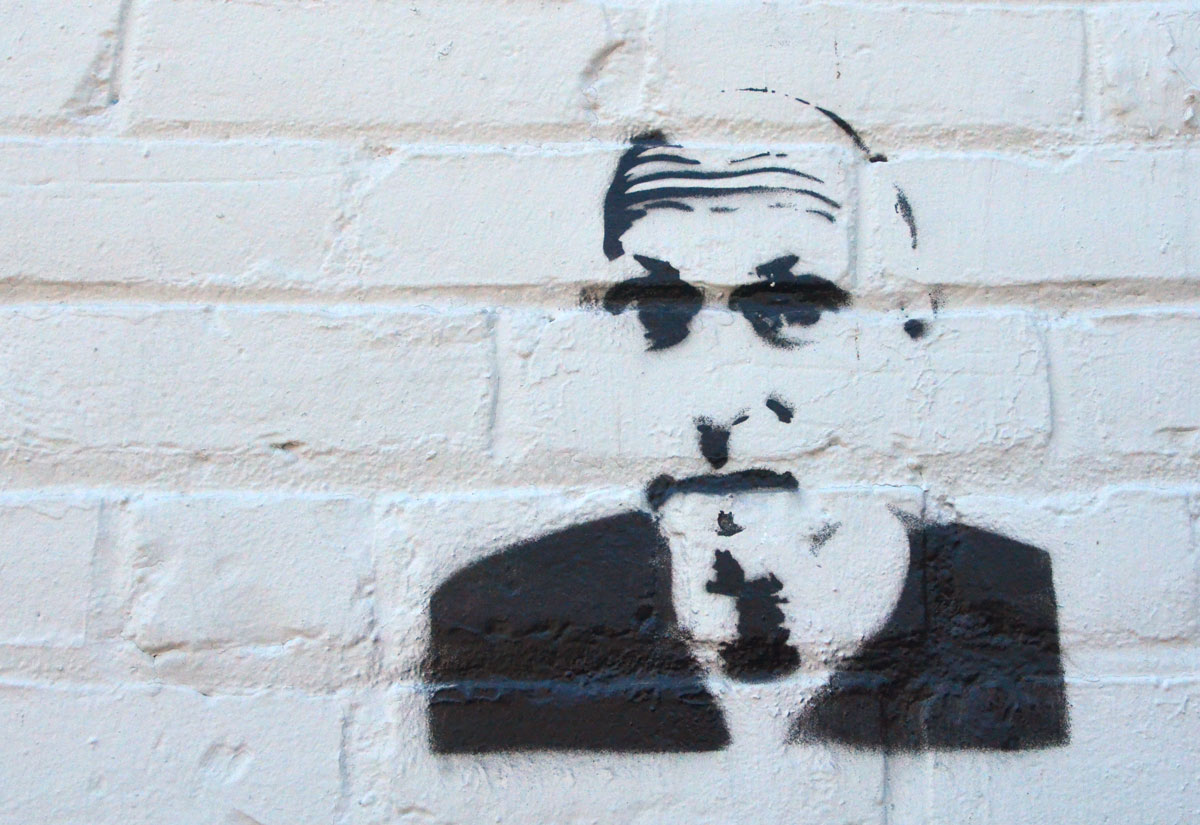
below: This guy, and his chess issues, is at the corner where the alley meets Dundas West.



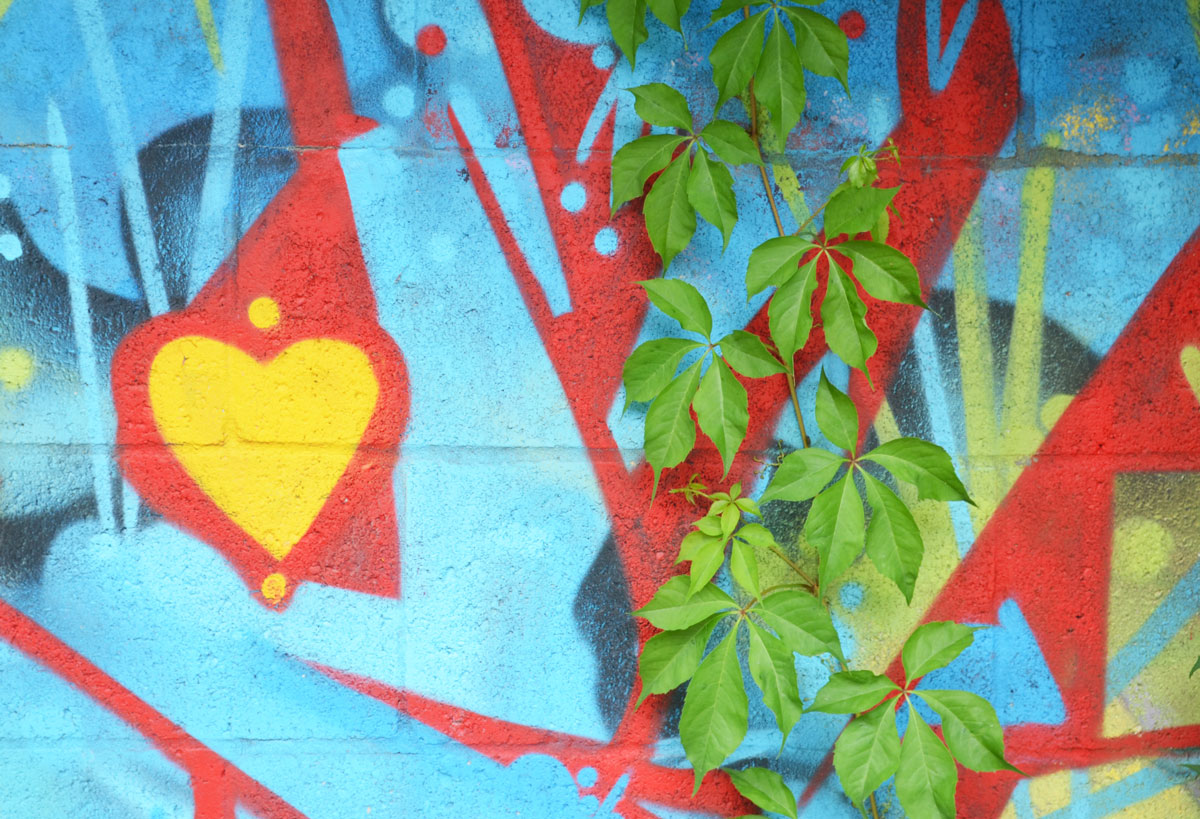
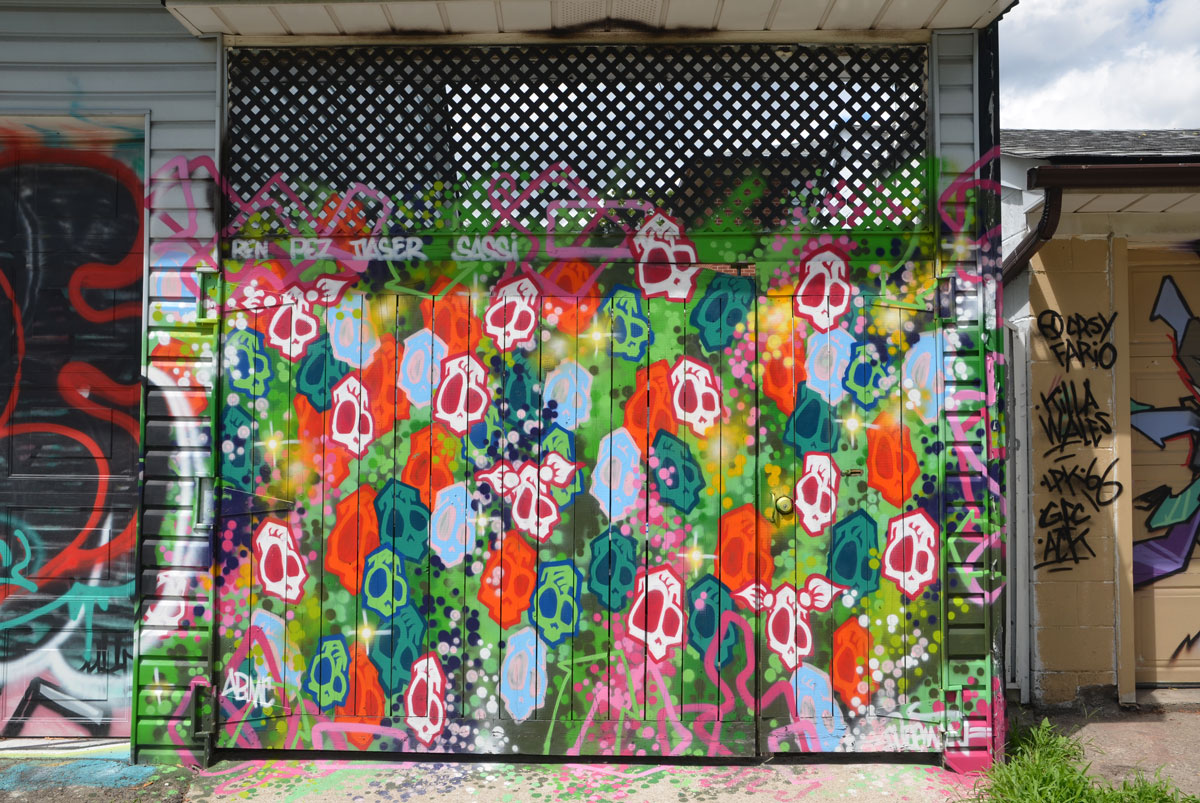

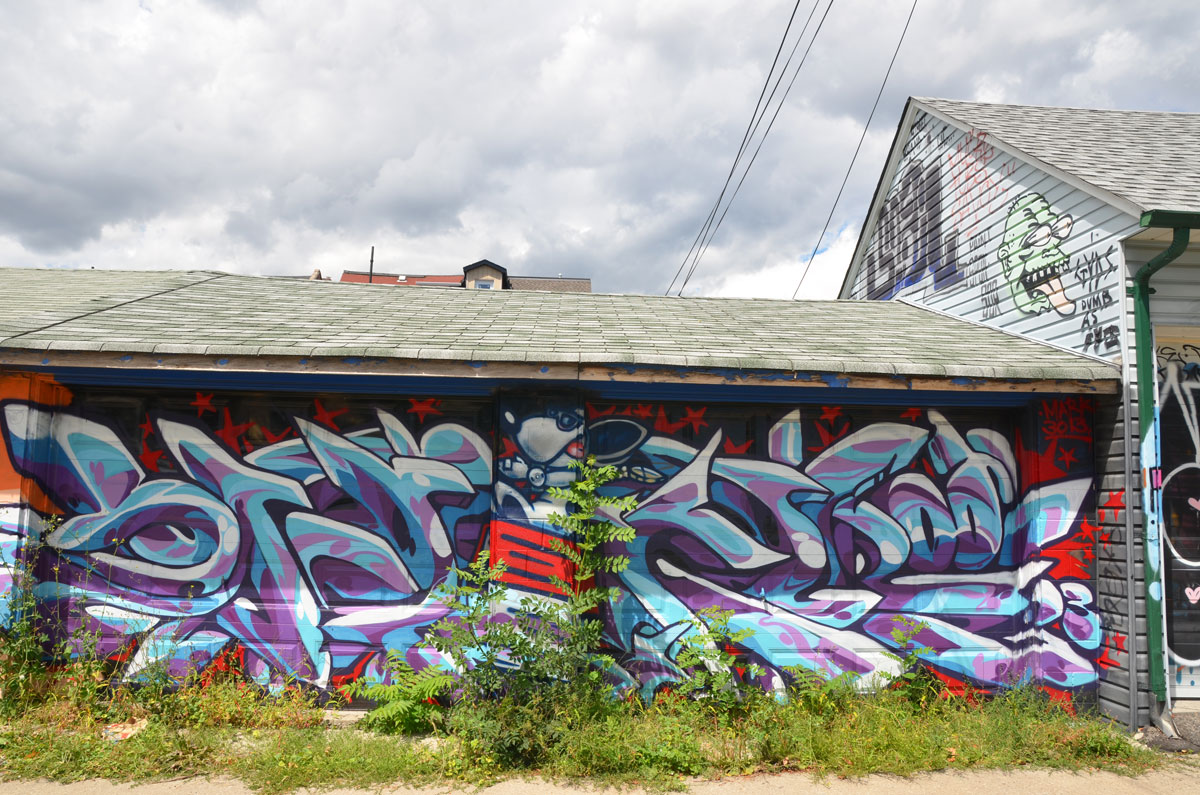
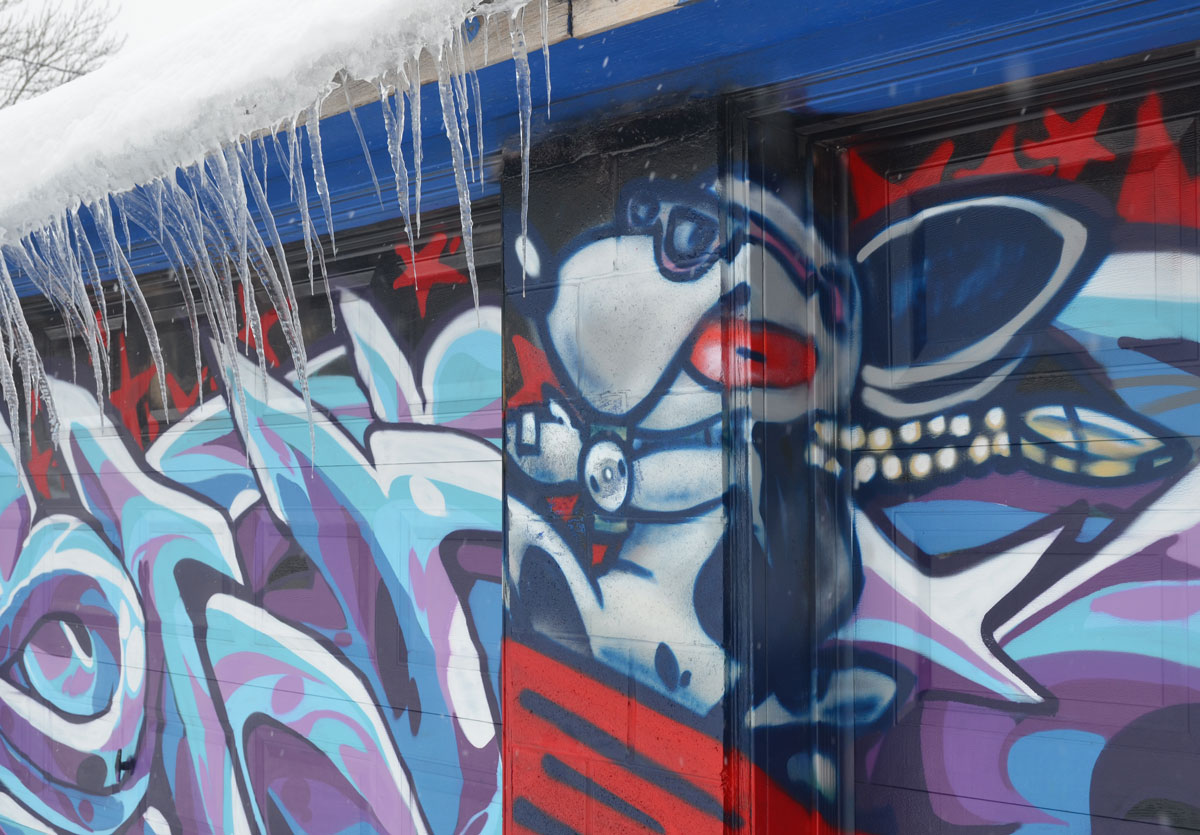
below: close up of the dog from the painting above, taken in February
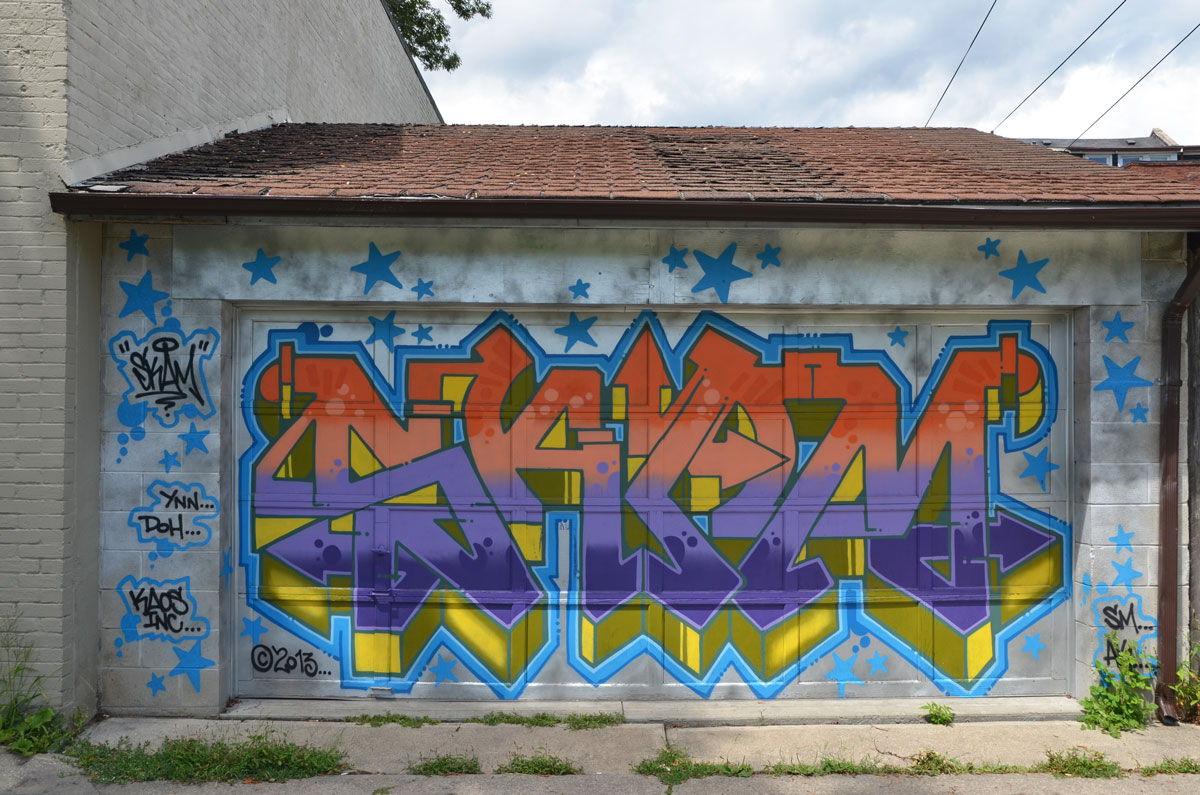
below: There was one garage that had been painted between February when I first saw it and early August when I went back. The two photos below show the garage ‘before’ and ‘after’.
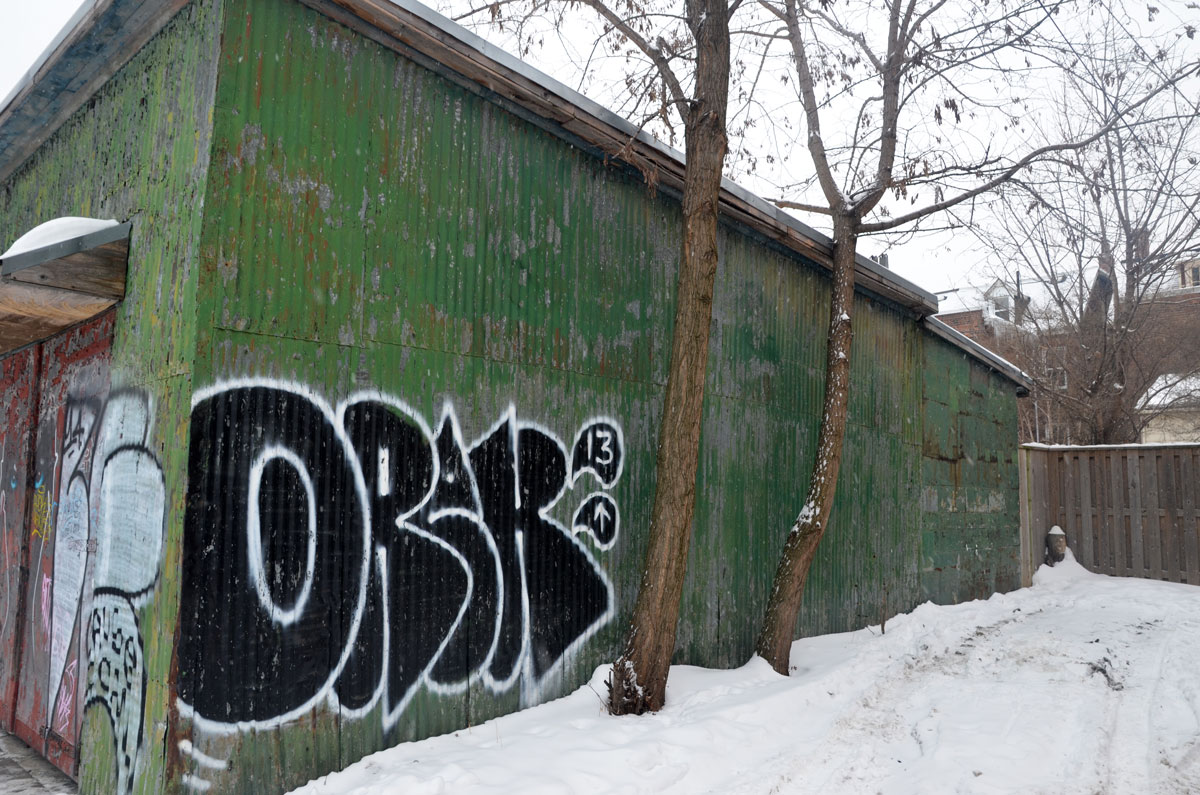
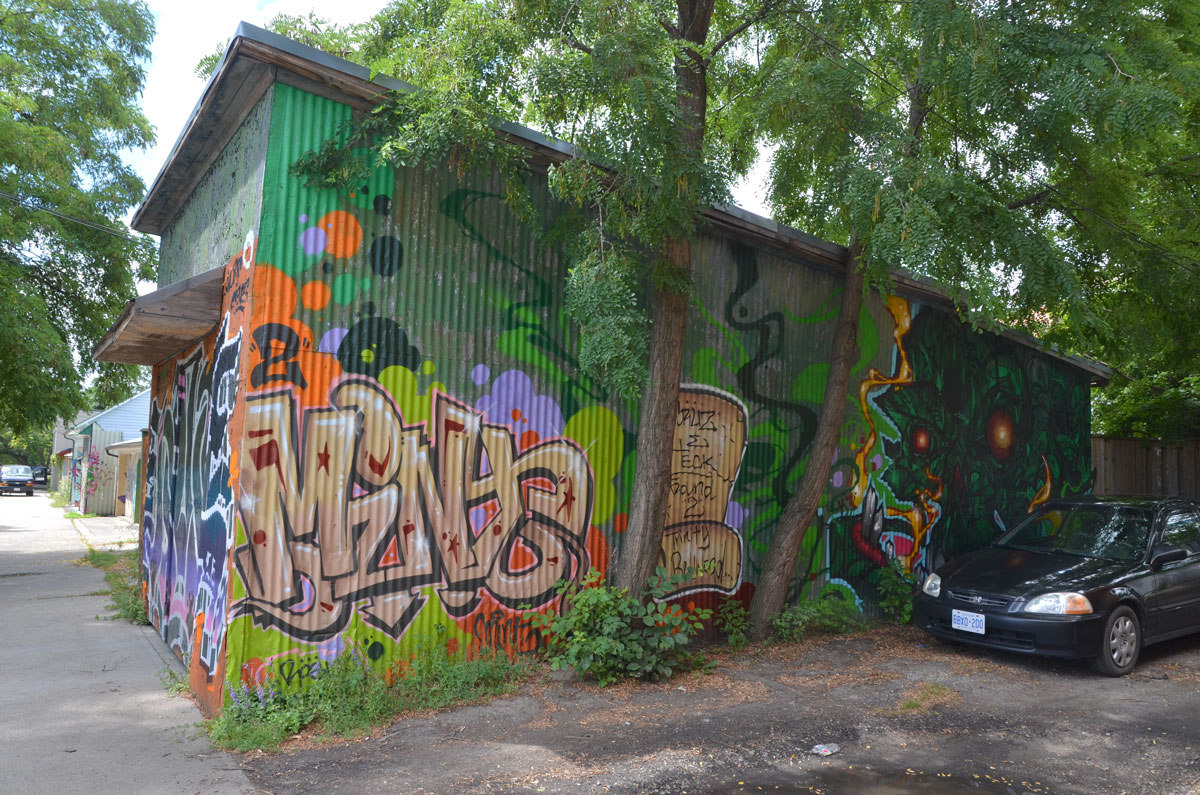
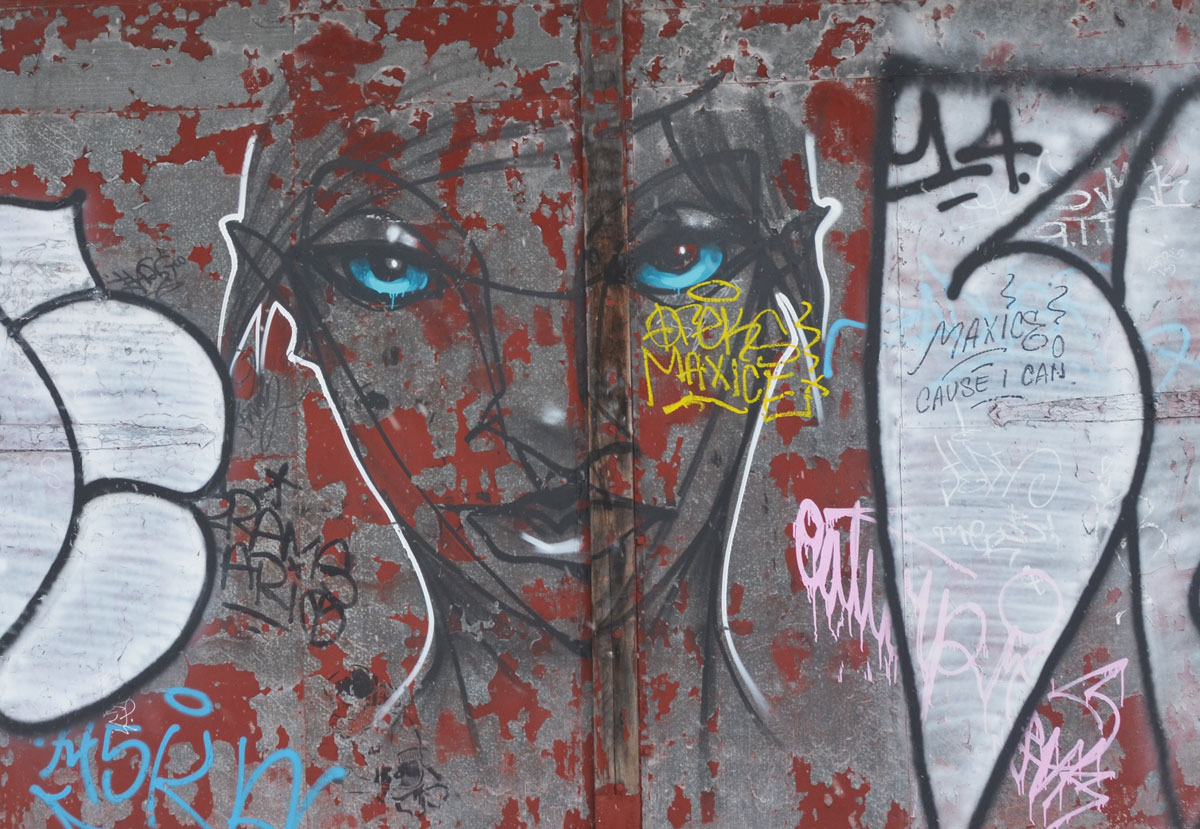
below: This Anser face was on the doors of the above garage back in February.
It has since been painted over.
below: Blaze Works has painted this where the Anser face was. Always remember.

other garage doors


Planet IndigenUS is a ten day festival co-produced by the Harbourfront Centre in Toronto and the Woodland Cultural Centre in Brantford. It features 300 artists with dance and music performances as well as visual art exhibits at a number of venues. One of the venues is the gallery at Harbourfront Centre where a number of artists of Anishnabe heritage are showing their work. Two of the artists are Christian Chapman and Scott Benesiinaabandan, and a sample of their work is presented here.
Screenprints by Christian Chapman
 gaawiin wiikaa ji gwerina-ka-nawich
miskwadessi opixwanak misa oi kitimagia
miskwadessi wag dash awessiwag
ji manaadji-a-ka-ni-watch
never turn a turtle on its back so that it is helpless
turtles and all other animals are to be accorded respect
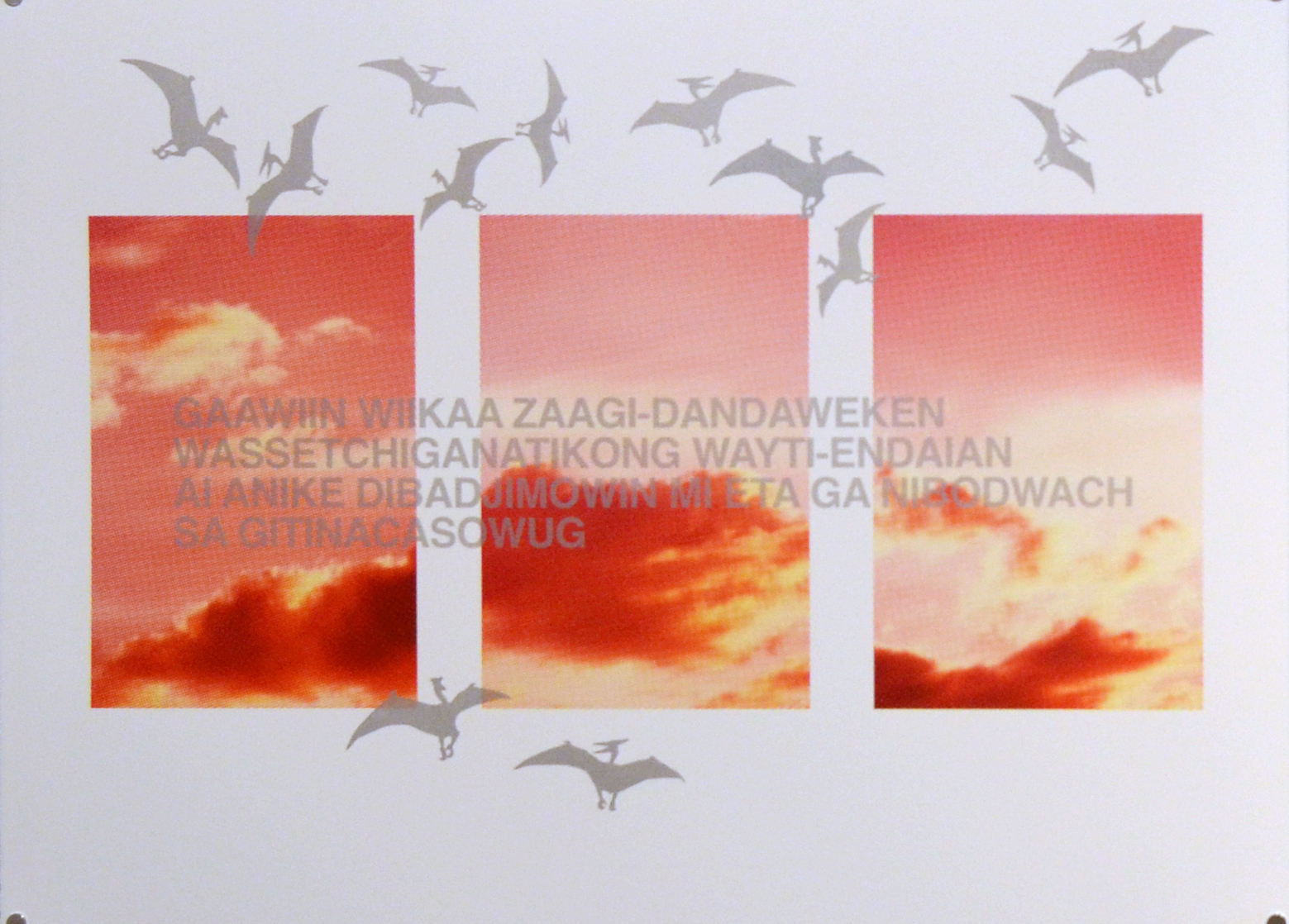 gaawiin wiikaa zaagi-dandaweken
wassetchiganatikong wayti-endaian
ai anike dibadjimowin eta ga nibodwach
sa gitinacasowug
never climb out a window in your house,
traditionally, only dead people are brought out like that
***
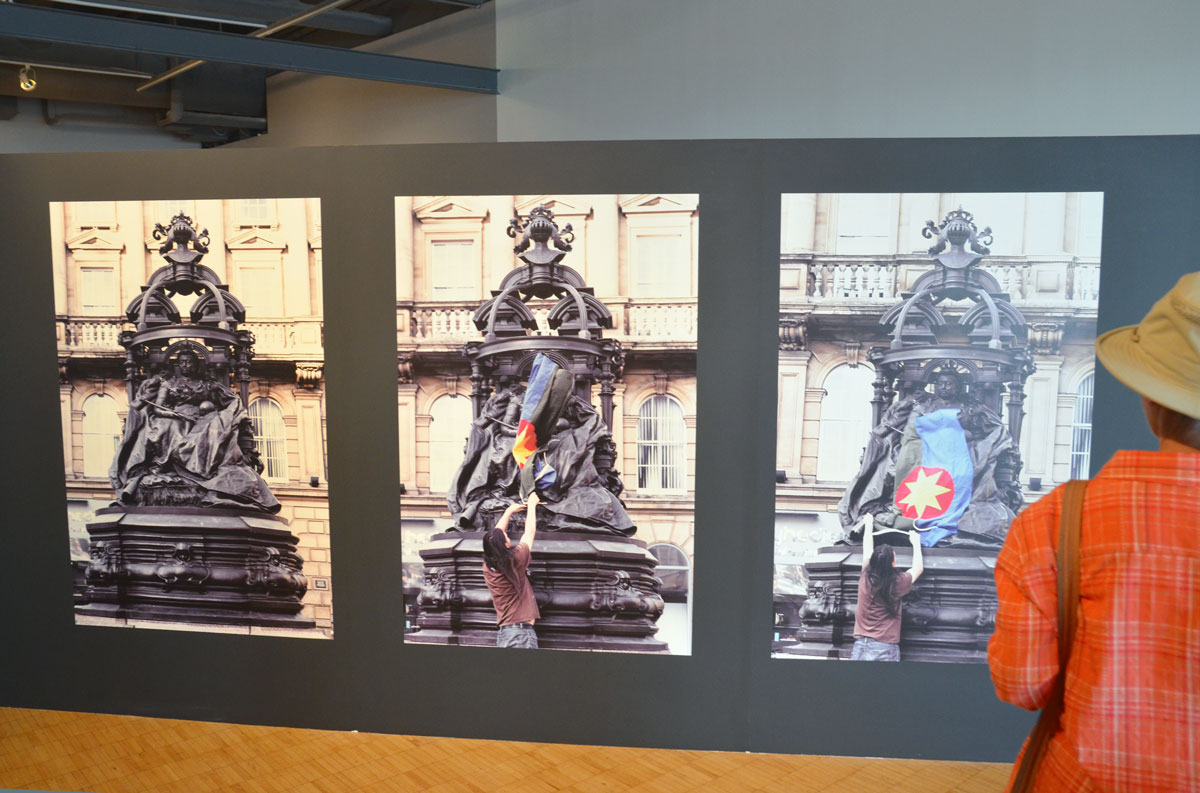
below: ‘God Save the Queen’ by Scott Benesiinaabandan
a series of photos in which the queen is partially covered by the artist’s Solidarity Flag
Let’s talk about this couple
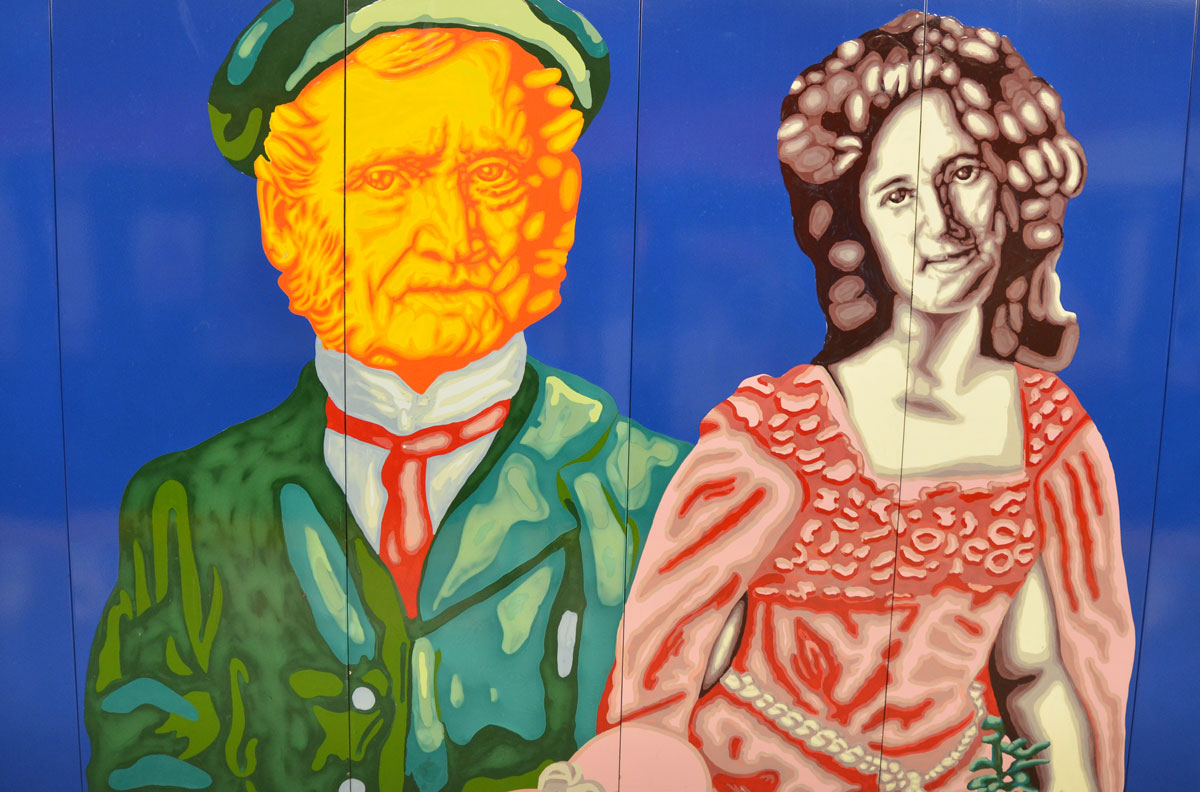
If you ride the Toronto subway you’ll probably recognize them from the walls of Queen station.

A couple of weeks ago I was standing beside them when I overheard a woman telling the man she was with that the people in the mural were Lord and Lady Simcoe.
I was fairly certain that she was wrong so I checked. This is a picture of John Graves Simcoe.

There could be some resemblance and John Graves Simcoe did play an important part in Toronto’s history. He was the first Lieutenant Governor of Upper Canada (1761-1790). He established York (now Toronto) as the capital of Upper Canada in 1793 and he gave us Yonge Street. But note the military clothing in the above portrait; he was a British army officer after all and I doubt he’d be depicted in a mural wearing a green jacket and matching cap.
There aren’t many pictures his wife Elizabeth, or Lady Simcoe, but suffice it to say that they don’t look like the woman in the mural.
A few minutes online provided the following information: The title of the mural is “Our Nell” and the people are supposed to be William Lyon McKenzie and Nellie McClung. Three buildings are shown, the old Simpsons building (now the Bay), City Hall, and the Eaton Centre. The artist is John B. Boyle.
This is a photo of William Lyon McKenzie; I guess there’s a resemblance.
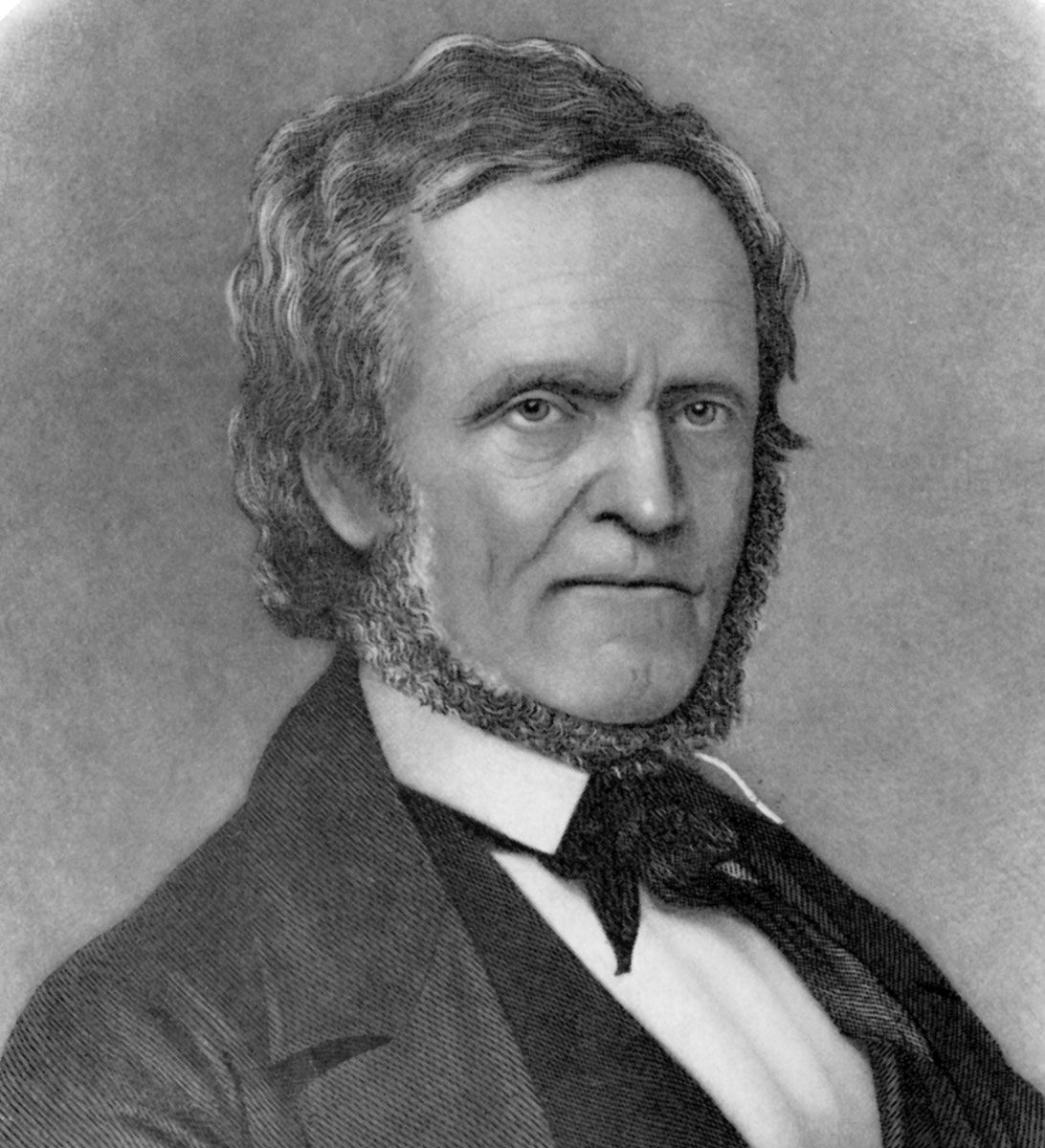
McKenzie was born in Scotland in 1795. He emigrated to Upper Canada as a young man. Although he held a number of jobs, he seemed to like writing for newspapers best. After working for newspapers in Montreal and York, he established his own newspaper, the ‘Colonial Advocate’ in 1824. Although that paper went bankrupt and he fled to New York for a short time to evade his creditors, he used newspapers as a vehicle to promote his political ideas for most of his life. To a large degree the story of Upper Canada politics of the early 1800’s is a story of the Tory governing elite vs the Reformer upstarts. McKenzie was solidly on the side of the Reformers.
Toronto was incorporated as a city on 6 March 1834 and the first municipal elections were held later that month. McKenzie was elected as an alderman. At that time, the mayor was elected by the aldermen from their own ranks and in 1834 McKenzie was appointed mayor. He lost the next election in 1835.
McKenzie was also a leader in the Upper Canada Rebellion of 1837. It was not much of a rebellion, more like a skirmish near Montgomerys Tavern (near Yonge & Eglinton) that the Reformers lost badly. The rebellion leaders were allowed to flee to New York state. Once in Buffalo, McKenzie declared himself the head of a provisional government of the Republic of Canada. He even convinced some Americans to help him invade Upper Canada from Navy Island in the Niagara River. Bombardment of Navy Island late in December 1837 by the Royal Navy destroyed the S.S. Caroline, an American ship that was helping to supply McKenzie’s followers on Navy Island. And that was the end of McKenzie’s rebellion.
Okay then, that’s the man in the mural. What about the woman? I went looking for picture of Nellie McClung as well as information about her. I recognized her name but I couldn’t remember what her role in Canadian history was. First, this is her picture:
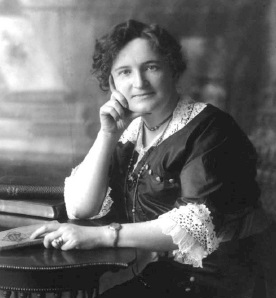
I didn’t see any pictures of her with long hair or as a younger woman. Nellie McClung was born as Nellie Mooney in Ontario in 1873 but moved to Manitoba as a child. One of the causes that she worked on was woman’s suffrage and she helped Manitoba in 1916 to become the first province to allow women the right to vote and to run for public office. By 1922 women could vote federally and in all provinces except Quebec. Quebec women could vote federally but had to wait until 1940 before they could vote in a provincial election.
McClung was also one of the five women who campaigned to have women recognized as “persons” by the Supreme Court so that they could qualify to sit in the Senate. In 1930 Cairine Mckay Wilson was appointed Canada’s first female senator, just four months after the “Persons Case” was decided.
Now when you pass through Queen subway station you can think a little about the history that it represents, and not so much about how ugly it is. Because it is ugly. Especially this section of the mural:

Is that a woman in the foreground? Or a slug with appendages?

