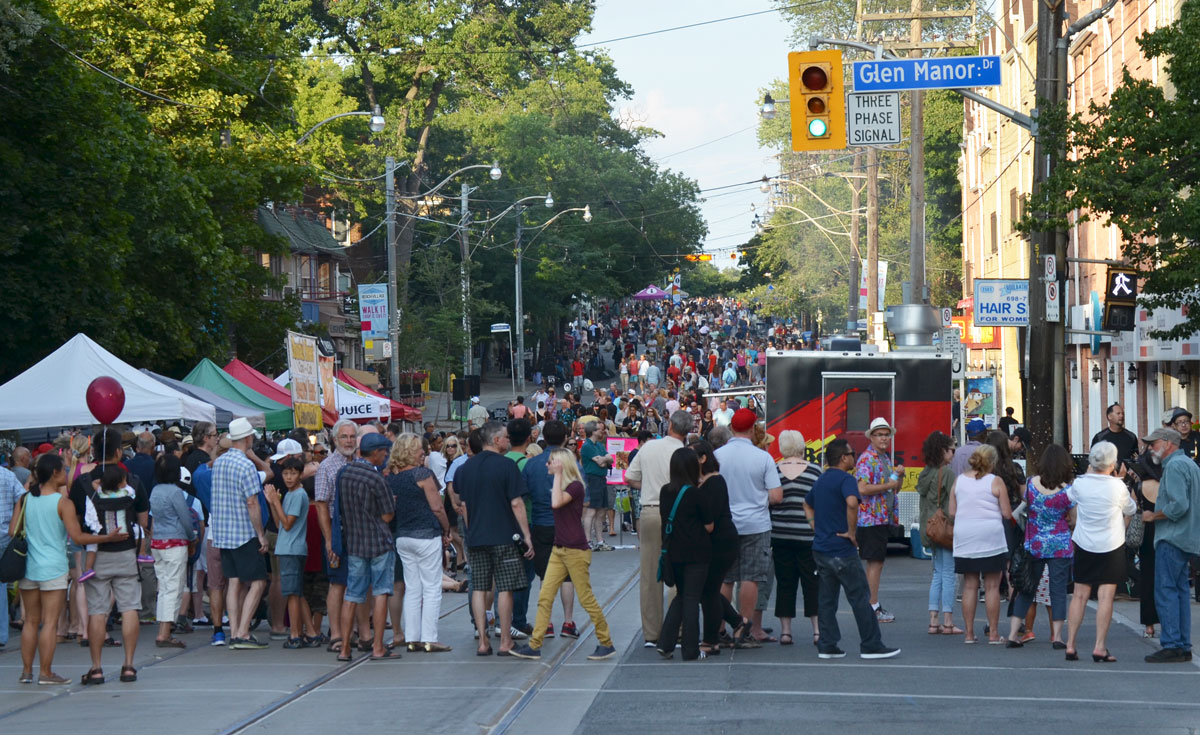
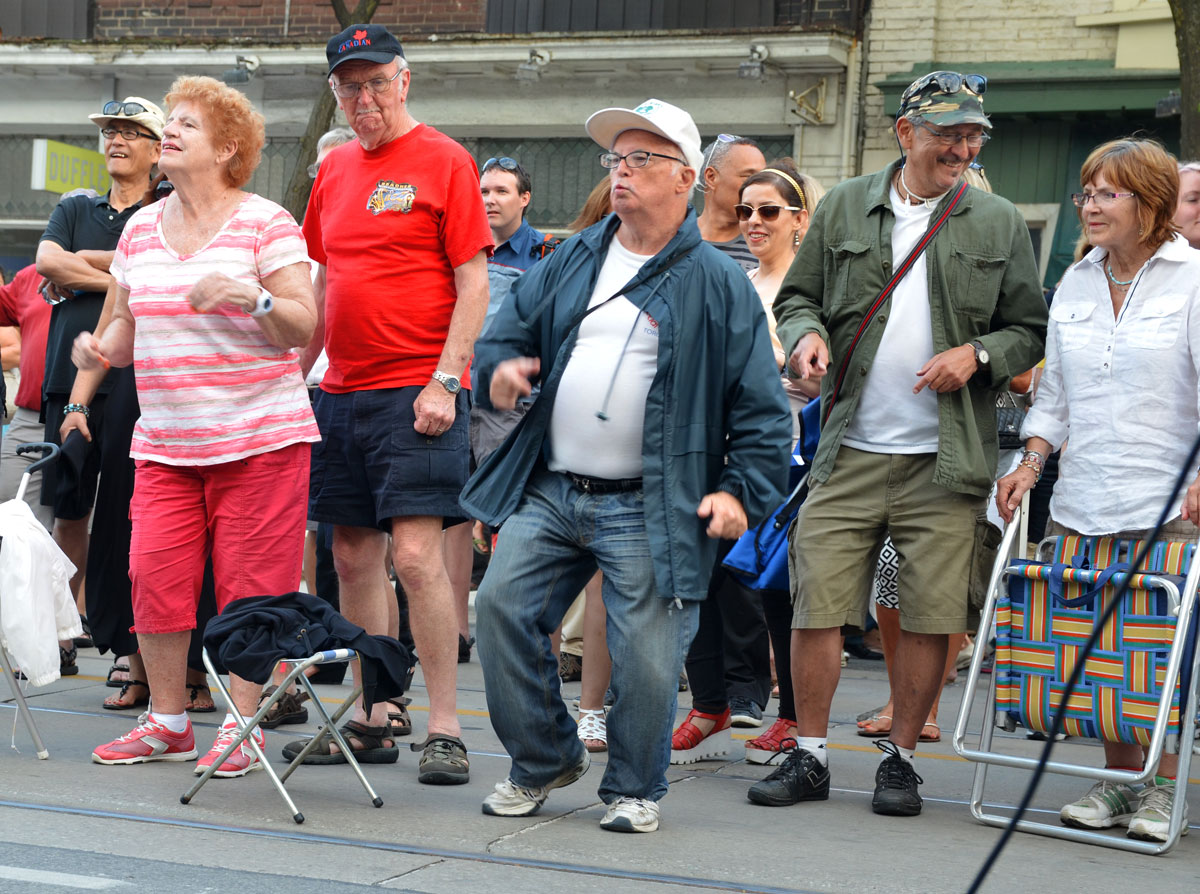
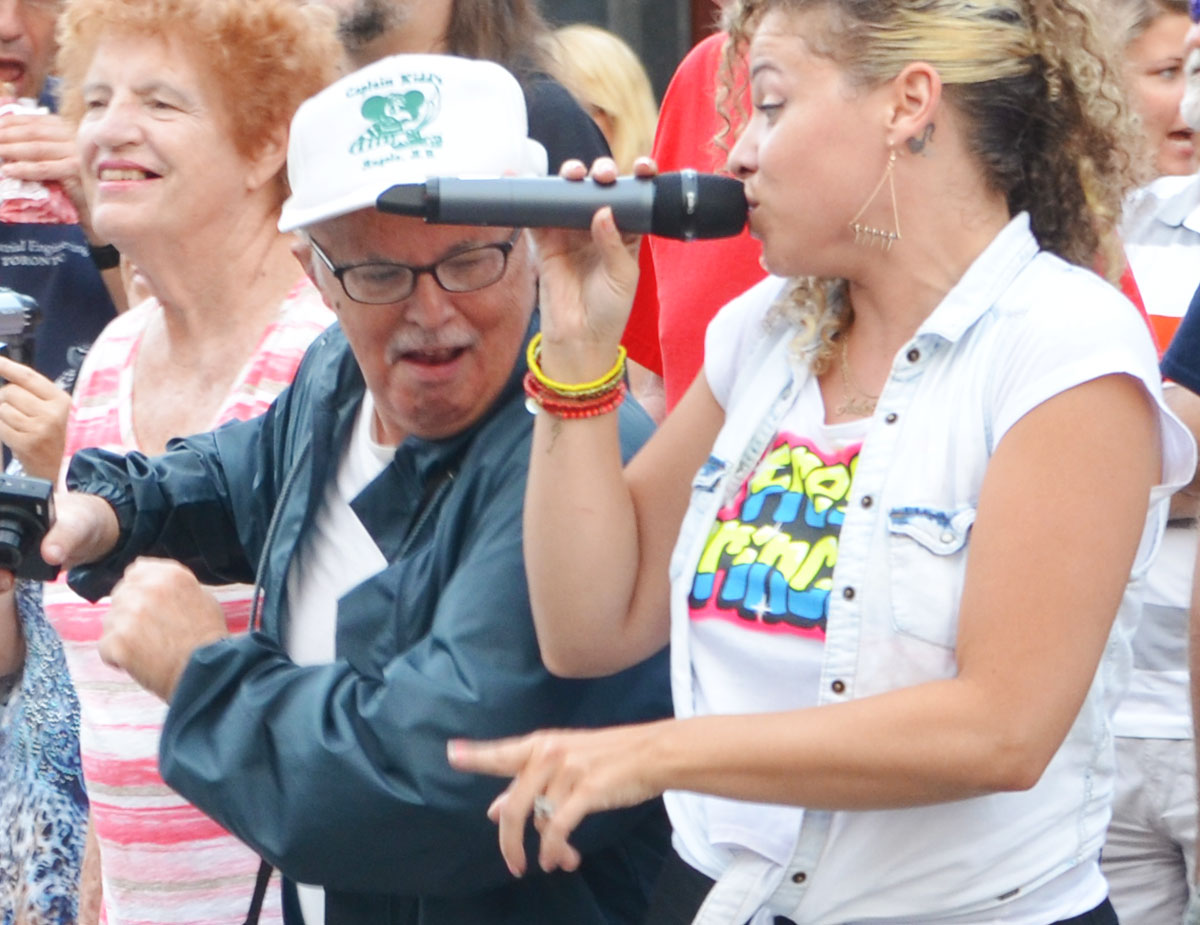
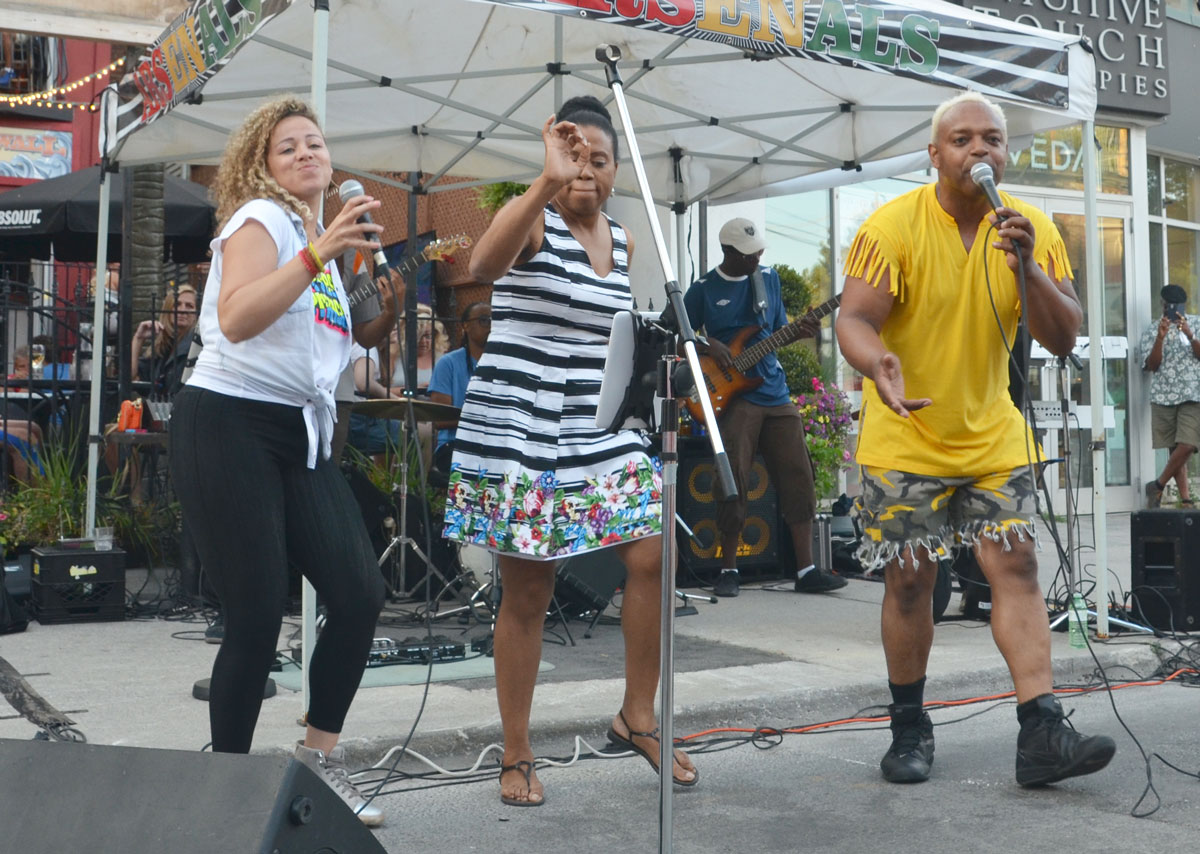
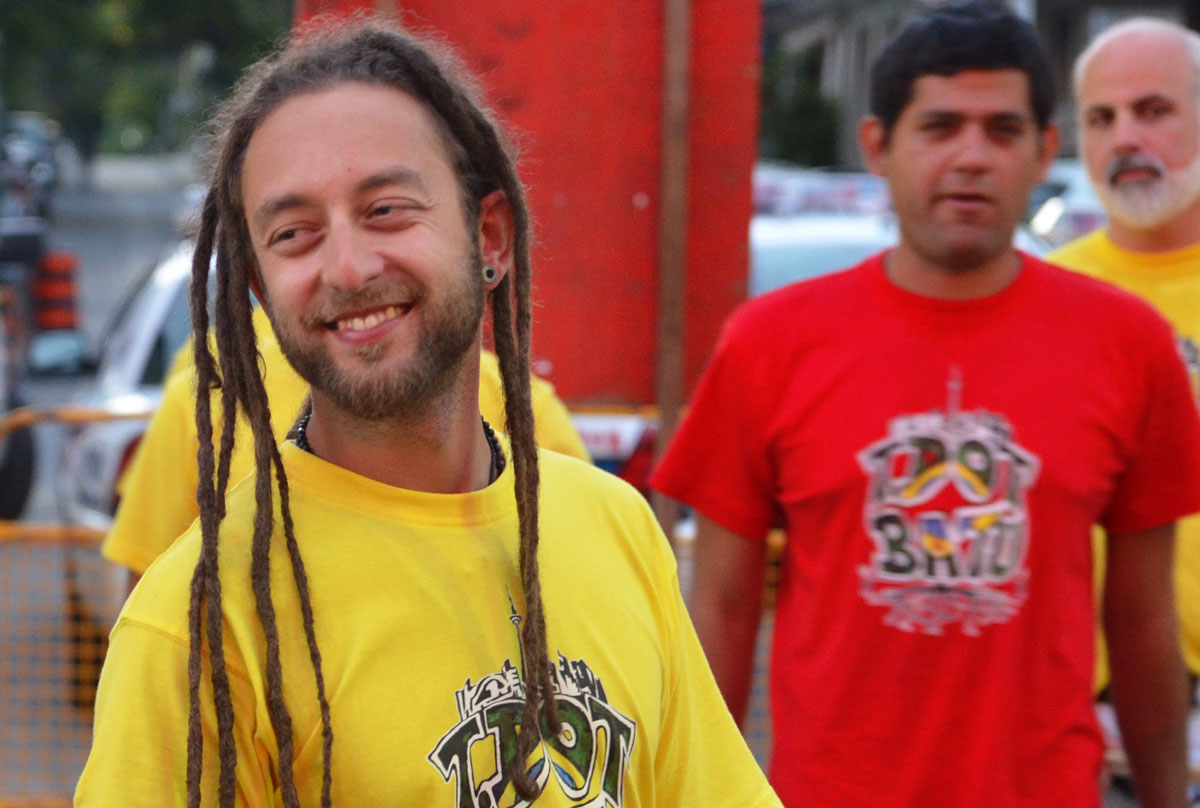
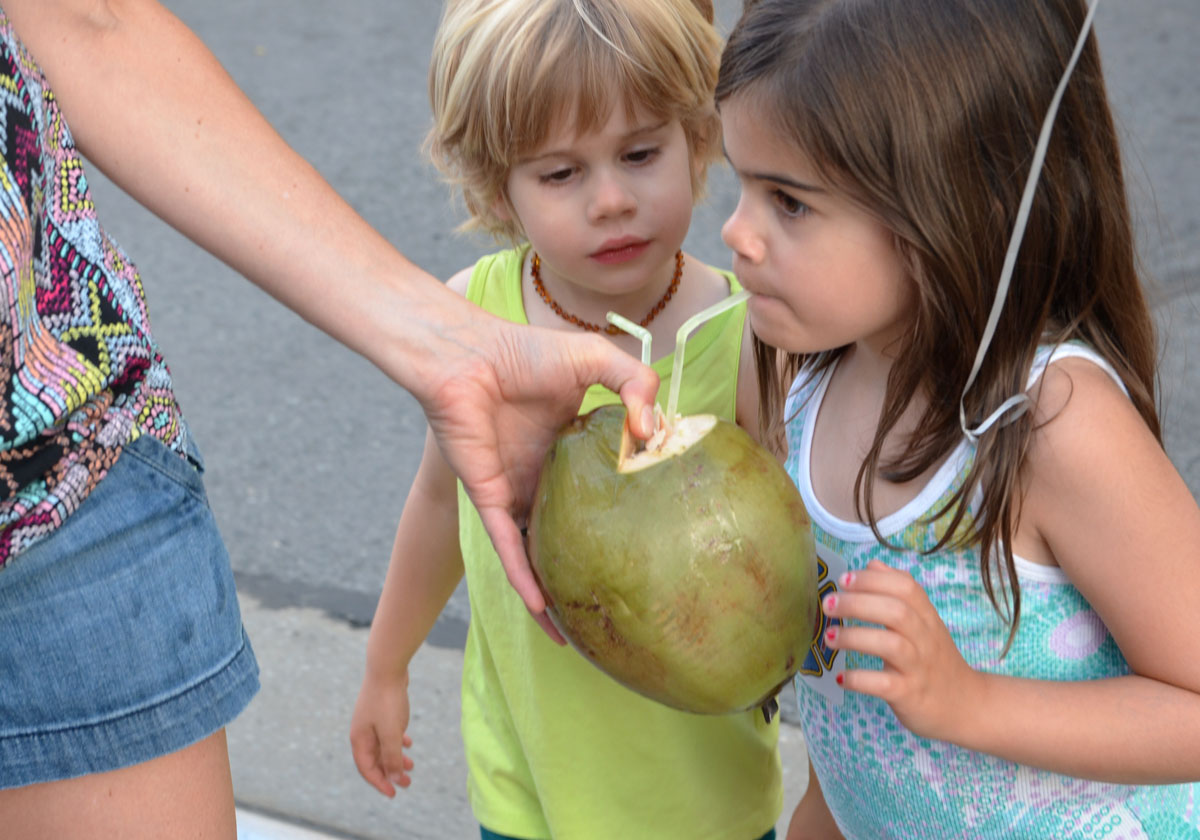
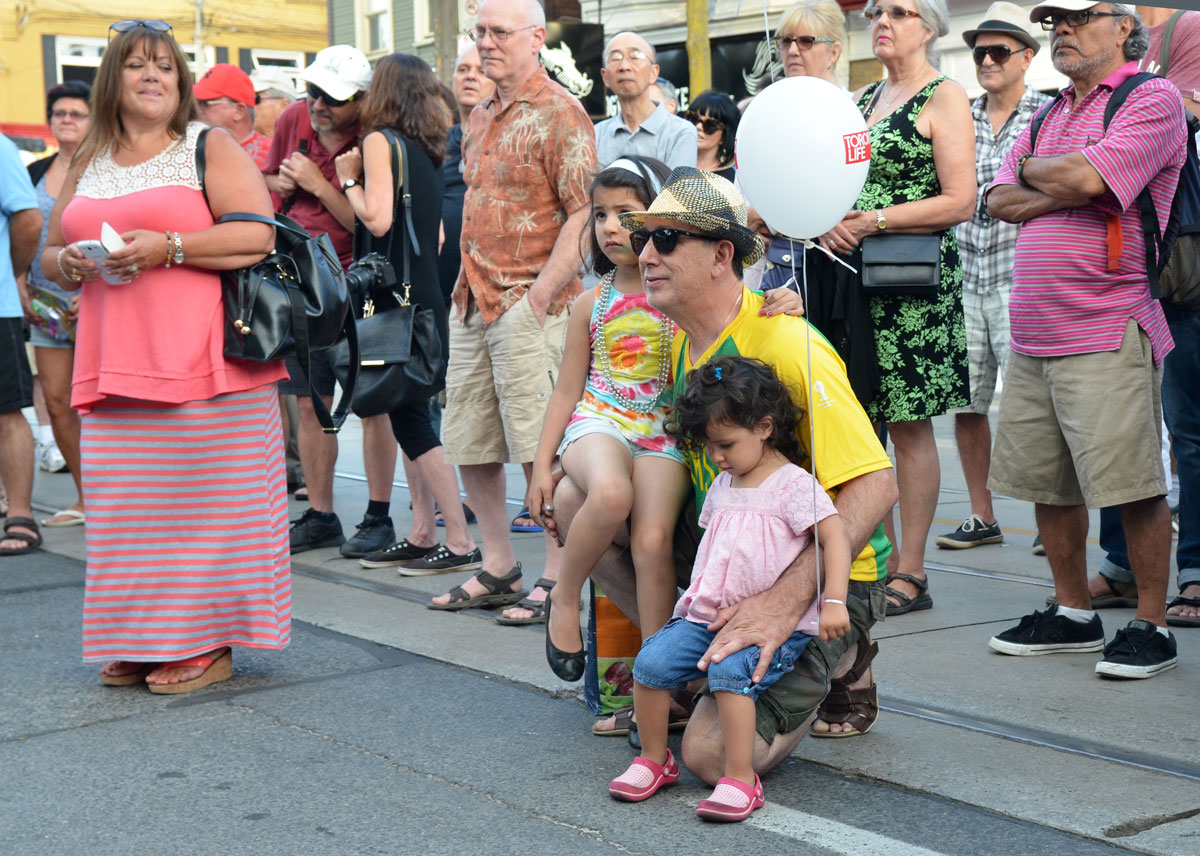
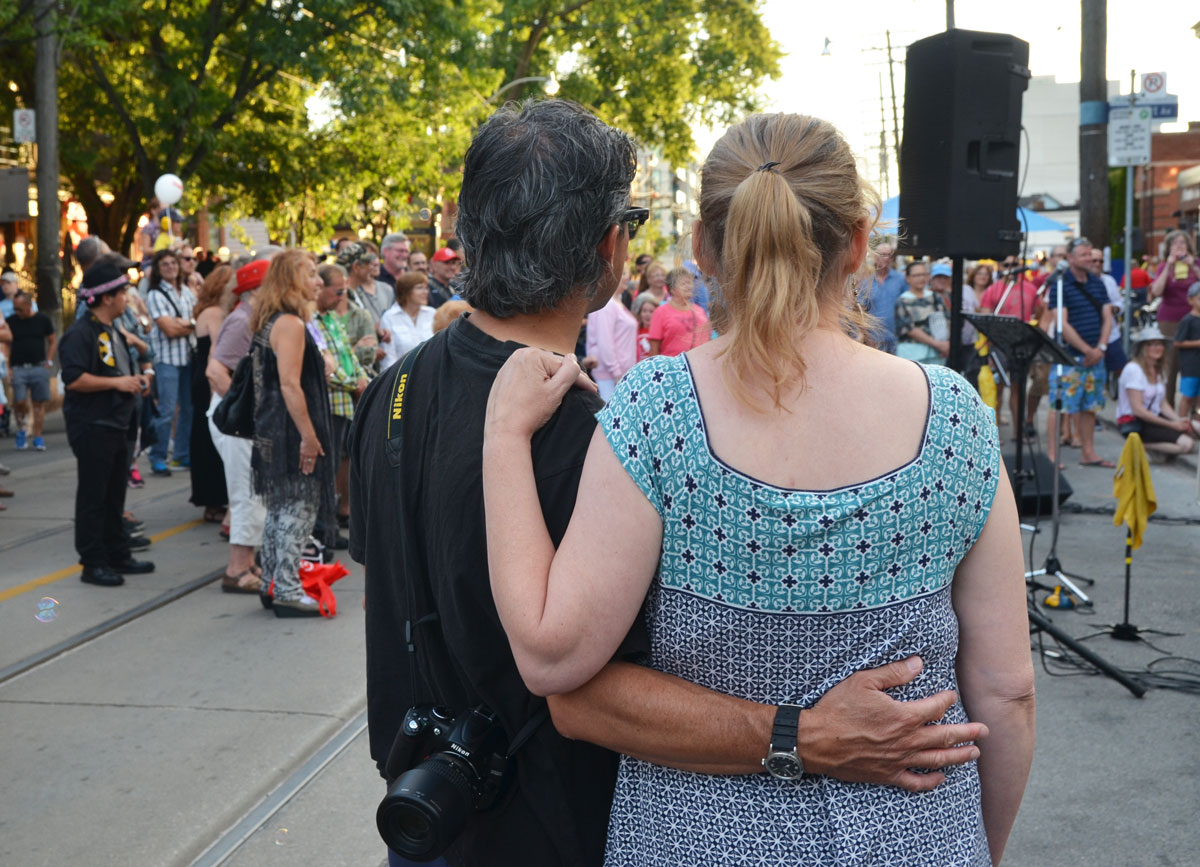
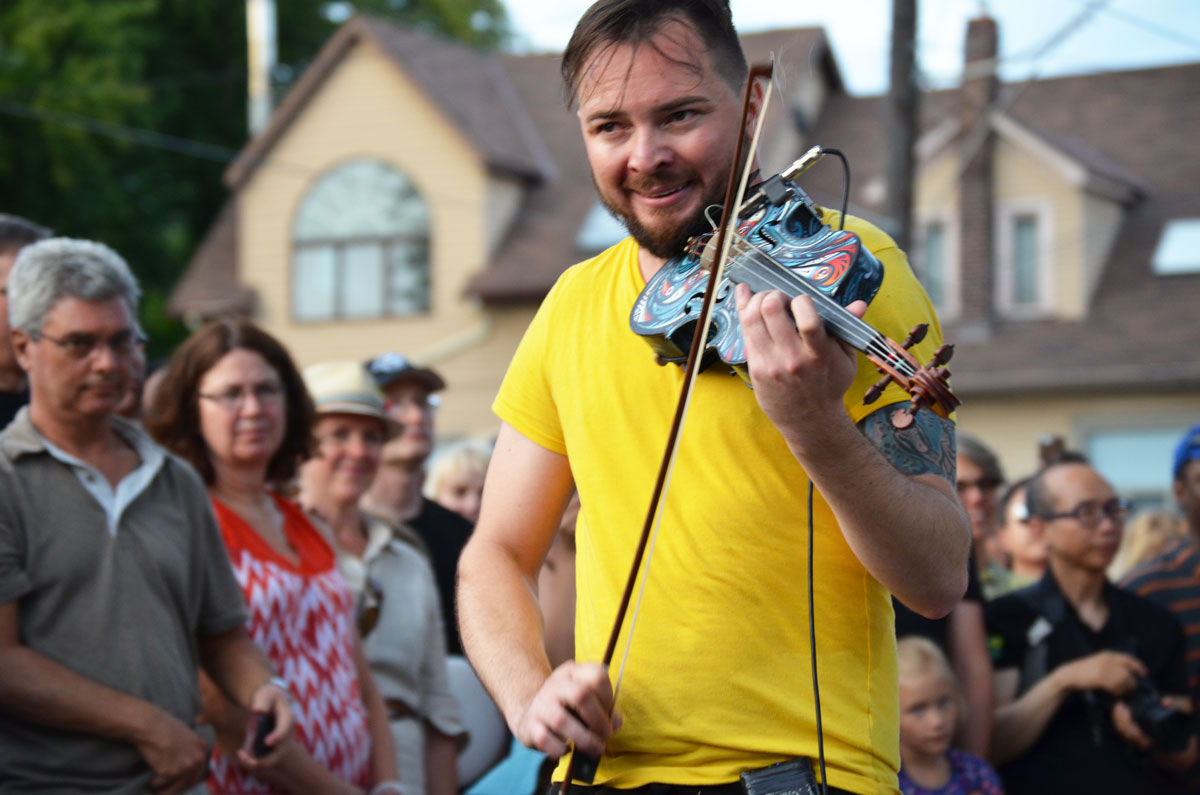
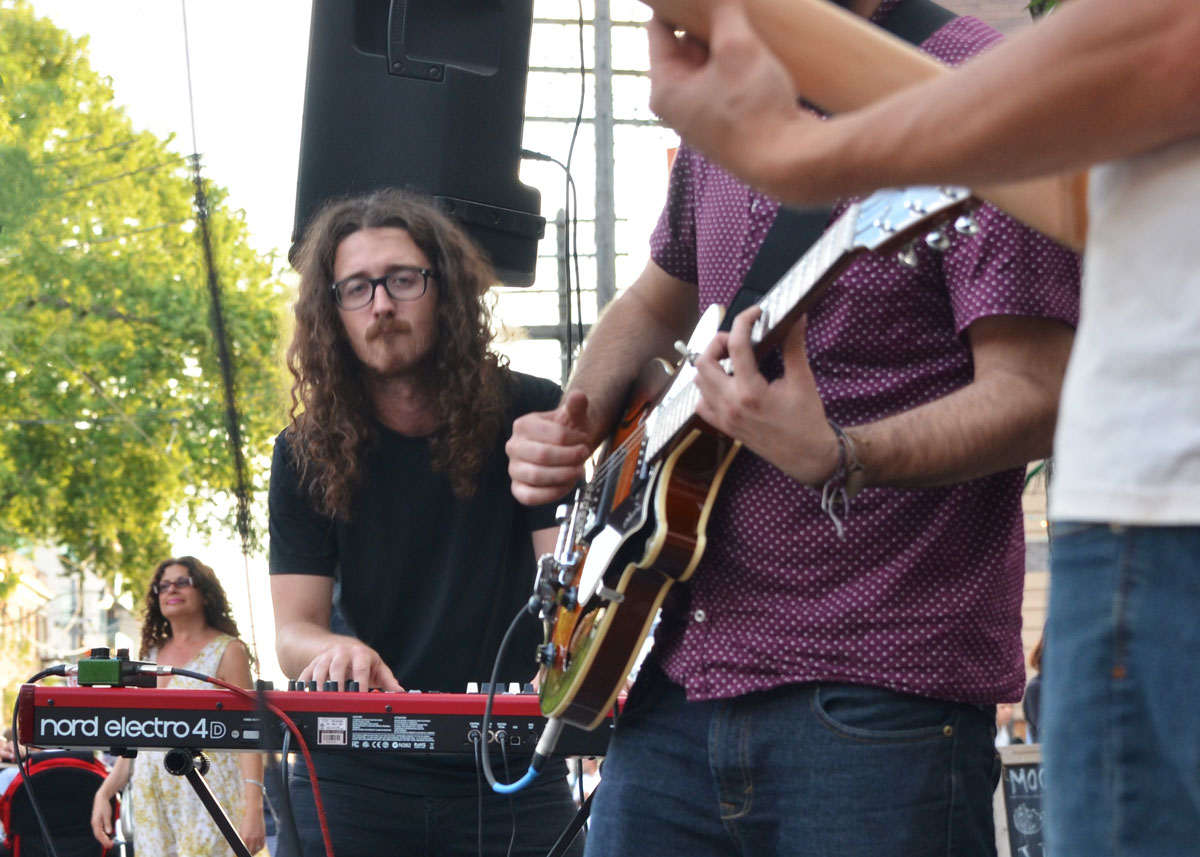
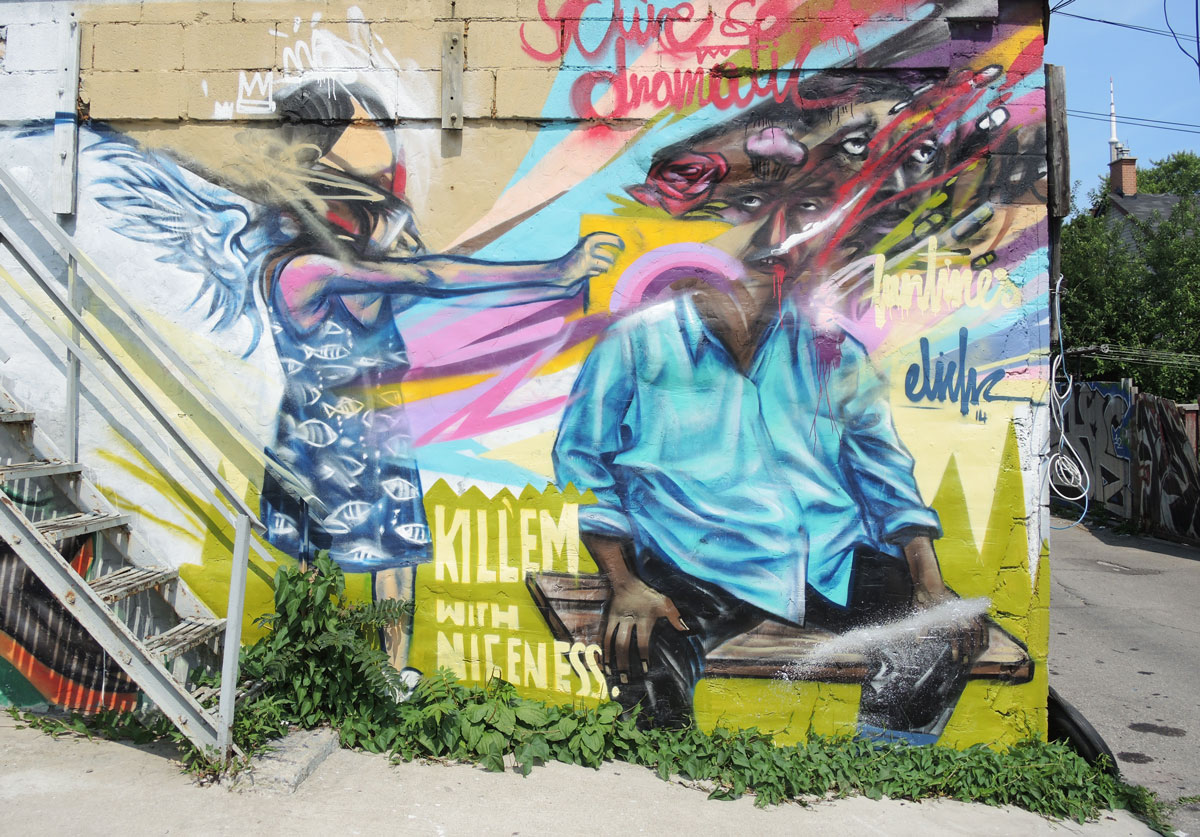
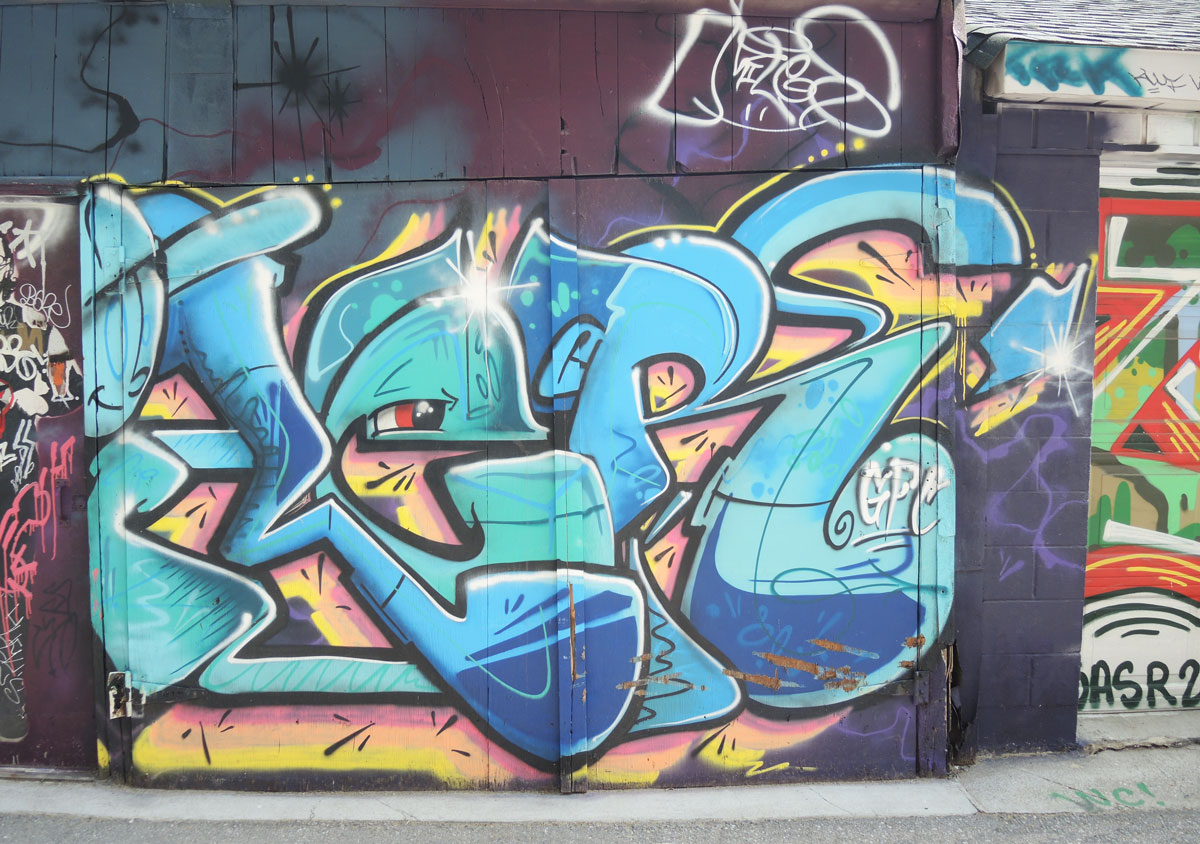
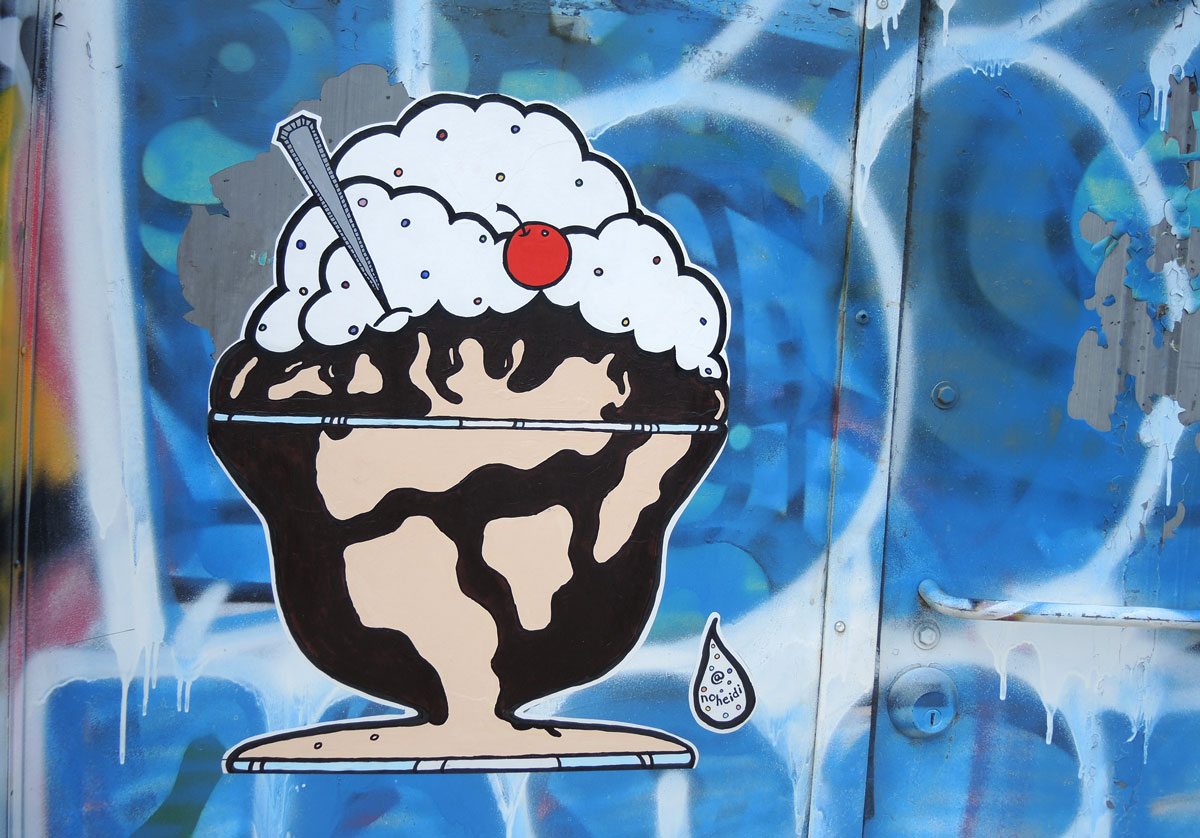
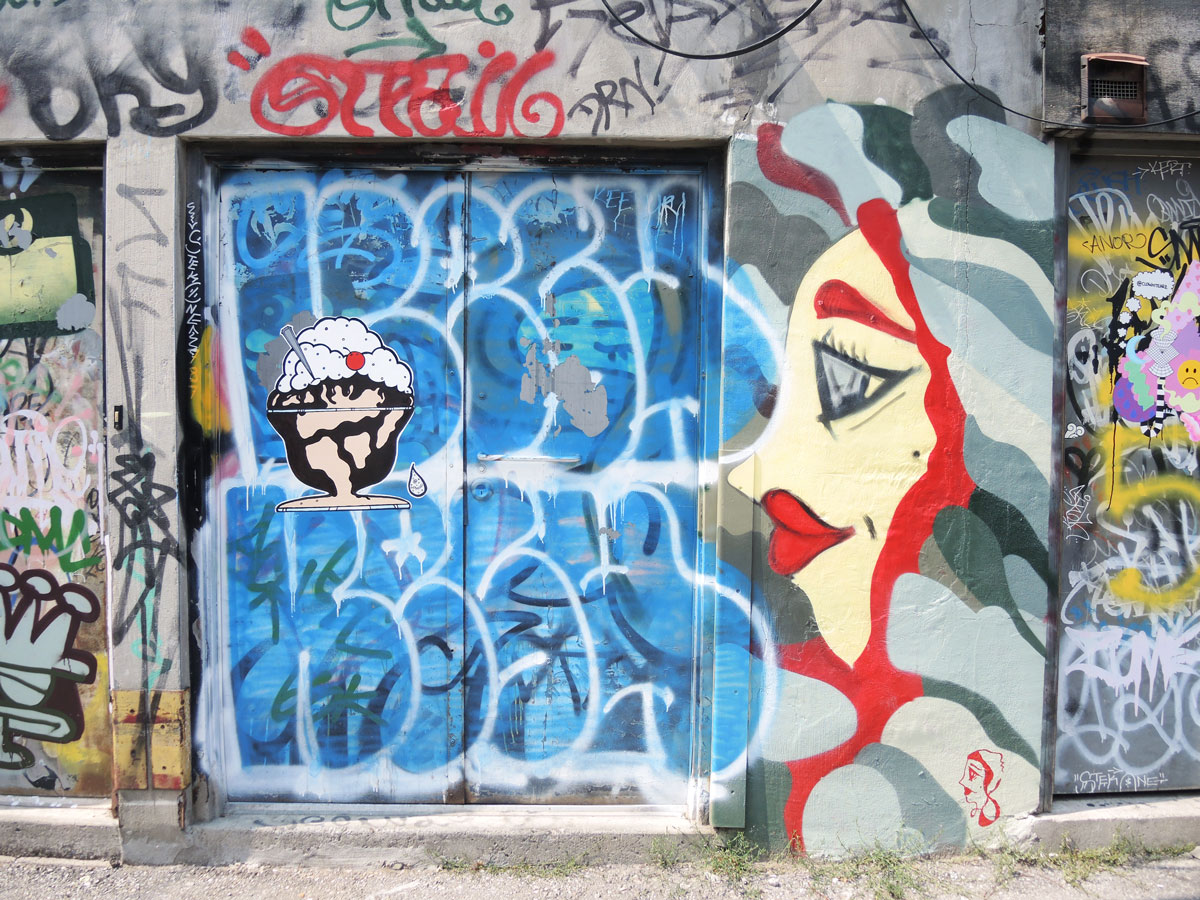
The annual Streetfest on the Beach,
on Queen St. East between Woodbine and Beech,
23rd, 24th, and 25th July
.
.
.
.
.
.
The annual Streetfest on the Beach,
on Queen St. East between Woodbine and Beech,
23rd, 24th, and 25th July
.
.
.
.
.
.
Water’s Edge
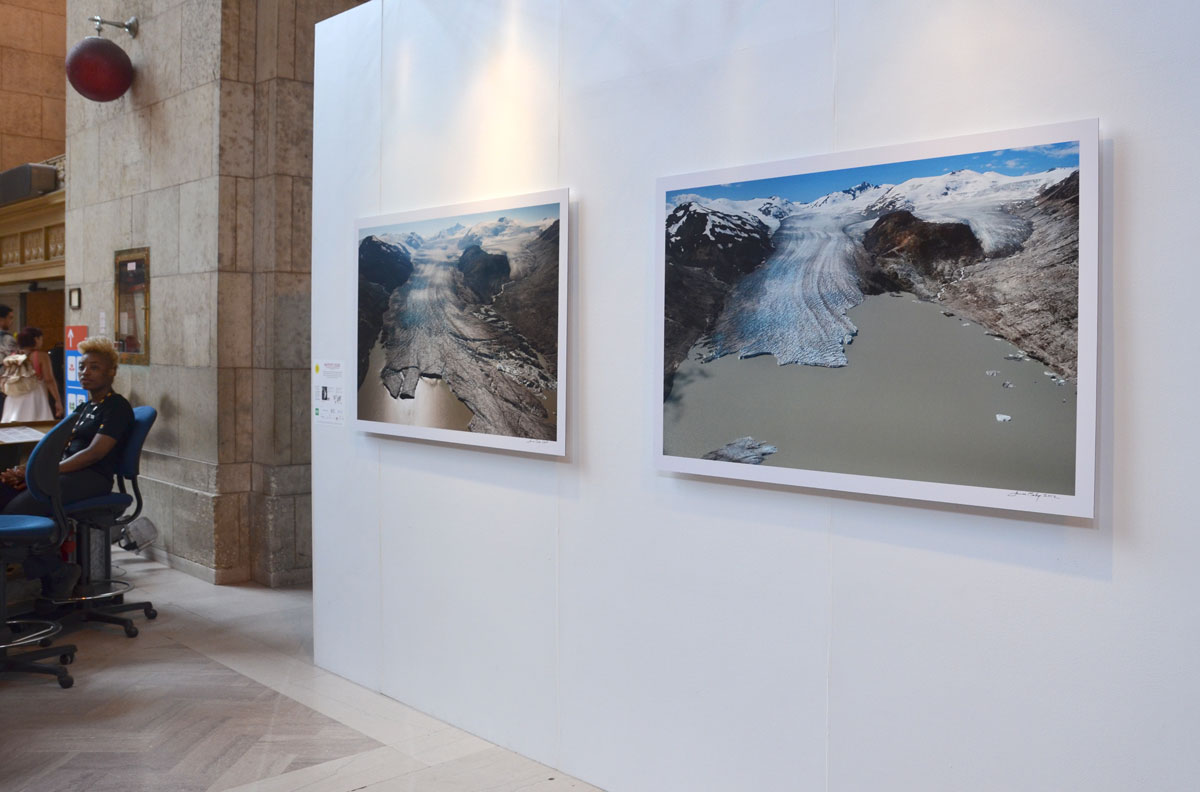
A Pan-American photography exhibit
produced by No.9: Contemporary Art & the Environment.
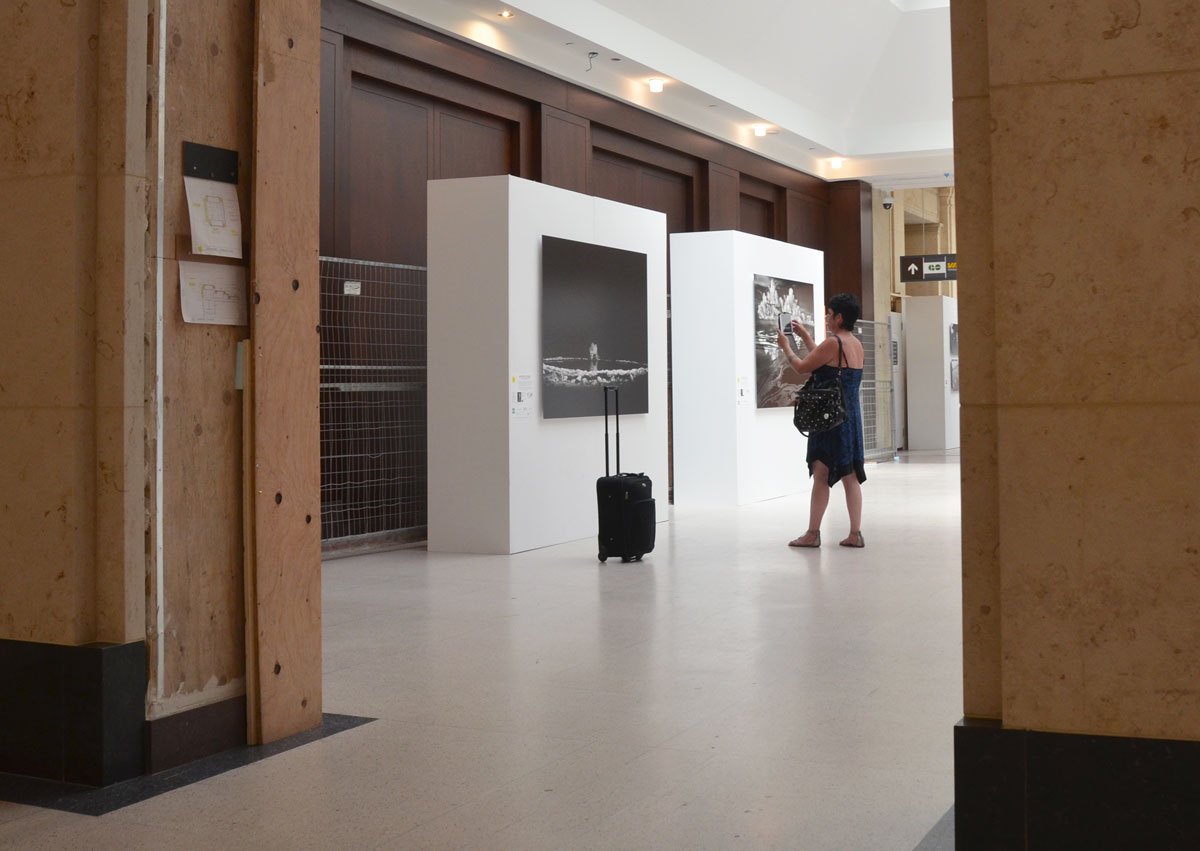
Two venues are involved, Union Station and Pearson Airport. The photos below represent a sample of the photos on show at Union Station.
below: Bridge Glacier, British Columbia 2012, by James Balog, part of his study of vanishing glaciers.
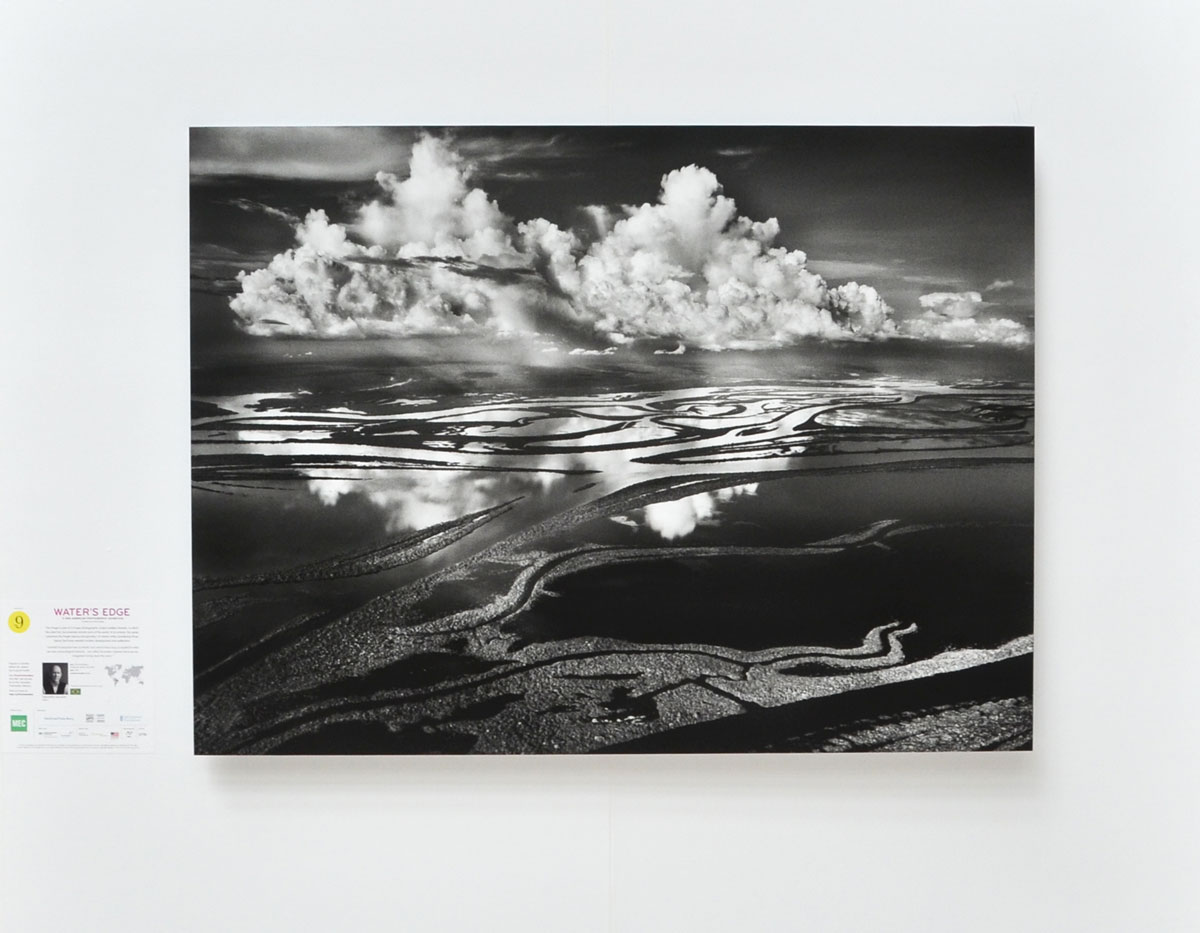
below: Two black and white photographs by Sebastiao Salgado,
part of a photographic project titled ‘Genesis’.
One aim of ‘Genesis’ was to examine “the fragile beauty and grandeur of nature”.
below: ‘The Anavilhanas’ taken in Amazonas Brazil, 2009 by Sebastiao Salgado.
Located on the Rio Negro, the Anivilhanas Archipelago is the world’s largest fresh water archipelago. It is an unique ecosystem with over 400 river islands spread over 90 km. The Rio Negro is 27 km at its widest point. During the rainy season (November to April) many of these islands are underwater.
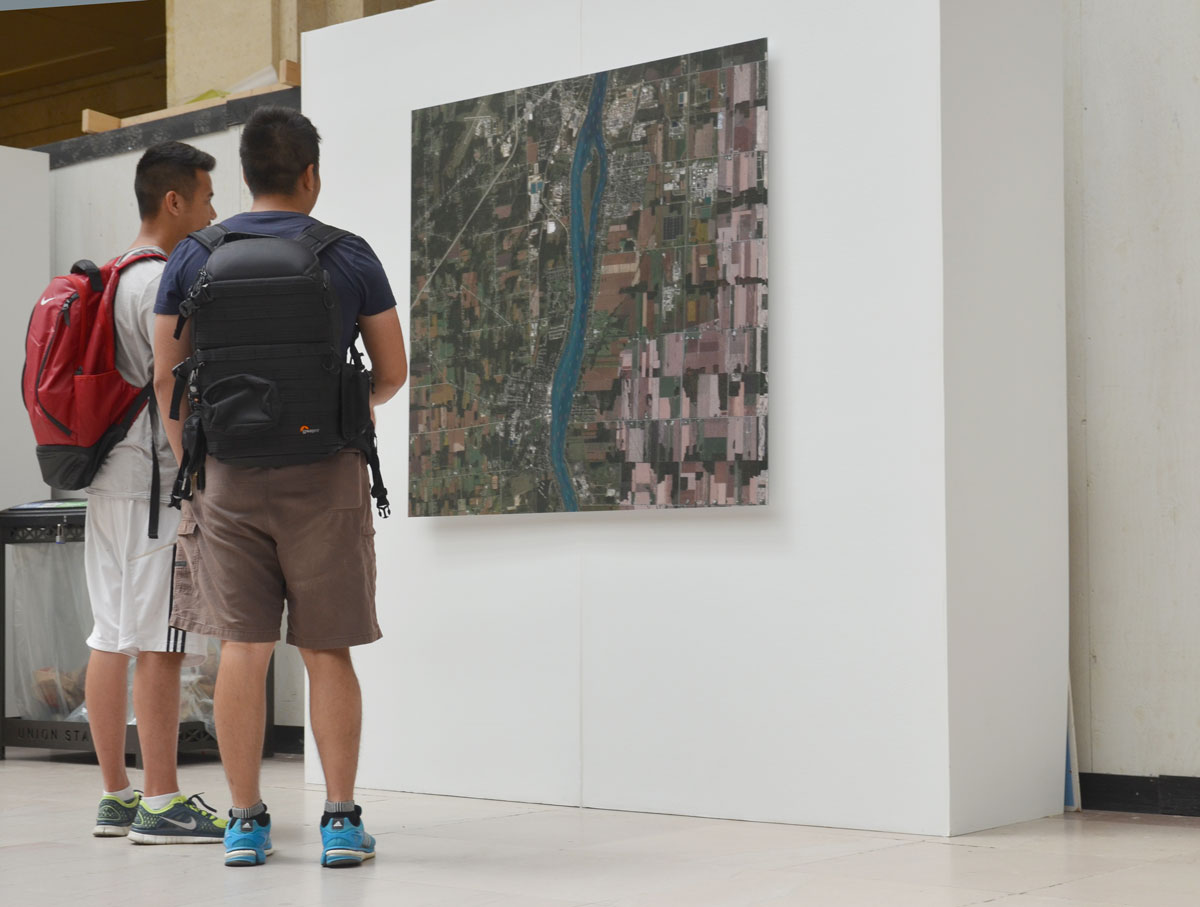
below: ‘Sarnia’ by Gustavo Jononovich, taken in Sarnia, from his “Free Shipping” series.
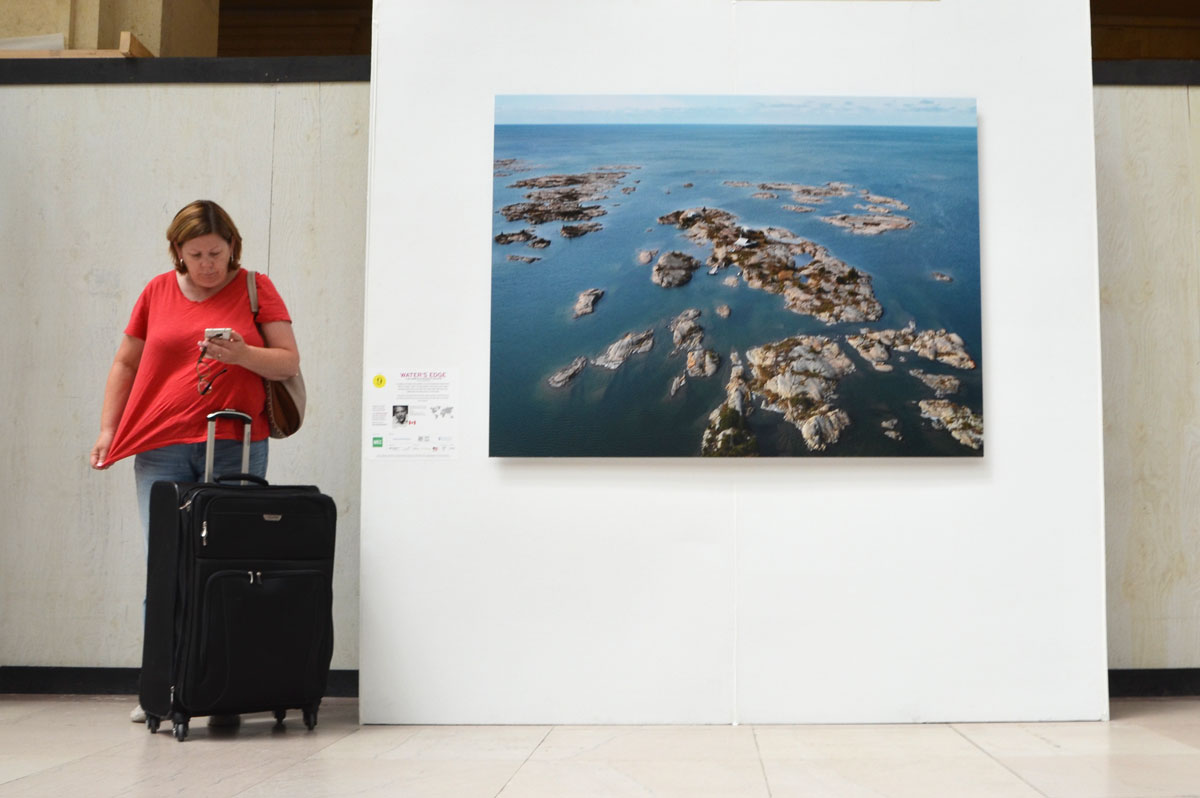
below: ‘Georgian Bay #1, Four Winds’, Point-au-Baril, Ontario 2009, by Edward Burtynsky.
This picture is part of his Water Series, a series that looks at changing water systems around the world as well as the relationship that we have with these water systems.
The exhibit ends on the 15th of August.
#myhomewaters
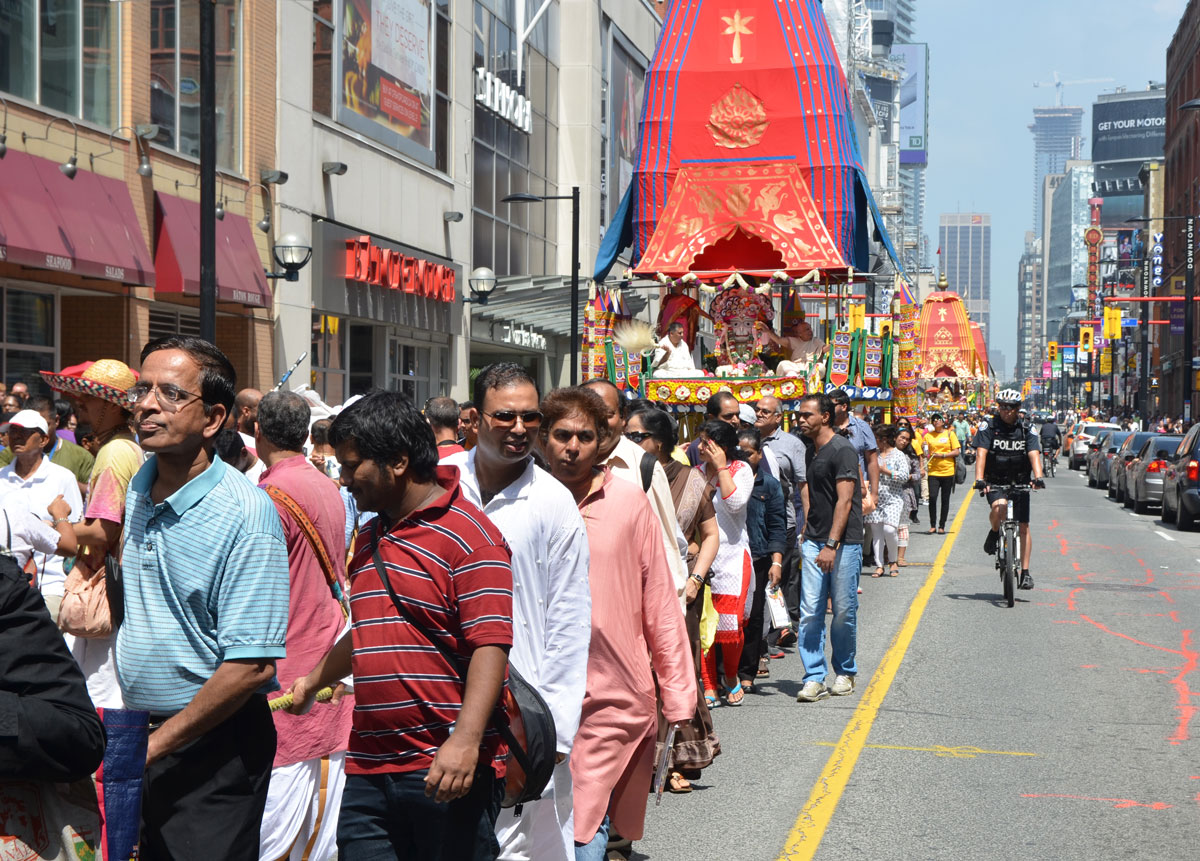
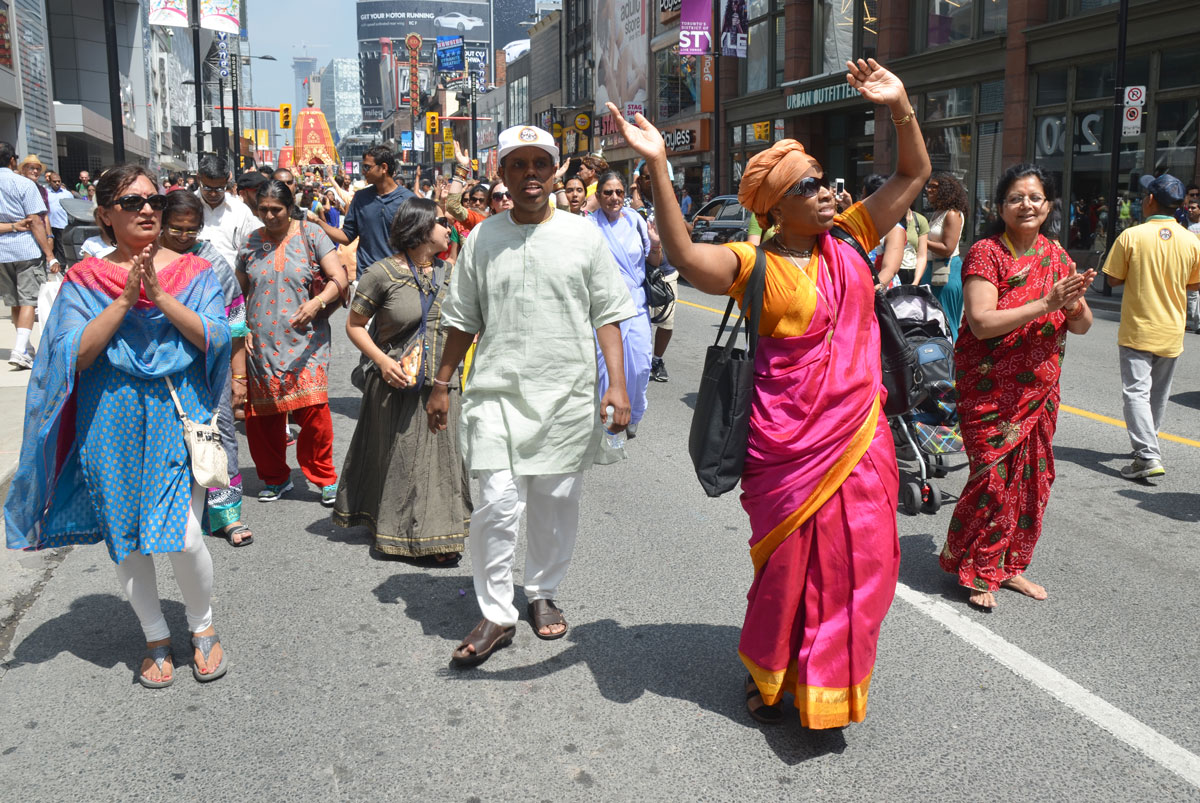
The 43rd Annual Festival of India started with a parade down Yonge Street from Bloor to Queens Quay on Saturday afternoon.
The parade is similar to an annual procession that has occurred for centuries in the city of Puri, India as part of a Hindu festival associated with the god Jagannath. Here in Toronto, as in Puri, three chariots constructed to look like temples are pulled through the streets in a procession from one temple to another. Each chariot carries a richly decorated representation of a god, first is Jagannatha (another name for Krishna or God) and then his brother Baladeva and his sister Subhadra. The chariots are pulled by people and the procession symbolizes the pulling of the Lord into our hearts.
In Puri, this Ratha-Yatra procession continues to attract over a million people every year.
In Toronto, the numbers aren’t quite that high!
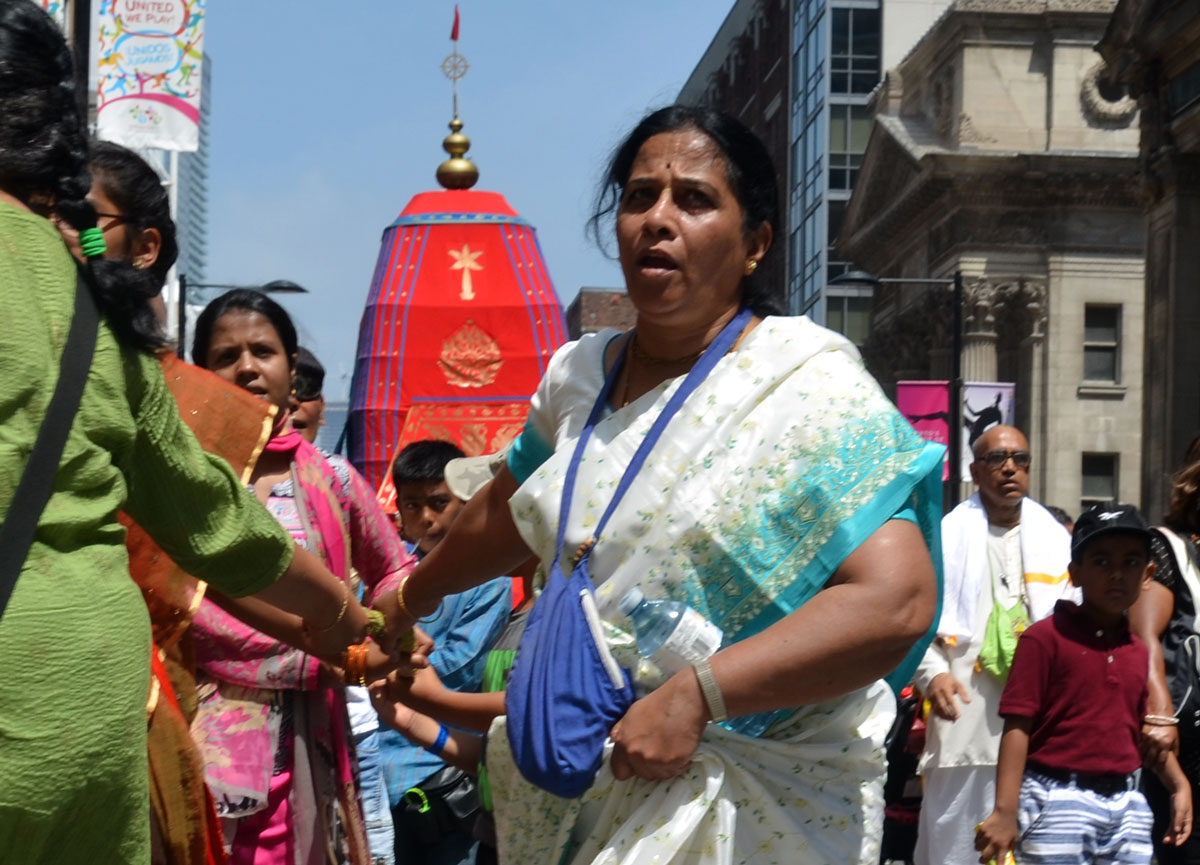
below: Many people used ropes to pull the floats down Yonge Street.
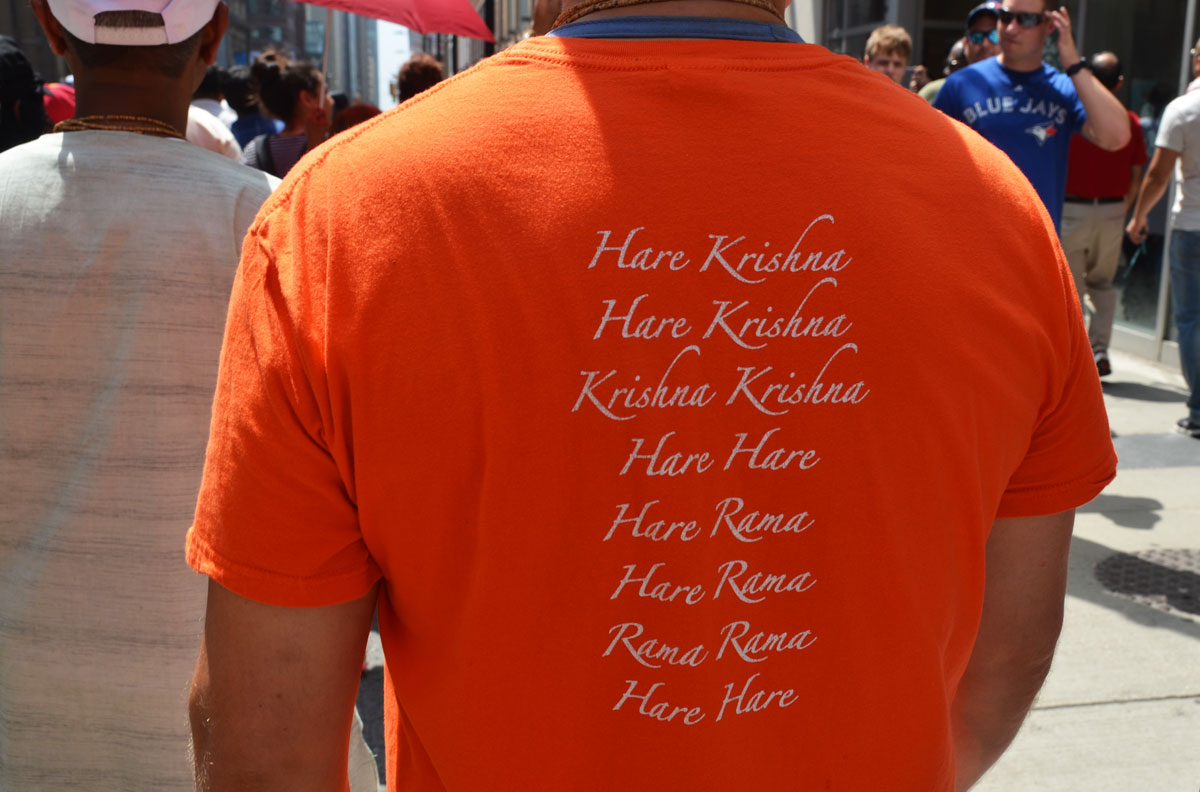
below: Other people danced, walked, sang and chanted Hare Krishna mantras.
The festivities continued on Centre Island for the remainder of the weekend.
Robert Home Smith (1877 – 1935) was a lawyer, business man, civil servant, and land developer. In the early 1900’s he acquired 3000 acres of land along the Humber River, from Lake Ontario north to what is now Eglinton Ave.
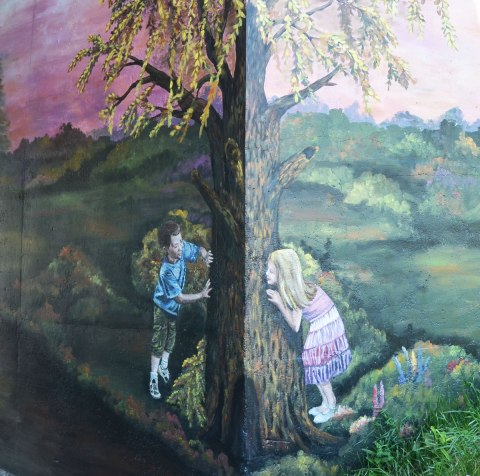
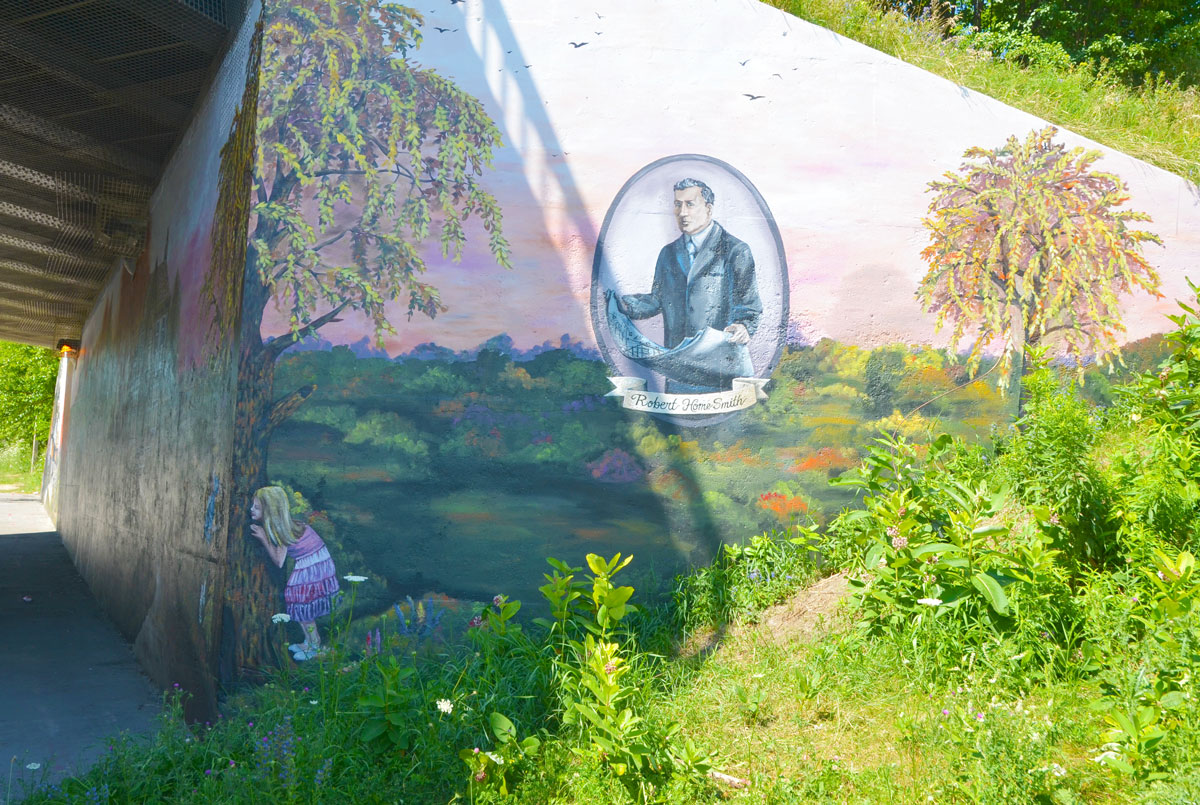
A mural has been painted by Emilia Jajus on Royal York Road as it passes under the train tracks close to Dundas West. The east side of the underpass is finished and it depicts Robert Home Smith and some of the effects that he had on the area.
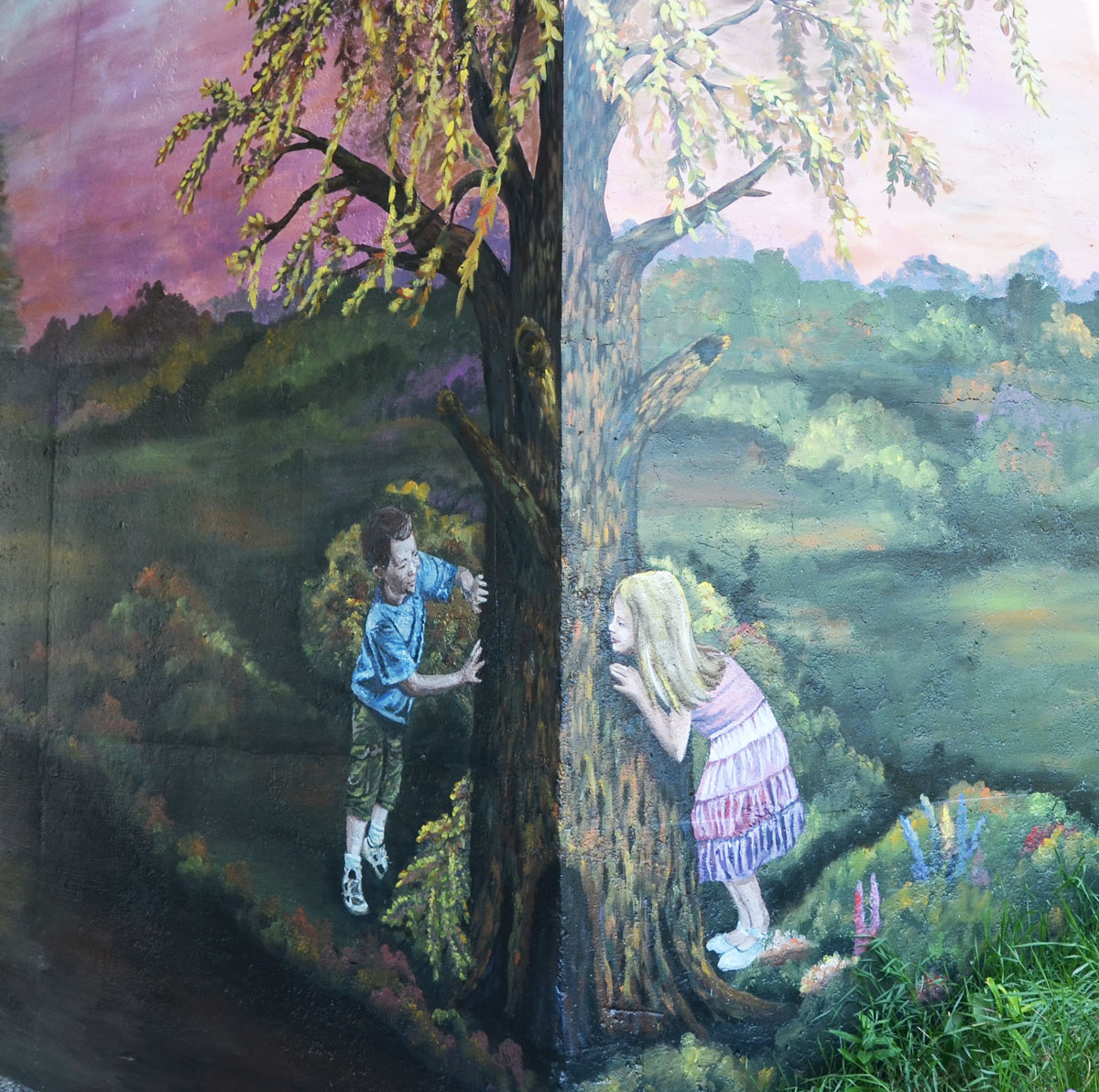
below: At the south end of the mural there is a portrait of Robert Home Smith. A young girl can be seen hiding behind the trunk of a large tree. Because the tree is painted on the corner, you can’t see the young boy who is hiding on the other side of the tree until you get closer to the mural.
below: Part of the mural, fishing in the Humber River by the bridge at the Old Mill. The bridge was built in 1916 after an older bridge was washed out in a storm. It is still there.
Part of the land that he owned was the site of the King’s Mill. This mill was built in 1793 on orders from Lieutenant Governor John Graves Simcoe. It was to mill lumber for the proposed town of York. Here, Home Smith built the Old Mill Hotel as well as the the Old Mill Tea Room. The tea room was opened on 4 Aug 1914, the same day that Britain declared war on Germany.
below: Part of the mural, the Old Mill Hotel
below: The Old Mill hotel in 1945
Robert Home Smith planned to develop the land on both sides of the Humber River (known as the Humber Valley Surveys) into residential lots that were aimed at affluent buyers. Although he died before the completion of this project, the neighbourhood of Kingsway as well as parts of Swansea, Baby Point, and Humber Village, still stand.
The parkland that is adjacent to the Humber River as it curves around Baby Point is named Home Smith Park in memory of this man.
below: A poor quality photo showing a view of the whole mural. A replacement photo is needed, one taken on a day when there aren’t so many shadows!
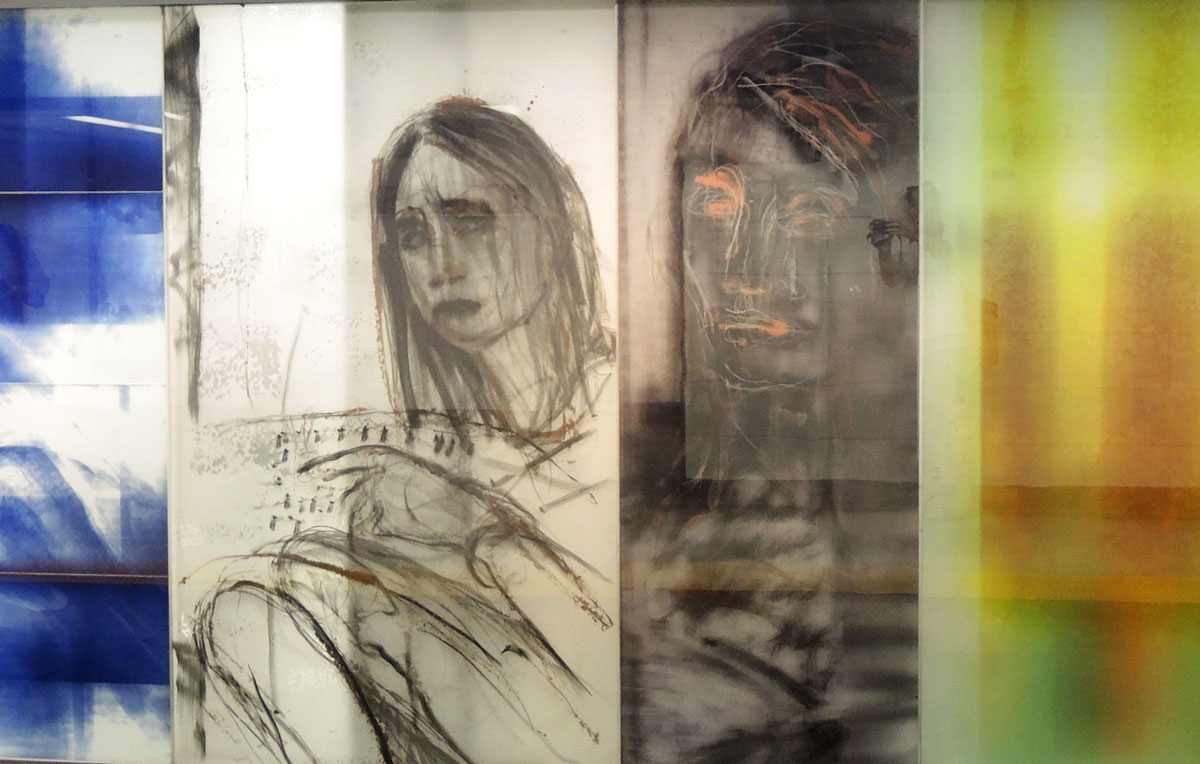
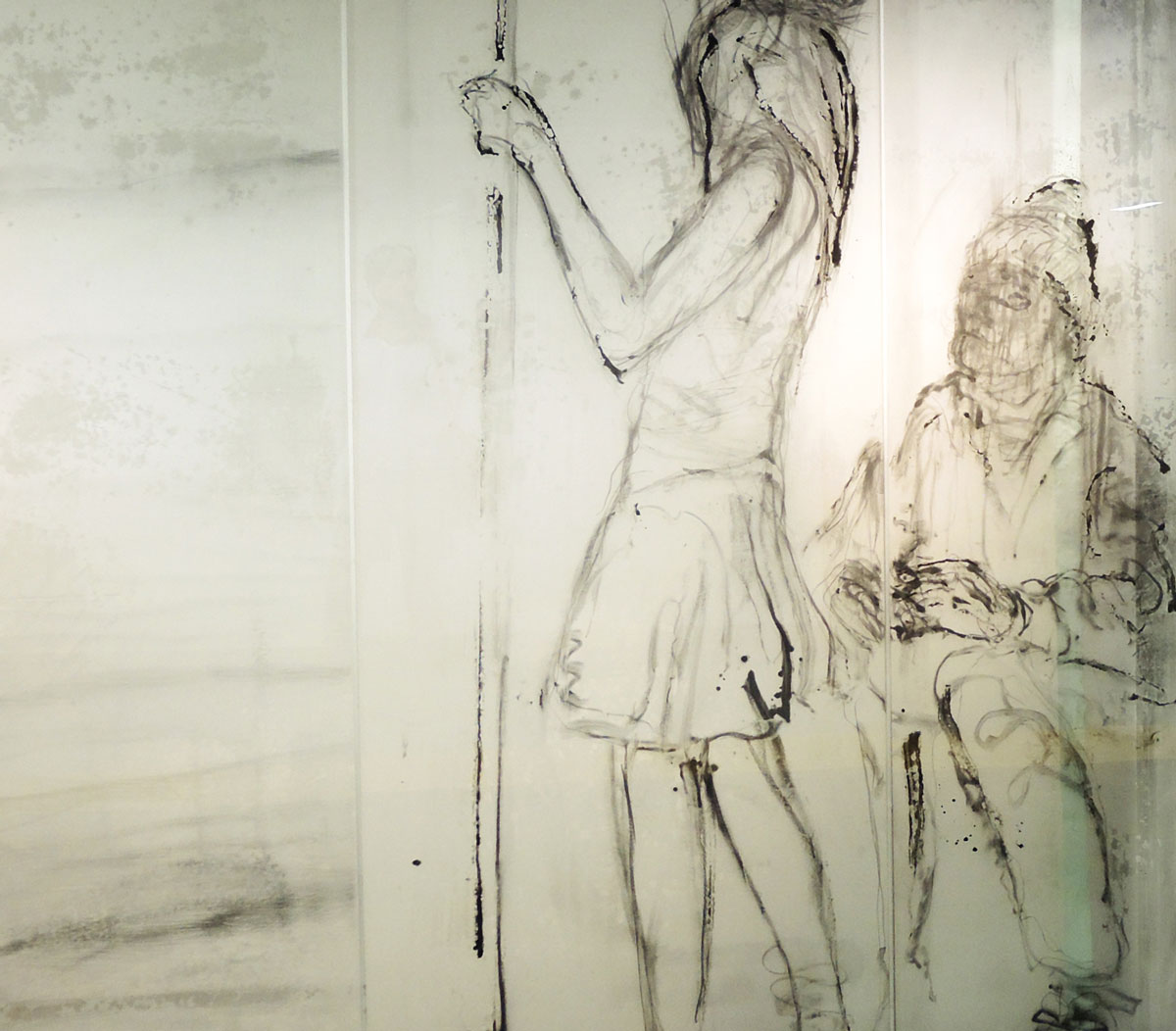
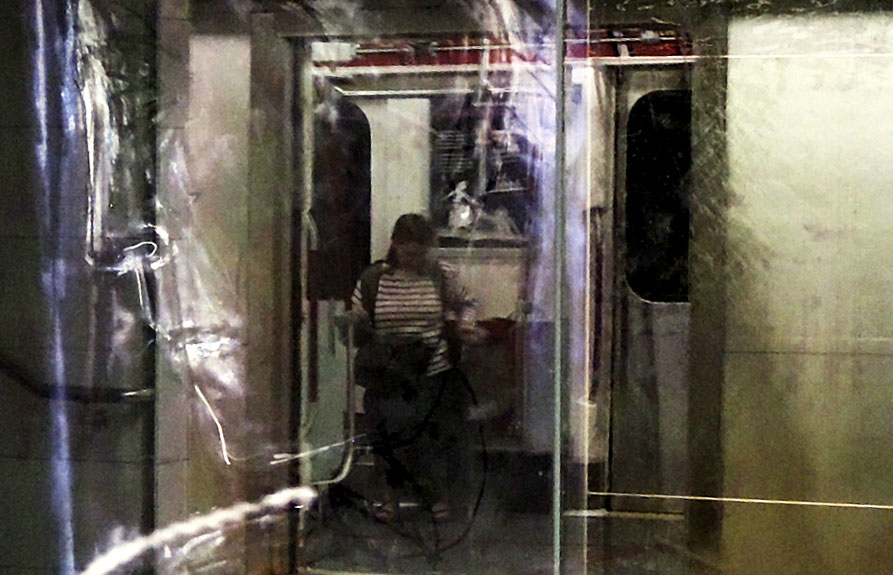
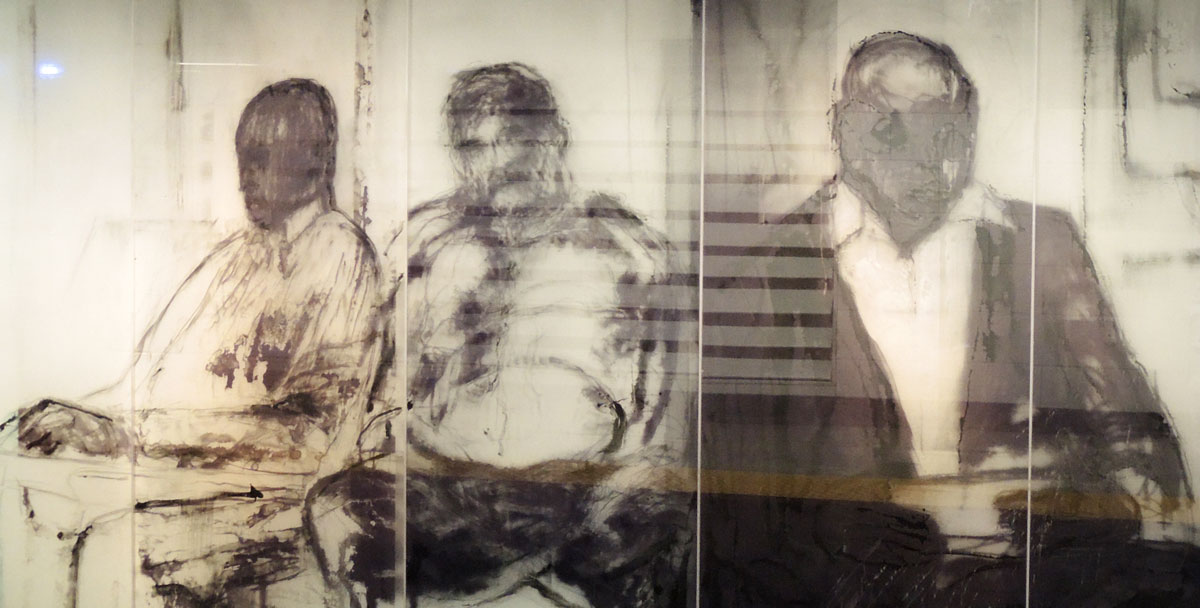
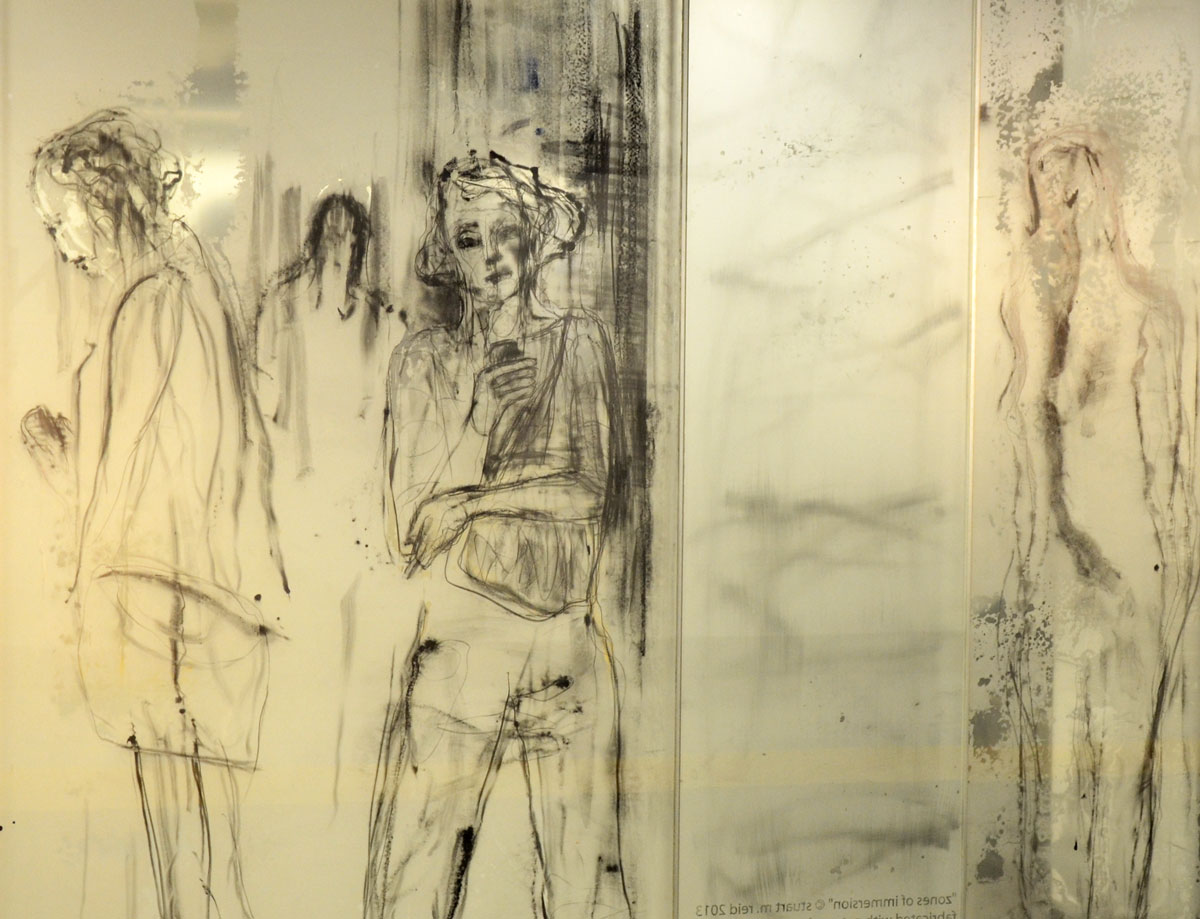
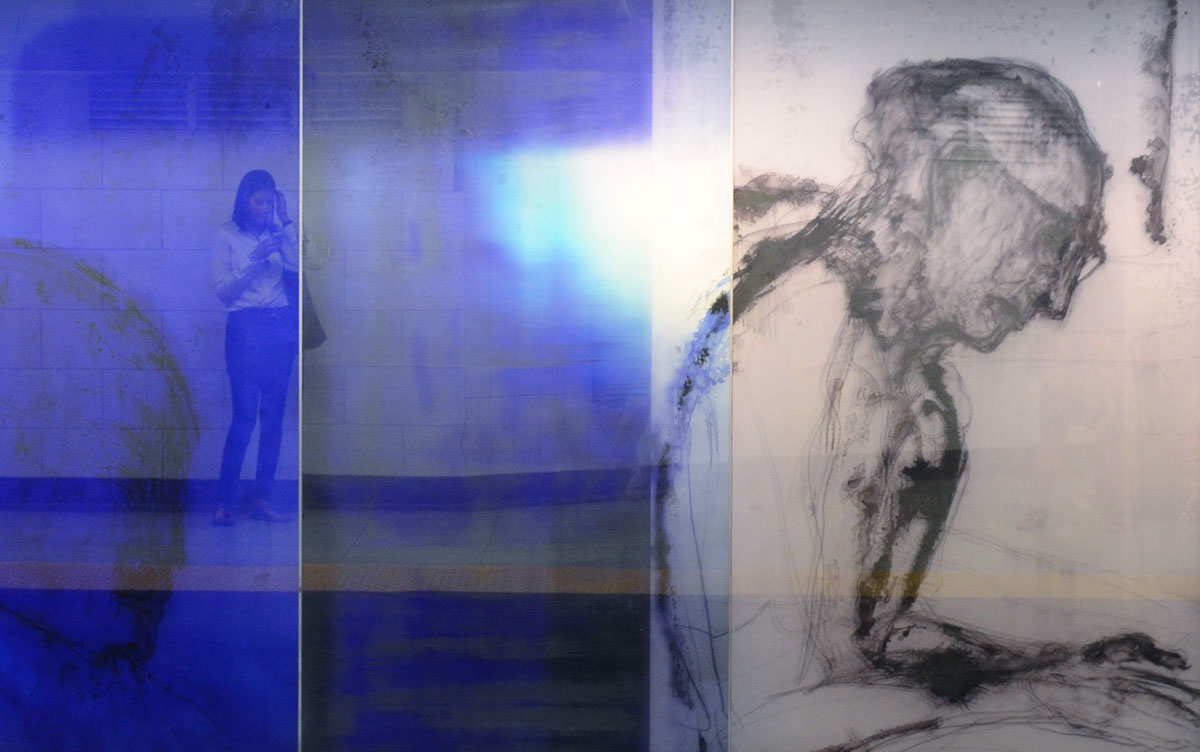
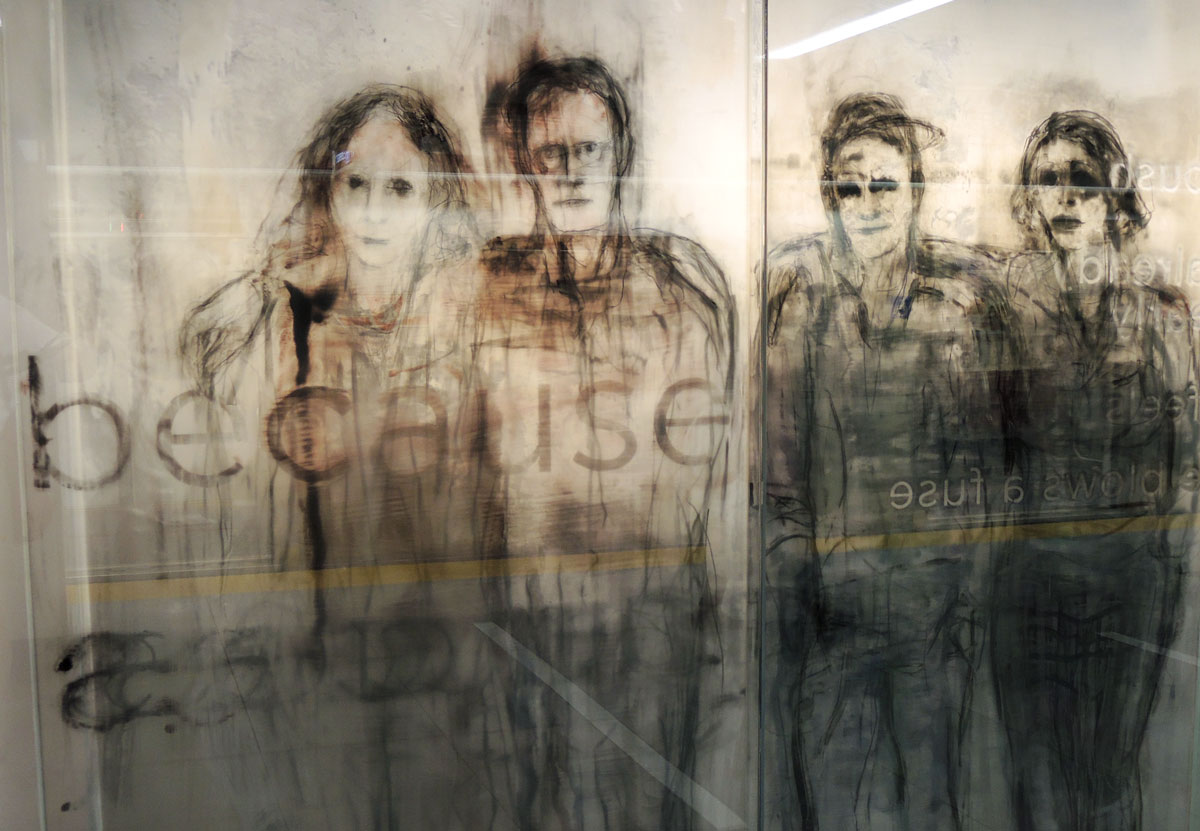
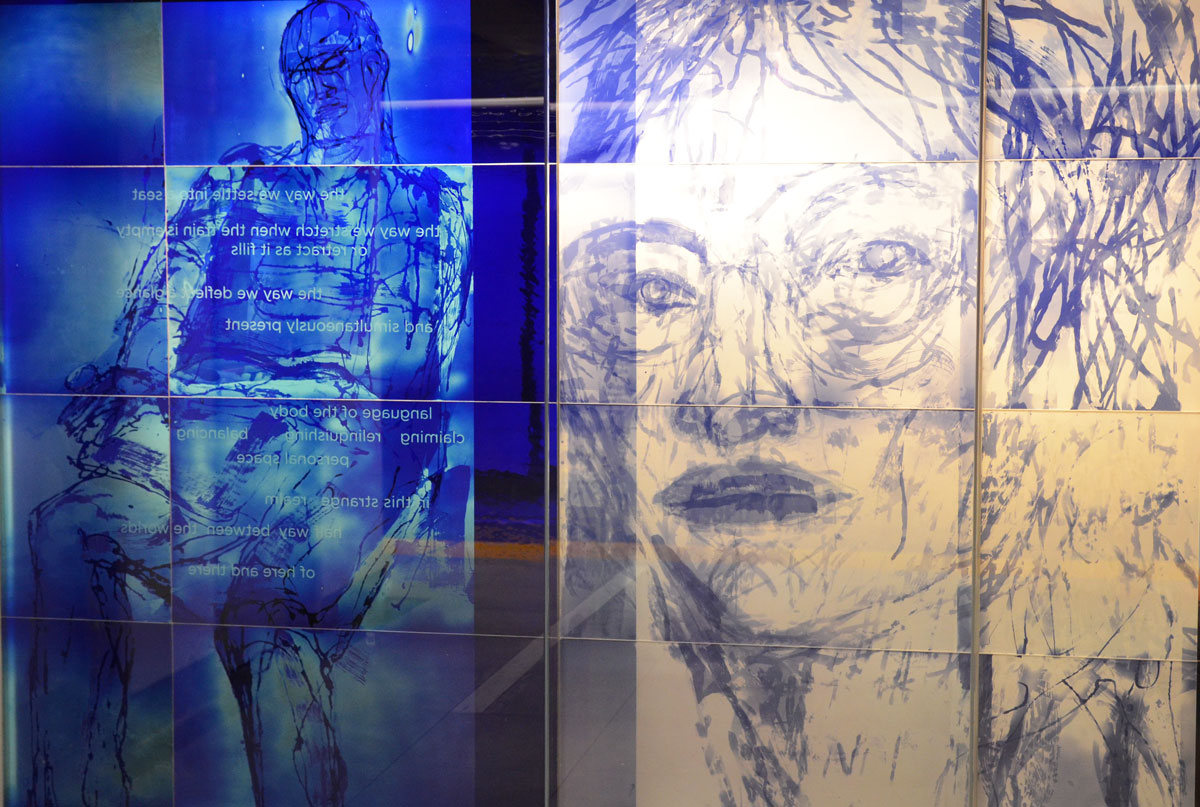
A while back, I posted some photos of ‘Zones of Immersion’, Stuart Reid’s art installation at Union Station. Now that it is completed, I decided to revisit it. There has been some talk about how depressing it is.
I’ll let you decide whether it is depressing or not.
If you are on the ‘northbound to Finch’ platform you get a clear view of all the panels.
If you are on the ‘northbound to Downsview’ platform you can only see some of the glass panels.
I’ve now been back a number of times and this is what I saw:
1) Of the figures with discernible gender, 12 or 13 were male.
2) The males are of different ages and shapes.
3) The number of females outnumber males by at least 2:1.
4) Almost all (or even all?) of the women are young. They are all thin, if not gaunt.
5) There is one child…. with a finger up his/her nose.
6) Only two or three figures are smiling.
“the way we settle into a seat
the way we stretch when the train is empty
and retract as it fills
the way we deflect a glance and simultaneously present
language of the body claiming, relinquishing and balancing
personal space in the interstitial realm
halfway between the worlds of here and there”
The panels that can be seen on the ‘northbound to Downsview’ platform are seen as the reverse of those viewed from the other platform.

“slicing through the clay of the earth’s first skin
steel rails and electric lines
going from going to
slicing through time and distance
darkness and light
station by station
releasing us into the city’s fabric
stop by stop
after a days labour
taking us home”
(added in October) I got off the subway at Union Station today. There were three guys in front of me. One of them stopped and pointed to the nearest painting which happened to be the one above. As he pointed he said “See what I mean, if that doesn’t make you want to jump… “.
I’m happy to be corrected if you can prove me wrong.
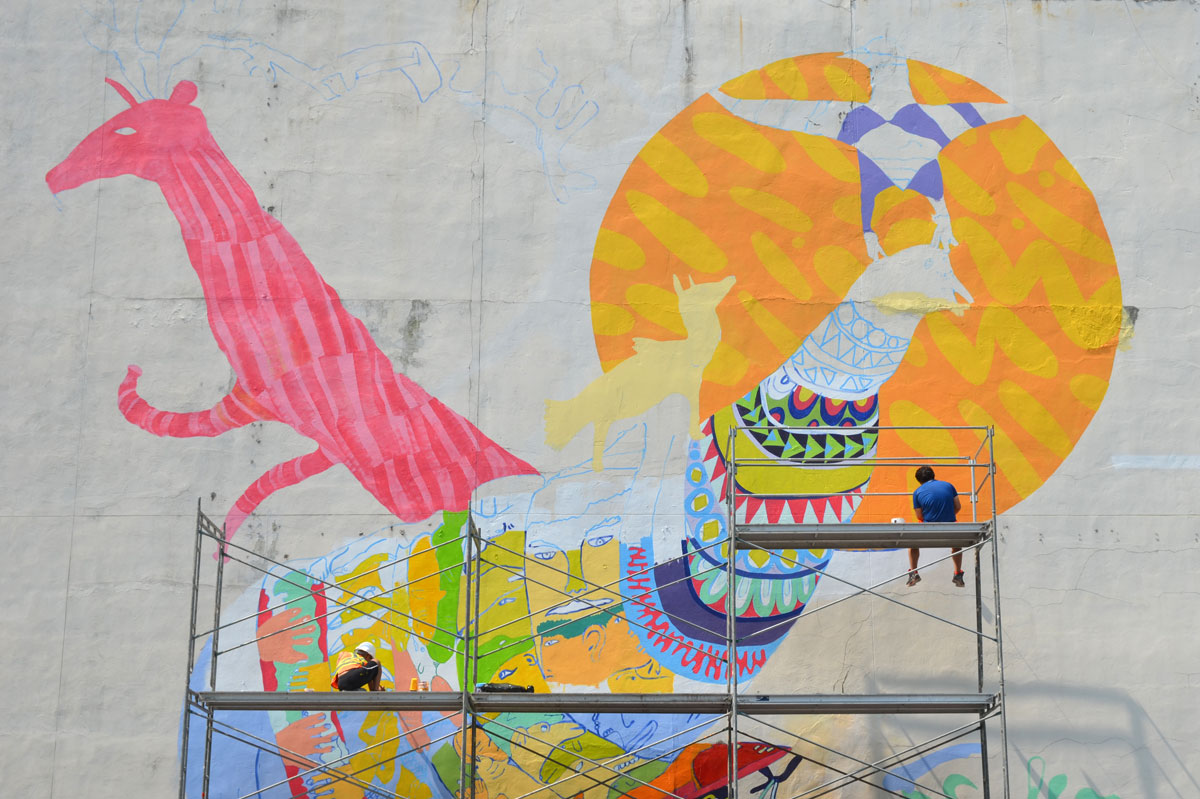
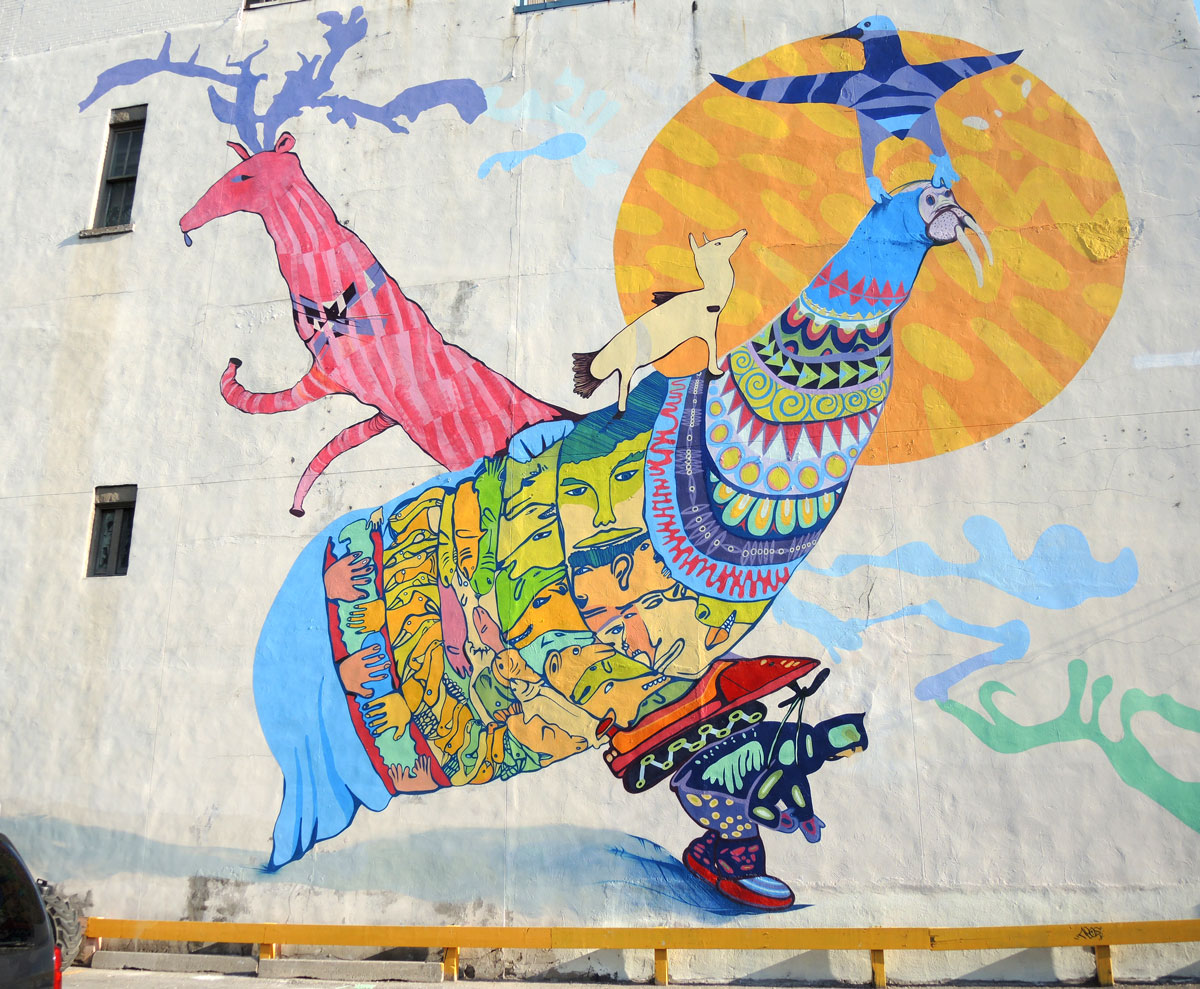
Piliriqatigiingniq
This mural is on the south wall of Hosteling International on Church St.,
and in a parking lot on Court St.,
just north of King St. East and across from St. James Cathedral.
Painted July 2015
This project was a collaboration between Mural Routes and the Nunavut Arts and Crafts Association. Artists were youth from Cape Dorset as well as graduates from Toronto’s Oasis Skateboard Factory: Latch Akesuk, Audi Qinnuayuaq, Cie Taqiasuq, Parr Etidloie, Julieta Arias and Moises Frank.