Posts Tagged ‘buildings’

Early Saturday morning was cold but beautiful –
brilliant blue overhead with the sun still low in the sky.

below: Striped grass

low sun rays shining through a fence made of vertical metal bars, so that the shadows on the grass make the grass looked striped

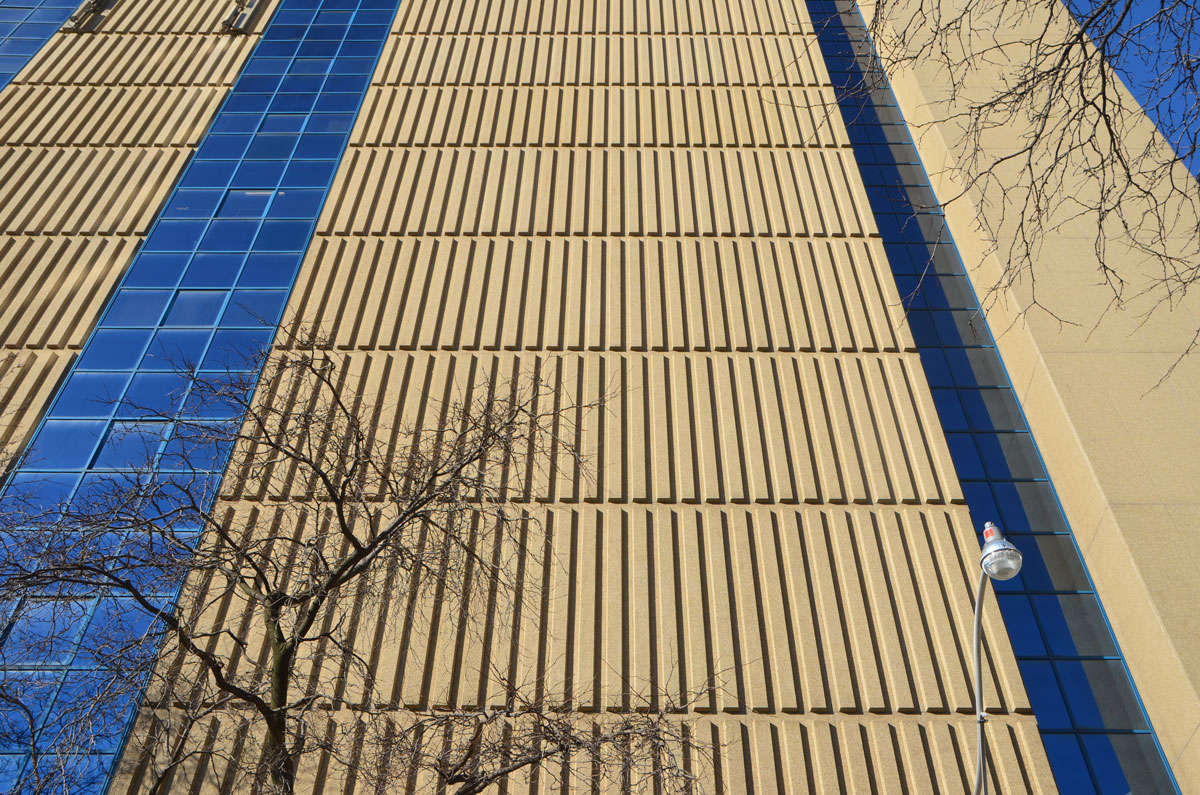
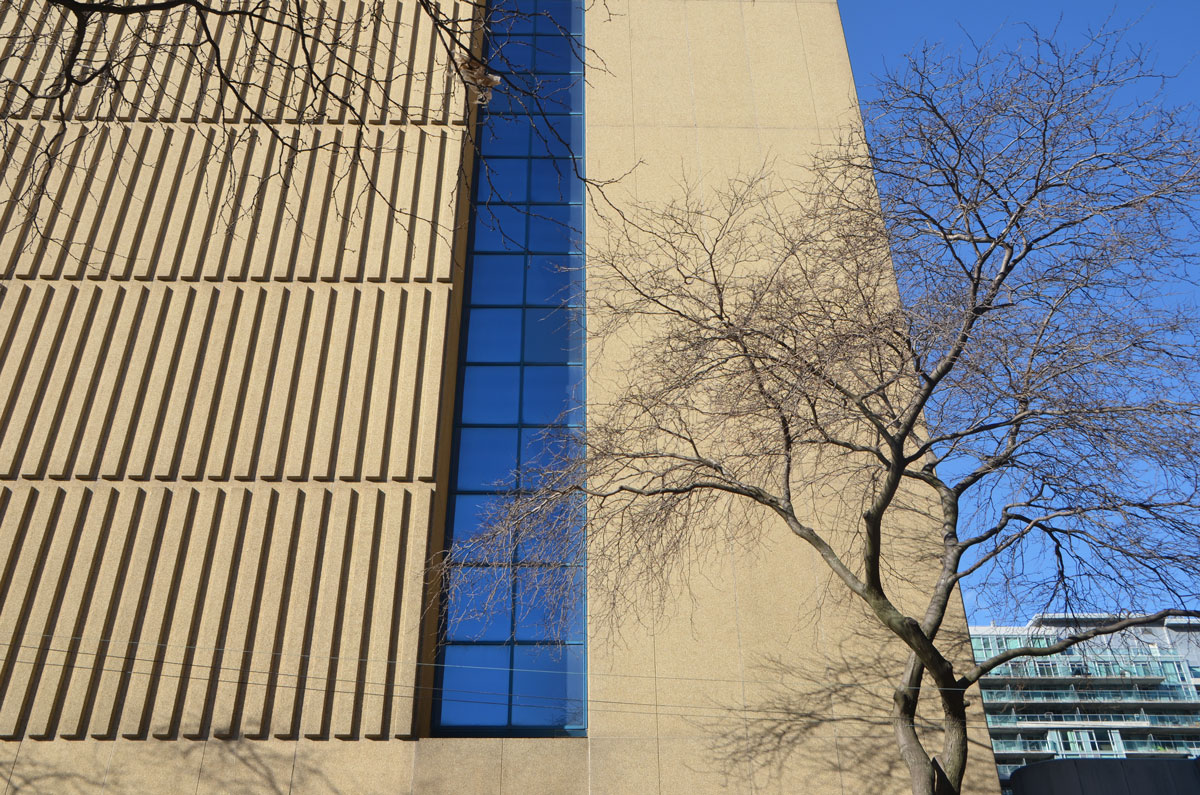
below:  This is the Bell building from the Simcoe Street side.  The blue glass, vertical lines in the concrete, blue sky and strong tree shapes made for an interesting few minutes while I experimented with different angles and views.

looking up a building with strong vertical lines made by concrete shapes on theglass is reflecting strong blue colour exterior of the building,

looking up a building with strong vertical lines made by concrete shapes on theglass is reflecting strong blue colour

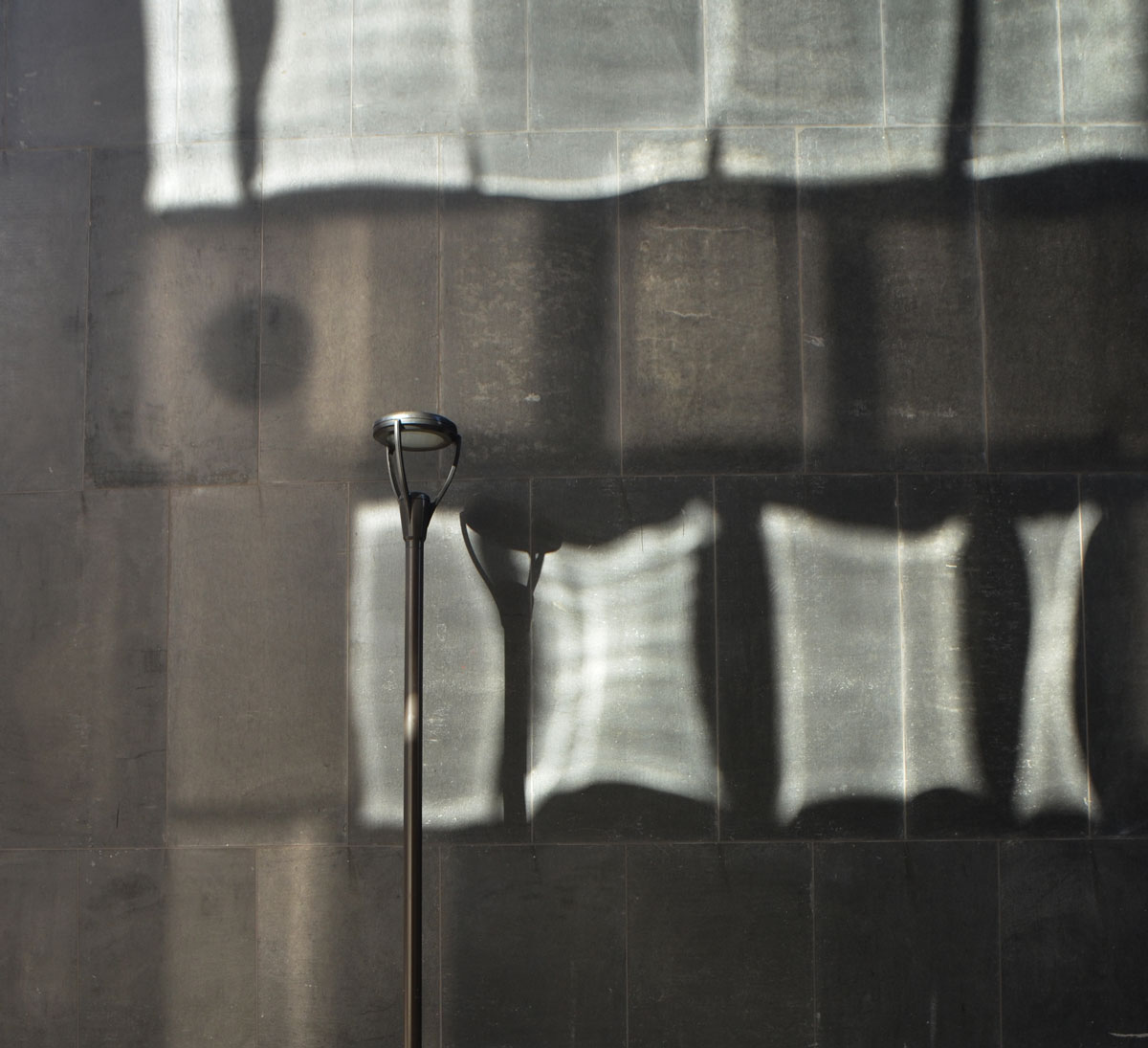
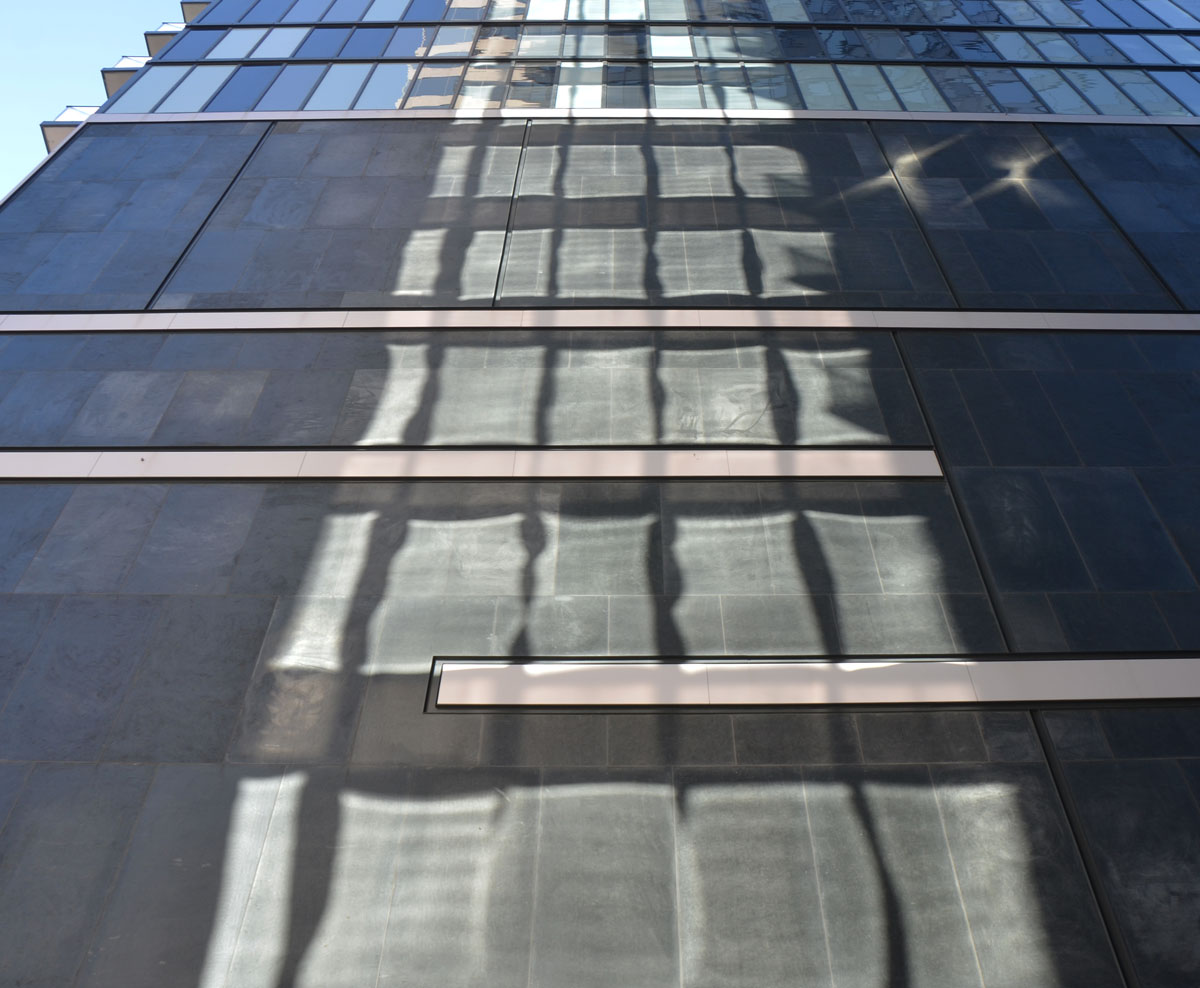
below: The ghostly look of reflected light

light reflecting off a glass building and landing on a black wall on the building beside it

looking up a tall building that is black on the exterior and has light reflected from a glass building beside it.

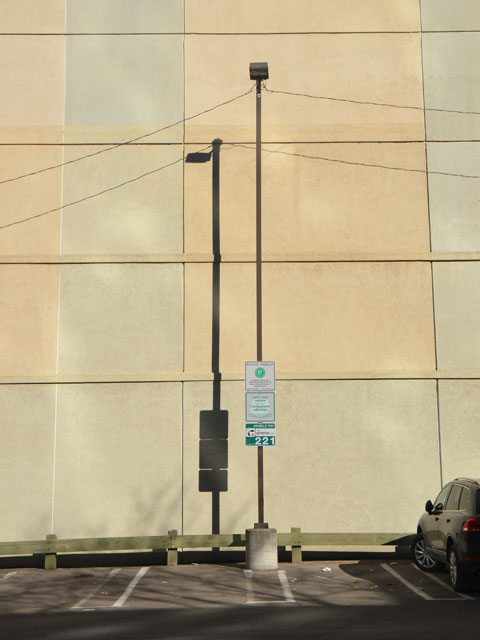
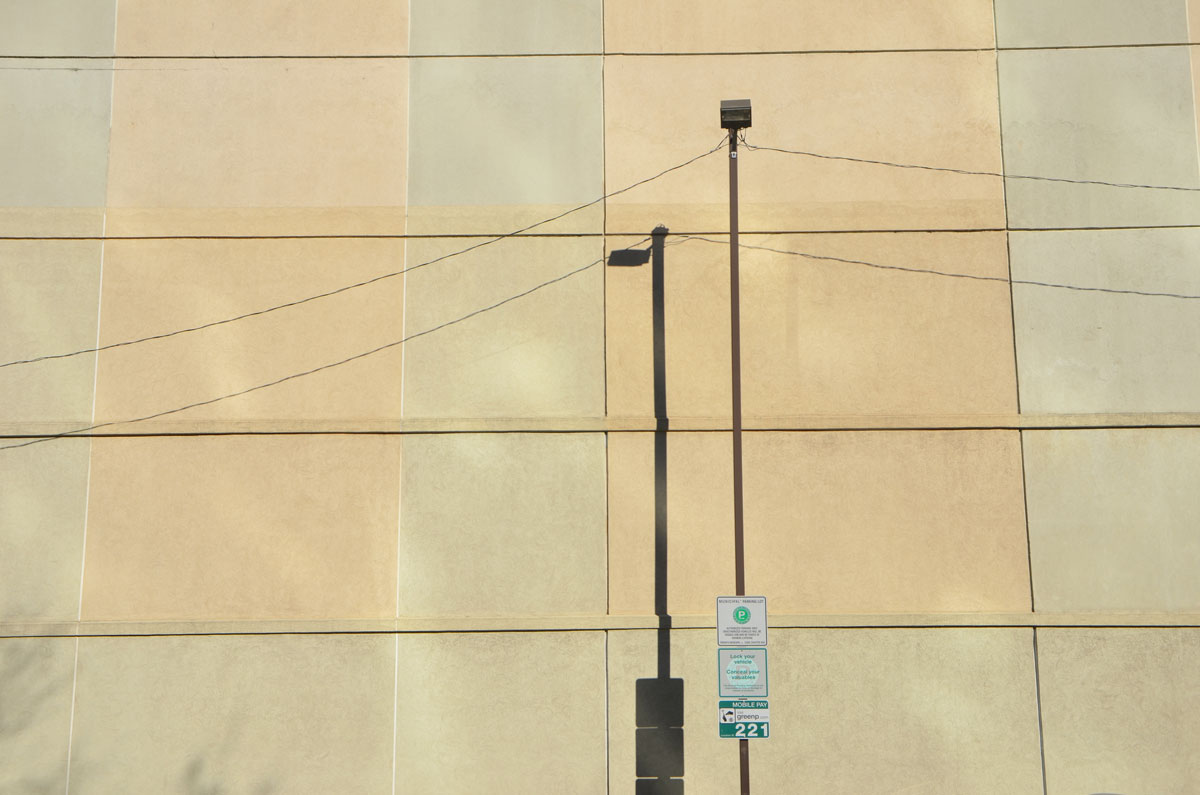
below: A single pole and its shadow, alone on a wall.

sun shining on a wall, one post with a sign on it is in the picture, along with its shadow

sun shining on a wall, one post with a sign on it is in the picture, along with its shadow

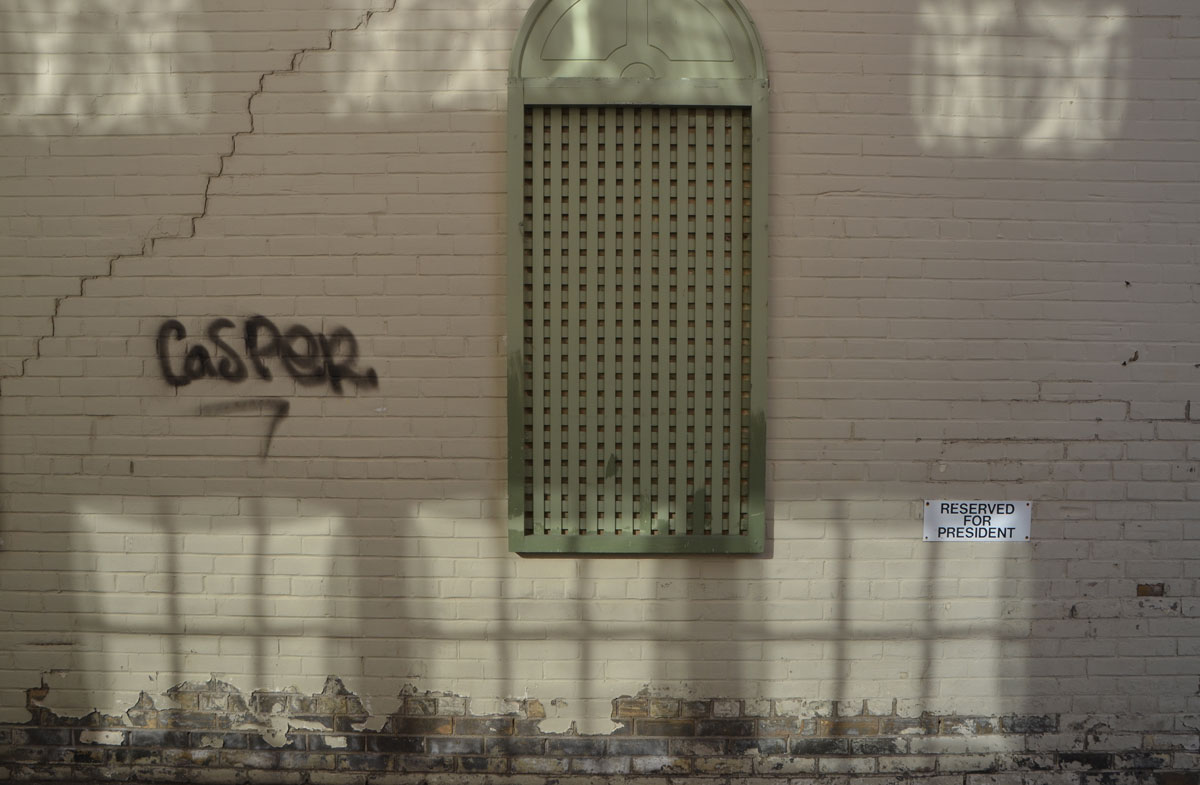
below: Three reflected windows reserved for the president.

beige wall with greenish covering over a window, light reflected from the building beside it makes it look like a row of windows along the wall

below: A half house, a fun find.  Once this was a semi-divided house where the shared wall created the peak at the front of the house.  With its partner gone, the remaining house looks incomplete.

a semi divided house, where the house on one side has been demolished leaving half a peaked roof.

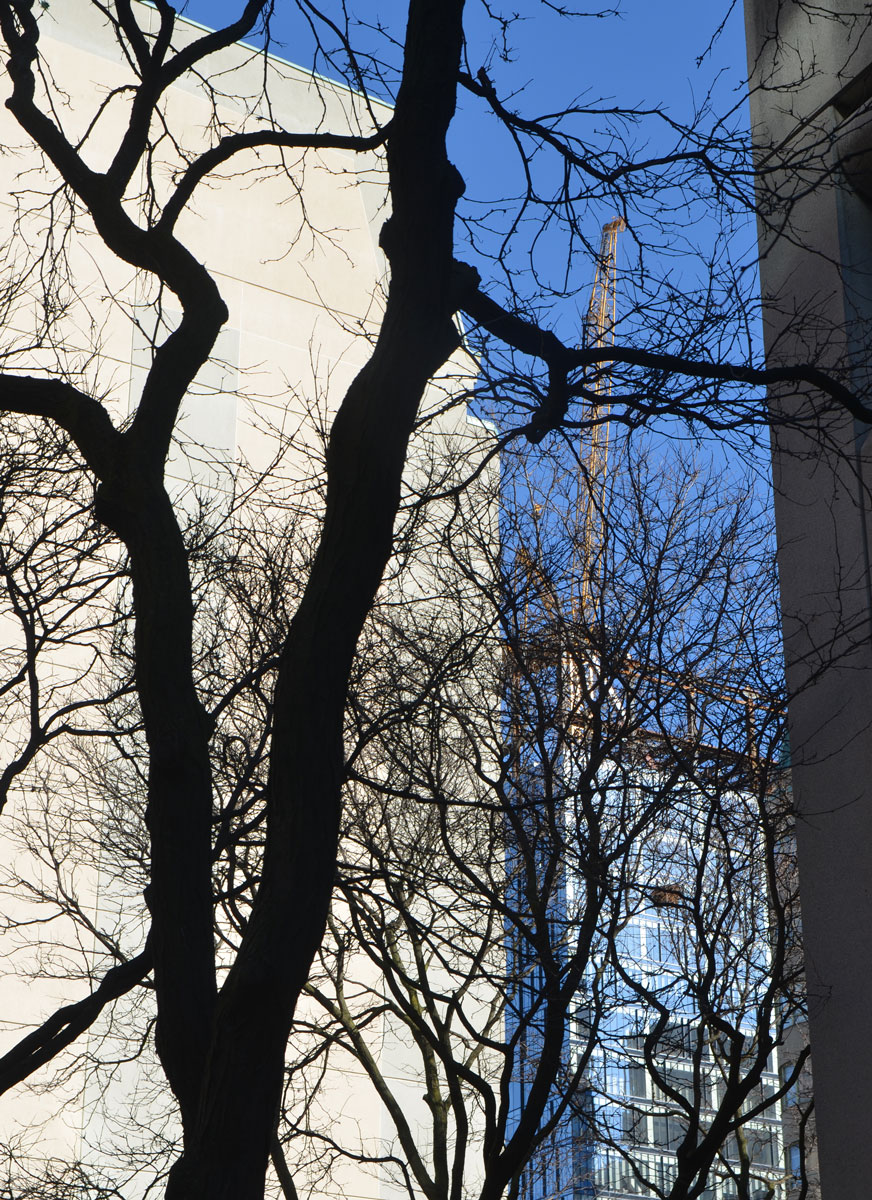
below:  A tree in silhouette seems to dance in front of the other buildings.

tree in silhouette in the foreground, buildings in light in the background,also blue sky

below: Phantom balconies, mirages on the concrete.

light reflecting from balconies along with shadows make phantom balconies on the building beside it

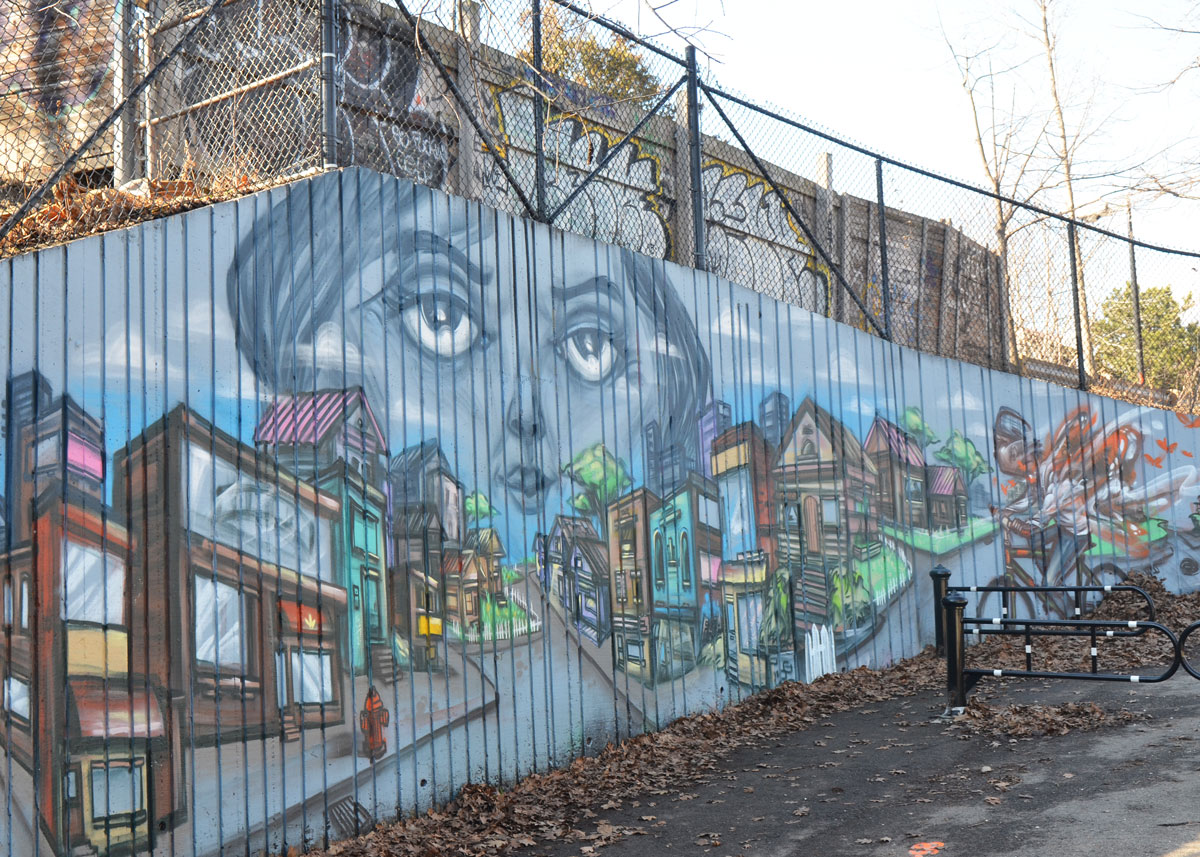
a long mural by elicser that leads from Monarch Park, through the railway underpass and to the community garden on the other side, pictures of people

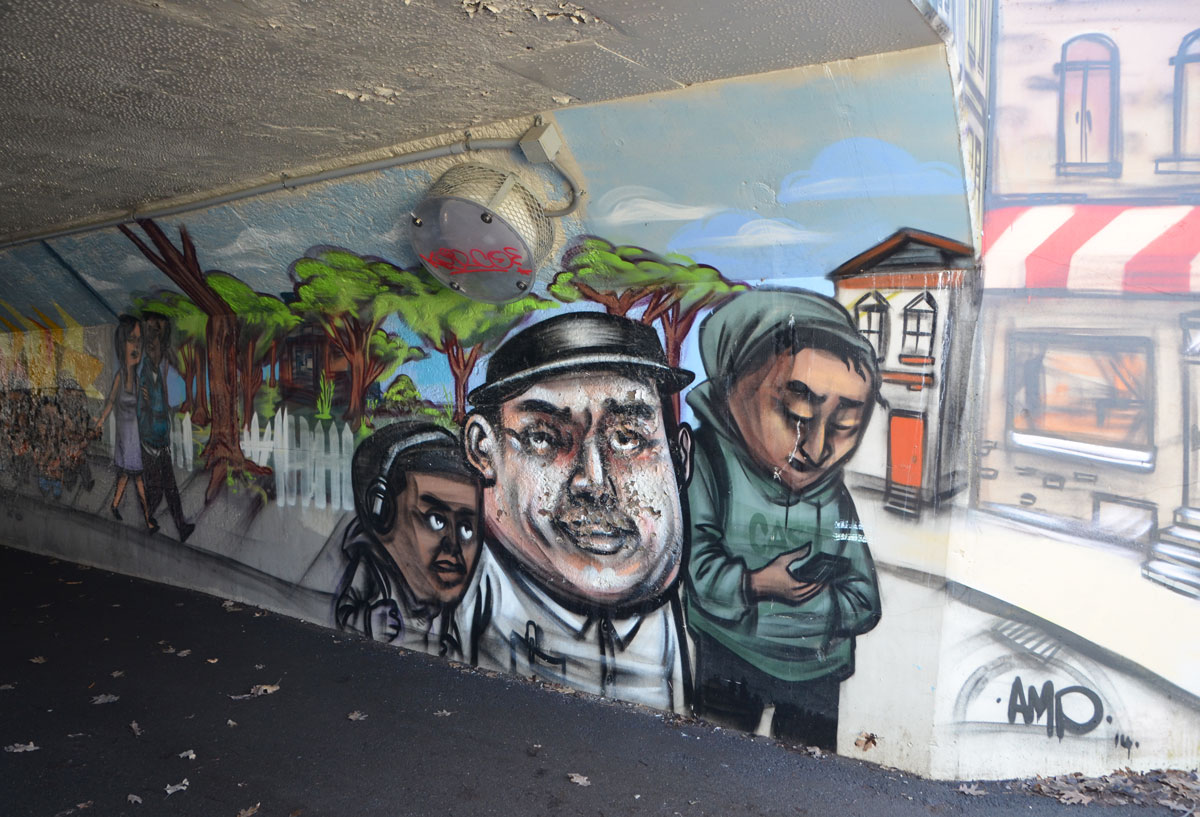
If you walk south through Monarch Park this is the view that greets you as you approach the railway underpass.  Elicser has painted a large mural that extends from the park through to the Woodfield Community Rail Garden that is on the other side.  As you walk through the underpass this is what you see:

a green and white GO train passes over a tunnel that provides access between two neighbourhoods. The tunnel has been completely covered by a mural by elicser that shows people going about their everyday outdoor activities

part of a larger mural by elicser in Monarch Park - a cyclist is going fast as he goes downhill

part of a larger mural by elicser in Monarch Park - a large woman's head and many buildings

mural by elicser in the tunnel that is a railway underpass - people walking outside

mural by elicser in the tunnel that is a railway underpass - a girl is painting a large picture of a monarch butterfly on a wall

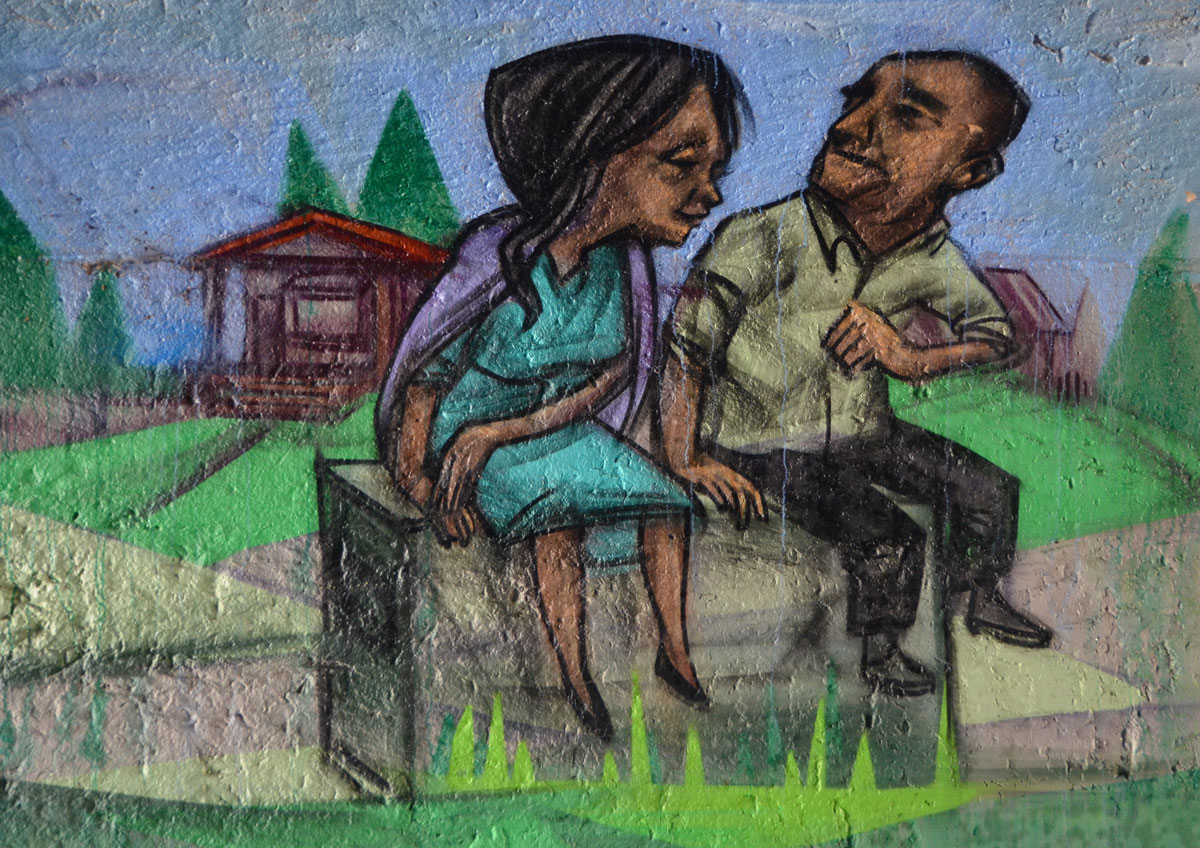
mural by elicser in the tunnel that is a railway underpass - a couple sits on a bench, a cabin is behind them

mural by elicser in the tunnel that is a railway underpass - a mother and father lead a group of noisy kids on a walk

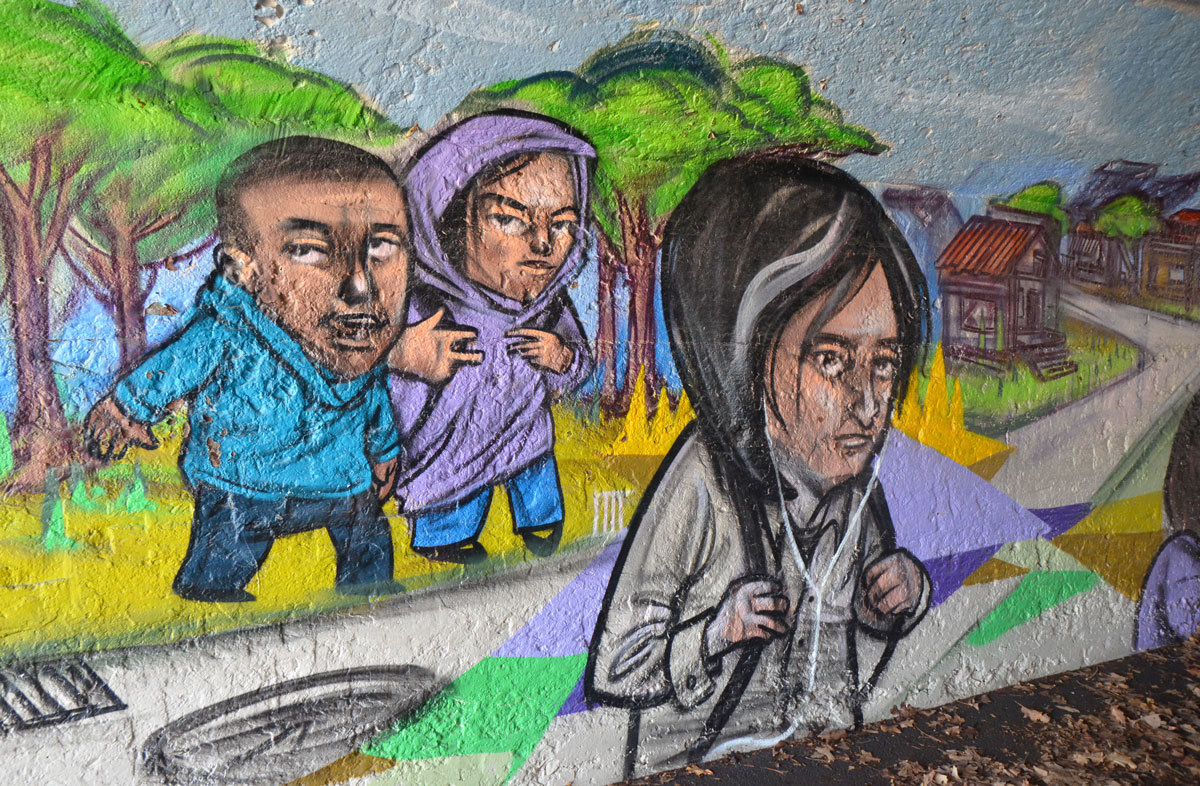
mural by elicser in the tunnel that is a railway underpass - young people walking, one with earbuds on and one making hand signs

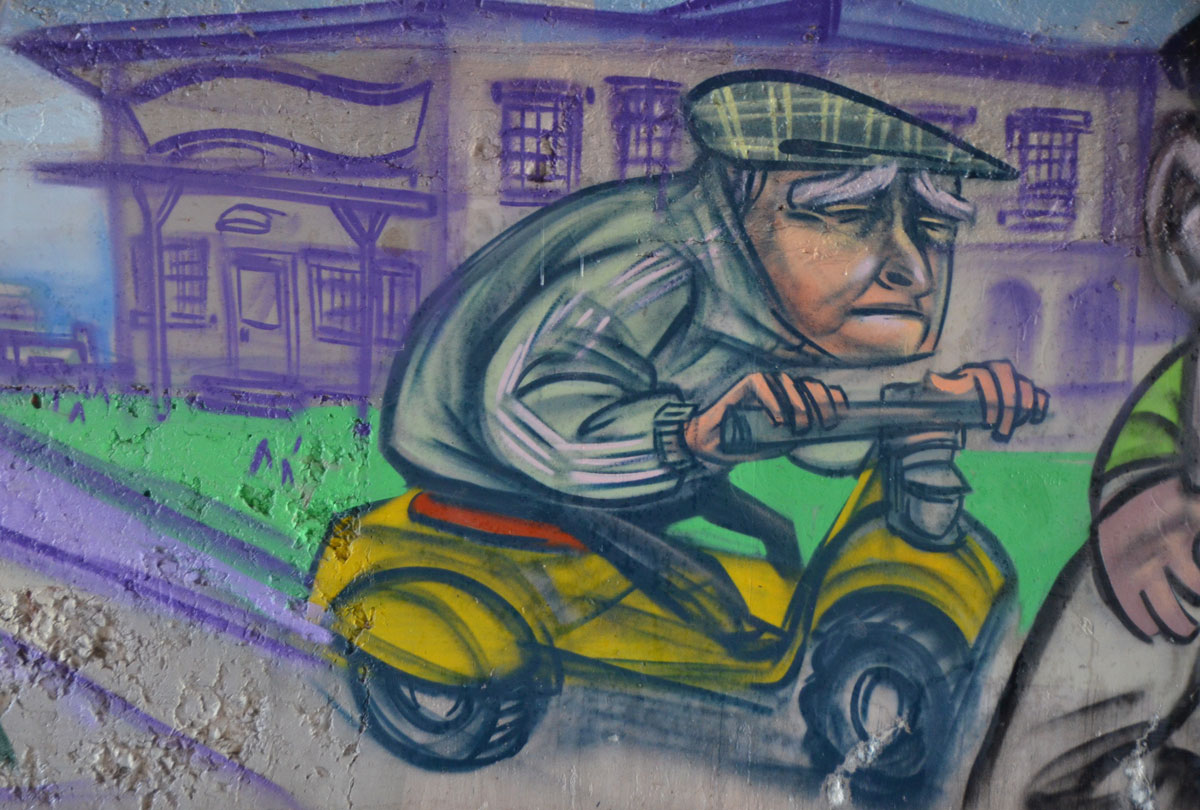
mural by elicser in the tunnel that is a railway underpass - an older man on a motorized scooter, he looks sad, frowning.

a mural by elicser on a railway underpass by the woodfield community rail garden, pictures of people gardening

a mural by elicser on a railway underpass by the woodfield community rail garden that covers all the concrete of the opening. a VIA train passes overhead as a father and daughter stop to watch

It’s February so the community garden is still resting for the winter.  A shed with all four sides painted by Monica on the Moon provides some colour in the meantime.

a small wood shed sits in a community garden.  Two sides can be seen, both painted with a mural by MOnica on the Moon.  One side is a bright yellow and orange turtle in blue water and the other is a gold and brown bird with its wings open (owl? hawk?) on a bright blue sky background

The path continues…. a slight curve and you’re on Woodfield Road and on your way again.

path through a community garden continues past a large house and then towards a street

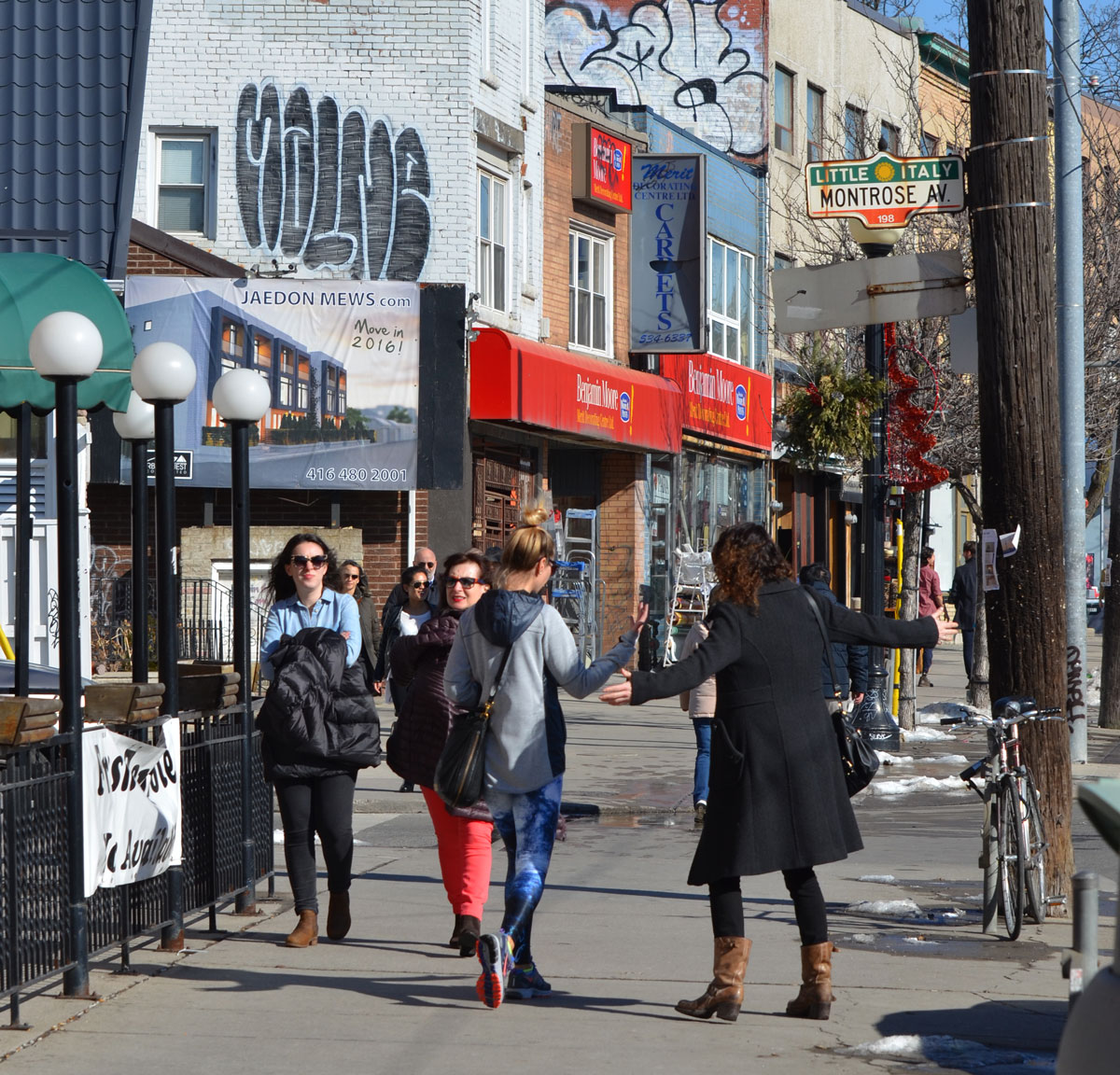
below: I doubt she’s saying that she loves the sunshine THIS MUCH!  but I’d like to think she is.   That’s certainly what was going through my head for most of the weekend so I’m going to pretend that she agrees with me!… especially since I am writing this as the rain falls outside my window.

a group of women walking down College Street at Montrose on a sunny winter day. One of the women is wearing a black coat and she has her arms open wide.

But back to those ravens and flamingos that I promised you…..

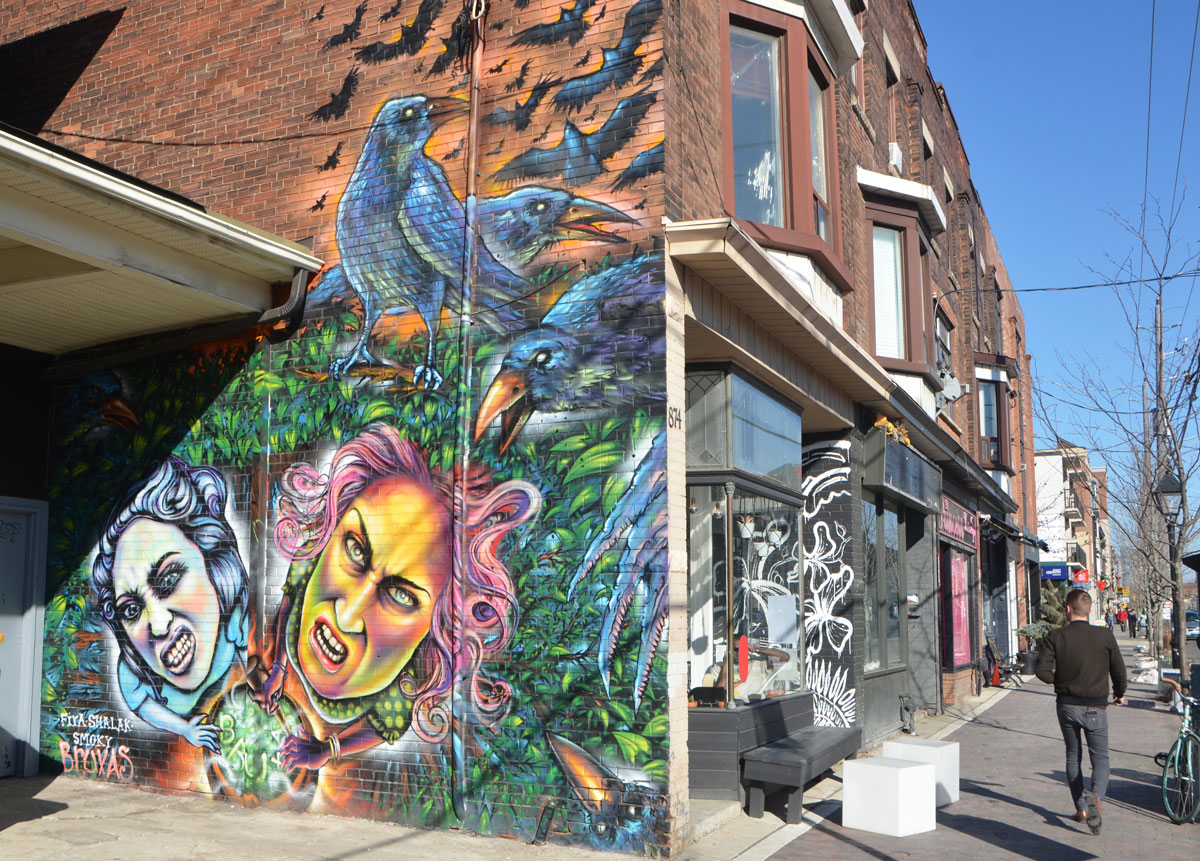
below: But not everyone’s happy.  Witches brewing with ravens and crows nearby.   There always seems to be symbolism associated with these large black birds so I went searching for information.  Ravens and crows are found throughout most of the northern hemisphere so many diverse cultures have their own mythologies surrounding these birds.  The best summary I found was this,  “On the negative side, Raven represents the profane, the devil, evil spirits, the trickster and thief, war and destruction, death and doom, the void.  Yet in many cultures Raven also represents deep magic, the mystery of the unknown, death and transformation, creation, healing, wisdom, protection, and prophecy. ” (source)  We don’t know exactly what Fiya Bruxa, Shalak, and Bruno had in mind when they painted this mural but I doubt that it was something positive – those witches look rather angry and nasty.

a mural on a wall of two angry women's faces. One is pale pink and the other is yellow. Many crows or ravens are flying upwards from the women. The mural is on the side of a store that is part of a row of three storey brick storefronts.

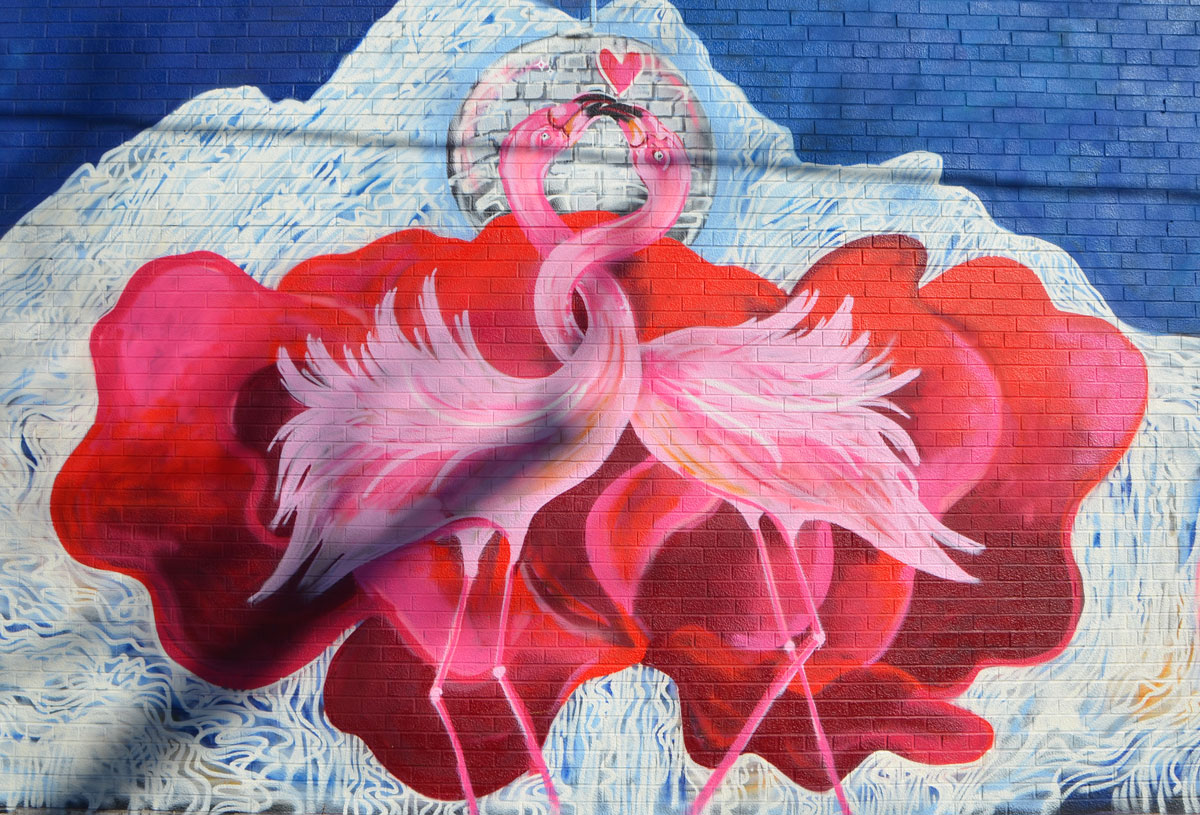
below: From the vengeful looking faces above to these hopelessly romantic flamingos is just a matter of a few steps along College Street.  They’re the center part of a larger mural by Katia Engell.

part of a largeer mural of two pink flamingoes with the necks intertwined and their beaks together in a kiss, red petals behind them.

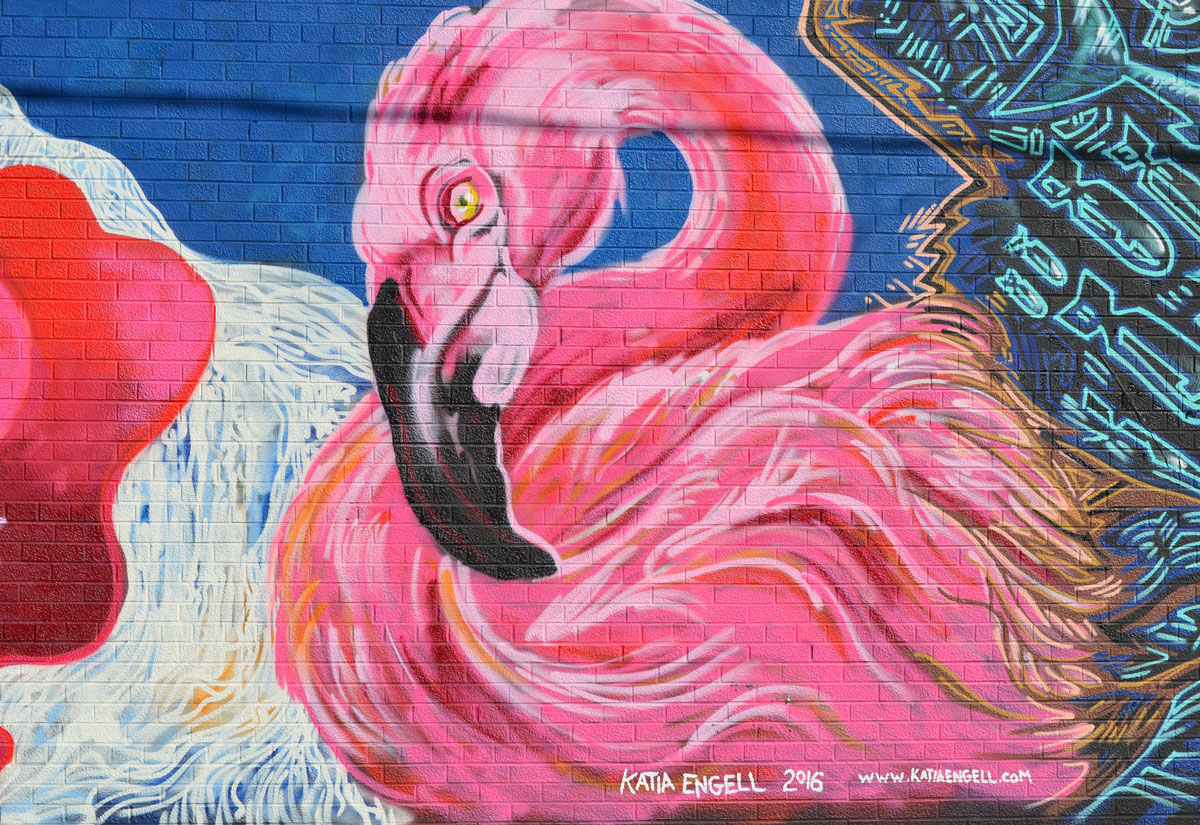
large pink flamingo painted on a wall, part of mural of 4 pink flamingos by Katia Engell

There are 4 flamingos altogether and they are in between two other murals.
In the picture below you can just see the yellow of an alphabet mural by runt

three pink flamingos. Two with entwined necks and one looking on, street art,

below: Too many things in the way makes for an awkward photo but you can still see enough of it to play the game of what creature goes with what letter!  R is for robot dog?  Z is for zlithering thingy with rings?

a mural by runt on a bright yellow background with letters of the alphabet in black and many imaginary creatures in bright colours.

below: J is for jumping purple blob?  C is for coughing-up- dinnersaurus?
And look, an alley to explore……

blog_runt_alphabet_creatures_mural

Wait! Before going down the alley I want to take a few steps backwards. Remember that I mentioned that the flamingos were between two murals?  This is what is on the other side…..

below:  Three cowboys in a mural signed by J Bizzel 4 Shizzel.
The one with his shirt off is the one under the air conditioner.

a mural of three cowboys, one tall, one in the middle and one short, purple and orange scenery behind them.

below: This strange but happy fellow was waiting in the alley.

face of a creature with bulging eyeballs, a large oen mouth showing many big rounded white teeeth, and a long tongue that can make a spiral as it curls back on itself.

a man is spray painting street art on the back of a building in an alley. Two others are standing in the lane watching him

part of a mural of a boy with headphones on, seat crossed legged on the ground and pointing downwards. He seems to be pointing at a collection of spray paint cans sitting on the ground below the mural.

below: If you look closely at this painting, you will notice that the wavy lines continue behind the bars of the railing and that there is only a small distance between the railing and the wall.    That was not a simple paint job.

a white staircase is diagonal in the picture, with white metal bars and railng, immediately behind it is a street art picture of an orange face blowing down towards the stairs. White wavy lines radiate from the open mouth

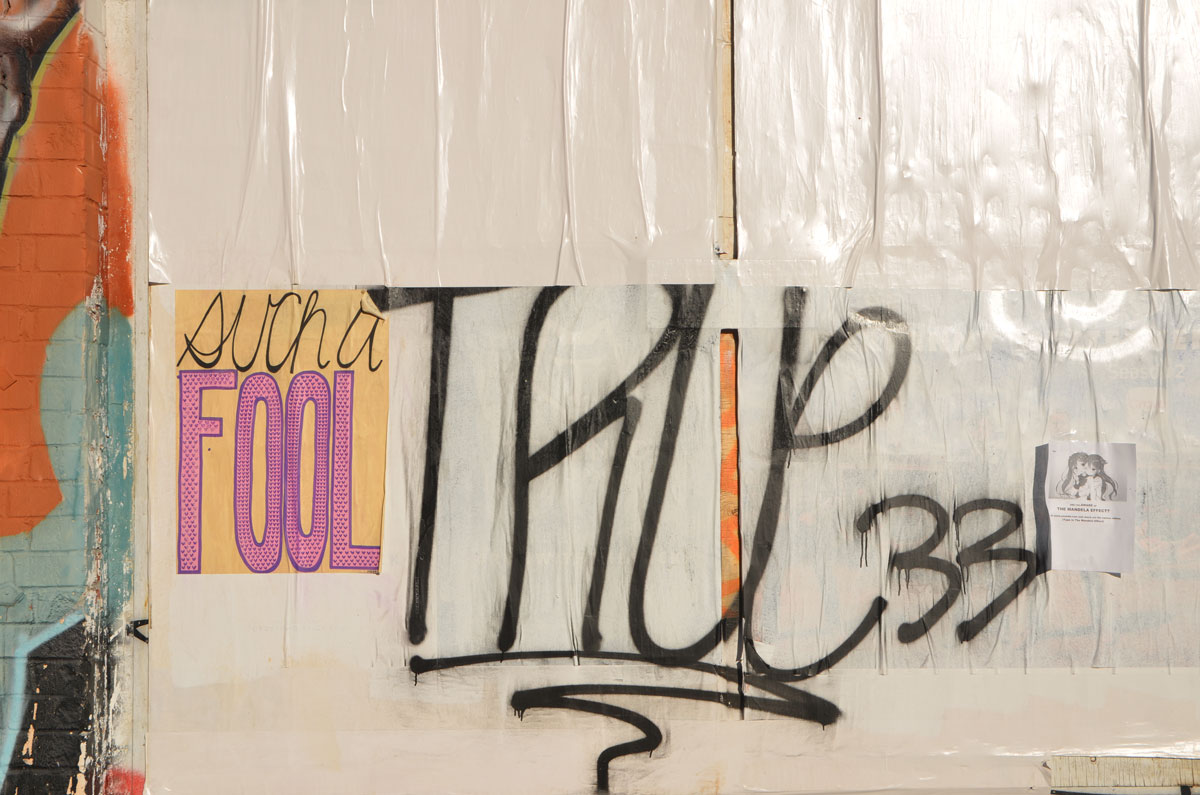
below: ‘Such a fool’ and someone to agree with it.

paste up graffiti that says such a fool. Someone has written true in large letters beside it.

below: I’m not too sure what to say about this one.  Vermut? or Vermouth?  Too much vermouth and you take your clothes off, versmut?  Bad joke.

a tall green bottle painted on the wall with the word vermut written vertically. Beside the bottle is painted a naked woman draped in red with breasts showing.

street art picture of a triangular shaped face looking upwards, open eyes and partially open mouth, behind the face is streaks of blue, yellow and red.

That’s the end of our little tour.
Find a sunny spot and pull up a chair and rest your feet for a few minutes.

chairs and a set of drawers outside a store full of antiques and stuff, the door is open and you can see into the store where there are two men shopping.

Tomorrow there will be puddles to go splashing through…
but that’s a story for another day.

afternoon in the park when the snow and ice begin to melt. Lots of water, big puddles, a few people walking dogs on the path trying to stay dry, reflections of them and many trees in the puddles.


On Friday morning, my original goal was to find ‘Residents of the Esplanade’, a CONTACT Photography Festival outdoor exhibit at David Crombie Park but it was such a beautiful morning that I didn’t stop there. I found more than just the ‘Residents’.

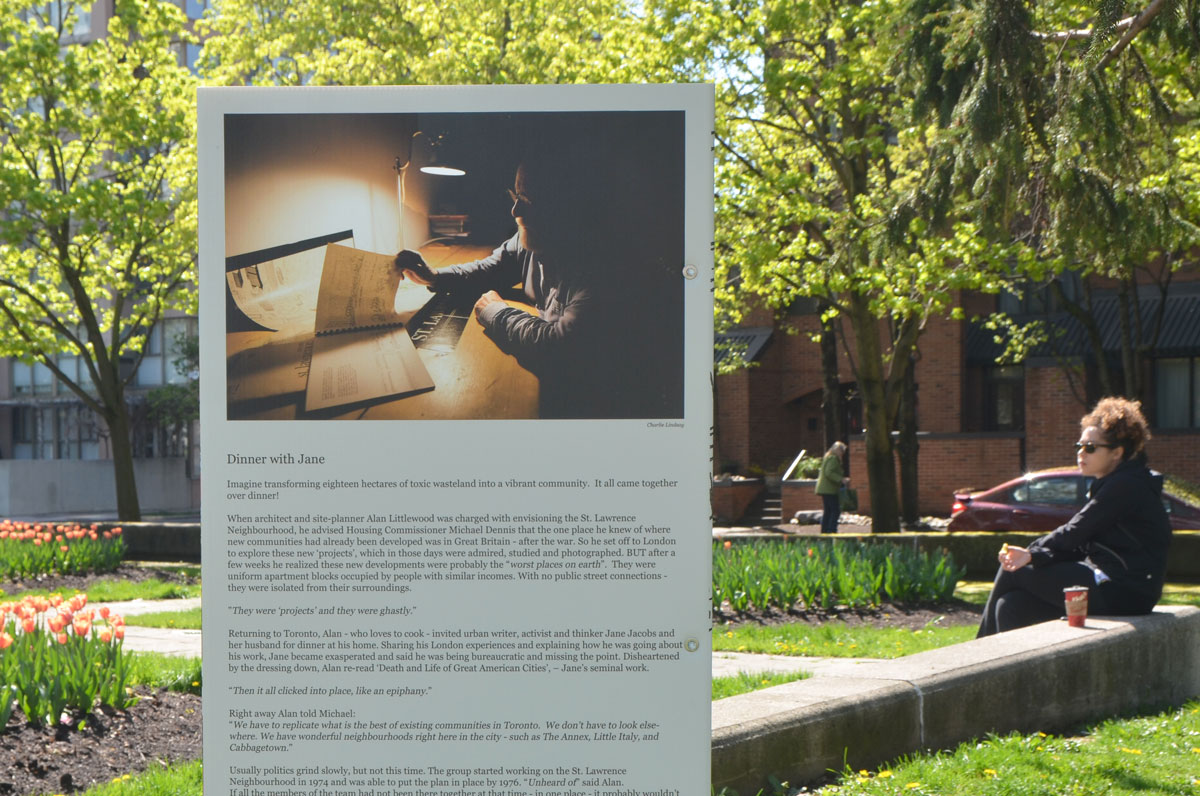
Forty years ago, May 1976, the site plan for The Esplanade neighbourhood was approved. Since then, it has become home to a very diverse group of people. And it is those people that this installation celebrates on the 40th anniversary of the founding of the neighbourhood.

Crombie Park runs along the south side of The Esplanade between Berkeley street and Lower Jarvis.  The installation consists of a number of small white rectangular pillars with the picture and story of person on either side.

A photo from the CONTACT photography festival, installation called 'Residents of The Esplanade' - story of Mysha from Pakistan

A photo from the CONTACT photography festival, installation called 'Residents of The Esplanade' - photo of Solomon from on top of a basketball hoop

A photo from the CONTACT photography festival, installation called 'Residents of The Esplanade' - photo of Alan working at a desk, tulips and a woman sitting in the park are in the background

People were out enjoying the morning; school kids were playing basketball at recess.

kids playing basketball on an outdoor court. The wall behind the basketball hoop has been painted with a mural of hands making a heart shape with the fingers, by Bruno Smokey and Shalak Attack.

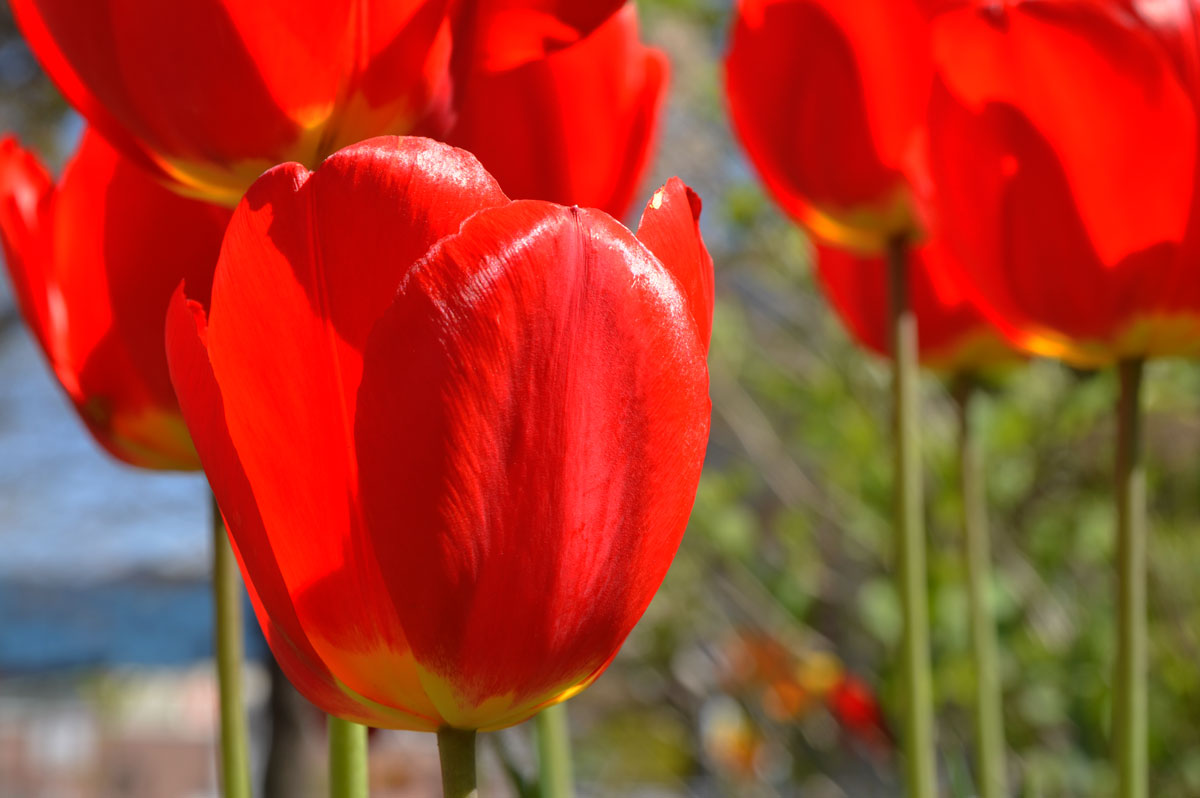
Flowers were blooming.

close up photo of red tulips in full bloom on a sunny day

tulips in a garden in a park, orange and yellow tulips, with some greenery. Grassy area with trees behind, and people walking on a sidewalk in the background.

below: Looking towards Lower Jarvis Street and downtown Toronto.

at the corner of The Esplanade and George Street, looking west towards downtown and St. Lawrence market. Playground on the left with children playing.

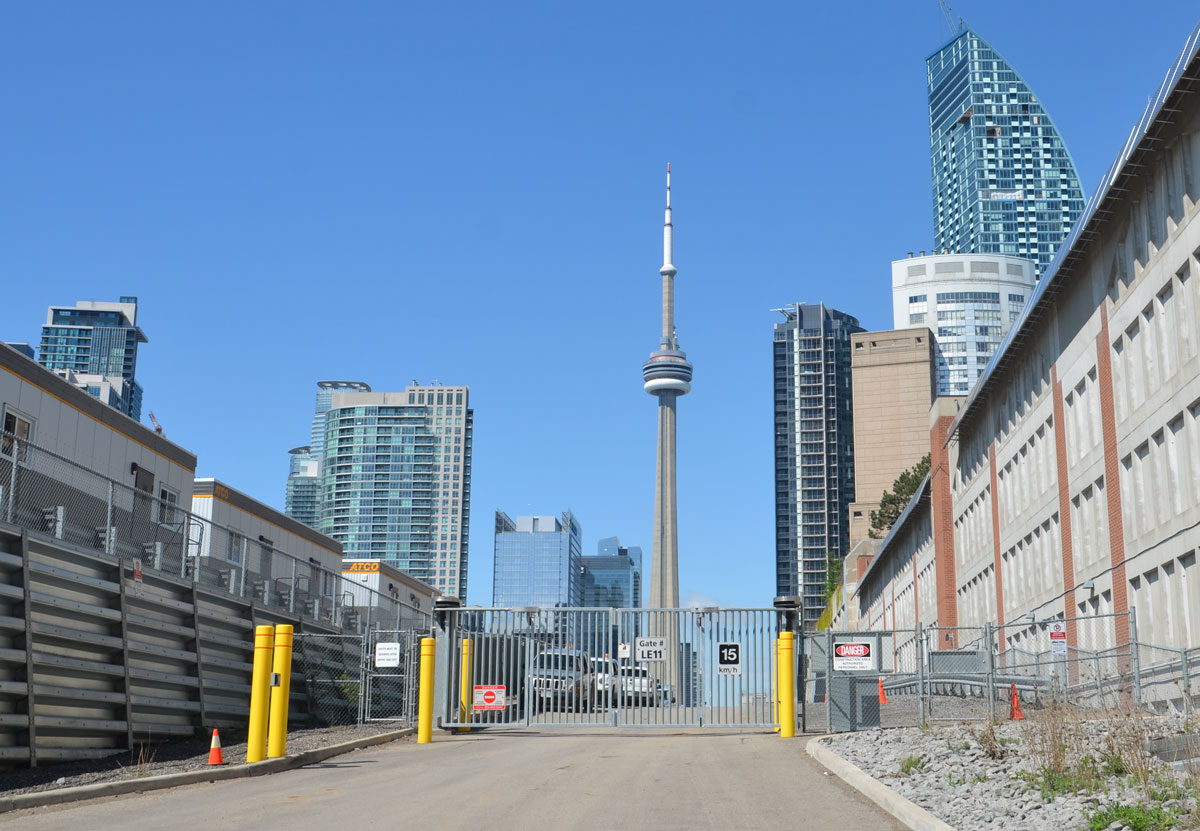
below:  One street beyond Lower Jarvis is Market Street.  It dead ends at the railway tracks.  The long structure on the right is a parking garage.

looking west towards the CN Tower, with the railway tracks to the left (but they are elevated and behind maintenance buildings so you can't see the tracks). Parking structure to the right, with city buildings behind it.

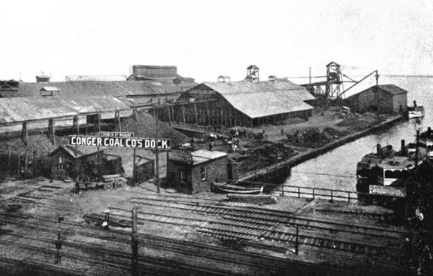
below: After a small backtrack up Market Street, I went through Conger Coal Lane to Church Street.  I don’t think I have walked this way before.  The lane was named in commemoration of the Conger Coal Company whose yard and wharf was nearby.   It was one of the many companies that provided Toronto with coal back in the day when coal fueled the city.  It was started in 1870 by Mr. P.D. Conger.   In 1913, Sterling Coal company bought Conger and the name was changed to Conger Lehigh Coal Co.

a downtown Toronto lane, very clean, no graffiti, taller, newer buildings on either side of the lane. CN tower in the distance,

below: A very old photo of the Conger Coal Company dock at the foot of Church Street, back when Church street ended at Lake Ontario

historical picture of the old COnger COal Co wharf at the bottom of Church street.

below: Tucked into a corner on Church street immediately south of Front Street, is an art installation by Paul Raff called ‘Shoreline Commemorative’.  A topography of limestone forms the base of the work.  A glass ball representing the line between sky and water sits on top of a tripod that tries to evoke a land surveyor’s tripod.  The words on the wall say “For 10,000 years this was the location of Lake Ontario’s shoreline.  This brick wall stands where water and land met, with a vista horizon”

Shoreline Commemorative by Paul Raff, an art installation on Church St., south of King, that marks where the shoreline of Lake Ontario used to be. It involves words on a brick wall and a model of the shoreline of Toronto showing the different elevations of the land.

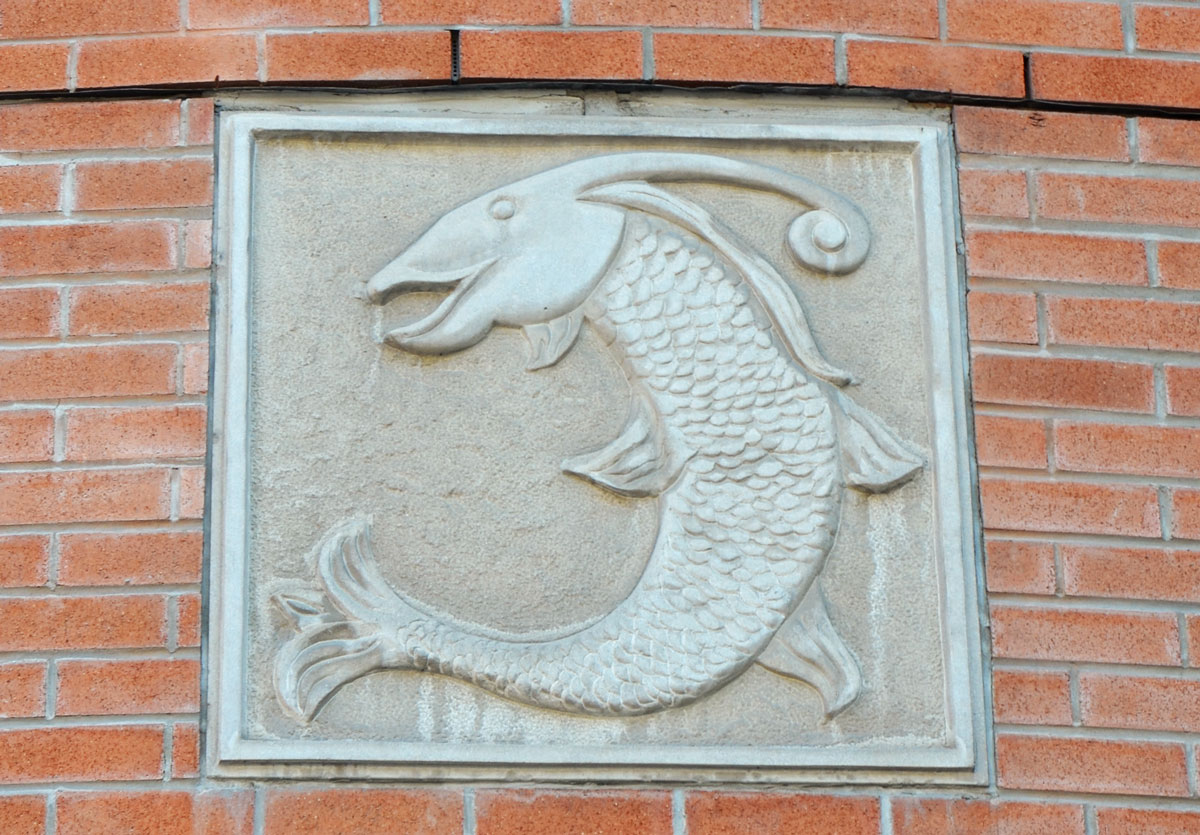
below: Continuing the lake theme, a little fish out of water, jumping over the entrance to a condo.

bas relief sculpture of a fish, square stone on a brick wall above the entrance way to a condo building.

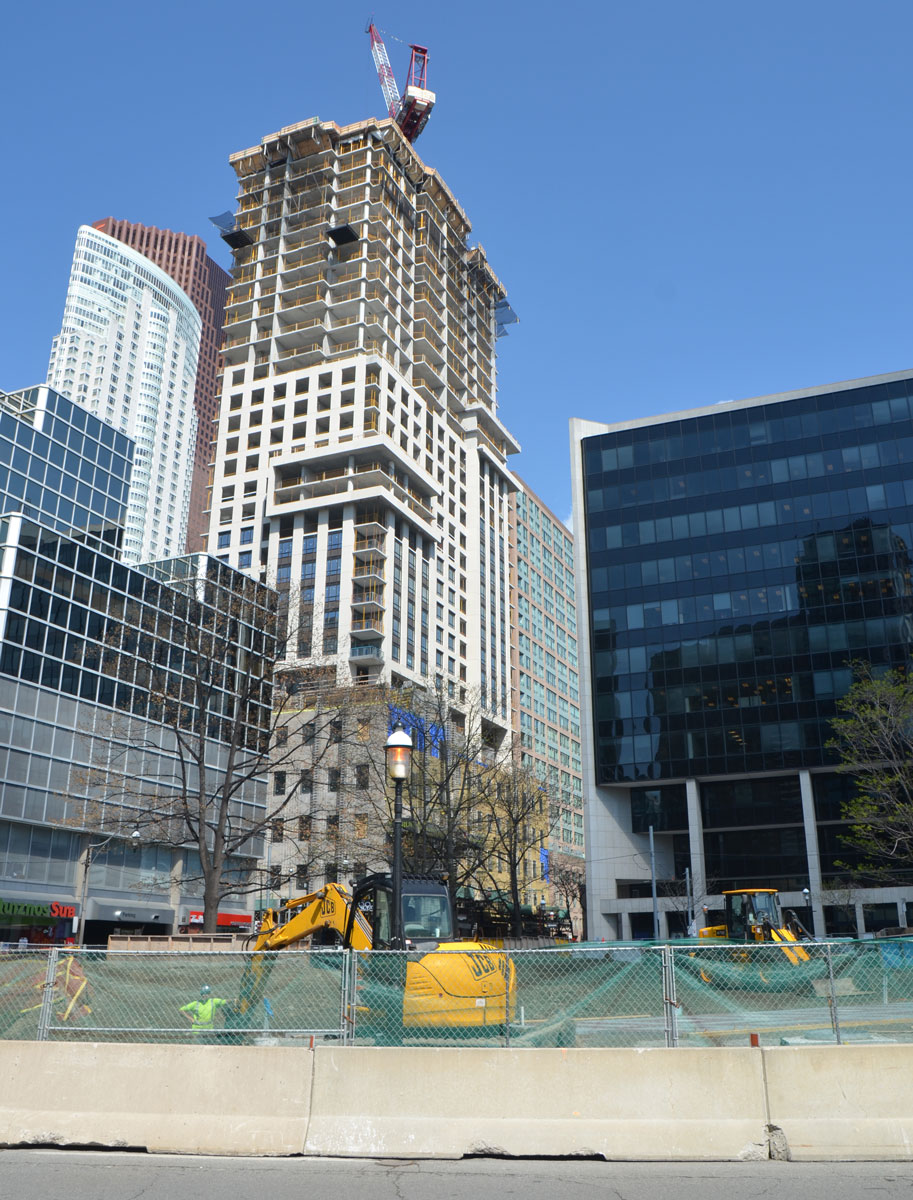
below: From the lake theme to another common theme in the city, construction. Spring is the beginning of construction season and here Berczy Park is being upgraded. In the background a new condo is being built but as we all know condo construction ‘season’ never ends. In fact, the challenge might be to find a place in this city where there isn’t a condo being built.

workmen redoing a park, Berczy Park in Toronto, with a digger and another piece of equipment, cityscape behind with a tall condo building under construction. A red and white crane is on top.

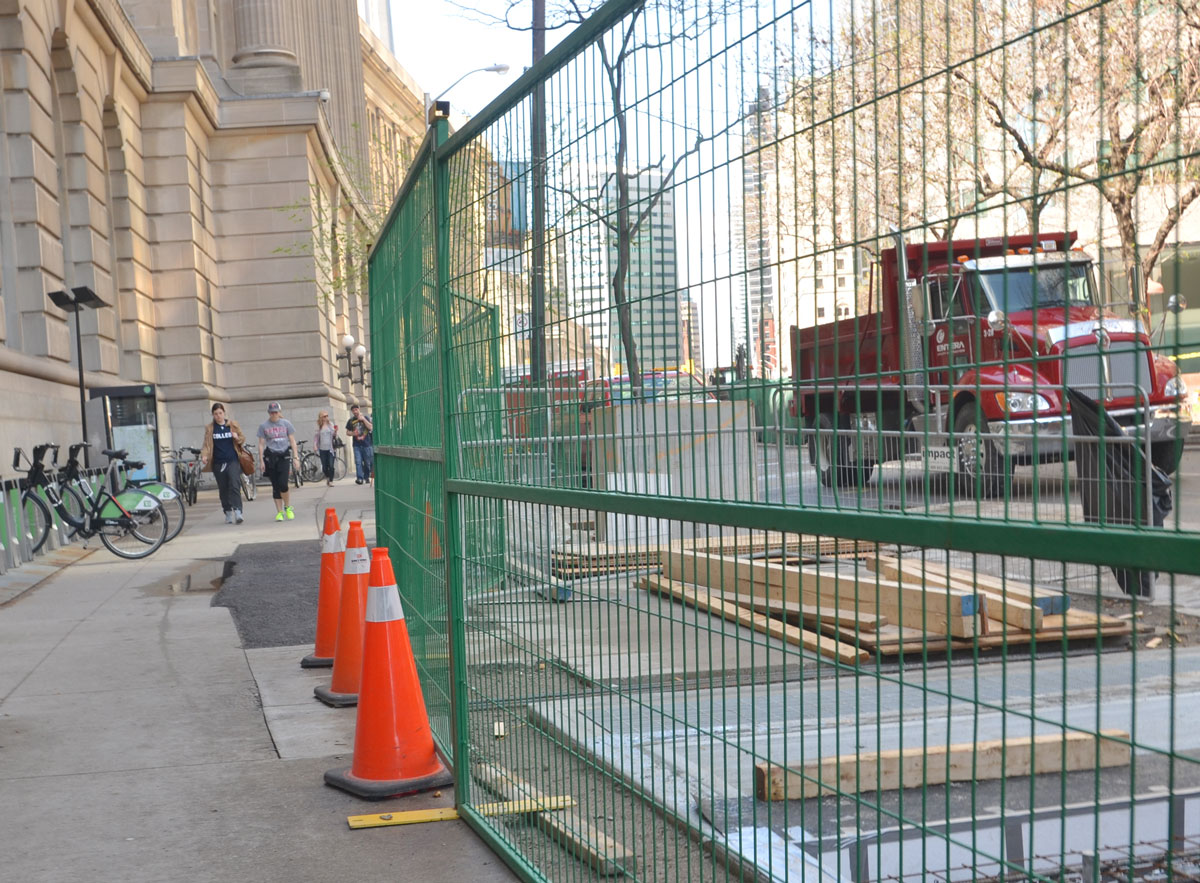
below: I walked past the never ending Front Street construction.  Construction in front of Union station seems to be finished, but this stretch of Front Street just west of the station is still being worked on.   There have been fences here so long that I can’t remember a time when they weren’t here.

Front street constrcution, behind a greenwire fence is a rd truck and piles of construction materials. Between the fence and a stone building is the sidewalk on which some people are walking.

a shirtless man in sitting on a stool at the corner of Front and Union streets. He has four signs (behind, above, in front, and beside him) asking for spare change or for you to buy his novel that is well rated on both Amazon and Goodreads.

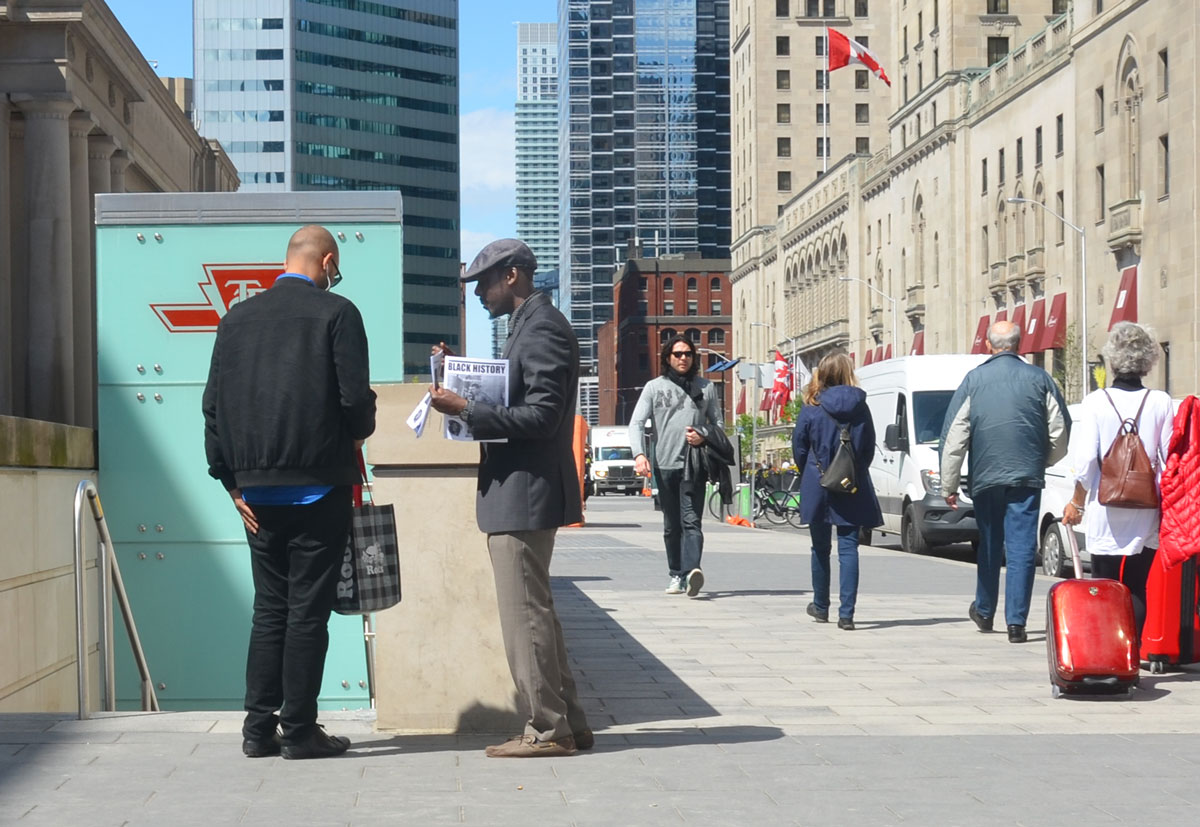
A man is selling Black History newspaper to another man in front of the TTC subwayentrance at Union station.


Have you ever noticed how many trees there are in this city?
Have you ever stopped to examine the visual relationship between trees and architecture, the patterns of leafless branches superimposed on straight man-made lines?

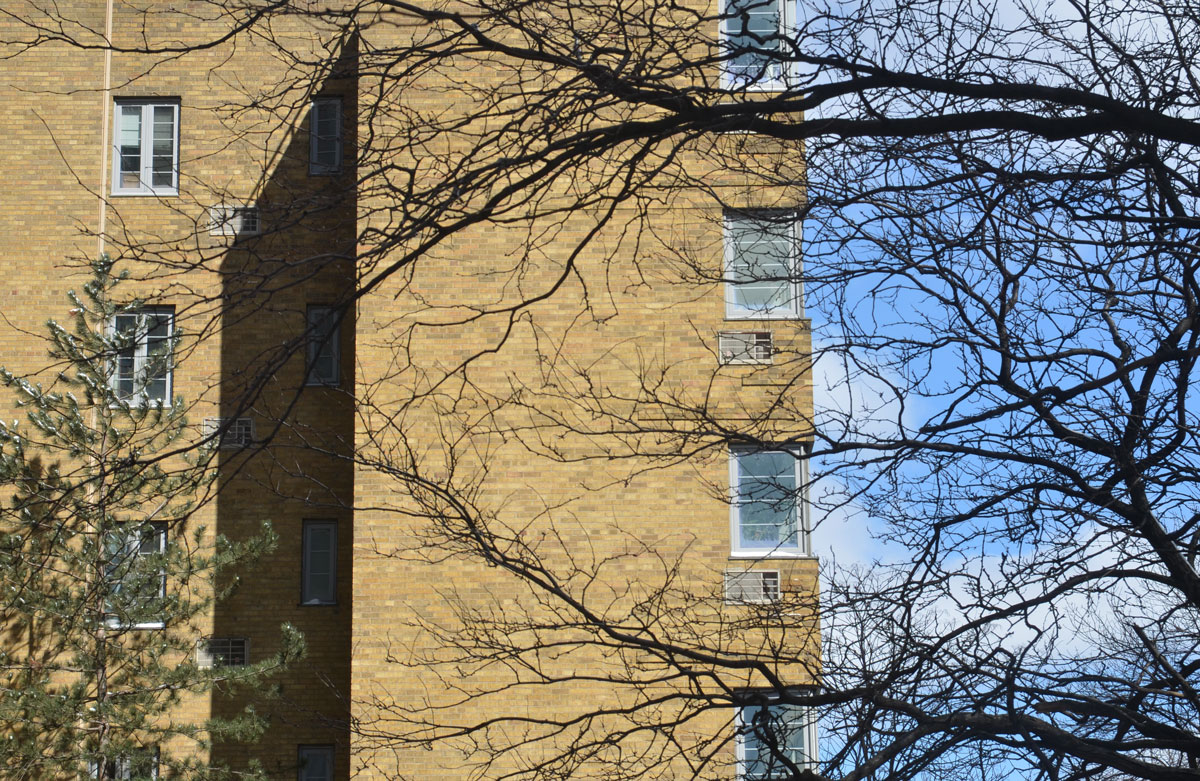
Horizontal branches of a tree growing in front of a low rise yellowish brown brick apartment building. Balconies, jutting out with the bright blue sky behind.

For the past couple of weeks I have been keeping an eye open for such relationships while I walk.   As it turns out, there are lots to be found…. and some are even interesting  🙂

Part of a mature tree, looking upwards, the greenish steeple of St. Basils church can be seen through the branches. No leaves on the tree. A very tall condo building under construction is also in the picture.

Just for fun I googled “How many trees are there in Toronto?”.  I got answers!  One link was particularly useful:  available in pdf from the City of Toronto’s website is a report titled, “Every Tree Counts: A Portrait of Toronto’s Urban Forest” (updated in 2013).   It is estimated that Toronto has about 10.2 million trees and they provides a tree canopy over between 26% and 28% of the city.

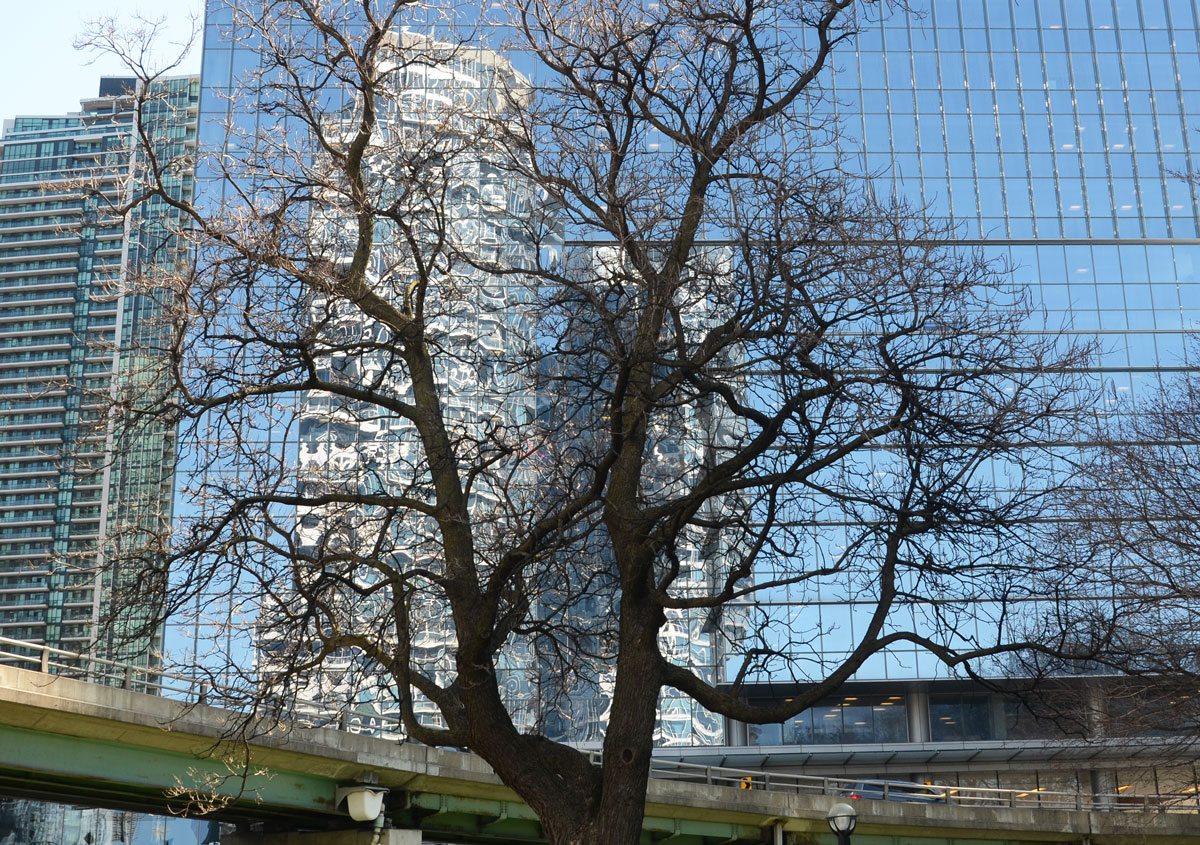
A large mature tree with no leaves, early spring, grows in front of a large glass building that has a reflection of another large building its windows.

There are at least 116 different tree species in the city.  The 10 most common species account for close to 58% of the total.   We have a lot of maple trees – Norway Maple, Sugar Maple, and Manitoba Maple were the top 3 species.  Next in the list were Green Ash, White Spruce, Silver Maple, American Elm, Eastern White Cedar, Austrian Pine, and White Ash.

When Dutch elm disease devastated the city’s elm trees in the 1960s and 1970s many were replaced by Norway maples.  These proved to be hardy but they were also very invasive and damaging to ravines and other natural spaces.  As a result they are rarely planted on city property anymore.  Still, they represent 15% of Toronto’s tree coverage.

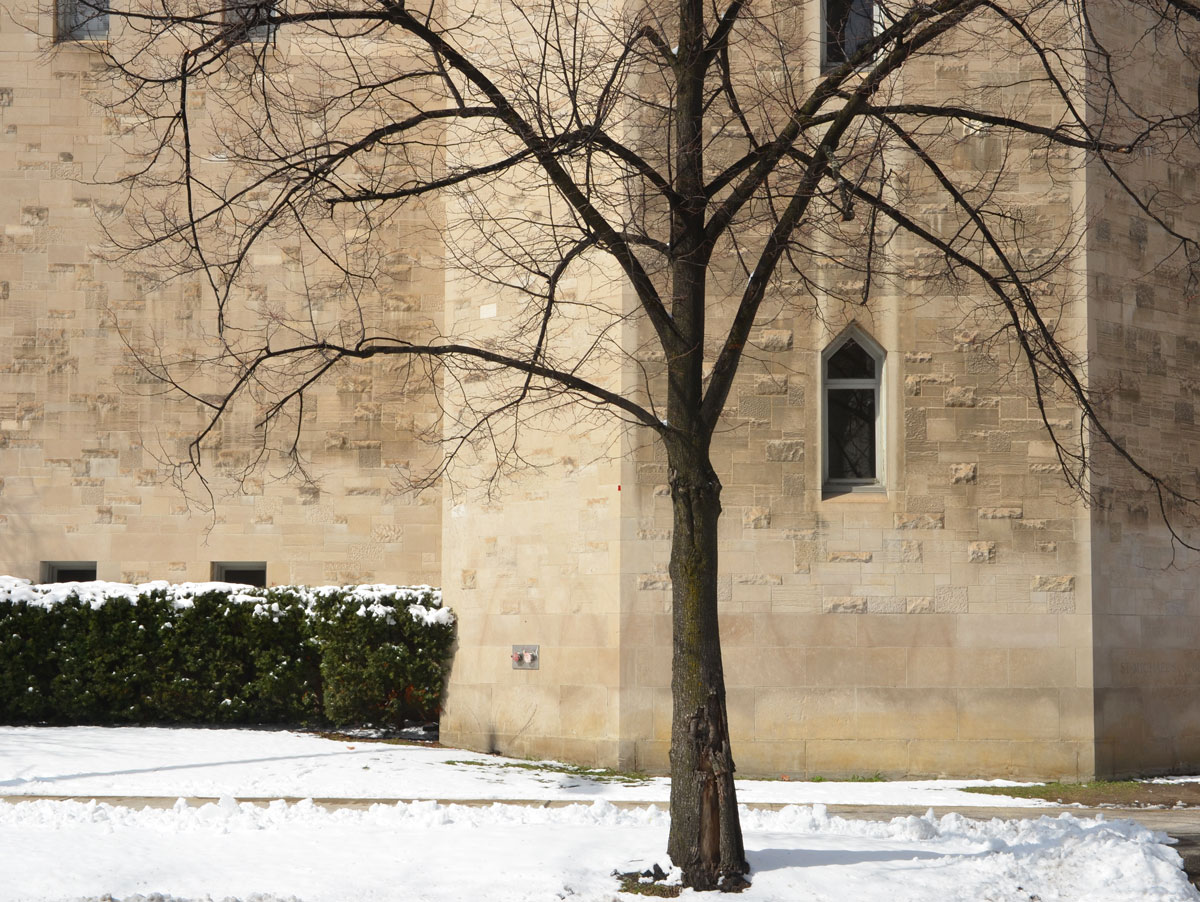
A lone smallish sized tree in winter is growing in front of a stone building on the University of Toronto campus, snow on the ground.

Of the total tree population, 6.1 million (60%) trees are on private property, 3.5 million (34%) trees are in parks and ravines, and 0.6 million (6%) trees are on city streets.

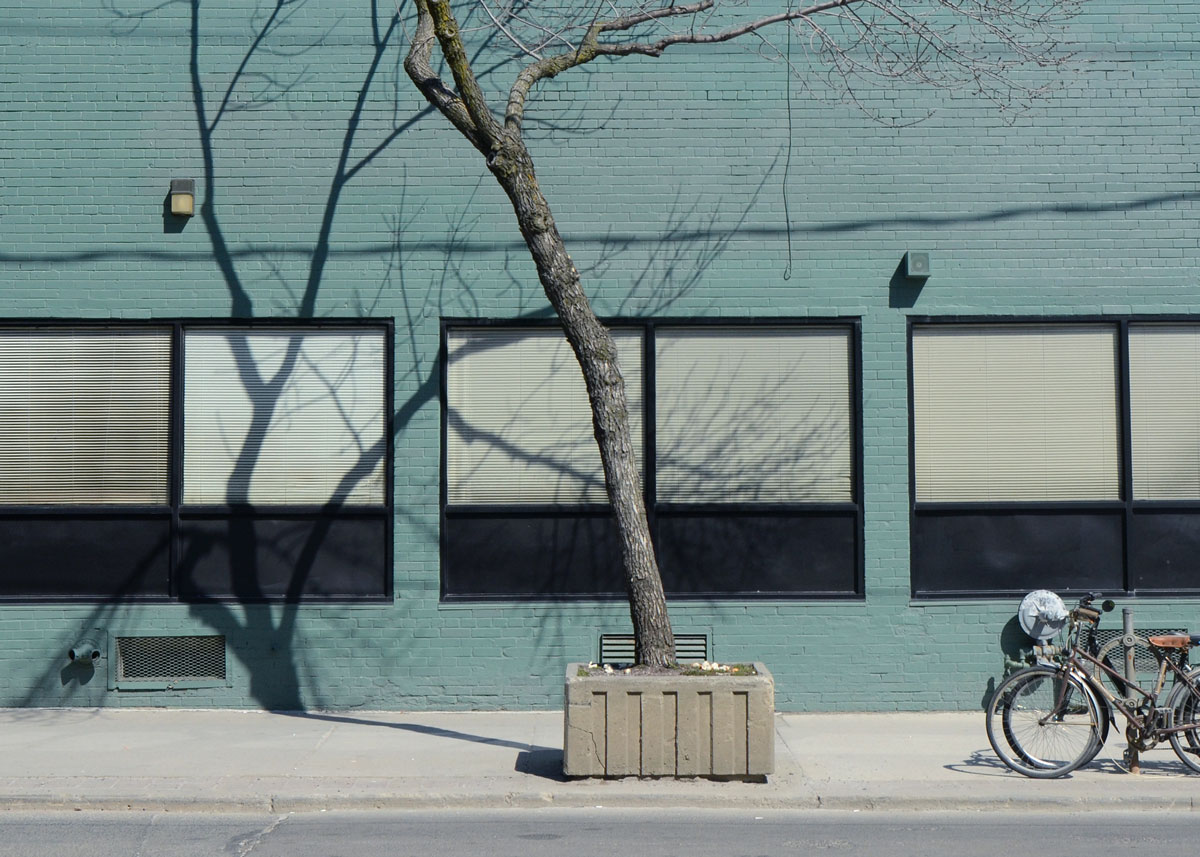
A tree in a concrete planter in front of a tral coloured building. It's a sunny day so there is a shadow of the tree on the building.

Trees make a significant contribution to our life.  Not only do they look nice, but they also provide benefits.  They provide shade in the summer and they help improve the air quality.  They help prevent erosion in our ravines and they provide habitat for insects, birds and animals.  Our parks would be poorer places without trees.

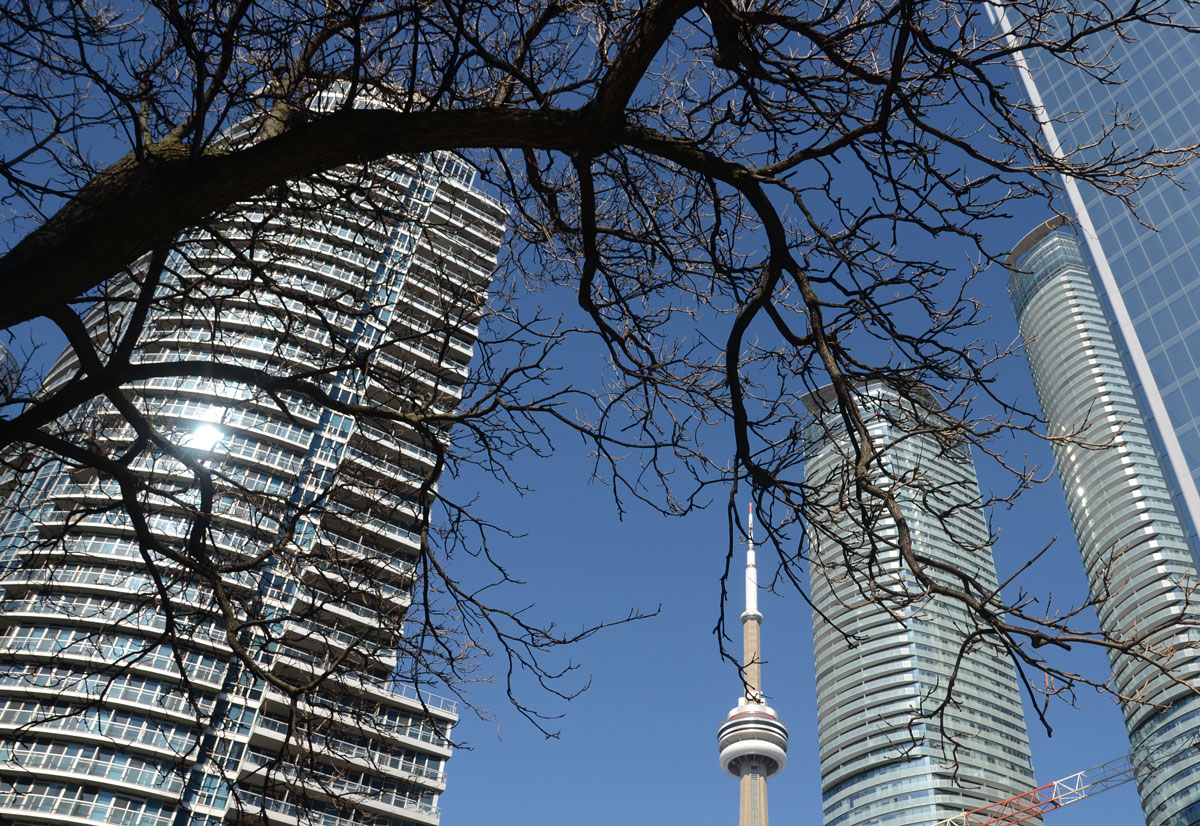
A large branch of a tree in the foreground, condos and the CN tower in the background. The curve of the tree branch looks like its wrapping itself around one of the tall condos.

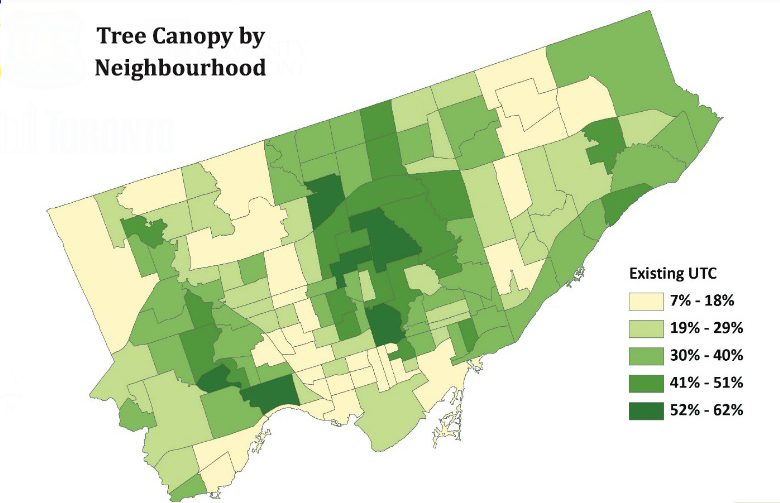
One goal that the city has is to increase the canopy cover over Toronto to 30%.  To this end, between 2004 and 2012 the city and its partners planted almost 100,000 trees per year.   That’s almost 900,000 trees.   Not all survive but progress is being made.  Tree cover increased slightly (1.3%) between 1999 and 2009.

below: A map of Toronto showing the tree canopy in each neighbourhood

A map of Toronto showing the percentage of each neighbourhood covered by tree canopy from almost white (very few trees) to dark green (a lot of trees)

in winter, some snow, part of a large leafless tree in front of an office building with a sloght curve in it.

Take a moment to look at the trees you pass, yes, look up!  Especially in the next week while the branches are still bare.  Better still, look up often and watch the changes unfold as the trees bud and bloom.  At this time of year the trees change quickly and before you know it the city will be transformed.

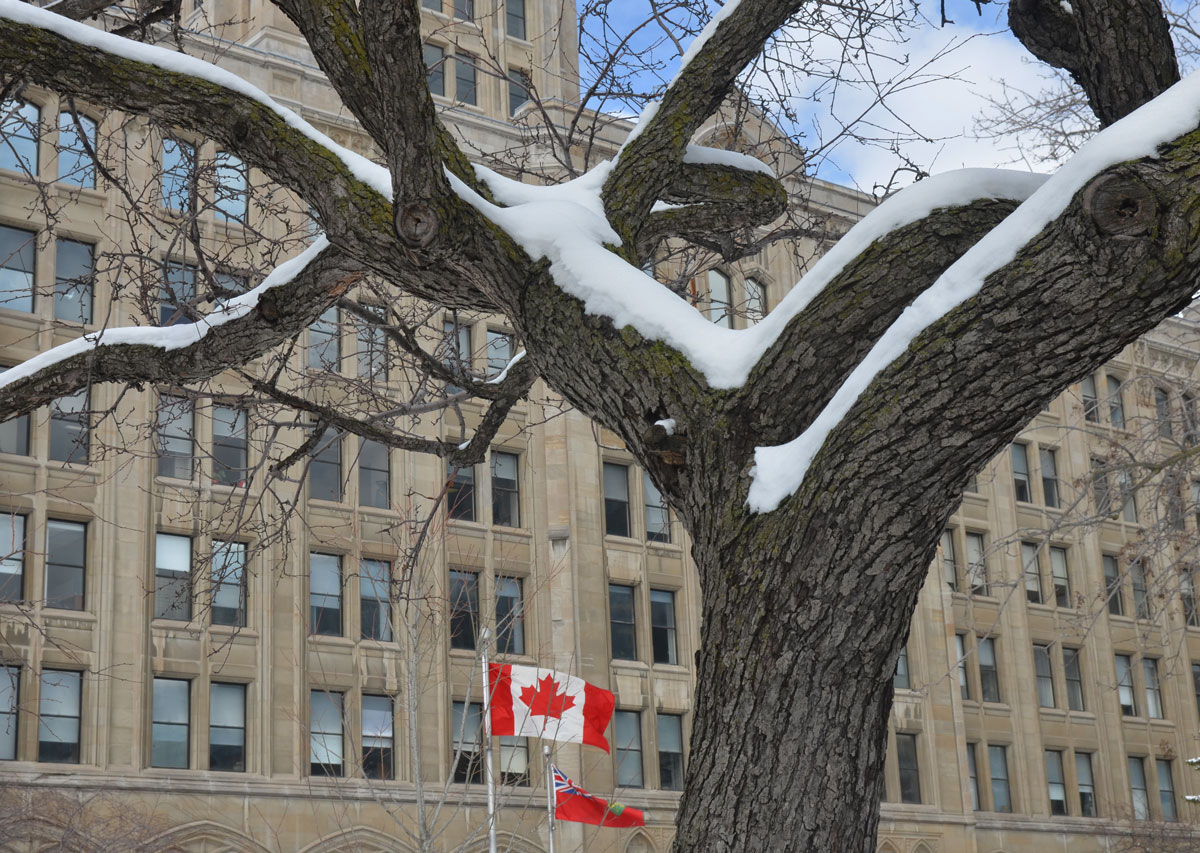
winter tree in front of a stone government building on Queens Park Circle, A Canadian flag and an Ontario flag are flying in front of the building.

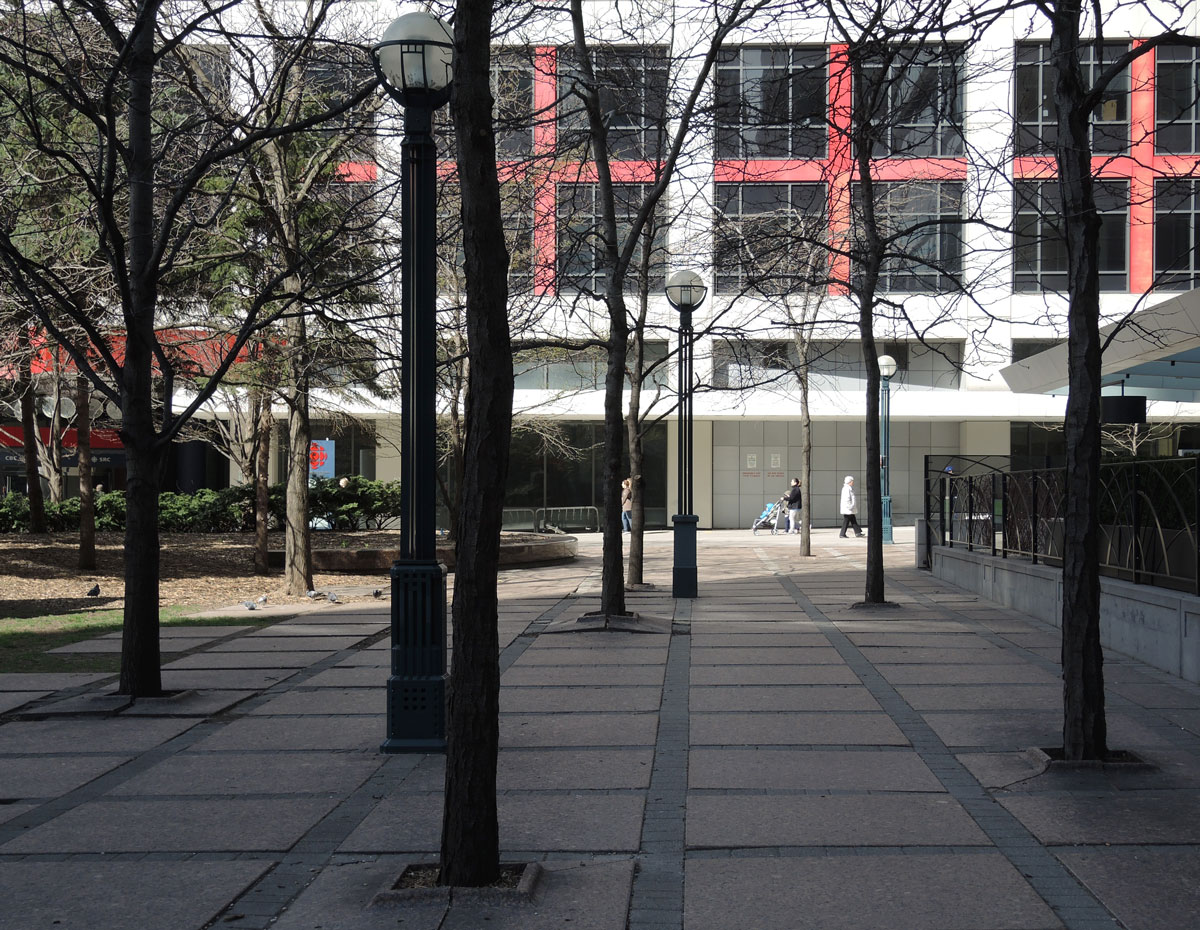
A number of leafless trees and three lamp posts in Simcoe Place, downtown Toronto, with the CBC building in the background

A man's legs as he walks across the pond on Ryerson campus. Very little water is therem lots of reflections of the trees and buildings around. He is wearing jeans and bright orange running shoes.

leafless tree branches above an older red brick house with a mansard black slate roof and a feww yellow brick details

This post is the result of a very wobbly and random circular walk around part of the Wychwood Heights neighbourhood last weekend.   A hodge podge of this and that.

below: The intersection of St. Clair West and Vaughan Road circa 1912
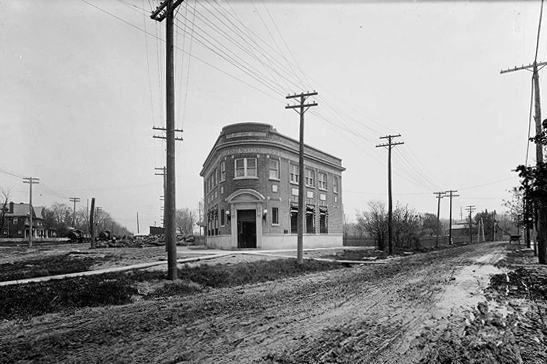
Historical black and white photo of a two sorey brick building at an intersection of two dirt roads.

below: I didn’t quite recreate the picture above but it is still obvious that the brick building is still standing after just over 100 years but that every thing around it has changed.

Two storey brick building, now Hakim Optical on the corner of an intersection.

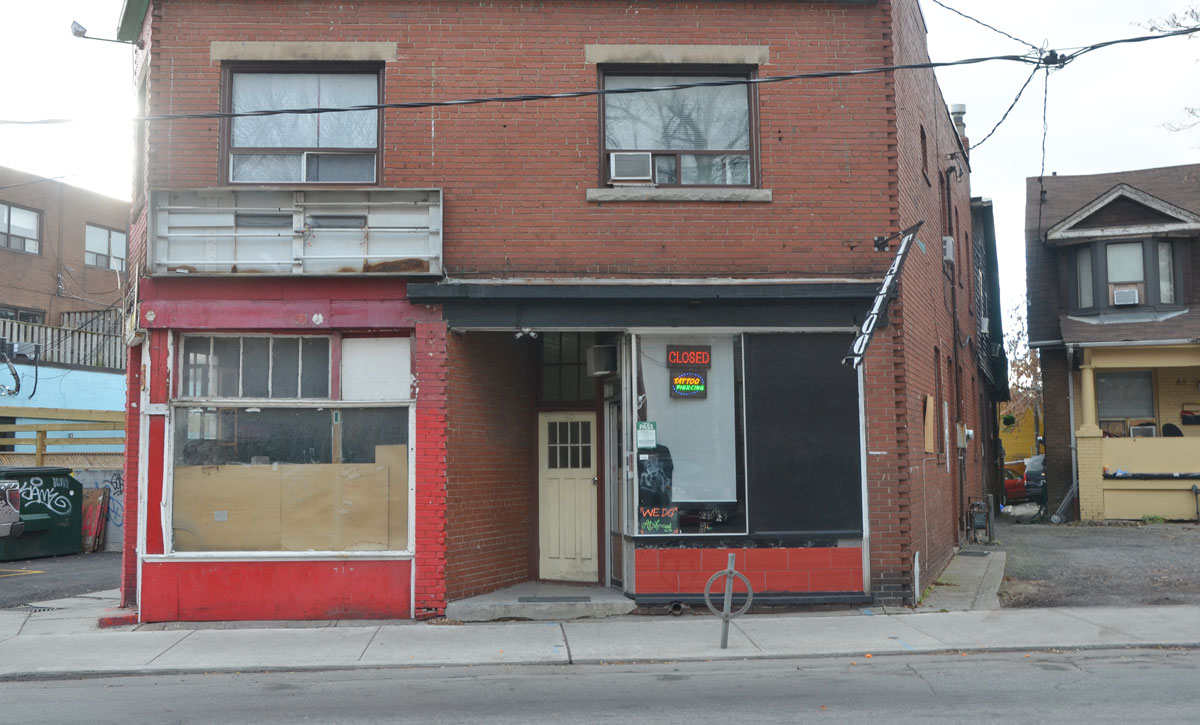
below: Just to the north,  78 Vaughan Road…. didn’t this store used to be an ice cream place?
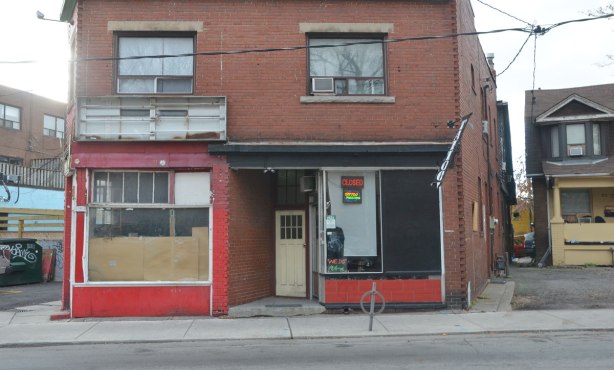
empty store front at 78 Vaughan Road, empty on one side a closed tattoo parlour on the other.

below:  Ah yes, there is still remnants of ice cream cones above the window so my memory is correct.
I wonder what happened to it?

side of a brick building that used to be an ice cream store. Painted red with some white parts, front has been removed from lighted signs, exterior decorations have been removed except a faint outline of ice cream shapes remain above the window.

There are a number of alleys to the north and west of the intersection of St. Clair and Vaughan Road.  Most of them are quite tidy and well looked after.   They were also full of surprises, bright little things that put on a smile on your face on a December afternoon.

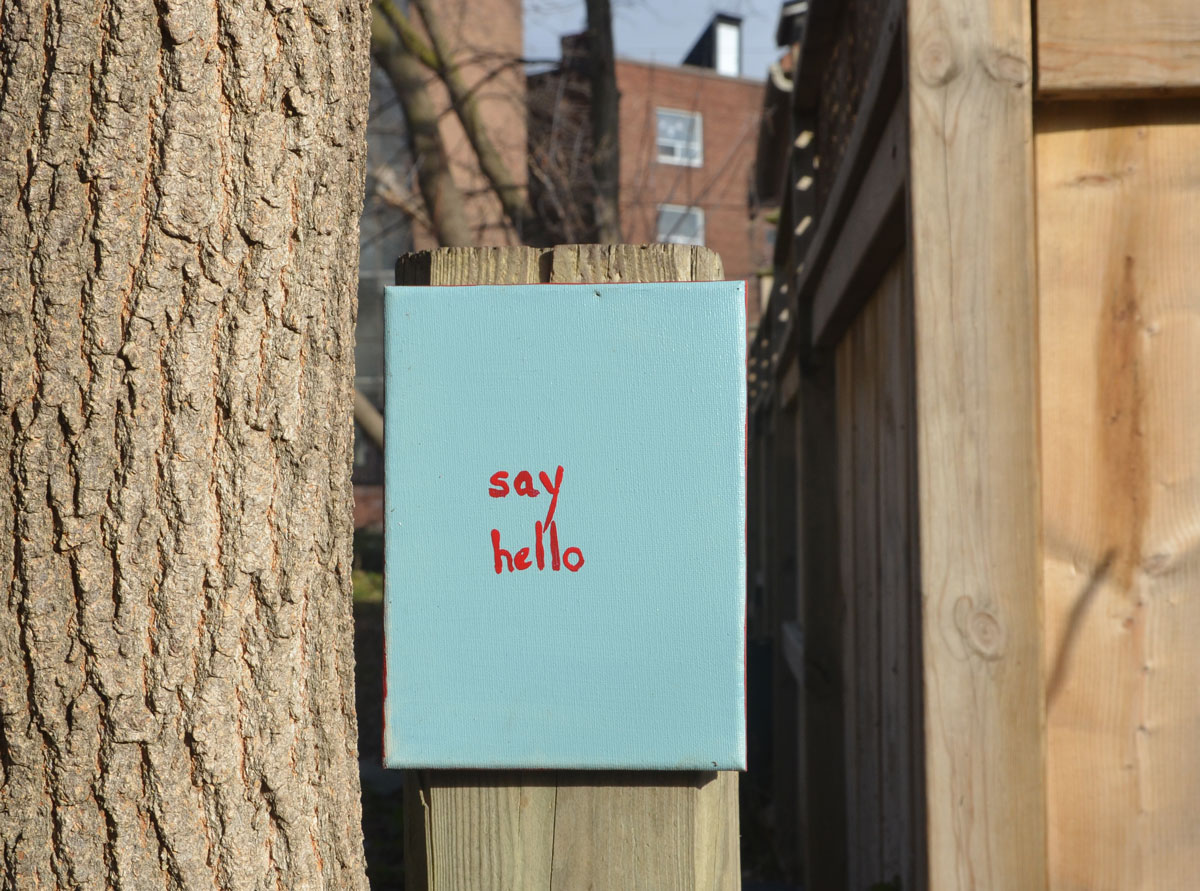
below: Like little pictures painted on canvas….
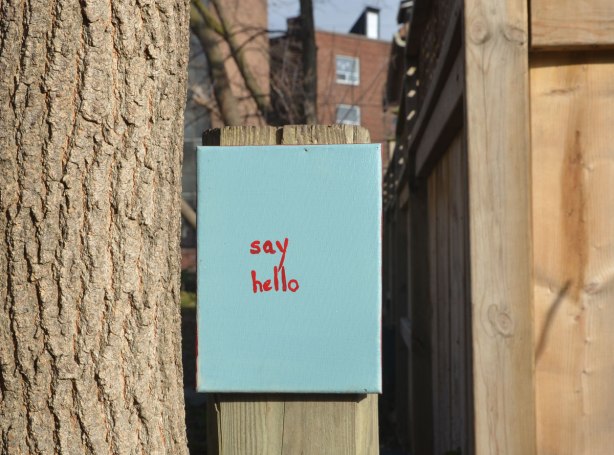
A small canvas painted turquoise and the words say hello written in small red letters, attached to a fence in a lane

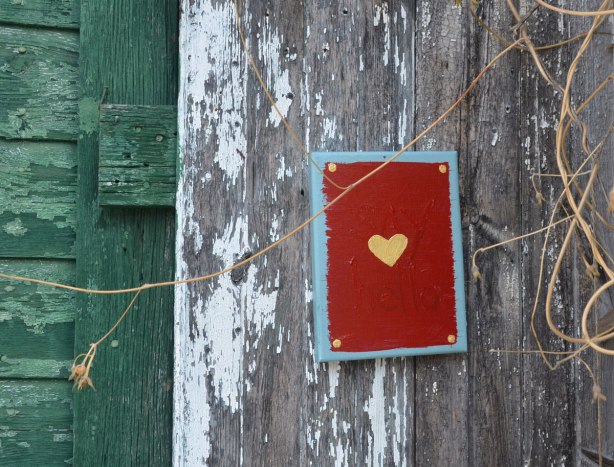
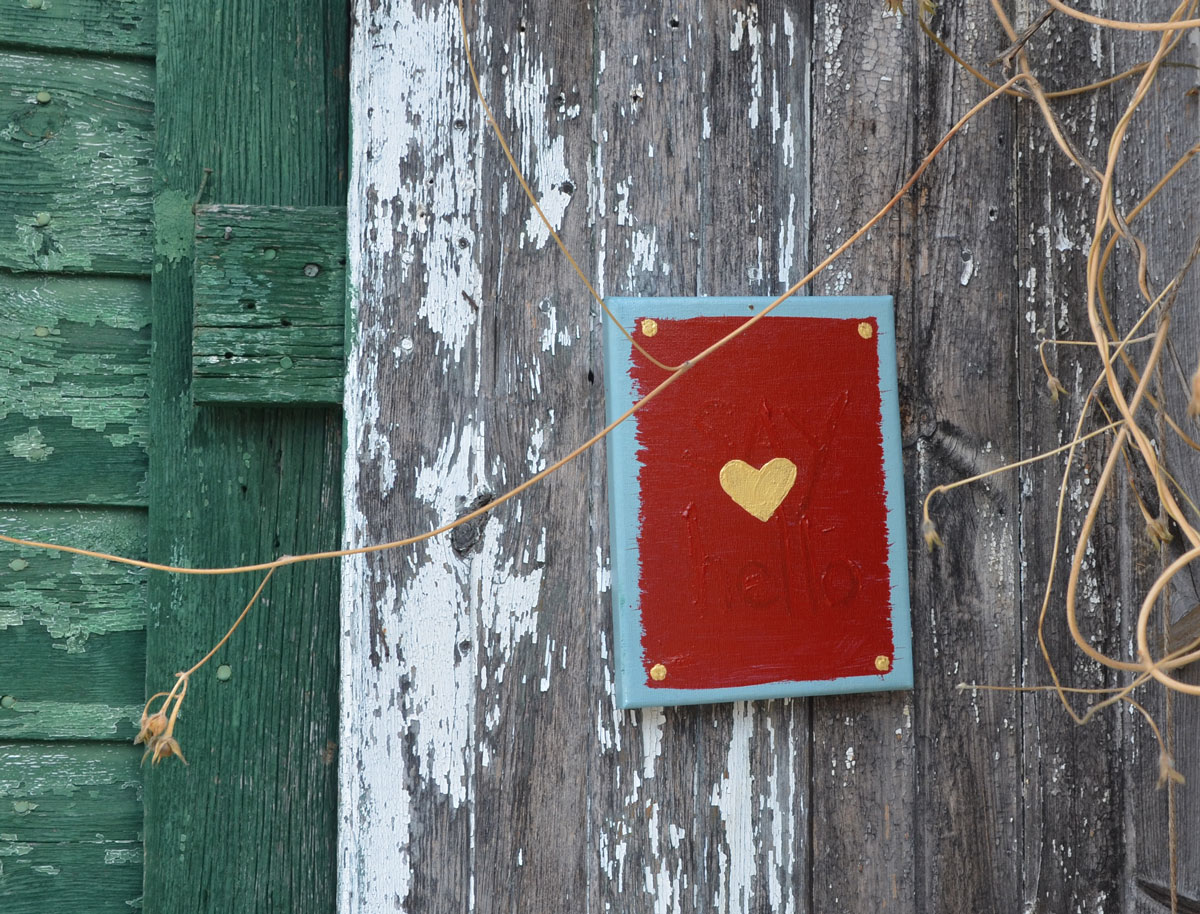
A small canvas painted red and a small yellow heart painted in the middle. The words say hello are painted on it too but they are harder to see. It is nailed to an old wood fence

A small landscape painted on canvas and attached to a telephone pole in an alley

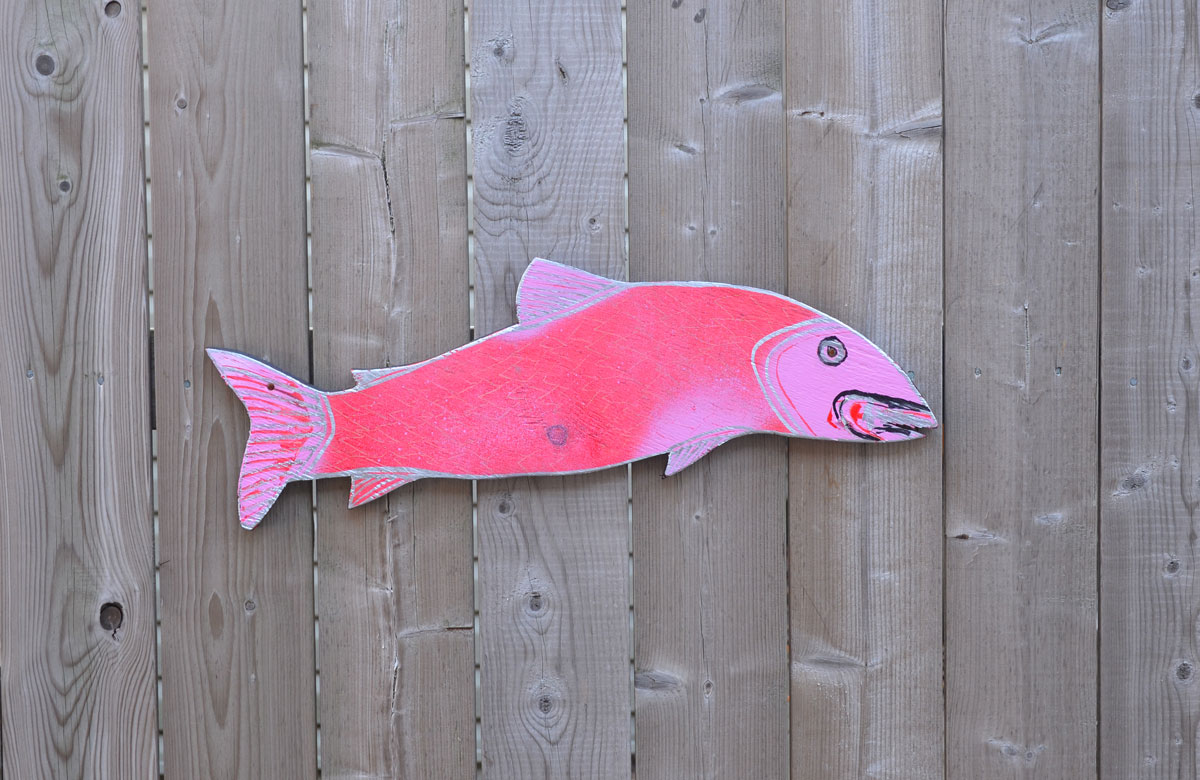
below: and painted on wood

a two tone pink fish painted on wood, cut out, and nailed to a wood fence.

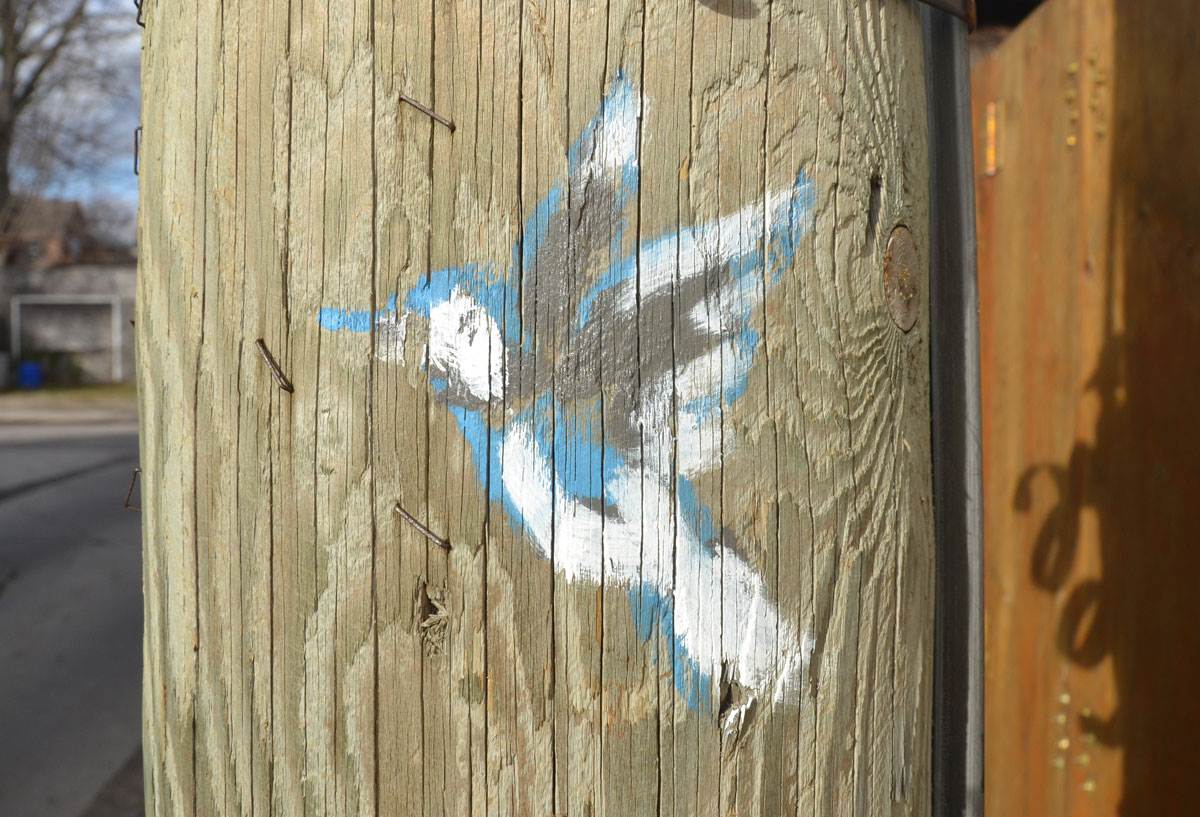
below: or painted directly on poles.

On a wood telephone pole, a small bird painted in white, black and blue.

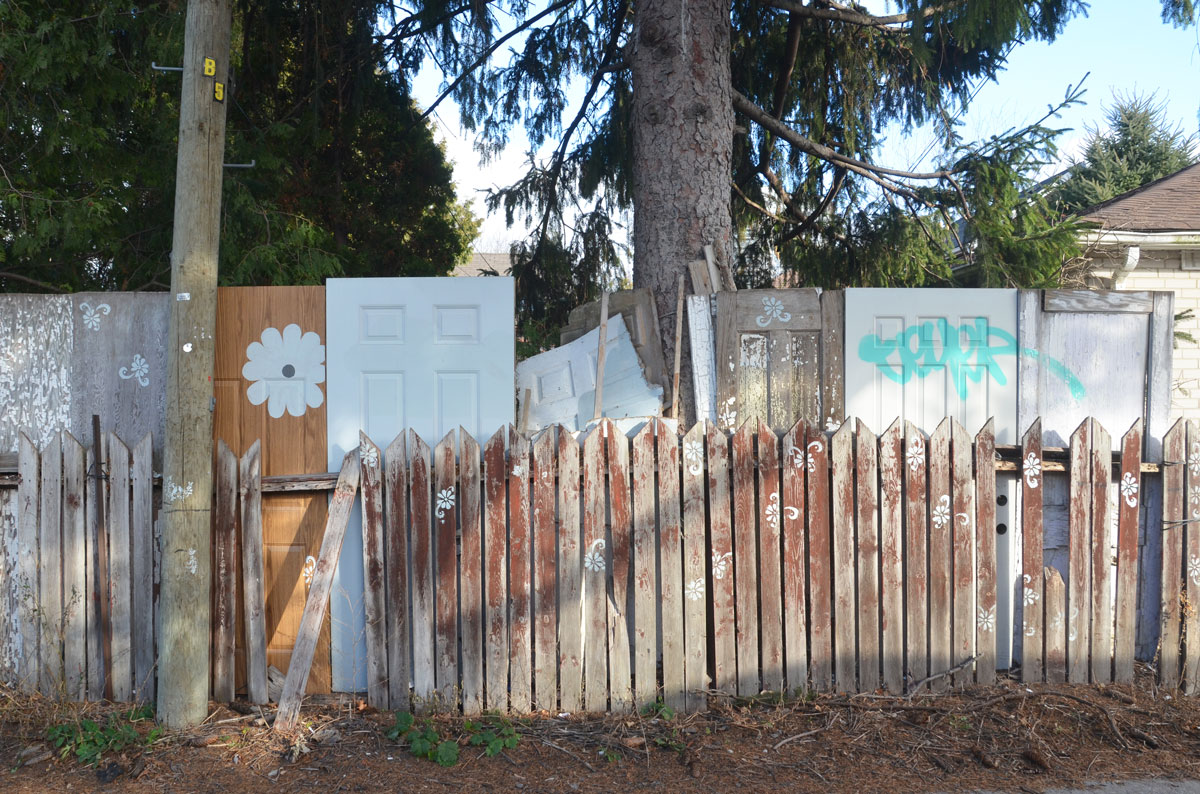
below: There was a fence made of old wood doors

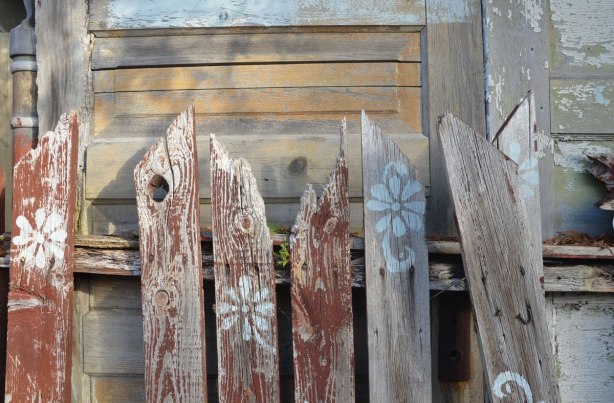
an old picket fence that is falling aoart, and a fence made of doors that is behind it.

close up of old picket fence that is falling aoart, and a fence made of doors that is behind it.

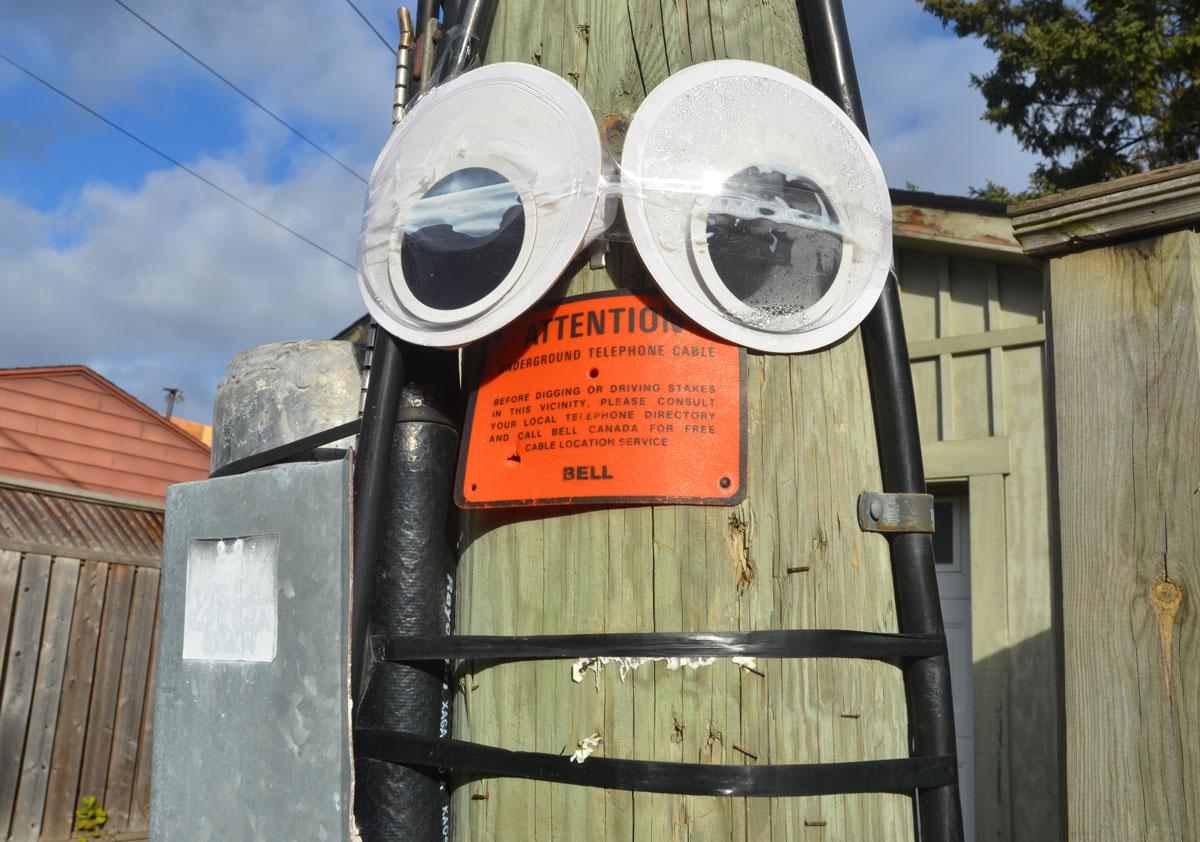
below:  There was a great creature with googly eyes and a rectangular orange nose.

Two big googly eyes attached to a telephone pole

below: And of course there were some painted garage doors.

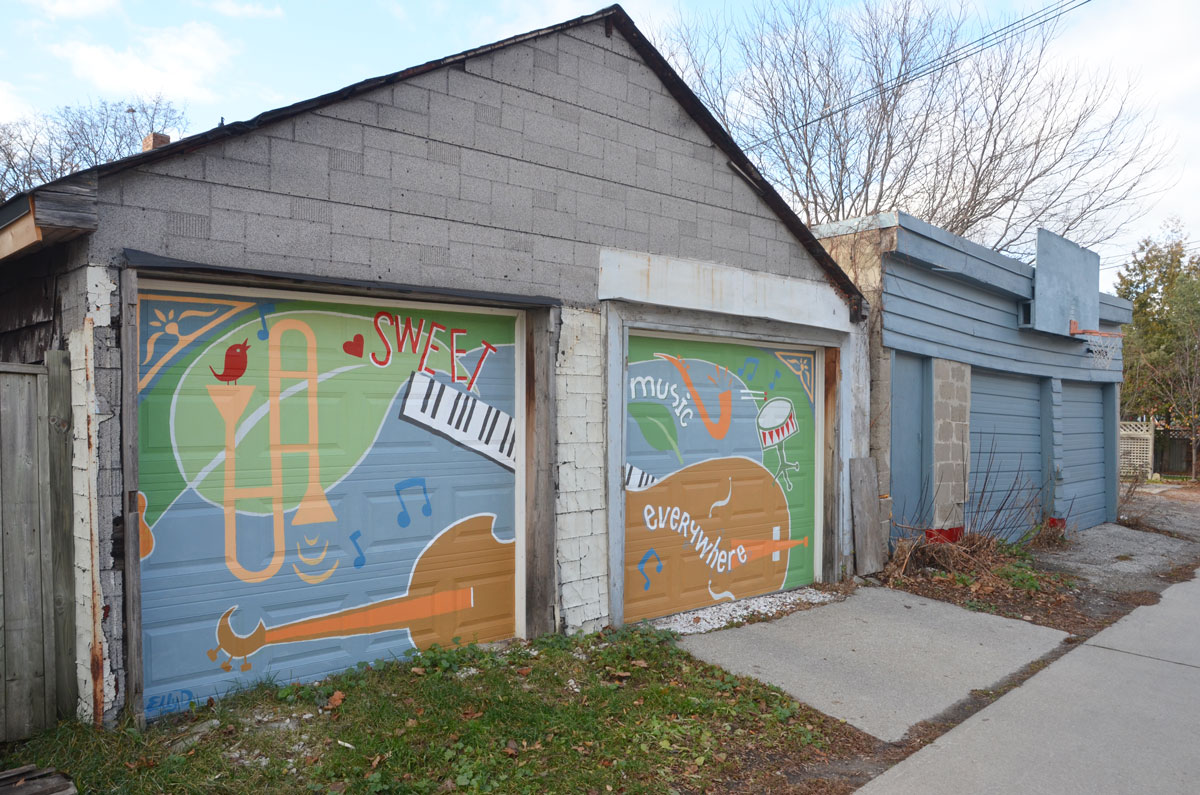
street art on garage doors, musical instruments covering two garages, a guitar, a trombone, also the words sweet sweet music everywhere

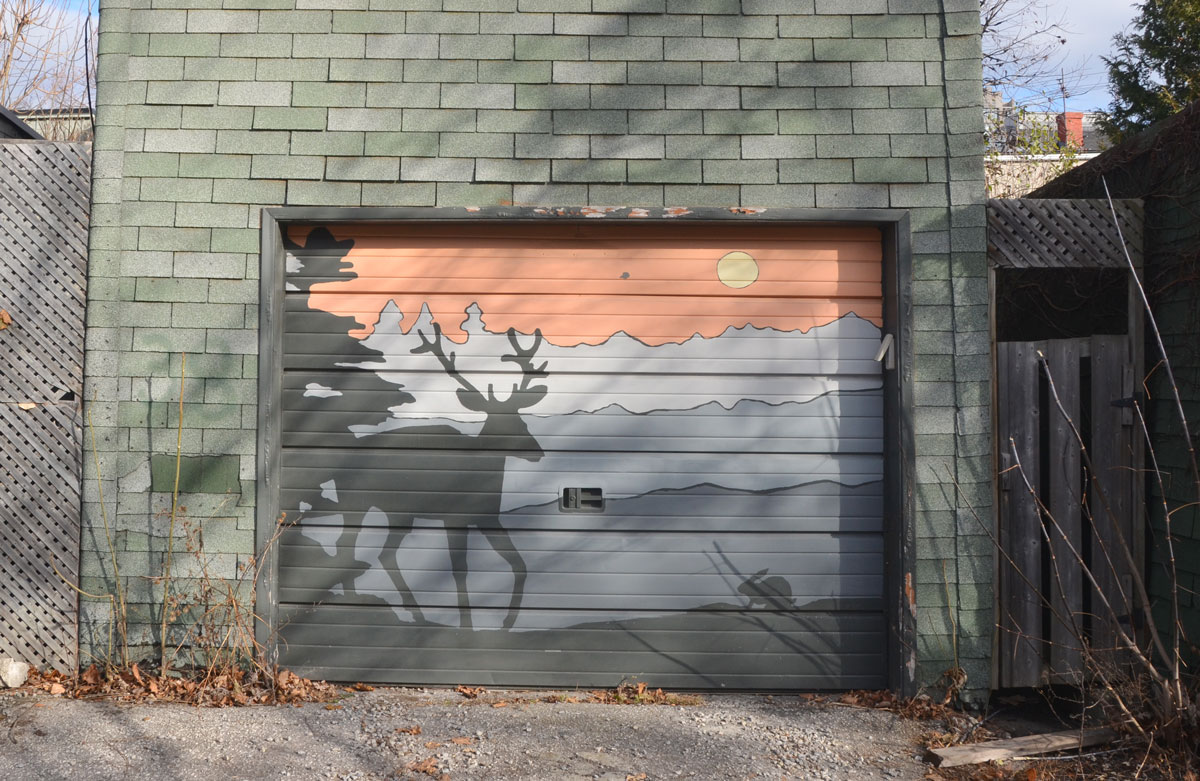
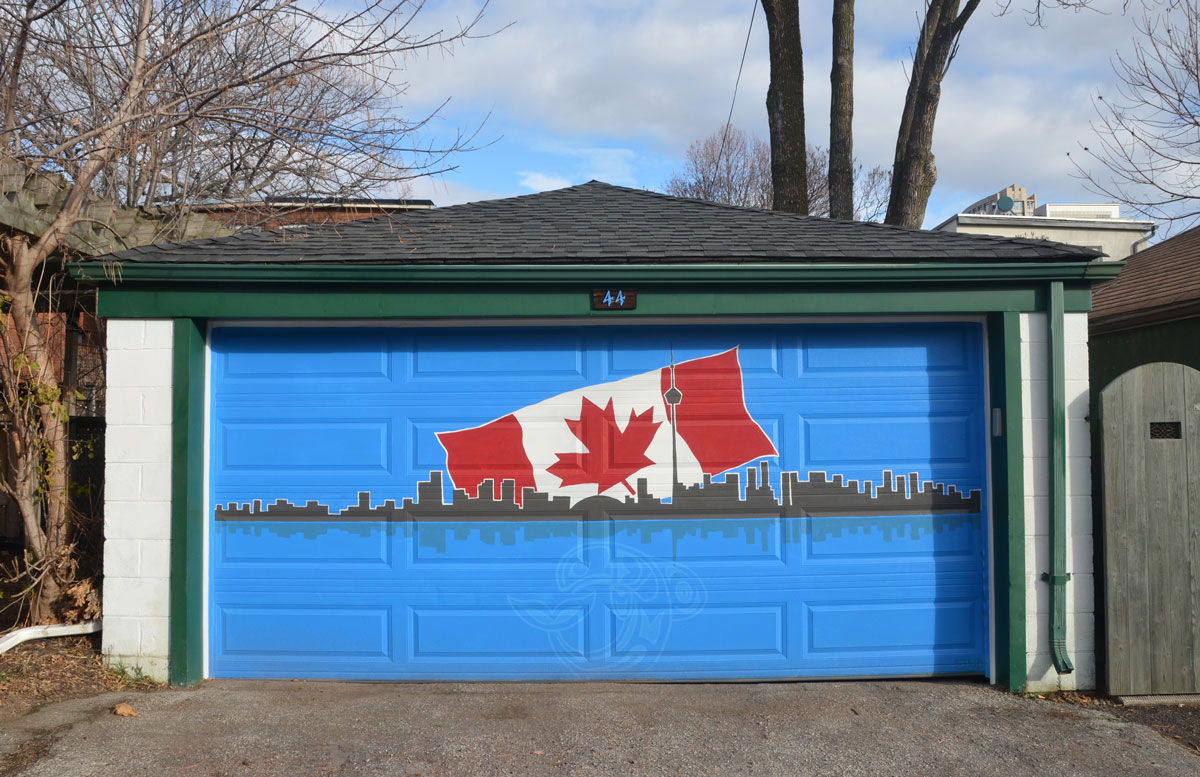
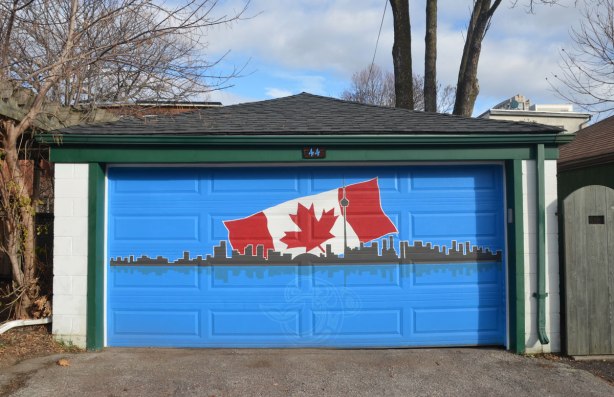
below: These garage doors are a sample of the more than 40 doors that have been painted as part of the Kenwood Lanway Art Initiative.

painting on a garage door of a moose at sunset

painting on a bright blue garage door of the Toronto skyline with a large Canadian flag behind ithe skyline

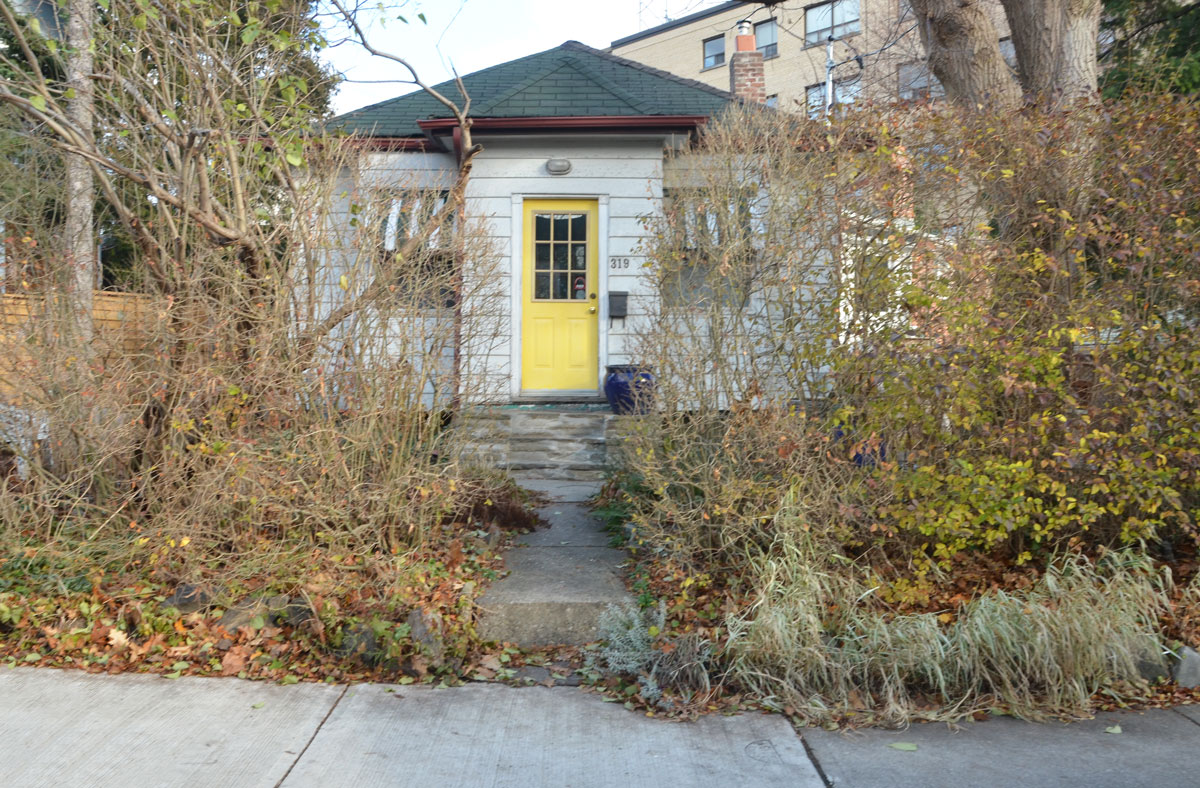
While walking on the streets in the neighbourhood I saw a couple of little houses
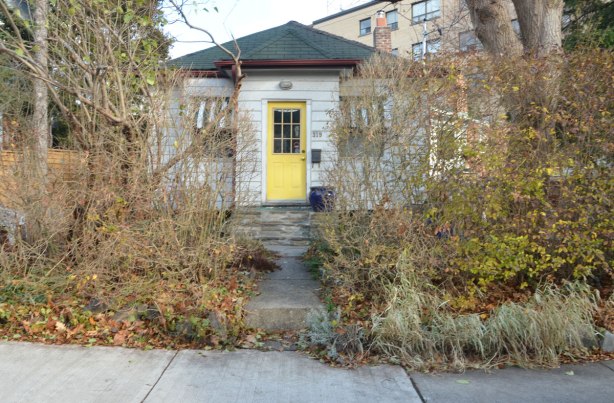
little narrow white bungalow with a yellow front door set back from the road. There is a straight walkway from the sidewalk to the door, and there is a lot of shrubery in the front yard especially near the sidewalk.

as well as larger buildings with intricate architectural details.

below:  A checkerboard effect with the bricks on the La Salle Apartments.  As an aside, the small bush in front of the building was in the picture no matter what angle I tried.  It was a lilac bush and I am sure that there were buds on it.

Part of a low rise apartment building, over the door, no windows. Checkerboard pattern in the bricks. The words La Salle Apts in large white letters across the bottom of the picture.

below: A little fake balcony with a white post railing on a low rise apartment building.
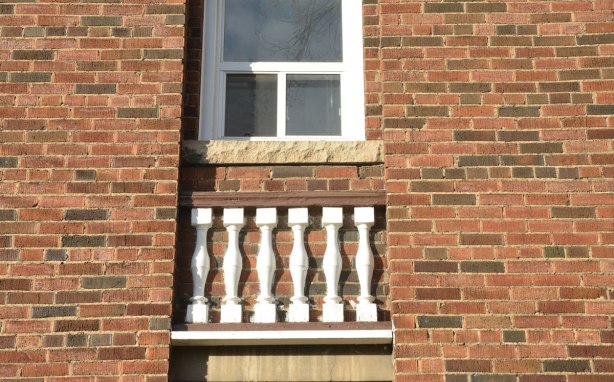
A white framed window in a red brick building. Below the window are a few white pieces of wood that look like a balcony railing even though there is no balcony there.

below: A line of little arches across the roofline is echoed in the larger arch patterns over the windows.  There is a small relief sculpture near the top corner of the building (slightly behind the tree) but I can’t tell what’s on it.  A coat of arms maybe?
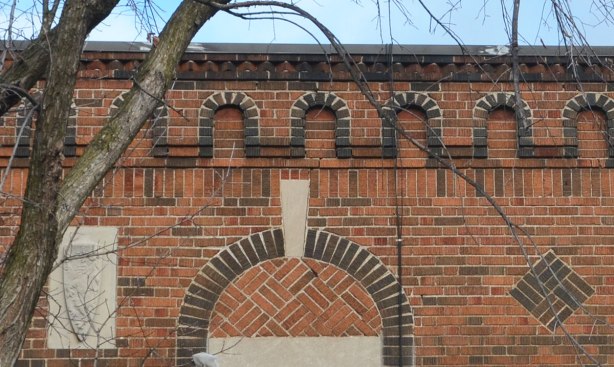
brick pattern across the top of a building. scalloped, or looking like little arches to match the larger arches over the windows.

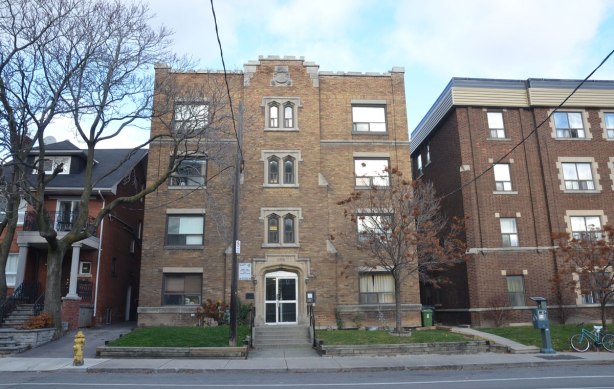
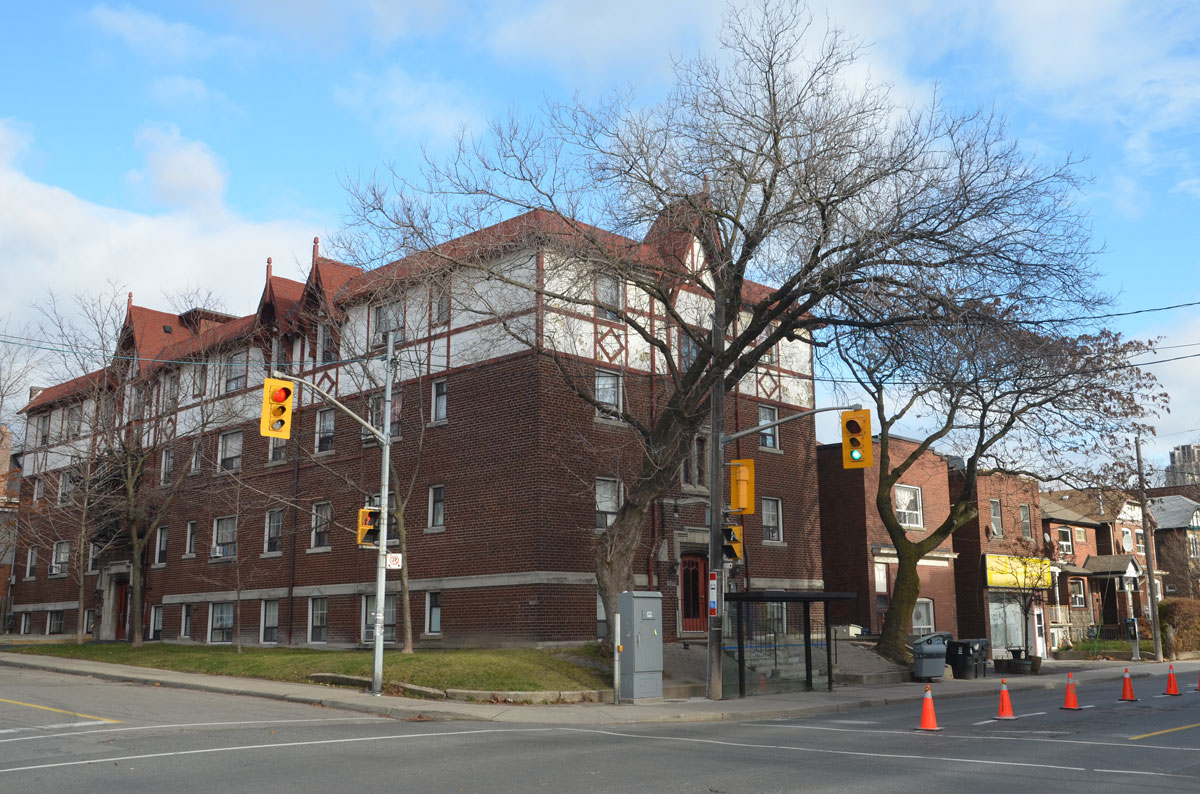
below:  There were quite a few four storey brick apartment buildings that looked like they were built in the 1920’s and 1930’s.  Perhaps there was a  little ‘condo boom’ at the time?

4 storey apartment building on Vaughan Road, red brick with white upper storey, diamond shaped details, two little peaked roofs over windows.

four storey apartment on a corner

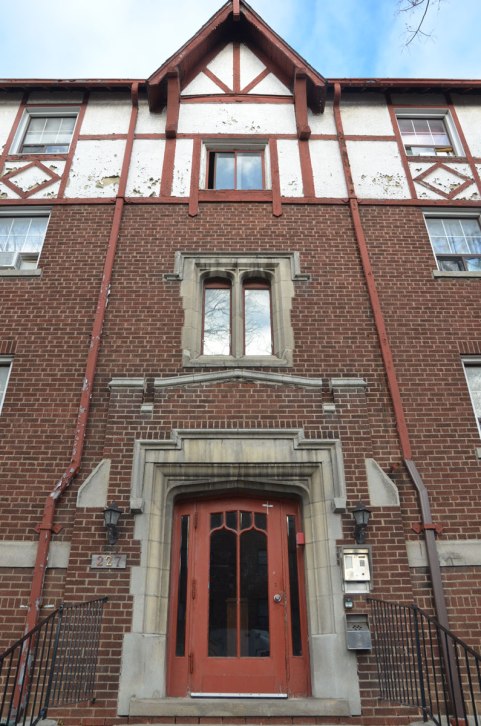
front door and front of building, four storey apartment building in red brick with stone window and door frames.


Two four storey apartment complexes and a single family home on Vaughan Road.

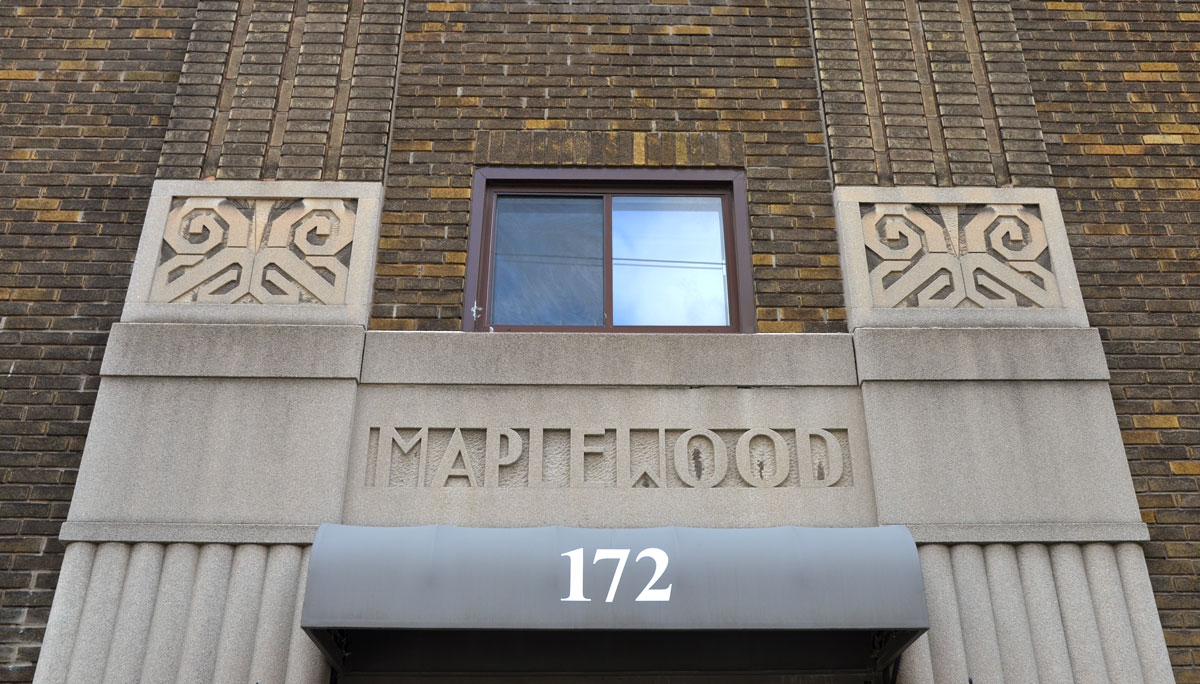
below:  Like the condos of today, many of the buildings had names such as Maple Villa
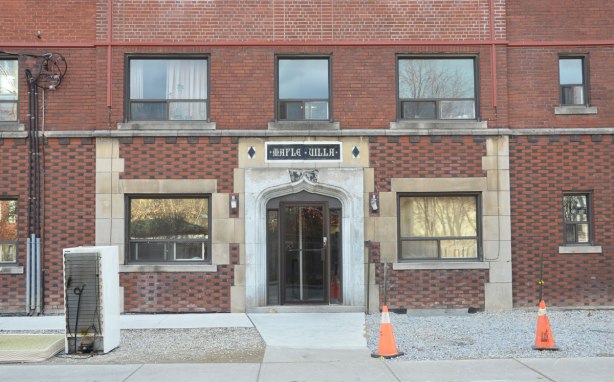
Stone door frame and entranceway to Maple Villa, a brick low rise apartment complex

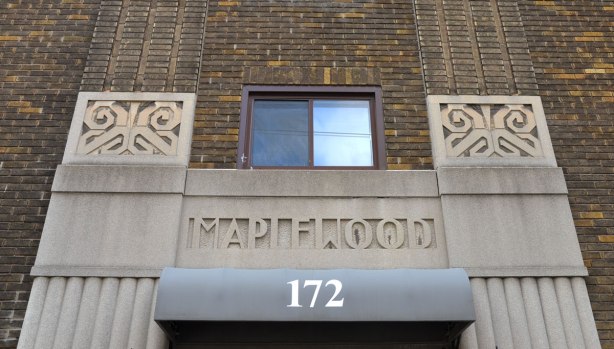
and Maplewood

stonework over the door of the Maplewood apartments at 172 Vaughan road, and the art deco like decorations beside it.

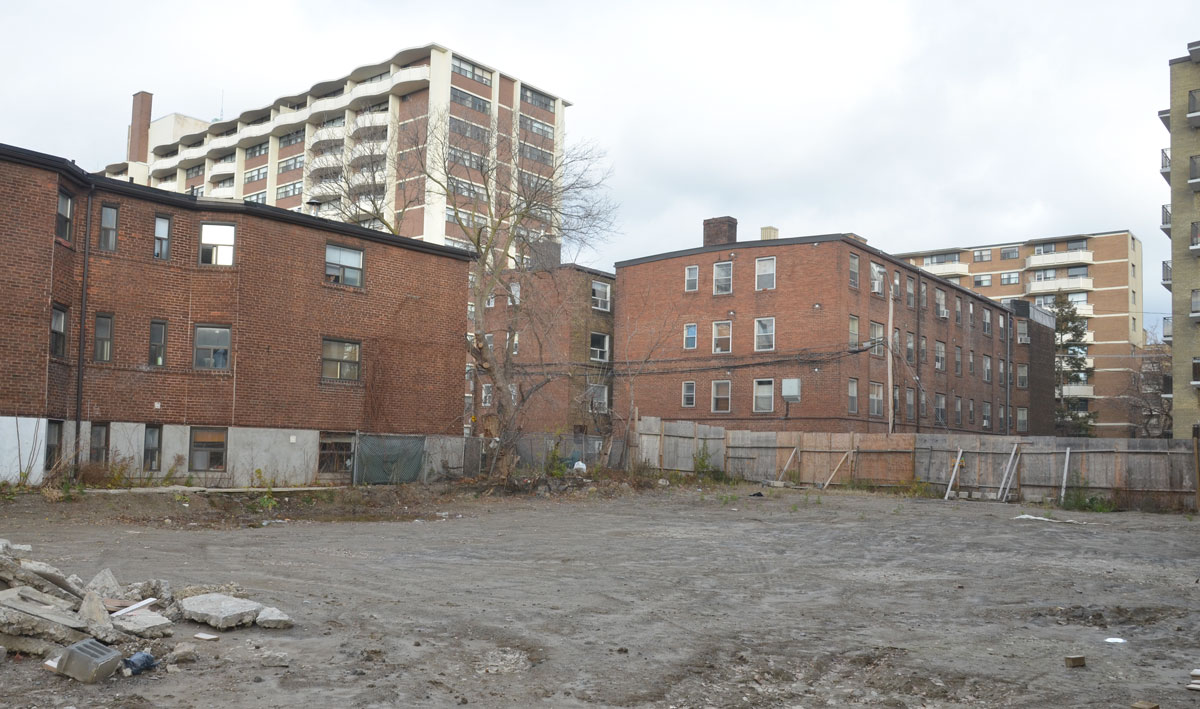
below:   The backs of all those apartment complexes are nearly as interesting as the fronts.
This is one of the only construction sites I saw although….

vacant lot with a number of low rise brick apartment buildings in the background.

… this Presbyterian church looks like it is about to be redeveloped.  It is one of three churches at the corner of St. Clair and Wychwood.   The church was built in 1926.  There is a brief description of the property on the Stanton Renaissance website but very little information is given beyond a “transformation” of the church and the creation of “high end residential boutique”.
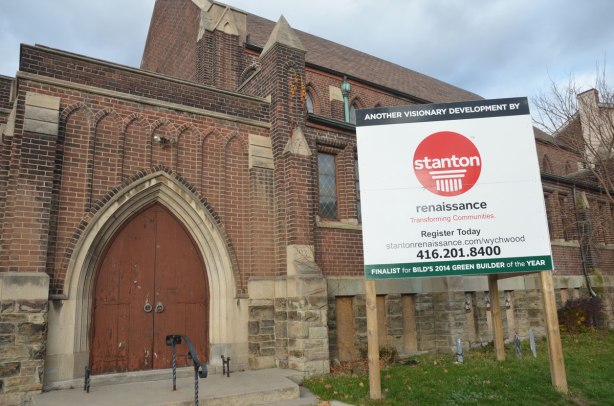
An old brick church at a corner. It is now empty. There is a large sign in front of it advertising Stanton developments.

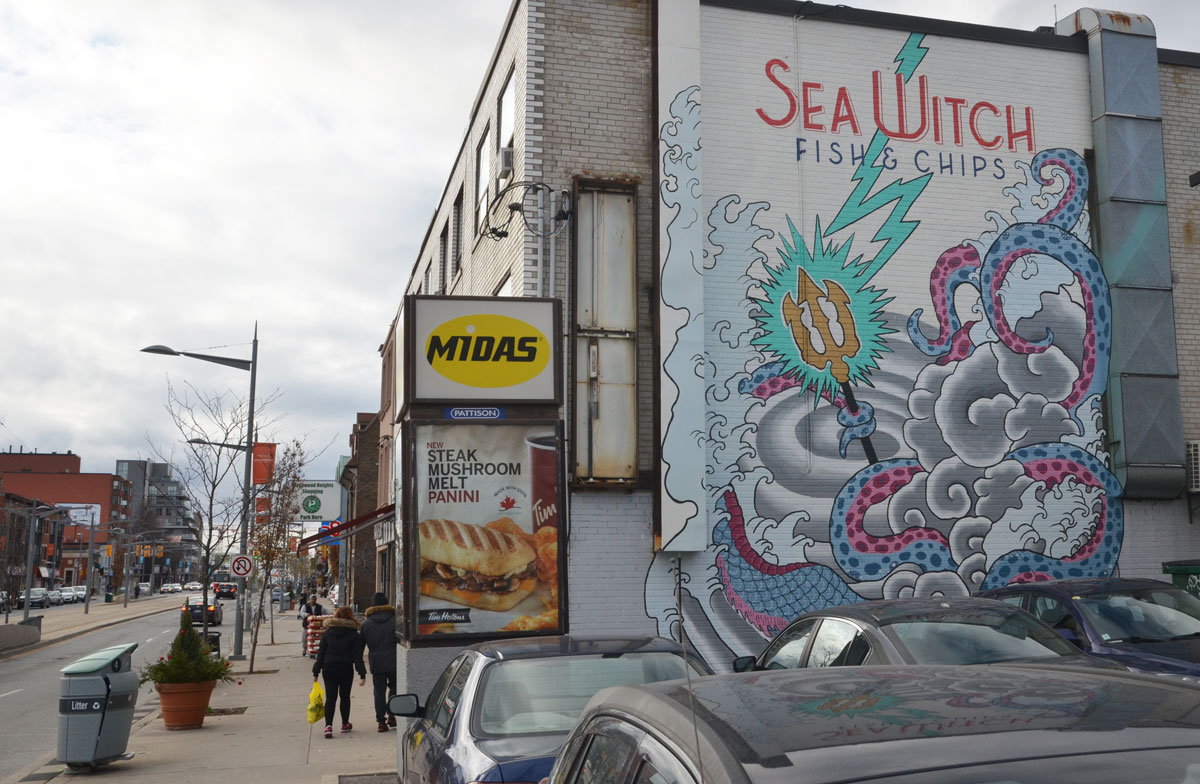
below: Mural for Sea With Fish and Chips on St. Clair West
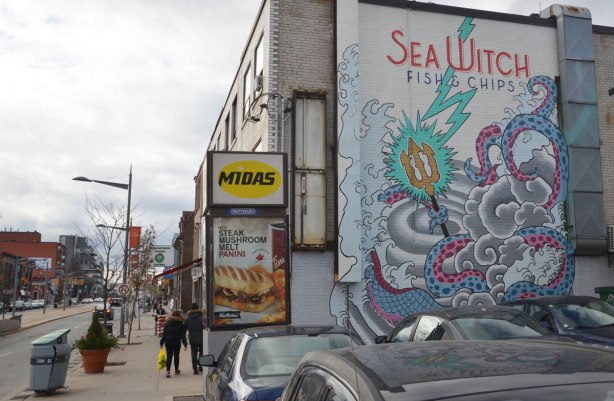
mural for Sea Witch FIsh and Chips restaurant, a large sea serpent

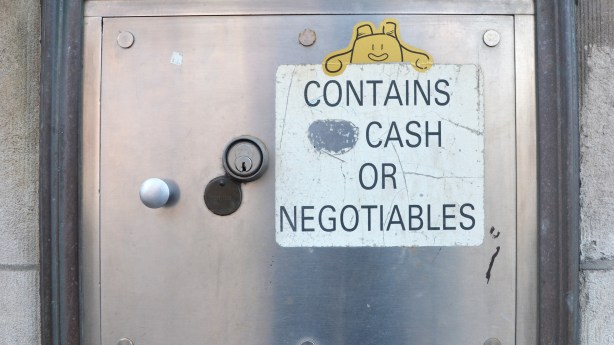
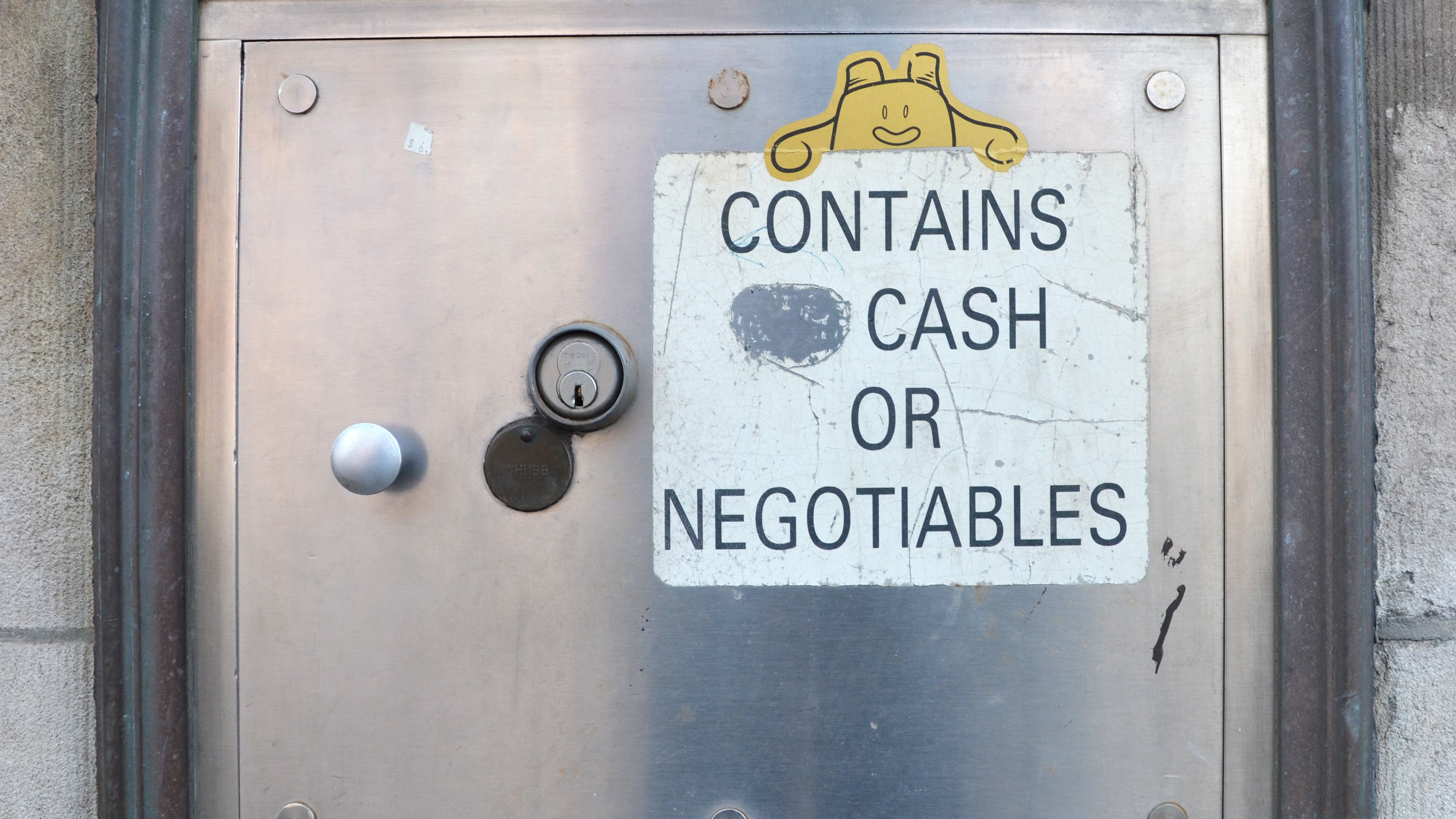
A little yellow sticker on a bank night deposit box, looks like a little smiling creature looking over the sign that says contains no cash or negotiables, except that the word no has been scratched out

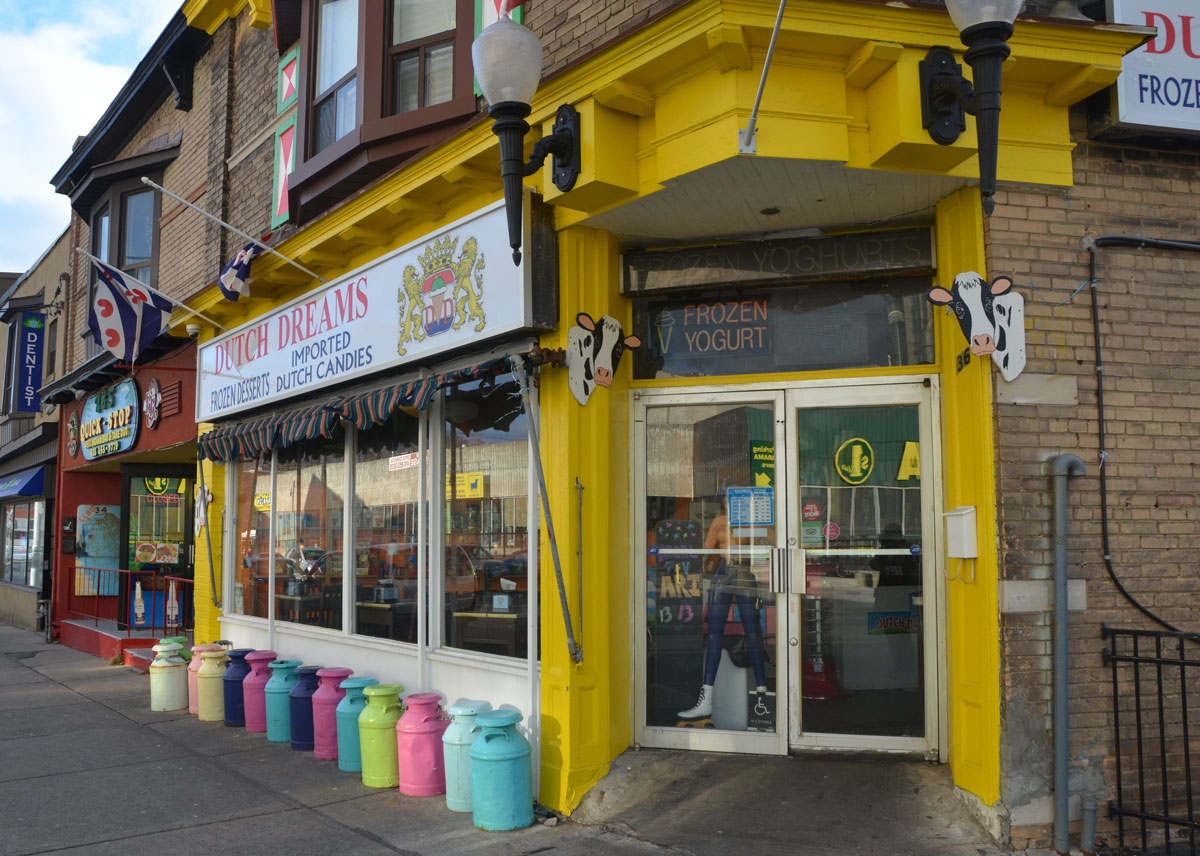
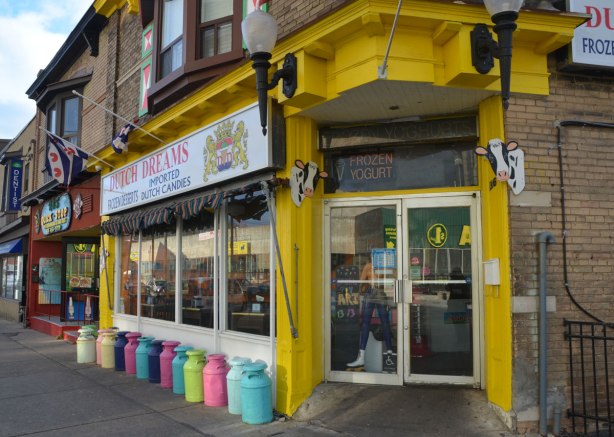
below: As I circled back the intersection of Vaughan Road and St. Clair West, I spotted a large doubledecker strawberry and vanilla ice cream cone on the side of Dutch Dreams.  Hey!  The answer to my question.  The ice cream place from 78 Vaughan Road has moved a couple of blocks south, complete with it’s collection painted old fashioned milk cans.
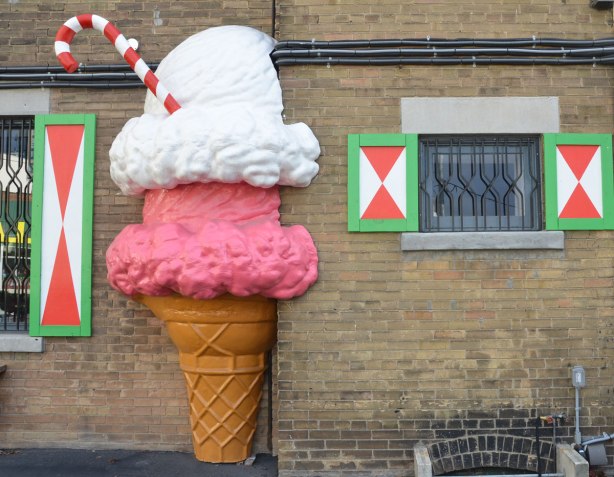
A very large plastic icce cream cone, double scoop, strawberry on the bottom and vanilla on the top, decorating a brick building. The shutters on the windows of the building are green, red and white

bright yellow entranceway, a line of different coloured milk cans along the exterior wall, sign says Dutch Dreams, candy and ice cream.

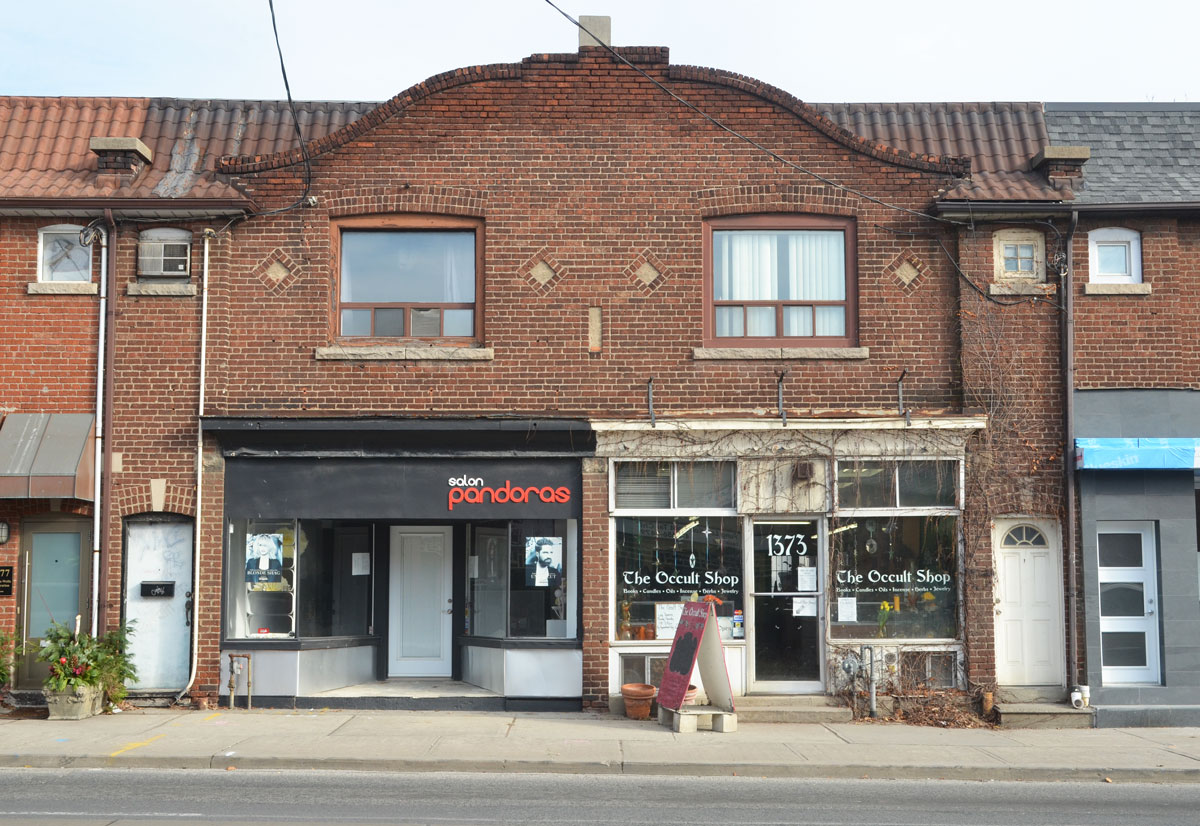
below:  One last picture.  As I waited for the Bathurst bus, I found myself standing across the street from this building.   The curve of the roofline is interesting, but even more interesting is the the fact that there is an occult store in Toronto.  Candles, herbs, incense, jewelry, I’m now wishing that I had crossed the street to investigate further!   And, smile, the store next to it is Pandora’s salon.  Pandora, the one who in ancient times opened a box and unleashed all sorts of evil on the world.
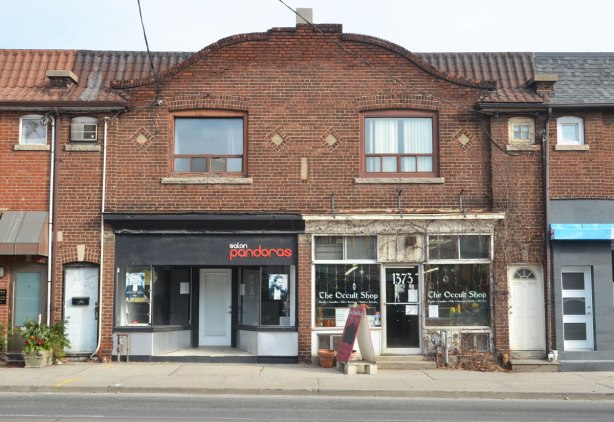
 

store front, one is an Occult Store, in an old brick building with a curved roofline over the middle of it.

The plan was to start walking westward from Eglinton subway station.

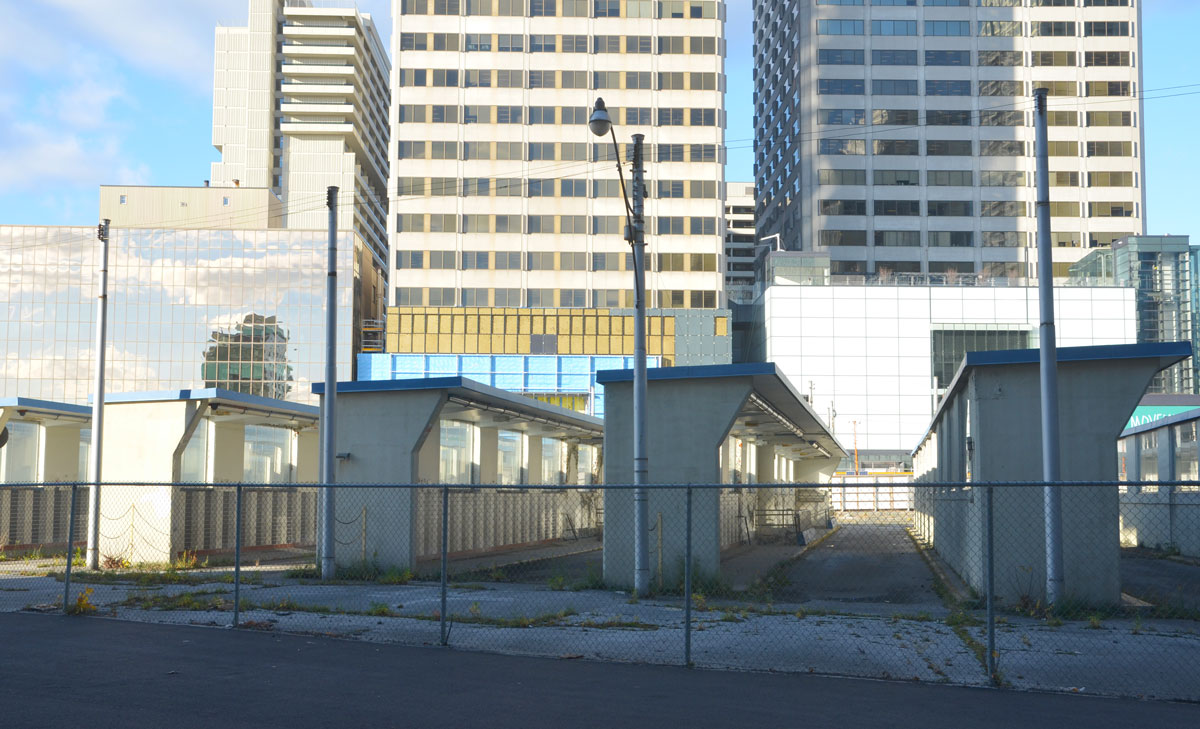
below:  The first photo I took was right after I got off a bus at the station.   With the ongoing reconstruction at Eglinton, there is now easy access to the old bus bays.  There is still a fence around them, but at least they can be seen and photographed.  These bays have not been used since 2004 and the area has been fenced off and unused since then.  Now they sit empty in the shadow of the ever increasing tall buildings around them.

abandoned bus bays at Eglinton subway station in the foreground and the newer taller buildings in the area in the background

abandoned part of Eglinton subway station, behind chain link fence

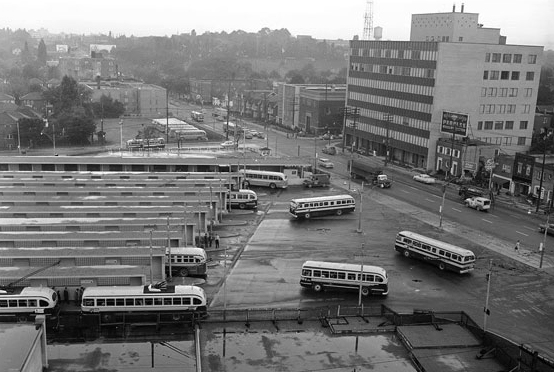
below: Looking west along Eglinton Avenue after the completion of Eglinton station in 1954.  The street running north-south just beyond the bus bays is Duplex Avenue.  There is now a police station on the SE corner of that intersection.   On the NW corner you can see the brick Toronto Hydro-Electric Building with its large front ‘door’.  It is still there.

historical black and white photo, aerial, from Yonge Street looking west along Eglinton Ave showing the bus bays at Eglinton subway station, up to Duplex Ave is shown clearly.

source: City of Toronto Archives, online

.

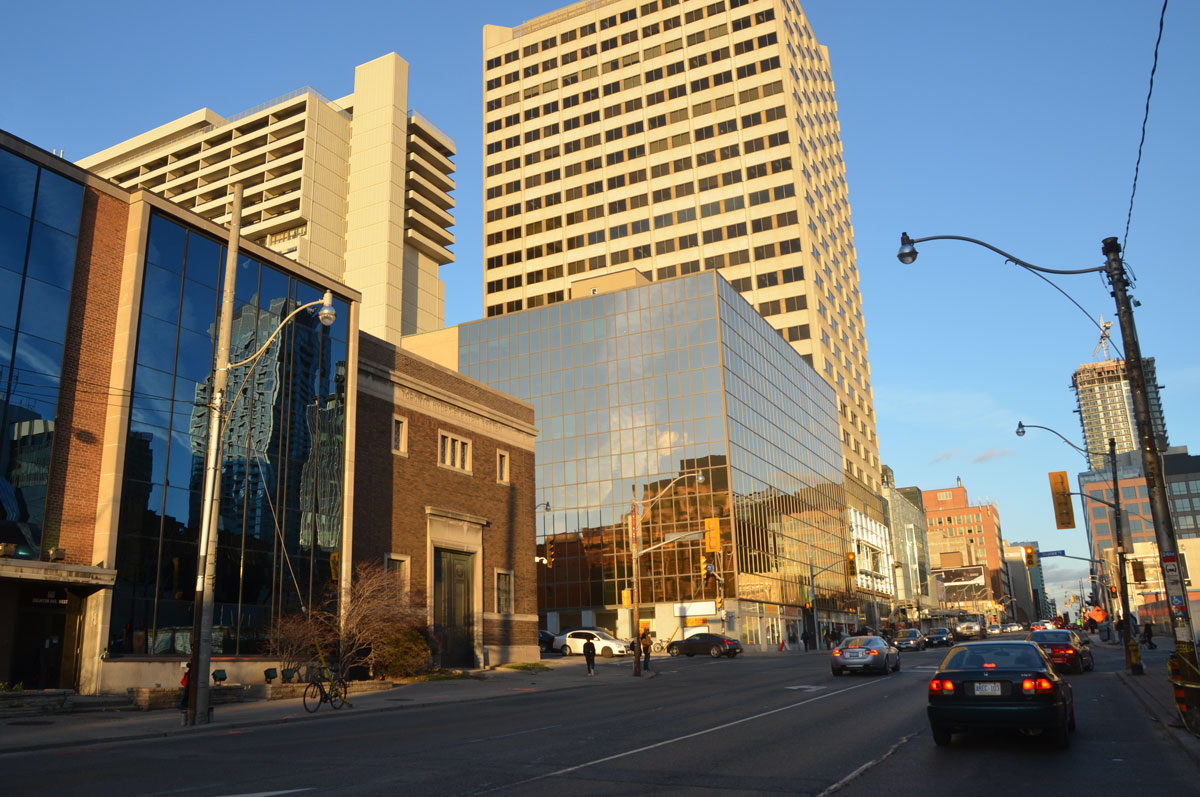
below: (taken later in the afternoon, on the way home) The intersection of Eglinton and Duplex from west side with the brick Toronto Hydro-Electric building now between glass buildings.

looking east along Eglinton Avenue towards Yonge street with Duplex Ave in the foreground. The old Toronto Hydro-Electric building is in the picture, with a newer structure with a glass front beside it. New buildings between Duplex and Yonge on the north side of Eglinton are also in the picture.

below: After leaving Eglinton station, this caught my eye.  The glass cube-like building on the NE corner of Eglinton and Duplex reflects the afternoon sun onto the walls of the Toronto Hydro-Electric building across the street.

brick building with wavy shadows on it cast by the sun being reflected off the glass building across the street

brick building with wavy shadows on it cast by the sun being reflected off the glass building across the street

below: On Duplex, right behind this brick building is an intriguing building.  The highly textured concrete exterior and the 3D patterned wall are suggestive of the 1960s although I could be wrong.  It’s ugly yet fascinating at the same time.   Now that the leaves have fallen from the trees in front of it, the pattern of trapezoids, diamonds and rectangles is revealed…. as is the dirt and grime on the concrete.  The fact that there are no windows and doors facing the street provides a clue that this is yet another Toronto Hydro building.

Three tree with no leaves are in front of a concrete wall that is built in 3D pattern of trapezoids and rectangles. There are no windows or doors.

Somethings old

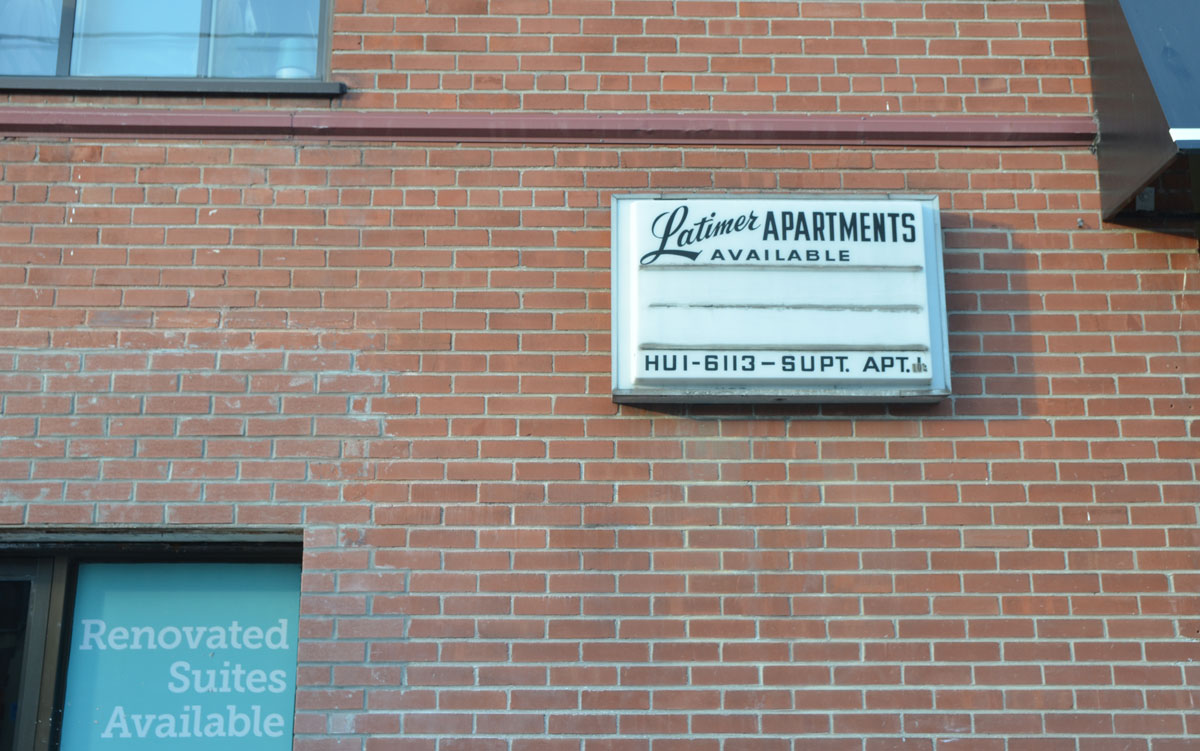
below: A sign with an old Toronto HU (Hudson) exchange phone number.  HU1 would be 481.  This number is probably from the late 1950s.  In the early days, Toronto phone numbers had only 6 digits.  In the mid 1950s a seventh digit was added and then between 1961 and 1966 the letter prefixes were phased out, replaced by numbers.

old sign on the side of an small apartment building, the Latimer Apartments, with an old Toronto phone number starting with the letters HU

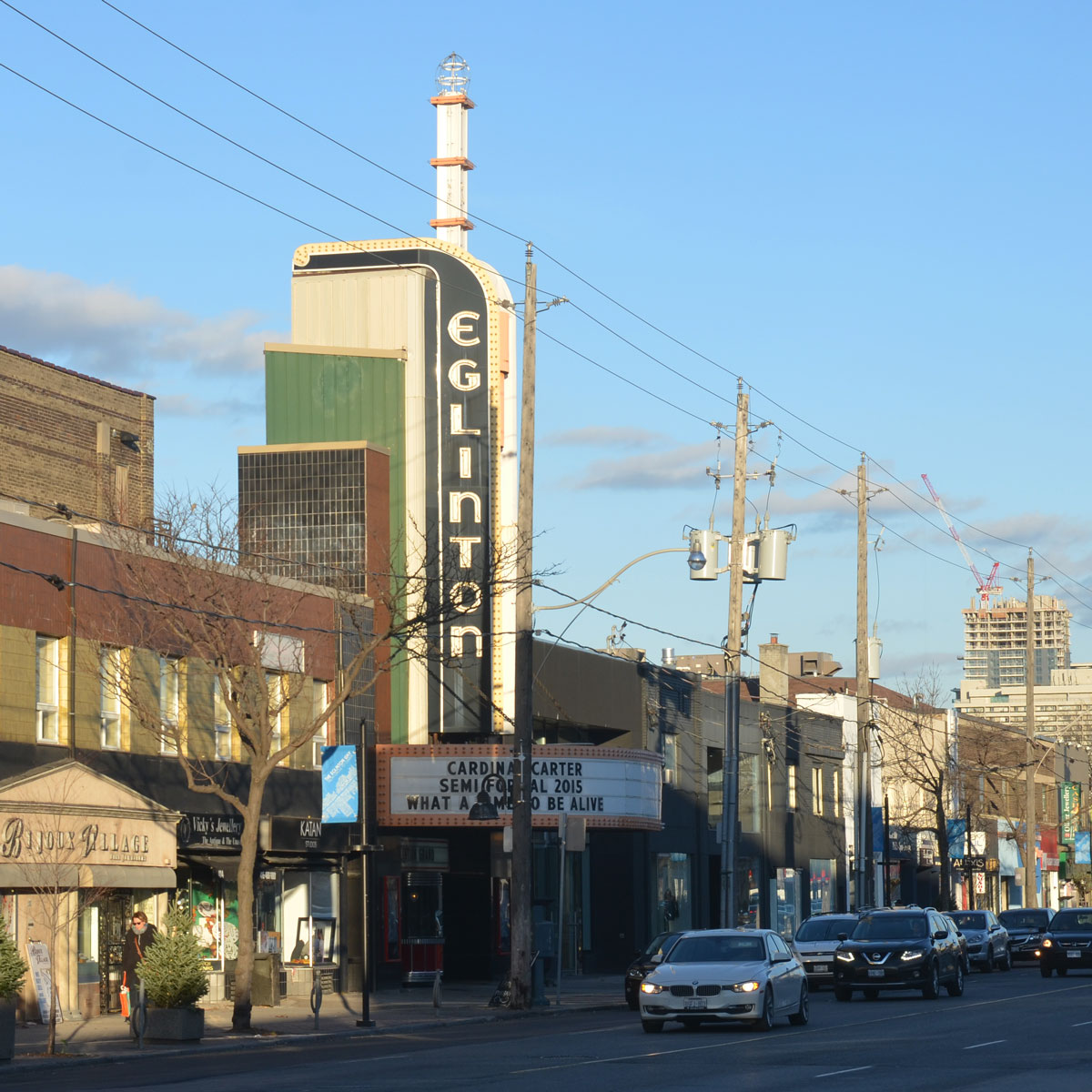
below:  The Eglinton Grand, art deco building from 1936; National Historic site since 2003.

The Eglinton Grand, a cinema theatre built in art deco style in 1936.

 Somethings new

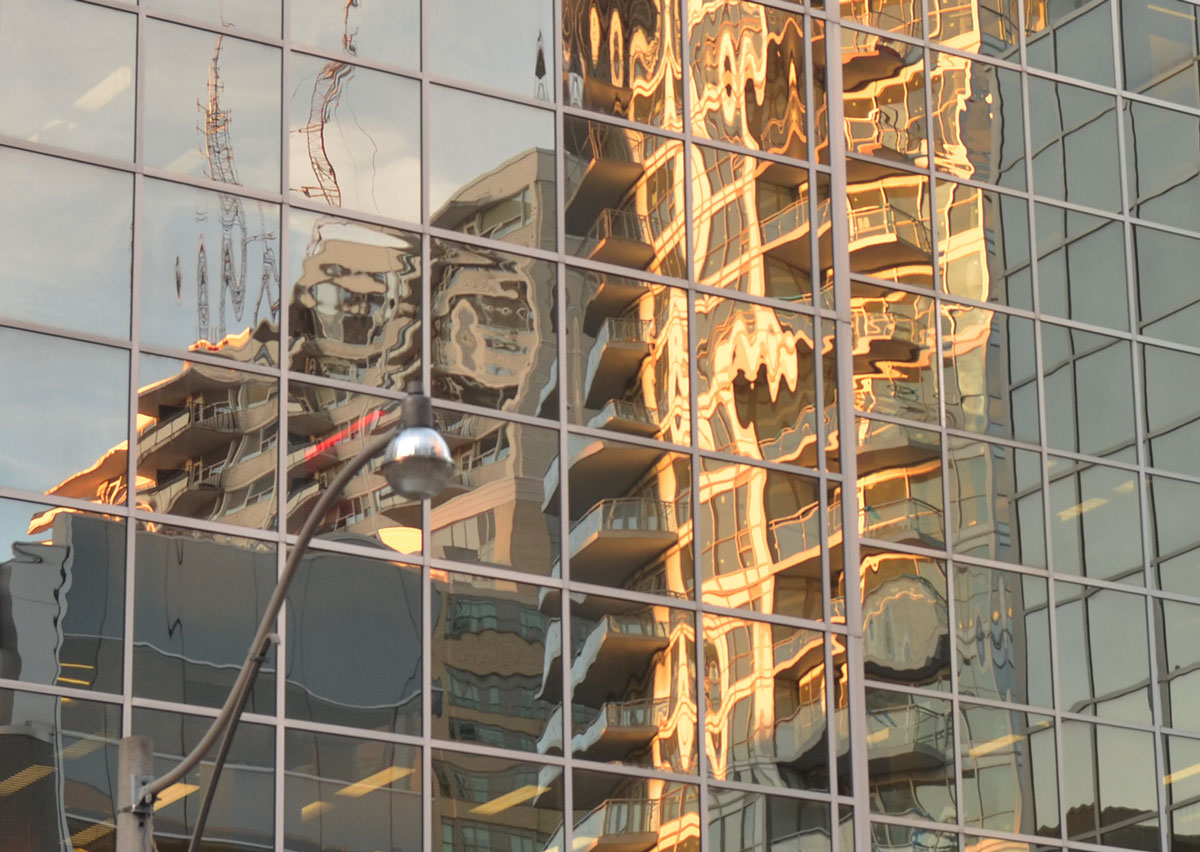
many curved and disjointed reflections of buildings in a tall glass building. Afternoon sun so there's a yellowish tint to the reflections

 And some window ‘shopping’ to do

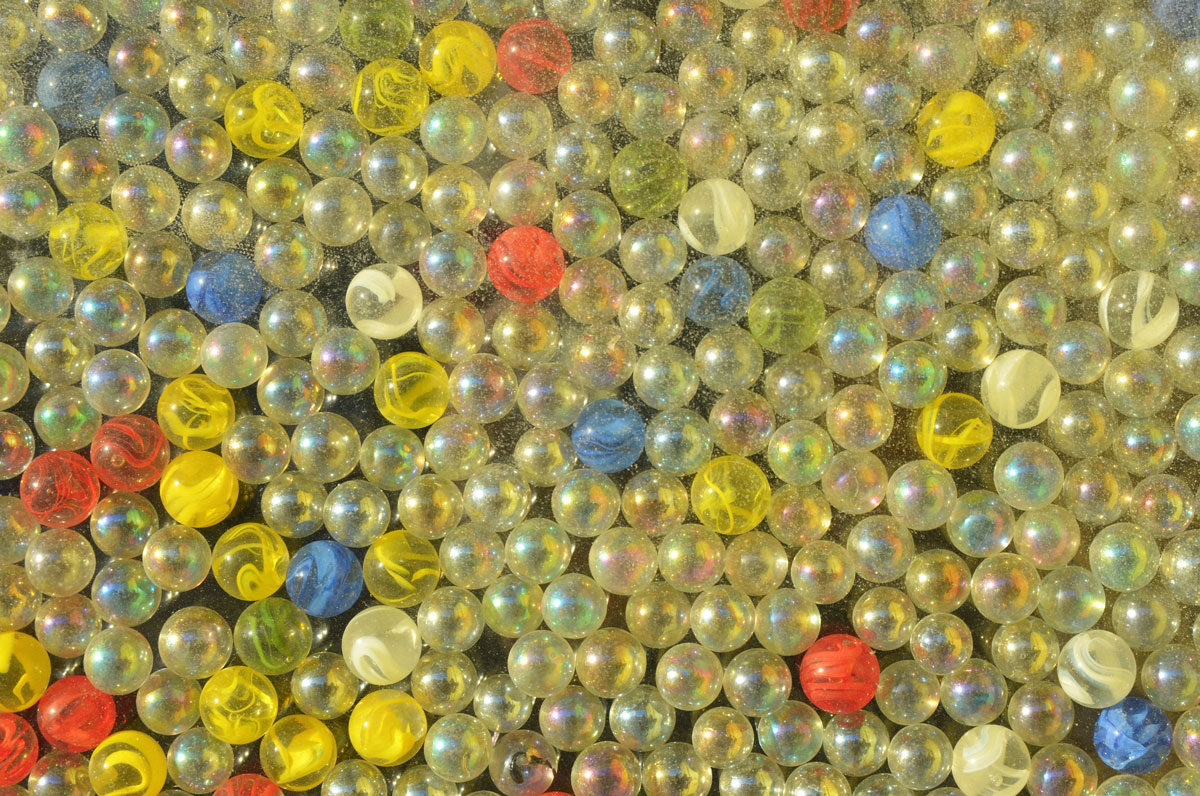
below: Marbles wedged between glass make an excellent decorative touch.

a layer of marbles wedged into a window to look a bit like stained glass

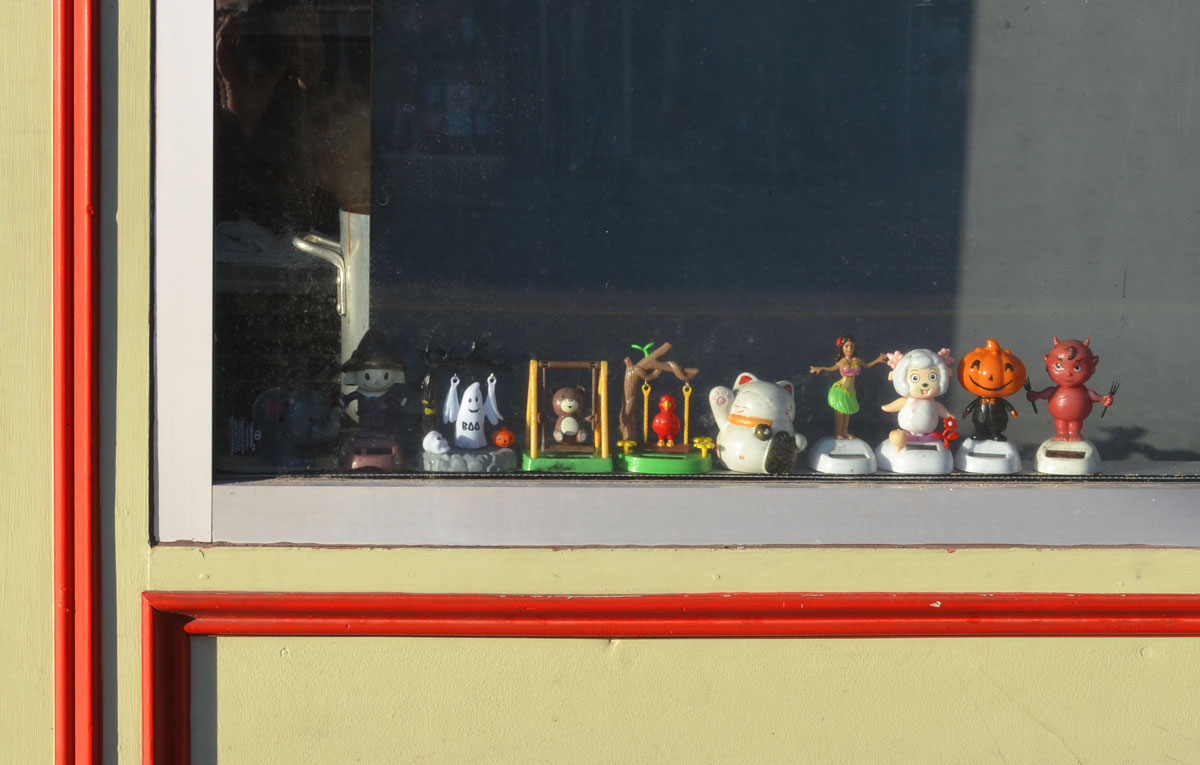
A line of toy figurines on a window sill in the window of a restaurant

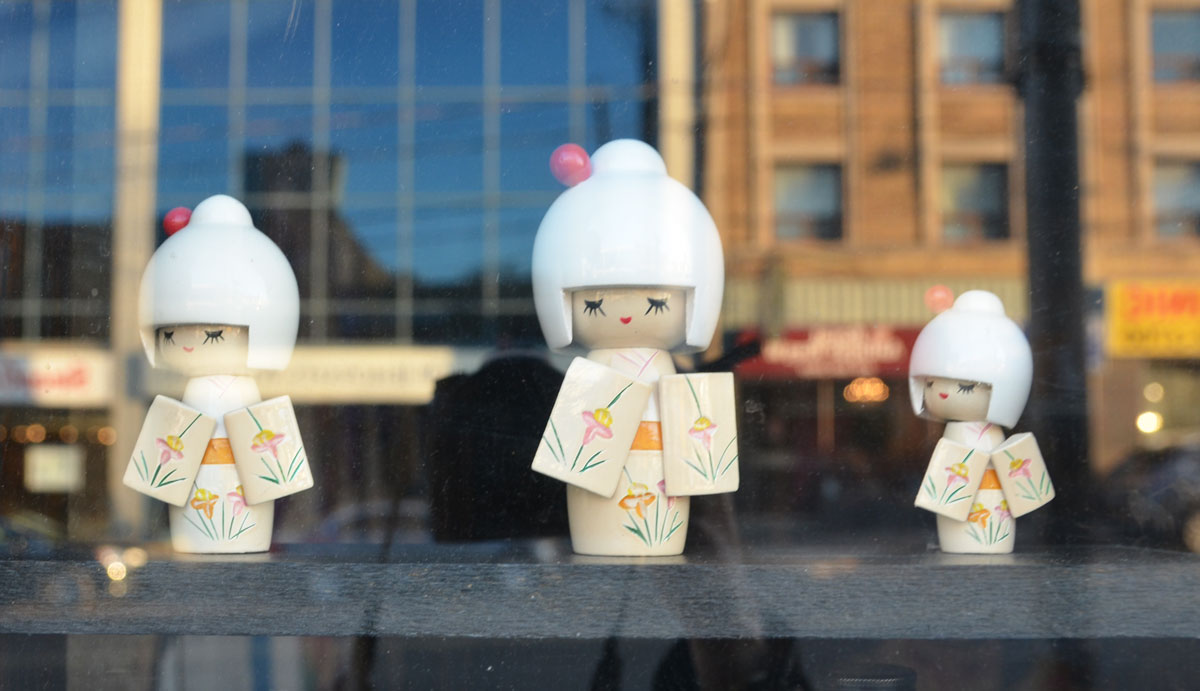
below: little Japanese wooden dolls in the window of the Sake Bar

three little Japanese wooden dolls with white hair and white kimonos standing inside a window. Reflections of the stores across the street are behind them.

below:  And even a lovebot hangs out here

a 3D concrete lovebot stands on the sidewalk beside a store as people walk by

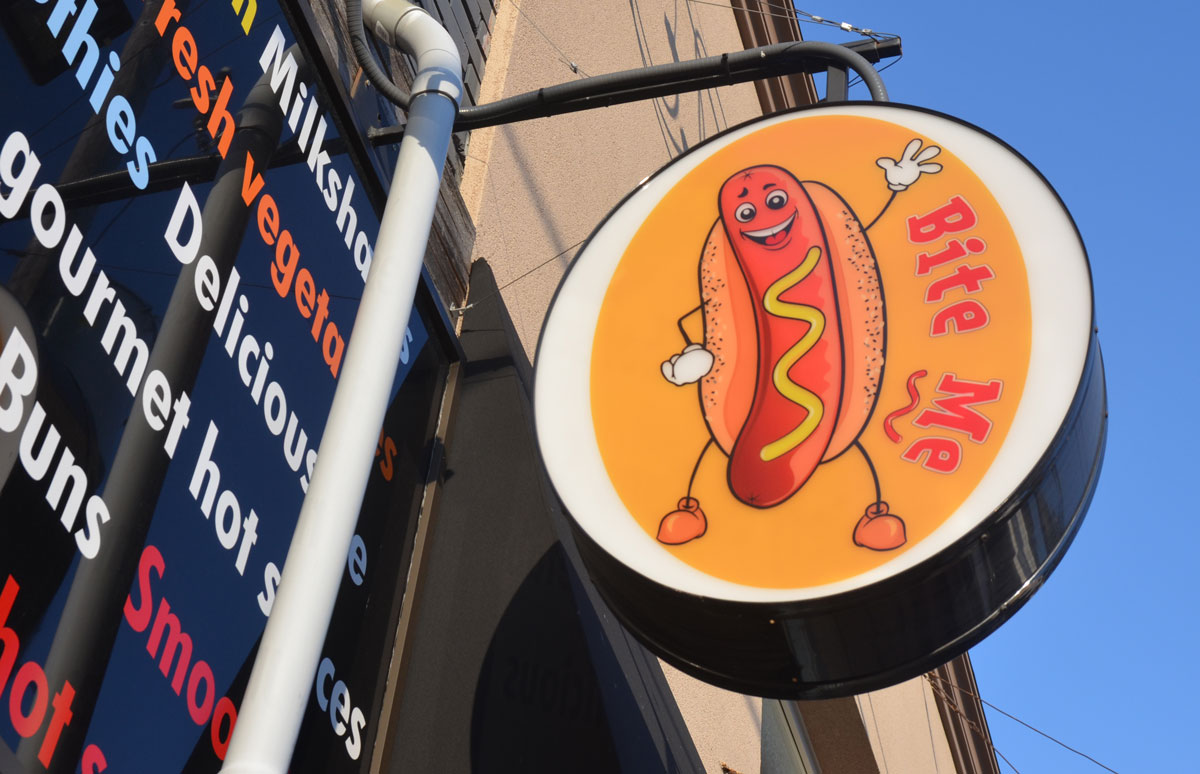
below:  A little chuckle at this sign….

I small sign hanging over a doorway of a hot dog restaurant called Bite Me

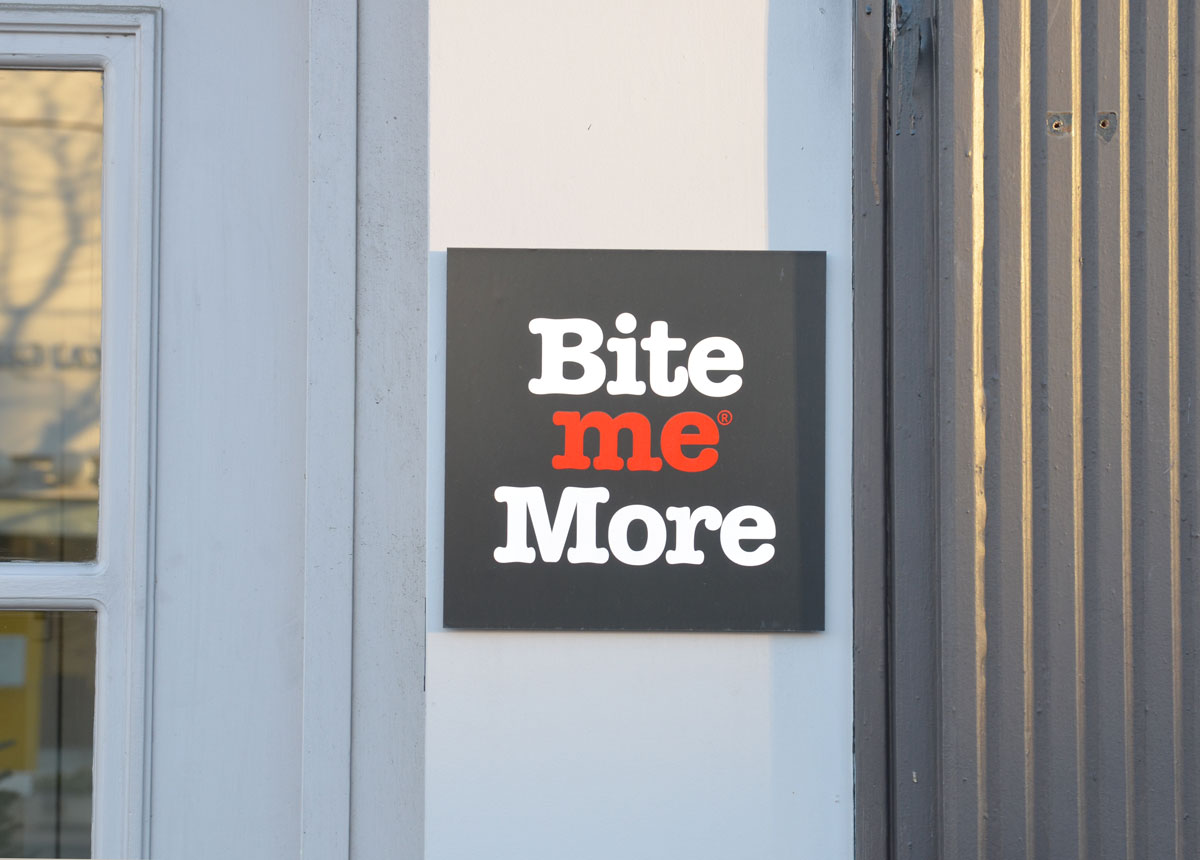
below:  And then later I saw this.

A sign on the wall outside a store that says Bite Me More

sticker on a pole on a sidewalk. One man is kicking another, pixelated picture, with the letters X G G L on it.

Rather than wait for a bus I decided to keep walking home but unfortunately it’s that time of year when the daylight hours are just too short.   One last look at where I had just been before putting my camera away and heading home.

very late afternoon sun, as it disappears behind buildings, looking down a street, sun is reflecting off some windows, a large part of the street is in shadow, a TTC is there, with its lights on, some construction on the street, some cars,

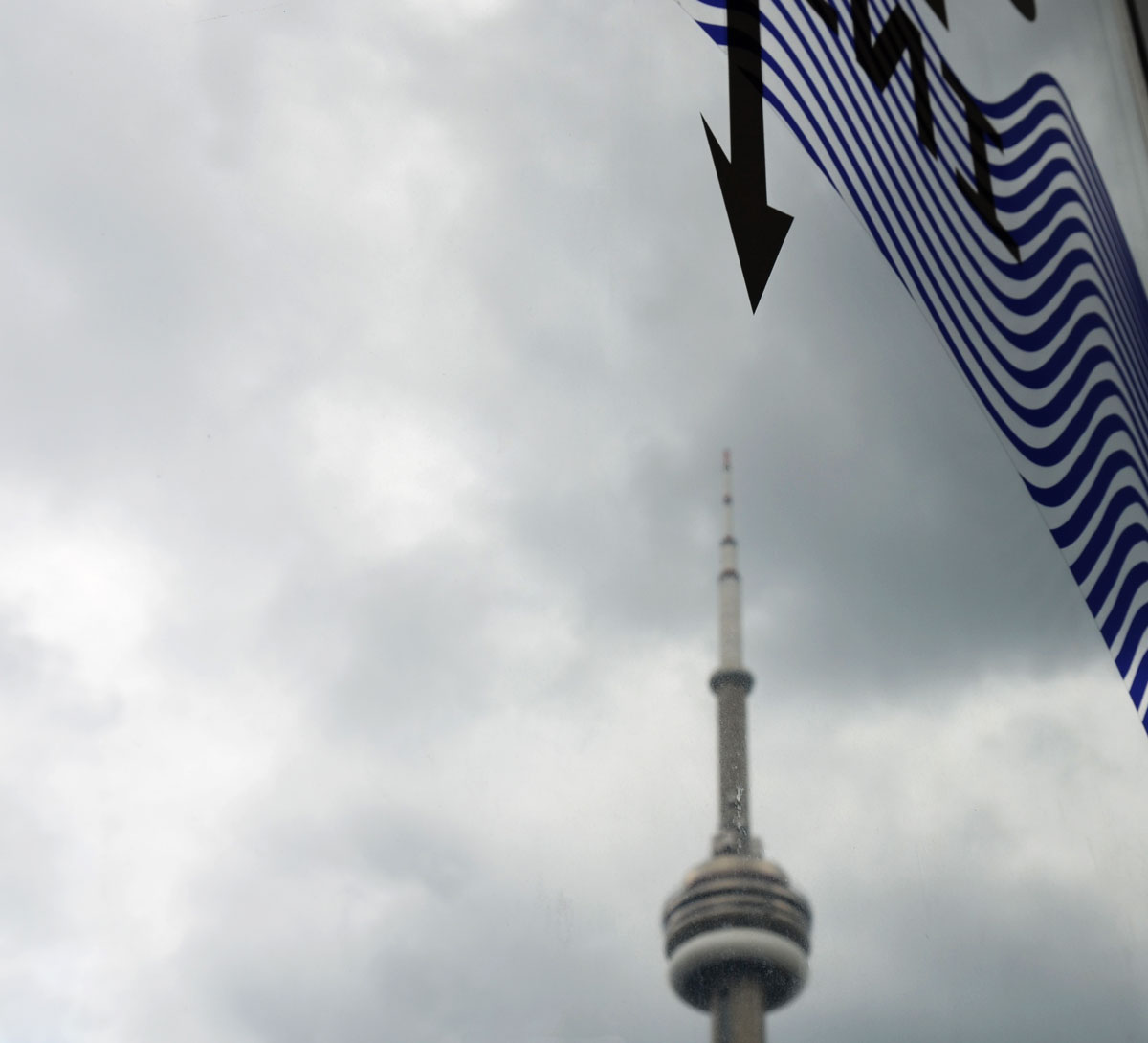
And the point of the game is this:

blog_CN_Tower_arrow

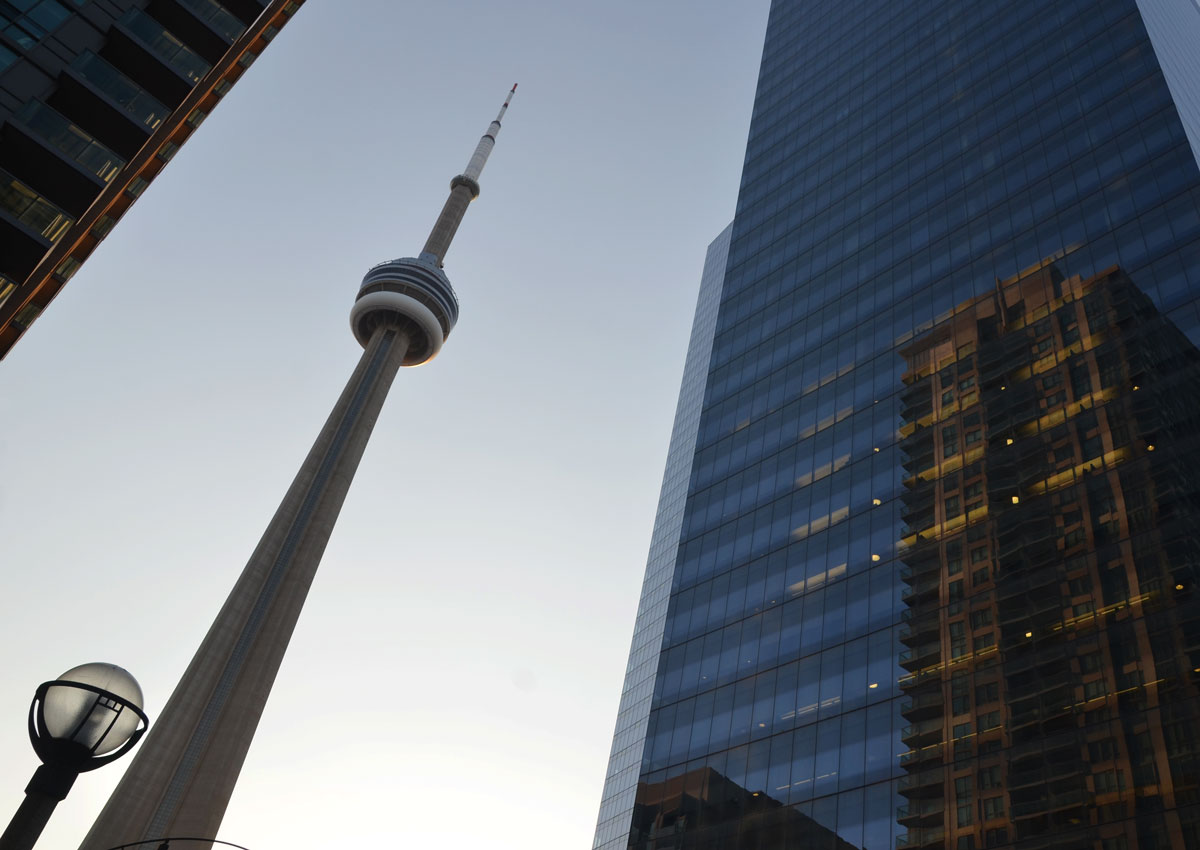
How many views of the CN Tower do you think there are?
I suspect the answer is something like “bazillions” but I am willing to try to see how many I can find.

below: From far away. Looking eastward across Lake Ontario from Humber Bay park.

looking across a hazy Lake Ontario to the TOronto skyline

Some of these views you have probably seen before…  and perhaps many times before.
But, I  hope that some of these views are new to you.

below: Zipline at Canada Square, part of EpicIsOn event

blog_CN_Tower_zipline

below: From the east, across Sherbourne Common, late afternoon

Sherbourne Common looking towards downtown and the CN tower. Splash pad with fountains in the foreground with late afternoon sun shining on the water

below:  And from the west

blog_cn_tower_night

  below: Behind a busy intersection, King and Spadina

the intersection of King and Spadina in Toronto with a wide angle lens. People are crossing the street, there is a streetcar and lots of streetcar wires. THe LCBO and Winners are in the background as well as the CN Tower
The CN tower between two skyscrapers

blog_CN_Tower_rigging

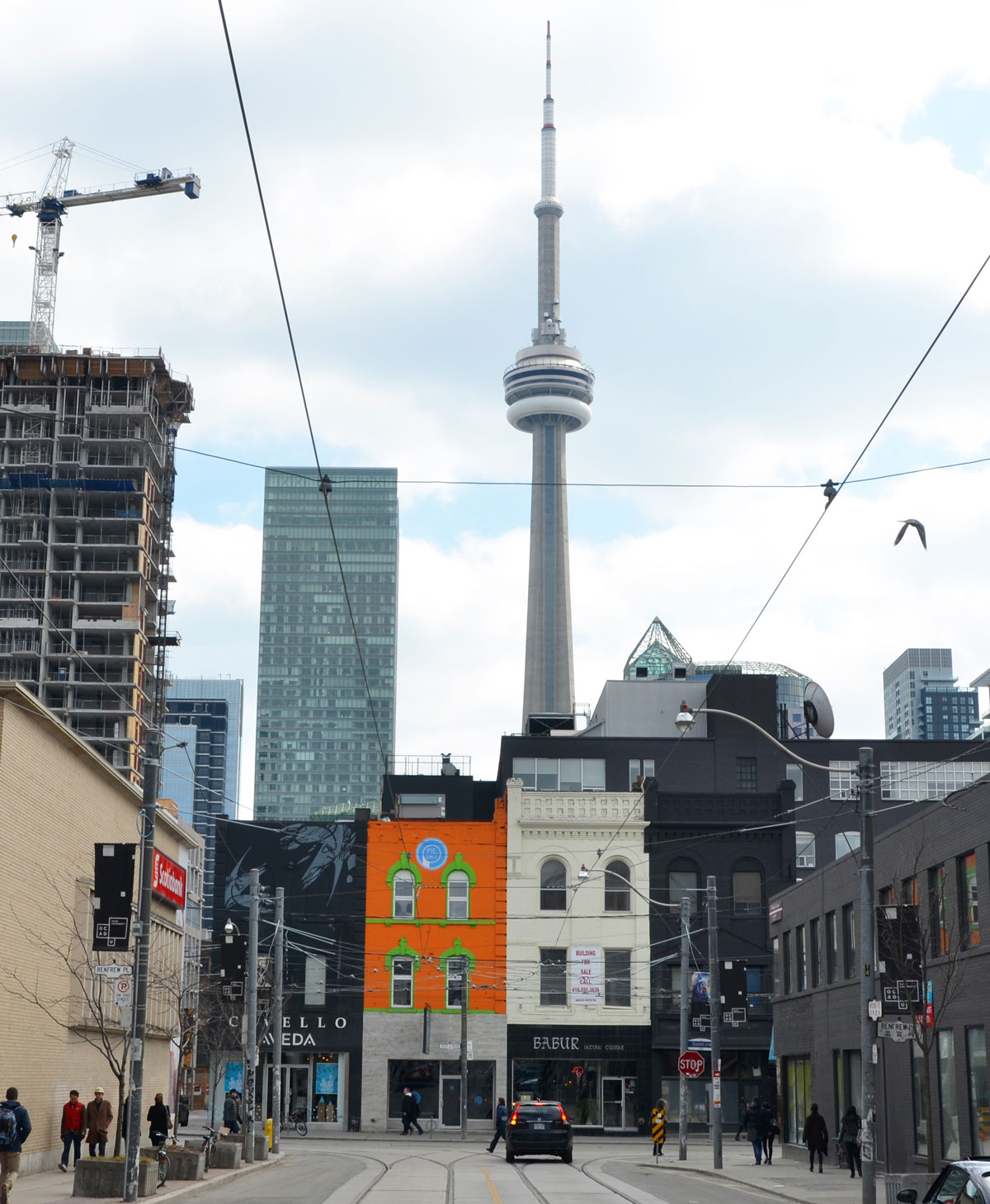
below: behind Queen St. West

Looking towards shops on Queen Street West with the CN Tower behind.

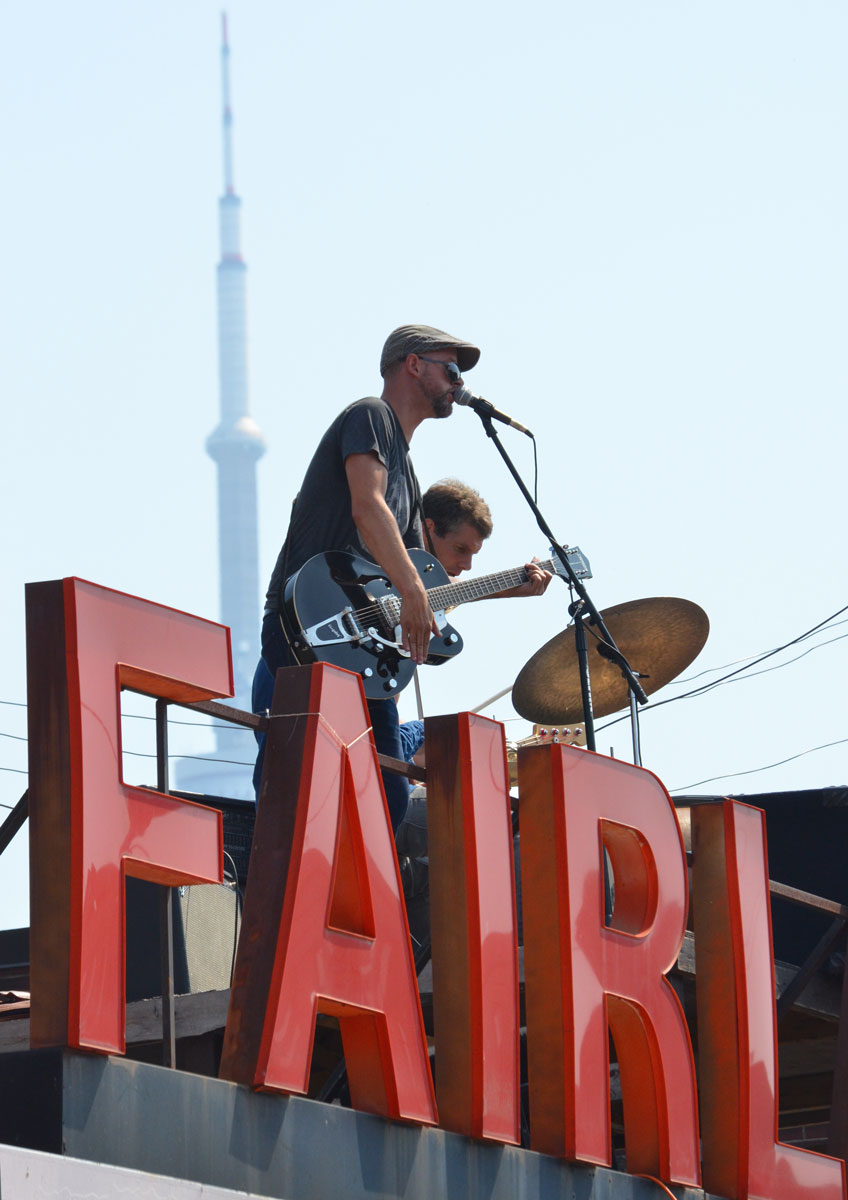
Musicians play on the rood of the Fairland grocery store in Kensington. The CN Tower is a bit hazy but it is visible in the background.

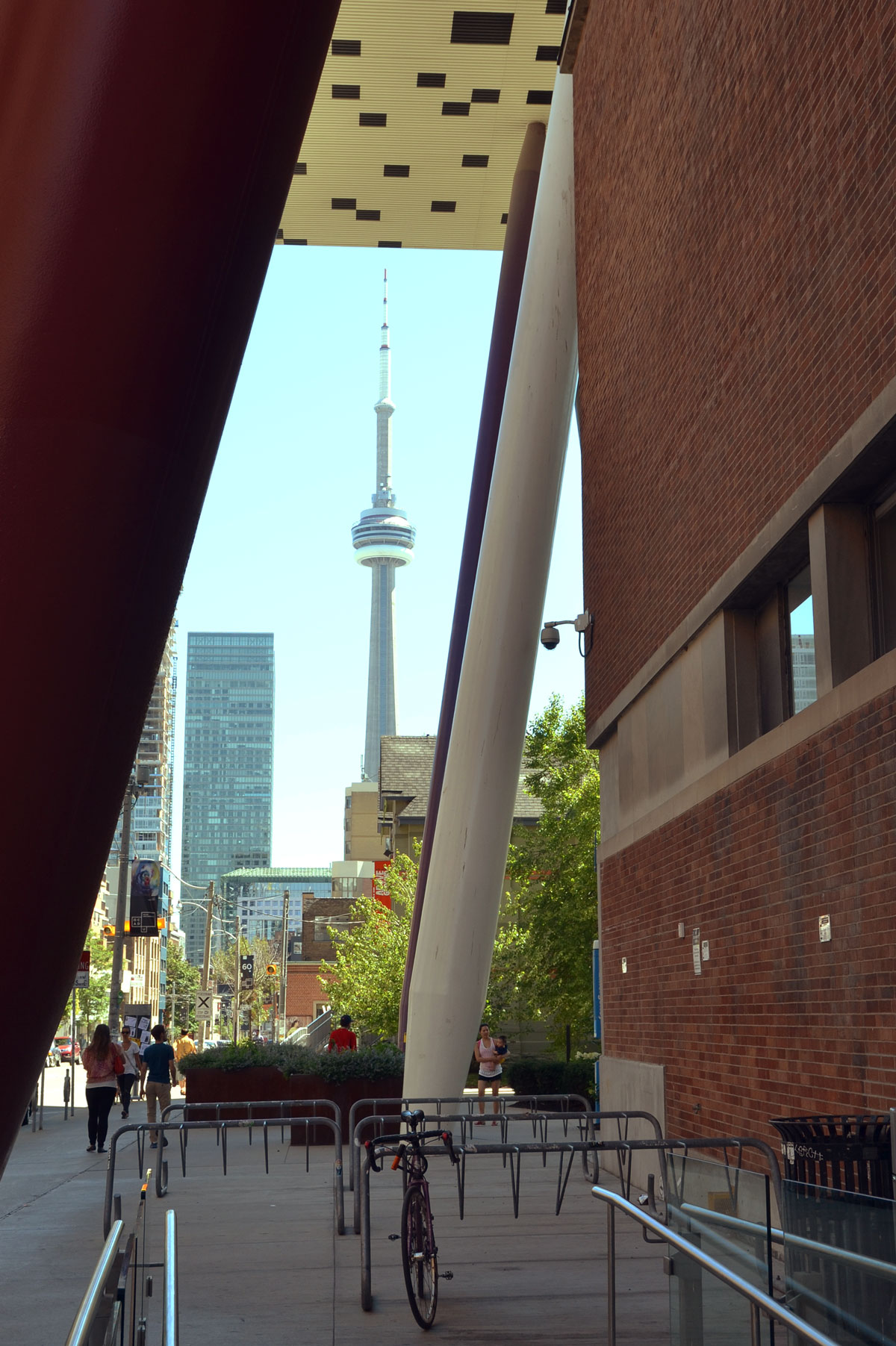
below: The CN Tower peaks out from between the pencil supports at OCAD

Looking through the pencil like supports to the black and white upper lever addition to OCAD (Ontario College of Art and Design). The CN TOwer and other tall toronto buildings are in the background.

This post is a continuation of another CN Tower post, Always in the way, from last year.

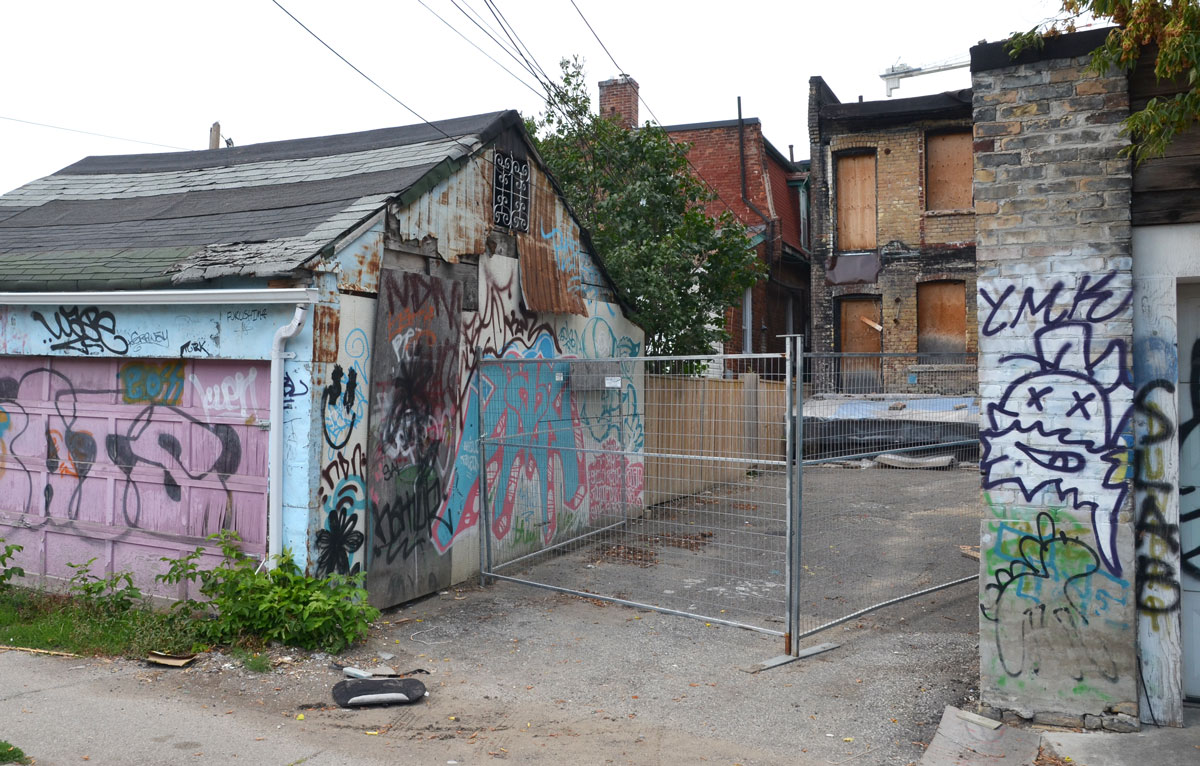
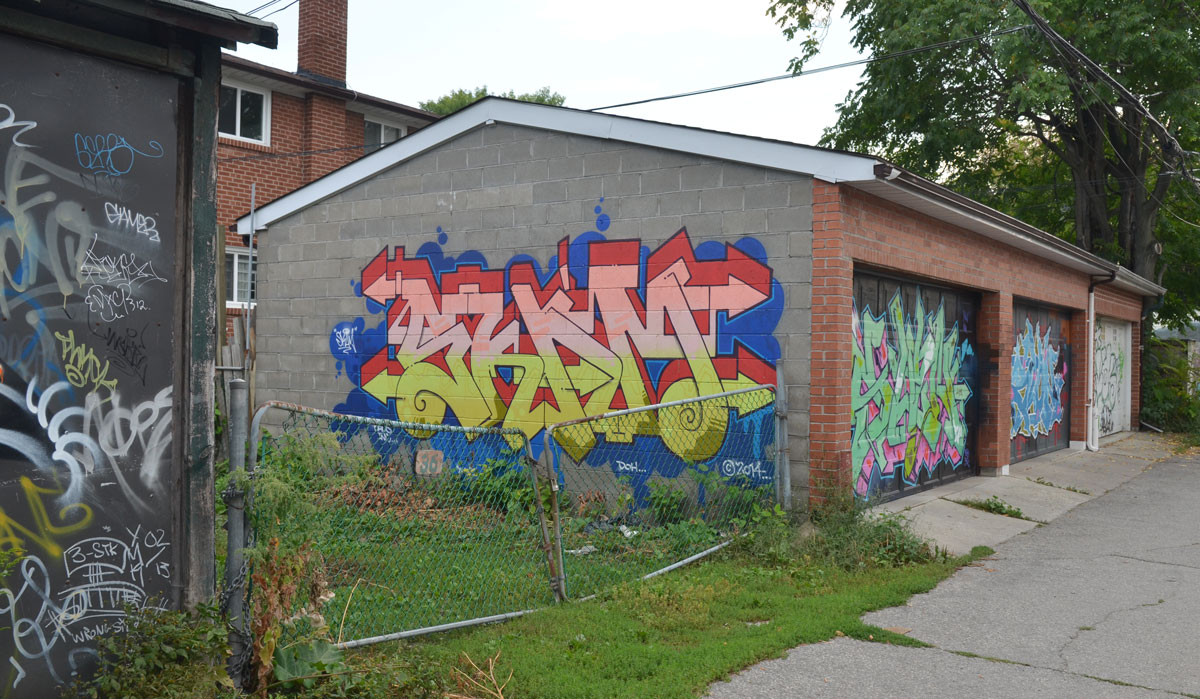
Nassau Street that is, just south of College and just west of Spadina.  There is an alley that runs north from Nassau directly behind Spadina.  A dead end lane runs perpendicular to it, behind the houses on Nassau Street.  Like most alleys in Toronto, there is street art there.  Some old, some new, and unfortunately some scribbled over.  All in all, this lane is looking a little worn.

Buildings in an alley with lots of graffiti on them.

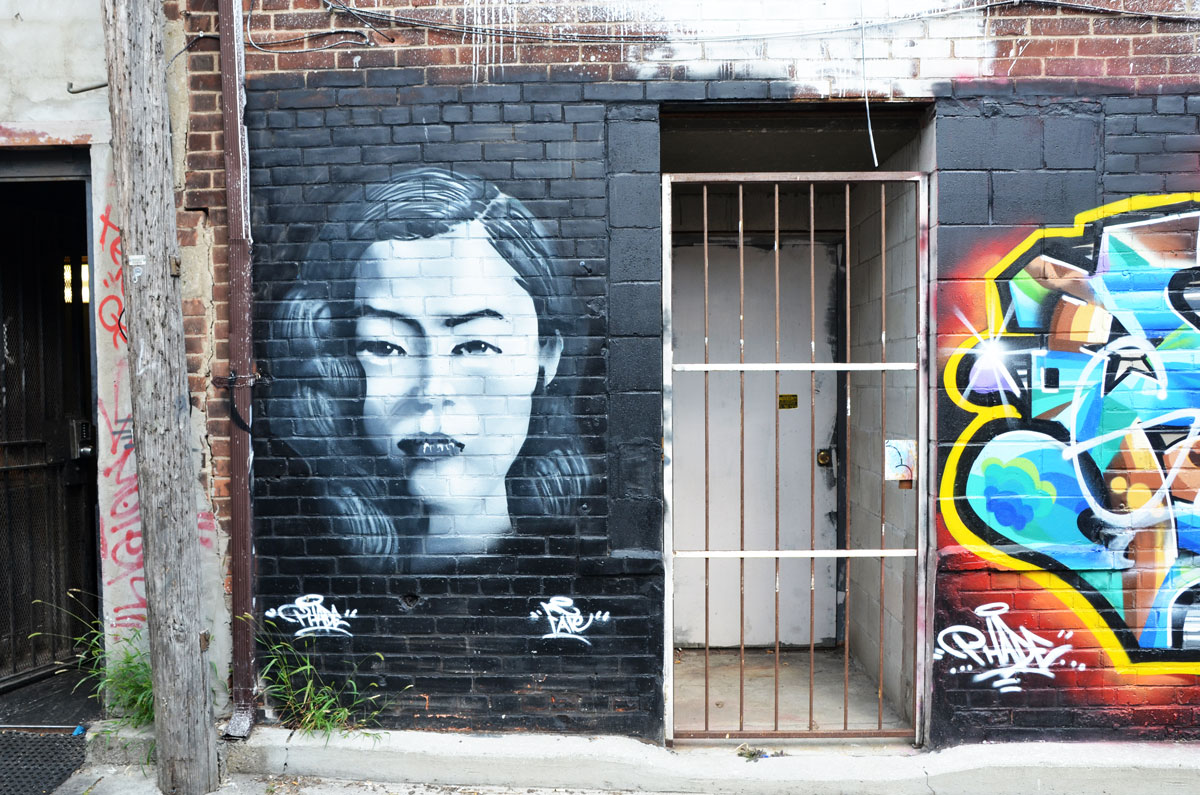
a wall with a painting of a woman's head on the left (in grey tones), a door with metal bar gate in the middle, and part of a tag like graffiti piece on the right.

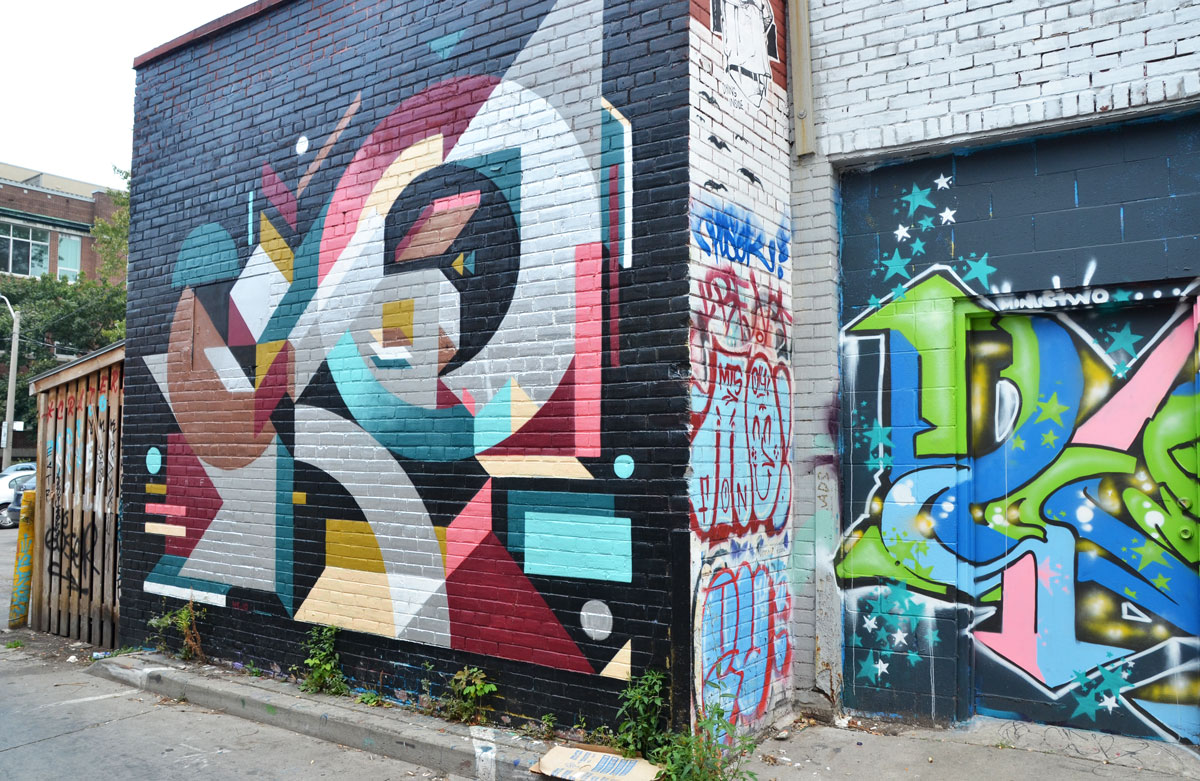
large geometric street art piece on a brick wall in an alley

Black and white street art painting on a reddish brick wall, signed Jaroe

Two large poser bunnies on a wall in an alley

buildings in an alley with lots of street art on them

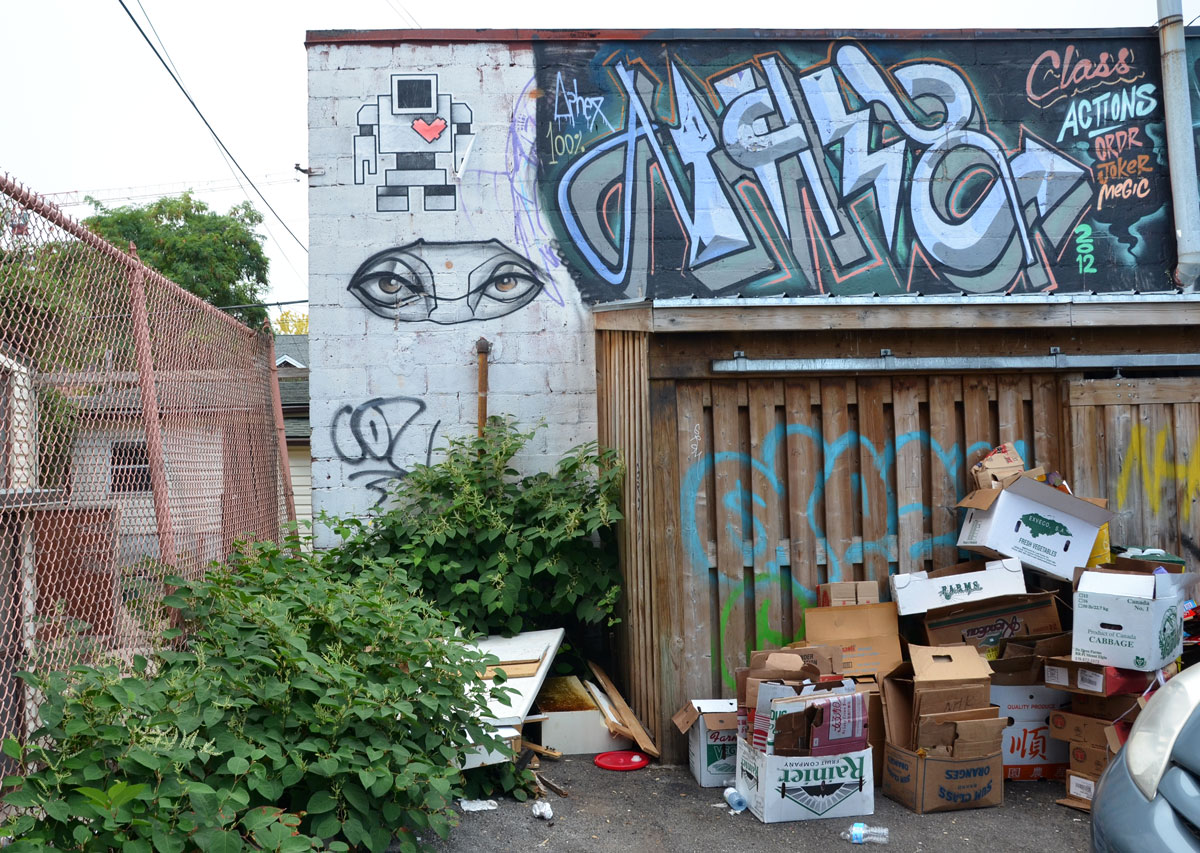
A lovebot and a pair of anser eyes on a wall in an alley. Lots of empty cardboard boxes on the ground by the wall.

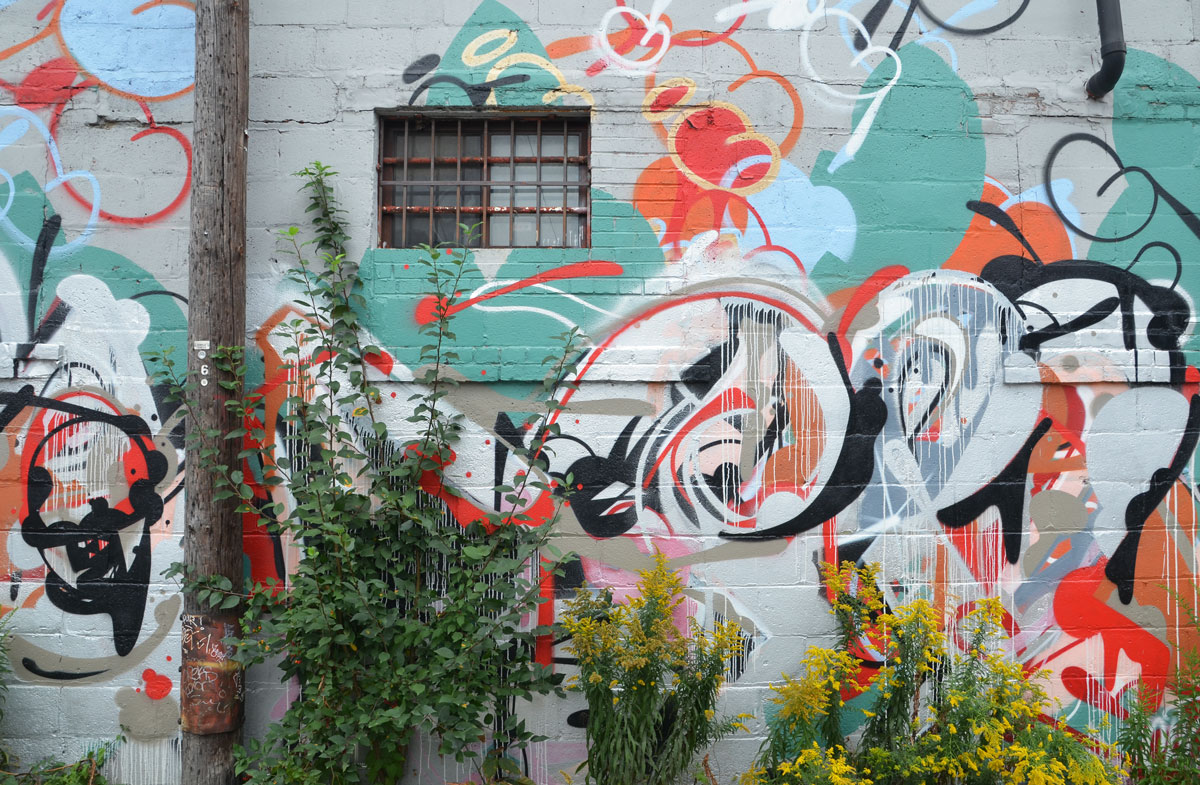
A wall with a small window with a metal grille over it, covered in street art, with weeds and goldenrod growing up in front of it

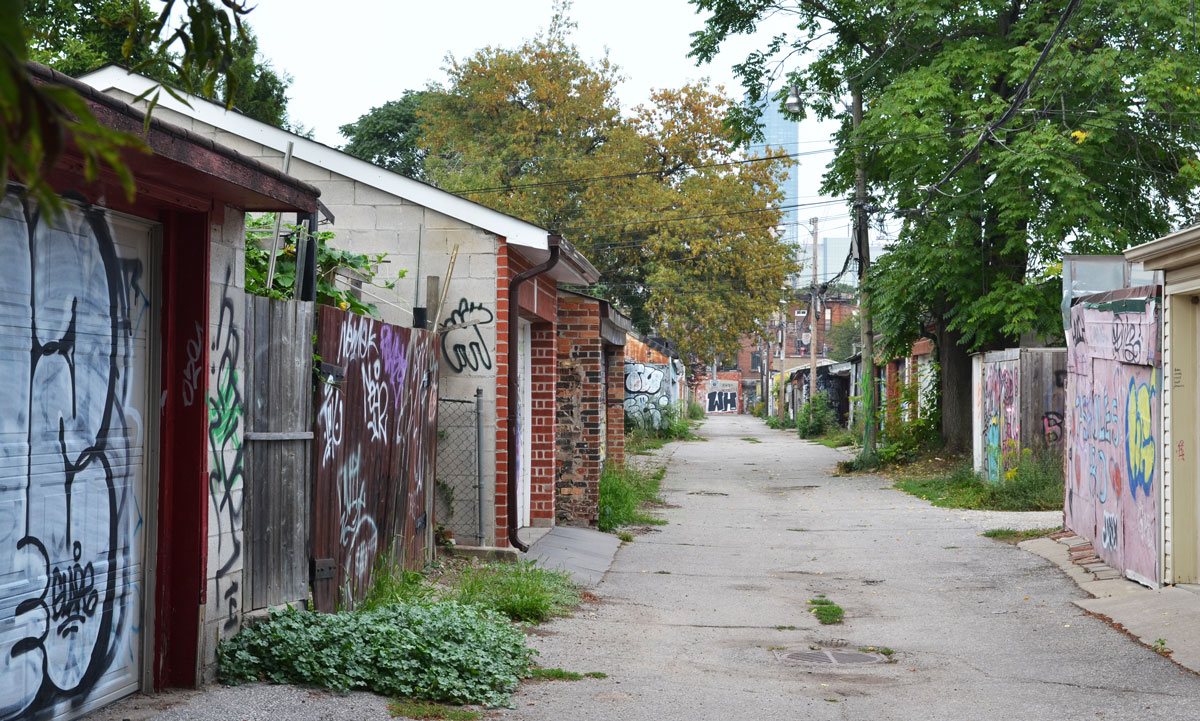
view down an alley late in summer when there are leaves on the trees and lots of weeds growing at the edges of the pavement

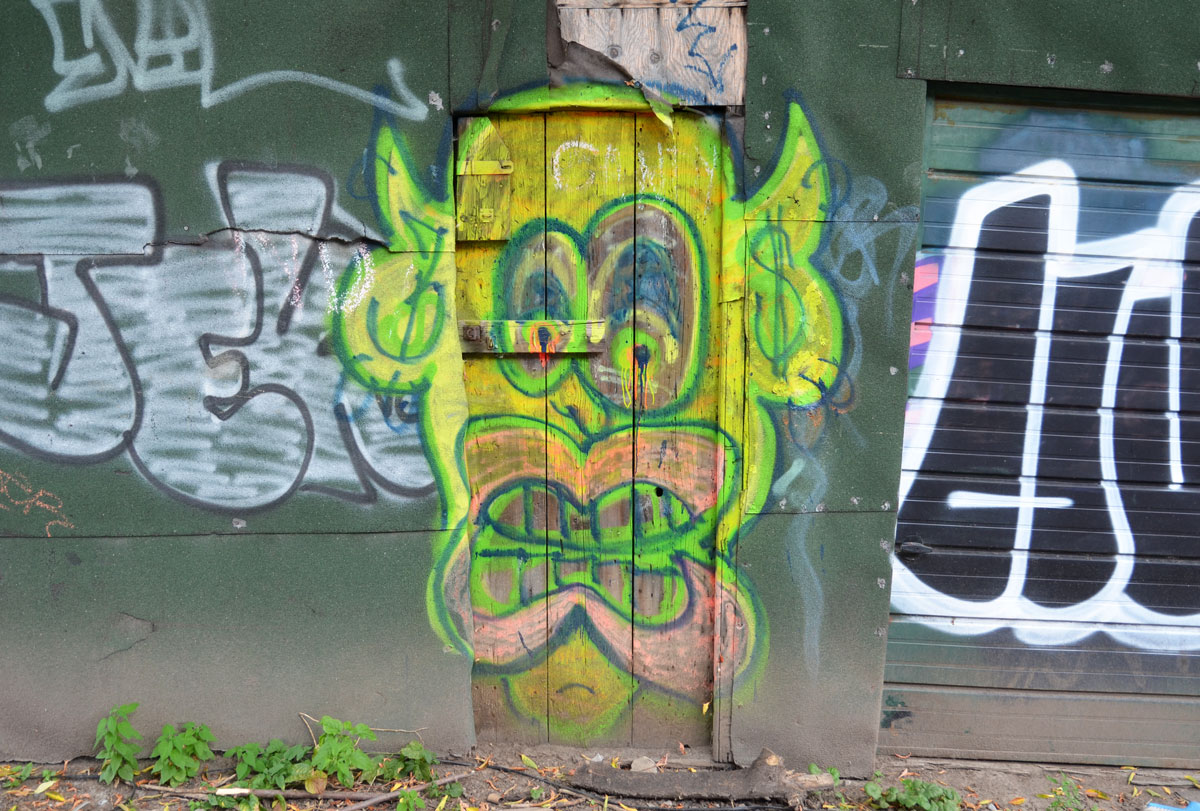
An old wood door on an alley building has been painted with a large yellowish green face with big pink lips and brown teeth

graffiti on a garage door

Two black lovebot robot stickers on a yellow protective sleeve around a cable that is helping to hold up a pole.

In an alley, the back of a house is being renovated, all the windows are boarded up and some of the exterior brick has been removed. There is a metal gate across the back of the property. The garage to the left is covered with graffiti.

Newer garage in an alley with a crooked metal wire gate beside it. The garage has graffiti on the side wall and on both of its garage doors.

looking towards the end of an alley that has a large wheatpaste 3D lovebot high up on it. Beside lovebot is another wheatpaste

Wheatpaste high up on a wall, a large face like thing. The words 'dying inside' are part of the picture

below: Only the eye remains from a previous painting

Just an eye from a previous street art painting hasn't been covered by a white tag

below:  Two photos from the south side of Nassau street

Two women pushing a stroller walk past some street art on Nassau St. in Toronto, a large orange piece ta

The front and side of a garage are covered with street art. The front is not very very visible in this picture but the side is. A man from the waist up with his finger pointing upwards is beside a picture of city buidings and a poser bunny.

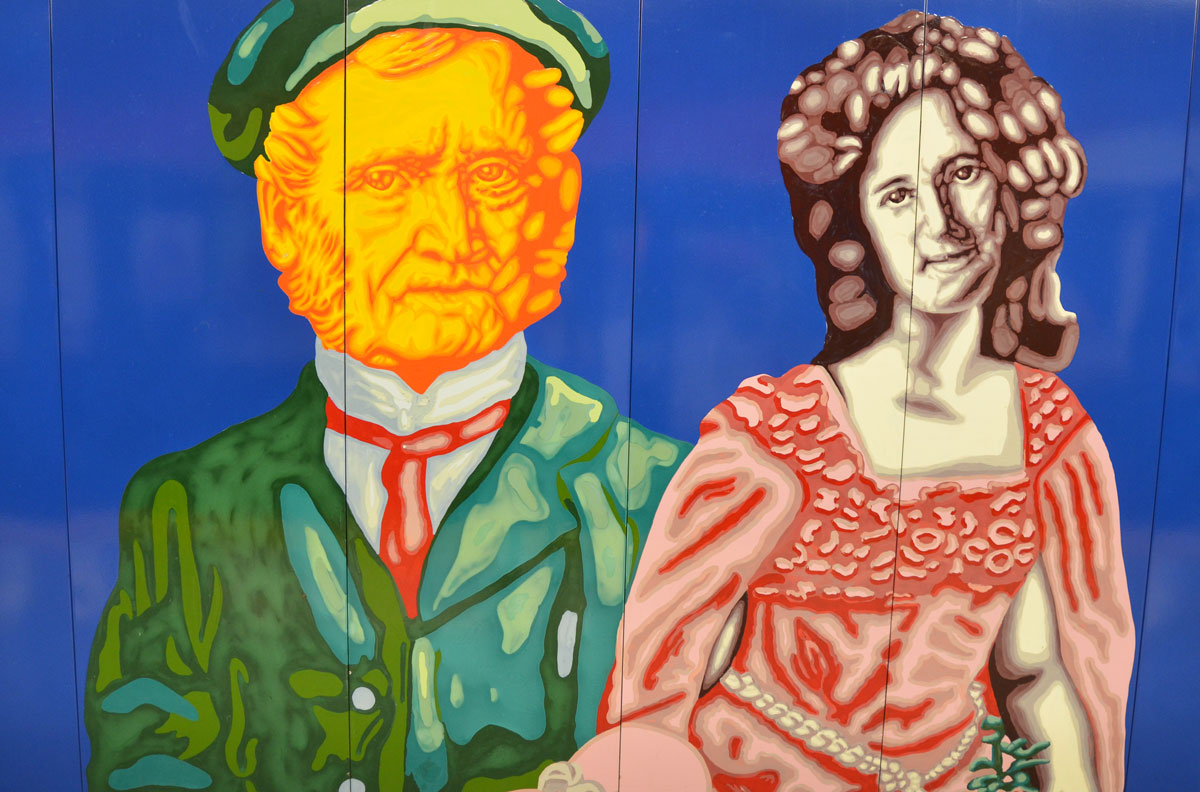
Let’s talk about this couple

mural on a subway wall, close up of a man and a woman. The man has an orange coloured face and is wearing a green jacket and cap. The woman has long black hair and a long pink dress

If you ride the Toronto subway you’ll probably recognize them from the walls of Queen station.

looking across the TTC Queen subway platform and tracks to the opposite wall where there is a mural, enamel on steel, of a couple as well as some buildings. An ad for shoes is blocking part of the mural

A couple of weeks ago I was standing beside them when I overheard a woman telling the man she was with that the people in the mural were Lord and Lady Simcoe.

I was fairly certain that she was wrong so I checked.   This is a picture of John Graves Simcoe.

A portrait of John Graves Simcoe

There could be some resemblance and John Graves Simcoe did play an important part in Toronto’s history.  He was the first Lieutenant Governor of Upper Canada (1761-1790).  He established York (now Toronto) as the capital of Upper Canada in 1793 and he gave us Yonge Street.  But note the military clothing in the above portrait; he was a British army officer after all and I doubt he’d be depicted in a mural wearing a green jacket and matching cap.

There aren’t many pictures his wife Elizabeth, or Lady Simcoe, but suffice it to say that they don’t look like the woman in the mural.

A few minutes online provided the following information:   The title of the mural is “Our Nell” and the people are supposed to be William Lyon McKenzie and Nellie McClung.  Three buildings are shown, the old Simpsons building (now the Bay), City Hall, and the Eaton Centre.  The artist is John B. Boyle.

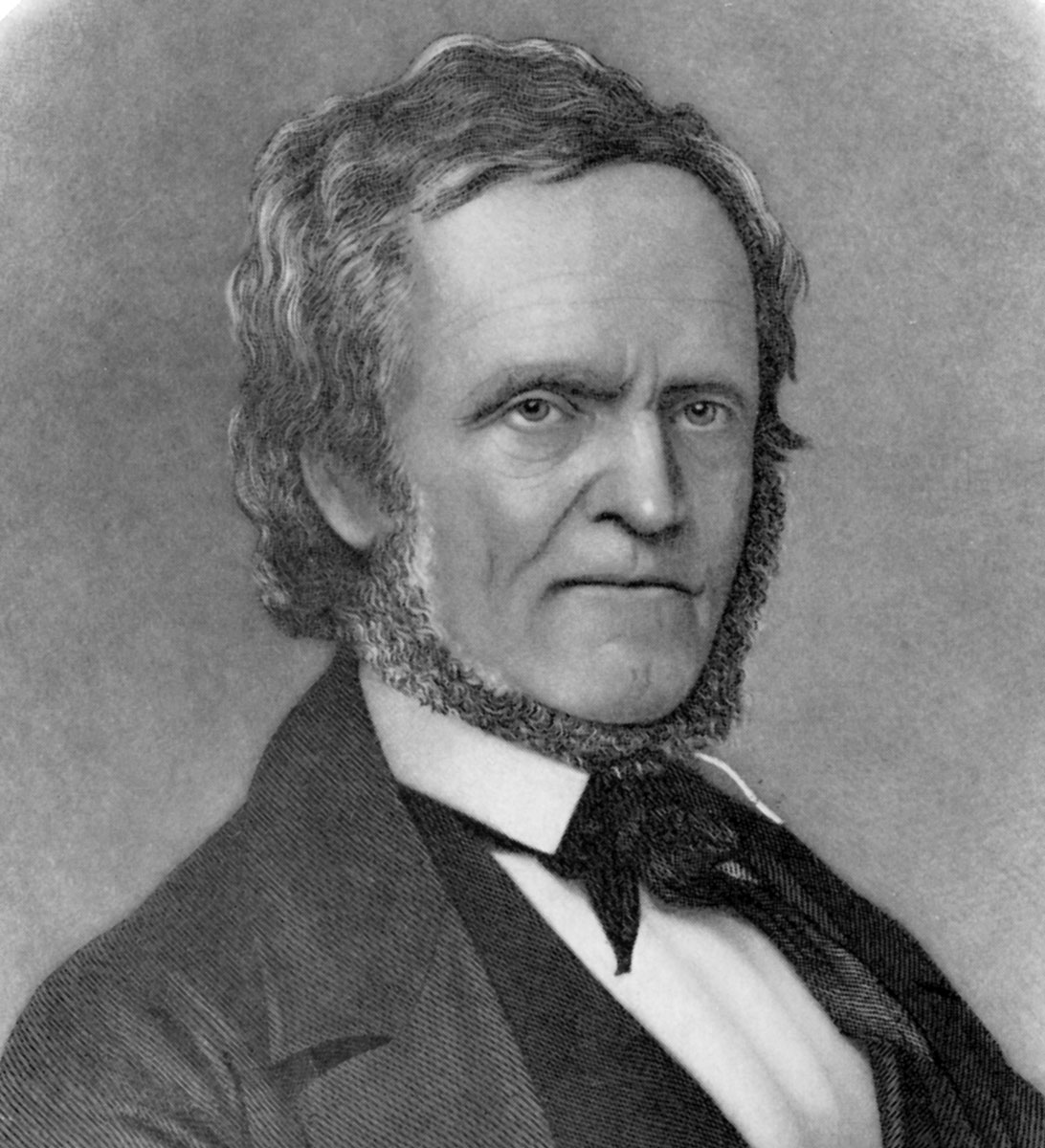
This is a photo of William Lyon McKenzie; I guess there’s a resemblance.

A black and white picture of William Lyon McKenzie

McKenzie was born in Scotland in 1795.  He emigrated to Upper Canada as a young man.  Although he held a number of jobs, he seemed to like writing for newspapers best.  After working for newspapers in Montreal and York, he established his own newspaper, the ‘Colonial Advocate’ in 1824. Although that paper went bankrupt and he fled to New York for a short time to evade his creditors, he used newspapers as a vehicle to promote his political ideas for most of his life.  To a large degree the story of Upper Canada politics of the early 1800’s is a story of the Tory governing elite vs the Reformer upstarts.   McKenzie was solidly on the side of the Reformers.

Toronto was incorporated as a city on 6 March 1834 and the first municipal elections were held later that month.  McKenzie was elected as an alderman.  At that time, the mayor was elected by the aldermen from their own ranks and in 1834 McKenzie was appointed mayor.  He lost the next election in 1835.

McKenzie was also a leader in the Upper Canada Rebellion of 1837.  It was not much of a rebellion, more like a skirmish near Montgomerys Tavern (near Yonge & Eglinton) that the Reformers lost badly.  The rebellion leaders were allowed to flee to New York state.  Once in Buffalo, McKenzie declared himself the head of a provisional government of the Republic of Canada.   He even convinced some Americans to help him invade Upper Canada from Navy Island in the Niagara River.  Bombardment of Navy Island late in December 1837 by the Royal Navy destroyed the S.S. Caroline, an American ship that was helping to supply McKenzie’s followers on Navy Island.  And that was the end of McKenzie’s rebellion.

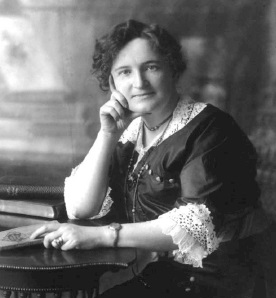
Okay then, that’s the man in the mural.  What about the woman?  I went looking for picture of Nellie McClung as well as information about her.  I recognized her name but I couldn’t remember what her role in Canadian history was.   First, this is her picture:

 black and white picture of a woman, Nellie McClung, sitting at a desk

I didn’t see any pictures of her with long hair or as a younger woman.   Nellie McClung was born as Nellie Mooney in Ontario in 1873 but moved to Manitoba as a child.   One of the causes that she worked on was woman’s suffrage and she helped Manitoba in 1916 to become the first province to allow women the right to vote and to run for public office. By 1922 women could vote federally and in all provinces except Quebec.  Quebec women could vote federally but had to wait until 1940 before they could vote in a provincial election.

McClung was also one of the five women who campaigned to have women recognized as “persons” by the Supreme Court so that they could qualify to sit in the Senate.  In 1930 Cairine Mckay Wilson was appointed Canada’s first female senator, just four months after the “Persons Case” was decided.

Now when you pass through Queen subway station you can think a little about the history that it represents, and not so much about how ugly it is.  Because it is ugly.  Especially this section of the mural:

part of a mural at Queen subwaystation in Toronto, a misshapen Eaton Centre with a grotesque looking woman bending over in her garden in the foreground.

Is that a woman in the foreground?  Or a slug with appendages?