Archive for the ‘history’ Category

Liberty Village is the neighbourhood that is south of King Street, west of Strachan, and east of Dufferin. It’s southern boundary is a combination of the Gardiner Expressway and the railway tracks (CN, VIA, and GO)

a man holds a cup of coffee as he walks past a road sign with bump symbol, and a utility pole wrapped in red and white liberty village design

below: A temporary park has taken over a corner of the parking lot on Hanna.

artificial grass covering ground in new temporary park in Liberty Village, the word liberty in black on the green grass

below: The sign says Ontario Place straight ahead.

below: Dream Big

large pink mural with black letters that spell dream big

below: Allan Lamport stadium concrete

exterior side walls of Allan Lamport stadium, , concrete, peaks in roof make triangle shadows

below: Looking north from the goalposts in the stadium.
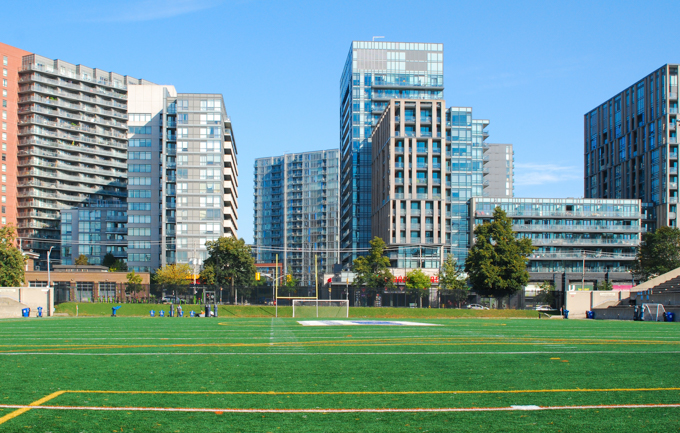
view across the field of Allan Lamport stadium, looking north to wall of condo towers

interior, seating, rows of concrete, sections 22 and 24 of Allan Lamport stadium,

triangular roofline of allan lamport stadium

lights reflected in glass windows, stadium lights on blue sky 

below: Once it was a carpet factory –  The Toronto Carpet Factory was spread over 8 brick buildings on a 4 acre site. It was built between 1899 and 1920.  The company was established by F. Barry Hayes in 1891 and was originally at Jarvis and Esplanade.  At the end of WW1, 1250 people were employed here.  The factory remained in production until 1979, although the number of carpets that were made annually was greatly reduced by the end.
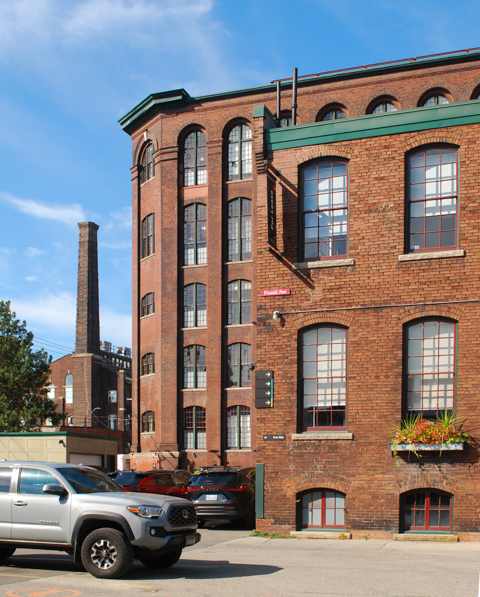
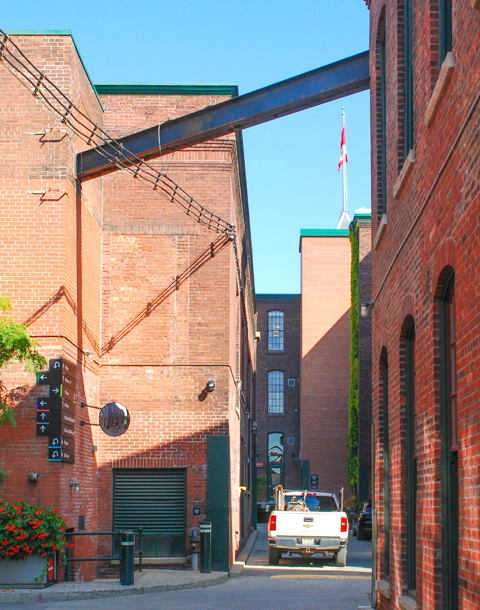
part of old carpet factory, a brick building

part of old carpet factory, exterior,

part of old carpet factory, exterior

part of old carpet factory, exterior

below: Streetcars waiting at Dufferin Loop, Dufferin south of King.

TTC streetcars waiting at Dufferin loop at the bottom of Dufferin street

below: View from the bridge at the south end of Dufferin looking west along the Gardiner Expressway towards Etobicoke and Mississauga.
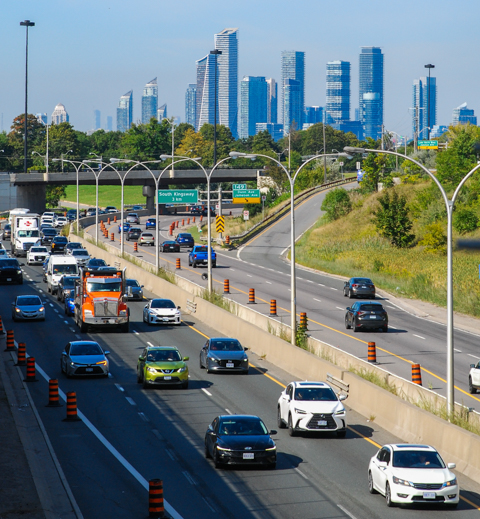
looking west from bridge over Gardiner Expressway towards Etobicoke and Mississauga

below: Eastern view

bridge over the Gardiner at northwest corner of CNE Grounds

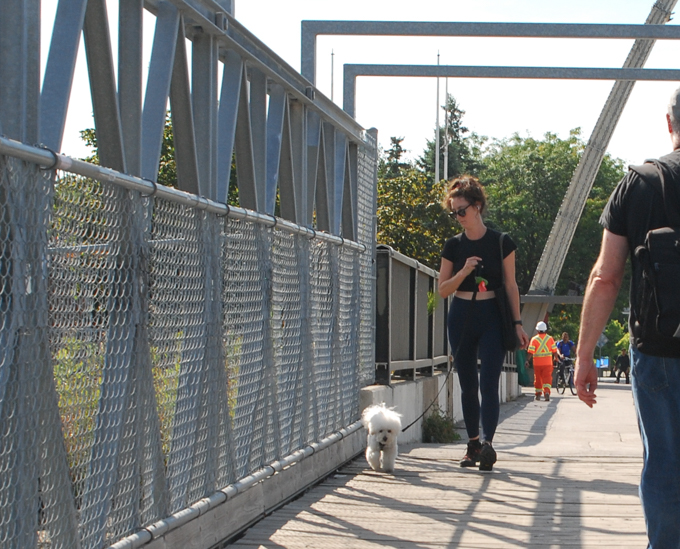
a woman dressed in black walks a small white dog over a metal bridge

below: The arch marks the Dufferin Gate, the west entrance to the Exhibition Grounds.

two men walking across bridge by dufferin gate at the exhibition grounds

Part way between Dufferin and Strachan is Exhibition GO station.  The station has been designed to provide access from both sides of the tracks which in turn offers another walking route south from Liberty Village.    The area north of the tracks is a bit of a mess as the new Ontario Line will terminate at Exhibition and the completion of that project is still a few years away.

below: The pedestrian tunnel under the tracks.

interior, people walking through tunnel, lights, unfocused, fuzzy image

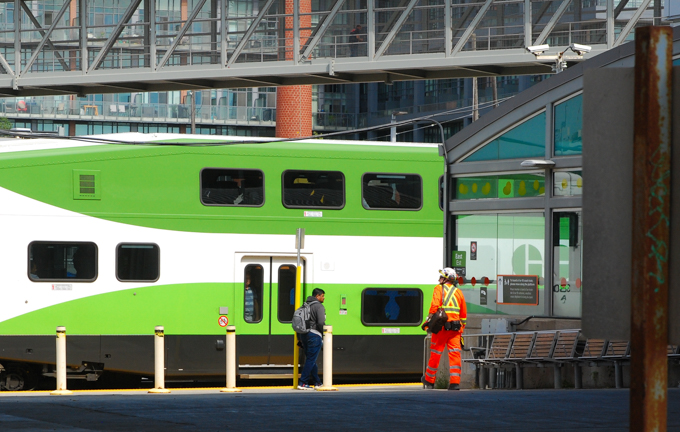
double decker green and white GO train at Exhibition station, wtih workman in orange work uniform waiting to get on train.

below:  Looking north under the Gardiner – Liberty Village provides that background in this image.
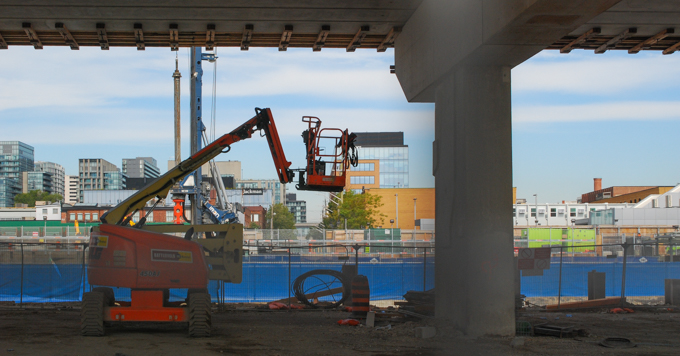
construction near railway tracks south of Liberty Village, near Exhibition station, under the Gardiner Expressway

workmen with digger excavator on construction site for ontario line subway

below: More Ontario Line construction as seen from Platform 4 at Exhibition station

ontario line construction site just north of Exhibition station, in liberty village

below: South end of BMO Field, looking east towards downtown and the CN Tower.
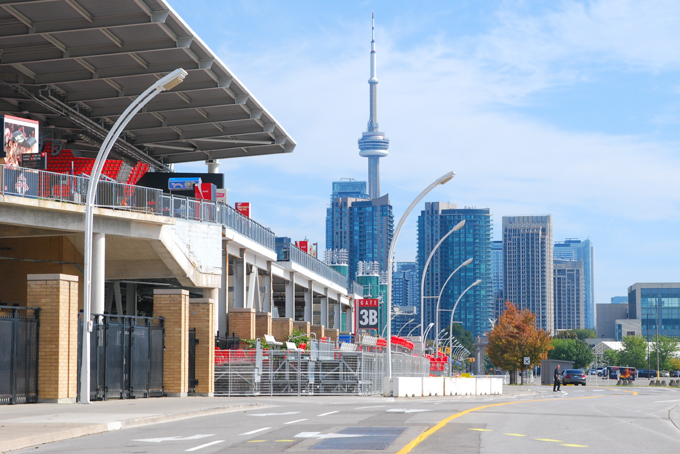
on Exhibition grounds, south end of BMO field, looking east towards CN Tower and downtown Toronto

below: BMO Field is home to both the Toronto Argonauts (CFL, football) and the Toronto FC (MLS – Major League Soccer). It has just undergone upgrades (think $$$) to make it ready to host some of the FIFA World Cup soccer/football games in mid 2026.

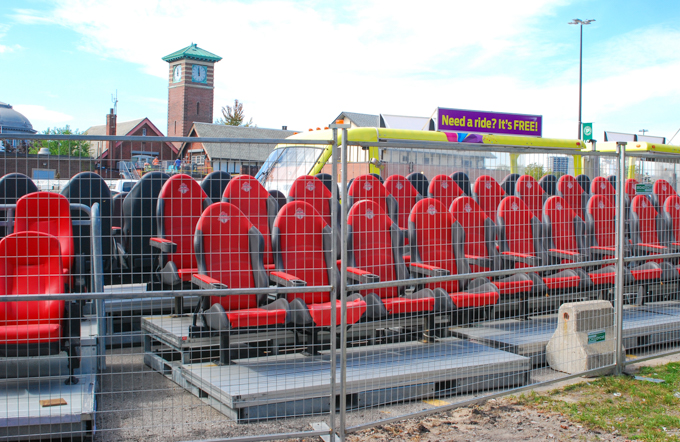
food building in background, as is CN Tower, entrance to construction site for renovations of BMO Field soccer
red seats that have been removed from BMO stadium, or are awaiting being added. stored outside

below: Some of the lights seen at the Exhibition – with the CN Tower in the distance.
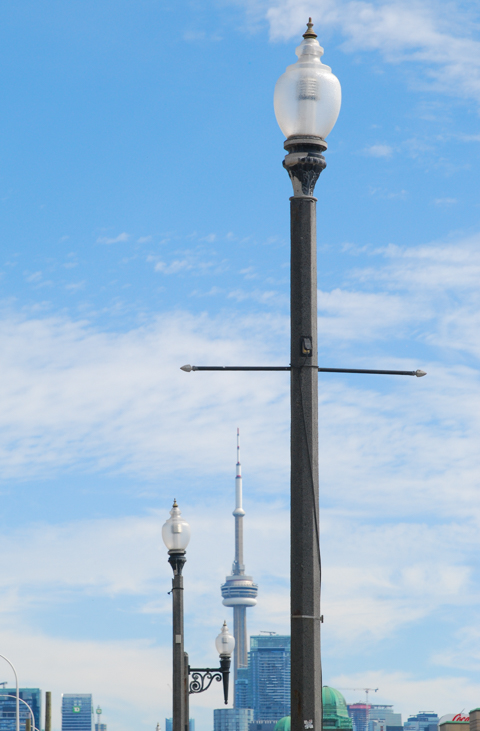
lights and lamp posts at CNE, Exhibition, with CN Tower in the distance

below: rooftops

below:  One of the latest public art addition to the Exhibition Grounds is “Mino Bimaadiziwin”, an Anishinaabemowin phrase that translates to “Good Life”. The mural was developed in partnership with the Mississaugas of the Credit First Nation 50-meter-long artwork honors Indigenous history and culture and was unveiled in October 2024.
The installation is part of a plan to separate Exhibition Place from the Gardiner Expressway.

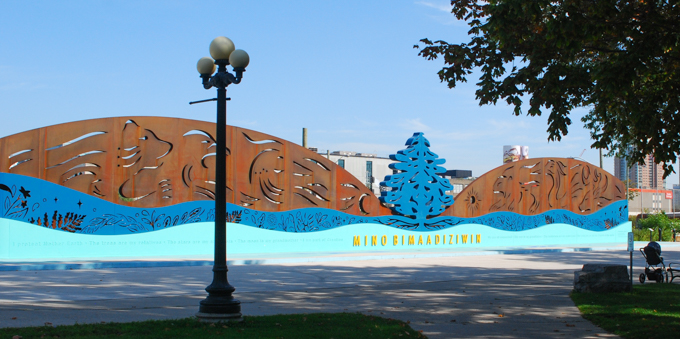
 

blue metal sculpture, behind 3 large trees, people walking past in silhouette

art installation at exhibition graounds,

below:  The McGillivray Fountain was designed by Canadian sculptor Gerald Gladstone and donated to Exhibition Place in 1968 by Gordon B. McGillivray in honor of his father, John A. McGillivray.
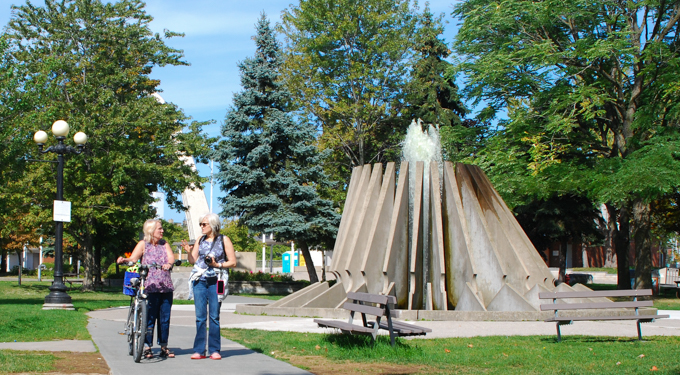
two women walking past fountain at the CNE

below: The Scadding cabin was originally built in 1794 by John Scadding on land that he owned east of the Don River.  He owned more than 200 acres and his property stretched from Lake Ontario to what is now the Danforth.  The next owner of the property used the cabin as an out-building.  In 1879 it was donated to the York Pioneer and Historical Society who arranged to have it moved close to its present site to celebrate the opening of the Industrial Exhibition (now the CNE).

below: The title printed on this image is “Log Cabins of the York Pioneers,Exhibition Grounds Toronto 1880.  Lithographed and printed at the Exhibition Building, Rolph, Smith & Co. Toronto”.  The cabin on the left is labelled Simcoe 1794 (i.e. the Scadding cabin) and the other is labelled York Pioneers, Lorne 1879.
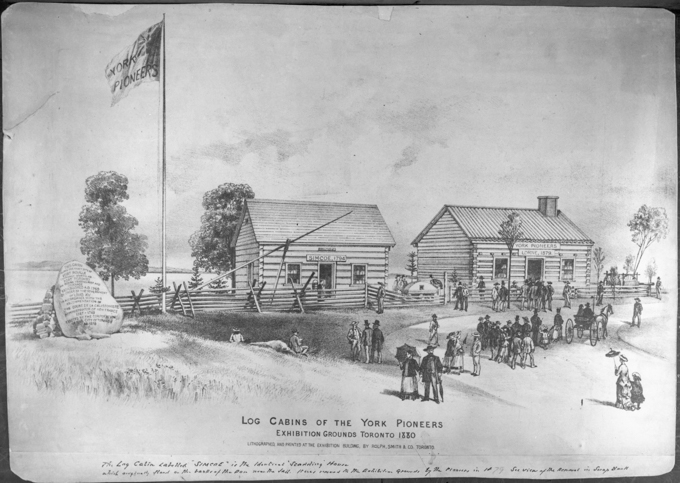
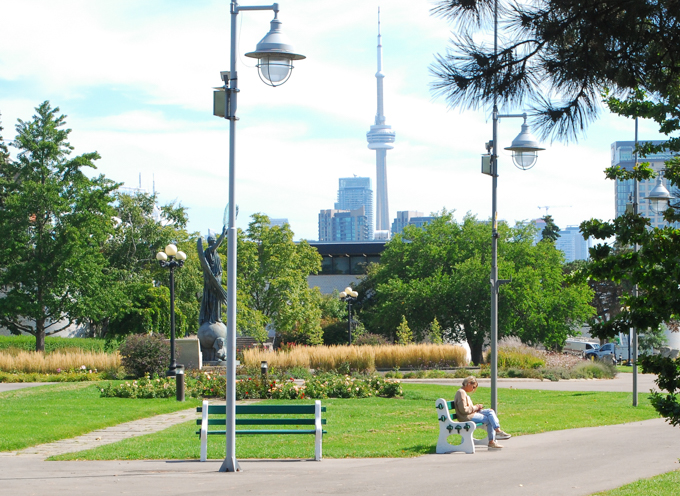
old black and white photo of a drawing of two cabins, at an exhibition, in 1880

below: Shrine Peace Memorial

angel sculpture at shrine peace memorial

shrine peace memorial on exhibition grounds

below: There is a collection of twenty small sculptures representing Gods, heroes, and monsters of Greek mythology  in what is called the Garden of the Greek Gods.  They were created by Elford Bradley Cox (1914-2003) in the 1960s.

one of the greek gods sculptures at exhibition grounds

below: Hercules is the tallest of the sculptures.

one of the greek gods sculptures at exhibition grounds, back of naked man, with windmill in the background
one of the greek gods sculptures at exhibition grounds, bunch of grapes

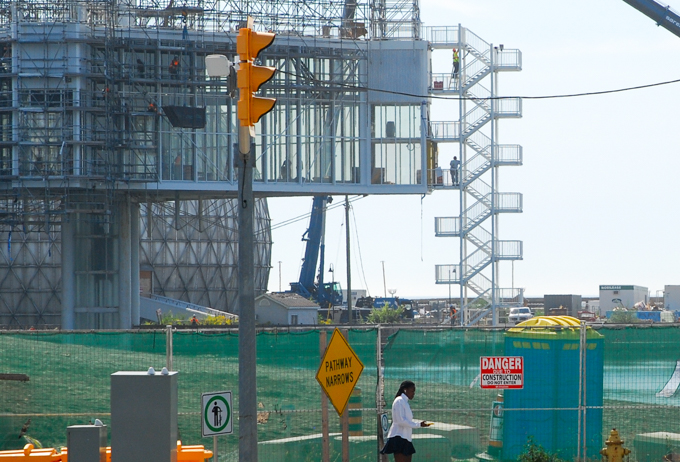
Immediately south of the Exhibition Grounds is/was Ontario Place.  This pile of rubble is all that remains of what was on West Island – mostly the decaying amusement/theme park that hasn’t been in operation for years (death by neglect).

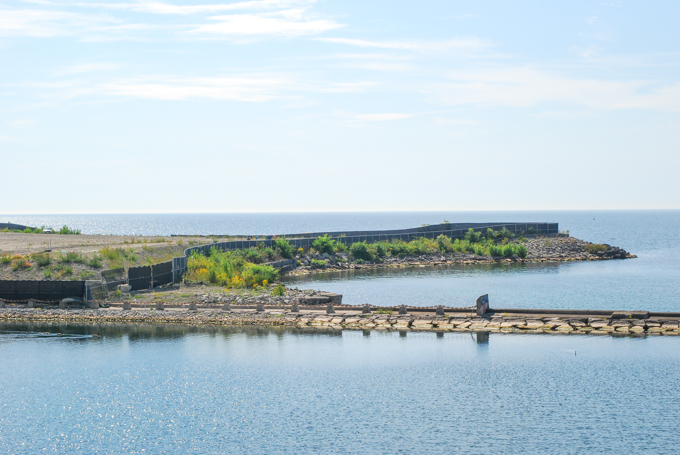
pile of rubble, remnants of demolition, on west island, part of Ontario Place, on Lake Ontario, as seen from the Exhibition Grounds

west island of ontario place after having been cleared of everything

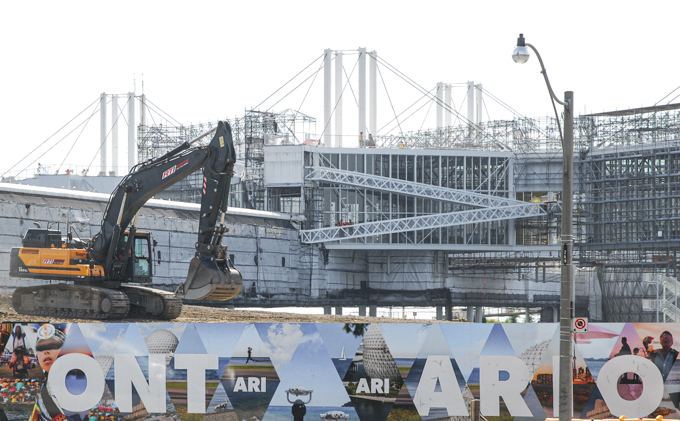
below: The round Cinesphere is still there but everything west of it is gone.  Once it was the pride of Ontario – built in response to Montreal’s Expo ’67 – but slowly over the years many of its features have been altered or removed (Children’s Village, the Forum with its free concerts, and more).   Having said that, other sections have been renovated – Trillium Park on the east end for example.  I didn’t get that far on this walk but you can some of it in Ontario Place 2.0 from 2017.
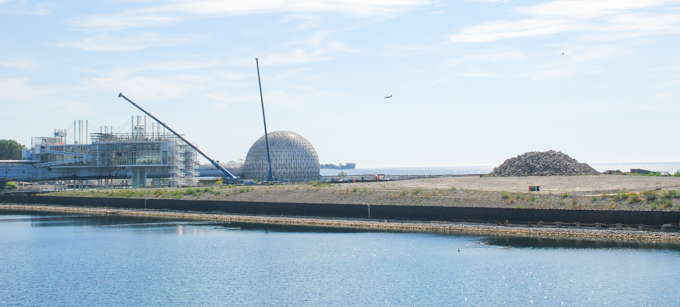
what remains of ontario place

ontario place under renovation, exterior stair with workmen on it ontario place under renovation, digger working behind hoardings

graffiti on a metal railing near Lake Ontario

graffiti on a metal railing near Lake Ontario

two men stand beside street art painting at south liberty trail

There is talk about what to do with the Scarborough Rapid Transit (SRT) line that runs from Kennedy station, north to Lawrence and Ellesmere, and then east to Scarborough Town Centre.   The SRT was built in 1985 and then closed in July 2023.  The concrete and glass infrastructure still remains.  The tracks are gone.   A few years ago, I went for a ride on the SRT (blog post is  Are you going to Scarborough? ) but I never checked out the stations themselves.  Since I am not sure how much longer they are going to exist, I thought I’d better take a look before it’s too late.

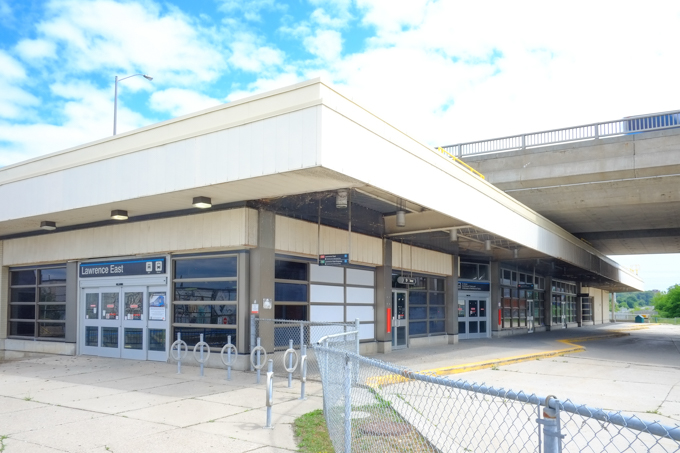
below:  Lawrence East station nestles under the bridge where Lawrence passes over railway tracks between Kennedy Road and Midland Avenue.

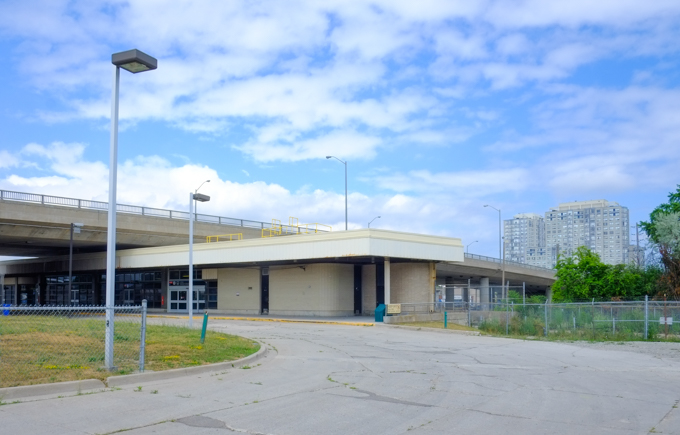
low flat concrete building, Lawrence East station on now defunct SRT line. It is under a bridge, under Lawrence Avenue.

looking in the windows of lawrence east rapid transit station, now empty, reflections of outside as well

below: Although the SRT tracks have been removed, other tracks remain.   These tracks continue on to Agincourt GO station and points farther north.

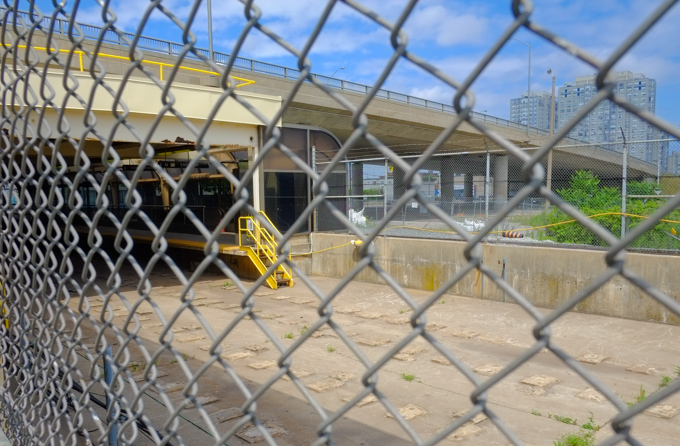
behind chainlink fence, train station, but with tracks removed.

below: Looking south

chainlink fence, with railway tracks behind, two sets of tracks, the ones in the foreground have been removed

below: Signs for 54A and 954 Lawrence buses

overhead signs for lawrence bus routes at old lawrence east station

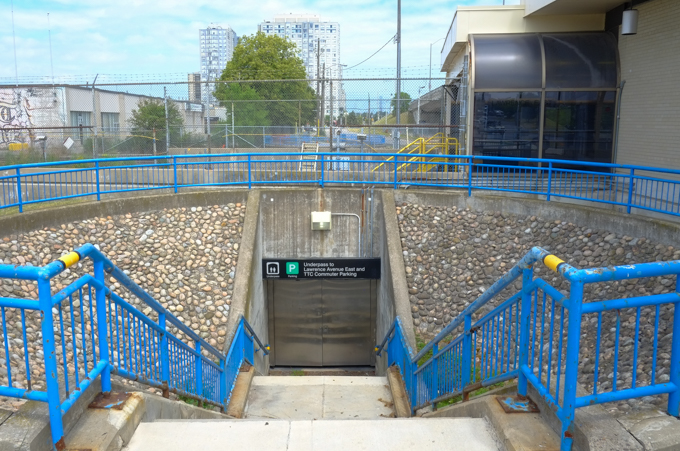
below: If you wanted to cross the tracks, this was the fastest way…

stairs for underground passage to cross subway tracks at lawrence east station, round hole with stairs in the middle,

stairs down to underpass under railway tracks at lawrence east srt station, metal doors locked closed,

north side of lawrence east srt station

northwest corner of lawrence east srt station

below:  Permanently closed

poster on door of srt station, picture of old srt subway car, notice that the line is permanently closed.

below: Mike Myers Drive with Lawrence East station in the background.

below: A short distance north of the Lawrence East station is the old Ellesmere station.  It too is under a bridge (under Ellesmere of course!).  It is smaller than the Lawrence East station

south side of Ellesmere station, with tracks now removed, curved glass structure under a bridge,

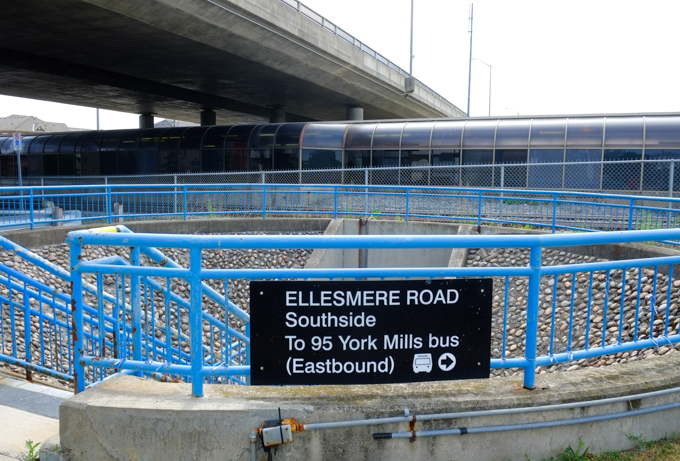
below:  Ellesmere station also has the circular hole for the stairs leading to an underground passage.  The station looks like a big glass tube.

ellesmere station, east side, with blue railing around circular hole, long glass tube structure in the background that is the station, bridge overhead


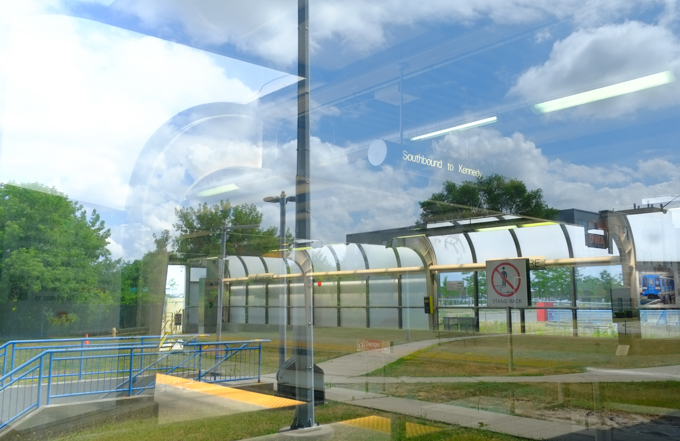
looking in window of ellesmere srt station, reflections, sign saying southbound to kennedy

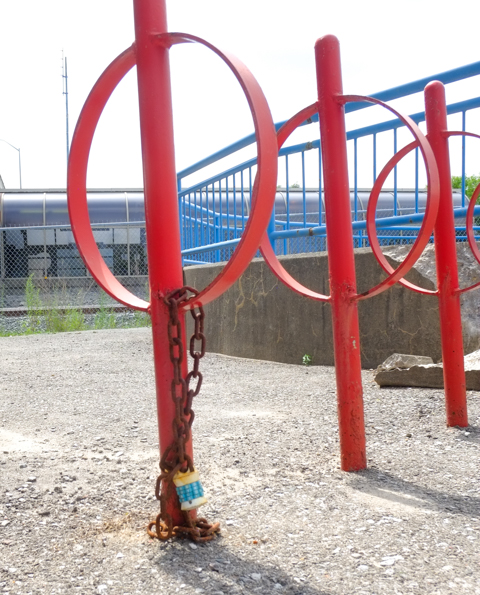
below: Someone is missing their lock.

three toronto bike lock rings, painted red, one with a rusty chain and combination lock still on it.

After Ellesmere station, the SRT turned east, diverging from the other set of tracks.  Midland station was just after the turn – on Midland between Ellesmere and Progress.  Sorry, no pictures (busier street, no parking).  Although the architecture is similar (a glass tube), Midland station is built on top of a bridge, above the road instead of below it.   From Midland the trains went directly east to Scarborough Town Centre.   For most of thee eastern section, the tracks run behind industrial or light industrial land.  I haven’t been able to find out if there is any access or if it is all fenced off.

below: East view of Scarborough Town Centre station with covered walkways from both the federal government building on the left, and the shopping center on the right.

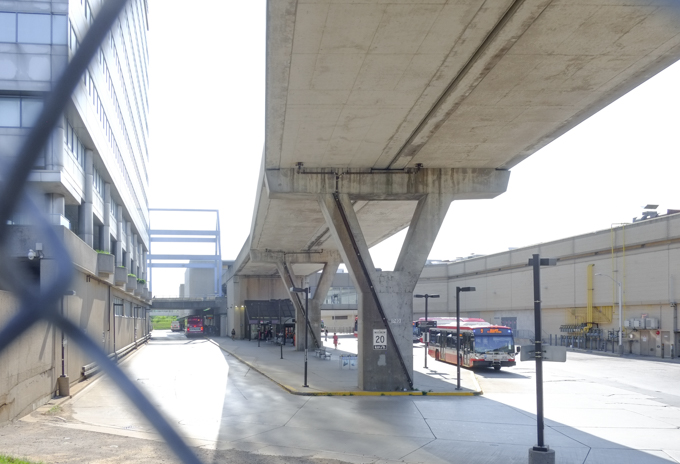
a TTC bus passes by Scarborough Town Centre station with its now abandoned elevated tracks

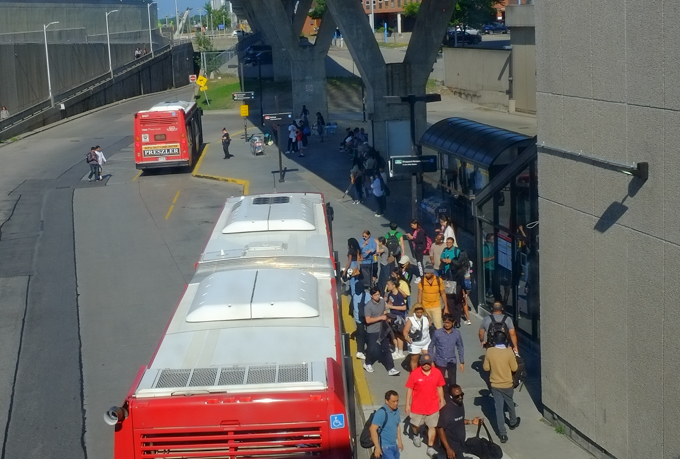
below: No trains run here anymore, but the station is still used for buses with the elevated rails being used as a roof.

TTC buses loading and unloading at Scarborough Town Centre, seen from above, from the walkway between station and Scarborough Town Centre

people opening doors going into Scarborough Town Centre

below: Pillars supporting the elevated tracks still run through the parking lot of Scarborough Town Centre to McCowan.

pillar P53, and others behind it, SRT tracks at Scarborough Twn centre parking loto

below: McCowan station was the eastern end of the line.

McCowan SRT station, glass, reflections in the glass

below: McCowan station viewed from the east side. The tracks continued a short distance to the SRT yard where trains were housed and serviced.

east side of McCowan Scarborough Rapid Transit station, elevated line for transit

elevated tracks for old scarborough srt, in front of a tall condo building

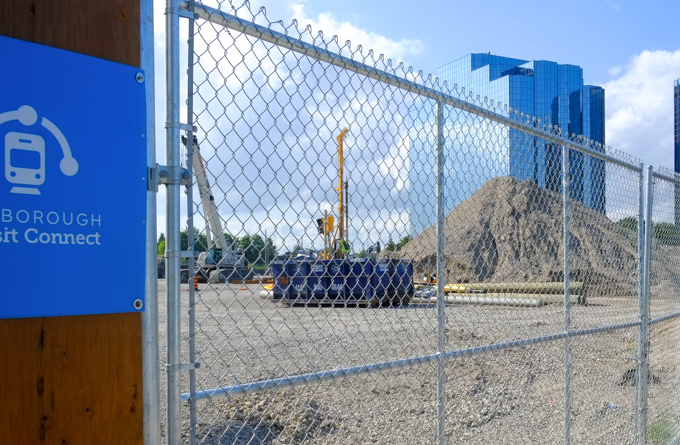
below: At McCowan, Scarborough Transit Connect is partnered with Metrolinx to build the new Scarborough Extension subway from Kennedy station to a new terminus at Shepherd and McCowan. See a previous blog post, Intersections –  McCowan and Sheppard for some photos from

fence around construction site, Scarborough Transit connect, working on new Scarborough Town Centre station for Scarborough extension of line 1 of TTC subway

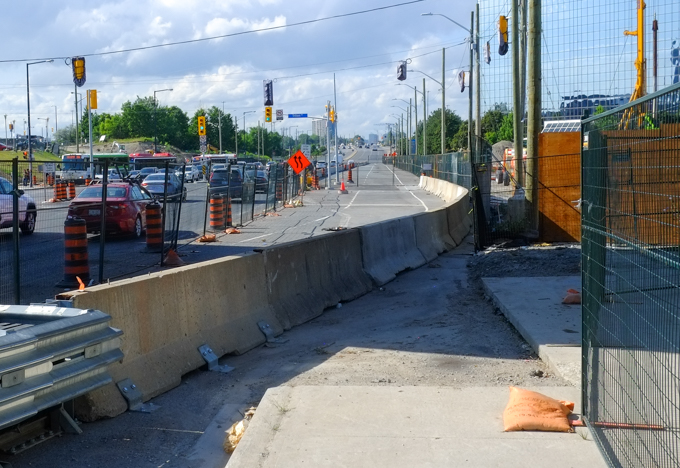
below: Traffic on McCowan is impacted by the subway extension construction

looking north on McCowan at Progress, by old McCowan srt station, concrete barrier narrowing the street, construction on the right

below: One more view of the construction at McCowan station

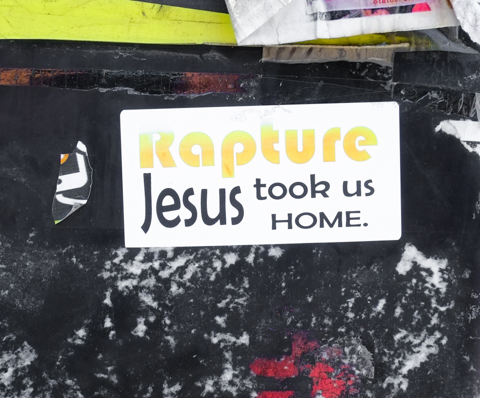
below: And last, I found evidence on a pole in the parking lot at Scarborough Town Centre that indicates that I have missed the Rapture; they left without me. I guess that I am stuck here!

graffiti sticker on a pole that says Rapture Jesus took us home

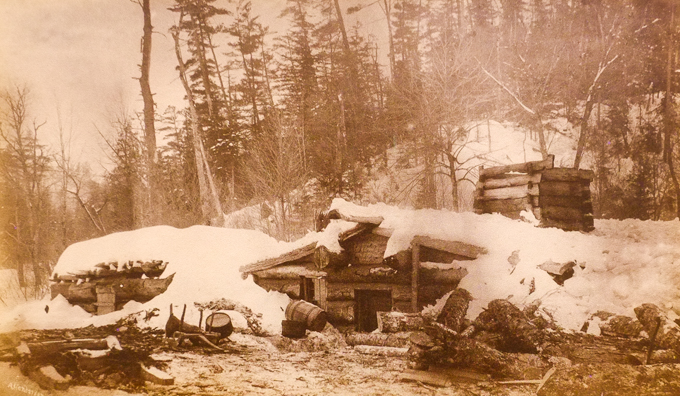
In 1869, Canadian photographer Alexander Henderson (1831-1913) was commissioned to take a series of photos along the route of the new Grand Trunk Railway between Montreal and Toronto.  These images were for a travel book, “All-round Route Guide” to sell to tourists and settlers along the route.  This Montreal to Toronto section followed the north shore of the St. Lawrence for most of its route.  The railway had opened in 1856 and more routes had been added (to Portland Maine! to Sarnia!) or were planned. 

below: Lumberer’s Shanty, Lievre River, Quebec, before 1865

albumen print, vintage black and white photo by Alexander Henderson of a lumberer's shanty in winter, small log cabin structure covered with snow, Quebec

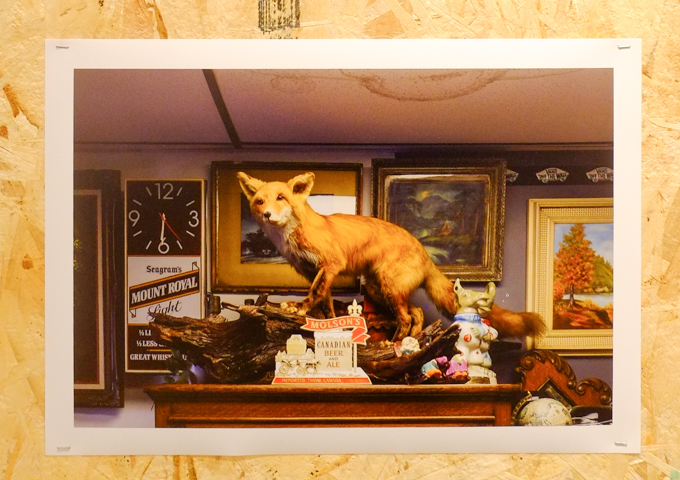
A recent exhibit at Artspace TMU (at 401 Richmond) showcased albumen prints of some of Henderson’s photos along with photos taken by Dawson Cox.  All of Cox’s images were mounted on particle board.  The exhibit was titled, “Like the Seams of a Coat”.

below: Camera store, corner of Clark and St Antoine, Montreal.

photo in a gallery, by Dawson Cox, of stores in Montreal,

below: Victoria Square, Montreal, about 1872

old photo by Alexander Henderson, of Victoria Square in Montreal, albumen print, in a gallery, taken in 1872

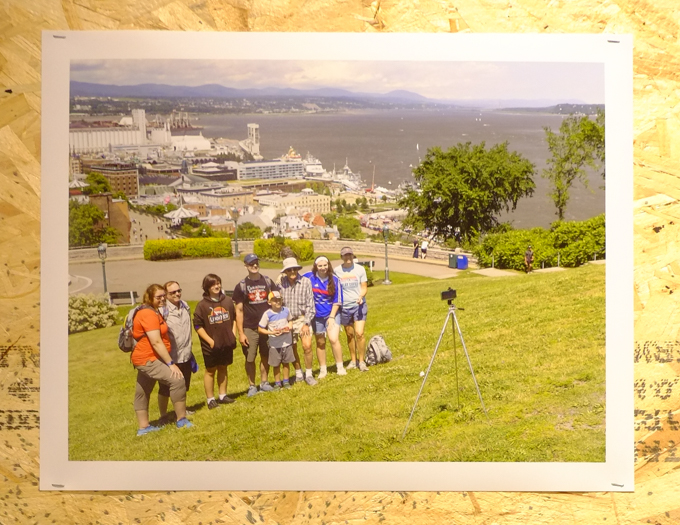
below: Group shot

group photo, on a hill above a small town

below: Group shot, 1870s style – G. Company of 78th Highlanders, taken by Alexander Henderson

vintage black and white phiti, Group of G. Company of 78th highlanders, taken around 1870 by Alexander Henderson

Coat seams are usually hidden but they are essential to holding everything together. Important yet unseen.

below: Cox’s photo of torn graffiti on an old brick wall

below: Lake, Saint Bruno Mountain, Quebec, before 1865

old photo of a lake and st Bruno Mountain in Quebec, 1860s
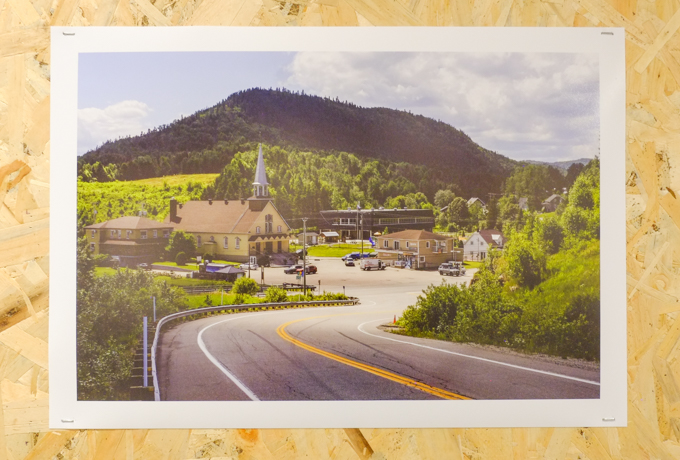
photo of a village with a church
photo of a stuffed fox, mounted standing on all fours and seeming to walk

below: L’Anse a l’Eau, Saguenay River, Quebec, 1868

old black and white photo, a lone scrawny pine tree on a rock overlooking the Saguenay River in Quebec, with village below, village of L'Anse a L'Eau

Old Finch Avenue runs immediately north of the zoo way over in the northeast corner of the city.  It also crosses the Rouge River close to what is called the Finch Meander.  Because of  its history and the surrounding geography, the eastern portion of Finch has to curve around the river and as a result, it doesn’t align properly with the western portion.

below: On Finch, traffic crosses a one lane bridge that spans the Rouge River.

from behind, a car crosses a single lane bridge, trees all around, green

below: Hurricane Hazel struck Toronto in October 1954. It damaged or washed away many bridges over the Rouge River including the one here.  The replacement bridge is a “Bailey Bridge” built by the 2nd Field Engineer Regiment of the Canadian Military Engineers.  Seventy years later it is the last one still in use.

small bailey bridge over the rouge river, brownish water underneath, lots of green tree around

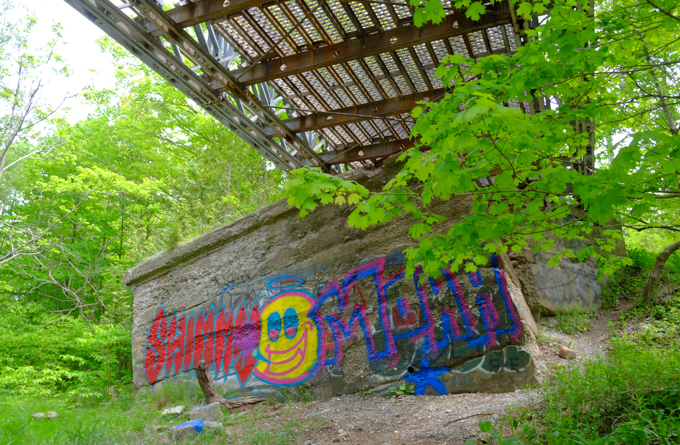
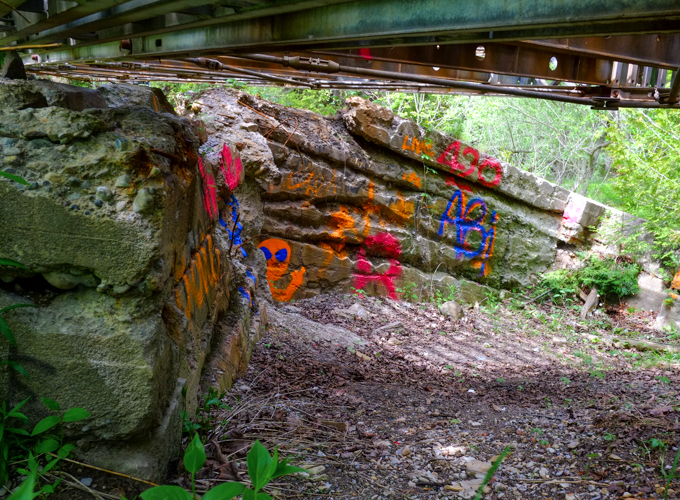
graffiti on the support to a bridge

below: Can you see the little orange alien?  I think that it’s waving at you…..

graffiti on rock and concrete under a bridge

And a few photos from walking around the Rouge River park in that area –

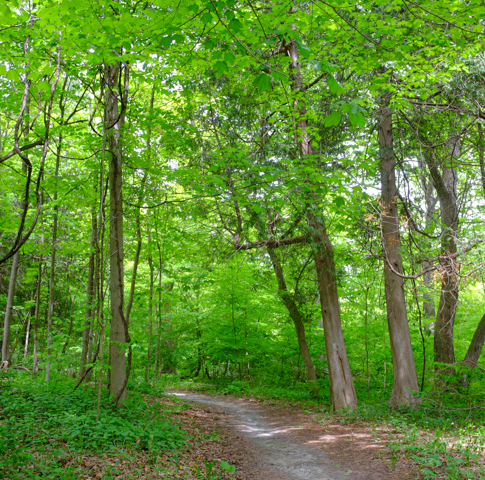
below: Down the steps and into the woods….

a set of stairs covered partially with old leaves, wood hand railing, leading to forest near Rouge Rver

a path through the woods in late May, most trees now with leaves

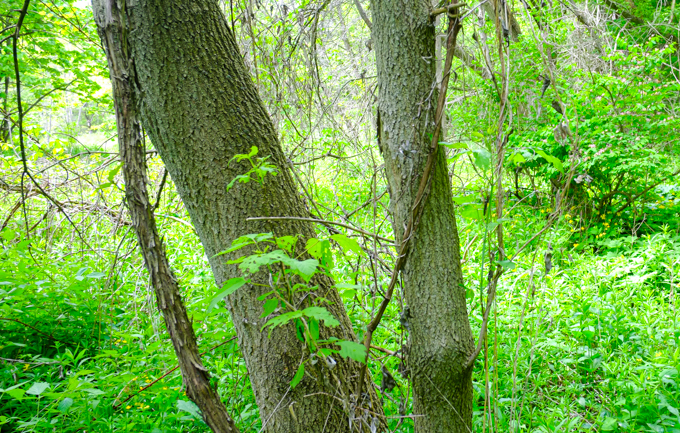
forest scens, with lots of greenery, some smaller trunks of trees in foreground, one of which is bent over, some old vines

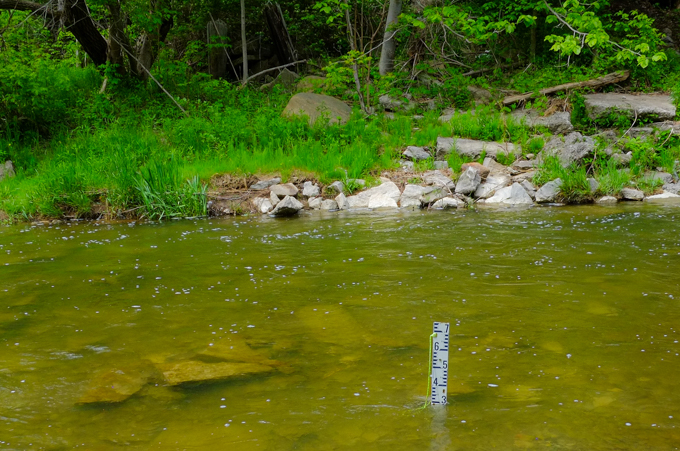
below: Measuring the water levels

white measuring stick in the water, to measure water levels, Rouge River,

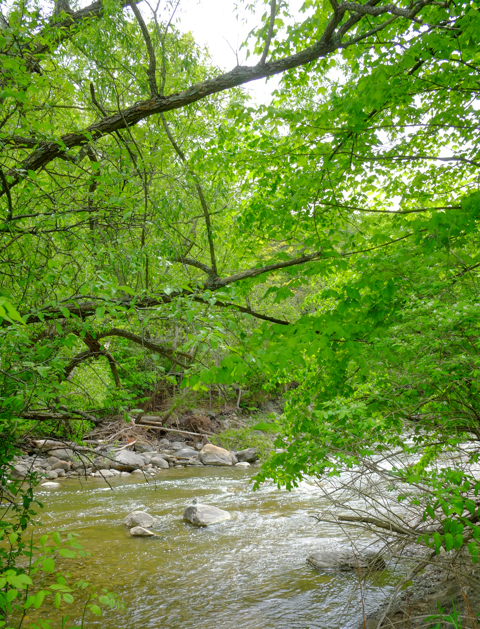
rouge river, with trees overhanging the water

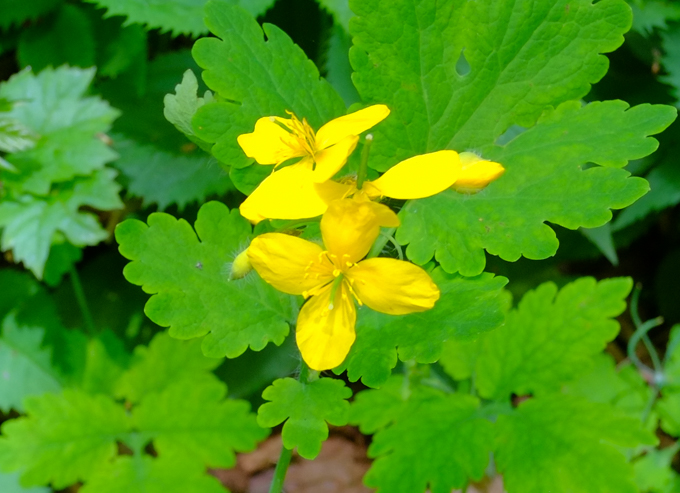
below: Greater Celandine growing in the shadows.

small yellow flowers on green leafy plant in woods

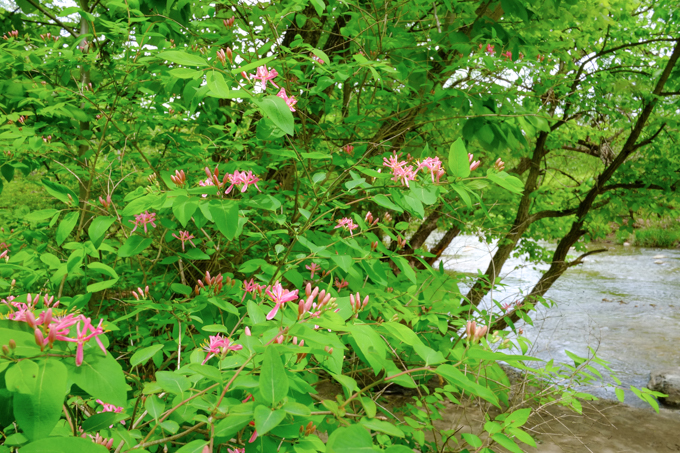
below: Little pink honeysuckle flowers

little pink flowers on honeysuckle plants along the shores of a river

below: Mayapple among the ferns

spring plants, mayapple and ferns along a path

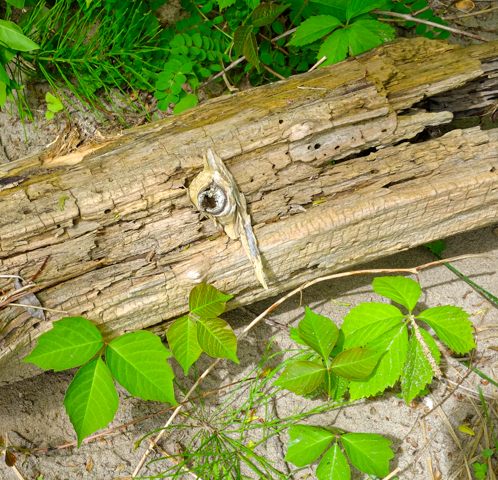
below: Keep an eye open for poison ivy!

a fallen log on the ground that is starting to rot, with a knot that looks like an eye, some poison ivy is growing beside it along with some other forest plants

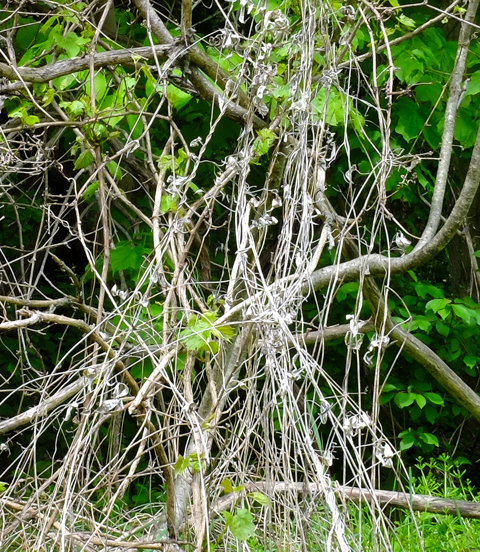
below: Another silent threat that lurks here (but won’t give you a rash) is an invasive vine.  “Dog strangling vine”, or Vincetoxicum rossicum, wraps itself around trees and other plants that it encounters.  It is early in the growing season so most of the plants here were still short but there were masses of them.  The lighter beige curved objects that run through the middle of this photo are the remains of last year’s vines.

remains of last year's growth of do strangling vine lie partially hidden in this years growth, in a forest

drying dog strangling vines and seed pods form a web around other plants and trees

forest views, rouge river park

young trees, leaves, and spring growth in the woods

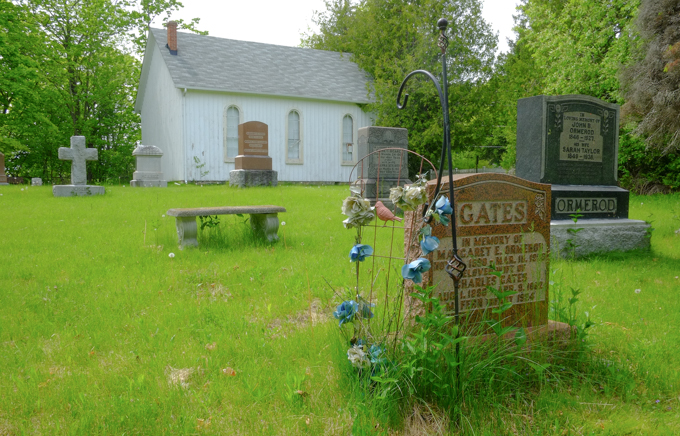
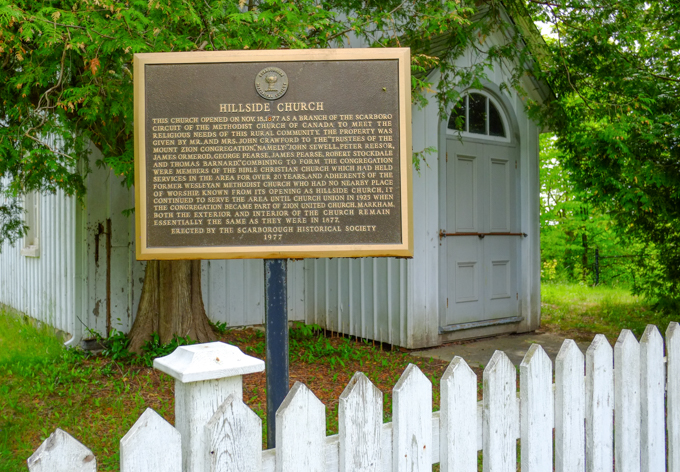
Close by is the old Hillside church built in 1877.

wrought iron details above a metal gate, entrance to churchyard

tombstones, monuments in a churchyard, with an old small concrete bench, small white wood church, Hillside church, in the background

historical society plaque in front of hillside church, white picket fence

Hillside Church – The church opened on Nov 16, 1877 as a branch of the Scarboro circuit of the Methodist Church of Canada to meet the religious needs of this rural community.  The property was given by Mr. and Mrs. John Crawford to the “Trustees of the Mount Zion Congregation”  – namely John Sewell, Peter Reesor, James Ormerod, George Pearse, James Pearse, Robert Stockdale and Thomas Barnard.  Combining to form the Congregation were members of the Bible Christian Church … and the adherents of the former Wesleyan Methodist Church.  Known from its opening as Hillside Church, it continued to serve the area until Church Union in 1925 when the congregation became part of Zion United Church, Markham.  Both the exterior and the interior of the church remain essentially the same as they were in 1877.
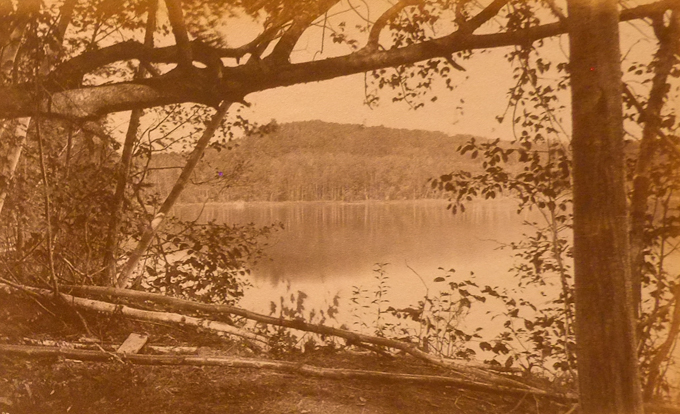
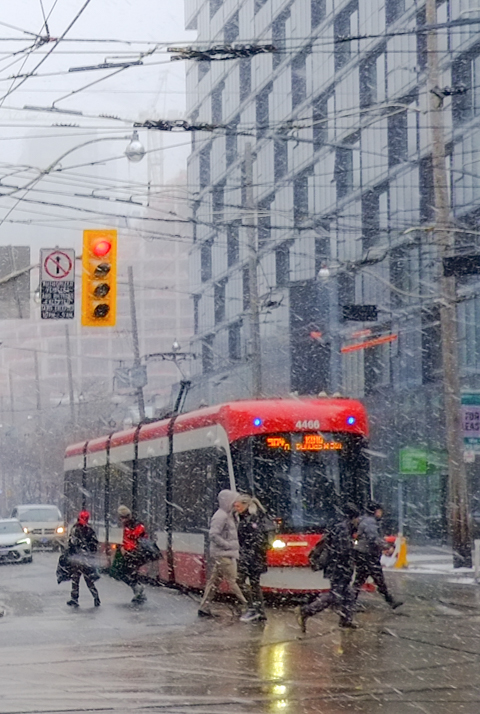
below: Someone with surname Thomas once passed this way.  Lived here.  Played here.  The small stone suggests that it was a child, maybe?  Almost 150 years later this little stone, cracked and weathered as it is, still stands in memory of Thomas and the person who cared enough about him to have this stone made and erected in the churchyard.  A few of us stop and linger long enough to think about him but at some point the words will become even more unreadable.

old, faded and cracked tombstone in a cemetery, can read the name Thomas and that he died 188?.

Stone possibly says, Leonard, infant son of ?? Thomas, died July 11 1888 (1889?)

With thanks to Wilfred who suggested checking out the Rouge River and Bailey Bridge! It was a few months ago now but I was waiting for a nice spring day.

blue and white Scarborough street sign, Kingston Road, in Cliffcrest

Cliffcrest is a neighbourhood in Scarborough that includes a section of Kingston Road between Brimley and Bellamy Roads.  The southern boundary is Lake Ontario including the  eastern portion of the Scarborough Bluffs.

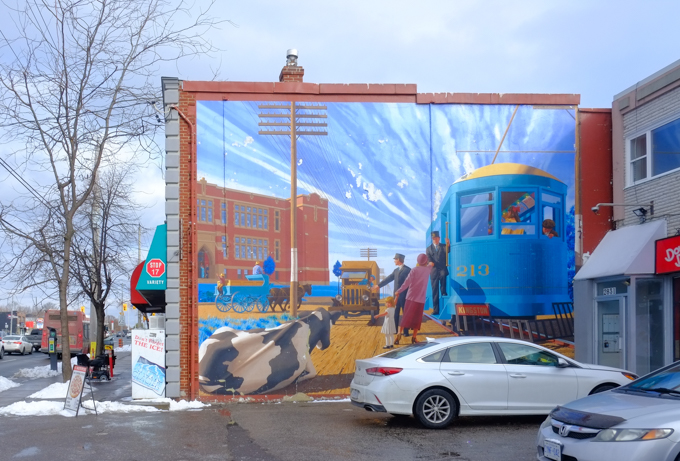
below: At the corner of Kingston Road & St. Clair is one of the Scarborough Heritage Trail murals funded by Mural Routes.   It is “In The Way of Progress” and shows  a Kingston Road radial railway car at Stop 17 with Scarborough High School (later changed name to R.H. King Academy) in the background.  It was painted in 1996 by Phil, Jennifer, and Jamie Richards.

mural on the side of a building by a parking lot on Kingston Road, Scarborough scene, old rail car public transit stopping by old high school, at stop 17, cow lying down near rail car

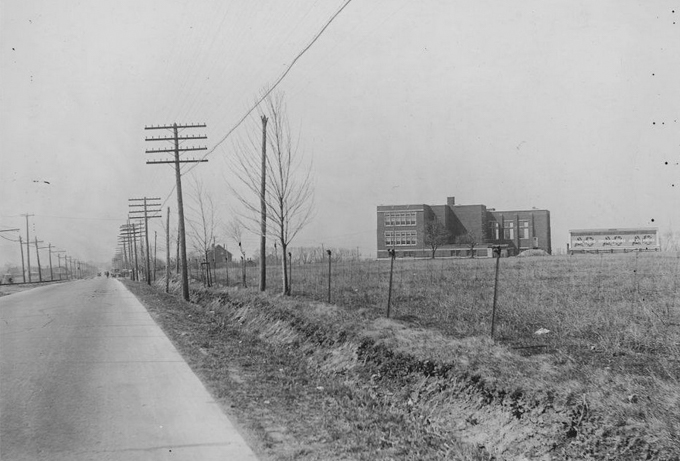
below: 1922, Kingston Road looking west towards St. Clair with Scarborough High School near the intersection.

Source: City of Toronto Archives, Fonds 1488, series 1230, Item 2064

In 1893 the Toronto and Scarborough Electric Railway, Light and Power Company started running a one car train along Kingston Road.   The tracks went as far east as West Hill.  A couple of years later, this line became part of the Toronto and York Radial Railway (TYRR).  The TYRR had four branches radiating from the city, one to the west, 2 northward, and this one east along Kingston Road.  The stops on the Scarborough route were numbered, starting at Victoria Park Avenue.   Stop 17 was at St. Clair East & Kingston Road.

below: This 1922 photo is actually from a bit farther west, at Victoria Park.  What I wanted to show was how the railway tracks just ran between the road and the sidewalk.  Very simple infrastructure! Not too feasible in a city, but in 1922 this neighbourhood was more rural than urban (and they still got transit!)

1922 photo of Kingston Road, looking west from Victoria Park

Source: City of Toronto Archives, Series 71, item 1607

below:  You can’t see it in this photo but the mural above is on the wall of Stop 17 Variety (by the parking lot on the right).

small tree in front of a store, Stop 17, Variety, on Kingston Road,

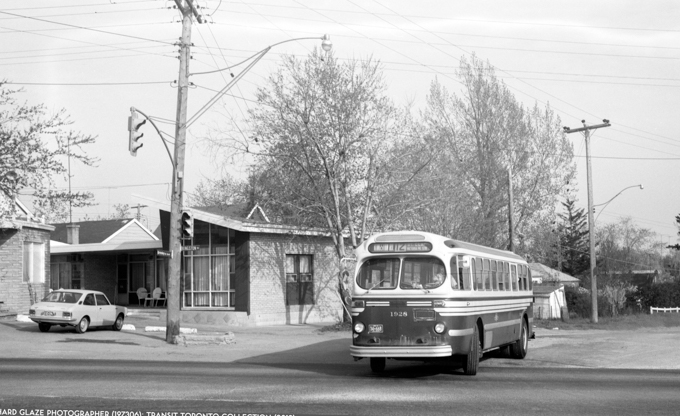
below:   From 1973, forty years ago – looking at the southeast corner of Brimley and Kingston Road.  The bus is northbound on Brimley.

black and white photo by Richard Glaze taken in 1973 at the corner of Brimley and Kingston Road, found on Transit Toronto website

Photo Credit: Richard Glaze photo 1973, Transit Toronto website.  If you are interested in anything to do with transit in Toronto, check out their website.  They have an extensive collection of photographs, maps, and documents.  They also feature all the latest news about slow downs, route changes, and service advisories (among other things).

The same motel is still on that corner of Kingston Rd and Brimley.  I don’t have the exact replica photo but this is what the Hav a Nap Motel looks like now.

Hav a Nap motel, sign in front of motel, Brimley and Kingston Road
below: Moving slightly west, photo taken from approximately the corner of Brimley and Kingston Road.

entrance driveway to Hav a Nap motel showing some of the buildings, Brimley and Kingston Road

Once upon a time, Kingston Road was a major east west route in and out of the city.  There were many motels along here.  Their heyday was the 1950s and the bigger, fancier ones are long gone, leaving behind some of the smaller ones.

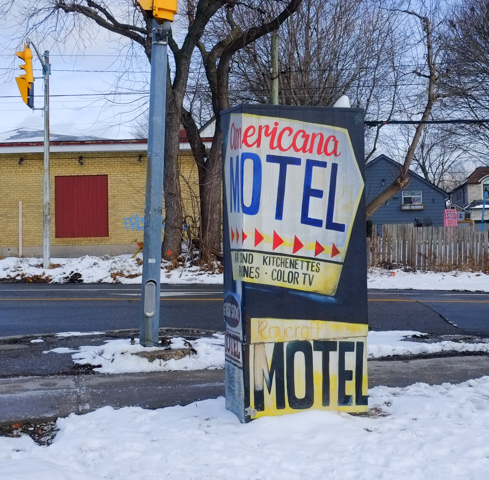
below: As a shoutout to these motels and their stoy is this sidewalk box decorated with images of old motel signs. The Americana and the Roycroft signs can be seen on this side.

sidewalk box decorated with images of old motel signs, Kingston Rd and Brimley, Americana Motel

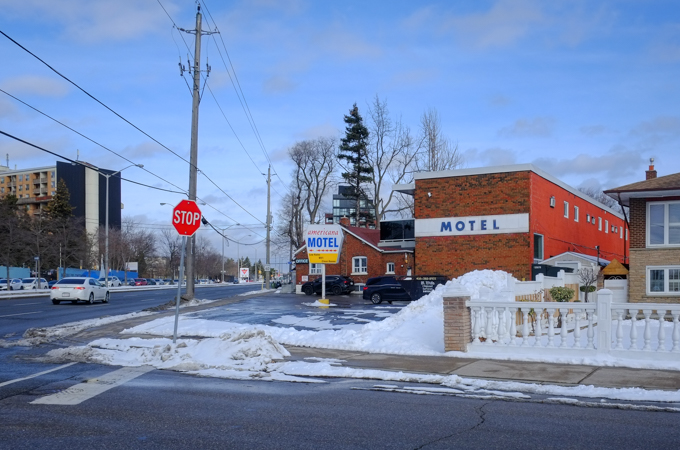
below: The Americana Motel still exists in the Cliffcrest neighbourhood (close to Brimley).  The Roycroft is farther east, beyond McCowan.

Americana Motel sign in yard of the motel, red brick buildings,

americana motel on kingston road

below: Henry’s Motel

Henrys Motel on Kingstson Road, newer condo in the background

below: The sign of things to come.. and yes, it’s a condo with retail at street level.

redevelopment notice for property at the corner of Kingston Road and St. Quentin

old building, cafe, on Kingston Road with painting in the covered windows, redevelopment notice on front, snow on ground

Scarborough house on St. Quentin Ave., birch tree in front, snow covered front lawn

below: The north side of Kingston Road, just east of Brimley – it looks like changes are happening here too.

north side of Kingston Road, east of Brimley, long fence or hoardings, with apartment buildings behind.

Brimley Road is also the main access for Bluffers Park at the foot of the Scarborough Bluffs.

yellow traffic sign in a residential neighbourhood that says no access to Beach or Bluffs sat and Sun and Holidays from May 1st to Sept 30th

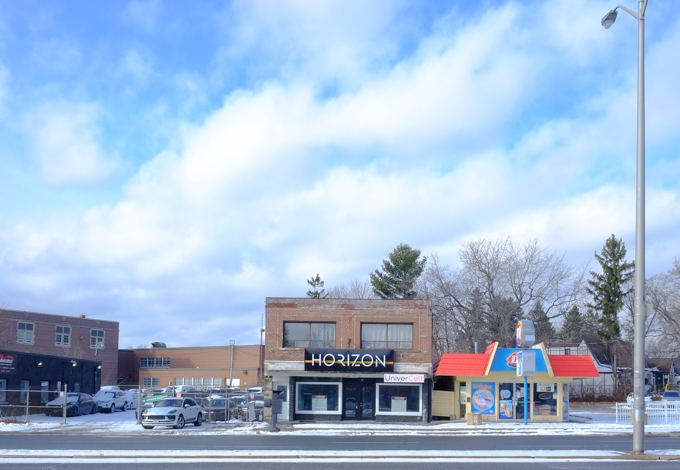
below: Dairy Queen at Kingston Road and Harewood is closed for the winter

looking across Kingston Road to a Dairy Queen and another storefront that is two 2 storey brick building. sign says Horizon

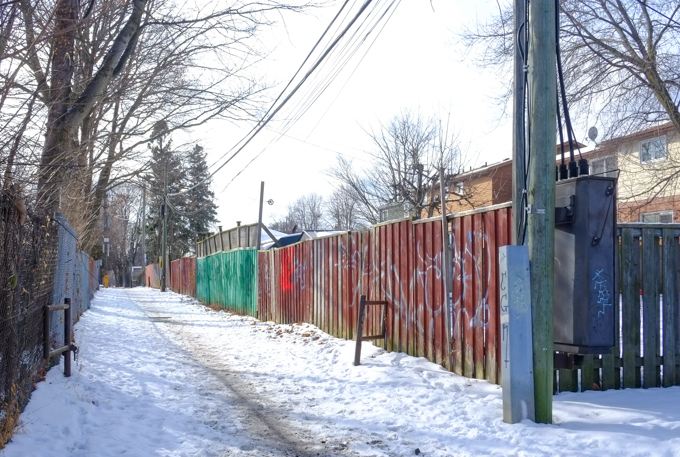
below: An alley runs behind the south side of Kingston Road

path laneway with snow, behind houses, with wood fences between lane and backyards

a big red handprint painted on a wood fence, as seen in an alley

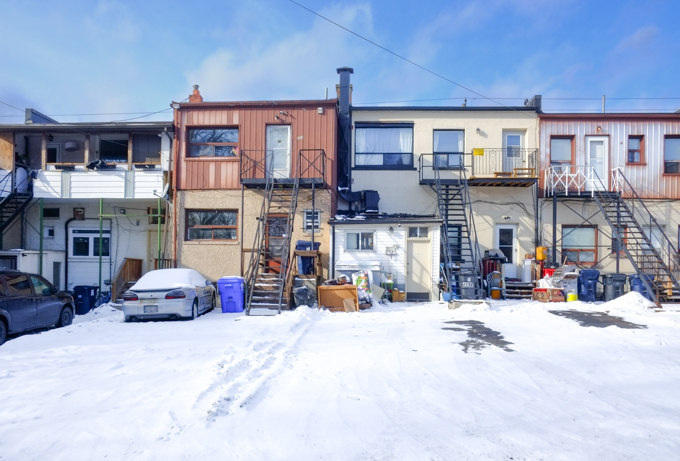
snow covered lane, back of stores and buildings on Kingston Road, two storey, exterior stairs, porches, balconies, doors, and windows,

jumble of wood, dead leaves, caught between chainlink fence and wood fence

in an alley, many ladders leaning against a tree behind a building

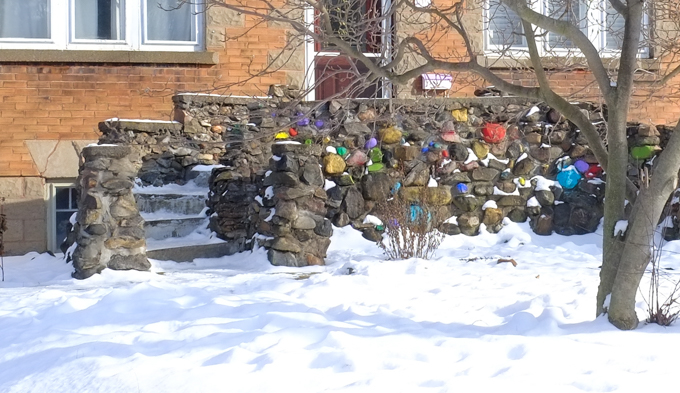
curved porch and front steps in front of a house where some of the rocks are painted bright colours

fake street sign on a wood fence that says beach bum blvd

rowhouses on Kingston Road three storeys high, with trees in front,

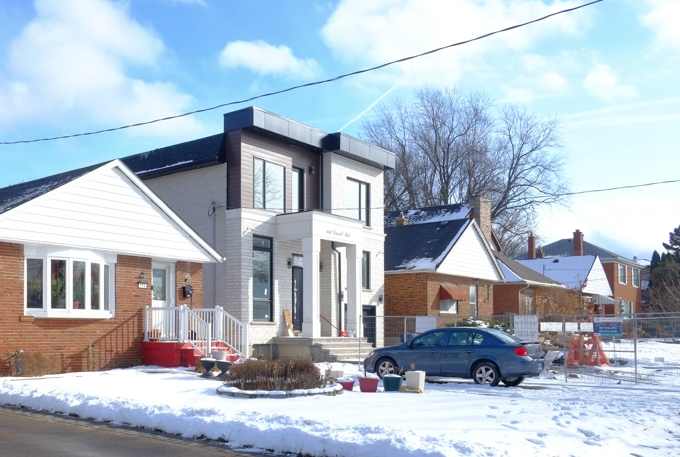
renovated and enlarged modern house in between two older brick bungalows

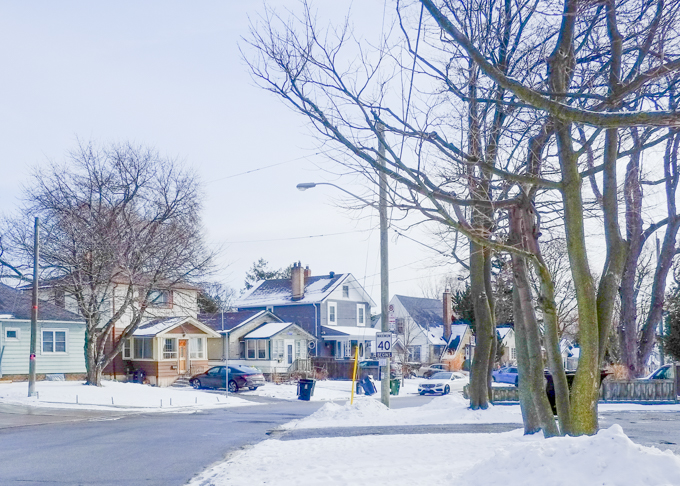
winter street scene in Scarborough, single family homes,

older brick 2 storey home, with garage at side, large snow covered front lawn, large trees beside house, dormer style windows on top floor

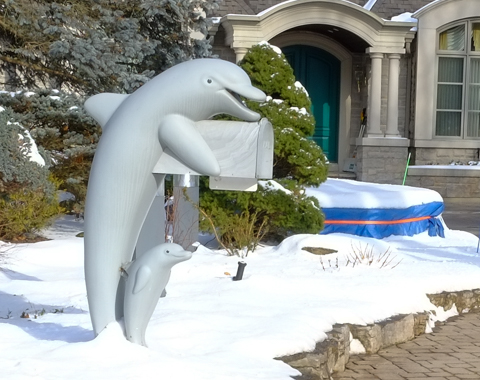
below: Mailbox with a porpoise (or two)

in front of a house, a mailbox that looks like a dolphin is holding it up, smaller baby dolphin sits at parent's feet

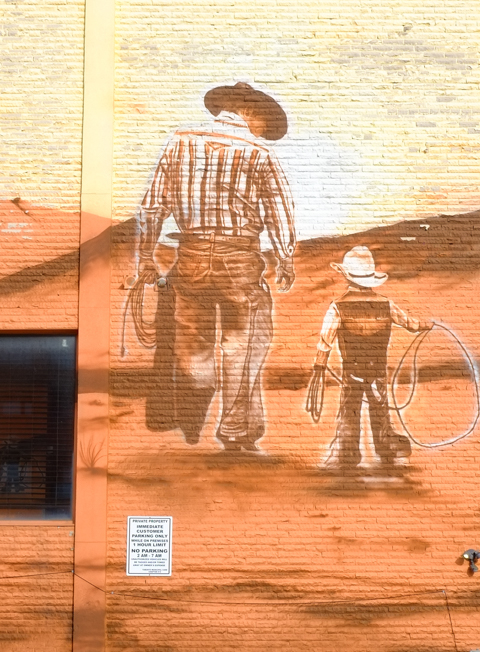
below: On the side of a Wild Wings restaurant.

mural in brown tones, on side of wild wing restaurant, back to camera, adult male cowboy walking beside younger boy, with cowboy hats and chaps, younger one has a lasso

dark blue cars, in snow, parked at used car lot on Kingston Road, ASD Auto sales

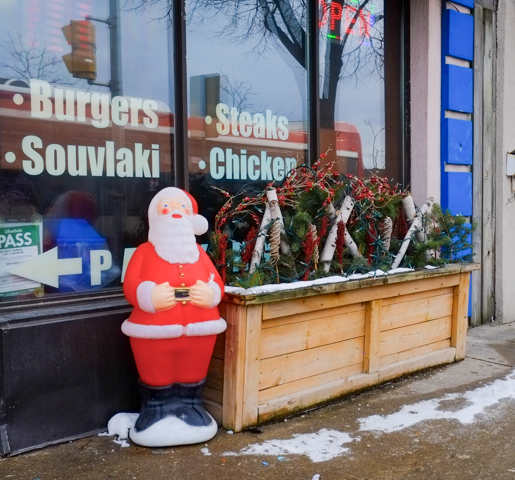
plastic santa claus stands outside a restaurant window, with words printed on window: burgers, souvlaki, steaks, chicken

below: Carusos Fruit Market, Groceries, Hardware & Gift Items

front of Caruos Fruit Market, Groceries, Hardware and Gift Items

Other Scarborough Heritage Mural posts:

1. Heritage Murals – Kingston Road, 2014

  • The Half Way House’ by John Hood, 1990. (Midland & Kingston Road)
  • ‘The Bluffs as Viewed by Elizabeth Simcoe c. 1793’ by Risto Turunen, 1992.

2. Cliffside Murals, 2017:

  • ‘Spooners Garage’ by Phillip Woolf, 1992.
  • ‘H.M. Schooner, Onondaga c. 1793’ by Jeff Jackson 1992.
  • ‘Cliffside Golf Course’ by Dan Sawatzky, 1991.
  • ‘The Half Way House’ by John Hood, 1990. (Midland & Kingston Road) (repeat)
  • ‘The Bluffs as Viewed by Elizabeth Simcoe c. 1793’ by Risto Turunen, 1992.(repeat)

3. Heritage Trail Mural 8, 2014

  • “Building the Addition to the Wesley Methodist Chapel, Highland Creek, Winter” by  John Hood , assisted by Alexandra Hood and Zeb Salmaniw, 1994.1867”

4. Scarborough Bells, 2020

  • scenes from early Scarborough, painted by painted in 2012/2013 by De Anne Lamirande.  Under a railway overpass.

5. Birch Cliff, Kingston Road, 2021

  • On the side of Legion 13 on Kingston Road is this large mural. Painted in memory of Max Silverstein, by John Hood with help from Alexandra Hood and Asif Khan, 1991. Restored in 2010 by Blinc Studios. “Scarborough Rifle Company marching to the Niagara Frontier, June 1, 1866.”
  • “Mitchells General Store” by Phil Irish, 1998.


below: 504 King streetcar on a snowy January afternoon

As you all know, Toronto is being demolished and redeveloped.  Almost every part of the city is affected by the construction of new condo buildings or the upgrading of public transit.  It can be difficult to keep up documenting the changes!  A few weeks ago I posted some pictures from Queen & Spadina where Metrolinx is building a new subway station for the Ontario Line.  The next stop west from there is at King and Bathurst.

Infrastructure Ontario wants to build what they call a Transit-Oriented Community (TOC) at King and Bathurst.  The gist of the plan is that these sites will feature high density development around transit hubs.  Some of the plans for condo and office may still be at the concept level but the new subway station work is well underway.

below: Looking south on Bathurst from King.  On the southwest corner is the Wheatsheaf Tavern  which has been here since 1849.  The exterior of the building hasn’t changed much in 170 years!  It remains untouched by today’s construction.

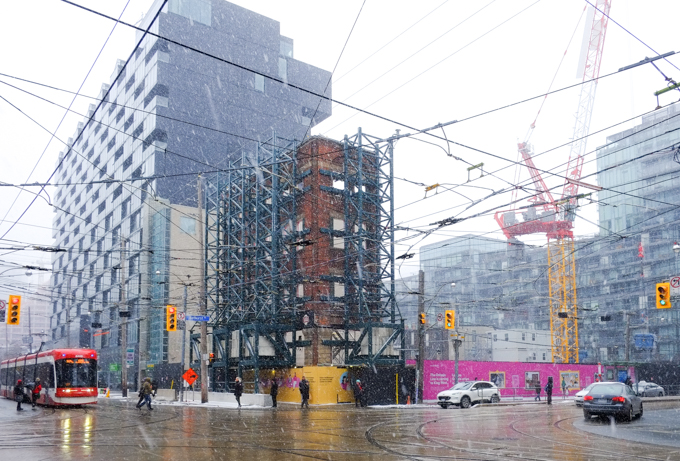
looking south on Bathurst from King, Wheatsheaf Tavern on the right, vacant lot where most of Banknote Bar was. now a metrolinx construction site

below: The Banknote Bar on the southeast corner is now gone, or at least most of it has been demolished.  The north facade will be incorporated into the new station, the King-Bathurst station (Are they really going to call it that?  So Dull. So Bland.).

southeast corner of Bathurst and King, vacant lot where most of Banknote Bar was. North facade saved and is held up with scaffolding, now a metrolinx construction site

This 4 storey brick building was previously a Bank of Montreal.  It was built in 1901/02 for the Canadian Biscuit Company.   It then had a series of tenants until 1923 when Bank of Montreal moved in.

Previously, a mixed use development rising above the old brick structure had been proposed for the site (prior to Metrolinx).  Cancelled.  At this point there is no other development on this corner.

below: Looking east on King

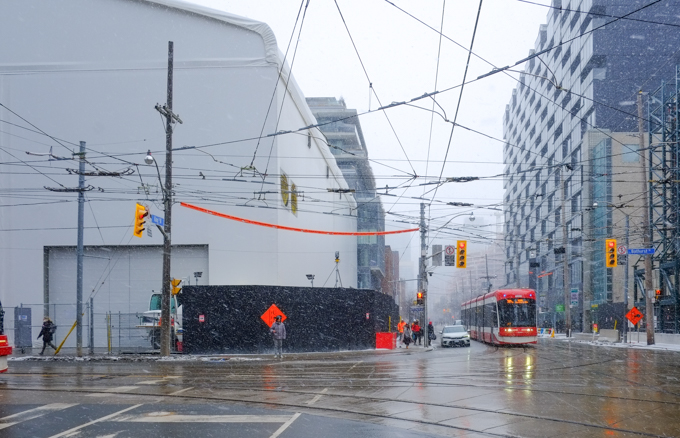
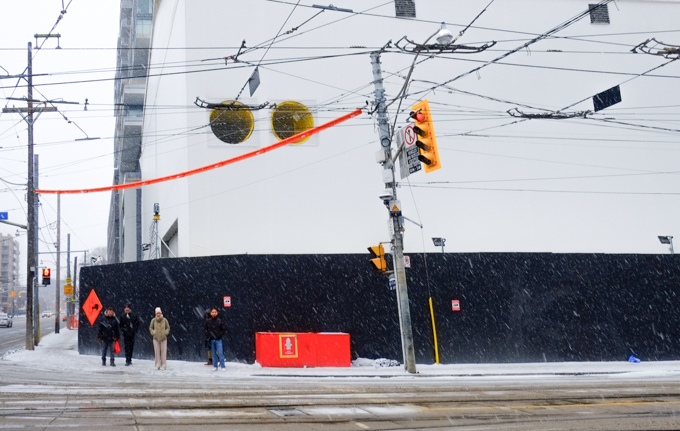
You can see that the corner (above picture) is now covered by a very big white temporary structure where construction of another station underway. What will be revealed? Plans suggest a mixed office/residential tower above with rebuilding of most portions of the TD bank that was on the corner, as well as the building directly east of it. No car parking spots, bikes only. Concept stage? Or further along?  One day we might find out!

Last, the northeast corner –

below: Clock Tower lofts dominates the corner.  There really are two clocks on the side of the building, both of which are difficult to see.  But that doesn’t matter since they don’t work anyhow.

clock tower lofts and condos on the northwest corner of King and Bathurst, with a clock tower at the corner, clock not working, ugly building

below: 1919 photo of the Clocktower Building.  It was in bad shape in 1980 and was demolished.  The Clock Tower Lofts (above) replaced it.  In 1919 it was home to Otto Higel Piano Company. The church in the background is St. Marys Roman Catholic church at Bathurst and Adelaide.

1919 black and white photo of a brick building on northwest corner of king and bathurst. 4 storeys, with small clock tower on one corner, church in the background

photo credit: City of Toronto Archives, Fonds 1244, Item 3008

The building dates from 1895; it was built for the Toronto Lithographing Company who used it until 1901.  Next, the Newell & Higel Co. Ltd take over the building where they manufacture piano actions, keys and hammers, and organ keys, reeds, and reedboards.  By 1912 they employed 450 people.  They developed a Player Piano that became famous around the world and business boomed.  They expanded the building north to the corner of Adelaide Street West.

By the way, a Player Piano is one that plays itself.  The 1920’s were their heyday but advances in technology, especially the introduction of radios and record players, helped kill the Player Piano.  By the 1930s production ceased.

below: A 1970s view of the northwest corner.

1970s black and white photo of Otto Higel Piano Company, now a furniture factory

photo credit: City of Toronto Archives, Fonds 1526, File 7, Item 5,

below: Looking out the window of the Wheatsheaf Tavern.  How many people have sat here and looked out this window?  What did they think about?

looking out a window at the Wheatsheaf Tavern, looking northeast to corner of King and Bathurst where a large white temporary building encloses metrolinx work on a new Ontario Line subway station

Dr. John Gennings Curtis Adams left a small mark on the city just over a hundred years ago.

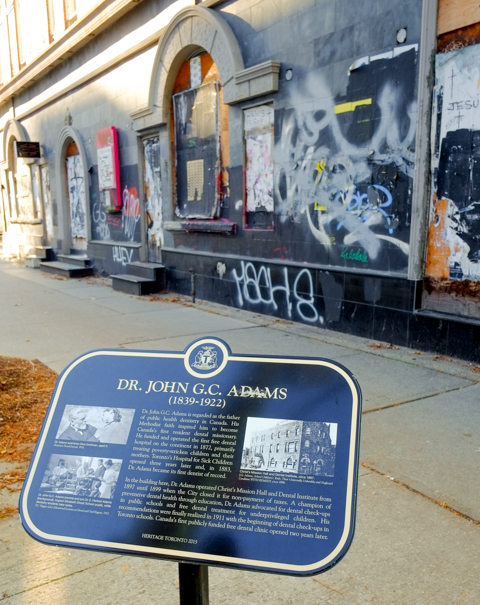
a Heritage Toronto plaque on the sidewalk outside an old three storey brick building that is boarded up and covered with graffiti. Plaque tells about Dr. Adams who was a dentist in the late 1800s.

Dr. John G.C. Adams (1839-1922)  Dr. John G.C. Adams is regarded as the father of public health dentistry in Canada.  His Methodist faith inspired him to become Canada’s first resident dental missionary.  He funded and operated the first free dental hospital on the continent in 1872, primarily treating poverty-stricken children and their mothers.  Toronto’s Hospital for Sick Children opened three years later and, in 1883, Dr. Adams became its first dentist of record. 
In the building here, Dr. Adams operated Christ’s Mission Hall and Dental Institute from 1897 until 1899 when the City closed it for non-payment of taxes.  A champion of preventative health through education, Dr. Adams advocated for dental check-ups in public schools and dental treatment for underprivileged children.  His recommendations were finally realized in 1911 with the beginning of dental check-ups in Toronto schools.  Canada’s first publicly funded free dental clinic opened two years later.

Although Adams  had a mission here, it was only for a few years and he lost possession because he didn’t pay his taxes.  So I am not sure why the plaque is here (to bolster the heritage designation of the building?).  It’s earlier history is just as interesting, if not more so. Before Adams, it had been a coffee shop run by The Toronto Coffee Association Coffee House – off on a tangent for a moment. the Coffee Houses of the 1880s and 1890s were in response to Prohibition laws and many were run by the Temperance League.   I found a thorough, well-written history of these coffee houses as well as Bay Street at the time at Scenes from Toronto

If you have passed by the intersection of Bay and Elm (just north of Dundas), you may have noticed the building on the southwest corner.  It’s been derelict for quite a few years now.  It has become a small canvas for some graffiti artists; although it gets ‘cleaned up’ every once in awhile, traces remain.  Dr. Adams wouldn’t recognize it… nor would he approve of it!

below: Two faced

bits and pieces of posters that have been put up on boarded up window on abandoned building, layers, including partial faces of two men

an old arched window in a building that is now boarded up, graffiti and posters on the plywood

below: Like a repeating pattern on wallpaper or fabric, columns of men with the same hair cut and facial features.  An army of clones.

graffiti paste up poster, repeating black heads in columns and rows, torn bottom

black ink drawing of a man's face and hand on white, drawn on old posters on a graffiti covered wall

below: Mexican Jesus

on a wall with remnants of posters and graffiti, black drawing portrait of a man with long shaggy hair

below: 33wallflower33

black and white paste up graffiti, grey tones, images of women, by 33 wallflower 33

black and white paste up graffiti, grey tones, images of women, by 33 wallflower 33

graffiti paste ups and posters on wall of an abandoned building at 55 Elm street

abandoned building with windows boarded up, graffiti

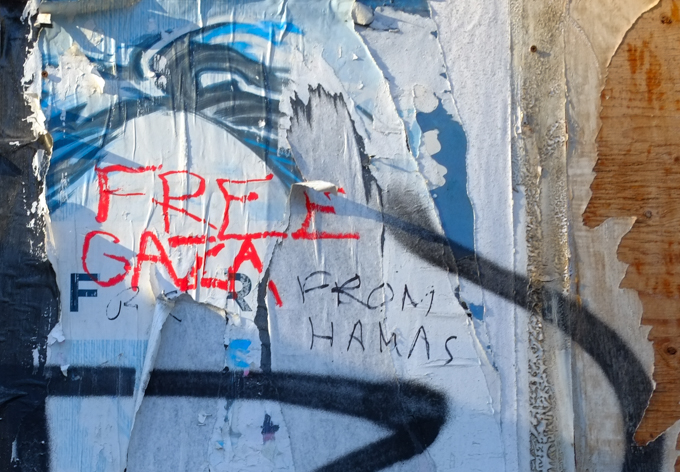
layers of ripped graffiti paste ups and posters on wall of an abandoned building , someone has written free gaza and someone else has added from hamas

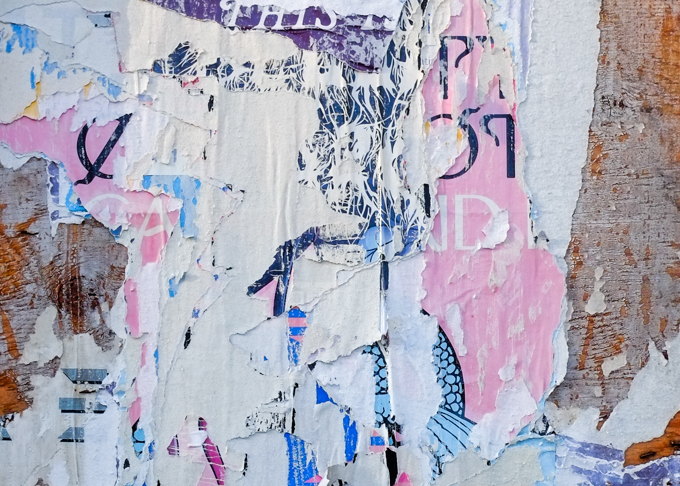
collage made with layers of ripped graffiti paste ups and posters on wall of an abandoned building

layers of ripped graffiti paste ups and posters on wall of an abandoned building at 55 Elm street

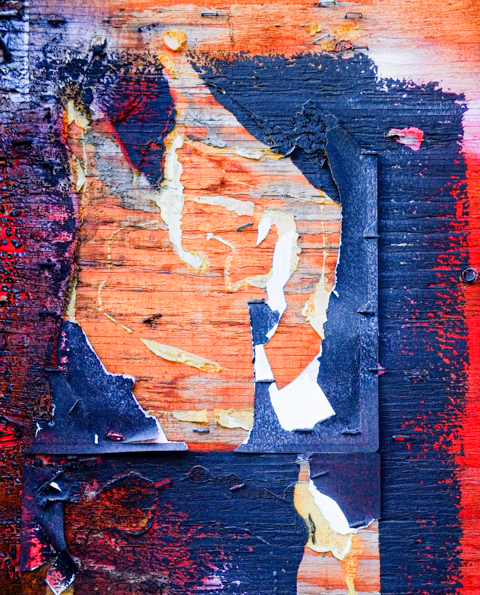
layers of ripped graffiti paste ups and posters on wall of an abandoned building, including a braid and a small heart

layers of ripped graffiti paste ups and posters on wall of an abandoned building with graffiti text written across the top that says Jesus is God

This building, 55 Elm, is at the east end of a row of bay & gable houses from the late 1800s.  All of them are empty and boarded up, awaiting the usual fate of such properties in this city.  The image below is a screenshot of the row of houses that was included in the 2021 City of Toronto report (pdf) that designated the row as heritage properties.  The study was prompted by the possible tear down of one of the houses in 2019.  In other words, these have been empty for a long time.

bay and gable houses on elm street, 57 to 71 Elm

  These houses back onto a large parking lot.  The last few photos are a quick look at remains behind.

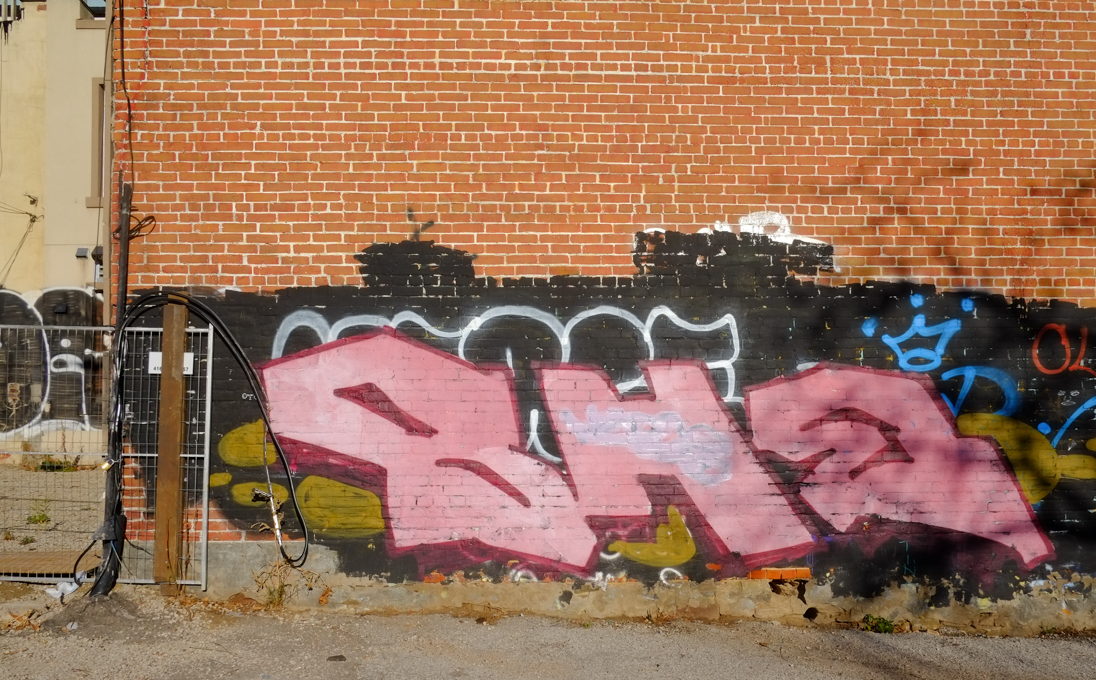
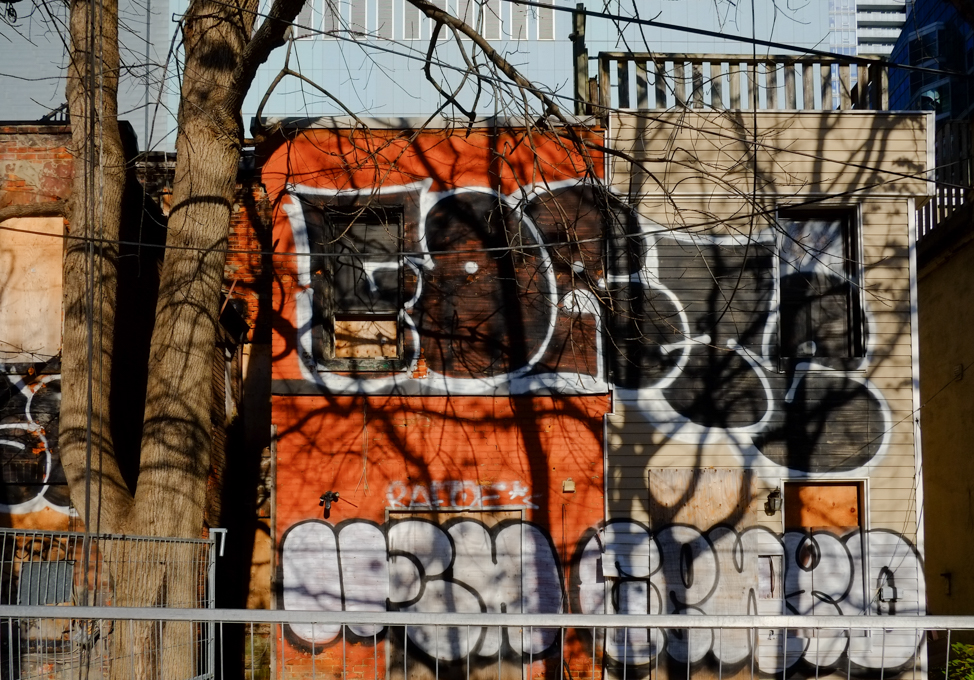
graffiti on the back of a brick building, pink, large 3 letters,

graffiti text tags on the back of empty houses

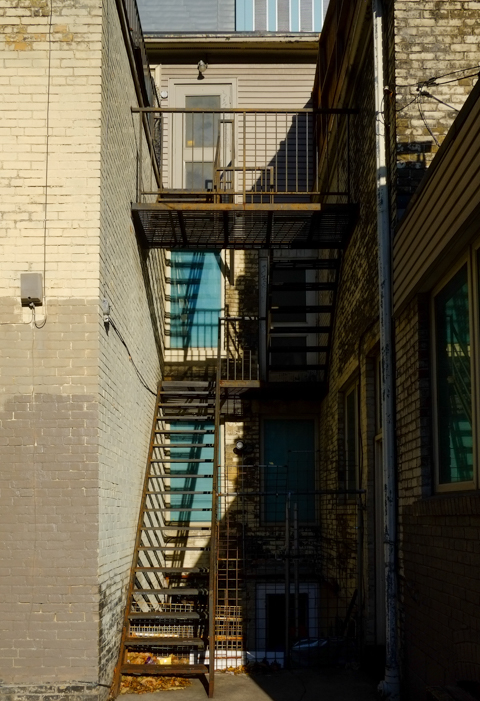
exterior stairs at back of house, two storeys, leading to turquoise doors

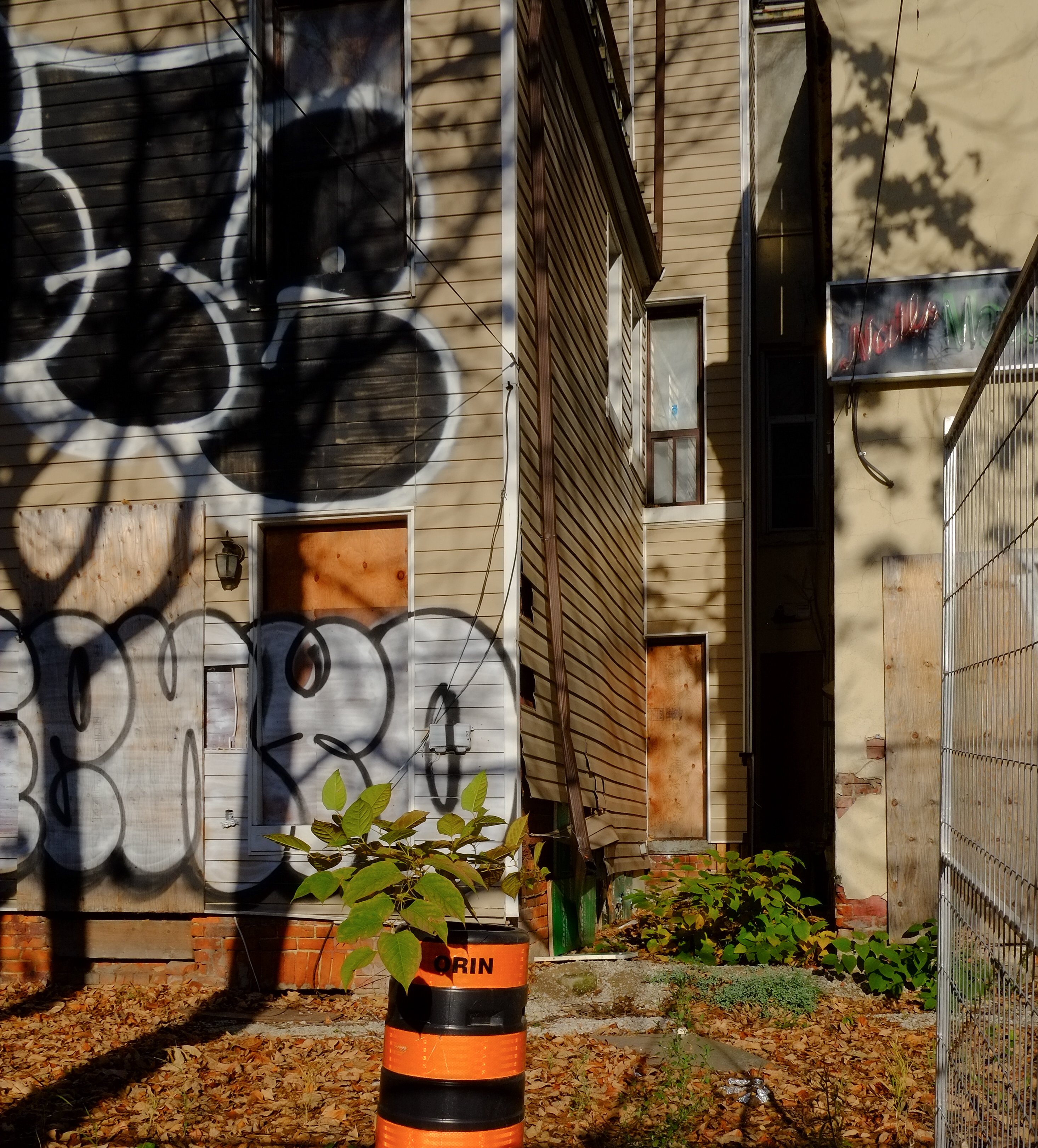
graffiti on back of abandoned houses

graffiti on back of abandoned houses

graffiti on back of abandoned houses

graffiti on back of abandoned houses

graffiti on back of abandoned houses

back of building, looking up to rooftop and metal vents, tall skyscraper condos in the background, used to be matagali restaurant, sign still there

… but finding many other things instead.

This is a follow-up to my last post about the Don Mills trail.  Remember that I mentioned that it came to a dead end just north of Eglinton?  I thought that surely someone somewhere in the city government would have looked into options re connecting the Don Mills trail to a street or another multi-use path.  The dead end is just east of Leslie, so off I went to check it out (and I wasn’t going to walk all the way to a dead end just to turn around again) .

Hey look!  There is a vacant lot at approximately where the trail ends.

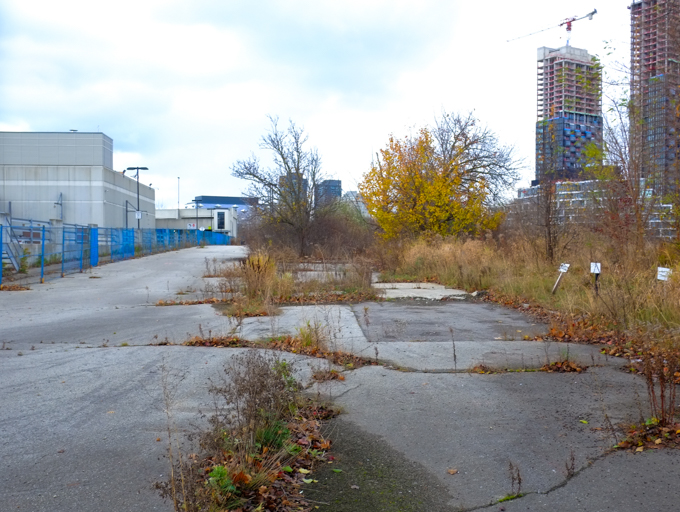
cracked pavement with weeds growing up in them, vacant lot,

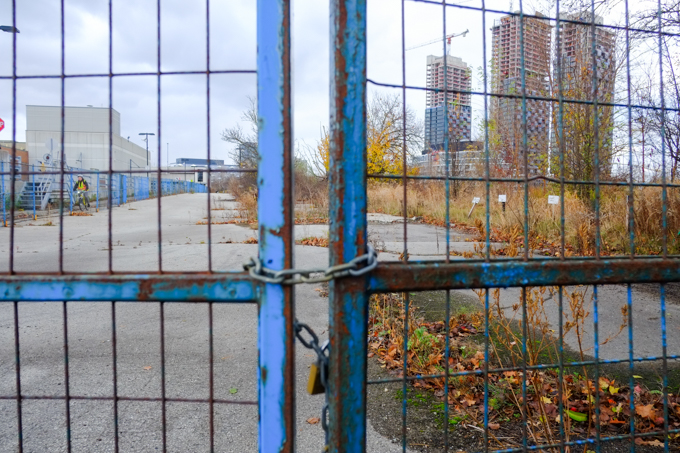
Did I wander back there?  Sadly not….. I didn’t have any lock cutters with me….  This was once a Sony Music building but it was demolished in 2016.  There was no development notice sign at the site (9 acres).

blue metal fence and gate, locked closed, vacant lot beyond the fence

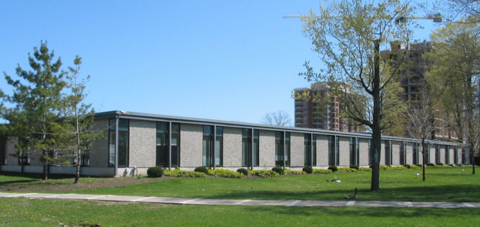
below: This is the Sony Music (or CBS) building, built in 1959.  They don’t make them like this any more – so spread out and only one storey high.   Land must have been much cheaper back then!

older colour photo of sony music building on leslie street (demolished in 2016)

Photo credit: by Bob Krawczyk, found on ACO Toronto website (Architectural Conservancy Ontario)

When I was researching the Sony Music building online, I came across the Phoenix Centre.  That’s the name of the planned private club being developed at the old Wrigleys site next door to the now vacant lot.  If I had realized that when I was out walking, I would have taken more photos.  As it is, this is the best I’ve got:

southwest corner of old Wrigleys building on Leslie street, now OTT, low rise modern building

This building, built 1962, was included in North York’s Modernist Architecture, first published in 1997. In addition, The former Wrigley property has cultural heritage value as it is historically associated with the 1950s planning and development of Don Mills by E. P. Taylor and Don Mills Developments Ltd. (if interested, more info at ACO website).  The Phoenix Centre plan retains most of the office space architecture but completely remakes the factory space.

  There is also talk of a bridge (pedestrian & bikes?) over the CPR tracks to the Crosstown developments.   Makes sense to connect the Don Mills trail, Crosstown, and Leslie Street!

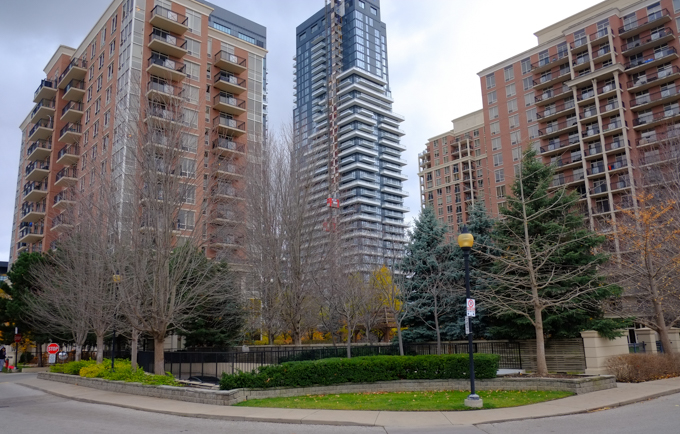
Part of the reason I didn’t take any photos of the old Wrigley building is that I had chose to walk south the day….  just south is a fire station as well as some condos.

on Leslie street, white building that is a fire station, parkland in beside it. to the south are condos, older red brick buildings plus newer glass and steel condos behind

And there is a well worn path that accesses the back of the properties.

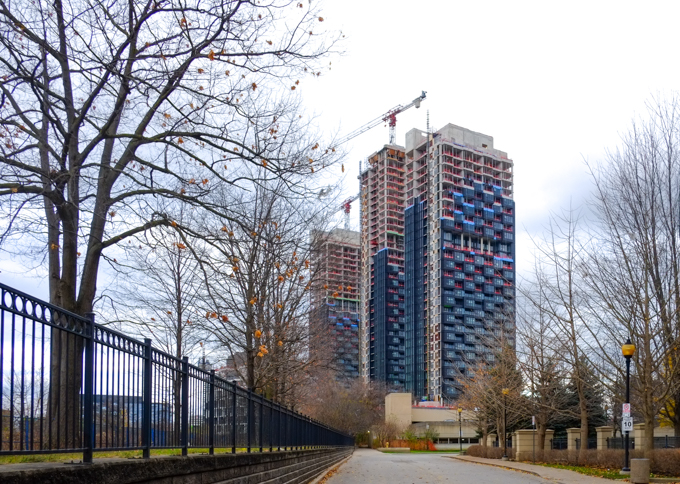
large trees in foreground, dead leaves on the ground, autumn, new condos being built in the background, cranes,

This road doesn’t actually lead to those new condo towers.  The CPR railway tracks are in the way.  Those towers are part of the Crosstown development on the old IBM and Celestica property (access from both Eglinton & Don Mills)

long driveway, access road, with new condos under construction in the background

The road didn’t lead to the end of the Don Mills trail either… but it did lead to the back of a parking garage.  No dogs allowed and no trespassing.  No luck here.

path that runs behind beige concrete building (parking garage) with no trespassing sign)

I got a better view of the neighbourhood though….

highrise apartment buildings and condo towers

Black and white on a grey day.

two chairs, one black and one white, in a vacant lot, grassy, one tree,

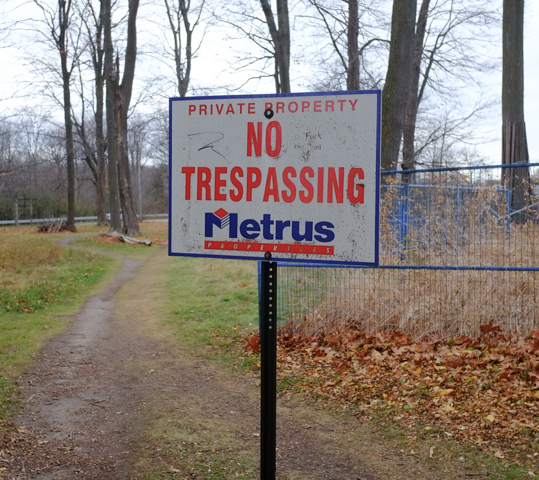
As I walked back out the path, I noticed this sign.  I took it to mean the property behind the blue fence, not the property the path is on… probably?

no trespassing sign, metrus private property

It stopped munching and stared at me, trying to decide to sit and watch or to run away….  it scampered away before I could get any closer (I don’t pretend to take good pictures of animals but it looked so cute, all puffed up to stay warm).

a grey squirrel sitting on a fallen tree trunk, dead leaves on the ground, a nut or something edible between its two front paws

A very short walk farther south on Leslie brings us to the Inn on the Park site on the northeast corner of Leslie and Eglinton.

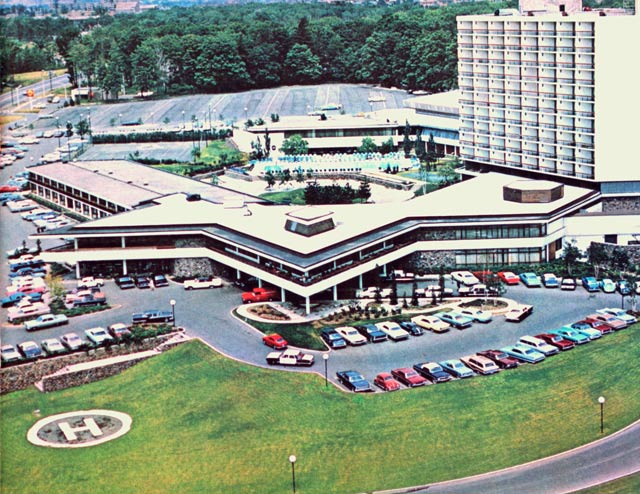
below: Inn on the Park as it once was (about 1969)  I have ‘borrowed’ this photo from another website – Jamie Bradburn’s Tales of Toronto.  Follow the link if you are interested in the story of the hotel – it’s an interesting read.  Did you know that in 1962 North York had a ban on cocktail lounges?

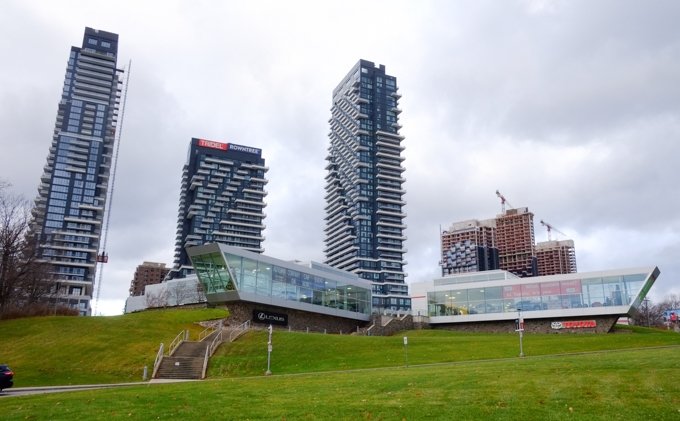
below: The site today. It’s now a Toyota/Lexus dealership and home to a few new condos.

old Inn on the Park site, northeast corner of Leslie and Eglinton, now a Toyota and Lexus dealership, also new condo development, still lots of green space in front

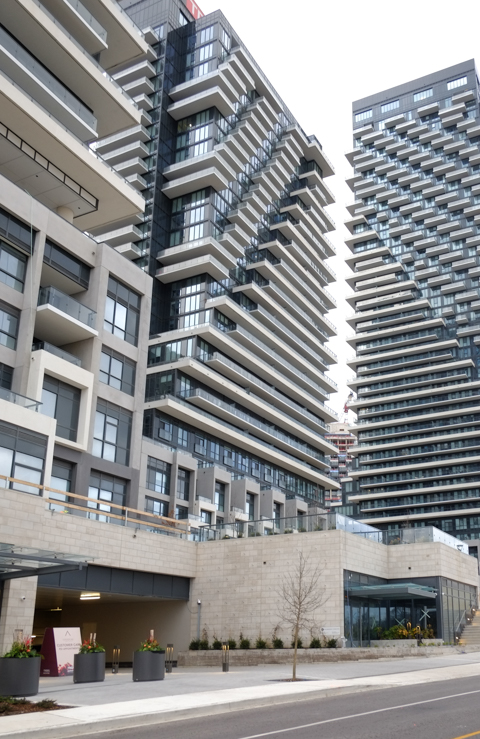
new condos being built at inn on the park site

artwork on exterior wall, solid colour shapes inside squares, 3 D, but mostly flat, shades of orange

But there are more changes coming….. (surprised?)…. more glass and steel towers by the looks of it.  The notice also states that parking is planned for 845 cars and 1860 bikes.  Does Doug Ford approve?

blue and white development notice on the corner of leslie and eglinton, with inn on the park site in background, auberge on the park condo development

sidewalk closed sign and barrier, on eglinton, northside, east of leslie

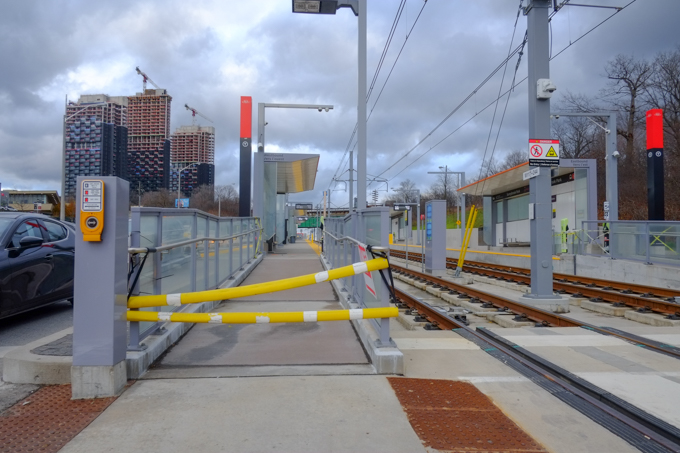
below: A sad sight, Sunnybrook Park LRT station all ready to go but no trains running. One of the Toronto mysteries, when will the Eglinton LRT open?

looking east at Sunnybrook Park LRT station on the Eglinton LRT line, no trains running yet but station is somplete, yellow barriers across the entrance

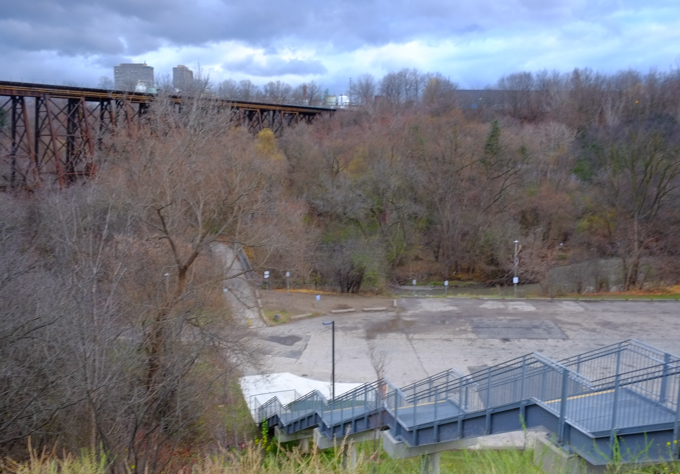
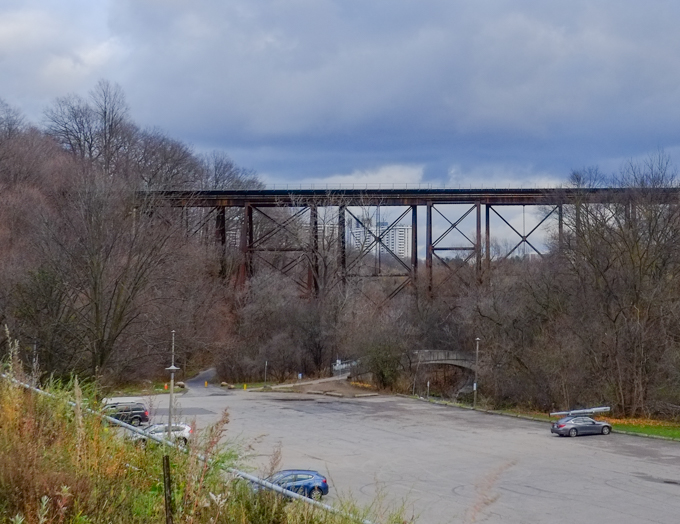
Standing by the LRT tracks and looking south. Wilket Creek park and the Thorncliffe trestle railway bridge can be seen.  I crossed the road because I had seen stairs down to the park….

looking south from the end of leslie street, across lanes of Eglinton to WIlket creek park and thorncliffe trestle railway bridge

A big new set of stairs!…. But. Not shown – the locked gate that blocked the entrance.   There is still no entry to Wilket Creek/Sunnybrook Park from this side of Eglinton.

long set of stairs downhill from eglinton to a large parking lot at wilket creek park.

looking south from Eglinton towards thorncliffe trestle bridge, wilket creek park, and ravine system,

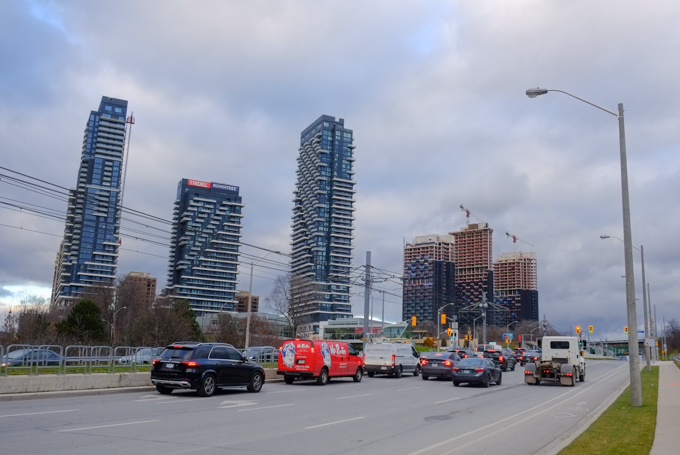
It’s getting to be crowded….

cars traveling east on eglinton, approaching leslie, many waiting to turn left, new condo developments behind, crosstown, as well as inn on the park site

below: Crossing Eglinton and looking westward

traffic turning left from eglinton onto leslie, looking west on eglinton

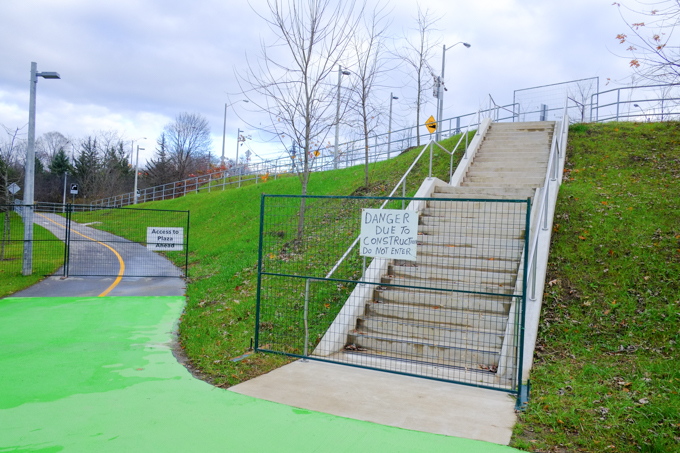
New pedestrian and bike paths that provide access to the park from the north side of Eglinton have been built but they too are locked closed.  It’s very frustrating to see this infrastructure built and then left unusable.  The signs says construction danger but there doesn’t seem to be any construction happening…..

new stairs and bike path infrastructure built at leslie and eglinton that are closed, gates and signs

new stairs and bike path infrastructure built at leslie and eglinton that are closed, gates and signs

Just in case I have confused anyone, here is a map of the area that Google maps created.   Near the top left it even says Don Valley Bike Trailhead… which is very wrong.  No trailhead here of any kind as we’ve just learned.  Also it was the Don Mills trail not the Don Valley trail (the latter is somewhere else!)

google map screenshot of leslie and eglinton and vicinity

New benches! Wilket Creek Park is one section of the string of parks that parallel the branches of the Don River in Toronto’s ravine system. I’ll leave you with a few pictures that I took the other day while I was in the area…

new seating area with wood benches beside wilket creek park sign

lots of trees growing on hillside, autumn, dead leaves on the ground and none on the trees, park, railway trestle bridge in the background

path through woods beside a river, autumn, leaves on ground, small trees

view from under thorncliffe trestle railway bridge, metal girders,

last few yellow leaves on a tree, blowing in the wind

west don river as it flows under eglinton avenue

benches and picnic tables in a grassy park with many trees nearby, condos in the background

leaves in a puddle, reflections of tree branches in the water too

graffiti stickers on the back of a sign, one with Mexican flag,

graffiti on the sides of a small concrete pedestrian bridge

graffiti, large capital M with a bright pink heart

A circular walk to explore the Don Mills trail south of York Mills Road… but how to get there…. We decided to start by walking south on Scarsdale Road to Bond Avenue.

Scarsdale is a nondescript street in North York with a few churches, private schools, some light industry, offices, and all in all, a lot of lowrise late 20th century architecture.

below: Don Mills Baptist Church looking very un-church like.

below: Unmarked

below: Once at Bond, the buildings are mostly residential.

below:  There is a walk-through to the neighbourhood behind

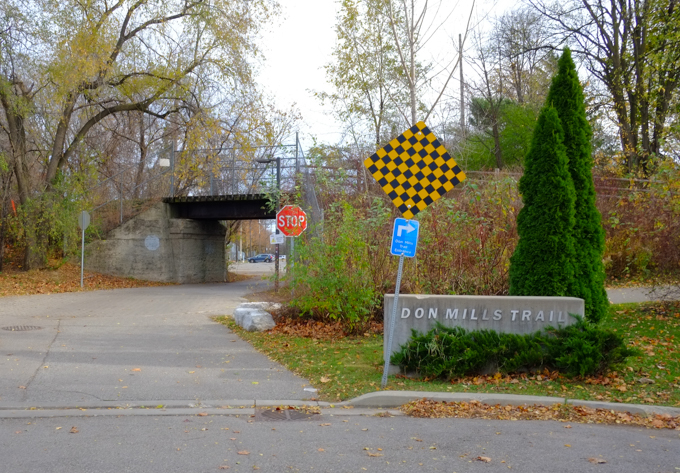
below: The old railway bridge over Bond is now part of the Don Mills Trail.  Originally it took 6 years to build (1912 to 1918) the bridge – using six 2-foot-thick beams that span the 15-foot-wide opening, spaced to handle the weight of locomotives and heavily loaded railway cars.

Don Mills trail access point at Bond Ave.,

below: Also under the bridge is an entrance to Bond Park.

looking under a bridge to a parking lot in a park

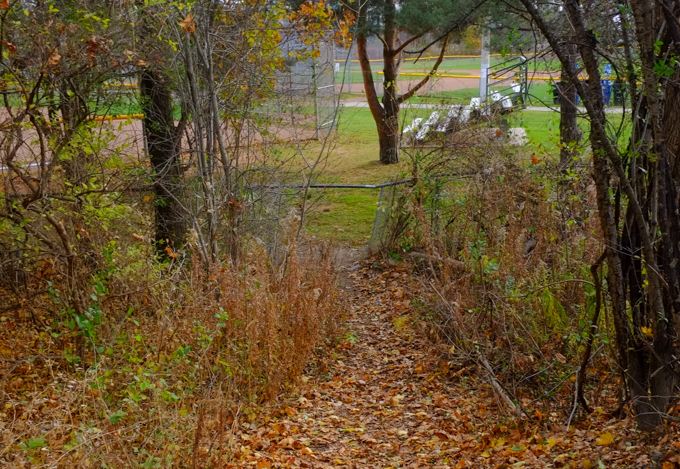
below: Another entrance to Bond Park, this time from the trail via a hole in the fence.

leaf covered path down a small hill to a hole in a chainlink fence, and a park with seating beside a baseball diamond in the background, lots of trees

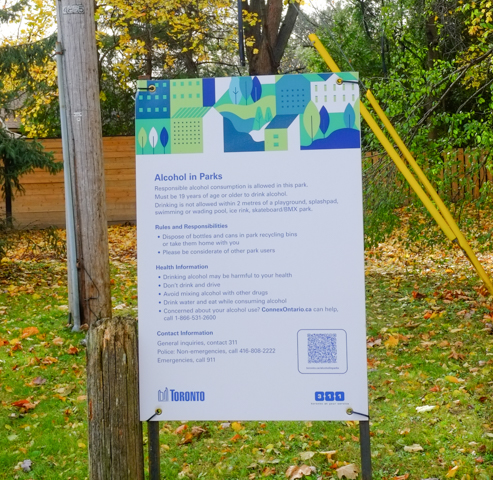
below: “Responsible alcohol consumption is allowed in this park”….rules and responsibilities are then listed along with health information about alcohol.

notice about alcohol in parks, and all the rules

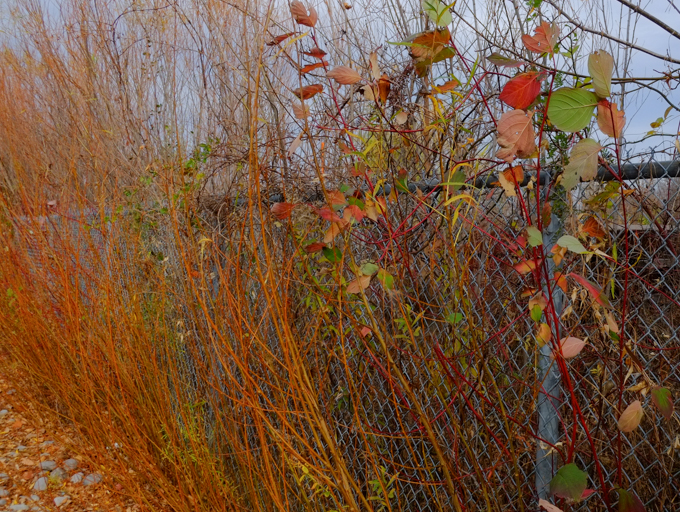
autumn colours in the weeds and wildflowers beside a fence

below: A few remnants of its former life.  Once upon a time this multi use path was a spur line for the CNR, the Leaside Spur.  One of its functions was to connect the CNR main line (now also used by GO to Oriole station and beyond) to the CPR line near Eglinton.  The CPR tracks are those that cross Eglinton just east of Leslie and then cross the Thorncliffe trestle bridge over Wilket Creek Park.  The path ends just before the CPR tracks – there is no connection any more.

old rusted railway sign, small trees have grown up around it

below: Abandoned and rusting.  CNR stopped using this spur line in 1999.  The city bought the property ten years later.

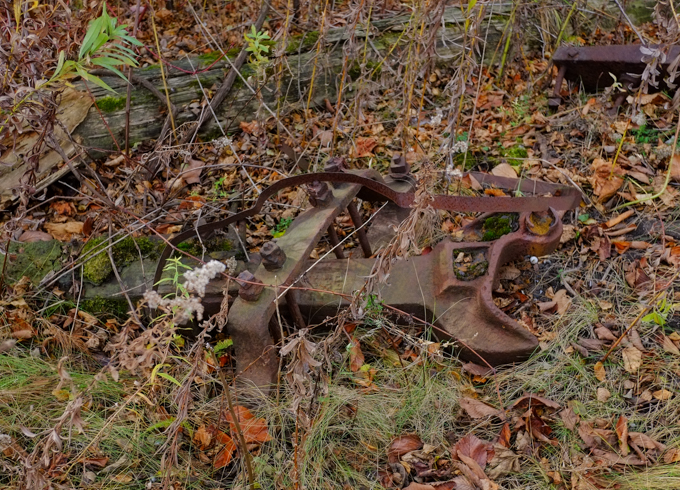
old piece of metal, remains of railway switch? or some piece of railway equipment, lying on the ground

below: Crab apples and dead leaves litter the path

autumn leaves and little red crab apples cover the ground

below: Storage in bins and barrels, on the other side of the fence.

two old blue barrels, behind a fence, lots of undergrowth and weeds too

below: Left behind

discarded pair of boots, and some clothing, left on metal girders stored beside a railway track
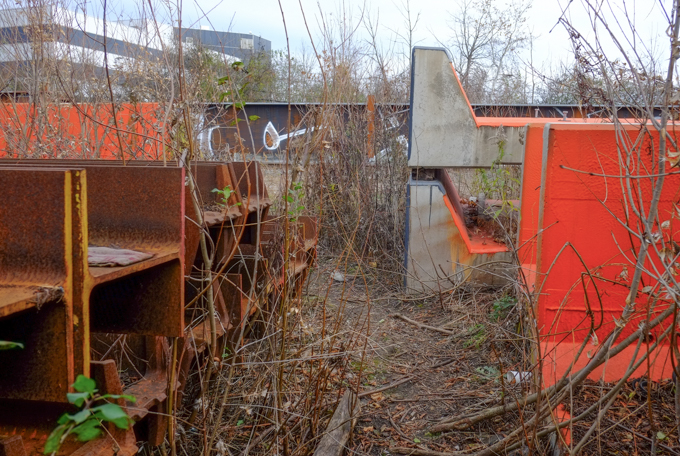
stacks of rusty metal girders beside a railway track

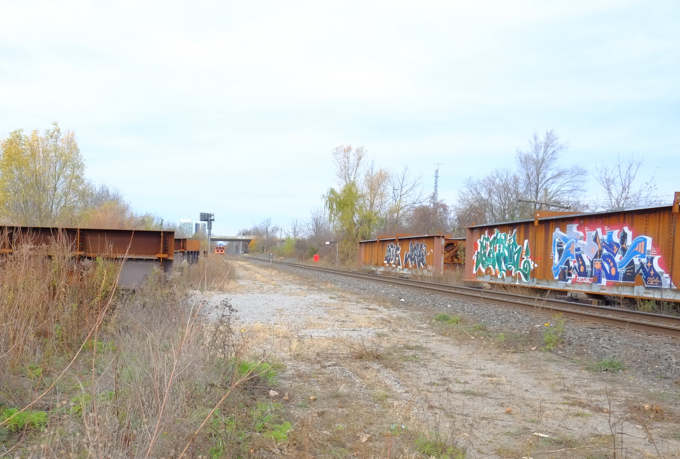
below: The north end of the Don Mills Trail runs beside the live CNR line.  Not much of a view is it?  No trains passed by.  Very quiet.

looking northward up the CNR railway tracks from a hole in the fence by the DOn Mills trail.

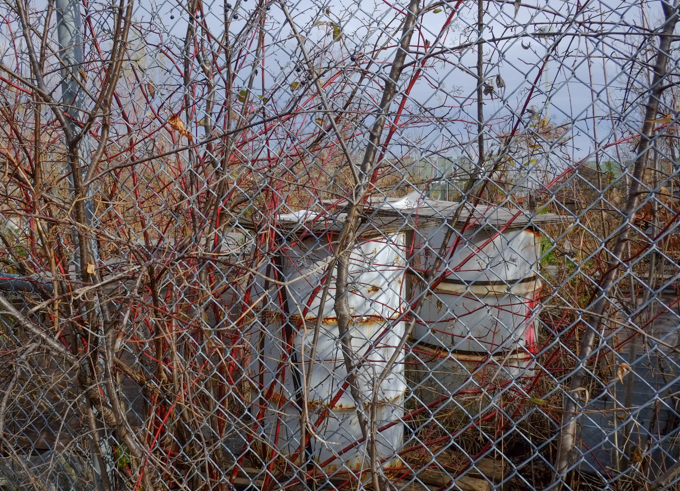
old white barrels, behind a fence, weeds and small bushes growing up around them

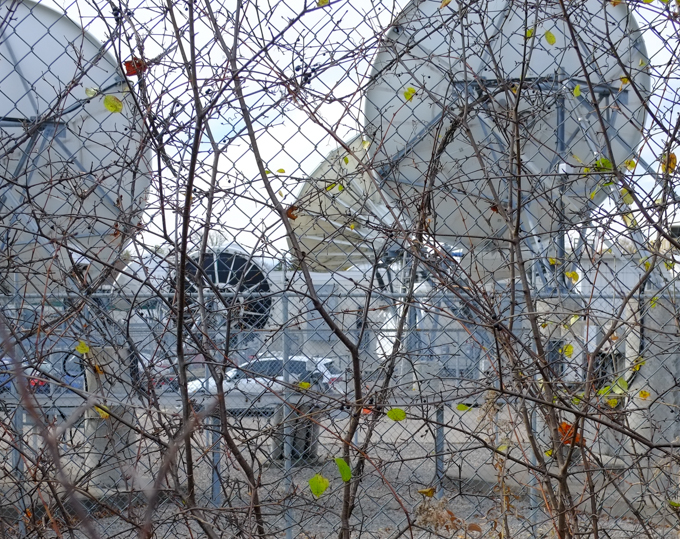
below: Many, many large satelite dishes (and many small ones too).  I was feeling like a spy as I tried to take pictures through the fence… but I didn’t see any surveillance cameras…

satelite dishes behind a fence

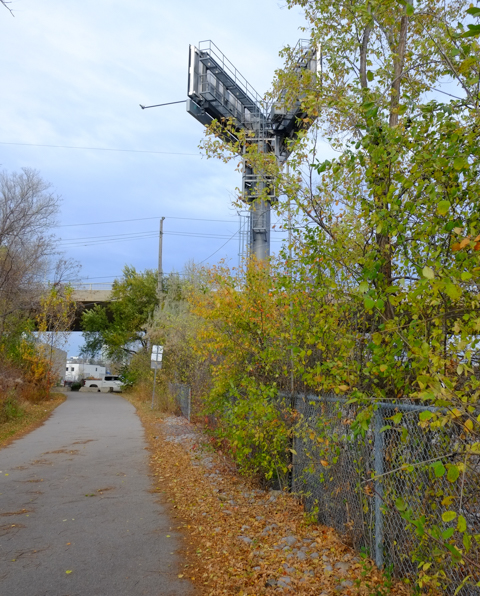
below: Approaching York Mills Road

looking north up don mills trail towards york mills road, where there is a bridge over the railway tracks, a large pair of billboards on a tall pillar, dead leaves beside path, shrubs and weeds along the fence

below: The north end of the trail runs beside the bridge York Mills over the railway tracks (on the right in this picture).  From here there is an access road to Scarsdale on the south side of York Mills, or an exit through to Longos Plaza on the north side.

below: Have a seat!

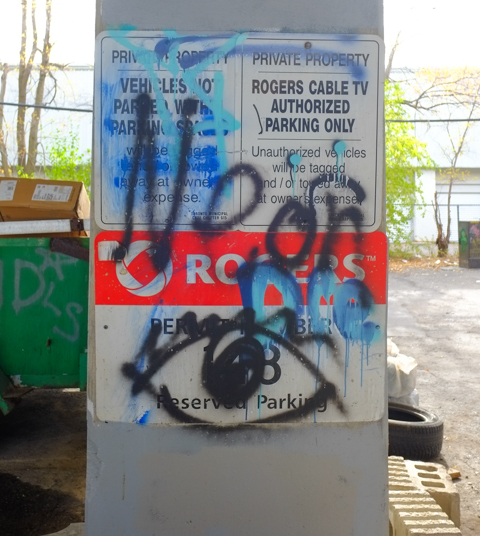
below: Rogers has a large property on the east side of the CNR tracks and has access to this area.

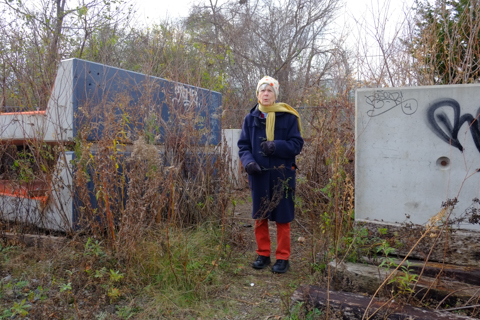
With thanks to my mother for walking with me – she didn’t hesitate to climb through holes in the fence!  She also doesn’t like this picture, but it’s the better of the two that I took that morning!

Bonus section! Just in case you are interested in what’s on Scarsdale Road….

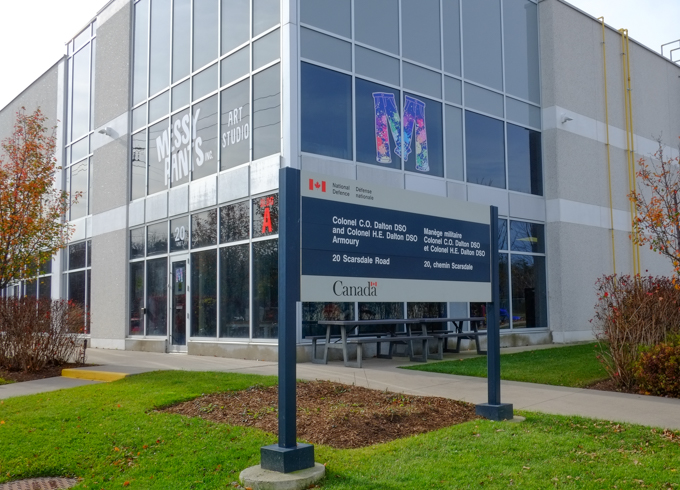
below: Colonel C.O. Dalton CSO and Colonel H.E. Dalton CSO Armoury

sign in front of building,

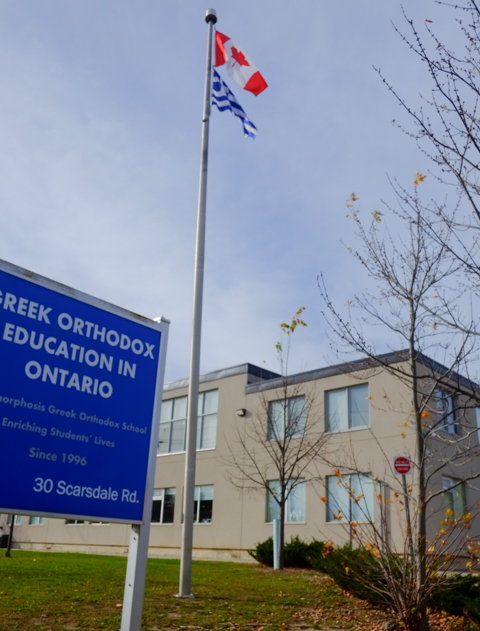
below: Greek Orthodox Education in Ontario – Metamorphosis Greek Orthodox School.

flags on flagpole, Canadian and GReek, in front of Greek Orthodox Education building

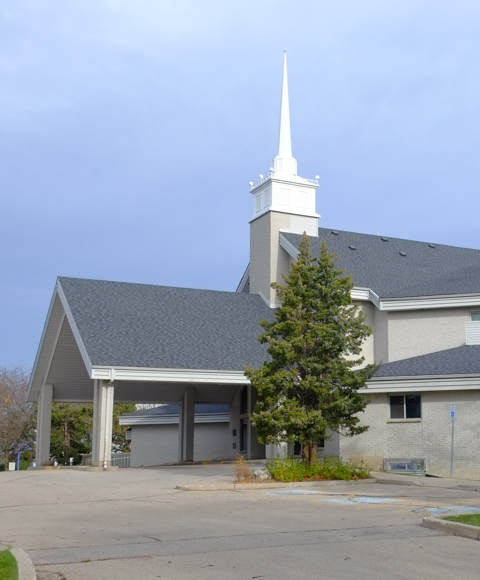
below: Korean Presbyterian Church

side view of front of Toronto Korean Presbyterian church, large roof over entrance, small white steeple, light grey brick building.


Subtitle: More Ontario Line mess


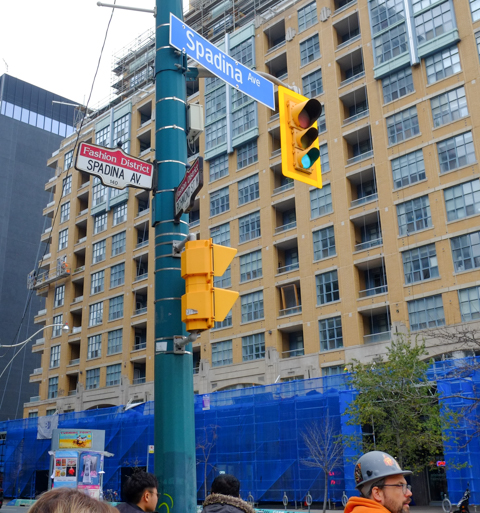
at corner of Spadina and Richmond, traffic light, with two Spadina street signs on it including old fashion district sign,

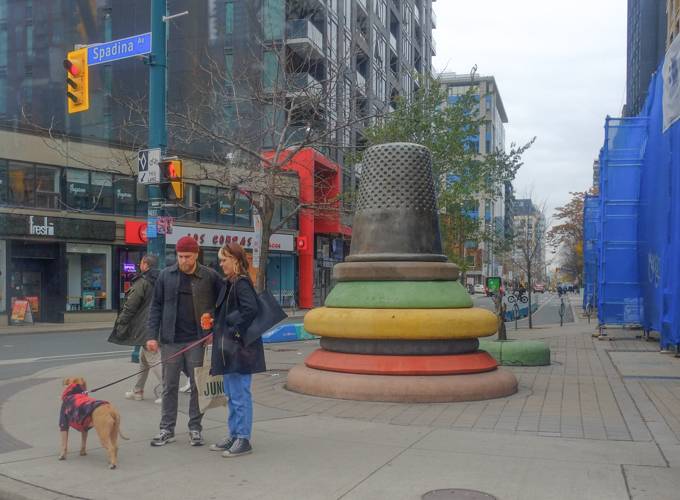
below:  Spadina and Richmond…. A giant thimble (by Stephen Cruise) sits on a stack of buttons.  Behind it, a building is shrouded in blue netting.

a couple walks a dog past sculpture at Richmond and Spadina that is a giant thimble on top of a stack of buttons

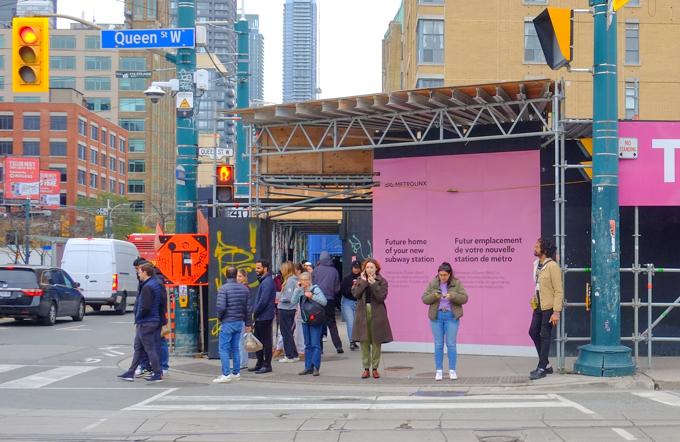
below:  Blue, blue, my world is blue… walking north on Spadina under blue netting that protects the sidewalk from work being done on the southwest corner of Queen and Spadina.  The whole block between Richmond and Queen is under wraps.  This is a future subway station with the imaginative name of Queen-Spadina.

people walking on sidewalk that is covered with scaffolding and blue netting to protect from a construction site, queen and spadina, ontario line construction

below: Southwest corner of Queen and Spadina

TTC streetcar on Queen, waits at red light at Spadina, people on the corner, tall building behind, pink signs advertising ontario line.

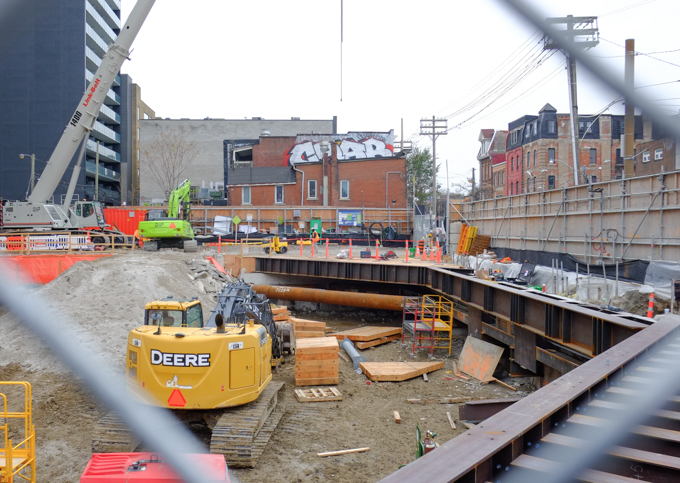
below: A look at what’s happening behind the hoardings….

Metrolinx construction site, hole in the ground, with hoardings, and shored up, some equipment,

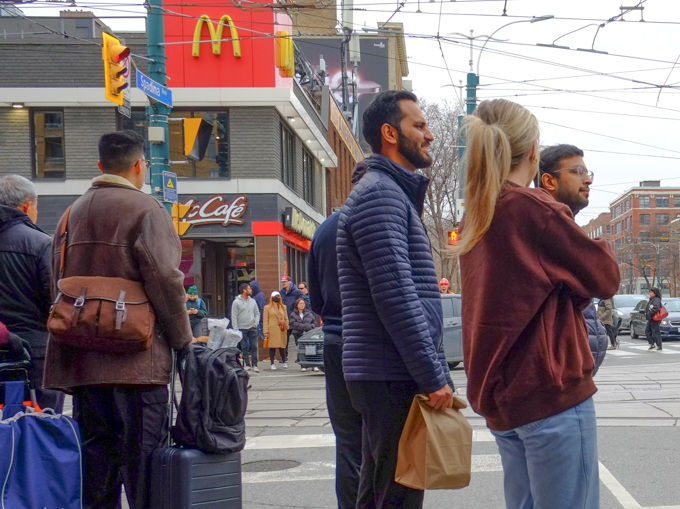
below: Mcdonalds on the northwest corner is unaffected by the changes around it.

people waiting for green light, one man has a brown paper bag in his hand, mcdonalds at queen and spadina is in the background

below:  Looking south on Spadina with a good view of the southeast corner of the intersection with Queen West.

looking south on Spadina towards southeast corner of Spadina and Queen, tree, traffic,

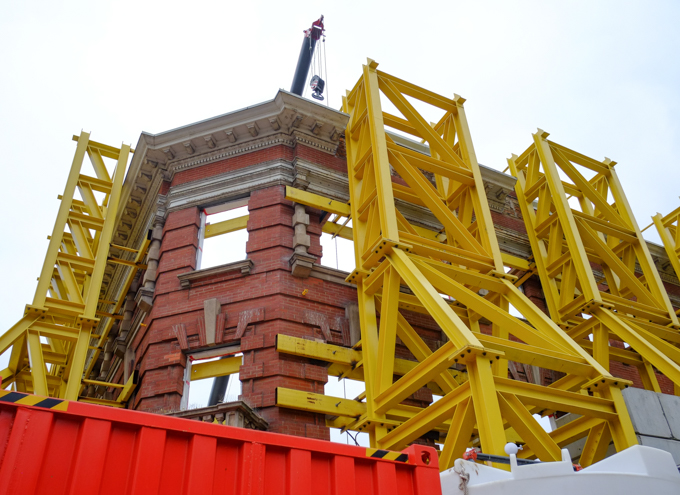
below: There is a lot happening in the northeast quadrant, all by Metrolinx.   the yellow framework that protects and stabilizes a facade is becoming a common sight in Toronto.

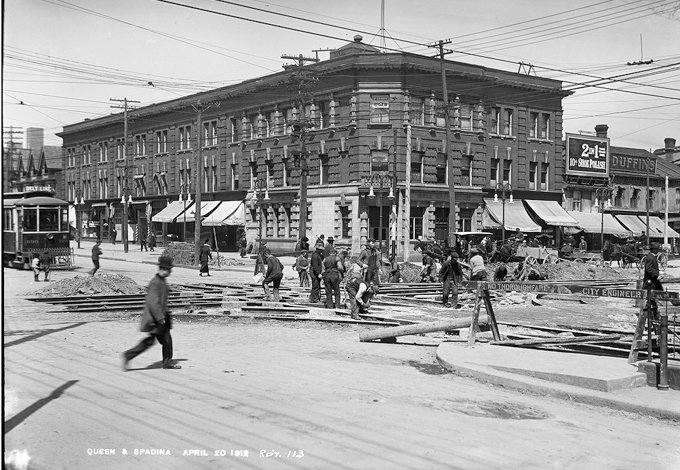
below: In case you can’t remember what was on that corner, this is a photo taken back when they were laying streetcar tracks in 1912.  Most recently there was a CIBC bank on the corner.

black and white photo from 1912 of brick building on the northeast corner of Queen and Spadina.

Photo taken from WIkipedia Commons, in public domain. Originally from City of Toronto Archives.

below: A couple of the old houses/stores on Queen beside the old brick building seem remarkably unchanged since 1912.   (As a light grey car partially blocks the pedestrian crossing at the intersection).

a white car partially blocks the intersection as it goes southbound on spadina, pedestrians have to go around it while crossing on their green light. northeast corner of queen and spadina in the background

close up of an older brick building that has been gutted, but facade is being retained for redevelopment into metrolinx, ttc, subway station entrance

a woman wearing headphones walks past a construction site, on Spadina, other people on sidewalk crossing at traffic lights

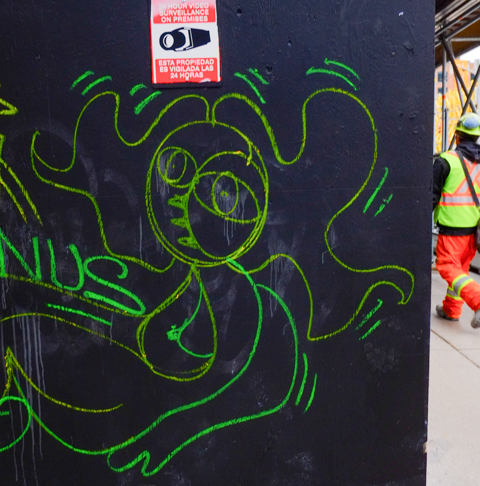
graffiti on black hoardings, line drawing on bright green, picasso style, of a woman

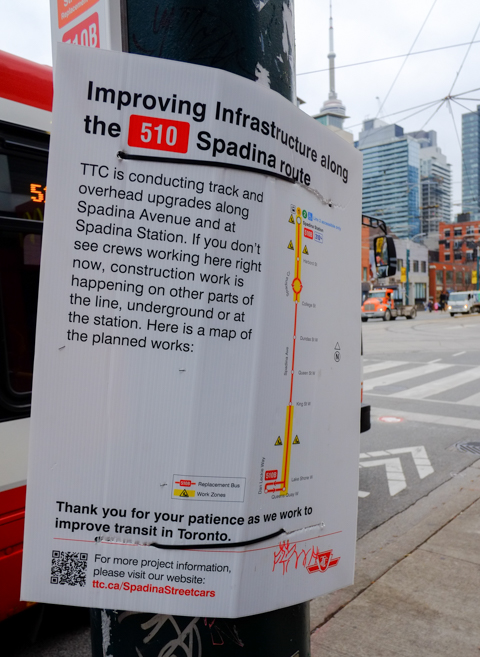
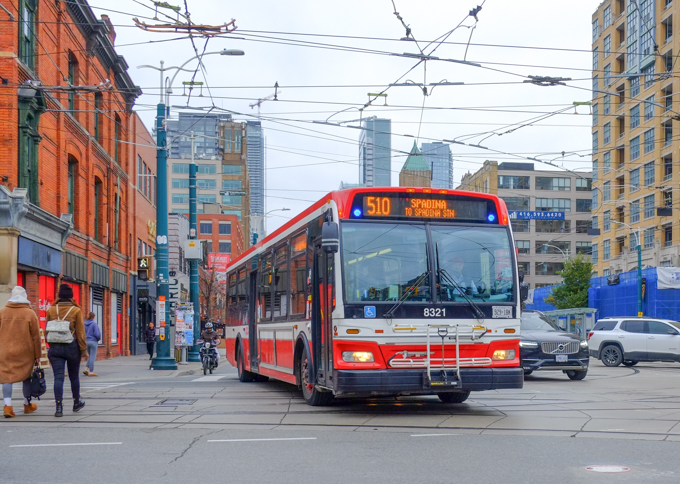
below: The 510 streetcars are not running during this construction.

below:  But because the buses are too wide for the streetcar lanes, the middle of Spadina is very quiet… so I can stand here and take pictures.

standing in streetcar lanes, looking south on spadina, towards queen,

below: It also means that the replacement buses are now running… and competing with cars for a limited space.

a young man in blue winter jacket and baseball cap, walking on sidewalk past an orange sign saying pedestrian detour, and an arrow pointing right

below: Painting over the graffiti

below: Just north of Queen, there is a large vacant lot on Spadina.  So large you can see through to Cameron Street.

below: Cameron House and other houses on Cameron Street and beyond.

two young men on bikes wait at a red light, on Queen West at Spadina

stickers on crossing button at intersection, urban ninja squadron and feelings boi

people waiting on the southwest corner of padina and queen, waiting for their green light, pink hoardings for metrolinx construction behind them

looking out the window of a TTC spadina bus, looking at people waiting at bus stop, tall condos behind them, some reflections