Posts Tagged ‘sculpture’

This is a story about an exhibit that is showing at the Art Gallery of Ontario at the moment, “A Story of Negotiation” by Francis Alys.  The exhibit is a look at three of Alys’s large projects.  For each project there were many studies, notes, and sketches.  Drawings and paintings dot the walls and cover many tables.  There are three large videos to watch (not the ones shown below).  It is a fairly complex installation and only a small part of it is included here.

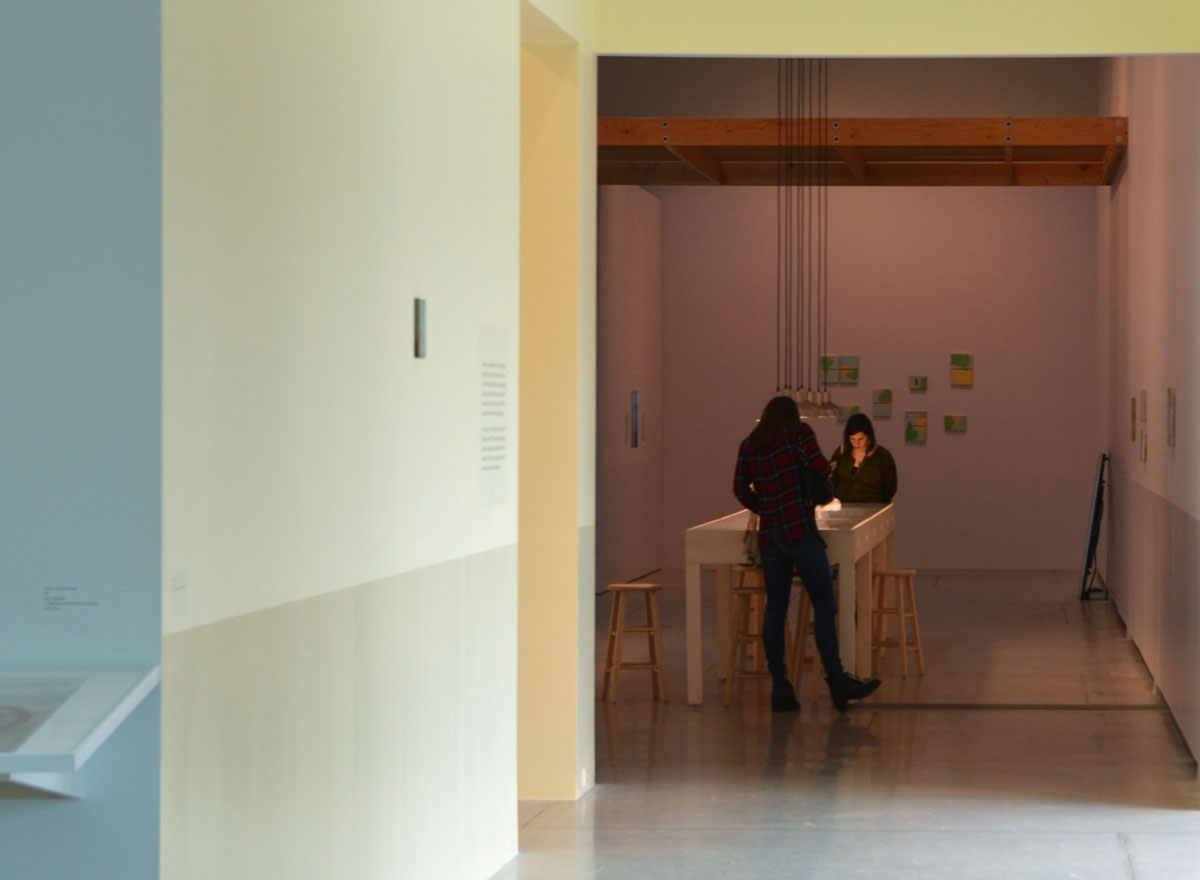
two women looking over a table with art displays on it , in an art gallery

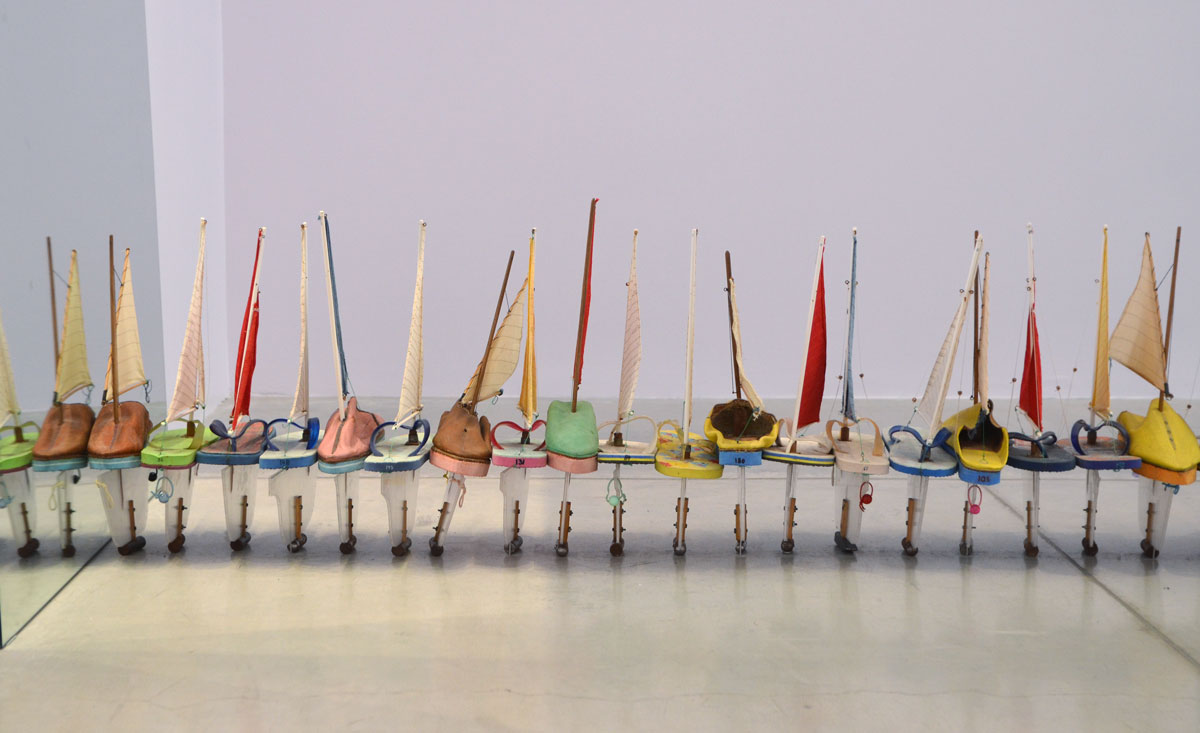
below: In 2006 Alys tried to organize two lines of fishing boats, one from Florida and one from Cuba, that would form a bridge between the United States and Florida.  It was unsuccessful.  He repeated the project in 2008, this time between Spain and Morocco.

a young man is looking at two video screens that are mounted on the wall

a line of little sailboats on the floor, all parallel to each other, the base of the boat (hull) is a flip flop or sandal.

below: More on borders, pairs of words that depend on which side you’re on.
Words such as leave/return and us/them.

4 small green and yellow pictures on a pink wall

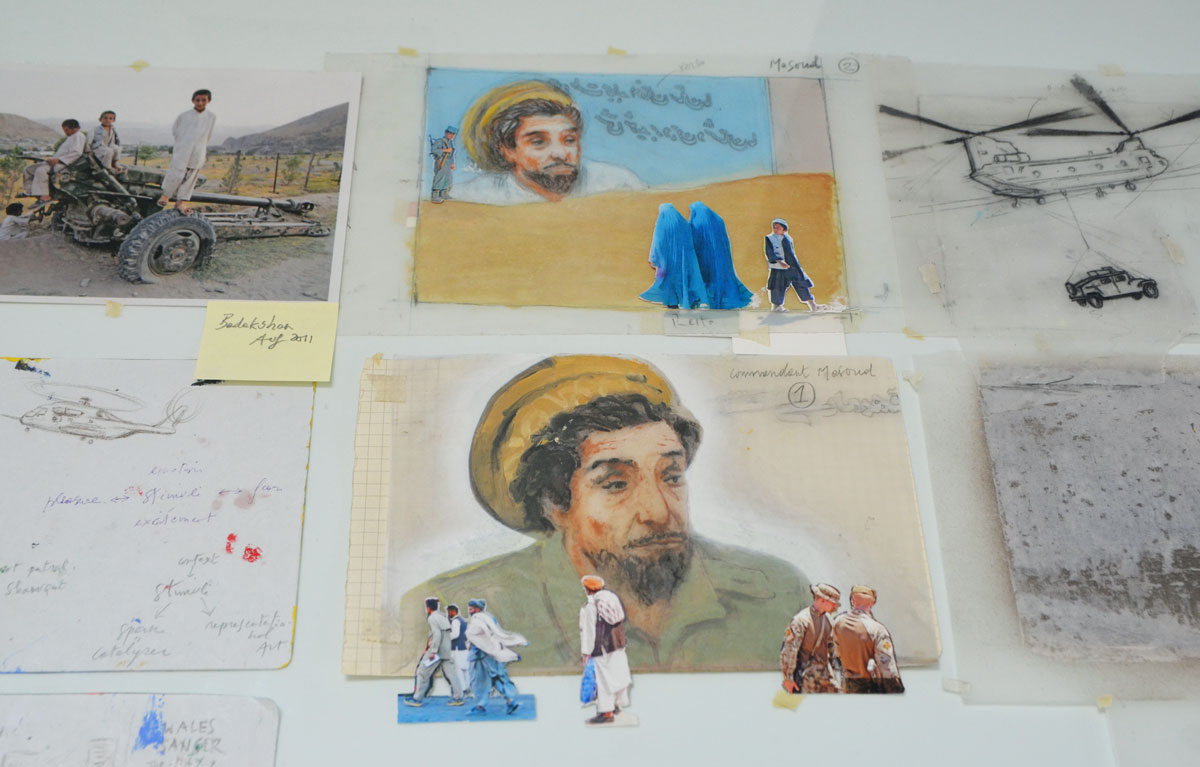
Alys also spent time embedded with British forces in Afghanistan.

a display of pictures, paintings, drawings, sketches, and notes as part of an art exhibit

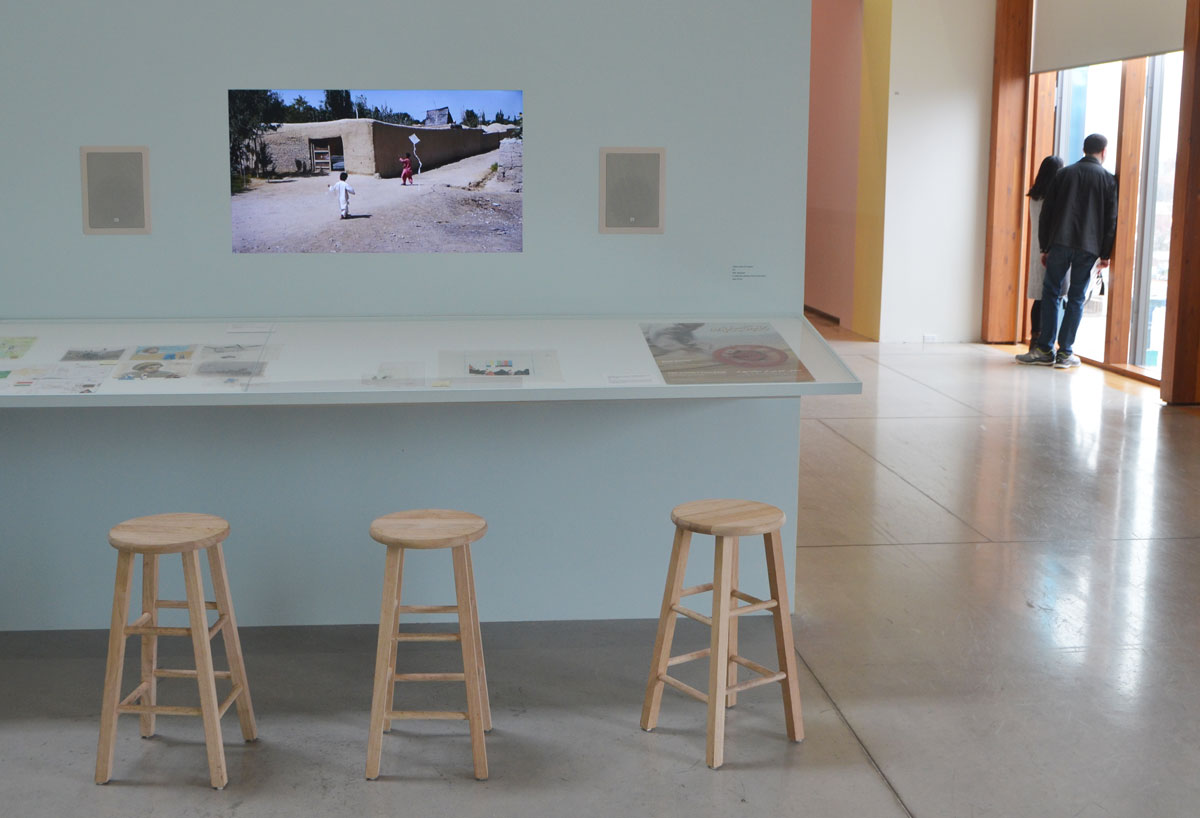
below: Alys made a videos on kids flying kites in Afghanistan.  There was also a video of kids rolling a large reel of film through the streets and alleys in an Afghan city.

3 wood benches in front of a table mounted to a wall, art on the table, a video screen on the wall with a movie about kids in Afghanistan flying kites, some people in the background

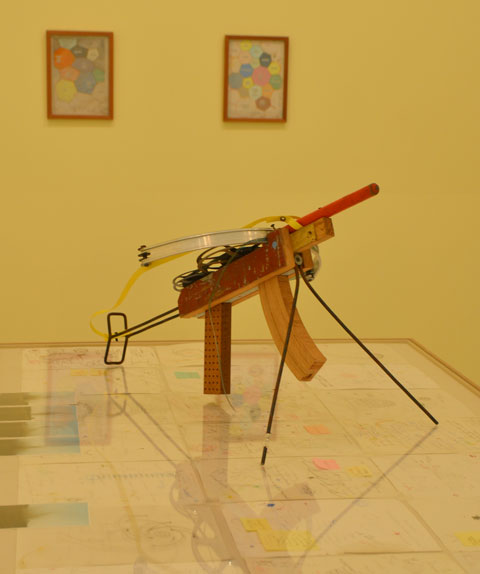
below: Weapons made of found objects

in a yellow room with two small pictures hanging crookedly on the wall. A table in the middle of the room, glass covering artwork on the table. Sitting on the table is an automatic rifle (artwork) made of found objects

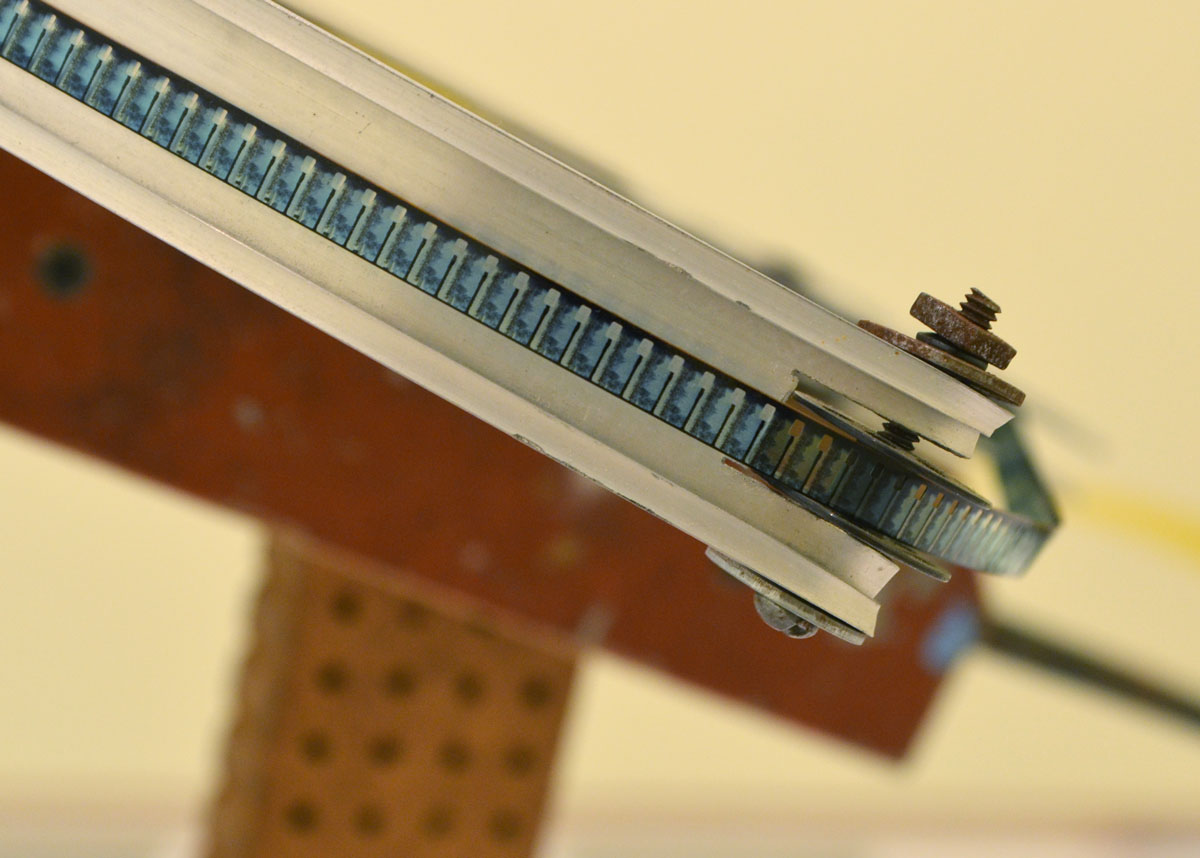
below: Instead of a round of ammunition, there is a reel of film. This is true in all of Alys’s ‘automatic rifles’ that are displayed here

close up of a sculpture of an automatic rifle where the round of ammo is replaced by a reel of film

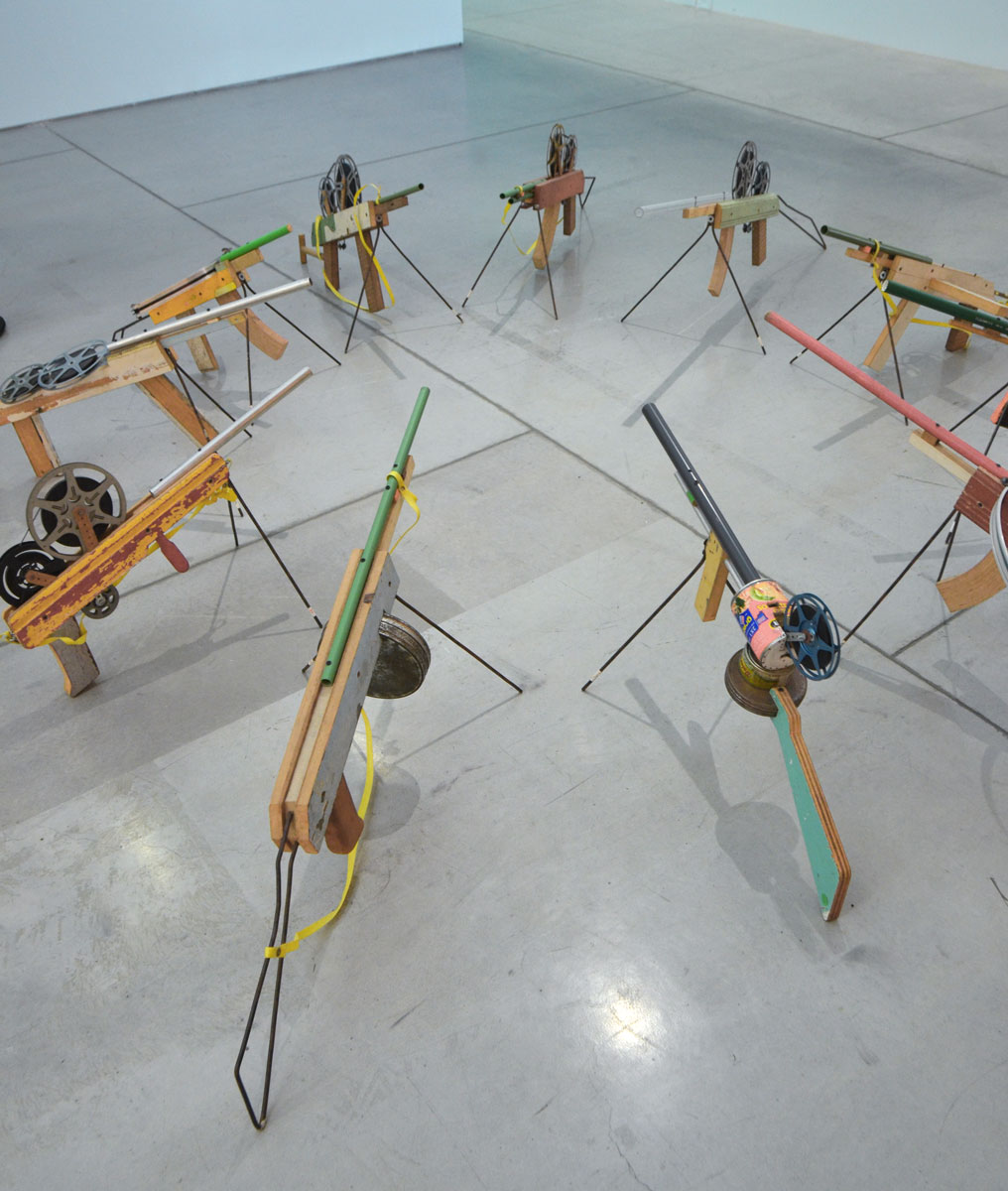
a circle of art weapons, automatic rifles, made of found objects, with barrels all pointed inwards,

The exhibit continues at the AGO until April 2nd.

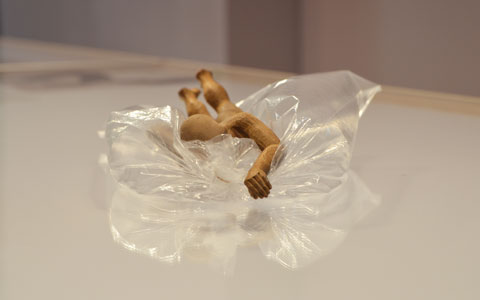
a little wooden human figure is doing the front crawl, one arm outstretched, on a bubble of clear plastic on a table top

Right now, the section of Sheppard Avenue East between Yonge and Leslie streets is a mix of old, middle aged and new – a hodge podge of sizes, styles and uses.   It’s neither ugly nor pretty.  It’s not sure if it’s city or  suburban.

below: The intersection of Bayview and Sheppard from the southwest.

main road with traffic, coming to an intersection, with a tall building in the background

You’ll probably never hear anyone say, “Hey, let’s go for a walk along Sheppard”.  So why was I there?   I’ve driven along this stretch many times but I have never walked it.  Have I been missing something?

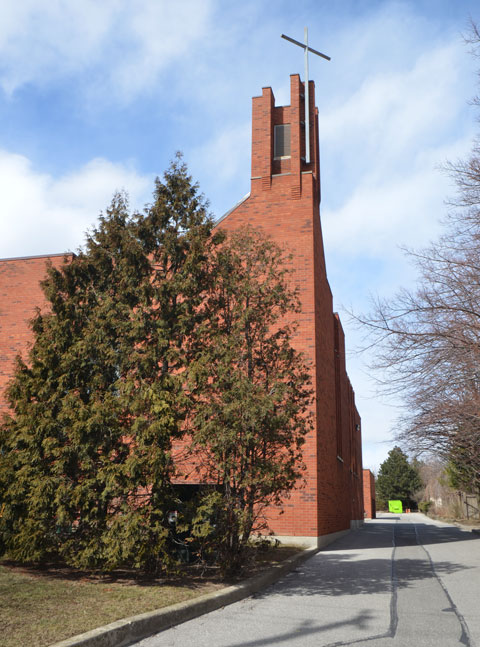
below: A short distance west of Bayview is the modern brick St. Elizabeth of Hungary Roman Catholic Church, or ÁrpádHázi Szt. Erzsébet Római Katolikus Templom according to their sign.  Sunday mass is in Hungarian.   If you are driving past on Sheppard Ave, it’s easy to miss the simple steeple and cross that marks this building as a church.

steeple of St. Elizabeth of HUngary RC church, modern brick building with simple cross on the top

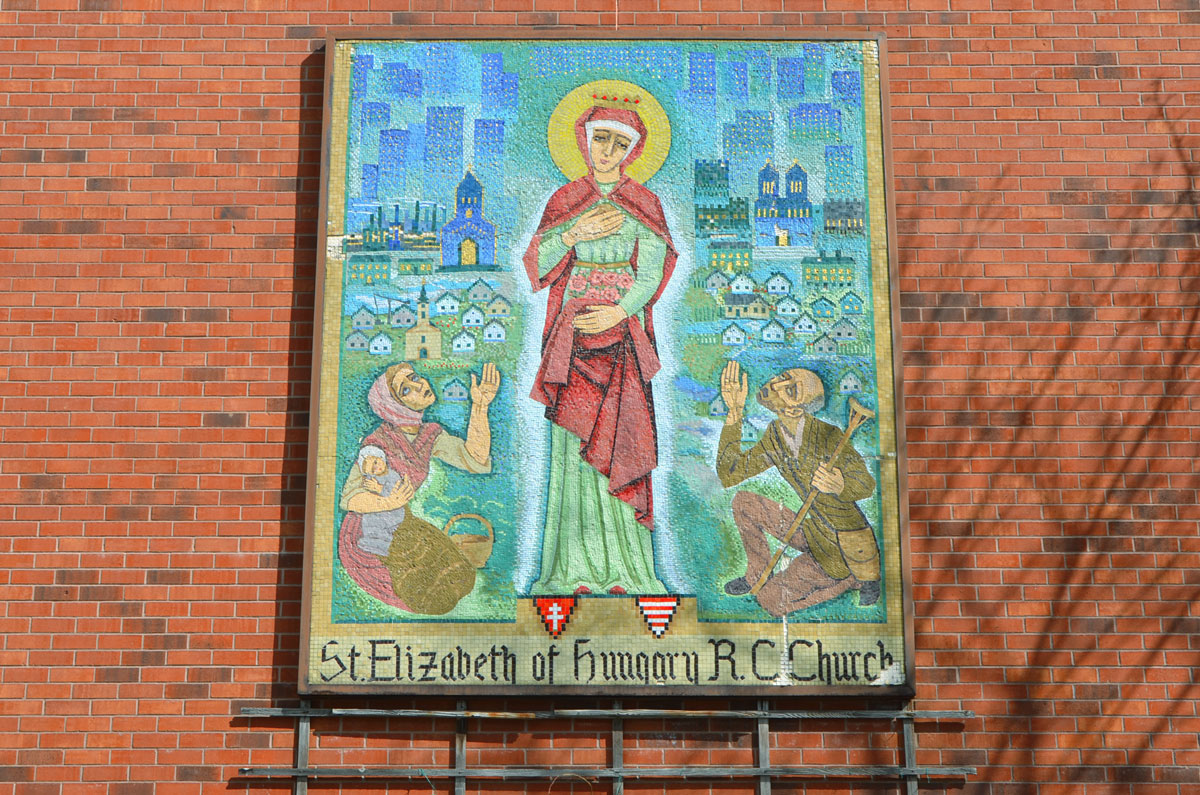
below: A large mosaic adorns one of the exterior walls.

mosaic on the exterior brick wall of St. Elizabeth of Hungary RC Church showing St. Elizabeth and two people kneeling beside her.

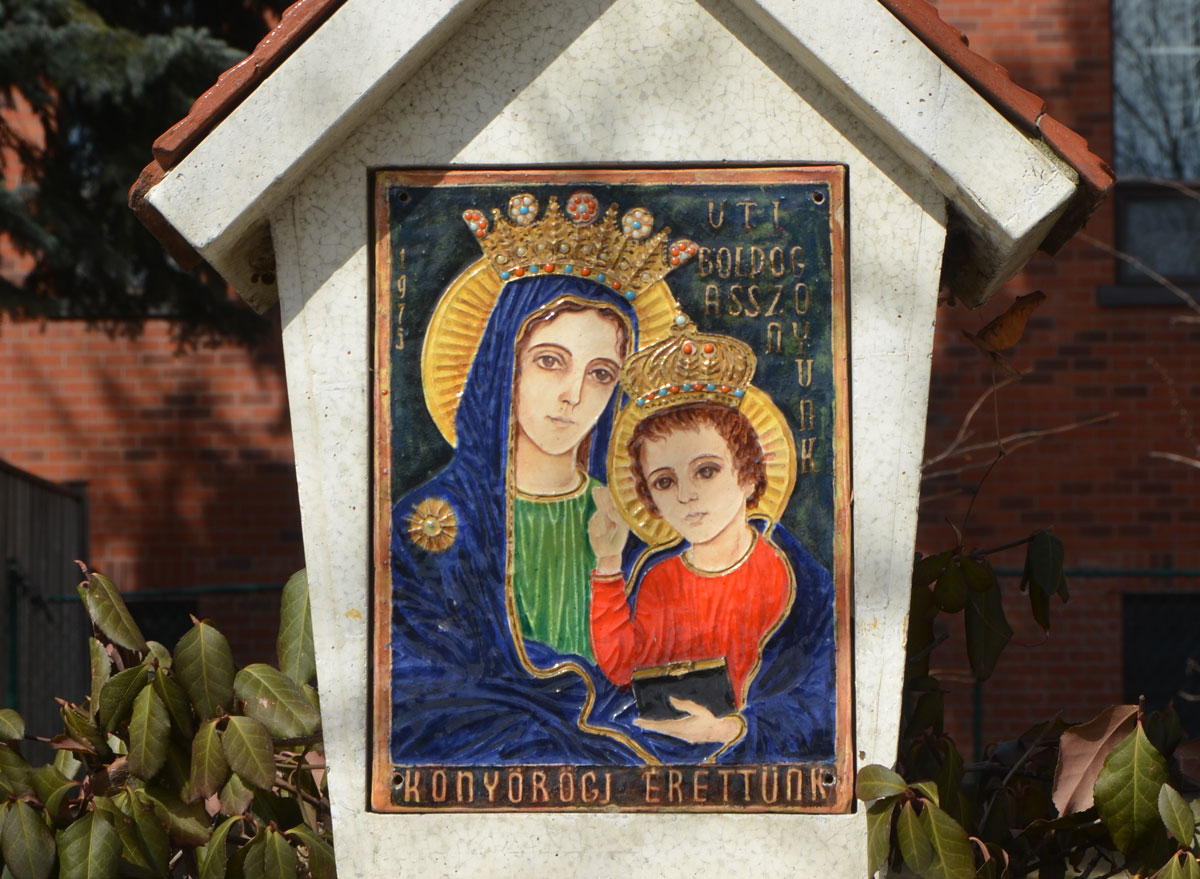
below: A small shrine is in front of the church.

small picture of Mary and baby Jesus in bright colours, on a small shrine in front of a church

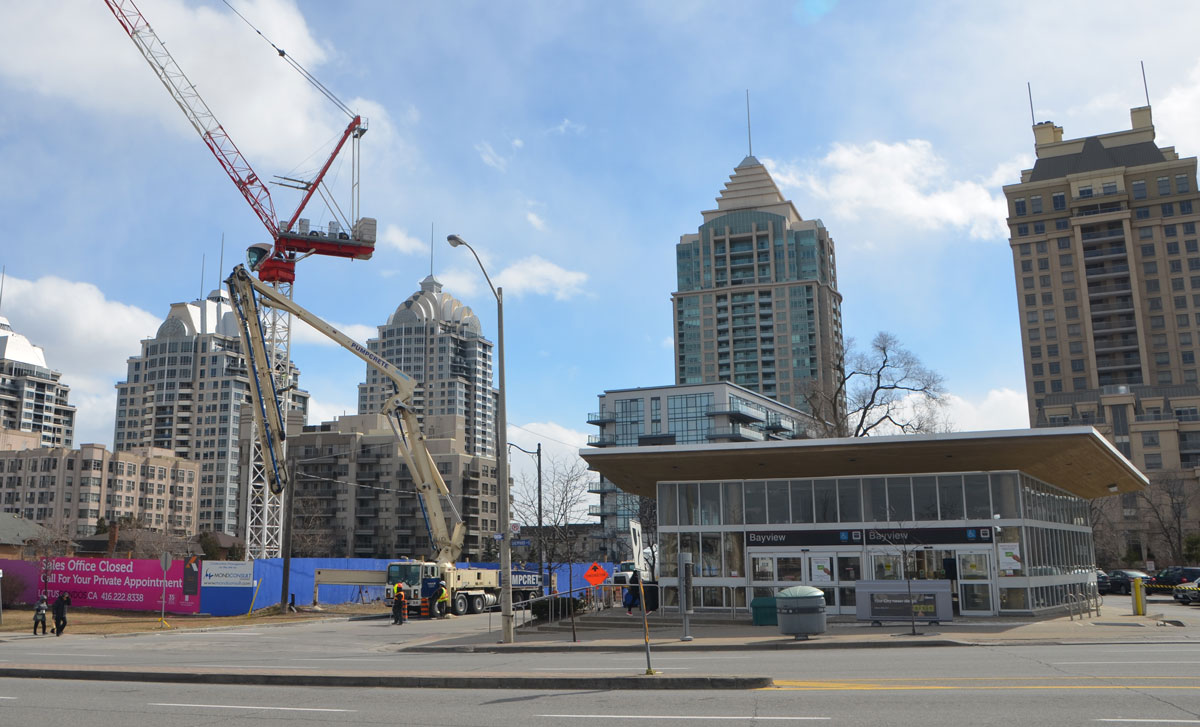
below: The south entrance to Bayview subway station.  There are no escalators at this entrance  – instead, there is an elevator and a LOT of stairs.

south entrance to Bayview subway station with tall residential buildings behind and a construction site beside

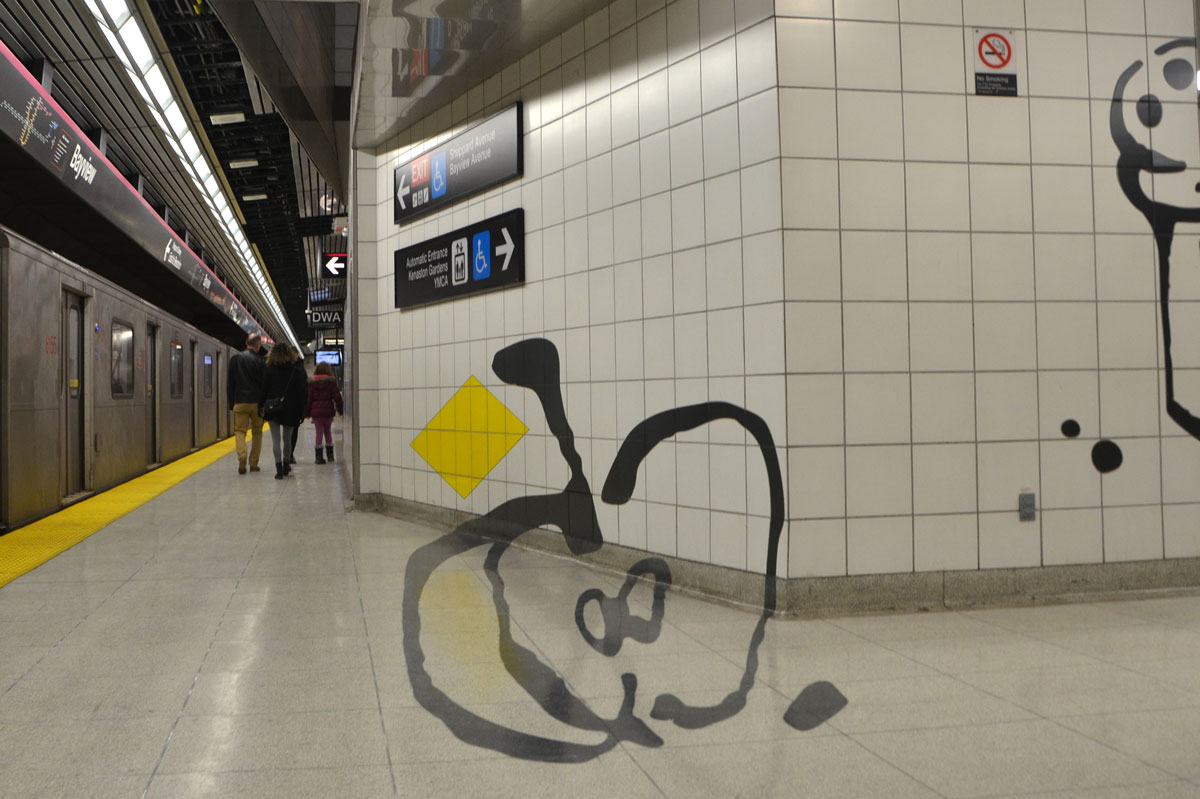
below: The artwork at Bayview station is by Panya Clark Espinal, titled ‘From Here Right Now’.  Half an apple lies on the platform.

art on a subway platform, a line drawing of a very large apple that has been cut in half, on the wall and floor of the station

below: A salt or pepper shaker on the wall.  I’ve only shown two of the images in the series.  There are 24 in total and they are scattered throughout the  station.

art on a subway platform wall, a salt or pepper shaker in black on white tiles

below: There is a small park behind the south entrance to Bayview subway station, Kenaston Garden Parkette where I saw this tree in bud.   The first signs of spring are always wonderful to see.   Today it’s -12C outside so I hope the tree is okay.

pussy willow buds on a tree

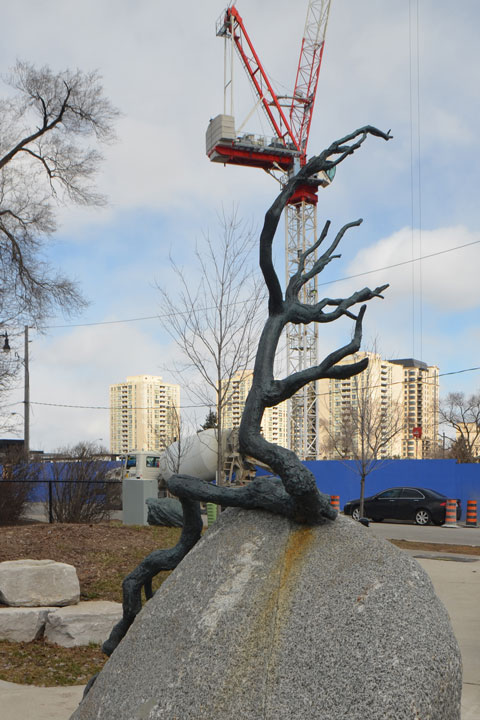
below: This little park was designed by Wilk Associates Landscape Architecture and it incorporates a large number of rocks including a glacial boulder found on the site.   A bronze sculpture of a tree clinging to a rock  by Reinhard Reitzenstein is one of the features of the park.

small sculpture in a park of a sapling on a rock with its roots growing over the surface of the rock

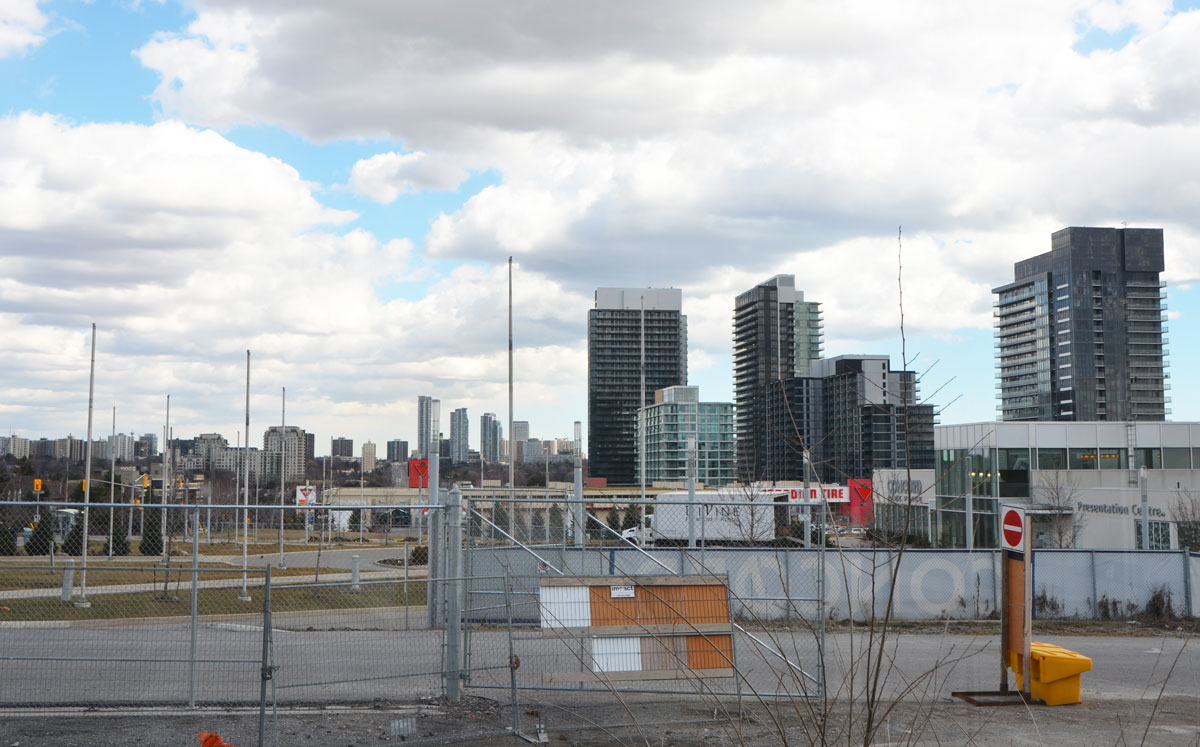
below: If you stand in the park and look east,  you can’t miss the construction.

small sculpture in a park of a sapling on a rock with its roots growing over the surface of the rock - crane and construction site in the background

a convex mirror beside a black and yellow caution sign, condos are reflected in the mirror

the front and side of a large truck is in the foreground, right side, with a construction site beyond

Construction is everywhere on Sheppard Avenue.

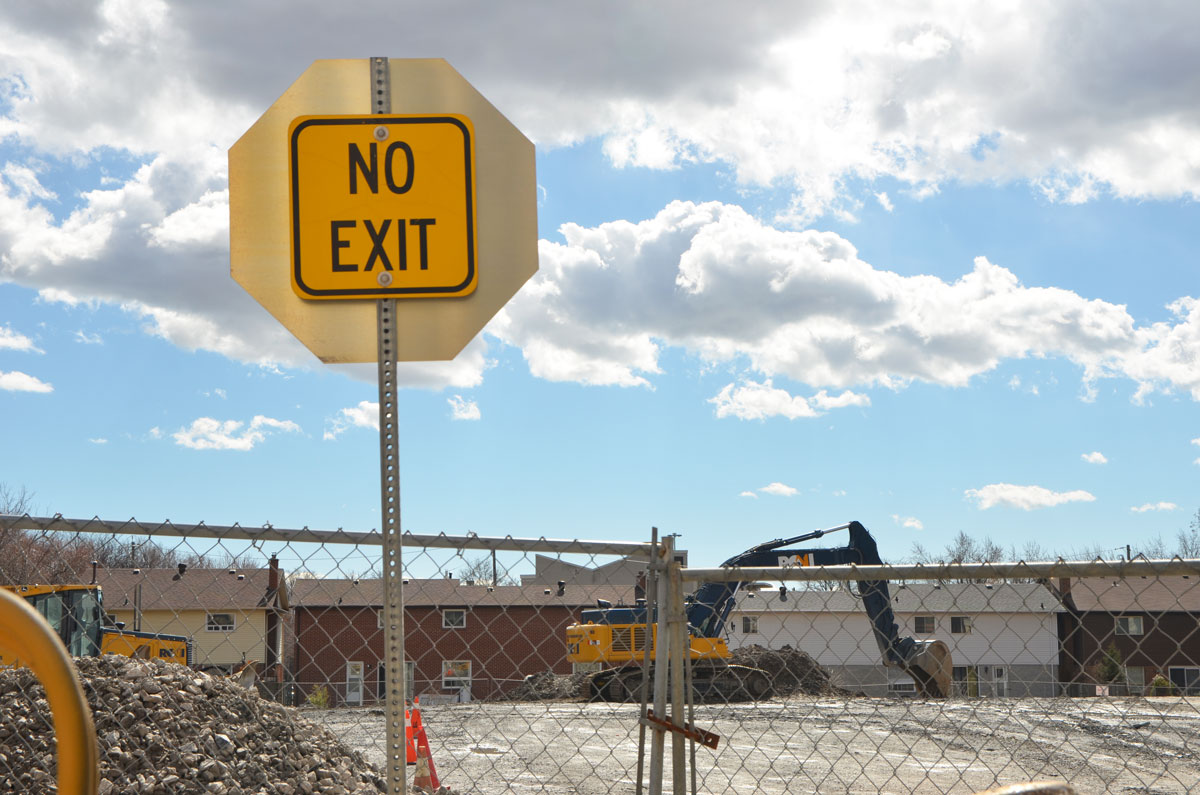
below: All of the houses on Cusack Court are now gone.  Only the ‘No Exit’ sign remains.

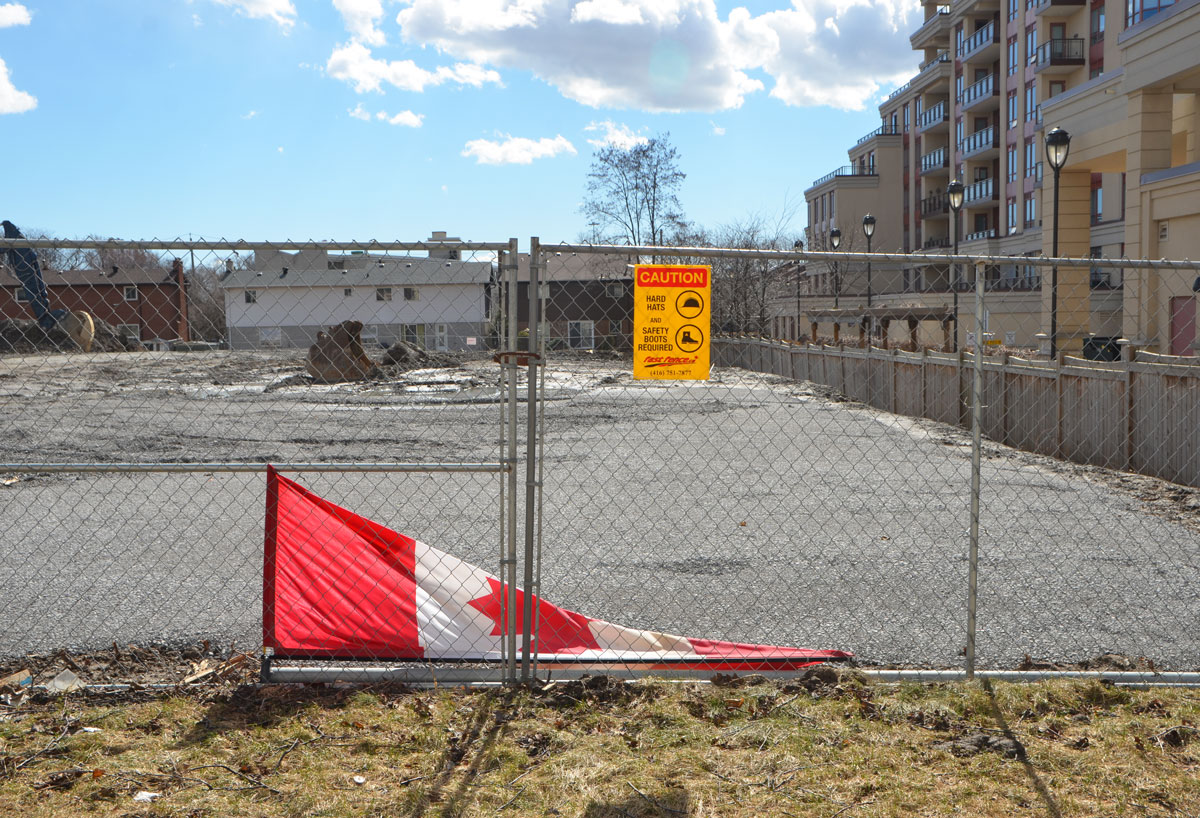
a construction site where the houses on a a whole street have been demolished. The no exit sign for the street still remains., the site is behind a chainlink fence

a banner of the Canadian flag has fallen over and is lying on the ground behind a chainlink fence

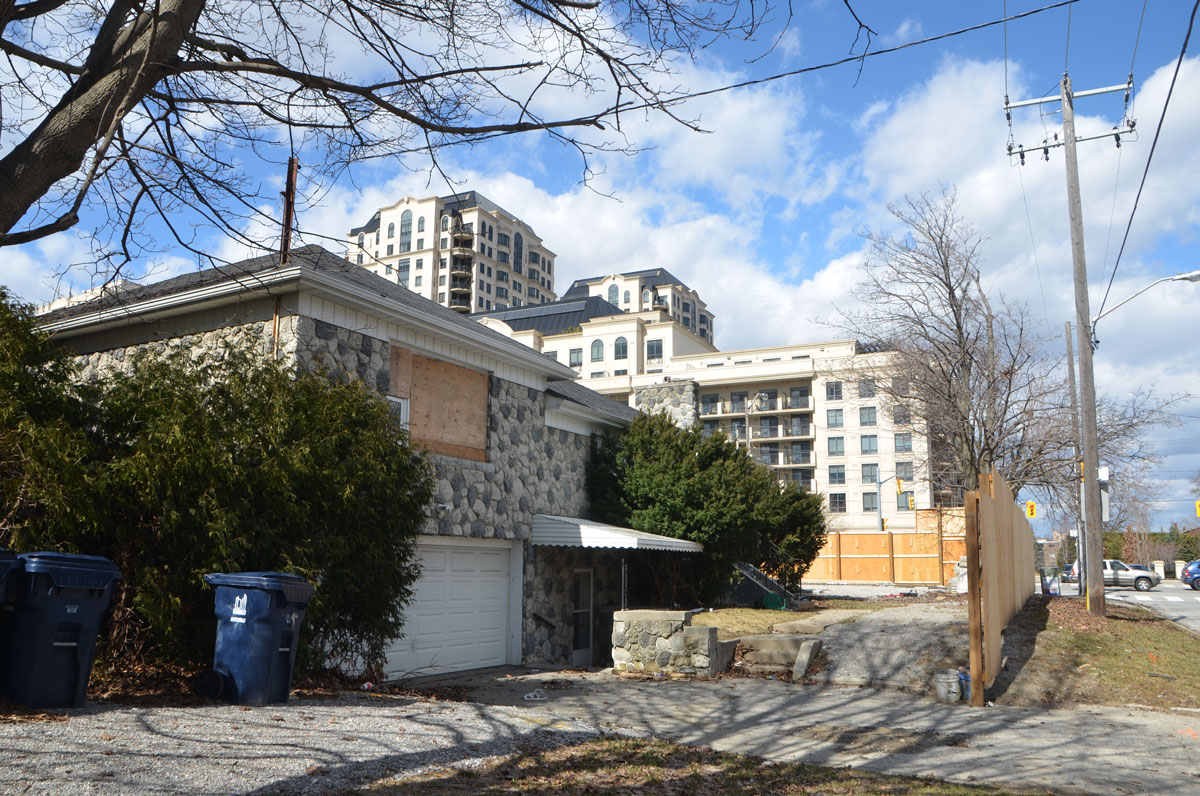
below: The single family homes on the south side of Sheppard are slowly being demolished to make way for condo developments.  At the corner of Sheppard Ave East and Greenbriar  the proposed development of 184 residential units is the subject of an OMB prehearing on the 8 May 2017  (case number PL161113).

a boarded up house, split level, built in the 1950s, is in the foreground, condos and apartment buildings are behind it

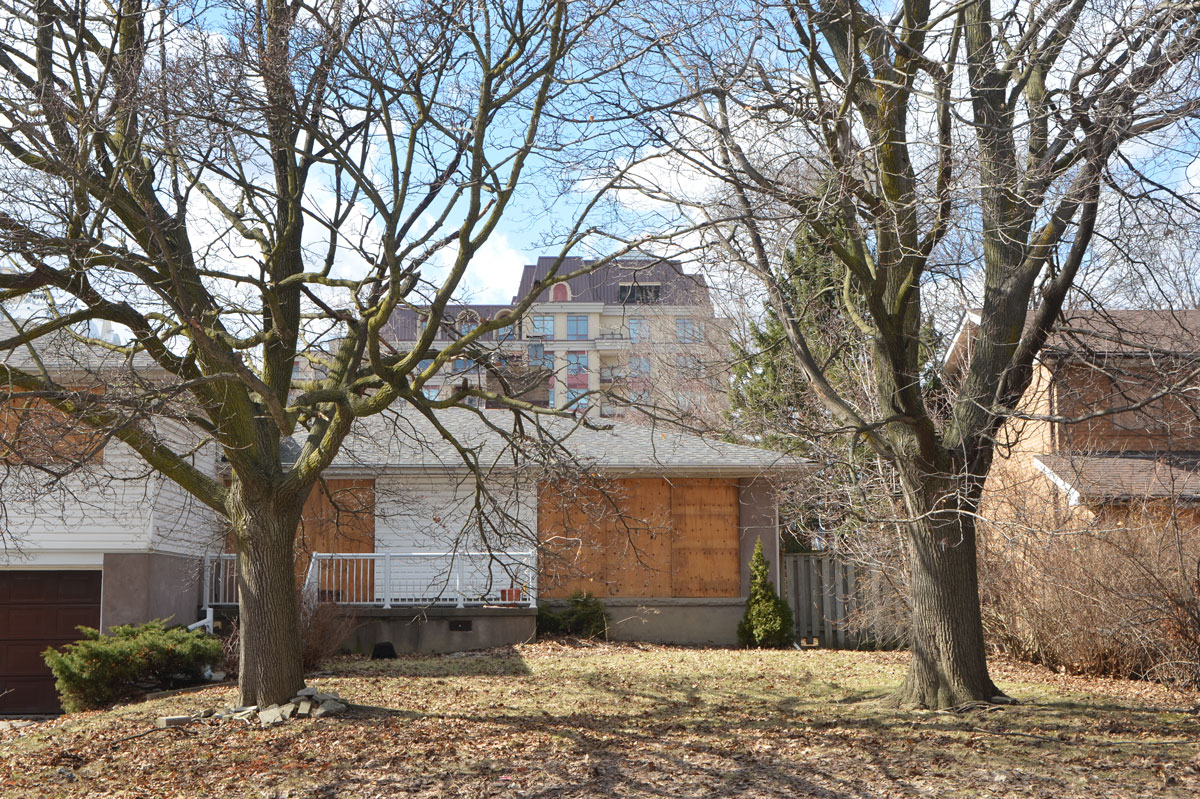
below: Five houses are empty and waiting to be demolished to make way for two buildings, 11 and 6 storeys, mixed use (i.e. retail at street level) and incorporating a few townhouses.  In other words, the same old same old.

a boarded up house, split level, built in the 1950s, is in the foreground, condos and apartment buildings are behind it

below:  I said “same old same old” above because these types of buildings are popping up all over  many major roads that are outside the downtown core.  I suspect that Sheppard Avenue will be lined with structures like this one that’s already been built on the north side of Sheppard.

across the street is a 10 storey residential building, cars on the street, small trees in the foreground

Many people make the argument that there isn’t the density to support a subway along Sheppard.  I am of the opinion that if they’re not wrong now, they soon will be.   Development and public transit are dependent on each other, a symbiotic relationship if you will.   If you are affected by the construction along Eglinton for the new Crosstown line, you might agree that waiting for density only increases the problems and inconvenience (and cost?) of building new subway lines.   Also, have you seen photos of what the area around Davisville or Finch (and others) stations looked like when the subway opened there?   What is the required density?  Why do we want to funnel even more people towards the overcrowded Yonge line anyhow?   Is there an end to the questions we can ask?

And that’s another reason for my walk here…. to make note of the construction that is occurring whether we agree with it or not and to document some of  the changes.

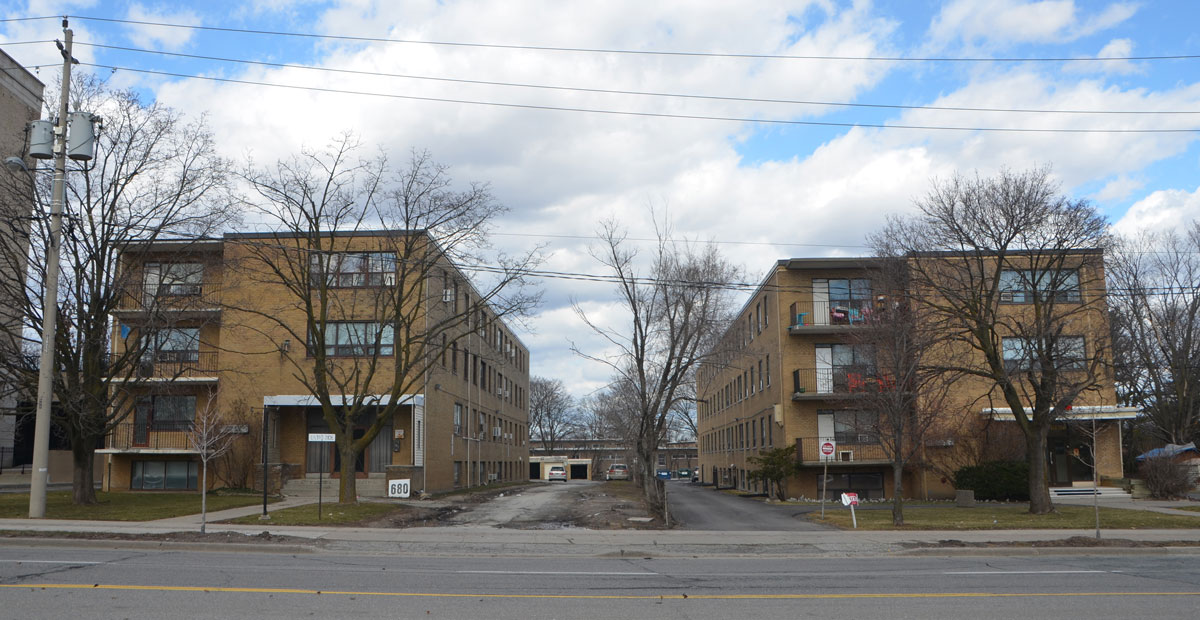
below:  Two low rise apartment buildings.

two three storey brick apartment buildings with balconie in the front, taken from across the street

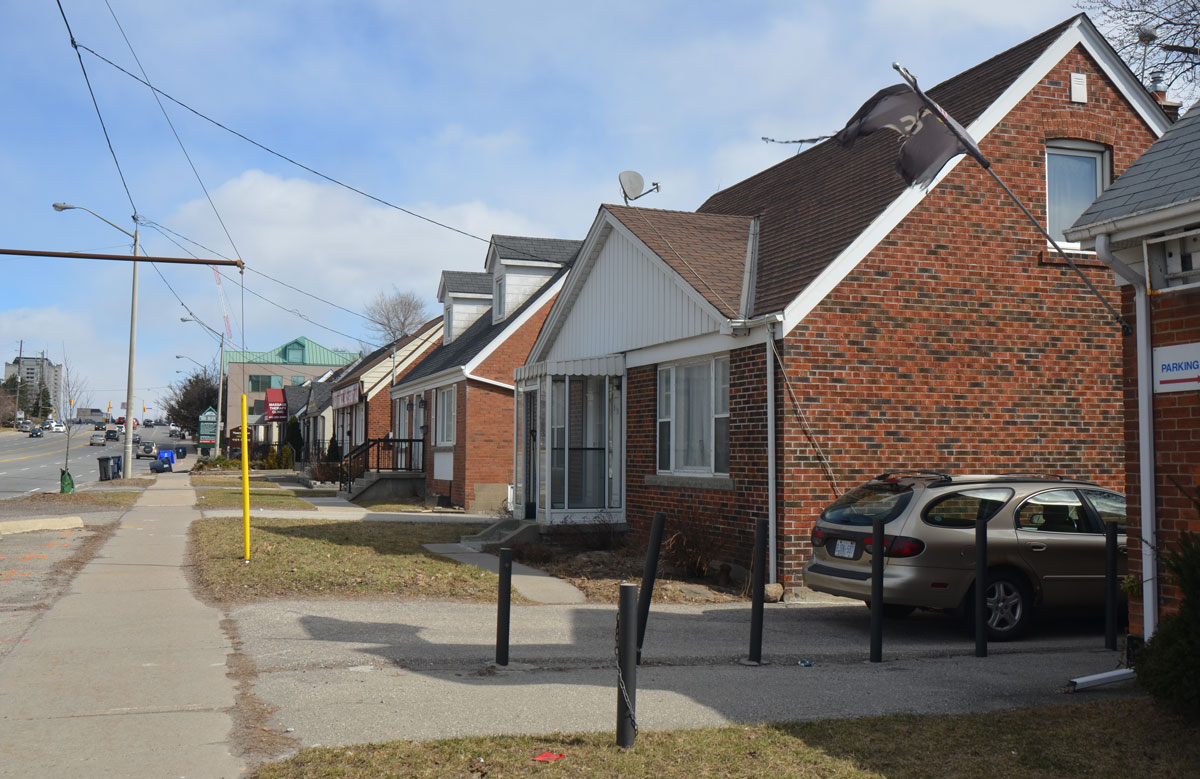
below: Once upon a time there were a lot of these little houses along Sheppard (even more so on the west side of Yonge Street).  At least one of these is still used as a family home but most are now offices or businesses.

a few small brick houses on the south side of Sheppard Ave

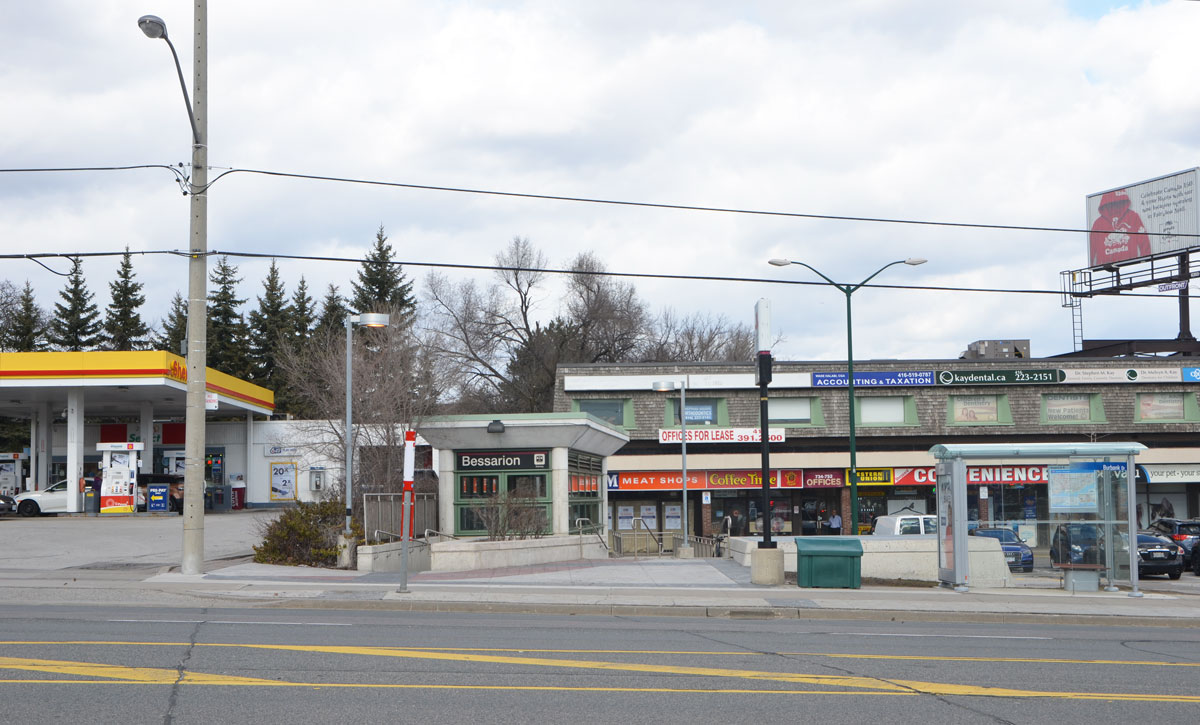
below: The north entrance to Bessarion station

looking across the street to the small north entrance to Bessarion subway station, with a small two storey plaza beside it

below: Looking east from Bessarion.  You can see as far as the condos on Don Mills Road.

looking west from Bessarion subway station towards Leslie Street and beyond,

   There is a reason that you haven’t seen many people in these pictures and it’s not because I waited for people to get out of the way.   Sheppard Avenue is a “major arterial road” under Toronto’s road classification system and traffic movement is its major function.  20,000+ cars are expected to use it every day.

I don’t like to say it, but why would you be walking along Sheppard anyhow?

below: Bayview Village parking lot at the NE corner of Bayview and Sheppard.

parking lot of a mall, Bayview village with surrounding buildings in the background.

As you might know, scroll down to the next blog post to see some pictures of Bessarion station!


This past weekend was the 5th annual Bloor Yorkville Icefest.
It’s an event that features ice sculptures in the park at Cumberland and Bellair.

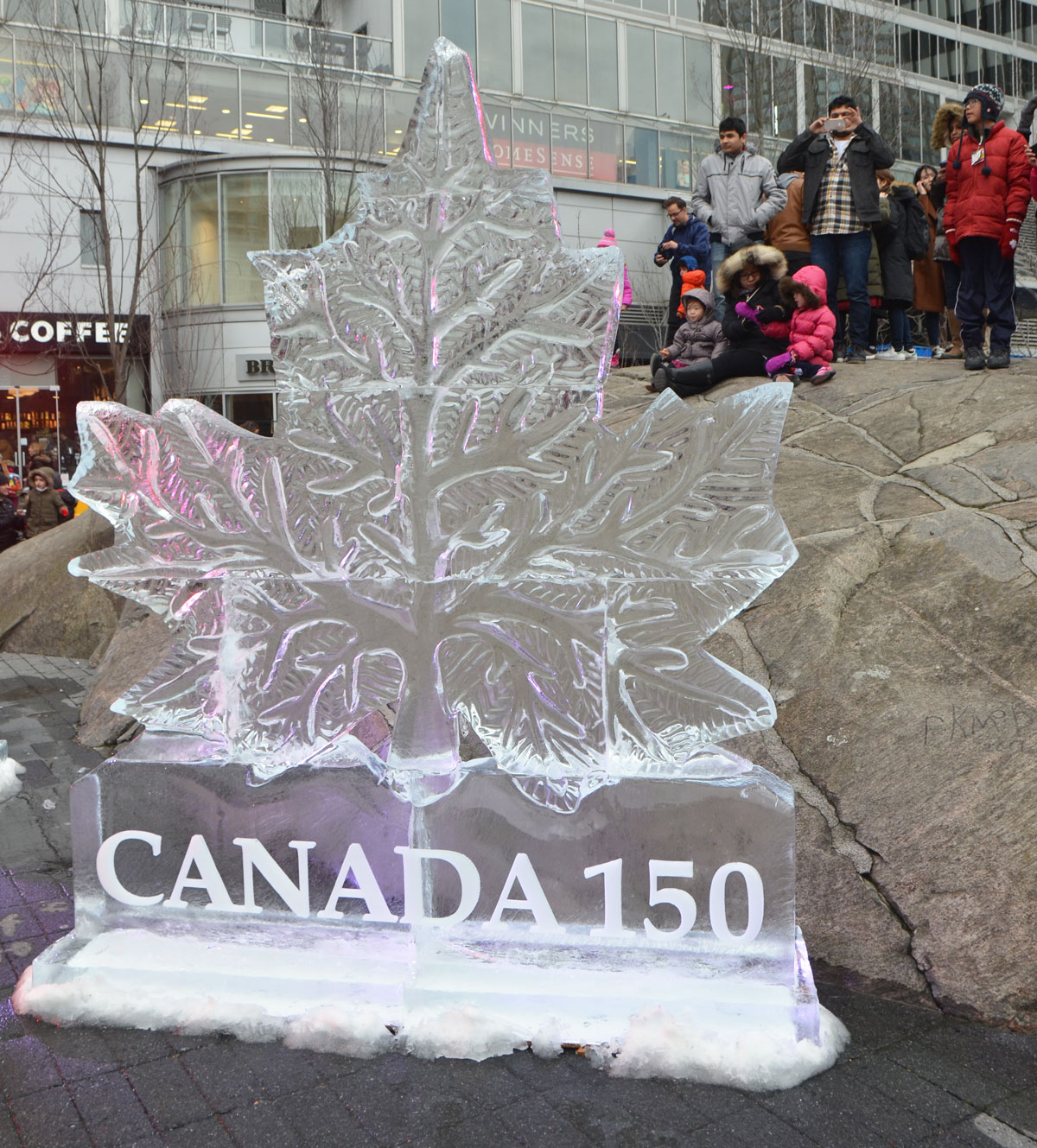
The theme this year was Canada 150, as 2017 is Canada’s 150th birthday.

a group of people sit and stand on a large rock behind an ice sculpture of a maple leaf with the words Canada 150 under it, all carved in ice.

below: Sculptures in an enclosure (i.e. no one gets close enough to touch).  The Parliament building in Ottawa is on the left with a very tall RCMP Mountie standing beside it.  I’m not sure who the sculpture in the middle is supposed to represent.   On the right, a large 1867, the year of Confederation, on top of a large 2017.

people standing on a large rock to look at ice sculptures of the Parliament buildings in Ottawa, a tall RCMP mountie and the numbers 1867 2017 .

below: A number of artists worked on their sculptures as part of the festival.  This mountie and beaver had  just been completed before I arrived.

an ice sculpture of a mountie and a beaver has just been finished. The tools used by the artist are lying around on the ground below the sculpture.

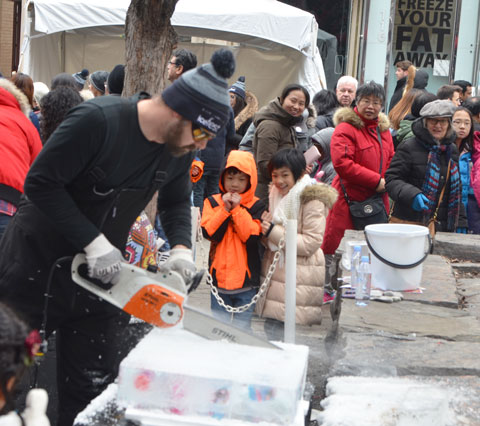
below:  A large chunk of ice gets cut into smaller cubes.   Each cube contains a small toy that had been frozen in the ice.  For $2 you could buy an ice cube and smash it to liberate the toy.

a man is using a chainsaw to cut a chunk of ice into smaller cubes. Small toys have been frozen into the ice. Other people are watching, especially two kids.

Don’t miss the sign in the background!

below: Complete with spelling mistake. Charlottetown is spelled wrong.
Also, the term Newfie is included? Apparently it’s no longer an insult to call someone a Newfie.

a young woman in black coat and brown tuque stands beside a block of ice that has the names of some of Canada's cities carved into it.

below: The warm temperatures were making some of the thinner pieces more fragile than usual.   The little ‘knobs’ on this replica of the Taj Mahal were barely hanging on.  Luckily the temperatures dropped enough that most of the sculptures survived.

a woman is standing behind an ice sculpture of the taj mahal.

people at the Bloor Yorkville Icefest

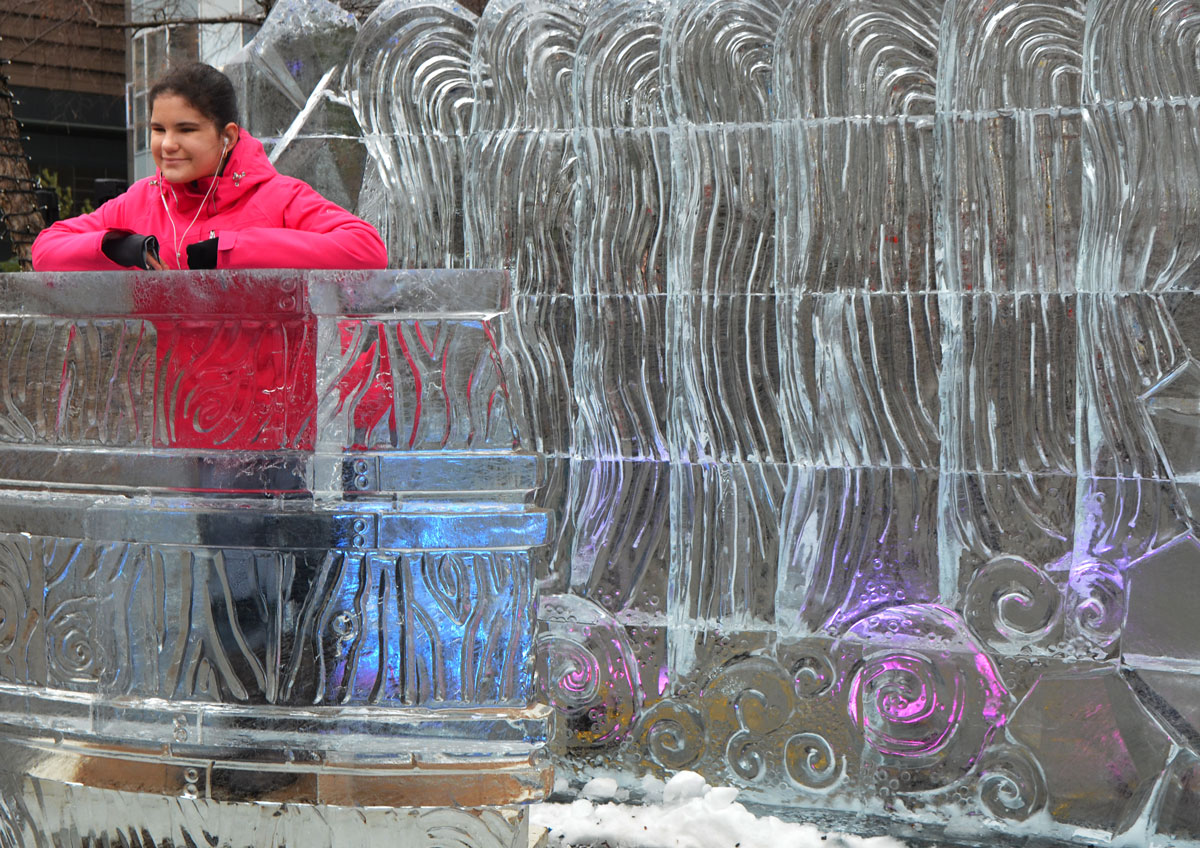
a girl in a bright pink jacket stands behind a podium built of ice and in front of a wall made of ice. Both have curvy lines and swirls carved into them.

an ice sculpture of a face, perhaps a man weraing a hat with a black hat band?, crowd scene in the background, a woman's face on the left side of the photo.

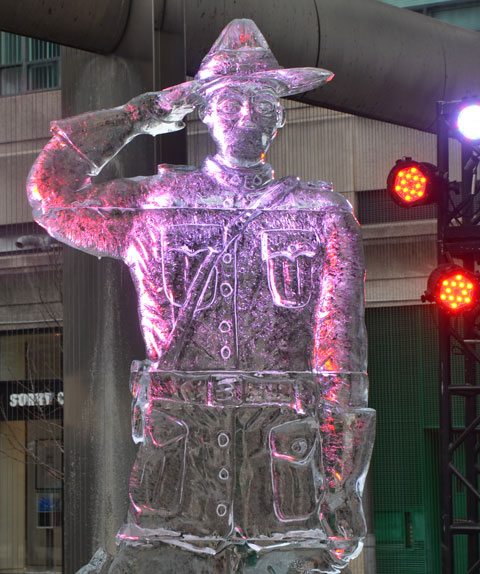
a ice sculpture of a mountie standing at attention and saluting, light by pink and red lights,

a young man stands behind an ice sculpture to pose for a picture, one hand up with peace sign of two fingers, a young woman is looking at him from the other side of the sculpture

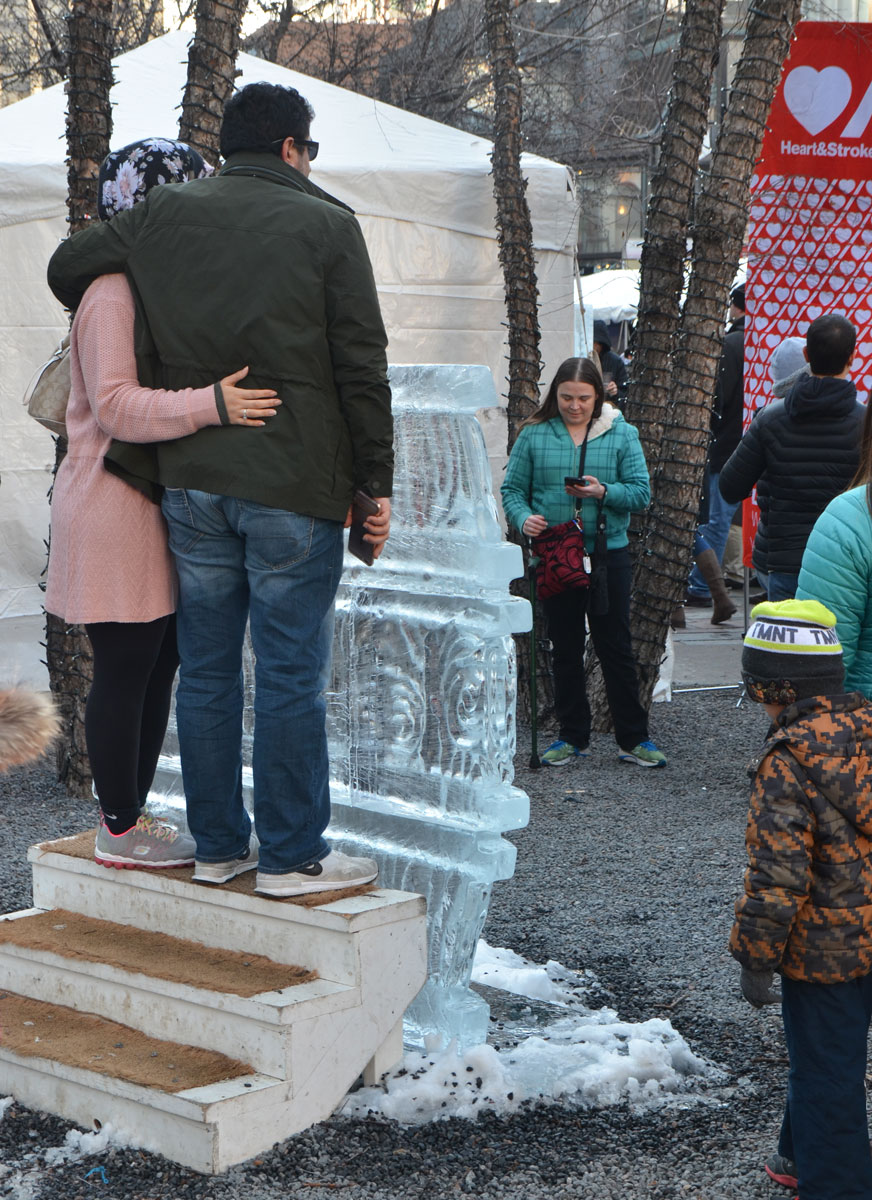
a coouple stand on a set of stairs behind an ice sculpture to have their picture taken.

#blooryorkville | #icefest17

Keeping warm at the Art Gallery of Ontario.

Below are 5 works of art that I saw recently when I decided to spend the afternoon inside instead of walking in the cold.  The AGO is definitely a great way to stay warm!

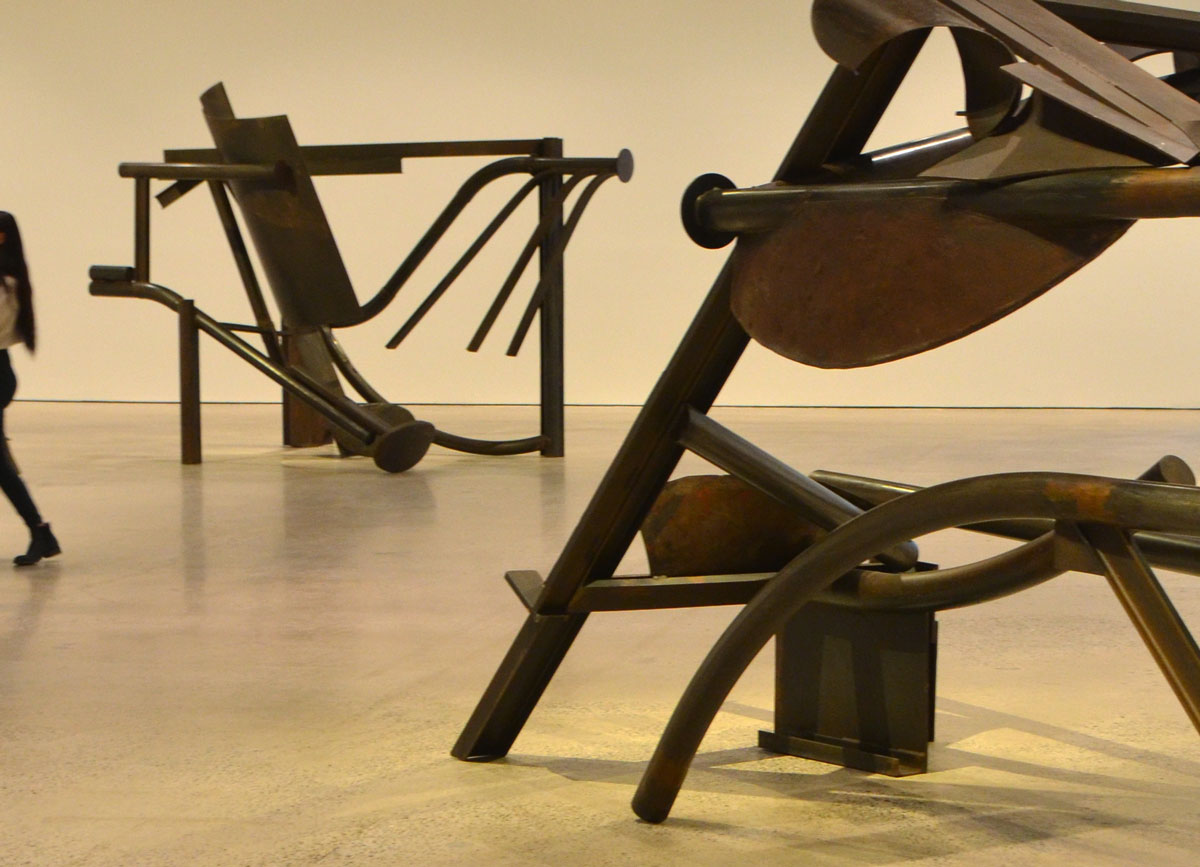
below: There is a room at the Art Gallery of Ontario that is home to four large metal sculptures at the moment.  Large structural pieces. These creations are the work of Sir Anthony Caro (1924-2013).  They are made of discarded metal pieces.  At one point in his career, he made scale models for a giant art project for Park Avenue in New York City.  When the project was cancelled, he took apart the models and used the pieces to make a new series.  Three of those on display here are from that series, ‘Sculpture Laid Bare’.  It would be interesting to see what the Park Avenue sculpture models looked like.

a woman with long hair walks away from a large metal sculpture made of cast off pieces of metal, on display at the Art gallery of Ontario,

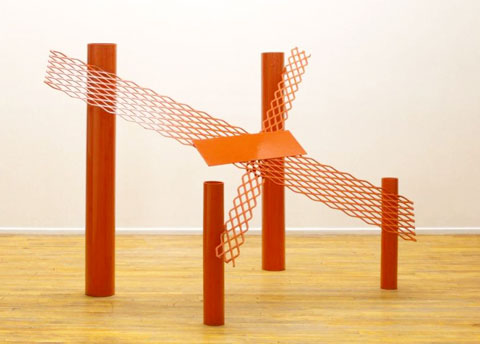
In the early part of his career, Caro made modeled figurative pieces cast in bronze.  In the 1960’s he started to use prefabricated steel and aluminum, sometimes in bright colours such as the example below:

red sculpture by anthony caro, metal, 4 upright cylindrical tubes with metal mesh forming an X on top of them.

Red Splash, by Anthony Caro. Image found online at source.

If they were outside, they would invite interaction.  Touch them.  Climb on them.  In this gallery setting, there is a no touching policy.   The words on the wall says that: “He [Caro] meditates on the passage of time, processes of decay, the painful realities of aging, and the future of modern sculpture.”  Isn’t that why the gallery is doing their best to preserve them just the way they are?


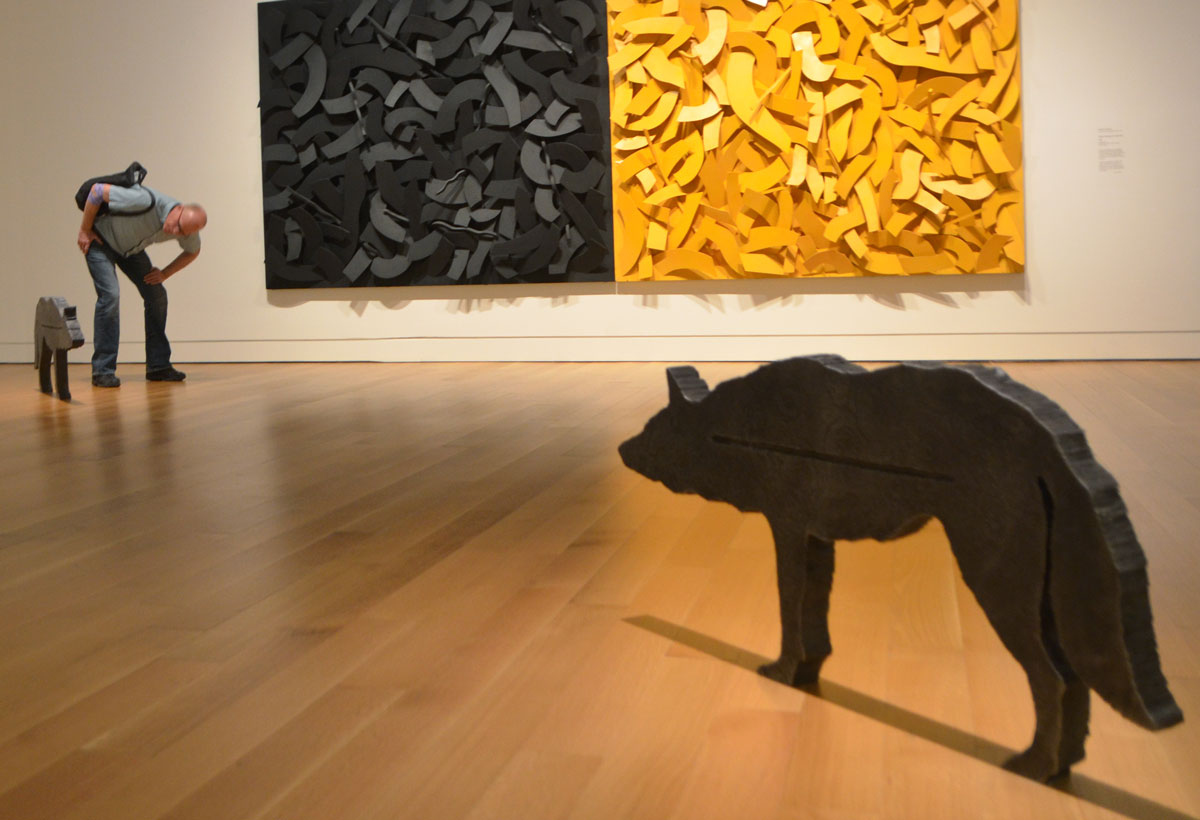
below: ‘The Distinctive Line Between One Subject and Another’ by John McEwen, 1980.  Two steel wolves looking at each other across the room.  On the wall behind the wolves is ‘Folia Series #1 and #2 by Nobuo Kubota, 1976, representations of the wrinkles on the cerebellum in the brain.

two metal sculptures of life sized wolves looking at each other across the room, a large panel art work is on the wall behind them, half black and half yellow.

John McEwen is a Canadian sculptor.  A number of his sculptures can be found around Toronto.  He designed the boat hull like shapes for the Victory Peace memorial on the waterfront that I mentioned in a previous blog post – down to Coronation Park.  The three metal tubes outside the Air Canada Centre – the Searchlight Starlight Spotlight – are also his work.


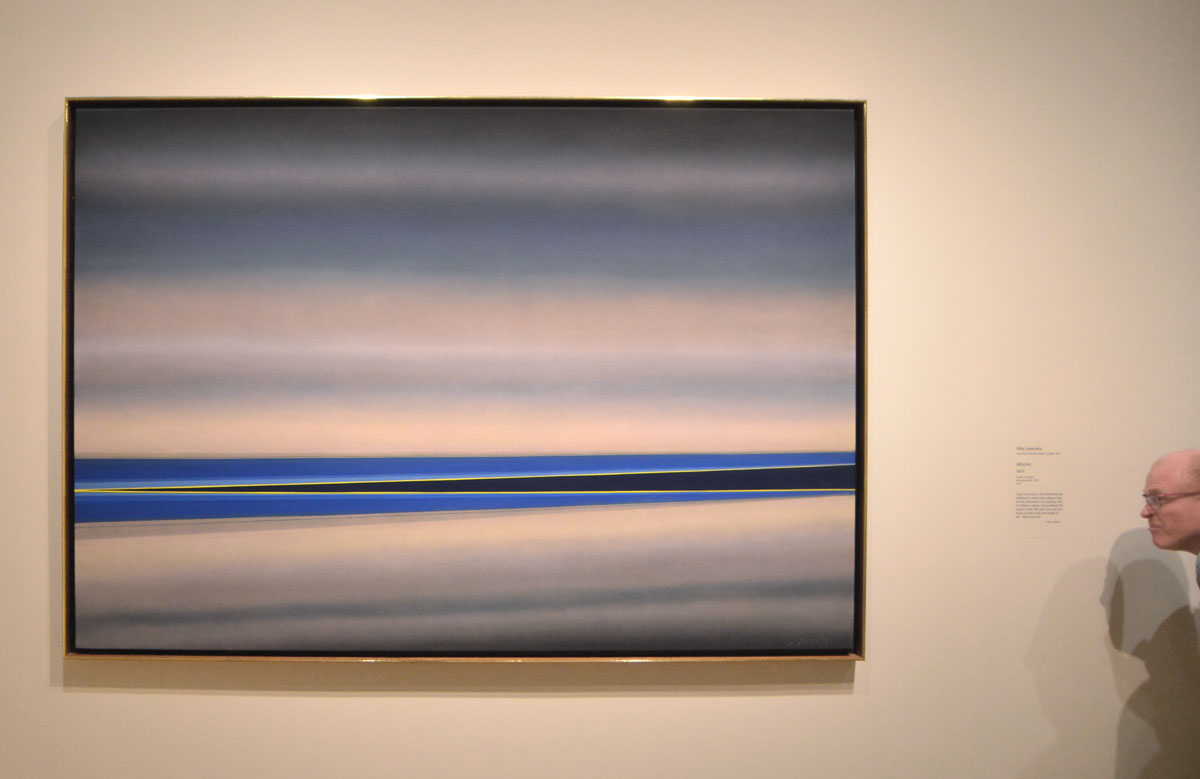
below: More lines, this time its “Aforim” by Rita Letendre, 1975.  Which lines are parallel?  Is there a horizon line?  If so, which one is it?

horizontal lines, some parallel and some at slight angles, in blues and greys, painting on a gallery wall called Aforim by Rita Letendre


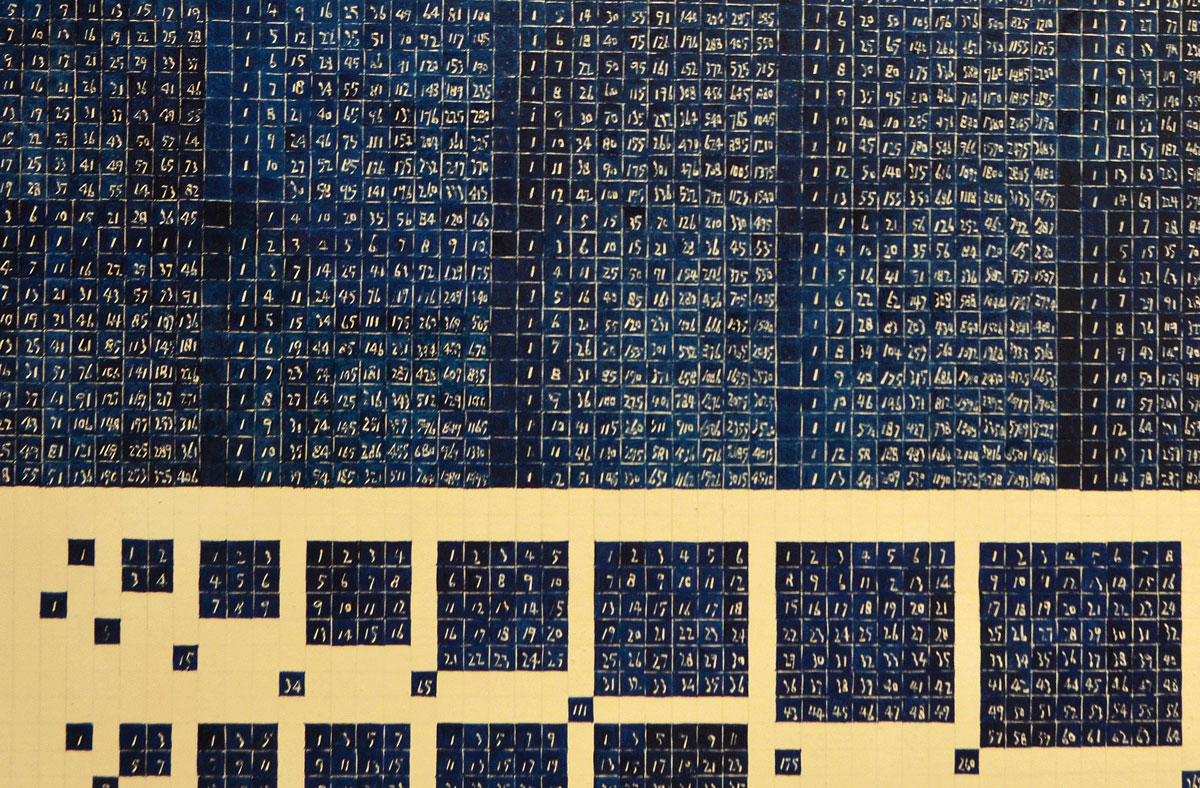
… And lastly, another reference to structure.  But not structure in the 3D, physical form, sense of the word.  Instead, it is a painting called ‘Number Structure II’ by Canadian artist Kazuo Nakamura (1926-2002).  Nakamura graphs out number-structure patterns and calculations and presents them as art.

below: One of the structures that Nakamura used was the Pascal Triangle.  This image shows the first 6 lines of the triangle.  Each number is the sum of the two numbers above it.  Can you figure out what the next line would be?   When expanded, it contains many number sequences and can be used to answer probability questions – as well as other mathematical things that I don’t understand.

the top 6 lines of pascals triangle, a mathematical structure of numbers

below: A small (maybe 1/8th) section of the painting … which unfortunately doesn’t give you much of an idea as to the composition of the artwork.  It does though give you an idea of the detail.  Some of the parts that I have omitted are triangle shapes that conform to Pascals triangle as pictured above.   Is it mathematics?  Is it art?  Where do you draw the line between the two?  Is there a line?

a detail picture of a painting by Kazuo Nakamura called Number Structure 2 which is based on Pascal Triangle. Lots of numbers written in white on blue and black background. the background is made into rectangles, squares and triangles.

It’s the kind of painting that a photograph can never do justice to.  It’s best seen in person.   Oh yes, the answer to the question above:  The next line of the triangle would be: 1, 6, 15, 20, 15, 6, 1.

If By Dull Rhymes
an exhibit by David Armstrong Six and Kristan Horton
Clint Roenisch Gallery, St. Helens Ave

 Dull rhymes may not be the best title as there was nothing dull about the exhibit.

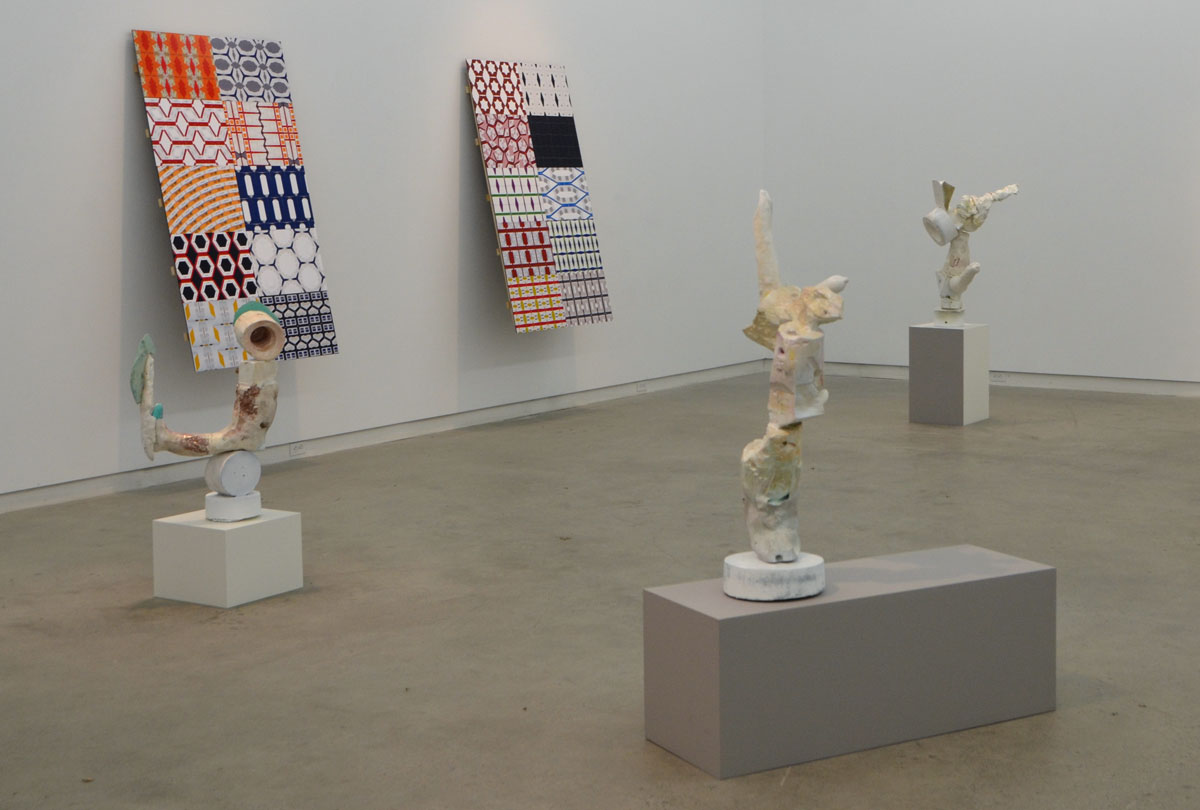
This exhibit  features two Canadian-born artists.  The sculptures that you see are by David Armstrong Six.  They are playful mashups of broken and cast off pieces and many resemble the human form in one way or another.  You can imagine them dancing around the room when the lights are off and everyone’s gone home.   For now, their dance is frozen in time as they await tonight’s revelry.  The two works on the wall are by Kristan Horton.

artwork by David Armstrong Six (sculpture) and Kristan Horton (prints on the wall) at the Clint Roenisch gallery - three sculptures and two pieces on board on the wall

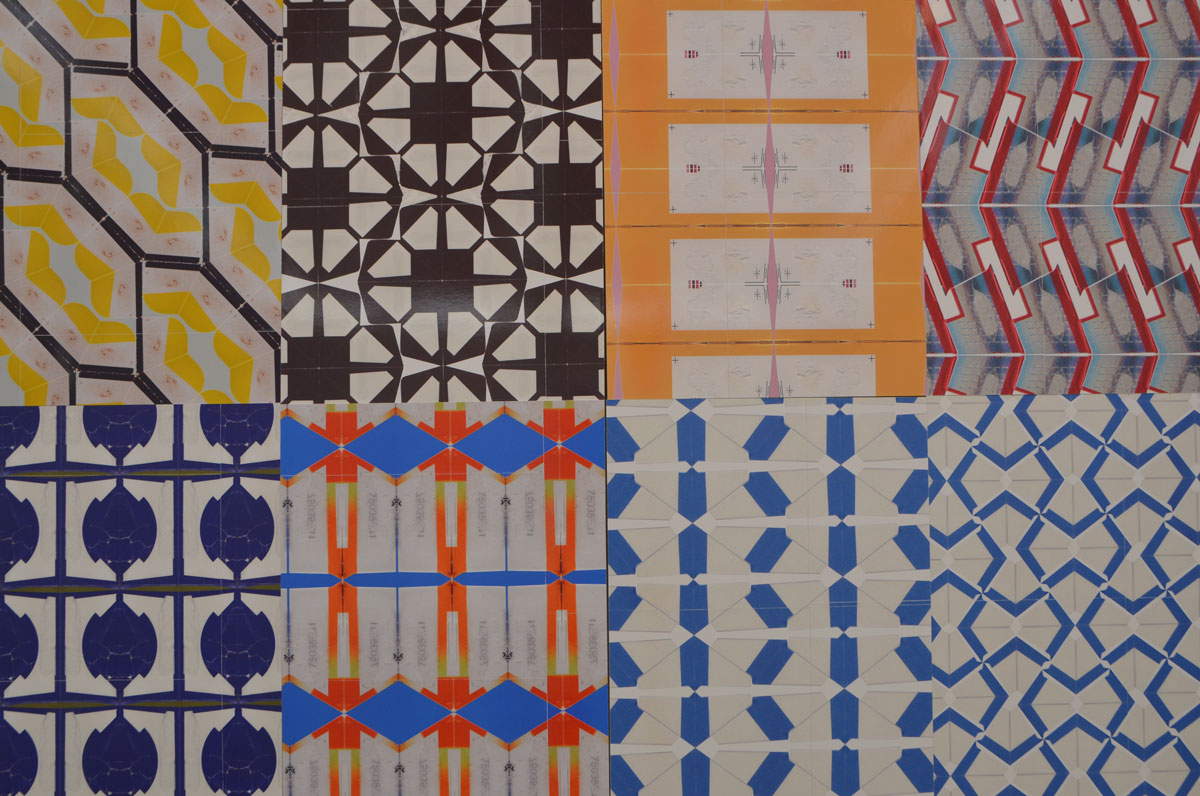
below: Close up of one of the panels.   Details.  Eye catching.  Mesmerizing. Geometric Patterns.  Each section is made with a single part of a piece of packaging that has been manipulated (rotated, flipped, etc) to make a repeating pattern.

eight different patterns made with labels that are displayed side by side.

below: Here you can see the barcode from a box of something.  The number 2729 appears with the barcode – sometimes it in the ‘correct’ orientation and sometimes it’s the mirror image.

close up of the patterns made with different labels and barcodes by Kristan Horton

artwork by David Armstrong Six (sculpture) and Kristan Horton (prints on the wall) at the Clint Roenisch gallery - close up of one of the sculptures, it looks like a face, head, body and outstretched arm, patterned artwork on the wall in the background.

This is only a sample of the works on display.   There is a lot more information on by Kristan Horton‘s website.  I haven’t found a website for David Armstrong Six, but there are images of some of his other work online if you are interested.

artwork by David Armstrong Six (sculpture) and Kristan Horton (prints on the wall) at the Clint Roenisch gallery - one sculpture on the floor and one panel on the wall. The panel is a 10 sections, each section is a different pattern made of labels from packaging.

The exhibit is only on until the 17th of December.

This is another meandering blog post… a post about being out and about on yet another wonderful autumn day, going wherever my feet and eyes take me.

below: The first picture of my day was this intriguing wall made of old wooden doors.  Bathurst Street.

a tall narrow wall about three storeys high made of old white doors.

below: A small elicser mural tucked away at the end of a parking lot.   The man has his back to the viewer but I can’t figure out what’s behind him or what he might be doing.

small mural on a fence, a man's head is back to the viewer

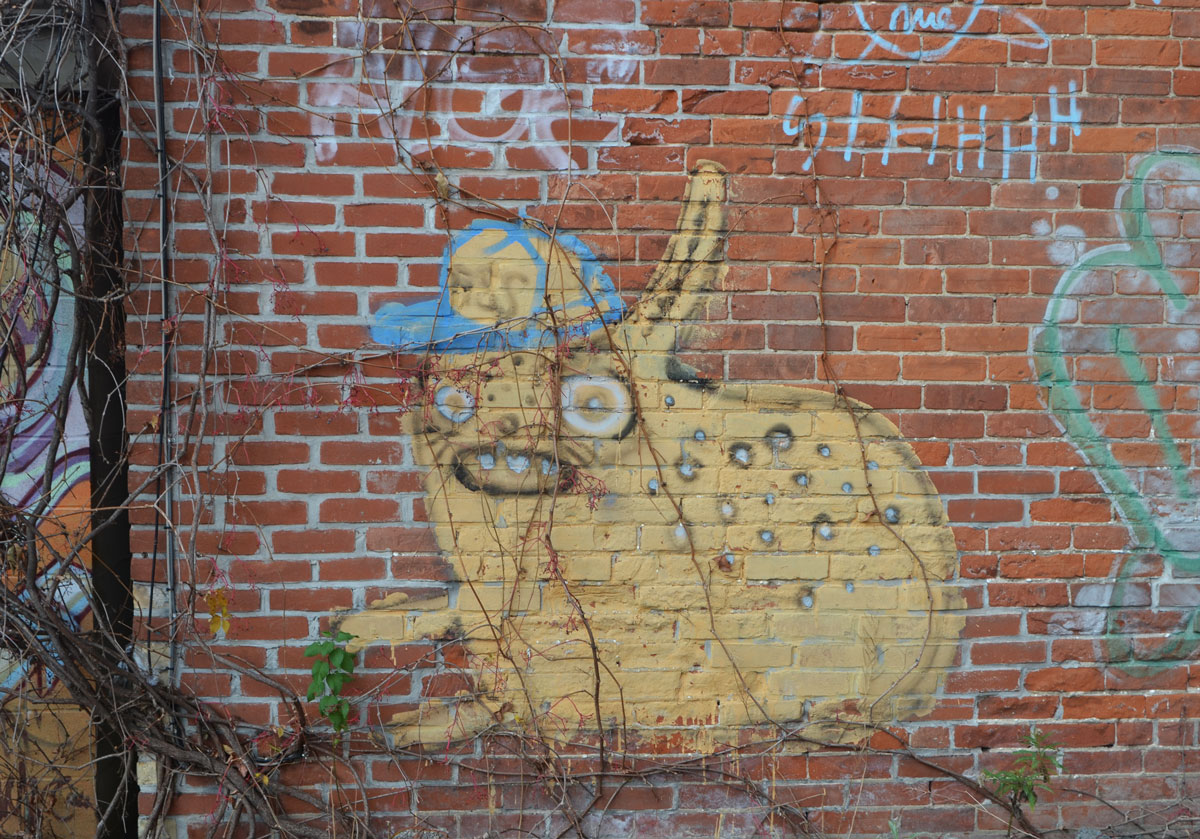
below: The leaves have fallen off the vines to reveal a yellowish creature with his baseball cap askew.

graffiti painting of a yellow animal like creature wearing a blue and yellow baseball cap. The creature is yellow. On a red brick wall, with spots on its back

below: Toronto’s tallest icon framed by a construction crane.

CN Tower in the distance, condo construction in the foreground, with a red crane

below: And on a similar note, a vacant lot cleared and ready for the next stage of its life.
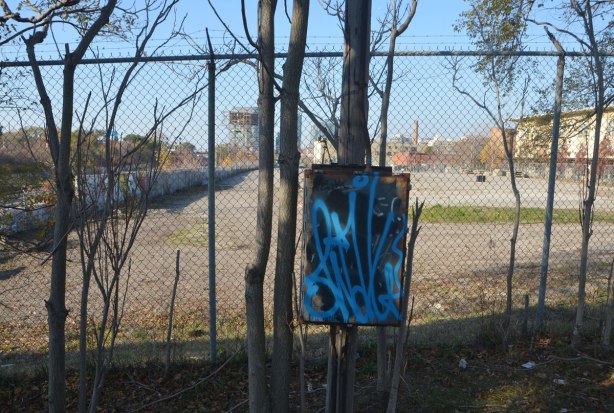
a box beside a fence that has been scrawled over with blue spray paint. Behind it is a fence around a vacant empty lot. There are some small trees growing in front of the fence.

below: No more cranes here (and not many vacant lots either for that matter).  A view showing how much development there has been on the south side of the railway tracks.   Fort York is between the tracks and the condo towers.

a VIA Rail train passes by on one set of many tracks, in the background is Fort York and then a series of new condo buildings.

below: And what’s this? An old blue canoe beached on the tracks?
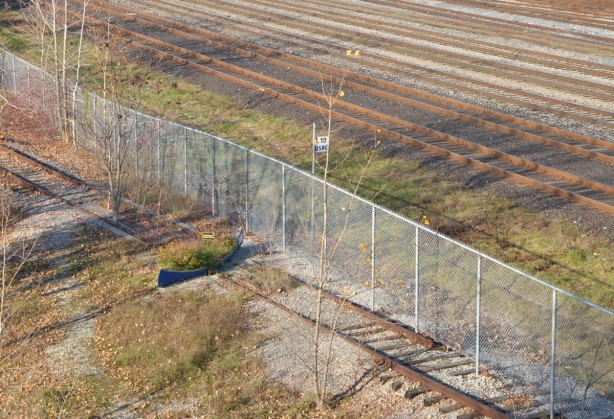
looking at the scene from a above, a blue canoe has been used to plant plants in. It lies across an old railway track, a chainlink fence separates the canoe from the main railway tracks that still function.

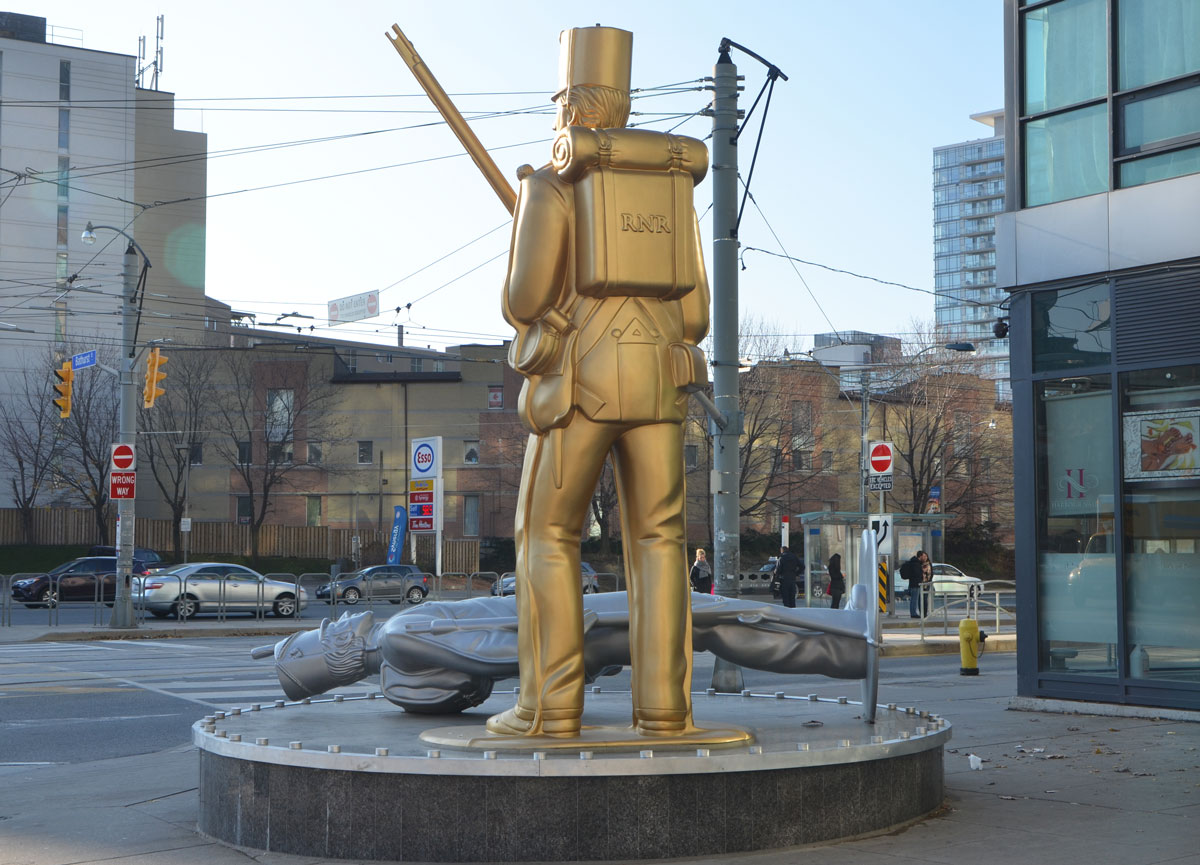
below: Standing guard over Bathurst Street, Fleet street and the Lakeshore, is one larger than life gold replica of a Royal Newfoundland Regiment and his fallen silver American foe. A sculpture by Douglas Copeland entitled “A Monument to the War of 1812”, a nod to nearby Fort York and the history of Toronto.

Douglas Copeland's sculpture of two tin soldiers, a gold one standing with backpack on and rifle in hand, and a silver one lying on its back on the ground, uniforms circa War of 1812, seen from the back, figures are much large than life sized and they are on a corner at an intersection, Bathurst St. and Fleet St.

below: My favorite example of bad grammar still exists!  Off-leash dog area at Coronation Park.

a wood fence around a dog park, in autumn with lots of leaves on the ground, on the fence is a white sign with black letters re the Toronto municipal code 608,

A beautiful day in the park.  A slight November nip was in the air but it was sunny and the sky was a brilliant shade of blue.  Coronation Park is named in honour of the coronation of King George VI who was crowned on 12 May 1937.  At that time nearly 150 trees were planted here.

Apparently, an oak tree was planted to honour the king.  Surrounding it, a ring of silver maples was planted.  This was to symbolize the countries of the British Empire.  I wish I had known that bit of trivia before I walked through the park because now I am curious if these trees are still there.   Some of the trees are quite substantial.

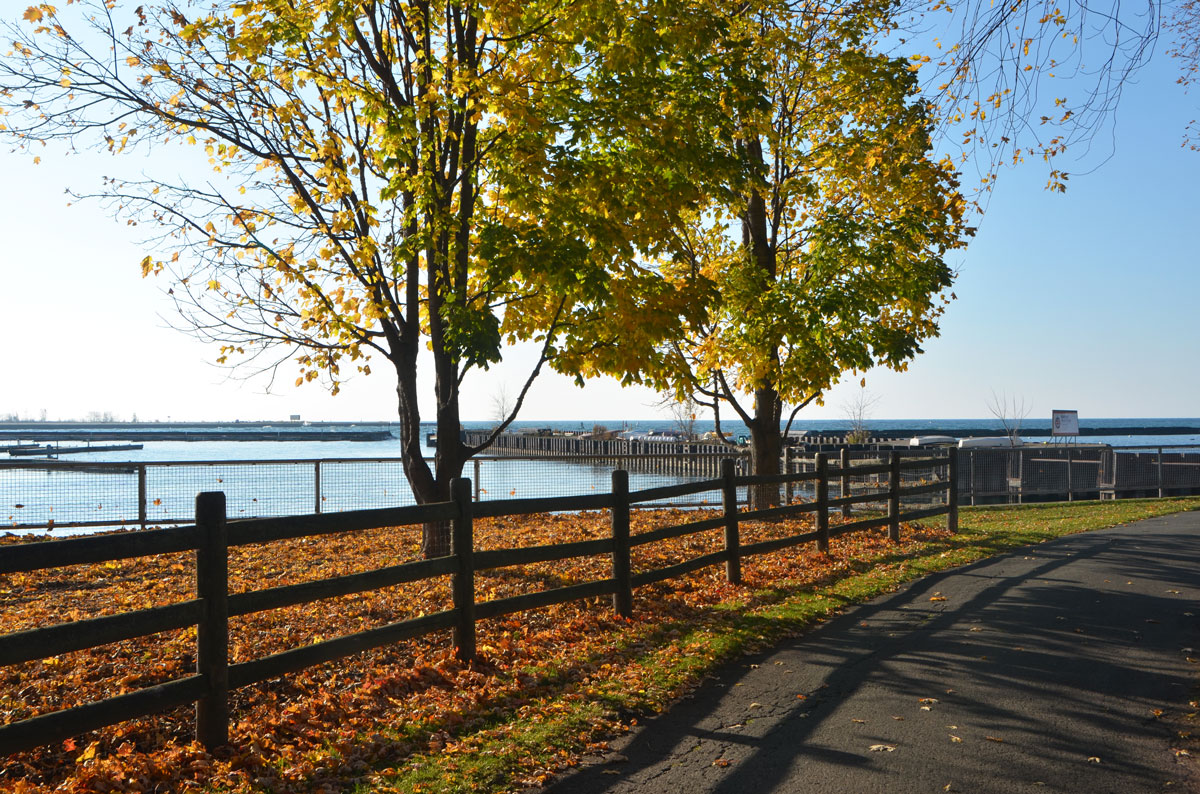
below: Long shadows for the morning sun, low in the sky.

morning in the park, autumn, trees with some leaves still on, many leaves on the ground, wood railing fence, shadows, Lake Ontario, path, Coronation Park.

below: Looking back towards the city center, past the empty docks of the National Yacht Club to the residences on Stadium Road.   A small group of people were making a video in the dog park.

morning in the park, autumn, trees with some leaves still on, many leaves on the ground, wood railing fence, shadows, Lake Ontario, path, Coronation Park. a small group of people in the distance are filming a video

below: This Victory Peace Monument was unveiled on 14 November 1995 to commemorate the 50th anniversary of the end of World War 2 and honour those who died in that war.   It was designed by John McEwen; the bronze pieces resemble the bow of a ship.

Metal partial cylindrical shapes on a concrete circular monument. World War 2 memorial

below: On the inside of one of the bronze pieces is a map of eastern Canada and the Atlantic Ocean.  Each boat on the map represents a ship or U-boat that was sunk during the war.  The Canadian ships are located on the map at “their last known position”.  I hadn’t realized that so many ships were lost so close to North America.

relief map of eastern Canada and the Atlantic Ocean, in bronze on a WW2 memorial. Little ships are shown on the ocean where they were sunk during WW2.

Trees were also planted to represent the four divisions of the Canadian Expeditionary Force (WW1) and its units as well as those who fought in the Fenian Raids of 1866-1870, the Northwest Rebellion of 1885, and the Boer War (1899-1902).  Once upon a time, brass plaques were placed at the foot of each tree to indicate the units the tree stood for.  If any plaques remain, I didn’t see them.

below: Another memorial is close by, a  “Memorial to Lieut. Tommy Hobbs gallant British Canadian soldier in the Great War 1914 – 1918.  Died on active service November 10, 1940.  Beloved and remembered by his comrades.”   Tommy Hobbs was involved in the creation of this park.

a memorial in a park made of a small pile of rocks. The top rock is inscribed, memorial to Tommy Hobbs, died 1940, in Coronation Park

below: A little farther on I noticed another rock, one that was painted red.   The bronze plaque on the rock says that 20 trees have been planted here in commemoration of the G20 Summit held in Toronto in 2010.

a large rock with a bronze plaque on it. The rock has been crudely painted red

below:  A 30 foot tall Inukshuk stands looking out over Lake Ontario.  Approximately 50 tonnes of mountain rose granite was used to create the Inukshuk, which was made by Inuit artist Kellypalik Qimirpik from Cape Dorset, Nunavut.

a tall stone inuksuk on a raised mound of warth

below: Streetcars across the baseball outfield.
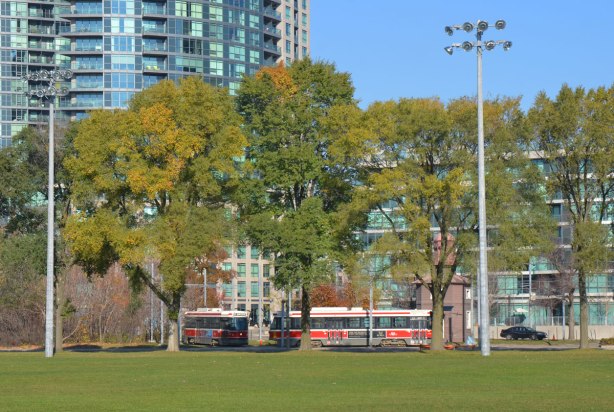
Looking across the outfield of a baseball diamond towards a street. A line of mature trees by the street with two red and white TTC streetcars on the street, condo towers behind.

below: A closer look at that brown octagonal structure in the middle of the streetcar loop for the 509 and 511 cars.  Apparently it’s the Queens Wharf lighthouse, one of a pair built in 1861.

a brown structure, the Queens WHarf Lighthouse, sits on a patch of grass beside TTC streetcar tracks in front of a new condo.

The lighthouses marked the entrance to the Toronto Harbour from 1861 until the Western Channel was built in the early 1900’s.   This one stood on Queen’s Wharf which used to be at the foot of Bathurst Street, adjoining Fort York.  The wharf was built by the military; in 1833 it was a pier 42 feet long.    The pier no longer exists; a hundred years ago it was buried under what is now Bathurst Quay.

below:  A picture of an historical map (1886 or 1887) of the area showing Toronto Harbour, Fort York and the railway lands.  Queen’s Wharf is the pier on the left.   At that time, Front Street was the southern most street in this part of the city.   All the present day development south of the train tracks is on reclaimed land.

picture of historical map of part of Toronto Harbour from 1886, showing Fort York, Front St., and Bathurst St., and the railway lands and wharves into Lake Ontario,

below:   Taken from google maps, what the layout of the city looks like now.   As you can see, there have been many changes!

present day map taken from google maps of Coronation Park and Bathurst Quay including Fort York

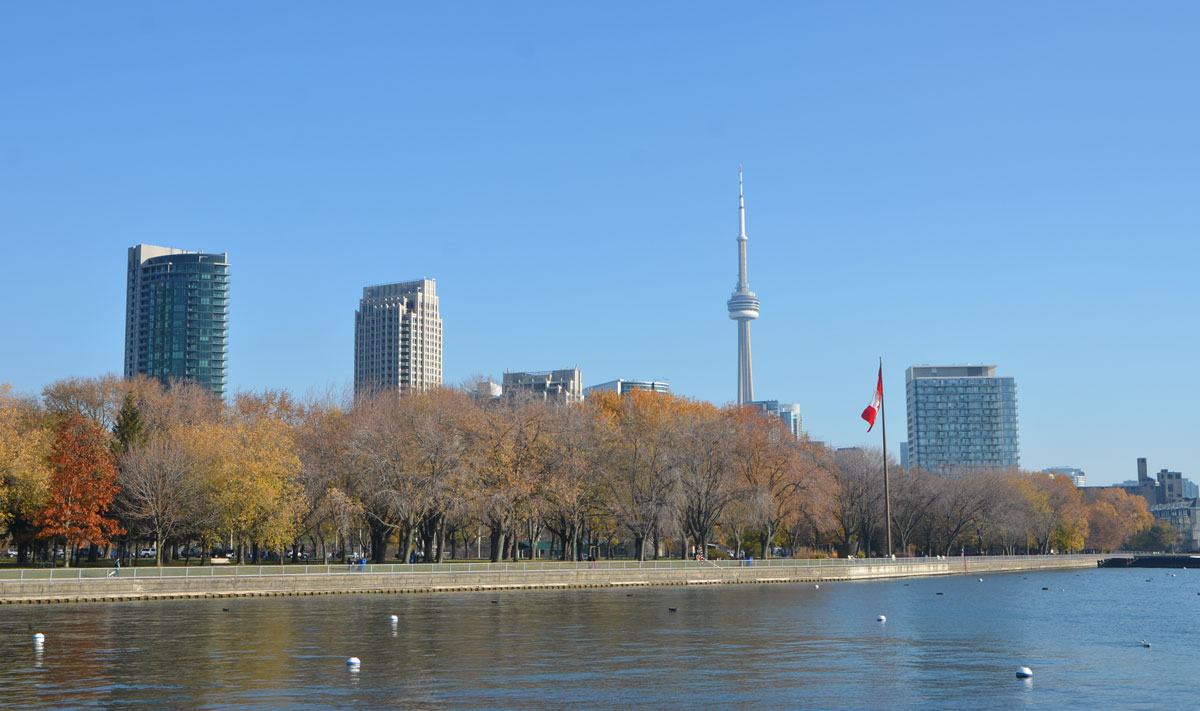
Lake Ontario in the foreground, trees in Coronation Park in the middle and Toronto skyline in the distance with the CN Tower and a large Canadian flag.
a sticker of a rainbow in a heart shape. A small purple heart is in the center, then a blue heart is drawn around it, moving outwards in rainbow colours.

It’s been a beautiful October to be walking around the city!  With lots of sunny days and above normal temperatures, it’s been a great autumn to be outside…. outside exploring or just sitting contentedly enjoying the sunshine.
below: Life size statue of Dr. Norman Bethune sitting outside the Medical Sciences Building at the University of Toronto (close to Queens Park Circle).   It is the work of Canadian artist David Pelletier.  Bethune is depicted writing in his journal.  Across the bottom of his apron these words are written:

I am content
I am doing what I want to do
Why shouldn’t I be happy – see what my riches
consist of.  First, I have important work that fully
occupies every minute of my time.  I am needed.

a statue of a man sitting is beside a rock and a light post, they are in front of a large tree and an old stone building, on the University of Toronto campus.

Norman Bethune was born in Gravenhurst in 1890.  He graduated from medical school at U of T in 1919, after taking some time off to serve in WW1.    He also served as a doctor during the Spanish Civil War in 1936 and 1937.   The following year, 1938,  he went to China  help the Communist Eighth Route Army during the Second Sino-Japanese war.  It was here that he died of septicemia in November of 1939.   He is credited with helping to bring modern medicine to rural China during his brief stay in that country.

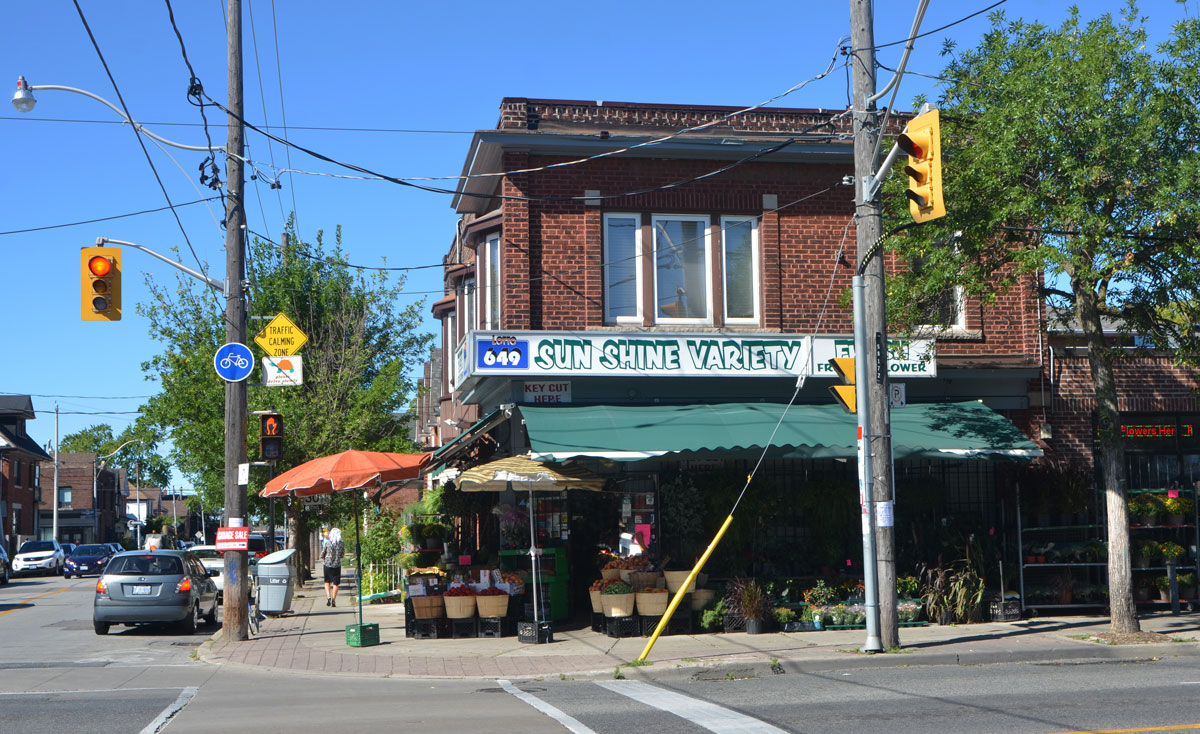
a variety store on a corner of 2 streets in a mostly residential area. Green awning on one side of the building, an orange umbrella stands over the corner. sign on store says Sunshine Variety.

So excited!  So happy to be able to walk on the sunny side of the street and not be struck down by heat stroke!
below: You could say that we’re walking on cloud nine at the change of weather.

metal cutout figures of people walking, alongside a chainlink fence as part of an art installation

This past Sunday was a great day for a walk.  Luckily, it was also the day that Penny (author of ‘Walking Woman’ blog) and I had set aside to explore westward from Christie subway station.   Actually, we were going elephant hunting.  Well, it started off as an elephant hunt, but it turned into a treasure hunt – a treasure trove of Toronto quirkiness.

shadows of a railing along the side of a street with no sidewalk, just narrow space between the fence and the kerb, green bike lane. At the top of the photo is a shadow of a pedestrian walking, backpack on.

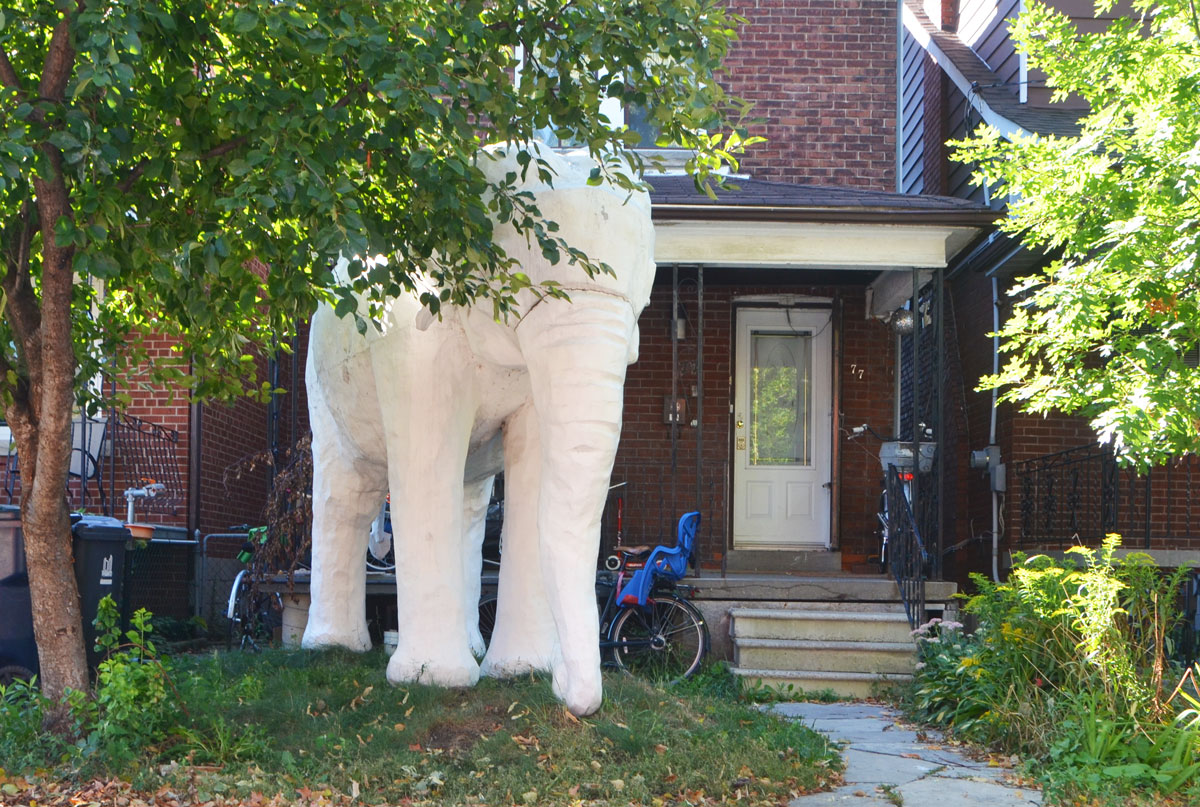
Eureka! As it turns out, it was also a great day for elephants to hang around outside.  This is Sally, a lifesize fiberglass elephant that stands nearly 3 metres tall.  She’s been standing here since 2003 and despite a little crack at the top of her trunk, she’s looking pretty good for her age.

a large white plaster? elephant stands in the frontyard of a house, tree beside it, bikes parked behind it. Residential street.

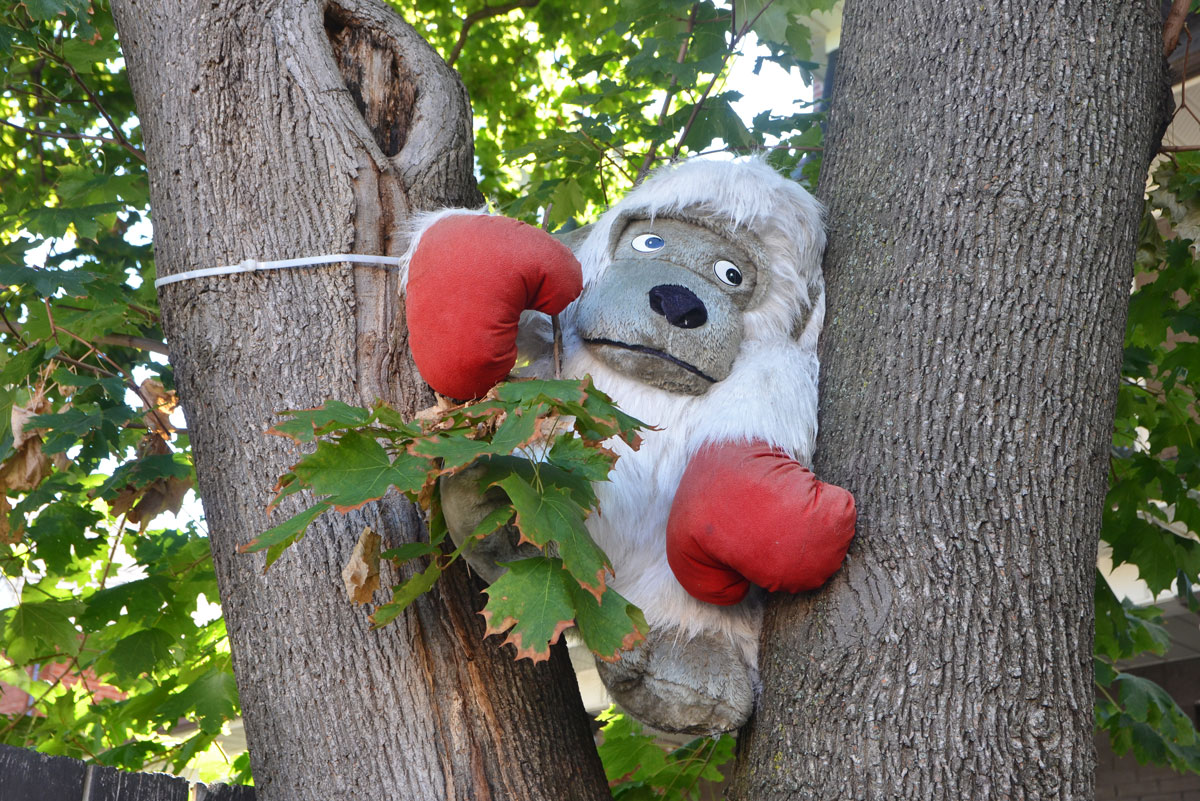
It was also a good day for gorillas to sit in trees.  A shout out to the man who was standing under this tree talking on his phone, oblivious to this furry creature above him.  The same man who gave me a strange look when I walked over with my camera, but then who shared a laugh with me when he too looked up and saw the monkey.

a large stuffed gorilla sits in the V formed by a tree trunk and a large branch of a tree, gorilla is wearing red boxing gloves.

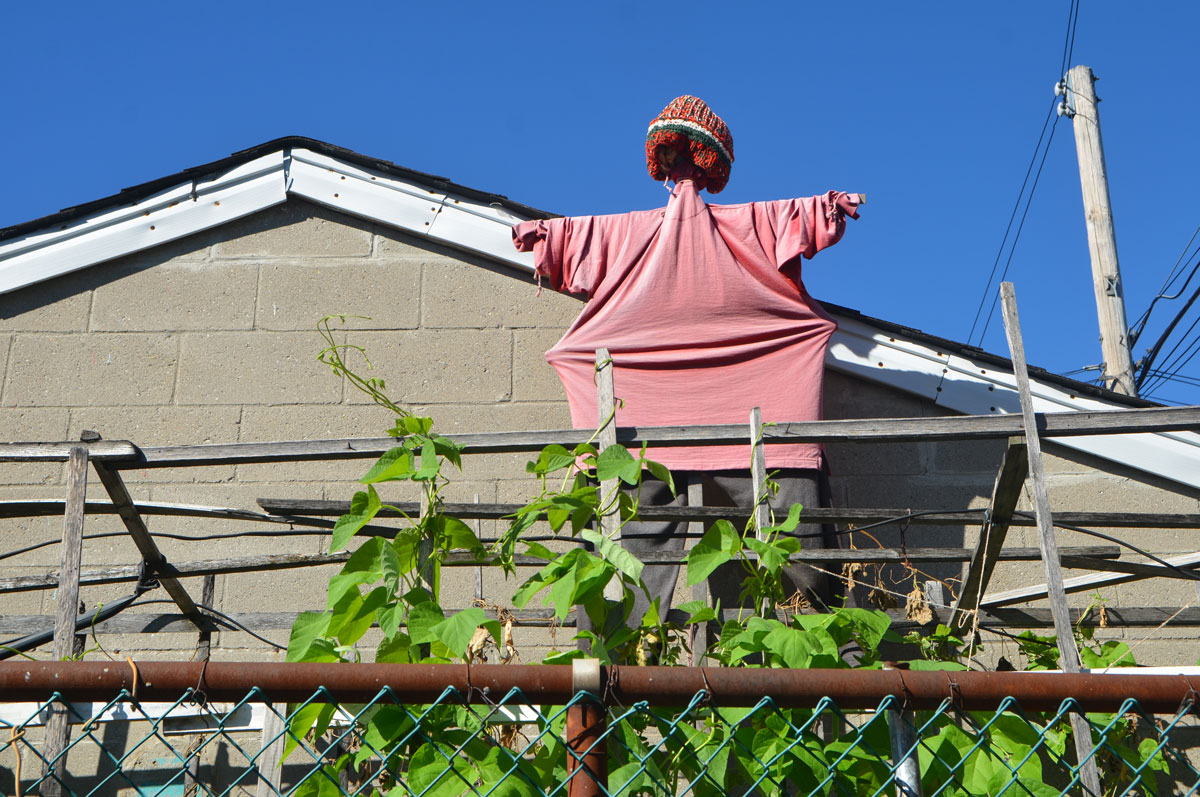
Quirky treasures like woolly headed scarecrows.

a scarecrow in pink shirt and wooly hat stands high over a garden, between a garage and a fence in an alley.

below: Tartan columns holding up shady porches.

a shady porch at the front of a brick house with two columns painted in black and red tartan, or plaid.

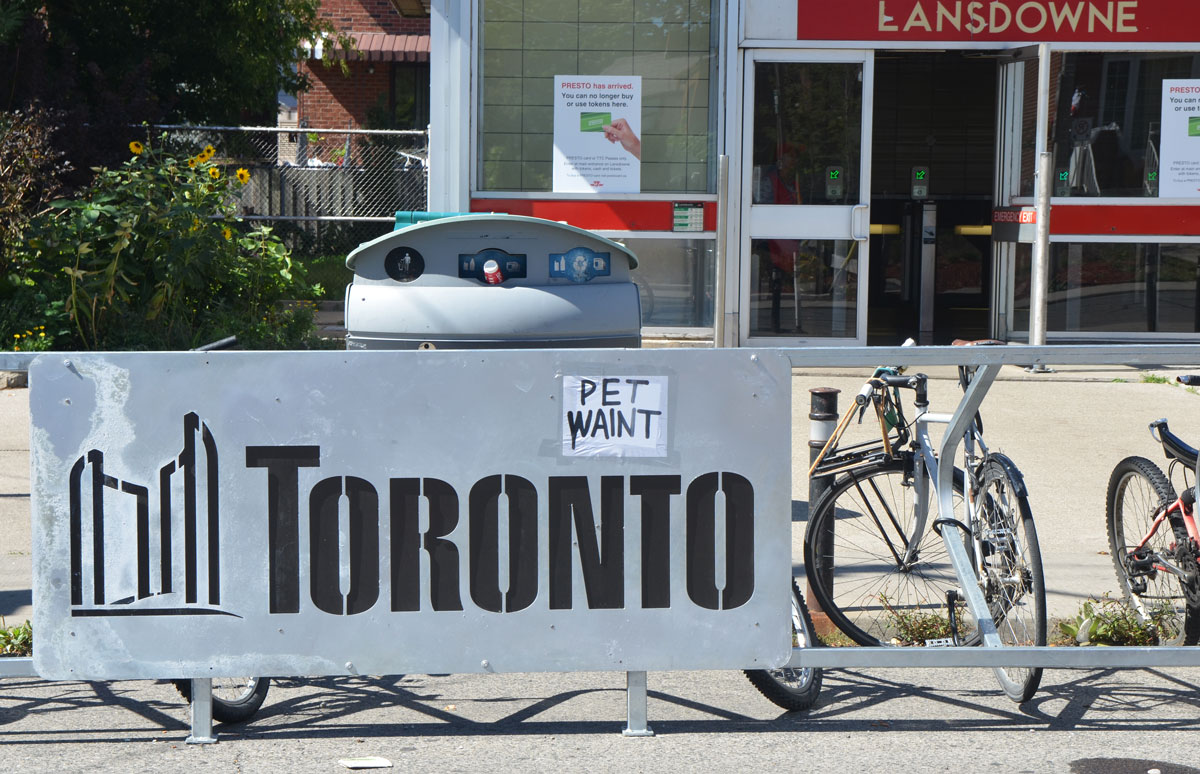
below: Pet waint at Lansdowne subway station.

a sign that says pet waint on a sign that says Toronto in front of Lansdowne subway station entrance

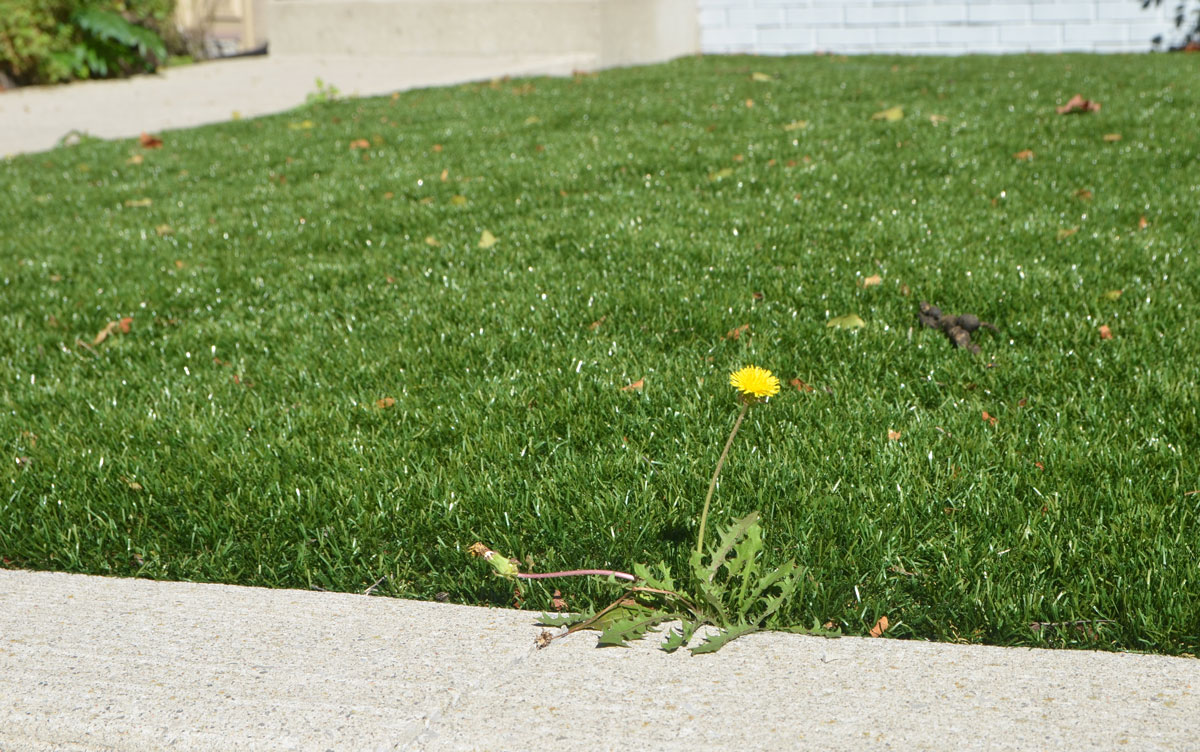
below: A solitary dandelion in a lawn of astroturf. Even fake grass isn’t immune to the ubiquitous dandelion.

a single dandelion grows in a lawn of astroturf (fake grass) where it meets the concrete sidewalk

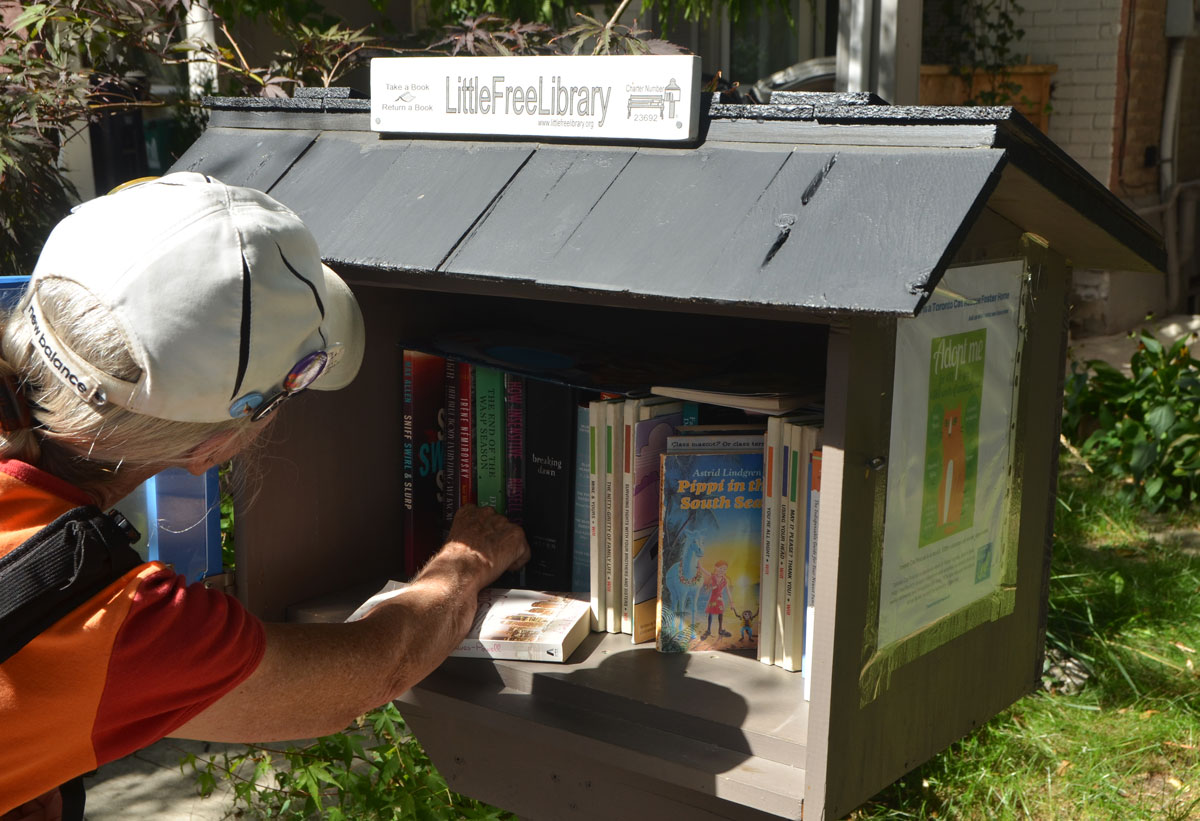
below:  We encountered many Little Free Library boxes.  This is not just a Toronto phenomenon and I’d have to say that it is beyond the “quirky” stage.  There is now a Little Free Library organization where you can register your library.  They claim to have over 40,000 registered libraries in over 70 countries.

a woman in a white baseball cap is reaching into a 'little free library' shelf of books outside a house

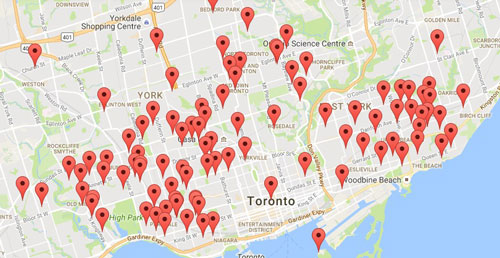
When I checked their website, I found a map of Toronto locations.   There are the libraries that are registered with the organization; I know that there are more than what is on this map.  What the map does show though is that these little libraries are numerous and that they are spread around a lot of the residential areas of the city.

map, from google maps, of the locations of little free libraries in the city,

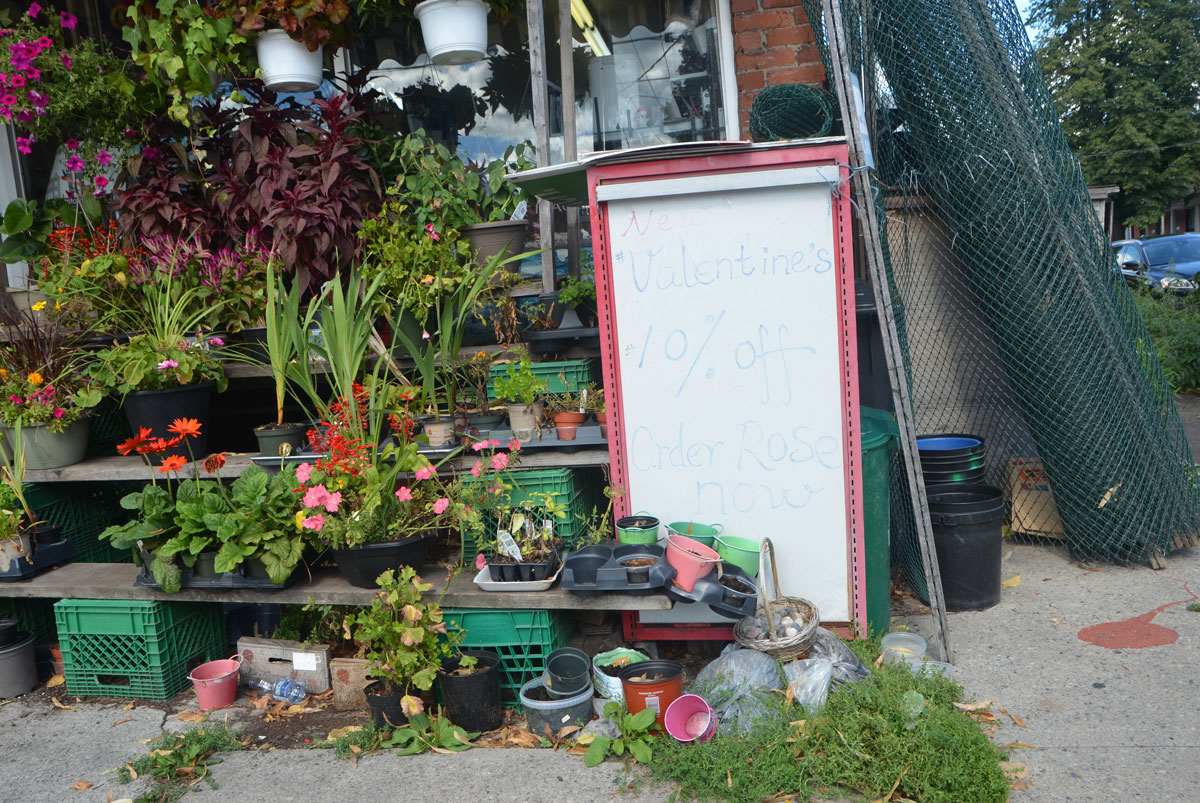
below: Quick, get your Valentines Day roses while they’re still on sale!

a sign in front of a store selling plants and flowers that says Valentines Roses on sale, 10% off

below: The middle way, in case you’re lost?  There was a man standing there, the middle man so to speak, but he didn’t hang around long enough for me to get his picture.

two houses with a small walkway between them. Someone has written mid on one side and dle on the other so together they spell middle

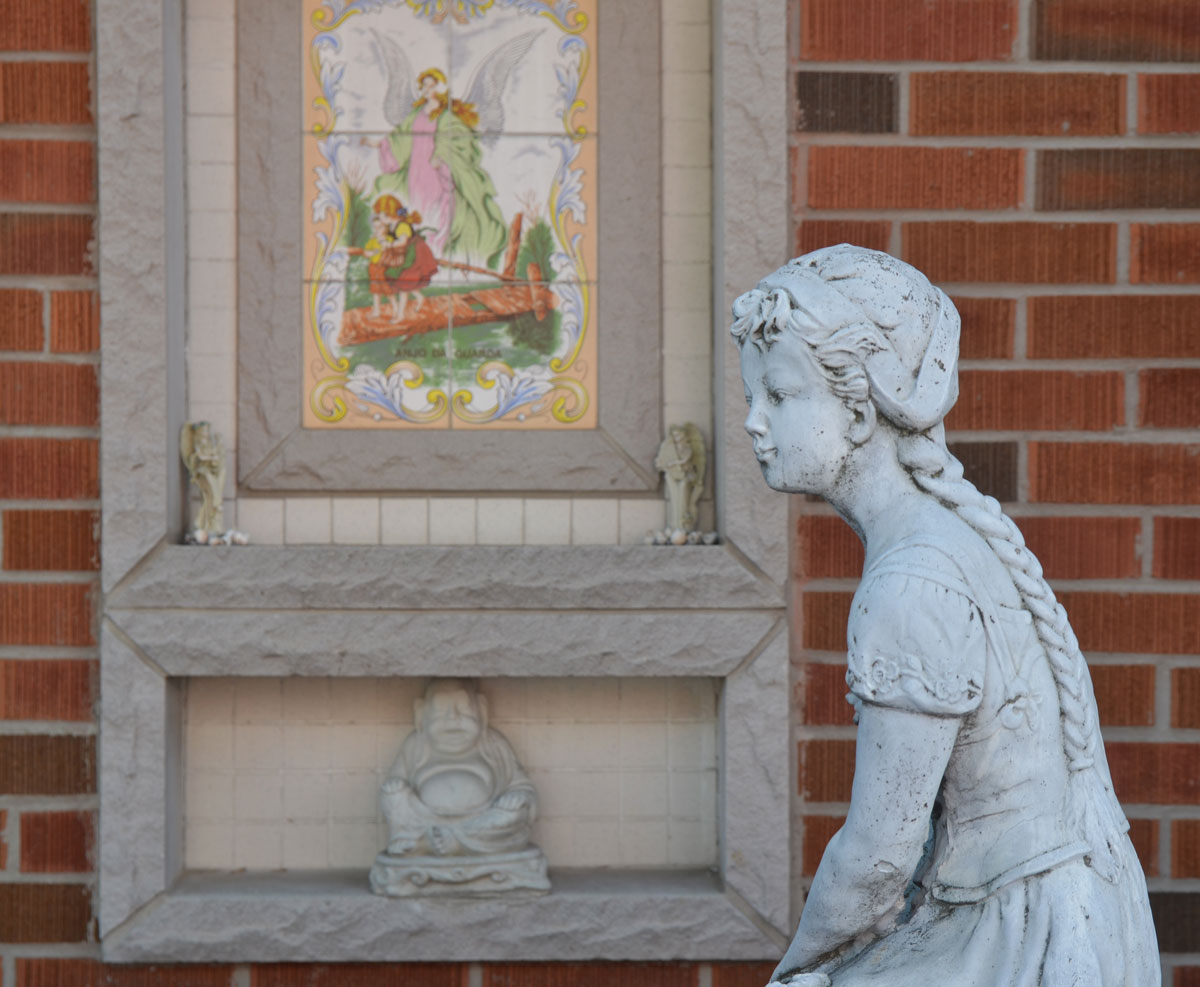
below: Figures watching over a front yard, including angels and a buddha.

upper part of a statue of a young girl with decorated wall behind. Coloured picture of a biblical scene, 2 small angel statues and a buddha statue

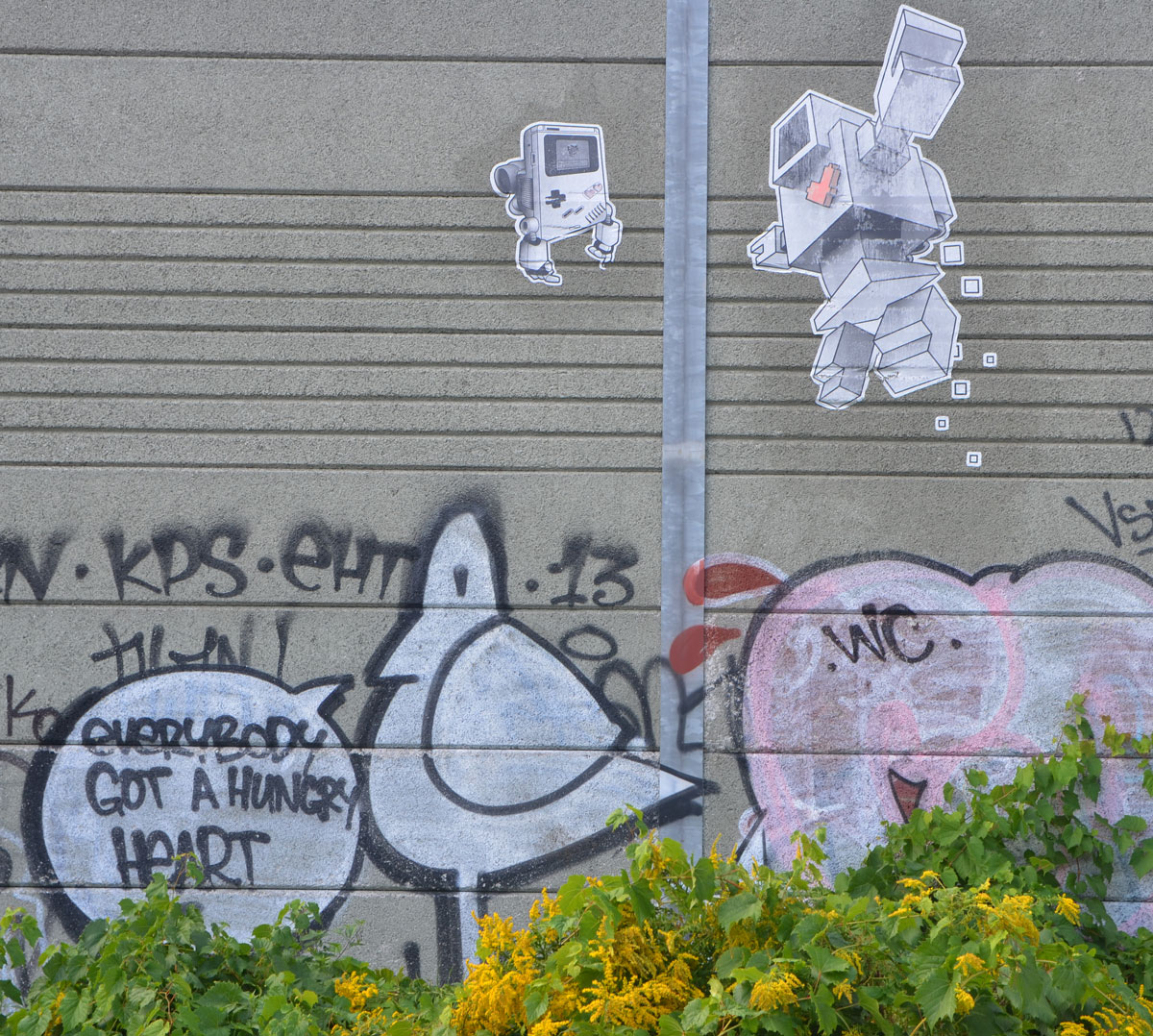
below: And of course, what’s a Toronto walk without a lovebot?

lovebot and a lovebot nintendo gameboy on a wall above a graffiti bird with a word bubble that says everybody got a hungry heart

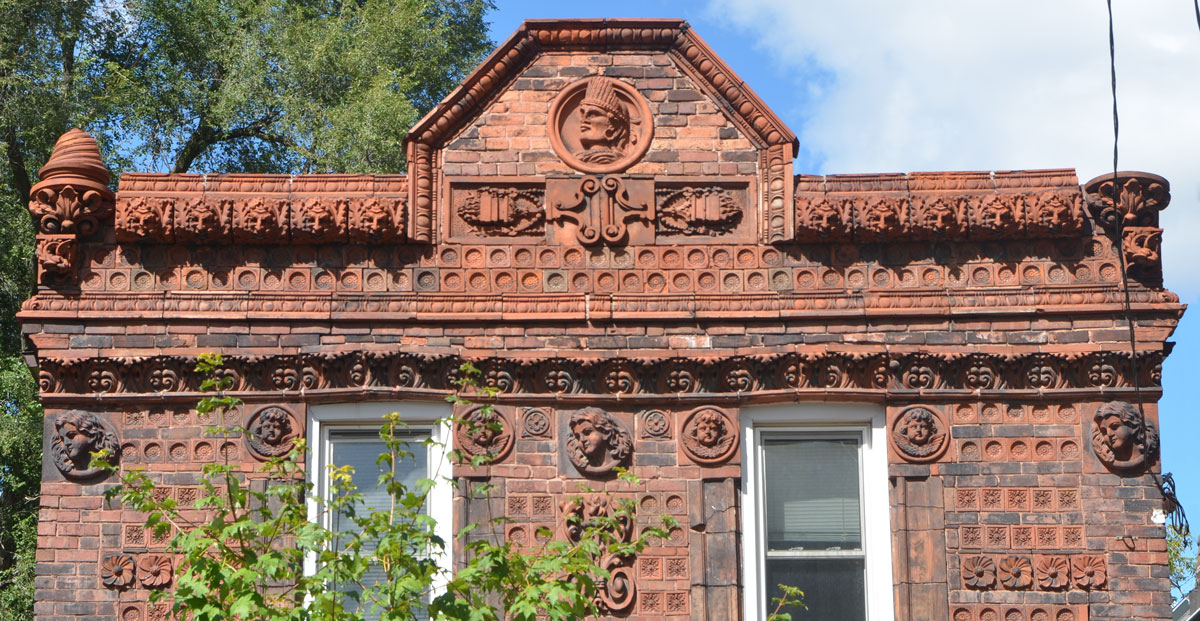
Near the end of our walk, we passed what is known as the Terracotta House.

house covered with terra cotta tiles with different designs on them. upper part of front of house

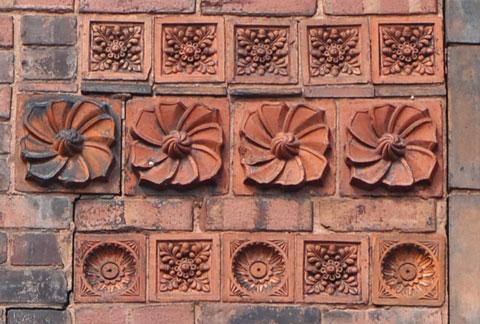
This house was built in 1905 by John Turner, a builder.  In the late 1800’s terra cotta tiles went out of style and there was a glut of them on the market.   Mr. Turner was using up excess stock that he had on hand?  Or advertising his business?  Or just taking advantage of a cheap material?   Whatever his motives, the house is still standing and is still a unique piece of architecture more than 100 years later.  I wonder what his wife thought of it?

house covered with terra cotta tiles with different designs on them.

detail of house covered with terra cotta tiles with different designs on them.

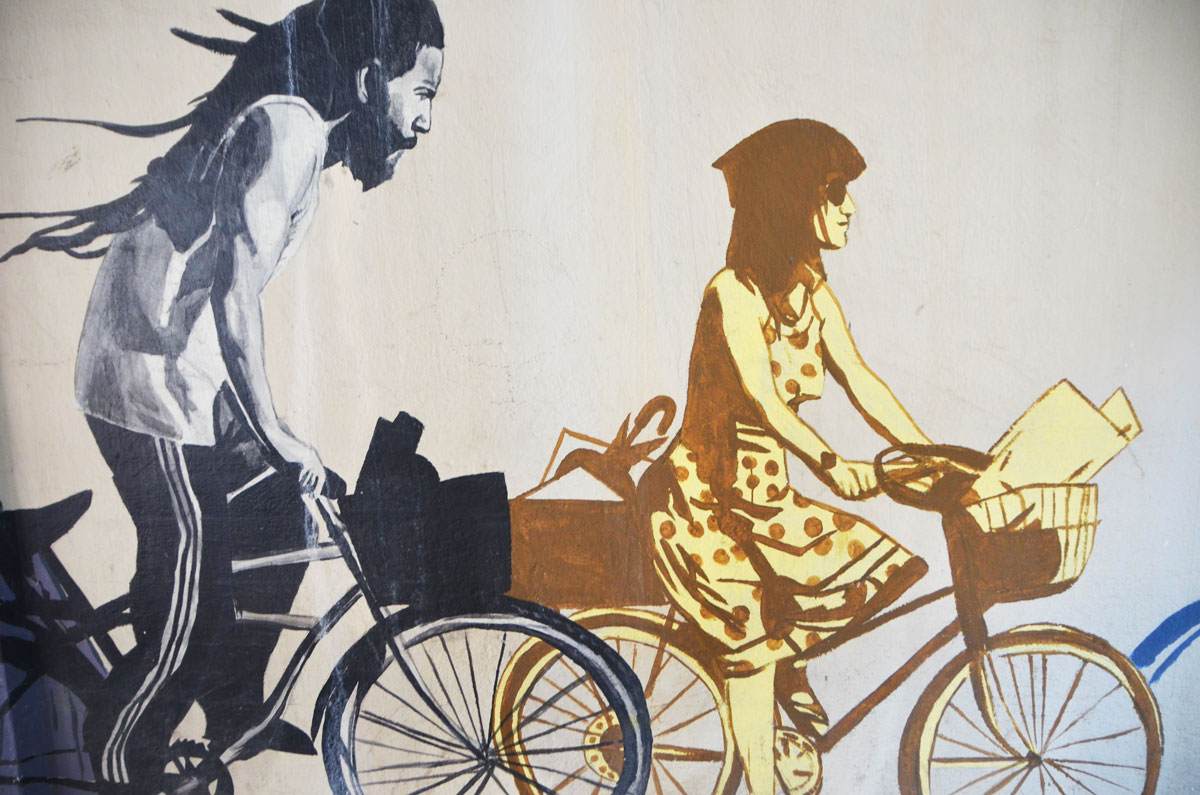
May all your walks, or cycles, be on the sunny side …

part of a mural called Strength in Numbers, on a wall, a painting of two cyclists. One is a black man with dreadlocks and the other is a woman in a polka dot dress with a box on the back of her bike.

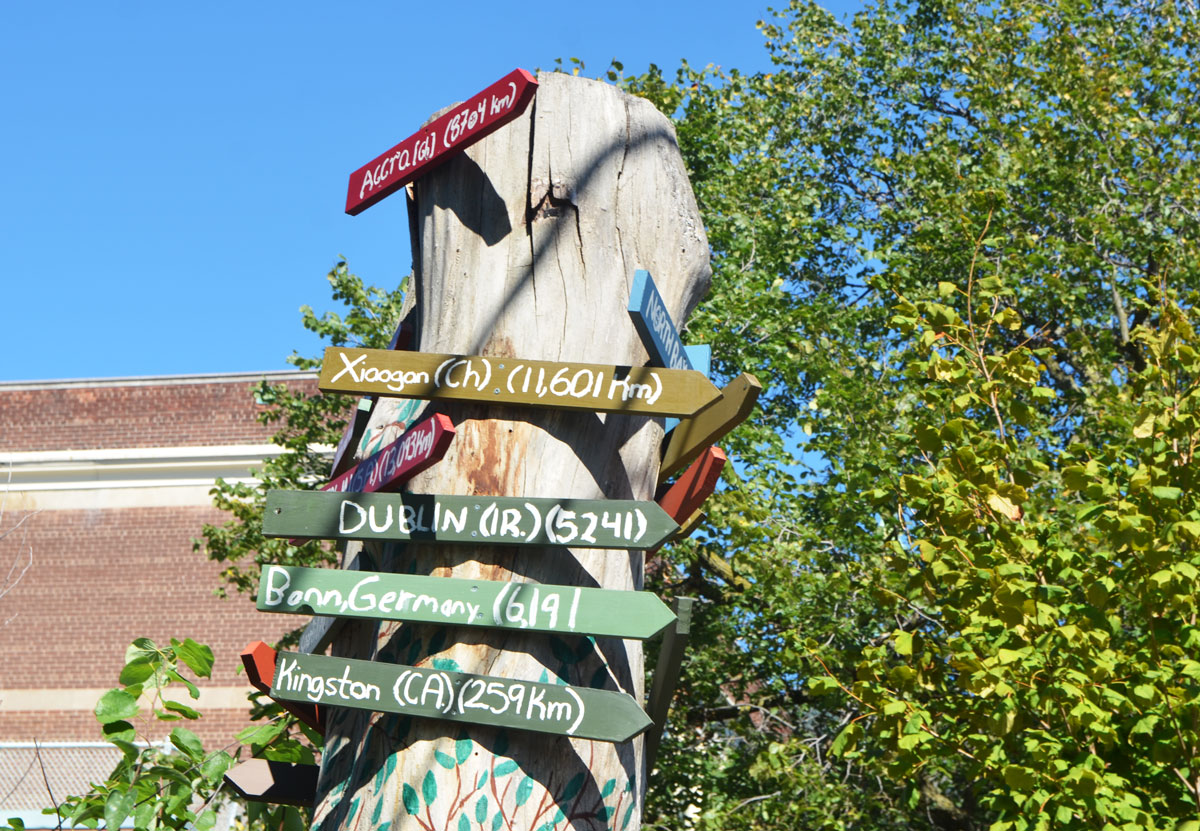
… no matter how long they are!

an old tree trunk has been turned into a support for many little arrow shaped signs that point the direction to cities around the world along with how many kilometres it is to those cities.

beige wall on top, rust coloured wall below, with orange splotches. Orange metal trash bin on ground, two window in upper part, both recessed. One with a bike and one with flower pots.

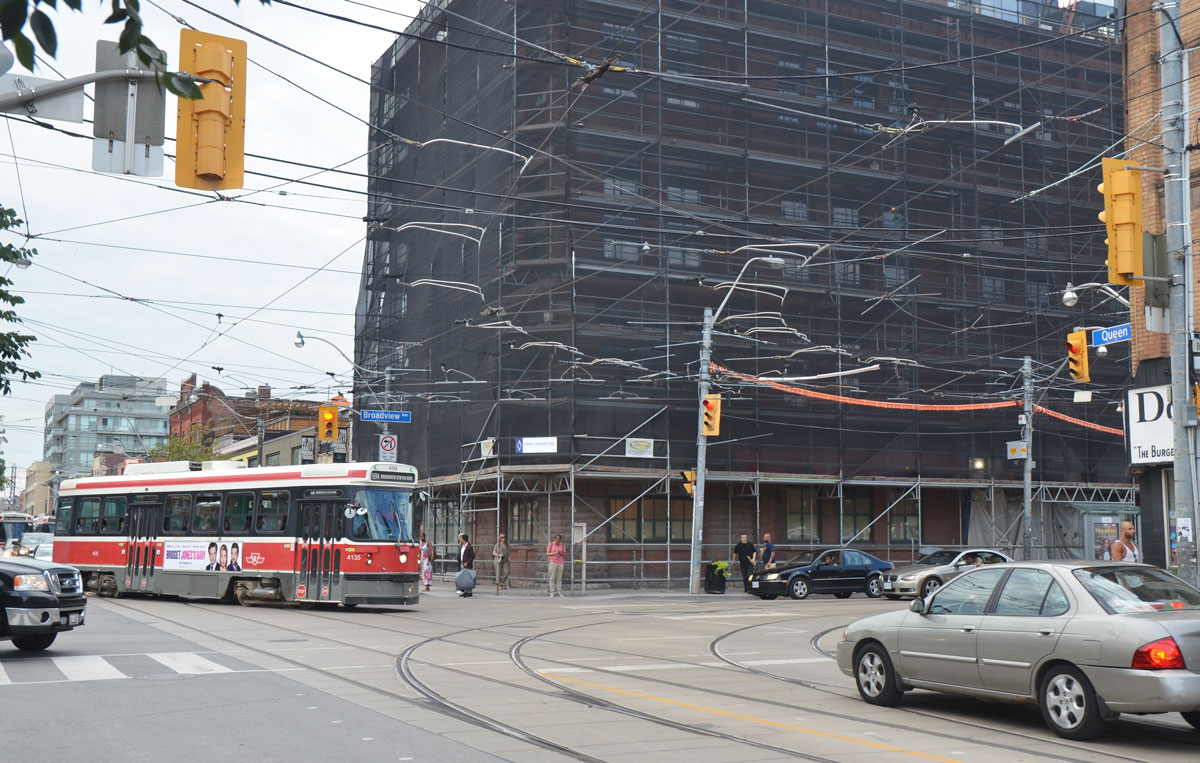
Let’s start with the intersection itself.   It’s where the 504 King car turns north to Broadview station and it’s where Jillys dominated the corner for many many years, more than 30 years in fact.    Does anyone admit to lamenting the loss of Jillys 2 years ago?  The building has stood on the corner for 124 years and was also home to the Broadview Hotel although I doubt it was the kind of hotel you’d book your mother into (well, at least not my mother!).   Believe it or not, this isn’t a condo development.

intersection, TTC street car turning left, a grey car near the intersection, a few pedestrians, a large building wrapped in black netting as the building is being cleaned and renovated.

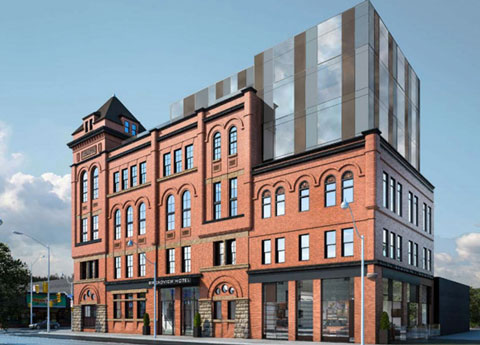
below: Instead, the New Broadview Hotel, built by Streetcar Developments, will have 57 rooms, a rooftop bar and a ground floor restaurant.   It will look approximately like this (from Broadview):

drawing of the New Broadview Hotel being renovated to incorporate an 124 year old brick building, new glass portion at the top of the building.

There was a reason I chose this intersection, and it wasn’t Jillys.  I went looking for a new mural but I didn’t know exactly where it was.   While I was looking, I explored and took some pictures because that’s what I do.

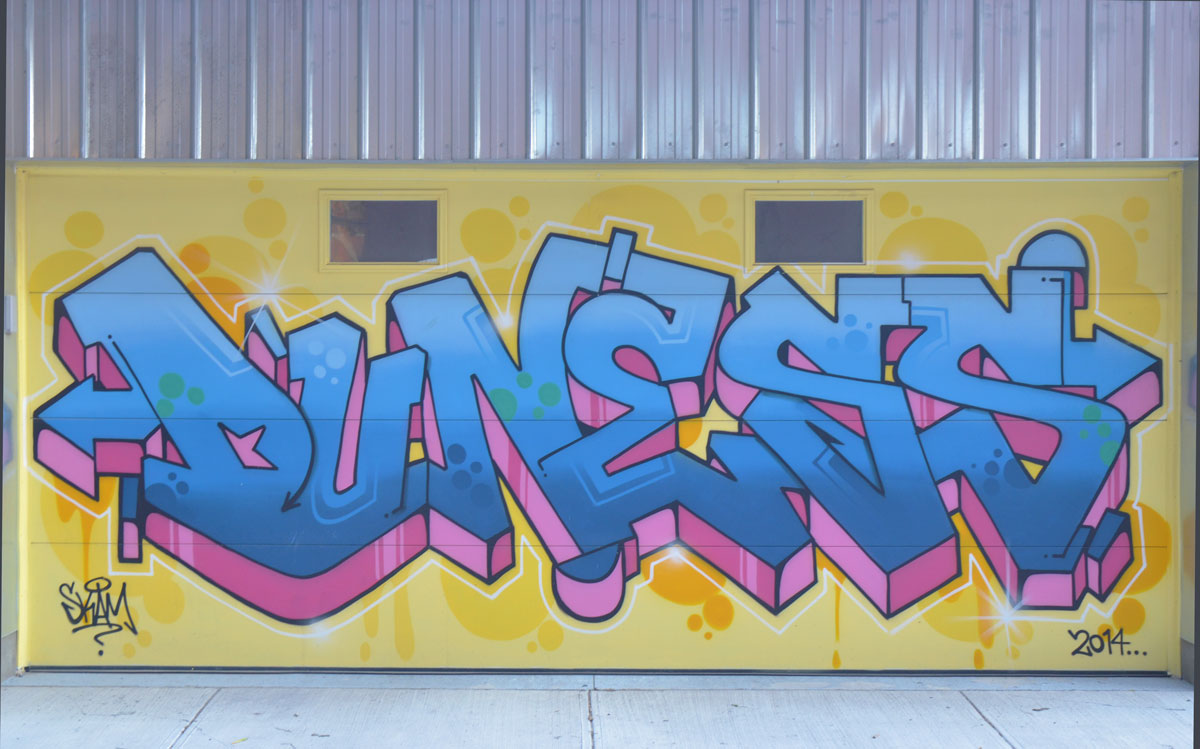
It wasn’t this street art painting I saw in an alley,

text street art painted on a garage door

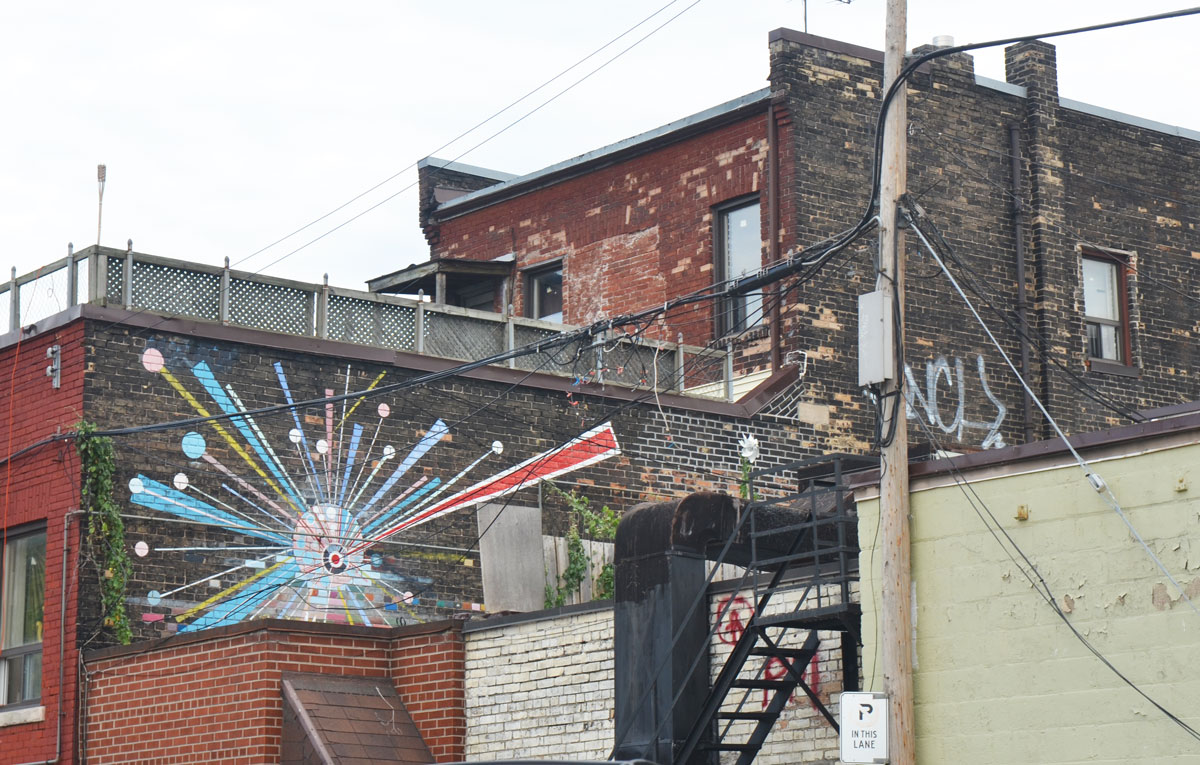
or this painting way up high beside a parking lot,

upper level of a store, backing onto a parking lot, painting on the exterior wall of rays eminating from a center circular source

or this woman in a lane.

streeet art picture of a woman in pink and purple

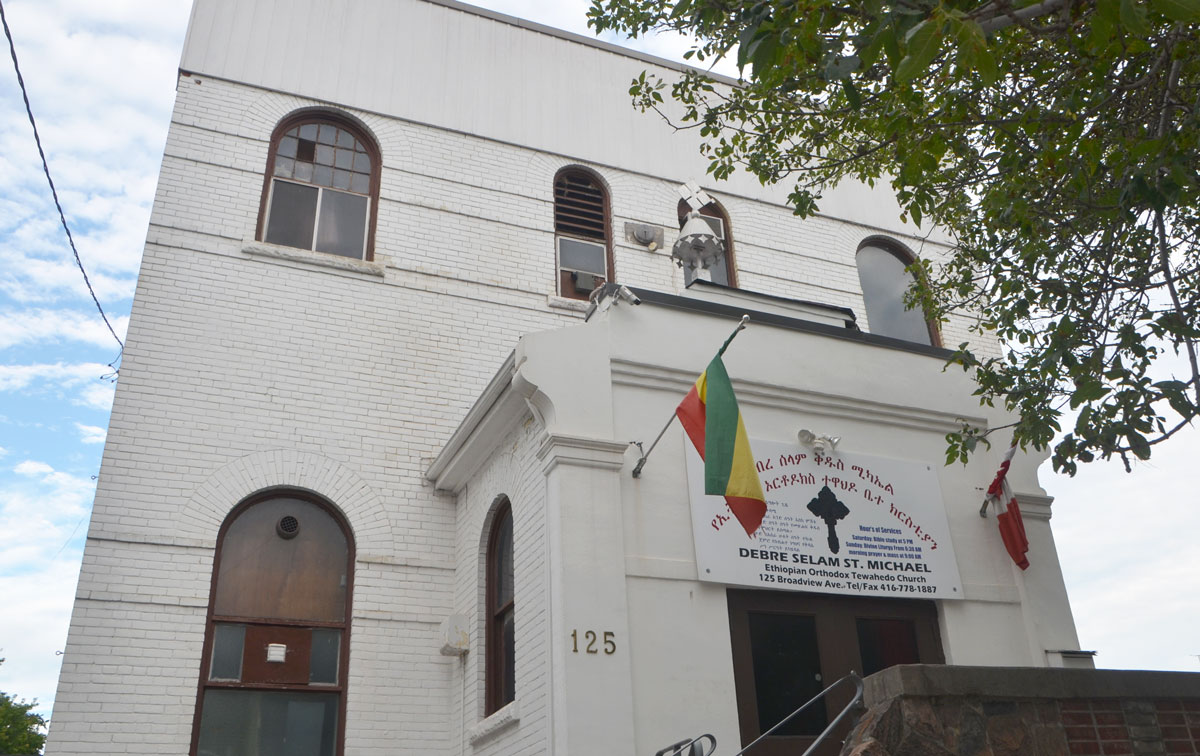
I passed by Debre Selam St. Michael Ethiopian Orthodox Tewahedo Church.  Such a long name!  All over Toronto there are churches, temples, mosques and other places of worship for a lot of different religions.  I am not sure how many there are but I’d love to find out.  This Orthodox religion was new to me so of course I had to look it up.  I learned that it was once part of the Coptic Orthodox Church which has existed since the 4th century.  It split off in 1959 but remains a member of the Oriental Orthodox family.  The church has 38 million members in Ethiopia.  This church on Broadview is not the only one in Toronto, there are at least 2 others.  I’m not sure how many people in Toronto are members of the church, or attend services here. (additional note:  It’s located beside the Royal Canadian Curling Club which I think is a great juxtaposition).

front of a white building, two storeys, with round top windows, two flags flying by the door. Sign says Debre Selam St. Michael Ethiopian Orthodox Tewahedo Church. Small cross above the entranceway

The Royal Antediluvian Order of Buffaloes have their building just up Broadview from the Ethiopian church.  They aren’t a religion but I had no idea what they were.  When I think of “orders” of buffaloes I think of Fred Flintstone and Barney Rubble and their Loyal Order of Water Buffalo.   Apparently the “Buffs” have been an organization since 1882, originating in London England.   According to Wikipedia, “Membership is open to all males over the age of 18 who are willing to declare that they are “true and loyal supporters of the British Crown and Constitution”. Discussion of politics or religion is strictly forbidden at gatherings, as is gambling.”  The building looks like it was once a school…. looking for ideas where to start looking for its history?  Oh, that word ‘antediluvian’ – it means ‘before the flood’ as in the flood in the Old Testament, that one with Noah’s Ark.

brown brick builgin, one storey with peak roof, small veranda in front, blur front door, Canadian flag out front, sign above door says Royal Antidiluvian Order of Buffaloes.

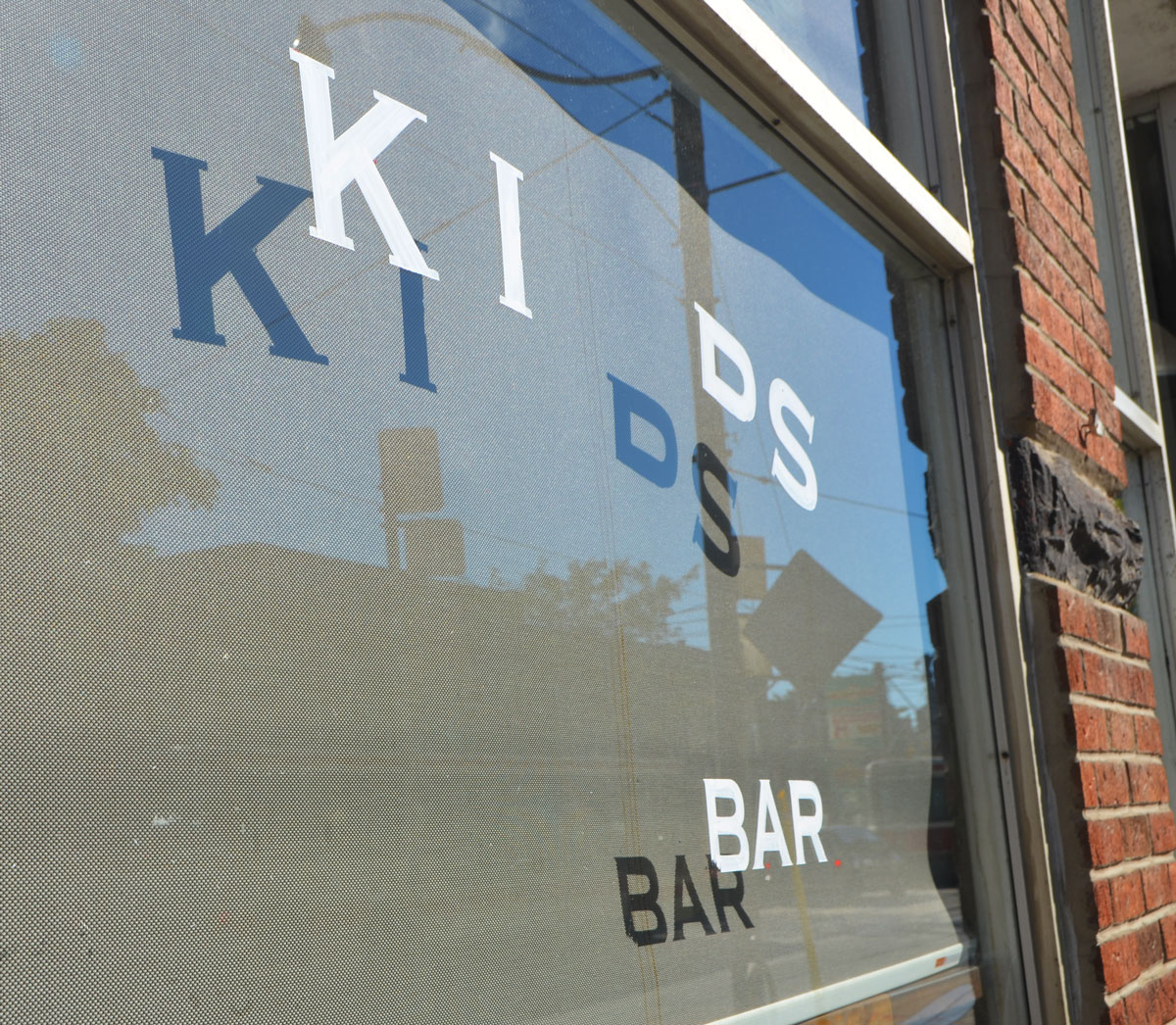
I noticed some quirky things like this window.  Any guesses as to what it used to be?

window of a coffee shop where some of the letters have been removed. It now says Kids Bar. Shadows of the letters are on the blind that covers the inside of the window of the now closed shop

Dark Horse Expresso Bar

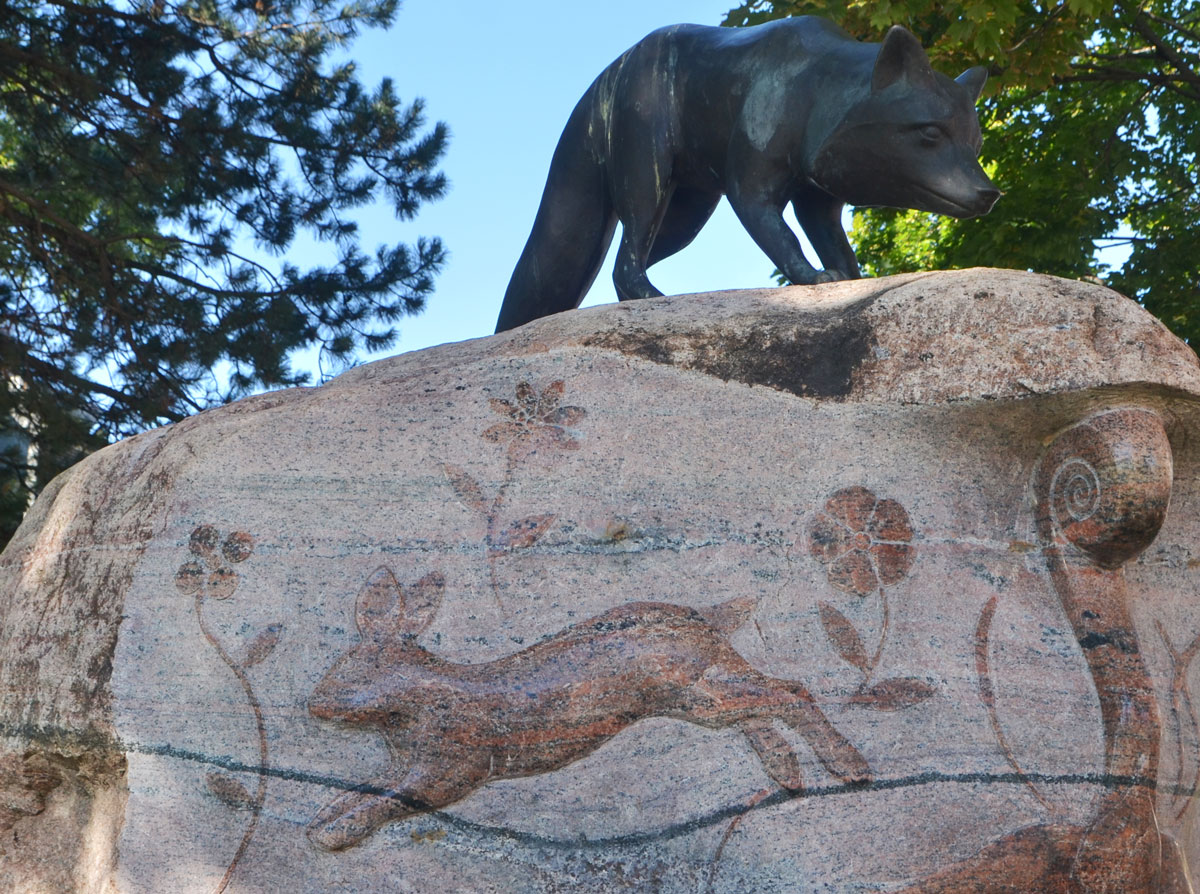
I walked through Joel Weeks park where I came face to face with a fox.

a small sculpture of a fox on top of a rock. The fox seems to be looking right into the camera

We exchanged glances for a moment or two but its interest was elsewhere ….
perhaps this rabbit?

sculpture of a fox on top of a rocl. Carved into the rock is a relief picture of a rabbit and some flowers

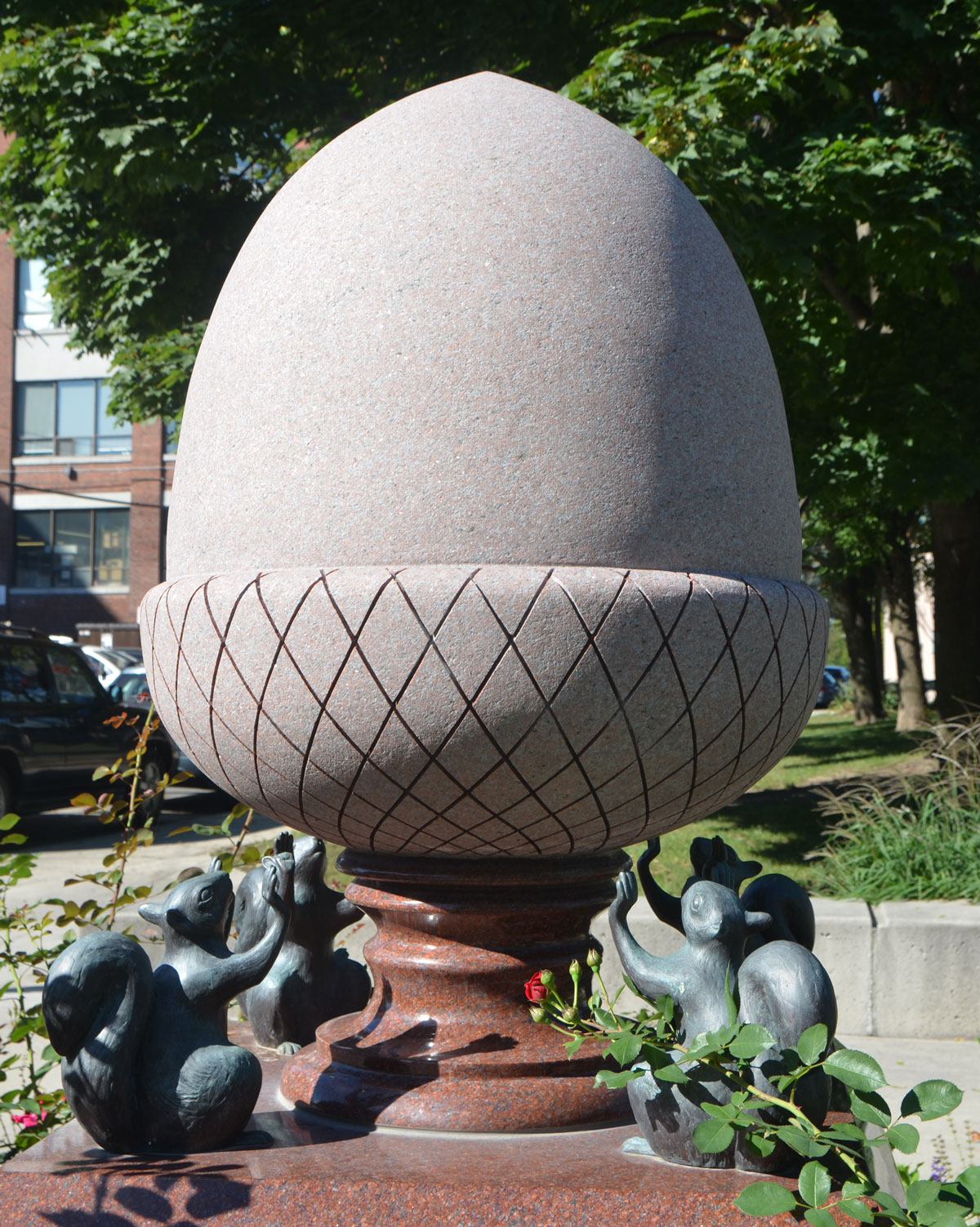
Also in the park, four little squirrels with a giant acorn!

a sculpture in a park of a giant acorn with the point pointing upwards, 4 small squirrels are at the bas of the acorn trying to hold it up

All it needs is a Scrat to come along and steal it!

cartoon character Scrat from the movie 'ice age' holding onto an acorn

Whoa, a little off track!

When I still couldn’t find the mural, I bought a cup of coffee and a bite to eat at Merchants of Green Coffee (no picture I’m afraid) and did the research I should have done previously.   Coffee finished, then mural found.

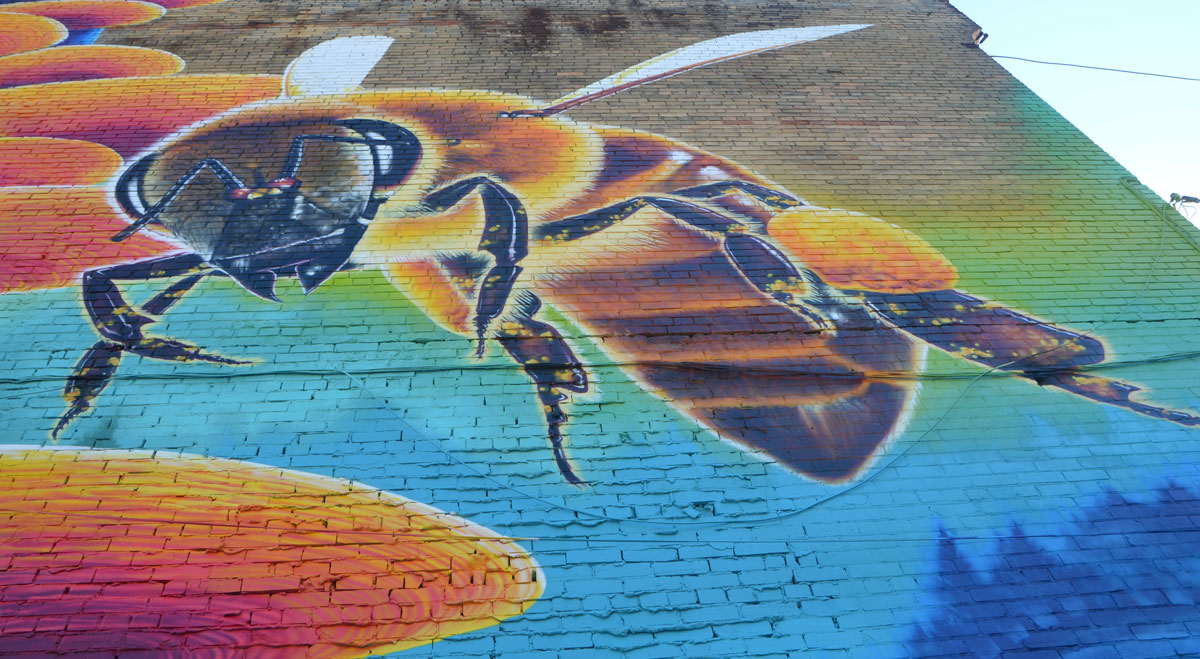
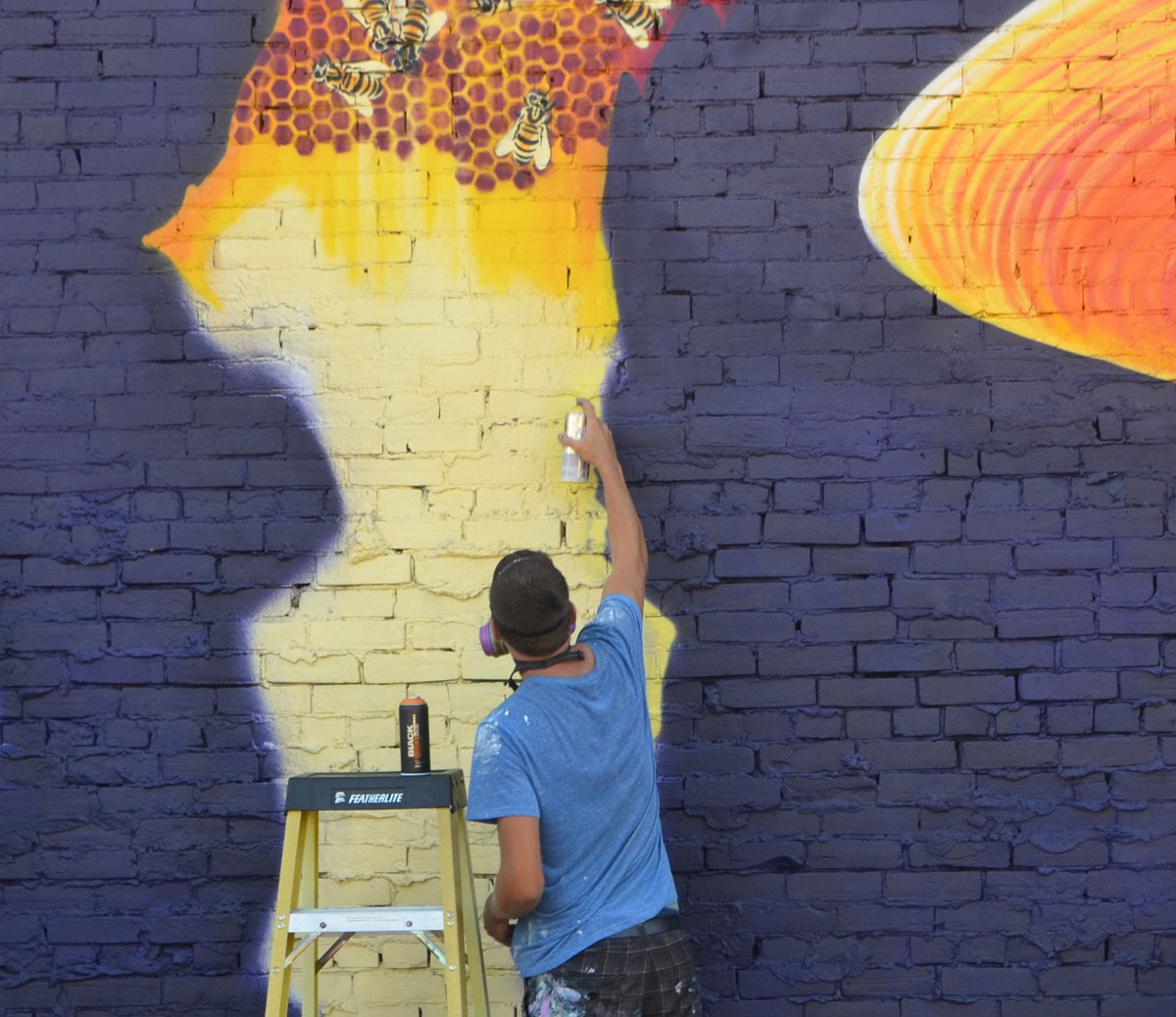
below: Riverside Pollinator Mural by Nick Sweetman.  (3 photos)

part of a mural, a large bee

a man is painting a mural, this part is a honeycomb with some bees on it. Dark blue background.

large mural, Riverside Pollinator mural, by Nick Sweetman, of a large bee, a clock, clock gears, a few small bees, a honeycomb and a flower and a very large tree

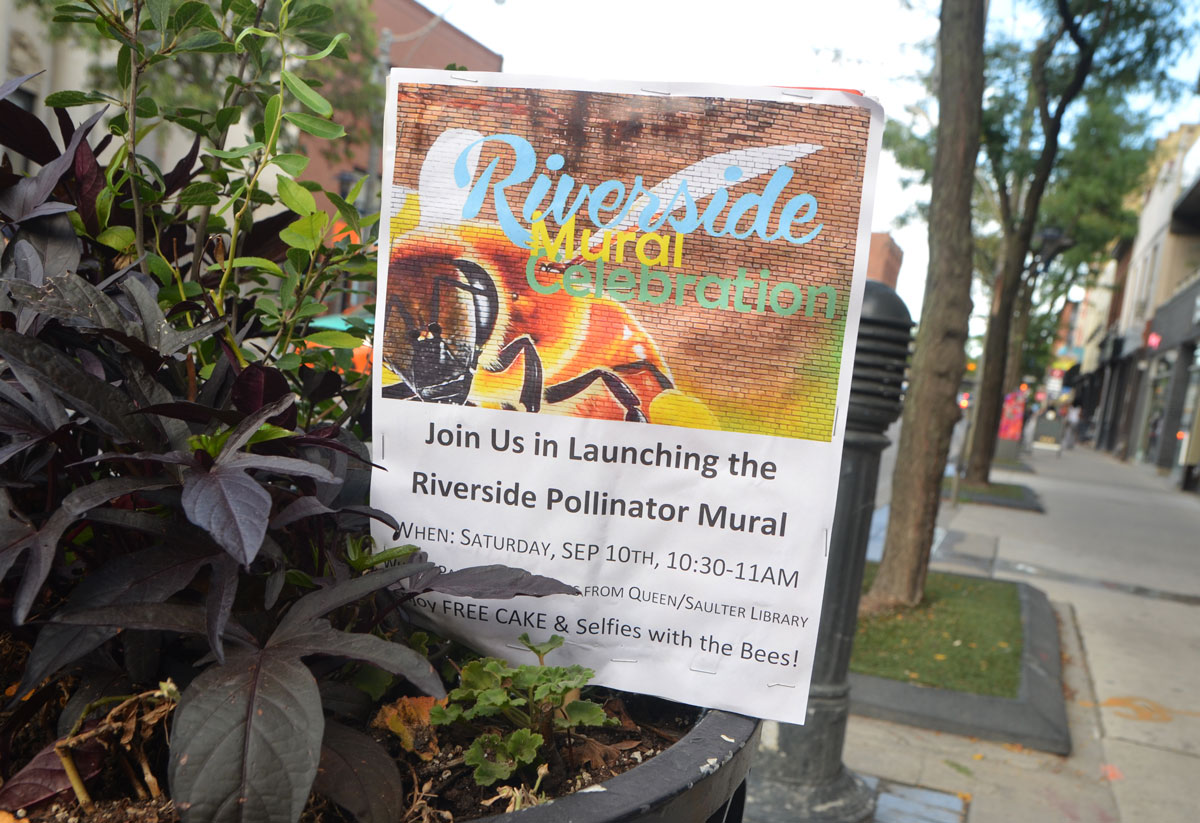
below: I also noticed this.  I know that that’s tomorrow but for those of you who are keen and read this blog soon after it was published, you may still have time to get there!   Free cake too!  It’s at 777 Queen Street East.

a poster is stuck into a sidewalk planter, advertising a launch of a mural on Saturday 10th September.

As I walked north towards Dundas Street, I found myself on the grounds of Queen Alexandra Senior Public School and Seed Alternative School.  Here is door 5.   An excellent example of unkempt 1950’s and 1960’s public building architecture.  I don’t mean to belittle the school and the people involved in making it work.  I just think that it’s a sad looking place; schools should be inviting.

blue double doors in a drab brown brick building, with brown metal inserts covering what was once a large window above the door. Two small windows remain.

One could probably do a photoessay on the condition of the building and what it says about Toronto’s attitudes to school construction and maintenance, and perhaps by extension, what it says about Toronto’s attitudes to public buildings in general.

three windows arrange horizontally in a brick wall. windows are not high

a box in front of a wall of a school has been painted with the word choose and two white hands.

While we’re on the subject of architecture, there is a mix of lots of types in this area of the city.  There are still lots of older houses, many of which have been renovated.

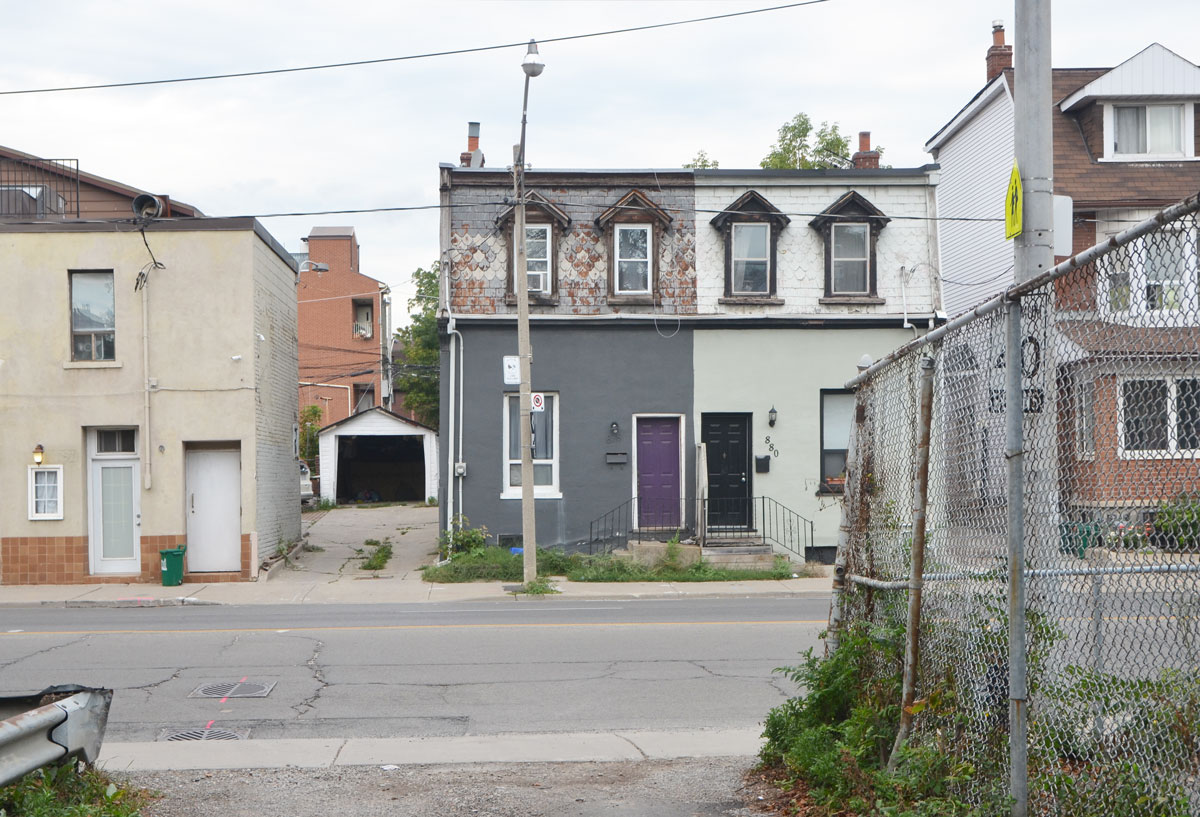
below: Side by side, old and new.  ‘Second Empire’ architecture featured mansard roofs and dormer windows, both of which are seen in these old rowhouses.  This style originated in France and arrived in Canada in the mid 1800’s where it seemed to remain popular for some time.

old brick rowhouses to the right, with a large tree in front, and new construction of row houses on the left.

below: This house is a variation on the Workers Cottage (or Gothic Cottage style).   A peaked roof over a central front door with one window on either side is the characteristic look of this style.   This one is interesting in that it is actually the end one in a row of three.

workers cottage, or gothic cottage, behind a large hedge

below: I could go on and on about architecture.  Instead, here’s one last picture of a jumble of styles (or non-styles!).  Take a look around at the buildings that you see.  Toronto doesn’t have much variation when it comes to the structure of the buildings, especially the older ones.  We do know how to make them look unique though!

two semi detached houses with mansard roofs, one with a purple front door and one with a black front door.

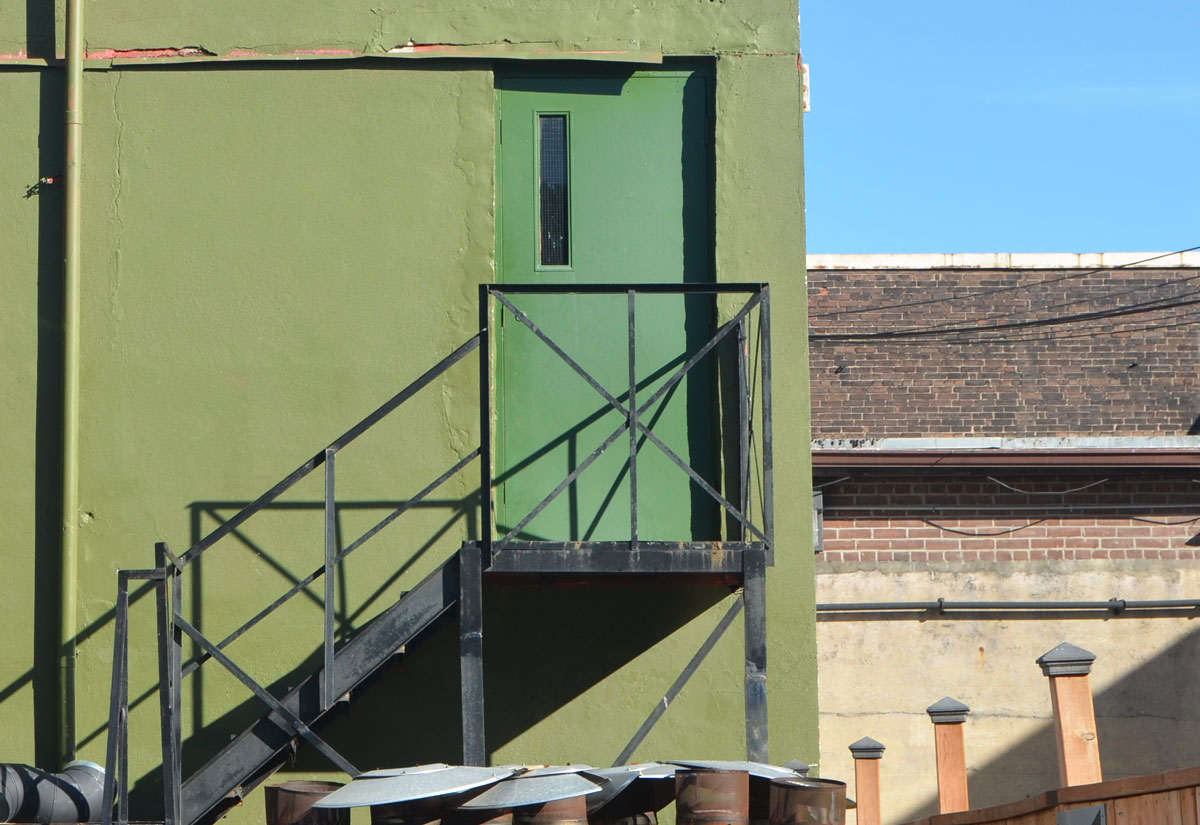
green second story door at top of metal exterior staircase, on a wall that is a different shade of green

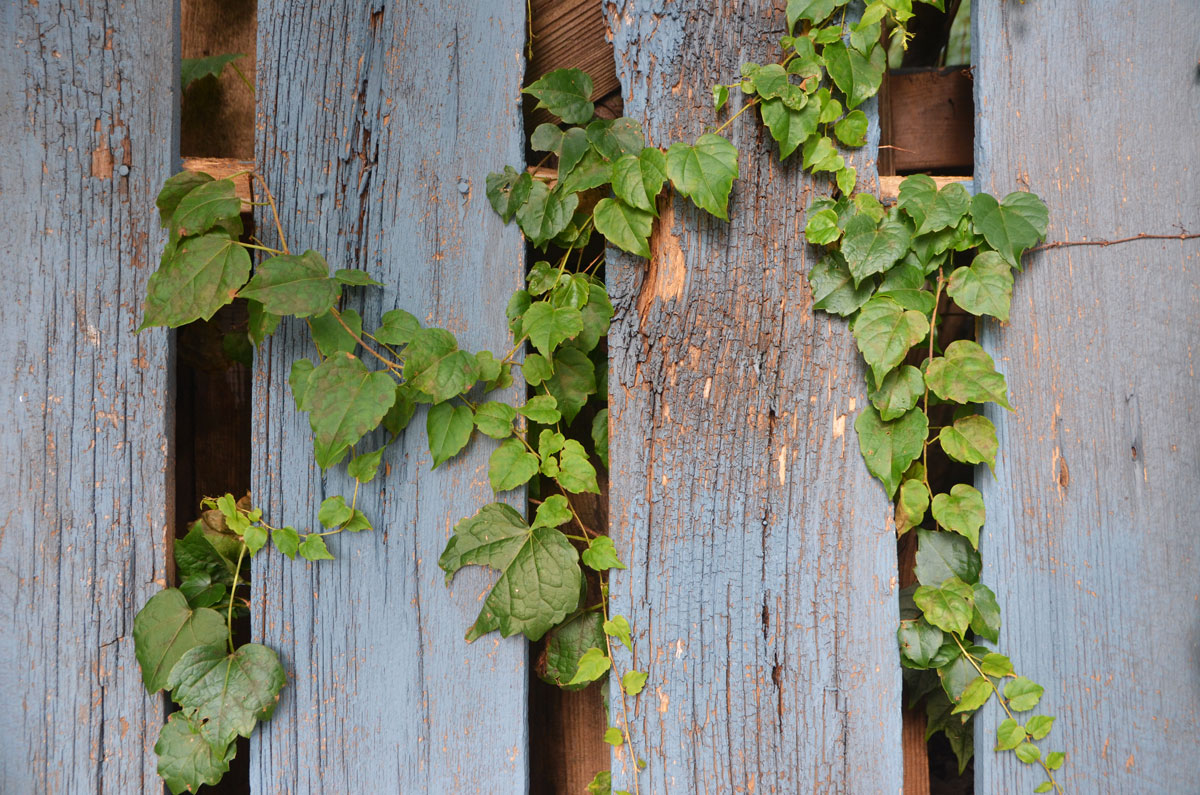
green ivy leaves poke their way through the gaps in a blue weathered wooden fence

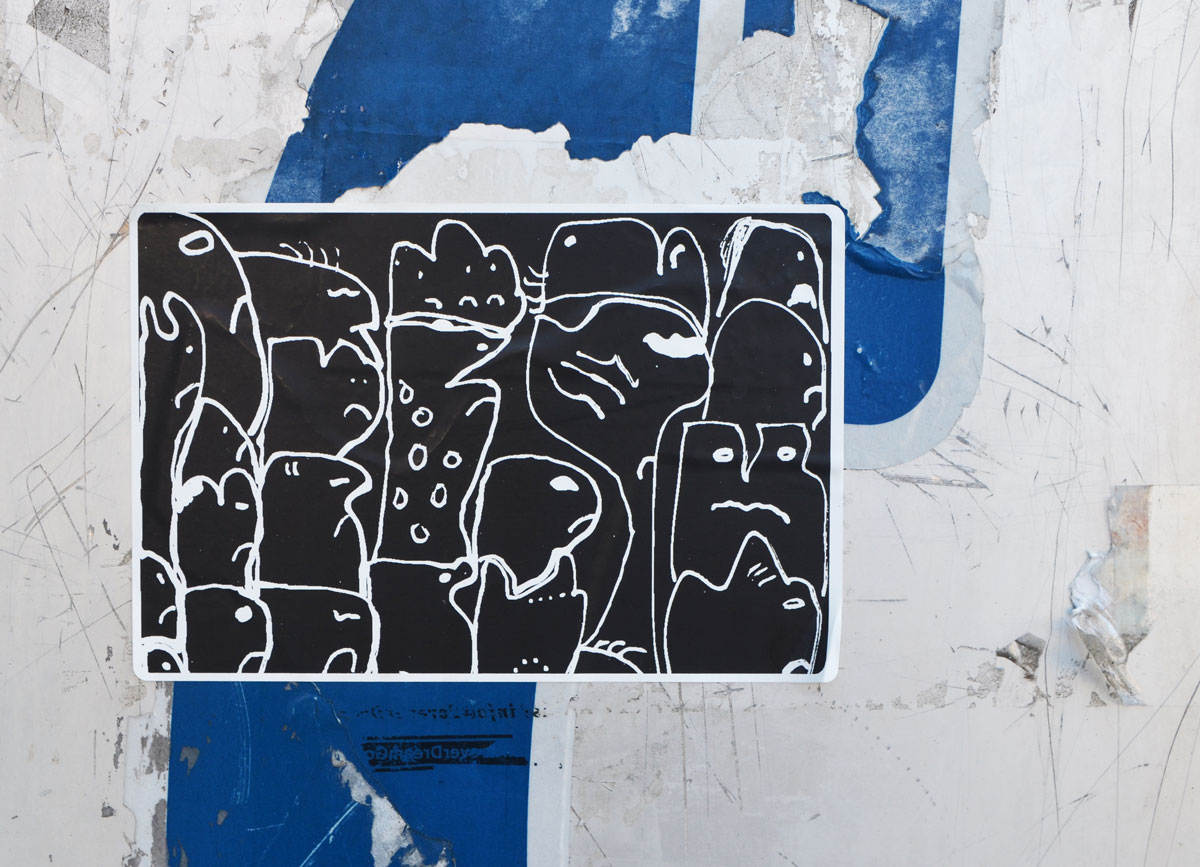
black and white sticker graffiti on the side of a Bell telephone box

They aren’t easily seen from any street but there are now 20 colourful figures leaping and dancing their way along the west side of Bridgepoint Hospital.   You will encounter them if you walk on the path that runs between Gerrard East and Riverdale Park.

below:  Perched high above the Don Valley, they run, jump, leap, dance and celebrate movement of the human form.  They are sculptures by Canadian artist Bill Lishman (with help from Richard Vanheuvelan).

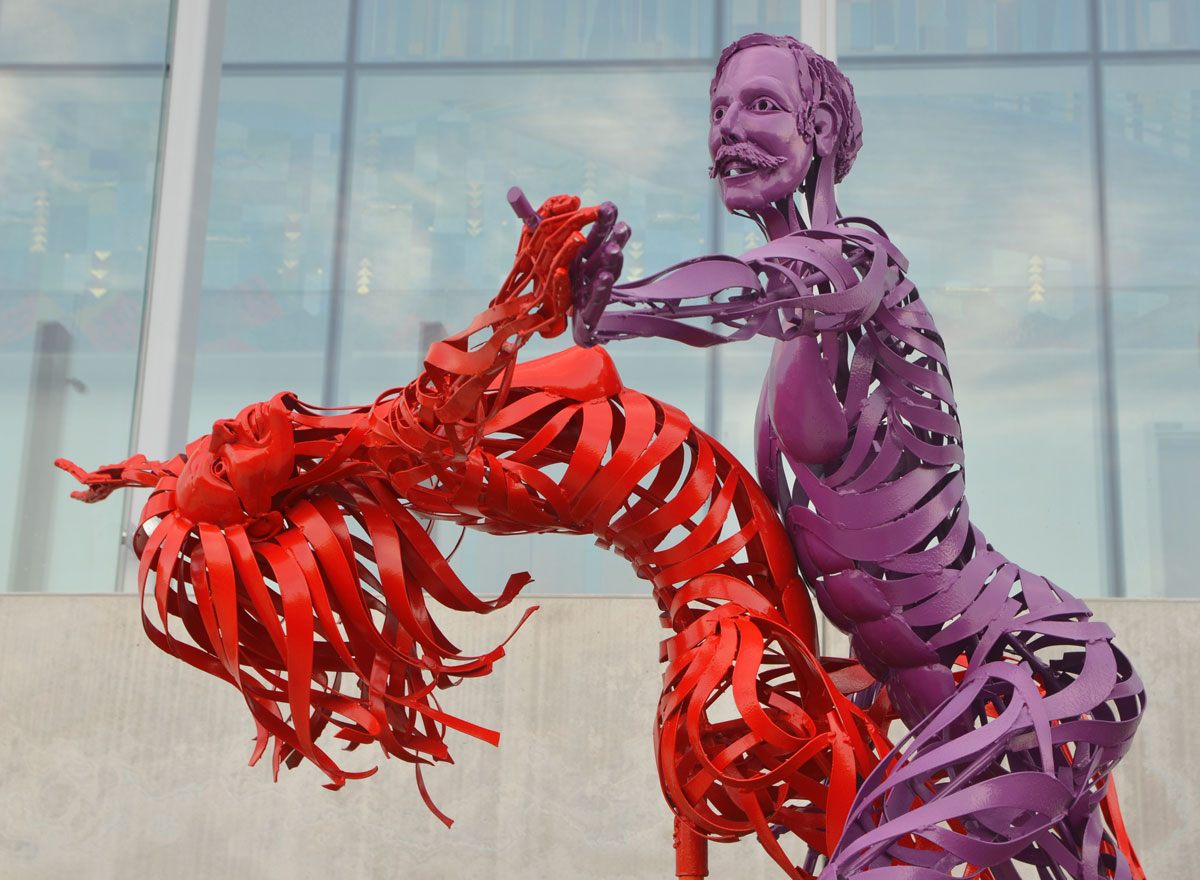
brightly coloured sculptures of figures in various active poses, made of loosely woven metal, a purple woman leaping, an orange man on his back about to catch of blue woman who is leaping head first through the air, and others as well, along the side of a building, the DVP runs beside in the background and the Bloor Viaduct bridge across the valley is in the distance

below: A yellow goggle-wearing snowboarder leaping over the bushes is the first sculpture you come across if you are walking up the path from Riverdale Park.

yellow metal sculpture of a young man in goggles

below: Two of the twenty different figures form ‘The Lambada’ (a dance style originating in Brazil in the 1980’s) by Richard Vanheuvelan.

a purple male figure in metal sculpture is dancing with a woman made of red metal, she is bending backwards while he supports her.

below: More dance, this time ballet in red, blue and purple.   Strength and grace.

sculptures of three figures in ballet poses, one in blue metal, one in red metal and one in purple. Dancing in a garden outdoors

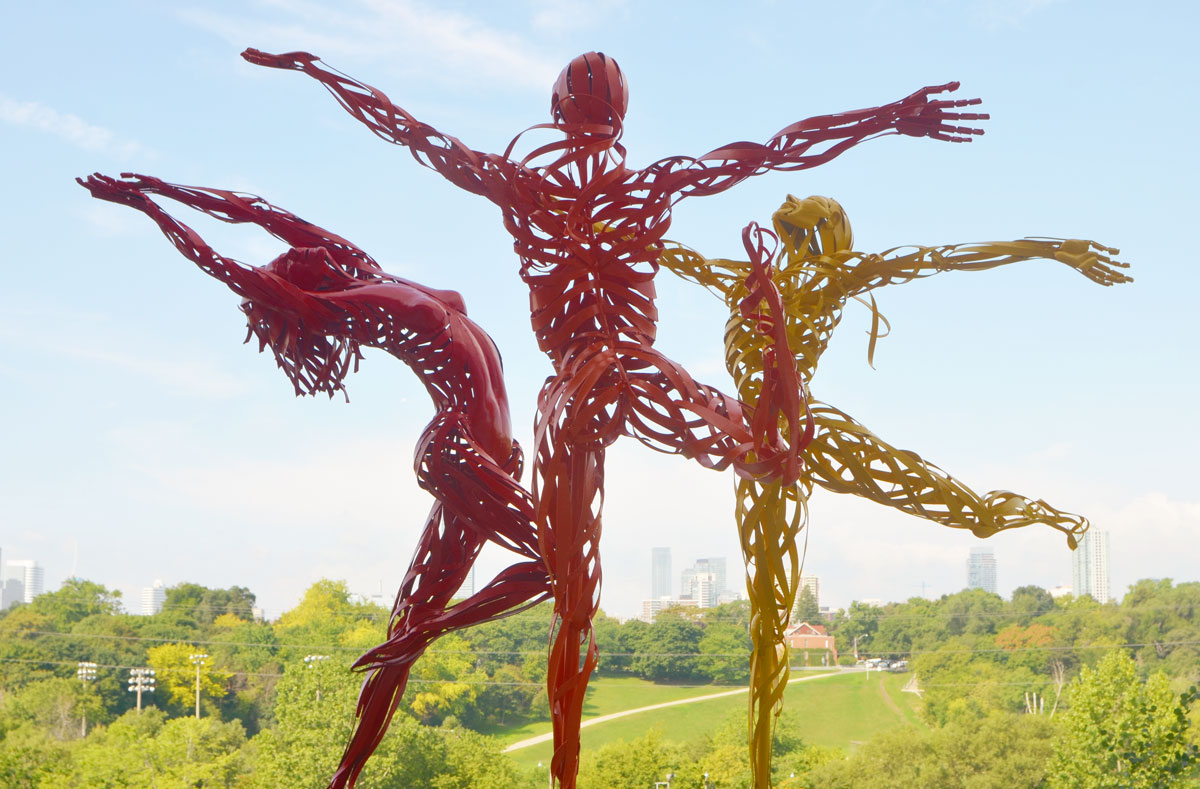
below: ‘The Three Muses’ pose overlooking the city.

outdoor sculptures of three women dancing, one is red metal, one is orange metal and the last is yellow metal. Downtown TOronto skyline is in the distance

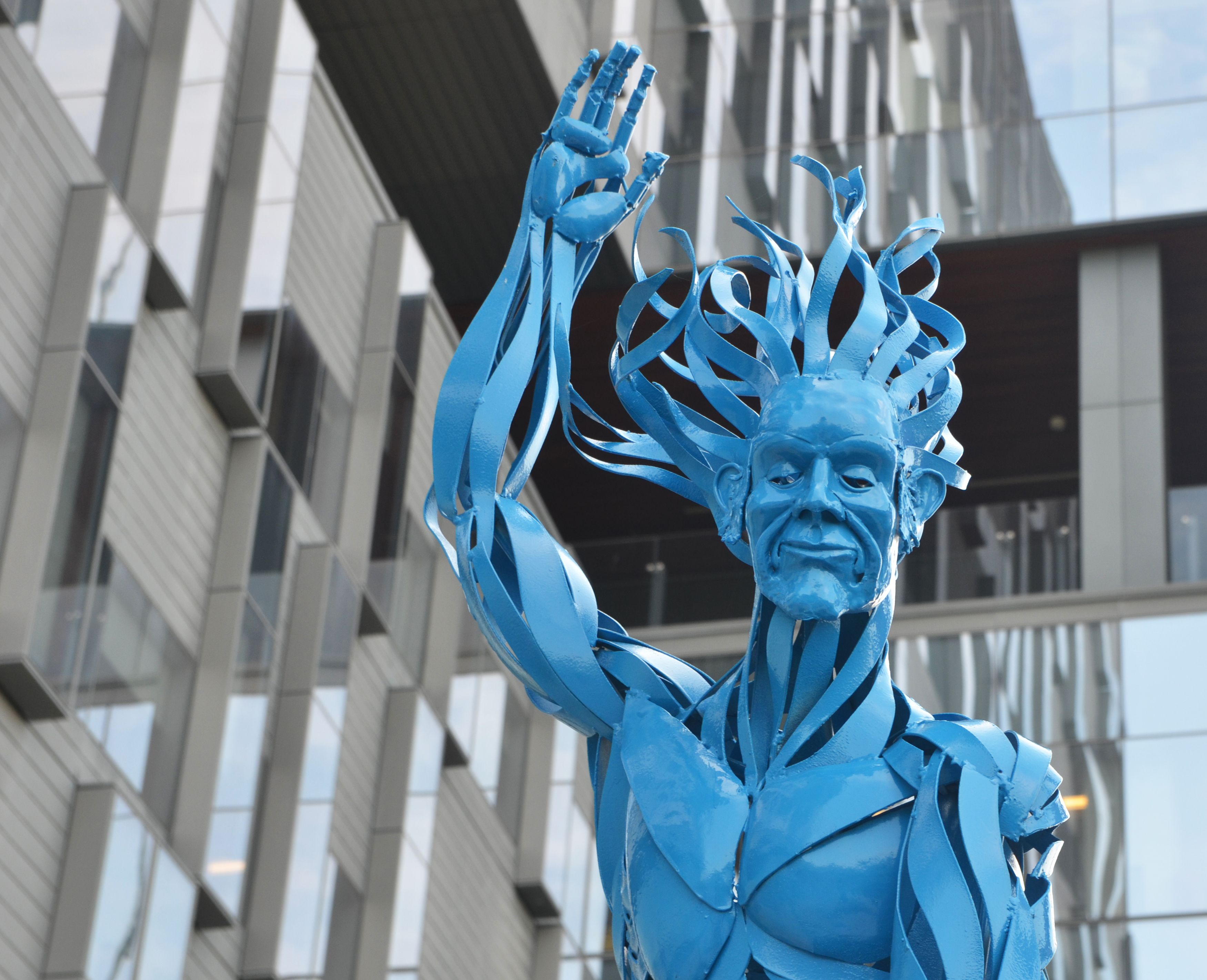
top part of a blue metal sculpture of a man, showing his head, with long hair flowing out behind, one arm raised. The glass windows of a building are behind him, outdoors,

The sculptures were a generous gift from the Tauba and Solomon Spiro Foundation and were originally designed in memory of businessman and philanthropist, Max Tanenbaum (1909-1983).