Posts Tagged ‘history’

The dapper, larger than life Alexander Wood has stood on his corner at Church and Alexander streets for 11years now.  The bronze statue by Del Newbigging was unveiled in May 2005.

Wood came to Upper Canada from Scotland and settled in Toronto (known as York at the time) in 1797.  He was a successful merchant, magistrate, and lieutenant in the York militia.  The plaque on the granite pedestal tells his story.


statue of Alexander Wood, a young man with long coat, and a hat in his hand. The statue is on a large square pedestal so his feet are close to eye level.  Below the statue is a plaque detailing his life as early settler of York, of being a gay, and of being involved in a scandal in 1810.

“Militia Officer, Businessman, Public Servant, Justice of the Peace, Gay Pioneer

Alexander Wood came to Canada in 1793, settled in York in 1797 and started a mercantile business, one of only three stores in York at that time. Within a year he was a lieutenant in the York Militia; he was appointed magistrate in 1800 and by 1805 was a Commissioner for the Court of Requests (a senior planning officer). He was involved in a homophobic scandal in 1810 and fled to Scotland, but in two years he was back in Canada and resumed his duties. In spite of ridicule and discrimination he had a successful career in public service: he was on the executive of nearly every society in York, often as treasurer; he was manager of several businesses and acted for clients in land transactions. Wood died in 1844 at the age of seventy-two while in Scotland. The British Colonist paper called him one of Toronto’s ‘most respected inhabitants’.”

***

There is another bronze plaque on the back of the pedestal, complete with shiny bits.  This plaque adds more details to the story of the 1810 scandal that Wood got himself into.

plaques on a statue. The top is of a man with his pants lowered, the bottom is the story of the scandal that led to Alexander Wood having to leave Canada.  The bare bum on the plaque is shiny from repeated rubbing by passers by.

“1810 The Scandal
In 1810 a woman reporting a rape to Magistrate Wood said she had scratched her rapist. Wood inspected several suspects privately, requiring them to undress. To avoid the scandal caused by his unconventional behaviour, Wood fled to Scotland. After two years he returned to Canada but suffered ridicule and discrimination for the rest of his life.

Alexander Wood 1772-1844
Militia Officer, Businessman, Public Servant, Justice of the Peace, Gay Pioneer”

***

In 1810, word had spread quickly around the town (of 700) and Wood had become known as the “Inspector General of Private Accounts”.    The worst of the scandal blew over while Wood was in Scotland; he was back in York in 1812 and resumed all his previous occupations, including magistrate. At that time, “molly’ was a derogatory word for a gay man and he was nicknamed Molly Wood.

In 1826 he purchased 50 acres of land east of Yonge St. and north of Carlton St. in the neighbourhood where his statue now stands.  It is also the “Village”.  In Wood’s time it was referred to as ‘Molly Wood’s Bush’.  Wood remained in Toronto until 1842 at which time he returned again to Scotland where he died two years later.

There is a railway bridge, just west of Caledonia Rd where the GO line to Aurora passes over St. Clair West.
On the north side of the underpass is a mural in black, white and grey tones.

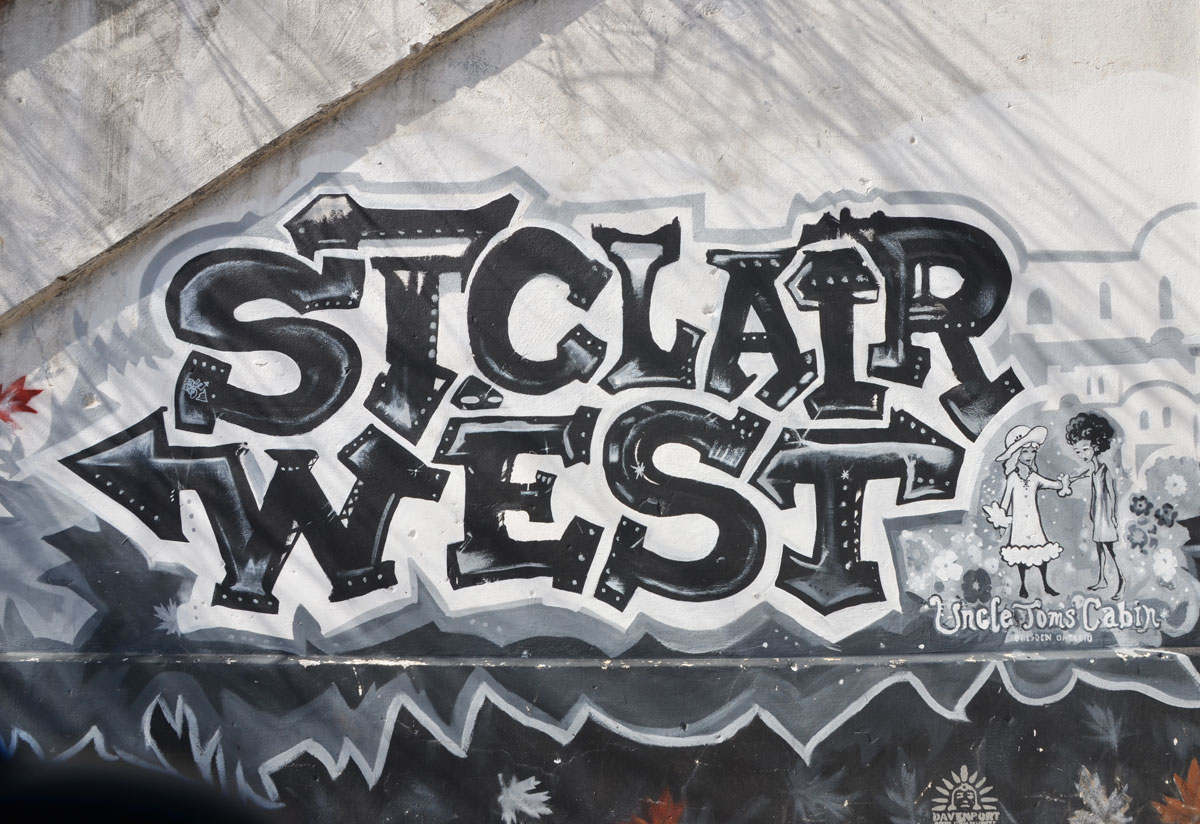
mural in black, white, and grey about the first railway in Ontario, 1853, that was built here, and where the railway still runs as the GO line to Aurora - the words St. Clair West in large letters

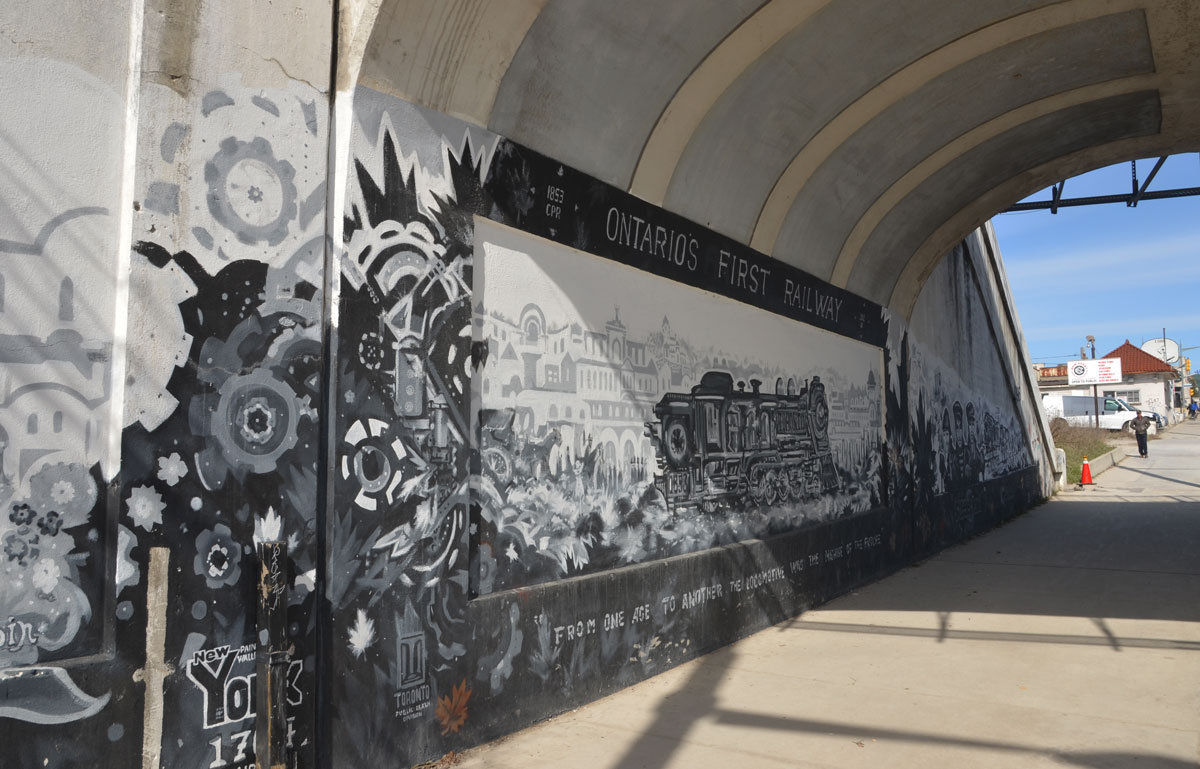
The theme of the mural is “Ontario’s first railway” as this railway line has been in operation since 1853 when the Ontario, Simcoe and Huron railway was built here.

mural in black, white, and grey about the first railway in Ontario, 1853, that was built here, and where the railway still runs as the GO line to Aurora - a photo of the mural from across the street, with its three parts, the words St. Clair West on the left, the locomotive in the middle and the railway workers on the right
The first locomotive built in Canada was a steam powered engine built by the Toronto Locomotive Works, a company founded by James Good.  Named “Toronto”, it was finished in April 1853 and in mid-May 1853 it pulled a short (4 cars) train from downtown Toronto 30 miles north to Machells Corners (now Aurora).   Service on the Ontario, Simcoe and Huron line had begun!

below: “From one age to another.  The locomotive was the machine of the future.”
mural in black, white, and grey about the first railway in Ontario, 1853, that was built here, and where the railway still runs as the GO line to Aurora - a painting of an old locomotive with the words 'Ontario's First Railway' on the top of the mural and the words: "from one age to another. The locomotive was the machine of the future. " at the bottom

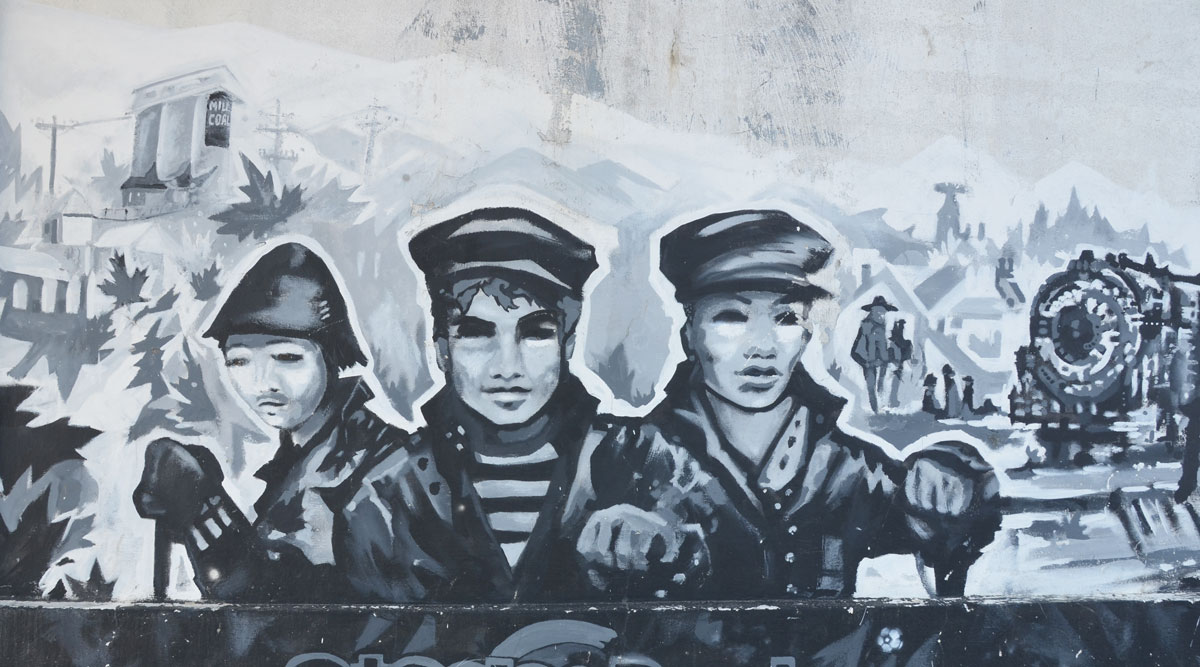
mural in black, white, and grey about the first railway in Ontario, 1853, that was built here, and where the railway still runs as the GO line to Aurora - three railway workers in jackets and caps

The mural was painted in September 2012 by Marcelo Pinero, Aelwynn Swanson, and Pia Ferrari from the Davenport Arts Community.

blog_mural_first_railway

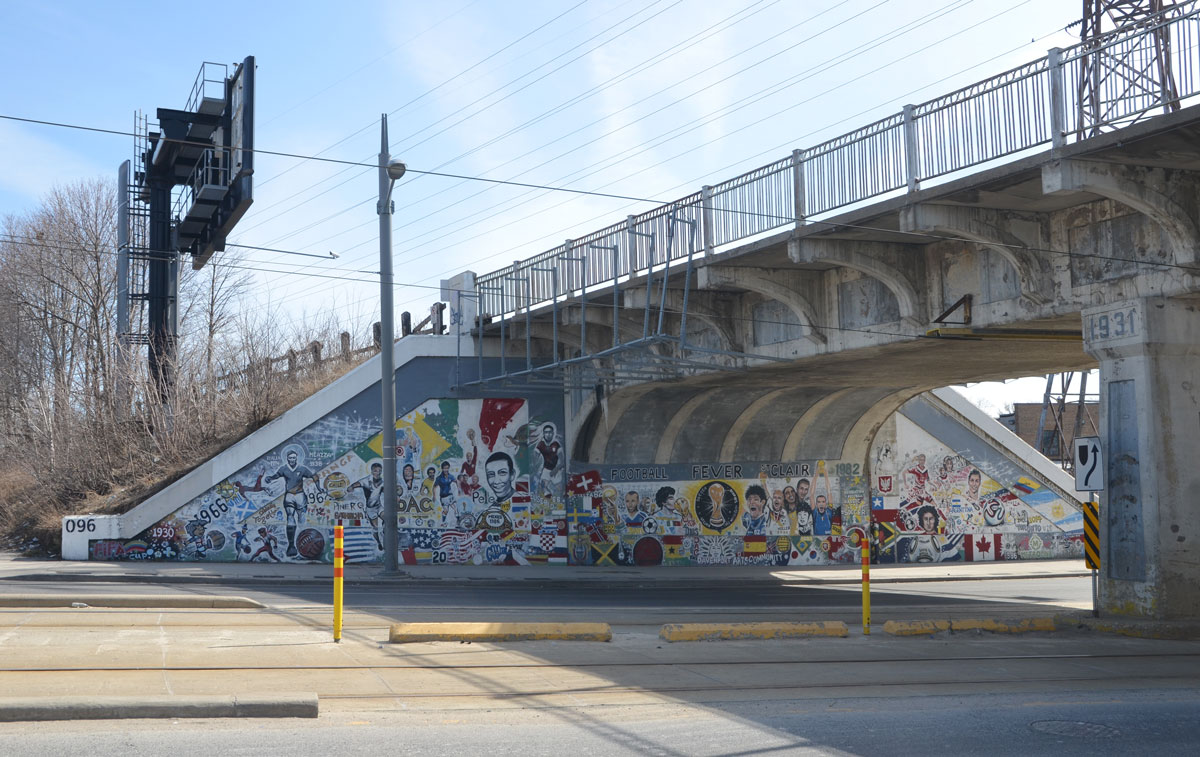
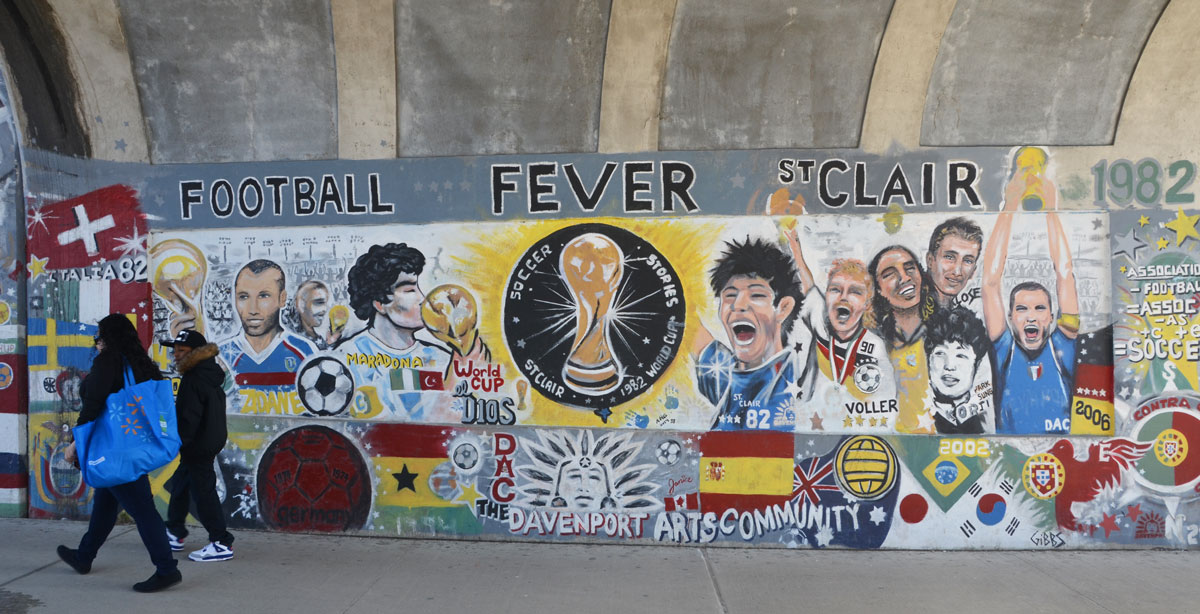
There is also a mural on the south side of the underpass; it has a soccer theme.

mural on a railway bridge underpass that has a soccer theme. Flags of different countries, soccer players, words,

It too was painted by Davenport Arts Community.

part of a mural with a soccer theme with words that say Football Fever St. Clair 1982. also with pictures of football players and flags from different countries.

part of a mural with a soccer theme with words that say Football Fever St. Clair 1982. also with pictures of football players and flags from different countries.

below: Silverthorn Sunrise mural painted late in 2012 by Marcelo Pinero and Aelwynn Swanson.  It is painted on the side of Whiteside Pharmacy which is on the NE corner of St. Clair and Silverthorn.   Silverthorn was also the name of this neighbourhood prior to 1998 when it was amalgamated into the City of Toronto.

Silverthorn Sunrise mural by the Davenport Arts Community, with the word Silverthorn, a sun rising over a bridge while a new TTC streetcar passes under the bridge, the words "shop St. Clair". The mural is on the side of a red brick building, beside a pharmacy.

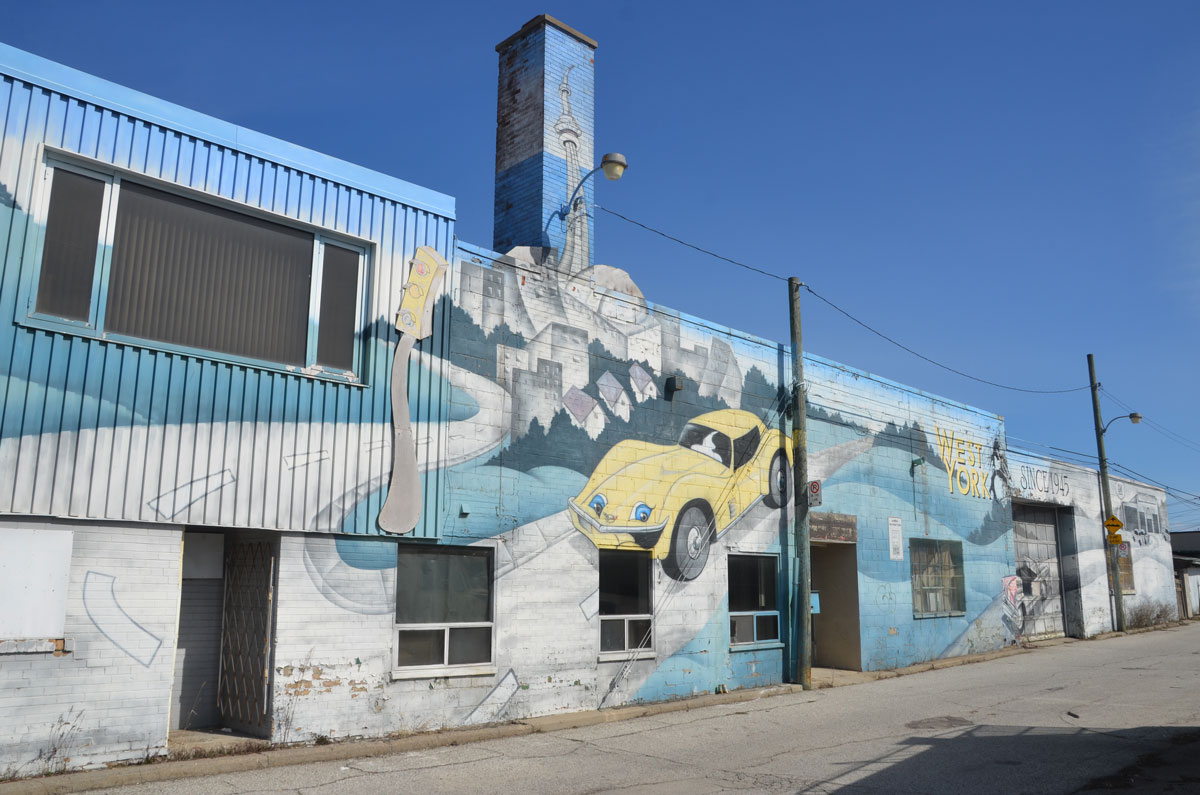
And last, a mural that is actually on the side of business, West York Motors, which is located on St. Clair West between Ford and Osler streets.
It was painted by Splash Murals.

mural on the side of West York motors on St. Clair West - a view of the mural from across the almost empty parking lot.

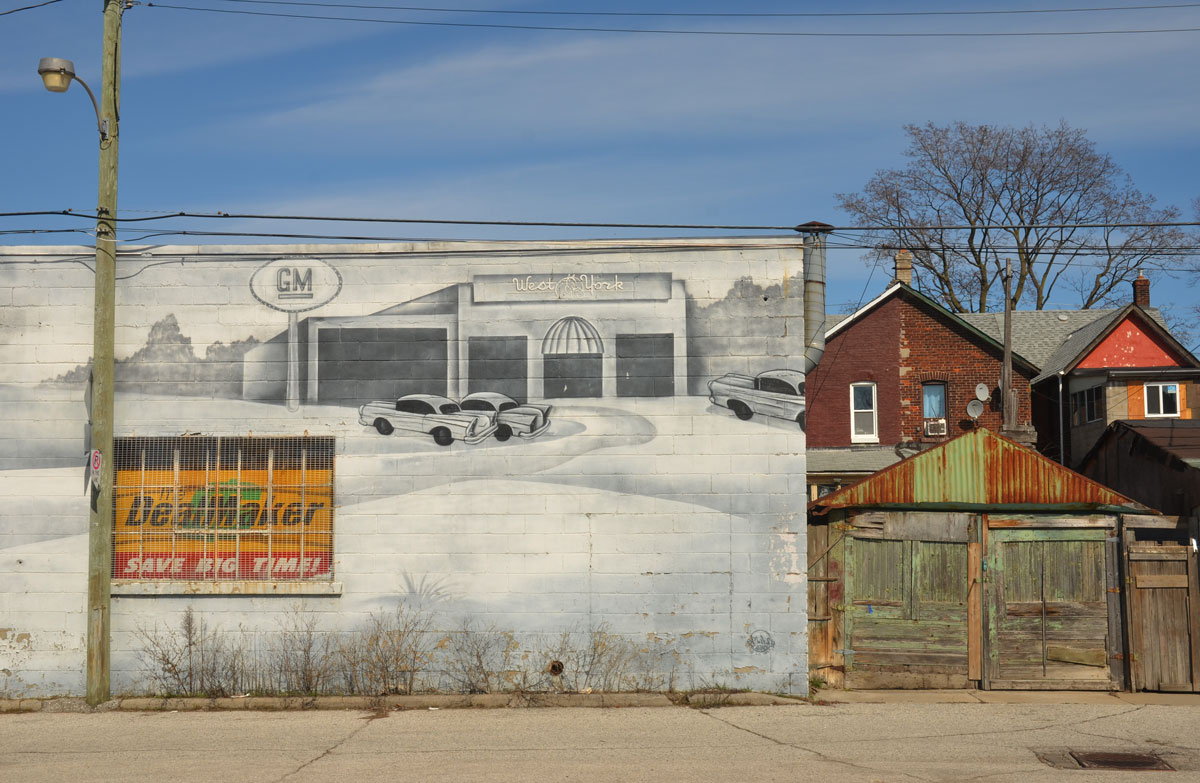
mural on the side of West York motors on St. Clair West near Osler - south end of the mural showing cars parked in front of a garagethe backs of two houses are also in the picture,

mural on the side of West York motors on St. Clair West - looking down the length of the mural including the narrow chimney on which the CN TOwer is painted.

mural on the side of West York motors on St. Clair West - the part of the mural with the words "West York since 1945" also an old convertible with its door open and top down.

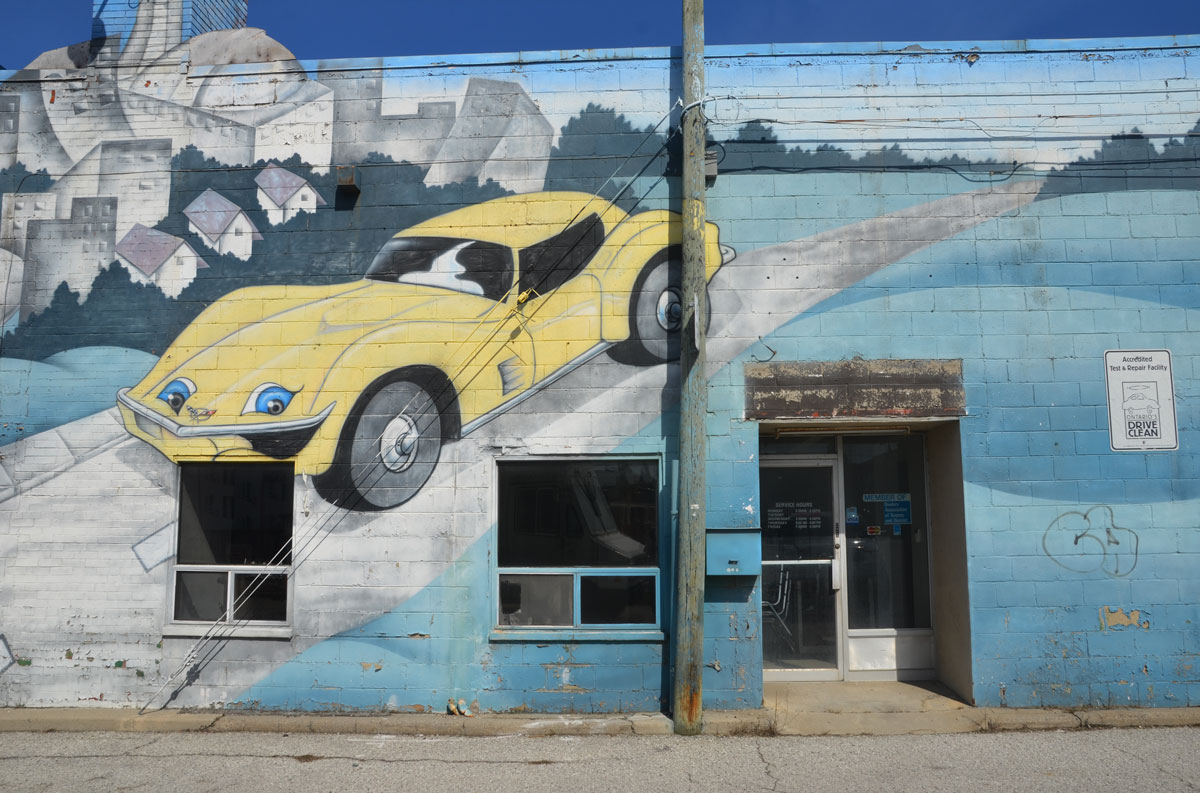
mural on the side of West York motors on St. Clair West - a yellow sports car is painted on the wall near the entrance to the building

more information about the Davenport Arts Community

A walk along Queen Street East from Broadview to Greenwood.

A no smoking sign written on a piece of paper that is upside down, as viewed from the other side of the window. Looking out onto a patio.

below: Welcome to Riverside, mural at the corner of Queen and Grant streets featuring the sign on the Queen bridge as it crosses over the Don River.

People walking past the intersection where there a mural for Riverside area of Toronto, TTC streetcar in the mural. It is on the upper floor of a two storey brick building.

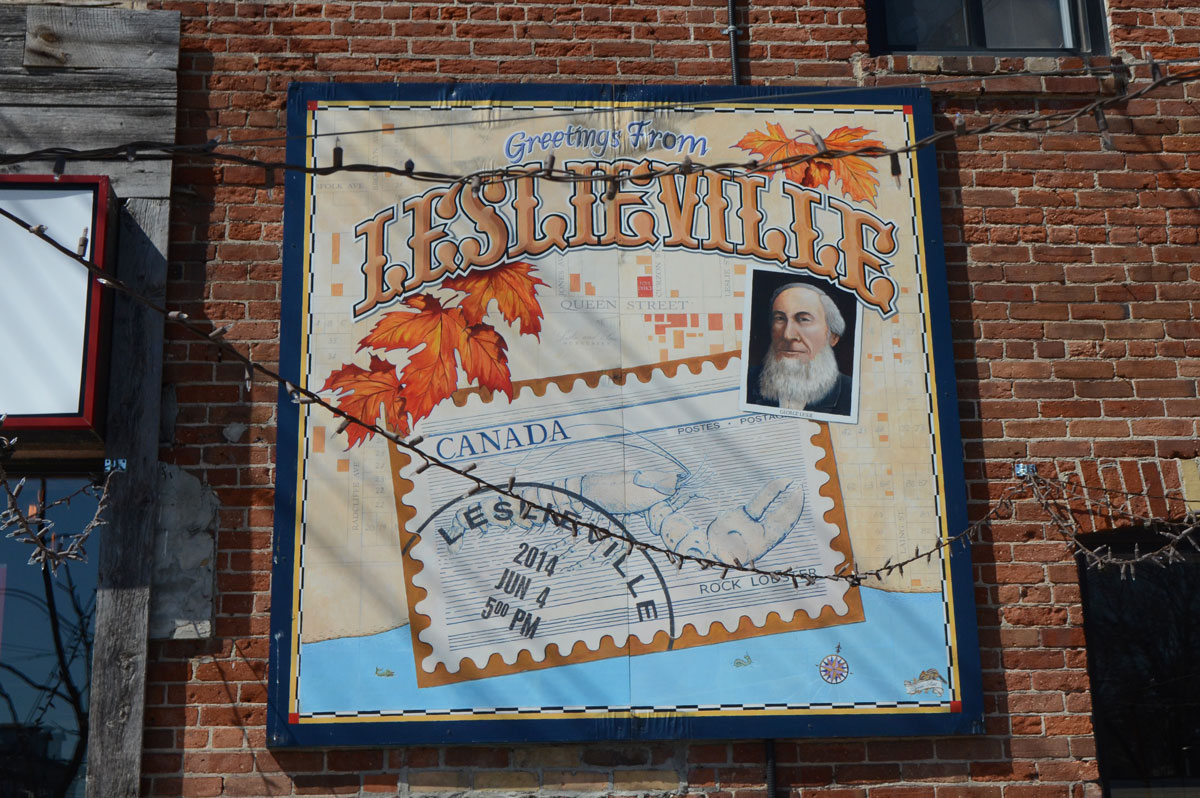
below: Farther east on Queen Street, at Curzon,  there is this ‘Greetings from Leslieville’ mural.

One of the Leslieville murals. Greetings from Leslieville with a postcard on it.

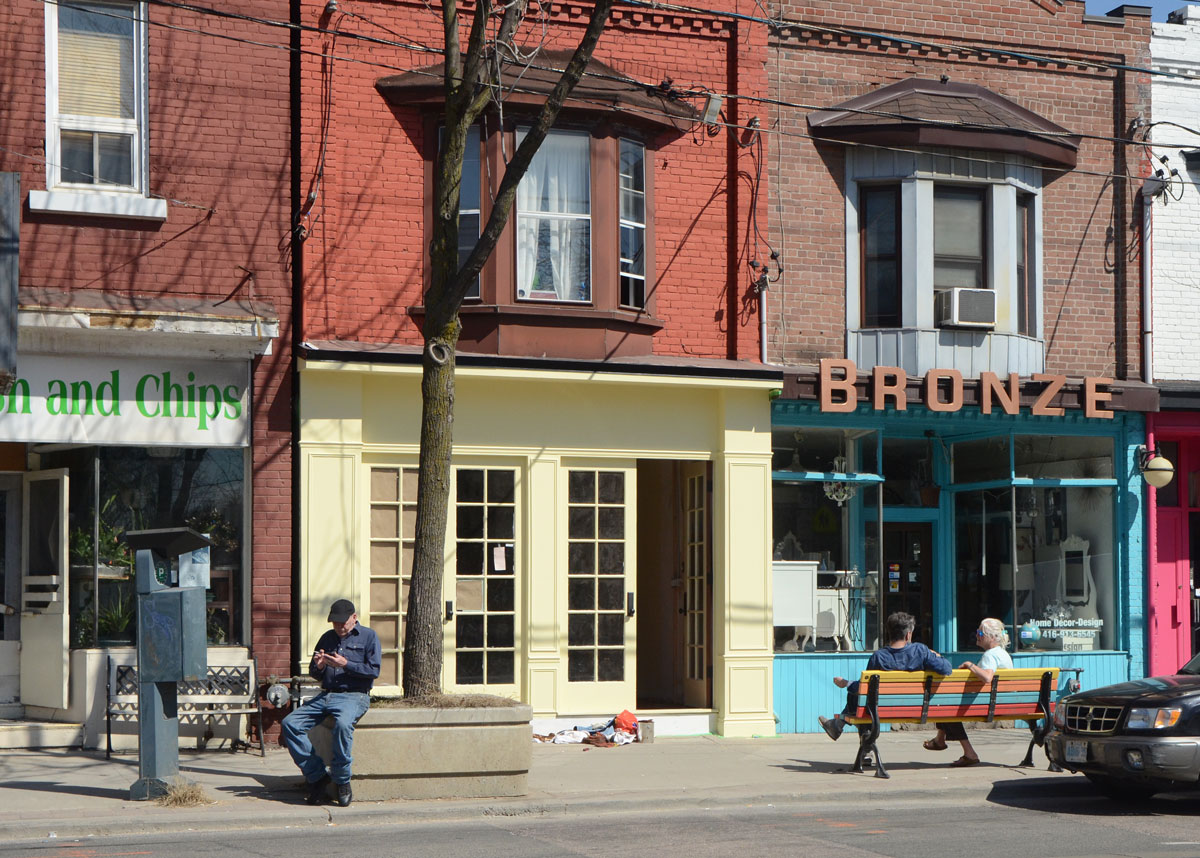
There are many interesting little stores on this stretch of Queen Street.
All the benches have been painted in cheerful colourful stripes.

Looking across the street at a man sitting on the edge of a concrete planter for a tree as well as a multicoloured striped bench with two women sitting on it. They are in front of two storey brick buildings with stores on the bottom level and apartments on the top. One of the stores is Bronze.

Rubiks cubes and large red and white dice in a store window, some real and some reflected in a a mirror on the wall.

looking into the window of a pharmacy, a toy troll is in a white mug. The mug has red lettering - Yours pharmacy. Also a mortar and pestle in the window along with a box with medicines for influenza

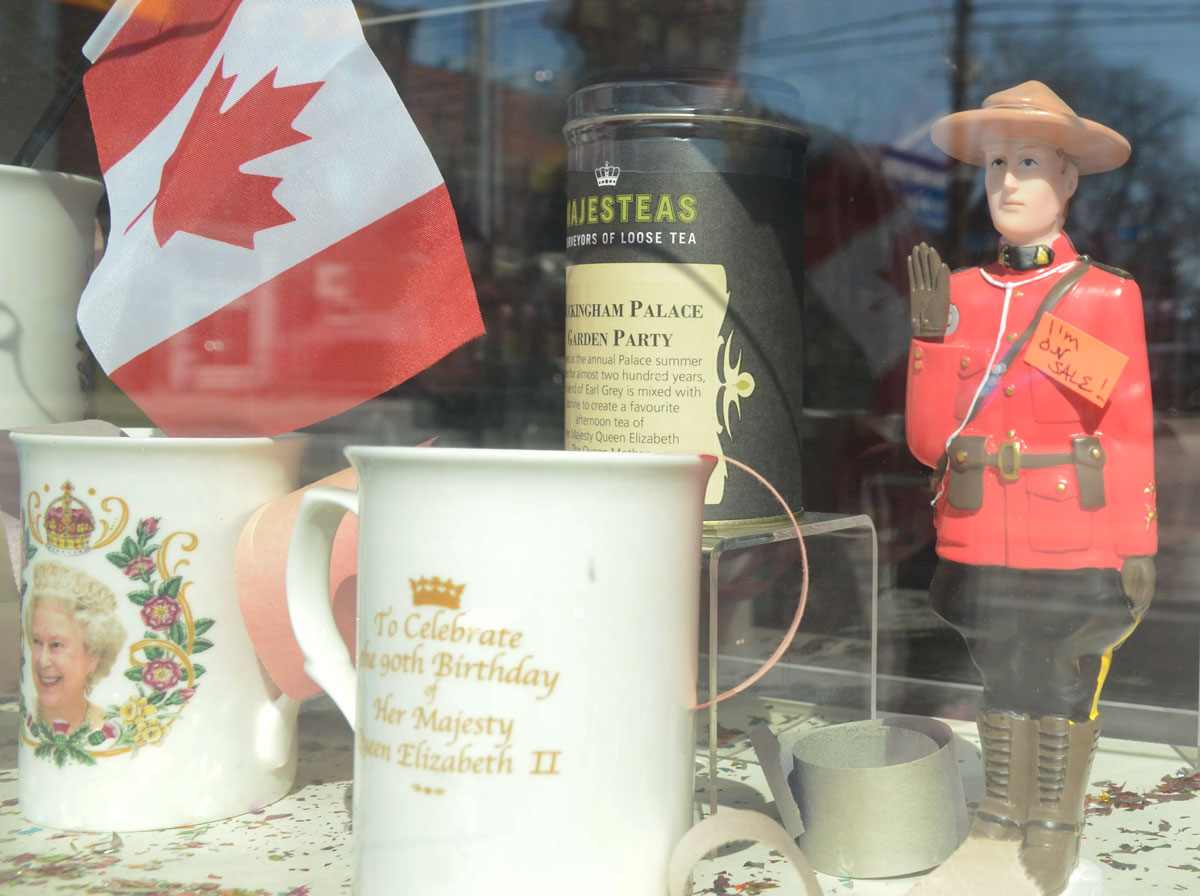
below: On the 21st of April (yesterday), Queen Elizabeth II celebrated her 90th birthday.
A number of stores and restaurants had displays in her honour.

items in a store window. A Canadian flag, a mountie figurine that waves, two mugs featuring Queen Elizabeth and a container of tea.

A picture of Queen Elizabeth hangs on a wall in a cafe, seen through the window with reflections of the sky. There are red chairs in the cafe

Queen Street East was developed as long ago as the mid 1800’s and remnants of various decades can be found as one explores the area.
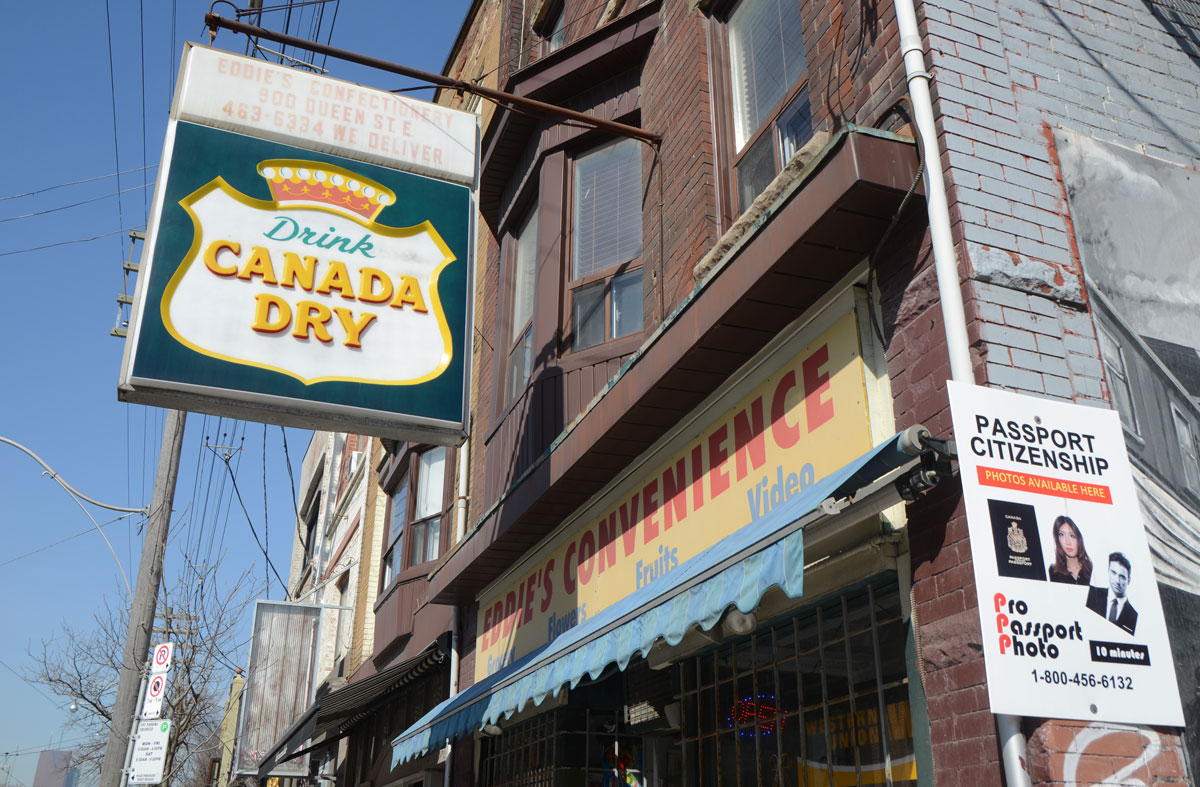
below: … details such as this fading Canada Dry sign.  The formula for Canada Dry ginger ale was developed in the early 1900’s by John J. McLaughlin, of the same McLaughlin family whose early automobile factory led to the start of General Motors.  This ginger ale was patented in Toronto in 1907.  Usually the words ‘Canada Dry’ are written in red, not yellow.   Is there a time when Canada Dry used yellow lettering?

An older Canada Dry advertisement sign hangs over the entrance to Eddies Convenience Store on Queen St East.

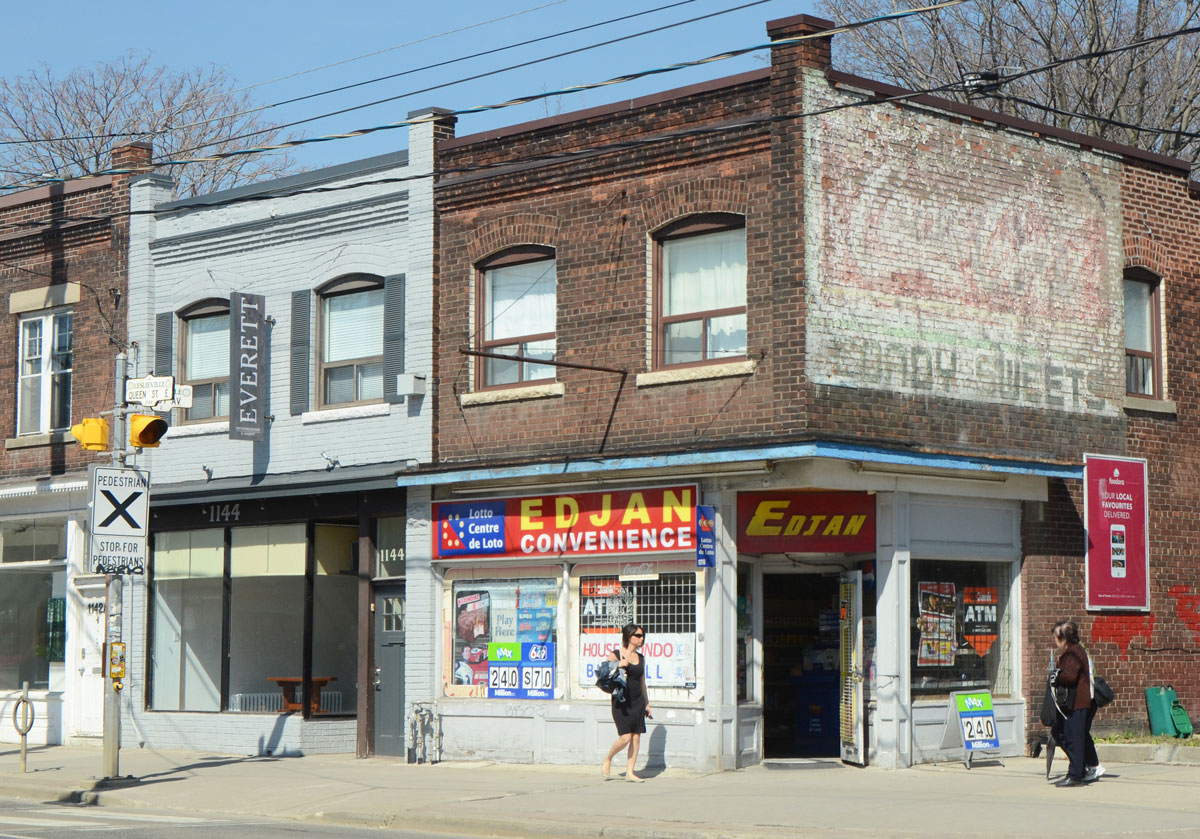
below:  At the corner of Queen and Coady there is also a ghost sign for Coady Sweets as well as an advertisement for Coca-Cola.

On a corner, Edjan Convenience Store with people walking past it. On the side of the upper floor of the two storey brick building is a ghost sign advertising coca cola and Coady Sweets. At the corner of Coady and Queen St. East in Leslieville Toronto
  below: Call it luck – even a vintage car drove past while I was there.

A black vintage car drives by on Queen St East

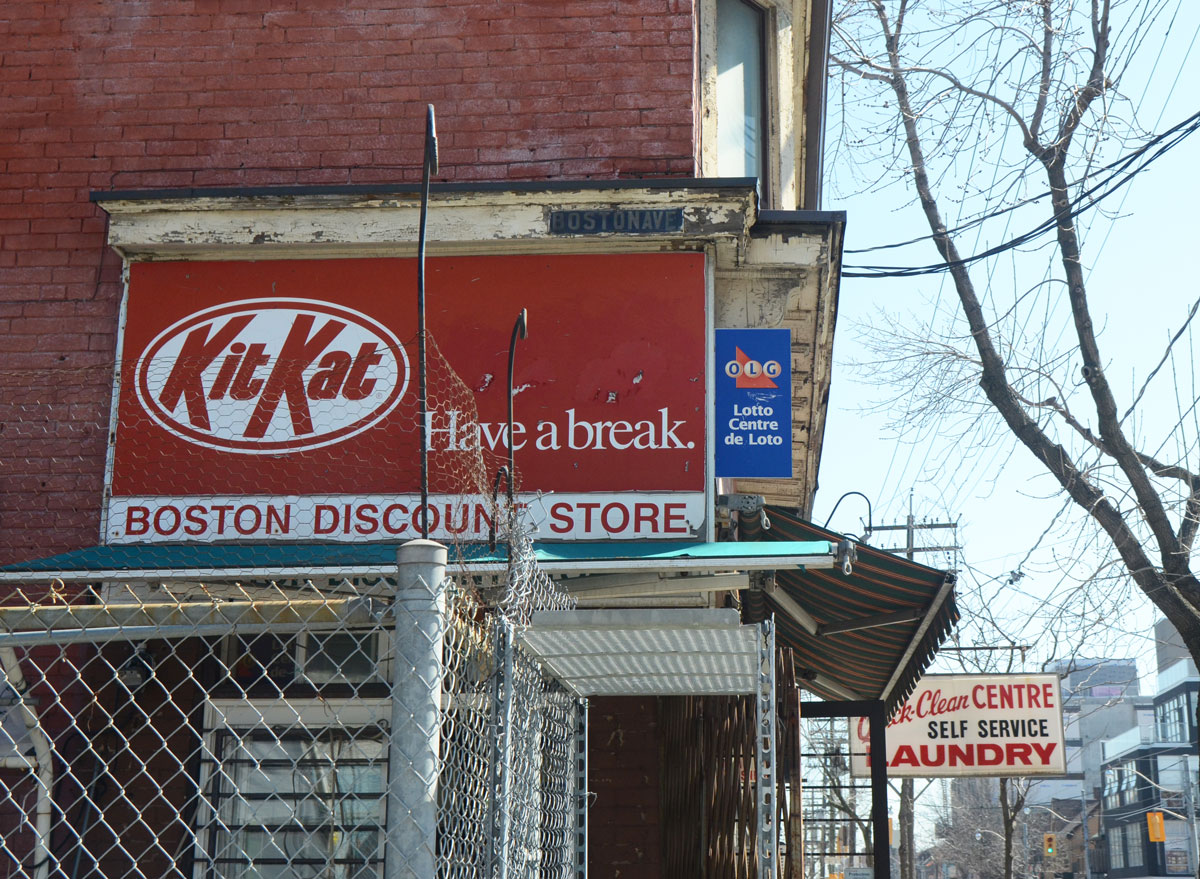
below: An old KitKat advertisement on the side of Boston Discount Store.  If you look closely, there is also an original Boston Ave street sign at the top right of the KitKat ad.

Side of a convenience store with an ad for KitKat, have a break, is painted on the side. Boston Discount Store on the corner of Queen St. East and Boston Ave

below: Even older are the buildings in the mural of Queen St. East circa 1926.  I am not sure if this an accurate depiction of a particular stretch of Queen Street.  It might be interesting to do some research to find out if the picture can be retaken, 90 years later.  So far I have been unable to find out anything about a Jackson Brothers store on Queen East.

Black and white mural of historical picture of Queen St East

below:  A sign of the new, some of the new TTC streetcars are now running along Queen Street.

The side of a new TTC streetcar behind a striped bench on a sidewalk

below: A mural depicting Frank Zappa along with the words
“Stupidity has a certain charm.  Ignorance does not.”

A mural of Frank Zappa on the upper floor of a two storey building. Also includes the words Stupidity has a certain charm, ignorance does not.

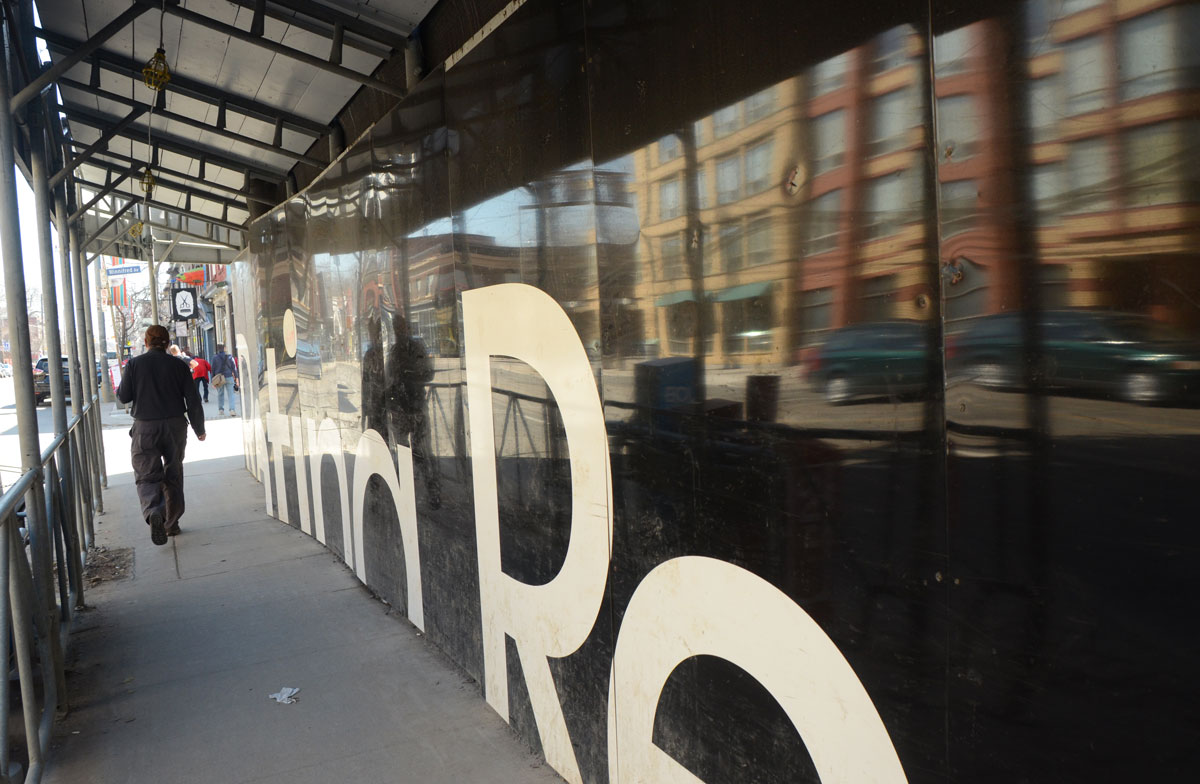
below: Like so many places and streets in Toronto, there are condos going up here too.

reflections in the shiny black hoardings around a condo construction site. buildings, car, people

A young man walks past the Value Village Donation Center that has a large window with 3 mannequins in it. A bike is parked in front.

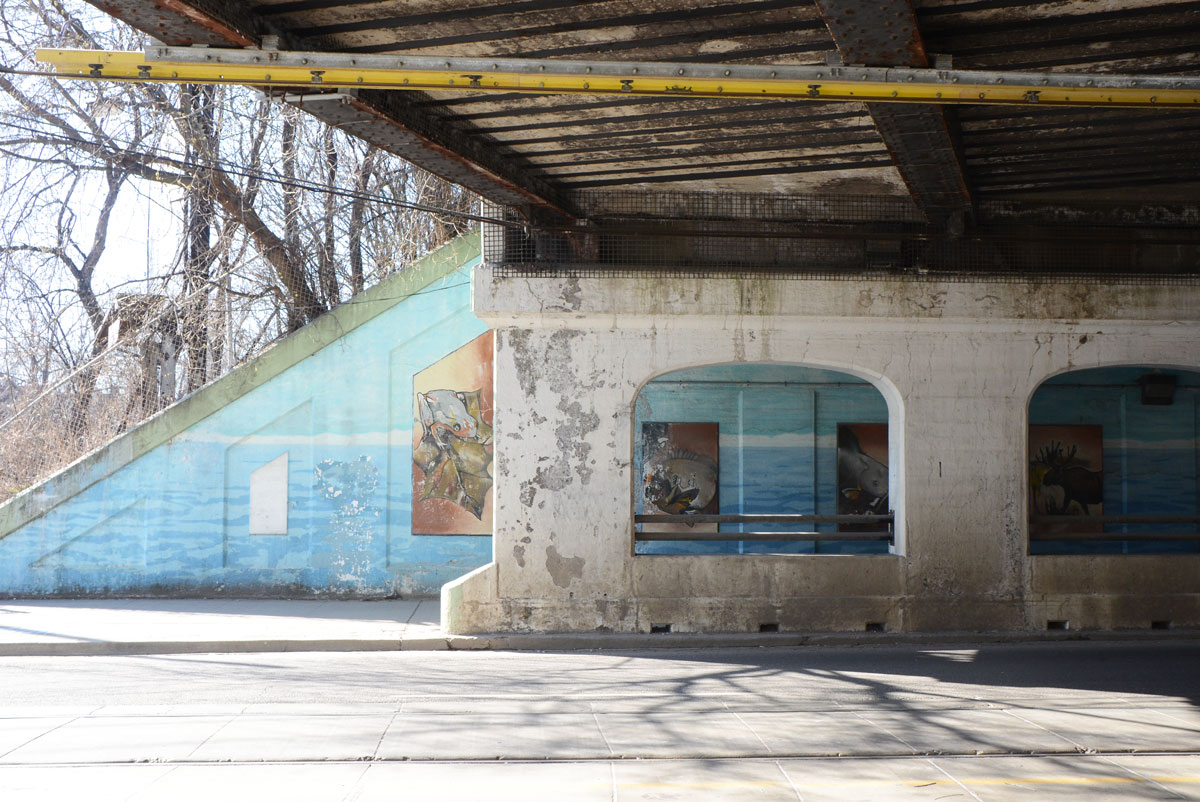
below: The railway tracks pass over Queen Street.  A number of years ago the underpass was decorated with paintings of different animals and those paintings remain in good shape.

A small section of the railway bridge over Queen St. East near De Grassi. The far wall is painted light blue and there are picture of animals on it.

below: Once upon a time trains served this area.  There was a railway station here but it is long gone.

historical plaque describing the history of Riverdale train station at Queen St. East and De Grassi St in Toronto

transcription:

“In 1896, the Grand Trunk Railway opened its Queen East Station to serve Toronto’s growing east end.  Renamed Riverdale Station in 1907, the building stood here on De Grassi Street at Queen Street East.  Its dramatic turret, bay window, and a deep overhanging roof were defining features typical of small railway stations of the period.

In 1904, a streetcar collided with a freight train at the level crossing on Queen Street East, killing three people and injuring 18.  This and subsequent accidents led to the elevation of the new Union Station railway corridor above city streets and sidewalks.  The station was moved in 1927 to accommodate the new embankment for the underpass, the first of nine to be completed.  Dwindling passenger numbers during the Great Depression led to the closure of Riverdale Station in 1932 and its demolition in 1974.”

below: Looking west from under the railway bridge.

Photo taken from under a bridge, looking west along Queen St. East, cars on the street, a restaurant on the corner, and some women on the sidewalk.

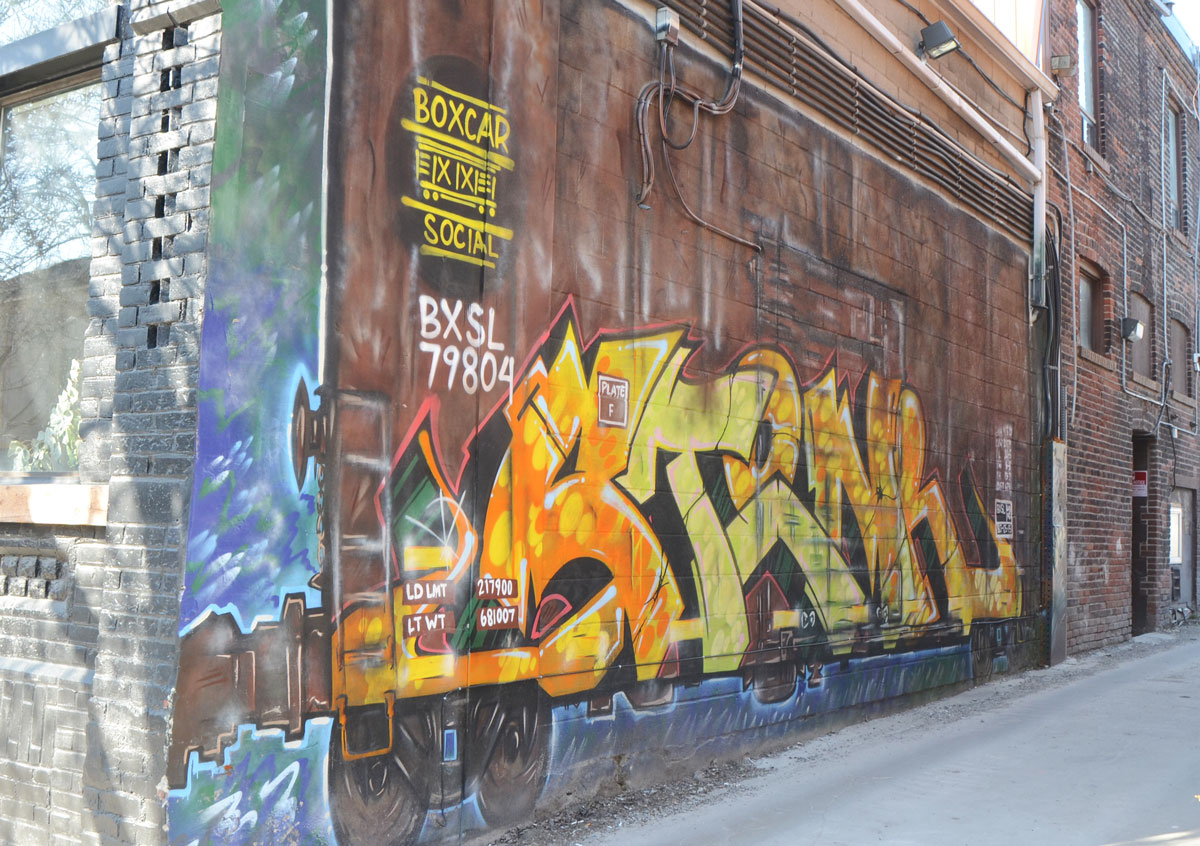
below: A train themed mural in an alley just off Queen Street.

Street art painting of a brown train boxcar, with a yellow and orange tag on it, on the side of a building in an alley.

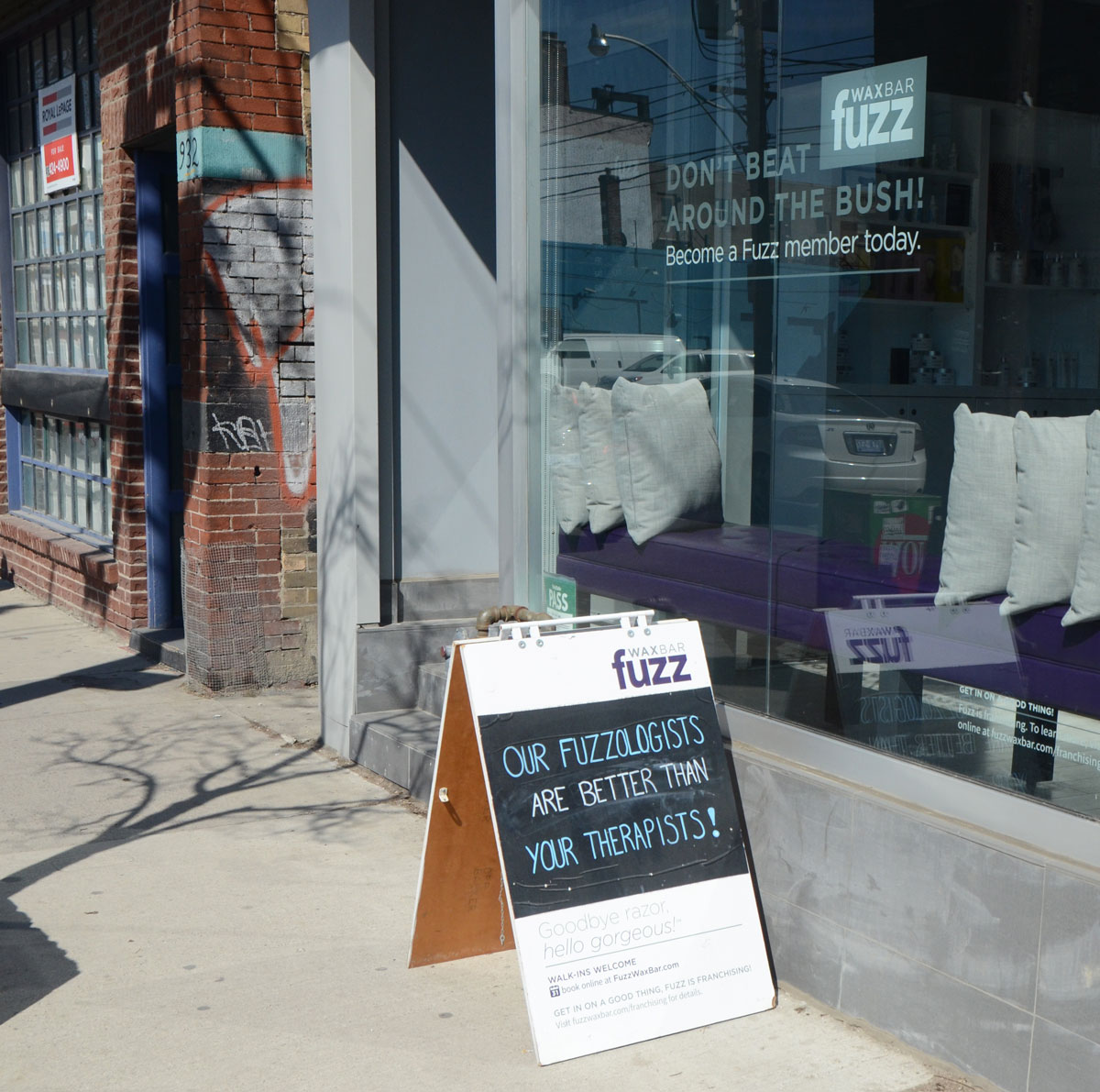
board outside Fuzz salon.

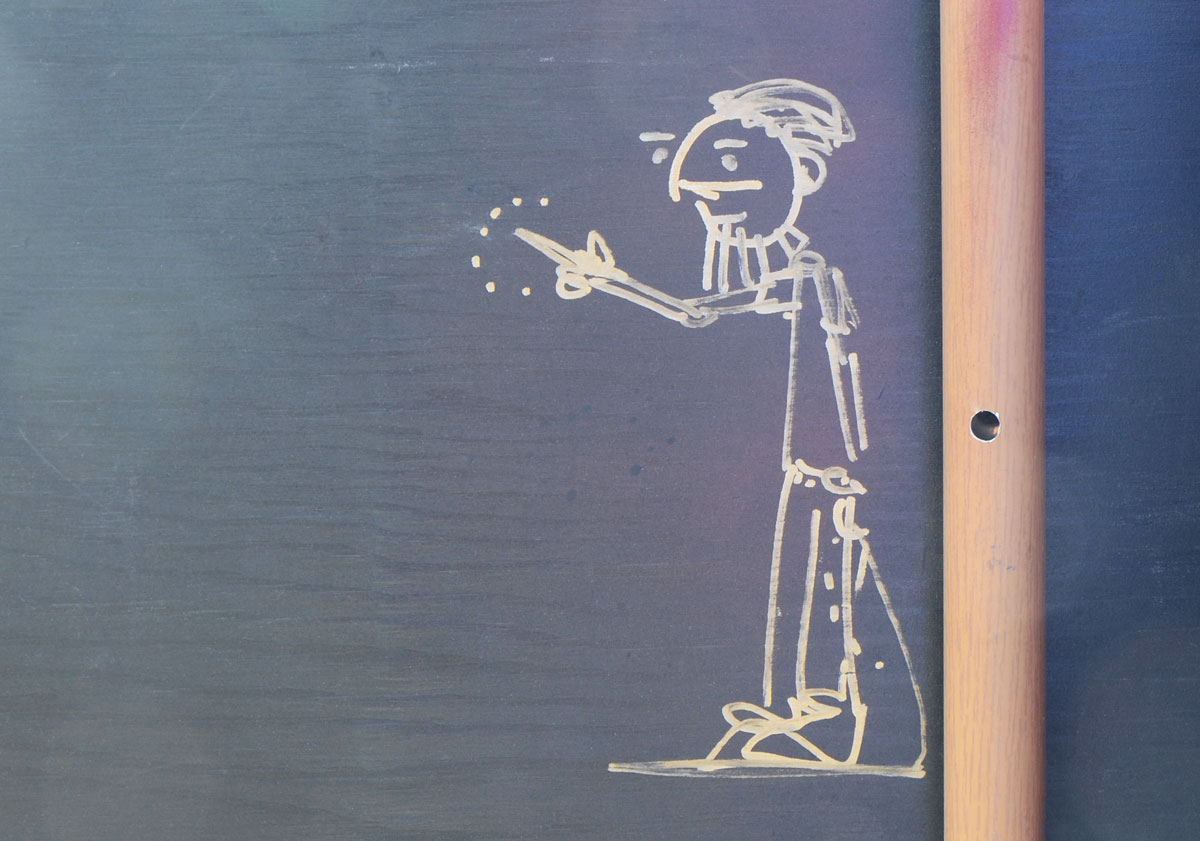
graffiti, white stick drawing of a man with a beard pointing his finger, or giving someone the finger, hard to tell

Two brick stores on Queen St East, two storey. One is the OKOK diner with a mural on the side of it that features an older version TTC streetcar.
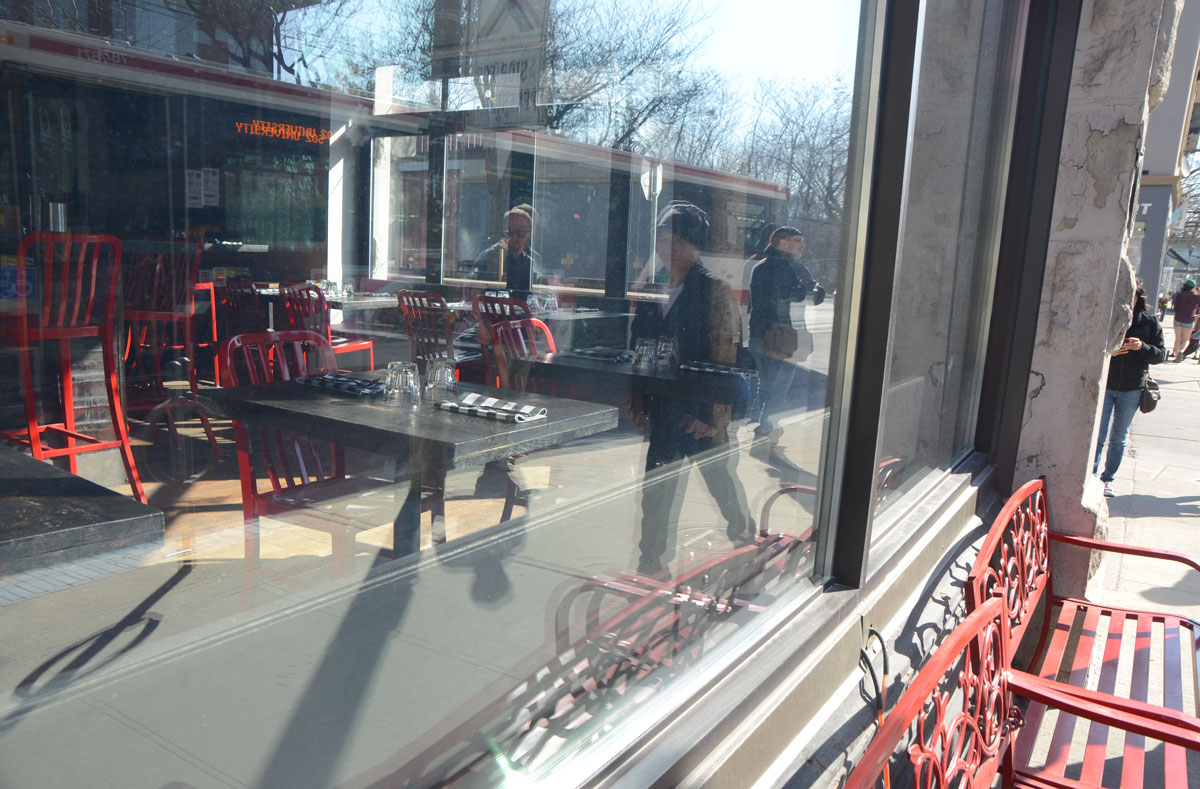
reflections in the window of a cafe. Red benches are outside the window. People, TTC streetcar

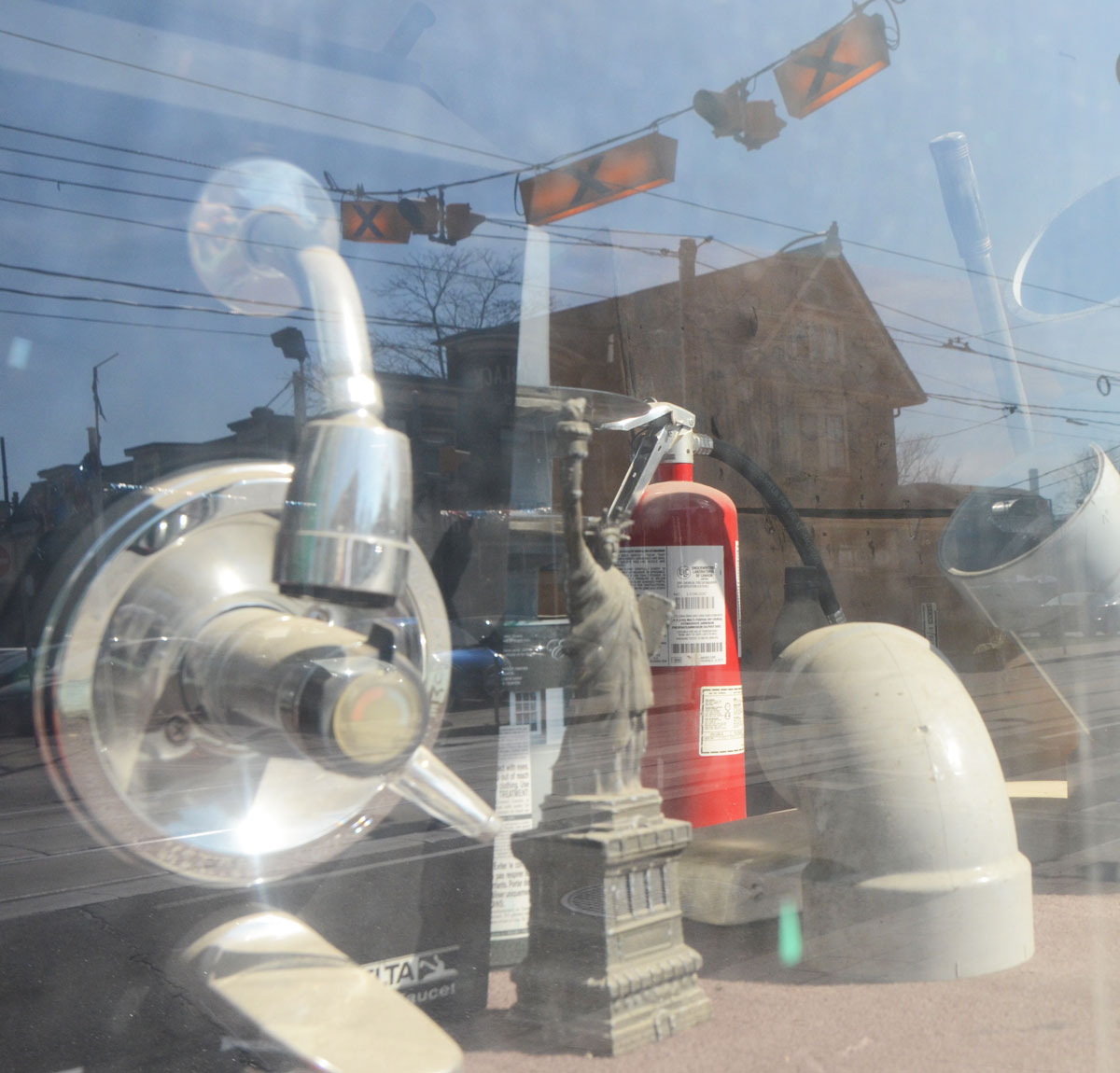
Looking into a store window. A small model of the Statue of Liberty, a fire extinguisher, a pump and some PVC pipe parts. Reflections of sky, buildings from across the street and a yellow set of lights above a cross walk.

The painted sign on the door of Dangerous Dan's restaurant that says, No bathrooms, no change, no outside food, no kidding.

The eastern end of the Kay Gardner Belt Line Park crosses over Yonge St and the subway just south of Davisville station.  It then runs across the north side of Mt. Pleasant cemetery.  It comes to an end at Mt. Pleasant Road where the trail merges into the roads that run through the cemetery.

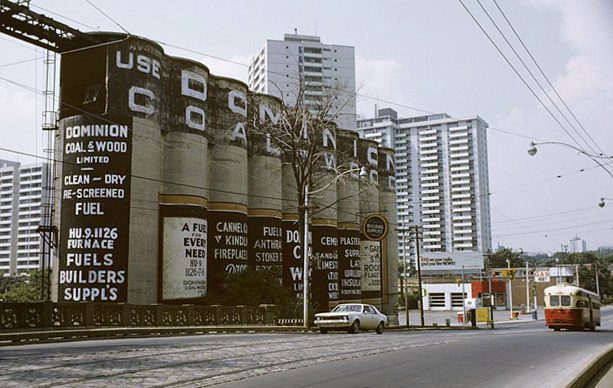
In 2014 students from Greenwood School painted a mural at this location.  The mural has three main elements.  A train to represent the Belt Line, the name of the community that it is located in (Mt Pleasant Village), and the words ‘use Dominion Coal and Wood’.    The last part is because not long ago, on this site, stood the large concrete silos that the Dominion Coal and Wood company used to store coal and wood.   The shape of the black background is very similar to the shape of the silos if viewed from above.

below: Mural, with Mt. Pleasant Road above it.

blog_domiion_mural_greenwood

mural celebrating mt pleasant village and the old dominion coal and wood silos that used to be at that location. At the end of the belt line trail where it merges into mt pleasant cemetery

below: Plaque located on the site of the old silos (now in the bushes beside a condo)

City of Toronto historical plaque describing the history of the Dominion Coal and Wood silos that used to be on Mt. Pleasant Ave near the old Belt Line Railway tracks.

transcription of the Heritage Toronto plaque:

“Dominion Coal and Wood

Originally located on Danforth Avenue, the Dominion Coal and Wood Company was founded in 1912 by William H. Smith.  In 1929, the company opened a landmark facility on this site.  Its nine adjoining concrete silos were designed by E.P. Muntz Engineering Company.  Coal and wood were transported here by rail car along the former Belt Line Railway and then sold as heating fuel to local businesses and home owners.

Originally just one among many similar suppliers in the city, Dominion Coal and Wood outlasted most of its competitors.  The company expanded into building supplies as coal sales dwindled, but continued to sell coal here until the site was closed in 1999.  Although recognized as an increasingly rare type of industrial architecture, the historic silos were demolished in 2001. “


below: The nine silos, about 1972.  The photo is from City of Toronto Archives and was found online at JB’s Warehouse (a good source if you are interested in more information at Dominion Coal and Wood)

picture of the Dominion Coal and Wood silos on Mt. Pleasant, from city of Toronto Archives, taken about 1972. With an old Mt. Pleasant streetcar on the street by the silos.

below: I tried to replicate the above photo, about 42 years later.  The Mt. Pleasant streetcars are long gone as is the gas station on the NW corner of Merton and Mt. Pleasant.  A corner of the tall white apartment building on the right can be seen peaking from behind newer condo buildings.  Of course, the dominant part of the picture is the condo development that was built on the site of the Dominion silos in 2002.

condo building across the street, about 12 storeys high, made of brick and glass, a couple of cars are on the street

Along a short stretch of Coxwell Avenue

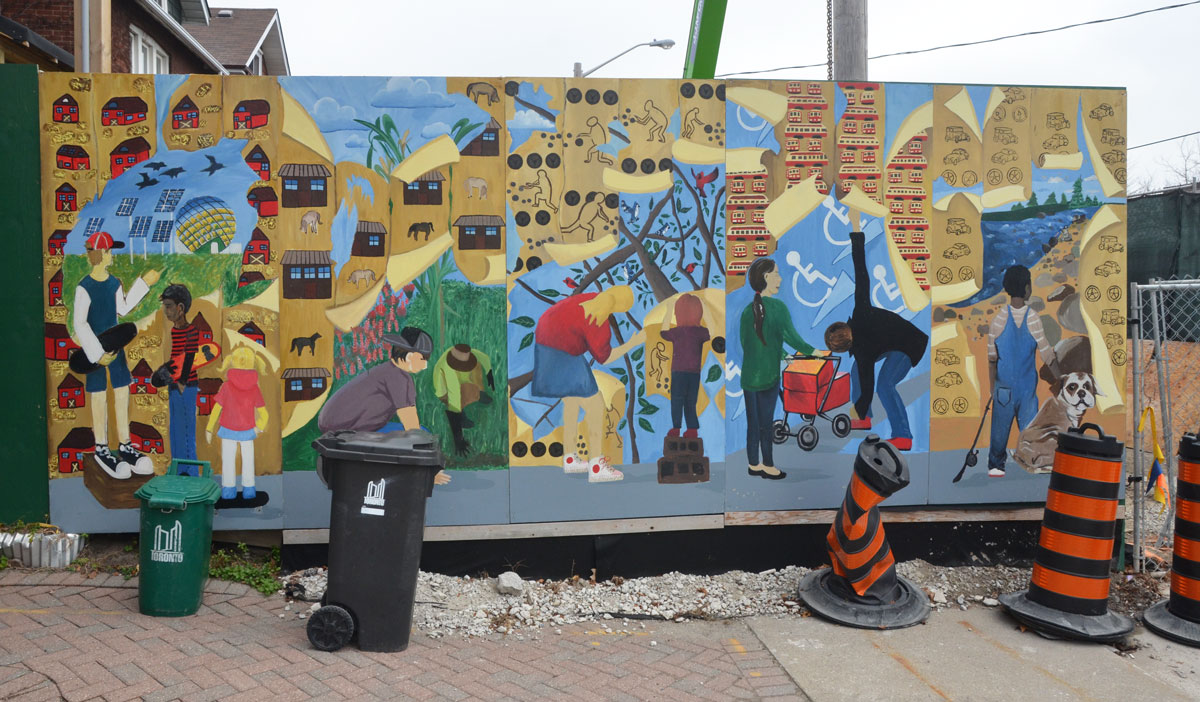
Upgrades to Coxwell subway station include work on the north side of Strathmore Blvd.  Two murals were created to brighten the hoardings around the construction site.  Both murals are the work of a program called ‘City on the Move – Young Artists in Transit’.  If you use Coxwell subway station you can’t help but see these murals as they are right across the street from the entrance.

below: ‘Today Reassembling Yesterday’ shows people standing within a miniature old East York.  On both sides of the mural is a replica of a Hollinger Bus line ticket.  This bus company was founded in 1921 by John Hollinger and it serviced the growing neighbourhood of East York.  By the time the TTC took it over in 1954, Hollinger had 96 employees and a fleet of 56 buses that traveled twelve routes on such streets as Woodbine, O’Connor and Coxwell.

mural in front of a construction site, the tops of two brick houses are visible behind the fence, a large green crane is working at the site

below: In this mural, five panels are covered with wallpaper of pictures of the past.  Residents, the present day, peel back the layers of the past to reveal their visions and hopes for the future.  On the left, red barns and hay stacks make way for solar panels over fields with bird filled skies.  The next panel is also inspired by agriculture – healthy corn fields and other crops under a layer with horses and stables.  The middle panel puzzles me.  I’m note sure what the pictures on the brown paper represent but birds in a tree are under it.  The fourth panel suggests accessible public transit.  Lastly, cars and trucks make way for rivers to fish in.

A mural of kids peeling away layers of wallpaper with pictures on it.

‘New Revelation, at Coxwell’

a poem by George Elliott Clarke, Poet Laureate of Toronto 2012-15
to accompany the mural at Coxwell station

As wallpaper peels to windowpanes, spy
Grass, insurgent, urging all our future
Is Spring: Sunlight sparks sweat and dream; wind drives
Machines. Thrilled, birds wing and sing so sprightly,
Everyone delights. Blossoms float perfumes.
Branches brandish emerald bouquets. Our lungs
Flood with surging airs, clean as chlorophyll,
Mint-new, mint-tangy, so song is born,
Just by breathing. Wheels become our earthly
Wings, so infant and elder, builder and
Dreamer, can flit – transit – through the city
As public millions that public millions
Uphold, so that the lame, too, can take
The air and wheel down to creek, stream, and lake.
Suddenly glittering, afresh with fish.

The TTC also owns property on the southeast corner of Coxwell and Danforth.  Back in 1915 this facility was built as the Danforth carhouse for the streetcars that ran along the Danforth.  When the Bloor Danforth subway line opened in 1966, these streetcars were retired and the carhouse was converted to handle TTC buses instead.   In 2002 the Danforth carhouse (or Coxwell Barns) was shut down.  Some of the property has been sold off but the TTC still has a presence there.

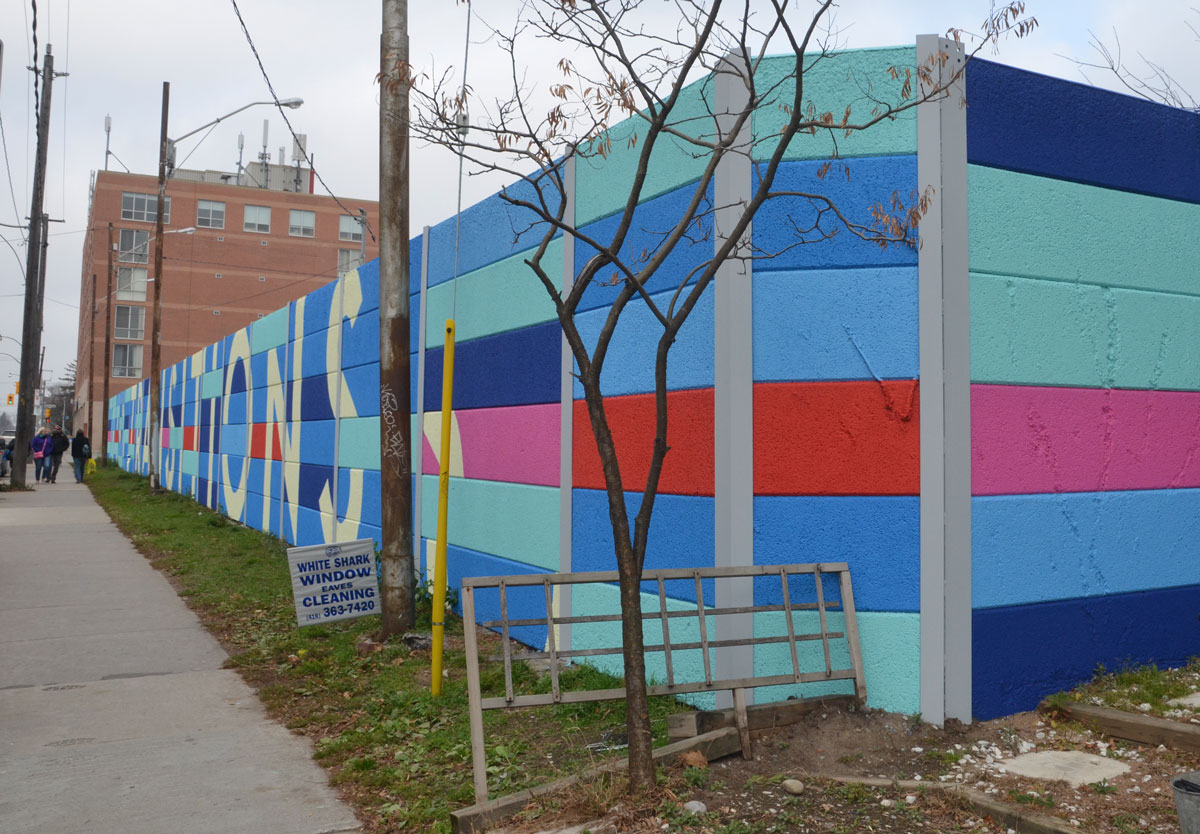
below:  Along Coxwell Avenue, south of the Danforth, there is a fence that separates TTC property from the street.  It was a typically drab TTC concrete barrier.  Recently it was painted by a group of volunteers.  The word ‘transition’ now pops out at passersby from a colourful mural designed by Sean Martindale.

Transitions written in block letters in a large geometric mural that matches the grid of the concrete that makes up the fence

close up of the letter N and part of S in the Transitions mural on a TTC fence on Coxwell ave.

Transitions written in block letters in a large geometric mural that matches the grid of the concrete that makes up the fence

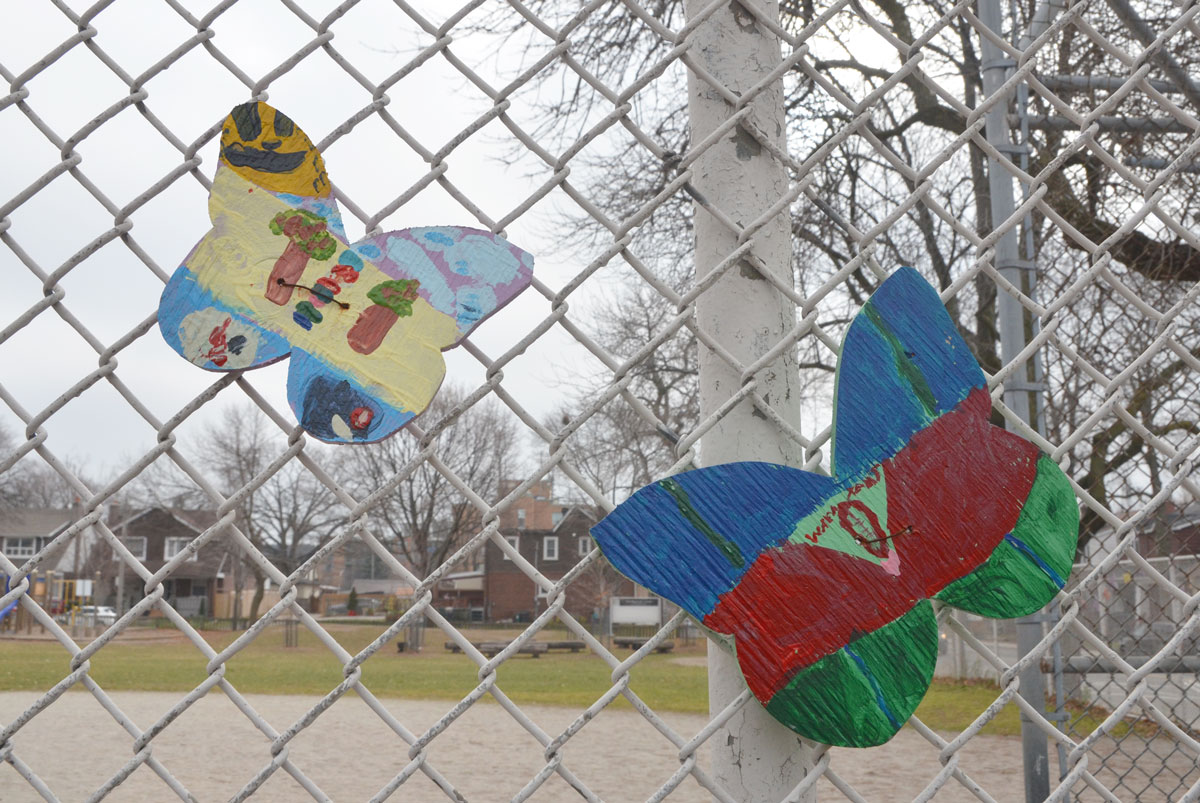
If you walk a few more blocks south on Coxwell, you will come to a fence where many butterflies have stopped to rest.

two wood butterfly shapes that have been hand painted by kids and then attached to a chain link fence around a school playground.

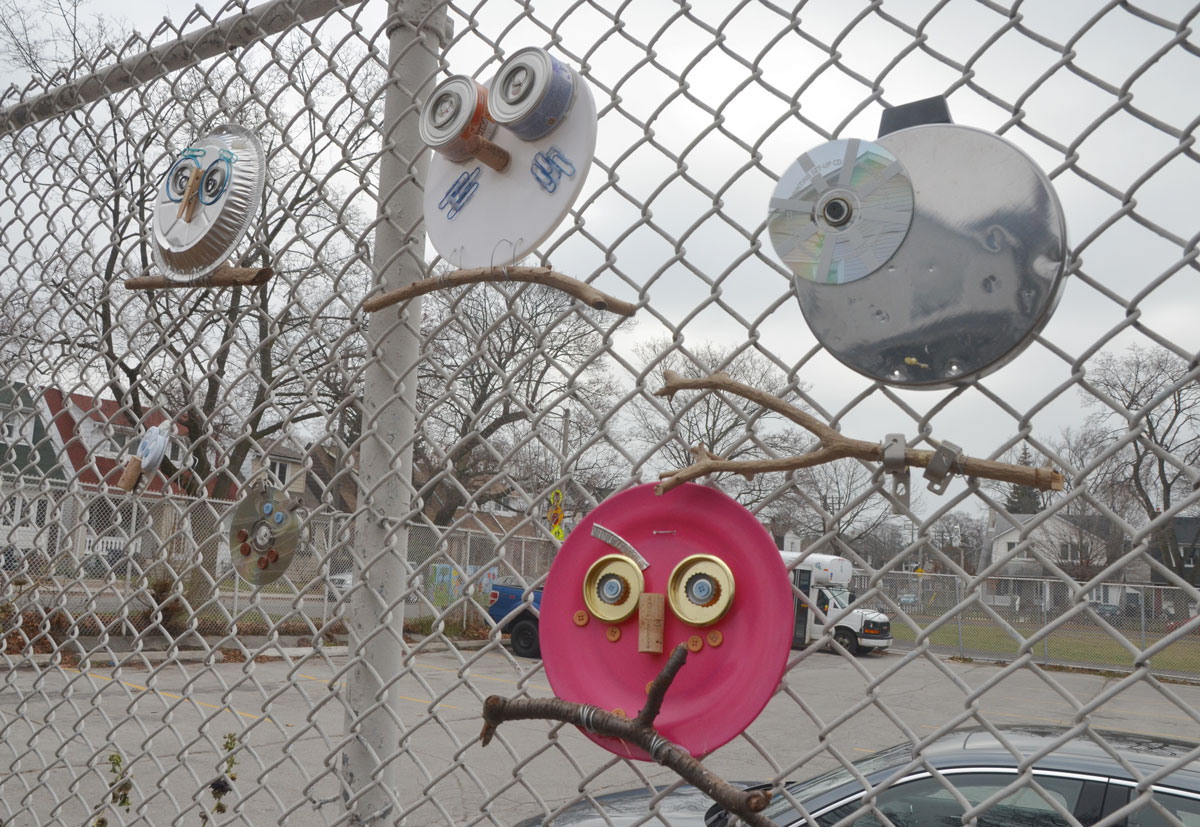
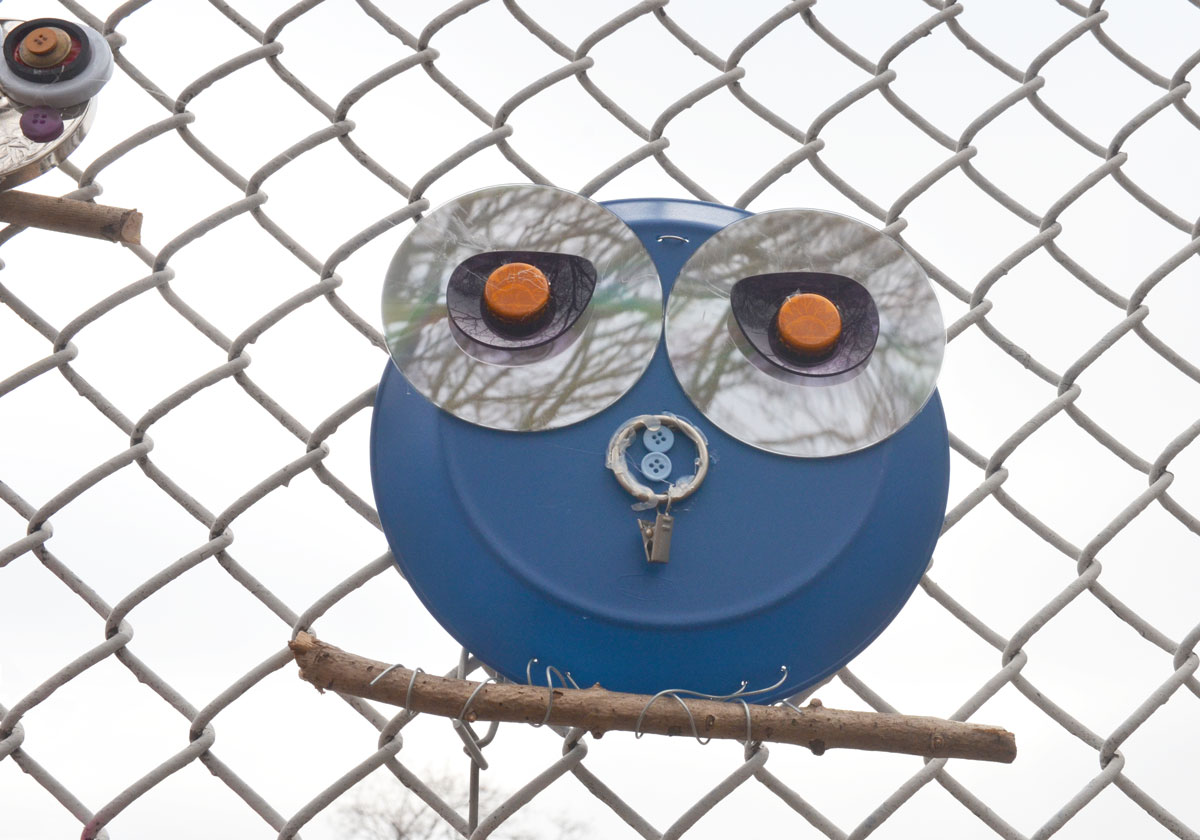
They share a fence with a few creative owls wisely made out of recycled materials.  Tin cans, CDs, buttons, bottle tops, corks, paper clips, sunglass lenses, clothes pegs, foil plates, and bits of plastic repurposed.


four owls made of recycled goods, foil pie plates, CDs, bottle tops, there feet are wrapped around twigs and they are attached to a chainlink fence

owls made of recycled goods, foil pie plates, CDs, bottle tops, there feet are wrapped around twigs and they are attached to a chainlink fence - two corks for horns

owls made of recycled goods, foil pie plates, CDs, bottle tops, there feet are wrapped around twigs and they are attached to a chainlink fence - also blue buttons for the nose

below: A little red fairy door, home of the Earl Haig gardener.  This past summer there was a project called  Danny’s Urban Fairies.  Fairy doors that were hand crafted by local artists started appearing in stores and parks along Danforth East  (from Jones to Westlake).  Some of the fairy doors remain but many were auctioned off in November to raise money to support the non-profit East End Music Project.

A little red screen door, fairy door, at the base of a tree with two little signs. One sign says Earl Haig gardener and the other says Do not litter.

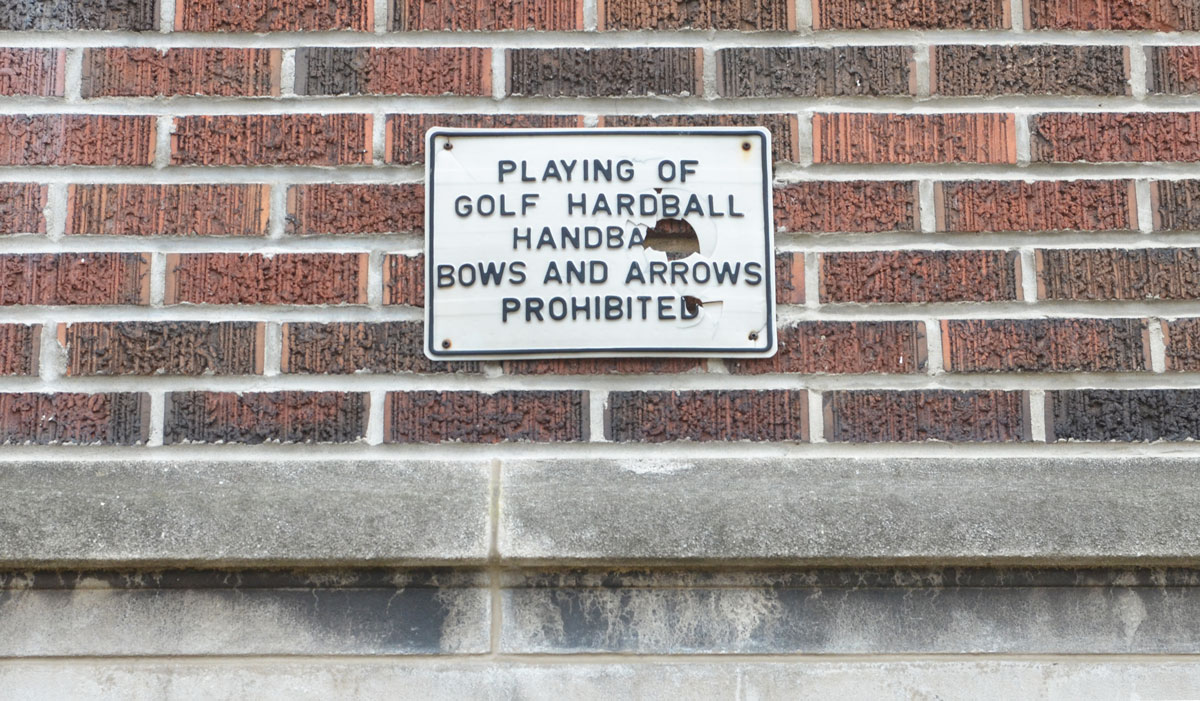
below: No bows and arrows allowed!

old sign on the exterior wall of a school that says: Playing of golf, hardball, handball, bows and arrows prohibited


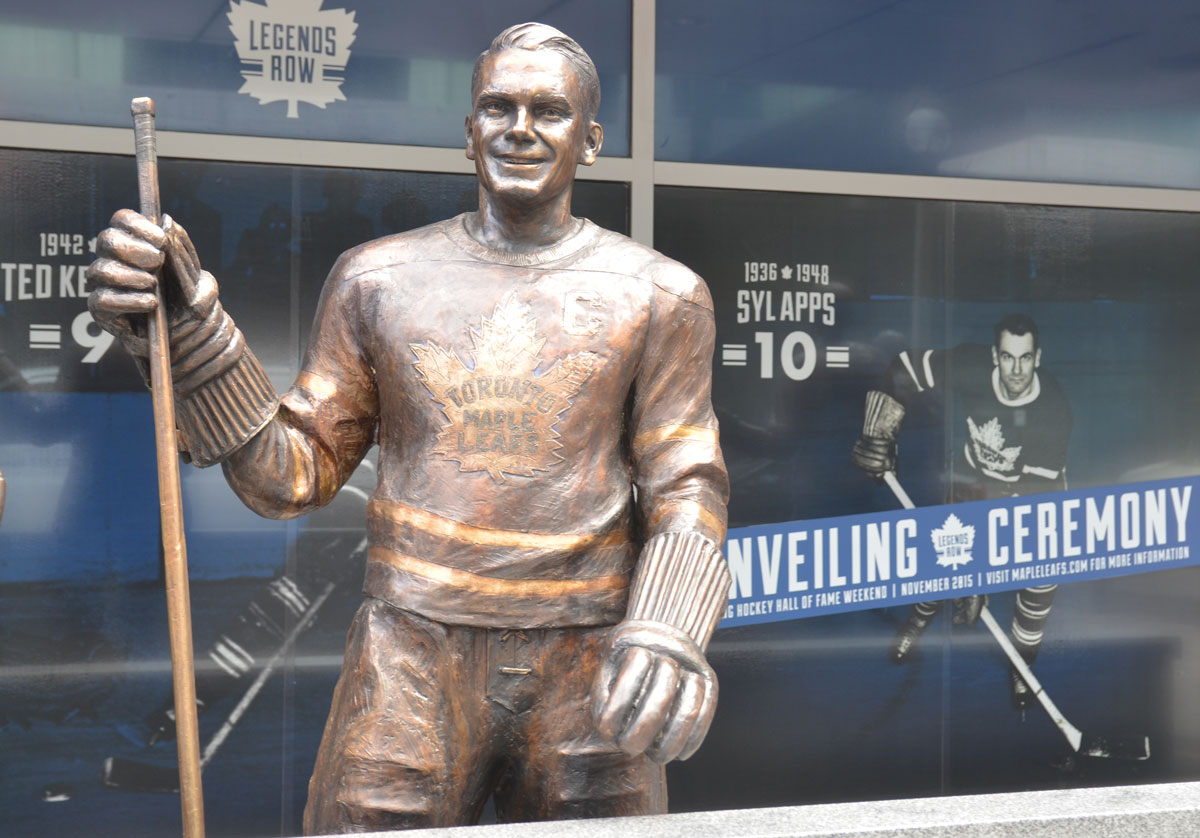
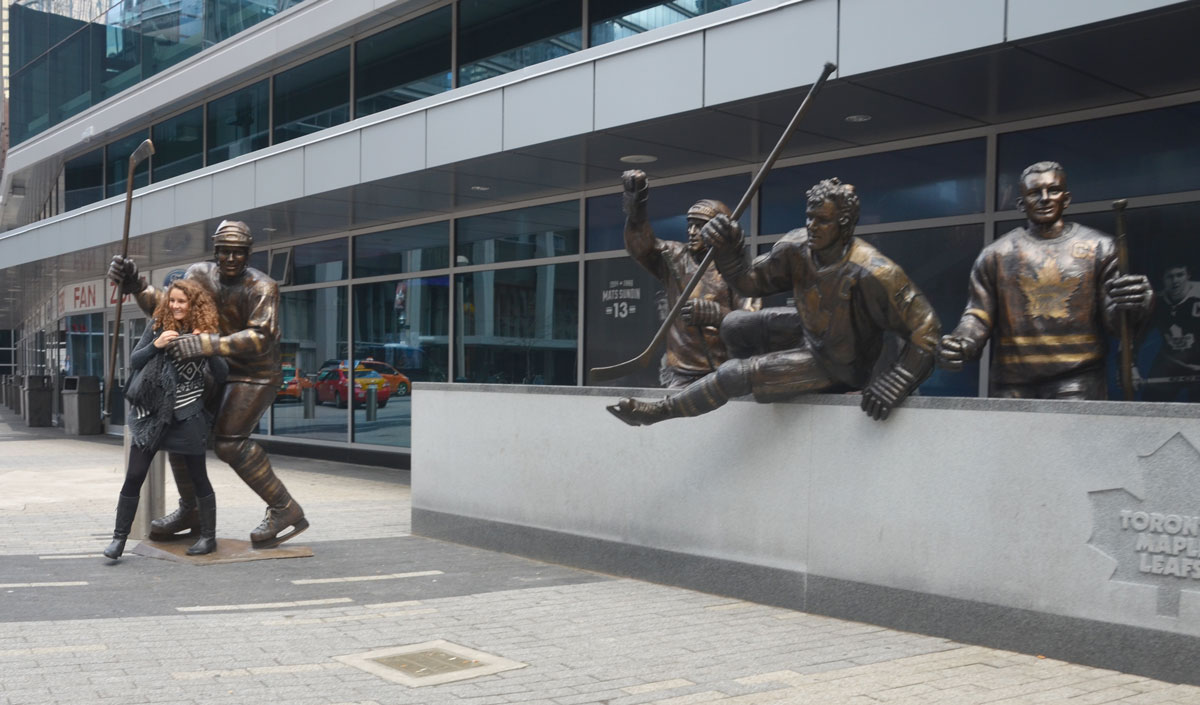
Earlier in November, two more statues were added to Legends Row outside the Air Canada Centre, Syl Apps and George Armstrong.  Both men were Maple Leaf Captains and both men wore jersey number 10.

below:  Blue and white confetti at the unveiling of the latest statues on Legends Row.

Legends Row at the unveiling of statues of Syl Apps and George Armstrong, lots of bits of blue and white paper stream down in front of the statues.

below: An old photo showing Syl Apps and a young George Armstrong when the latter was given Maple Leaf jersey 10 to wear.  Armstrong was the first player to wear number 10 since Apps had retired.

Old black and white picture from the Hockey Hall of Fame, showing Syl Apps (after retirement from hockey) and George Armstrong after Armstrong was given number 10 Maple Leaf jersey to wear.

below:  George Armstrong, past and present, at the unveiling.  Armstrong played 21 seasons with the Maple Leafs between 1950 and 1971.  After retiring from playing hockey, he coached the Toronto Marlies for a few seasons and he was on the Maple Leaf scouting staff for many years.

George Armstrong stands beside the statue of himself while reporters and others take pictures.

below:  Also, number 10, Syl Apps joined the Maple Leafs in 1936.  While he was captain of the Maple Leafs, the team won three Stanley Cups.  Apps retired in 1948.

statue of hockey player Syl Apps stands with stick in hand in Legends Row outside the ACC in Toronto

below: left to right: Mats Sundin, Borje Salming, Darryl Sittler and Ted Kennedy

Legends Row statues, Sundin, Salming, Kennedy and Sittler

below: George Armstrong and Johnny Bower

Legends ROw statues George Armstrong and Johnny Bower

below: left to right: Borje Salming, Darryl Sittler, Ted Kennedy and Syl Apps

Legends Row statues, Borje Salming, Ted Kennedy and Syl Apps stand behind the boards while Darryl Sittler is jumping over the boards.

below: Just around the corner, two statues of a slightly different nature

Two mannequins, one male and one female, are dressed in Maple Leaf hockey clothing.  Toques, heavy sweaters, T-shirts and scarfs, all in blue and white with the Leafs logo

Camera Atomica
a photography exhibit at the Art Gallery of Ontario

below: The first photograph of the bones of the hand, by Wilhelm Rontgen in 1895.    Rontgen was a German physicist who discovered x-rays (or Rontgen rays) in 1895 and he produced this image of his wife’s hand shortly after.  The green in the picture below is a reflection of the chandelier that the AGO has hanging in the room where this exhibit is being shown.

An xray picture of a hand.

The exhibit consists of more than 200 works that all fall under the category of nuclear – topics such as atomic weapons, Cold War politics, nuclear energy, and the mining of uranium.  The photographs cover the history of these topics from 1945 to the present, from the development of the atomic bomb to the meltdown at Fukushima Daiichi in Japan in 2011.

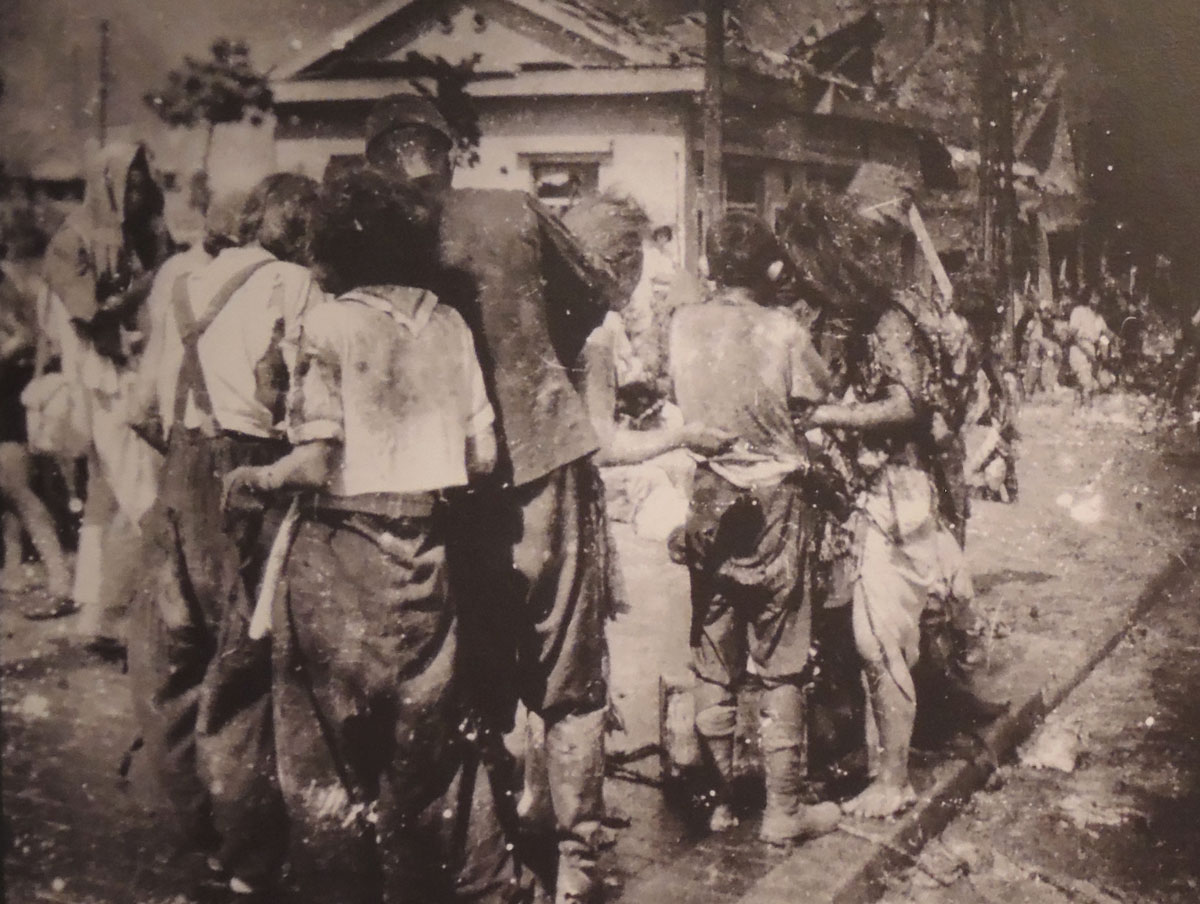
below: Hiroshima Japan, photo by Yoshito Matsushige, taken 6 August 1945.
The first atomic bomb was detonated at the Trinity test site in New Mexico USA on 14 July 1945.  Shortly after, American bombers dropped two atomic bombs on Japan.  The first bomb was dropped 6th August 1945 on the city of  Hiroshima and second one three days later on Nagasaki.

An old black and white photo taken in Hiroshima after the dropping of the atomic bomb during WW2

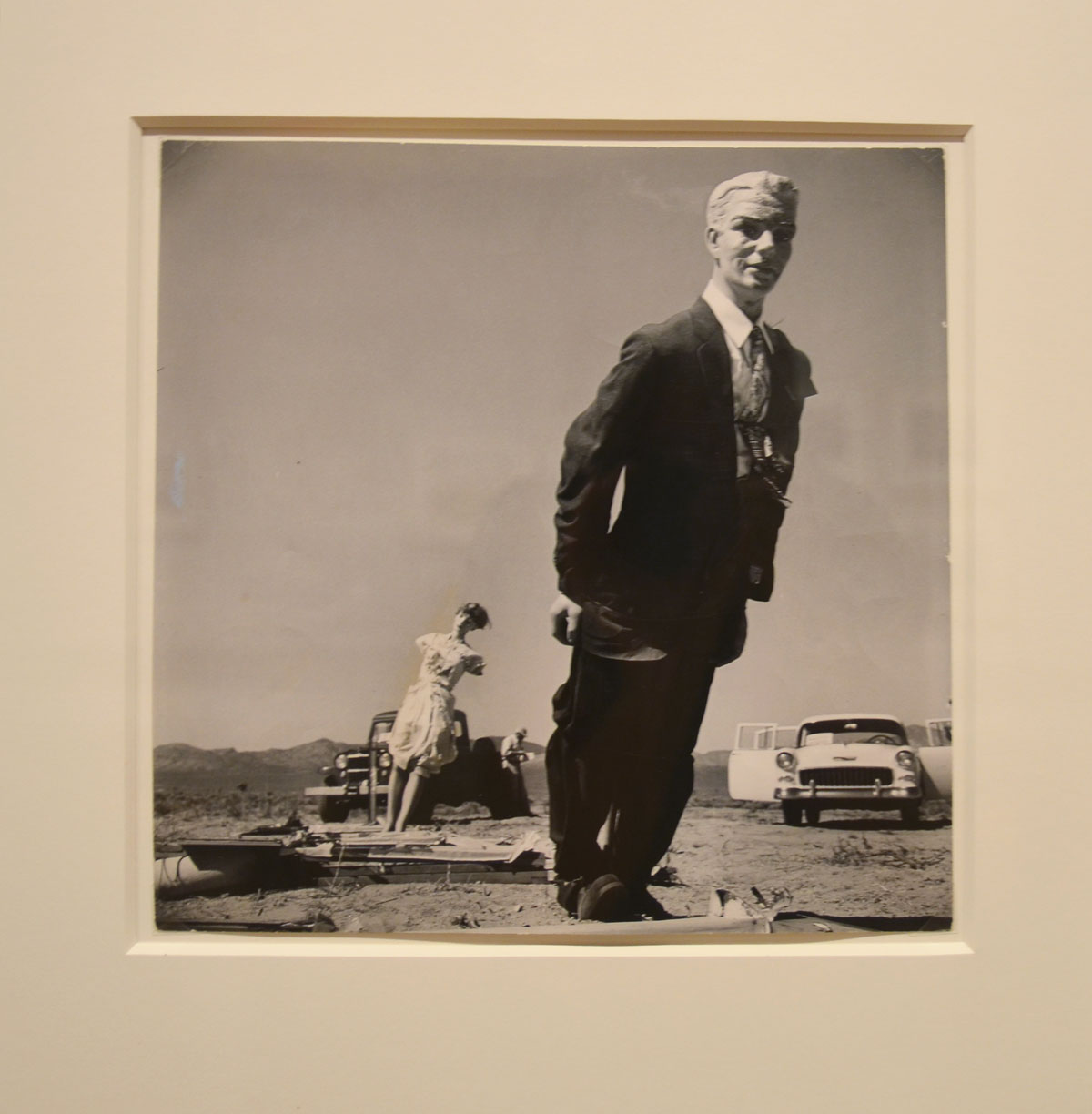
below: Photo by Dean Loomis, 7 May 1955 of scorched male mannequin standing in the desert 7,000 feet from the 44th nuclear test explosion at Yucca Flat Nevada.  Photo taken the day after the blast.  Apparently mannequins were used to test the effects of the nuclear blasts on people and this photo shows that people at 7000 feet from a blast could be burnt but alive.

Picture of a black and white silver gelatin print from 1955 by Dean Loomis showing a male mannequin in a black suit who has been partially knocked over by a nuclear test blast in the Nevada desert.

below: Mushroom clouds on a wall

A collage of photos of nuclear blast mushroom clouds. There are about 25 colour and black and white photos hanging on a wall of the Art Gallery of Ontario

below:  Part of  ‘Uranium Tailings #2, Elliot Lake Ontario’ a photograph by Edward Burtynsky.

Eliot Lake was established in 1955 as a mining town after uranium was discovered in the area.  In the early 1990’s the mines closed because of depleted reserves and low prices for uranium.

Tailings are the materials left over after the valuable part of an ore has been removed.  The uranium ore found at Eliot Lake had very little uranium in it, only about 0.1% of the ore was uranium.

Close up of part of a photograph by Edward Burtynsky titled Uranium Tailings #2, Elliot Lake Ontario. It is a picture of a desolate swampy looking terrain where all the vegetation is dead. The trees have been reduced to dead poles.

below:  Inkjet prints by David McMillan, part of four on display from his series of photographs of places abandoned because of the Chernobyl disaster in 1986.   The photograph on the right is of the nursery at Pripyat Hospital taken in 1997.   Beside it is a picture of a classroom in a Pripyat nursery school.

Pripyat is an abandoned city in northern Ukraine.  It was built in 1970 to service the Chernobyl Nuclear power plant.  Following the explosion and fire at Chernobyl on 26 April 1986, the city’s 49,000 people were evacuated

Two photographs on a wall. The one in the foreground shows an abandoned hospital nursery in Pripyat Ukraine, abandoned after the Chernobyl nuclear disaster.

A young man is half squatting as he leans back to get a better look at the words on the wall of an art gallery that accompany three black and white photographs.

The exhibit continues until 15th November.

#atomicAGO

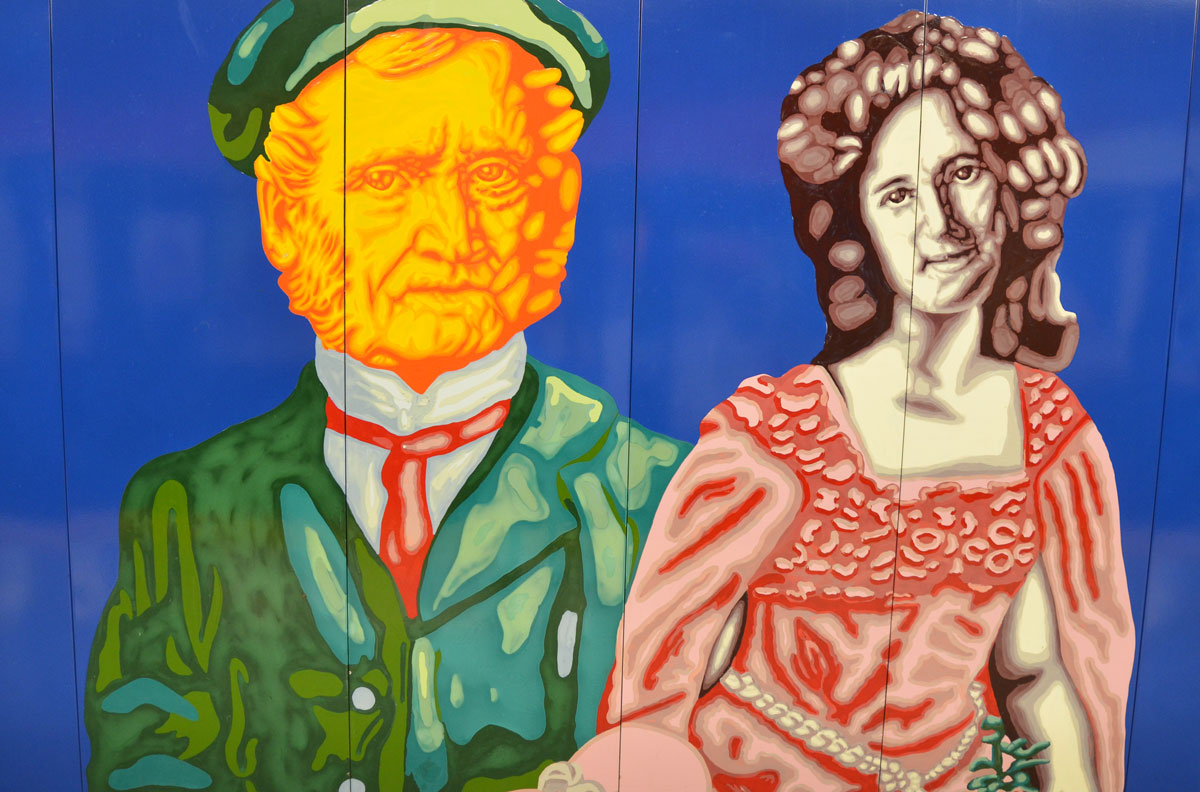
Let’s talk about this couple

mural on a subway wall, close up of a man and a woman. The man has an orange coloured face and is wearing a green jacket and cap. The woman has long black hair and a long pink dress

If you ride the Toronto subway you’ll probably recognize them from the walls of Queen station.

looking across the TTC Queen subway platform and tracks to the opposite wall where there is a mural, enamel on steel, of a couple as well as some buildings. An ad for shoes is blocking part of the mural

A couple of weeks ago I was standing beside them when I overheard a woman telling the man she was with that the people in the mural were Lord and Lady Simcoe.

I was fairly certain that she was wrong so I checked.   This is a picture of John Graves Simcoe.

A portrait of John Graves Simcoe

There could be some resemblance and John Graves Simcoe did play an important part in Toronto’s history.  He was the first Lieutenant Governor of Upper Canada (1761-1790).  He established York (now Toronto) as the capital of Upper Canada in 1793 and he gave us Yonge Street.  But note the military clothing in the above portrait; he was a British army officer after all and I doubt he’d be depicted in a mural wearing a green jacket and matching cap.

There aren’t many pictures his wife Elizabeth, or Lady Simcoe, but suffice it to say that they don’t look like the woman in the mural.

A few minutes online provided the following information:   The title of the mural is “Our Nell” and the people are supposed to be William Lyon McKenzie and Nellie McClung.  Three buildings are shown, the old Simpsons building (now the Bay), City Hall, and the Eaton Centre.  The artist is John B. Boyle.

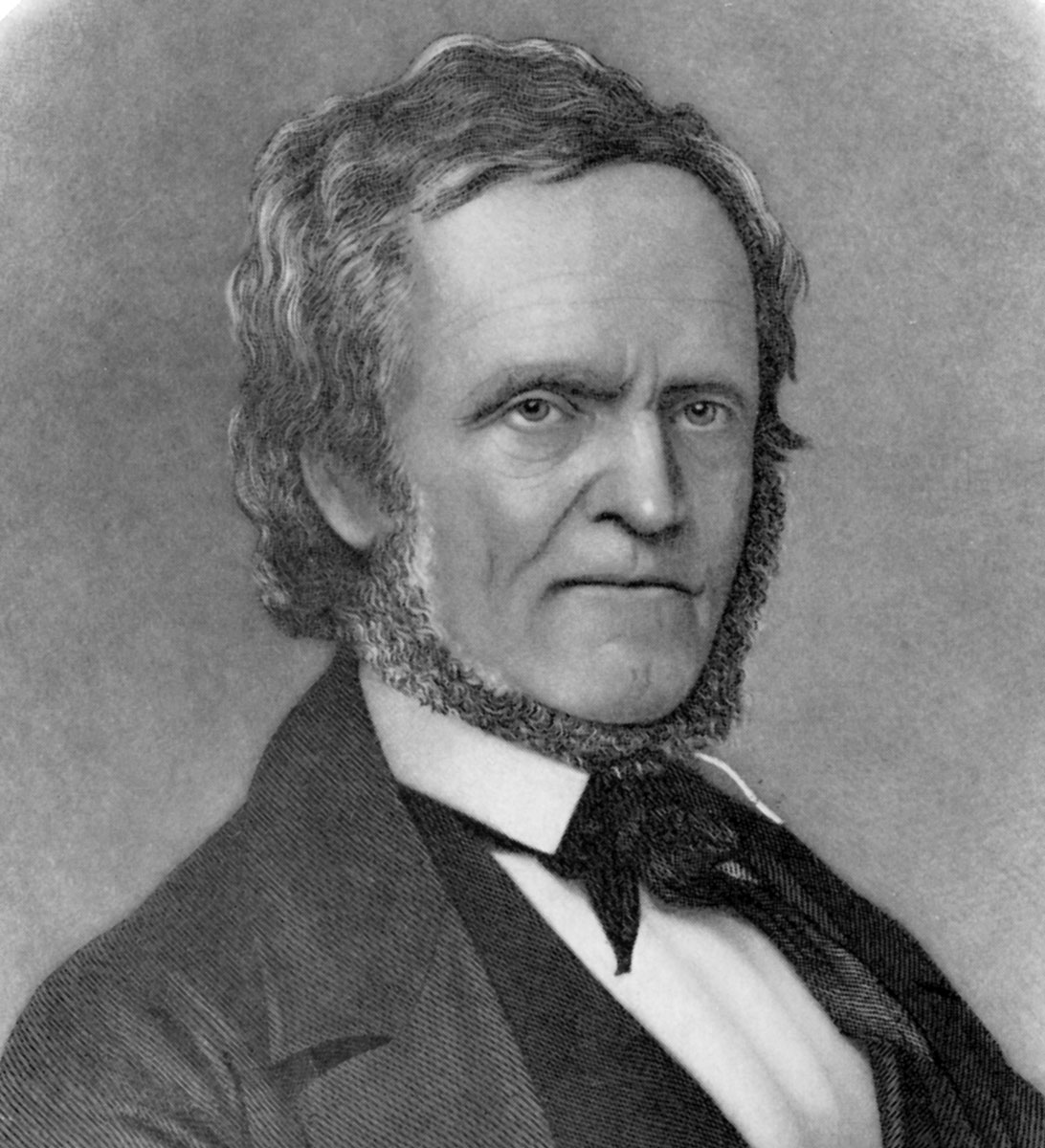
This is a photo of William Lyon McKenzie; I guess there’s a resemblance.

A black and white picture of William Lyon McKenzie

McKenzie was born in Scotland in 1795.  He emigrated to Upper Canada as a young man.  Although he held a number of jobs, he seemed to like writing for newspapers best.  After working for newspapers in Montreal and York, he established his own newspaper, the ‘Colonial Advocate’ in 1824. Although that paper went bankrupt and he fled to New York for a short time to evade his creditors, he used newspapers as a vehicle to promote his political ideas for most of his life.  To a large degree the story of Upper Canada politics of the early 1800’s is a story of the Tory governing elite vs the Reformer upstarts.   McKenzie was solidly on the side of the Reformers.

Toronto was incorporated as a city on 6 March 1834 and the first municipal elections were held later that month.  McKenzie was elected as an alderman.  At that time, the mayor was elected by the aldermen from their own ranks and in 1834 McKenzie was appointed mayor.  He lost the next election in 1835.

McKenzie was also a leader in the Upper Canada Rebellion of 1837.  It was not much of a rebellion, more like a skirmish near Montgomerys Tavern (near Yonge & Eglinton) that the Reformers lost badly.  The rebellion leaders were allowed to flee to New York state.  Once in Buffalo, McKenzie declared himself the head of a provisional government of the Republic of Canada.   He even convinced some Americans to help him invade Upper Canada from Navy Island in the Niagara River.  Bombardment of Navy Island late in December 1837 by the Royal Navy destroyed the S.S. Caroline, an American ship that was helping to supply McKenzie’s followers on Navy Island.  And that was the end of McKenzie’s rebellion.

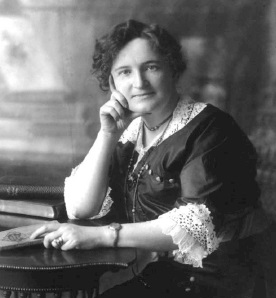
Okay then, that’s the man in the mural.  What about the woman?  I went looking for picture of Nellie McClung as well as information about her.  I recognized her name but I couldn’t remember what her role in Canadian history was.   First, this is her picture:

 black and white picture of a woman, Nellie McClung, sitting at a desk

I didn’t see any pictures of her with long hair or as a younger woman.   Nellie McClung was born as Nellie Mooney in Ontario in 1873 but moved to Manitoba as a child.   One of the causes that she worked on was woman’s suffrage and she helped Manitoba in 1916 to become the first province to allow women the right to vote and to run for public office. By 1922 women could vote federally and in all provinces except Quebec.  Quebec women could vote federally but had to wait until 1940 before they could vote in a provincial election.

McClung was also one of the five women who campaigned to have women recognized as “persons” by the Supreme Court so that they could qualify to sit in the Senate.  In 1930 Cairine Mckay Wilson was appointed Canada’s first female senator, just four months after the “Persons Case” was decided.

Now when you pass through Queen subway station you can think a little about the history that it represents, and not so much about how ugly it is.  Because it is ugly.  Especially this section of the mural:

part of a mural at Queen subwaystation in Toronto, a misshapen Eaton Centre with a grotesque looking woman bending over in her garden in the foreground.

Is that a woman in the foreground?  Or a slug with appendages?

On the southwest corner of Danforth and Greenwood is a mural that extends over the lower storey of a number of brick buildings.   Back in the late 1800’s and early 1900’s Greenwood Ave. was home to quite a few brick works such as the John Price Brickyard, the Taylor Brickyard, and the Joseph Russell Brickyard.  You’ll notice that these are the same as the names on the signs above the mural.   Just south of this building is Greenwood Park, also once a brickyard.


looking across the street to a row of brick store fronts, two storeys high.  The bottom storey has been painted with a mural that has a yellow background.

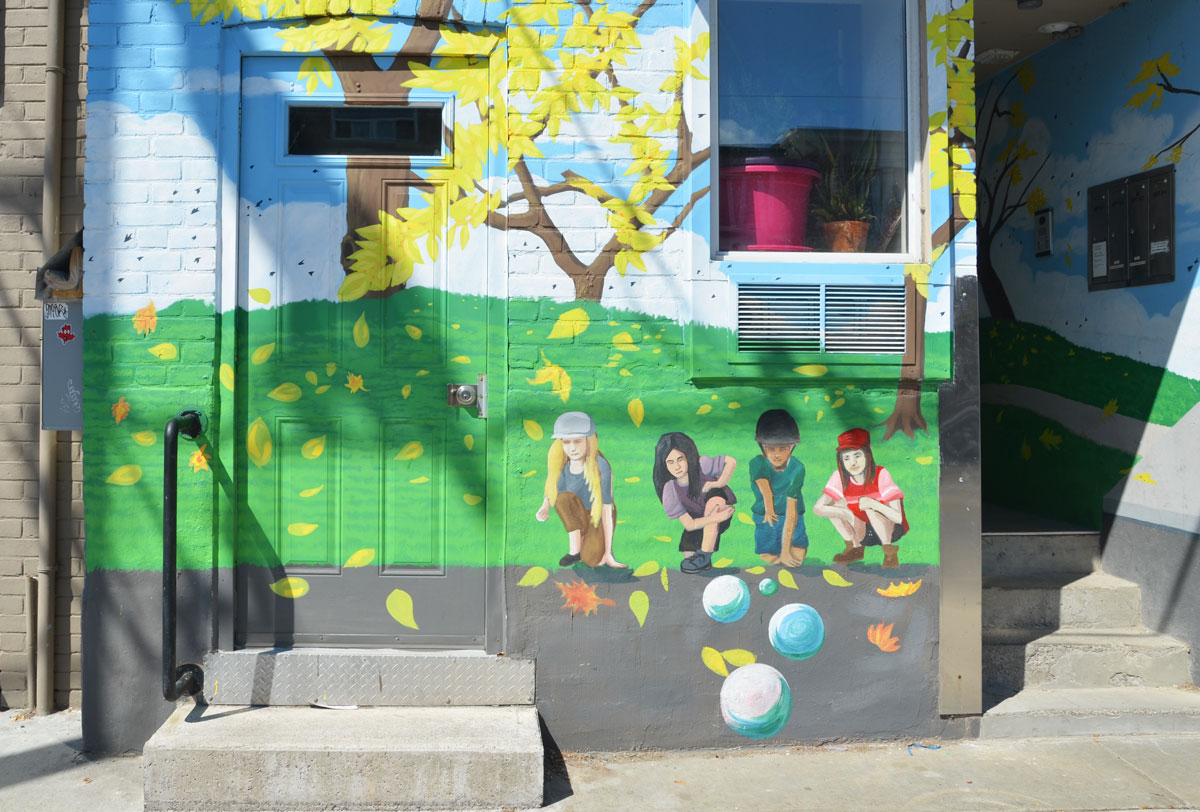
Close up pictures of some of the details in the mural:

part of mural that depicts a street scene - two kids are playing on a red wagon, a woman is walking a dog and a woman with a cane is waiting at a bus shelter.

part of mural that depicts a street scene - a little girl pulls a boy in a red wagon while other kids are playing on the sidewalk

part of mural that depicts a street scene - four kids are playing marbles


Robert Home Smith (1877 – 1935) was a lawyer, business man, civil servant, and land developer.   In the early 1900’s he acquired 3000 acres of land along the Humber River, from Lake Ontario north to what is now Eglinton Ave. 

 A mural has been painted by Emilia Jajus on Royal York Road as it passes under the train tracks close to Dundas West.  The east side of the underpass is finished and it depicts Robert Home Smith and some of the effects that he had on the area.

below:  At the south end of the mural there is a portrait of Robert Home Smith.  A young girl can be seen hiding behind the trunk of a large tree.   Because the tree is painted on the corner, you can’t see the young boy who is hiding on the other side of the tree until you get closer to the mural.

part of a mural on an underpass, including a portrait of a man, Robert Home Smith

part of an historical mural on an underpass, two kids are playing, one on either side of a large tree that has been painted on the corner.

 below: Part of the mural, fishing in the Humber River by the bridge at the Old Mill.  The bridge was built in 1916 after an older bridge was washed out in a storm.  It is still there.

part of a mural showing a stone bridge over a river, the Humber River.  A man is fishing in the river from the shore.

Part of the land that he owned was the site of the King’s Mill.  This mill was built in 1793 on orders from Lieutenant Governor John Graves Simcoe.  It was to mill lumber for the proposed town of York.    Here, Home Smith built the Old Mill Hotel as well as the  the Old Mill Tea Room.  The tea room was opened on 4 Aug 1914, the same day that Britain declared war on Germany.

below:  Part of the mural, the Old Mill Hotel

part of a mural that shows the Old Mill hotel, a tudor style two storey building with the lower part being made of stone

below: The Old Mill hotel in 1945

Copy of a 1945 photo of the Old Mill hotel in Toronto

photo from the City of Toronto Archives

Robert Home Smith planned to develop the land on both sides of the Humber River (known as the Humber Valley Surveys) into residential lots that were aimed at affluent buyers.  Although he died before the completion of this project, the neighbourhood of Kingsway as well as parts of Swansea, Baby Point, and Humber Village, still stand.

part of a mural showing a two storey stone house with fake tudor upper storey, in autumn, with tree with orange leaves beside the house.

The parkland that is adjacent to the Humber River as it curves around Baby Point is named Home Smith Park in memory of this man.

below:   A poor quality photo showing a view of the whole mural.   A replacement photo is needed, one taken on a day when there aren’t so many shadows!

picture of a mural painted an the wall of an underpass.