Posts Tagged ‘art’

and a few places in between.


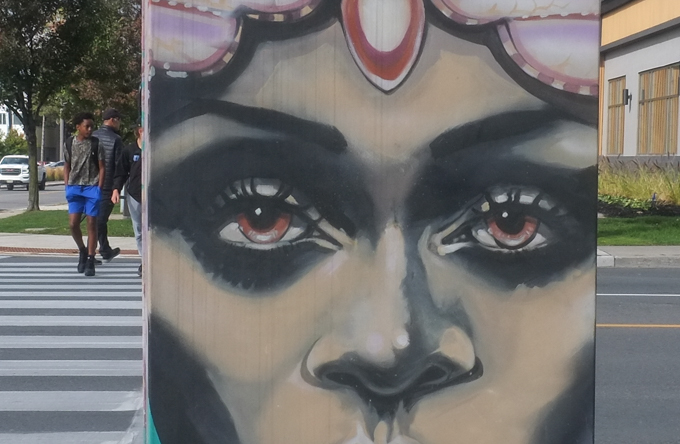
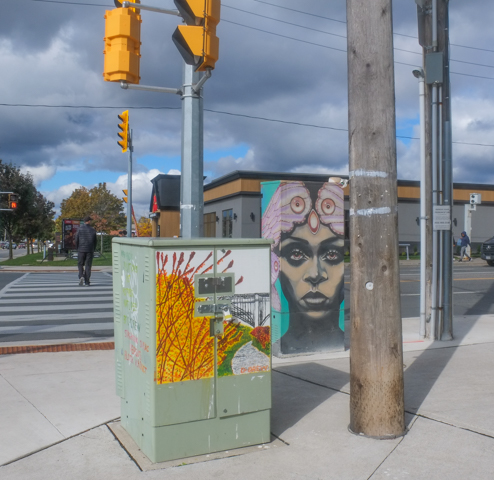
young people crossing o'connor drive, at intersection, with a metal box on the corner painted with a large female portrait

Amsterdam and Skopje refer to two streets that intersect with O’Connor Drive in the northeast corner of East York, Amsterdam Avenue and Skopje Gate.   There is also a Wakunda Place but the spelling is different from Wakanda, the fictional country that was created of Marvel Comics.

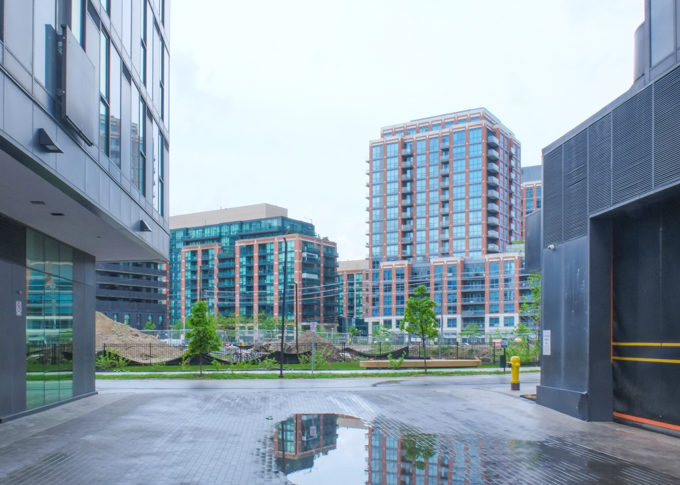
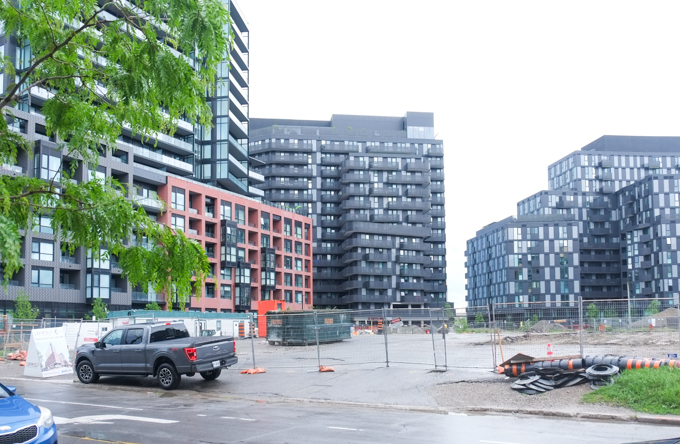
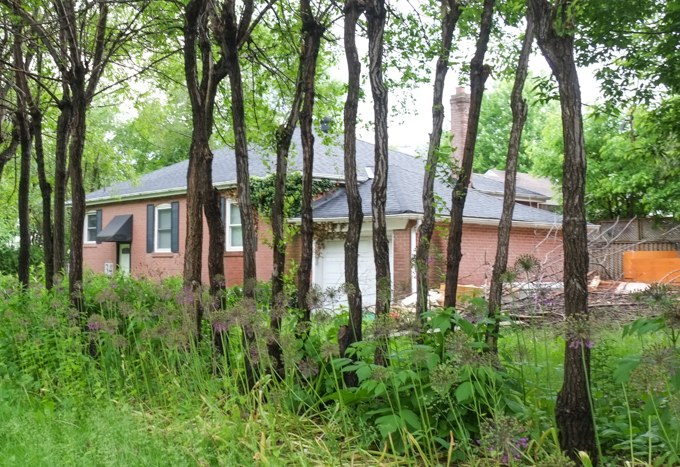
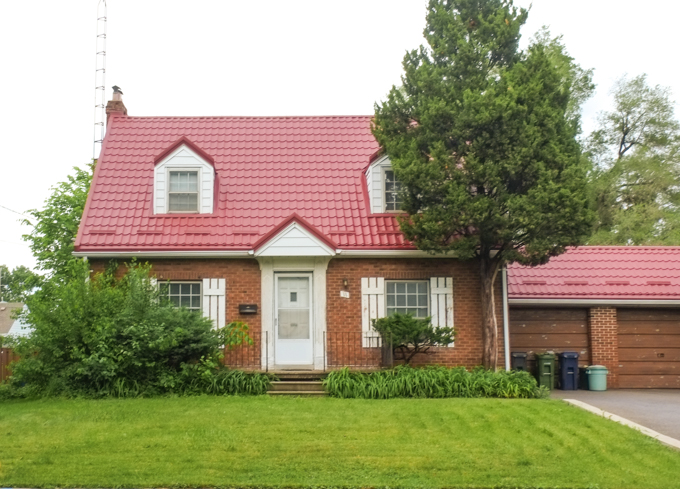
Every neighbourhood has a story to tell, even if it’s just the story of a quiet life in their own corner of the city.  There are many similar threads that run through the many narratives of Toronto neighbourhoods – the ethnic stores and restaurants, the redevelopment of older buildings into new housing, quiet side streets.  There’s probably a mix of residential styles – single family homes, rowhouses, older apartment buildings, and newer glass and steel condos where people are trying to live as best they can.   It is a scene repeated over and over again.  Parts are fascinating, parts are dull and lacklustre.  There will always be utility poles and wires and garbage bins in the way.    Maybe there will be an alley or two to explore – with old abandoned cars, basketball hoops, and graffiti left behind by jilted lovers or angry young men.   There’s probably a vacant lot where a building has been demolished – or perhaps it hasn’t been demolished yet but it’s just sitting there taking up space and looking sadder and sadder with time.
Just because there are many similarities doesn’t make it less interesting.  Here are a few images from “between Amsterdam and Skopje”.

old welcome banner is falling off the wall, glass wall, with bright red above it

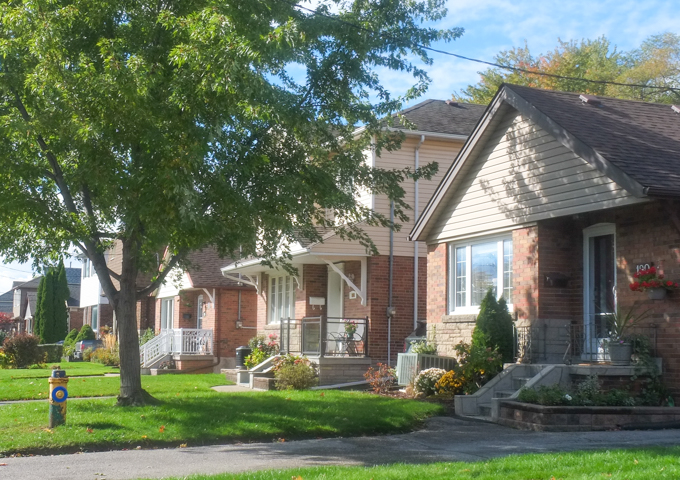
single family homes on a tree lined street

upper two storeys of a line of rowhouses, each slightly different, brick

upper level, back of stores on O'Connor, white brick strip mall, square white chimneys

blue metal xonstruction fence in front of an empty building with parking lot in front of it

parking lot and abandoned buildings waiting to be demolished

faded picture on exterior wall, overflowing cup of coffee or tea on bottom of foot that is upside down, wearing white sock

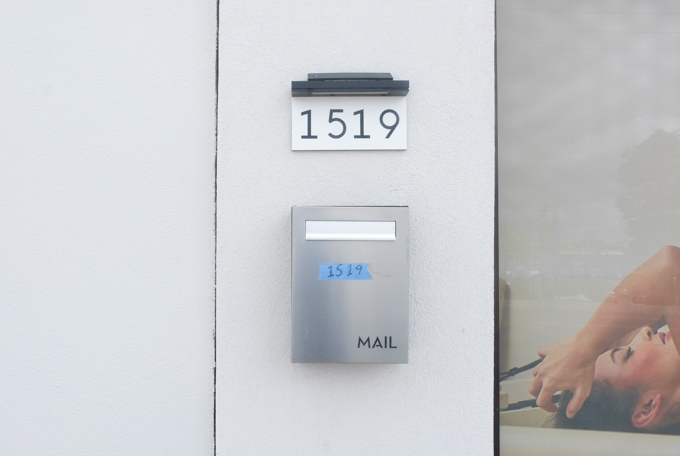
mailbox at number 1519, beside an image of a woman lying on her back

markings on a sidewalk in pink and red


large yellow arrows on the pavement in a parking lot

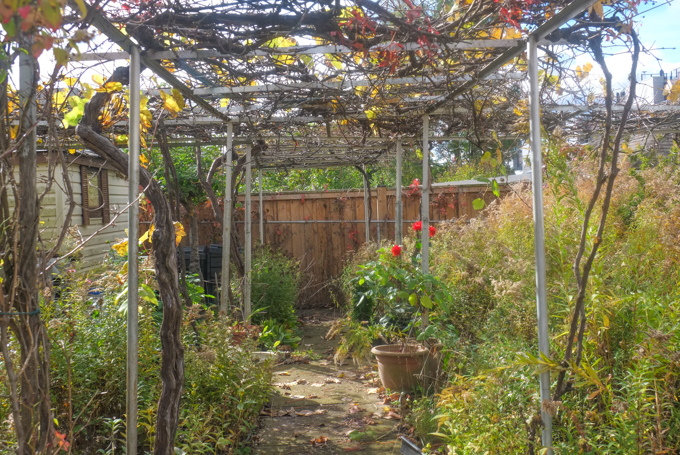
backyard garden with overhead vines

bright orange leaves on a tree in front of an apartment building

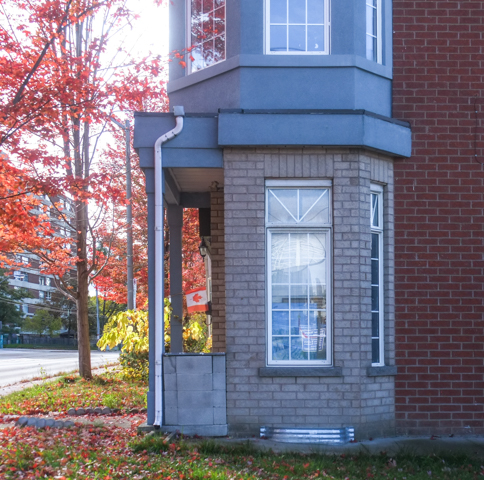
brick residence, fall colours outside

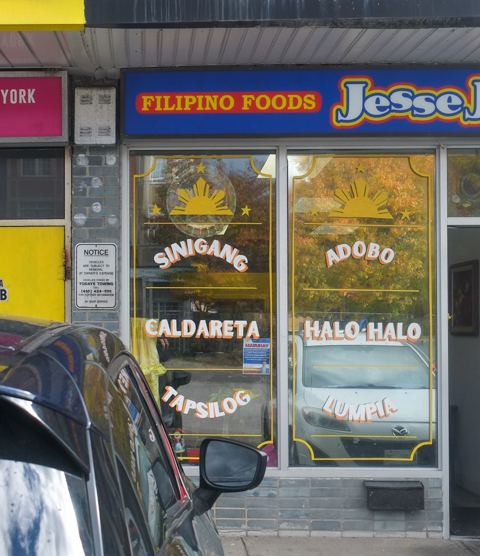
window of Jesse's filipino foods restaurant

reflections in the window of an audio equipment store

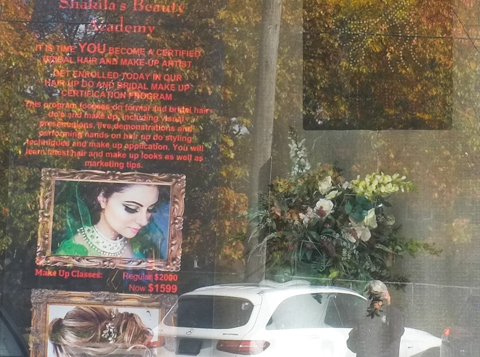
looking in the window of Shakira Beauty Academy, with some reflections of trees and cars outside

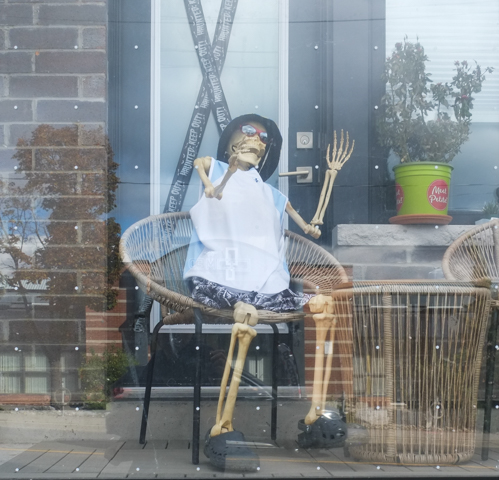
halloween decoration, life sized skeleton sitting on a chair on a balcony

two metal boxes on sidewalk painted with street art

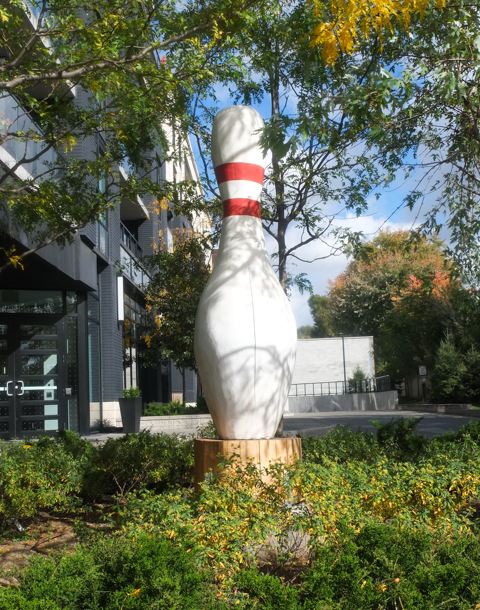
Not every neighbourhood has a large bowling pin (as public art). Backstory – the condo that this pin sits in front of was built on the site of the old O’Connor Bowling Lanes (1951-206).

very large white bowling pin sitting in the middle of a large raised garden, as art

Of all the similarities that this neighbourhood shares with others in the city, not many of the others can claim to have a cookie outlet….

entrance to Peek freans cookie outlet, one car parked in front, mostly glass front to the building

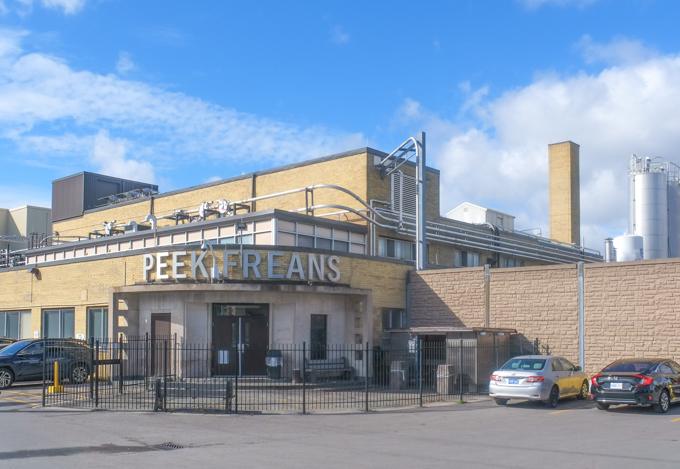
And even more unique,  it’s also the home of the Peek Freans Biscuit factory.  There was a lovely sweet vanilla-ish smell in the air the day that I walked around.  Peek Freans has a long history in England dating back to the 1850s.  In 1949 they established their first bakery in Canada, here on O’Connor Drive.

entrance to peek freans cookie factory, a yellow brick building

Although the company has changed hands numerous times since then, the East York factory still produces cookies (and other items such as Oreos and Wheat Thins) for Mondelez Canada.

looking across O'Connor Drive towards Peek Freans cookie factory

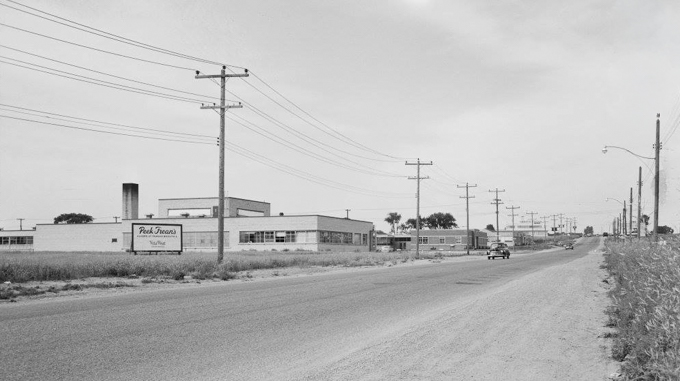
Back in 1953 when this photo was taken there wasn’t much else around!

black and white photo of Peek Freans cookie factory in 1950s, on O'Connor drive, not much else is around it ,

source: City of Toronto Archives, fonds 1128, series 380, item 39

.

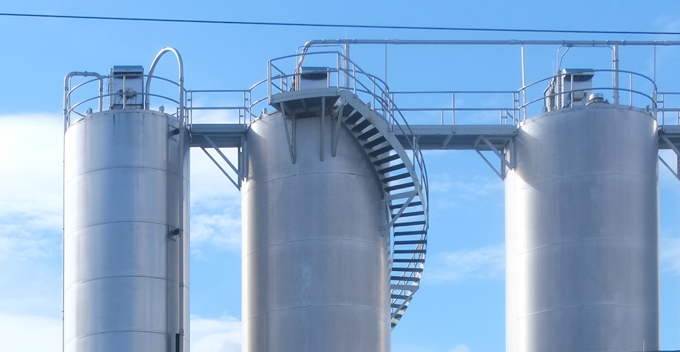
tops of storage silo towers at peek frean cookie factory

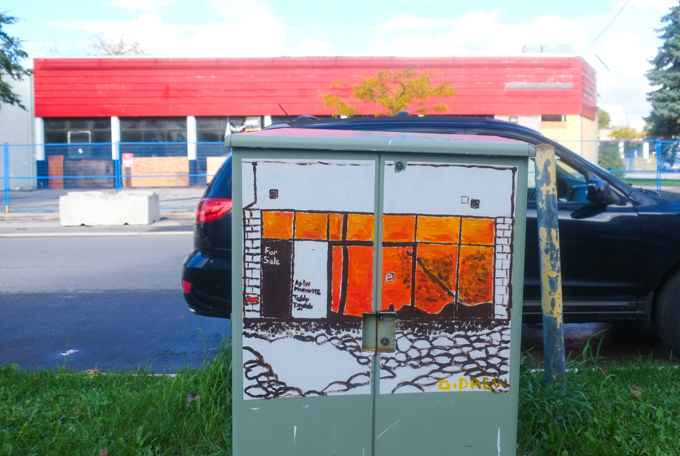
below: A couple of the metal boxes painted by D. Drew.

orange painting on a metal bell box, car parked behind it, boarded up business in the background with for sale sign on it, painted by D. Drew

forest sunset scene painted on a metal sidewalk box

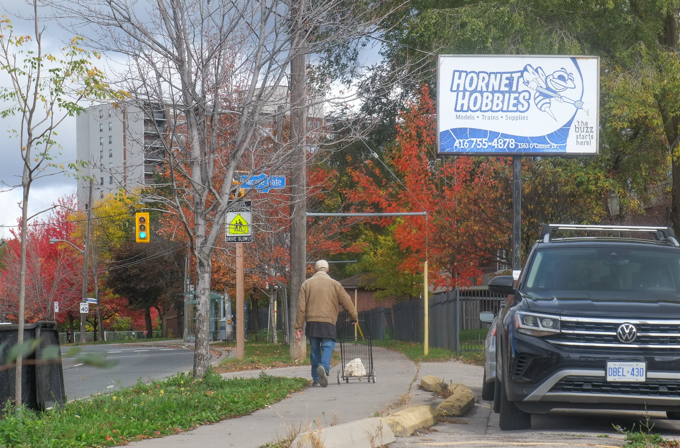
man walking dog on sidewalk, past fall coloured trees

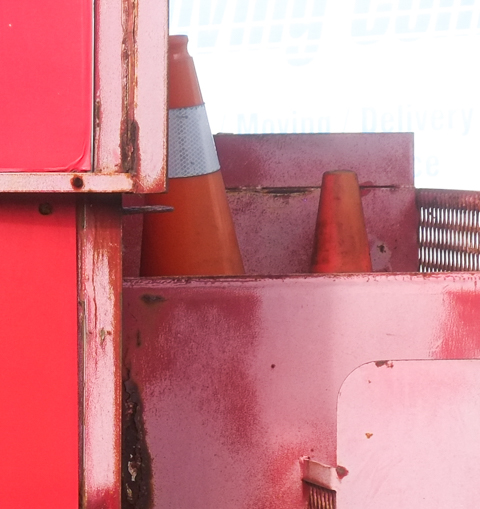
orange traffic cones stored in pink container

clear bottle with yellow liquid, partially full, sitting on a yellow concrete wall

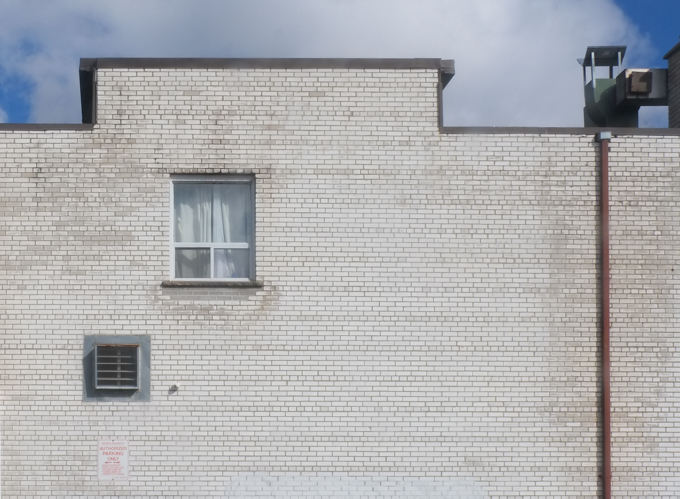
side wall of a white brick building

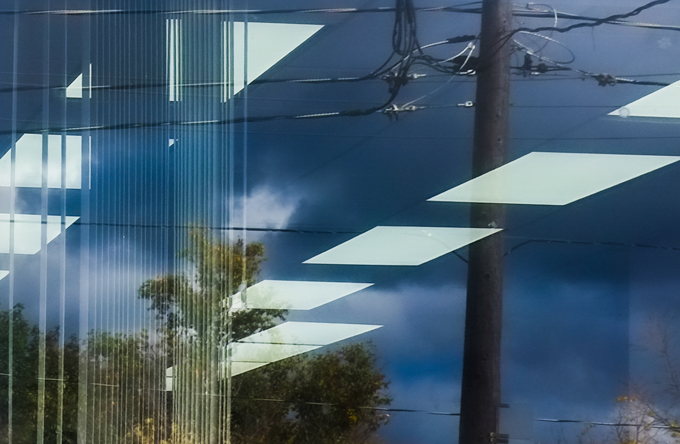
looking in a window with flat rectangular ceiling lights, reflections of hydro pole and lines outside

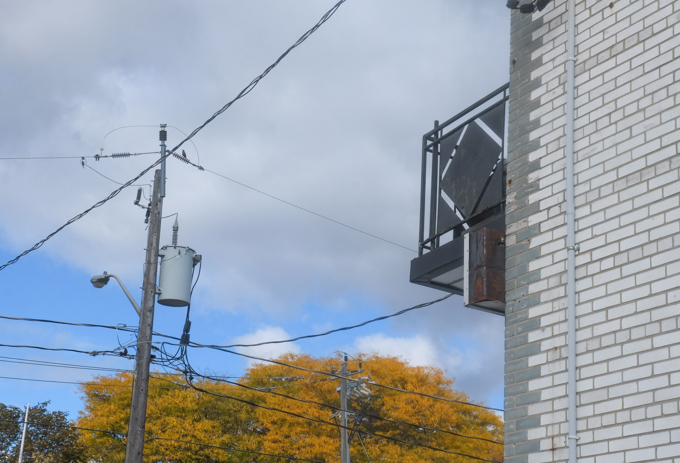
balcony wth black railing on a grey brick building, blue sky with a cloud, transformer on hydro pole, with some wires

row houses on the corner of O'Connor Drive and Skopje Gate

After I wrote this blog post I asked google for a list of streets in Toronto named after American cities.  I got this answer: “Toronto has a number of streets named after American cities, such as Chicago Street, Dallas Street, and Milwaukee Avenue. These streets often have historical connections or reflect the city’s relationships with other North American metropolises.”  I had never heard of these streets in Toronto!  Maybe I missed something.

My next move was to look for Chicago Street in Google maps.  “There is no street named “Chicago Street” in Toronto” was the answer.  I also struck out looking for Dallas Street (which is when Google tried to direct me to Yonge Street).  The answer when I searched for Milwaukee Street was the best of all – “There is no “Milwaukee Street” in Toronto; however, there is a street called Ossington Street, often mentioned in lists of the city’s coolest streets, and a retail store named The Milwaukee Road located at Yorkdale Mall).   The next time you walk down Ossington, you can think of Milwaukee!


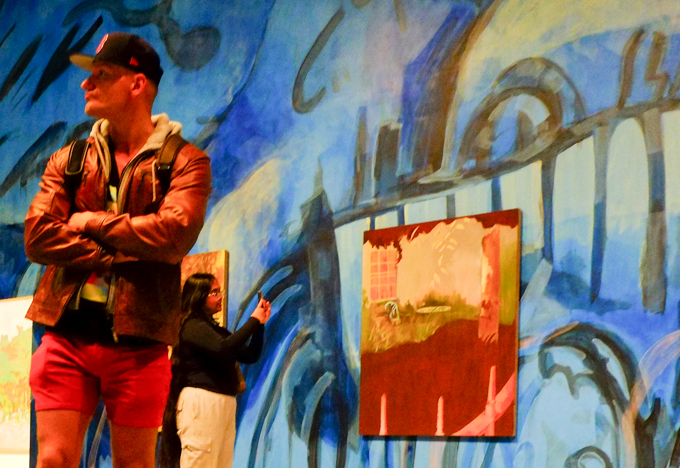
“To Dream of Other Places” is an art installation by Emmanuel Osahor that is now showing at the Power Plant Contemporary Art Gallery.  All pieces have ties to a garden in one way or another.

people in an art gallery, looking at art, taking pictures of it, walls are painted in a garden scene in blues, large paintings on top of that

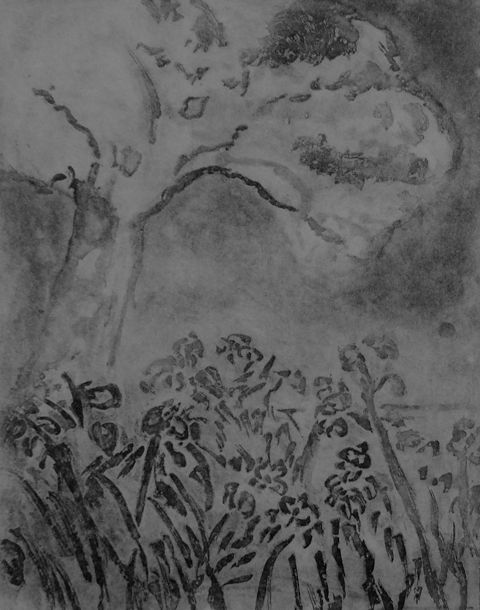
The exhibit starts with a seven etchings in a series titled “A Chair Outside”.  Using different techniques, Osahor presents his version of different garden scenes that he is familiar with – gardens in which he has found solace.

etching by Emmanuel Osahor at Power Plant Contemporary Art Gallery, black, grey tones, window of a house with tree and garden in front

Etchings are made using metal plates covered with an acid-resistant substance (usually wax).  An image is created by removing sections of the wax and then subjecting the plates to acid. The acid will eat away the exposed metal.  When the plate is then used to make a print, the exposed areas remain white.  That’s a very simplistic description of the process because I know that there are lots of videos on the internet that can explain it much better!

etching by Emmanuel Osahor at Power Plant Contemporary Art Gallery, black, grey tones, tree, grass, plants,

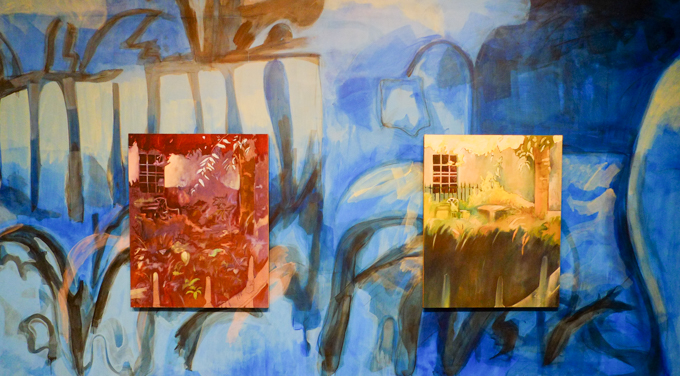
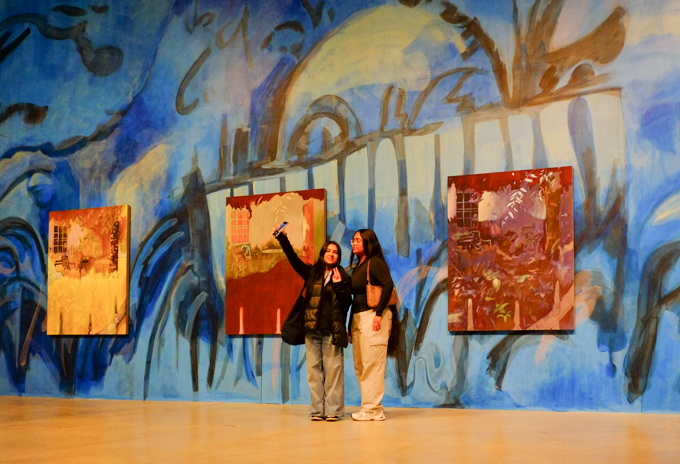
The main part of the exhibit is a large room with walls that have been painted, floor to ceiling, in a fairly abstract garden scene predominantly in blue tones.  This sets the scene, a night garden.

night garden effect, paintings by Emmanuel Osahor, walls painted in garden scene in blues, other paintings of outdoor garden scenery hung on top of the blues

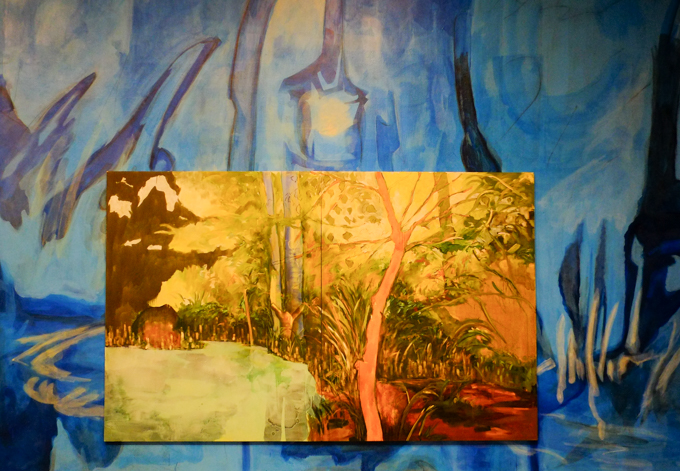
Several large paintings of garden scenes hang on the blue walls.

lawn chairs, night garden effect, paintings by Emmanuel Osahor, walls painted in garden scene in blues, other paintings of outdoor garden scenery hung on top of the blues

night garden effect, paintings by Emmanuel Osahor, walls painted in garden scene in blues, other paintings of outdoor garden scenery hung on top of the blues, two young women taking selfies

night garden effect, paintings by Emmanuel Osahor, walls painted in garden scene in blues, other paintings of outdoor garden scenery hung on top of the blues

night garden effect, paintings by Emmanuel Osahor, walls painted in garden scene in blues, other paintings of outdoor garden scenery hung on top of the blues

There is a second series of small etchings as well.   More gardens, but this time based on visits to National Trust gardens in the UK.

black and white etchings of garden scene

black and white etchings of garden scene

My usual warning – these photos are pictures of pictures in a gallery setting.  The real thing is much better.   The paintings are bigger – a bigger experience and a bigger visual impact.

Osahor’s paintings and etchings are on display until mid September 2025.

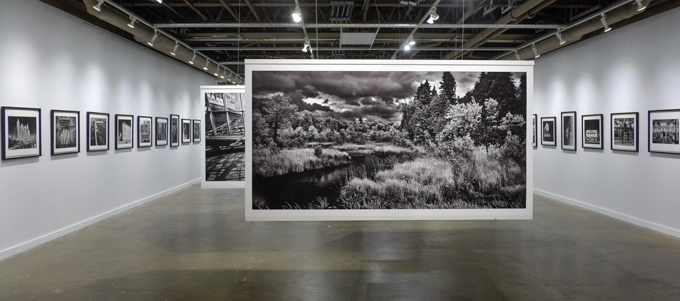
“Phase in my Journey” is the title of an exhibit of the wonderful black and white photography of Walter Borchenko.   The photos span 20 years of his craft including his work with filters, with infrared photography, and with minimal digital manipulation.

below: Grassy Brook, Talbot River Road, Kawartha Lakes Ontario

below: Look Left cross walk, Birmingham England

the words look left in capital letters on the pavement by a crossing, warnings to pedestrians crossing the road

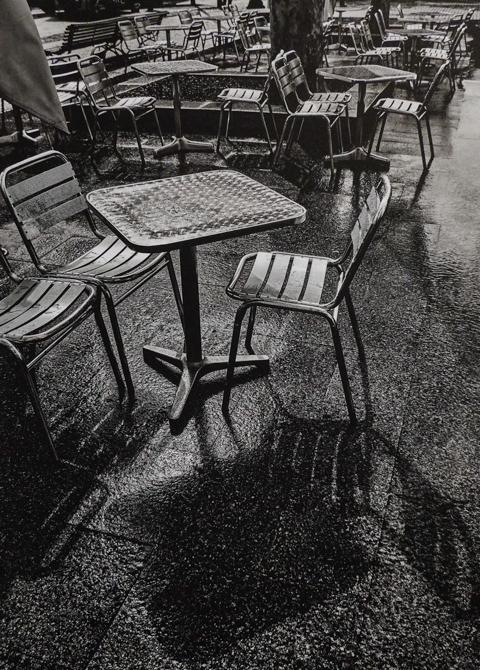
below: Wet tables, Las Ramblas, Barcelona

outdoors, lots of small tables and chairs, in the rain, wet, Barcelona, photo by Walter Borchenko

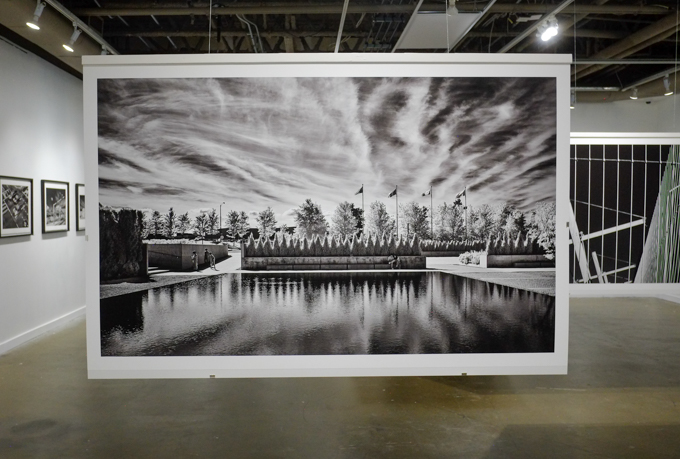
below:  One of the reflecting pools at the Aga Khan Museum.

large, 66 inches by 40 inches, black and white photo by Walter Borchenko, of one of the reflecting pools at Aga Khan museum in Toronto

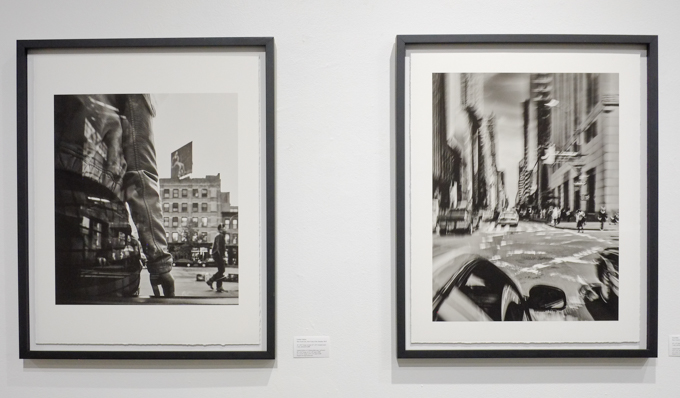
below: On the left, Leather Jacket, New York City.   On the right, an intentionally out of focus city scene – a little disorienting, full of motion and uncertainty.

black and white photo by Walter Borchenko, exhibit is at Japanese Canadian cultural center and is part of Contact Photography Festival,

All of the images are printed on hand-made Awagami Japanese paper.

black and white photo by Walter Borchenko, exhibit is at Japanese Canadian cultural center and is part of Contact Photography Festival

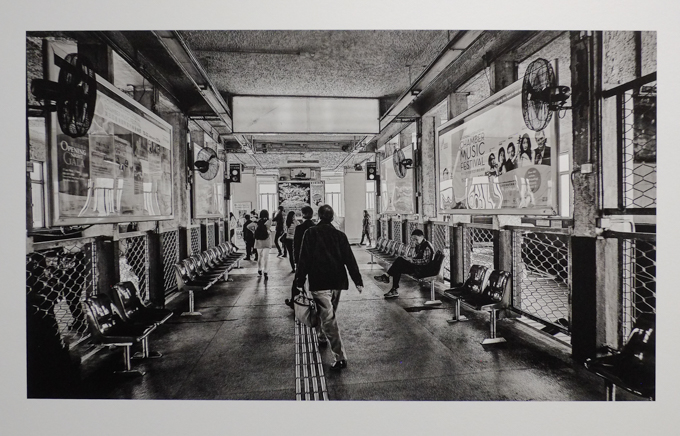
below: Hong Kong ferry terminal

black and white photo by Walter Borchenko, exhibit is at Japanese Canadian cultural center and is part of Contact Photography Festival

below: New York New York casino in Las Vegas in the foreground.

black and white photo by Walter Borchenko, exhibit is at Japanese Canadian cultural center and is part of Contact Photography Festival

below: The larger picture on the left is the Airport Long Distance Train Station in Frankfort Germany.  On the right, is an older house in Port Royal, South Carolina.

black and white photo by Walter Borchenko, exhibit is at Japanese Canadian cultural center and is part of Contact Photography Festival

below: Not a Borchenko photo! The exhibit is being held at the Japanese Canadian Cultural Center. Outside, they have the oldest Sakura tree that I have ever seen. It has large, dense, gorgeous blossoms!

sakura, cherry, blossoms on a tree, lots of pink and white petals

Exhibit closes 30th June


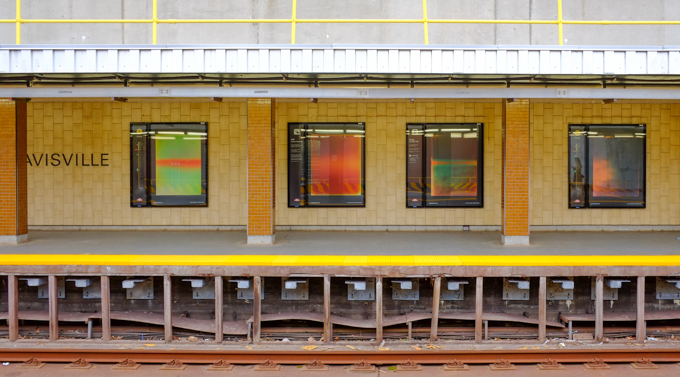
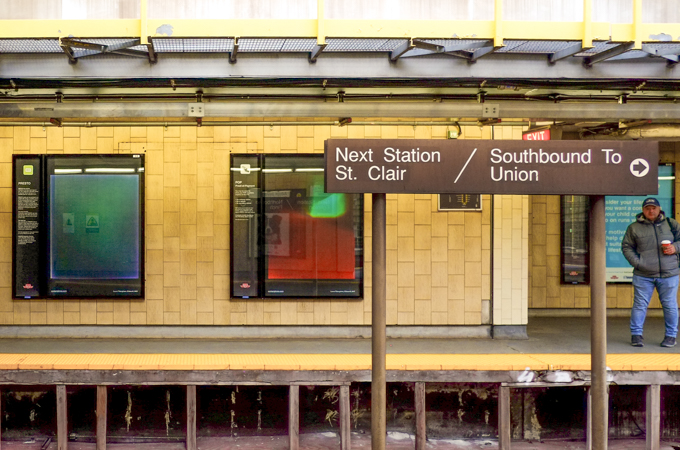
For the month of May, “Time Capsule”, a series of abstract images by French artist Laure Tiberghien is hanging on the walls of Davisville subway station.

on the walls of Davisville subway station, 4 large photographs have been mounted in the display cases usually used for ads. Photos by Laure Tiberghein

Tiberghien doesn’t use a camera to produce the images.  Instead, she creates them by exposing light sensitive paper to different natural and artificial lights.  Further processing is then required.

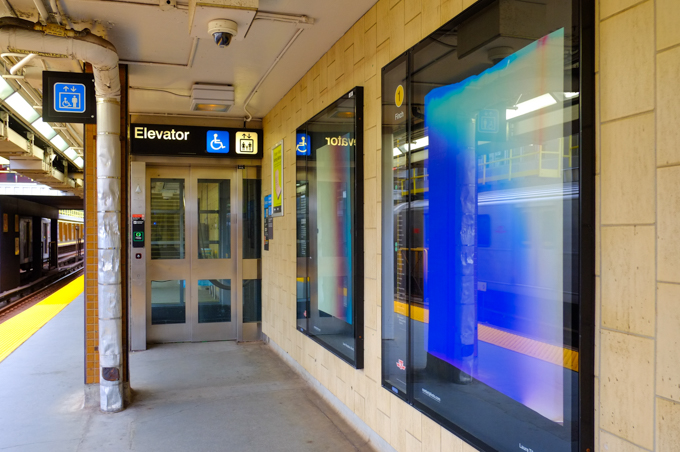
Two images by Laure Tiberghein, behind glass, by exit from Davisville station platform

Dark colours behind glass make a mirror and these images are no exception.

reflections in a red photograph hanging in Davisville subway station

The images have been inserted into the newer display cases that the TTC now use for advertisements.  On the left of each case is TTC information.

Davisville station, two art images in display cases usually used for ads

reflective picture in reds and blues on wall of davisville subway station, images by Laure Tiberghien

looking across the TTC subway tracks to the platform on the other side, on the northbound side of Davisville station, two images by Laure TIberghien, part of Contact Photography festival

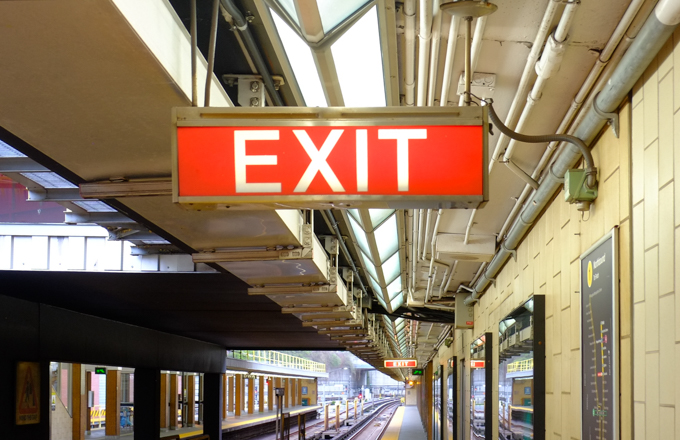
exit sign hanging over platform at davisville subway station

A quick, and very selective, look at the Art Gallery of Ontario (AGO), focusing on two exhibits, “Light Years, the Phil Lind Gift” and “Moments in Modernism”.

below: Rodney Graham, “Media Studies ’77” . This large installation (lit from behind) will bring back memories if you are of a certain age!

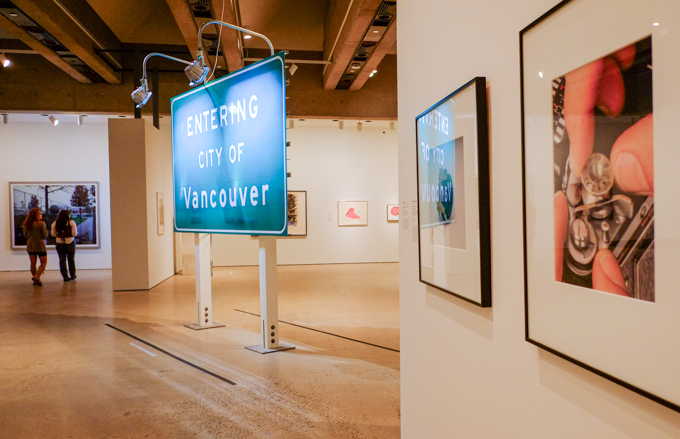
below: Welcome to Vancouver

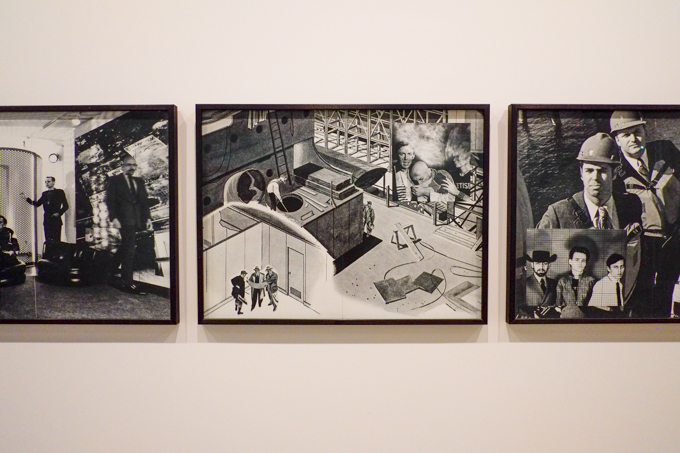
below: A series of images by General Idea (There are actually 4 pieces in this series).  General Idea was a group of 3 Canadian artists, Felix Partz (aka Ronald Gabe), Jorge Zontal (aka Slobodan Saia-Levy) and AA Bronson (aka Michael Tims).  The three men met in Toronto in the late 1960s; their collaborative work then continued until the mid 1990s. They were pioneers in the field of conceptual photography.

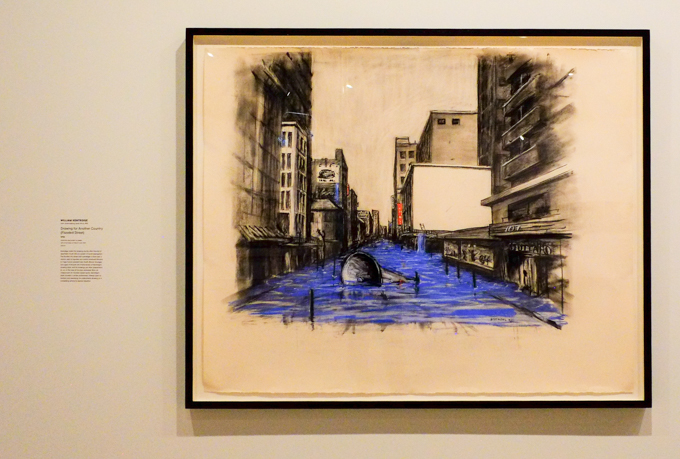
below: William Kentridge, “Drawing for Another Country, Flooded Street”, 1994.   Kentridge was born in South Africa in 1955)

below: “River Road” by Canadian photographer Jeff Wall. The photo was taken along the Fraser River in Richmond BC and was taken in 1994.  It is shown here as a transparency over a lightbox so that it is lit from behind.

The “Moments in Modernism” exhibit is a re-working of artworks owned by the AGO.  Some of you may have seen one or two pieces before.

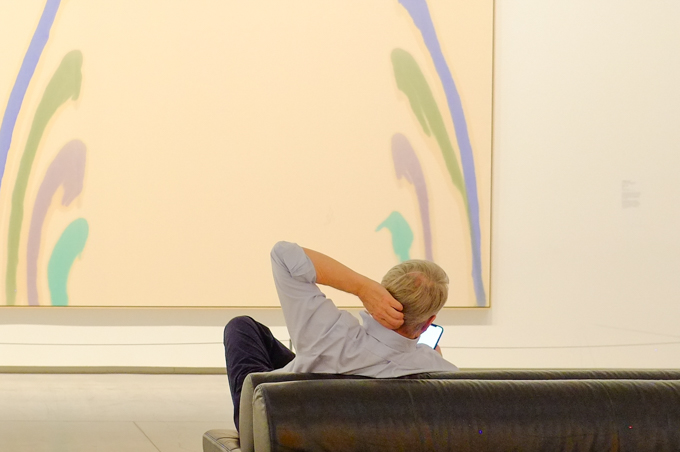
below: “Delta Tau” by Morris Louis, 1960.

below: “Abstraktes Bild”, 1986,  by Gerhard Richter (b. Dresden Germany 1932).

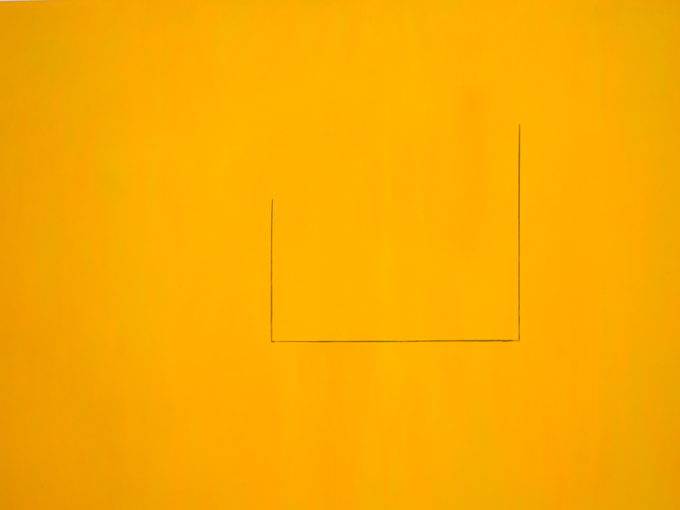
below: I have seen this before (and possibly shown it here?) and I like it as much as ever.  It takes a certain amount of audacity or gumption to create a painting like this. Robert Motherwell painted this – title: “Open No.37A: in Orange”, 1971, charcoal and acrylic.

Robert Motherwell painting, orange, with three thin black lines, like an unfinished square, top open

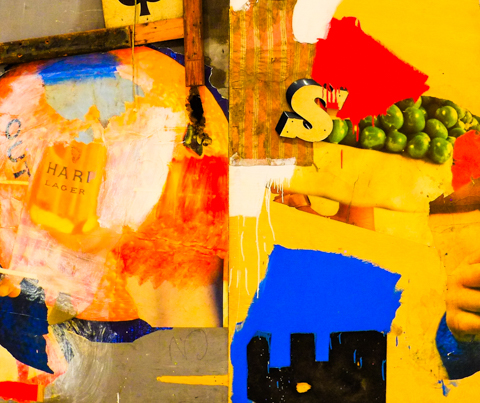
below: Robert Rauschenberg (1925-2008), mixed media on panel, 1964 (only part of it is shown).   Rauschenberg made pieces like these that he called ‘combines’ and they were for stage decorations for performances by an experimental dance group (Merce Cunninham Dance Group).  In 1963 they did a world tour  called  “Story”where they made a different ‘combine’ for each performance.  This particular piece was made onstage at London’s Phoenix Theatre in August, 1964.

Robert Rauschenberg, combines, artwork,

The modernism exhibit is more extensive than I have made it seem.  I didn’t take many pictures of pieces that I had seen before which may or may not have been the right call.  Andy Warhol’s large silkscreen image of the 4 identical Elvis Presley’s holding a gun ready to shoot is on display –  the one where two Elvis’s are in bright colours and the other two are in black and white.     You can also see Alex Colville’s “Woman in a Bathtub” if you want (I think that it is the worst of Colville’s otherwise wonderful paintings).   In addition, there are works by Canadian artist Rita Letendre and Norval Morisseau, plus others.

Light Years continues until November 2025,
while Modernism continues until March 2026 (another year)

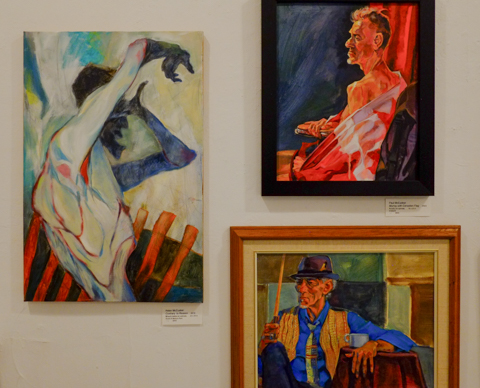
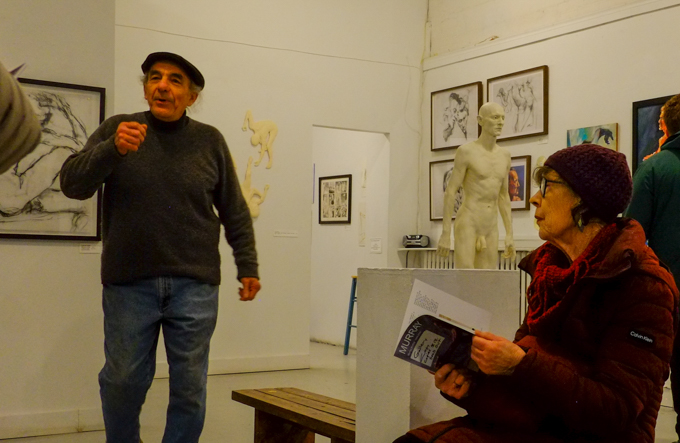
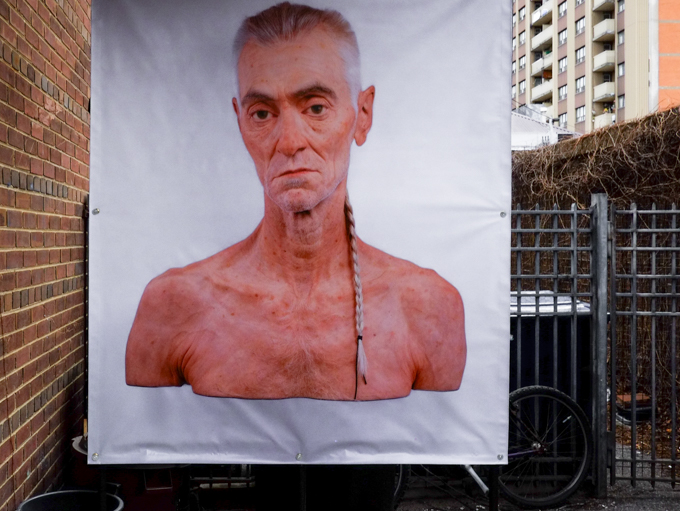
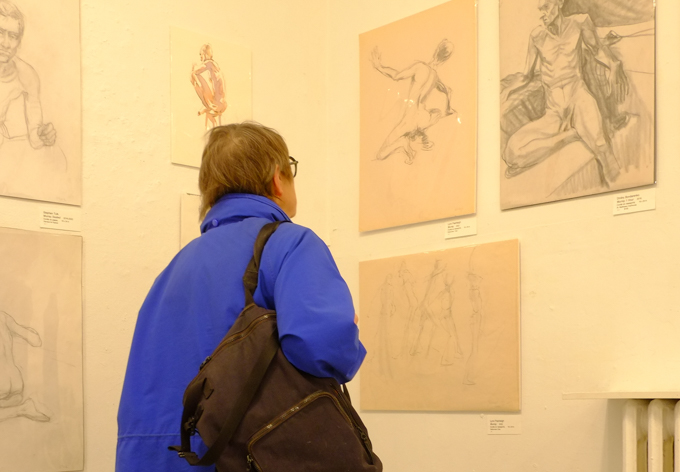
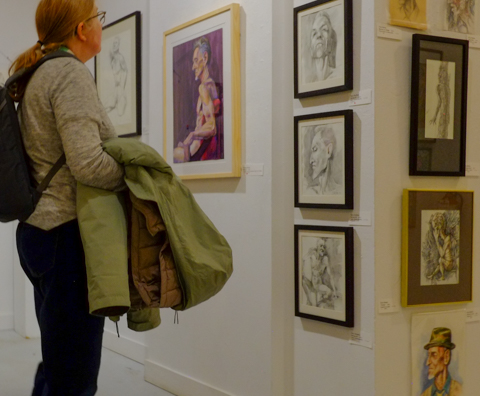
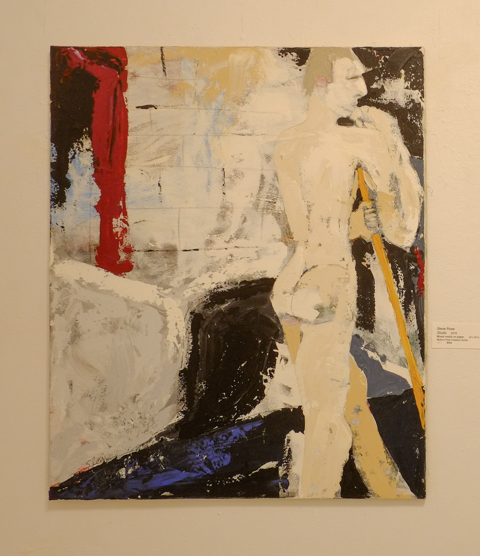
This past week there was an exhibit at Gallery 1313 that paid tribute to Murray McKay.  Murray started modeling for college level life drawing classes in the 1990s.  Between then and his passing in 2024, he had a large impact on Toronto’s art community.  More than forty artists contributed their drawings or paintings of Murray to the exhibit which was simply titled “Murray”.

three brightly coloured paintings, on gallery wall, gallery 1313, all three are portraits

Gallery 1313 Murray McKay tribute exhibition

Gallery 1313 Murray McKay tribute exhibition

Gallery 1313 Murray McKay tribute exhibition

Gallery 1313 Murray McKay tribute exhibition

Gallery 1313 Murray McKay tribute exhibition

Gallery 1313 Murray McKay tribute exhibition

Gallery 1313 Murray McKay tribute exhibition

Gallery 1313 Murray McKay tribute exhibition

Gallery 1313 Murray McKay tribute exhibition

This exhibit was only on between 5th and 16th March (now ended)

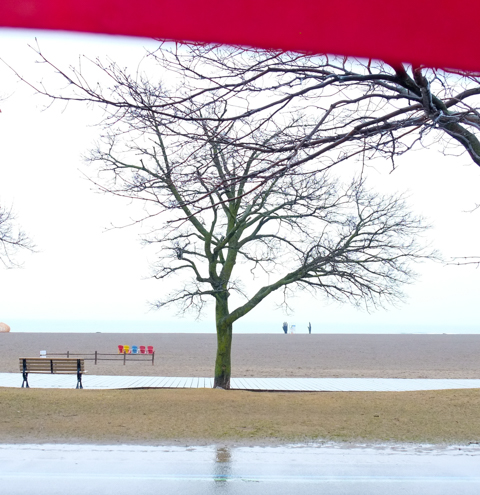
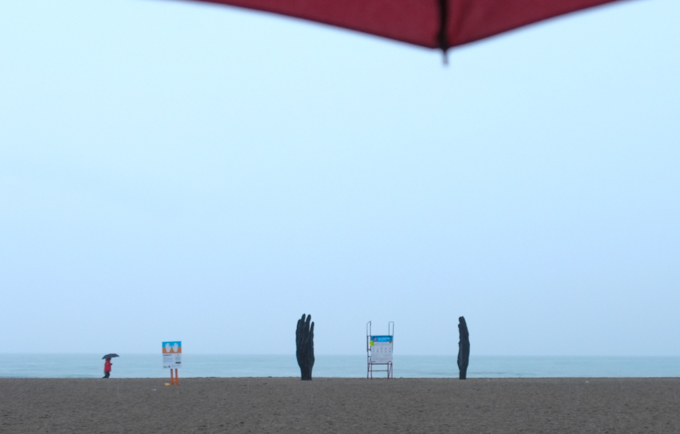
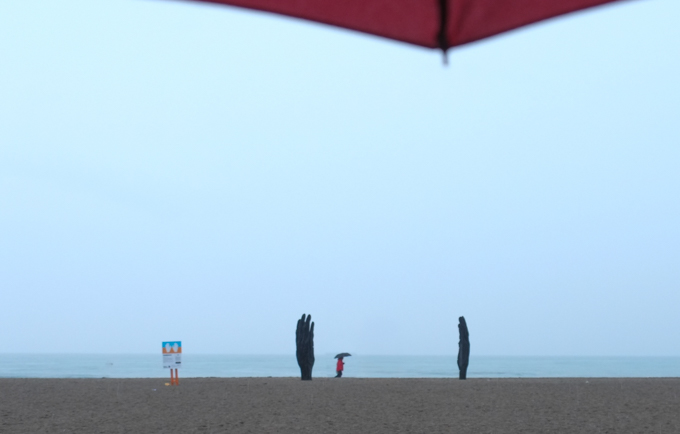
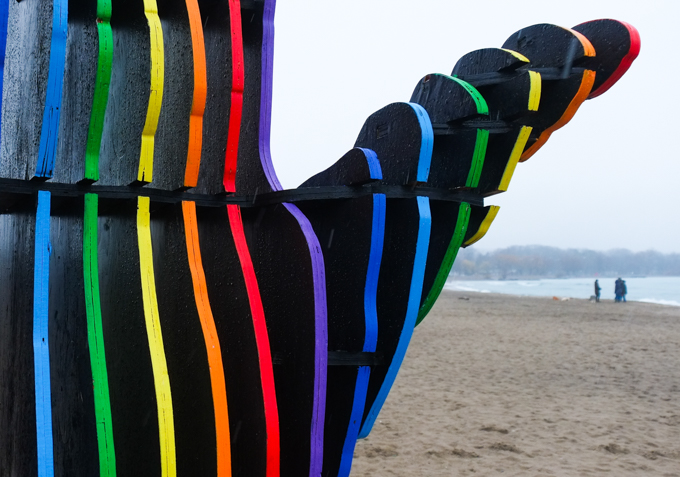
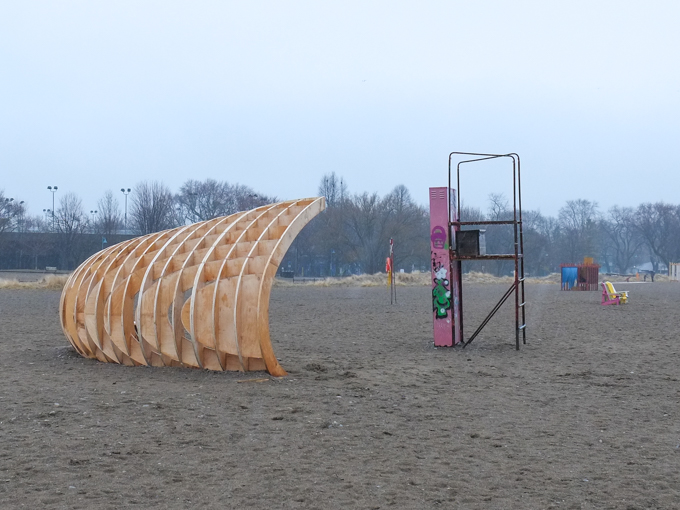
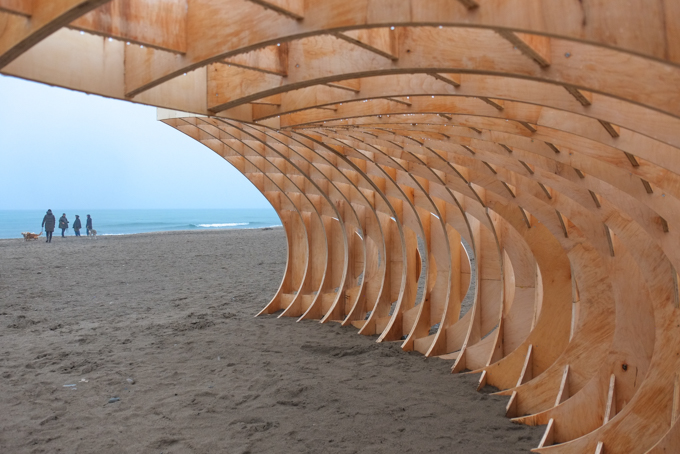
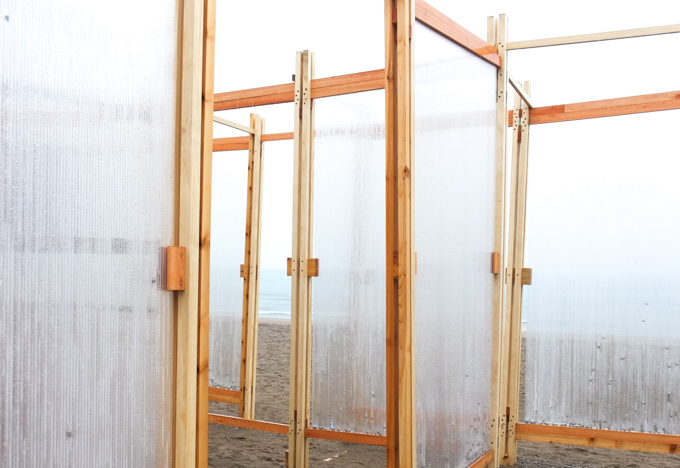
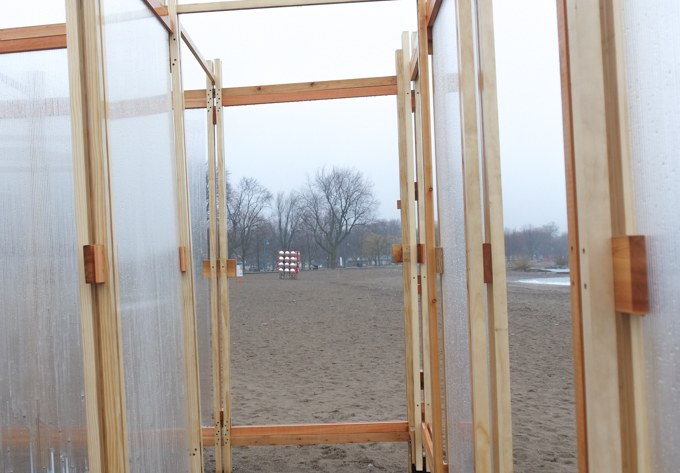
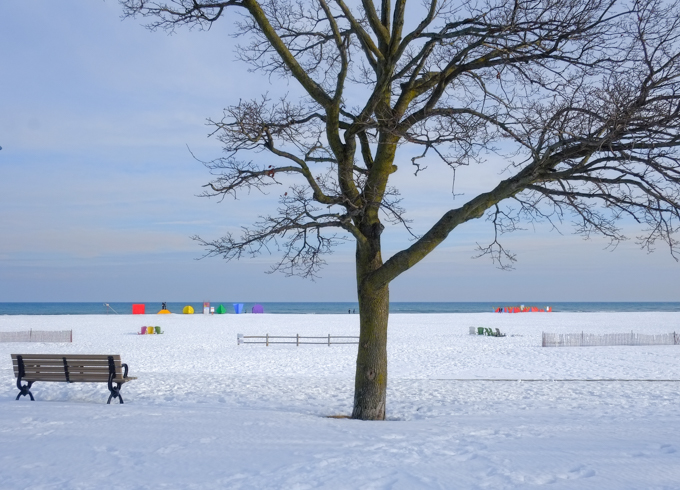
The annual “Winter Stations” public art installations are now up at Woodbine Beach. This year the constructions are colourful and fairly durable.   They should be there until the end of March.

snow covered beach, with a bench facing the frozen lake ontario, a tree beside the bench. in the distance, art installations in the sand

Once again, there are 6 installations to check out as you walk the beach.

below: “Watch” by Trae Horne.  The opening in the fence faces due east

winter stations, public art installation, resembles two sections of a red wood fence, title is Watch and it was designed by trae horne

below: “Peak”, designed by University of Waterloo School of Architecture and the Department of Architectural Engineering.    … ” angular peaks that frame perspectives and form pathways. Consisting of repeating structures of select shapes and sizes, Peak is an interactive installation that visually contrasts the existing site and offers refuge from the cold winter environment. “

peak, an art installation at woodbine beach

red, blue, and yellow triangular and pyramidal shaped structures in the snow beside lake ontario, art installation titled Peak, designed by University of waterloo students

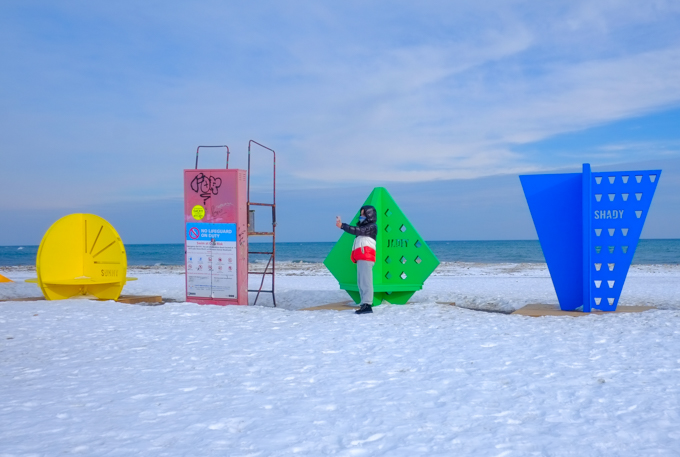
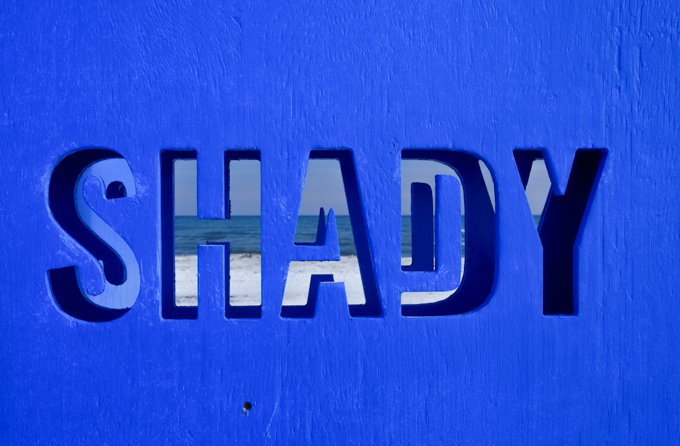
below: “Parade” by Jesse Beus consists of six characters each with their own unique colour, shape, purpose, and identity.  There is blue Shadey and green Jadey.  Sunny is a yellow circle and Boxy is a red box.  There is an orange pyramid called Slippey and a funny purple shape that is Blob.

parade of shapes by a lifeguard station at woodbine beach, part of winter stations public art installation, a woman is taking a photograph, designed by Jesse Beus

the word shady cut of a blue surface, now acts like a window, snow covered beach can be seen through the cut out of the letters

green, blue, and purple structures on the beach, with snow, part of winter stations art project

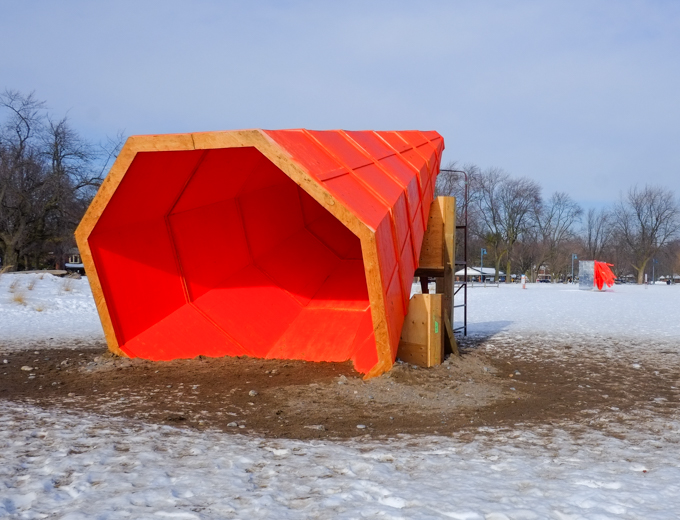
below: “Ascolto” by French artists/designers Ines Dessaint and Tonin Letondu.

orange megaphone shape, winter stations, art installation

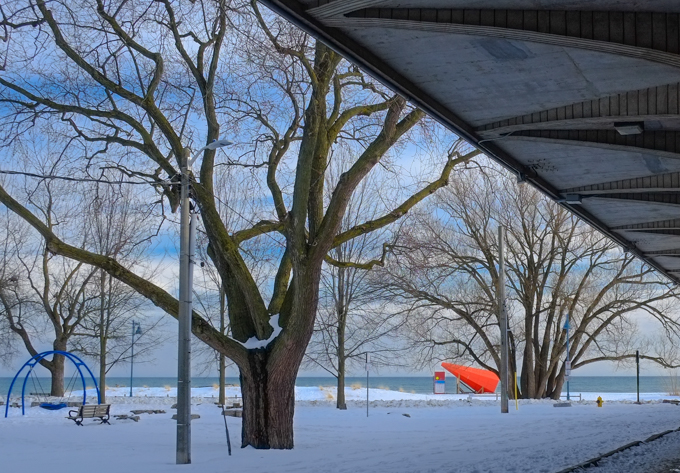
orange megaphone shape, winter stations, art installation, snowy beach, large trees in foreground

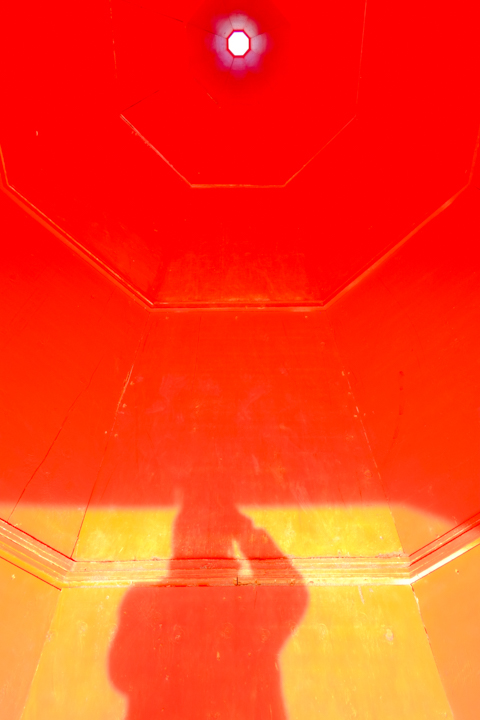
below: Standing at the edge of “Ascolto” and looking in.

orange megaphone shape, winter stations, art installation, shadow of photographer, seen inside the orange tube

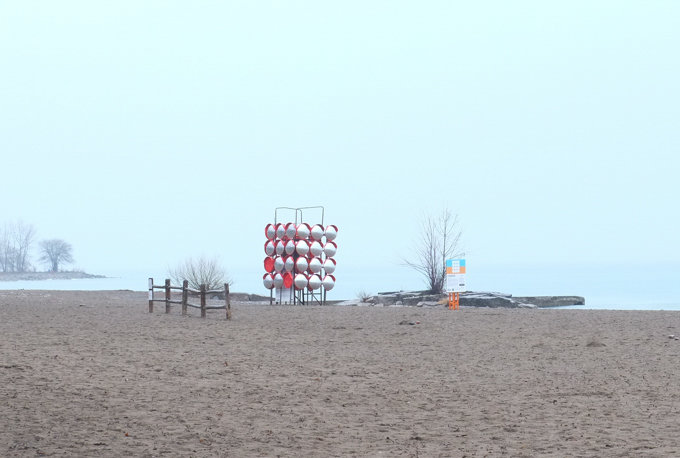
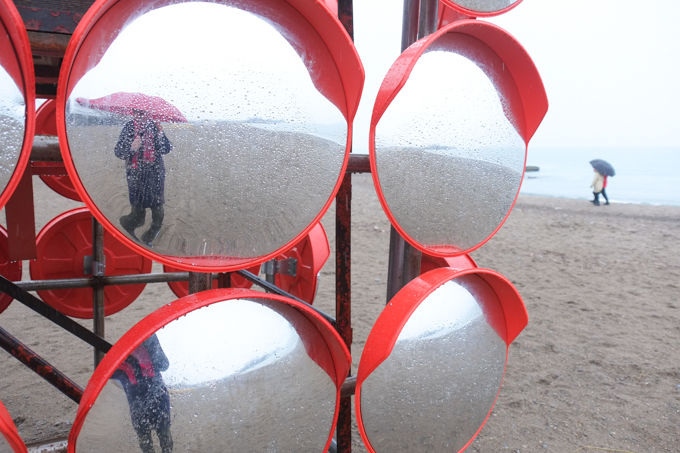
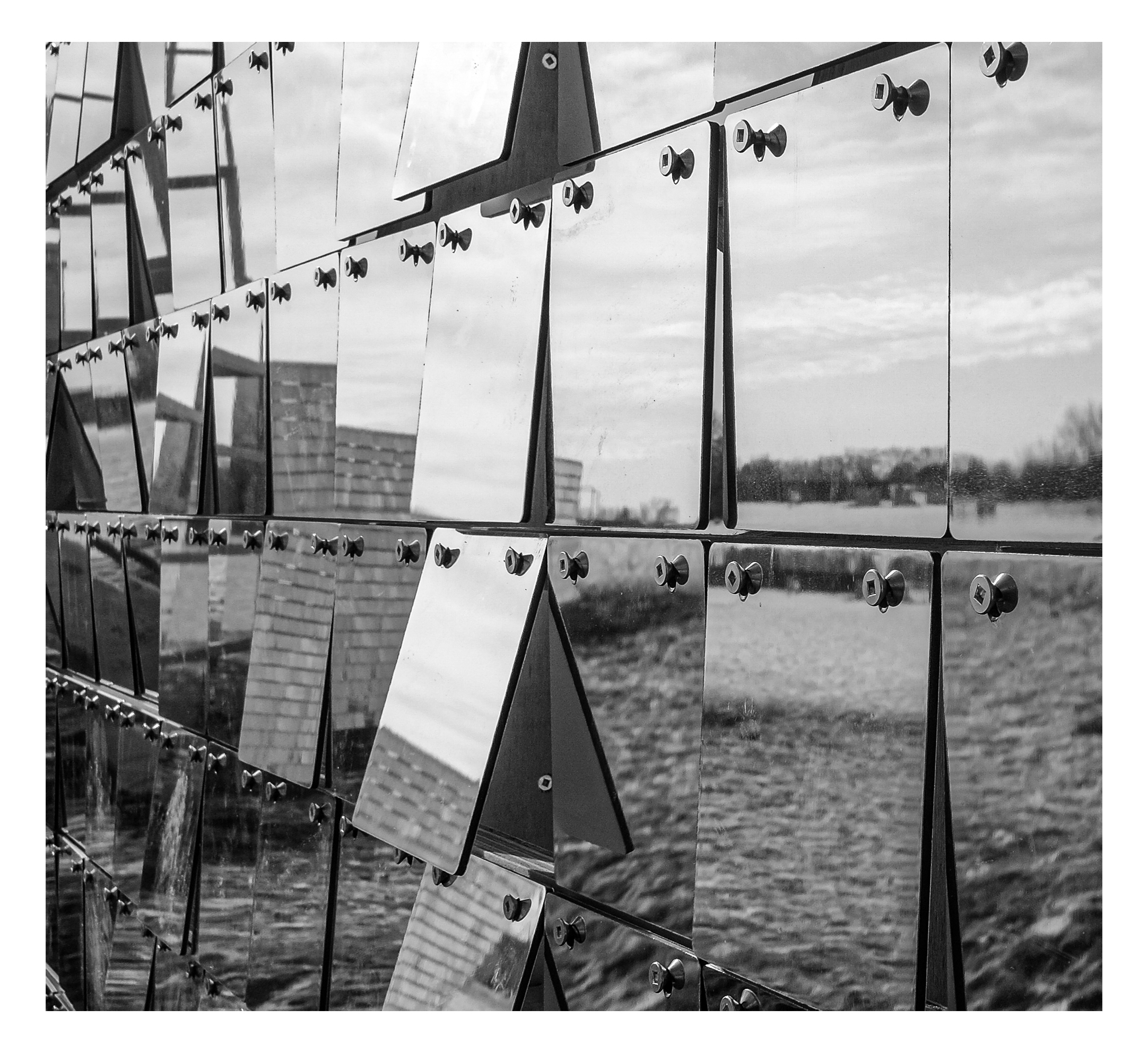
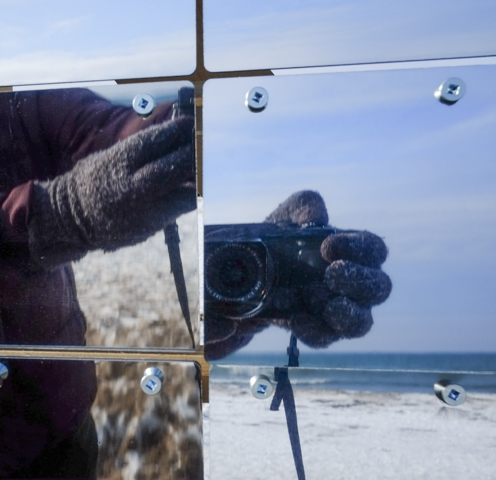
below: “Solair”, by Toronto Metropolitan University Department of Architectural Science – Sunlight and air…  light and wind…. together produce movement and reflections and an ever changing abstracted image.  Each reflective square moves independently from the others.

winter stations art installation, hundreds of little reflective squares that move in wind, reflecting beach and lake and sky

winter stations art installation, hundreds of little reflective squares that move in wind, reflecting beach and lake and sky, up close of the squares

reflections of camera

winter stations art installation, hundreds of little reflective squares that move in wind, reflecting beach and lake and sky , panels on both sides of a lifeguard station chair

winter stations art installation, hundreds of little reflective squares that move in wind, reflecting beach and lake and sky , people looking at

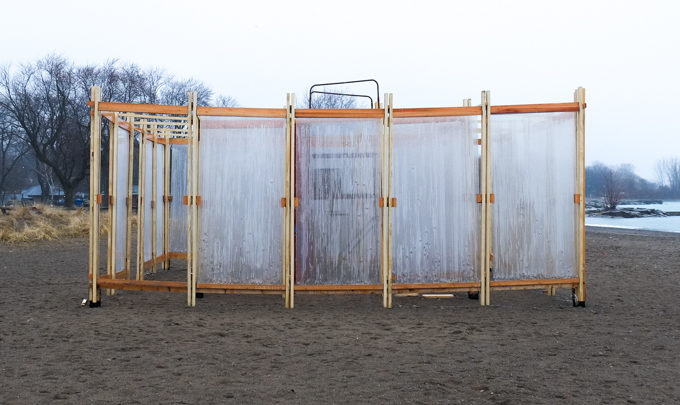
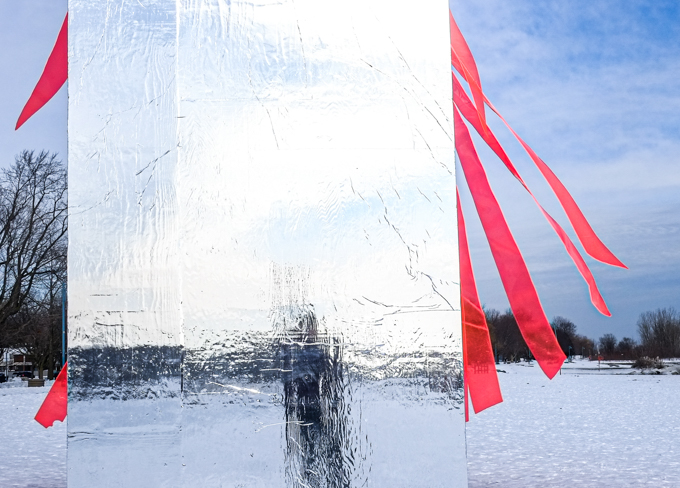
below: “Slice of Sun” by a Portuguese group – Cláudia Franco, Mariam Daudali, and Tom Byrom.  It is a semi-circle within a rectangle.  There are steps inside the curved portion that can be used as seats but just be careful because if it is windy, you might get hit by a blowing strip of pink plastic!

pink plastic strips that blow in the wind, art installation at woodbine beach
slice of sun, an art installation at woodbine beach

art installation at woodbine beach, silver reflective wall

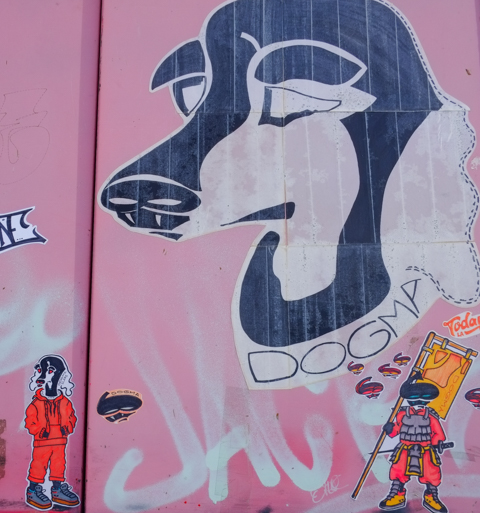
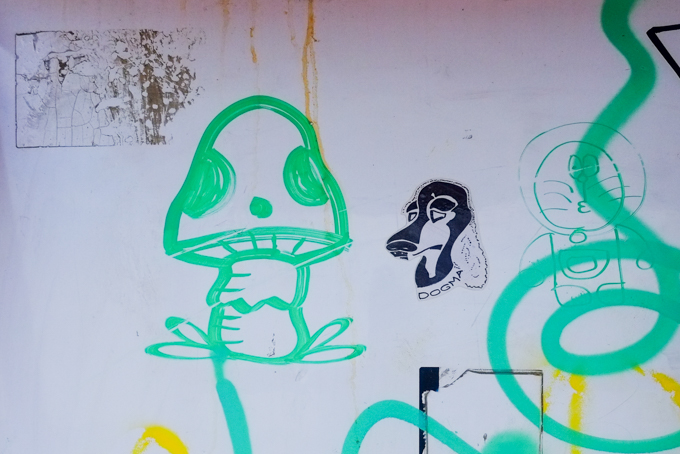
below: Dogma graffiti at one of the lifeguard stations

dogma graffiti, 2 stickers, on pink background dogma graffiti, green mushroom guy

footsteps in the snow leading to a bench by a frozen lake

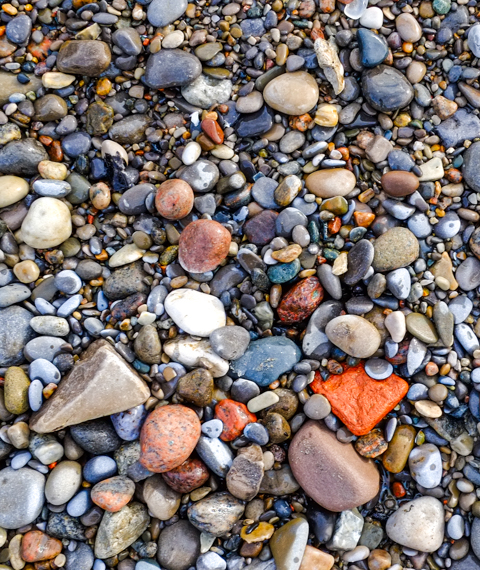
pebbles of different shapes and colours on the beach

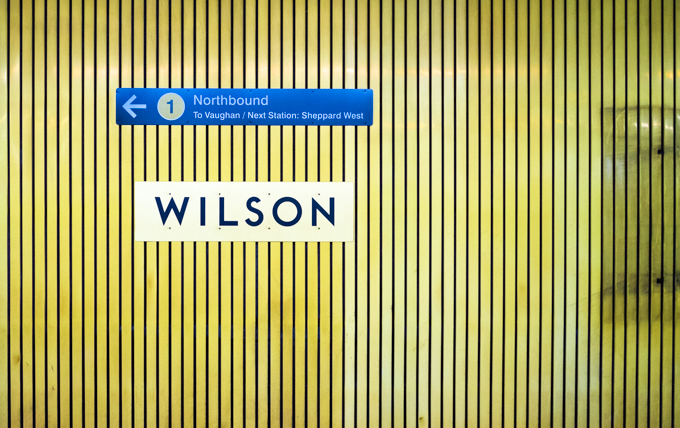
yellowish vertical cladding, interior wilson subway station, with blue sign with arrow pointing to the left for northbound trains

Wilson subway station, on the University side of  Line 1, opened in 1978 and was the end of the line until Downsview station just to the north opened in 1996.  It is not a thing of beauty.  Concrete.   Austere from the outside.  It’s entrance from under the Allen Expressway is dark, gloomy, and depressing.

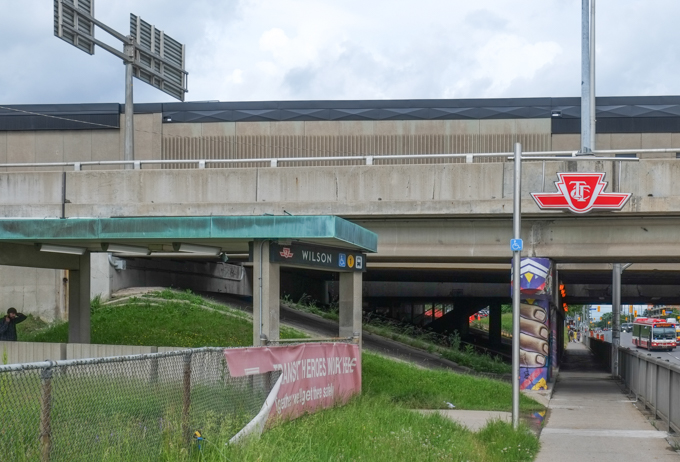
below: Northwest entrance to the station, nestled up against the Allen Expressway.

northwest entrance to wilson subway station, right next to the allen expressway

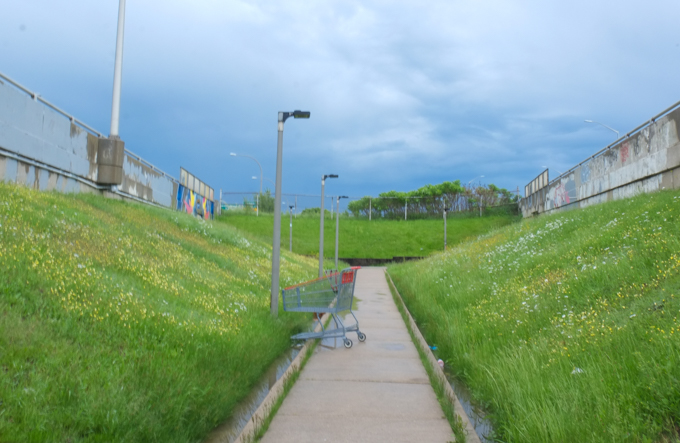
below: Walkway to southwest entrance

southwest entrance to wilson station, sidewalk through grassy area to entrance

That stretch of the subway runs down the median of the Allen Expressway.


below: Although the platform has a roof, it is open at the ends and in the winter it is cold.  There are a few of these pod-like waiting areas, circular glass structures with benches for those wanting a tiny reprieve from the wind.

on the platform of wilson subway station, circular pod-like structures made of glass, with benches, waiting areas

below: Inside the station a concrete wall sculpture by Ted Bieler entitled ‘Canyons’

very textural wall sculpture by artist ted bieler, called canyons, inside wilson subway station

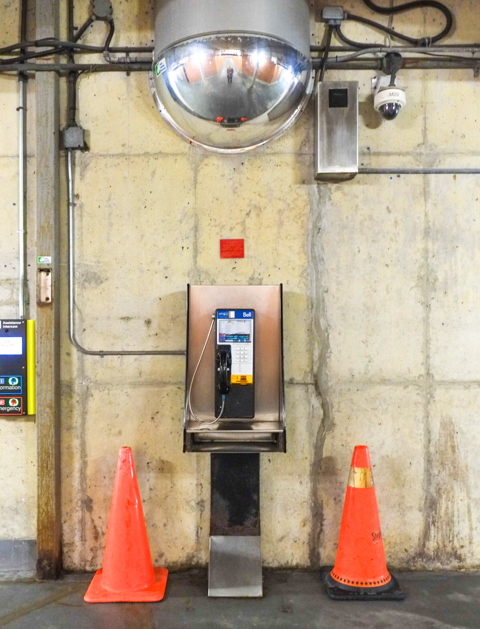
two orange cones beside a phone booth against a concrete wall, interior, wilson subway station

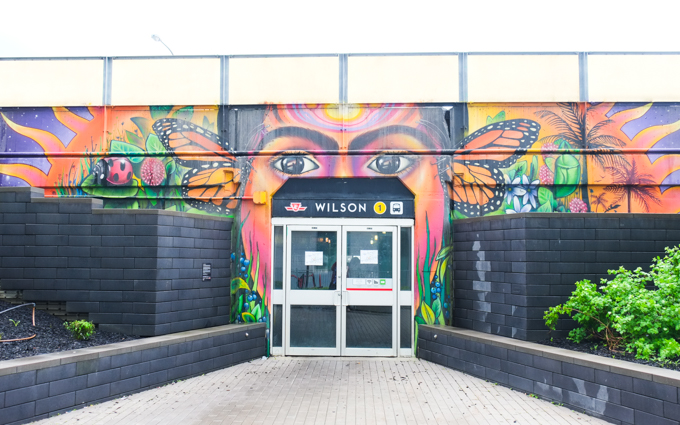
What drew me here in the first place ….  To help brighten up the area, some of the concrete, both inside and out, has been covered with murals by Shalak Attack, Bruno Smoky, and Clandestinos,

below: An owl and a woman’s face at the two south entrances.

owl face, mural, around an entrance to Wilson subway station

clandestinos, or shalak attack, mural of a woman's face with butterflies and flowers, surrounding one of the double doors, entrance to wilson subway station

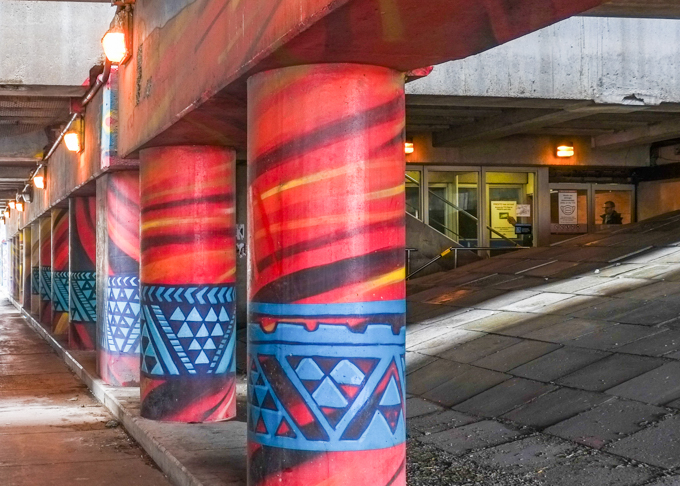
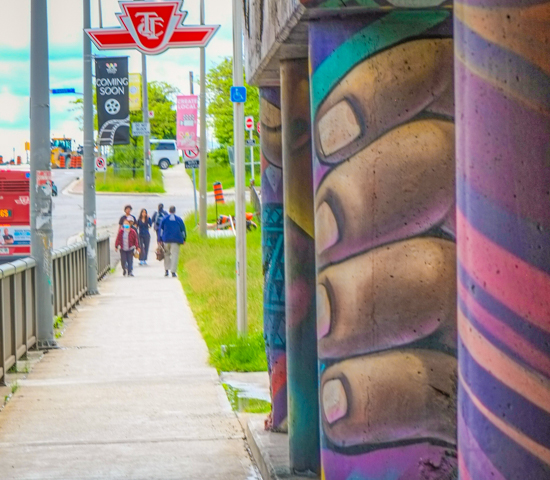
below: There is a lot of street art along Wilson Avenue but most of it is under the Allen Expressway and is not well lit. Some of it is also looking very dirty.

pillars painted with red and blue designs, under the allen expressway and beside wilson subway station

concrete pillar with street art, large brown fingers, people walking towards subway entrance

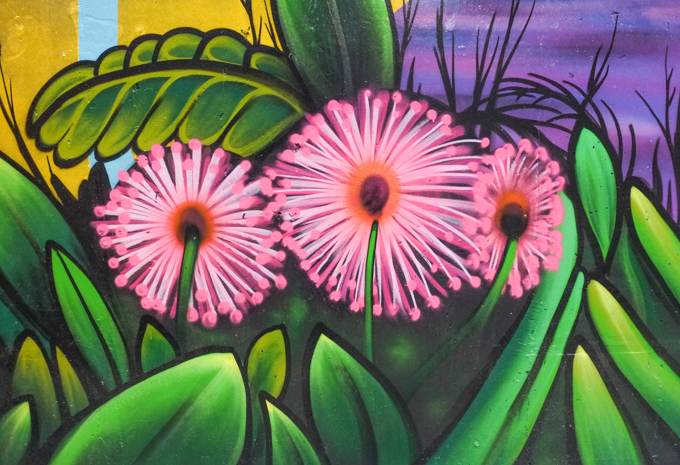
below: Pink flowers inside the station

part of a mural, inside wilson station, of bright pink flower


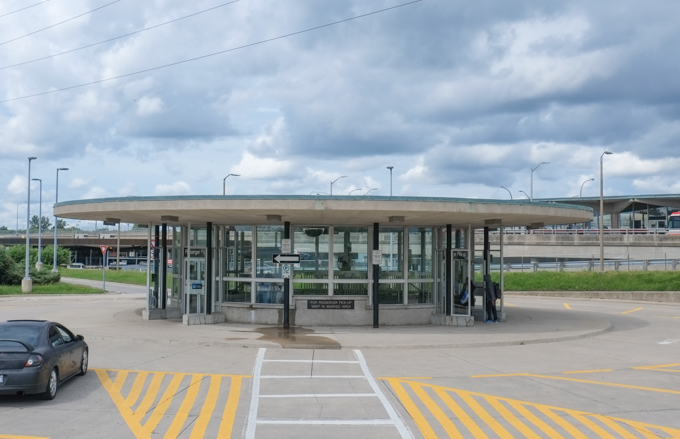
below: Circular “Kiss ‘n Ride” still exists.

round flat building, wilson kiss and ride, where cars can dropoff and pick up passengers

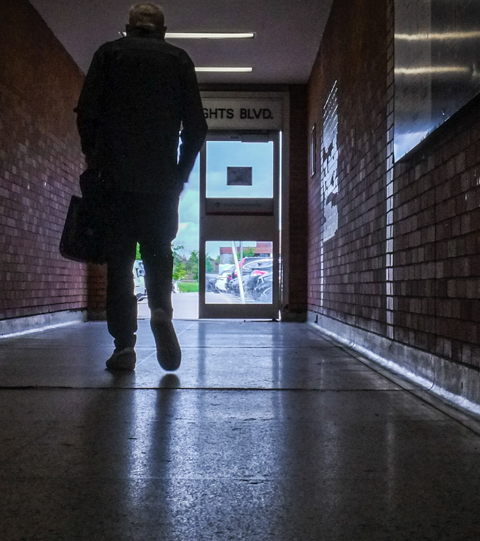
below: Exit at Wilson Heights

silhouette of man walking down hallway at wilson station, light coming through the door at the end of the passage, exit to wilson heights side of the station

below: Northeast side of the station, along with the Allen Expressway

northeast side of wilson subway station

I took most of these pictures back in the summer but I hadn’t taken the time to blog about what I had seen.  When I drove past Wilson again recently, I noticed that the parking lot on the east side (towards Wilson Heights) is now fenced off.  Now it is a snow covered vacant lot.

below: Parking lot before

bike parked outside wilson subway station

below: … and after. You can still park your bikes here, but no more cars.

vacant lot, snow covered, on the east side of wilson subway station

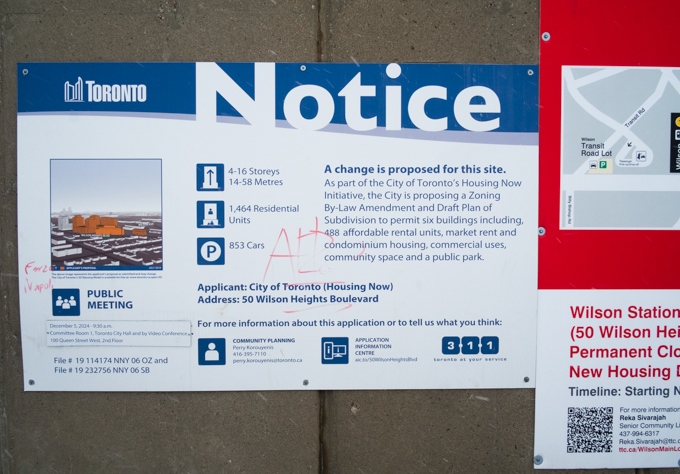
below: There is a City of Toronto development notice sign on the side of Wilson station.  It looks like the city may be serious about affordable housing at this site.  Apparently this has been in the works for a number of years but faced some opposition form those who wanted to keep the parking lot.   Just shy of 1500 units in six buildings are planned on the site along with community space and a public park.  The percent allotted to affordable housing varies from 35 to 48 percent, depending on the source of the information.

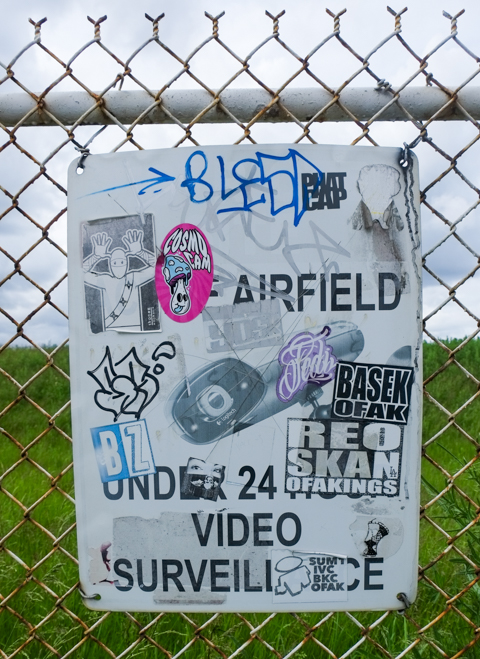
To the west of the station, on the north side of Wilson, is the remains of the Downsview Airport lands.

sign on chainlink fence around downsview airport that says airfield, 24 hour surveillance. it is covered with graffiti stickers,

looking through chainlink fence at old airport property, unused road with deteriorating pavement, buildings in the very distance, lots of grass and sky

below: One of the four winners of the ‘XOXO Downsview, Talking Fences’ competition of 2023, is “Aandi wenjibaayan?” which translates to “Where are you from?”  It was suggested by Lakhvir Sandhar.  The other three winners have their words displayed elsewhere on the Downsview property.

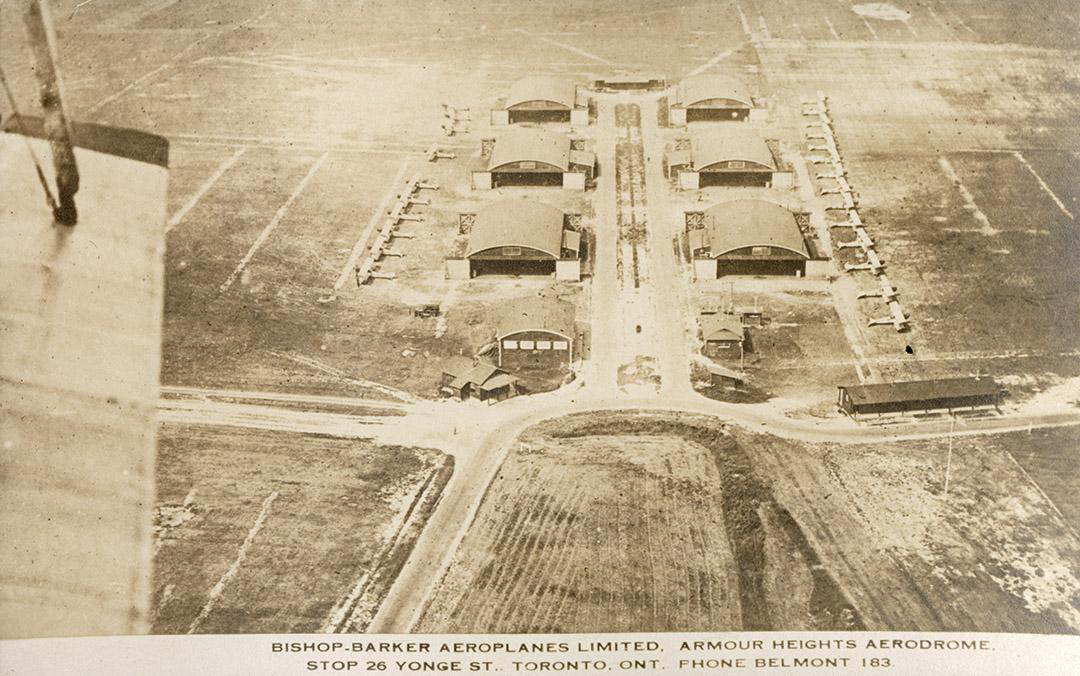
vintage photo taken from low flying airplane of bishop-barker airplane limited,

Photo credit: Toronto Public Library online digital image archive

The south side of Wilson is retail and is now Wilson Village.   It is also where you will find Billy Bishop Way named for Canadian pilot.  It is nowhere near Billy Bishop Airport (that’s WAAAAY south, on the island, or the other one in Owen Sound) but is a nod to Downsview’s history as an airfield and its role in airplane manufacturing.

William Avery Bishop was born in Owen Sound in 1894.  He was a Canadian flying ace during WW1.

toronto street sign for billy bishop way in wilson village, on wilson ave

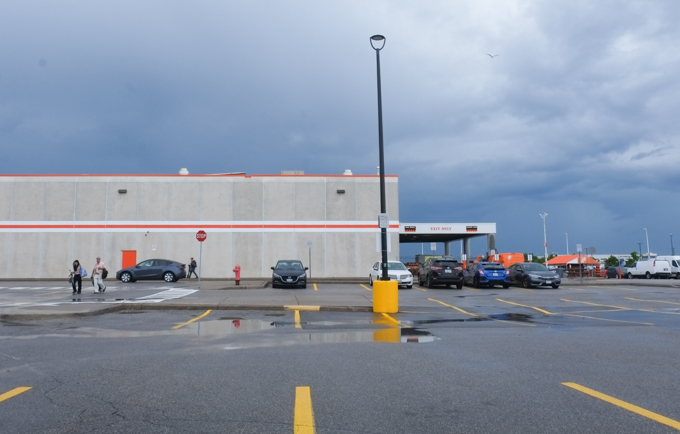
side of home depot store, parking lot, wilson avenue

below: Looking southeast past the old metal fence that surrounds the parking on the northwest side of Wilson station.  Big box retail on the other side of Wilson, and newer midrise to highrise residential development on the other side of the Allen.

standing in parking lot on west side of wilson station, looking southeast towards allen expressway, retail big box stores on west of allen, new residential highrise on the east side

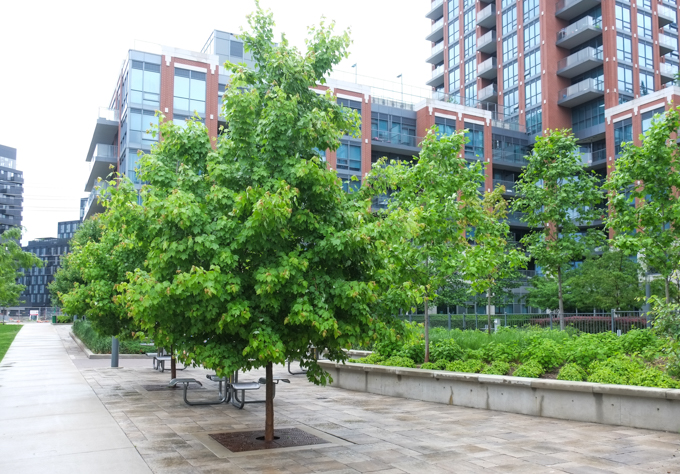
Very close to the planned “affordable housing” but on the south side of Wilson, there is already a new community being built.


There are many older single family homes to the east, in a quiet neighbourhood squeezed in between Wilson and the 401.

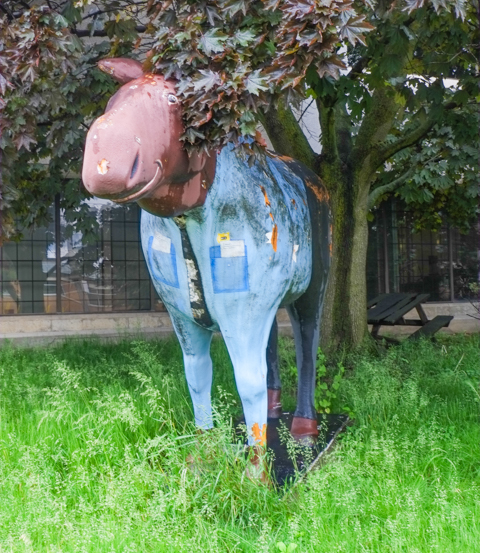
I even discovered an old moose hiding in the bushes!  The “Moose in the City” project goes way back to 2000 when 326 life-sized moose sculptures found homes around the city.  Each one was decorated by a local artist.   I am not sure how many still exist but it can’t be more than a fraction of the original.

Other moose: Scarborough moose near Kennedy and 401, moose at St. Clair and Bayview. Any others?

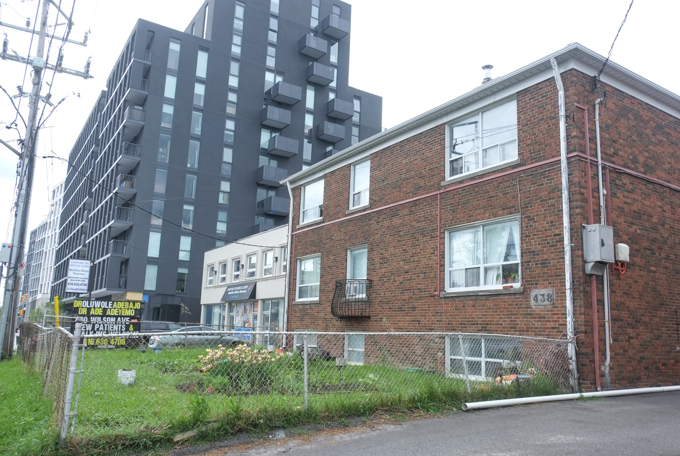
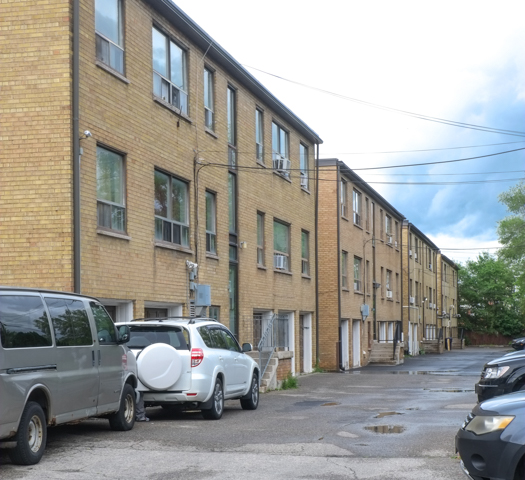
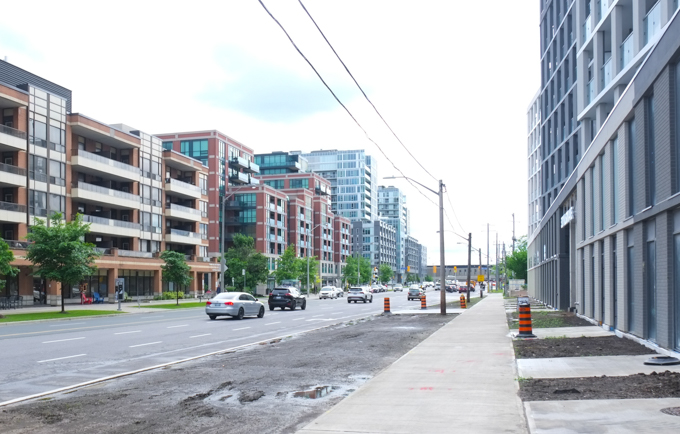
To the east, Wilson is becoming a canyon of midrise buildings, replacing the older residences, often fourplexes and sixplexes.

The development is more intensive as you get closer to the Allen and the subway line…

… on both the north and south side of Wilson

tiles, interior walls of wilson subway station, design of vertical and horizontal lines in pale yellow on rust coloured background

Seen on Warden Avenue…  A building with a mural by Mediah (aka Evond Blake) on the upper level, and decorated blocks spelling ‘Scarborough’ in the front.  Each letter looks to be an animal-like character.

mural, drift appendar, by mediah alias Evond Blake, on the side of a two storey building in Scarbourgh. in front of the building is the word scarborough, each letter make with animal like character in the shape of that letter.

Same building, another side.  A windowless canvas for “Drift Appendar”

two storey bulding in scarborough, with large mural by mediah, iah digital, on it

Same site (building with Mediah mural is just behind the container).

metal container box by sidewalk, that is covered with bright colourful mural,

Feed Scarborough (part of the Scarborough Food Security Initiative, an organization that runs community gardens, food banks and many other programs).

painting on end of container showing part of the mural that covers the whole container, blue sky, yellow and orange sun, blue water, and words that say Feed Scarborough

two women looking at fabric artwork by Pacita Abad hanging at the Art Gallery of Ontario

Pacita Abad (1946-2004) was born in the Philippines.  During the Marcos regime, she left Manila intending to study law in Spain. Instead, she ended up in the USA.

below: “Old Dhaka” (Bangladesh) 1978, oil on canvas

Many of the artworks that were on display were large-scale hanging trapuntos, a form of quilted painting made of stitched and stuffed canvas.

below: The central piece in this image is “LA Liberty” 1992.  Here Abad recasts Lady Liberty as an “International Lady of Color” as opposed to the very white, very European, statue that exists in New York City.

three large pieces fabric artwork by Pacita Abad hanging at the Art Gallery of Ontario

below:  “If My Friends Could See Me Now”, An American Dream with all the trappings of a ‘typical’ middle class life.

fabric artwork by Pacita Abad hanging at the Art Gallery of Ontario

below: “Subali” 1983. Acrylic, oil, gold cotton, batik cloth, sequins, rick rack ribbons on stitched and padded canvas.

fabric artwork by Pacita Abad hanging at the Art Gallery of Ontario

fabric artwork by Pacita Abad hanging at the Art Gallery of Ontario

fabric artwork by Pacita Abad hanging at the Art Gallery of Ontario

below: Many of the fabric pieces had marine themes like this very big octopus in “My Fear of Night Diving” 1985.  It is 130 x 170 inches (or 330 x 432 cm).

fabric artwork by Pacita Abad hanging at the Art Gallery of Ontario

people in an art gallery, Art Gallery of Ontario, looking at artwork by Pacita Abad, large fabric pieces in vibrant colors, of underwater scenes

fabric artwork by Pacita Abad hanging at the Art Gallery of Ontario, underwater scene, different types of fish, colourful seaweed,

below: Details, striped braiding sewn on to make the seaweed

fabric artwork by Pacita Abad hanging at the Art Gallery of Ontario underwater scene, striped fish, colourful seaweed enhanced with striped braiding sewn on top of the painted mottled pink fabric,

fabric artwork by Pacita Abad hanging at the Art Gallery of Ontario. In foreground is an abstract with different sizes of squares and rectangles in different colours, in the background is one with a scene of a woman looking out a window with bars on it.

below: Some of the pieces were hung such that the stitches on the back were visible.  Also interesting.

fabric artwork by Pacita Abad hanging at the Art Gallery of Ontario

Regrettably, this exhibit closes today.