Archive for the ‘locations’ Category

Queen and Sherbourne – It’s a grubby corner.

below: Built in 1897 on the southwest corner and a major part of the intersection since then, is the Kormann House Hotel named for its hotel keeper in 1898, Franz J. Kormann.  The Torontoist described the building in 2008 as “Though vacant for the past few years, this old watering hole will open its doors once again as part of an upcoming condo development.”  That was 8 1/2 years ago.  It is still vacant.   The projected renovations and mid-rise condo development never got off the ground.

old brick 3 storey building on the corner of an intersection. Top part is white, bottom part is grey. Boarded up and vacant.

below: Diagonally opposite is now the Moss Park Discount Store.

building on the corner of an intersection, Moss Park Discount Store on the corner of Queen East and Sherbourne. People on the sidewalk outside the building. 3 storey brick,

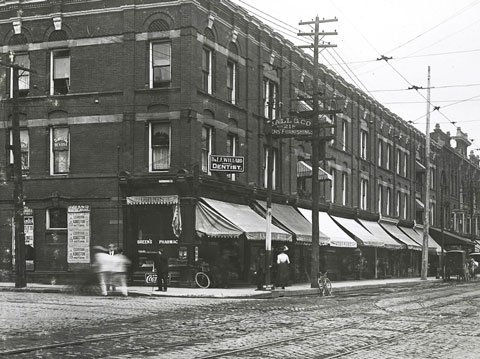
below: The same corner as above but from a slightly different angle as it looked about a hundred years ago.  Note the cobbled streets, streetcar tracks on both Queen and Sherbourne, and the lack of traffic lights.   Photo found on Lost Toronto blog

old black and white photo of the northeast corner of Queen East and Sherbourne

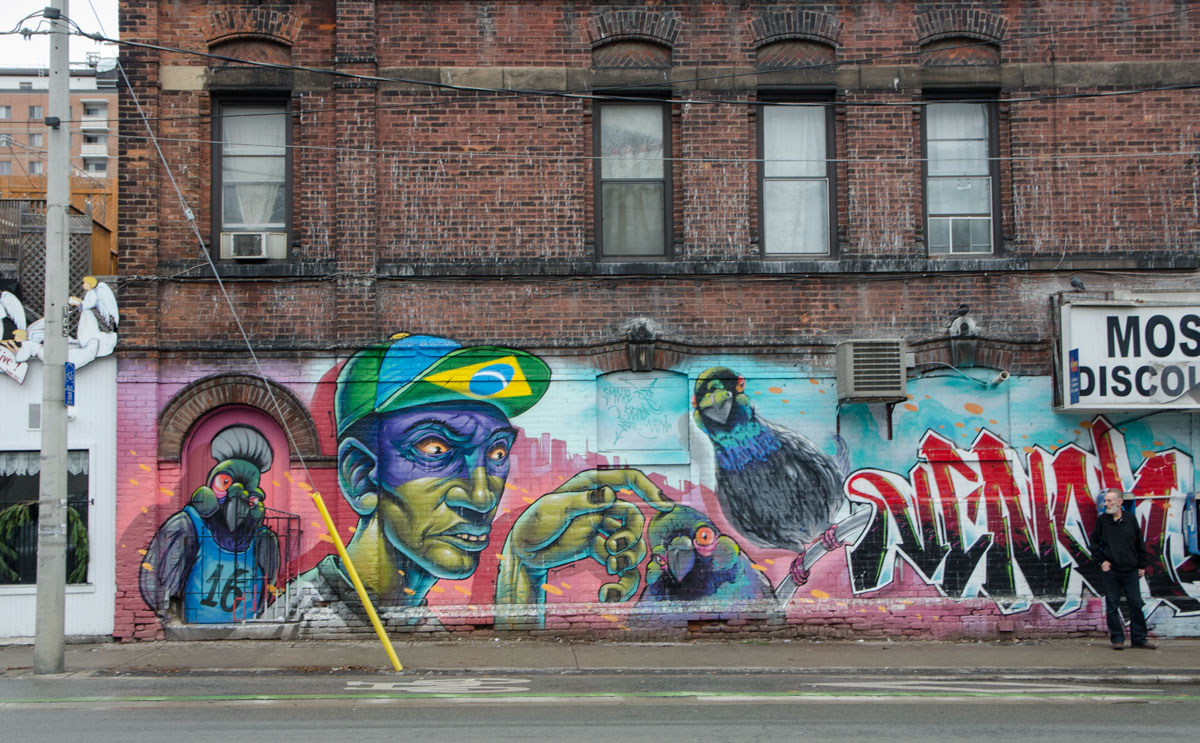
Adding a bit of colour to the intersection is the new mural on Sherbourne Street, on the side of building that houses the Moss Park Discount Store.   It features a young man in a baseball cap adorned with the Brazilian flag.  Three parrots are also in the mural.

mural on the side of a red brick building, a young man in a baseball cap and three parrots. on the exterior wall of the Moss Park Discount Store.

Close ups of parts of the mural:

part of a larger mural, a green hand is reaching out and the forefinger is rubbing the top of a parrot's head.

part of a larger mural of a parrot like bird upright, wearing a sleeveless T-shirt with the number 16 on it.

part of a large mural, a parrot head, and the signatures of the street artists who created the mural - Smoky, Cens and Vemo

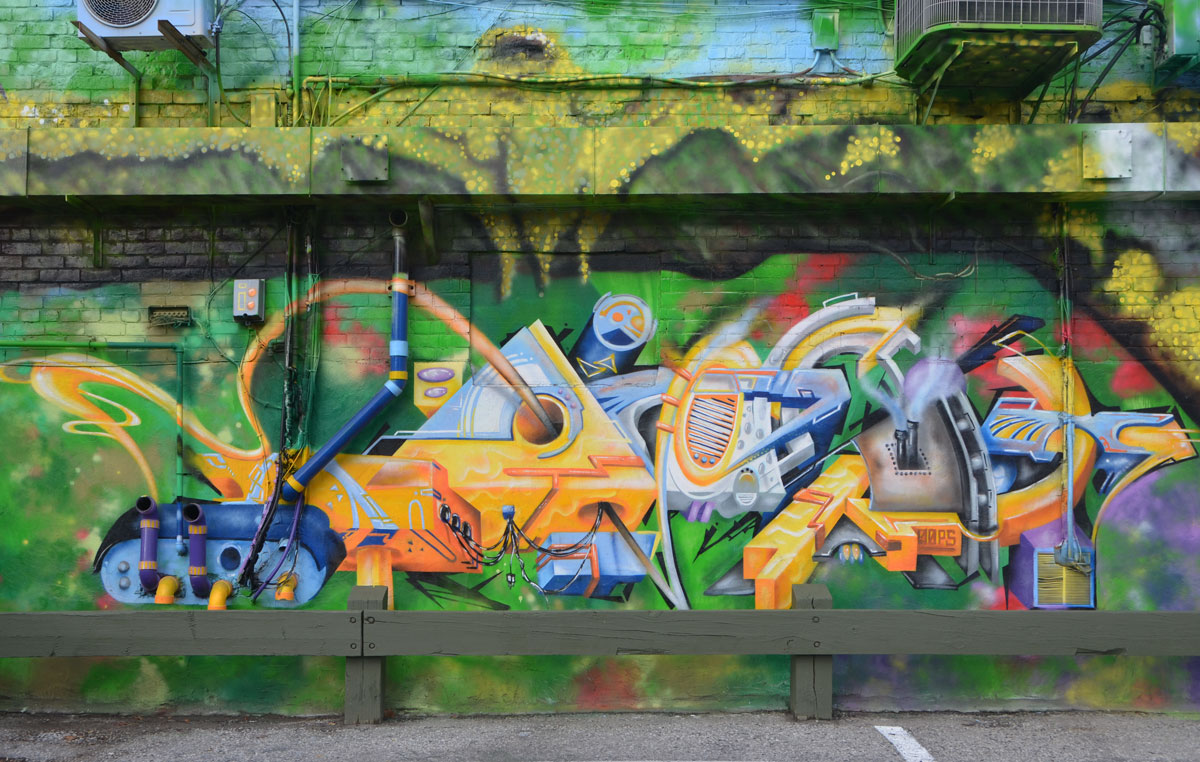
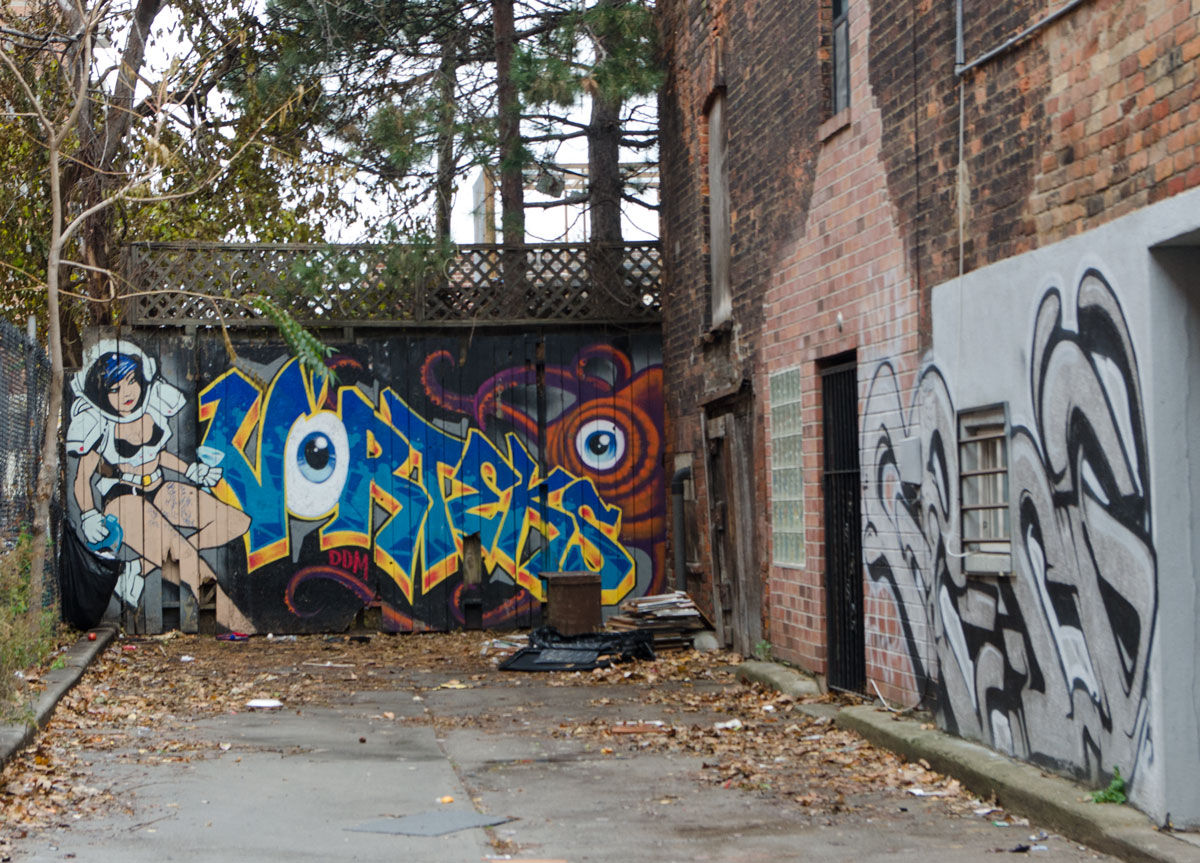
Just north of Queen, there is a small dead end alley that runs east off Sherbourne.  At the end of the alley is a mural by Vorteks….  she’s come to save someone (the world?) from an orange creature.

two murals in an alley. At the end, on a fence is a mural by vorteks, text with his signature using an eyeball for the letter O. An orange creature with an eye, most of which is behind the text, as well as a scantily clad woman who looks like a superhero.

This birdo is still looking good.  It’s just east of Sherbourne.

mural by birdo, bright green background with abstract colourful animals painted on it, tall large animals

below: On the north side of Queen Street East, looking towards Sherbourne Street from Kim’s Convenience (with the birdo mural on the wall).  I was going to write something about it ha ha having the same name as the CBC TV series “Kim’s Convenience”.  Luckily I looked it up before writing because lo and behold it is the same store!  The store was up until recently called Mimi Variety.  The new name and new signs are leftovers from filming the TV shows.   Most of the buildings in this block are heritage listed sites, especially those towards Sherbourne Street.

blog_kims_convenience_queen_east

A few more little details to end the post with:

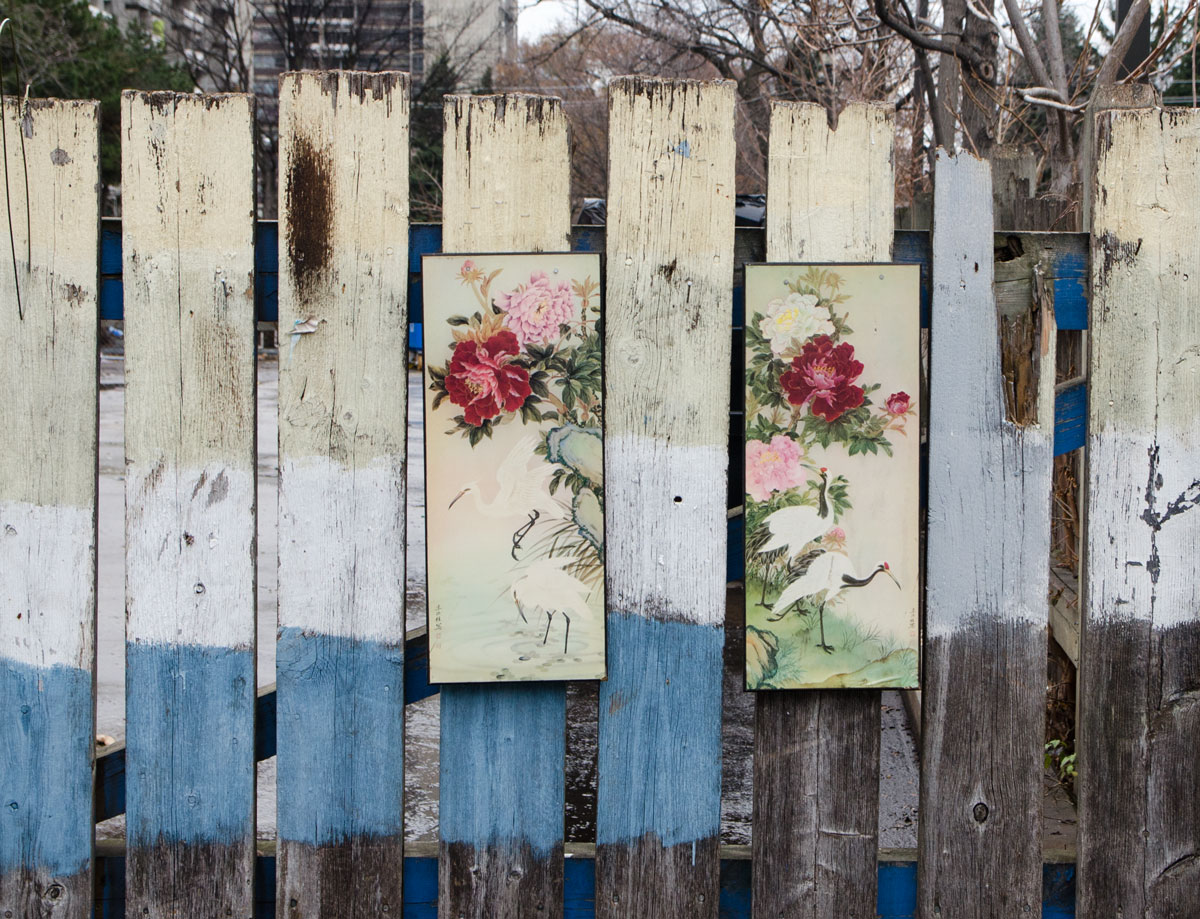
below: A triptych with the center panel missing or a diptych with a mystery middle.

a painting in three panels of a vase of pink and red flowers, on a wooded fence outside, but the middle panel is missing.

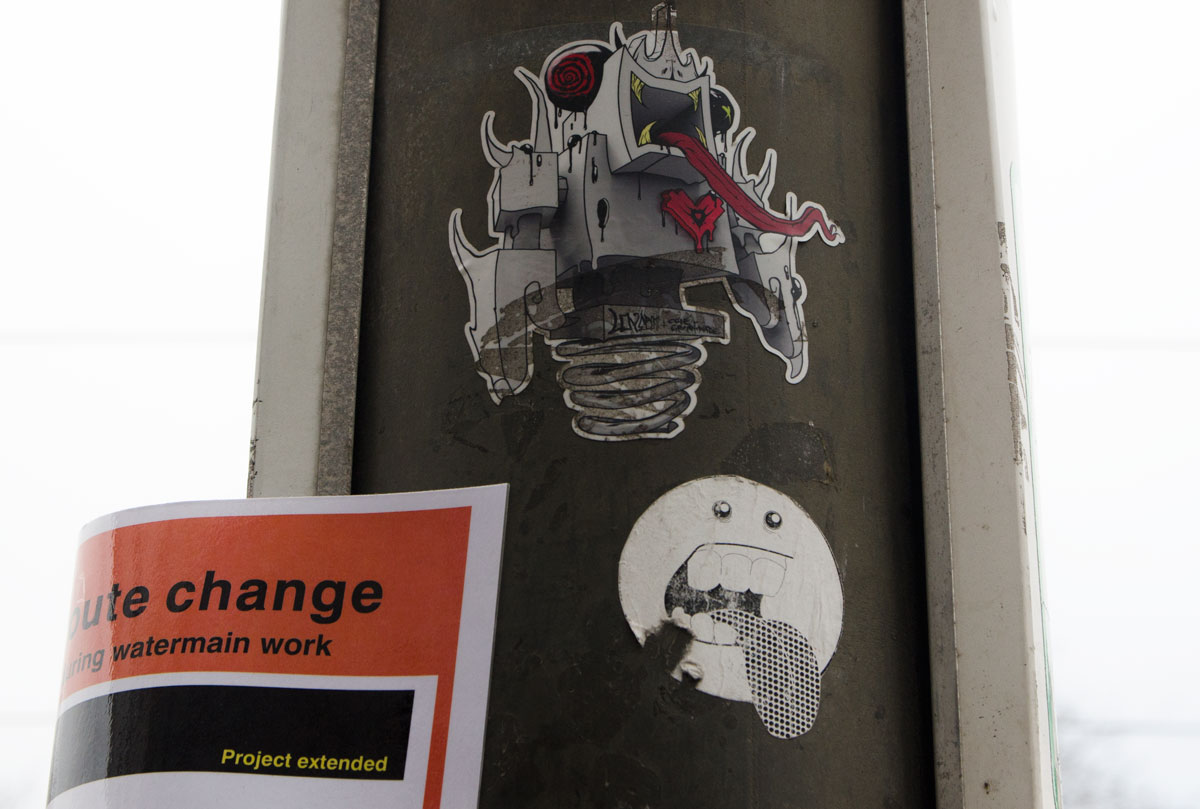
below: On a pole, a grominator lovebot hybrid with its long red tongue.  The other little guy’s tongue just can’t compare.

two stickers on a pole. The top one is a lovebot grominator joint venture hybrid character with a very long red tongue. The other is a little round faced guy with his tongue sticking out.

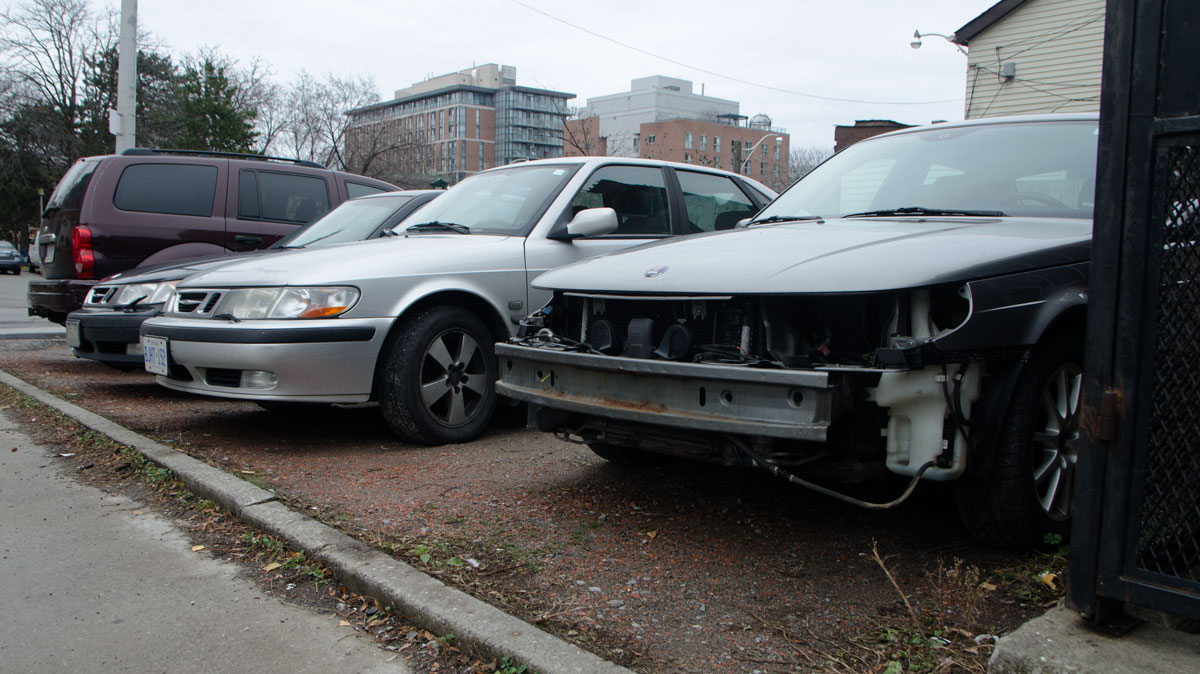
below: A dying breed, three Saabs in a row.  It’s not just old buildings that catch my eye.
Perhaps the one on the right has been cannibalized?

three saabs parked side by side. The one on the right is missing a large portion of its front bumper, headlights and other front end pieces.

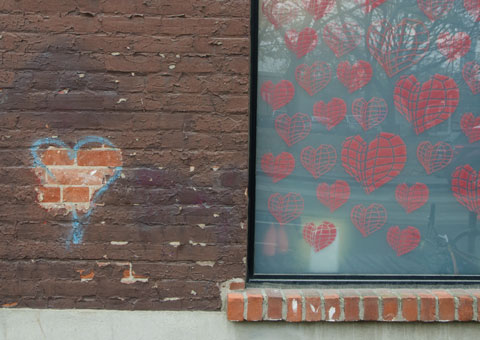
below: And last, hearts seen on a Queen St. East building.

pink hearts on a cyan coloured window beside a heart on a brick wall graffiti


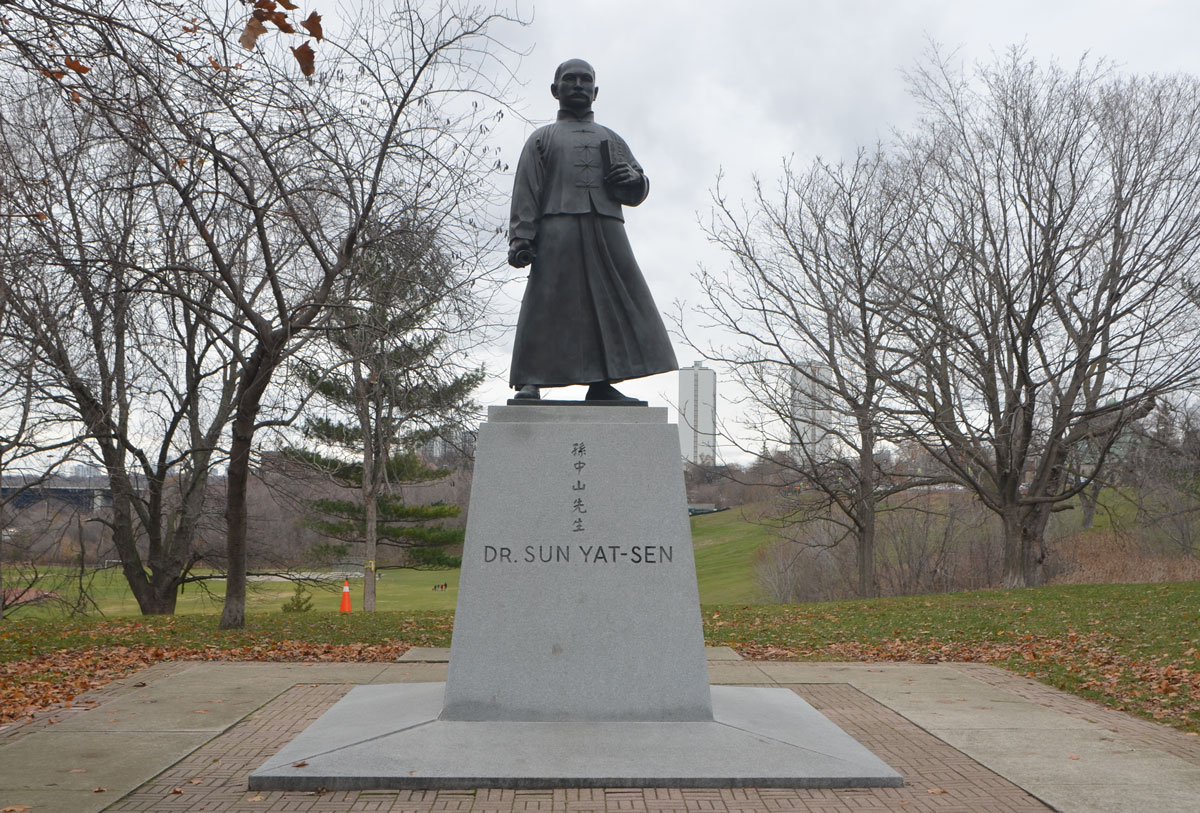
The other day when I was walking through the east part of Riverdale Park I wandered over to a statue I hadn’t noticed before.  He stands amongst trees a distance from Broadview Avenue.  With the leaves gone from the trees he’s much more visible now.

below: A grey Dr. Sun Yat-Sen stands in the park on a grey November day.
It was commissioned by the Chinese Canadian Commission and  sculpted by Joe Rosenthal in 1984/5.

statue in a park on a grey November day, trees have lost their leaves, dead leaves on the ground, some green grass in the background, statue is of Dr. Sun Yat-Sen, a Chinese man

The transcription of the English portion of the brass plaque that accompanies the statue:

“Dr. Sun Yat-Sen (1866-1925)

Dr. Sun Yat-Sen, also known as Sun Wen, was a native of Tsu-Heng village Chung Shan District in Kwantung Province.  A devout Christian, he studied medicine in Hong Kong and took upon himself the task of overthrowing the tyranic Ch’ing Dynasty and of establishing a republic of democracy and freedom.  Having completed his studies, he practised medicine for a few years, since 1893, he devoted himself to the above political ideal and wrote his famous works “Three Principles of the People”, “The Five-Power Constitution”, “Plans For National Reconstruction”, and “Fundamentals for National Reconstruction”.  He planned and led no less than ten uprisings until the Wuchang Uprising in October 1911 brought about the success of the revolution.  He was elected provisional president but resigned soon afterwards and still devoted himself to the cause of the National Revolution.  On March 12, 1925 he died in Peiping and was given a state burial at Nanking in June 1929.”

Why does he stand here?  A political figure with no known ties to Canadian history.  There aren’t too many statues of such people here in Toronto.   Part of the answer probably lies on the back of the statue where there is a list of the names of those who donated to the building of the statue.  Most of them are Chinese, members of the Chinese diaspora in Toronto.   Added note: it was interesting to learn that Yat-Sen had visited Toronto to raise money for his fight in China.

When I was walking toward the statue, I stumbled upon an old cannon in the park.  It’s aimed over the DVP towards the Bloor Viaduct.  Another little surprise on a grey day.

An old cannon from the 1800's stands in a park surround by trees on a grey November day.

Why is there a cannon here I wondered?  Of course the internet has the answer to all questions.  Apparently, “When the Hon. A.P. Caron, Minister of Militia and Defence, made a visit to Toronto in 1881, a local Alderman asked him for cannons with which to decorate Riverdale Park.”  (I assume the Hon. A.P. Caron was a federal minister in Ottawa).   Five were delivered from Quebec City to Riverdale Park where “they were set up on a wooden platform in battery-like formation.”     In 1886 one of those five was moved to its present location on the Broadview side of the park.  (source)

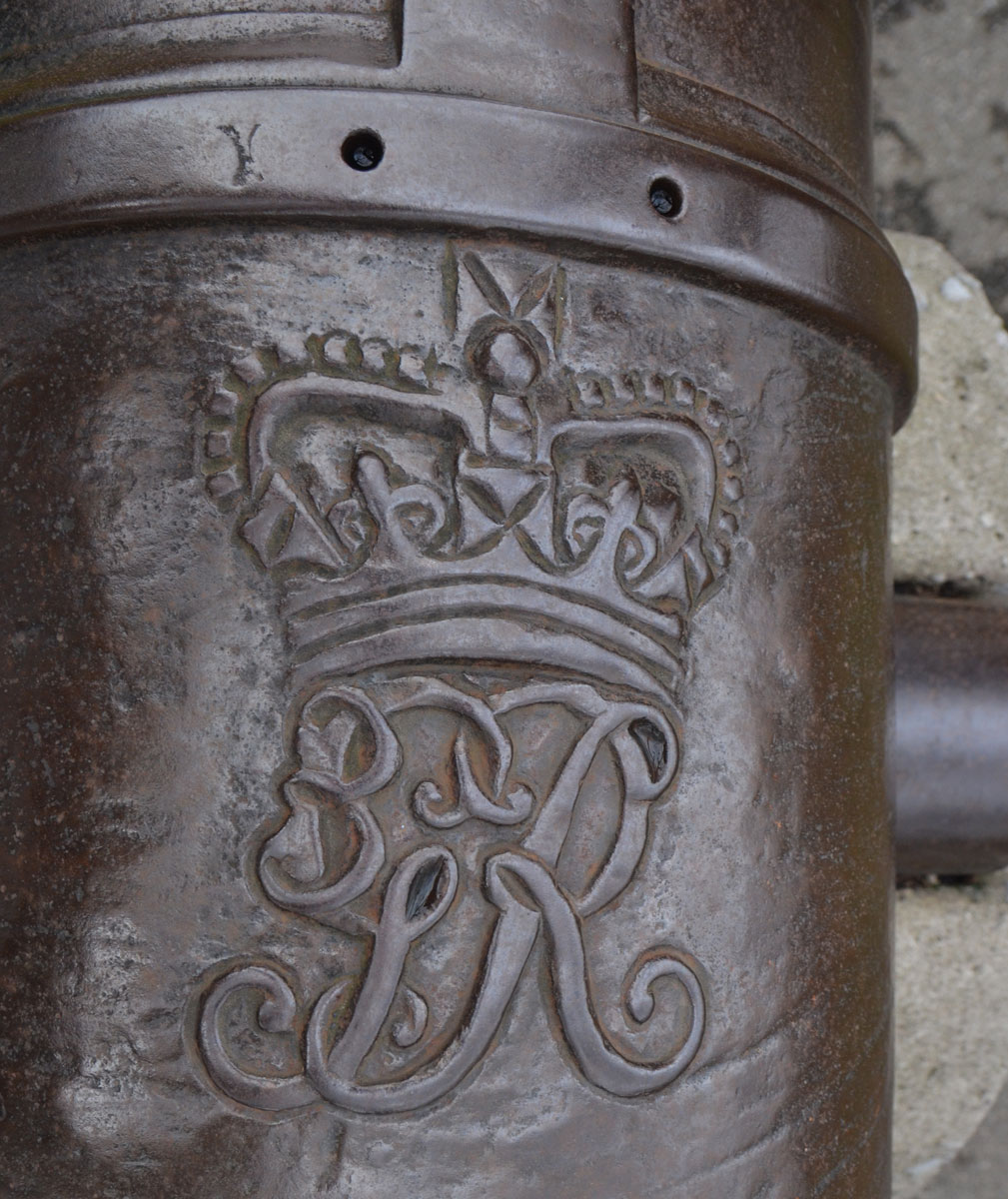
below: This 32 pound cannon bears the cypher of King George III on the top of the cannon.  King George III ruled from 1760 until 1820 for a total of 59 years and 96 days.  He was the third longest reigning British monarch – behind Queen Victoria (63 years and 216 days) and Queen Elizabeth II (64 years and counting).

the insignia on the top of a cannon from the 1880's, markings in the brass of the cannon , royal insignia

Two pieces of history located within a stone’s throw of each other in a quiet Toronto park.  Two very diverse, and different, histories but both part of the political and social history of this city.

Just over a year ago, I posted some pictures of the art work hanging on a fence along Craven Road.
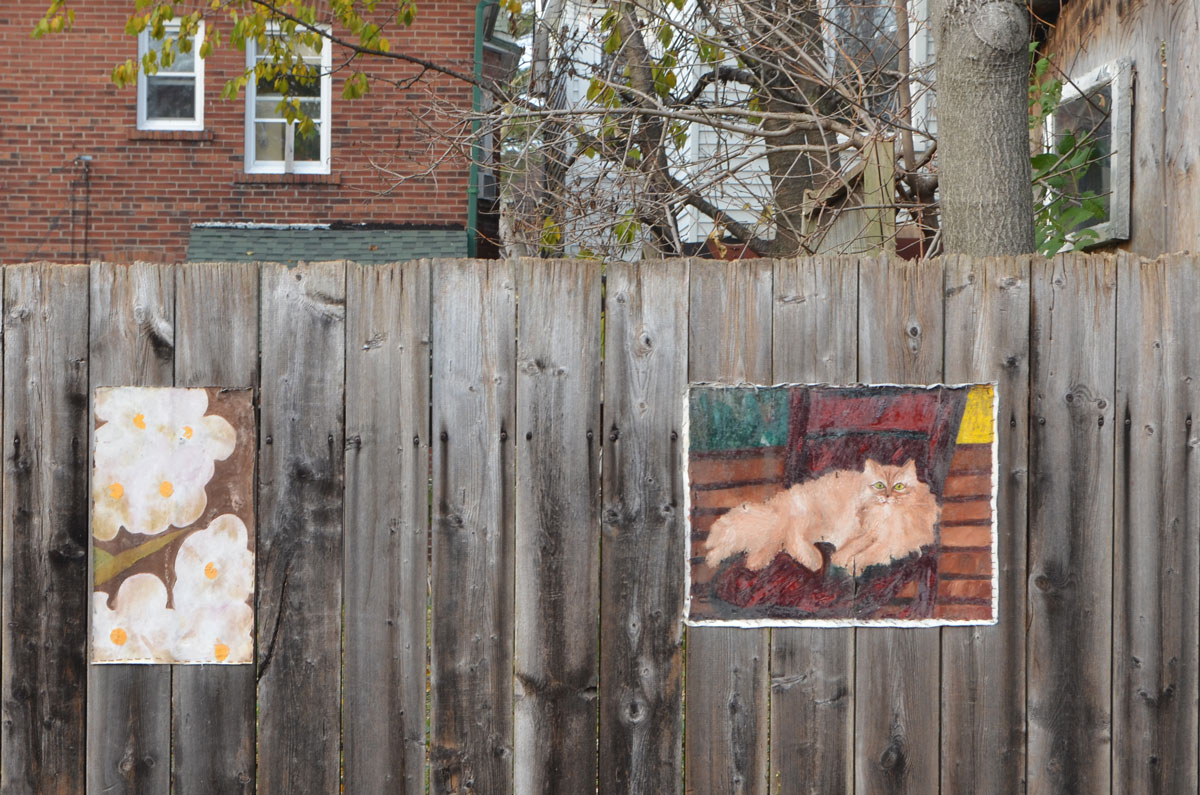
Some of it is still there, especially some cat pictures like this one:

painting of a beige and light brown cat, lying with its head up and tail wrapped around its body, painted on a wooden fence outside

below: Quite a few little planters have been mounted on the wall.  Because it’s now cold November, most of the plants have died.   These are two exceptions.

4 small wood boxes have been mounted on the side of fence, as planters, a couple still have purple flowers even though it's November and most of the trees have lost their leaves,

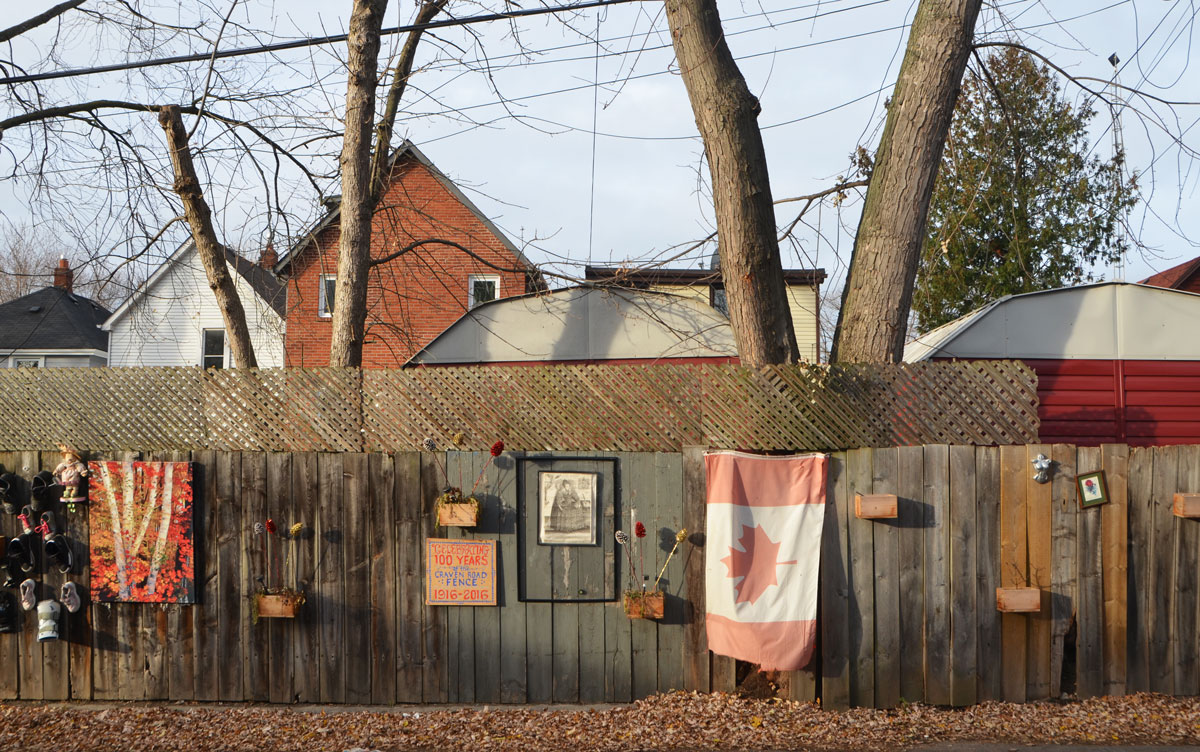
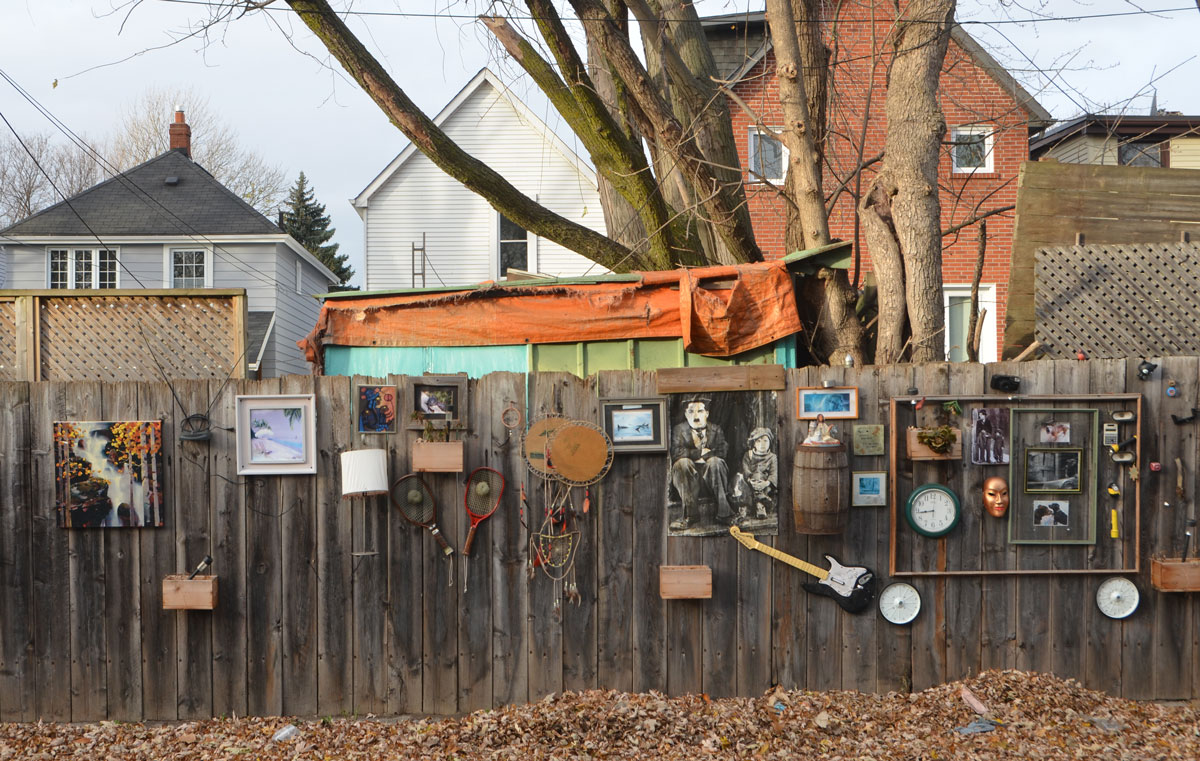
below: Some of the things that are now on the fence.   Because there are no houses on the west side of the street, the fence can serve as a gallery wall.

decorated wooden fence on Craven Road, a road with houses only on one side of the street, fence is decorated with a faded Canadian flag, a picture of Queen Elizabeth I, some wood planters, a painting of birch trees in autumn, old shoes, and a sign that says Craven road FEnce, 100 years, 1916 to 2016

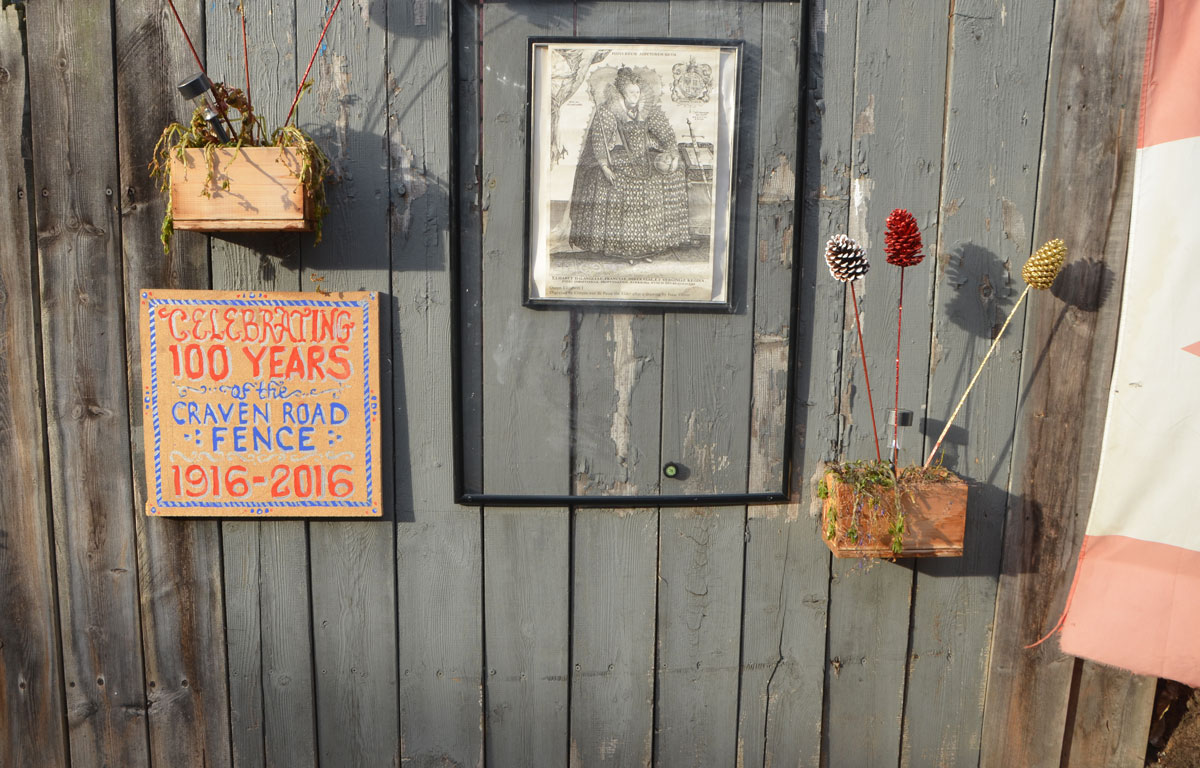
below: A close up picture of the “Celebrating 100 years” sign as well as the picture of Queen Elizabeth I, engraved by Crispin van de Passe the Elder, after a drawing by Isaac Oliver.

closer view of the fence with its Celebrating 100 years, Craven Road fence, 1916 to 2016 sign as well as an engraving of Queen Elizabeth I. Planters with dead plants and painted pine cones on sticks, painted red, silver and gold.

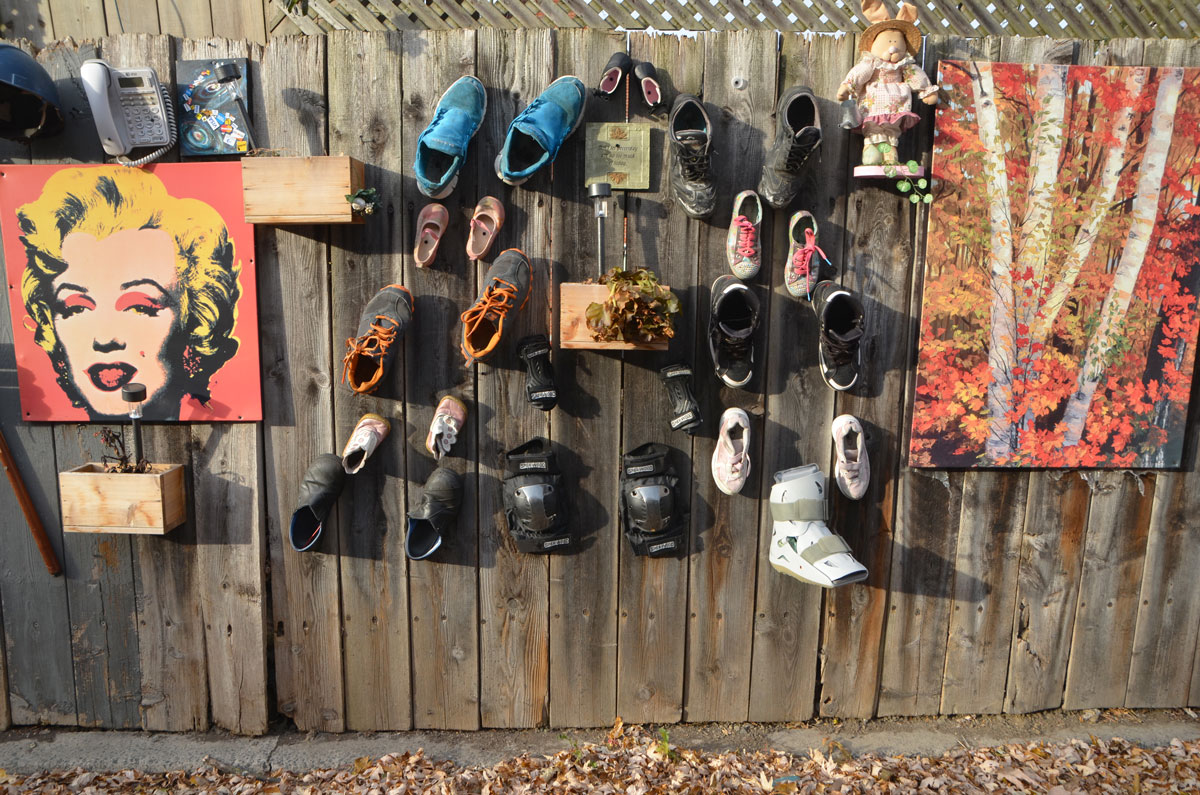
below: Andy Warhol’s Marilyn Munroe beside many shoes in twos, knee pads and a walking cast.

a wooden fence with many things hanging on it - an Andy Warhol Marilyn Munroe print, a painting of autumn birch trees, and many old shoes

below: Mirror, mirror on the wall…  Bird pictures to the left and trees and sticks to the right.
Scattered among them are a few glow in the dark stars.

An oval mirror with an ornate wood frame is mounted on an outdoor fence, wood, three small framed pictures hang on both sides of it.

below: Artfully arrange artifacts… mask, hockey stick, dog pictures, toy helicopter….

all kin mounted artfully on a wood fence on Craven Road - hockey stick, football, picture of Charlie Chaplin, ds of things

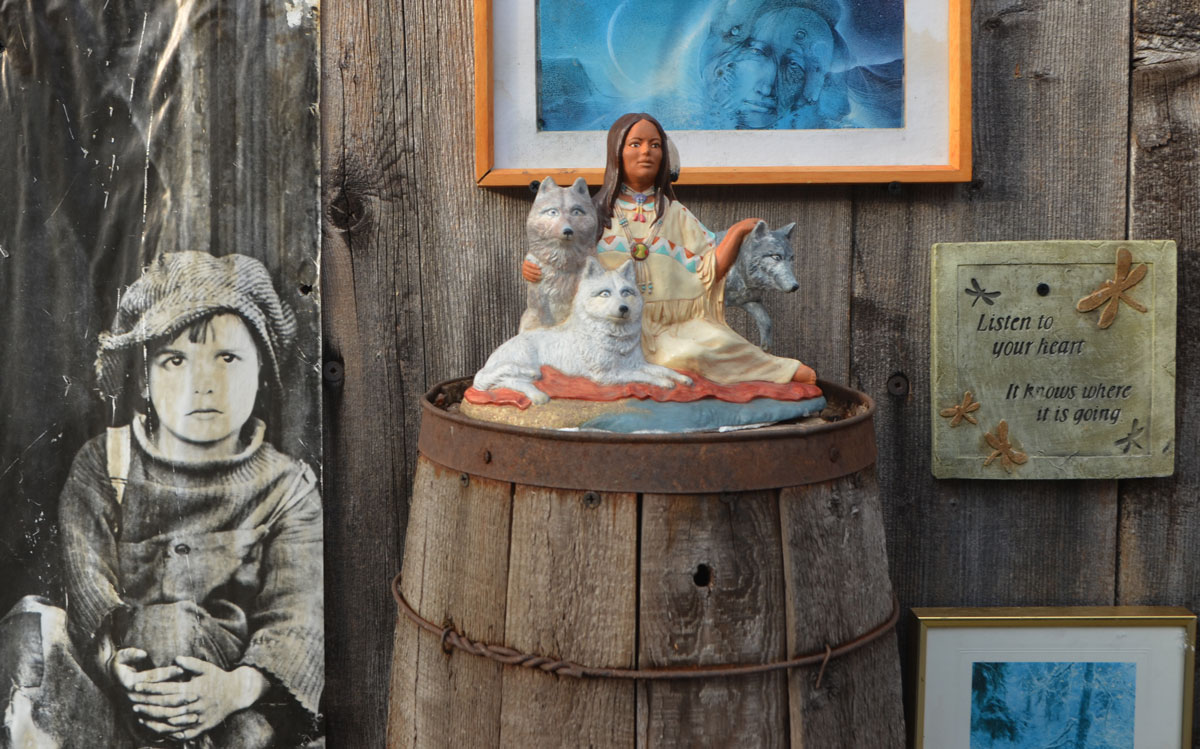
below:  A woman with three wolves, a young boy and dragonflies listening to your heart.

old black and white photo of a boy, a small statuette of a woman and three wolves, dragonflies on a picture frame with a photo of the word love

below: A composition of found items.  A still life made of remnants of the past.

things on a fence as decoration, guitar, pictures, clock, boxes,

below: And lastly, a couple of pictures of some of the original paintings.

two painting on a fence. One is of a cat and the other is of white flowers

a painting of a line of white sheep on a snowy field, on a fence, outdoors, with houses and backyards beyond the fence, some trees too but they have lost their leaves because it is late autumn

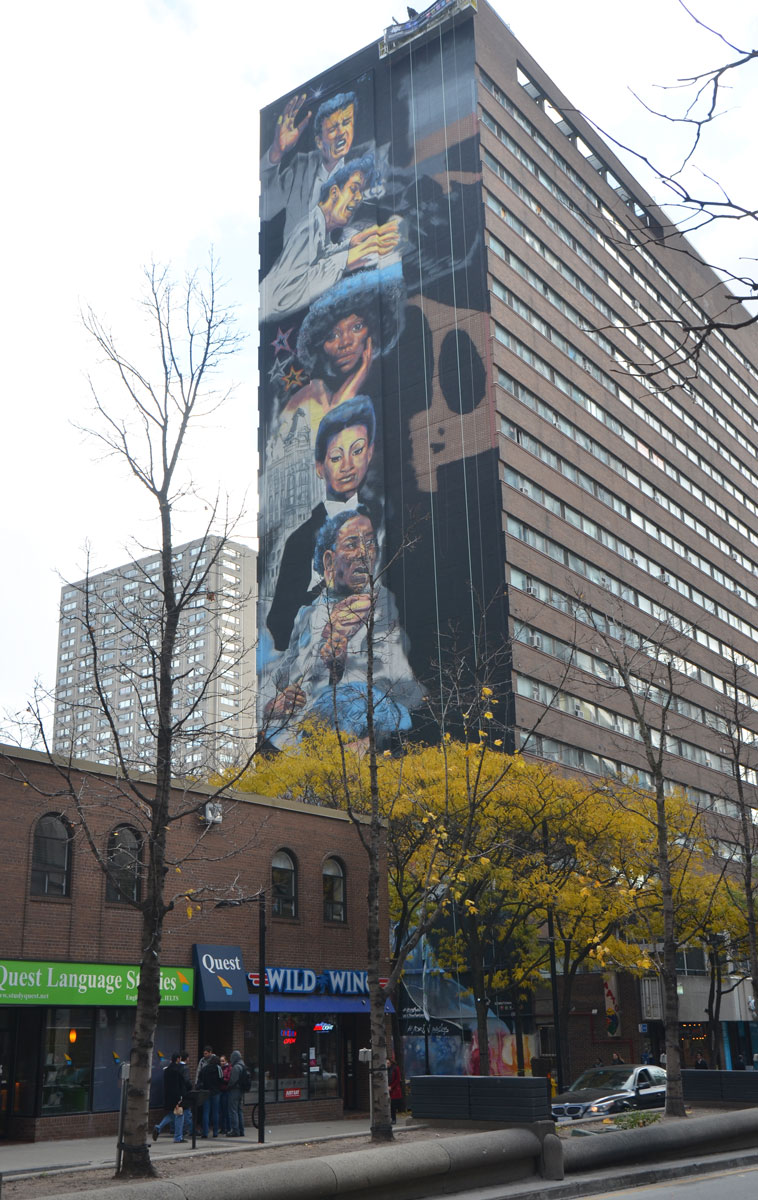
As I was walking down Yonge Street yesterday I happened upon this, faces playing peak-a-boo with passersby on the street.  It’s a new 22 storey mural being painted on the north side of 423 Yonge Street.  A ‘musical mural’ featuring the faces of musicians from the 1950’s, 1960’s, and 1970’s.

a vertical mural painted on the side of a multi storey building, the mural is a series of faces.

below: From top to bottom: Ronnie Hawkins, Glenn Gould, Diane Brooks, Jackie Shane and Muddy Waters.

a vertical mural painted on the side of a multi storey building, the mural is a series of faces in a totem pole like arrangement

below: The bottom of the mural

musicians and singers painted in a mural, a black man in a suit, a black man playing a guitar, a man with longish hair singing into a mic with his eyes closed.

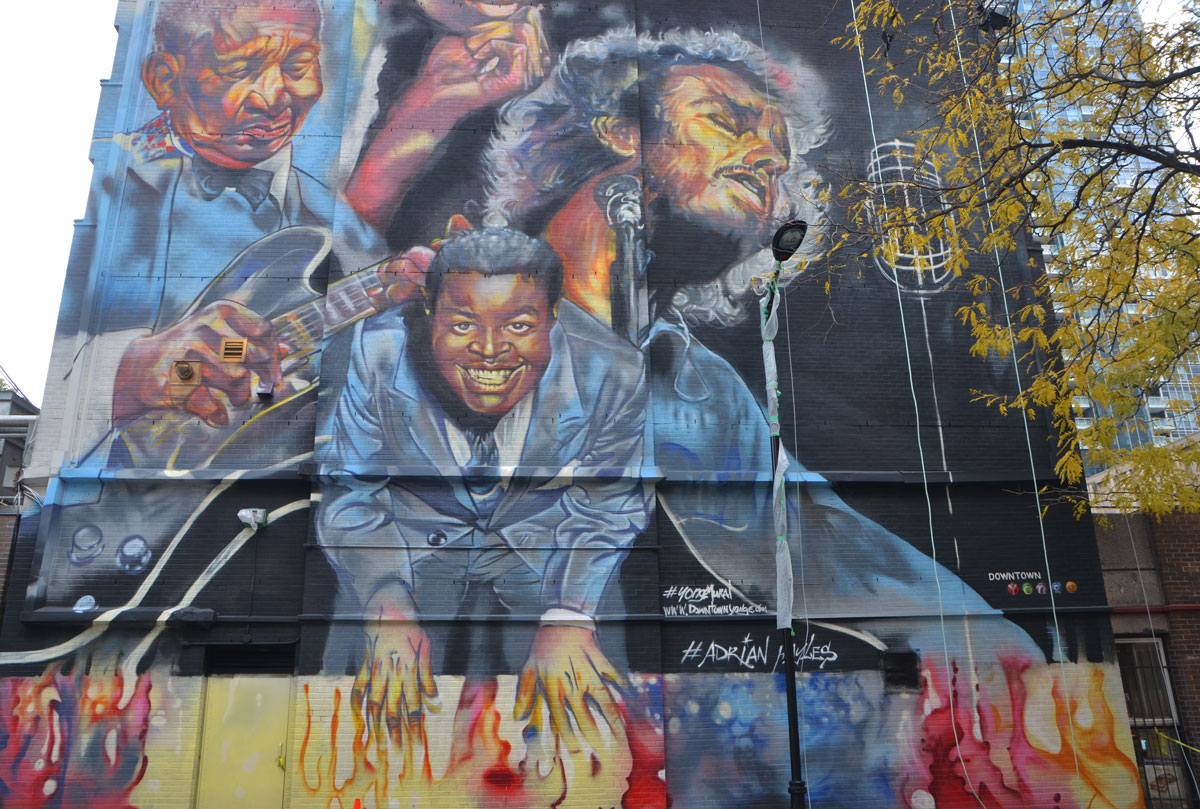
below: Looking up…. Shirley Matthews, B.B. King, Gordon Lightfoot and Oscar Peterson.

famous musicians and singers from the past painted on a mural, B.B. King, Gordon Lightfoot and Oscar Peterson

#yongemural | #adrianhayles

This is another meandering blog post… a post about being out and about on yet another wonderful autumn day, going wherever my feet and eyes take me.

below: The first picture of my day was this intriguing wall made of old wooden doors.  Bathurst Street.

a tall narrow wall about three storeys high made of old white doors.

below: A small elicser mural tucked away at the end of a parking lot.   The man has his back to the viewer but I can’t figure out what’s behind him or what he might be doing.

small mural on a fence, a man's head is back to the viewer

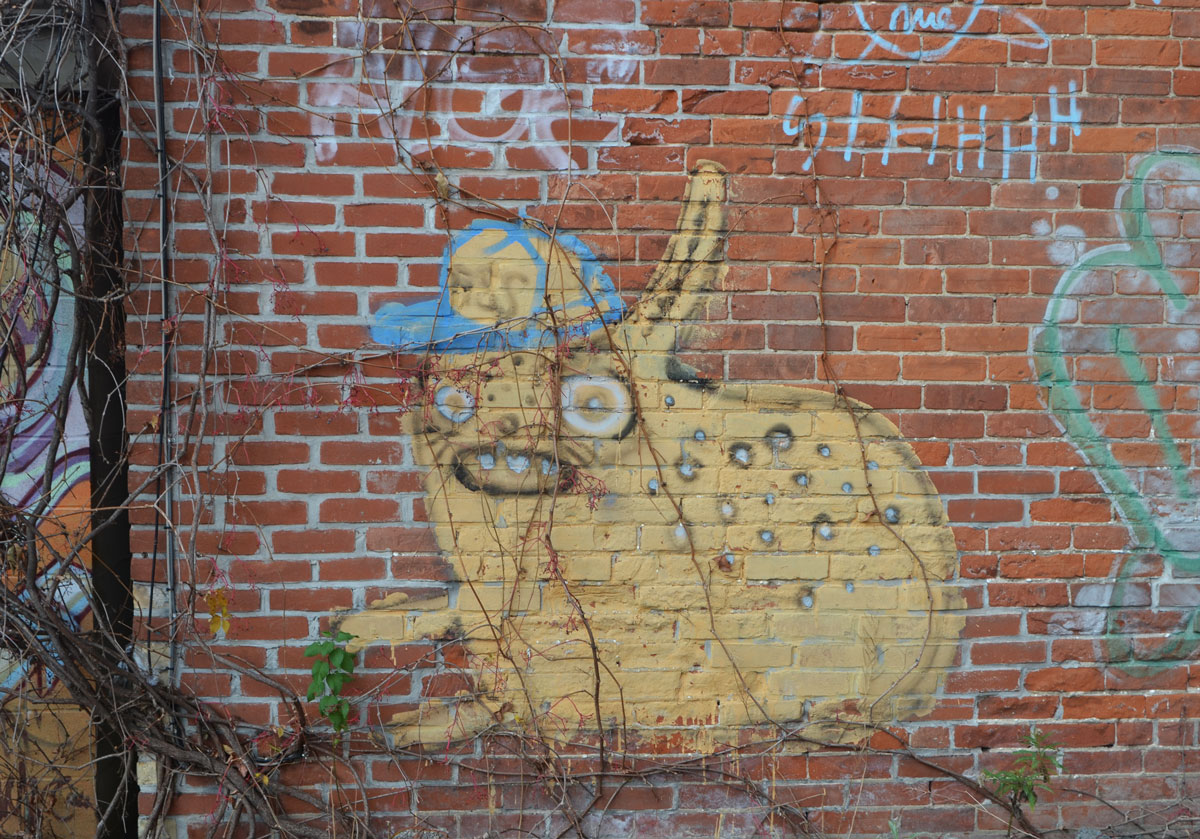
below: The leaves have fallen off the vines to reveal a yellowish creature with his baseball cap askew.

graffiti painting of a yellow animal like creature wearing a blue and yellow baseball cap. The creature is yellow. On a red brick wall, with spots on its back

below: Toronto’s tallest icon framed by a construction crane.

CN Tower in the distance, condo construction in the foreground, with a red crane

below: And on a similar note, a vacant lot cleared and ready for the next stage of its life.
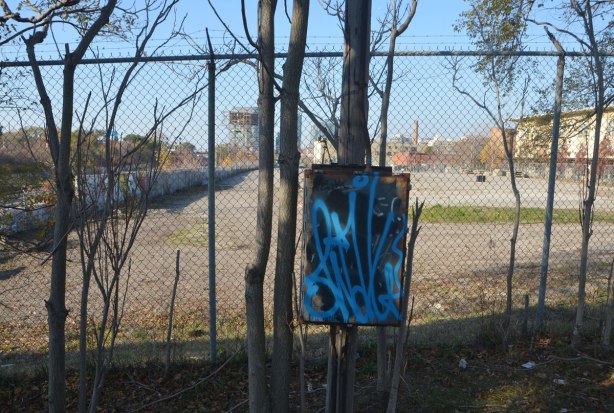
a box beside a fence that has been scrawled over with blue spray paint. Behind it is a fence around a vacant empty lot. There are some small trees growing in front of the fence.

below: No more cranes here (and not many vacant lots either for that matter).  A view showing how much development there has been on the south side of the railway tracks.   Fort York is between the tracks and the condo towers.

a VIA Rail train passes by on one set of many tracks, in the background is Fort York and then a series of new condo buildings.

below: And what’s this? An old blue canoe beached on the tracks?
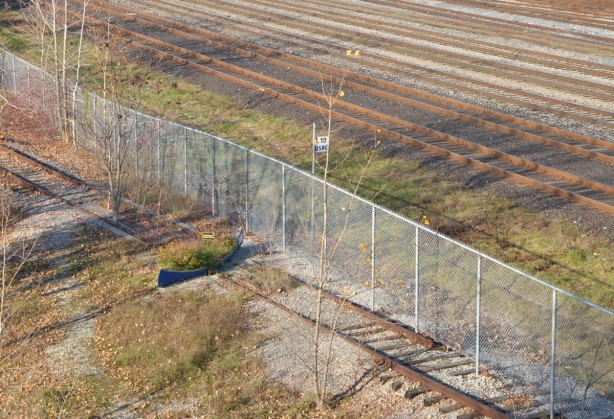
looking at the scene from a above, a blue canoe has been used to plant plants in. It lies across an old railway track, a chainlink fence separates the canoe from the main railway tracks that still function.

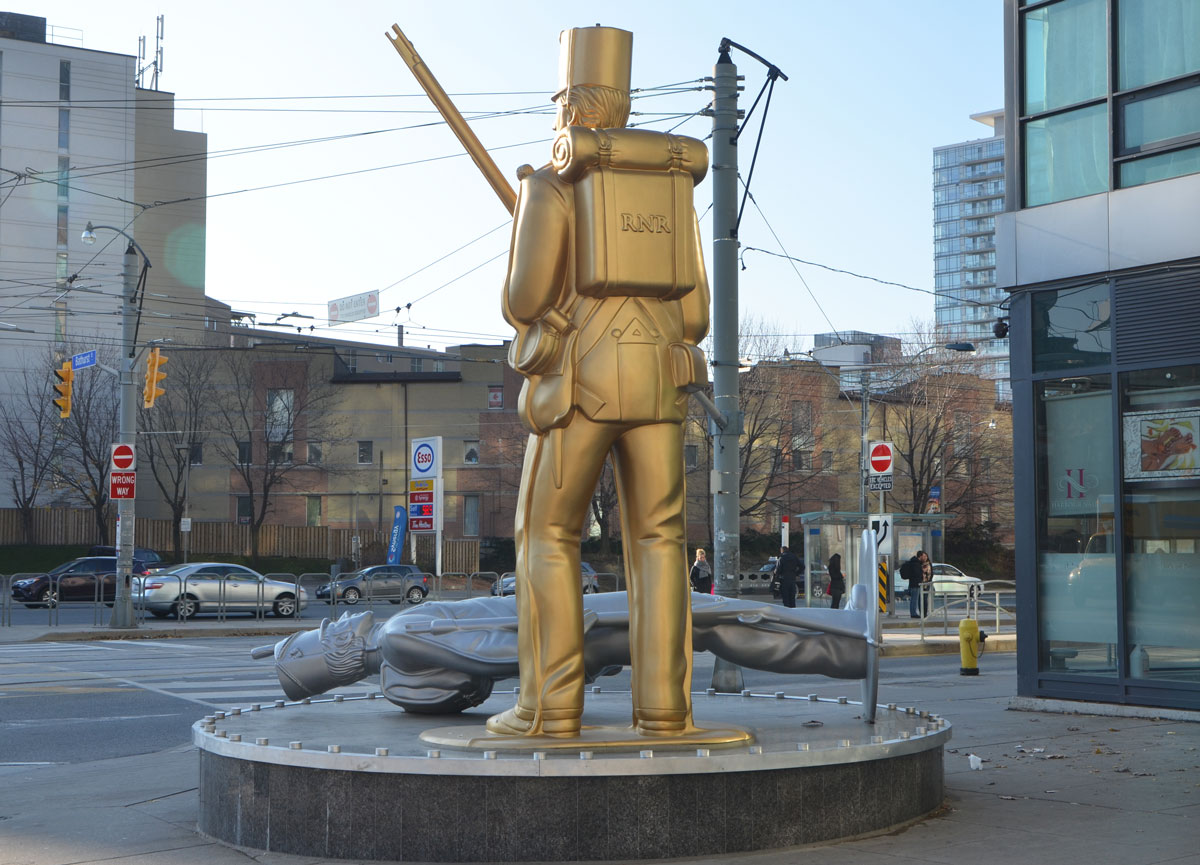
below: Standing guard over Bathurst Street, Fleet street and the Lakeshore, is one larger than life gold replica of a Royal Newfoundland Regiment and his fallen silver American foe. A sculpture by Douglas Copeland entitled “A Monument to the War of 1812”, a nod to nearby Fort York and the history of Toronto.

Douglas Copeland's sculpture of two tin soldiers, a gold one standing with backpack on and rifle in hand, and a silver one lying on its back on the ground, uniforms circa War of 1812, seen from the back, figures are much large than life sized and they are on a corner at an intersection, Bathurst St. and Fleet St.

below: My favorite example of bad grammar still exists!  Off-leash dog area at Coronation Park.

a wood fence around a dog park, in autumn with lots of leaves on the ground, on the fence is a white sign with black letters re the Toronto municipal code 608,

A beautiful day in the park.  A slight November nip was in the air but it was sunny and the sky was a brilliant shade of blue.  Coronation Park is named in honour of the coronation of King George VI who was crowned on 12 May 1937.  At that time nearly 150 trees were planted here.

Apparently, an oak tree was planted to honour the king.  Surrounding it, a ring of silver maples was planted.  This was to symbolize the countries of the British Empire.  I wish I had known that bit of trivia before I walked through the park because now I am curious if these trees are still there.   Some of the trees are quite substantial.

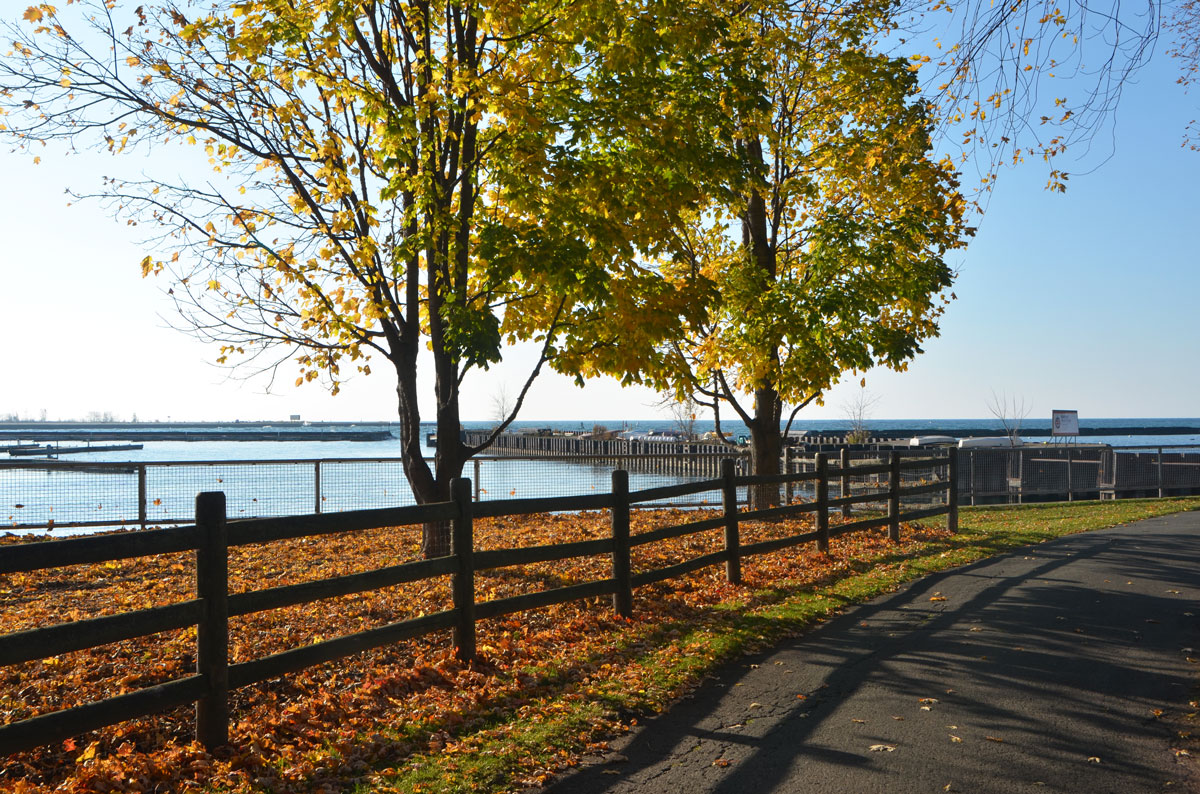
below: Long shadows for the morning sun, low in the sky.

morning in the park, autumn, trees with some leaves still on, many leaves on the ground, wood railing fence, shadows, Lake Ontario, path, Coronation Park.

below: Looking back towards the city center, past the empty docks of the National Yacht Club to the residences on Stadium Road.   A small group of people were making a video in the dog park.

morning in the park, autumn, trees with some leaves still on, many leaves on the ground, wood railing fence, shadows, Lake Ontario, path, Coronation Park. a small group of people in the distance are filming a video

below: This Victory Peace Monument was unveiled on 14 November 1995 to commemorate the 50th anniversary of the end of World War 2 and honour those who died in that war.   It was designed by John McEwen; the bronze pieces resemble the bow of a ship.

Metal partial cylindrical shapes on a concrete circular monument. World War 2 memorial

below: On the inside of one of the bronze pieces is a map of eastern Canada and the Atlantic Ocean.  Each boat on the map represents a ship or U-boat that was sunk during the war.  The Canadian ships are located on the map at “their last known position”.  I hadn’t realized that so many ships were lost so close to North America.

relief map of eastern Canada and the Atlantic Ocean, in bronze on a WW2 memorial. Little ships are shown on the ocean where they were sunk during WW2.

Trees were also planted to represent the four divisions of the Canadian Expeditionary Force (WW1) and its units as well as those who fought in the Fenian Raids of 1866-1870, the Northwest Rebellion of 1885, and the Boer War (1899-1902).  Once upon a time, brass plaques were placed at the foot of each tree to indicate the units the tree stood for.  If any plaques remain, I didn’t see them.

below: Another memorial is close by, a  “Memorial to Lieut. Tommy Hobbs gallant British Canadian soldier in the Great War 1914 – 1918.  Died on active service November 10, 1940.  Beloved and remembered by his comrades.”   Tommy Hobbs was involved in the creation of this park.

a memorial in a park made of a small pile of rocks. The top rock is inscribed, memorial to Tommy Hobbs, died 1940, in Coronation Park

below: A little farther on I noticed another rock, one that was painted red.   The bronze plaque on the rock says that 20 trees have been planted here in commemoration of the G20 Summit held in Toronto in 2010.

a large rock with a bronze plaque on it. The rock has been crudely painted red

below:  A 30 foot tall Inukshuk stands looking out over Lake Ontario.  Approximately 50 tonnes of mountain rose granite was used to create the Inukshuk, which was made by Inuit artist Kellypalik Qimirpik from Cape Dorset, Nunavut.

a tall stone inuksuk on a raised mound of warth

below: Streetcars across the baseball outfield.
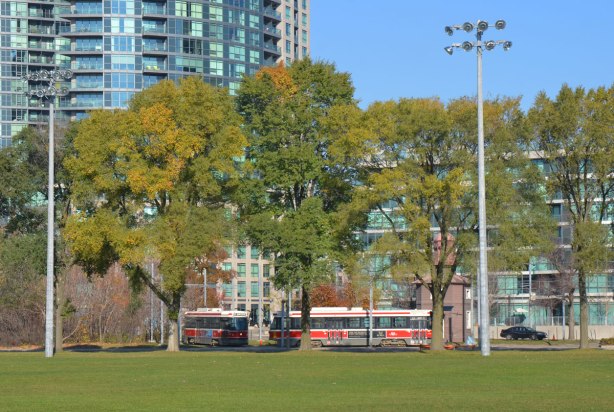
Looking across the outfield of a baseball diamond towards a street. A line of mature trees by the street with two red and white TTC streetcars on the street, condo towers behind.

below: A closer look at that brown octagonal structure in the middle of the streetcar loop for the 509 and 511 cars.  Apparently it’s the Queens Wharf lighthouse, one of a pair built in 1861.

a brown structure, the Queens WHarf Lighthouse, sits on a patch of grass beside TTC streetcar tracks in front of a new condo.

The lighthouses marked the entrance to the Toronto Harbour from 1861 until the Western Channel was built in the early 1900’s.   This one stood on Queen’s Wharf which used to be at the foot of Bathurst Street, adjoining Fort York.  The wharf was built by the military; in 1833 it was a pier 42 feet long.    The pier no longer exists; a hundred years ago it was buried under what is now Bathurst Quay.

below:  A picture of an historical map (1886 or 1887) of the area showing Toronto Harbour, Fort York and the railway lands.  Queen’s Wharf is the pier on the left.   At that time, Front Street was the southern most street in this part of the city.   All the present day development south of the train tracks is on reclaimed land.

picture of historical map of part of Toronto Harbour from 1886, showing Fort York, Front St., and Bathurst St., and the railway lands and wharves into Lake Ontario,

below:   Taken from google maps, what the layout of the city looks like now.   As you can see, there have been many changes!

present day map taken from google maps of Coronation Park and Bathurst Quay including Fort York

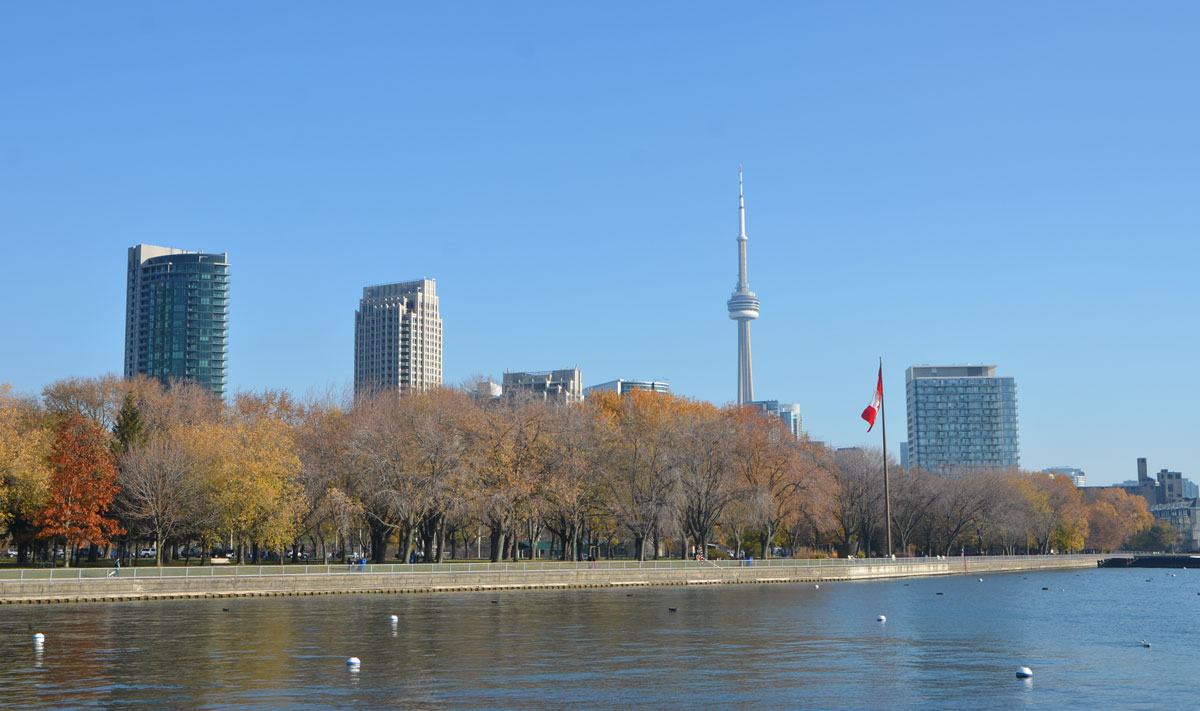
Lake Ontario in the foreground, trees in Coronation Park in the middle and Toronto skyline in the distance with the CN Tower and a large Canadian flag.
a sticker of a rainbow in a heart shape. A small purple heart is in the center, then a blue heart is drawn around it, moving outwards in rainbow colours.

The words body, souls, and mind painted on a mural

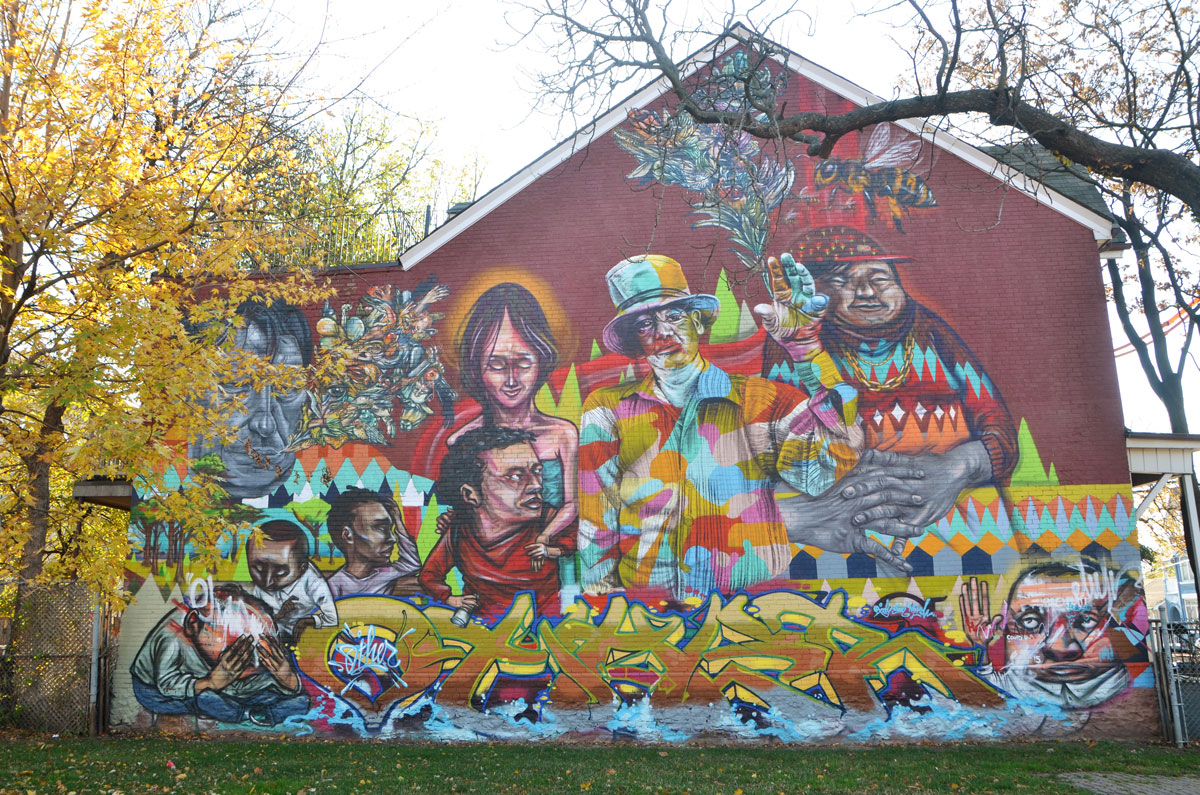
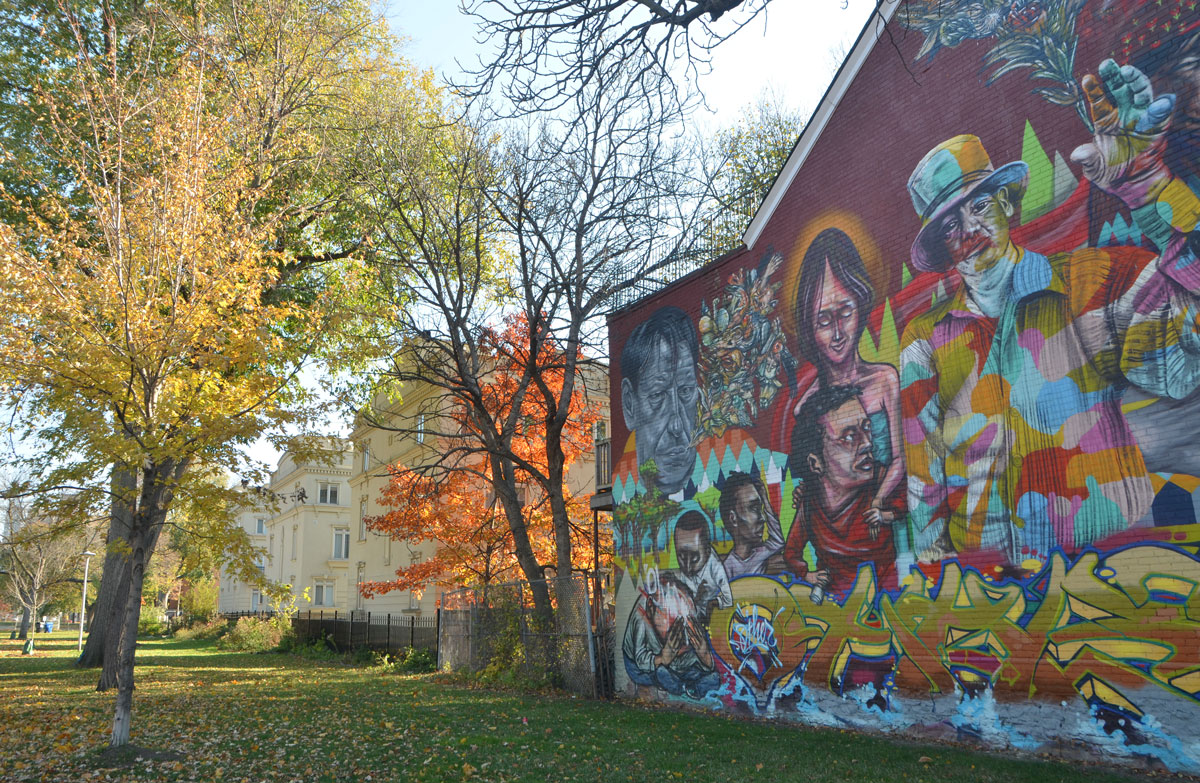
In the southwest corner of Alexandra Park (near the SE corner of Bathurst and Dundas) there is a large colourful mural.  It was painted a couple of years ago by Elicser and Troy Lovegates.


large mural on the side of a house at the edge of Alexandra Park in Toronto, painted by Elicser and Troy Lovegates

part of a larger mural, the face and heads of two young black men.

part of a larger mural of elicser and Troy Lovegates, colourful people, A woman stands behind a seated man.

part of a larger mural of elicser and Troy Lovegates, colourful people, a heavy set man with a cap on, seated with large hands folded on his lap, wearing a sweater with rows of colourful diamond shapes. A large bee is flying above his head.

part of a larger mural of elicser and Troy Lovegates, colourful people, a man in a top hat and jacket, holding a bouquet in his upraised hand - a bouquet that looks like one a magician would use

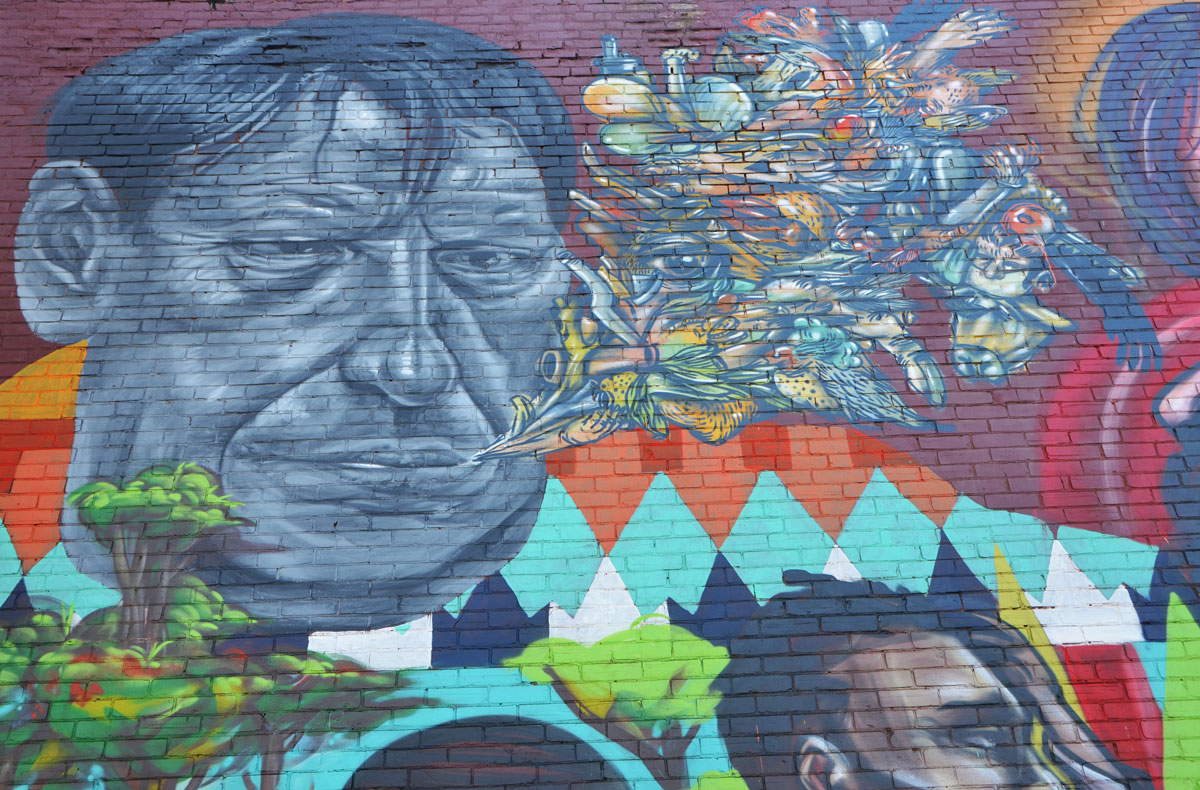
part of a larger mural of elicser and Troy Lovegates, colourful people, a man's face in grey tones, many small objects coming out of his mouth - an eye, a finger with long fingernail, a cow's head, two bottle caps, a bird, and many more things.

large mural on the side of a house at the edge of Alexandra Park in Toronto, painted by Elicser and Troy Lovegates, most of the mural is in the photos along with some autumn foilage trees and some newer houses in the neighbourhood

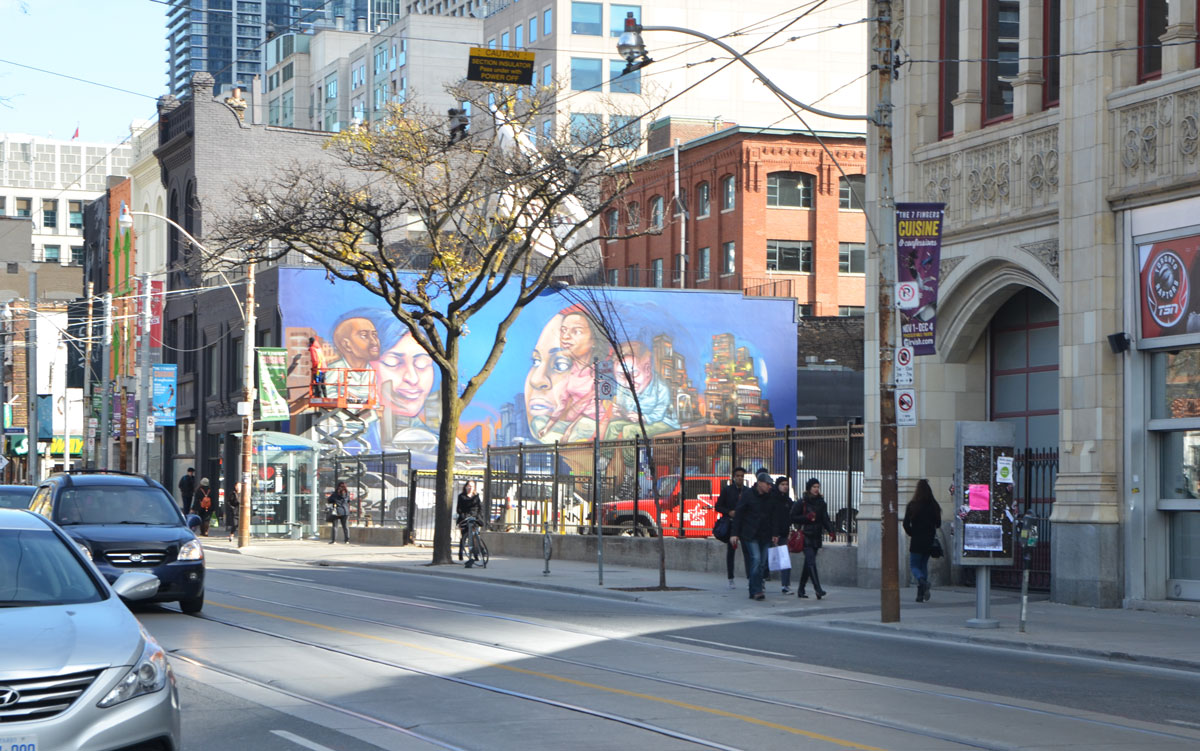
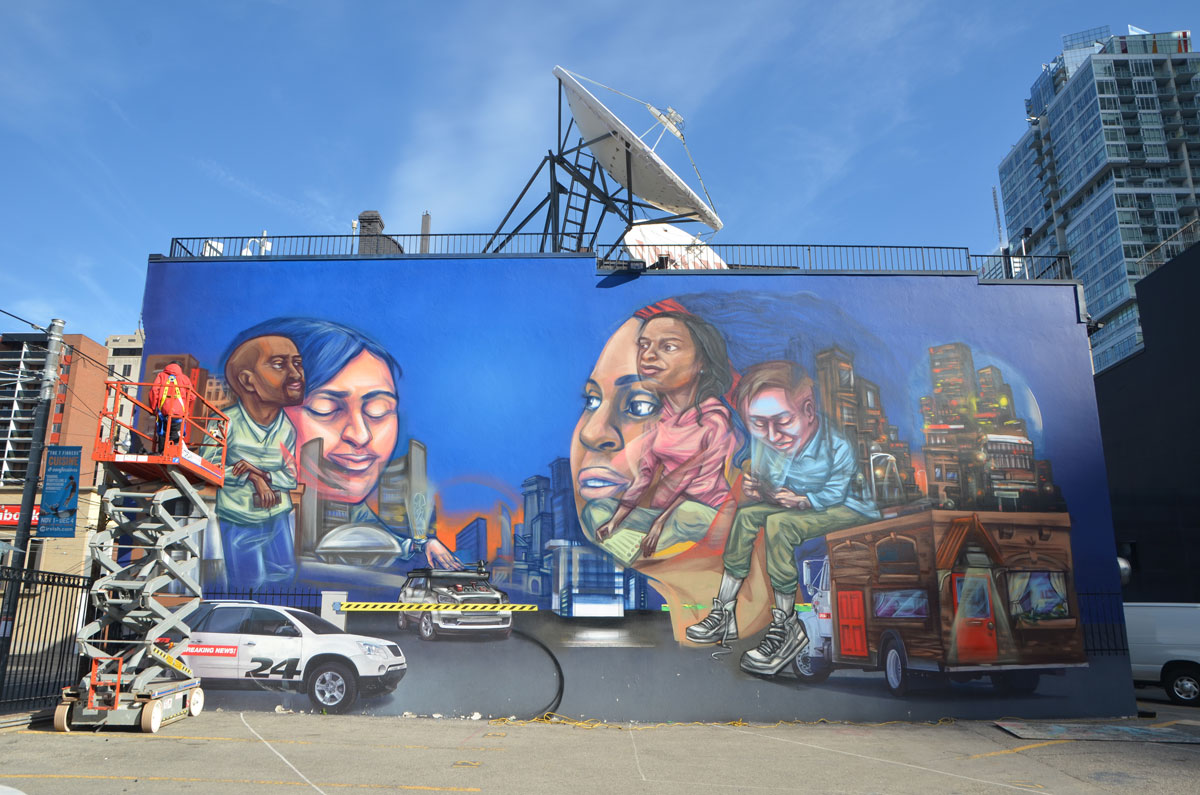
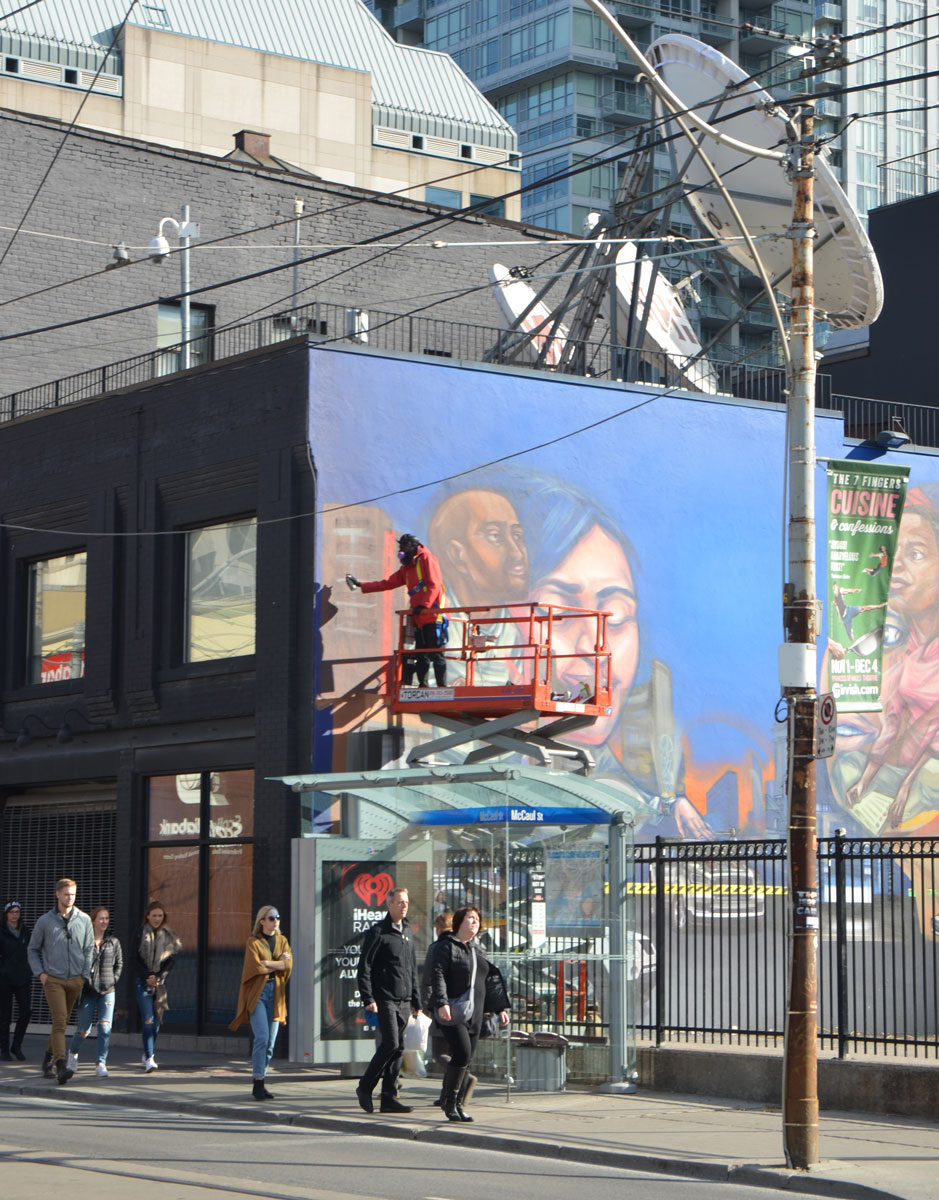
I happened to be walking along Queen Street West this afternoon when I spotted something new…

elicser painting a large mural by CP 24 parkinglot on Queen St West, showing people in the tv business

A large mural on a wall by the CP24 parking lot by elicser

elicser painting a large mural by CP 24 parkinglot on Queen St West, showing people in the tv business - the almost completed mural

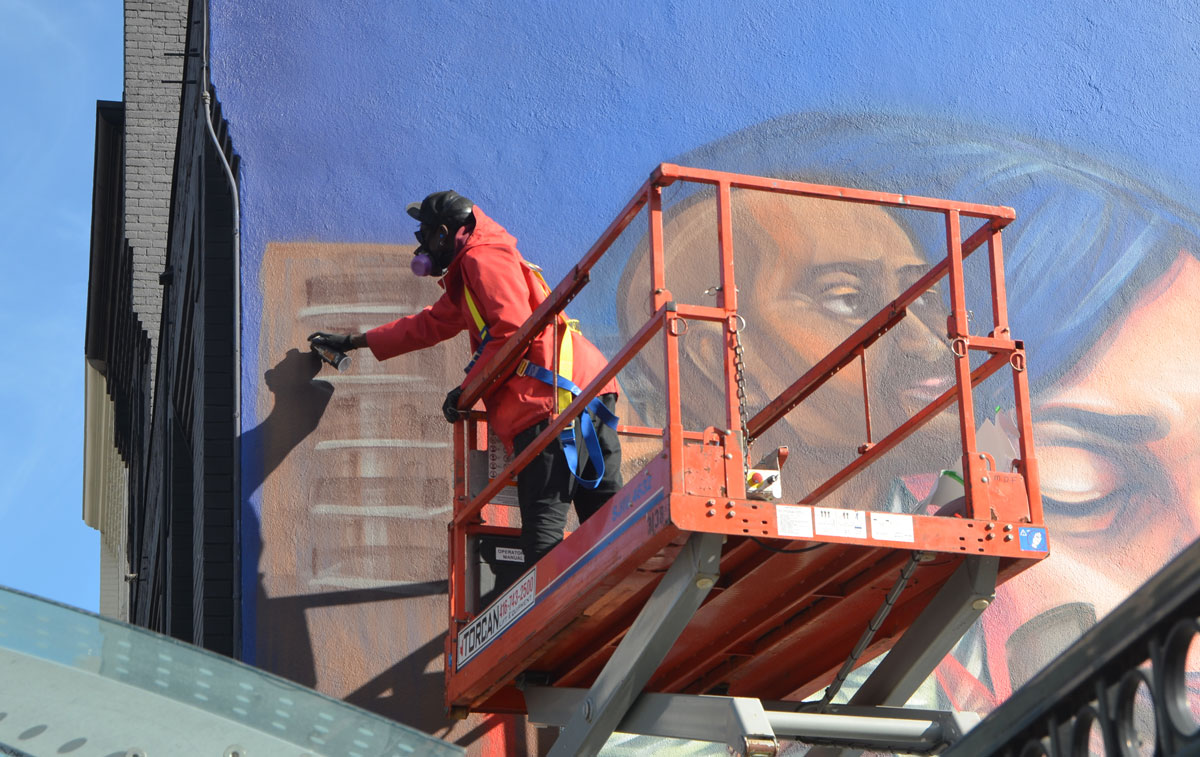
with the artist himself, putting on the finishing touches to the mural.

elicser painting a large mural by CP 24 parkinglot on Queen St West, showing people in the tv business - up close picture of him with a can of spray paint in his hand.

elicser painting a large mural by CP 24 parkinglot on Queen St West, showing people in the tv business - him on a lift painting above the heads of people walking past

I had heard about a mural at Lawrence and Orton Park so this morning I thought I’d check it out.   I ventured out Lawrence Avenue to just east of Markham Road.  As I drove I was reminded of how big this city really is.

below: This is the community mural that started my adventure this morning.  It was painted in nine sections and then assembled on the wall.   It is the work of Ted Hamer, Rowell Soller and Skratch Wonder.

a mural on the side of a building that has the words Lawrence Orton in blue and orange. There is also a blue jay in flught, a fox and a squirrel and a robin standing in the grass.

below: As I left Orton Park, I saw this mural from a distance.  Of course I had to stop and take a picture.  I got some strange looks.  Tourists are probably not too common in this part of the city.

vertical mural on a multirise building (about 15 storeys tall perhaps).

below:  While I was looking for the best angle from which to take the above photo, I noticed some markings beside the road.

red painting on concrete wall barrier beside sidewalk on bridge over Highland Creek, in red, a girl's head and the words, What I love about the city is there are all kinds of cultures and faith groups. There is a lot of trees and sunshine.

below: As it turns out, these are from the summer of 2011.  Lawrence Avenue is 6 lanes wide and at this point it crosses Highland Creek and Morningside Park – a long bridge, a rather barren stretch of concrete and pavement.

red picture of a boy on a concrete barrier beside a sidewalk as it passes over a bridge. The word welcome is written beside him.

below:  Bridges were meant for going under, right?   Luckily there was an entrance to Morningside Park right there, and luckily I left my toboggan at home  🙂   Morningside Park is part of a network of parks that follow the Highland Creek.  It starts near Markham Road and the 401 and runs south to Kingston Road near Guildwood station.    A search for an answer to the question, “How many ravine parks does Toronto have?” has yielded no results yet.  I’ll keep looking.

paved path leading down a hill to a ravine park, apartment buildings in the distance. Sign beside path says no skiing or sleigh riding on the slope.

below:  The answer to another question, “Is there graffiti under the bridge?” was more easily found.

in a park under a bridge, grassy area, some trees on either side, 2 concrete support pillars with street art on the bottom of each.

below: The bottom of the pillars were painted back in 2010 and 2011.

street art on a concrete support pillar of a bridge, a man upside down, large head with top of head on the ground, feet up in the air. moustache, smiling mouth,

below: Hope takes flight over the city.  Unfortunately, it’s hard to see but the word hope is written on the city at the bottom of this small mural but it is behind the weeds.

small mural on the bottom of a concrete pillar, a bird takes flight over a city at sunrise. The word hope is written on the mural

below:   Personified Hope, from the picture above, wraps around to another side of the pillar as he/she moves upward.  Also seen here is one of the feet from the upside down man.

side of a concrete pillar with light blue line drawing of person looking upwards, abstracted.

below:   Another pillar has a painting by elicser.

street art by elicser in blue of a family. Man with red hat, woman and kids huddled together, fall park scenery in the background.

street art on the bottom of a concrete pillar, two black men. One is Mohammad Ali.

park with grass and autumn foilage trees, apartment building in the background, a large bridge passes over with four or five concrete pillars. SUnny blue sky day

street art painting on a pillar under a bridge of a young man in a blue hoodie and brown baseball cap

street art painting on a pillar under a bridge, wispy picture of a woman with long hair, hair swirls upwards to a satelite dish and a flying bird

bridge over a park and creek

geometric shapes abstract many colours street art

below: There were also a couple of paintings on the other side of the creek. There was water in the creek. Too much to cross safely.
Or at least, too much for me to cross safely!
graffiti on a pillar in the park with weeds and small shrubs growing around it.

It was a very quiet place to be this morning.  I saw a couple of people on the path, including Batman, but they were silent.

line drawing in black of Batman's head and shoulders, drawn on a paved path in a park

large chalk drawing of a man's face in black, white and pale purple, on a paved path in a park

One last photo, taken as I was driving home across Lawrence.  I guess it’s somewhat appropriate for the time.  Not sure why one would be sporting such a sticker in Ontario though.   C’est la vie.  To each their own.

red car with a sticker on the back that says Donald Trump 2016 Make America Great Again.

I saw many people at bus stops waiting for the 34 Lawrence bus and I wondered how long it took them to get to the subway.  Lawrence is 6 lanes wide and I tried to picture it with an LRT running down the center.   (but that’s a whole other blog post, perhaps another day).

mosaic artwork in greens and yellows

Coxwell subway station is still in the midst of its renovations and upgrades.  As part of the project, the wall on the west and south sides of the station have been painted a bright yellow.   This yellow was then the canvas for a large number of mosaic creations.

some of the mosaic medallions on the Coxwell mosaic mural

below: The new mosaic mural covers the wall alongside the pathway that leads from Coxwell station to the Danforth.  The murals painted on the side of the Sunset Grill restaurant, on the opposite wall of the path, were there previously.

yellow Coxwell pathway mosiac mural with the murals from the restaurants beside the pathway

below: A beaver made from bits and pieces – with round eye and two large teeth.

a beaver made with mosaic tiles and pieces of glass

below: At the corners of the mural are seed pods that have released their seeds to the wind.

mosaic representation of a large seed pod that hs released its seeds.

below: The south side of the subway station is adjacent to a Green P parking lot on Danforth.  Along this wall, a quote by Agnes MacPhail has been added below the mural.  “We meet all life’s greatest tests alone”.  Agnes MacPhail (1890-1954) was the first woman to be elected to the Canadian House of Commons where she served from 1921 to 1940.  After her time in federal politics, she represented the provincial riding of York East in the Ontario Legislature.  In 1951 she was responsible for Ontario’s first equal pay legislation.

A wall with a chainlink fence above it, a large green construction crane is behind the wire fence. The wall has been covered with a mural, yellow background and mosaic pictures on it. A quote runs along the bottom at ground level, white letters on black background, quote by Agnes MacPhail

A wall with a chainlink fence above it, a large green construction crane is behind the wire fence. The wall has been covered with a mural, yellow background and mosaic pictures on it. A quote runs along the bottom at ground level, white letters on black background,

below: West side of the wall, looking towards Strathmore Blvd.

west side of the mural, yellow wall, Coxwell station, mosaic pictures

below: A mosiac bee amongst the flowers…

a circular mosaic picture of a bee amongst white and orange flowers on a blue background, all on a yellow wall. Part of a larger mural

below: … and a real bee sitting beside a mosaic red rose.

mosaic picture of a red rose with green foilage, with a real wasp sitting on it.

below: Two mosaic pieces, a circle with the names of the artists and a semi-circle rainbow with the names of those who contributed to the creation of the mural.  The transcription of the words is given below.

on a yellow wall, some circles made of mosaics. One is the list of people who made the whole mosaic mural and the other is a semi-circle, rainbow colours, of people of contributed to the mural

Lead Artist: Cristina Delago,
With Boloebi Charles Okah, Bronwen Parker, Holly-Jo Horner, Jing Tian, Karen Roberts, Melanie Billark, Robin Hesse, Sarvenaz Rayati, Shae Stamp, Shashann Miguel-Tash, Skyy Marriot, Somayeh Nasiri, Victor Fraser, Will Spratley.

Special Thanks: Woodgreen Community Services, Dulux Painter, Tomasz Majcherczyn, Cathy & Barry Joslin, Cercan Tile, Jacqui Strachan, City Councillor Janet Davis, Jeff Billiard, John & Ed at Danforth Brewery, Mark Wrogemann, Clara Lou, Eleanor Ryan, James & Cooper, John Kenneth & Cherie Daly, Lowe’s, Maisie Fuss, Melanie Morris, Michelle Yeung, S. Dimitrakpoulos,  The Vogls, The Zeelie-Varga Family, Wyatt & Teagan, as well as Laurie, Chantal and Gavin

blog_small_details_mosaic

At one end of the new sports field at Regent Park, there is a large mural by elicser.

green soccer field and clay track in the foreground, small trees and a mural along the end of the field, new apartments being constructed in the background.

below: The west end of the mural, waiting on the sidelines with basketball at the ready as well as watching the soccer game.

mural by elicser elliott on a fence between grassy field and new apartments being built, people watching a soccer game, a person sits on a bench with a basketball between their feet.

part of a large mural, large letters that spell Regent Park

below: The cricket players are between the words ‘Regent’ and ‘Park’ as seen above.

mural showing two male cricket players

part of a larger mural, a man and a woman walking on a street, the man is drinking with a straw

blog_mural_woman_head_scarf

below: The mural continues behind the basketball court.

outdoor basketball court, with a mural in the background, and construction beyond that.

below: Basketball players both on and off the court.

mural of basketball players playing, mural is behind a basketball court, also mural of close up of players feet with running shoes on

mural of a woman, and some text, on a fence behind some outdoor picnic tables

below: The east end of the mural

two text street art pieces, one in yellows and oranges with the man in the moon in the middle