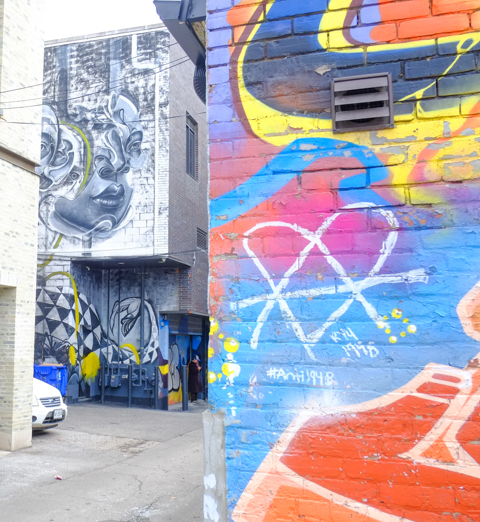
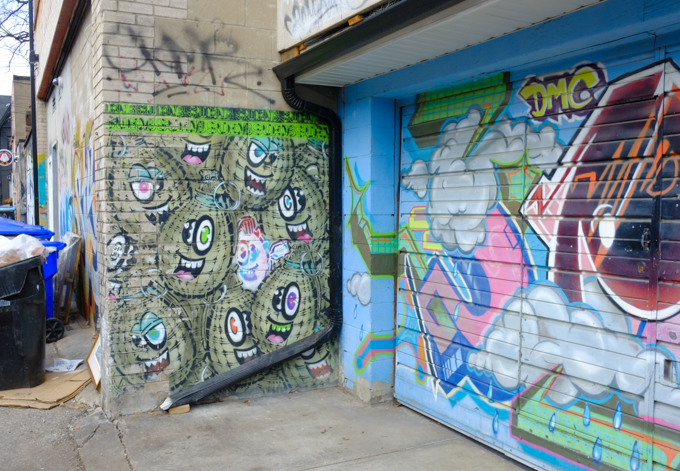
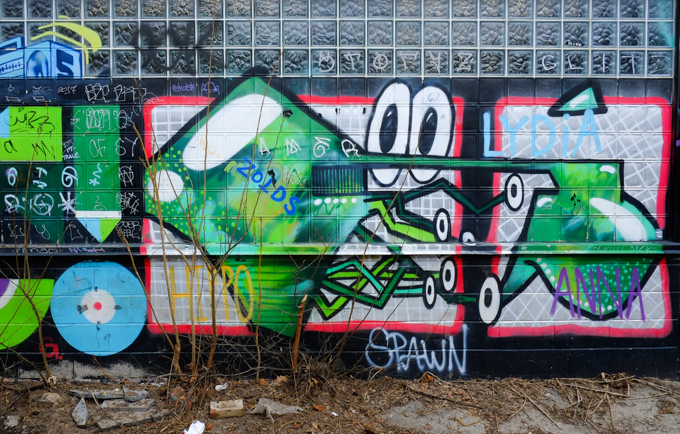
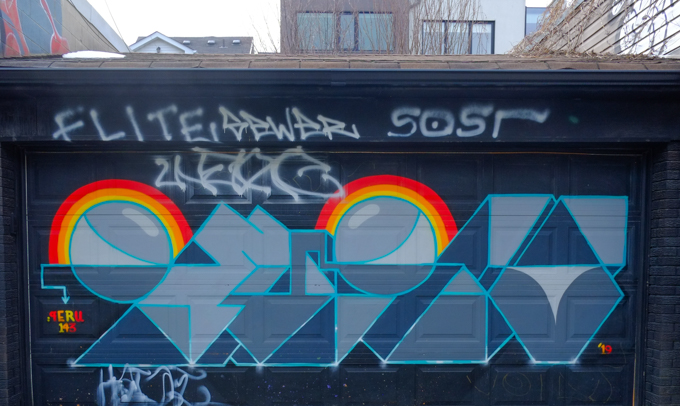
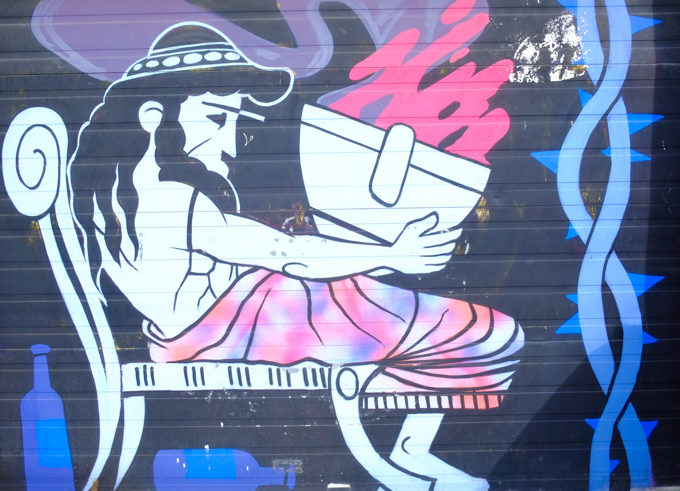
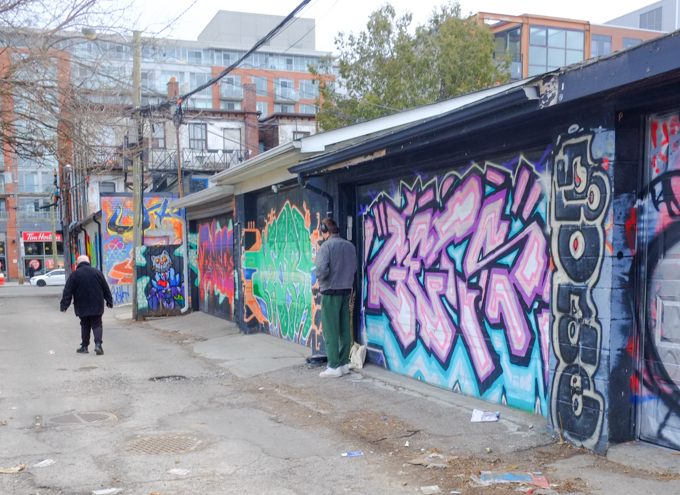
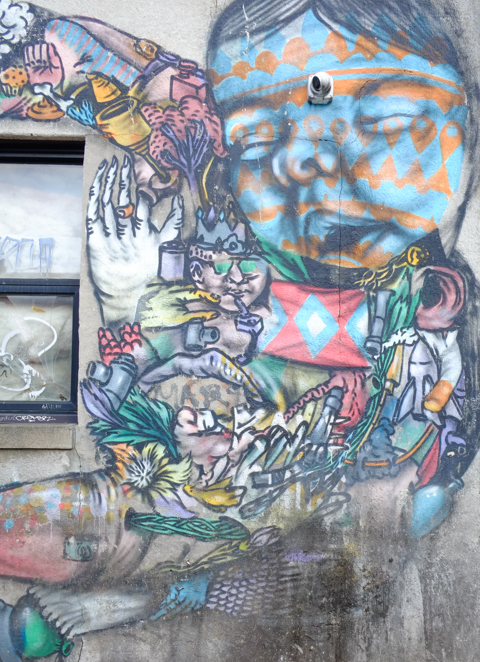
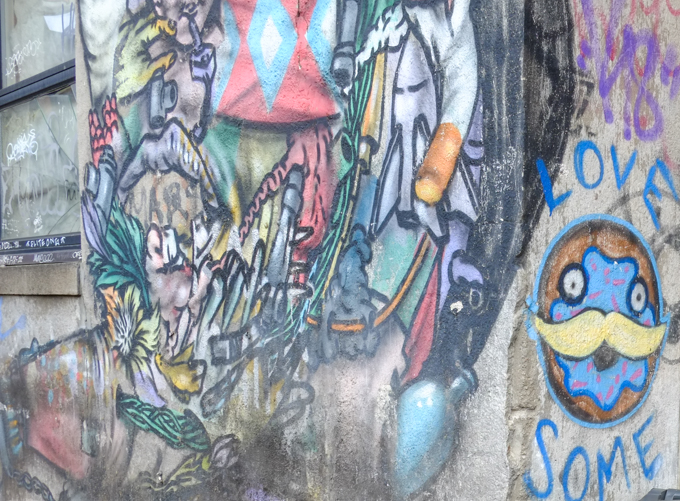
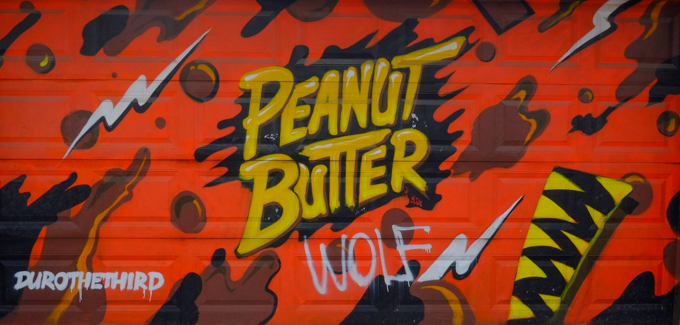
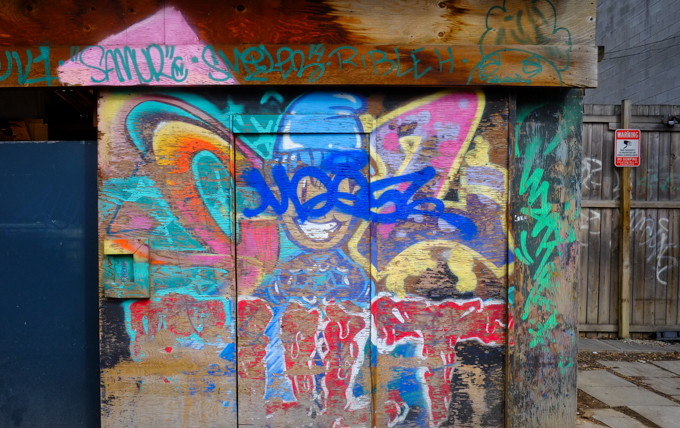
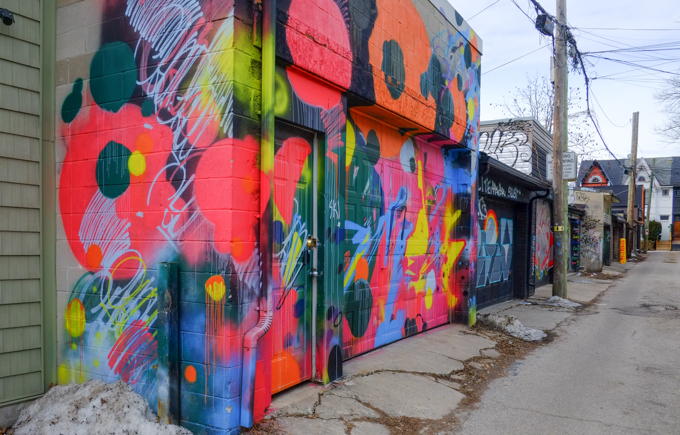
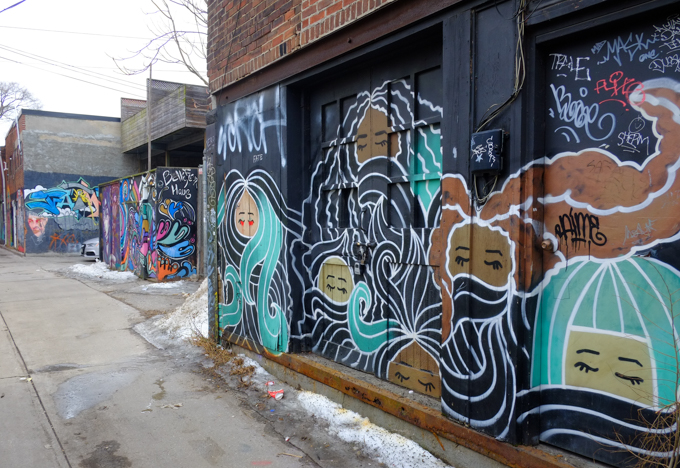
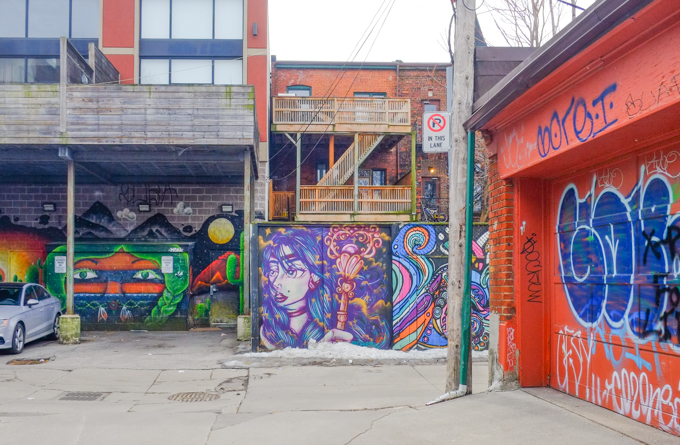
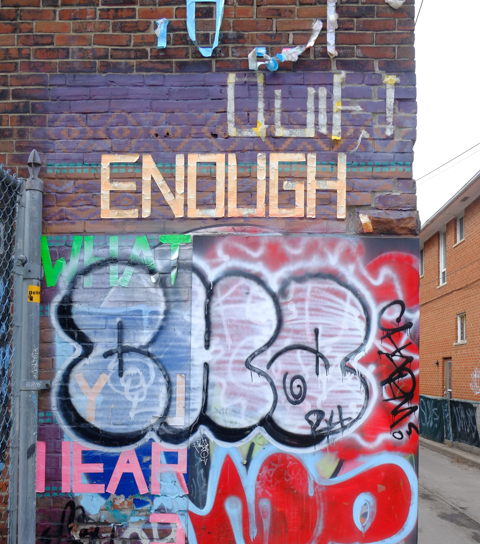
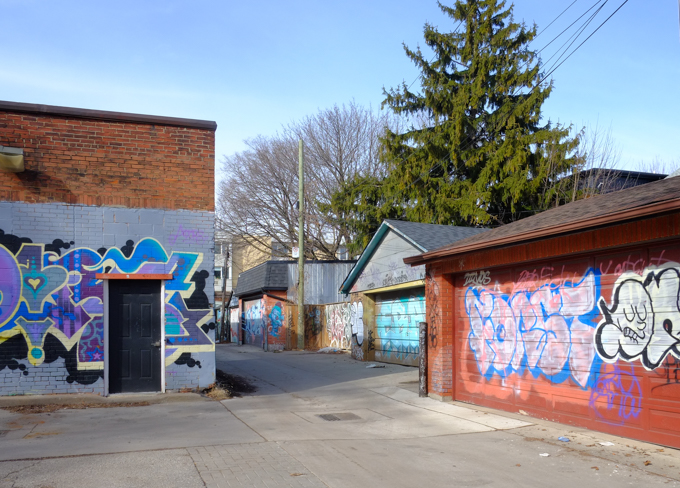
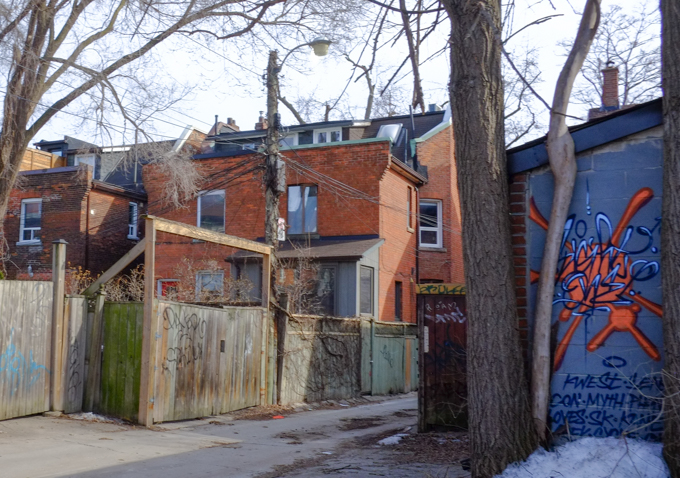
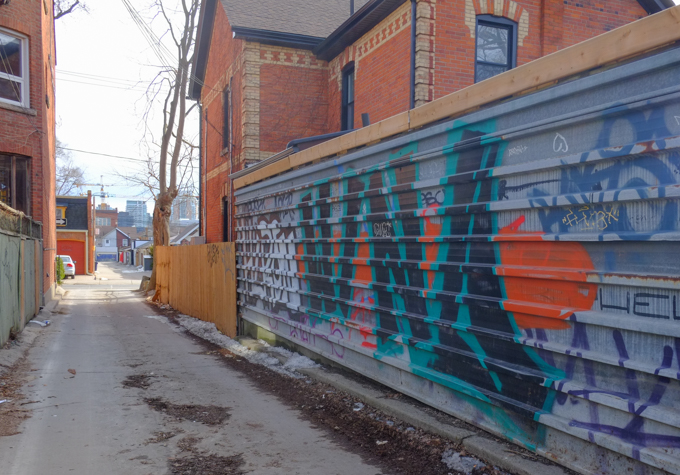
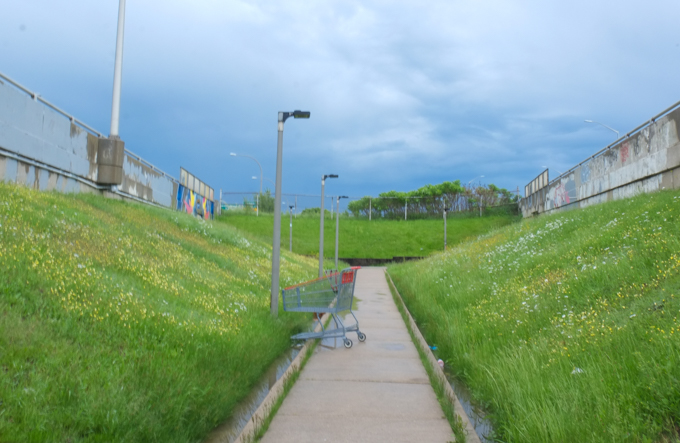
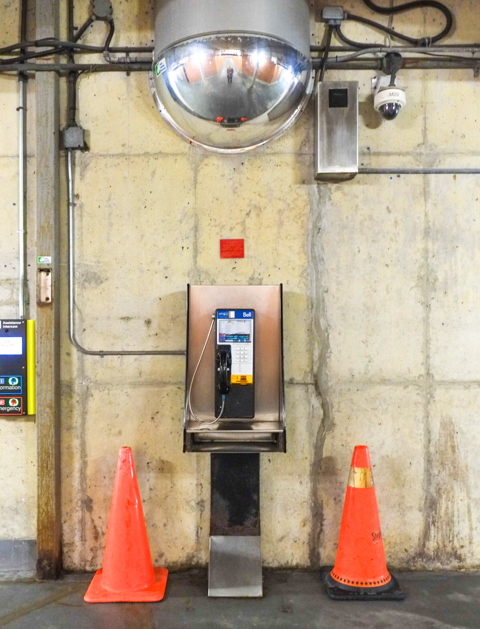
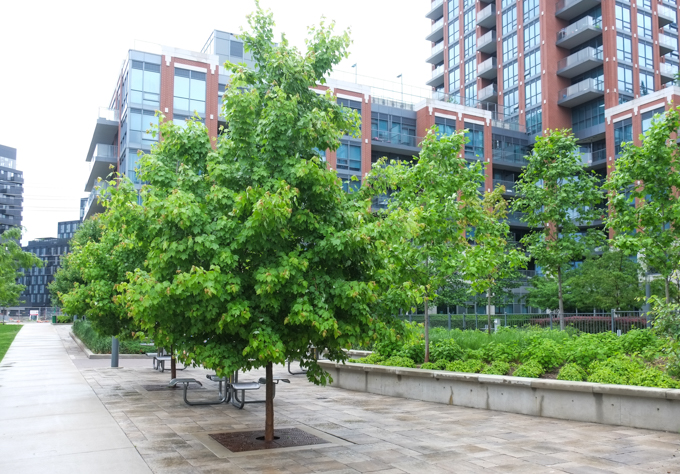
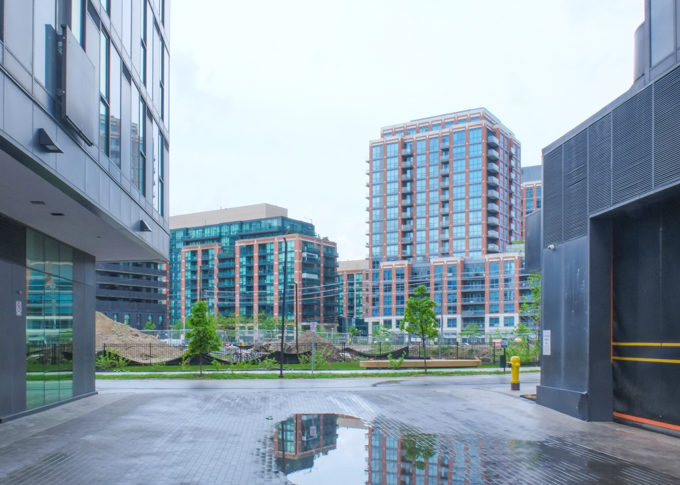
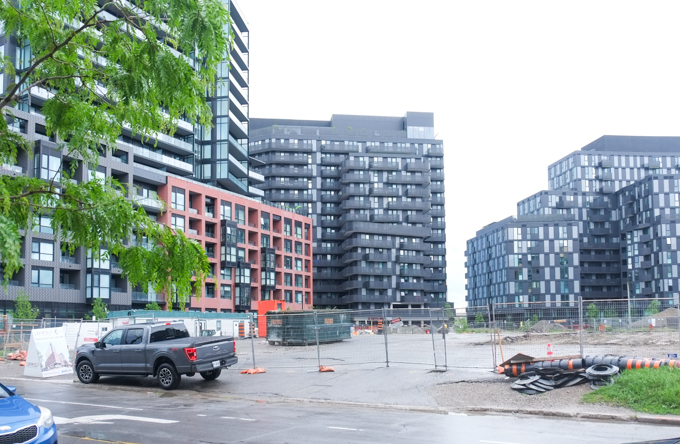
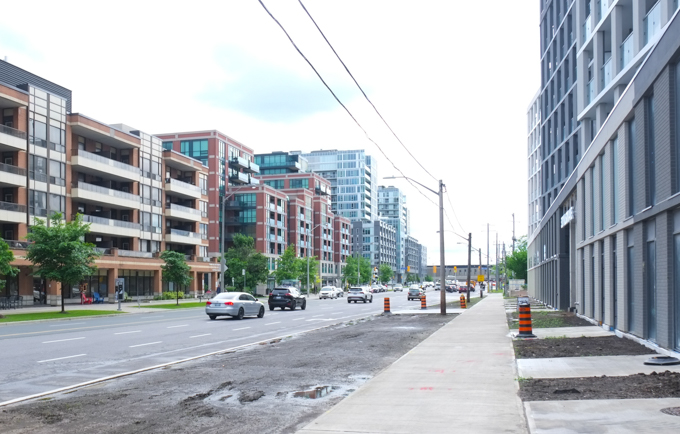
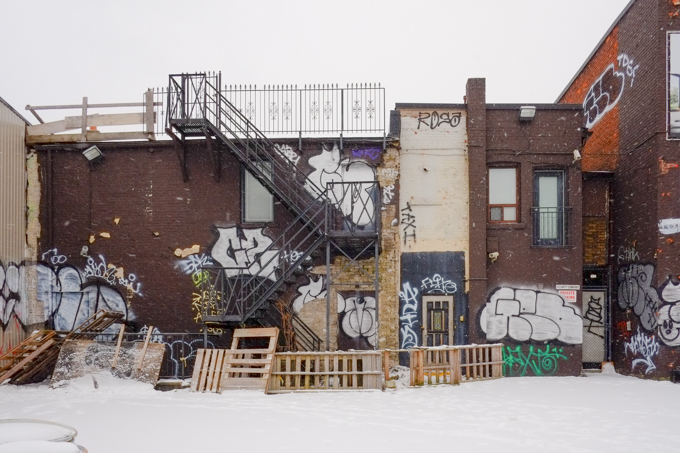
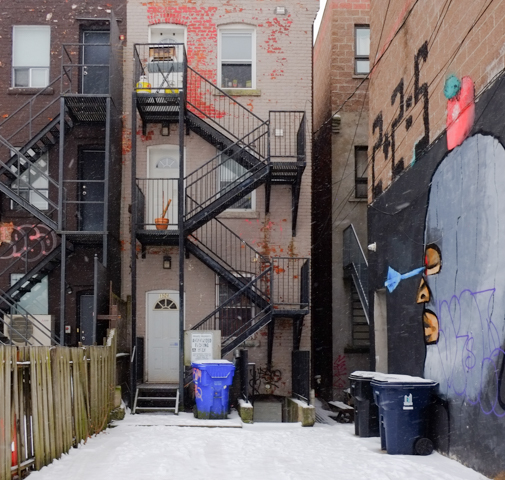
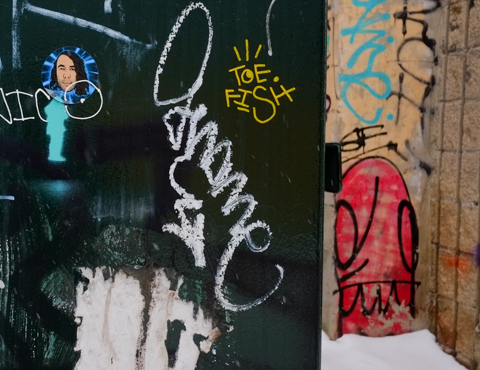
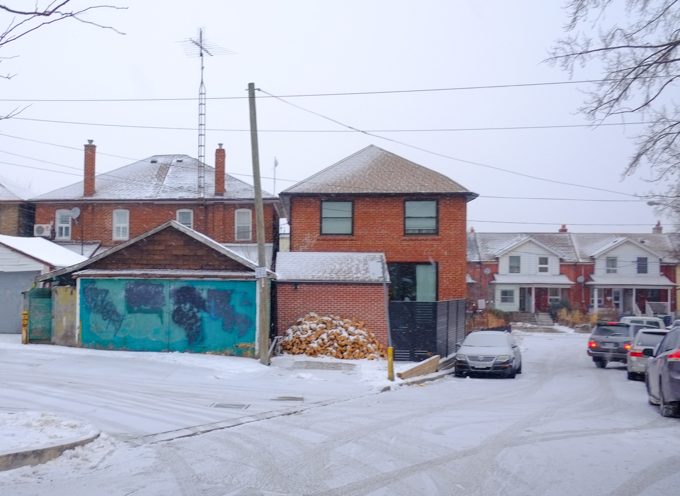
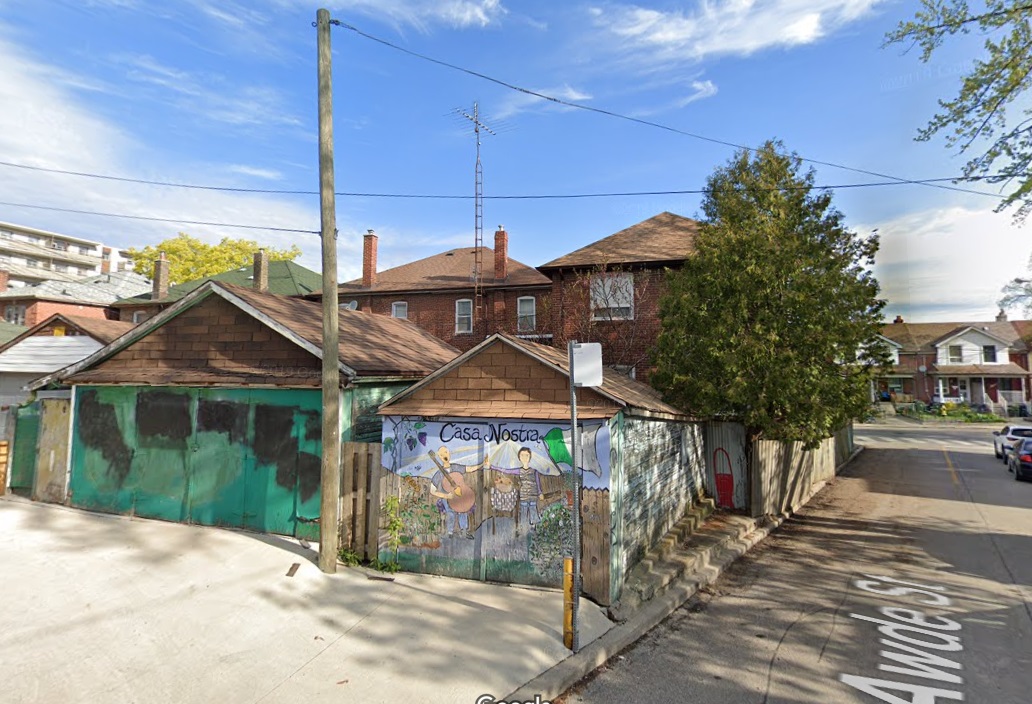
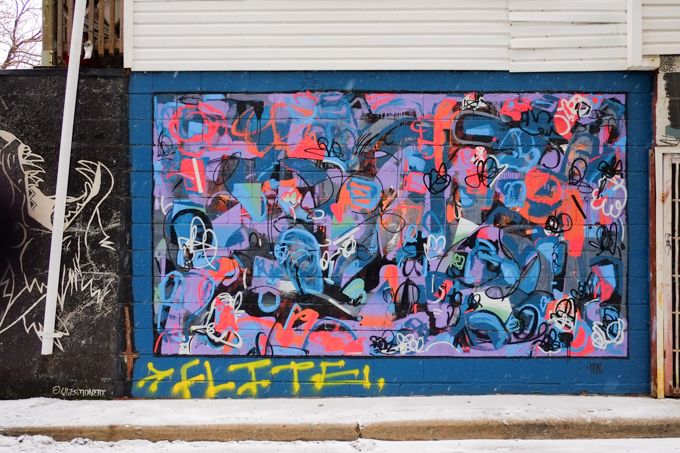
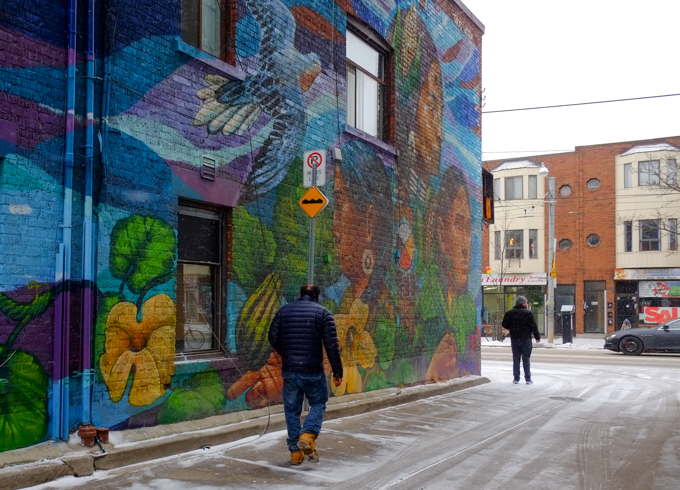
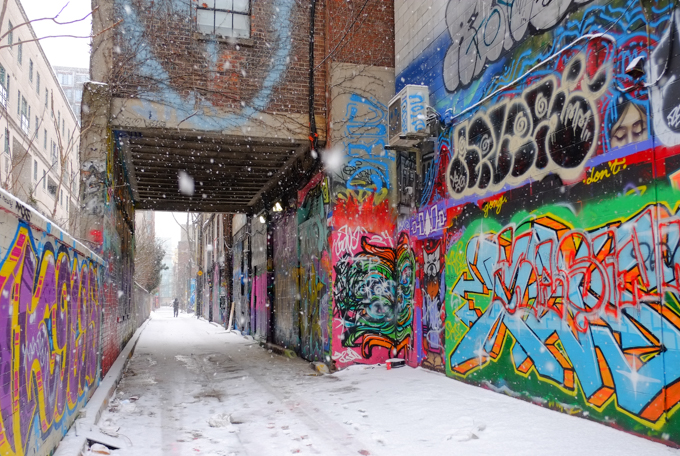
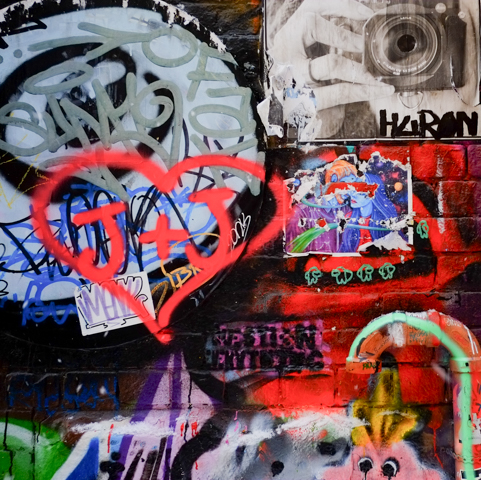
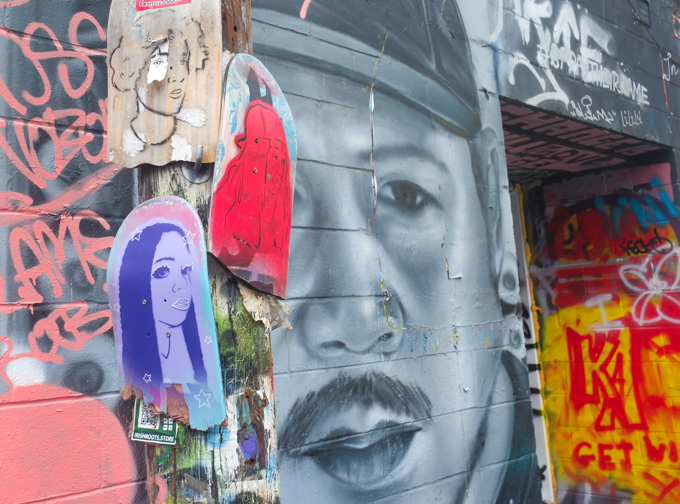
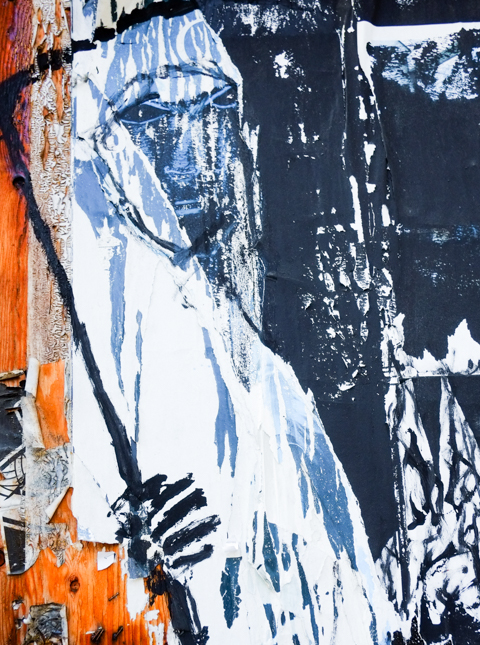
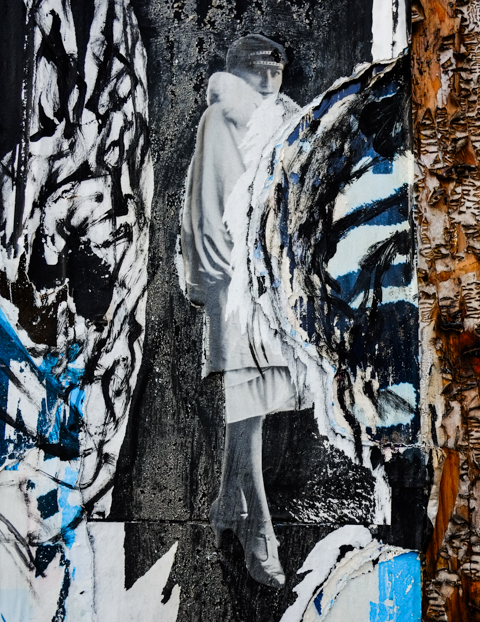
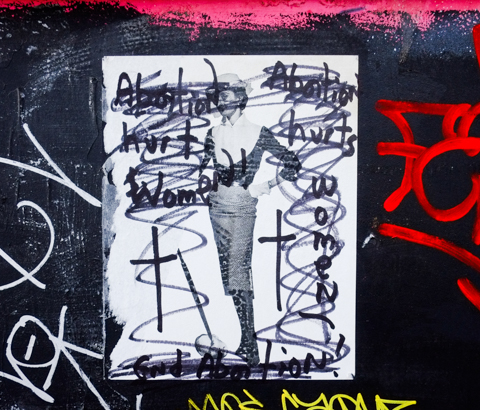
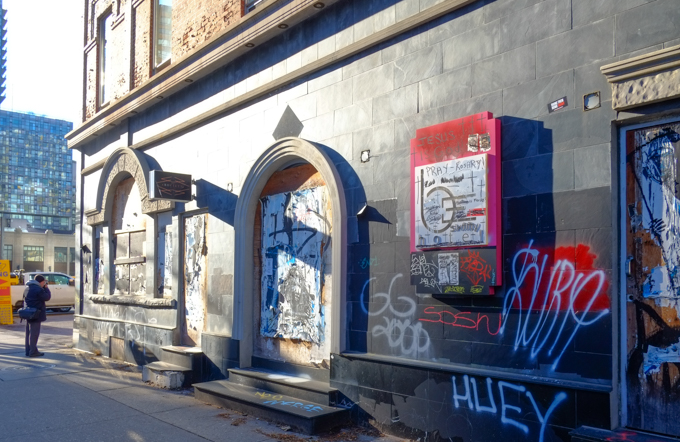
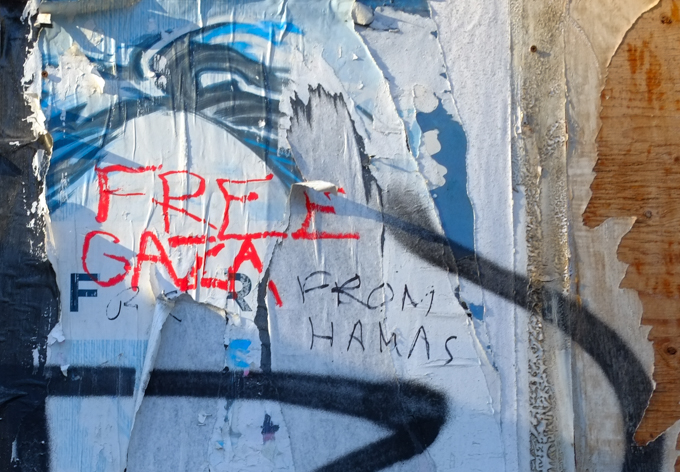
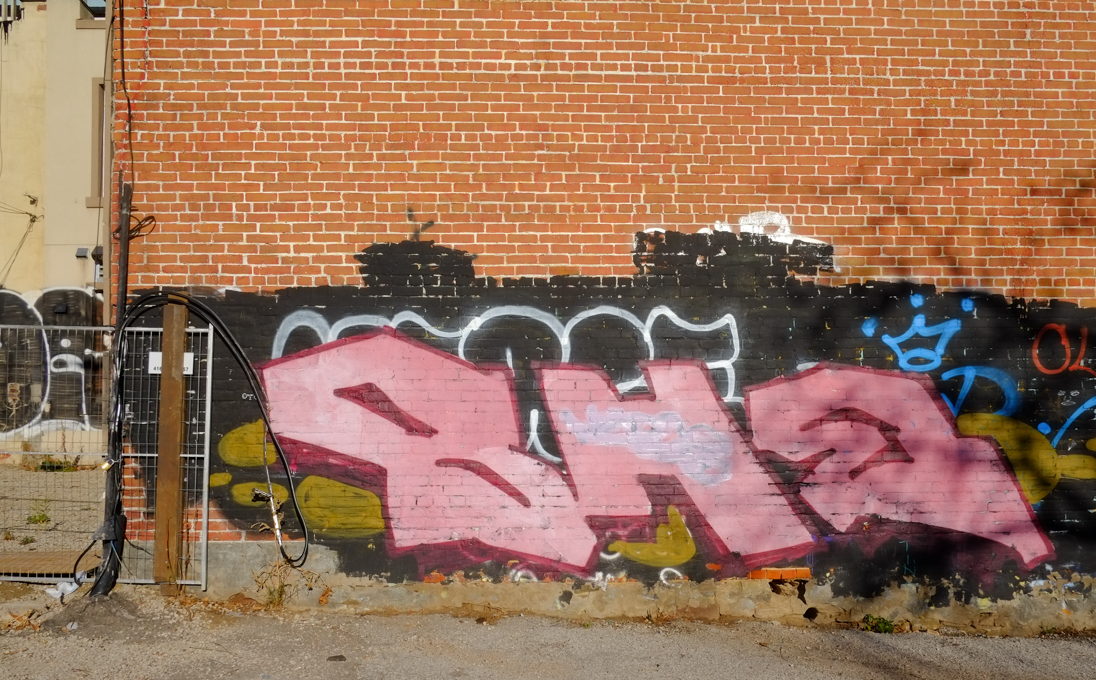
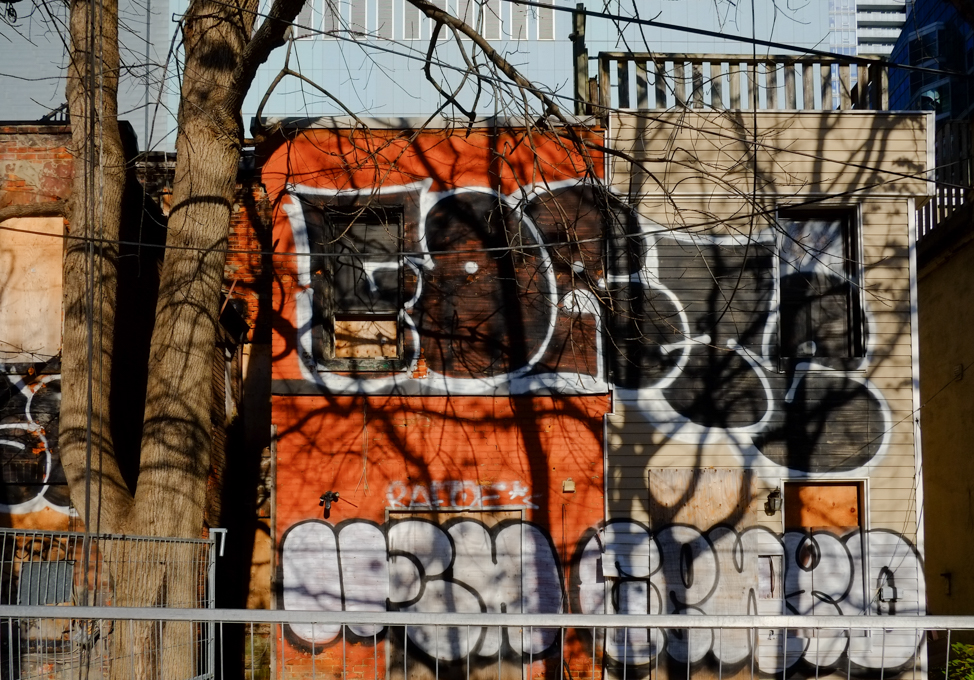
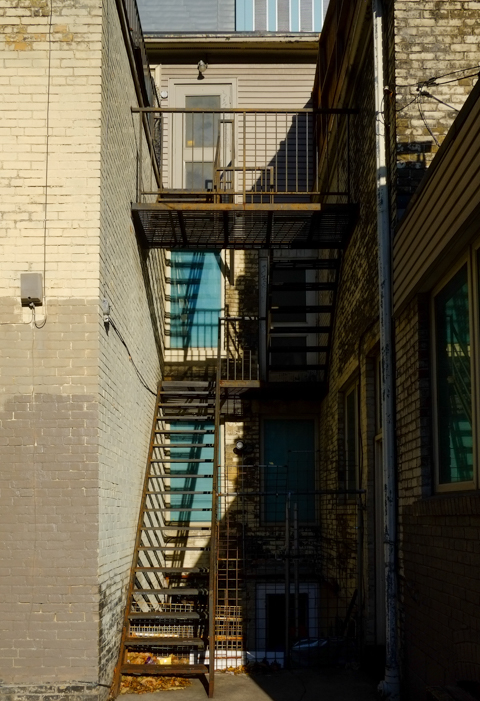
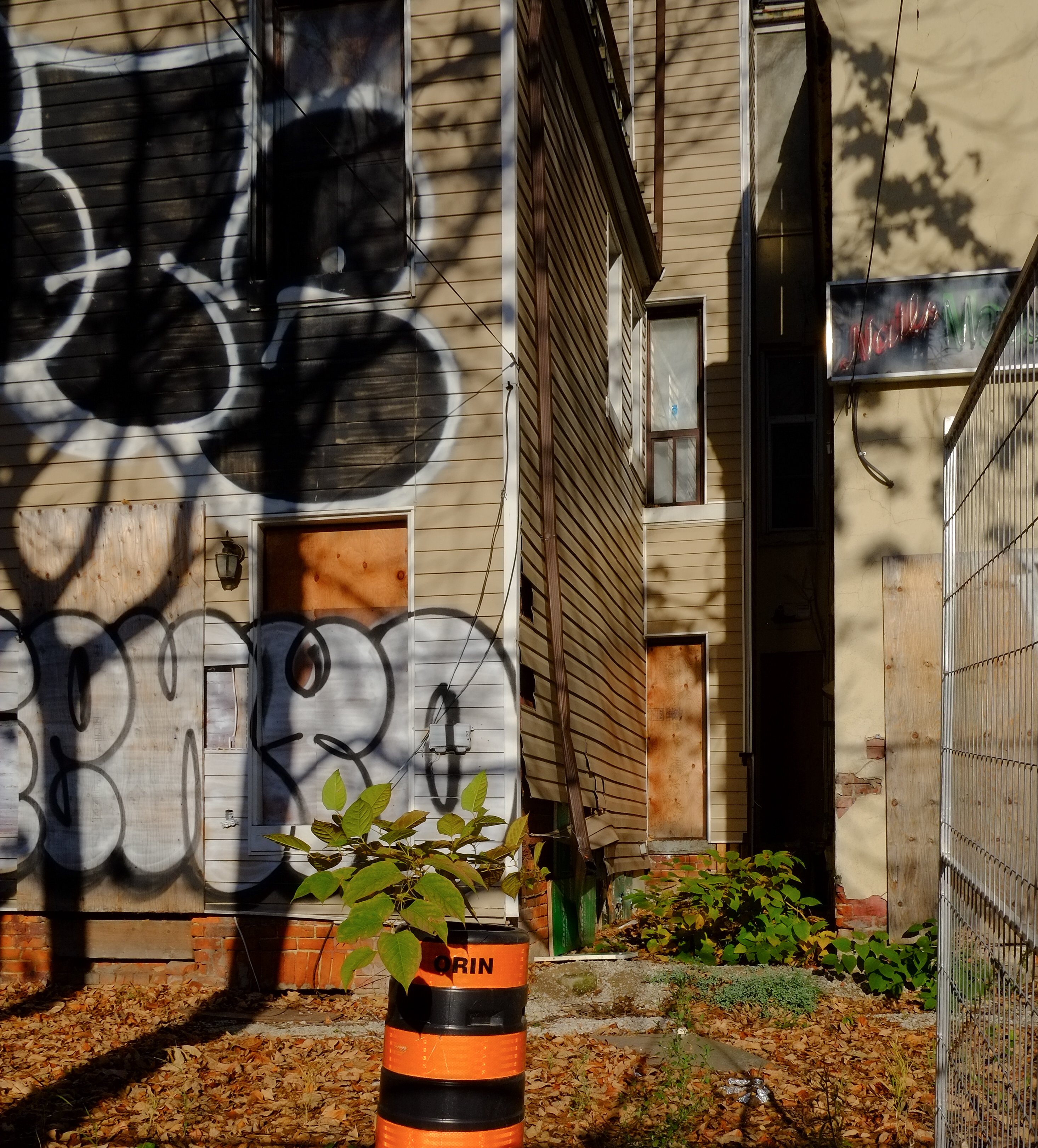
Looking north up Rocco Mandalfino Lane towards Dundas Street.
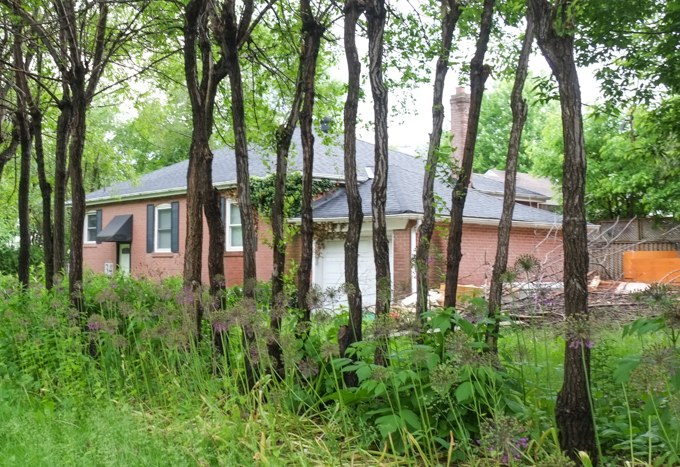
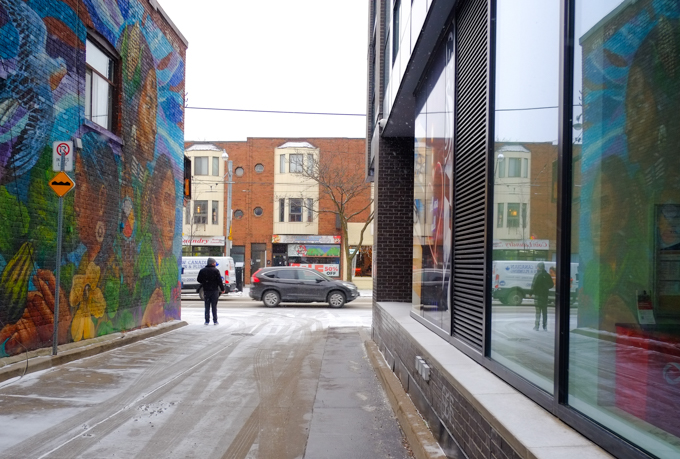
Looking south
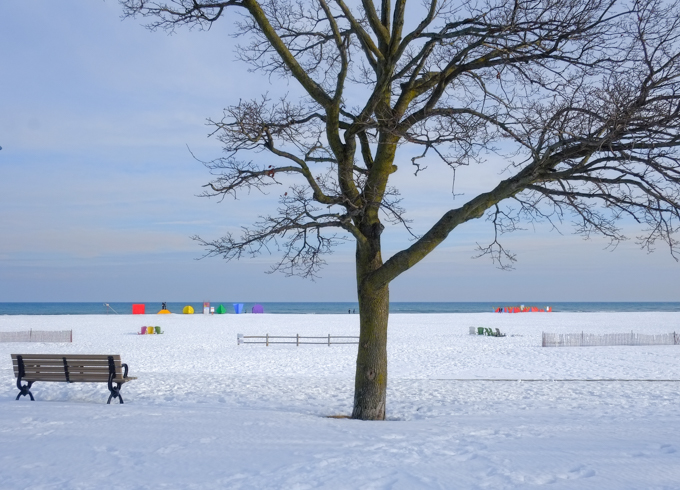
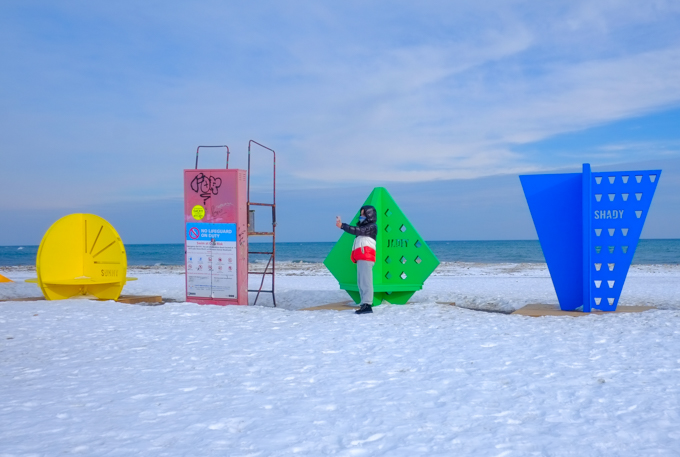
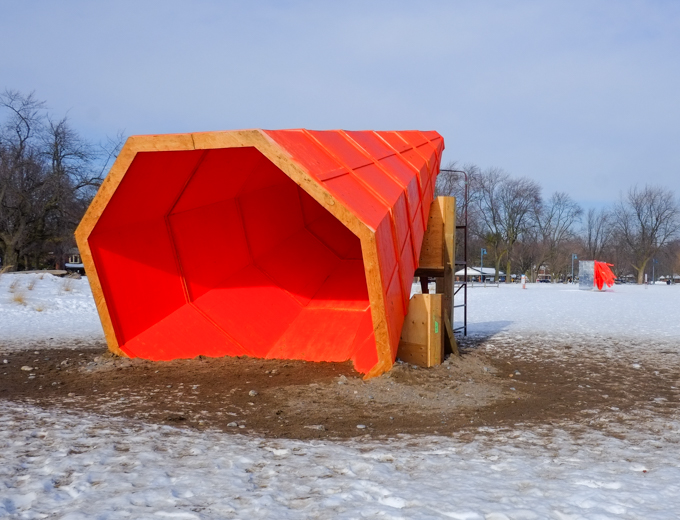
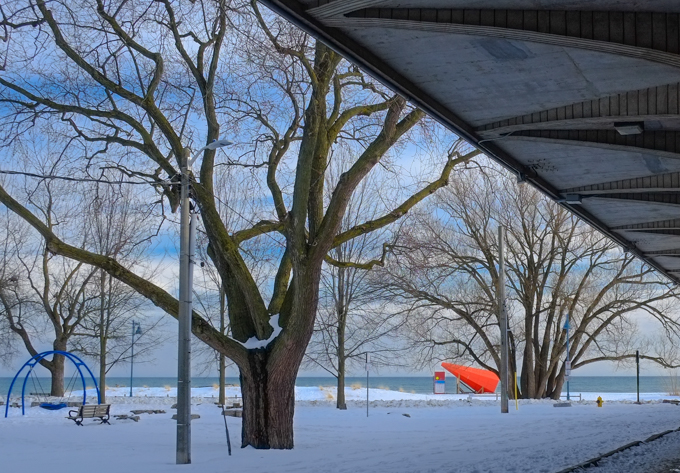
The annual “Winter Stations” public art installations are now up at Woodbine Beach. This year the constructions are colourful and fairly durable. They should be there until the end of March.
Once again, there are 6 installations to check out as you walk the beach.
below: “Watch” by Trae Horne. The opening in the fence faces due east
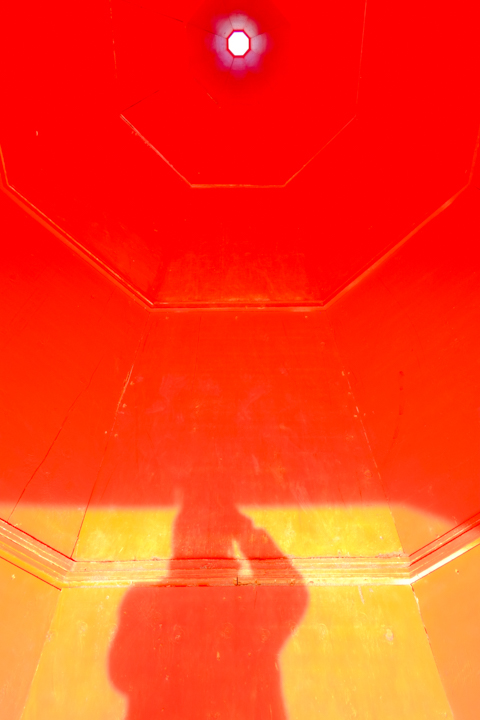
below: “Peak”, designed by University of Waterloo School of Architecture and the Department of Architectural Engineering. … ” angular peaks that frame perspectives and form pathways. Consisting of repeating structures of select shapes and sizes, Peak is an interactive installation that visually contrasts the existing site and offers refuge from the cold winter environment. “
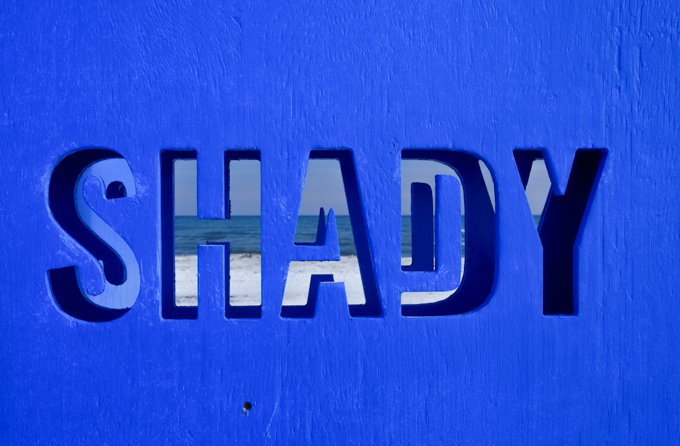
below: “Parade” by Jesse Beus consists of six characters each with their own unique colour, shape, purpose, and identity. There is blue Shadey and green Jadey. Sunny is a yellow circle and Boxy is a red box. There is an orange pyramid called Slippey and a funny purple shape that is Blob.
below: “Ascolto” by French artists/designers Ines Dessaint and Tonin Letondu.
below: Standing at the edge of “Ascolto” and looking in.
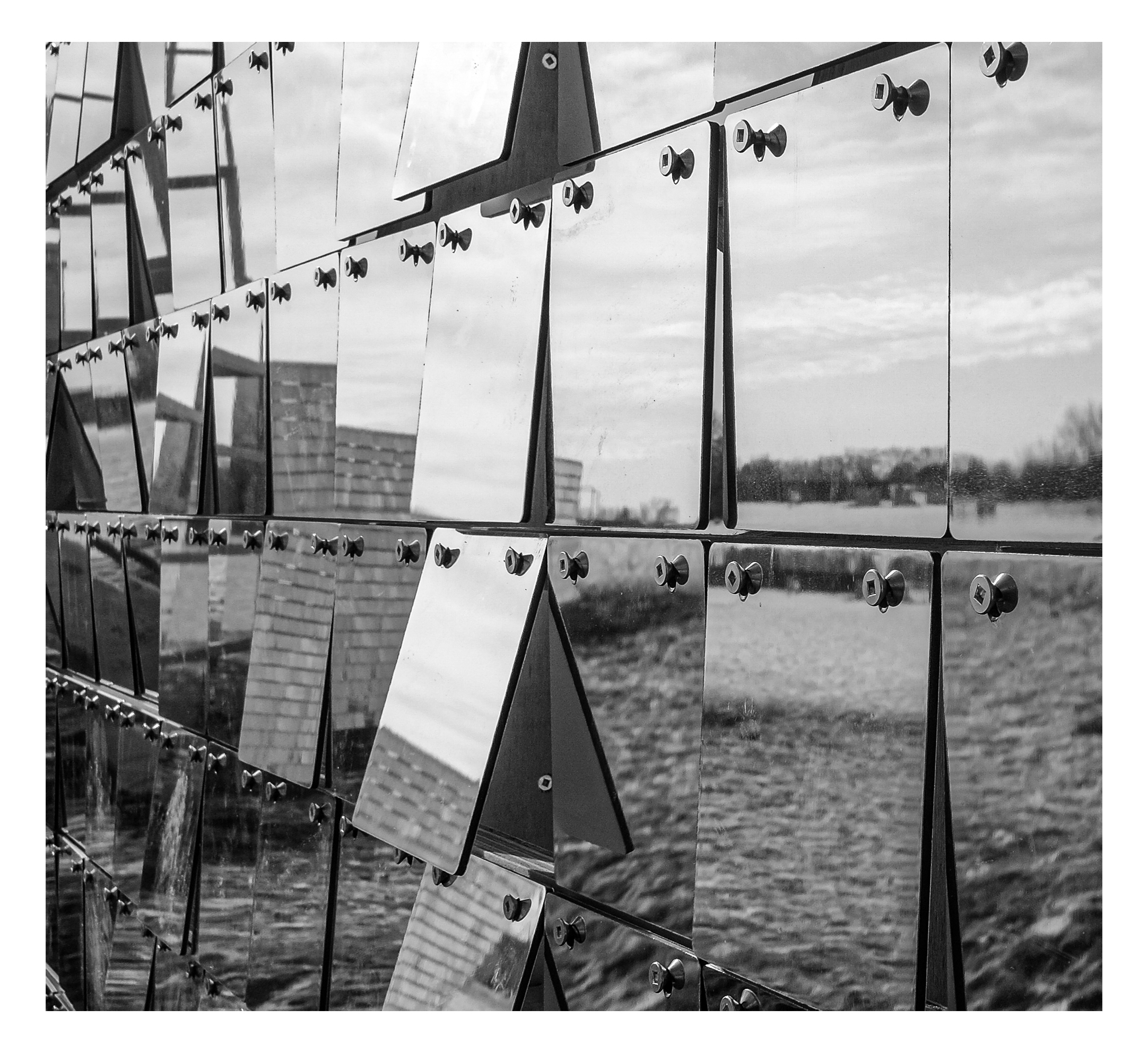
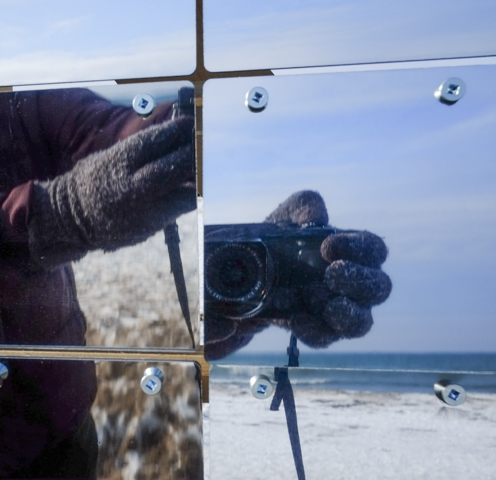
below: “Solair”, by Toronto Metropolitan University Department of Architectural Science – Sunlight and air… light and wind…. together produce movement and reflections and an ever changing abstracted image. Each reflective square moves independently from the others.
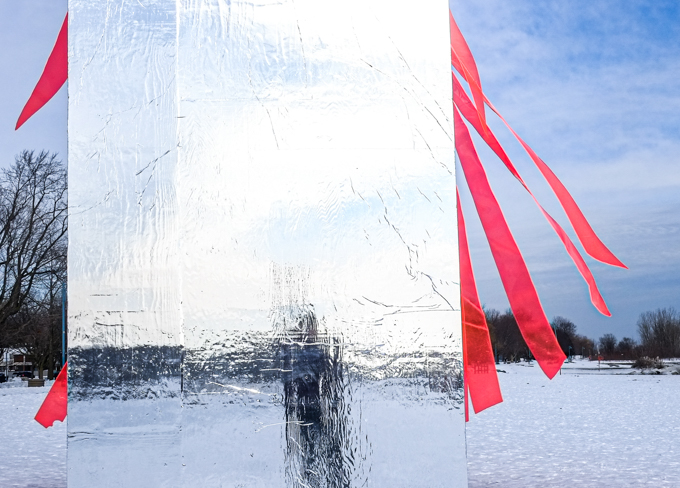
below: “Slice of Sun” by a Portuguese group – Cláudia Franco, Mariam Daudali, and Tom Byrom. It is a semi-circle within a rectangle. There are steps inside the curved portion that can be used as seats but just be careful because if it is windy, you might get hit by a blowing strip of pink plastic!
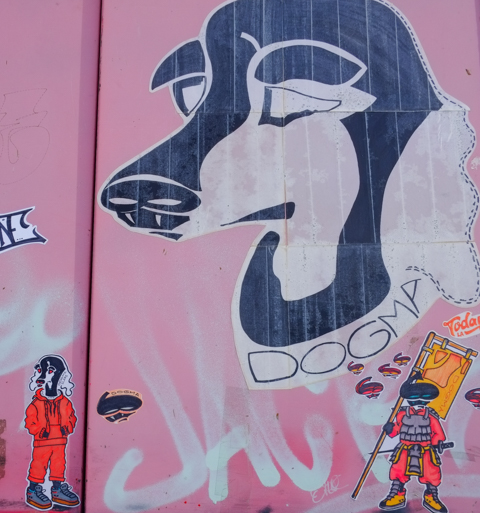
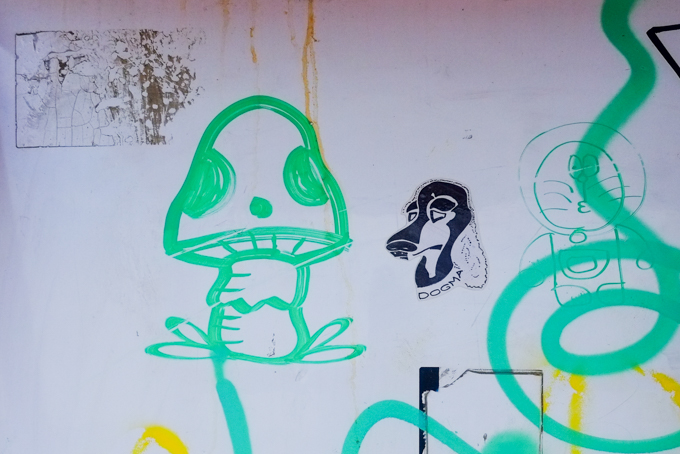
below: Dogma graffiti at one of the lifeguard stations
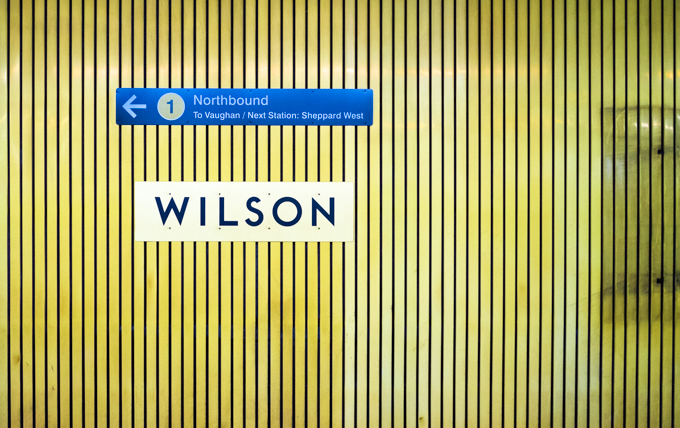
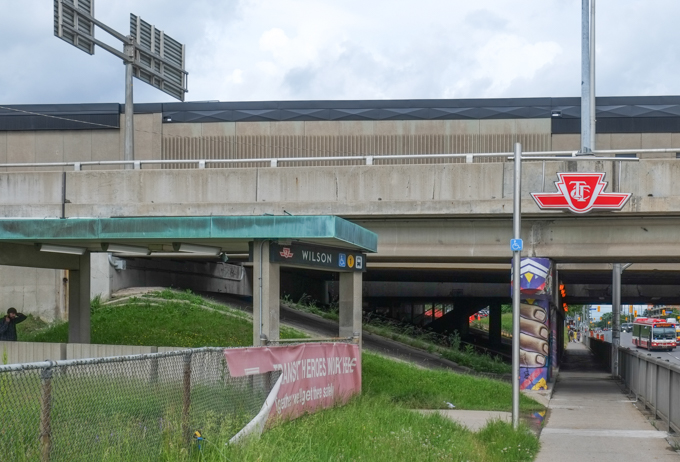
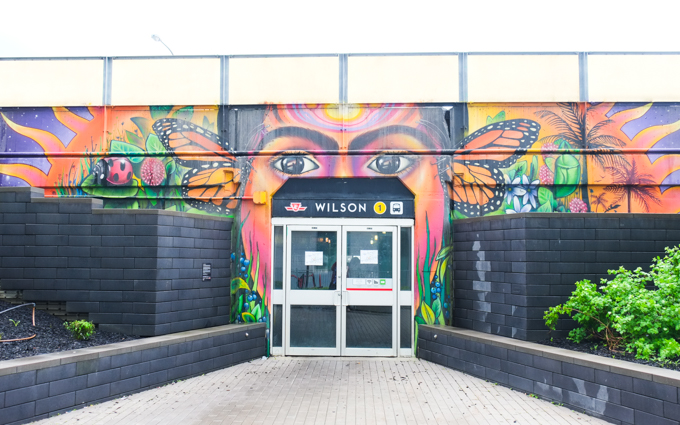
Wilson subway station, on the University side of Line 1, opened in 1978 and was the end of the line until Downsview station just to the north opened in 1996. It is not a thing of beauty. Concrete. Austere from the outside. It’s entrance from under the Allen Expressway is dark, gloomy, and depressing.
below: Northwest entrance to the station, nestled up against the Allen Expressway.
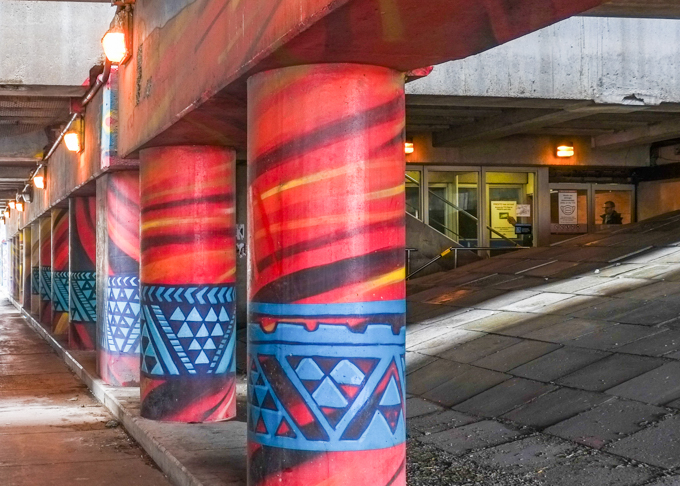
below: Walkway to southwest entrance
That stretch of the subway runs down the median of the Allen Expressway.
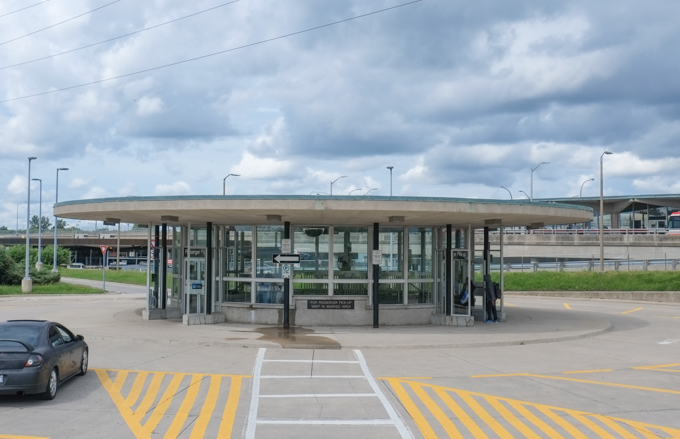
below: Although the platform has a roof, it is open at the ends and in the winter it is cold. There are a few of these pod-like waiting areas, circular glass structures with benches for those wanting a tiny reprieve from the wind.
below: Inside the station a concrete wall sculpture by Ted Bieler entitled ‘Canyons’
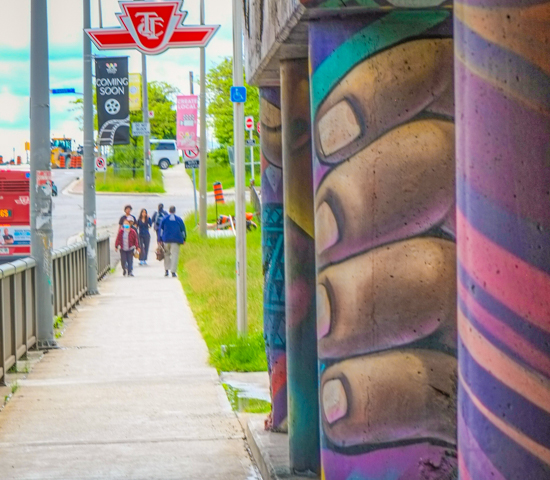
What drew me here in the first place …. To help brighten up the area, some of the concrete, both inside and out, has been covered with murals by Shalak Attack, Bruno Smoky, and Clandestinos,
below: An owl and a woman’s face at the two south entrances.
below: There is a lot of street art along Wilson Avenue but most of it is under the Allen Expressway and is not well lit. Some of it is also looking very dirty.
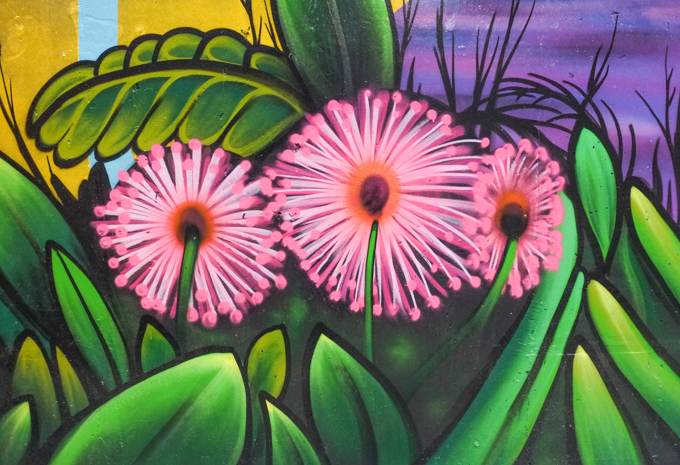
below: Pink flowers inside the station
below: Circular “Kiss ‘n Ride” still exists.
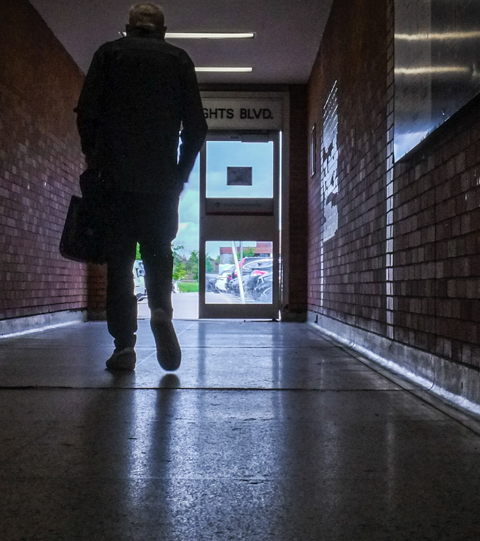
below: Exit at Wilson Heights
below: Northeast side of the station, along with the Allen Expressway
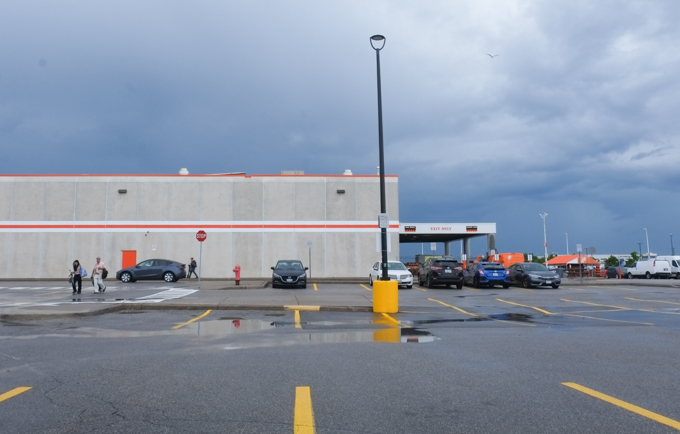
I took most of these pictures back in the summer but I hadn’t taken the time to blog about what I had seen. When I drove past Wilson again recently, I noticed that the parking lot on the east side (towards Wilson Heights) is now fenced off. Now it is a snow covered vacant lot.
below: Parking lot before
below: … and after. You can still park your bikes here, but no more cars.
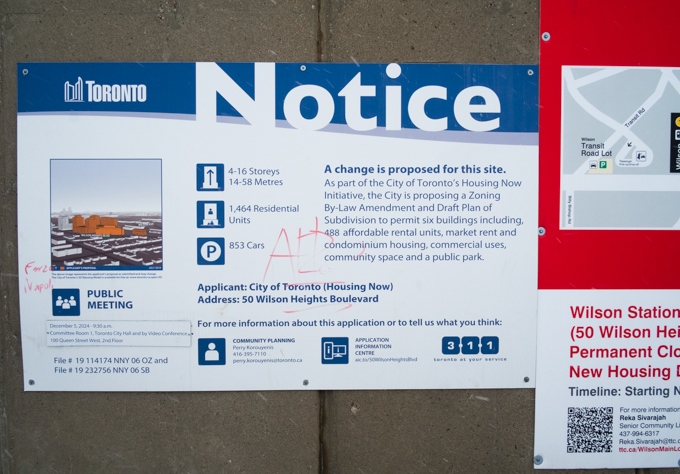
below: There is a City of Toronto development notice sign on the side of Wilson station. It looks like the city may be serious about affordable housing at this site. Apparently this has been in the works for a number of years but faced some opposition form those who wanted to keep the parking lot. Just shy of 1500 units in six buildings are planned on the site along with community space and a public park. The percent allotted to affordable housing varies from 35 to 48 percent, depending on the source of the information.
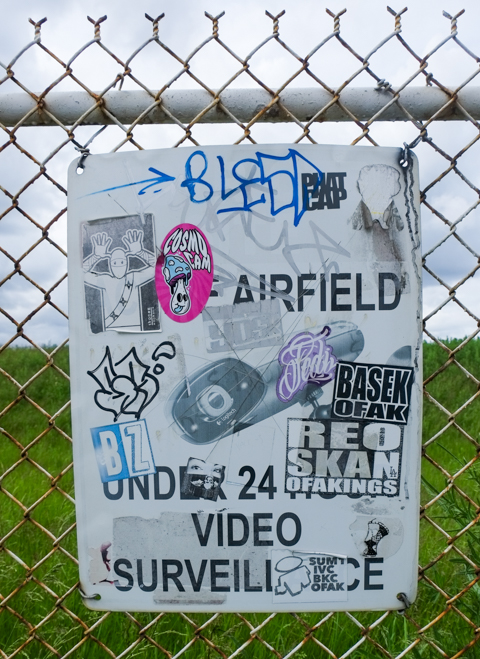
To the west of the station, on the north side of Wilson, is the remains of the Downsview Airport lands.
below: One of the four winners of the ‘XOXO Downsview, Talking Fences’ competition of 2023, is “Aandi wenjibaayan?” which translates to “Where are you from?” It was suggested by Lakhvir Sandhar. The other three winners have their words displayed elsewhere on the Downsview property.
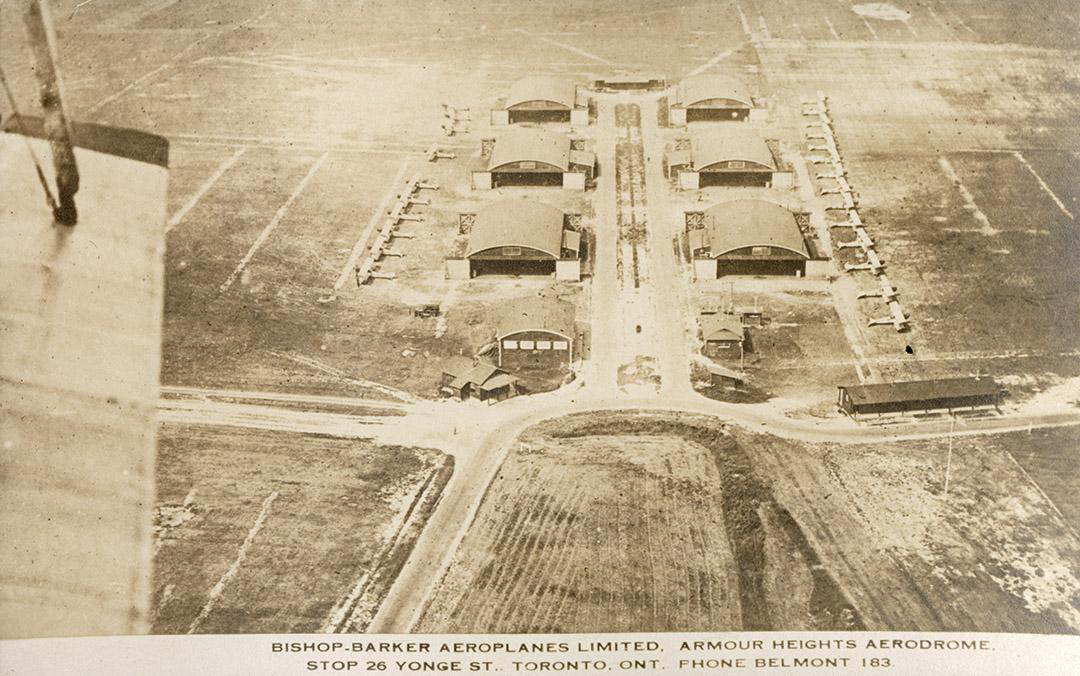
The south side of Wilson is retail and is now Wilson Village. It is also where you will find Billy Bishop Way named for Canadian pilot. It is nowhere near Billy Bishop Airport (that’s WAAAAY south, on the island, or the other one in Owen Sound) but is a nod to Downsview’s history as an airfield and its role in airplane manufacturing.
William Avery Bishop was born in Owen Sound in 1894. He was a Canadian flying ace during WW1.
below: Looking southeast past the old metal fence that surrounds the parking on the northwest side of Wilson station. Big box retail on the other side of Wilson, and newer midrise to highrise residential development on the other side of the Allen.
Very close to the planned “affordable housing” but on the south side of Wilson, there is already a new community being built.
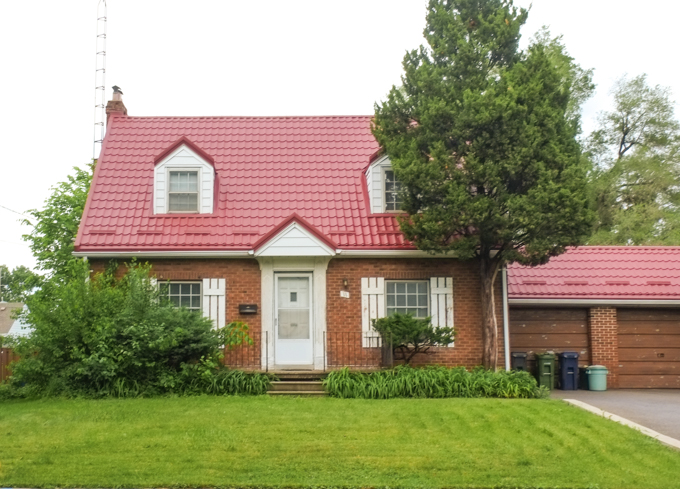
There are many older single family homes to the east, in a quiet neighbourhood squeezed in between Wilson and the 401.
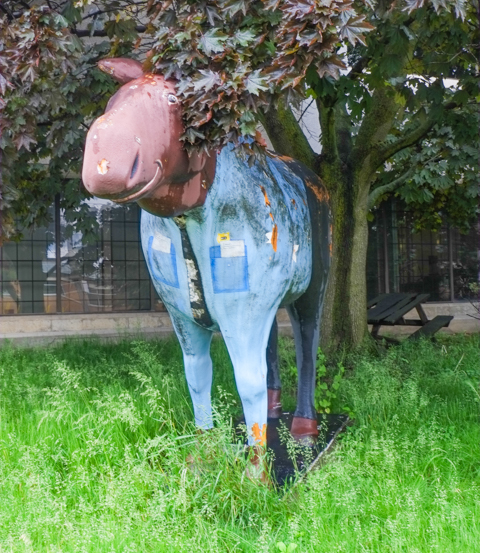
I even discovered an old moose hiding in the bushes! The “Moose in the City” project goes way back to 2000 when 326 life-sized moose sculptures found homes around the city. Each one was decorated by a local artist. I am not sure how many still exist but it can’t be more than a fraction of the original.
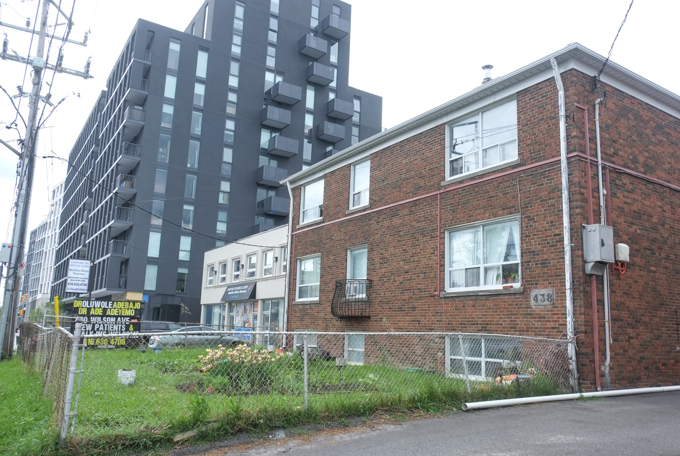
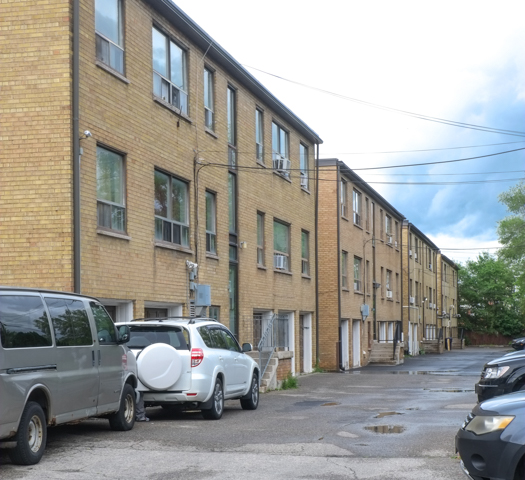
To the east, Wilson is becoming a canyon of midrise buildings, replacing the older residences, often fourplexes and sixplexes.
The development is more intensive as you get closer to the Allen and the subway line…
… on both the north and south side of Wilson
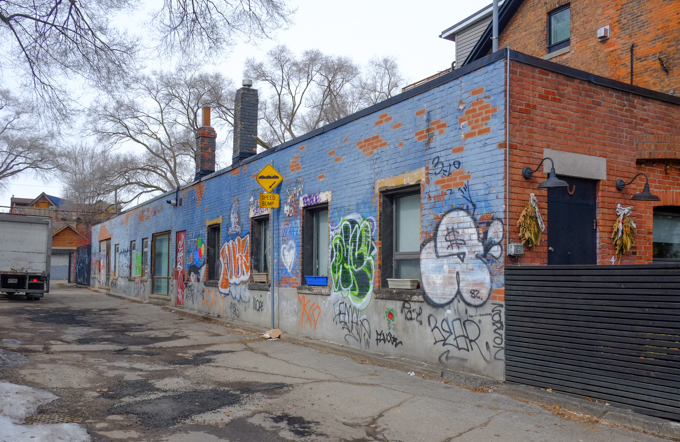
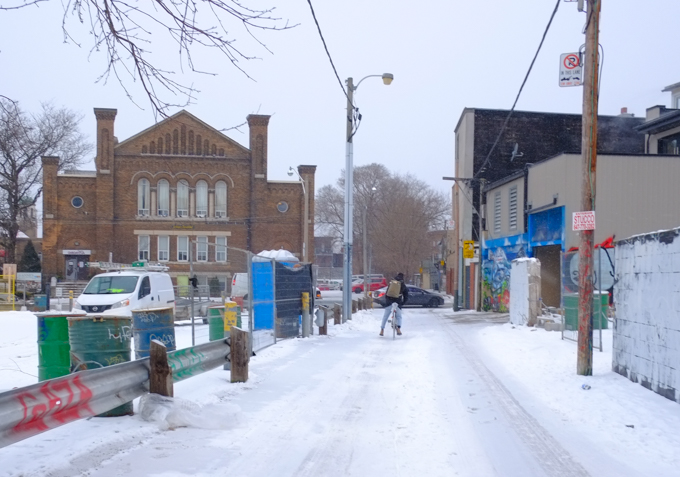
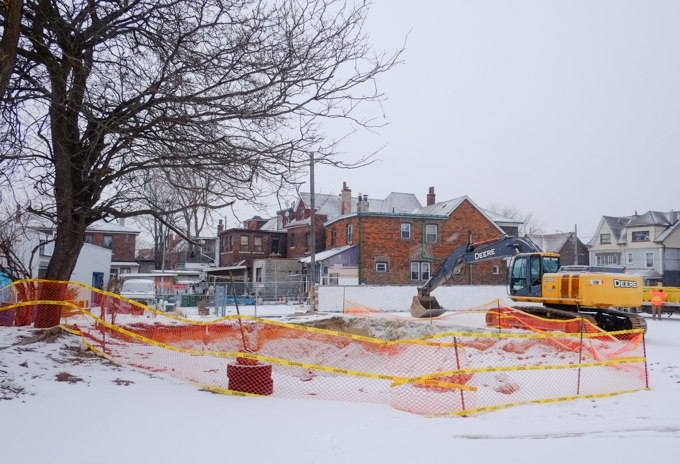
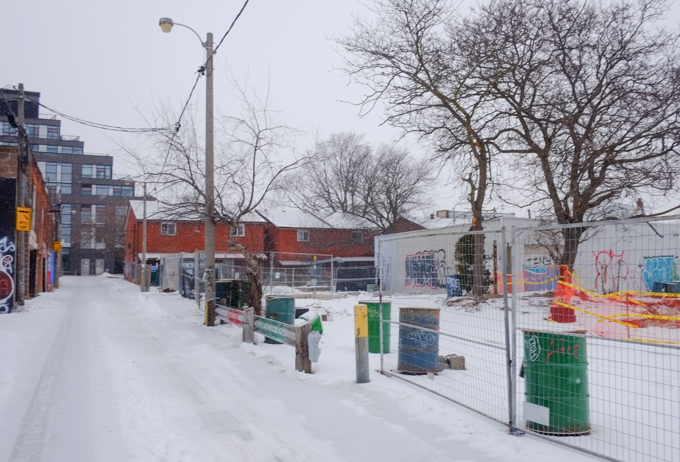
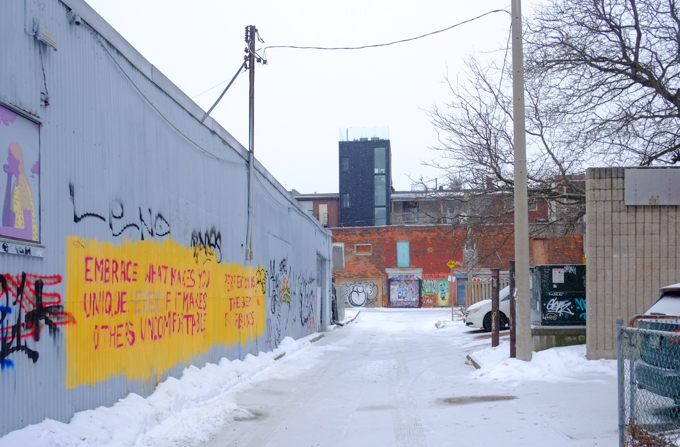
below: View from a lane that runs behind the north side of Dundas West, walking west of Dufferin. The alley also runs east of Dufferin but that will have to wait for another day. The large brick building on Dufferin is St. Annes parish hall. St. Annes church is behind, facing Gladstone Ave. The vacant lot on left was a parking lot not long ago but now it is now a construction site.
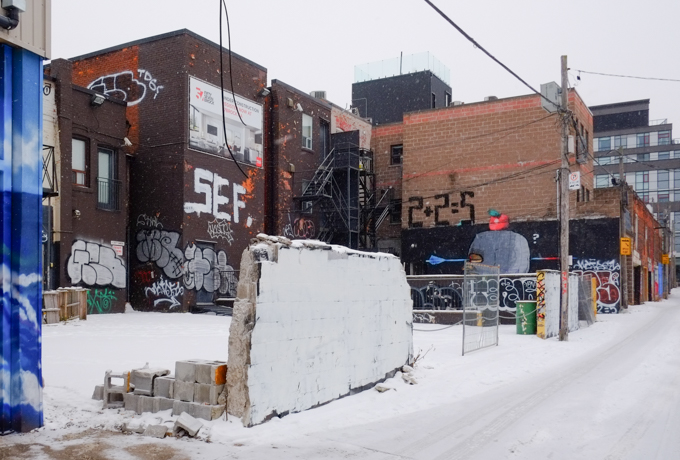
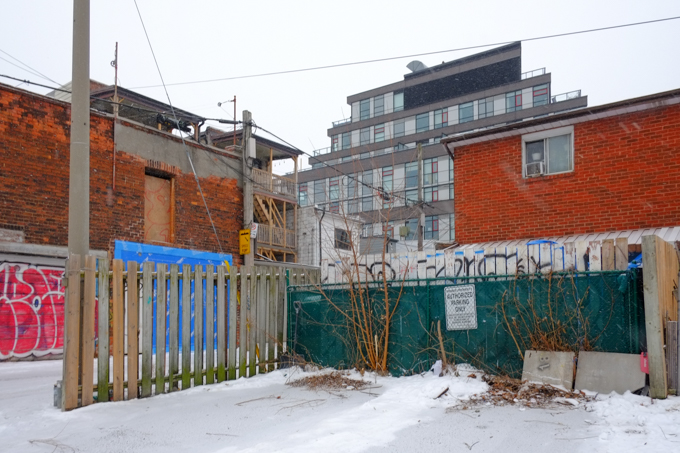
below: It looks like changes are coming on the Dundas West side of the lane as well. A concrete wall/fence has been partially demolished and there are construction fences behind some of the buildings. According to the Urban Toronto website, two 8 storey developments have been proposed – one fronting on Dundas and the other on Dufferin, with the alley remaining between them.
below: Behind Dundas West… but not for much longer.
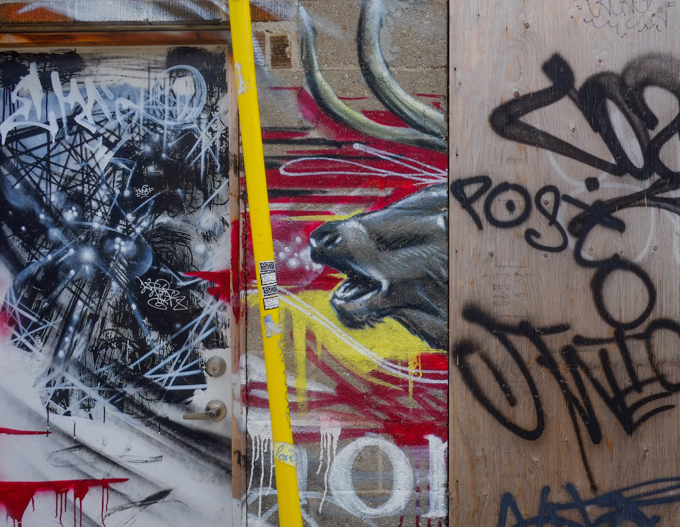
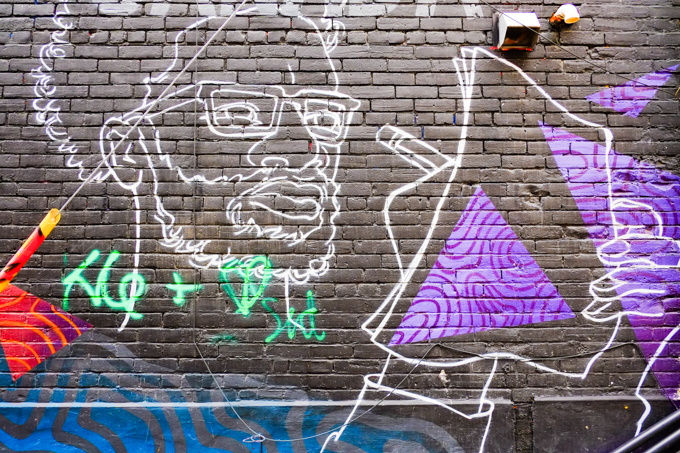
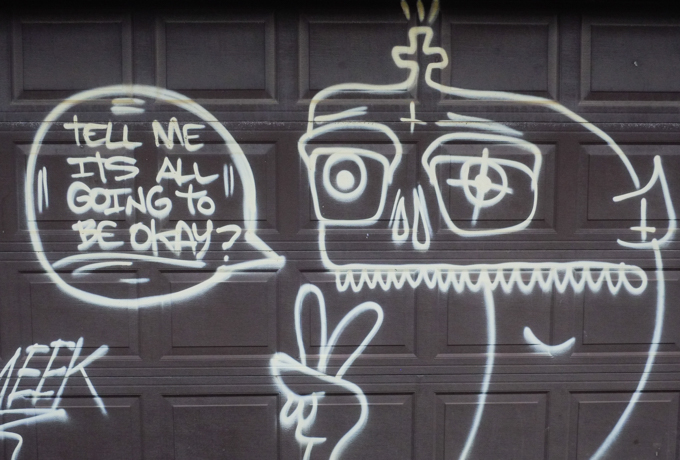
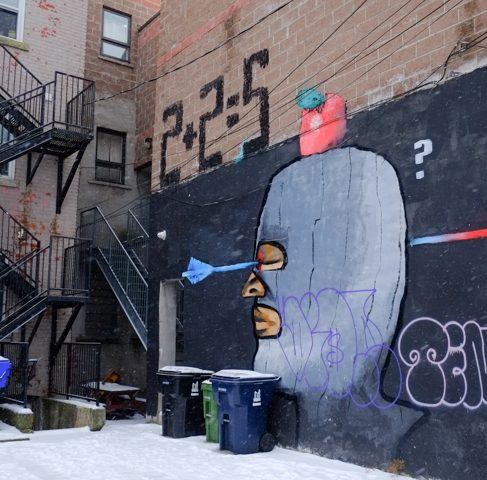
below: Artwork by Cuban artist Supermalo5, aka Fabian Lopez who always includes a little question mark in his work along with the incorrect equation 2 + 2 = 5
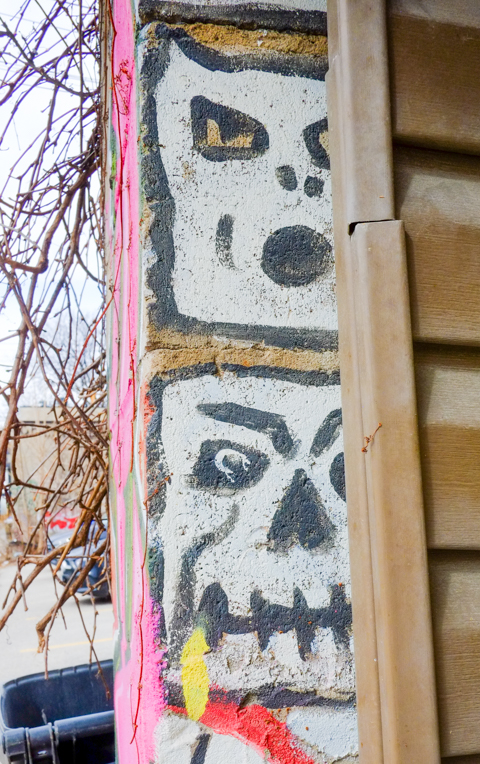
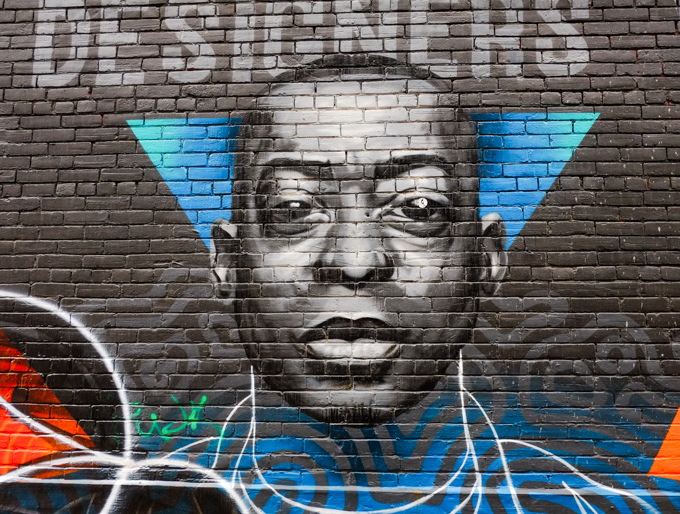
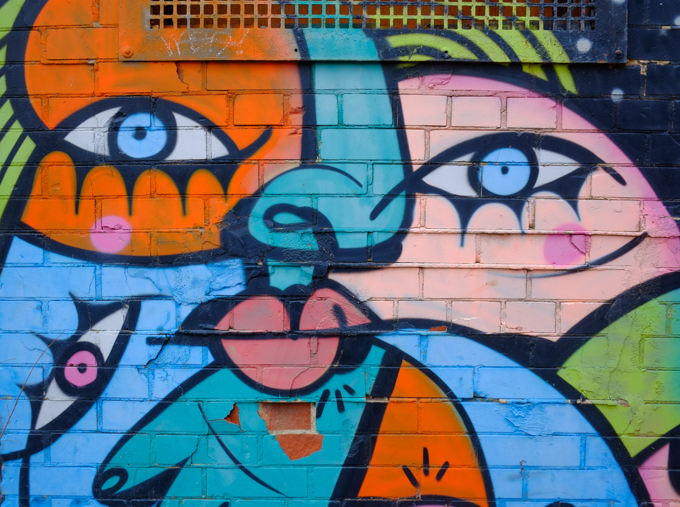
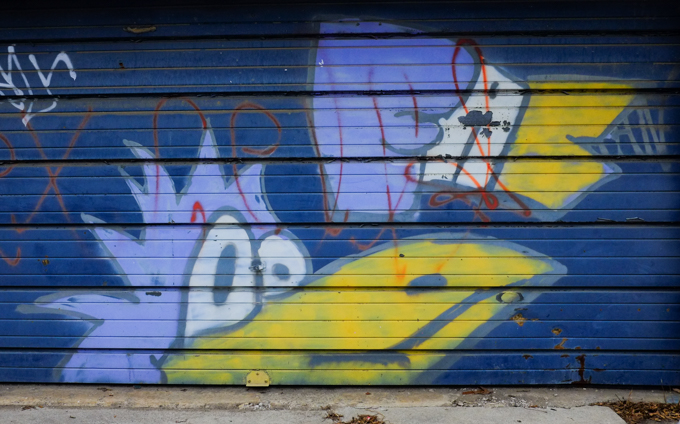
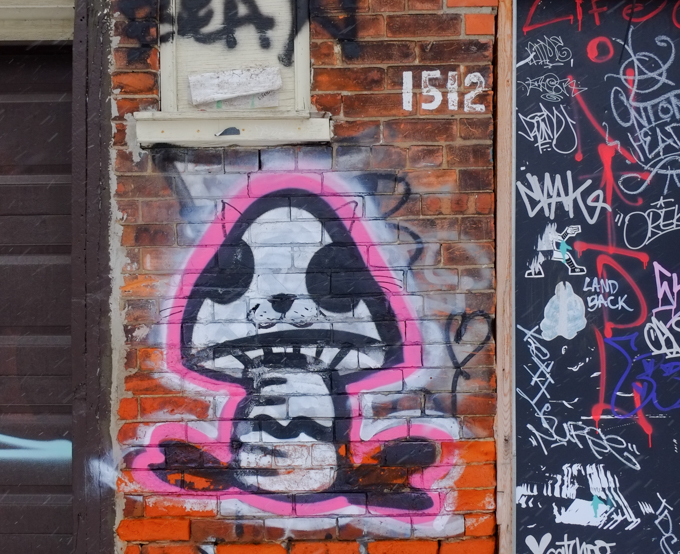
below: Two big round black eyes
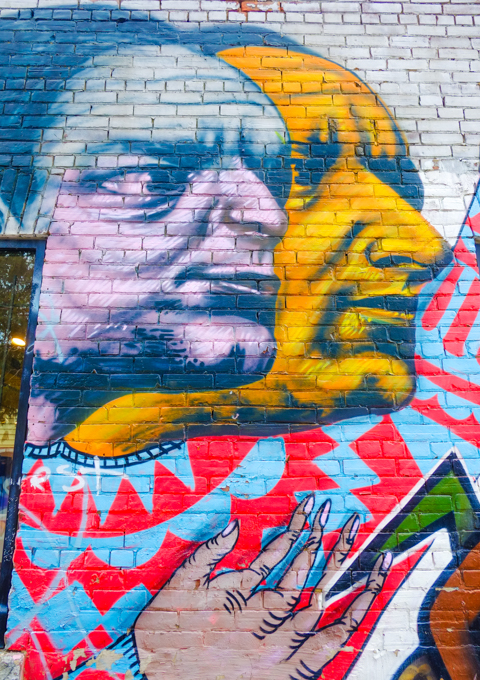
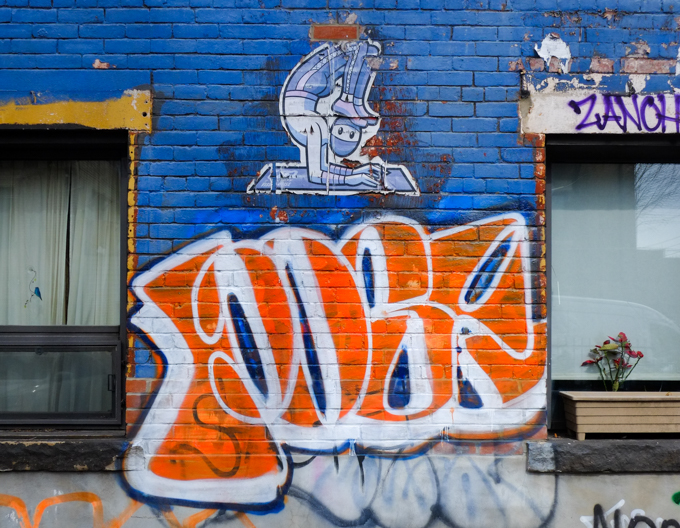
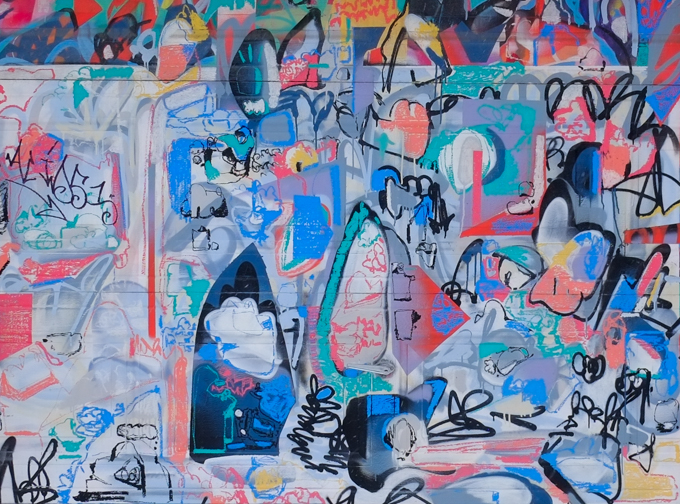
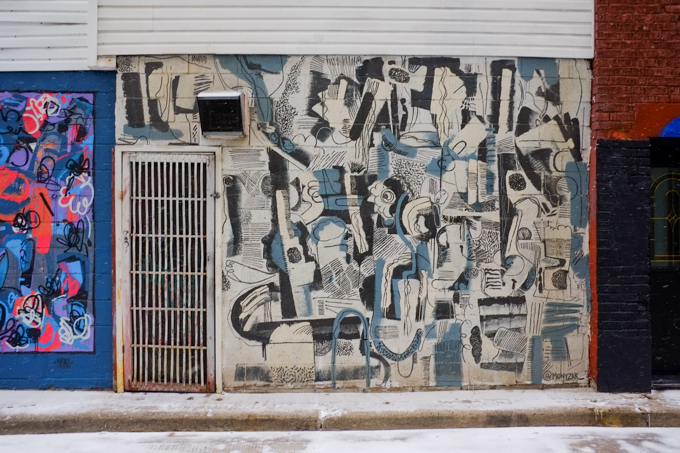
below: Street art painting, abstract, by Mony Zakhour
below: Screenshot from Google street view, captured in 2019. The houses on the left are now gone – you can see the blue and white development notice sign in front of them. They are now part of the vacant lot/construction site pictured above. You can also see that the lane here is Boland Lane. It runs perpendicular to Dundas West.
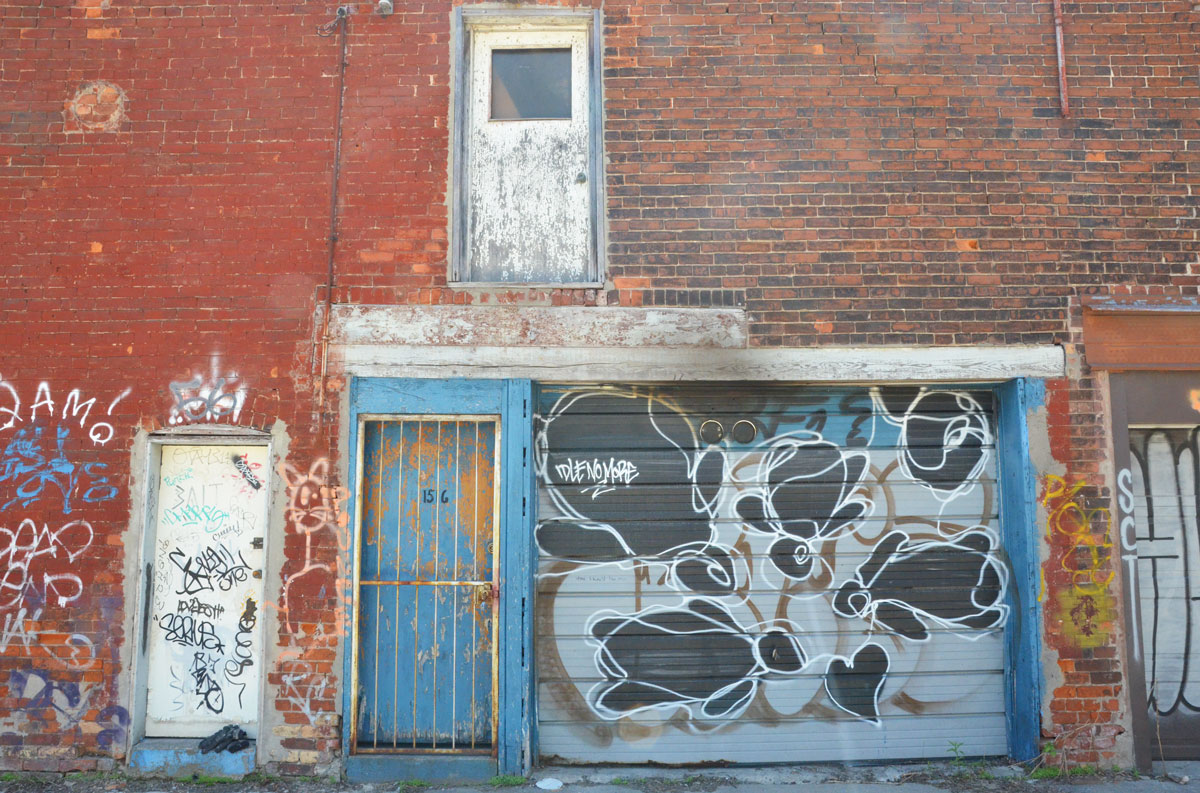
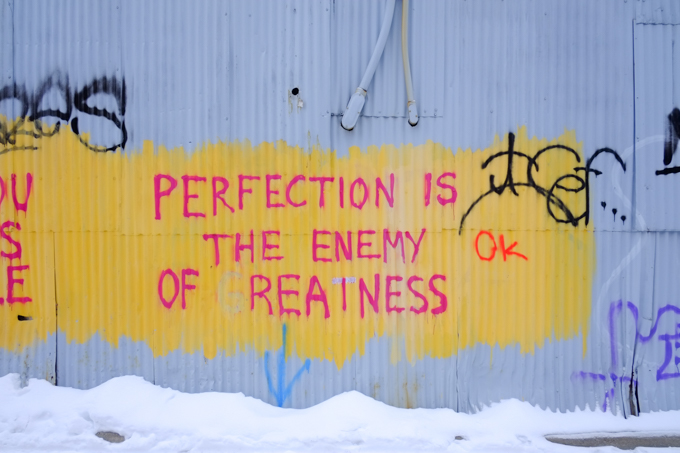
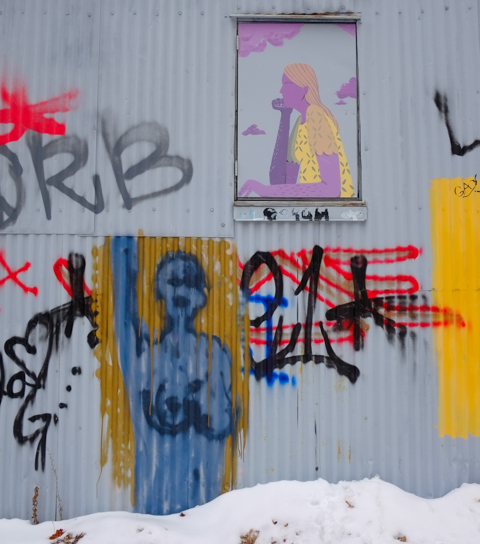
below: A quick look at what else is in Boland Lane
below: “Embrace what makes you unique even if it makes others uncomfortable”
below: “Perfection is the enemy of greatness”
Continuing behind Dundas….
below: Layers, old and new as well as wood, brick, and glass.
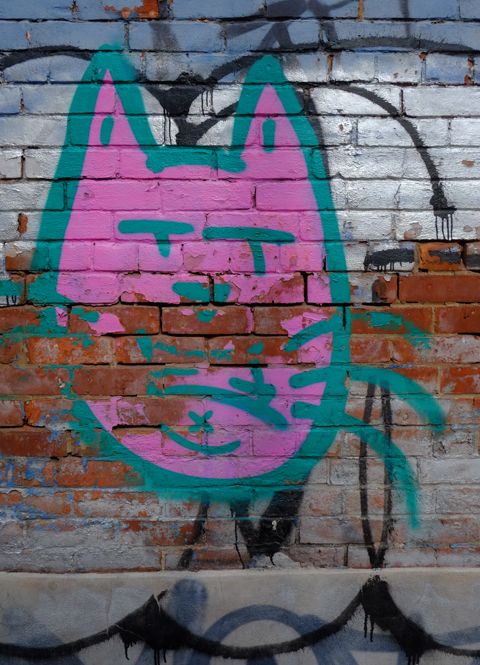
below: Rooftop decks and terraces above and street art covered garages below including a flaming hot kitty painted by Christina Mazzulla.
below: A trio of grey masked foxes (wolves? dogs?) covering two doors. This painting goes back to at least 2017 and possibly 2015 and before.
below: The lane meets Awde Street, with a teal colored garage door. Awde is only a block long, and is not the original Awde Street. Apparently what is now Croatia Street was once Awde (1908) and there is a plaque to prove it.
below: That brownish wall in above picture (where there is now a stack of firewood), was once covered with a painting. This is it in 2015.
below: Awde Street, streetview from 2019.
At this point, the lane makes a 90 degree turn towards Dundas – and lo and behold, there is even more artwork to see ( also by Mony Zakhour?)
below: On the north side of Dundas West, there is a large mural titled, “Three Sisters” painted by Paula Tikay and Aner Urra. I discussed it in a blog post from 2019 (Three Sisters, Tikay and Aner)
… and that’s the end of the alley!
Small bit of trivia: I once found my great-great-grandfather, John Marshall, and his family in a Toronto phone book from about 1910 (I can’t remember the exact year). They were on Gladstone Ave. When I went to see if I could find the house, I discovered that the number corresponded with a vacant lot (parking lot?) adjacent to St. Annes church.
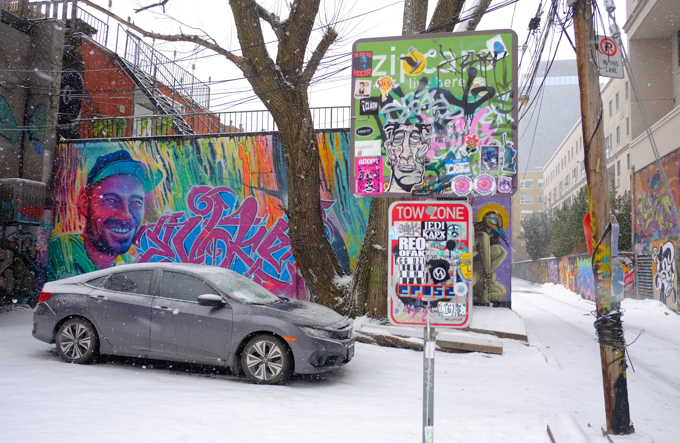
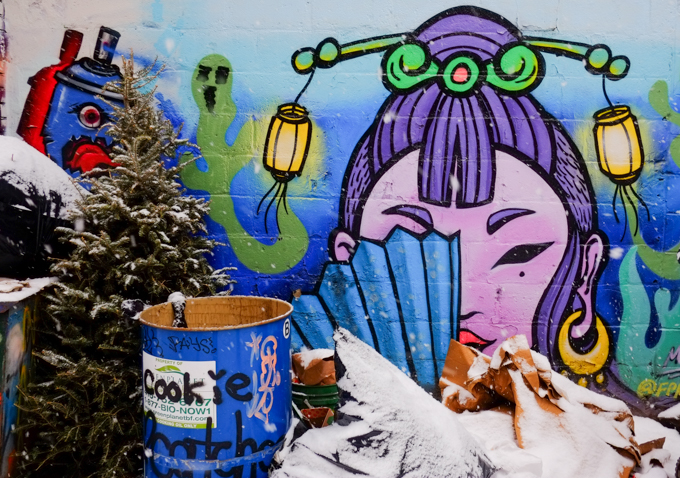
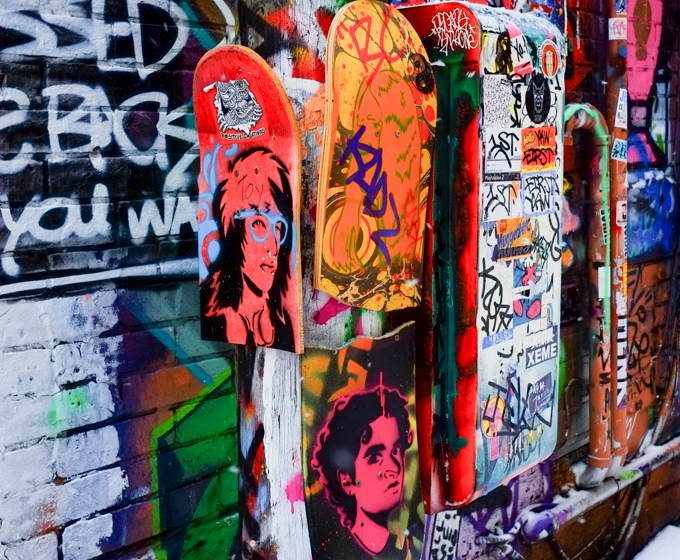
My previous post, “skateboard portraits” was from a walk down Graffiti Alley the other day. This post contains more photos that I took that snowy afternoon… so, let’s take a look!
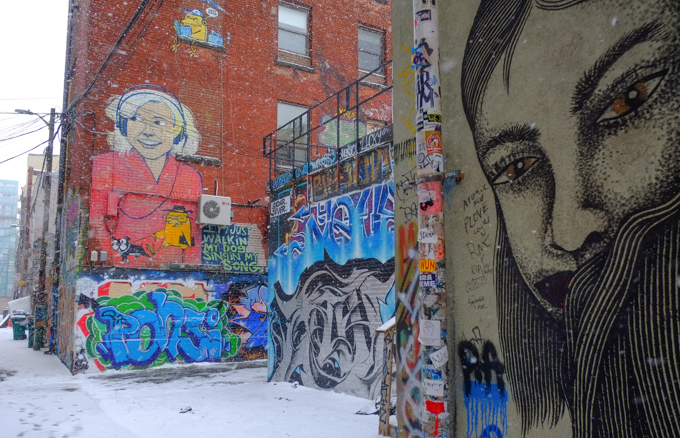
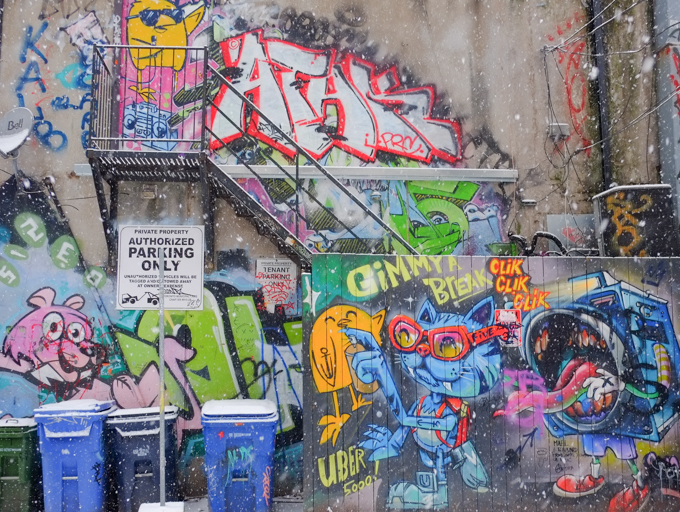
below: Uber 5000’s yellow bird is still walking his dog and singing a song on this side of this red brick building. It’s at least 10 years old? The black and grey portrait on the right is much newer.
below: Profile portrait by TheHalfDecent
below: “Let them drink beer”, a stencil from D. Terra
below: A 33wallflower33 pasteup in the foreground, with a corner of one of Nick Sweetman’s bird murals in the background.
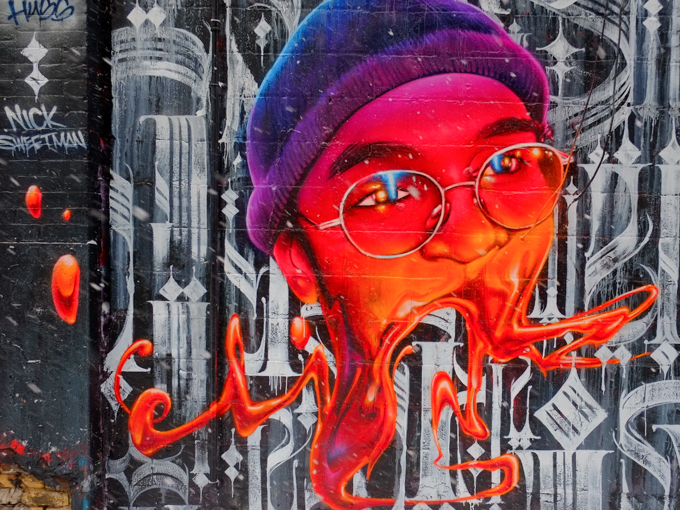
below: A collaboration between Nick Sweetman and Shanehuss produced this drippy, melting jaw portrait.
below: The top portion of ” RIP King Reign & Son of Soul” remains. This tribute mural was painted by Elicser Elliott and Omen514. I am not sure who is responsible for the newer painting on the bottom, the one in yellows and blues. That’s probably a ‘signature’ in the bottom left but I don’t recognize it.
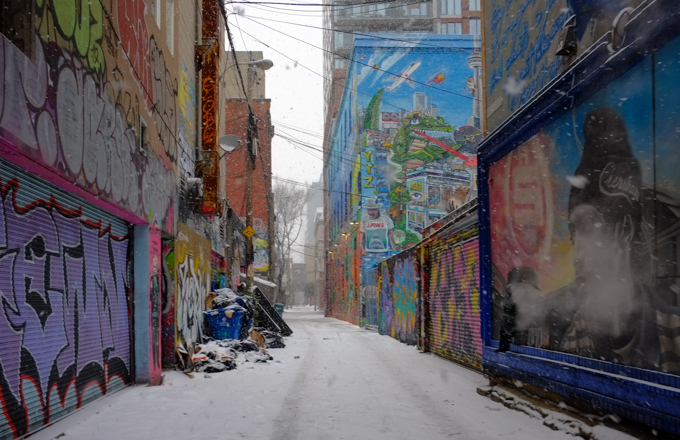
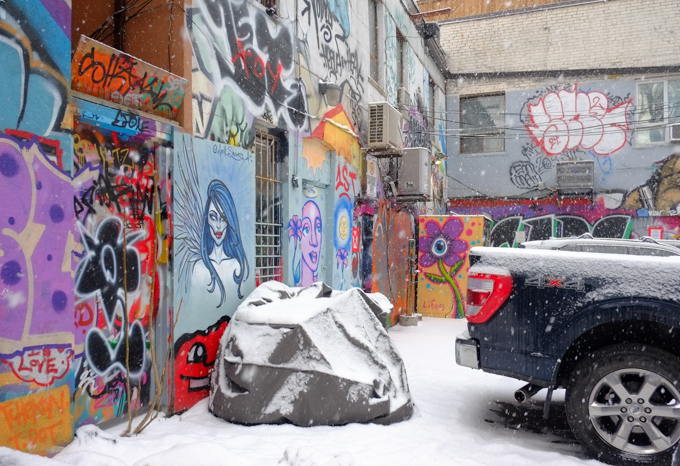
below: Graffiti Alley in the snow.
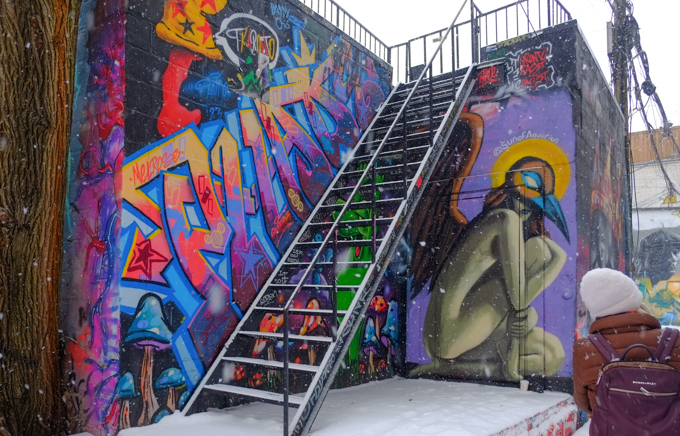
below: Sun of Aquarius (aka Andre Mandela Lopez) painted this naked figure with brown wings and bird mask
below: A pole covered with knit squares while T-bonez is shushing you.
below: A pointy nosed, long snouted dog by Mr. Myl, aka Luis Casas, who was originally from Havana Cuba.
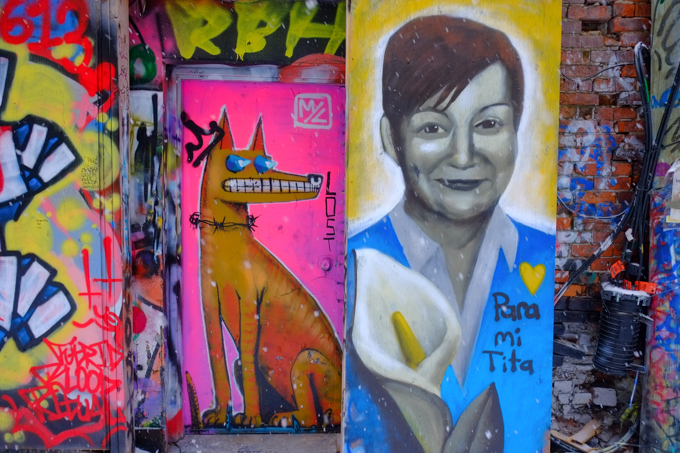
below: Another Mr. Myl dog, this one with its blue eyes popping out. I don’t think that it’s because of the woman next to him. “Para mi Tita” is Spanish for “For my aunt”.
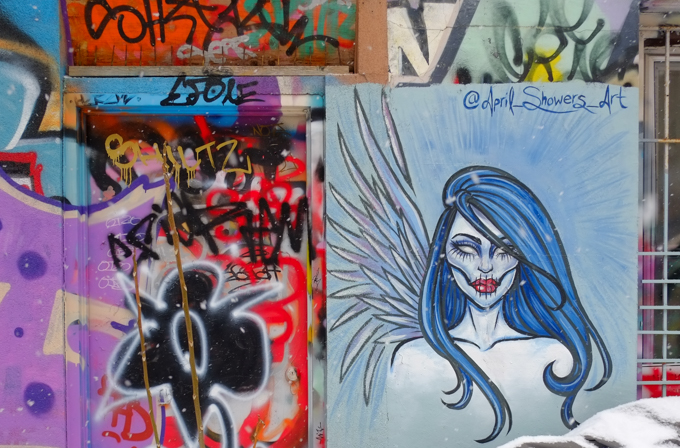
below: Blue haired woman by April Showers
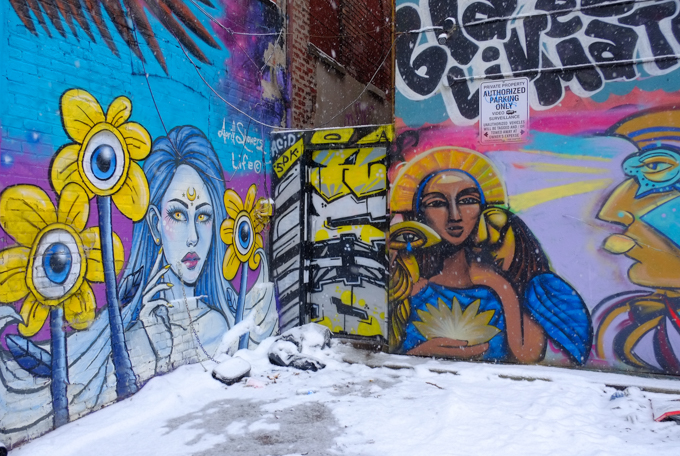
below: And another blue haired woman…..
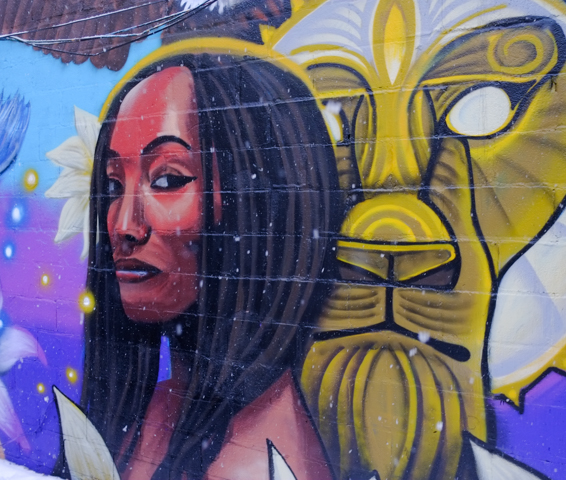
below: … and a third. I think that I see a trend. Methinks April Showers likes blue hair.
below: An anti-camera, anti-photographer image, “Gimmy a break, clik, clik, clik” featuring uber 5000’s yellow bird and blue cat, with the Pink Panther is a supporting role. Love the red specs!
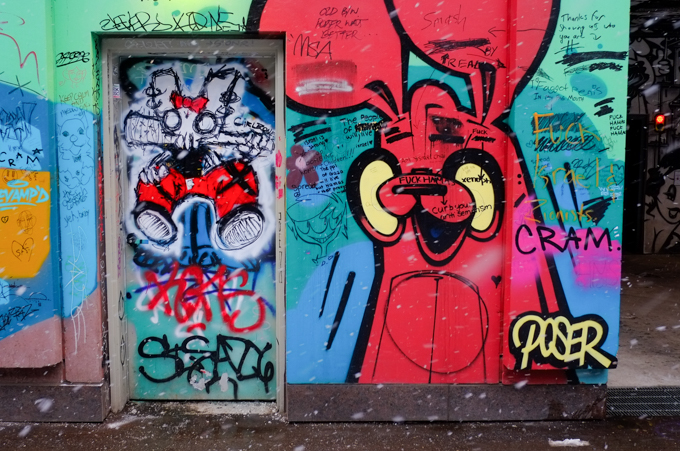
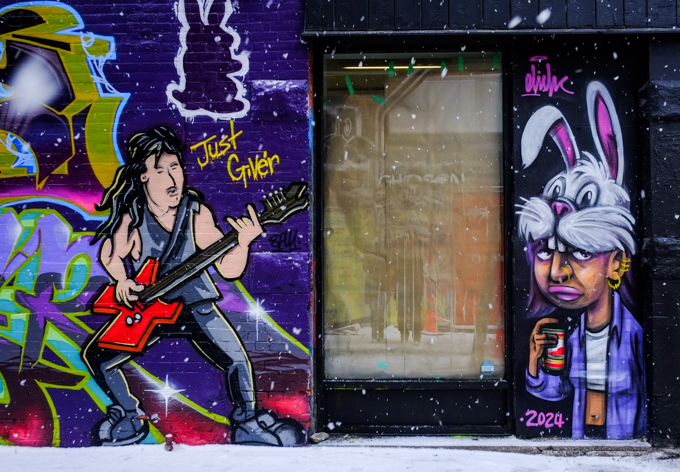
below: Poser bunny in red
below: He (she?) seems puzzled by the snow?!
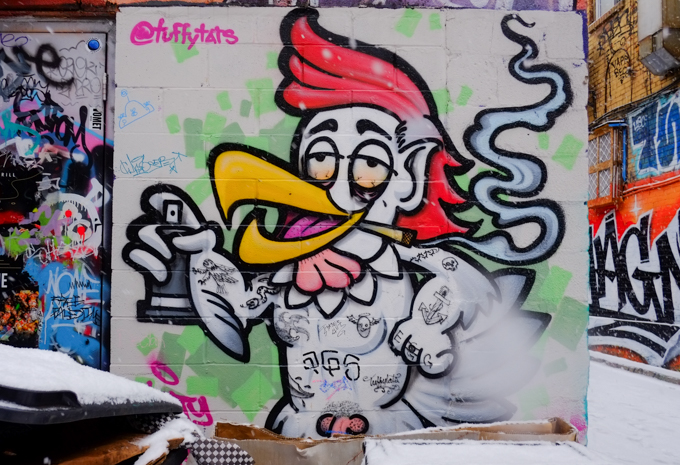
below: Is it a man or is it a chicken? A red headed cigarette smoking, spray painting character by Tuffytats
below: This one looks more like a chicken should look, so fowl.
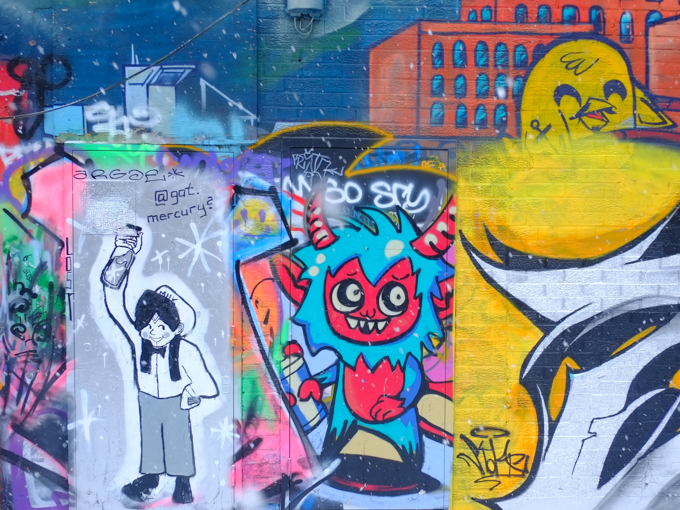
below: An environmental message – “Got mercury?” from a non-profit group trying to raise awareness of the impact of mercury poisoning on indigenous communities.
below: Good Luck!
below: Another 33wallflower33 vintage woman.
below: Chubby purple cheeks gives a thumbs up
below: Still reaching out and trying to touch someone…..
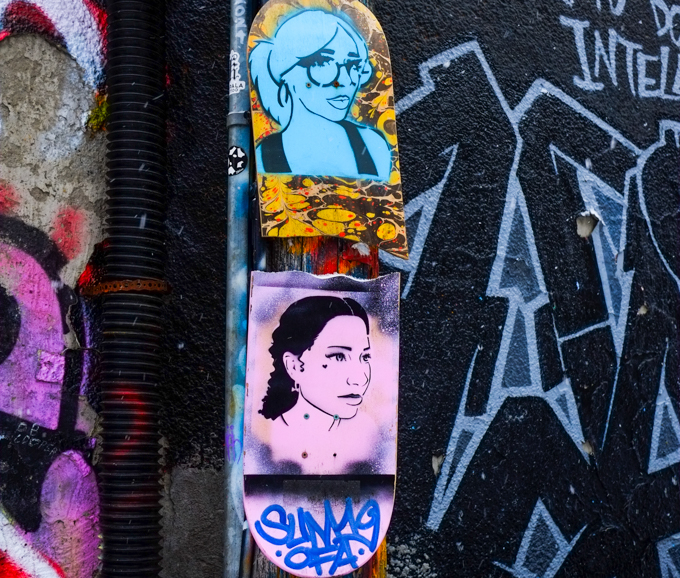
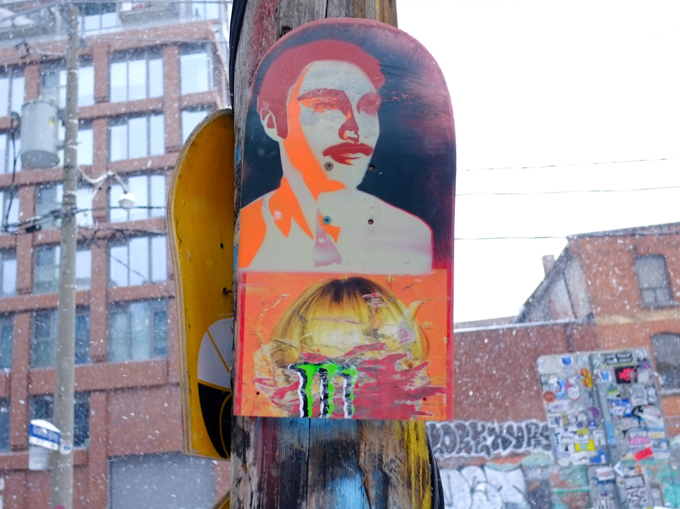
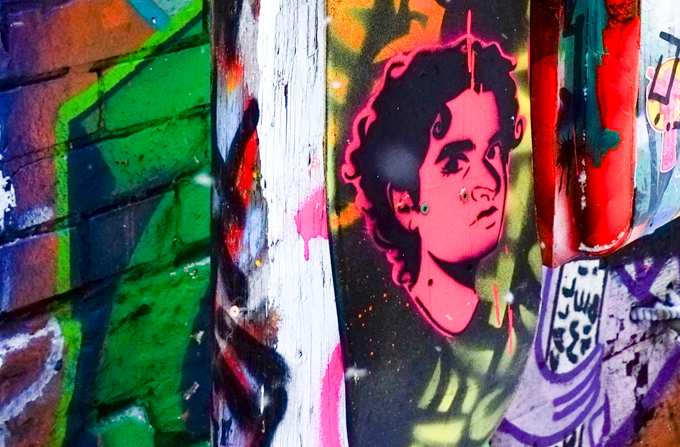
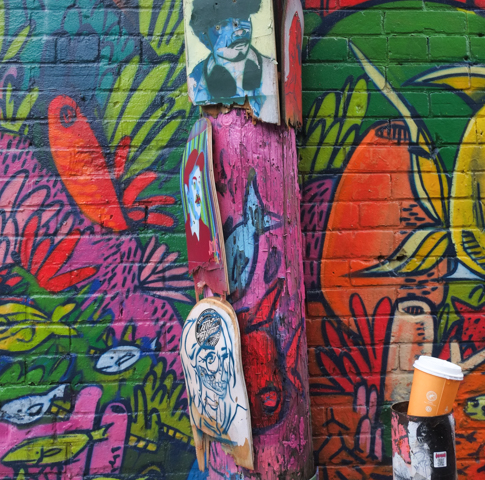
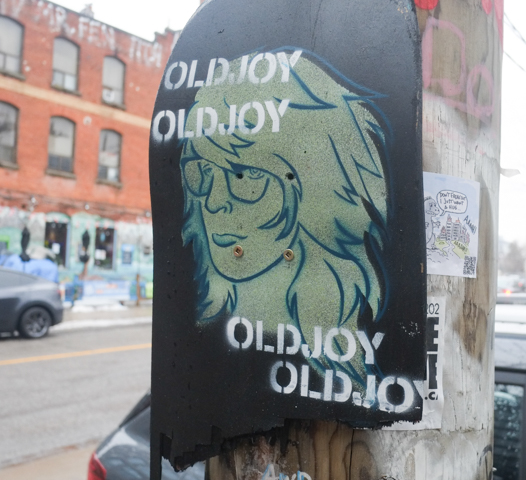
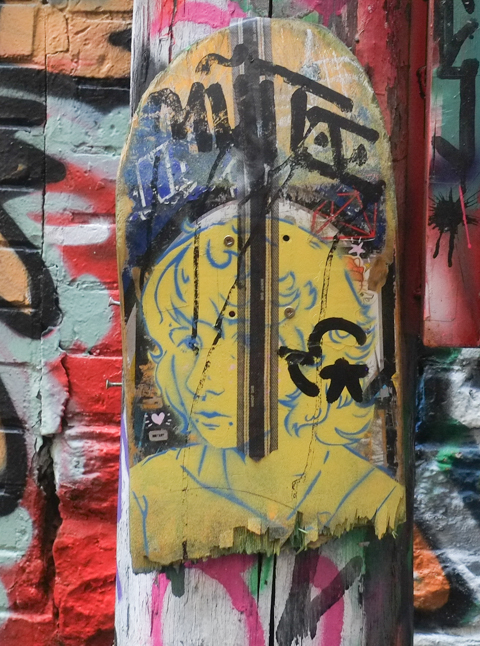
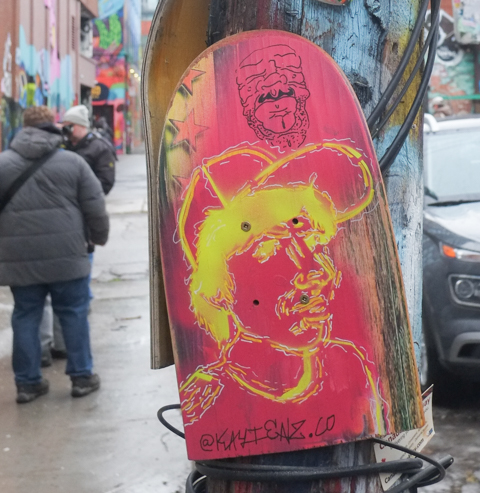
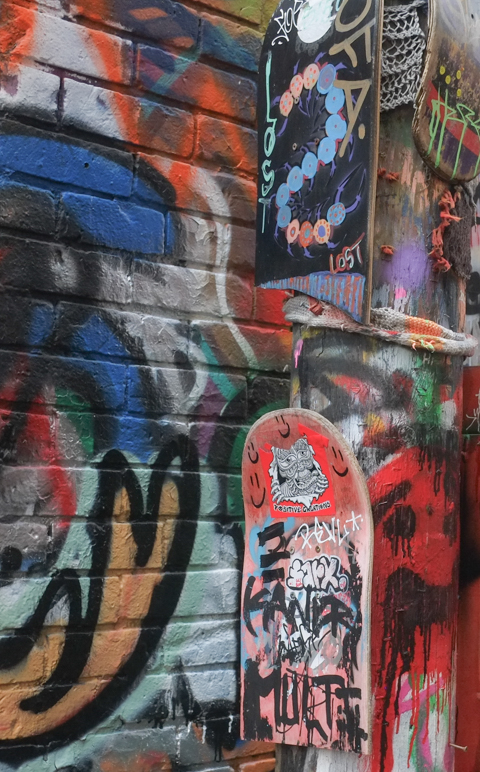
Graffiti Alley is still an interesting place to explore. Unlike some street art locations that have succumbed to the scrawls and tags of the less well-intentioned, good art and ideas can still be found here. At present, adding to the eclectic nature of the graffiti in Graffiti Alley are a few interesting portraits done on half skateboards (or at least on wood in the shape of a skateboard). All are screwed onto wooden utility poles.
below: One on natural wood colour and the other in vibrant red. The sticker says Positive Creations.
below: A man with a mustache
below: Three on the same pole in Graffiti Alley – A red person with shaggy hair and light blue glasses as well someone with very long orange hair.
below: At the bottom, a quizzical look on a pink face.
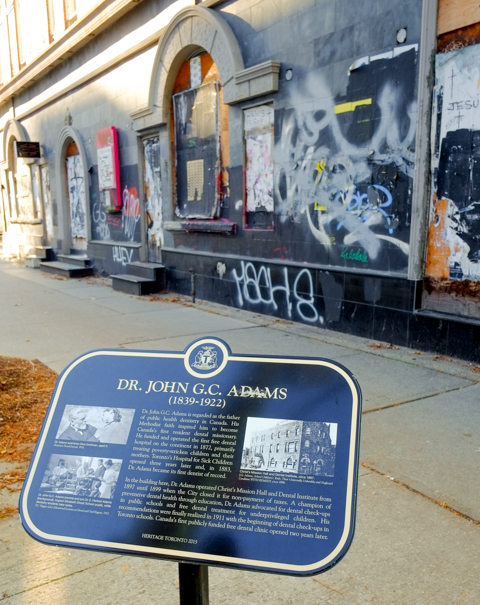
Dr. John Gennings Curtis Adams left a small mark on the city just over a hundred years ago.

Dr. John G.C. Adams (1839-1922) Dr. John G.C. Adams is regarded as the father of public health dentistry in Canada. His Methodist faith inspired him to become Canada’s first resident dental missionary. He funded and operated the first free dental hospital on the continent in 1872, primarily treating poverty-stricken children and their mothers. Toronto’s Hospital for Sick Children opened three years later and, in 1883, Dr. Adams became its first dentist of record.
In the building here, Dr. Adams operated Christ’s Mission Hall and Dental Institute from 1897 until 1899 when the City closed it for non-payment of taxes. A champion of preventative health through education, Dr. Adams advocated for dental check-ups in public schools and dental treatment for underprivileged children. His recommendations were finally realized in 1911 with the beginning of dental check-ups in Toronto schools. Canada’s first publicly funded free dental clinic opened two years later.
Although Adams had a mission here, it was only for a few years and he lost possession because he didn’t pay his taxes. So I am not sure why the plaque is here (to bolster the heritage designation of the building?). It’s earlier history is just as interesting, if not more so. Before Adams, it had been a coffee shop run by The Toronto Coffee Association Coffee House – off on a tangent for a moment. the Coffee Houses of the 1880s and 1890s were in response to Prohibition laws and many were run by the Temperance League. I found a thorough, well-written history of these coffee houses as well as Bay Street at the time at Scenes from Toronto
If you have passed by the intersection of Bay and Elm (just north of Dundas), you may have noticed the building on the southwest corner. It’s been derelict for quite a few years now. It has become a small canvas for some graffiti artists; although it gets ‘cleaned up’ every once in awhile, traces remain. Dr. Adams wouldn’t recognize it… nor would he approve of it!
below: Two faced
below: Like a repeating pattern on wallpaper or fabric, columns of men with the same hair cut and facial features. An army of clones.
below: Mexican Jesus
below: 33wallflower33
This building, 55 Elm, is at the east end of a row of bay & gable houses from the late 1800s. All of them are empty and boarded up, awaiting the usual fate of such properties in this city. The image below is a screenshot of the row of houses that was included in the 2021 City of Toronto report (pdf) that designated the row as heritage properties. The study was prompted by the possible tear down of one of the houses in 2019. In other words, these have been empty for a long time.
These houses back onto a large parking lot. The last few photos are a quick look at remains behind.
A circular walk to explore the Don Mills trail south of York Mills Road… but how to get there…. We decided to start by walking south on Scarsdale Road to Bond Avenue.
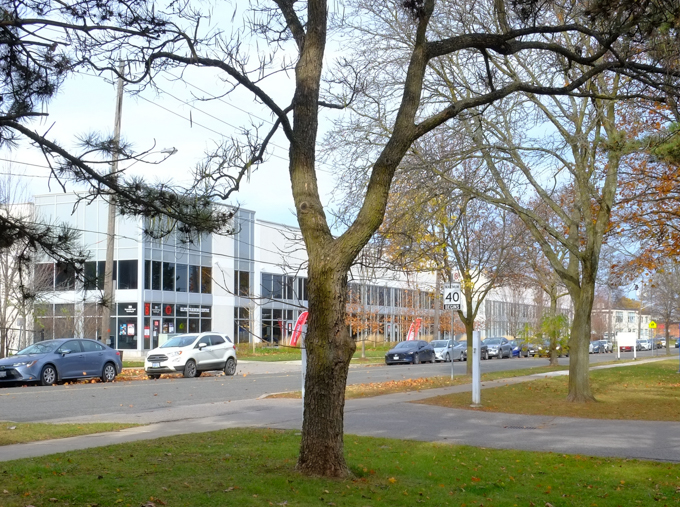
Scarsdale is a nondescript street in North York with a few churches, private schools, some light industry, offices, and all in all, a lot of lowrise late 20th century architecture.
below: Don Mills Baptist Church looking very un-church like.
below: Unmarked
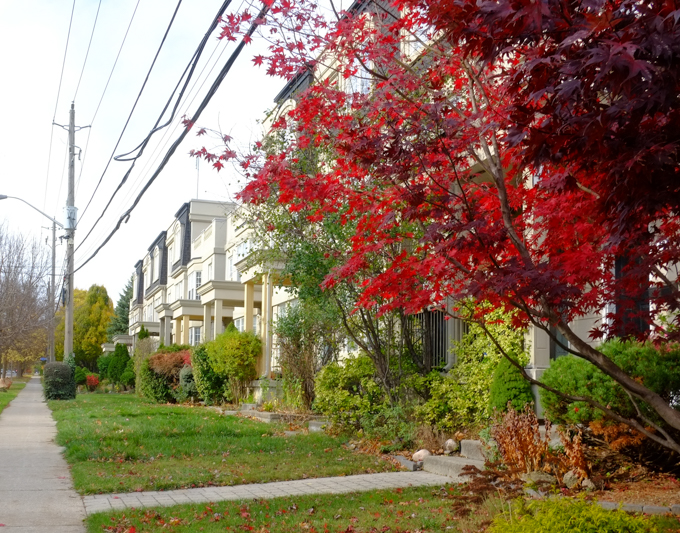
below: Once at Bond, the buildings are mostly residential.
below: There is a walk-through to the neighbourhood behind
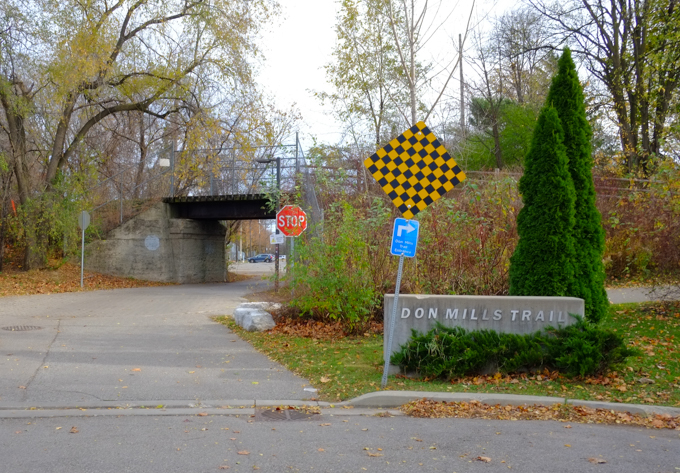
below: The old railway bridge over Bond is now part of the Don Mills Trail. Originally it took 6 years to build (1912 to 1918) the bridge – using six 2-foot-thick beams that span the 15-foot-wide opening, spaced to handle the weight of locomotives and heavily loaded railway cars.
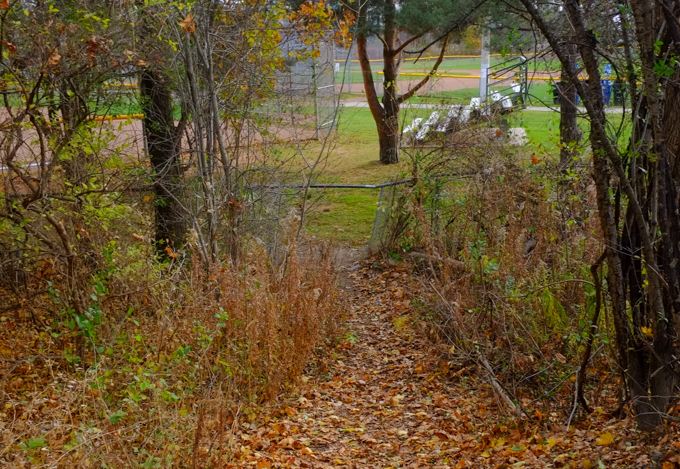
below: Also under the bridge is an entrance to Bond Park.
below: Another entrance to Bond Park, this time from the trail via a hole in the fence.
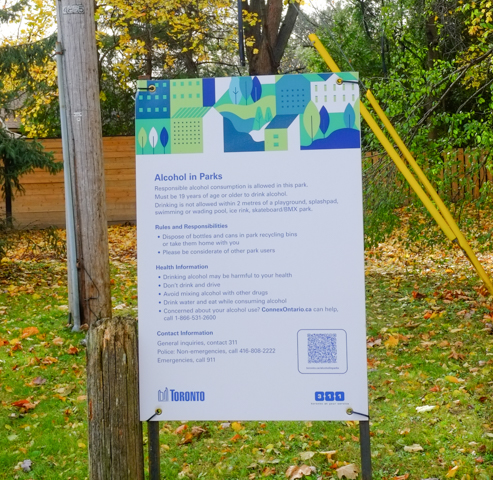
below: “Responsible alcohol consumption is allowed in this park”….rules and responsibilities are then listed along with health information about alcohol.
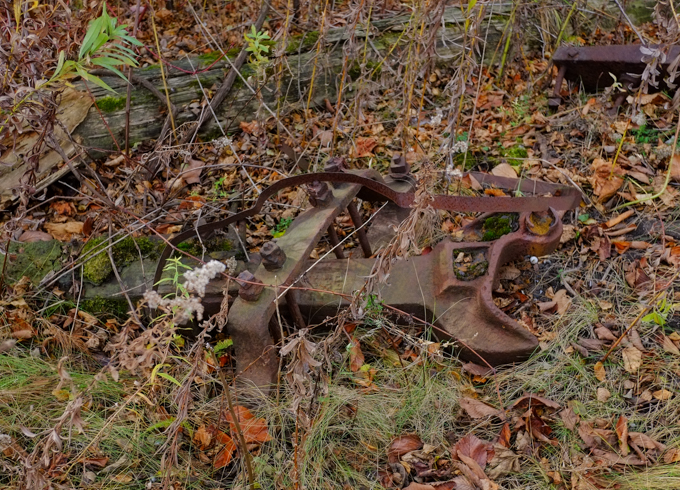
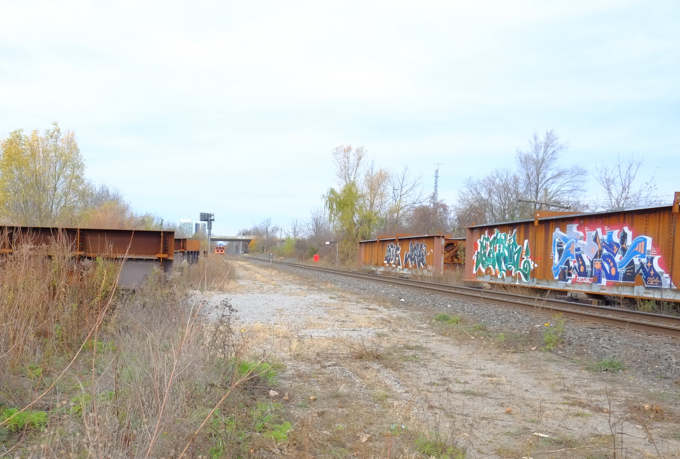
below: A few remnants of its former life. Once upon a time this multi use path was a spur line for the CNR, the Leaside Spur. One of its functions was to connect the CNR main line (now also used by GO to Oriole station and beyond) to the CPR line near Eglinton. The CPR tracks are those that cross Eglinton just east of Leslie and then cross the Thorncliffe trestle bridge over Wilket Creek Park. The path ends just before the CPR tracks – there is no connection any more.
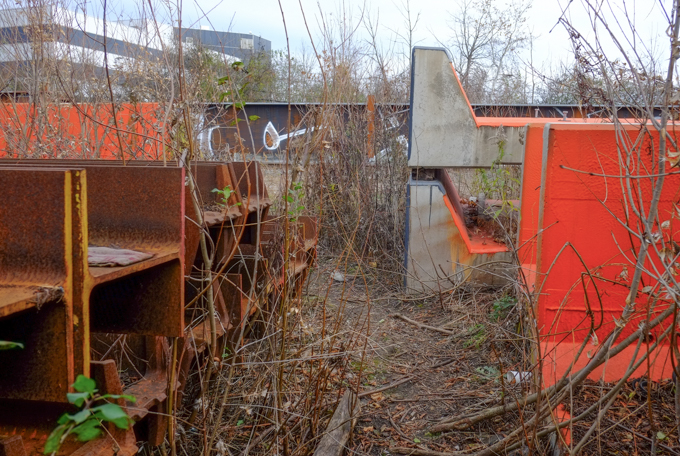
below: Abandoned and rusting. CNR stopped using this spur line in 1999. The city bought the property ten years later.
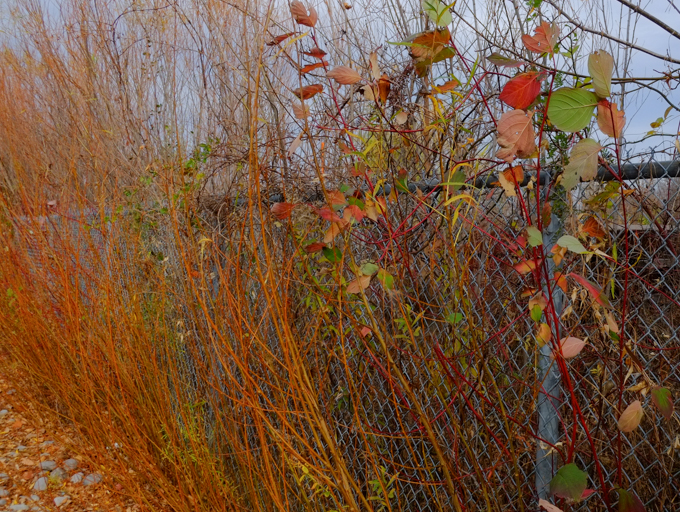
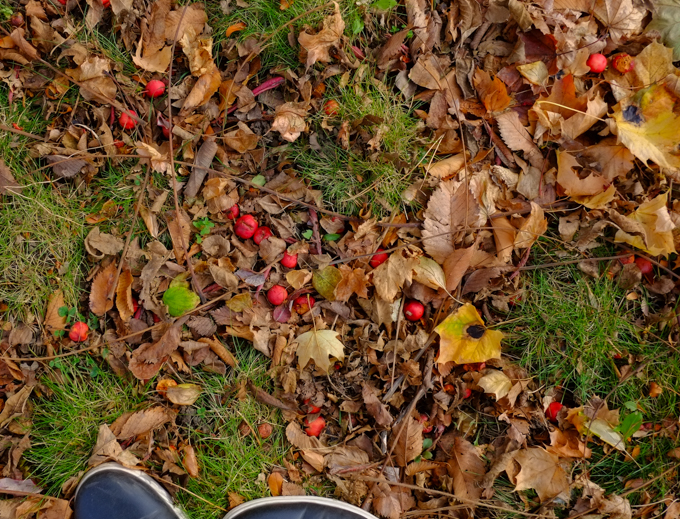
below: Crab apples and dead leaves litter the path
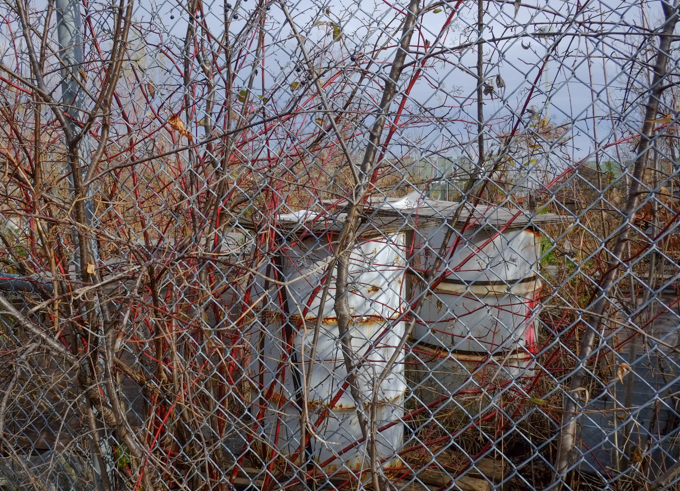
below: Storage in bins and barrels, on the other side of the fence.
below: Left behind
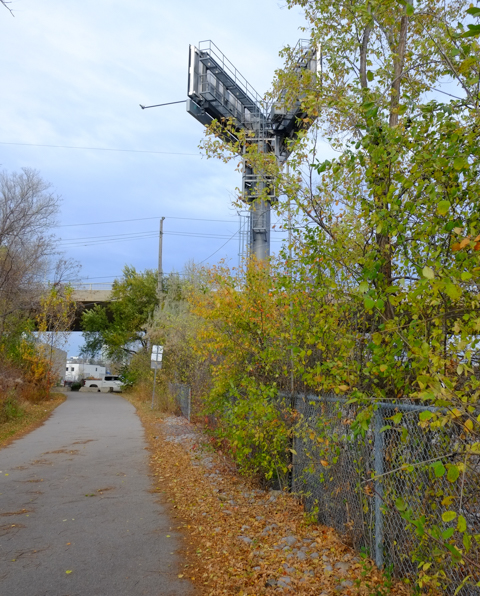
below: The north end of the Don Mills Trail runs beside the live CNR line. Not much of a view is it? No trains passed by. Very quiet.
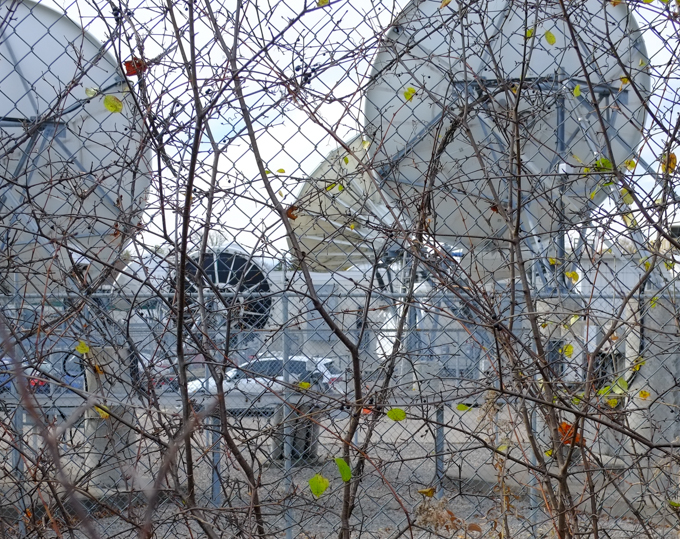
below: Many, many large satelite dishes (and many small ones too). I was feeling like a spy as I tried to take pictures through the fence… but I didn’t see any surveillance cameras…
below: Approaching York Mills Road
below: The north end of the trail runs beside the bridge York Mills over the railway tracks (on the right in this picture). From here there is an access road to Scarsdale on the south side of York Mills, or an exit through to Longos Plaza on the north side.
below: Have a seat!
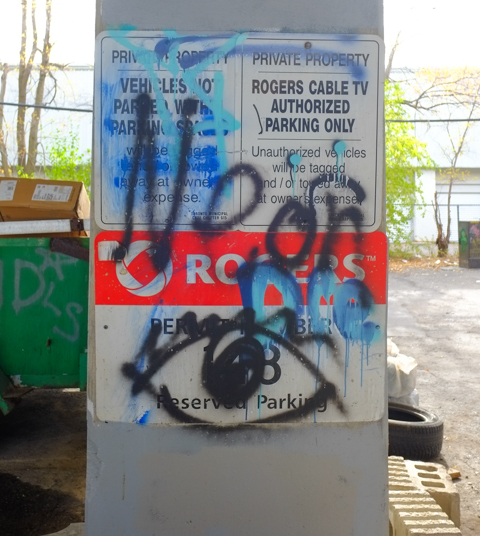
below: Rogers has a large property on the east side of the CNR tracks and has access to this area.
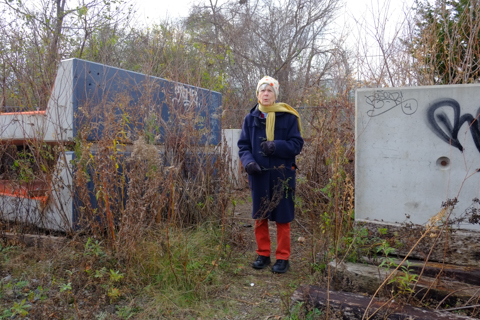
With thanks to my mother for walking with me – she didn’t hesitate to climb through holes in the fence! She also doesn’t like this picture, but it’s the better of the two that I took that morning!
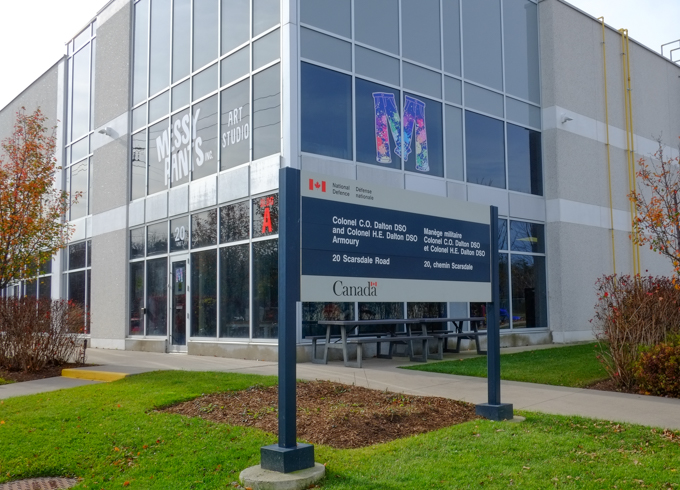
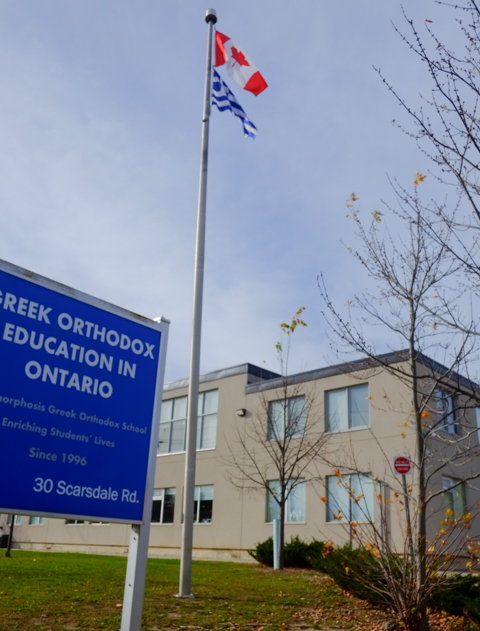
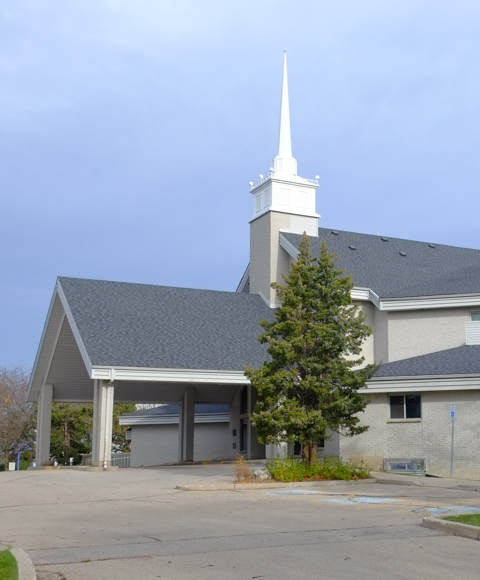
Bonus section! Just in case you are interested in what’s on Scarsdale Road….
below: Colonel C.O. Dalton CSO and Colonel H.E. Dalton CSO Armoury
below: Greek Orthodox Education in Ontario – Metamorphosis Greek Orthodox School.
below: Korean Presbyterian Church
cracks in the pavement,
weeds, shrubs, trees and other green things,
windows and walls, stairs and balconies,
infill housing and new structures, rooflines,
old textures and rusty hinges,
colours, graffiti, and peeling paint.
solitude
These are a few of the photos that I took as I walked alleys and lanes north of the Danforth, shown in no particular order.
Starting with, Hey Gwan!
The general plan was to walk River Street. River Street runs parallel to the Don River (makes sense!) on the west side with the north end of the street just above of Gerrard. Transit on River Street is limited (is there any?) so I started the walk at Broadview and Gerrard, just to the east of River Street.
below: At the corner of Broadview and Gerrard is the Roman Coliseum mural that was painted in 2016 as part of ‘Around the World in East Chinatown’. It was one of seven murals and all of them were featured in a blog post back when they were new (seven new murals, August 2016)
below: Chinatown East mural by ACK crew, bacon, wunder, tensoe 2, and cruz1, on Gerrard east of Broadview. Chinatown East is generally Gerrard east of Broadview, but we’re going to walk west today and leave Chinatown for another day.
below: A long vacant lot on Gerrard.
below: Munro Street, south of Gerrard
below: On the north side is the site of the old Don Jail and its Governor’s House.

Governor’s House,1888, From 1888 until 1968, this was the residence of the Don Jail’s governor (chief administrator). Until this house was finished, the governor lived in an apartment in the central administration block of the jail. Designed by architect Mancel Wilmot, this house features a shallow pitched roof with a front-facing gable and double-height bay window that are typical of Toronto’s late 19th century residential architecture.
below: Bridgepoint and the old Don Jail with the red brick steeple of St. Johns Presbyterian church on Broadview in the distance. Bridgepoint Health Hospital was built on the site of the old Riverdale Hospital which in turn replaced an older building. The original House of Refuge was built in 1860. The Don Jail has been repurposed as part of the hospital complex.
below: Looking north from the bridge at Gerrard towards the green pedestrian bridge that connects the two sections of Riverdale Park. Beyond that is the Bloor Viaduct.
below: Northwest view
below: View from the Gerrard St Bridge (over the Don River and DVP). Looking southwest. The tall brown buildings are at River Street.
below: Miniature racer, art on a pole by Joseph Lammirato.
… and another! You’ll find lots more on his Instagram page (@joseph.lammirato)
below: Flower Power happiness
below: The north end of River Street (north of Gerrard)is showing signs that redevelopment is in the works.
below: If you are driving north on River Street, chances are you are headed down the hill to the Bayview Extension. The alternative route is a small street that swings left and joins up with Spruce Street.
below: It also leads to access to Riverdale Park. – there’s that green pedestrian bridge again. From here you can see Broadview Avenue on the other side of the ravine.
below: Back to River Street, and let’s head south.
below: St. Sava, Serbian Orthodox Church.
below: Walking past some of the older Regent Park brick buildings that still remain. The intersection of Gerrard and River streets marks the northeast corner of the original 1940s and 1950s Regent Park development.
About 20 years ago, redevelopment of the area began. The work was divided into five phases. Phases 1 and 2 have been completed while the third phase is either close to completion or has just been finished. There is a lot of information online so you should be able to find many more details if you want. I didn’t feel like going down that rabbit hole!
below: I was surprised at how much variety there was in the housing that I saw.
below: Queen City Vinegar Co. Ltd. factory built in 1908 and converted into lofts (residential) in 2008.
below: Stalled development (Dare I say arrested development?) According to the development notice sign, the original file dates from 2017. Even by Toronto standards that is slow!
below: Behind the red hoardings is just a vacant lot. Nothing seems to be happening here. When I said arrested I was not implying anything criminal…..
below: Of course the CN Tower can be seen here too! This is the view along Shuter Street.
below: Dundas, looking west towards River Street with tables in front of Bevy Coffee. The slightly darker brick building was the Adam Beck Box Factory where cigar boxes were once made. Like the Queen Vinegar Company mentioned above, this building has been converted into lofts (Tannery Lofts, mis-named as this wasn’t a tannery! But it does sound sexier than Box Lofts!).
below: Similar location, but from the parking lot and alley behind – brick building is the Tannery Lofts
below: 1930s view of Beck’s cigar box factory
below: Monsters ready to box
below: River Variety is no more.
below: No more gyros or poutine here.
below: At Mark Street, more old and new
below: Every child matters
below: West side of River Street, at Queen
below: Old photo from 1914, working on the Queen Street bridge over the Don River, looking westward towards River Street. The light coloured bank building is still on the southwest corner (see above photo). The red brick structure on the northwest corner is also still standing, although an additional storey has been added to it.
below: Looking north on River Street from King. South from here River becomes Lower River.
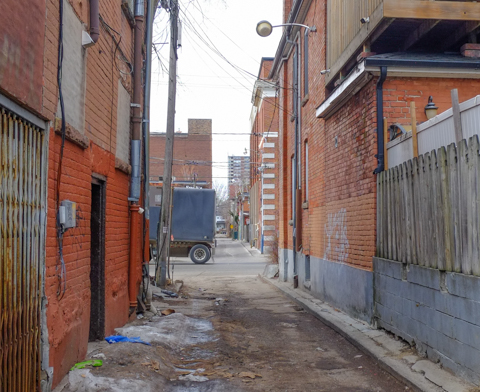
below: Part of the mural on the side of Toronto Humane Society (Queen & River) painted by Uber5000
below: Parked in the bike lane.
Note: River Street is serviced by TTC bus route 121 that runs between Gerrard (just west of Broadview), then down River to Queen before heading west to the Esplanade and Union Station.