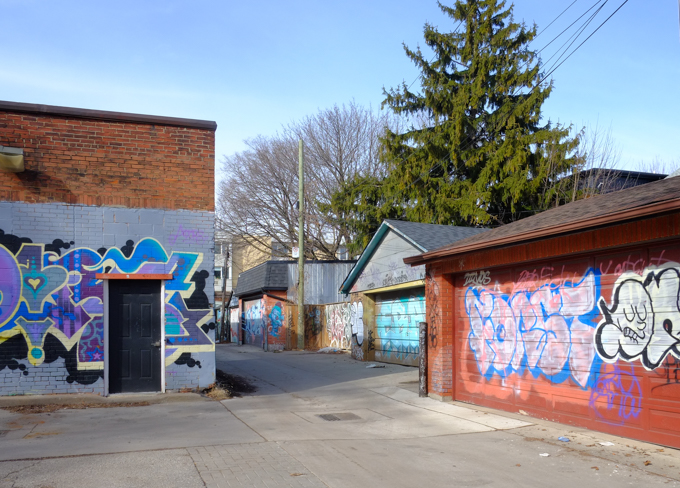
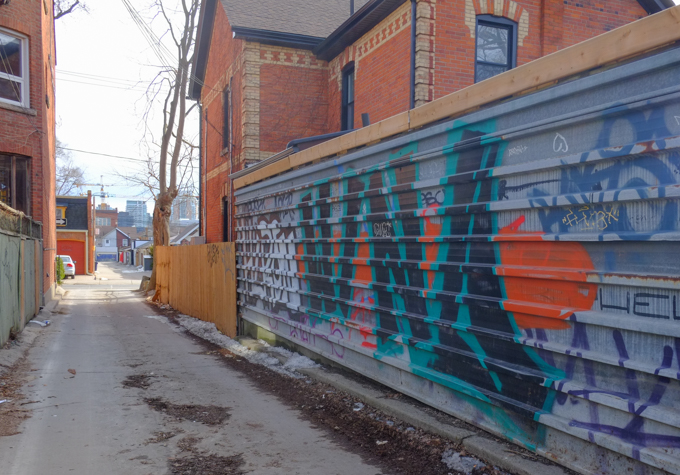
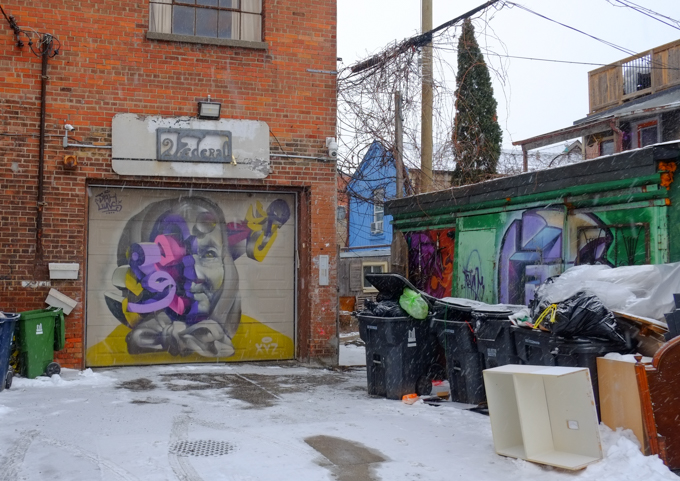
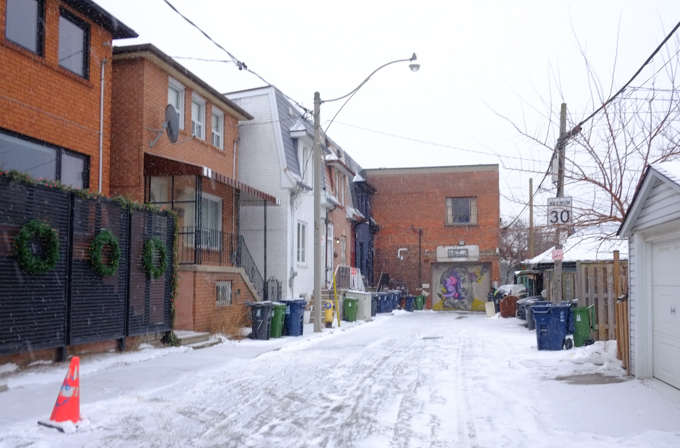
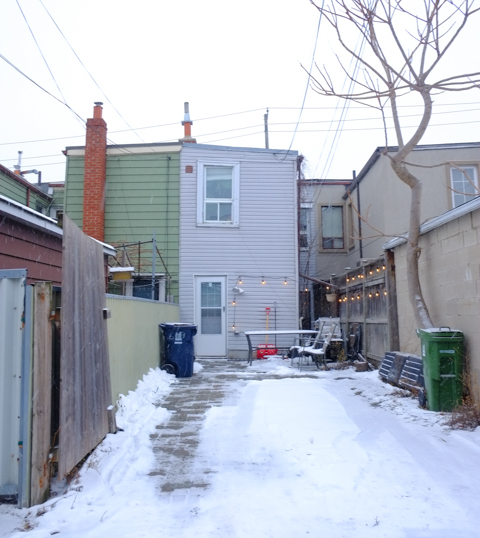
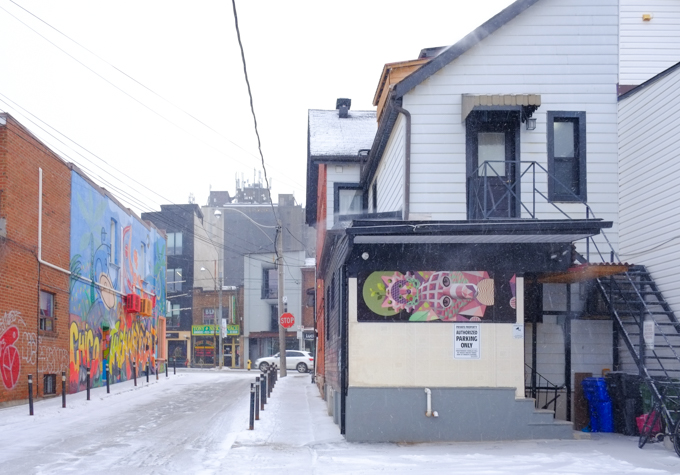
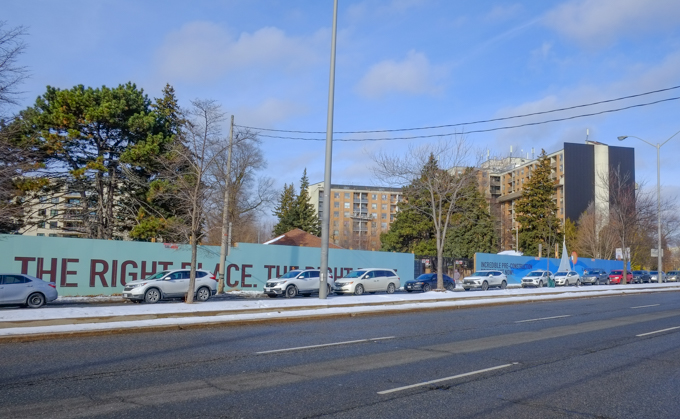
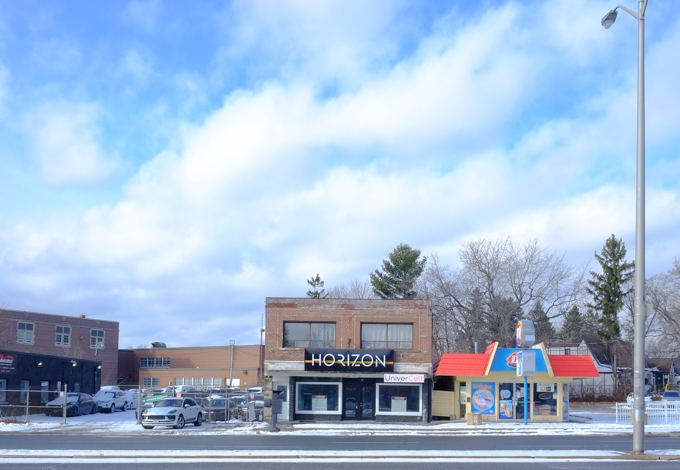
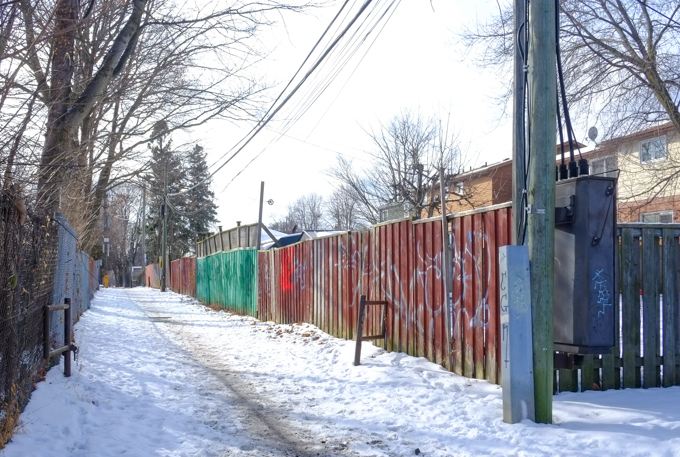
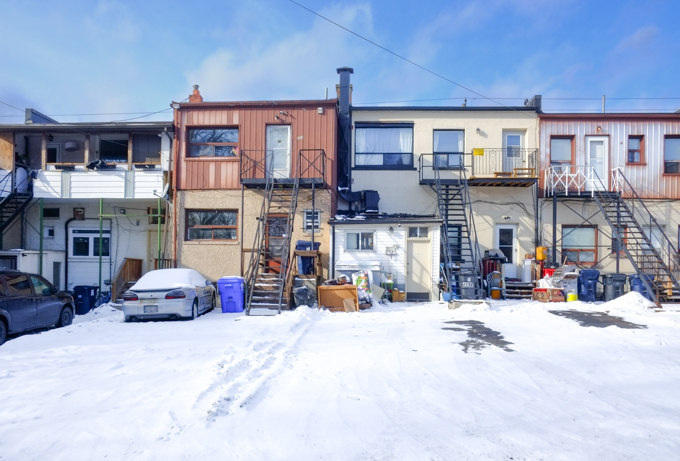
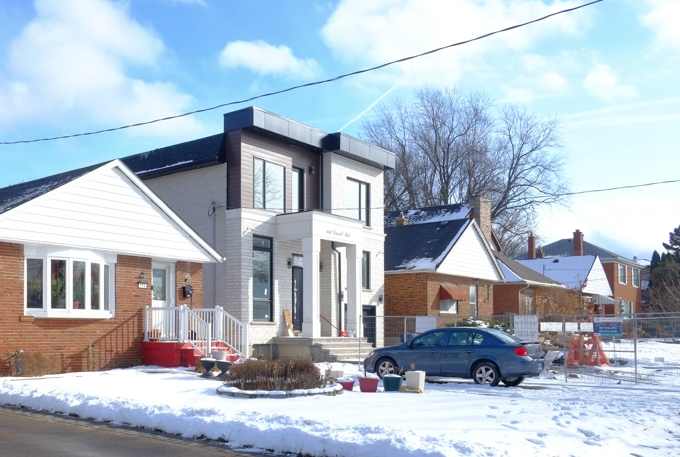
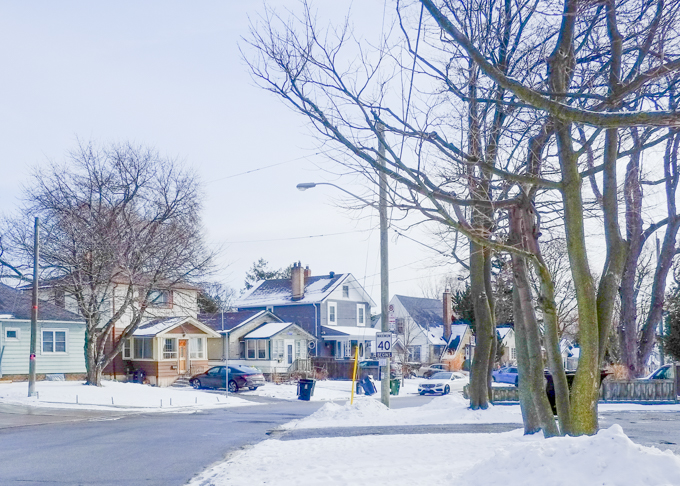
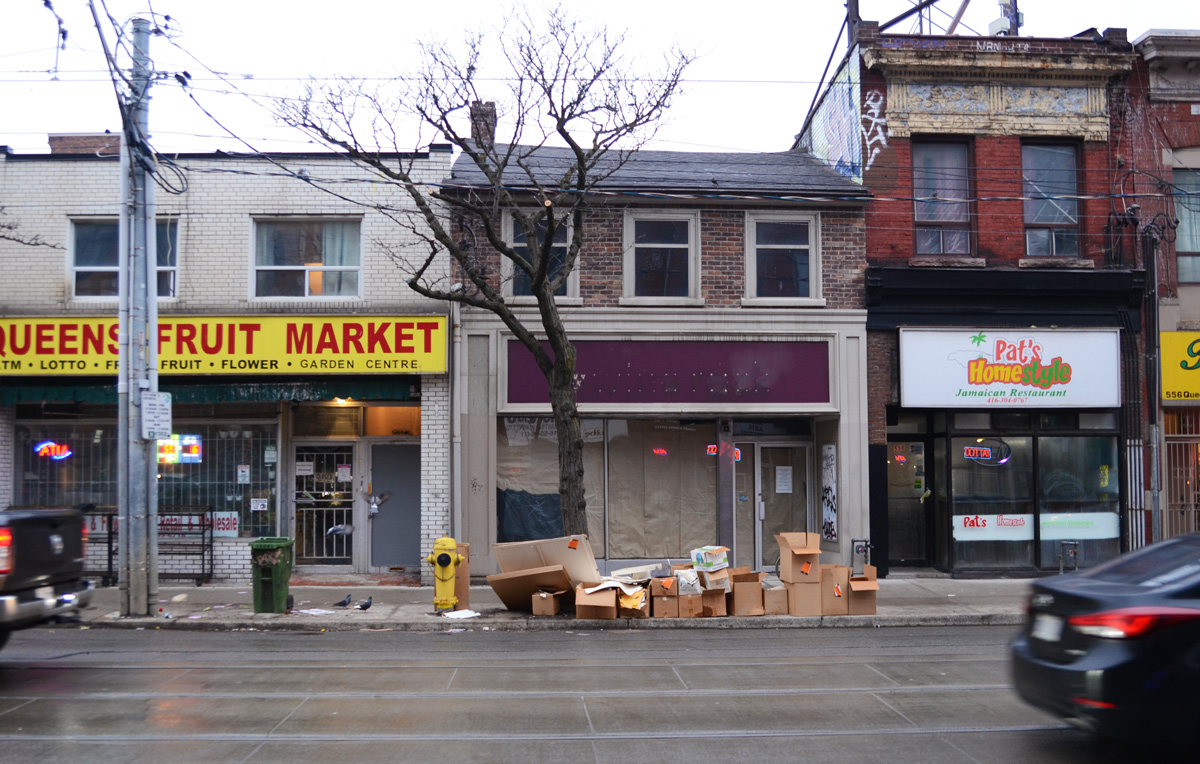
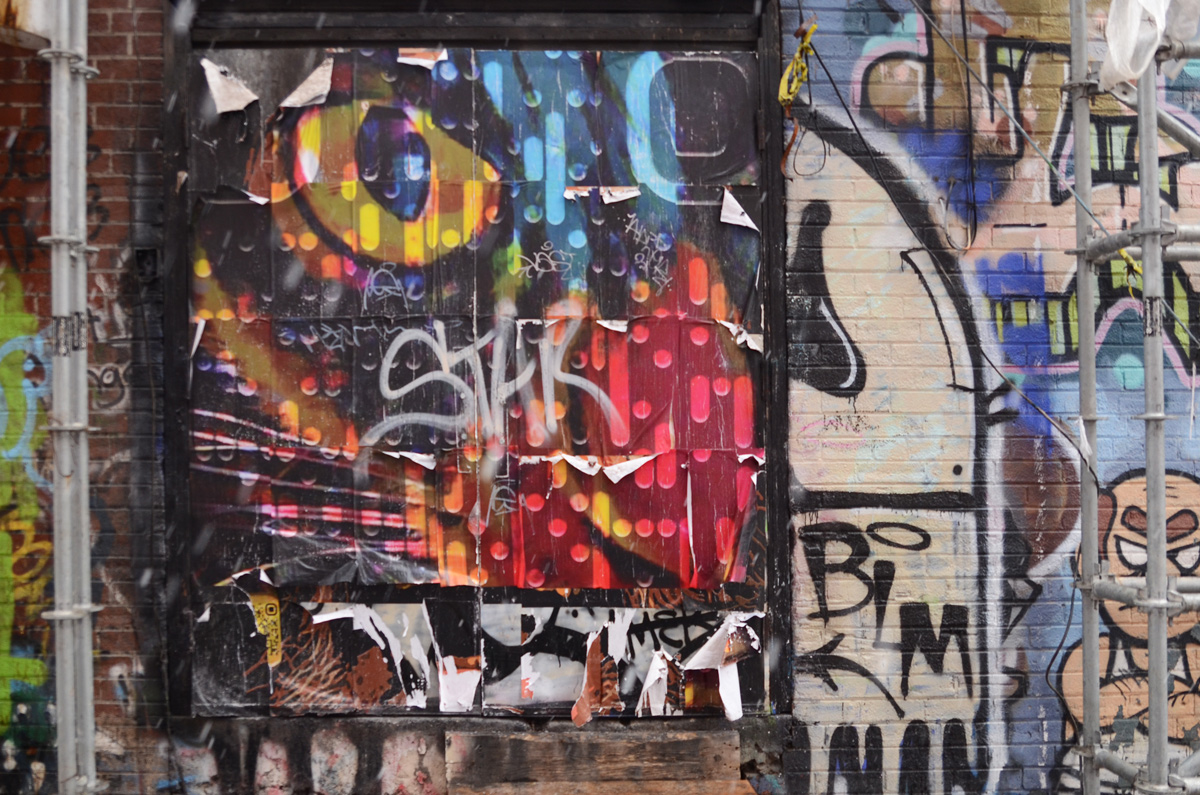
Looking north up Rocco Mandalfino Lane towards Dundas Street.
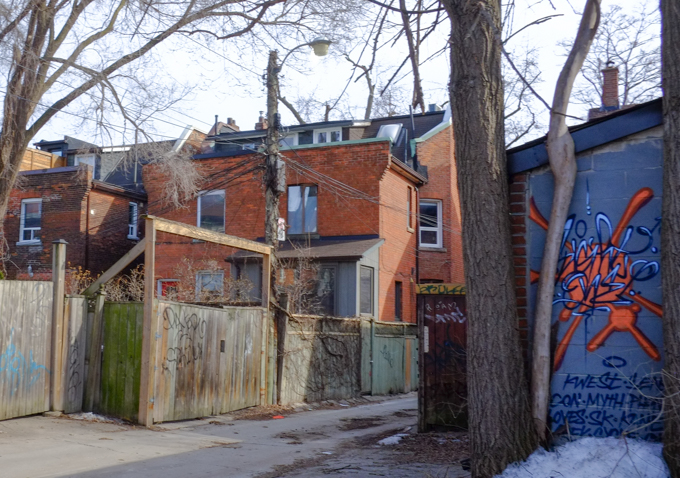
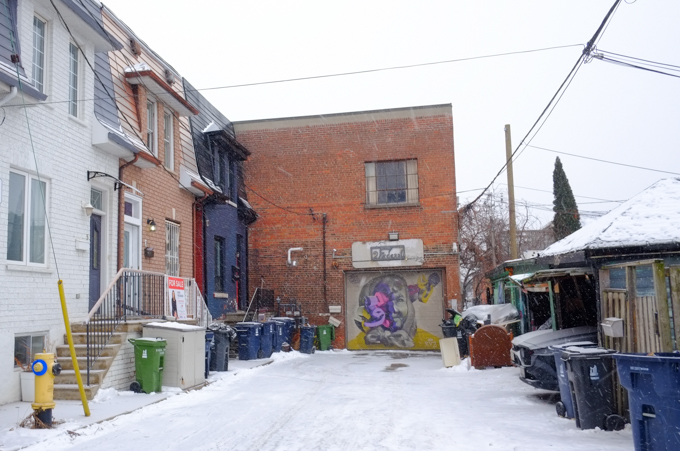
Looking south
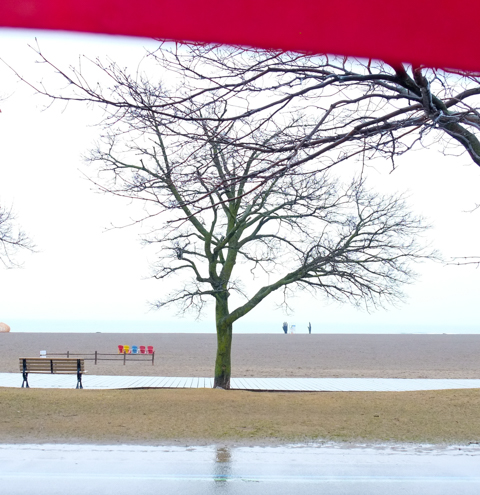
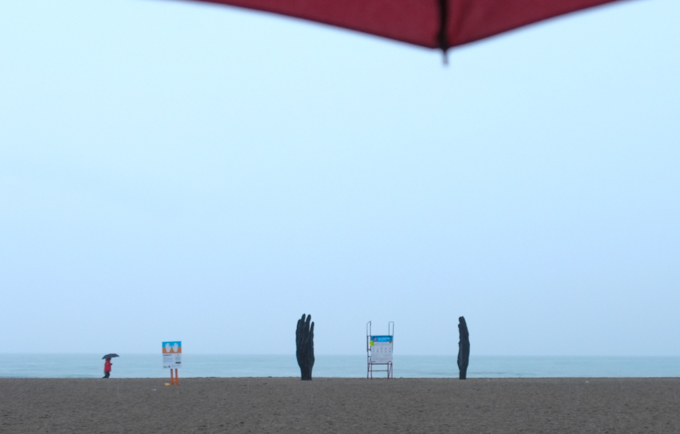
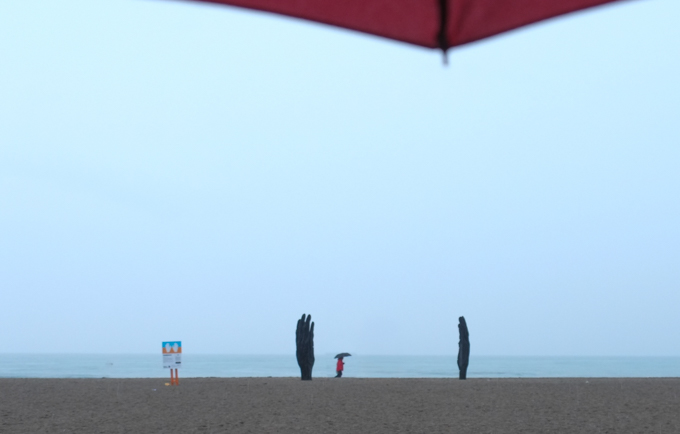
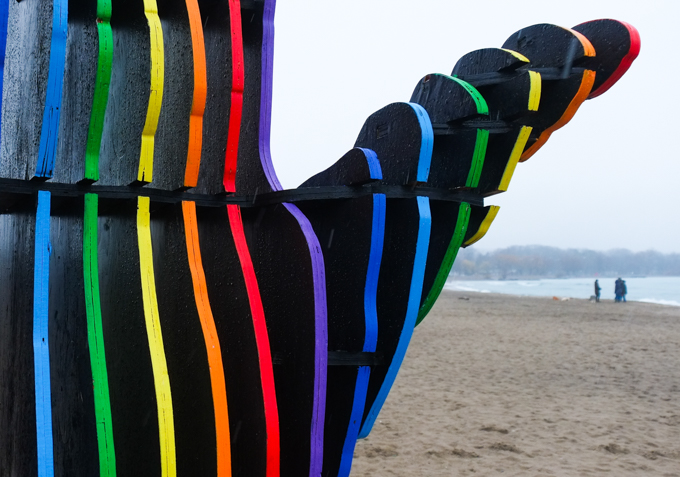
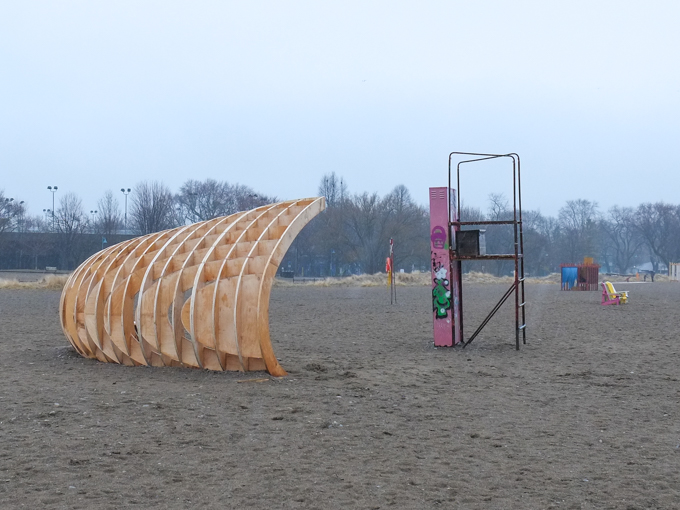
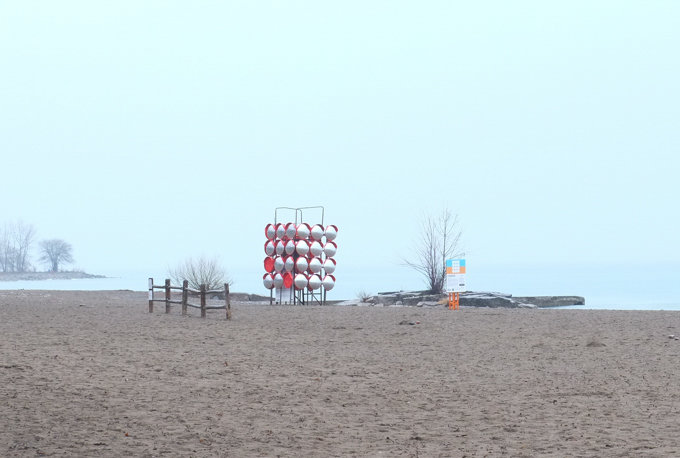
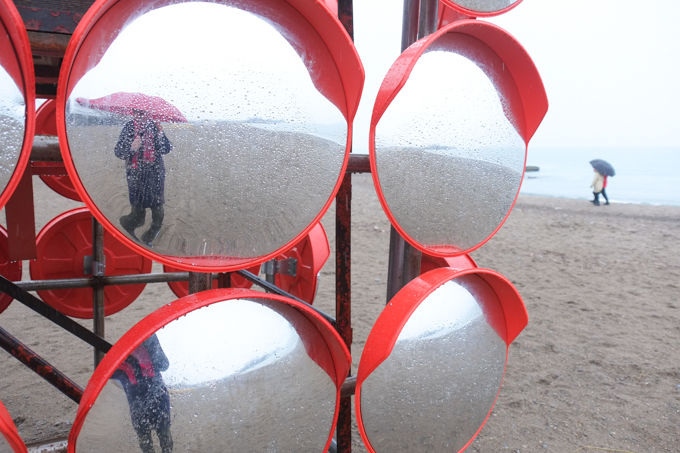
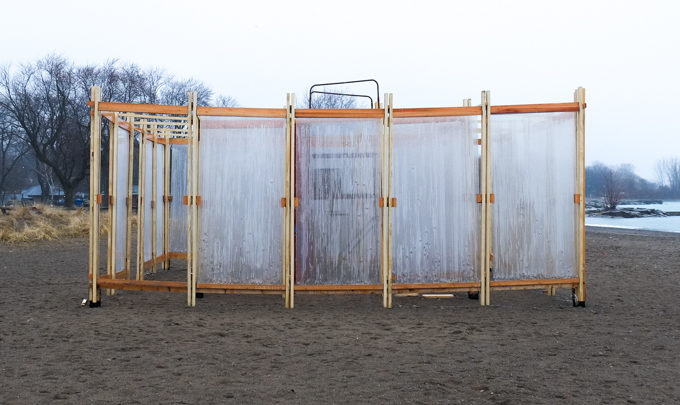
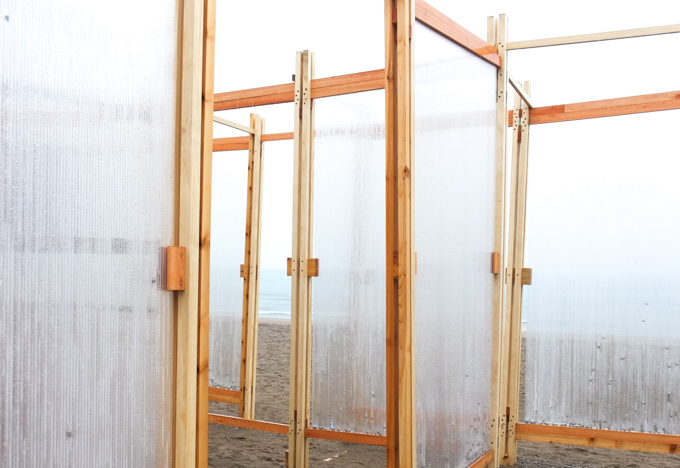
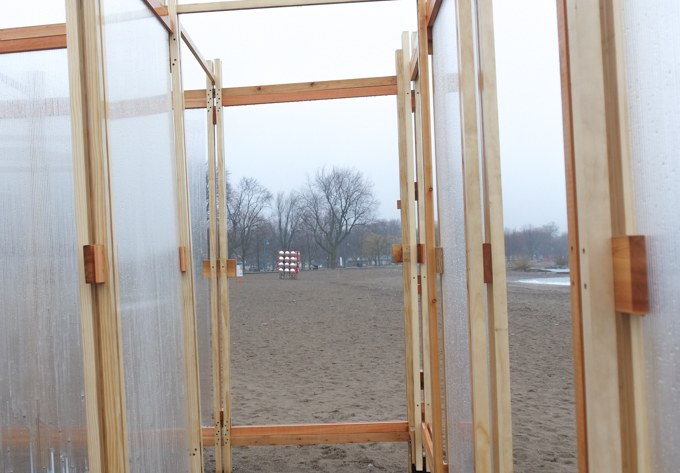
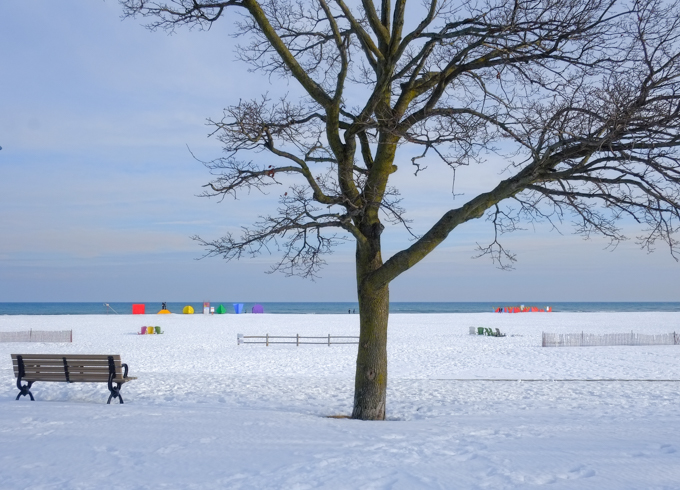
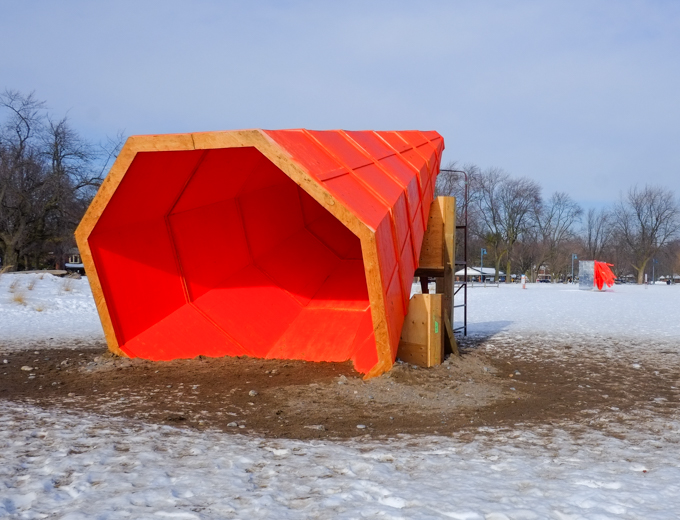
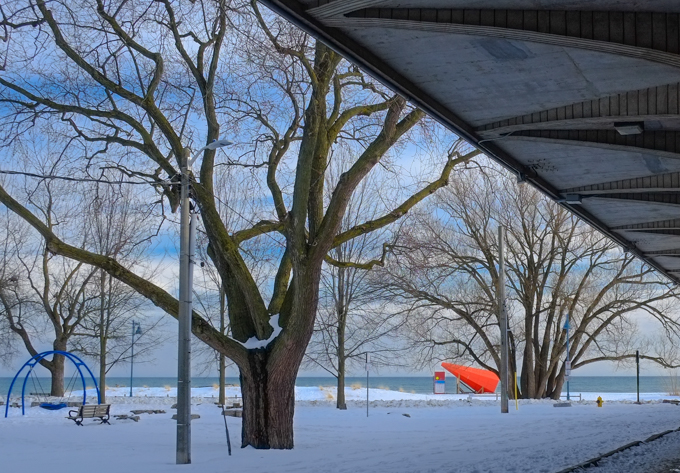
The annual “Winter Stations” public art installations are now up at Woodbine Beach. This year the constructions are colourful and fairly durable. They should be there until the end of March.
Once again, there are 6 installations to check out as you walk the beach.
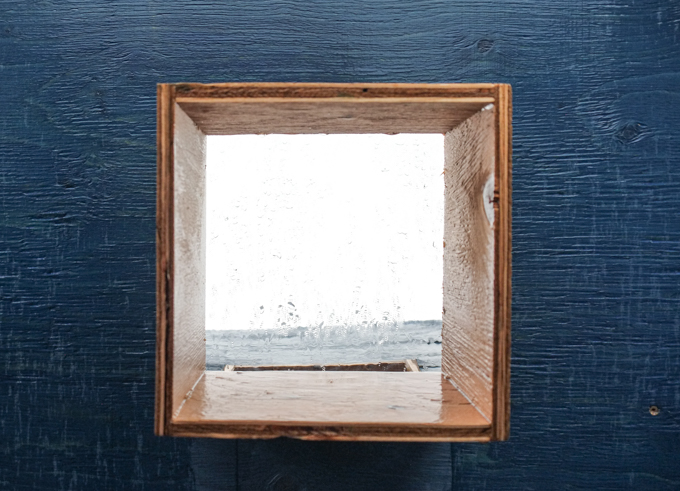
below: “Watch” by Trae Horne. The opening in the fence faces due east
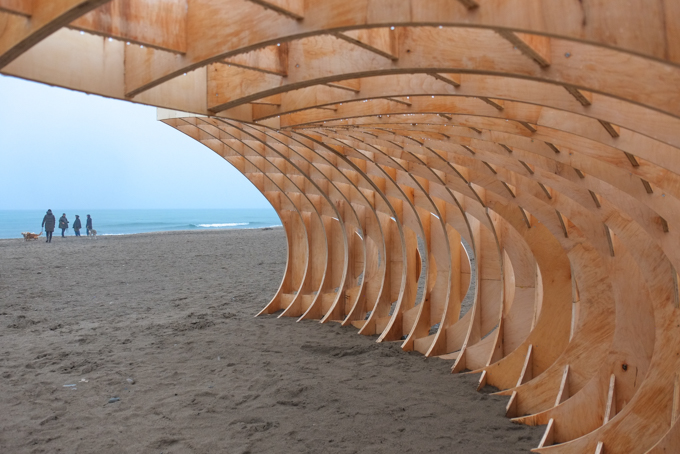
below: “Peak”, designed by University of Waterloo School of Architecture and the Department of Architectural Engineering. … ” angular peaks that frame perspectives and form pathways. Consisting of repeating structures of select shapes and sizes, Peak is an interactive installation that visually contrasts the existing site and offers refuge from the cold winter environment. “
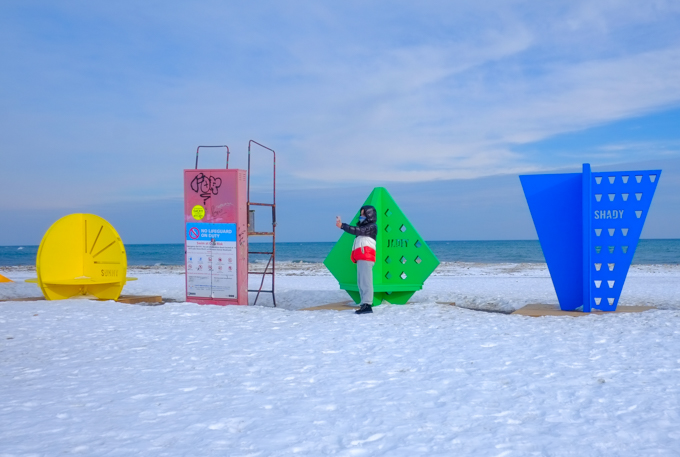
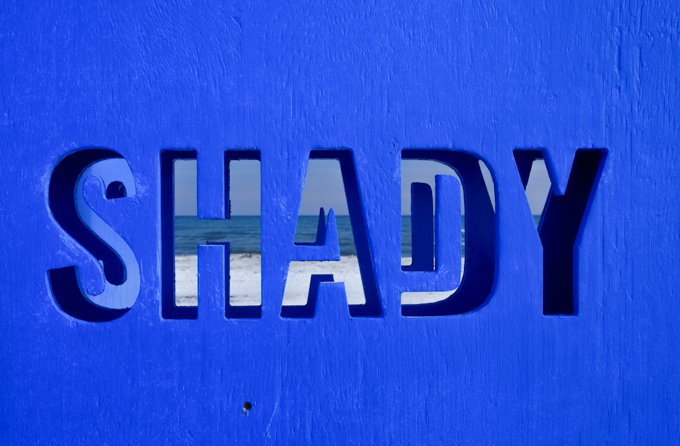
below: “Parade” by Jesse Beus consists of six characters each with their own unique colour, shape, purpose, and identity. There is blue Shadey and green Jadey. Sunny is a yellow circle and Boxy is a red box. There is an orange pyramid called Slippey and a funny purple shape that is Blob.
below: “Ascolto” by French artists/designers Ines Dessaint and Tonin Letondu.
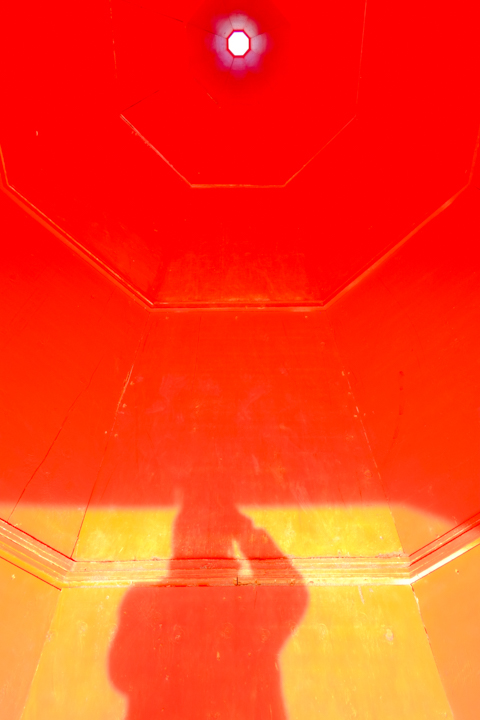
below: Standing at the edge of “Ascolto” and looking in.
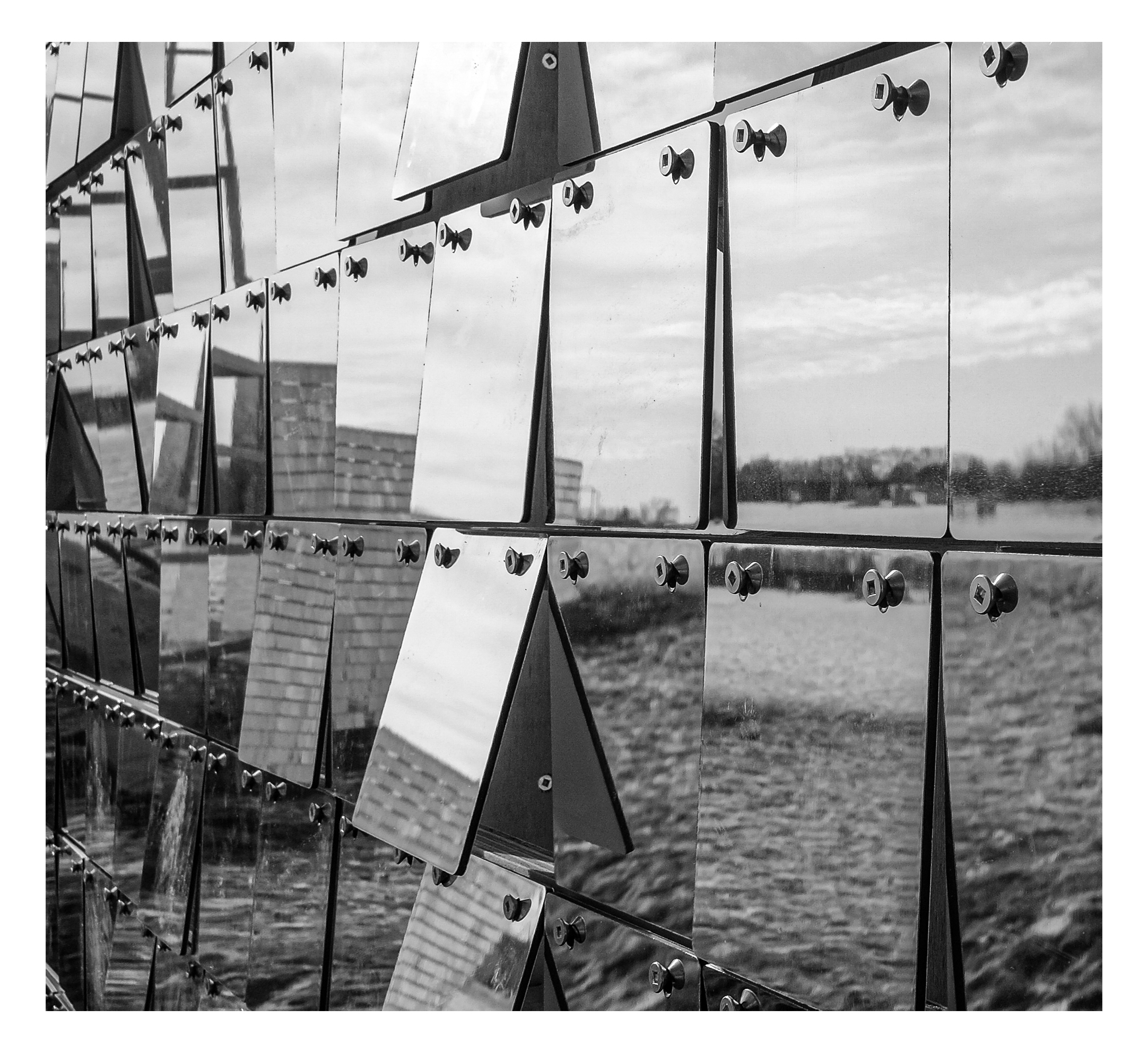
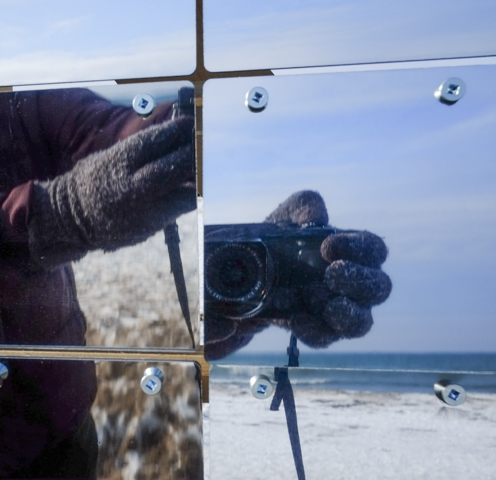
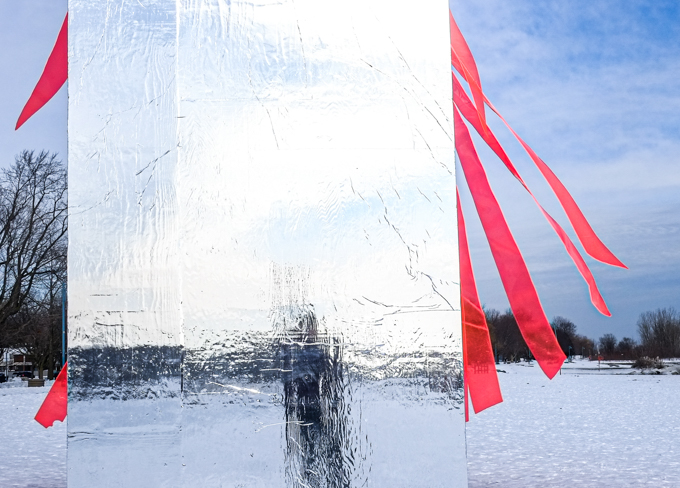
below: “Solair”, by Toronto Metropolitan University Department of Architectural Science – Sunlight and air… light and wind…. together produce movement and reflections and an ever changing abstracted image. Each reflective square moves independently from the others.
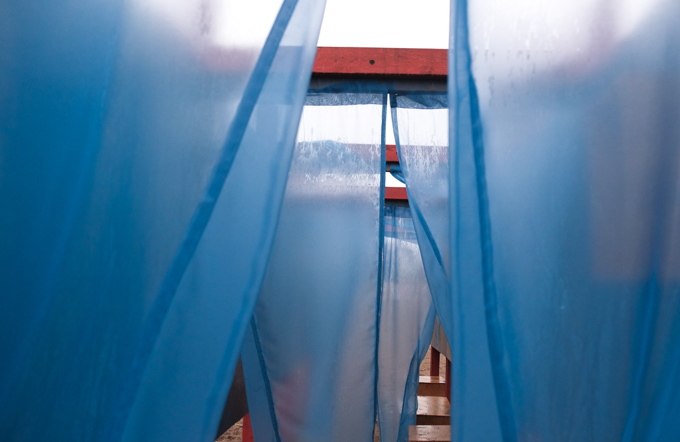
below: “Slice of Sun” by a Portuguese group – Cláudia Franco, Mariam Daudali, and Tom Byrom. It is a semi-circle within a rectangle. There are steps inside the curved portion that can be used as seats but just be careful because if it is windy, you might get hit by a blowing strip of pink plastic!
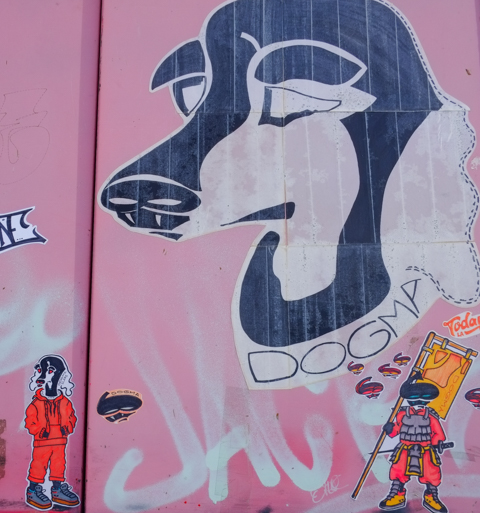
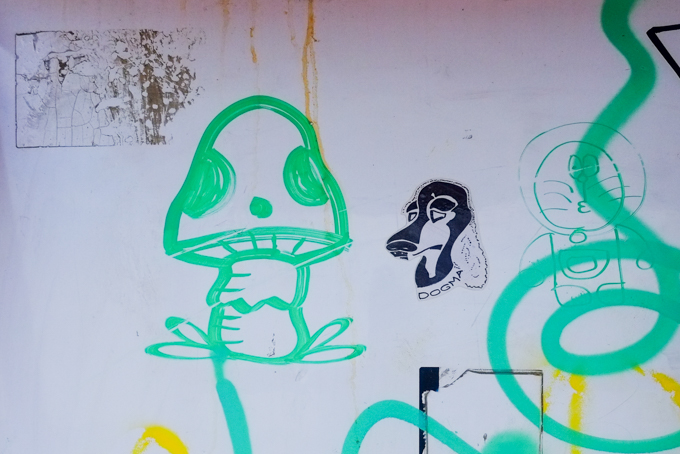
below: Dogma graffiti at one of the lifeguard stations
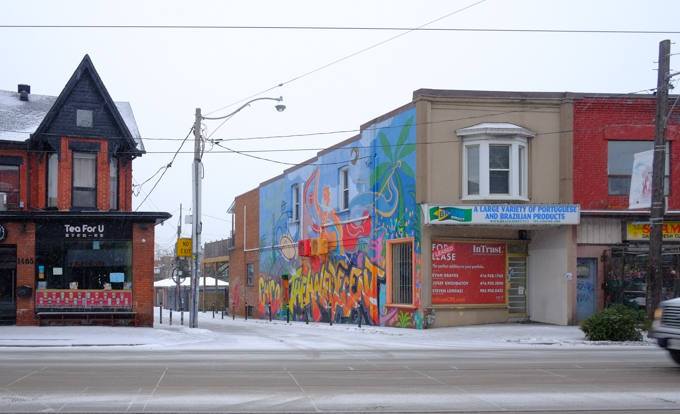
Federal Street is a short narrow street near Dundas and Dufferin. Like a few other Toronto streets, it is more a lane than a street.
below: Dundas Street West at Federal
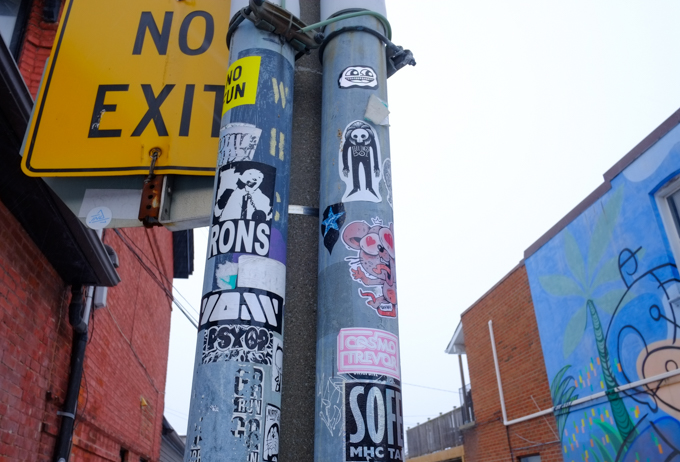
below: No Exit, a dead end street
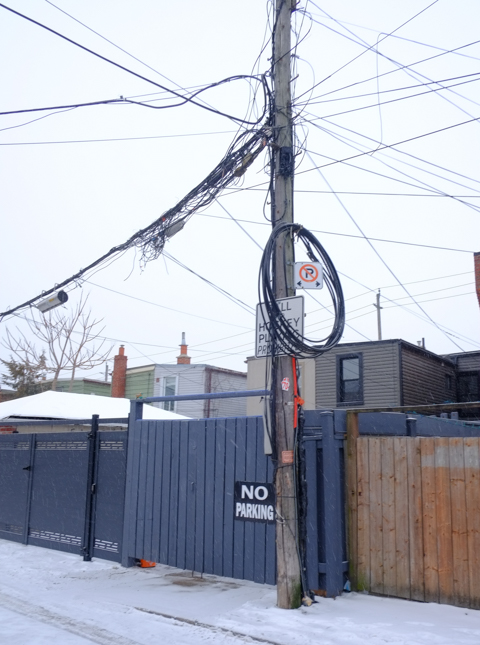
below: Wires in all directions – standing tall like a tree in winter.
below: Another lane, another time. There is another lane that runs perpendicular to Federal that looks like it might be interesting to explore but it will have to wait until another day.
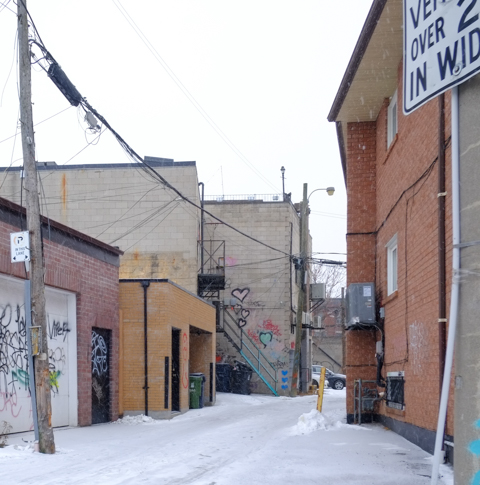
below: Maximum width, 2 metres.
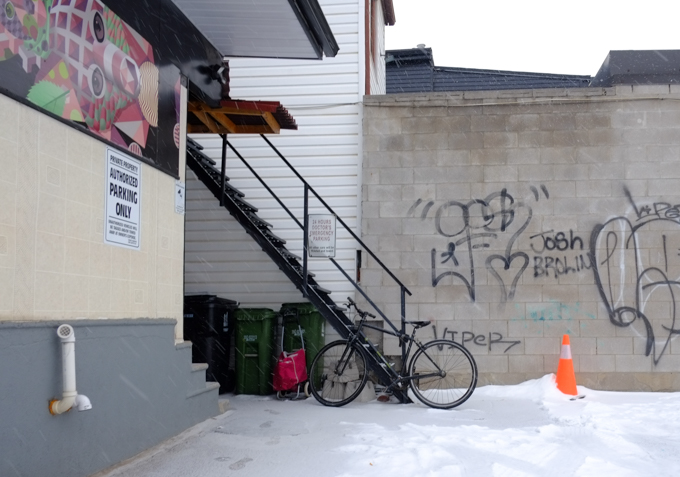
below: A winter cyclist.
below: Looking north, back to Dundas
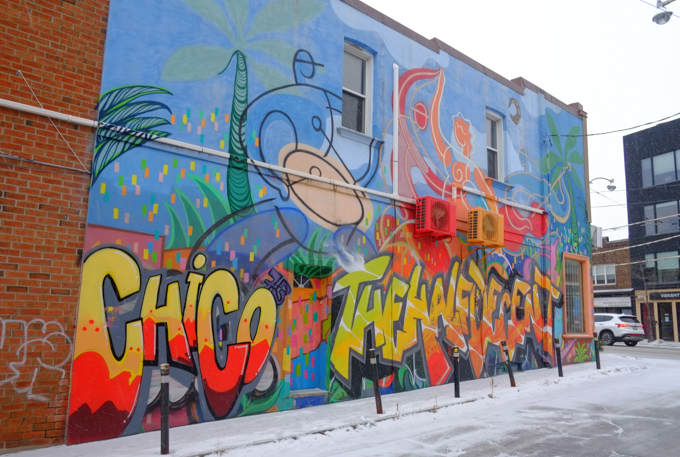
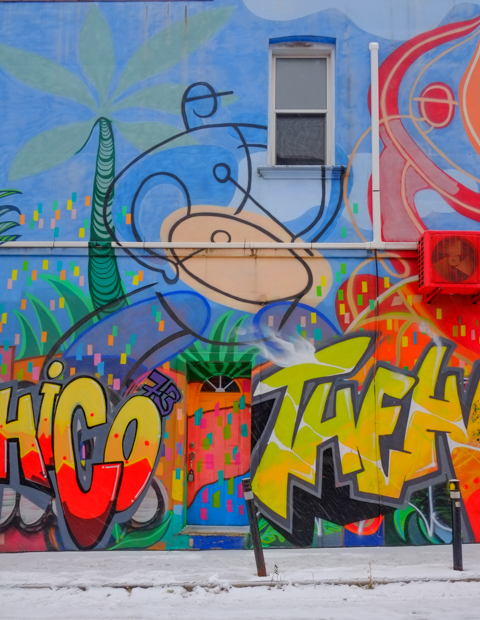
below: This mural was painted at least 10 years ago – but the tagging across the bottom by The Half Decent is more recent.

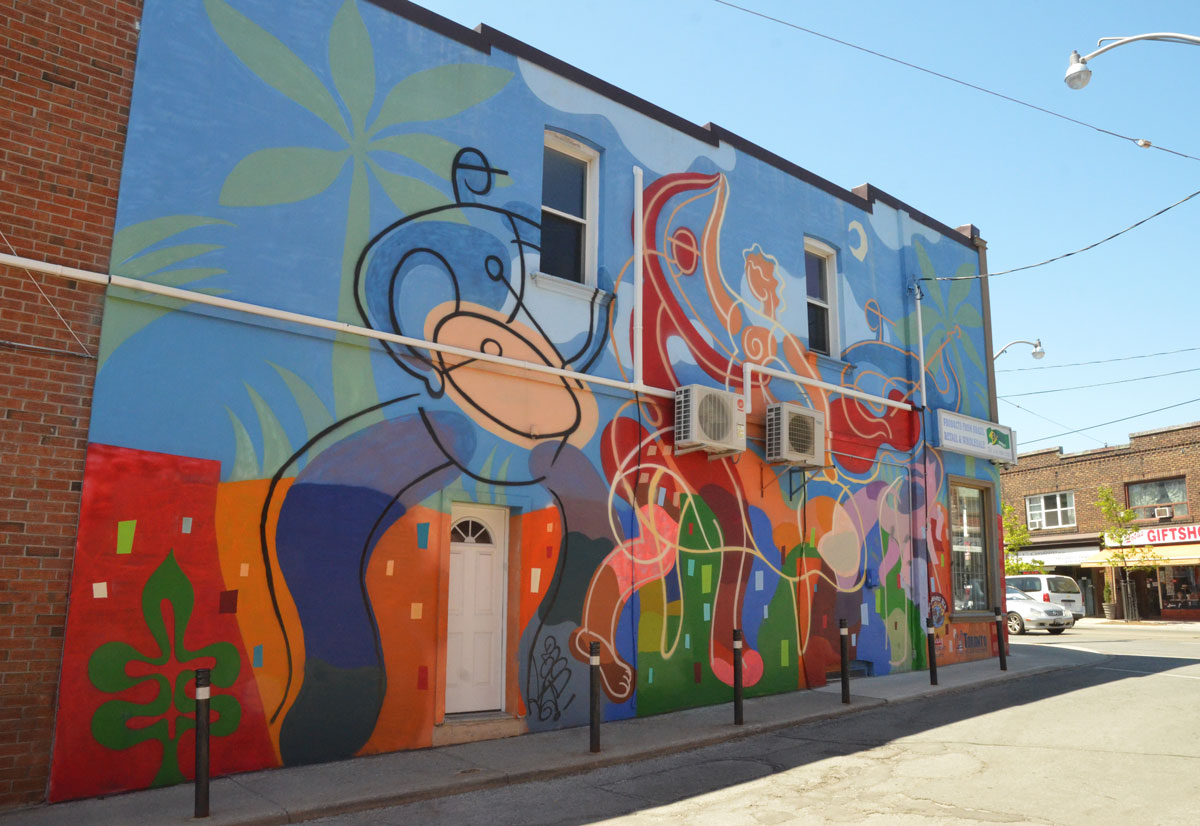
below: This is what it looked like in August 2015.

Photo Source: As I Walk Toronto blog, 15 Aug 2015
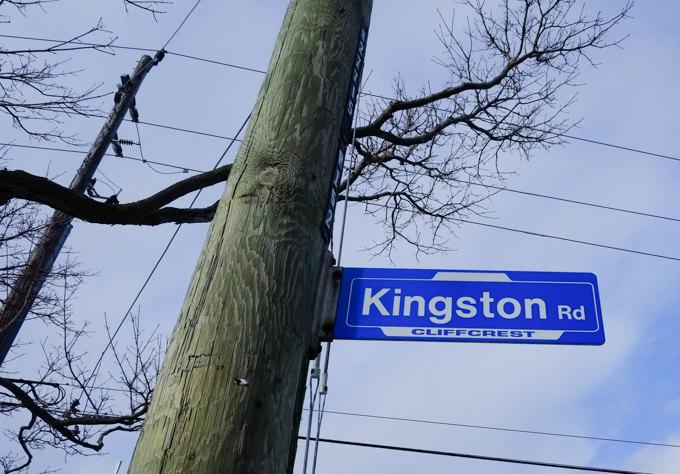
Cliffcrest is a neighbourhood in Scarborough that includes a section of Kingston Road between Brimley and Bellamy Roads. The southern boundary is Lake Ontario including the eastern portion of the Scarborough Bluffs.
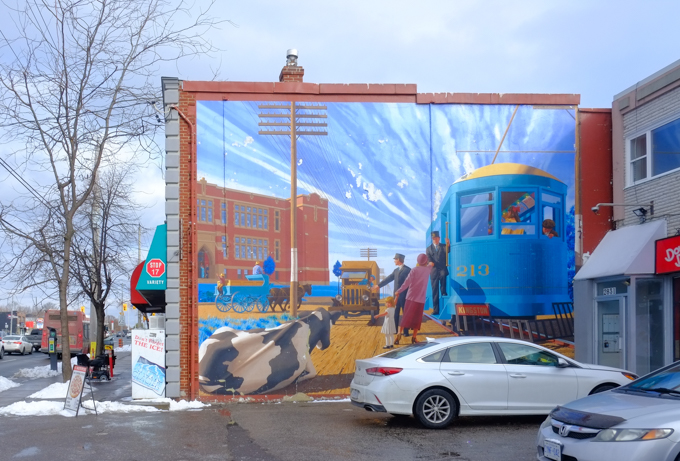
below: At the corner of Kingston Road & St. Clair is one of the Scarborough Heritage Trail murals funded by Mural Routes. It is “In The Way of Progress” and shows a Kingston Road radial railway car at Stop 17 with Scarborough High School (later changed name to R.H. King Academy) in the background. It was painted in 1996 by Phil, Jennifer, and Jamie Richards.
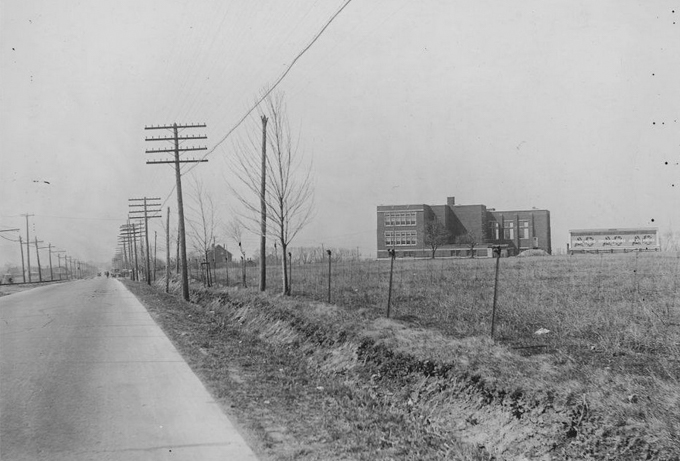
below: 1922, Kingston Road looking west towards St. Clair with Scarborough High School near the intersection.
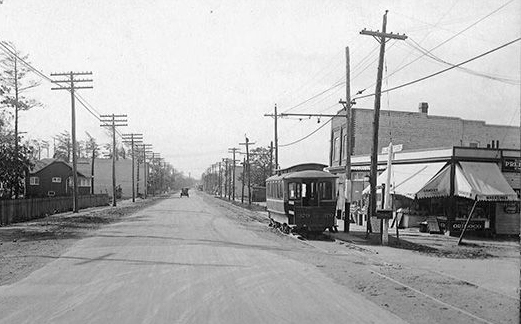
In 1893 the Toronto and Scarborough Electric Railway, Light and Power Company started running a one car train along Kingston Road. The tracks went as far east as West Hill. A couple of years later, this line became part of the Toronto and York Radial Railway (TYRR). The TYRR had four branches radiating from the city, one to the west, 2 northward, and this one east along Kingston Road. The stops on the Scarborough route were numbered, starting at Victoria Park Avenue. Stop 17 was at St. Clair East & Kingston Road.
below: This 1922 photo is actually from a bit farther west, at Victoria Park. What I wanted to show was how the railway tracks just ran between the road and the sidewalk. Very simple infrastructure! Not too feasible in a city, but in 1922 this neighbourhood was more rural than urban (and they still got transit!)
below: You can’t see it in this photo but the mural above is on the wall of Stop 17 Variety (by the parking lot on the right).
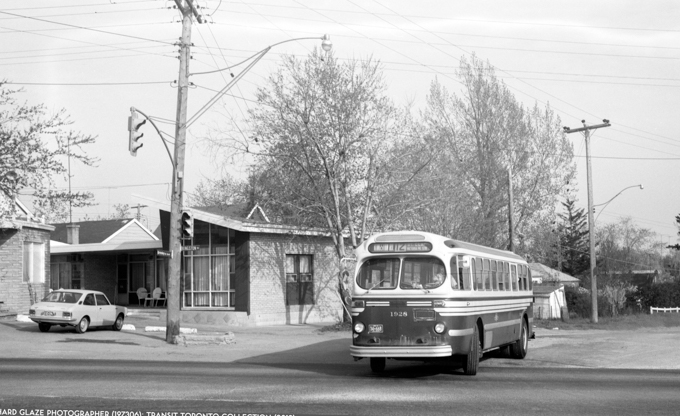
below: From 1973, forty years ago – looking at the southeast corner of Brimley and Kingston Road. The bus is northbound on Brimley.

Photo Credit: Richard Glaze photo 1973, Transit Toronto website. If you are interested in anything to do with transit in Toronto, check out their website. They have an extensive collection of photographs, maps, and documents. They also feature all the latest news about slow downs, route changes, and service advisories (among other things).
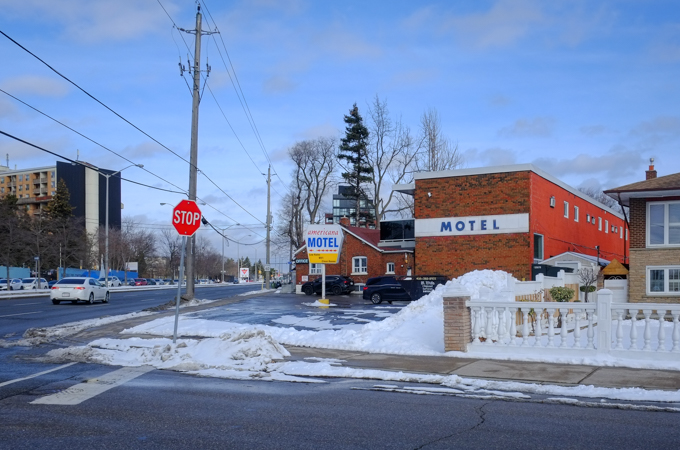
The same motel is still on that corner of Kingston Rd and Brimley. I don’t have the exact replica photo but this is what the Hav a Nap Motel looks like now.

below: Moving slightly west, photo taken from approximately the corner of Brimley and Kingston Road.
Once upon a time, Kingston Road was a major east west route in and out of the city. There were many motels along here. Their heyday was the 1950s and the bigger, fancier ones are long gone, leaving behind some of the smaller ones.
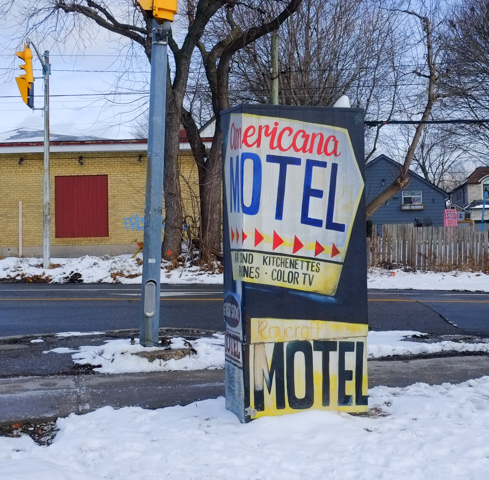
below: As a shoutout to these motels and their stoy is this sidewalk box decorated with images of old motel signs. The Americana and the Roycroft signs can be seen on this side.
below: The Americana Motel still exists in the Cliffcrest neighbourhood (close to Brimley). The Roycroft is farther east, beyond McCowan.
below: Henry’s Motel
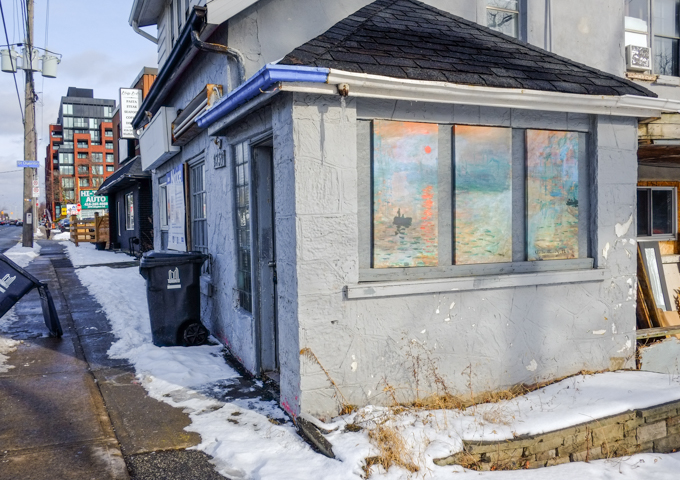
below: The sign of things to come.. and yes, it’s a condo with retail at street level.
below: The north side of Kingston Road, just east of Brimley – it looks like changes are happening here too.
Brimley Road is also the main access for Bluffers Park at the foot of the Scarborough Bluffs.
below: Dairy Queen at Kingston Road and Harewood is closed for the winter
below: An alley runs behind the south side of Kingston Road
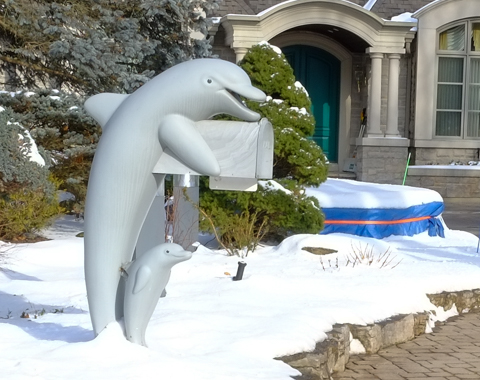
below: Mailbox with a porpoise (or two)
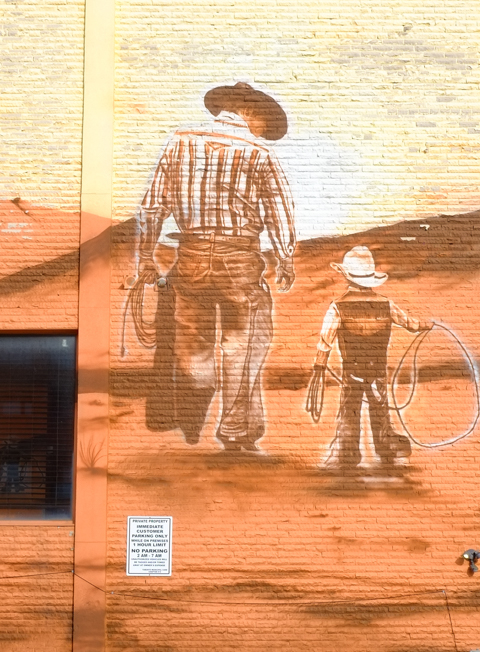
below: On the side of a Wild Wings restaurant.
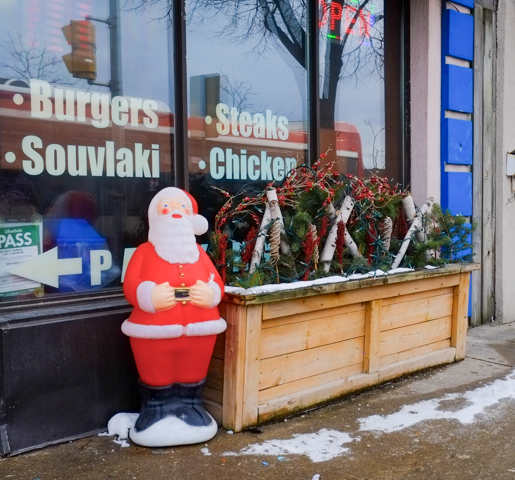
below: Carusos Fruit Market, Groceries, Hardware & Gift Items
Other Scarborough Heritage Mural posts:
1. Heritage Murals – Kingston Road, 2014
3. Heritage Trail Mural 8, 2014
4. Scarborough Bells, 2020
5. Birch Cliff, Kingston Road, 2021
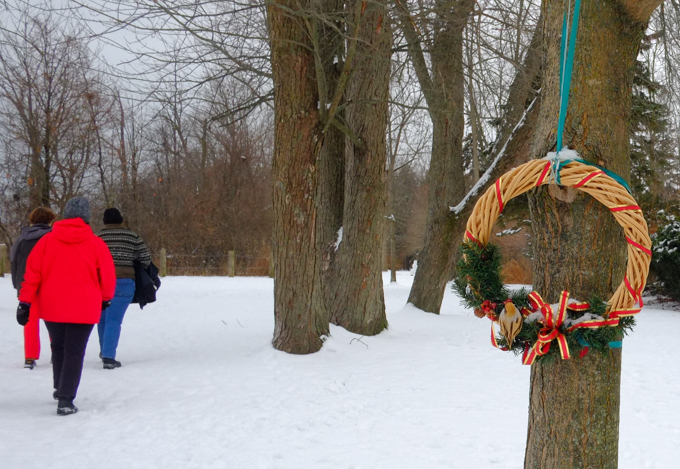
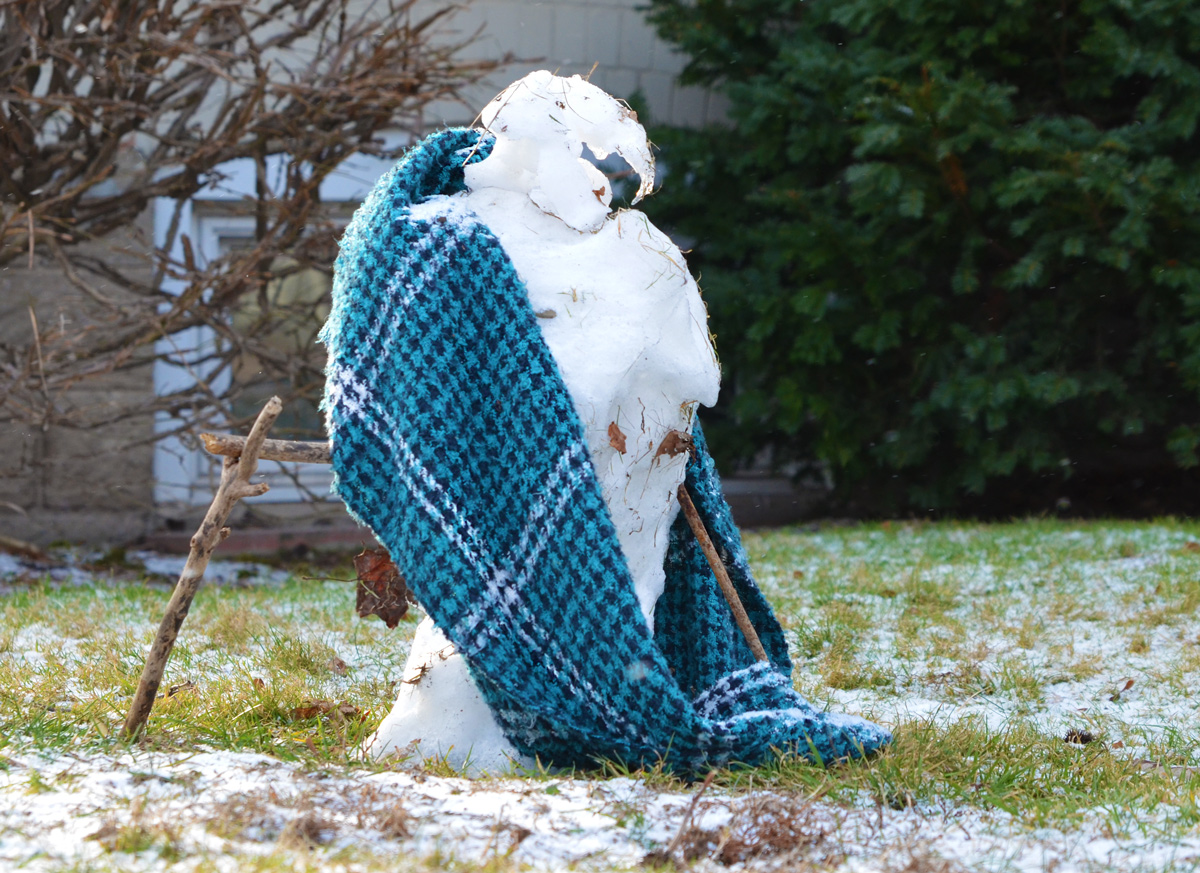
Just after Christmas, we took a short walk around Guildwood Inn Park where we encountered this cold but jolly fellow.
below: Once it led to the Granite Club (built 1926), now it leads to a path through the park
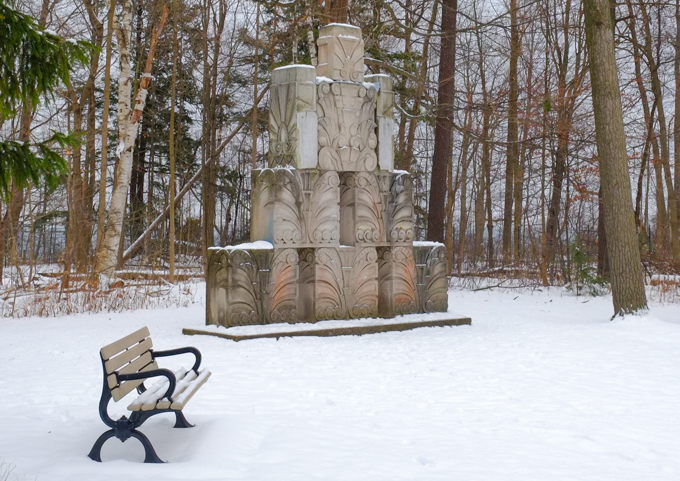
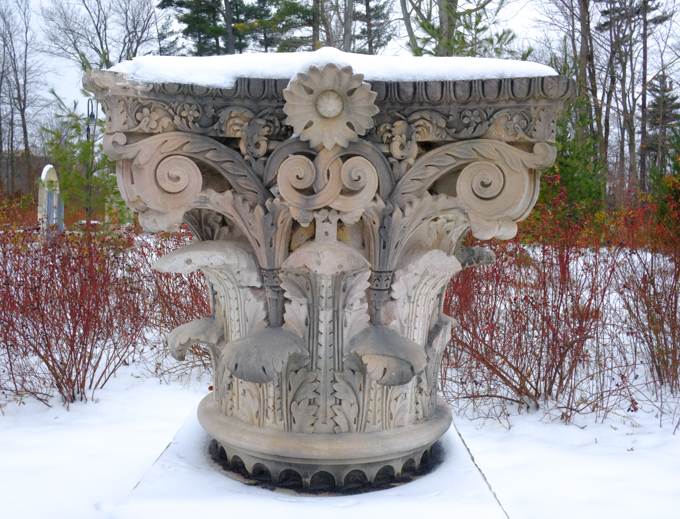
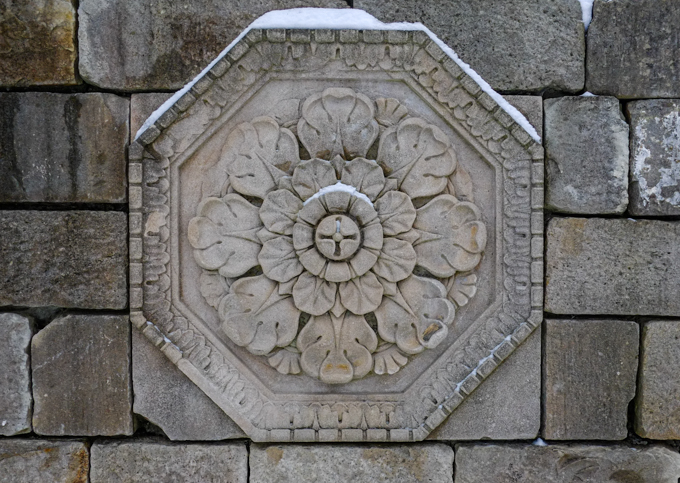
The Guildwood Inn (Guild Inn) property is now home to many pieces of stone and concrete that once adorned old Toronto buildings that were demolished many years ago. For a more thorough discussion of the history of the pieces, see History in Pieces of Stone a post from 2020.
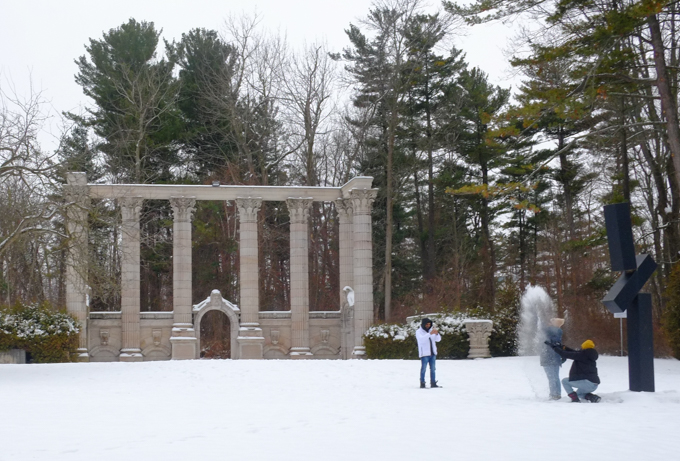
below: Staging photographs, playing in the snow.
below: A pyramid of old blocks of rescued stone.
below: Representing Quebec…..sculpted panel by Frances Loring.
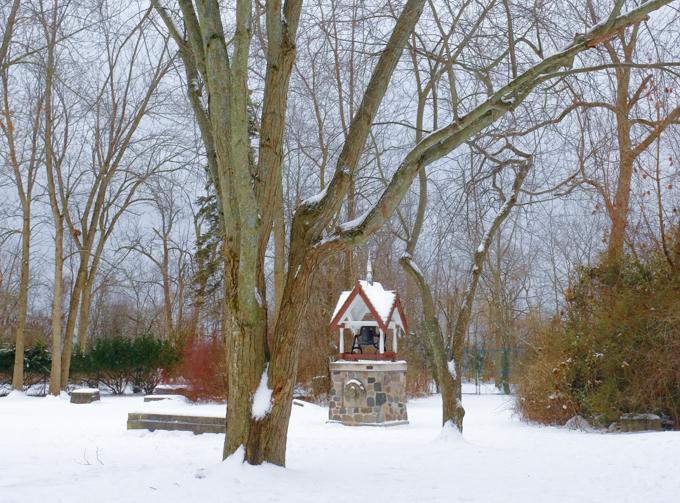
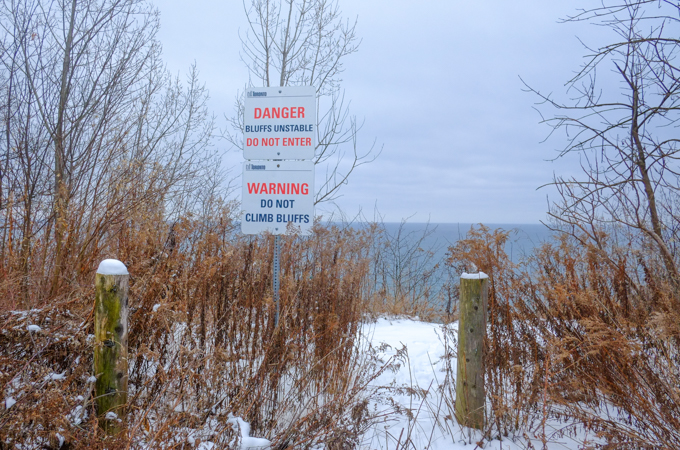
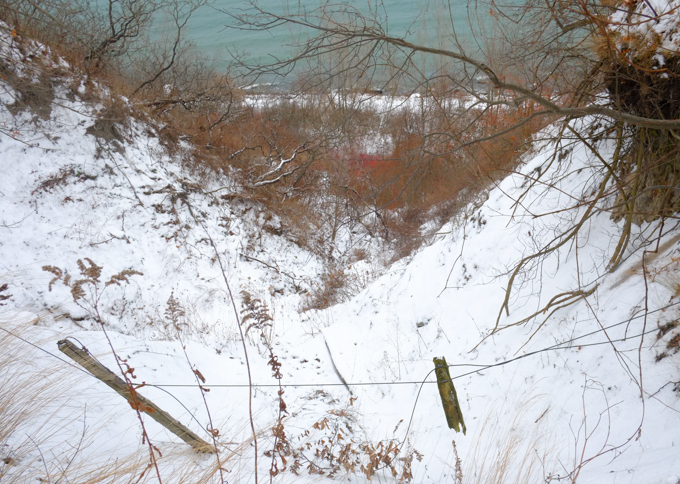
below: The park runs along the top of the Scarborough Bluffs.
below: Bits of the park fall into Lake Ontario each year – and occasionally parts of the old fence go too.
A bench at Edwards Gardens… late February. It’s been a warmer than usual winter without much snow. February ended on a warm streak that has continued into March. These photos were taken at Edwards Gardens before I realized just how early spring might be this year.
The giant willow tree has hardly begun to turn yellow like it does every spring.
A little bit of snow and ice linger in the shadier parts along the path.
A monkey – a light-hearted touch in the greenhouse where it’s warm all year round.
below: Northeast corner of Spadina and Queen West
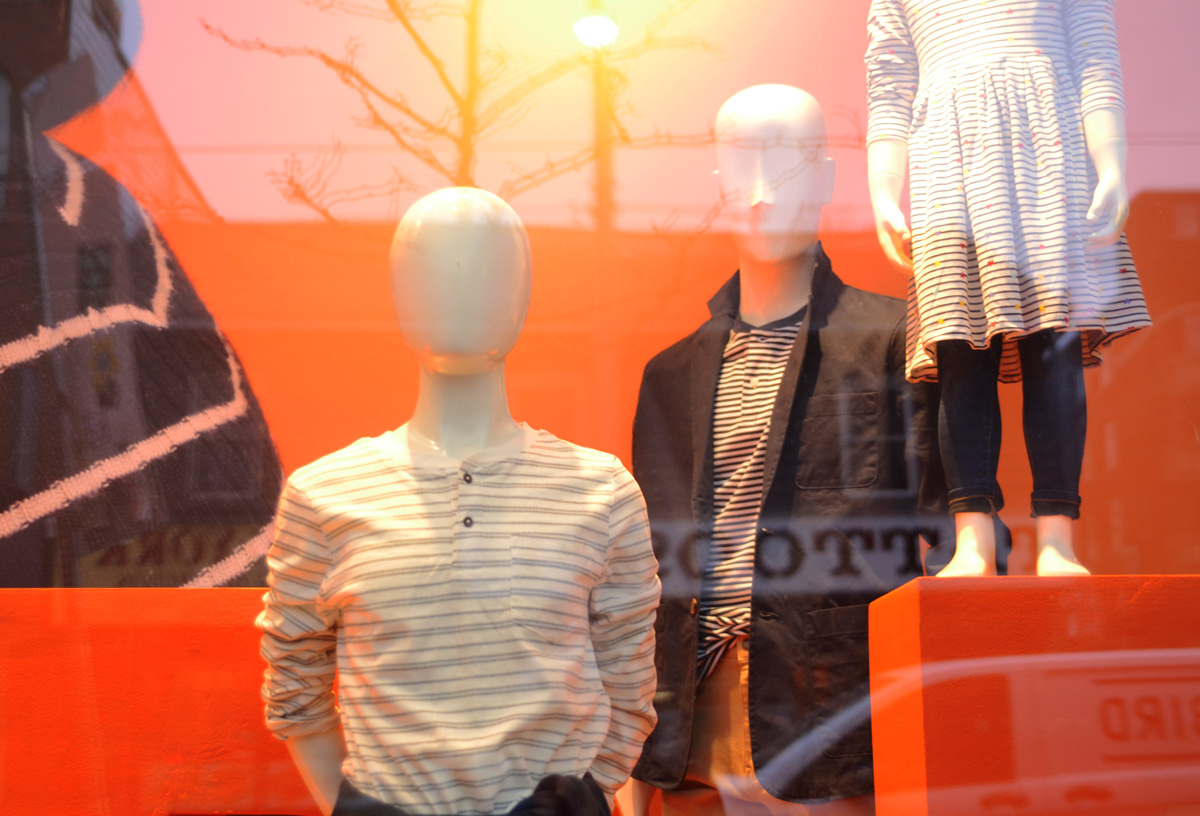
below: Mannequins on orange
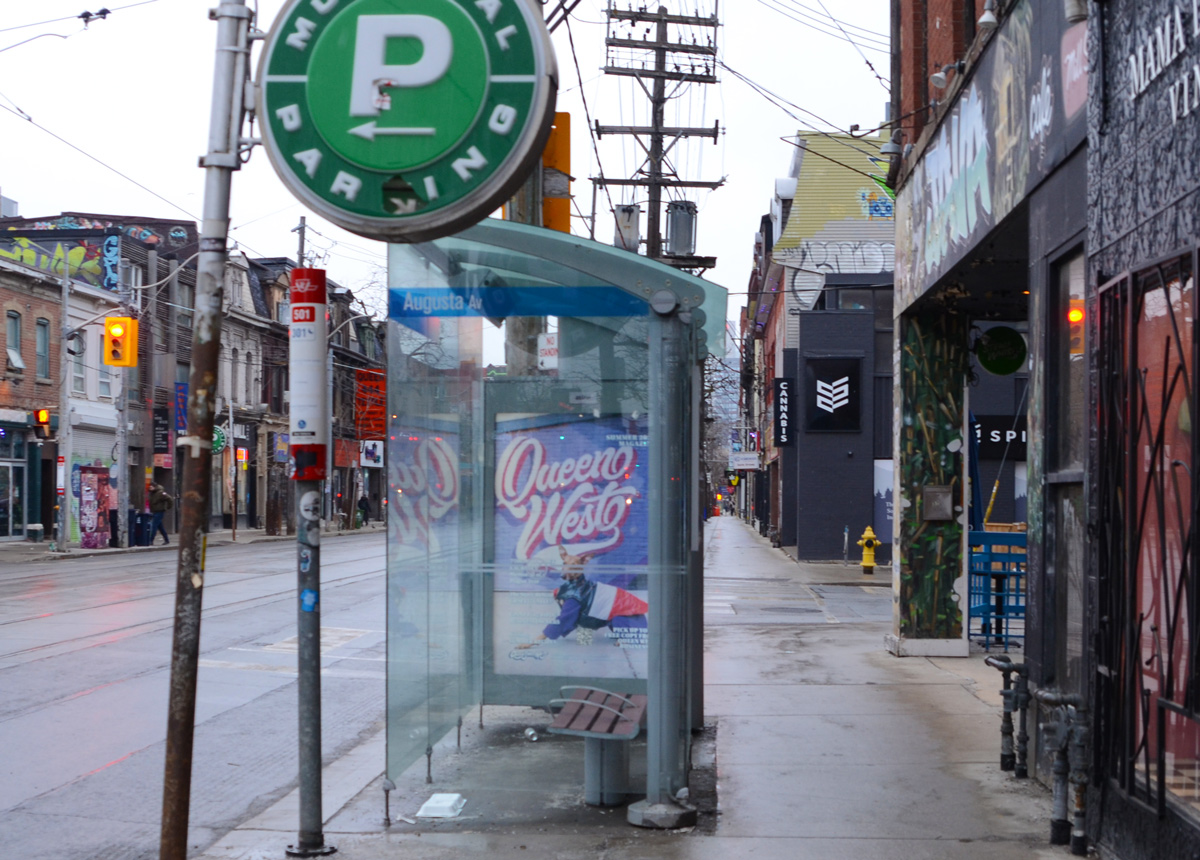
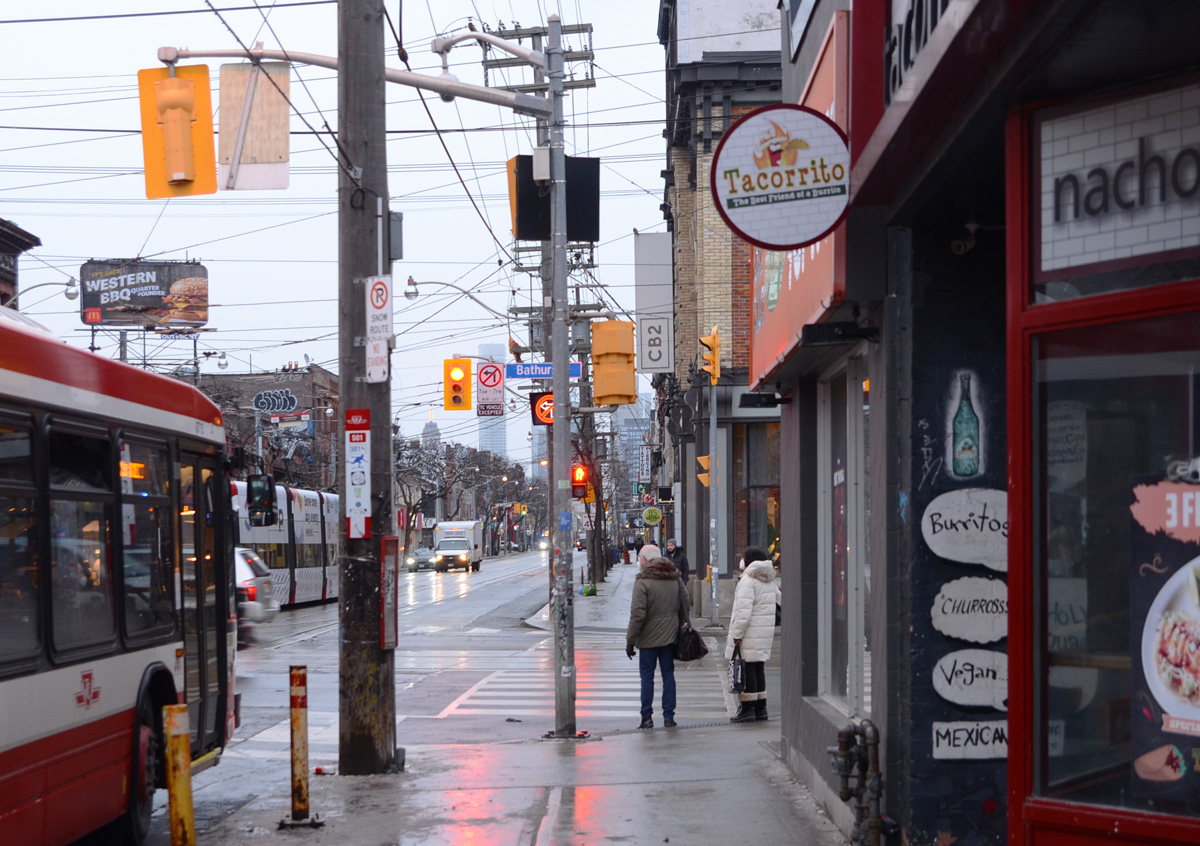
below: Queen Street westbound approaching Bathurst
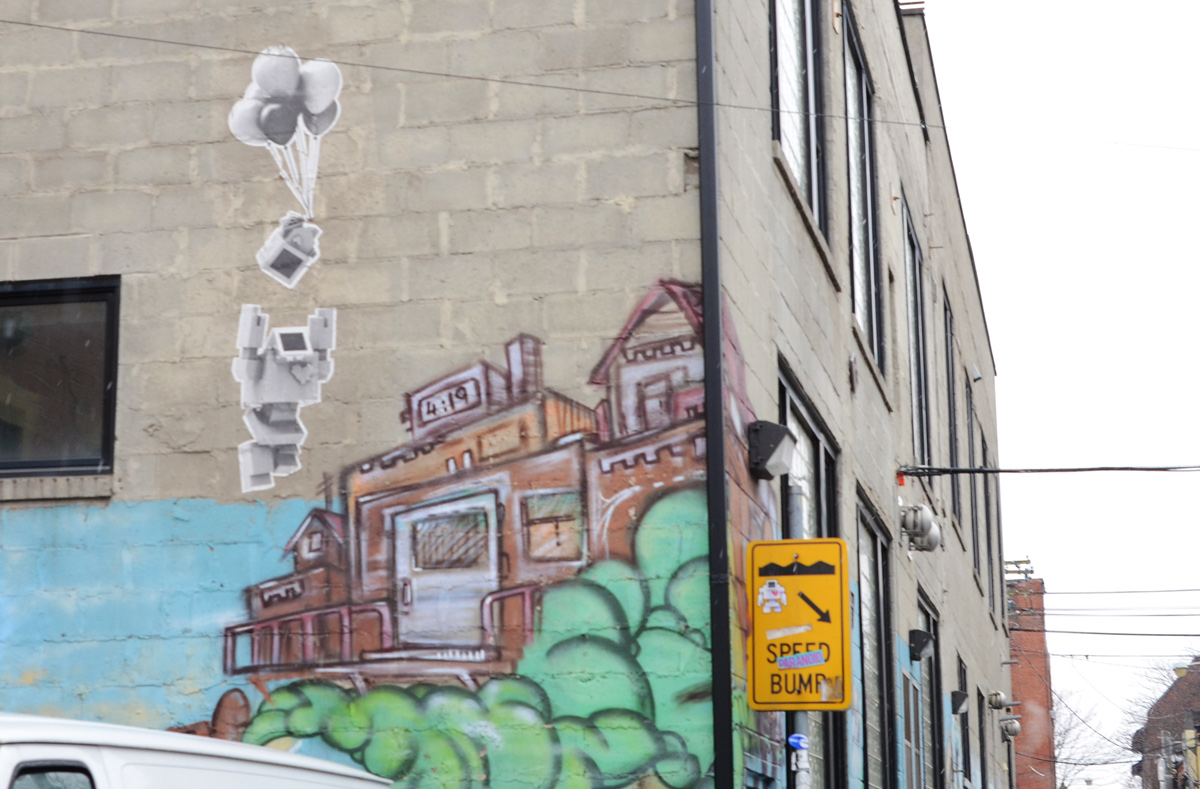
below: It’s always nice to see that there’s at least one Lovebot still hanging out in Graffiti Alley.
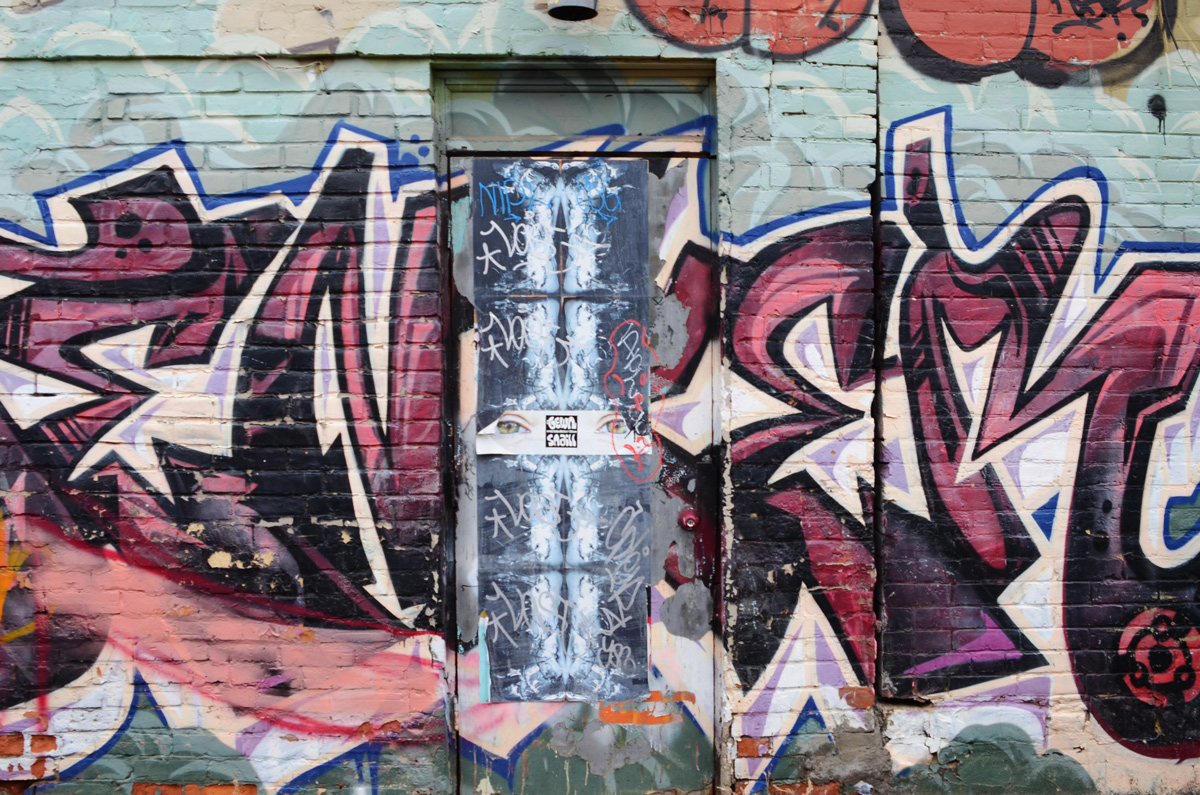
below: On the door, a jumblefacefoto collage
below: Reach out and touch someone
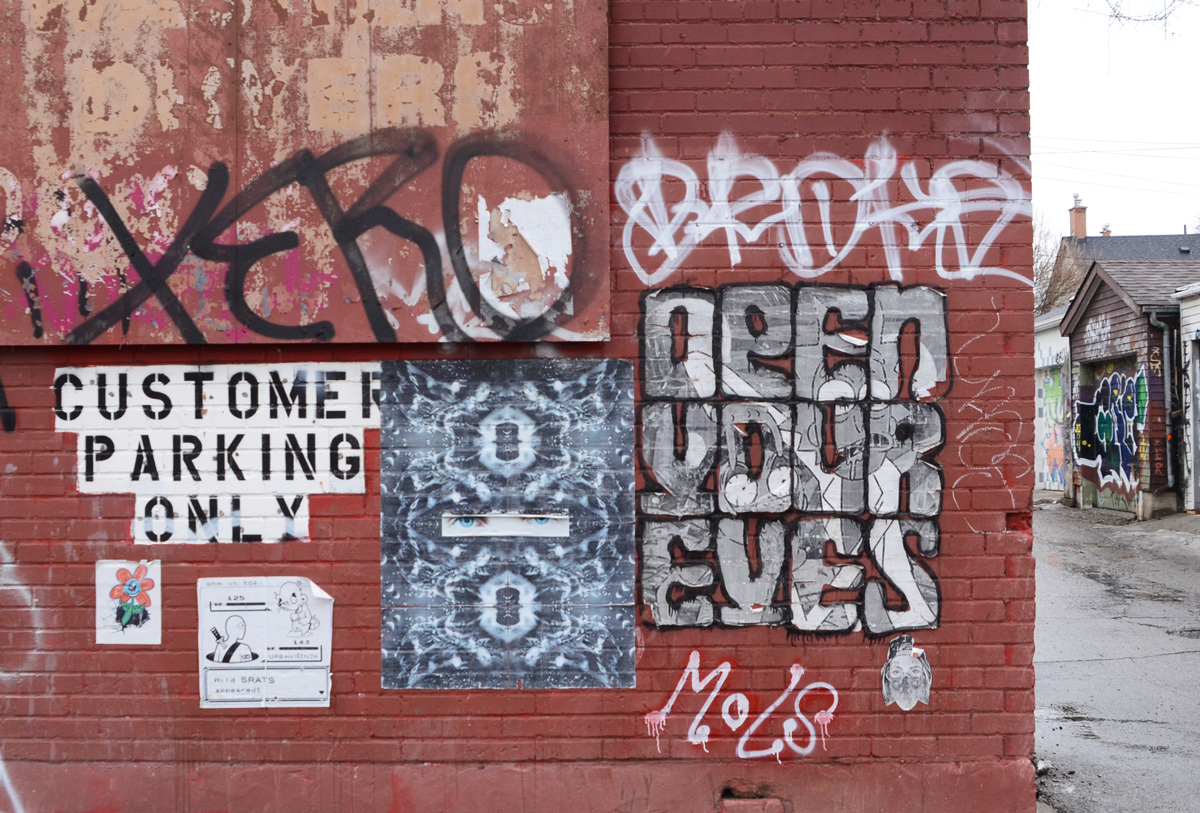
below: Open your eyes
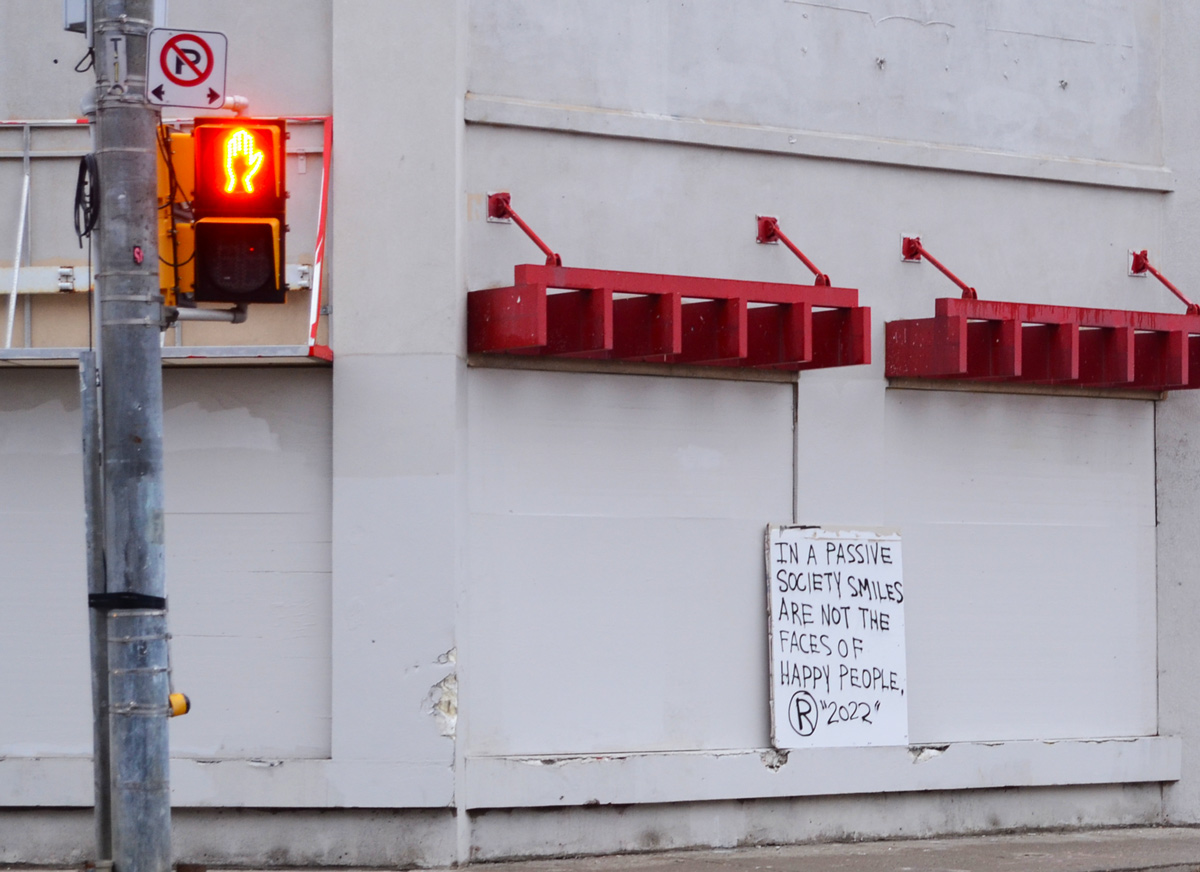
below: Are you smiling? Are you happy?
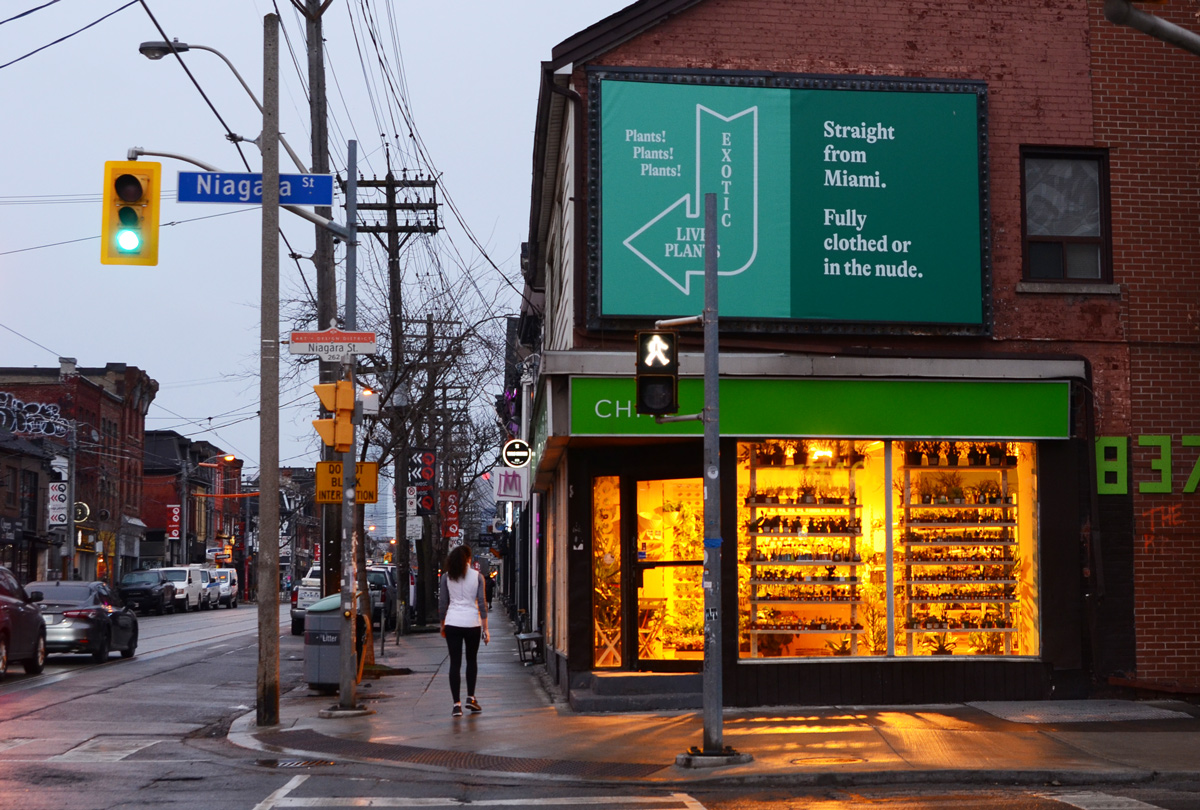
below: Southeast corner, Queen & Niagara
below: Same intersection slightly later in the morning and from a slightly different angle
below: Windigo Army piece
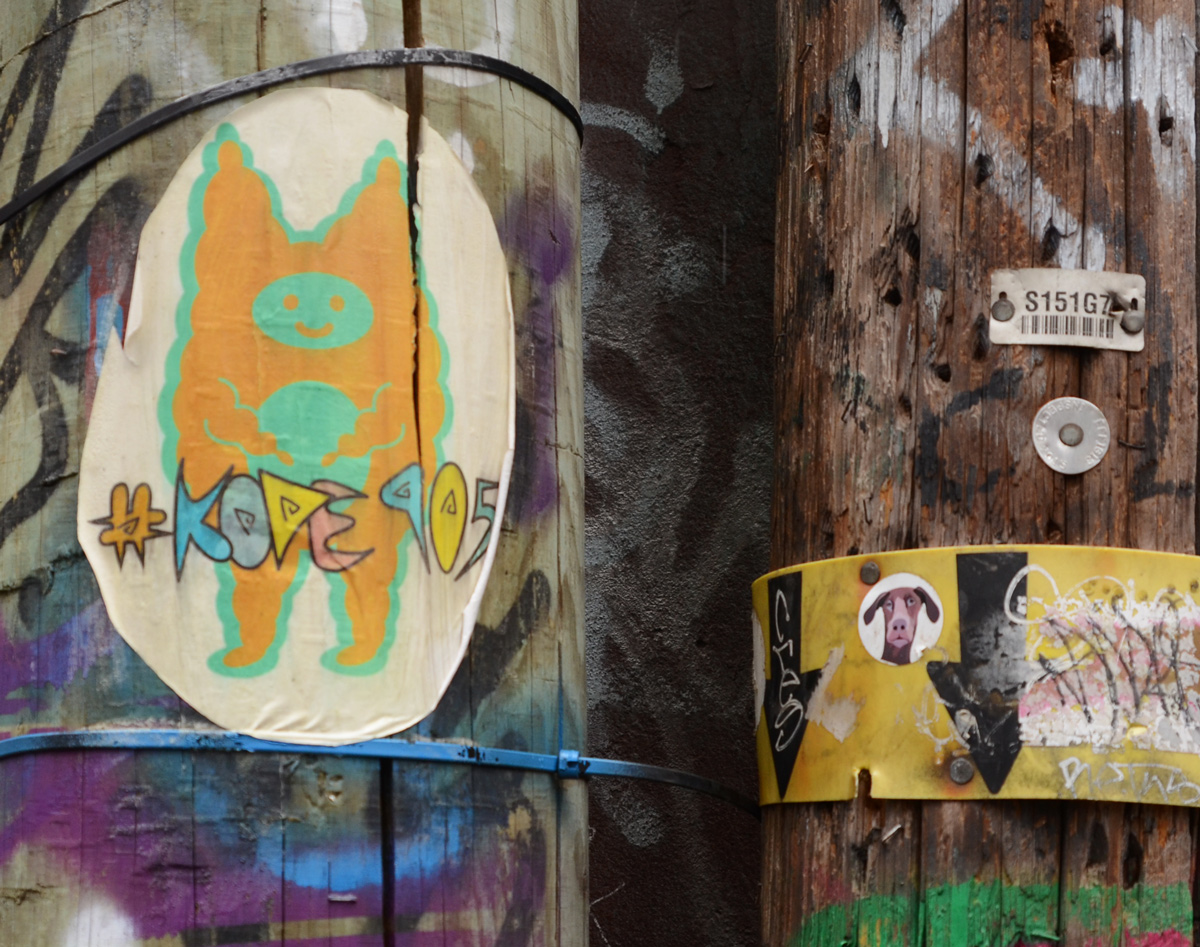
below: A little orange character pasted to a pole; the work of kode_dipz aka Kyara Cabrera Fong
below: Because of the construction of a new condo at Richmond and Augusta there has been scaffolding in a section of Graffiti Alley. The other day some of it was being dismantled. This woman is more visible now but some of the bars remain.
below: Life©️ one eyed red daisy supersized
below: Part of UBER5000’s Toronto mural.
below: By luvs – a woman and her dog, with duplicate vision
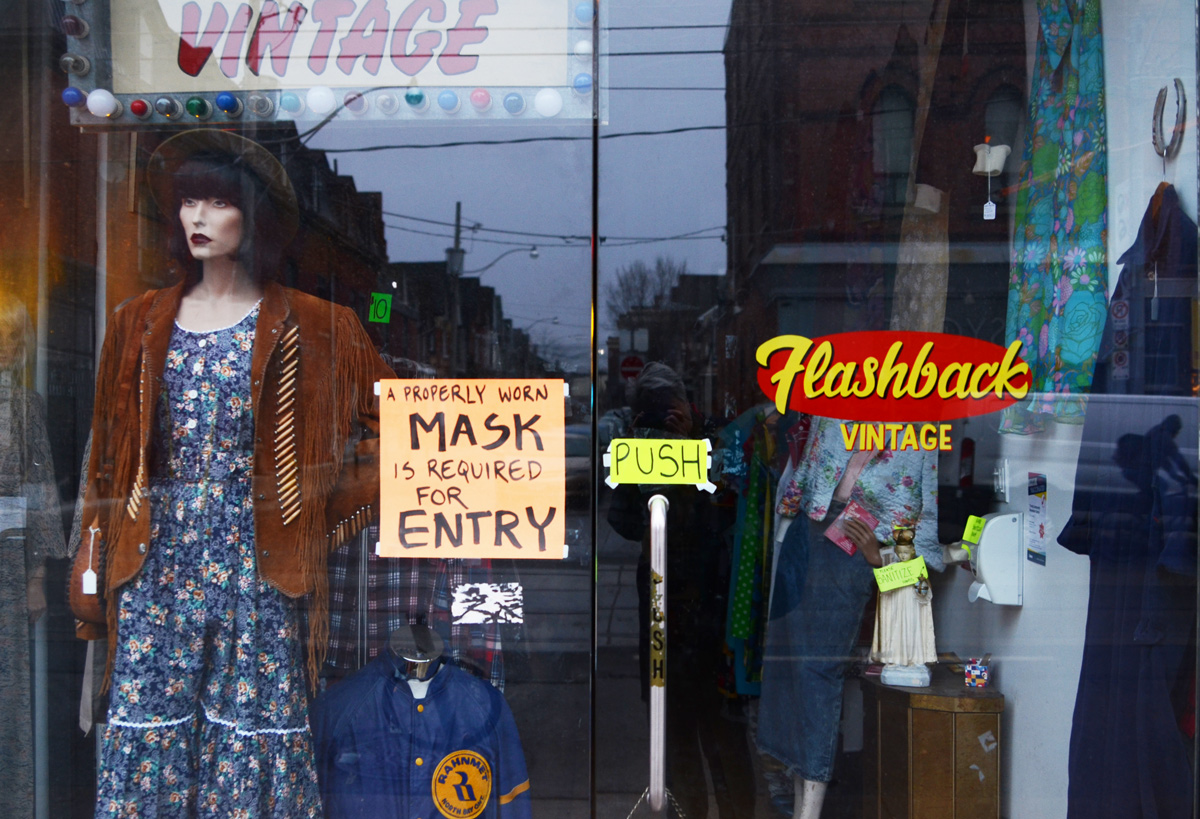
below: A properly worn mask…..
What is creepier? Dolls or mannequins?
below: Poetaia wants to know what you’re up to, wink, wink.
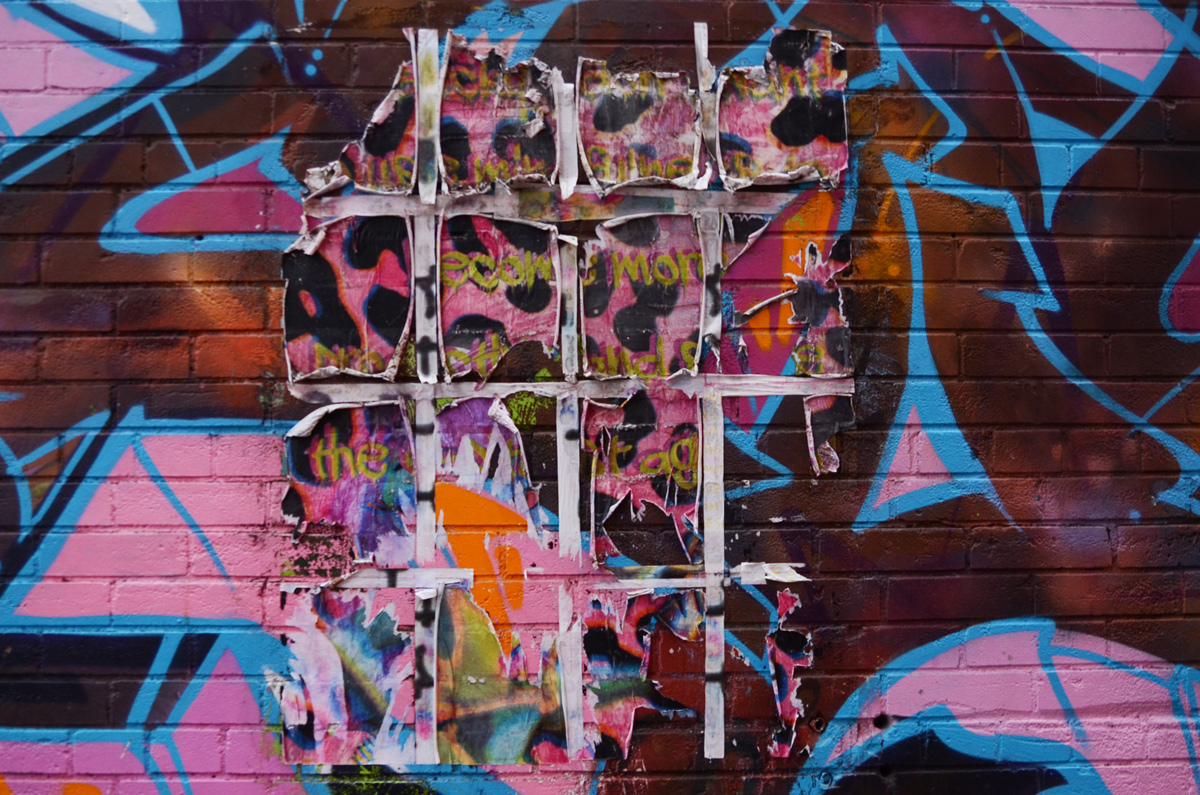
below: Peeling paper makes the gold words difficult to read
below: There’s a yellow eye and possibly a blue one too?
Howdy!
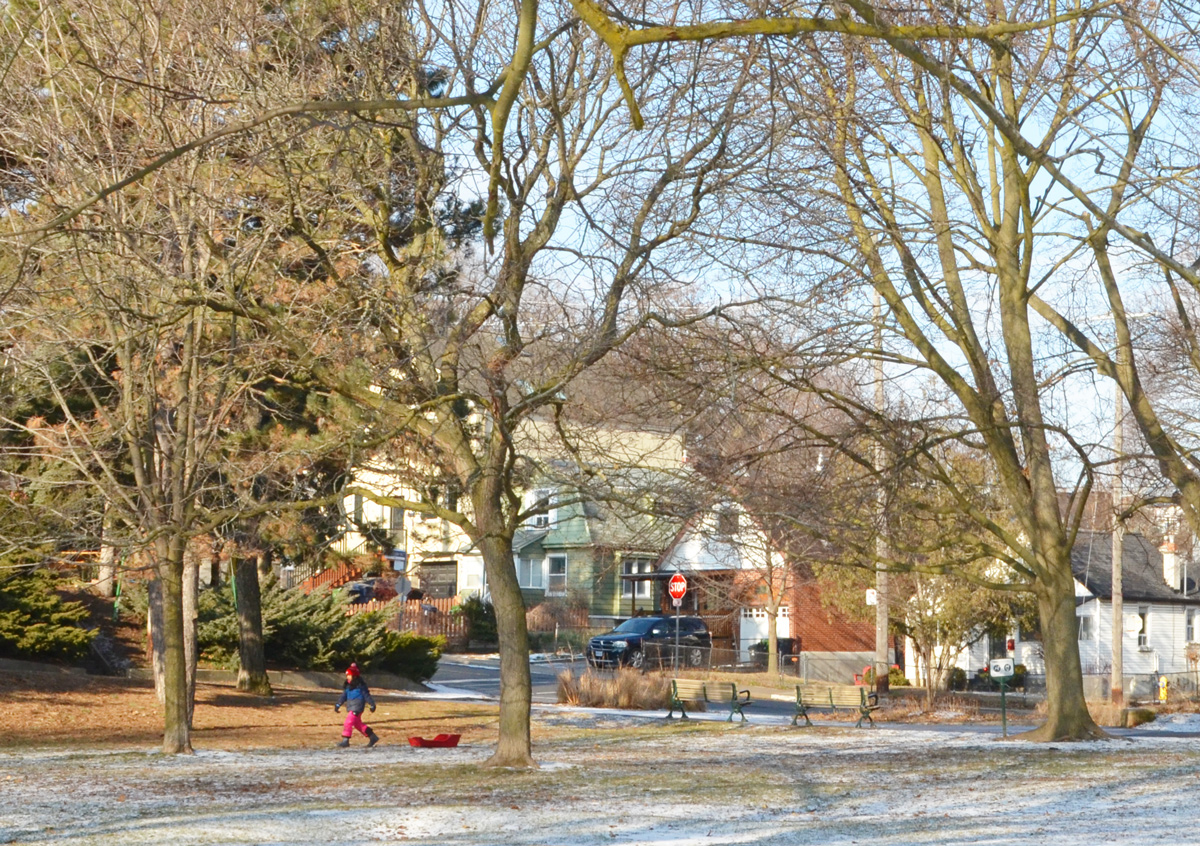
There are rumours of a vaccine being available but at the rate at which people are being inoculated, we’re going to be living this socially distanced life for a few (many?) more months. To help alleviate the feelings of isolation without jeopardizing anyone’s health, I have started walking with friends in their neighbourhoods. My previous post, about Glendon College, was the result of a walk that I took with my mother and it was that afternoon that I decided to make a point of walking with friends more often. The result of the first of these walks, near South Kingsway & Bloor, is what you see here.
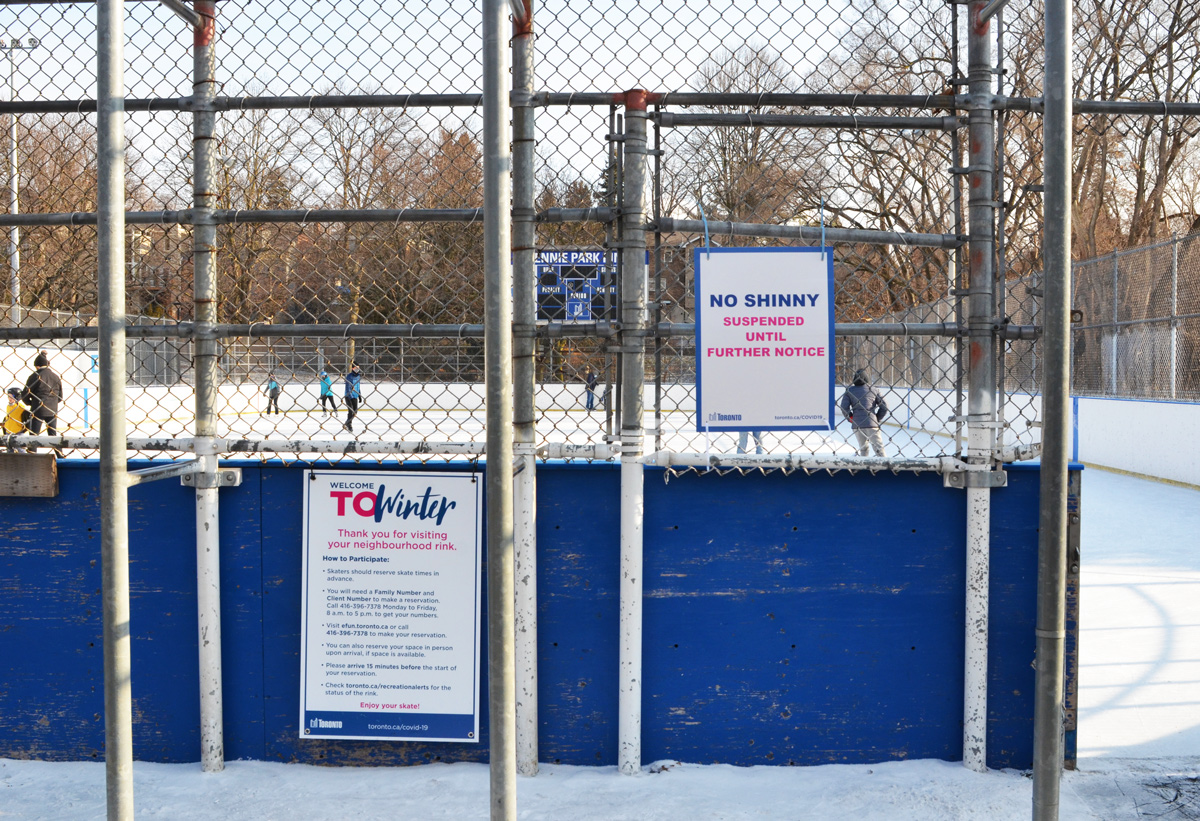
below: Rules of the rink for these Covid-19 times.
A little house!
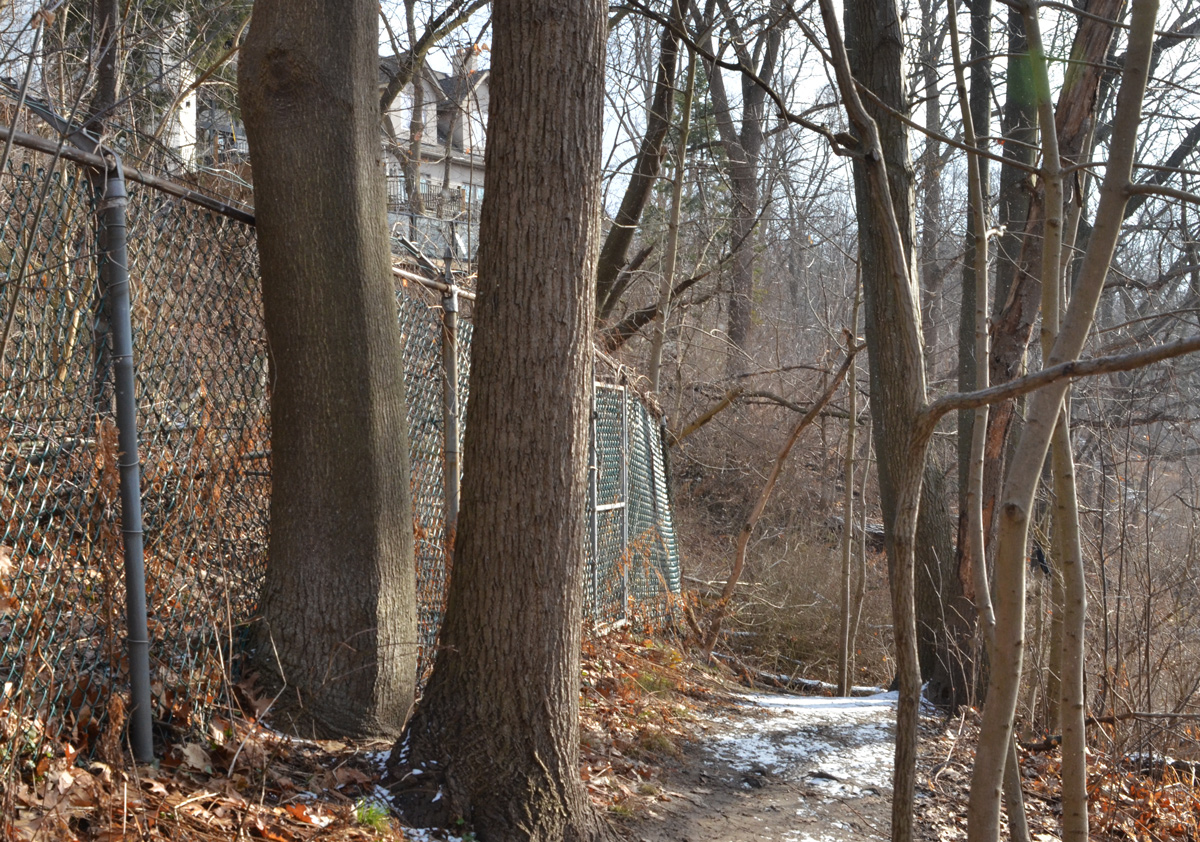
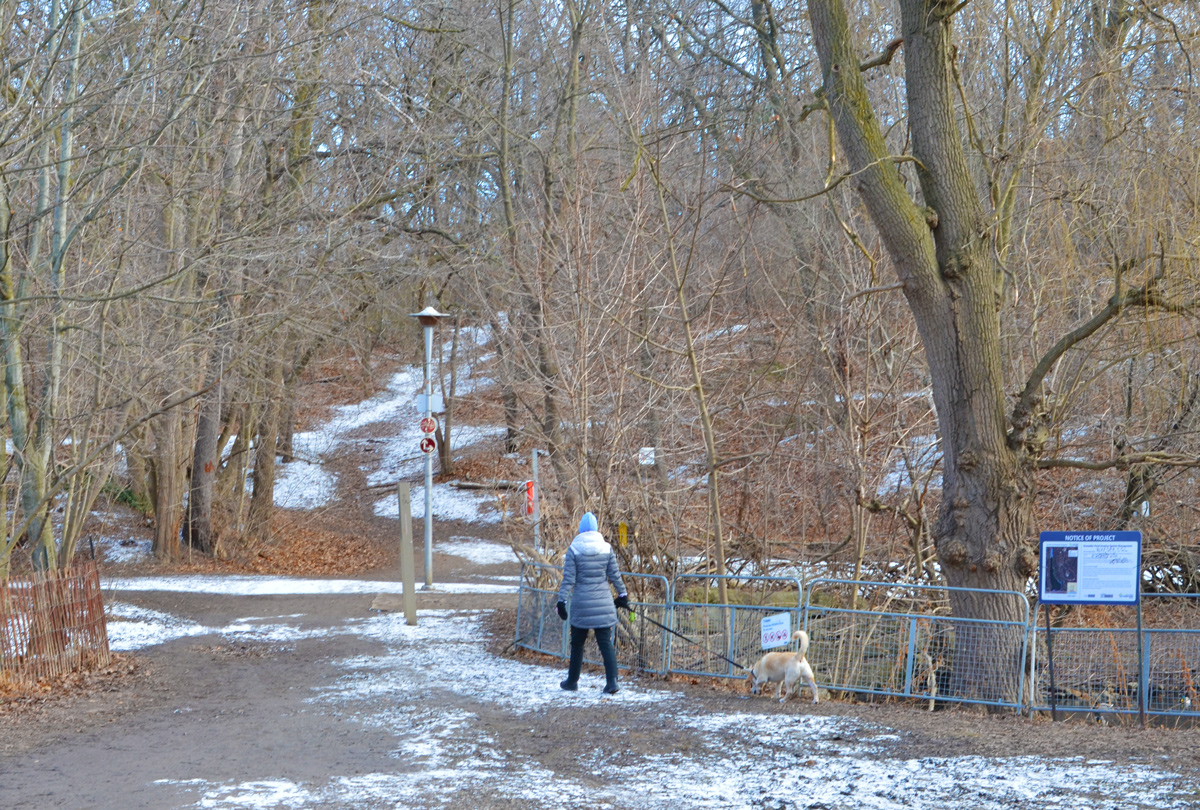
below: Be careful where you walk!
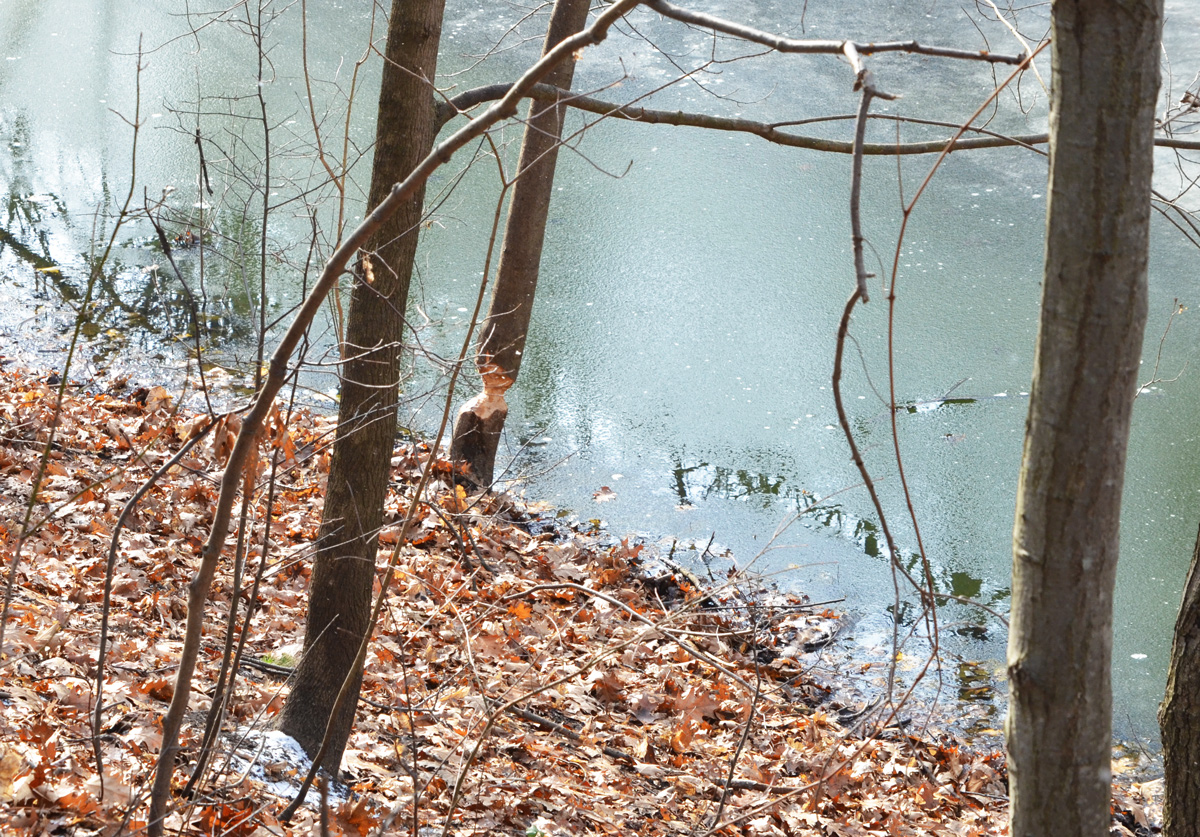
below: Evidence of beaver activity!
below: The muddy path beside Catfish Pond
below: Morningside High Park Presbyterian church, built 1917.
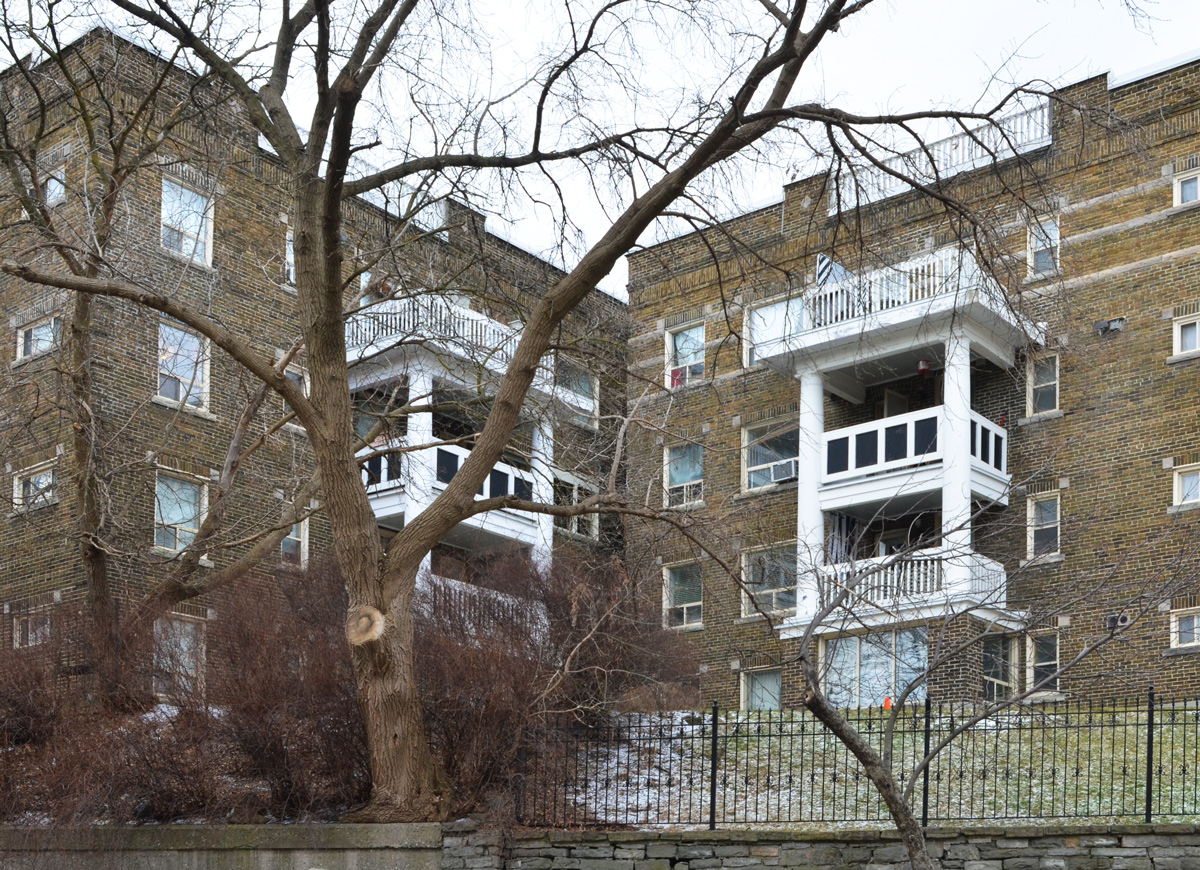
below: In the distance, highrises near Bloor West and Keele
below: High Park
below: The very north end of Grenadier Pond. Work is underway to remove invasive species of plants from this part of High Park and replace them with native vegetation.
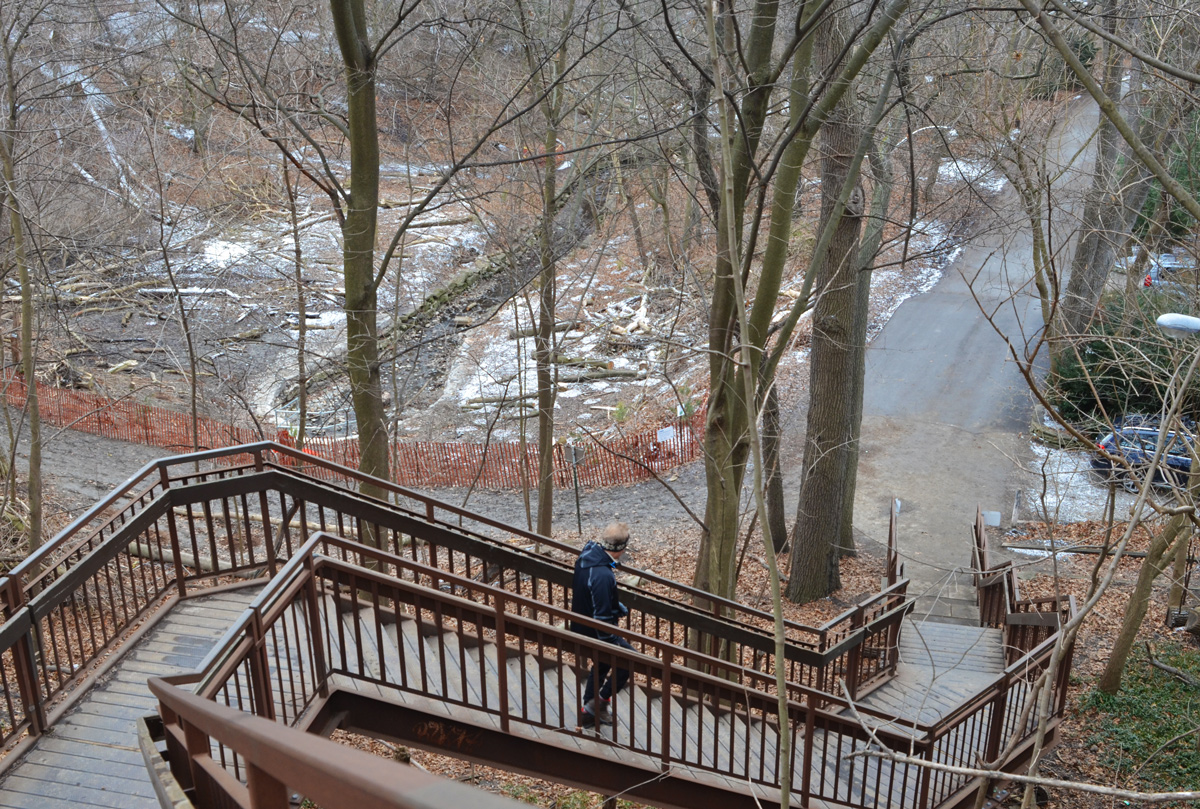
and back up the stairs to Bloor West
With thanks to Alice for being my tour guide.
The main entrance to Glendon College is via Lawrence Avenue on the west side of Bayview; here Lawrence becomes the driveway for the college. The first building that you see is glass with the word welcome in several languages etched into it. On the left is “boozhoo” which is Ojibwe, “she:kon” is Mohawk, and “tansi” is a greeting in Cree.
In 1924, Edward Rogers Wood (1866-1941) and Agnes Euphemia Smart (1868-1950) moved into the house that they had built on 84 acres of ravine land at the north end of Bayview Avenue, in what was then suburban Toronto.
below: Glendon Hall now, on a grey winter day.
When Agnes Eupemia (Phemie) died in 1950, she left the estate to the University of Toronto to be used for a university botanical garden. Ten years later U of T gave the site to the newly formed York University to use as their main campus.
below: Another of the older buildings at Glendon
below: Residence building being renovated. They were built in the late 1960s. Glendon College has just under 3000 students but the campus was very quiet (on a Sunday in January 2021).
below: Lionel Thomas (Canadian,1915-2005), The Whole Person, 1961 metal mounted on the exterior of one of the buildings on the College campus.
below: Metal sculpture by Ray Spiers (b. Canada 1934), Untitled 1, 1975
below: Sculpture of a more temporary nature.
The main part of the campus is up high, above the ravine formed by the west branch of the Don River. At the bottom of the hill is the pool and tennis courts as well as access to trails along the river.
below: Athletic Center and bridge over the Don River
below: The end of Lawrence Avenue on the east side of Bayview.
below: Under the Bayview bridge which was originally built in 1929 with financing help from E.R. Wood, and expanded in the early 1960s.
below: Before 1929 this is where traffic crossed the Don River. The bridge, Watson’s Bridge, was built in 1895. In the distance, you can see the Chedington condos; they sit where a house for Muriel Wood once stood. E.R. Wood built the house (also called Chedington) for his daughter in 1927-28 but it was destroyed by fire in 2009.
below: Watson bridge, built 1895
below: Beyond Bayview the paths were very icy so we didn’t venture much farther that day.
More details about the history of the Bayview bridge can be found on a City of Toronto website. They have lots of pictures!