Posts Tagged ‘trees’

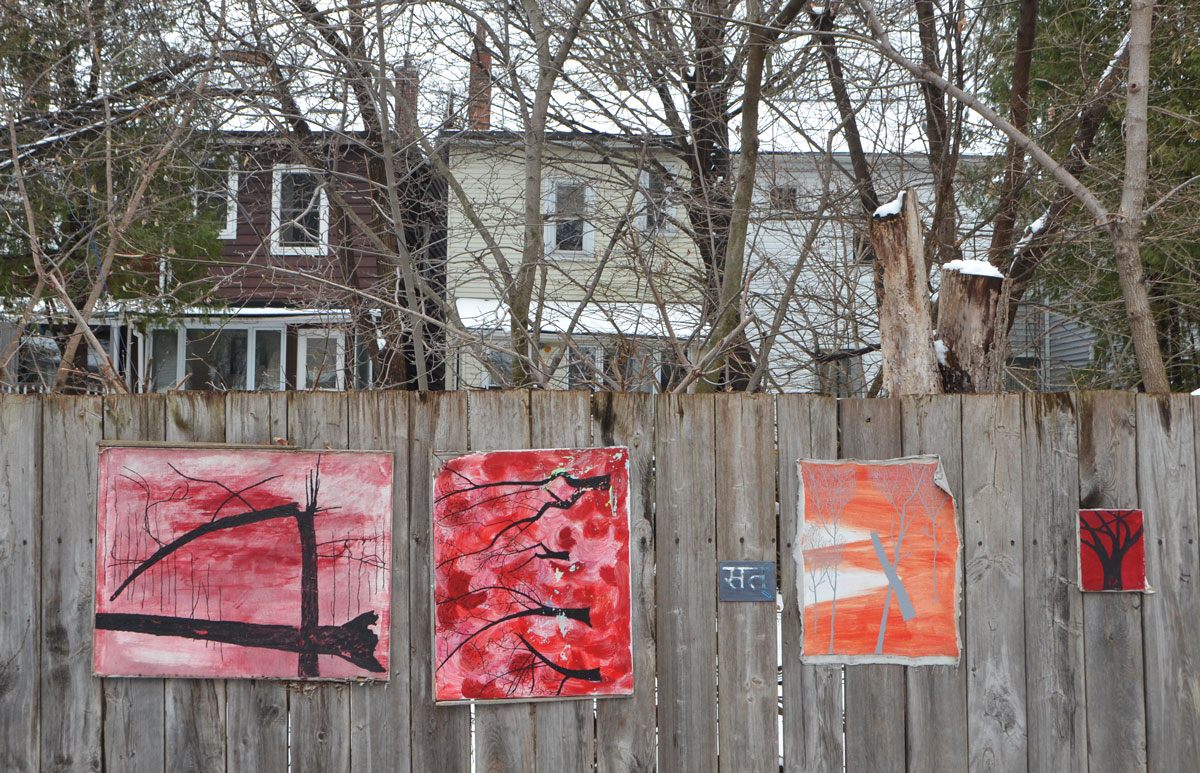
A few weeks ago I posted some pictures of the fence along Craven Road that has been decorated with artwork and old artifacts.  I was south of Gerrard Street when I took the photos.   I didn’t realize at the time that I missed another outdoor gallery on the other side of  Gerrard.  Today I took some pictures of those on display on the north side.   Here they are in no particular order:

below: Looking north up Craven Road along the fence.
That tropical sunset on the left looks very inviting!

small amateur paintings displayed on a wood fence, with trees and houses in the background, snowy day, looking down the length of most of the gallery, small pile of snow against the fence, painting in the foreground is warm Caribbean sun on beach with palm tree, Craven Road

small amateur paintings displayed on a wood fence, with trees and houses in the background, snowy day, an evergreen bough hangs over the top of the fence, above a painting of trees in a forest in winter, low sun, and long blue shadows.

small amateur paintings displayed on a wood fence, with trees and houses in the background, snowy day, Craven Road in Toronto, two paintings of black trees (no leaves) on red, and one grey tree on orange background,

small amateur paintings displayed on a wood fence, with trees and houses in the background, snowy day, a black tree on a blue background. Snow has been blown against the wood fence and some of it has stuck to the fence, Craven Road

below: Some of the paintings are small words in another language and another alphabet.  Can anyone translate for me?

small amateur paintings displayed on a wood fence, with trees and houses in the background, snowy day, four paintings. One black tree on light brown paper, and three small paintings with words in a different language with a different alphabet, Bengali perhaps

small amateur paintings displayed on a wood fence, with trees and houses in the background, snowy day, Craven Road, trees on blue and green background
small amateur paintings displayed on a wood fence, with trees and houses in the background, snowy day, three paintings, one is a fish

By now I’m very curious about this street and this fence.  I found a long, detailed, and interesting history written by local historian Joanne Doucette that you can read here.


This is another meandering blog post… a post about being out and about on yet another wonderful autumn day, going wherever my feet and eyes take me.

below: The first picture of my day was this intriguing wall made of old wooden doors.  Bathurst Street.

a tall narrow wall about three storeys high made of old white doors.

below: A small elicser mural tucked away at the end of a parking lot.   The man has his back to the viewer but I can’t figure out what’s behind him or what he might be doing.

small mural on a fence, a man's head is back to the viewer

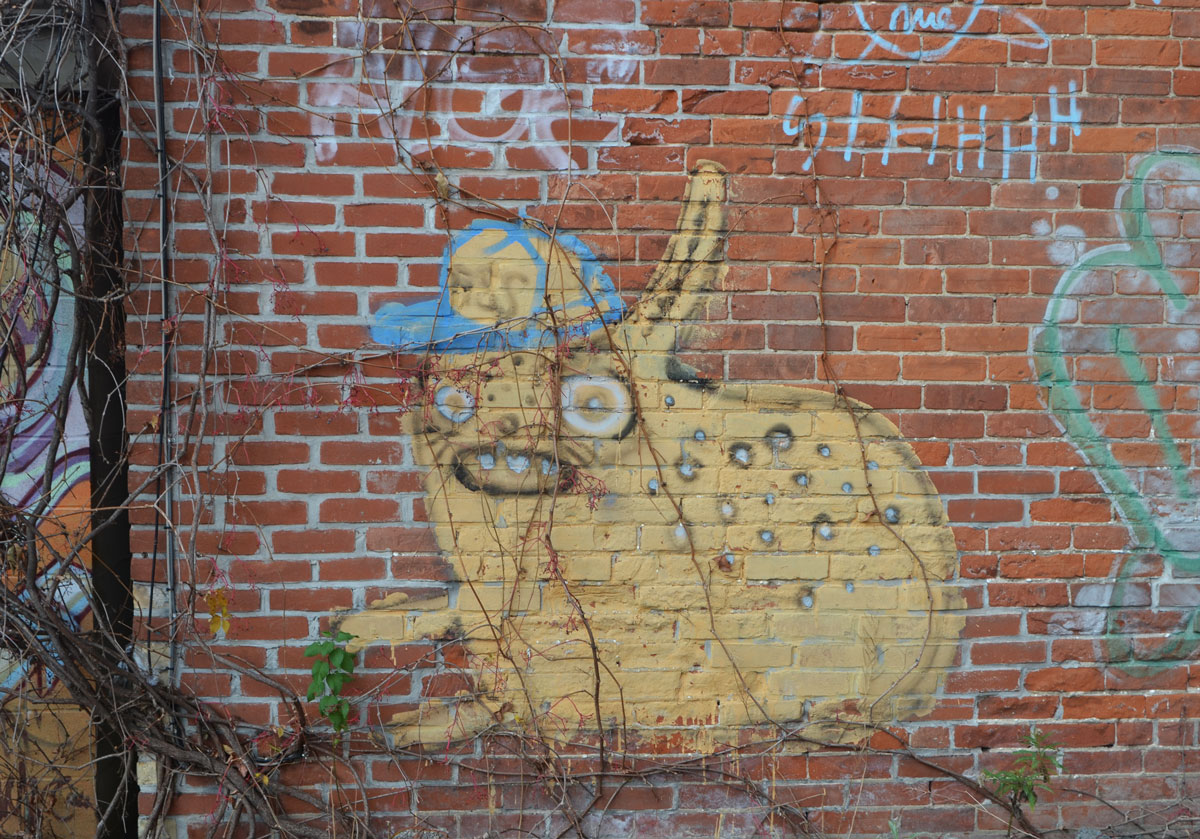
below: The leaves have fallen off the vines to reveal a yellowish creature with his baseball cap askew.

graffiti painting of a yellow animal like creature wearing a blue and yellow baseball cap. The creature is yellow. On a red brick wall, with spots on its back

below: Toronto’s tallest icon framed by a construction crane.

CN Tower in the distance, condo construction in the foreground, with a red crane

below: And on a similar note, a vacant lot cleared and ready for the next stage of its life.
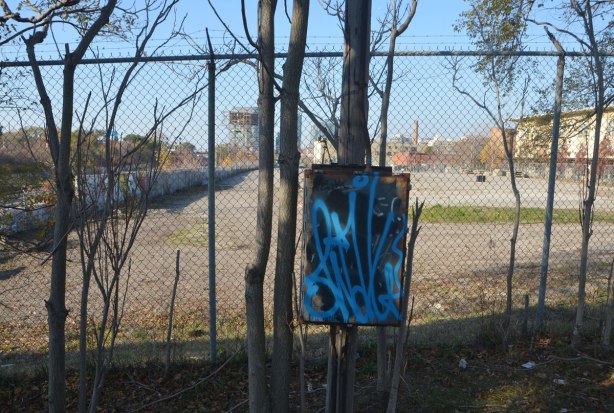
a box beside a fence that has been scrawled over with blue spray paint. Behind it is a fence around a vacant empty lot. There are some small trees growing in front of the fence.

below: No more cranes here (and not many vacant lots either for that matter).  A view showing how much development there has been on the south side of the railway tracks.   Fort York is between the tracks and the condo towers.

a VIA Rail train passes by on one set of many tracks, in the background is Fort York and then a series of new condo buildings.

below: And what’s this? An old blue canoe beached on the tracks?
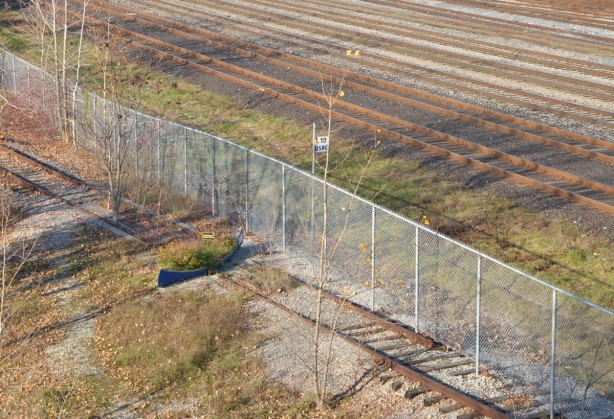
looking at the scene from a above, a blue canoe has been used to plant plants in. It lies across an old railway track, a chainlink fence separates the canoe from the main railway tracks that still function.

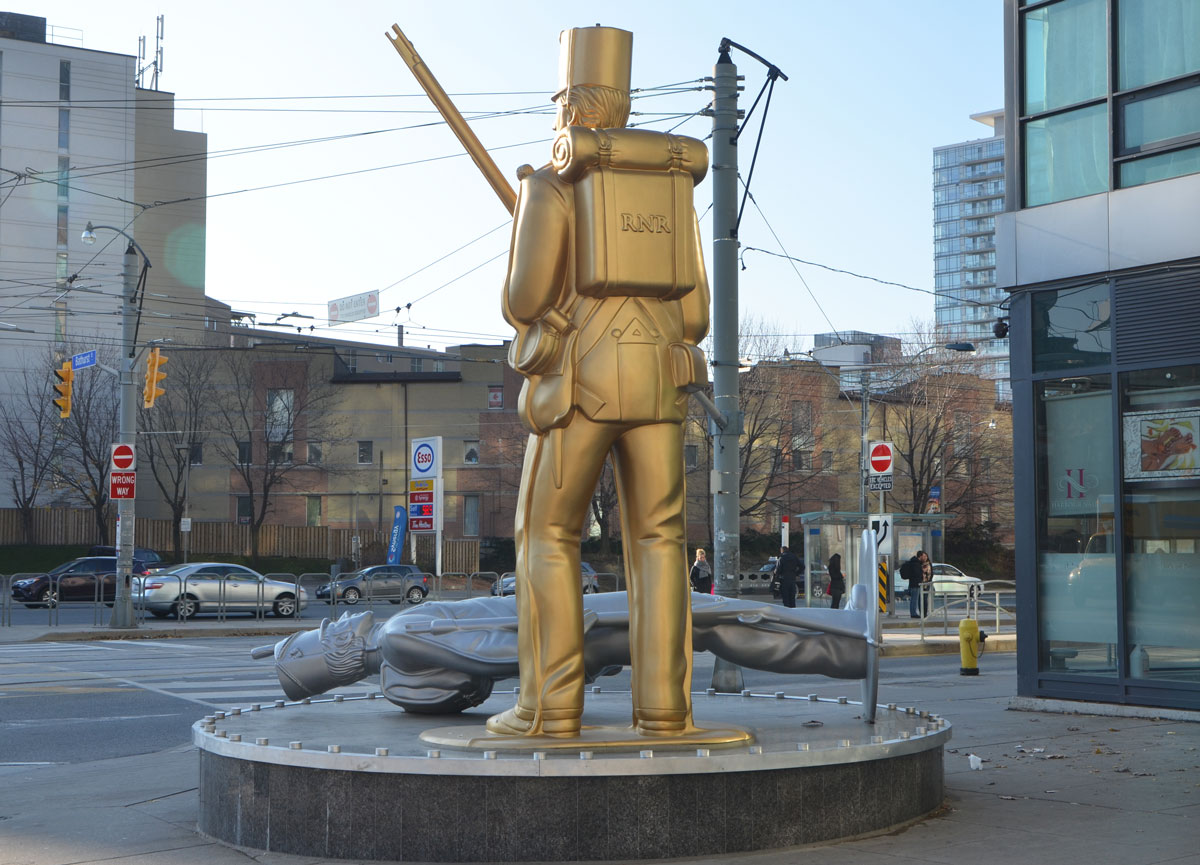
below: Standing guard over Bathurst Street, Fleet street and the Lakeshore, is one larger than life gold replica of a Royal Newfoundland Regiment and his fallen silver American foe. A sculpture by Douglas Copeland entitled “A Monument to the War of 1812”, a nod to nearby Fort York and the history of Toronto.

Douglas Copeland's sculpture of two tin soldiers, a gold one standing with backpack on and rifle in hand, and a silver one lying on its back on the ground, uniforms circa War of 1812, seen from the back, figures are much large than life sized and they are on a corner at an intersection, Bathurst St. and Fleet St.

below: My favorite example of bad grammar still exists!  Off-leash dog area at Coronation Park.

a wood fence around a dog park, in autumn with lots of leaves on the ground, on the fence is a white sign with black letters re the Toronto municipal code 608,

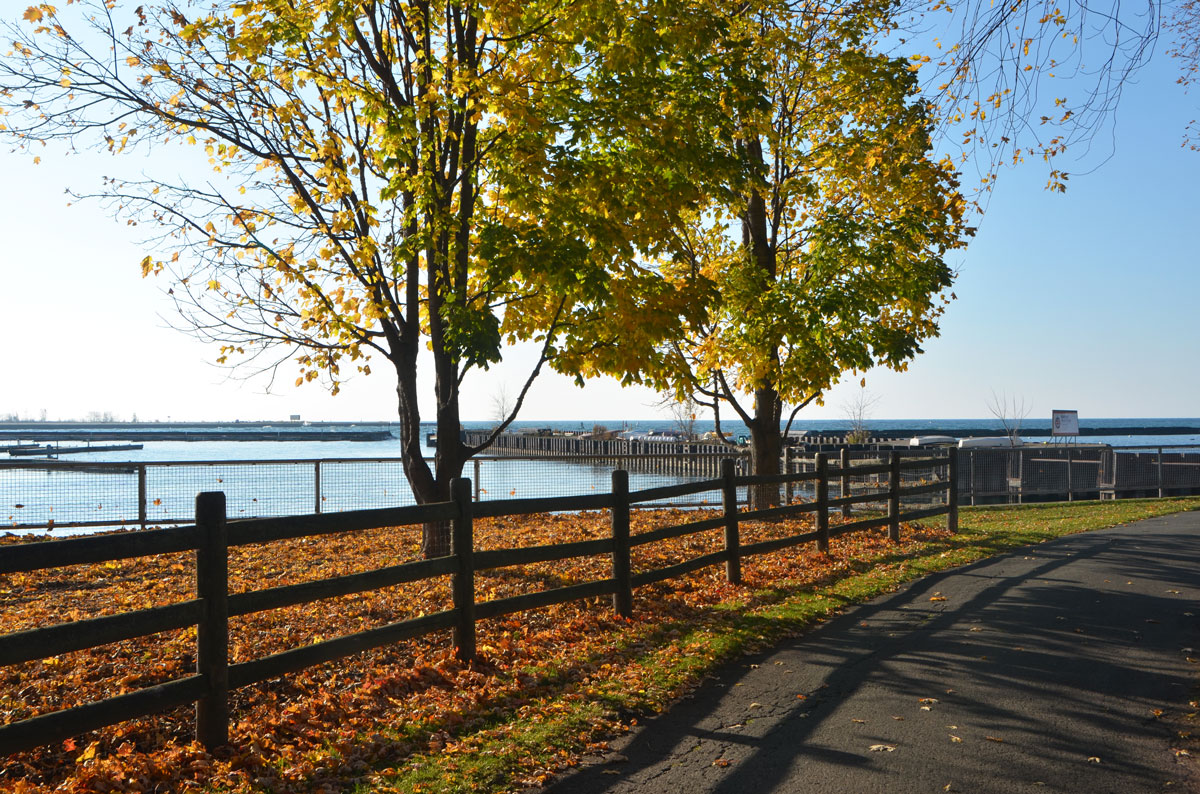
A beautiful day in the park.  A slight November nip was in the air but it was sunny and the sky was a brilliant shade of blue.  Coronation Park is named in honour of the coronation of King George VI who was crowned on 12 May 1937.  At that time nearly 150 trees were planted here.

Apparently, an oak tree was planted to honour the king.  Surrounding it, a ring of silver maples was planted.  This was to symbolize the countries of the British Empire.  I wish I had known that bit of trivia before I walked through the park because now I am curious if these trees are still there.   Some of the trees are quite substantial.

below: Long shadows for the morning sun, low in the sky.

morning in the park, autumn, trees with some leaves still on, many leaves on the ground, wood railing fence, shadows, Lake Ontario, path, Coronation Park.

below: Looking back towards the city center, past the empty docks of the National Yacht Club to the residences on Stadium Road.   A small group of people were making a video in the dog park.

morning in the park, autumn, trees with some leaves still on, many leaves on the ground, wood railing fence, shadows, Lake Ontario, path, Coronation Park. a small group of people in the distance are filming a video

below: This Victory Peace Monument was unveiled on 14 November 1995 to commemorate the 50th anniversary of the end of World War 2 and honour those who died in that war.   It was designed by John McEwen; the bronze pieces resemble the bow of a ship.

Metal partial cylindrical shapes on a concrete circular monument. World War 2 memorial

below: On the inside of one of the bronze pieces is a map of eastern Canada and the Atlantic Ocean.  Each boat on the map represents a ship or U-boat that was sunk during the war.  The Canadian ships are located on the map at “their last known position”.  I hadn’t realized that so many ships were lost so close to North America.

relief map of eastern Canada and the Atlantic Ocean, in bronze on a WW2 memorial. Little ships are shown on the ocean where they were sunk during WW2.

Trees were also planted to represent the four divisions of the Canadian Expeditionary Force (WW1) and its units as well as those who fought in the Fenian Raids of 1866-1870, the Northwest Rebellion of 1885, and the Boer War (1899-1902).  Once upon a time, brass plaques were placed at the foot of each tree to indicate the units the tree stood for.  If any plaques remain, I didn’t see them.

below: Another memorial is close by, a  “Memorial to Lieut. Tommy Hobbs gallant British Canadian soldier in the Great War 1914 – 1918.  Died on active service November 10, 1940.  Beloved and remembered by his comrades.”   Tommy Hobbs was involved in the creation of this park.

a memorial in a park made of a small pile of rocks. The top rock is inscribed, memorial to Tommy Hobbs, died 1940, in Coronation Park

below: A little farther on I noticed another rock, one that was painted red.   The bronze plaque on the rock says that 20 trees have been planted here in commemoration of the G20 Summit held in Toronto in 2010.

a large rock with a bronze plaque on it. The rock has been crudely painted red

below:  A 30 foot tall Inukshuk stands looking out over Lake Ontario.  Approximately 50 tonnes of mountain rose granite was used to create the Inukshuk, which was made by Inuit artist Kellypalik Qimirpik from Cape Dorset, Nunavut.

a tall stone inuksuk on a raised mound of warth

below: Streetcars across the baseball outfield.
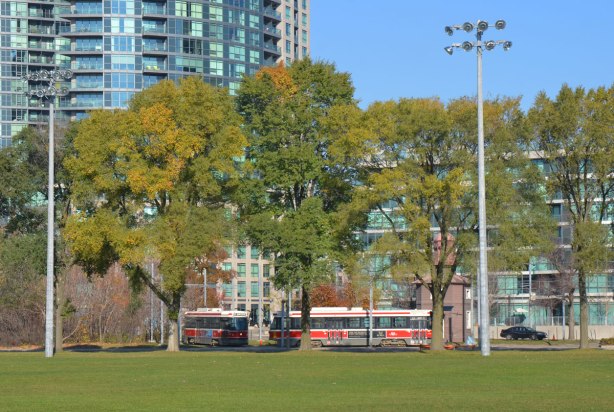
Looking across the outfield of a baseball diamond towards a street. A line of mature trees by the street with two red and white TTC streetcars on the street, condo towers behind.

below: A closer look at that brown octagonal structure in the middle of the streetcar loop for the 509 and 511 cars.  Apparently it’s the Queens Wharf lighthouse, one of a pair built in 1861.

a brown structure, the Queens WHarf Lighthouse, sits on a patch of grass beside TTC streetcar tracks in front of a new condo.

The lighthouses marked the entrance to the Toronto Harbour from 1861 until the Western Channel was built in the early 1900’s.   This one stood on Queen’s Wharf which used to be at the foot of Bathurst Street, adjoining Fort York.  The wharf was built by the military; in 1833 it was a pier 42 feet long.    The pier no longer exists; a hundred years ago it was buried under what is now Bathurst Quay.

below:  A picture of an historical map (1886 or 1887) of the area showing Toronto Harbour, Fort York and the railway lands.  Queen’s Wharf is the pier on the left.   At that time, Front Street was the southern most street in this part of the city.   All the present day development south of the train tracks is on reclaimed land.

picture of historical map of part of Toronto Harbour from 1886, showing Fort York, Front St., and Bathurst St., and the railway lands and wharves into Lake Ontario,

below:   Taken from google maps, what the layout of the city looks like now.   As you can see, there have been many changes!

present day map taken from google maps of Coronation Park and Bathurst Quay including Fort York

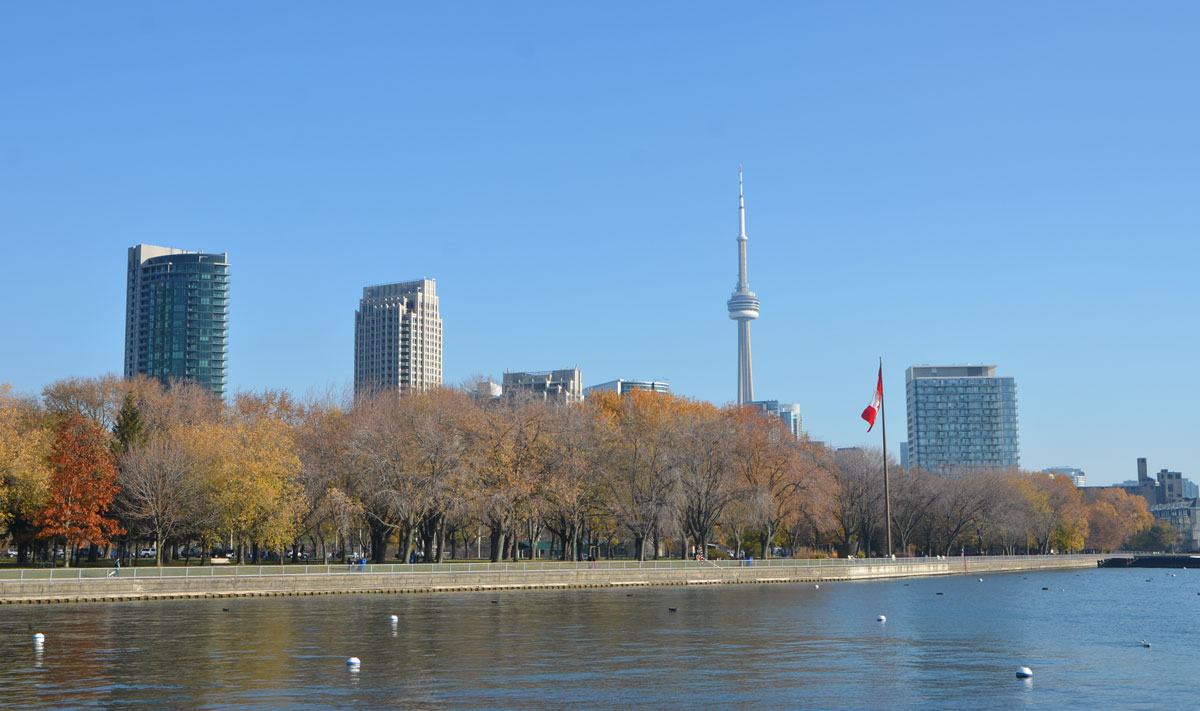
Lake Ontario in the foreground, trees in Coronation Park in the middle and Toronto skyline in the distance with the CN Tower and a large Canadian flag.
a sticker of a rainbow in a heart shape. A small purple heart is in the center, then a blue heart is drawn around it, moving outwards in rainbow colours.

I was going to go looking for autumn but, silly me, I soon realized that I didn’t need to look for it.   It’s all around us.  All you have to do is look out the window, or better yet, step out the door and you’re in the middle of it.  It’s falling in front of you, swirling in the breezes and crunching under your feet.

street scene, large trees with yellow and orange leaves, with a park in the center

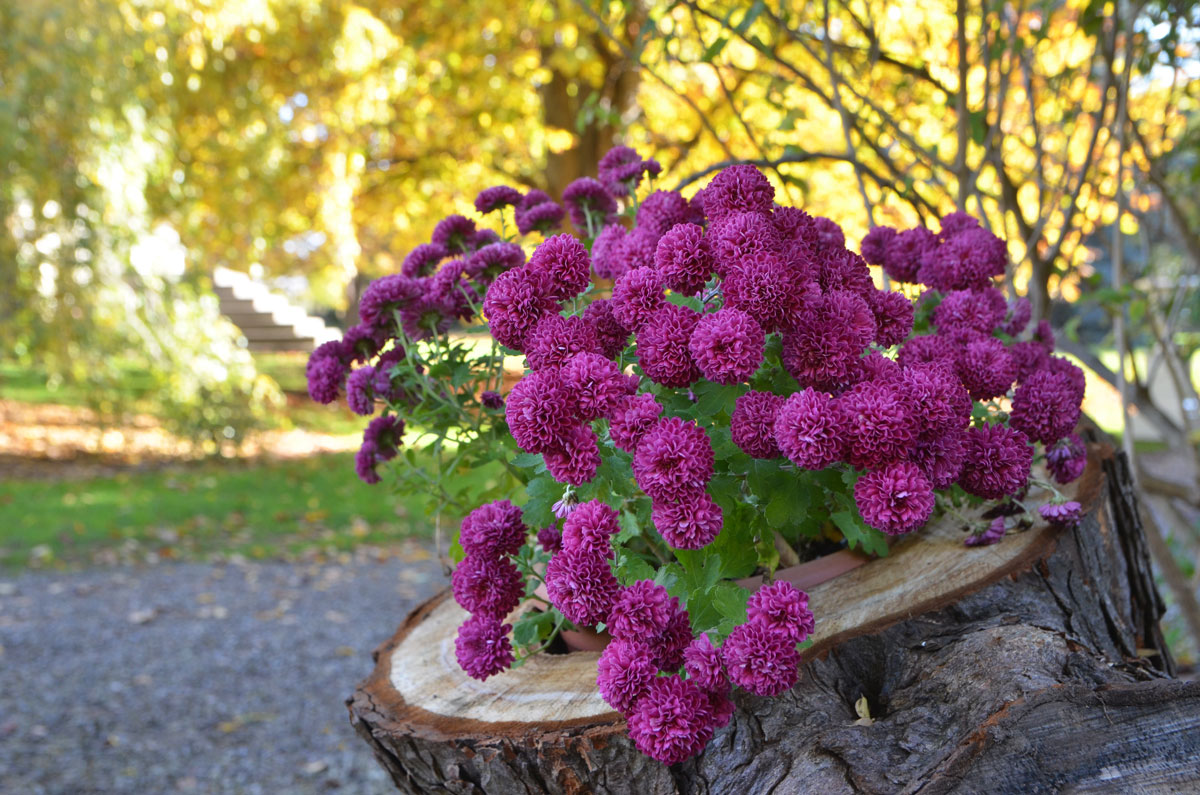
a pot of purple flowers with a yellow tree in the background

a stone fence with a metal gate, large trees, autumn leaves
a branch of yellow leaves, autumn tree with blue sky and the turret of Casa Loma in the background

two storey brick house with large tree in front, smaller trees with yellow leaves in the background.
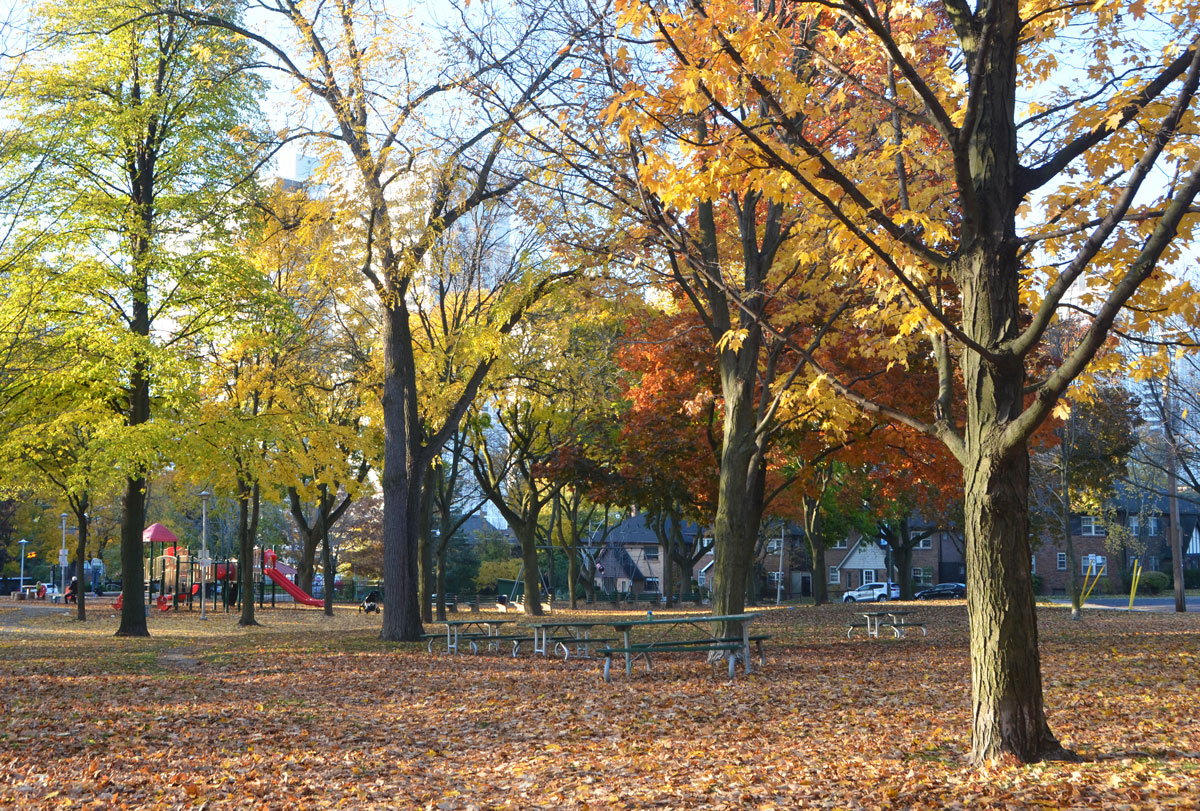
park in the fall, leaves on the ground, trees still with some leaves in oranges, rusts, and yellows, playground in the distance

a metal bench in front of a large tree in a cemetery, tree has yellow leaves, autumn colours, change of season, fallen leaves on the ground around the bench

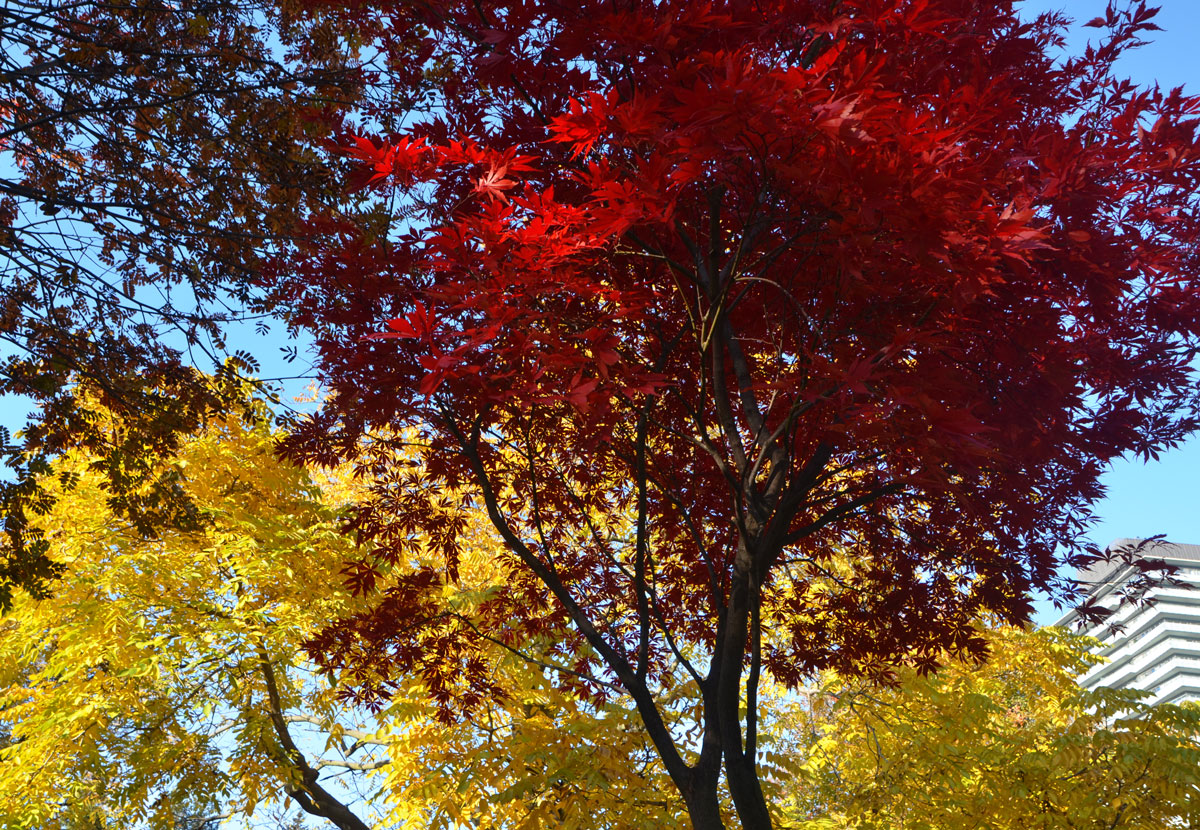
trees in autumn, red leaves and yellow leaves

A week or so ago I explored a lot of little alleys and lanes in Seaton village.  Once upon a time it was a village, named for John Colborne, 1st Baron Seaton, who was Lieutenant-Governor of Upper Canada from 1828 to 1836.  The land here was originally settled and farmed by loyalists Colonel David Shank and Captain Samuel Smith.   Eventually, George Crookshank acquired the property and he laid out the plans for a village here in the 1850’s; it wasn’t developed until around 1888 when the area was annexed by the City of Toronto.

Today it is the rectangular section of Toronto north of Bloor street to the CNR train tracks by Dupont and between Bathurst and Christie streets.  It is part of The Annex.

When I started to write this blog post my plan was to focus on how all lanes are the same yet different.  Their characteristics usually reflect the neighbourhood around them and the way the lanes are used.  Every lane has a personality.

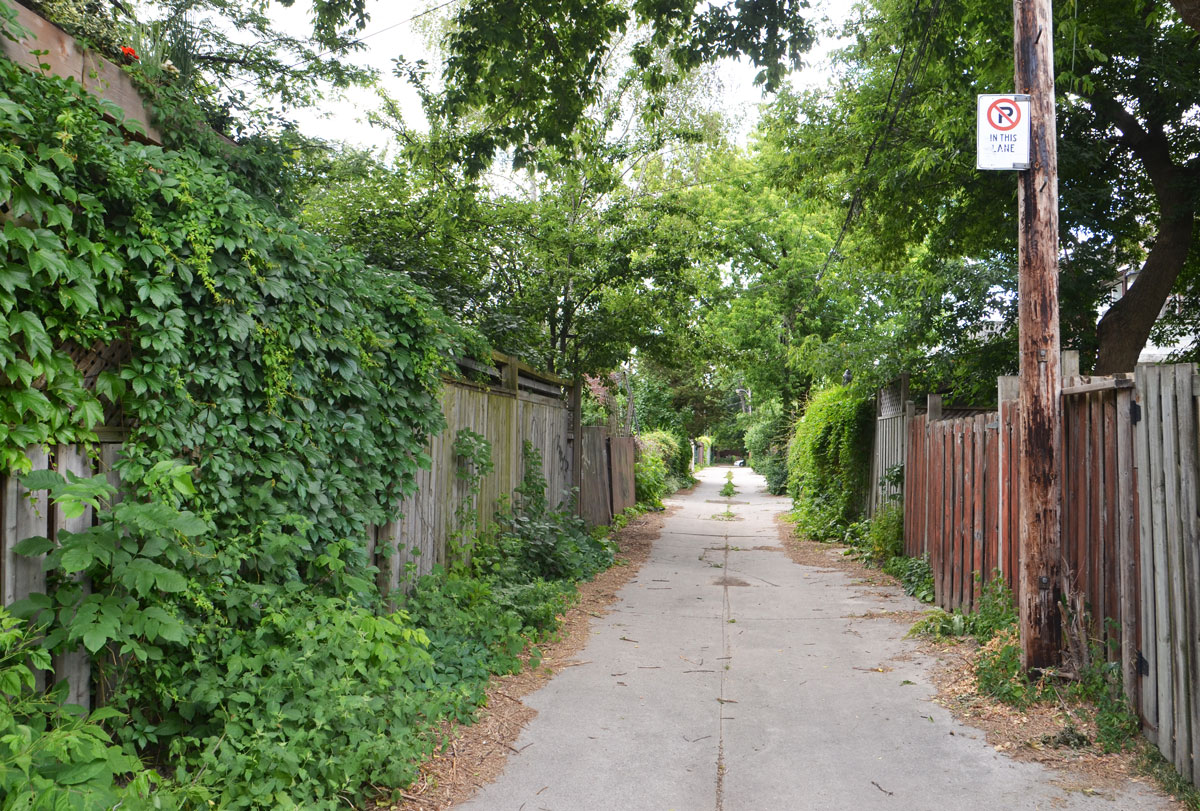
below: Vermouth Lane, one of the greenest lanes I’ve seen in Toronto.  Why?  Probably because there are no garages in the lane, except for the two that were beside me when I took this picture.  The backyards that are on this lane are not big.  There are one or two houses that have made room in their backyard for a car, but that takes up most of the space.  The lane itself is also rather narrow.

a lane with old wood fences and a lot of green, trees, weeds, ivy on the fences, shrubs beside the lane. narrow lane

below: In contrast,  Col David Shank Lane (there’s that name again!) ends at a wide alley behind the stores and services on Dupont.  It’s a working alley.

wide lane behind Dupont Street in Toronto, an old car is parked there, back of an auto repair shop, sturdy looking two storey brick buildings.

But that’s only stating the obvious, isn’t it?

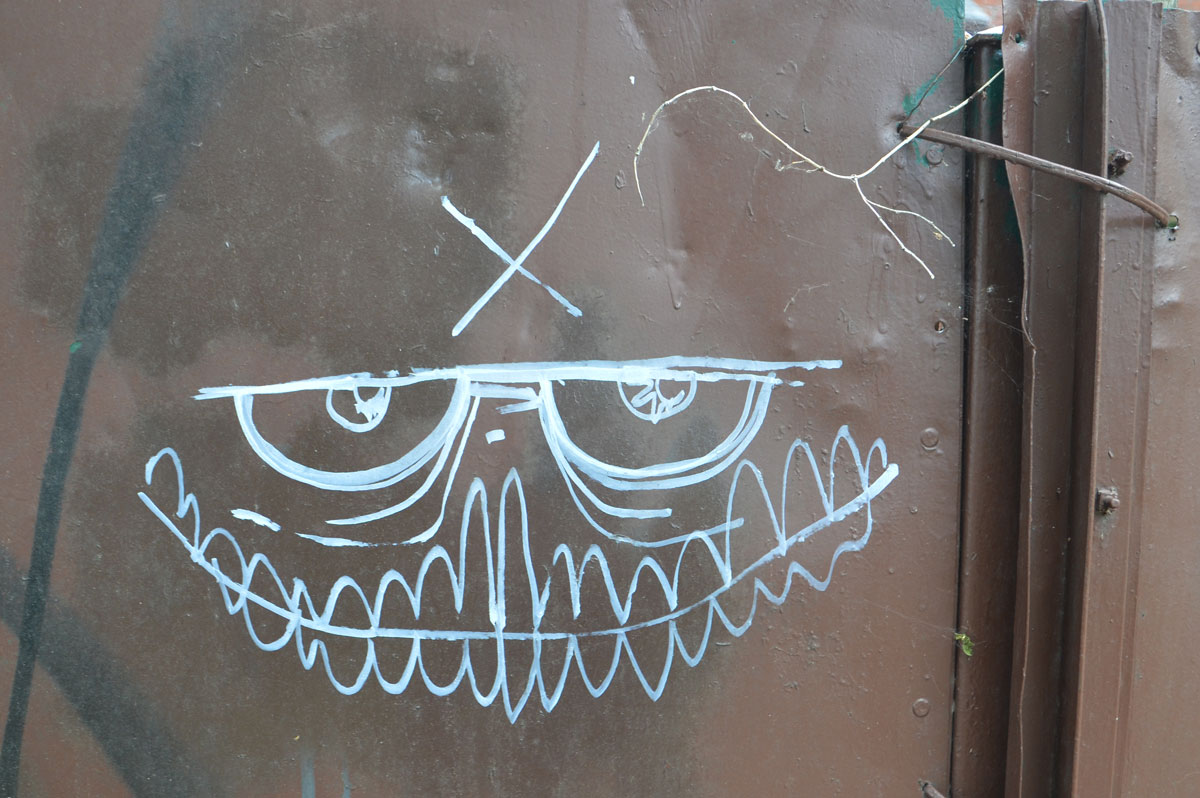
On a brown metal door, a white line drawing of a grinning face with many teeth and semi circular eyes

Like the city around them, lanes are a mix of old and new, interesting and bland, plus well kept and neglected.

from a lane, two garages, a wood fence painted faded green between the garages, the tops of the houses can be seen behind.

They are the less public side of city life.

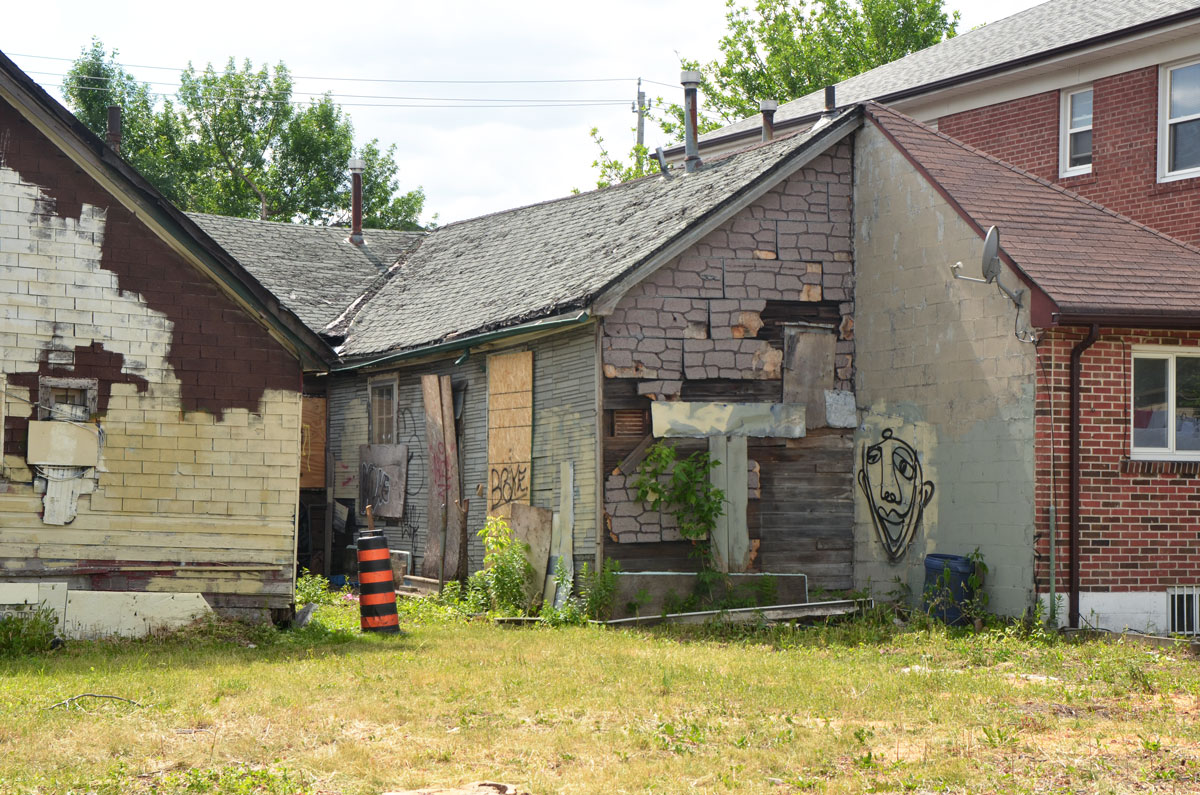
backyard, and back of an old building that has been boarded up. The ashphalt shingles on the back of the building are torn , there is a graffiti face painted on one wall

below: As I looked for things that make alleys different, I kept finding little details like the old blue plant pot with its contrasting orange wall.

A planter in blues and blacks with a partially dead and drooping plant sits beside an old wall that has been painted bright orange. The wall behind the plant is brown.

below: The textures and bright colours in the design made by aging paint on a garage door caught my eye.

part of red garage with paint starting to peel where blue lines have been sprayed on.

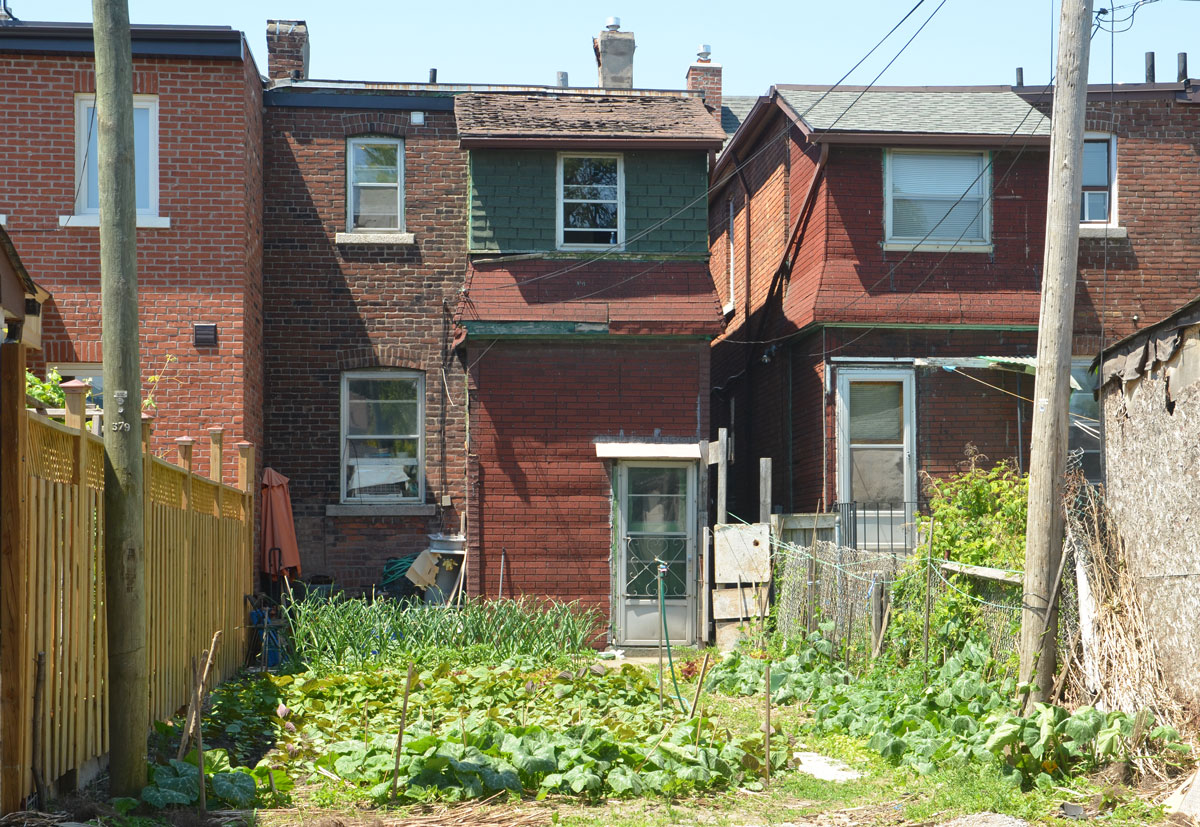
below: A vegetable garden dominates the backyard.

the back of a house and its backyard which has been planted with a vegetable garden.

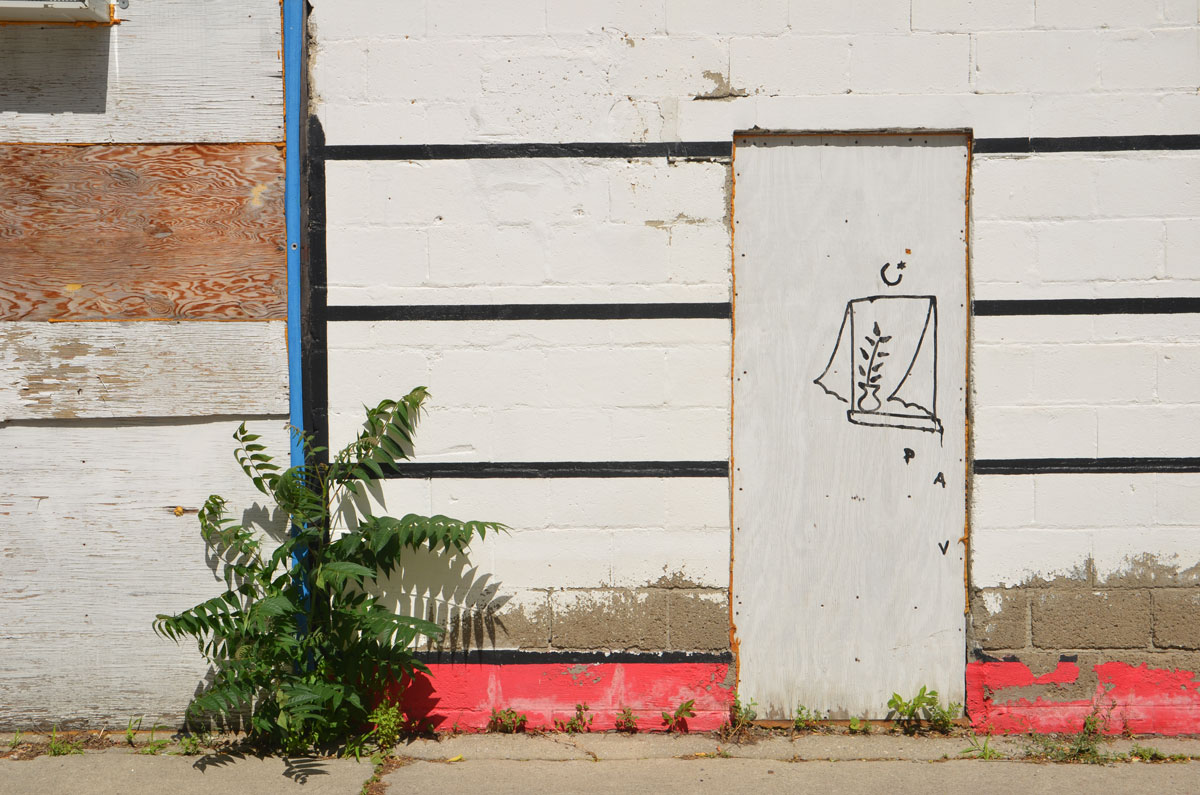
below: A simple plant in a window in Tandy Murch Lane.  Walter Tandy Murch (1907-1967) was a painter who was born and raised in the area.  His mother, Louise Murch (nee Tandy), was a popular singing teacher

white door on white wall. Someone has drawn a window on the door with a plant in the window. Bottom of wall is red, three black horizontal stripes on the wall, one vertical blue pipe on the left side

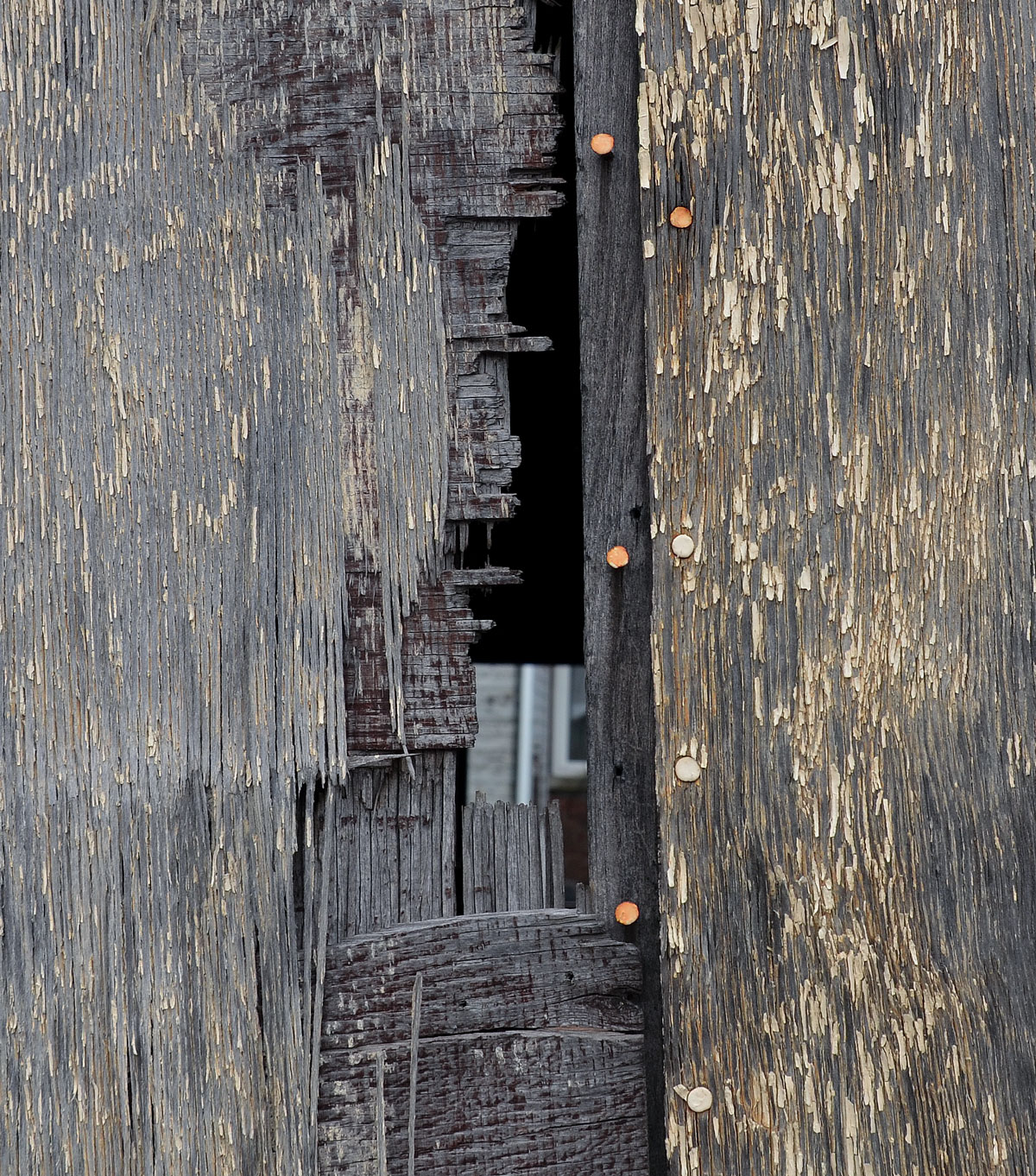
below: Through a hole in the wood, a glimpse of what lies beyond.

an old wood fence, unpainted, rusty nails, with a hole in it. Looking through the hole is part of a window but it's out of focus

below:  Abandoned plumbing fixtures lead to all kinds of jokes – outdoor plumbing

a white toilet, with a lid, sitting beside a yellow painted brick wall with weeds growing up beside the toilet, in a lane

below: A once proud tree

a big dead tree with the tops of the branches cut off, in a backyard, view from the lane behind, including the three storey building on the property

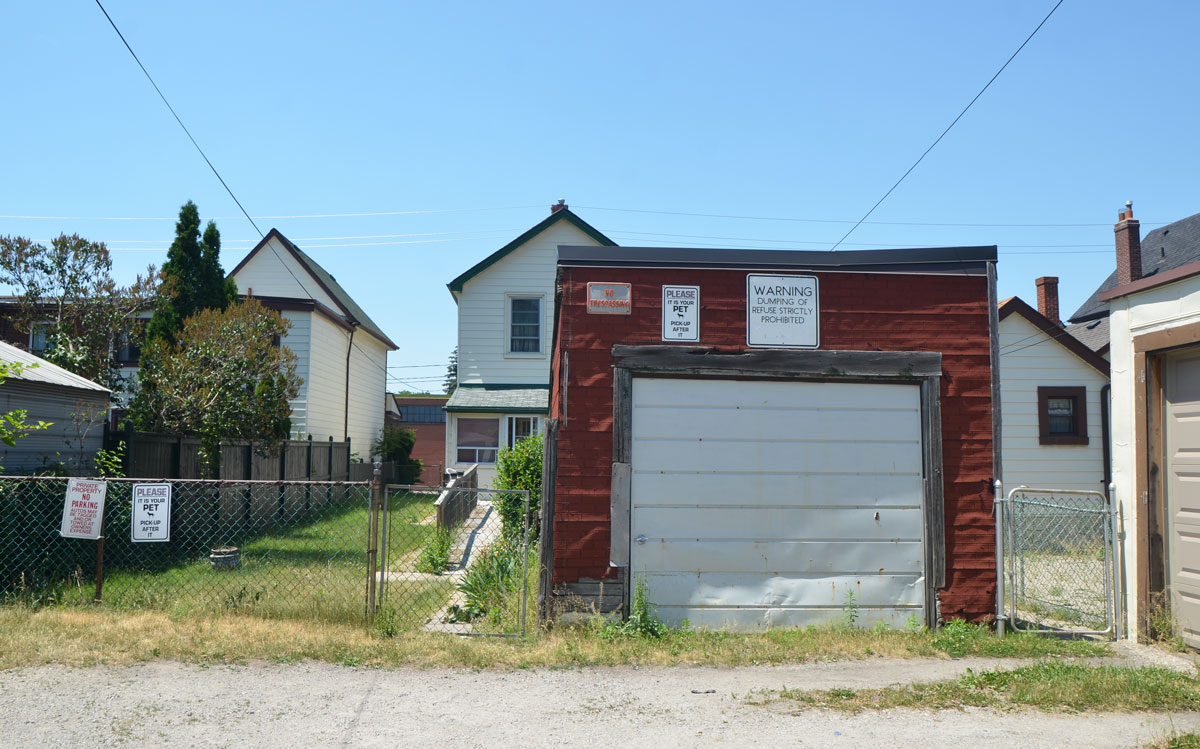
below: A garage door that stands alone and not in a row with others.

an old garage at the end of a backyard of a small white house, lane view, chainlink fence, well kept lawn, no trespassing signs, signs saying pick up after your pet, five signs in all,

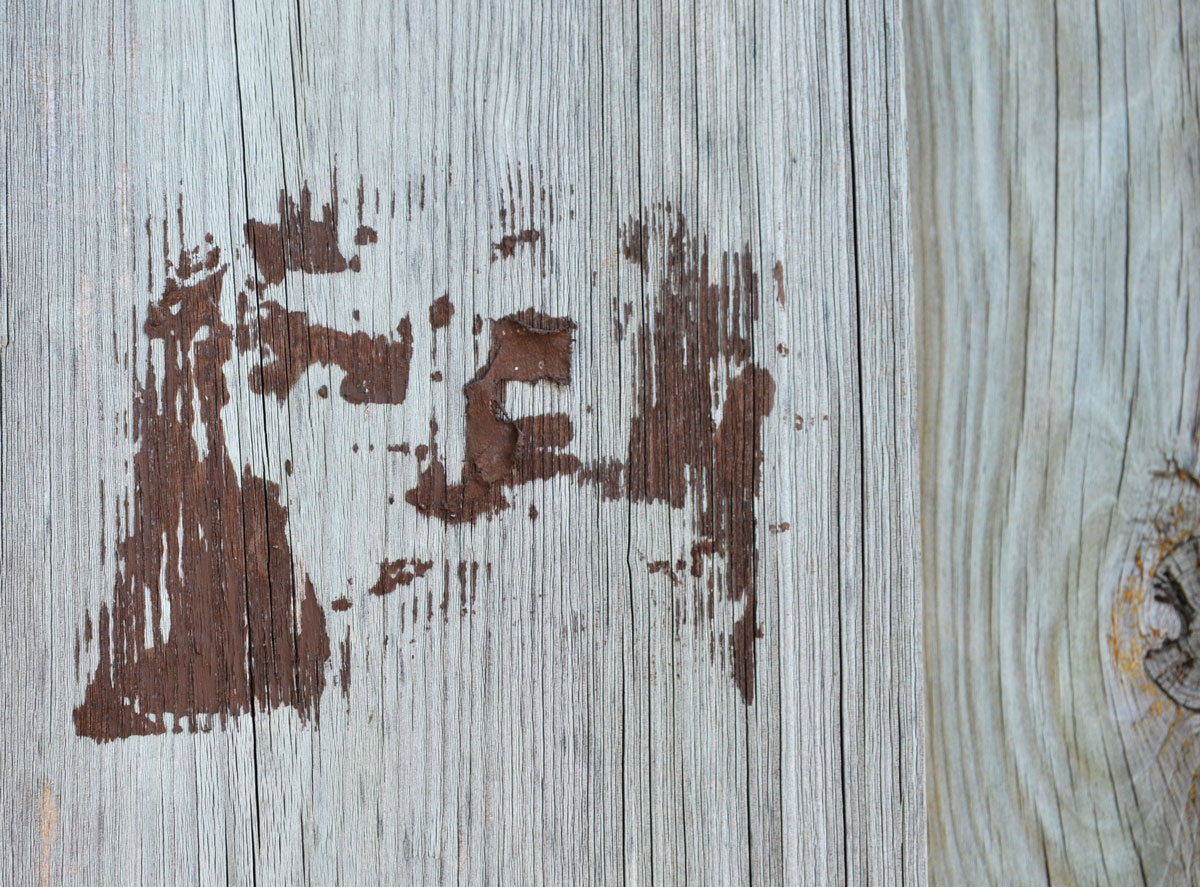
below: Possibly a Rorschach test?  A brown face is what I see.  Do you?

a brown stencil of a man's face on a wood fence but the paint was a bit heavily applied and there are some paint blobs

below: And another test – can you find the paintbrush?
Not sure how it got there!  Or how it’s staying there!

a used paintbrush is lying under the eaves of an old shed that is a mottled pale green and pale blue, branches of a tree and its leaves partially block the paint brush from view

below: This could become a game.  An “I Spy” kind of game.  I spy a face.

part of an old blue garage beside part of an old reddish and green garage, the shape of the faded paint on the blue, looks like a ghostly face

below: Or perhaps we could play peek-a-boo?

looking through the gap between two garages in a lane, into a backyard with a chair on the lawn, and a ladder and steps that look like a ladder up to a door at the second storey level

And this is where I am going to leave you…. until another day when I walk more lanes and find more little details, more differences, to make me smile.  And then we’ll play again!

The End

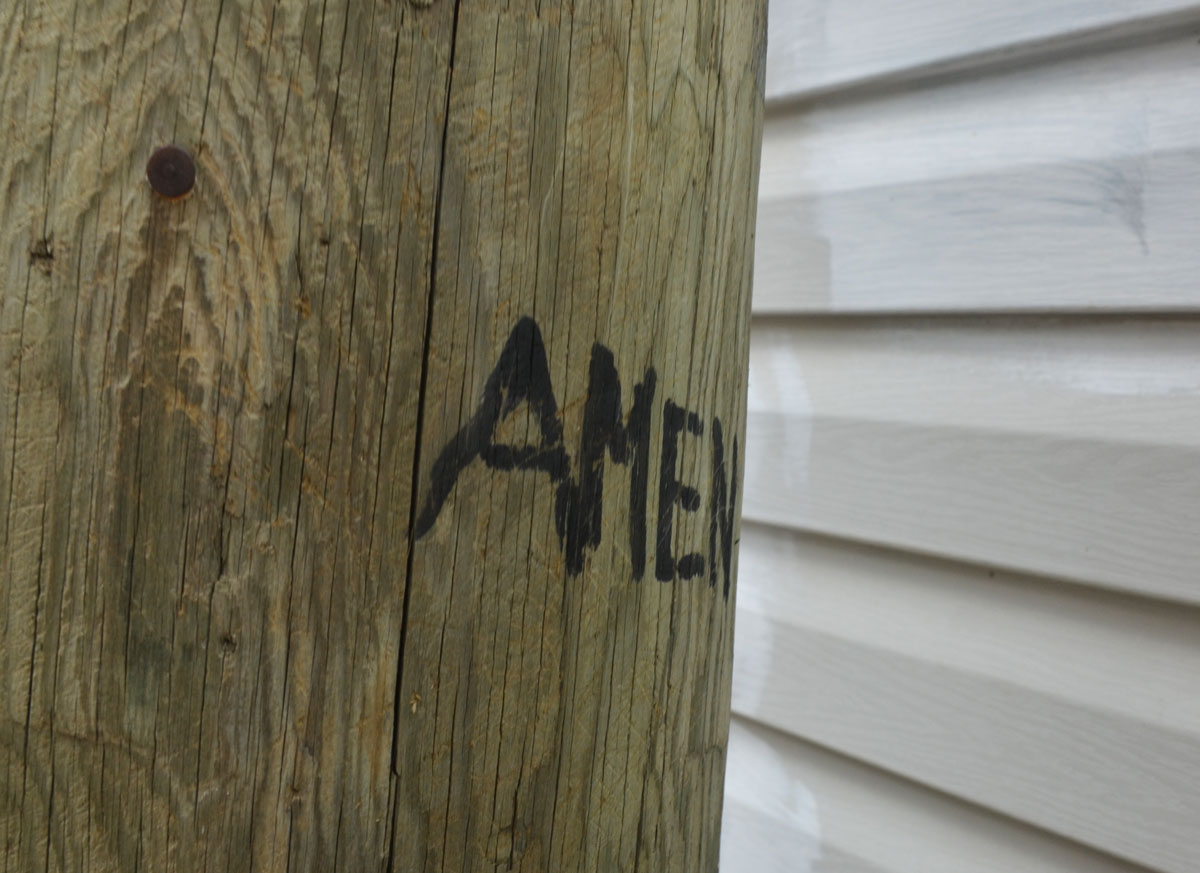
close up of a wood pole beside a white garage. Written in capital letters, black ink, is the word Amen

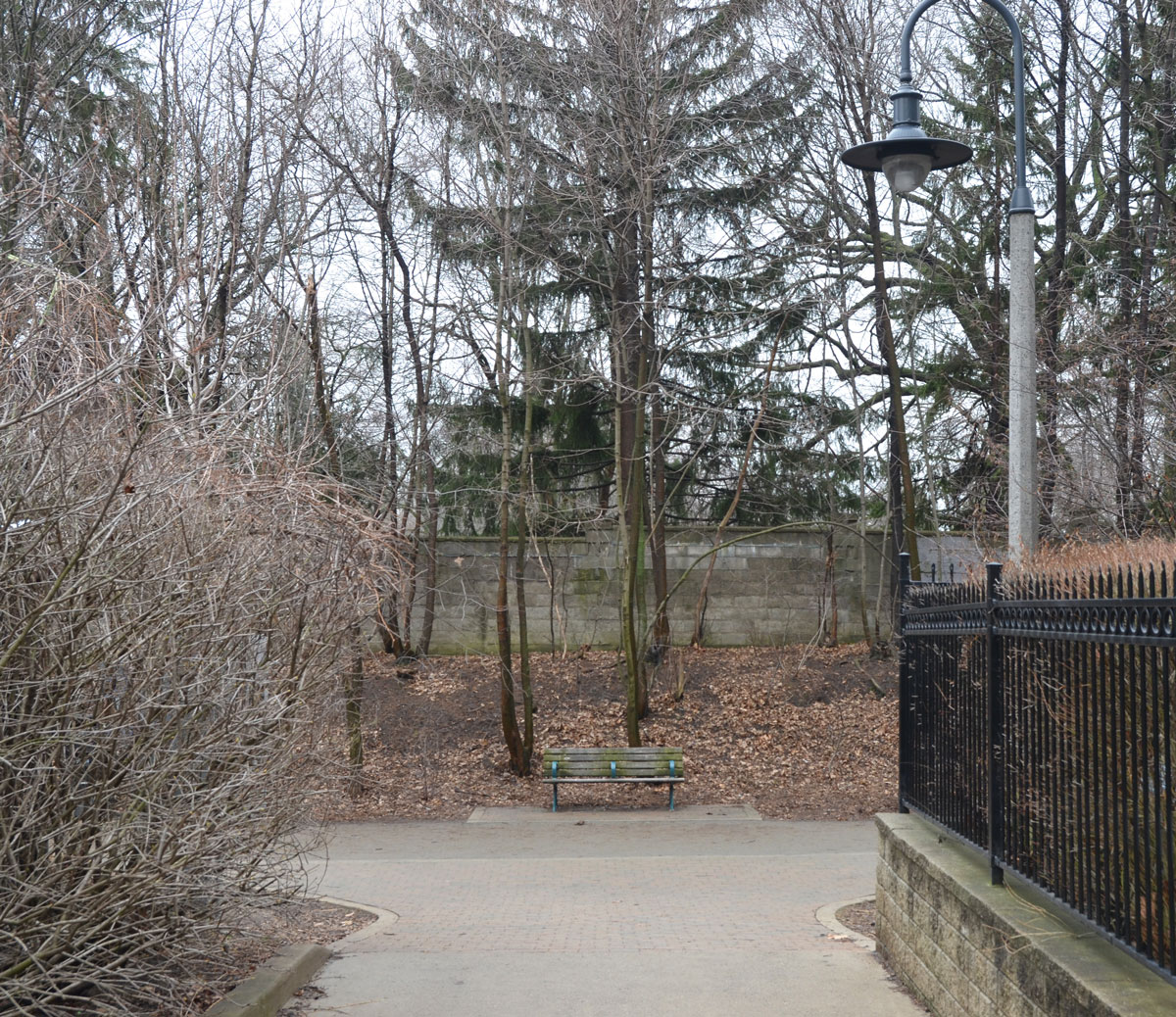
There is time between winter and spring that is a dreary time of greyness and dullness.  It is a time when the the snow is gone but nature hasn’t come out of hibernation.  It is also a time best forgotten.

between winter and spring, the snow has melted, there are no leaves on the trees, the weather is grey, looking down a path that comes to an end in front of a bench. Behind the bench are trees, dead leaves on the ground, and a grey stone fence. dreary, grey

Luckily we don’t have to wait long.

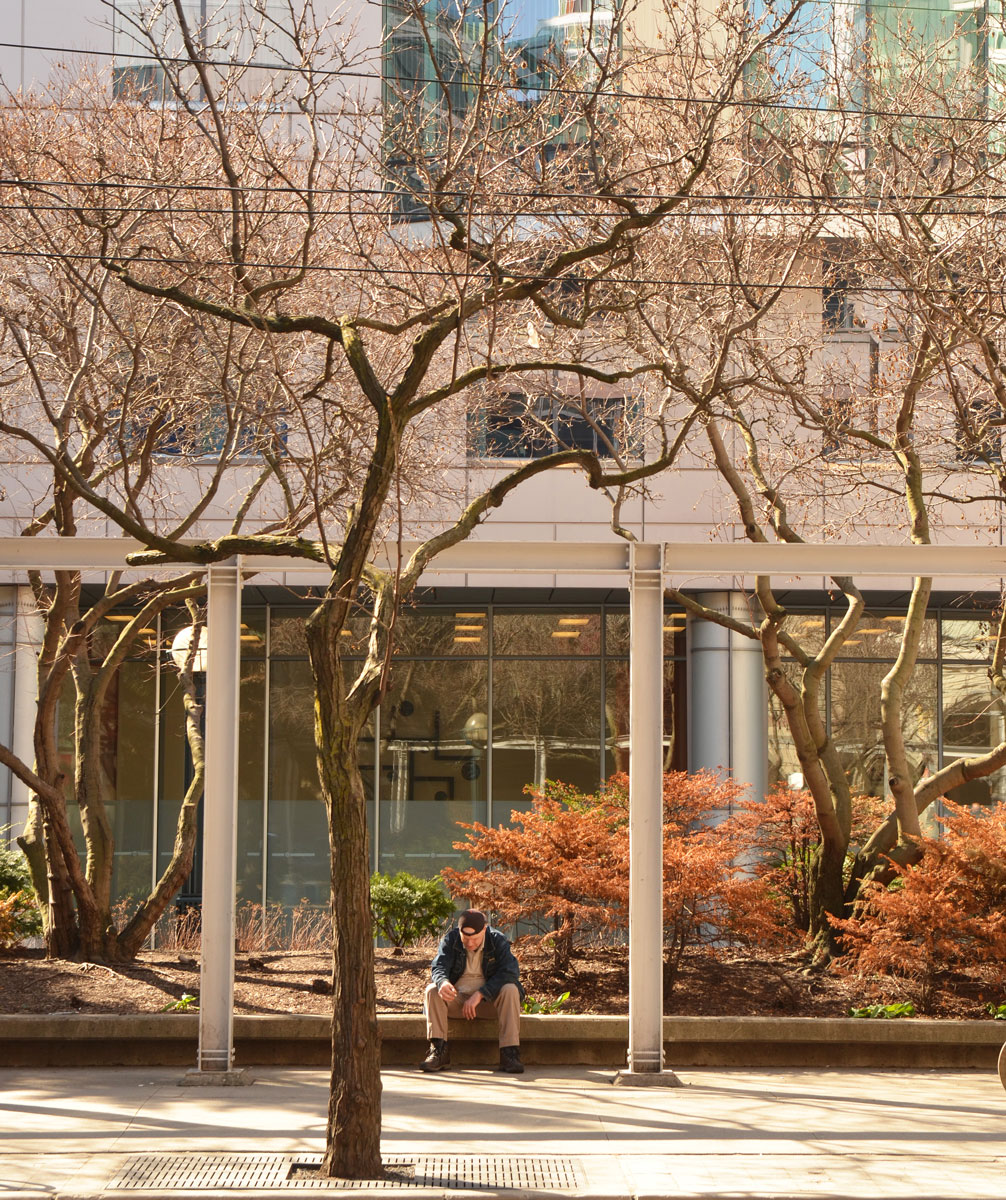
A man sits on the edge of a large planter with trees and shrubs in it in front of Roy Thomson Hall. There are no leaves on the tree yet.

… just a little longer ….

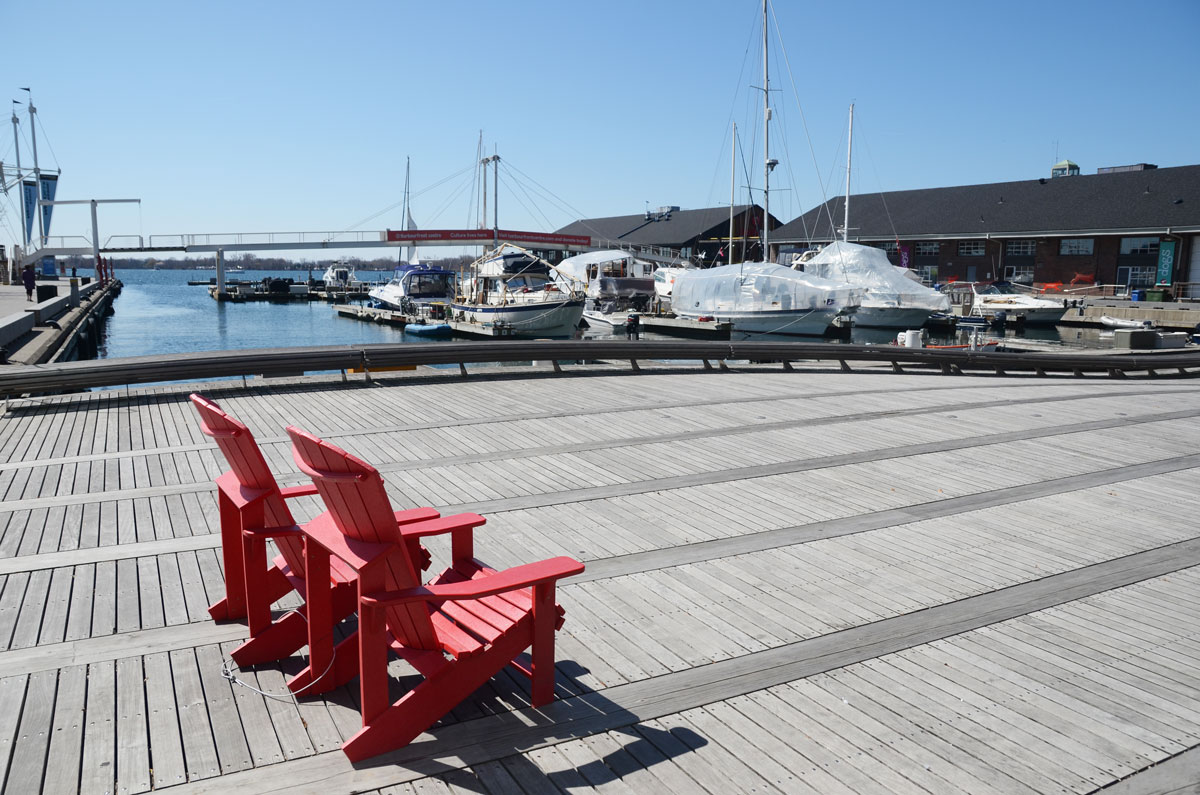
Two red Muskoka chairs sit on the Wave Deck at the waterfront in Toronto. Boats in the harbour are in the background, some with plastic wrap still on them from winter storage.

or if you can’t wait, there’s always plastic!

a garden full of fake flowers, colourful plastic flowers instead of real flowers.

From the time the first spring flowers start to show

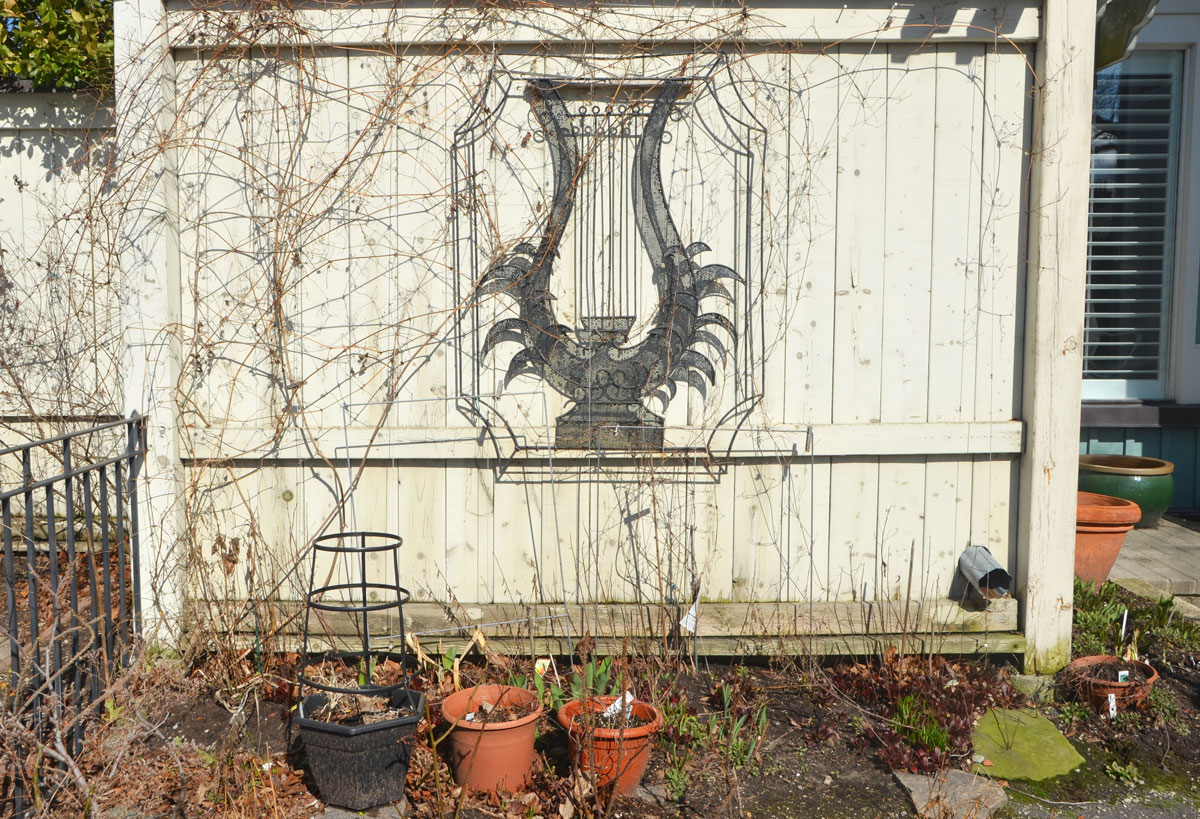
A small white fence with some empty planters in front of it. Old vines are on it (no leaves). There is a frame for plants to cling to in the shape of a lyre that is attached to the fence

until the time they are in full bloom is usually only a matter of days.

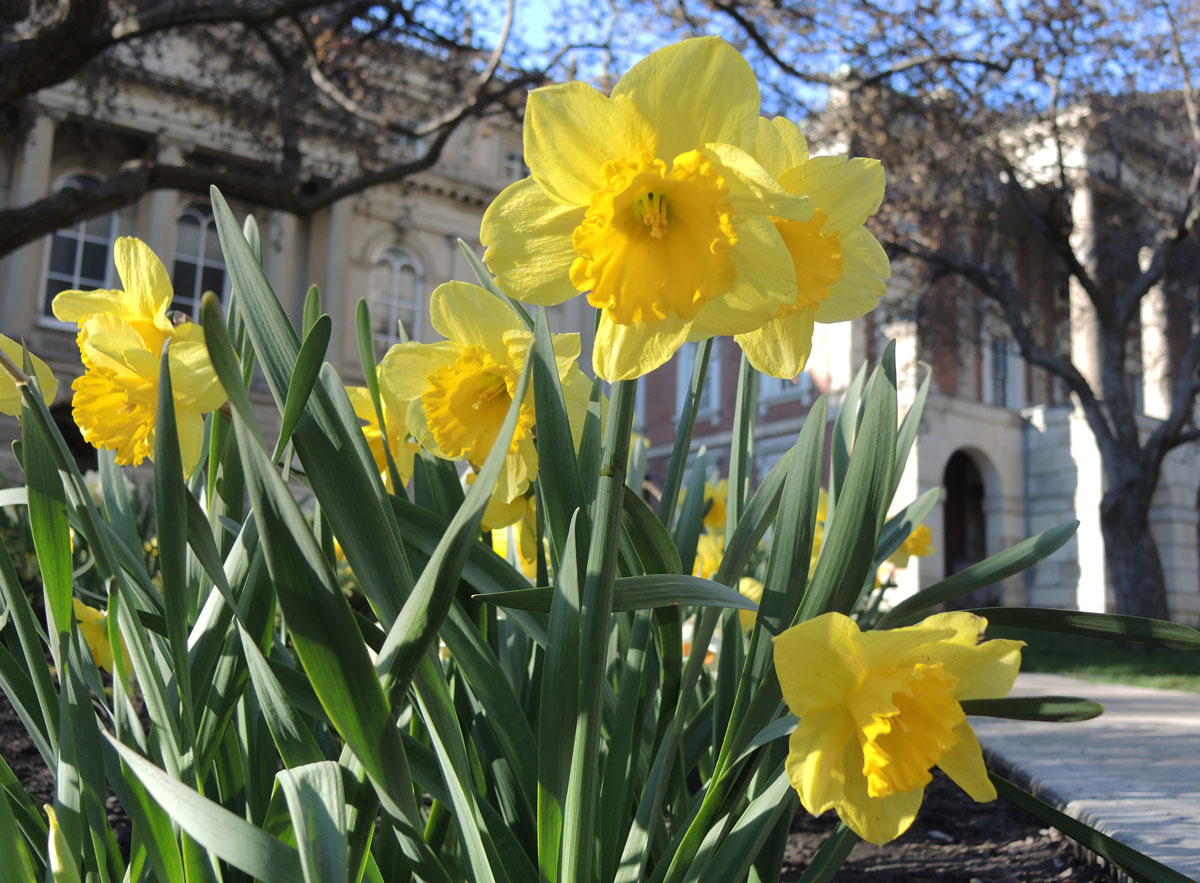
A group of bright yellow daffodils in the sunshine in full bloom with the front of Osgoode Hall on a warm sunny spring day. Blue sky.

Trees too soon show their colours.  The yellows of the willow trees usually appear first.

downtown Toronto, the white curved roof of the Rogers Centre with the CN Tower beside it. WIllow trees and grassy park are in front.
Almost daily the trees are greener…

Budding leaves - The light yellowish green new spring growth on a tree that is growing beside a greenish blue tinted window. Some tree reflections in the window too.

… or full of flowers.

looking upwards from below the branches of a magnolia tree in full bloom. Lots of pink and white flowers, no leaves, on the tree. Bright blue sky in the background. A sunny spring day.

And for another year we forget the last grey days of winter

A rack of geraniums in bloom for sale sitting outside a store. The sidewalk by the store is shaded with white, green and red umbrellas.


There is no theme to this blog post.  I never really had a purpose in mind as I walked yesterday.  I walked to enjoy the spring day.  I walked wherever my feet took me…  and they took me on a route that wove between Bay Street and University Avenue and from Grenville south to Dundas.

two women dressed up and walking down the street. One is in a puffy black dress, black tights and black shoes. The other woman has long red hair and a polka dot sweater on.

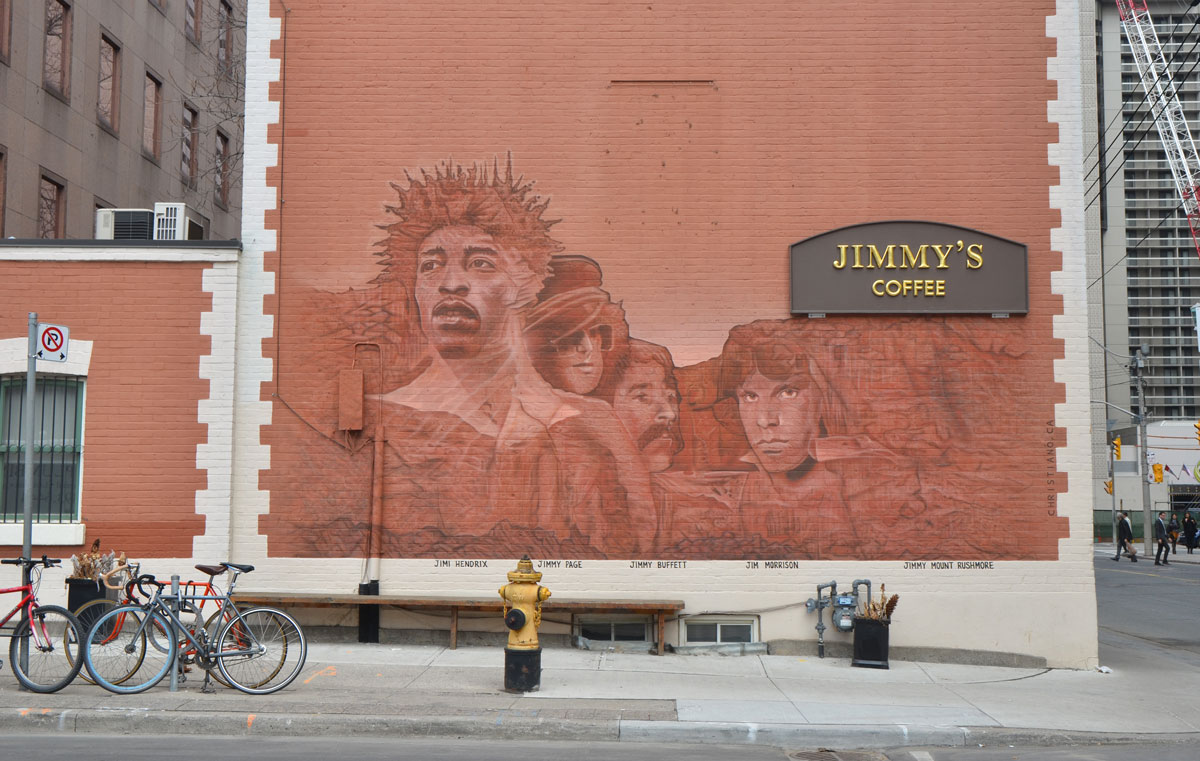
below: “Jimmy Mount Rushmore” mural on the side of Jimmy’s Coffee featuring four famous musical Jimmys: Jimi Hendrix, Jimmy Page, Jimmy Buffet and Jim Morrison.

mural on the side of Jimmys coffee, monochromatic in rust, pictures of what Mount Jimmy Rushmore would like, four famous Jimmys, Jimi Hendrix, Jimmy Page, Jimmy Buffett and Jim Morrison

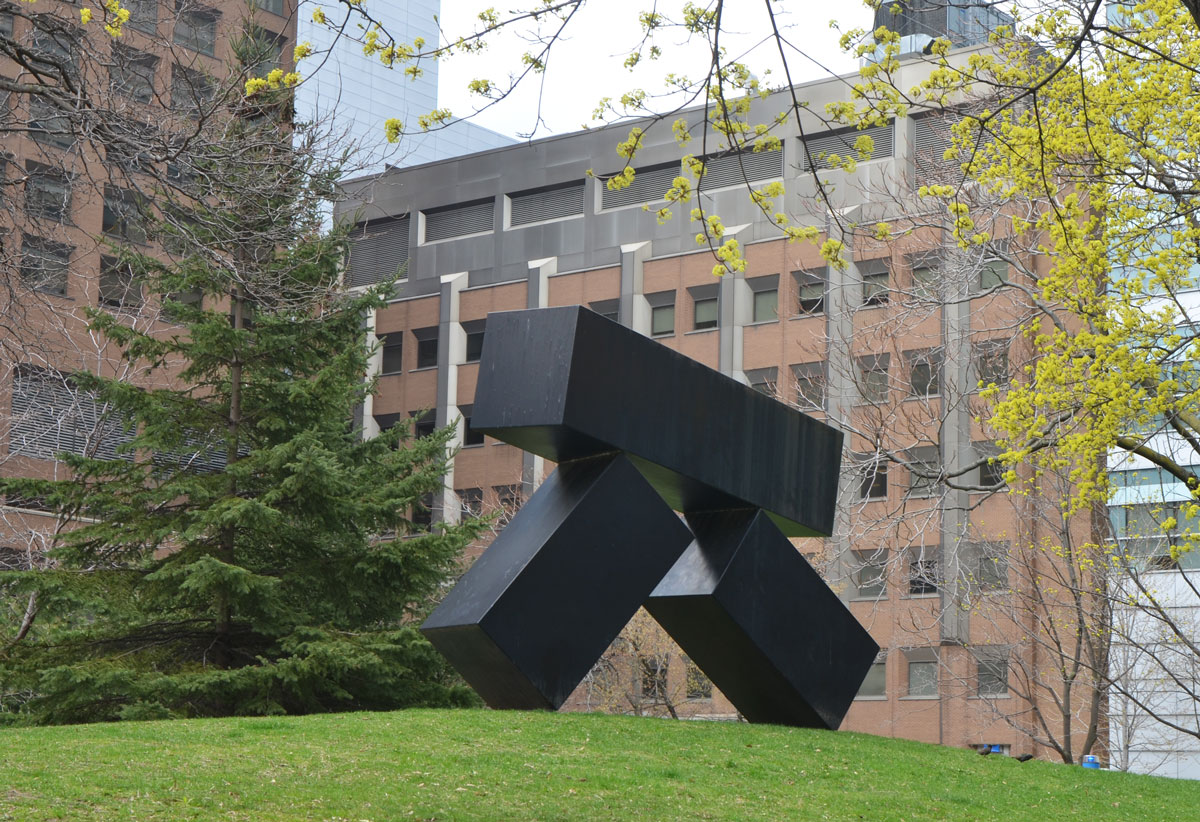
below: ‘Inner City Gate’ by Kosso Eloul.  1978.  A balancing act of stainless steel boxes on the lawn of the R. Fraser Elliott building (part of the old Toronto General Hospital), Elizabeth Street.

black metal sculpture of three boxes precariously balanced, the upper box is almost horizontal and it is being supported by the other two who are falling down but still balancing

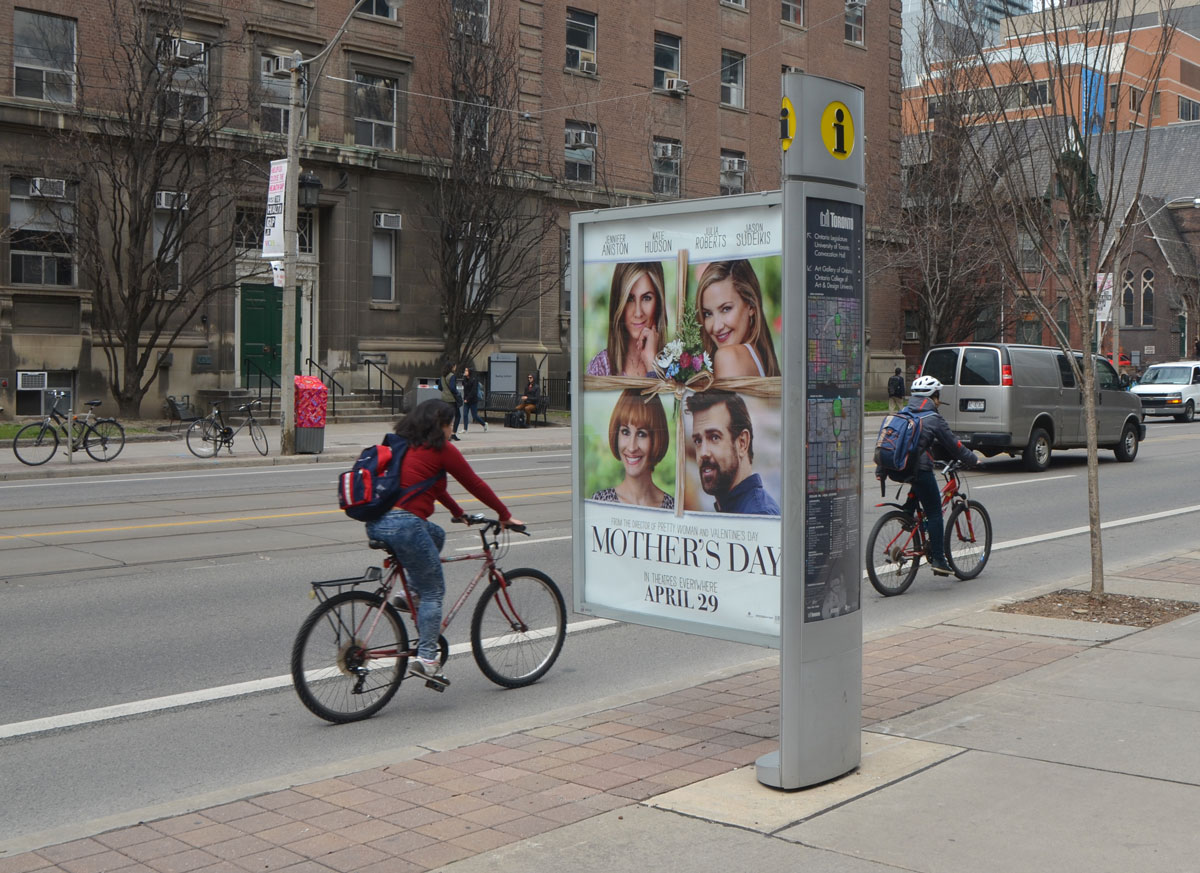
below:  A blight on the sidewalk, so-called information pillars that are really just a sell-out to Astral Media.  They needlessly obstruct the sidewalk and obstruct the view of  cyclists and motorists.  Unfortunately they are part of a 20 year contract that the city has with Astral Media which doesn’t expire until 2027.

cyclists ride by an information pillar that has a large ad jutting out towards the street.

below: Incised into limestone blocks on the Edward Street side of McClelland House (originally the McLean Hunter building) is half of an artwork by Elizabeth Wynn Wood (1903 – 1966) called “Communication”.  The woman is sending a message to a man who is apparently shown on the other side of the building.  Sadly, I missed the man so there is no photograph of him here.  When the work was completed in 1958, the incised lines were inlayed with gold colour.

outline drawing of a woman floating in the sky, incised into limestone facade of a building. She is releasing a bird.

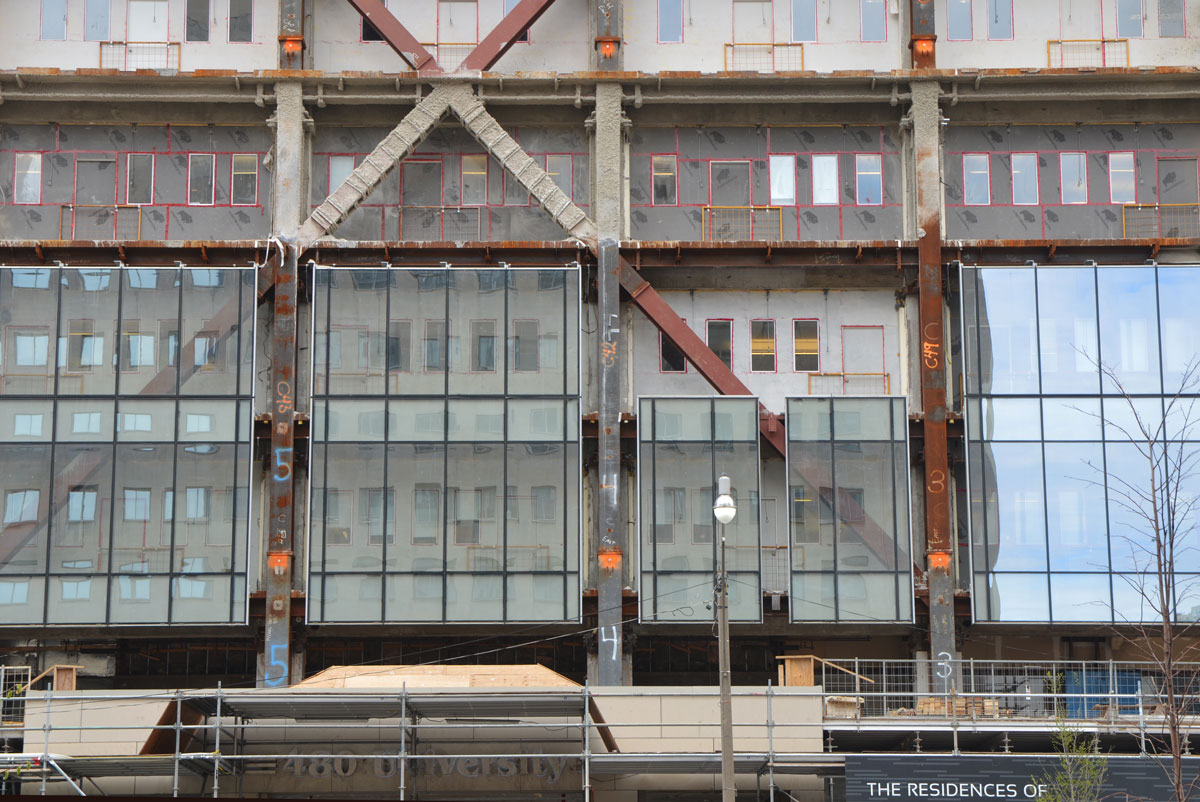
below: Across the street from the ‘floating woman’, 480 University Avenue is getting a facelift.

lower part of building have its facade upgraded to glass panels
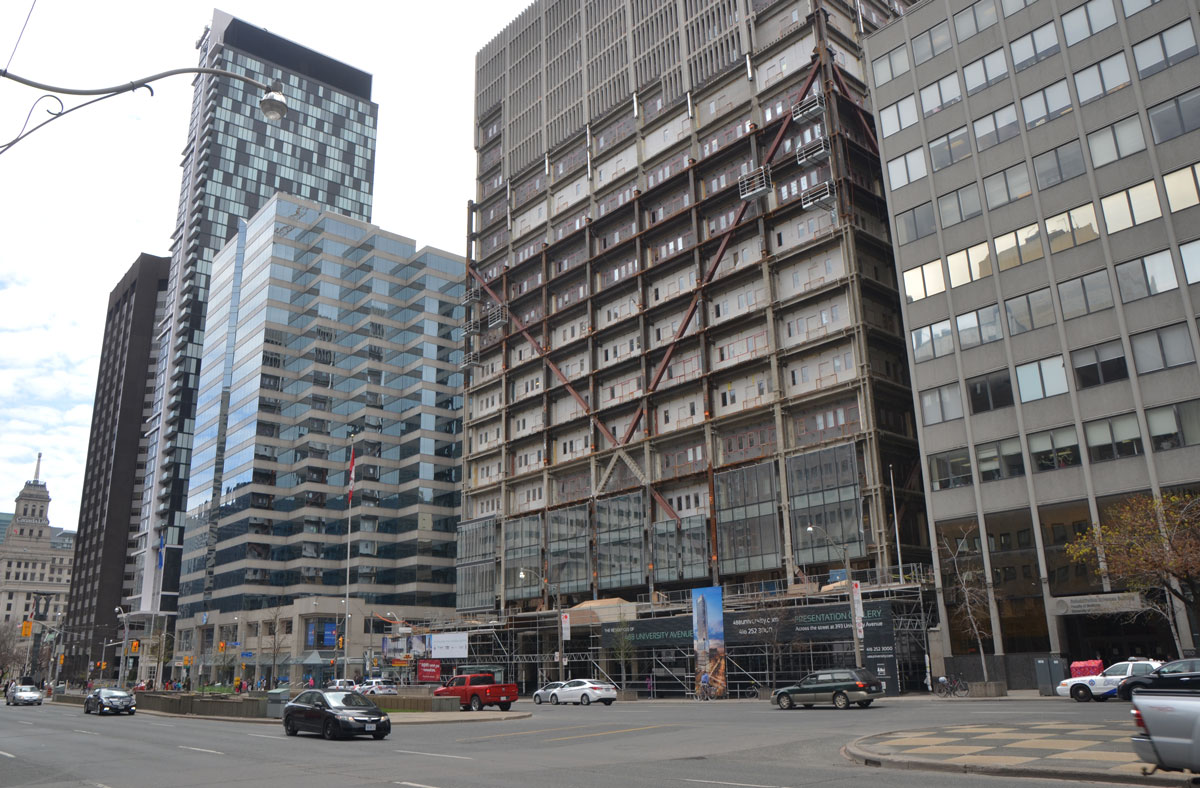
below:  This picture shows most of the front of 480 University and you can see the different stages of the recladding process.  At the top of the building, the precast concrete grille that was part of the original 1968 Global House office tower is still in place while new glass panels have already been installed on the lower floors.   It is interesting to watch the metamorphosis of an 18 storey office building into a 55 storey condo tower.   Four levels of underground parking have also been added to the site and a new indoor entrance to St. Patrick subway station is in the works.

Tall office building is having its concrete facade replaced with glass. The upper floors are still concrete, the middle floors are bare and the lower floors have new glass

below: Abstract in blues and greys

very close detail shot of glass and reflections that make diamond shaped abstract in blue and grey

There is a lot of building and redevelopment in the area where I walked.

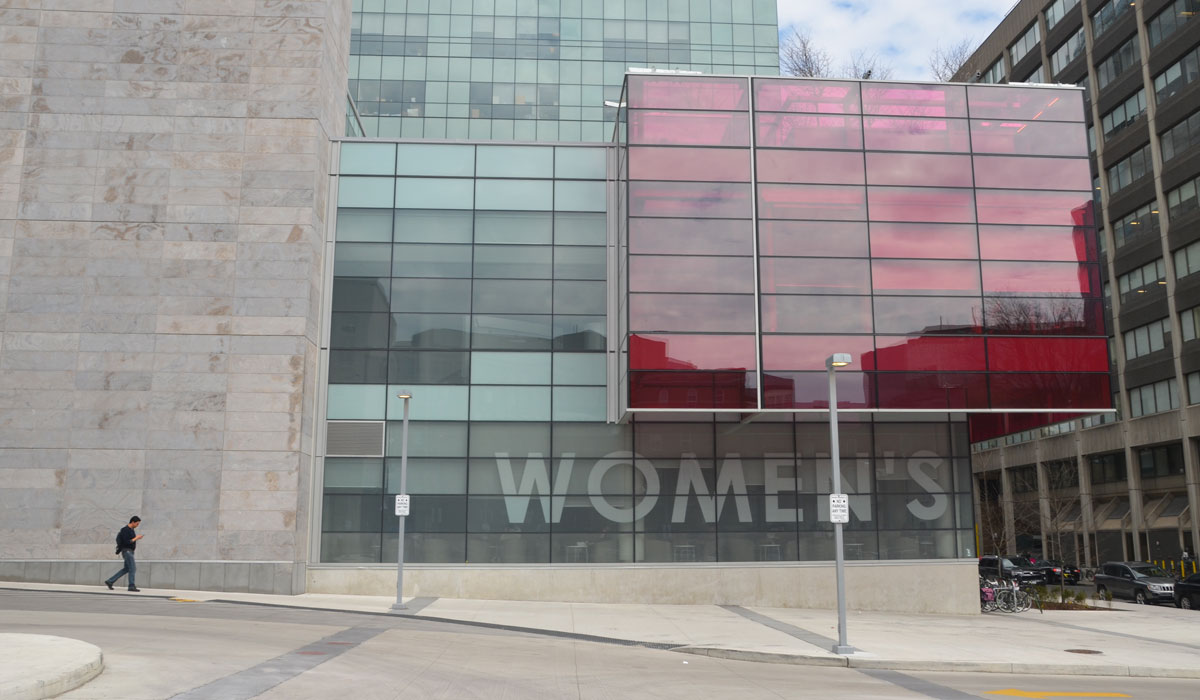
below: Womens College Hospital is totally new.

a lone man walks by the new Womens College Hospital building with its light grey stone facade, large glass section, and large pink glass section.

below: The corner of College and Bay, looking southeast, is now a wall of glass.

cyclist rides through the intersection of College and Bay streets. A wall of glass condos in the background.

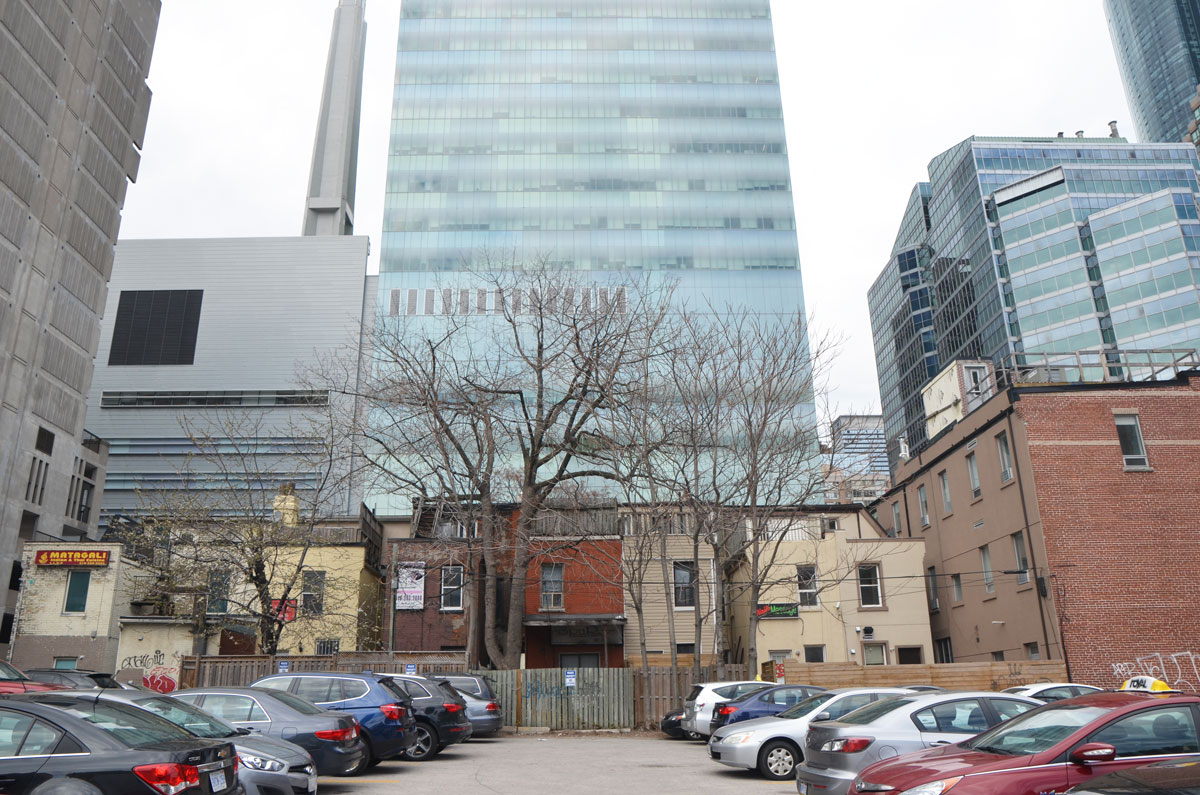
below: The new wing of Sick Kids Hospital dwarfs the older buildings on Elm Street.

view from a parking lot, a row of the back of older two storey brick buildings with some mature trees, then taller modern glass buildings.

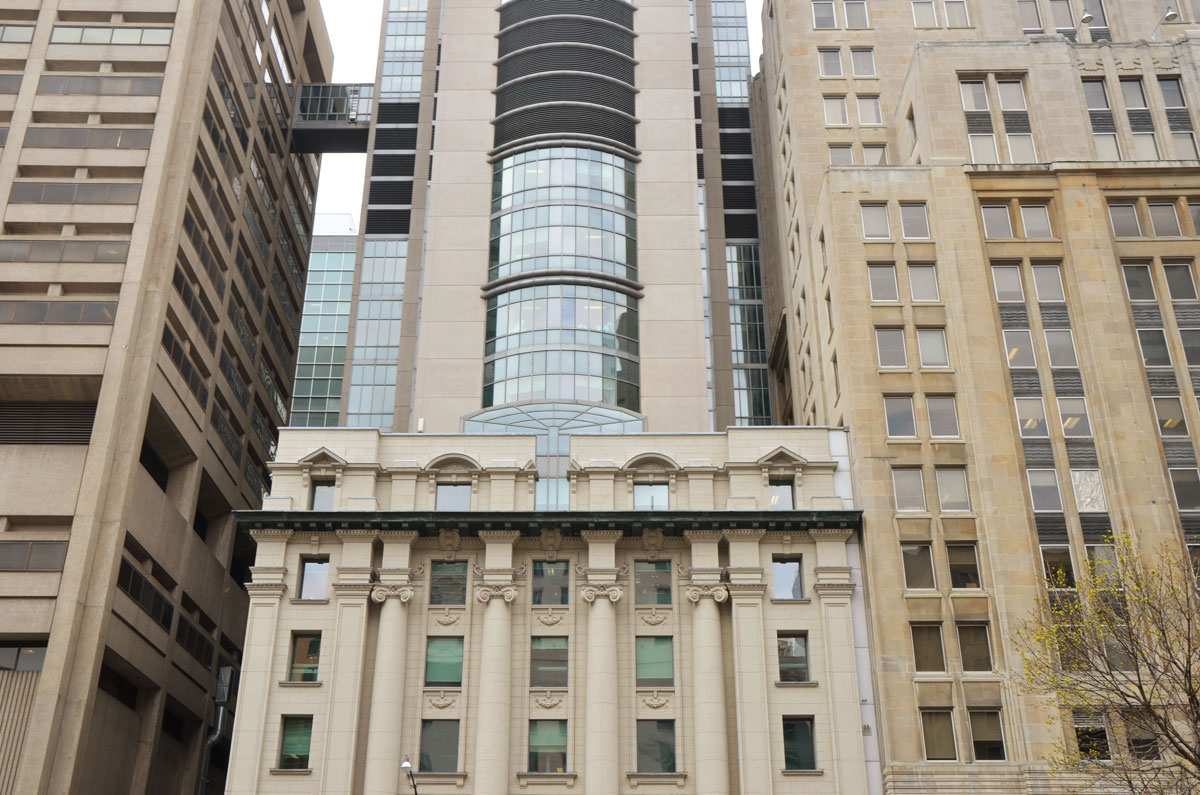
below:  The old and the new integrated into one building, Princess Margaret Hospital.

Princess Margaret Hospital, with the older stone building at the bottom, and the new modern addition above and beside it.

below: Even the street is being redone.  The center of Bay Street from Dundas to Elm is torn up because of  TTC streetcar track replacement.

A digger and other equipment working on a torn up section of Bay street.

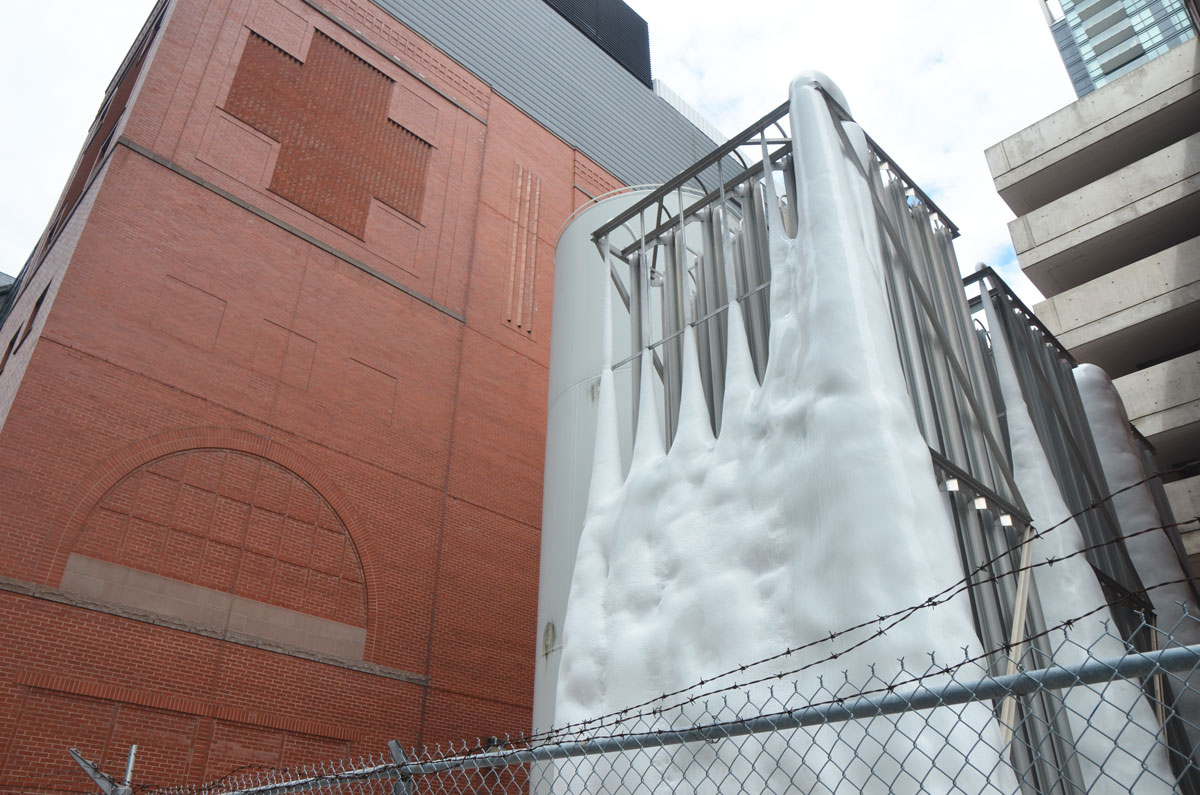
below: Little quirky details:  First, the cross shapes made of contrasting brick on the back of the Red Cross building.  Second, the workings (or barrier?) of the compressed gas tanks that have been made to look like ice.

part of the addition that was added to the Red Cross building, two cross shaped features in contrasting brick on the upper levels. In front of that building are large compressed gas tanks.

below:  Another piece of public art, ‘Liquid Echo’ by Catherine Widgery, 1999, is in front of 750 Bay Street.  They look like stiff and lifeless frozen metallic fountains… or maybe just 12 pencils 🙂 .   Circular vent shafts for the underground parking have been incorporated into the artwork.

public art installation outside 750 Bay street

below: A  lovebot watches over the people passing through the bus station, unaware that he is there.

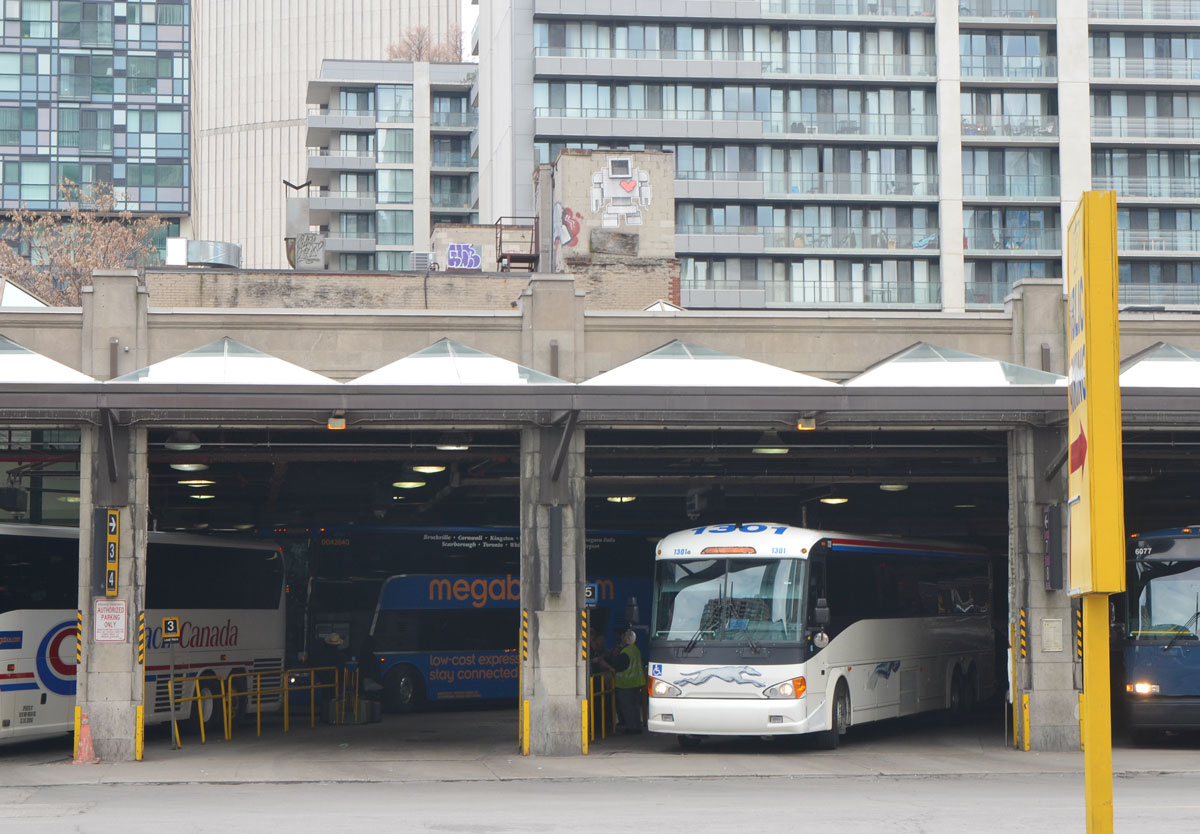
large lovebot wheatepaste paste up above the downtown Toronto bus terminal. A white bus is parked in one of the bus bays. Condos in the background.

below: And last, a colourful collection of squares and rectangles. Blue and green.  Red and white.

green and blue glass of a building's facade, with a storefront below. The windows of the store are filled with red and white pillows arranged in a grid.

Have you ever noticed how many trees there are in this city?
Have you ever stopped to examine the visual relationship between trees and architecture, the patterns of leafless branches superimposed on straight man-made lines?

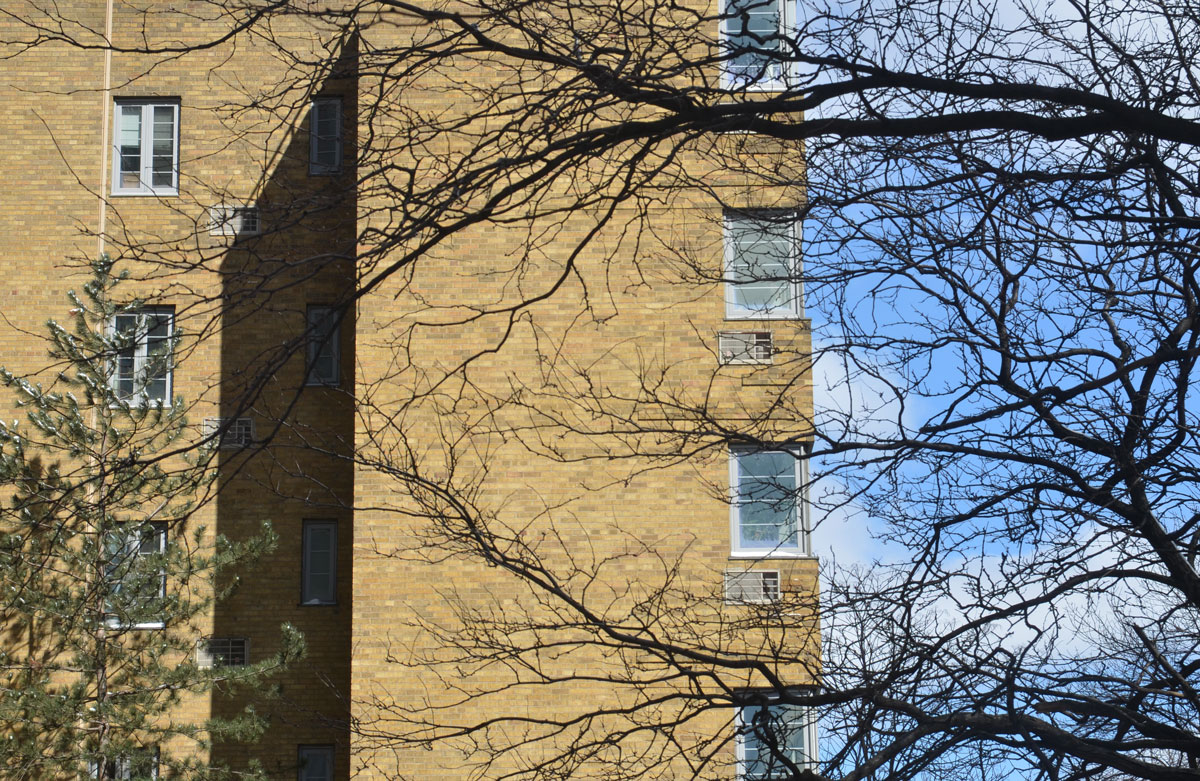
Horizontal branches of a tree growing in front of a low rise yellowish brown brick apartment building. Balconies, jutting out with the bright blue sky behind.

For the past couple of weeks I have been keeping an eye open for such relationships while I walk.   As it turns out, there are lots to be found…. and some are even interesting  🙂

Part of a mature tree, looking upwards, the greenish steeple of St. Basils church can be seen through the branches. No leaves on the tree. A very tall condo building under construction is also in the picture.

Just for fun I googled “How many trees are there in Toronto?”.  I got answers!  One link was particularly useful:  available in pdf from the City of Toronto’s website is a report titled, “Every Tree Counts: A Portrait of Toronto’s Urban Forest” (updated in 2013).   It is estimated that Toronto has about 10.2 million trees and they provides a tree canopy over between 26% and 28% of the city.

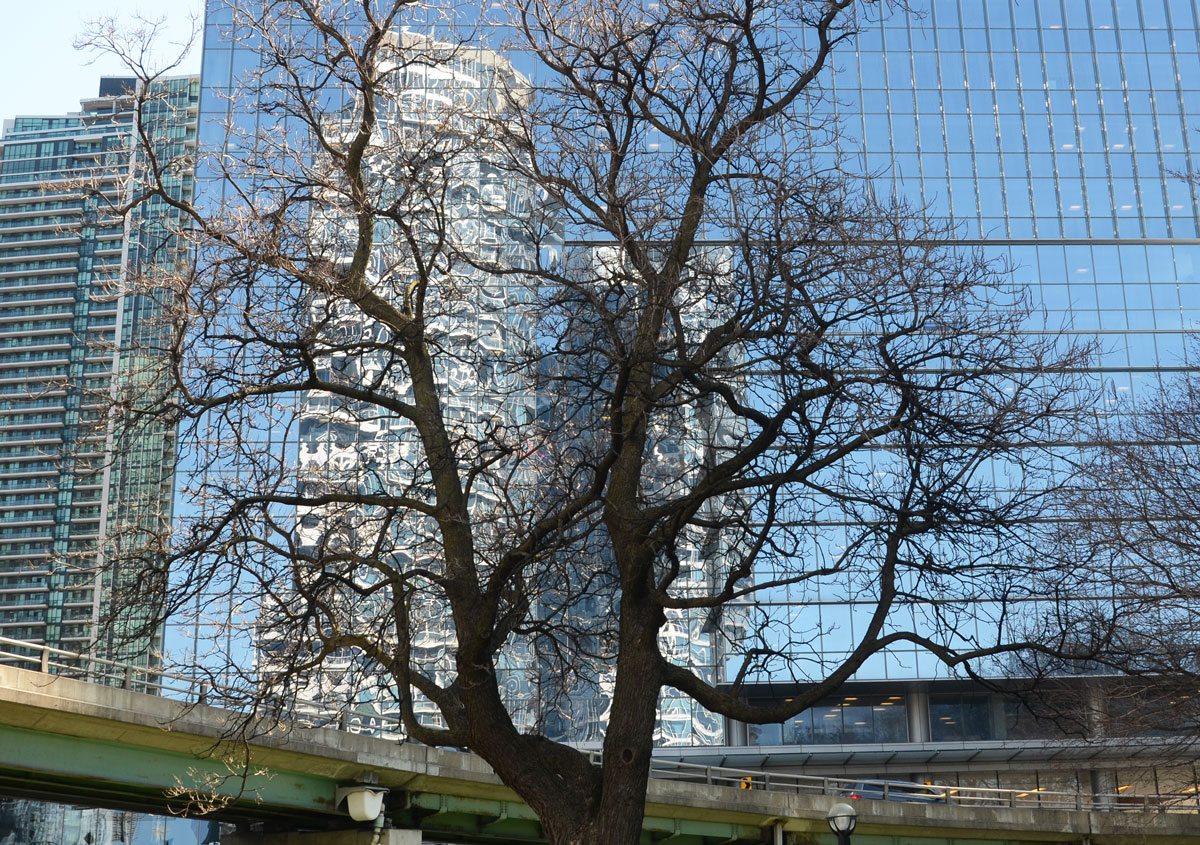
A large mature tree with no leaves, early spring, grows in front of a large glass building that has a reflection of another large building its windows.

There are at least 116 different tree species in the city.  The 10 most common species account for close to 58% of the total.   We have a lot of maple trees – Norway Maple, Sugar Maple, and Manitoba Maple were the top 3 species.  Next in the list were Green Ash, White Spruce, Silver Maple, American Elm, Eastern White Cedar, Austrian Pine, and White Ash.

When Dutch elm disease devastated the city’s elm trees in the 1960s and 1970s many were replaced by Norway maples.  These proved to be hardy but they were also very invasive and damaging to ravines and other natural spaces.  As a result they are rarely planted on city property anymore.  Still, they represent 15% of Toronto’s tree coverage.

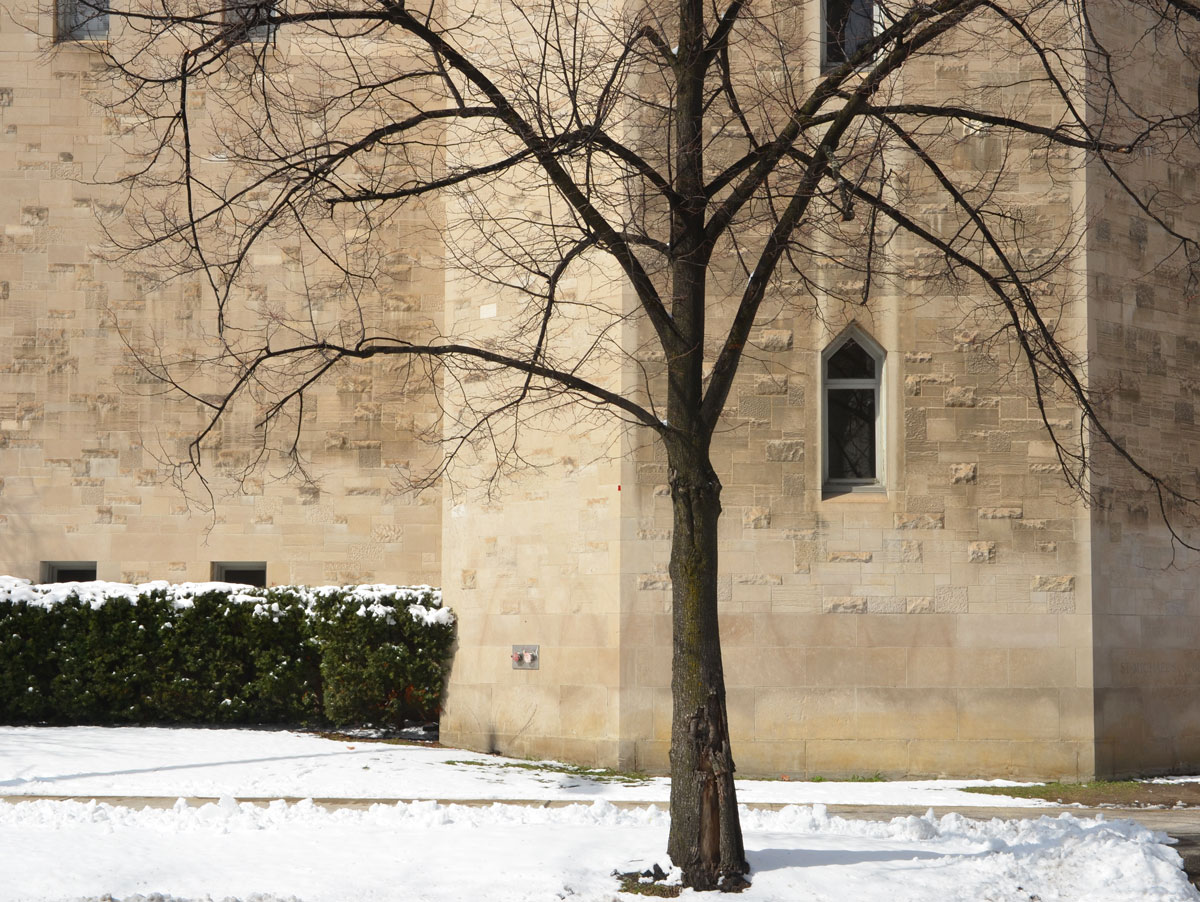
A lone smallish sized tree in winter is growing in front of a stone building on the University of Toronto campus, snow on the ground.

Of the total tree population, 6.1 million (60%) trees are on private property, 3.5 million (34%) trees are in parks and ravines, and 0.6 million (6%) trees are on city streets.

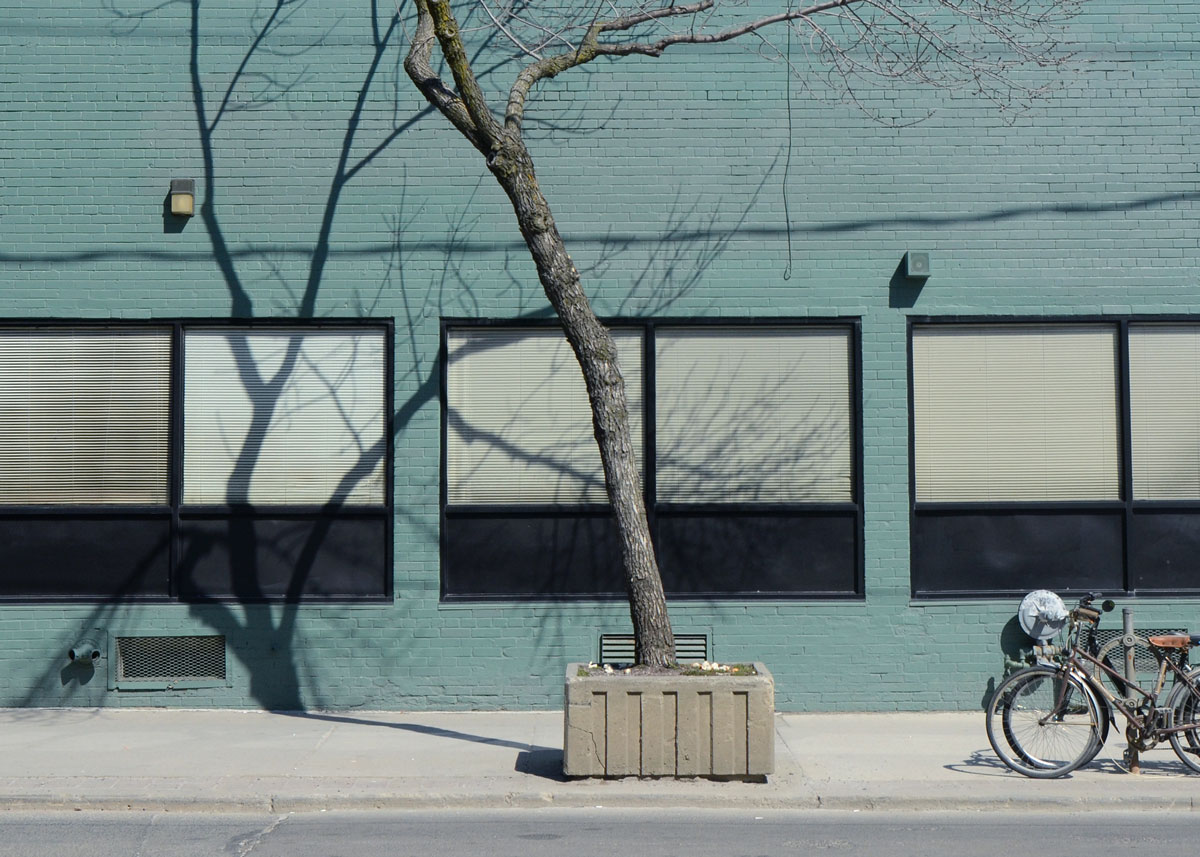
A tree in a concrete planter in front of a tral coloured building. It's a sunny day so there is a shadow of the tree on the building.

Trees make a significant contribution to our life.  Not only do they look nice, but they also provide benefits.  They provide shade in the summer and they help improve the air quality.  They help prevent erosion in our ravines and they provide habitat for insects, birds and animals.  Our parks would be poorer places without trees.

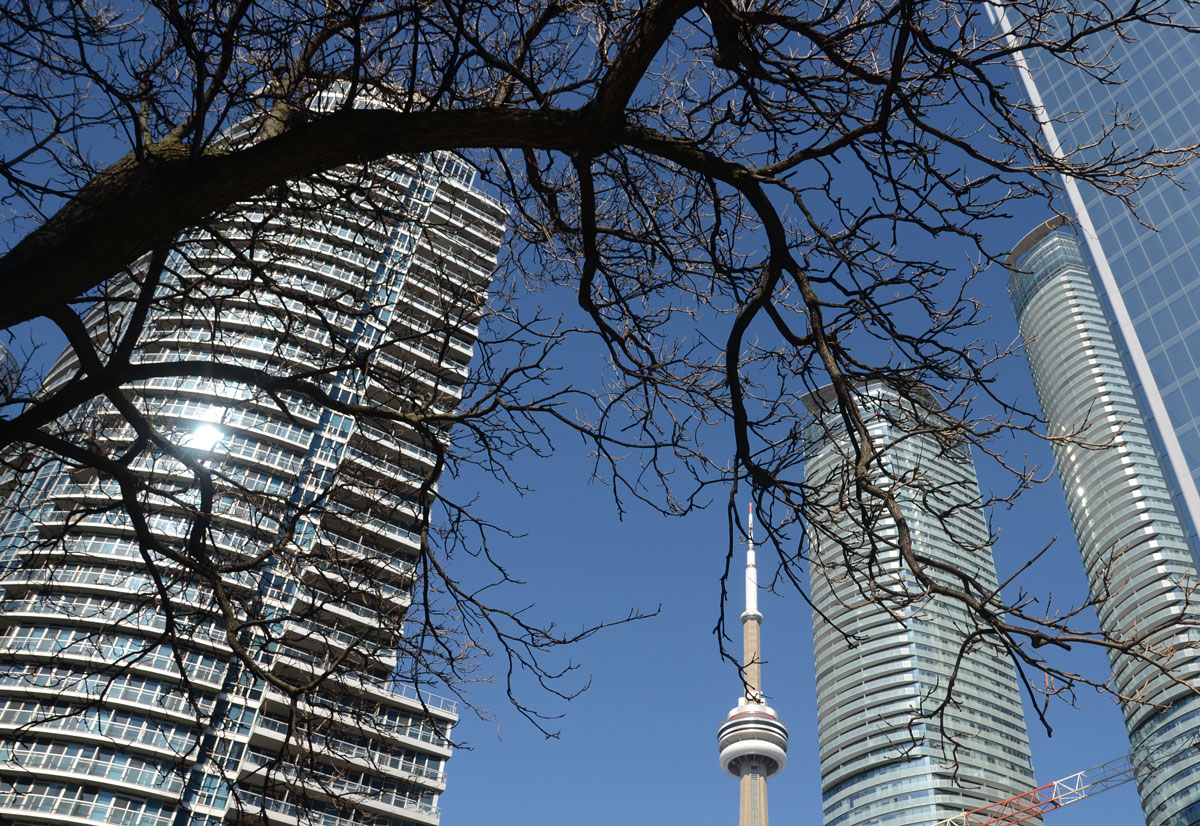
A large branch of a tree in the foreground, condos and the CN tower in the background. The curve of the tree branch looks like its wrapping itself around one of the tall condos.

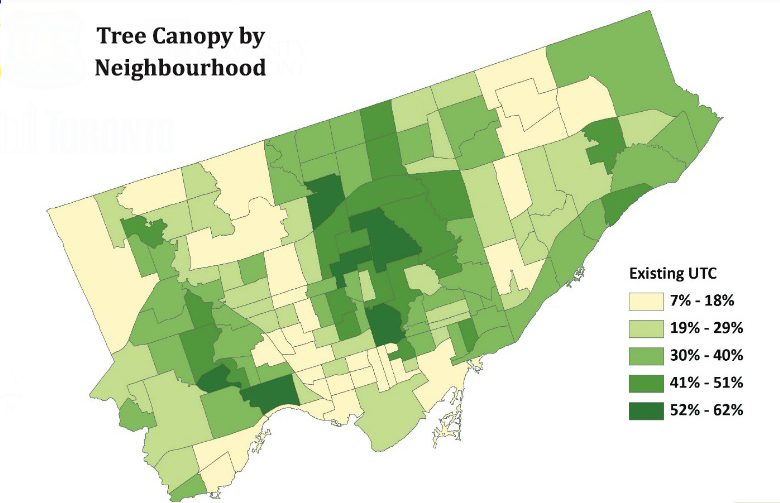
One goal that the city has is to increase the canopy cover over Toronto to 30%.  To this end, between 2004 and 2012 the city and its partners planted almost 100,000 trees per year.   That’s almost 900,000 trees.   Not all survive but progress is being made.  Tree cover increased slightly (1.3%) between 1999 and 2009.

below: A map of Toronto showing the tree canopy in each neighbourhood

A map of Toronto showing the percentage of each neighbourhood covered by tree canopy from almost white (very few trees) to dark green (a lot of trees)

in winter, some snow, part of a large leafless tree in front of an office building with a sloght curve in it.

Take a moment to look at the trees you pass, yes, look up!  Especially in the next week while the branches are still bare.  Better still, look up often and watch the changes unfold as the trees bud and bloom.  At this time of year the trees change quickly and before you know it the city will be transformed.

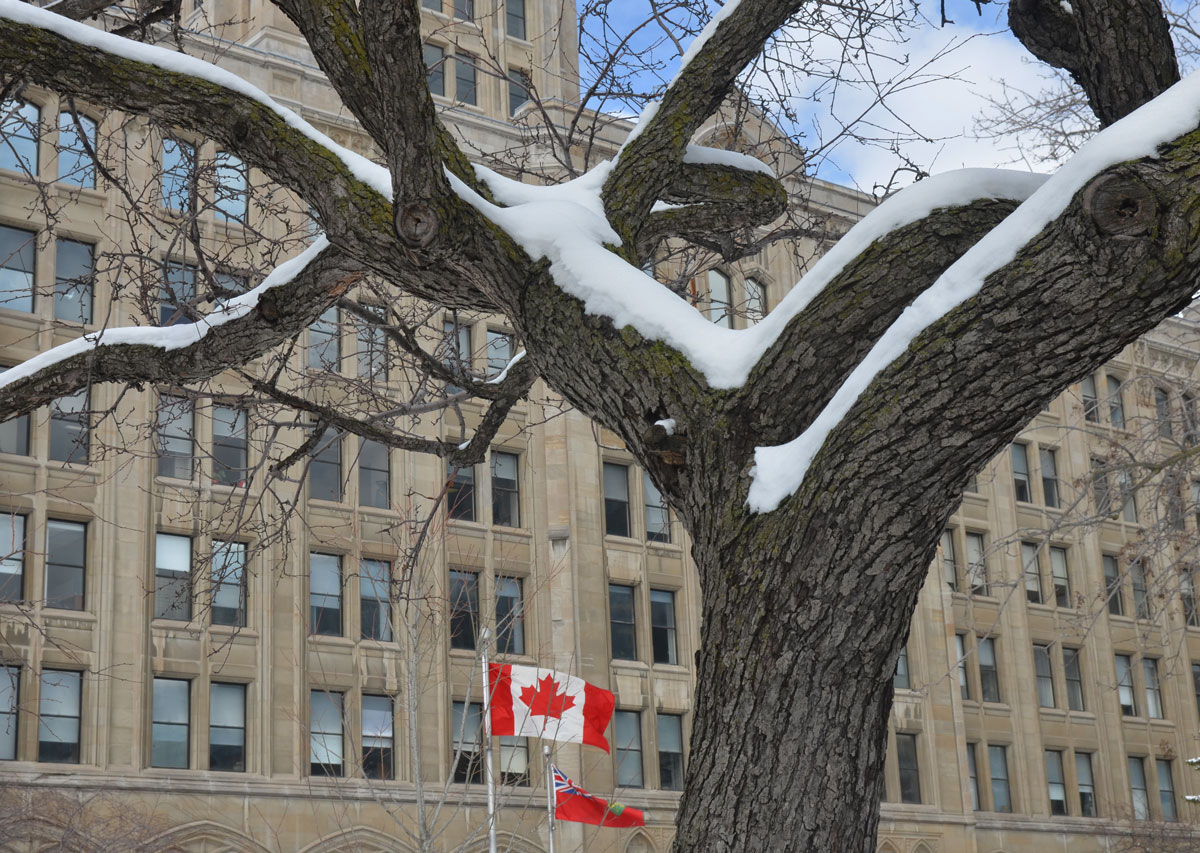
winter tree in front of a stone government building on Queens Park Circle, A Canadian flag and an Ontario flag are flying in front of the building.

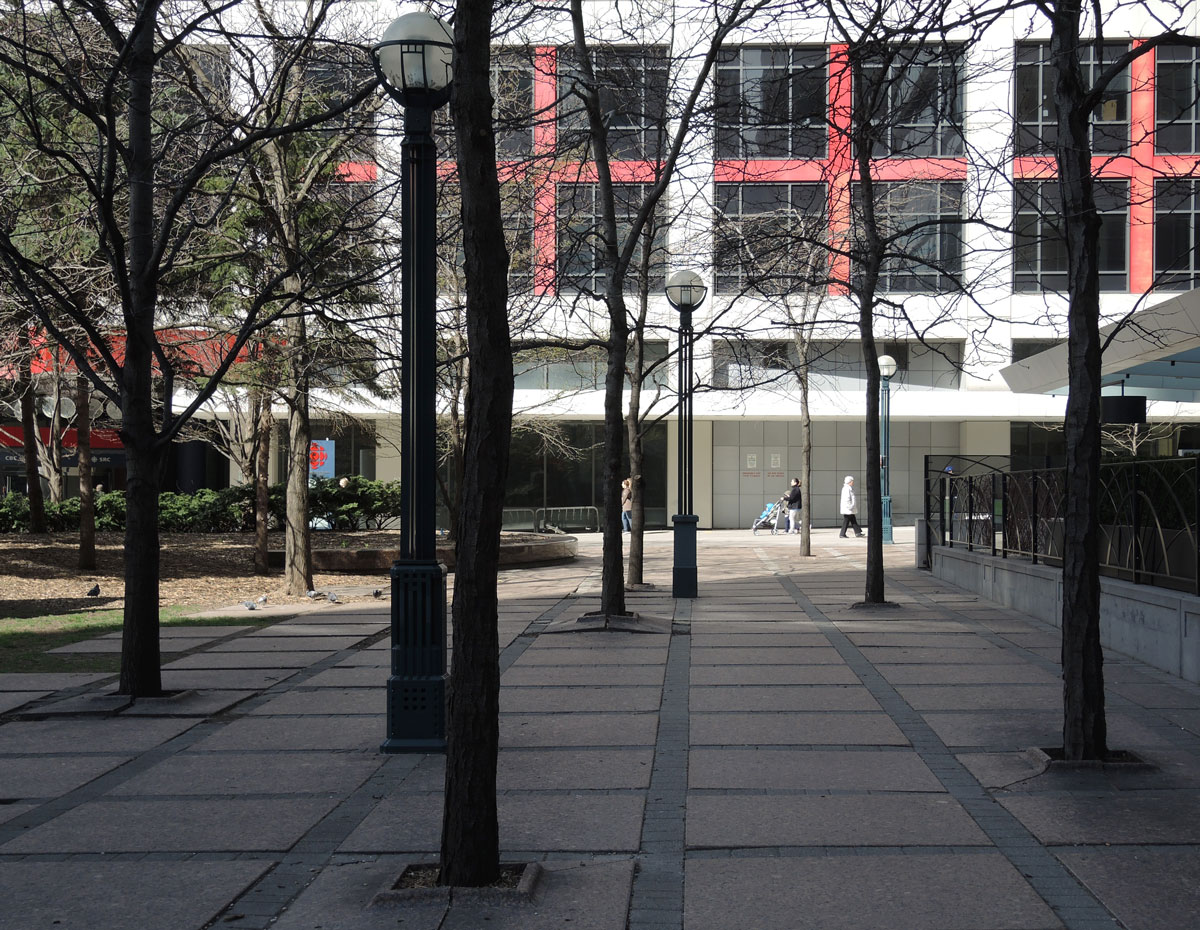
A number of leafless trees and three lamp posts in Simcoe Place, downtown Toronto, with the CBC building in the background

A man's legs as he walks across the pond on Ryerson campus. Very little water is therem lots of reflections of the trees and buildings around. He is wearing jeans and bright orange running shoes.

leafless tree branches above an older red brick house with a mansard black slate roof and a feww yellow brick details

April showers bring May flowers, or so they say.

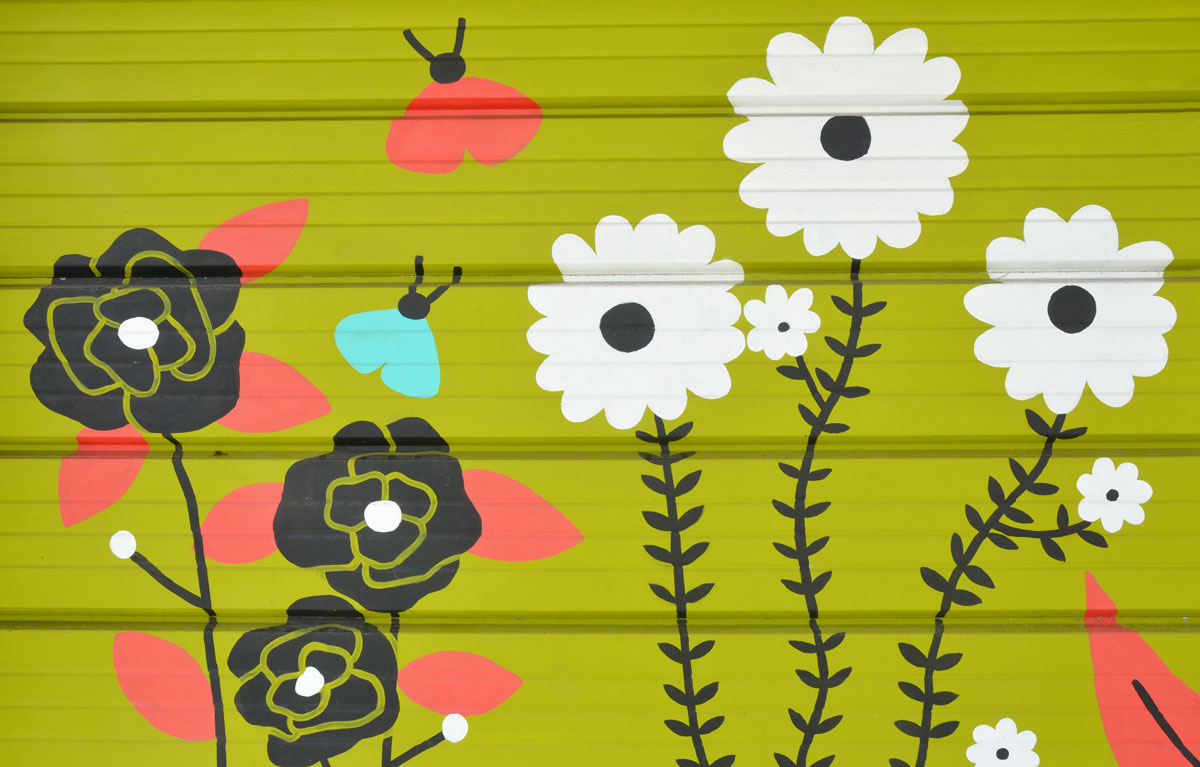
painted on a garage door, bright green background with black roses with red leaves and white daisies, also with black leaves, a red butterfly and a blue butterfly

BUT, wait just a minute!  You know it always snows in Toronto in April.  Always.

young man's face painted in pink with white features (stylized, not realistic) with orange hair and orange shirt. beside him is the word no written in large pink letters with an exclamation point after it.

And this year is no exception.

drawing of two eyes and a mouth on a grey wall. There is fear in the eyes and the mouth seems to be screaming. Beside the drawing is a window with green metal bars and a small leafless tree growing in front of the window. Snow on the ground.

It’s cold enough that even the poles are wearing scarves.

an old scruffy yellow metal pole in an alley has a black knitted scarf tied around it. There is a bit of snow on the scarf.

But why should that stop us?  There’s always a silver lining and there’s always lemonade to be made.
In this case, it is the opportunity for one last look at the city in winter (we hope!)

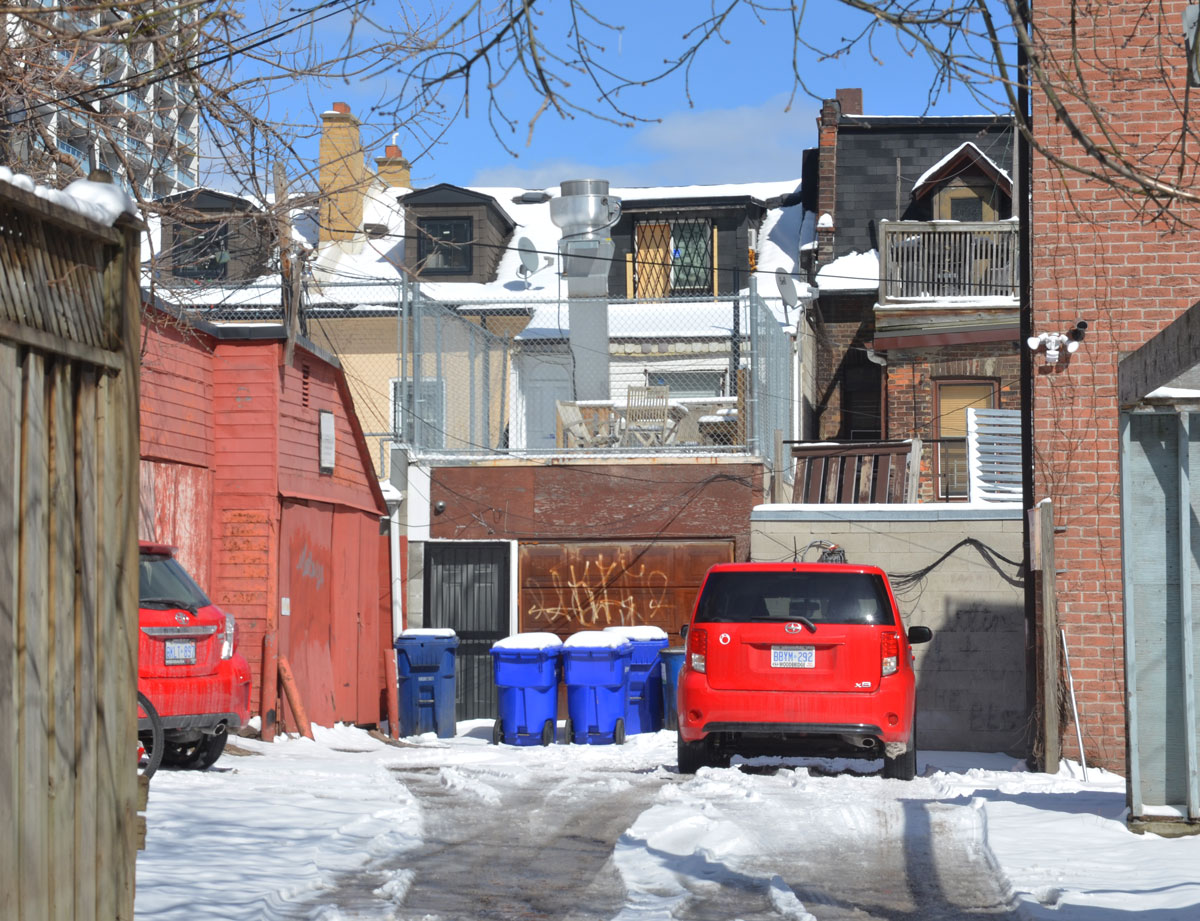
backyard, entrance off alley, little red car parked on snow covered parking lot. blue sky, backs of two storey houses

looking through a backless garage where the garage door is open. The garage is empty. you can see the backyard, covered in snow as well as snow covered steps leading up the second storey

looking down a narrow lane to a large two stroey red brick house across the street, a woman is riding past on a bicycle.. winter scene

The first three days of November have been wonderful – three beautiful warm sunny days, perfect fall weather.

 below: Taking advantage of the warm afternoon in front of Osgoode Hall.

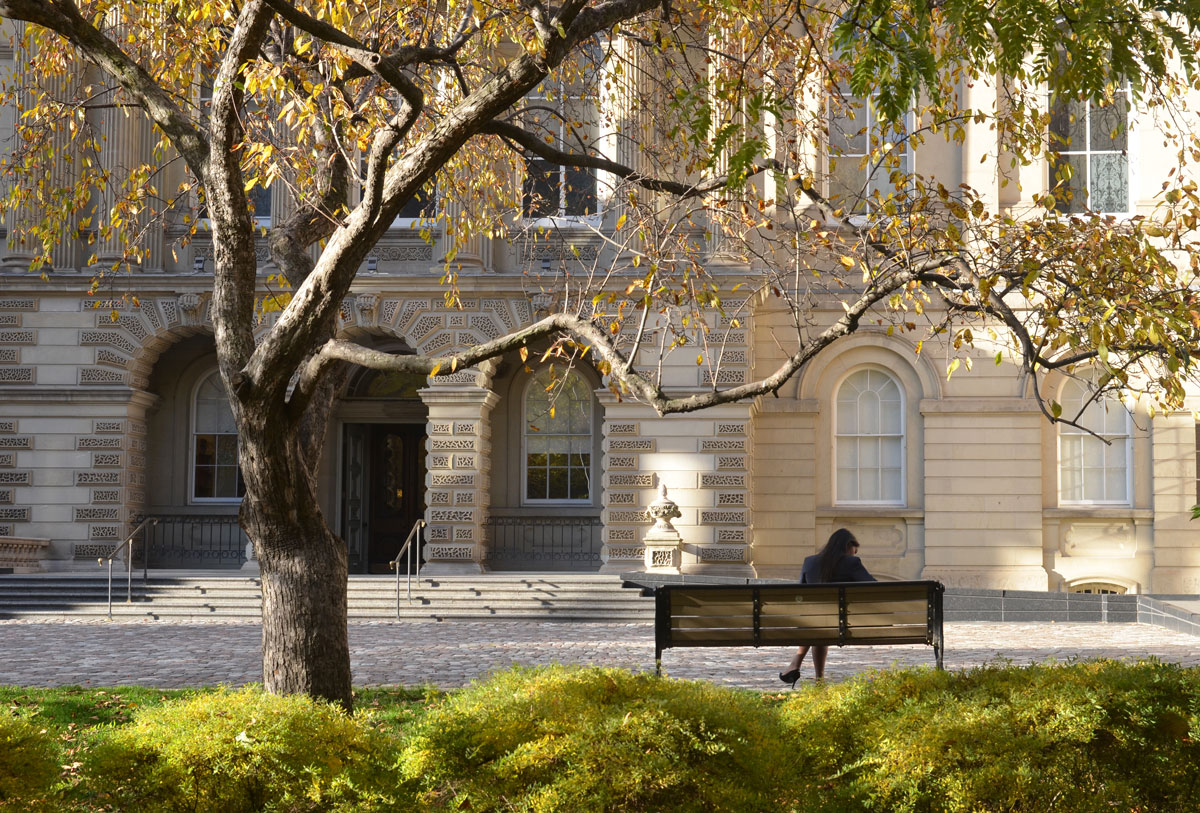
A woman sits on a bench in front of Osgoode Hall, a stone building. Her back is to the camera. A tree with a few yellow leaves frames the picture.

below: On St. George Street in front of Sir Daniel Wilson residence, University College

college on St. George Street, front of the building with black wrought iron fence in front of it along with a few mature trees with some yellow and rust coloured leaves still on them. The clock tower is visible through the tree branches. There are people on the sidewalk in front of the building.

below: Looking across Kings College Circle towards University College

One small tree in the middle of the grass at Kings College circle in front of University College

below: Maple leaves still on the tree.

maple leaves in autumn colours, rust and orange leaves in the foreground, yellow leaves in the background.

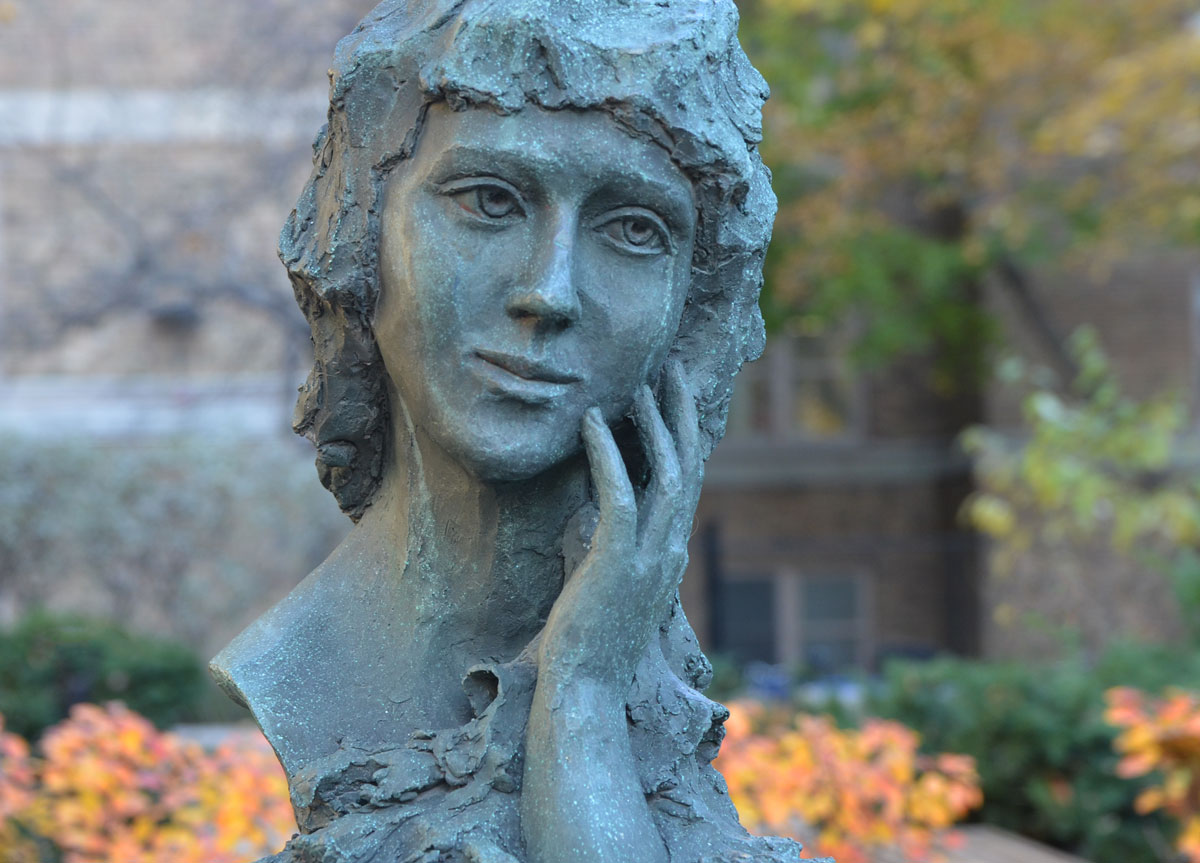
below: Mary Pickford looks over University Avenue.

a bust of Mary Pickford, she is resting her head in one of her hands. In the background is a building along with some bushes and a tree with yellow and orange leaves.

There is an historical plaque beside this statue and it reads: “Born in 1893 in a house which stood near this site, Gladys Marie Smith appeared on stage in Toronto at the age of five. Her theatrical career took her to Broadway in 1907 where she adopted the name Mary Pickford. The actress’s earliest film, “Her First Biscuits”, was released by the Biograph Company in 1909 and she soon established herself as the international cinema’s first great star. Her golden curls and children’s roles endeared her to millions as “America’s Sweetheart”. She was instrumental in founding and directing a major film production company and starred in over fifty feature length films including “Hearts Adrift”, “Pollyanna” and “Coquette”. For the last named film, she received the 1929 Academy Award as the year’s best actress. “

.

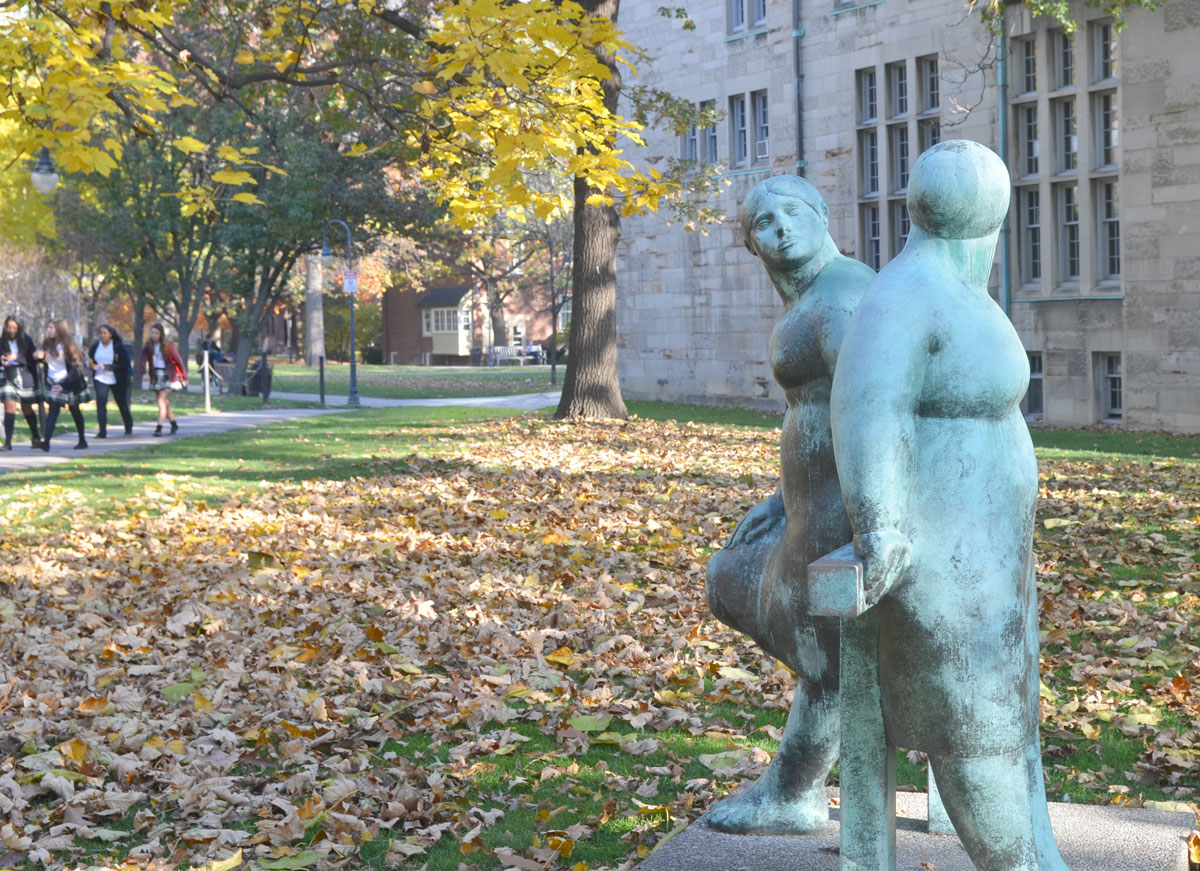
below: Two women outside Emmanuel College, Queens Park Circle

A blueish bronze statue of two overweight women standing facing each other beside a stone building on the University of Toronto campus. It is autumn and there are leaves on the ground. A group of girls is walking in the background.

below: Northrop Frye sits on a bench on the campus of Victoria College (U of T).

A statue of a man, Northrop Frye, sits on a bench with his legs crossed and an open book on his lap. Another book sits beside him on the bench.

This life sized statue was created by Darren Byers and Fred Harrison and was unveiled in October 2012.

.
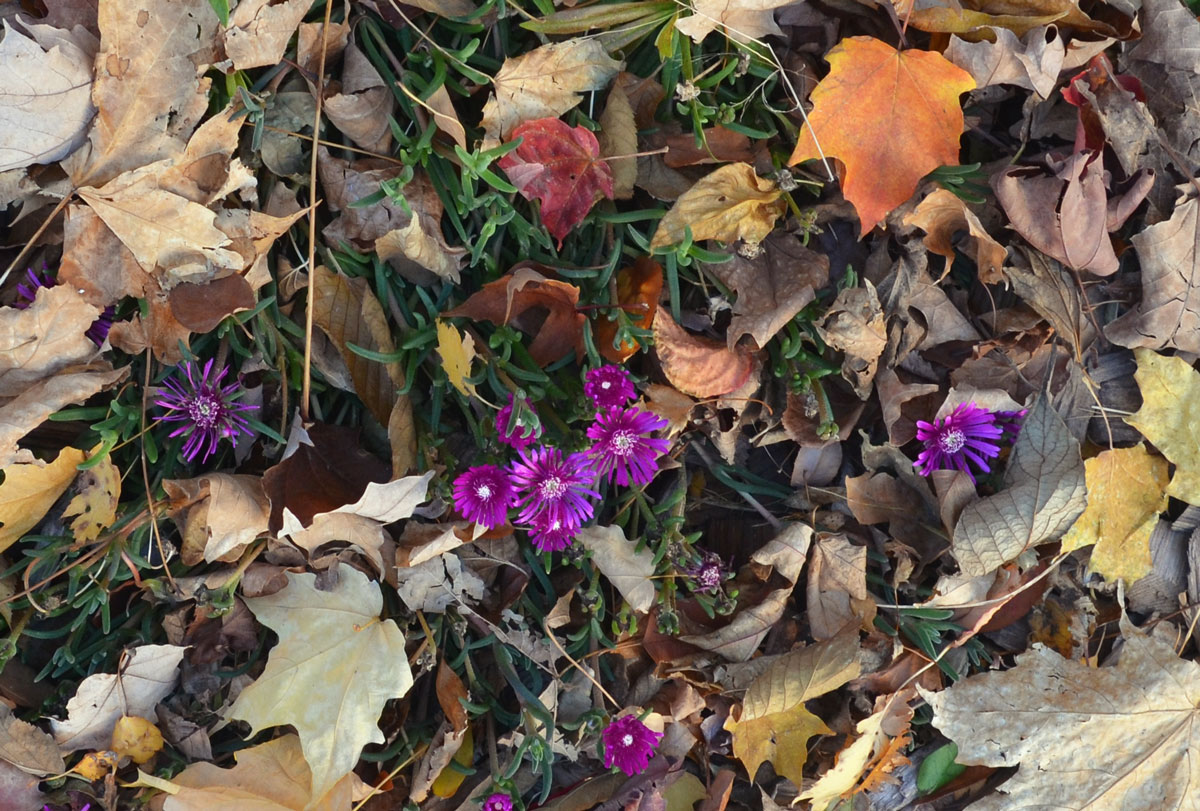
small purple aster flowers in a garden that is close to being covered with autumn leaves that have fallen off the nearby trees

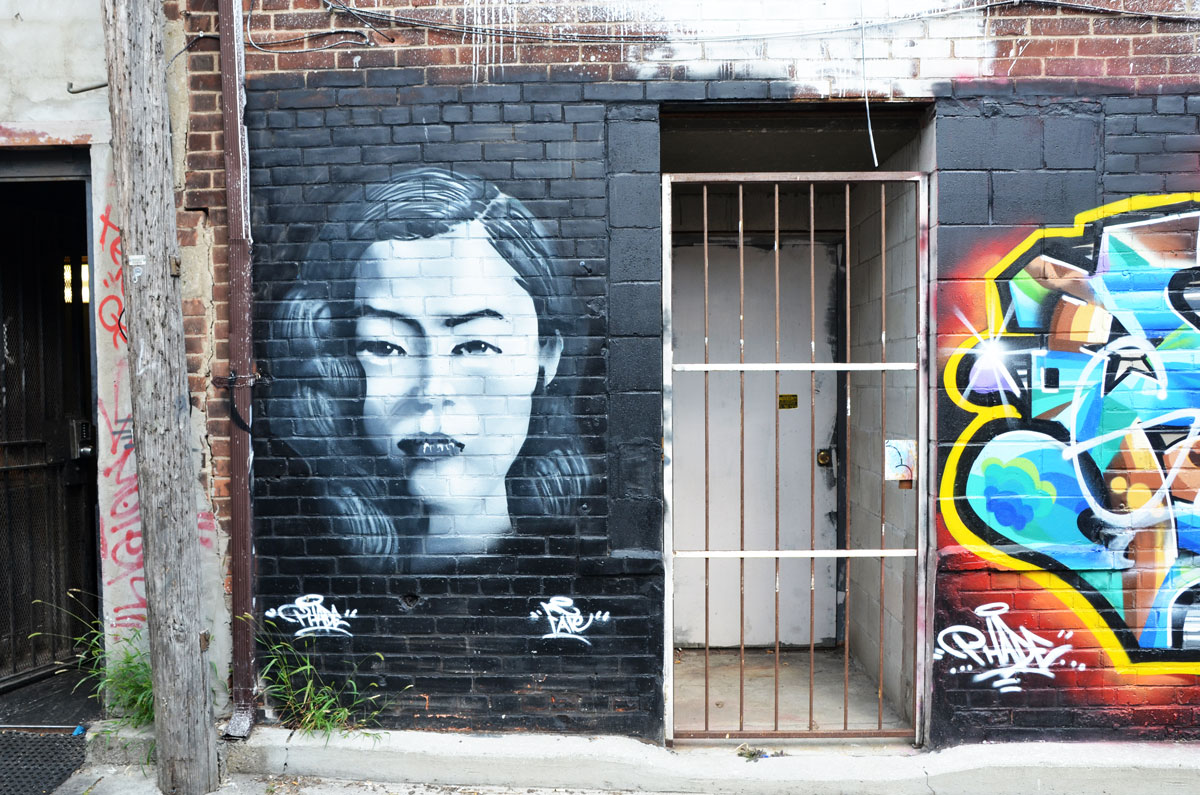
Nassau Street that is, just south of College and just west of Spadina.  There is an alley that runs north from Nassau directly behind Spadina.  A dead end lane runs perpendicular to it, behind the houses on Nassau Street.  Like most alleys in Toronto, there is street art there.  Some old, some new, and unfortunately some scribbled over.  All in all, this lane is looking a little worn.

Buildings in an alley with lots of graffiti on them.

a wall with a painting of a woman's head on the left (in grey tones), a door with metal bar gate in the middle, and part of a tag like graffiti piece on the right.

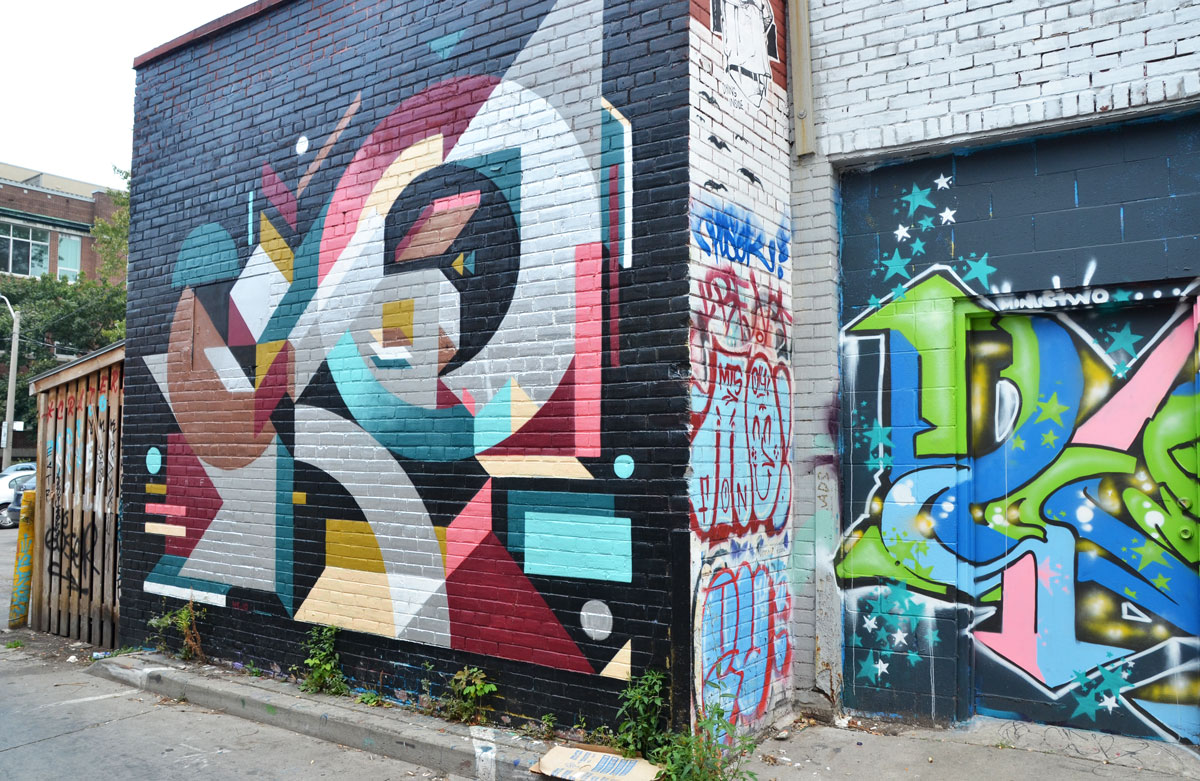
large geometric street art piece on a brick wall in an alley

Black and white street art painting on a reddish brick wall, signed Jaroe

Two large poser bunnies on a wall in an alley

buildings in an alley with lots of street art on them

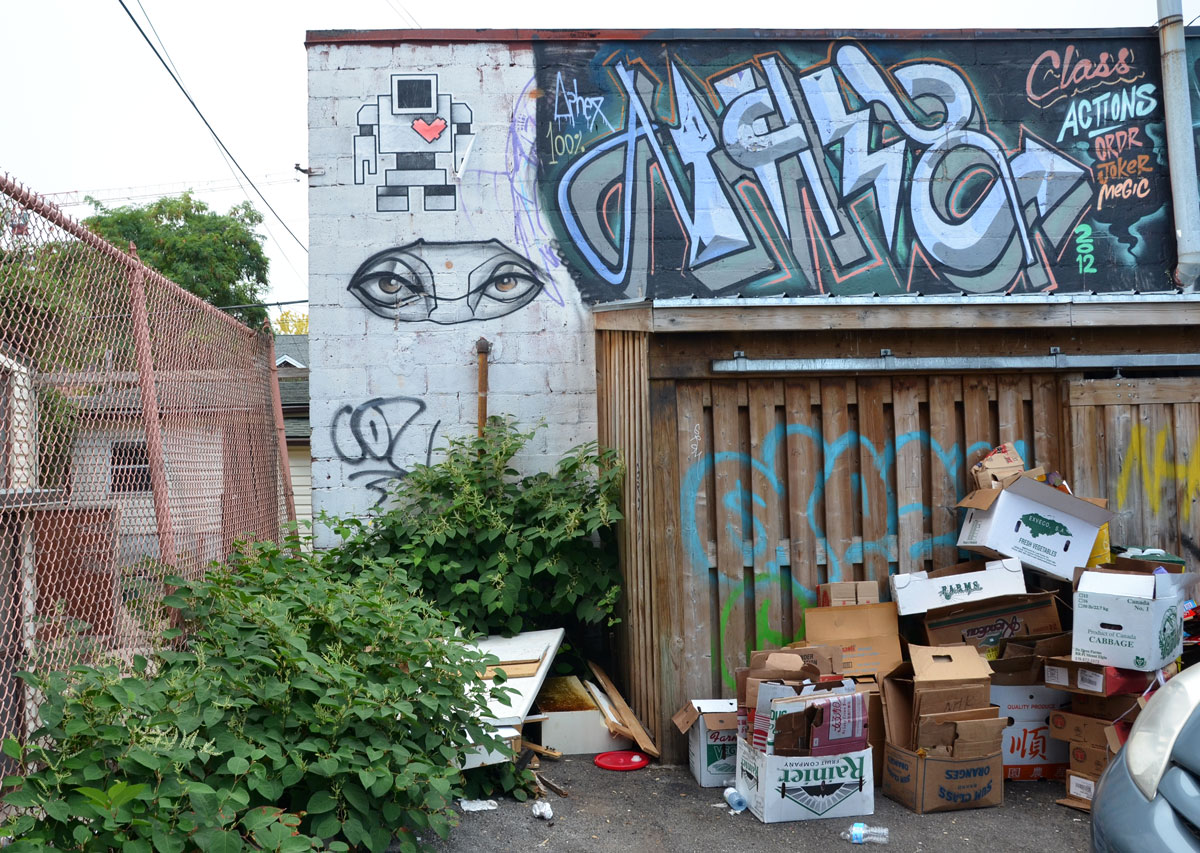
A lovebot and a pair of anser eyes on a wall in an alley. Lots of empty cardboard boxes on the ground by the wall.

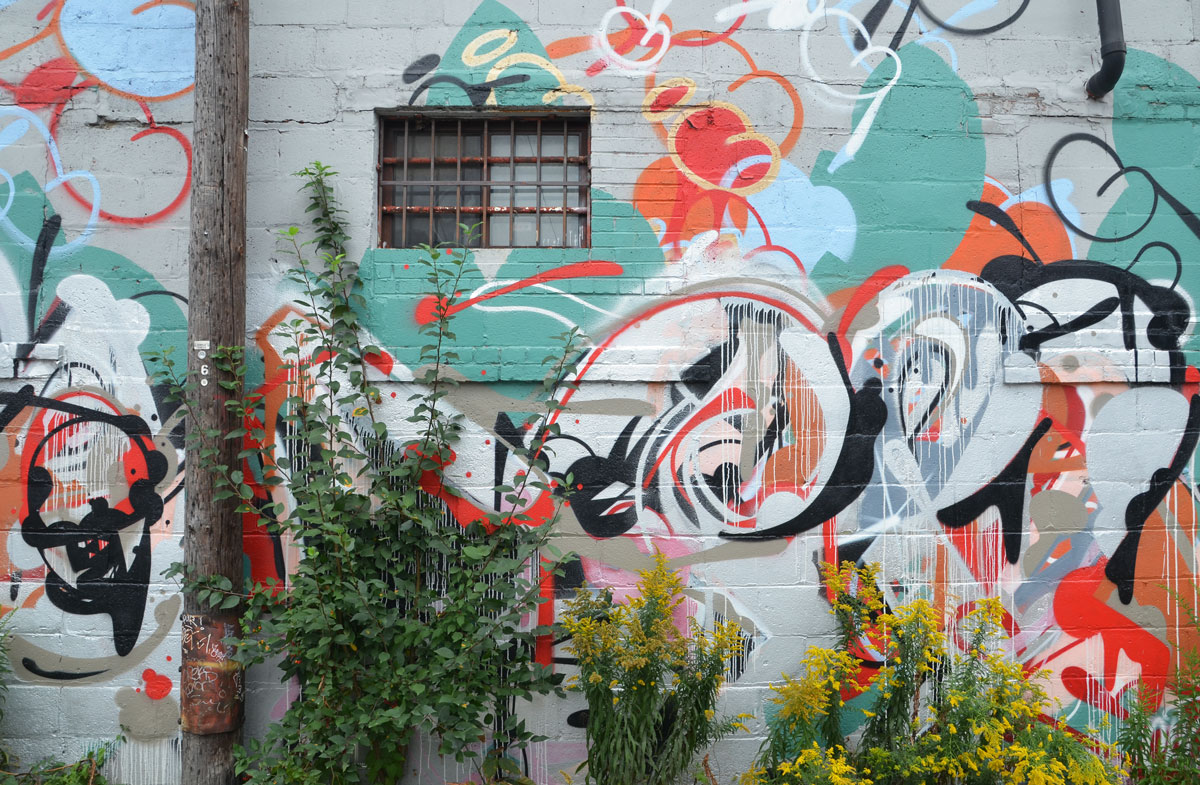
A wall with a small window with a metal grille over it, covered in street art, with weeds and goldenrod growing up in front of it

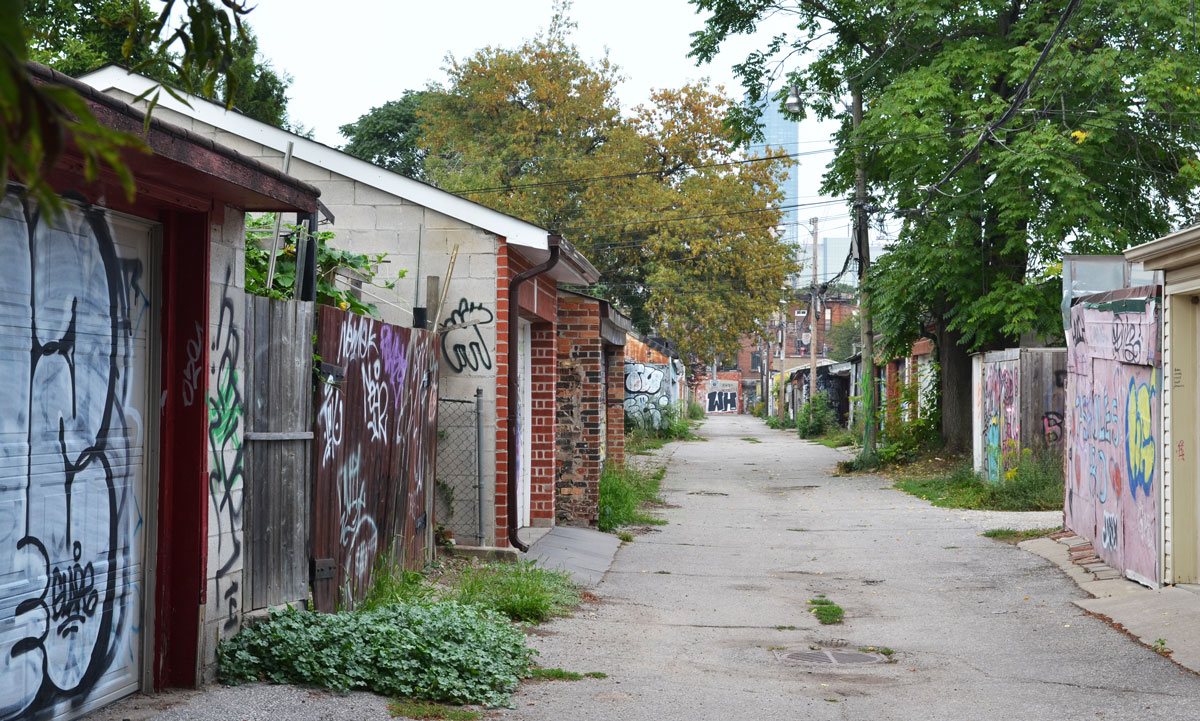
view down an alley late in summer when there are leaves on the trees and lots of weeds growing at the edges of the pavement

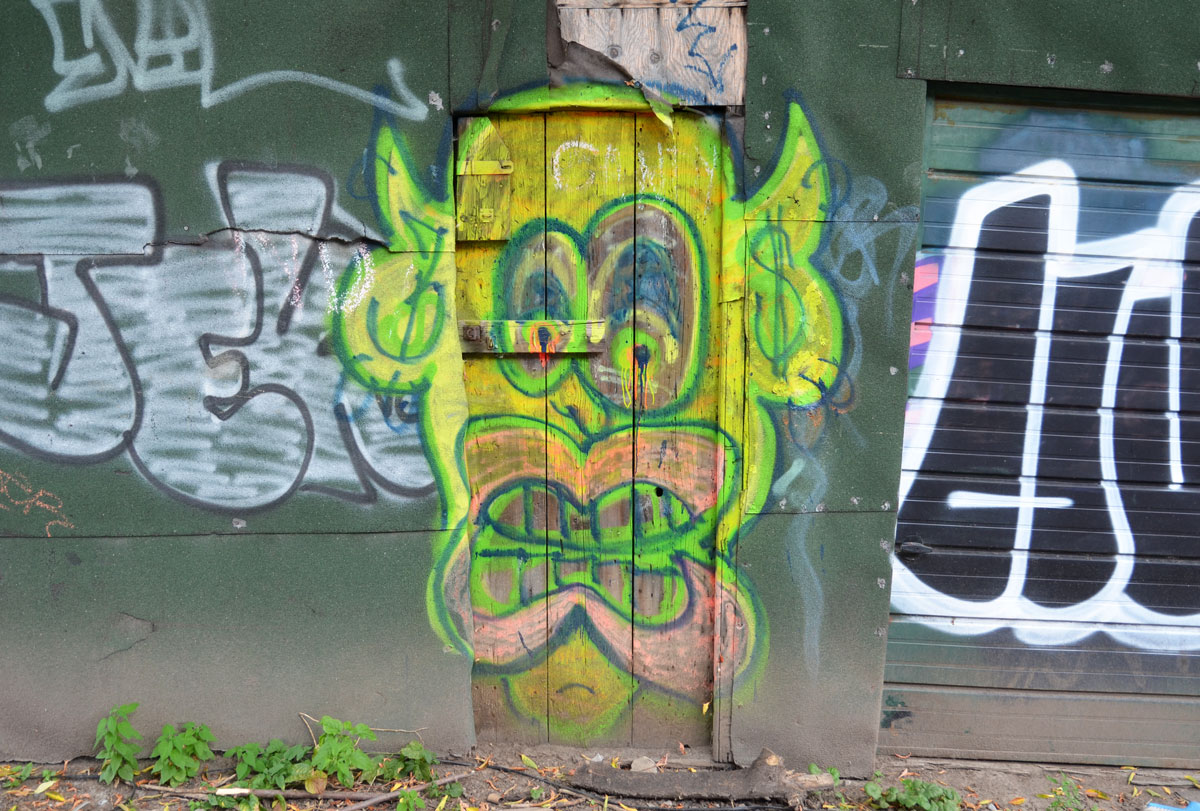
An old wood door on an alley building has been painted with a large yellowish green face with big pink lips and brown teeth

graffiti on a garage door

Two black lovebot robot stickers on a yellow protective sleeve around a cable that is helping to hold up a pole.

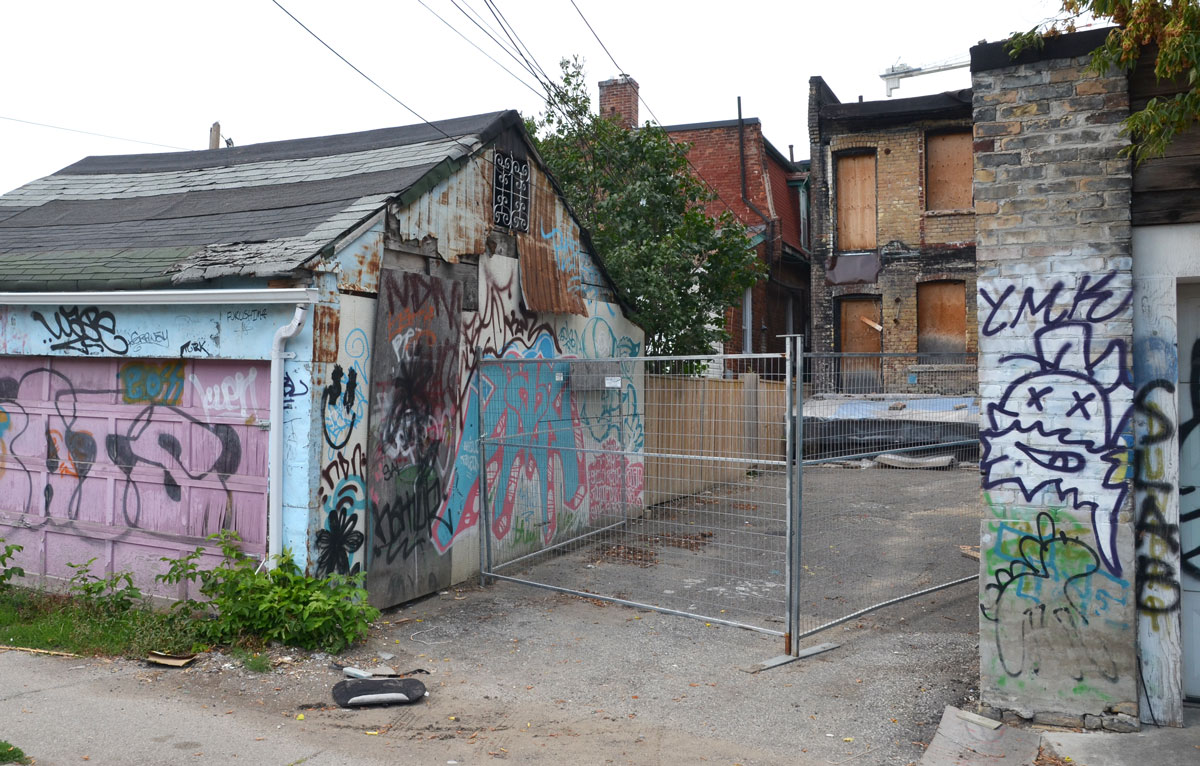
In an alley, the back of a house is being renovated, all the windows are boarded up and some of the exterior brick has been removed. There is a metal gate across the back of the property. The garage to the left is covered with graffiti.

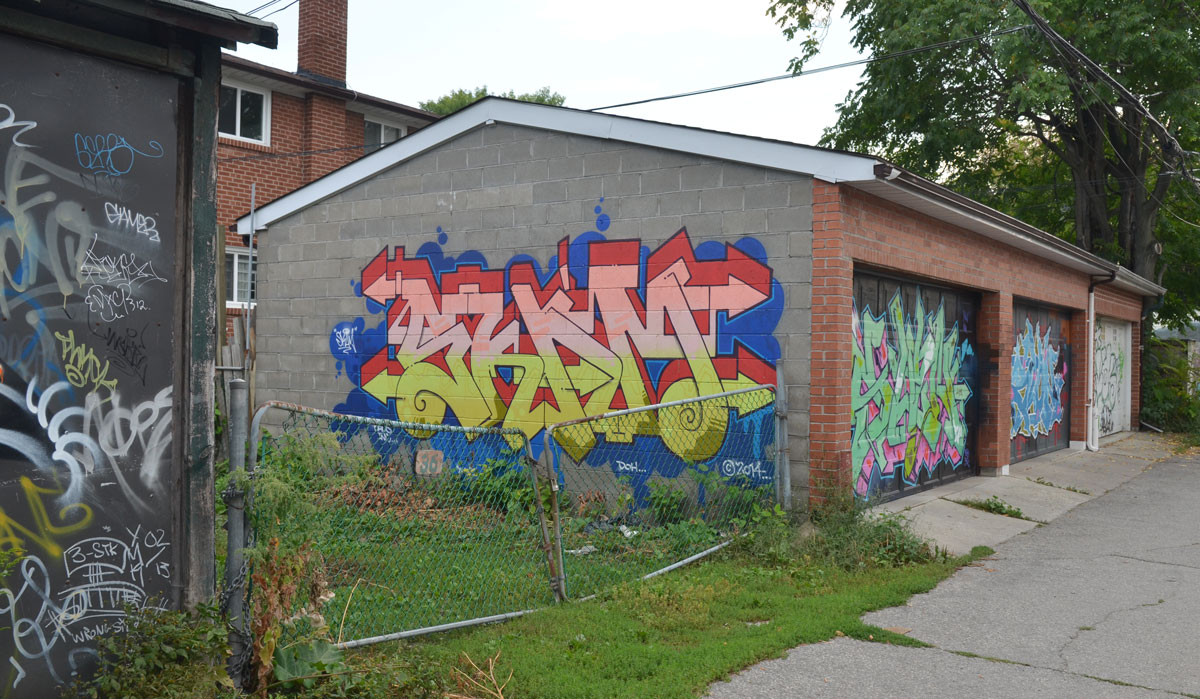
Newer garage in an alley with a crooked metal wire gate beside it. The garage has graffiti on the side wall and on both of its garage doors.

looking towards the end of an alley that has a large wheatpaste 3D lovebot high up on it. Beside lovebot is another wheatpaste

Wheatpaste high up on a wall, a large face like thing. The words 'dying inside' are part of the picture

below: Only the eye remains from a previous painting

Just an eye from a previous street art painting hasn't been covered by a white tag

below:  Two photos from the south side of Nassau street

Two women pushing a stroller walk past some street art on Nassau St. in Toronto, a large orange piece ta

The front and side of a garage are covered with street art. The front is not very very visible in this picture but the side is. A man from the waist up with his finger pointing upwards is beside a picture of city buidings and a poser bunny.