Posts Tagged ‘people’

Yesterday the Portuguese community in Toronto held their 29th annual Portugal Day parade.   It was a lively, happy occasion.  Hundreds of people lined Dundas Street West between Lansdowne and Trinity Bellwoods Park to watch the parade.  They showed their Portuguese colours with flags, banners, hats, soccer shirts, and lots of red clothes!  Young soccer players demonstrated their skills.  People of all ages wore traditional dress from different parts of Portugal as they walked and danced along the parade route.  There was music too – bagpipes, marching bands, and music to dance to.

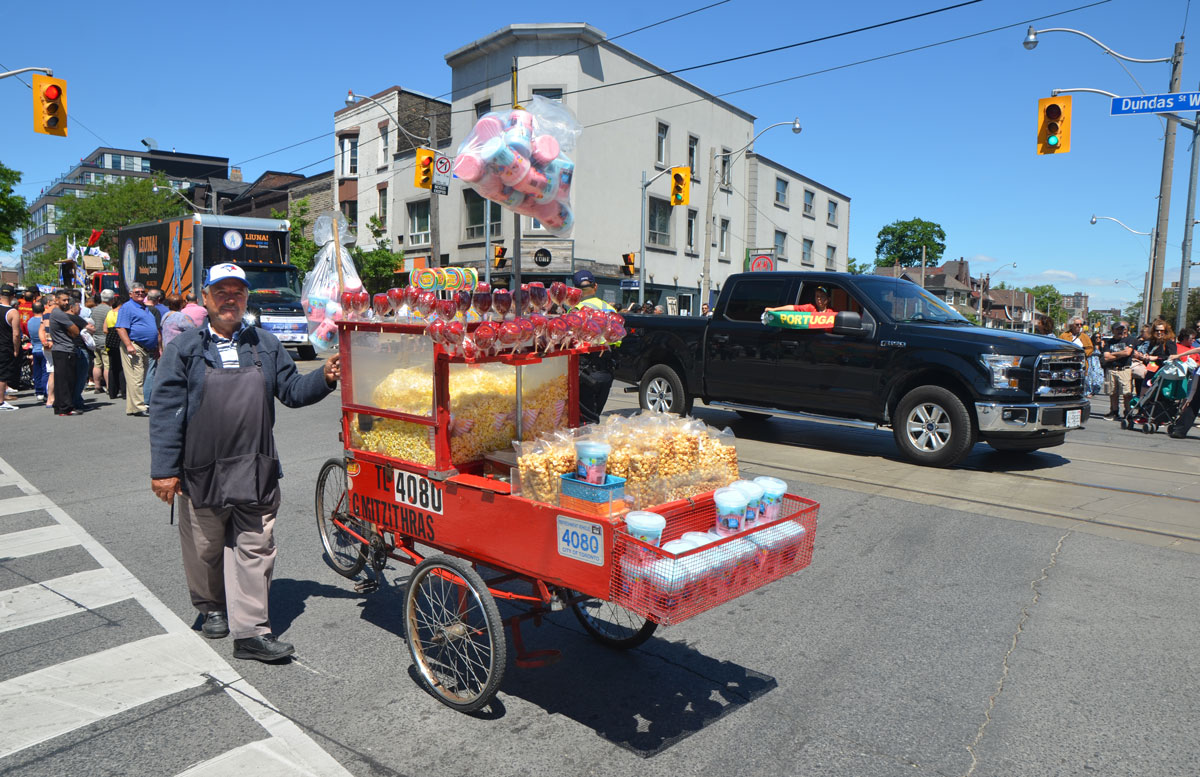
A man pushes a cart from which he is selling popcorn, candy apples and cotton candy to people watching a parade. A black truck is behind him with a boy in the passenger side who is hold a banner out the window that says Portugal on it.

Two boys holding a red banner for a marching band in a parade. Lots of flag holders behind them, a Canadian flag, an Ontario flag, a Toronto flag and a Portuguese flag.

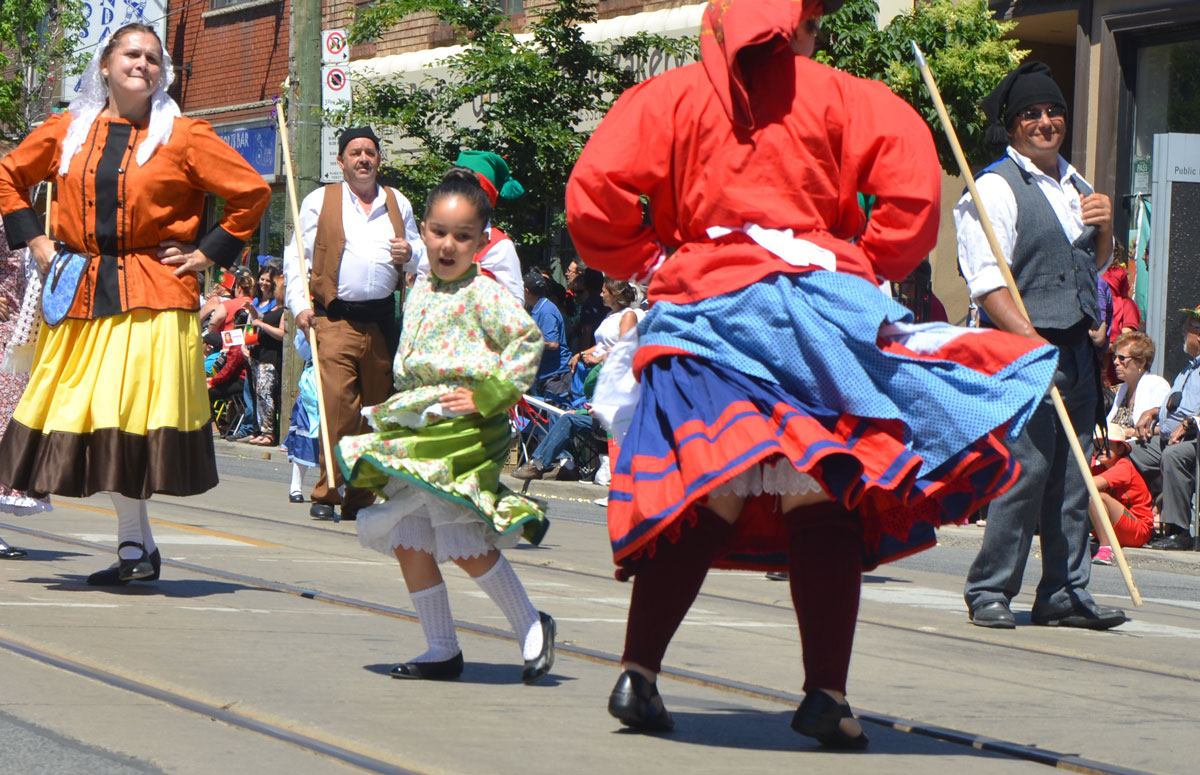
A young girl swirls her long skirt as she dances in a parade. Portugal Day parade on Dundas West, Little Portugal, in Toronto

A boy is wearing a Rinaldo soccer shirt, and sitting beside a Portuguese flag. His father is with him

men, members of a Labour Union, walk in a parade. They are wearing orange shirts with short blue sleeves that say Portugal Day on them.

Women dancers in traditional Portuguese dress, dancing in a parade. One of them pauses to look at the man selling cotton candy and popcorn froma cart.

On a street, Dundas West in Toronto, there is a parade, people on the sidewalk watching, and dancers performing in the parade. Portugal Day parade.

People in a parade, three people holding two flags, Portugal and Benfica. A man behind them is holding his arms up in the air.

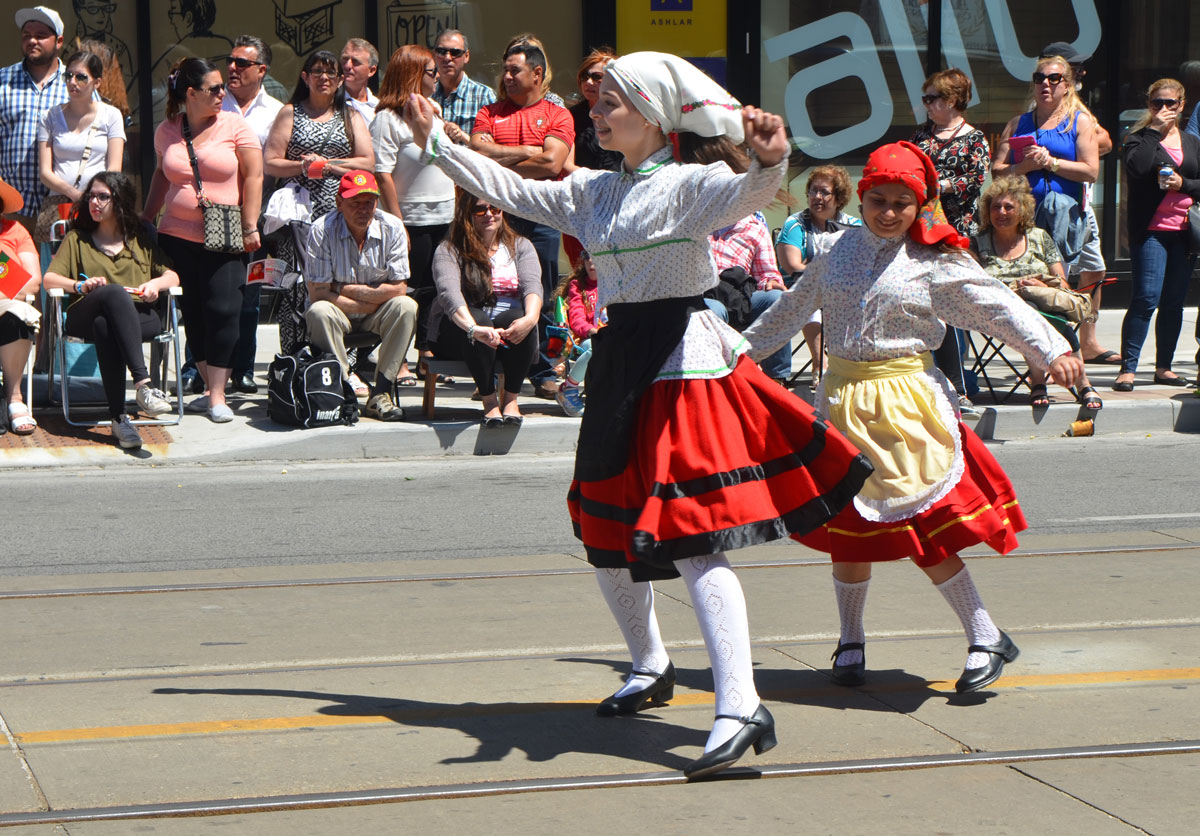
Two girls in traditional Portuguese dresses are dancing in a parade, onlookers sitting on the sidewalk behind them.

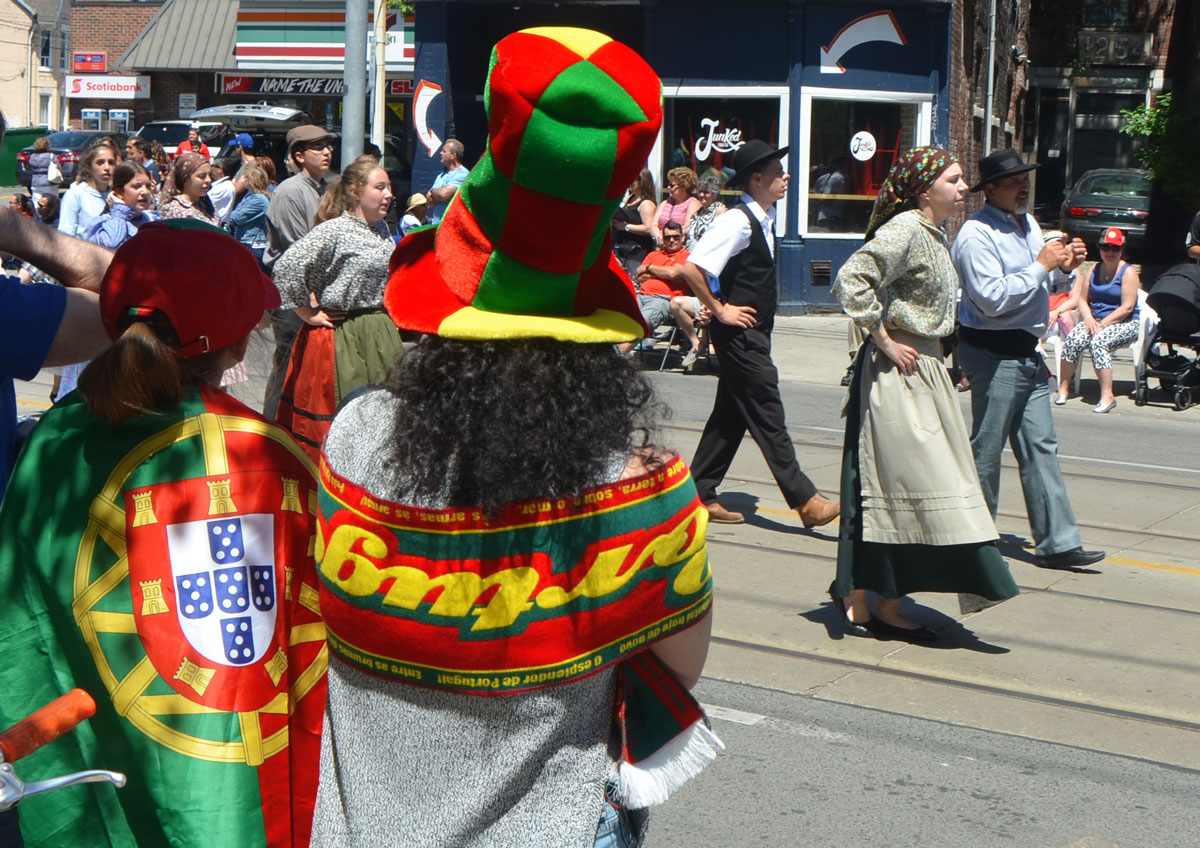
A young woman is wearing a large tall hat in squares of the colours of the Portuguese flag. Beside her is a person draped in the Portuguese flag. They are watching a parade

Four kids sitting crossed legged at the side of a street watching a parade. They are holding Portuguese flags. The older boy has a red whistle in his mouth.

Two Toronto policemen in yellow safety vests watch a parade, women dancing past them.

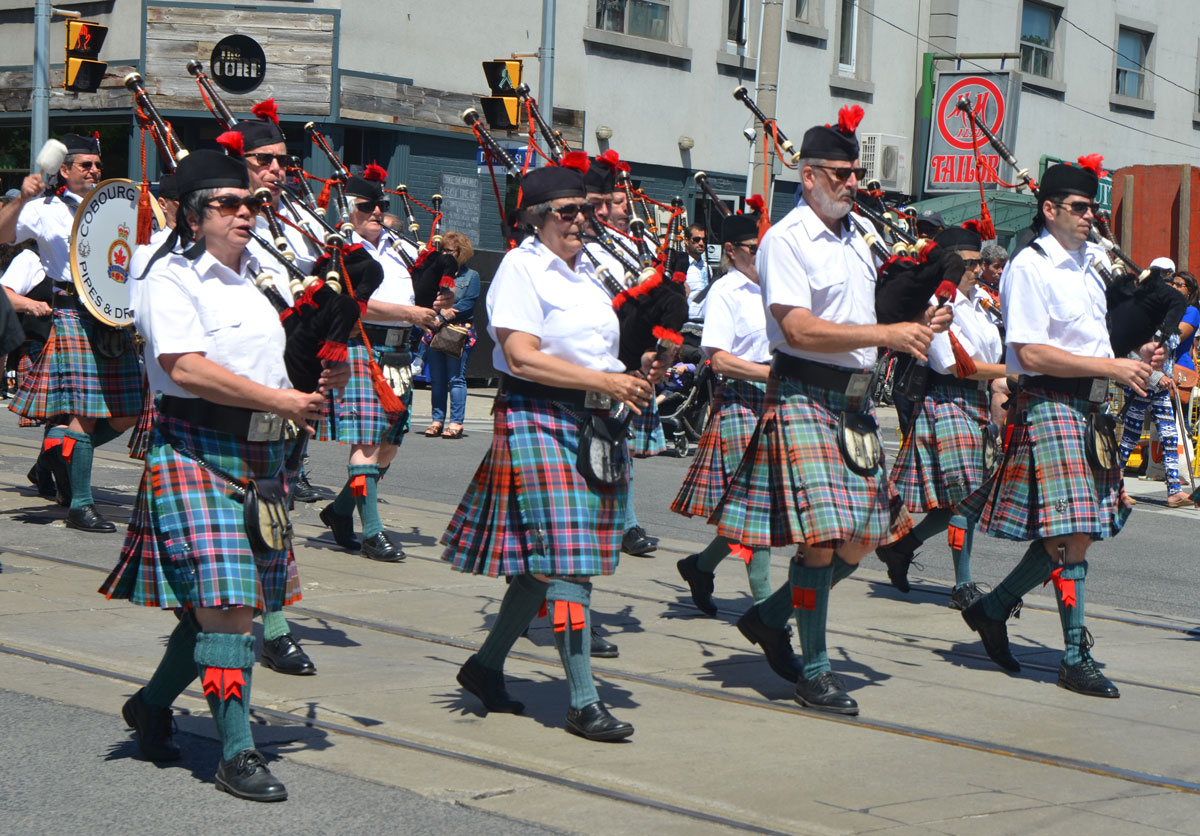
members of the Cobourg Legion pipe and drum band, four bagpipers in their blue and red kilts marching in a parade

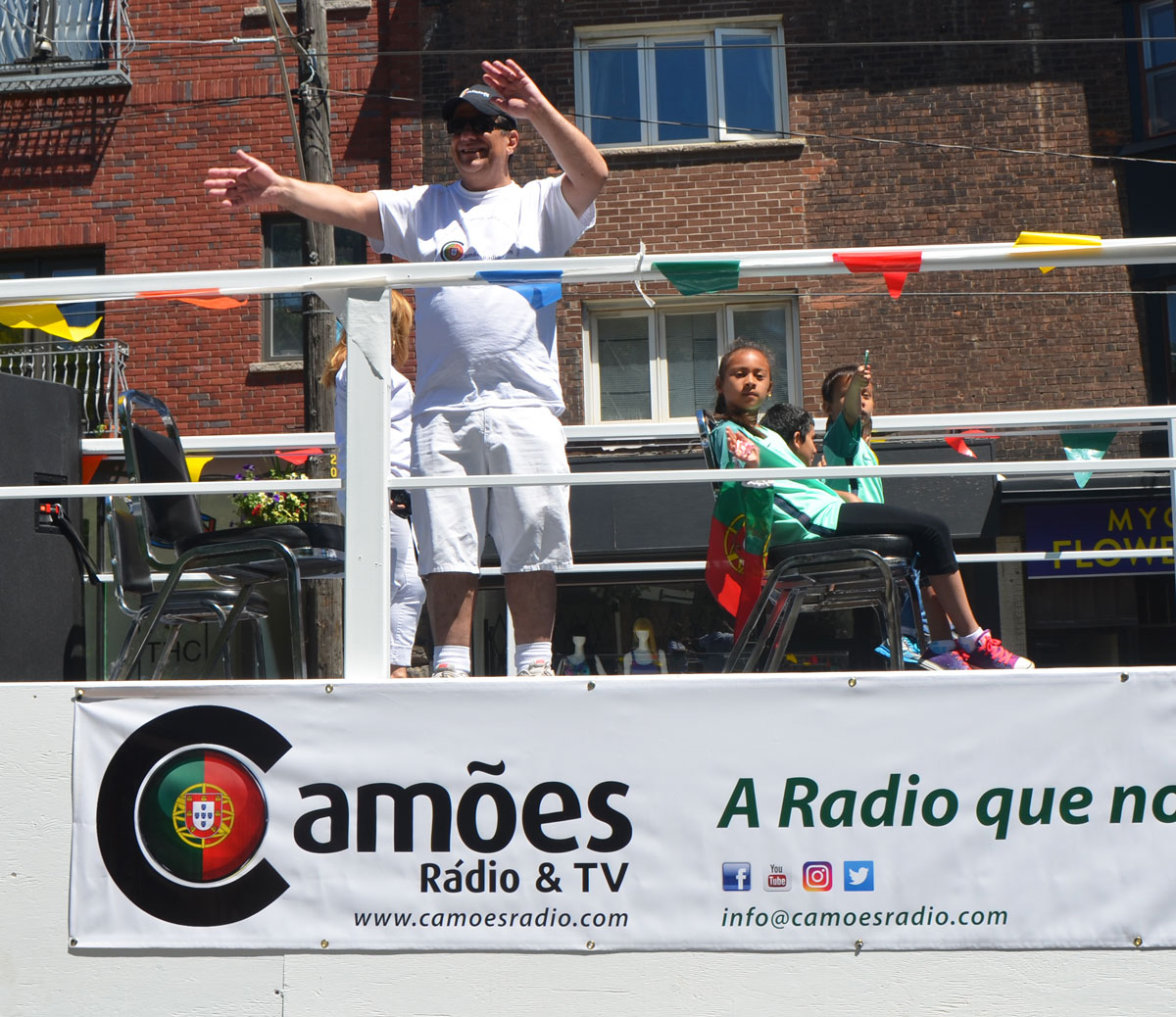
A float in a parade featuring the Portuguese Radio and TV stations, Camoes,

Close up shot of the hands of three men dancing in a parade. The faces of only 2 of them are visible. They are wearing white shirts, black vests, and black hats. Portugal Day parade

Spectators in a parade hold small Portuguese flags as they watch traditional dancers perform.

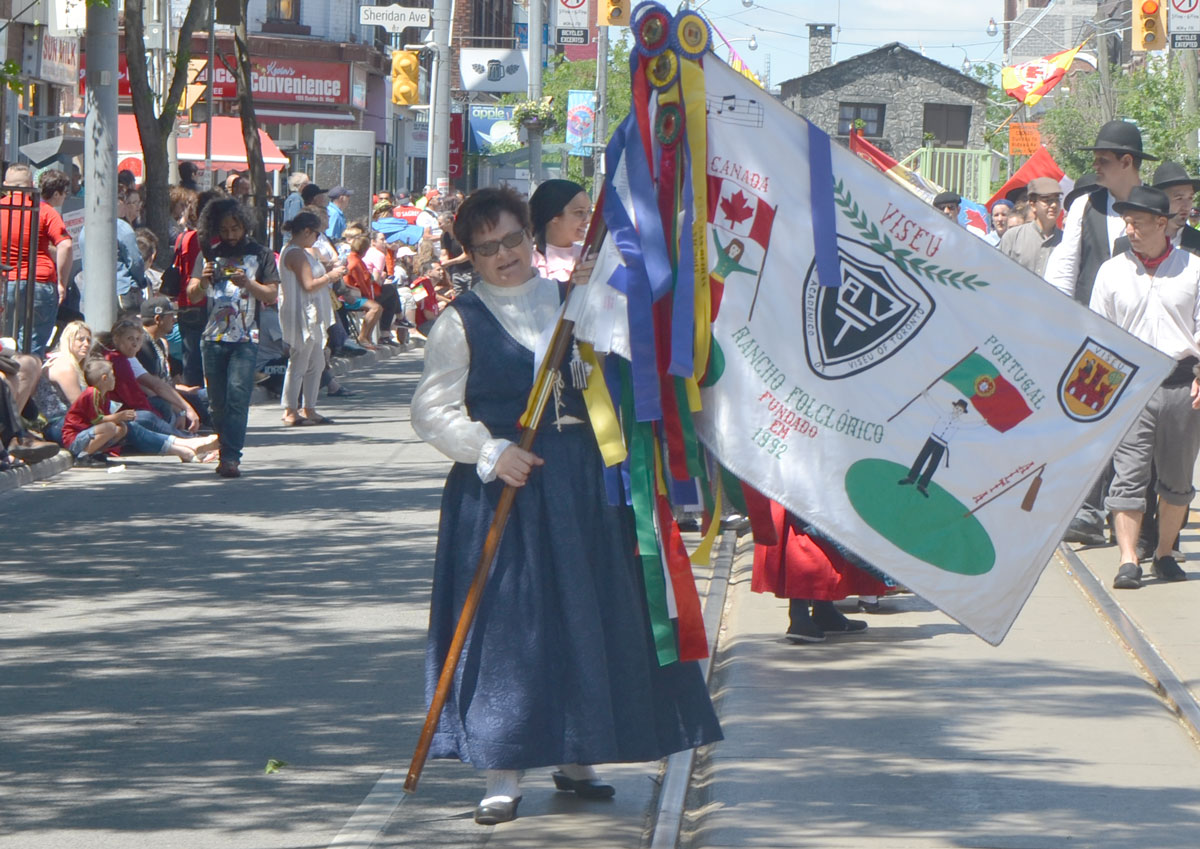
A woman holds a colourful banner in a parade

A woman from the crowd watching a parade, goes over to a float that has a live sheep and goat on it, she is hesitating to pat the sheep.

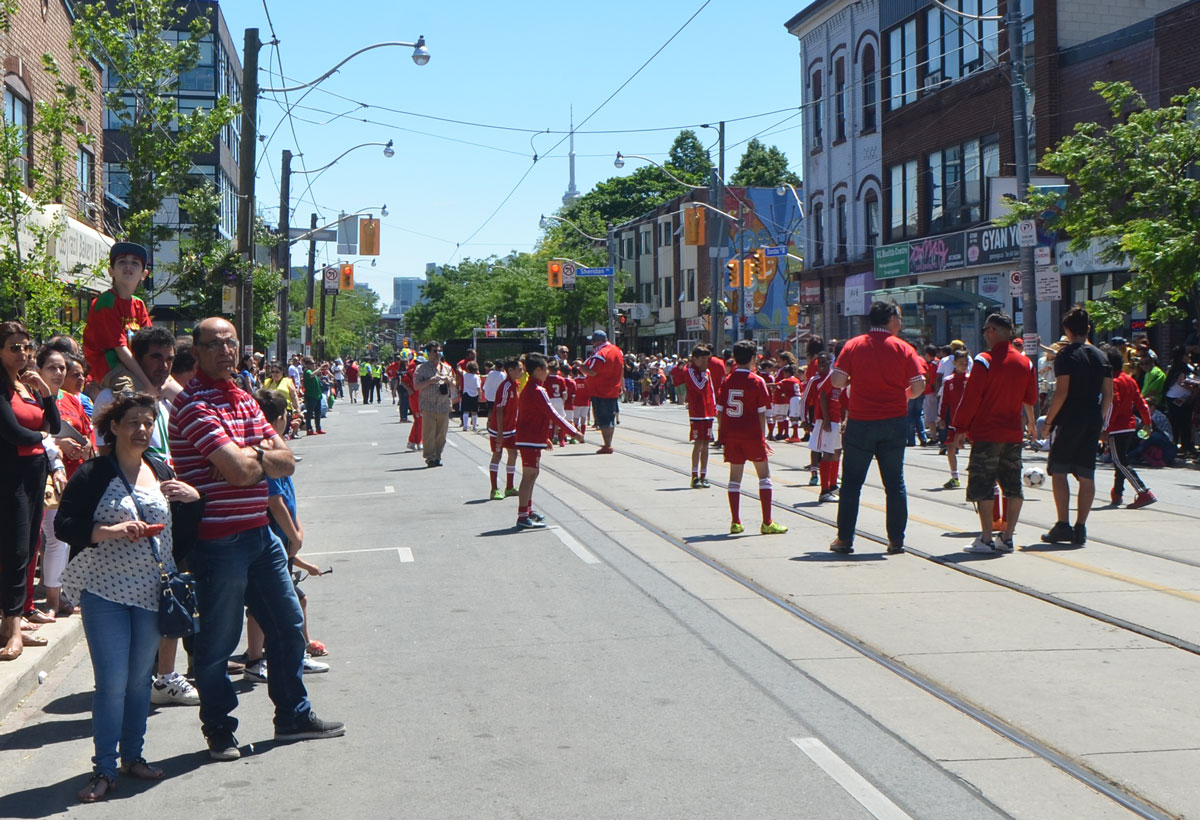
people watching kids kicking around a soccer ball as part of a parade. The kids are all in red uniforms.

A woman is giving out small portuguese flags to people watching a parade. She is wearing a t-shirt in support of local politician Anna Bailao,

Spectators at a parade, sitting on chairs, one of which has a Canadian flag on the back. Passing by is a marching band in dark pants and white shirts. Portugal Day parade on Dundas West.

As you all know, the TTC is replacing their older streetcars with new longer Bombardier streetcars.   Or at least they are trying to 🙂  Because they are longer, they don’t fit into existing “garages”, hence the new Leslie Barns facility.  Located on Leslie St., south of Queen, it is the new streetcar “home”.  It is where streetcars are parked, maintained and repaired.  It has been in operation since Nov 2015 but the first chance the public got to peak inside the finished complex was at Doors Open on the 28th of May.

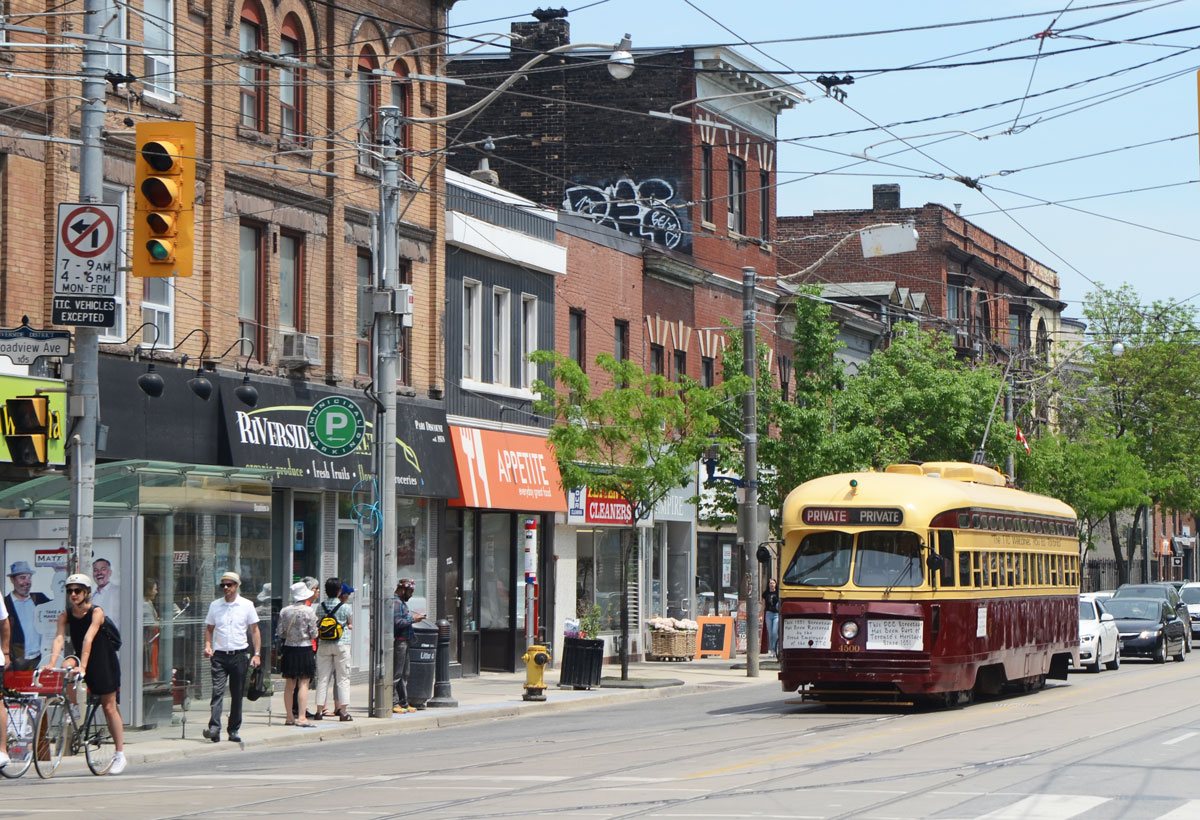
below: While waiting for a streetcar at the corner of Queen and Broadview on the way to visit the Leslie Barns, I saw this renovated TTC streetcar from the 1950’s.

An old restored TTC streetcar, maroon and yellow, on Queen St. East

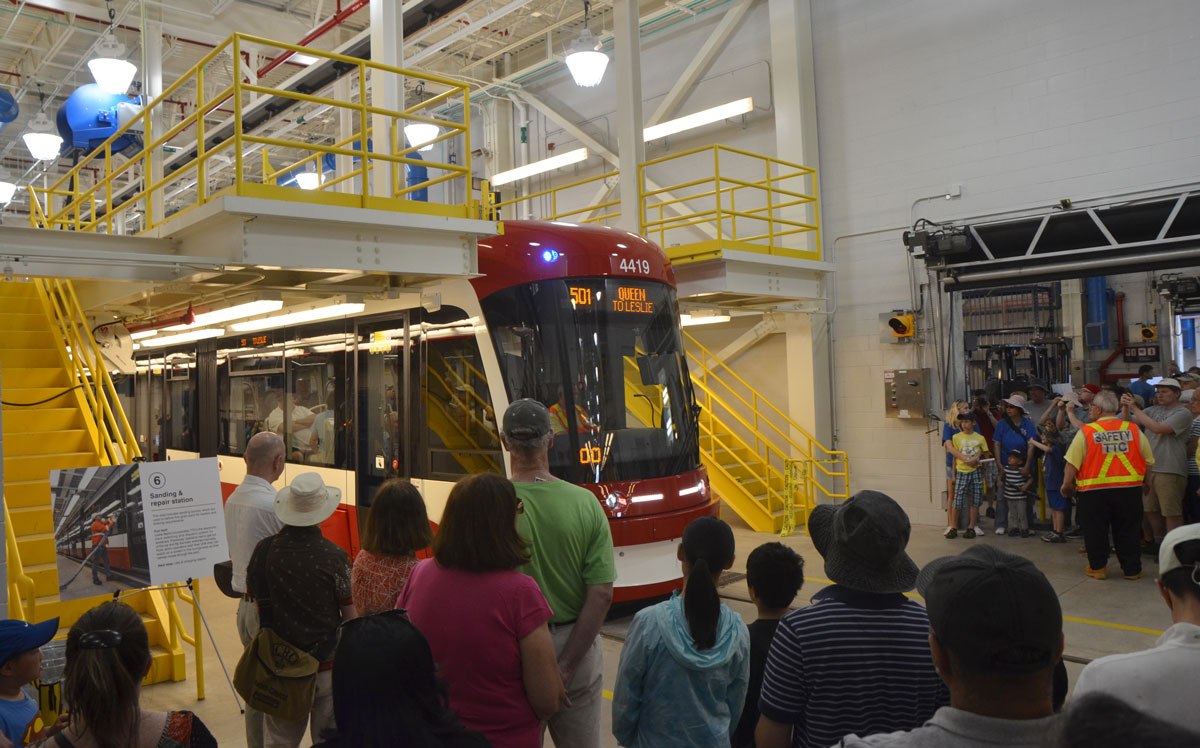
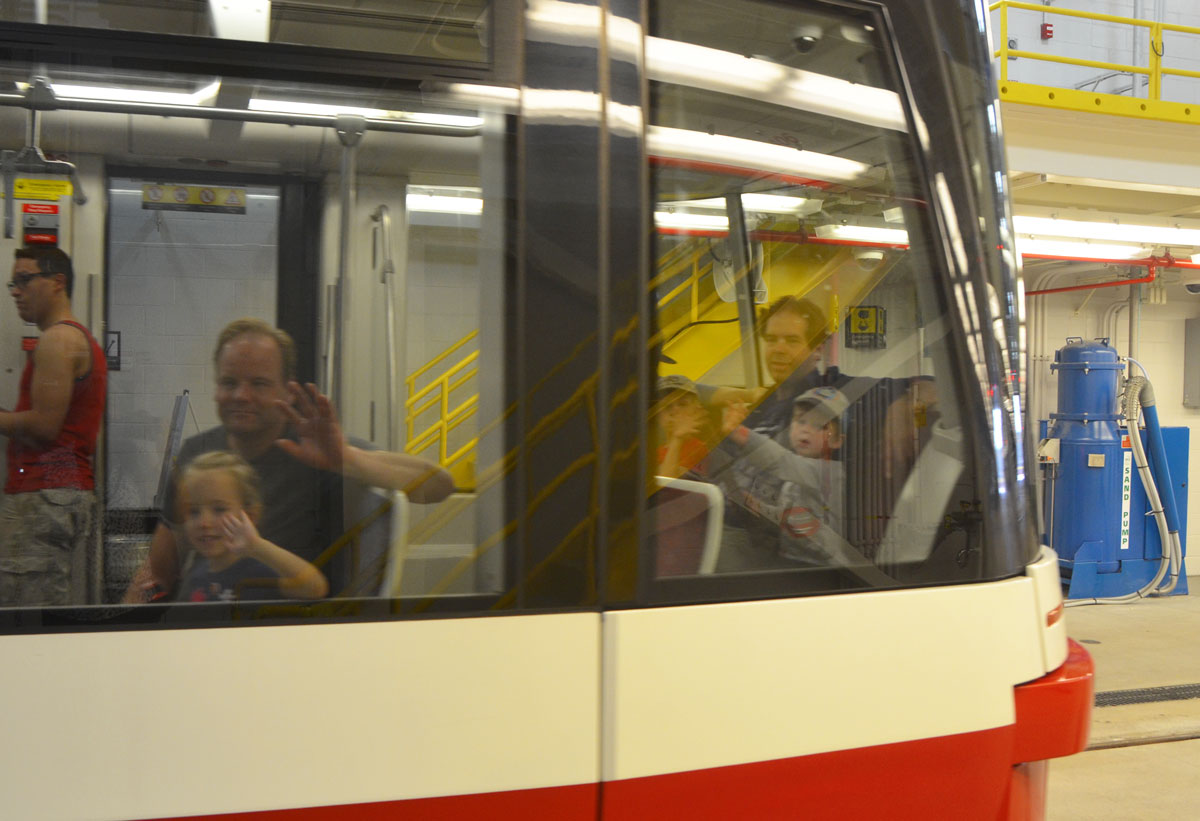
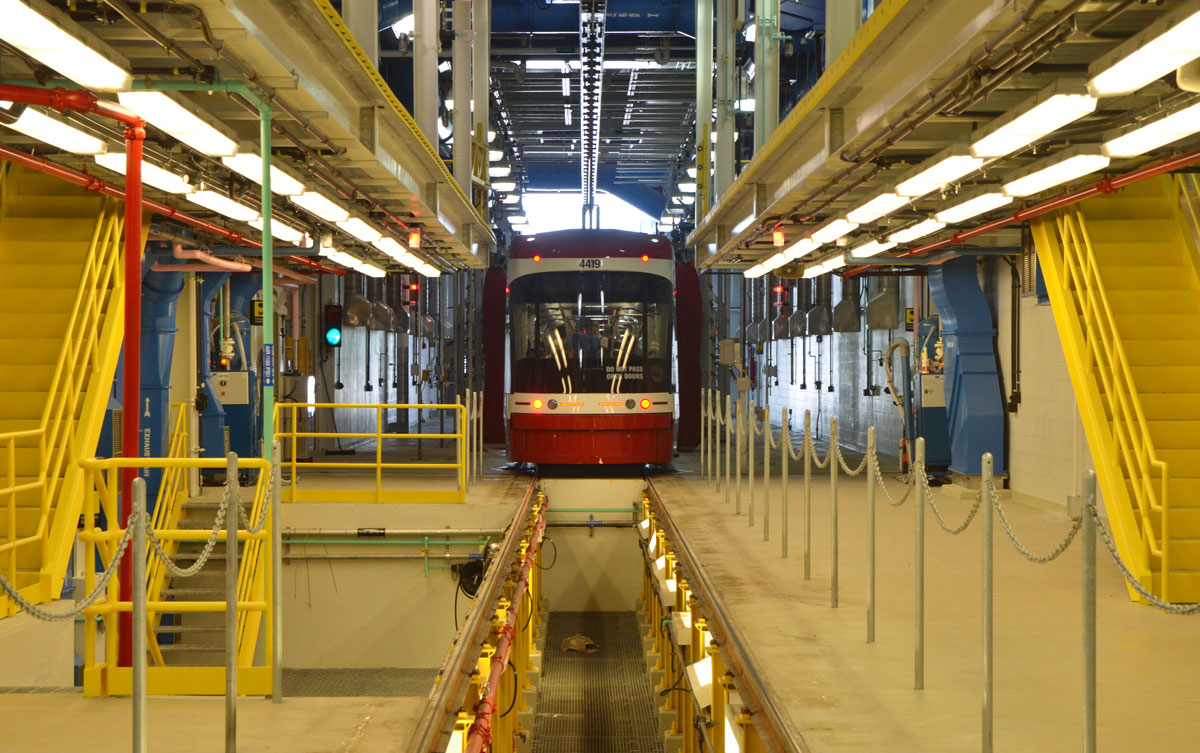
below:  The streetcar tour involved riding a new streetcar through a maintenance bay in the building and then around the parking lot out back.

People at Doors Open in TOronto, at the TTC LEslie Barns streetcar facitlity, lining up for , or just getting off of, streetcar tours, riding the new streetcars around Leslie Barns

A group of people inside Leslie Barns streetcar facility, standing aside to make way for a new streetcar that is taking other people on a tour.

people riding in a new streetcar, photo taken from the outside, most of them are waving

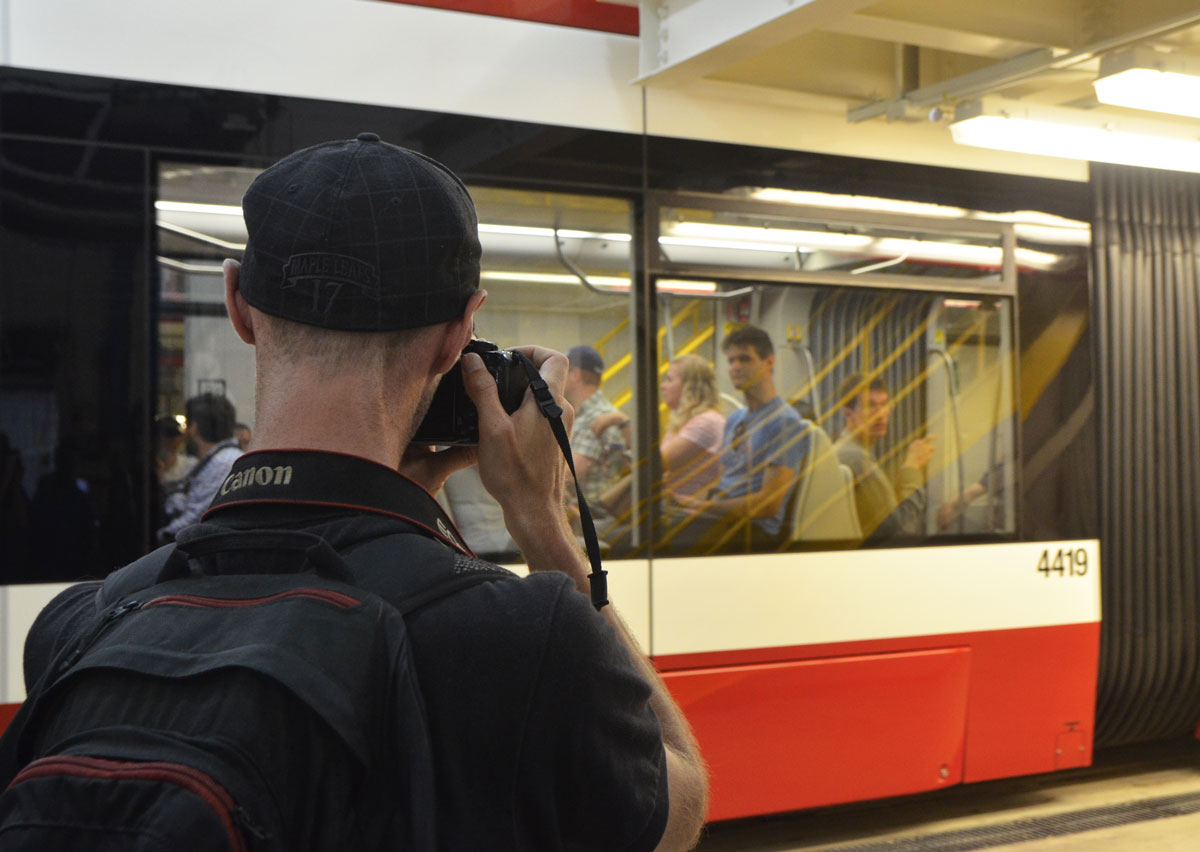
A man in black T-shirt and black cap is taking a picture of people riding in the new streetcar, inside Leslie Barns at Doors Open

below: Exterior, parking space for at least 100 streetcars

the massive concrete parking lot for streetcars with all the overhead wires. The building that houses the workshops and cleaning and office for the ttc is in the background.

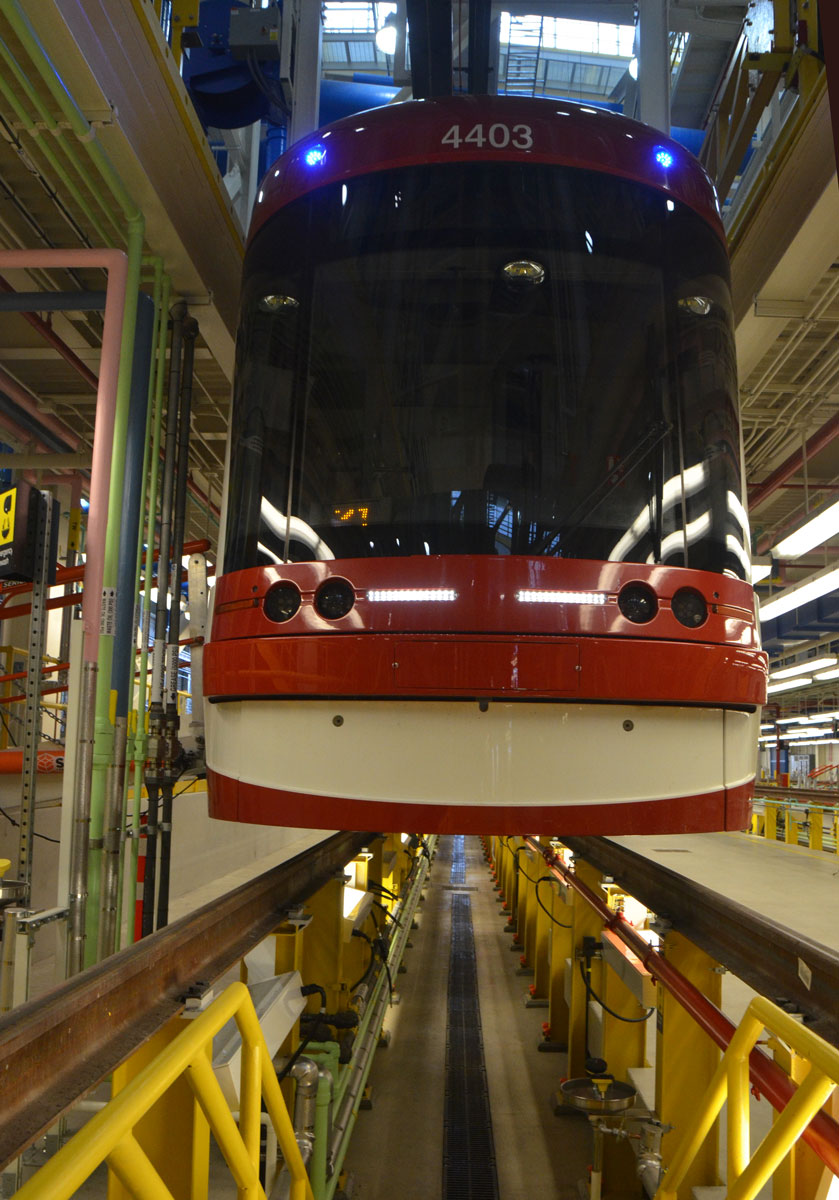
below: Special bays have been constructed with space for workers to access both the underneath and the top of the streetcars.  Because the cars have been designed to ride low, a lot of their workings such as the HVAC and propulsion systems are built into the roof of the car.

the back of a new streetcar as it passes through interior of Leslie Barns streetcar facility, a large, tall interior space with lots of pipes

A streetcar sits in a repair bay of the Leslie Barns, space underneath the streetcar for workers to go down and work on the underside of the streetcar.

below: It’s a big space!  …. 17,510 square metres (188,500 sq ft) in fact.

interior of Leslie Barns streetcar facility, a large, tall interior space with lots of pipes

below: A spic and span shiny paint room

interior of the paint room at Leslie Barns, where streetcars go to get painted.

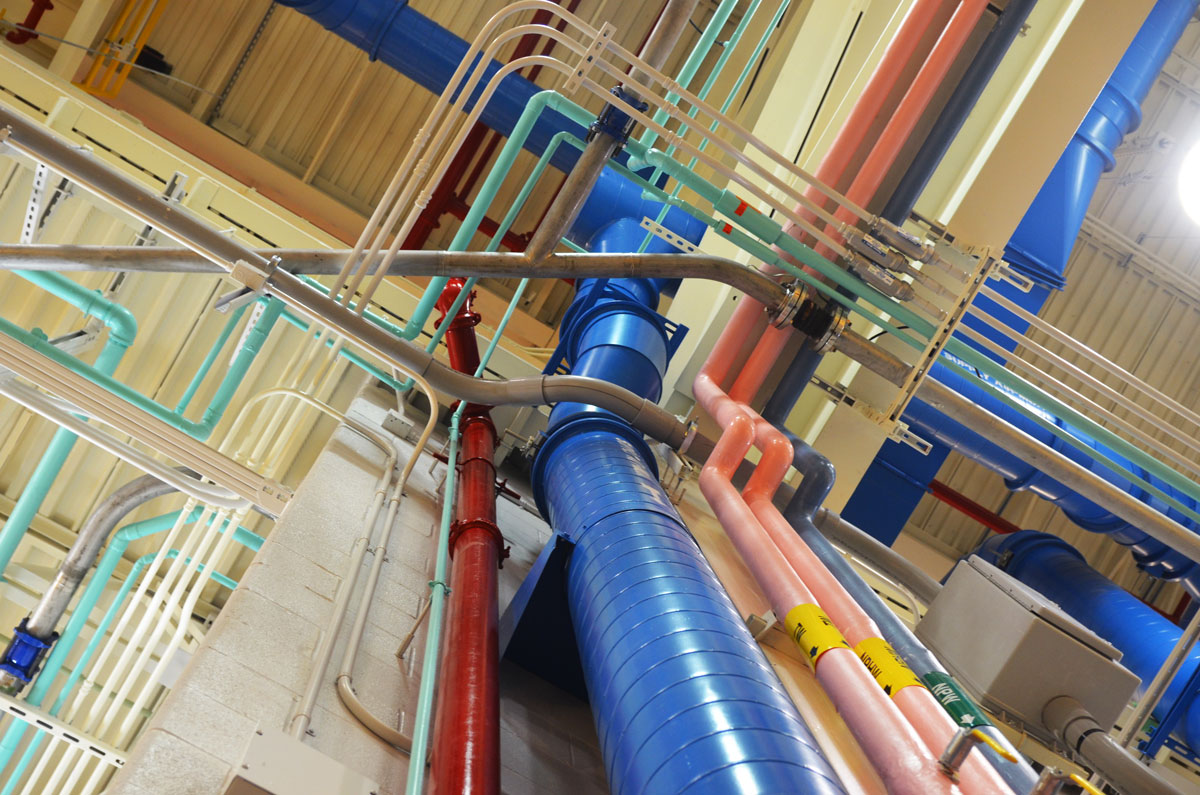
below: A myriad of colour coded pipes

A myriad of pipes running up walls and across the ceiling, blue, pink, red, grey, all colour coded, interior, Leslie Barns

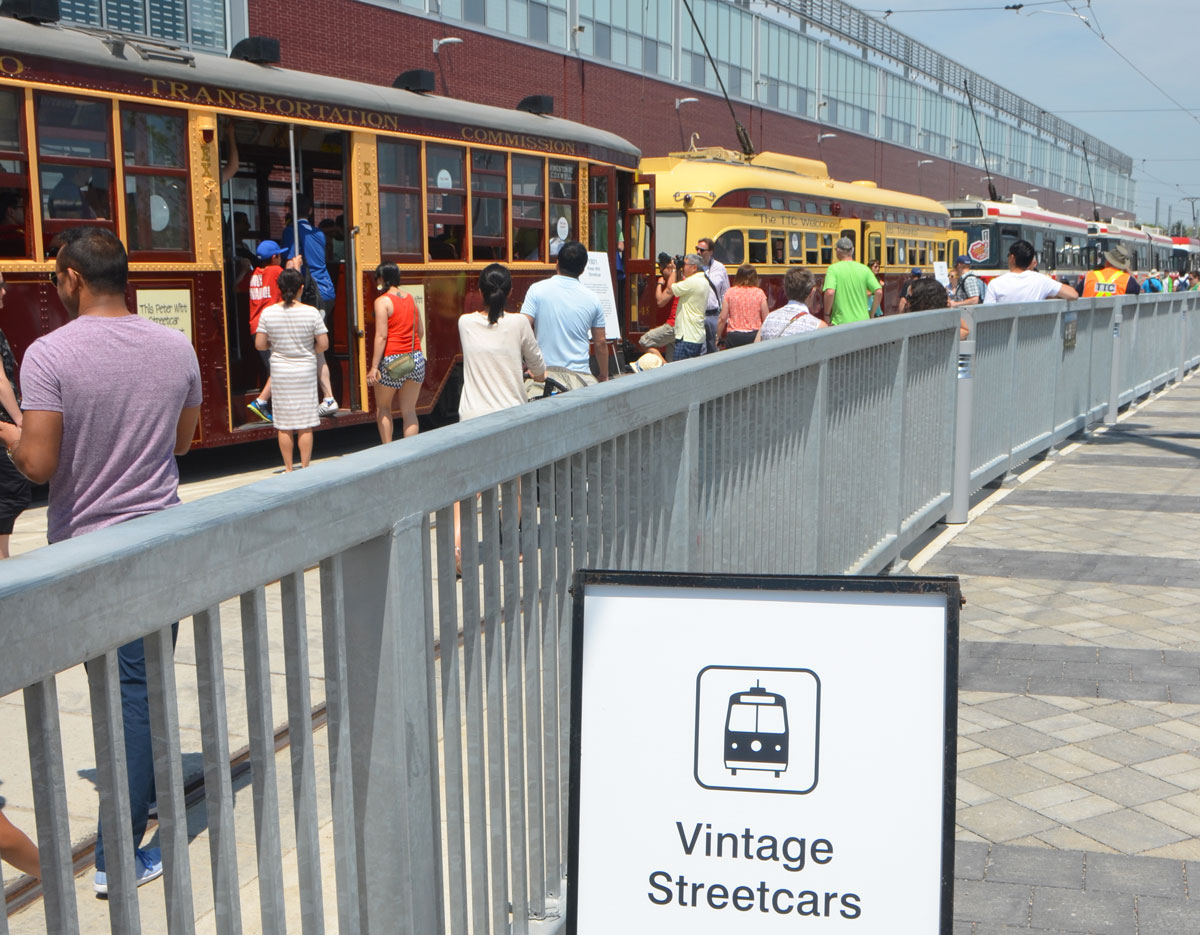
below: There were renovated vintage streetcars on display.  On the left is a 1921 Peter Witt streetcar and next to it is a PCC streetcar from the early 1950’s.

a number of people waiting to go inside old renovated vintage TTC streetcars

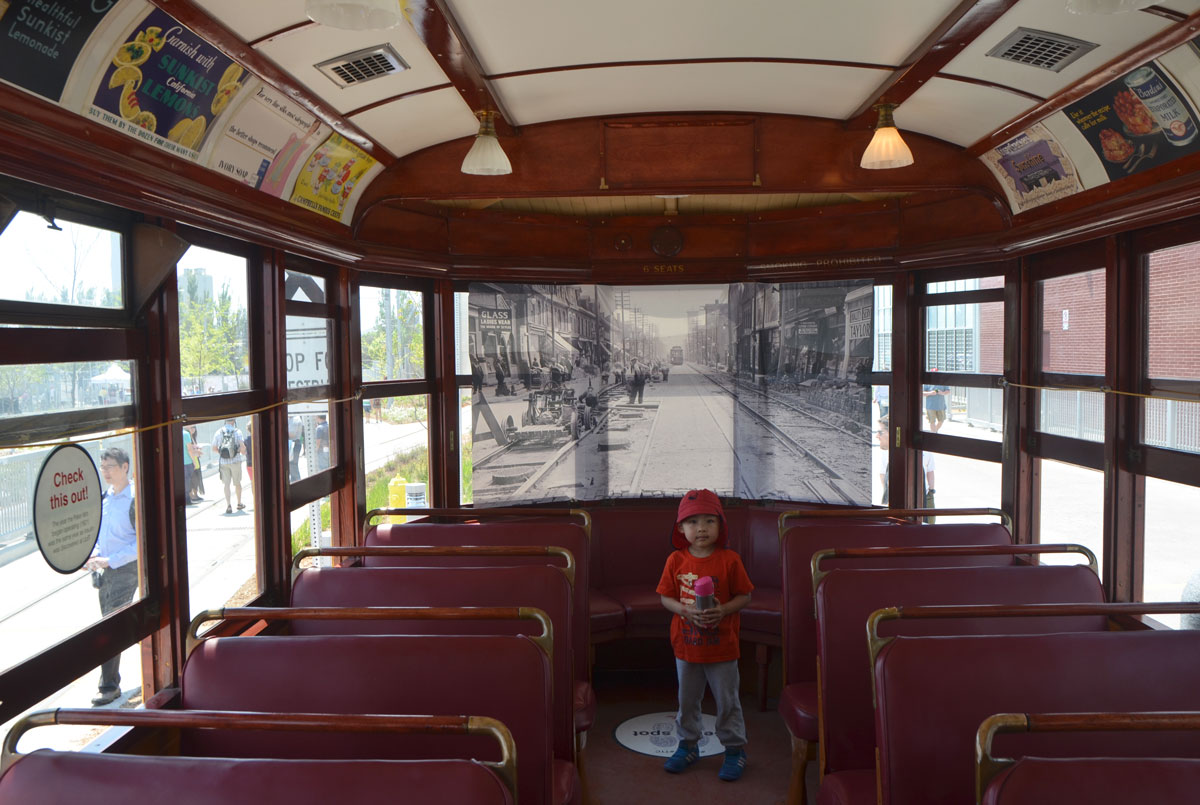
below: Interior of a refurbished Peter Witt streetcar with its wood trim.  The Witt cars were built for the newly formed TTC in 1921.  They entered service on Broadview in October of that year.  By 1923 they were operating on seven routes.  The last Witt streetcar was retired in 1963.

A young boy stands in the back of an old restored ttc streetcar. A black and white picture of an old street scene has been put across the back window to show you what the view out the window might have looked like at the time the streetcar was functional. Old ads on the upper part of the interior, wood trim

below: Looking out the window of a PCC streetcar built in 1951.  PCC stands for Presidents’ Conference Committee, which was a group of operators from the USA and Canada  who got together in 1938 to design a new electric railway car.  By the late 1950s, the TTC owned the largest fleet of PCC’s in the world.  The last one was retired in 1995.

A young boy wearing a hat looks out the window of an old restored streetcar while his father takes a picture out the window

below: Streetcar wire maintenance truck.

a special TTC truck sits outside Leslie Barns TTC facility on Doors Open day, the truck is designed to run on streetcar tracks and is used to repair tracks and wires. There are people looking at the truck

#DOT16 | #TTC

Sharing Dance
Organized by the National Ballet School,
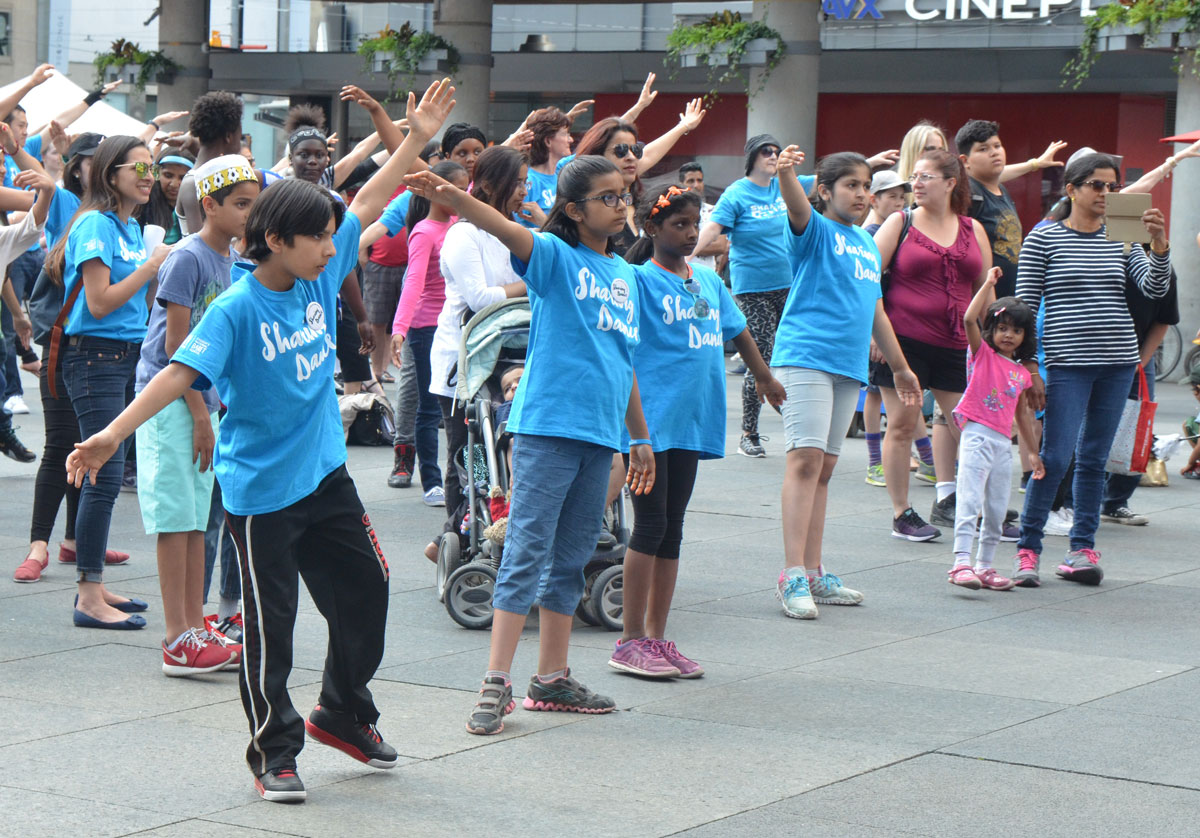
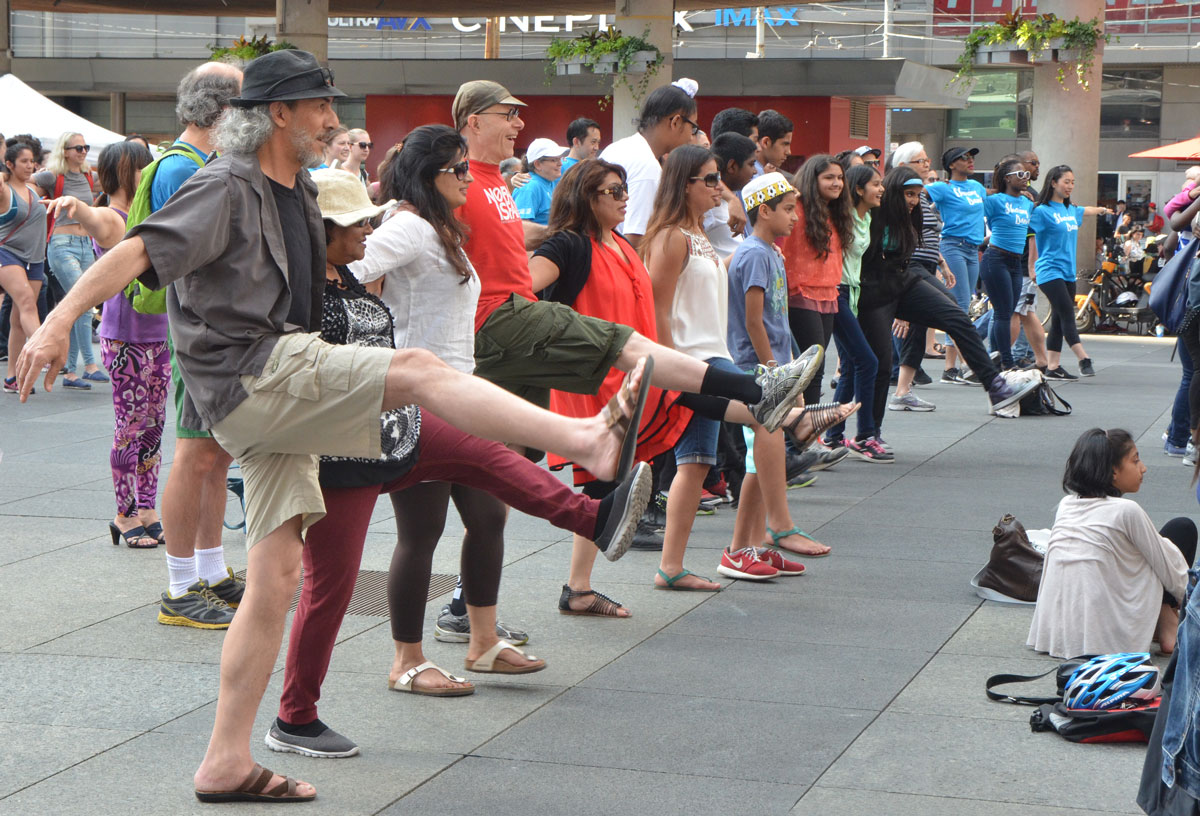
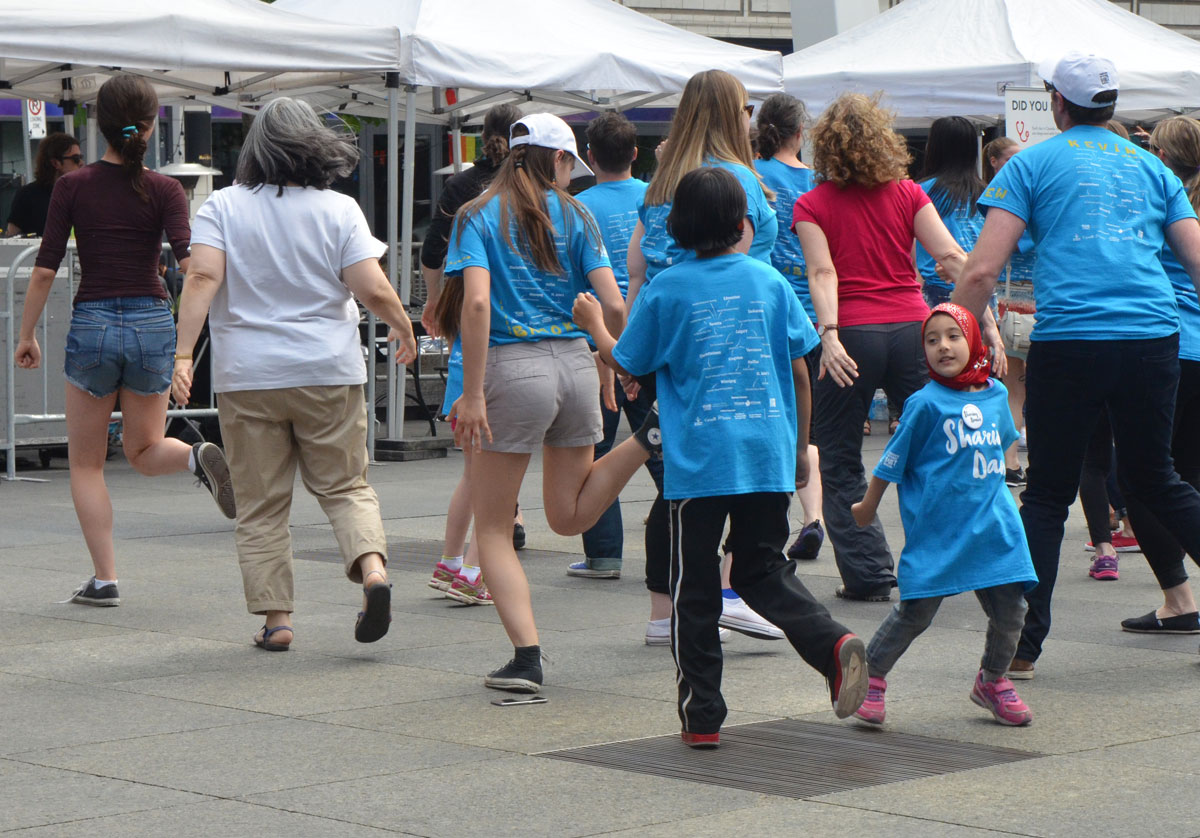
the 3rd annual Sharing Dance event was held at Yonge Dundas Square.

A chance to laugh a little and learn a few moves.

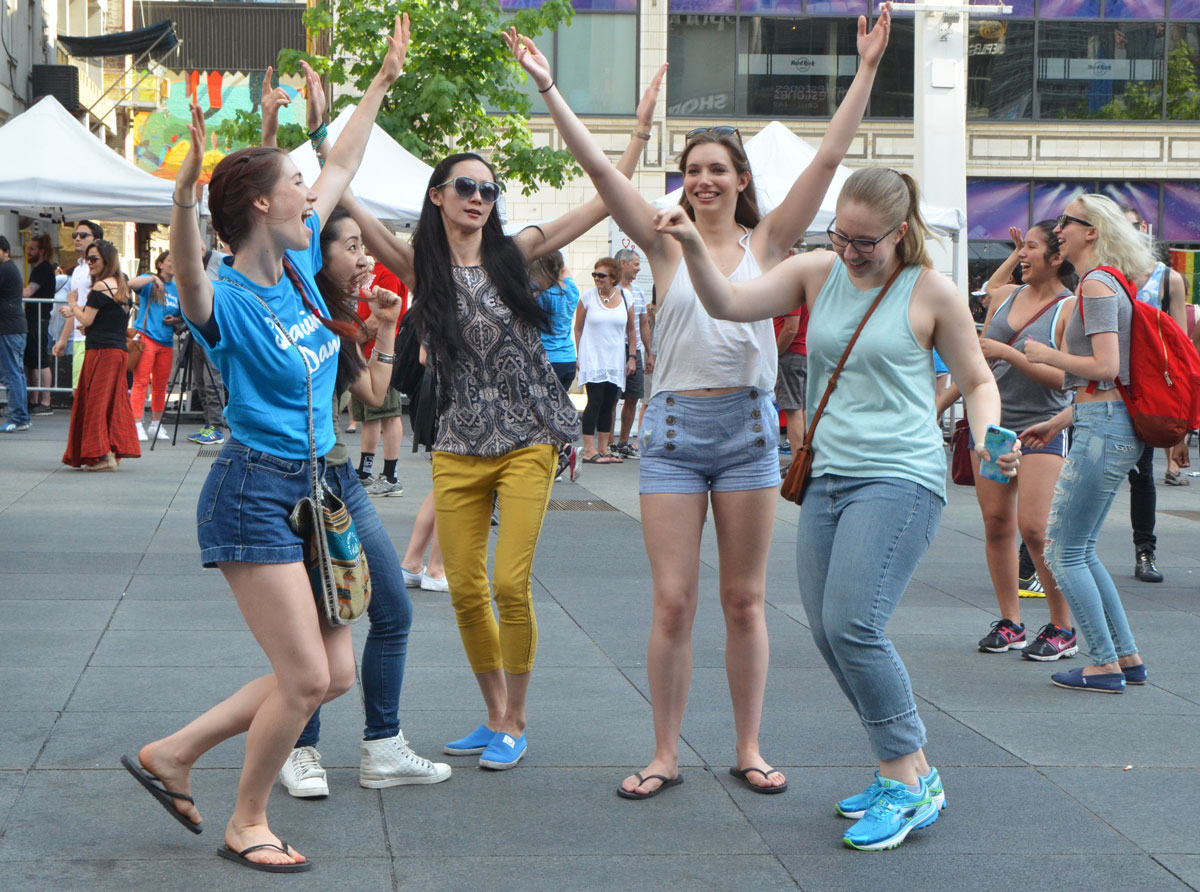
people dancing at Yonge Dundas Square as a group, part of an event called Sharing Dance

people dancing at Yonge Dundas Square as a group, part of an event called Sharing Dance - a woman in a tie dyed T-shirt and orange cap dances on her own while others watch

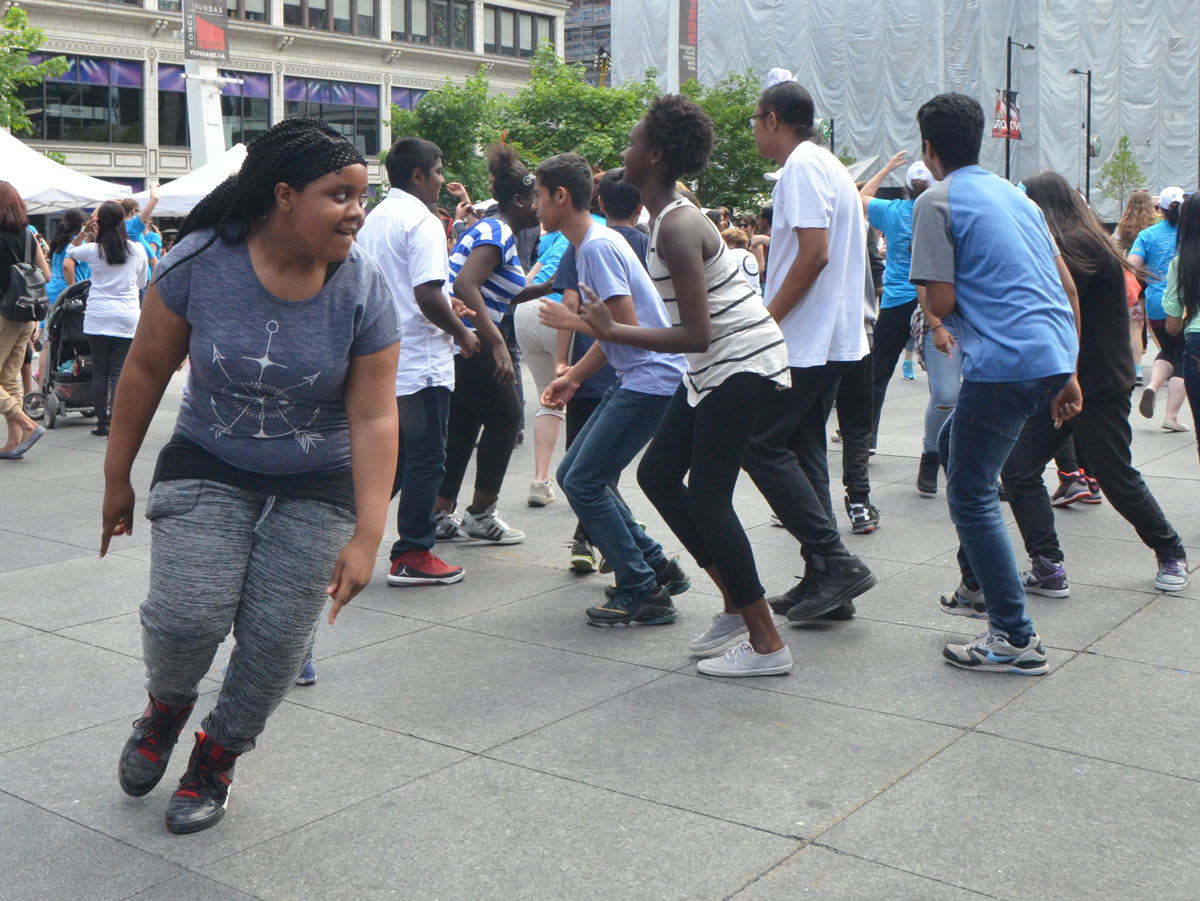
people dancing at Yonge Dundas Square as a group, part of an event called Sharing Dance - kids

people dancing at Yonge Dundas Square as a group, part of an event called Sharing Dance

people dancing at Yonge Dundas Square as a group, part of an event called Sharing Dance - one little girl is facing the opposite direction from the others

people dancing at Yonge Dundas Square as a group, part of an event called Sharing Dance - a middle aged couple

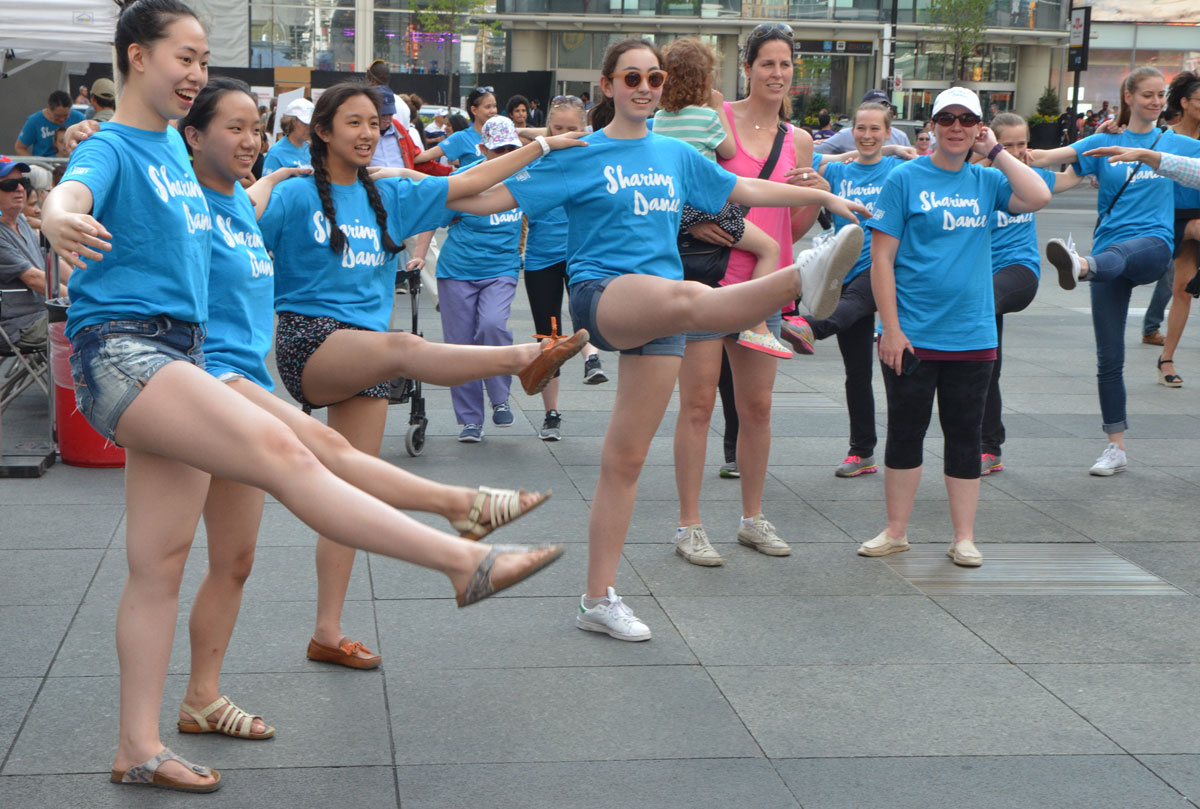
people dancing at Yonge Dundas Square as a group, part of an event called Sharing Dance - a kick line of 5 or 6 young women

people dancing at Yonge Dundas Square as a group, part of an event called Sharing Dance - a younger woman helps an older woman with a walker to lift her knees in ballet moves

people dancing at Yonge Dundas Square as a group, part of an event called Sharing Dance - 5 young women with the arms in the air

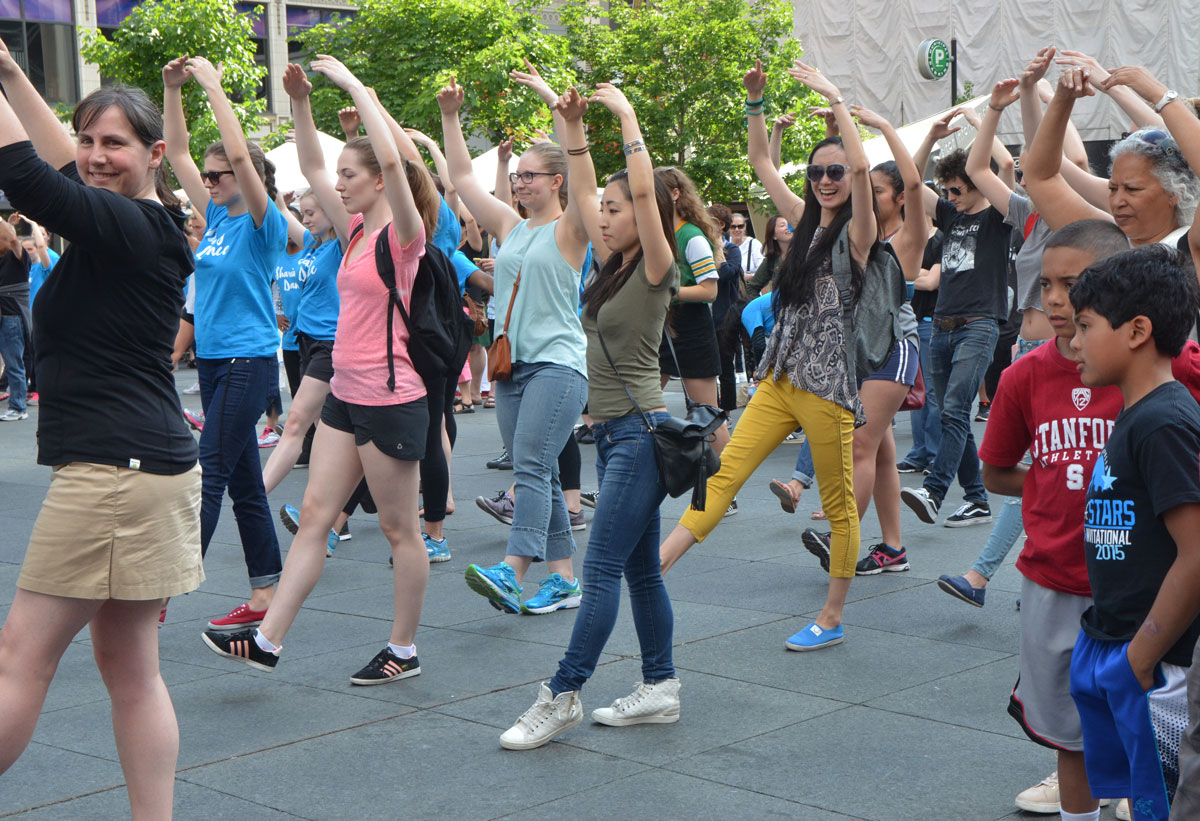
people dancing at Yonge Dundas Square as a group, part of an event called Sharing Dance - hands in the air

people dancing at Yonge Dundas Square as a group, part of an event called Sharing Dance - running in a circle

people dancing at Yonge Dundas Square as a group, part of an event called Sharing Dance - a couple dancing together

people dancing at Yonge Dundas Square as a group, part of an event called Sharing Dance - young women in blue t-shirts, arms linked, kicking

people dancing at Yonge Dundas Square as a group, part of an event called Sharing Dance - one knee up

people dancing at Yonge Dundas Square as a group, part of an event called Sharing Dance

people dancing at Yonge Dundas Square as a group, part of an event called Sharing Dance

people dancing at Yonge Dundas Square as a group, part of an event called Sharing Dance - a mother is taking a photo of her daughter for instagram

#sharingdance

This is another post about an exhibit from the CONTACT Photography Festival.   I know that it’s now June and CONTACT was in May, but I wanted to post these photos.  I actually took them early in May as you can probably tell by how many clothes the people in the pictures are wearing.  They’re certainly not dressed for the warmer weather we’ve been having lately.  I have had trouble deciding what to write in this post.

There is a parking lot at the NE corner of Front and Spadina with some billboards in it.   Maybe you saw them as you drove or walked past but maybe you passed by and missed them.   There are so many things on the street vying for our attention and a billboard is just another piece of street ‘furniture’.

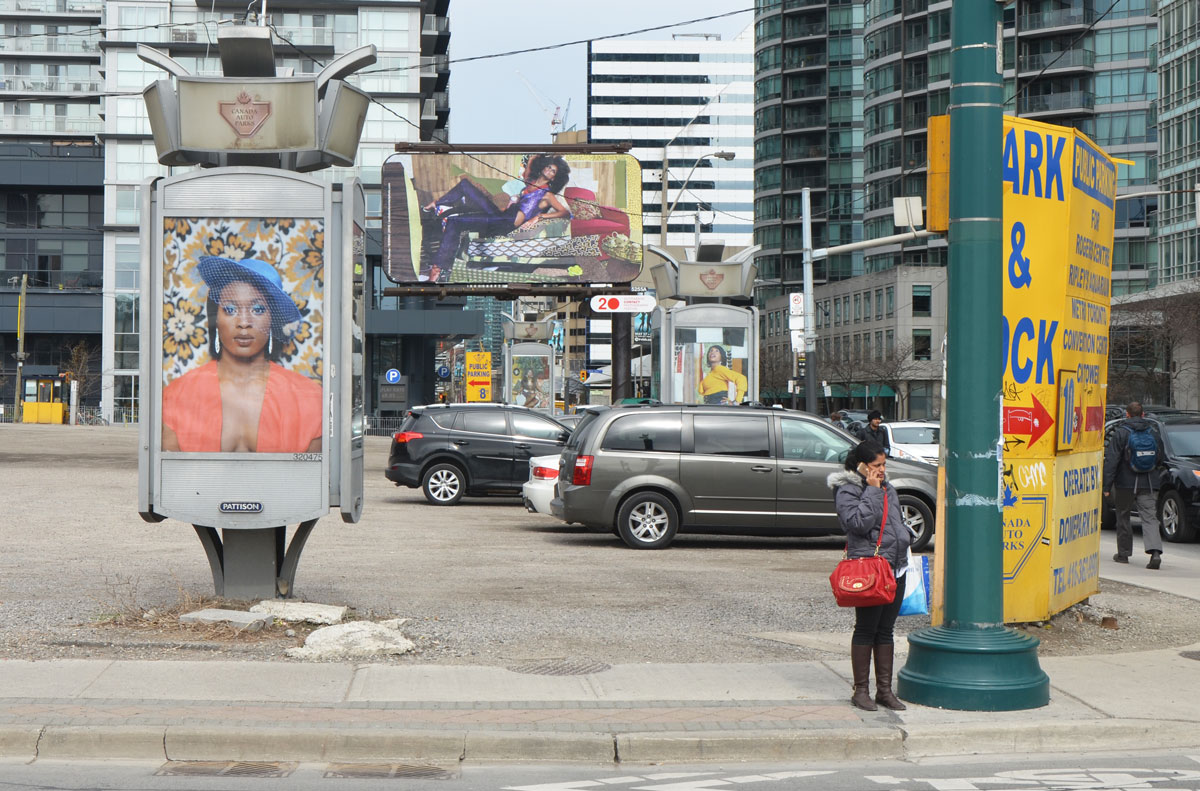
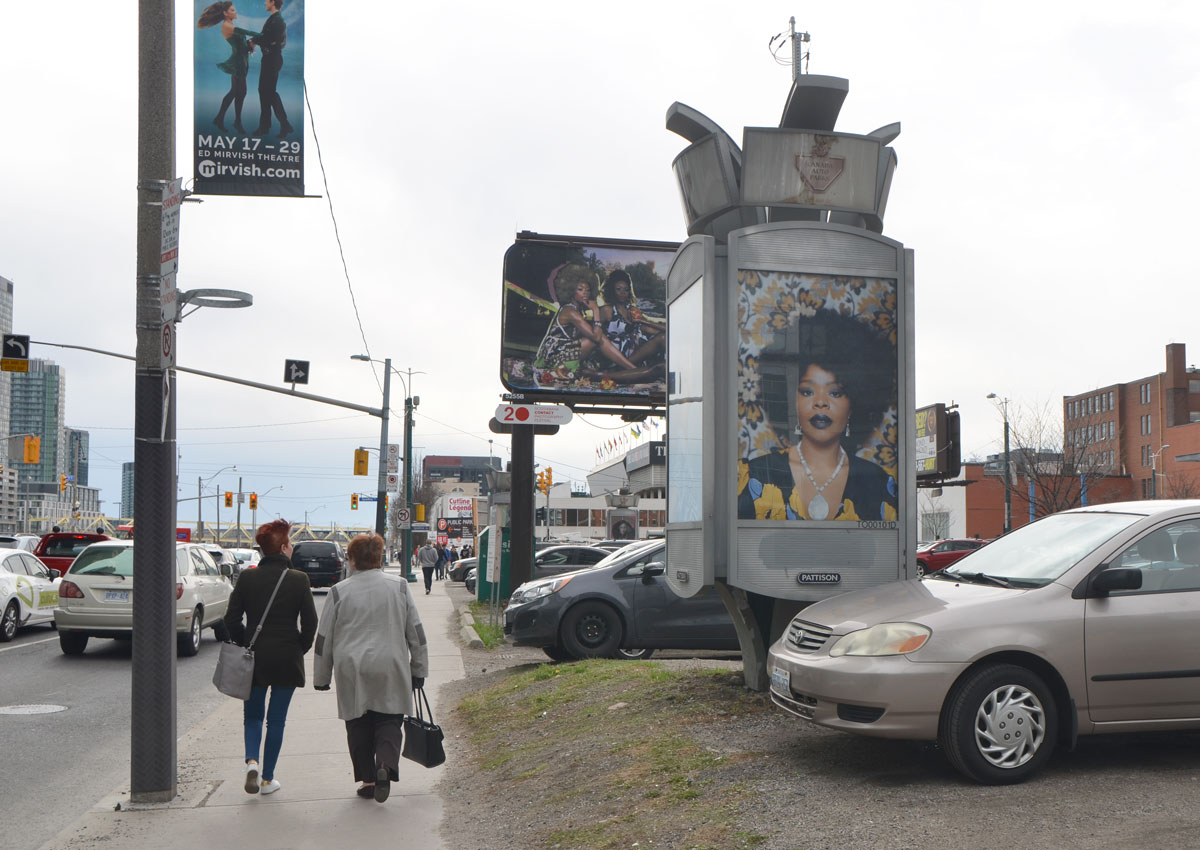
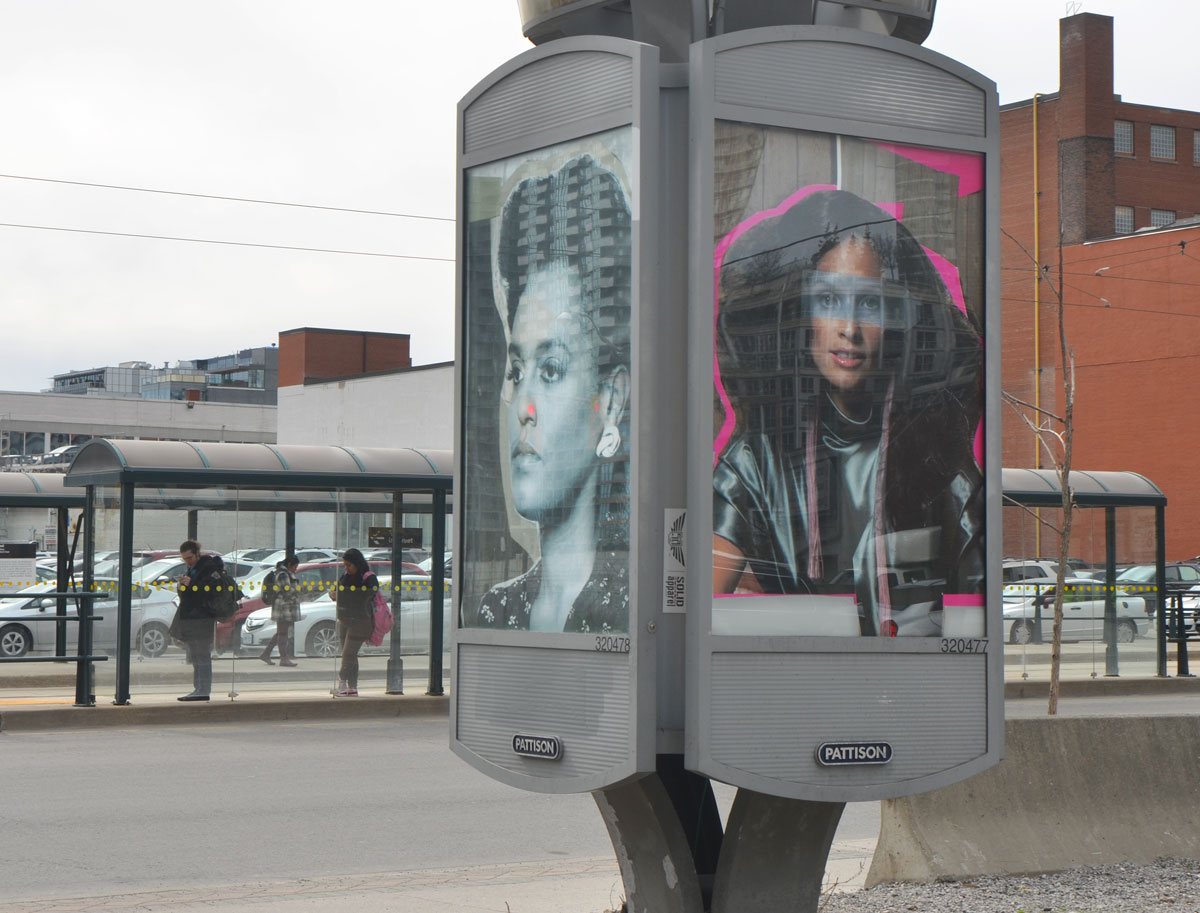
For the month of May, an installation titled ‘What it Means to be Beautiful’  by Mickalene Thomas occupied a number of billboard spaces at the above mentioned corner.   All the images are portraits of women and are “shown within the context of street advertising, where women are constantly bombarded with narrow notions of female beauty.”   A sample of the billboards:


part of an art installation, portrait of a black woman in profile, with a shaved head, on a billboard, by Mickalene Thomas, in a parking lot in downtown Toronto

part of an art installation, portrait of a black woman wearing a blue hat on a billboard, by Mickalene Thomas, in a parking lot in downtown Toronto. A woman stands on the corner talking on her phone. Another, large, billboard is in the background.

Two women walk past part of an art installation, portrait of a black woman on a billboard, by Mickalene Thomas, in a parking lot in downtown Toronto

Two portraits of black women, in a billboard space in a parking lot, with people waiting for a streetcar in glass bus shelters in the background.

part of an art installation, portrait of a black woman on a billboard, by Mickalene Thomas, in a parking lot in downtown Toronto, A group of people wait for a green light at the intersection in the background, tall condos too.

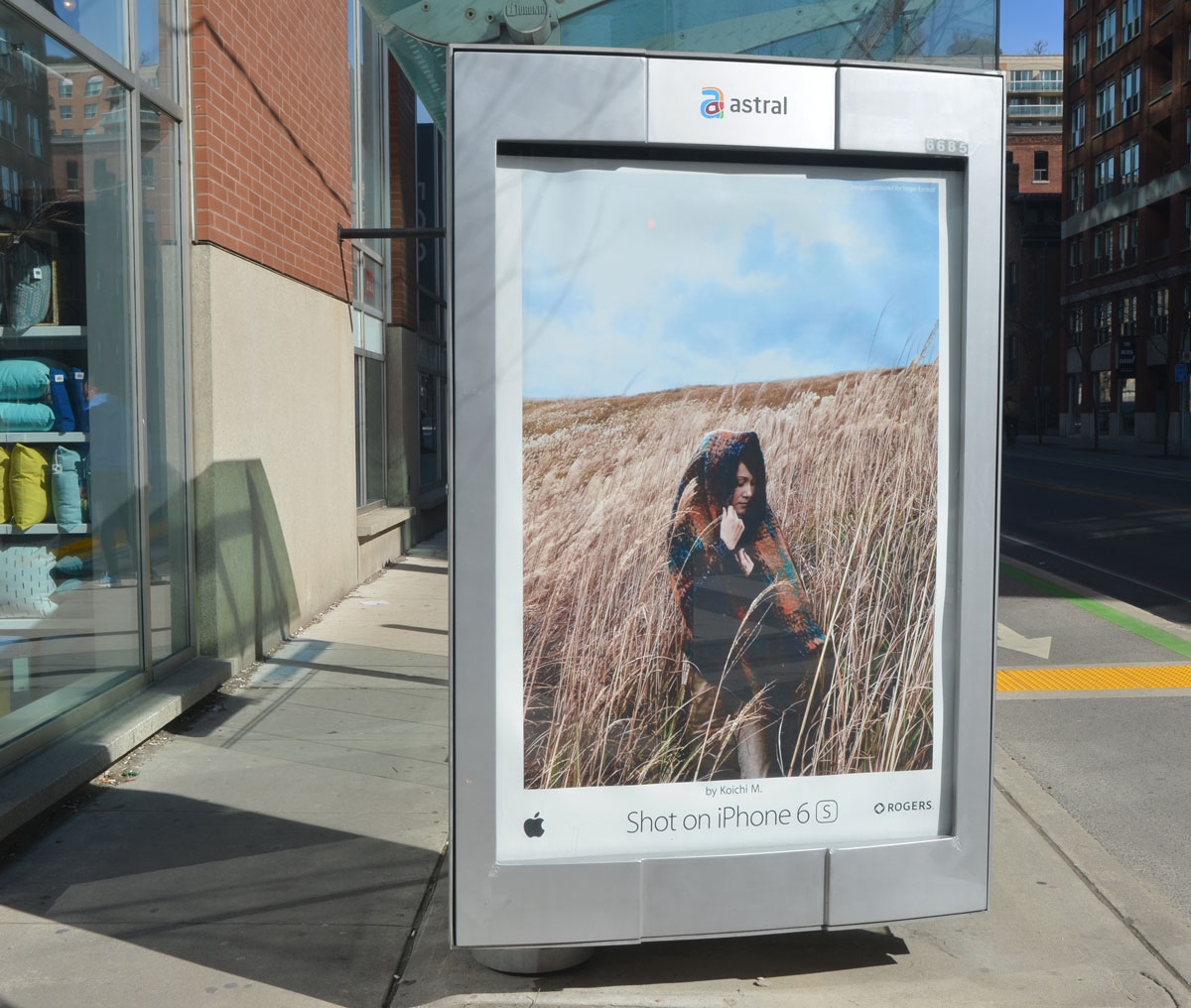
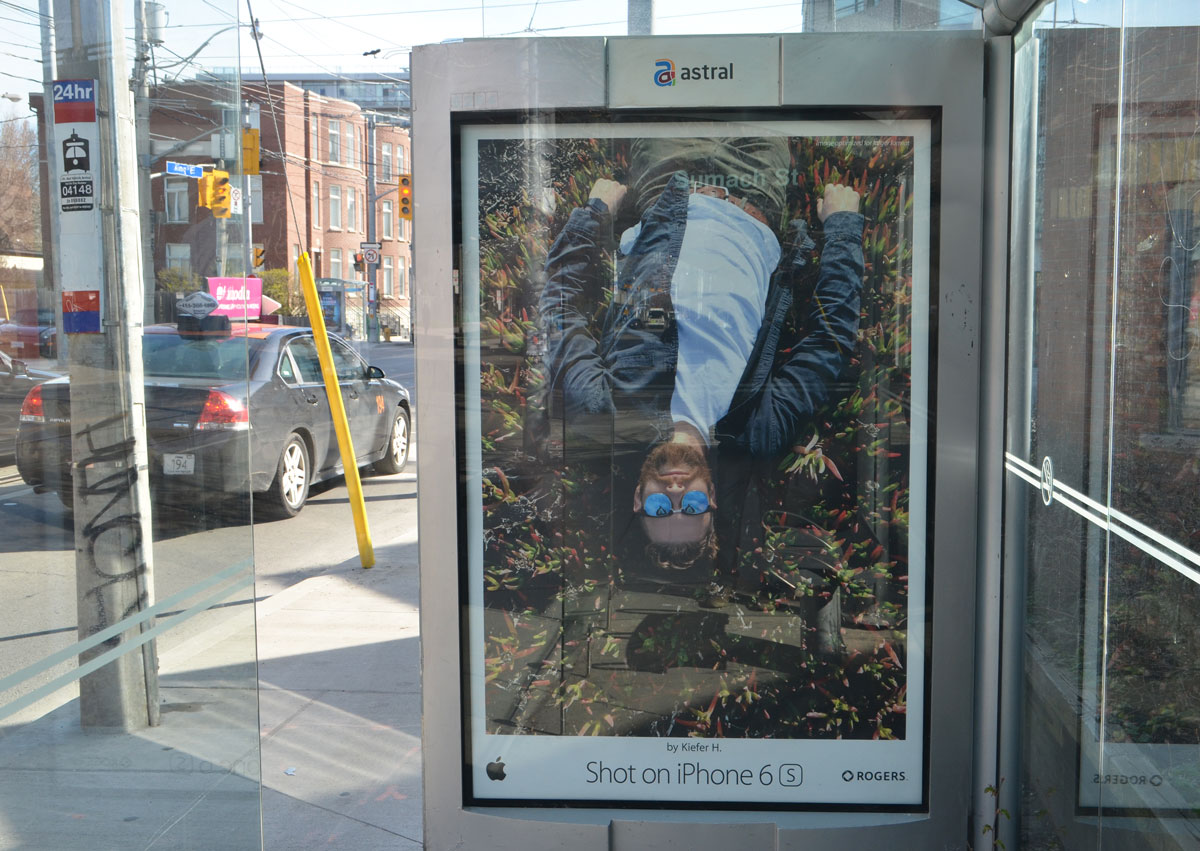
Part of the reason that I hesitated to write this post was the fact that the iphone 6 ad campaign was on at the same time.  It was a campaign that used photos taken with the phone and the ads were very visual and used very few words. In my opinion, they are more eye catching and visually appealing than Thomas’s work. I found a few of them to show here (below).  I know that there were many more but unless I was consciously looking for ads, I didn’t notice them as billboards are one of the things that I block out as I walk.  That led to a few thoughts about what catches a viewer’s attention on the street –   Faces?  Colours?  Contrast?

There is more going on in Thomas’s photos and collages than just visual appeal but I still question the validity of asking the viewer to look at them in the context of street advertising.   Is it fair to compare her images to ads produced by, and in aid of, a large corporation?   Would it have been better to  exhibit her work in different form or a different place?  I don’t have the answers for those questions.  Do you?


iphone ad on a bus stop wall showing a woman in a field

iphone 6 ad on a bus stop wall of a woman lying in a field of pumpkins. Her head is surrounded by pumpkins.

an iphone ad on a bus stop wall of a man lying on the ground. He is upside down in the picture

And now I will go back to ignoring billboards as I walk.

‘Cutlines’, an exhibit of old photographs from the Globe & Mail,
part of the CONTACT Photography Festival

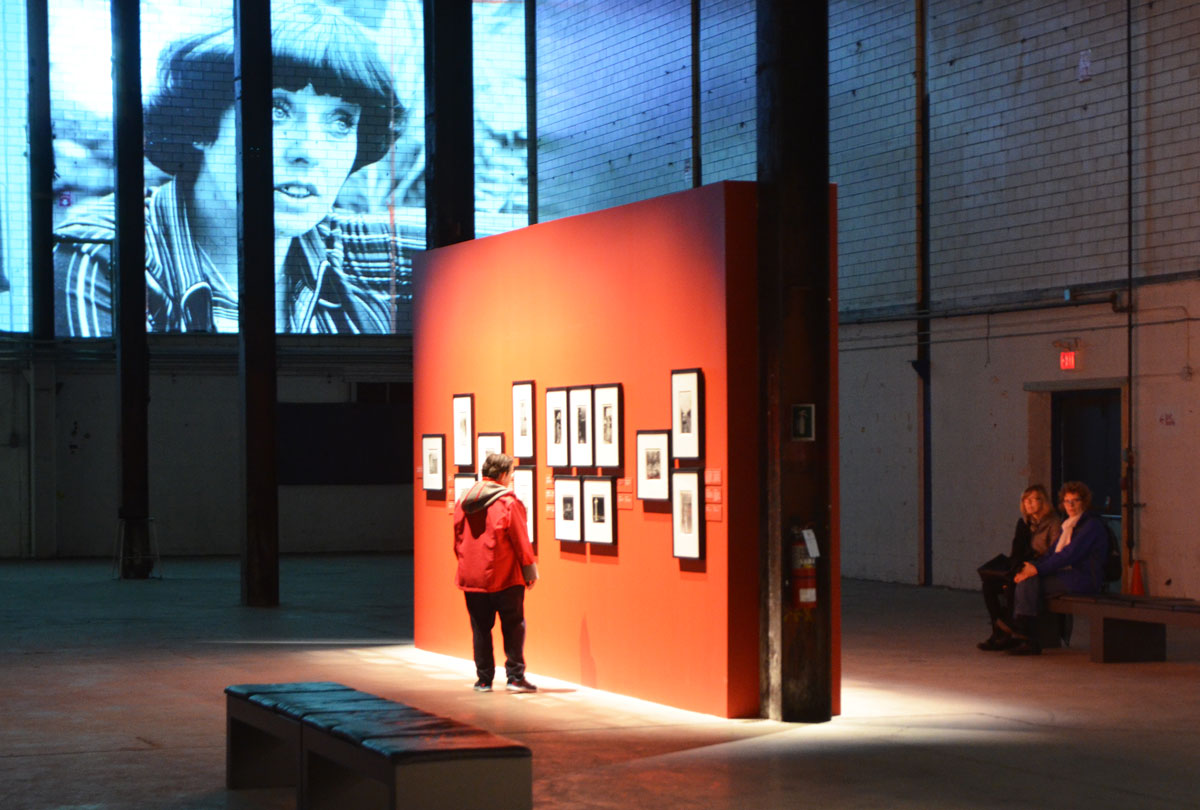
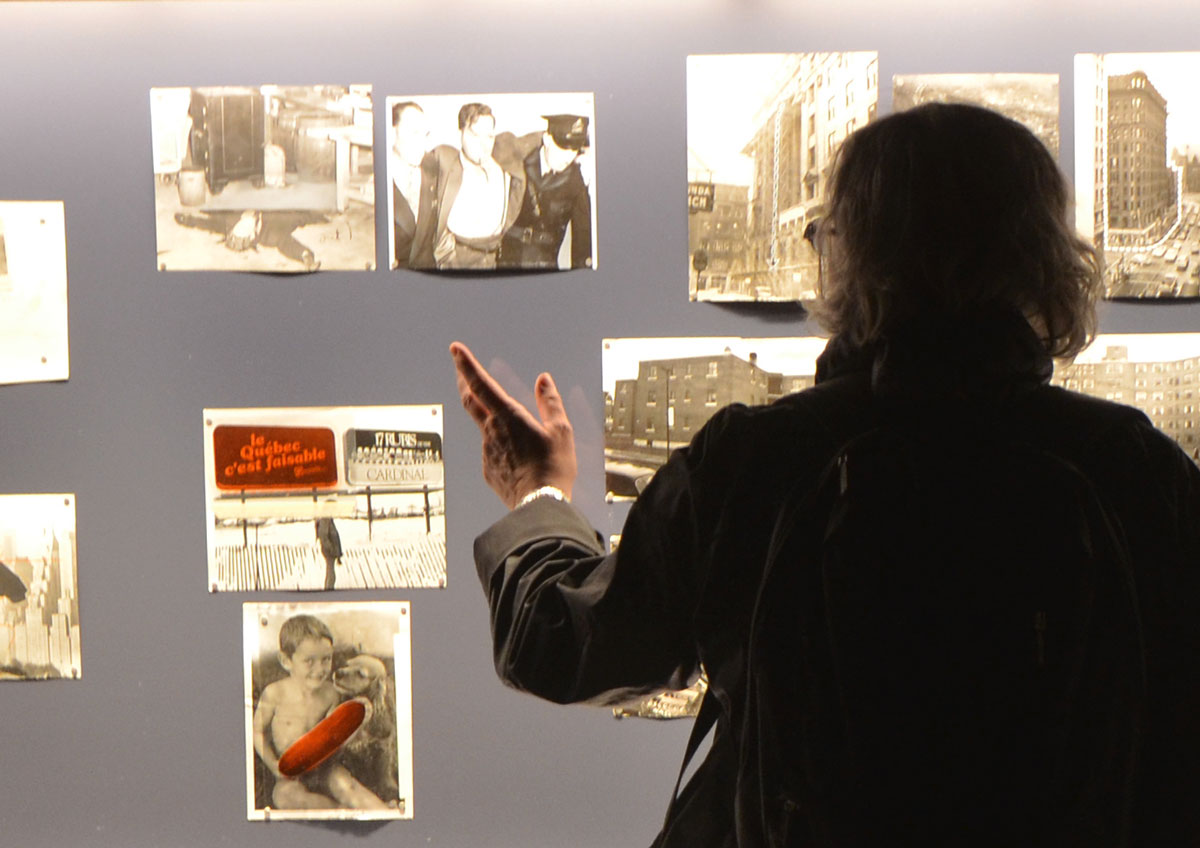
people standing in a large room, the old Press Hall at the Globe and Mail newspaper, looking at an exhibit of old photos. Some photos are being projected onto a wall

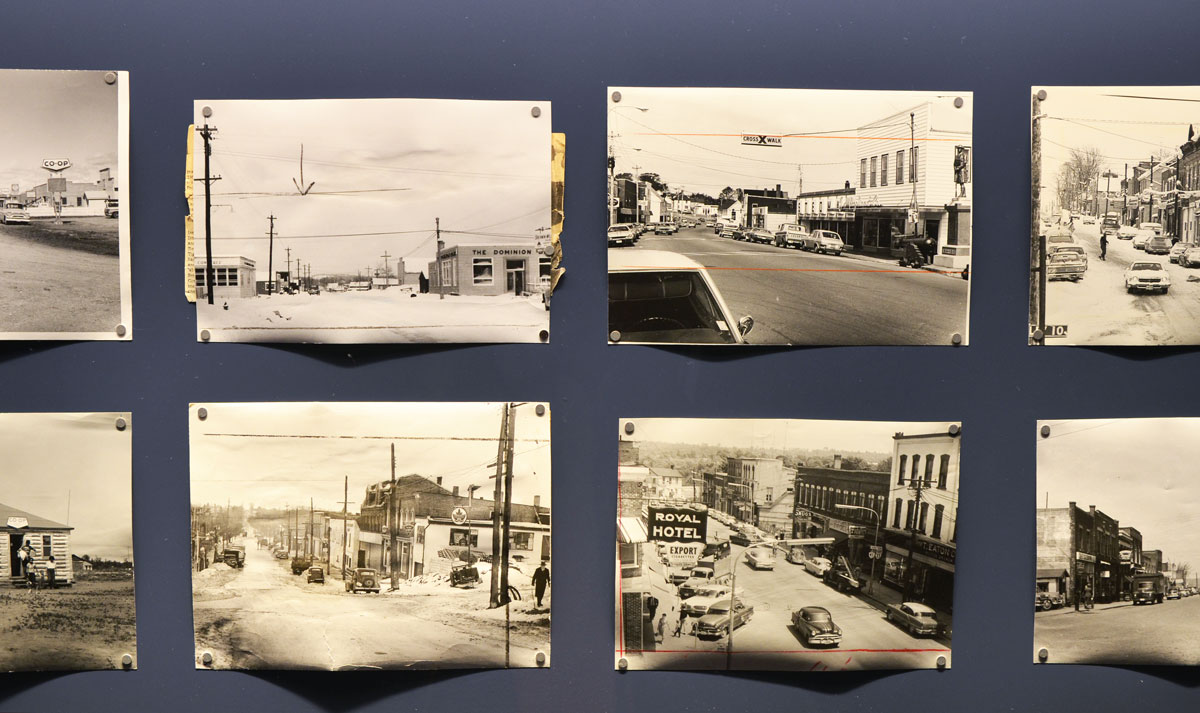
below: A small sample of the 175 vintage black and white photos from the vast collection held by the Globe and Mail newspaper on display.

old photographs, black and white, of small towns, in a display case, as part of an exhibit called Cutlines, old photos from the Globe and Mail collection

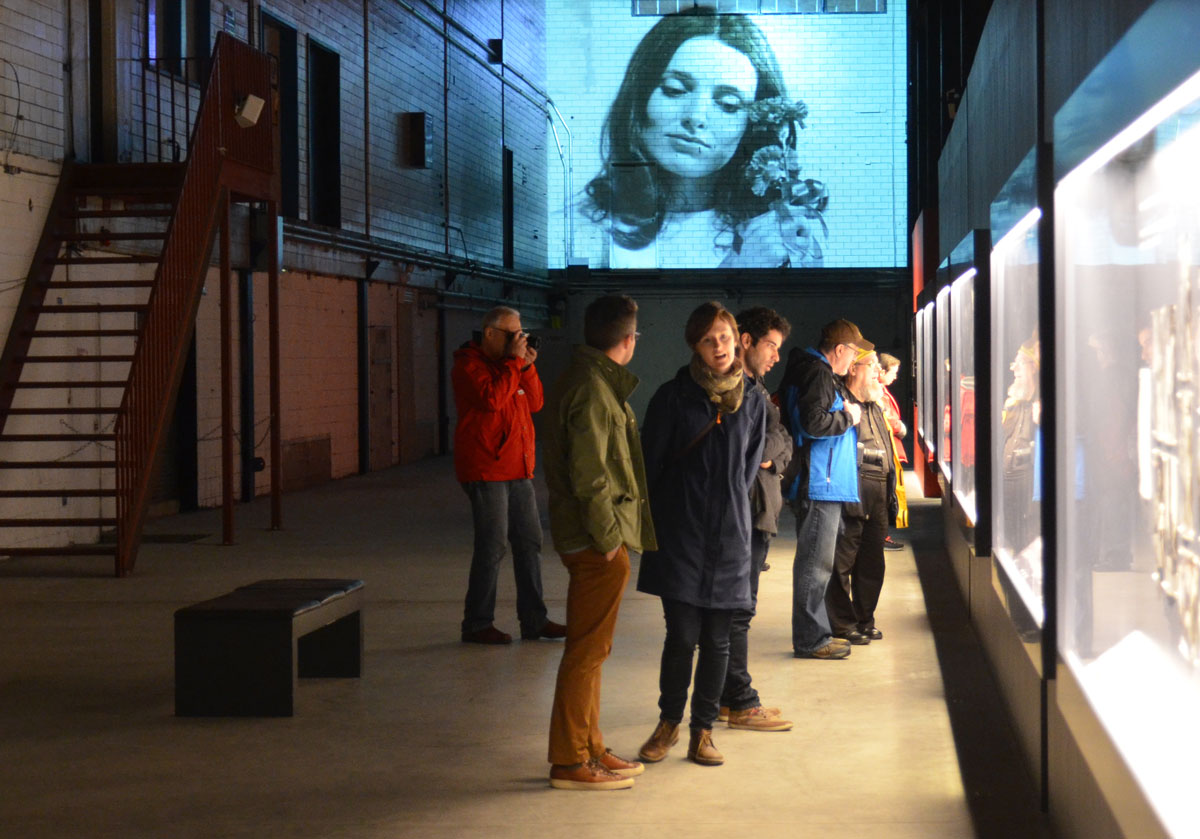
below:  The exhibit is being held at the Press Hall on Wellington Street (near Spadina).  This old building is slated for demolition in the near future as the Globe and Mail is in the midst of moving to a new home.  Prints were in cabinets in the center of the room while other images were projected high on the walls.

people standing in a large room, the old Press Hall at the Globe and Mail newspaper, looking at an exhibit of old photos. Some photos are being projected onto a wall

The Globe & Mail has amassed a collection of about 750,000 photographs.  As they transition from print to digital images, they are ‘cleaning house’ with respect to their photo archives.  About 100,000 of the prints are going to be digitized and a portion of those donated to the new Canadian Photography Institute at the National Gallery of Canada in Ottawa.

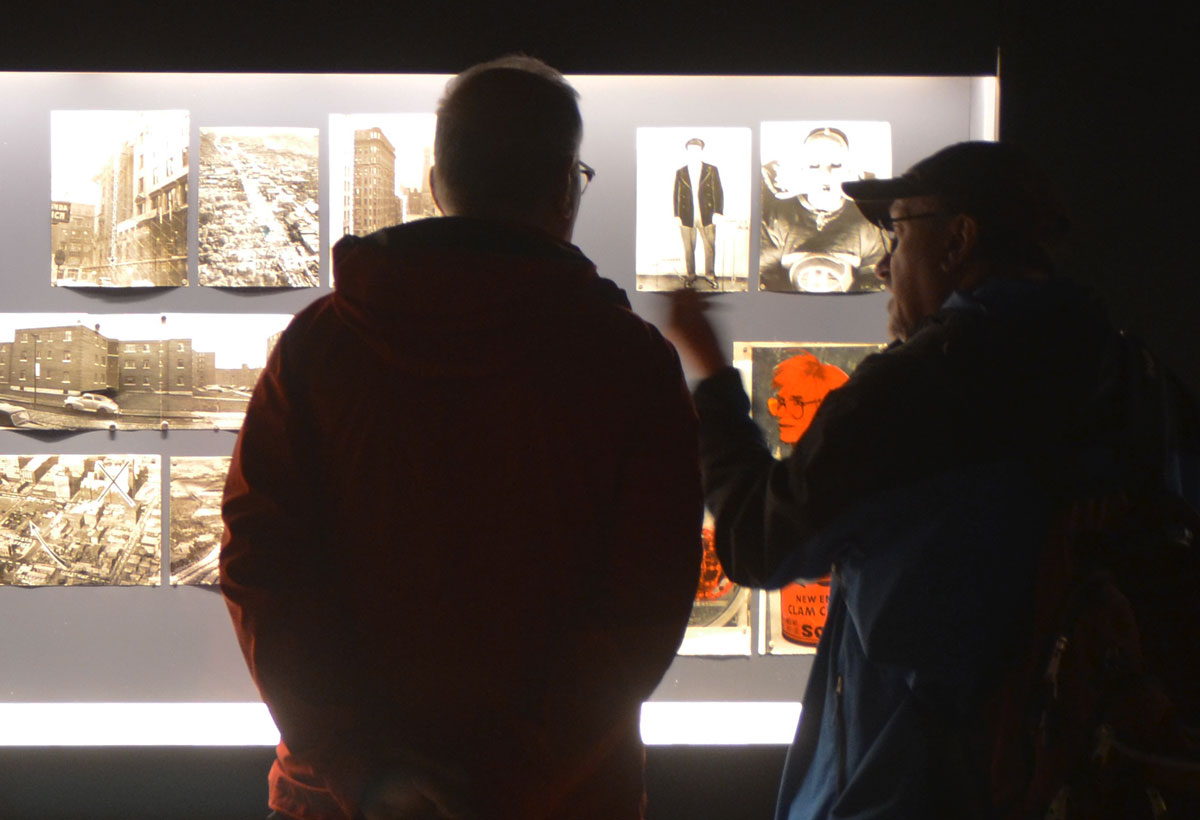
below: Some of the pictures were covered with red, with what is known as a rubylith mask.  When the images were printed, the portions covered in red remained as they were while the rest of the picture could be changed to suit the needs of the story of the day.

silhouette of a woman standing in front of a lit display case of old photographs

people standing in a large room, the old Press Hall at the Globe and Mail newspaper, looking at an exhibit of old photos. Some photos are being projected onto a wall

people standing in a large room, the old Press Hall at the Globe and Mail newspaper, looking at an exhibit of old photos. Some photos are being projected onto a wall

people standing in a large room, the old Press Hall at the Globe and Mail newspaper, looking at an exhibit of old photos. Some photos are being projected onto a wall

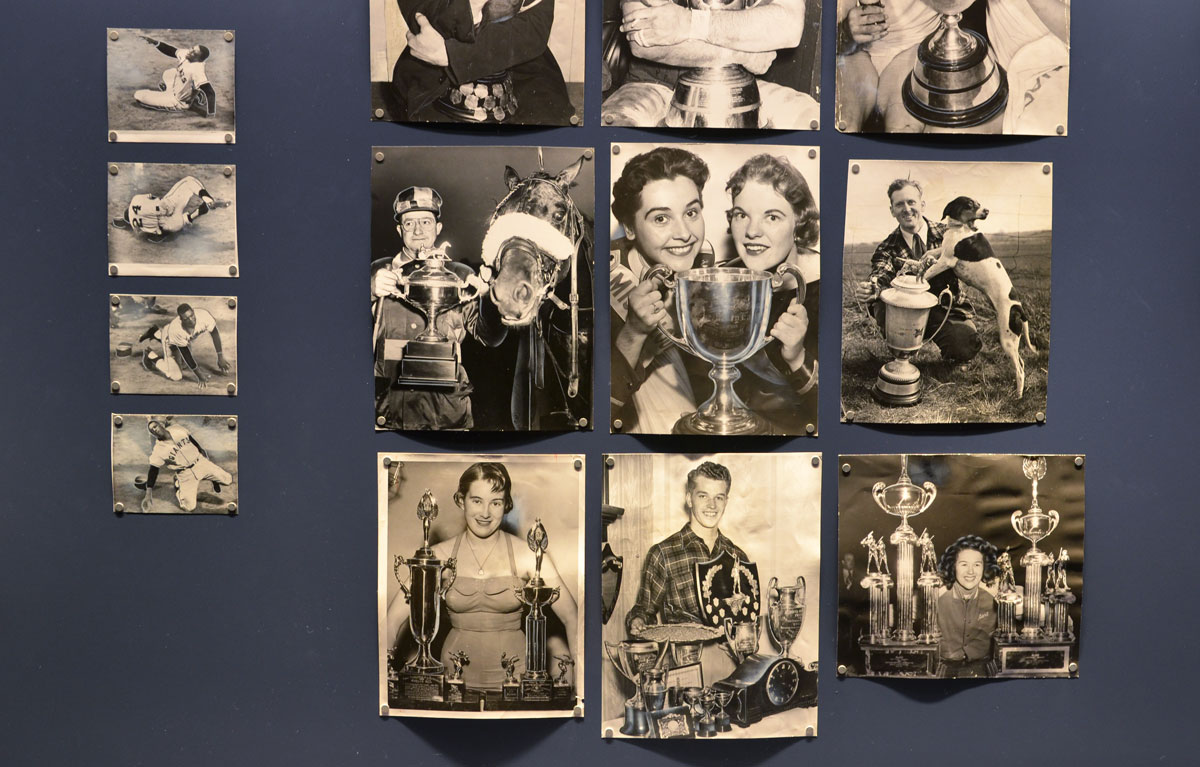
below: The woman with the two trophies, bottom left, is Marilyn Bell who swam across Lake Ontario.  I know that the man beside her is from a story about a cowboy championship of some sort in Calgary and my apologies for not remembering more of the details.

old photographs, black and white, of people with trophies, in a display case, as part of an exhibit called Cutlines, old photos from the Globe and Mail collection

silhouette of two men standing in front of a lit display case of old photographs

On view at 425 Wellington St. West until 26 June 2016

#CONTACT16

Get your head wrapped!

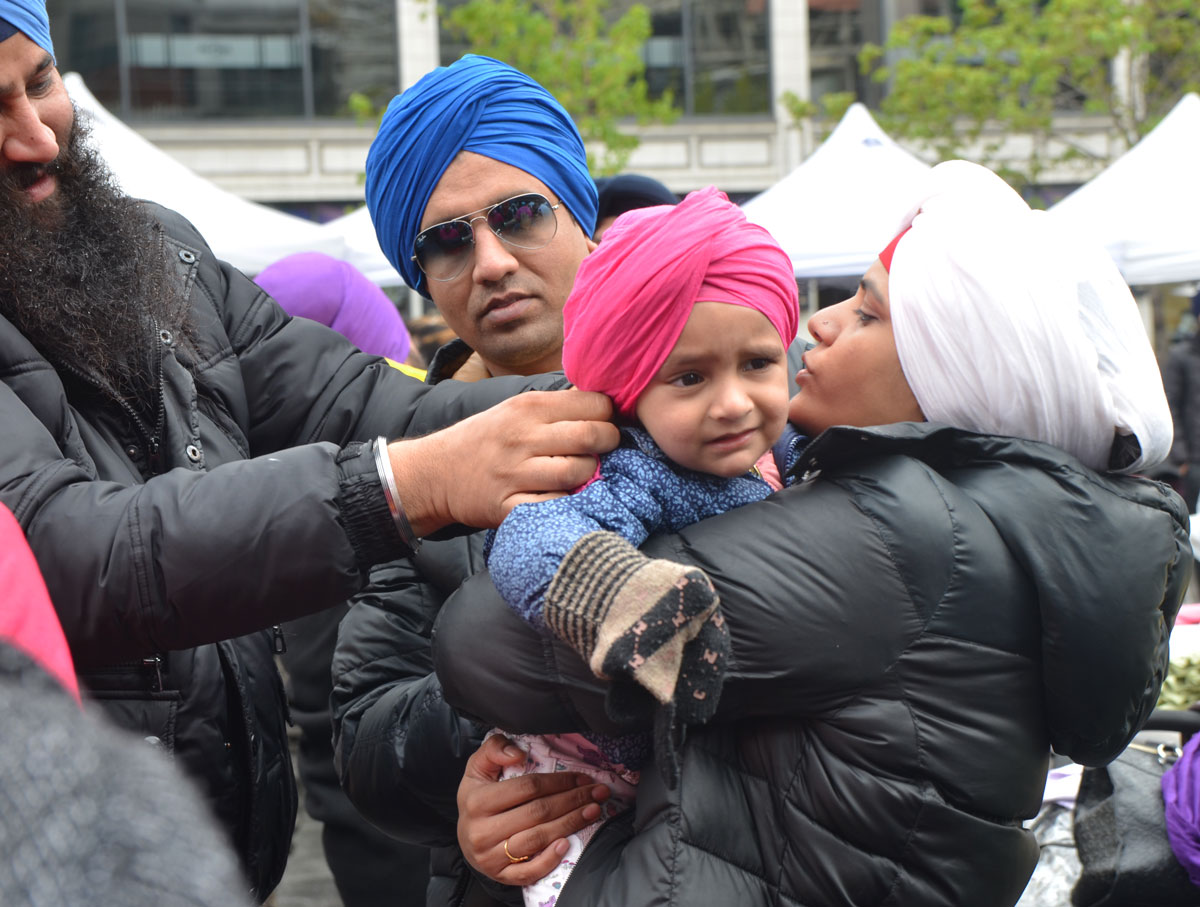
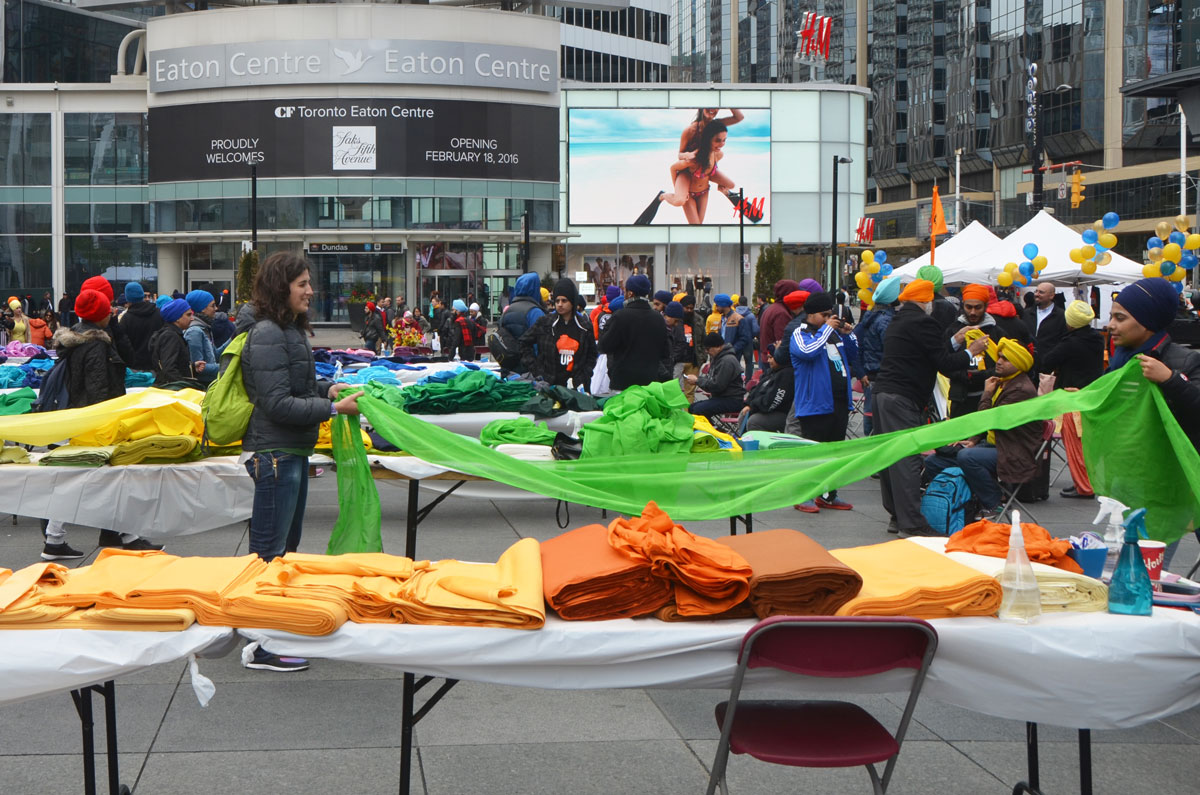
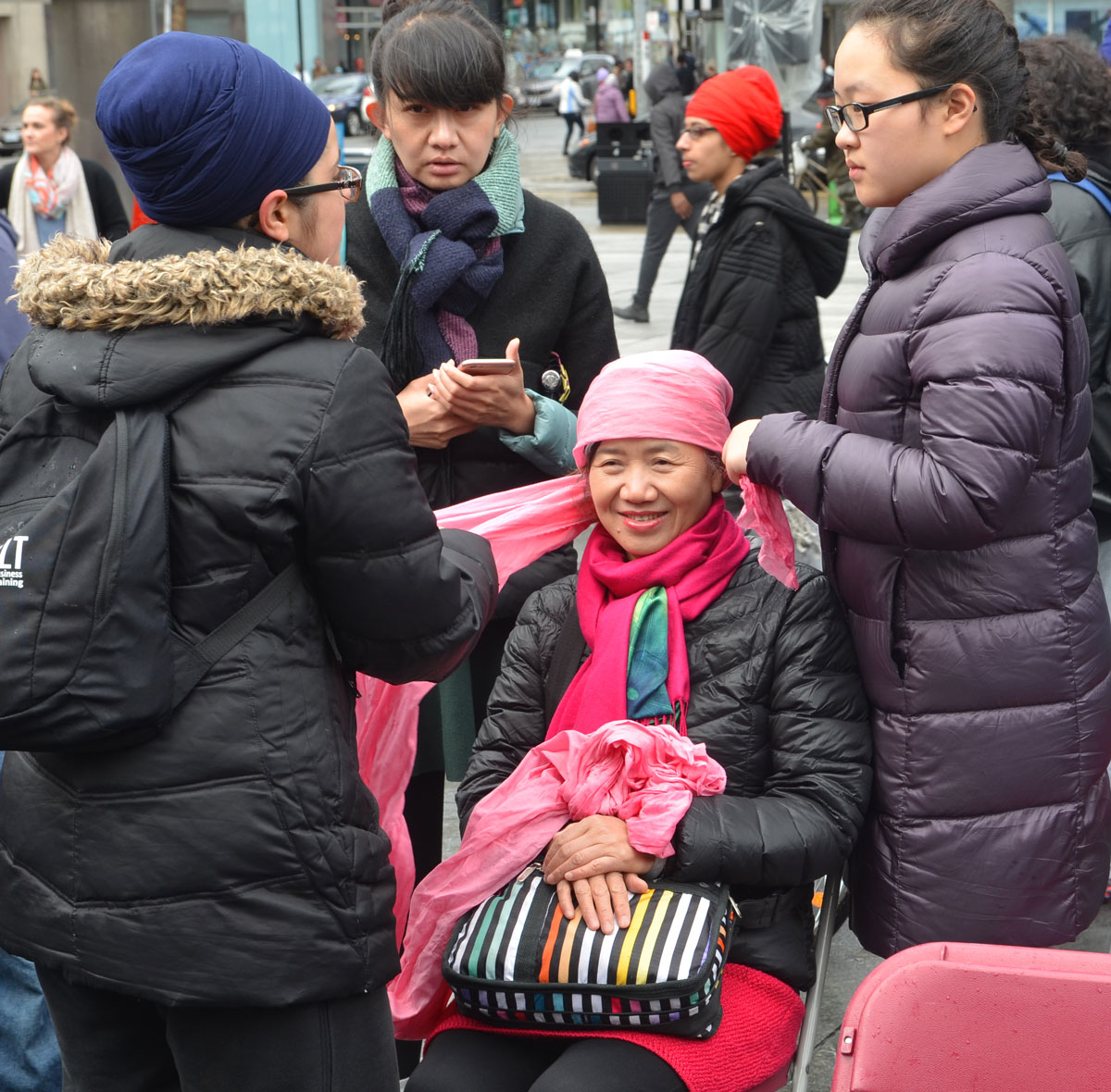
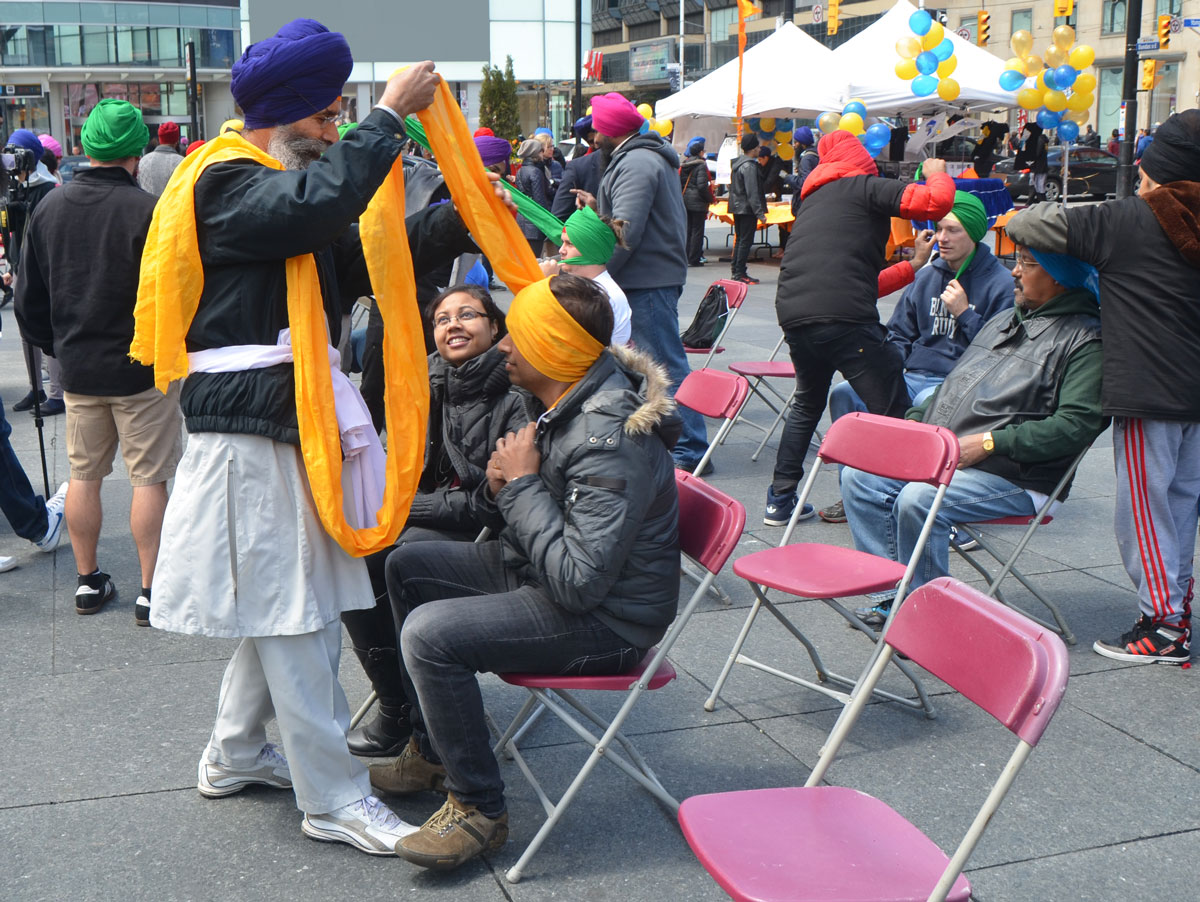
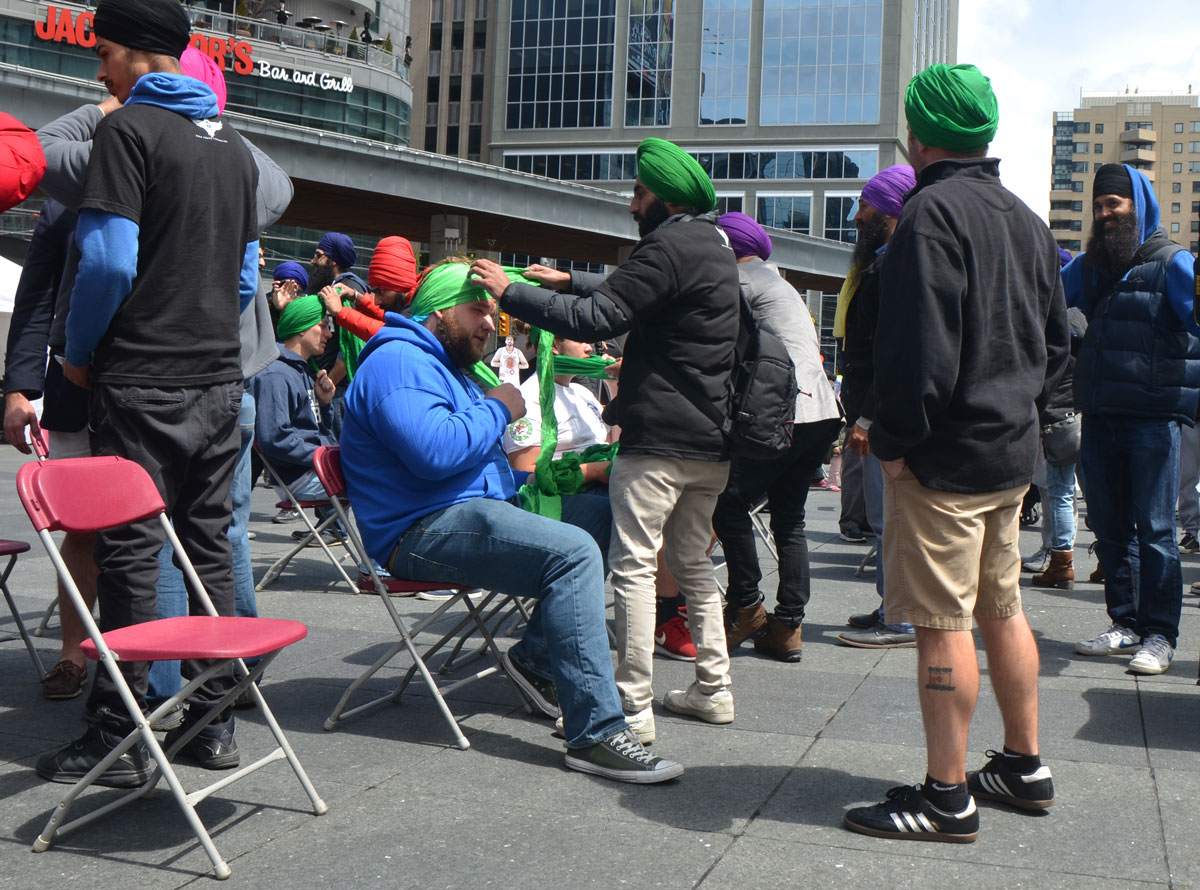
Considering the cold temperatures, not to mention the rain, snow and hail, there was a great turn out for Turban Up! at Yonge Dundas square today.  The event was organized by the Sikh Youth Federation to help raise awareness about Sikh religion and culture.  There were martial arts demonstrations, food, an art exhibit, and other examples of Sikh culture, but the main event was the turban wrapping.  Numerous eager and friendly volunteers were available to wrap a turban for you in your choice of colour.  A few people sported black and dark blue turbans but bright colours were very popular – colours like turquoise,  bright greens and blues, as well as pink, orange and red.  A veritable rainbow of turbans.

blog_turbans_yonge_dundas_square

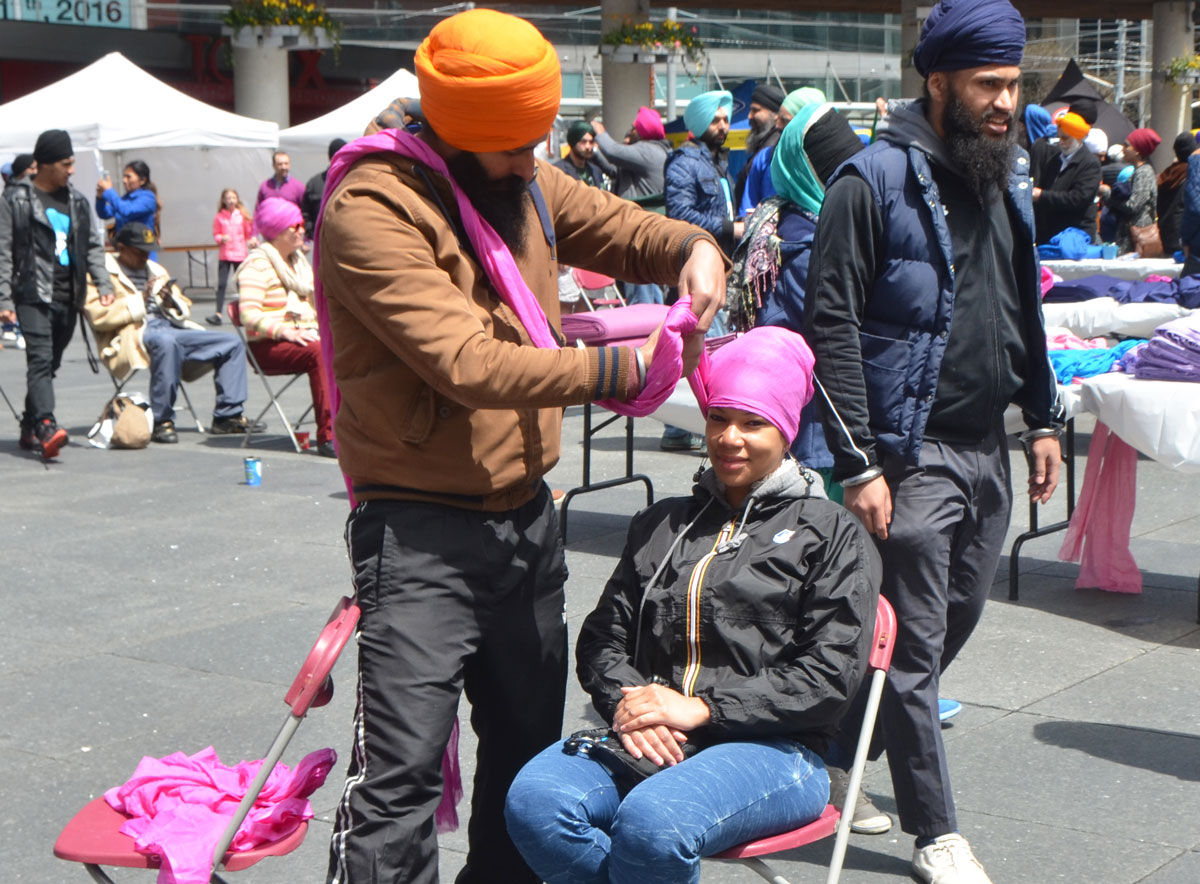
People having their heads wrapped in a turban, many different colours, at an event at Yonge Dundas square run by the Sikh Youth Federation. Sikh volunteers are making the turbans using stacks of fabric laid out on 5 long tables. Choosing magenta fabric

a man is wrapping a seated woman's head with a blue turban

People having their heads wrapped in a turban, many different colours, at an event at Yonge Dundas square run by the Sikh Youth Federation. Sikh volunteers are making the turbans using stacks of fabric laid out on 5 long tables. A toddler gets a pink turban while her mother holds her

tables with piles of colourful fabric outside at Yonge Dundas square with the signs and billboards of the Eaton Centre behind. Many people are in the square.

blog_wrapping_purple_turban

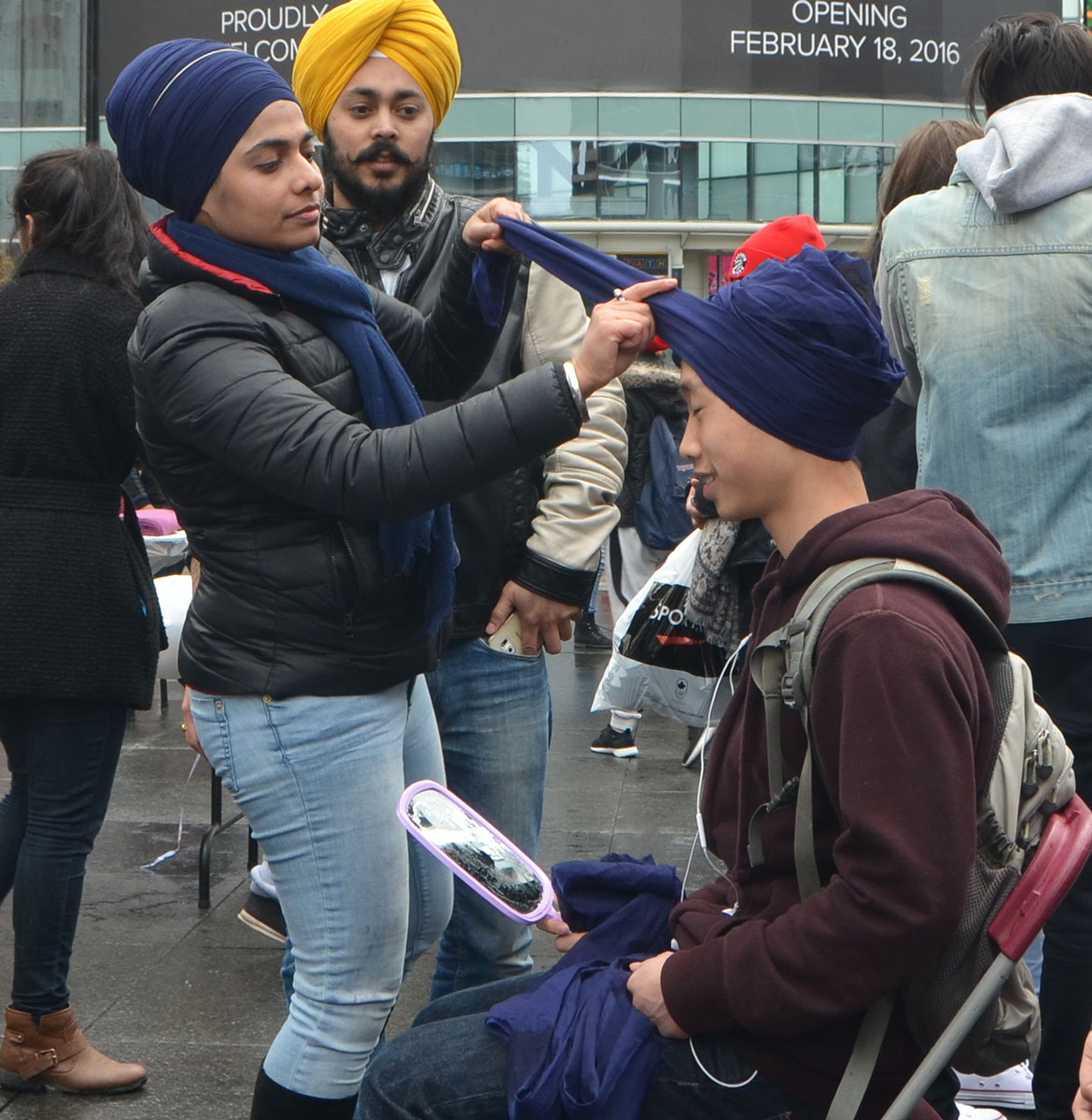
People having their heads wrapped in a turban, many different colours, at an event at Yonge Dundas square run by the Sikh Youth Federation. Sikh volunteers are making the turbans using stacks of fabric laid out on 5 long tables. An Asian woman smiles while she gets a pink turban

People having their heads wrapped in a turban, many different colours, at an event at Yonge Dundas square run by the Sikh Youth Federation. Sikh volunteers are making the turbans using stacks of fabric laid out on 5 long tables. A father and son with matching light blue turbans

blog_smiling_yellow_turban

a man is having his head wrapped in a yellow turban

People having their heads wrapped in a turban, many different colours, at an event at Yonge Dundas square run by the Sikh Youth Federation. Sikh volunteers are making the turbans using stacks of fabric laid out on 5 long tables. A man gets a green turban

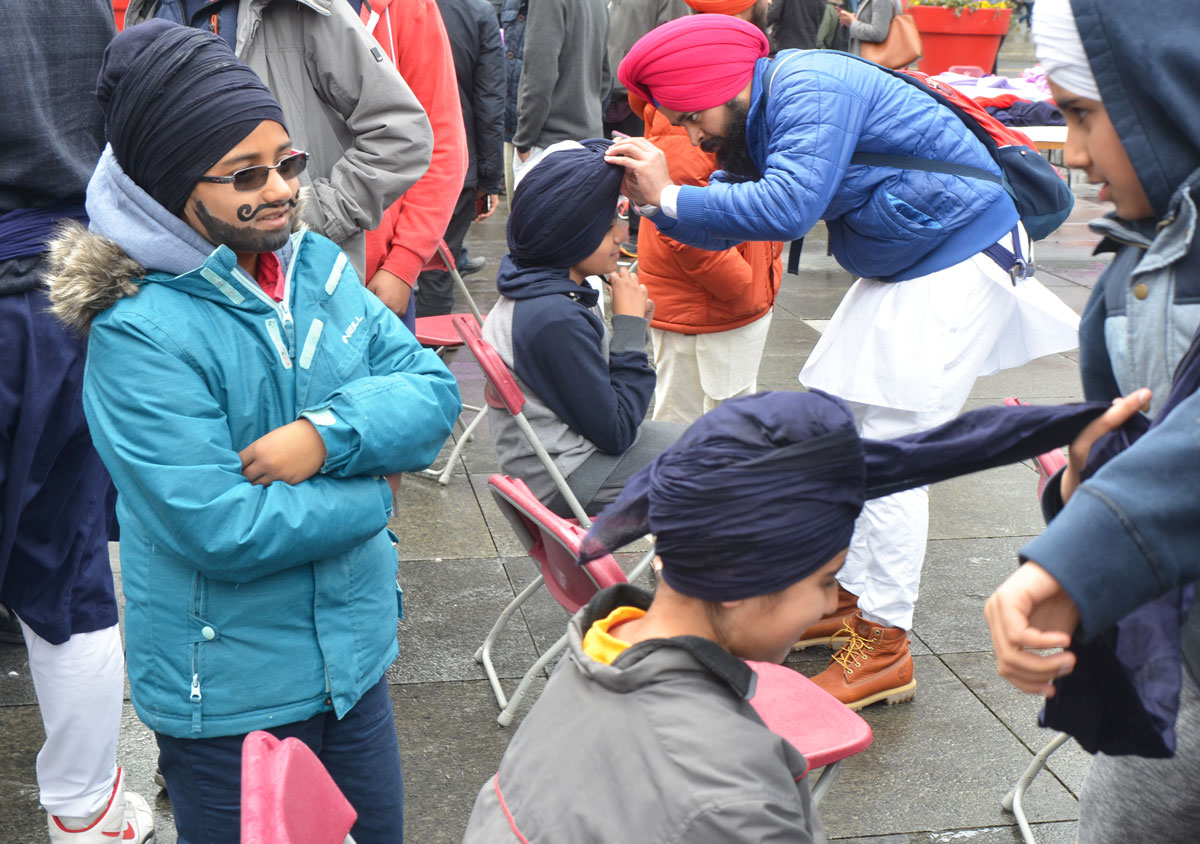
People having their heads wrapped in a turban, many different colours, at an event at Yonge Dundas square run by the Sikh Youth Federation. Sikh volunteers are making the turbans using stacks of fabric laid out on 5 long tables. A boy with a black turban and his face painted with a black beard and mustache watches others get turbans

blog_sikh_youth_federation_turbanup

People having their heads wrapped in a turban, many different colours, at an event at Yonge Dundas square run by the Sikh Youth Federation. Sikh volunteers are making the turbans using stacks of fabric laid out on 5 long tables. Three people pose to have their picture taken after getting turbans

People having their heads wrapped in a turban, many different colours, at an event at Yonge Dundas square run by the Sikh Youth Federation. Sikh volunteers are making the turbans using stacks of fabric laid out on 5 long tables.

blog_turban_up_pink_turban

A young girl gets her head wrapped in an emerald green turban

People having their heads wrapped in a turban, many different colours, at an event at Yonge Dundas square run by the Sikh Youth Federation. Sikh volunteers are making the turbans using stacks of fabric laid out on 5 long tables. A woman gets a red turban while her son looks on

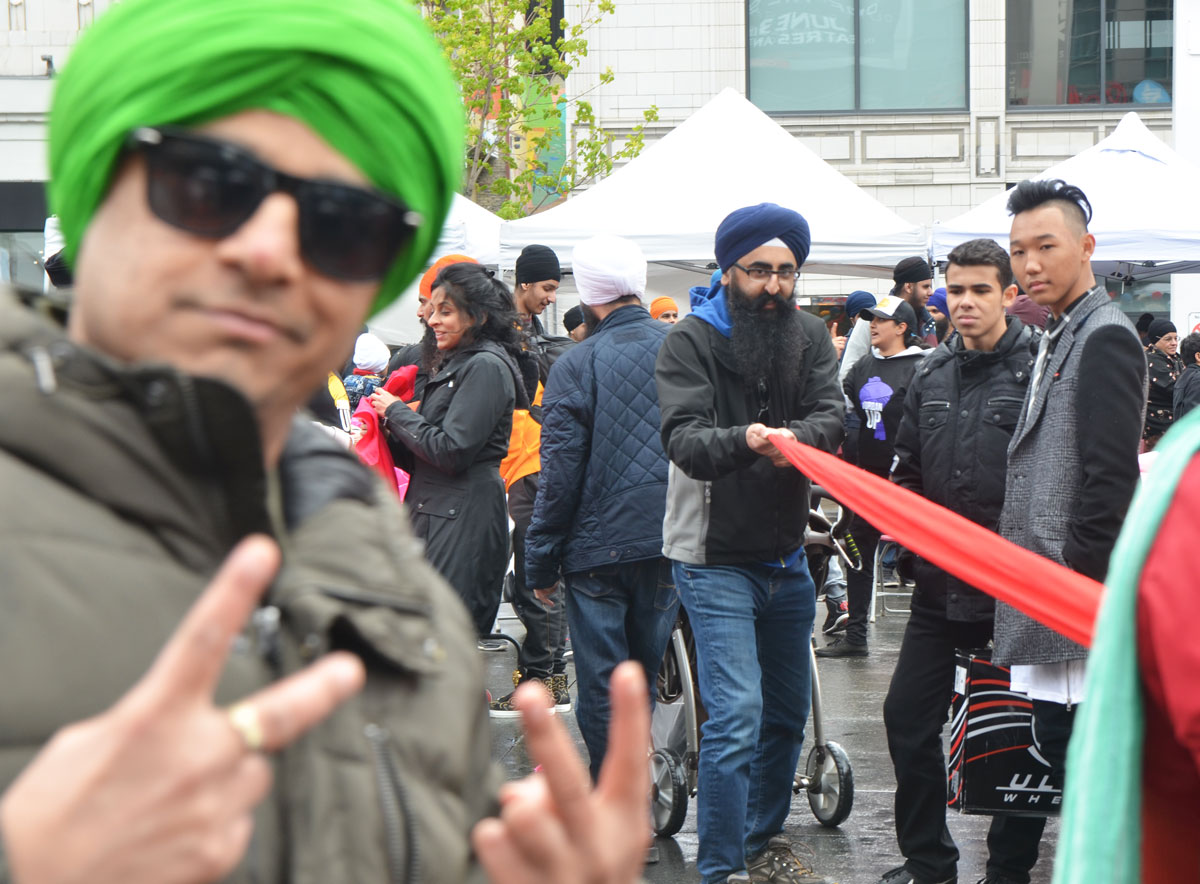
below:  He’s out of focus but I like his gumption.  Thanks for the smile!

a man in a green turban is close in the foreground and is out of focus. He is wearing sunglasses and is giving the peace sign with both hands
#sikhyouthfederation | #turbanup | #ydsquare

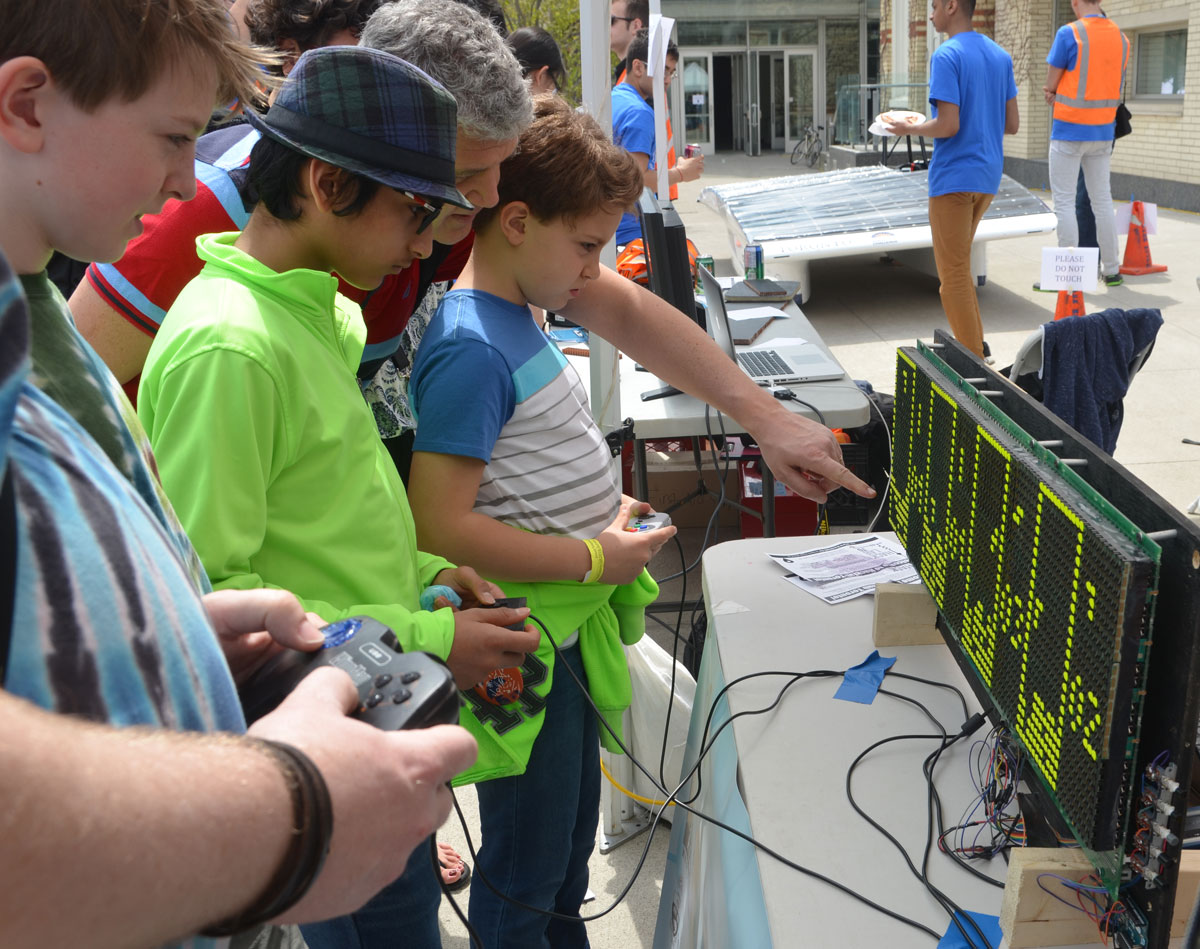
I am still trying to get caught up with the photos that I took at Science Rendezvous last weekend.  There was so much happening!  Lots of people were involved and engaged in the various activities that were available both at Yonge Dundas Square and on St. George street.

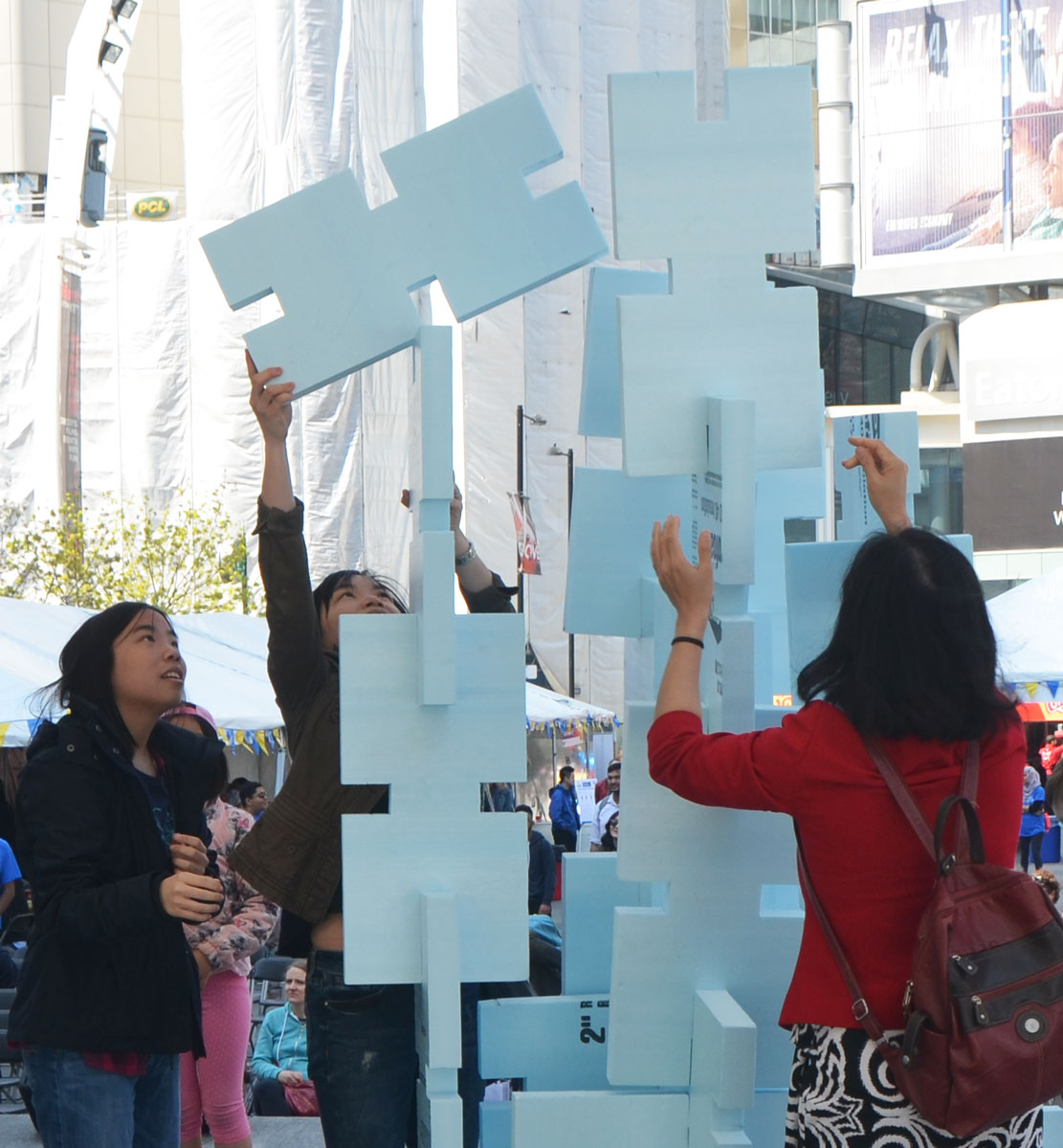
below: On the stage at Yonge Dundas square:  Start with three identical piles of building blocks and three teams, put ten minutes on the clock and see what towers result.   The challenge was to
build the strongest, tallest, or most awesome tower.

competition to build the highest, strongest tower out of hard styrofoam blocks, children and adults working together.

below: Teamwork!

competition to build the highest, strongest tower out of hard styrofoam blocks, children and adults working together.

competition to build the highest, strongest tower out of hard styrofoam blocks, children and adults working together.

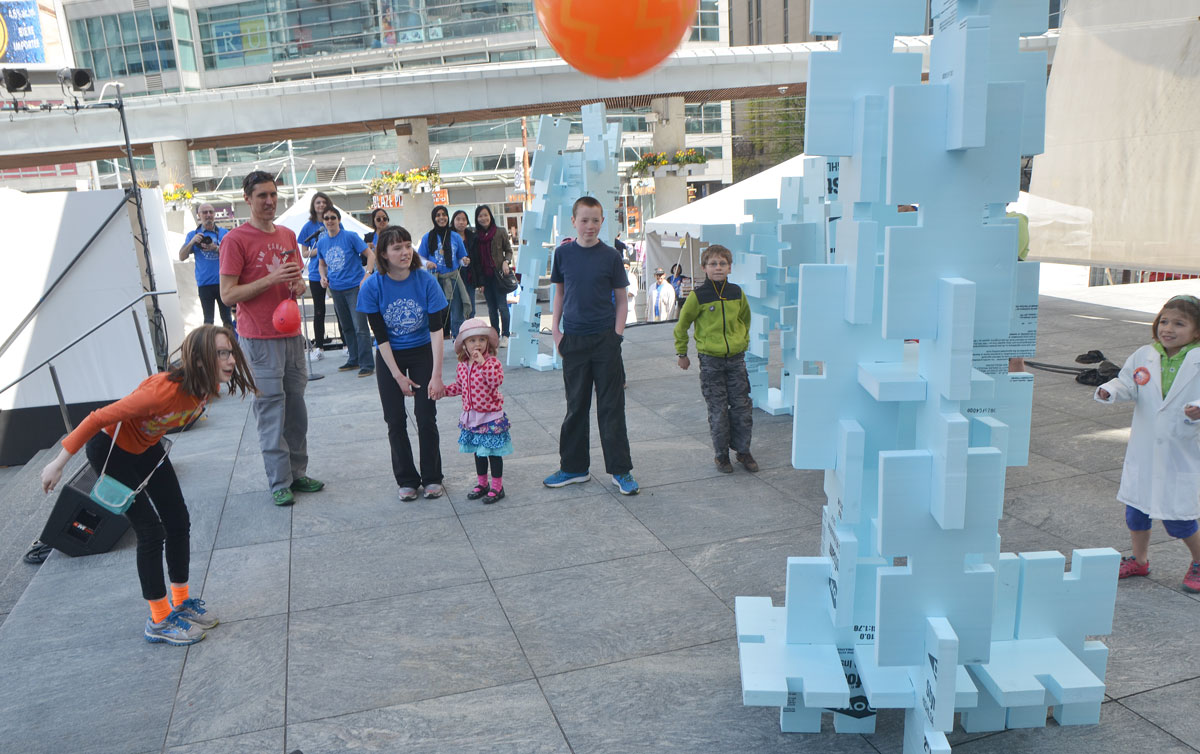
below: How do you test the strength of a tower?
By giving one exuberant girl a big orange ball of course!

A young girl throws a large orange ball at a tower of polysyrene blocks in an attempt to knock it over, an activity at Science Rendezvous on the stage at Dundas Square.

below: At the end of the competition, all three teams came together to build the tallest tower that they could.  It didn’t quite reach the stage roof, but it was close!

competition to build the highest, strongest tower out of hard styrofoam blocks, children and adults working together to see how tall they can make the tower


… more great activities…..

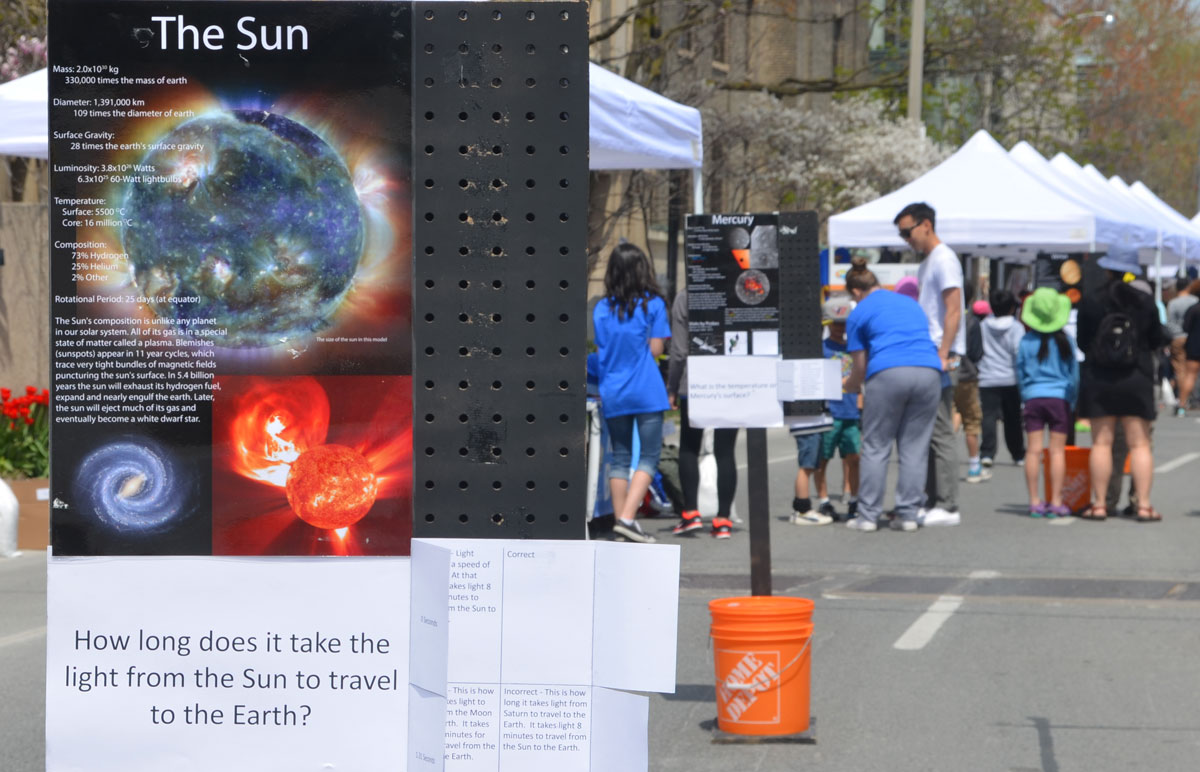
below: Question: How long does it take the light from the Sun to travel to the Earth?
Answer: sunlight travels at the speed of light (rounded to 300,000 km/s) and it has to cover a distance of 150 million km on average to reach Earth.  With a bit of math, the answer is 500 seconds, or 8 minutes and 18 seconds.

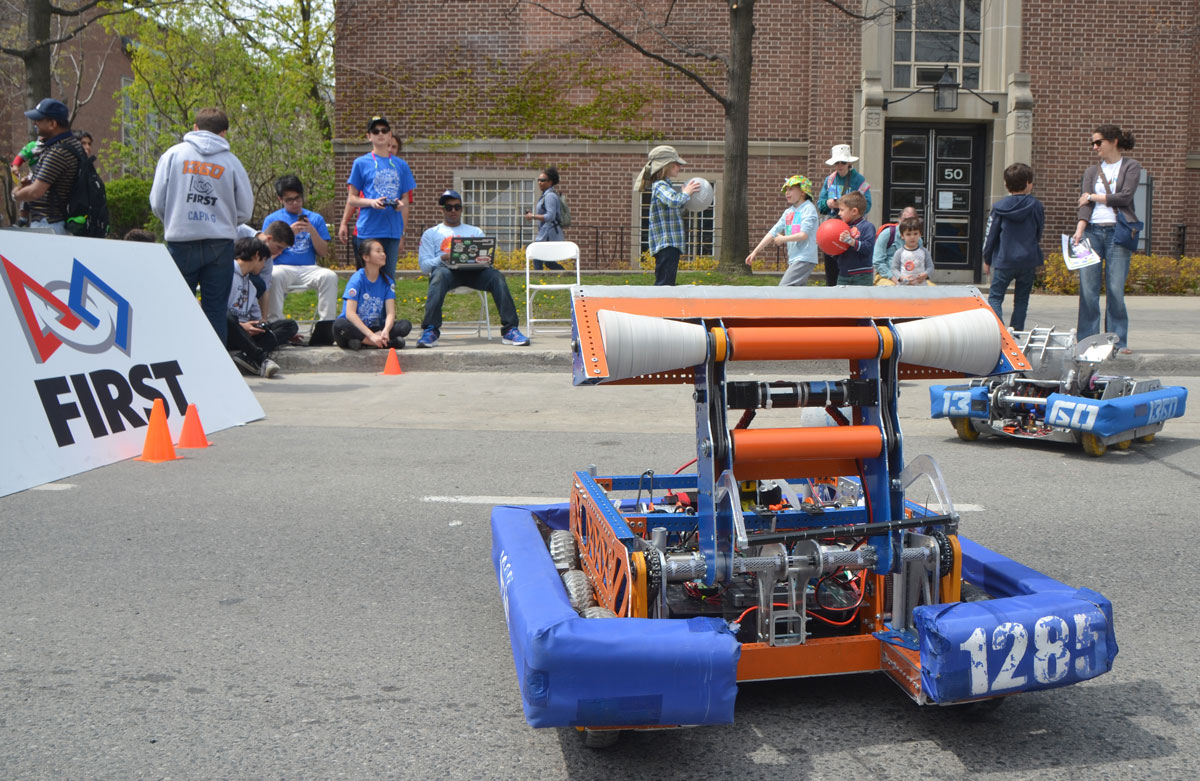
A sign stands in the street with information about the sun on it. Behind it is a second sign, this time with information about Mercury. Behind that are people at Science Rendezvous on St. George street

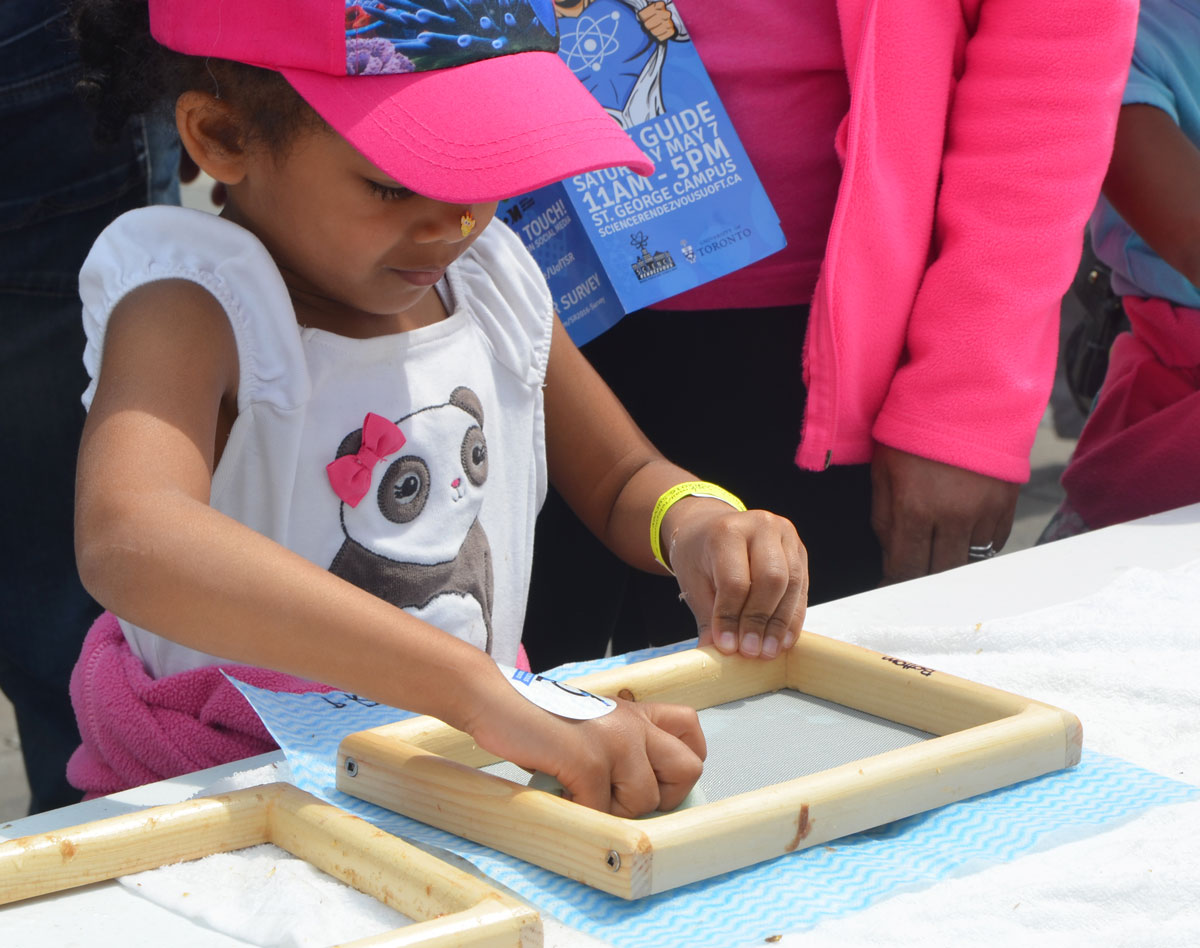
below: making paper

a young girl is making paper. she is sponging the paper dry over a piece of mesh in a frame

below: robots

A group of students is sitting on a sidewalk. One of them has a laptop and he is controlling a robot machine with wheels that is moving around on the street.

below: How unique are you? Test yourself for various phenotypes (the product of your genes)… Can you curl your tongue? Can you smell freesias? Is your thumb bent?  From answers to these and five other questions you can determine if you are 1/10 (you share similarities to many people) or 1/1000 (you are more unique)… or something in between.  Apparently I’m 1/45 and if you’re curious, my thumb is straight, I can’t curl my tongue and I can smell freesias.

Two students are conducting a genetic phenotype test on a couple of volunteers. They are looking to see if they can smell fresias or taste coriander.

below: St. George street.

looking up St. George street on the downtown University of Toronto campus. A white tent is set up on the street and under the tent are students running science demonstrations.

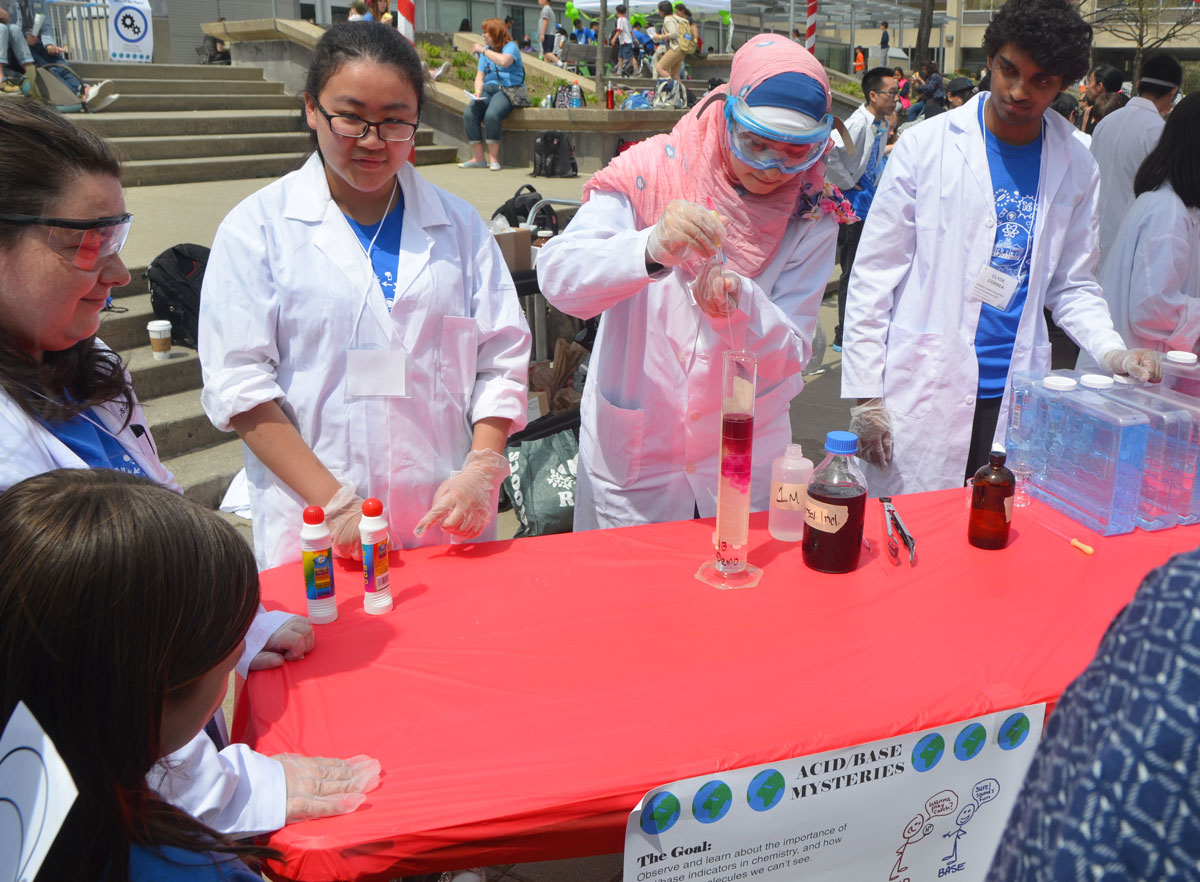
below: A demonstration using acids, bases, and pH indicators.  Technically, pH is a measure of the concentration of hydrogen ions.  In practice, it indicates how acidic or basic a substance is.  Water, with a pH of 7 is neutral.  Acids have a pH less than 7 while bases have a pH greater than 7.  A pH indicator is a chemical that changes colour depending on the pH.

Three students behind a table doing a demonstration about acids and bases in chemistry. One of the women is adding a strong acid to a solution that is a strong base. The pH indicator is changing from yellolw to purple

below: How much energy is a gummi bear? Find out by heating a little bit of of potassium chlorate in a test tube.  Once it is liquid, add a gummi bear.  Smoke and flames ensue.  When the potassium chlorate is heated, it produces oxygen gas which ignites if there is combustible material, such as sugar, available.

A student is doing a chemistry experiment to show how much energy is in gummi bear candy. He has lit one on fire and burned it to show the release of energy. It was done in a test tube.

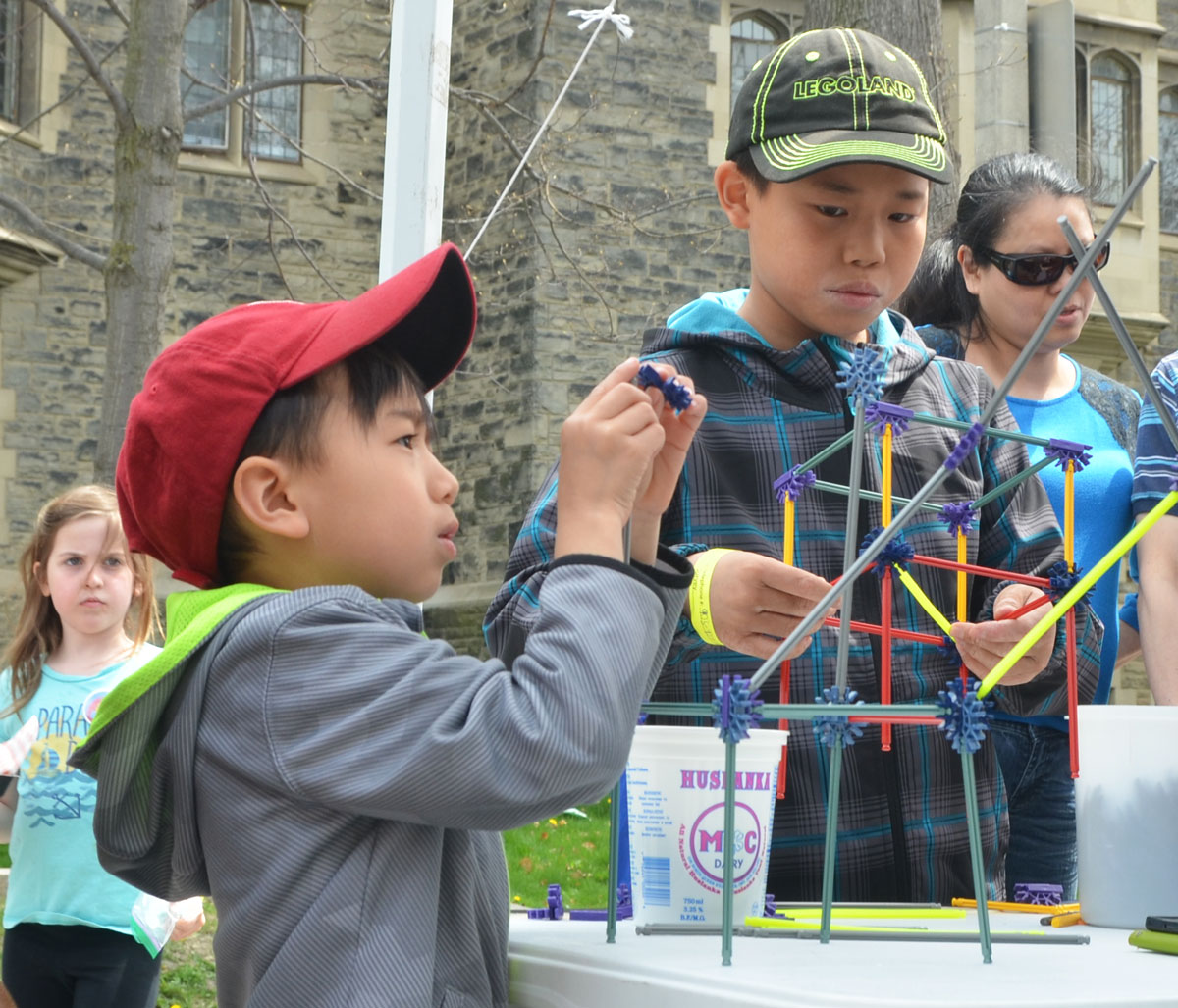
below: Design and construction with K’nex

Two young Asian boys are building small structures with the building toy k'nex.

below:  Tetris players

Three young man are playing a tetris game on a large computer board.

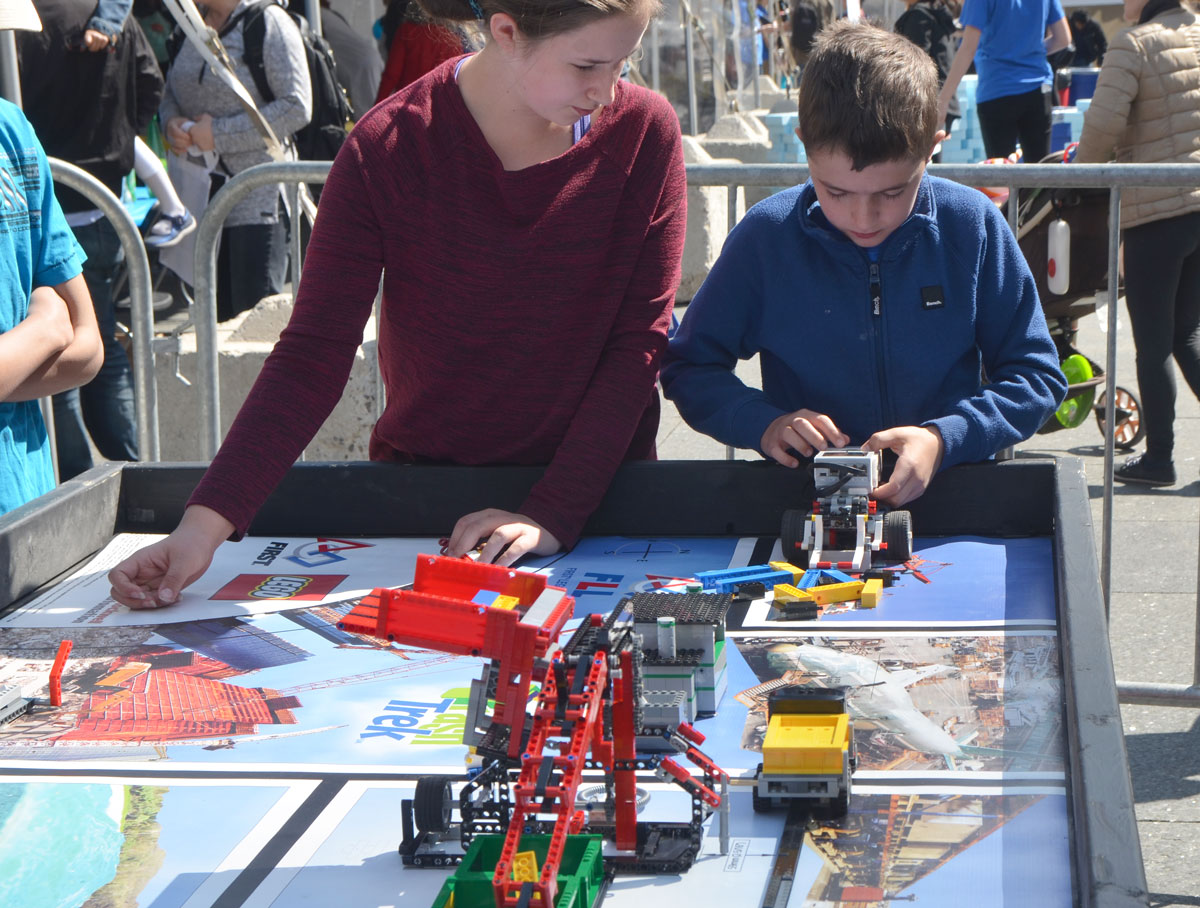
below: programmable Lego vehicles

Two kids are playing with a programmable Lego car.

below:  Watch out!  Scientists on the loose!

Two young kids have been dressed up as mad scientists and their father is taking their picture. They had rubber gloves on, eye protection and a lab coat. They both have pipettes.

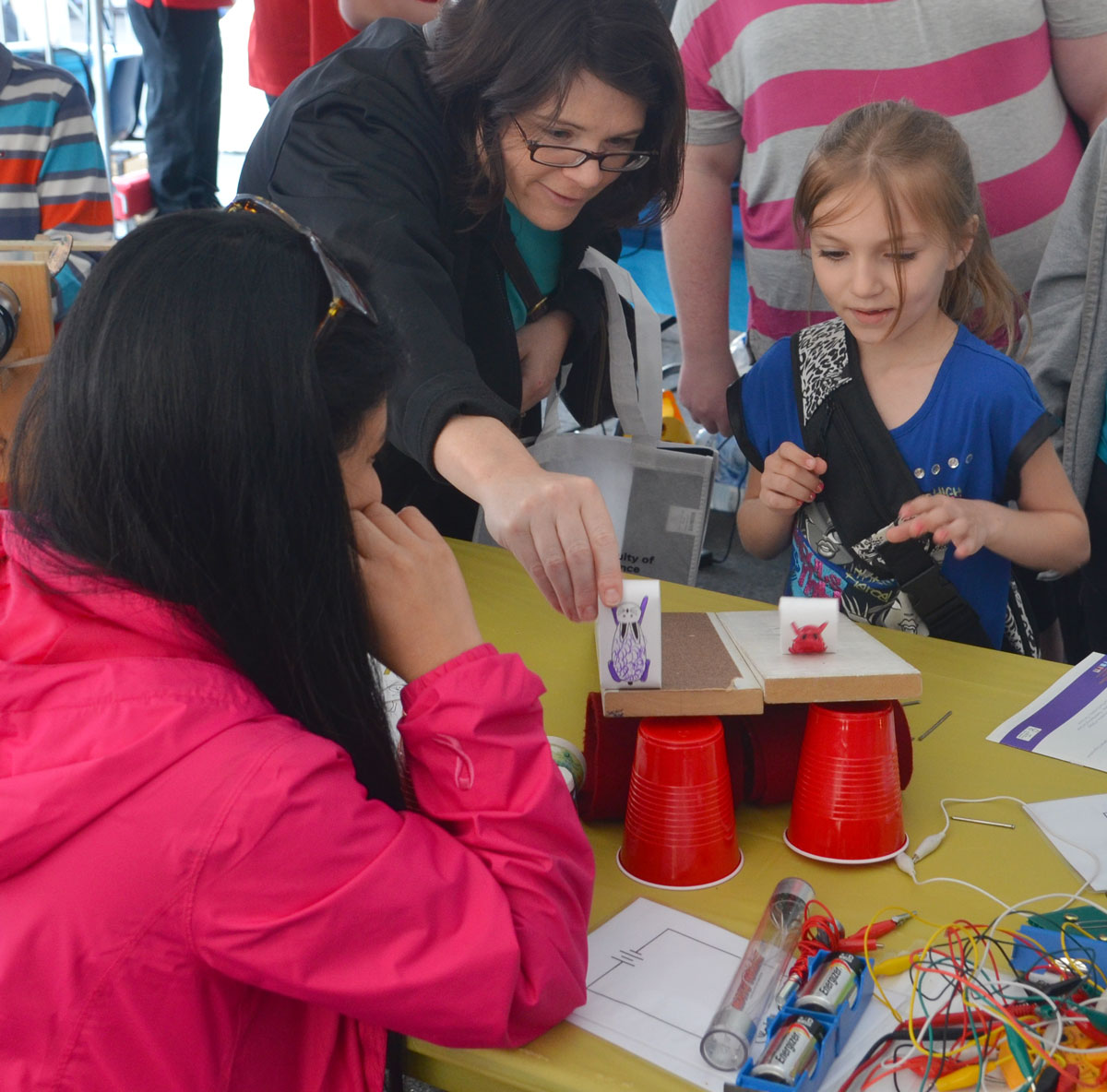
below:  The little boxes used in this activity have a marble inside them.  When placed on an inclined surface, the boxes tumble to the bottom.  Sandpaper prevents the boxes from slipping.

A woman and a girl are racing objects that they made. Inside small rectangular boxes are marbles that make the boxes tumble down an incline.


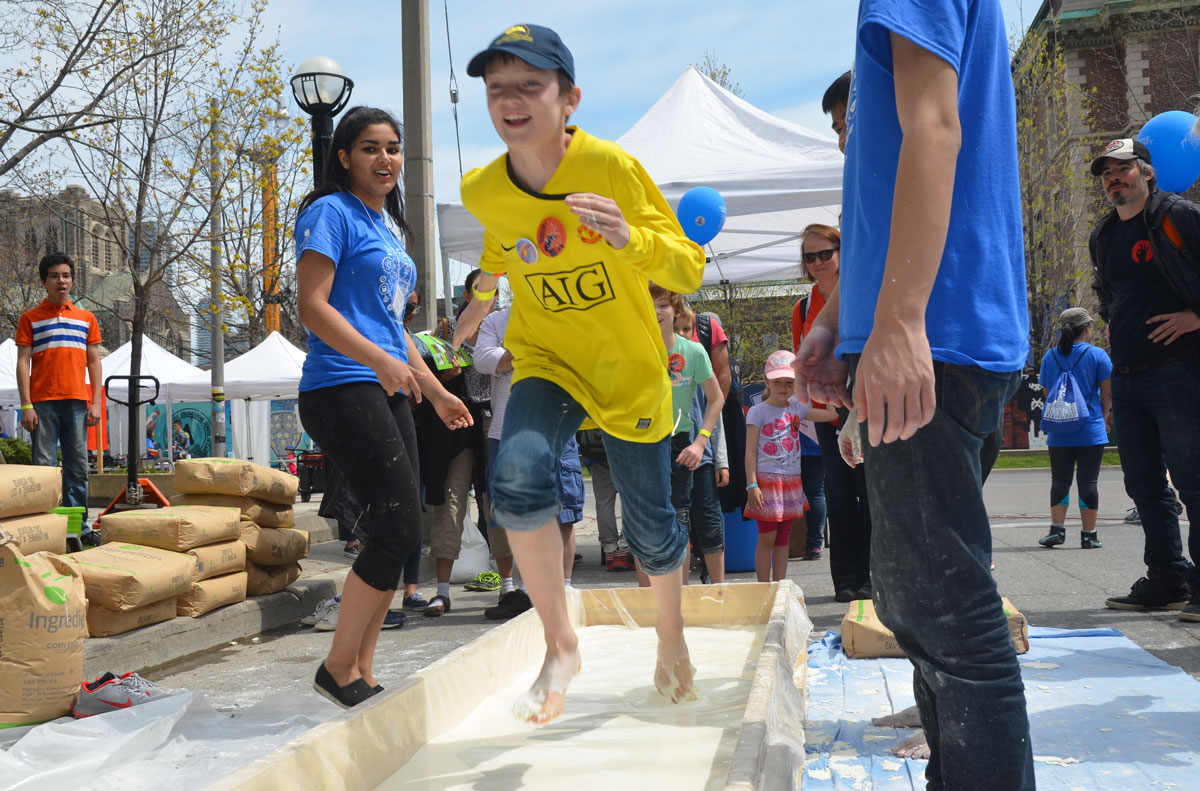
below: Corn starch and water makes a wonderful substance.  It’s not liquid and it’s not solid.  If you are fast enough you run on top of it but if you stop moving, you sink into it!

A boy is running barefoot along a course that is filled with corn starch and water. Onlookers are cheering him on.

A girl is running barefoot along a course that is filled with corn starch and water. Onlookers are cheering him on.

An older man is running through corn starch and water with his arms held up

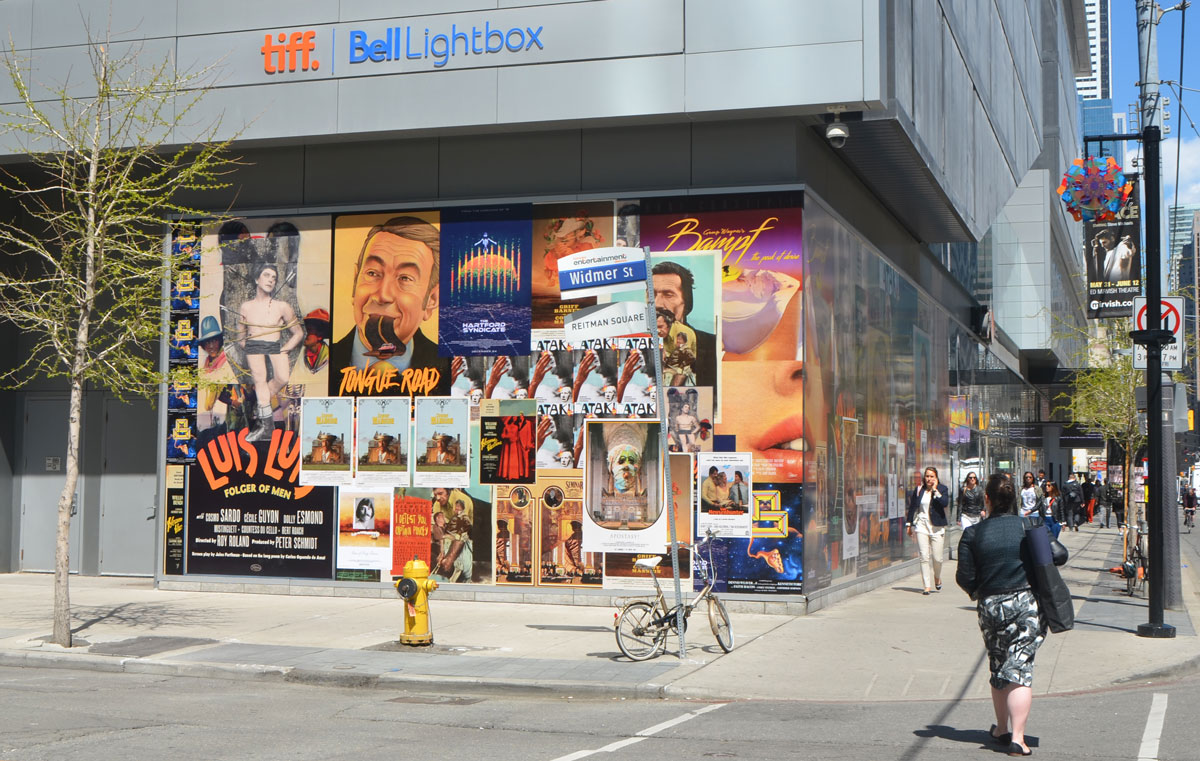
It’s common to see posters pasted on walls so finding movie posters on the walls of the tiff Bell Lightbox didn’t strike me as unusual.    I walked past this display until I noticed the sign that marked this as a CONTACT Photography Festival installation.  Fake movie posters, many designed with a touch of humour, that look just like the real thing.

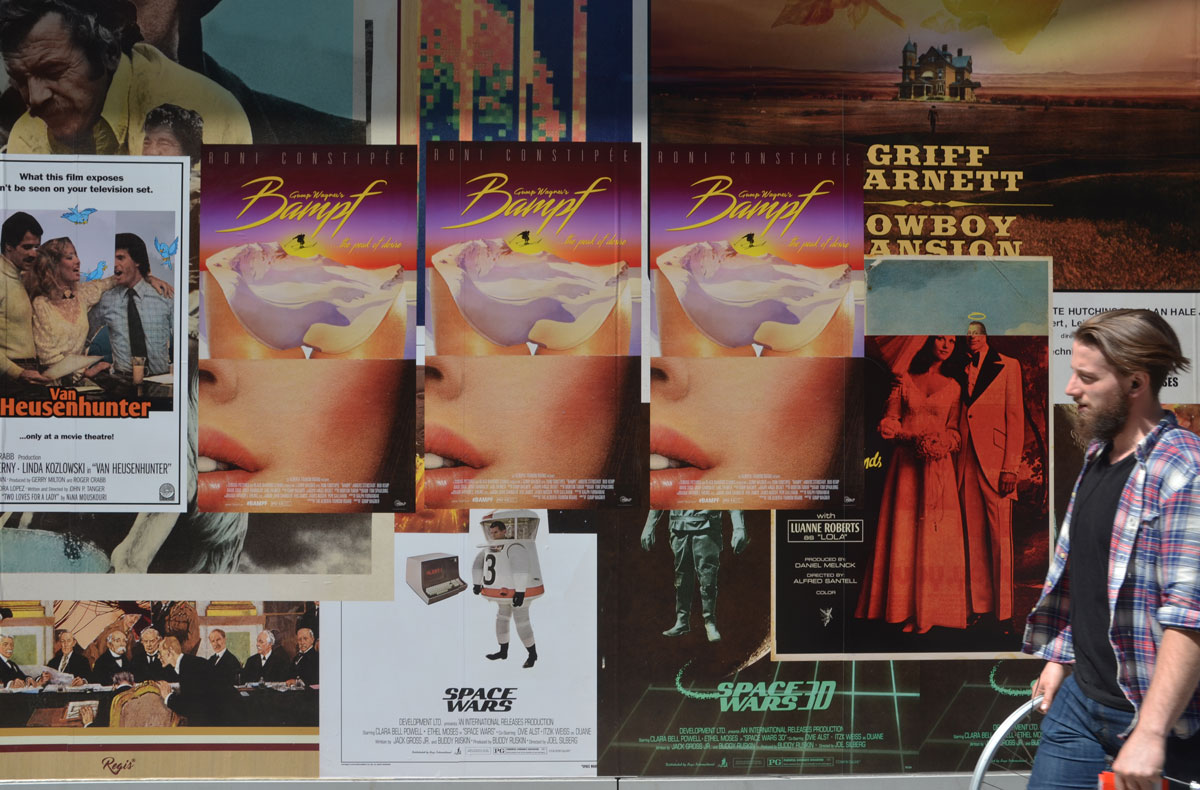
detail of an art installation that is a wall of fake movie posters made with ads and illustrations from old books and magazines

below: The installation, titled ‘Coming Attractions’ covers the corner windows and wall space.   The posters were designed by ‘Long Weekend’ which is a collective of artists working out of Winnipeg.   They were made from ads and illustrations from old books and magazines.

at the corner of King and another street, the TIFF Bell Lightbox building has an art installation on two sides, walls of fake movie posters. The installation is called 'Coming Attractions' and it is by a collective of artists known as The Long Weekend.

detail of an art installation that is a wall of fake movie posters

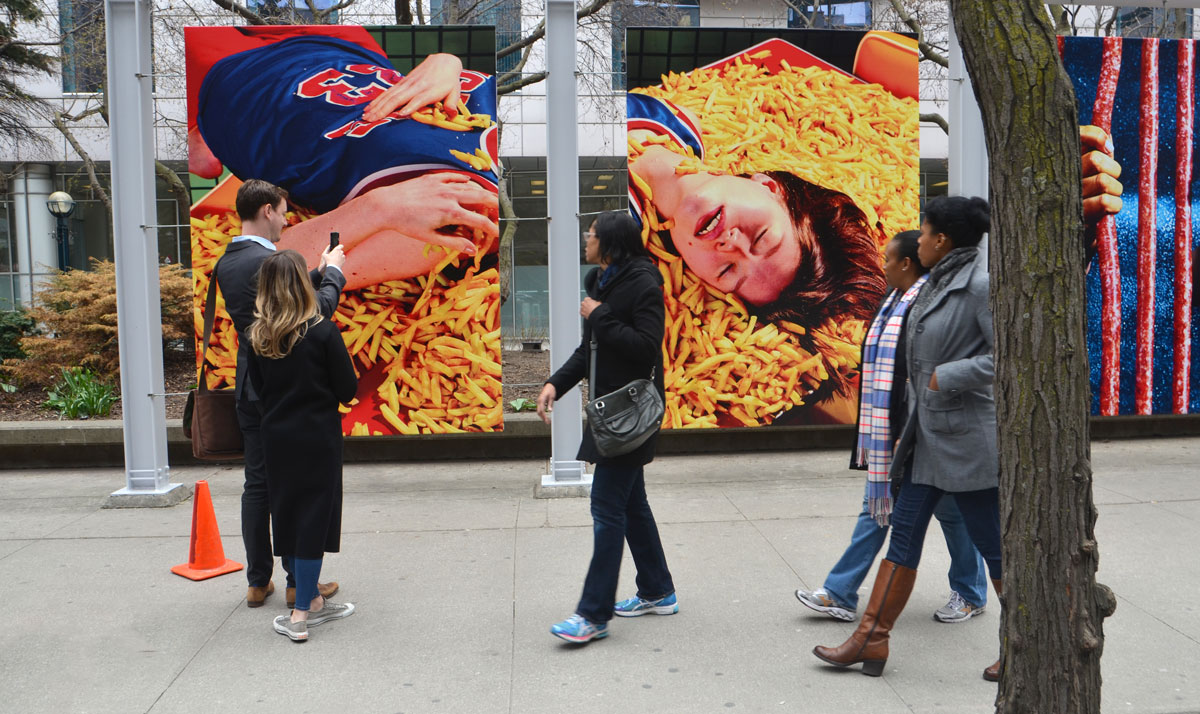
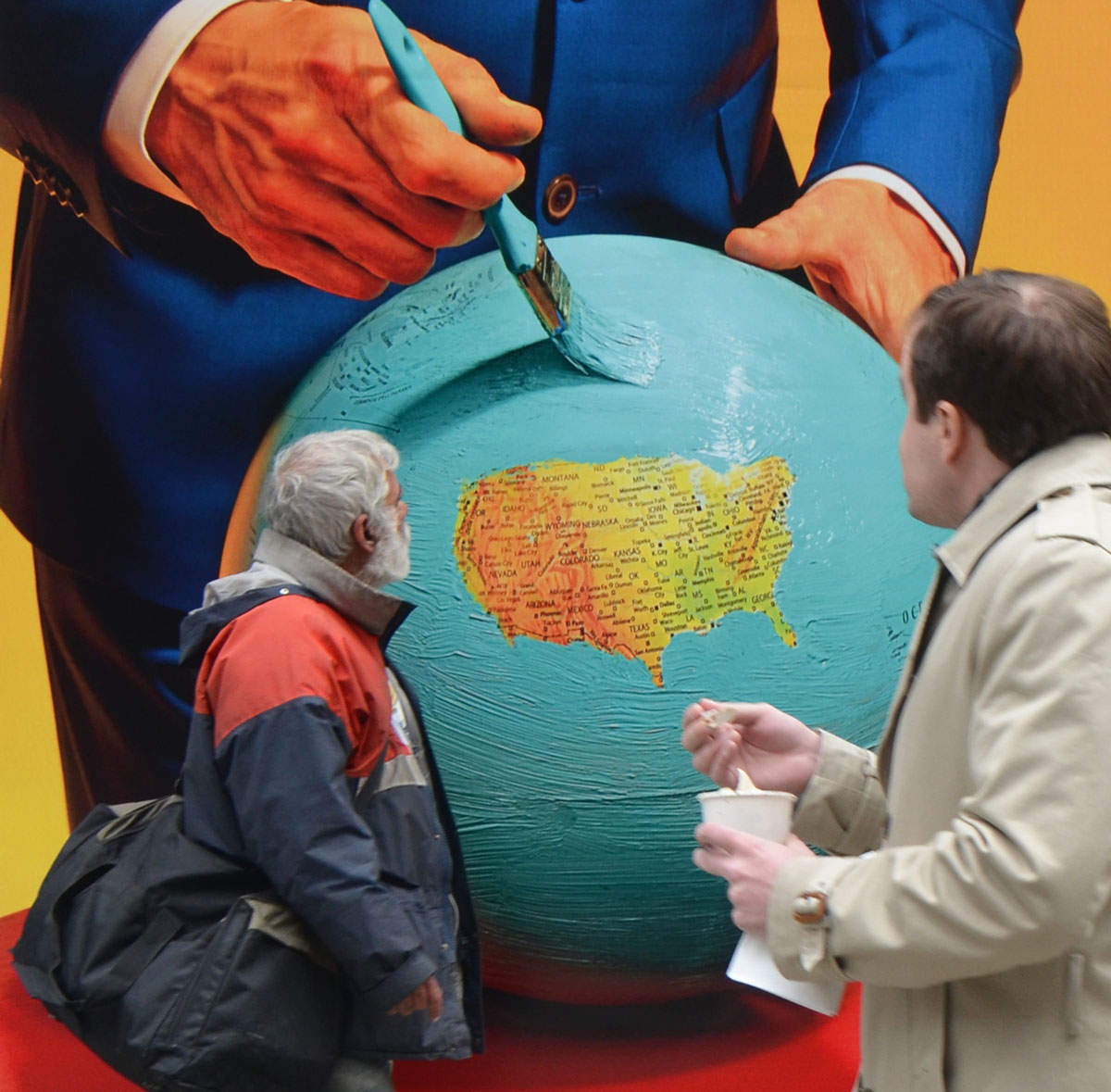
On the other side of King street, and just a but further east, is a series of eleven large images taken from past editions of ‘Toilet Paper’, a biannual magazine founded by Maurizio Cattelan and Pierpaolo Ferrari.   They hint at advertising and they blur the line between fantasy and reality.

below: Muhle is a German company that makes shaving products and one of their blades looks identical to the one in this picture.

A woman with her phone in her hands walks past a large poster of two women face to face where all you can see is their nose, mouth, chin and tongues that are stuck out. A razor blade balances between the two tongues.

People walk past two large posters that show a girl lying on a large pile of french fries.

A man walks past large posters on King St.,

a man stands in front of a picture that is a large globe with everything painted light blue except the USA

a man stands in front of a picture that is a large globe with everything painted light blue except the USA

If you like these images, you might also like Toilet Paper’s website.

Did you know that we share 50% of our DNA with a banana?  Bananas don’t have DNA that codes for eye colour and we probably don’t any genes that produce yellow peels.   What we share is similar basic biochemistry, such things as DNA replication, cell metabolism, and regulation of cell growth, to name a few.  One thing that you can do with banana DNA is easily extract it.  We all know that cells are too small to see and that DNA is even smaller,  BUT if you mash a whole a banana, you can produce enough DNA to make a small clump.   That was one of the activities at Science Rendezvous this past Saturday.
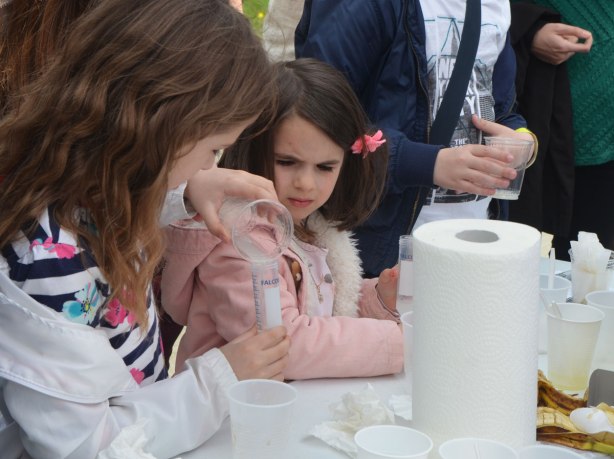
Two young girls are performing an science experiment using beakers and a graduated cylinder. One of them is pouring liquid into the cylinder while the younger one watches.

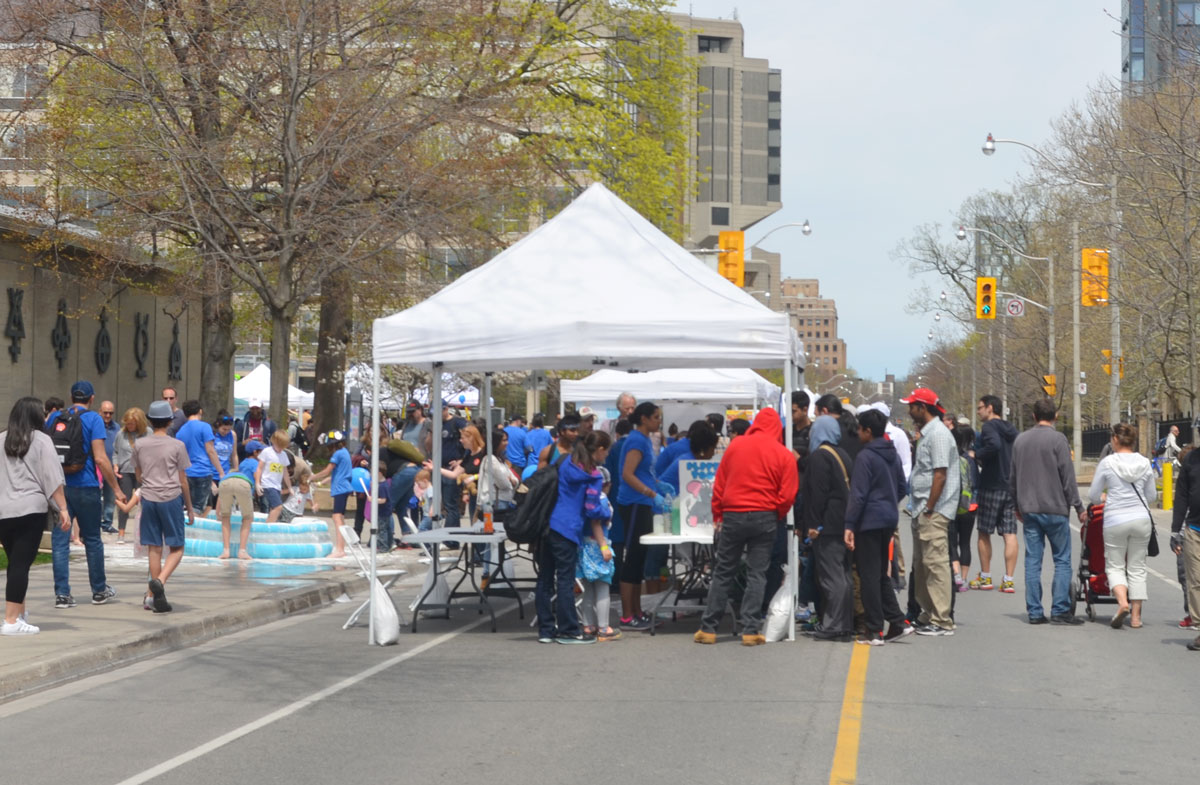
Science Rendezvous is science outreach festival that occurs across Canada, a day when science hits the streets.  This year it was May 7th.  In Toronto, there were information booths, demonstrations, and activities by students from Ryerson (at Yonge Dundas Square) and students from U of T (St. George Street).

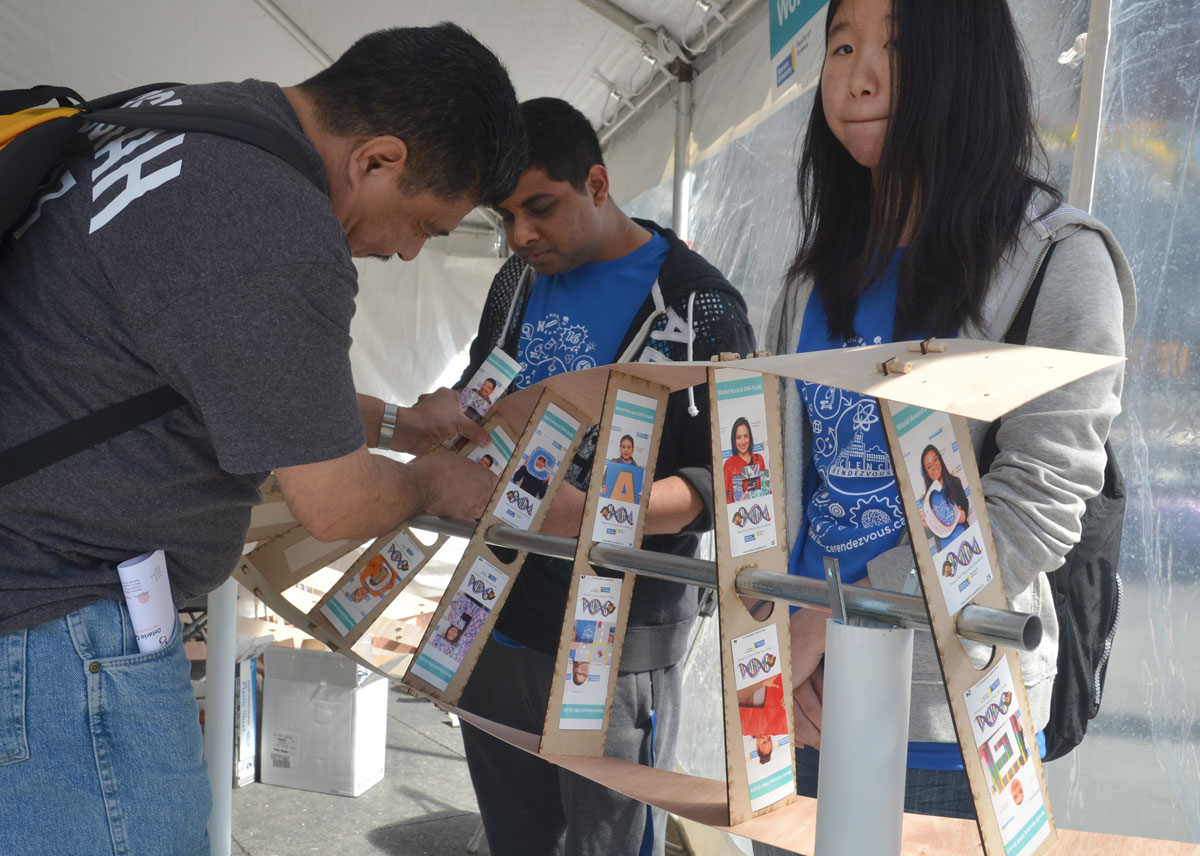
“There’s no place like GenHome” is a project by Ryerson students to break a Guinness World Record by building the longest DNA model.    DNA, or deoxyribonucleic acid,  is a double helix.  Although it is a complex molecule, it can be broken down into components called nucleotides.  Nucleotides consist three parts – deoxyribose which is a sugar molecule, phosphate, and an organic base.  At the risk of being too simplistic (because the chemistry of DNA is way beyond the scope of this blog), the sugar and phosphate of the nucleotides form the backbone of the double helices.  The organic bases are in the space between the two backbones and if they are ordered properly, the bases hold the double helix together.

A couple more things you need to know about DNA.  First, there are four bases, adenine (A), thymine (T), cytosine (C), and guanine (G).  And second, bases come in pairs and only certain pairs can exist if the double helix is to form properly.  Adenine has to pair with thymine and cytosine has to pair with guanine, i.e. A with T and C with G and nothing else.

How would you build a DNA model?  The Ryerson University students wanted to get people involved in the project and if you were at Science Rendezvous, you could have become part of their DNA model.

below: Bases need partners and so do you !  Find a partner and take a spin.
Are the two of you A & T or G & C?

A young woman is standing beside a spinner with AT and GC being the possible landing places. She is talking to a couple who have spun and landed on GC

below: Next, have your picture taken with your base letter.
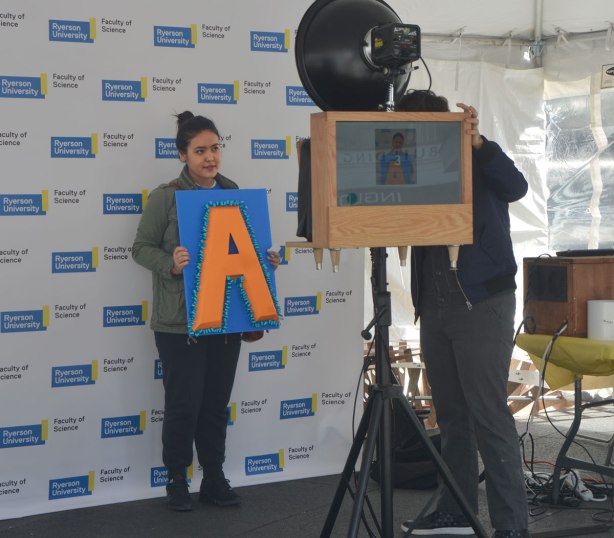
A young woman has her picture taken with a large orange letter A on a blue square.

A few moments later your picture is printed and ready to attach to the DNA model.

below: My partner for the activity adds his G (toe to toe with my C).

People making a DNA model using photos that volunteers have had taken of themselves with one of the letter of DNA. The four letters are A, C, T, and G. They are the nucleosides that make up DNA

I don’t know how long the DNA model is at this point.  I was hoping that there would be some information online but nothing has shown up yet.

Also, If you want to try extracting the DNA from a banana, the instructions are online at numerous sites including Scientific American.  You will need a banana, water, salt, detergent, rubbing alcohol, and a coffee filter.  Have fun!


***  a little breather after all that molecular biology ***

below:  At Science Rendezvous they were walking together until she saw my camera and then she tried to get away.  Hmmm…. Mr. Scientist Creature (mutant science rodent?!), maybe she was embarrassed? 🙂

A person dressed in a costume that looks like an animal - squirrel? fox? that is wearing a lab coat. An Asian woman who was walking with him before the photo was taken is shyly turning away, she is also laughing


Spread around Kensington and Chinatown are 20 large black and white photos taken by a number of freelance photojournalists who are part of a group called #Dysturb.   One of their goals is to present photojournalism in new ways, including as street art, with the aim of engaging people and encouraging discussion of global issues.   The images are part of an exhibit for the Scotiabank CONTACT Photography Festival.

Kensington has had a problem with taggers for a while.  Often street art gets vandalized in that area.   The #Dysturb photo that was at 56 Kensington (under Mona Lisa) has already been torn down and a couple of others have been ripped.

Pictures of some of the images that are part of the exhibit are shown below.  I have included a partial transcription of the words that accompany each picture.


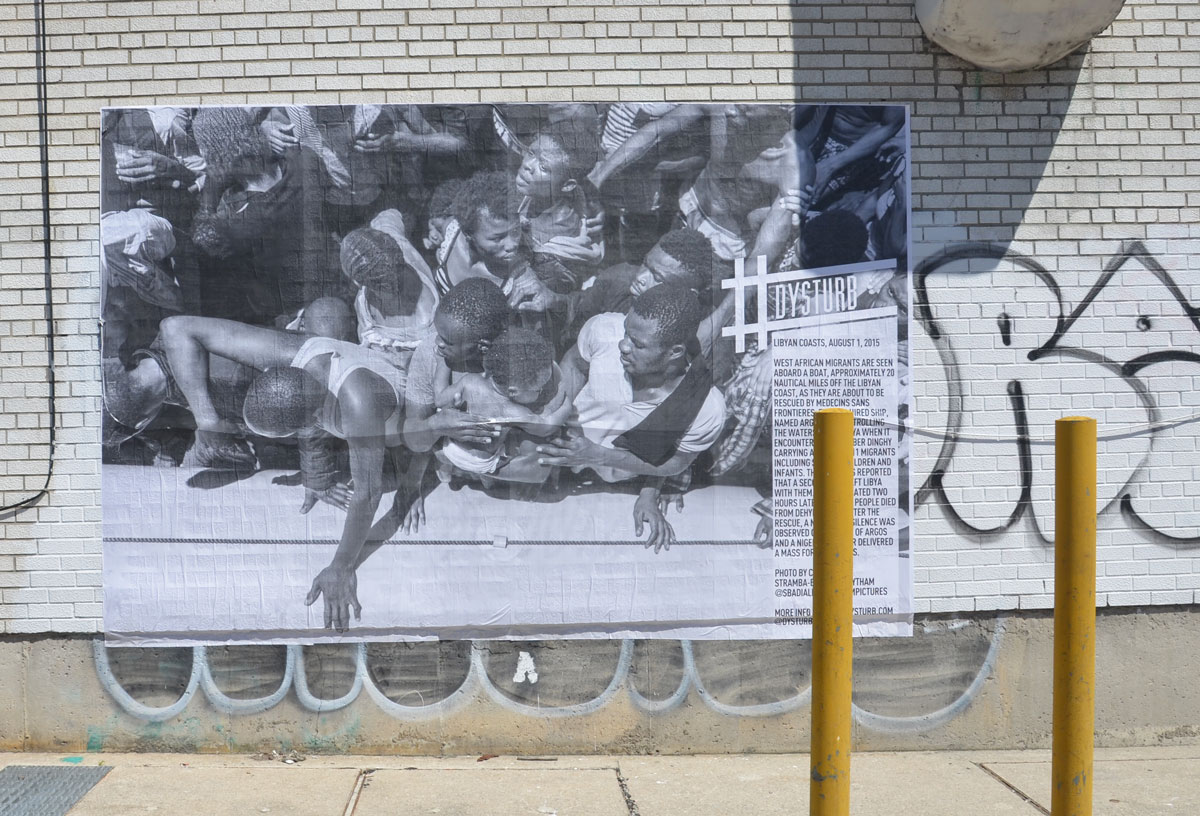
Libyan Coasts, August 1, 2015
Photo by Christophe Stramba-Badiali/Haytham

a large black and white photojournalist picture, part of CONTACT photography festival, pasted on a wall - a boat load of Libyan migrants is being rescued from their rubber dinghy.

West African migrants are seen aboard a boat, approximately 20 nautical miles off the Libyan coast, as they are about to be rescued by Medecins Sans Frontieres. The MSF-hired ship, named Argos, was patrolling the waters off Libya when it encountered one rubber dinghy carrying a total of 111 migrants including several children and infants. “


Barpak, Ghorka District, Nepal, May 9, 2015 ”
Photo by Renaud Philippe/Hans Lucas

a large black and white photojournalist picture, part of CONTACT photography festival, pasted on a wall - children playing in the wind created by a helicopter, Nepal, on a wall in an entraceway.  A man is busking in front, and there are people walking past on the sidewalk

Children play in a cloud of dust and gravel thrown by an Indian army helicopter landing in Barpak Nepal.  The community is at the epicenter of the devastating earthquake that struck April 25, 2015, taking over 8000 lives.  Of Barpak’s 1400 houses, only 20 remain standing.   The rest of the town is a pile of rubble that blends into the rocky landscape.  An archway that somehow survived the quake greets visitors with a rueful ‘Welcome to Barpak’.”


Shaanxi Province, Henan, China, February 27, 2014
Photo by Sim Chi Yin/Vii

a large black and white photojournalist picture, part of CONTACT photography festival, pasted on a wall - an ill Chinese man is being comforted by his wife.  The picture is on a graffiti covered wall and a black car is parked close to it.

Gold miner, He Quangui, battling silicosis, struggles to breathe while cradled in the hands of his wife Mi Shixiu.  After many attempts to stabilize his breathing, in the early hours of the next morning her tried to kill himself to end the suffering.  He contracted the irreversible disease working in illegal gold mines in China’s Henan province.   He is among some six million workers in China who have pneumoconiosis – the country’s most prevalent occupational disease.”


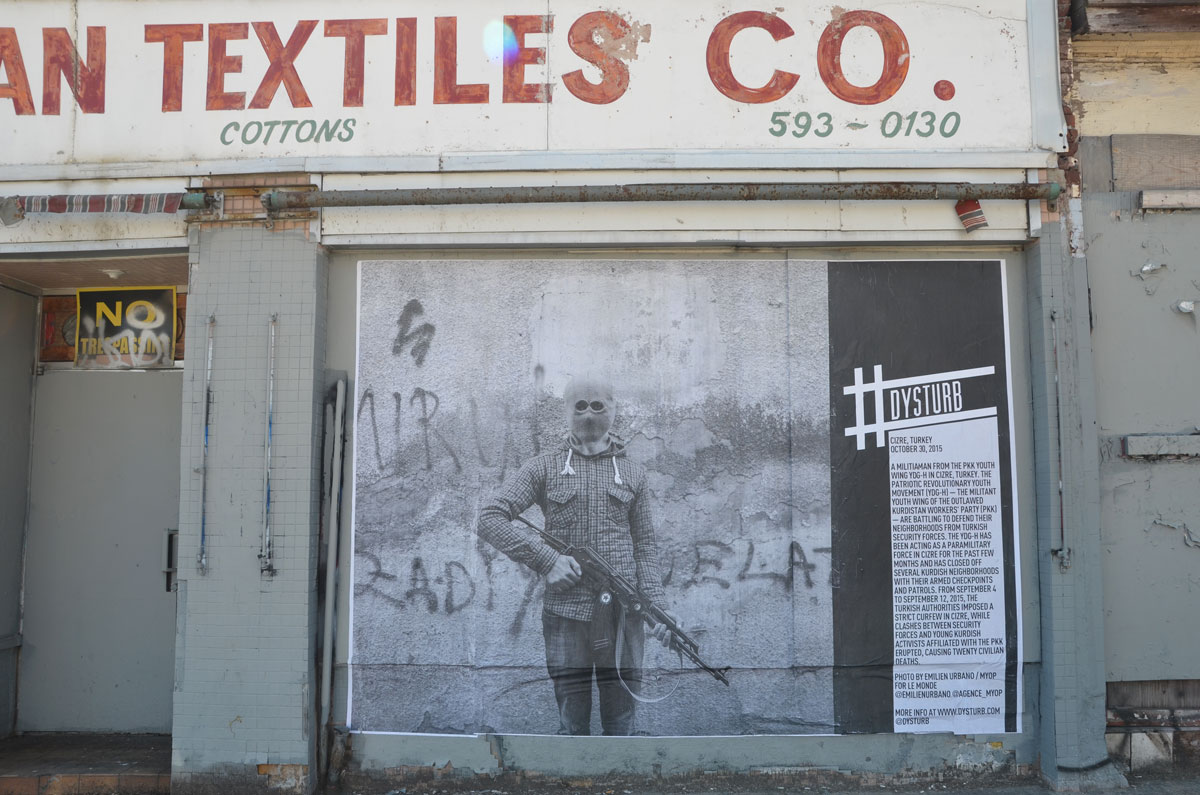
Cizre Turkey, October 30, 2015.
Photo by Emilien Urbano/Myop for Le Monde
NOTE: I took this picture on Friday. Today (Monday) it was gone.

large black and white photo pasted onto a boarded up storefront of European Textiles on Spadina Rd. The photo is part of #Dysturb exhibit at Contact Photography Festival. It shows a hooded man holding an automatic rifle

A militiaman from the PKK Youth wing YDG-H in Cizre Turkey.  The Patriotic Revolutionary Youth Movement (YDG-H) – the militant youth wing of the outlawed Kurdistan Workers’ Party (PKK) – are battling to defend their neighbourhoods from Turkish security forces.  The YDG-H has been acting as a paramilitary force in Cizre for the past few months and has closed off several Kurdish neighbourhoods with their armed checkpoints and patrols.


Fort McKay, Alberta, Canada, August 12, 2015
Photo by Ian Willms/Boreal Collective

a large black and white photojournalist picture, part of CONTACT photography festival, pasted on a wall - a sick boy is lying on a bed, on a wall in the entranceway to a store, sidewalk and street scene in the background

Dez, 7, plays in his bed.  Dez was born with an underdeveloped heart and has received multiple open heart surgeries.  His family and healthcare professionals in Fort McKay believe that his condition was caused by environmental pollution.   Fort McKay is an indigenous community that is surrounded by oil  sands developments.”


Kunduz City, Afghanistan, November 18, 2015.
Photo by Andrew Quilty/Oculi

a large black and white photojournalist picture, part of CONTACT photography festival, pasted on a wall - a mother (covered in a black burka) and her daughter in grief, at a gravesite.  Pasted on an orange wall with an old brown leather sofa in front of it.

Najibah tries to comfort her daughter Zahara, 8, as they weep over the grave of their husband and father, Baynazar.   Baynazar, 43, was wounded by gunfire on his way home fromwork during the Taliban takeover of Kunduz in late 2015.  He was taken to the nearby Doctors Without Borders (MSF) trauma centre.  In the early hours of October 3, during his second operation, a US AC-130 aircraft attacked the hospital for more than half an hour, killing 43 MSF staff, patients and nurses.  Dozens more were wounded.

About #Dysturb

#CONTACT16