Posts Tagged ‘metal’

I thought that I would see if I could find door pictures today.  When I first stepped outside, I wasn’t sure what that meant.   I just knew that it was a beautiful day and that I would find an answer to my doorish quest.   “Que sera sera” as Doris Day once sang.

Well, what is a door?

door: nounA hinged, sliding, or revolving barrier at the entrance to a building, room, or vehicle, or in the framework of a cupboard.

doorway: noun. An entrance to a room or building through a door.

Well duh, I think most of us know what a door is, at least in the literal sense.   As an image just a door on its own is often blah, B O R I N G.   There are exceptions of course, but if that was all I was looking for today, I wouldn’t be taking many pictures.
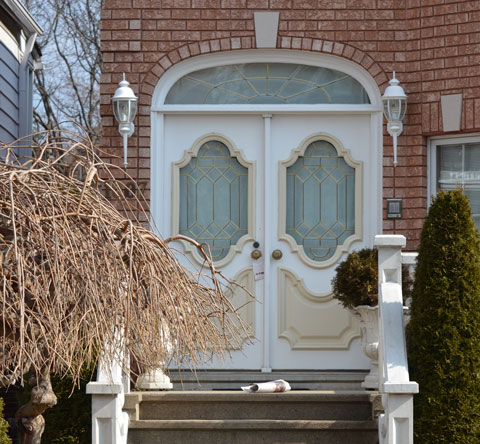
an ornate double door with windows in both doors, red brick house, stairs to the doors. closed.

I also think that most of us realize that “door” is so much more.   We find them intriguing. Door metaphors abound.  Open doors are opportunities and invitations, think “My door is always open”, or  “When one door closes, another one opens”.  Closed doors are mysteries, obstacles, or dead ends.   We talk about not knowing what goes on behind closed doors.

below: Closed for good. No mystery here, just a dead end.
With a smile for being upside down.
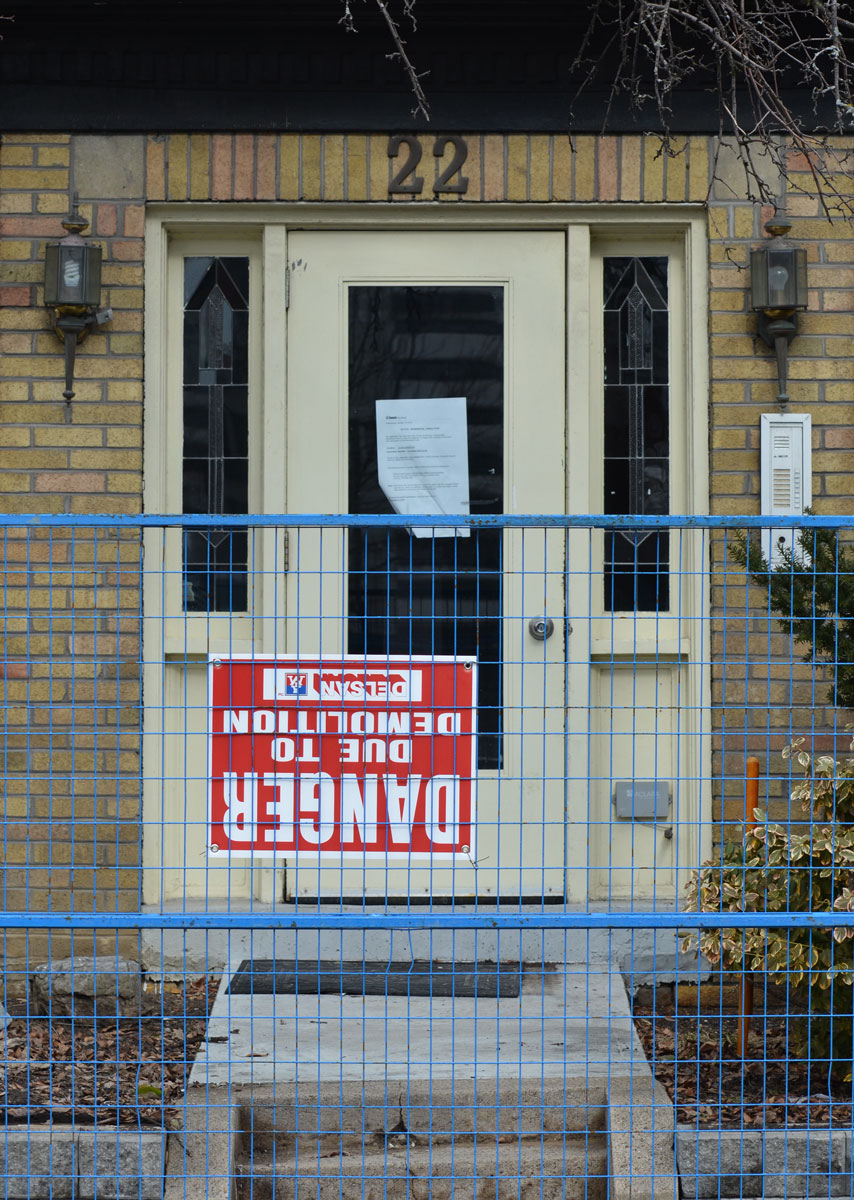
the front door of a small apartment complex that is about to be demolished. There is a blue metal fence in front of it with a danger due to demolition sign on it. The sign is upside down.

A closing door has a slightly different imagery – “slam the door in his face”, or “show someone the door”, or “don’t let the door hit you on the way out”.   Can you picture the scene in a movie where the hero walks into a strange room only to have the door close behind him.  Can you see the look on his face when he hears it being locked from the other side?

Doors, and their cousins gates, are both entrances and exits.    Entrances to buildings and rooms.  Entrances to other worlds such as “at death’s door”.  Unfortunately I don’t have a picture to illustrate ‘entrances to other worlds’.  

below: But maybe this entranceway leads to something exotic?    That’s a better explanation than ‘someone went to Home Depot and bought lots of cheap corrugated plastic’.   It juts out like a sore thumb from an otherwise well maintained, nice looking house.
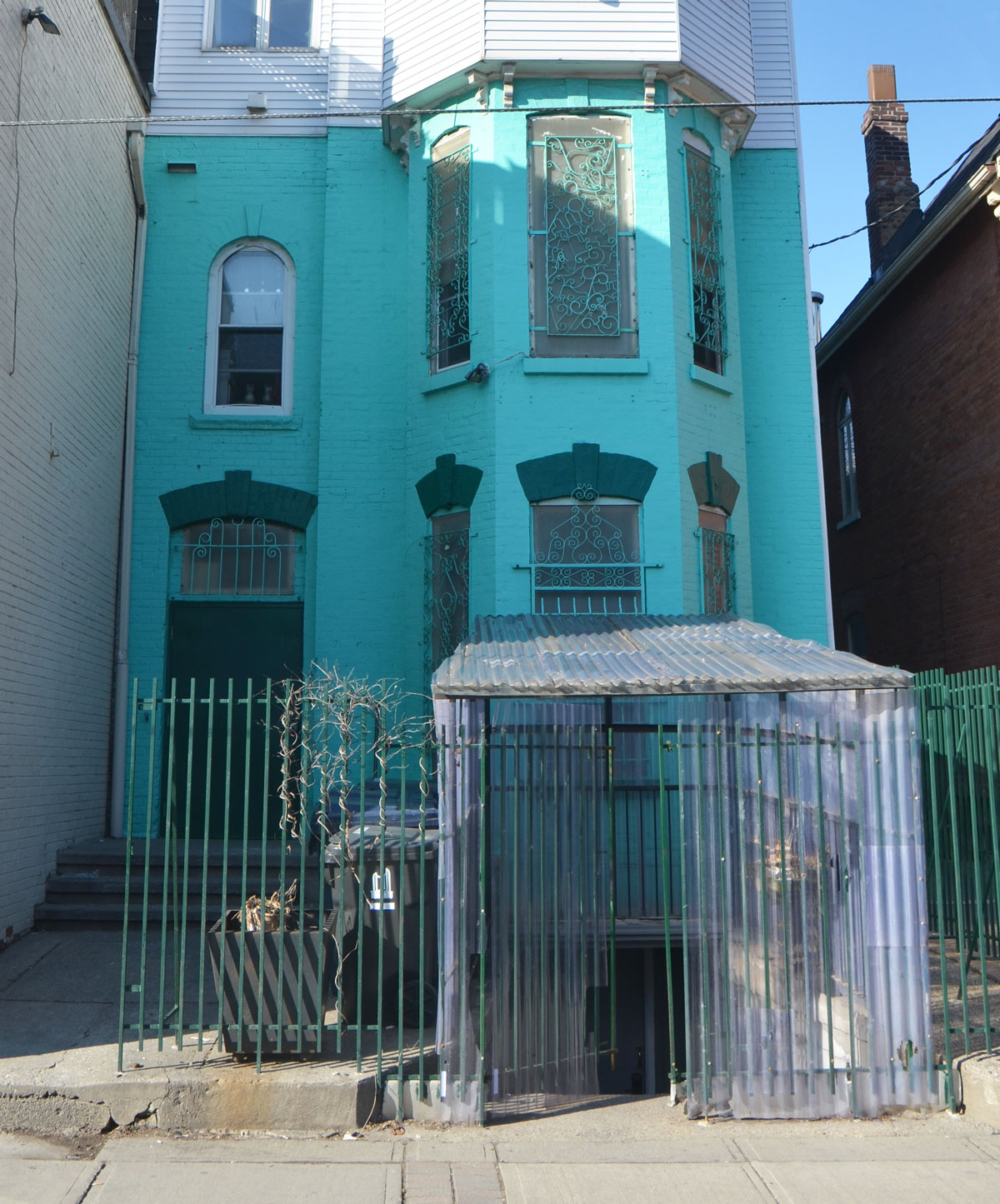
an old brick house painted turquoise with green trim. wrought iron fence in front. A corrugated plastic covering has been made to cover the entrance to the basement door. the covering comes out from the house to beyond the fence, all the way to the sidewalk

Doors are associated with privacy, protection, and control.   We feel more secure when we lock our doors.   Closed doors, especially locked ones, can keep things in or keep things out.  Closed doors separate, open doors connect.

below: Waiting at the door.   I can’t decide if he’s patient or impatient.  Perhaps bored?
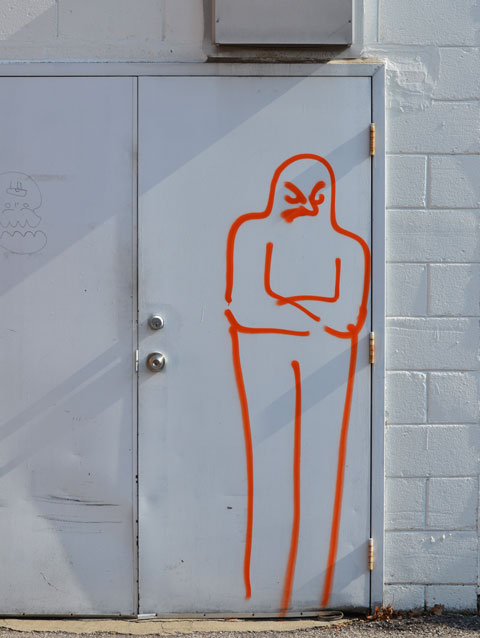
a white metal door on a white concrete wall. A bright ornage line drawing of a man standing in front of the door with his arms crossed.


Back doors are private, hidden from view.  The expression “through the back door” suggests sneaking around.  Front doors are part of the face that we show the world.   They can be welcoming or not, a lot like the people who live behind them. 

below: Or they can just be a long way up.  How are your knees feeling today?
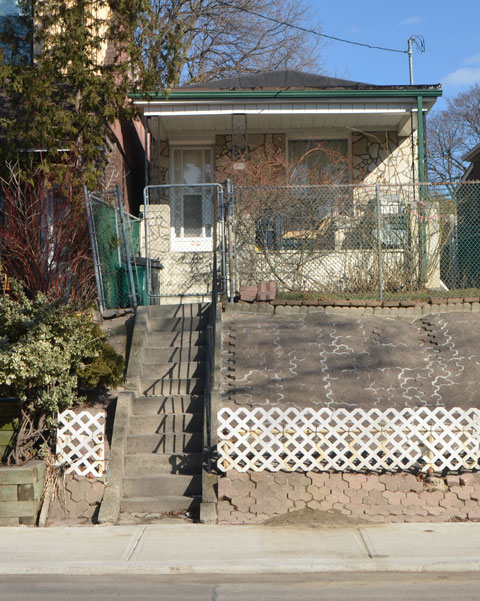
a small narrow one storey house. Many steps to get up the hill to the front door. The incline has been covered with patio stones.

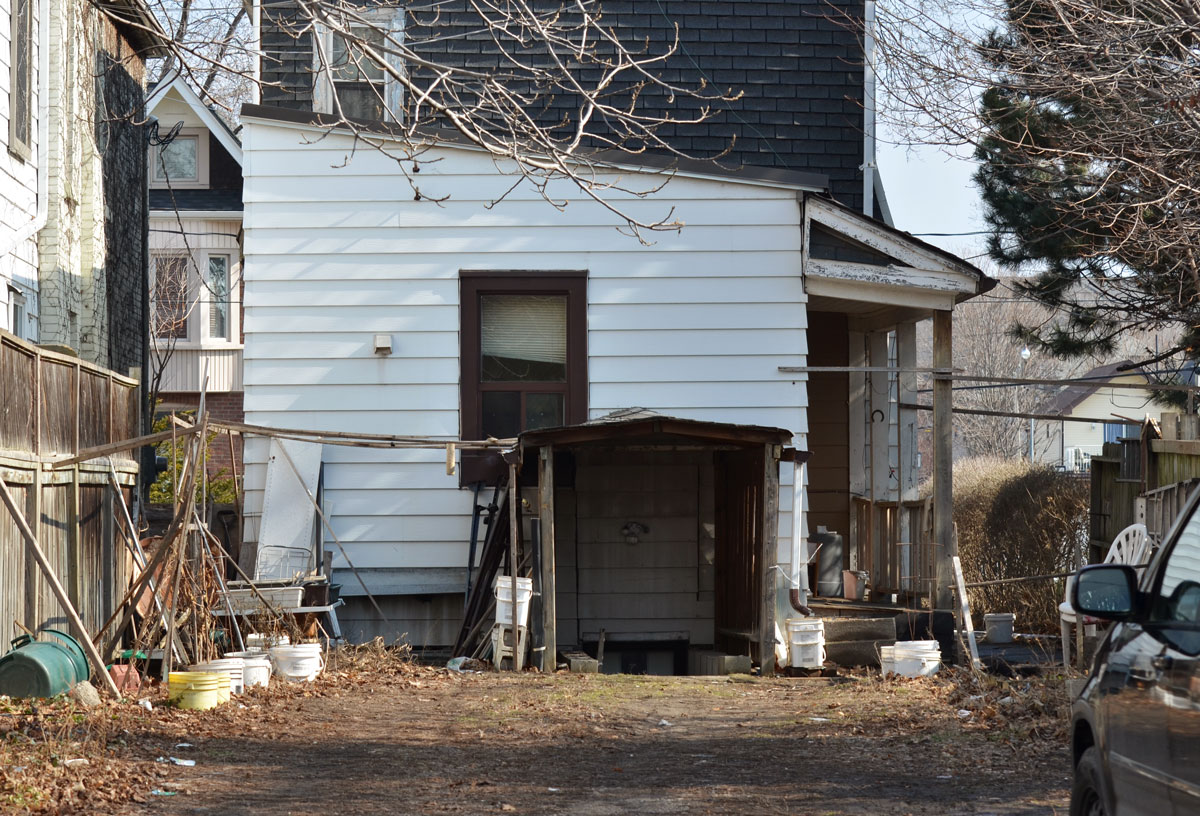
side yard and side entrance to a wood clapboard house with one window on the side at ground level.

below: A bright red chair brightens the picture.   I wonder who usually sits there?
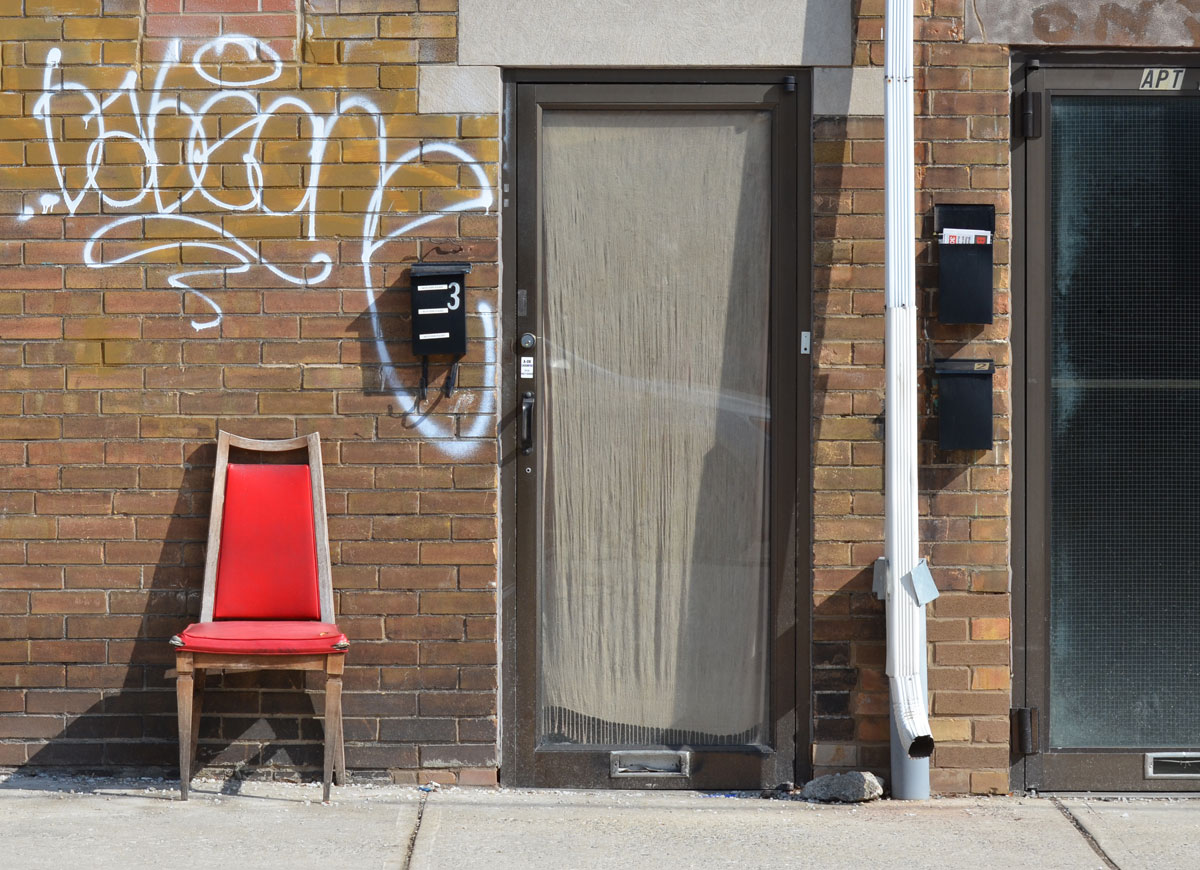
a bright red chair sits on the sidewalk beside the entrance to a building. The door has a large window which is covered by a curtain on the inside

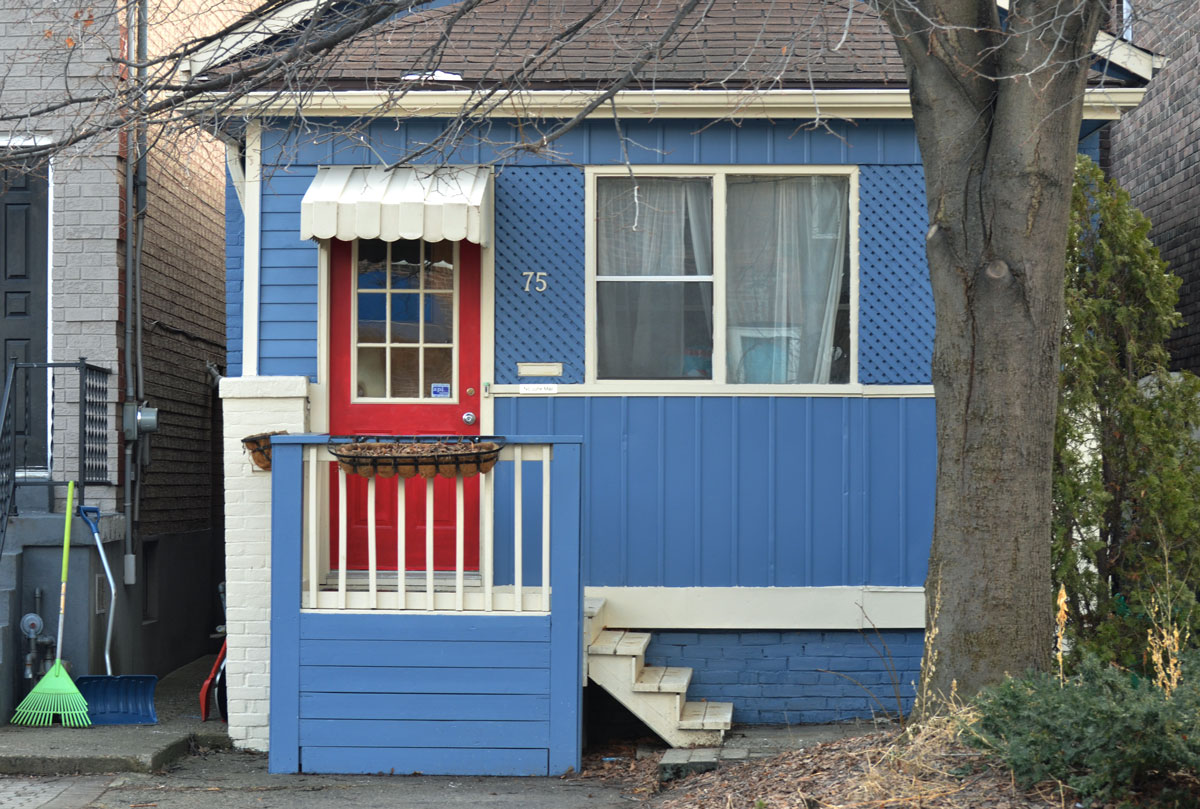
below: Another bit of cheerful red.

a small house painted blue with white trim, a bright red door.

There was a crooked man, and he walked a crooked mile,
He found a crooked sixpence against a crooked stile;
He bought a crooked cat which caught a crooked mouse,
And they all lived together in a little crooked house.”

crooked concrete steps and metal railing lead to a front door.

below: Another closed door waiting for demolition.
How many people have passed through those doors since 1913?
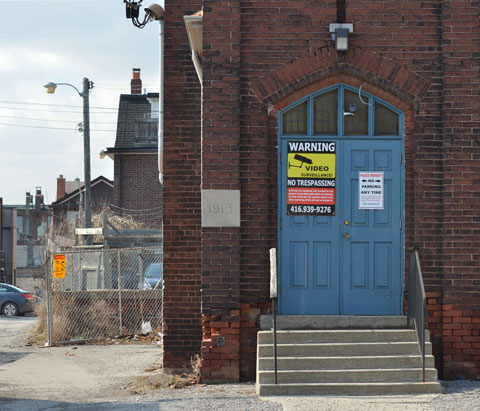
blog_blue_church_door_1913

below: I’ve always been fascinated by the sign above this door.
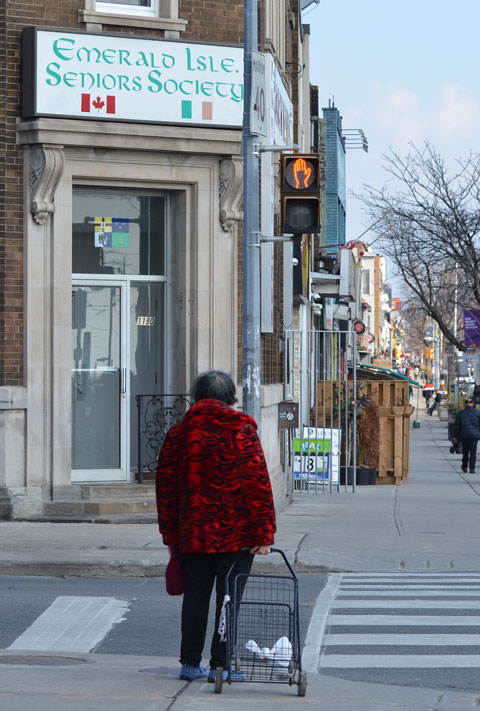
an older woman in a bright red jacket stands on a corner waiting for a green light. On the other side of the street is the Emerald Isle Seniors Society

below: This door seemed to be out of place on the Danforth… it’s an entrance to the apartment above, not to the hair salon on the left.   I like to think that she keeps watch over the doorway.

blog_etched_glass_beauty_salon

below: These two doors (especially the green one) caught my eye as I walked along the Danforth.   On my first pass I had the wrong lens on my camera.  After changing lenses, I doubled back.   Just as I was getting ready to take a picture of the two doors together, the one on the right opened.  Dilemma – to shoot or not to shoot.  I’m not brazen enough to shoot someone in the face so to speak; this over the shoulder and hope it works shot is only second rate (or third!).   I only include here so I can briefly go off on a tangent and mention my #1 problem with door shots.  People.   Pointing my camera at someone’s house often makes me feel uncomfortable and I have no desire to have any kind of confrontation, even a friendly one.

two doors, one faded green and one greyish black . a man with a rather large stomach is standing in front of the latter.

below: What to do with leftover tiles.
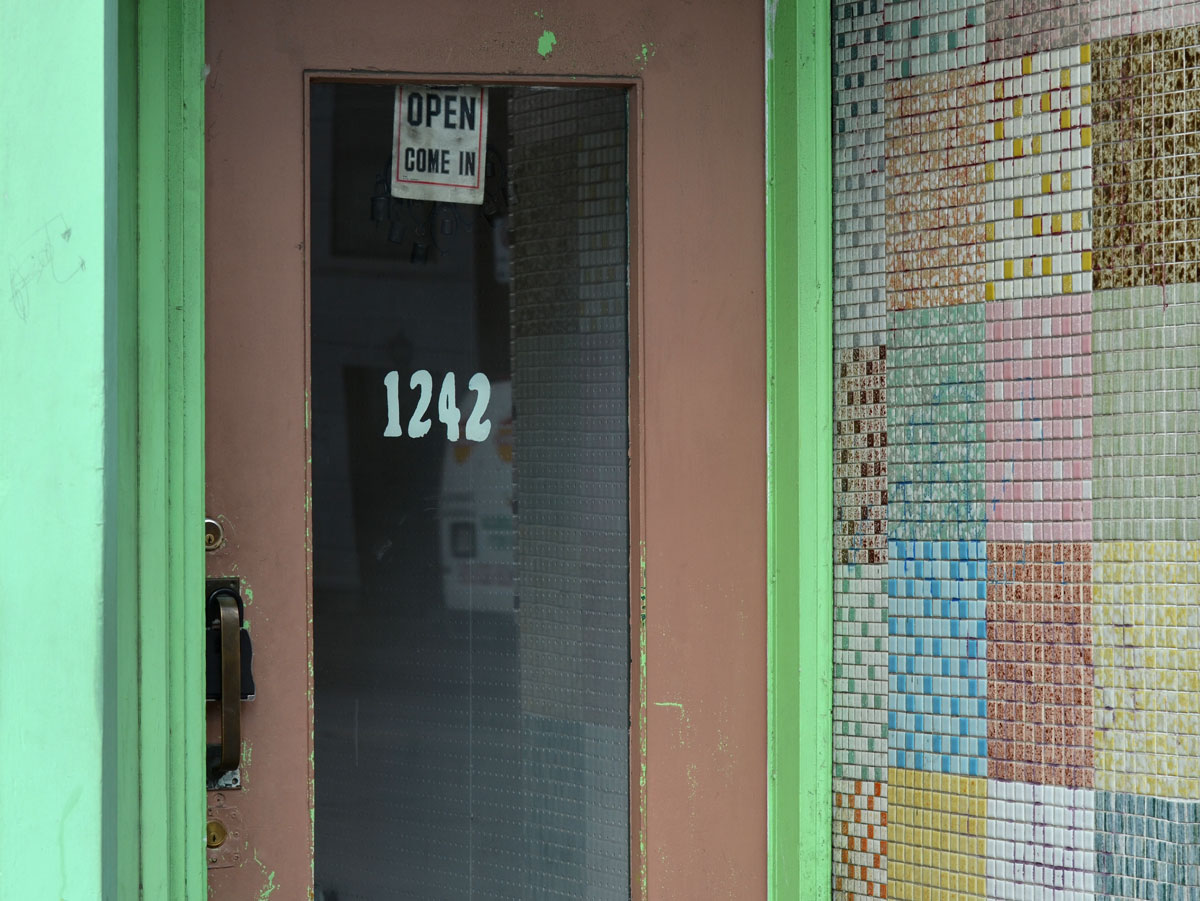
a door with 1242 on it, brownish colour, green door frame, the wall on one side is covered with small mosaic tiles in squares

below: A contrast in colours.  The door is in the picture but it’s become just an element in the composition.

a green door is beside a large store window. The interior wall is painted yellow, the sun is shining in the window and the blinds are partially open and partially down

below: This is the last of the Danforth door photos that I took today.   Again, the doors are just elements; the mailboxes provide the focus and the interest.

three black mailboxes with mail in them, between a white door and a black door.

below: Doors are part of a building.   What you can do with a door is often limited by the structure of the house.

a small white house with a large tree in front of it, winter, but no snow

Having said that,  if you walk around the city there is a lot of variety.  Don’t worry, I’m not going to go through all the permutations and combinations that I saw today!  I’ll limit myself to a few (sometimes I can do that!).

below: A few stone steps lead to a simple white entrance.
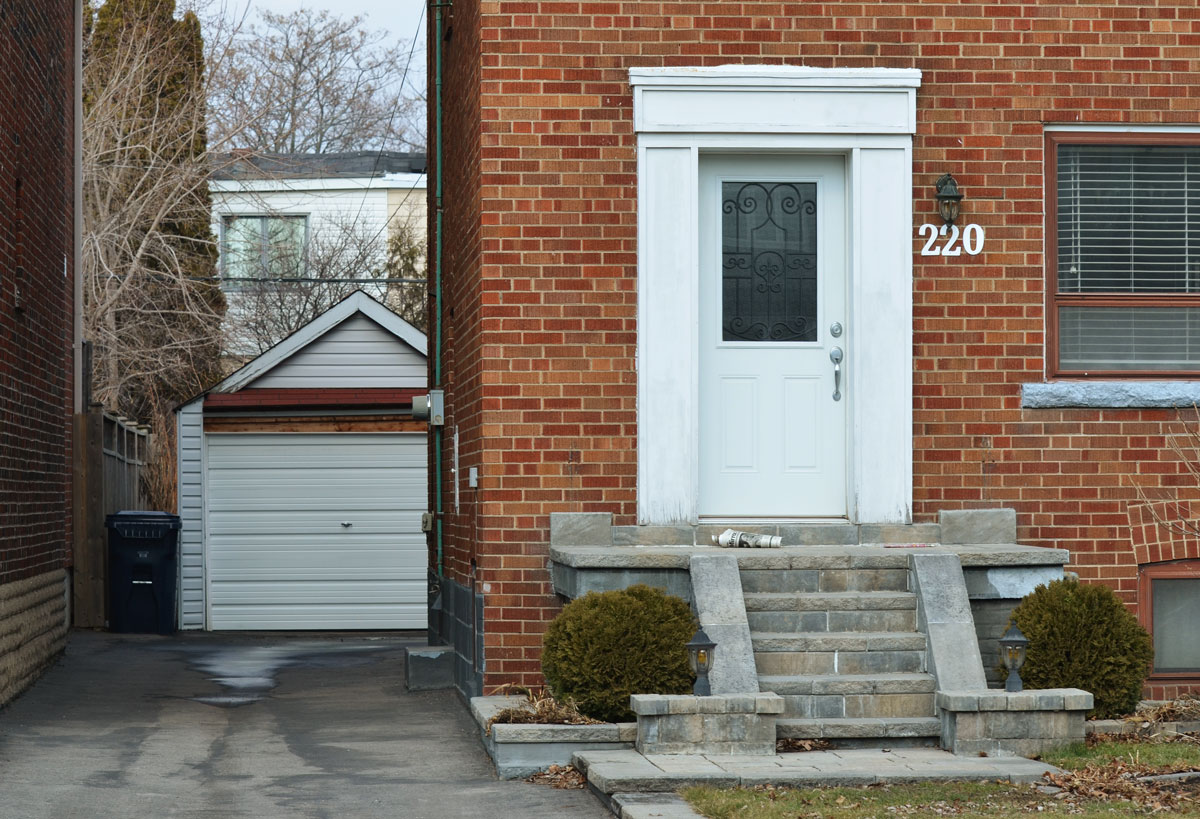
a red brick house with a white rectangular doorway. driveway beside the house leads to a garage with a white door.

below: A study in compare and contrast – the wonderful result of semis where next door neighbours with dissimilar tastes, habits, and decorating ideas share a common wall.

a semi divided house, on the left, a bright yellow door. On the right, an open porch with lots of clutter.

Many steps and many hours later I find myself nearing the end of this post.  It’s been a bit of a ramble, both in the route that I walked today and in the thought processes that helped create this post.    I hope that I have entertained you at least a little bit.    And with one final photo I will close the door on this post.    Last one out turns out the lights.  Adios.
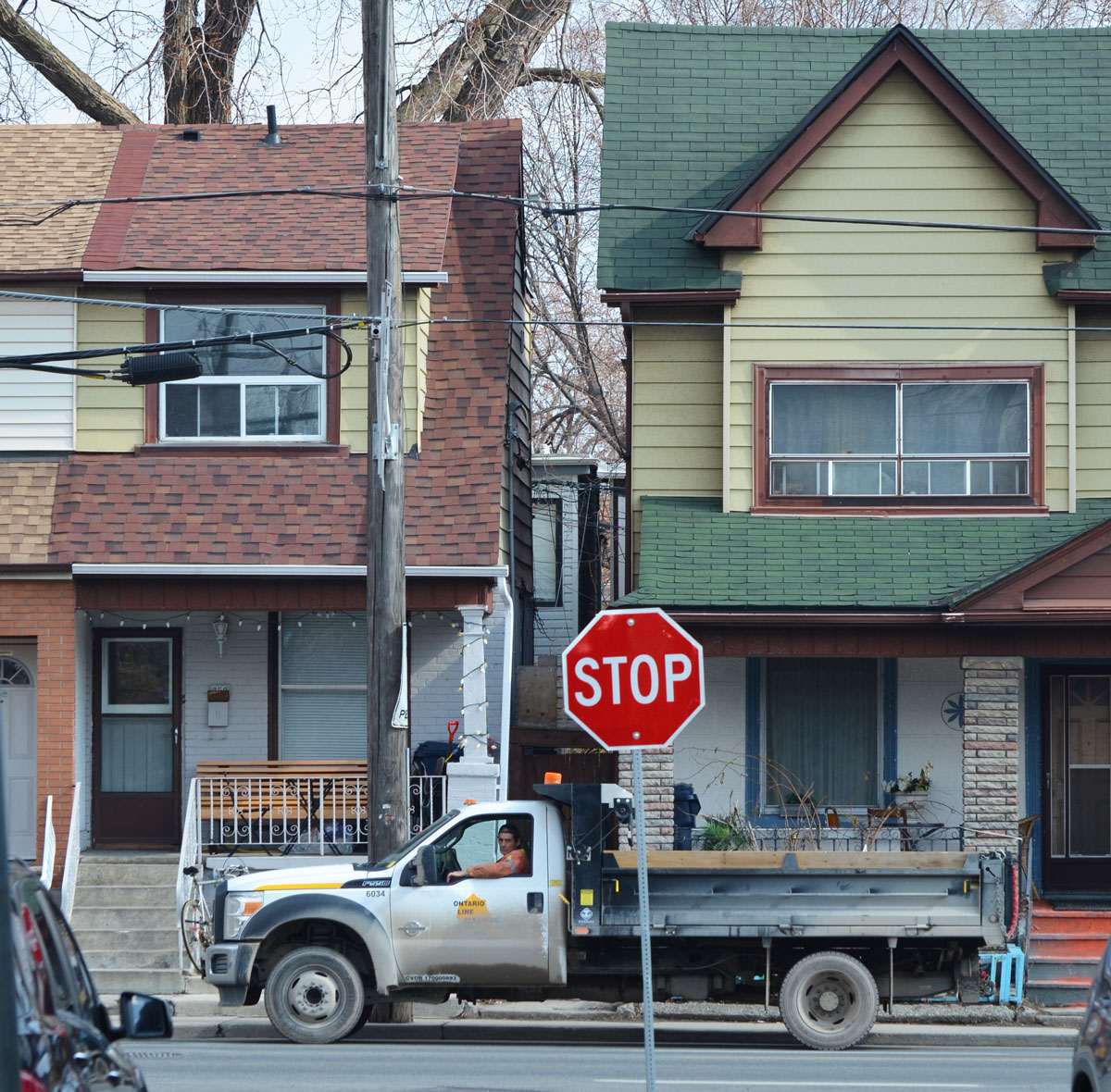
looking down a street to an T-intersection. Two houses across the intersection with a large truck parked in front of them. A man is sitting in the truck and looking at the camera

“Happiness often sneaks in through a door you didn’t know you left open.”  John Barrymore
Keeping warm at the Art Gallery of Ontario.

Below are 5 works of art that I saw recently when I decided to spend the afternoon inside instead of walking in the cold.  The AGO is definitely a great way to stay warm!

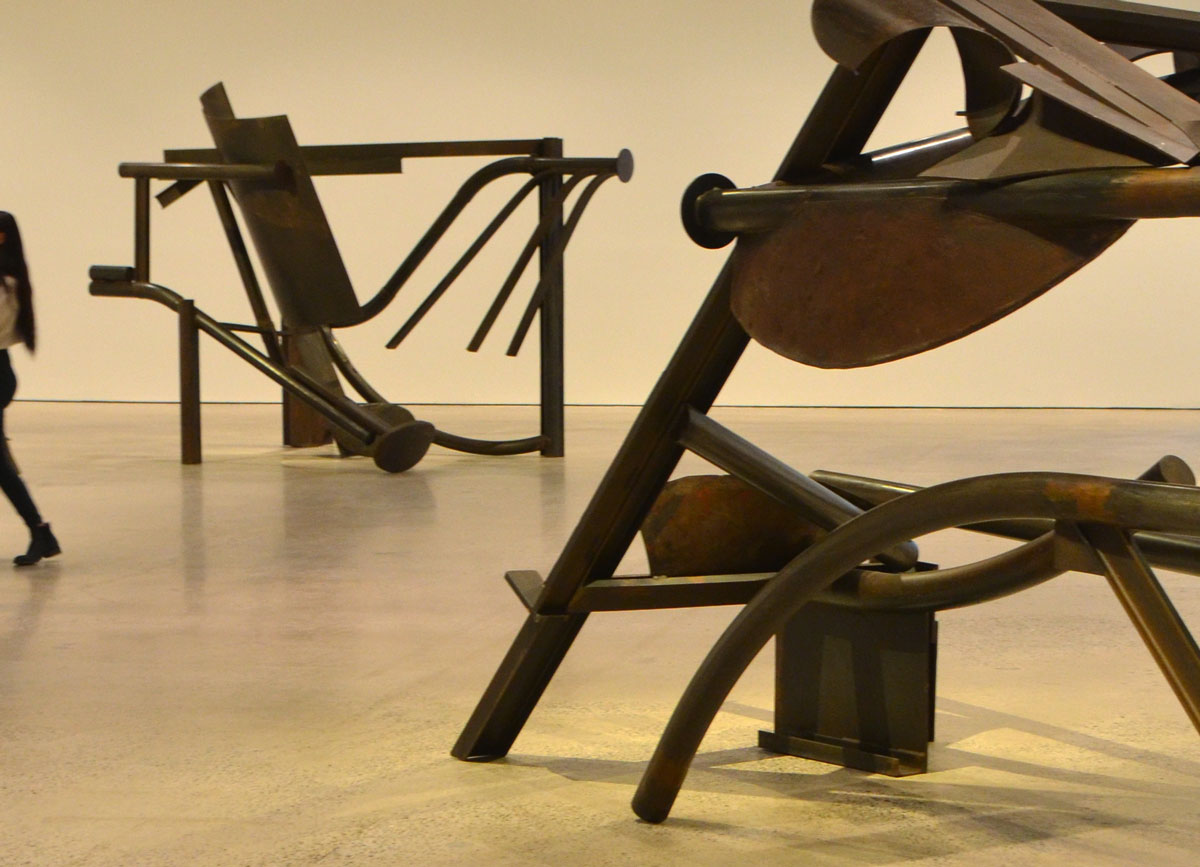
below: There is a room at the Art Gallery of Ontario that is home to four large metal sculptures at the moment.  Large structural pieces. These creations are the work of Sir Anthony Caro (1924-2013).  They are made of discarded metal pieces.  At one point in his career, he made scale models for a giant art project for Park Avenue in New York City.  When the project was cancelled, he took apart the models and used the pieces to make a new series.  Three of those on display here are from that series, ‘Sculpture Laid Bare’.  It would be interesting to see what the Park Avenue sculpture models looked like.

a woman with long hair walks away from a large metal sculpture made of cast off pieces of metal, on display at the Art gallery of Ontario,

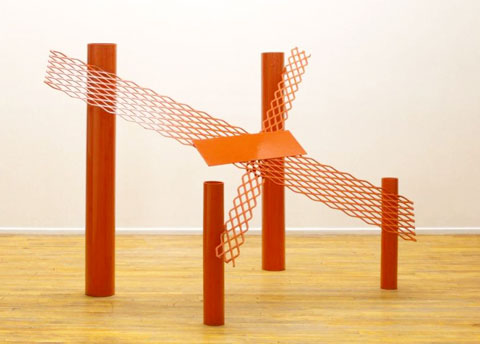
In the early part of his career, Caro made modeled figurative pieces cast in bronze.  In the 1960’s he started to use prefabricated steel and aluminum, sometimes in bright colours such as the example below:

red sculpture by anthony caro, metal, 4 upright cylindrical tubes with metal mesh forming an X on top of them.

Red Splash, by Anthony Caro. Image found online at source.

If they were outside, they would invite interaction.  Touch them.  Climb on them.  In this gallery setting, there is a no touching policy.   The words on the wall says that: “He [Caro] meditates on the passage of time, processes of decay, the painful realities of aging, and the future of modern sculpture.”  Isn’t that why the gallery is doing their best to preserve them just the way they are?


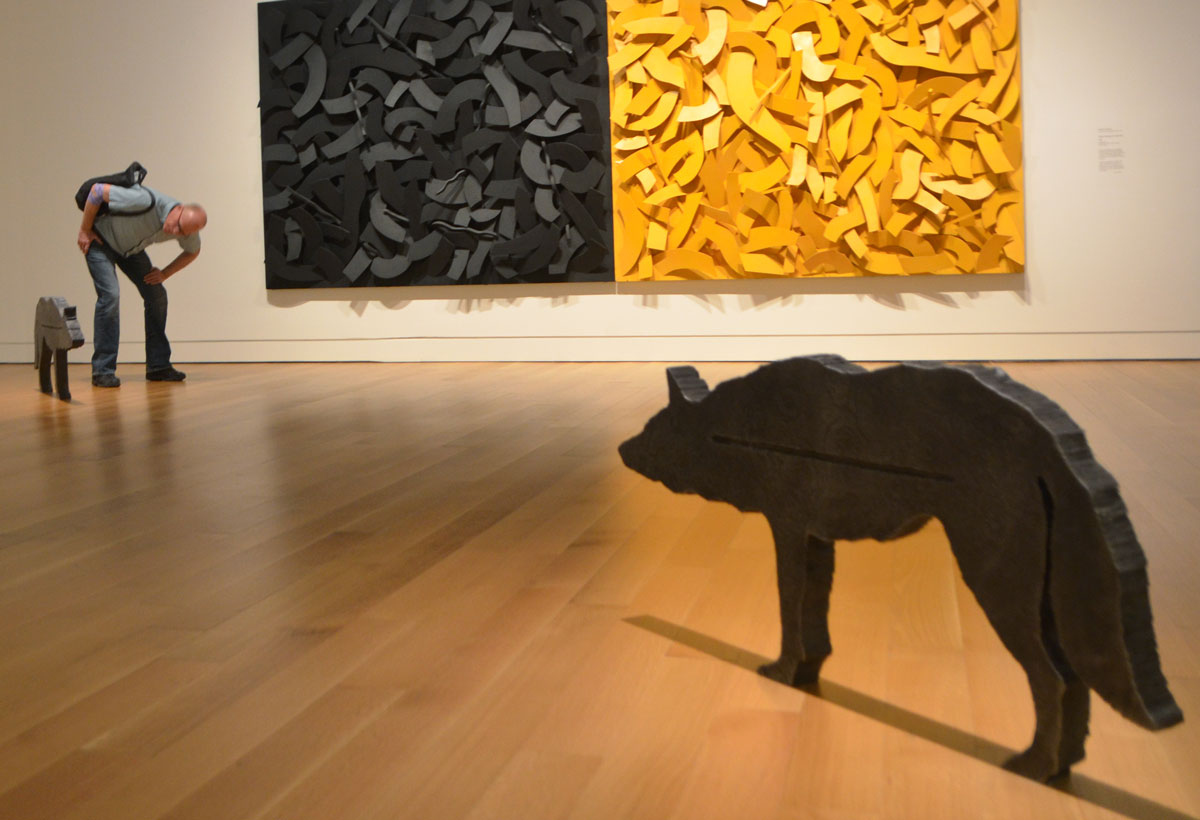
below: ‘The Distinctive Line Between One Subject and Another’ by John McEwen, 1980.  Two steel wolves looking at each other across the room.  On the wall behind the wolves is ‘Folia Series #1 and #2 by Nobuo Kubota, 1976, representations of the wrinkles on the cerebellum in the brain.

two metal sculptures of life sized wolves looking at each other across the room, a large panel art work is on the wall behind them, half black and half yellow.

John McEwen is a Canadian sculptor.  A number of his sculptures can be found around Toronto.  He designed the boat hull like shapes for the Victory Peace memorial on the waterfront that I mentioned in a previous blog post – down to Coronation Park.  The three metal tubes outside the Air Canada Centre – the Searchlight Starlight Spotlight – are also his work.


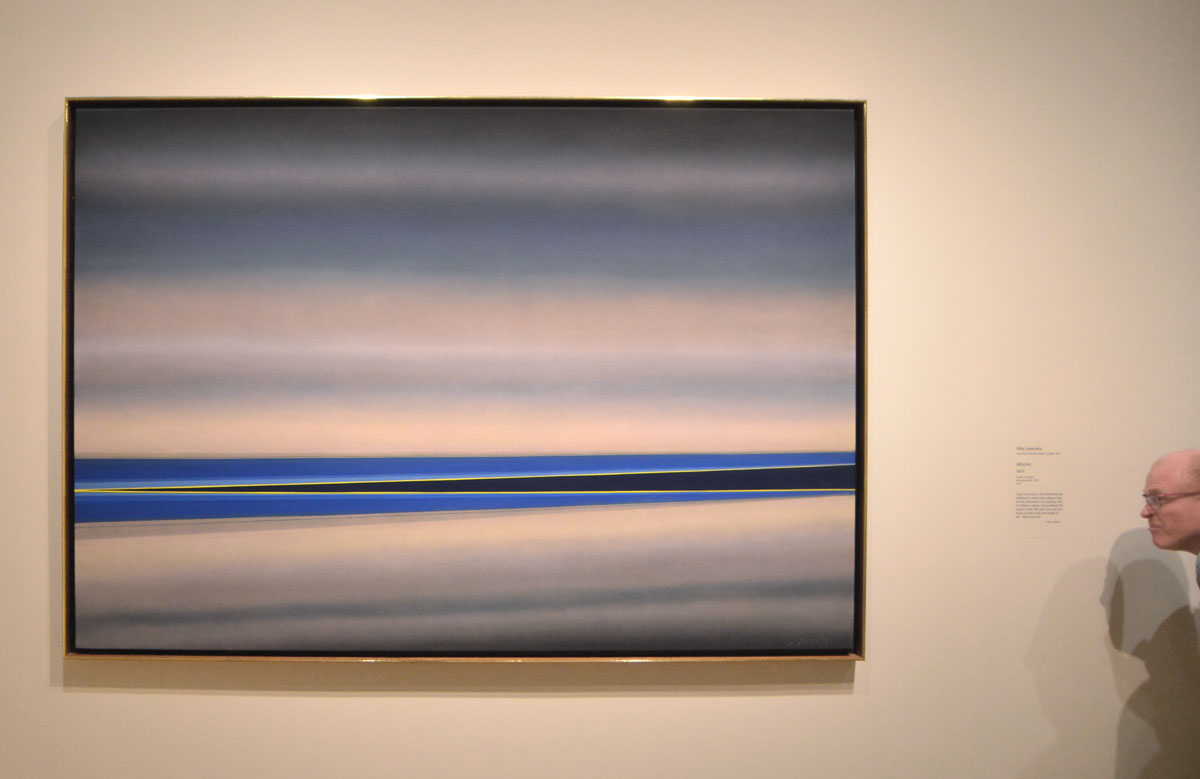
below: More lines, this time its “Aforim” by Rita Letendre, 1975.  Which lines are parallel?  Is there a horizon line?  If so, which one is it?

horizontal lines, some parallel and some at slight angles, in blues and greys, painting on a gallery wall called Aforim by Rita Letendre


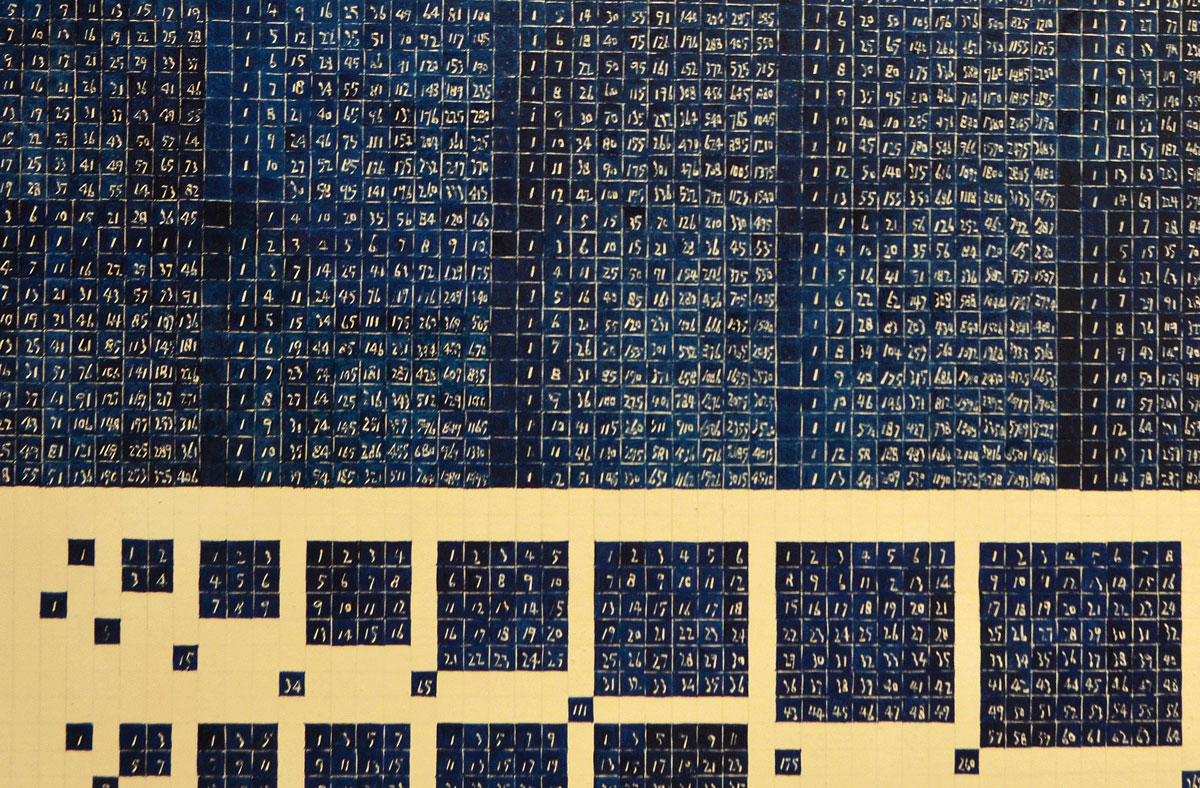
… And lastly, another reference to structure.  But not structure in the 3D, physical form, sense of the word.  Instead, it is a painting called ‘Number Structure II’ by Canadian artist Kazuo Nakamura (1926-2002).  Nakamura graphs out number-structure patterns and calculations and presents them as art.

below: One of the structures that Nakamura used was the Pascal Triangle.  This image shows the first 6 lines of the triangle.  Each number is the sum of the two numbers above it.  Can you figure out what the next line would be?   When expanded, it contains many number sequences and can be used to answer probability questions – as well as other mathematical things that I don’t understand.

the top 6 lines of pascals triangle, a mathematical structure of numbers

below: A small (maybe 1/8th) section of the painting … which unfortunately doesn’t give you much of an idea as to the composition of the artwork.  It does though give you an idea of the detail.  Some of the parts that I have omitted are triangle shapes that conform to Pascals triangle as pictured above.   Is it mathematics?  Is it art?  Where do you draw the line between the two?  Is there a line?

a detail picture of a painting by Kazuo Nakamura called Number Structure 2 which is based on Pascal Triangle. Lots of numbers written in white on blue and black background. the background is made into rectangles, squares and triangles.

It’s the kind of painting that a photograph can never do justice to.  It’s best seen in person.   Oh yes, the answer to the question above:  The next line of the triangle would be: 1, 6, 15, 20, 15, 6, 1.

Wood cracks.  Metal rusts. Paint fades and paint peels, its just what happens to paint when its exposed to the elements.  Street art painted on a surface suffers the same fate.  Nothing lasts forever and sometimes a mural’s life span is quite short.  Sometimes other factors come into play – street art is defaced or altered in some way.  Tags cover it; words get written on it.  That too is the nature of street art.

black stencil of a woman's head and hands. Also an old paper paste up of a person that is badly torn around the edges. A very simple face has been drawn above it in pink

below: I love what the weather has done to this woman’s face.  Aging with grace and dignity.  The texture of the old wood adds an element of depth and character to her as well.

street art painting of part of a woman's face on a wooden fence, old and faded and the wood is starting to crack

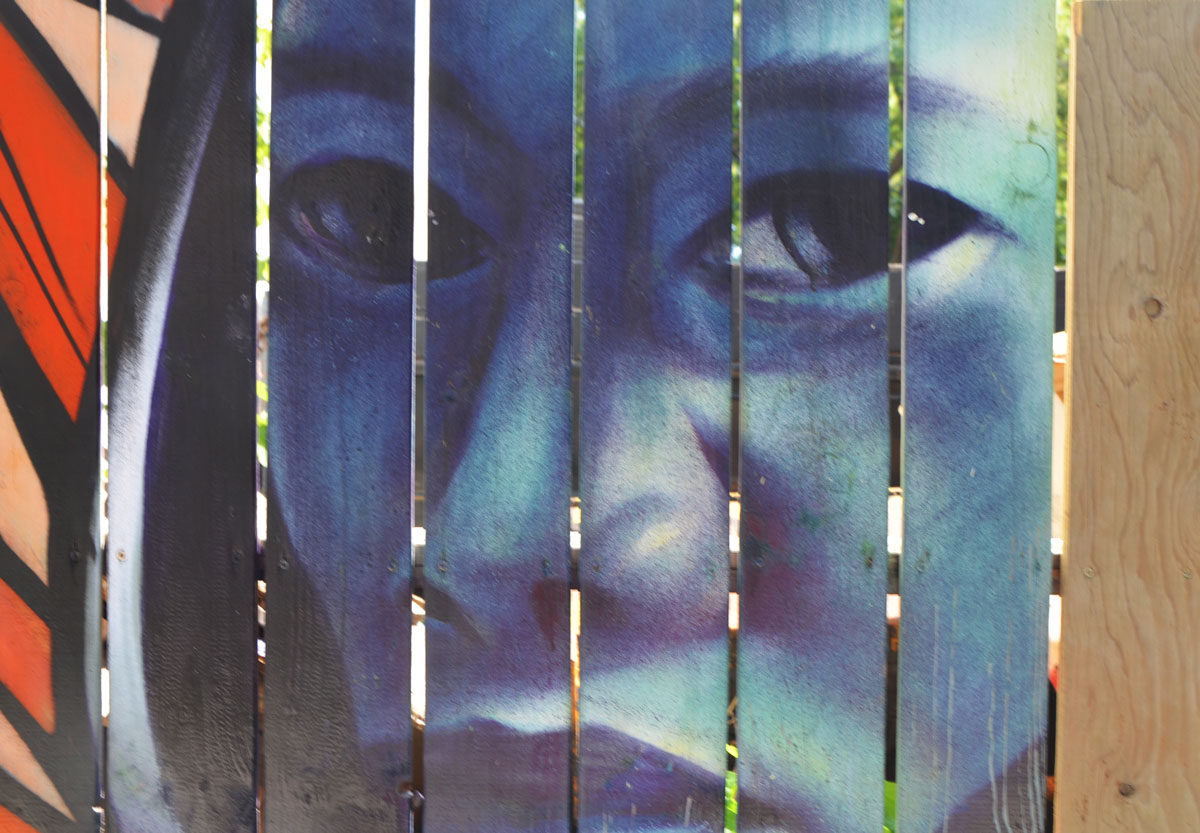
below:  One slat replaced.   I’m sure it wasn’t the artist’s intent, but the gaps in the wood look like bars in a cage, or those metal bars you often see on windows.

street art painting of part of a woman's face, in blues, on a wood fence, vertical pieces of wood with slight gaps between the wood

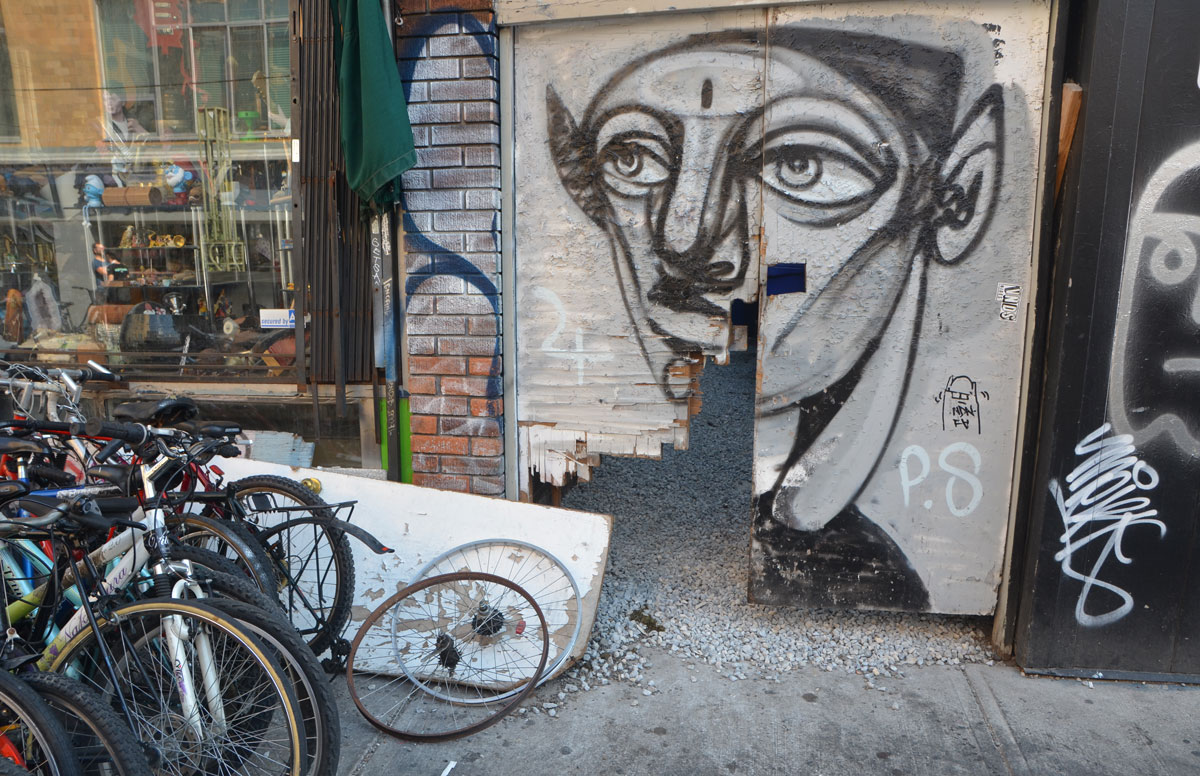
below: Broken chin, but still watching the world pass by on Baldwin Street.

anser face on an old wood gate that is wearing out, broken across the bottom. bikes parked to the left of the gate

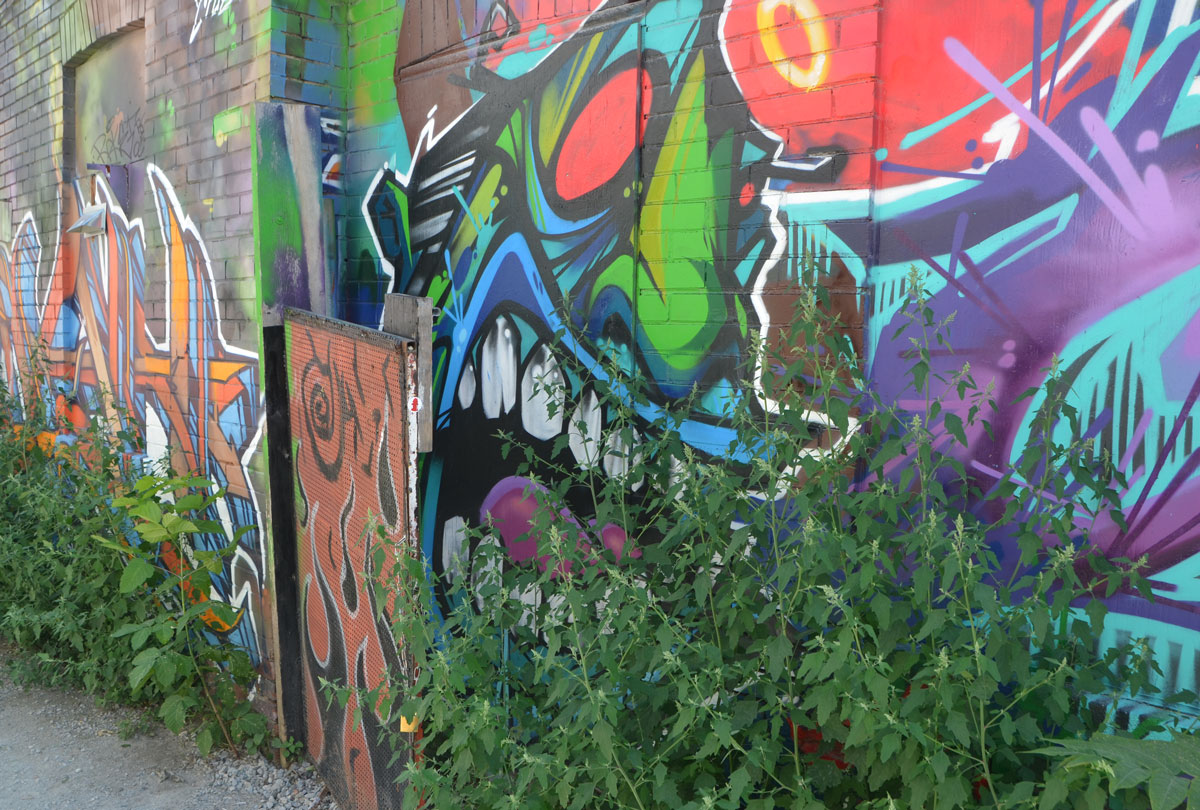
below: Yelling at the bushes.

a very colourful and stylized face painted on a wall, large open mouth, looks like fiendish laughter, showing off large white teeth. A large green weed, or small shrub, has started growing in front of it.

below: Eyes are mysterious things.  I have never been able to draw them properly and I am in awe of those who can.  Even more so if the eyes communicate something, some emotion or expression.

eyes, street art, staring straight ahead. part of a large face painted on a wall in green tones.

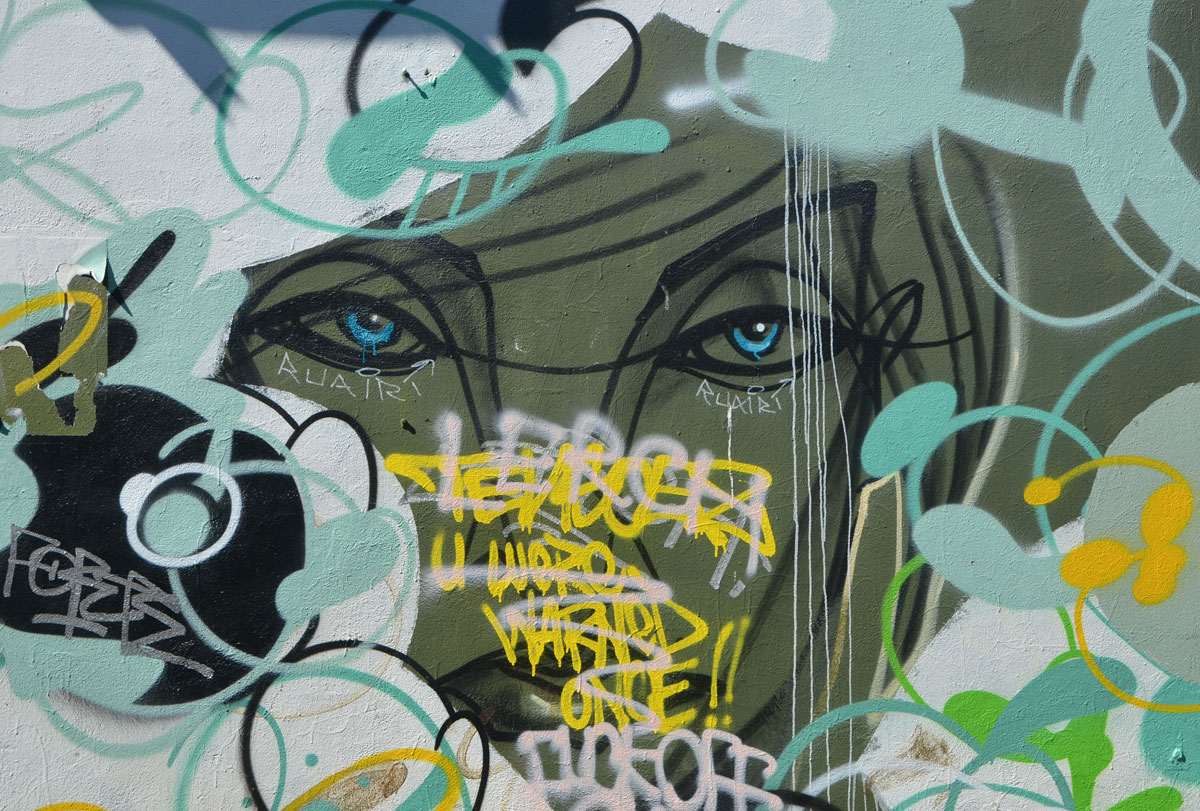
below: I have always been intrigued by this face.  A photo of the original painting hangs on one of my walls.   I still find her mesmerizing.  Those blue eyes still stare at the world.  Is she looking through a veil?  Or is she able to see through all the nonsense that the world throws at her?

street art painting of part of a woman's face by anser, on olive green backgound, partially painted over and with words written in front of it.

below: A devilish child is still in good shape.

two bright orange stencils of faces. one is a laughing child with devil horns and the other is a woman's head.

street art painting of part of a woman's face, in purple . eyes closed, looking down, with hew lock and key on the door that she's painted on, wearing a necklace

street art painting of part of a woman's face, bright red hair, greenish face, blue background, eyes closed,

white line drawing on a rusty metal door of a woman's face, slightly open mouth with lots of teeth, curly hair

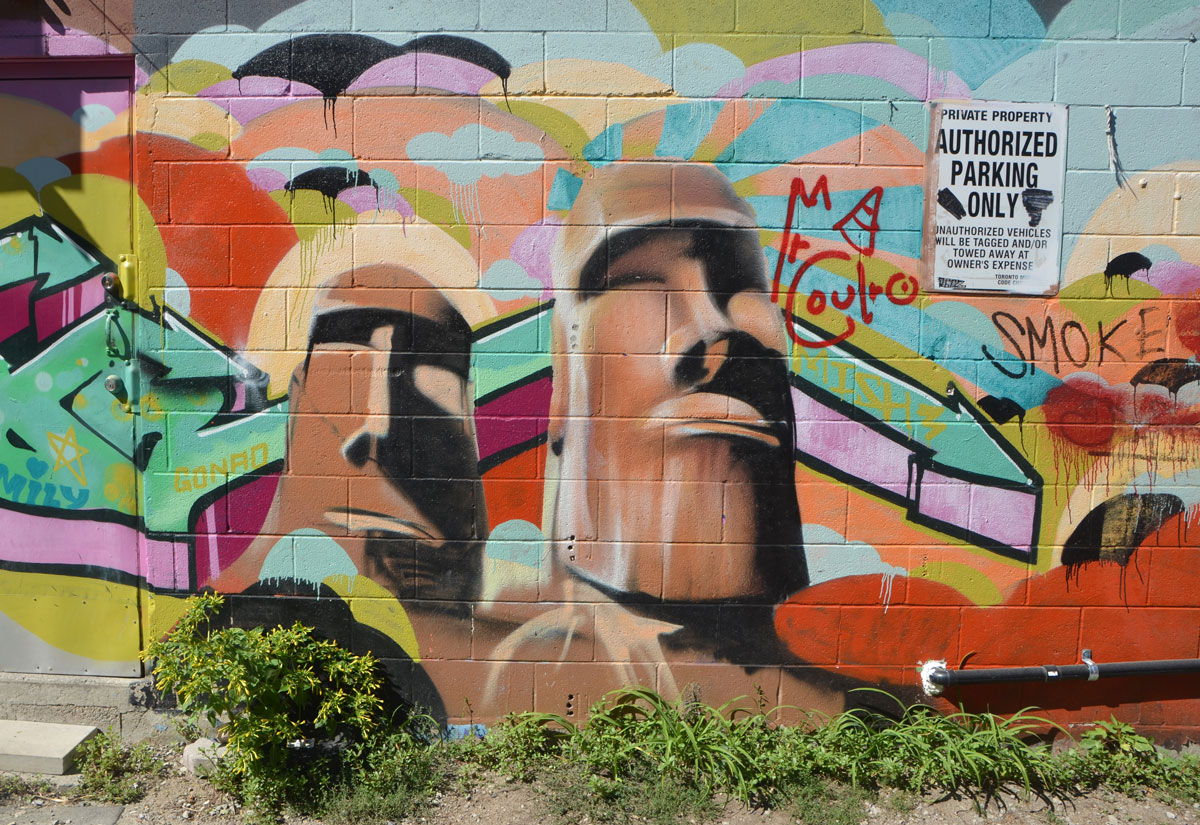
part of a mural on a wall showing two Easter Island type heads

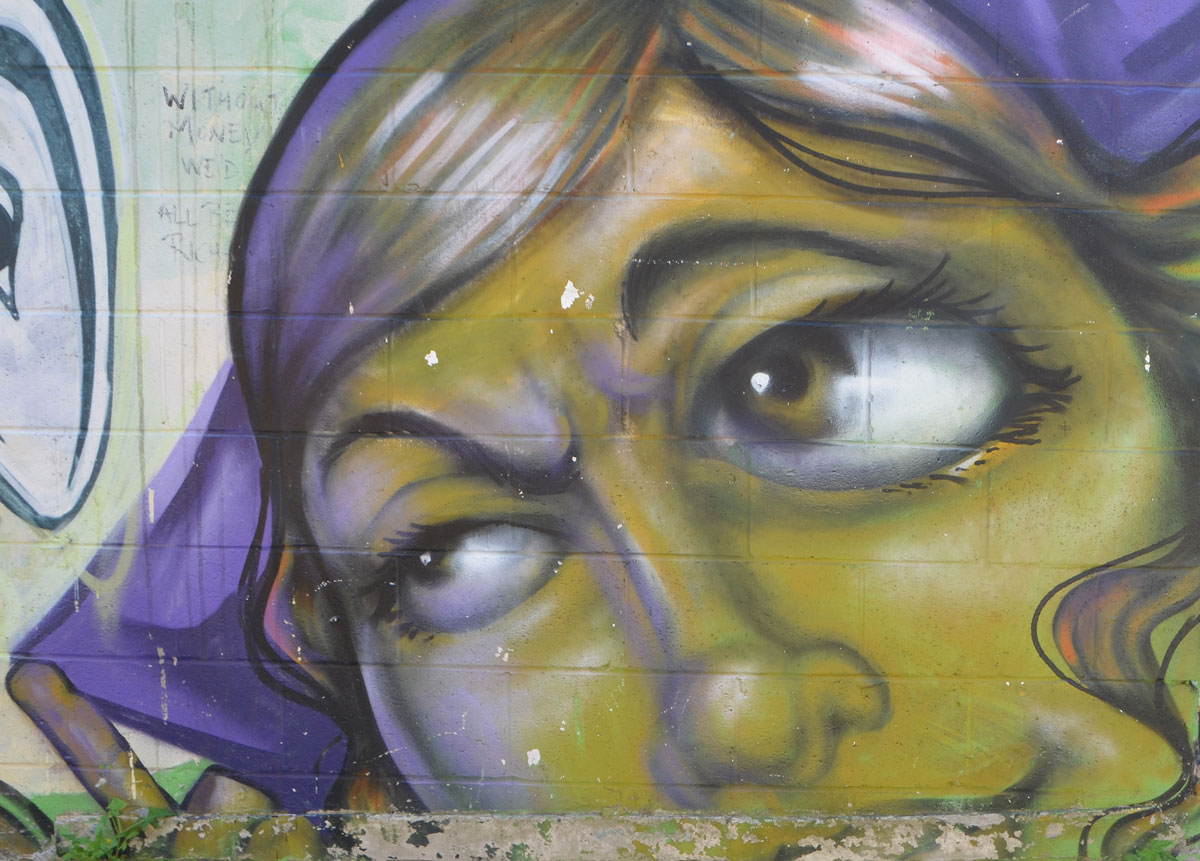
below: “Without money we’d all be rich”.  That’s the kerb (curb) that runs along the bottom of the picture.  Her whole face was not there in the first place.

street art painting of part of a woman's face, on a wall, in greens and purples, she is looking to the left

below: And animal faces too!

part of a Uber 5000 mural, a dog with a tiny blue hat and a yellow birdie on a bicycle

Well, this May 2 4 weekend has been splendidly sunny and fabulously warm!  I hope you’ve had the chance to take advantage of it, whether sitting on a patio with a cold drink and friends, or out enjoying the the greenness that has bloomed all around us.   It’s been a great few days to get up close and take a good look at nature.

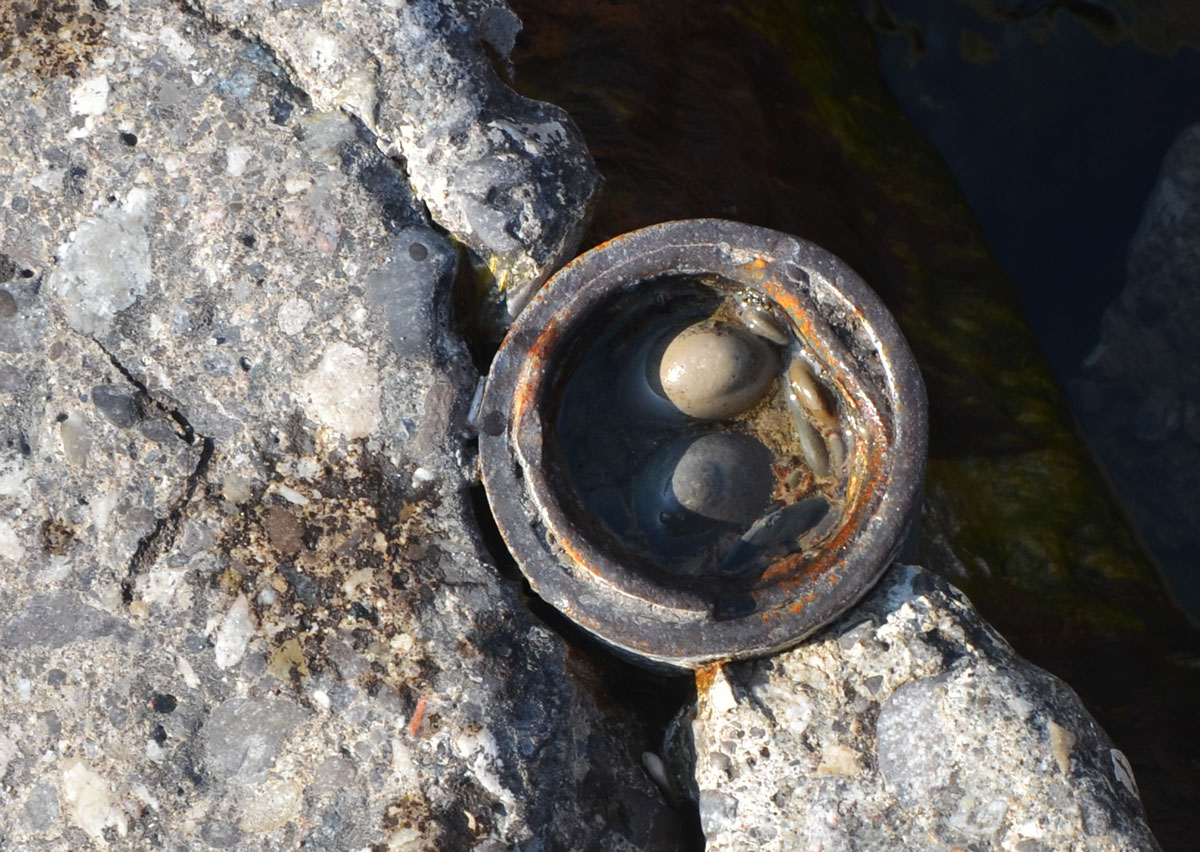
looking down at a piece of concrete at water's edge, in the concrete is a cut off hollow pole, there are pebble and water in the hole.

below: Old moss covered metal seems to reach out of Lake Ontario like claws.

old bent metal embedded in concrete but partially inderwater. Moss is growing over it and making it look green

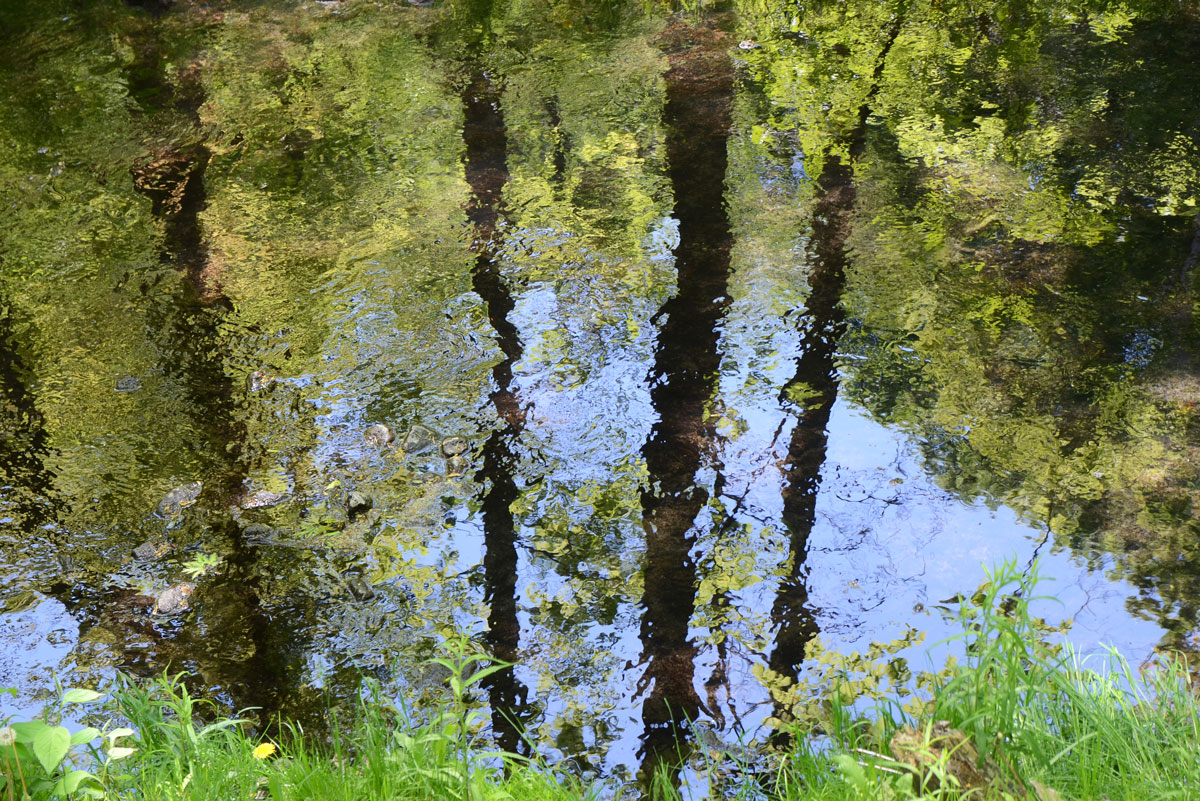
below: Reflections in the Yellow Creek, Beltline trail.

reflections of trees and blue sky in a creek, blue water, dark brown tree trunks and mottled greens of the leaves, in a ravine, in the city

below: Wet pebbles with the beginnings of green moss growing on them shine in the morning sun.

pebbles in greys and browns in the water near the shoreline of Lake Ontario. The pebbles closest to the shore are bright green with the beginnings of moss growth
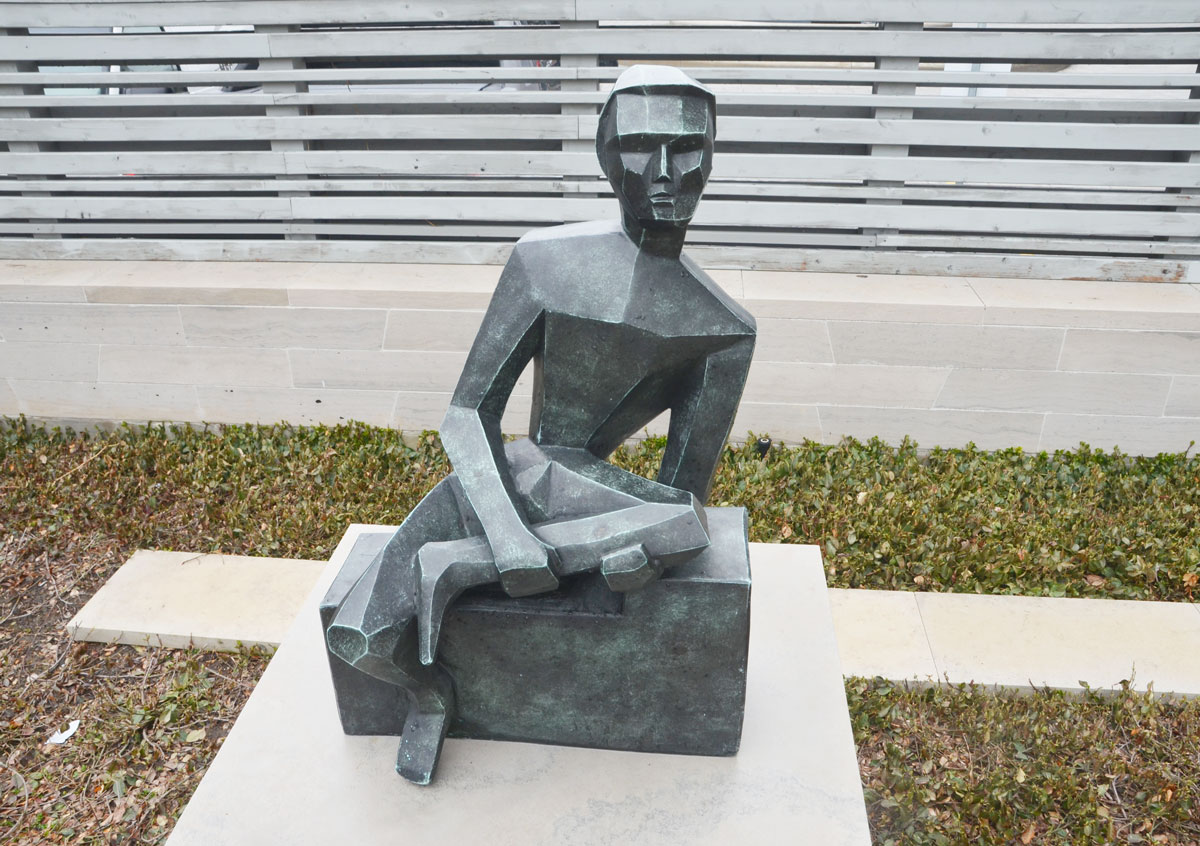
below: Greater celandine, a yellow flowering plant, blooms along the railing of Milkmans Lane.

yellow flowers in bloom in the ravine, against a railing post, with shadows cast on the wood, large green leaves

below: New growth unfolds in the sunshine.

small maple tree with lots of new red leaves that have just come out. Grey rocks blurry in the background

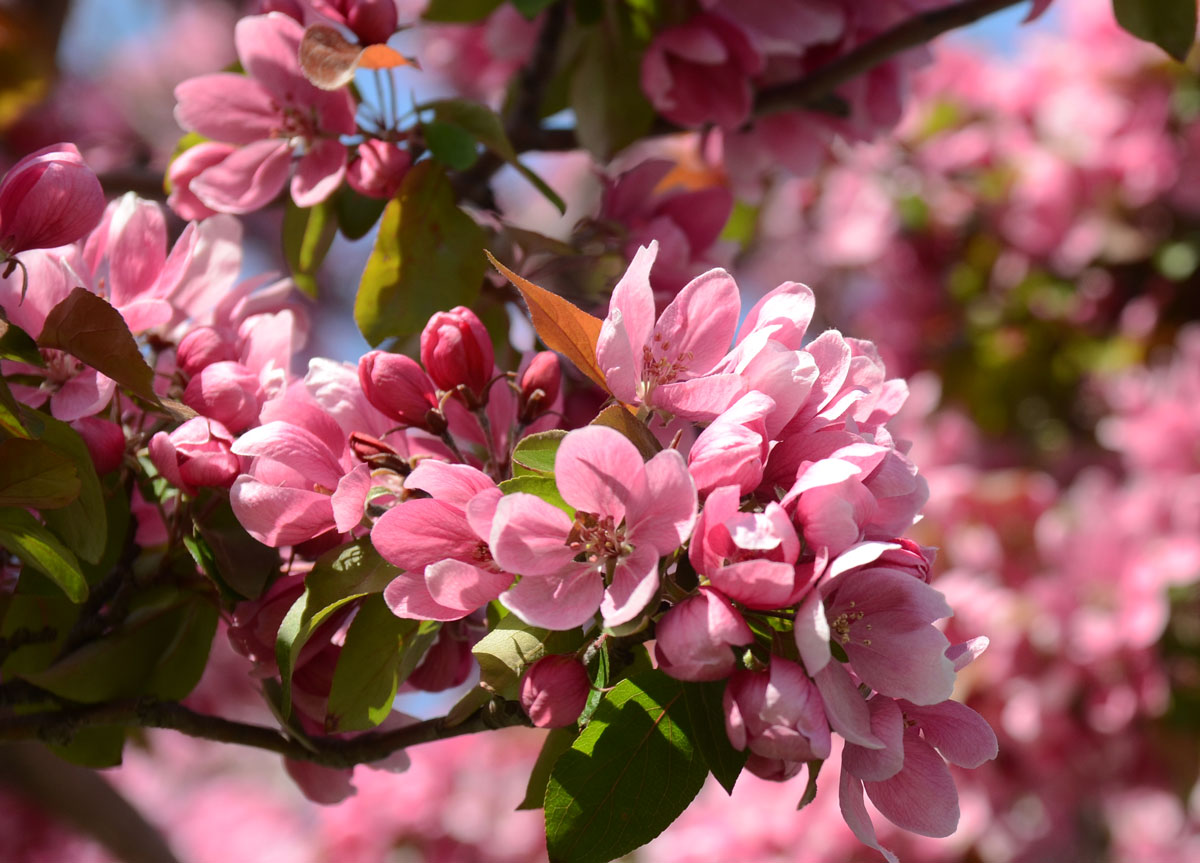
below: The dark pink blossoms were at their peak this week.

 many pink blossoms on the branch of a tree

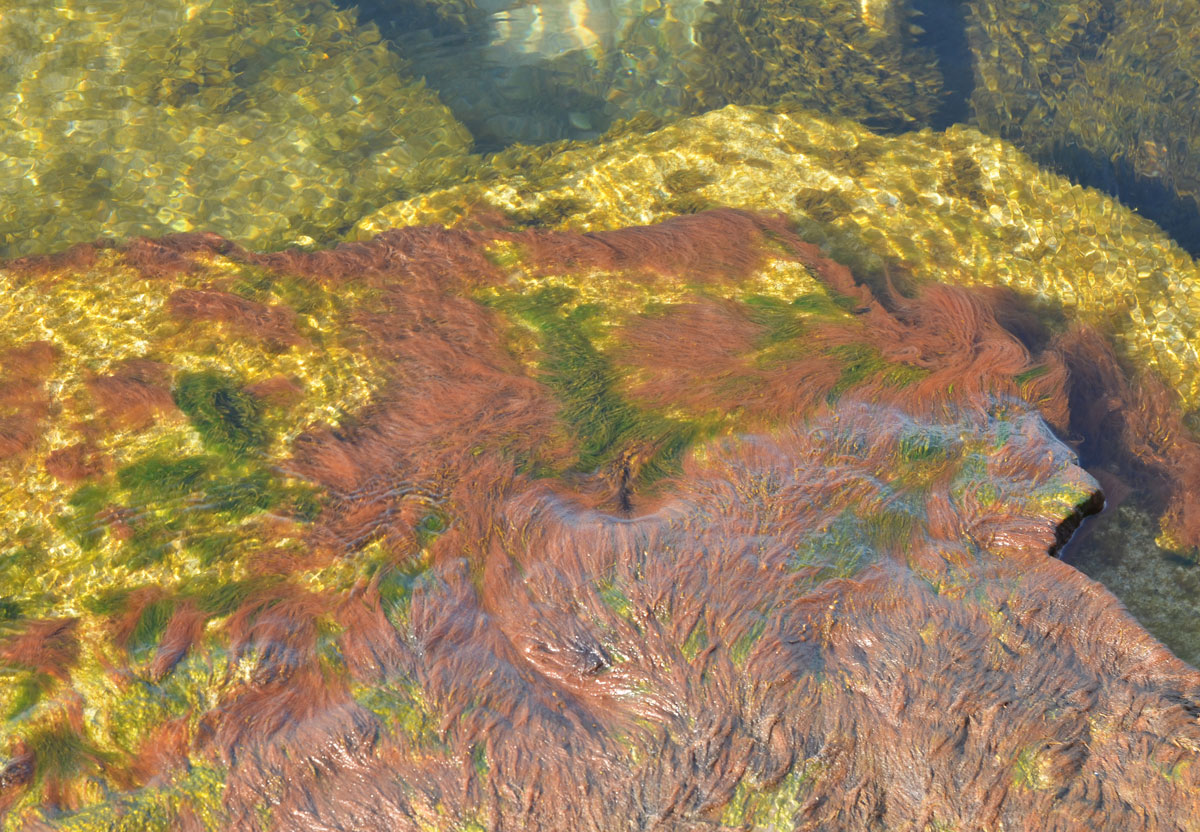
below: Green and brown mosses sway with the water currents along the shore of Lake Ontario.

looking in the water beside some rocks. There is moss and algae in green, yellow, rust and brown swirling in the water of Lake Ontario

the end of a shovel is in the ground, behind a chainlink fence. The sun is shining and making reflections. The reflection of the chainlink fence is on the shovel.

below: The snow fences have been bundled up and put away for the summer.

rolls of wood slat snow fences bundled away for the summer in large rolls. 4 rolls viewed from the end.

A walk towards Davisville subway station on a grey day.

below: At the corner of Mt Pleasant and Davisville stands the sculpture ‘Wind Bird’ by Sorel Etrog.  Etrog (1933-1914) was a Canadian artist, writer and sculptor.


a bronze sculpture of a thin figure with short arms reaching up. stylized, almost abstract. no facial features on the head that seems to be looking upwards

I have passed this little figure many times and today I finally decided to take some pictures of it and make a walk of it.  I have always thought that she was a forlorn little creature.   With her arms outstretched, empty,  reaching for something that never appears.  She needs a hug or at least a  warm scarf to keep the chill away.

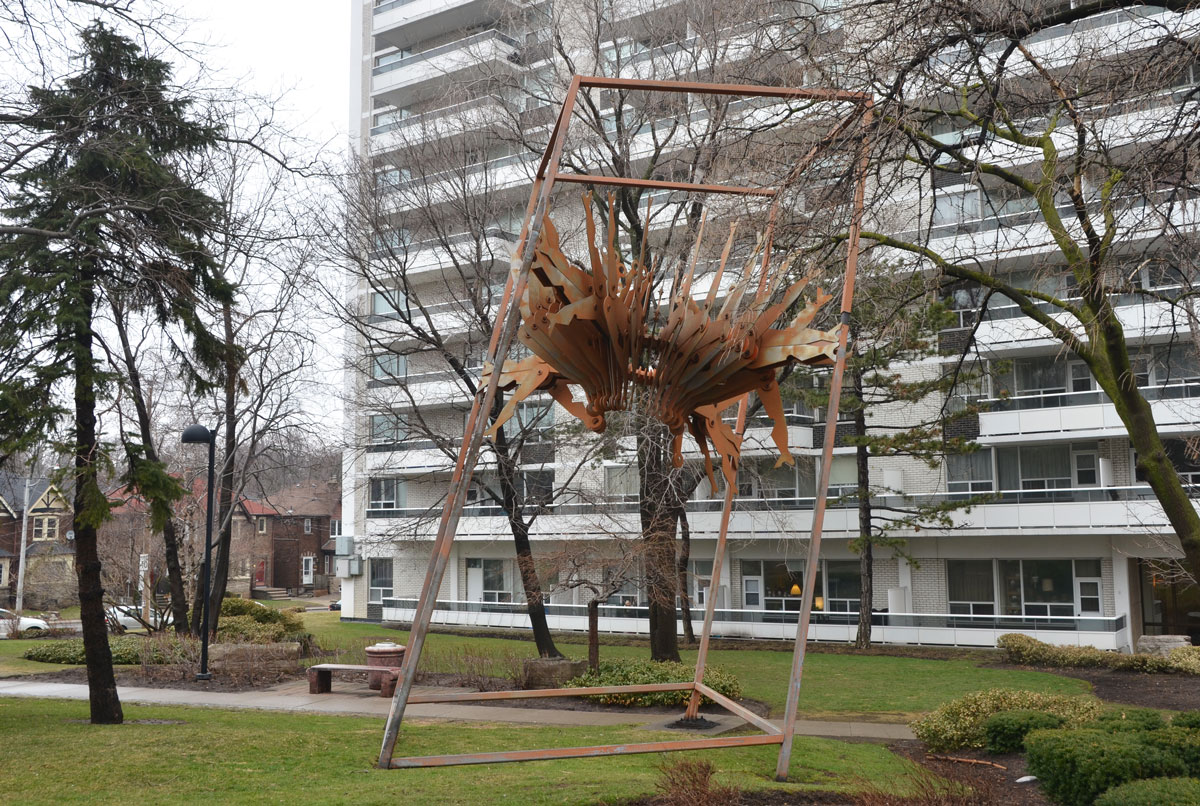
below: After leaving Wind Bird empty handed yet again, I walked west towards Yonge Street.  Off the street and amongst some trees I saw this sculpture.   It is one that I have never noticed before.  A collection of metal pieces is suspended from the top of a lopsided metal frame, more parallelogram than rectangle.

rust coloured metal sculpture in front an apartment building. The sculpture is a large metal frame that looks like a cube but made of parallelograms and from the top is suspended a bunch of metal pieces.

below: On closer inspection, the metal bits are actually flat human forms with their heads in the center and feet flung outwards as if spinning around a central axis.  I know enough physics to know that either centrifugal force or centripetal forces (or both) are at play here.  But I don’t know enough to know the right answer.

close up of a sculpture of flat metal people shapes, forming a circle with their heads, their feet sticking out like in a centrifuge.

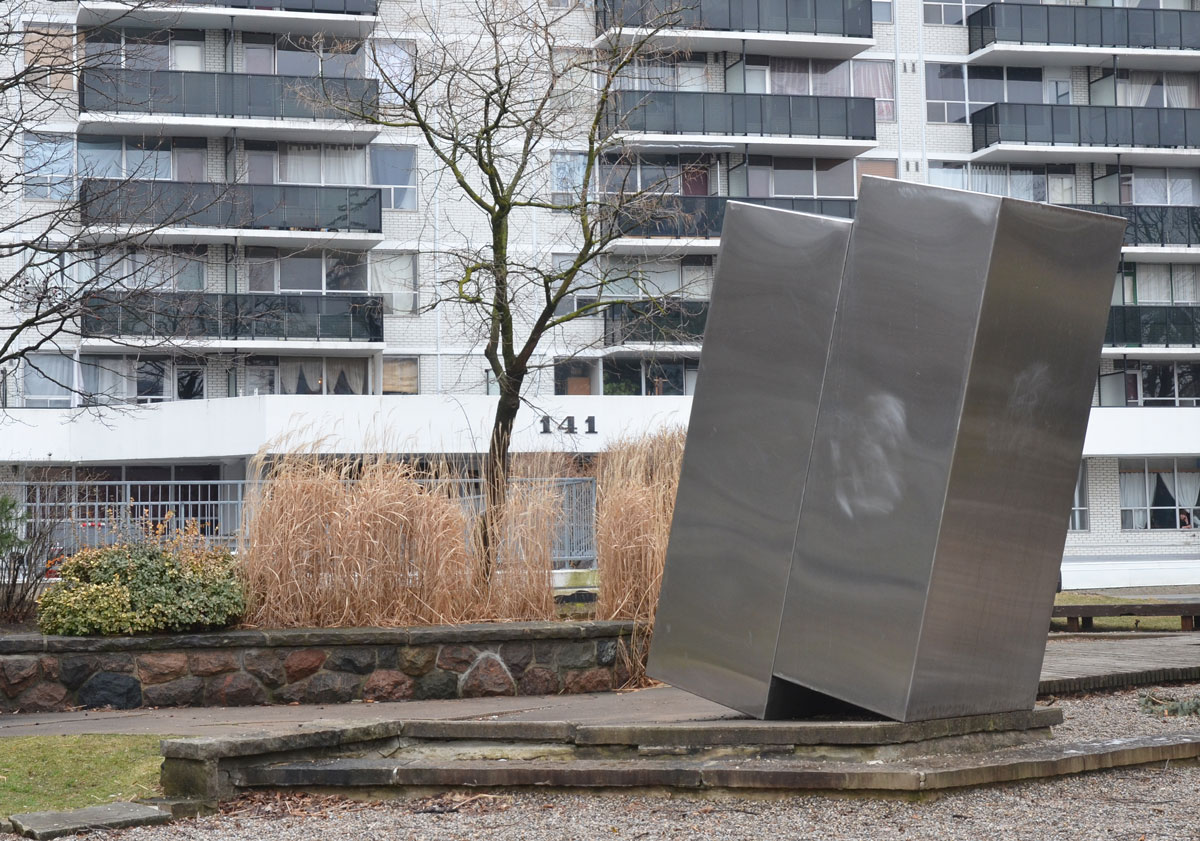
below:  Next door are these two metal shapes.  There isn’t much to it, is there?  What it does have is it’s own little park area and walkway.  I didn’t have to get my shoes muddy if I wanted to get closer.

A sculpture that is just two rectangular metal boxes upright, joined together and on a slight angle. In a small park in front of an apartment building at 141 Davisville in Toronto

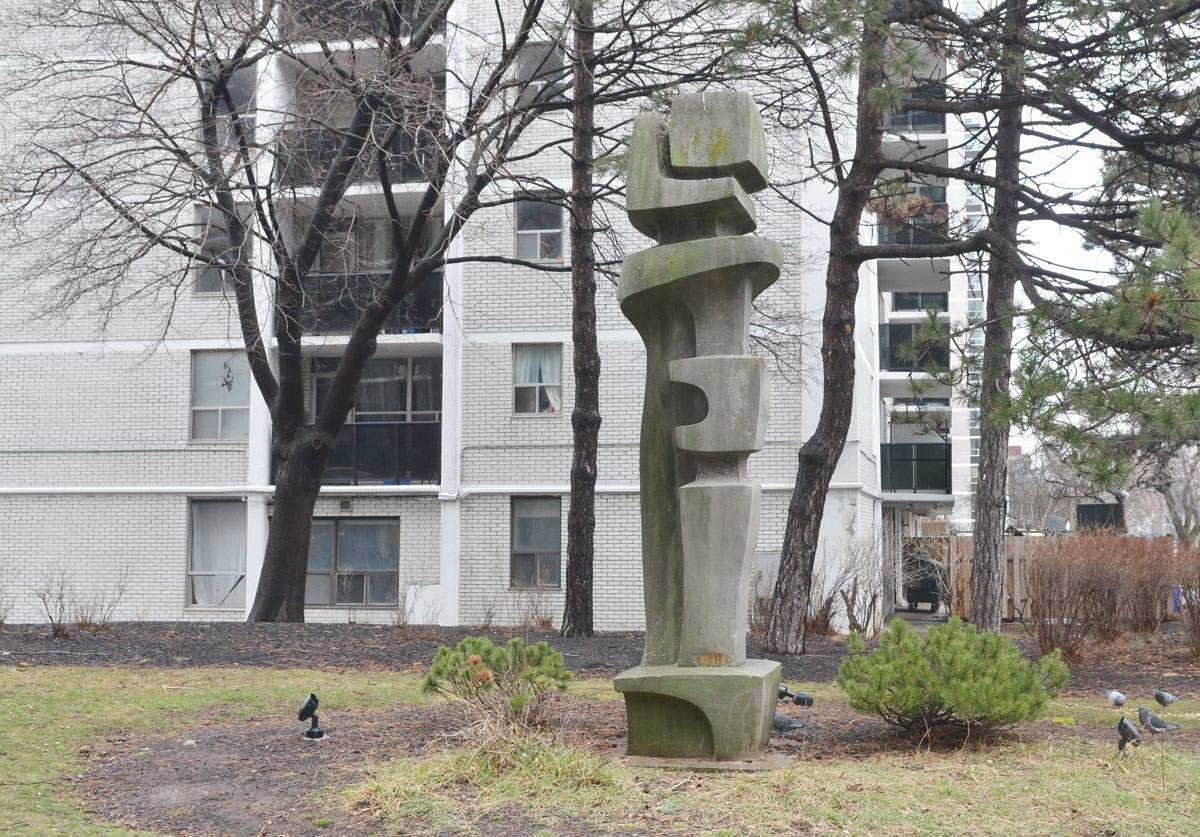
below: There is a path that ran on the west side of the above building, 141 Davisville, to Balliol Street.   This tall sculpture stands beside the path.  I am not sure who the artist is.  Is it a couple embracing? Or a totem pole of abstract forms?  Or just something that looked good to the artist’s eye?

tall columnar sculpture somewhat resembling a totem pole, all in grey, beside some trees in front of an apartment building.

below:  Next, from across Balliol, this sculpture caught my eye.  It is ‘Grand Odalisque’ by Sorel Etrog.

Grand Odalisque, a sculpture by Sorel Etrog sits on a wood pedestal in front of the entrance to an apartment building.

below: I’m rarely satisfied with photos taken of public art in front of buildings.  The background is always to cluttered or messy.   I played with various angles for ‘Grand Odalisque’ and I found this one.  The sculpture is quite phallic now that I look at it.

Grand Odalisque, a sculpture by Sorel Ertog sits on a wood pedestal . Looking across Balliol from behind the sculpture. The scene across the street is a few men standing in front of a construction site where a new condo is being built

The phallic nature of the sculpture is possibly ironic .  Odalisque has a few meanings and connotations, but all involve women.  In fact, ‘La Grande Odalisque’ is a famous painting by Jean Auguste Dominique Ingres in 1814.  In French, ‘grande’ is the feminine form of the adjective and ‘grand’ is the masculine.  Ingres used ‘grande’ for his female nude and Etrog used ‘grand’ for his sculpture.  Is there a connection?  Or just my imagination?

below: La Grande Odalisque.  You’ll have to visit the Louvre in Paris if you want to see the painting.

picture of the painting 'La Grande Odalisque' by Jean Auguste Dominique Ingres, 1814

The next stop along Davisville was the Al Green Sculpture Garden.  Al Green was a builder,  a founder of Greenrock Property Management, and in later life a sculptor.   It makes sense then that the small garden that bears his name, and is home to some of his sculptures, is between two of Greenrock’s apartment buildings.

below: ‘Leaning Torso’ by Al Green.

Al Green sculpture

below: ‘Embrace’ by Al Green

Al Green sculpture, The Embrace

below: ‘Landing Sculpture’ by Carl Lander (aka Carl Bucher), 1970.  They look like little red spaceships hovering in the air, or as the name suggests, coming in for landing.  Father and son alien ships come for a visit.
Lander (1935-2015) was a Swiss artist who lived in Canada for a couple of years in the early 1970s.

sculpture in front of an apartment building, two red shiny things that look like alien spaceships

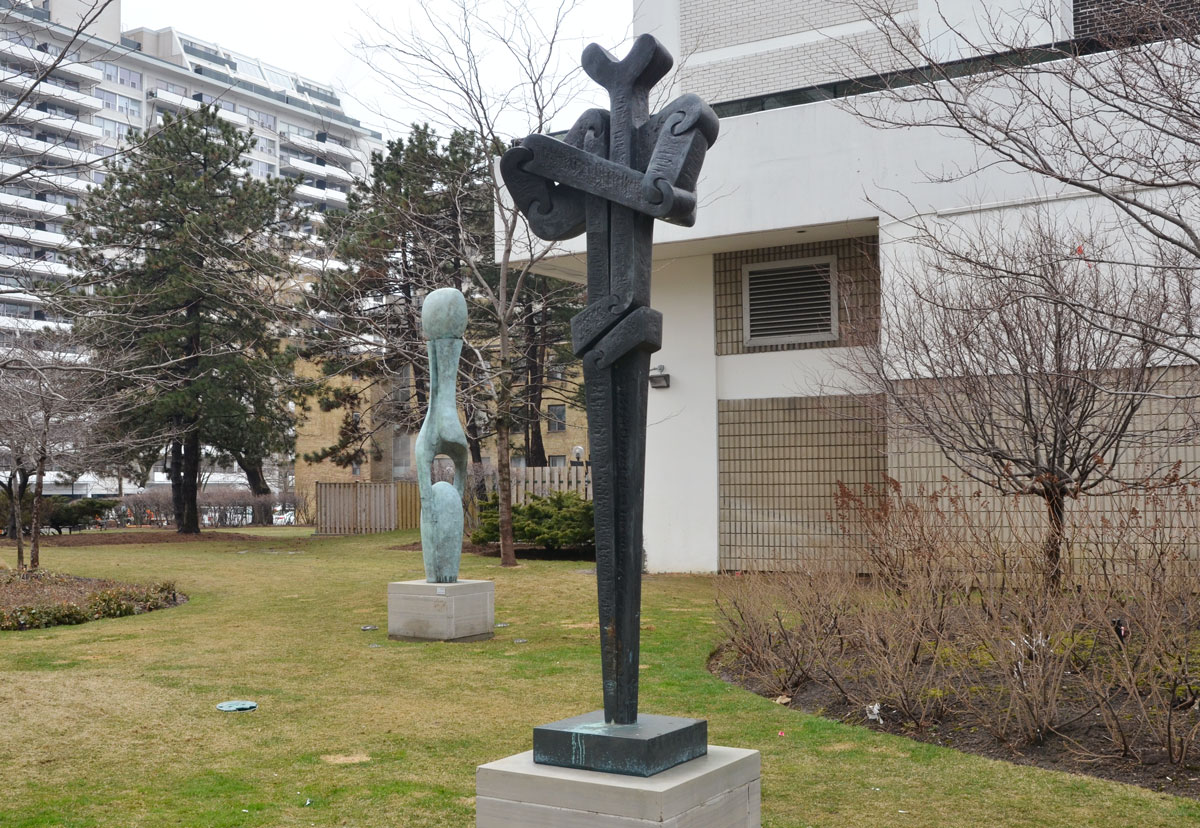
below: Another sculpture by Sorel Etrog in the foreground.  Behind it is ‘Greenwin’ by Maryon Kantaroff, commissioned in 1973 by Greenwin Developments.

two tall thin sculptures, one by Sorel Etrog in the foreground and a greenish bronze by Kantaroff in the background.

And last, and very definitely least….

below:  You tell me.  Christmas balls on top of a fence?

three silver Christmas ball ornaments are attached to the top of a chain link fence

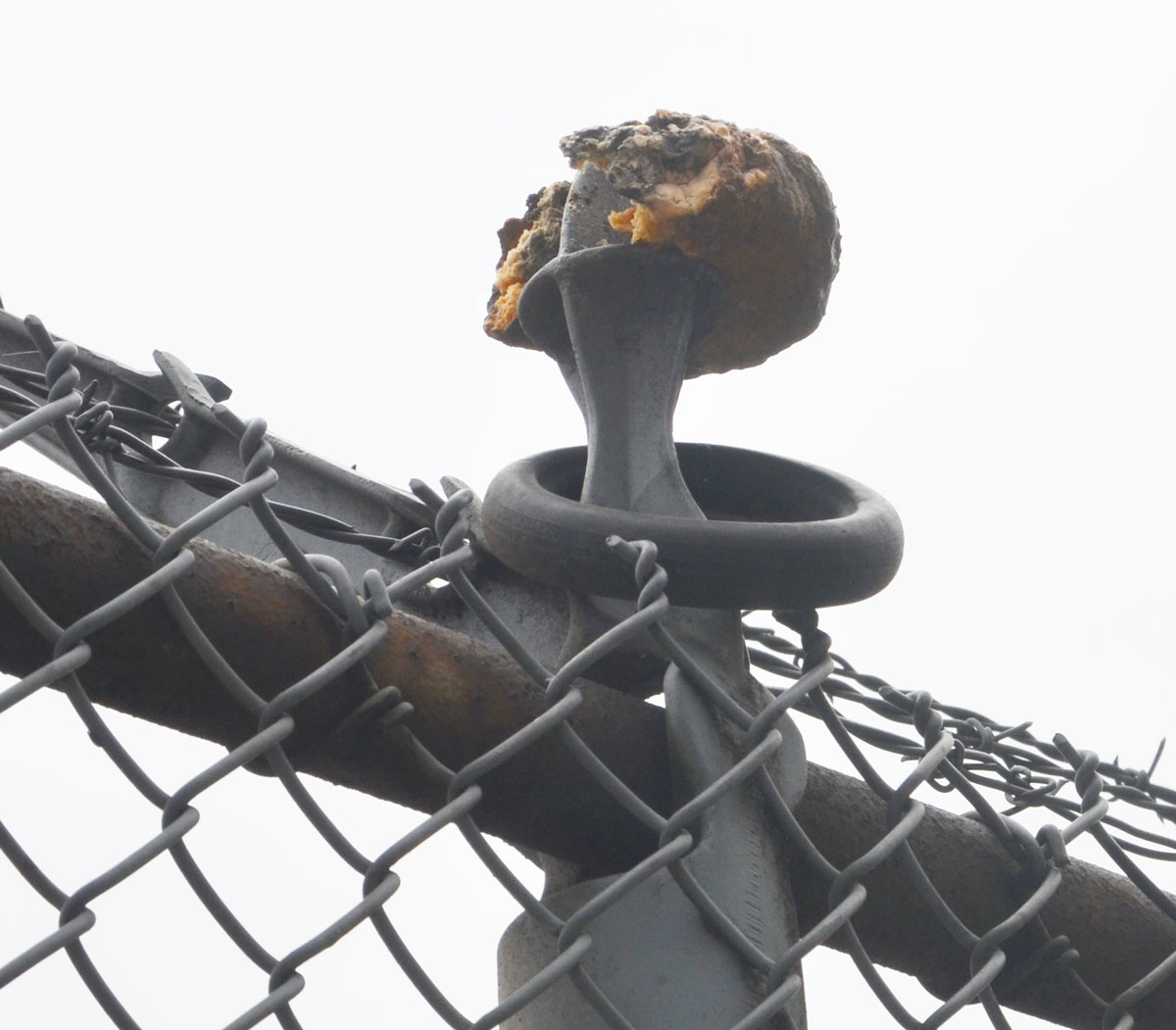
below:  Once you’ve figured out the whys and the wherefores of the above, you’ll be happy to know that there is another mystery.  A bagel?  A donut?  Squirrel food? Bird food?  But also a  ring?
These are on the fence that runs between Yonge St and the subway line near Davisville station.

a moldy partially eaten bagel or donut sits on top of a fence pole on a chain link fence

Today’s walk took me past three art installations that were new to me.  All three had nature as the theme; I saw a giant abstract tree,  upside down animals, and a walk in the forest.

The giant tree is ‘Red, Orange and Green’ by Michael Snow.  This 14 metre high, stainless steel sculpture stands in a small park on Huntley Street.  The gate of the park was locked, apparently closed for the season.   I took a few pictures through the metal bars of the fence and made a note to myself to return next season for a closer look.

large stainless steel tree sculpture by Michael Snow, consisting of three planes intersecting. 14 metres high, in a small park

When I first started researching this piece, I read that it’s title was because of the way it reflected street lights.  This didn’t make any sense – it sits in a park.  In the early 1990’s the city of Toronto commissioned Snow to design a sculpture for the corner where Jarvis meets Mt Pleasant at Bloor St. East and this work is the result.    When Rogers subsequently bought the building on that corner, they insisted on moving the sculpture to its present location.  The building in the background of these photos is the Rogers building at Bloor and Jarvis (although that stretch of Jarvis has been renamed Ted Rogers Way).

large stainless steel tree sculpture by Michael Snow, consisting of three planes intersecting. 14 metres high, in a small park

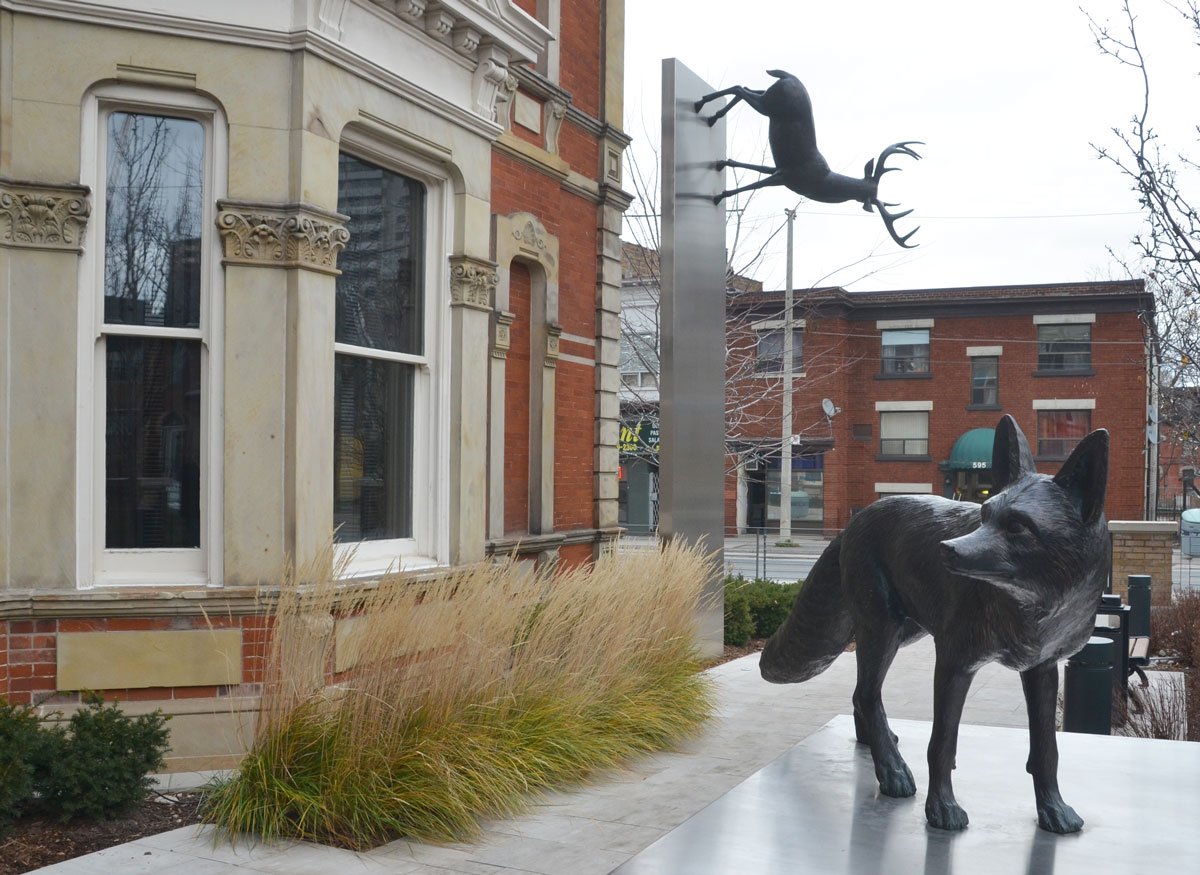
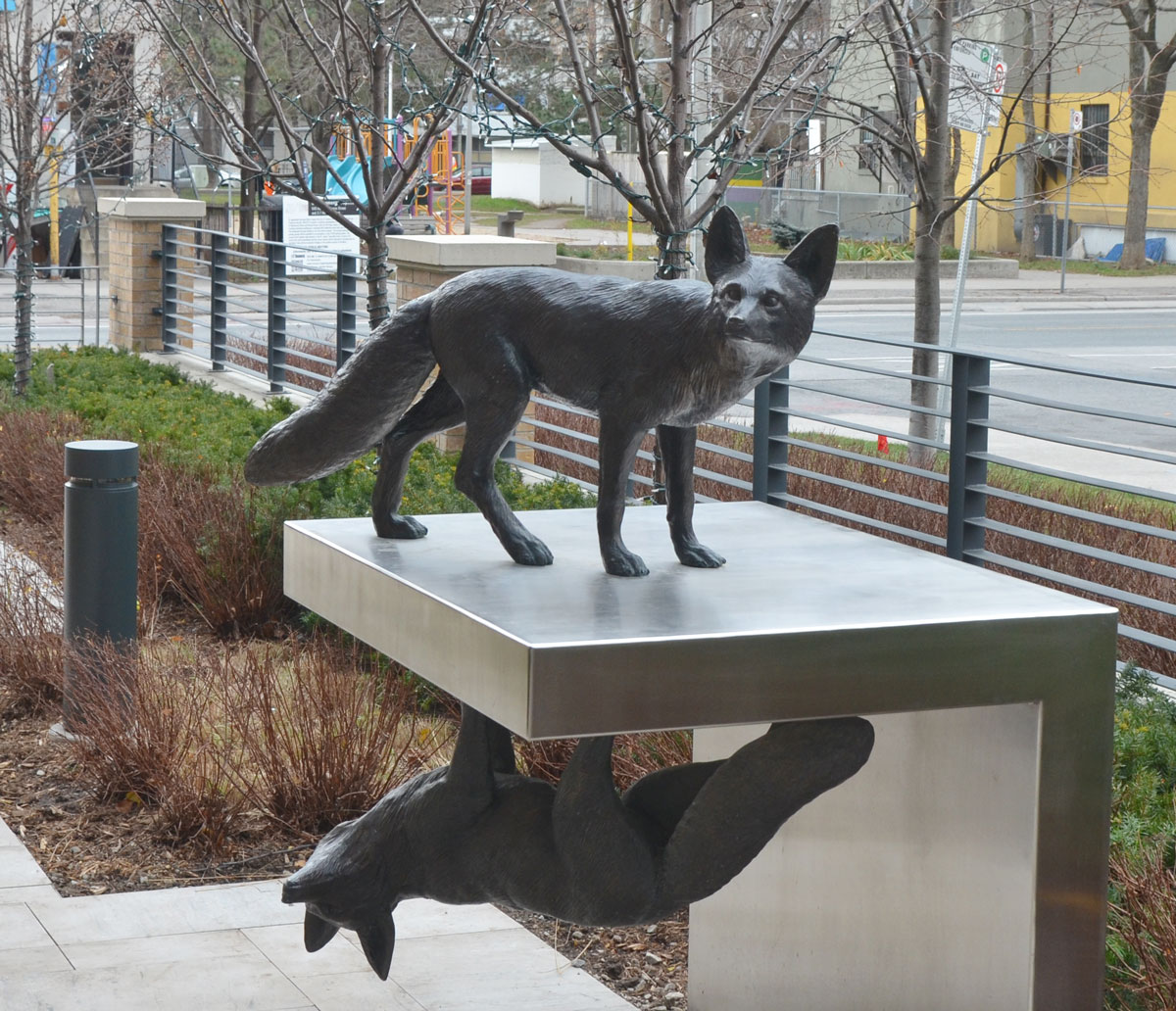
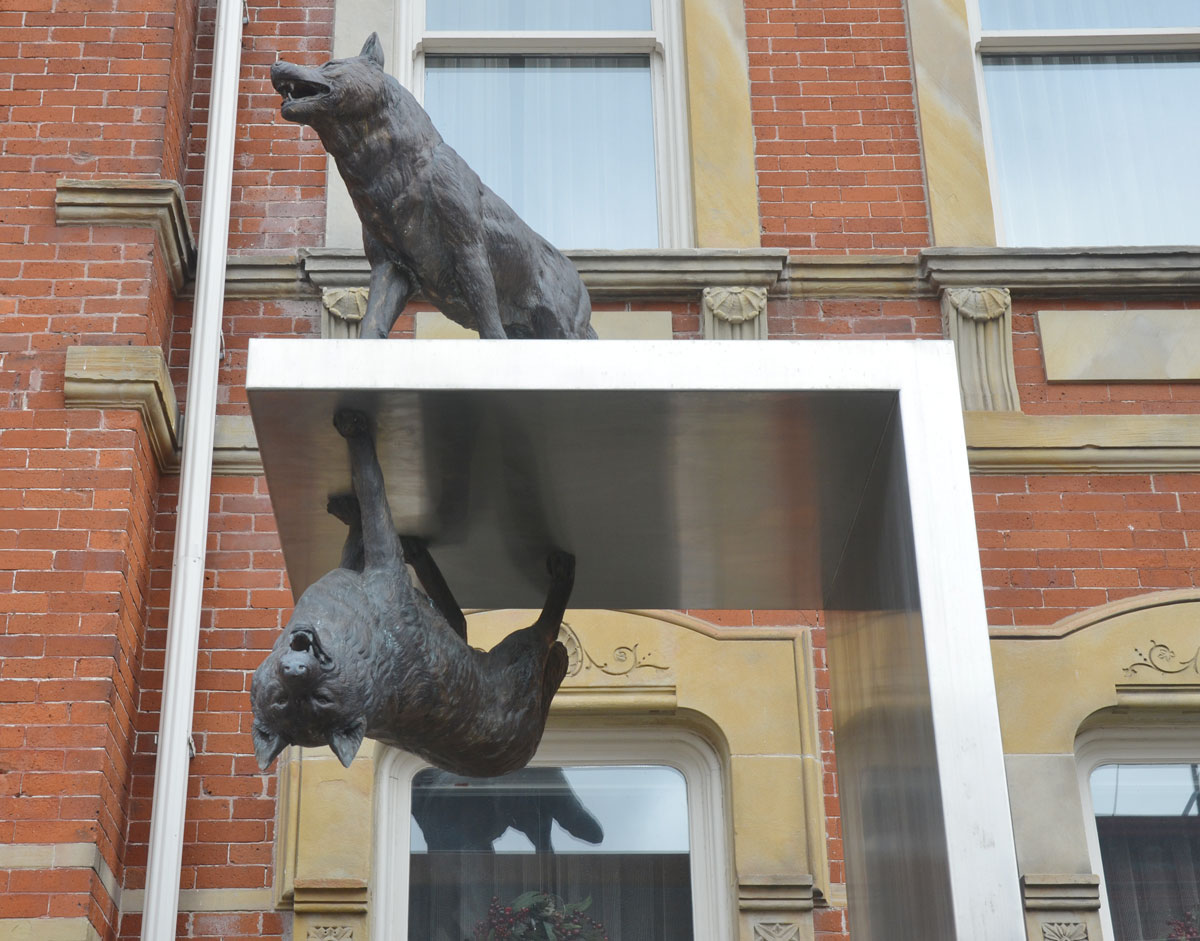
Just around the corner on Sherbourne Street is an art installation by Eldon Garnet.  It sits, or rather stands, on a condo development that incorporated the James Cooper Mansion at Linden and Sherbourne streets.

part of an art installation by Eldon Garnet called inversion -
The house was built for James Cooper in 1881.  He was a partner in Cooper and Smith, a company that imported, made, and sold footwear.   The house had eight bedrooms and was built in the Second Empire style with a mansard roof and dormers.  The house was purchased by the Knights of Columbus in 1910

part of an art installation by Eldon Garnet called inversion - a large moose seems to be standing against the side of an old mansion that has been renovated and incorporated into a new highrise condo development

part of an art installation by Eldon Garnet called inversion - two foxes, one on top of the other on a metal platform. The bottom one is upside down

part of an art installation by Eldon Garnet called inversion - the head of a deer in front of a building

part of an art installation by Eldon Garnet called inversion - A deer in front of a building and a wolf hanging upside down part way up the side of the building

part of an art installation by Eldon Garnet called inversion - a wolf on a metal platform and a second wolf upside down under the same platform

Just a little farther south there is a quiet park just to the west of Sherbourne Street, Wellesley Magill Park. This park was named in honour of Wellesley Central Hospital and Dennis Magill.  Magill was a founder of the Wellesley Institute and the first community Director of the Wellesley Hospital.   The park is situated on the site of the old Wellesley Central Hospital which was demolished in 1998.

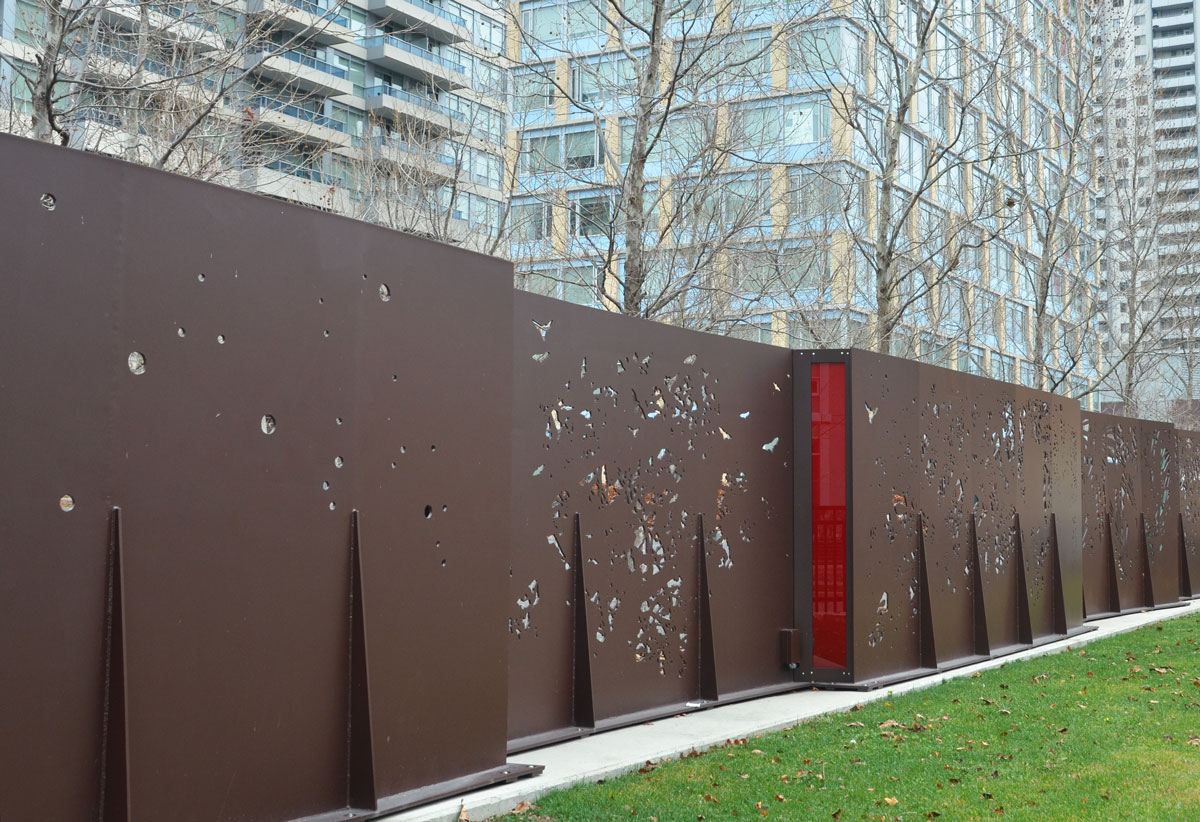
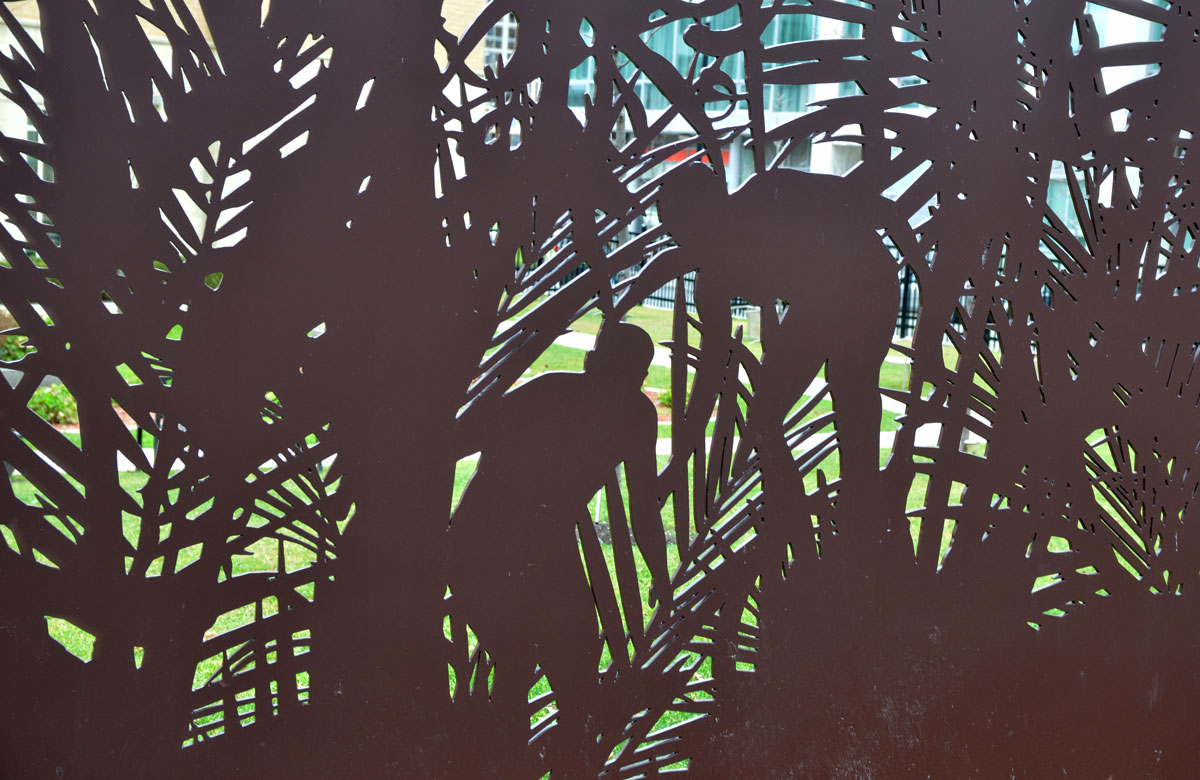
Running east-west along the park’s southern perimeter is a public artwork created in 2010 by Ed Pien.  It is called ‘Forest Walk’ and it is 45 meter long wall comprised of eight sheets of painted steel.  Each panel contains cut outs of a forest scene, or a scene of people walking through a forest.

cut outs in a metal wall of people walking through a forest

below: The back of the fence. The park is on the other side of the fence.

a steel wall between a park and a residence

cut outs in a metal wall of people walking through a forest


I happened to walk into the Queen Mother Cafe (on Queen West) this afternoon.  They often have original artwork displayed on their walls and today was no exception.  I found some intriguing and very creative masks.

A mask in beige, black and white mounted on the wall. The nose is a wrench. The white part looks like a mask across the eyes of the mask

They are the creation of Jeff Mann, a Kingston based artist.

four metal masks mounted like on a wall. One looks a reddish dog and one looks like a skull. They are made of car parts.

According to his website, Mann makes the masks mostly from car parts and shovels.  The ones here are only a sample of the collection I saw at the Queen Mother cafe.   In addition, there are pictures of more masks on Mann’s website.

close up of a mask hanging on a wall. It's made of rusty metal car parts welded together

A mask that looks like a cow. Large black and white face, a pinkish red body and four skinny spindly legs. Curly cue tail too.

Millwood Bridge
also known as the Leaside Bridge

I first visited this site late in March.  For one reason or another I didn’t get around to adding the photos that I took that day to this blog.  I was back yesterday on another grey day.  There are now leaves on the trees and the graffiti on the concrete has been painted over.

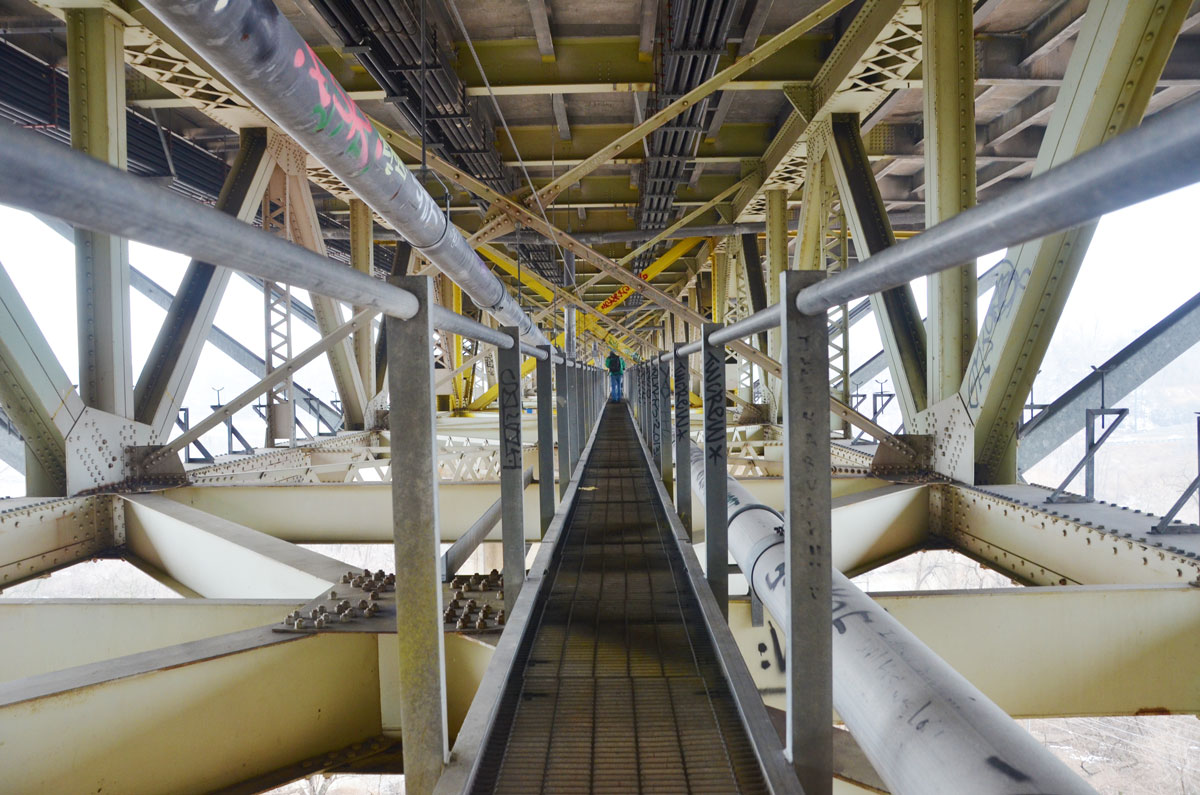
looking along the length of the bridge from just underneath it at one end.   Sloping ground in the picture, as are concrete supports and the metal steel girders supporting the road above.

below:  The Don River flows under the bridge.  In the distance, top right, is the Don Valley Parkway.

steel girders under the Millwood bridge with the train tracks and Don River below.  Lots of bolts holding this bridge together!

graffiti on the yellow girders under the bridge.  The concrete supports at the end of the bridge are also visible and also covered with graffit.

yellow girder in the foreground, the cat walk and metal structure of the bridge in the background.  Graffit on the girder including the word 'scarey' in white letters.

Catwalk under the Millwood bridge, looking down almost the whole length of it.   A person is on the catwalk in the distance.

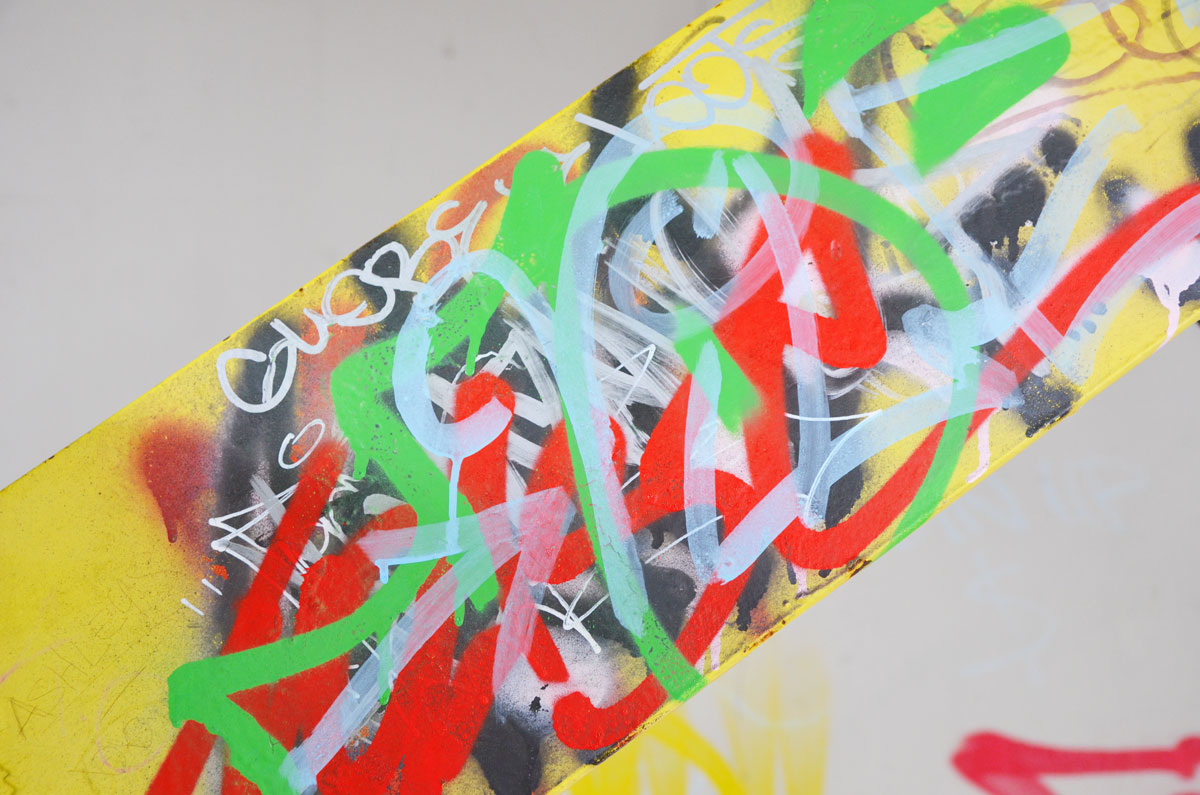
yellow metal girder covered with scribbles in black, red, and green.
There was also some graffiti and street art on the concrete supports at the north end of the bridge.  These have now been painted over.  The graffiti on the metal portions of the bridge remains.

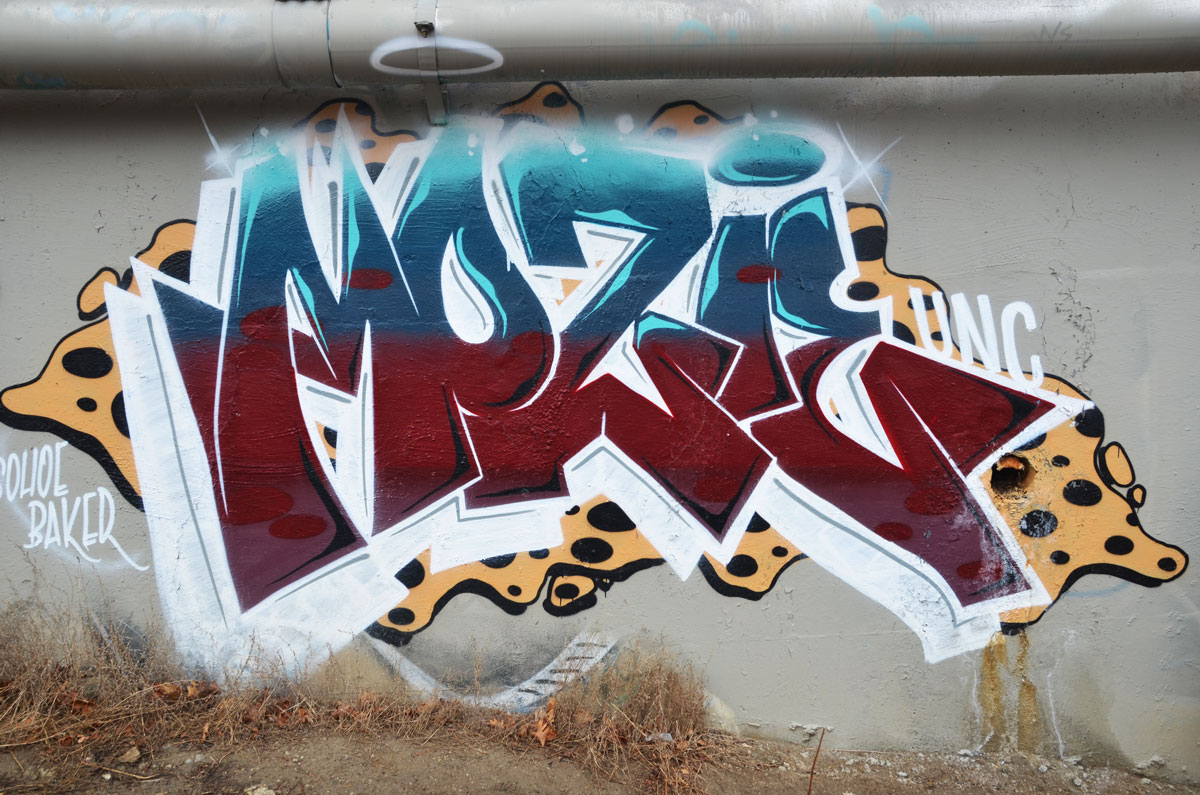
below: Two of the paintings that are now gone.

Street art painting of an eagle attacking a snake.

graffiti tag that says Mozie in large letters, blue on the top and a dark burgundy colour on the bottom

Lovebot didn’t want to stick to the paint on the girder but he hung around long enough to get a picture.

lovebot sticker on a yellow metal girder under a bridge

The other day I walked a number of lanes and alleys, Max Hartstone Lane, Ken Lai Lane,   and Oscar Ryan Lane, to name a few.

I’m not sure if it was the greyness of the day or the preponderance of ugly tags but I was feeling rather uninspired as I walked.  An interesting green wall caught my eye so I started searching more out green things.  This is the result of that search.
Close up of a green wall and door, showing the hinge which is also painted green

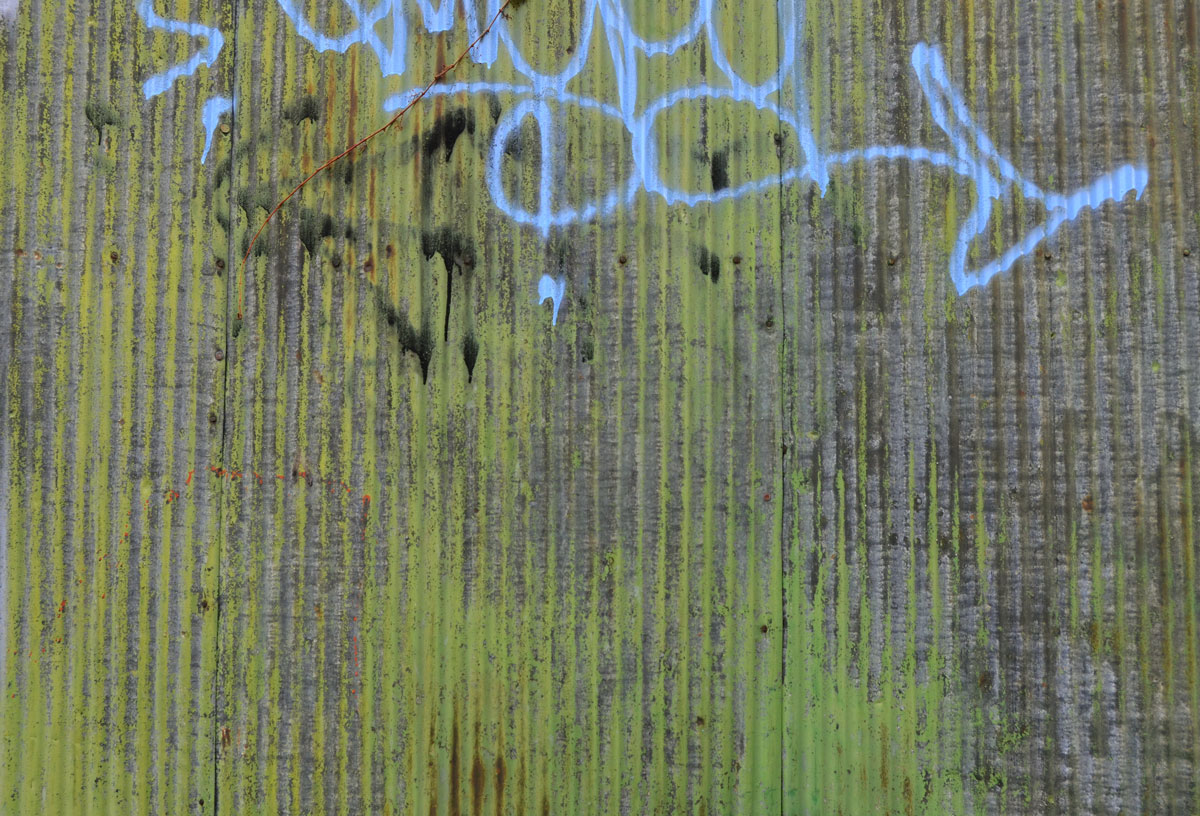
streaks of greenish discoloration as well as rust on the side of a corrugated metal wall

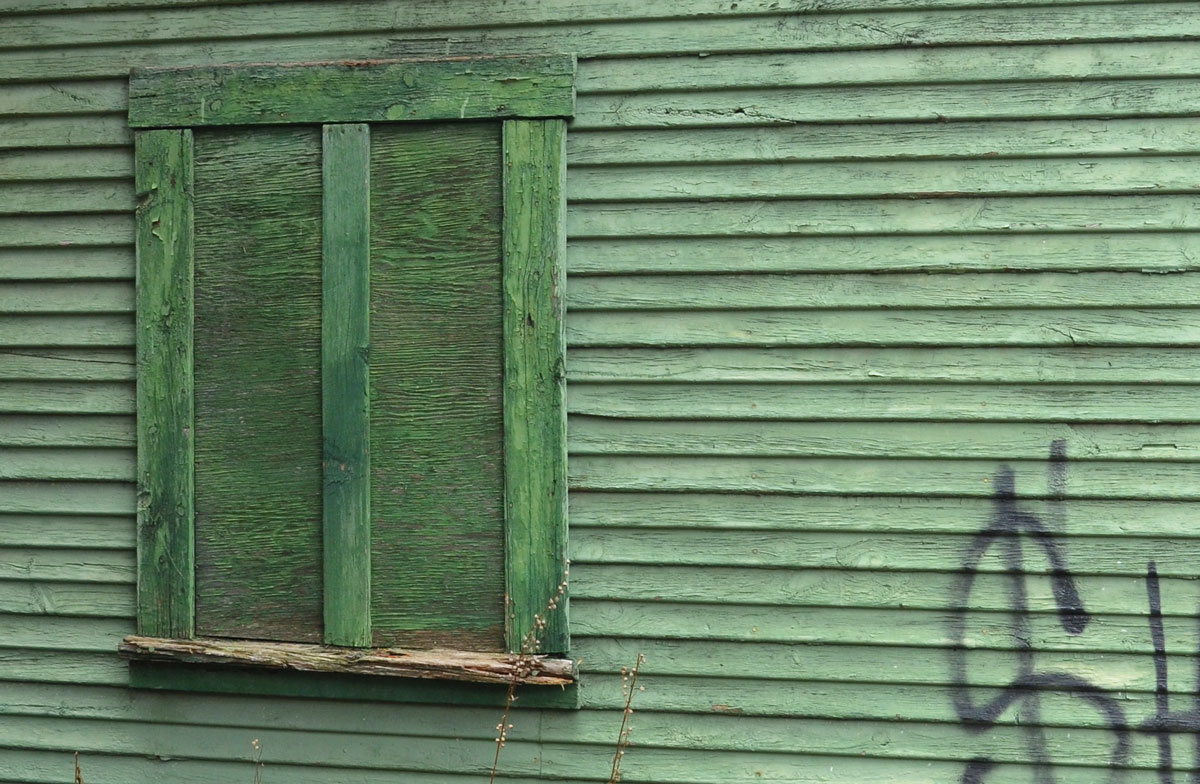
An old boarded up window on a wood wall, all painted green

A greenish coloured figure of a girl with the word Cloth written beside her

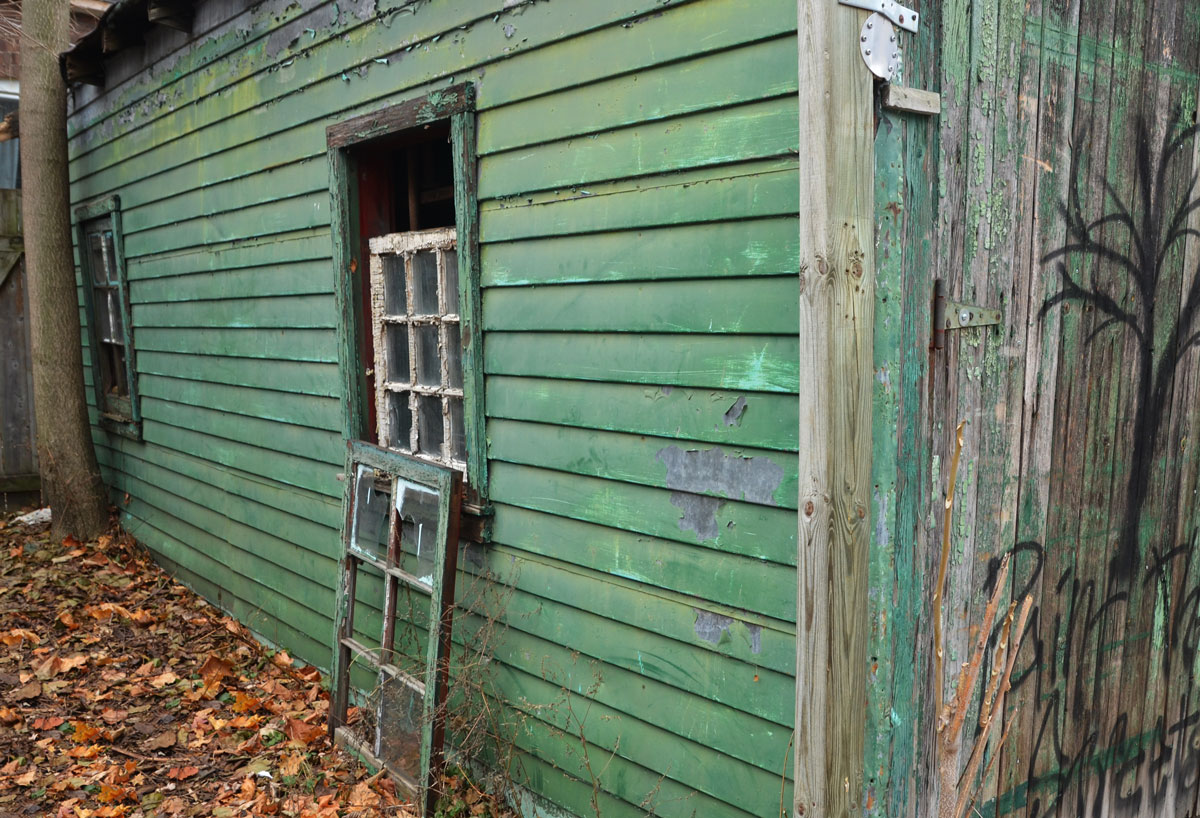
A green garage in need of paint.  A window frame is sitting on the ground beneath the window.  Dead leaves on the ground.

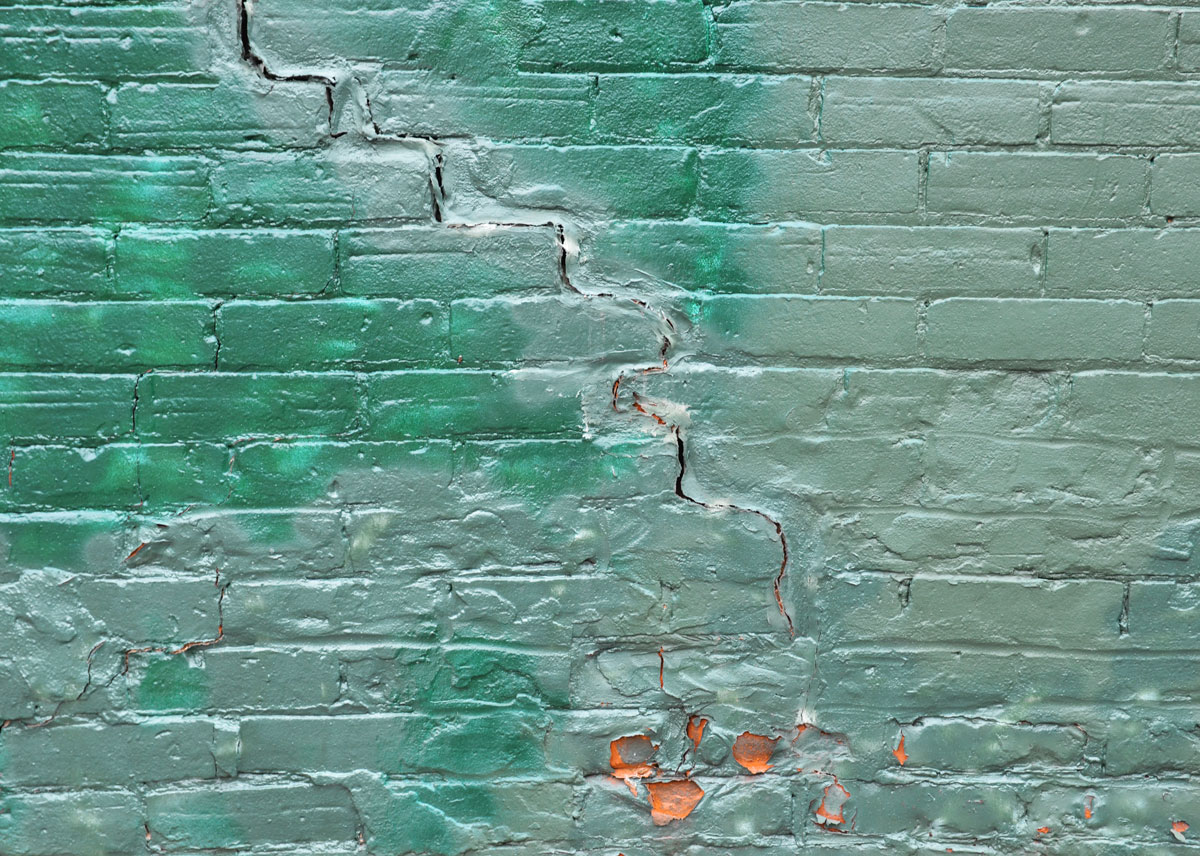
A brick wall painted in two shades of shiney green paint.  There is a large crack running diagonally across the wall.