


Medecine Wheel is painted on the north side of the June Callwood Center for Women, Parliament Street.
It faces a vacant lot that is surrounded on the three other sides by chain link fence.
Locked gate. No entry.


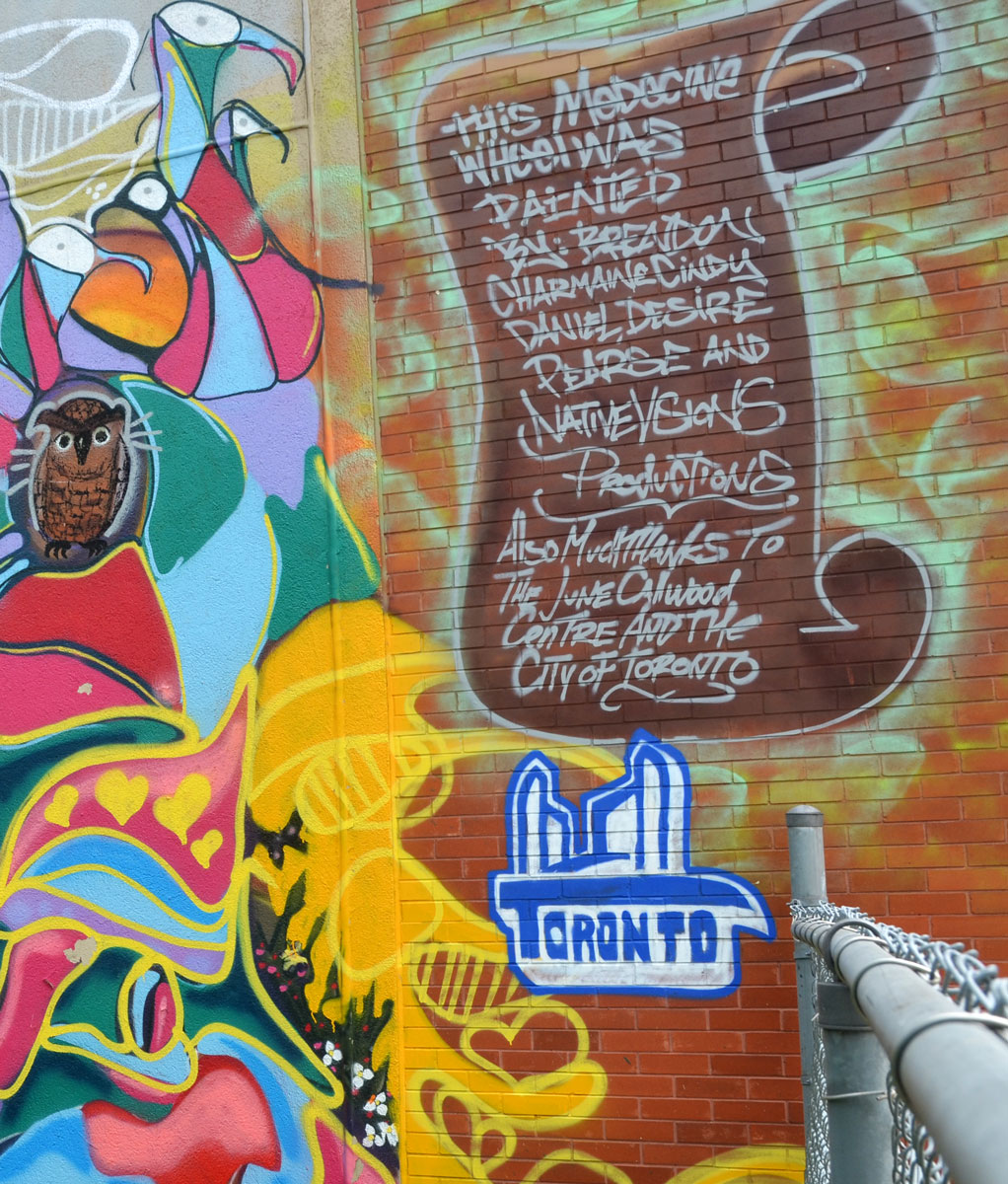
Medecine Wheel is painted on the north side of the June Callwood Center for Women, Parliament Street.
It faces a vacant lot that is surrounded on the three other sides by chain link fence.
Locked gate. No entry.
More art under another bridge over the Humber Recreational Trail, this time as the trail passes under St. Phillips Road (near Weston Rd and the 401).
Painted by Gabriel Specter and Dan Bergeron, it represents the energy of a hurricane. Sixty years ago Hurricane Hazel was responsible for flooding of the Humber River that killed people and destroyed many homes.
below: A purple graphic representation of a cyclone beside swirling water is the backdrop for the red slinky-like spiraling energy of the hurricane.
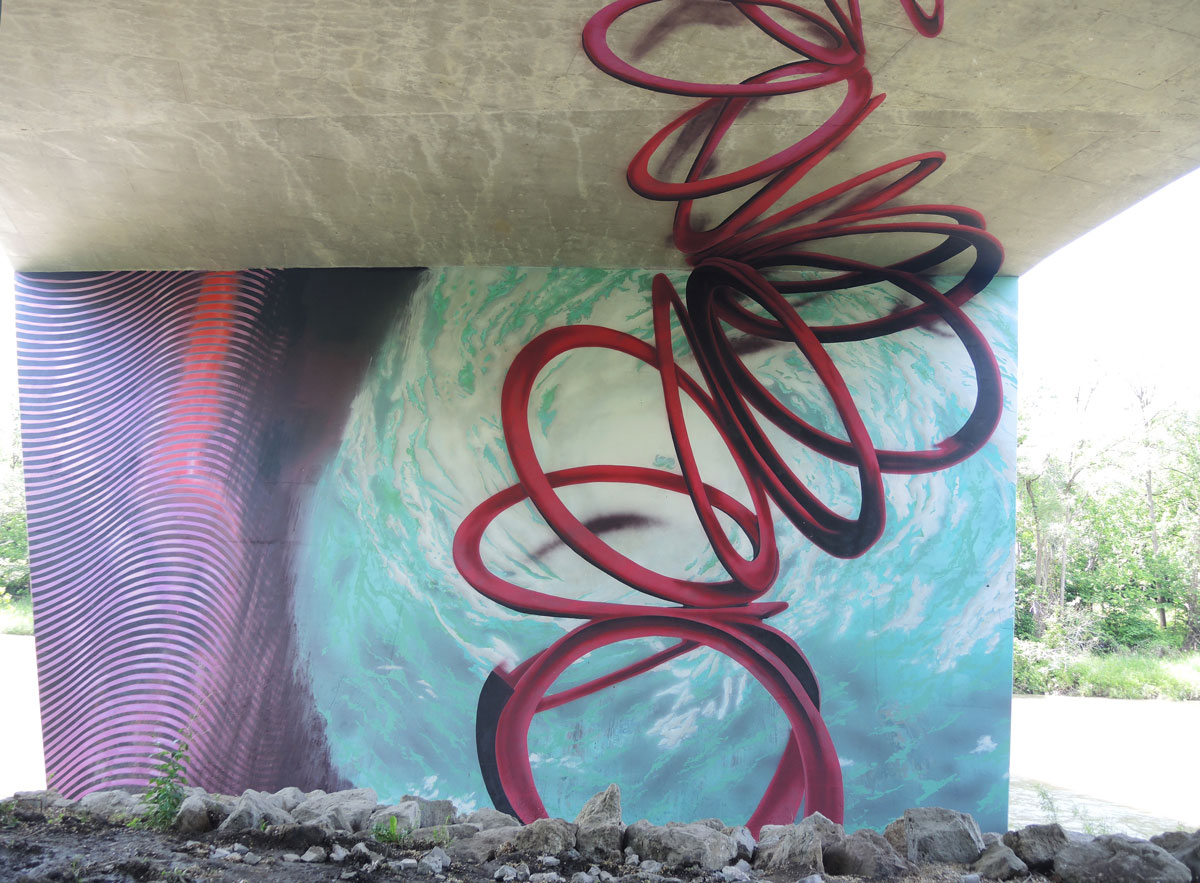
This spiral crosses under the road and connects the two side murals.
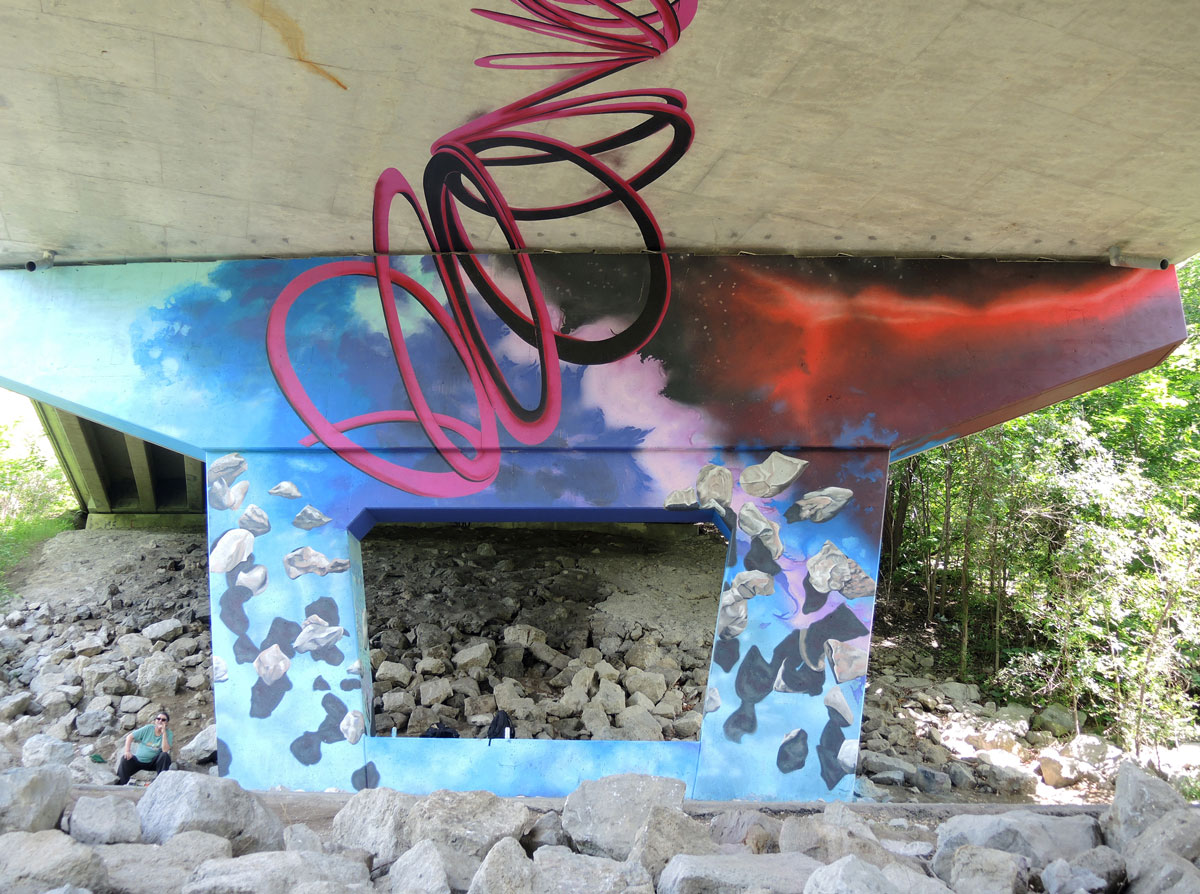

Fourteen murals are planned along the route of the Pan Am Path, a trail that will connect Brampton to Pickering running south along the Humber River and then east along Lake Ontario.

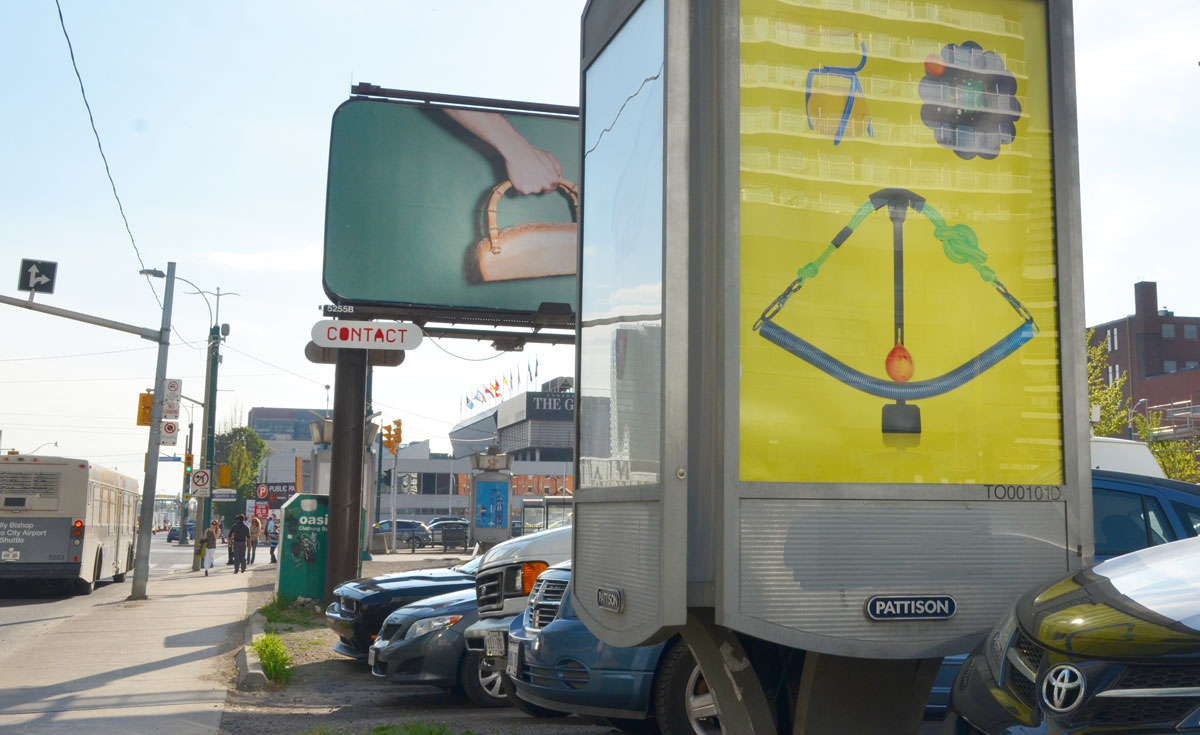
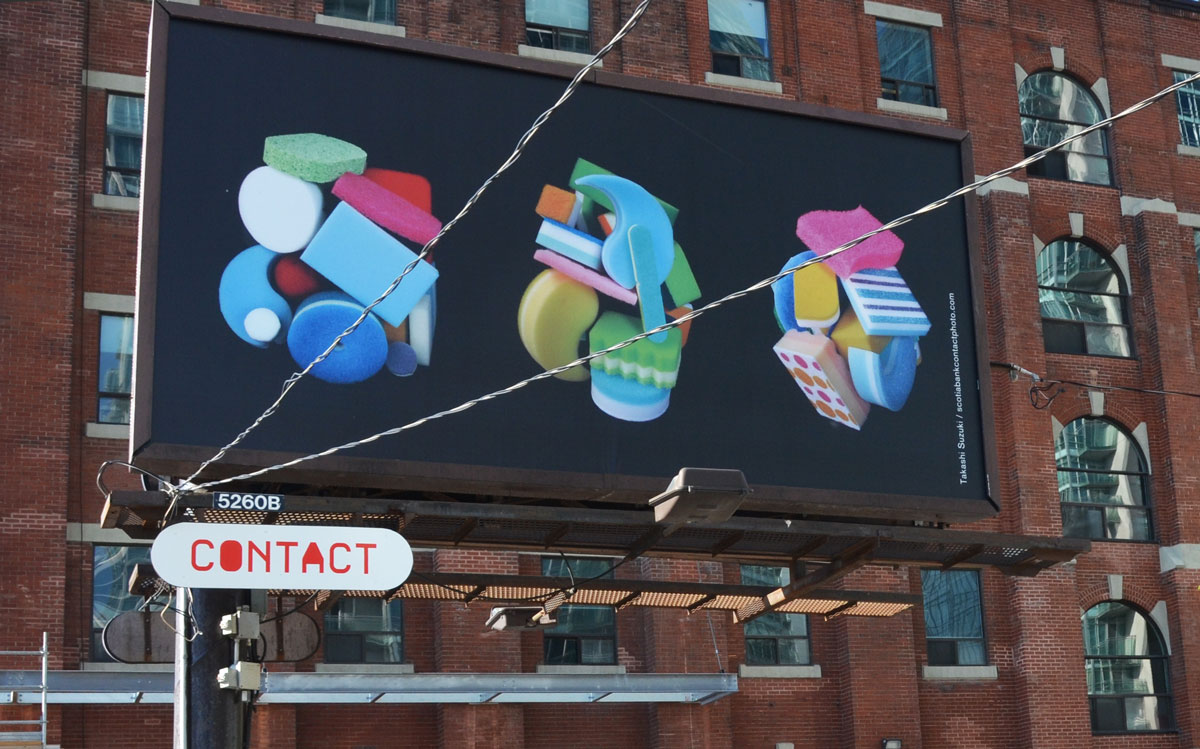
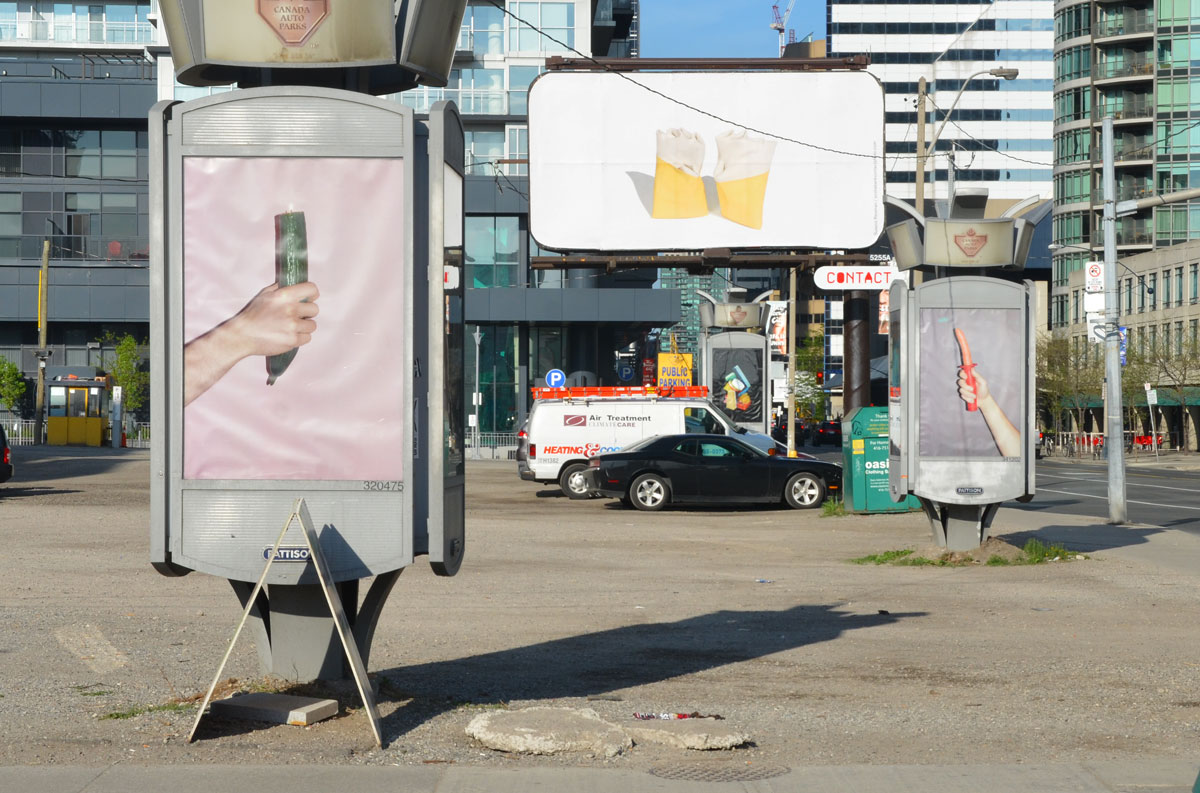
Part of CONTACT photography festival,
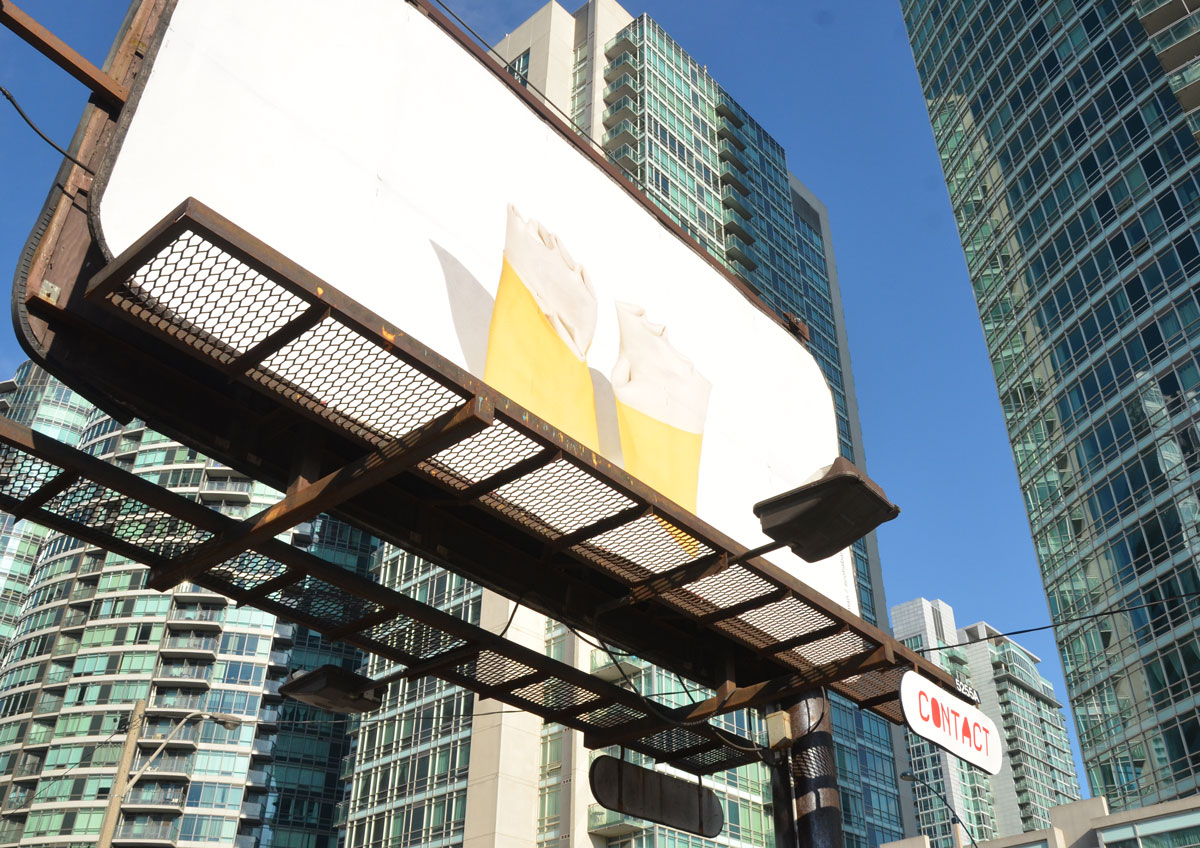
billboard “art” on the NE corner of Spadina and Front streets.
All the billboards are in a parking lot in what was a junky looking space to begin with.
below: Yellow rubber gloves with the fingers tucked back in…
to look like they’ve just been taken off a pair of hands?
below: The body of the handbag is a loaf of bread.
below: Clusters of sponges. At first I thought they were candies.
Supported by Pattison Outdoor Advertising and Nikon Canada.
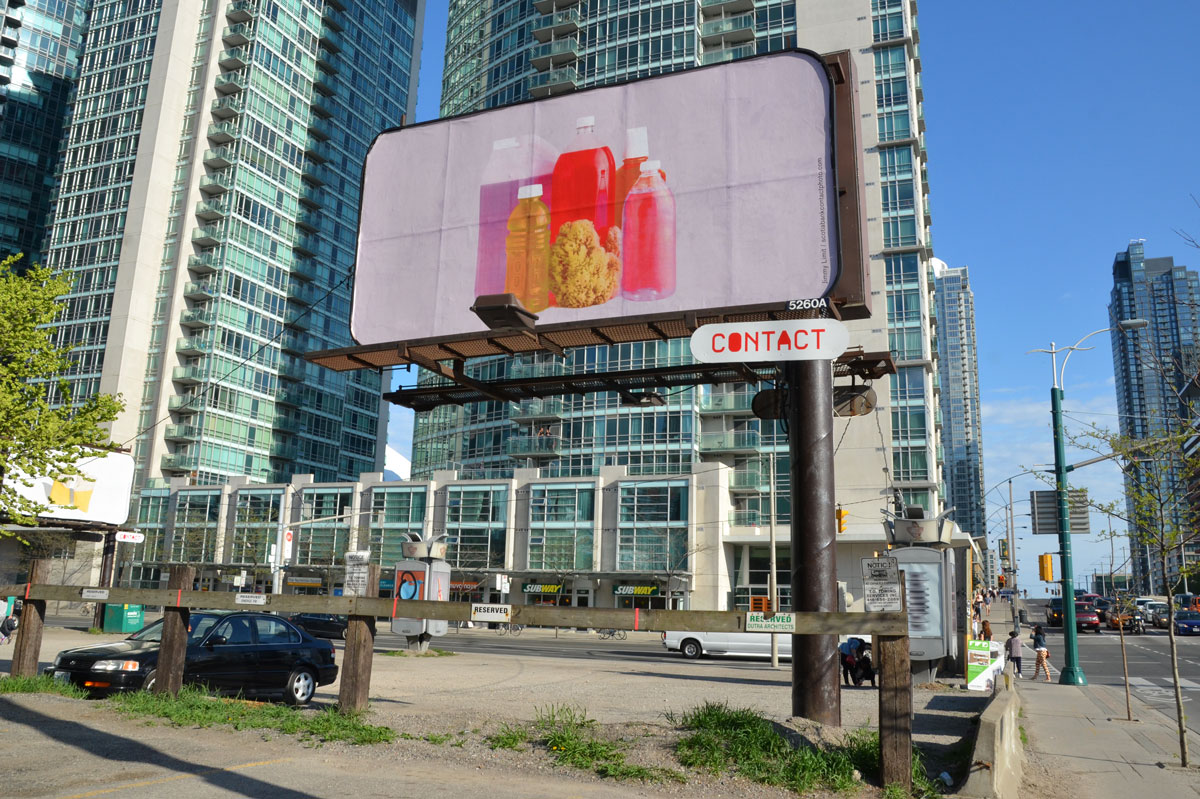
“Challenging how people perceive and interact with images in public spaces”
“Each of the artists destabilizes the conventions of advertising and the cultural codes associated with consumer lifestyles.”
Me? I’ll call them dull and underwhelming clutter. Too harsh? Perhaps.
I’ll leave the verdict up to you.
Part Picture,
an exhibit at MOCCA,
part of CONTACT Photography Festival
Like the introduction of film photography once usurped the role of painters and engravers, the introduction of digital photography has supplanted the photographer of old. We are all photographers now. A smartphone. A little bit of software. And presto, you have a picture. Many, many bazillions of pictures. Photography excels at visually telling stories, documenting events or capturing a moment in time either with a single image or in a series of photos. The expression ‘a picture paints a thousand words’ comes to mind. Even a blurry selfie says something.
Photography has always had an uneasy relationship with art (with the fine art, visual artsy stuff in particular). This art, while also visual, often has a slightly different focus. It too aims to elicit emotions and reactions but no one expects an artwork to document or to tell a story albeit some do. But art too is in flux (and probably has been for a while). What hasn’t already been done? What rules are left to break?
So what’s a photographer to do?

Part of the description of this exhibit states: “placing photography in conversation with other artistic mediums – particularly painting and sculpture – to create hybrid works that are only part picture”.
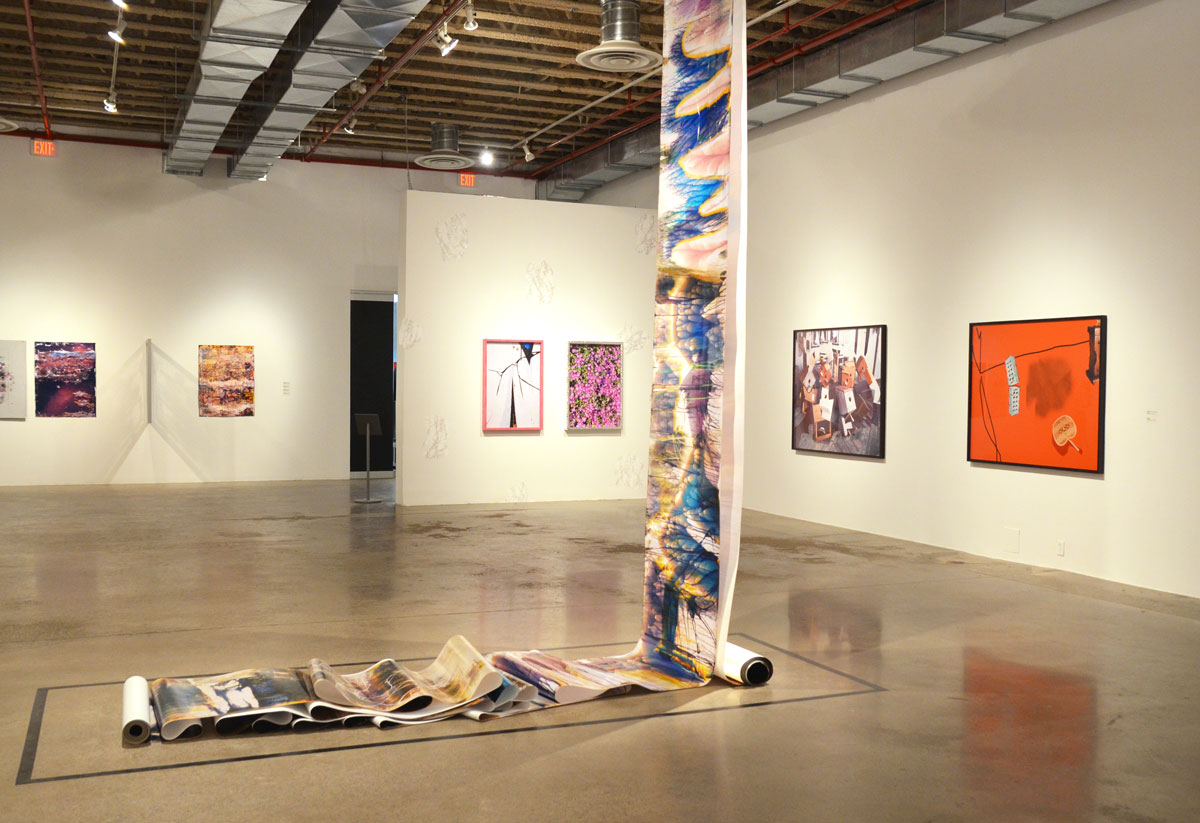
Experiments with chemicals on photographic paper; experiments with photoshop artifacts as part of the image; experiments with how one frames or hangs a picture. What is photography anyhow?

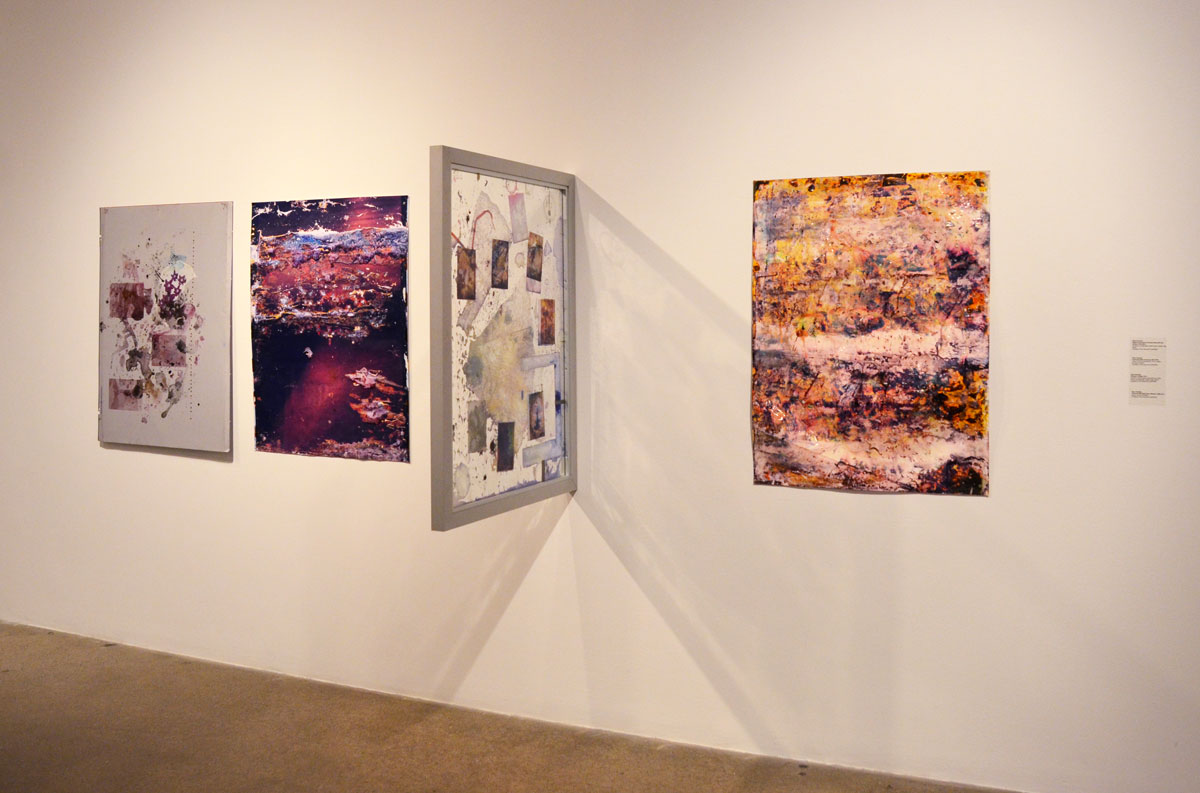
below: close up of part of the picture from above, the one that is hung perpendicular to the wall.
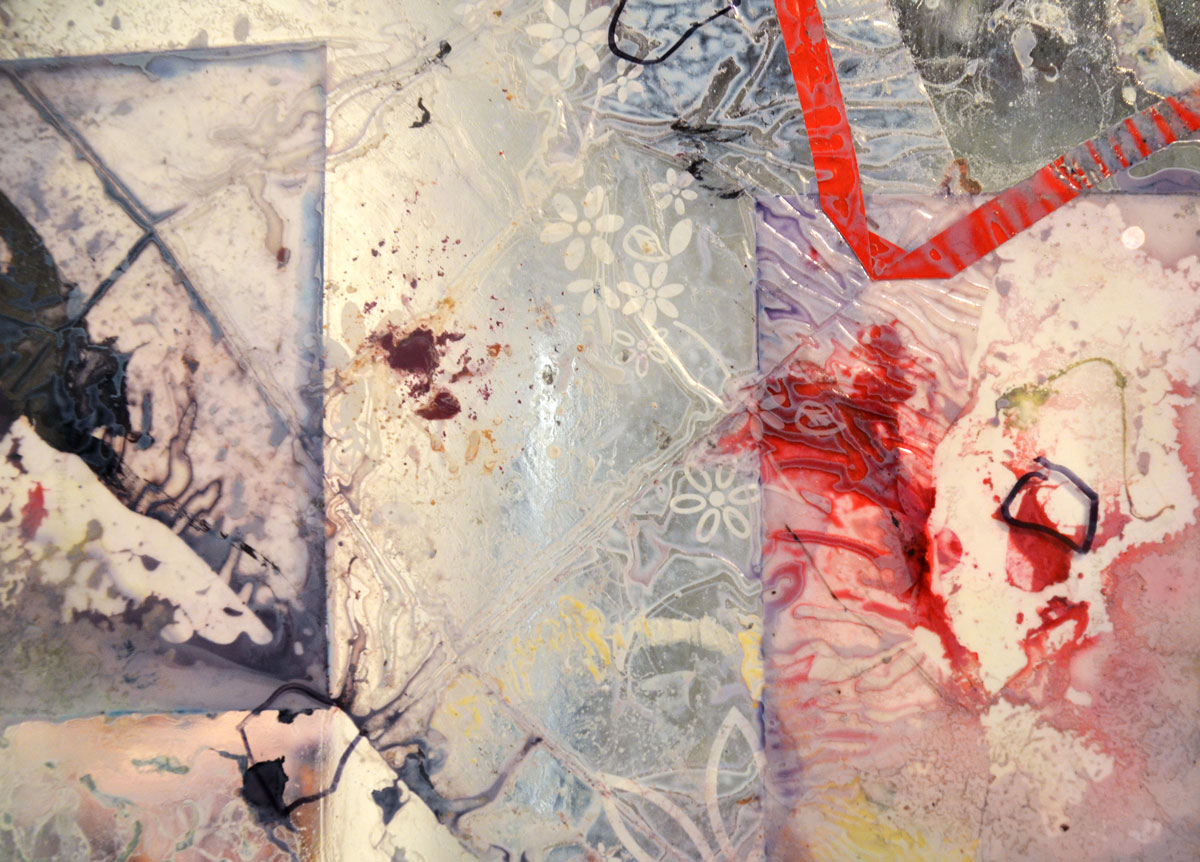
Just because something is different doesn’t mean that it’s good just as not all experiments are a success but kudos to those who try. I will leave it to you to decide which category (good/bad) these pictures fall into.
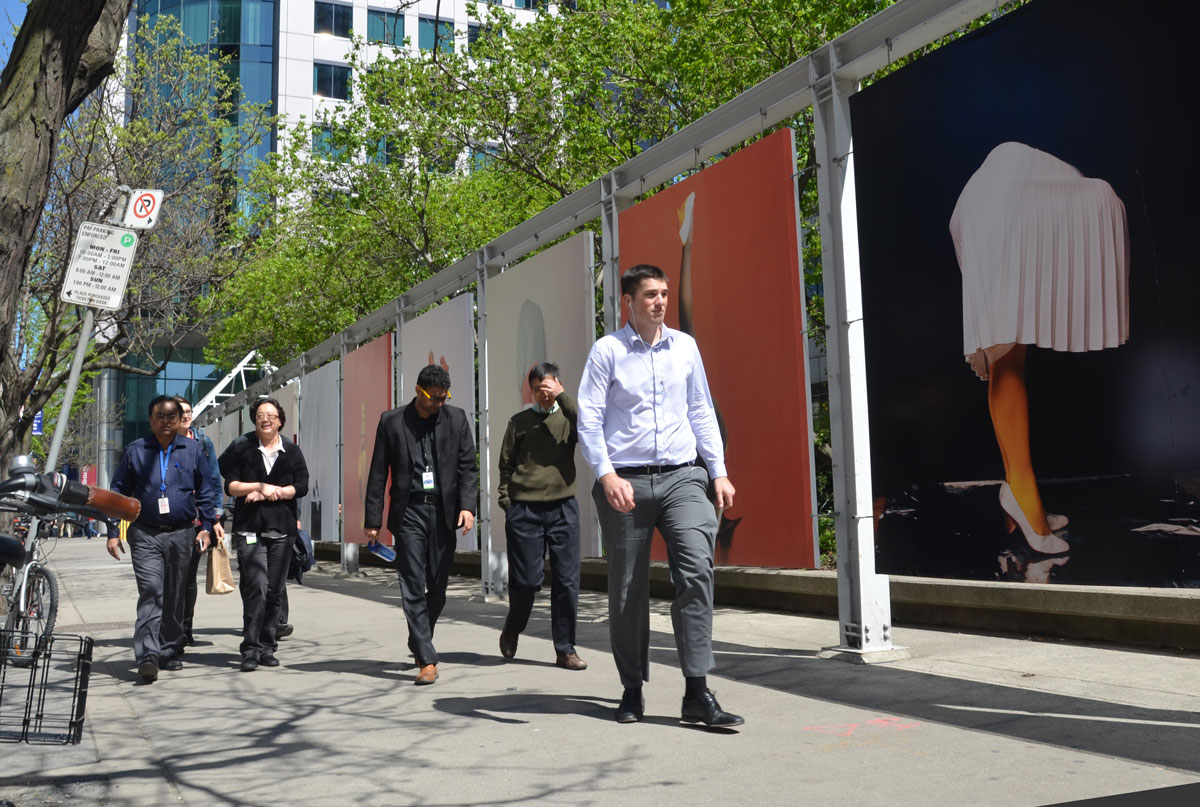
Figures and Models of Surfaces,
by Isabelle Wenzel,
on King St. West at John (by Metro Hall).
Part of CONTACT Photography Festival.
“I’ve got two legs from my hips to the ground
And when I move ’em they walk around
And when I lift ’em they climb the stairs
And when I shave ’em they ain’t got hairs.”
“I’ve Got Two Legs” by Monty Python’s Terry Gilliam
That’s the sort of thing that went through my head as I took these photos.
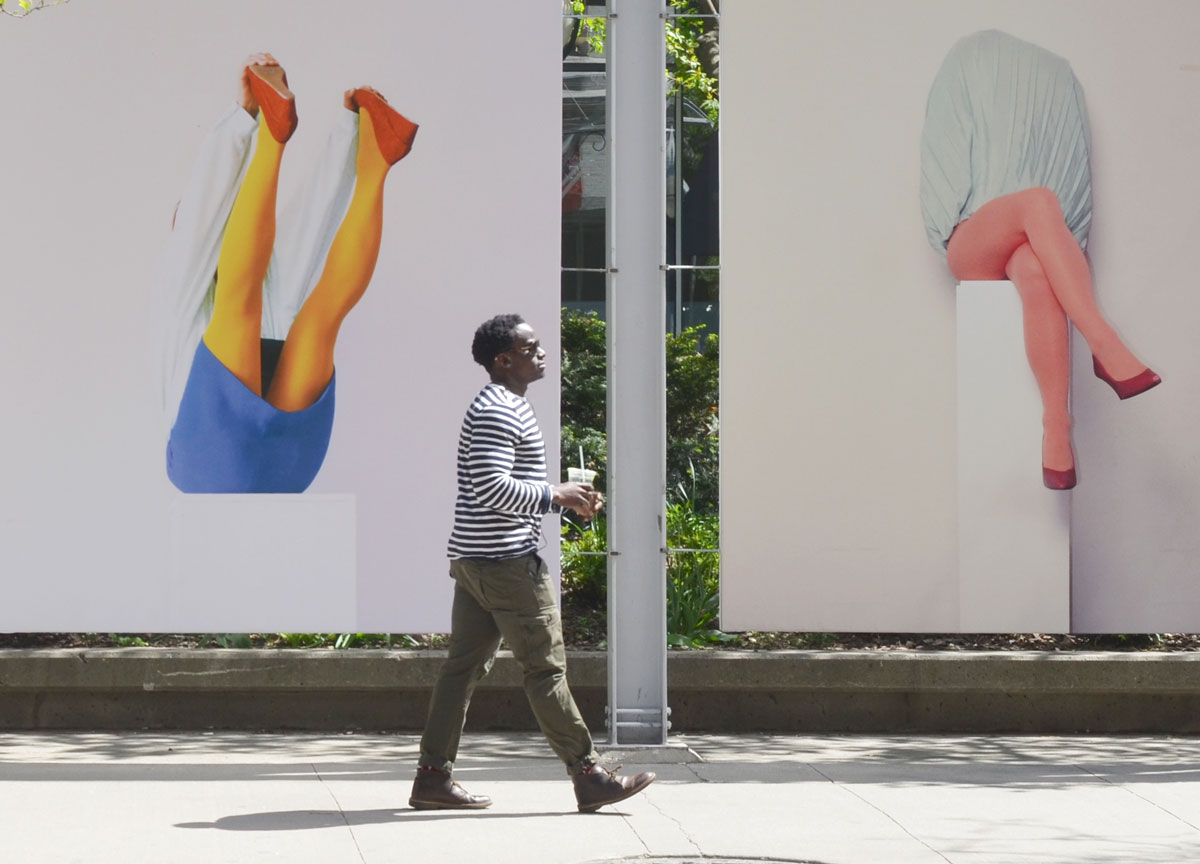
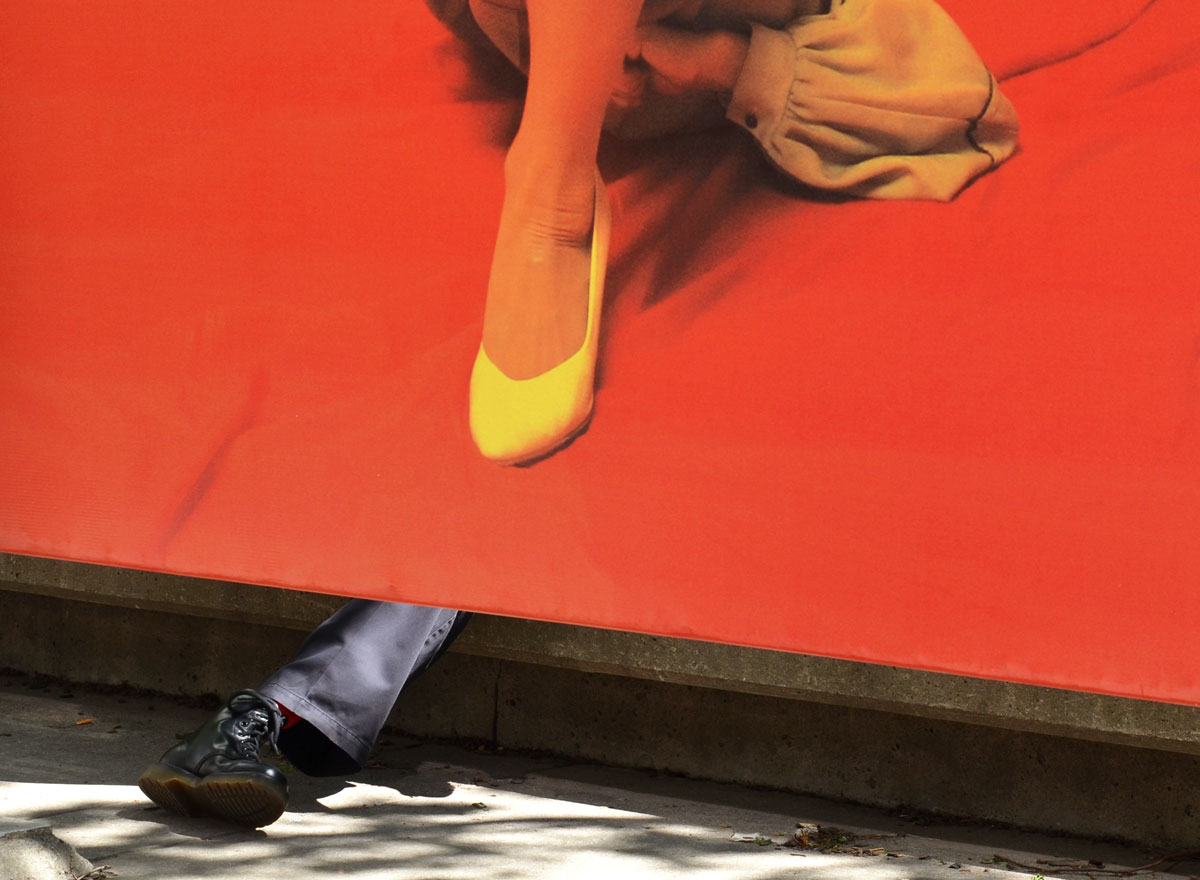
All photos are self-portraits of the photographer.
Legs as sculptural elements – colour, shape and composition.
Legs as objects – objectification of the legs is now complete.
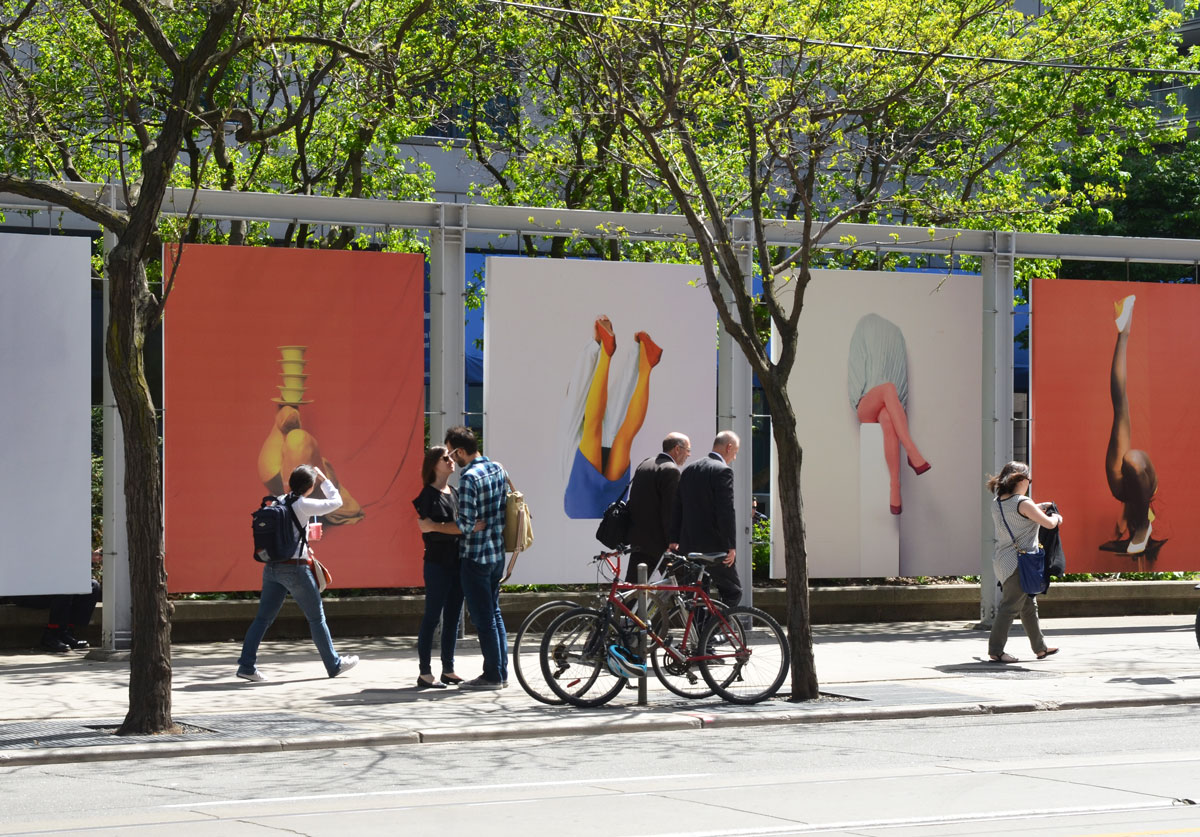
These legs were made for walking. Not.
Just walk on by.
More silly thoughts as I watch people walk past the pictures.

below: The blue tones of Metro Hall provide a backdrop.
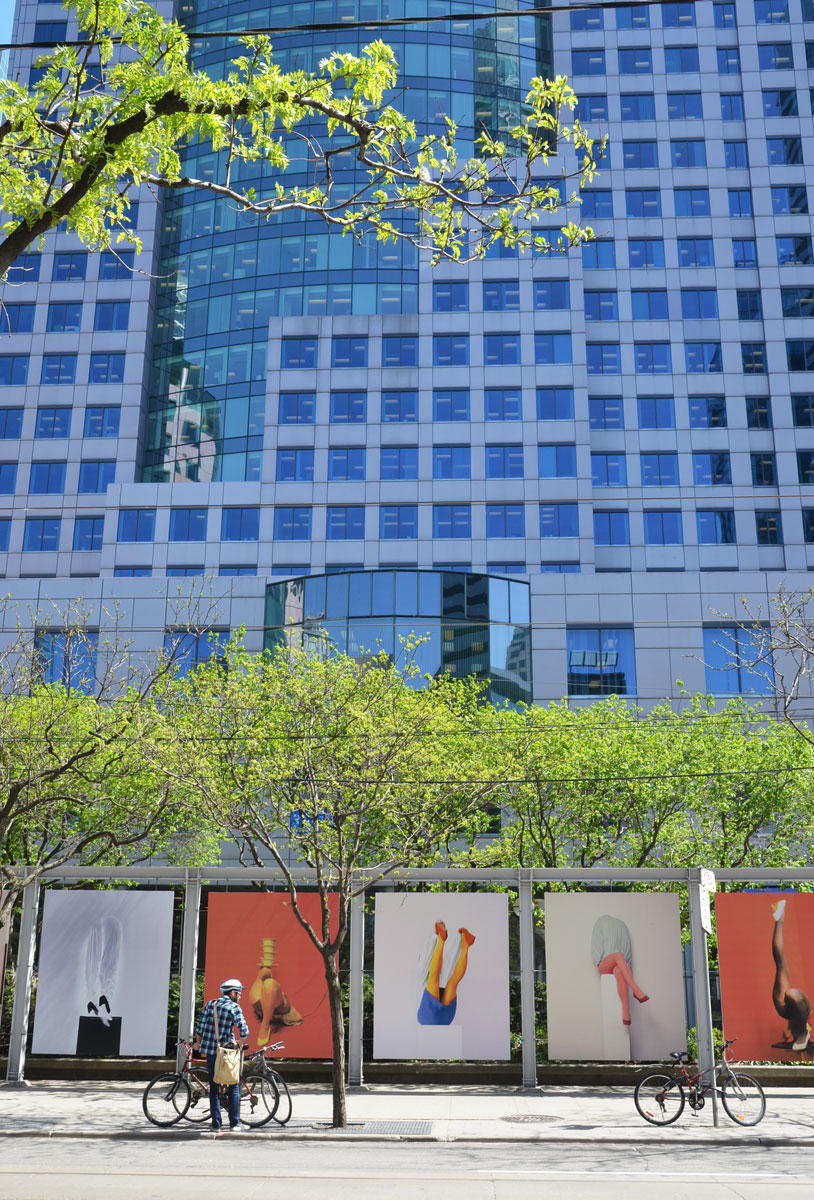
Fun. Great installation.
Obsolescence, by Shelagh Keeley, 2014
at The Power Plant, Harbourfront Centre
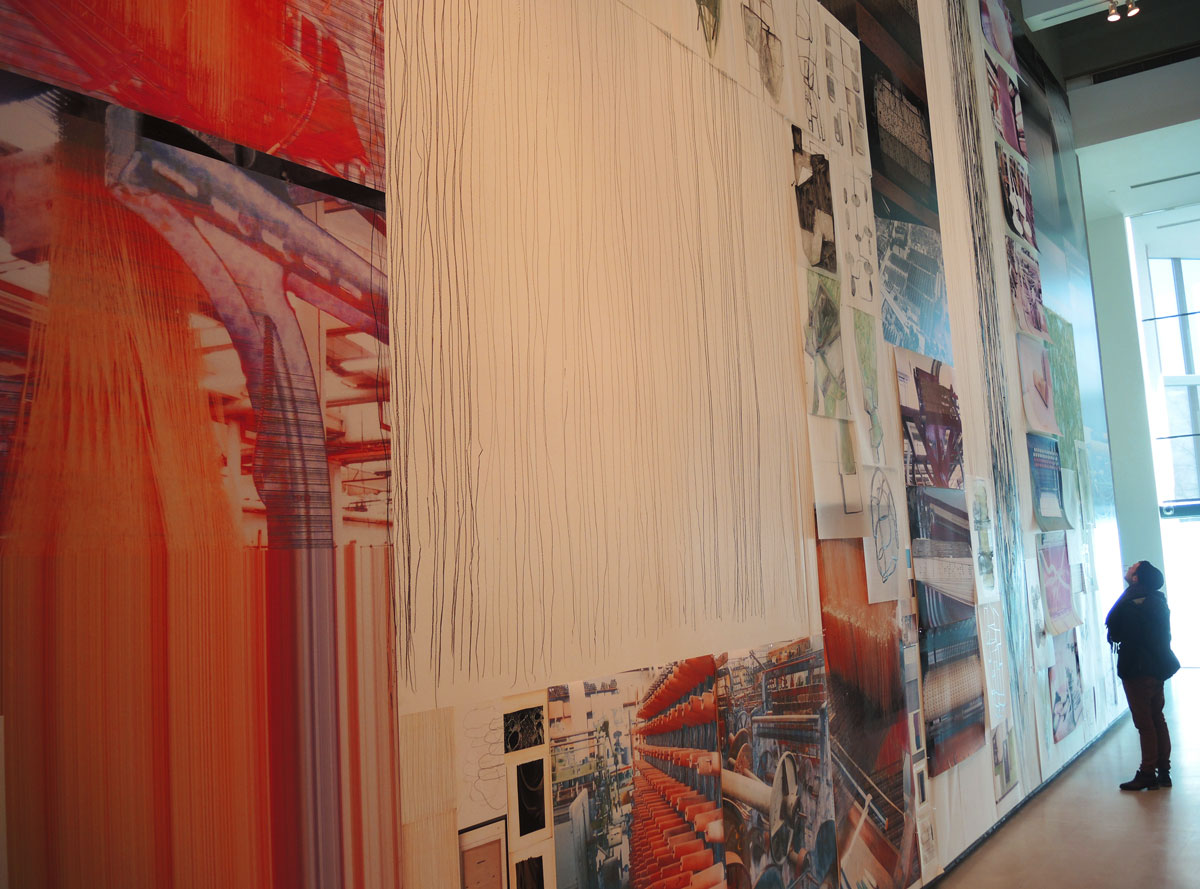
The piece covers a wall that is 25 x 40 feet in a room that is only 10 feet wide.
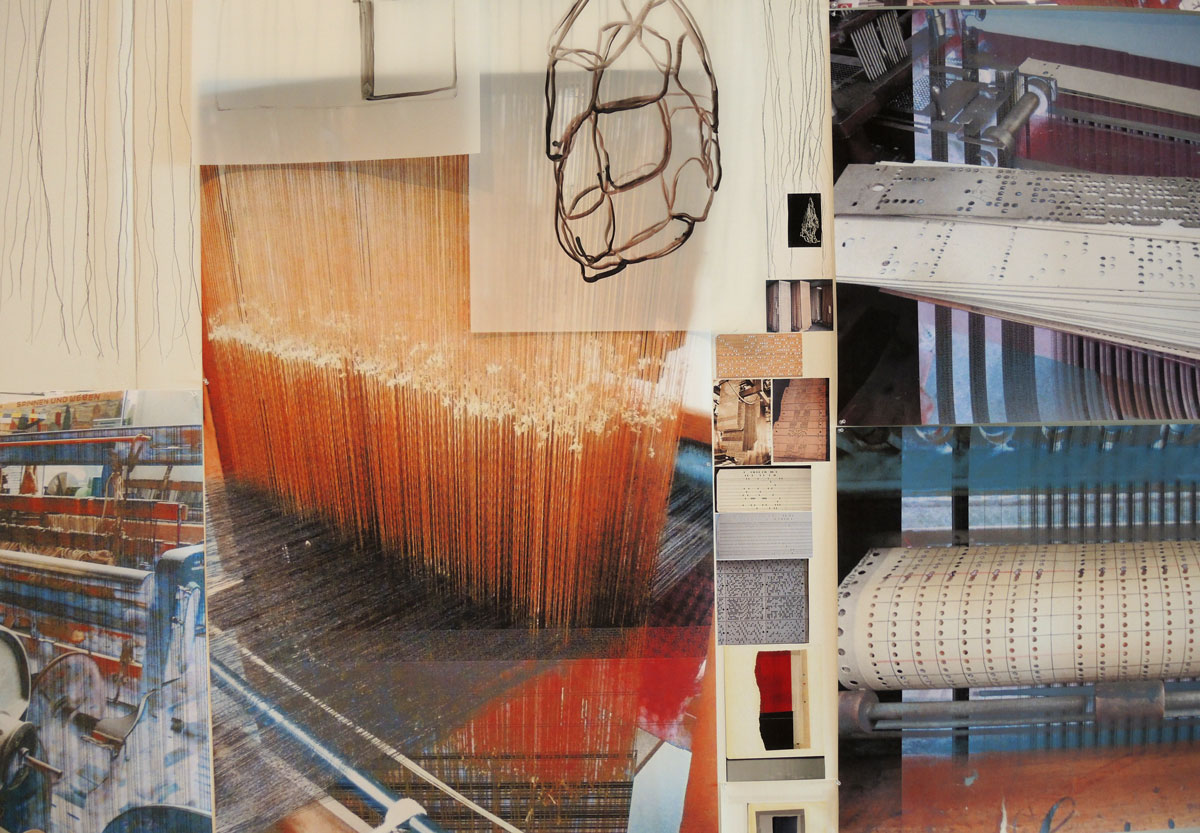
The large collage includes photographs taken inside an abandoned textile factory in Monchengladbach Germany.
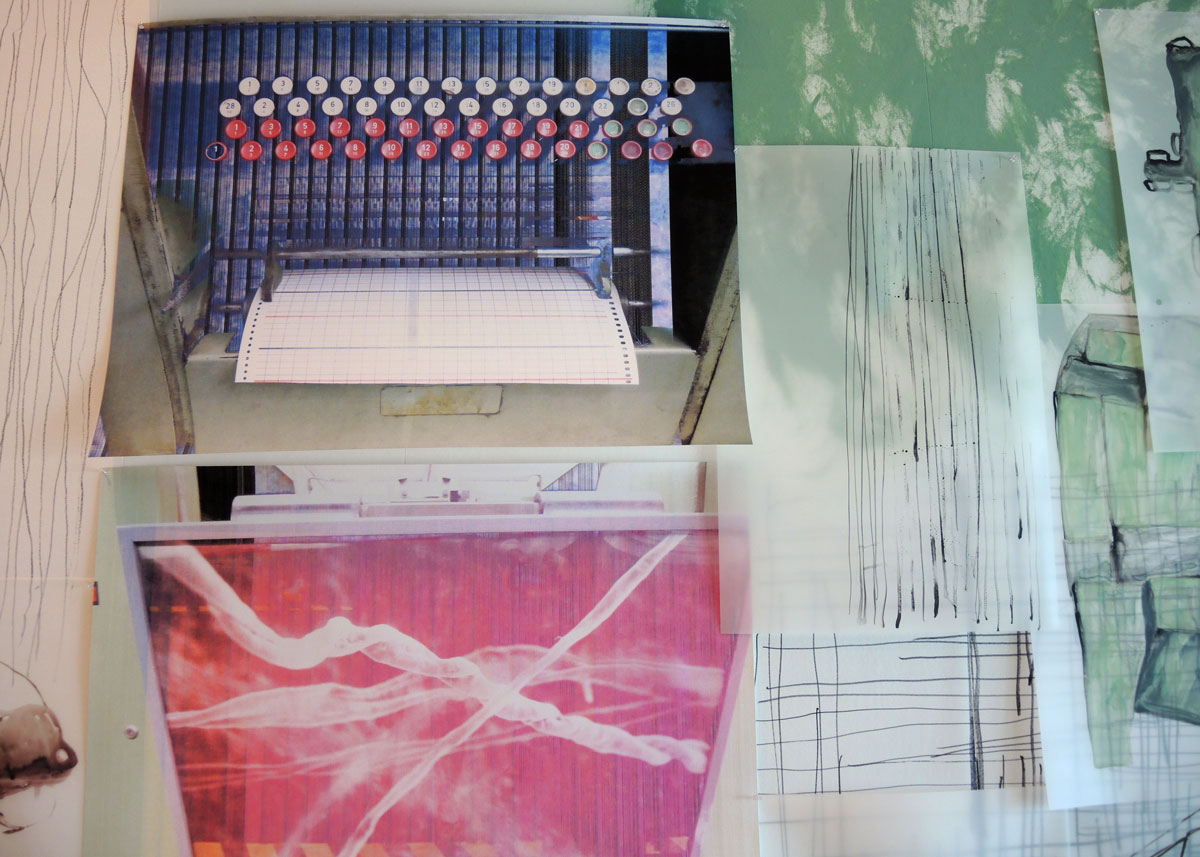
A dictionary definition: “Obsolescence: being in the process of passing out of use or usefulness; becoming obsolete.“
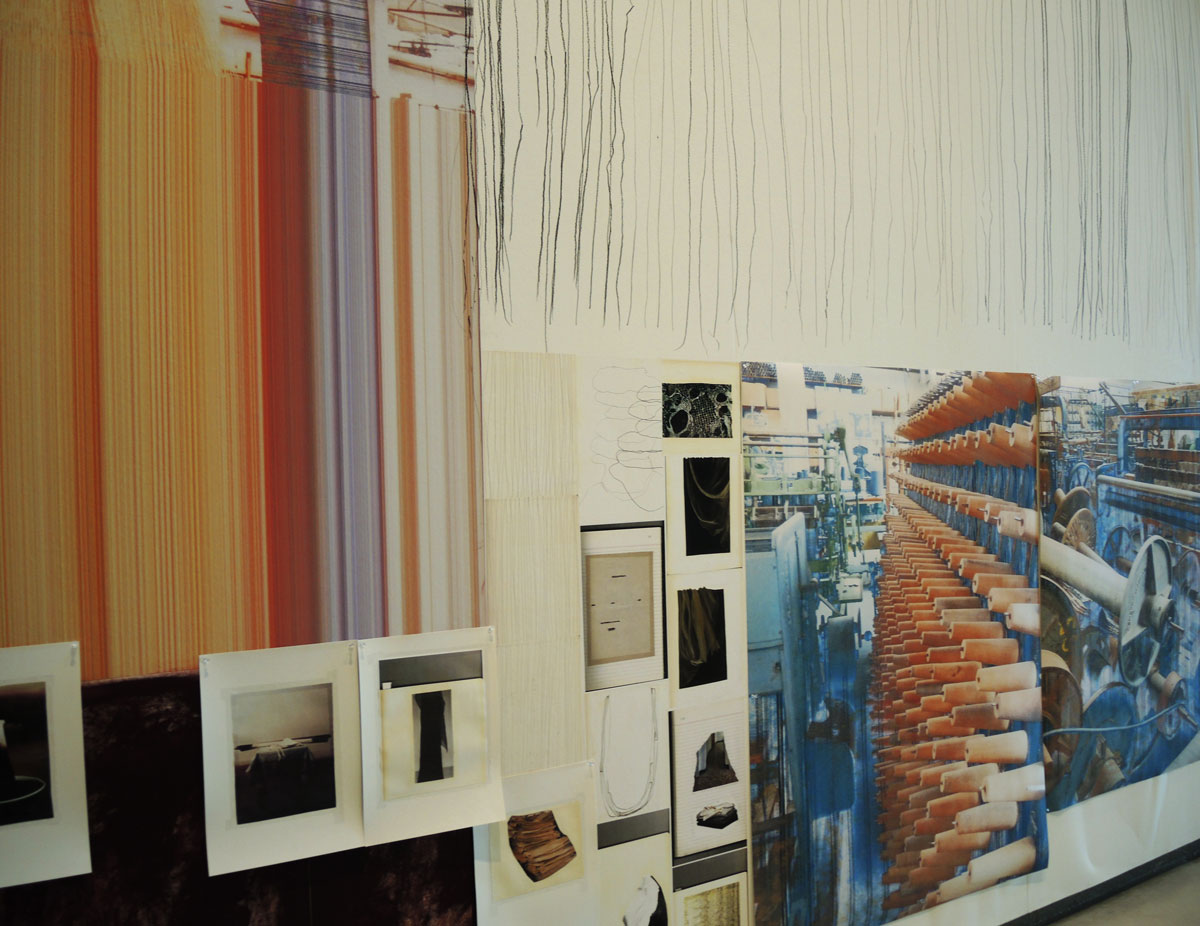
One of the inspirations for this piece was Marshall McLuhan’s 1970 “Notes on Obsolescence” which opens with the lines: “When print or the motor car is referred to as “obsolete” many people assume that it is therefore doomed to speedy extinction. A casual glance at the historical record indicates the contrary. Gutenberg did not discourage handwriting. There is a great deal more handwriting done even in the age of the typewriter than was ever done before printing”.
And it ends with: “Obsolescence is a very large and mysterious subject that has had very little attention in relation to its importance.” The present paper may … thus help awareness of the role of obsolescence in sparking creativity and the invention of new order.”

Like all art, it is subjective. Like good art, it has the potential to make you want to linger in front of it and even to reflect and think.

This piece is scheduled to remain at The Power Plant until 17 May 2015.
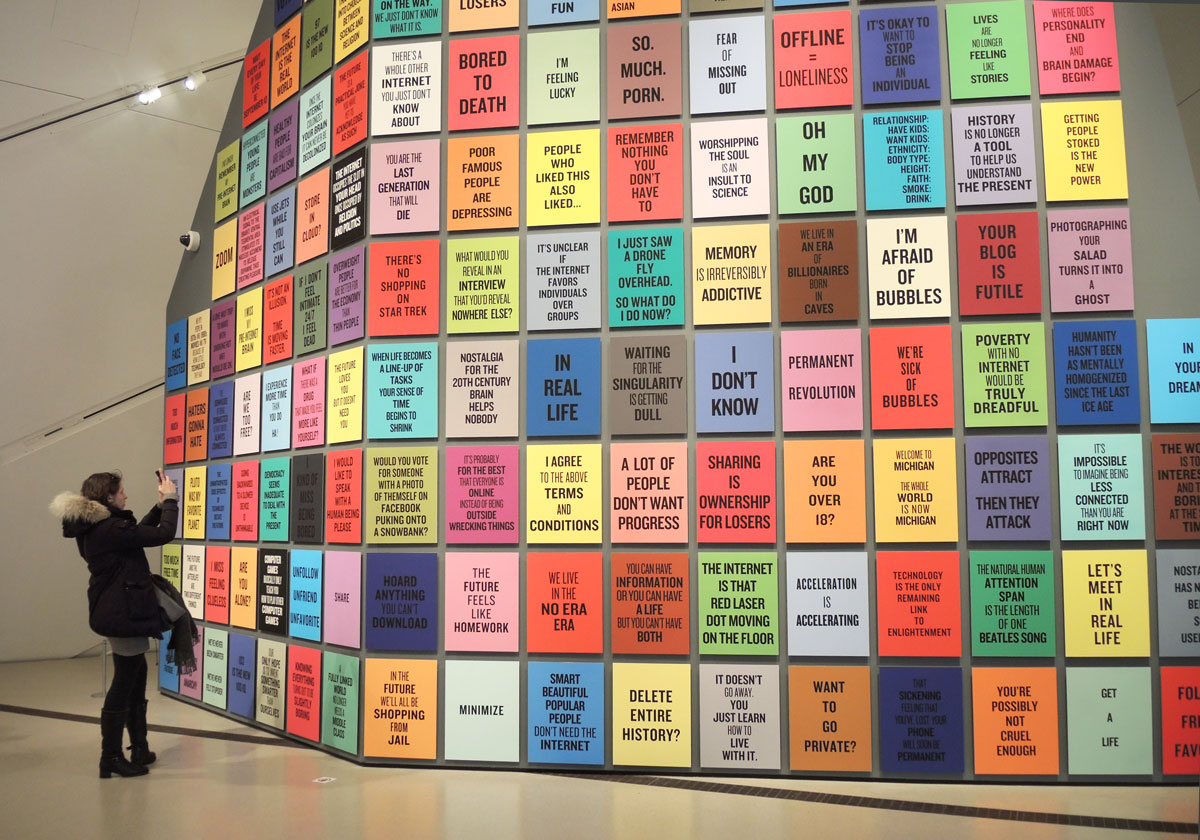
Douglas Coupland: everywhere is anywhere is anything is everything
Royal Ontario Museum
until April 26, 2015


The 21st Century Condition
“I want to explore how it feels to be inside the 21st century brain as opposed to the 20th century brain”



Painted with dots. When they are hanging on the wall, they look abstract.
When they are shrunk down and viewed on a smartphone, the picture comes into focus.
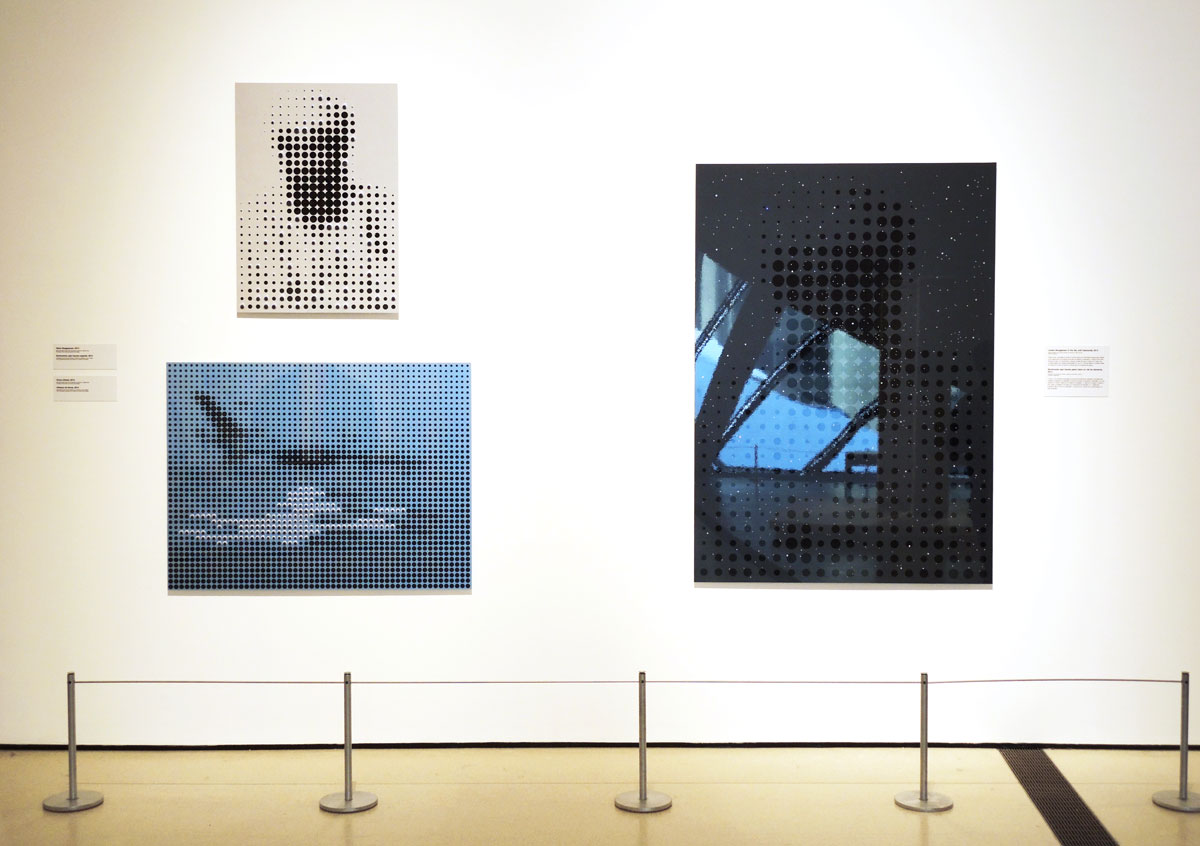
update: Here is an interesting article that appeared in the Torontoist on 24th Feb about this exhibit.
Gumhead is a “gum-based, crowd-sourced, publicly interactive, social-sculpture self portrait” in the words of Douglas Coupland, the artist who conceived and developed this idea.
It sits inside the entrance of Holt Renfrew Men on Bloor St. West.
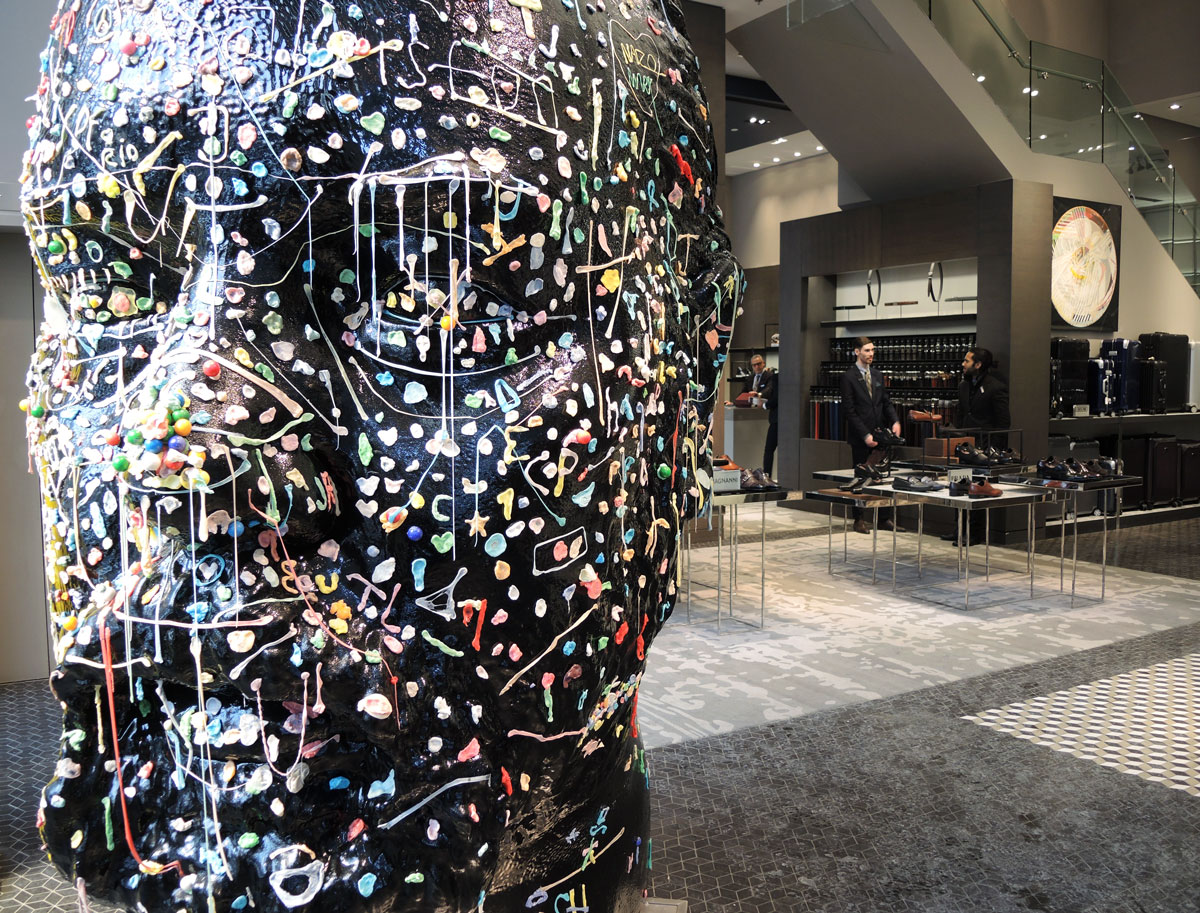
People are encouraged to add their own chewed gum with the intention that the head will become covered, obscured, and transformed. And people have done so, some with imagination or whimsy.
He now has eyelashes on one eye.

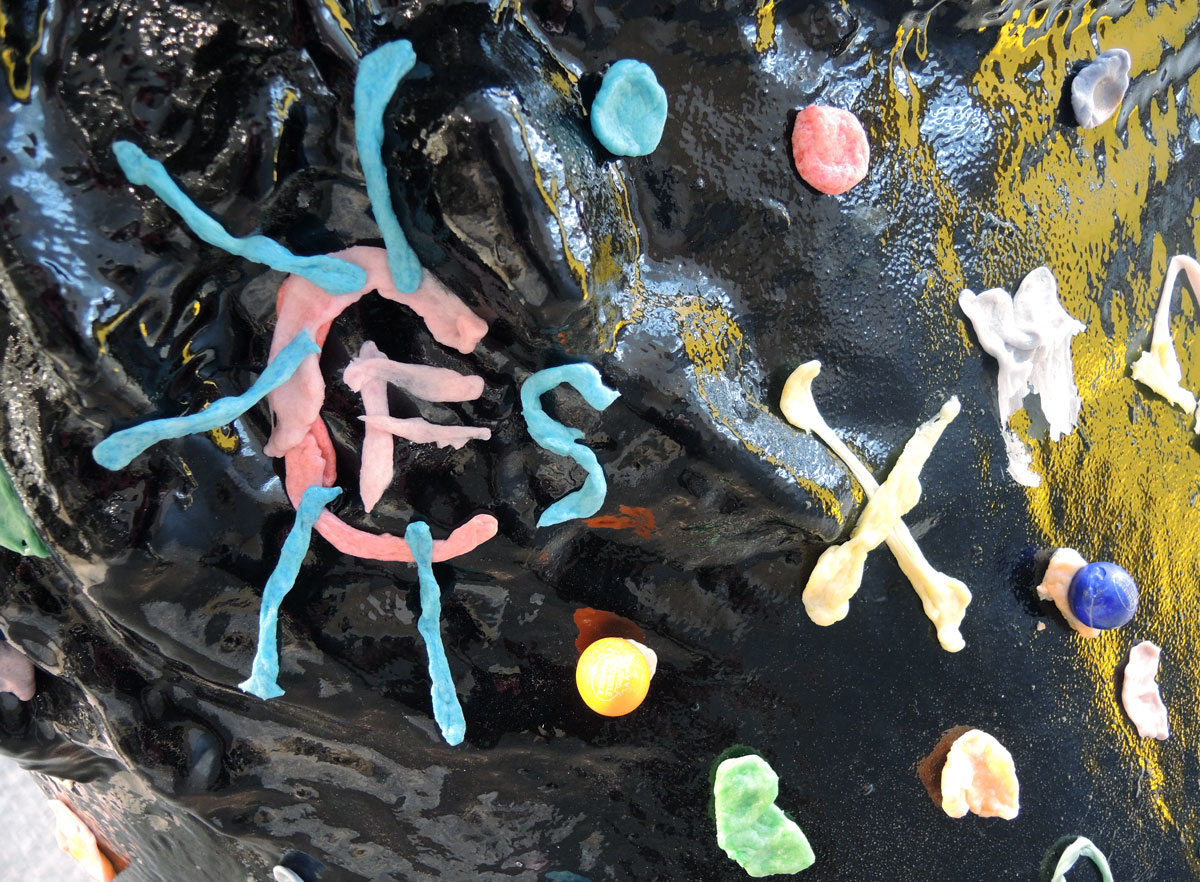


Gumhead is scheduled to remain until March 9th.
And yes, gum is provided…. as is the Purell!

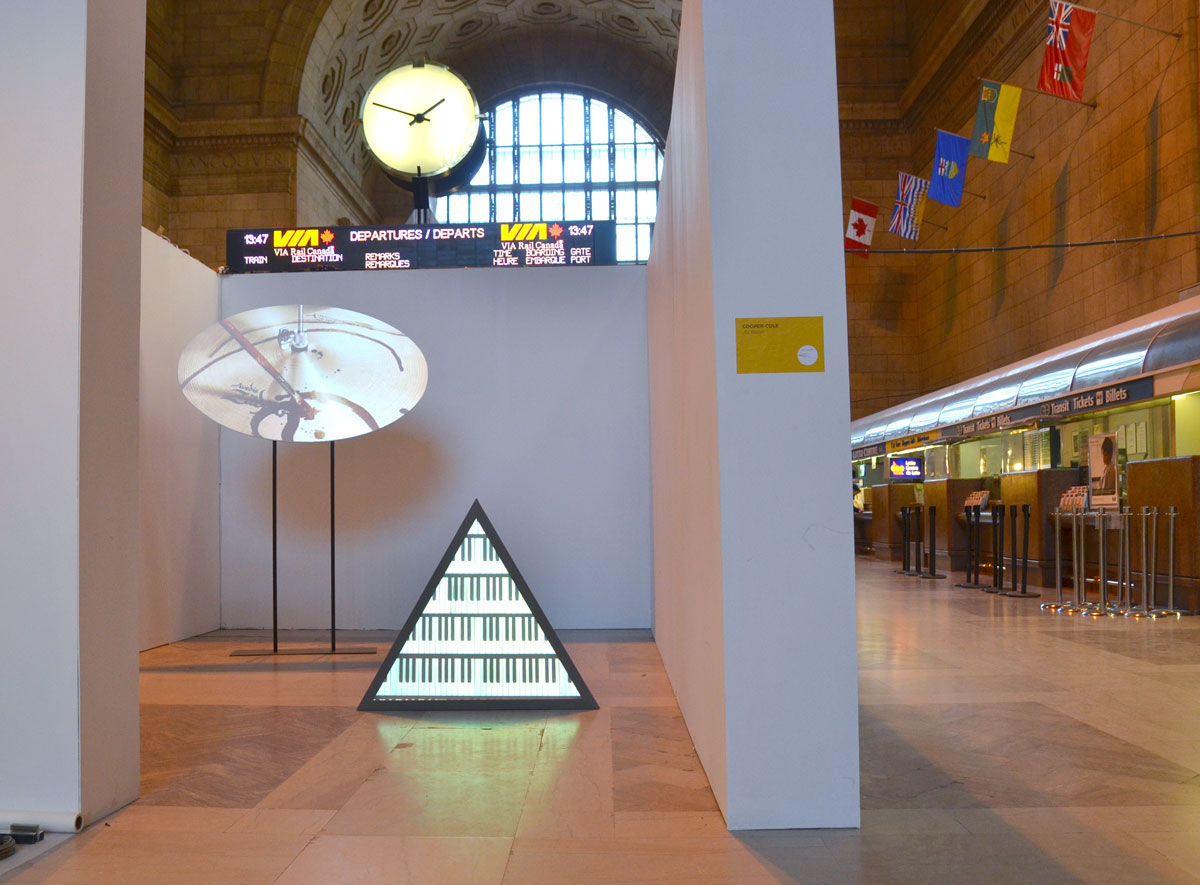
An art exhibit in the Great Hall at Union Station, January 16 to January 23
I’m going to out on a limb a bit here and say like most contemporary or modern art, this exhibit was combination of some shoddily thrown together nonsense and some well executed and interesting pieces.
One of the things that caught my attention was how people reacted and/or interacted with the different parts of the exhibit. Union Station is not an art destination. It’s a space that people walk through on their way to somewhere else.
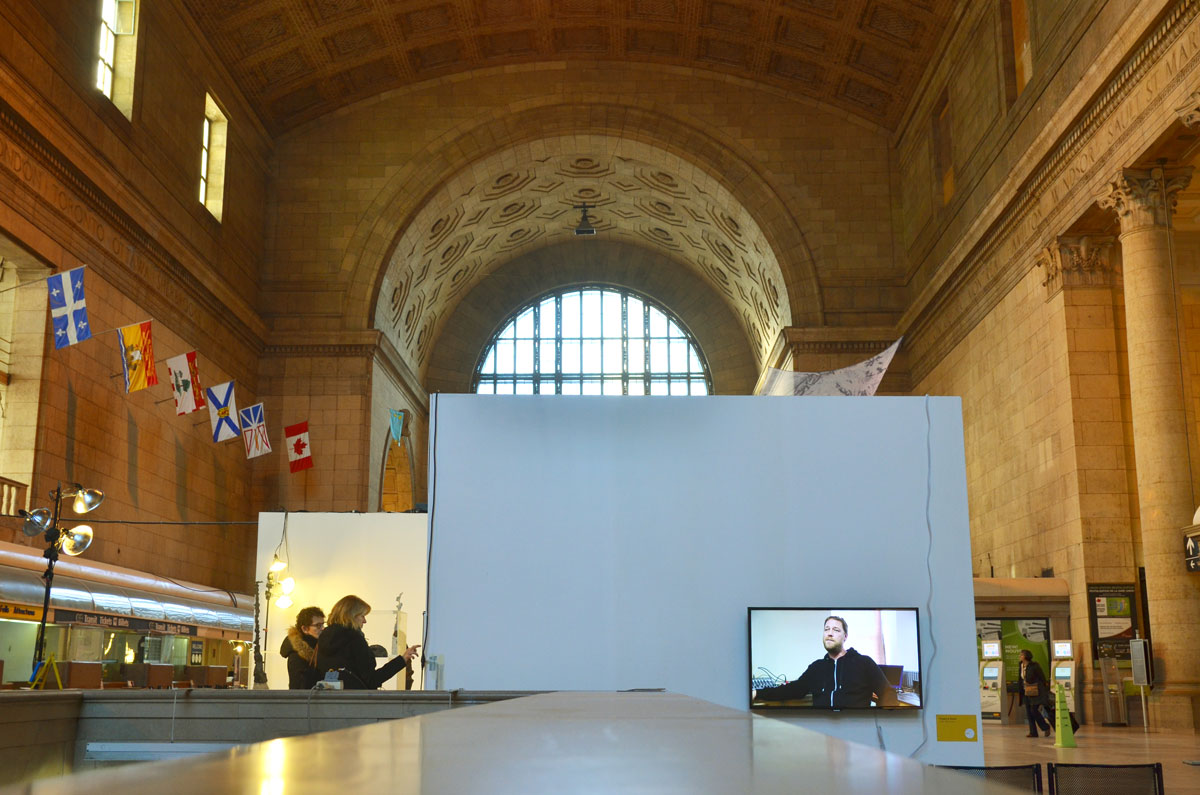
In the above photo, the women are using a computer monitor to learn about The Legacy of Joseph Wagenbach, an installation by Iris Haussler. In 2006 she turned a house on Robinson St. in Toronto into a ‘discovered’ home of a reclusive older man who had filled his house with over 100 sculptures that he had made. At that time there was some controversy when people learned that there was no real Joseph Wagenbach, that his story was fiction. There is a Joseph Wagenbach Foundation with its own website.
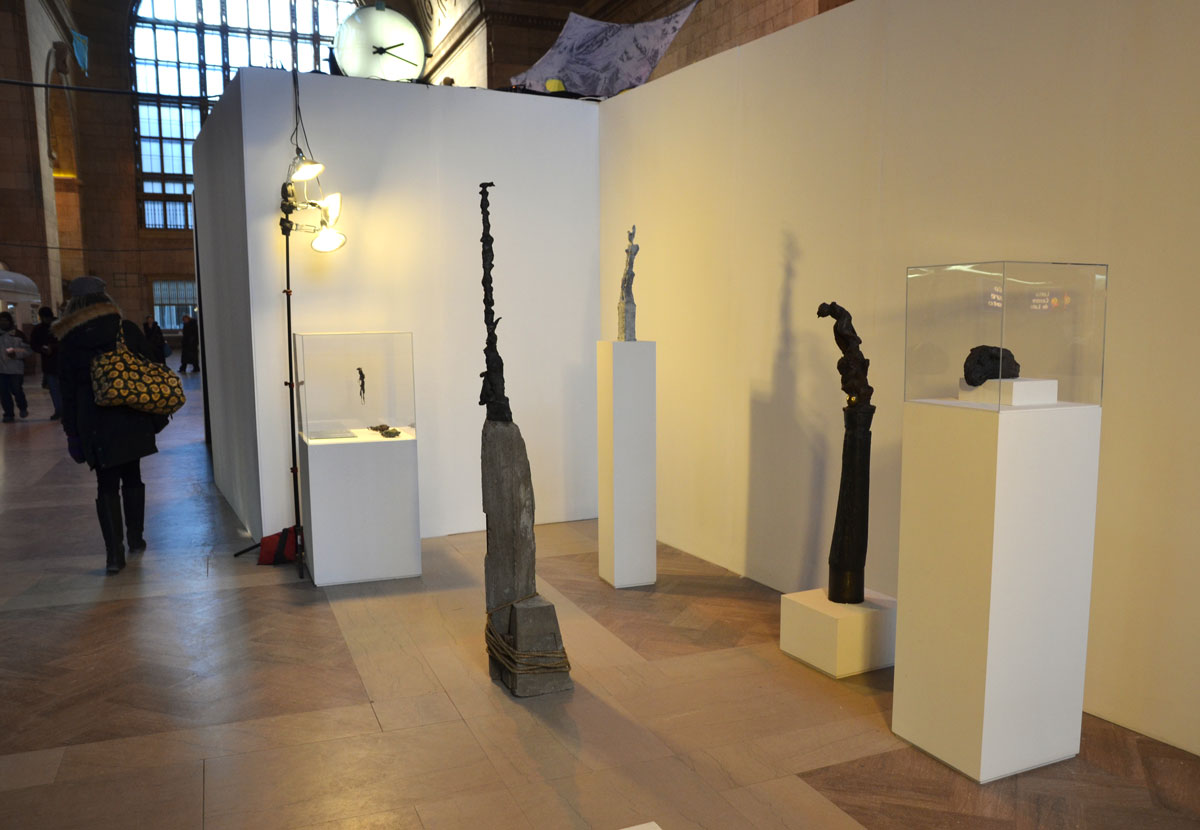
Some of the Joseph Wagenbach sculptures.
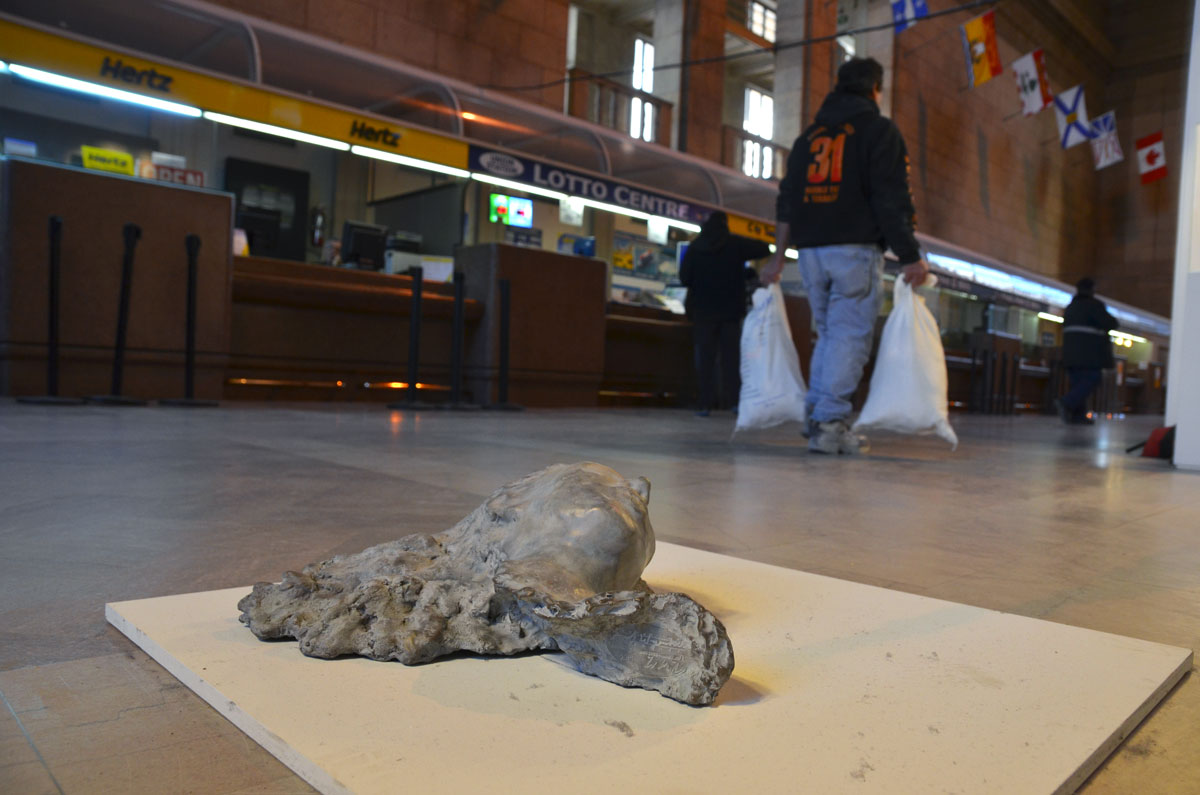
***
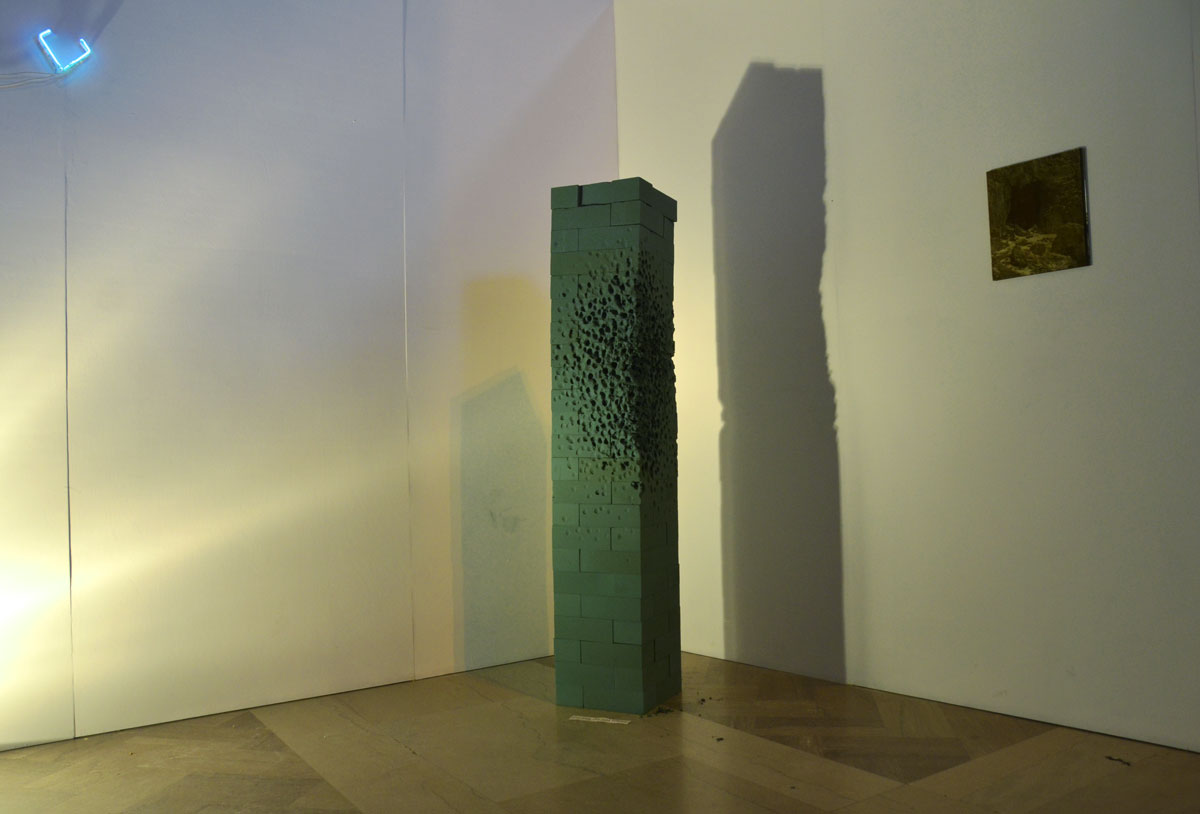
‘Marbled Meanings’ by Navid Nuur.
top right: ‘Broken Diamond’ made of neon, broken glass, argon neon blue light.
center: ‘Threshold’ made of green florist foam blocks
With the above collection, I found that the light and shadows were more interesting than the green column. I don’t know whether or not this was an intentional part of the exhibit.
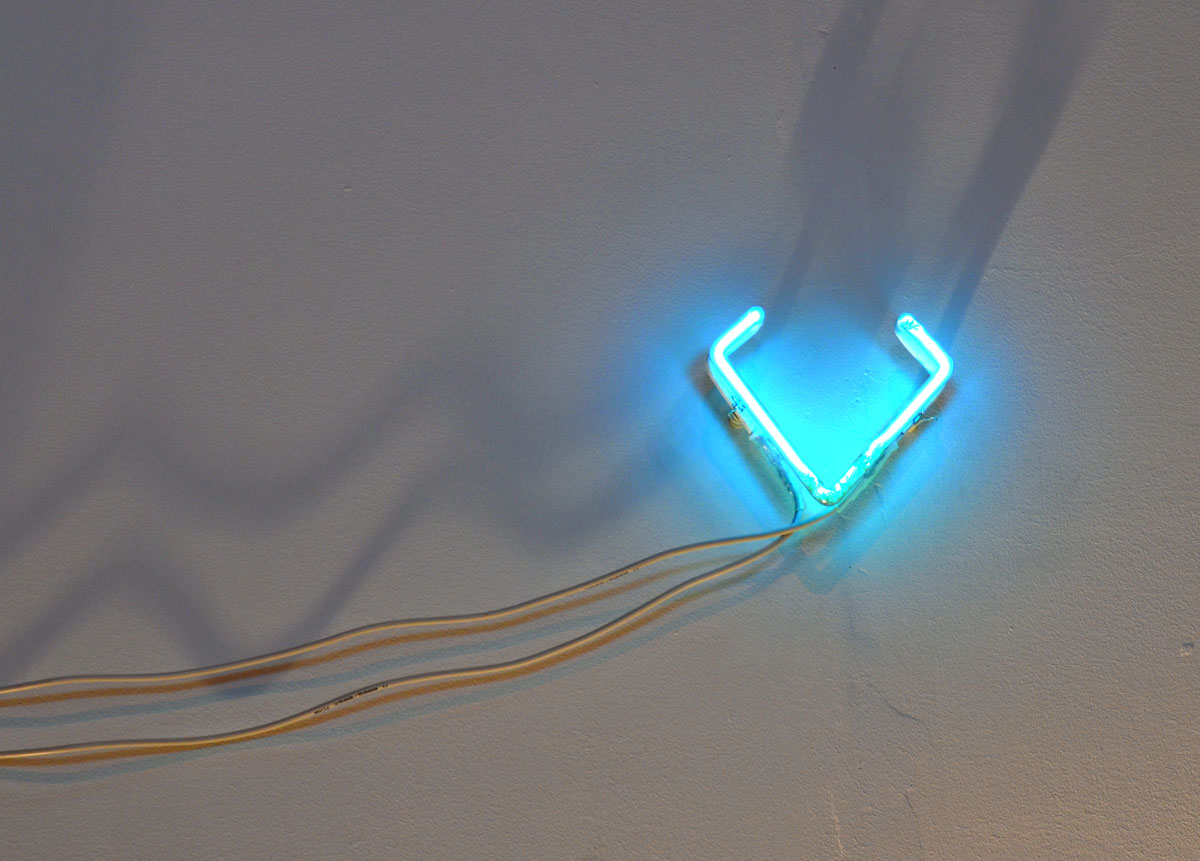
close up of ‘Broken Diamond’
***

“I’m going to use the two hundred dollar artist fee from this project to pay my phone bill and with the money left over I’ll probably buy a pack of smokes and maybe order some Chinese food.”
Is this a statement about the value of art? Is this a f*ck you statement – if you, or society, don’t value art why should I (as the artist) care about my work?

Floating overhead and watching us with yellow eyes.
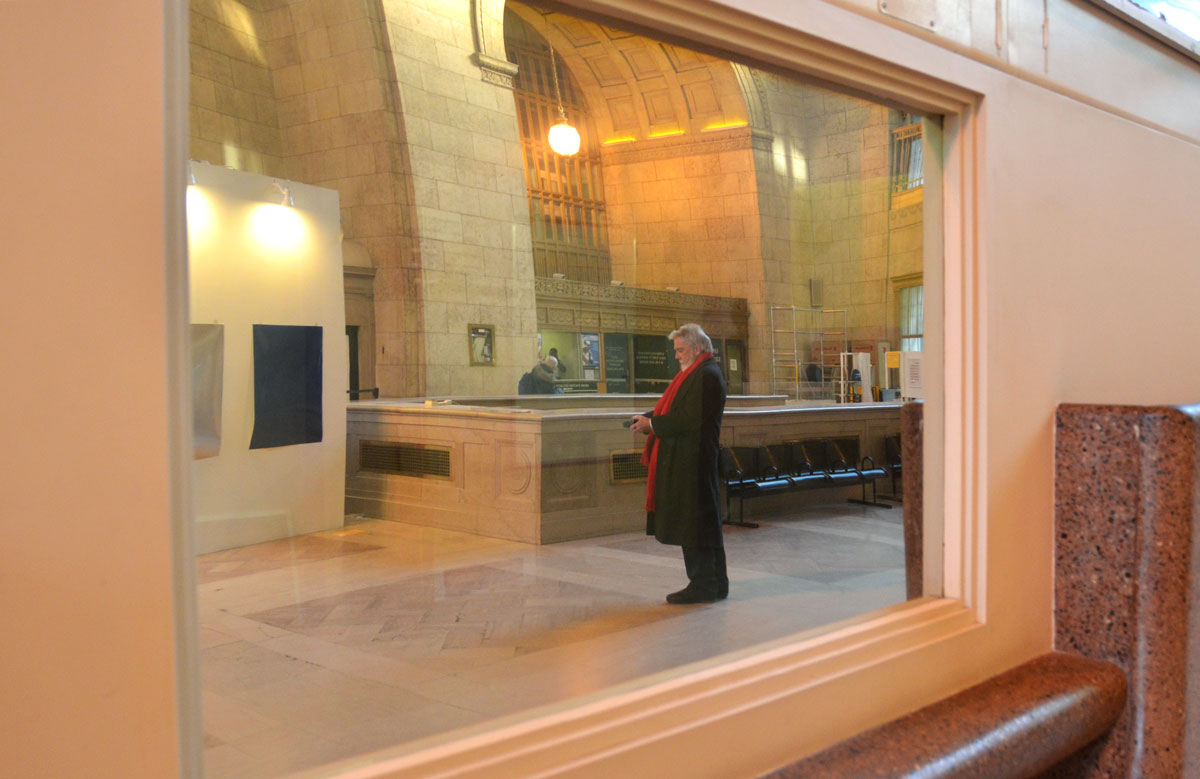
reflections
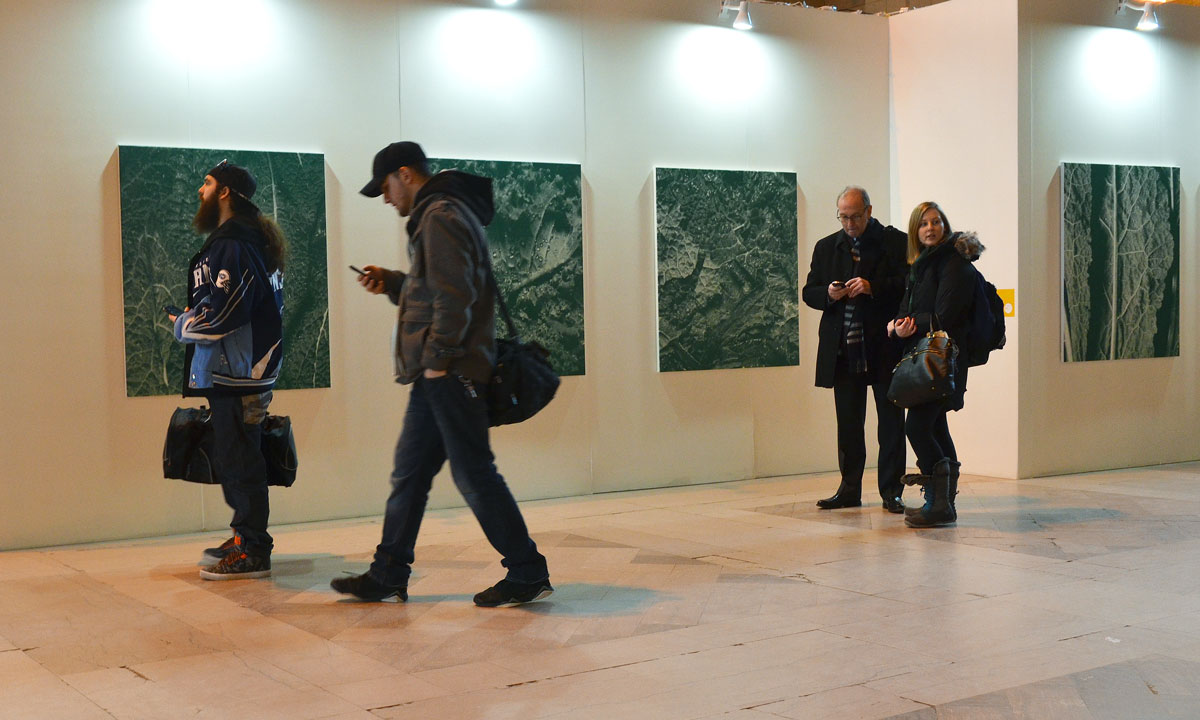
I know that art is subjective but I fail to see the appeal in large monochromatic pictures in an ugly shade of green. They aren’t profound; they’re not making a statement; they elicit no emotion.

The projector is playing a loop of blank screen to a garbled soundtrack.
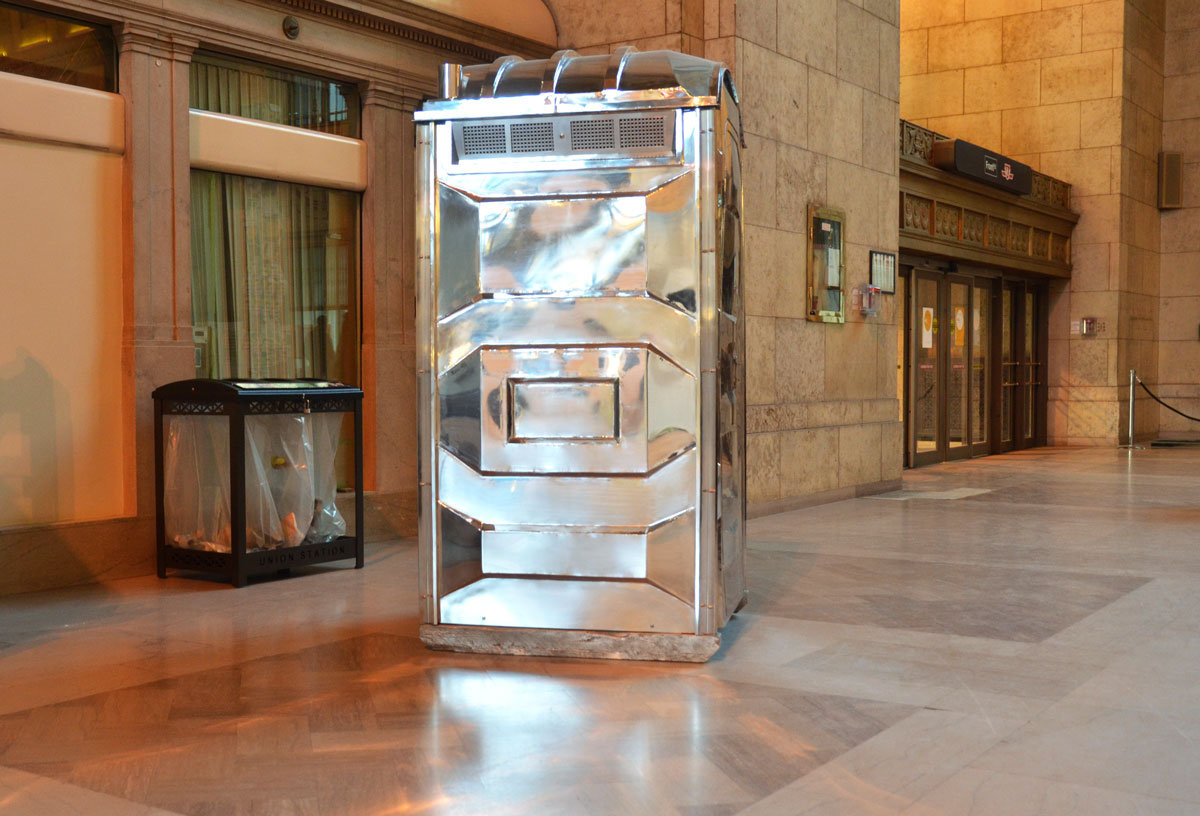
I couldn’t help but chuckle at the juxtaposition of the arty porta-potty and the real trash container behind it. Someone tried to open the door of the potty but it was either locked or not real. Note to artist: Why?
The Ontario Bread Company is located near Dundas and Ossington.
It had an Ossington Ave address but it is surrounded by lanes.
In September of 2013 it went out of business. The building is still there but it is empty.
 .
.

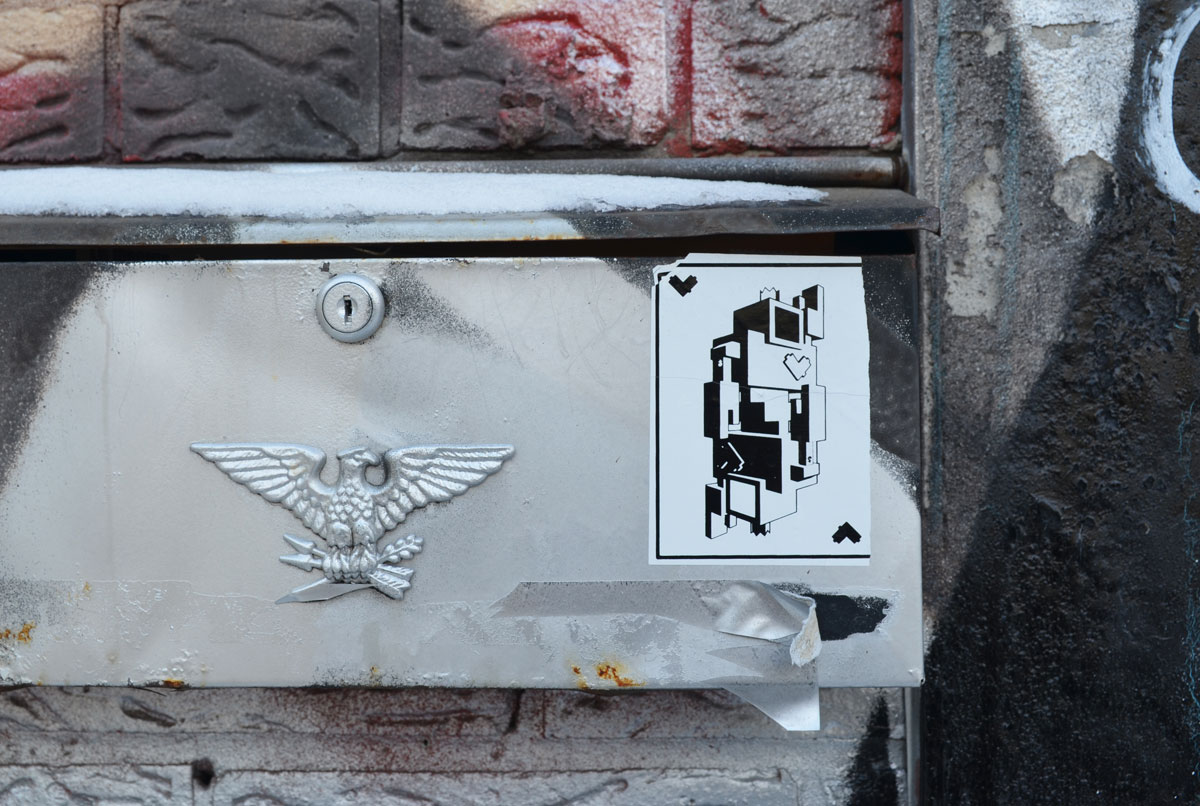
Lovebot is now on their mailbox!
The bakery was founded in 1935 by Polish immigrants and they specialized in Polish, and other Eastern European, breads. BlogTO did an interesting piece about the bakery in August 2013.
There is a lumber yard adjacent to the bakery on the same lane.
What follows are some of the photos that I took as I walked the “block” of lanes around the bakery and the lumber yard. Some of the graffiti has been there for a few years.

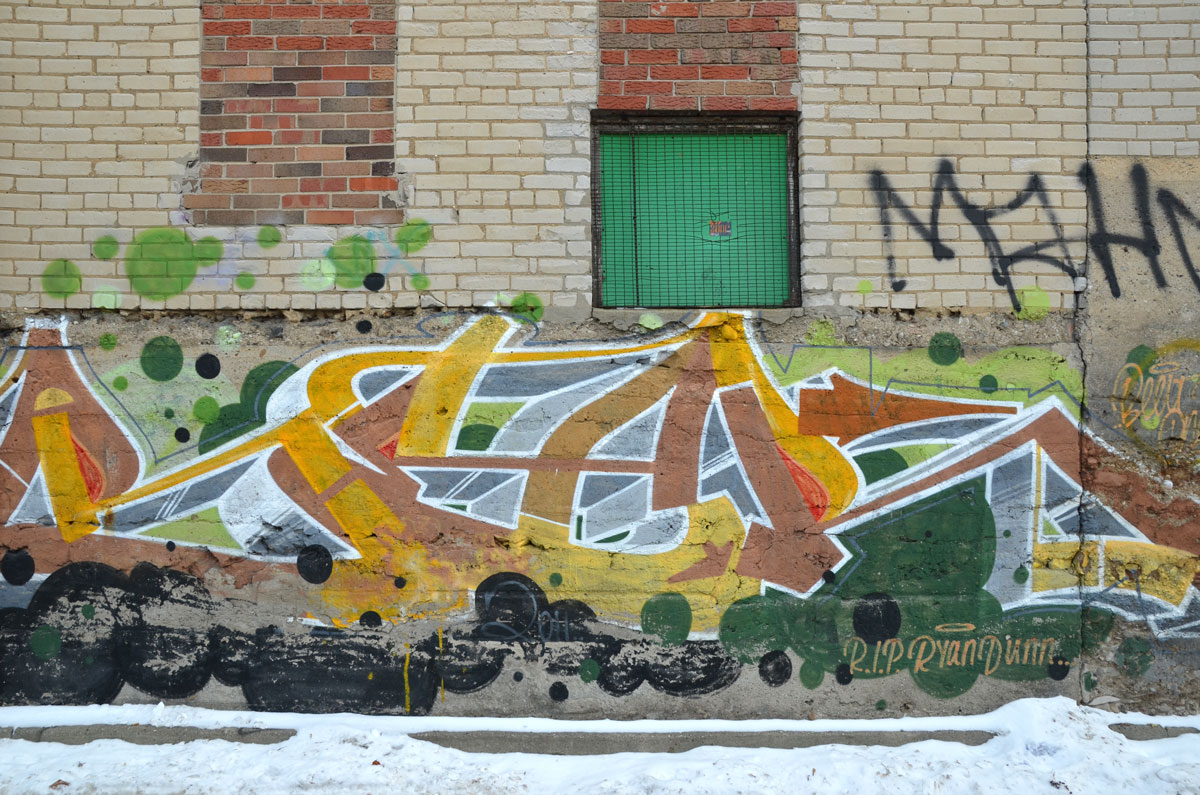

A view of the back wall.

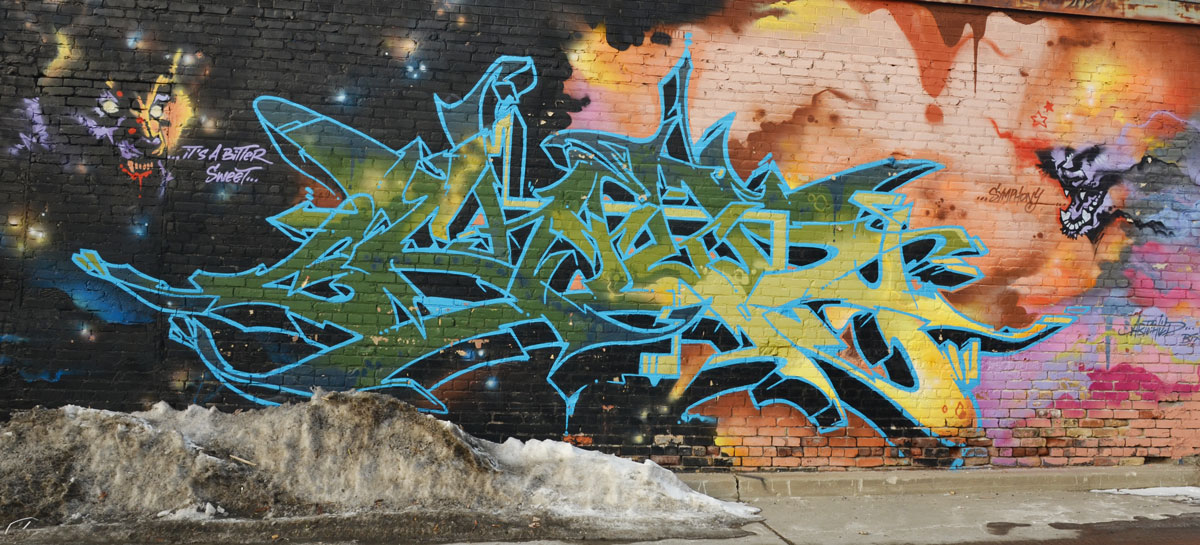
The words on this one say “It’s a bittersweet symphony”
This pair stands under the shower in a quiet corner.

Rob Ford may no longer be mayor, but his legacy lives on …. in the form of anti-Ford graffiti.
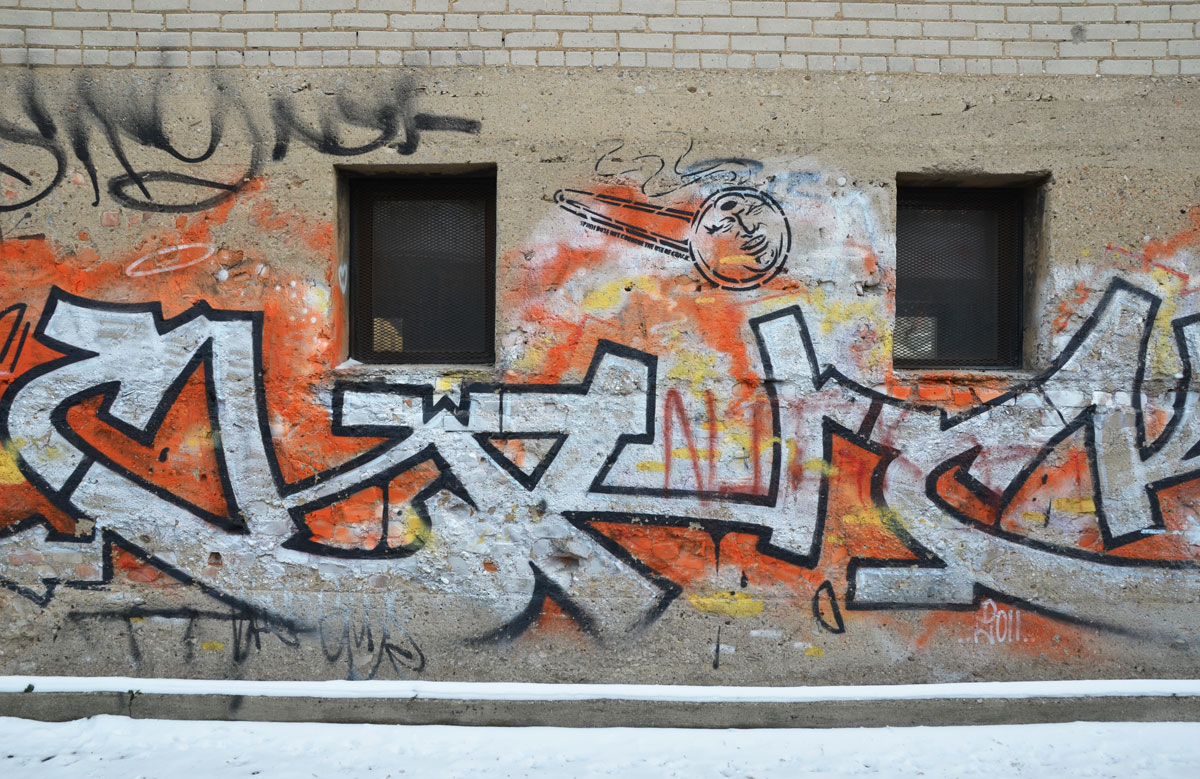


This piece is on Rolyat Street, just north of the Ontario Bread Co.
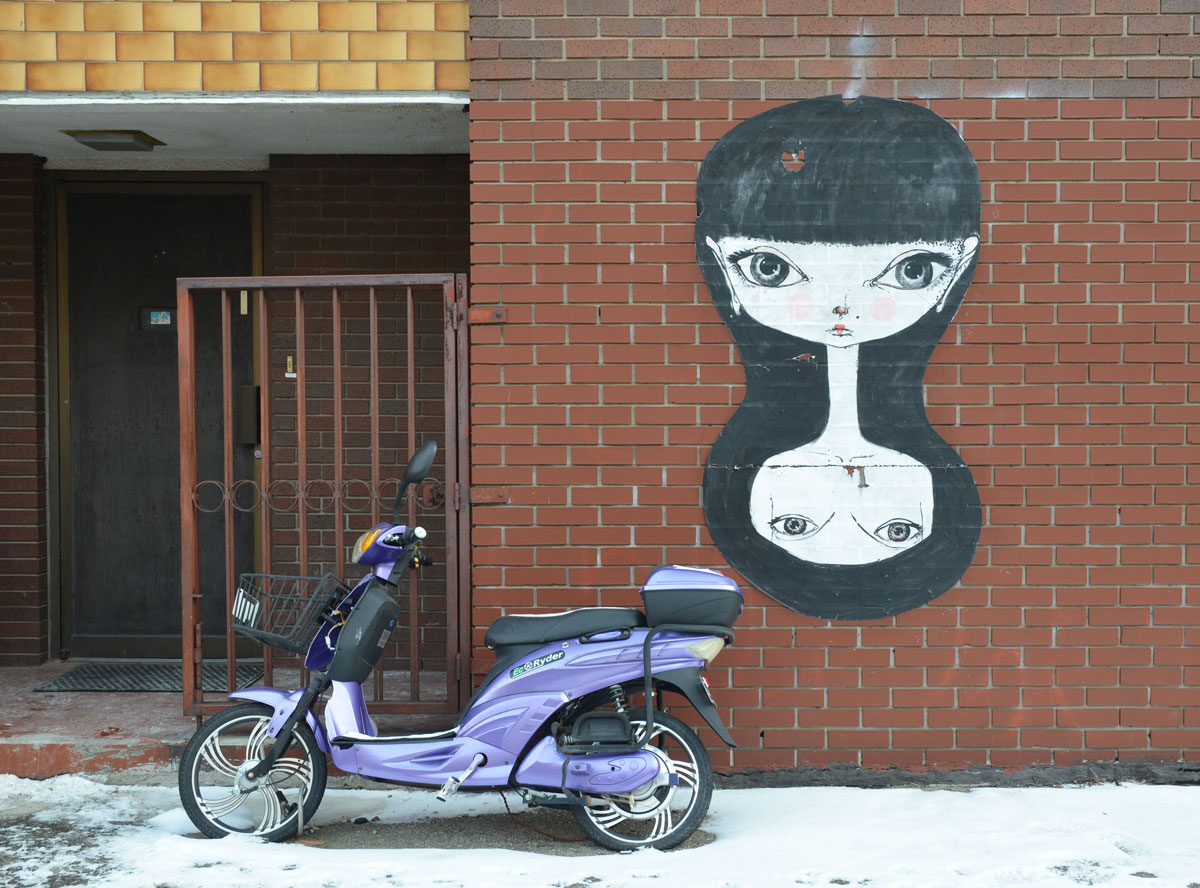
The last two pieces of street art are in a neighbouring lane, just to the northwest.


 as I walk Toronto