Posts Tagged ‘art’

Invention, an installation at The Power Plant gallery, by Mark Lewis.

The main part of the exhibit consists of 3 short films shot in Toronto.
When I first saw it, I thought that the films were older, perhaps from the 60s or 70s.

below:  A short film begins with a pan over part of downtown Toronto.  It circles back to the Robarts Library and focuses on a woman standing in the window of one of the upper floors.  After zooming in on the woman, the film “enters” the room she’s in and turns back to focus on what her view out the window looks like.
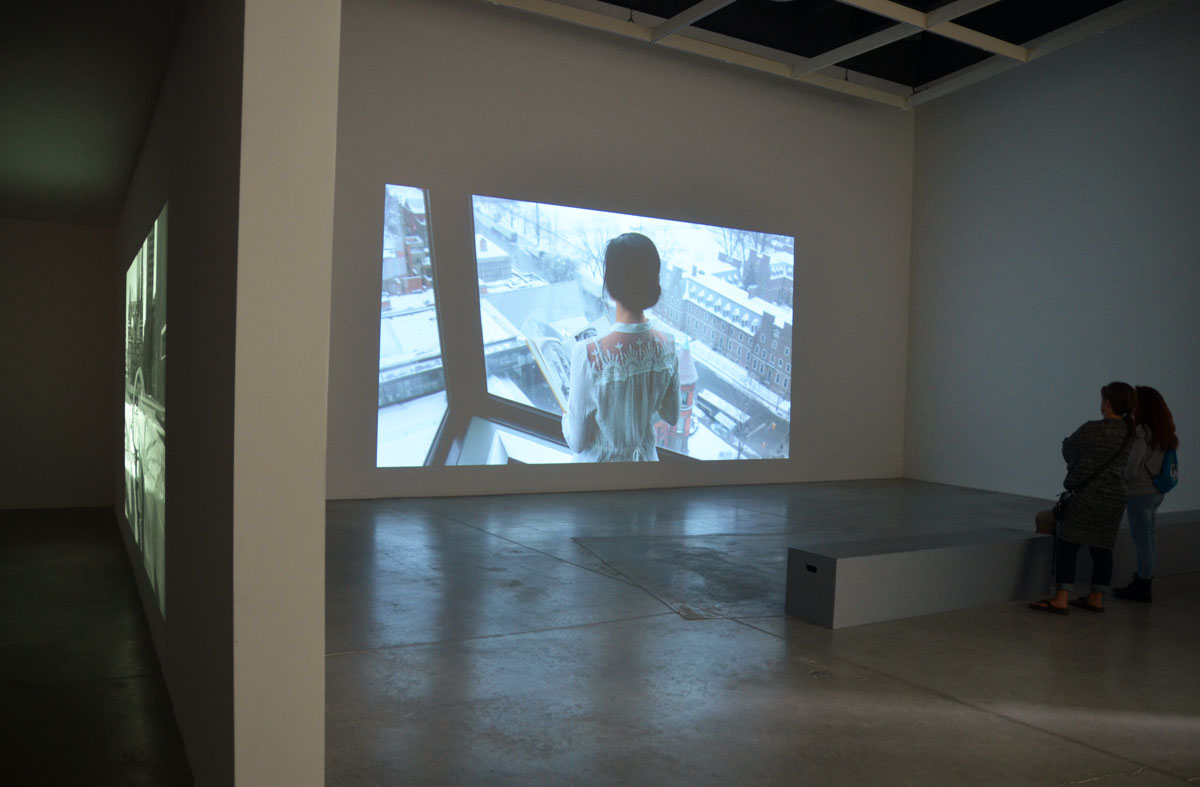
Two women are standing in the semi darkness in a room in an art gallery, watching a black and white film that is showing on a large screen in front of them. The image on the screen is the back of the upper part of a woman as she stands in front of a window in the Robarts Library in Toronto. The scene outside the window is clearly visible, winter time, University of Torotno campus. She is holding a book in her hands.

below:  Another exhibit is a film comprised of segments filmed at a number of locations around City Hall this past winter.   The image below is shot from the upper ramp at Nathan Phillips Square, looking south.   Old City hall is on the left.   There are no people in the picture.  There are also no commercial images such as billboards or signs on the buildings.  Slow moving, quiet.
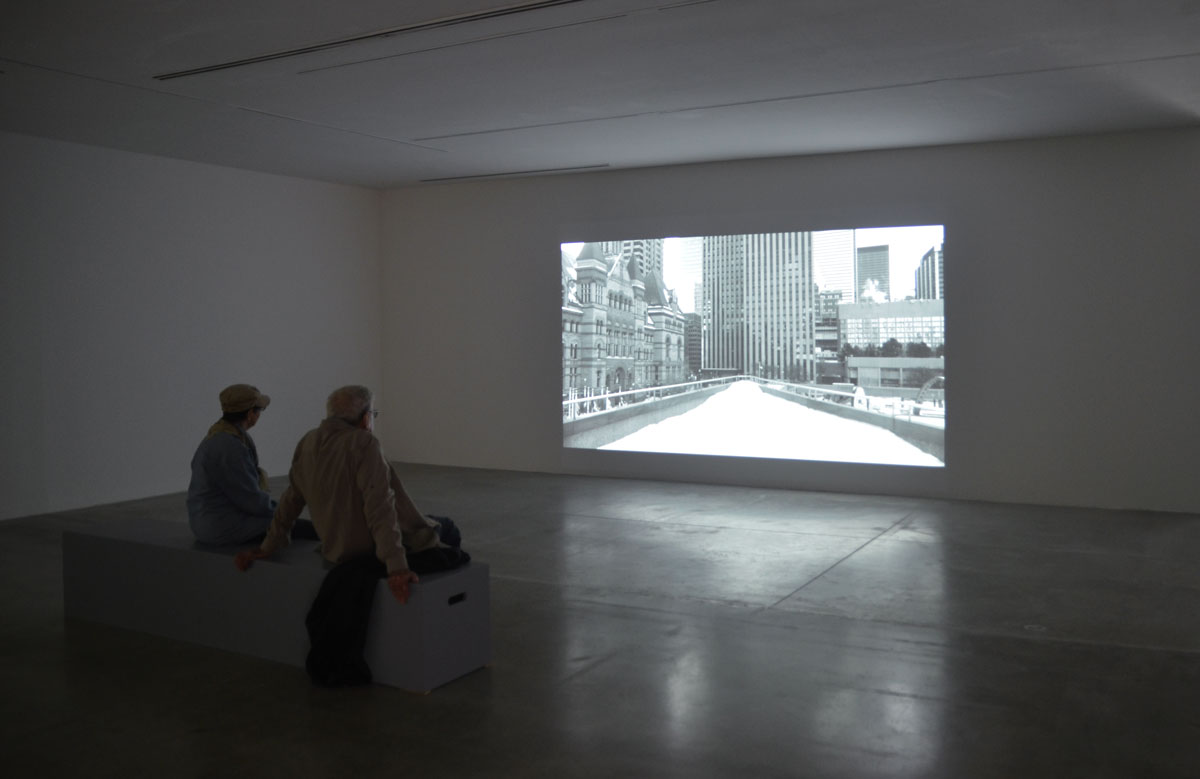
An older couple are sitting on a bench at an art gallery. They are watching a black and white film that is showing on a large screen in front of them. The image on the screen is a shot of the upper ramp at Nathan Phillips Square, looking south, in the winter with snow on the ground. There are no people in the picture on the screen.

It wasn’t until I looked more closely at the images that I realized that the films had to have been made recently… for example, the recently built stage area in Nathan Phillips Square.  So I watched the films again looking for details.

One of the images shown in an art installation on a large wall screen, a black and white picture overlooking Nathan Phillips Square in the winter.

A little perplexed, I tried to find out why Lewis made these films, and why they were considered to be “art”. It wasn’t easy; it was probably made more difficult by my love/hate relationship with contemporary art.  The title of this post comes from a paragraph I found on The Power Plant website description of this installation: “Together, the elements that make up Mark Lewis’ films culminate in a body of work that is as astute as it is elegiac in its contemplation of the quotidian, offering an experience of the flux of time that is as elating in its duration as it is haunting for its sense of passing.”  Well, um, okay.

It also wasn’t easy because of the scope of the questions that Lewis seems to be tackling.  One of his interest lies in discovering what it might have felt like when film revolutionized they way we looked at ourselves and at the world around us.   That’s a tough one.  We are a society that is immersed in moving images of all kinds. Movies and TV have been part of our lives for many generations.  Can anyone truly imagine what it might have been like to see a film for the first time?

As we all know, digital technology has put video production into the hands of anyone with a cellphone.   Even my three year old granddaughter asks me to make videos of her and I’m sure it won’t be long before she’s producing them.  And that leads to another question that Lewis is interested in examining – what are the implications of these technological changes?  Not only can see video, we can be in control of making our own whenever we want.

But that’s not all.  Lewis is also interested in architectural surfaces so walls, windows, pavements and reflective glass amongst others play a role in his films.   Urban architecture; urban landscapes.  Cinema made of the ordinary everyday life of living in the city and everyday life in the city is cinema.  24/7 movie making.  You are part of the cast; you are the camera.

What I have presented here are just three pictures and I’m not sure the pictures do the films justice.   If you want to see these films, they are at The Power Plant gallery until 3 Jan 2016.

#PPInvention
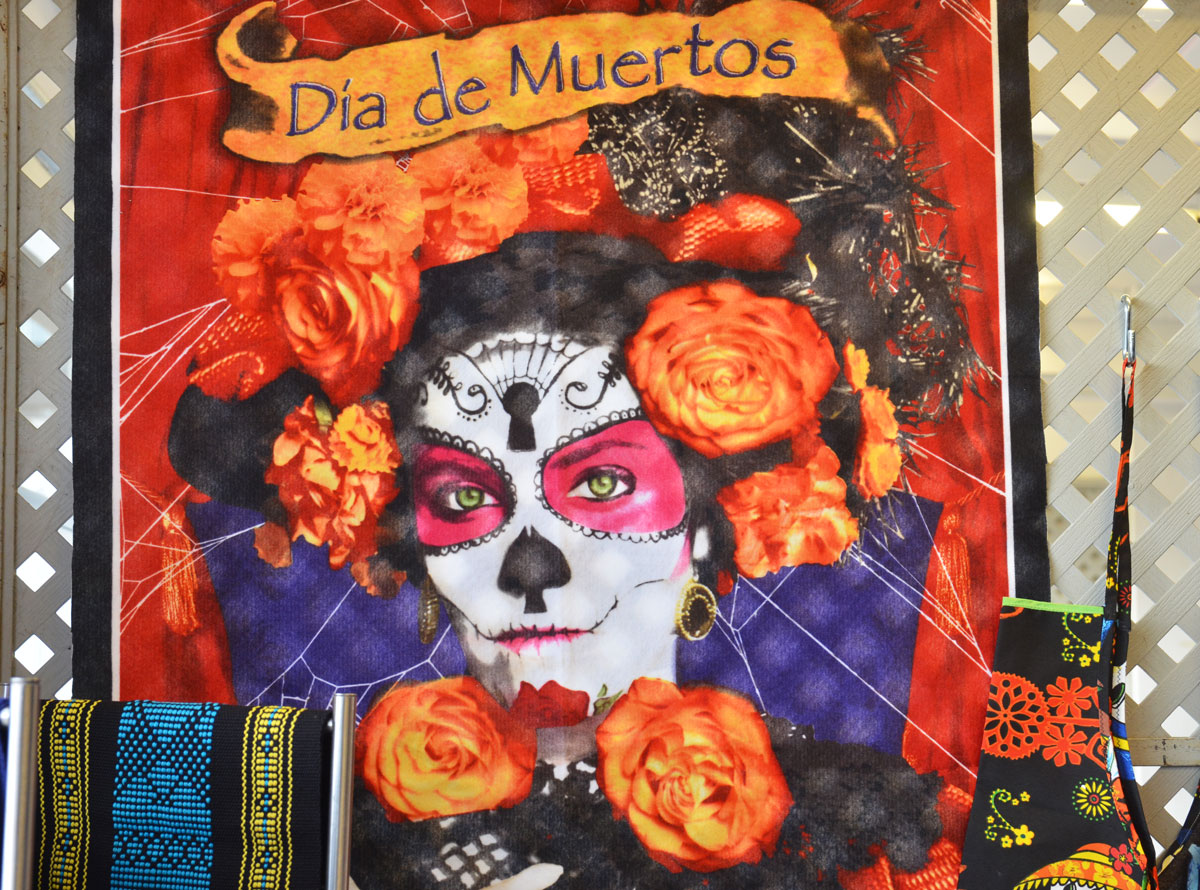
Dia de Muertos, Day of the Dead, is a Mexican holiday where and friends come together to pray for and remember friends and family members who have died.  It occurs at the end of October (31 Oct to 2 Nov).  Here in Toronto there was a Day of the Dead festival at Harbourfront this past weekend.

fabric hanging on a wall. There is a picture on the fabric of a woman's face painted white to look like a skull but with pink around the eys. Many orange roses surround her face

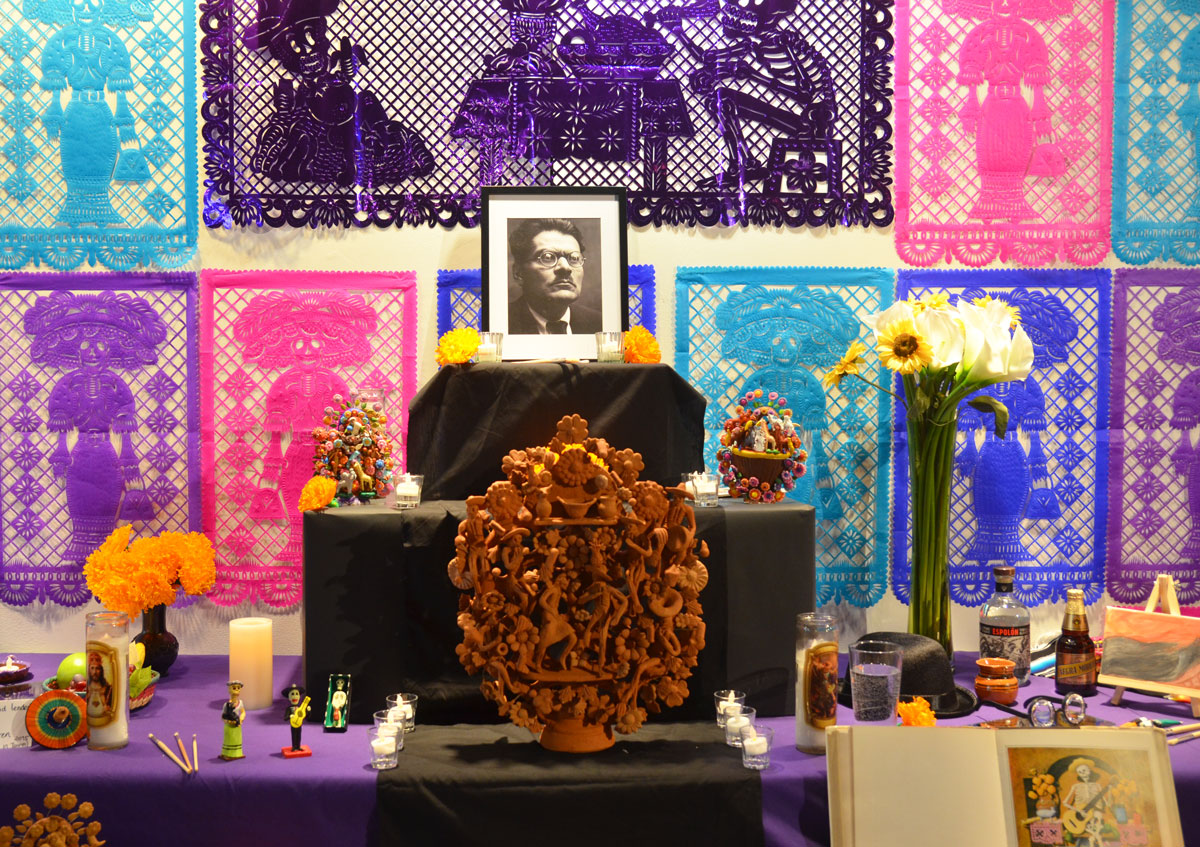
One of the traditions of Dia de Muertos is the making of ofrendas which are altars dedicated to the deceased person.  Jose Clemente Orozco was a Mexican painter (1883-1949).  He specialized in painting murals in frescoes and his work can be seen in Mexico and in the USA.

elaborate and colourful ofrenda with purple, blue and pink paper cut outs on the wall behind.
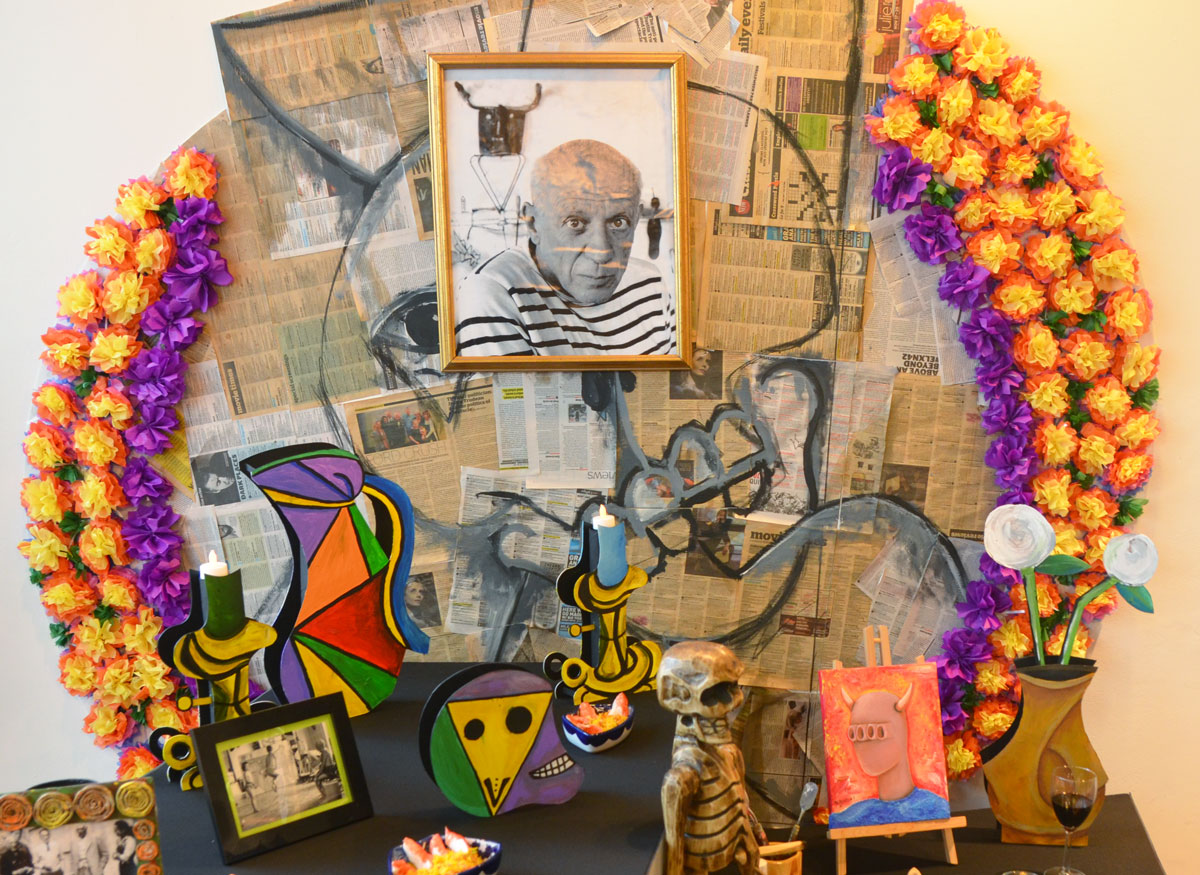
Another altar that was on display was one made by artist Alberto Cruz in honour of Pablo Picasso.

An ofrenda, or altar, in the memory of Pablo Picasso at a day of the dead festival. There is a photo of him surrounded by different objects and symbols representing his life and things that he did

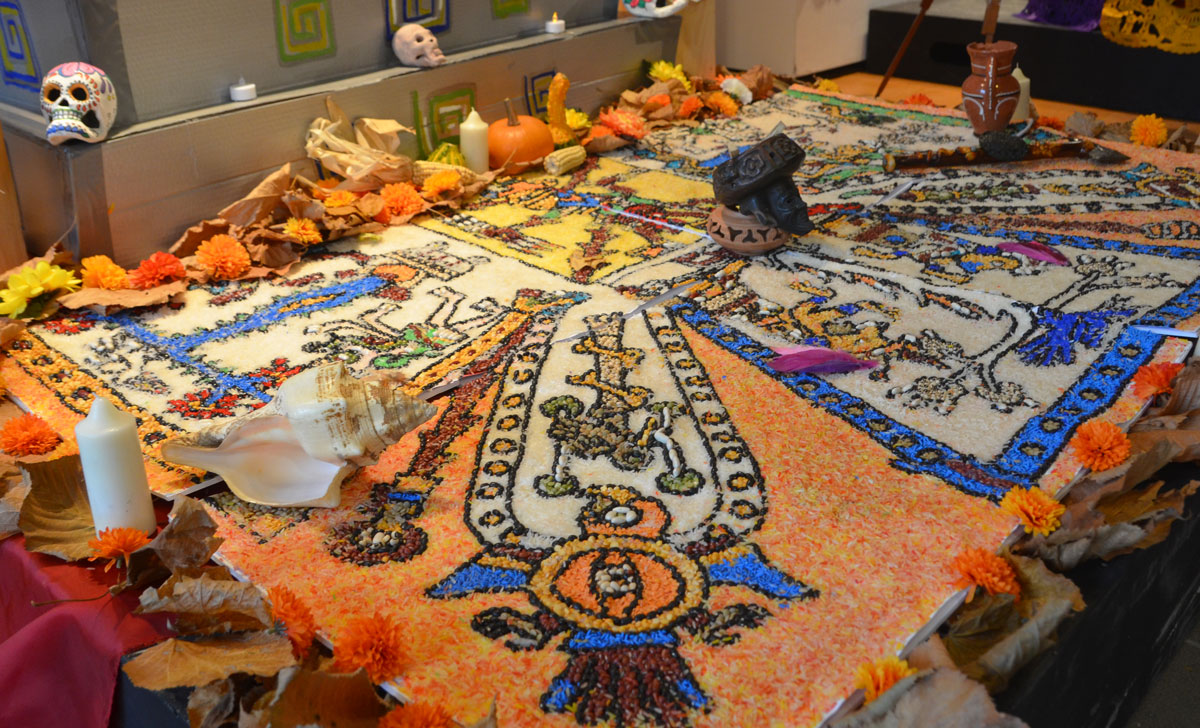
The Casa Cultura Mexicana made an ofrenda to honour the Prehispanic indigenous people and warriors of Mexico.
The bottom part consisted of pictures made with coloured rice.

pictures made of coloured rice on an ofrenda dedicated to the indigenous people of Mexico

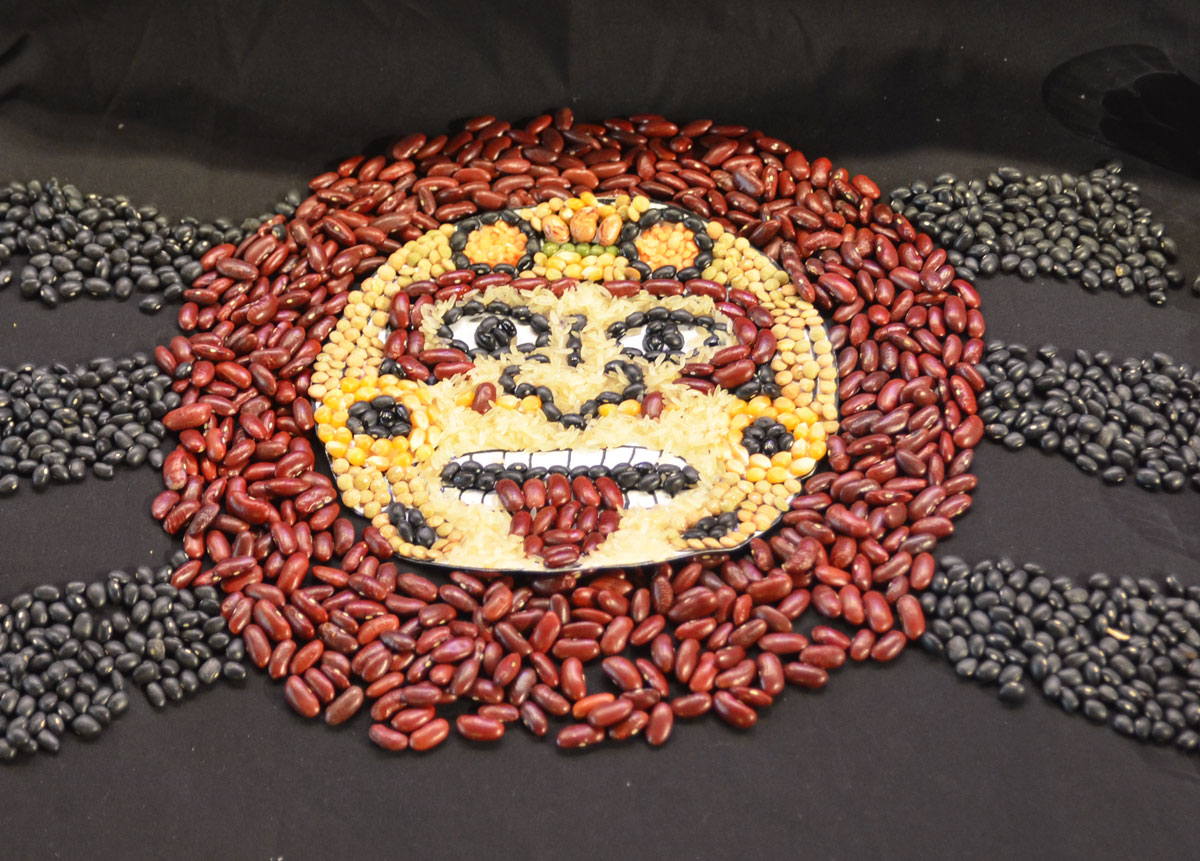
Food items such as rice, beans, and corns were an important part of the ofrenda.

a face shape made of dried beans and corn. red beans make a circle around the face, black beans make 6 rays coming out from the circle. The face is corn with bean features.

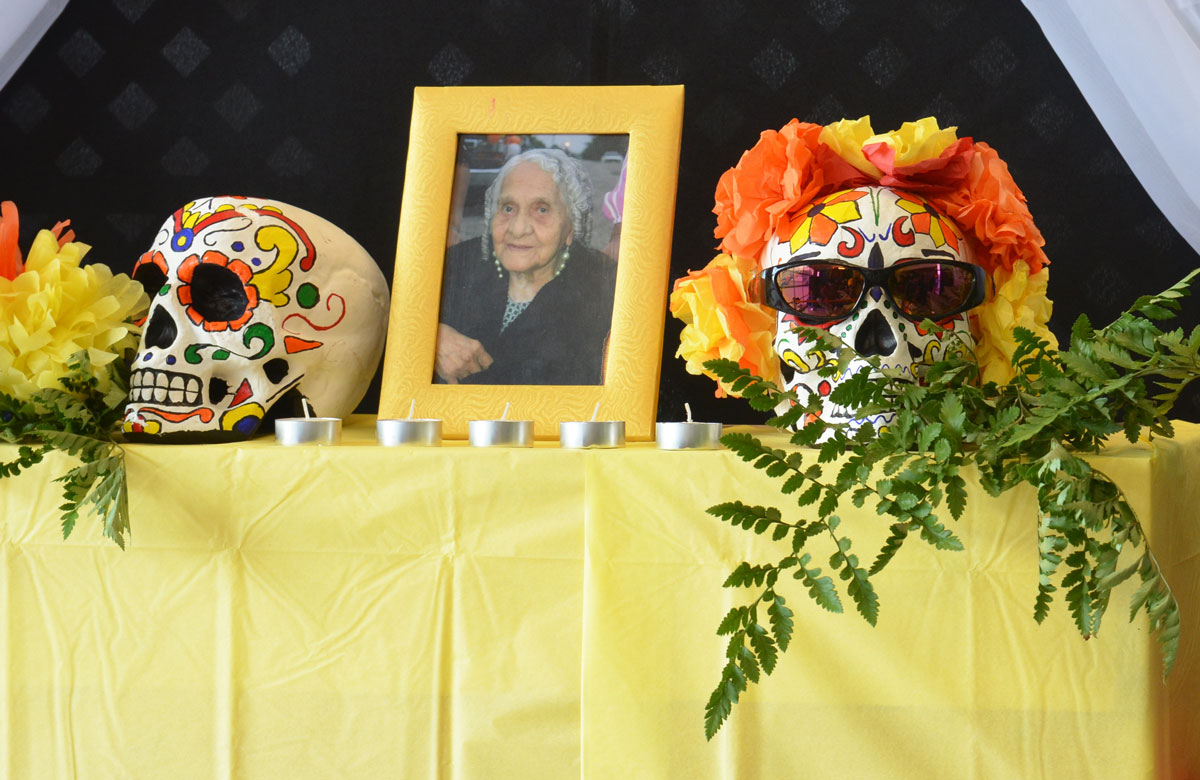
Ofrendas are decorated with sugar skulls and marigolds (or yellow and orange paper flowers) as well as candles, photos, momentos from the person’s life, and things that symbolize something about that person.  Sometimes serious, sometimes whimsical.

an ofrenda with a picture of a woman in a frame sitting on a table. One each side of her is an elaborately decorated skull. One of the skulls is wearing sunglasses and a wreath of yellow and orange flowers around the top of its head.

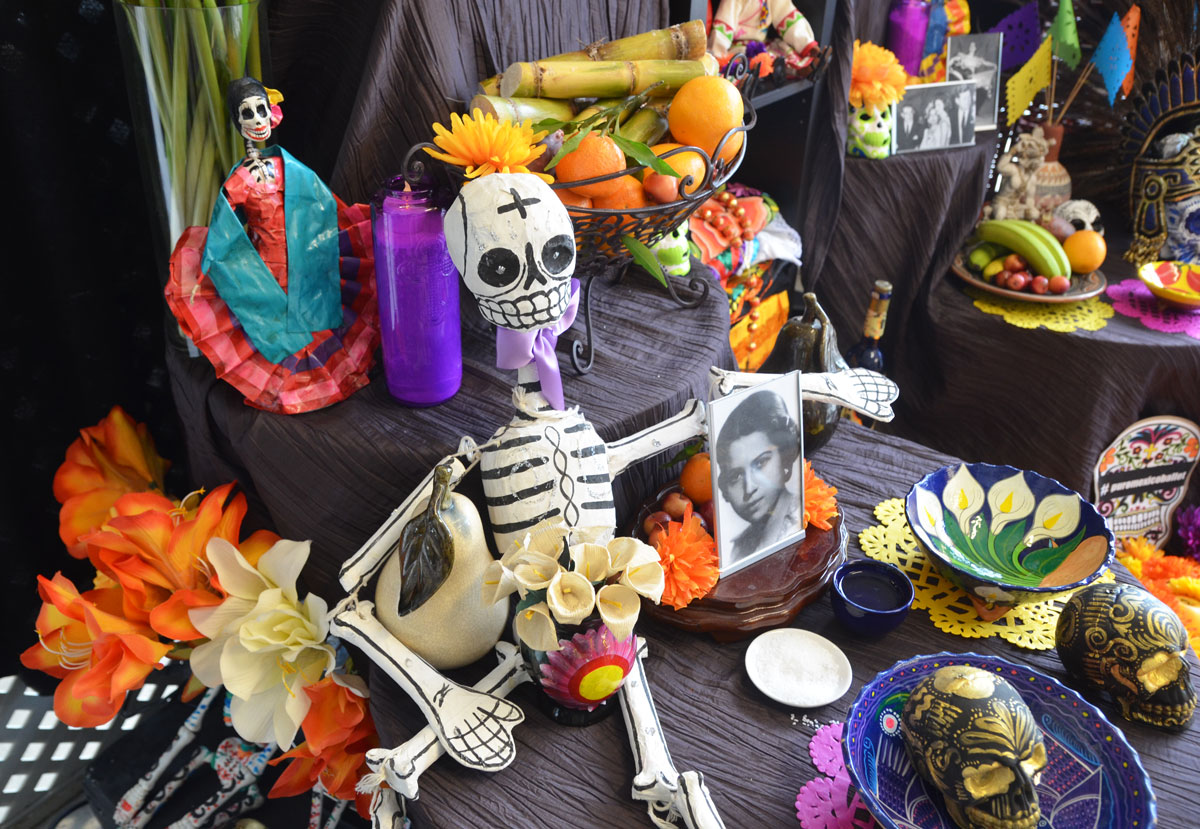
What would your friends and family put on an ofrenda in your memory?

objects on an ofrenda at a day of the dead celebration, decorated skulls, a small skeleton, some old photos of people, flowers, fruit,

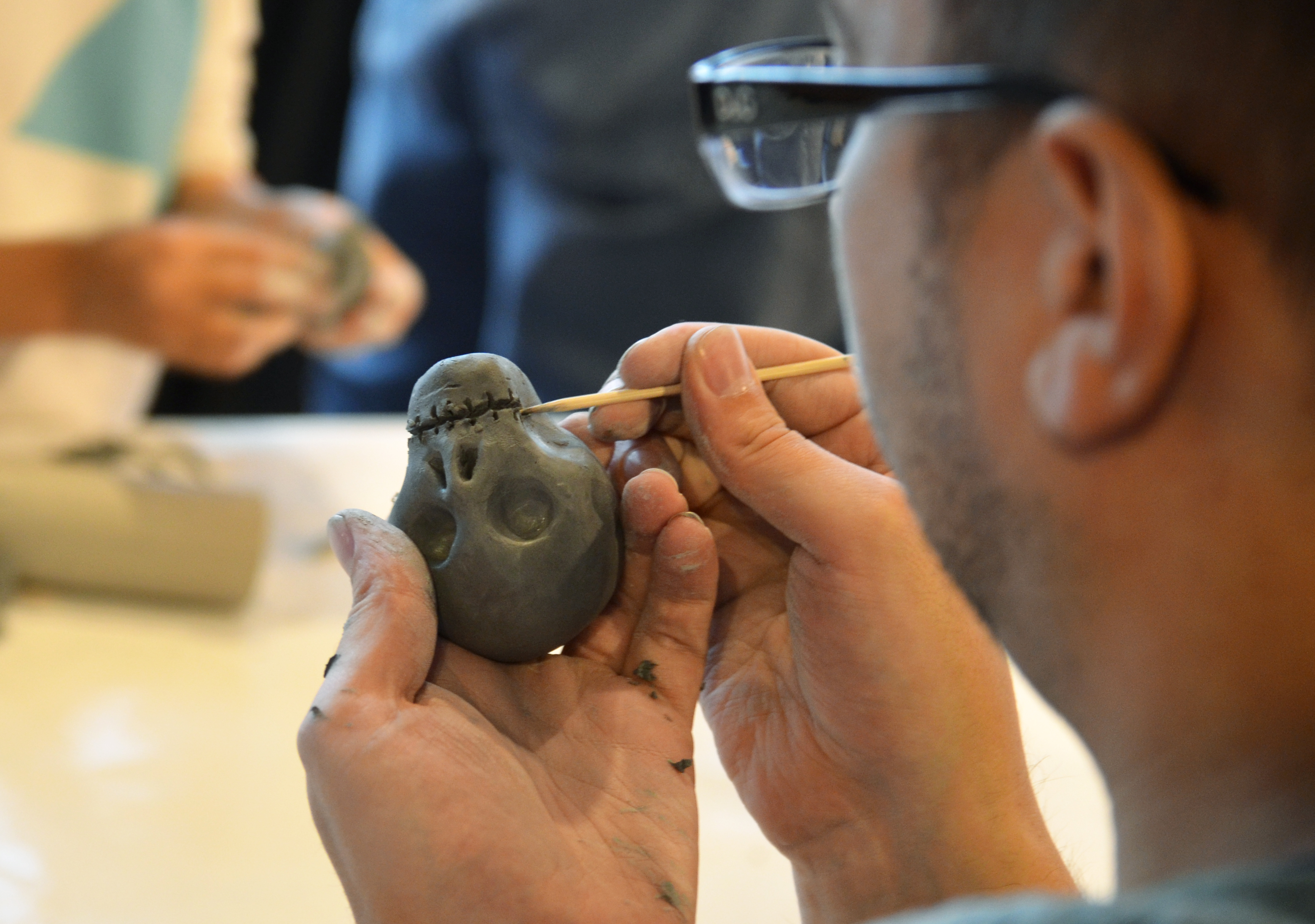
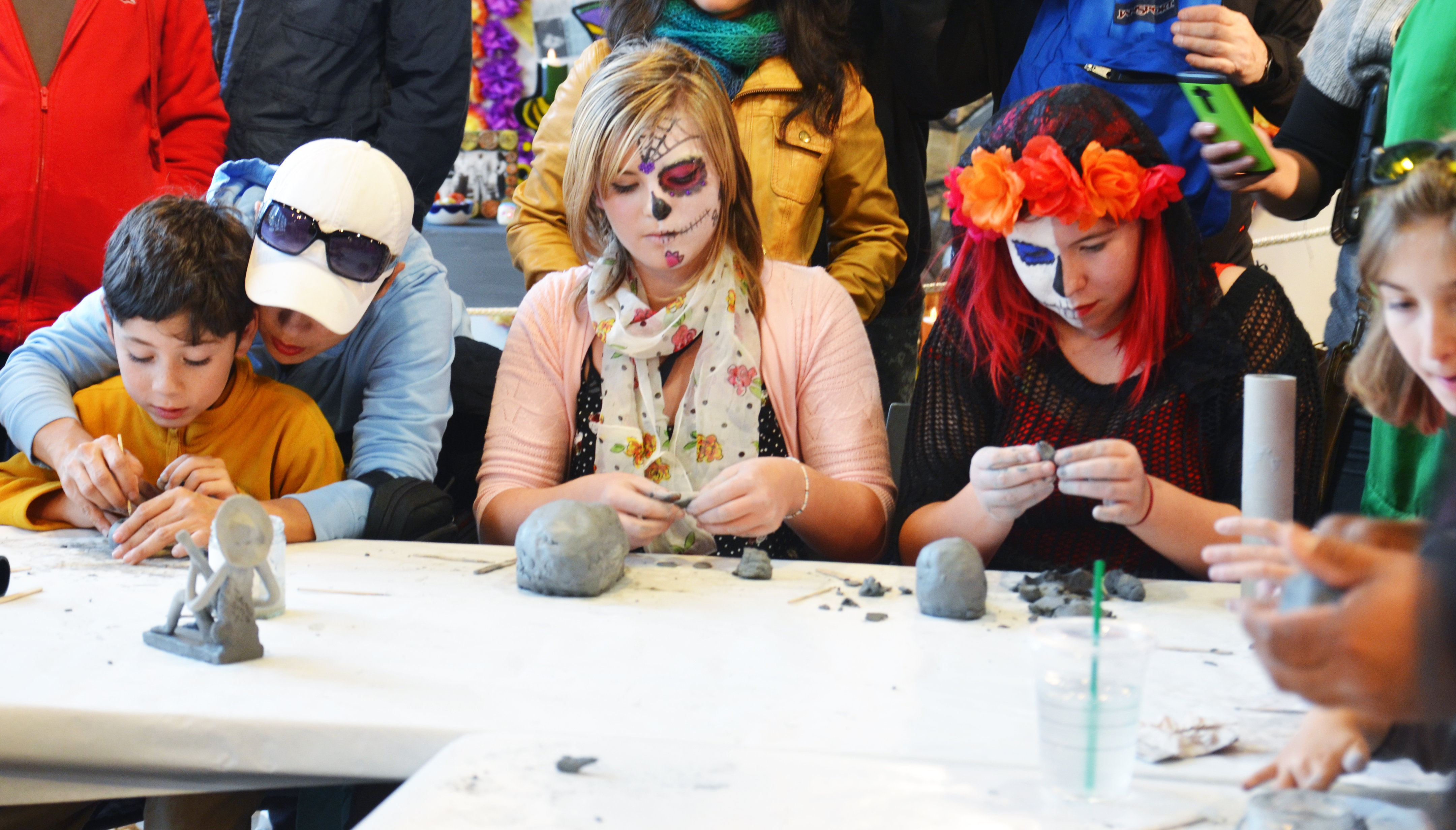
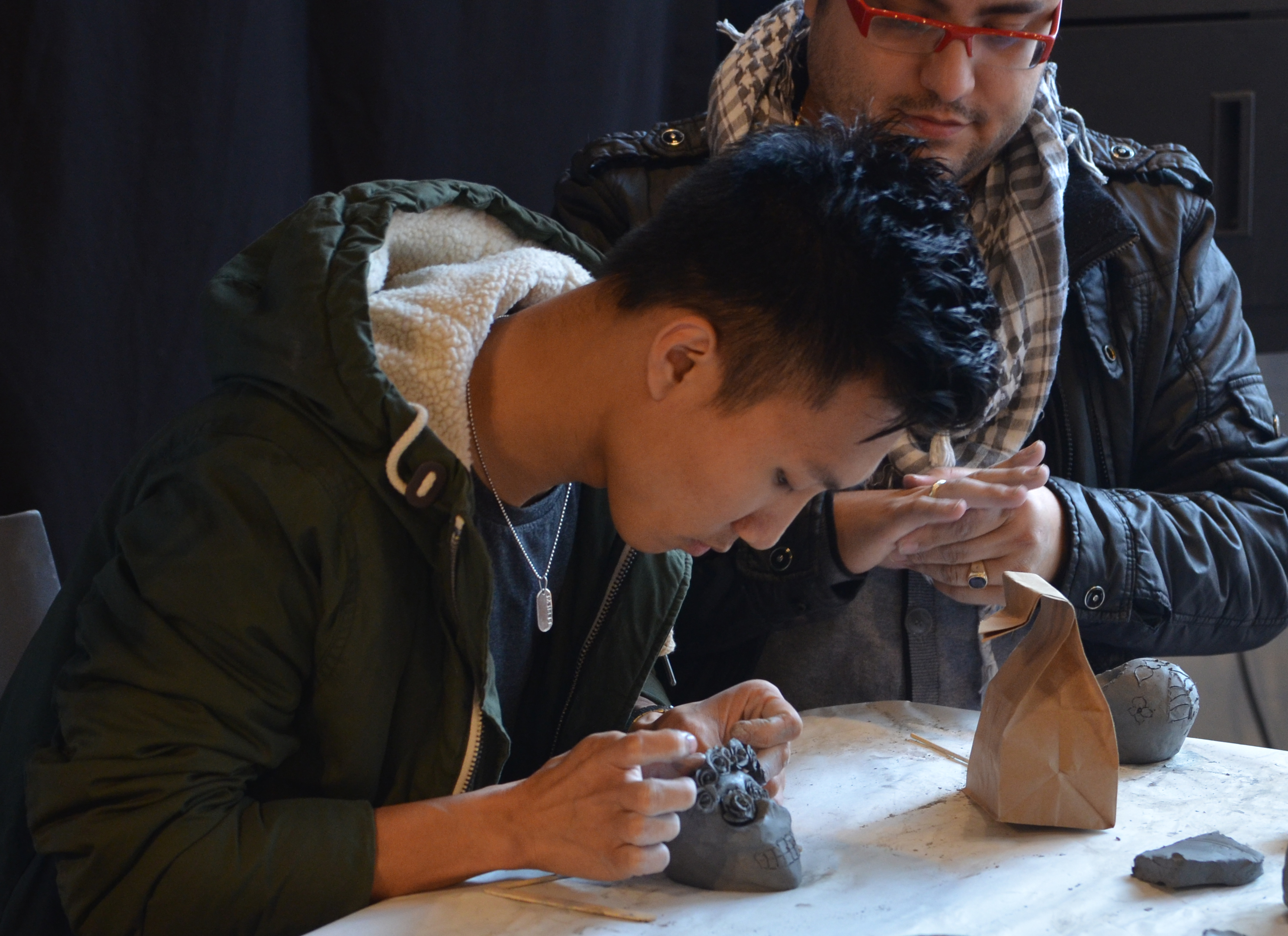
There was also clay available if you wanted to make a small skull or other symbol for the occasion.

close up picture of a man putting details on a small clay skull with a toothpick

Two girls with day of the dead face paint on are making clay skulls. A young boy is also at the table making a skull, his mother is helping him.

A young man carefully adds tiny clay roses to a clay skull that he has made.

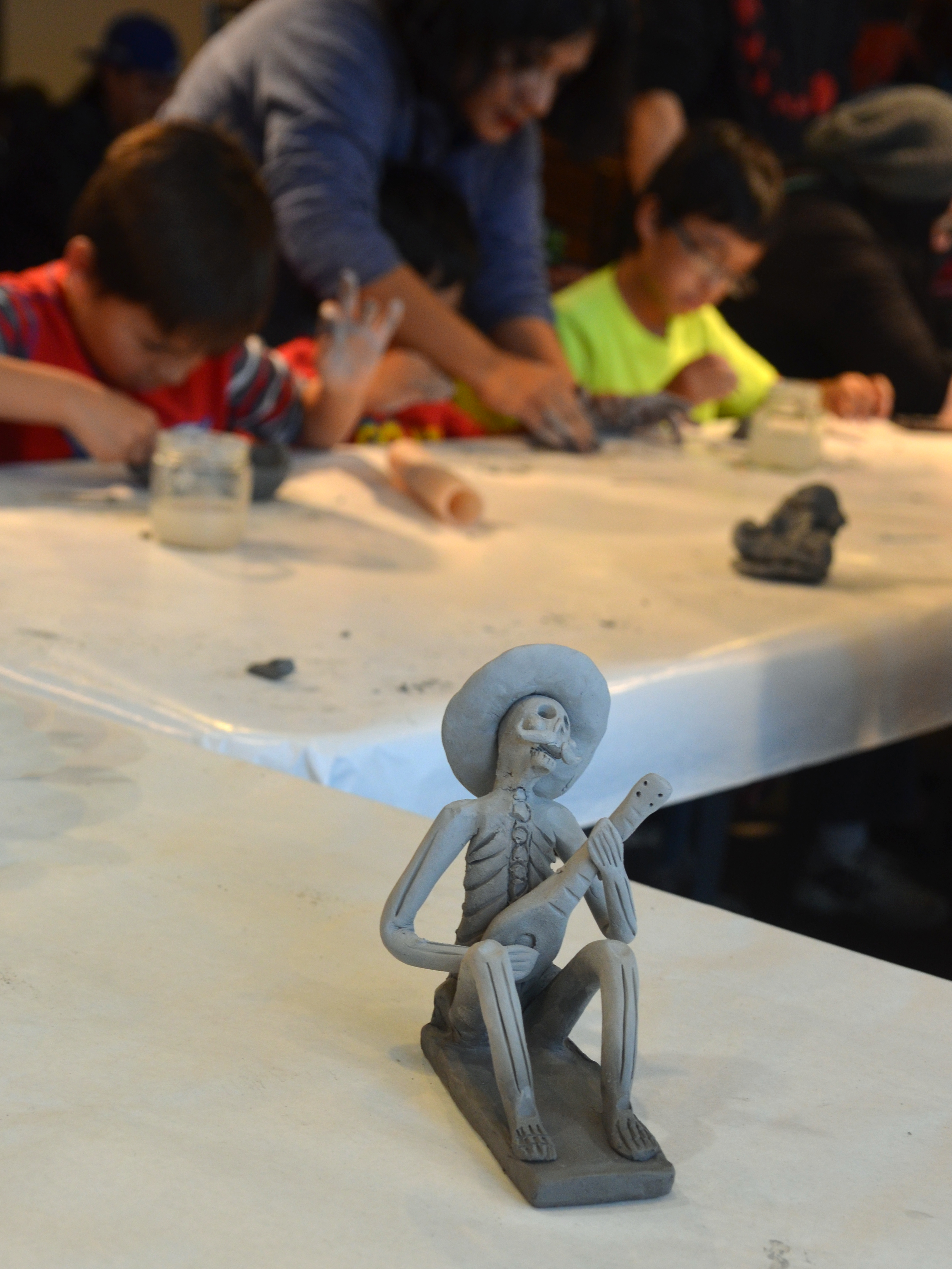
A small figurine made of a clay of a skeleton wearing a sombraro and playing a guitar is in the foreground, kids making clay skulls at a table are in the background.

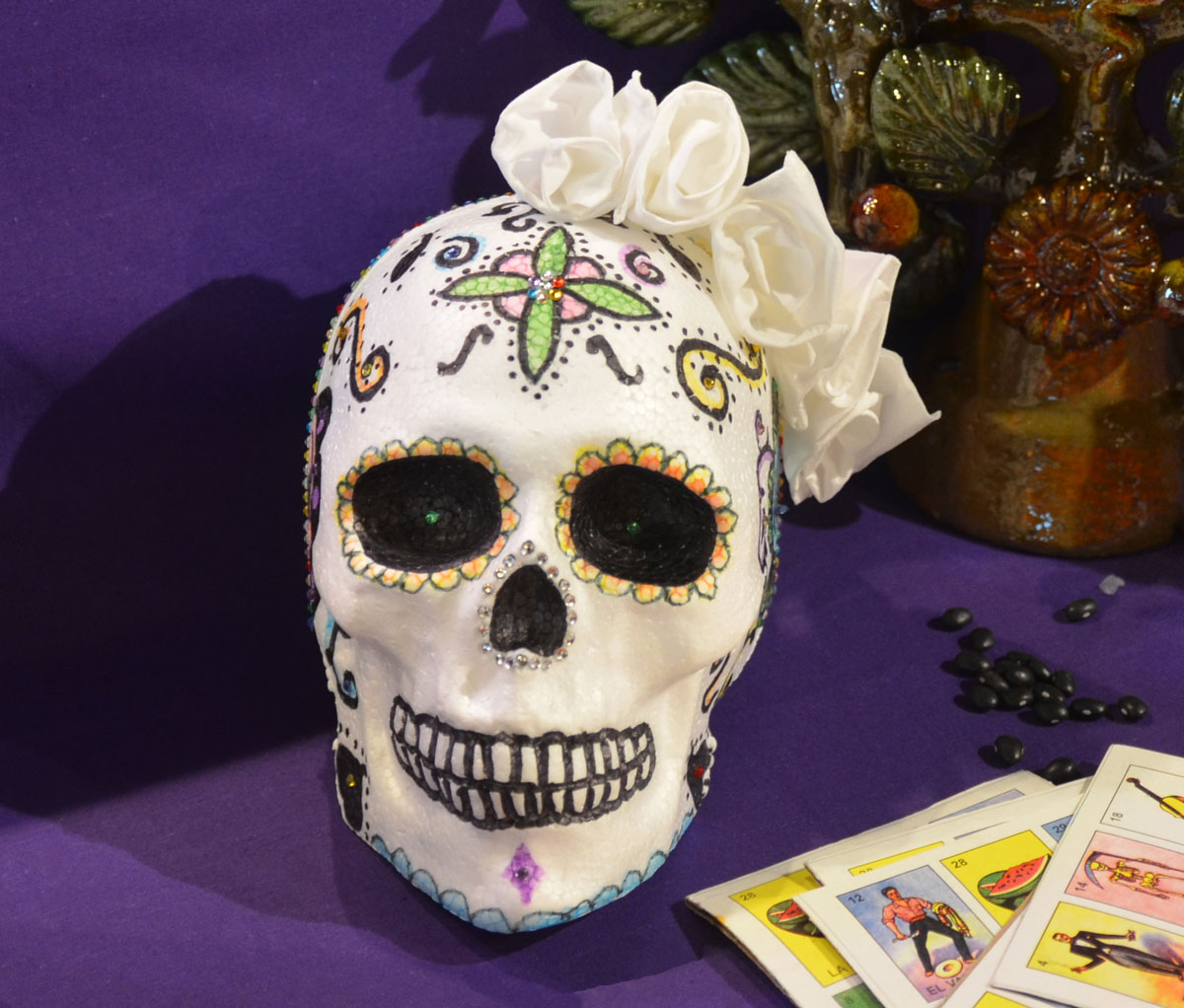
skull painted white and then decorated with black, green, red and white

Rest in Peace.

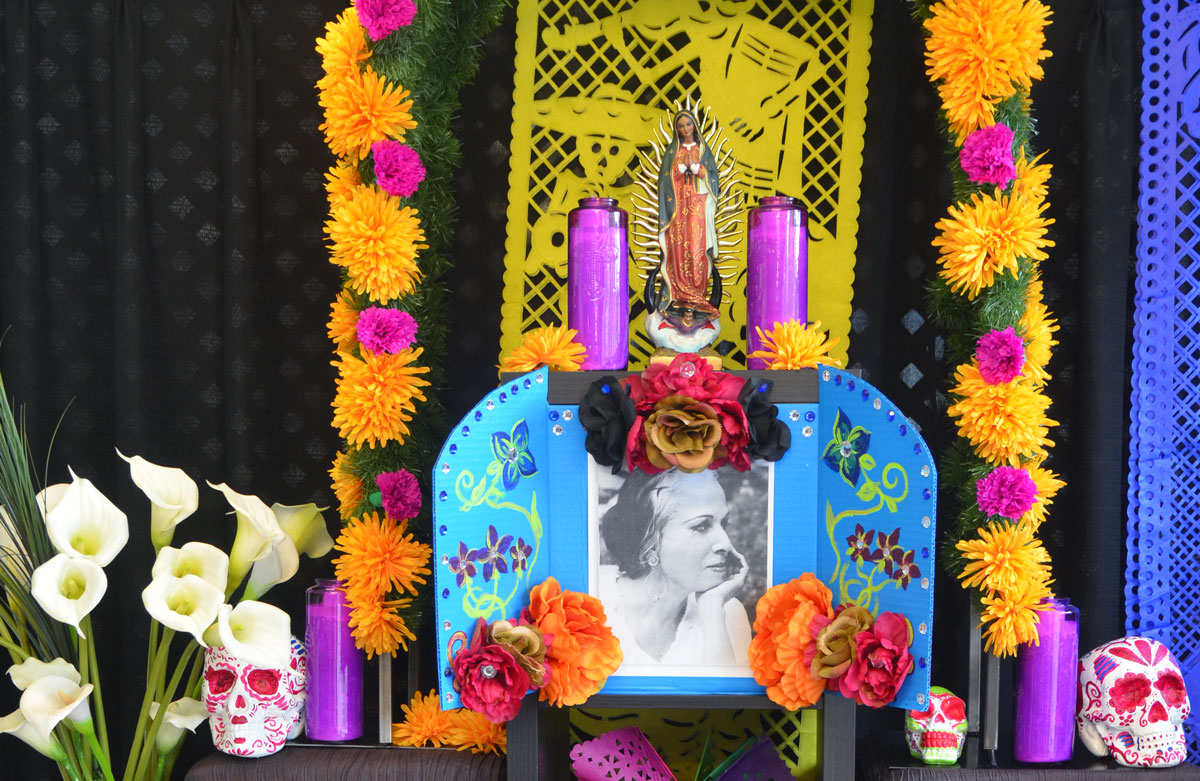
ofrenda, altar, day of the dead celebration, woman's picture along with Virgin Mary candles and other pink cnadles, lots of orange flowers too

I happened to walk into the Queen Mother Cafe (on Queen West) this afternoon.  They often have original artwork displayed on their walls and today was no exception.  I found some intriguing and very creative masks.

A mask in beige, black and white mounted on the wall. The nose is a wrench. The white part looks like a mask across the eyes of the mask

They are the creation of Jeff Mann, a Kingston based artist.

four metal masks mounted like on a wall. One looks a reddish dog and one looks like a skull. They are made of car parts.

According to his website, Mann makes the masks mostly from car parts and shovels.  The ones here are only a sample of the collection I saw at the Queen Mother cafe.   In addition, there are pictures of more masks on Mann’s website.

close up of a mask hanging on a wall. It's made of rusty metal car parts welded together

A mask that looks like a cow. Large black and white face, a pinkish red body and four skinny spindly legs. Curly cue tail too.

As I sort through the photos that I took this past summer, I keep finding pictures of street art that I have not yet posted.  The following collection were taken in the Dupont and Ossington area back in July.

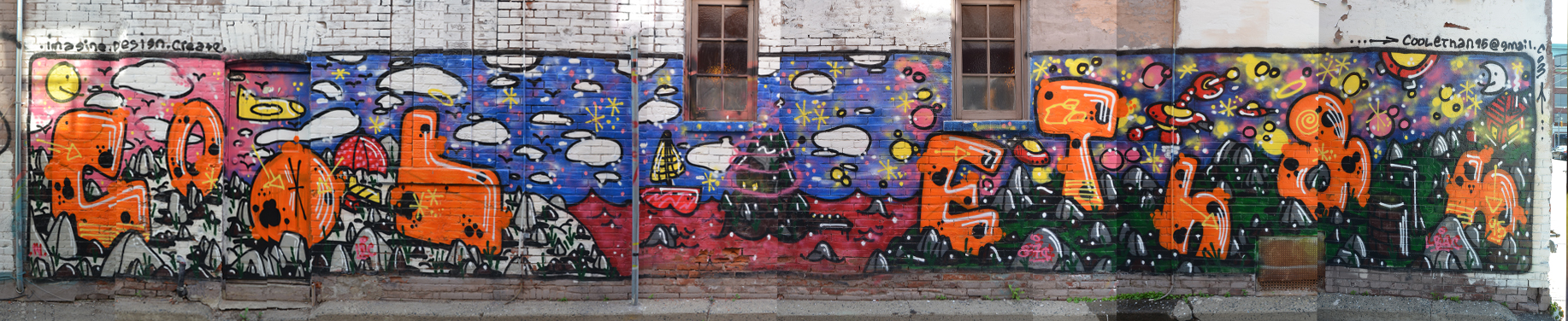
below: A very horizontal piece by Cool Ethan, obviously

a long horizontal street art painting

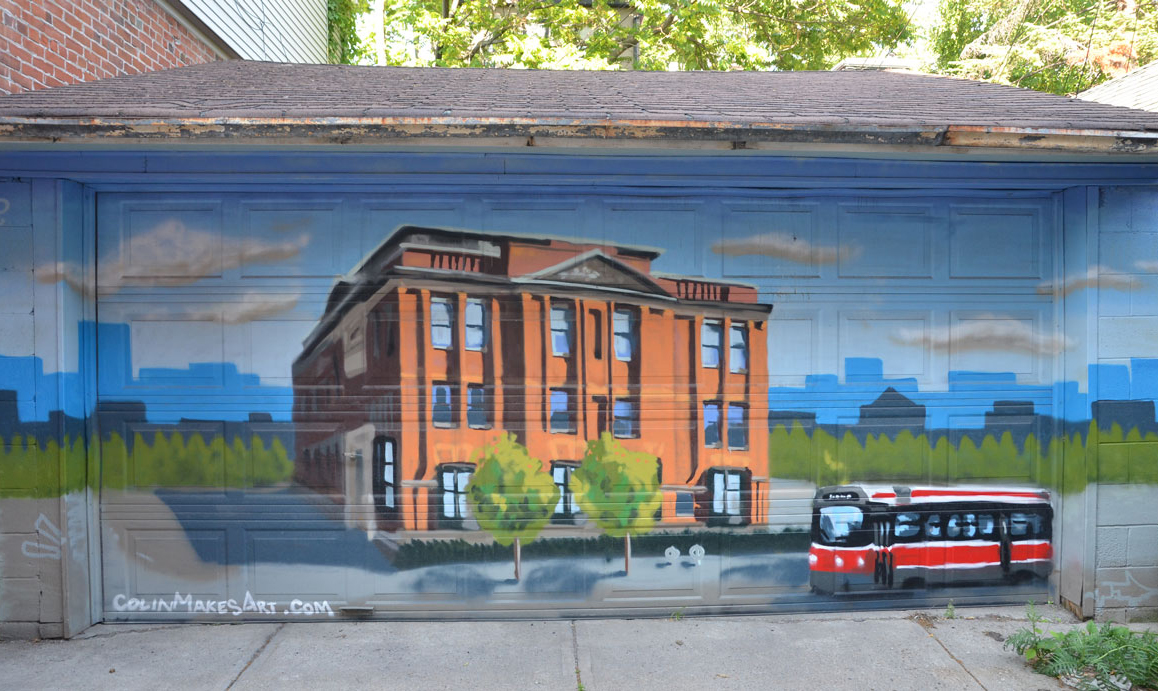
below: A TTC streetcar passes by the Massey Harris building, a mural by Colin Turner Bloom.  This office building, at 915 King St. West, was built in 1883 as the headquarters for the Massey Harris Co.  It was declared a heritage building in 1973.  Since then it has been developed as lofts/condos.

A mural on a garage door by colin makes art, showing a large brick building with a TTC streetcar passing in front of it.

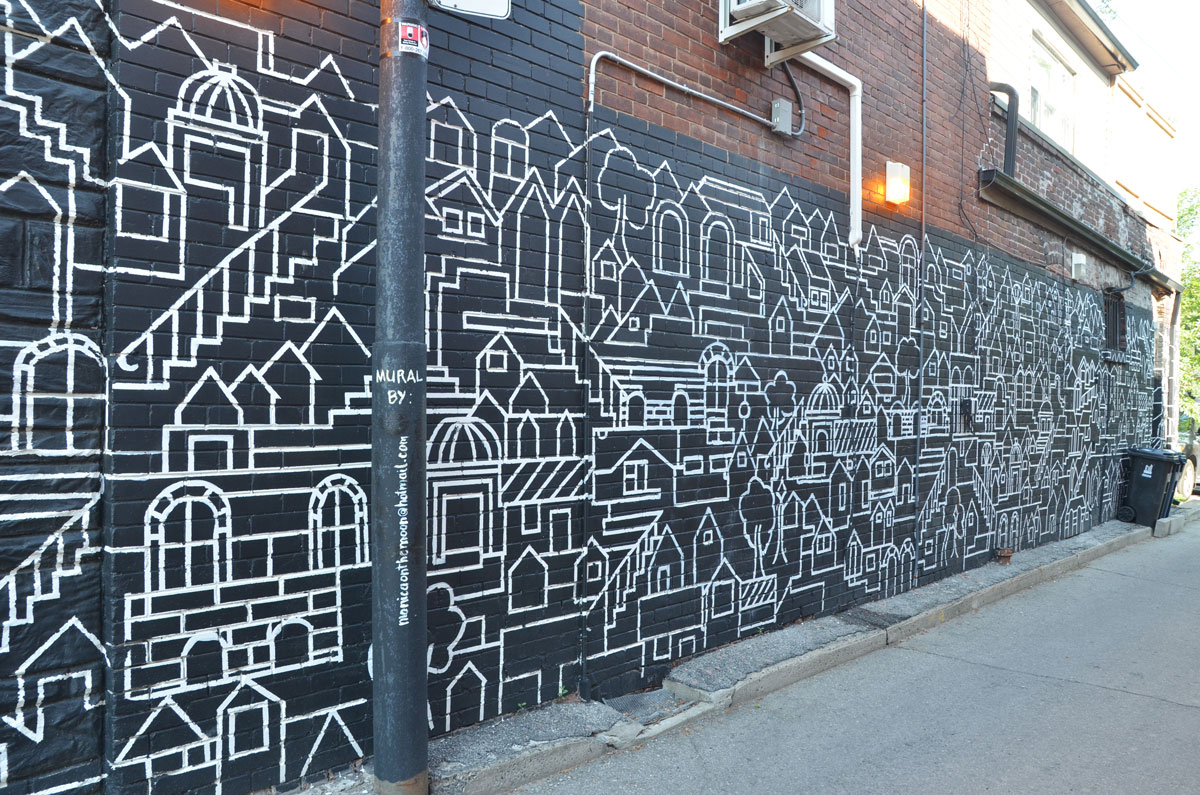
below: A city scene mural by Monica on the moon,  just off Dupont Avenue.

long mural, black background, white line drawing of a city scene by Monica on the Moon

close up of part of mural, white line drawings of a city scene, lots of houses and other buildings, on a black background on the side of a house. Small window as well as three trash bins are in the picture.

below: Another garage door

garage door covered with a street art painting of squiggly shapes in oranges and reds with dark grey background

below:  Up, up and away with a bunch of red balloons.

two stencil graffitis on a white garage door in a lane. One is of a girl standing on her toes and holding onto a bunch of red balloons that are up in the air. The other stencil is of a man from the shoulders up

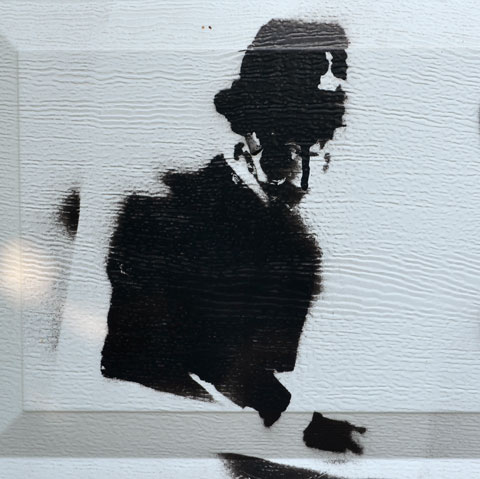
below: Bobby with a gas mask, stencil on garage door in a lane.

stencil graffiti in black on a white garage door. London bobby (policeman) wearing a gas mask, from the waist up

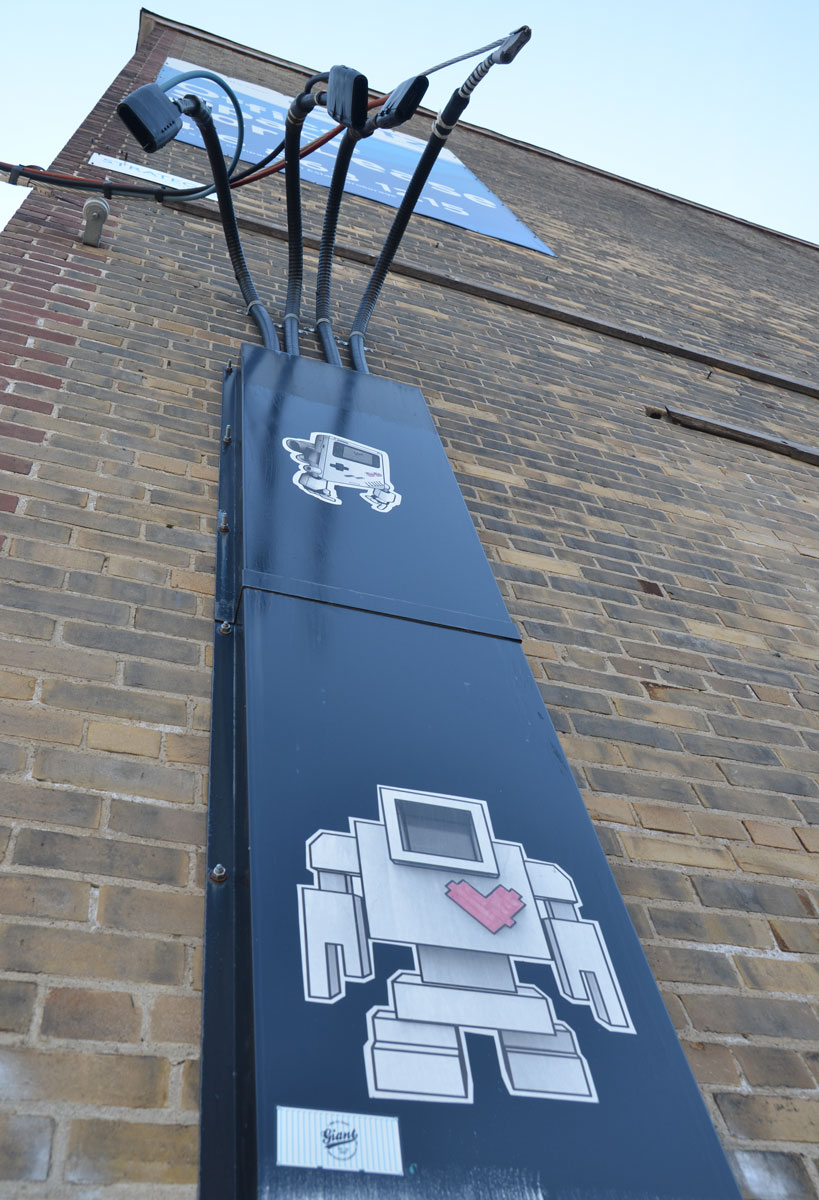
below:  Two lovebots on Dupont.

two lovebots on a blue metal structure on a brick wall. The top one is a gameboy lovebot. The bottom one is the usual robot lovebot.

sticker on a white wall. Sticker says ADORE: for all the golden moments captured indoors and out

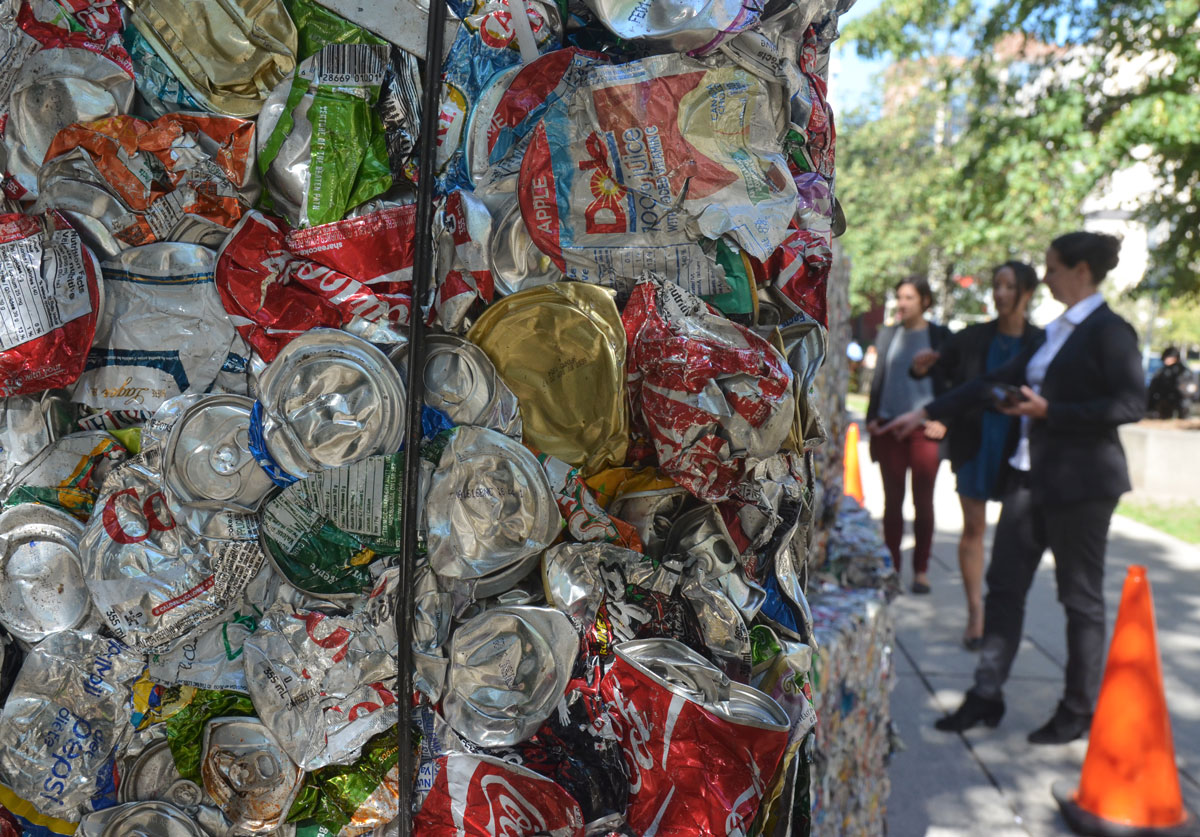
below: Coke, Dole juice, Diet Coke, Fanta orange, cans, cans, and more cans.

Three women check out bundles of crushed pop cans that are bundled for recycling. They are stacked two bundles high making a low wall beside the sidewalk.

below: Coors beer, Canada Dry, Nestea, more Fanta, more Coke, all crushed and ready to be recycled.

Crushed alumiium cans ready to be recycled

The City of Toronto collected about 200,000 tonnes of blue bin recyclables in 2014.   Since a tonne equals 1,000 kilograms, that’s 200,000,000 kilos of recyclable plastic bottles, pop cans, tin cans etc.

Crushed plastic bottles ready to be recycled

Crushed plastic bottles ready to be recycled

Piles of crushed recyclables collected from Toronto’s blue bins are stacked along Bay Street beside City Hall.  They will be part of an installation entitled ‘There is No Away’ for Nuit Blanche this coming weekend.  This work was sponsored by the city’s Solid Waste Management committee and put together by artist Sean Martindale.    This installation hopes to raise awareness of just how much garbage we produce and throw “away”.

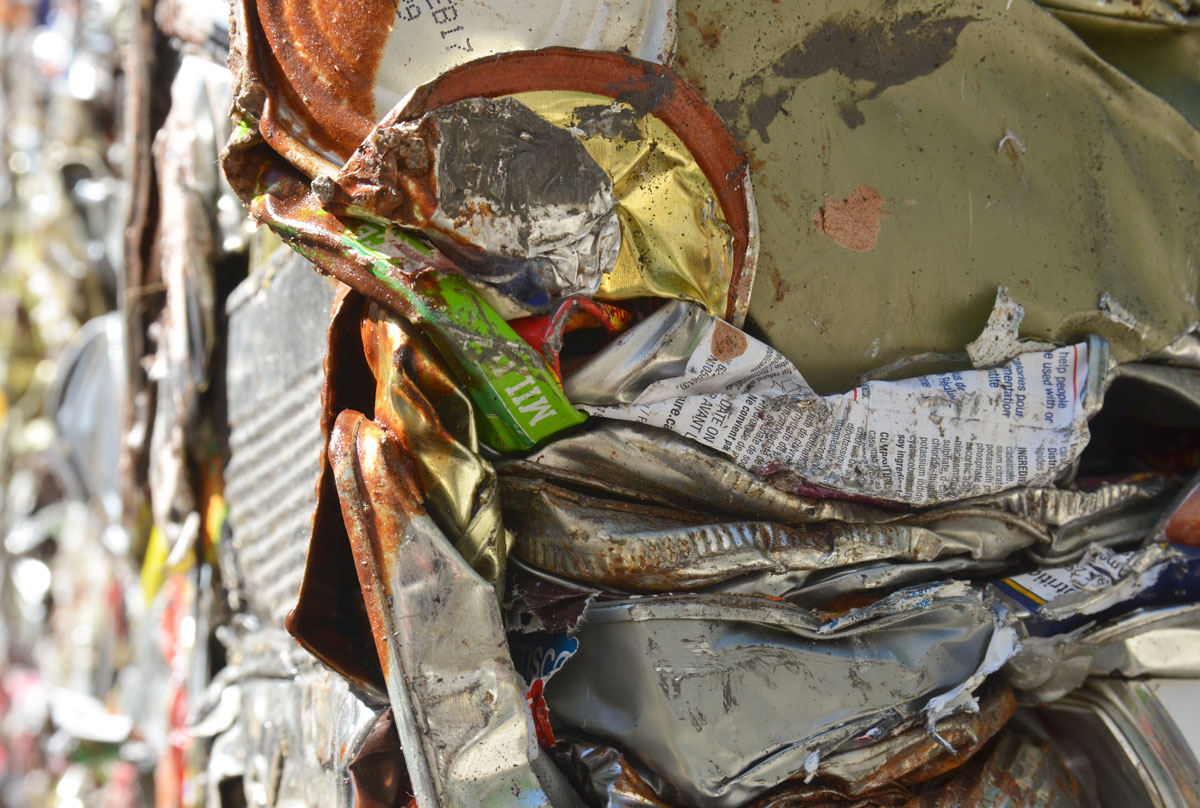
A bundle of old rusty tin cans that have been crushed and pack into large bundles ready to be recycled.


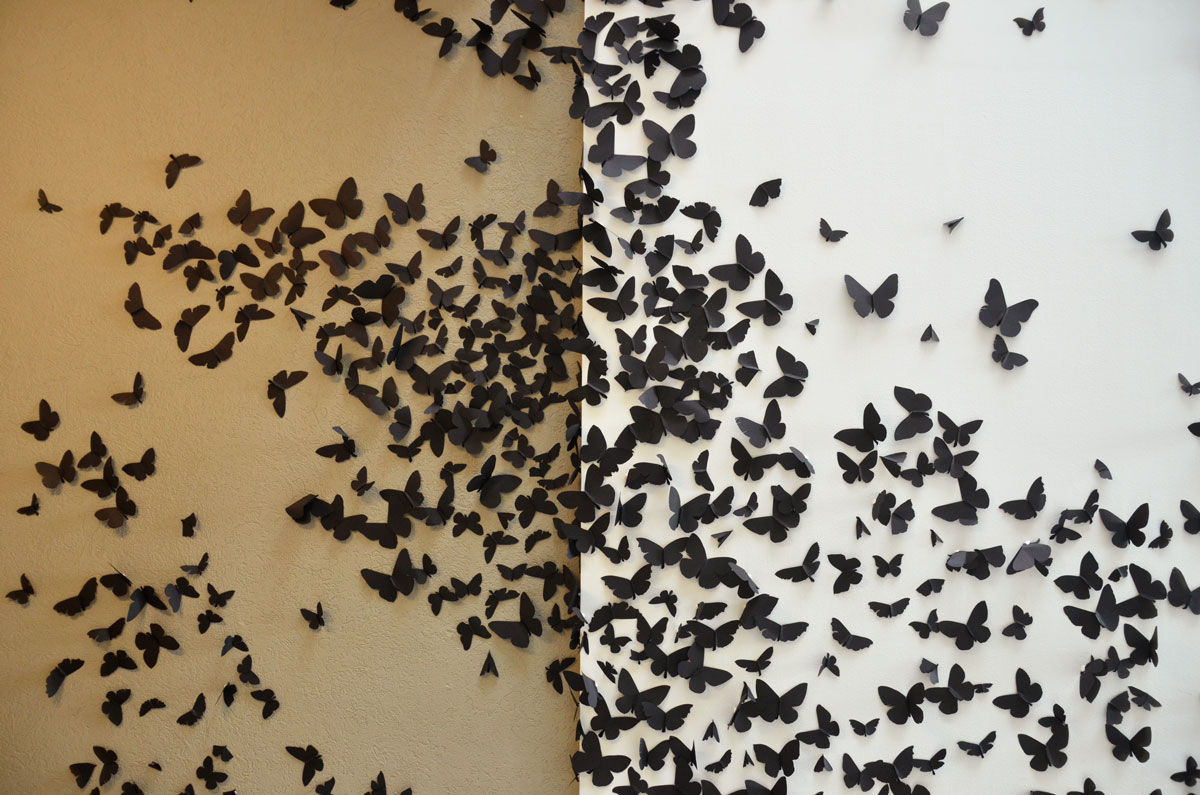
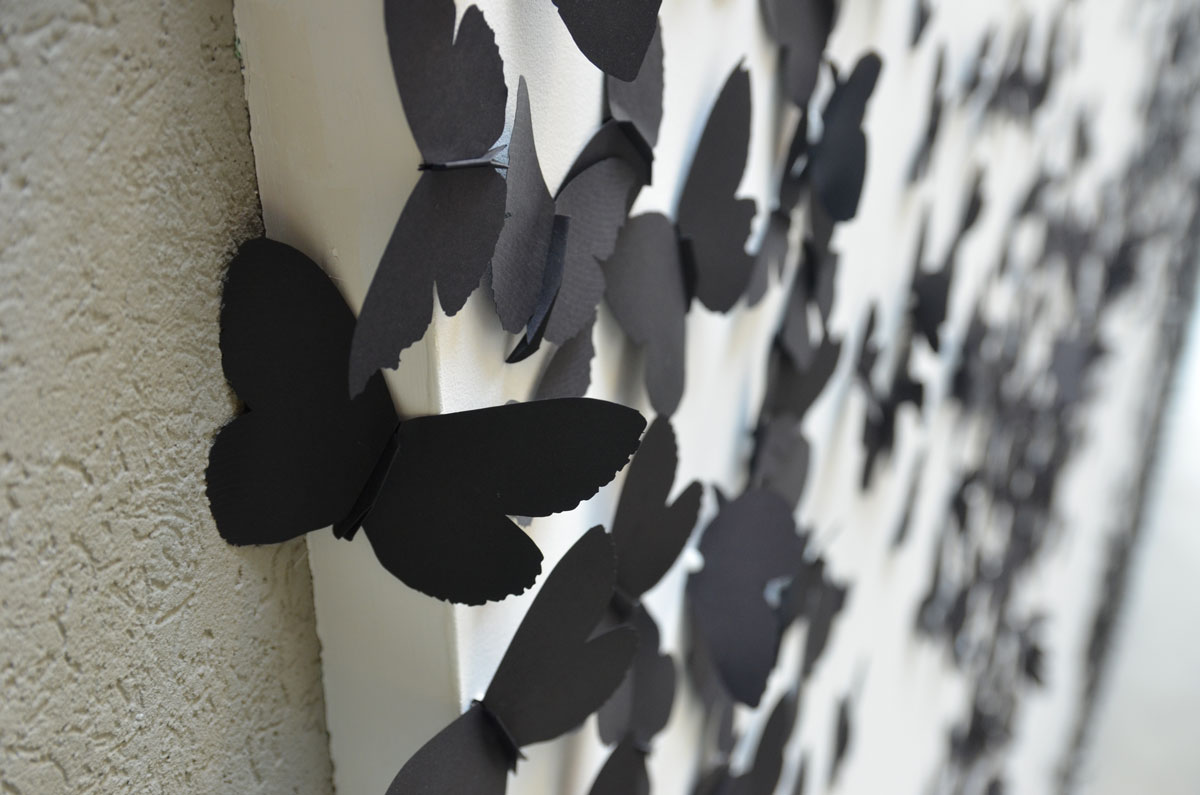
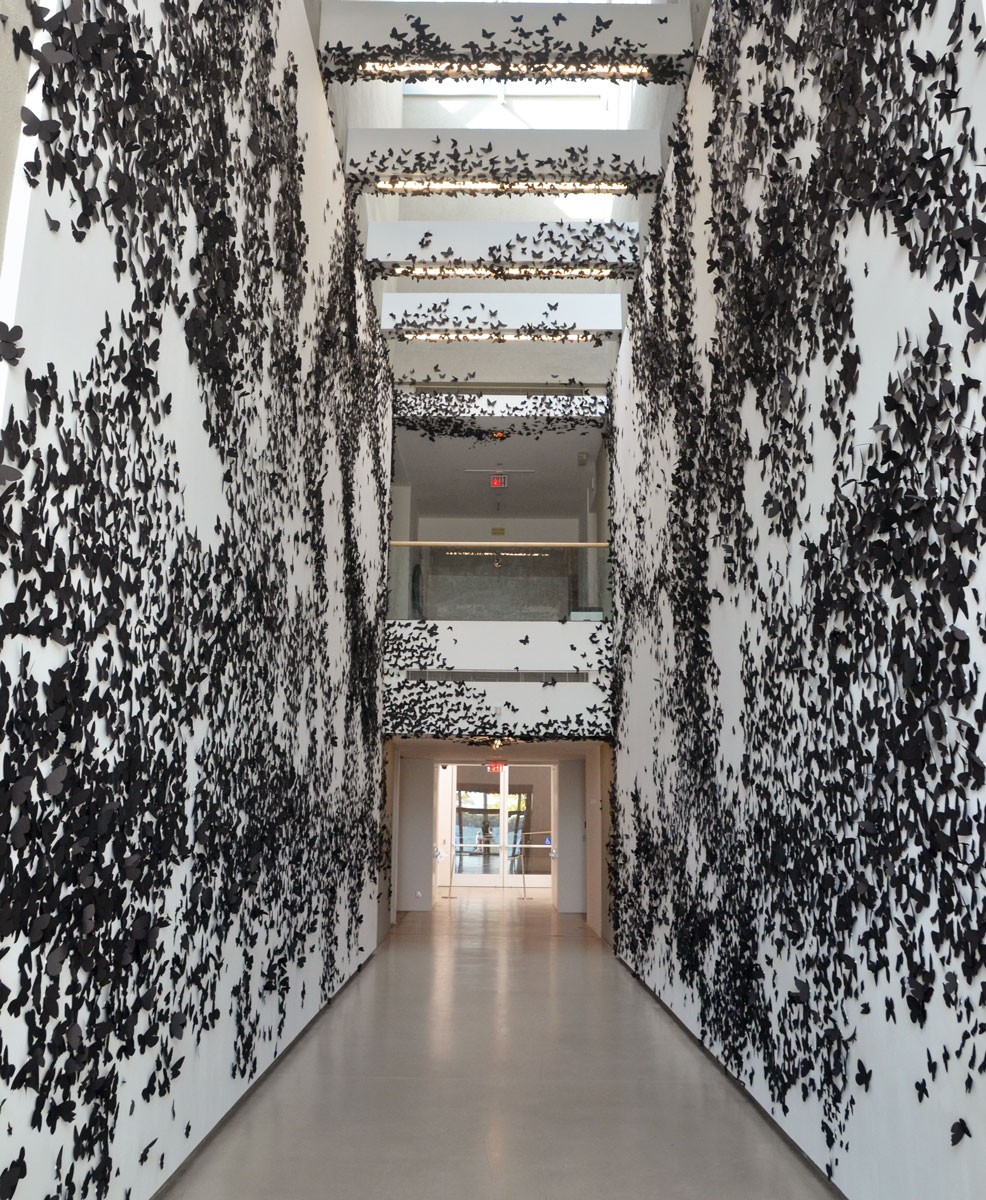
The exhibit is called ‘Black Cloud’ and it consists of thirty thousand black moths, each one individually attached to the walls and ceiling of the clerestory of the The Power Plant Gallery.   Artist Carlos Amorales has reproduced the shapes and sizes of thirty six different species of moth with black paper.  They swarm towards the lights and they congregate in the corners.  It’s a fascinating display both in the overall composition and in the attention to small details.   This installation first appeared at an art gallery in Paris in 2007.
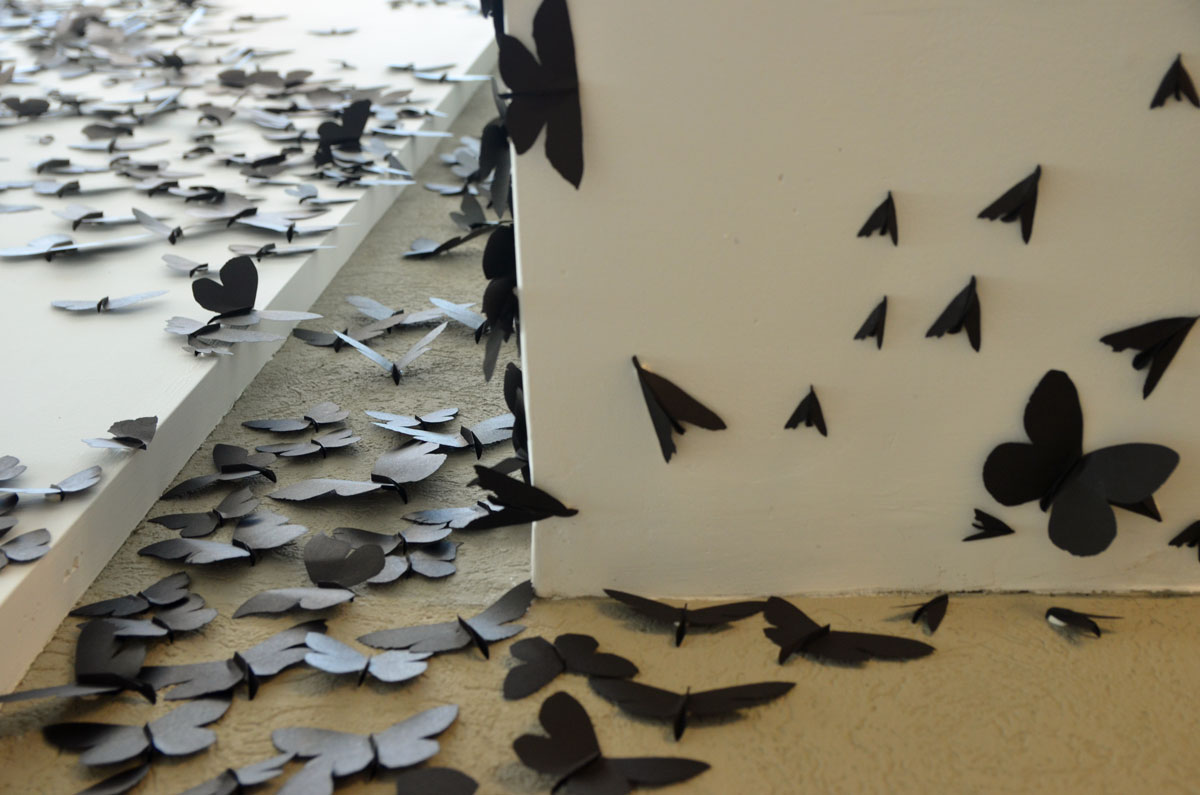
A wall covered with black paper moths, part of an art installation called Black Cloud by Carlos Amorales

A wall covered with black paper moths, part of an art installation called Black Cloud by Carlos Amorales where 30,000 black paper moths are stuck to the walls and ceilings of a hallway - looking up at all the moths on the ceiling
A wall covered with black paper moths, part of an art installation called Black Cloud by Carlos Amorales where 30,000 black paper moths are stuck to the walls and ceilings of a hallway - looking at the corner of the hall, where the wall meets the ceiling

A wall covered with black paper moths, part of an art installation called Black Cloud by Carlos Amorales where 30,000 black paper moths are stuck to the walls and ceilings of a hallway - this picture is a close up of some of the moths

As much as I liked the display, I was glad they weren’t real moths!

A hallway covered with black paper moths, part of an art installation called Black Cloud by Carlos Amorales where 30,000 black paper moths are stuck to the walls and ceilings of a hallway

#PPBlackCloud

King East Design District Life.Style.Fair is a festival celebrating contemporary design.
This year’s event was last Saturday and these are some of the things I saw as I walked King Street East that day:

A section of sidewalk. On it is painted the logo for King East Design District. There are also three lovebot stencil shapes spray painted in white on the sidewalk.

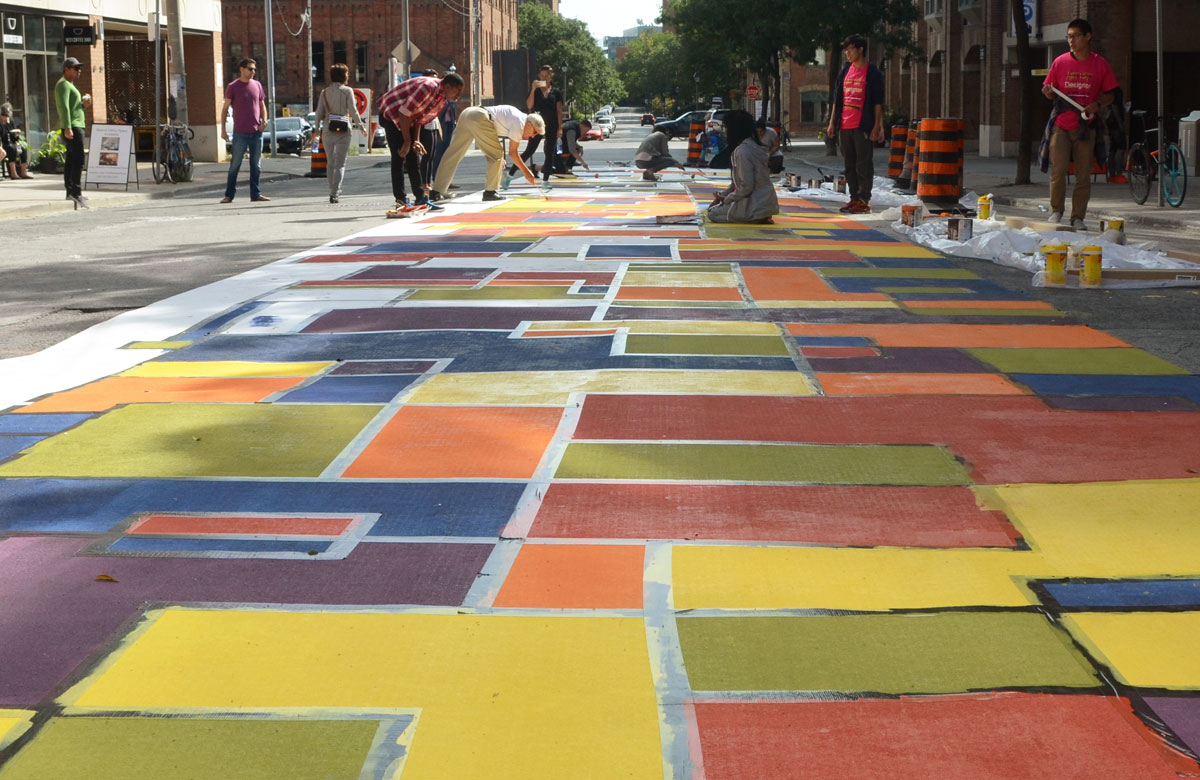
below: Frederick Street painting collaboration, organized by George Brown College School of Design students.

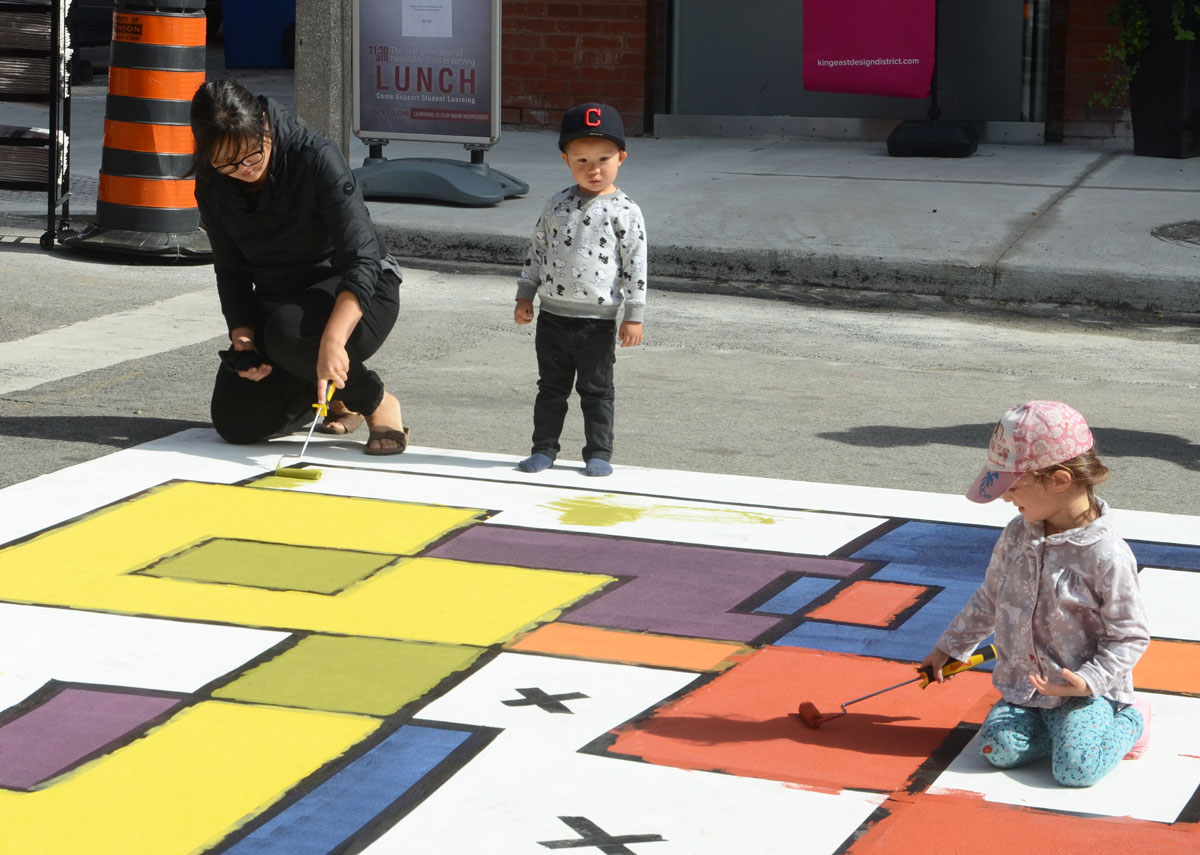
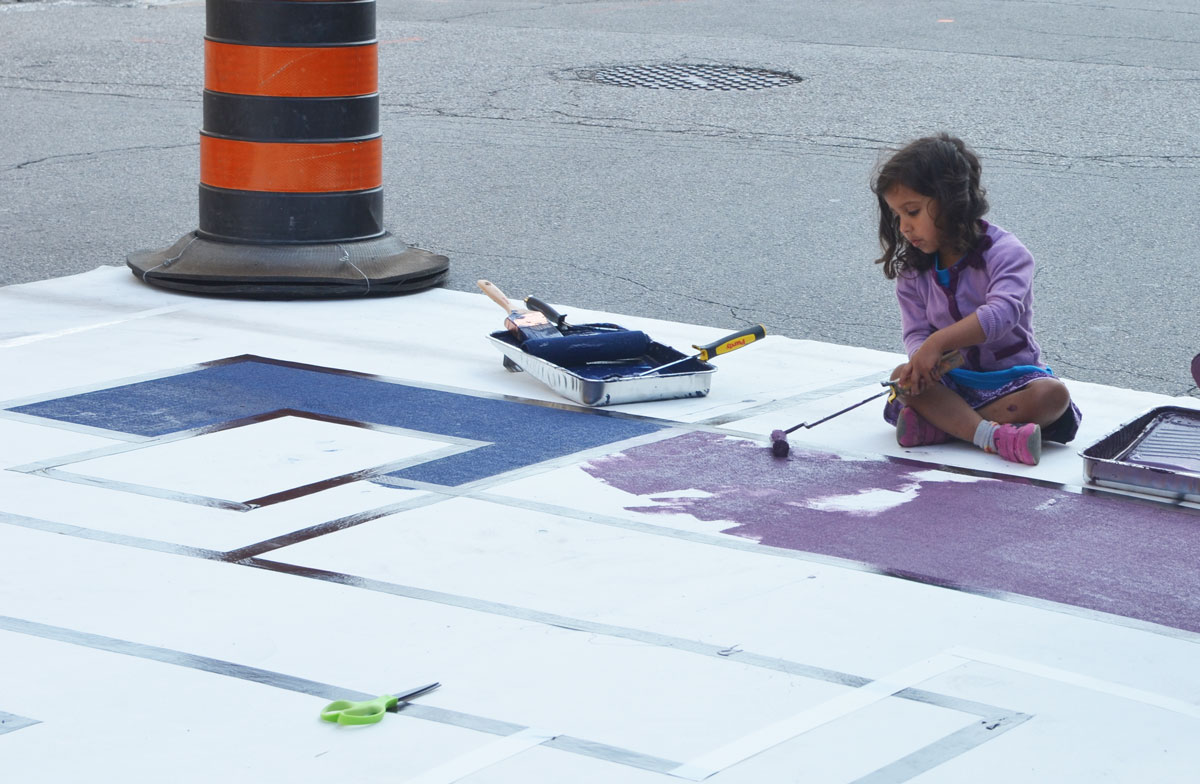
painting a large Mondrian-like painting on the street. A large mat is laid out along Frederick Street and students have marked off squares and rectangles with tape. People are painting the shapes in red, orange, yellow, green and purple.

painting a large Mondrian-like painting on the street. A large mat is laid out along Frederick Street and students have marked off squares and rectangles with tape. People are painting the shapes in red, orange, yellow, green and purple. A young girls is using a small roller to paint purple in this picture

painting a large Mondrian-like painting on the street. A large mat is laid out along Frederick Street and students have marked off squares and rectangles with tape. People are painting the shapes in red, orange, yellow, green and purple. A small boy watches while his mother and a girl paint

painting a large Mondrian-like painting on the street. A large mat is laid out along Frederick Street and students have marked off squares and rectangles with tape. People are painting the shapes in red, orange, yellow, green and purple. Looking down the length of the canvas as it nears completion

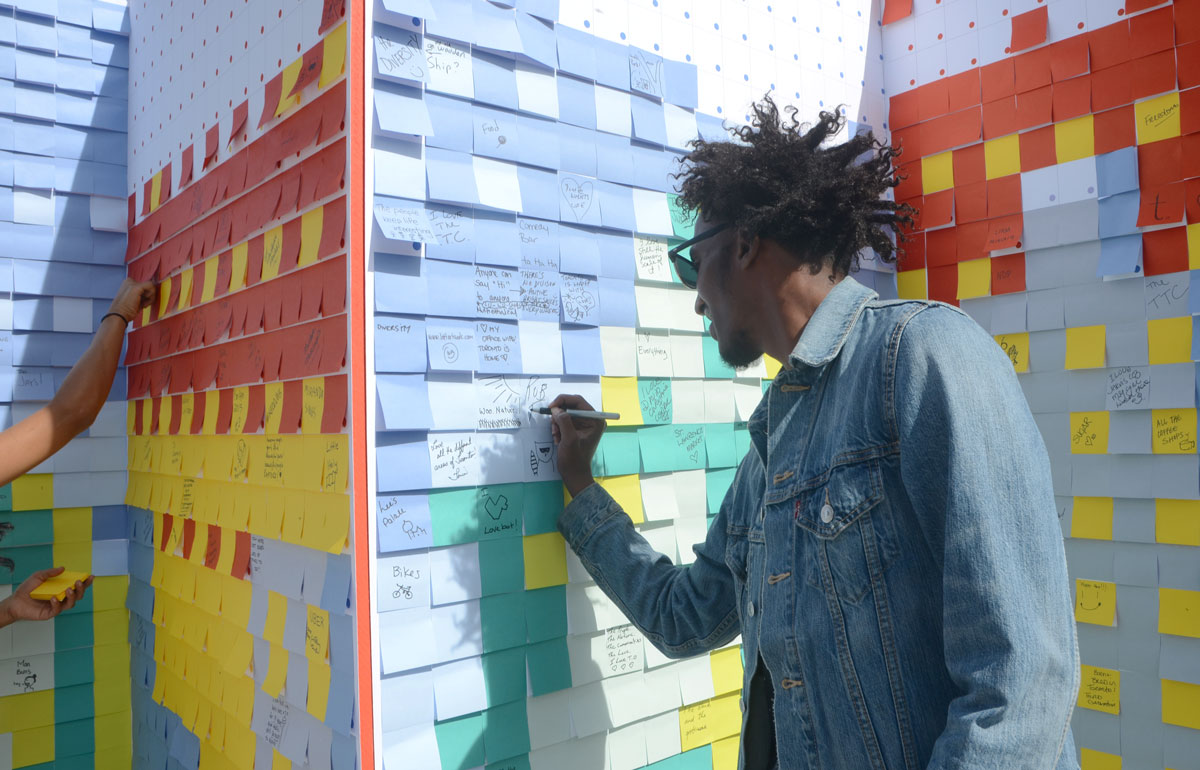
below: What do you like about Toronto? This man was writing “Rob Ford” as I took the picture.
In hindsight, maybe I should have written something like “is not the mayor” beside it?
Some of the other things people wrote include, coffee shops, bikes, freedom, trees, TTC and lovebot.

A man with spiky black hair is writing on a board covered with different coloured post it notes.

below: The Beauchamp Art Gallery had strips of dried acrylic paint hanging from the ceiling that you could walk through.

Curtains of long strips of dried acrylic paint in many bright colours hang from the ceiling of an art gallery.

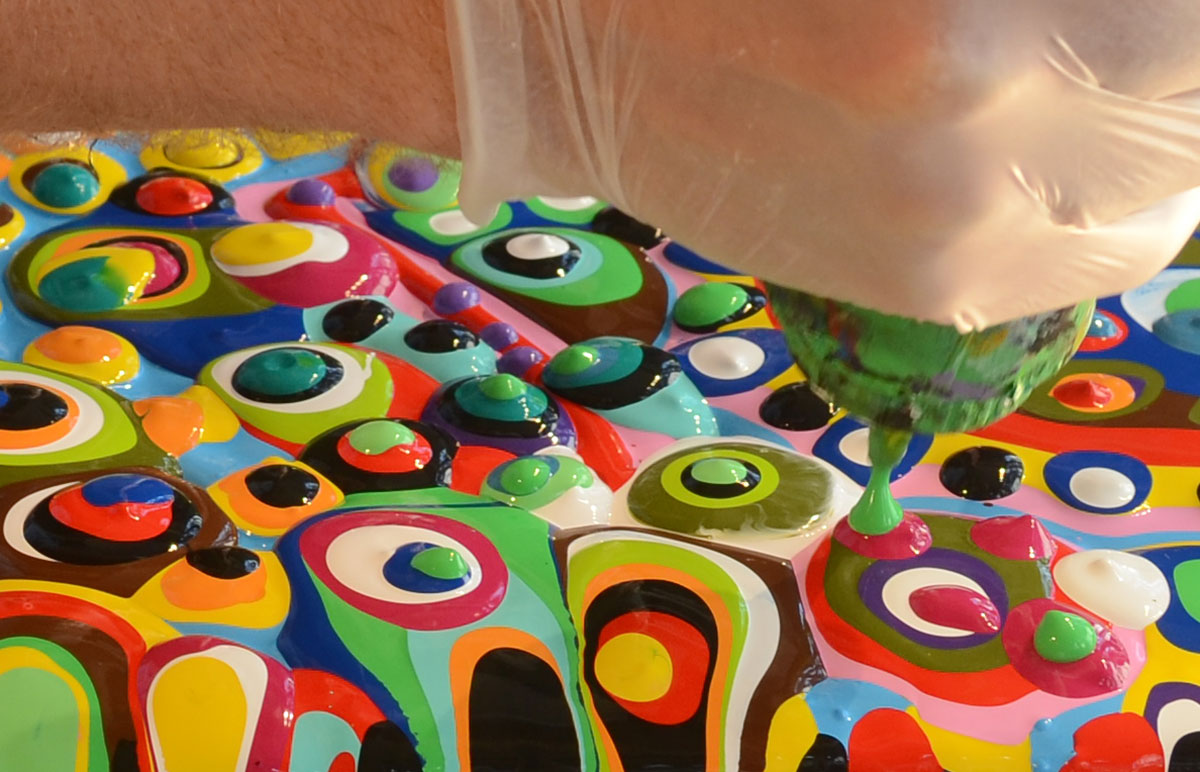
below: Also at the Beauchamp Gallery, artist Mike Hammer was creating a colourful painting consisting of blobs of acrylic paint.  The blobs flattened as additional drops of paint were added on top.  The paint flowed over the edge and created stripes.

an artwork in progress, made of many blobs of acrylic paint. The blobs flatten as other blobs are placed on top of them. The artist Mike Hammer is making this piece (although only his hand is in the picture)

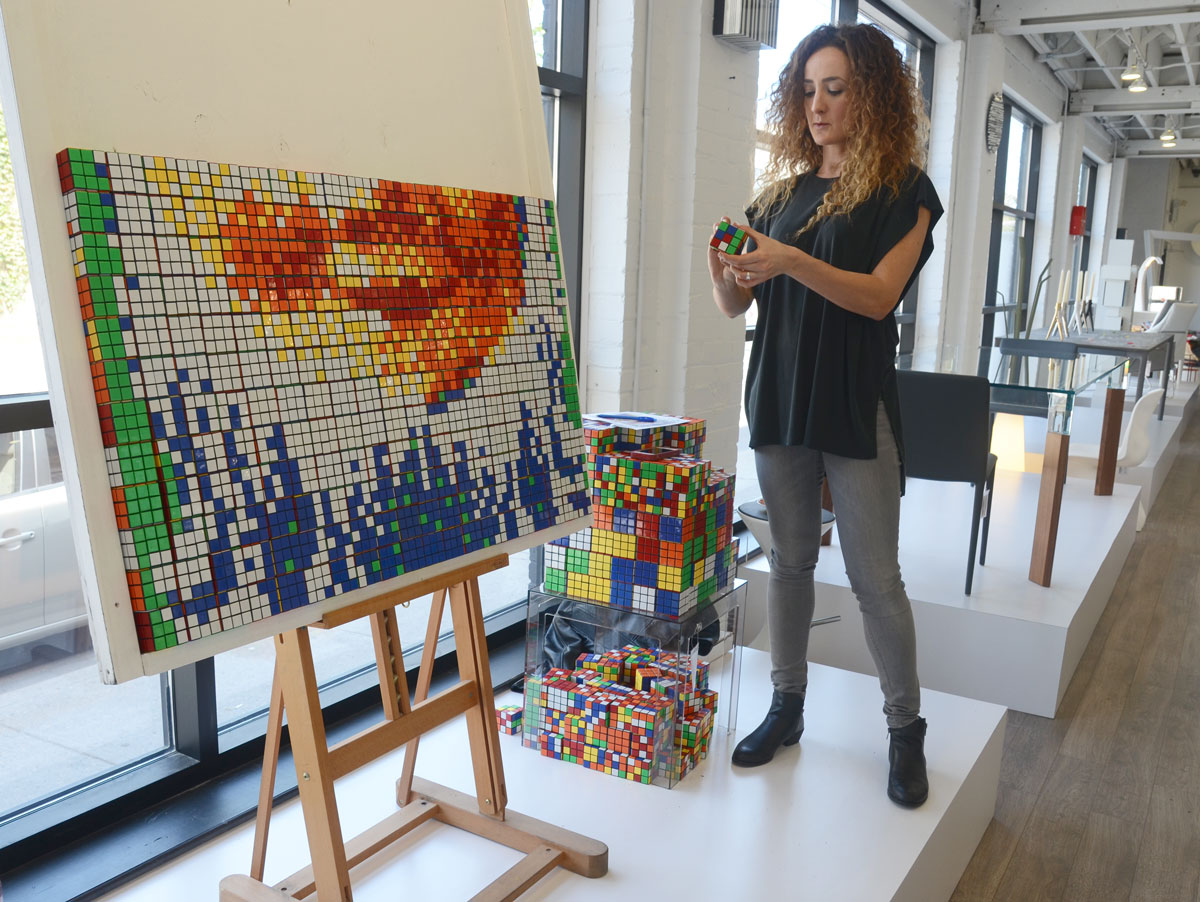
below: Cubeworks studio demo.  Yes, she really does hand twist each Rubiks Cube into the colour pattern needed for the artwork.  This particular picture, of a gnome face, requires 500 cubes.  The algorithms for solving the cube are online so you can teach yourself and become a Rubiks Cube artist!

A woman is getting a rubiks cube ready to add to a picture that she is making using 500 rubiks cubes. The picture, about half done, is on an easel in the window of a store.

below: Painting by Jessica Gorlicky.  The easel spins to make the painting easier.


In the immediate foreground, but a little out of focus, is the shoulder and arm of a man taking a picture. The subject of his picture, a woman with long blond hair, is painting a picture of a TTC street car and a Toronto street scene. She is in this picture too.

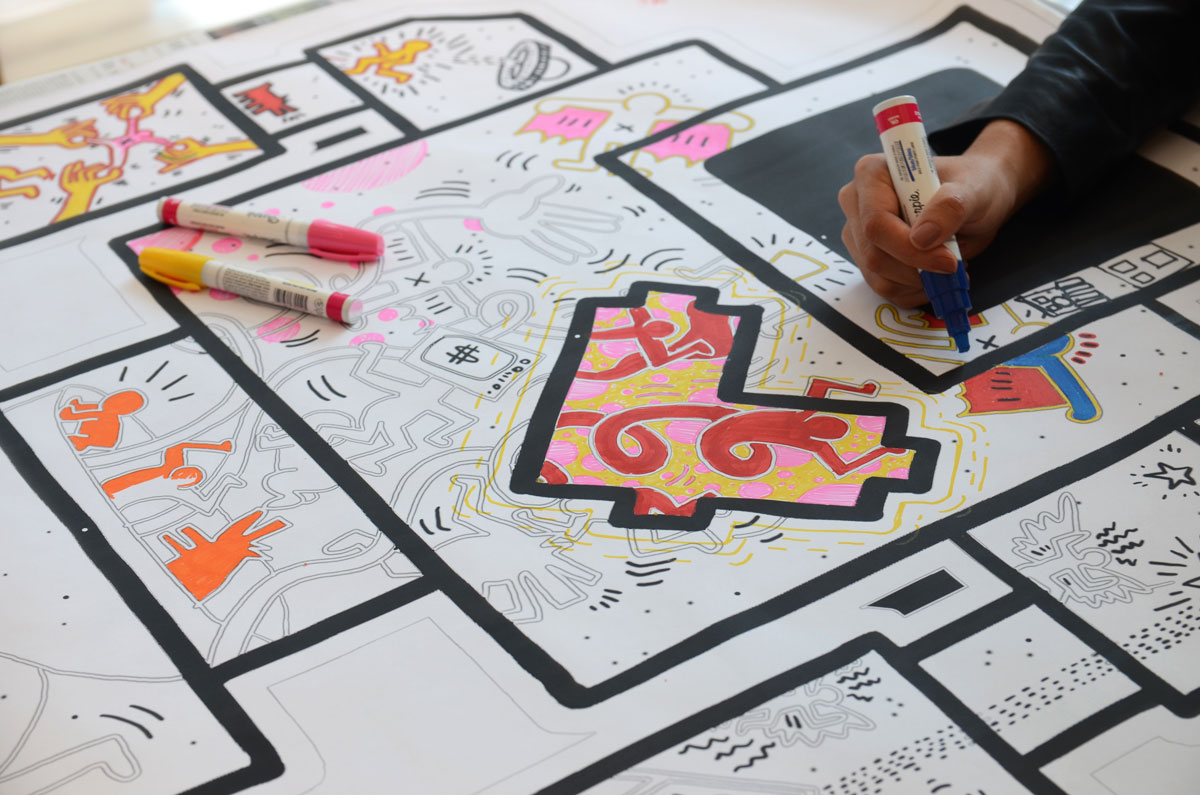
below: Lovebots to colour

A large lovebot on paper is on a table. Black lines on white paper. It is more than a meter high. There are shapes in the middle and it is designed to be coloured. A hand holding a black sharpie is also in the picture, colouring part of the lovebot

below: Pizza carpets outside and pizza making inside, at the corner of King and Parliament.

A man and a woman are crossing the street. They are close to the sidewalk on the other side of the street. On that sidewalk are a number of carpets that look like wedge shaped pepperoni pizza slices. Each carpet is just over a meter long. They are in front of a shop that sells appliances.

below: The store Relative Space displayed three pieces by Stan Olthuis made from flooring materials that they sell.  This one is called ‘Dance Like No One’s Watching’

Part of the store window for the store Relative Space. The word space is seen in this picture. In the window is a design of a woman's silhouette in light yellowish woods inlaid into grey flooring.

below:  Will Graham and the beginnings of his sidewalk dragon.

A man is creating a dragon drawing in chalk on a sidewalk.

below: And last but not least, we can’t forget   – neon signs by Gary Taxali.  This is one of two that were on display at DOM Interiors.

In sursive writing the words Unforget Me in neon tubing to make a sign that is hanging in a store window.

#kedd2015

On the last Sunday of the month from May through October, the streets of the Kensingon Market area are closed to vehicular traffic from noon to 7 p.m.  This year, the first two Pedestrian Sundays were cold and wet.   For July and August the last Sundays of both months were hot and sunny.  The following photos were taken on those two days.   Entertainment… music… art…  people watching…. restaurants… shops – the colours of Kensington.

A man with a bushy beard and pointy brown hat is sitting at a table selling things like necklaces and tie dyed shirts

A man is juggling three flaming torches while a crowd looks on, outdoor event.

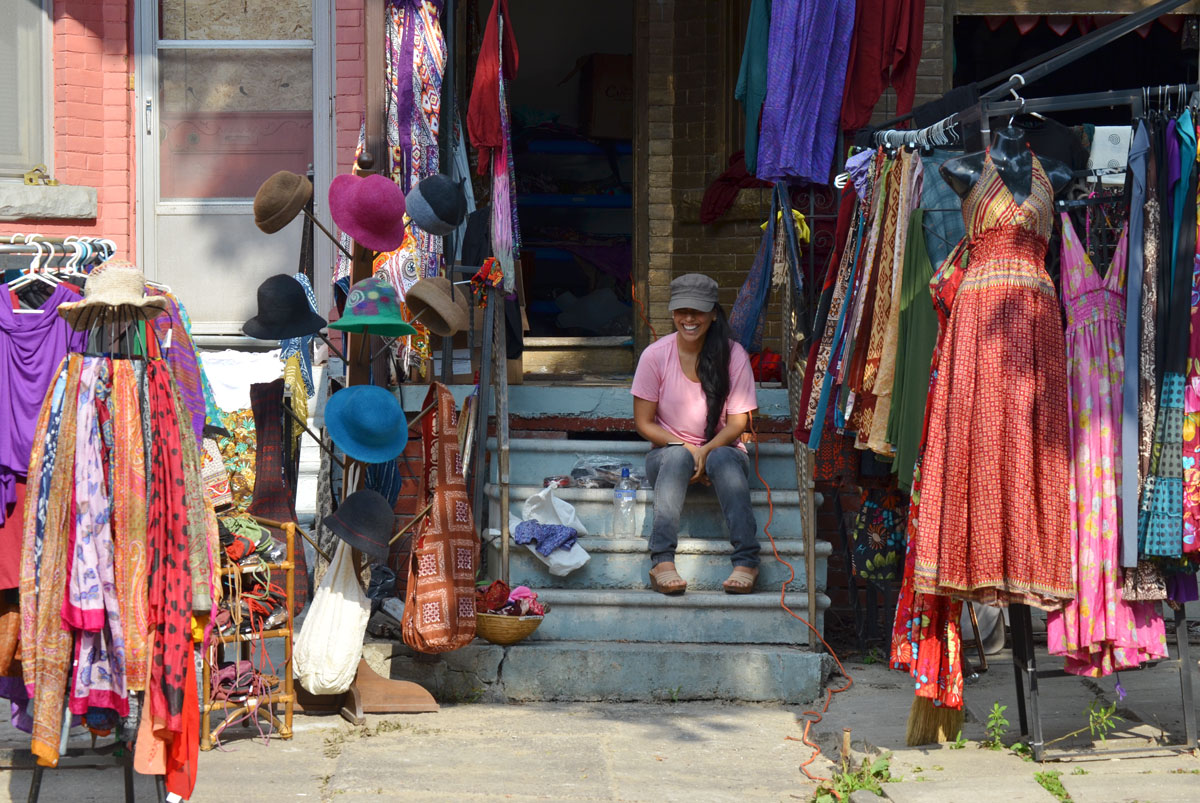
A woman is smiling as she sits on the steps of a store. Racks of colourful clothing are on display, and for sale, on either side of her

Two women in orange and yellow safety vests. One is sitting on a waist high barrier to keep cars off the street while the other woman is standing and leaning against it.

A man is wearing a T-shirt with a picture of Marilyn Munroe with sunglasses on it. He is trying to sell T-shirts and other works of art outside on the sidewalk. Beside him is a street art painting of a man's face, with his finger in front of his lips.

A man plays scrabble outdoors on the street while wearing roller blades
One man is sitting on a patio surrounded by a few empty tables and chairs. Right behind him is a man sitting at a table inside. The window is open so the man inside is visible

A young man with a Captain America shield, poses in the street

A woman with long grey hair, dark sunglasses and and black and white shirt is in front of a store window. On the window are the words Celebrating 50

A woman selling hats is holding a straw hat with a black band. A male customer is reaching for a dark blue hat.

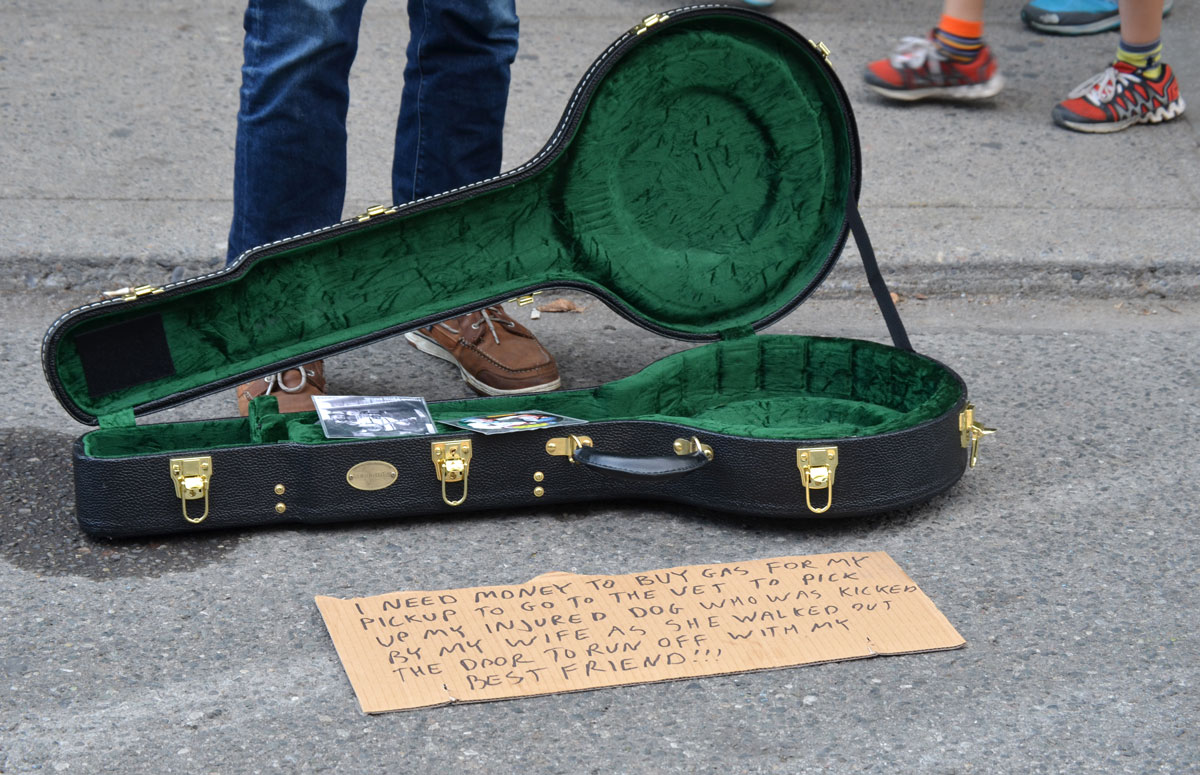
a street musician stands beside his empty banjo case. In front of the case is a note that says " I need money to buy gas for my pickup to go to the vet to pick up my injured dog who was kicked by my wife as whe walked out the door to run off with my best friend"


A rack of clothing on display outside. The sign at the end of the rack says $5 rack. It is made of a collage of pictures of women and clothes.
A man is painting a circular maze on a street

A woman is standing behind a table covered with things that she is selling, outdoors. A sign beside the table says MIB Rolling Stoned Stoner Yard Sale

Three musicians are playing on a rooftop, two guitar players and a drummer. They are on top of the Fairland grocery store in Kensington

three women at an outdoor event. One is wearing sunglasses and a silver necklace. She is holding a cold drink in her hands. The other two women are older and are wearing hats.

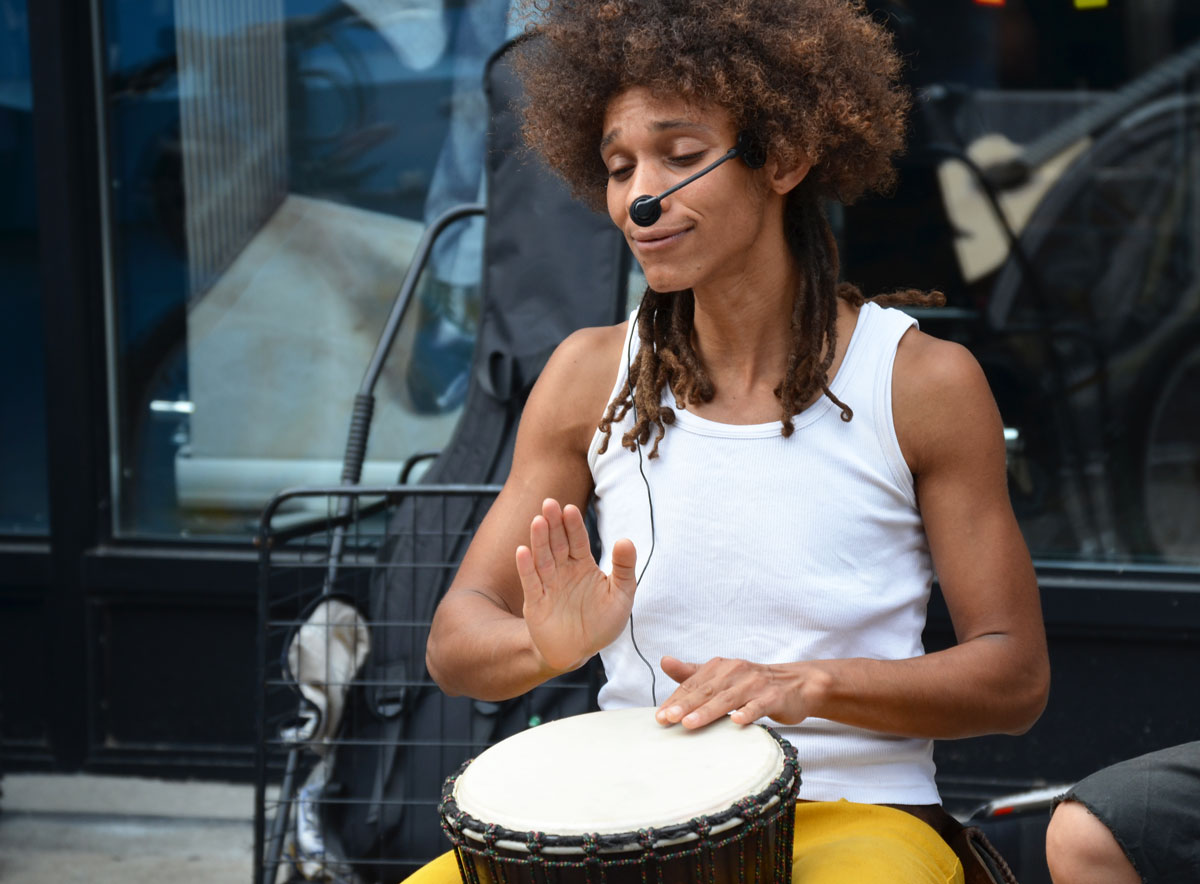
female drummer from Amai Kuda and Yjosephine playing at Kensington Pedestrian Sunday

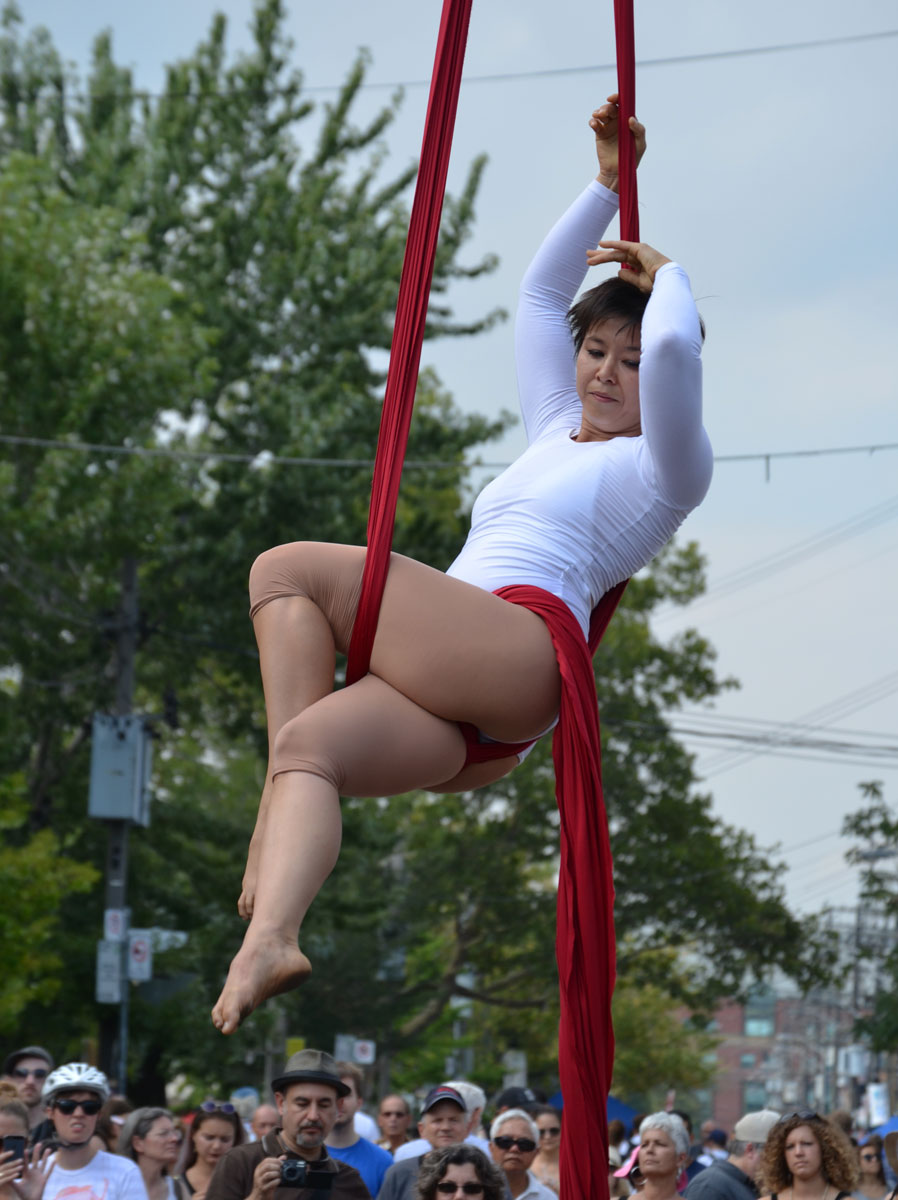
A woman in white is using red fabric ropes to perform acrobatic moves above a crowd of people at an outdoor event.

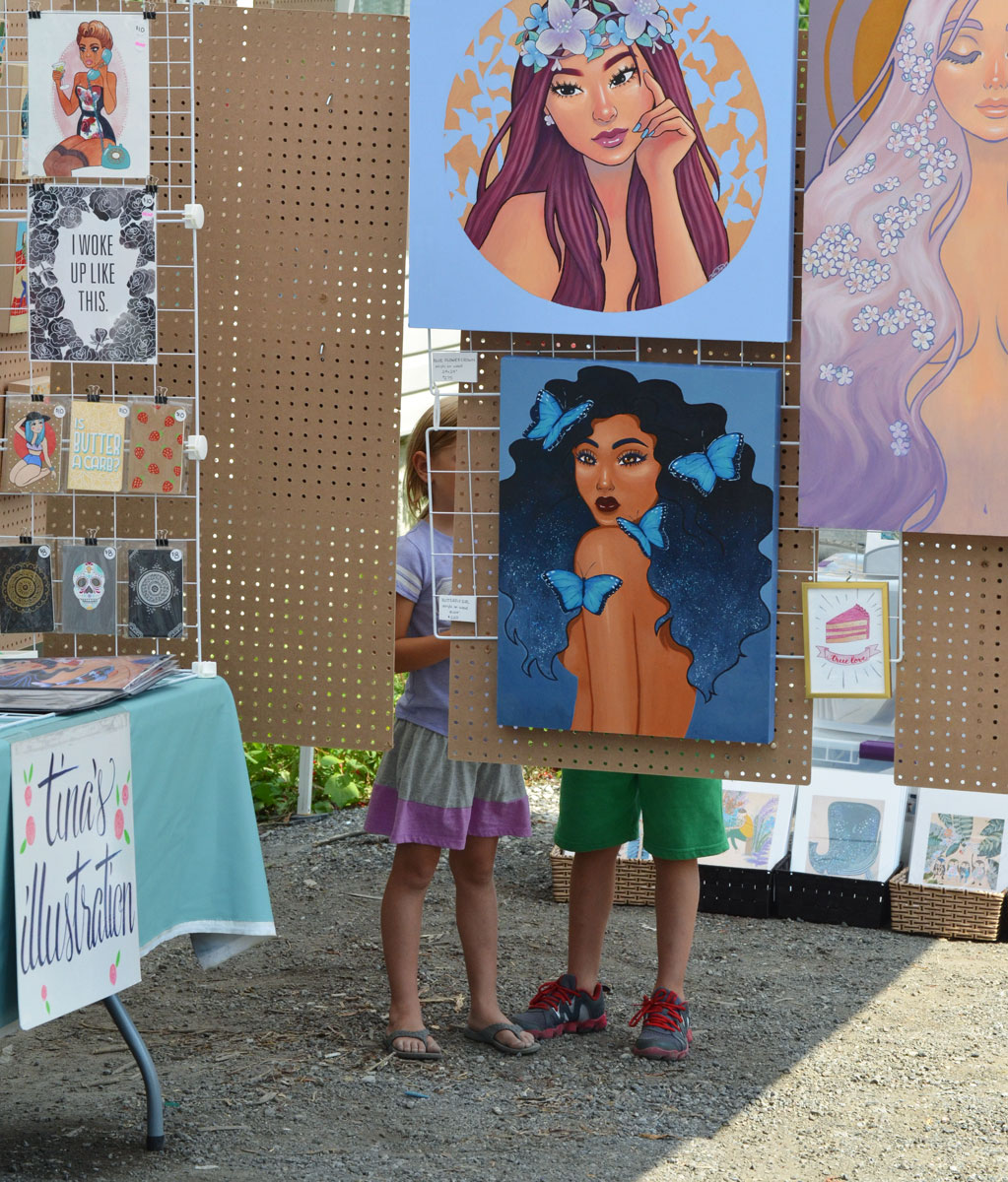
At an outdoor art exhibit, two kids are behind a display of three paintings of women and butterflies. Only the legs of one child are visible while the legs and side of the body of the other child is visible.

A woman is wearing a hat and sunglasses. She is beside a rack of many straw hats with different coloured bands.

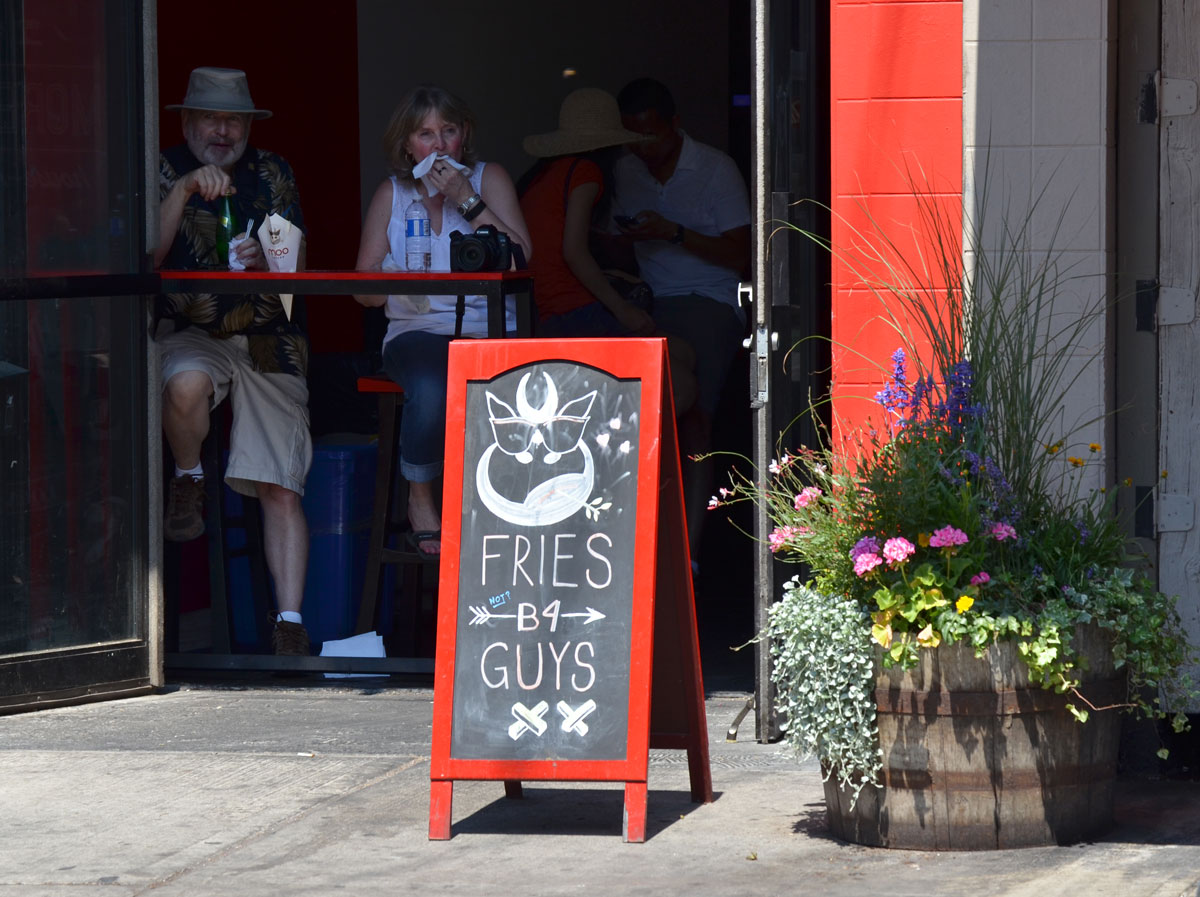
Chalkboard sign outside a restaurant that says Fries b 4 guys. Two people are inside the restaurant, sitting at a table and eating
A woman is tying a black string bikini onto a mannequin
A man is standing in front of a green door that is covered with stickers, graffiti and bits of old posters

Parts of three paintings of children hanging outside on display

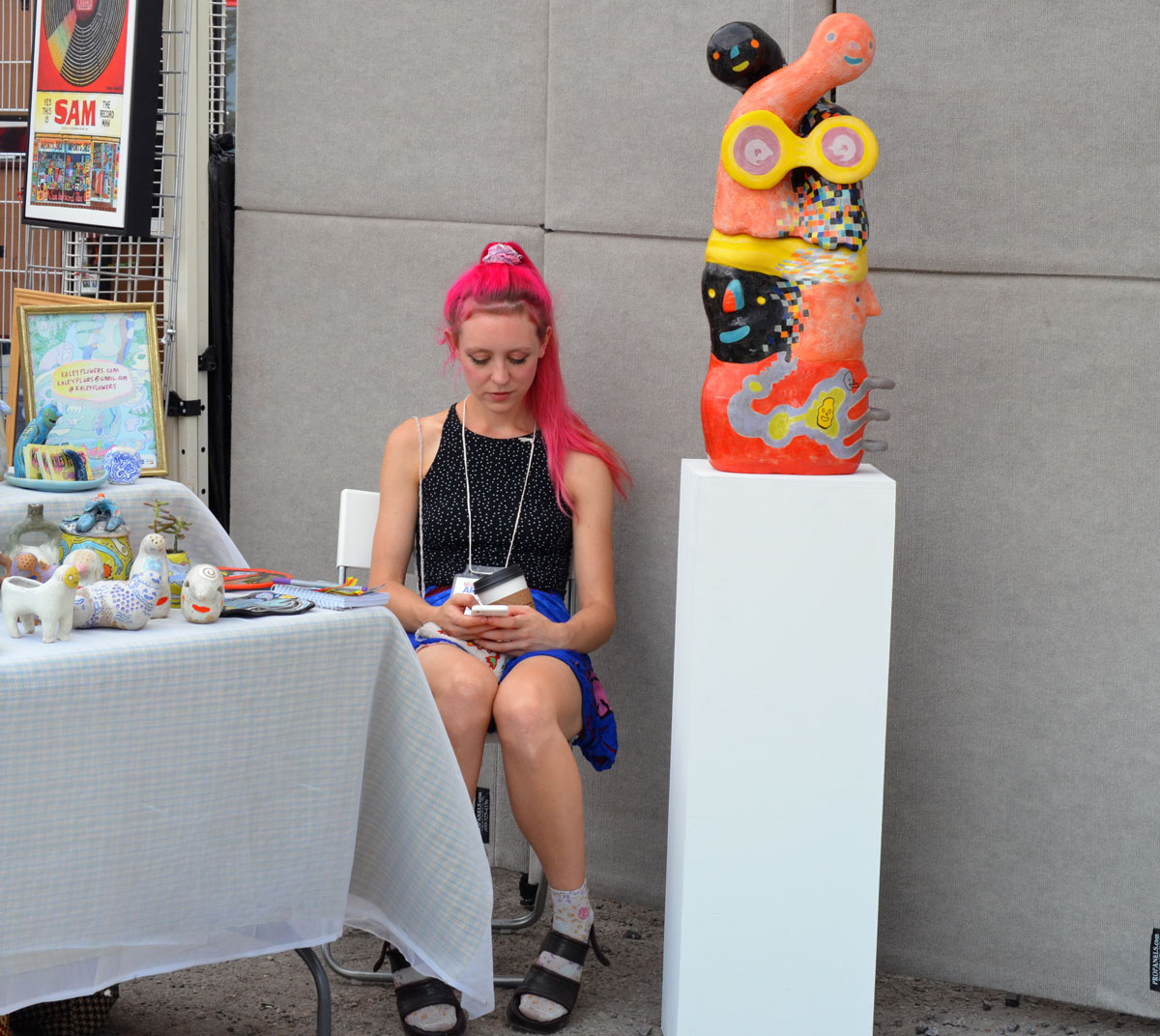
A woman with long bright pink hair sits beside a table of art wortks for sale. Beside her is white pedestal with a brightly coloured abstract sculpture on it

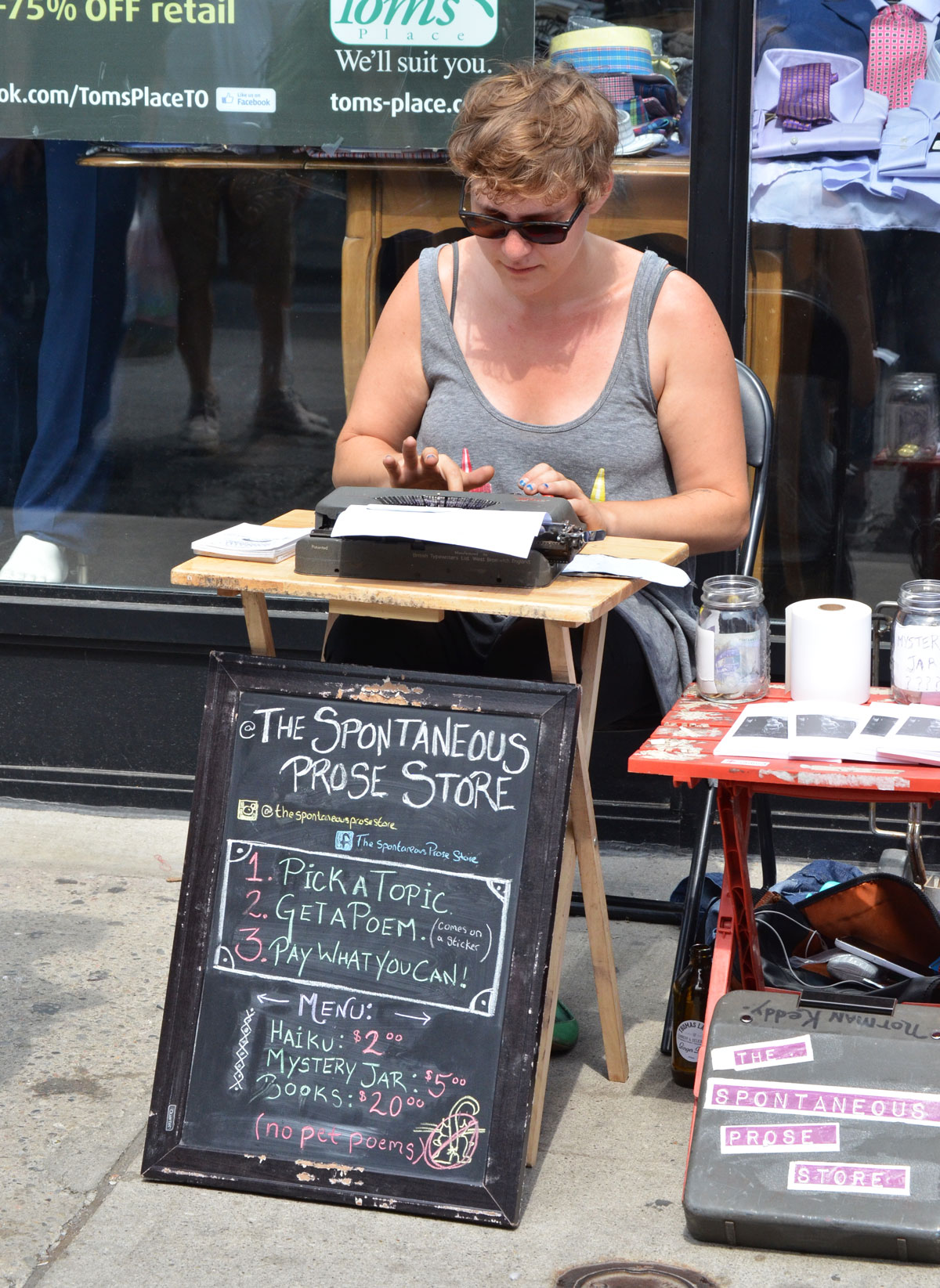
A woman is typing on an old typewriter at an outdoor event, Pedestrian SUnday at Kensington Market. She is the Spontaneous PRose Shop. Pay her and she'll compose haiku, poetry or stories for you.

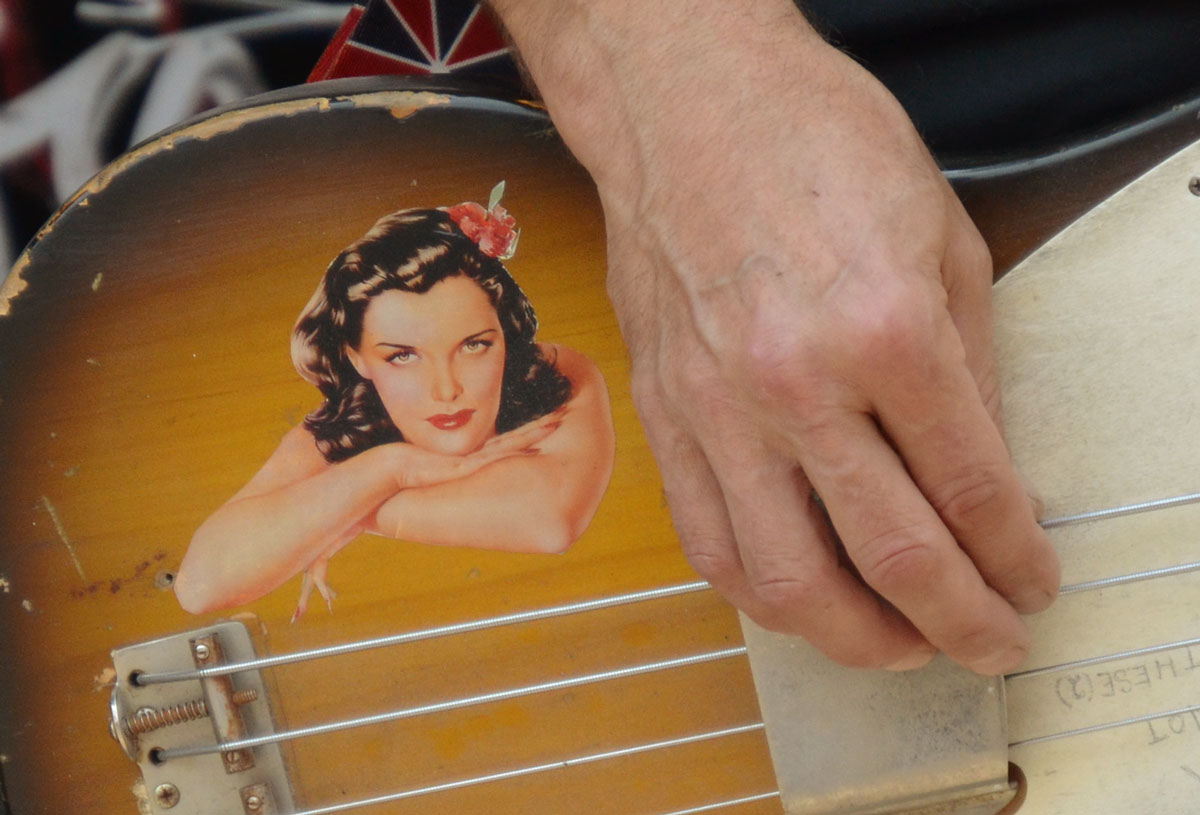
A picture of a woman resting on her folded arms is on a brownish coloured guitar. A man's hand is in the picture as he plays the guitar

An assortment of things for sale on a table including a basket of stuffed animals, some shirts on hangers and a childs red Chinese jacket.

will write poetry or prose for 25 cents

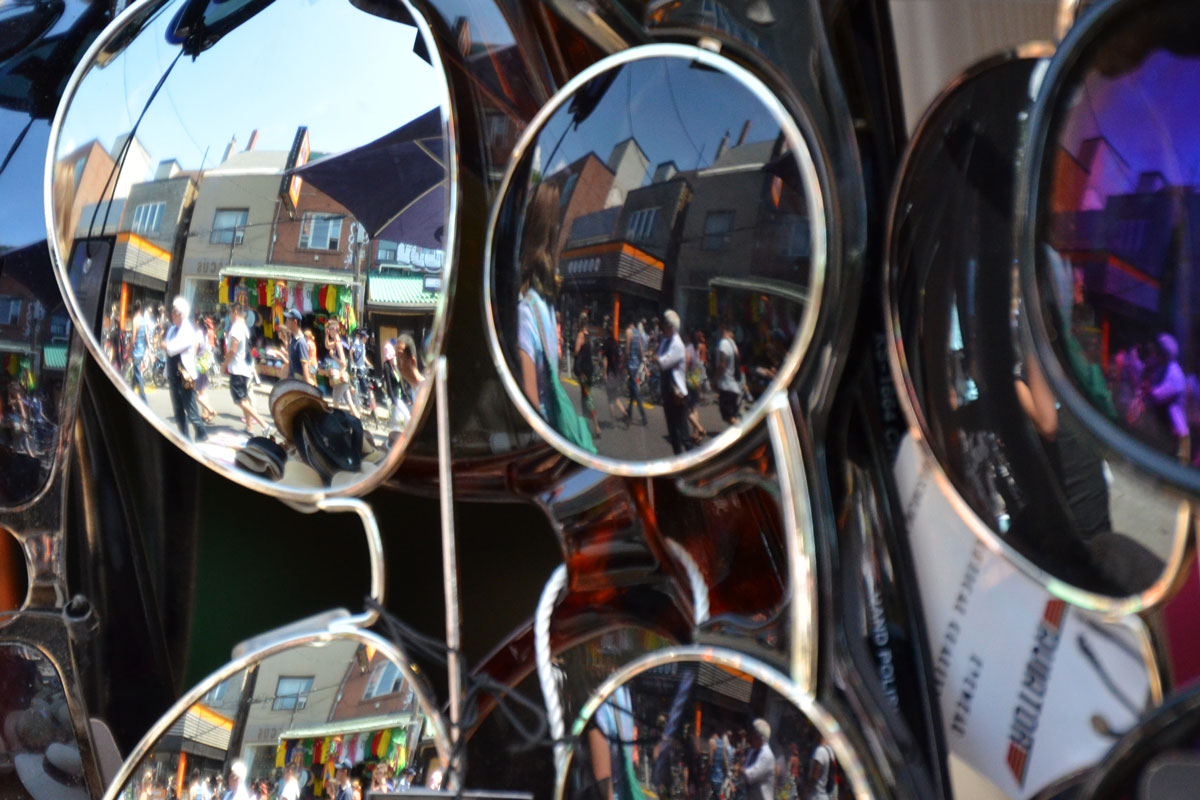
sunglasses and their reflections of Kensington

The fifth floor of the Art Gallery of Ontario is devoted to contemporary art.

Three of the present exhibits are best described as conceptual art.  Conceptual art is art where the idea is more important that the look.  The story behind the work trumps aesthetics.

This blog post has taken me many days to write as I struggle with the love hate relationship that I have with conceptual art.   My biggest complaint about conceptual art is that skill too often gets thrown out the window;  God forbid that something like artistic merit should impede the artist.  I can empathize with causes and I can support ideas without liking the end product.  In other words, just because I don’t the ‘art’ doesn’t mean I don’t “get it”.

Anyhow, on to the exhibits.

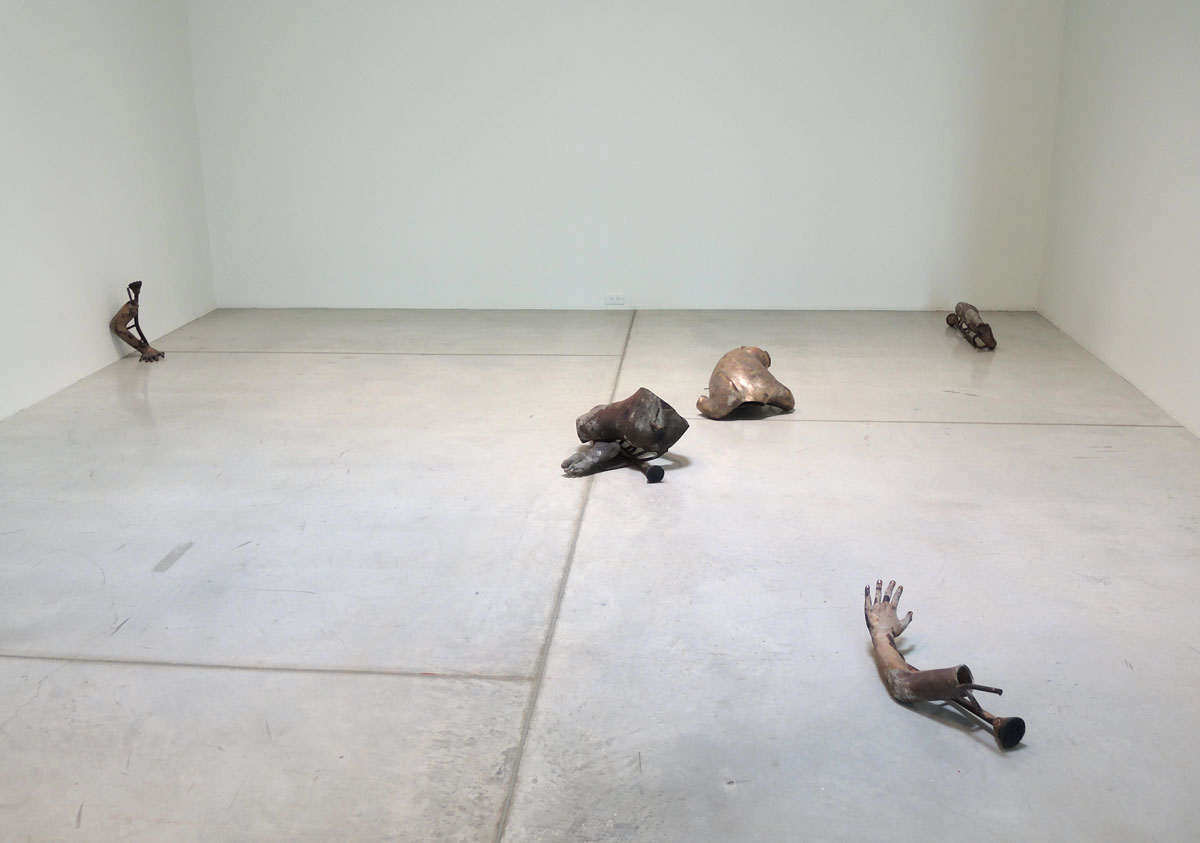
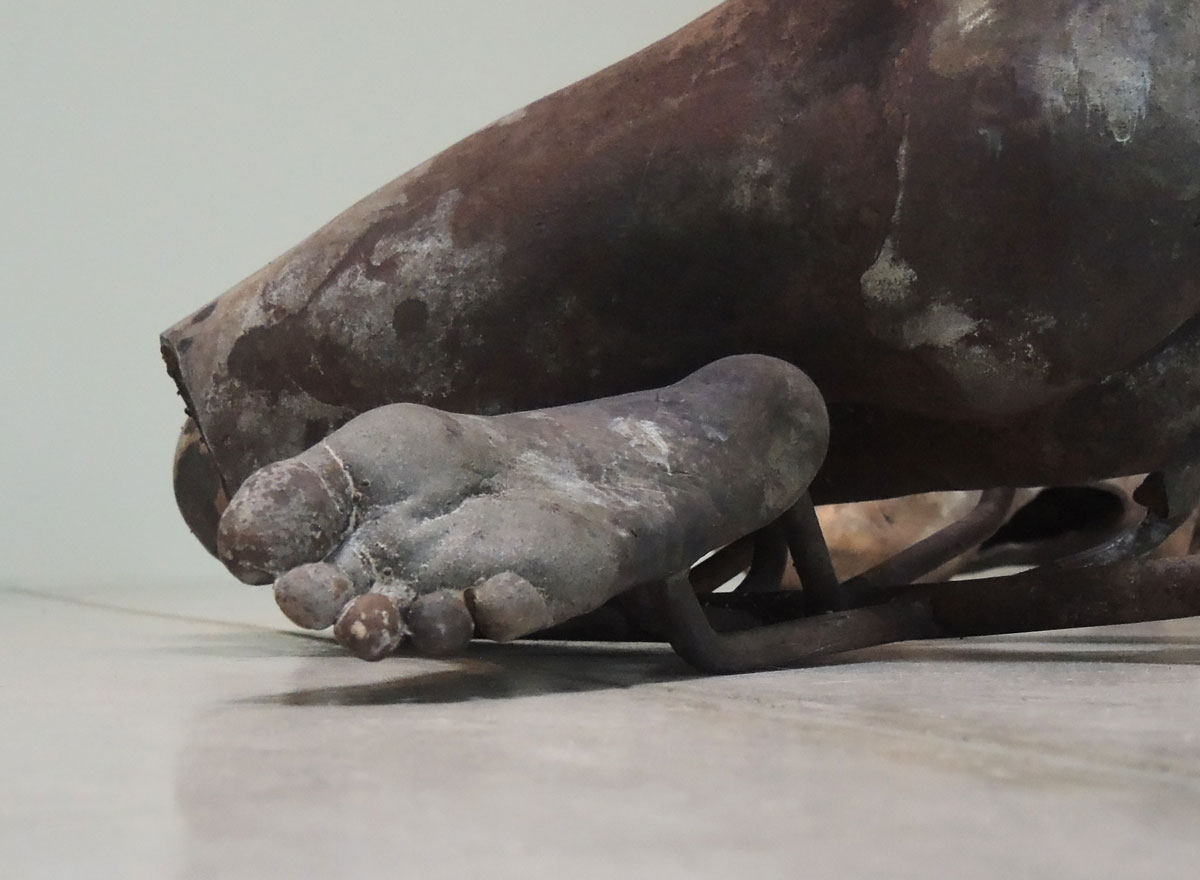
First, ‘Gustav’s Wing’ is an exhibit by Danh Vo, a man born in Vietnam but raised in Denmark.  Using his nephew as a model, Vo had a bronze of cast of the boy’s body made in six pieces.  The pieces are then arranged within a room.  “The resulting installation gives a fragmented and evocative portrait of a boy whose Danish and Vietnamese heritage echoes that of the artist, but who represents the next stage in the family’s story – that of the first-generation Danish citizen”, according to the description of the exhibit.

Looking into a white room, photo taken from the doorway, pieces of metal cast from a boy's body lie on the floor, scattered, part of an art installation at the Art Gallery of Ontario

Close up of a metal cast of a boy's foot. Part of an art installation by Danh Vo at the Art Gallery of Ontario

Three of the metal pieces from Gustave's WIng, an art installation by Danh Vo, pieces of body cast in metal

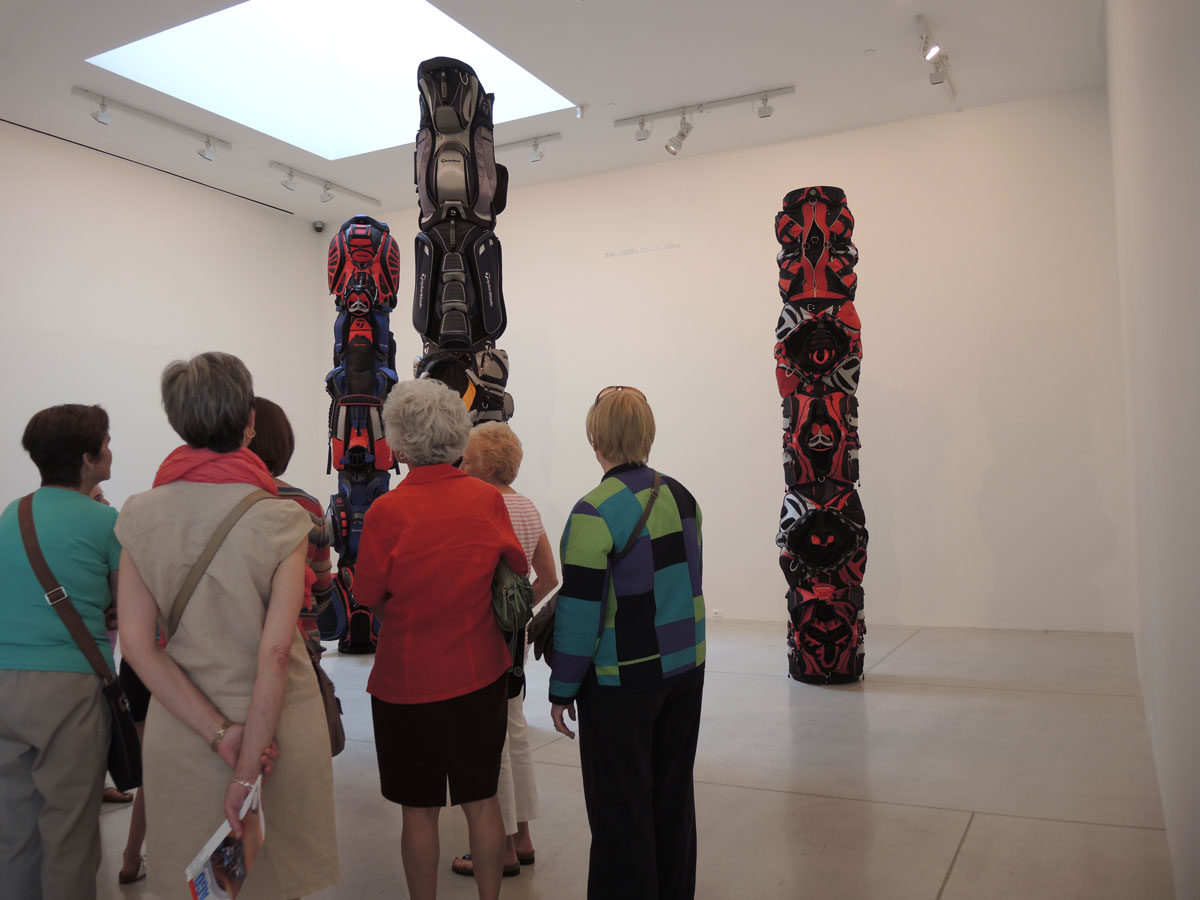
Second, there are three totem poles by Brian Jungen entitled ‘1960’, ‘1970’, and ‘1980’.  All three were made in 2007.  The words in the artist’s statement about this piece say “The towering works recall the complex social and political tensions that can result from First Nations land claims.”  Part of the artist’s reasoning is that golf courses are manicured and their use is quite different from the way land is used by First Nations.


A group of women looks at an art installation of three large totem poles made of golf bags on display in an art gallery (Art Gallery of Ontario)

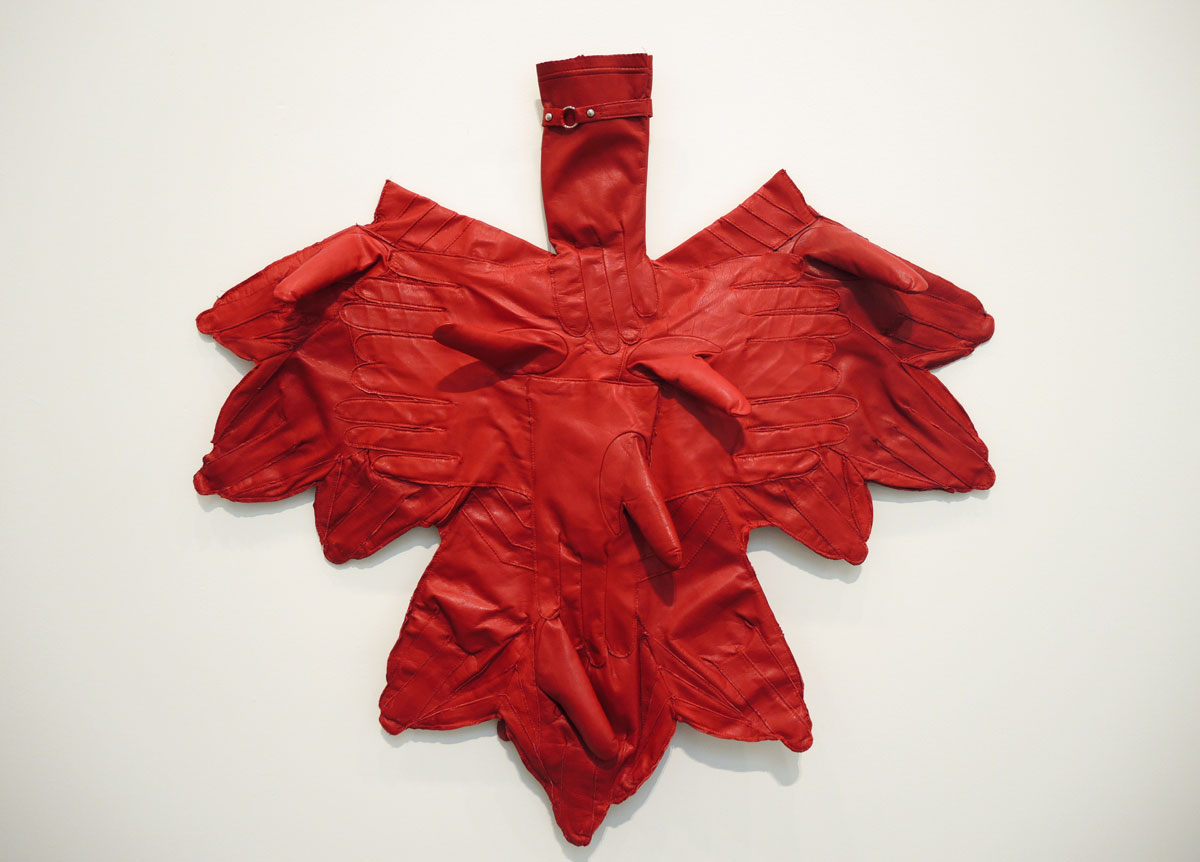
below: Anther piece by Brian Jungen, this one is called ‘Wieland’ and it is made of red women’s leather gloves.  It is supposed to be an upside down maple leaf, i.e. a Canadian symbol turned on its head.  When I first saw it, I saw an eagle with its wings spread but maybe that’s just me.

The words on the wall for this piece: “Its title celebrates Canadian artist Joyce Wieland (1931-1998) whose work in the 1960s and 1970s proposed a gendered patriotism in which indigenous art and culture were given only tokenistic inclusion. With Wieland, Jungen positions himself as part of and against an established narrative of Canadian art history.”

In Wieland’s opinion Canada was female I guess that that is what “gendered patriotism” means.  Otherwise, you will have to figure this one out for yourself.

Upside down rd maple leaf made of women's gloves. It also looks a bit like a large bird with outstretched wings. Part of an art installation at the art gallery of Ontario

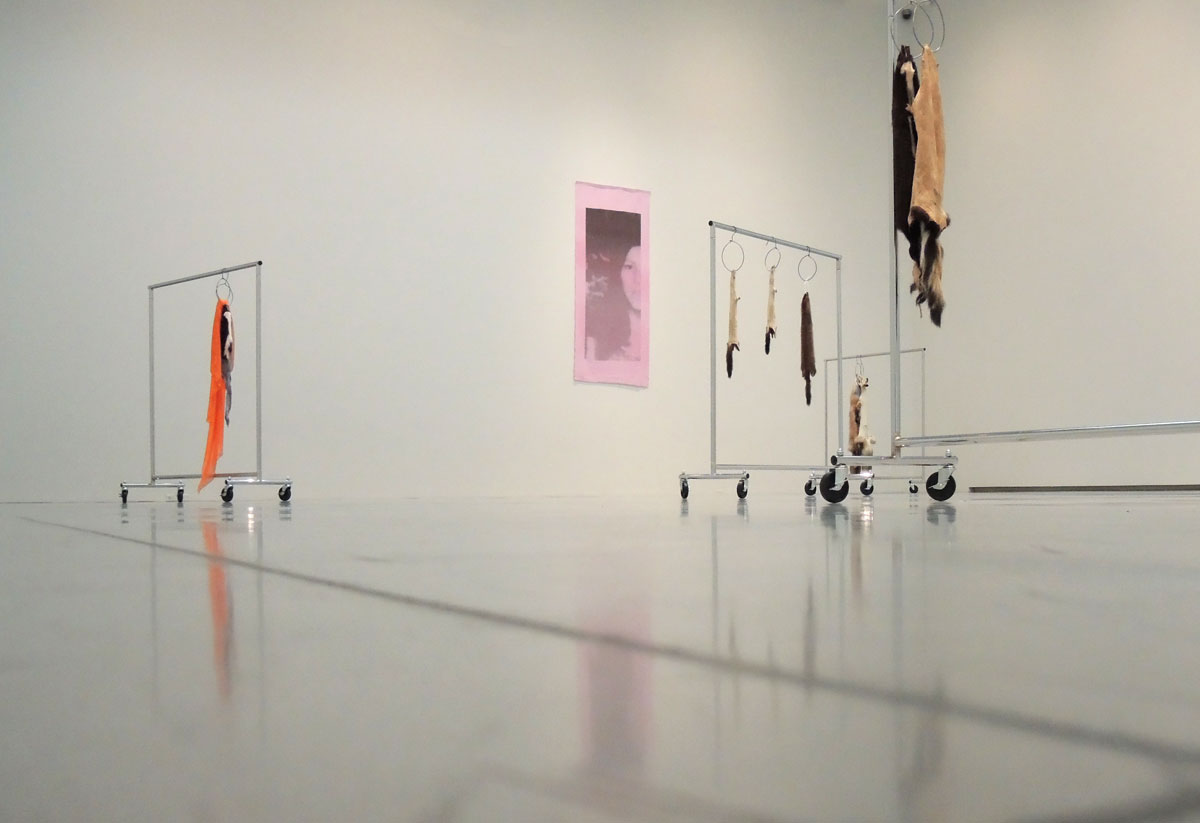
Lastly, there is an installation by Duane Linklater.  Each garment rack is piece and they have names like “My brother-in-law, my sister” and  “The marks left behind”.  Furs of different animals such as fox and skunk hang from the garment racks.  One has an old T-shirt and one has a piece of orange fabric.   “The evocative titles of the pieces speak to family ties, articulating a sense of personal loss” according to the description of the work found on the gallery wall.


A woman is in a large room at the Art Gallery of Ontario, she is looking at an art installation that involves skins of dead animals hanging from garment racks. A pink picture of a woman hangs on the wall.

in an art gallery, an art installation that involves skins of dead animals hanging from garment racks. A pink picture of a woman hangs on the wall.

The two pink pictures on the wall are each a half of a portrait of a woman called Anna Mae Aquash who died in 1976. Together they form ‘Family Photograph’.  Aquash was a Miqmaq woman who was involved as a “radical activist” in the American Indian Movement of the early 1970s.  She was murdered.    If you read the description of the work on the gallery wall, you will read these words: “By including her image, Linklater expresses a sense of familial connection with Aquash and establishes a symbolic relationship with the previous generation while asserting himself in the present. ”   Pardon?

The words on the wall don’t tell you that she was murdered by her own people because they thought she was an FBI informant.  So what relationship is the artist trying to establish?  How does this even remotely lead to “asserting himself in the present”?  Sorry, but empty jargonish words leave me cold. This isn’t art.  Linklater may have a valid idea but that doesn’t make it art.

A group of people in an art gallery, they are looking at an art installation that involves skins of dead animals hanging from garment racks. Two pink picture of women hangs on the wall.


Stephen Andrews POV
an exhibit at the Art Gallery of Ontario

Stephen Andrews is a Toronto artist whose career began in photography and the exhibit now on at the AGO does include a few excellent 8×10 photographs.  The main part of the exhibit though are approximately 20 (mostly large) paintings of his.

A room in an art gallery with white walls and three large paintings on it. A woman is taking a picture of one of them with a camera. The paintings consist of large rectangles
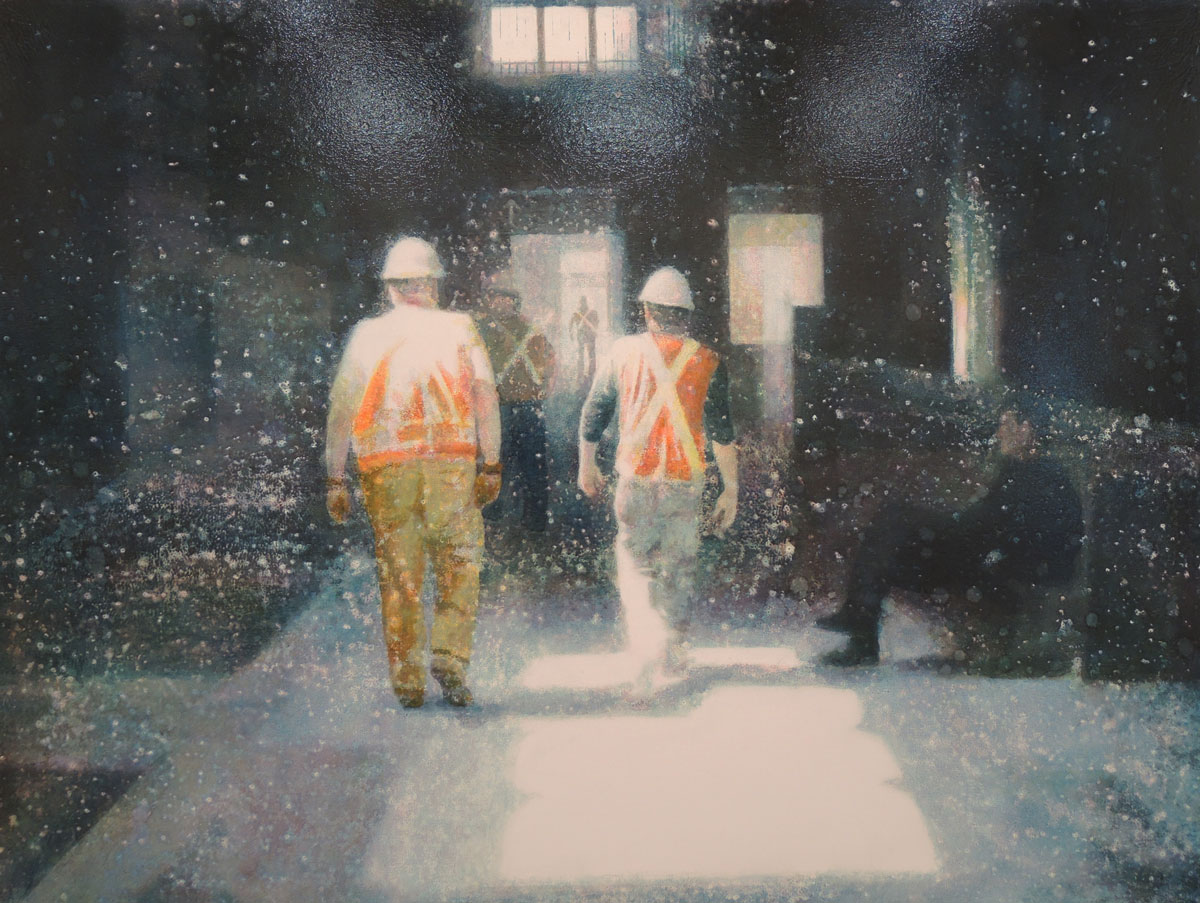
  below: ‘X-men at Union’, 2013, oil on canvas
Construction workers at Union Station, Toronto

rtwork picture of two construction workers wearing orange and yellow safety vests as they walk into a building that is being renovated

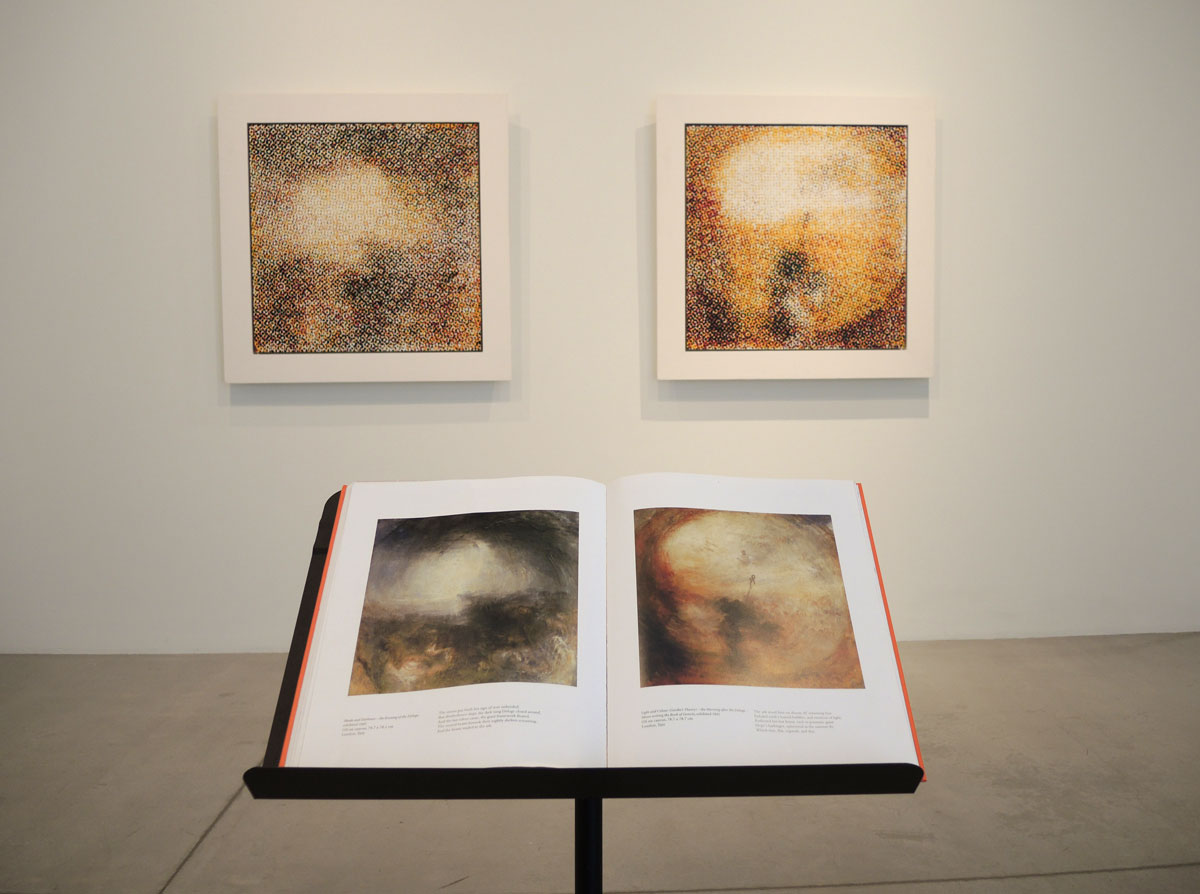
below: ‘After Before/After After’ oil on wood panels
The two paintings on the wall were based on landscapes by J.M.W. Turner that depicted scenes before and after the flood described in the bible (or before and after chaos).  Andrews has painted his with dots in only four colours, yellow, magenta, cyan and black

An open book on a pedestal, a large picture of a painting on each page. Two paintings on a wall directly behind the book. The paintings on the wall are replicas of the ones in the book .

below: detail from ‘Crossing’, 2011, oil on canvas

close up of a painting of a large number of railway crossing signs.

below: close up of part of ‘Entrance/Exit’, 2014, oil on canvas

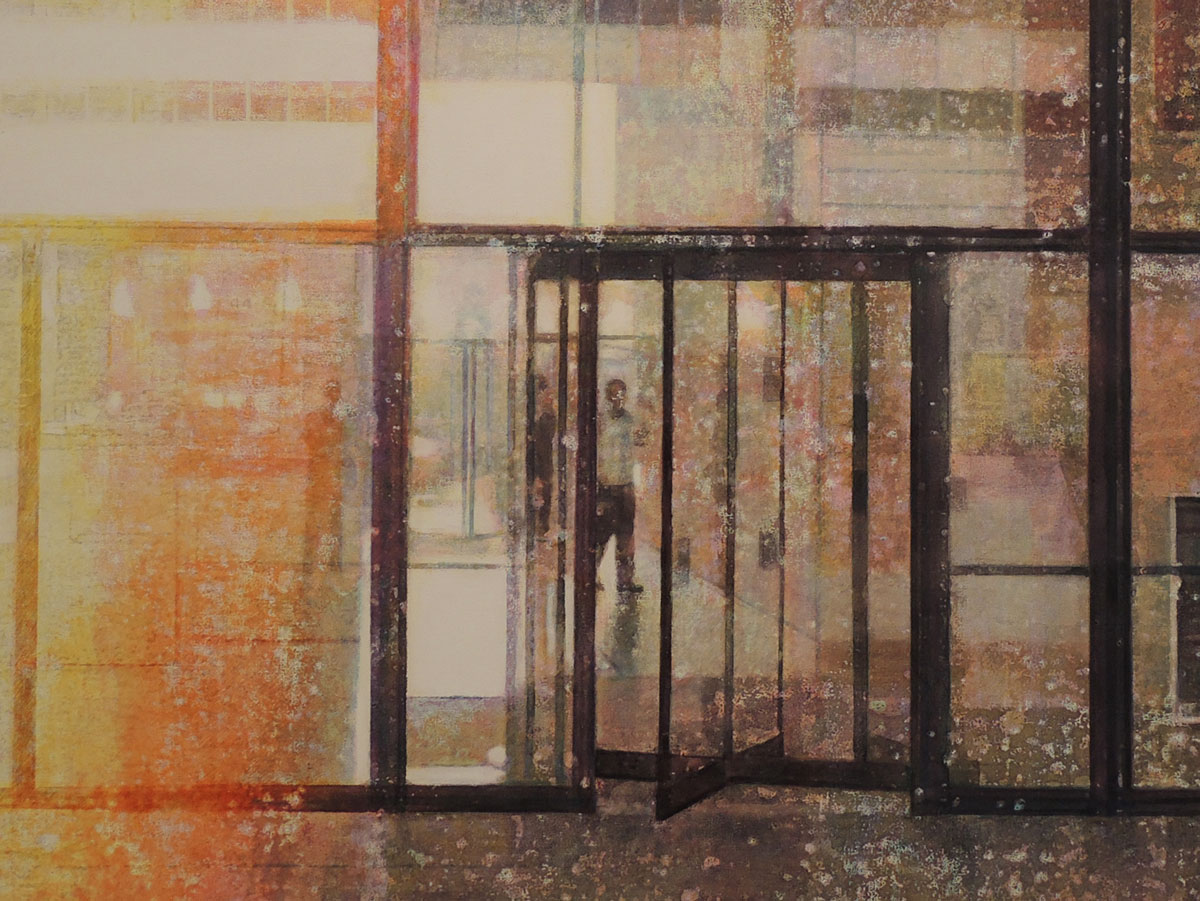
close up of a slightly abstract painting of a person about to go through a revolving door in a glass wall