Posts Tagged ‘people’

Along Dundas St. West between Islington and Kipling there are a series of more than twenty murals that depict scenes from the history of the area. 

In 1793, Simcoe’s Queen’s Rangers cut a route through the forest for Dundas Street.  It was meant to serve both as a military route in case of war with the U.S. and as a route to increase settlement in the area.   Settlement of what became the village of Islington began a few years later with the arrival of the Johnston family in 1808.

The first mural was a picture of the Methodist church painted on plywood.  It no longer exists.

mural 2 – The Way We Were, part 1 by John Kuna, 2005.
Looking east along Dundas St. towards Cordova Ave in 1912.  It includes Hopkins store and the Methodist church.
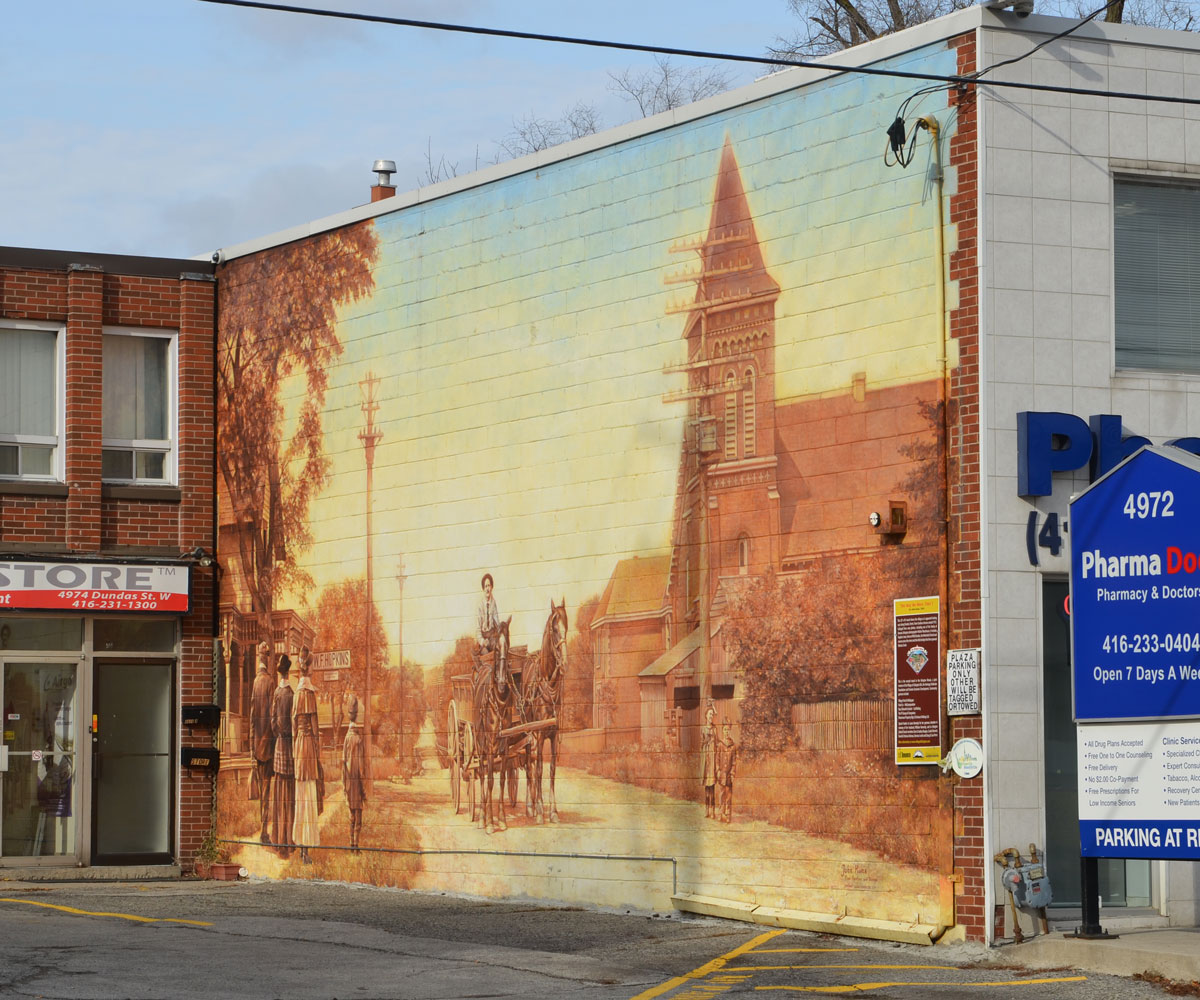
large mural on the side of a building that shows people in old fashioned clothes walking down a street.  A man in a horse drawn wagon is coming down the street.

part of a large mural on the side of a building that shows people in old fashioned clothes walking down a street.  A man in a horse drawn wagon is coming down the street.

mural 3 – They Way We Were part 2, 1912, by John Kuna, 2006.
Because of the car that was parked next to it, I don’t have a good photo of the whole mural.

a mural showing a group of men in clothing from the 1930s shoveling in the dirt.

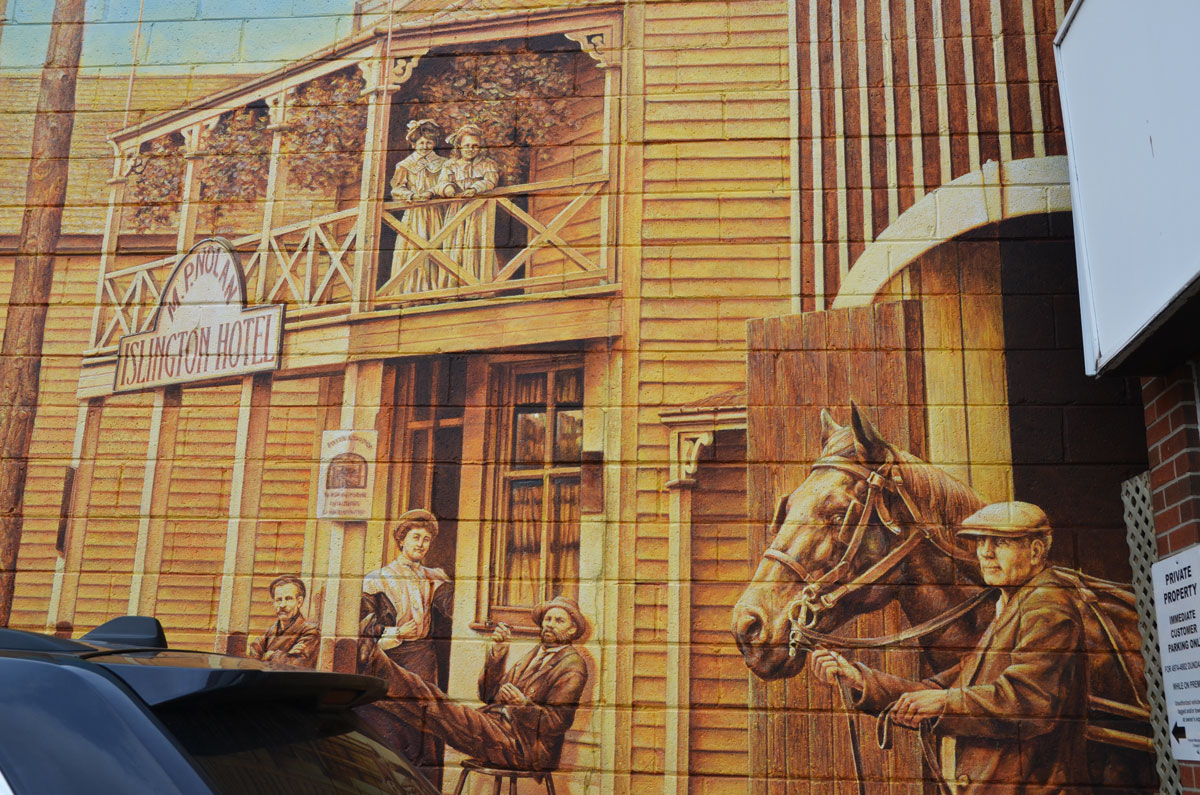
part of a mural, a man leading a horse out of the stables, the Islington Hotel behind.  Two ladies are standing on the balcony of the second floor of the hotel.  A man is reclining on a chair on the front porch of the hotel.

mural 4 – Timeline: Islington Then and Now, by John Kuna, 2006.
Showing Dunn’s store (NE corner of Dundas & Burnhamthorpe Cres) as well as the flowering catalpa trees that used to line the street (on the right in the picture)
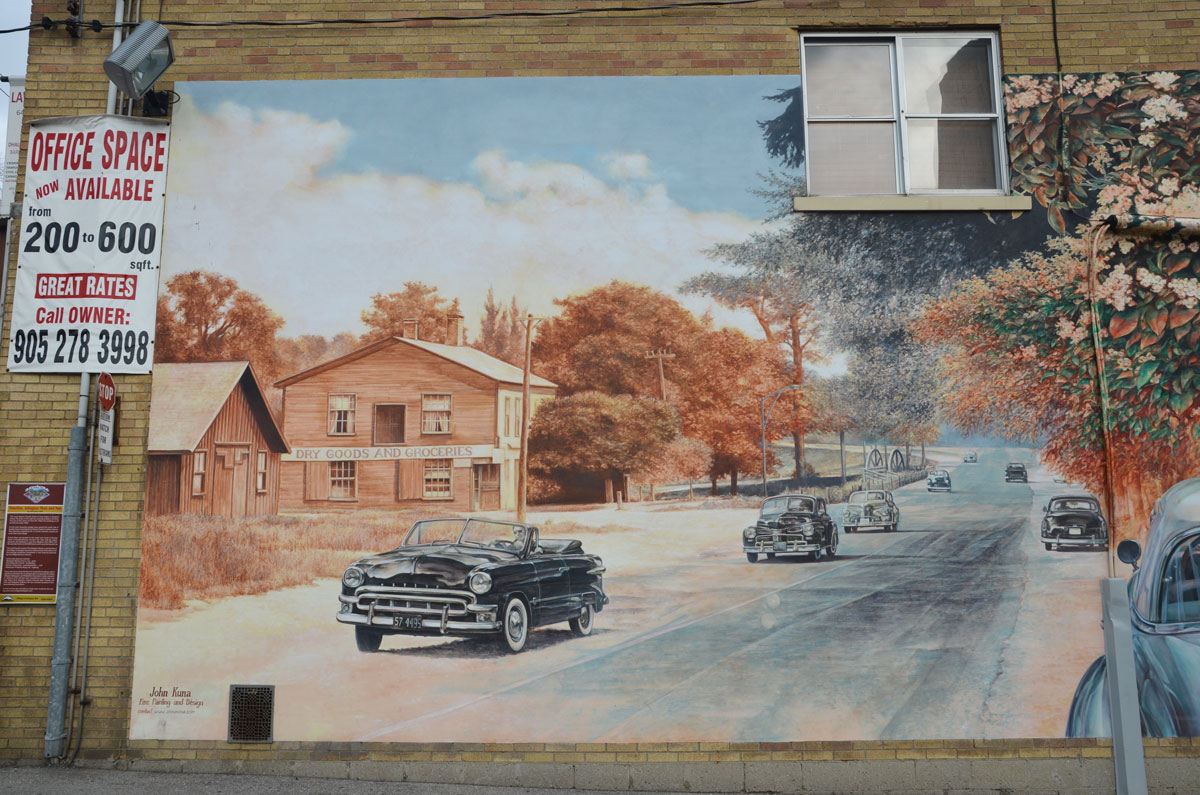
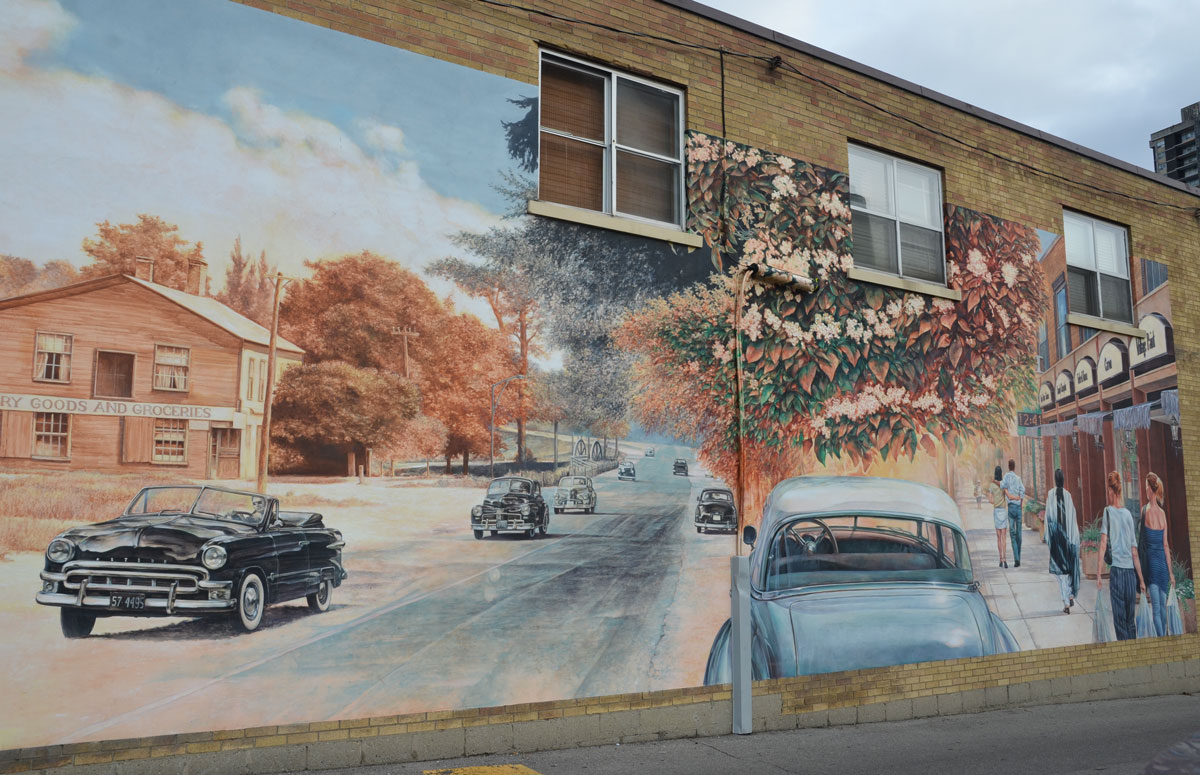
part of a mural depicting the main street of town as it was in the 40s and as it was in 2006.  cars, street, people shopping,

blog_islington_here_right

mural 5 — Honouring Islington’s Volunteer Fire Brigade, by John Kuna, 2007. 
Islington had its first motorized fire truck in 1931.  In the 1940s and 1950s the volunteer firefighters would use water from the Mimico creek to flood part of Central Park, on the west side of the creek, to create a skating rink.

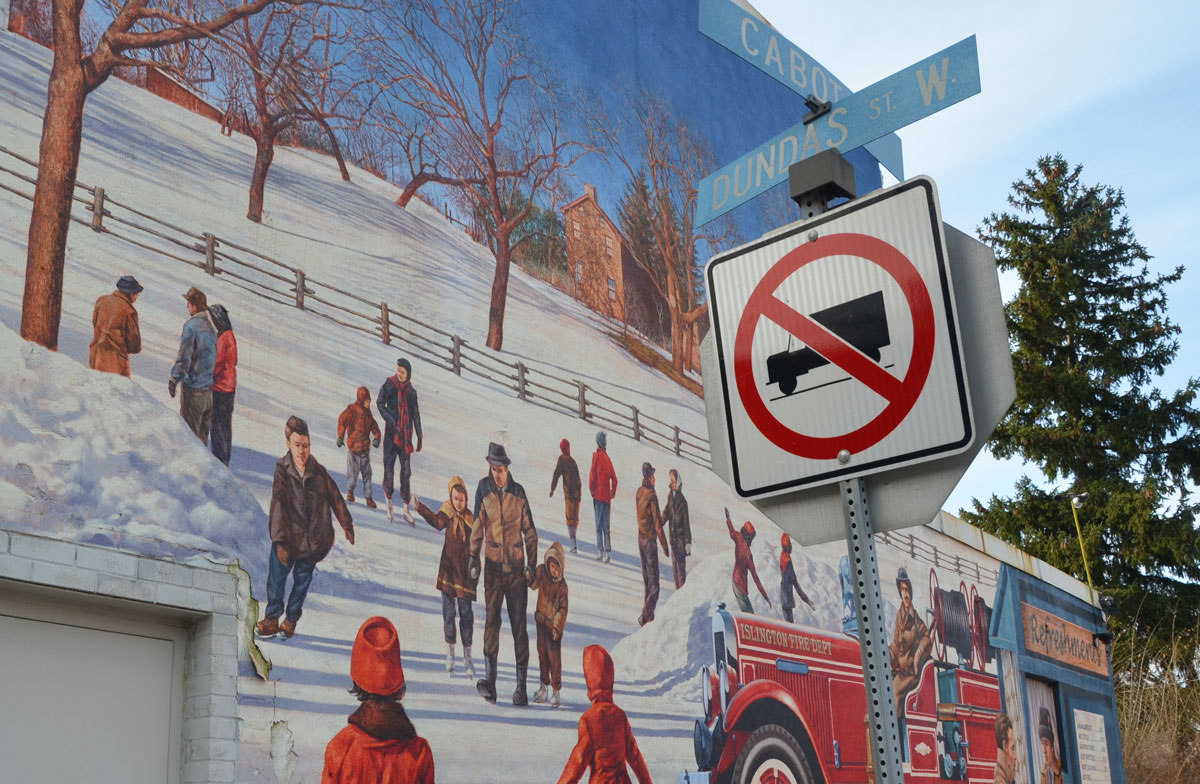
looking across the street at a mural on the side of white brick building, a winter scene, some people are skating, lots of bright red jackets, there is also an old fashioned fire engine with firefighters sitting in it.  At the right edge of the picture is a small wood hut with a sign that says Refreshments on it.

close up of a mural showing people skating on a frozen pond in the winter.  In the foreground is a traffic sign that says no trucks, also blue street signs for Cabot St. and Dundas Street West

mural 6 – Riding the Radials, by John Kuna, 2007.
From 1917 to 1931 the old Guelph Radial Line (or Toronto Suburban Railway) ran close by this site.  It was an electric rail line between Toronto and Guelph.
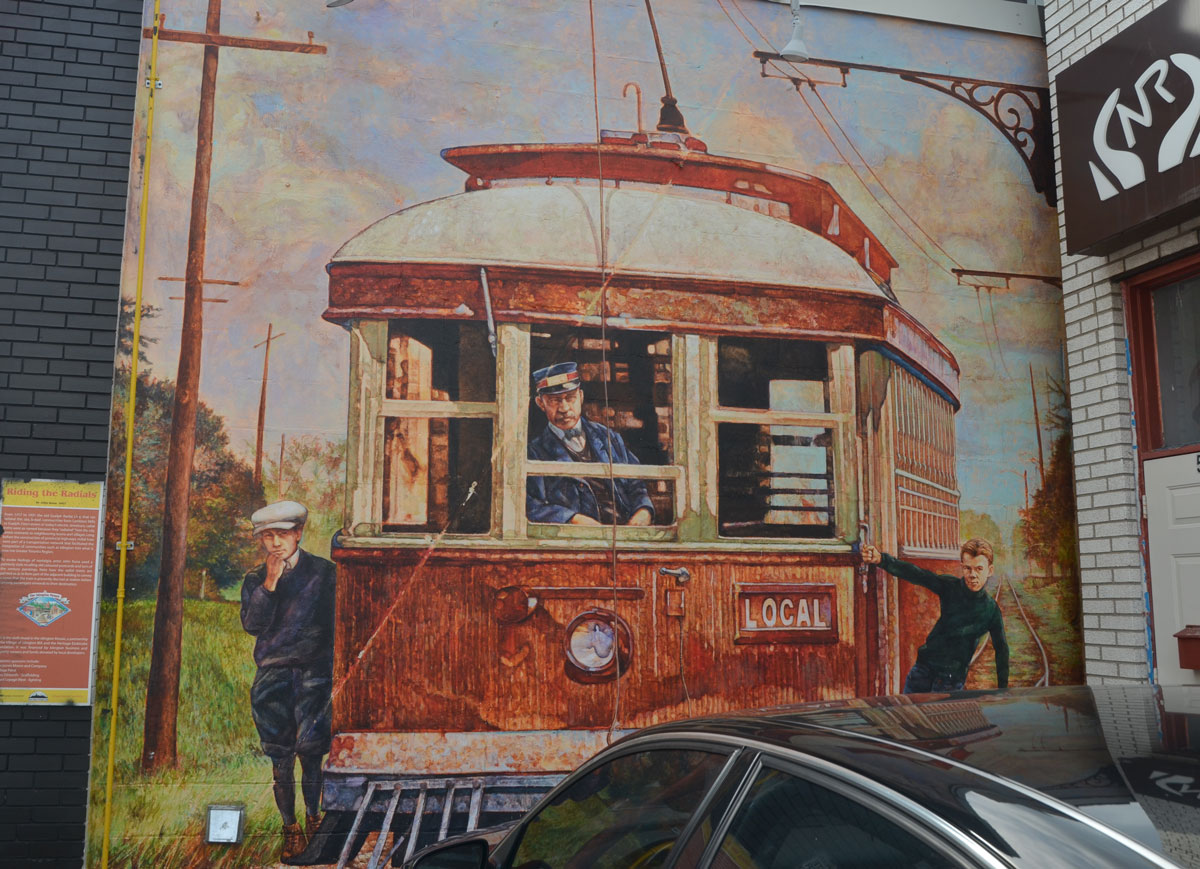
A mural showing the front of an old electric train car with the conductor sitting in front.  Two boys are hanging out the doors, one on each side of the train car.

mural 7 – Briarly, Gone but not Forgotten, by John Kune, 2007.
Briarly, also known as Gunn House was built in 1840s. From 1870 to 1985 it was owned by the Montgomery family and their descendents.

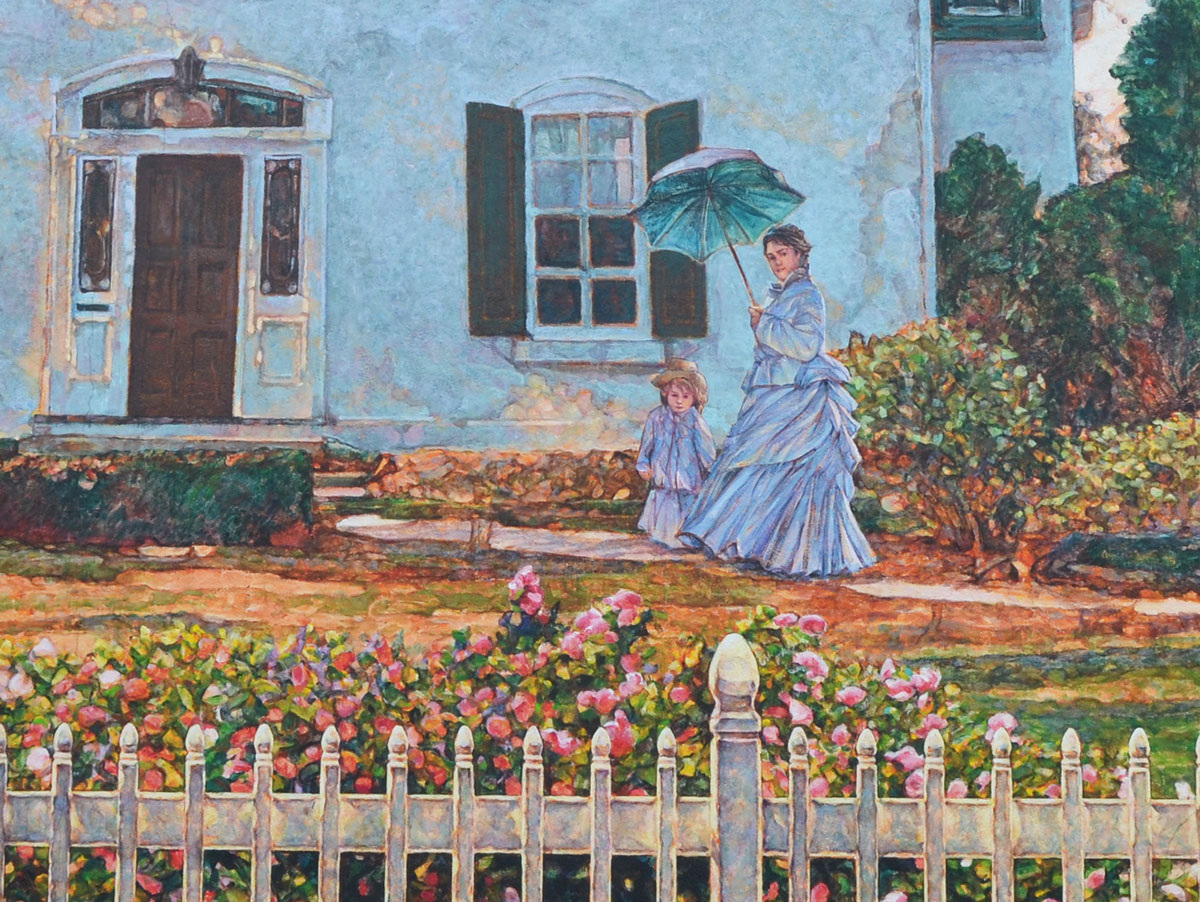
mural 7 - Briarly, Gone but not Forgotten, by John Kune, 2007.  Briarly, also known as Gunn House was built in 1840s.  From 1870 to 1985 it was owned by the Montgomery family and their descendents.

A woman and a girl in long light blue dresses are walking in front of a house.  The woman is carrying a blue parasol.  There is a white picket fence and flowering shrubs in the foreground of the picture.

mural 9 – Harold G. Shipp’s Firt High Flier, by John Kuna, 2008.
The story behind this mural: “In 1944 Harold Shipp convinced a Lancaster bomber pilot who ferried supplies from Toronto to England during the war, to fly over the school’s football field and drop hundreds of leaflets, a few of which could be traded for tickets to the school dance. Unfortunately, a rogue wind scattered the leaflets across the Chinese market gardens near Montgomery’s Inn. In the ensuing mayhem, excited football fans frantic to secure a winning ticket, stormed the field and trampled the carefully tended cabbages”

mural showing men playing football in the 1920s, with a low flying airplane overhead.

mural showing men playing football in the 1920s, with a low flying airplane overhead, as seen from an angle - form this perspective you can see that the mural is actually two pictures.

mural 10 – Portraits from our Past by Sarah Collard, 2008.
Inspired by pictures taken in the early 1900’s. “These include: Apple Packers at Bigham family orchards, Rathburn and Martingrove ~1917; Sunday Afternoon, a scene showing the family of famous Islington photographer Walter Moorhouse on their veranda at 34 MacPherson Ave. (now Aberfoyle); Islington’s First Car, a 1917 Chevrolet owned by the Appleby family; and the Village Shoemaker, Mr. Nelson in the 20th century.”
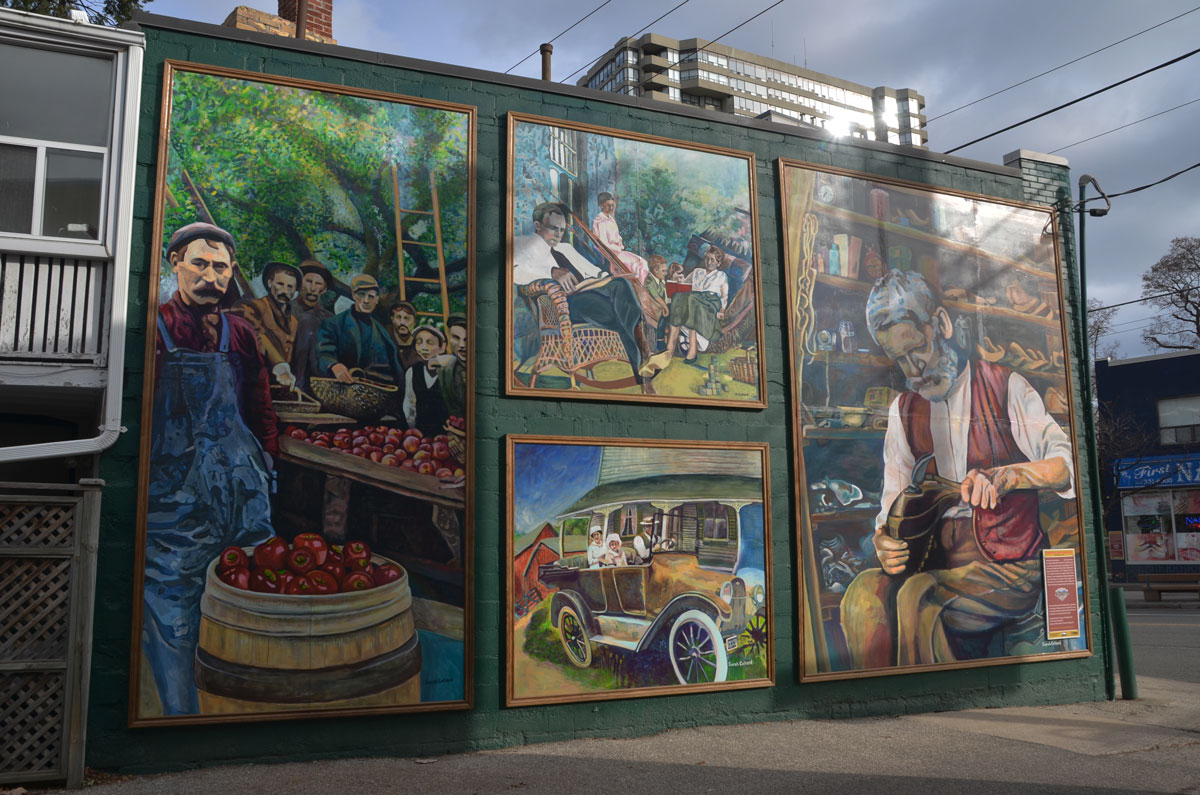
mural in 4 parts, 1 on the left, 1 on the right and 2 in the center.  The left depicts a man selling apples, the right depicts a cobbler fixing shoes.  In the center: bottom, a family in old fashioned car.  Center top - a family sitting in a livingroom including a man in a rocking chair

mural 11 – Mimico Creek in Fall, ca 1920, by John Kuna, 2008.
Looking north towards the Dundas Street bridge.
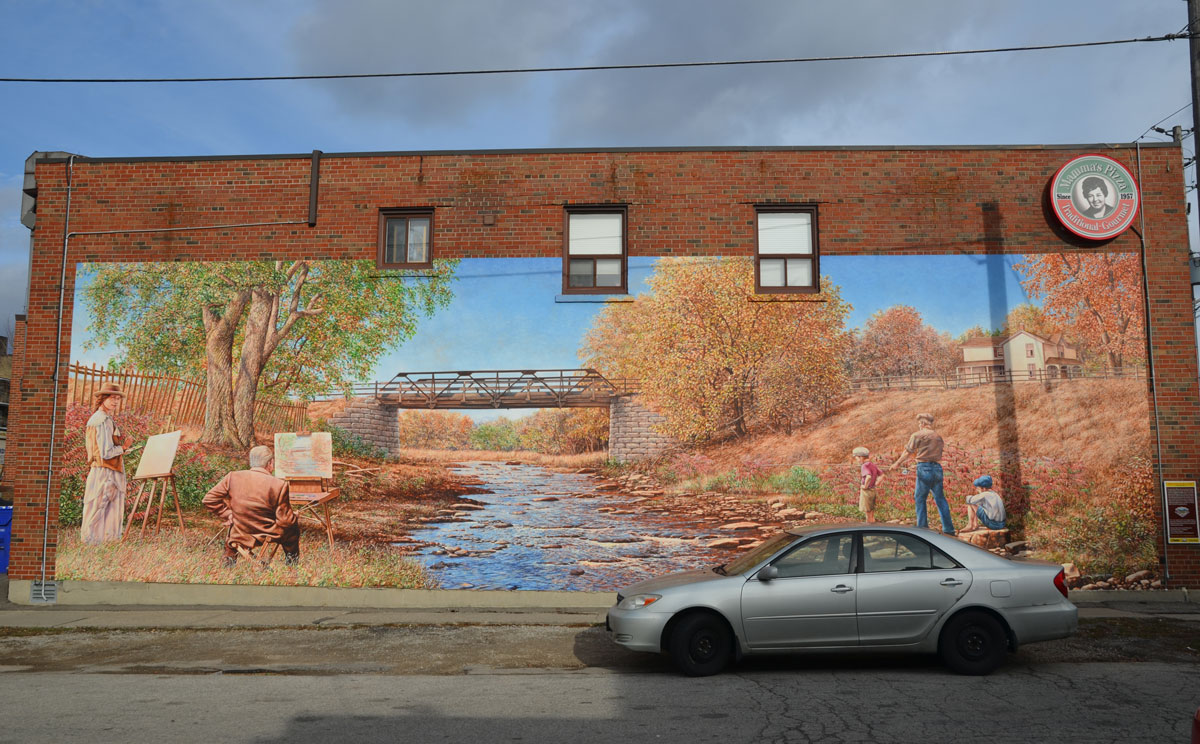
A large mural of a creek.  On the left back are two painters with their easels set up beside the river.  On the right bank are two boys and a man

Gordon’s Dairy, by John Kuna, 2008.

A mural on the front of the Islington Senior's Centre showing dairy carts.

mural 13 – The Old Swimming Hole by June Kuna, 2009.
Swimmers at the mill pond.

large mural of people swimming in a creek in bathing costumes from the 1920s

closer view of part of the mural of people swimming in a creek.  In this part of the picture, kids are climbing on a water wheel.  The mural is reflected in the window of the store next to it.

mural 14 – The Pub with no Beer, by June Kuna, 2009. 
A scene from the Prohibition Era in the late 1920’s.   Men collecting empty pop bottles from outside the Islington Hotel.
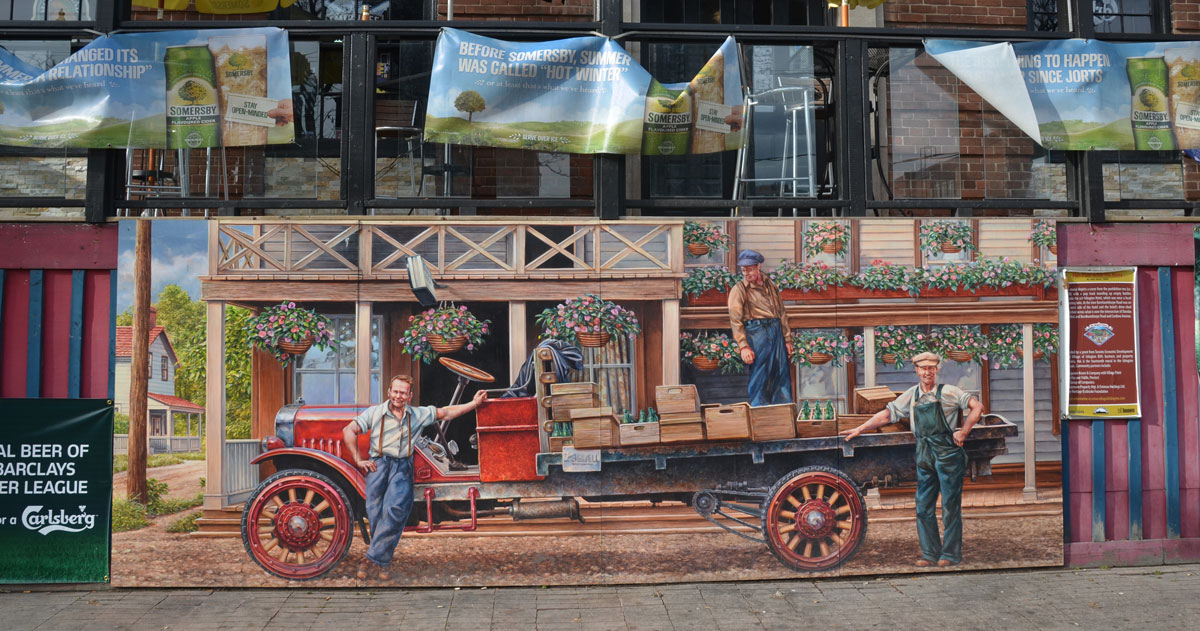
mural showing men loading an old flat bed truck with crates of empty pop bottles, 1920s

Fox and Fiddle bar, a two storey brick building,

mural 15, Faith of Our Fathers, part 2, by John Kuna

mural showing the building of a chirch

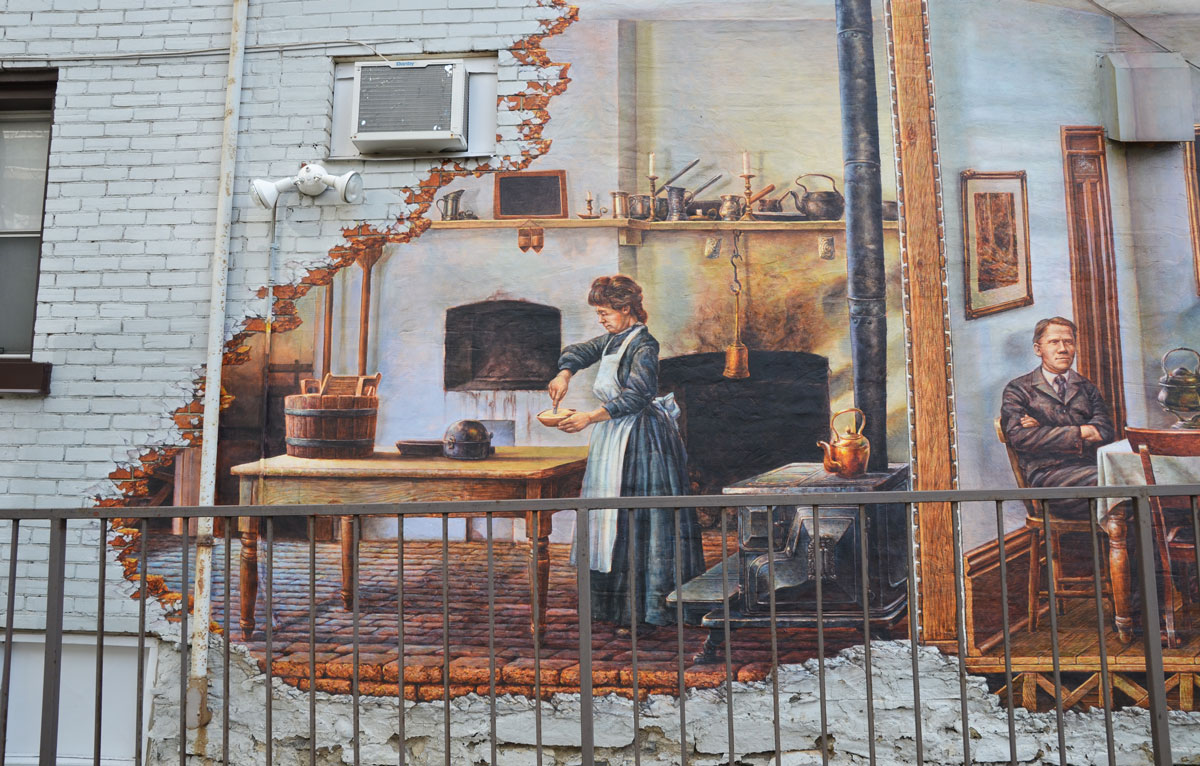
mural 16 – The Manse Committee by John Kuna 2010

mural on the side of a two storey white brick building.  The picture looks like the outer wall has been removed to reveal a family house from the early 1900s.  A cook is working in the kitchen,

blog_islington_16kitchen

The Prodigy, by John Kuna, 2011
A satellite branch of the Royal Conservatory of Music was located in this building from the 1950s through the 1980s.
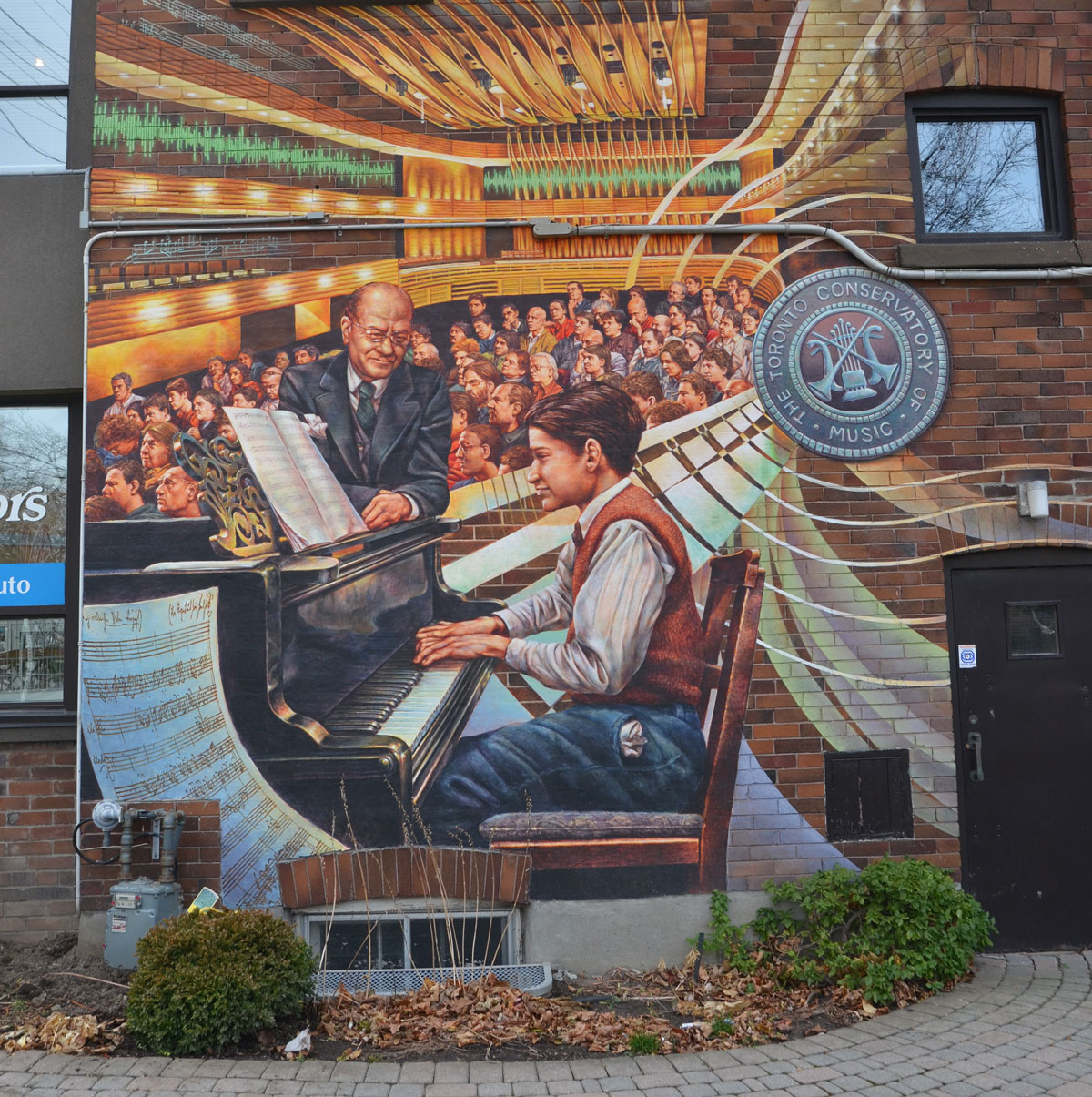
mural depicting a boy playing a piano in front of an audience.  A man is helping to turn the pages of the music.

mural 19 –  Aftermath by John Kuna, 2011.
After Hurricane Hazel on 15 Oct 1854, most of Islington Golf Course and the low lying areas around Mimico Creek were flooded.

large painting of men in boats, helicopter overhead

mural 20 – Ontario Gothic, by John Kuna, 2011

A mural of a man and a woman standing outside a two stroey farm house.  A white car is parked in front of the mural and it blocks the bottom right of the picture.

mural 21 – Toboggan Hill, by John Kuna, 2011
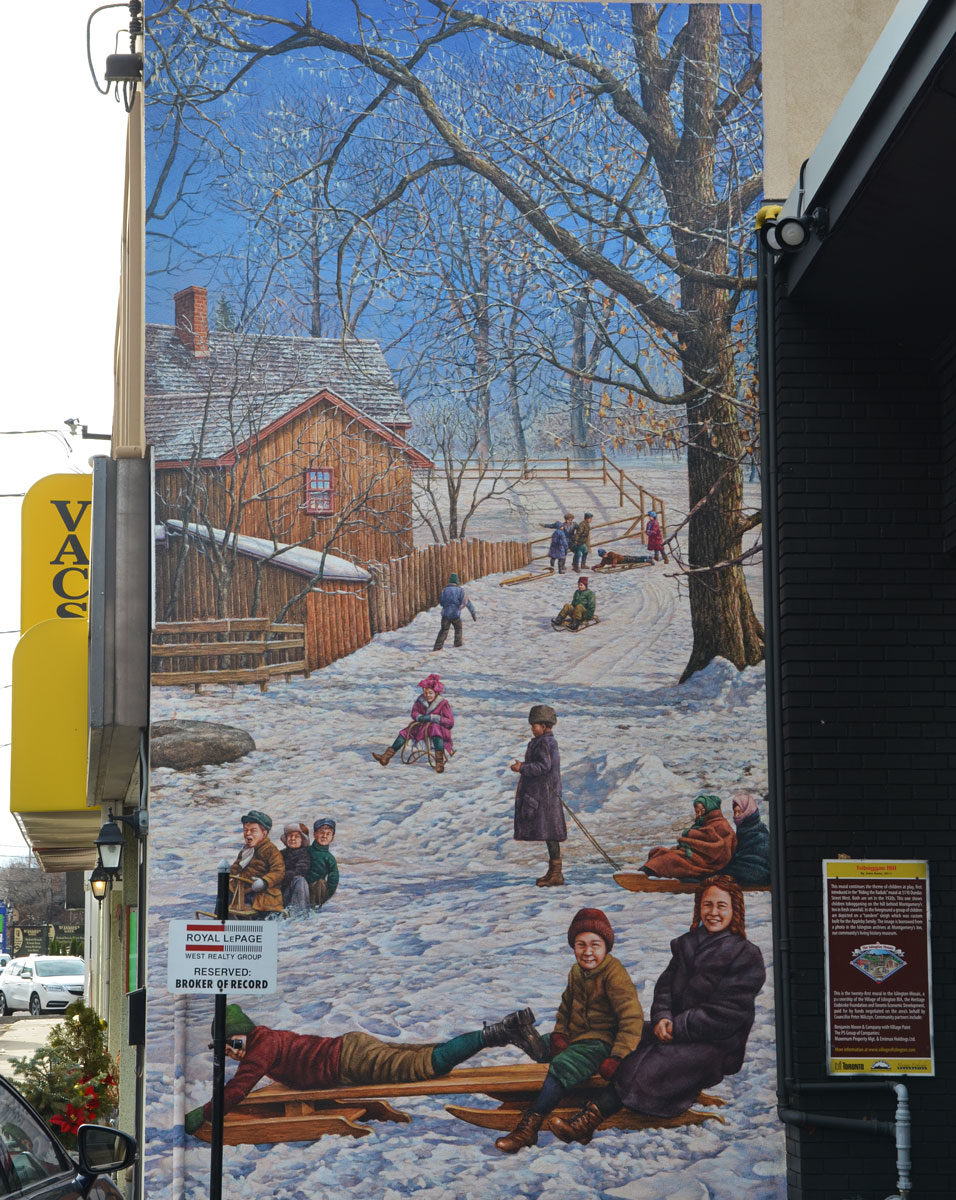
large vertical mural depicting a hill in winter.   Bare trees, kids on tobaggons.

Close up of the bottom part of a mural whowing kids on old fashioned wooden sleds, or toboggans.

Fishing in Mimico Creek, by John Kuna, 2012,
with Riding the Radials seen in the background.
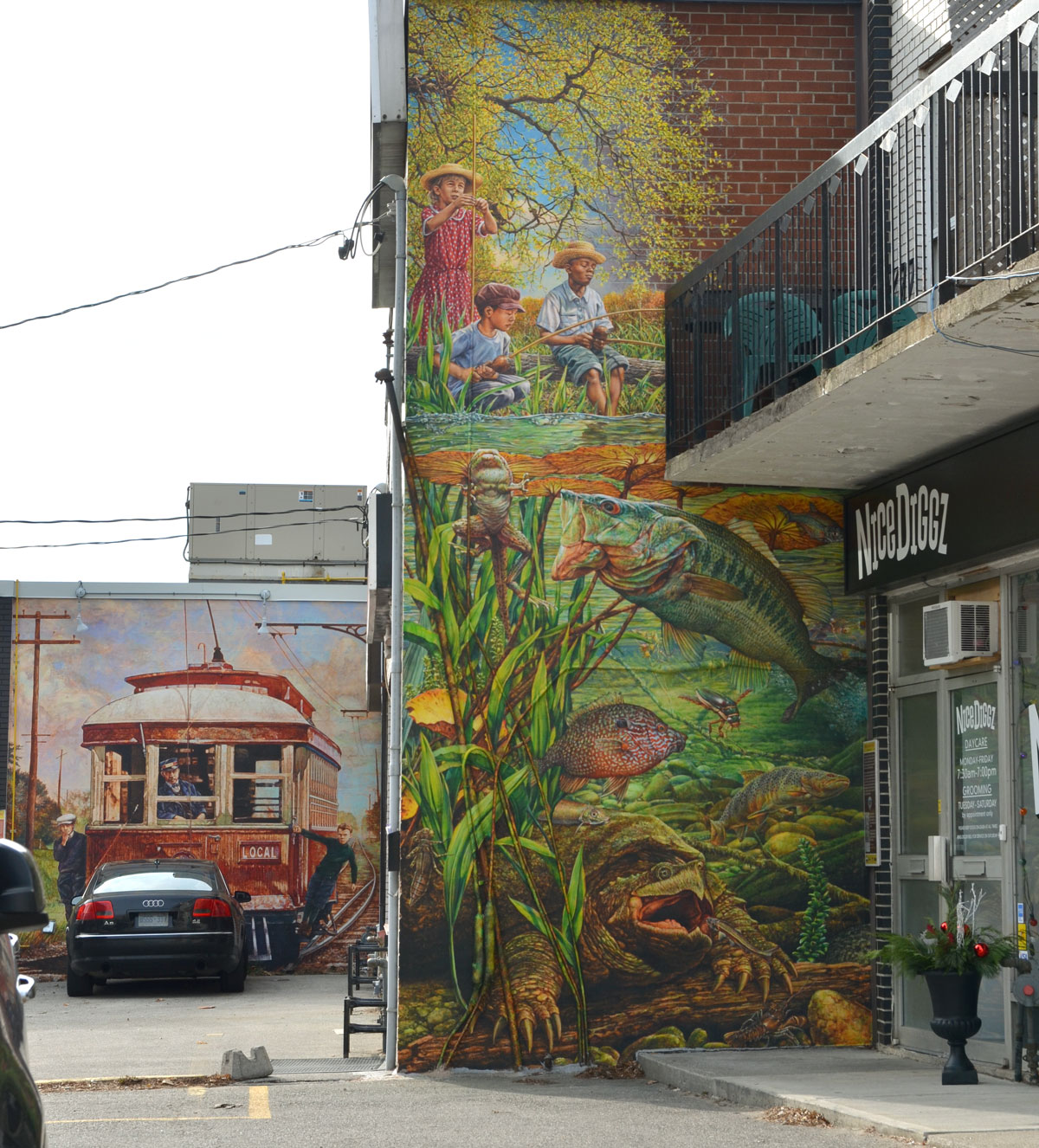
 includes largemouth bass, rainbow trout, pumpkinseed sunfish

The Faces of Islington, by John Kuna, 2013
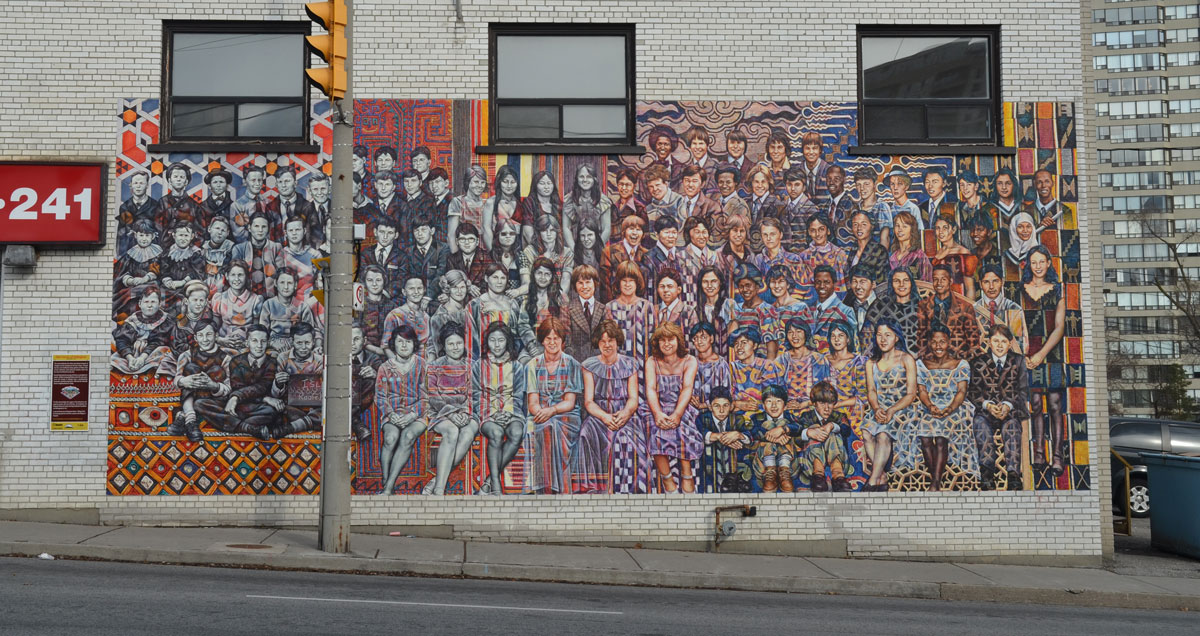
The Faces of Islington, by John Kuna, 2013

blog_islington_21part

the mural with no sign

mural of a group golfing in clothes typical of the 1940s

 more information – village of Islington murals website

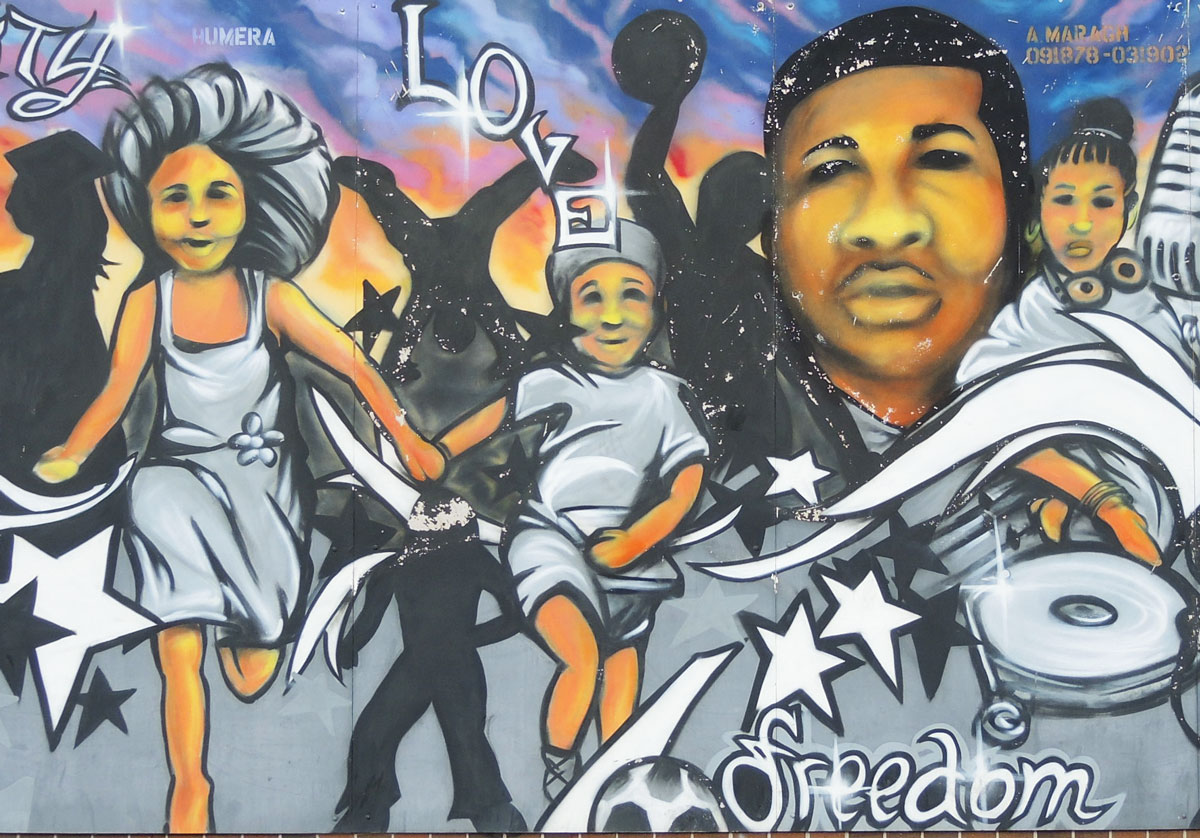
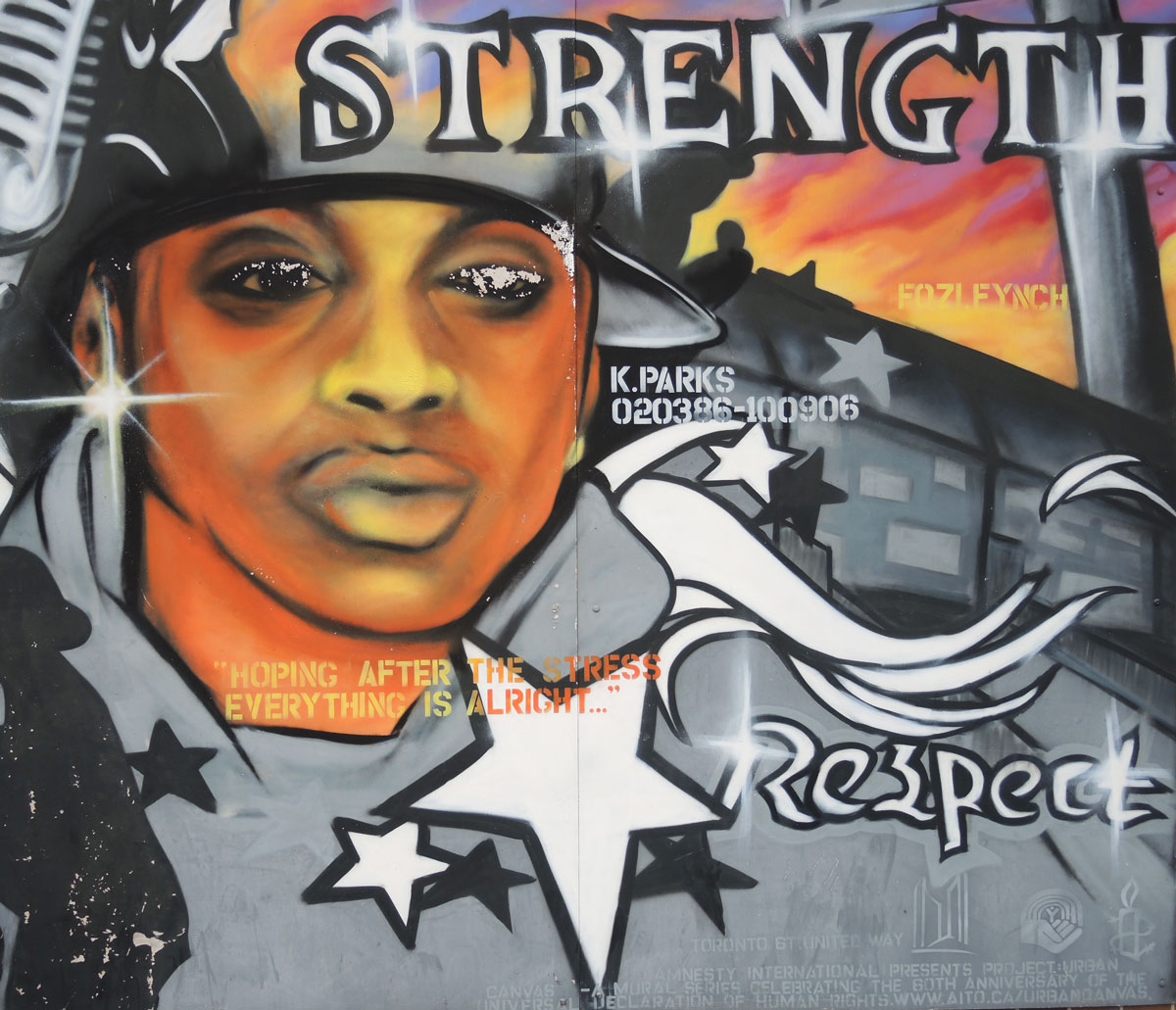
Amnesty International Toronto Organization is a group that works in the to raise public awareness of human rights issues. One of the projects that it supports is ‘Project: Urban Canvas’.  This project involves 30 murals.   One mural for each of the articles in the Universal Declaration of Human Rights (UDHR), a United Nations

Urban Canvas was begun in 2008 which was the 60th anniversary of the UDHR. Not all of the murals are complete yet.  Two of those that are finished are located on Parma Court near Victoria Park and O’Connor.

One celebrates Article 19 which states: “Everyone has the right to freedom of opinion and expression; this right includes freedom to hold opinions without interference and to seek, receive and impart information and ideas through any media and regardless of frontiers.”

A large mural on a red brick building, painted to celebrate the United Nations Universal Declaration of HUman Rights.  This one includes the words strength, love, respect, unity.  It shows a 5 people engaged in various activities. painted by Michael Reyes as well as  Fozi, Humera, and Sabeehah

part of a mural showing a boy and girl holding hands as they run.  Also, in the top right corner is a black man with a microphone.   The words 'love' and 'freedom' are also written on the mural.

Part of a mural showing a black man's face.  The words strength and respect are written there.  Also 4 white stars, and the words "hoping after the stress everything is okay."

The words say “hoping after the stress everything is okay.”


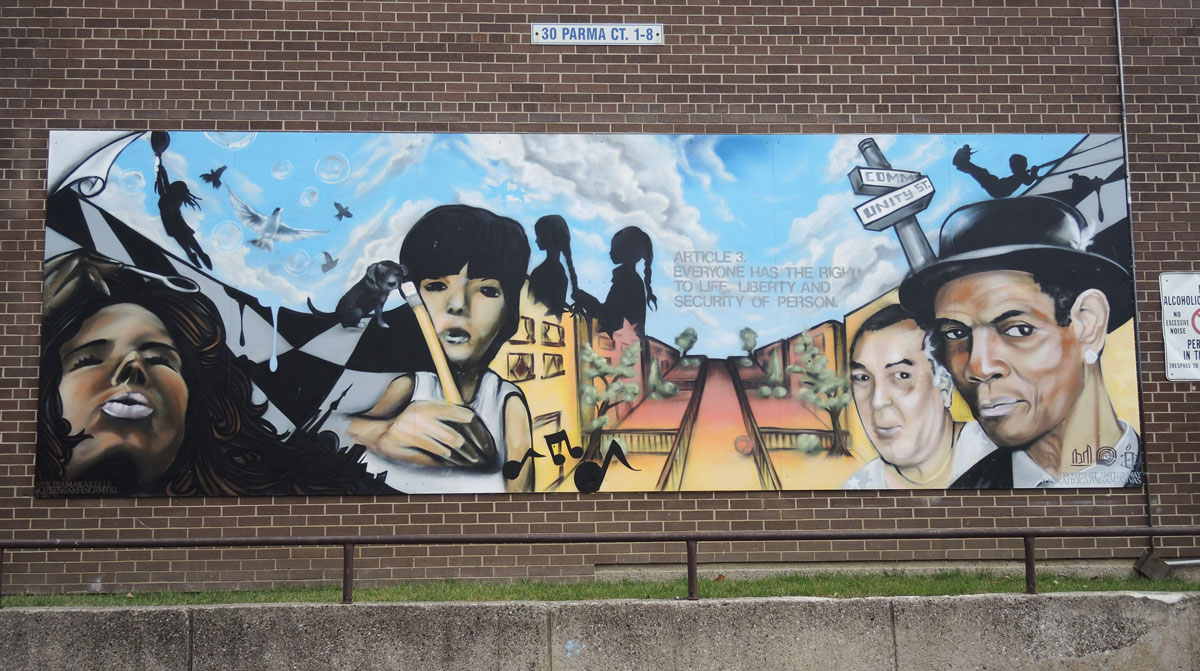
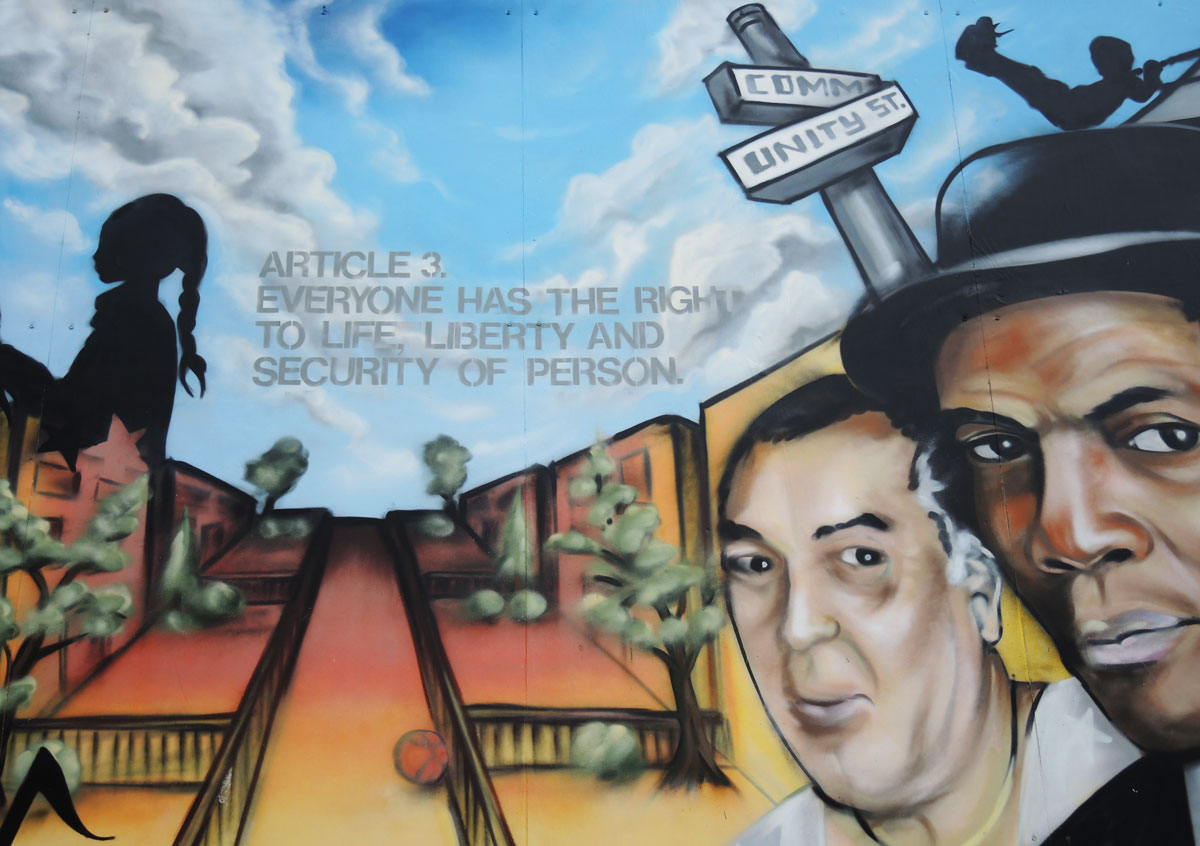
The other mural celebrates Article 3 of the UDHR. 
“Everyone has the right to life, liberty and security of person.”

mural illustrating article 3, it shows people

blog_parma_3


website for Amnesty International Toronto Organization Urban Canvas project

This project is also supported by the Working Women Community Centre,  the United Way, and the city of Toronto.

 Other murals in this project on this blog:

Another new pair of murals painted under a bridge.
This time, they’re close to Warden subway station.

Beside a four lane road, a sign pointing to Warden station passenger drop off.  In the background is a bridge over the road.

Warden subway station is on the southeast corner of Warden and St. Clair. Just east of that intersection the subway passes over St. Clair.


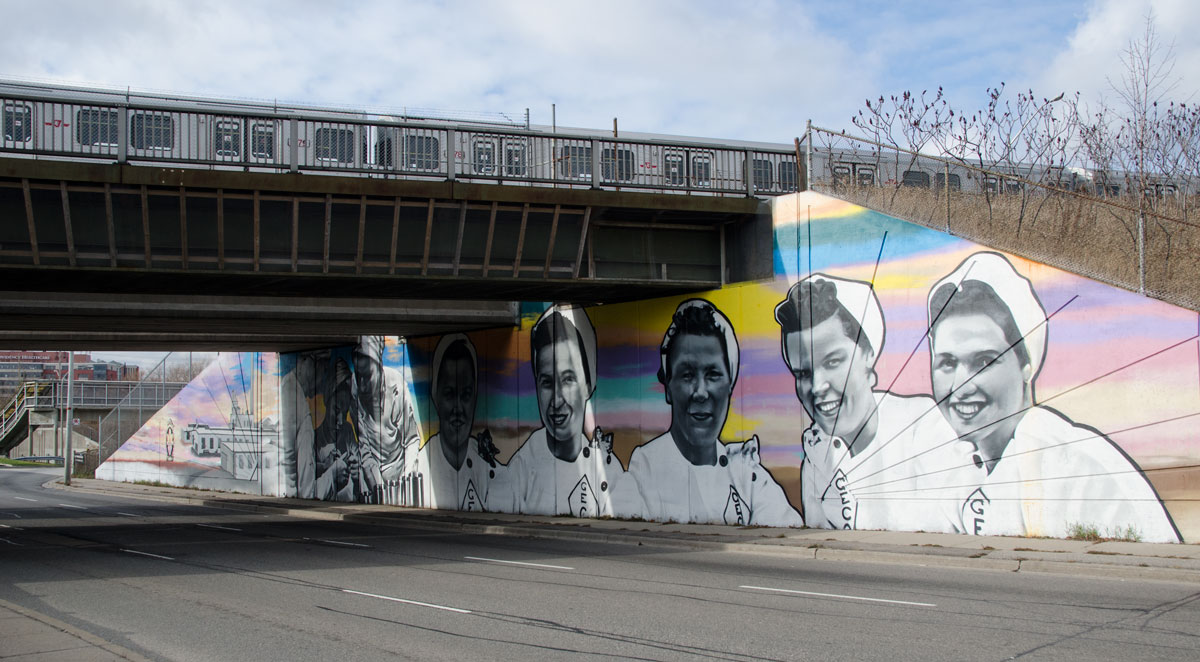
The north side of the underpass

The north side of the underpass is dedicated to the woman who worked filling fuses for the General Engineering Company (Canada) Ltd., a  WW2 munitions plant that was located nearby.   More about the history of GECO.

full length of a mural on the side of an underpass.  Historical picture of women who worked in a munitions factory during the second world war.  From the shoulders up.  They are in white clothing and their heads are covered in white hats.

mural under subway bridge, showing woman munitions workers from the era of world war 2.  They are wearing white tops and white hair coverings.
The south side of the underpass

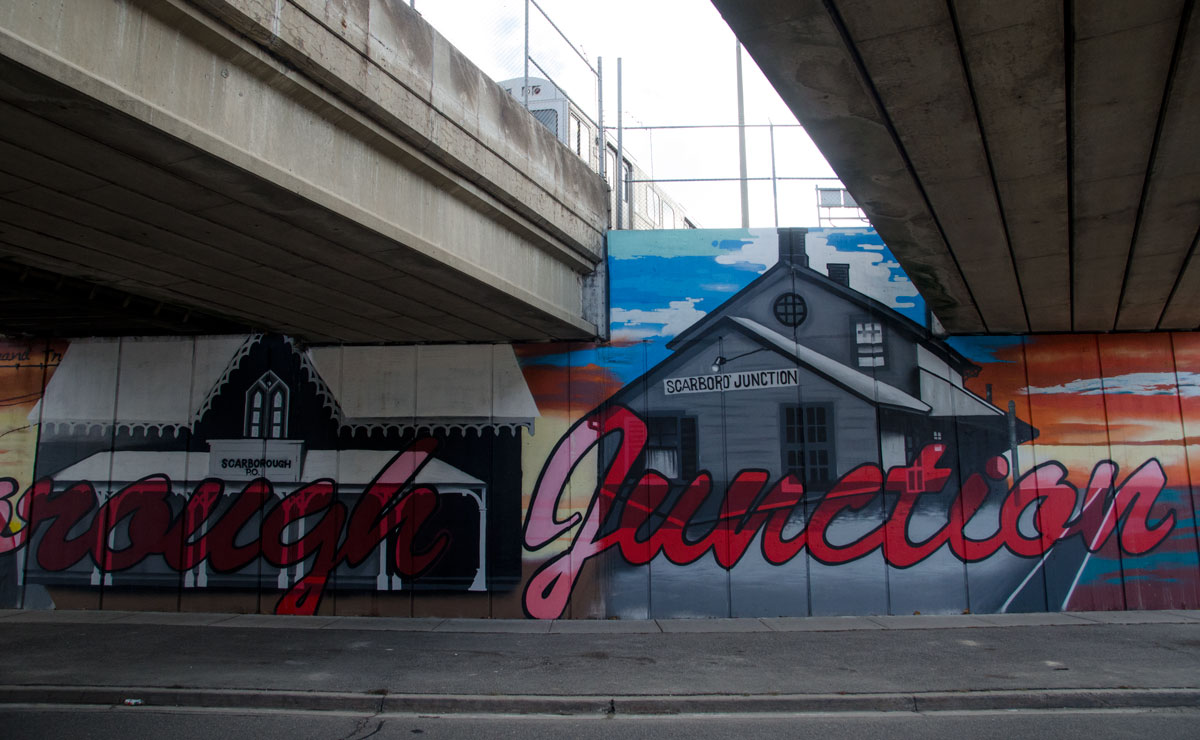
The south side portrays the establishment of Scarborough Junction in 1873.  This was when a second rail line and commercial hub was built in the area.

street art mural showing two large heads, a man and a woman, in black and white.  Very realistic looking.

part of mural under subway bridge, large red cursive letters that say Scarborough Junction.  A picture of an old Scarborough post office as well as a wood building that was a general store.

Scarborough post office and Everest & Sons’ General store. The latter was built in 1873 in Scarborough Junction.

a woman is walking past part of mural under subway bridge, large red cursive letters that say Scarborough Junction.  A picture of an old Scarborough post office and two very much larger than life people (man and woman) looking east.

blog_warden_end

The murals were painted by Montreal-based street artist Omen.    They are also the result of a collaboration between the city-led art program StreetARToronto, not-for-profit arts organization Mural Routes,  local historians and city councillor Michelle Berardinetti.

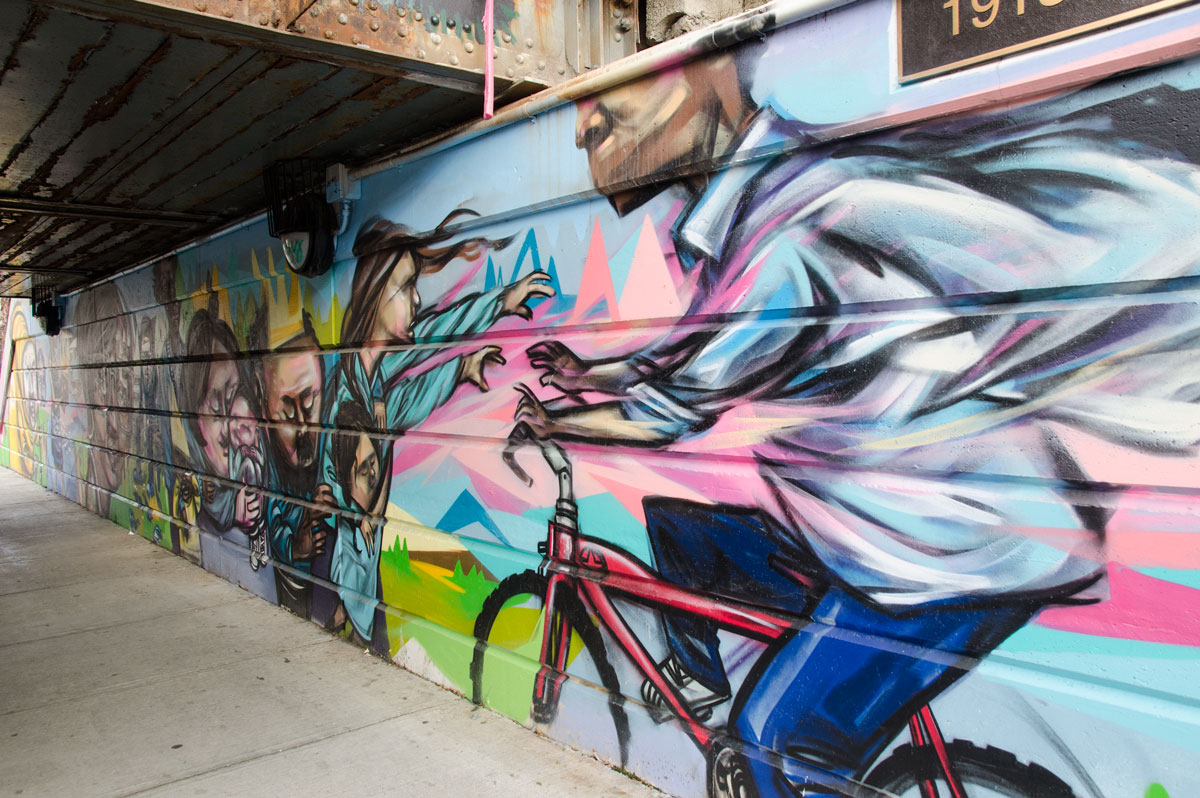
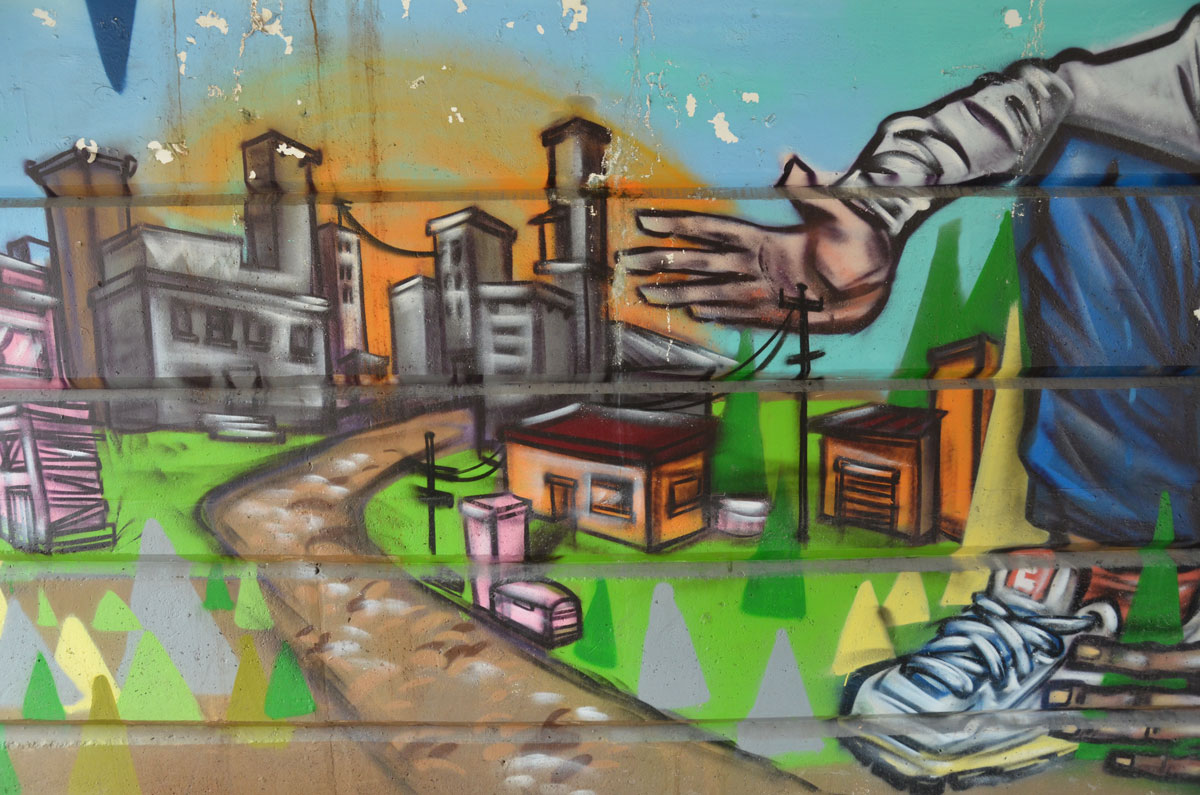
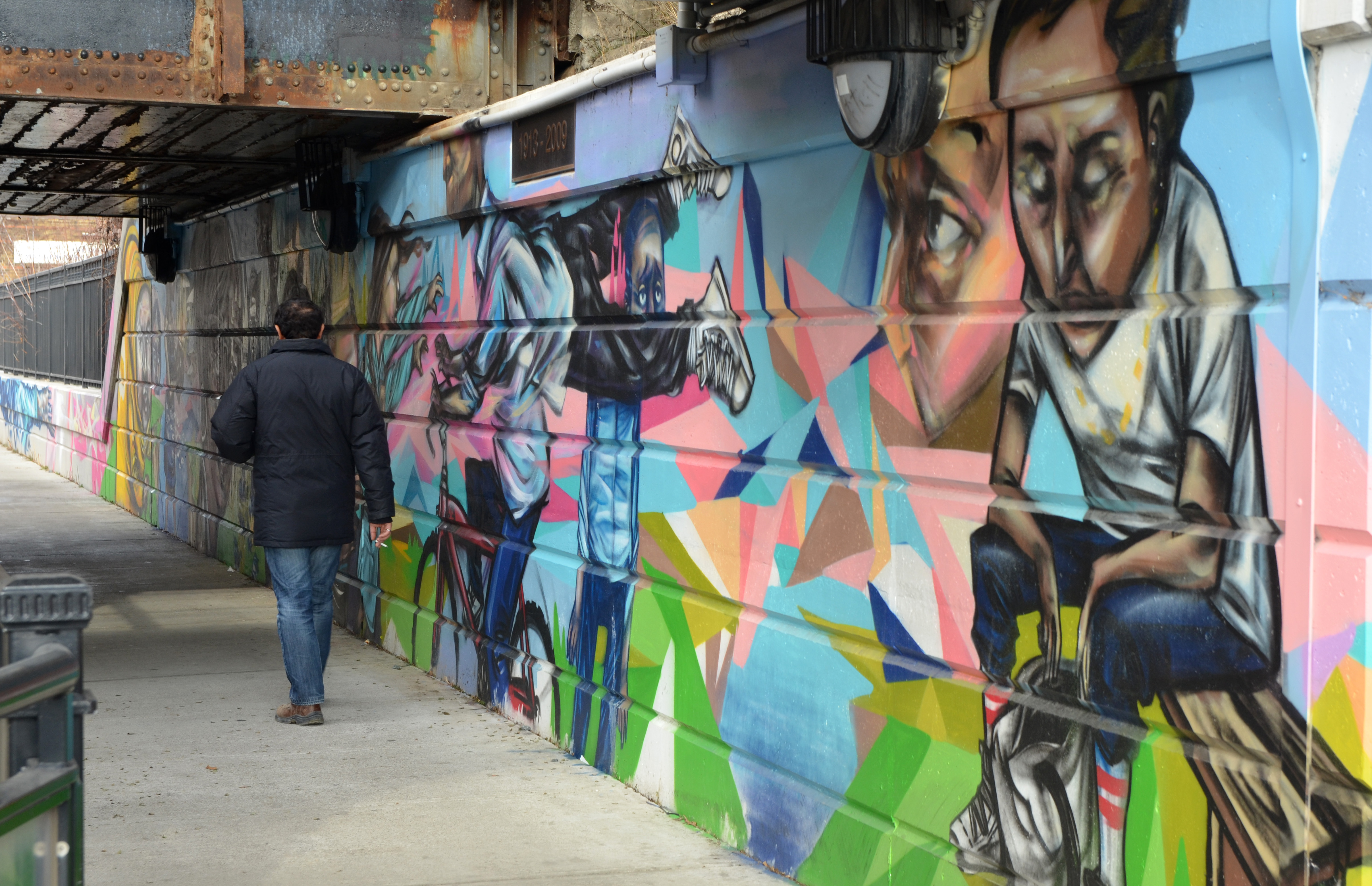
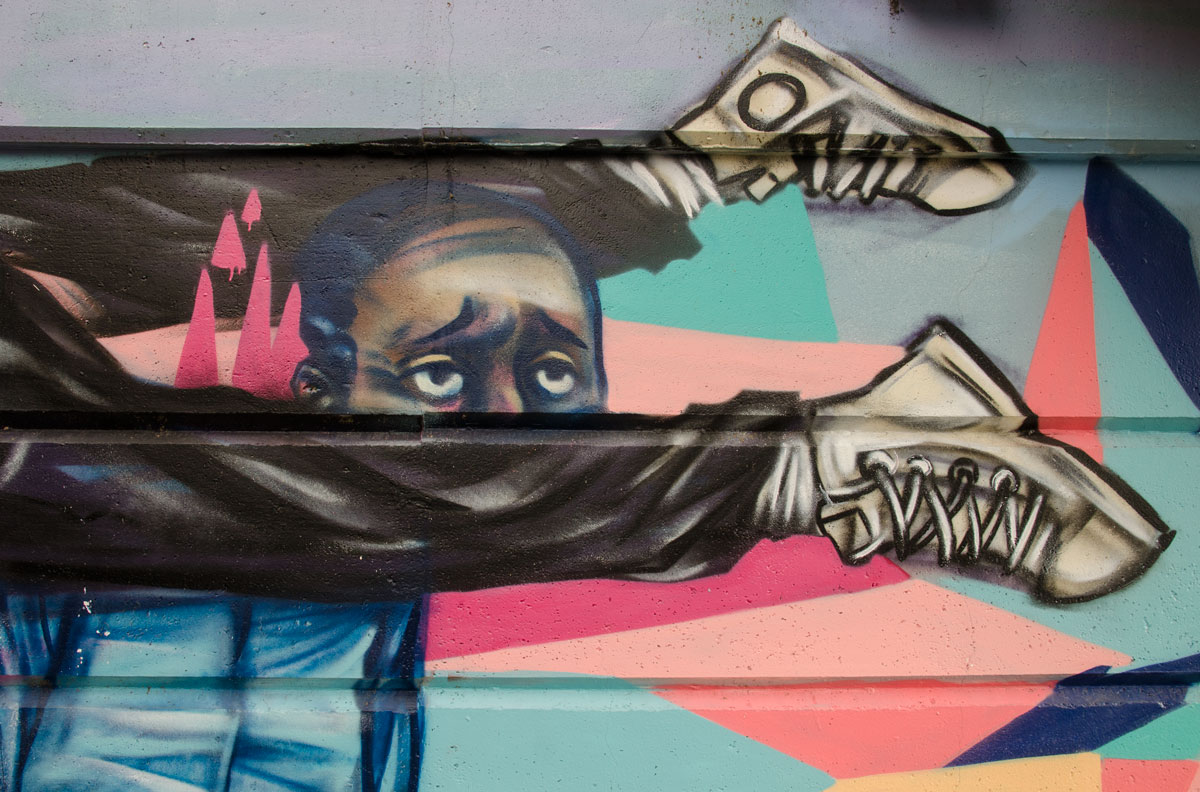
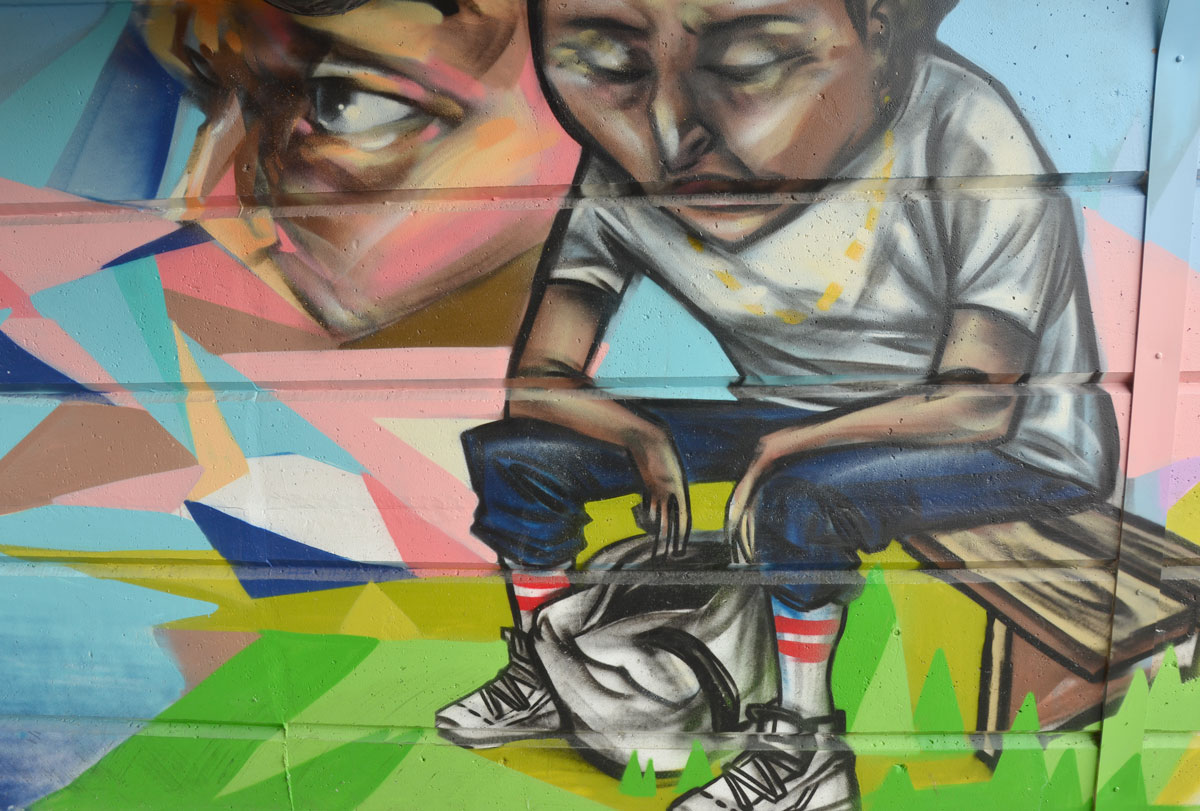
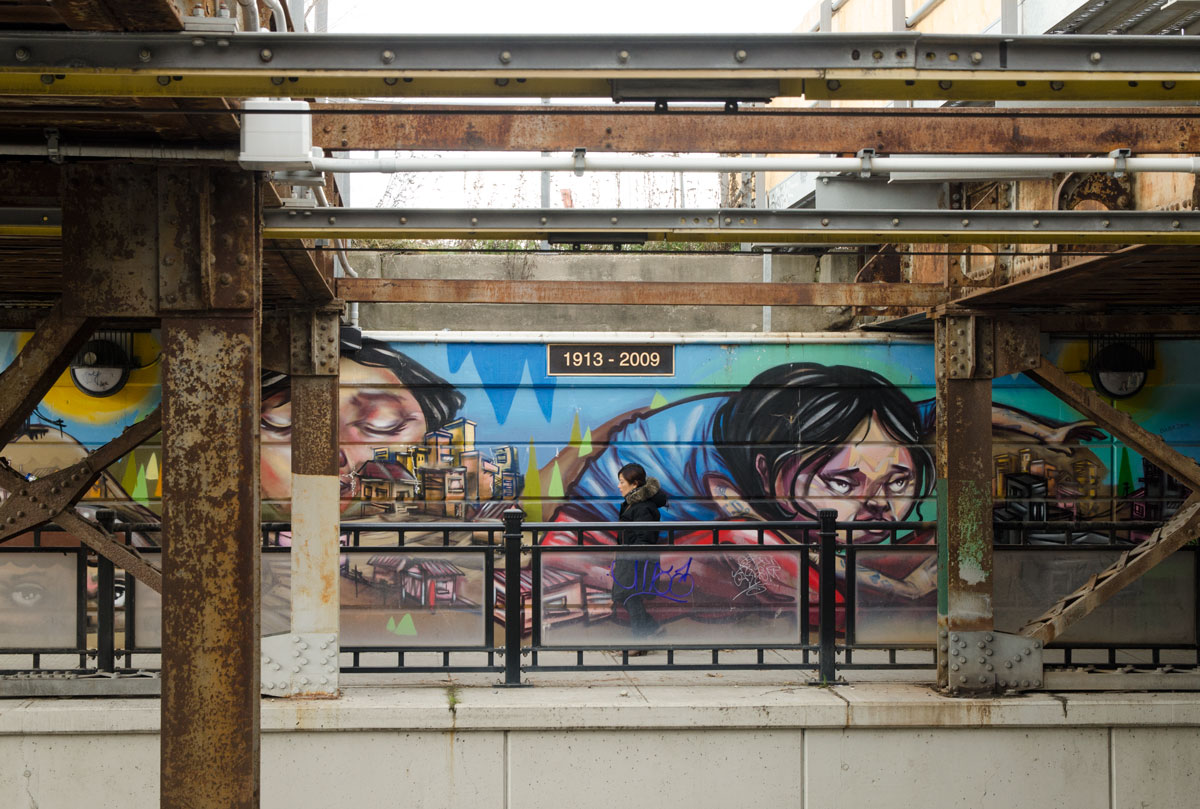
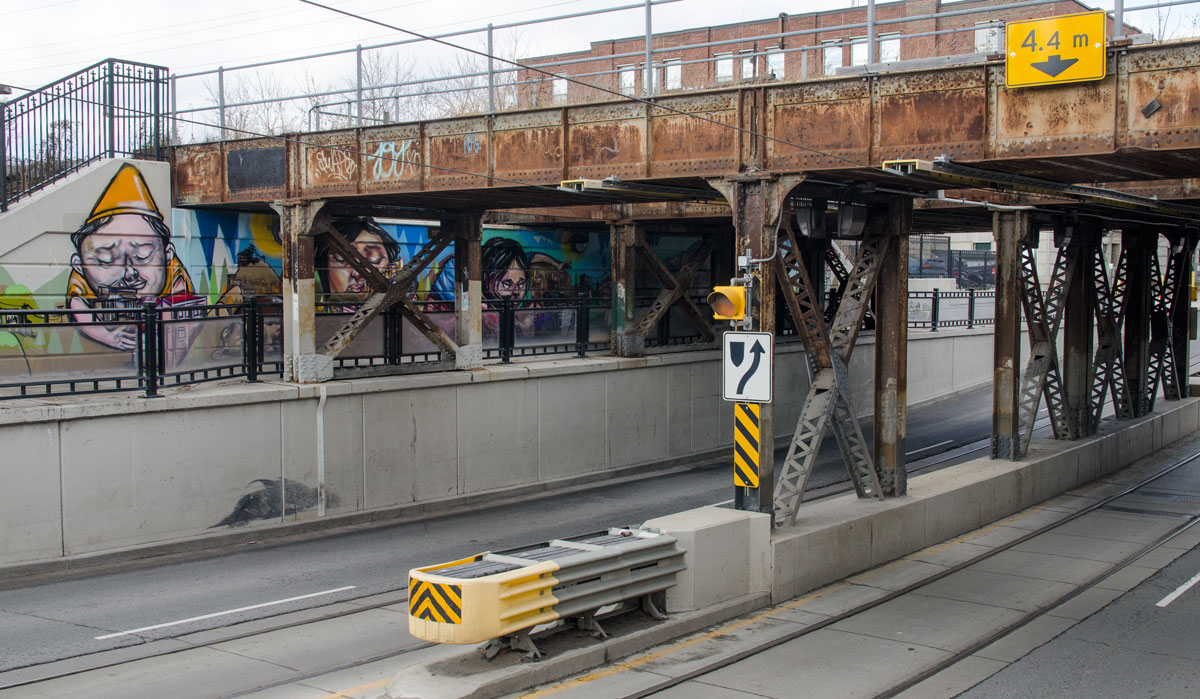
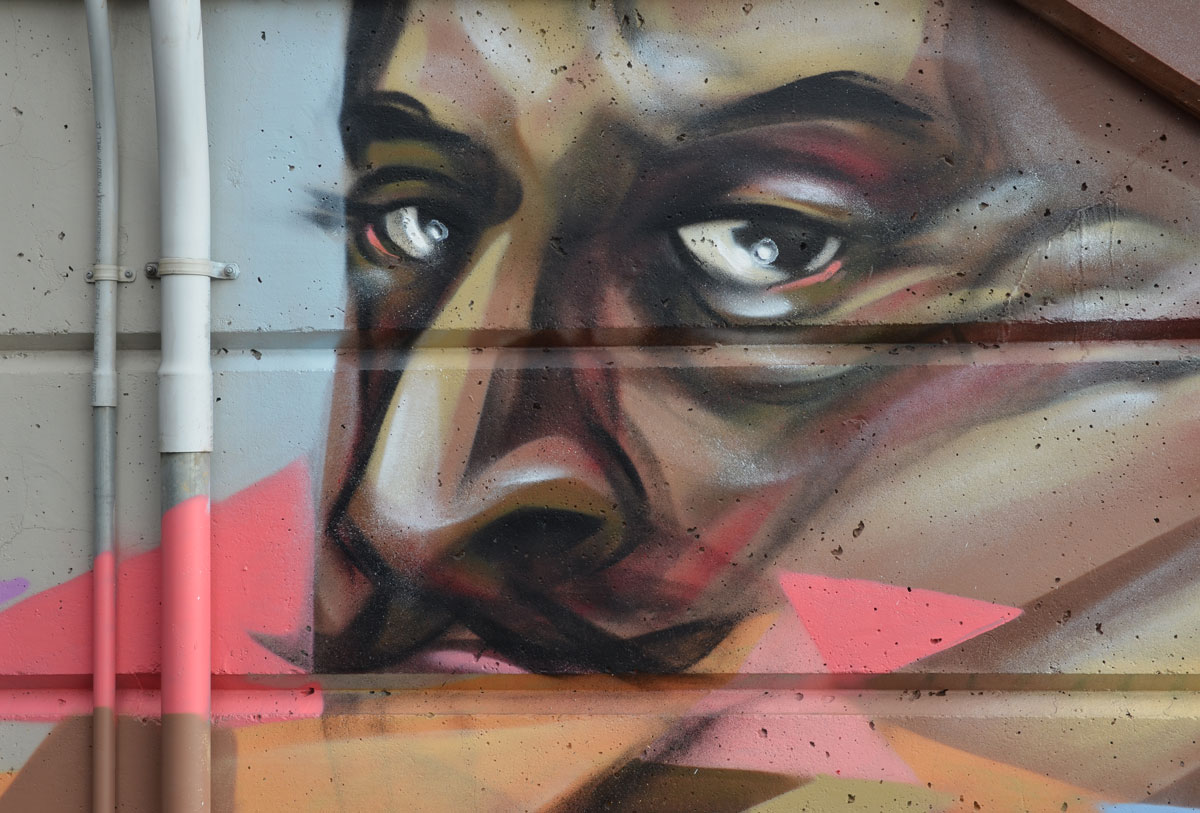
Murals painted by Elicser in 2014, under the railway bridge on Bathurst St., just north of Dupont.

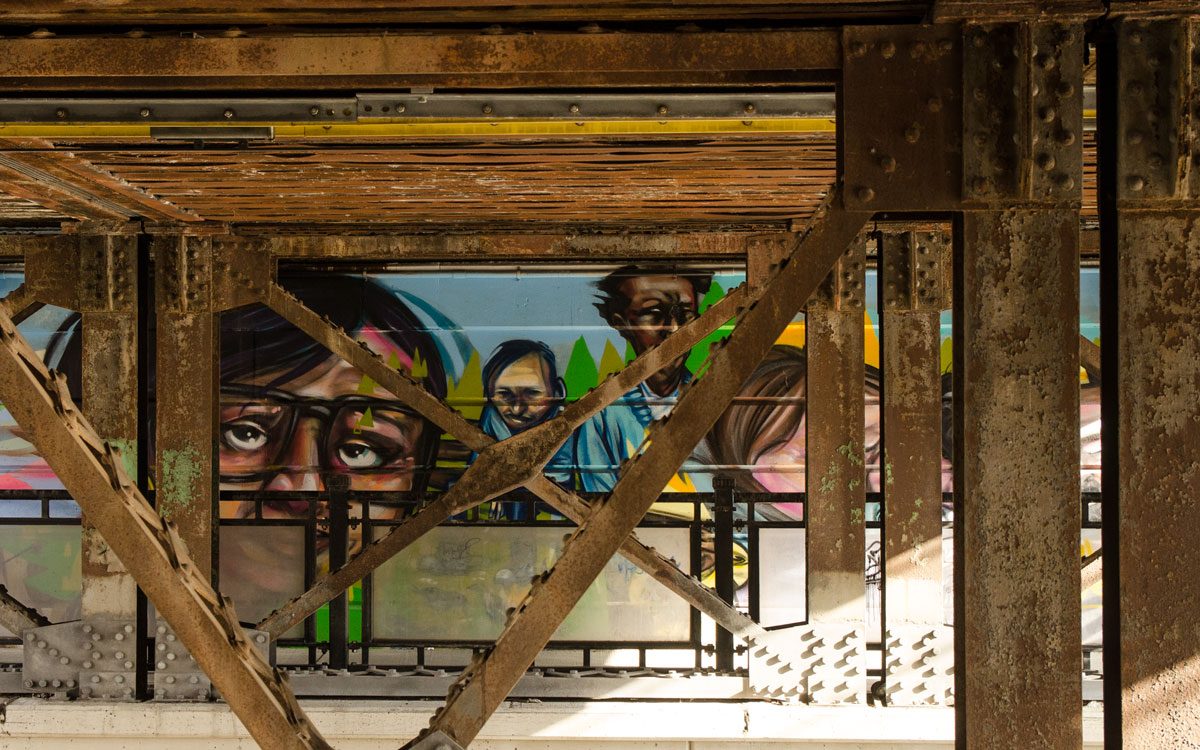
It is difficult to do justice to the paintings with a camera because of the structure of the bridge.   The following images are ones that I took yesterday.  Yes, there are many!

part of a mural beside the walkway under a railway bridge - taken from across the street,  The picture is of 4 people who seem to be looking at the camera.

part of a mural beside the walkway under a railway bridge - a man on a red bike who is cycling towards a woman with outstretched arms

part of a mural beside the walkway under a railway bridge - a woman sitting cross legged on the ground beside a miniature city

mural under a bridge

part of a mural beside the walkway under a railway bridge - a man's hand reaching towards a miniature city.  roads, houses, tall buildings and hydro wires

part of a mural beside the walkway under a railway bridge - a man with a football helmet on and green triangles in his hand

A man in a blue winter coat is walking under a bridge, beside a mural that is painted on the wall of the bridge.

part of a mural beside the walkway under a railway bridge -  a pair of legs with sneakers on flying past a man's head.

part of a mural beside the walkway under a railway bridge - a man with a red baseball cap on backwards

A man sitting on a bench who is looking down into a bag that is on the ground.  A face in profile is beside him

part of a mural beside the walkway under a railway bridge - Two large people in the mural.  A woman is walking past on the sidewalk.  The picture is taken from across the street so bridge supports are also in the picture.

part of a mural beside the walkway under a railway bridge - the triangular part of the wall of the bridge at the end, showing a woman in yellow coat and hat.

woman holding baby, man behind her making rabbit ears with his fingers

rusty metal railway bridge over a city street.  There is a mural painted on the wall beside the walkway on the far side of the bridge.

mural street art painting of a man's face.  He has a moustache.   He is looking at the camera


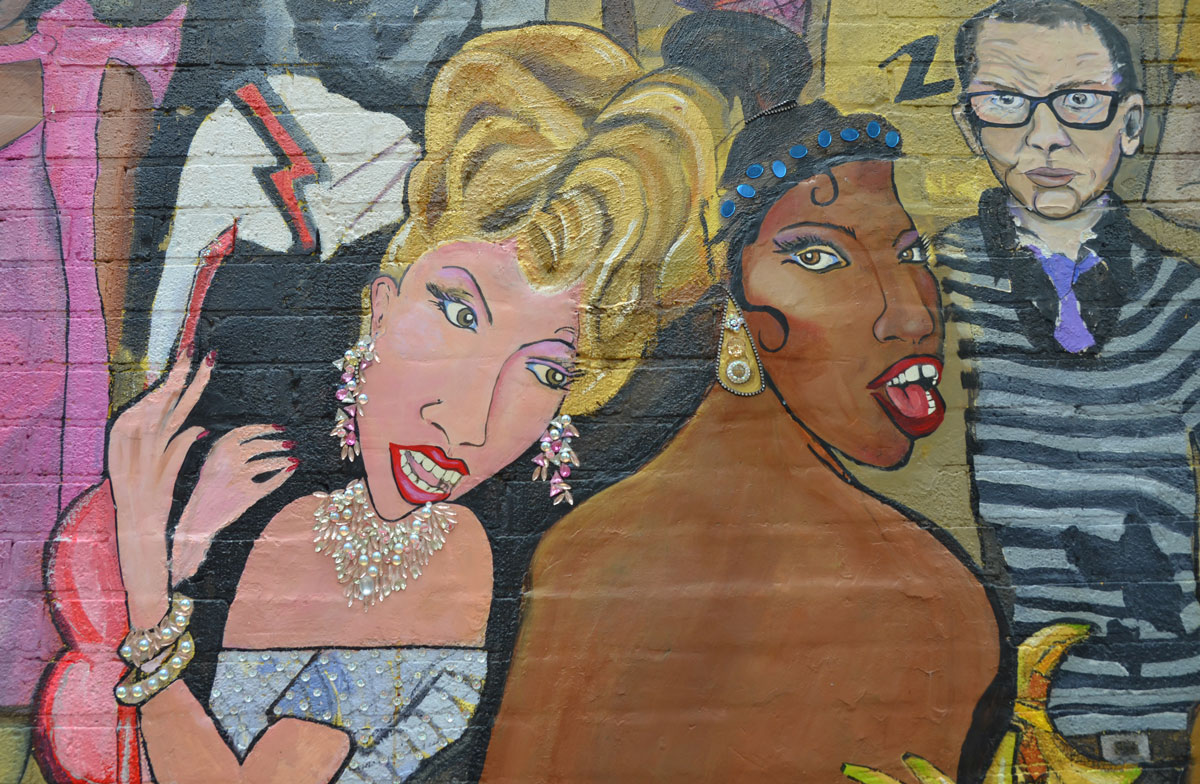
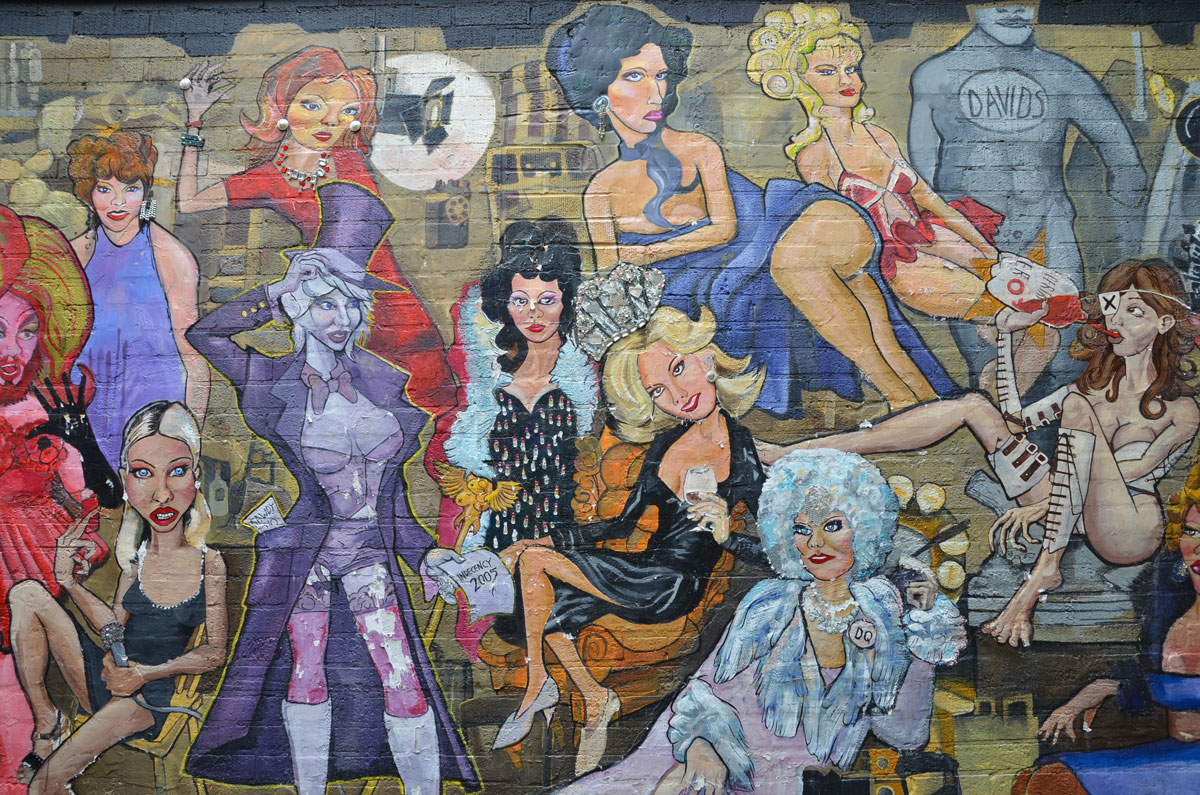
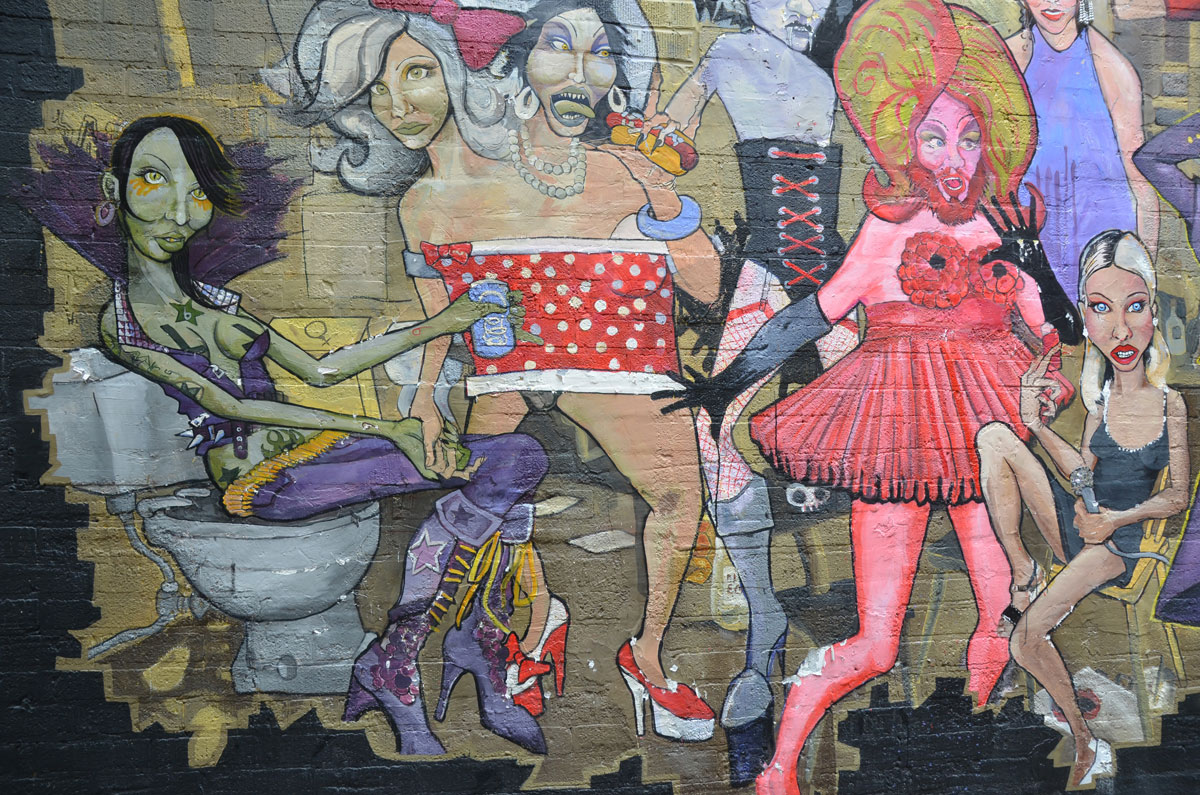
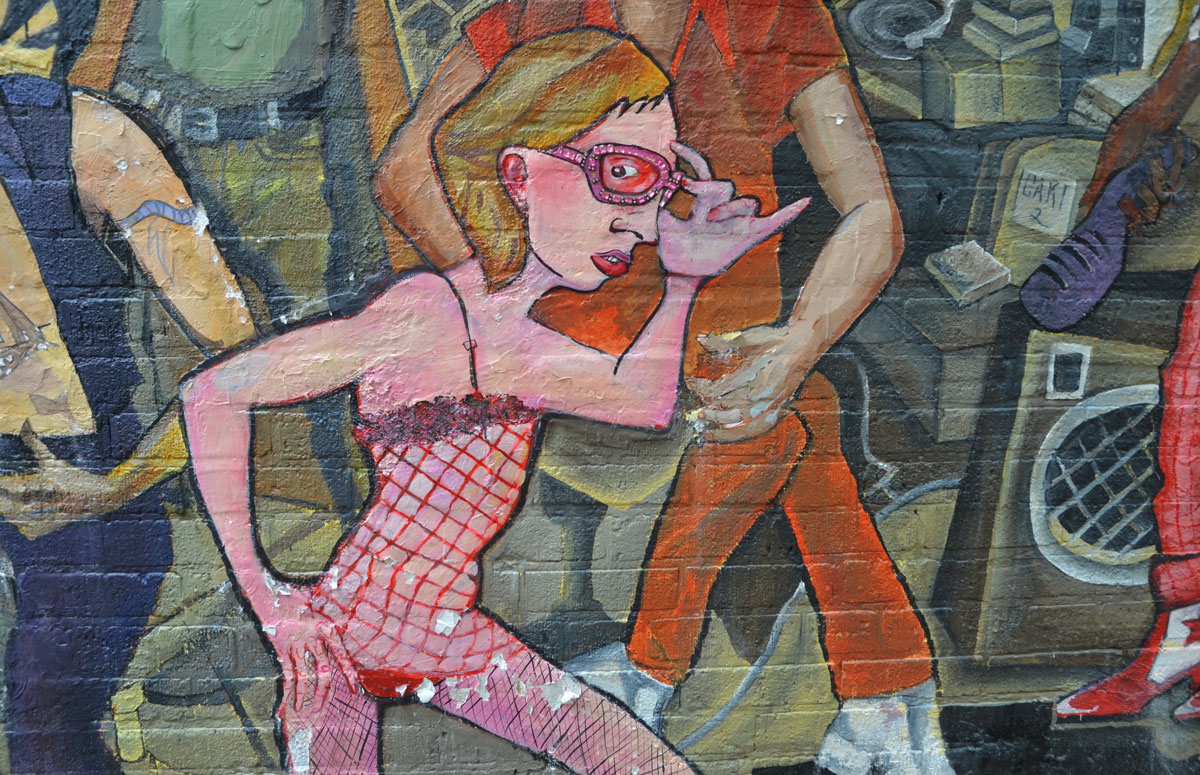
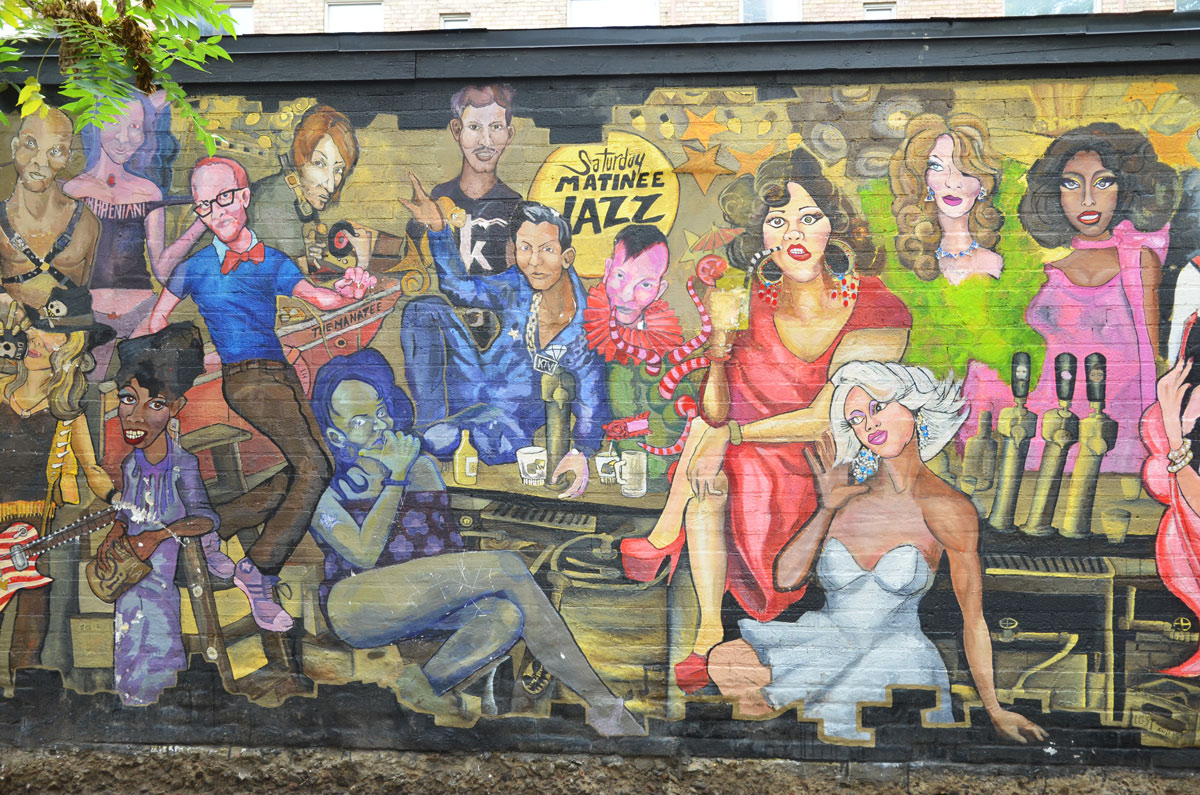
A mural near Church and Wellesley

A picture of most of the mural.  There are many colourful characters on a wall that is about 8 feet long.  The mural is close to 20 feet long.

Most of the mural.

.

detail from mural - three people, black woman, white woman with blond hair and glittery ear rings and necklace, and a man in the right hand corner
.

detail from mural - group of people in flamboyant clothes lounging around

.
detail from mural - close up of woman with white hair and long eye lashes.  She is wearing blue and silver sparkly er rings .

detail on mural - man in cowboy hat with a red & white striped guitar, amongst other people
.
detail from mural - a bearded man in a pink dress, a woman in purple and two people sharing the same red & white polka dot dress
.
detail from mural - a very pink woman in fish net top and wearing a sparkly pink eye mask
.
detail from mural - close up of woman with black and white striped top, glittering neacklace and ear rings.

blog_ultra_group

.

detail of mural - two women, one in black low cut dress and silver sparkly crown and the other in a bejeweled black dress and white fur boa. .

woman with long arms and hands, wearing 2 bracelets as well as necklace and long droopy ear rings.

.
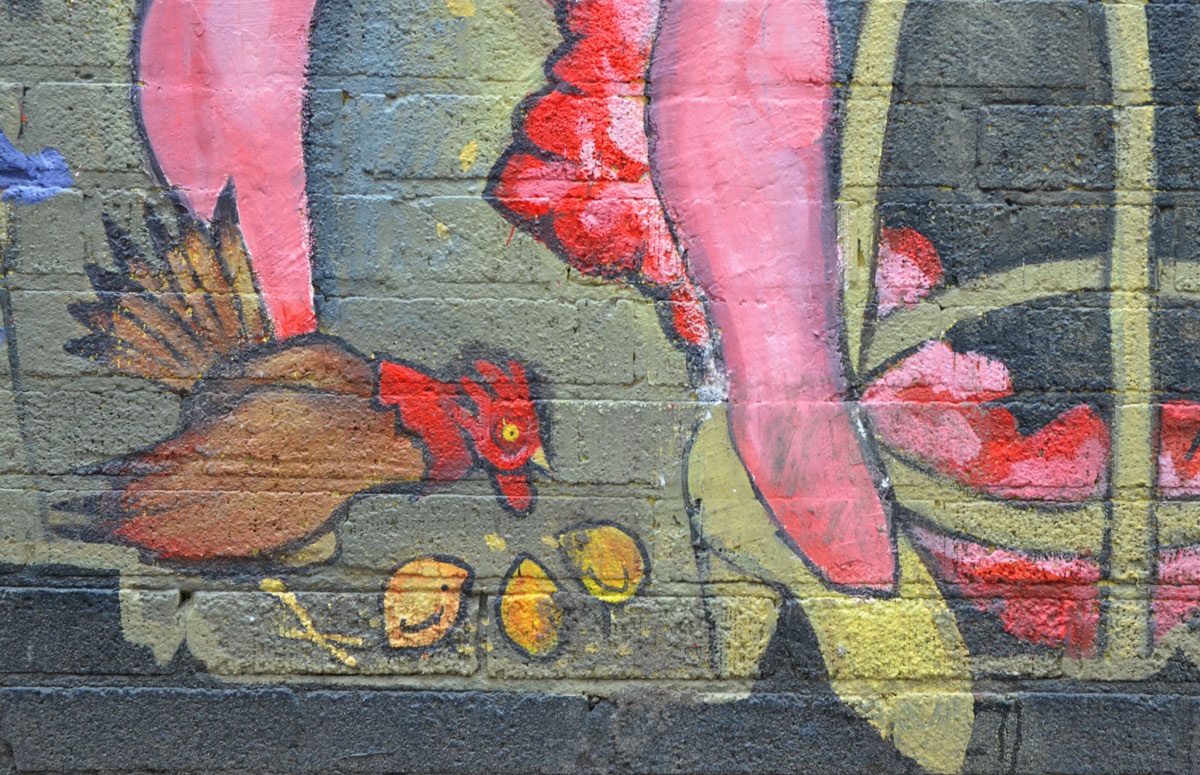
detail from mural - chicken pecking at some nuts (corn?) on the ground beside legs wearing yellow high heel shoes
.

A picture of a man in drag - blue dress as well as long hair and horns on head, is behind a real tree

.
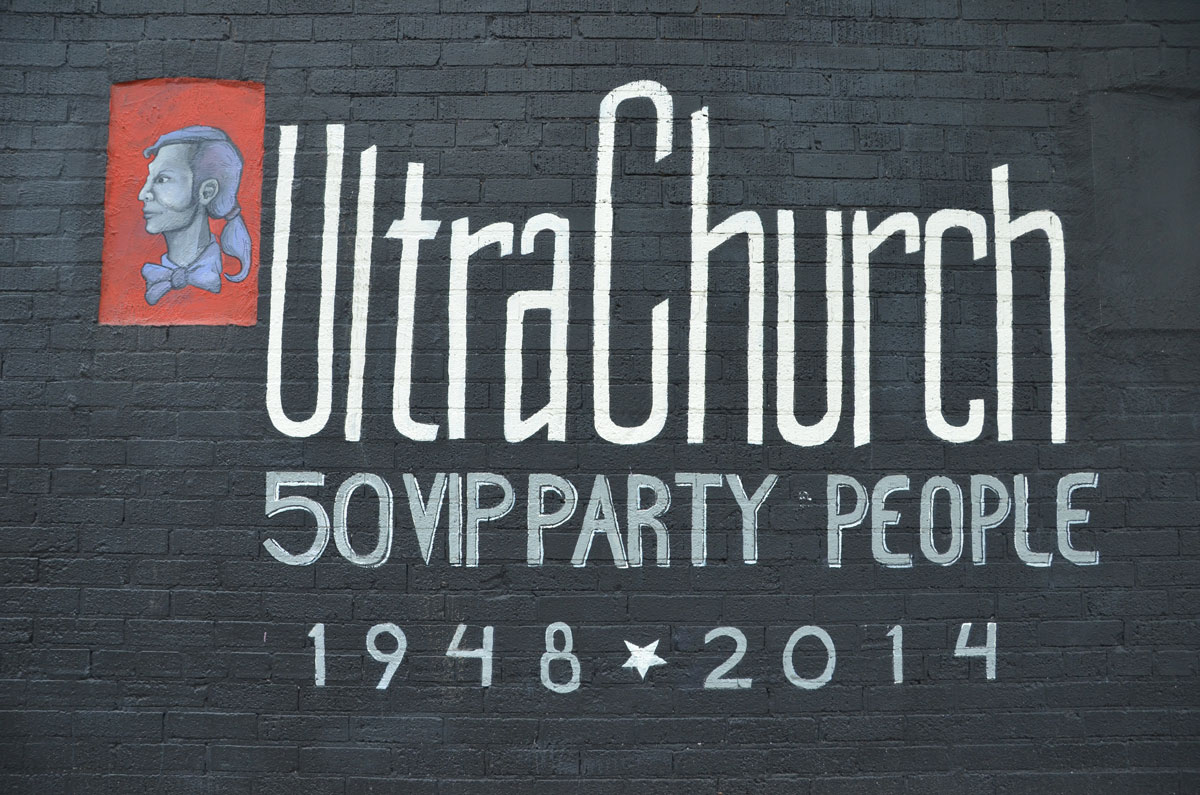
sign painted beside the mural that says "Ultra Church 50 VIP part people 1948 to 2014"

.

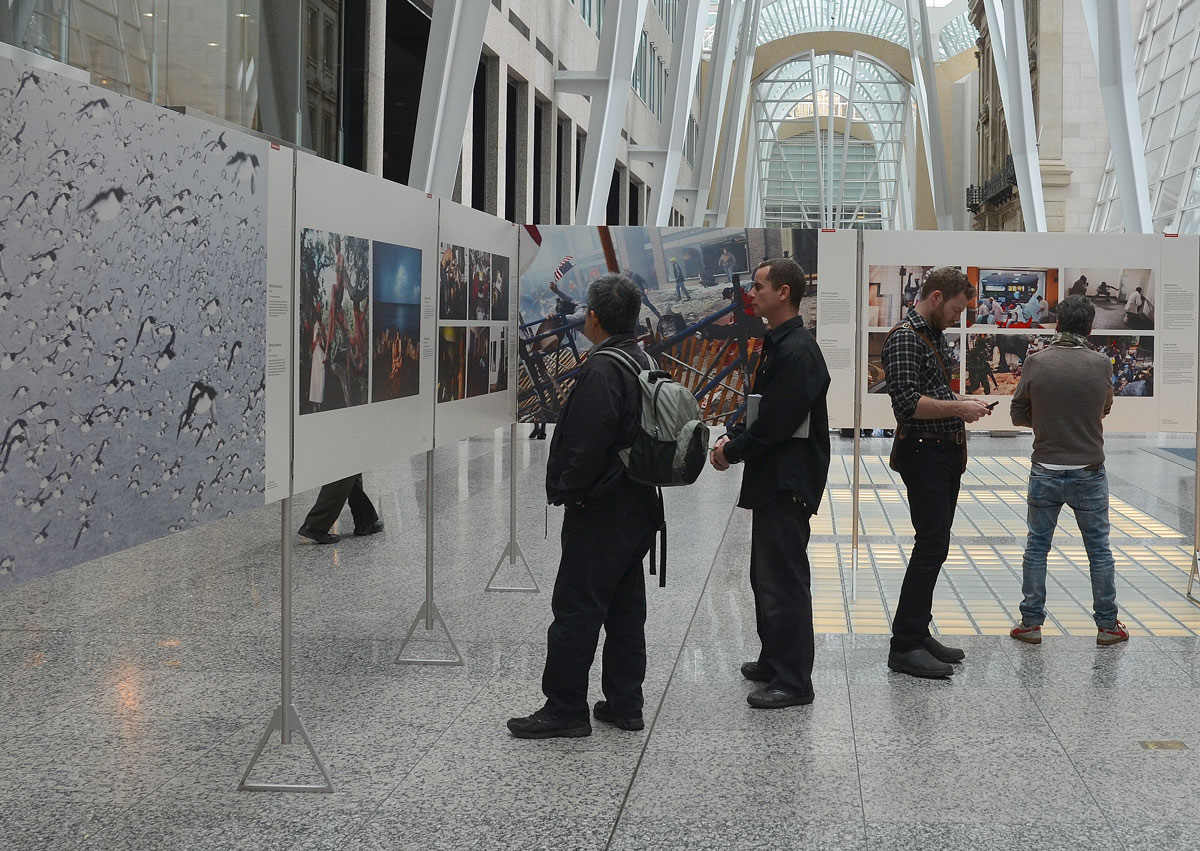
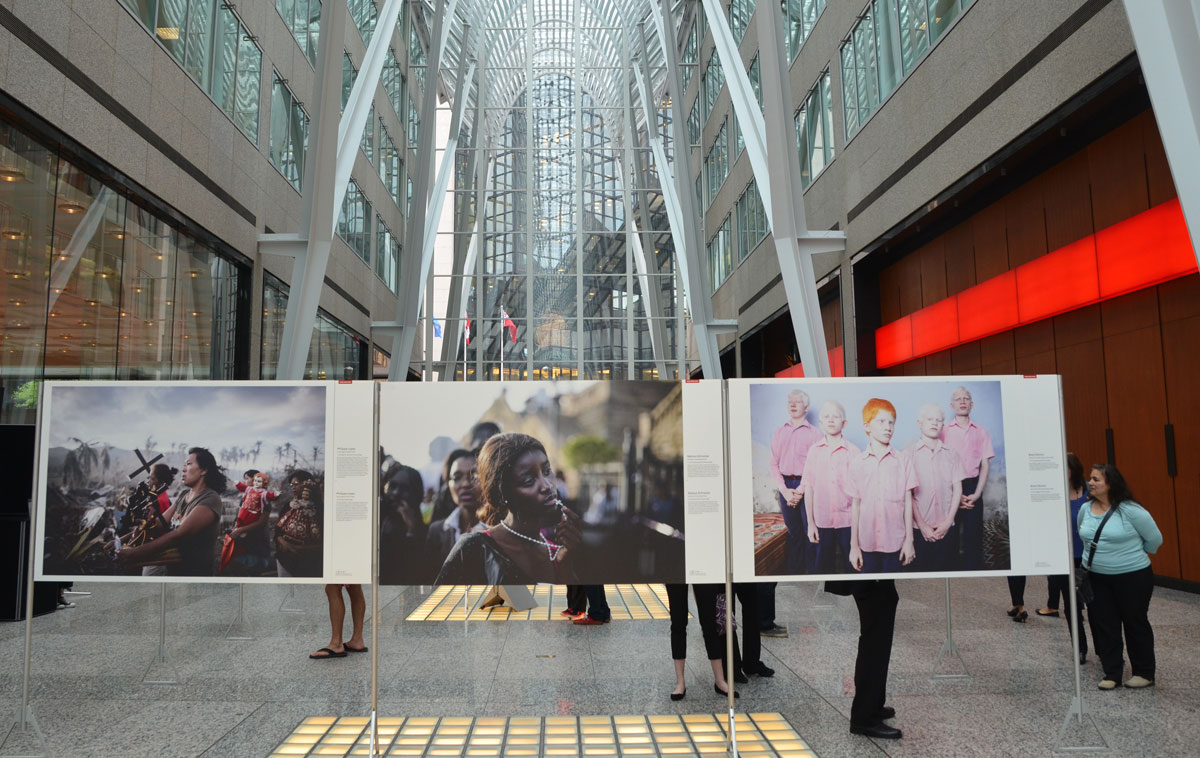
World Press Photo 14,
a traveling exhibition of prize-winning photographs assembled by World Press Photo.

At the Allen Lambert Galleria, Brookfield Place
 until October 21st

blog_wwp_looking_shadows
.

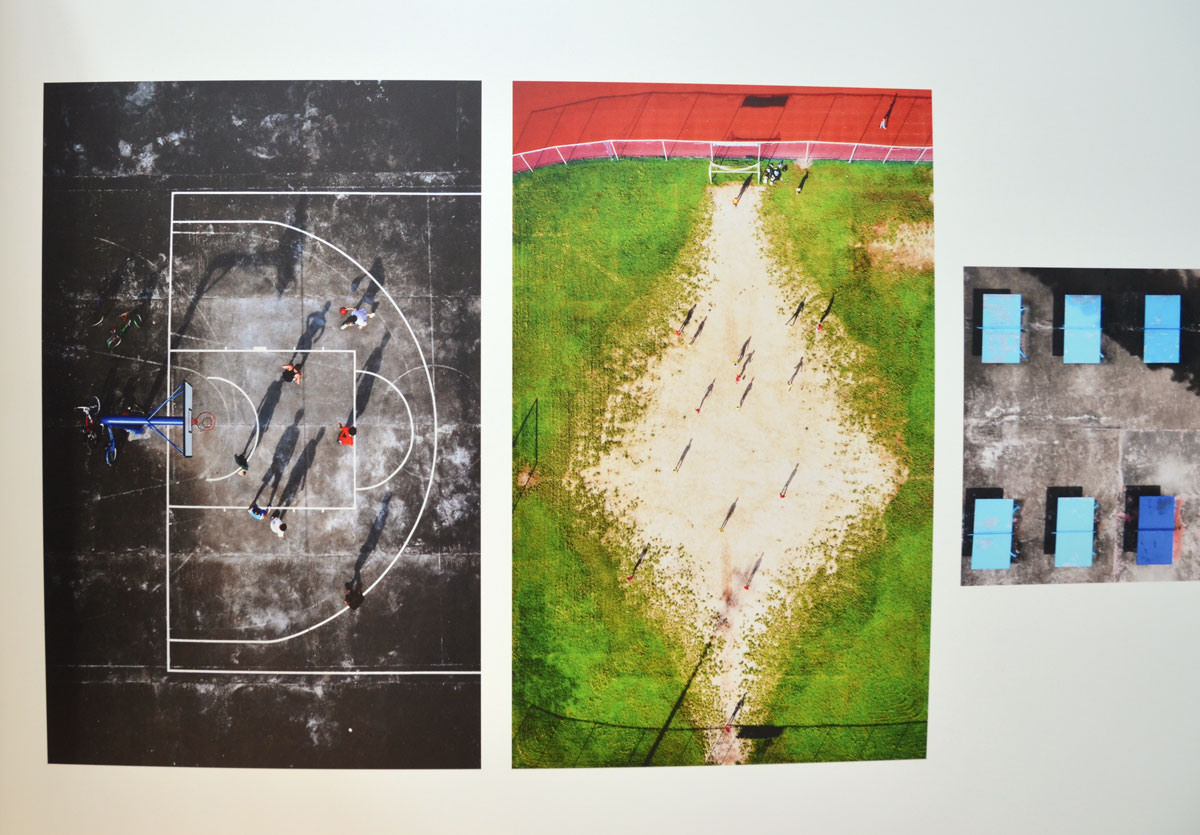
These pictures were taken from drones that were flying over playing fields.  The shadows of the players look like they are the people.

These pictures were taken from drones that were flying over playing fields. The shadows of the players look like they are the people.

.
blog_wpp_two
.

blog_wwp_group

Photo on the far left is “A flock of Guillemots (Uria aalgae) in a snowstorm in Vardo, Norway” by Markus Varesvuo of Finland.


.
blog_wpp_albino

LEFT: Survivors of typhoon Haiyan march during a religious procession in Tolosa, on the eastern island of Leyte. One of the strongest cyclones ever recorded, Haiyan left 8,000 people dead and missing and more than four million homeless after it hit the central Philippines. Photo by Philippe Lopez of France.
CENTER: A woman reacts in disappointment after access to see former South Africa President Nelson Mandela was closed on the third and final day of his casket lying in state, outside Union Buildings in Pretoria, South Africa. Photo by Markus Schreiber of Germany.
RIGHT: A group of blind albino boys photographed in their boarding room at the Vivekananda mission school for the blind in West Bengal, India. Photo by Brent Stirton of South Africa.

.
blog_wpp_vert

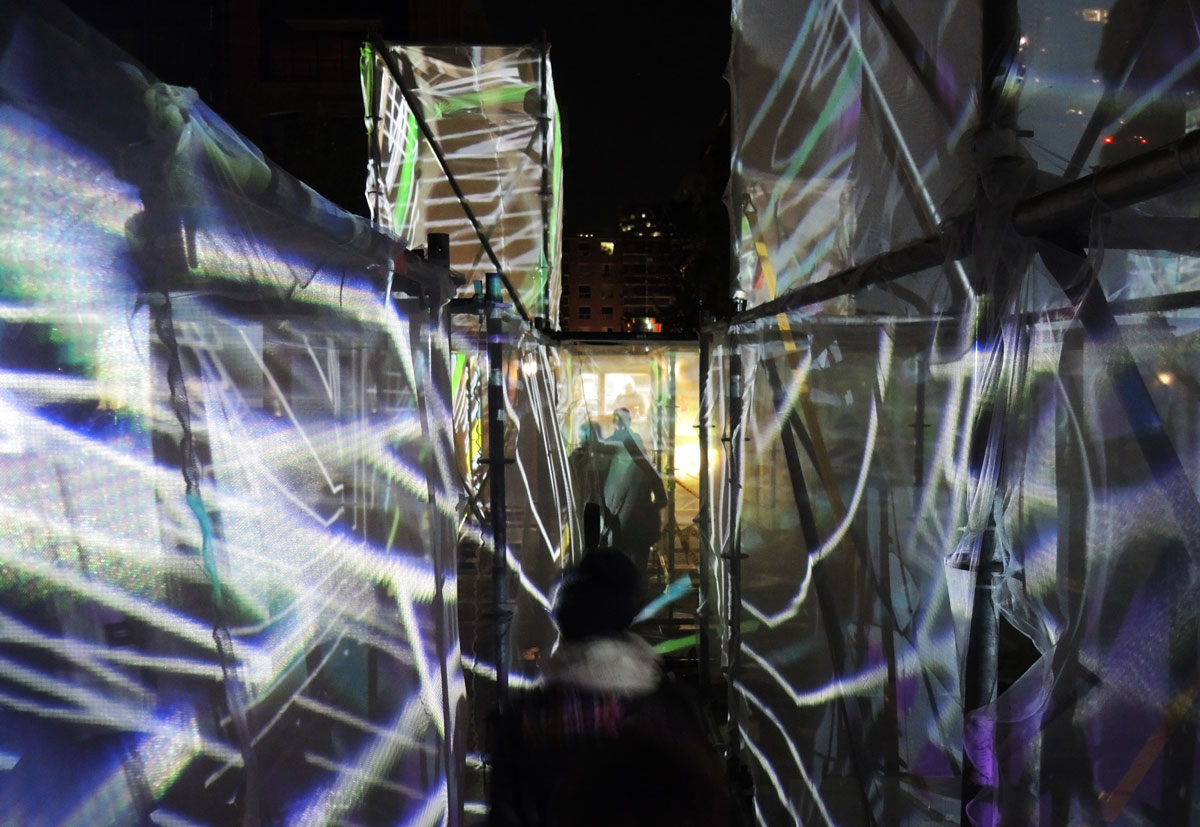
Nuit Blanche – the Amazing Maze.

Some metal framework, some gauze-like fabric, and some interesting lights.

Shadows, lights, and colours to play with.

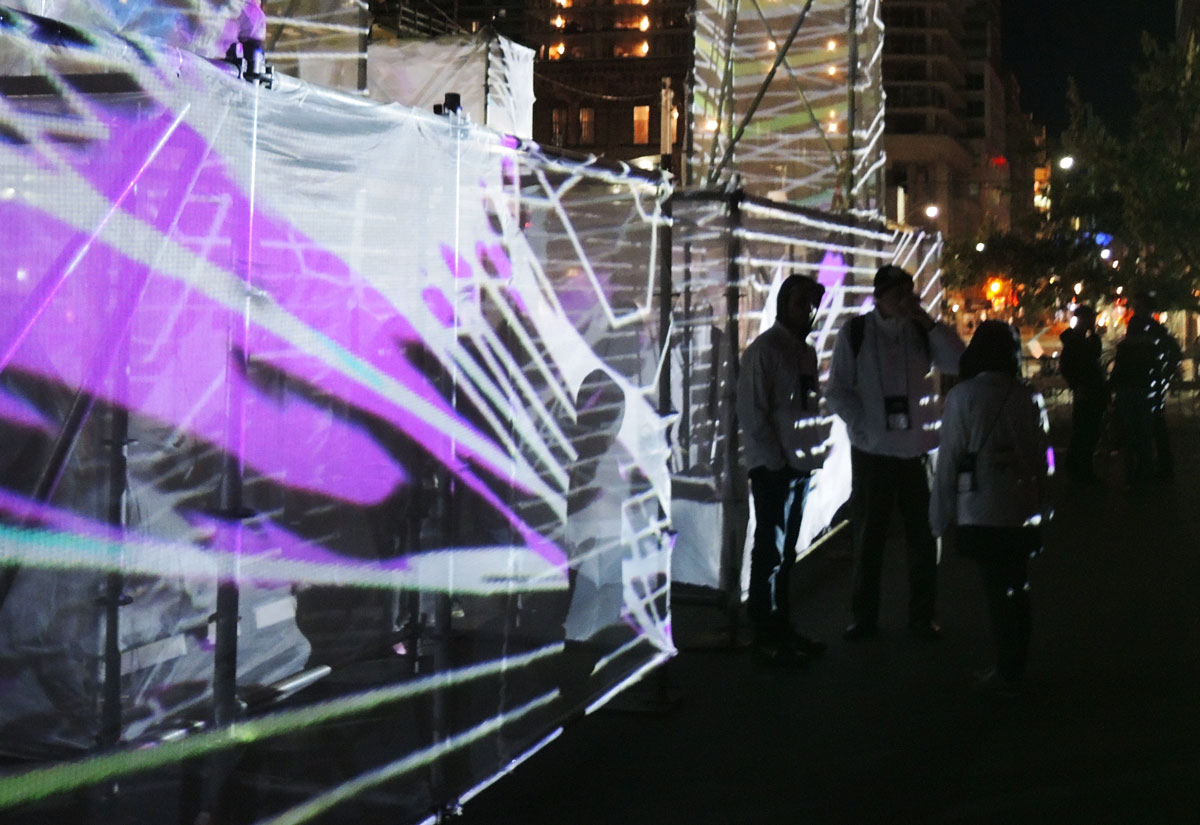
the amazing maze, made from a frame of metal bars wrapped in transparent gauze like fabric.  Coloured lights shine through the maze and the colours change frequently, purples, blues, yellows and reds.
. the amazing maze, made from a frame of metal bars wrapped in transparent gauze like fabric.  Coloured lights shine through the maze and the colours change frequently, purples, blues, yellows and reds.
.the amazing maze, made from a frame of metal bars wrapped in transparent gauze like fabric.  Coloured lights shine through the maze and the colours change frequently, purples, blues, yellows and reds.


.

Nuit Blanche, night of October 4 to morning of October 5

people on a street downtown at night.  3 large orange cranes with many small palm trees in their baskets overhand the street.  they are well lit from below.

Queen Street West near John St., 4:30 a.m.

.

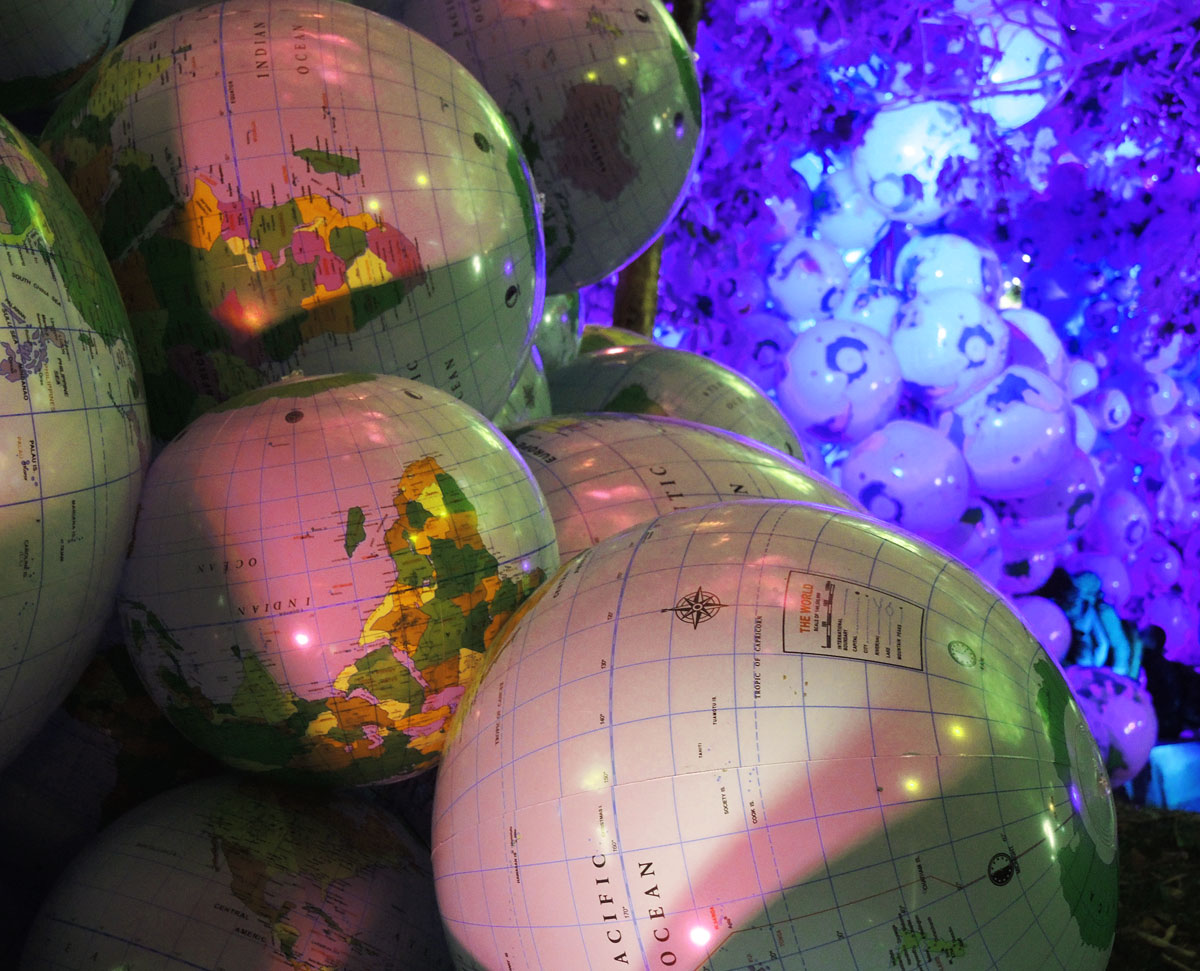
Stacks of inflatable globes of the world form walls and columns that leave paths for people to walk through.

Walking through the worlds, hundreds of inflatable globes. Even at 4:30 a.m. there was a long line to enter this installation.

.
some of the inflatable globes.
.

A bright yellow box with the sign "scraming booth" sits on a sidewalk.  There is a line up of people waiting for their turn to scream.

waiting for the screams

.

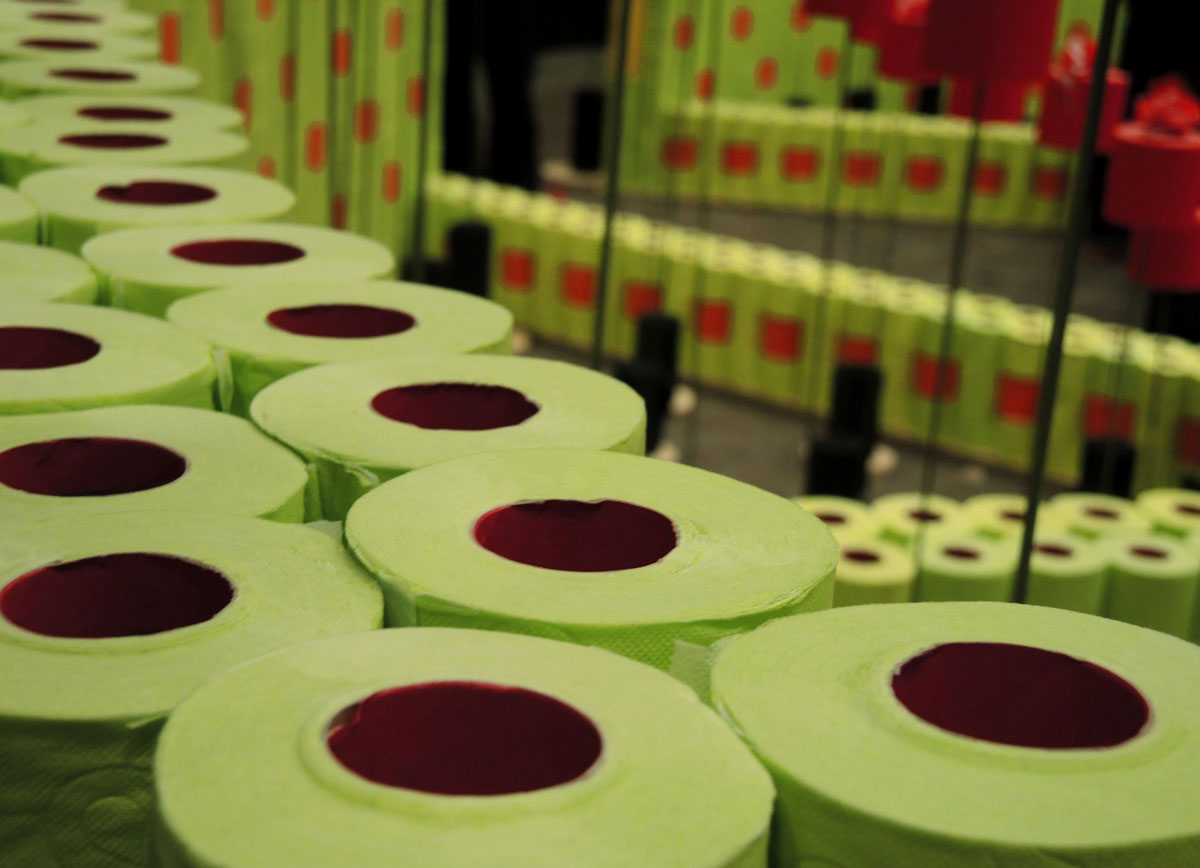
rolls of light green toilet paper are stacked to make short walls as part of an art installation.

tissue in greens and yellows.

rolls of orange and red toilet tissue look like candles

Looking like candles on tall metal candlesticks.

.
blog_snb_photos
.

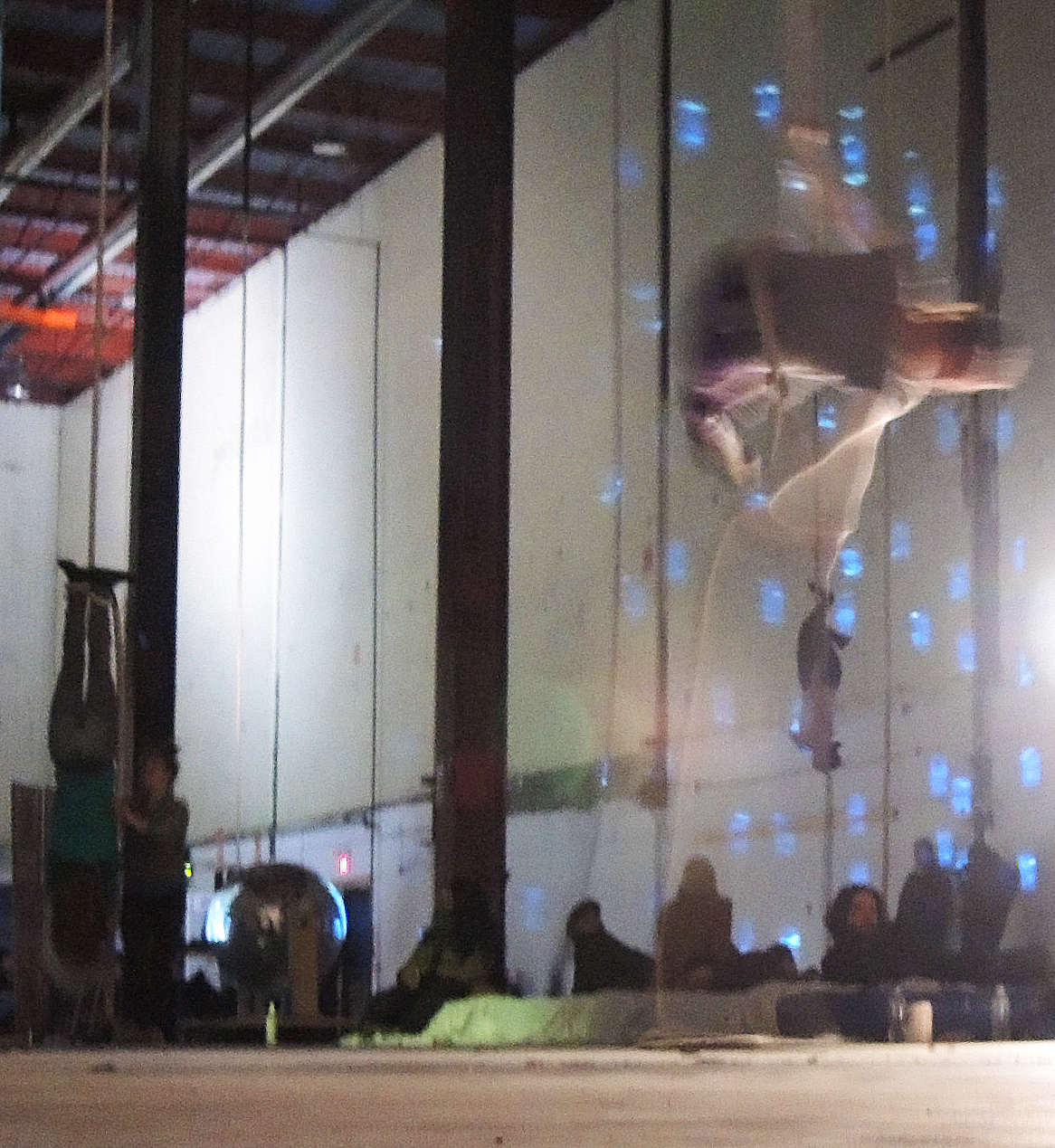
Three people are performing aerial movements on ropes hanging from the ceiling in a large dimly lit space

hanging

.

a woman is sitting on the ground with a large rope beside her.
.

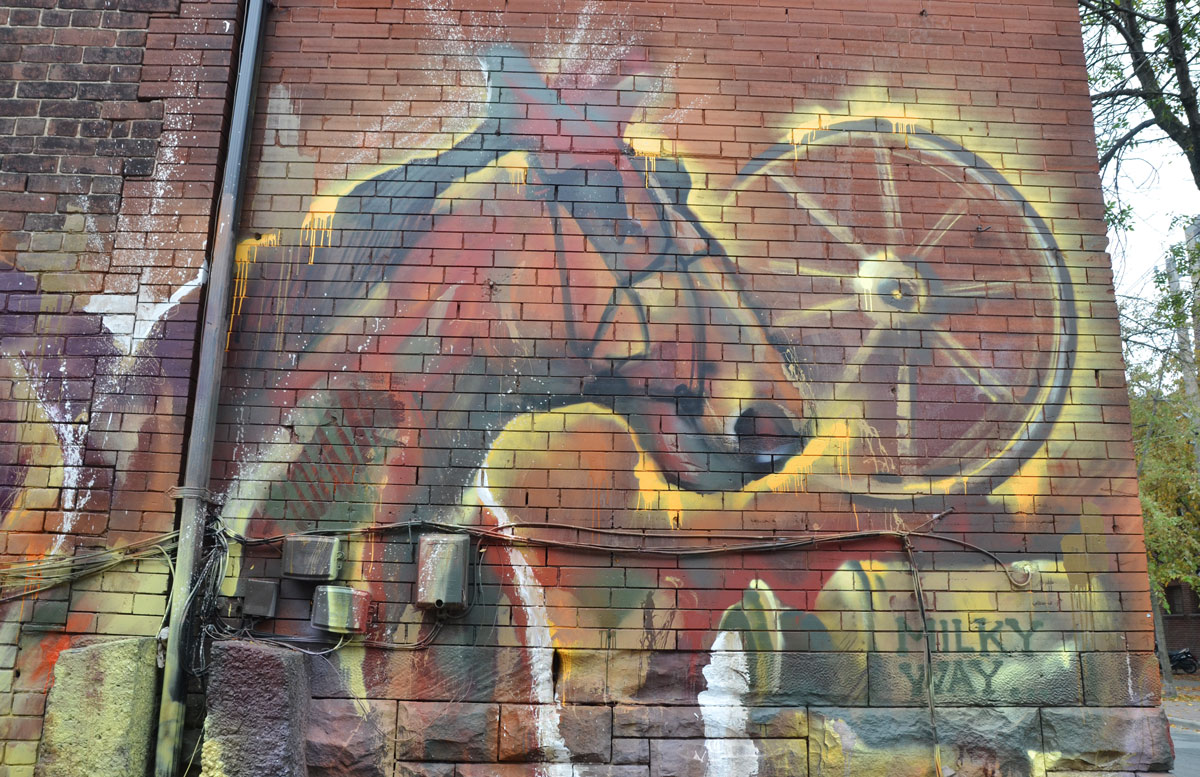
The Milky Way  from Dufferin to Elm Grove.

Once upon a time this alley led to a dairy.  Story has it that milk was often spilt along the way.

graffiti picture on a brick wall of a horse's head, a wagon wheel and spilt milk pouring from a large container.

At the west end of the Milky Way is a mural of two horses (one shown here), a wagon wheel, and an overturned milk can.


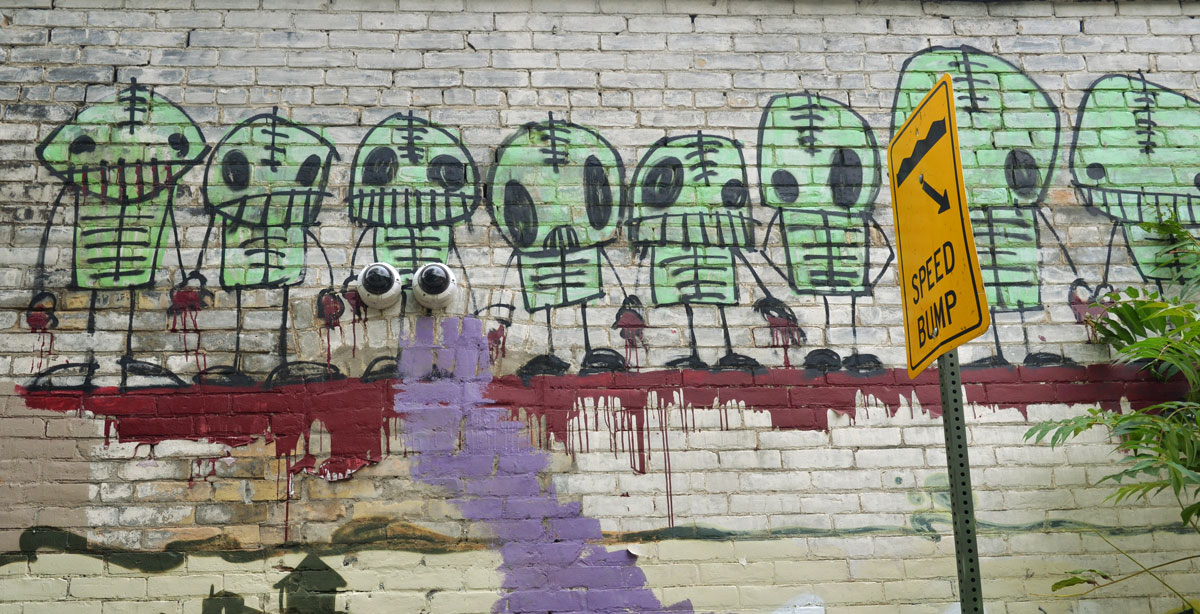
There is also quite a bit of graffiti in the alley.

a line of graffiti little green guys that look sort of like aliens with stick arms and legs and big black eyes.

.

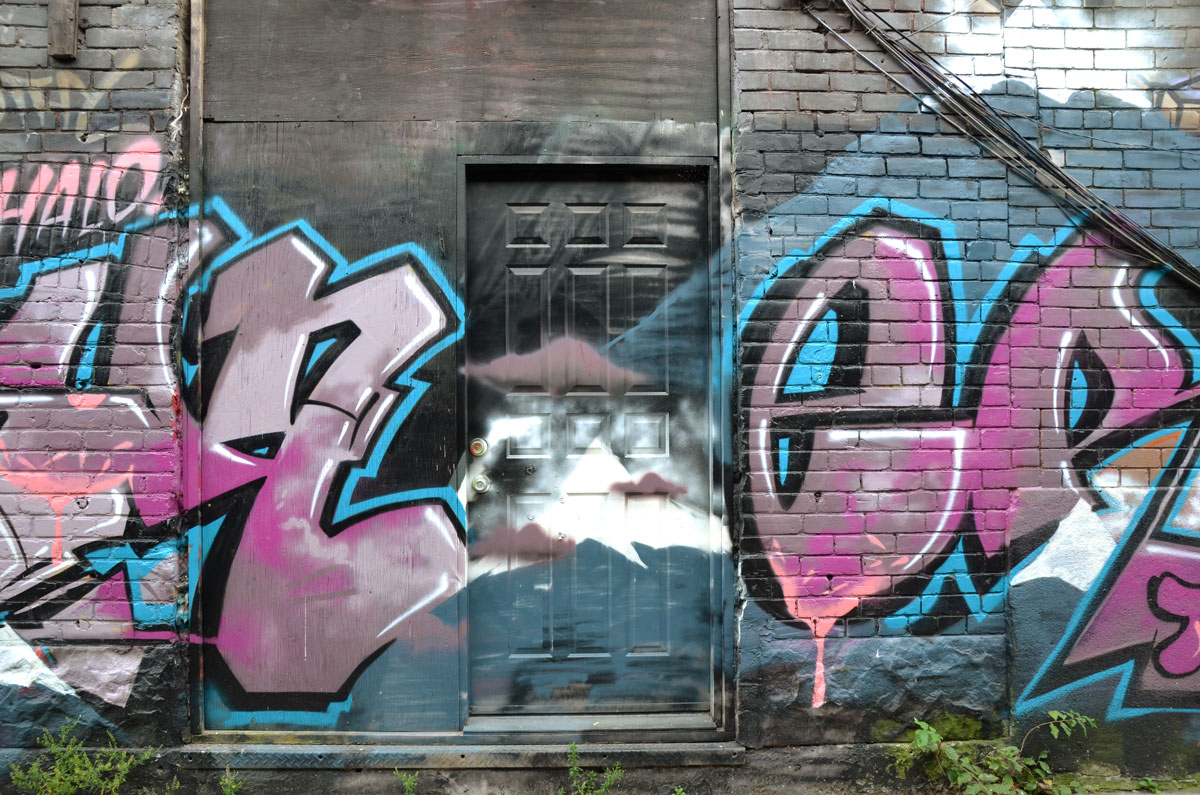
large pink graffiti tag letters on either side of a black door in an alley
.

Large orange and yellow graffiti letters that say It's Like A Jungle Sometimes.  There is a door on the right side and on the door is a large black and white picture of a woman from the waist up.  She is bare chested with little pink hearts covering her nipples.

.

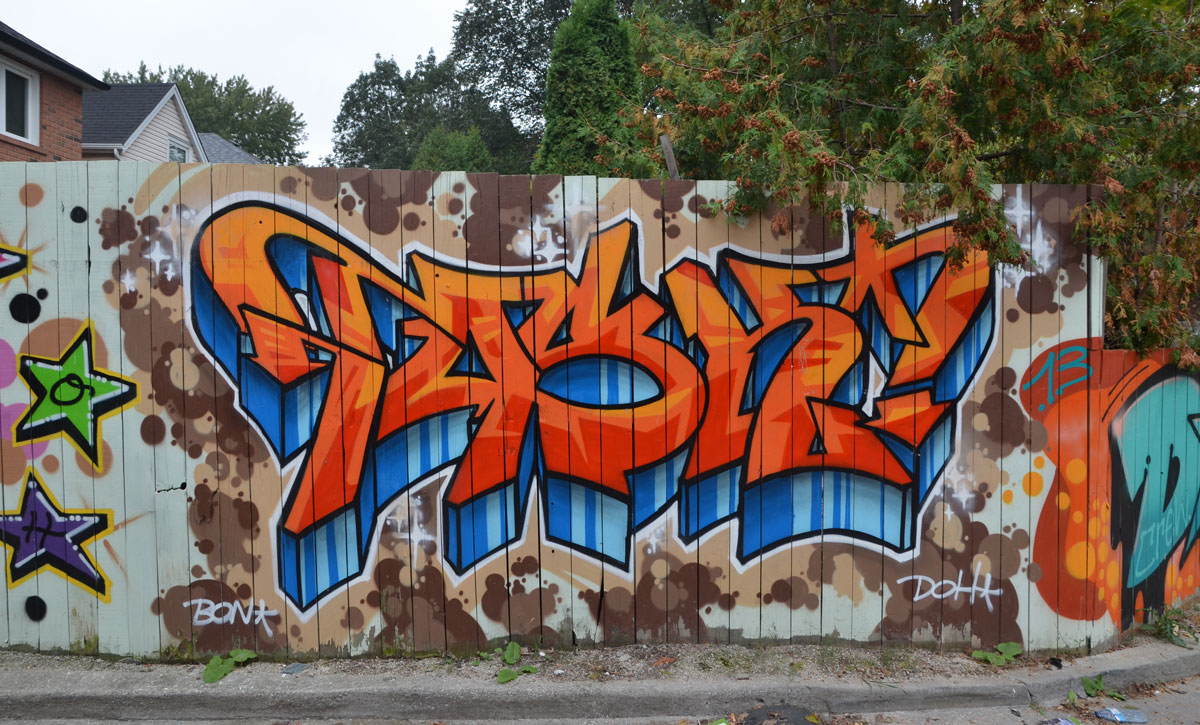
Large bright orange and blue tag on a wood fence

.

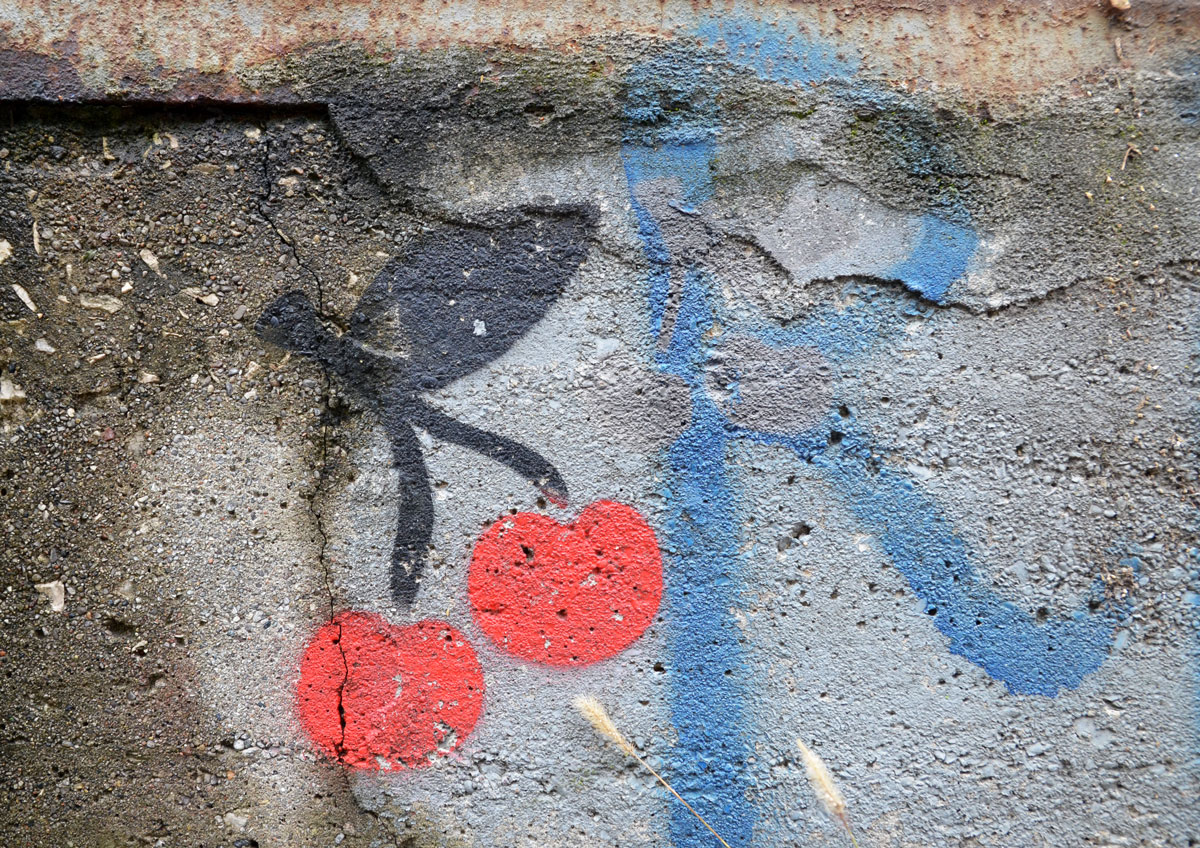
close up of a stencil graffiti of 2 cherries.  Beside the cherries is the letter R in blue.  Both are on concrete with a crack in it

.

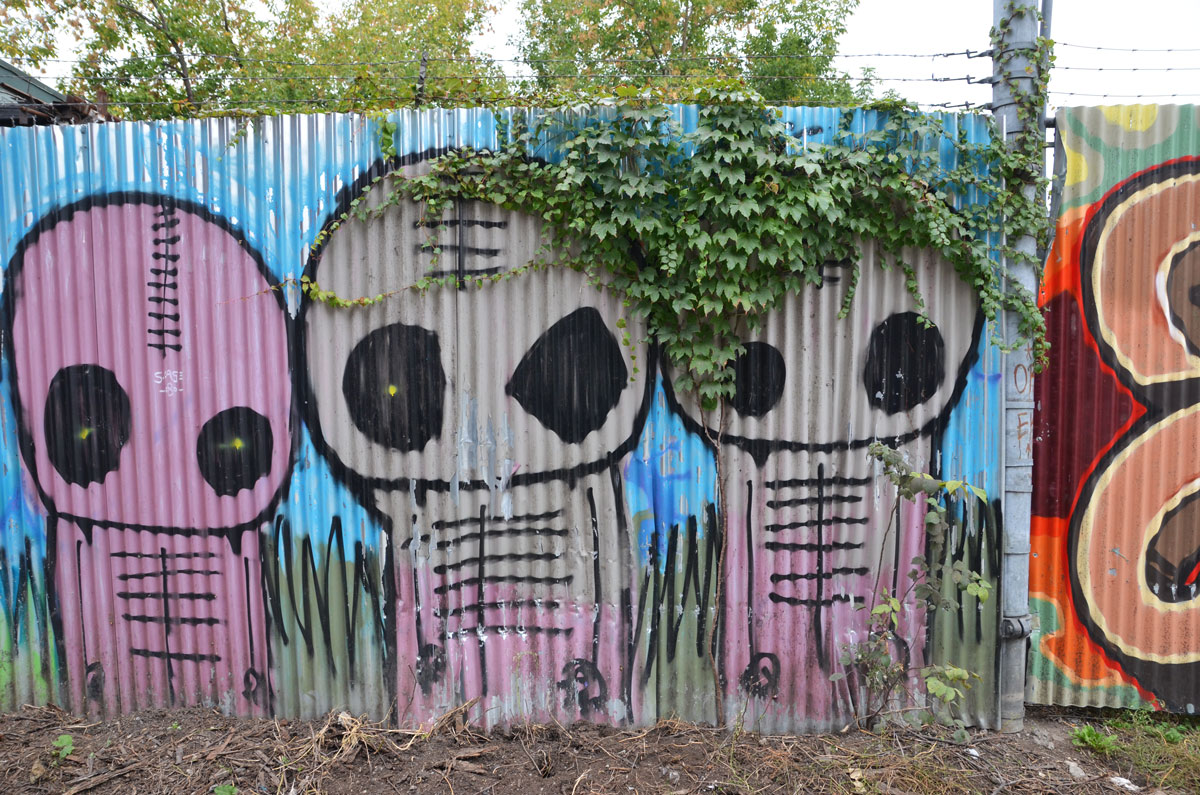
Three large pinkish alien like creatures on a corrugated metal fence.  Some ivy is hanging over the fence

.

Graffiti on a wall with a window in the corner.  The picture is of a person singing into a microphone.  The words I want your skulls are above the person's head.

.
graffiti face between two colourful tags.  Part of a window is the picture and there is a small Eiffel Tower on the window sill. .

Graffiti fishes and shark swimming on a wall.  Some weeds are growing up in front of them them and it looks like seaweed.  Two old Vote Spud signs are on a railing in this picture as well.
.

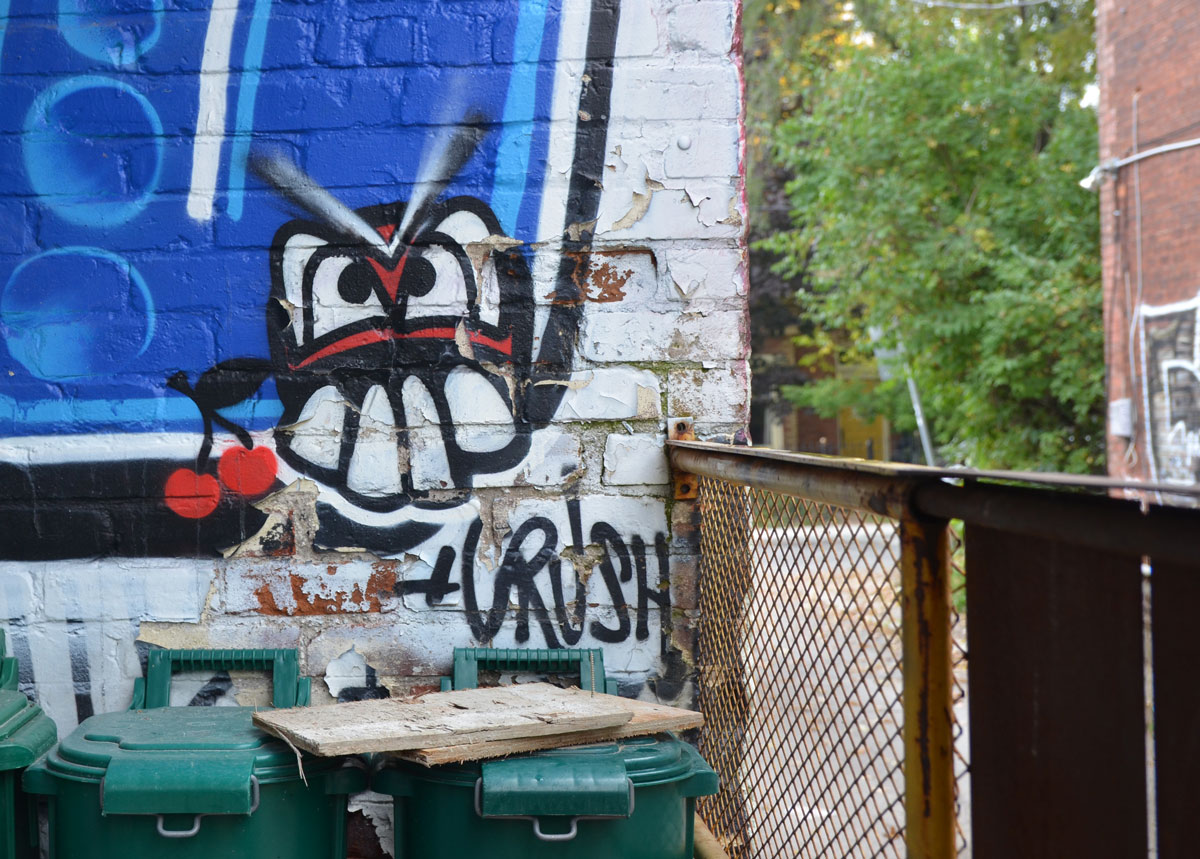
A silly face with big teeth with the word crush under it, graffiti on a wall in the alley.  Green garbage bins in front of the wall.

.

mural on a wall of a young woman with a large blue scarf handing money to a cartoon rabbit

.
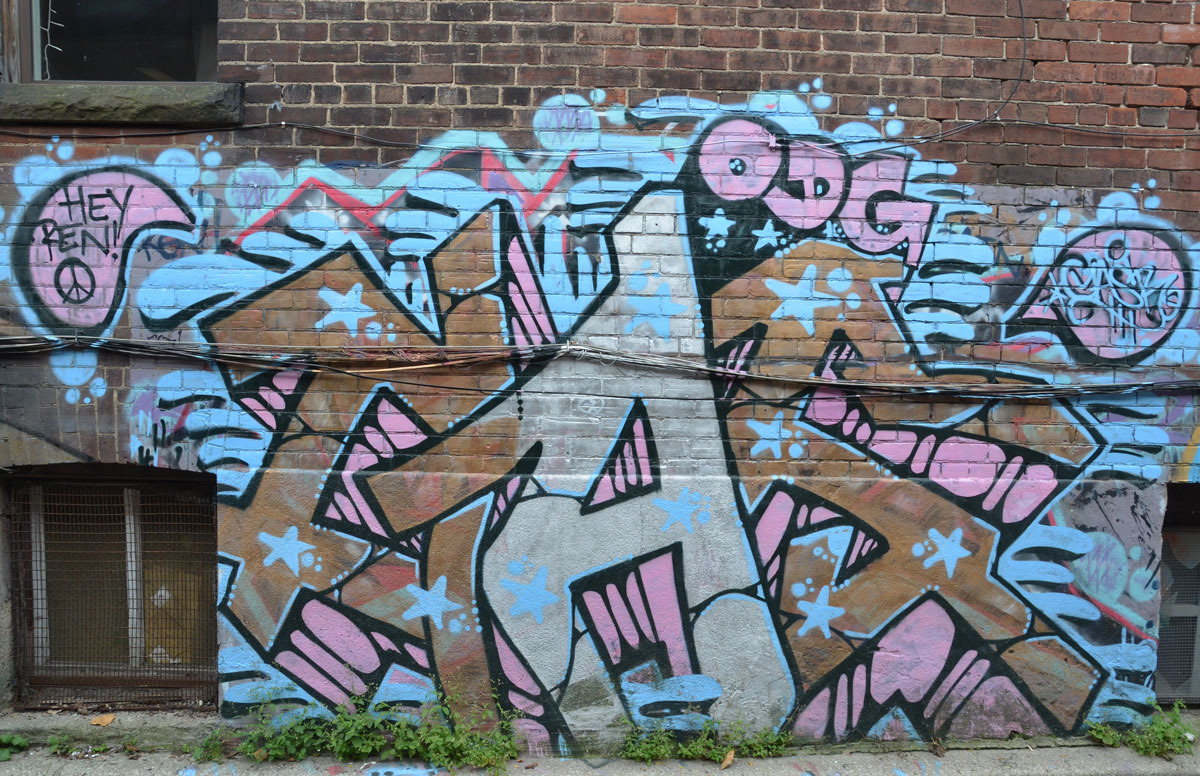
pink, brown, and light blue tag on a wall.

.

Ghost Dick are the words in the graffiti and they are accompanied by a white drawing of a ghost walking to the left with it's arms in front

.

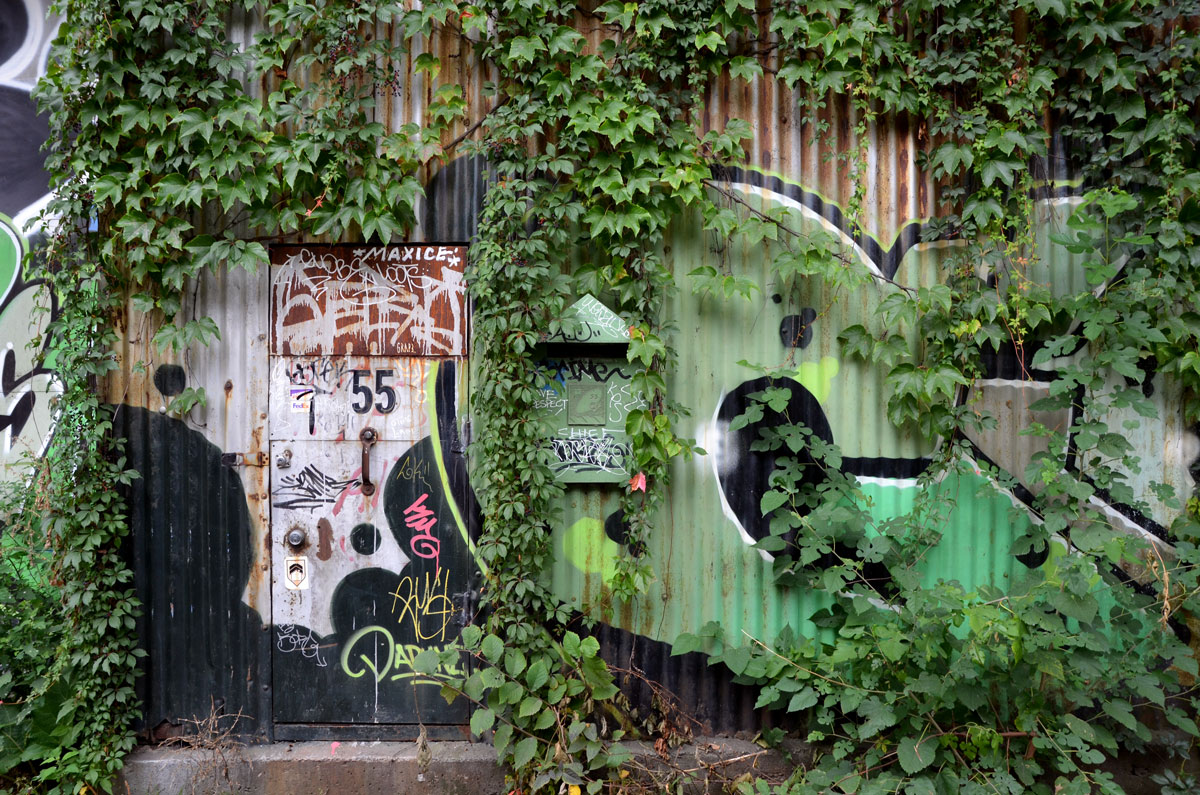
A corrugated metal wall that is partially obscured by vines.  Under the vines is a green graffiti tag.  There is also a door in the wall with the number 55 on it.  It is someone's home.  There is also a mailbox.

.

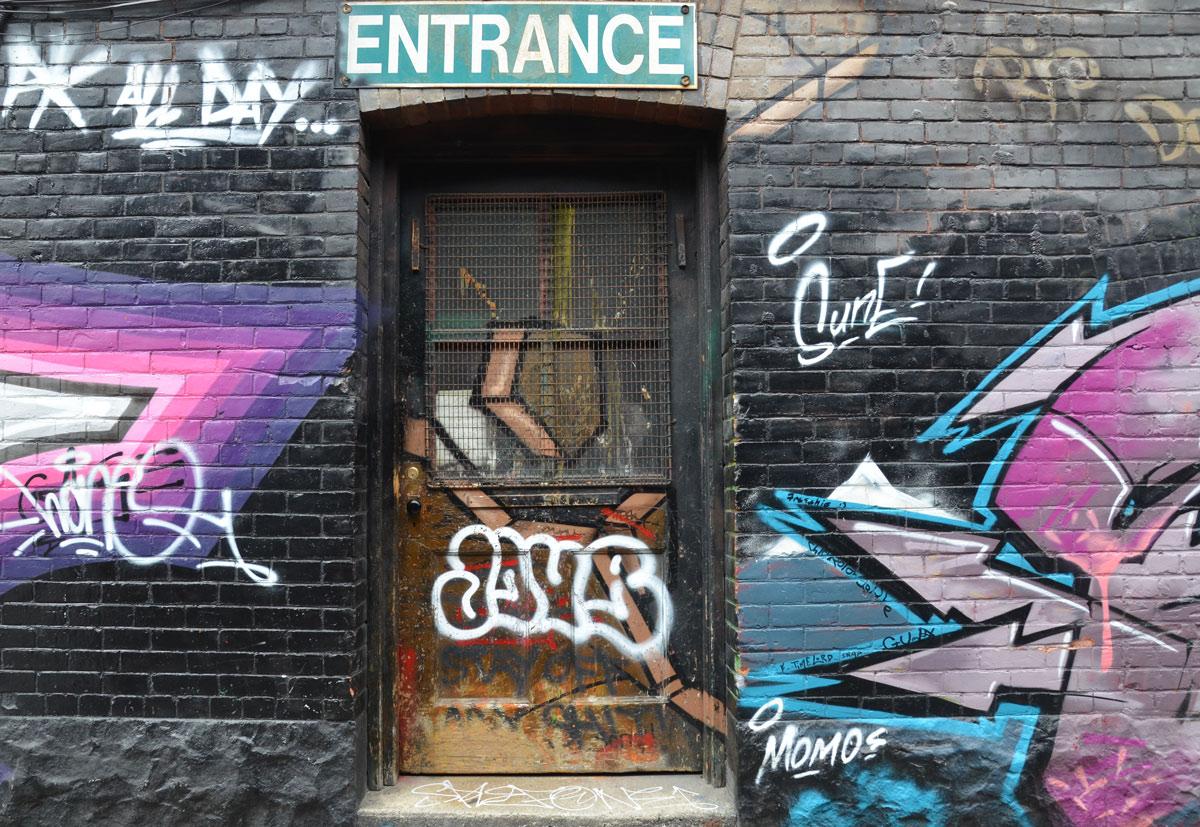
An old wood & glass door that has been painted over with graffiti.  A green and white sign saying Entrance is above the door.  Graffiti is on both sides of the door.

.

Part of a street art painting in blues and purples.  It looks very geometric in design.  Some weeds are growing up in front of it.

.

wispy space alien with a blue substance coming from its body and spreading into a purple and red tag

.

By the time of Confederation in 1867, one quarter of the population of Canada were of Irish ancestry.  Although the Irish had been immigrating to what is now Canada for a long time, the Irish famine years of 1845 to 1849 saw an increase in the number of immigrants.  Immigration peaked in the summer of 1847;  boatloads of Irish settlers arrived.  Most were very poor and sick.  They landed in a number of places along the St. Lawrence River and Lake Ontario, including Toronto.   Thousands of those Irish immigrants died in Ontario that summer, mostly from typhus (or typhoid fever).

Ireland Park is home to a memorial in honour of those immigrants. It is on the waterfront between Lake Ontario and the old Canada Malting Co. silos.

view of Ireland Park from the waterfront, and looking slightly north east.  A large shape made of limestone is on the left of the photo and a green space is beside it.  The silos of the Canada Malting Company are visible as is part of the Toronto skyline in the distance.

Sections of limestone fit together in a shape that resembles a boat.

Names are engraved on the sides of the limestone sections.  They are placed such that they are in the gaps between the sections.  At first they are not visible.  It is only when you are close to the stone that you can see the names.

Names in black lettering carved into the side of limestone.

675 names are carved in the stone. These are the known names of the 1000 to 1100 people who died shortly after they arrived in Toronto in the summer of 1847.


The park also has seven sculptures by Rowan Gillespie of Dublin Ireland.
The installation is called ‘Arrival’. 

Sculpture of a man with his arms upraised.  He is looking over part of the harbour towards downtown Toronto.

‘The Jubliant Man’ from behind.

close up of one of the sculptures in Ireland Park.  It is a man with his hands clenched in front of him and a worried look on his face.

‘The Apprehensive Man’

 for more information: the Ireland Park Foundation website