Archive for the ‘public art’ Category

There is a railway bridge, just west of Caledonia Rd where the GO line to Aurora passes over St. Clair West.
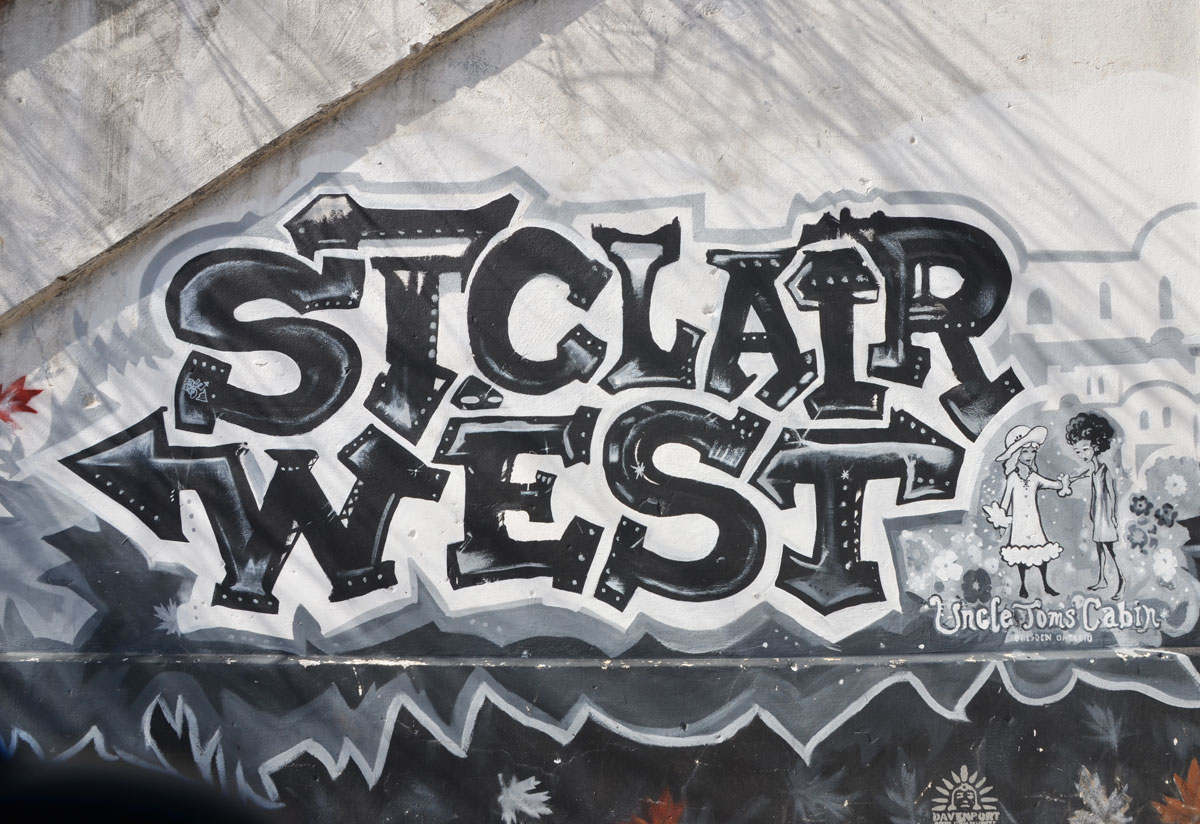
On the north side of the underpass is a mural in black, white and grey tones.

mural in black, white, and grey about the first railway in Ontario, 1853, that was built here, and where the railway still runs as the GO line to Aurora - the words St. Clair West in large letters

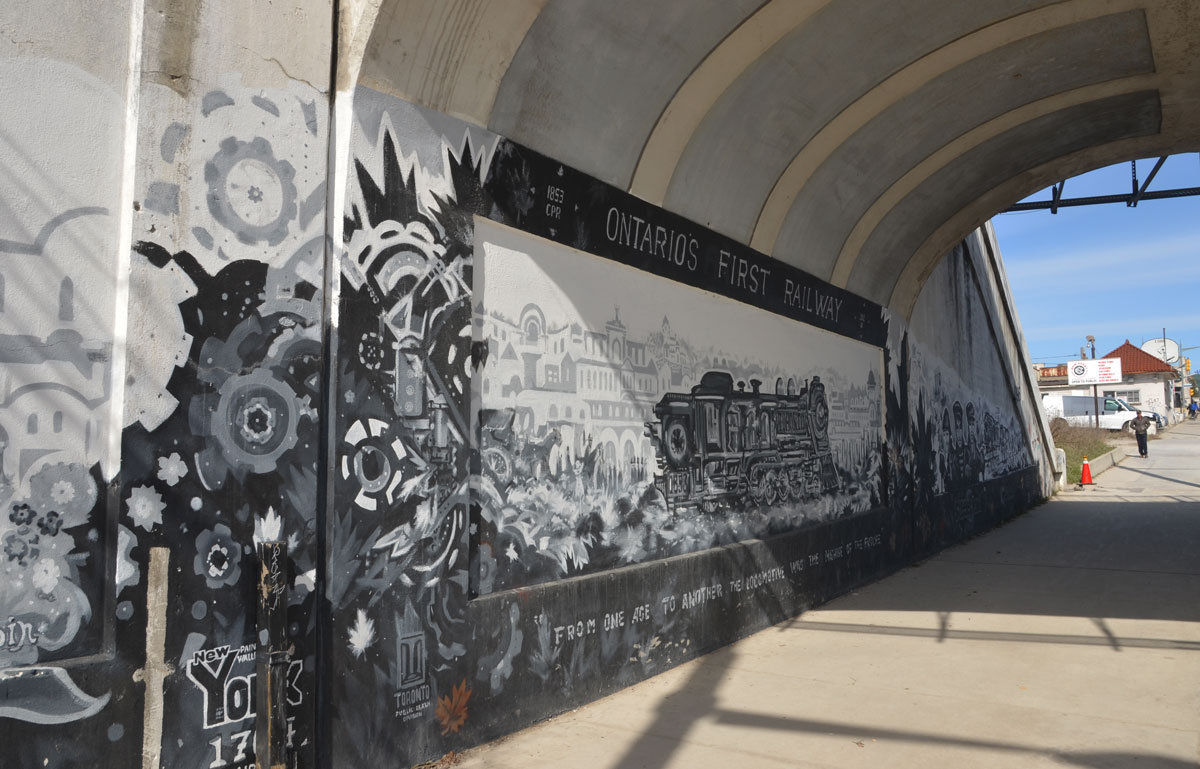
The theme of the mural is “Ontario’s first railway” as this railway line has been in operation since 1853 when the Ontario, Simcoe and Huron railway was built here.

mural in black, white, and grey about the first railway in Ontario, 1853, that was built here, and where the railway still runs as the GO line to Aurora - a photo of the mural from across the street, with its three parts, the words St. Clair West on the left, the locomotive in the middle and the railway workers on the right
The first locomotive built in Canada was a steam powered engine built by the Toronto Locomotive Works, a company founded by James Good.  Named “Toronto”, it was finished in April 1853 and in mid-May 1853 it pulled a short (4 cars) train from downtown Toronto 30 miles north to Machells Corners (now Aurora).   Service on the Ontario, Simcoe and Huron line had begun!

below: “From one age to another.  The locomotive was the machine of the future.”
mural in black, white, and grey about the first railway in Ontario, 1853, that was built here, and where the railway still runs as the GO line to Aurora - a painting of an old locomotive with the words 'Ontario's First Railway' on the top of the mural and the words: "from one age to another. The locomotive was the machine of the future. " at the bottom

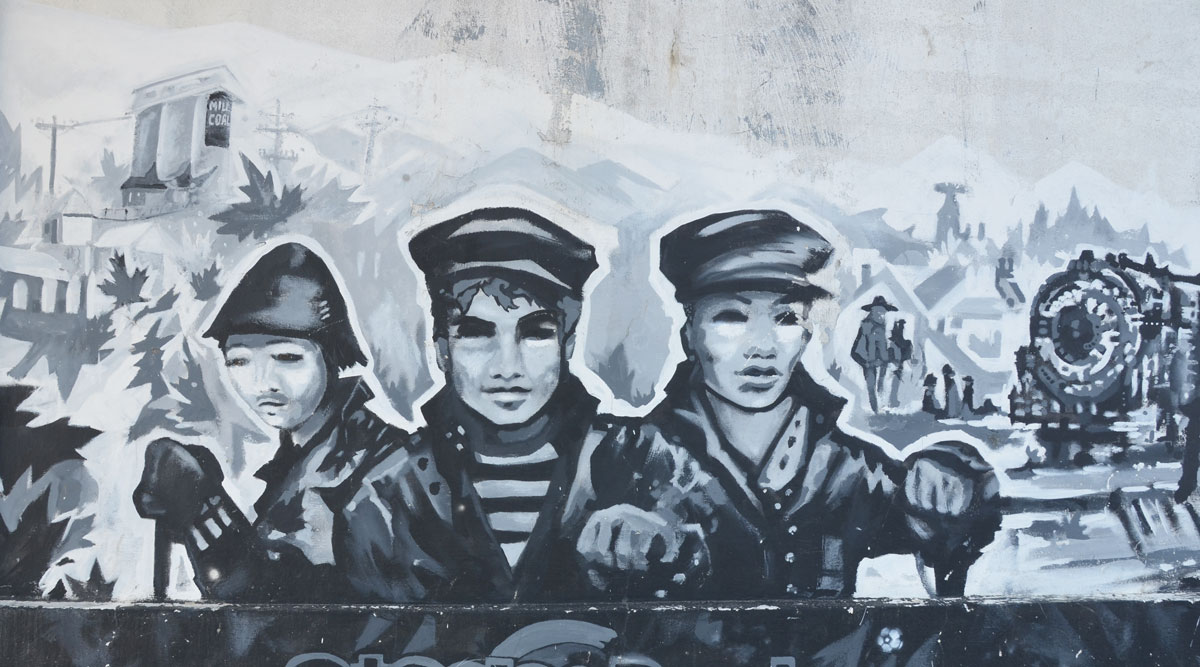
mural in black, white, and grey about the first railway in Ontario, 1853, that was built here, and where the railway still runs as the GO line to Aurora - three railway workers in jackets and caps

The mural was painted in September 2012 by Marcelo Pinero, Aelwynn Swanson, and Pia Ferrari from the Davenport Arts Community.

blog_mural_first_railway

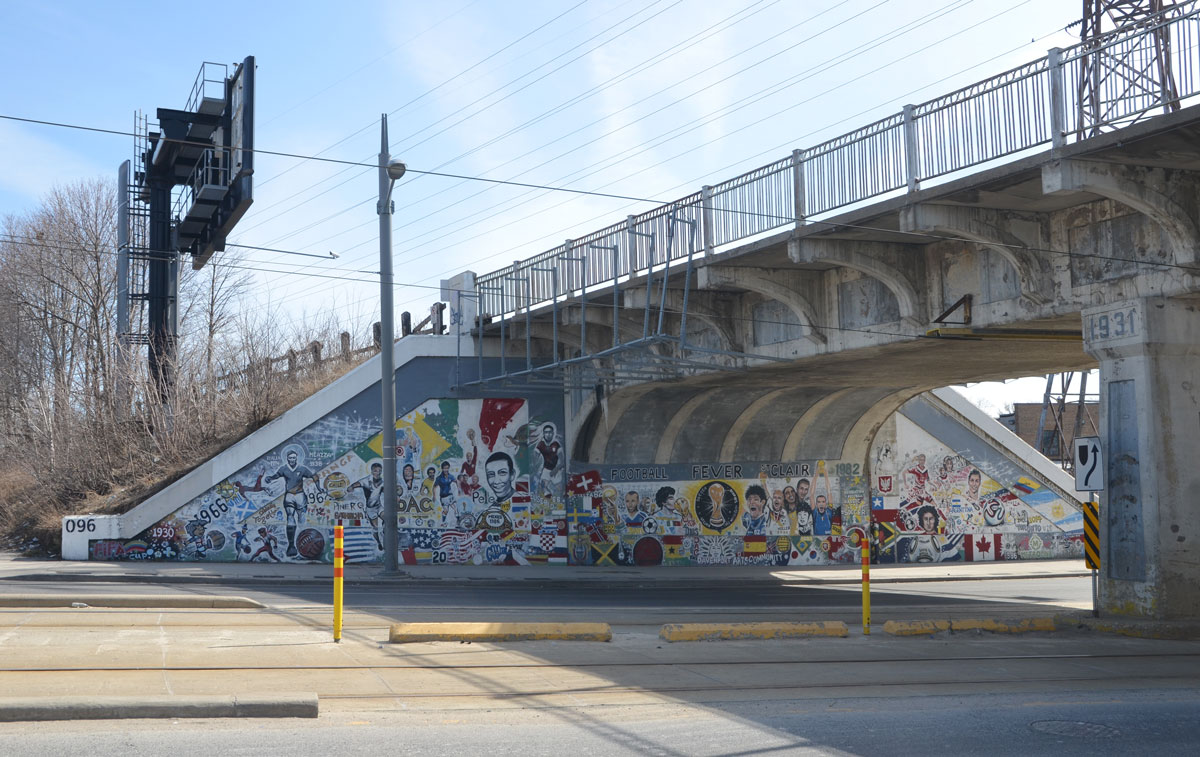
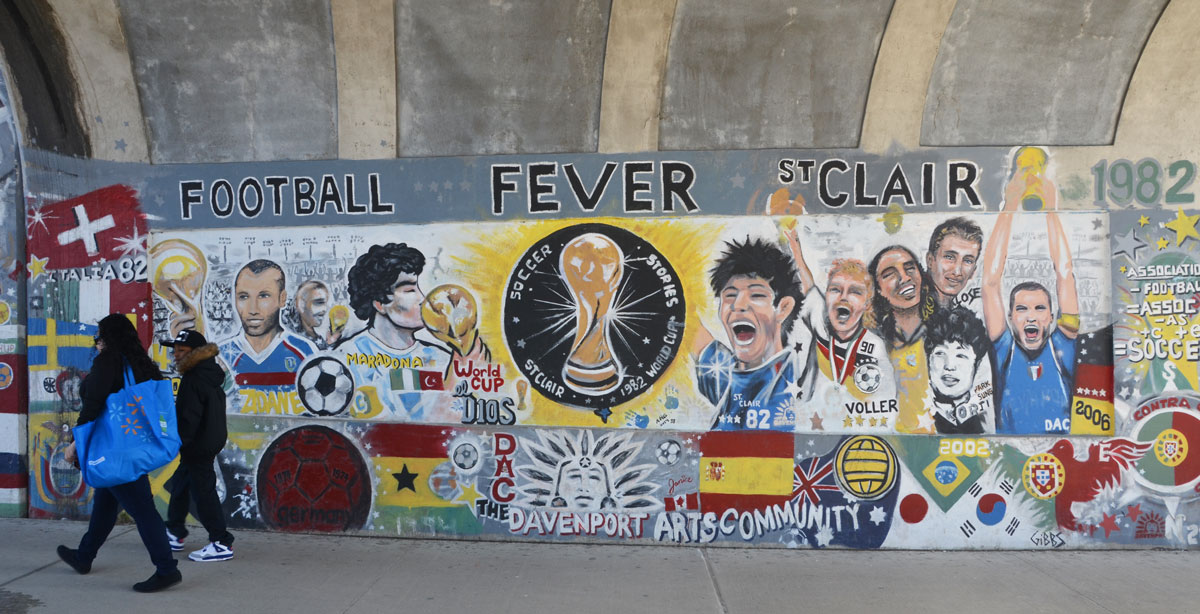
There is also a mural on the south side of the underpass; it has a soccer theme.

mural on a railway bridge underpass that has a soccer theme. Flags of different countries, soccer players, words,

It too was painted by Davenport Arts Community.

part of a mural with a soccer theme with words that say Football Fever St. Clair 1982. also with pictures of football players and flags from different countries.

part of a mural with a soccer theme with words that say Football Fever St. Clair 1982. also with pictures of football players and flags from different countries.

below: Silverthorn Sunrise mural painted late in 2012 by Marcelo Pinero and Aelwynn Swanson.  It is painted on the side of Whiteside Pharmacy which is on the NE corner of St. Clair and Silverthorn.   Silverthorn was also the name of this neighbourhood prior to 1998 when it was amalgamated into the City of Toronto.

Silverthorn Sunrise mural by the Davenport Arts Community, with the word Silverthorn, a sun rising over a bridge while a new TTC streetcar passes under the bridge, the words "shop St. Clair". The mural is on the side of a red brick building, beside a pharmacy.

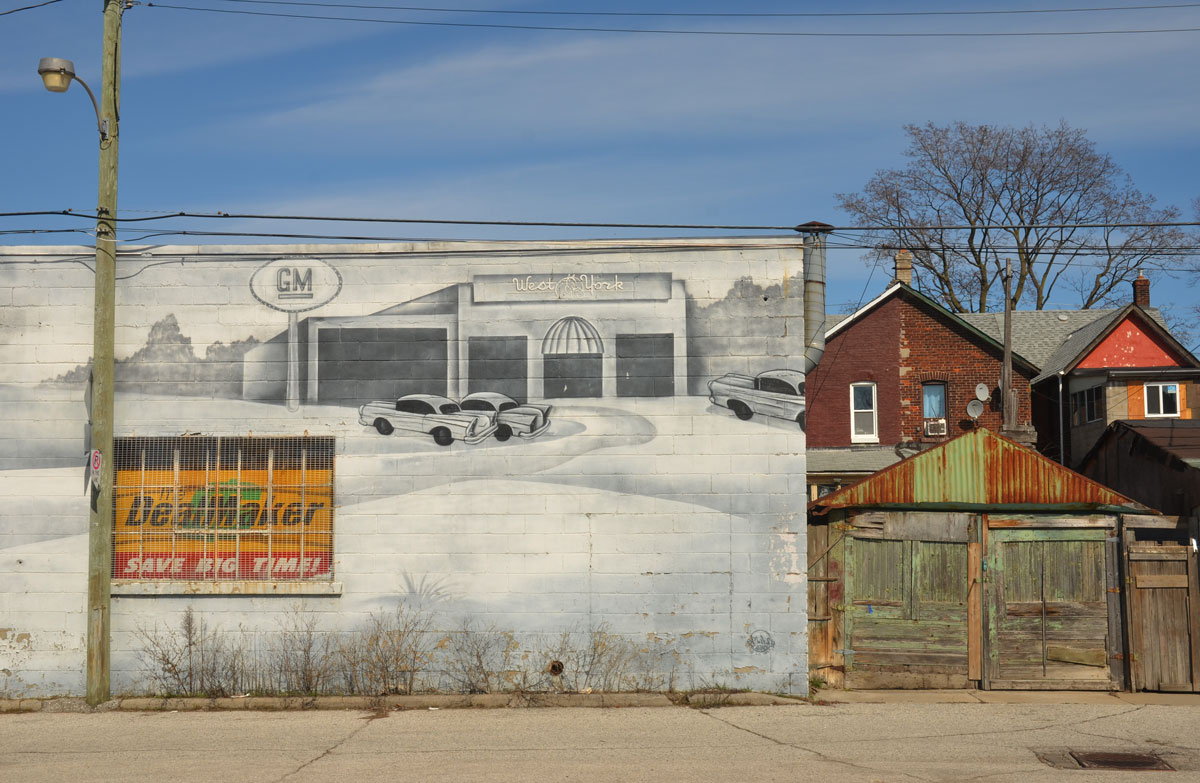
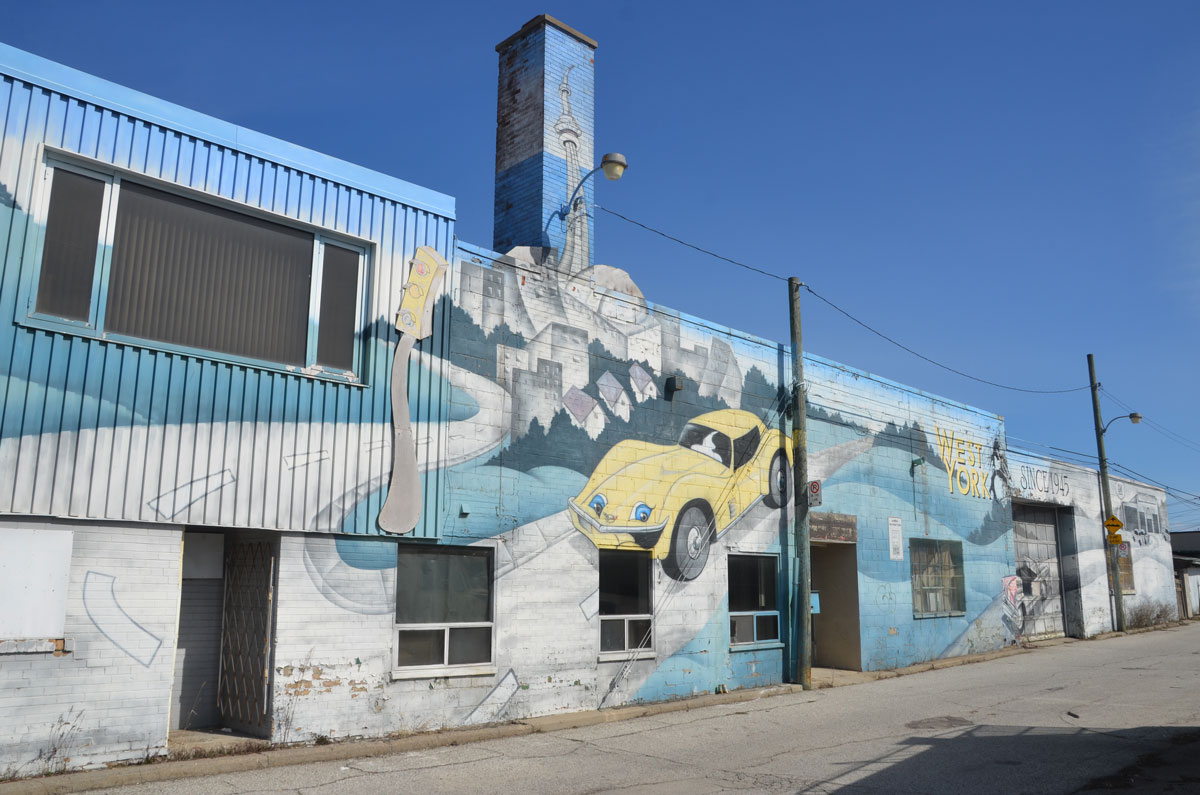
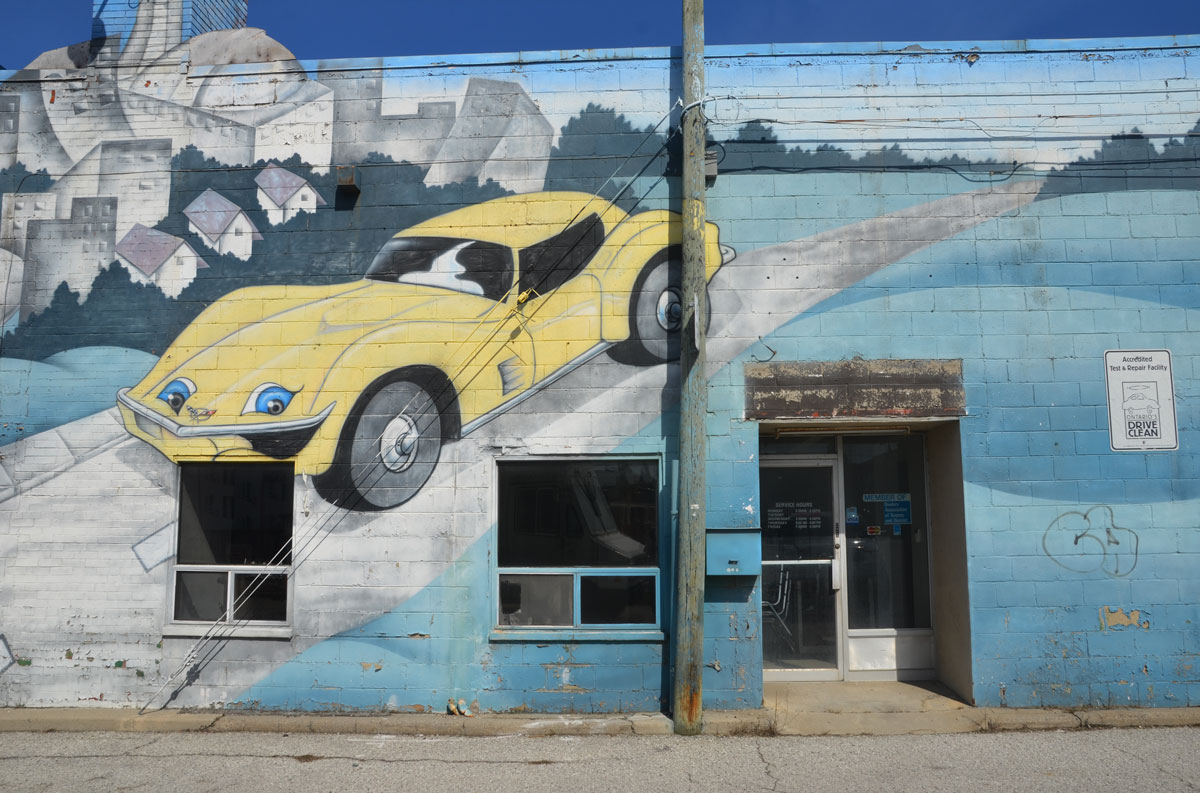
And last, a mural that is actually on the side of business, West York Motors, which is located on St. Clair West between Ford and Osler streets.
It was painted by Splash Murals.

mural on the side of West York motors on St. Clair West - a view of the mural from across the almost empty parking lot.

mural on the side of West York motors on St. Clair West near Osler - south end of the mural showing cars parked in front of a garagethe backs of two houses are also in the picture,

mural on the side of West York motors on St. Clair West - looking down the length of the mural including the narrow chimney on which the CN TOwer is painted.

mural on the side of West York motors on St. Clair West - the part of the mural with the words "West York since 1945" also an old convertible with its door open and top down.

mural on the side of West York motors on St. Clair West - a yellow sports car is painted on the wall near the entrance to the building

more information about the Davenport Arts Community

Within the past week or so, the fences around the new Canary District have come down.  Toronto’s newest development is now open to the public so I thought I would check it out.

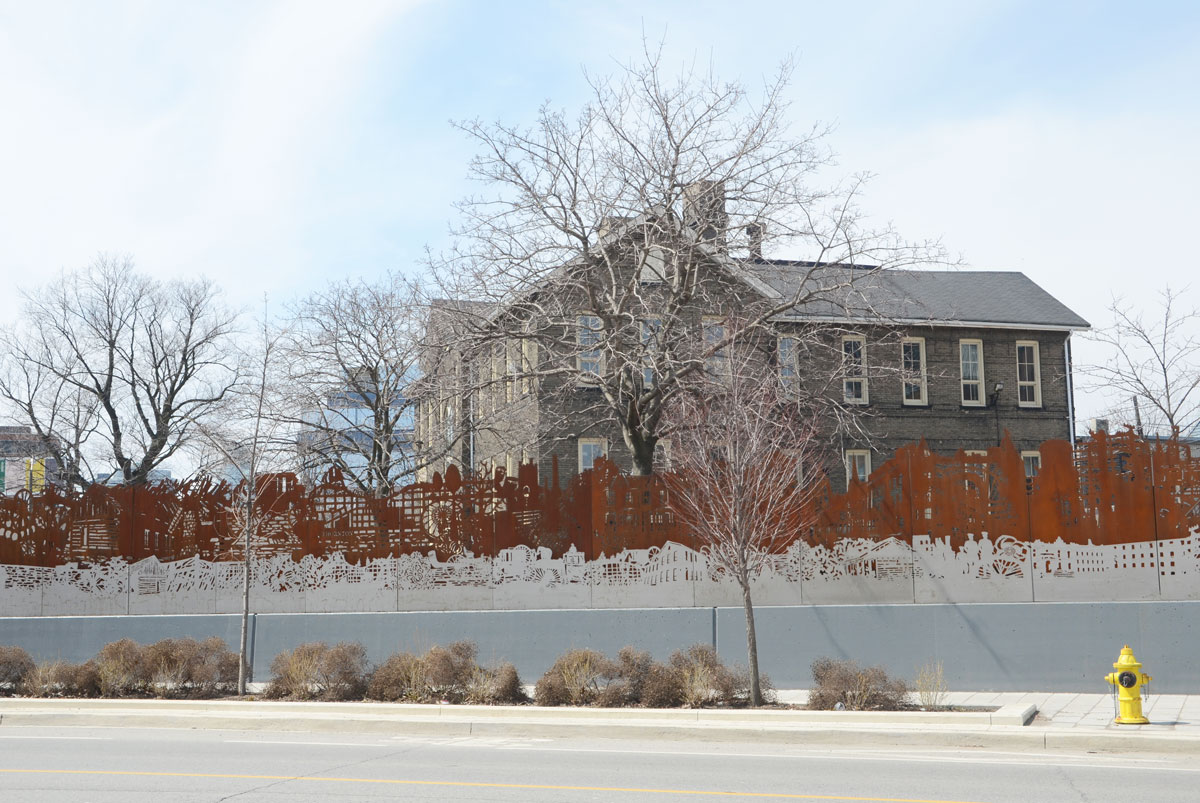
I started my walk from the streetcar stop at King and Sumach.  Walking down Sumach Street I passed the metal fence that separates the school property from the street.  This stone building was built in 1887 as Sackville Street School and it has been used as a school ever since.  At the moment it is home to Inglenook Community School.  The fence with it’s double layer of metal – rusted in the back and shiny in the front – is interesting in the daytime but even more so at night when it is lit with a series of lights located between the layers  and near the base of the fence.

public art on Sumach St., rusted metal and shiny metal fence with cut outs, looking across the street at it, with older stone building behind it.

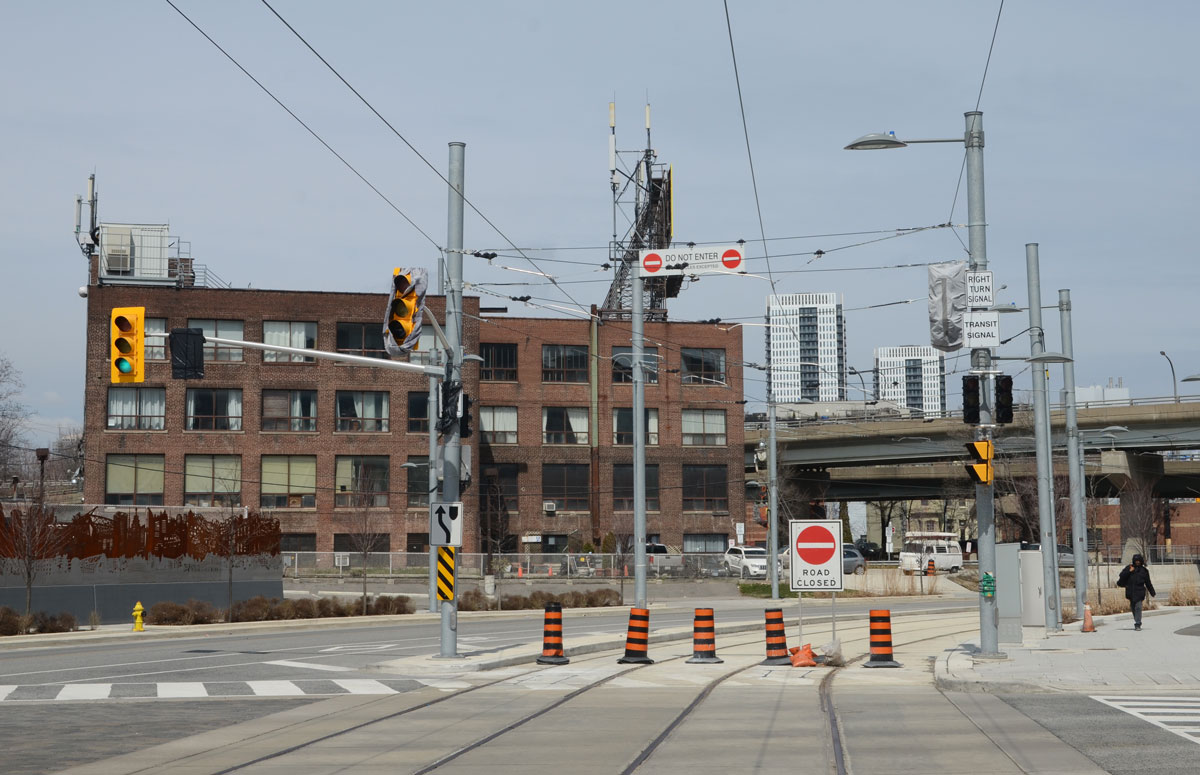
When I took the above picture I was standing on the new streetcar tracks that run south from King Street.  The tracks are ready and the wires have been installed.  Streetcars will begin servicing the route in June as part of route 514.  No map or schedule appears on the TTC website yet but apparently this route will run between the Dufferin Gate Loop and the new loop on Cherry Street via King Street

below: Looking north from Eastern Avenue at the new streetcar tracks on Sumach Street.

looking north on Sumach Street from Eastern Ave at the new streetcar tracks. They are blocked by 5 large black and orange traffic cones as well as a large do not enter sign. Overhead wires for the streetcars are in place.

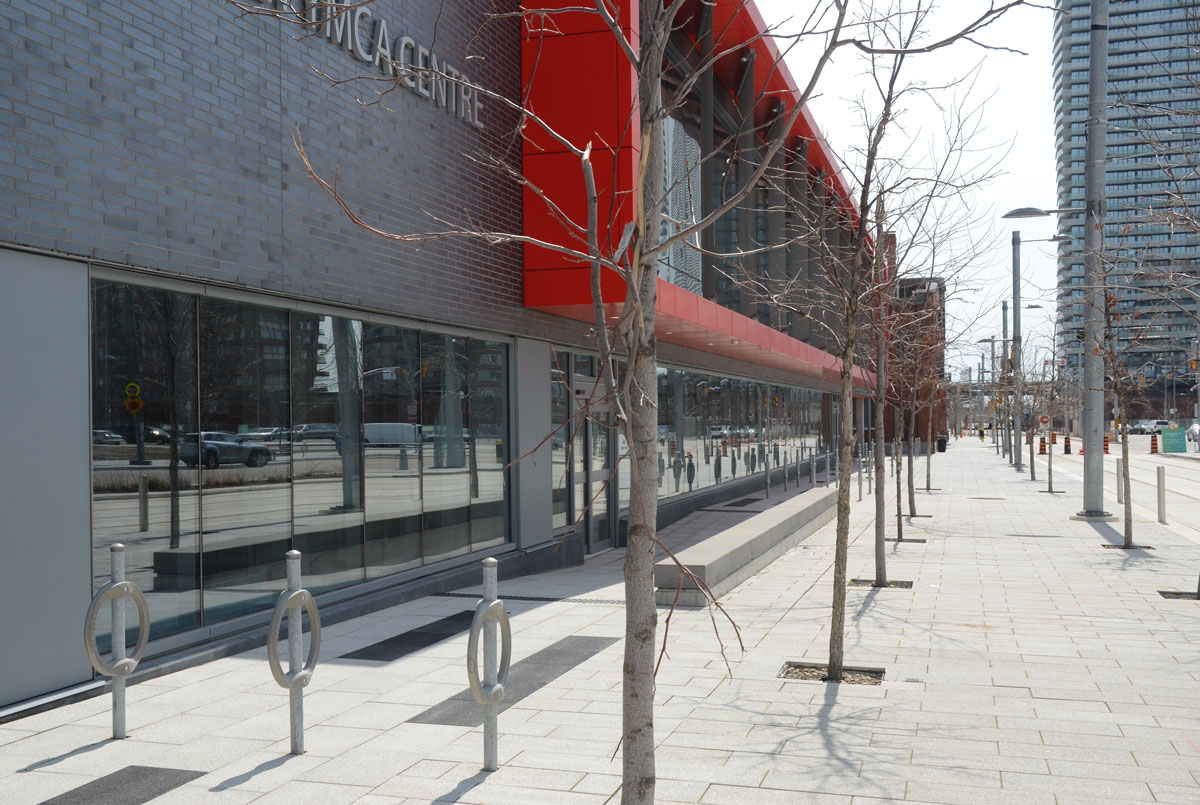
At Eastern Avenue, Sumach Street becomes Cherry Street.   The new Cherry Street YMCA is on the east side of the street.  The sidewalk is wide but at the moment the branches of the young trees are at face level and you have to be careful where you walk.

looking south on Cherry Street from Eastern Ave, past the new Cherry Street YMCA on the left and all the new trees that have been planted.

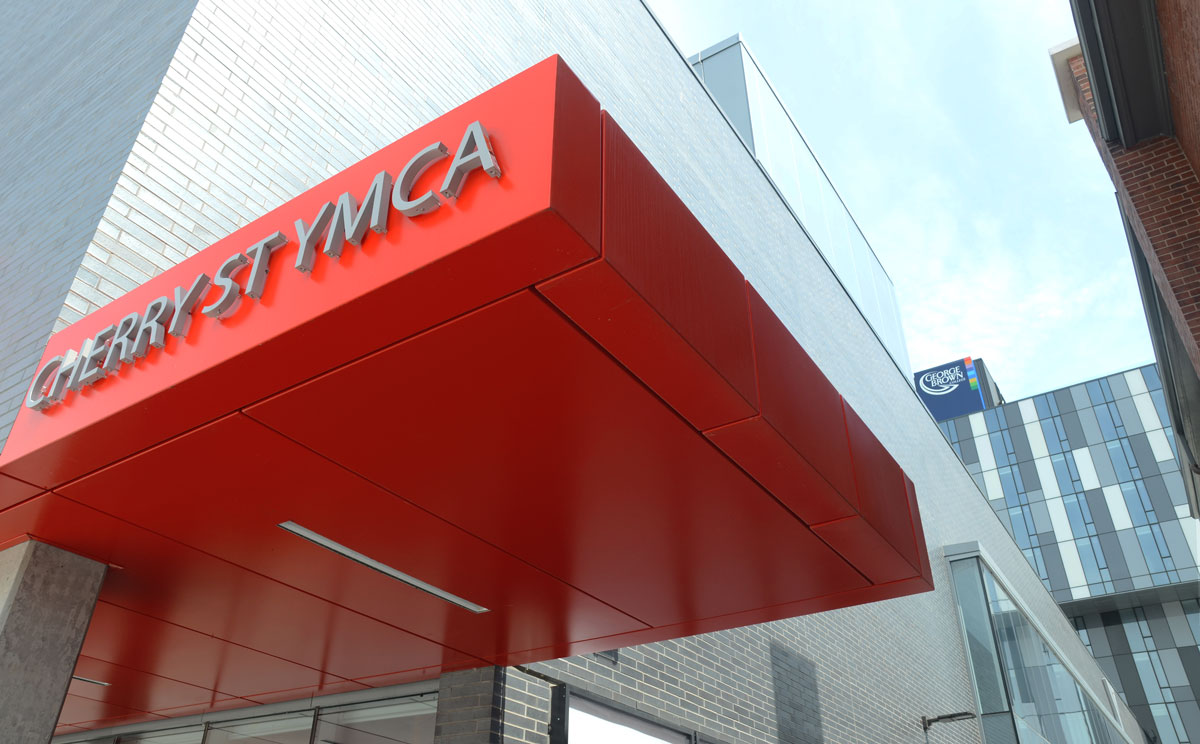
below: The bright red detailing on the YMCA building continues over the entry way.  Part of the new residences for George Brown College peak out from behind.

roofline over the entry of Cherry Street YMCA with it's bright red colour. Corner of George Brown College building is in the background.

Front Street now has wide sidewalks.  None of the businesses have moved into the ground level retail spaces yet but the signs in the windows suggest that a number of cafes, restaurants, and food stores will soon be opening.   A couple of public art pieces are also on the sidewalk.

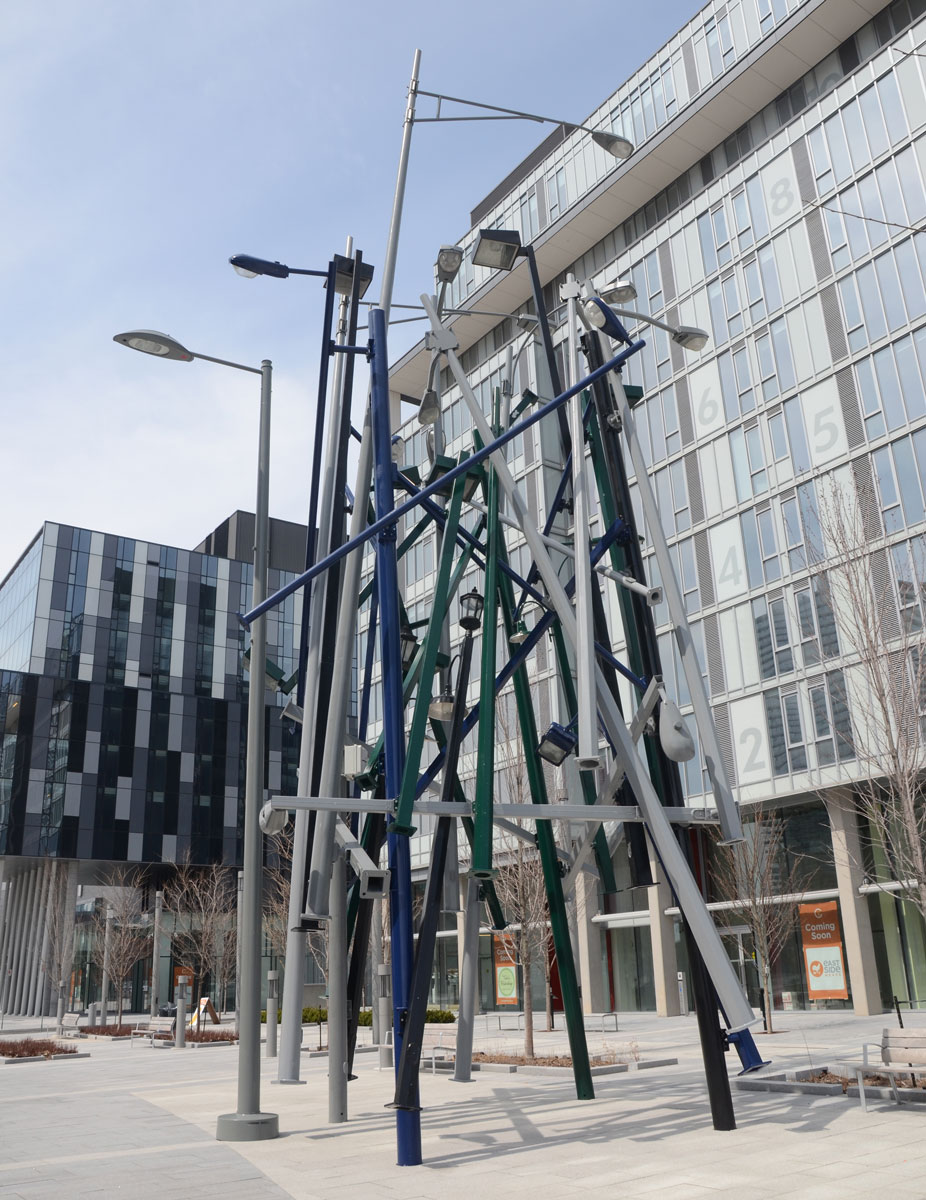
below: ‘Lampposts’ by Tadashi Kawabata

A tall art installation as public art on Front Street in the Canary District, Lampposts by Tadashi Kawabata, construction from many different styles of street lamp posts all arranged in a cluster

below: Looking up from underneath the artwork.

looking up at the lights from underneath the artwork,Lampposts by Tadashi Kawabata

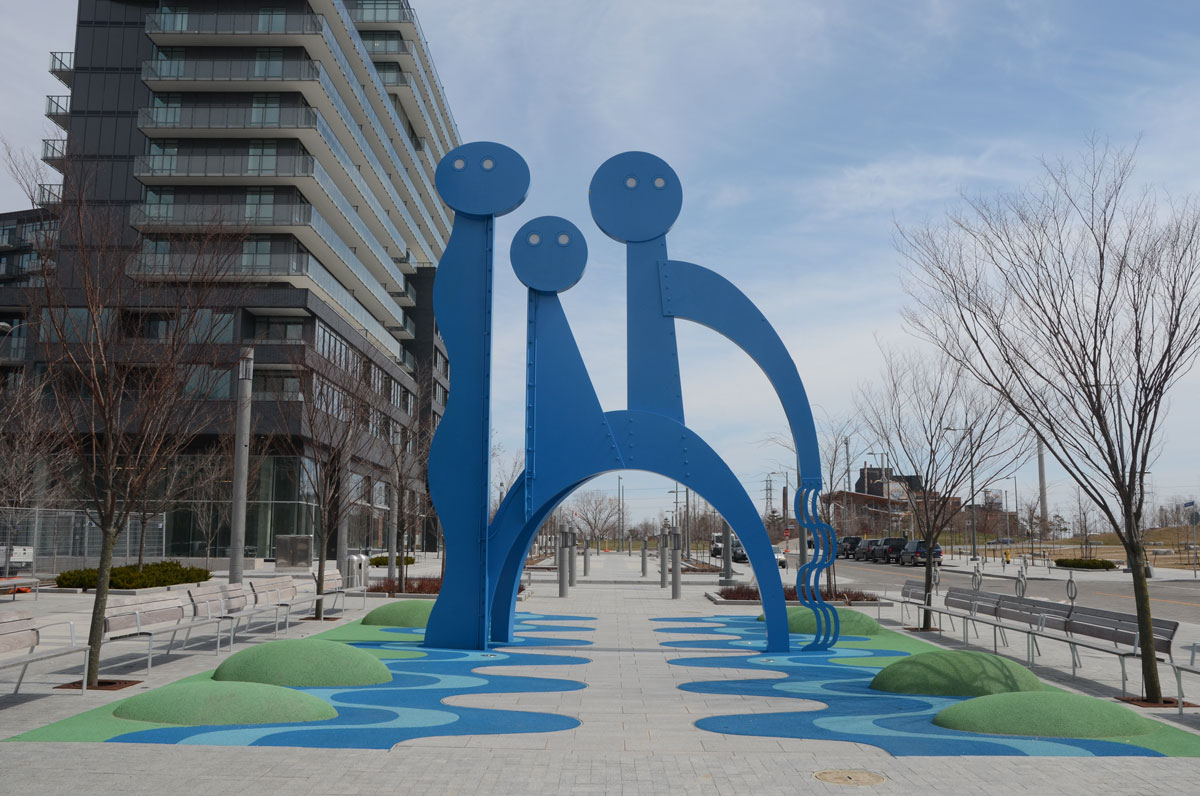
below: ‘The Water Guardians’ stand over a soft squishy playpad.
It was designed by Jennifer Marman and Daniel Borins.

'Tje Water Guardians', A tall art installation as public art on Front Street in the Canary District, 3 stylized abstracted human forms with legs in an arc shape over a squishy playpad in green, blue and white. The blue represents water. The green parts are raised slightly in bumps.

below: There are a lot of little design elements that have been incorporated into the this development including what I think is a bench.  With a light underneath?

A curved black metal bench on a sidewalk

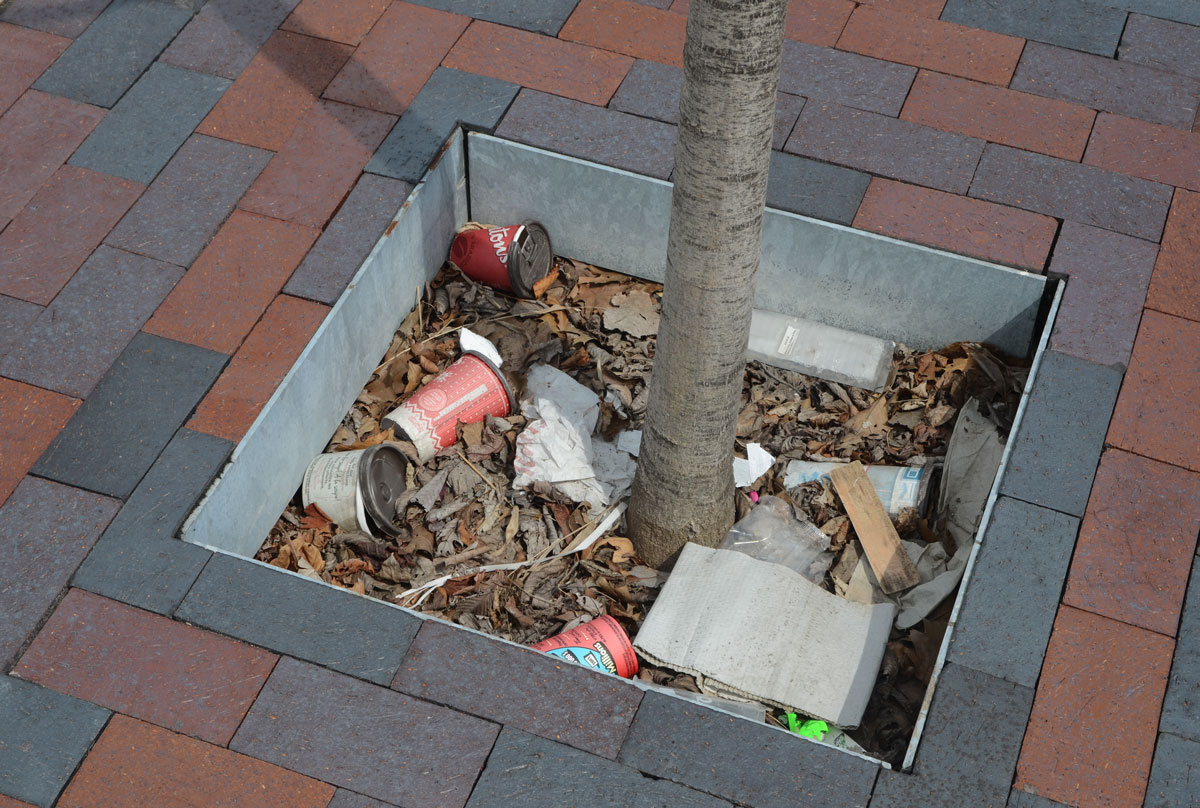
below: The sidewalk around the trees is made from two colours of brick.  The opening for the tree is just the right size to collect garbage.  Whether or not these traps get cleaned out remains to be seen.

square hole in the brickwork of the sidewalk to allow a tree to grow. The hole is shallow, a few cm. deep but it collects garbage such as empty coffe cups and discarded papers that blow in the wind.

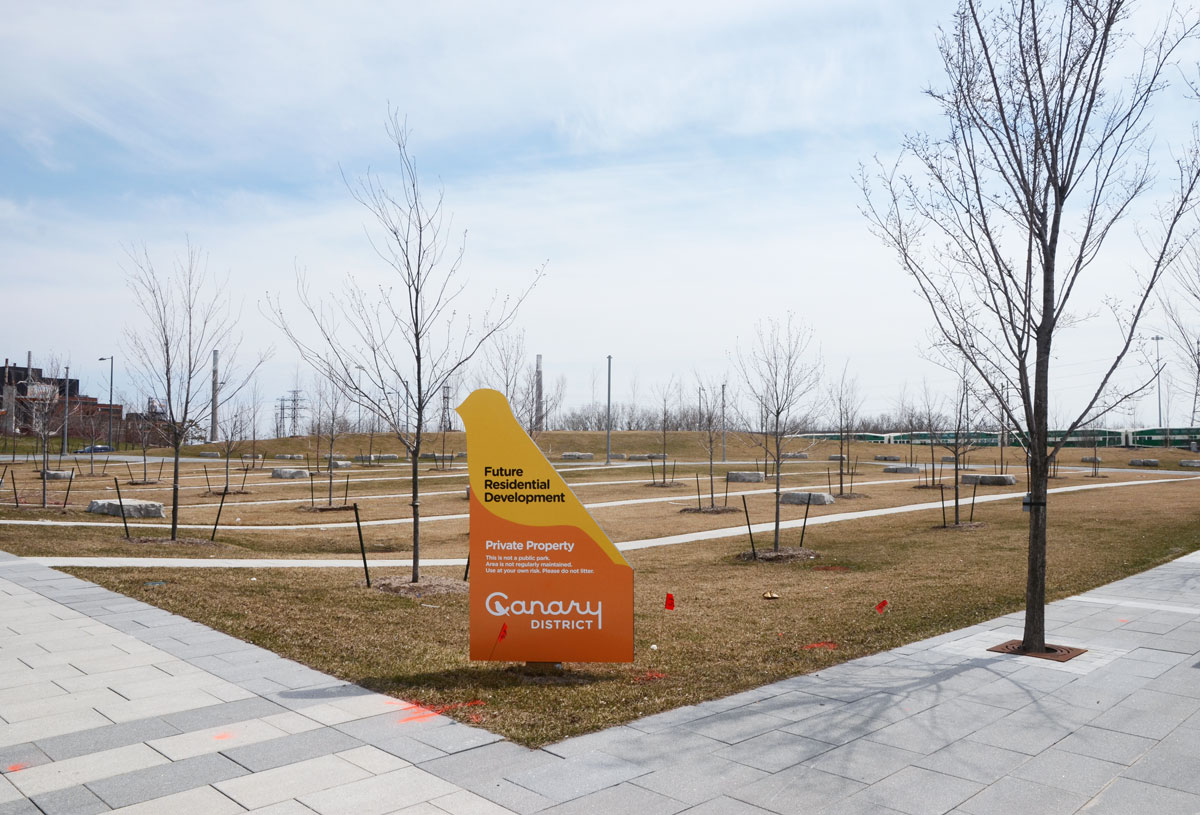
below:  The Canary District is not yet finished as this sign clearly states.

A large plot of land with rocks and newly planted trees in a grid. An orange and yellow sign advertises the Canary District. It also says that this land is slated for future residential development

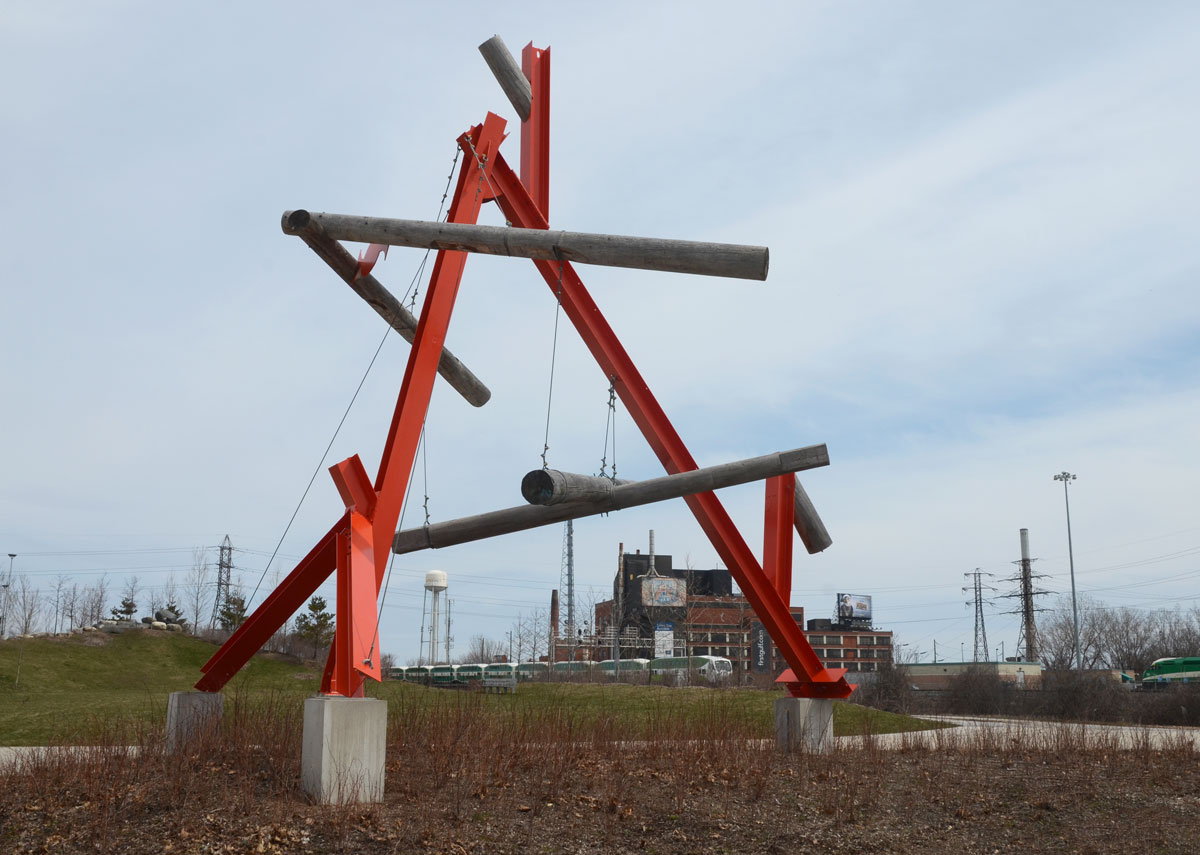
below: The sculpture ‘No Shoes’ by Mark di Suvero is now accessible.   The artwork was completed in 1967 and originally installed in High Park.   In 2013 it was renovated and moved to Corktown Common.

The sculpture 'No Shoes', red metal beams and wood poles, very large, stands in a park with some buildings in the background.

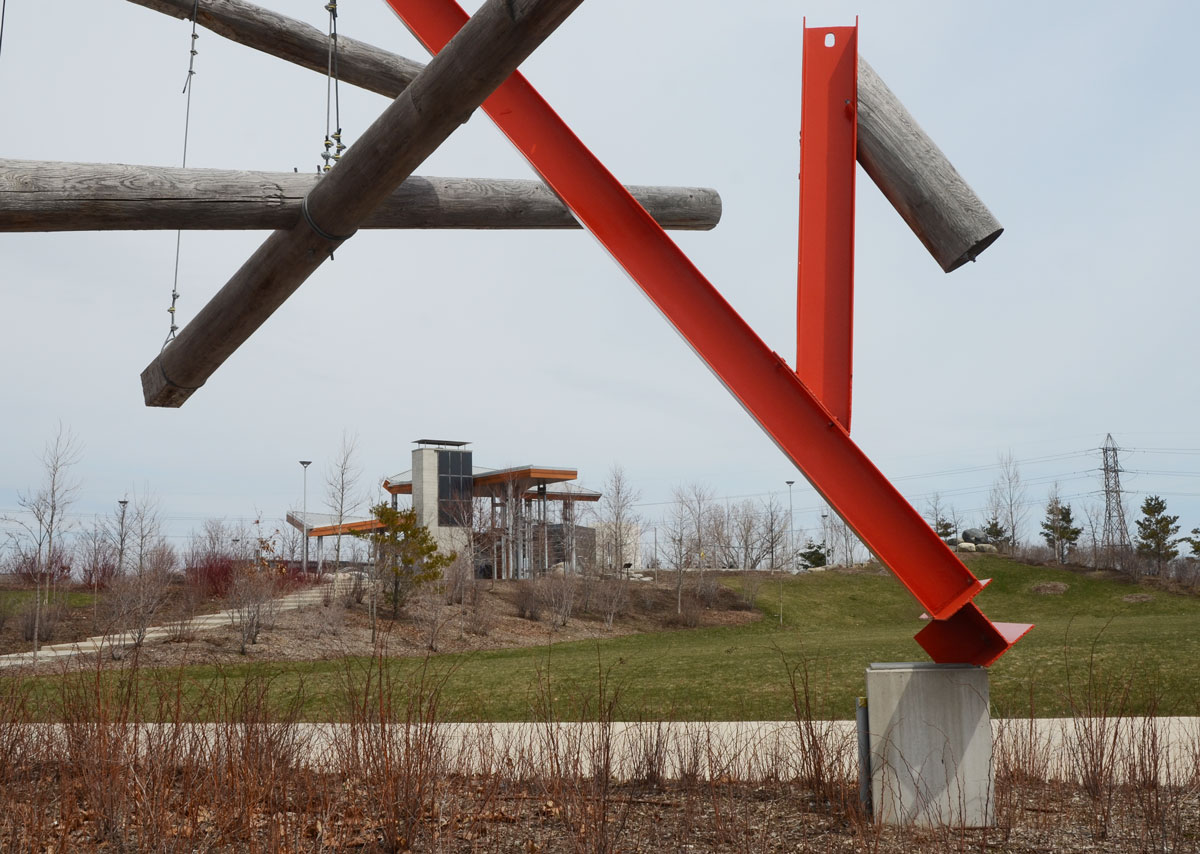
below: The pavillion at Corktown Commons in the distance.

The pavillion at Corktown Commons i the background as seen through the bottom part of the sculpture 'No Shoes'

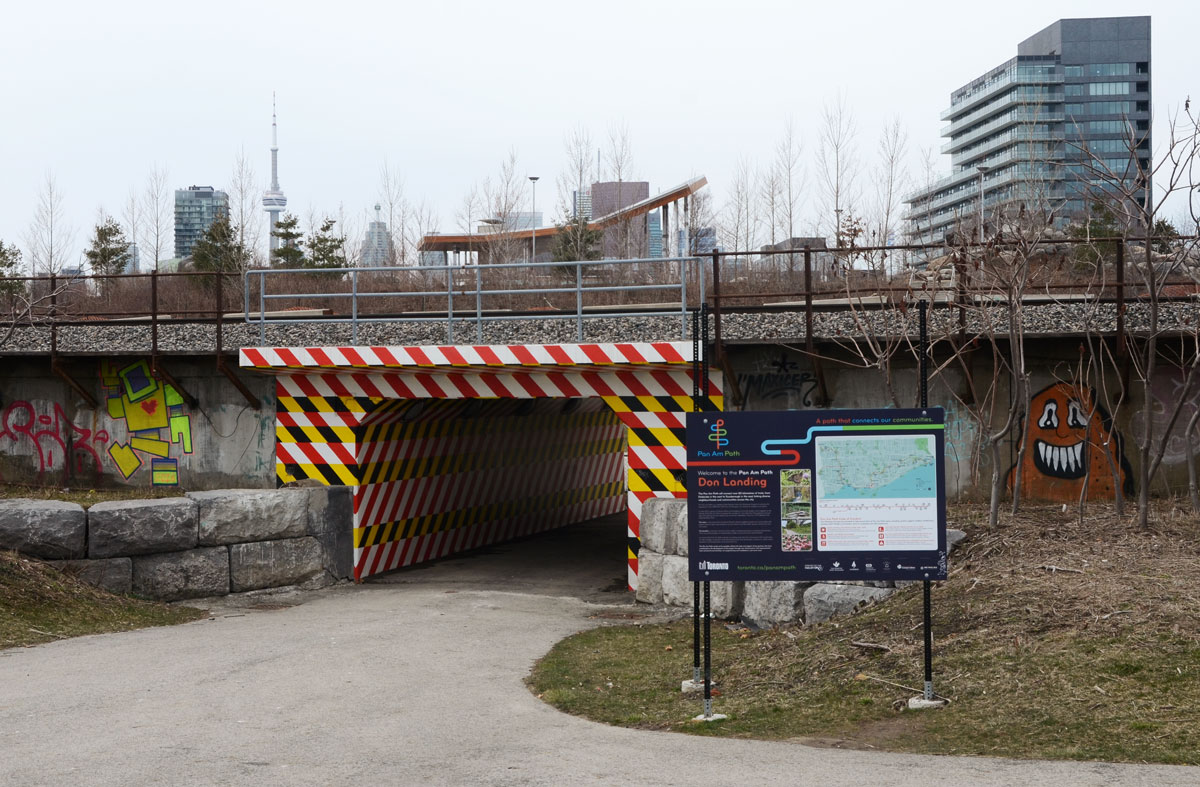
below:  The Bala Pedestrian Underpass, aka the south exit from Corktown Commons, goes under the railway tracks and merges with the Don Landing part of the Lower Don Valley trail.  The artwork was designed by Rolande Souliere and is part of the StreetARToronto initiative.   A yellow Lovebot and a happy orange monster have been added to the scene too!

pedestrian underpass under railway tracks that has been painted in bright stripes, yellow, red and black. The left of it is a large yellowlovebot and to the right is a sign with a map and a description of the Don Pathway, part of the Pan Am Path.

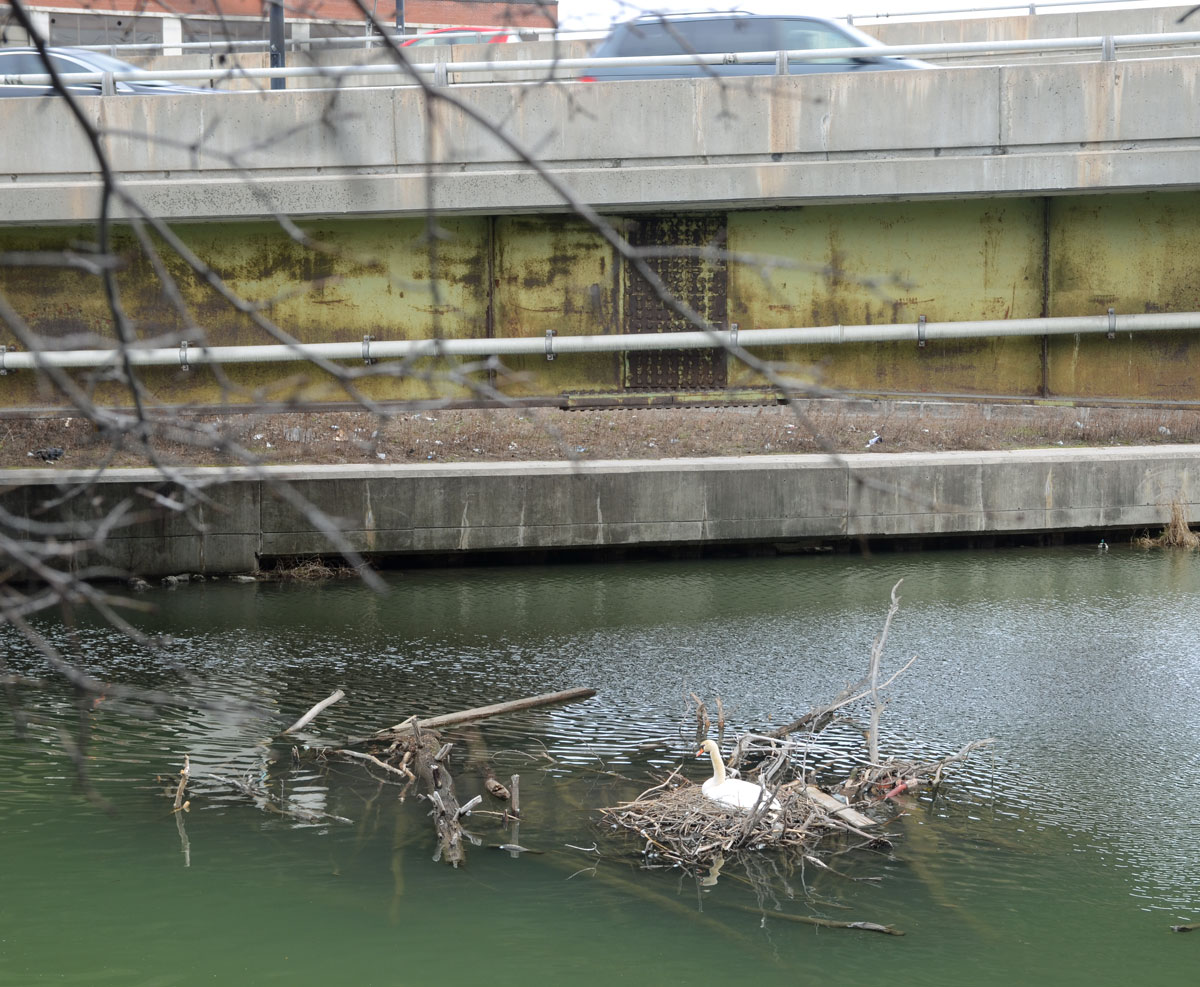
below: Nature in the city.  Birds of a different feather.  On the Don River, just south of Corktown Common a pair of swans is nesting.  One of the swans was swimming a short distance away while the other was sitting on the nest.   Cars pass by on the Don Valley Parkway unaware of the domestic scene below them.

A swan is sitting on a nest in the Don River, it is beside the Don Valley Parkway, a busy road in Toronto, two cars are passing by above the swan.

A walk towards Davisville subway station on a grey day.

below: At the corner of Mt Pleasant and Davisville stands the sculpture ‘Wind Bird’ by Sorel Etrog.  Etrog (1933-1914) was a Canadian artist, writer and sculptor.


a bronze sculpture of a thin figure with short arms reaching up. stylized, almost abstract. no facial features on the head that seems to be looking upwards

I have passed this little figure many times and today I finally decided to take some pictures of it and make a walk of it.  I have always thought that she was a forlorn little creature.   With her arms outstretched, empty,  reaching for something that never appears.  She needs a hug or at least a  warm scarf to keep the chill away.

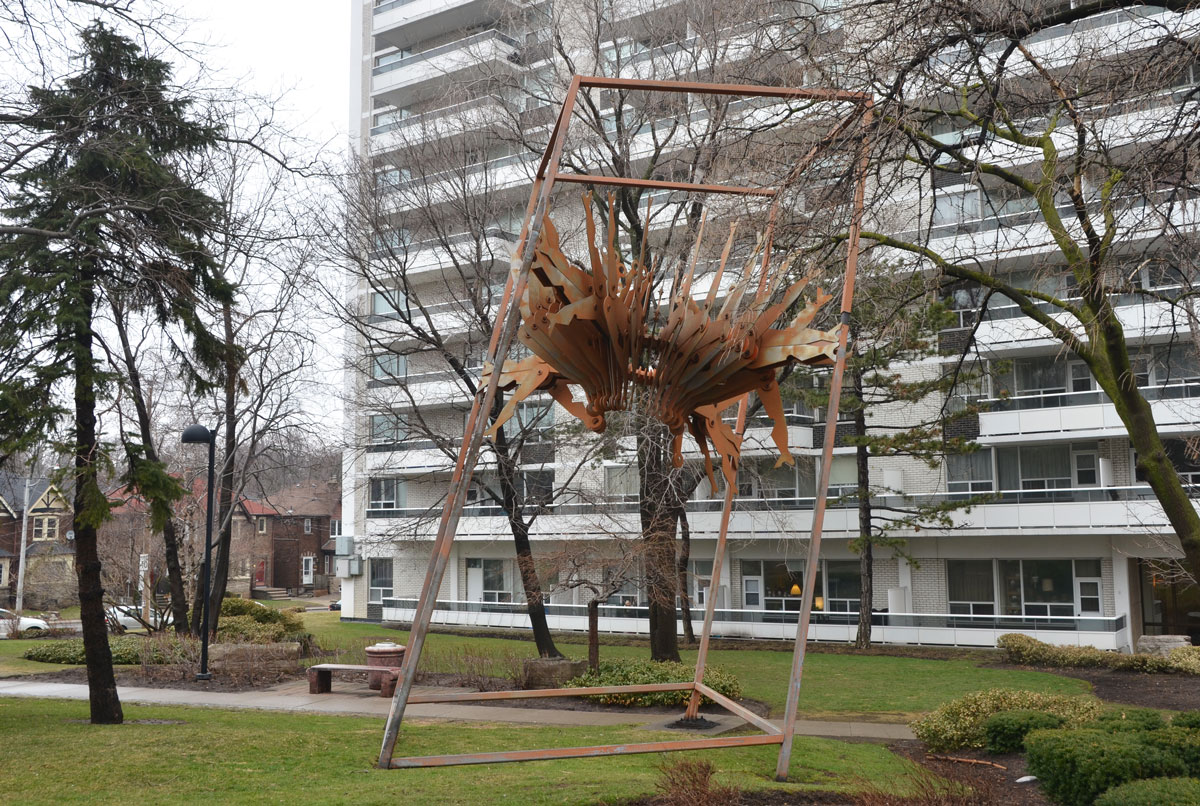
below: After leaving Wind Bird empty handed yet again, I walked west towards Yonge Street.  Off the street and amongst some trees I saw this sculpture.   It is one that I have never noticed before.  A collection of metal pieces is suspended from the top of a lopsided metal frame, more parallelogram than rectangle.

rust coloured metal sculpture in front an apartment building. The sculpture is a large metal frame that looks like a cube but made of parallelograms and from the top is suspended a bunch of metal pieces.

below: On closer inspection, the metal bits are actually flat human forms with their heads in the center and feet flung outwards as if spinning around a central axis.  I know enough physics to know that either centrifugal force or centripetal forces (or both) are at play here.  But I don’t know enough to know the right answer.

close up of a sculpture of flat metal people shapes, forming a circle with their heads, their feet sticking out like in a centrifuge.

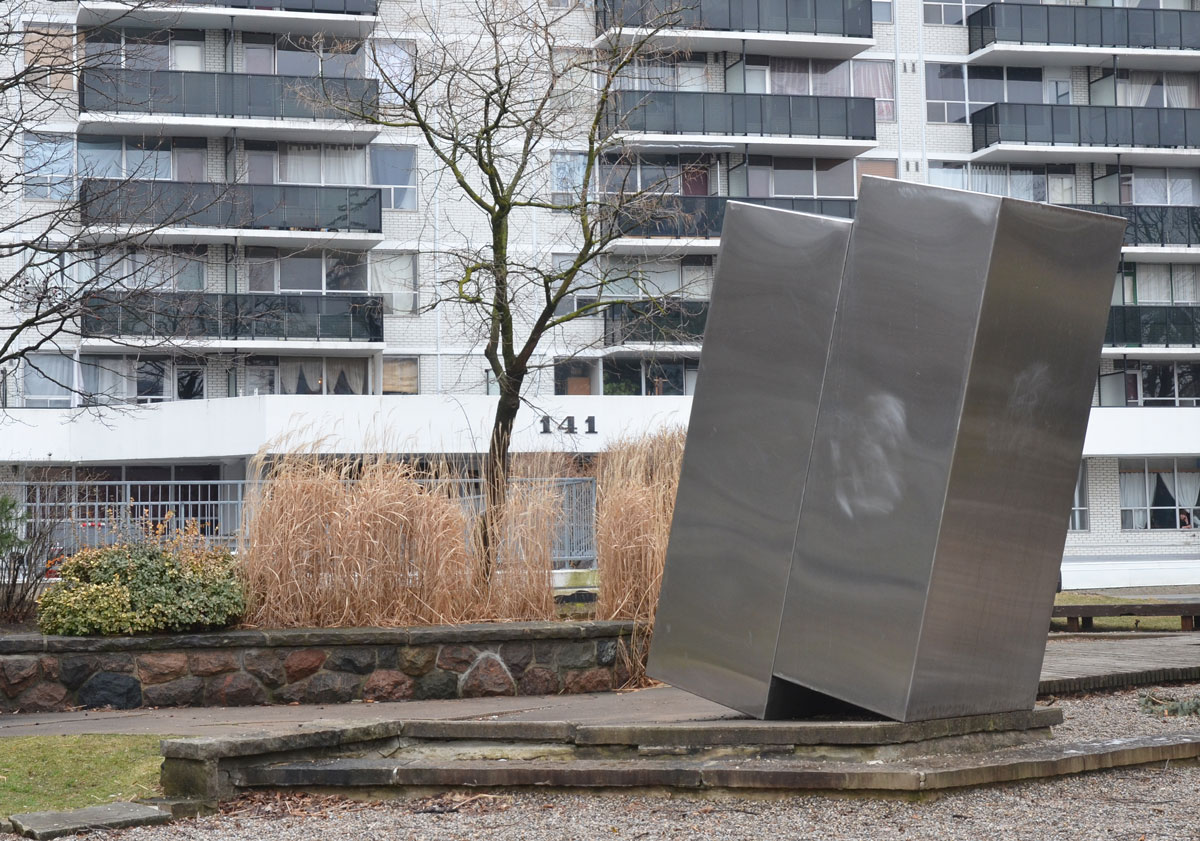
below:  Next door are these two metal shapes.  There isn’t much to it, is there?  What it does have is it’s own little park area and walkway.  I didn’t have to get my shoes muddy if I wanted to get closer.

A sculpture that is just two rectangular metal boxes upright, joined together and on a slight angle. In a small park in front of an apartment building at 141 Davisville in Toronto

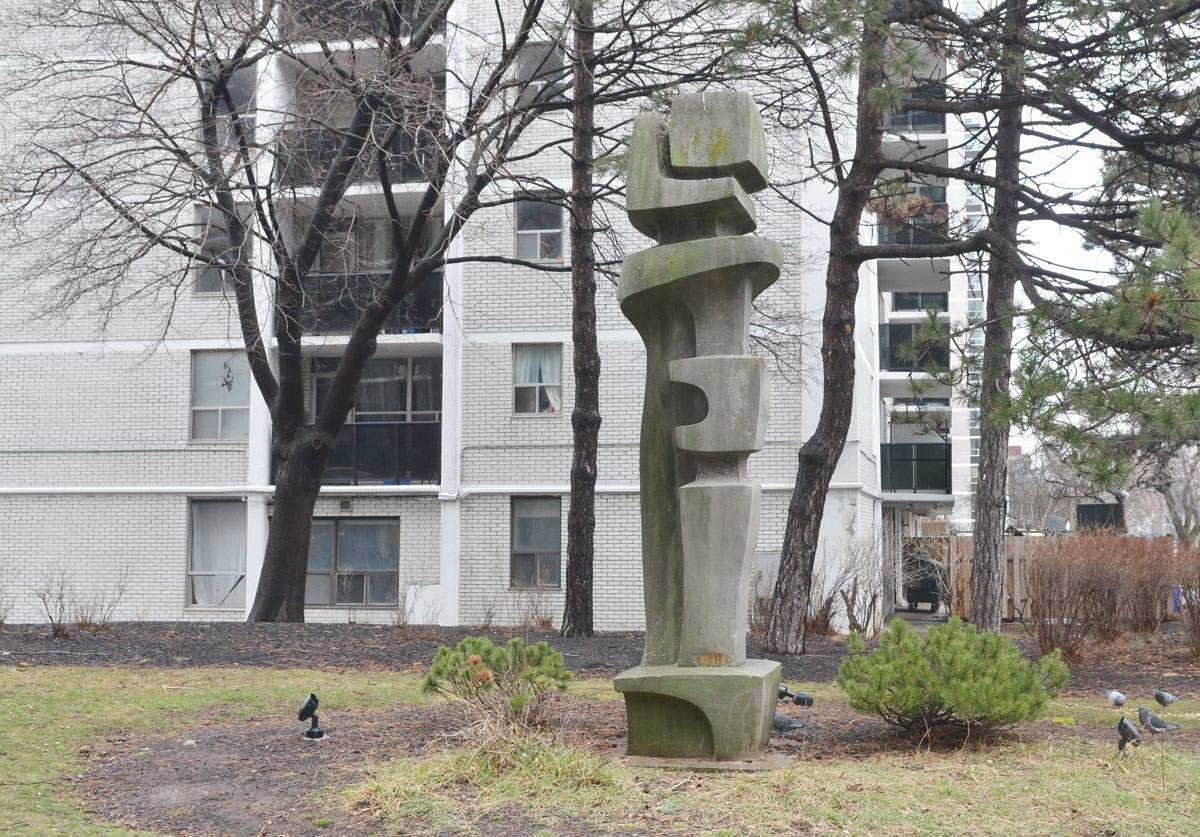
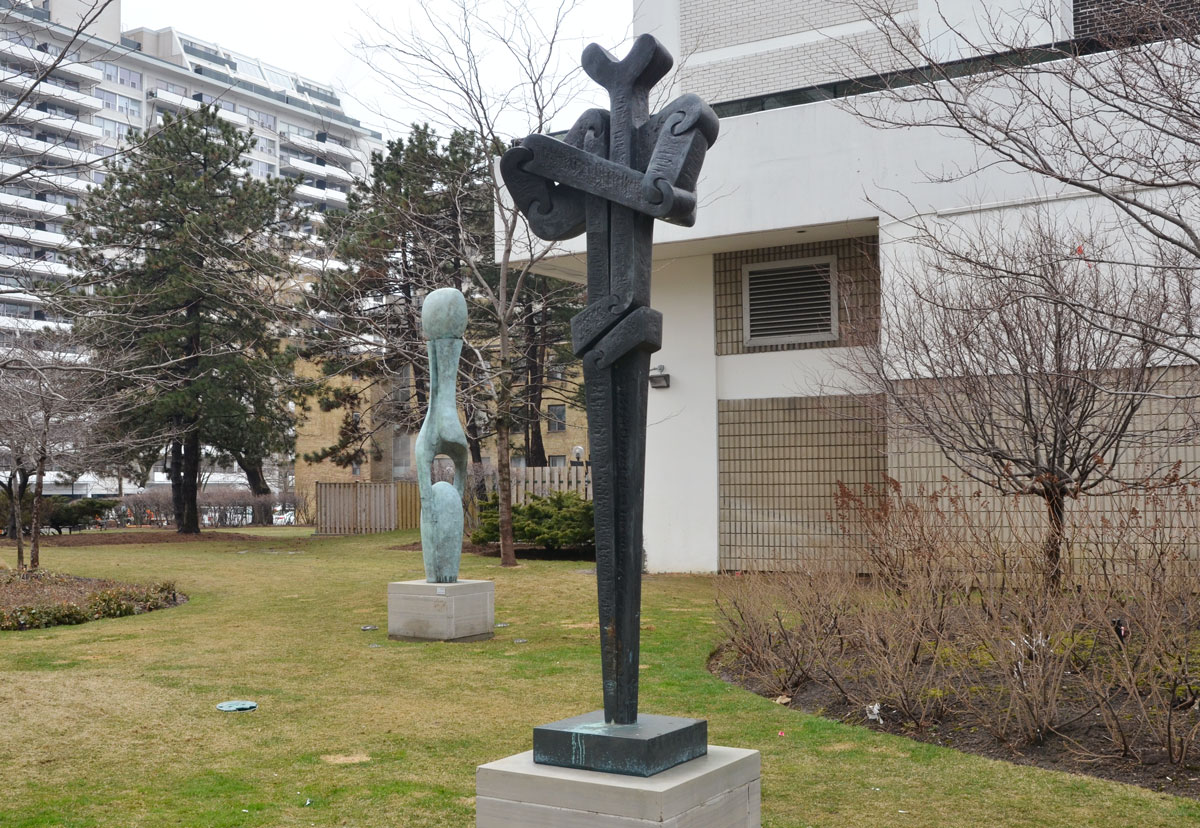
below: There is a path that ran on the west side of the above building, 141 Davisville, to Balliol Street.   This tall sculpture stands beside the path.  I am not sure who the artist is.  Is it a couple embracing? Or a totem pole of abstract forms?  Or just something that looked good to the artist’s eye?

tall columnar sculpture somewhat resembling a totem pole, all in grey, beside some trees in front of an apartment building.

below:  Next, from across Balliol, this sculpture caught my eye.  It is ‘Grand Odalisque’ by Sorel Etrog.

Grand Odalisque, a sculpture by Sorel Etrog sits on a wood pedestal in front of the entrance to an apartment building.

below: I’m rarely satisfied with photos taken of public art in front of buildings.  The background is always to cluttered or messy.   I played with various angles for ‘Grand Odalisque’ and I found this one.  The sculpture is quite phallic now that I look at it.

Grand Odalisque, a sculpture by Sorel Ertog sits on a wood pedestal . Looking across Balliol from behind the sculpture. The scene across the street is a few men standing in front of a construction site where a new condo is being built

The phallic nature of the sculpture is possibly ironic .  Odalisque has a few meanings and connotations, but all involve women.  In fact, ‘La Grande Odalisque’ is a famous painting by Jean Auguste Dominique Ingres in 1814.  In French, ‘grande’ is the feminine form of the adjective and ‘grand’ is the masculine.  Ingres used ‘grande’ for his female nude and Etrog used ‘grand’ for his sculpture.  Is there a connection?  Or just my imagination?

below: La Grande Odalisque.  You’ll have to visit the Louvre in Paris if you want to see the painting.

picture of the painting 'La Grande Odalisque' by Jean Auguste Dominique Ingres, 1814

The next stop along Davisville was the Al Green Sculpture Garden.  Al Green was a builder,  a founder of Greenrock Property Management, and in later life a sculptor.   It makes sense then that the small garden that bears his name, and is home to some of his sculptures, is between two of Greenrock’s apartment buildings.

below: ‘Leaning Torso’ by Al Green.

Al Green sculpture

below: ‘Embrace’ by Al Green

Al Green sculpture, The Embrace

below: ‘Landing Sculpture’ by Carl Lander (aka Carl Bucher), 1970.  They look like little red spaceships hovering in the air, or as the name suggests, coming in for landing.  Father and son alien ships come for a visit.
Lander (1935-2015) was a Swiss artist who lived in Canada for a couple of years in the early 1970s.

sculpture in front of an apartment building, two red shiny things that look like alien spaceships

below: Another sculpture by Sorel Etrog in the foreground.  Behind it is ‘Greenwin’ by Maryon Kantaroff, commissioned in 1973 by Greenwin Developments.

two tall thin sculptures, one by Sorel Etrog in the foreground and a greenish bronze by Kantaroff in the background.

And last, and very definitely least….

below:  You tell me.  Christmas balls on top of a fence?

three silver Christmas ball ornaments are attached to the top of a chain link fence

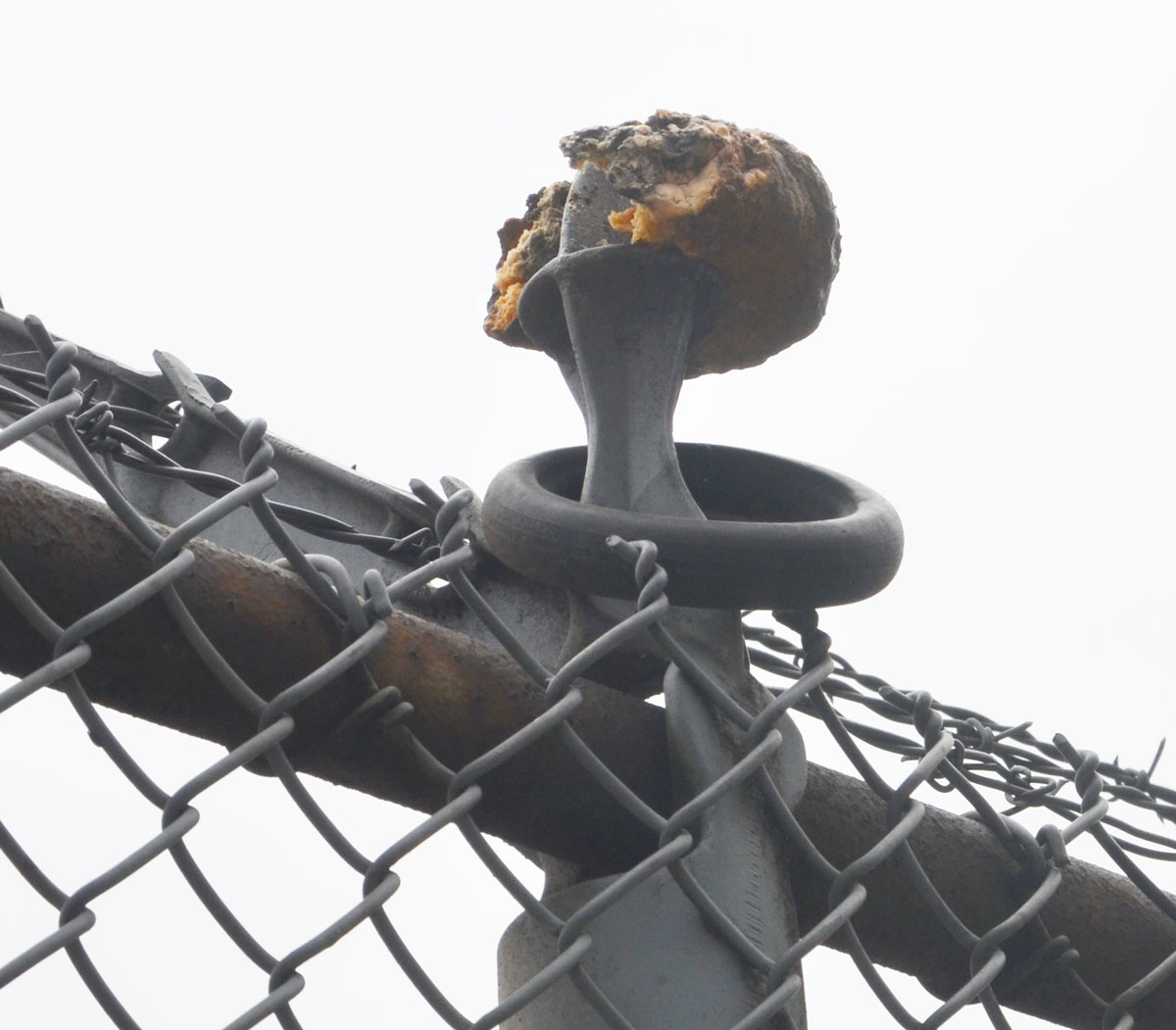
below:  Once you’ve figured out the whys and the wherefores of the above, you’ll be happy to know that there is another mystery.  A bagel?  A donut?  Squirrel food? Bird food?  But also a  ring?
These are on the fence that runs between Yonge St and the subway line near Davisville station.

a moldy partially eaten bagel or donut sits on top of a fence pole on a chain link fence

Recipe for Community

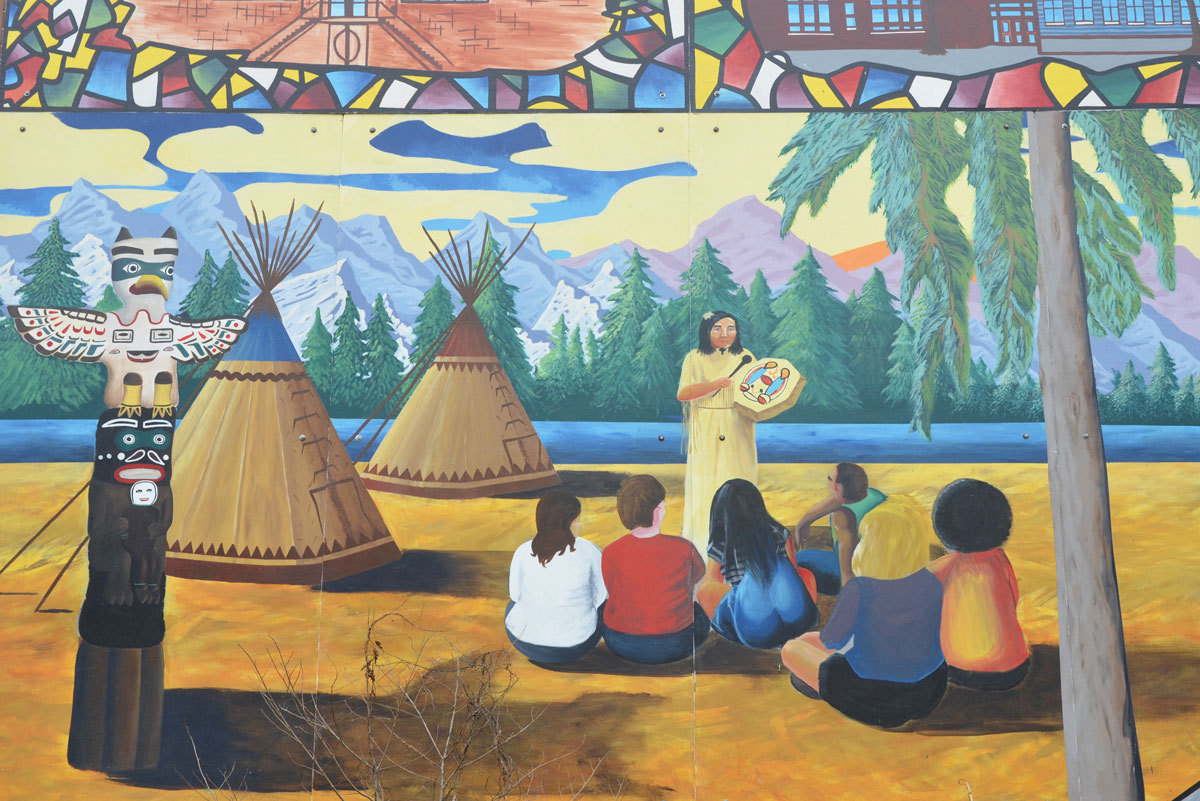
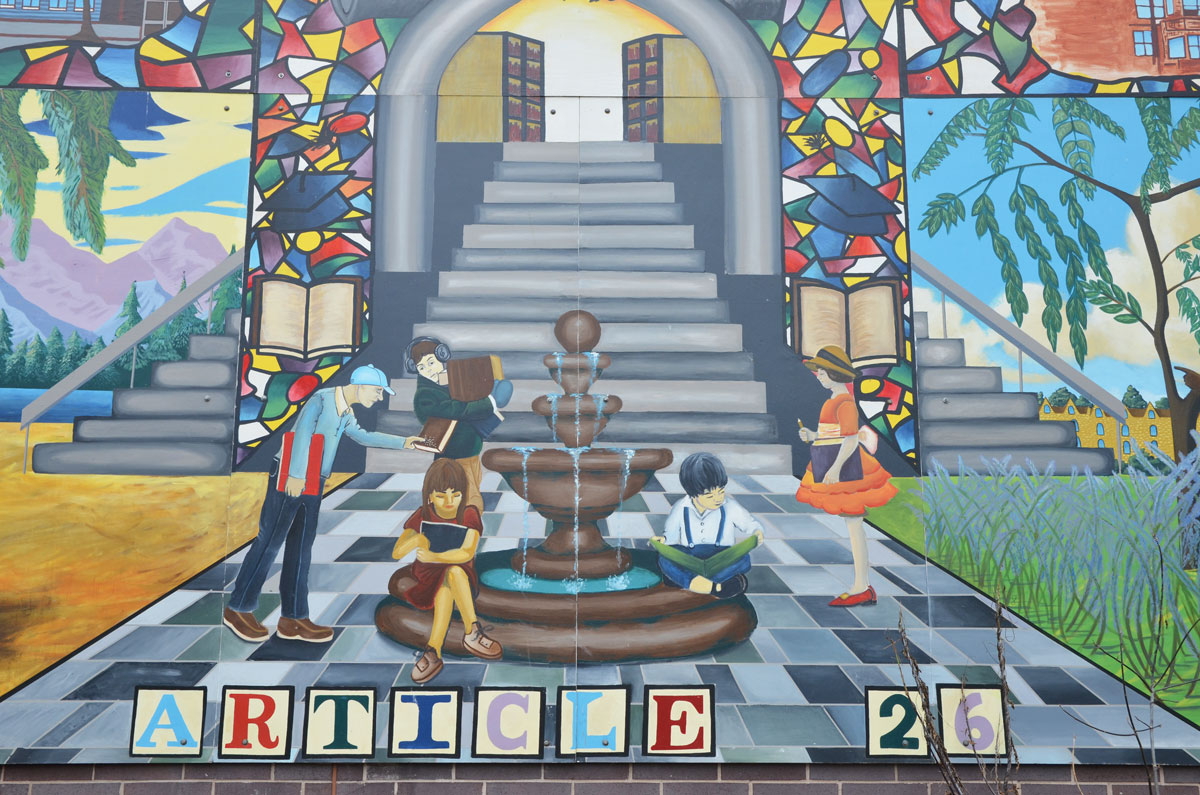
Amnesty International Toronto Organization is a group that works in the to raise public awareness of human rights issues. One of the projects that it supports is  Urban Canvas.  Thirty murals were planned, each based on one of the thirty articles of the Universal Declaration of Human Rights.

The mural for Article 26 is on Sherbourne Street at St. James Town West Park.
It is on the wall of a Shoppers Drug Mart.

mural on article 26 of amnesty international declaration of human rights

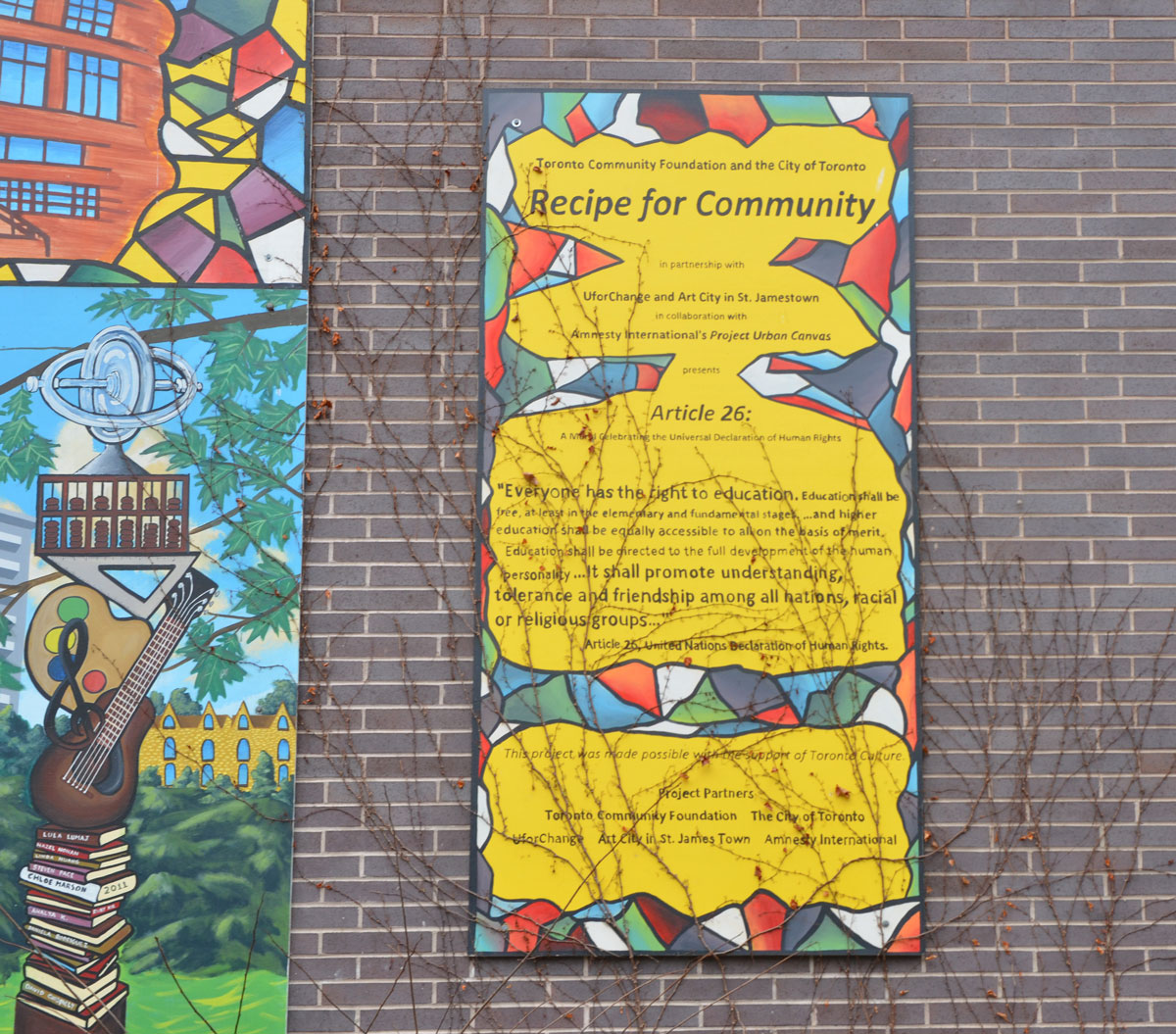
Article 26 pertains to education.

words of article 26 of Amnesty International declaration of human rights, painted on a poster and mounted on a wall.

“Everyone has the right to education. Education shall be free, at least in the elementary and fundamental stages…. and higher education shall be equally accessible to all on the basis of merit. Education shall be directed to the full development of the human personality and it shall promote understanding, tolerance and friendship among all nations, racial or religious groups” is written on the accompanying poster.  That is a condensed version of article 26.

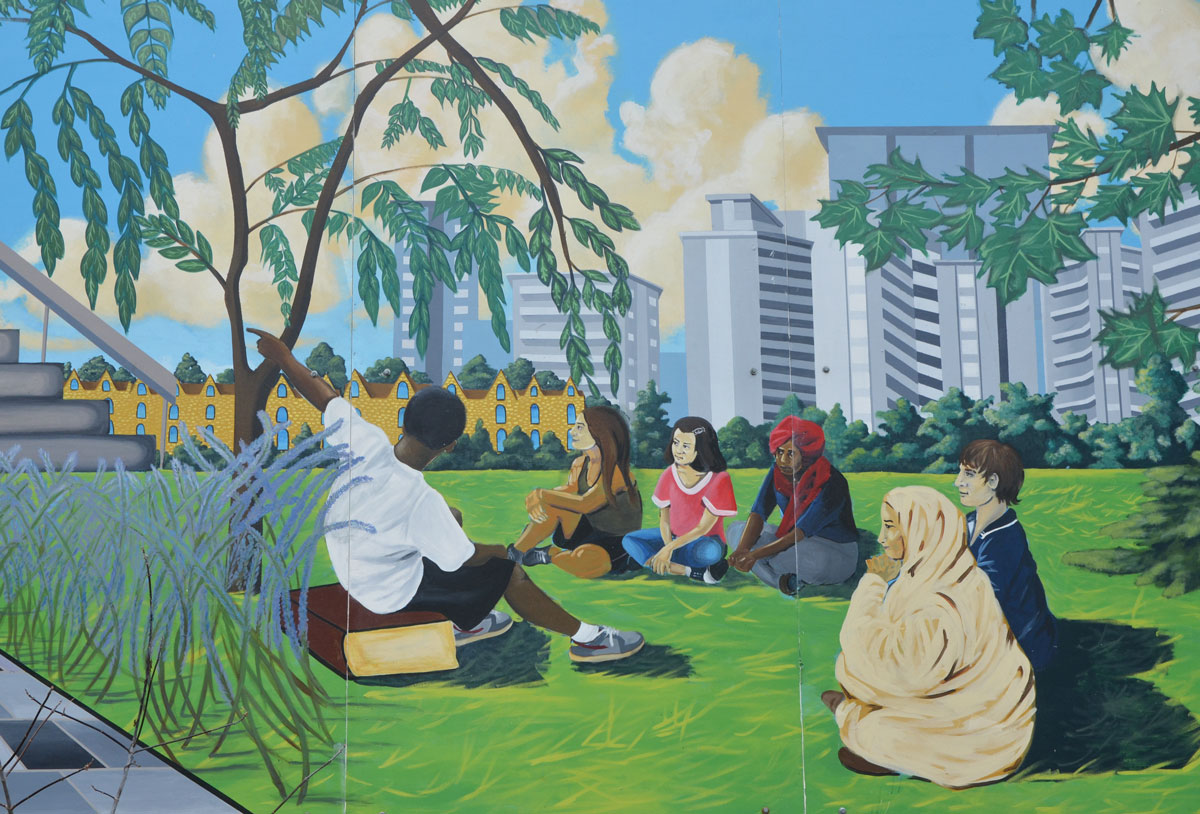
part of a mural celebrating education, a group of people are sitting around in a circle outside while one man is talking

a group of an indigenous peoples are sitting and listening to a woman who is holding a drum. two teepees are in the picture as well

education mural, stairwell with fountain in front of it, stained glass windows on either side

Project partners: Toronto Culture, Toronto Community Foundation, Amnesty International, UforChange, Art City in St. James Town, and the City of Toronto.

Previous blog posts with other murals from this project:

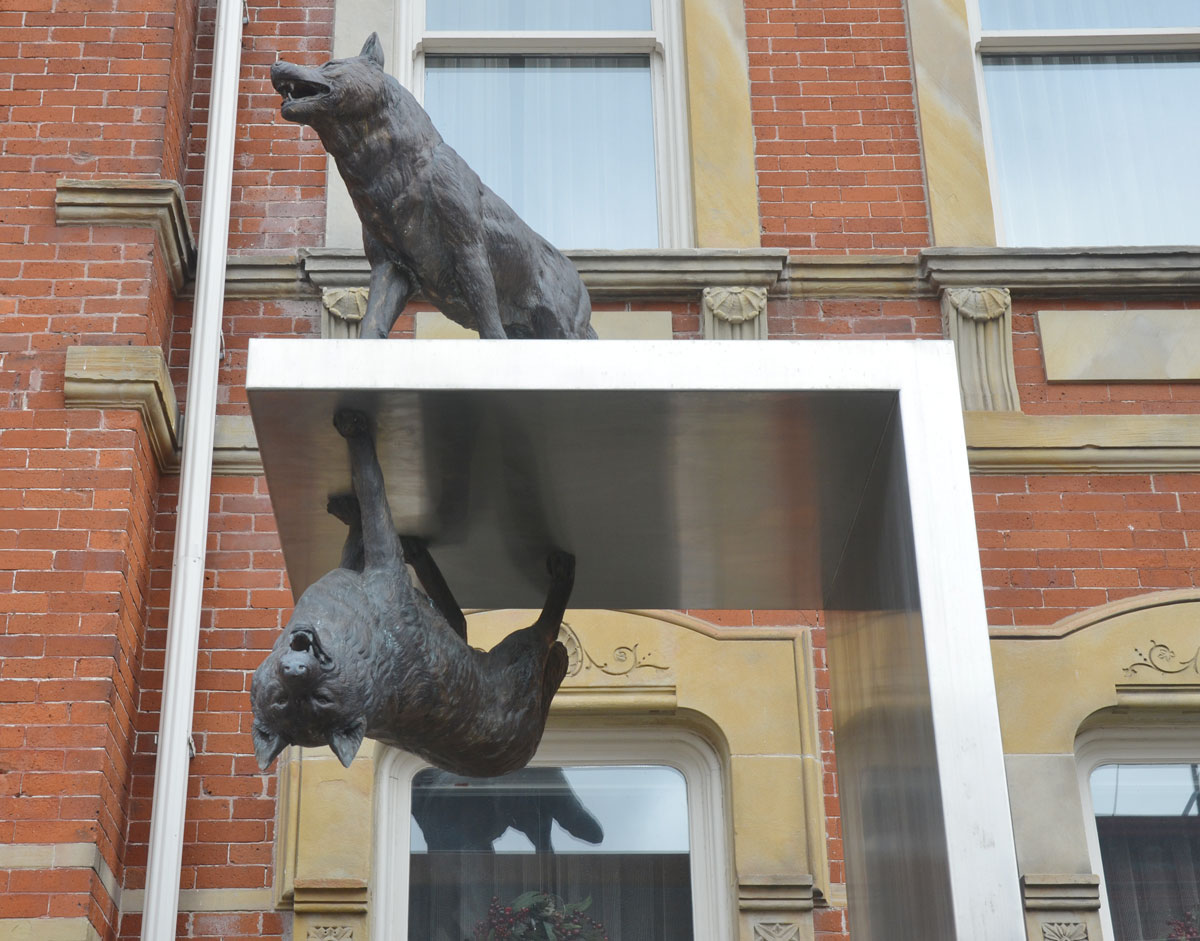
Today’s walk took me past three art installations that were new to me.  All three had nature as the theme; I saw a giant abstract tree,  upside down animals, and a walk in the forest.

The giant tree is ‘Red, Orange and Green’ by Michael Snow.  This 14 metre high, stainless steel sculpture stands in a small park on Huntley Street.  The gate of the park was locked, apparently closed for the season.   I took a few pictures through the metal bars of the fence and made a note to myself to return next season for a closer look.

large stainless steel tree sculpture by Michael Snow, consisting of three planes intersecting. 14 metres high, in a small park

When I first started researching this piece, I read that it’s title was because of the way it reflected street lights.  This didn’t make any sense – it sits in a park.  In the early 1990’s the city of Toronto commissioned Snow to design a sculpture for the corner where Jarvis meets Mt Pleasant at Bloor St. East and this work is the result.    When Rogers subsequently bought the building on that corner, they insisted on moving the sculpture to its present location.  The building in the background of these photos is the Rogers building at Bloor and Jarvis (although that stretch of Jarvis has been renamed Ted Rogers Way).

large stainless steel tree sculpture by Michael Snow, consisting of three planes intersecting. 14 metres high, in a small park

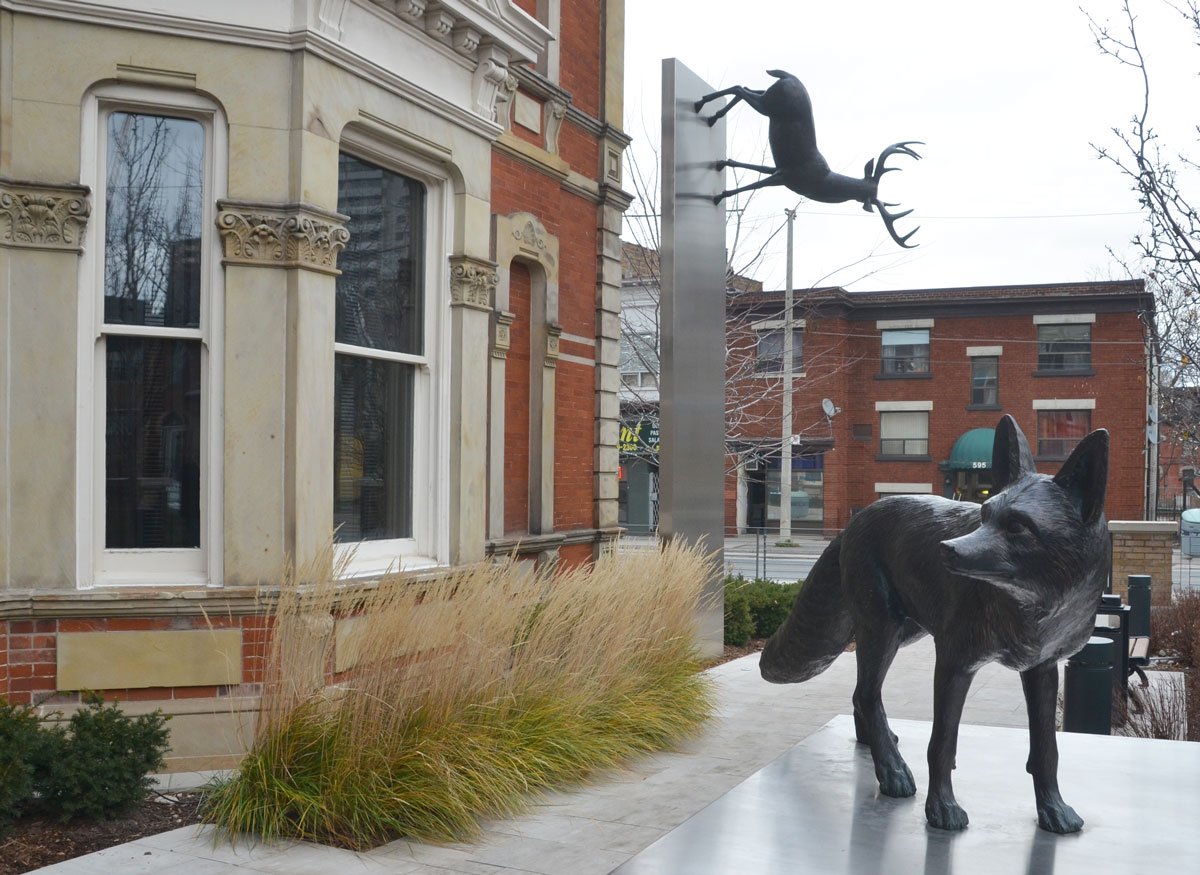
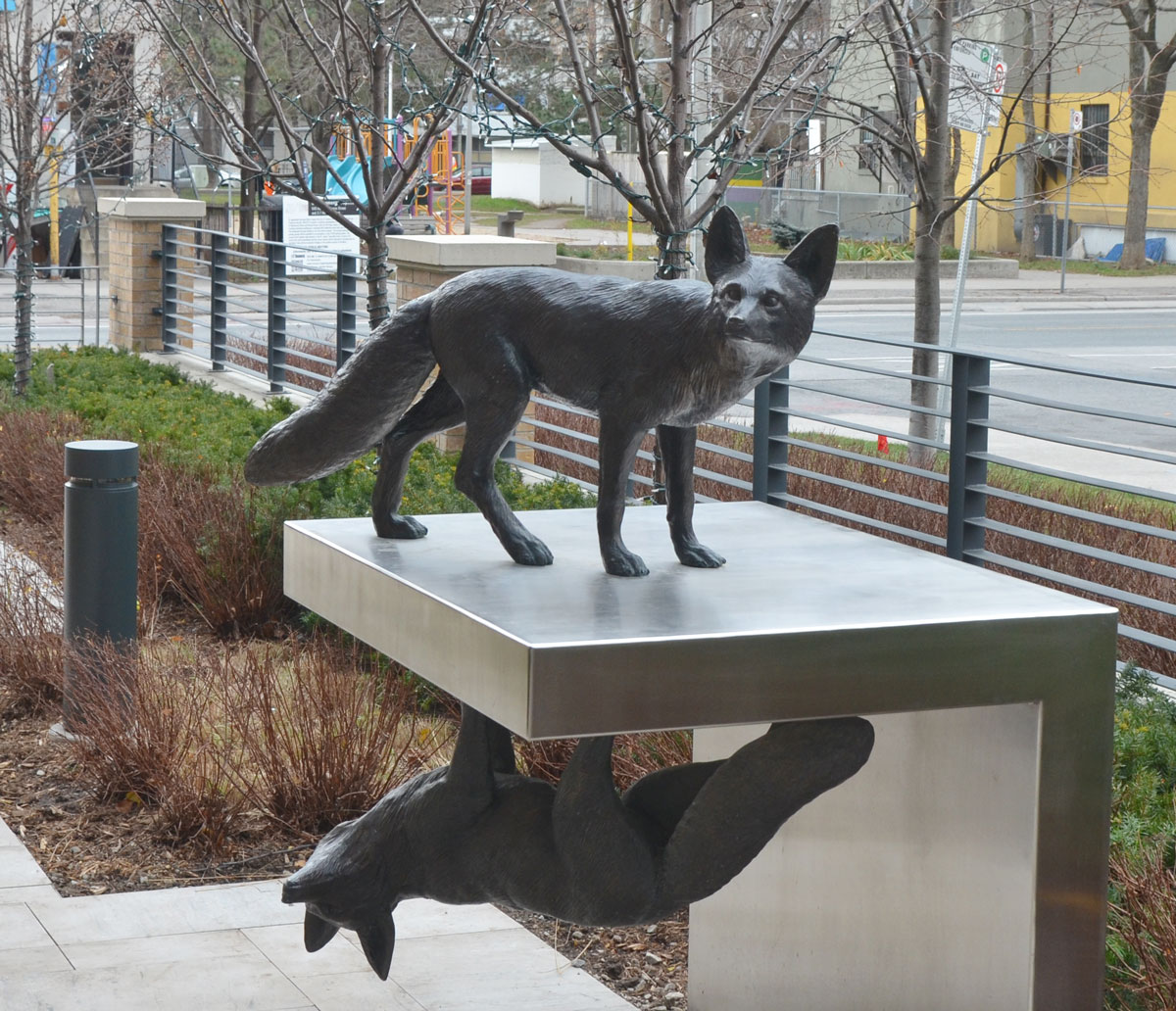
Just around the corner on Sherbourne Street is an art installation by Eldon Garnet.  It sits, or rather stands, on a condo development that incorporated the James Cooper Mansion at Linden and Sherbourne streets.

part of an art installation by Eldon Garnet called inversion -
The house was built for James Cooper in 1881.  He was a partner in Cooper and Smith, a company that imported, made, and sold footwear.   The house had eight bedrooms and was built in the Second Empire style with a mansard roof and dormers.  The house was purchased by the Knights of Columbus in 1910

part of an art installation by Eldon Garnet called inversion - a large moose seems to be standing against the side of an old mansion that has been renovated and incorporated into a new highrise condo development

part of an art installation by Eldon Garnet called inversion - two foxes, one on top of the other on a metal platform. The bottom one is upside down

part of an art installation by Eldon Garnet called inversion - the head of a deer in front of a building

part of an art installation by Eldon Garnet called inversion - A deer in front of a building and a wolf hanging upside down part way up the side of the building

part of an art installation by Eldon Garnet called inversion - a wolf on a metal platform and a second wolf upside down under the same platform

Just a little farther south there is a quiet park just to the west of Sherbourne Street, Wellesley Magill Park. This park was named in honour of Wellesley Central Hospital and Dennis Magill.  Magill was a founder of the Wellesley Institute and the first community Director of the Wellesley Hospital.   The park is situated on the site of the old Wellesley Central Hospital which was demolished in 1998.

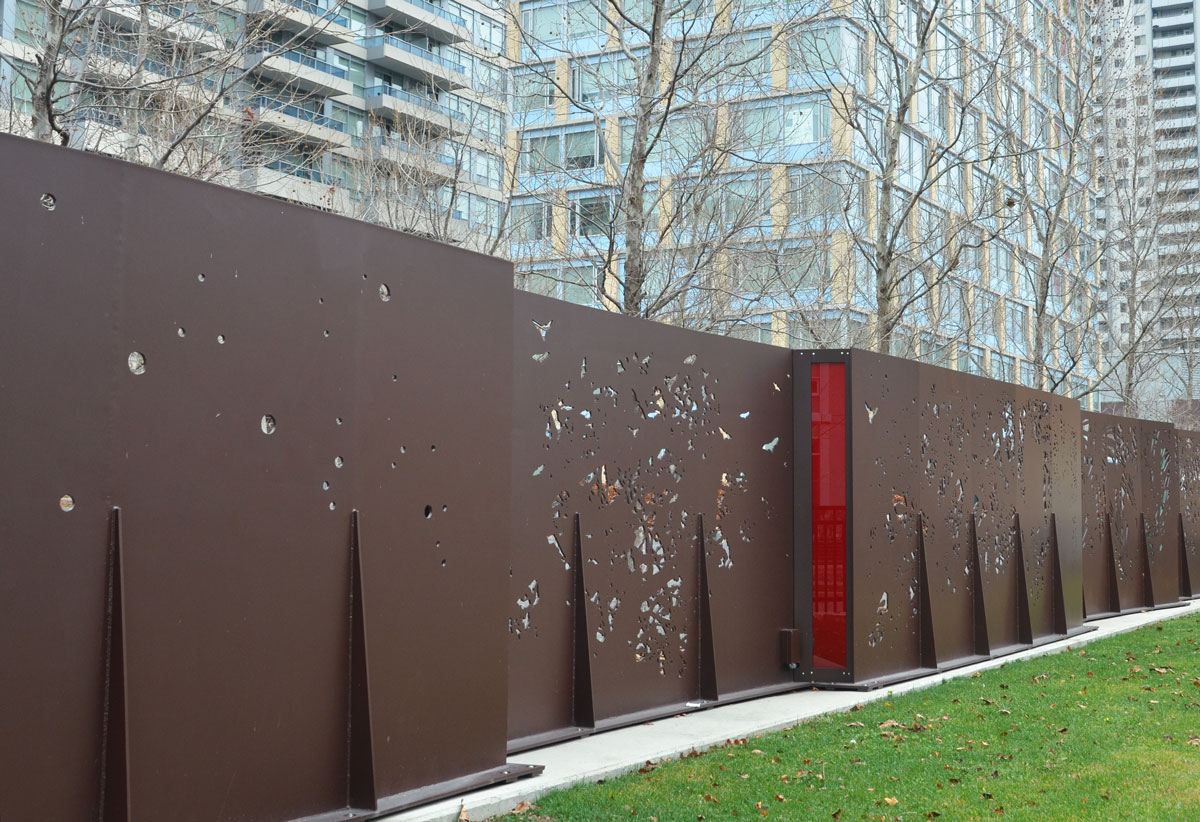
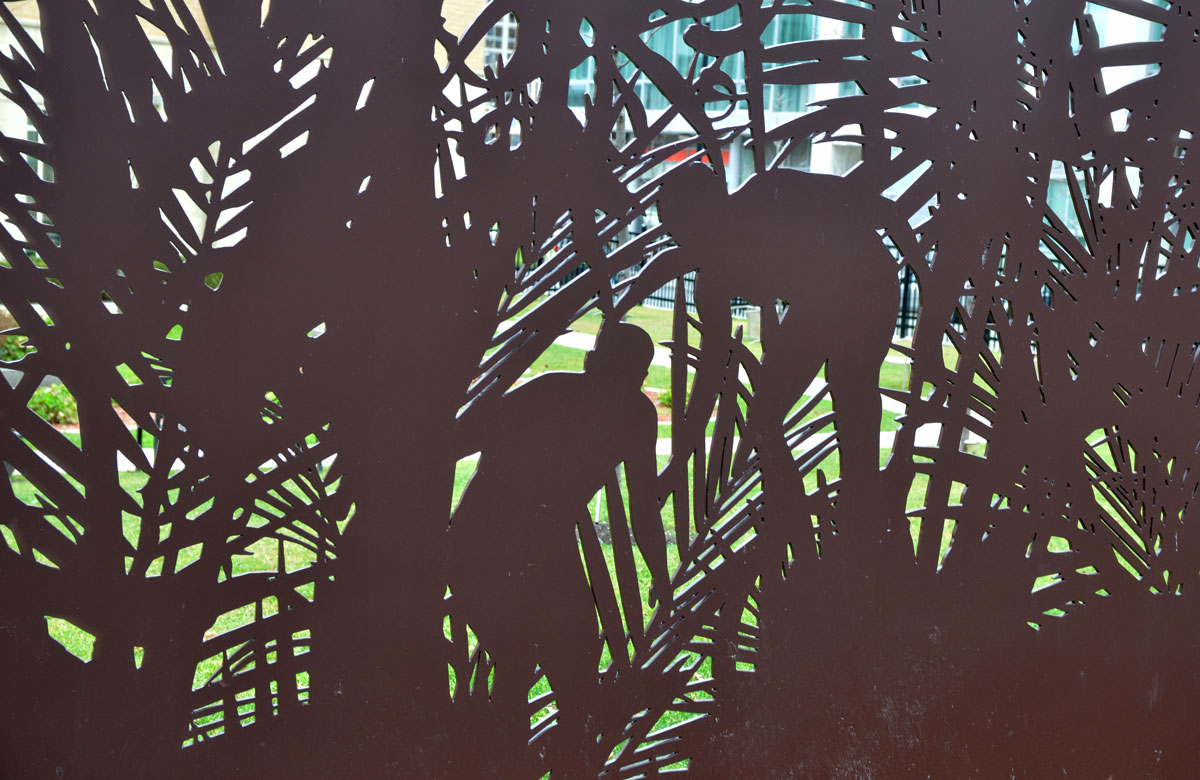
Running east-west along the park’s southern perimeter is a public artwork created in 2010 by Ed Pien.  It is called ‘Forest Walk’ and it is 45 meter long wall comprised of eight sheets of painted steel.  Each panel contains cut outs of a forest scene, or a scene of people walking through a forest.

cut outs in a metal wall of people walking through a forest

below: The back of the fence. The park is on the other side of the fence.

a steel wall between a park and a residence

cut outs in a metal wall of people walking through a forest


Along a short stretch of Coxwell Avenue

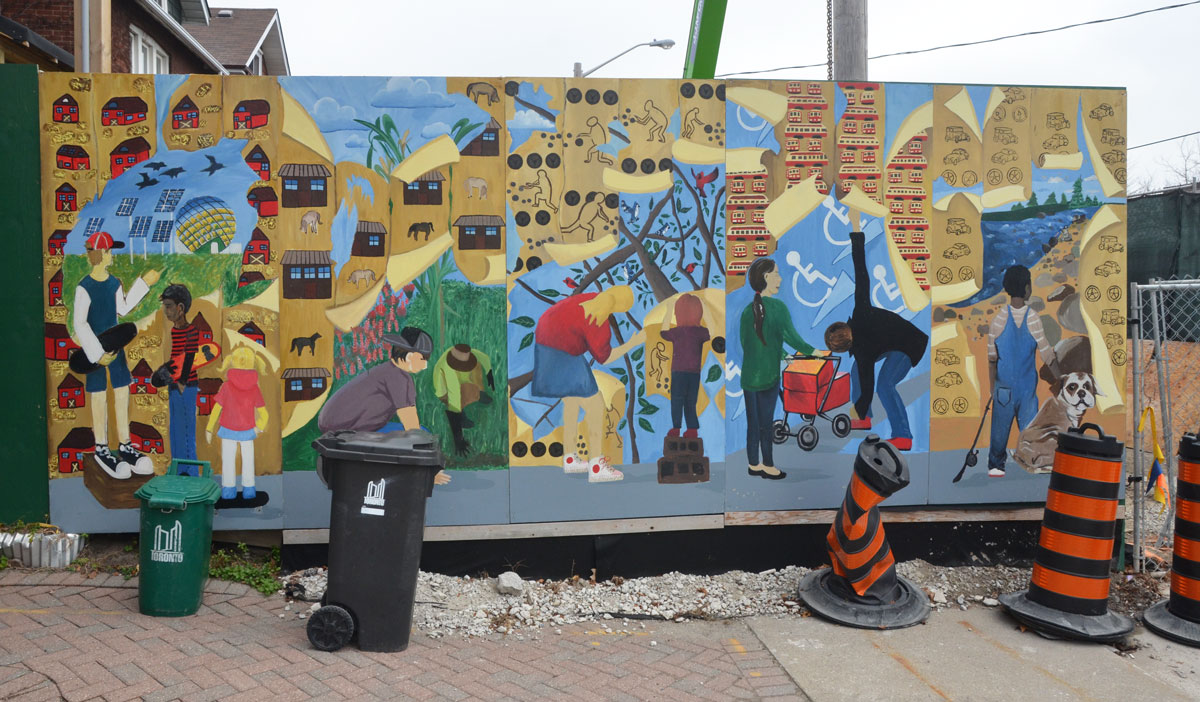
Upgrades to Coxwell subway station include work on the north side of Strathmore Blvd.  Two murals were created to brighten the hoardings around the construction site.  Both murals are the work of a program called ‘City on the Move – Young Artists in Transit’.  If you use Coxwell subway station you can’t help but see these murals as they are right across the street from the entrance.

below: ‘Today Reassembling Yesterday’ shows people standing within a miniature old East York.  On both sides of the mural is a replica of a Hollinger Bus line ticket.  This bus company was founded in 1921 by John Hollinger and it serviced the growing neighbourhood of East York.  By the time the TTC took it over in 1954, Hollinger had 96 employees and a fleet of 56 buses that traveled twelve routes on such streets as Woodbine, O’Connor and Coxwell.

mural in front of a construction site, the tops of two brick houses are visible behind the fence, a large green crane is working at the site

below: In this mural, five panels are covered with wallpaper of pictures of the past.  Residents, the present day, peel back the layers of the past to reveal their visions and hopes for the future.  On the left, red barns and hay stacks make way for solar panels over fields with bird filled skies.  The next panel is also inspired by agriculture – healthy corn fields and other crops under a layer with horses and stables.  The middle panel puzzles me.  I’m note sure what the pictures on the brown paper represent but birds in a tree are under it.  The fourth panel suggests accessible public transit.  Lastly, cars and trucks make way for rivers to fish in.

A mural of kids peeling away layers of wallpaper with pictures on it.

‘New Revelation, at Coxwell’

a poem by George Elliott Clarke, Poet Laureate of Toronto 2012-15
to accompany the mural at Coxwell station

As wallpaper peels to windowpanes, spy
Grass, insurgent, urging all our future
Is Spring: Sunlight sparks sweat and dream; wind drives
Machines. Thrilled, birds wing and sing so sprightly,
Everyone delights. Blossoms float perfumes.
Branches brandish emerald bouquets. Our lungs
Flood with surging airs, clean as chlorophyll,
Mint-new, mint-tangy, so song is born,
Just by breathing. Wheels become our earthly
Wings, so infant and elder, builder and
Dreamer, can flit – transit – through the city
As public millions that public millions
Uphold, so that the lame, too, can take
The air and wheel down to creek, stream, and lake.
Suddenly glittering, afresh with fish.

The TTC also owns property on the southeast corner of Coxwell and Danforth.  Back in 1915 this facility was built as the Danforth carhouse for the streetcars that ran along the Danforth.  When the Bloor Danforth subway line opened in 1966, these streetcars were retired and the carhouse was converted to handle TTC buses instead.   In 2002 the Danforth carhouse (or Coxwell Barns) was shut down.  Some of the property has been sold off but the TTC still has a presence there.

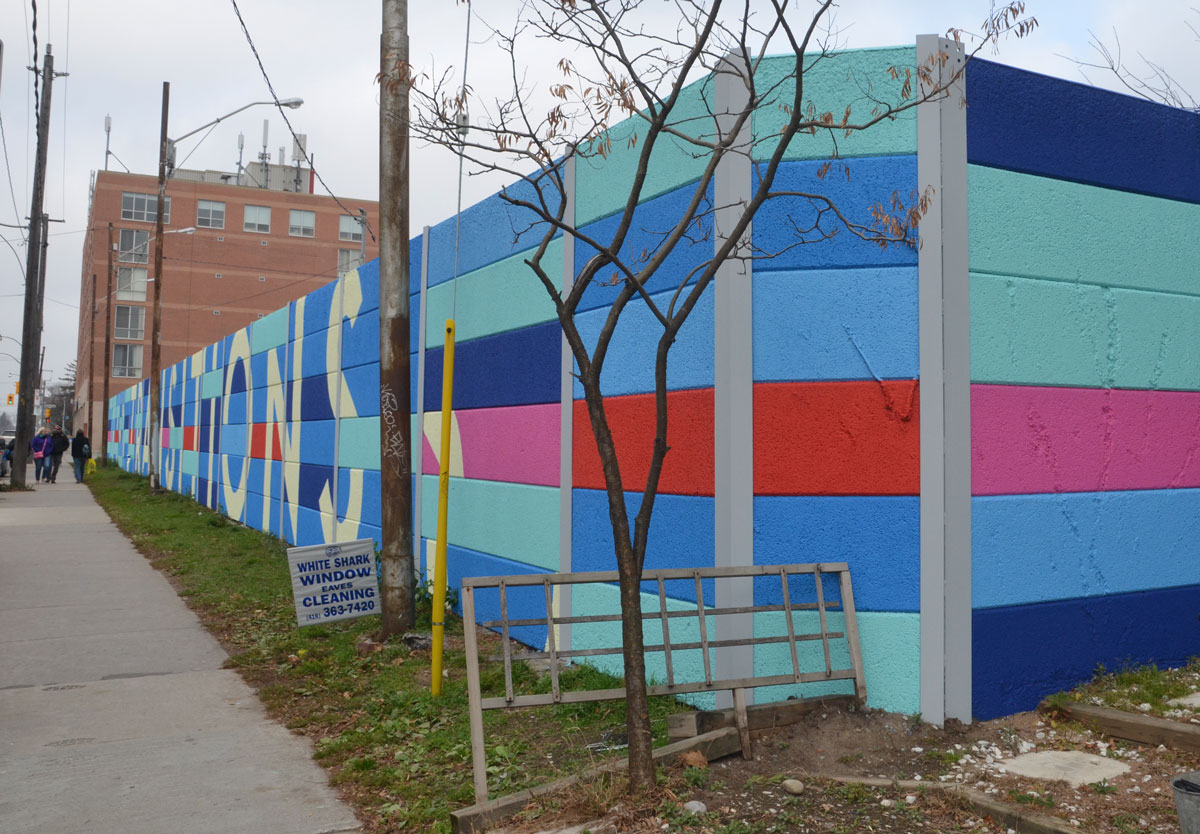
below:  Along Coxwell Avenue, south of the Danforth, there is a fence that separates TTC property from the street.  It was a typically drab TTC concrete barrier.  Recently it was painted by a group of volunteers.  The word ‘transition’ now pops out at passersby from a colourful mural designed by Sean Martindale.

Transitions written in block letters in a large geometric mural that matches the grid of the concrete that makes up the fence

close up of the letter N and part of S in the Transitions mural on a TTC fence on Coxwell ave.

Transitions written in block letters in a large geometric mural that matches the grid of the concrete that makes up the fence

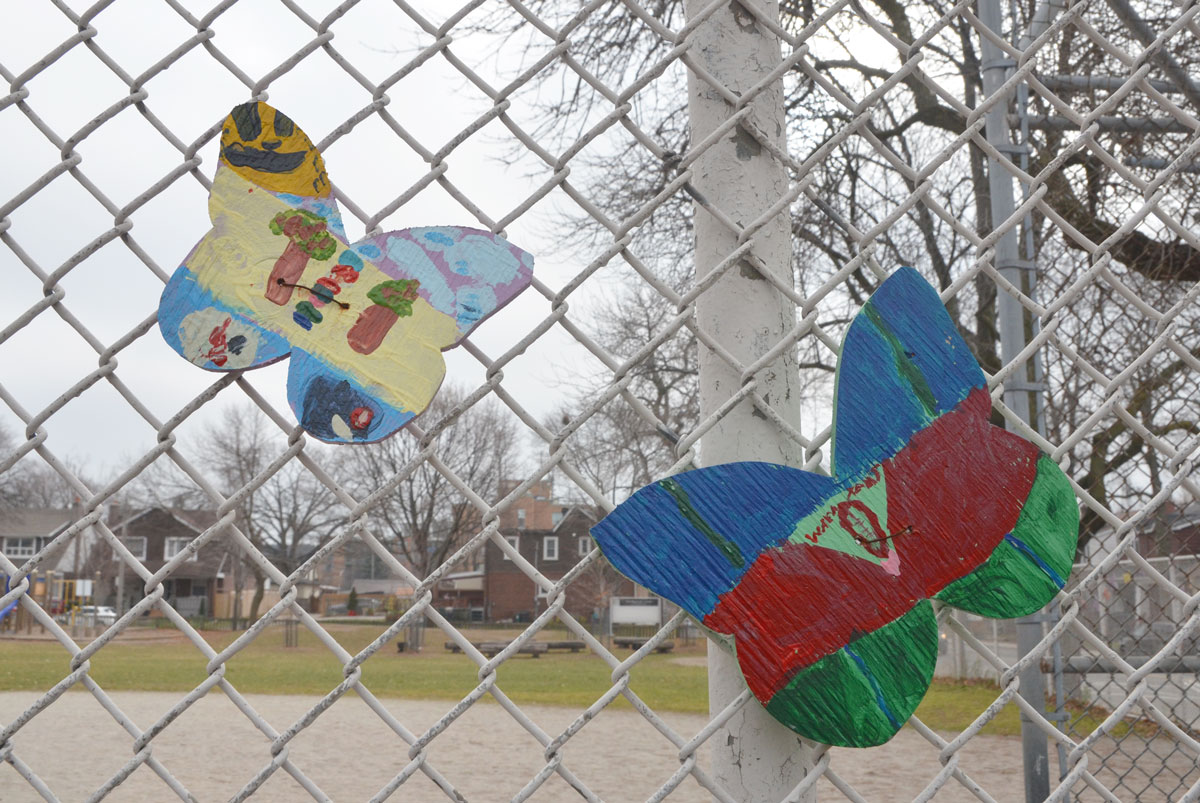
If you walk a few more blocks south on Coxwell, you will come to a fence where many butterflies have stopped to rest.

two wood butterfly shapes that have been hand painted by kids and then attached to a chain link fence around a school playground.

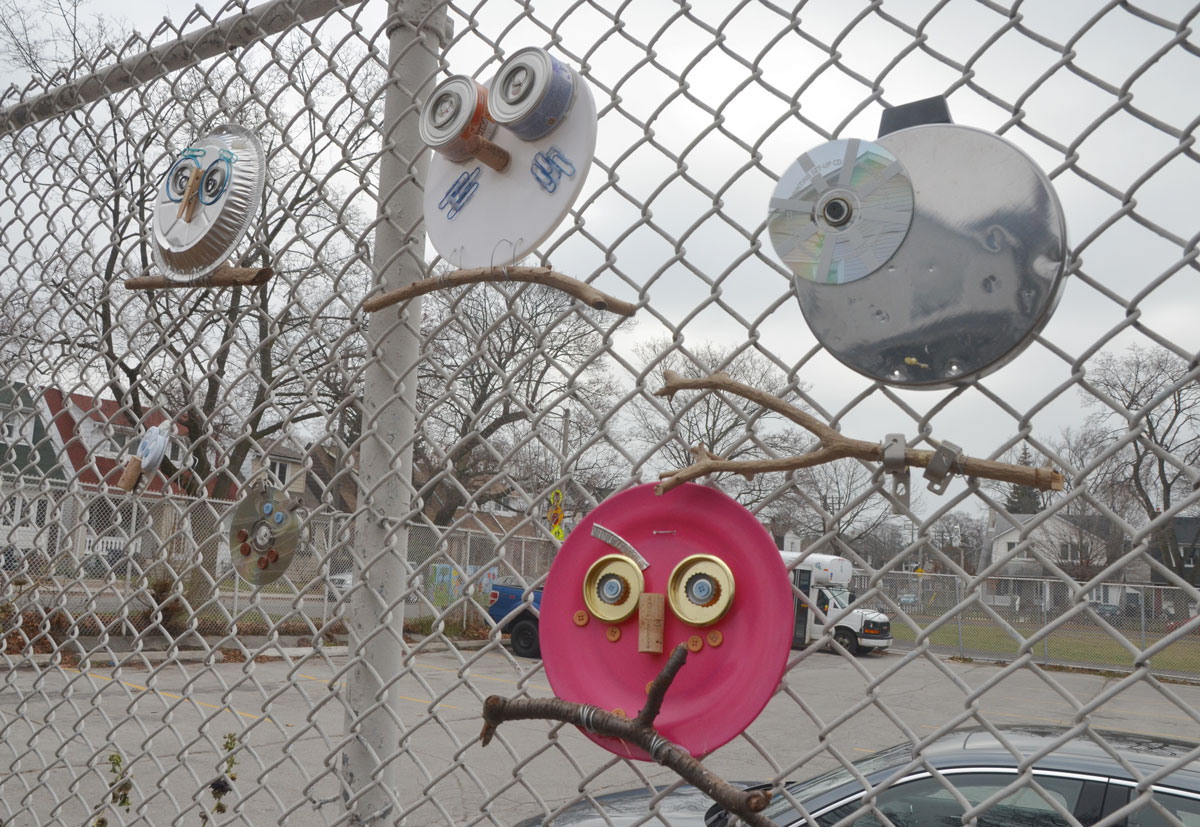
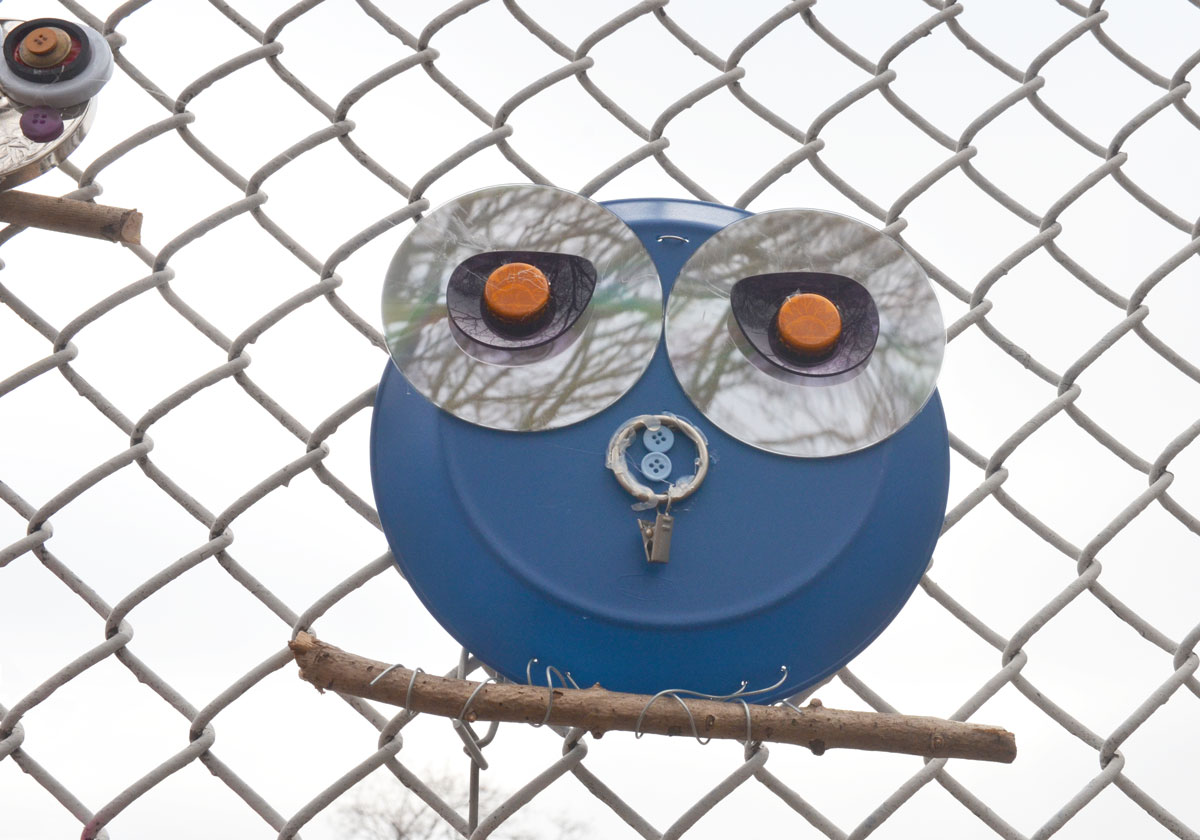
They share a fence with a few creative owls wisely made out of recycled materials.  Tin cans, CDs, buttons, bottle tops, corks, paper clips, sunglass lenses, clothes pegs, foil plates, and bits of plastic repurposed.


four owls made of recycled goods, foil pie plates, CDs, bottle tops, there feet are wrapped around twigs and they are attached to a chainlink fence

owls made of recycled goods, foil pie plates, CDs, bottle tops, there feet are wrapped around twigs and they are attached to a chainlink fence - two corks for horns

owls made of recycled goods, foil pie plates, CDs, bottle tops, there feet are wrapped around twigs and they are attached to a chainlink fence - also blue buttons for the nose

below: A little red fairy door, home of the Earl Haig gardener.  This past summer there was a project called  Danny’s Urban Fairies.  Fairy doors that were hand crafted by local artists started appearing in stores and parks along Danforth East  (from Jones to Westlake).  Some of the fairy doors remain but many were auctioned off in November to raise money to support the non-profit East End Music Project.

A little red screen door, fairy door, at the base of a tree with two little signs. One sign says Earl Haig gardener and the other says Do not litter.

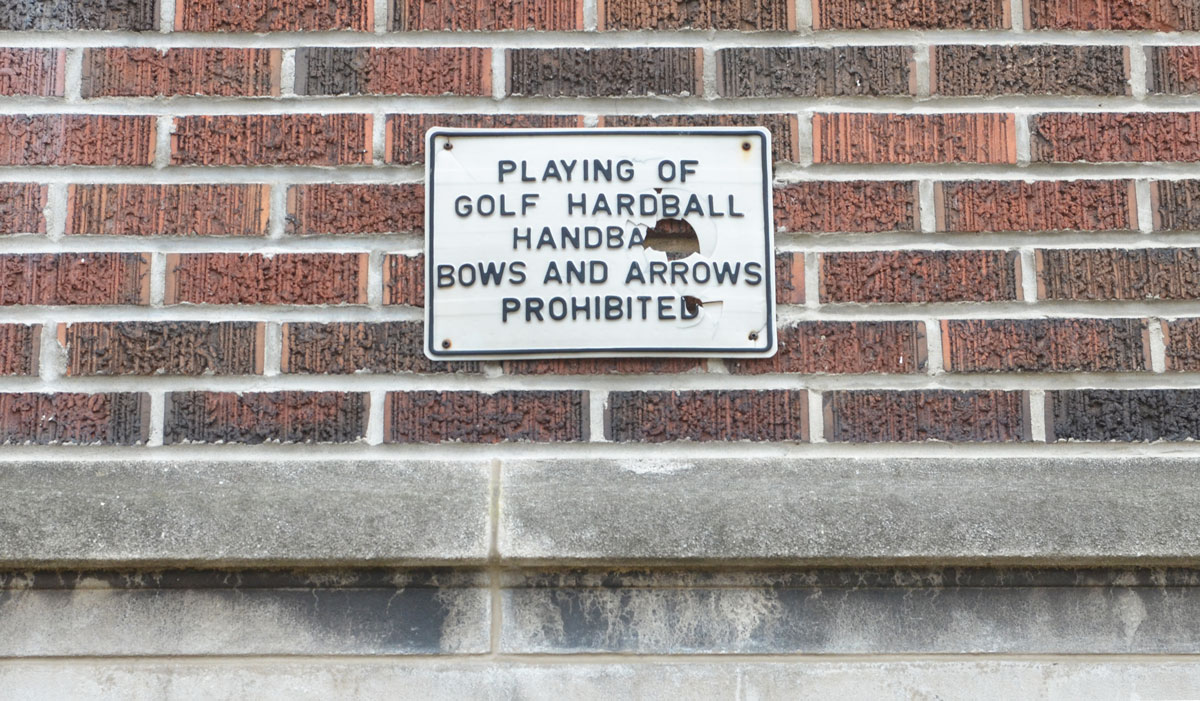
below: No bows and arrows allowed!

old sign on the exterior wall of a school that says: Playing of golf, hardball, handball, bows and arrows prohibited


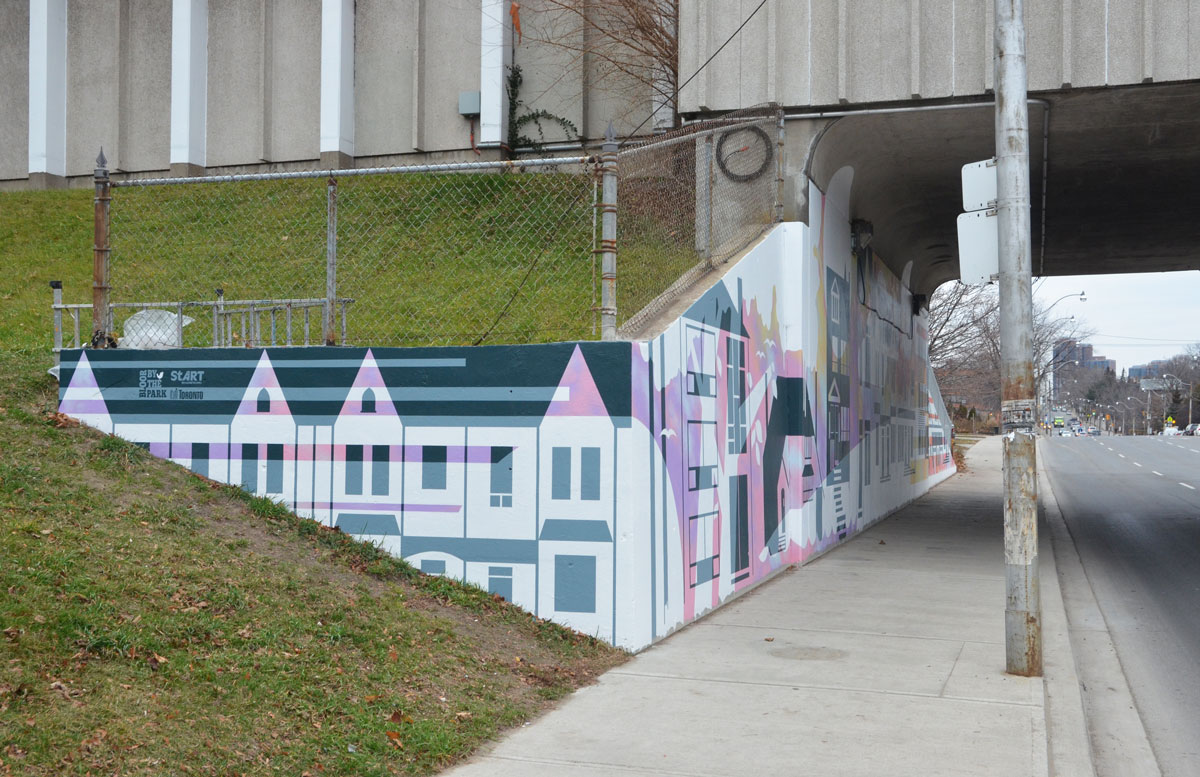
There’s another new mural in town.

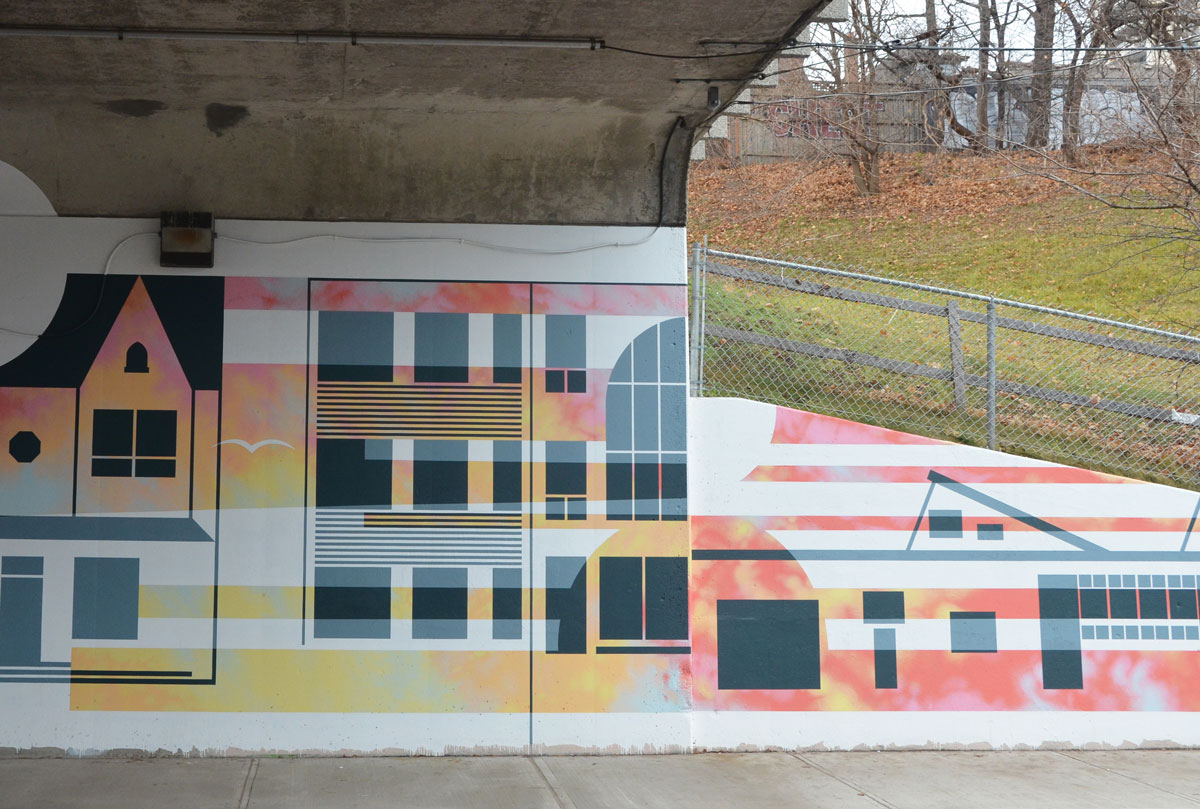
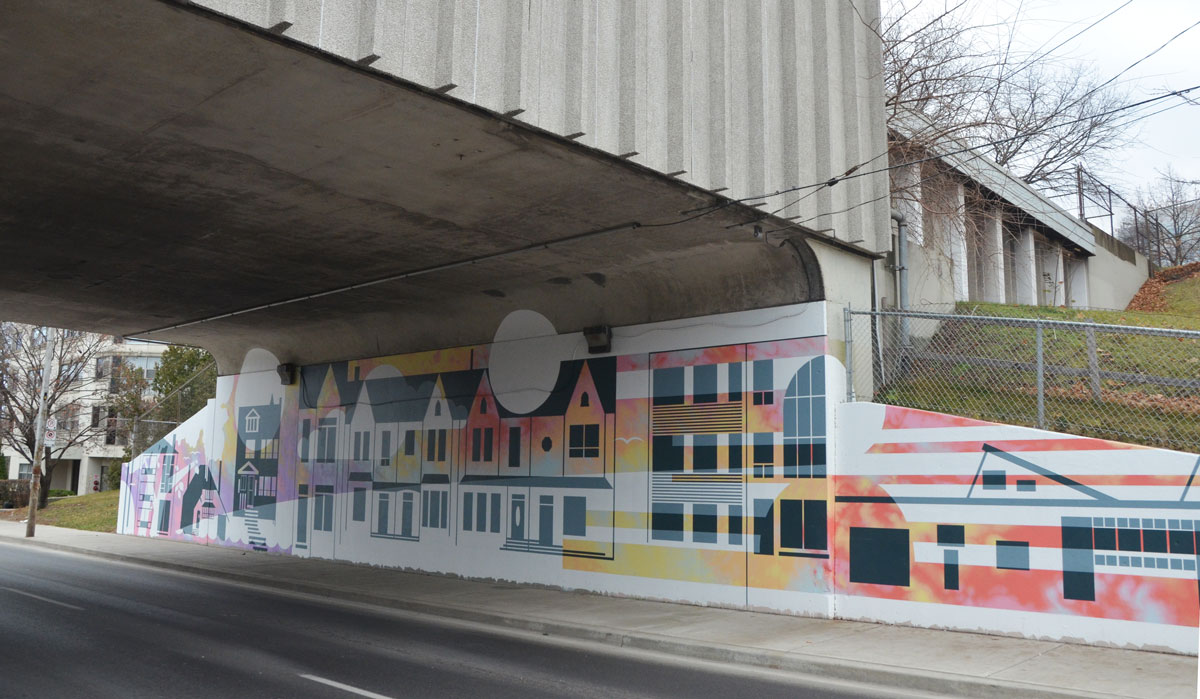
part of a mural by Rob Matejka and Tommy Matejka on the wall on a TTC subway underpass at Keele, a mural of houses on a street, looking north on Keele Street
This one is on Keele street, just north of Bloor.

part of a mural by Rob Matejka and Tommy Matejka on the wall on a TTC subway underpass at Keele, a mural of houses on a street, south corner
It is under the subway bridge, directly across the street from the Keele subway station.

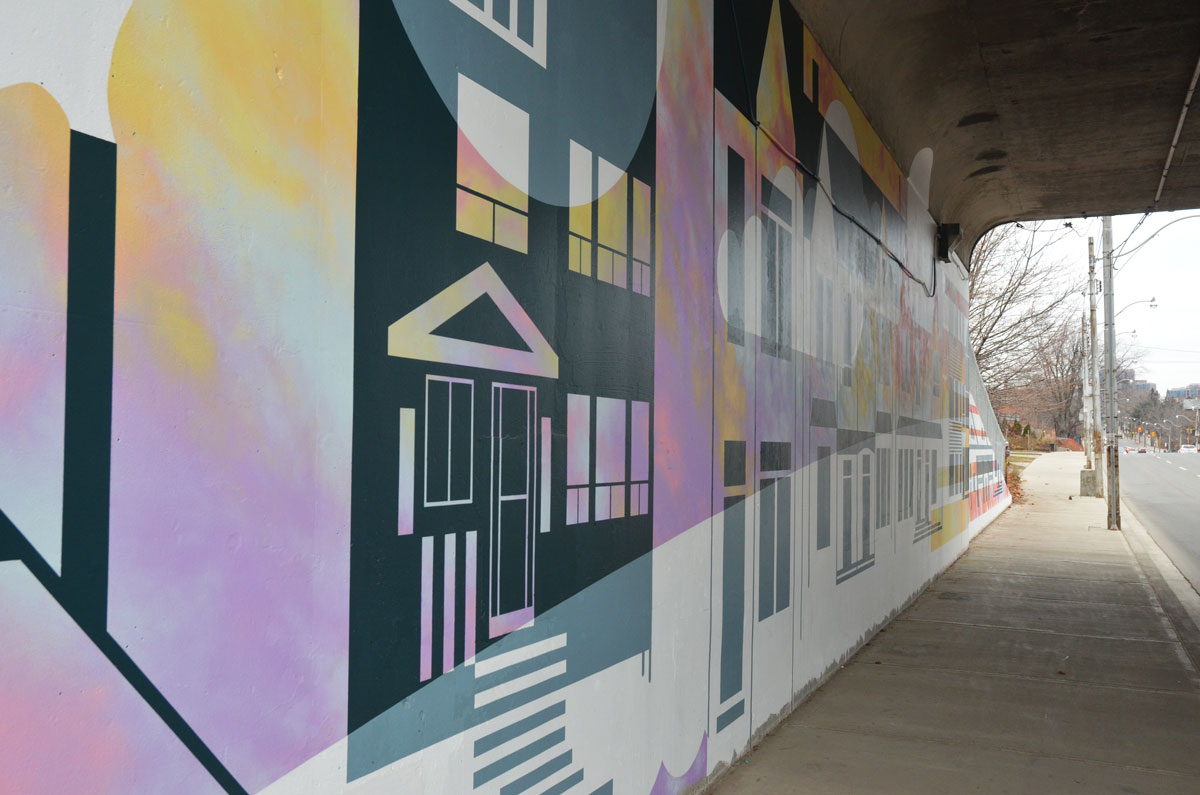
part of a mural by Rob Matejka and Tommy Matejka on the wall on a TTC subway underpass at Keele, a mural of houses on a street

It was painted by Rob Matejka and Tommy Matejka.

part of a mural by Rob Matejka and Tommy Matejka on the wall on a TTC subway underpass at Keele, a mural of houses on a street

The mural was a collaboration between StreetARToronto, Bloor by the Park BIA, and the City of Toronto.

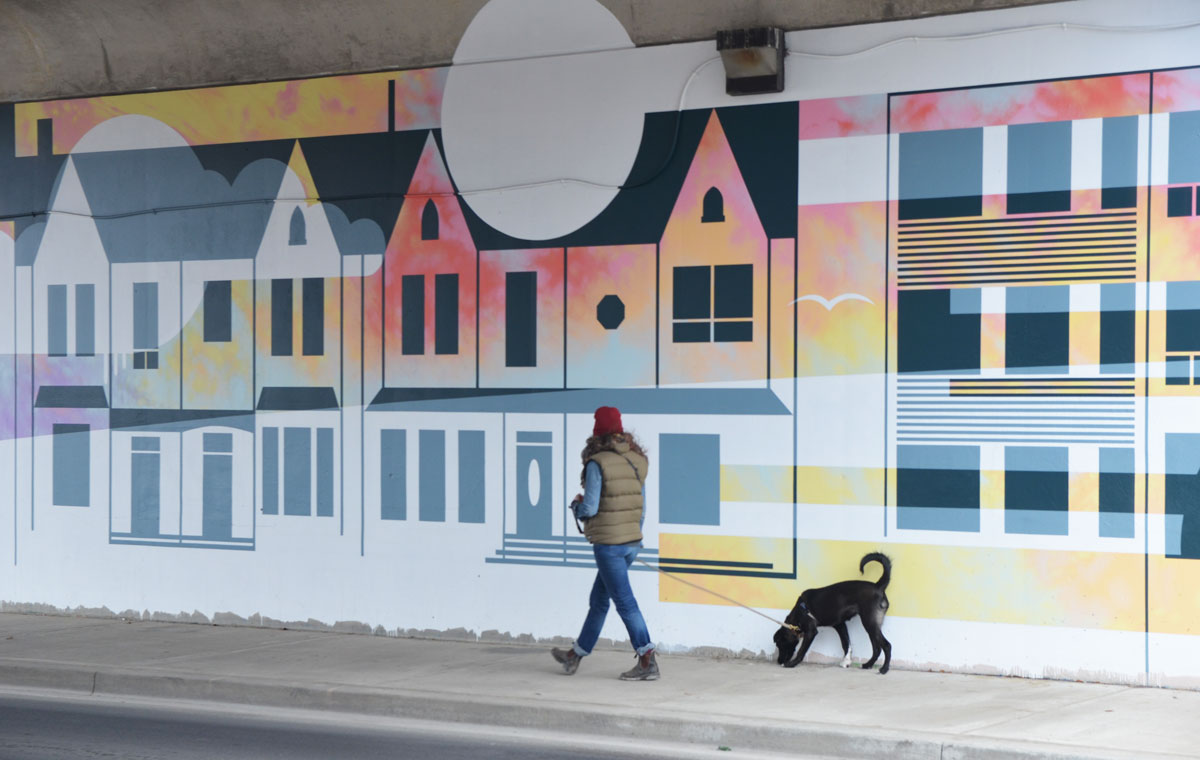
part of a mural showing two houses, with two real houses in the background


part of a mural by Rob Matejka and Tommy Matejka on the wall on a TTC subway underpass at Keele, a mural of houses on a street

part of a mural by Rob Matejka and Tommy Matejka on the wall on a TTC subway underpass at Keele, a mural of houses on a street, north end of mural

part of a mural by Rob Matejka and Tommy Matejka on the wall on a TTC subway underpass at Keele, a mural of houses on a street

A short walk earlier this month along the laneways  south of the Danforth near Woodbine Ave.

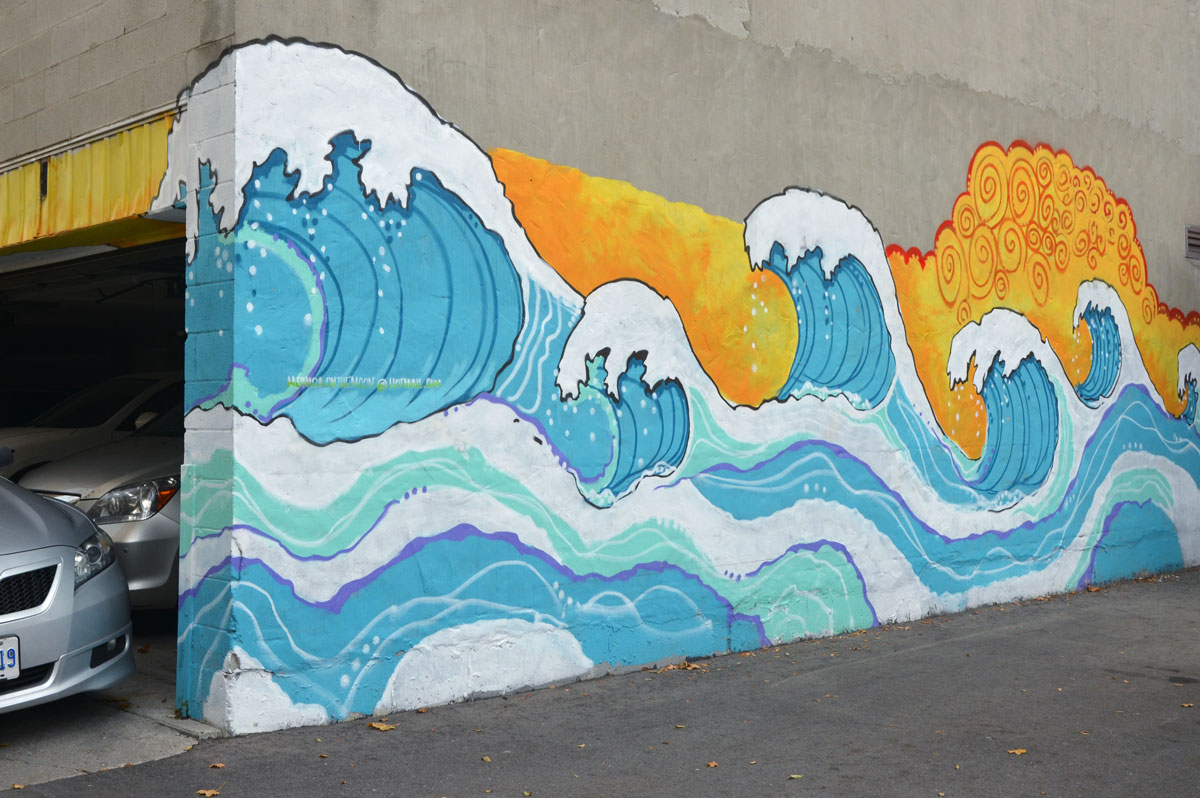
below: A mural by Monica on the Moon, styled after Katsushika Hokusai’s ‘Great Wave off Kanagawa’ picture.   This is only part of it – the mural wraps around the back of the building.

wave mural by Monica on the Moon in a laneway, the mural is styled after Katsushika Hokusai

below: Just throwing a little bit of fun into the mix.  The ‘Great Wave’ has inspired many other great works of art over the years including this Cookie Monster one:

picture of Great Wave off by K Hir, with Cookie Monster eyes photoshopped onto the largest wave, a cookie added under the crest of the wave to make it looki like cookie monster (from Sesame Street) is eating the cookie.

below: Leaving the Danforth area briefly, there is also this mural by skam near Bloor and Bathurst.  You can find it in Loretto Lane on the side wall of Kinka Restaurant.

mural based on a Japanese picture called the Great Wave.  In it there is a fish jumping with the wave.  Mural on the side of a restaurant in a lane.

below: A little path leads onto a mural on Amroth Ave just south of the Danforth that was painted by Airways Airbrushing and Sign Co.    It was funded by the City of Toronto and the Danforth Mosaic BIA.

mural of a park scene, grass, garden, trees in spring, mural on the side of brick building.

below: Historical mural on a Bell box, ‘Danforth’ 1912 by Emilia Jajus 2012.

mural painted on a metal box on a sidewalk. Historical picture of the Danforth in 1912 painted by Emilia Jajus. A horse drawn wagon is going down a dirt road, a couple of buildings in the background.

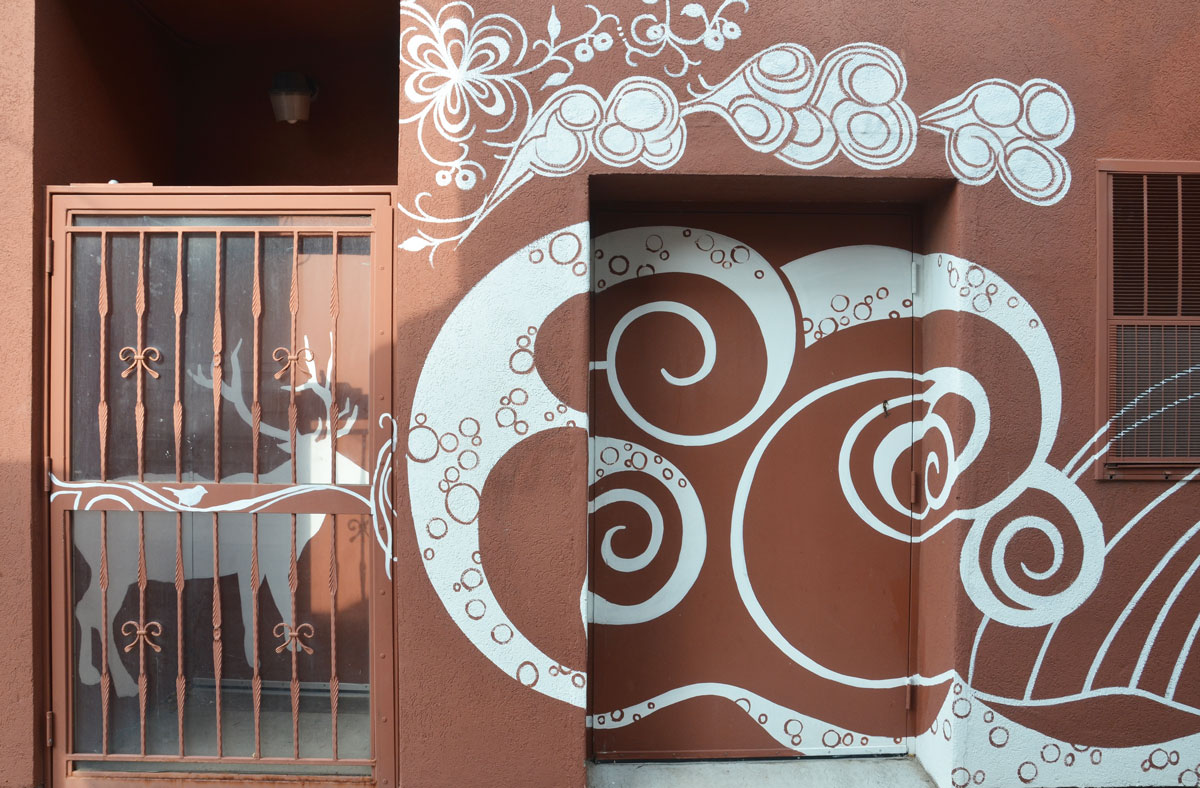
below: Another Monica on the Moon mural

panorama picture of mural by Monica on the Moon, white line drawings on brown background, across the back of a building in a laneway

part of a mural by Monica on the Moon, white line drawings on brown background, across the back of a building in a laneway - jumping fish, a tree

a mural on the back of a building in a laneway. Brown background, white line drawing of different animals and shapes, two geese or ducks flying to the right, a tree painted beside a doorway.

mural by Monica on the Moon, white line drawings on brown background, across the back of a building in a laneway - a deer behind a metal gate, spirals and swirls

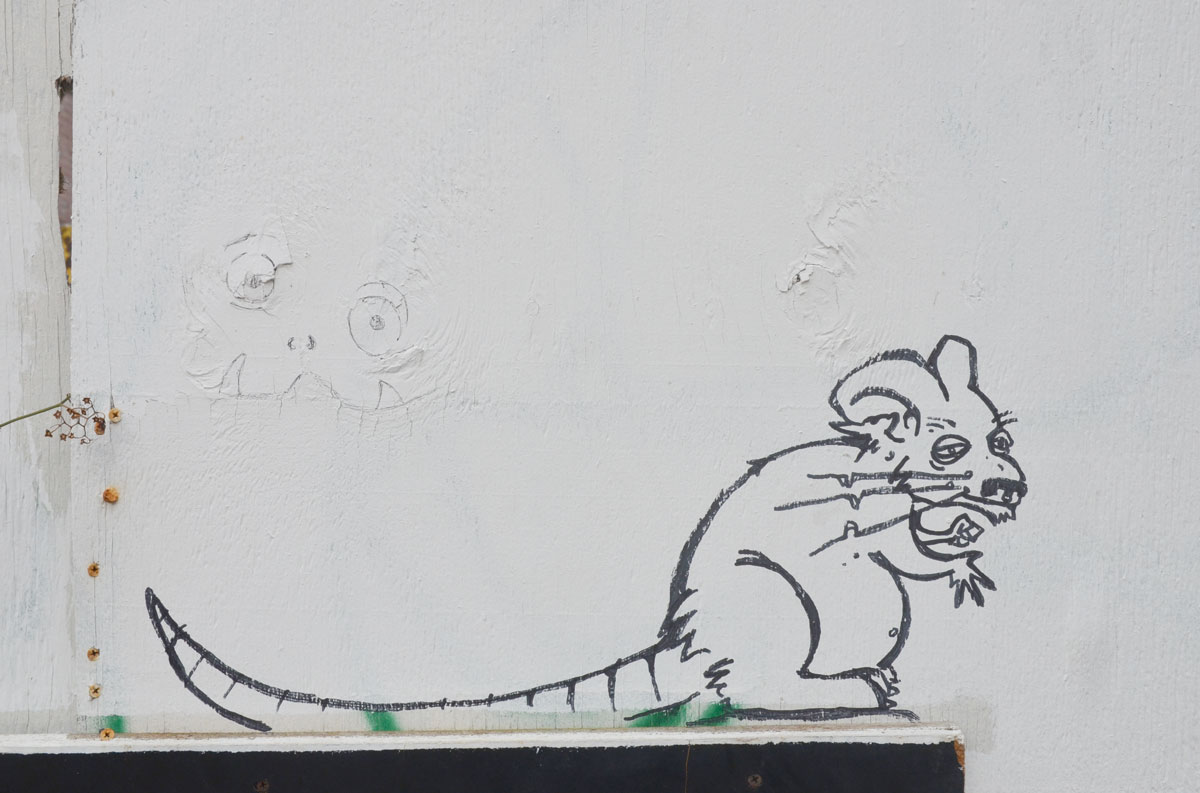
below: Alley ratz and company

On a white wall, a black line graffiti drawing of a rat with a long tail.

black line drawing on white fence with a hole in it. A face, and a lot of spirals

black line drawing on white fence with a hole in it. On a plywood fence, a face, and a lot of spirals

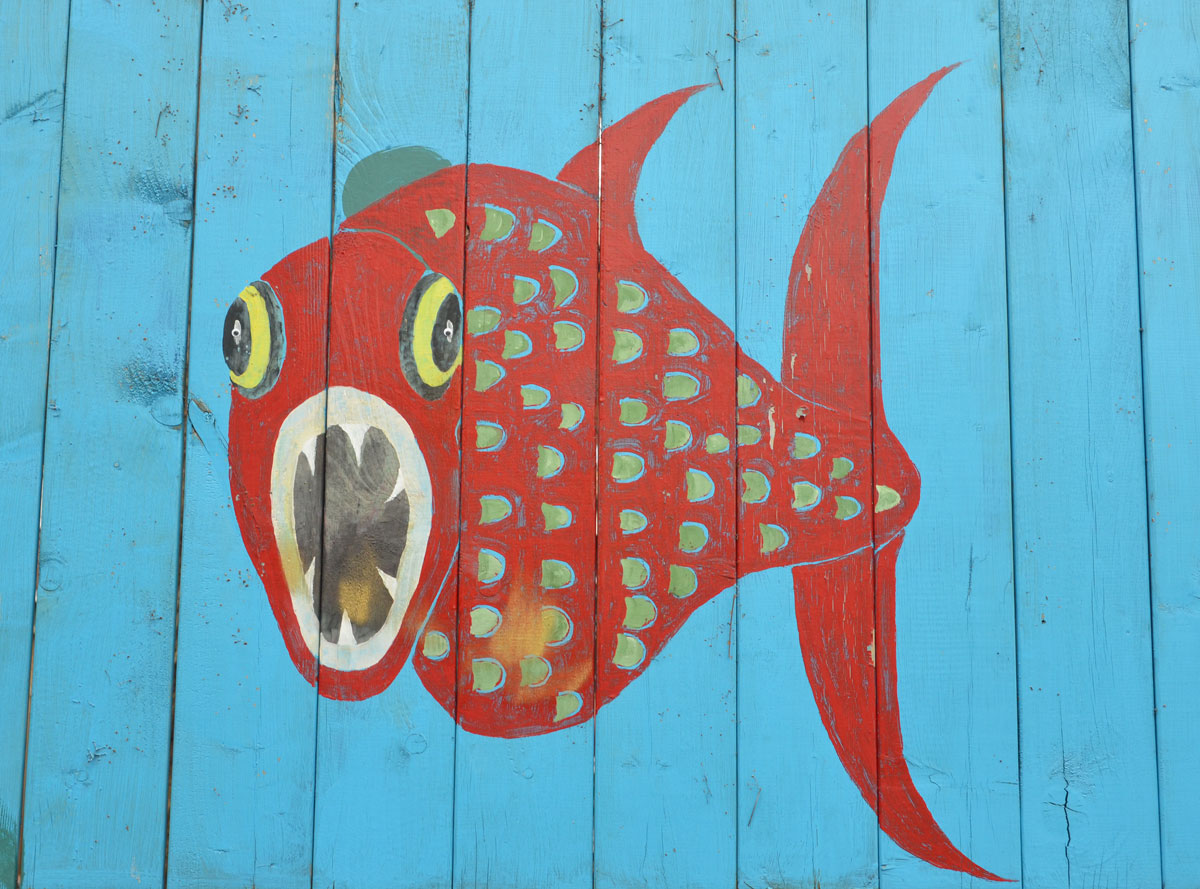
  below: A red fish swimming in bright blue by an unknown artist.

bright red fish with it's mouth open painted on a bright blue wood fence

mural painting on a wall, bright blue background, a person in silhouette, a red flower, a yellow and green butterfly, and a red tulip

sticker on a pole. The sticker covers part of a metal sign that says Attention across the top

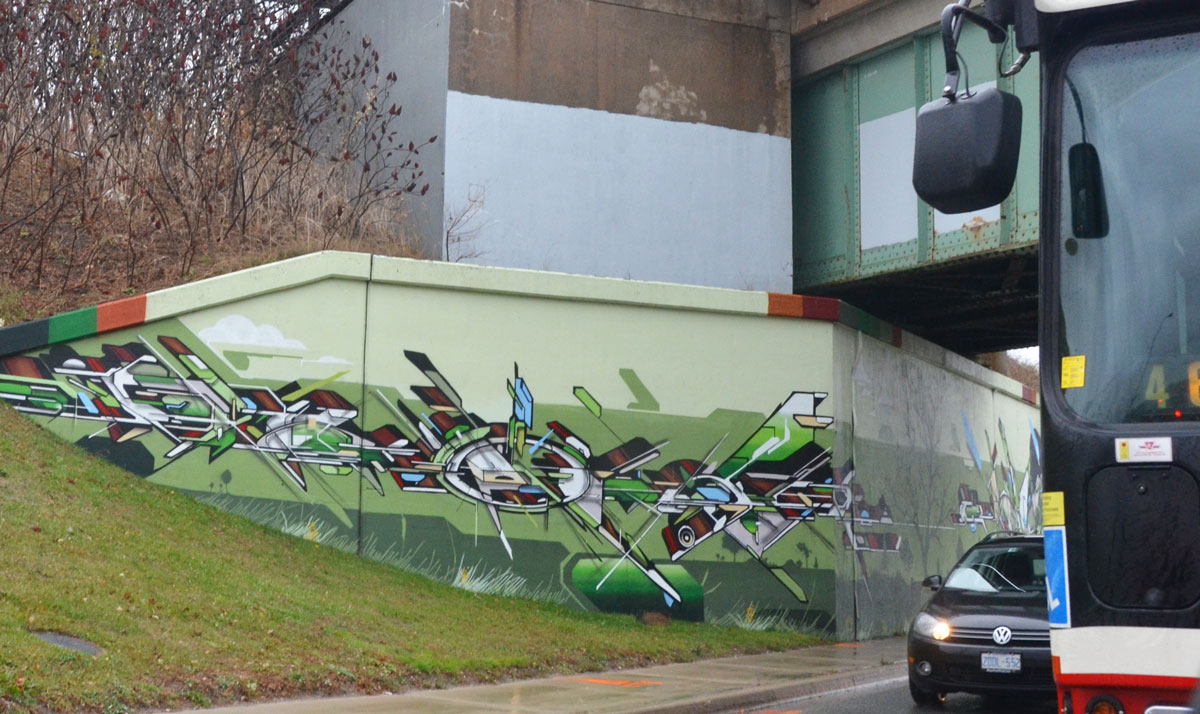
“Terra Strat’aa” is a new mural by IAH Digital (Mediah) that now covers both sides of a railway overpass on Eglinton, just east of Leslie Street.  I have been meaning to take pictures of it for a few weeks now.  One of my excuses for not getting there sooner is that it is not convenient to get to by foot and once there, it’s in a photographic wasteland.

I hadn’t planned to drive past it today but I did….and I had my camera in the front seat with me….and believe it or not, the traffic on Eglinton was extremely slow, even slower than usual!   I think that these photos were meant to be.   🙂

geometric shapes, dynamic shapes, mural on three toned green background on a railway underpass, painted by a group led by IAH Digital (Mediah) on Eglinton Ave

geometric shapes, dynamic shapes, mural on three toned green background on a railway underpass, painted by a group led by IAH Digital (Mediah) on Eglinton Ave

geometric shapes, dynamic shapes, mural on three toned green background on a railway underpass, painted by a group led by IAH Digital (Mediah) on Eglinton Ave

geometric shapes, dynamic shapes, mural on three toned green background on a railway underpass, painted by a group led by IAH Digital (Mediah) on Eglinton Ave

Earlier in November, two more statues were added to Legends Row outside the Air Canada Centre, Syl Apps and George Armstrong.  Both men were Maple Leaf Captains and both men wore jersey number 10.

below:  Blue and white confetti at the unveiling of the latest statues on Legends Row.

Legends Row at the unveiling of statues of Syl Apps and George Armstrong, lots of bits of blue and white paper stream down in front of the statues.

below: An old photo showing Syl Apps and a young George Armstrong when the latter was given Maple Leaf jersey 10 to wear.  Armstrong was the first player to wear number 10 since Apps had retired.

Old black and white picture from the Hockey Hall of Fame, showing Syl Apps (after retirement from hockey) and George Armstrong after Armstrong was given number 10 Maple Leaf jersey to wear.

below:  George Armstrong, past and present, at the unveiling.  Armstrong played 21 seasons with the Maple Leafs between 1950 and 1971.  After retiring from playing hockey, he coached the Toronto Marlies for a few seasons and he was on the Maple Leaf scouting staff for many years.

George Armstrong stands beside the statue of himself while reporters and others take pictures.

below:  Also, number 10, Syl Apps joined the Maple Leafs in 1936.  While he was captain of the Maple Leafs, the team won three Stanley Cups.  Apps retired in 1948.

statue of hockey player Syl Apps stands with stick in hand in Legends Row outside the ACC in Toronto

below: left to right: Mats Sundin, Borje Salming, Darryl Sittler and Ted Kennedy

Legends Row statues, Sundin, Salming, Kennedy and Sittler

below: George Armstrong and Johnny Bower

Legends ROw statues George Armstrong and Johnny Bower

below: left to right: Borje Salming, Darryl Sittler, Ted Kennedy and Syl Apps

Legends Row statues, Borje Salming, Ted Kennedy and Syl Apps stand behind the boards while Darryl Sittler is jumping over the boards.

below: Just around the corner, two statues of a slightly different nature

Two mannequins, one male and one female, are dressed in Maple Leaf hockey clothing.  Toques, heavy sweaters, T-shirts and scarfs, all in blue and white with the Leafs logo