


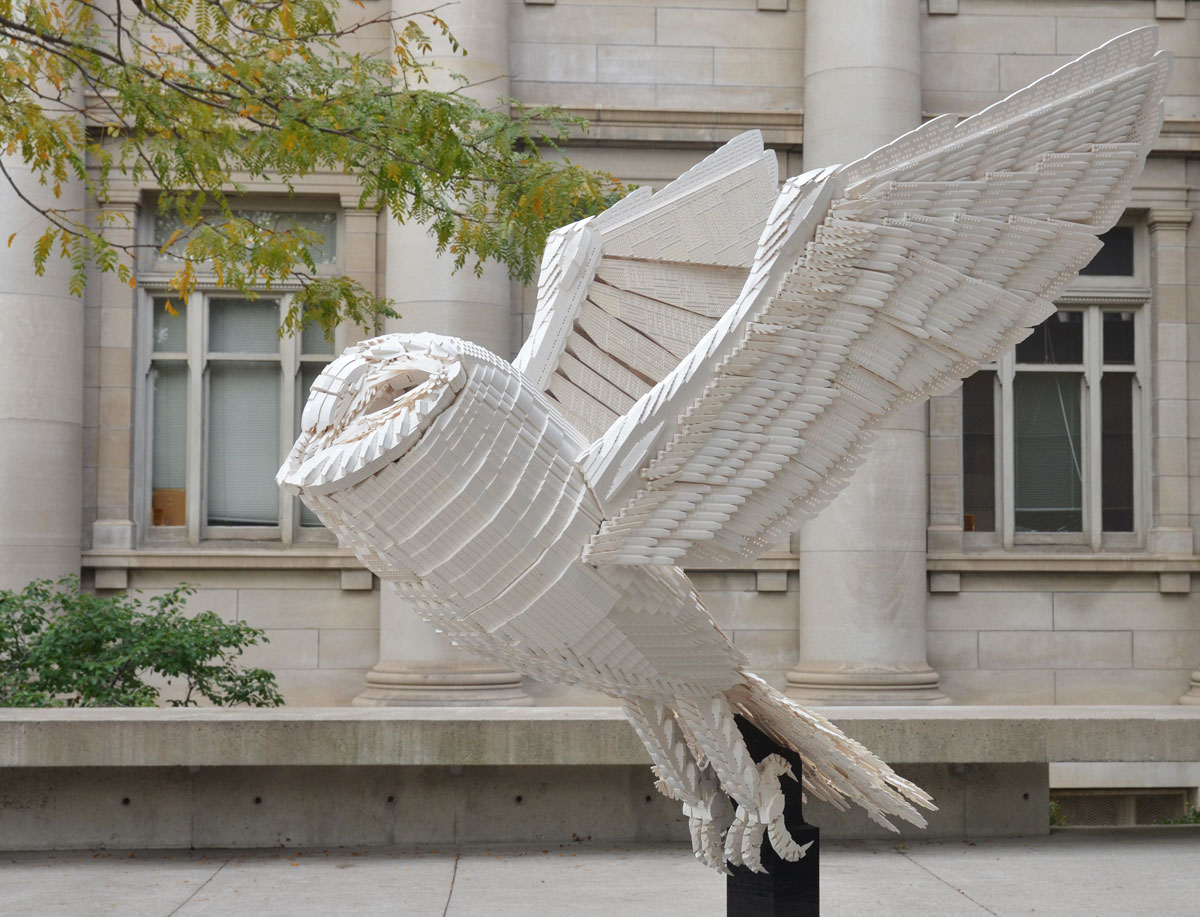
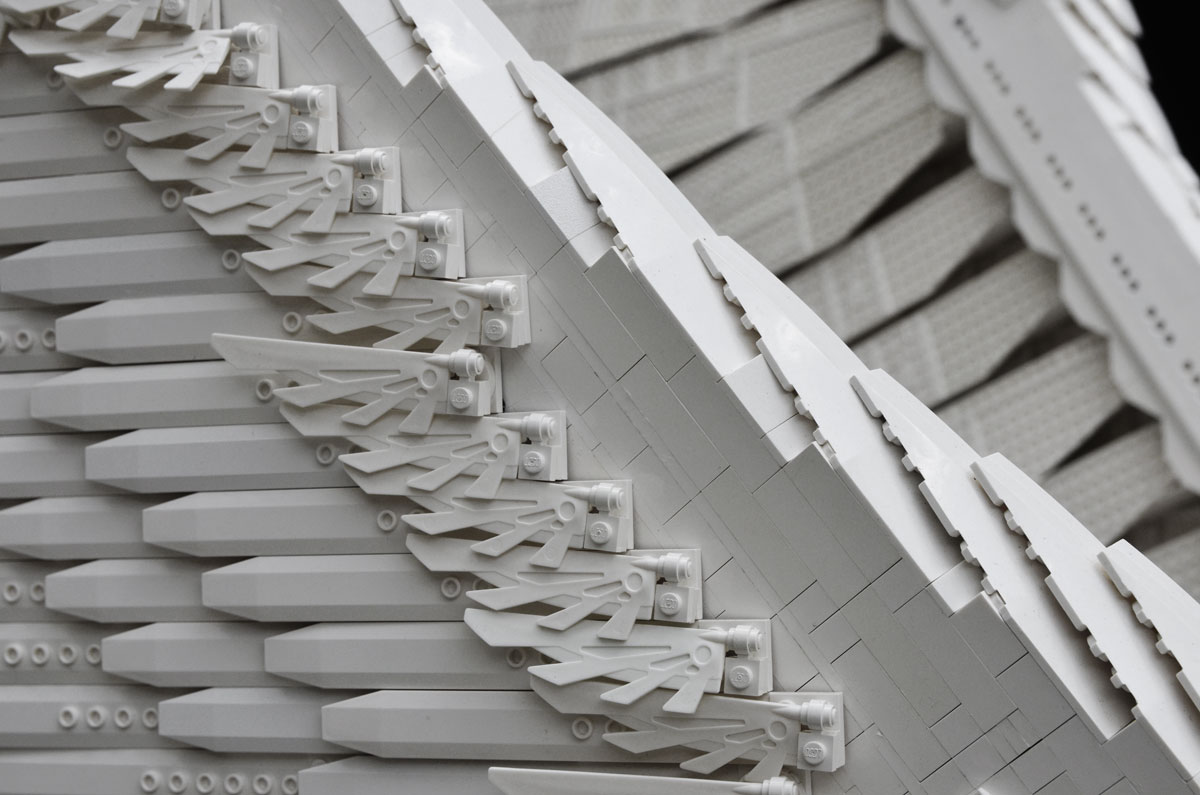
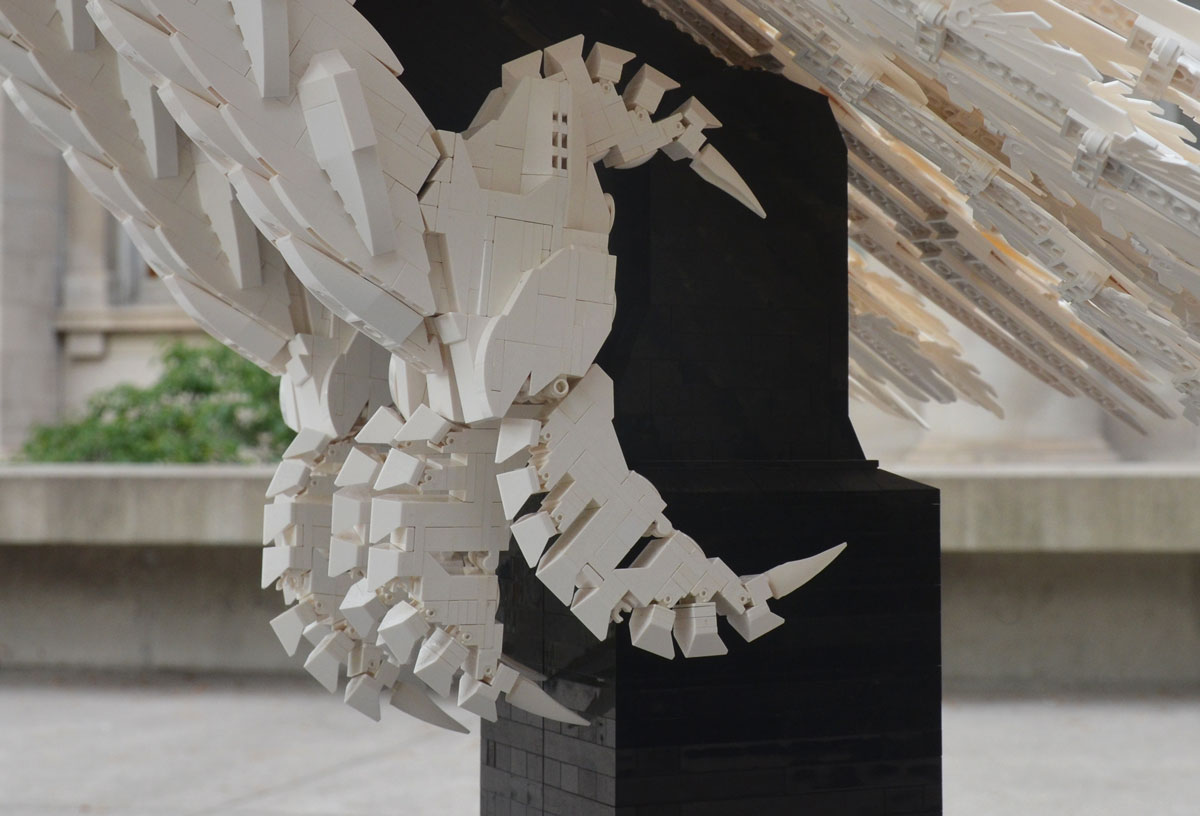
Silent Knight by Ekow Nimako,
a sculpture of a barn owl using more than 50,000 pieces of LEGO,
on display in front of the Gardiner Museum as an extended Nuit Blanche exhibit
#snbTO
Silent Knight by Ekow Nimako,
a sculpture of a barn owl using more than 50,000 pieces of LEGO,
on display in front of the Gardiner Museum as an extended Nuit Blanche exhibit
#snbTO
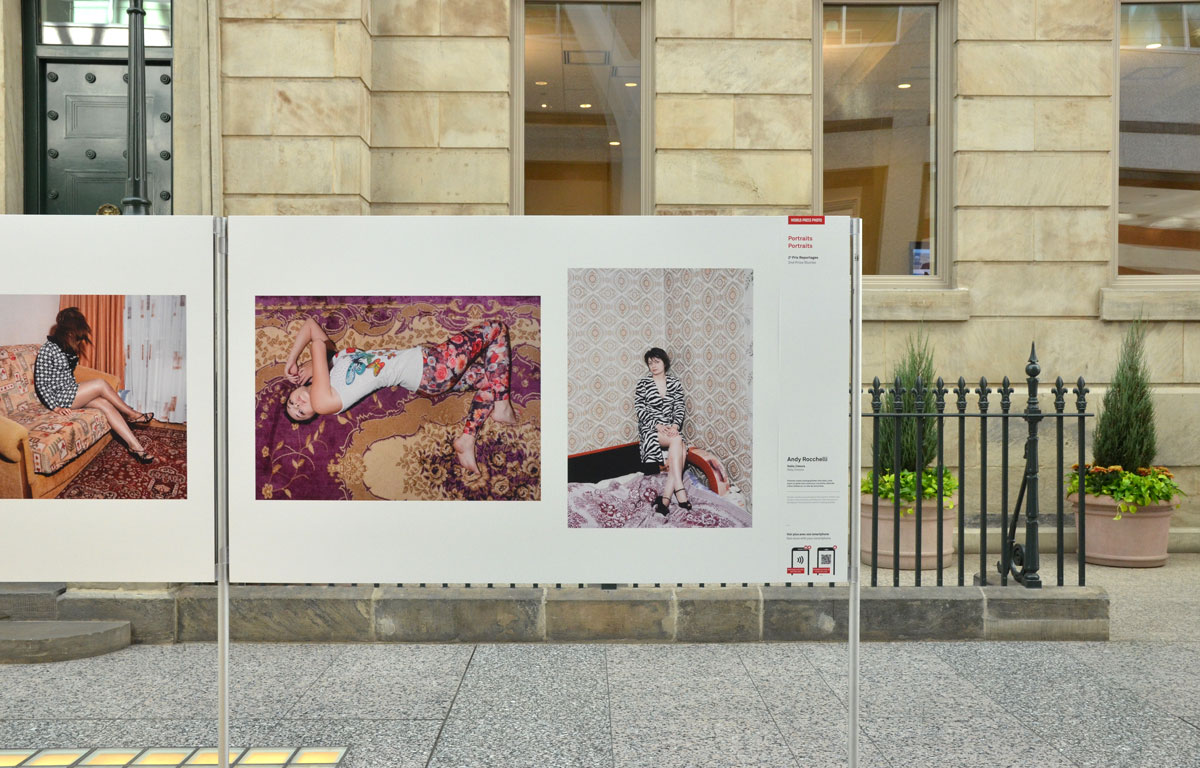
At Allan Lambert Gallery, Brookfield Place,
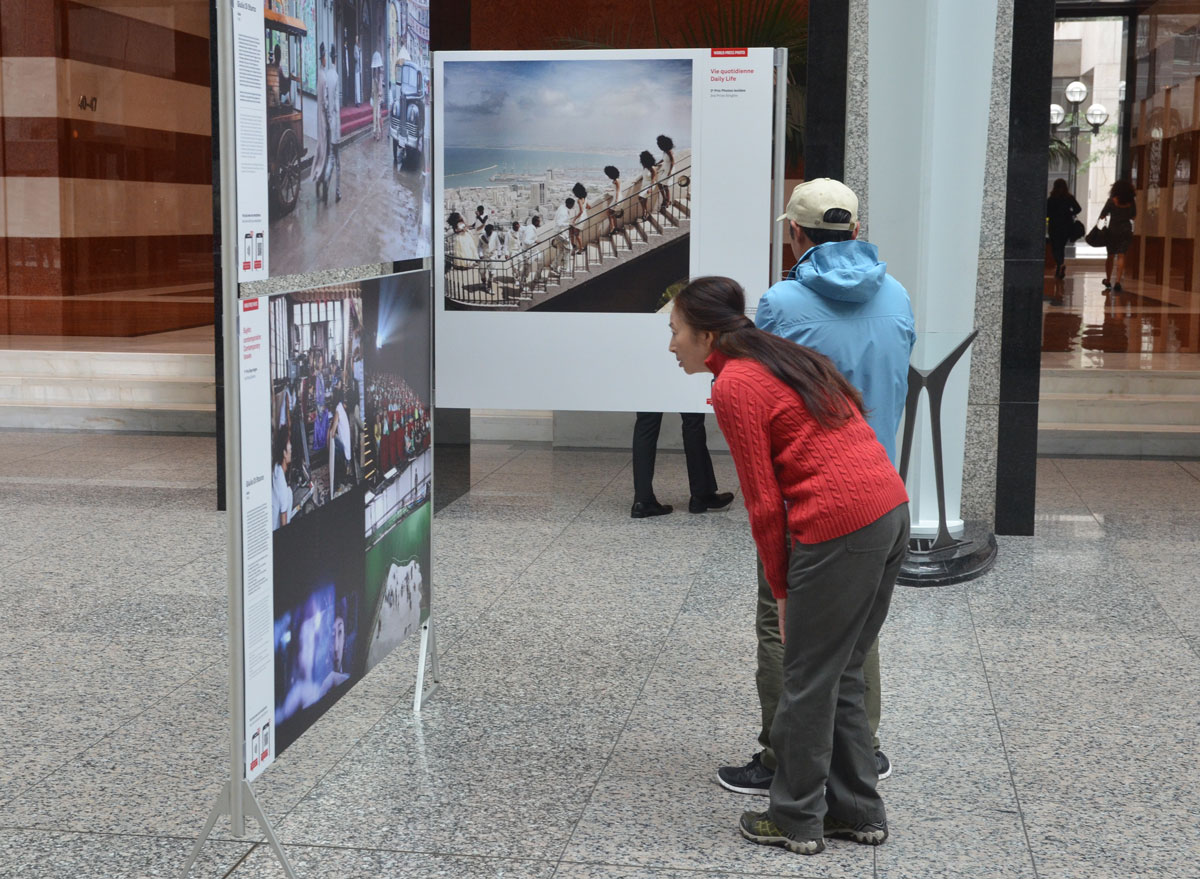
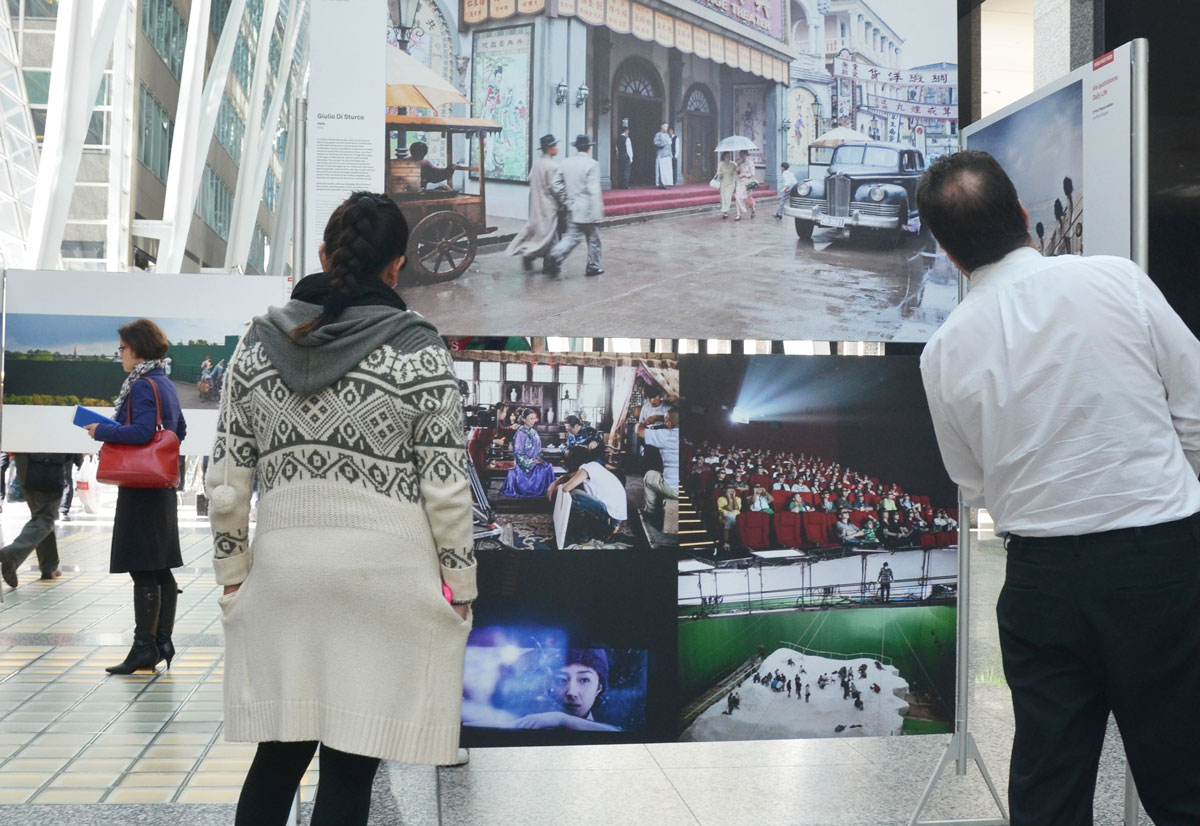
winning photos from the 58th World Press Photo Contest
Winning images chosen from 97,912 photographs taken by 5,692 photographers from 131 countries.

below: Taken by Andy Rocchelli of Italy, part of his series of ‘Russian Interiors’ portraits. There were 10 photographs in the series, three of which are shown here (well, two and a half). All were of women.
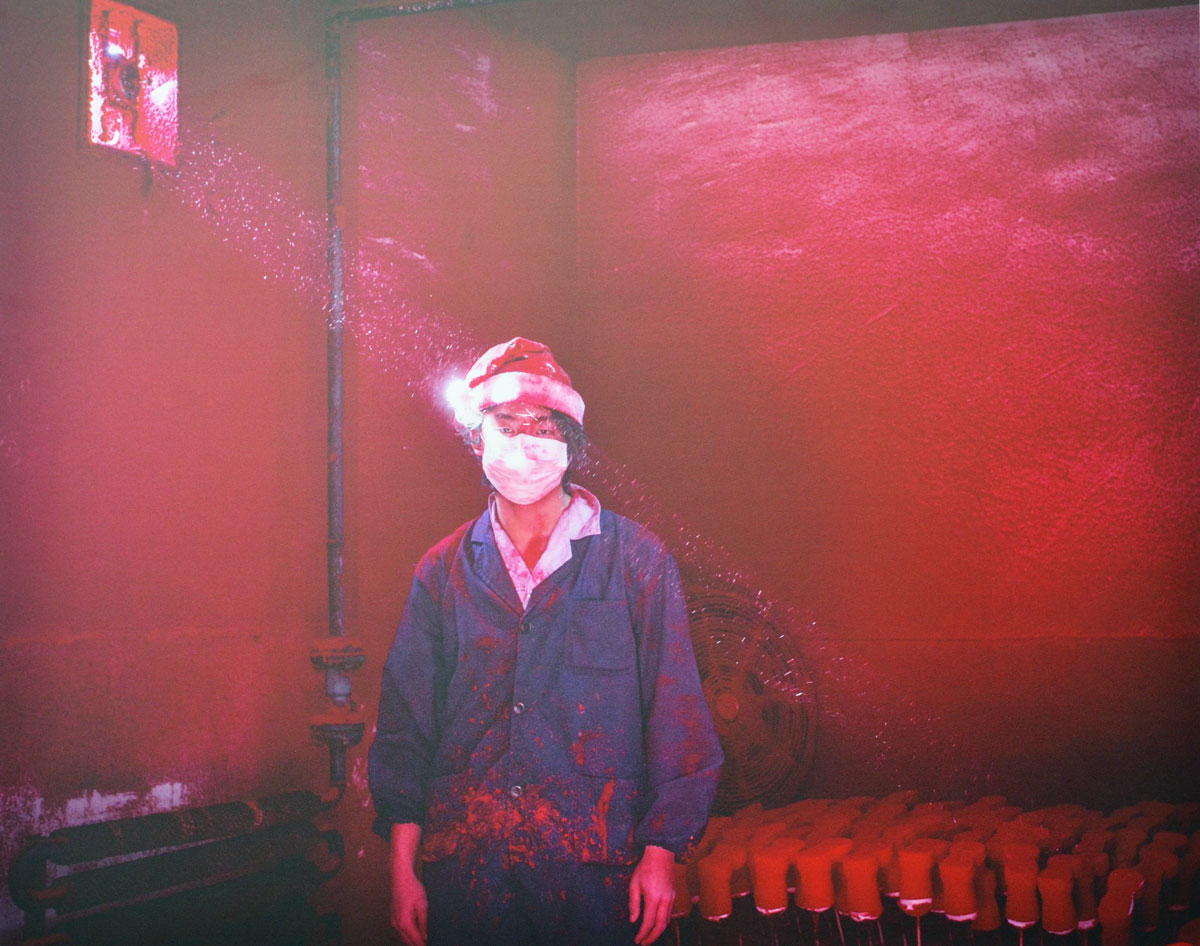
below: One of the multitude of Chinese migrant laborers, a factory worker in in Yiwu China. His job is to coat polystyrene snowflakes with red powder. There are 600 factories in Yiwu and they produce 60% of the world’s Christmas decorations. Photo by Ronghui Chen, second prize winner in the Contemporary Issues category.
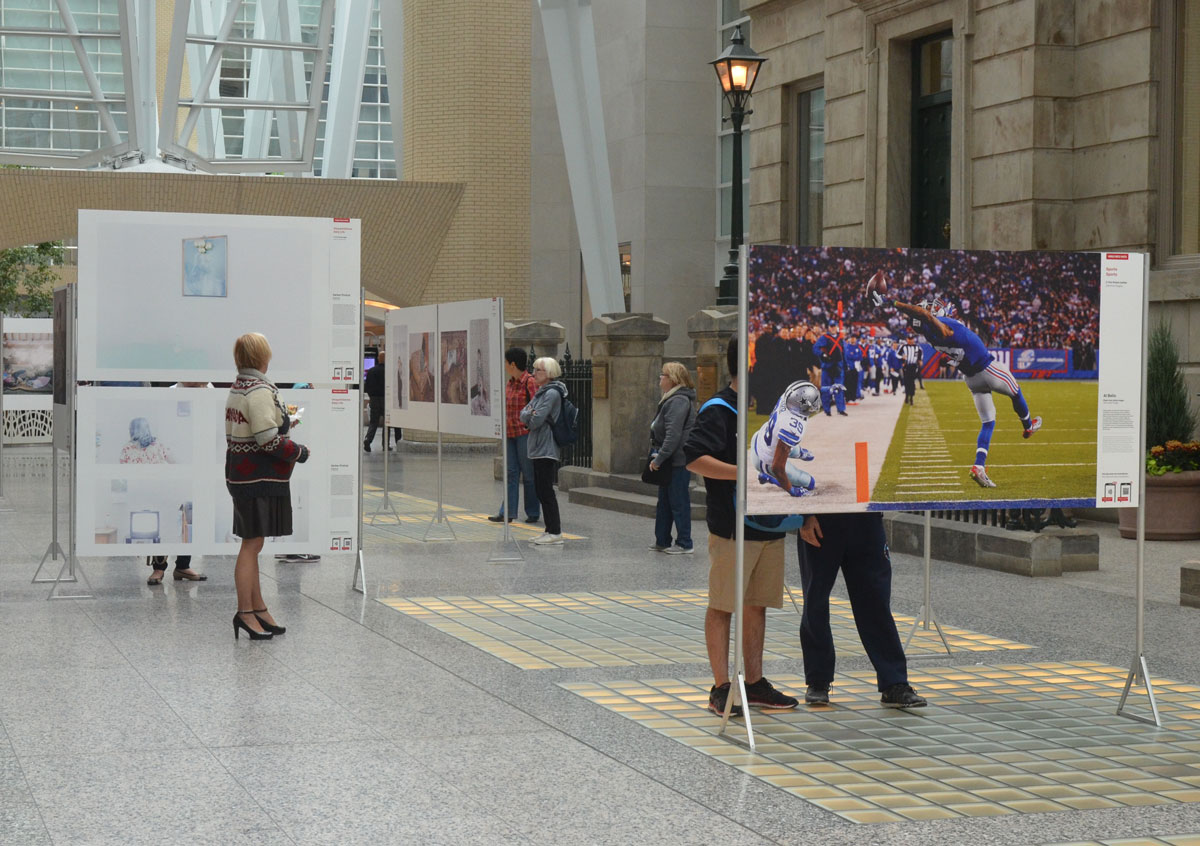
below: The three winning photographs from the Sports (Singles) category. The predominant photo is the second prize photo; it is a photo of Odell Beckham of the New York Giants making a one handed touchdown catch, taken by Al Bello. The winning sports photo is the one on the far left. It is a photo of Argentine football player Lionel Messi receiving the Golden Ball trophy at the World Cup in Brazil, taken by Bao Tailiang. In the middle is a picture of Philip Hughes, a cricket batsman who was hit on the head by a ball during a game, taken by Mark Metcalfe.



below: The winning photo, by Danish photographer, Mads Nissen of Jon and Alex, a gay couple, sharing an intimate moment at Alex’s home, a small apartment in St Petersburg, Russia. (It looks better in real life!)

The exhibit is called ‘Black Cloud’ and it consists of thirty thousand black moths, each one individually attached to the walls and ceiling of the clerestory of the The Power Plant Gallery. Artist Carlos Amorales has reproduced the shapes and sizes of thirty six different species of moth with black paper. They swarm towards the lights and they congregate in the corners. It’s a fascinating display both in the overall composition and in the attention to small details. This installation first appeared at an art gallery in Paris in 2007.
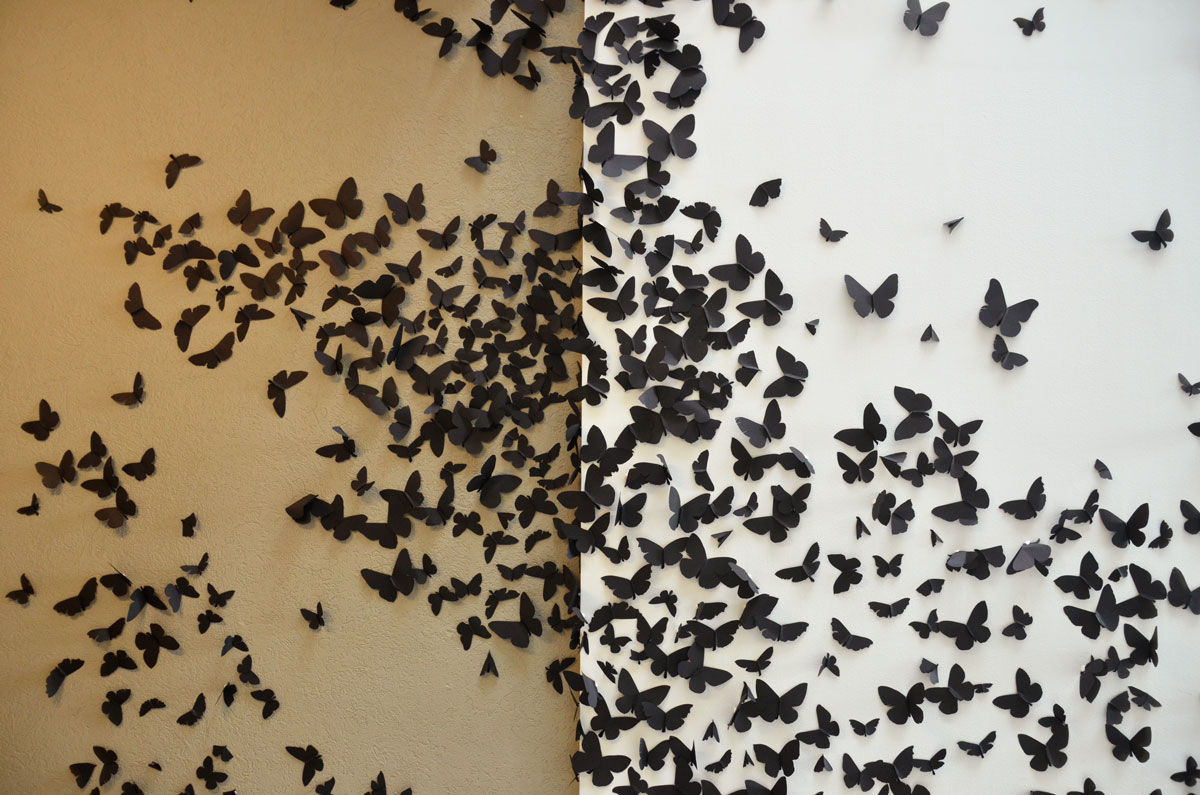

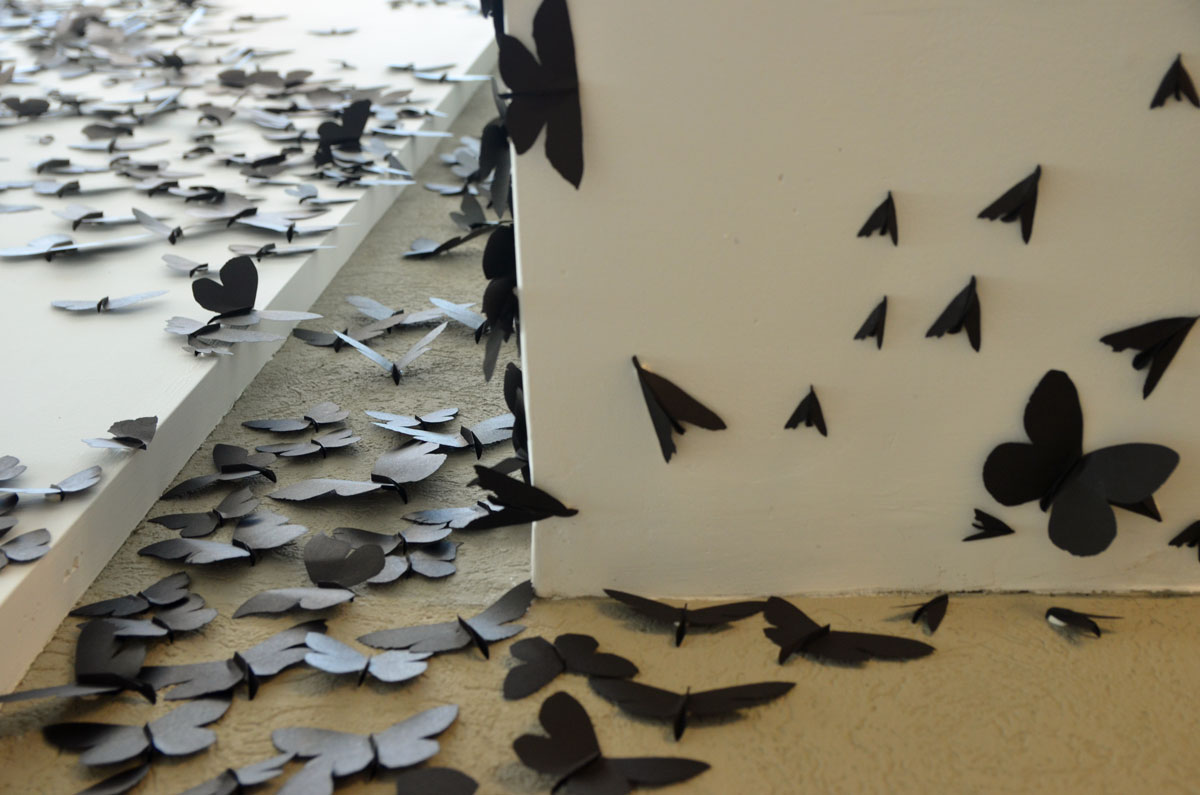
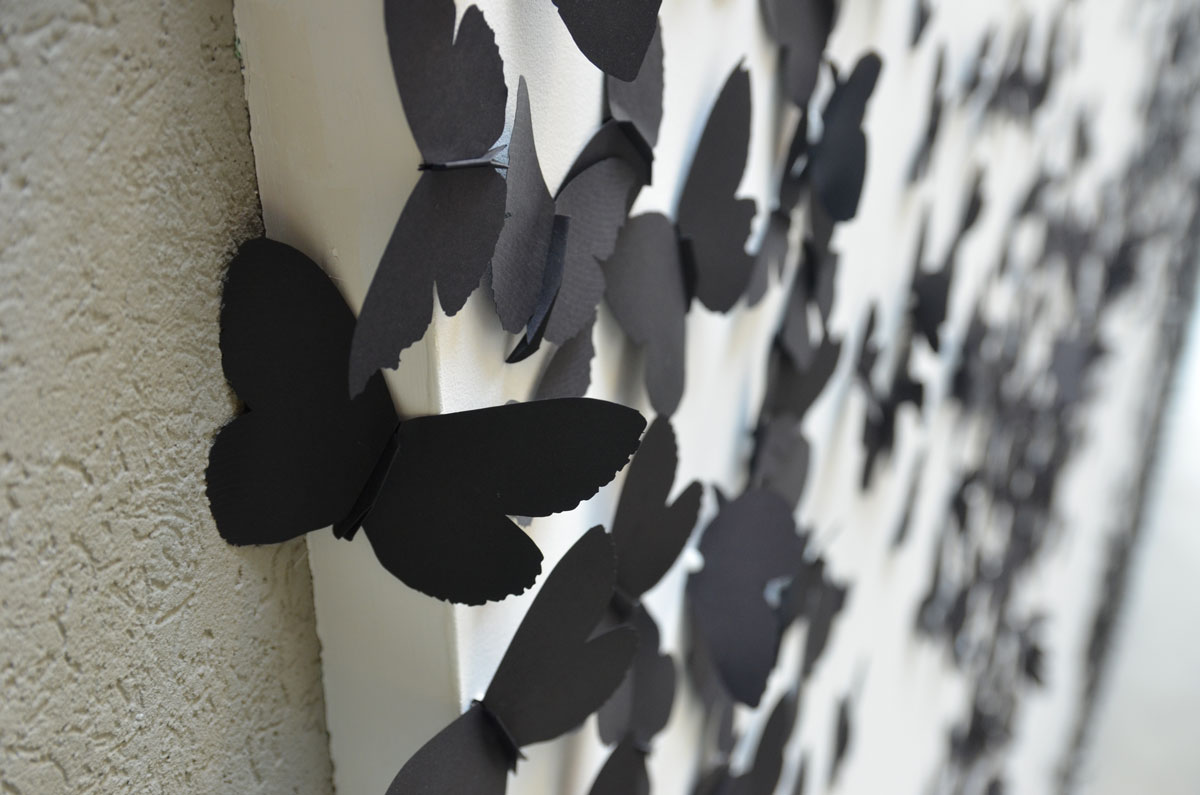
As much as I liked the display, I was glad they weren’t real moths!
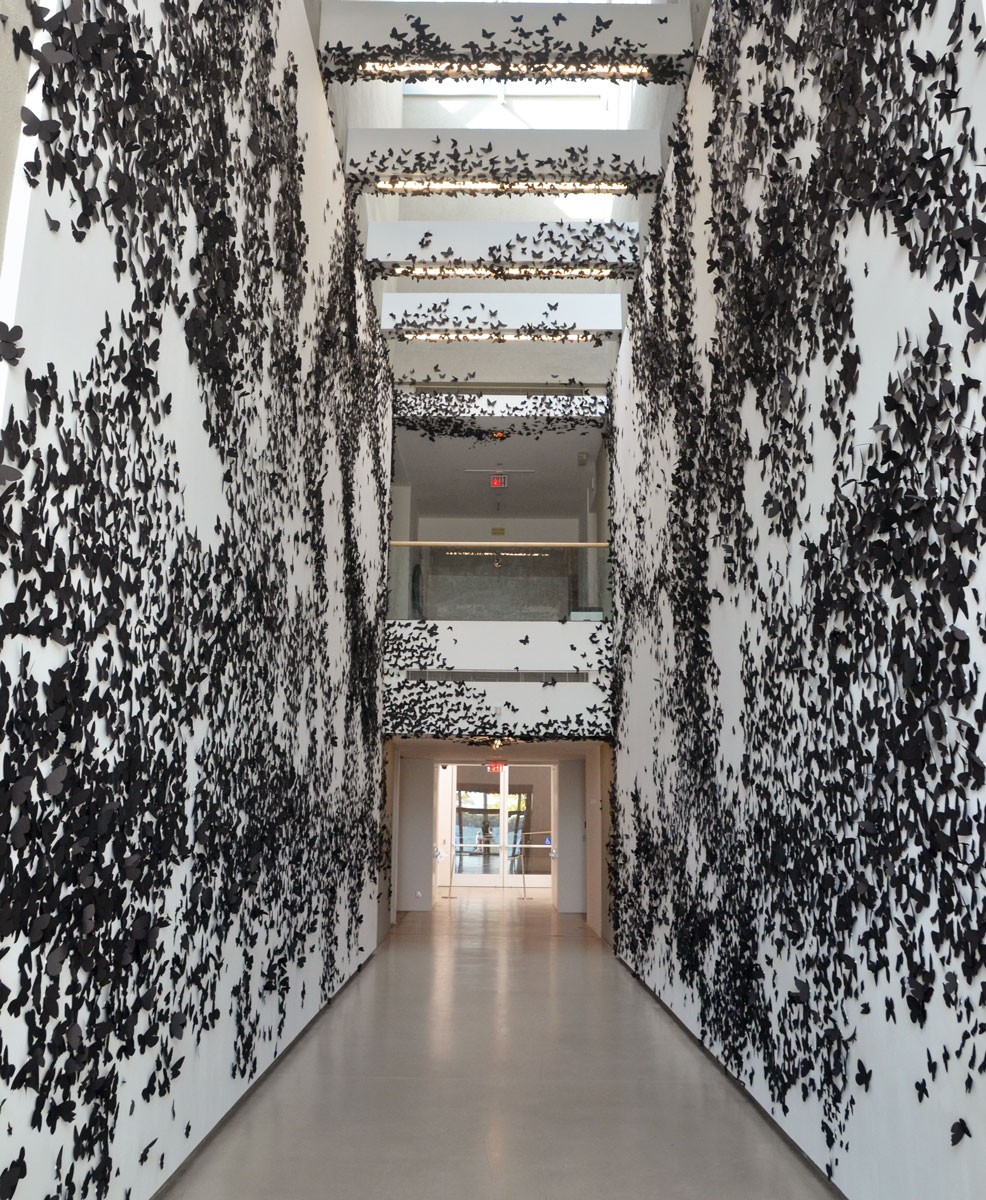
#PPBlackCloud
Camera Atomica
a photography exhibit at the Art Gallery of Ontario
below: The first photograph of the bones of the hand, by Wilhelm Rontgen in 1895. Rontgen was a German physicist who discovered x-rays (or Rontgen rays) in 1895 and he produced this image of his wife’s hand shortly after. The green in the picture below is a reflection of the chandelier that the AGO has hanging in the room where this exhibit is being shown.

The exhibit consists of more than 200 works that all fall under the category of nuclear – topics such as atomic weapons, Cold War politics, nuclear energy, and the mining of uranium. The photographs cover the history of these topics from 1945 to the present, from the development of the atomic bomb to the meltdown at Fukushima Daiichi in Japan in 2011.
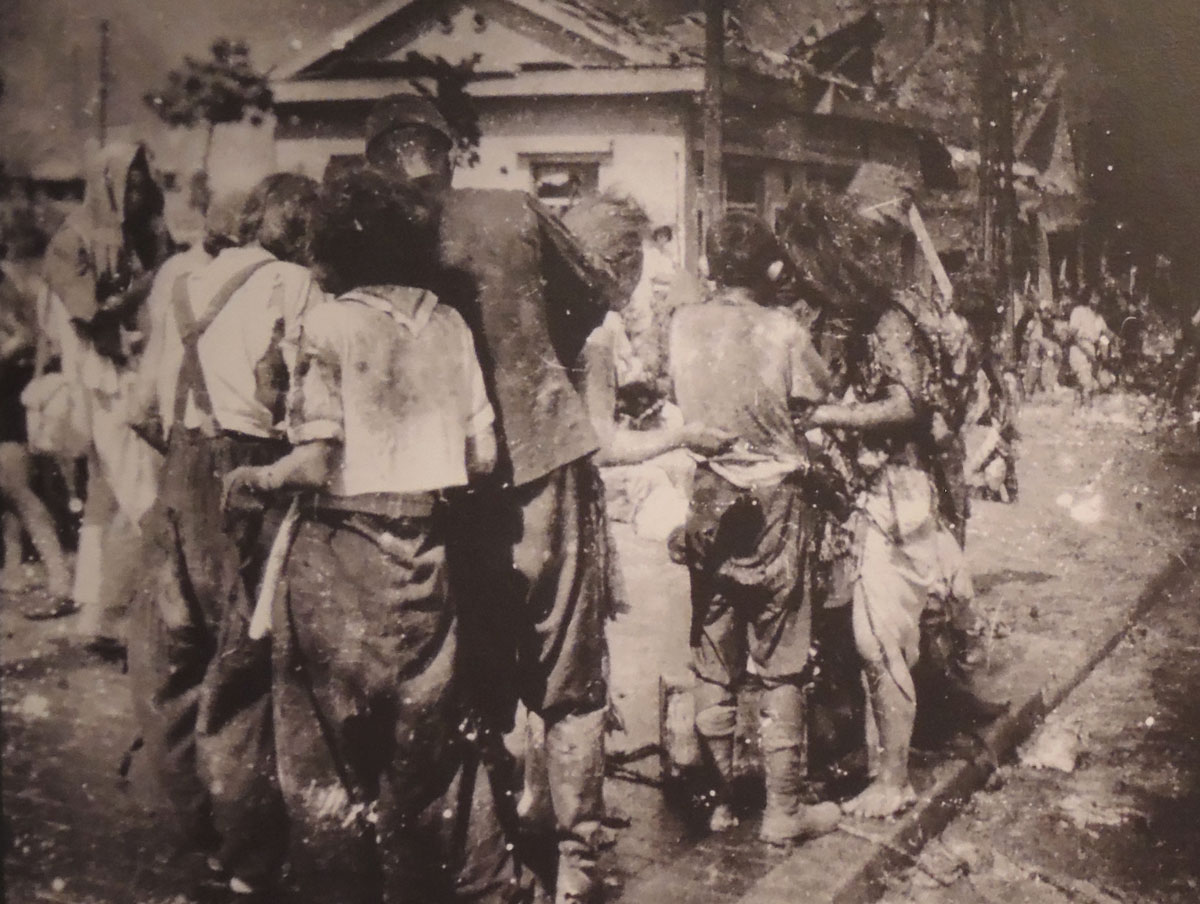
below: Hiroshima Japan, photo by Yoshito Matsushige, taken 6 August 1945.
The first atomic bomb was detonated at the Trinity test site in New Mexico USA on 14 July 1945. Shortly after, American bombers dropped two atomic bombs on Japan. The first bomb was dropped 6th August 1945 on the city of Hiroshima and second one three days later on Nagasaki.
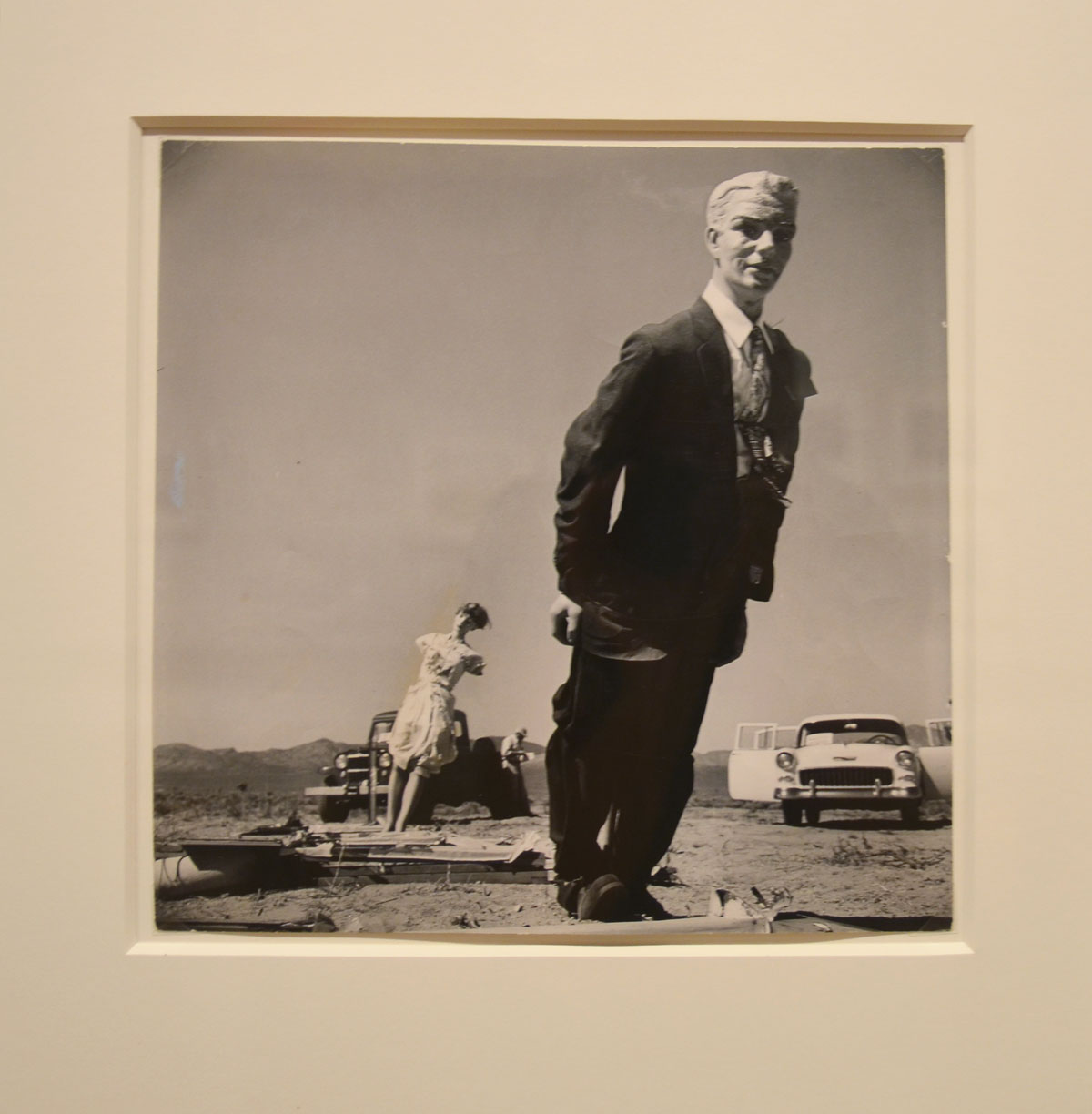
below: Photo by Dean Loomis, 7 May 1955 of scorched male mannequin standing in the desert 7,000 feet from the 44th nuclear test explosion at Yucca Flat Nevada. Photo taken the day after the blast. Apparently mannequins were used to test the effects of the nuclear blasts on people and this photo shows that people at 7000 feet from a blast could be burnt but alive.
below: Mushroom clouds on a wall

below: Part of ‘Uranium Tailings #2, Elliot Lake Ontario’ a photograph by Edward Burtynsky.
Eliot Lake was established in 1955 as a mining town after uranium was discovered in the area. In the early 1990’s the mines closed because of depleted reserves and low prices for uranium.
Tailings are the materials left over after the valuable part of an ore has been removed. The uranium ore found at Eliot Lake had very little uranium in it, only about 0.1% of the ore was uranium.

below: Inkjet prints by David McMillan, part of four on display from his series of photographs of places abandoned because of the Chernobyl disaster in 1986. The photograph on the right is of the nursery at Pripyat Hospital taken in 1997. Beside it is a picture of a classroom in a Pripyat nursery school.
Pripyat is an abandoned city in northern Ukraine. It was built in 1970 to service the Chernobyl Nuclear power plant. Following the explosion and fire at Chernobyl on 26 April 1986, the city’s 49,000 people were evacuated


The exhibit continues until 15th November.
#atomicAGO
The fifth floor of the Art Gallery of Ontario is devoted to contemporary art.
Three of the present exhibits are best described as conceptual art. Conceptual art is art where the idea is more important that the look. The story behind the work trumps aesthetics.
This blog post has taken me many days to write as I struggle with the love hate relationship that I have with conceptual art. My biggest complaint about conceptual art is that skill too often gets thrown out the window; God forbid that something like artistic merit should impede the artist. I can empathize with causes and I can support ideas without liking the end product. In other words, just because I don’t the ‘art’ doesn’t mean I don’t “get it”.
Anyhow, on to the exhibits.
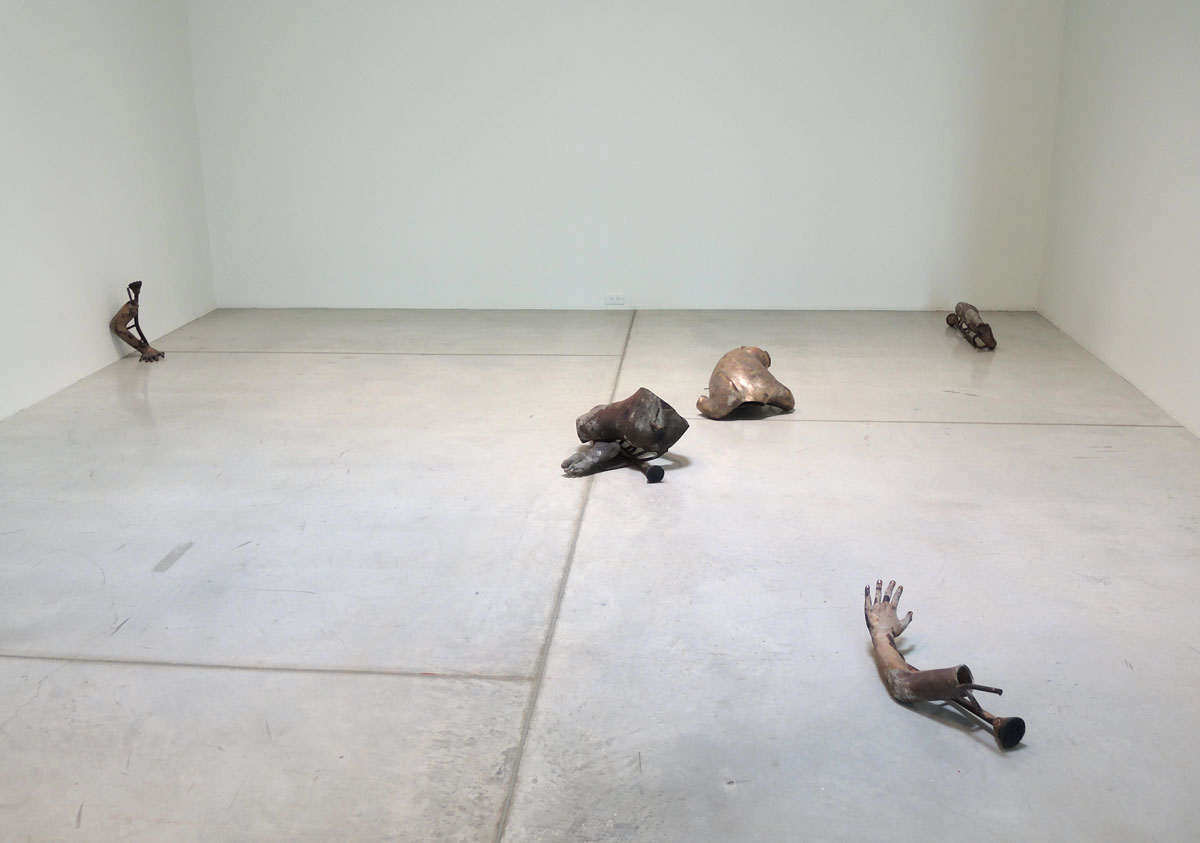
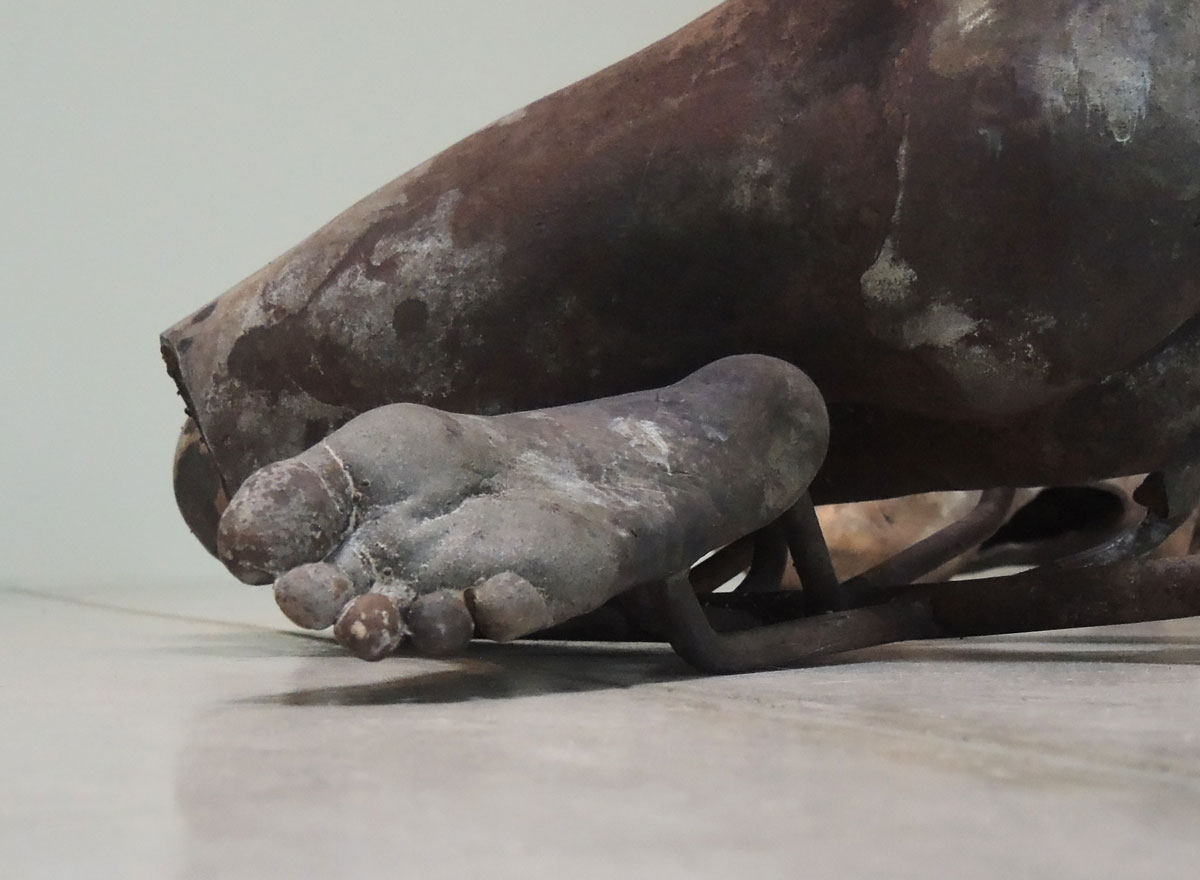
First, ‘Gustav’s Wing’ is an exhibit by Danh Vo, a man born in Vietnam but raised in Denmark. Using his nephew as a model, Vo had a bronze of cast of the boy’s body made in six pieces. The pieces are then arranged within a room. “The resulting installation gives a fragmented and evocative portrait of a boy whose Danish and Vietnamese heritage echoes that of the artist, but who represents the next stage in the family’s story – that of the first-generation Danish citizen”, according to the description of the exhibit.

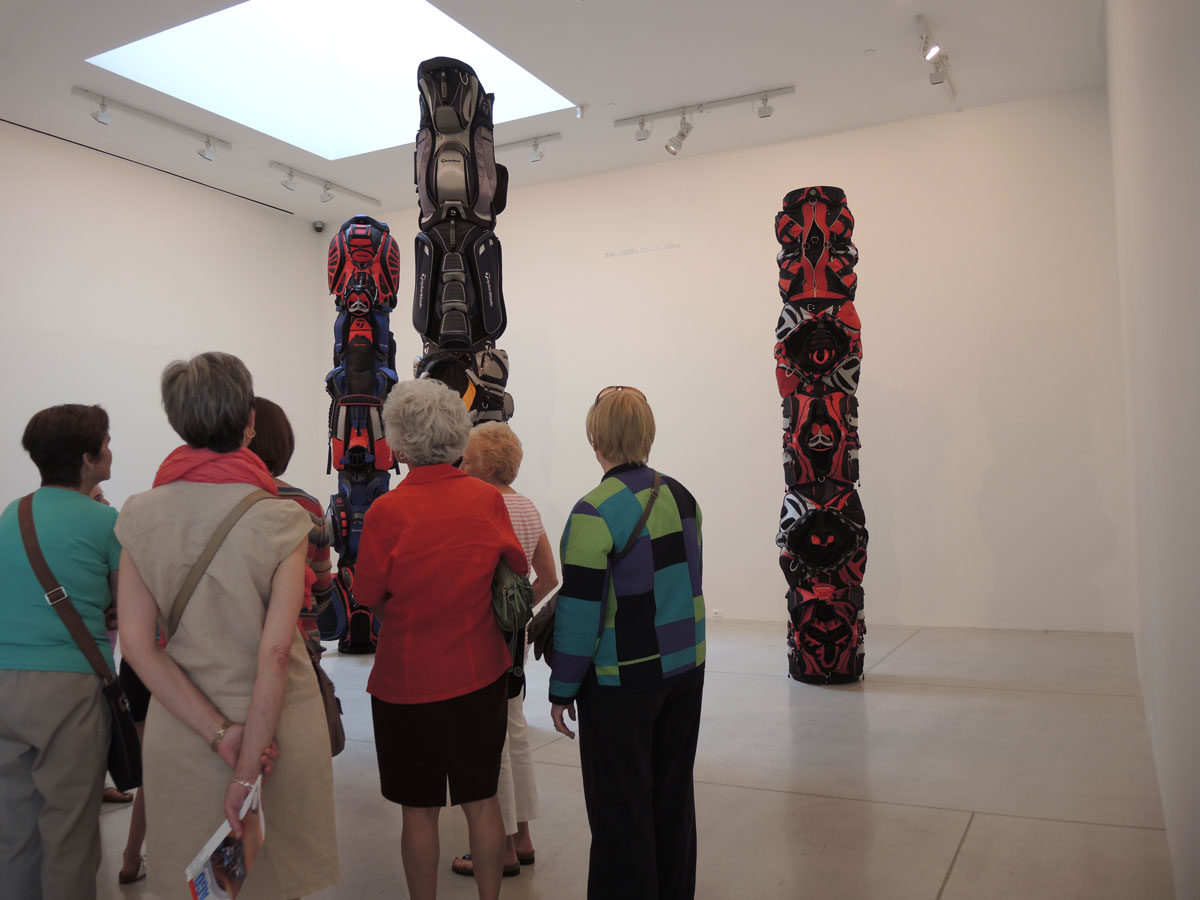
Second, there are three totem poles by Brian Jungen entitled ‘1960’, ‘1970’, and ‘1980’. All three were made in 2007. The words in the artist’s statement about this piece say “The towering works recall the complex social and political tensions that can result from First Nations land claims.” Part of the artist’s reasoning is that golf courses are manicured and their use is quite different from the way land is used by First Nations.
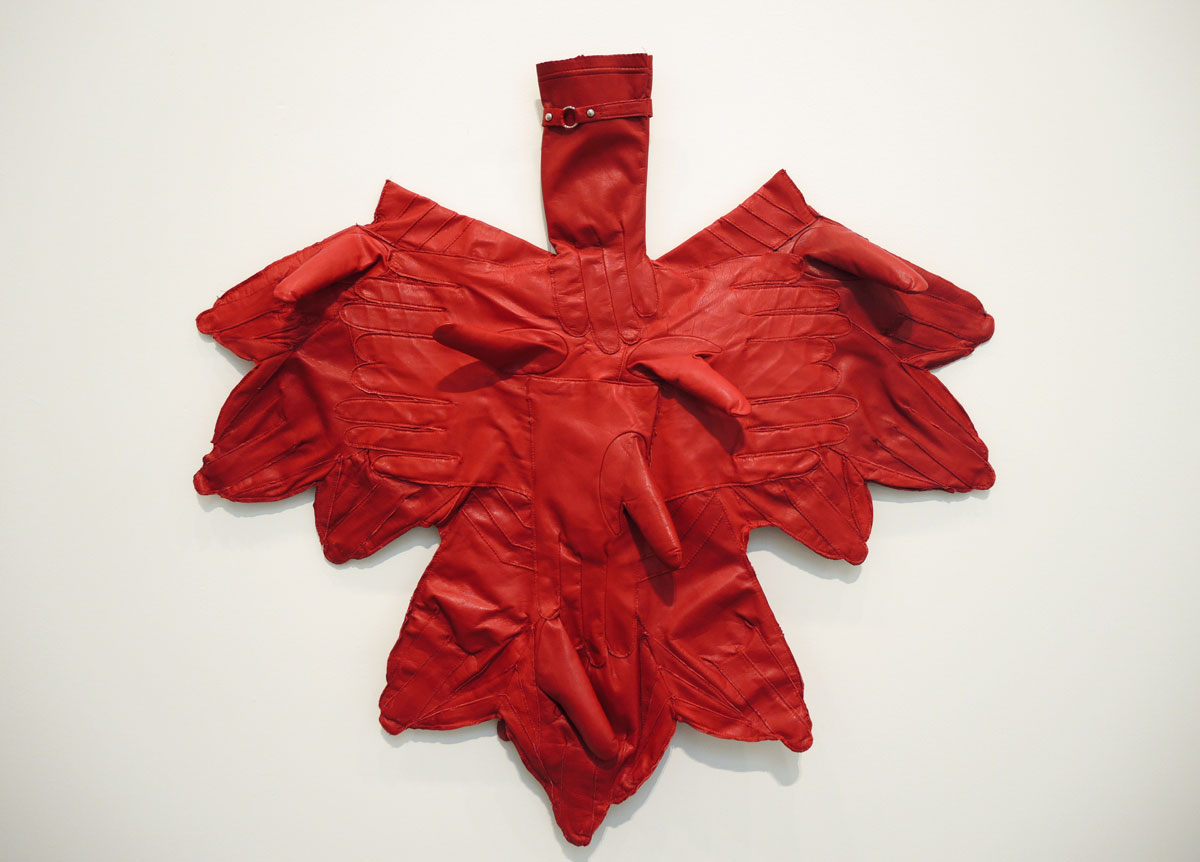
below: Anther piece by Brian Jungen, this one is called ‘Wieland’ and it is made of red women’s leather gloves. It is supposed to be an upside down maple leaf, i.e. a Canadian symbol turned on its head. When I first saw it, I saw an eagle with its wings spread but maybe that’s just me.
The words on the wall for this piece: “Its title celebrates Canadian artist Joyce Wieland (1931-1998) whose work in the 1960s and 1970s proposed a gendered patriotism in which indigenous art and culture were given only tokenistic inclusion. With Wieland, Jungen positions himself as part of and against an established narrative of Canadian art history.”
In Wieland’s opinion Canada was female I guess that that is what “gendered patriotism” means. Otherwise, you will have to figure this one out for yourself.
Lastly, there is an installation by Duane Linklater. Each garment rack is piece and they have names like “My brother-in-law, my sister” and “The marks left behind”. Furs of different animals such as fox and skunk hang from the garment racks. One has an old T-shirt and one has a piece of orange fabric. “The evocative titles of the pieces speak to family ties, articulating a sense of personal loss” according to the description of the work found on the gallery wall.

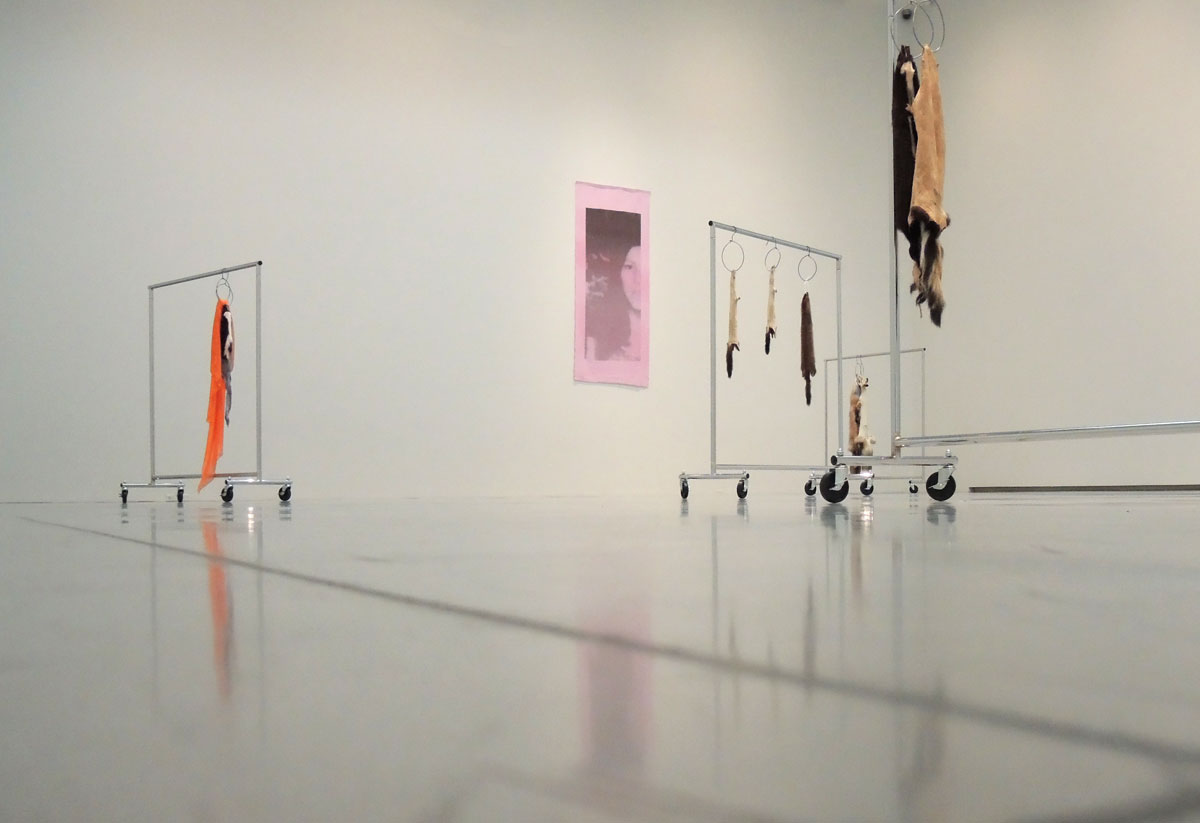
The two pink pictures on the wall are each a half of a portrait of a woman called Anna Mae Aquash who died in 1976. Together they form ‘Family Photograph’. Aquash was a Miqmaq woman who was involved as a “radical activist” in the American Indian Movement of the early 1970s. She was murdered. If you read the description of the work on the gallery wall, you will read these words: “By including her image, Linklater expresses a sense of familial connection with Aquash and establishes a symbolic relationship with the previous generation while asserting himself in the present. ” Pardon?
The words on the wall don’t tell you that she was murdered by her own people because they thought she was an FBI informant. So what relationship is the artist trying to establish? How does this even remotely lead to “asserting himself in the present”? Sorry, but empty jargonish words leave me cold. This isn’t art. Linklater may have a valid idea but that doesn’t make it art.

Stephen Andrews POV
an exhibit at the Art Gallery of Ontario
Stephen Andrews is a Toronto artist whose career began in photography and the exhibit now on at the AGO does include a few excellent 8×10 photographs. The main part of the exhibit though are approximately 20 (mostly large) paintings of his.

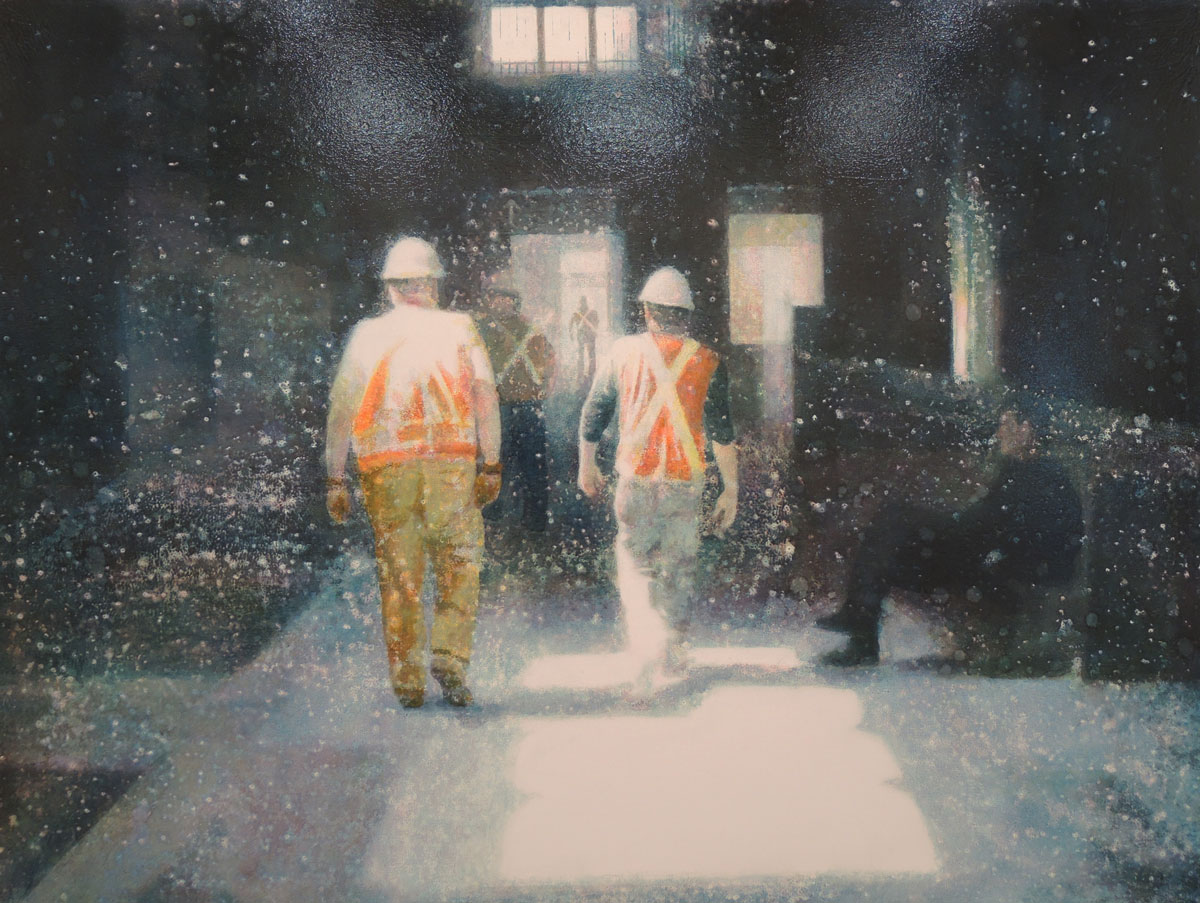
below: ‘X-men at Union’, 2013, oil on canvas
Construction workers at Union Station, Toronto
below: ‘After Before/After After’ oil on wood panels
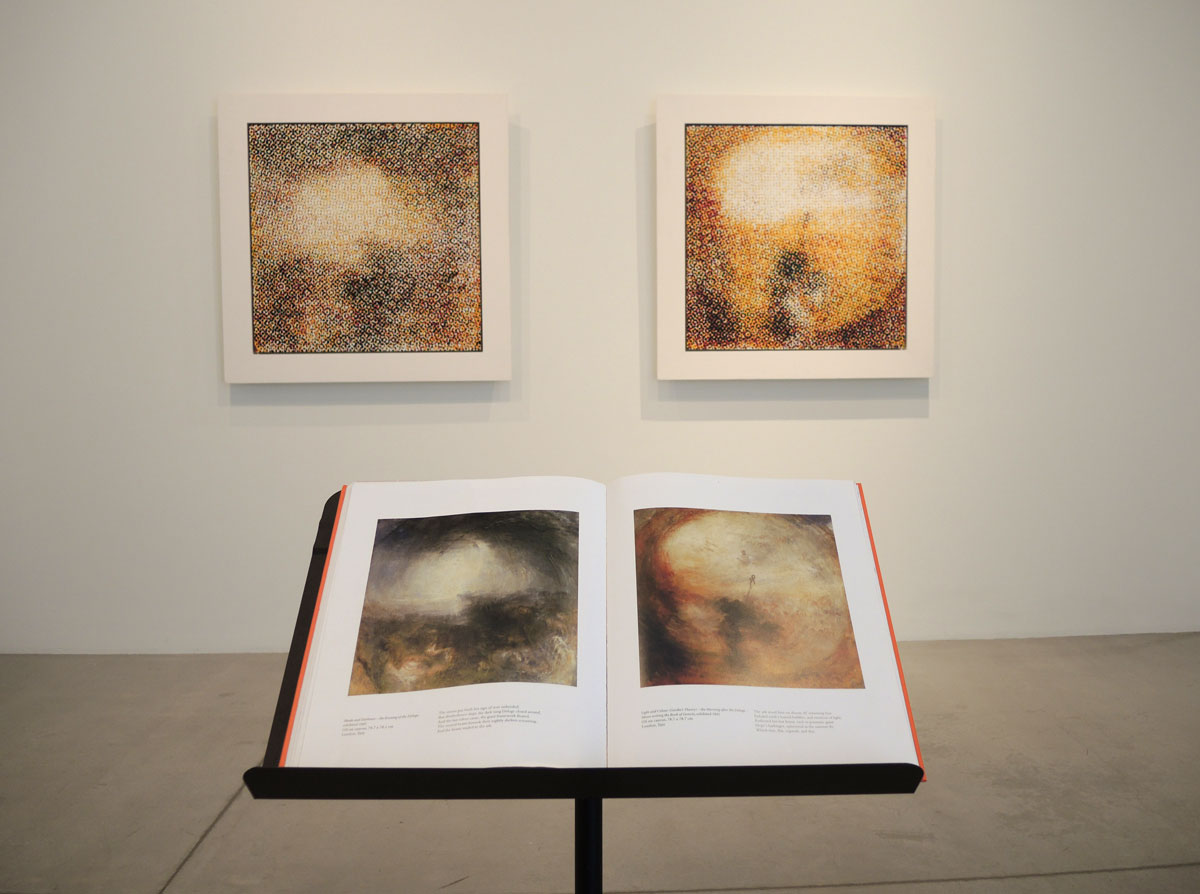
The two paintings on the wall were based on landscapes by J.M.W. Turner that depicted scenes before and after the flood described in the bible (or before and after chaos). Andrews has painted his with dots in only four colours, yellow, magenta, cyan and black
below: detail from ‘Crossing’, 2011, oil on canvas

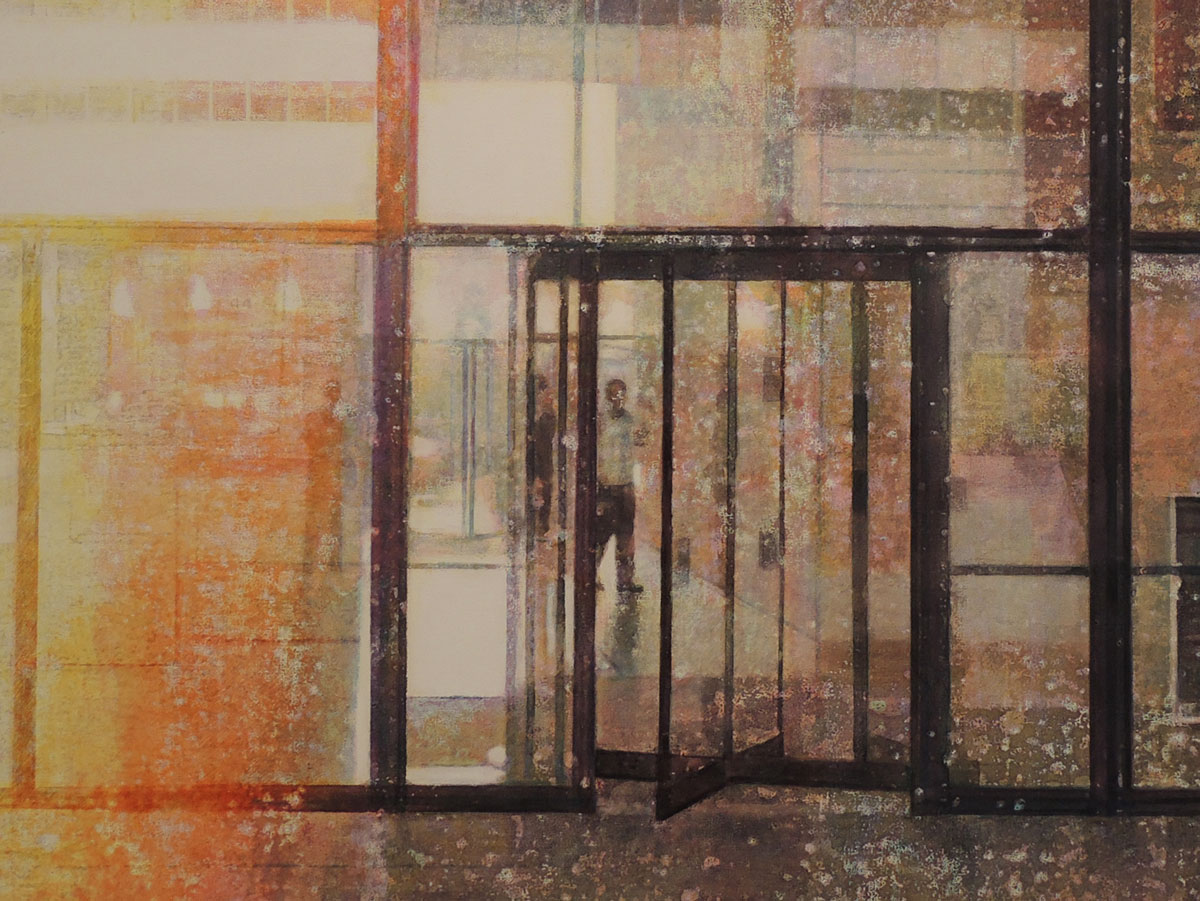
below: close up of part of ‘Entrance/Exit’, 2014, oil on canvas
Planet IndigenUS is a ten day festival co-produced by the Harbourfront Centre in Toronto and the Woodland Cultural Centre in Brantford. It features 300 artists with dance and music performances as well as visual art exhibits at a number of venues. One of the venues is the gallery at Harbourfront Centre where a number of artists of Anishnabe heritage are showing their work. Two of the artists are Christian Chapman and Scott Benesiinaabandan, and a sample of their work is presented here.
Screenprints by Christian Chapman
 gaawiin wiikaa ji gwerina-ka-nawich
miskwadessi opixwanak misa oi kitimagia
miskwadessi wag dash awessiwag
ji manaadji-a-ka-ni-watch
never turn a turtle on its back so that it is helpless
turtles and all other animals are to be accorded respect
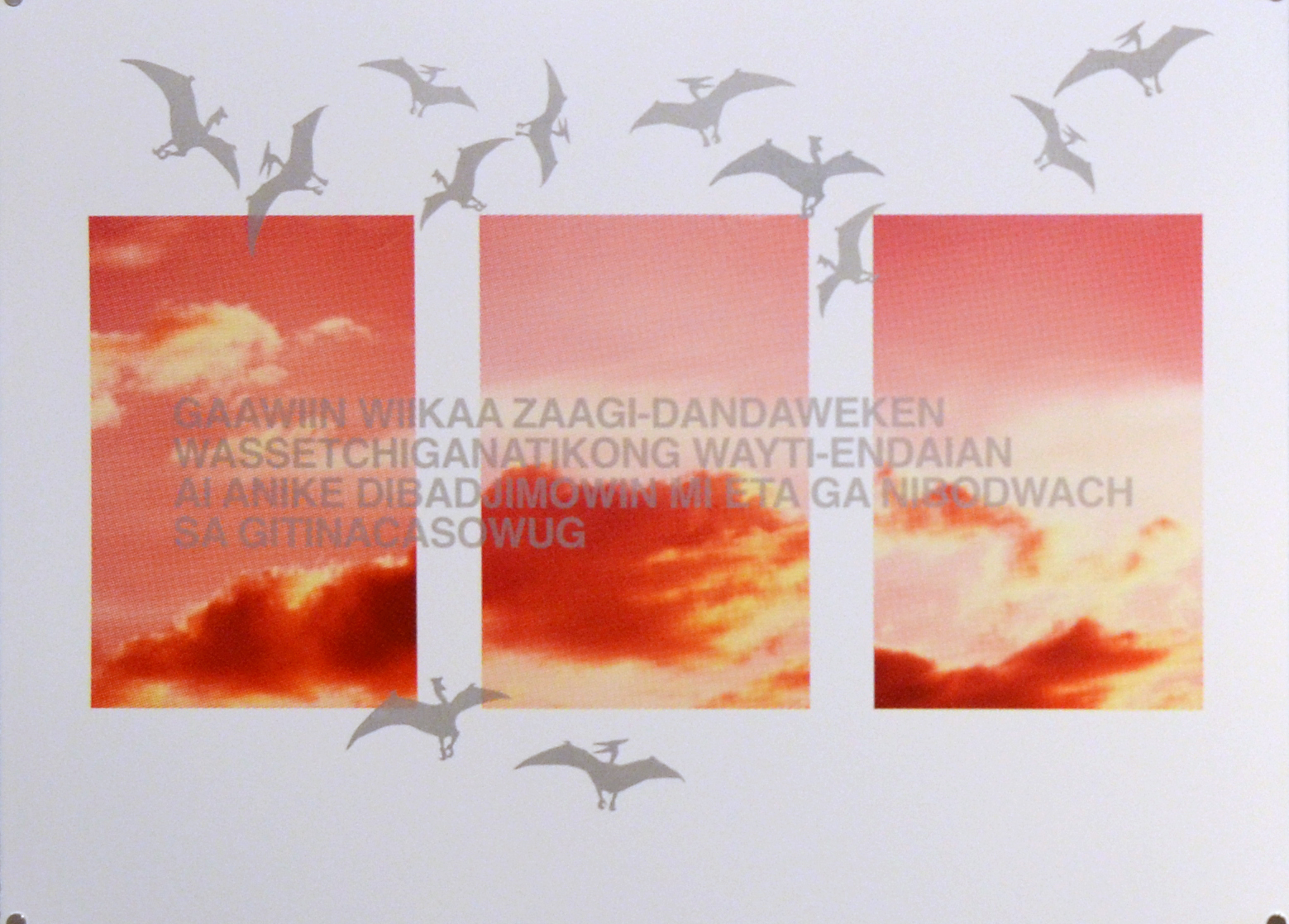 gaawiin wiikaa zaagi-dandaweken
wassetchiganatikong wayti-endaian
ai anike dibadjimowin eta ga nibodwach
sa gitinacasowug
never climb out a window in your house,
traditionally, only dead people are brought out like that
***
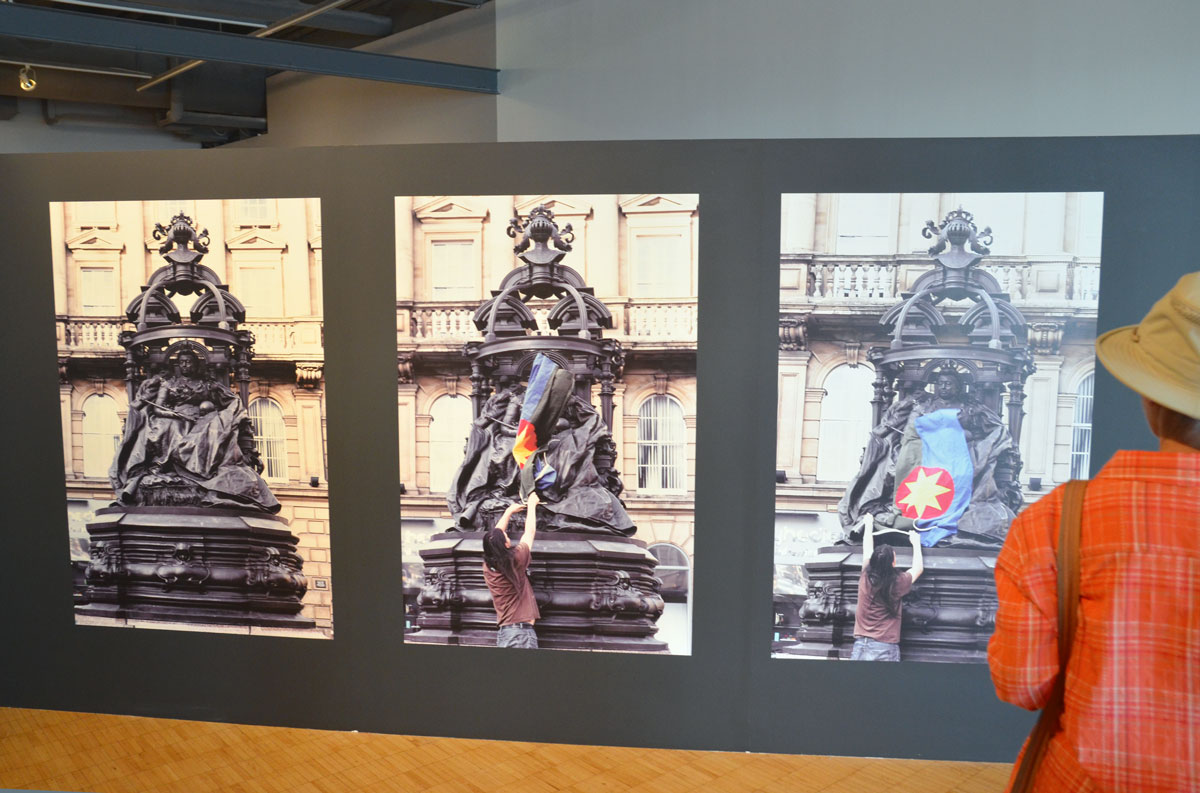
below: ‘God Save the Queen’ by Scott Benesiinaabandan
a series of photos in which the queen is partially covered by the artist’s Solidarity Flag
The art of CubeWorks
now showing at Art/Exp gallery in the Distillery District
CubeWorks is a group of artists that use unconventional materials to create images. They are known for the art that they create using Rubik’s cubes but they also use crayons, lego blocks, records, dice, guitar picks, spools of thread, and other mixed media. The pictures below are just a sample.
below: A copy of ‘The Creation of Adam’ that Michaelangelo painted on the Vatican’s Sistine Chapel ceiling in the early 1500’s. This image is made with 12,090 hand twisted Rubik’s cubes.

below: On a smaller scale, Space Invaders made with 20 cubes.

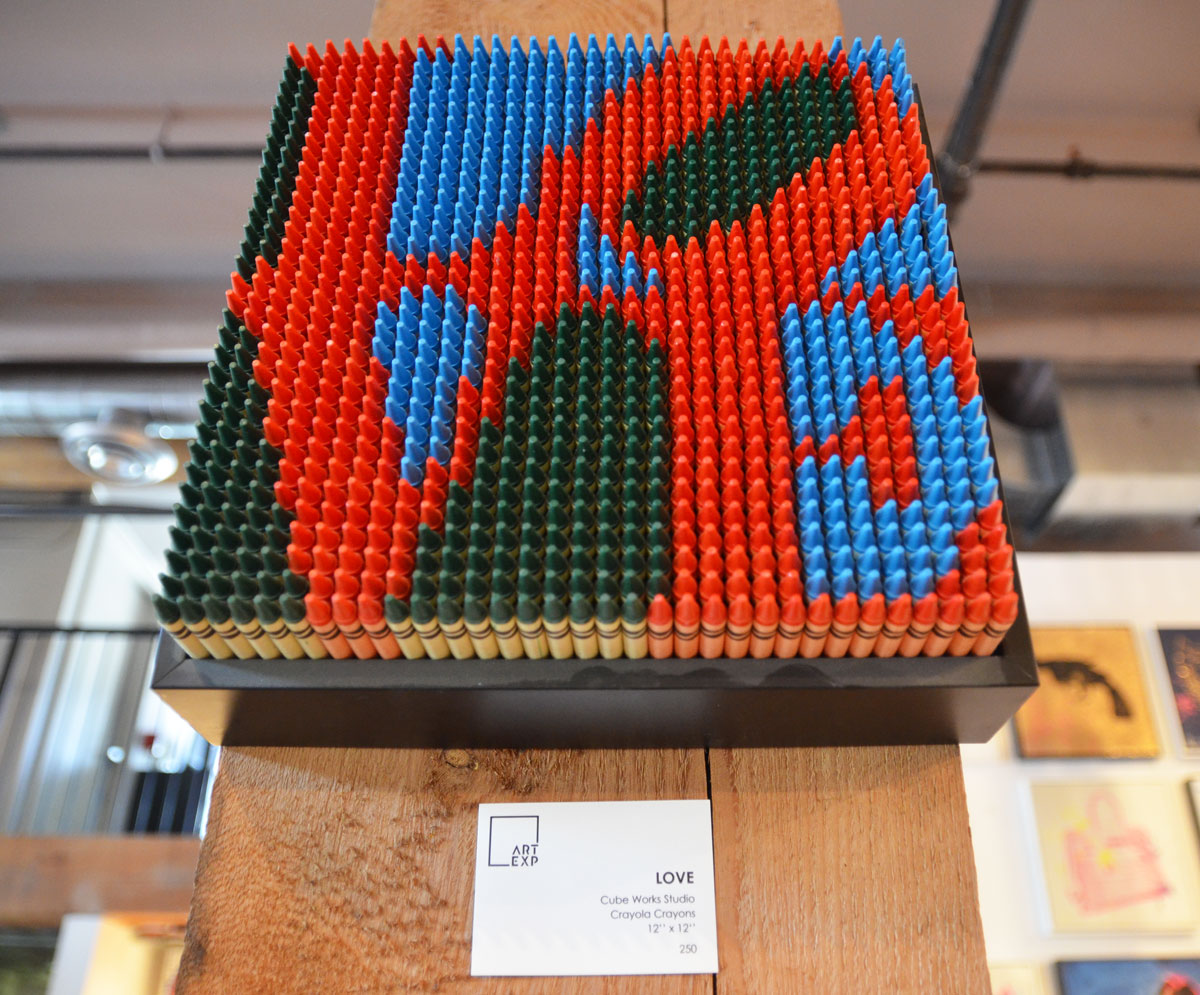
below: Artworks made of crayons, LOVE and a smoking gun.
Each square is 12″ x 12″ and contains just over 1000 crayons.


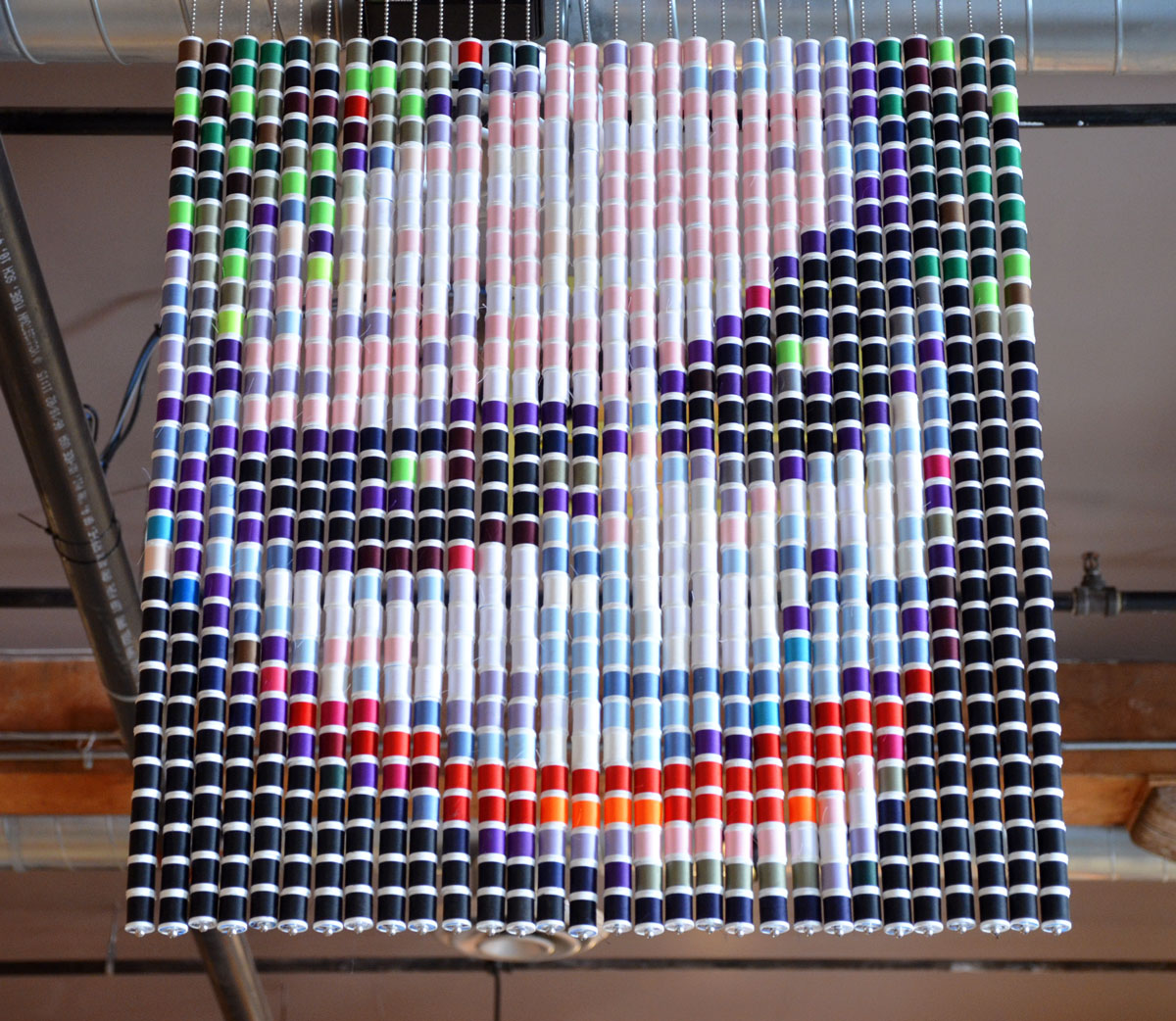
below: The Joker’s face, made with spools of thread, hangs from the ceiling.
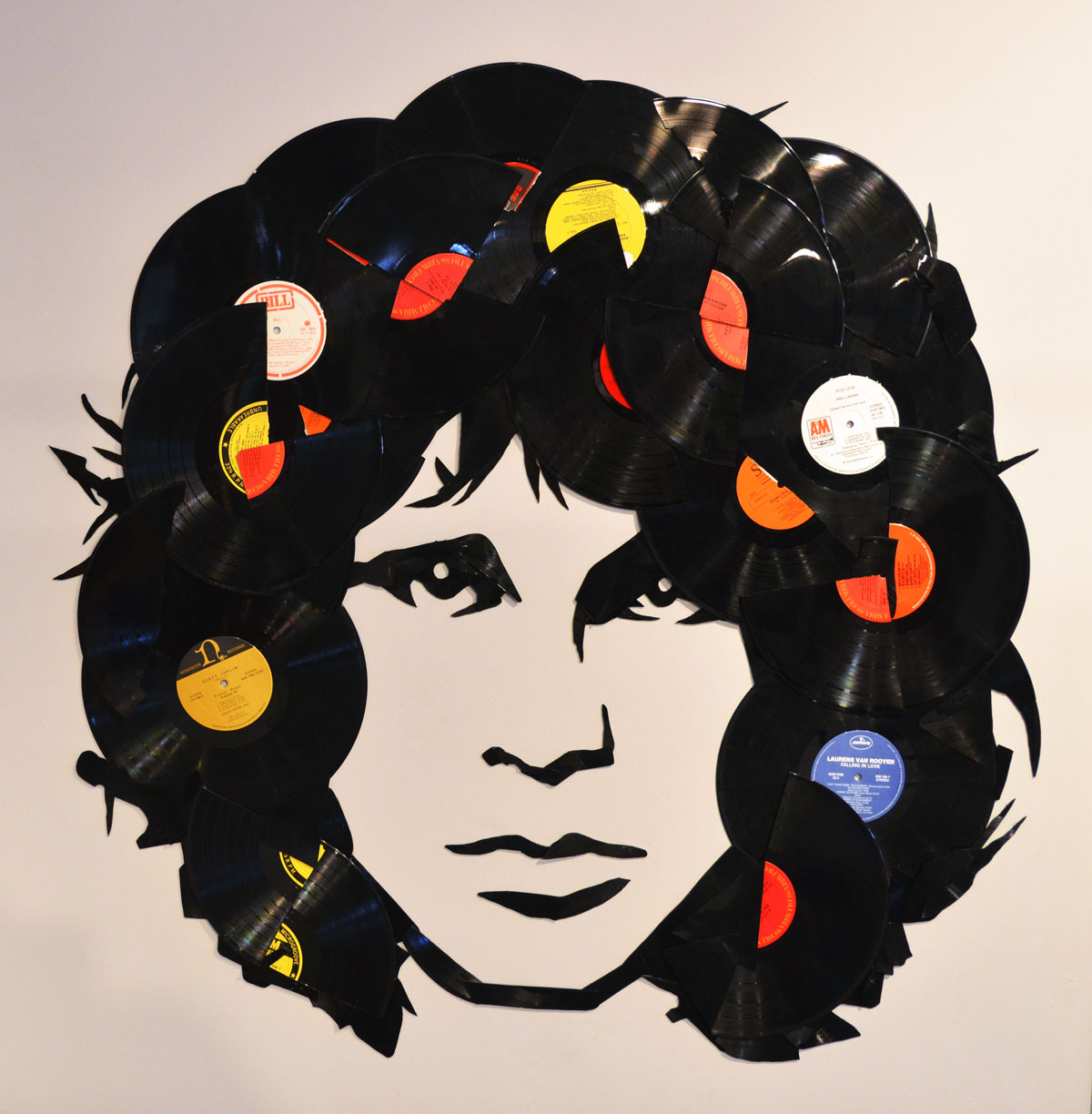
below: Images made with old broken record albums, Amy Winehouse and Jim Morrison


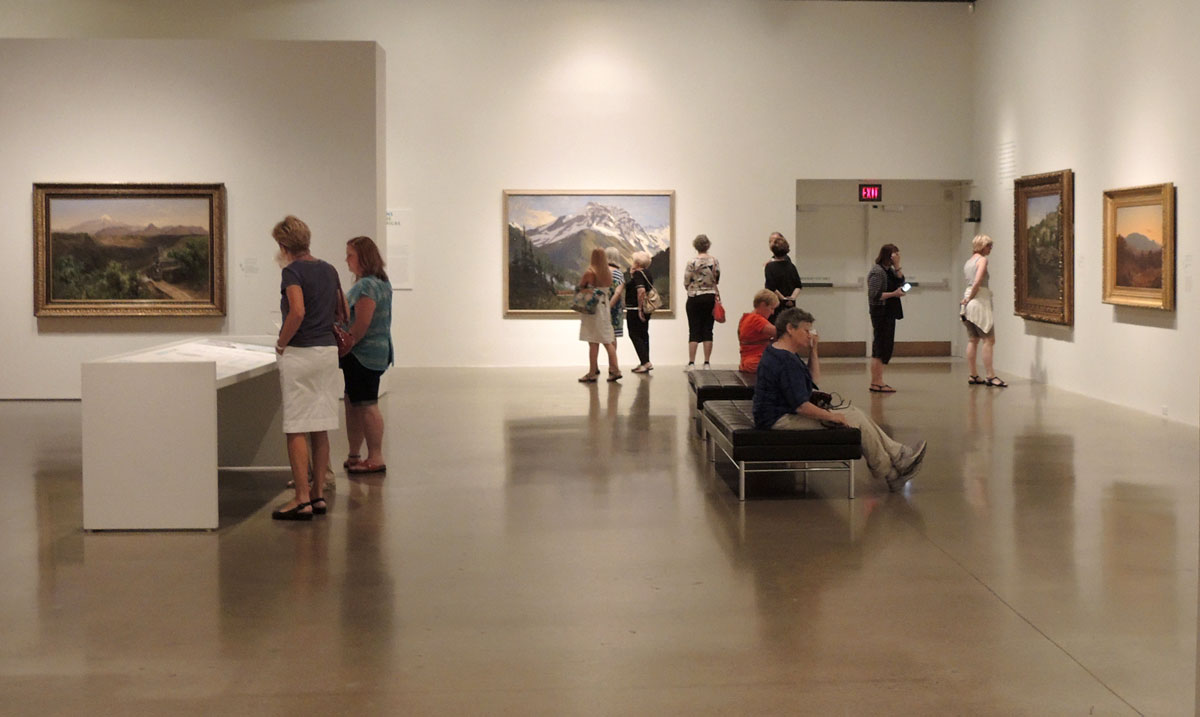
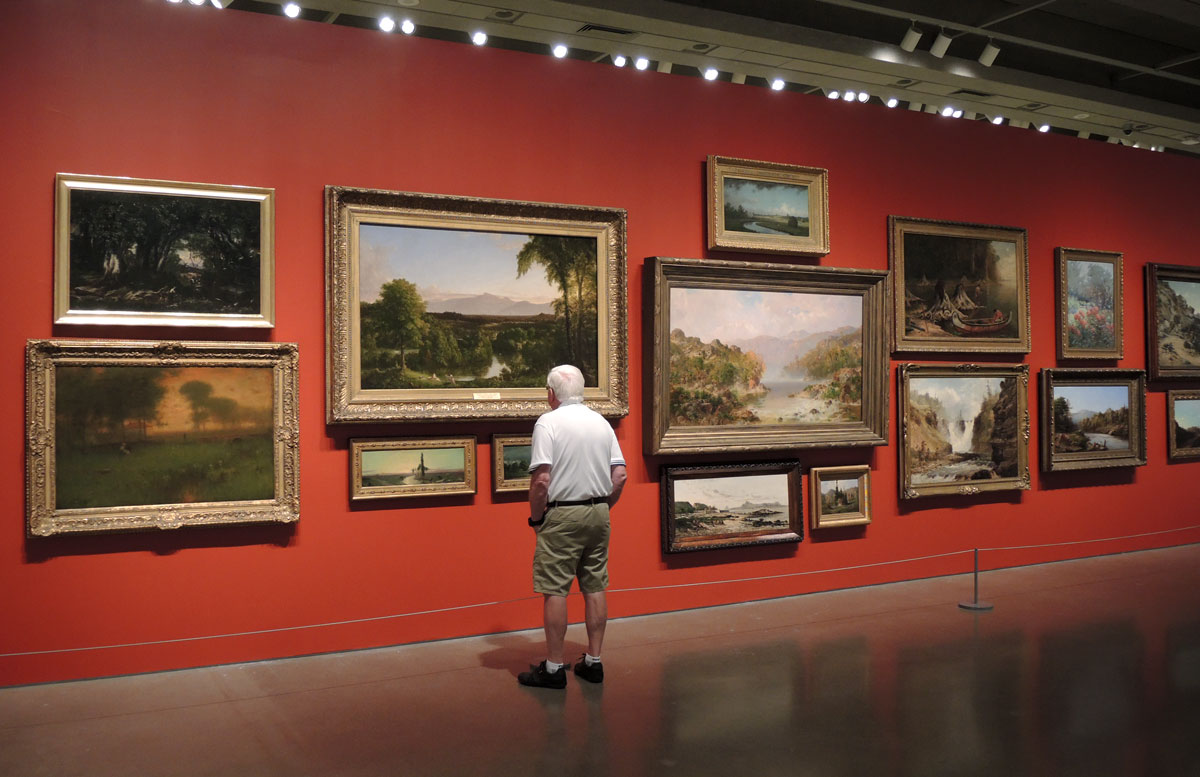
Landscape paintings depicting scenes from the top of North America to the tip of South America
are on display at the Art Gallery of Ontario until Sept 2015. The collection centers on just over 100 works that were painted between the early 1800s and the eary 1900s.
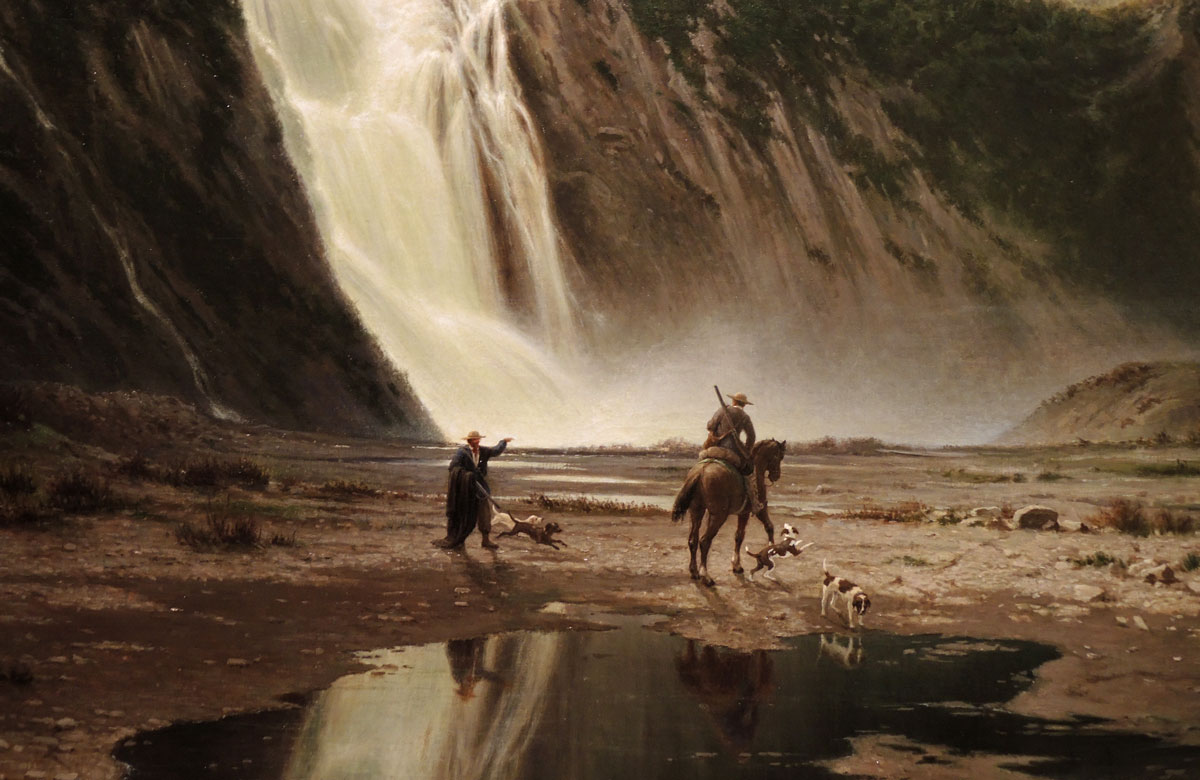
below: part of a painting, ‘Montmorency Falls’ by Guido Carmignani (Parma Italy 1838-1909)
oil on canvas, 1869
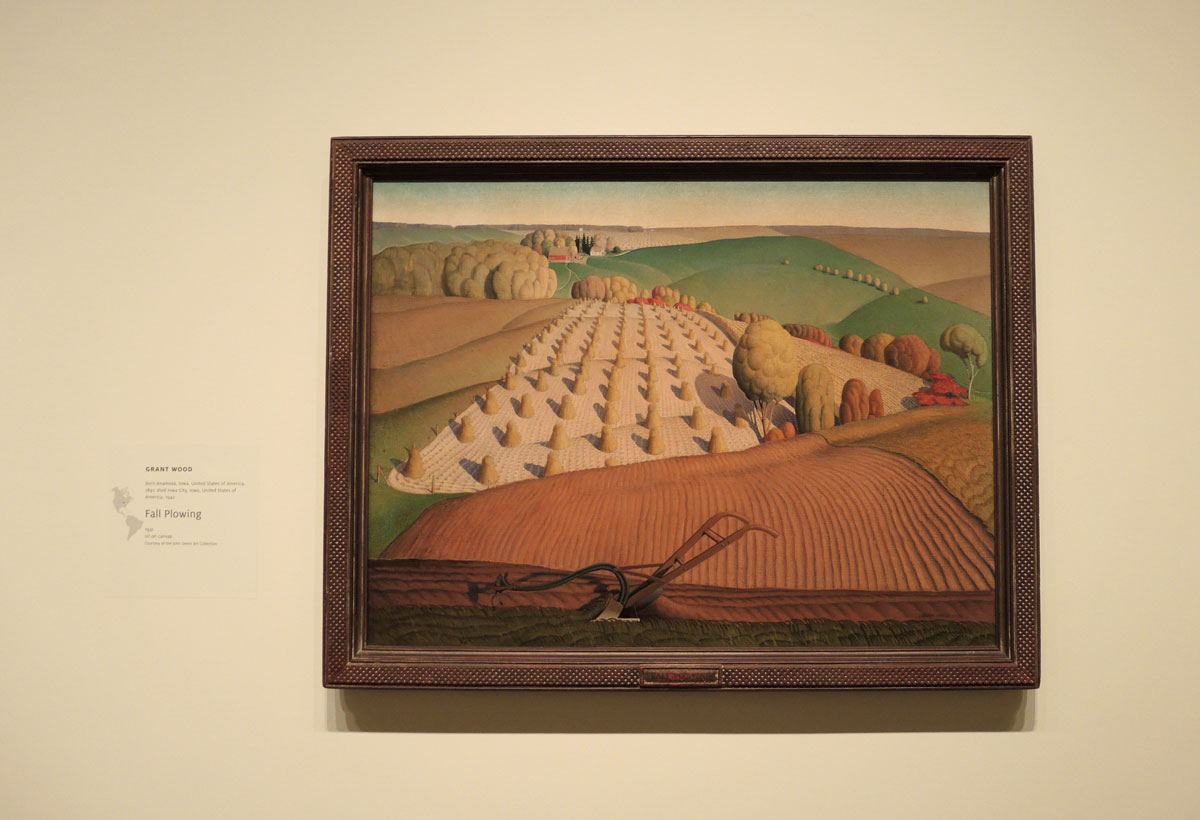
below: Fall Plowing, by Grant Wood (b. and d. Iowa USA), 1931, oil on canvas

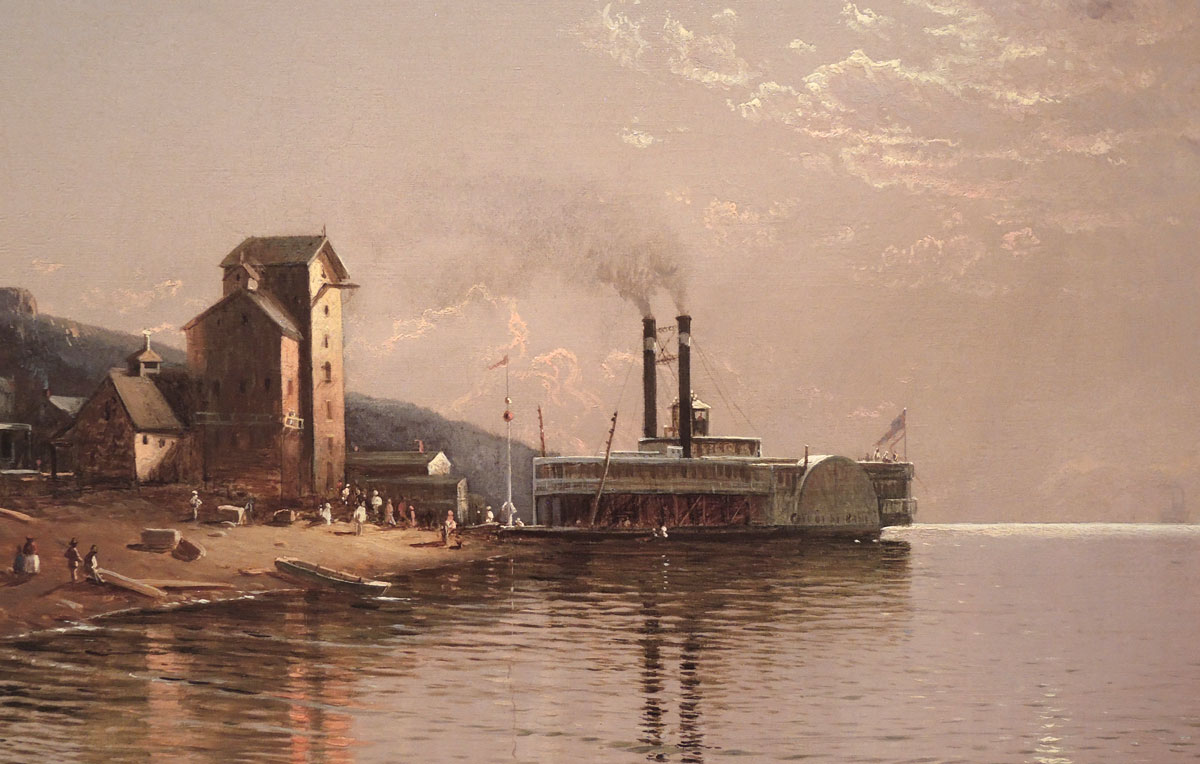
below: part of “The Sidewheeler, the ‘City of St. Paul’ on the Mississippi River, Dubuque Iowa”
by Alfred Thompson Bricher (American), oil on canvas, 1872
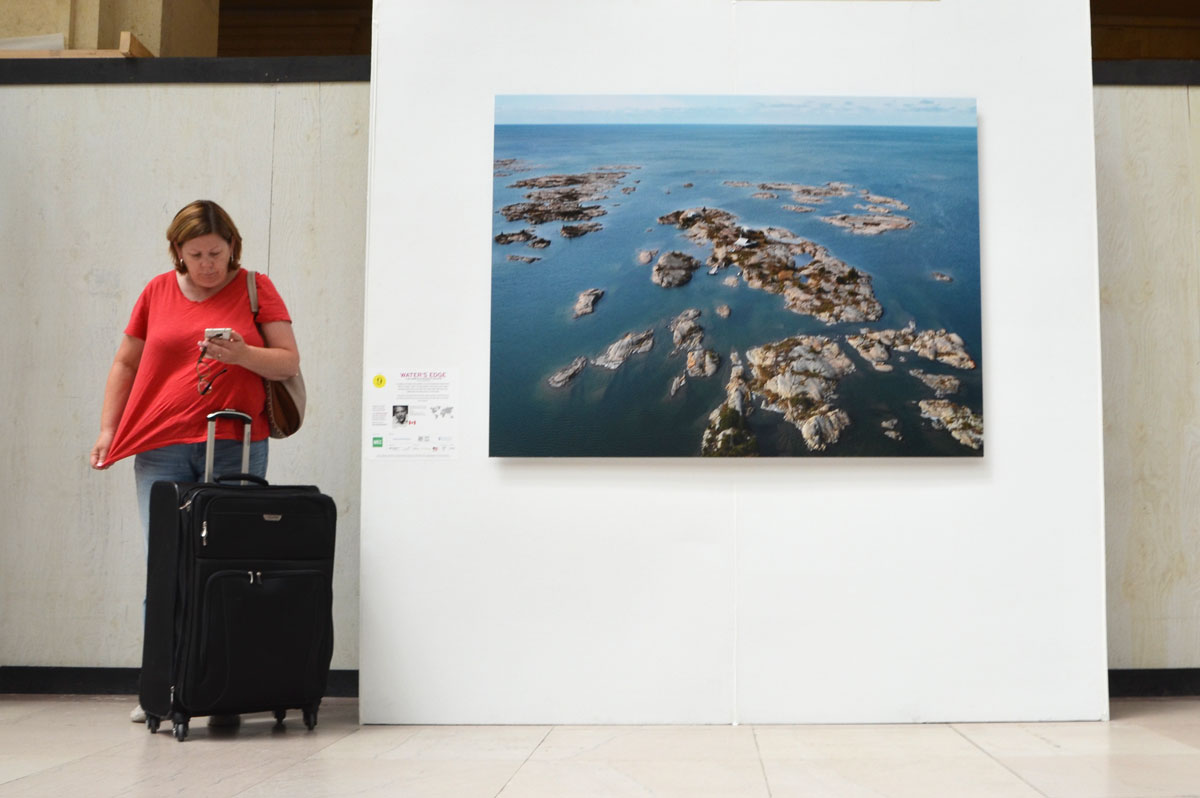
Water’s Edge
A Pan-American photography exhibit
produced by No.9: Contemporary Art & the Environment.
Two venues are involved, Union Station and Pearson Airport. The photos below represent a sample of the photos on show at Union Station.
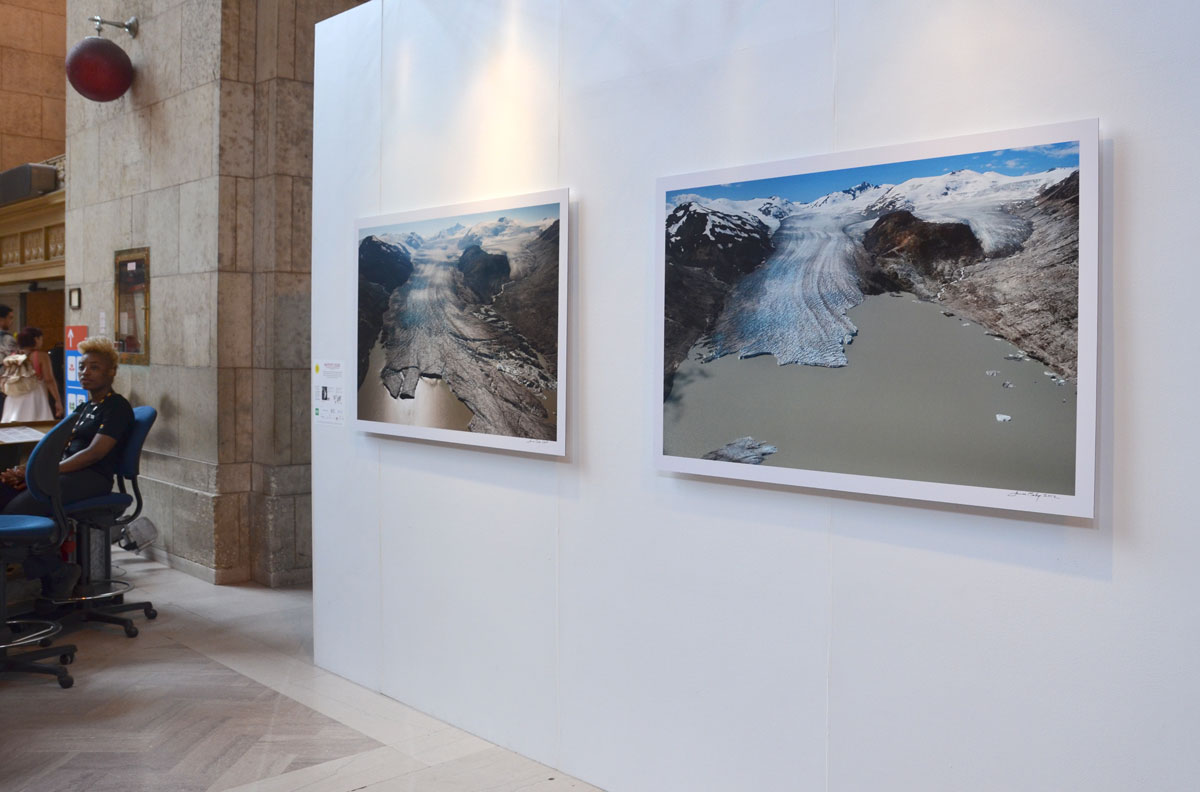
below: Bridge Glacier, British Columbia 2012, by James Balog, part of his study of vanishing glaciers.
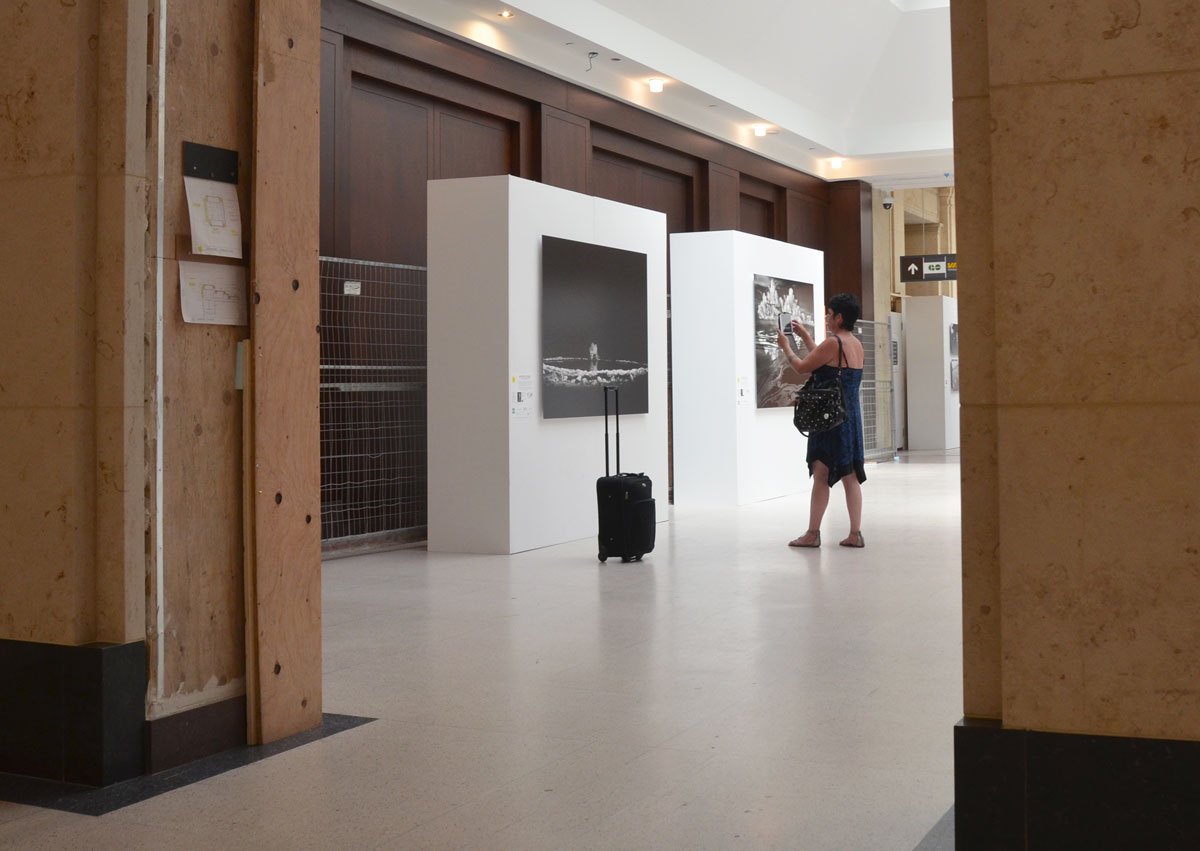
below: Two black and white photographs by Sebastiao Salgado,
part of a photographic project titled ‘Genesis’.
One aim of ‘Genesis’ was to examine “the fragile beauty and grandeur of nature”.
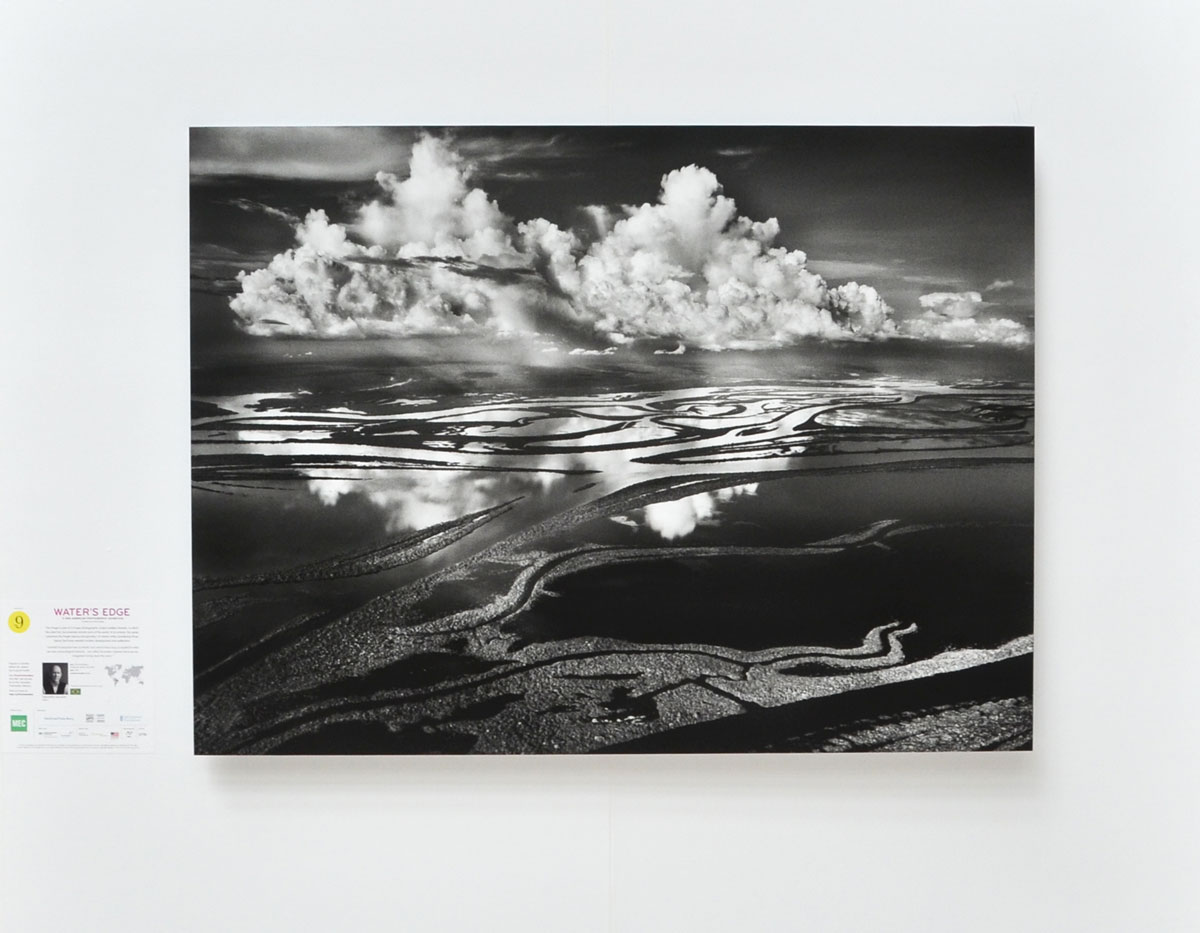
below: ‘The Anavilhanas’ taken in Amazonas Brazil, 2009 by Sebastiao Salgado.
Located on the Rio Negro, the Anivilhanas Archipelago is the world’s largest fresh water archipelago. It is an unique ecosystem with over 400 river islands spread over 90 km. The Rio Negro is 27 km at its widest point. During the rainy season (November to April) many of these islands are underwater.
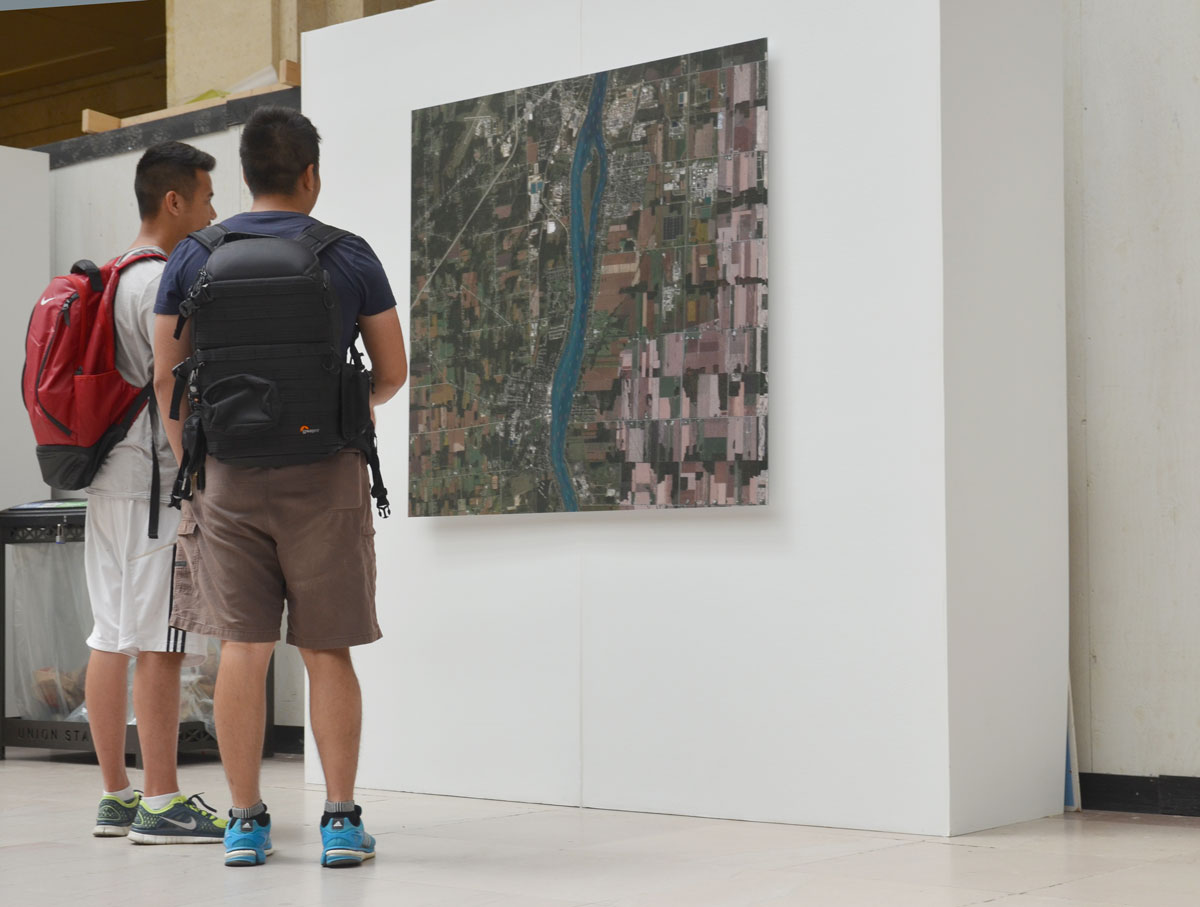
below: ‘Sarnia’ by Gustavo Jononovich, taken in Sarnia, from his “Free Shipping” series.
below: ‘Georgian Bay #1, Four Winds’, Point-au-Baril, Ontario 2009, by Edward Burtynsky.
This picture is part of his Water Series, a series that looks at changing water systems around the world as well as the relationship that we have with these water systems.
The exhibit ends on the 15th of August.
#myhomewaters

