Posts Tagged ‘art’

Yesterday started damp and grey but then flipped to bright and sunny.   Almost spring-like even.   So off to the beach I went.

mural of people enjoying the beach, surfing, jogging on the boardwalk.

Well, not that kind of beach.   It does look warm though doesn’t it?  Yesterday it was more like this:

below: Looking towards Lake Ontario from Kew Beach Ave.  Lots of trees and lots of what looks like grass but is more like mud.   Squish, squish as I walked gingerly across the water logged ground, trying to keep my shoes clean.

large park beside Lake Ontario at Kew Beach, Toronto, large mature leafless trees, spring, grass is brownish colour, some people in the distance, walking on the boardwalk,

The goal?  To check out this year’s warming stations art installations.  Lots of others had the same idea as it turns out.   Some kids, some dogs, but that’s okay.

below: Interacting with “Nest” both on the outside…..

a woman model poses beside an art installation on the beach

below: …. and on the inside. Like all the other warming stations, this one is built around a lifeguard station.

kids climbing on a lifeguard station that is inside Nest, an art installation that is open to the sky at the top of the lifeguard chair.

below: The structure is covered with netting-like fabric on the inside and webbing on the outside.  It was designed by a team from Ryerson University – Adrian Chiu, Arnel Espanol, and Henry Mai.

an older couple examine the fabric that is on the inside of Nest, a warming station at Kew Beach

below: A sign of the times, a pink pussy hat makes its appearance as “Pussy Hut”

large oversized pink pussy hat as an art installation on the beach

two little girls inside the large pink pussy hut warming station

below: “What’s all the fuss about?”

a small black and white dog with a blue neoprene vest and a red coat with 4 legs

below:  A large square made of many pieces of hanging red fabric, anchored at the bottom with plywood.  This is “Obstacle” by Kien Pham.

Obstacles, by Kien Pham, an art installation part of warming stations 2018 in Toronto, by Lake Ontario, consists of many large flaps of red fabric that you can walk between.

a girl in pink jacket with pink hood stands between large flaps of red fabric that is part of Obstacles, an art installation


below: “Revolution” by a design team from OCAD university. It consists of 36 vertical red poles with conical metal pieces that twirl. You can look through them or speak through them, or just walk amongst the red poles.

people walking amongst an an art installation of small conical tubes like megaphones on red poles of differing heights.

looking down a metal tube

an art installation of small conical tubes like megaphones on red poles of differing heights, lake in background

below: Red!

a mother holds her young son's hand as they stand together on a beach overlooking Lake Ontario, backs to the camera

below: “Rising Up” by University of Guelph, School of Environmental Design and Rural Development.  The design was inspired by the topography of the Don Valley.

a white and brown dog on a leash in the foreground, people and kids climbing on a wooden structure which is actually an art installation called Rising Up

looking through part of rising up, a wood structure built on the beach, a couple walks hand in hand between the art installation and Lake Ontario

rising up, an installation part of warming stations at kew beach, beside lake ontario

below: Ooops!  One has blown over and collapsed already (it was quite windy).  Ironically it was called “Wind Station” (designed by Paul van den Berg and Joyce de Grauw).  When it was first constructed, it was in the shape of a nuclear cooling tower and you could go inside.  The little plastic windmills continue to blow in the wind.

a few people in the background, they are looking at white wood and white plastic toy windmills lying on the ground. it is a collapsed art installation, part of warming stations at kew beach, by Lake Ontario

below: Not everyone was looking at the warming stations.

a lone person standing on a beach, looking out over Lake Ontario, back to camera, in full wetsuit, holding onto a surf board under his (or her) arm, another surfboard sits on the sand.

below: This is ‘Make Some Noise’, designed by Alexander Greiss and Jorel Heid. Apparently it is based on based on the intonarumori, an invention of the Italian futurist Luigi Rusollo in 1914. An intonarumori generates noise. Rusollo envisioned noise music replacing traditional forms of music but he was not successful and none of his contraptions survived.

people on the beach checking out the art installation, Make Some Noise, a large yellow and black vertical box, with four large black loudspeakers

a child with a red jacket is trying to climb inside a large black speaker, conical shaped, on the side of a black and yellow art installation at the beach, warming stations, Kew Beach, lake ontario is in the background.

below: This is one side of the box. The red is a handle that can be turned thus generating noise. I don’t think that it was working. Each side had a handle and a black speaker.

close up detail of one side of Make Some Noise, an art installation, yellow and black diagonal stripes, narrow and close together

Stay warm!


A morning exploring some of the art galleries at the University of Toronto.

below: Robarts Library, a large concrete building, is part of the University of Toronto and is their main humanities and social sciences library. It opened in 1973 and has been called Fort Book ever since.

intersection of Harbord and St. George streets, Robarts Library, large concrete building

I have walked past this library many times but I have never gone inside. What I didn’t know about this building is that it is also home to the Thomas Fisher Rare Book Library.  It is named after a Thomas Fisher (1792-1874), who came from Yorkshire to Upper Canada in 1821 and settled by the Humber River.  In 1973, his grandsons, Sidney and Charles Fisher, donated many books to U of T .  Since then, the library has grown to approximately 740,000 volumes including hundreds of versions of Alice in Wonderland in many different languages.  They also collect manuscripts, photographs,  and other rare materials.   You can search their holdings online.

below: The view from the 4th floor observation deck.

interior of Thomas Fisher Rare Book library, looking down from the upper level to the tables below. Shelves of books line all the walls, ceiling is open to 4 or 5 storeys up , large central light fixture

At the moment, the Thomas Fisher Library has an exhibition called “Fleeting Moments, Floating Worlds, and the Beat Generation: The Photography of Allen Ginsberg”. Ginsberg (1926-1997) is known for his poetry but he also took pictures. The Thomas Fisher library has the largest collection of Ginsberg prints in the world.

exhibit of photos by Allen Ginsberg displayed in the Thomas Fisher Rare Books Library at U of T, some black and white photos in a case, some books too, shelves of books in the background

below: Mr. Ginsberg took bathroom mirror selfies.  I wonder what he’d think of instagram?

picture of a black and white photo taken by Allen Ginsberg of himself sitting naked and cross legged in front of a bathroom mirror

Ginsberg became friends with William Burroughs and Jack Kerouac, and the trio later established themselves as the main players in the Beat Movement with their unconventional writing and wild (for the times) lifestyles.  Ginsberg’s first published work was “Howl” in 1956.  It was called “an angry, sexually explicit poem”.   The San Francisco Police Department declared it to be obscene and arrested the publisher.  The court ruled that it was not obscene.  I can see it being “ahead of its time” in 1956 but today it’s fairly tame.

The opening lines:

“I saw the best minds of my generation destroyed by madness, starving hysterical naked,

dragging themselves through the negro streets at dawn looking for an angry fix,

angelheaded hipsters burning for the ancient heavenly connection to the starry dynamo in the machinery of night,

who poverty and tatters and hollow-eyed and high sat up smoking in the supernatural darkness of

cold-water flats floating across the tops of cities contemplating jazz,”

below: Three books about The Beats.

display in a glass top case, three books by Alan Ginsberg, the one in the middle has a yellow cover and is The Beats

The Ginsberg exhibit continues until the 27th of April.

A short walk through part of the St. George campus….did I mention that it was snowing at the time?… to another art gallery on campus.

snow is falling, snow on the ground, tree in foreground, also black wrought iron fence, looking across the playing field of the U of T St. George campus to a building, tower,

below: We passed a moose standing in the snow.

a flat metal sculpture of a moose stands in a small space beside a tree, snow on the ground, snow falling from the sky. public art

The second gallery was the Art Museum at Hart House.   One of the exhibits showing there is “Figures of Sleep”.  Straight from the gallery website is this description of the exhibit: ” [it]…considers the cultural anxieties manifest in the popular and critical imagination around the collapsing biological function of sleep under economic, social and technological transformation”.  What it is is a collection of videos, photographs, and artwork depicting sleep, i.e. people sleeping by a number of different artists.  This exhibit ends on 3rd March.

below: Watching videos of people sleeping

a person watching a large video display in an art gallery

below: She’s very life like.  She’s also much smaller than life sized but even so, she was a bit creepy. “Untitled (old woman in bed)”, 2000-2002, by Ron Mueck.

very realistic and life like scupture of an old woman with grey asleep under a blanket with her head on a pillow

below: “Dream Catcher” by Rebecca Belmore, 2014 .  This wall hanging is quite large.

dream catcher by Rebecca Belmore, a large wall hanging of a person sleeping on the sidewalk, under a blanket with a picture of a lion on it.

below:  The Malcove Collection is in the same gallery.  The collection includes about 500 pieces, not all of which are on display at the moment.  Dr. Lillian Malcove (1902-1981) was born in Russia just before her parents emigrated to Canada and settling in Winnipeg.  She graduated from the University of Manitoba with an M.D. and then spent most of her adult life as a Freudian psychoanalyst in New York City.  Over her life time she amassed a collection of art that she bequeathed to U of T.

wall display cases in an art gallery, religious pieces on display, old, antiquities

below: From the Malcove collection, ‘Male Dedicant’, made of limestone, Coptic, late 4th century or early 5th century

antique stone carving (relief) of a man with curly hair, both hands raised, one hand holding a spherical object and the other hand holding a cross

below:  Detail from “The Burning Bush”, 19th century.

very old painting, religious, virgin mary and baby jesus in the center surrounded by other religous scenes


below: Last but not least, and having nothing to do with art, is this plaque on a wall near the art gallery at Hart House.  It commemorates the relationship between the Canadian and Polish Armies during WW1.  A transcription of it appears below.


plaque on an exterior brick wall commemorating the role of the Polish Army

In the early months of 1917, twenty three Polish probationary officers were trained here by the staff of the Canadian School of Infantry in Toronto.  They were the forerunners of more than 20,000 North American volunteers of Polish descent who were trained in Canada (mostly at Niagara on the Lake) to serve in the French Army, ultimately commanded by Joseph Haller.  The existence of this Polish Army in France went far to assure the presence of Poland at the Peace Conference at the end of the war and played a significant role in the reconstitution of a reunited and independent Poland after 123 years of partition. 
The Canadian Polish Congress has placed this tablet to commemorate the ardent Polish patriotism of so many Polish volunteers from the United States and Canada.   The Congress also wishes to honour the Canadian officers who trained the volunteers, including notably Lieutenant Colonel A.D. Lepan of the staff of this university and his principal subordinates, all from this university as well as Major C.R. Young, Major H.H. Madill, Major W.F. Kirk and Major F.B. Kenrick. A.D. 1990


a bike parked outside an old brick building on St. George campus of U of T, snow covered

More information about:

Allen Ginsberg exhibition

Figures of Sleep, and others, at Hart House Art Museum

Illustrations of the holdings of the Malcove Collection


‘Demonstration’ by Michael Landry
at the Power Plant Contemporary Art Gallery

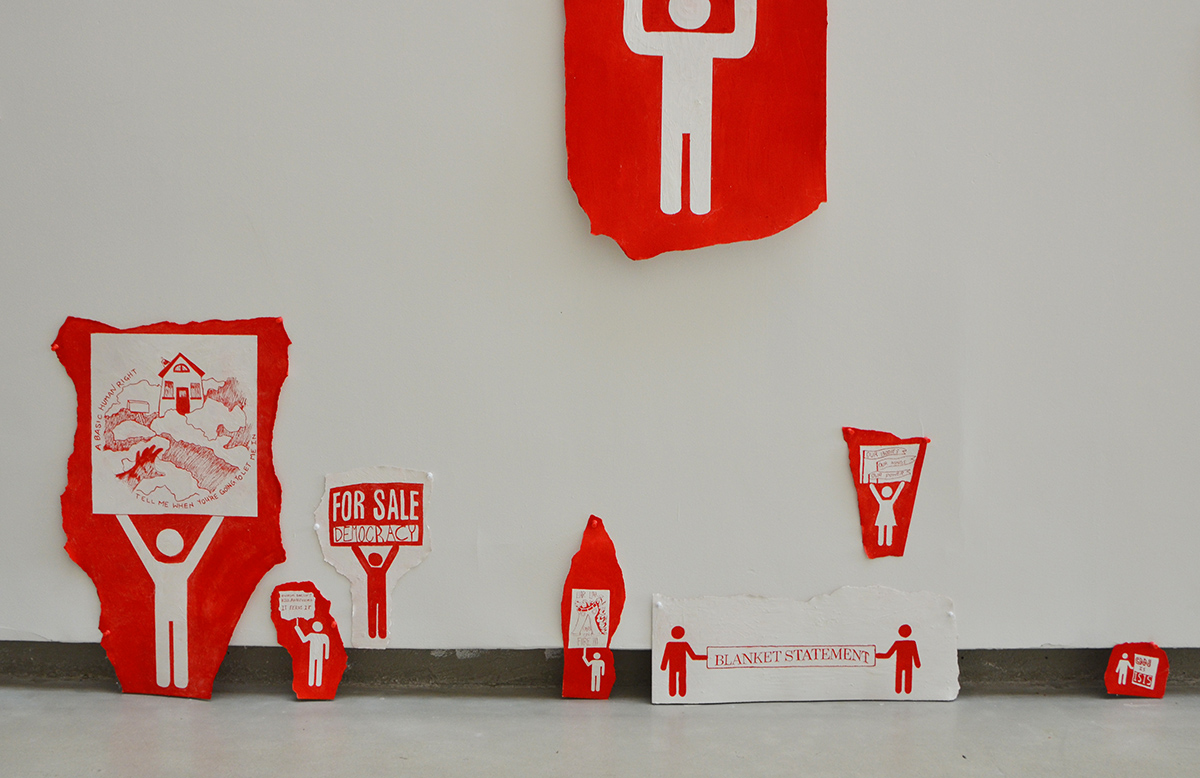
Now showing in the narrow Fleck Clerestory is an installation that consists of a collection of red and white paintings on paper.  Each is a male and/or female shaped silhouette figure with a protest sign.    They are pinned to the wall, from top to bottom.   Every one has a different slogan, phrase and/or image on the placard they are holding.

below: Looking down on the Fleck Clerestory from the upper level.

red and white paintings of demonstration signs being held by stick figure men part of an art exhibit at fleck conservatory on both walls, looking down from the upper level to see whole exhibit, two women on the lower level looking at it.

The work has grown, i.e. more pieces have been added, since it was installed late in September.   Landry has been asking the public to contribute their thoughts and feelings which he then draws.  Over the course of the next few months, it will evolve and grow as more people submit their ideas and suggestions.   In the end there will be a “wall of protest”, or perhaps more aptly, it will be a snapshot of the hopes and concerns that we have.

below: Some of the issues addressed from the serious (stop fracking, end hate, no more marijuana arests, opioid overdoses) to the more lighthearted (such as ‘go topless day’, and ‘we the north’).

red and white paintings of demonstration signs being held by stick figure men part of an art exhibit at fleck conservatory

If you have an image, slogan, or words, and you want to participate in this project, check out the submission guidelines by following this link

red and white paintings of demonstration signs being held by stick figure men part of an art exhibit at fleck conservatory

below: “No pipeline” and  “lorsque les mots perdent leur sens, les gens perdent leur liberte”.

red and white paintings of demonstration signs being held by stick figure men part of an art exhibit at fleck conservatory - sign says no pipeline

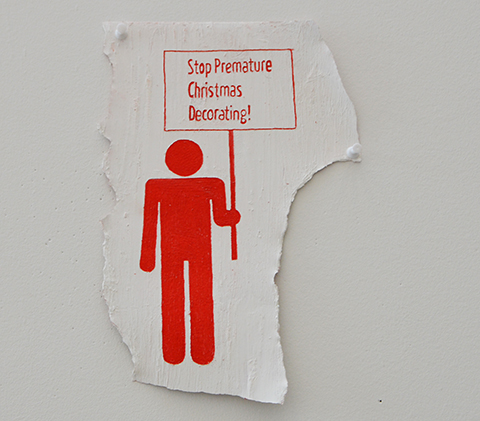
below: “Stop premature Christmas decorating!”

red and white paintings of demonstraion signs being held by stick figure men part of an art exhibit at fleck conservatory - sign says stop premature Christmas decorations

The exhibit continues until mid-May.

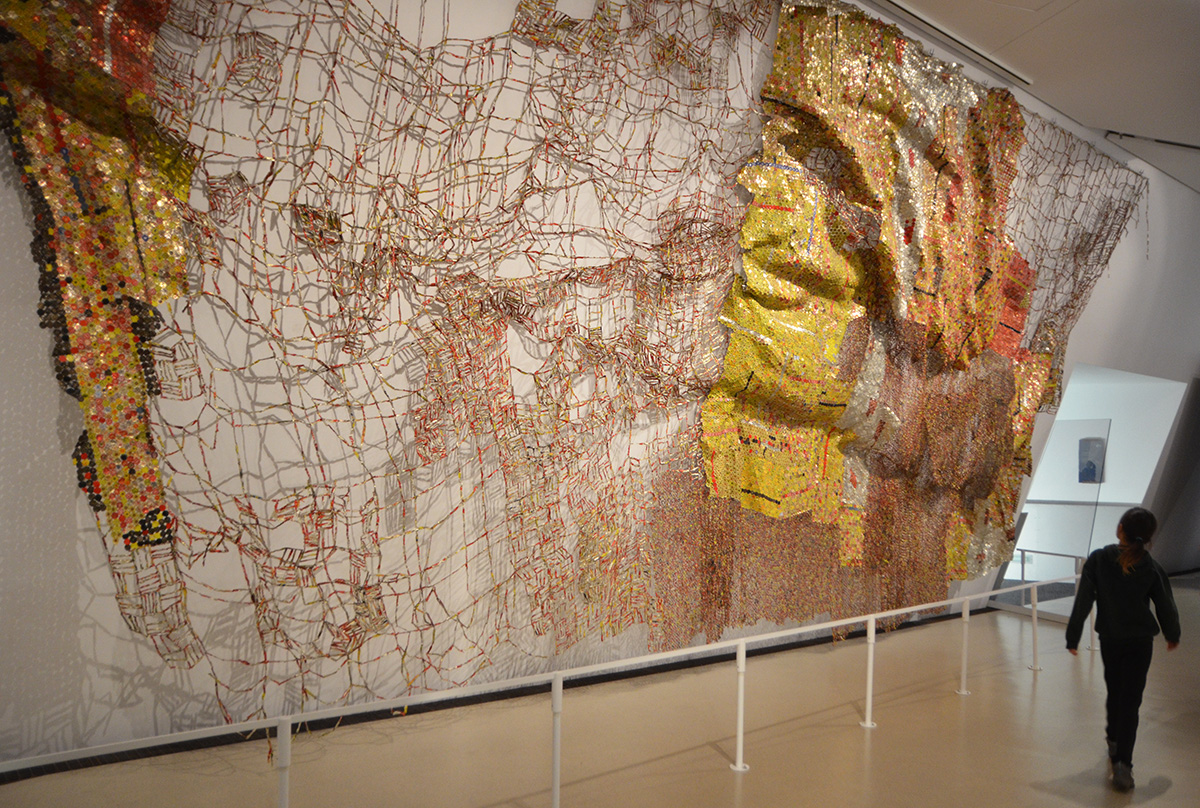
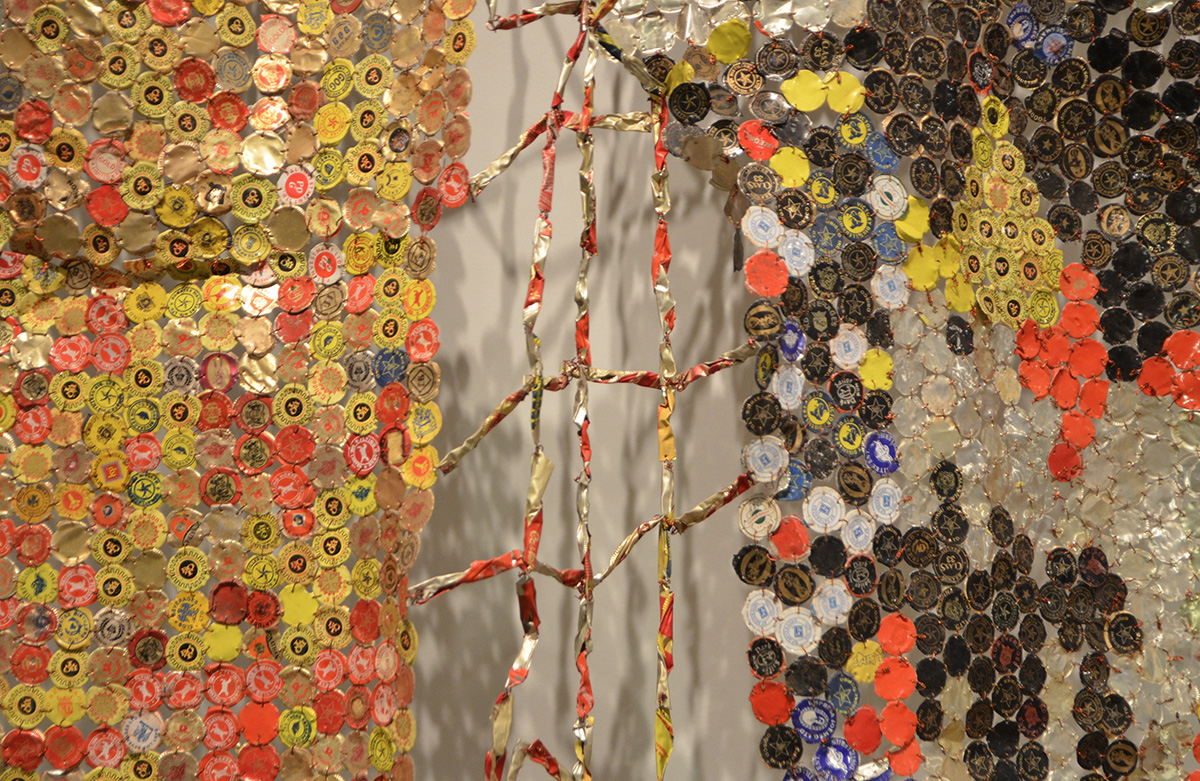
‘Straying Continents’ is a large hanging artwork that is on display at the ROM (Royal Ontario Museum).  The artist,  El Anatsui, constructed it out of aluminum and copper wire in 2010.

artwork hung on a wall, covers the wall, by El Anatsui, a Ghanese artist, made of different colours of liquor bottle caps, metal, close up

Thousands of recycled aluminum liquor bottle caps of different colours were cut and shaped (twisted or flattened) and sewn together with copper wire.  In some places the caps are flat and tightly packed while in other places they are twisted into rope-like pieces and loosely woven into the design.

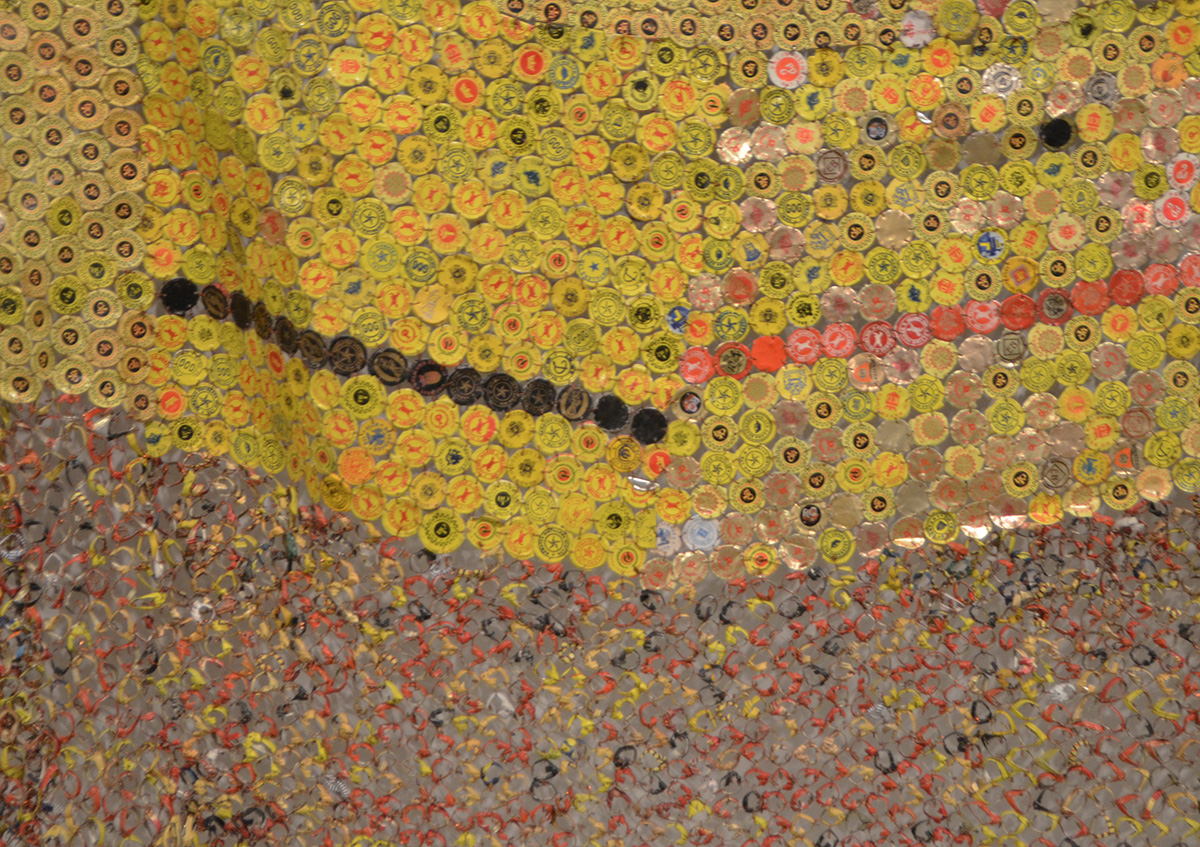
below: The grey in the bottom part of the picture is the wall showing through. The lighting also creates shadows within the artwork.

artwork hung on a wall, covers the wall, by El Anatsui, a Ghanese artist, made of different colours of liquor bottle caps, metal, close up

Viewed as a whole, it is a fascinating piece. It does look like two continents separated by an ocean.  At the same time, innumerable interesting compositions can also be found by looking at it in sections.

artwork hung on a wall, covers the wall, by El Anatsui, a Ghanese artist, made of different colours of liquor bottle caps, metal, close up

recycled liquor bottle cap artwork

below: The piece doesn’t hang straight which creates folds, shadows, and more interest.

artwork hung on a wall, covers the wall, by El Anatsui, a Ghanese artist, made of different colours of liquor bottle caps, metal, close up

below: It also provides material to play with.

abstract of circles and partial circles made from bottle cap artwork


Florine Stettheimer: Painting Poetry,
an exhibit at the Art Gallery of Ontario

Florine Stettheimer (1871-1944) was the 4th child of five, daughter of  Joseph and Rosetta.  Joseph, a banker, abandoned the family early on and was never mentioned again.  Older siblings Walter and Stella married and moved out while the younger three girls, Ettie, Florine and Carrie remained in the same household with their mother until their deaths.   They became known as “the Stetties”.  They hosted salons in Manhattan and lived a life of leisure and artistic pleasure.

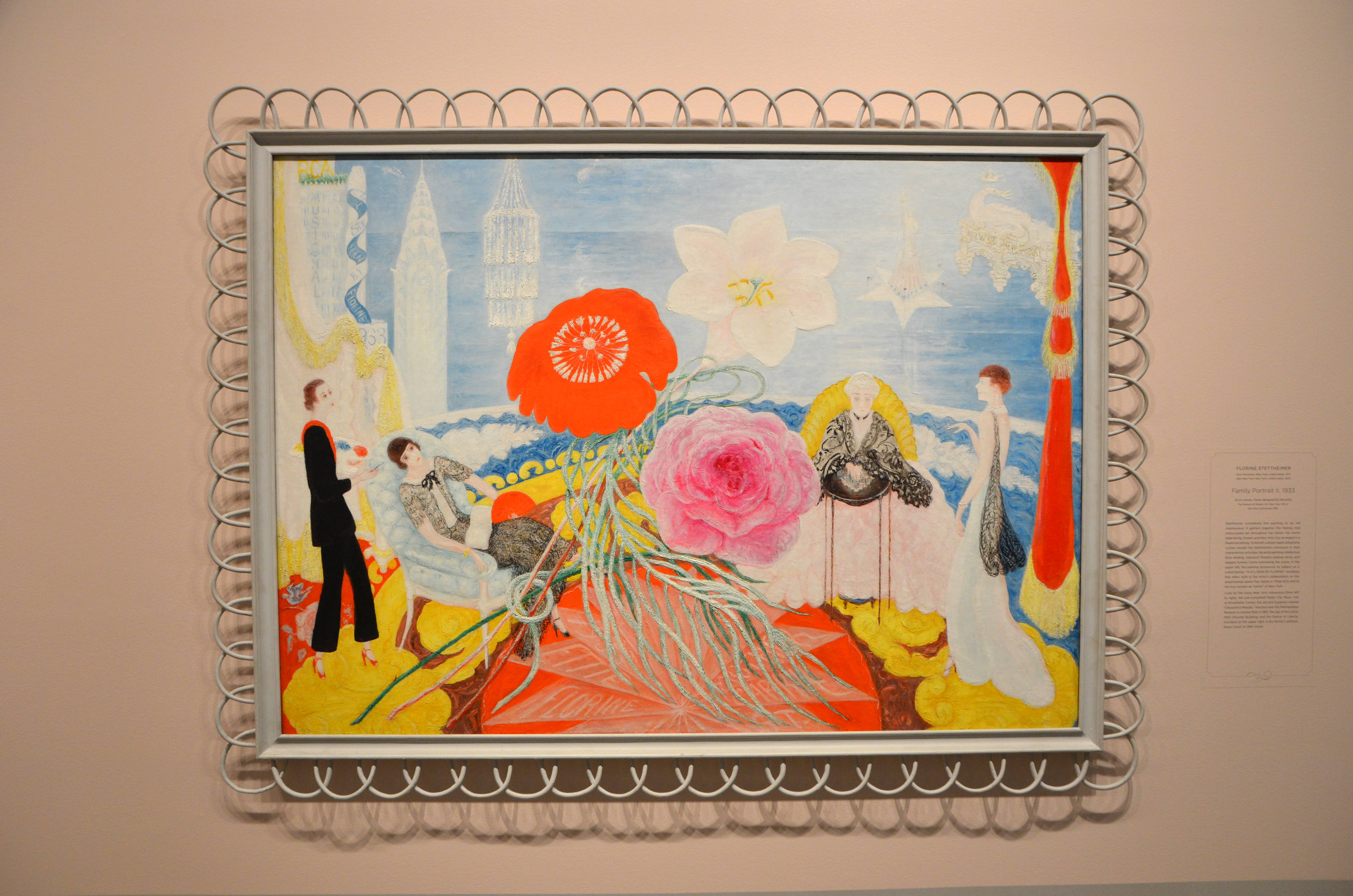
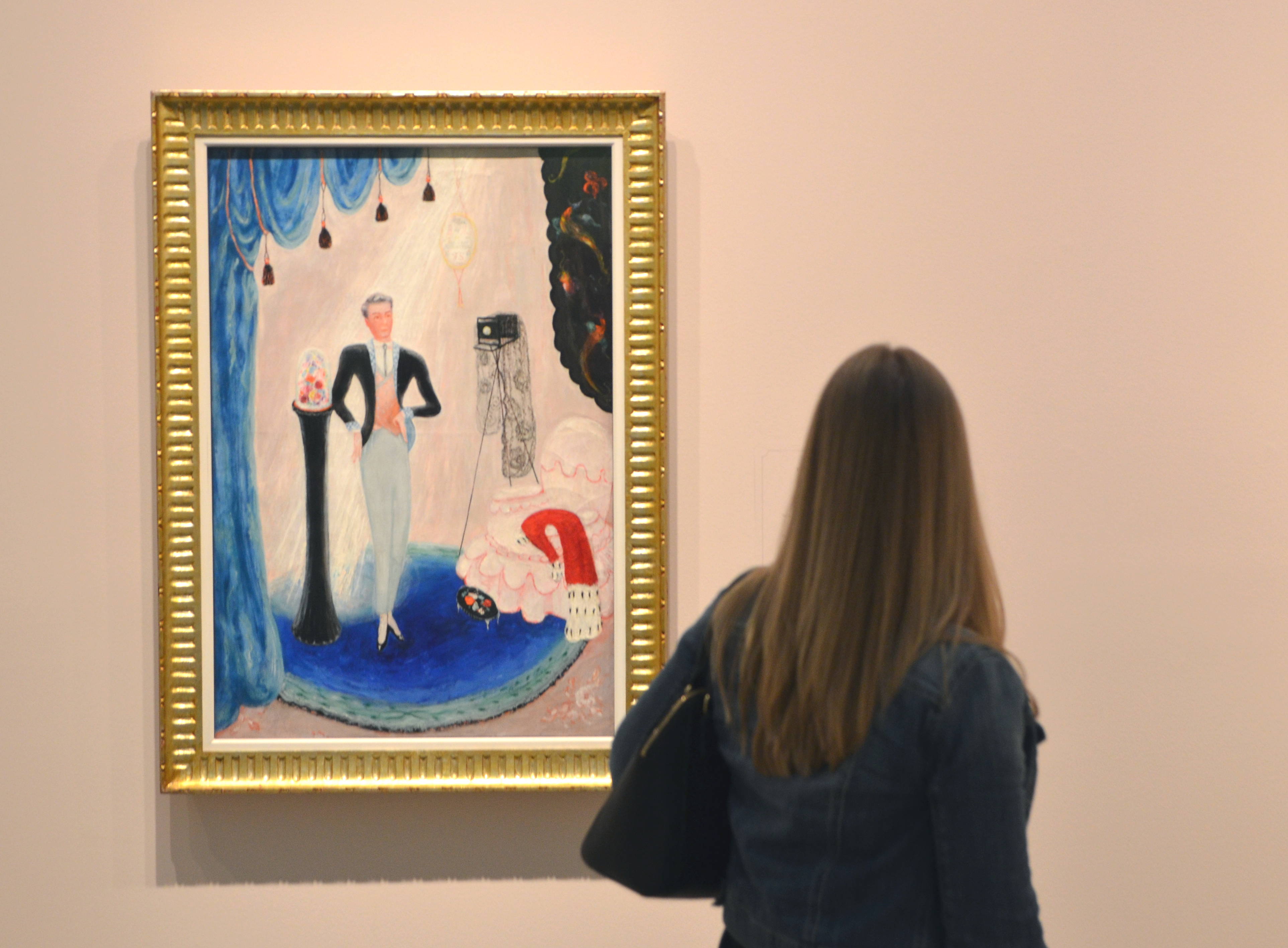
below:  Family Portrait II, 1933, This painting has flowers, New York City references, and Florine Stettheimer’s immediate family portrayed in a theatrical setting/arrangement.  These are themes that occur over and over again in Stettheimer’s work.  Here Ettie is reading, Rosetta is playing cards, Florine is painting, and Carrie is playing hostess.

painting by Florine Stettheimer on display at the Art Gallery of Ontario

The Stettheimer children were born in Rochester NY.  Between 1906 and 1914 Florine and her mother and sisters lived in Europe before settling in Manhattan.

A portion of the exhibit features  a collection of designs for costumes for a ballet that Florine wrote while she was in Paris in 1912.  ‘Orphee of the Quat-z-Arts’ (or ‘Revellers of the Four Arts Ball’) was based on a costume parade organized by Parisian art students and in it the main character, Georgette, encounters the ancient Greek minstrel Orpheus and a parade of mythical creatures, as she and her father walk down the Champs Elysee.  The ballet was never performed.

below: One of 42 sketches and 9 relief maquettes, Georgette.

costume design mockup by Florine Stettheimer, AGO exhibit,

below: People, both men and women, were painted with elongated willowy shaped bodies.

a woman looking at a painting by Florine Stettheimer, AGO,

Florine also wrote poetry and she liked to send her poems to her friends.  In 1949 her sister Ettie published a book of Florine’s poems titled ‘Crystal Flowers’.  This is one of the poems:

And Things I Loved
a poem by Florine Stettheimer

Mother in a low-cut dress
Her neck like alabaster
A laced up bodice of Veronese green
A skirt all puffs of deeper shades
With flounces of point lace
Shawls of Blonde and Chantilly
Fichues of Honeton and Point d’Espirit
A silk jewel box painted with morning glories
Filled with ropes of Roman pearls
Mother playing the Beautiful Blue Danube
We children dancing to her tunes
Embroidered dresses of White Marseilles
Adored sashes of pale watered silk
Ribbons with gay Roman stripes
A carpet strewn with flower bouquets
Sevres vases and gilt console tables
When sick in bed with childhood ills –
All loved and unforgettable thrills.


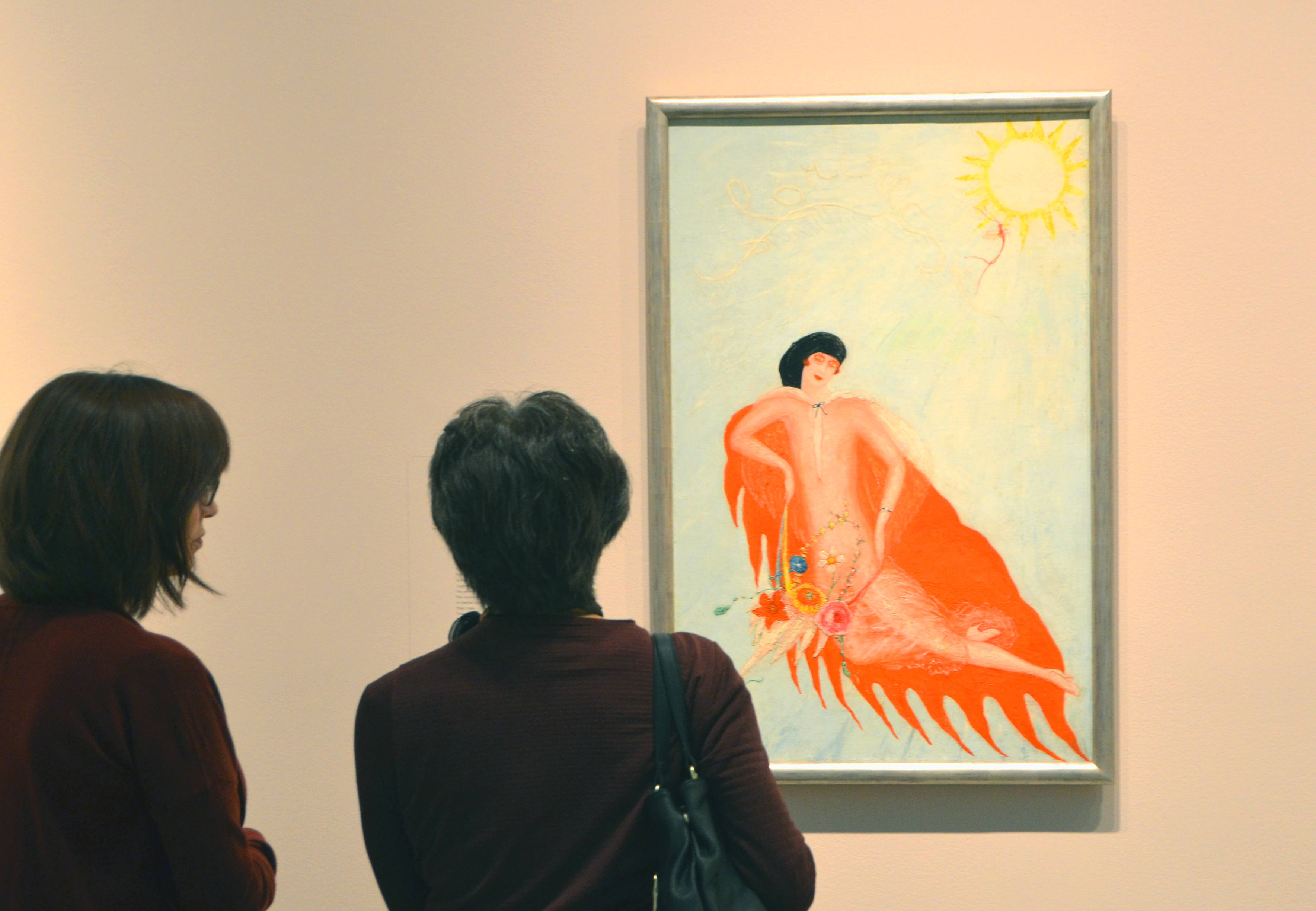
below:  The painting in the foreground of this picture is ‘Self-Portrait with Palette (Painter and Faun)’, 1910s.  According to the words that accompany the painting, the faun behind her symbolizes a memory inspired by Russian ballet star Vaslav Nijinsky whom she saw perform in Paris in 1912.  After the performance, Florine wrote: “Nijinsky the faun was marvelous.  He seemed to be truly half beast… He knew not civilization – he was archaic – so were the nymphs.  He is the most wonderful male dancer I have seen”.

people at the Art Gallery of Ontario in a gallery featuring paintings by Florine Stettheimer,

below: Self-portrait, 1933

two women looking at a portrait painted by FLorine Stettheimer,

“For a long time
I gave myself
To the arrested moment
To the unfulfilled moment
To the moment of quiet expectation
I painted the trance moment
The promise moment
The moment in the balance
In mellow golden tones…
Then I saw
Time
Noise
Color
Outside me
Around me
Knocking me
Jarring me
Hurting me
Rousing me
Smiling
Singing
Forcing me in joy to paint them…”

This exhibit continues at the AGO until 28 January 2018

We went exploring.  With a three year old.  A three year old who is starting to explore the world as only a three year old can.  One who gets joy from ‘balancing’ on the green line as we walked the Lower Don Path.

little girl in a pink jacket is wlking down a green line that is painted in the middle of a path, approaching an underpass under the railway tracks.

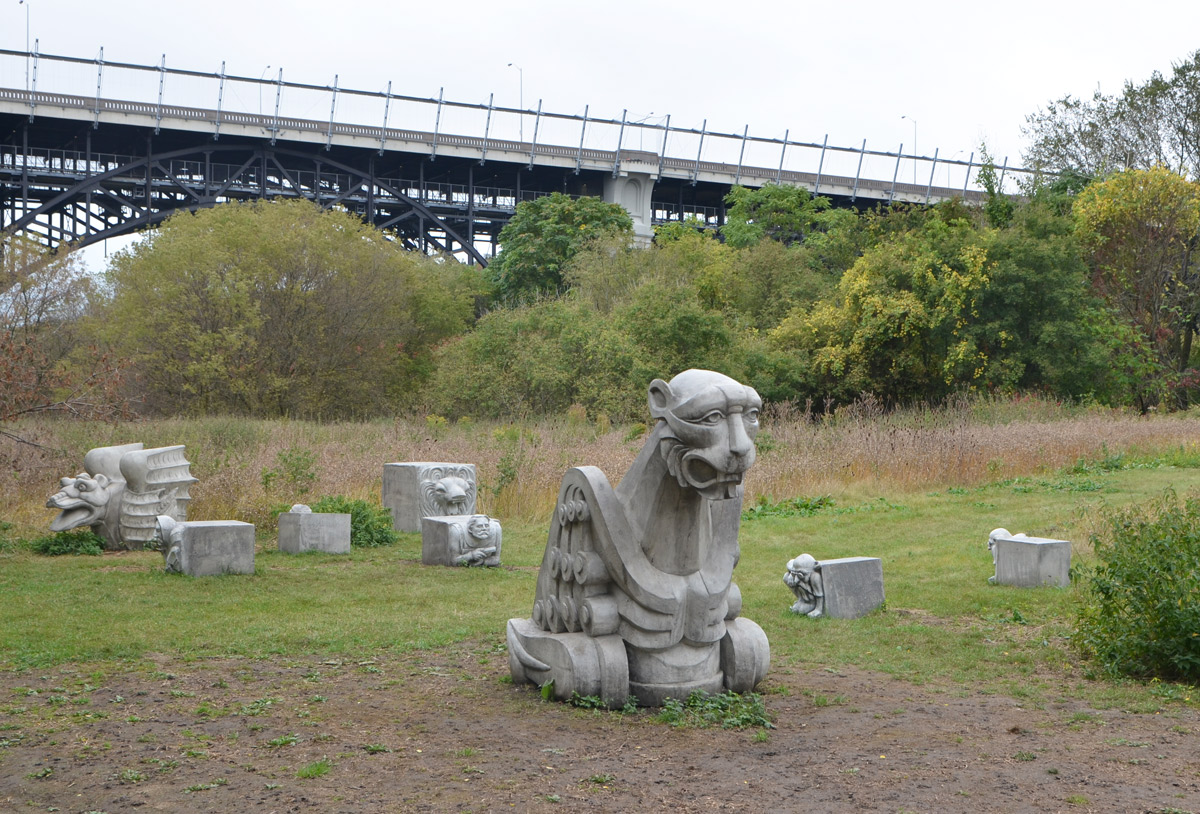
We were walking with a purpose – to find ‘Monsters for Beauty, Permanence and Individuality’ by Duane Linklater.  This is a collection of cast concrete gargoyles, replicas of those on Toronto buildings, that is now on the Lower Don Trail.  Last week I saw them from the subway as it passed across the Bloor Viaduct so I knew approximately where to walk.

The Lower Don Trail only has a few access points – we entered by Riverdale Park and walked north.

a hanging vine, autumn coloured, in front of the train tracks.

below: Renovations of the underside of the bridge at Bloor/Danforth have just been completed and already one piece of graffiti has appeared.

grey concrete bridge with black metal supports, part of the structure, with one graffiti face drawn in red

Just a bit farther north, and on the west side of the path we encountered the artwork.  It’s a scattered arrangement of some interesting pieces.  If left in place, some future archeologist of the future might stumble upon it and be totally mystified.

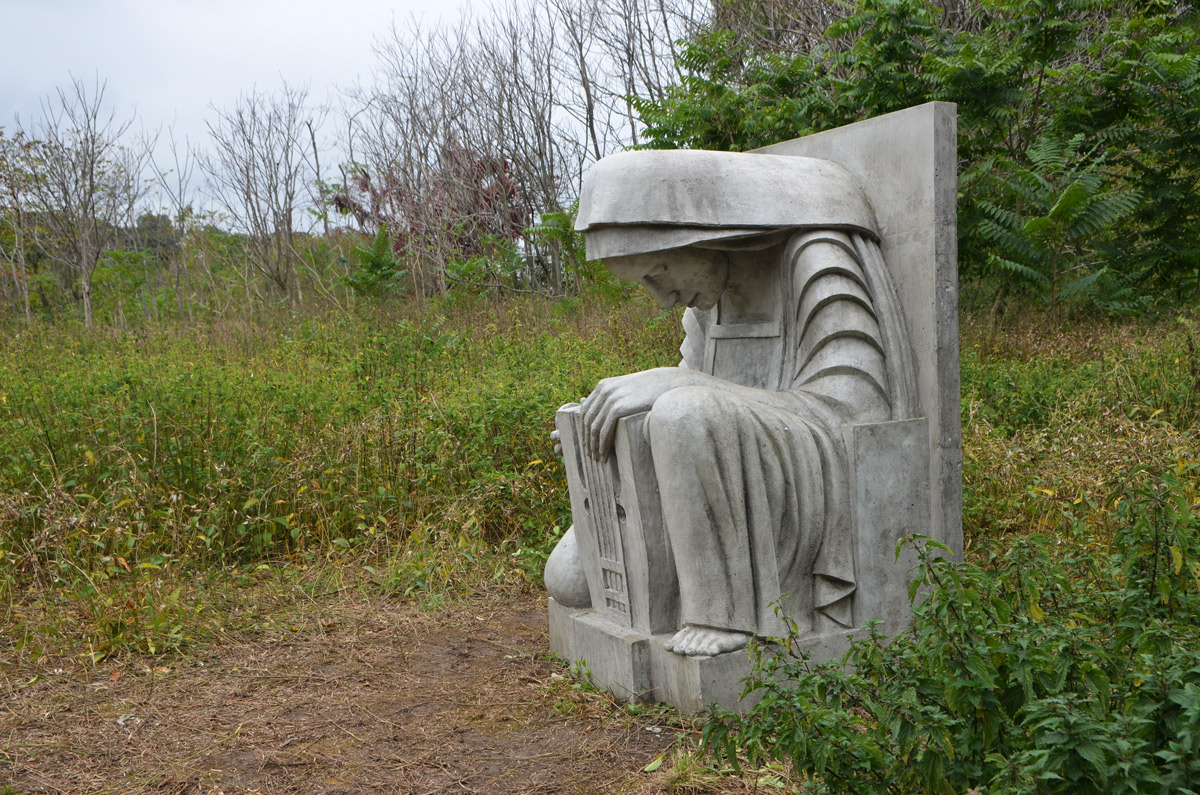
cast concrete sculpture of a seated woman with her head bent forward

Today I got myself tied up in knots as I fought with words as I tried to write this post.  How do I describe the thoughts behind the installation?  Should I talk about the meaning of gargoyles vs grotesques?

a few concrete gargoyles scattered on the ground by the Lower Don Trail, part of Duane Linklater's art installation.

But then I realize that I should just leave it be.    Be content.

a concrete block and man's head gargoyle, with moustache, folded arms holding a scroll or similar), about 2 feet square, Bloor Viaduct in the background

After all, what was more important was that the blocks turned out to be the perfect size for a three year old to stand on and roar like a lion.   We played.  And it was fun.

a young girl stands on top of a conrete block with the face of lion, she has her hands beside her mouth as she too roars like a lion

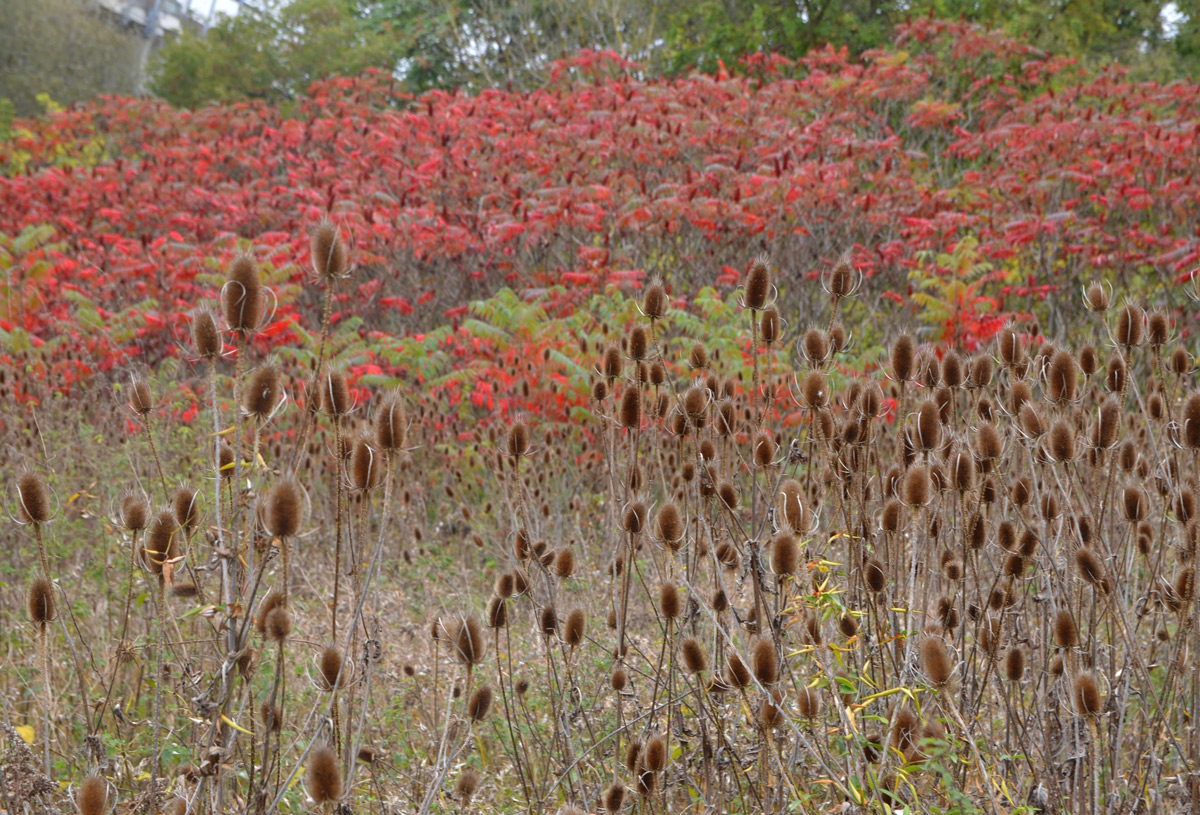
red sumach trees in the background with dead brown heads of plants growing in front


Progress is a spiral upward is the title of an exhibit at the Tangled Arts Gallery at 410 Richmond.  It is a series of collages of ink and/or paint drawings by Toronto artist sab maynert.

three people in an art gallery looking at drawings by sab meynert.

“for sight beyond seeing
for seeing in order to know”

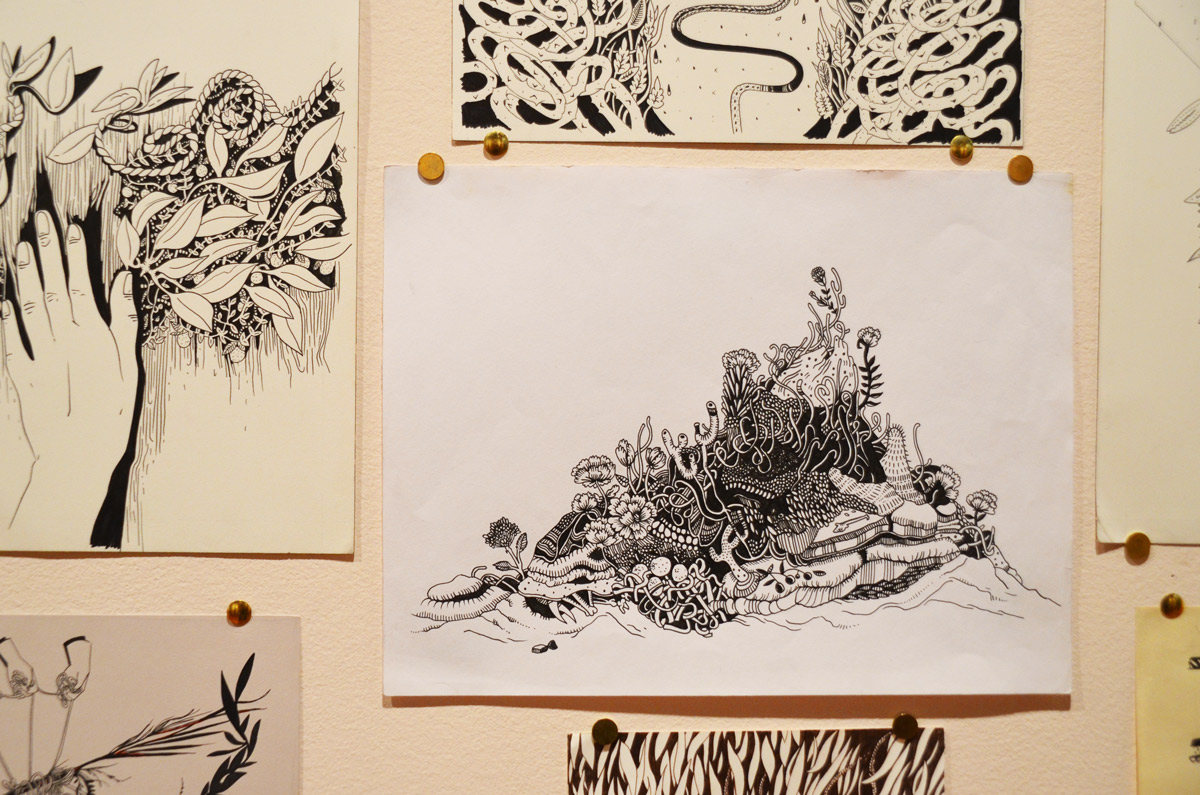
pen and ink, and paint, drawings by sab meynert on a gallery wall, thumb tacked to the wall, black and white, intricate

“let the flow carry you, rest in the soil, let the seed push you to the sun,
palms out to the sky,
let go, make room”

pen and ink, and paint, drawings by sab meynert on a gallery wall, thumb tacked to the wall,

below: The piece in the middle is “By Proximity”, 24″ x 24″, gouache and ink on paper.

pen and ink, and paint, drawings by sab meynert on a gallery wall, thumb tacked to the wall,

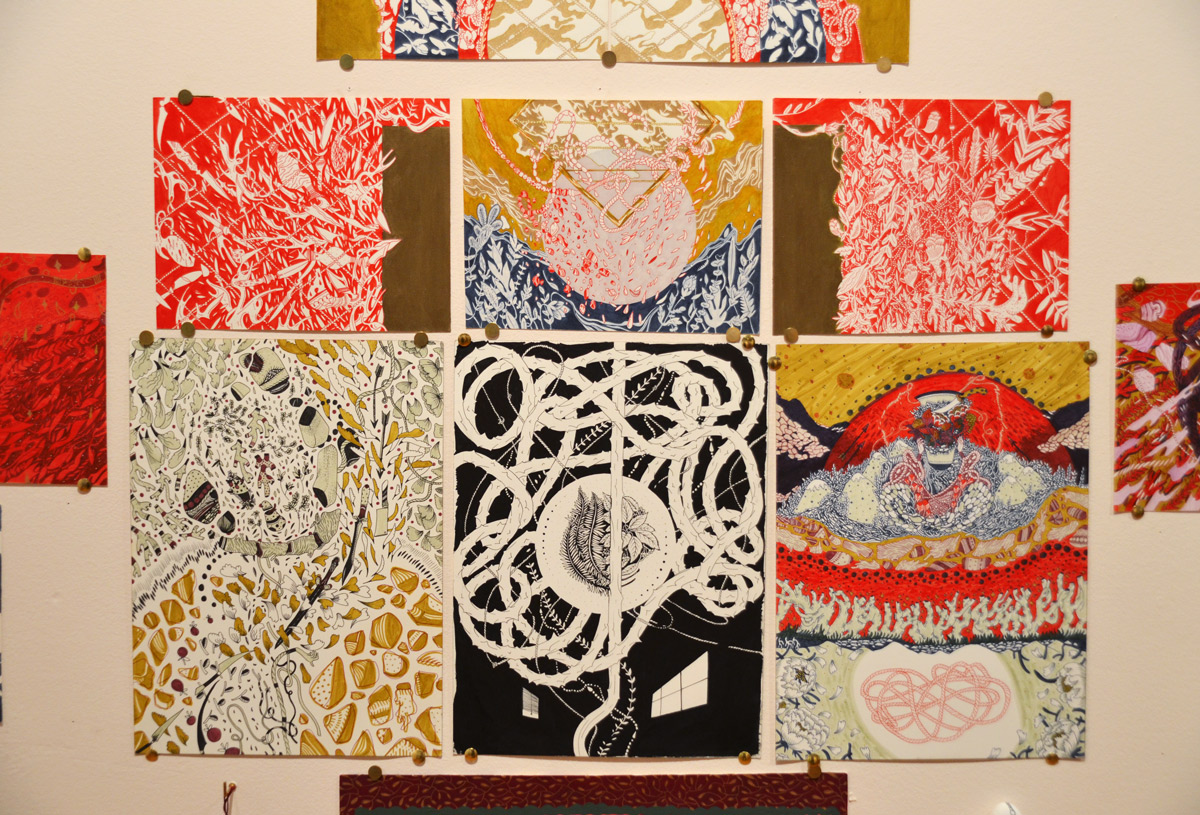
below: bottom left (yellow and black): “You Give Everything”, ink on paper, 9″ x 12″ while bottom right (with the red ‘knot’) is “Decisions we Made”, ink on paper, 9″ x 12″.

pen and ink, and paint, drawings by sab meynert on a gallery wall, thumb tacked to the wall,

“pull yourself out of the thornbush
you smell like flowers”

pen and ink, and paint, drawings by sab meynert on a gallery wall, thumb tacked to the wall,

The quotes that I’ve used in this blog post are lines that I have pulled from the writing that accompanies the exhibit, a poem with the same title, “Progess is a Spiral Upward”.

The exhibit continues until the 14th of October.
Link to sab meynert’s website


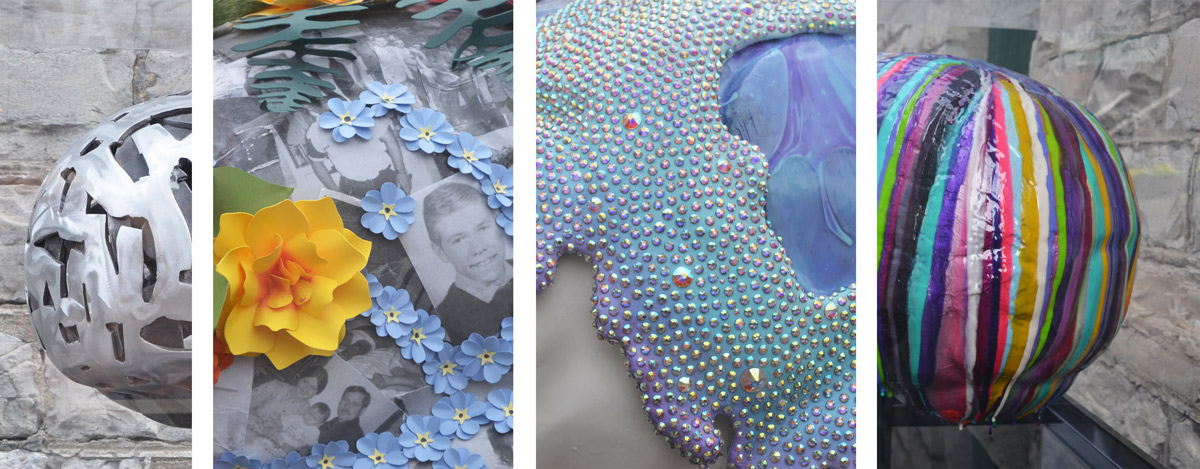
four sections of four different brain sculptures

The second annual Brain Project is now on display across the city.  These are only a small sample of the brain sculptures that form the exhibit.  In total there are 100 brains in about 20 locations around the city.   There is a map on the Brain Project website if you are interested in visiting some of them.


below: One of the locations where you can see some of the brain sculptures is Nathan Phillips Square.

a line of sculptures on display, podius standing in the water of the fountain, arches, and 3D Toronto sign in the backgruond.

Descriptions of all the brains on display around the city, as well as notes on the artists responsible, can be found online.    You can vote online for your favorite brain.

below:  Circles of beads and sequins – circles representing wholeness and totality come together to form a complex mosaic like the brain itself.  “Unleash Your Mind” is by Kara Ross.

a brain sculpture on display in front of the 3D toronto sign, decorated with colourful circles of sequins

below: Sitting on top of a blue and teal brain is a blue jay in a nest – a sculpture by Ted Hamer that is called “Thinkubator”.  Here the brain is shown as an idea incubator where the bird symbolizes the idea.

close up of part oa brain sculpture, the brain is painted blue and teal and there is a blue jay sitting on a nest on top of the egg (the bird is part of the sculpture)

below:  “Vitale” by Molly Gambardella is dedicated to the artist’s grandmother who died of Alzheimers in 2016.   Vitale was her maiden name.

a sculpture of a brain decorated with hundreds of coloured pencils, some are point up and some are blunt end up, the colours of the pencils make shapes and lines on the brain

below: Three of the brains on display at the Distillery District.  In front is “Red Head” by Anitra Hamilton who glued pieces of chicken eggshells to the surface of the brain.  Red acrylic paint highlights the spaces between the eggshells.   In the middle is Cindy Scaife’s “Food for Thought”.  Broccoli, avocado, apple and walnut, all healthy foods,  play in the park.

brain sculptures as part of the Baycret Foundation's Brain Project on display outside at the Distillery District

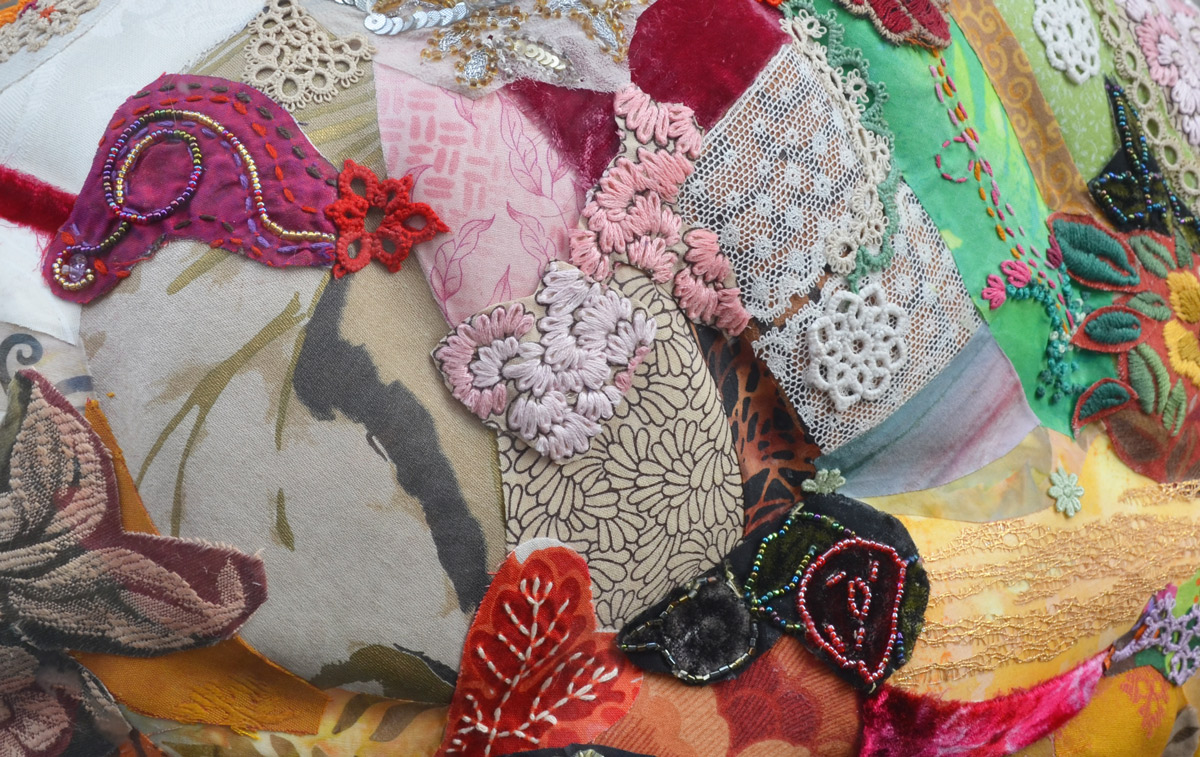
below: Also at the Distillery District is a brain by Laura Bundesen, “Not Forgotten” is a collage of fabric embellished with lace and embroidery and beads.  It is in memory of her stepmother who suffered from dementia.

close up of a fabric collage on a sculpture, bits of fabric with flowers on it, some embroidered leaves and flowers, lace and trim too,

Part of the goal of the project is raise awareness of diseases like Alzheimers that affect the brain.  Another goal was to raise money  – the sculptures are sponsored by various people and corporations (such as Telus).  As well, most of the brains from last year’s exhibit have been sold.  Funds raised through this project are donated to Baycrest Health Services.

below:  Keight MacLean’s “Loss” illustrates the idea of memory and memory loss using a portrait of a person, a loved one.  Paint as the memory loss, obscures the picture.

outdoor display in a clear acrylic box, a sculpture in the shape of a brain, with the picture of a woman's face on the side, yellow paint drips down from the top of the brain.

people looking at brain sculptures.  one is pointing to them, the other is taking a picture of them.

This morning’s blog post is a mixed up mashed up collection of some of the pictures that I have taken in the past few days. The theme running through the post is “sunny days and people making the most of it.”  It seems like an appropriate subject for a grey morning!

below: #duckman, one of the many ‘performers’ outside the Eaton Centre on Yonge Street.

a young Japanese man is dressed in a yellow body suit, seated on a stool on the sidewalk on Yonge Street, he is playing the drums - actually 5 empty plastic upside down buckets, with #duckman written on the buckets

below: The beginnings of a new mural on Queen Street West.

motorcycle in the foreground, a man painting a white outline of a rose as part of a mural on the side of Canada Convenience store on Queen West, a few people watching him paint

below: This weekend was the annual Riverdale ArtWalk at Jimmie Simpson Park and Community Center.

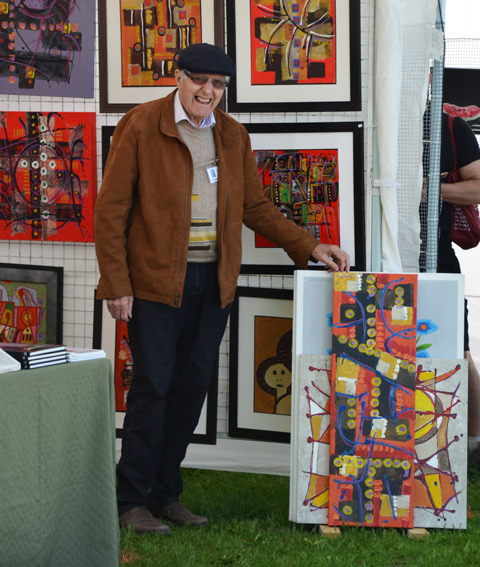
a man stands holding up a painting (bottom of painting is resting on the ground), more painting displayed on the wall behind him, at the outdoor Riverdale Artwalk art show and sale

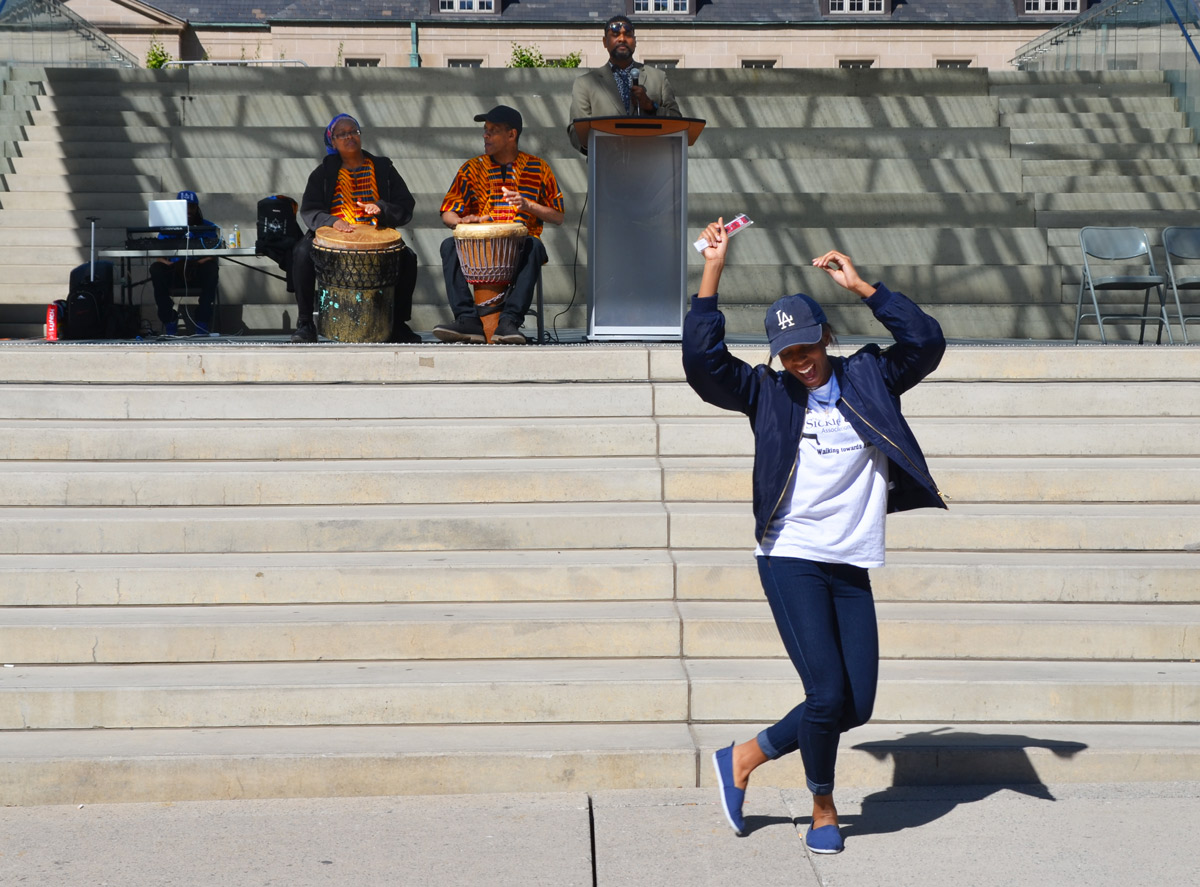
below: Dancing to the drums of Venice and Kevin who are playing as past of an event to raise money to fight sickle cell disease.

a young woman dancers at the bottom of the stage steps at nathan phillips,  two people are beating drums on the satge

below: Four singers – they’ve just finished performing on the stage at Yonge Dundas Square as part of the DesiFEST celebrations.

four female singers are smiling, they've just finished a song, performing at Yonge Dundas square as part of Desifest, all 4 are of South Asian descent

below: A sign of the times.

a blackboard sign on the sidewalk in front of Brioche restaurant that says we serve Covfefe. People walking on the sidewalk,

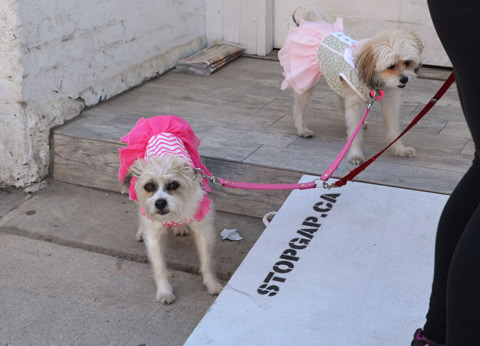
below: It wasn’t just the people who were dressed for summer.

two little white dogs on a leach, both have pink and white frilly dresses on.

below: Gardening season has begun!  The vacant lot beside Nick Sweetman’s mural has been turned into a Garden Centre.

garden plants for sale, outdoors, in front of a large mural, bees, by Nick, on Queen st east

a front yard with gardening supplies, and pots of plants on the front steps

below: With their backs to the windows … but it looks like they’re dressed for summer

two mannequins with their backs to two windows, both dressed in red clothes

people riding down the escalator at the Eaton Centre, a large screen is playing a slideshow of summer pictures as part of an advertising campaign.

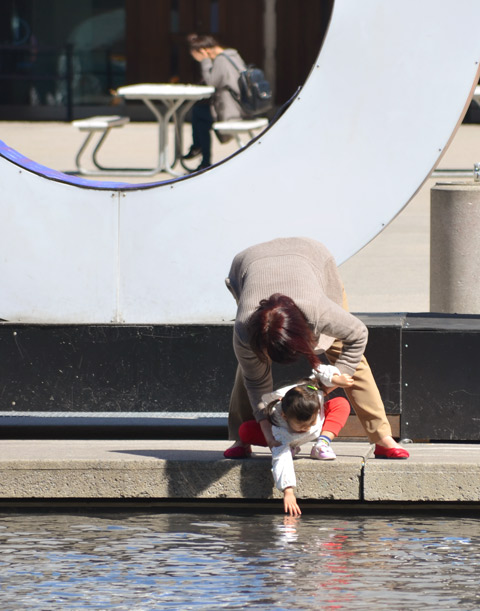
a mother helps her young daughter reach down and touch the water in the fountain at Nathan Phillips square

‘Making Peace’ is a traveling exhibit that is being shown in Toronto at the moment.  It was produced by the International Peace Bureau (IPB) and was first shown in in 2010 as a celebration of the 100th anniversary of the 1910 Nobel Peace Prize that was awarded to IPB.  It’s purpose is to promote peace as well as educate and inform.

It can be seen until the end of June on Front Street East in the Canary District (by Corktown Commons, east of the Distillery District).    In Toronto, the exhibit involves short four-sided pillars that line the sidewalk and each side of every pillar has a photo with a description or a quote from a famous person.  There is also a temporary gallery in an indoor space ‘loaned’ to the exhibit by one of the developers in the Canary District.

below: A painting in progress by Ford Medina showing Nelson Mandela in five colours.  These colours carry over into the outdoor exhibit and each colour represents the five main elements that IPB considers necessary for peace:
1. disarmament and nonviolence (purple)
2. conflict prevention and resolution (red)
3. economic and social justice (orange)
4. human rights, law and democracy (blue)
5. environment and sustainable development (green)

indoor temporary gallery for the Making Peace exhibit, a painter is in the midst of creating a large painting of five copies of a picture of Nelson Mandela, each copy is in a different colour, purple, red, orange, blue and green,

below: The display extends into Corktown Commons.  Here the pillars are green as this is the section for the fifth element named above, the environment.

outdoor exhibit, Corktown Commons, short pillars with 4 sides, each side has a picture and a description, the background colour is green which represents the environment and sustainability.

below:  Photo by Ribeiro Antonio.  The words that accompany this photo are: ” On 25 September 2015, the 193 countries of the UN agreed to an historic plan of action, entitled ‘Transforming our world: the 2030 Agenda for Sustainable Development’.  This plan contains 17 goals with 169 targets covering a broad range of sustainable development issues.  These include ending poverty and hunger, improving health education, making cities more sustainable, combating climate change, and protecting oceans and forests.”  If you are interested in this, there is more information on the UN website.

a photo of a person dressed in a large blue and green Planet Earth costume, holding the hand of a young boy as the walk on a beach towards the water

below: Blue is for human rights, law, and democracy and here you have an old black and white photograph of Sylvia Pankhurst (1882-1960), a British campaigner, apparently taken when she was in Australia speaking out on behalf of woman’s rights as part of the Suffragette movement.  The Suffragettes (or Women’s Social and Political Union or WSPU) was founded by a small group of women in 1903, including Sylvia, but during WW1 Sylvia was expelled from the WSPU because of her pacifist views and anti-war actions.  Her sister Adela shared similar views – she immigrated to Australia where campaigned against the First World War.

a vintage black and white photo that is part of an exhibit, outdoors, called Making Peace

below: Two photos.  The one on the right, of the woman holding the flower in front of the armed soldiers, was taken at a Peace March against the Vietnam War in Washington DC in 1967.  The photo on the left was taken in 2001 and is the back of a Kamajor fighter in Sierra Leone.  They played a role in the civil war that occurred in that country between 1991 and 2002.

2 sides, taken from the corner, of a box like structure, with black and white photographs on the two sides, one of the back of a man with a rifle across his shoulders and a backpack that says Lets go to school. The other photo is a woman standing up to a line of soldiers with bayonets.

below: A couple of the red pillars on Front Street with the blue sculpture, “The Water Guardians ” behind them.   The images on the closest pillar are of inside the Holocaust Memorial in Jerusalem as well as UN peacekeepers in Bosnia.

an outdoor art exhibit on peace, two of the structures used for mounting pictures on, with the blue sculpture on Front Street, Canaray District, in between the two boxes.

below: Closer to home, this pillar celebrates the work of the Toronto Parks and Trees Foundation.   Working with the city as well as with community groups, businesses, and individuals, they help to increase  Toronto’s tree cover.

a set of four photos about planting trees on the side of a square pillar, one of many pillars that are arranged in a line on the sidewalk.

“Earth provides enough to satisfy every man’s need, but not every man’s greed.”  Gandhi

below: Homeless migrant worker, China

picture of a woman sleeping underneath a picture of a woman lying on a bed, shown outdoors so there are some tree leaves in the picture

The exhibit continues until mid-September.