On this day, the 16th of November, in 1885, Louis Riel was hanged in Regina, the capital of the Northwest Territories at the time and the headquarters of the North West Mounted Police.

During that year, Riel led Métis people in the Northwest Resistance (or Northwest Rebellion depending on which side you were on), which was a stand against the Government of Canada because it was encroaching on Metis rights way-of-life.  The Métis were defeated at the siege of Batoche and the Canadian government captured Riel. He was eventually put on trial where he was convicted of treason and executed. As a result, Métis people across Canada were labeled as traitors and for generations many felt the need to hide their Métis culture and heritage.

Riel had previously led the Métis in the Red River Rebellion of 1869-1870.  In 1869 Canada bought Ruperts Land from the Hudsons Bay Company (Ruperts Land covered most of what is now western Canada).   The end result of this rebellion was the formation of the province of Manitoba under the Manitoba Act of 1870.  The Act included some of Riel’s demands such as separate French schools for Métis children and protection of the Roman Catholic religion.   Manitoba was a small piece of what was once Ruperts Land.  A little province surrounded by a large Northwest Territory.   History is often difficult to condense into a couple of paragraphs but there is a lot of information about Riel and the history of western Canada on the internet if you are interested in learning more.

Now, the 16th of November is Louis Riel Day, a day to look to the past and remember what Riel stood for.  It is also a day to look at the present and to recognize the many contributions of the Métis to Canada and to highlight the continuing struggles that Métis continue to face.

below: The Metis flag is raised in front of the parliament building at Queen’s Park. The flag features a large white infinity symbol and the background can be blue or red. The infinity symbol can be seen as a representation of the faith that the Métis culture shall live on forever and/or the joining of two cultures to form one.
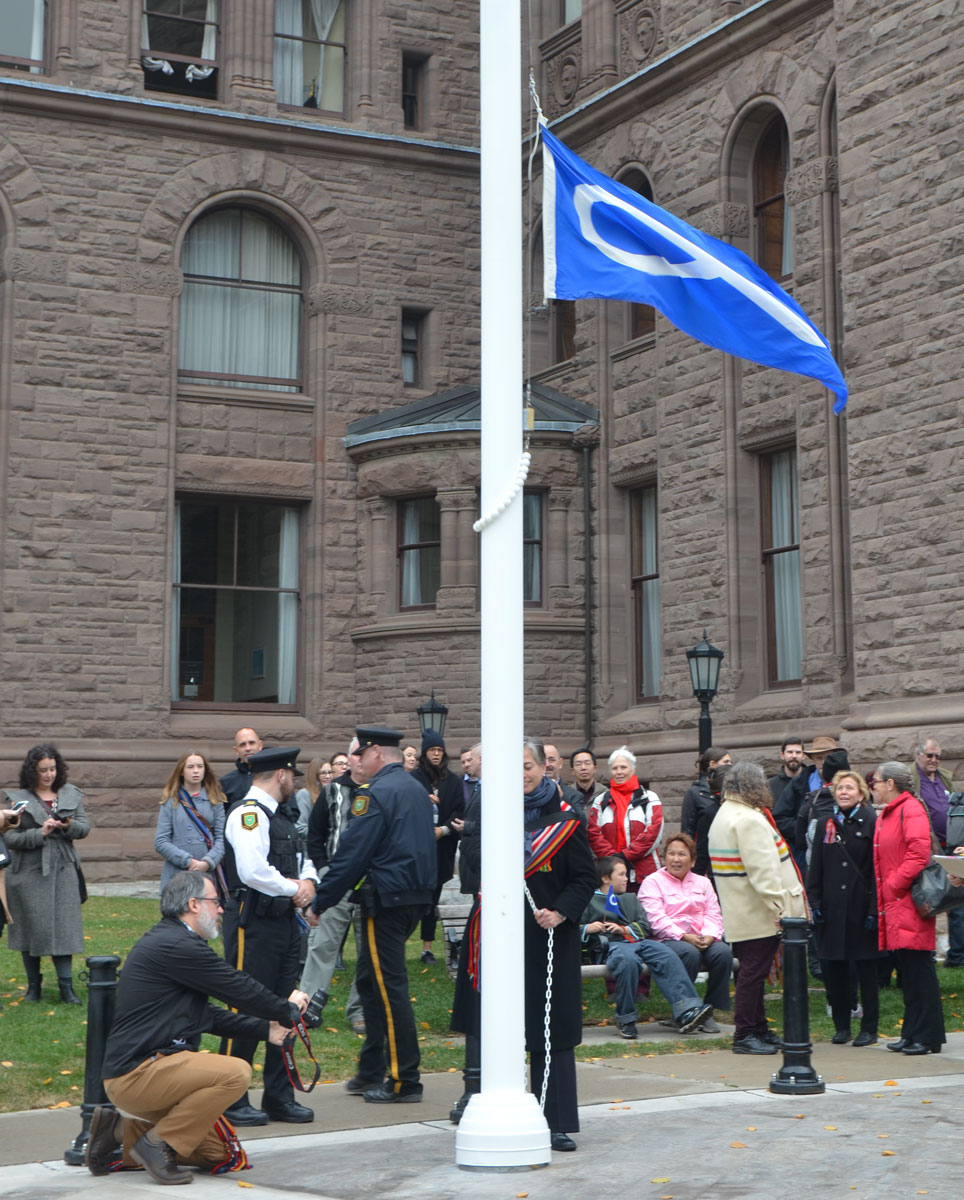
raising a blue Metis flag in front of Queens Park

below: After the raising of the flag, the colour party leads the procession through Queen’s Park .
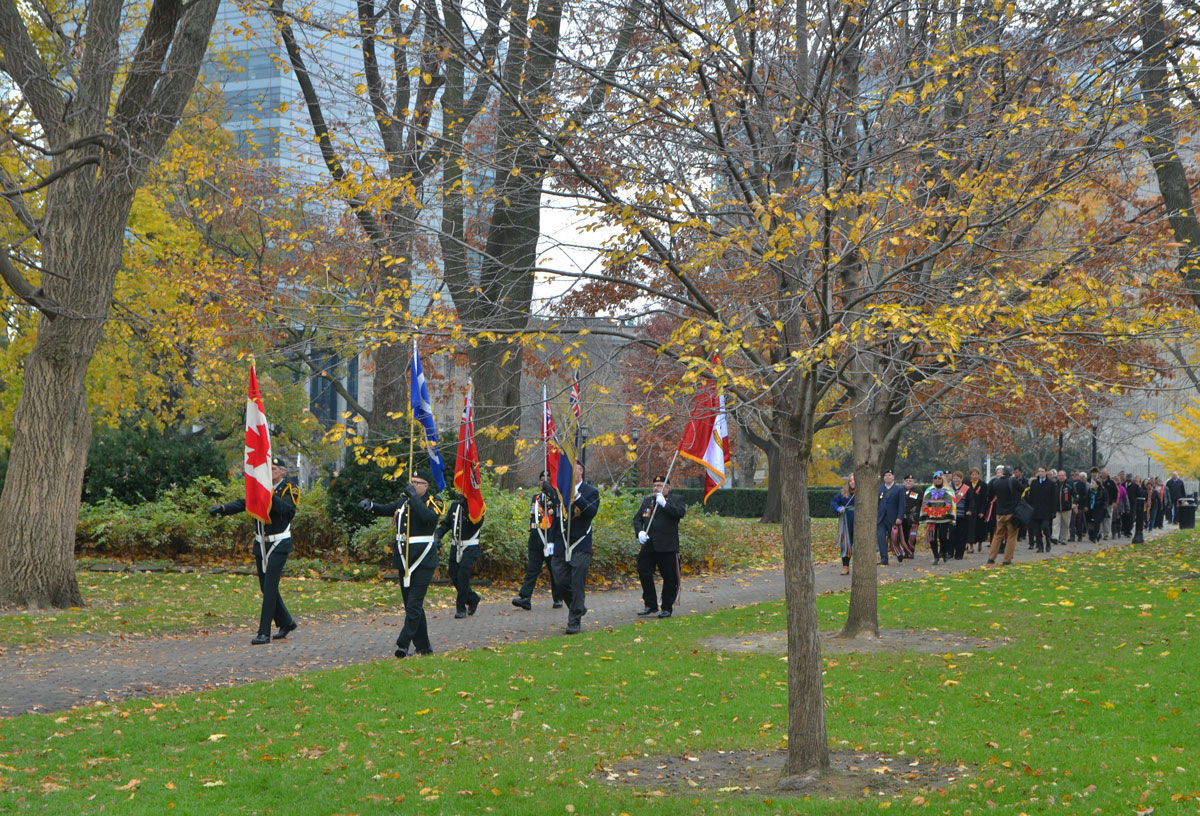
colour party of 6 men carrying flags lead a procession through the park in front of the parliament buildings at Queens Park, autumn and most of the leaves are off the trees.

below: People congregated at the Northwest Rebellion Monument.  This monument honours the 43 men who fell on the battlefields in 1885.  There is no reference to the Métis defenders who also died during the resistance or the Métis desire to negotiate. It reflects the widespread belief that the Métis were traitors, an idea that was prevalent at the time the statue was commissioned.   It was unveiled in 1895; the figure of Peace on the top of the monument was sculpted by Walter Allward.   Since its inception in 1993 the Metis Nation of Ontario has used this monument as the focal point for its Louis Riel Day ceremony.
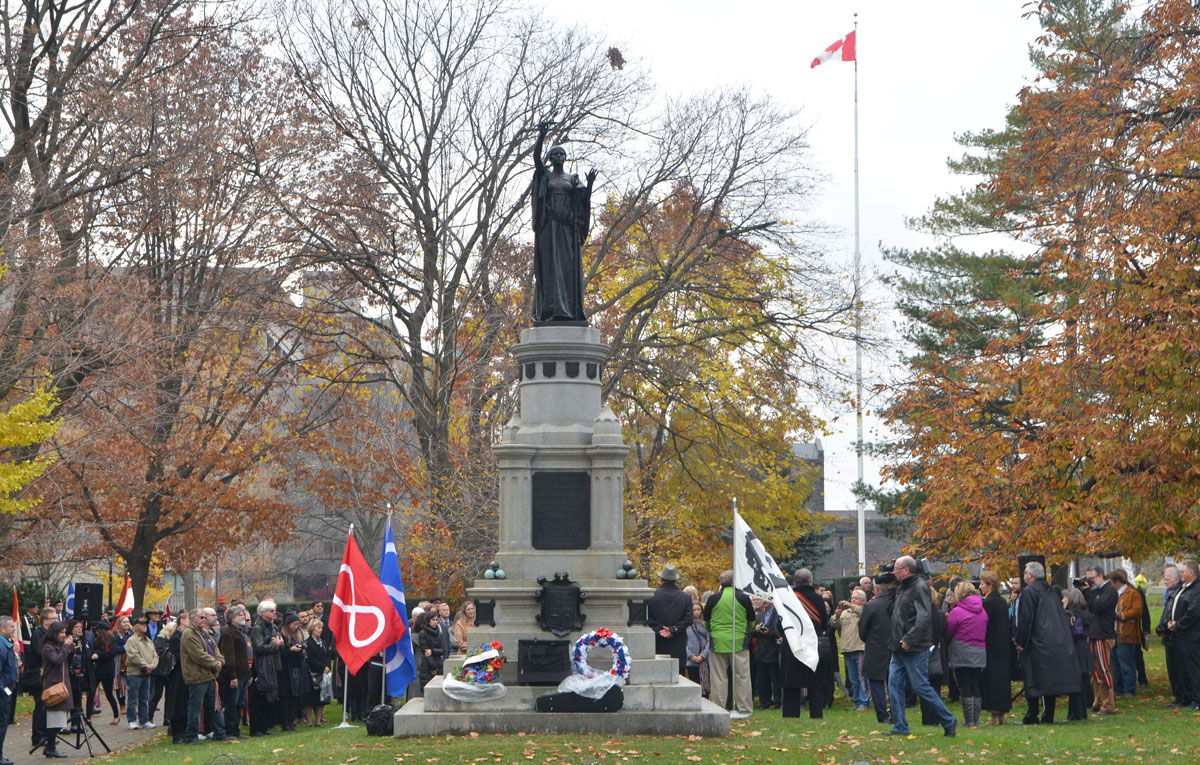
statue, memorial to those who died in the Northwest Rebellion of 1885, to the soldiers on the winning side, at Queens Park, with people around it, a flag with picture of Louis Riel is planted beside the monument,

below: The base of the Northwest Rebellion memorial is decorated with a picture of Louis Riel along with Metis flags, Metis sashes, a Hudson Bay blanket and a violin.
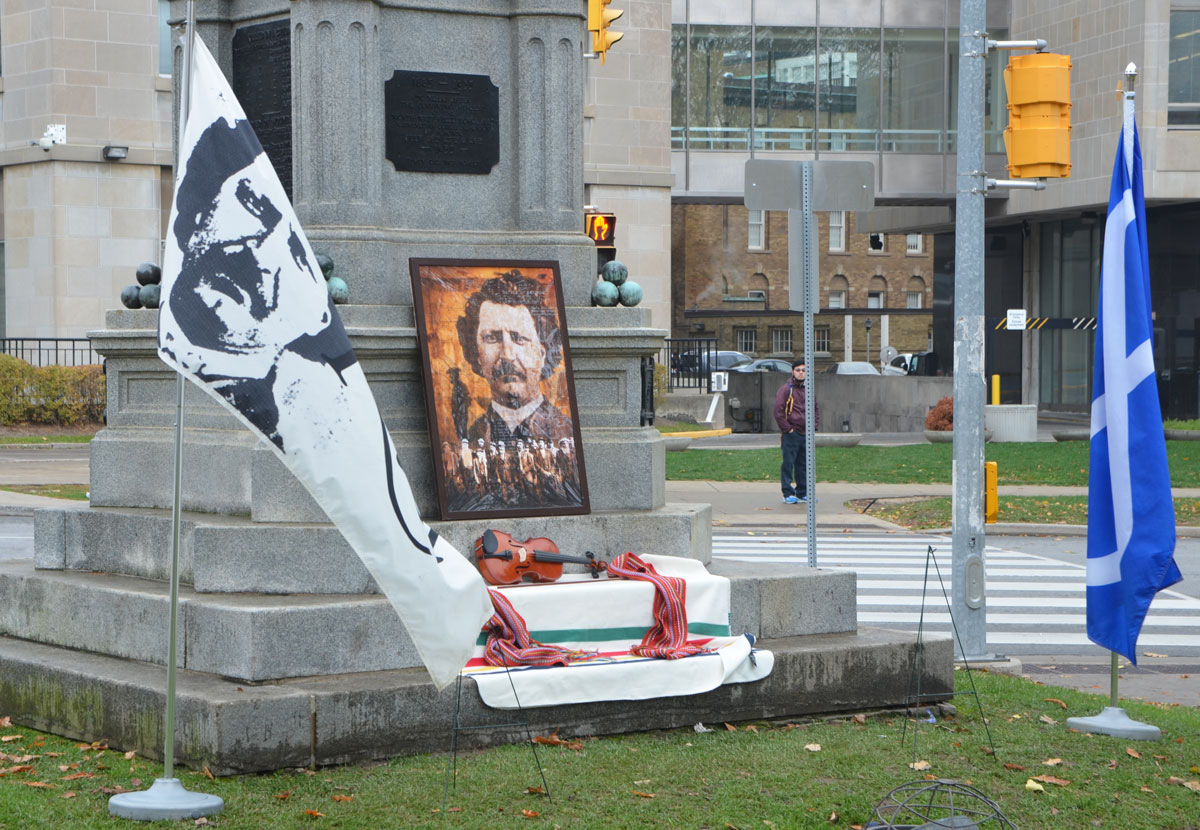
base of monument with picture of Louis Riel, a violin and a Hudsons Bay blanket on it.

below: Senator Verna Porter-Brunelle opened the ceremony at the base of the memorial to the Northwest Rebellion.  Other government speakers included the Speaker of the Legislative Assembly of Ontario, Dave Levac as well as the Minister of Indigenous Relations and Reconciliation, David Zimmer.
a woman in a pink jacket stands behind a podium draped with the Metis flag, speaking to a group of people outdoors at QUeens Park on Louis Riel day.

#LouisRielDay

Exploring streets and lanes I don’t think that I’ve walked before… or at least I don’t remember them!
Following every possible alley.
Then one turns a corner and becomes a dead end.
Frustrating to have to turn around and retrace my steps but rarely is it a waste of time.


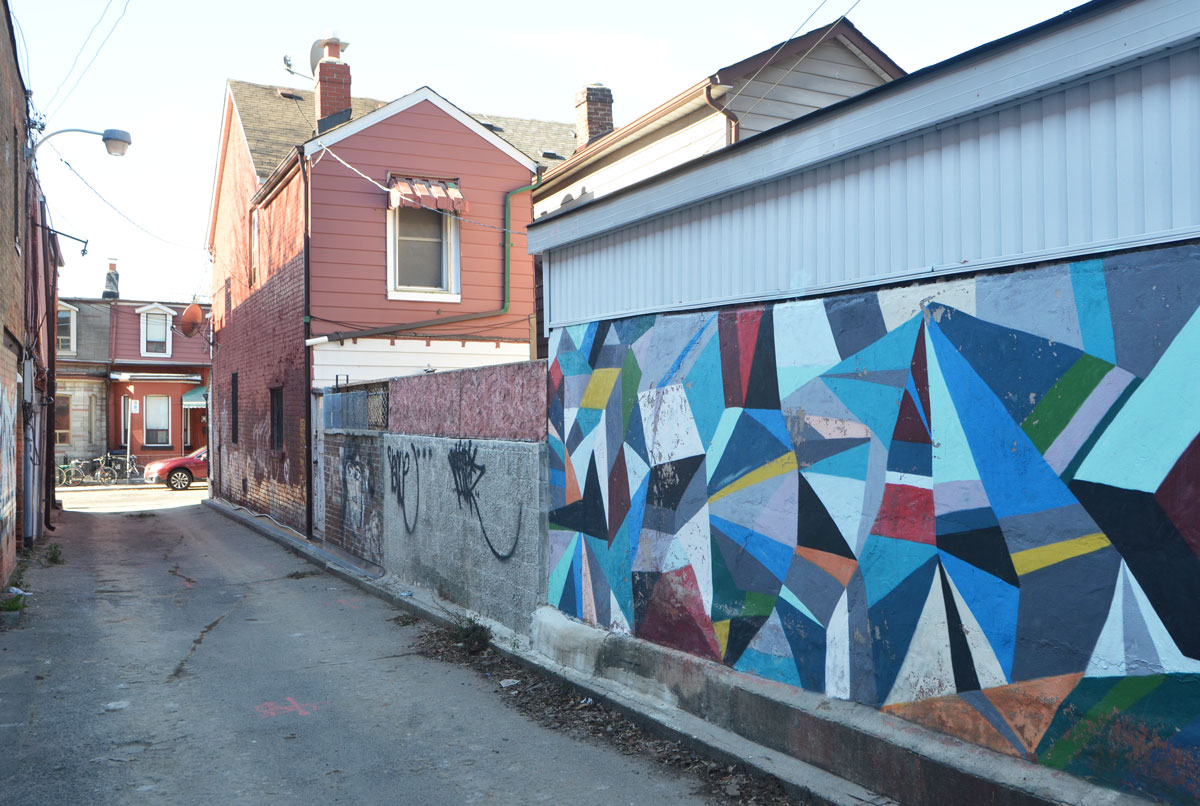
looking down an alley, an abstract mural of triangular shapes is on one wall

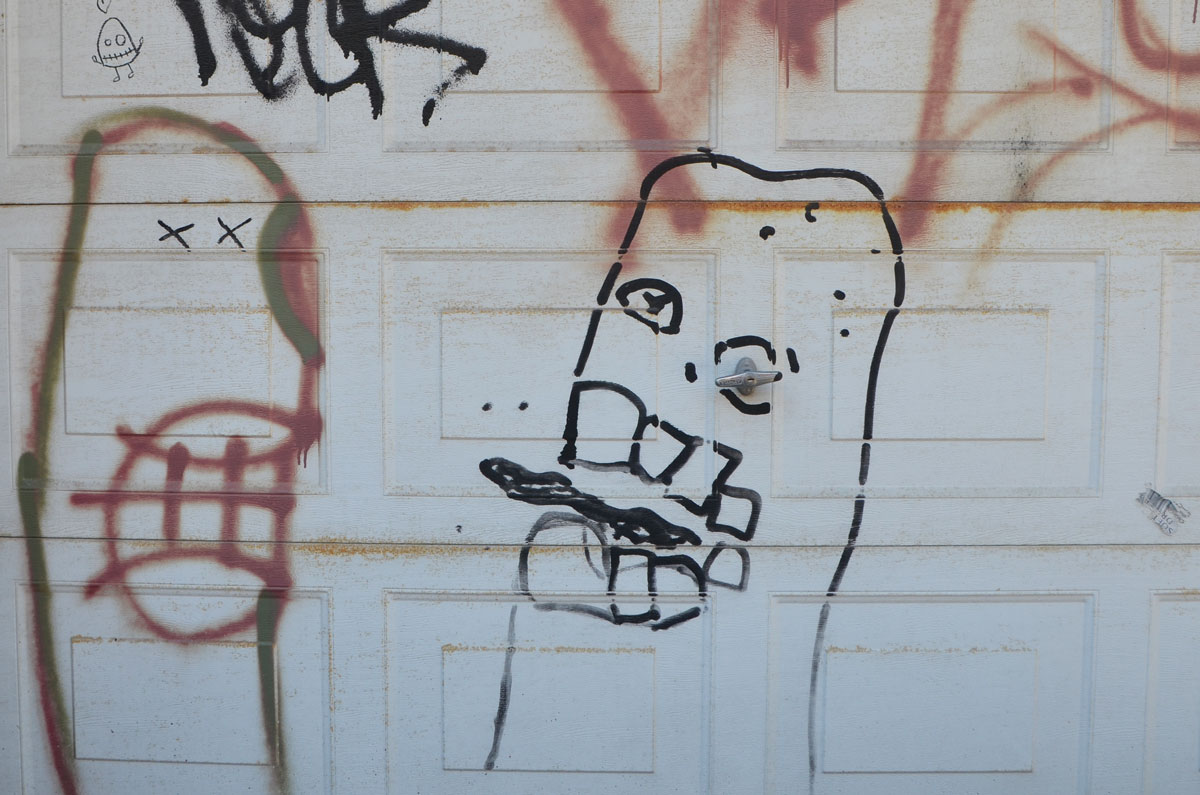
below: There really isn’t much to this graffiti but at least there’s a creative (albeit gruesome) use of the garage door knob.   The poor guy is shocked and probably in pain as he’s stabbed in the eye.   I’m not sure if the other fellow is screaming or laughing loudly.

two stupid line drawings on a white garage door

below: Flash, glare and a happy light bulb.

light bulb graffiti with a text graffiti incorporated into it.

below: A blackburn giant squirrel covers a garage door.

a squirrel mural by blackburn. greyish brown squirrel on magenta background, fills the garage door

roughly drawn head with hair on one side, brown eyes, and an X for a mouth

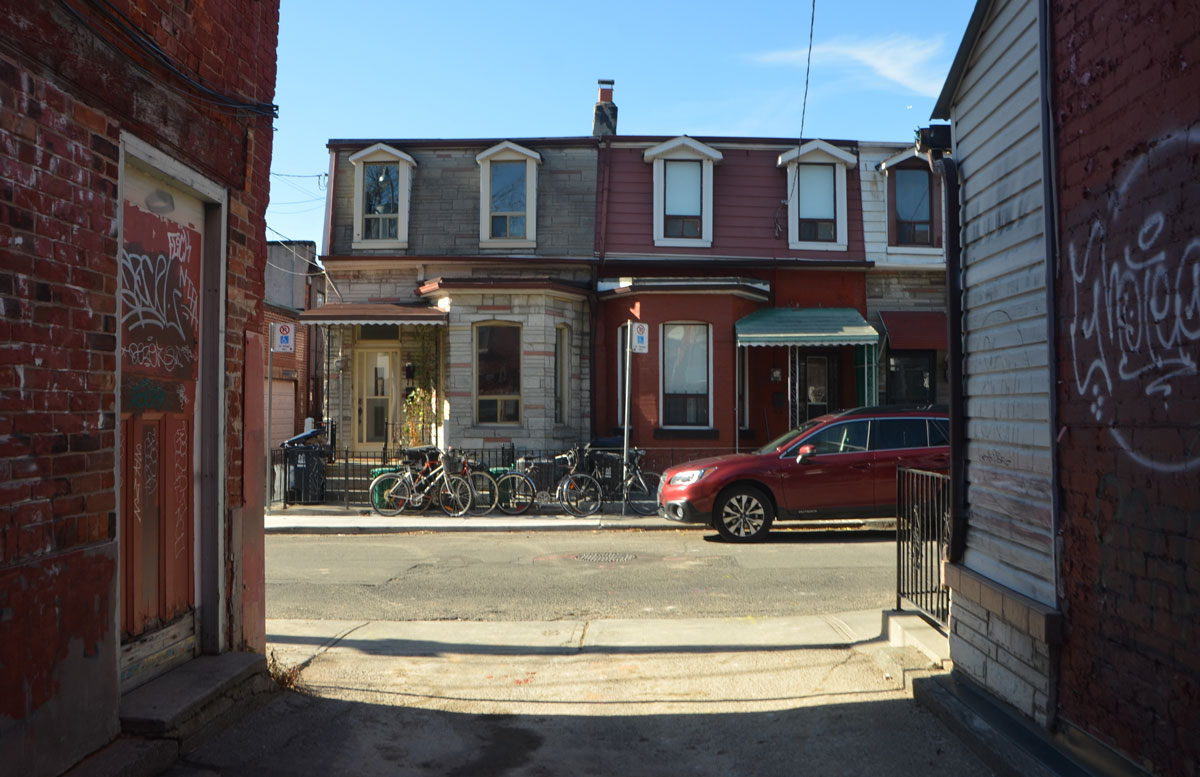
a row of second empire style two storey houses as seen by looking down an alley towards the street. A red car is parked on the street


This is another meandering blog post… a post about being out and about on yet another wonderful autumn day, going wherever my feet and eyes take me.

below: The first picture of my day was this intriguing wall made of old wooden doors.  Bathurst Street.
a tall narrow wall about three storeys high made of old white doors.

below: A small elicser mural tucked away at the end of a parking lot.   The man has his back to the viewer but I can’t figure out what’s behind him or what he might be doing.
small mural on a fence, a man's head is back to the viewer

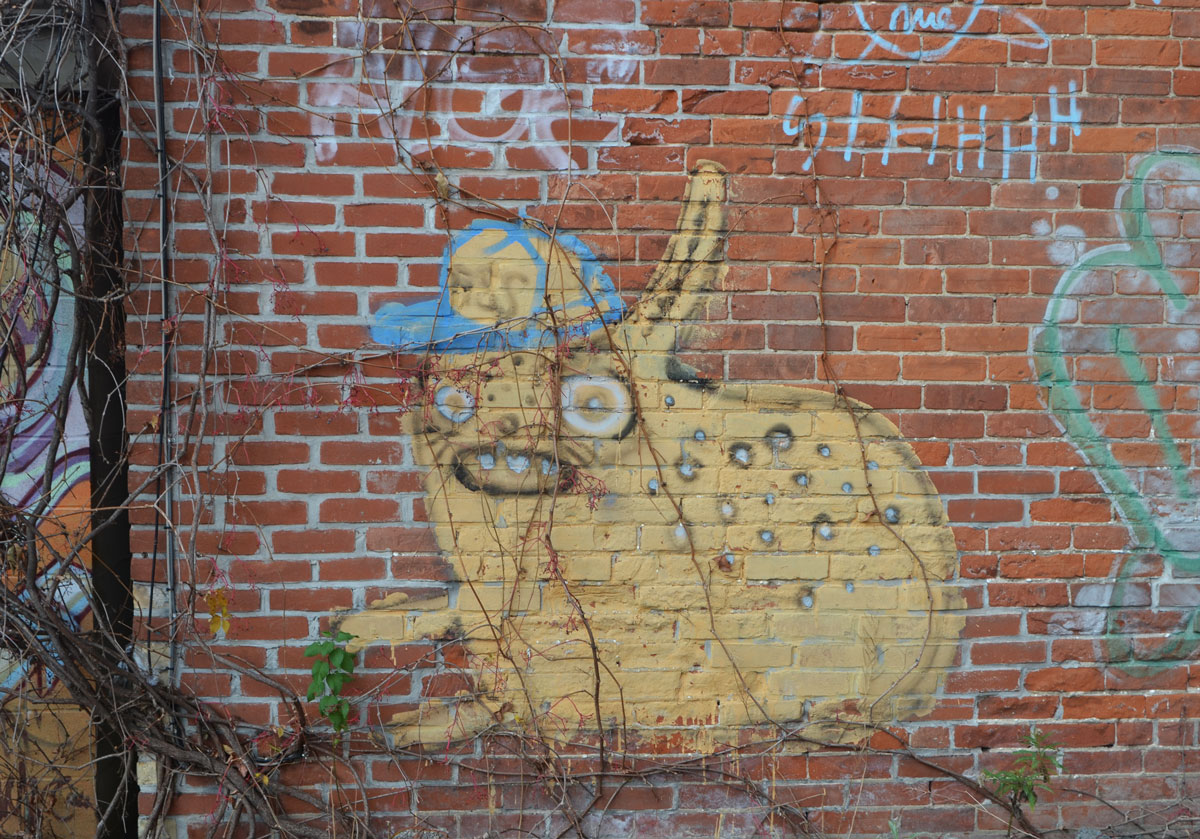
below: The leaves have fallen off the vines to reveal a yellowish creature with his baseball cap askew.

graffiti painting of a yellow animal like creature wearing a blue and yellow baseball cap. The creature is yellow. On a red brick wall, with spots on its back

below: Toronto’s tallest icon framed by a construction crane.

CN Tower in the distance, condo construction in the foreground, with a red crane

below: And on a similar note, a vacant lot cleared and ready for the next stage of its life.

a box beside a fence that has been scrawled over with blue spray paint. Behind it is a fence around a vacant empty lot. There are some small trees growing in front of the fence.

below: No more cranes here (and not many vacant lots either for that matter).  A view showing how much development there has been on the south side of the railway tracks.   Fort York is between the tracks and the condo towers.

a VIA Rail train passes by on one set of many tracks, in the background is Fort York and then a series of new condo buildings.

below: And what’s this? An old blue canoe beached on the tracks?

looking at the scene from a above, a blue canoe has been used to plant plants in. It lies across an old railway track, a chainlink fence separates the canoe from the main railway tracks that still function.

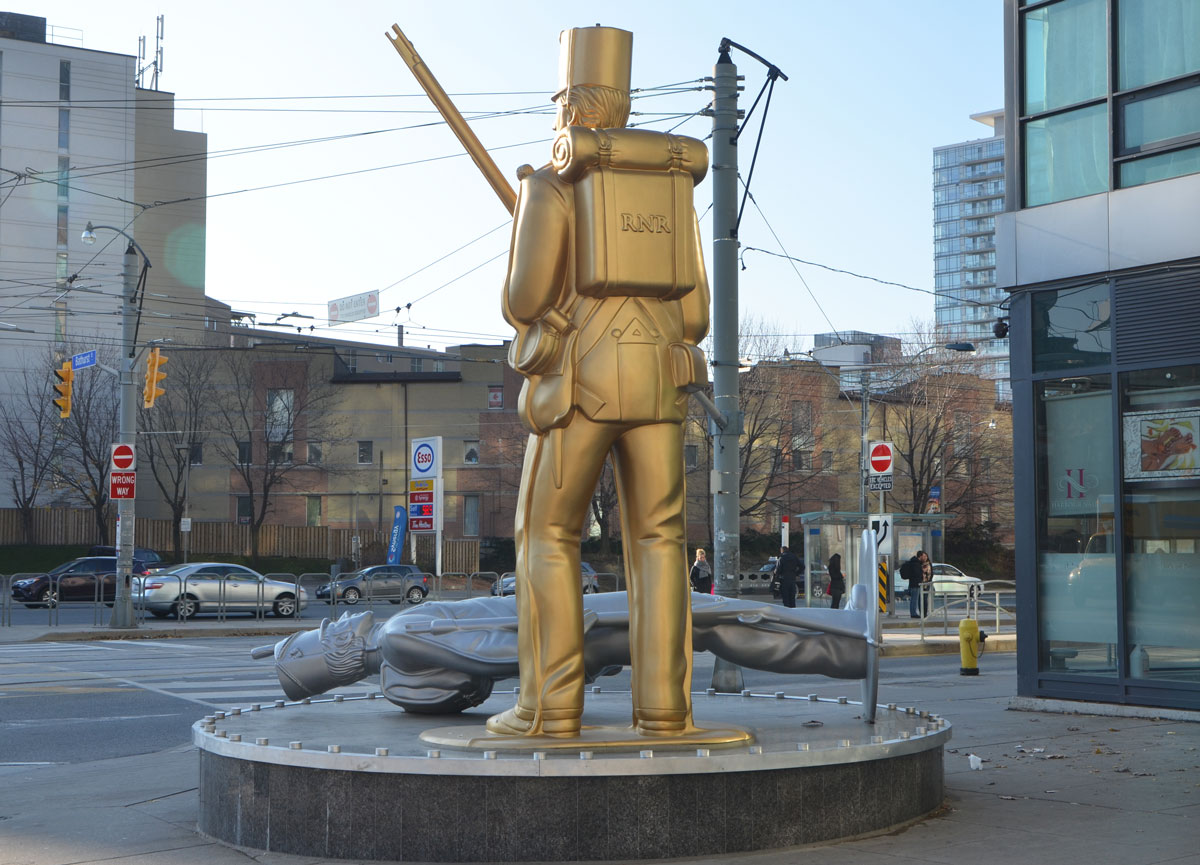
below: Standing guard over Bathurst Street, Fleet street and the Lakeshore, is one larger than life gold replica of a Royal Newfoundland Regiment and his fallen silver American foe. A sculpture by Douglas Copeland entitled “A Monument to the War of 1812”, a nod to nearby Fort York and the history of Toronto.

Douglas Copeland's sculpture of two tin soldiers, a gold one standing with backpack on and rifle in hand, and a silver one lying on its back on the ground, uniforms circa War of 1812, seen from the back, figures are much large than life sized and they are on a corner at an intersection, Bathurst St. and Fleet St.

below: My favorite example of bad grammar still exists!  Off-leash dog area at Coronation Park.

a wood fence around a dog park, in autumn with lots of leaves on the ground, on the fence is a white sign with black letters re the Toronto municipal code 608,

A beautiful day in the park.  A slight November nip was in the air but it was sunny and the sky was a brilliant shade of blue.  Coronation Park is named in honour of the coronation of King George VI who was crowned on 12 May 1937.  At that time nearly 150 trees were planted here.

Apparently, an oak tree was planted to honour the king.  Surrounding it, a ring of silver maples was planted.  This was to symbolize the countries of the British Empire.  I wish I had known that bit of trivia before I walked through the park because now I am curious if these trees are still there.   Some of the trees are quite substantial.

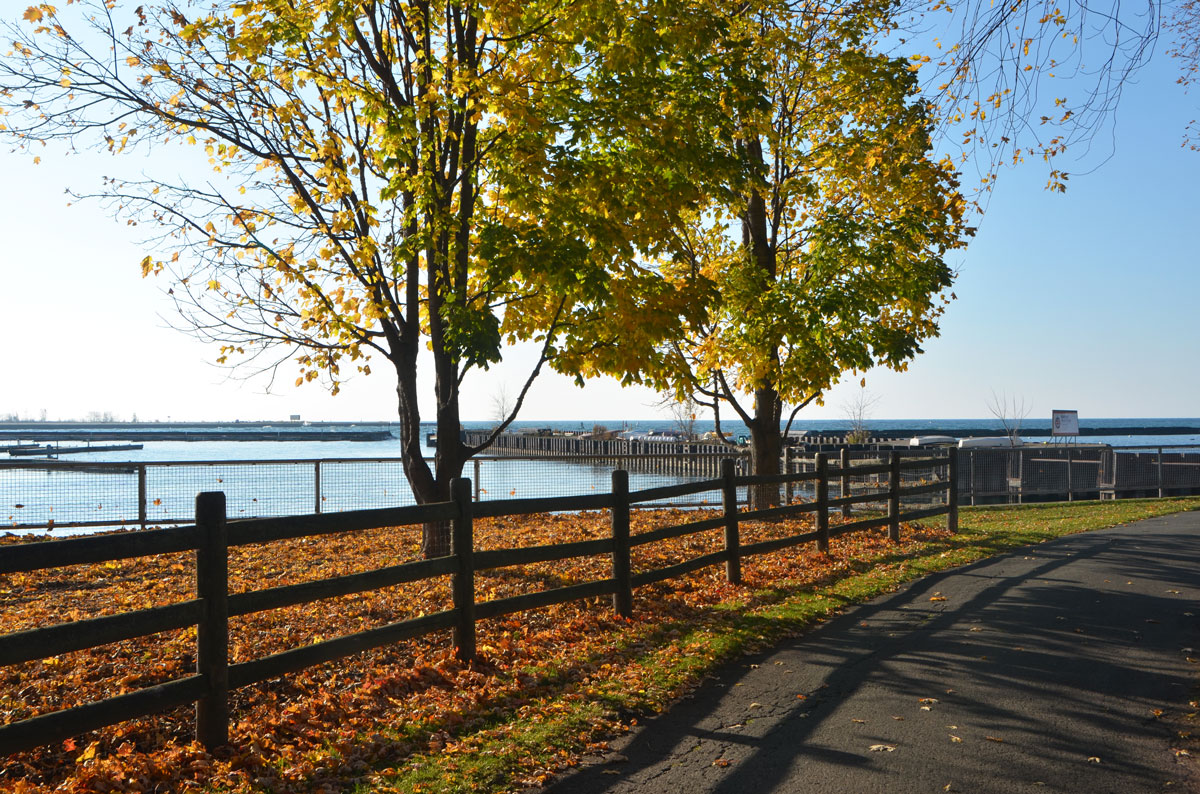
below: Long shadows for the morning sun, low in the sky.

morning in the park, autumn, trees with some leaves still on, many leaves on the ground, wood railing fence, shadows, Lake Ontario, path, Coronation Park.

below: Looking back towards the city center, past the empty docks of the National Yacht Club to the residences on Stadium Road.   A small group of people were making a video in the dog park.

morning in the park, autumn, trees with some leaves still on, many leaves on the ground, wood railing fence, shadows, Lake Ontario, path, Coronation Park. a small group of people in the distance are filming a video

below: This Victory Peace Monument was unveiled on 14 November 1995 to commemorate the 50th anniversary of the end of World War 2 and honour those who died in that war.   It was designed by John McEwen; the bronze pieces resemble the bow of a ship.

Metal partial cylindrical shapes on a concrete circular monument. World War 2 memorial

below: On the inside of one of the bronze pieces is a map of eastern Canada and the Atlantic Ocean.  Each boat on the map represents a ship or U-boat that was sunk during the war.  The Canadian ships are located on the map at “their last known position”.  I hadn’t realized that so many ships were lost so close to North America.

relief map of eastern Canada and the Atlantic Ocean, in bronze on a WW2 memorial. Little ships are shown on the ocean where they were sunk during WW2.

Trees were also planted to represent the four divisions of the Canadian Expeditionary Force (WW1) and its units as well as those who fought in the Fenian Raids of 1866-1870, the Northwest Rebellion of 1885, and the Boer War (1899-1902).  Once upon a time, brass plaques were placed at the foot of each tree to indicate the units the tree stood for.  If any plaques remain, I didn’t see them.

below: Another memorial is close by, a  “Memorial to Lieut. Tommy Hobbs gallant British Canadian soldier in the Great War 1914 – 1918.  Died on active service November 10, 1940.  Beloved and remembered by his comrades.”   Tommy Hobbs was involved in the creation of this park.

a memorial in a park made of a small pile of rocks. The top rock is inscribed, memorial to Tommy Hobbs, died 1940, in Coronation Park

below: A little farther on I noticed another rock, one that was painted red.   The bronze plaque on the rock says that 20 trees have been planted here in commemoration of the G20 Summit held in Toronto in 2010.

a large rock with a bronze plaque on it. The rock has been crudely painted red

below:  A 30 foot tall Inukshuk stands looking out over Lake Ontario.  Approximately 50 tonnes of mountain rose granite was used to create the Inukshuk, which was made by Inuit artist Kellypalik Qimirpik from Cape Dorset, Nunavut.

a tall stone inuksuk on a raised mound of warth

below: Streetcars across the baseball outfield.

Looking across the outfield of a baseball diamond towards a street. A line of mature trees by the street with two red and white TTC streetcars on the street, condo towers behind.

below: A closer look at that brown octagonal structure in the middle of the streetcar loop for the 509 and 511 cars.  Apparently it’s the Queens Wharf lighthouse, one of a pair built in 1861.

a brown structure, the Queens WHarf Lighthouse, sits on a patch of grass beside TTC streetcar tracks in front of a new condo.

The lighthouses marked the entrance to the Toronto Harbour from 1861 until the Western Channel was built in the early 1900’s.   This one stood on Queen’s Wharf which used to be at the foot of Bathurst Street, adjoining Fort York.  The wharf was built by the military; in 1833 it was a pier 42 feet long.    The pier no longer exists; a hundred years ago it was buried under what is now Bathurst Quay.

below:  A picture of an historical map (1886 or 1887) of the area showing Toronto Harbour, Fort York and the railway lands.  Queen’s Wharf is the pier on the left.   At that time, Front Street was the southern most street in this part of the city.   All the present day development south of the train tracks is on reclaimed land.

picture of historical map of part of Toronto Harbour from 1886, showing Fort York, Front St., and Bathurst St., and the railway lands and wharves into Lake Ontario,

below:   Taken from google maps, what the layout of the city looks like now.   As you can see, there have been many changes!

present day map taken from google maps of Coronation Park and Bathurst Quay including Fort York

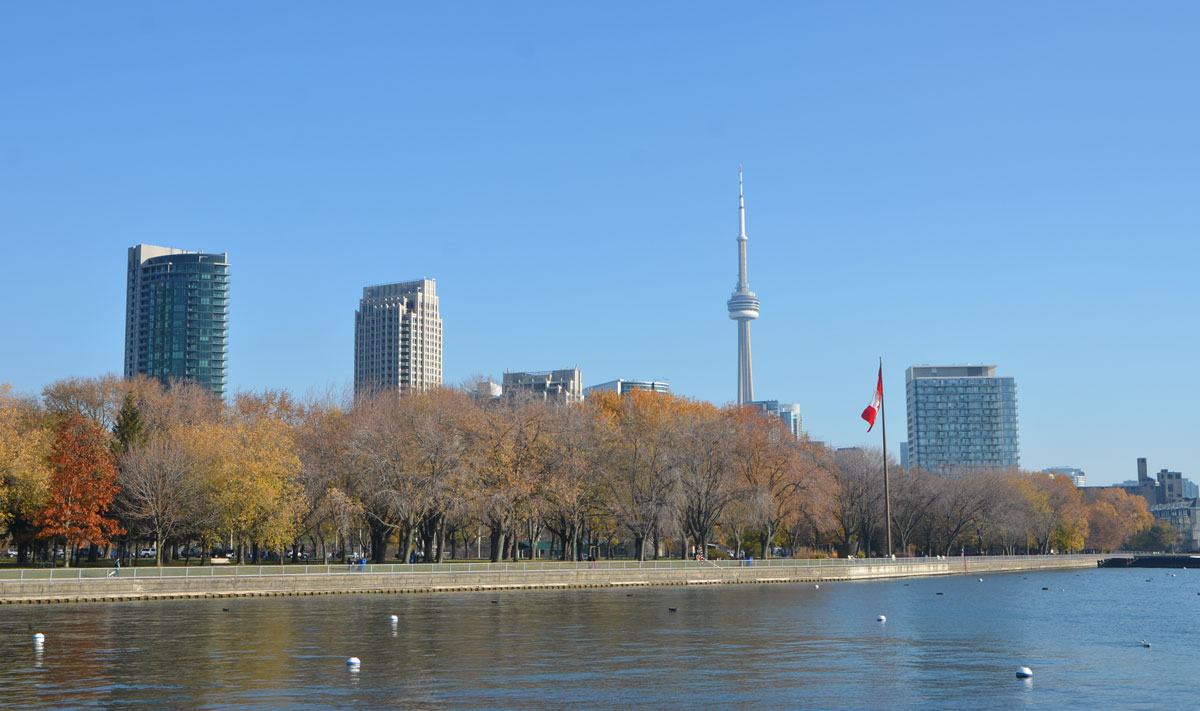
Lake Ontario in the foreground, trees in Coronation Park in the middle and Toronto skyline in the distance with the CN Tower and a large Canadian flag.
a sticker of a rainbow in a heart shape. A small purple heart is in the center, then a blue heart is drawn around it, moving outwards in rainbow colours.

The words body, souls, and mind painted on a mural

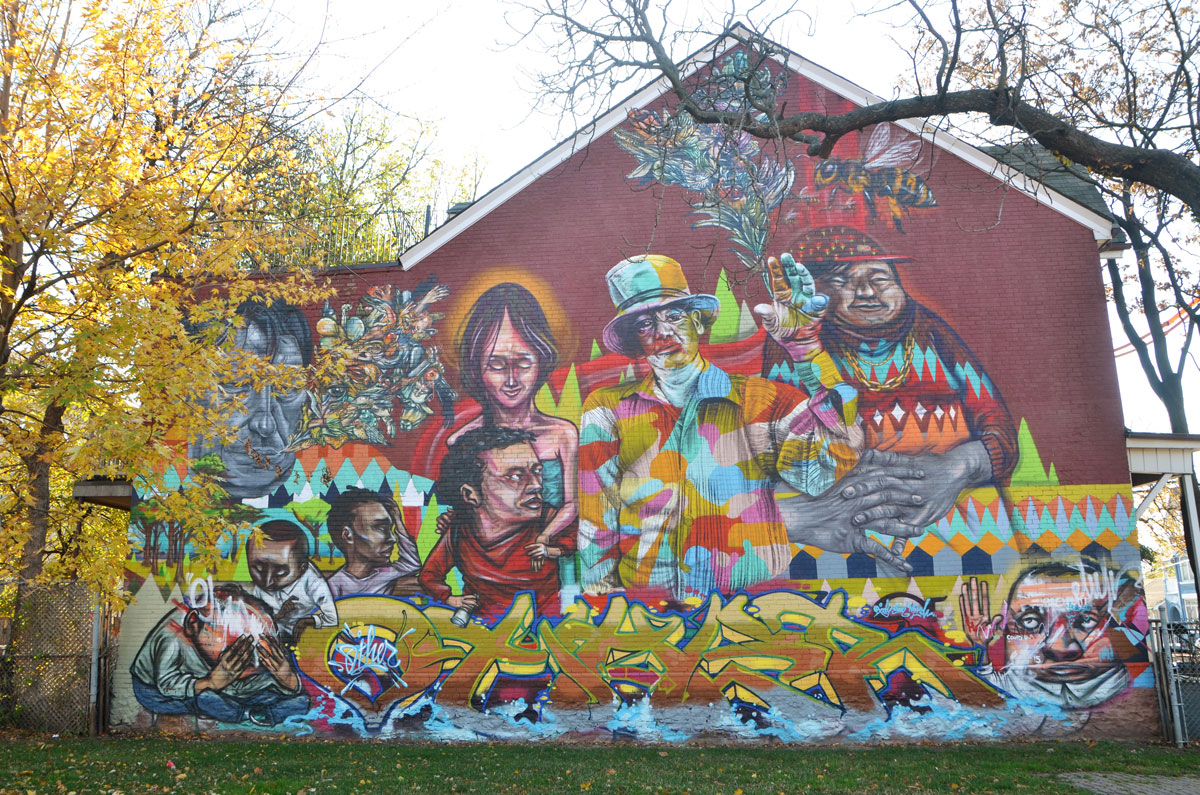
In the southwest corner of Alexandra Park (near the SE corner of Bathurst and Dundas) there is a large colourful mural.  It was painted a couple of years ago by Elicser and Troy Lovegates.


large mural on the side of a house at the edge of Alexandra Park in Toronto, painted by Elicser and Troy Lovegates

part of a larger mural, the face and heads of two young black men.

part of a larger mural of elicser and Troy Lovegates, colourful people, A woman stands behind a seated man.

part of a larger mural of elicser and Troy Lovegates, colourful people, a heavy set man with a cap on, seated with large hands folded on his lap, wearing a sweater with rows of colourful diamond shapes. A large bee is flying above his head.

part of a larger mural of elicser and Troy Lovegates, colourful people, a man in a top hat and jacket, holding a bouquet in his upraised hand - a bouquet that looks like one a magician would use

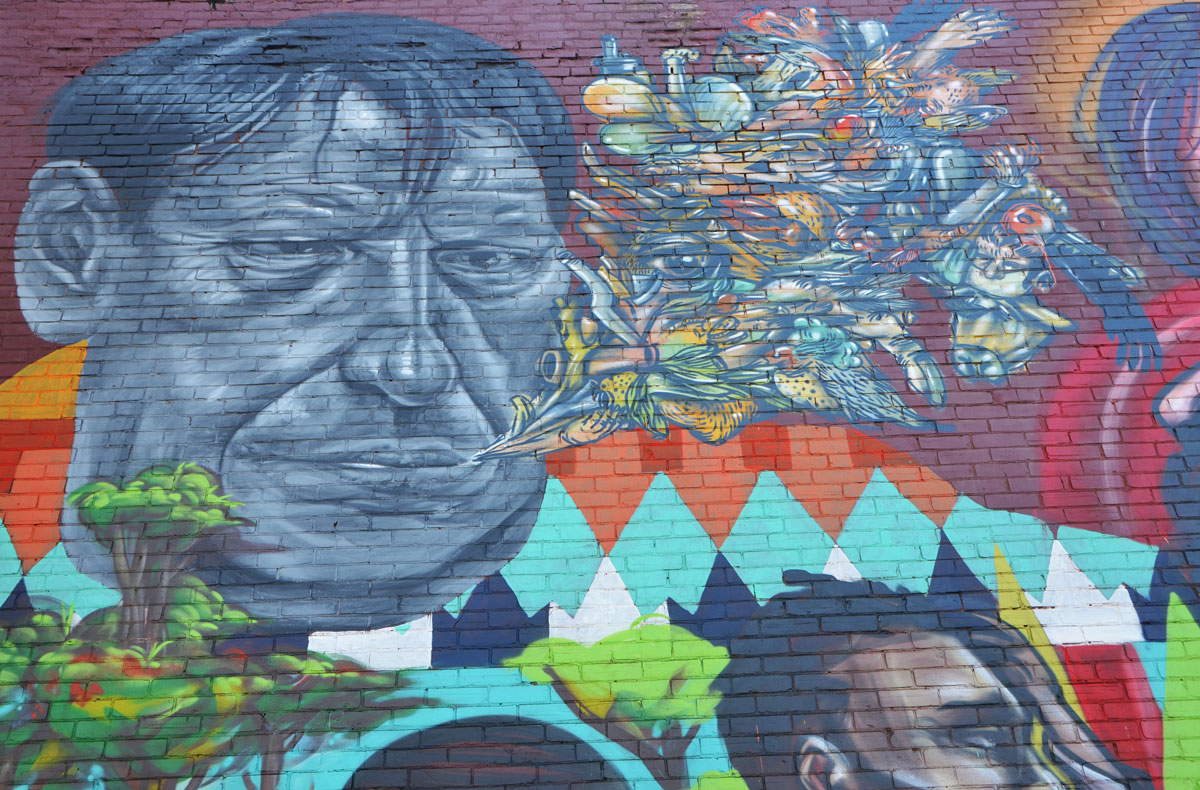
part of a larger mural of elicser and Troy Lovegates, colourful people, a man's face in grey tones, many small objects coming out of his mouth - an eye, a finger with long fingernail, a cow's head, two bottle caps, a bird, and many more things.

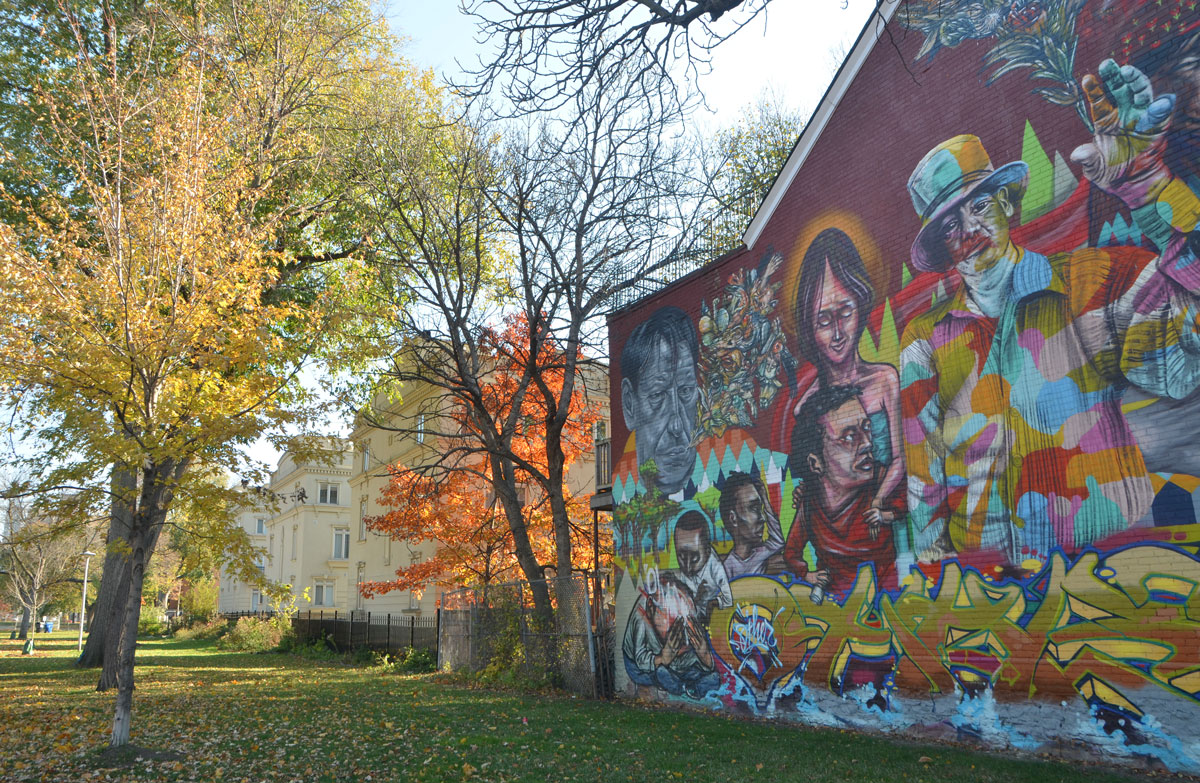
large mural on the side of a house at the edge of Alexandra Park in Toronto, painted by Elicser and Troy Lovegates, most of the mural is in the photos along with some autumn foilage trees and some newer houses in the neighbourhood

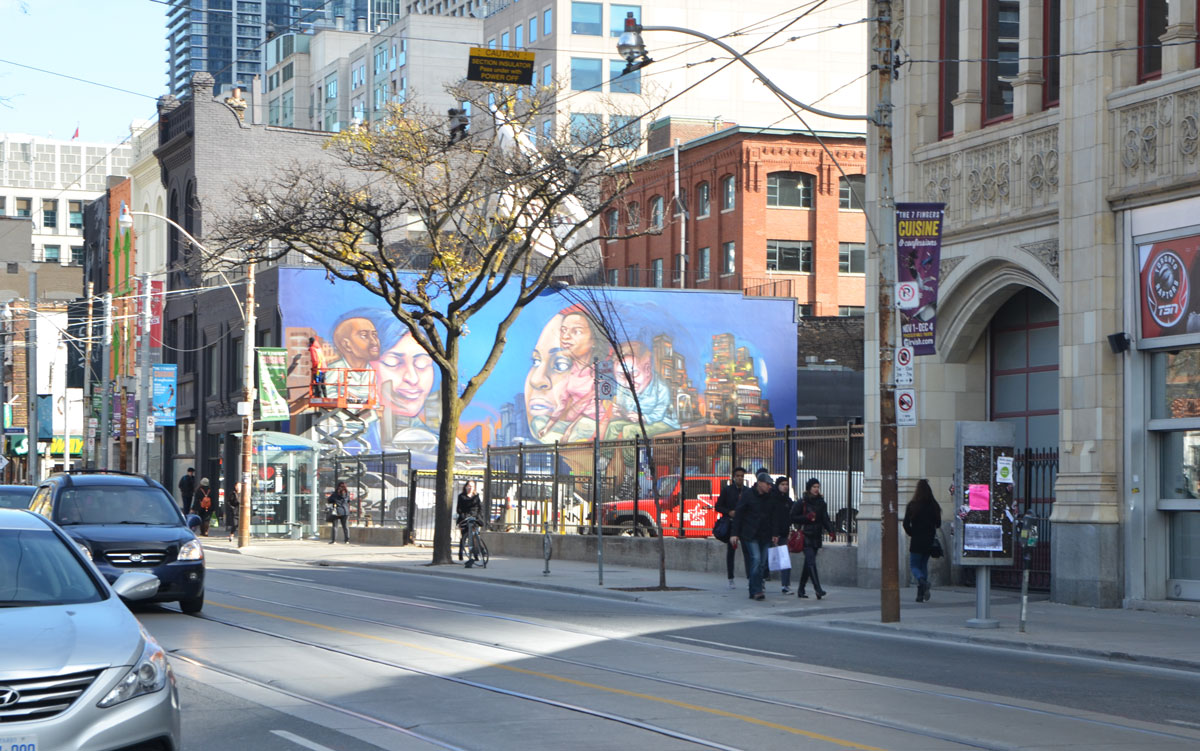
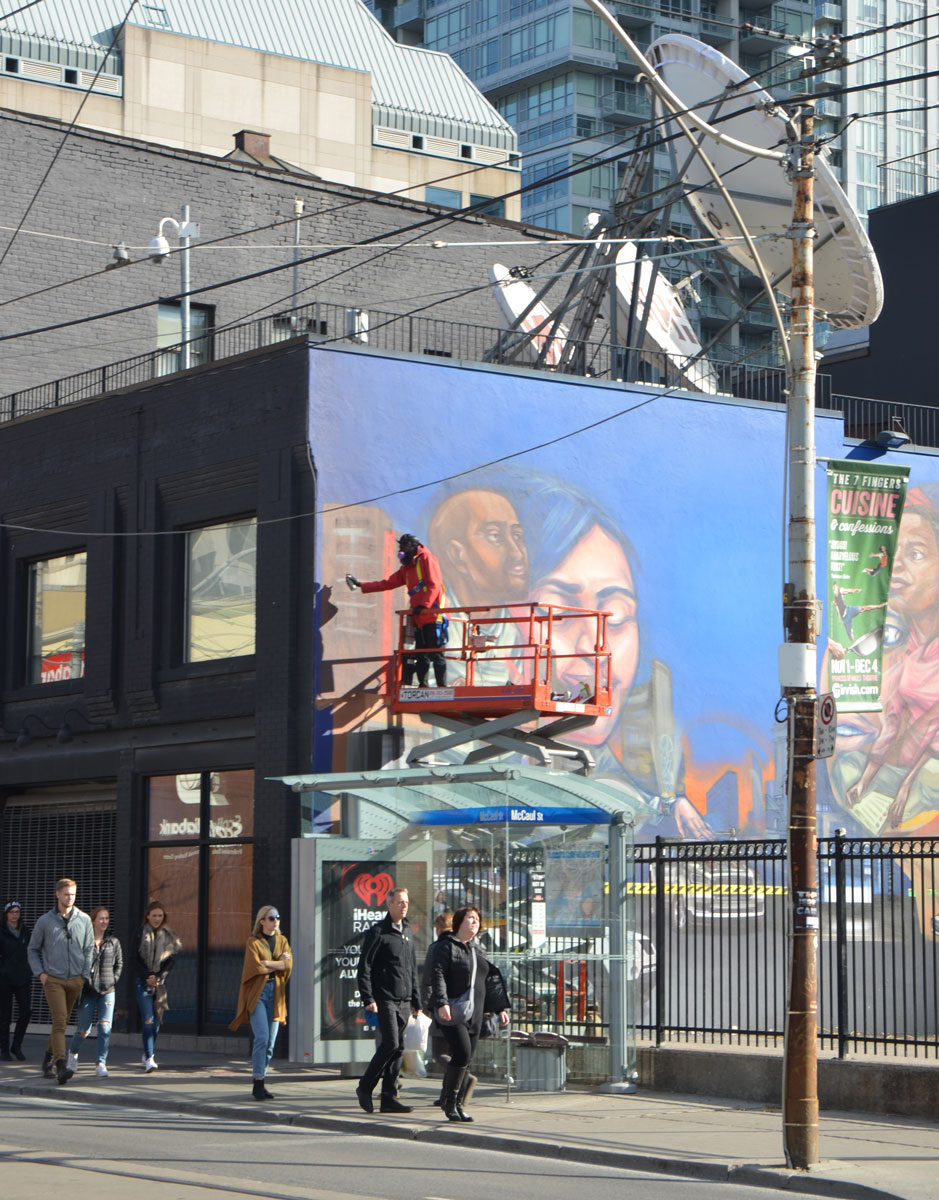
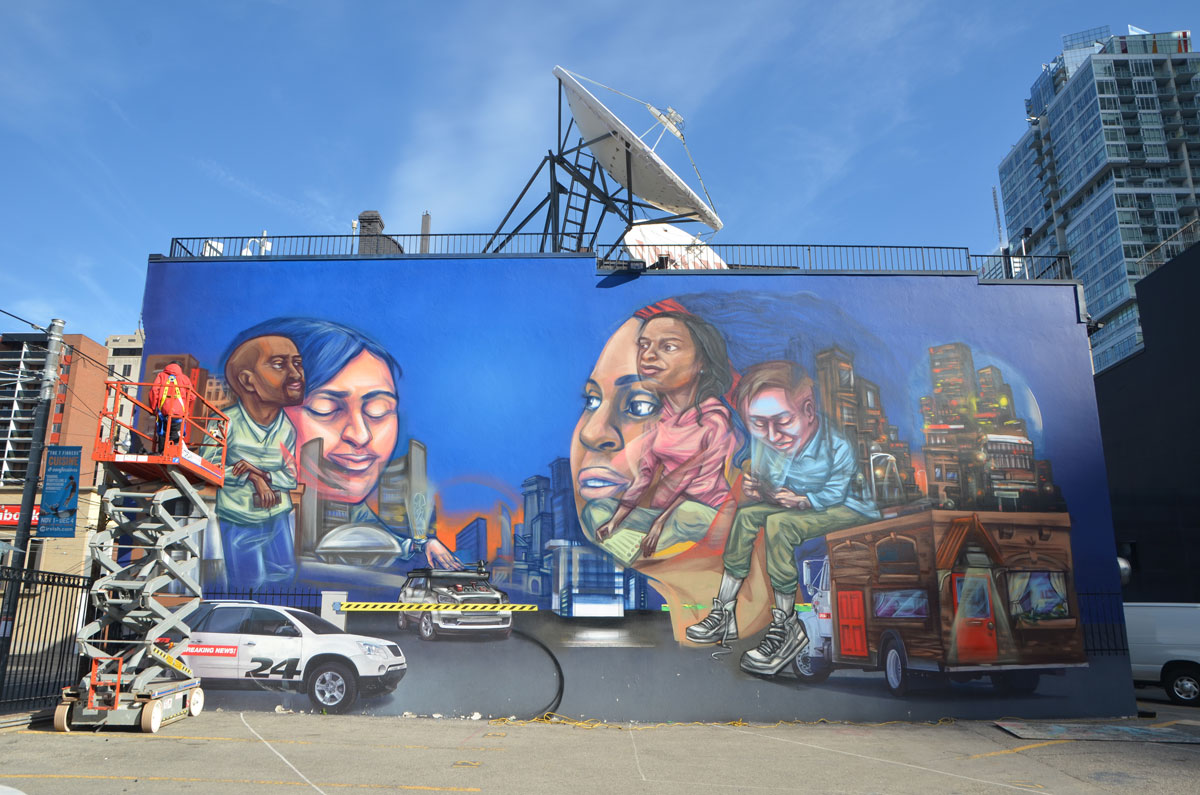
I happened to be walking along Queen Street West this afternoon when I spotted something new…

elicser painting a large mural by CP 24 parkinglot on Queen St West, showing people in the tv business

A large mural on a wall by the CP24 parking lot by elicser

elicser painting a large mural by CP 24 parkinglot on Queen St West, showing people in the tv business - the almost completed mural

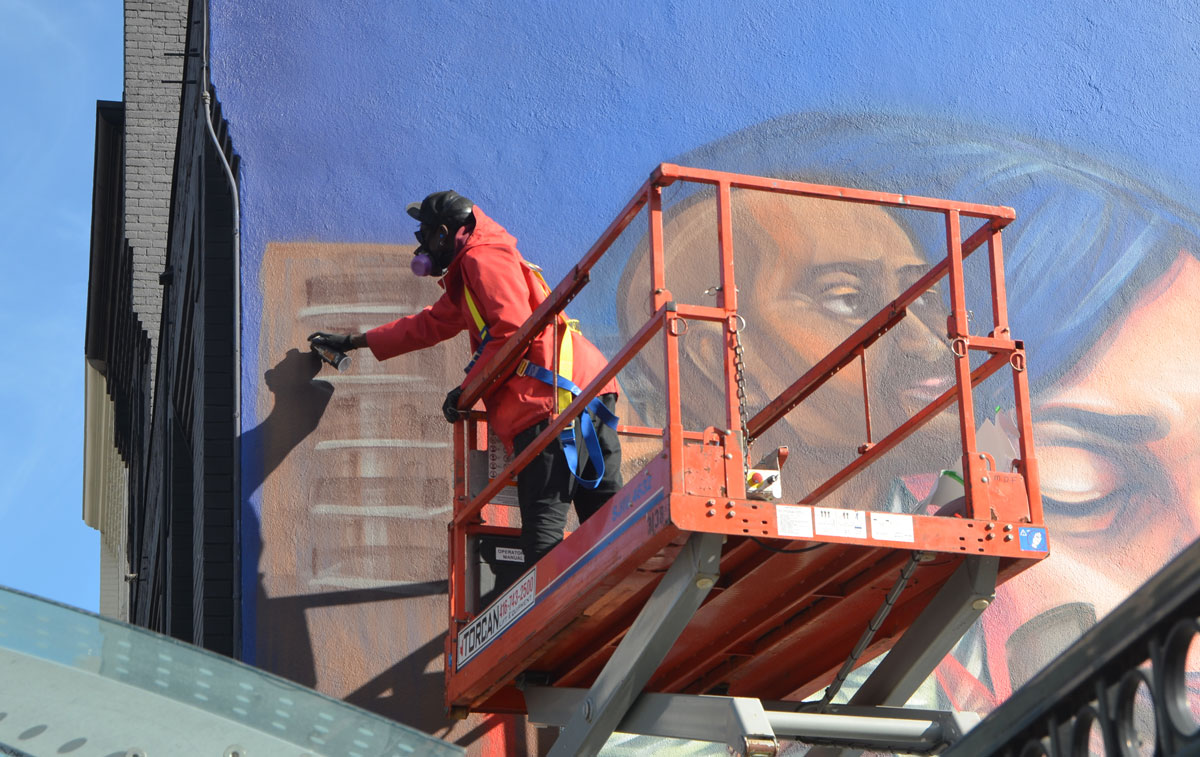
with the artist himself, putting on the finishing touches to the mural.

elicser painting a large mural by CP 24 parkinglot on Queen St West, showing people in the tv business - up close picture of him with a can of spray paint in his hand.

elicser painting a large mural by CP 24 parkinglot on Queen St West, showing people in the tv business - him on a lift painting above the heads of people walking past

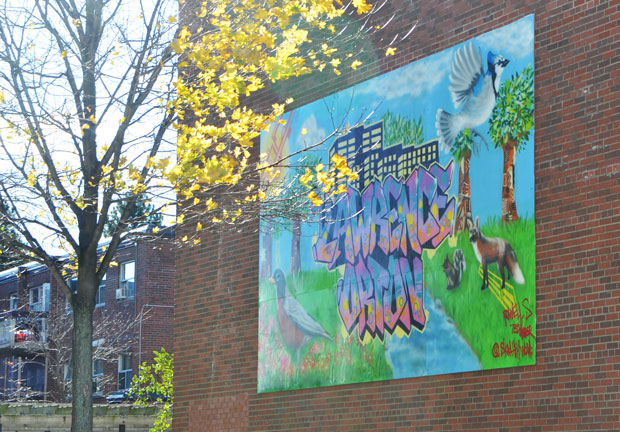
I had heard about a mural at Lawrence and Orton Park so this morning I thought I’d check it out.   I ventured out Lawrence Avenue to just east of Markham Road.  As I drove I was reminded of how big this city really is.

below: This is the community mural that started my adventure this morning.  It was painted in nine sections and then assembled on the wall.   It is the work of Ted Hamer, Rowell Soller and Skratch Wonder.

a mural on the side of a building that has the words Lawrence Orton in blue and orange. There is also a blue jay in flught, a fox and a squirrel and a robin standing in the grass.

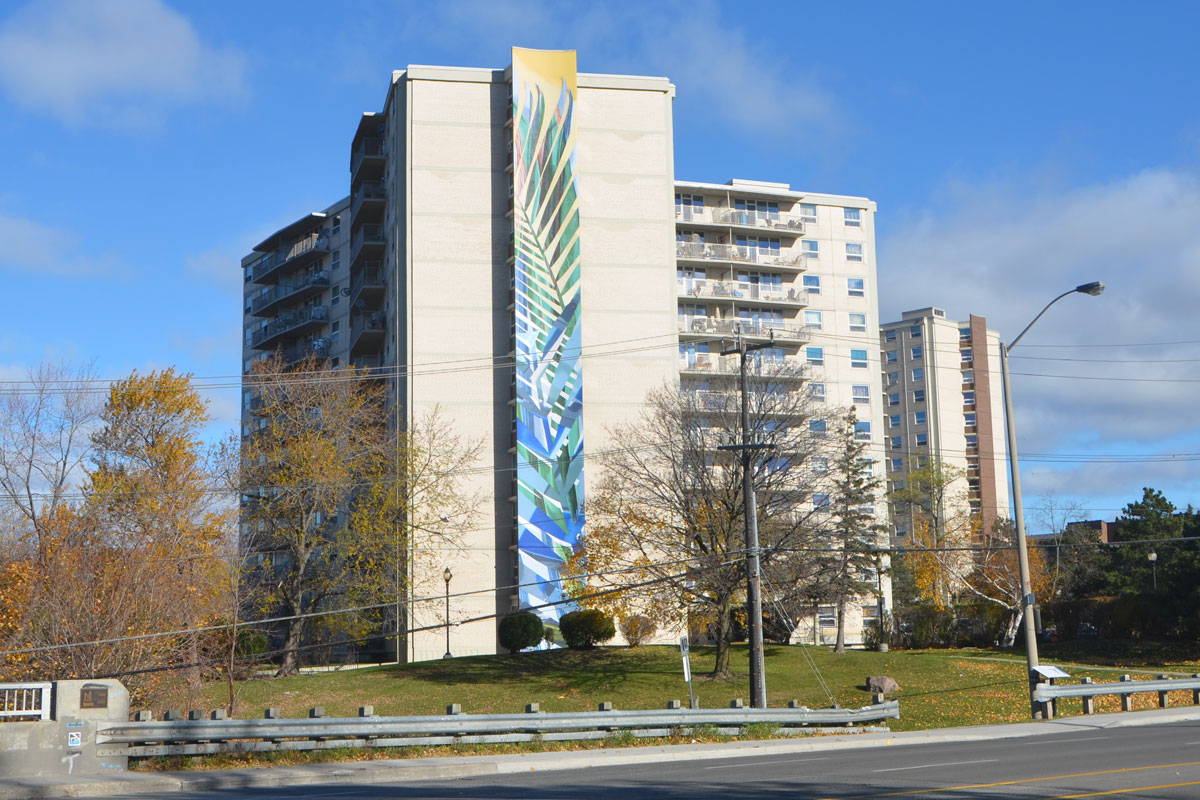
below: As I left Orton Park, I saw this mural from a distance.  Of course I had to stop and take a picture.  I got some strange looks.  Tourists are probably not too common in this part of the city.

vertical mural on a multirise building (about 15 storeys tall perhaps).

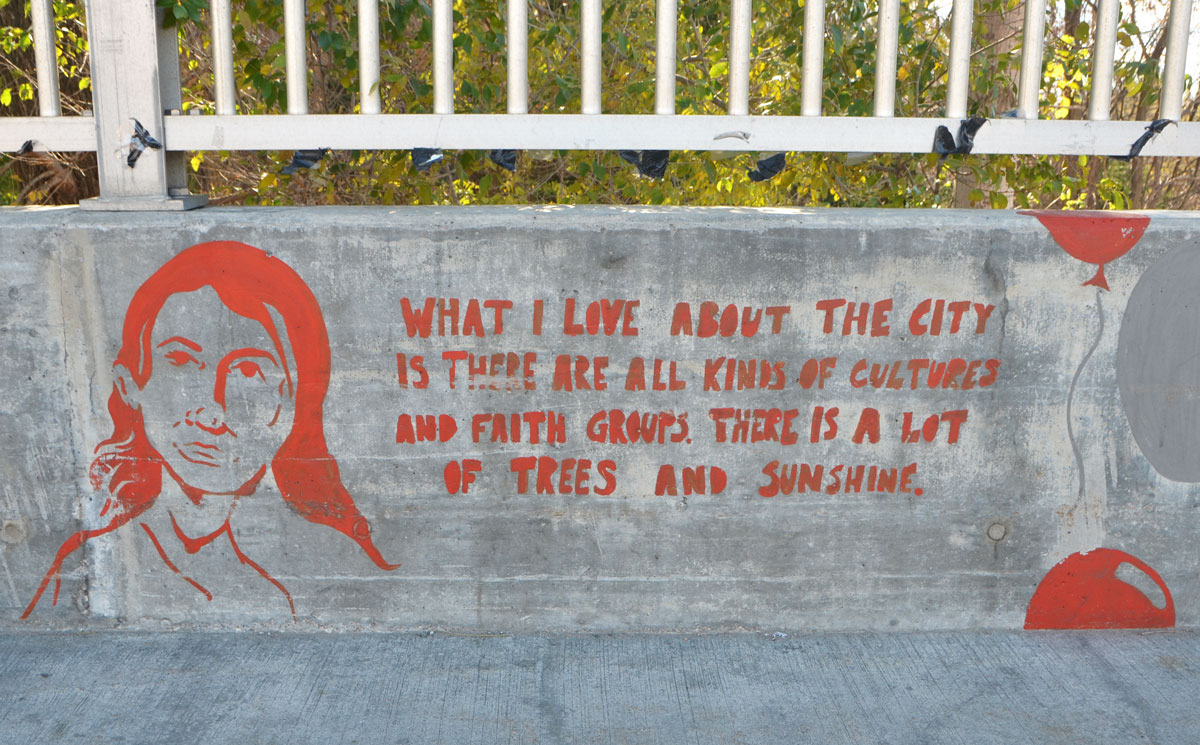
below:  While I was looking for the best angle from which to take the above photo, I noticed some markings beside the road.

red painting on concrete wall barrier beside sidewalk on bridge over Highland Creek, in red, a girl's head and the words, What I love about the city is there are all kinds of cultures and faith groups. There is a lot of trees and sunshine.

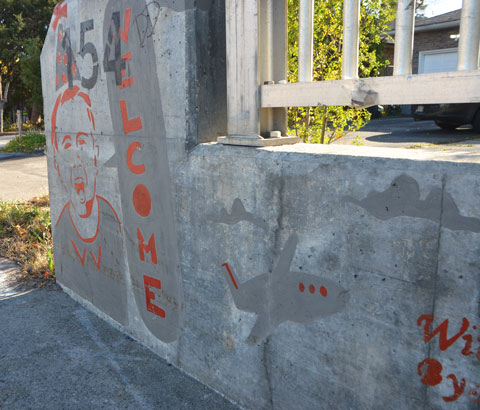
below: As it turns out, these are from the summer of 2011.  Lawrence Avenue is 6 lanes wide and at this point it crosses Highland Creek and Morningside Park – a long bridge, a rather barren stretch of concrete and pavement.

red picture of a boy on a concrete barrier beside a sidewalk as it passes over a bridge. The word welcome is written beside him.

below:  Bridges were meant for going under, right?   Luckily there was an entrance to Morningside Park right there, and luckily I left my toboggan at home  🙂   Morningside Park is part of a network of parks that follow the Highland Creek.  It starts near Markham Road and the 401 and runs south to Kingston Road near Guildwood station.    A search for an answer to the question, “How many ravine parks does Toronto have?” has yielded no results yet.  I’ll keep looking.

paved path leading down a hill to a ravine park, apartment buildings in the distance. Sign beside path says no skiing or sleigh riding on the slope.

below:  The answer to another question, “Is there graffiti under the bridge?” was more easily found.

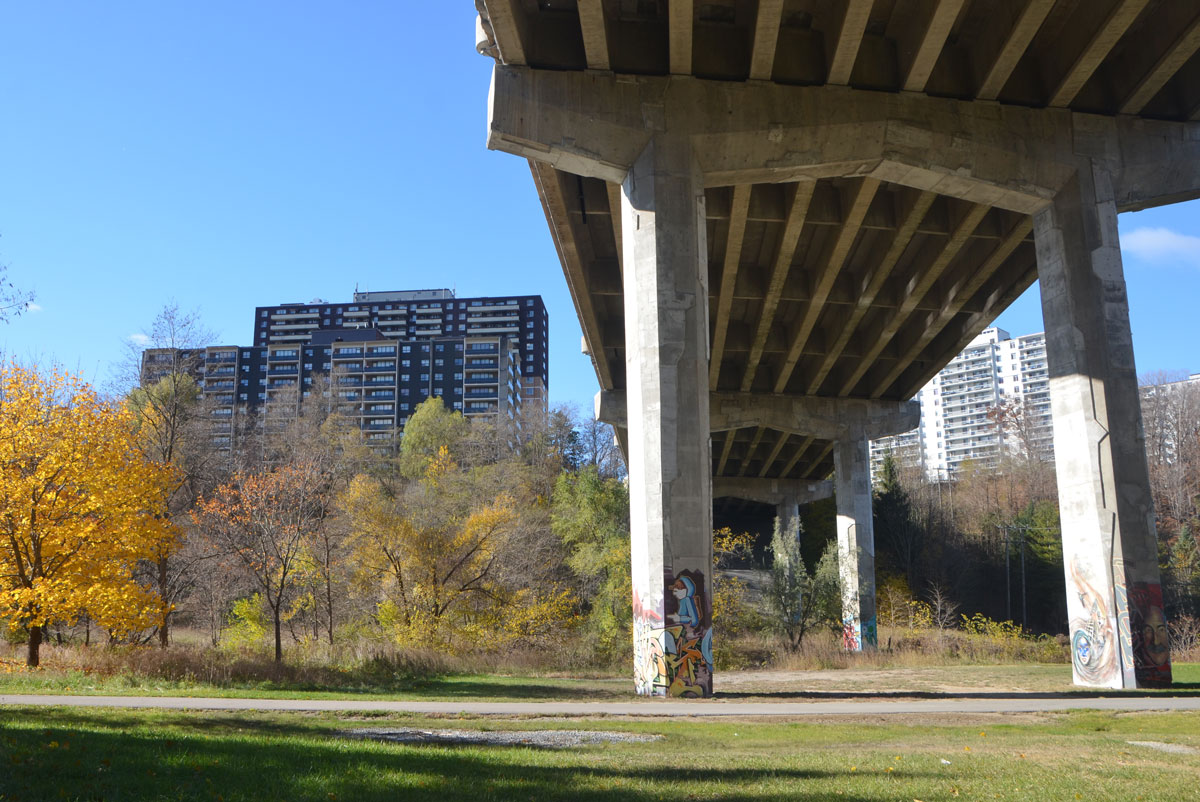
in a park under a bridge, grassy area, some trees on either side, 2 concrete support pillars with street art on the bottom of each.

below: The bottom of the pillars were painted back in 2010 and 2011.

street art on a concrete support pillar of a bridge, a man upside down, large head with top of head on the ground, feet up in the air. moustache, smiling mouth,

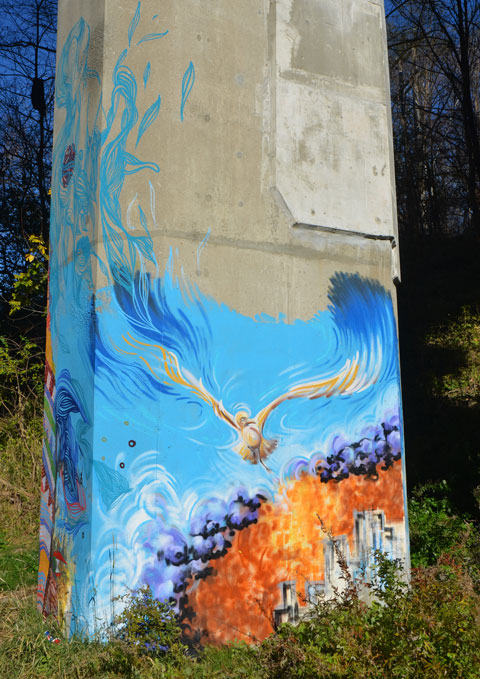
below: Hope takes flight over the city.  Unfortunately, it’s hard to see but the word hope is written on the city at the bottom of this small mural but it is behind the weeds.

small mural on the bottom of a concrete pillar, a bird takes flight over a city at sunrise. The word hope is written on the mural

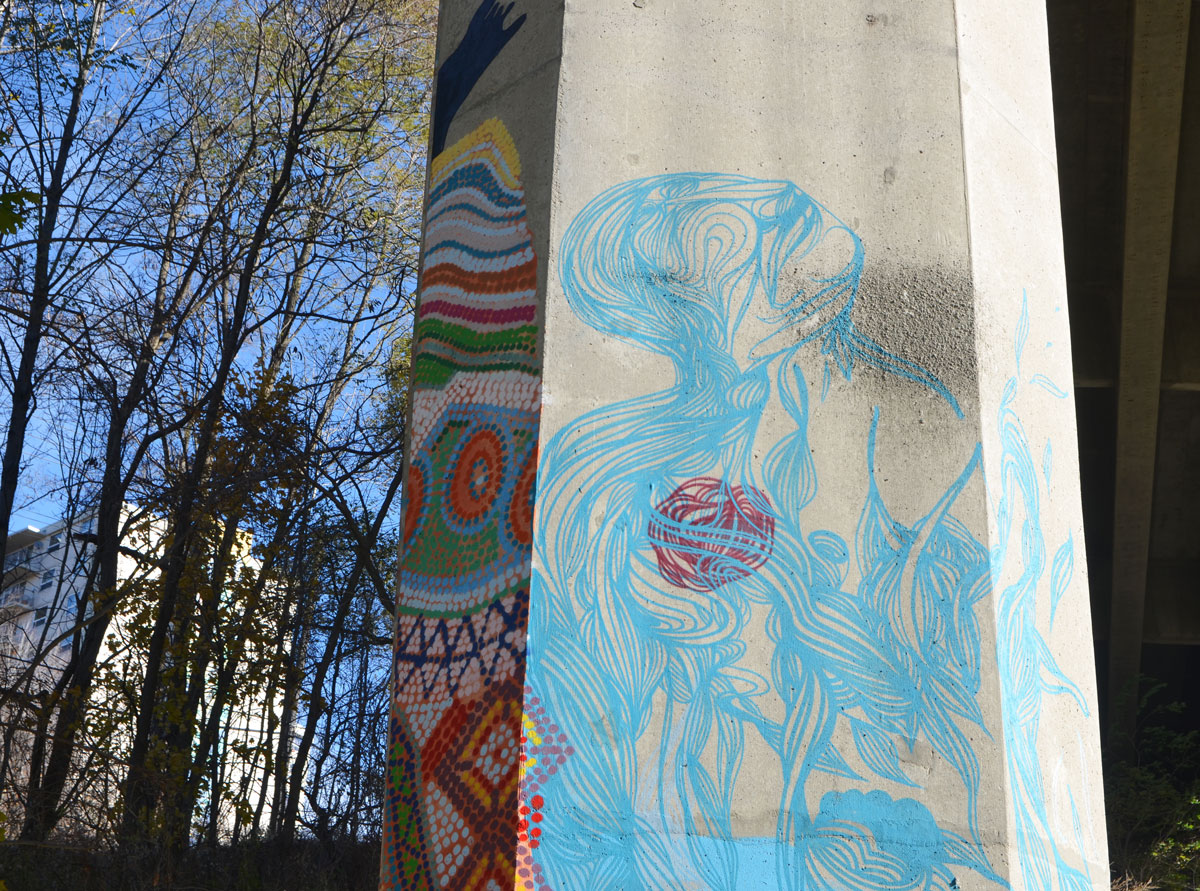
below:   Personified Hope, from the picture above, wraps around to another side of the pillar as he/she moves upward.  Also seen here is one of the feet from the upside down man.

side of a concrete pillar with light blue line drawing of person looking upwards, abstracted.

below:   Another pillar has a painting by elicser.

street art by elicser in blue of a family. Man with red hat, woman and kids huddled together, fall park scenery in the background.

street art on the bottom of a concrete pillar, two black men. One is Mohammad Ali.

park with grass and autumn foilage trees, apartment building in the background, a large bridge passes over with four or five concrete pillars. SUnny blue sky day

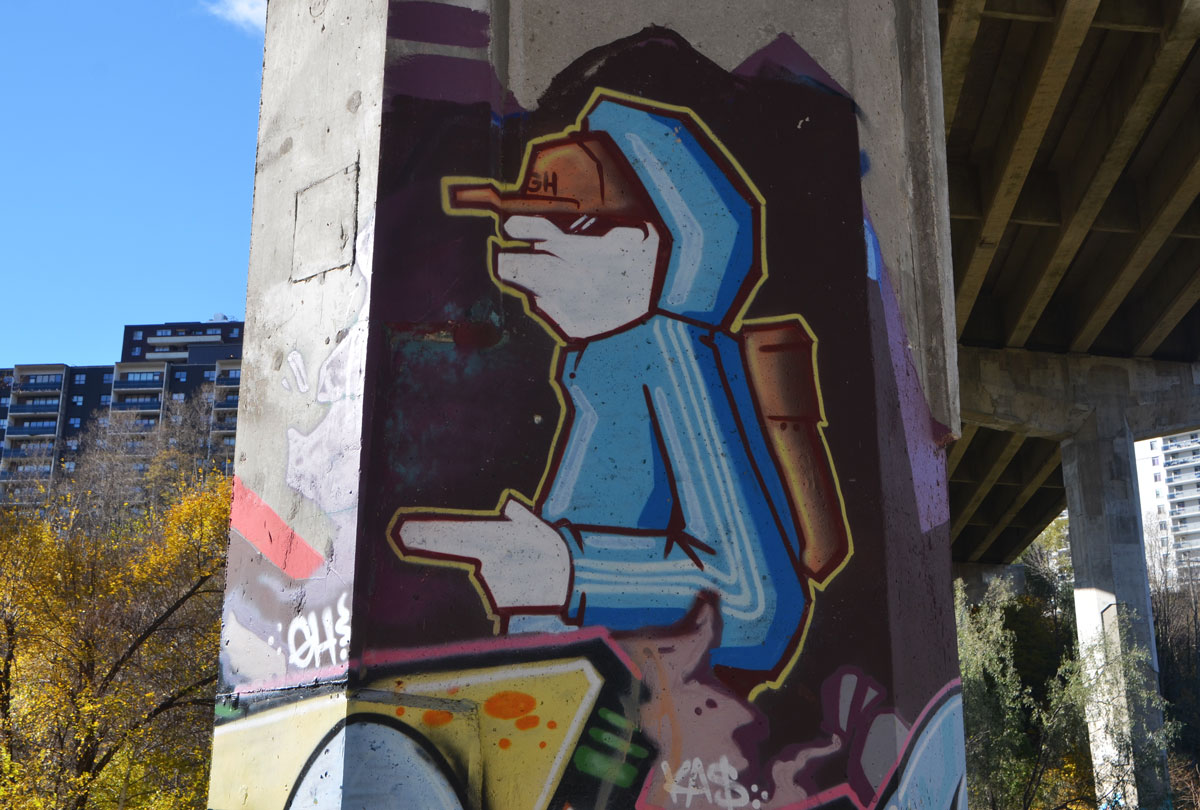
street art painting on a pillar under a bridge of a young man in a blue hoodie and brown baseball cap

street art painting on a pillar under a bridge, wispy picture of a woman with long hair, hair swirls upwards to a satelite dish and a flying bird

bridge over a park and creek

geometric shapes abstract many colours street art

below: There were also a couple of paintings on the other side of the creek. There was water in the creek. Too much to cross safely.
Or at least, too much for me to cross safely!

graffiti on a pillar in the park with weeds and small shrubs growing around it.

It was a very quiet place to be this morning.  I saw a couple of people on the path, including Batman, but they were silent.

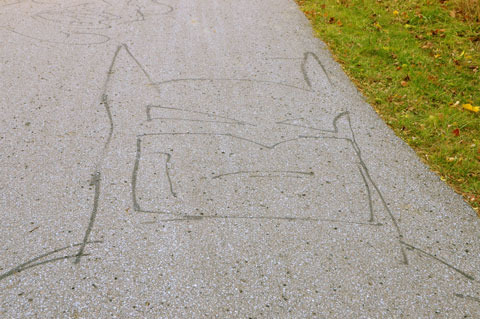
line drawing in black of Batman's head and shoulders, drawn on a paved path in a park

large chalk drawing of a man's face in black, white and pale purple, on a paved path in a park

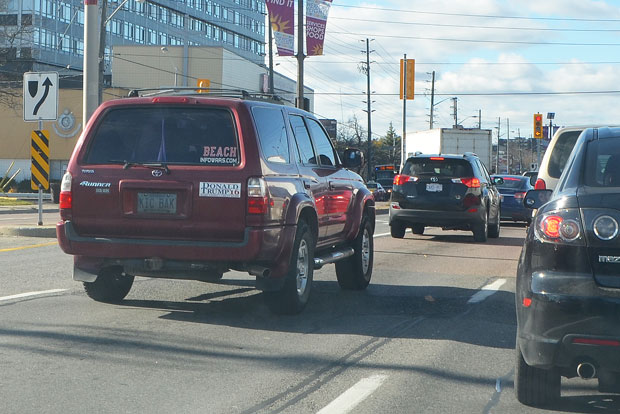
One last photo, taken as I was driving home across Lawrence.  I guess it’s somewhat appropriate for the time.  Not sure why one would be sporting such a sticker in Ontario though.   C’est la vie.  To each their own.

red car with a sticker on the back that says Donald Trump 2016 Make America Great Again.

I saw many people at bus stops waiting for the 34 Lawrence bus and I wondered how long it took them to get to the subway.  Lawrence is 6 lanes wide and I tried to picture it with an LRT running down the center.   (but that’s a whole other blog post, perhaps another day).

mosaic artwork in greens and yellows

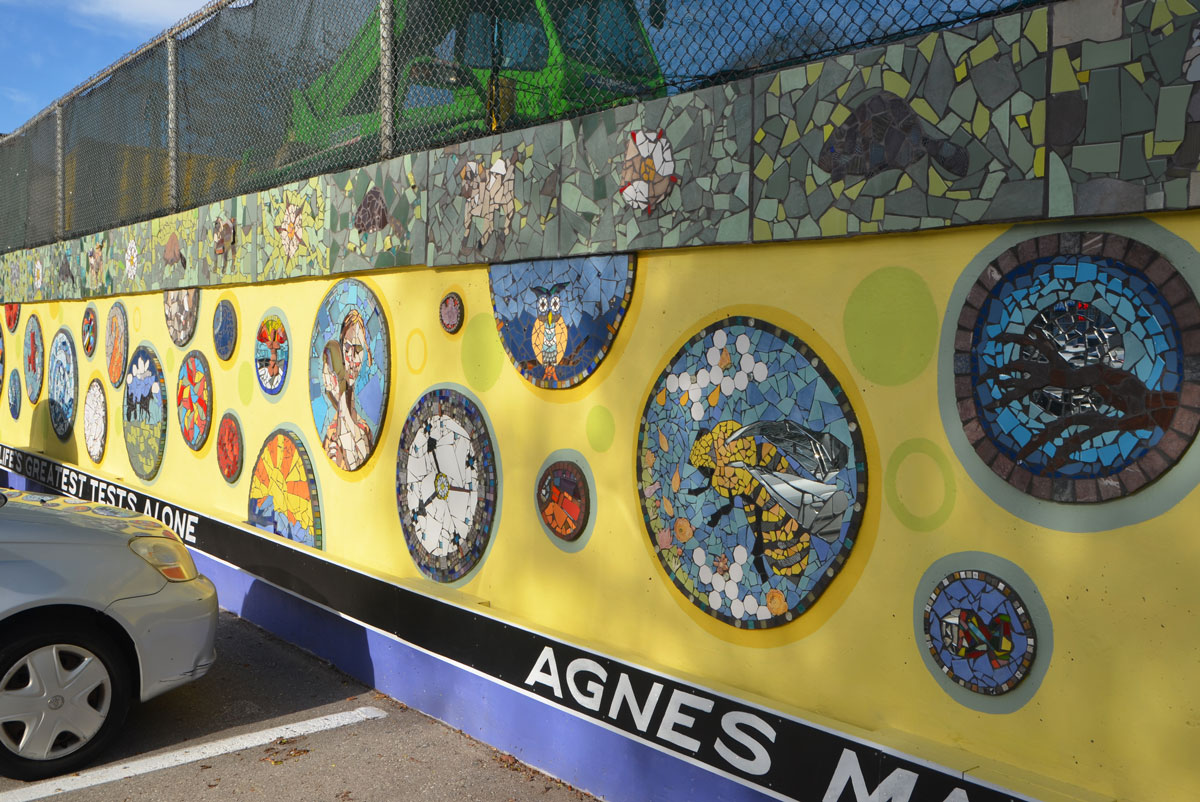
Coxwell subway station is still in the midst of its renovations and upgrades.  As part of the project, the wall on the west and south sides of the station have been painted a bright yellow.   This yellow was then the canvas for a large number of mosaic creations.

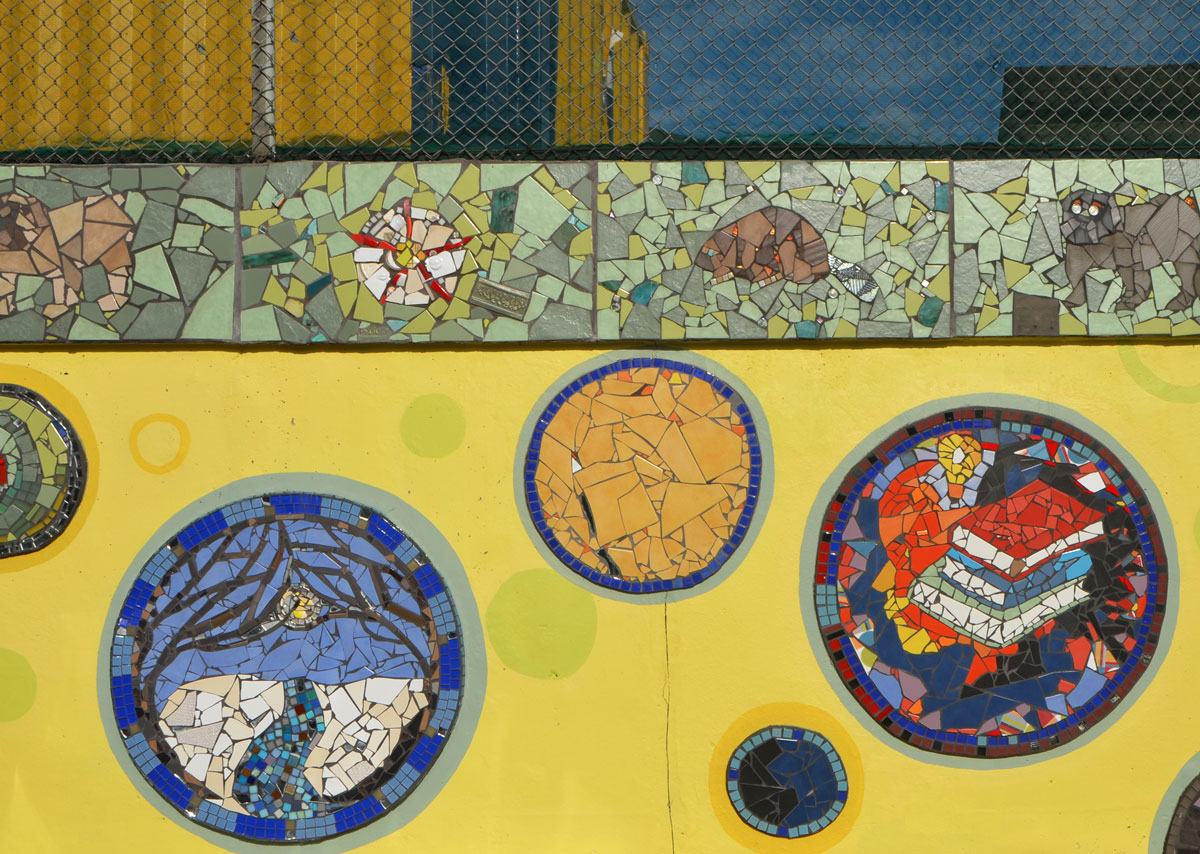
some of the mosaic medallions on the Coxwell mosaic mural

below: The new mosaic mural covers the wall alongside the pathway that leads from Coxwell station to the Danforth.  The murals painted on the side of the Sunset Grill restaurant, on the opposite wall of the path, were there previously.

yellow Coxwell pathway mosiac mural with the murals from the restaurants beside the pathway

below: A beaver made from bits and pieces – with round eye and two large teeth.

a beaver made with mosaic tiles and pieces of glass

below: At the corners of the mural are seed pods that have released their seeds to the wind.

mosaic representation of a large seed pod that hs released its seeds.

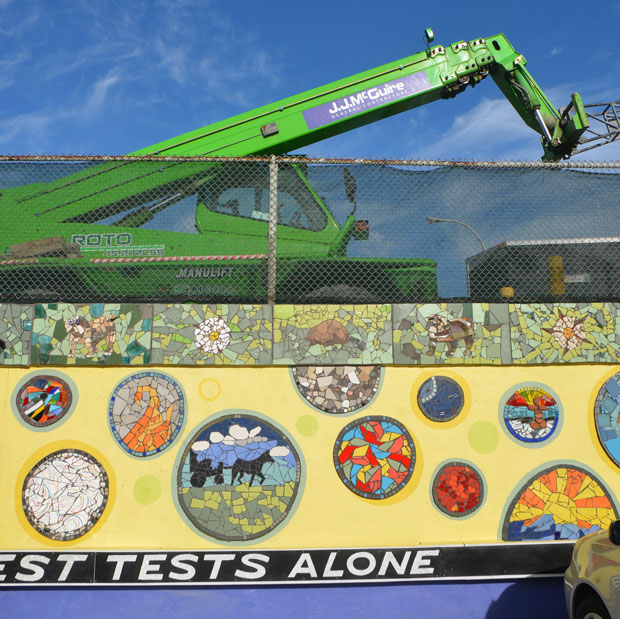
below: The south side of the subway station is adjacent to a Green P parking lot on Danforth.  Along this wall, a quote by Agnes MacPhail has been added below the mural.  “We meet all life’s greatest tests alone”.  Agnes MacPhail (1890-1954) was the first woman to be elected to the Canadian House of Commons where she served from 1921 to 1940.  After her time in federal politics, she represented the provincial riding of York East in the Ontario Legislature.  In 1951 she was responsible for Ontario’s first equal pay legislation.

A wall with a chainlink fence above it, a large green construction crane is behind the wire fence. The wall has been covered with a mural, yellow background and mosaic pictures on it. A quote runs along the bottom at ground level, white letters on black background, quote by Agnes MacPhail

A wall with a chainlink fence above it, a large green construction crane is behind the wire fence. The wall has been covered with a mural, yellow background and mosaic pictures on it. A quote runs along the bottom at ground level, white letters on black background,

below: West side of the wall, looking towards Strathmore Blvd.

west side of the mural, yellow wall, Coxwell station, mosaic pictures

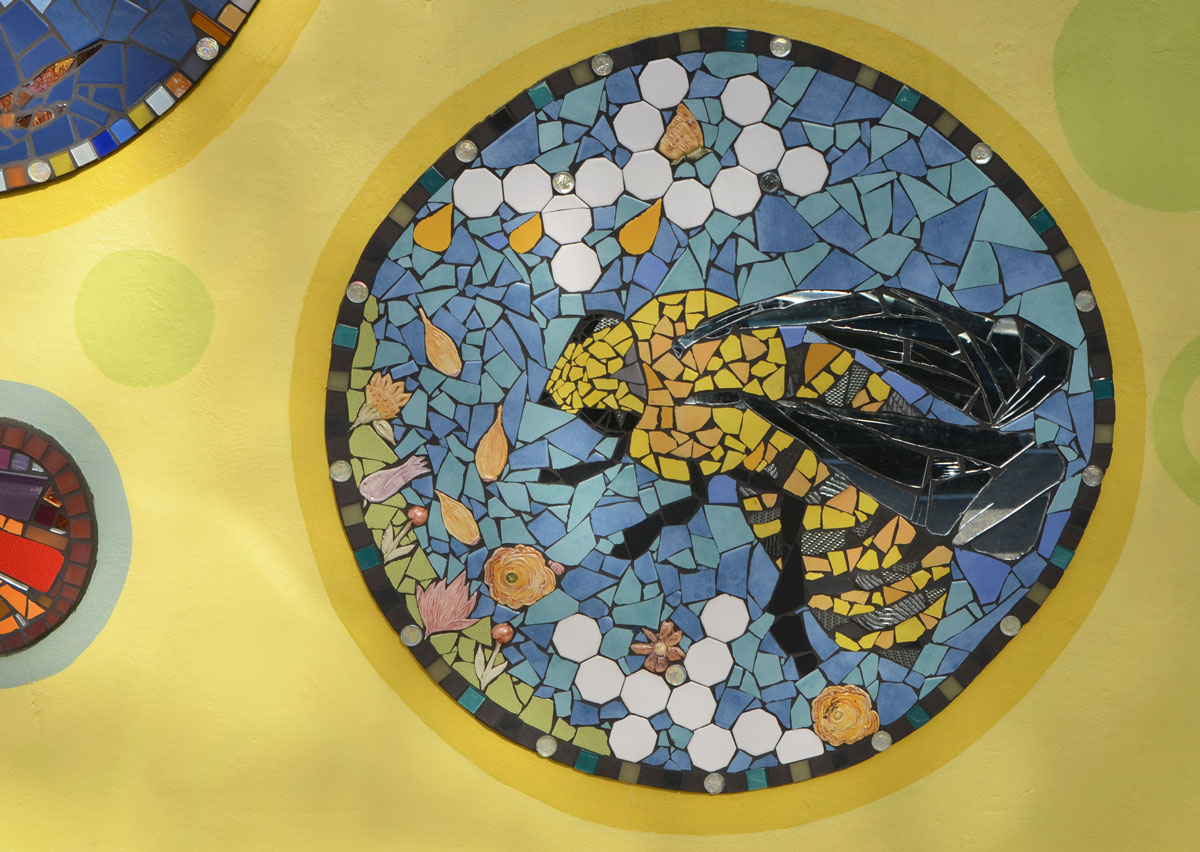
below: A mosiac bee amongst the flowers…

a circular mosaic picture of a bee amongst white and orange flowers on a blue background, all on a yellow wall. Part of a larger mural

below: … and a real bee sitting beside a mosaic red rose.

mosaic picture of a red rose with green foilage, with a real wasp sitting on it.

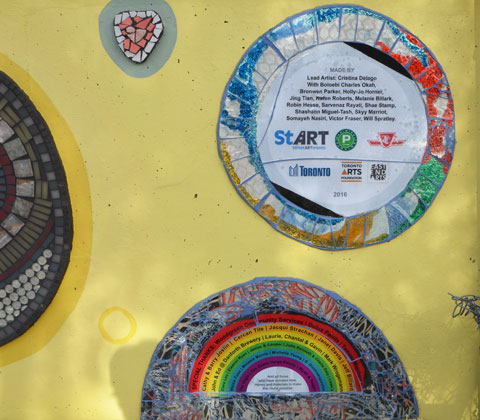
below: Two mosaic pieces, a circle with the names of the artists and a semi-circle rainbow with the names of those who contributed to the creation of the mural.  The transcription of the words is given below.

on a yellow wall, some circles made of mosaics. One is the list of people who made the whole mosaic mural and the other is a semi-circle, rainbow colours, of people of contributed to the mural

Lead Artist: Cristina Delago,
With Boloebi Charles Okah, Bronwen Parker, Holly-Jo Horner, Jing Tian, Karen Roberts, Melanie Billark, Robin Hesse, Sarvenaz Rayati, Shae Stamp, Shashann Miguel-Tash, Skyy Marriot, Somayeh Nasiri, Victor Fraser, Will Spratley.

Special Thanks: Woodgreen Community Services, Dulux Painter, Tomasz Majcherczyn, Cathy & Barry Joslin, Cercan Tile, Jacqui Strachan, City Councillor Janet Davis, Jeff Billiard, John & Ed at Danforth Brewery, Mark Wrogemann, Clara Lou, Eleanor Ryan, James & Cooper, John Kenneth & Cherie Daly, Lowe’s, Maisie Fuss, Melanie Morris, Michelle Yeung, S. Dimitrakpoulos,  The Vogls, The Zeelie-Varga Family, Wyatt & Teagan, as well as Laurie, Chantal and Gavin

blog_small_details_mosaic

I was going to go looking for autumn but, silly me, I soon realized that I didn’t need to look for it.   It’s all around us.  All you have to do is look out the window, or better yet, step out the door and you’re in the middle of it.  It’s falling in front of you, swirling in the breezes and crunching under your feet.

street scene, large trees with yellow and orange leaves, with a park in the center

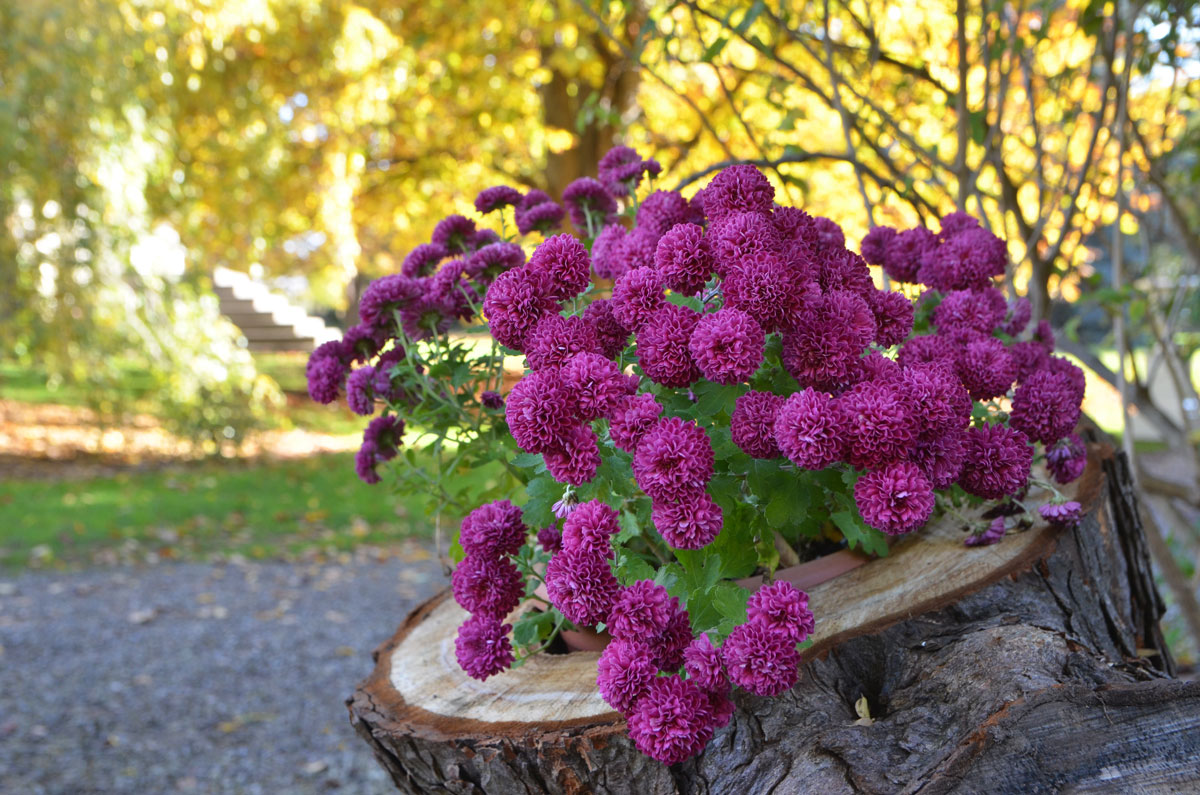
a pot of purple flowers with a yellow tree in the background

a stone fence with a metal gate, large trees, autumn leaves
a branch of yellow leaves, autumn tree with blue sky and the turret of Casa Loma in the background

two storey brick house with large tree in front, smaller trees with yellow leaves in the background.
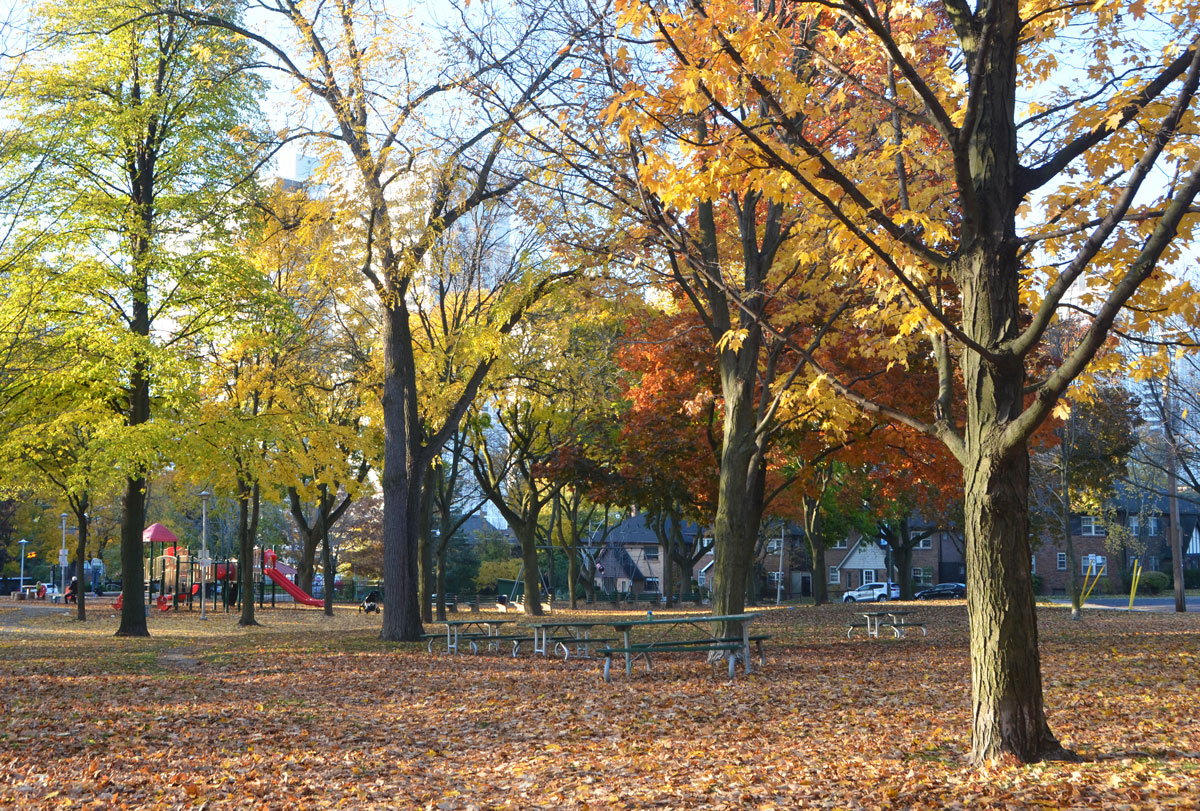
park in the fall, leaves on the ground, trees still with some leaves in oranges, rusts, and yellows, playground in the distance

a metal bench in front of a large tree in a cemetery, tree has yellow leaves, autumn colours, change of season, fallen leaves on the ground around the bench

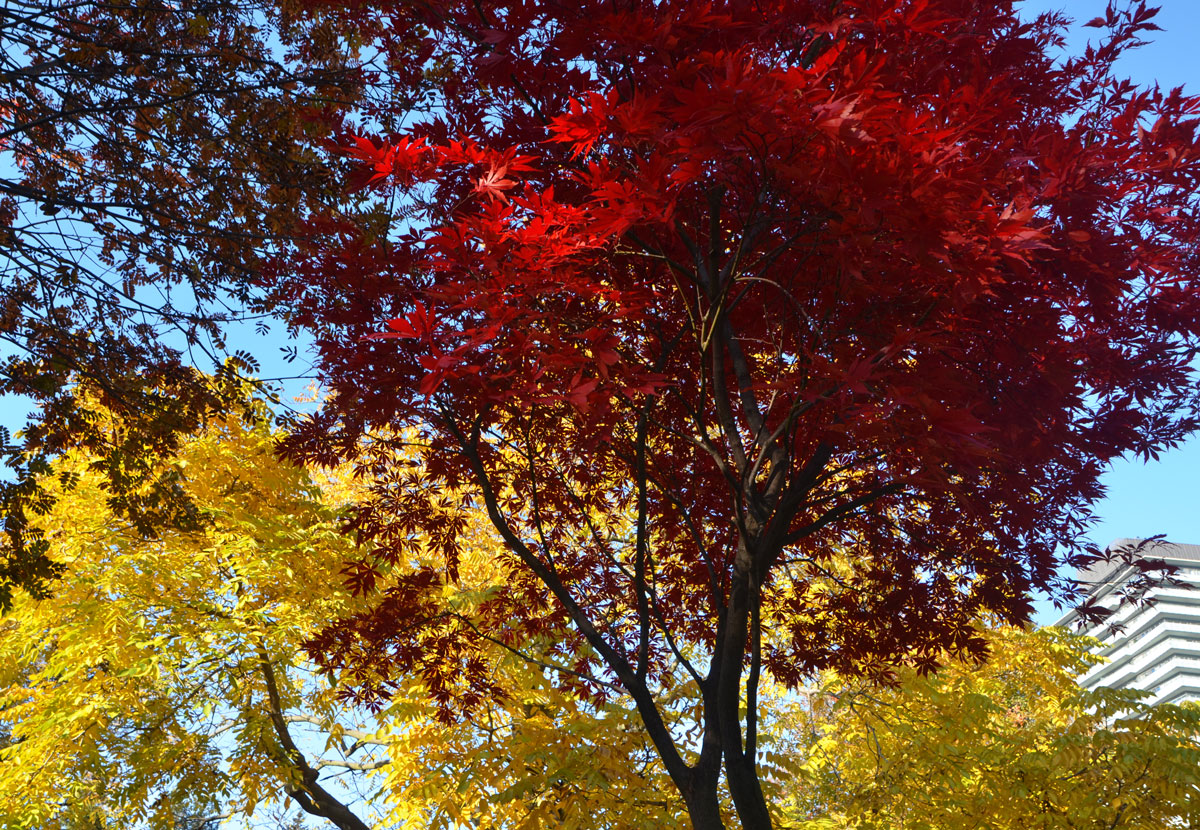
trees in autumn, red leaves and yellow leaves

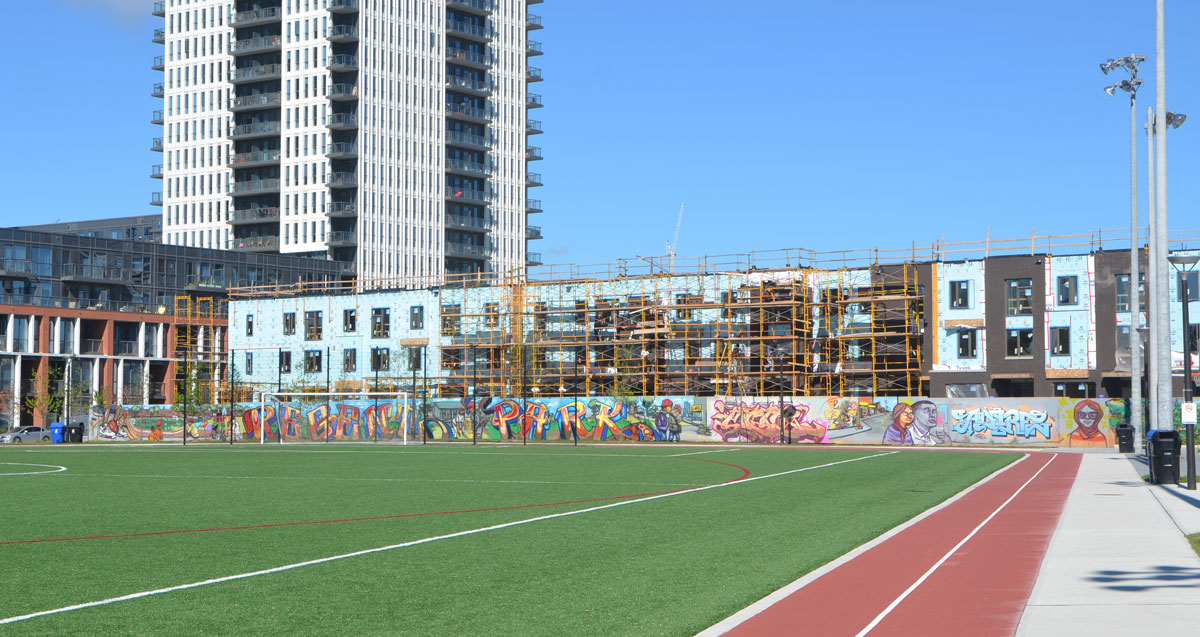
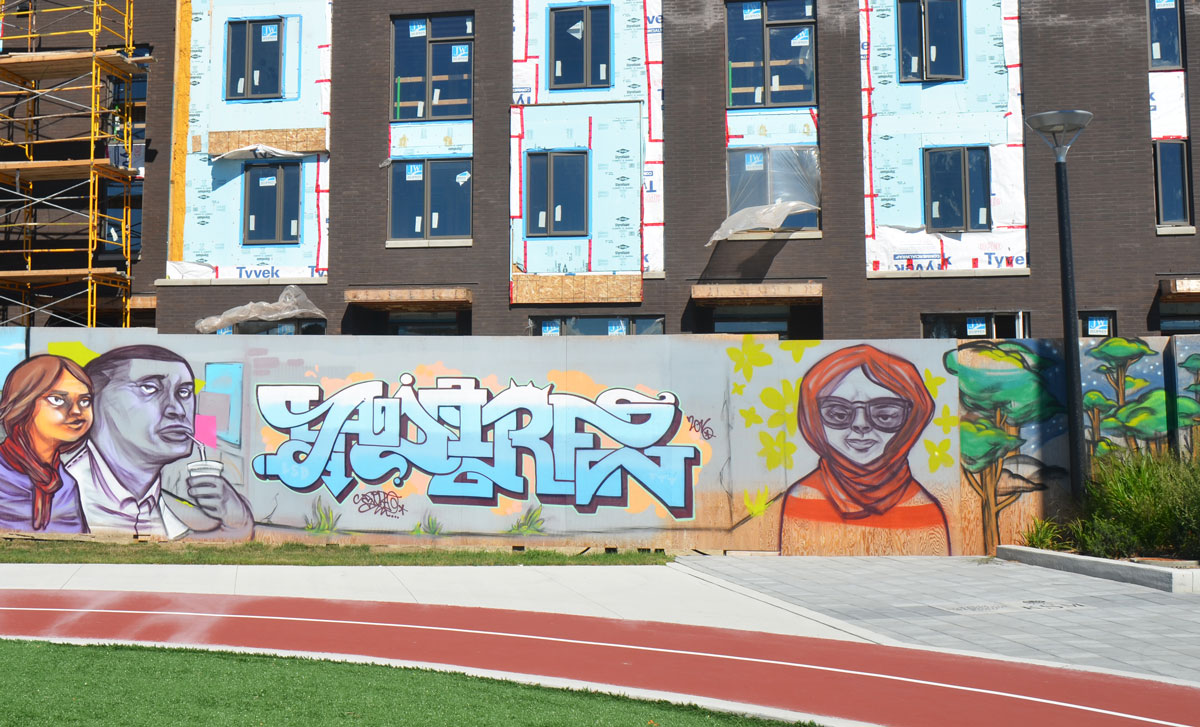
At one end of the new sports field at Regent Park, there is a large mural by elicser.

green soccer field and clay track in the foreground, small trees and a mural along the end of the field, new apartments being constructed in the background.

below: The west end of the mural, waiting on the sidelines with basketball at the ready as well as watching the soccer game.

mural by elicser elliott on a fence between grassy field and new apartments being built, people watching a soccer game, a person sits on a bench with a basketball between their feet.

part of a large mural, large letters that spell Regent Park

below: The cricket players are between the words ‘Regent’ and ‘Park’ as seen above.

mural showing two male cricket players

part of a larger mural, a man and a woman walking on a street, the man is drinking with a straw

blog_mural_woman_head_scarf

below: The mural continues behind the basketball court.

outdoor basketball court, with a mural in the background, and construction beyond that.

below: Basketball players both on and off the court.

mural of basketball players playing, mural is behind a basketball court, also mural of close up of players feet with running shoes on

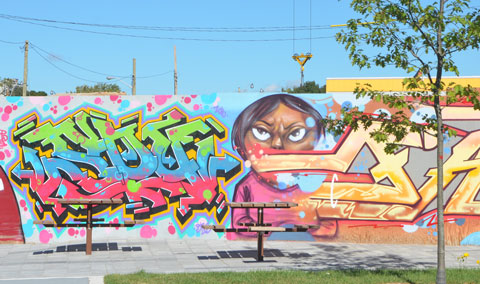
mural of a woman, and some text, on a fence behind some outdoor picnic tables

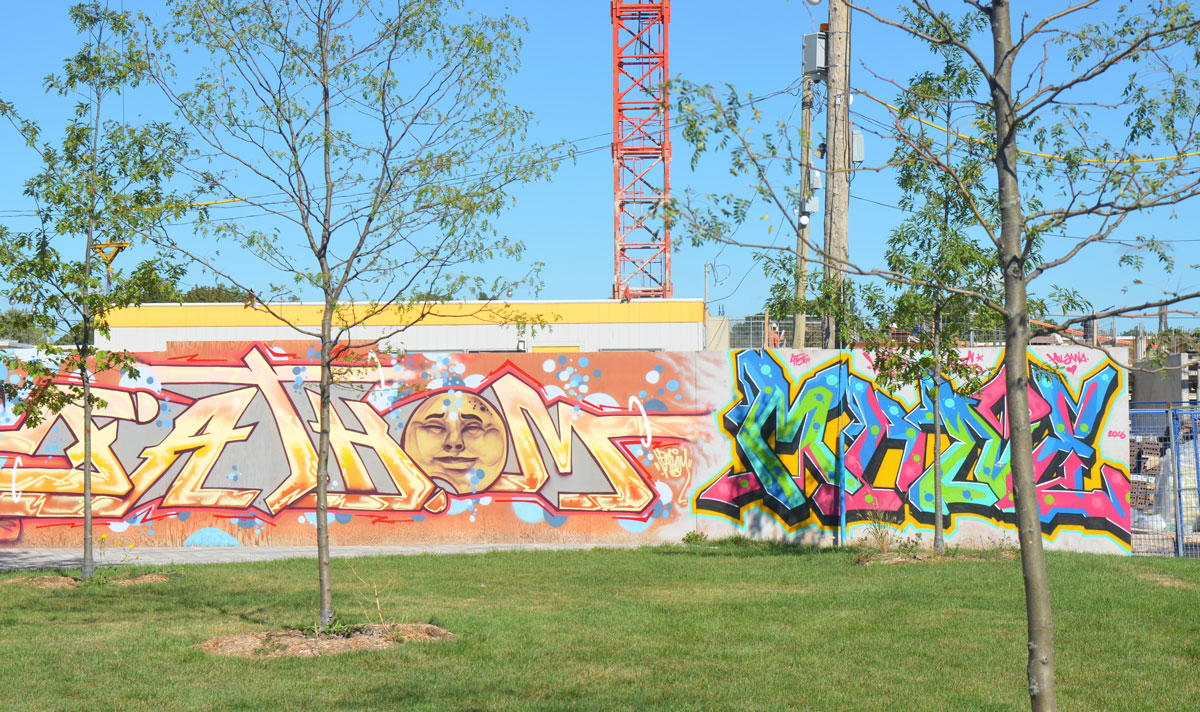
below: The east end of the mural

two text street art pieces, one in yellows and oranges with the man in the moon in the middle


Cranes and construction hoardings, not much new there.

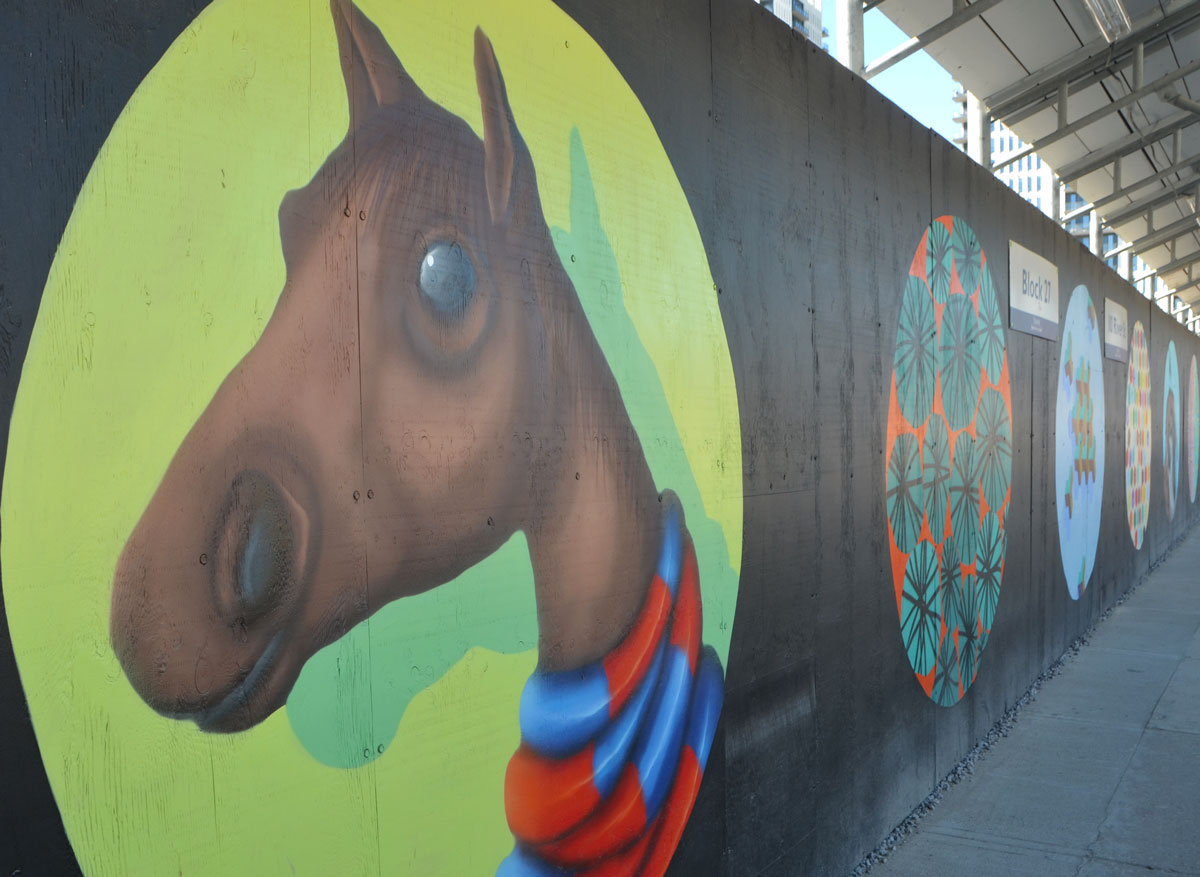
below: On Dundas East, as part of the ongoing Regent Park revitalization project, there is another crane over another construction site.  The hoardings around this project feature paintings by two street artists, birdo and getso.

A street, Dundas East, with construction hoardings painted with street art pictures inside large circles ona black background, cranes in the background.

below: These pictures were taken back in September.  The hoardings are in a covered pedestrian walkway so they are in a shaded area.  The railings make it unsafe to stand in the street to take close up photos, or at least I didn’t feel too safe the morning I was there.

construction hoardings, painted black and on that, large circles with paintings on them.  A bird head, one with green and pink squiggles, and one with a zebra striped sphere in orange and blue and the fourth with diagonal stripes making a gradient from yellow to dark red

large circle on black wooded construction hoardings.  In the circle, painted light green is a brown horse head and neck, with a red and blue striped scarf around its neck, painted by birdo

A street, Dundas East, with construction hoardings painted with street art pictures inside large circles ona black background, cranes in the background. A couple of cars

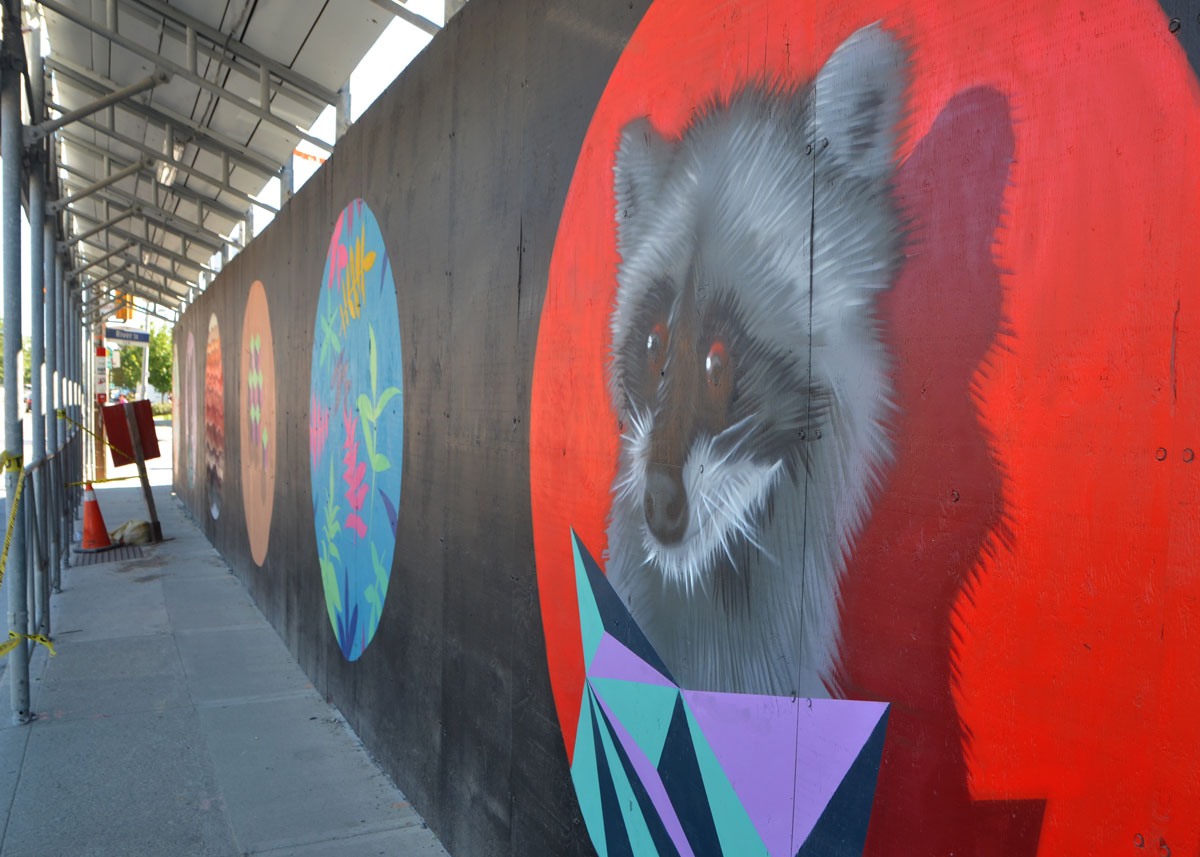
street art painting of a racoon's head, on wood construction hoardings.

painting of a mouse head on pink background, beside a sidewalk that is closed to pedestrians.