


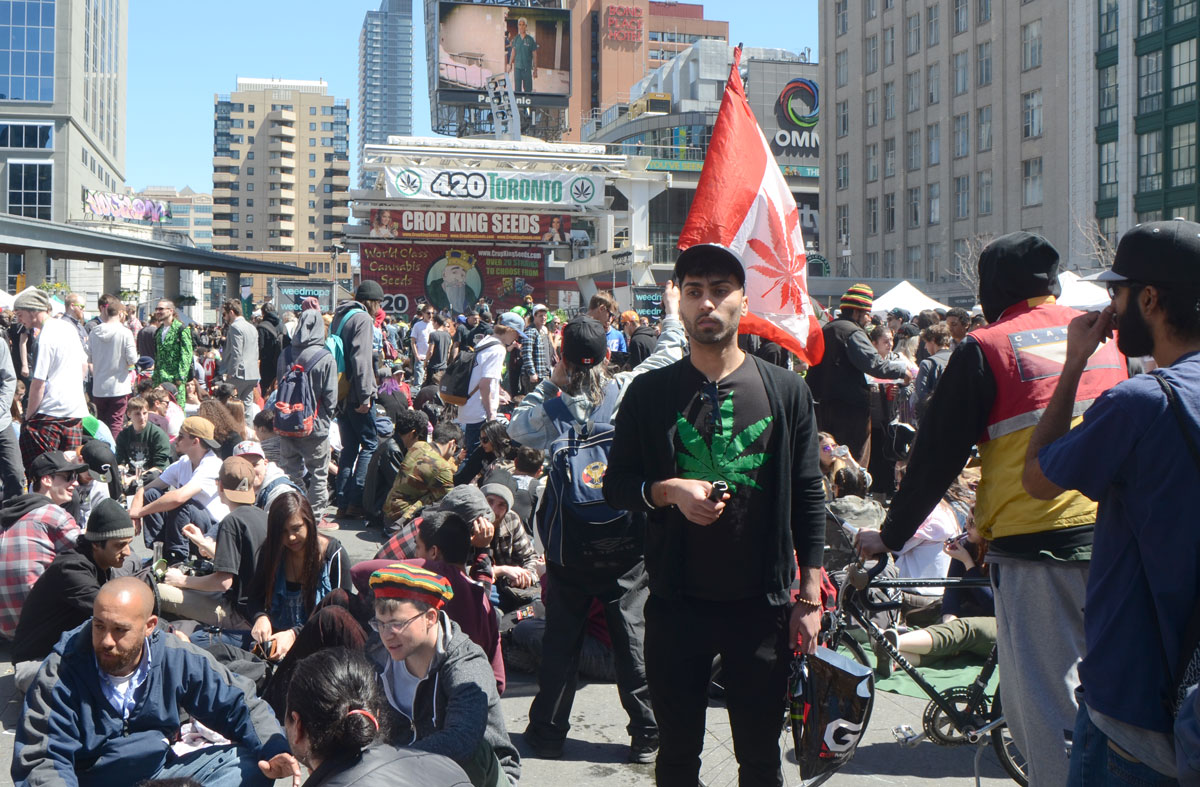
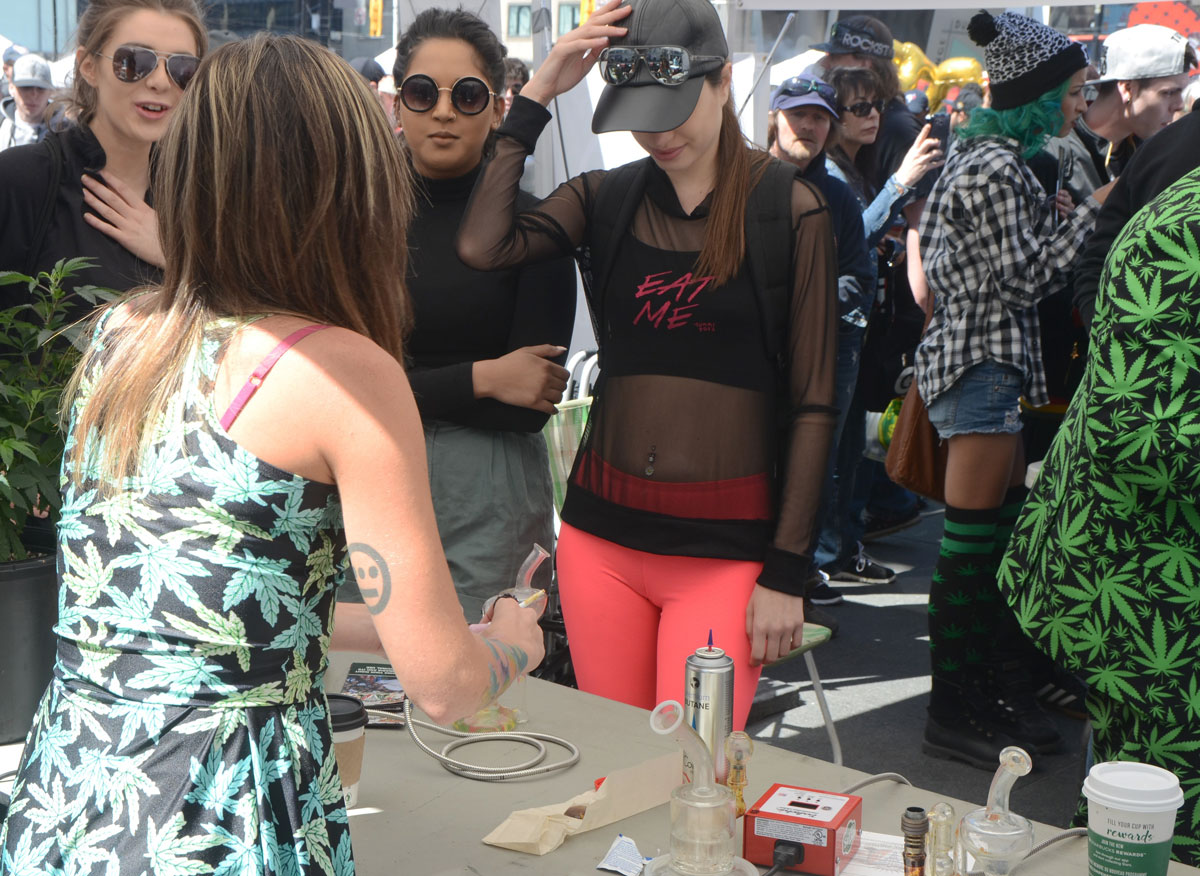
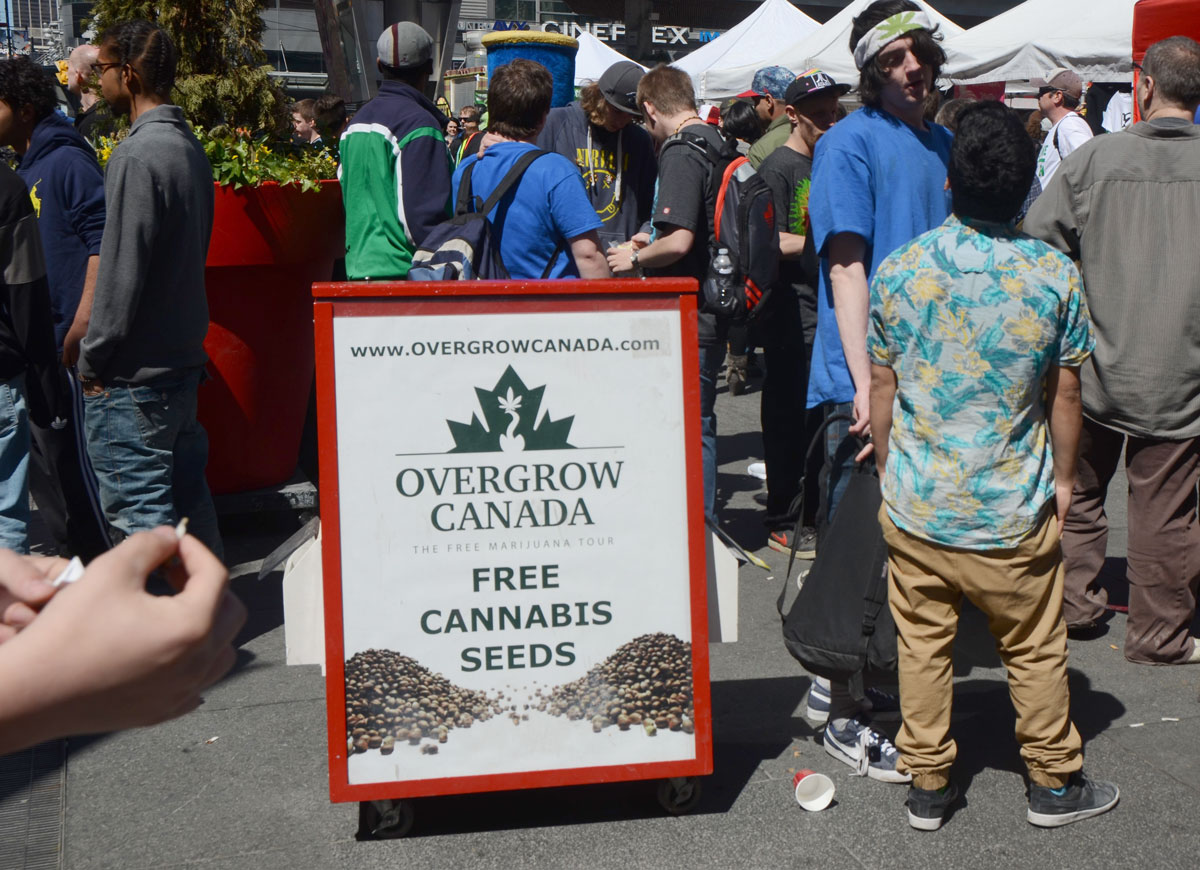
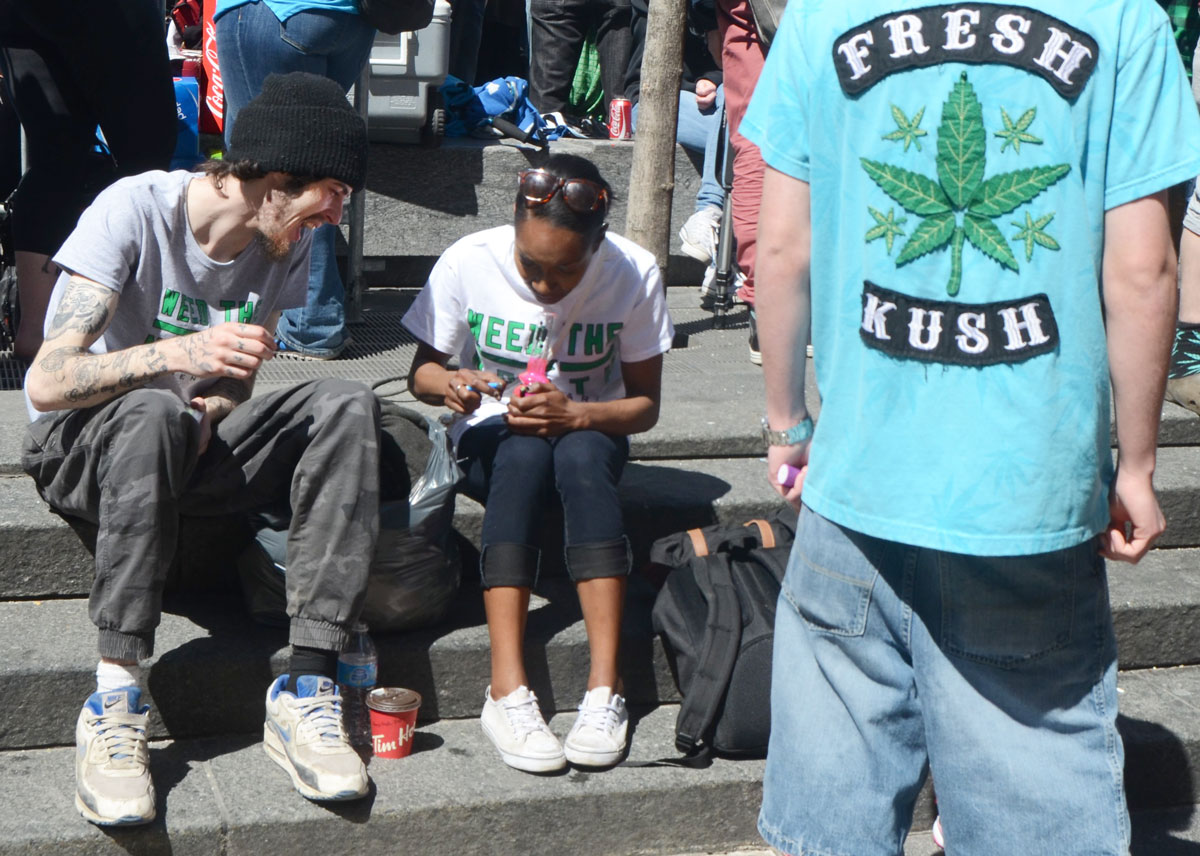
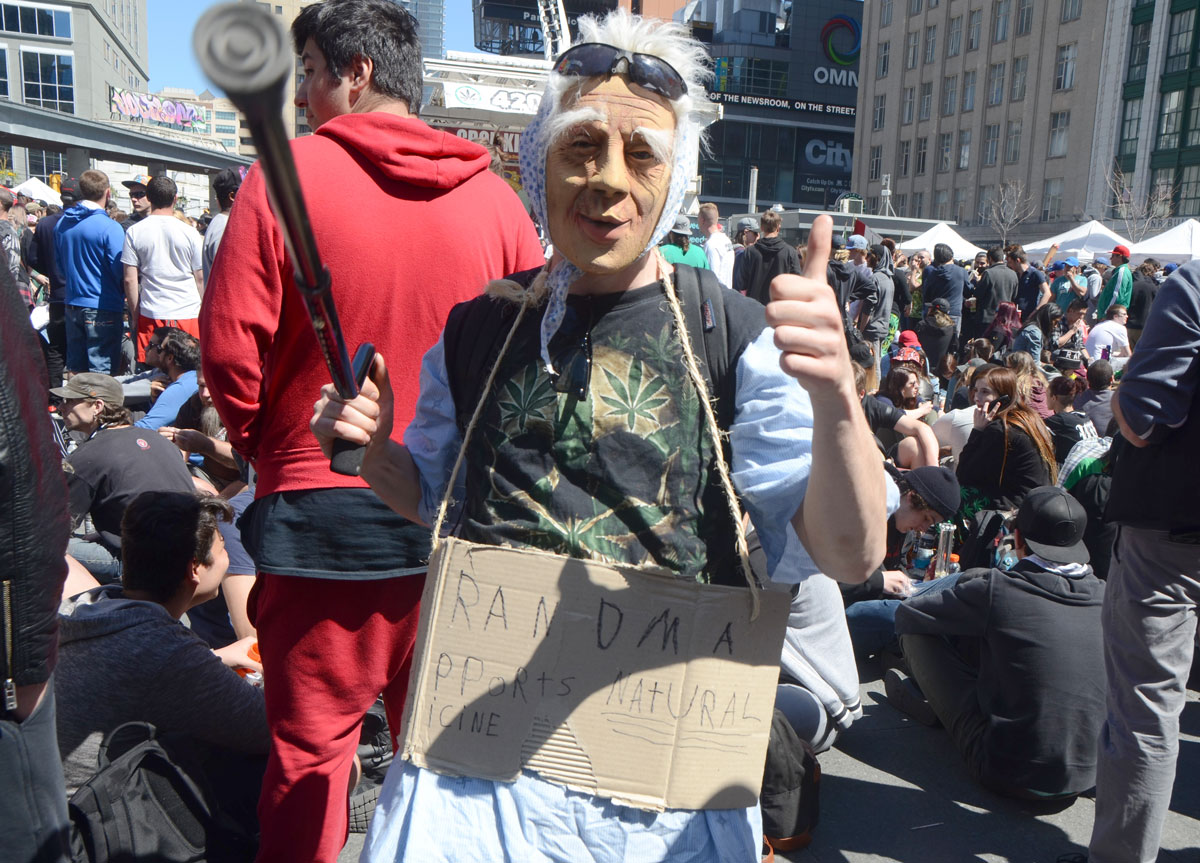
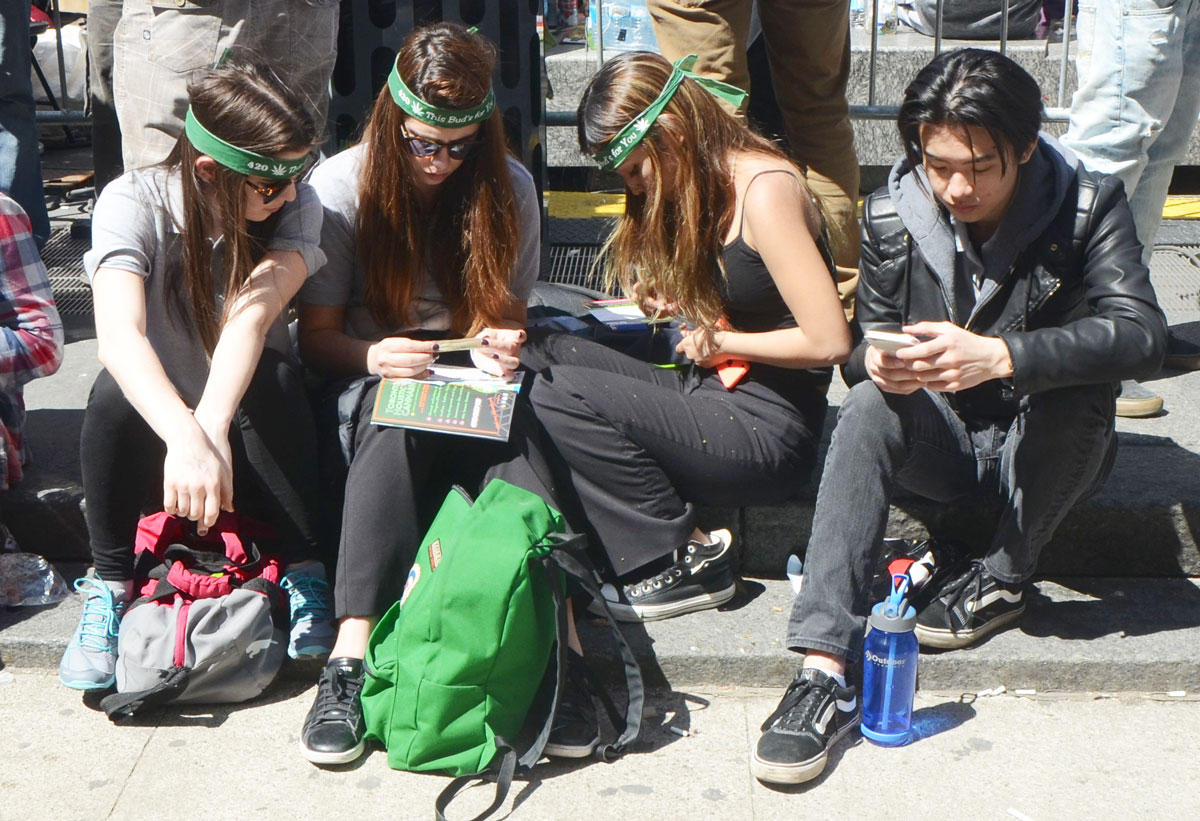
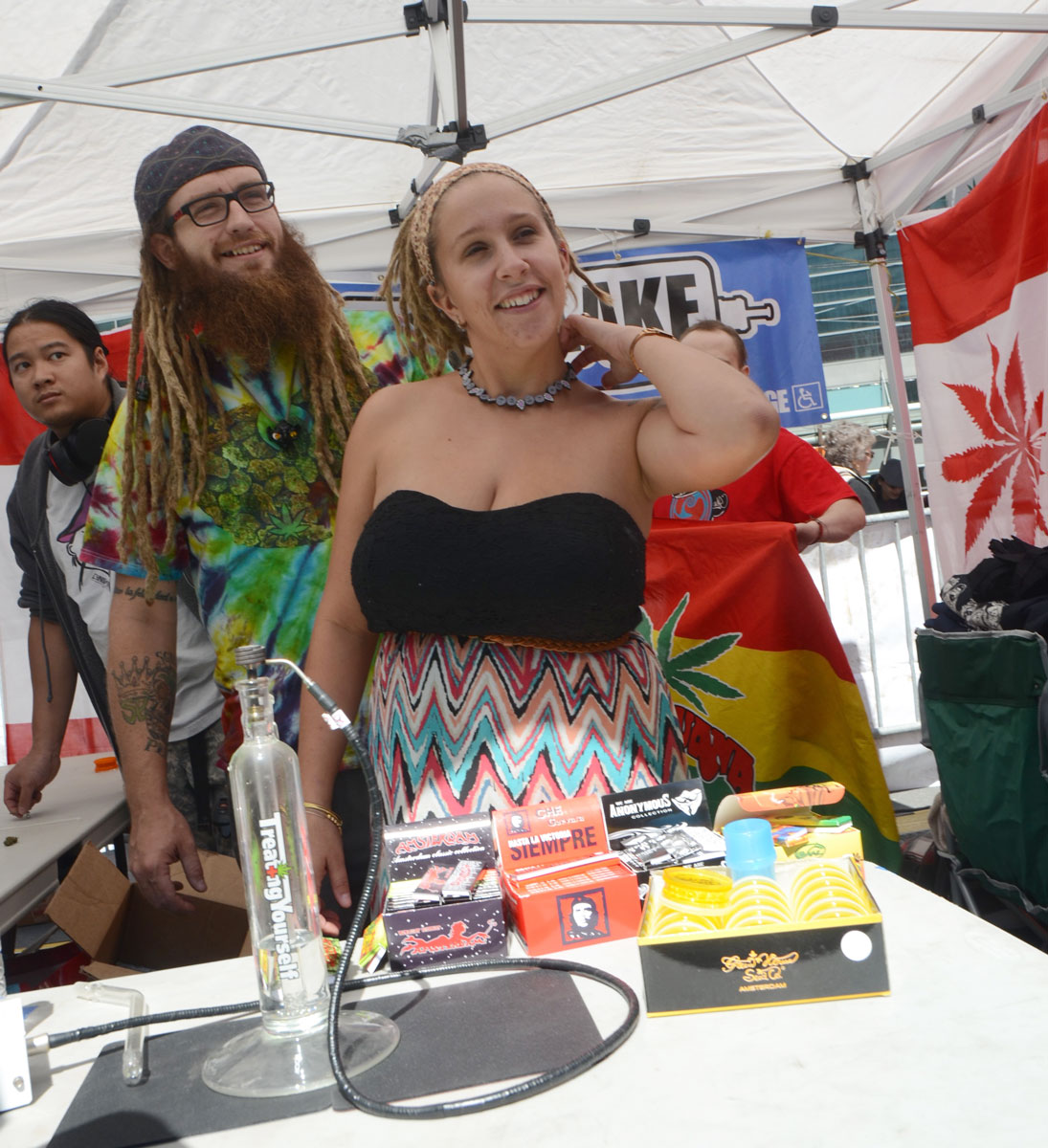
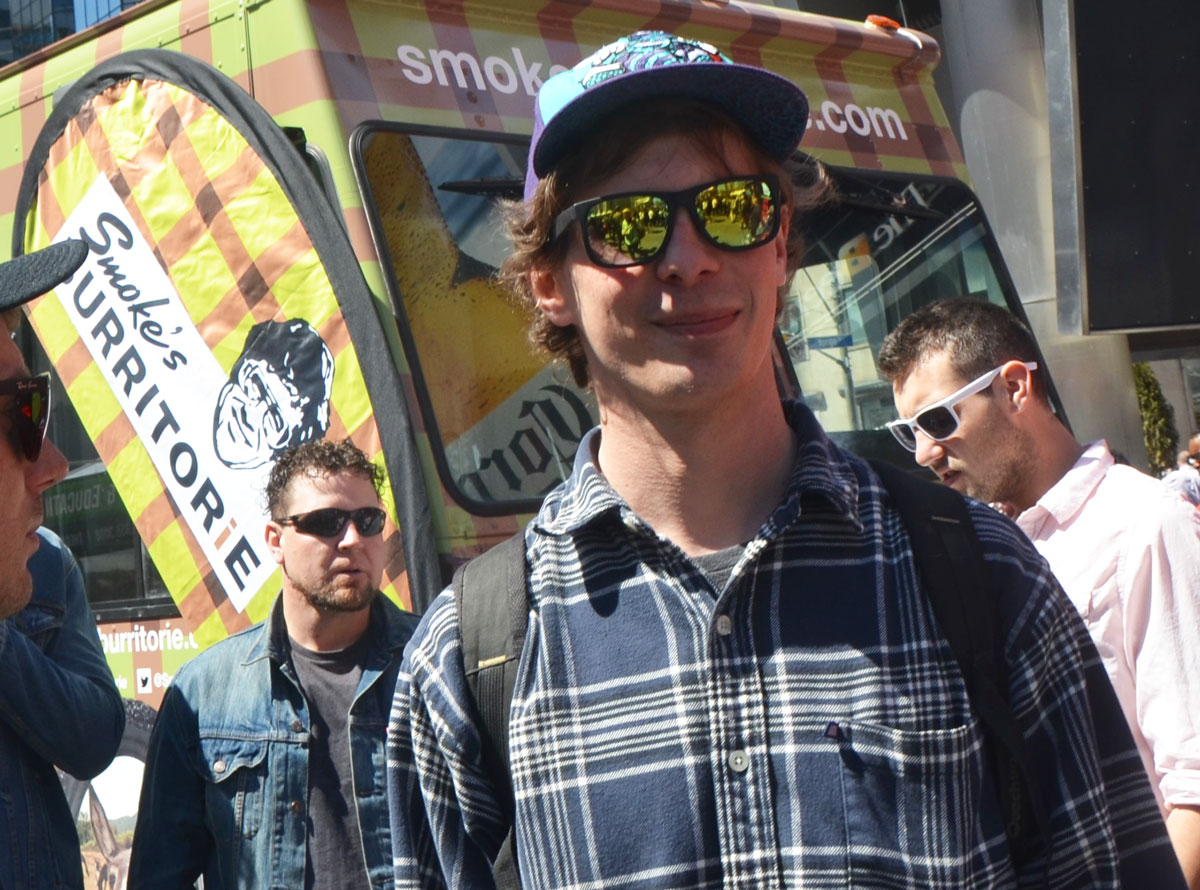
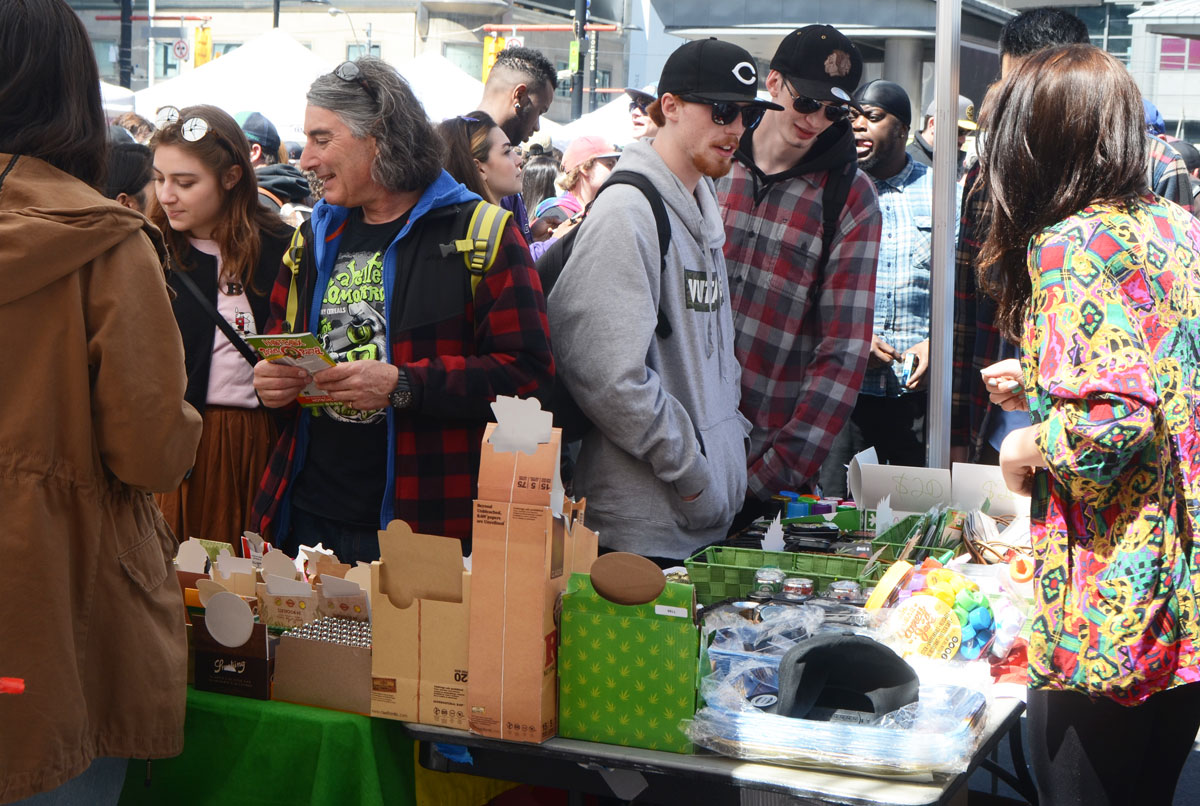
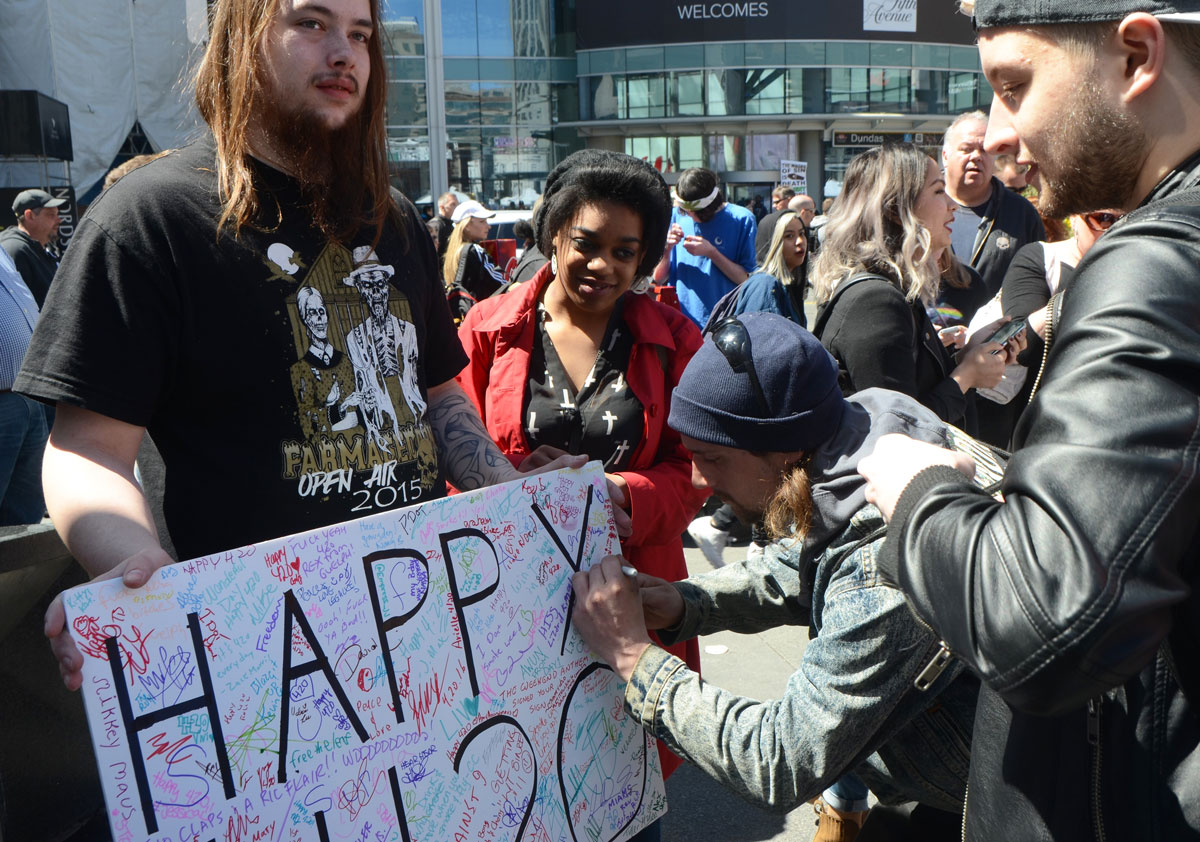
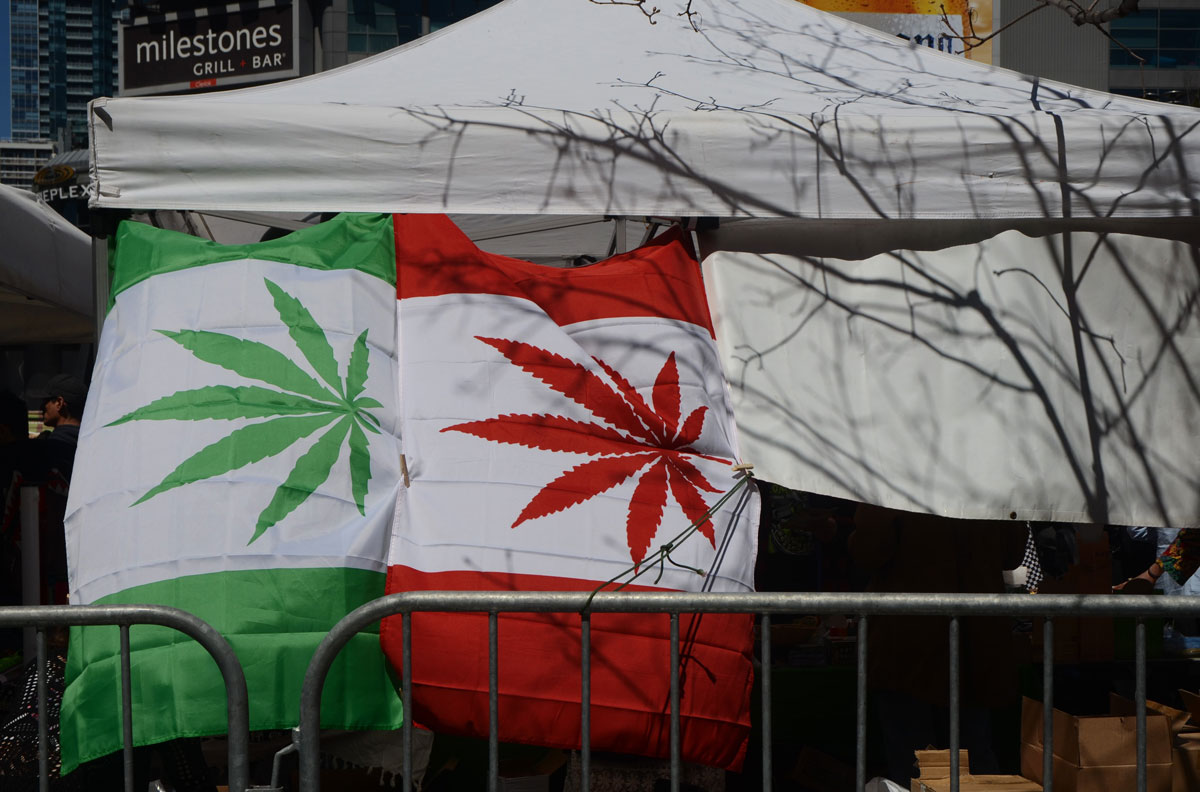
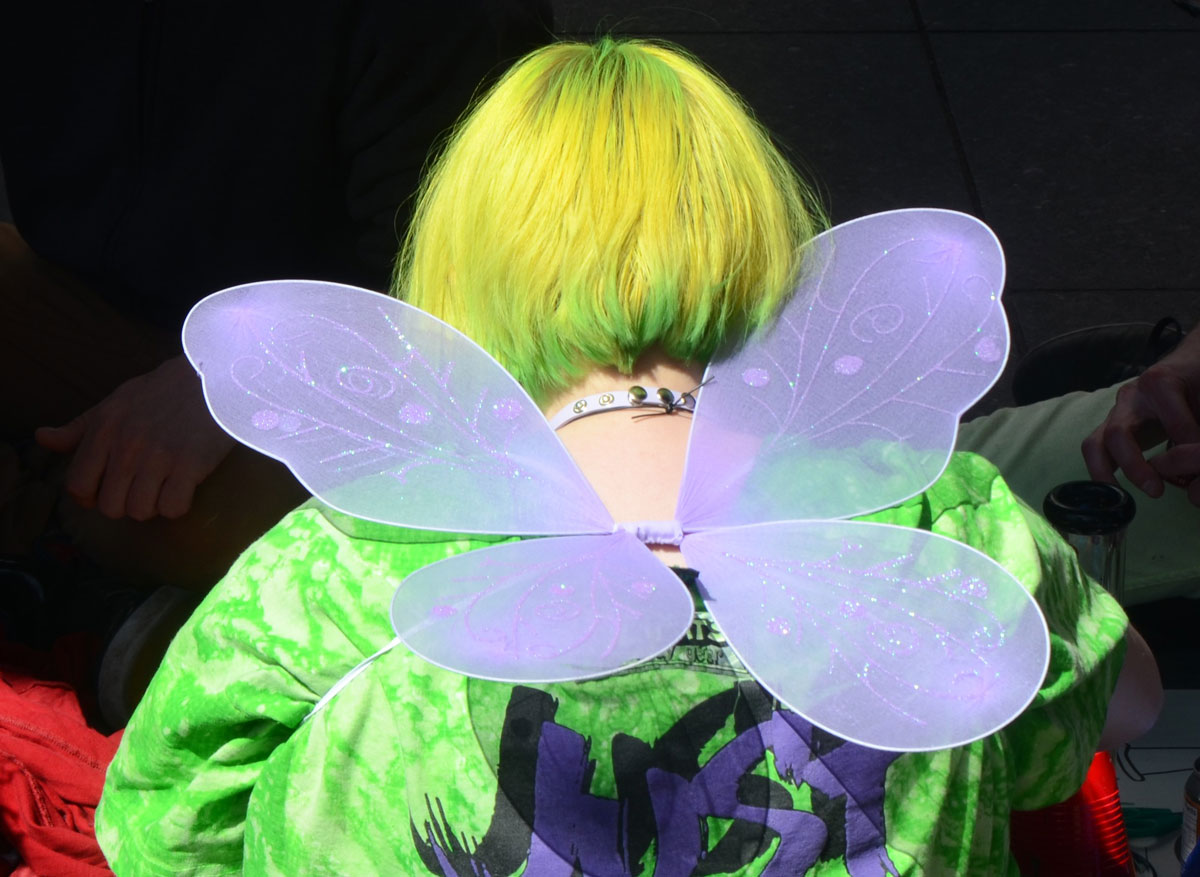
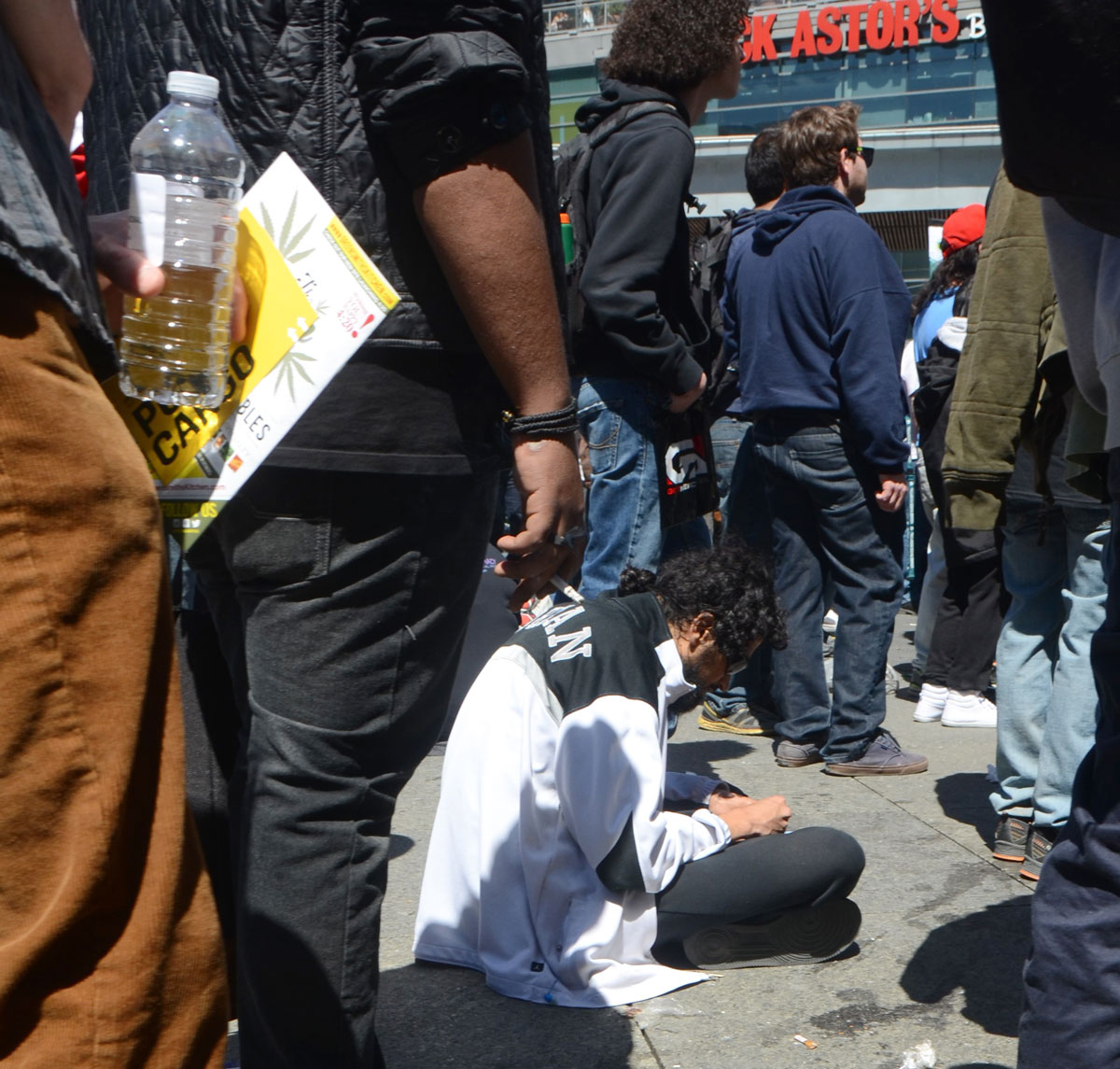
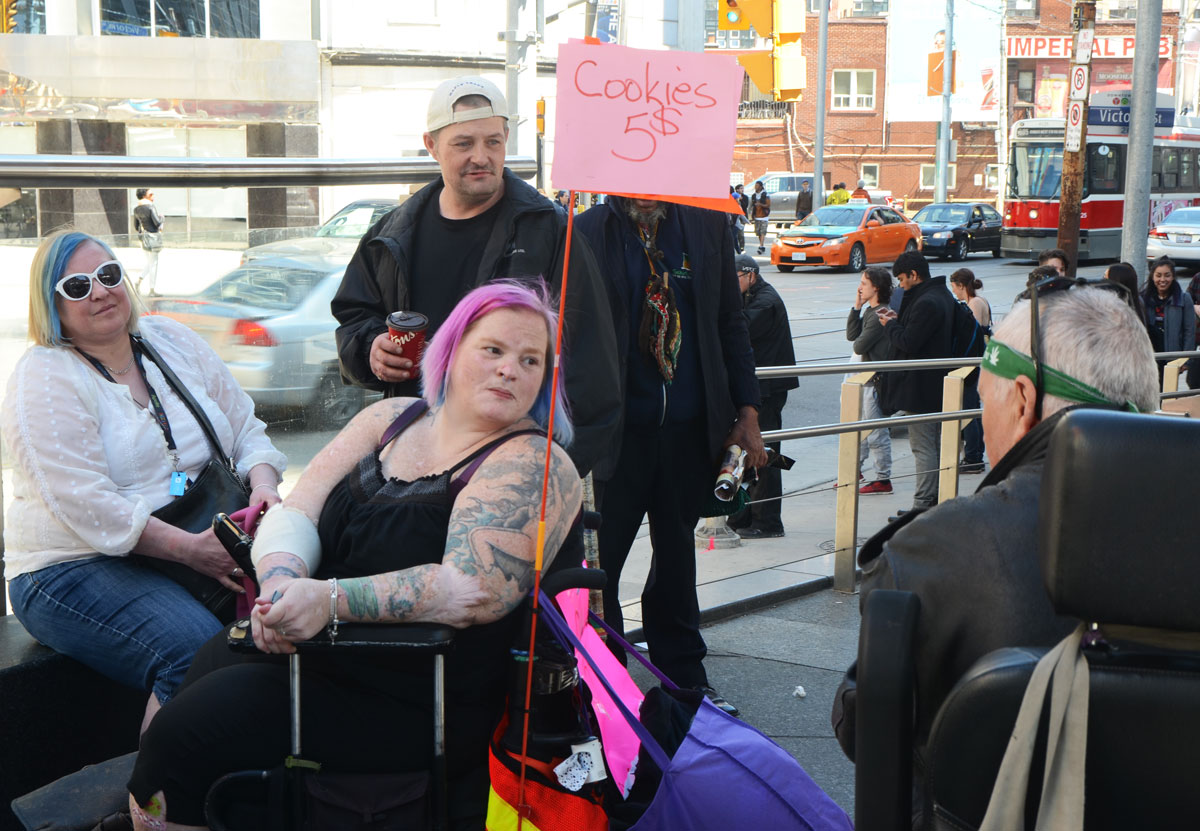
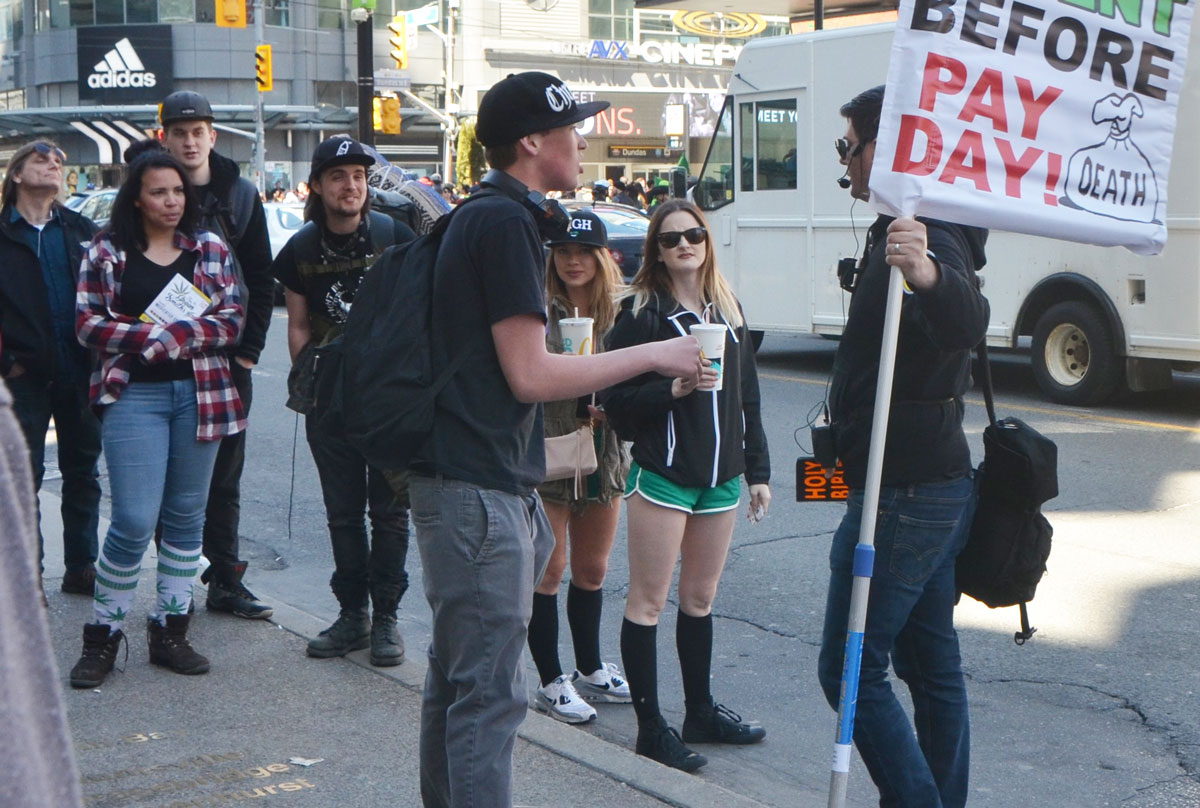
The 10th annual 420 Day celebration in Toronto was held this year at Yonge Dundas Square.
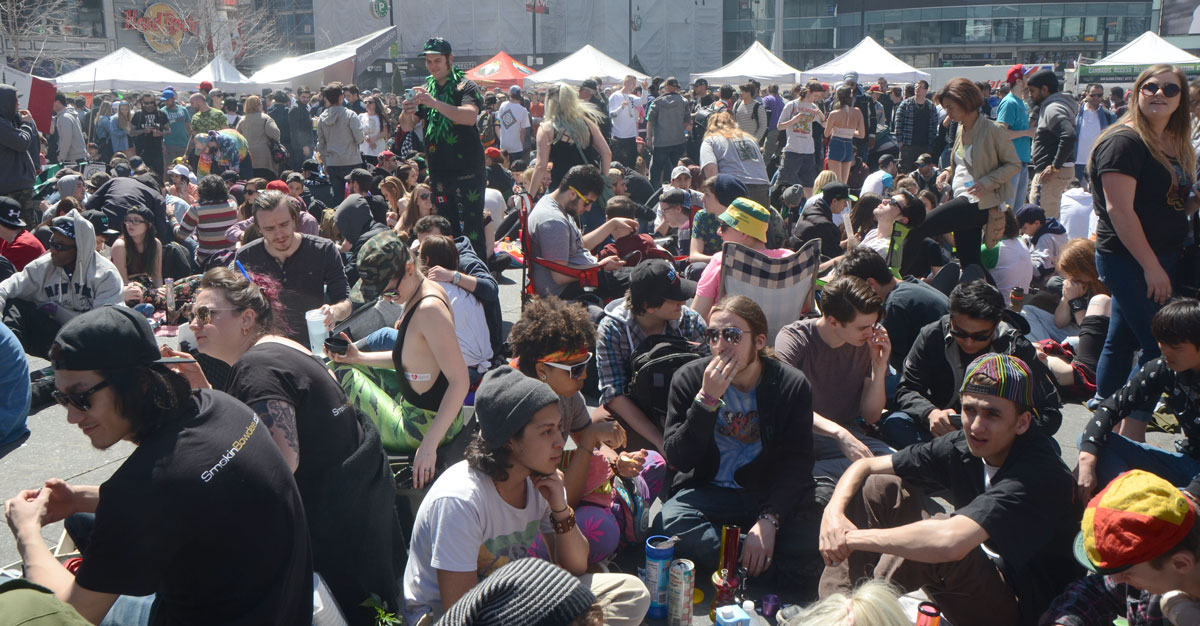
By mid-afternoon the square was very crowded but most people didn’t seem to mind.











#420day | #420toronto | #420toronto2016
The 10th annual 420 Day celebration in Toronto was held this year at Yonge Dundas Square.
By mid-afternoon the square was very crowded but most people didn’t seem to mind.
#420day | #420toronto | #420toronto2016
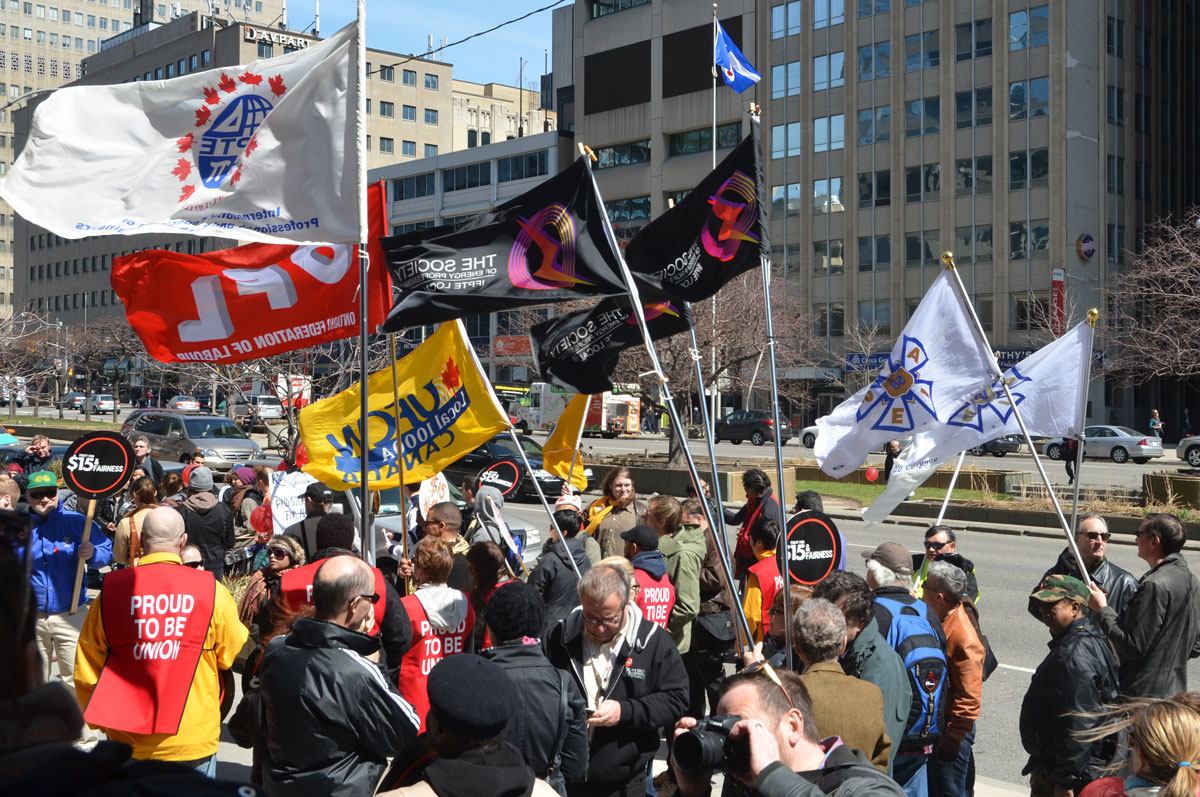
Rally and protest in front of the Ministry of Labour building on University Avenue.
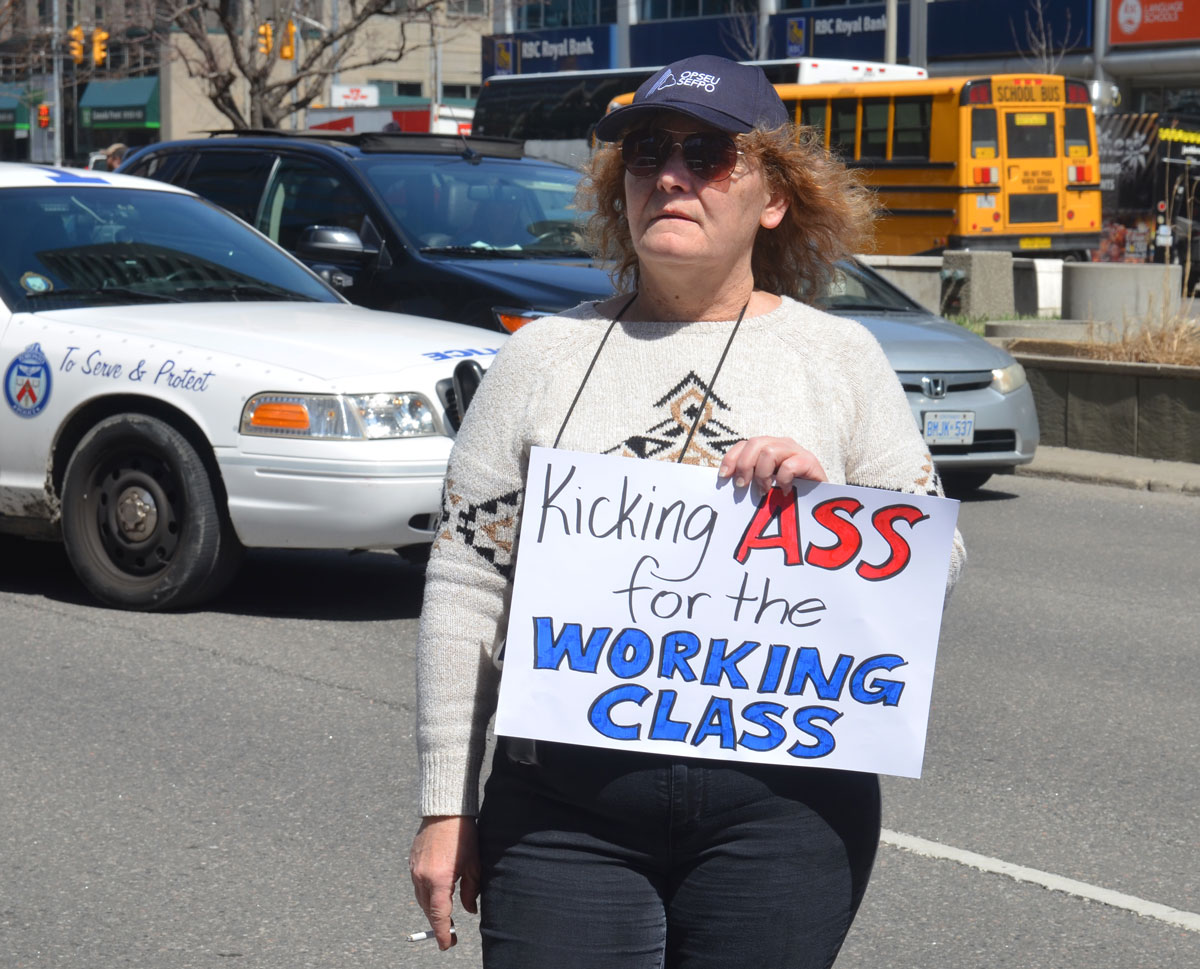
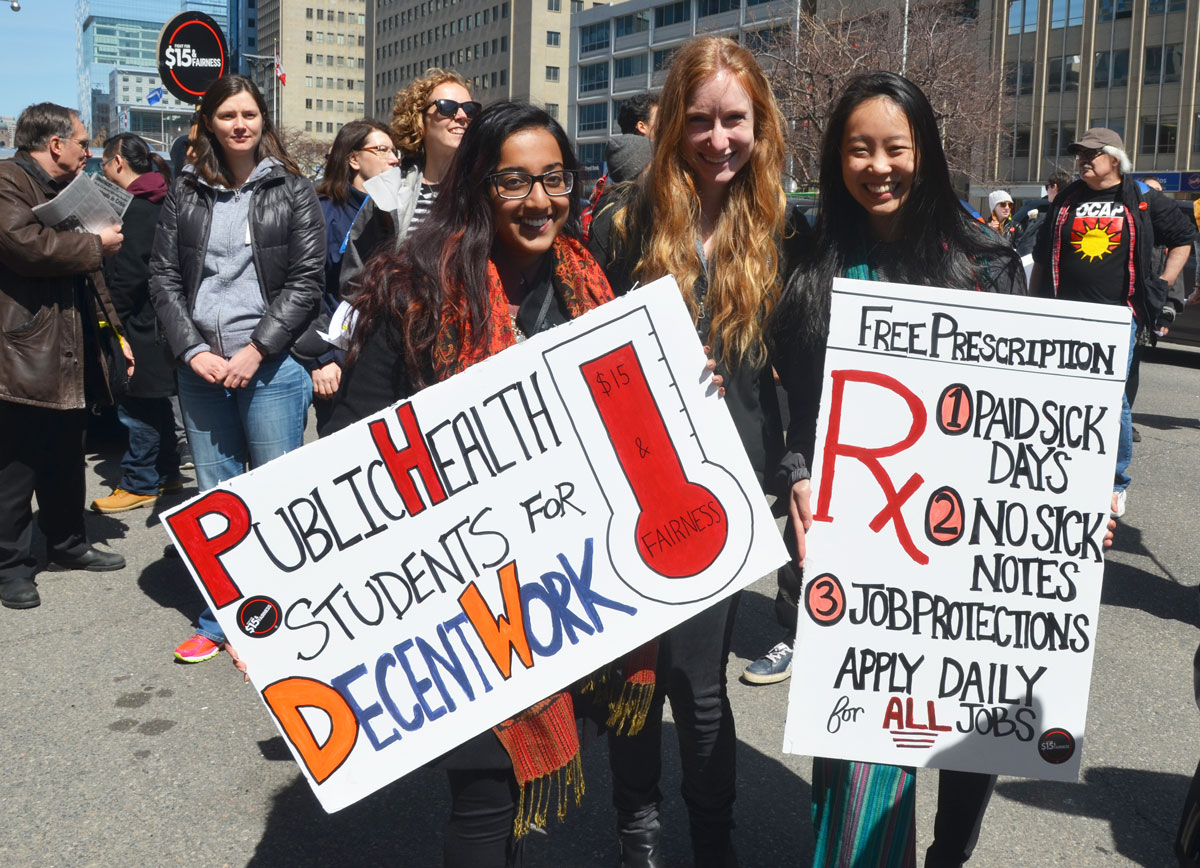
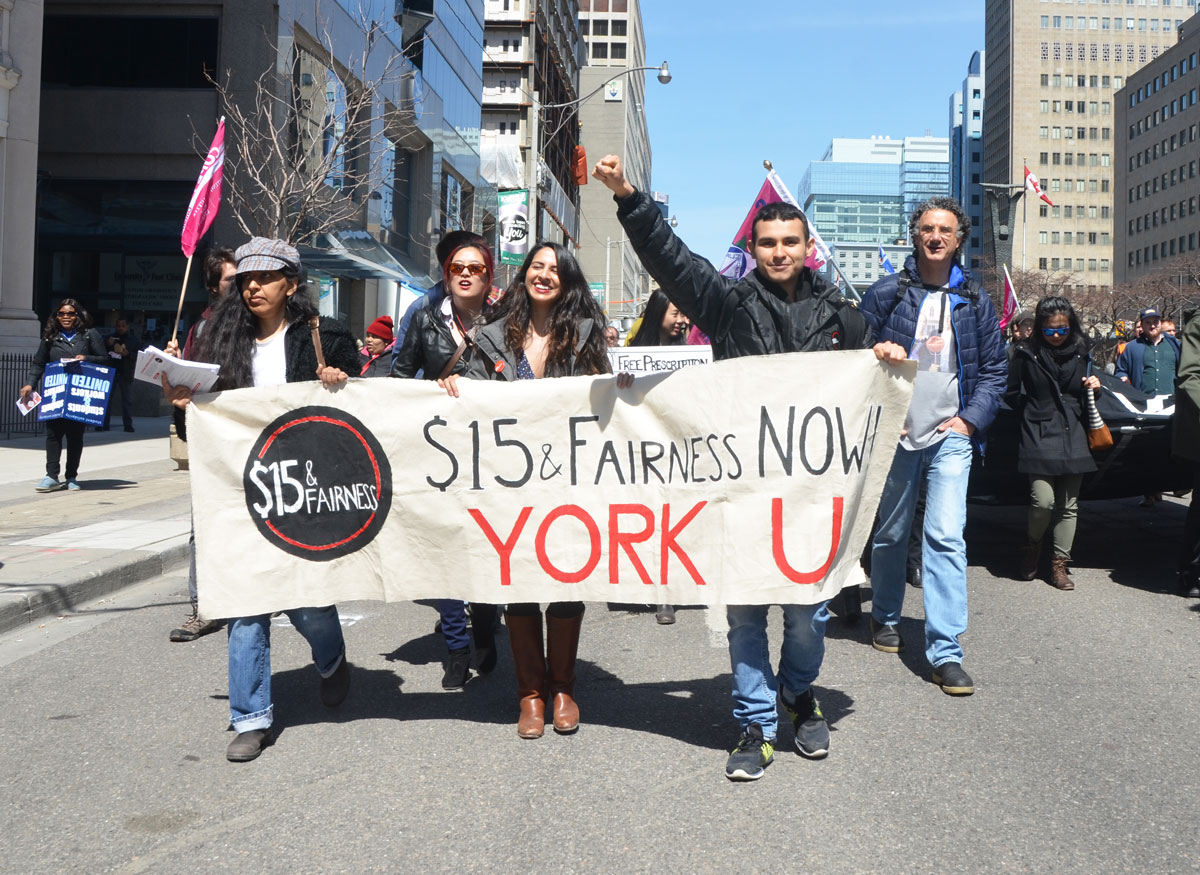
April 15 was chosen as the day for rallies and protests across the country in support of a $15/hour minimum wage as well as other changes to labour laws. Changes such as equal pay for equal work and fair scheduling.






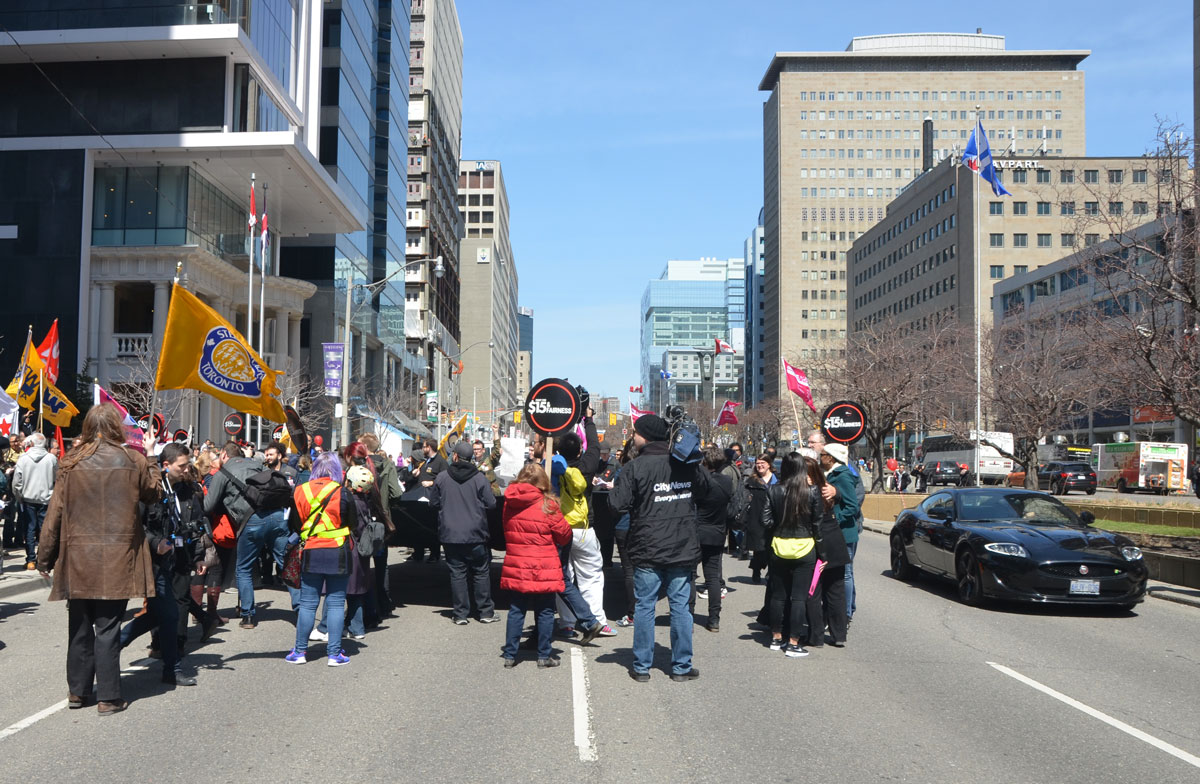

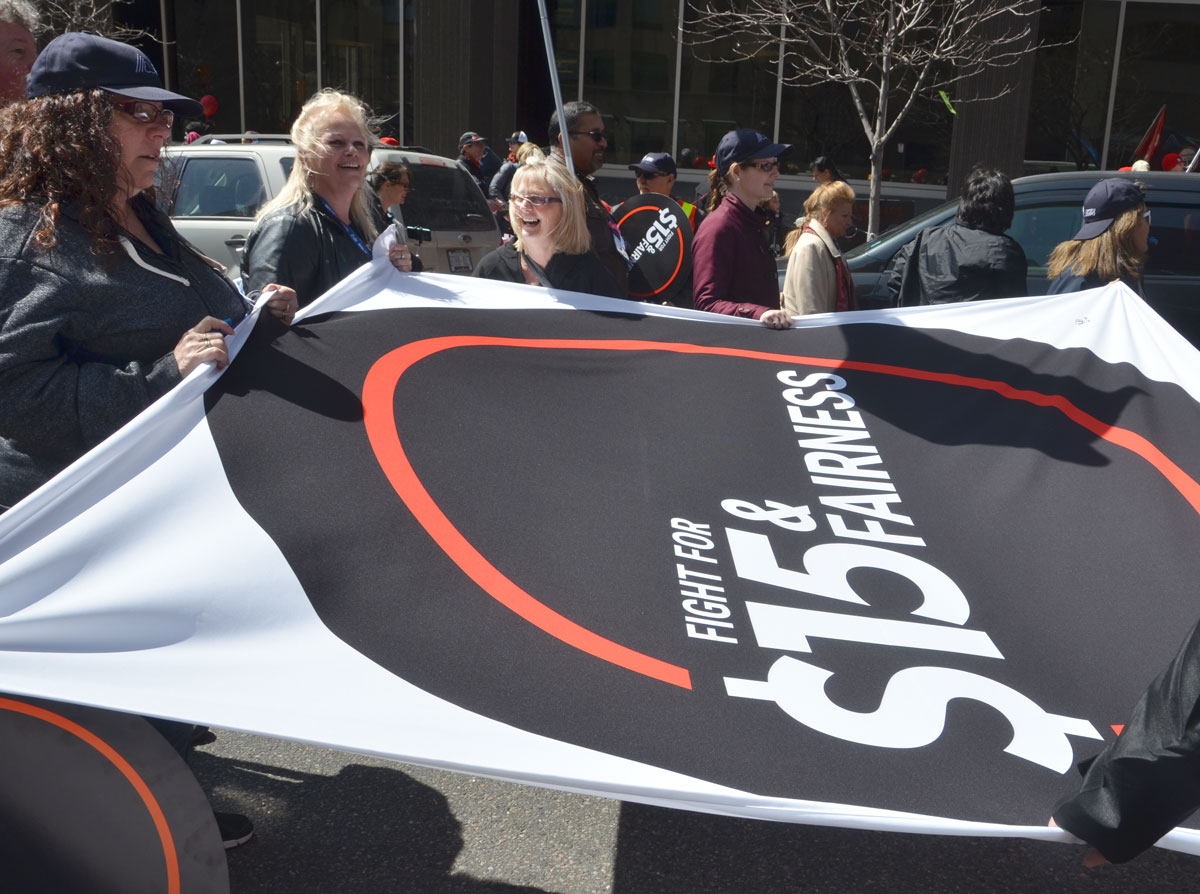
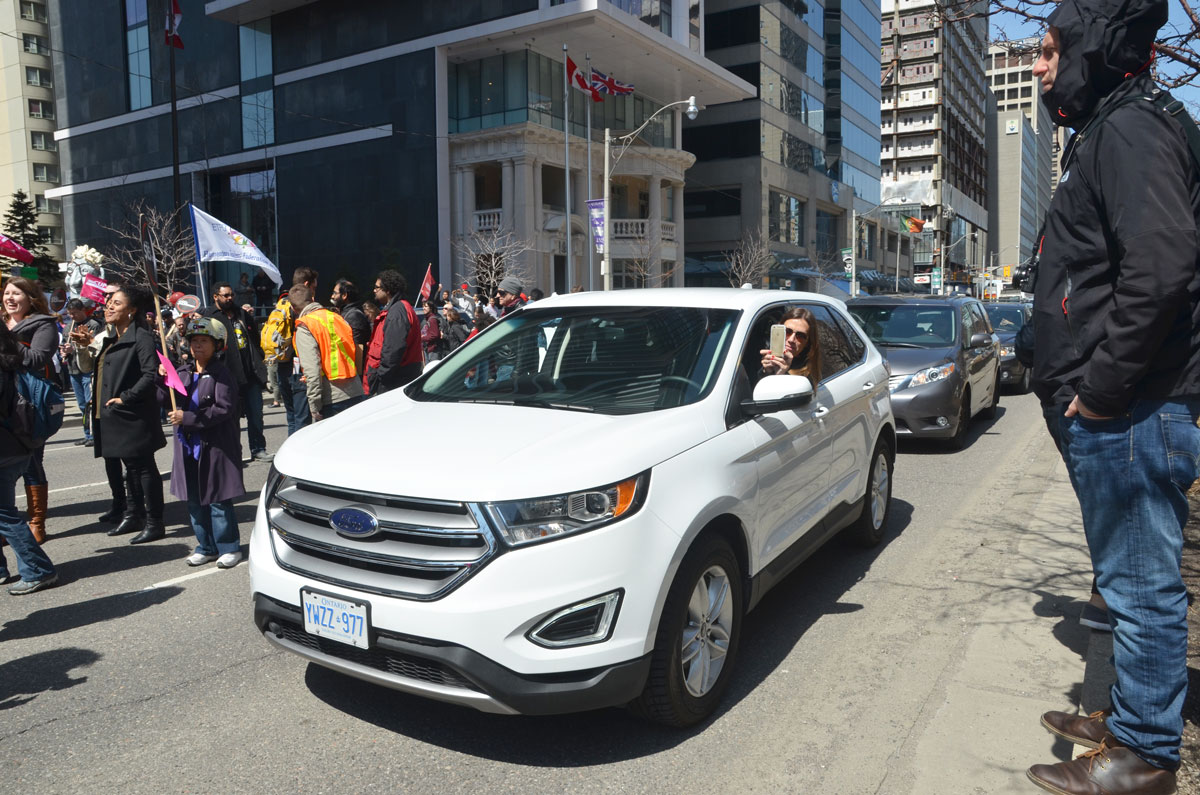
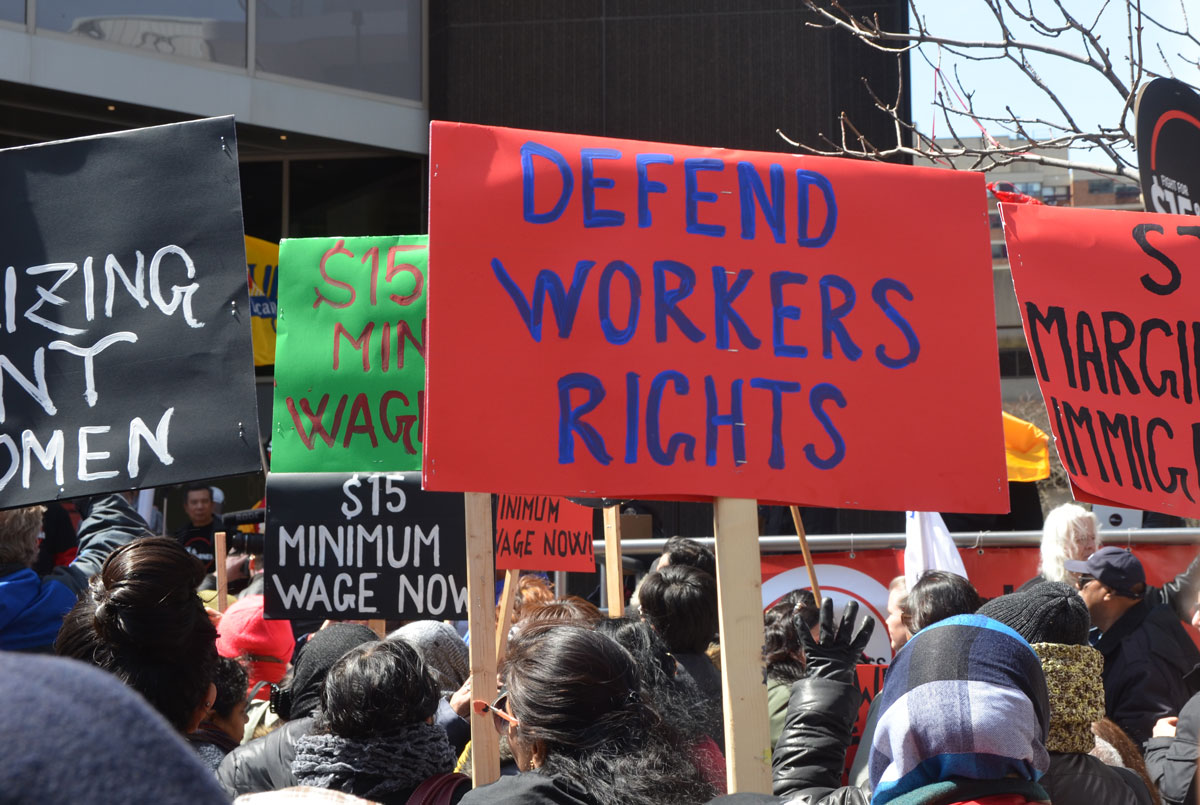
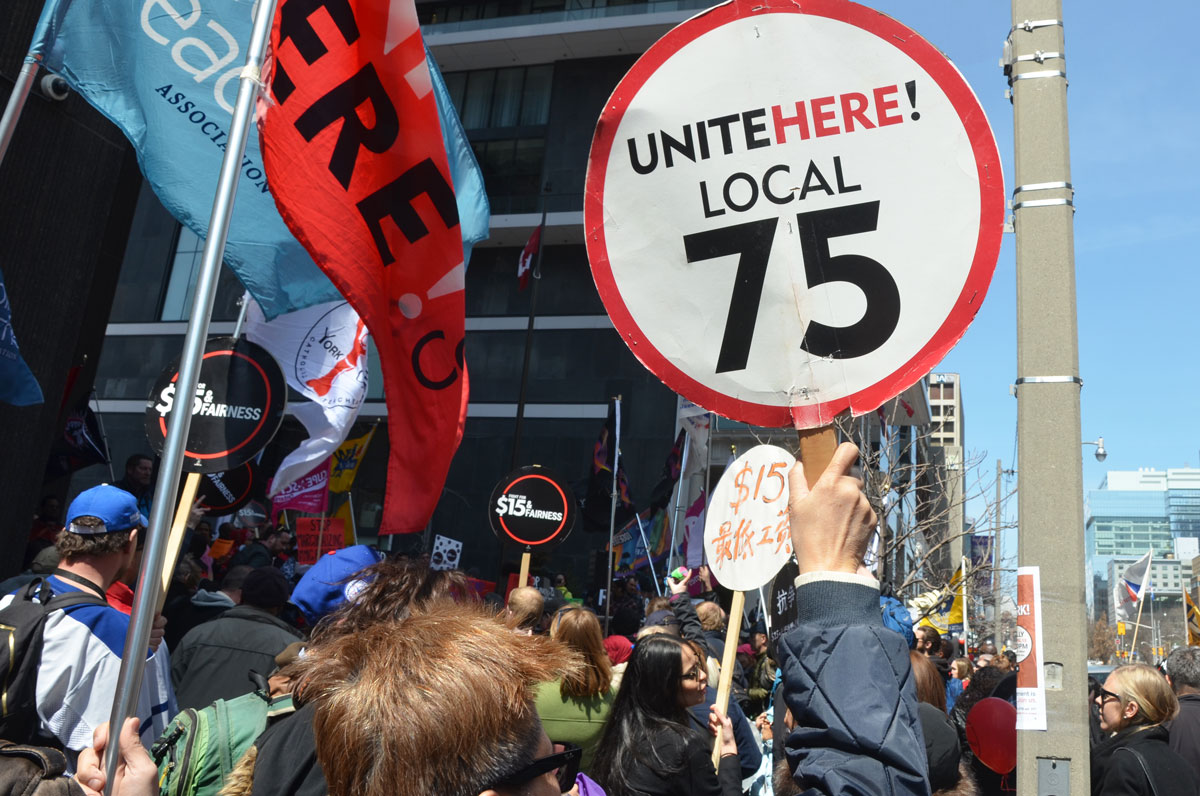

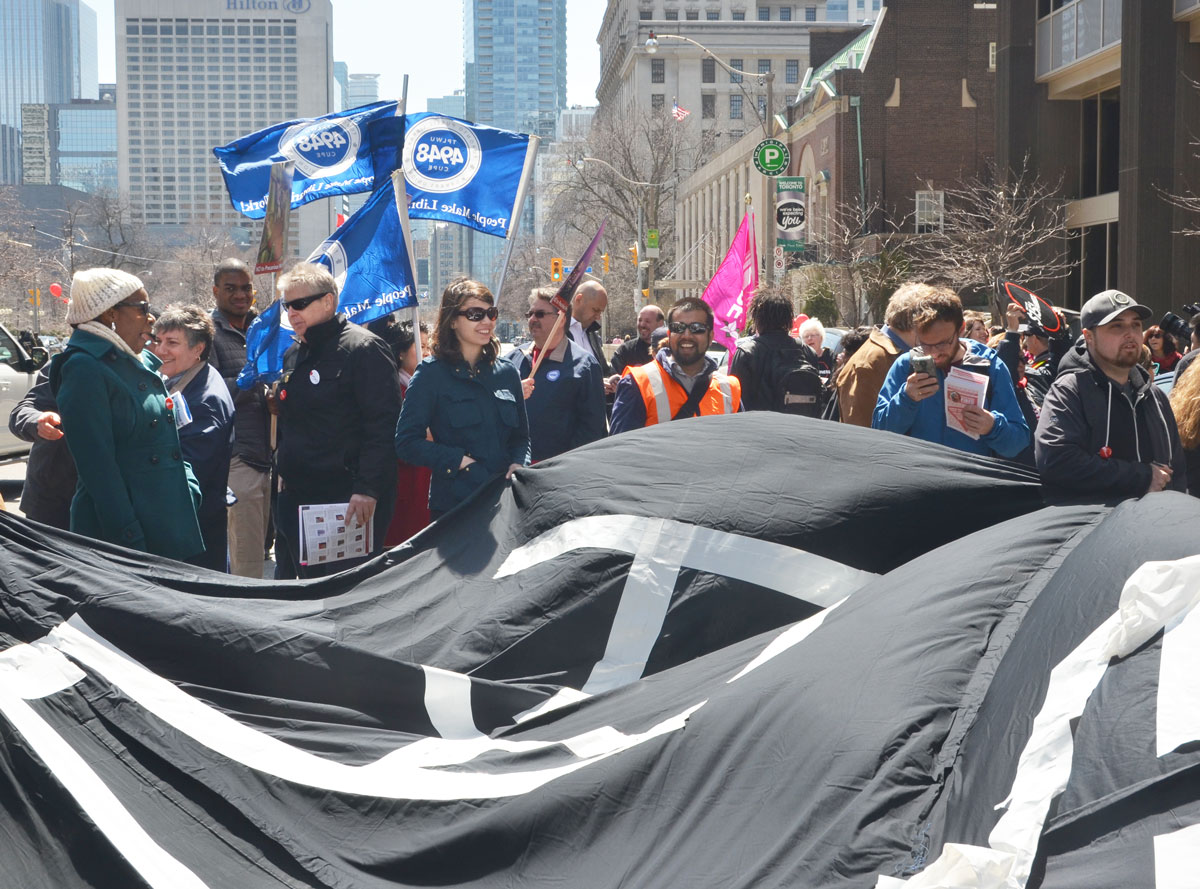

#15andfairness | #OntarioWeWant
Pillow Fight at Nathan Phillips Square
in celebration of International Pillow Fight Day 2016
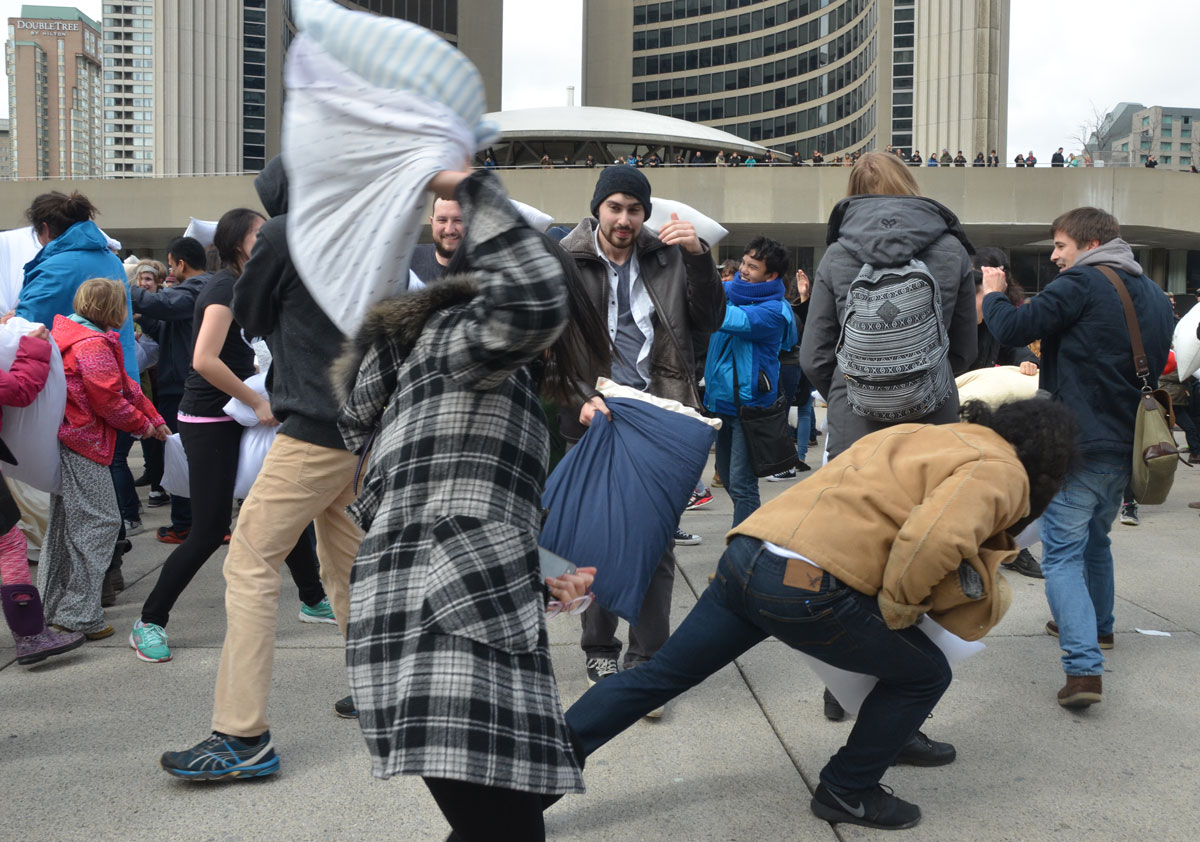
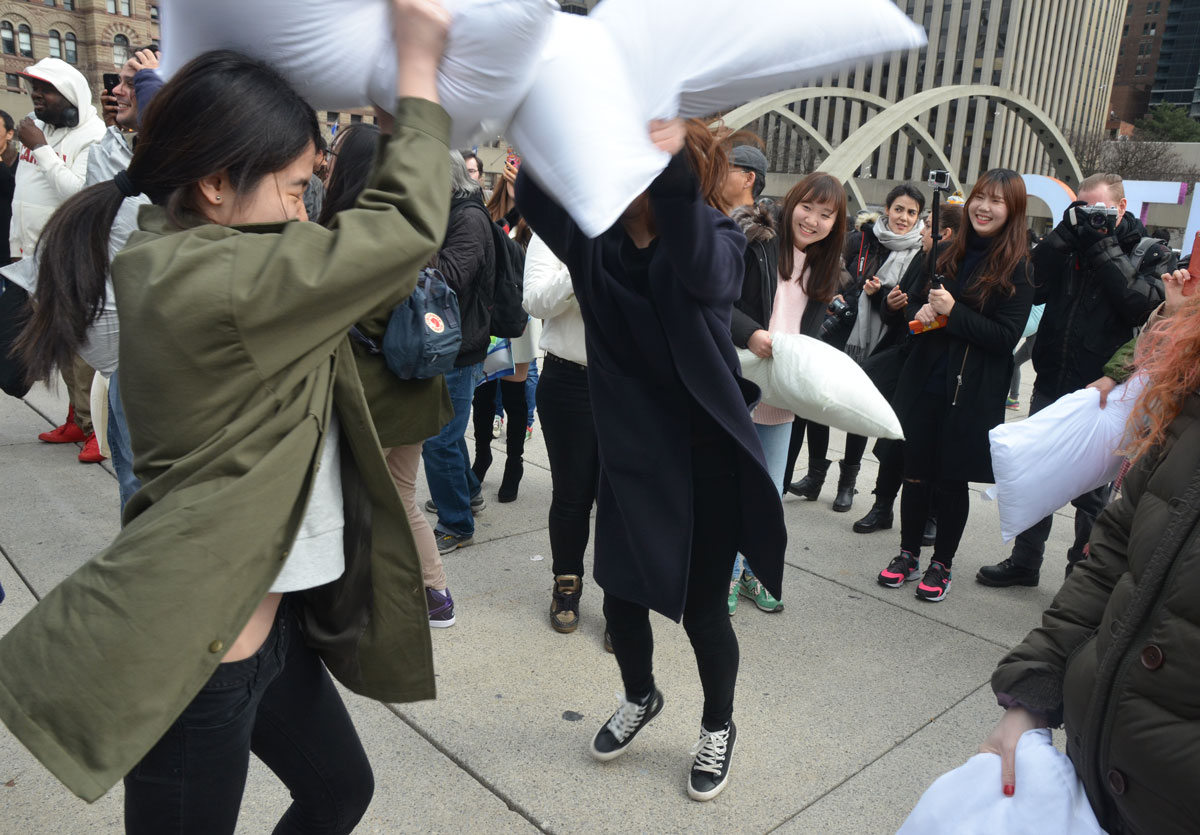
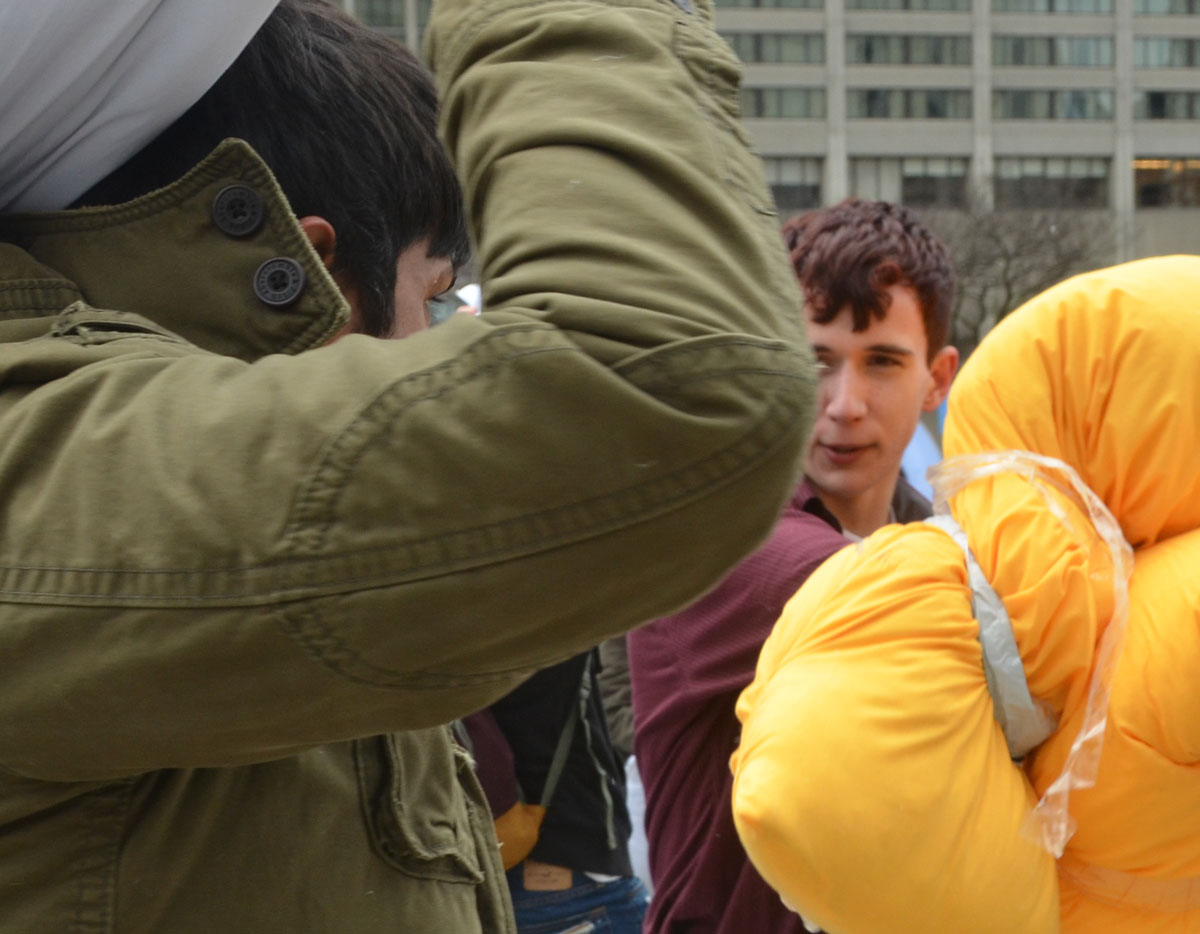





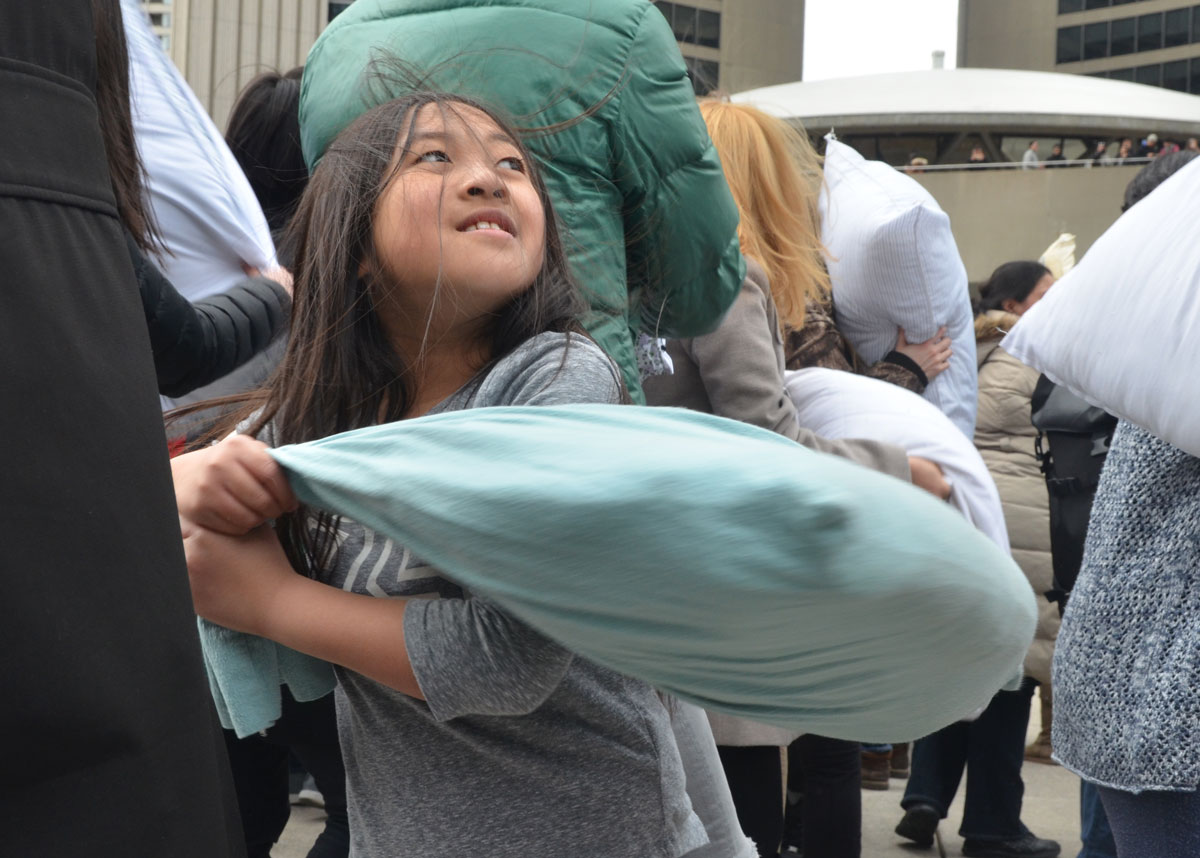


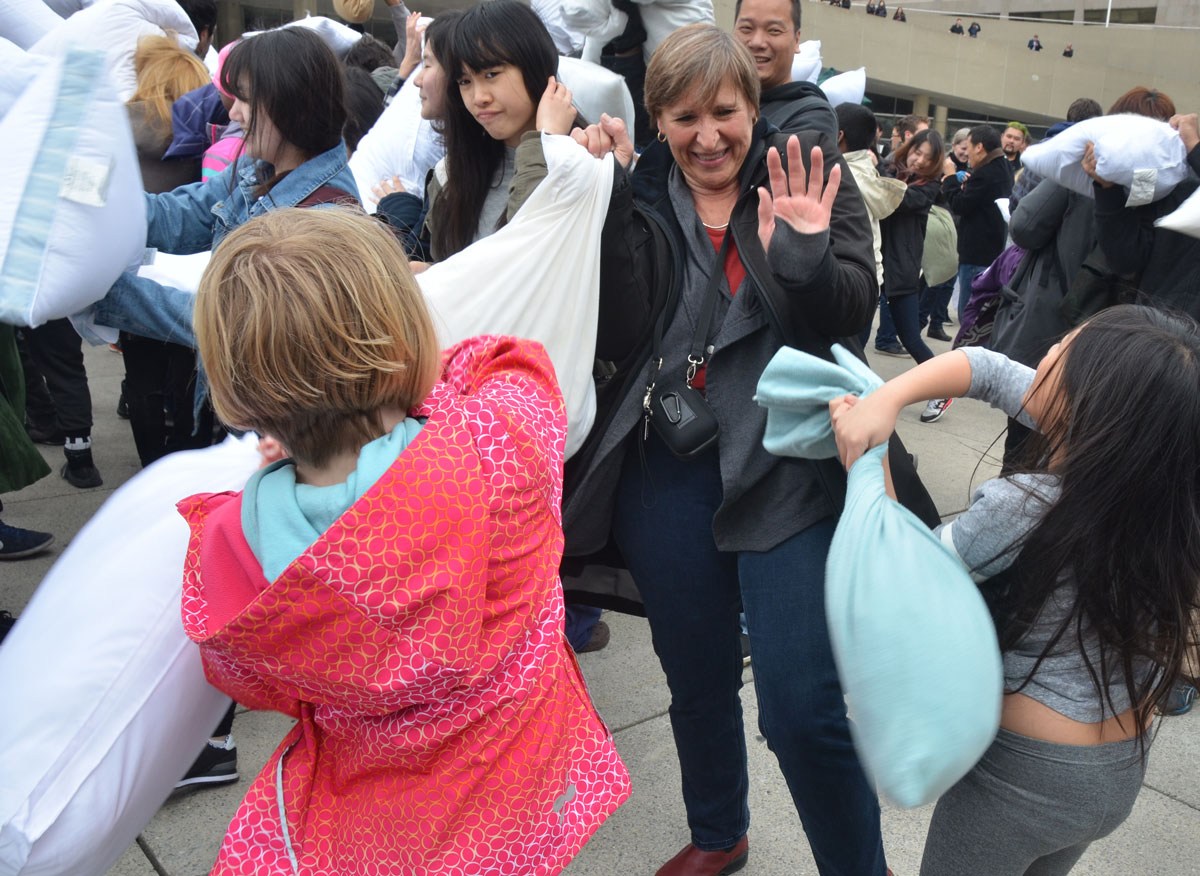


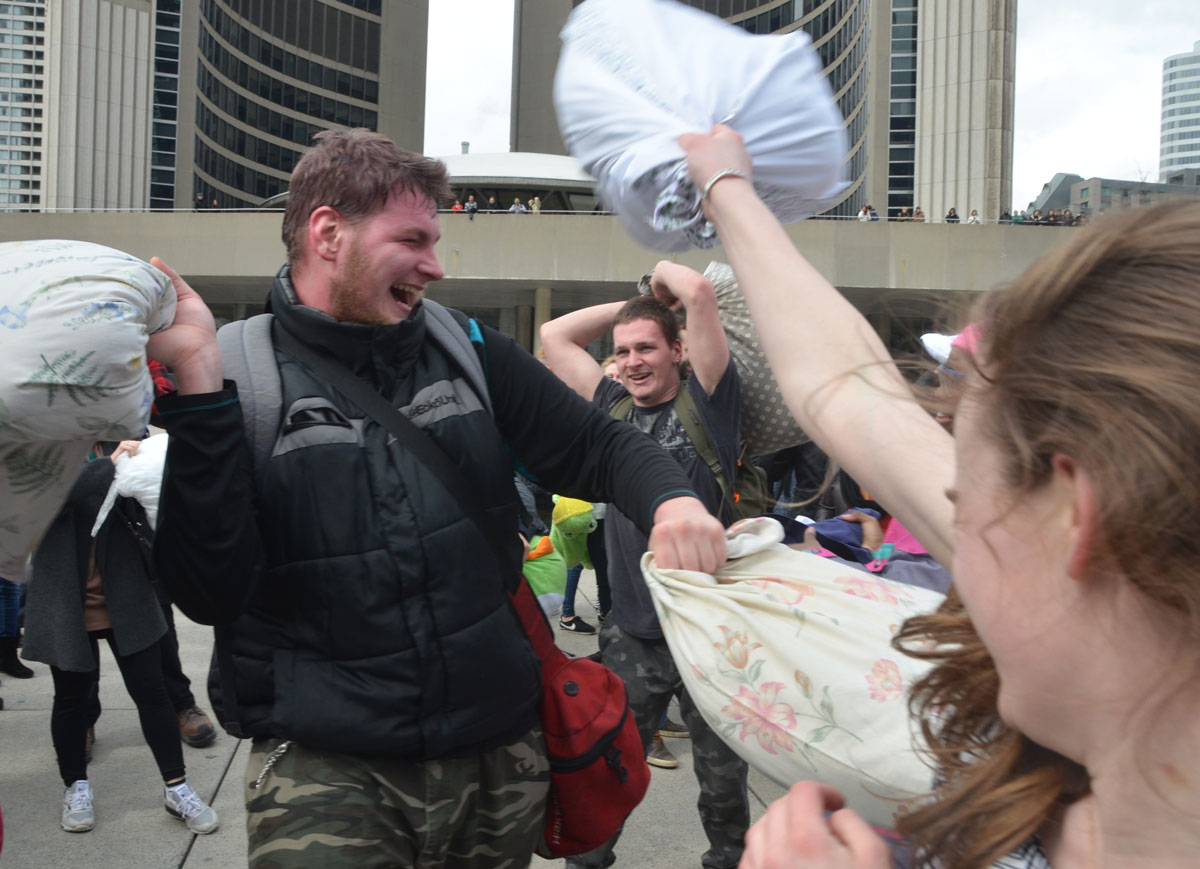

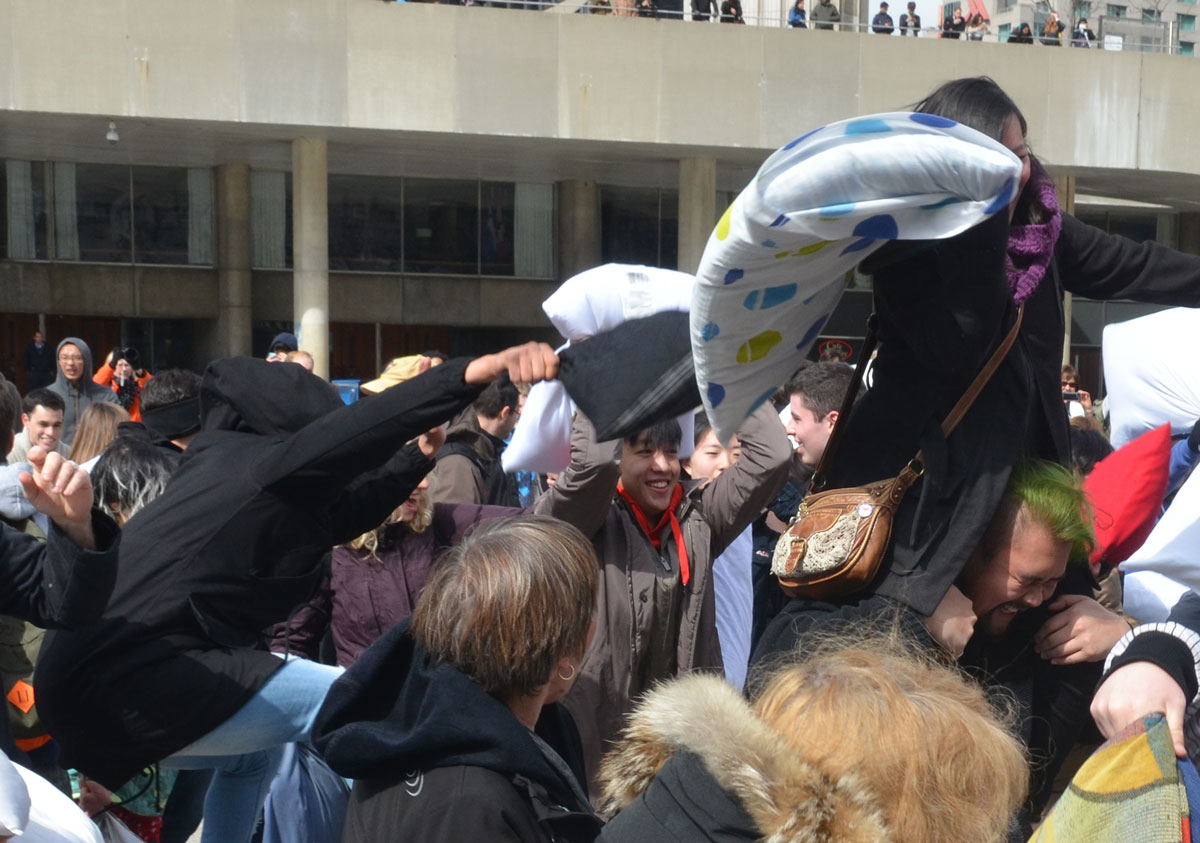


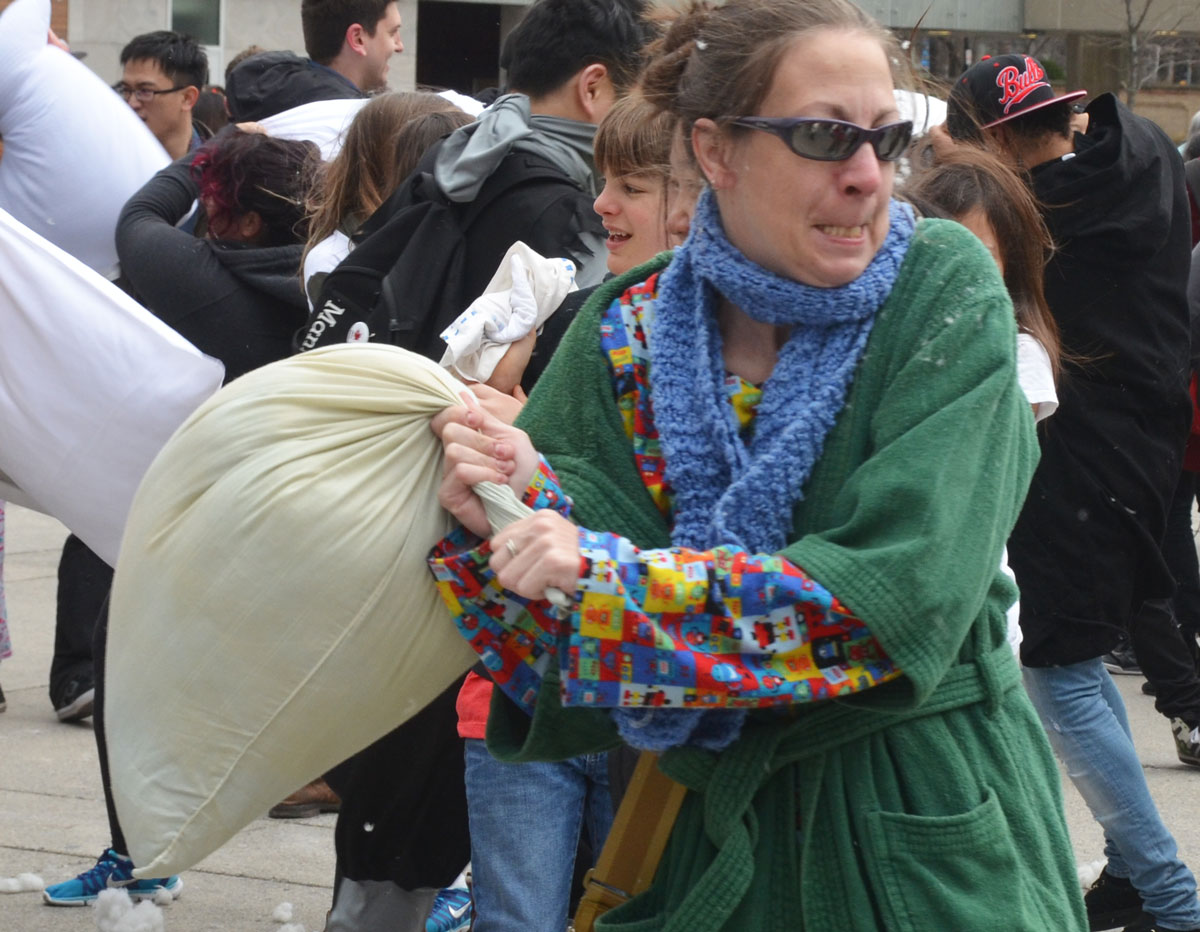


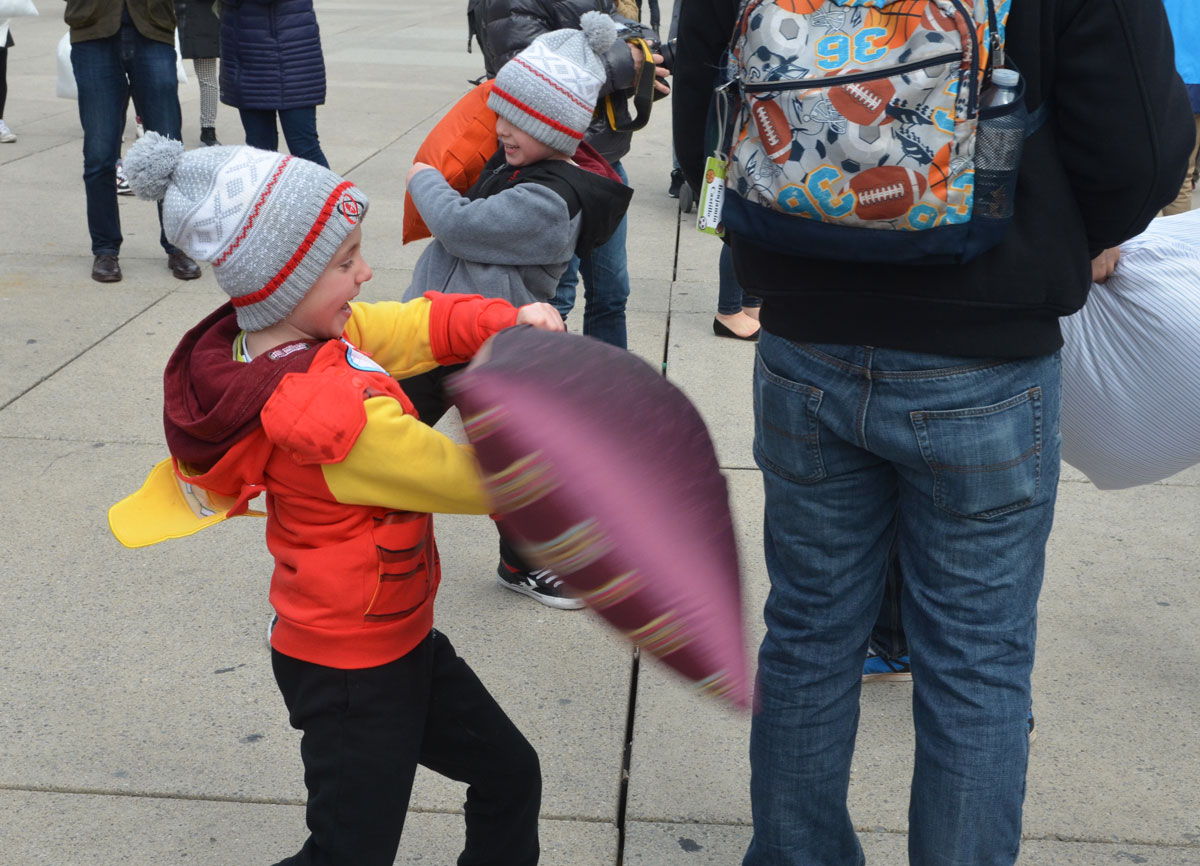
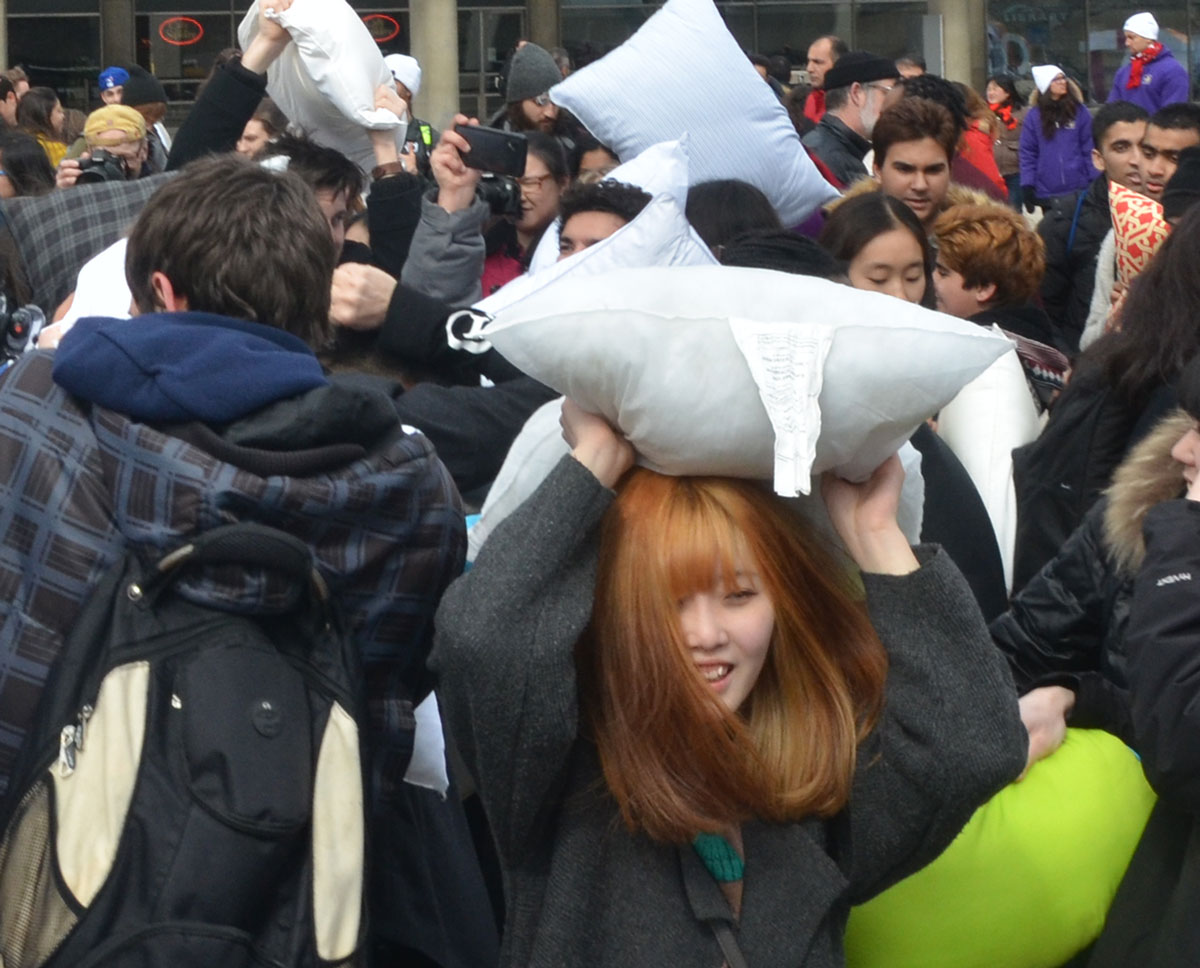
#pillowfight | #pillowfighttoronto
Rob Ford
City councillor and former Mayor of Toronto
May 1969 – March 2016,
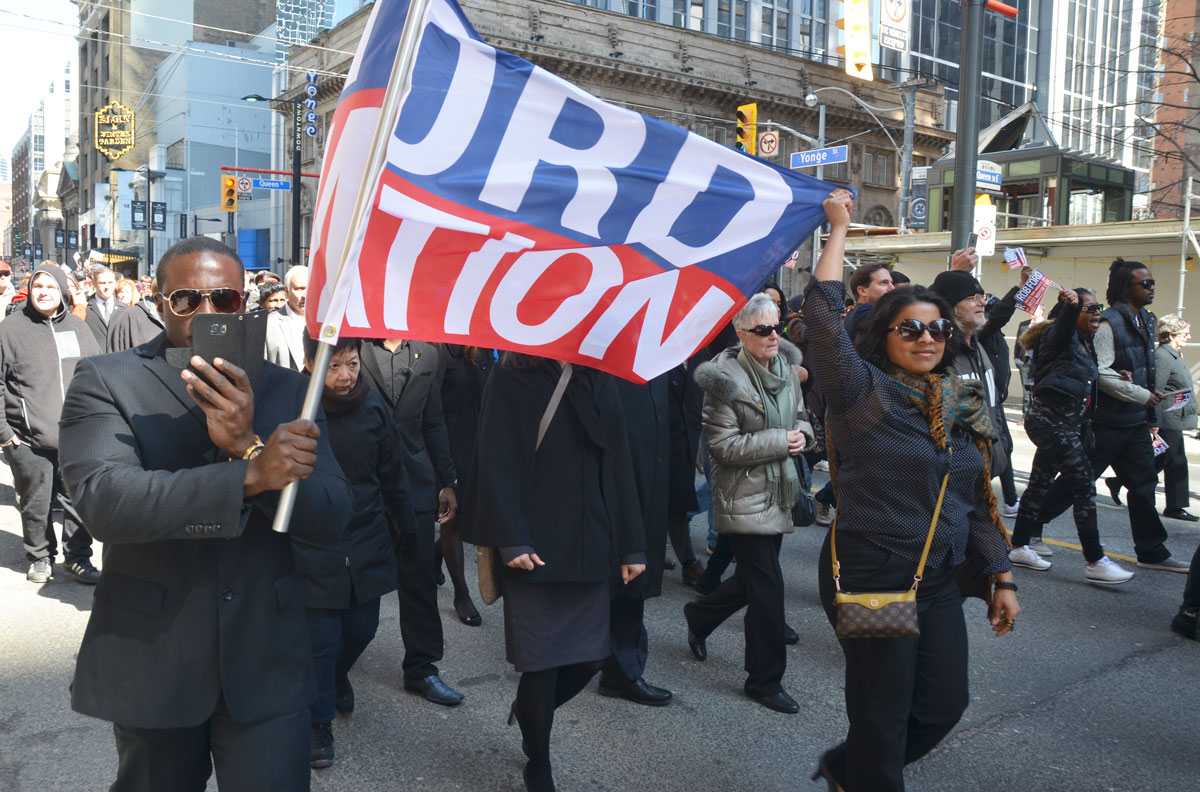
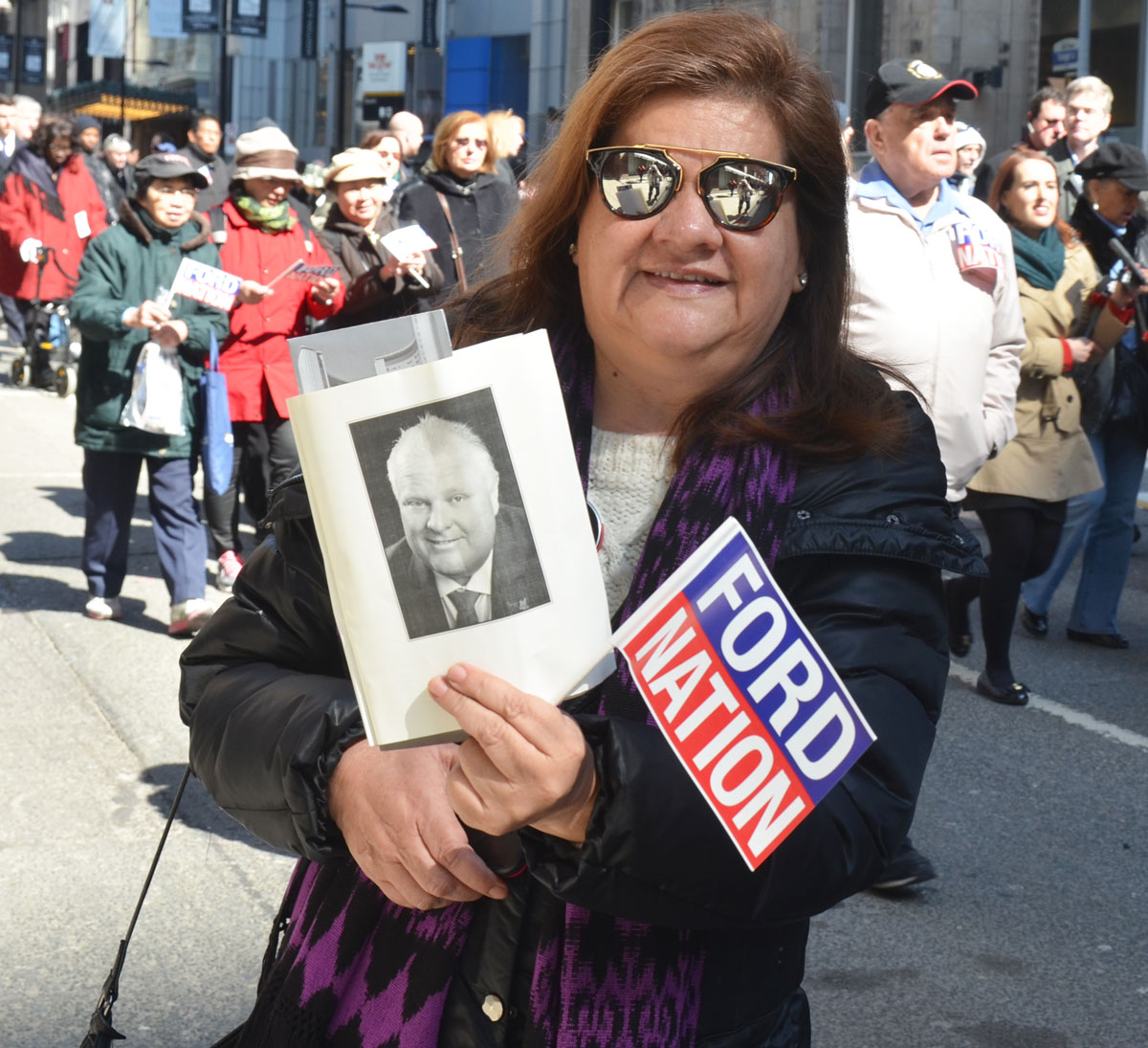
Funeral procession from City Hall to St. James Cathedral, 30 March
below: For two days Rob Ford lay in repose at City Hall where people could pay their respects. And many did. Yesterday, the line up wound around the corner of City Hall as people waited their turn. Some people loved him; some people hated him. Possibly there were those who were indifferent.

This morning there was a short procession from City Hall to the noontime funeral at St. James Cathedral.
below: After arriving at City Hall, Doug Ford greets the crowd.

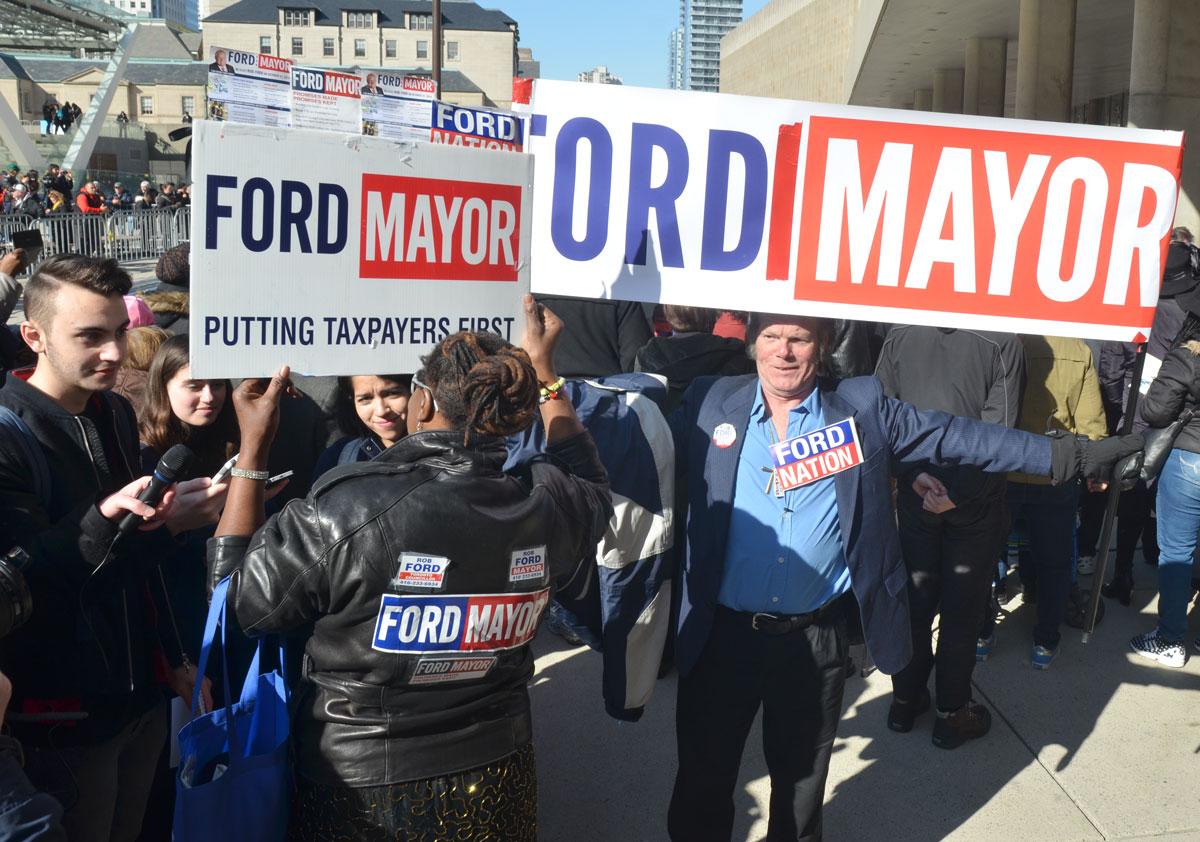
Although the procession was scheduled to begin at 10:30, it didn’t start until close to 11:30. A group of people waited at Nathan Phillips Square including some of Rob Ford’s supporters. I overheard a conversation between two men who were discussing what they thought of politics and politicians, most of it negative. At one point they declared that all career politicians should be kicked out of office. I thought to myself, you mean guys like Rob Ford? Wasn’t he a career politician?


About 20 or so people were holding a large flag made of a couple of Canadian flags and all the provincial flags stitched together. It was a very diverse group of people, diverse in age as well as in ethnic background. They were joking about whether or not they were going to be on the front page of the ‘Sun’. We shall see!

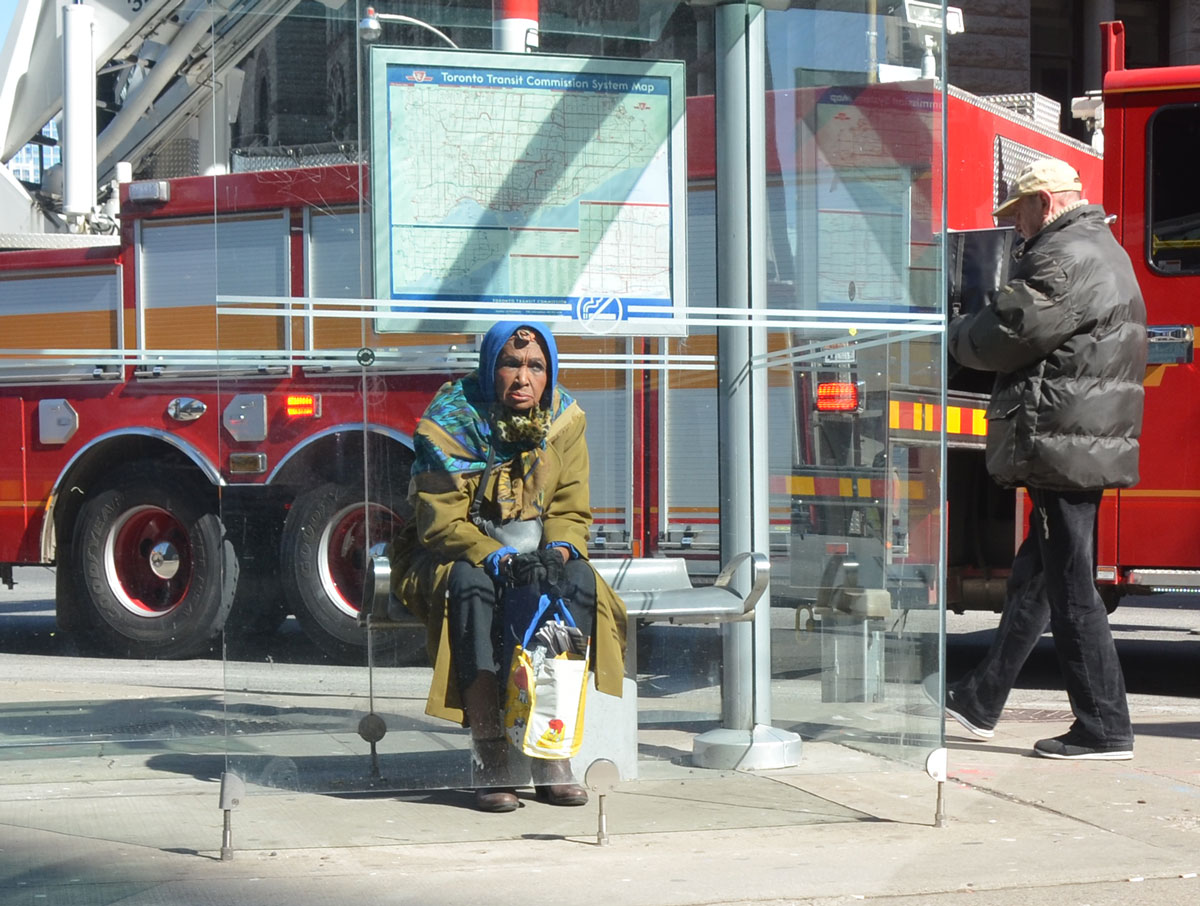
below: A woman finds a quiet place to sit and wait.
below: The police were in position, ready to start, long before the procession began. So was the media and it was a very large media presence indeed.

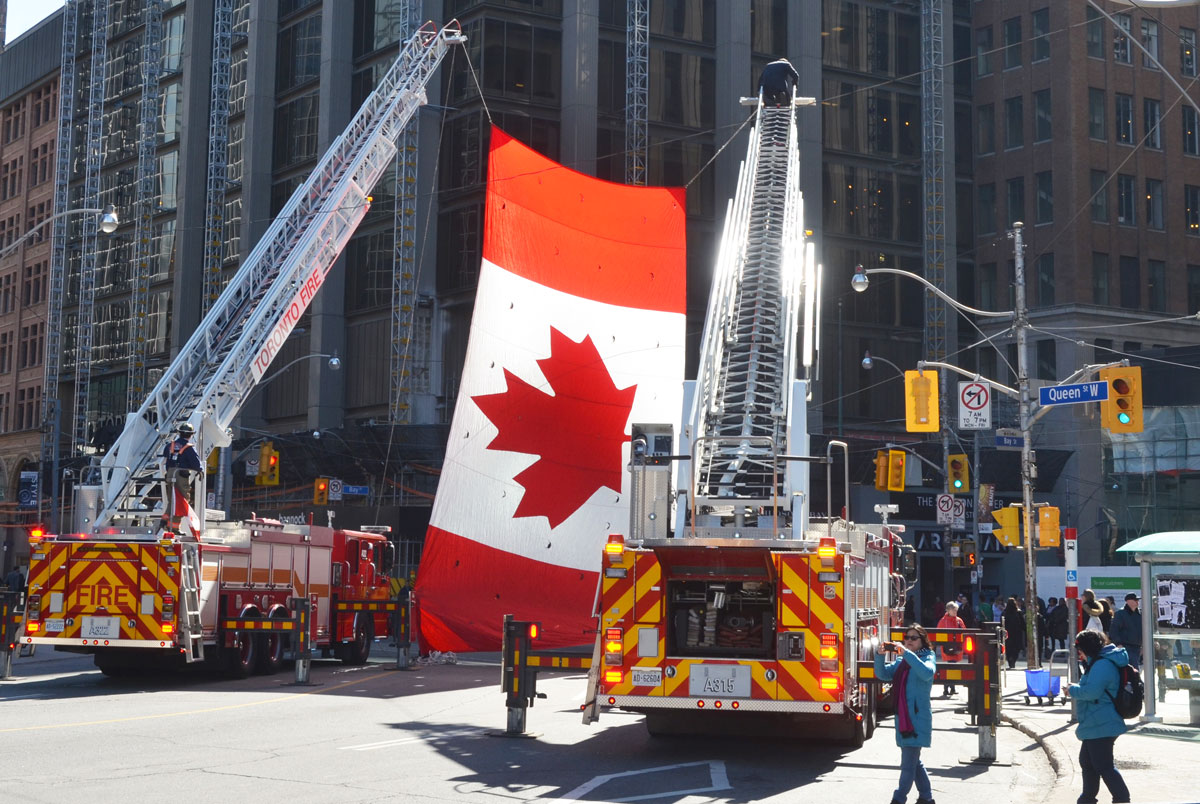
below: The Toronto Fire Department had a large Canadian flag on display at Queen and Bay streets, near the beginning of the procession route.


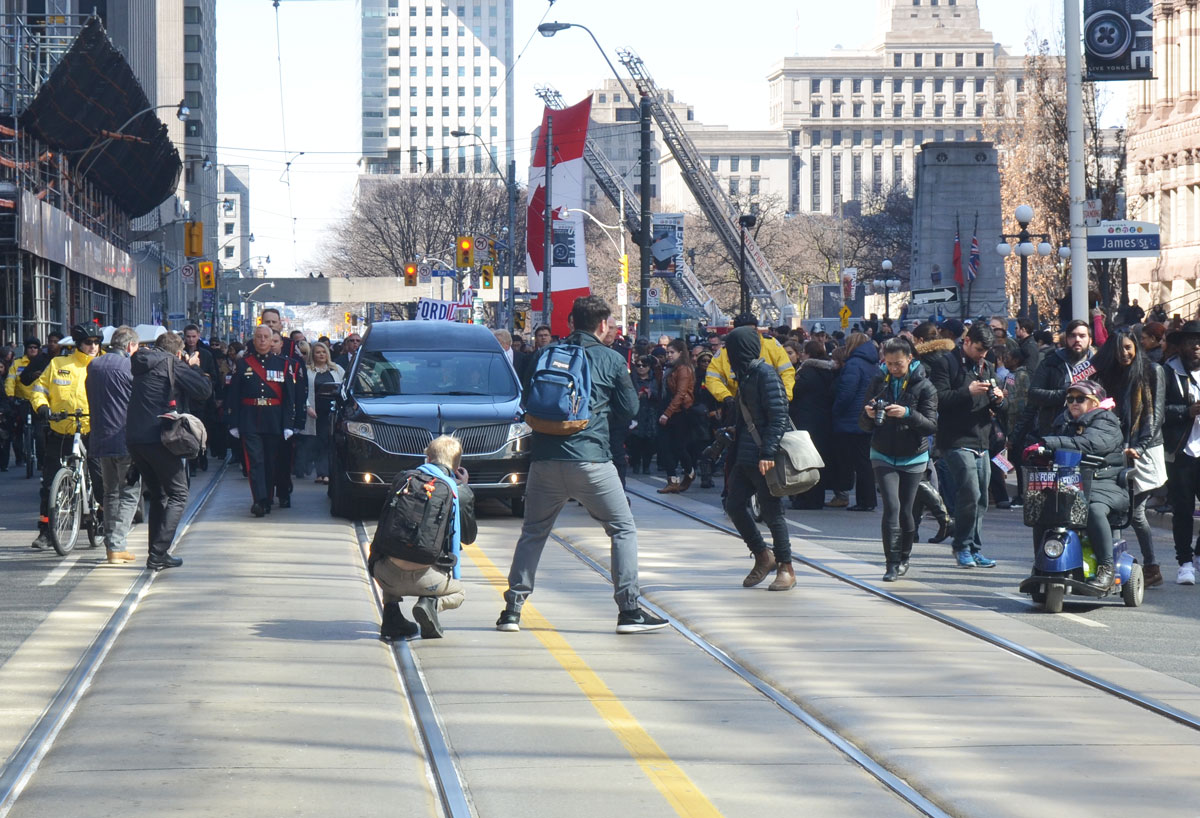


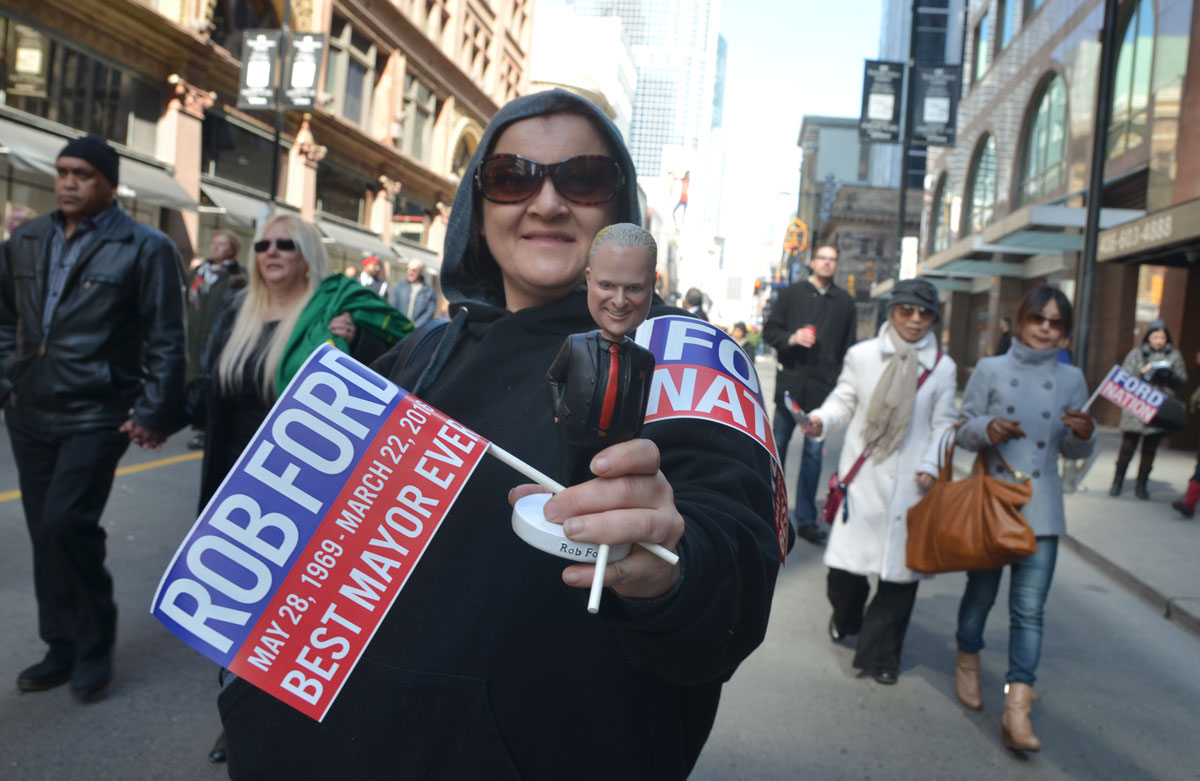
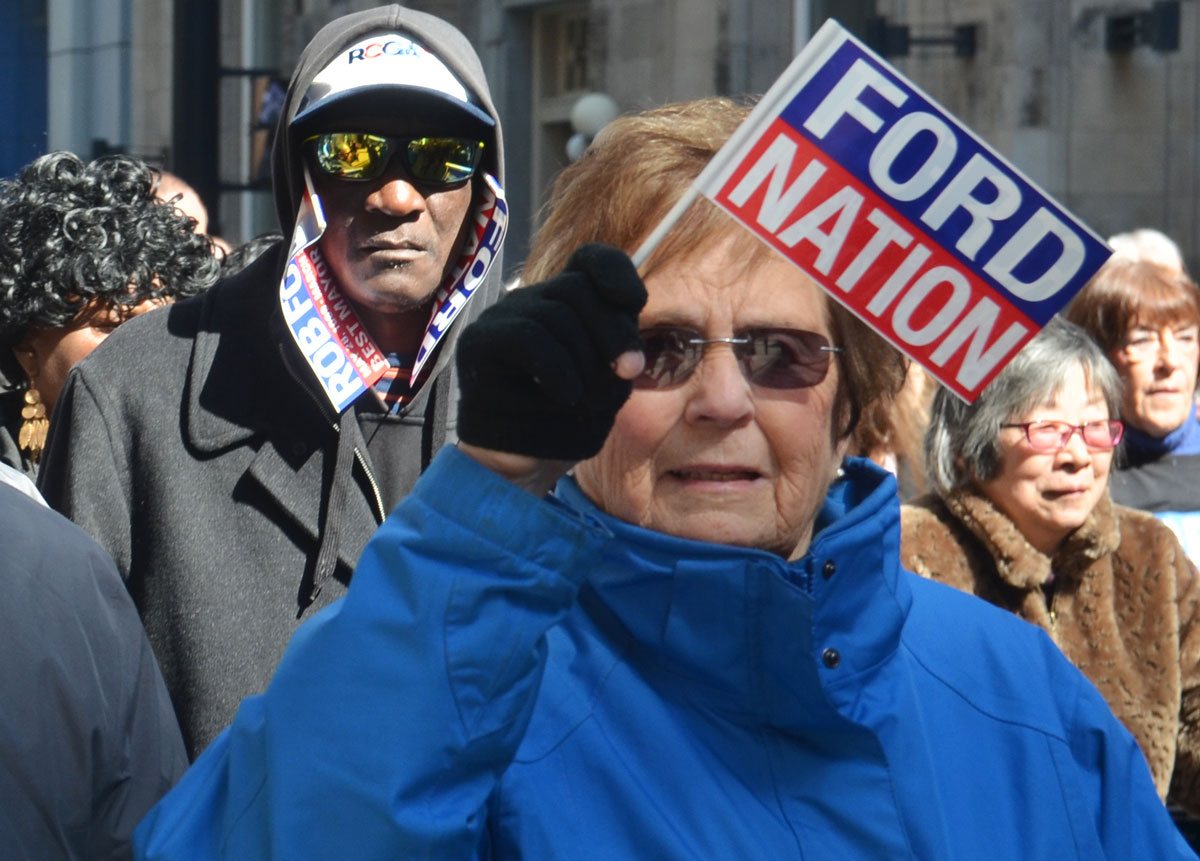
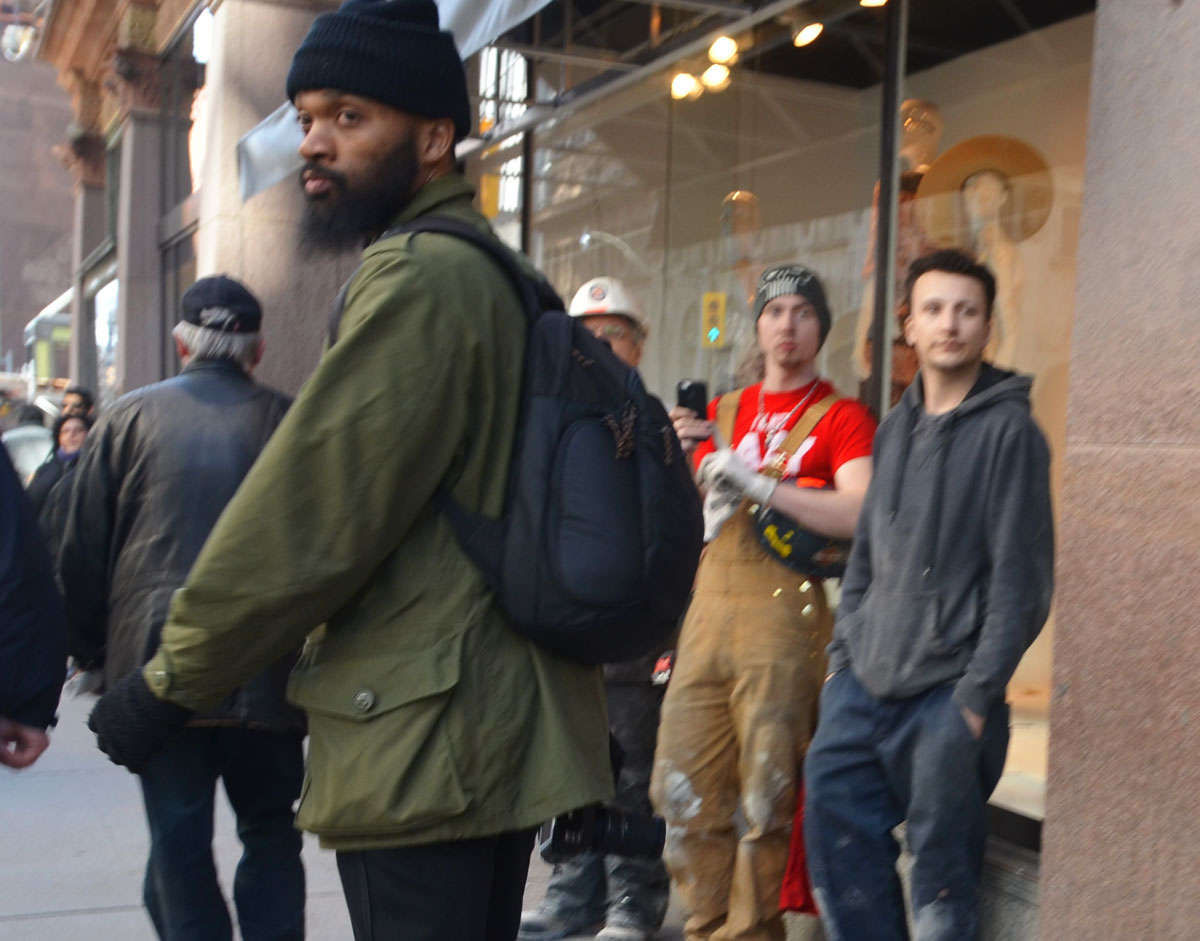
below: Trying to keep the people, most with cameras, off the streets.

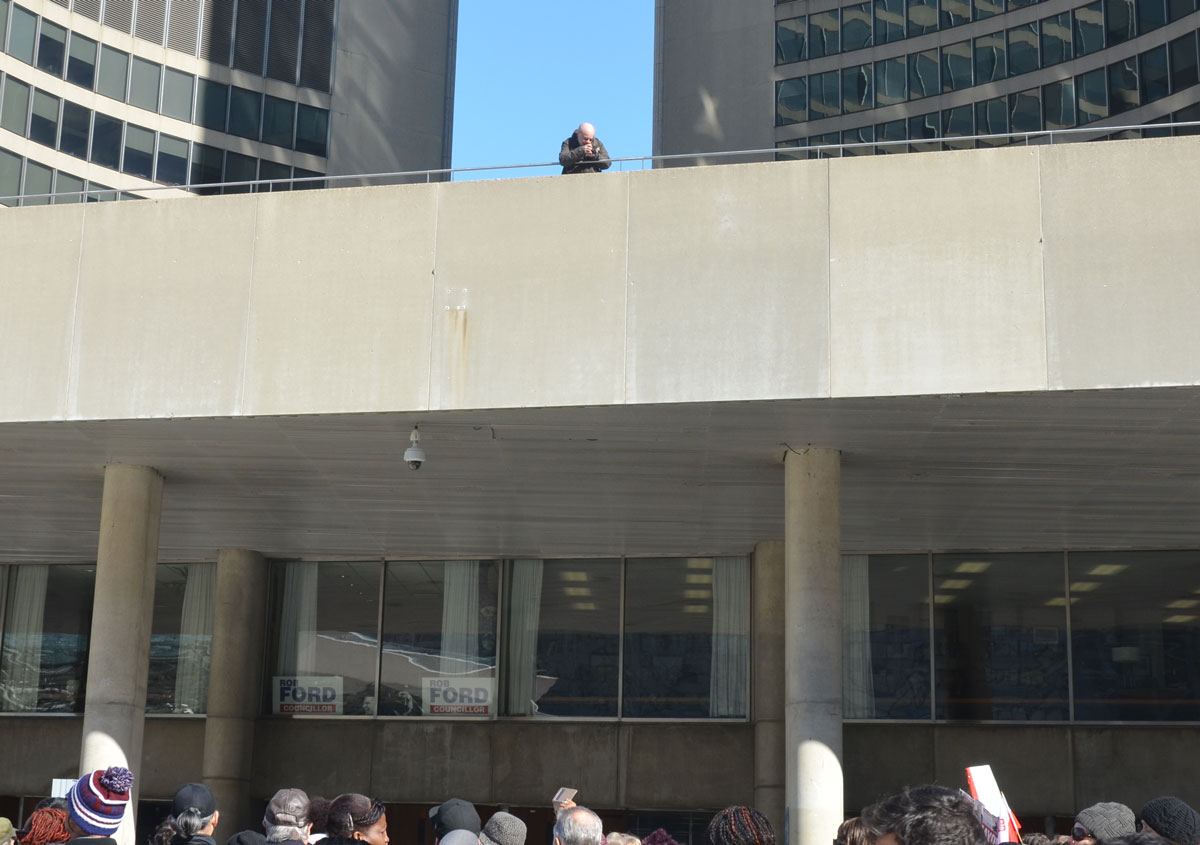
below: This guy may have been filming the crowd (and me) but he didn’t look away from his phone.
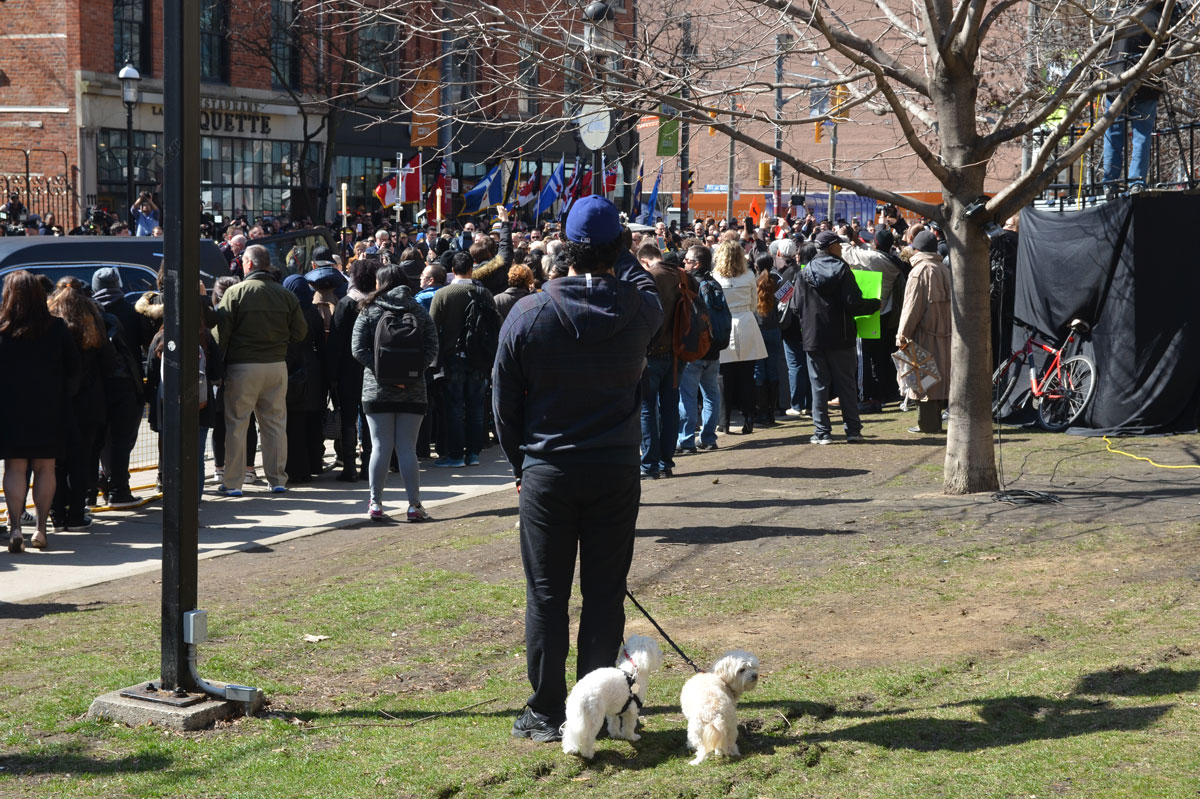
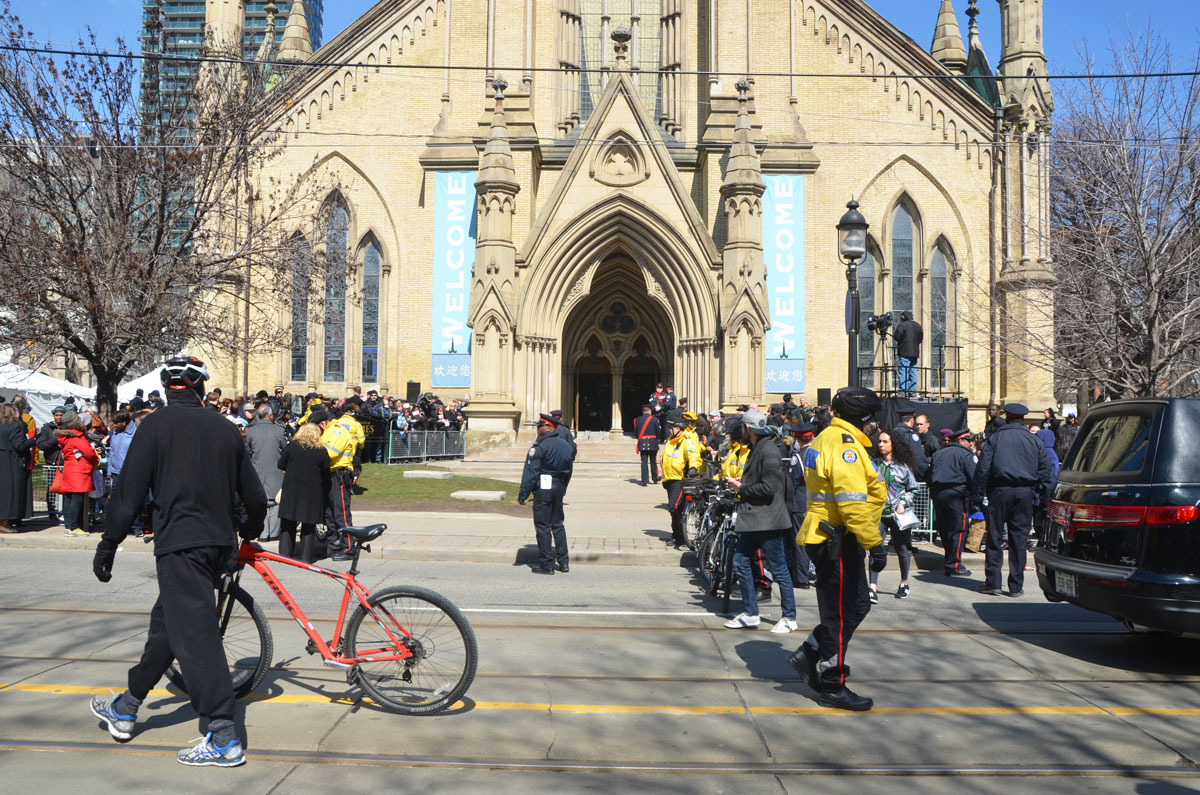
below: The crowd in front of St. James cathedral




As I was walking away from the cathedral, a woman approached me.
She pointed towards the church asked me if I knew what was going on there.
added later: I was going to discard this photo but then I noticed the man in the mask.
Who wears a mask to a funeral procession?

The Christmas flower show at Allan Gardens conservatory is back,
which means lots of poinsettias… over 30 varieties in fact.

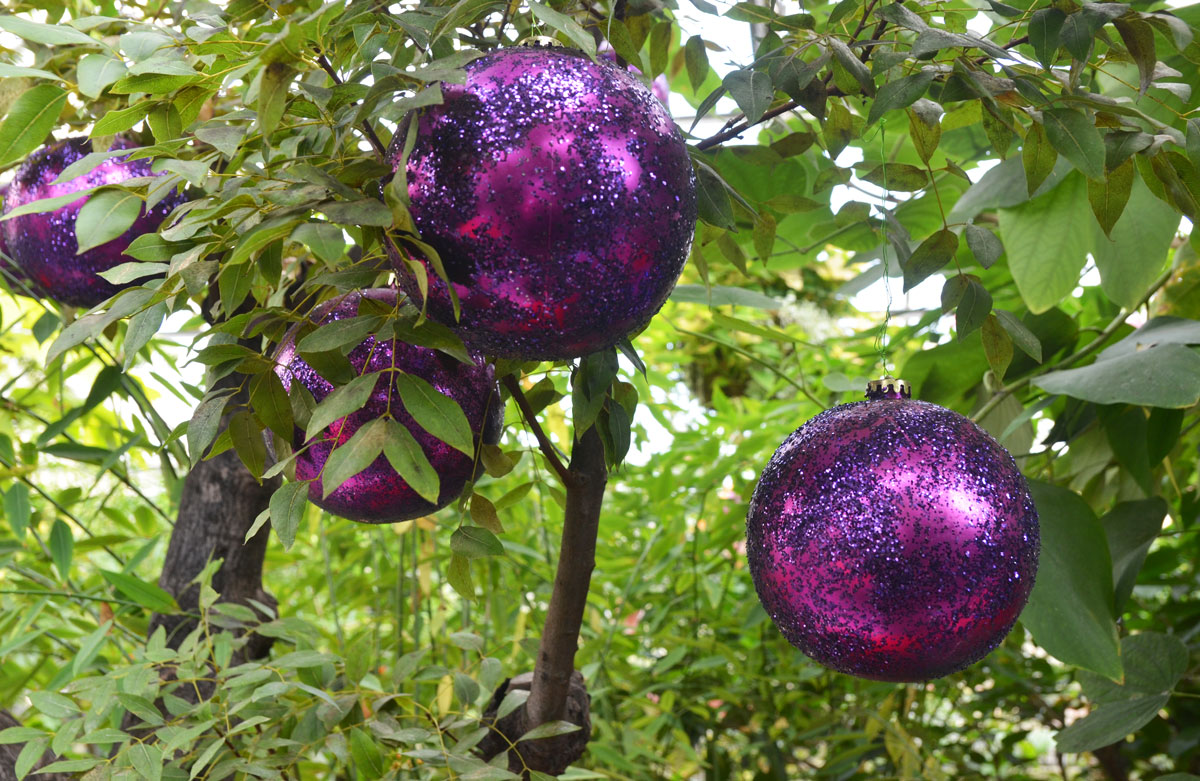
A rare purple glitter ball tree is also in bloom.
below: He has a carrot nose and a corn cob pipe,

but he doesn’t look very frosty. Maybe it’s the red vest that’s keeping the chill away.

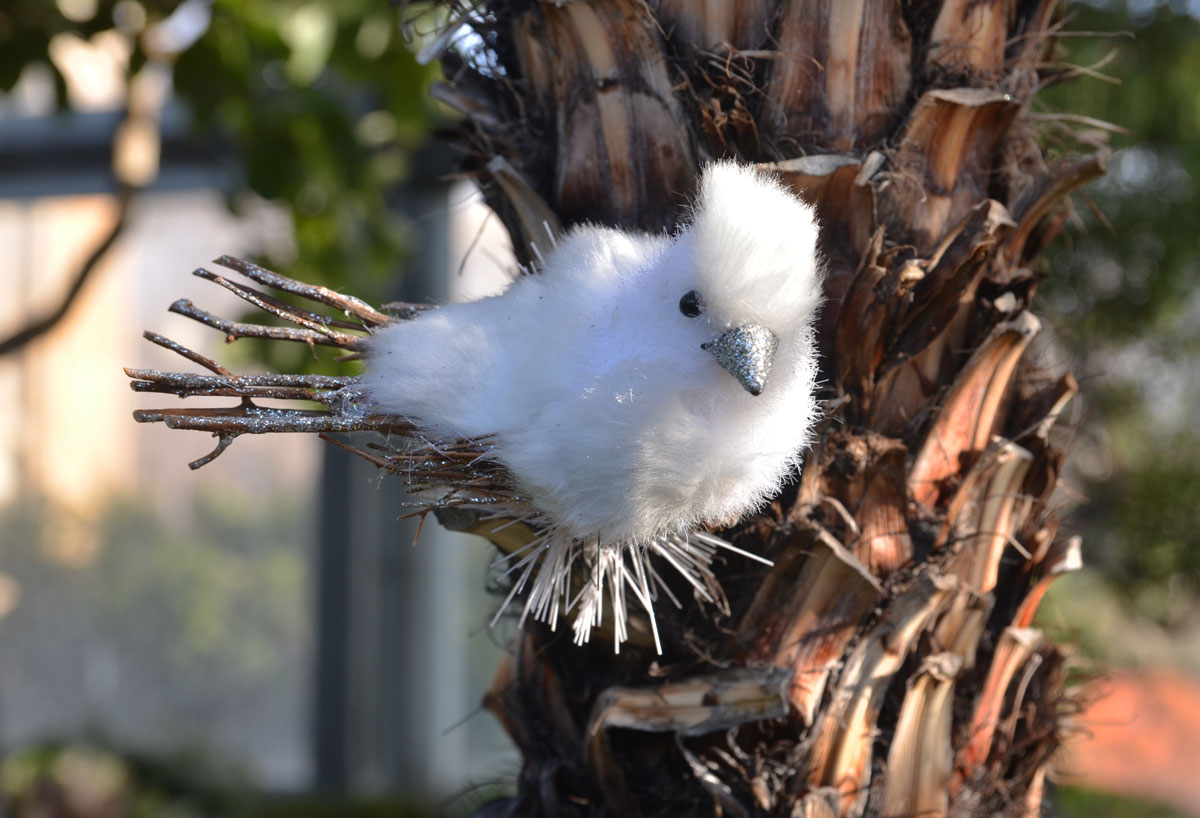
below: With its silver beak and its twiggy tail, this little fluffy bird perches on a palm tree.
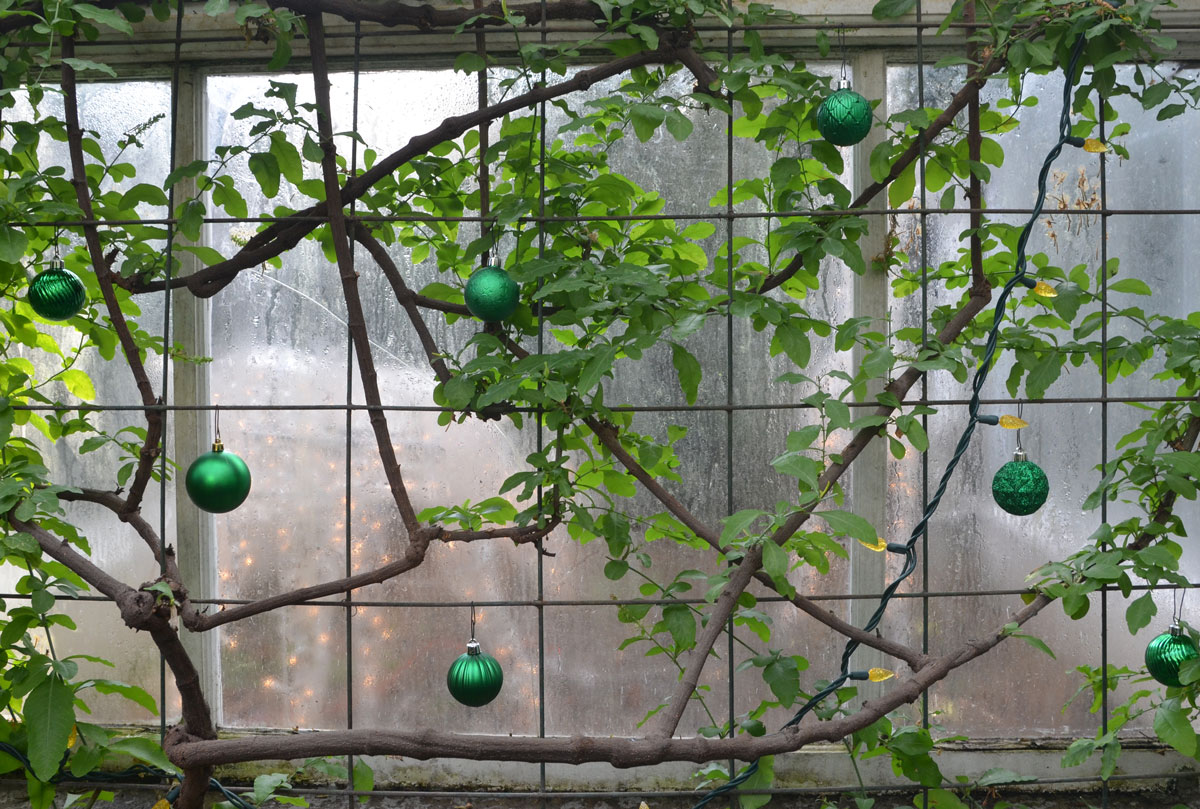
below: Christmas greenery – ever green baubles hang from a vine.
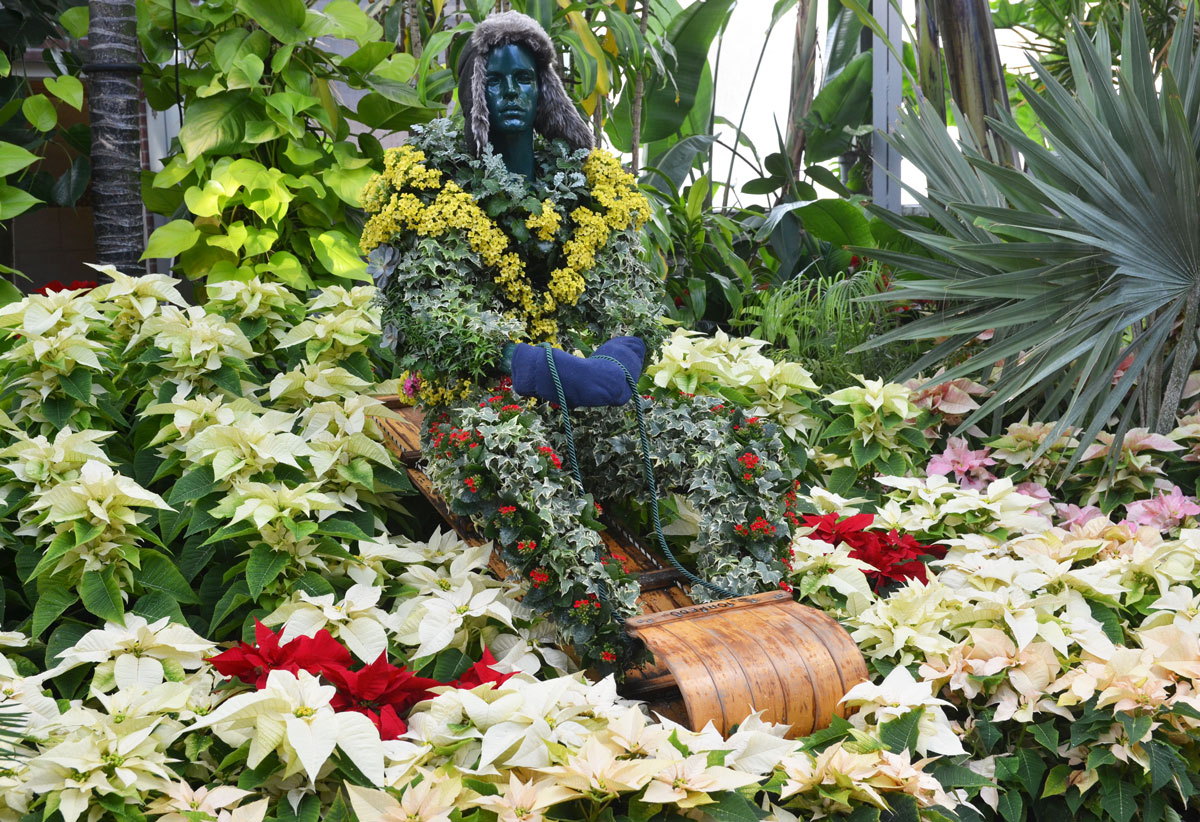
below: All bundled up for a toboggan ride down a mountain of poinsettias.
below: Flowering Christmas cacti hang from the roof.
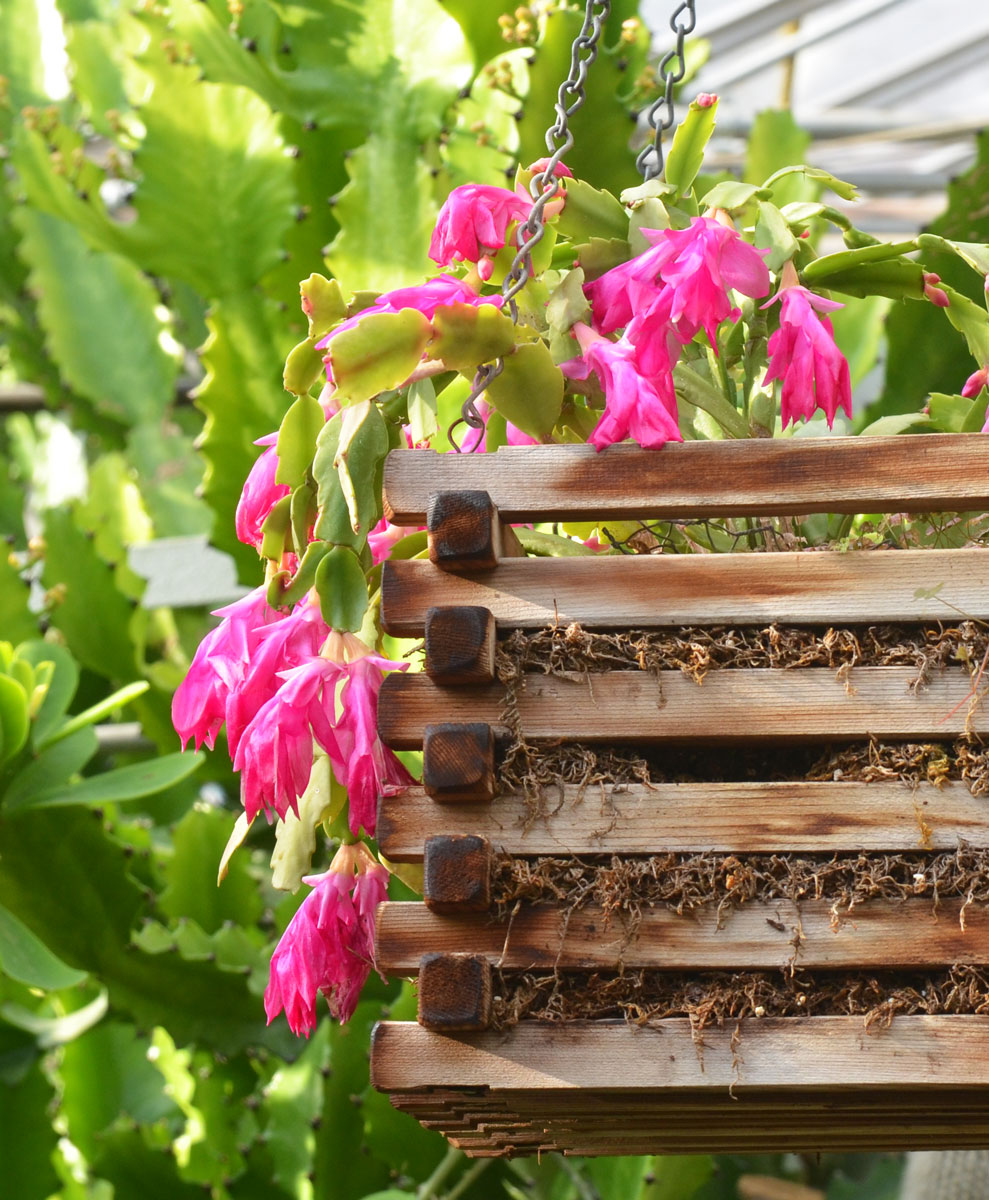
In addition to the Christmas plants like poinsettias

and amaryllis,

some of the conservatory’s usual cast of floral characters are on display, such as orchids

and hibiscus plants.



Nathan Phillips Square, 14 Nov 2015
A quiet gathering in support of Paris

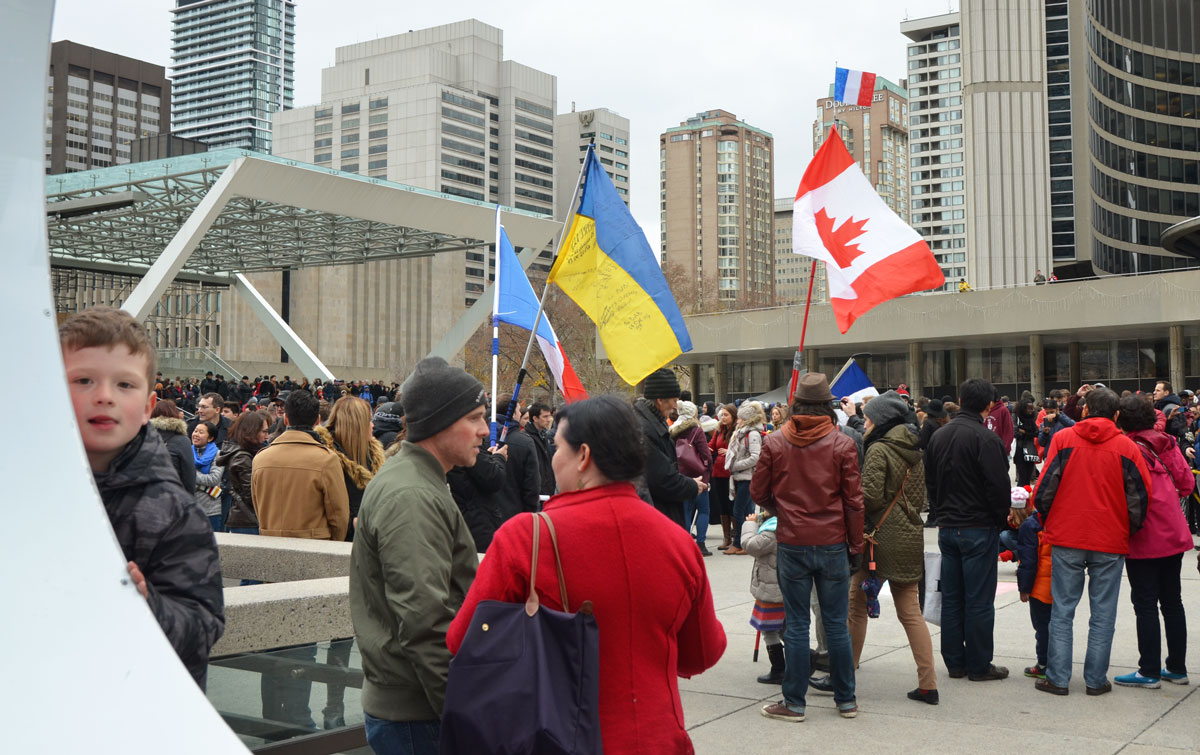
The event started with a few speeches. French Consul General Mr. Marc Trouyet spoke first, followed by Carolyn Bennett, Liberal MP and then Toronto mayor John Tory.

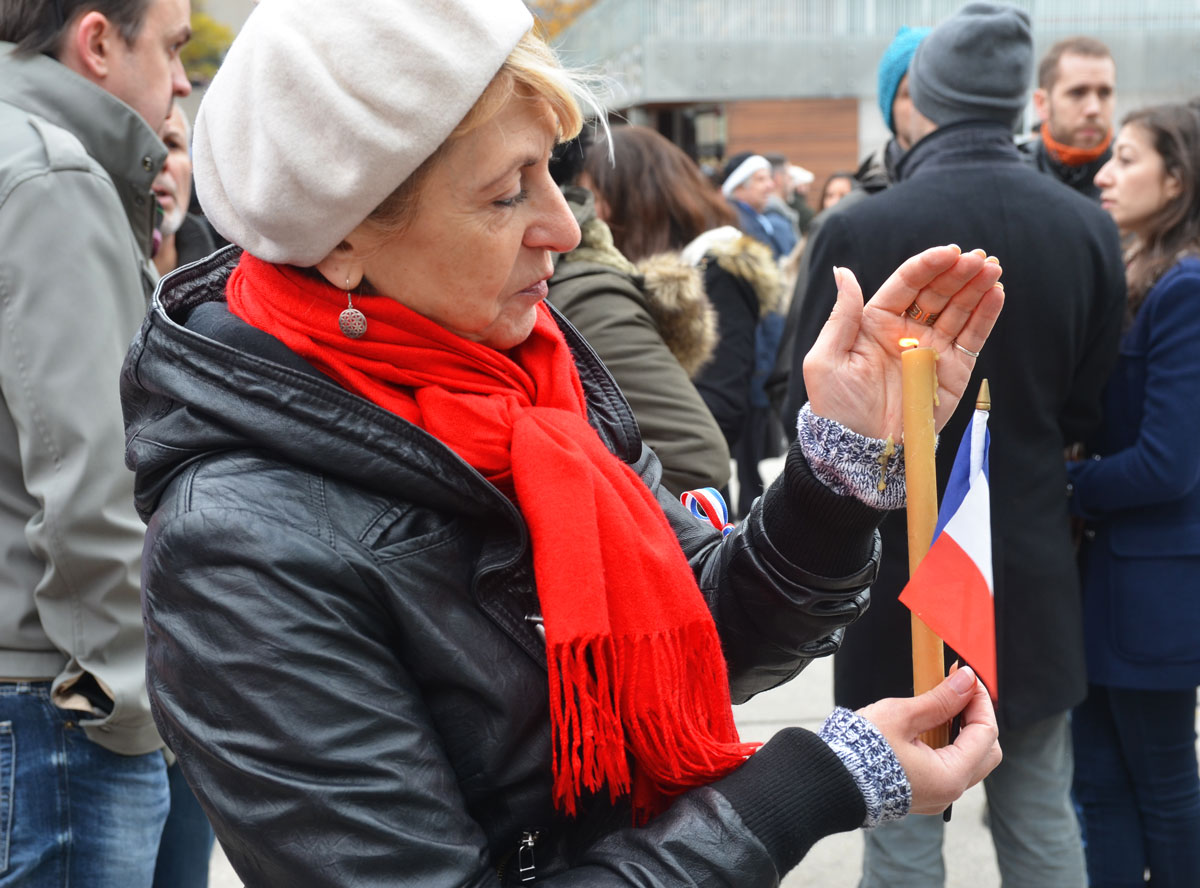
The official part of the event ended with two minutes of silence.
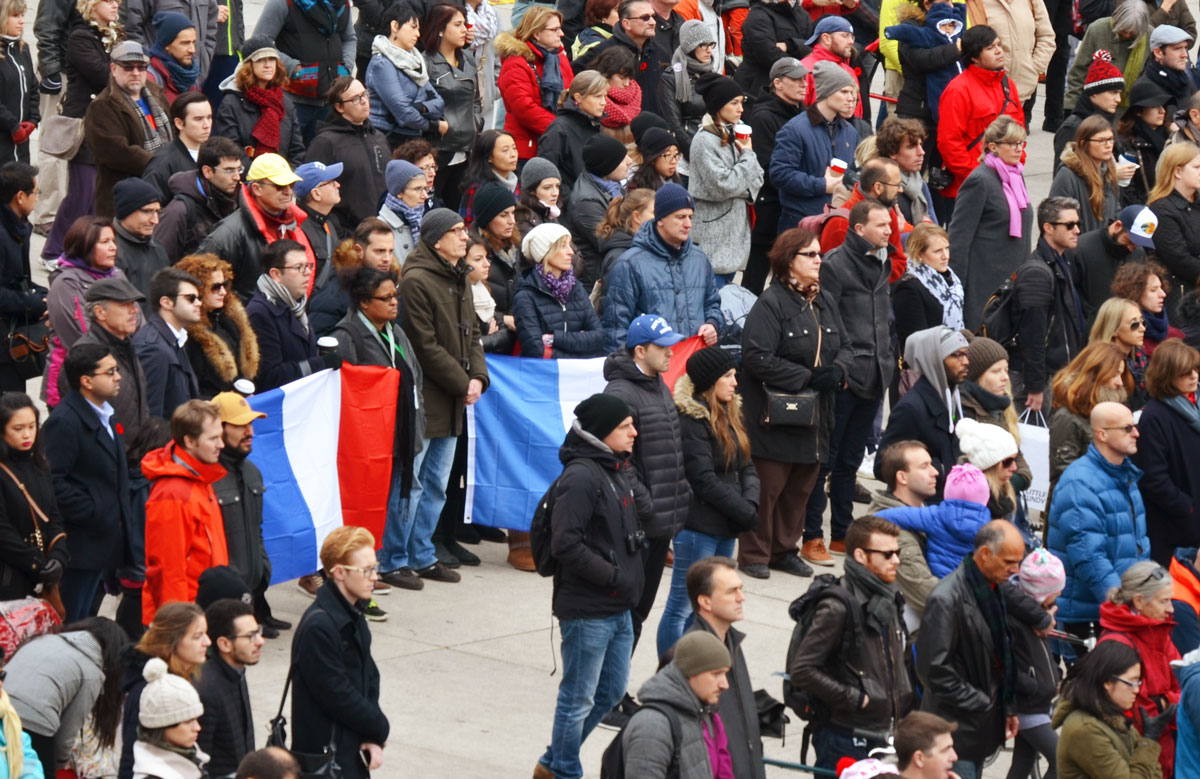
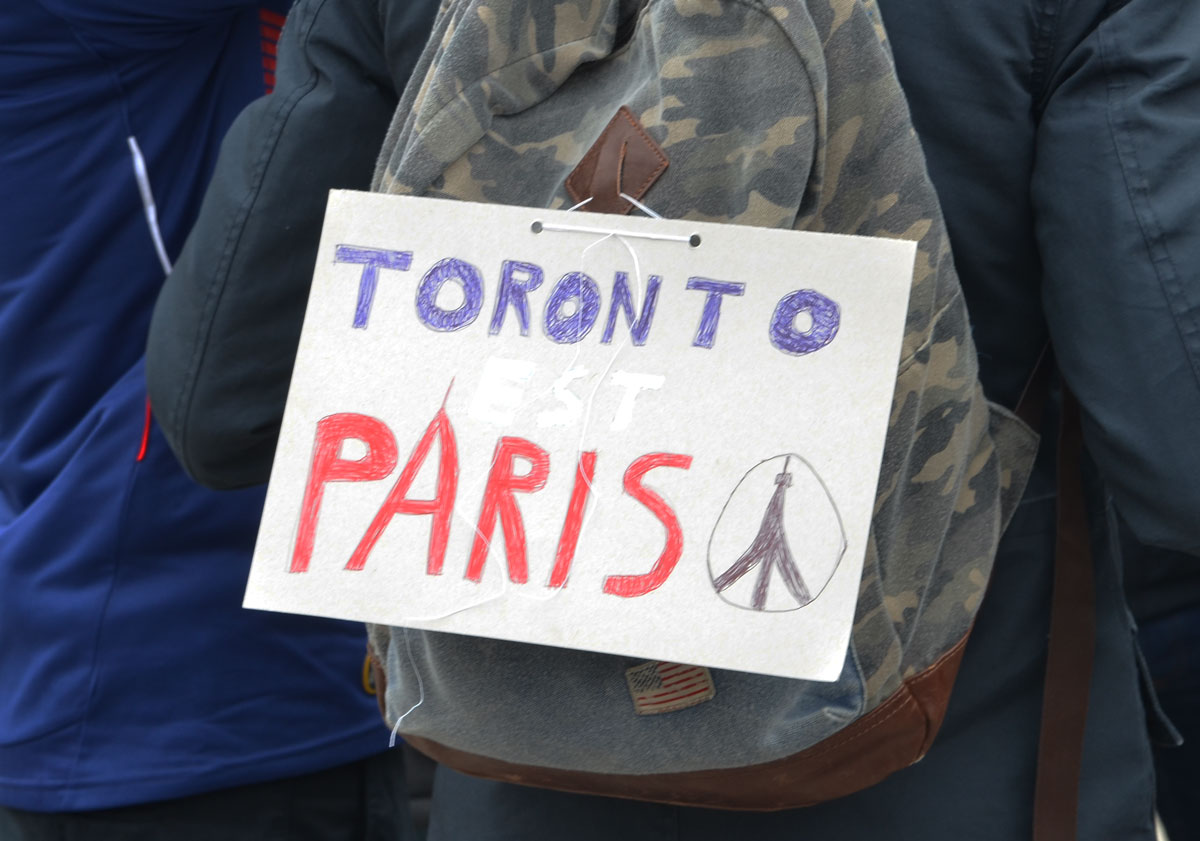
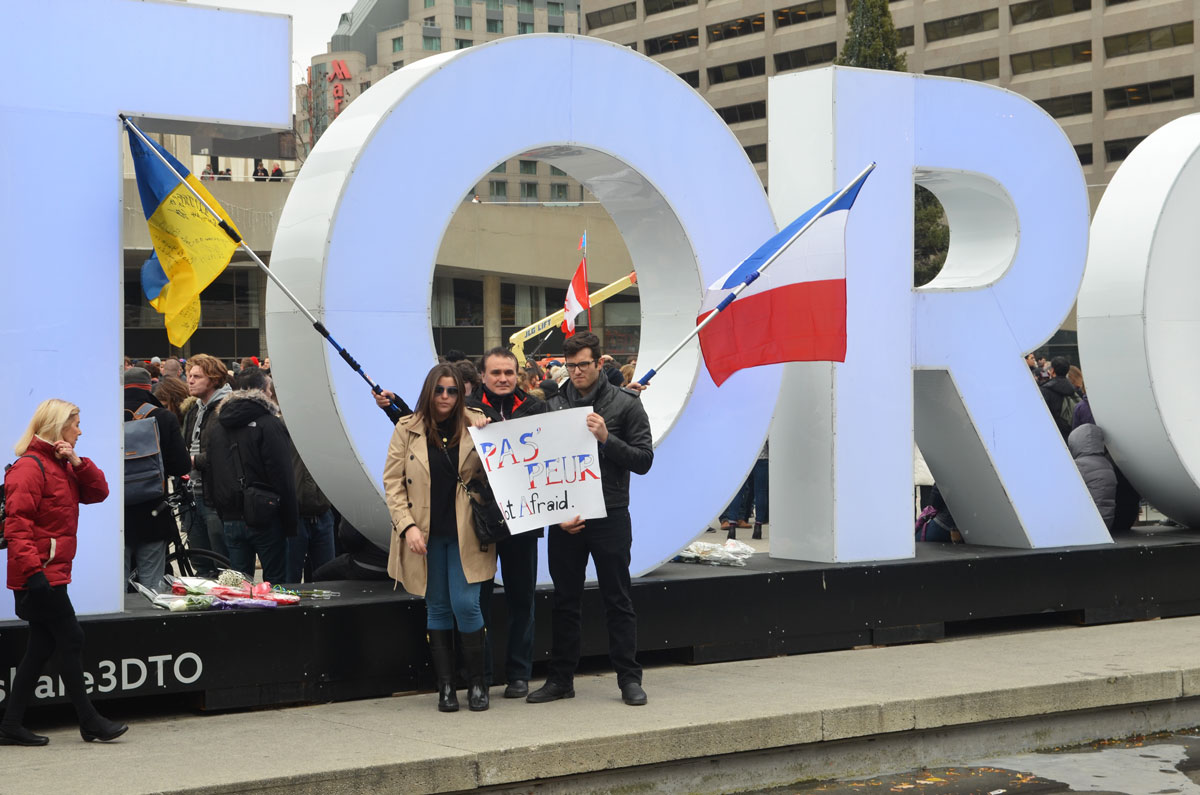
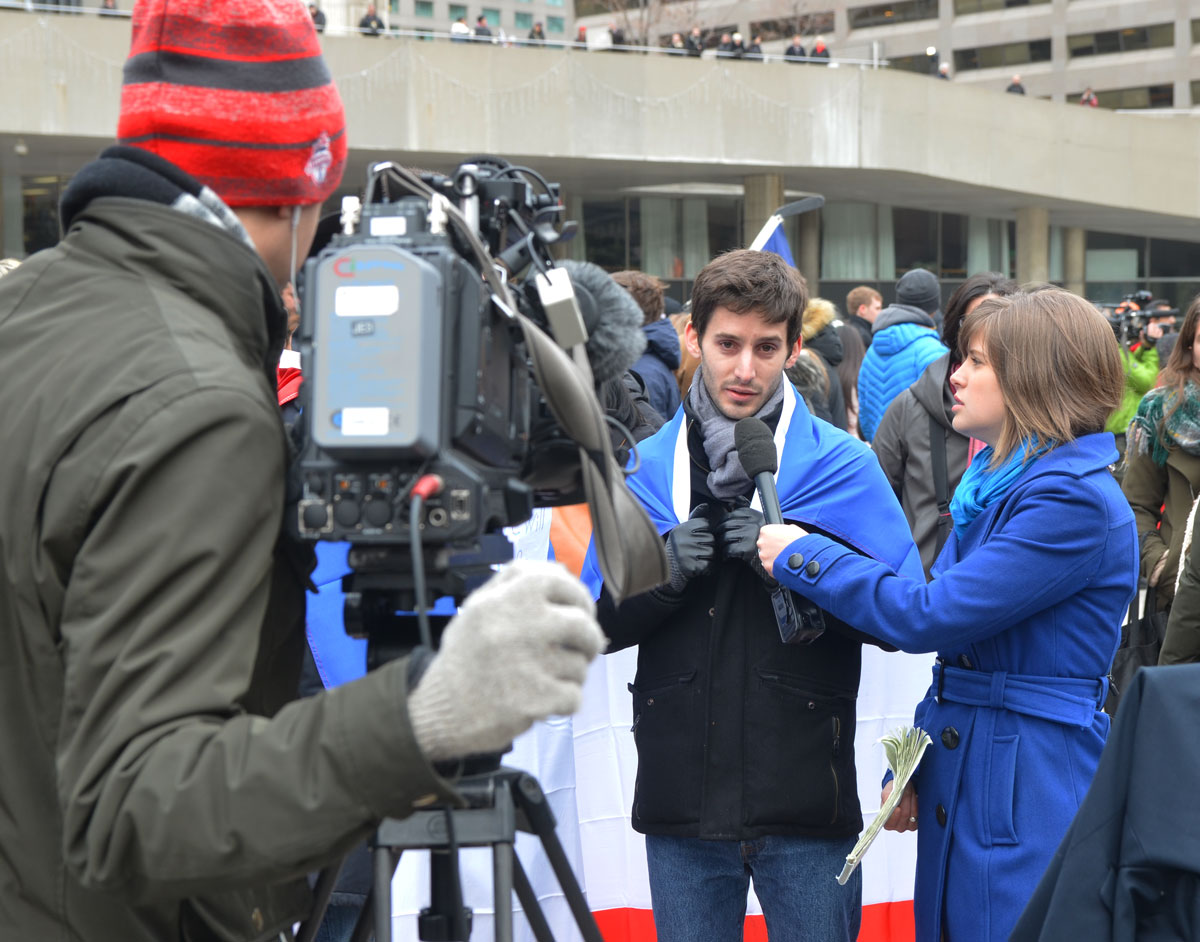
#parisisaboutlife
Remembrance Day
the eleventh day of the eleventh month
November 11th at 11am in 1918 (the eleventh hour of the eleventh day of the eleventh month) was when an armistice was signed by representatives of Germany and the Entente. Nov 11th became known Armistice Day, or in some countries such as Canada, Remembrance Day. An armistice is an agreement to stop fighting, a truce in other words. After this signing, it took several months of negotiations before the First World War officially ended with the signing of the Treaty of Versailles on 28 June 1919. That treaty ended the war between Germany and the Allies. (The Allies of WW1 were also known as the Entente Powers while Germany and her allies were known as the Central Powers)
The poppy became a symbol of Remembrance day, and a symbol in remembrance of soldiers who died fighting in all wars, after the publication of the poem ‘In Flanders Fields’ in 1915. This popular and often quoted poem was written by Canadian Lieutenant Colonel John McCrae. In it he talks about the poppies that grew in the battlefields at Flanders Belgium during WW1.
“In Flanders fields the poppies blow
Between the crosses, row on row,”

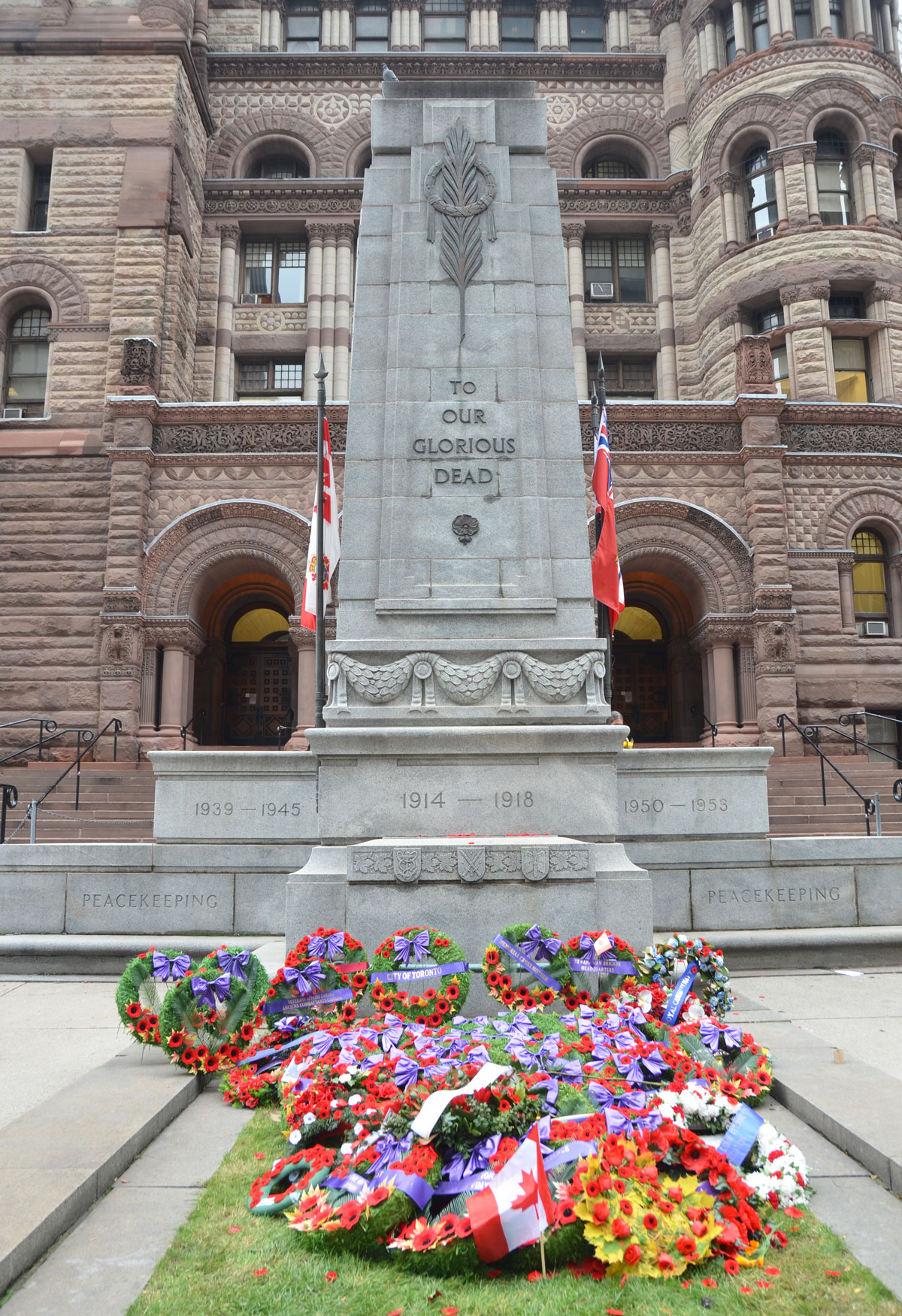
below: The cenotaph (war memorial) in front of Old City Hall was unveiled on 11 Nov 1925 to commemorate those Torontonians who died in WW1. Since then, it has been expanded to include those who lost their lives in WW2 and in the Korean War. The word cenotaph comes from the Greek and translates as ’empty tomb’. This style of memorial has been used widely for commemorating someone, or some group, whose remains are interred elsewhere.
More than 6000 Torontonians lost their lives in these three conflicts. Close to three thousand men died in World War 1, a number that represents about 2% of the male population of the time. (1)
In the middle of University Avenue is a statue erected by the Toronto District of the Sons of England Benefit Society in memory of their members who died in World War 1. Founded in 1876, this society provided insurance to its members who were in need because of illness or accident.
In 1914 Canada was still part of the British Empire. As a result, when Britain found itself at war in August of that year, Canada too was involved.

below: At the base of the center lion is a small plaque that reads: “Chas Adamson, sculptor, 1923”.

below: The Sons of England building on the NW corner of Richmond St. East and Berti St., 1922

photo credit: Toronto public library website
Another memorial in this city is the Ontario Veterans Memorial. This is a 30m long granite wall in front of Queens Park dedicated to all the men and women from Ontario who served in the military. Etched into the granite are scenes depicting Canadians in military roles between the time of the Fenian Raids in 1867 to the present day.
below: Part of the granite wall. The red in the picture is a reflection of the red carpet that was laid in front of the memorial for the Remembrance Day service.

below: part of the granite wall
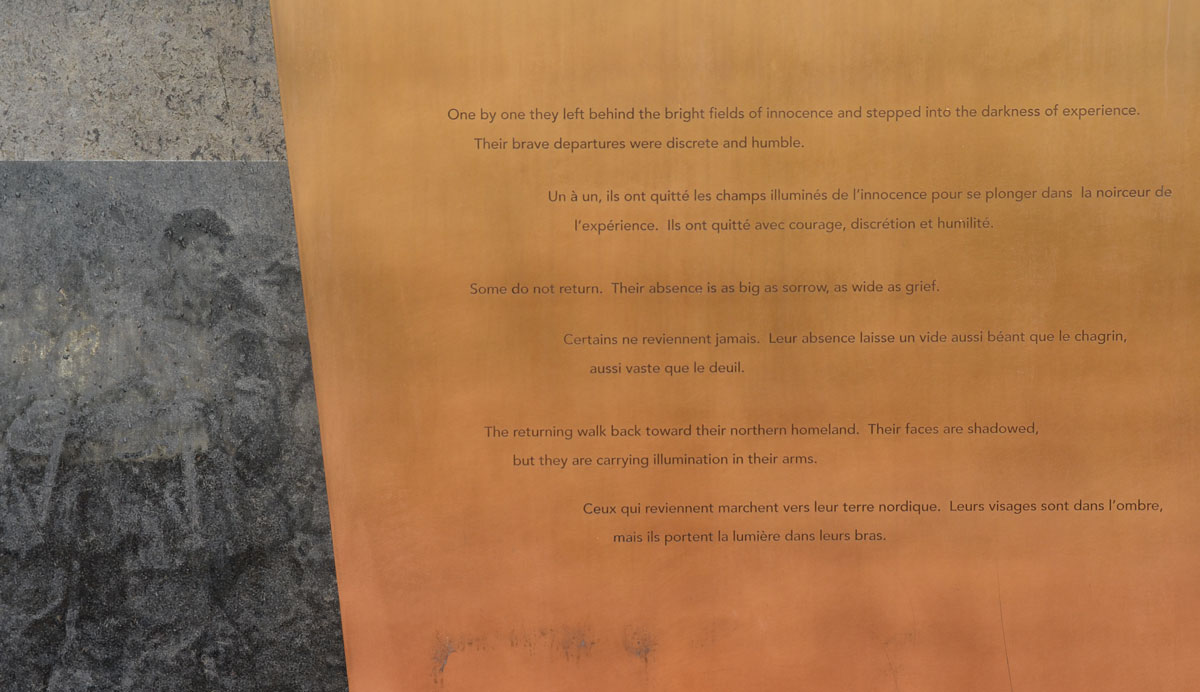
Transcription of the passage by Canadian author Jane Urquhart:
One by one they left behind the bright fields of innocence and stepped into the darkness of experience
Their brave departure was discrete* and humble.
Un à un, ils ont quitté les champs illuminés de l’innocence pour se plonger dans la noirceur de
i’expérience. Ils ont quitté avec courage, discrétion et humilité
Some do not return. Their absence is as big as sorrow, as wide as grief.
Certains ne reviennent jamais. Leur absence laisse un vide aussi béant que le chagrin,
aussi vaste que le deuil.
The returning walk back toward their northern homeland. Their faces are shadowed,
but they are carrying illumination in their arms.
Ceux qui reviennent marchent vers leur terre nordique. Leurs visages sont dans l’ombre
mais ils portent la lumière dans leurs bras.
(* discrete vs discreet ?)
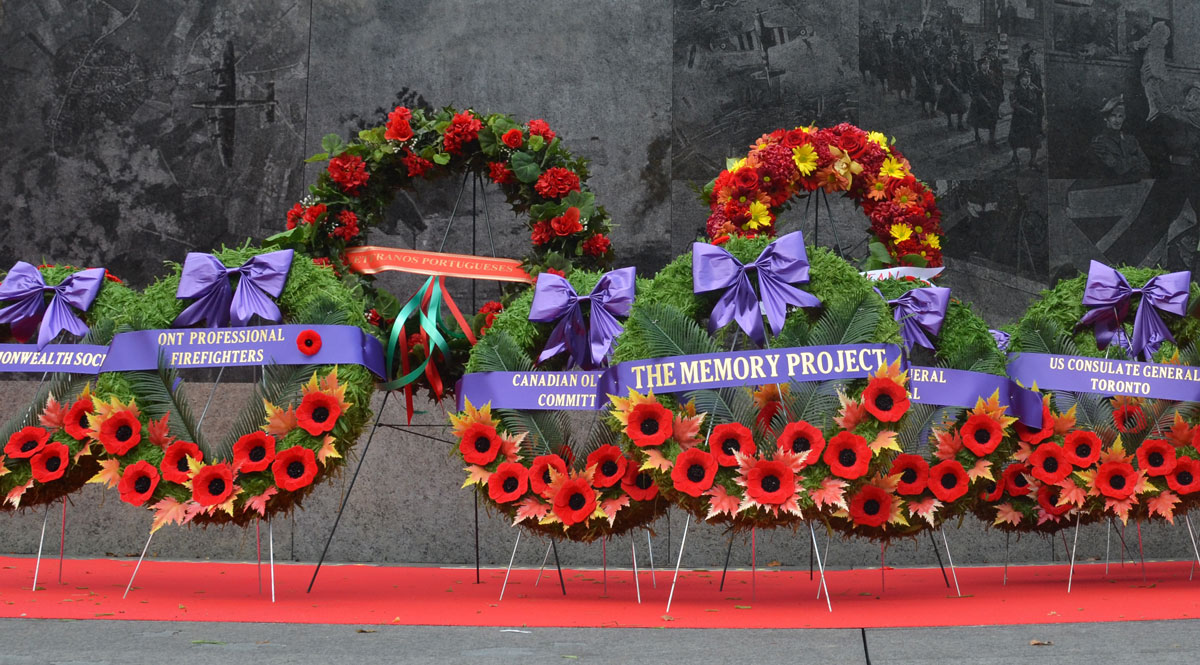
below: Some of the wreaths laid at the Ontario Veterans Memorial on Remembrance Day.
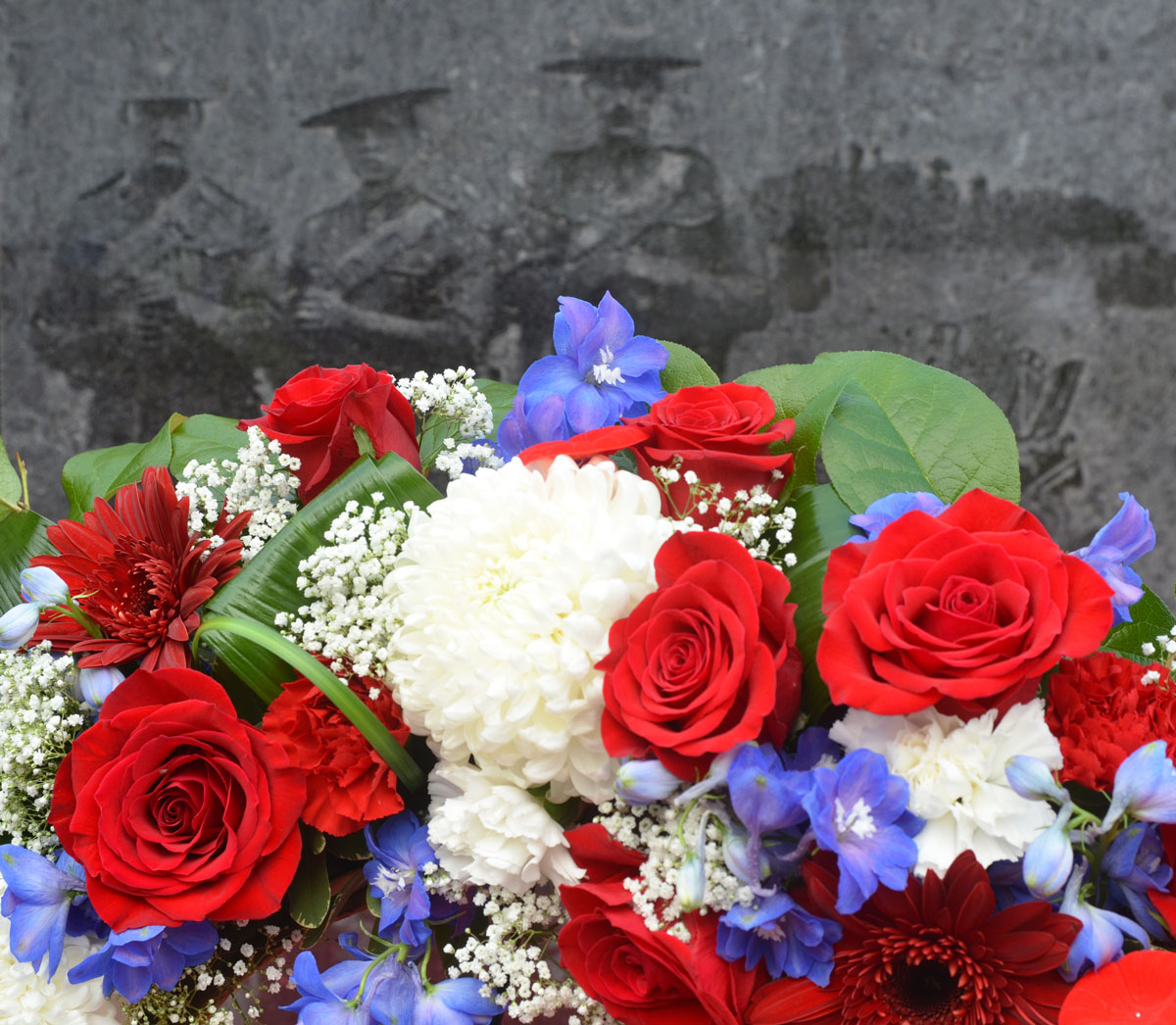
below: Although it is not a war memorial per se, someone left a small poppy wreath by this plaque at Nathan Phillips Square. The plaque is by the arches over the pool, the freedom arches.
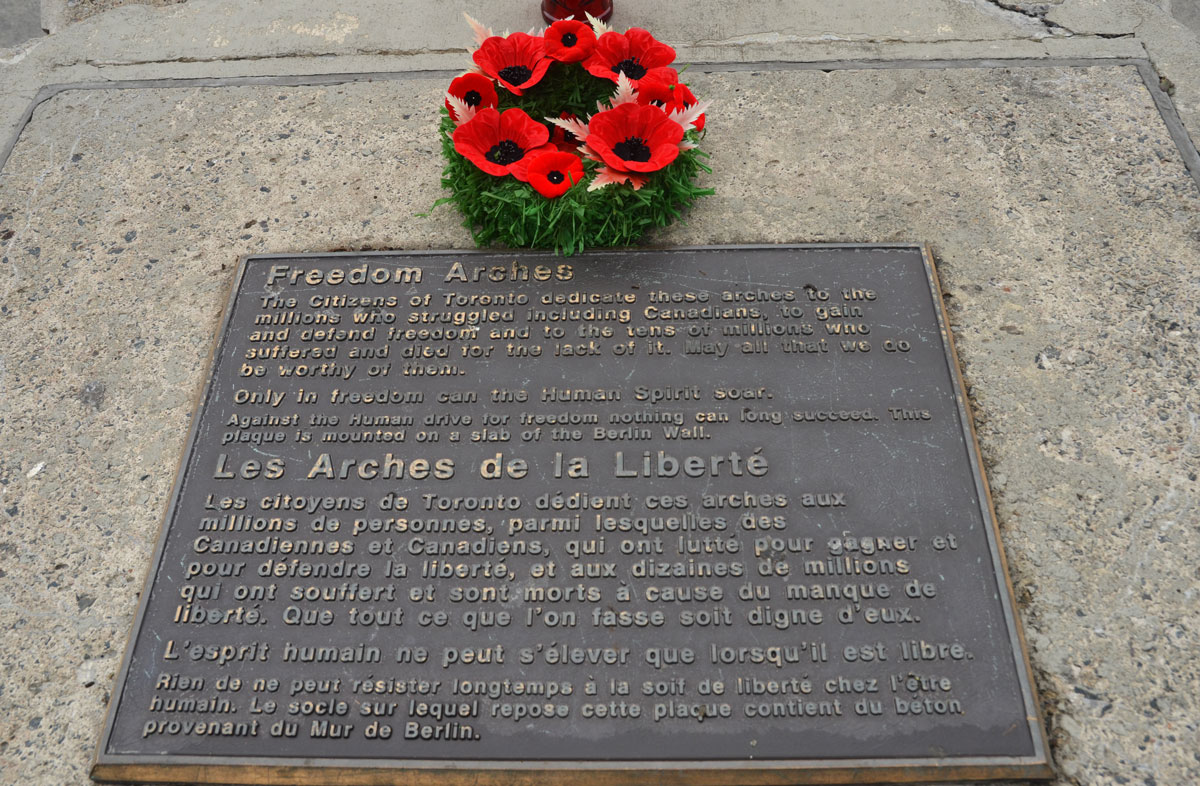
Transcription of the plaque: Freedom Arches. The citizens of Toronto dedicate these arches to the millions who struggled, including Canadians, to gain and defend freedom and to the tens of millions who suffered and died for the lack of it. May all that we do be worthy of them. Only in freedom can the Human Spirit soar. Against the Human drive for freedom nothing can long succeed. This plaque is mounted on a slab of the Berlin Wall.
below: The 3D Toronto sign was red on Remembrance Day.
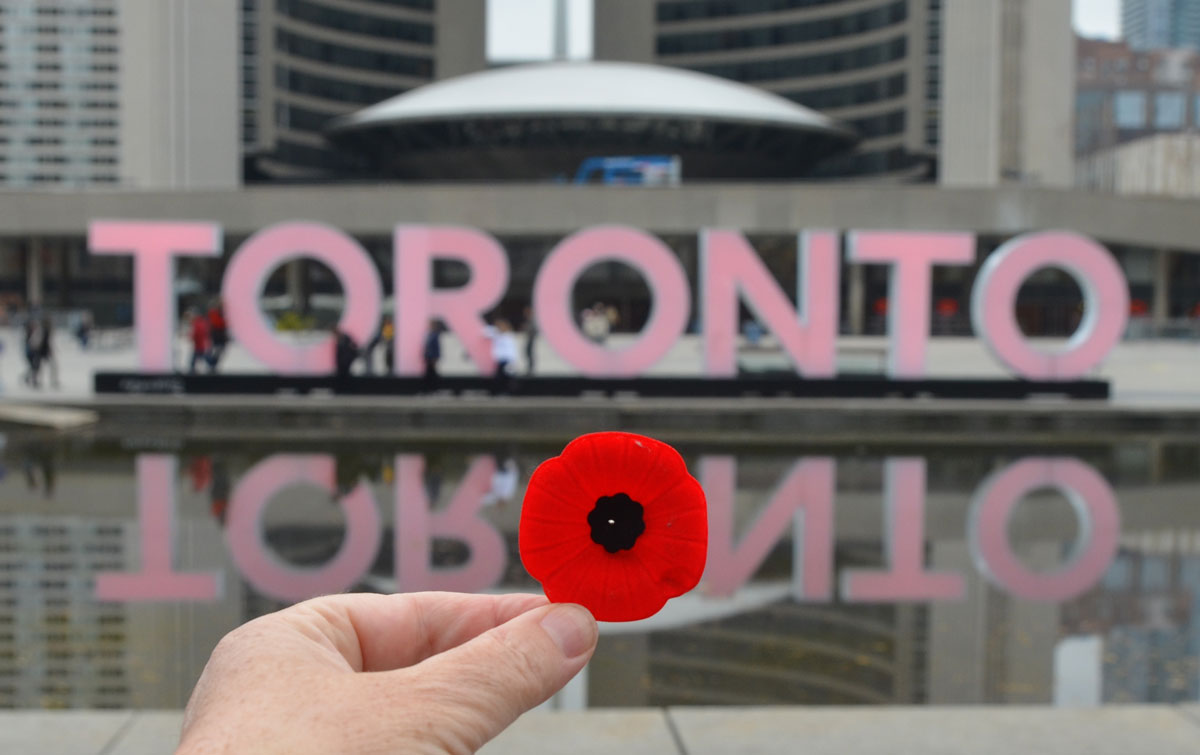
We remember collectively as a nation, as a community. We also remember privately, as individuals, as families. Countless small memorials can be found around Toronto including in schools, in churches and other religious institutions, and in cemeteries.
below: A memorial to the 48th Highlanders, Mount Pleasant cemetery. In memory of the officers, non-commissioned officers, and men who have served with the 48th Highlanders.

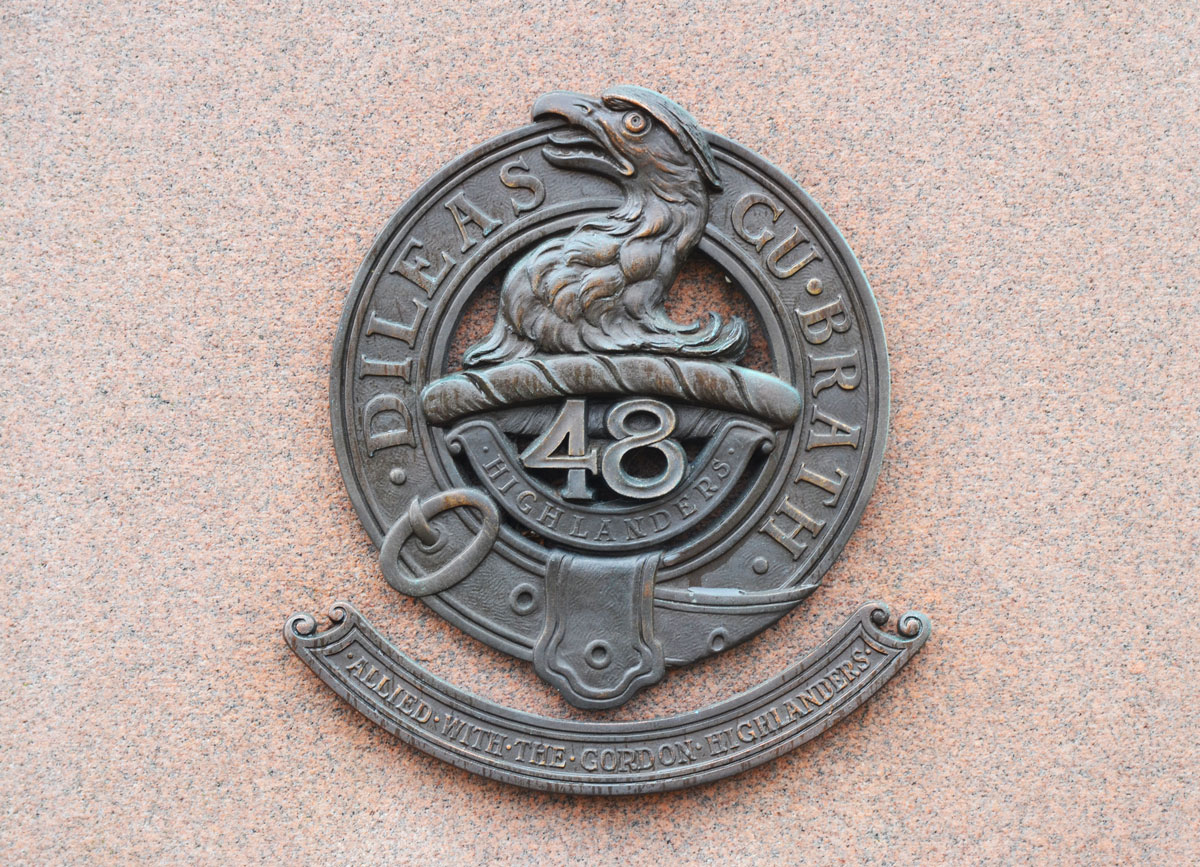
Dileas Gu Brath, their motto, is gaelic for ‘faithful forever’
below: Quiet memorials


(1) source: Patrick Cain, Global News
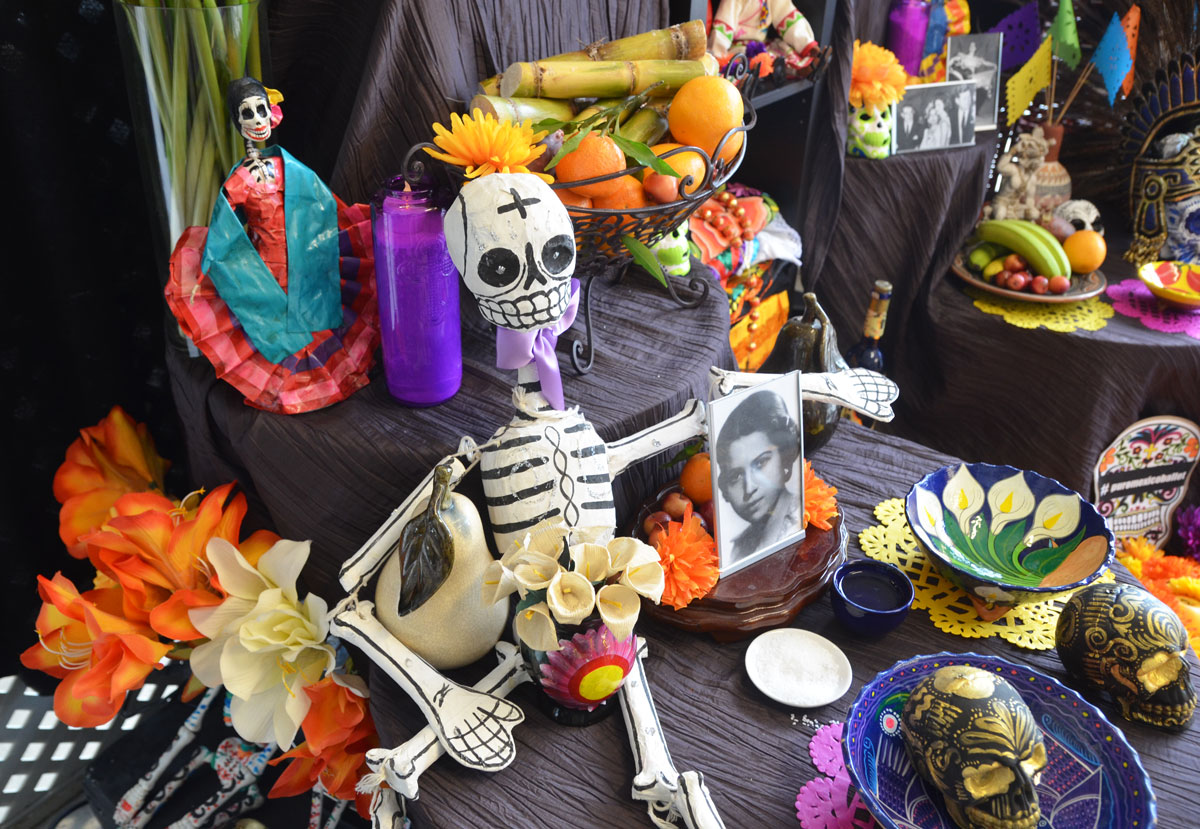
Dia de Muertos, Day of the Dead, is a Mexican holiday where and friends come together to pray for and remember friends and family members who have died. It occurs at the end of October (31 Oct to 2 Nov). Here in Toronto there was a Day of the Dead festival at Harbourfront this past weekend.
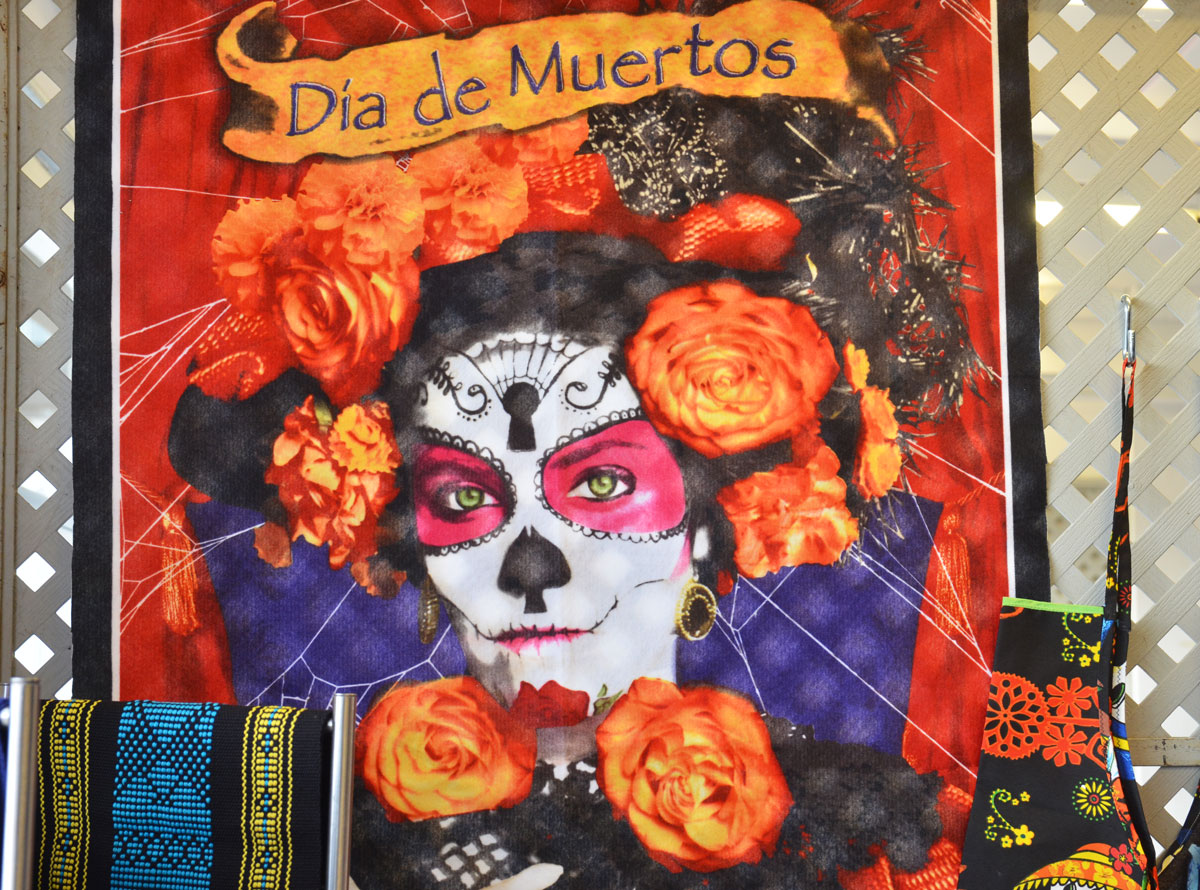
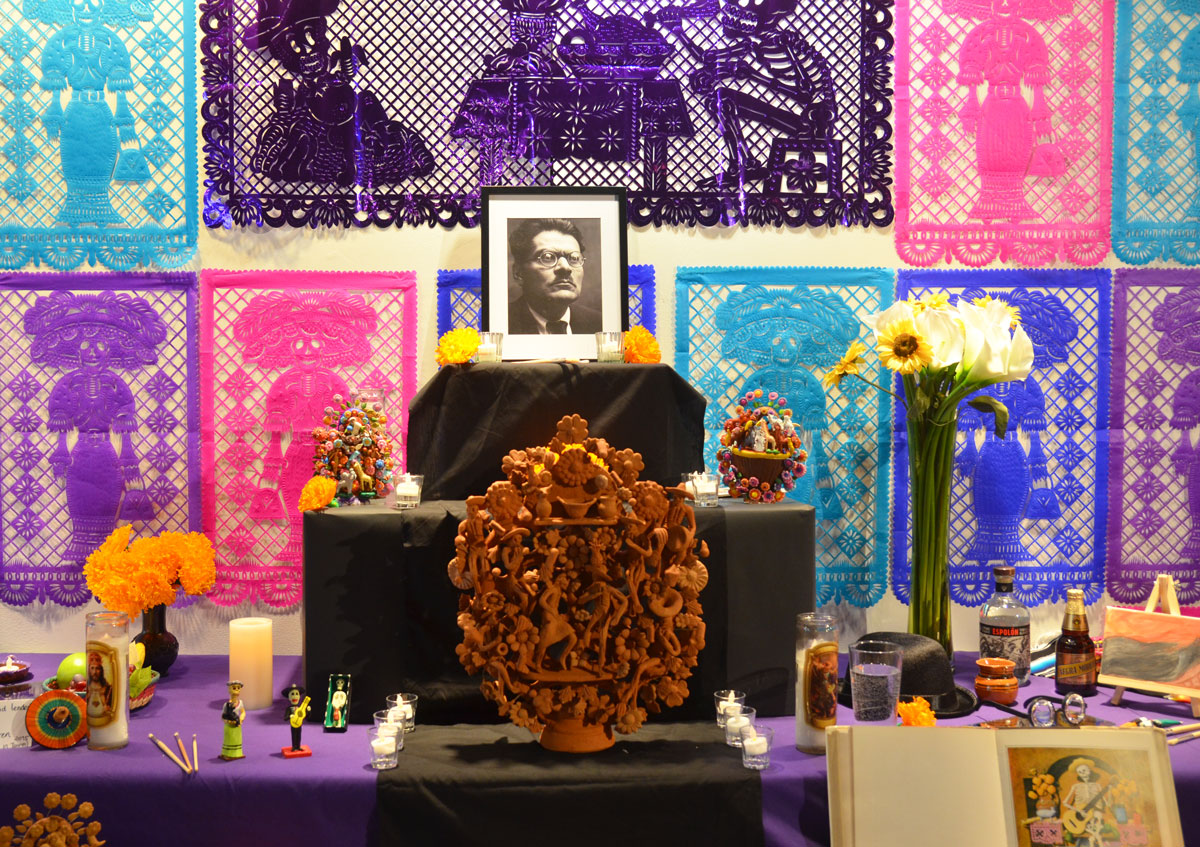
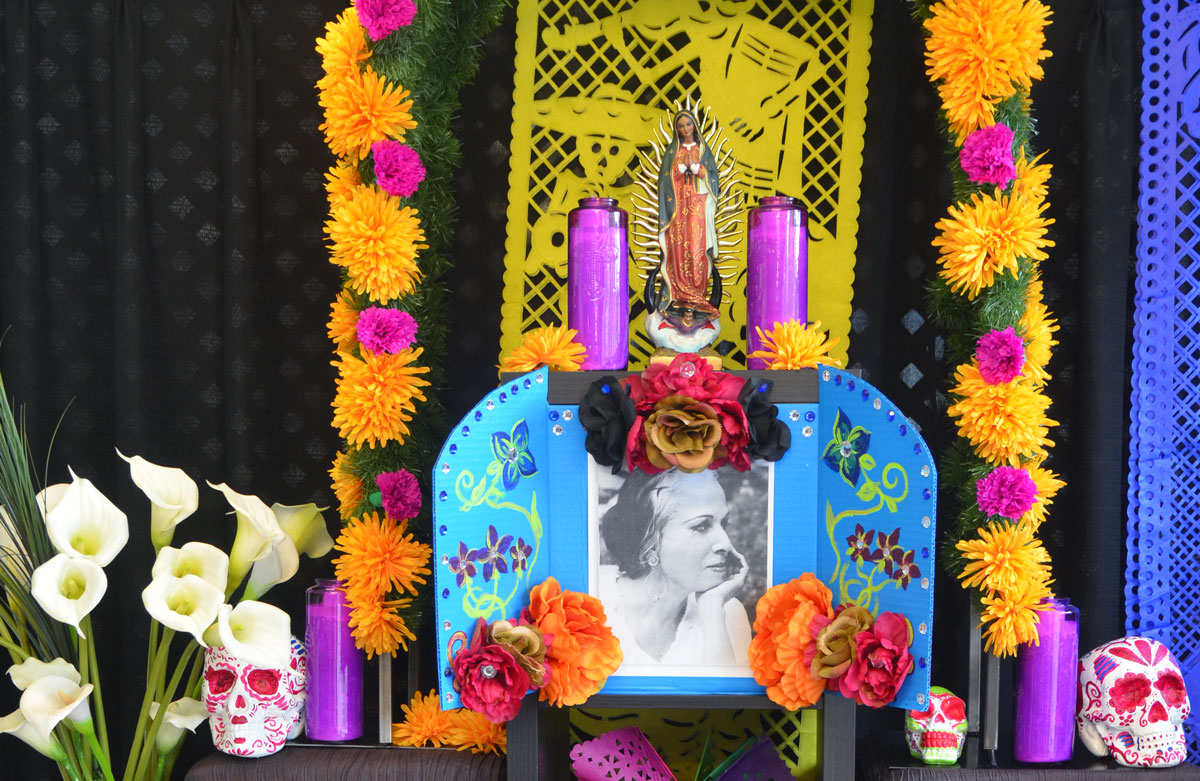
One of the traditions of Dia de Muertos is the making of ofrendas which are altars dedicated to the deceased person. Jose Clemente Orozco was a Mexican painter (1883-1949). He specialized in painting murals in frescoes and his work can be seen in Mexico and in the USA.
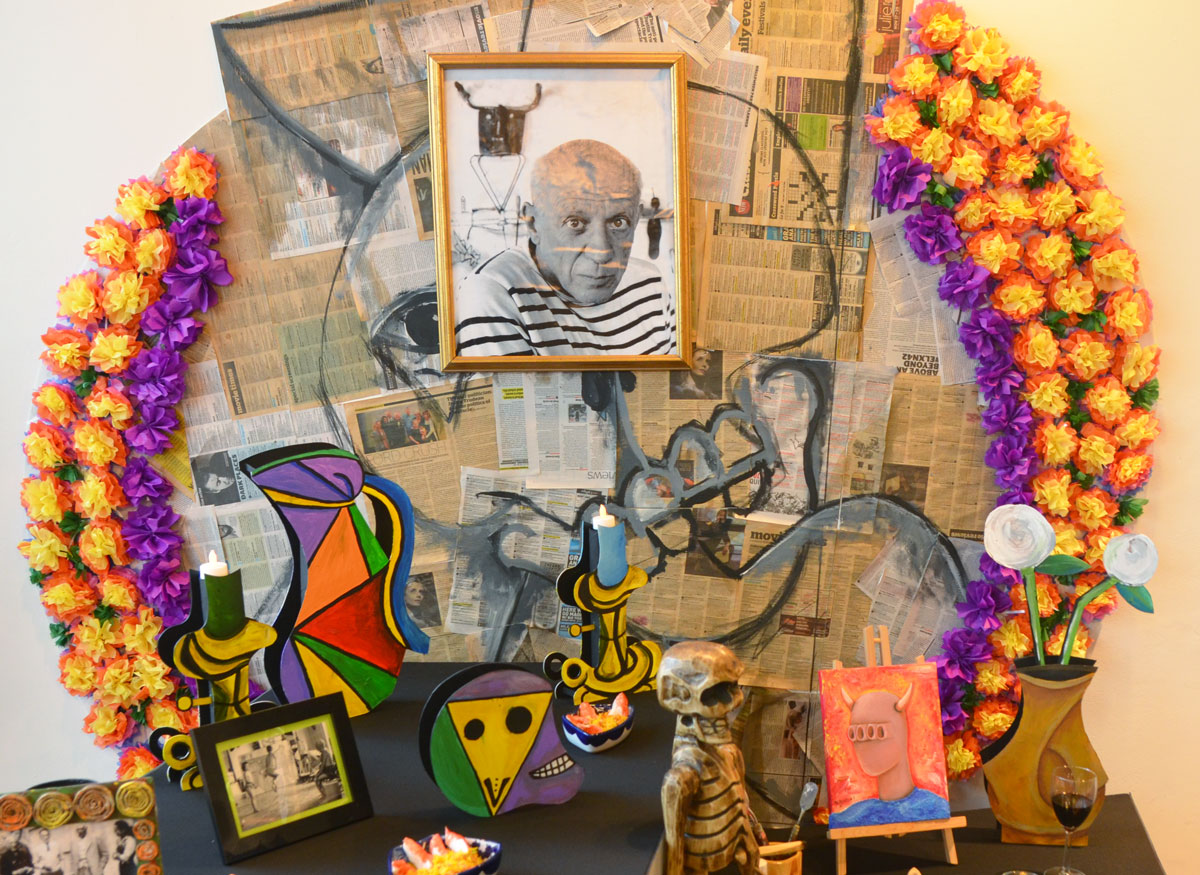
Another altar that was on display was one made by artist Alberto Cruz in honour of Pablo Picasso.
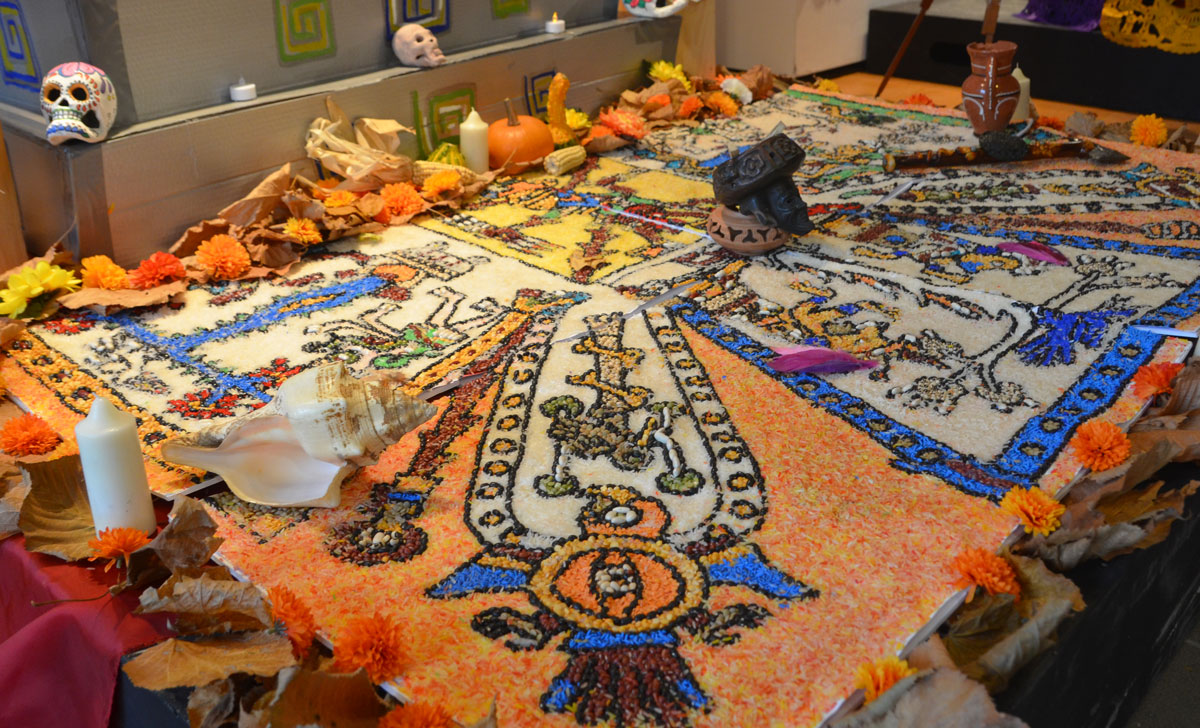
The Casa Cultura Mexicana made an ofrenda to honour the Prehispanic indigenous people and warriors of Mexico.
The bottom part consisted of pictures made with coloured rice.
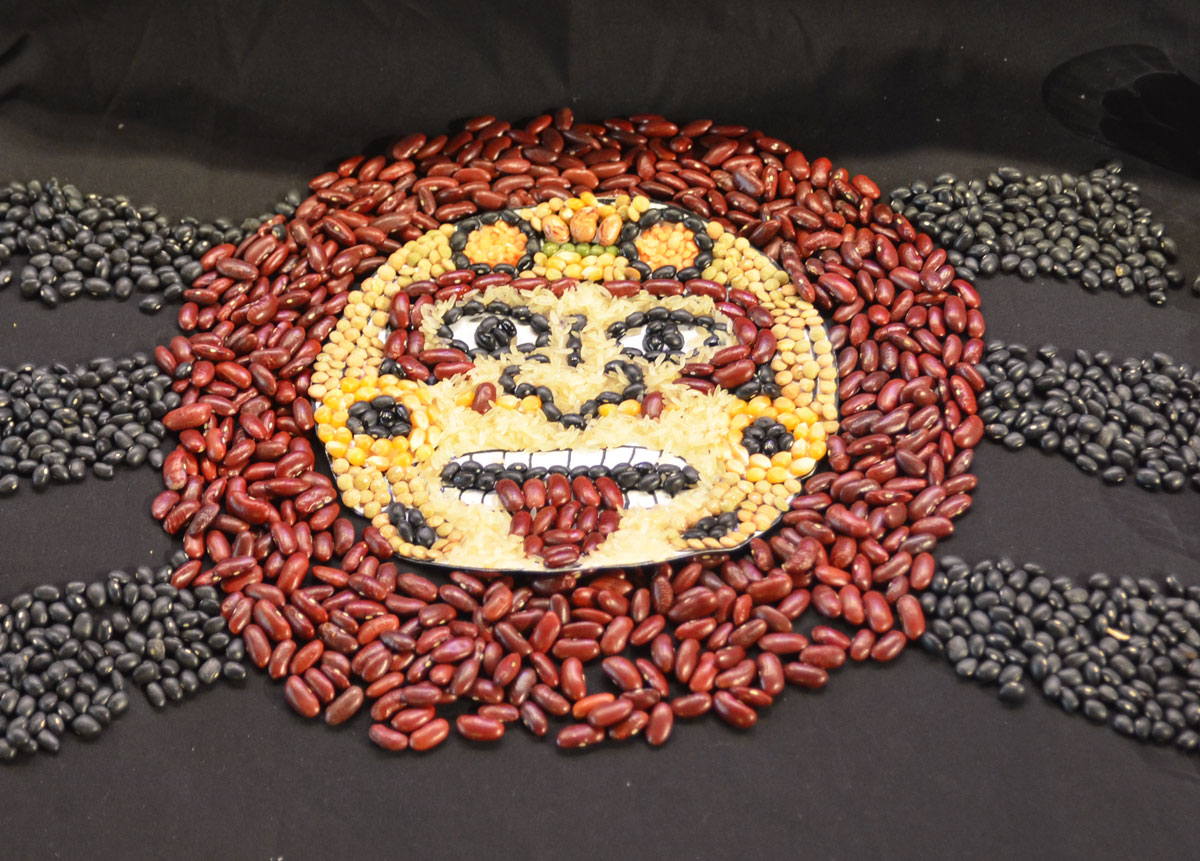
Food items such as rice, beans, and corns were an important part of the ofrenda.
Ofrendas are decorated with sugar skulls and marigolds (or yellow and orange paper flowers) as well as candles, photos, momentos from the person’s life, and things that symbolize something about that person. Sometimes serious, sometimes whimsical.
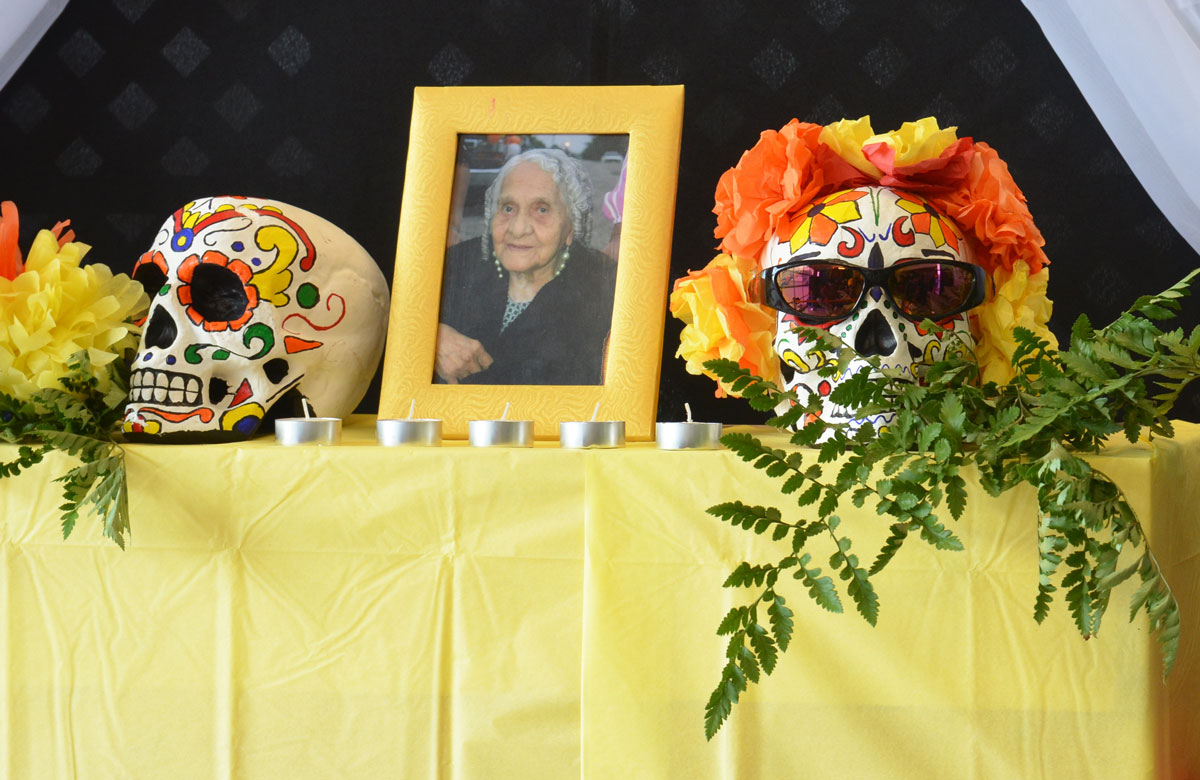
What would your friends and family put on an ofrenda in your memory?
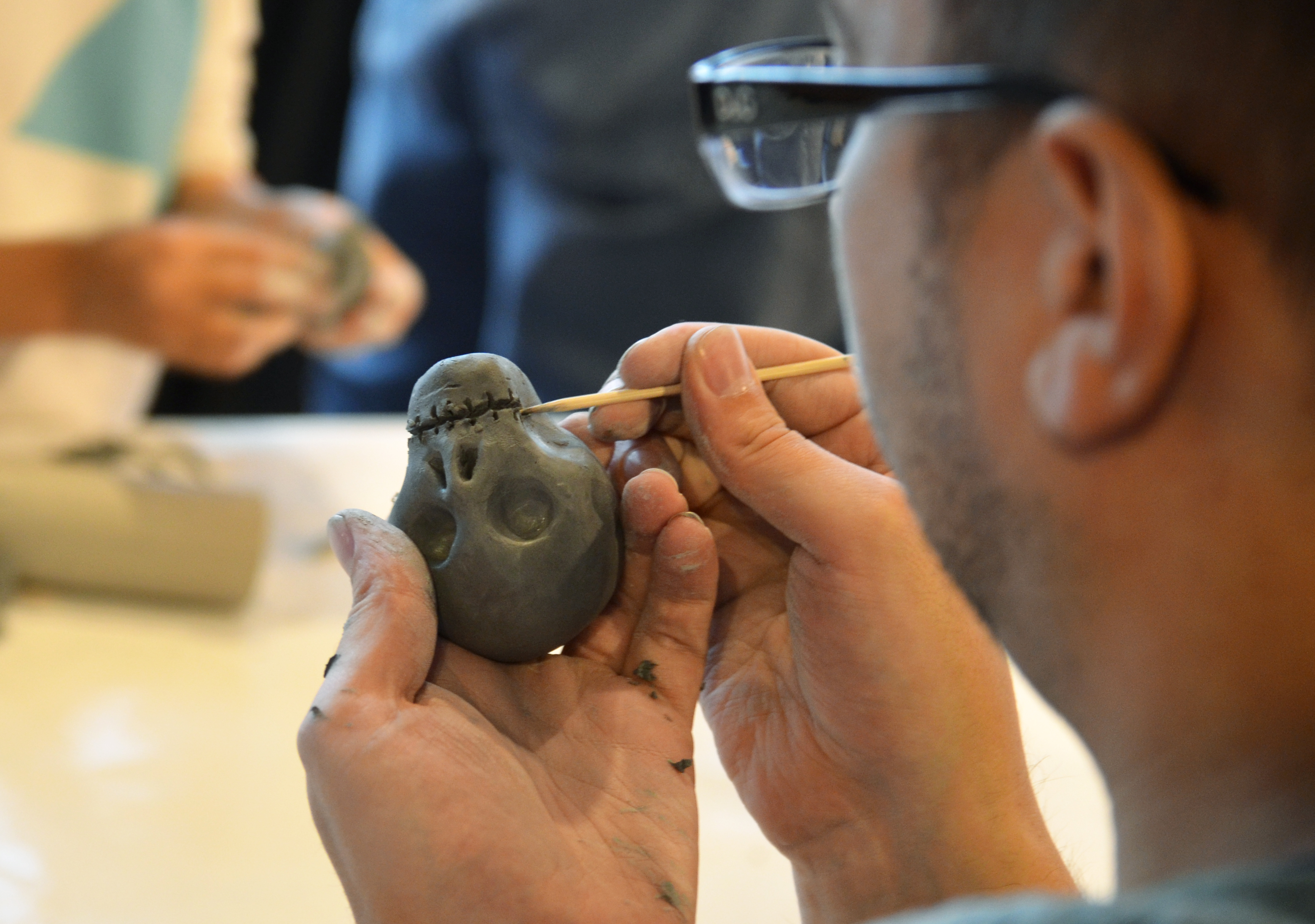
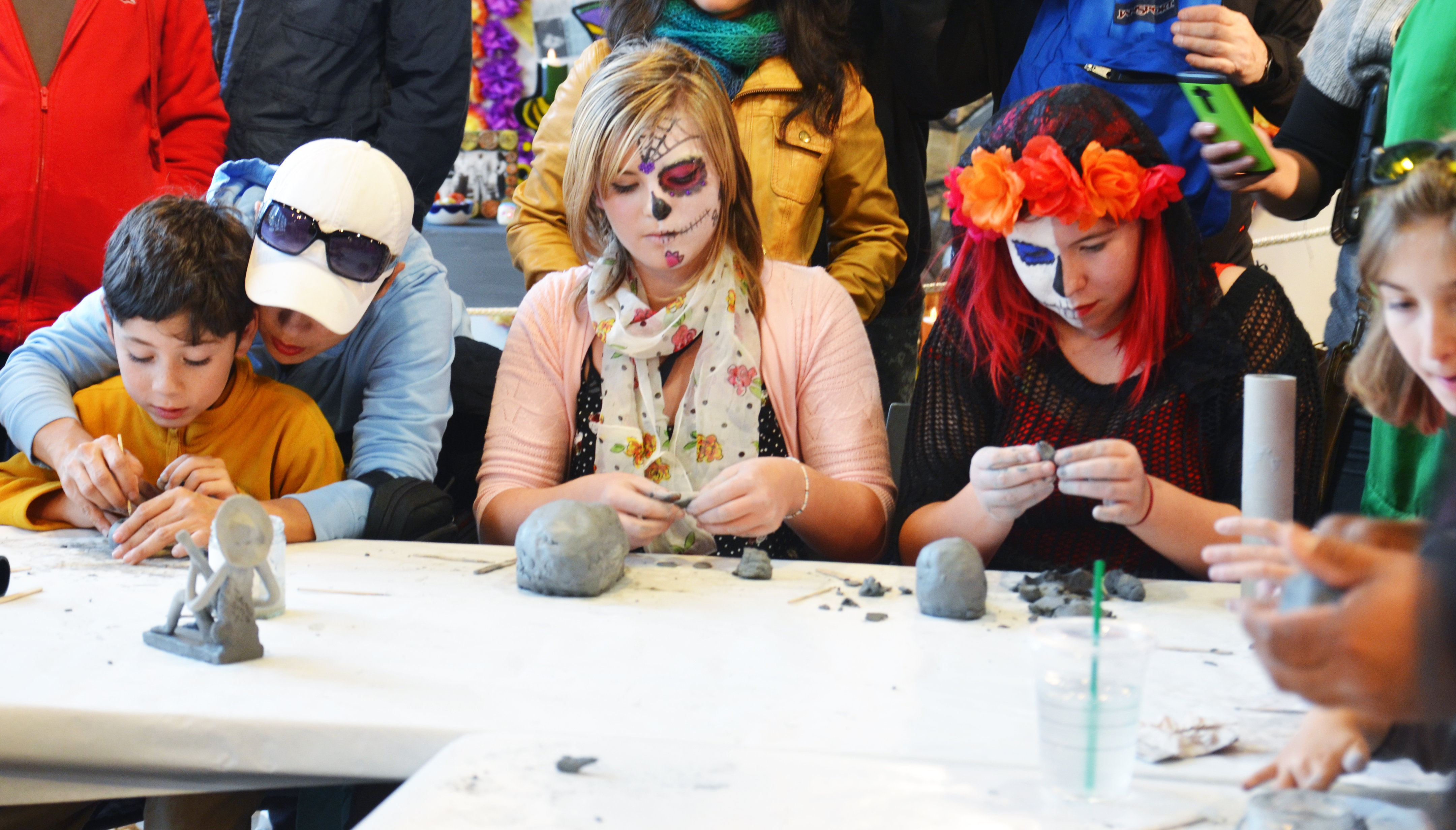
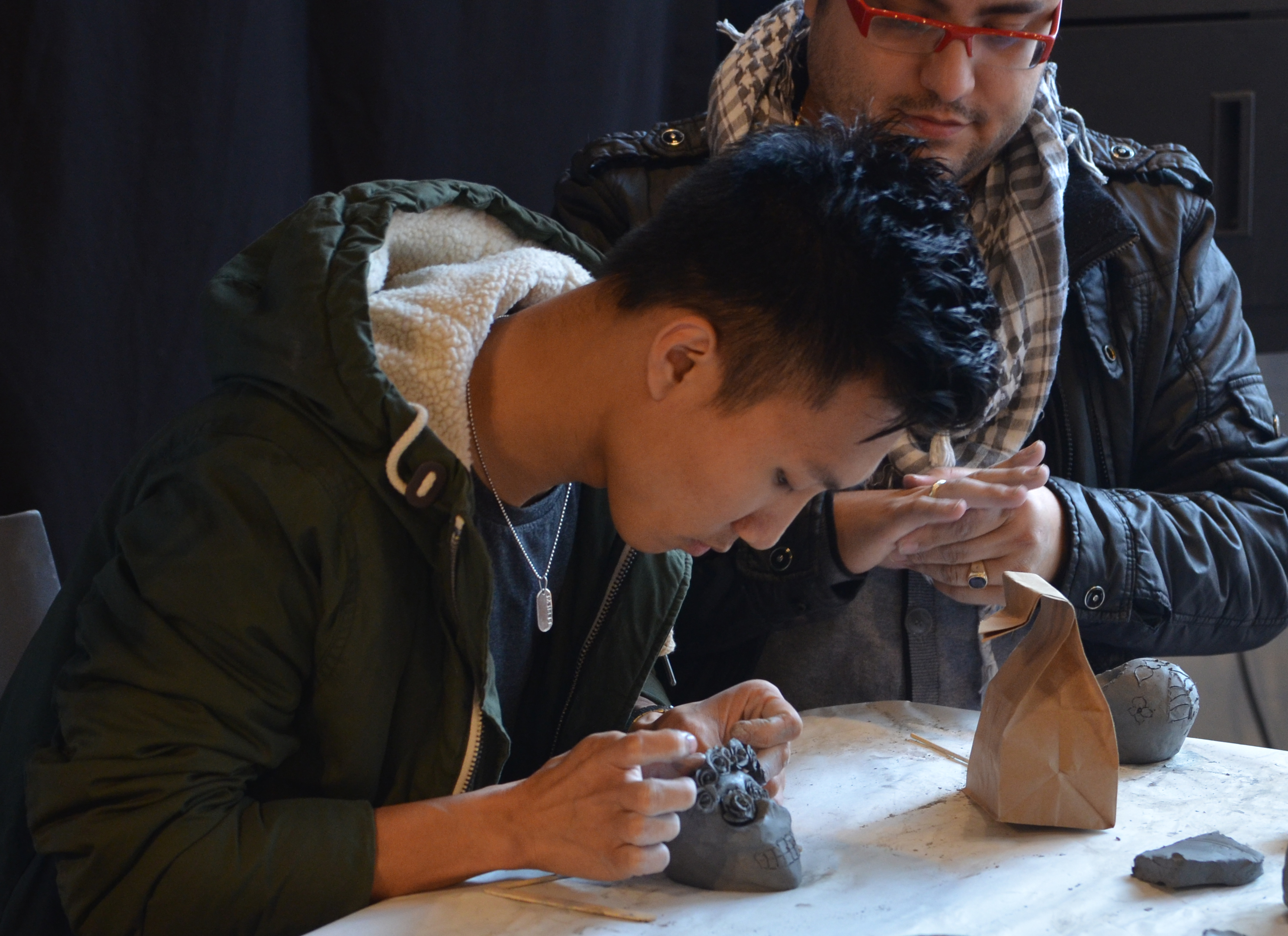
There was also clay available if you wanted to make a small skull or other symbol for the occasion.
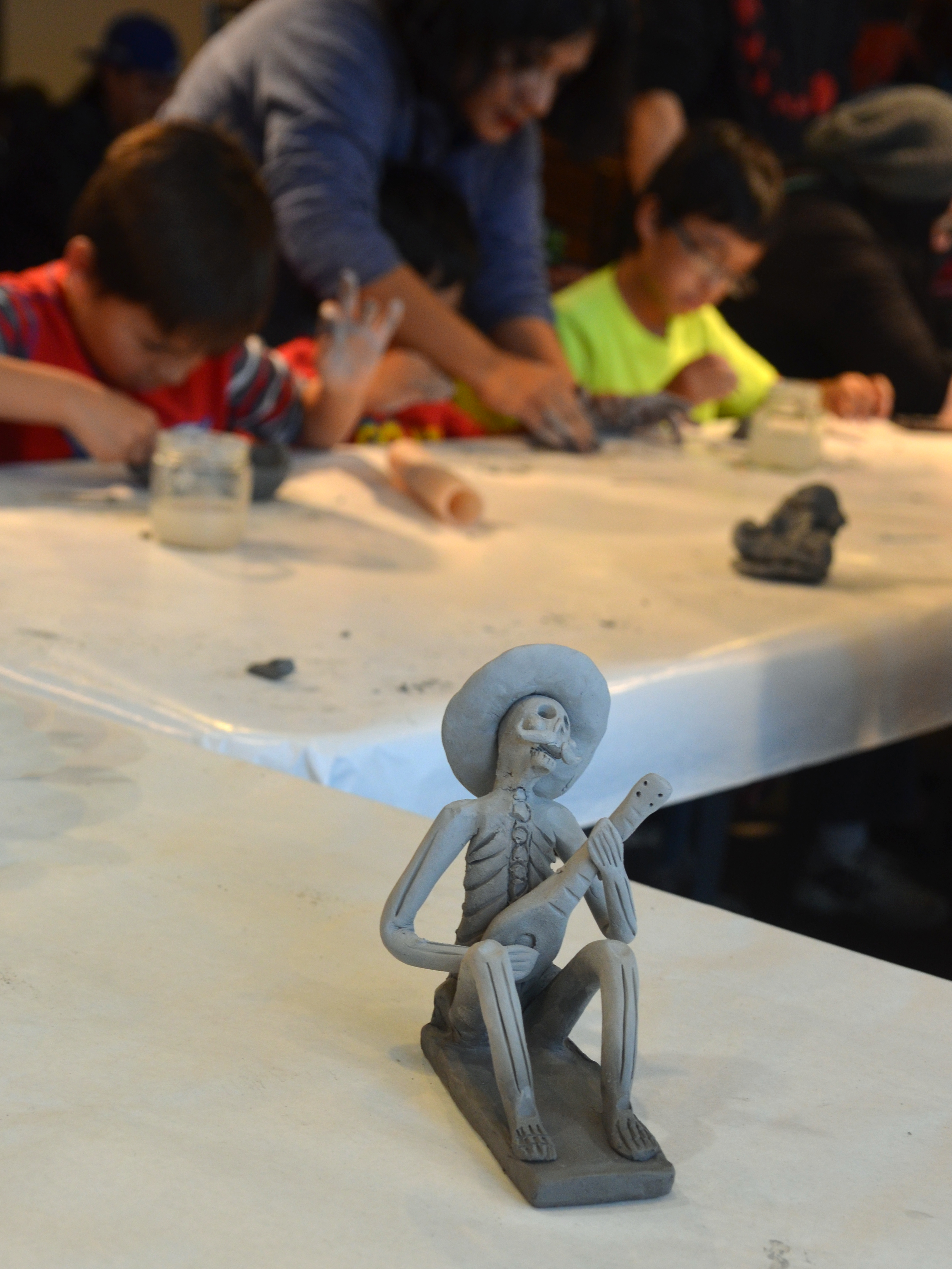
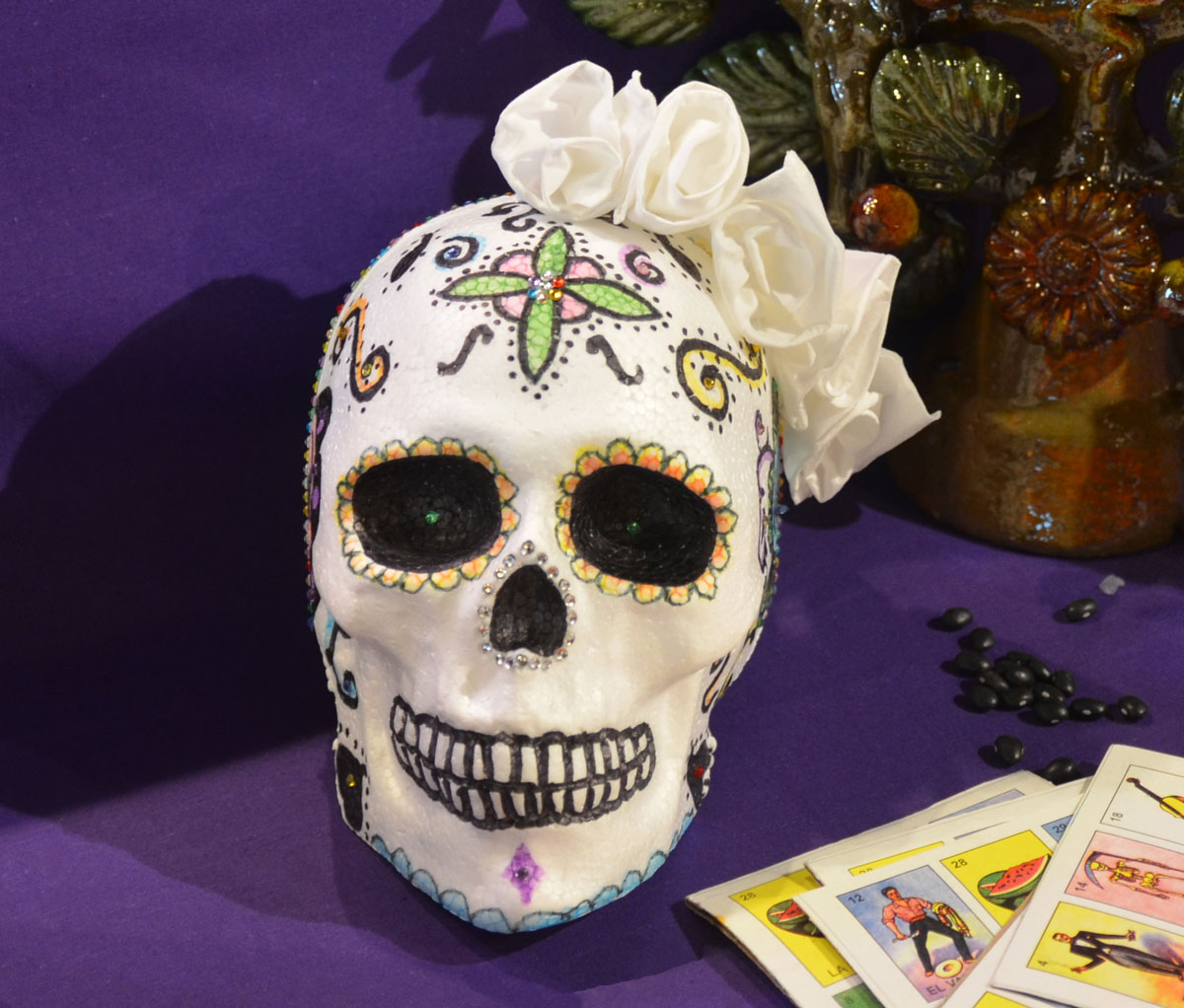
Rest in Peace.
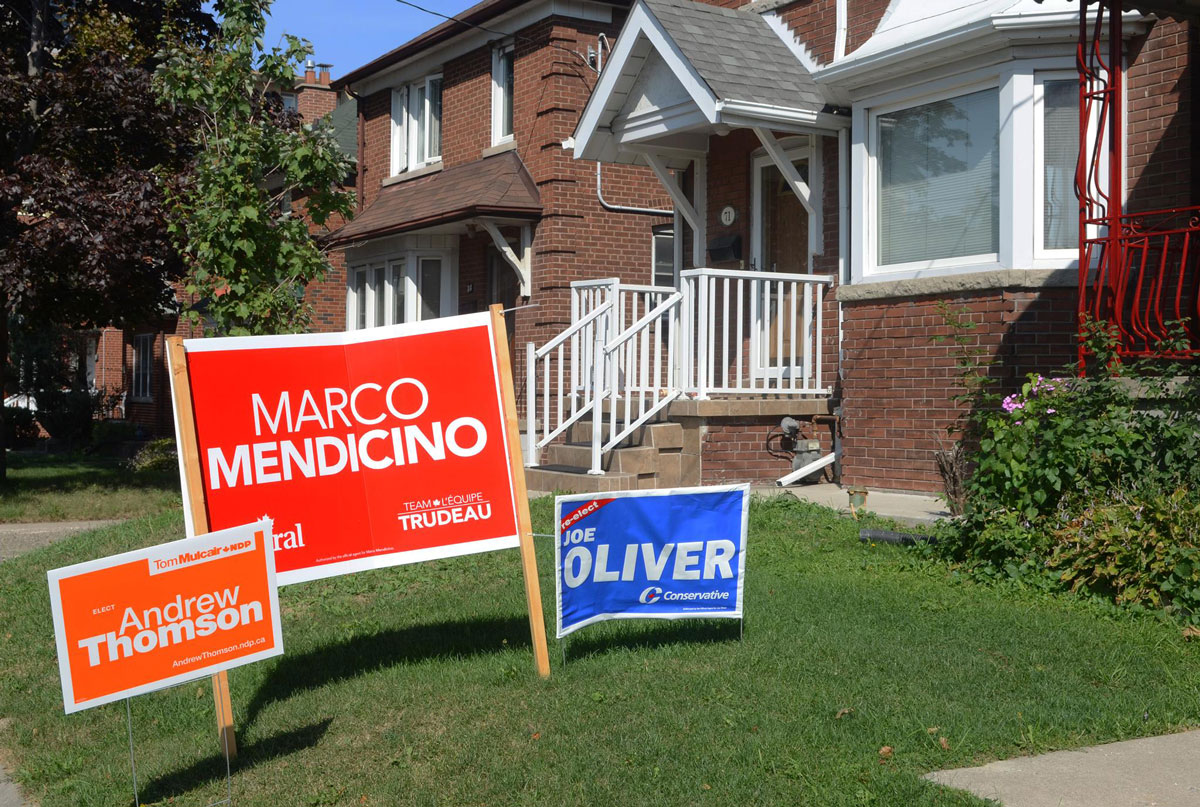
Election day – Monday 19th October

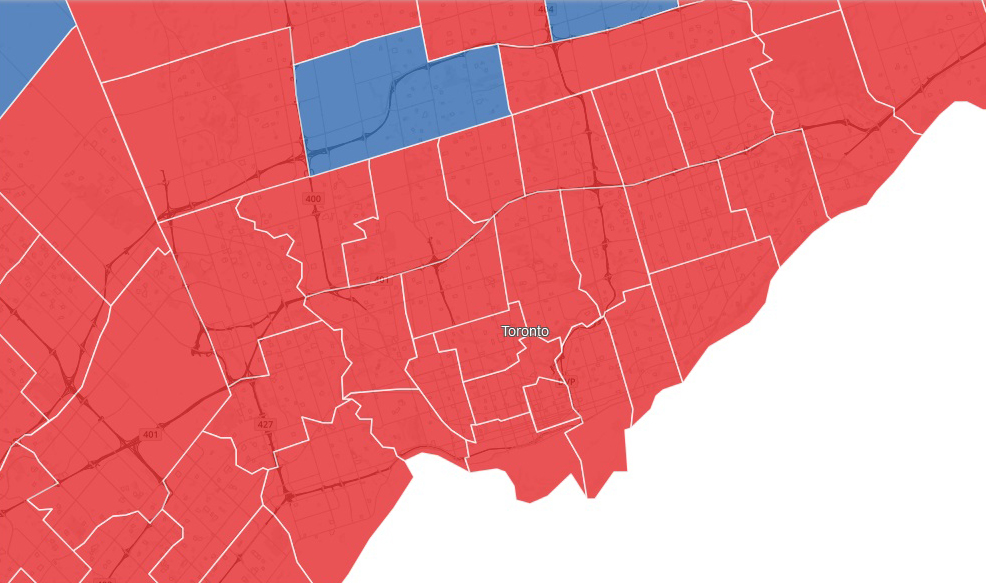
I was going to post the election results in Toronto ridings but this picture (screenshot from the Toronto Star website) says it all much more concisely. Red = Liberal and blue = Conservative. The blue riding top center is Thornhill. The other two that are only partly in the picture are Milton in the west and Markham-Stouffville in the east.
I’ve taken a screenshot of the map showing the voter turnout in the Toronto and area ridings, again from the Toronto Star. The darker the purple, the higher the turnout. The colours in the screenshot didn’t always match the colours on the website, so I added the numbers (the percent turnout for each riding). As you can see, turnout varied between 59% and 76%; as a percentage, more people voted in city center ridings than in suburban ridings.

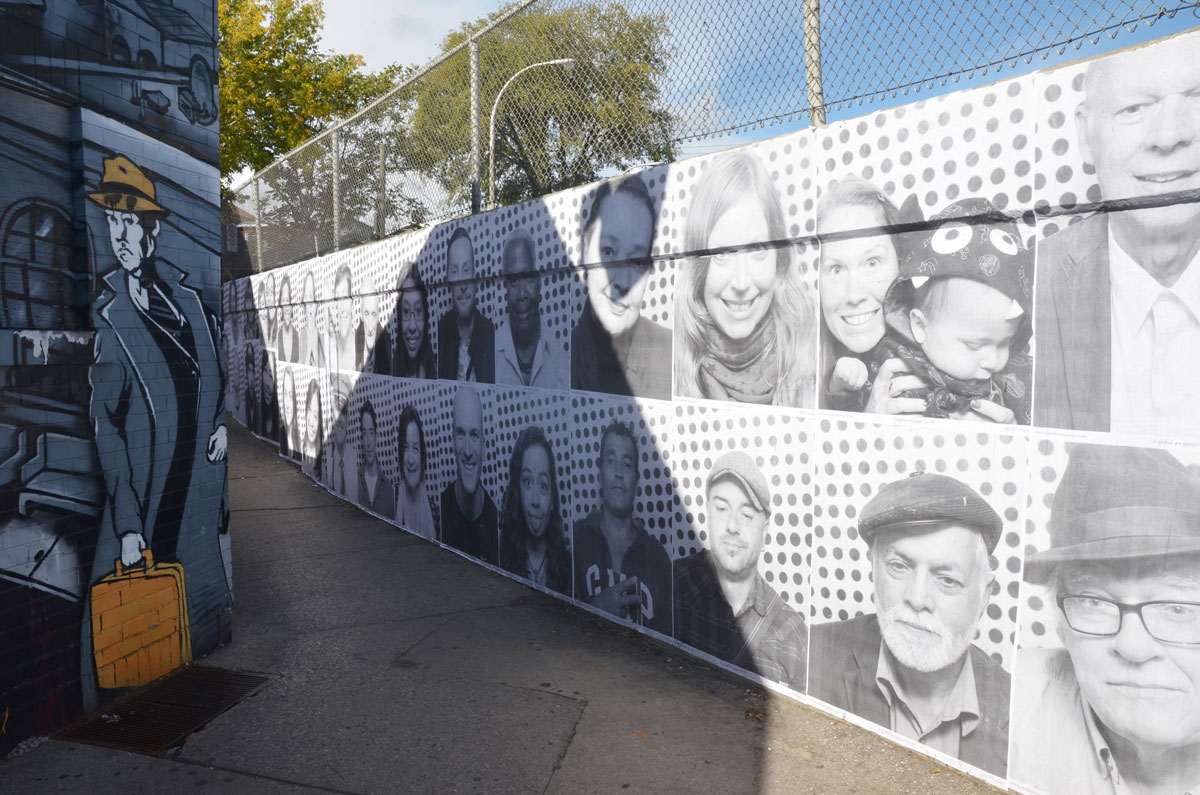
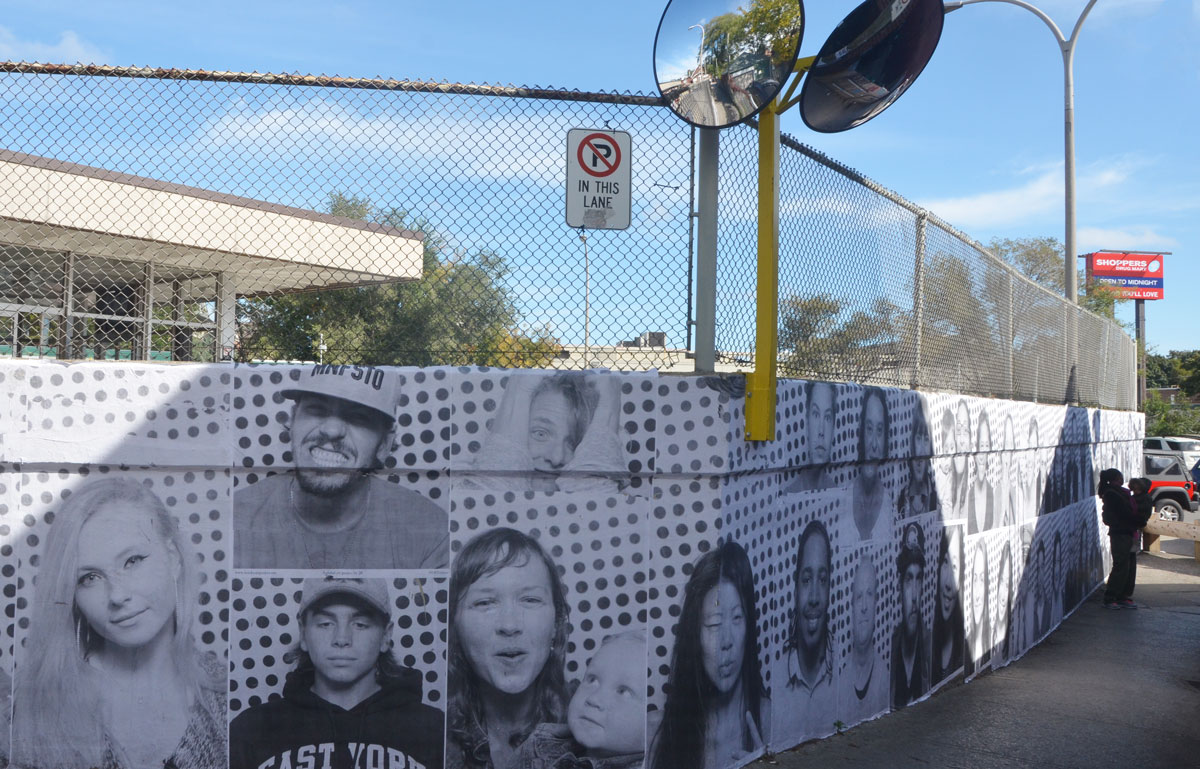
Inside Out, a global art project
with more than 250,000 portraits in 124 countries
This project came Toronto as an extended Nuit Blanche installation.
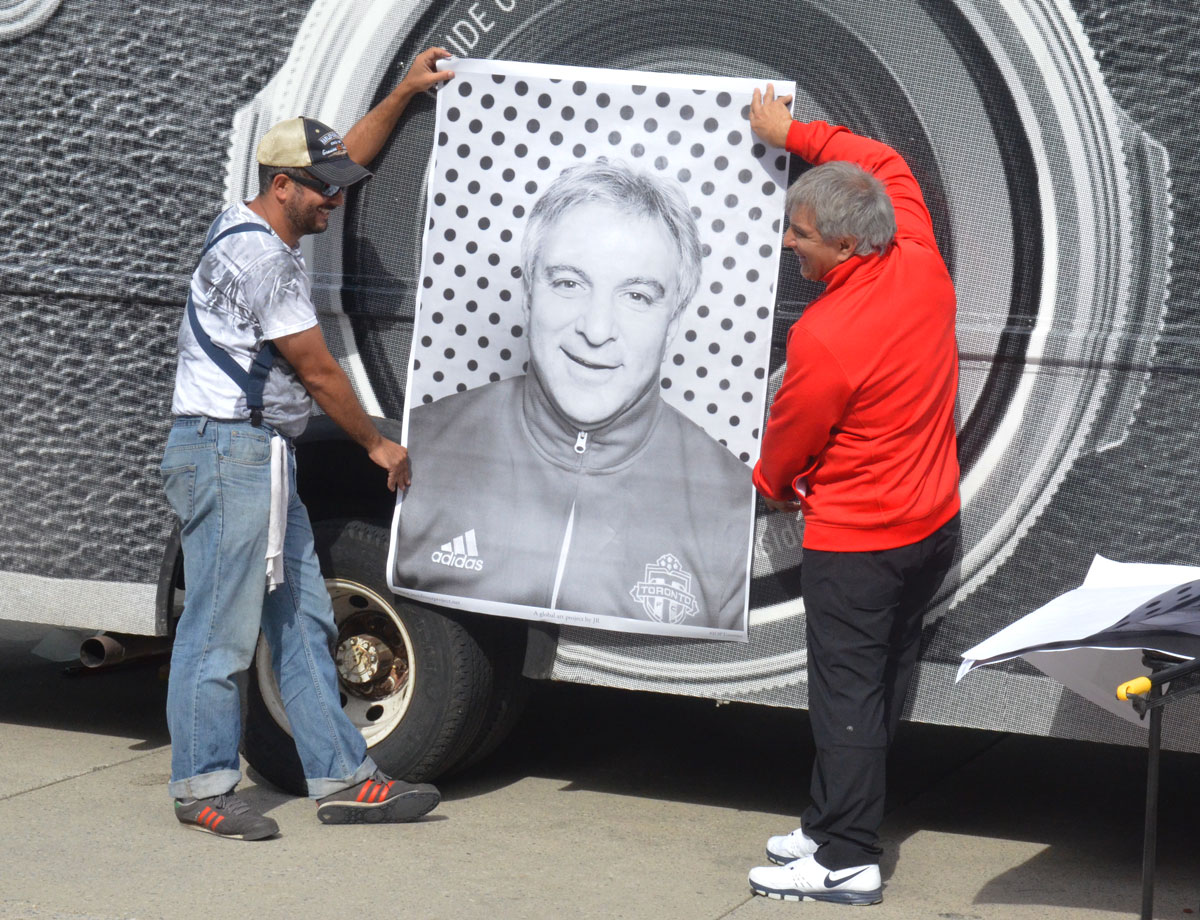
Starting a few days before Nuit Blanche the Inside Out mobile Photobooth was parked at Nathan Phillips Square. Anyone who was interested could have their picture taken – a digital copy was emailed to each participant and a large black and white copy was printed within minutes. The photos were collected and then used to make one large image, a series of concentric circles in the center of the square.

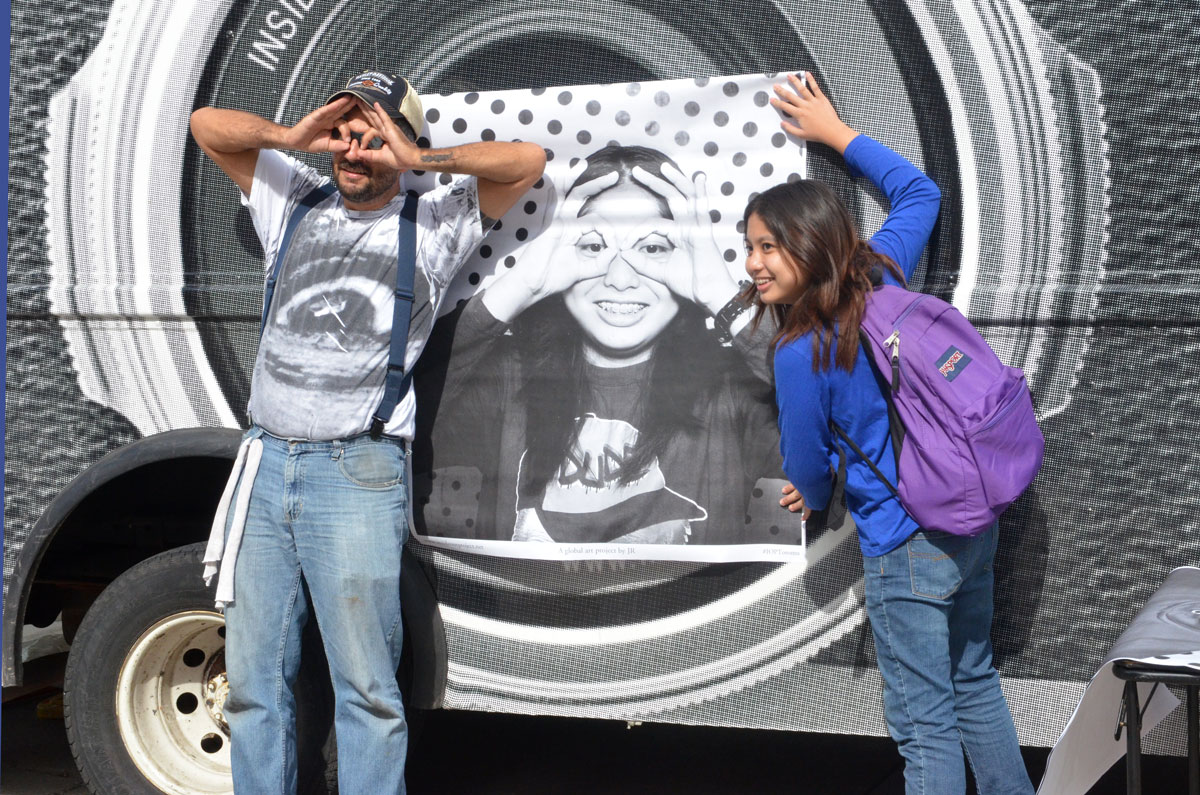
below: Getting ready for Nuit Blanche at Nathan Phillips Square

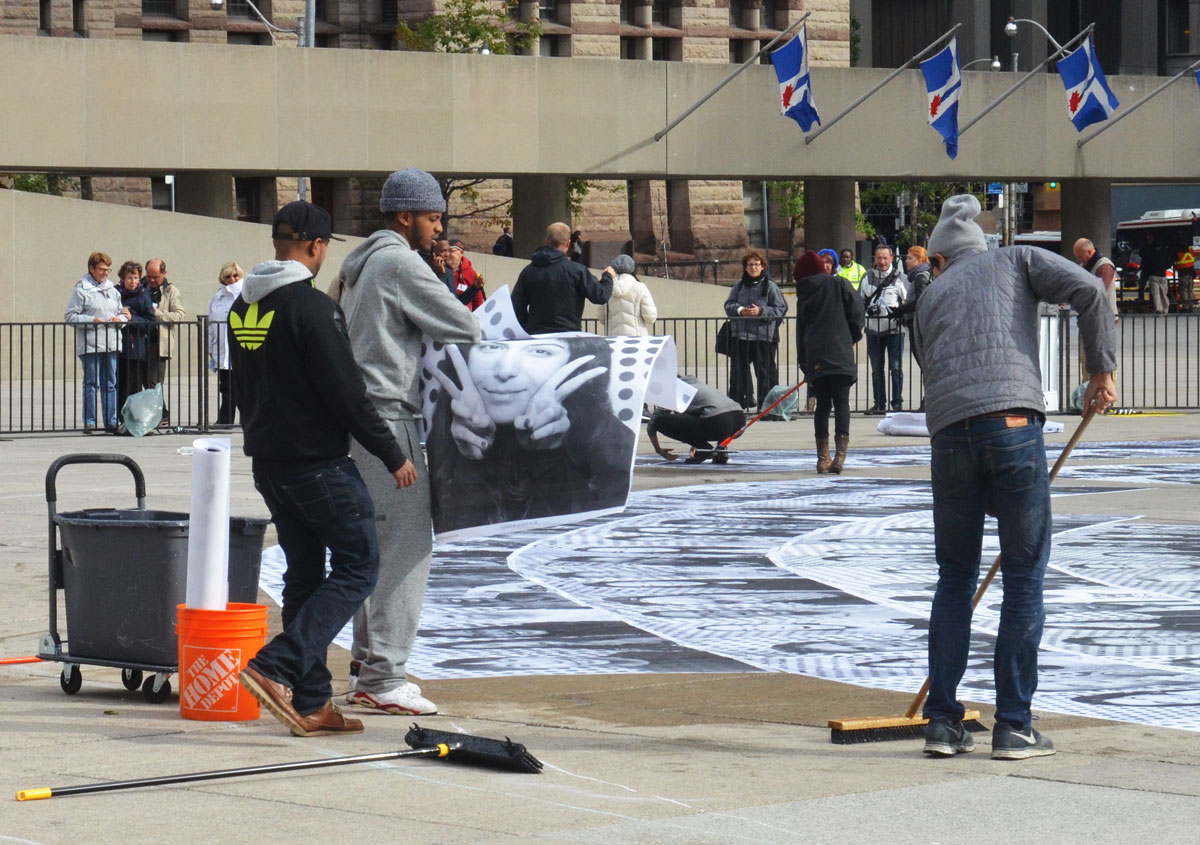

below: Nathan Phillips Square at Nuit Blanche


below: The side of the ramp to the upper level was also covered with photos.

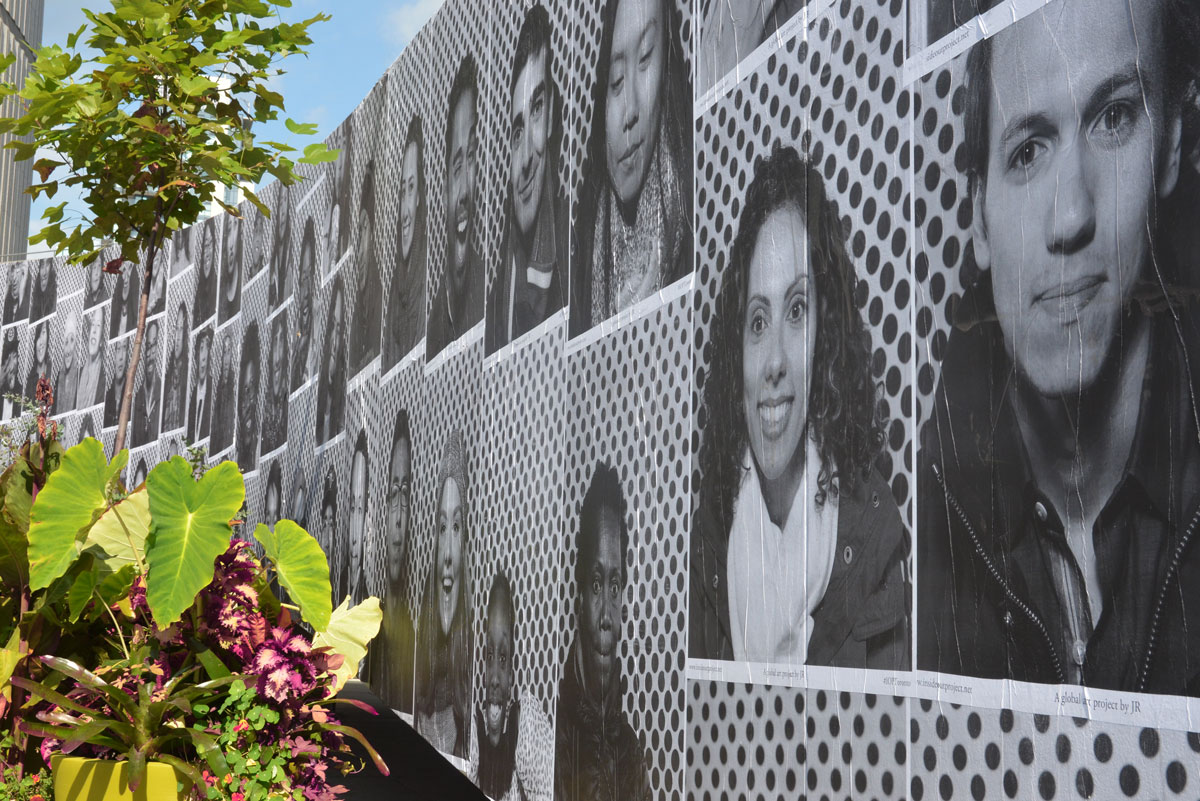
below: … as was the south side of the 3D Toronto sign.
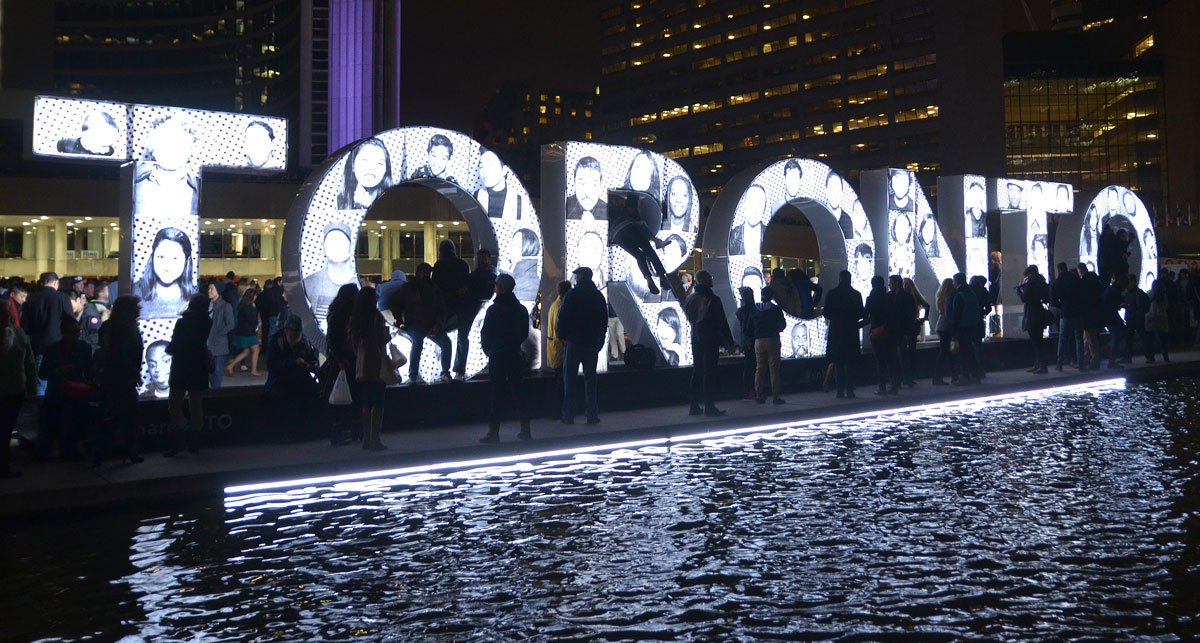
below: The Inside Out Project remained after Nuit Blanche.
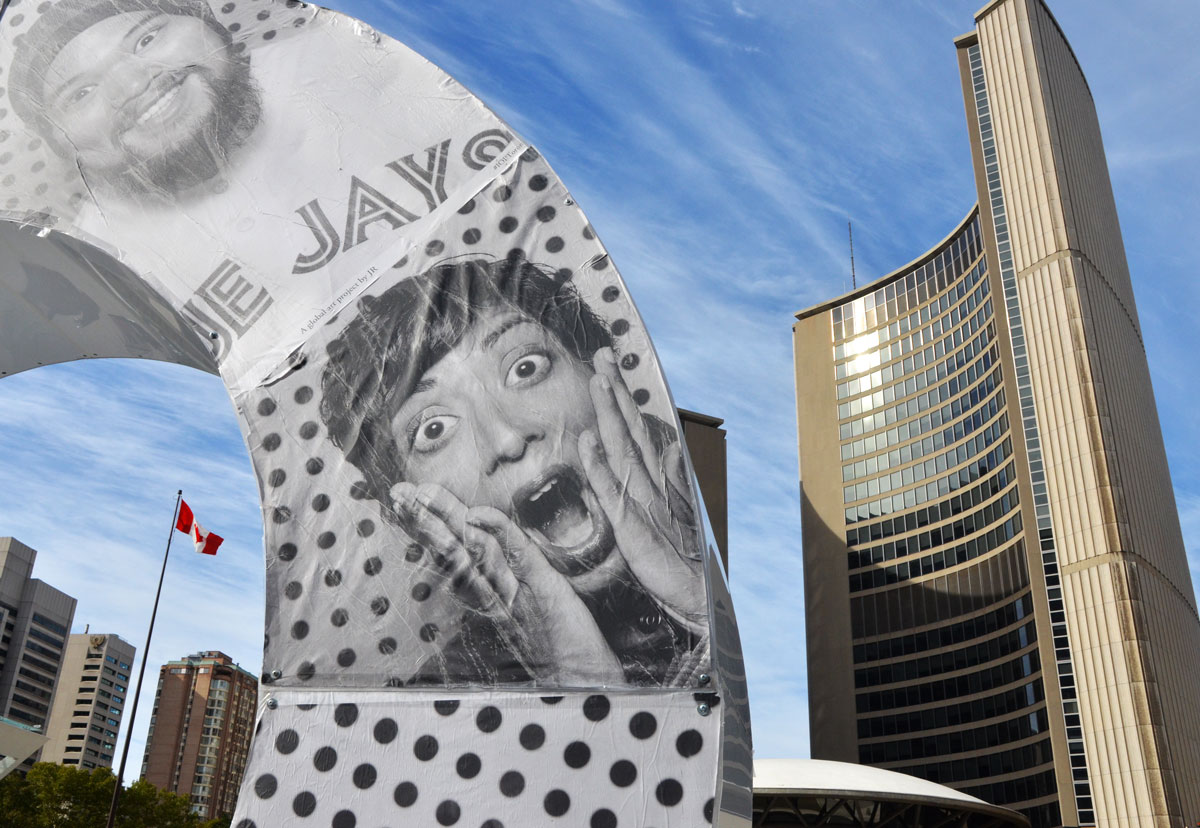
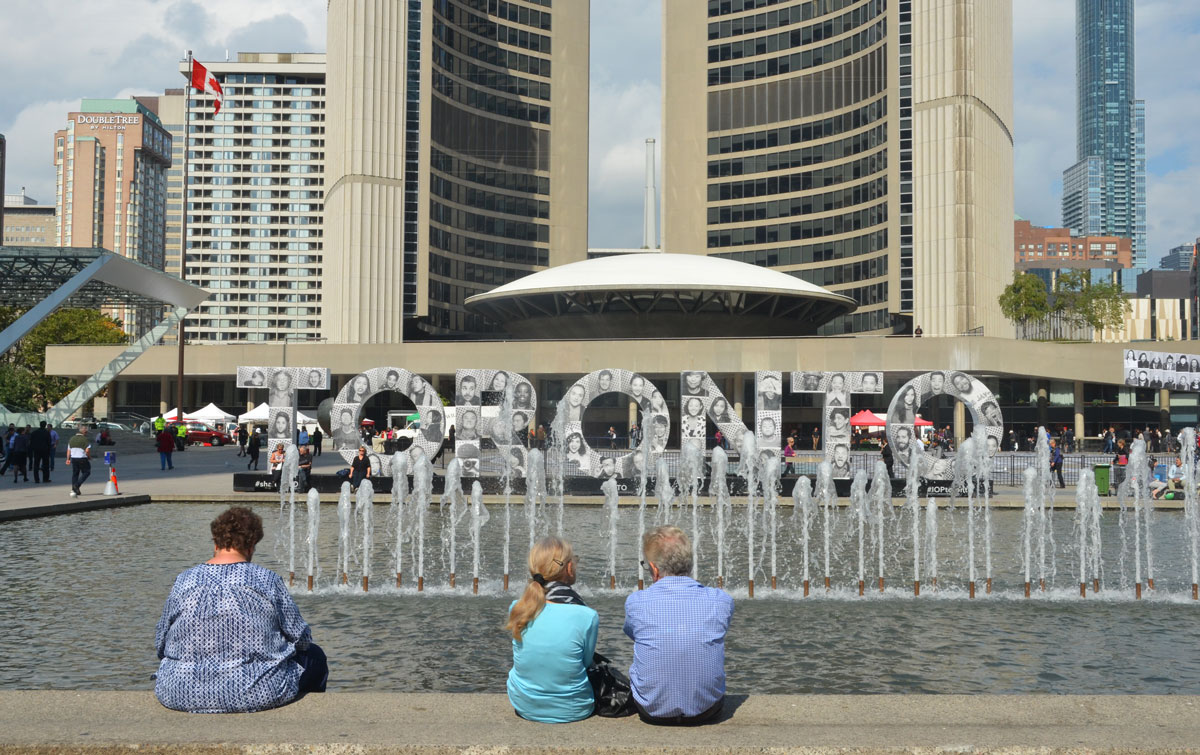


below: There were a number of other sites around the city that participated in this project including a wall at Mel Lastman Square in North York.

below: There was also a wall on the southwest side of Coxwell subway station that was covered.
#IOPToronto | #snb2015 | #snbTO | #share3DTO
Lots more info about Inside Out can be found here.

 as I walk Toronto