As I was walking across Queen Street West a couple of days ago, I saw a pink sparkly tribute to the musician Prince who died recently.   In 1993 while having contract problems with Warner Brothers, Prince changed his stage name to this symbol.  It became known as the Love Symbol although he was more regularly referred to as ‘The Artist Formerly Known as Prince’ for the next seven years.

A large pink painting on a sidewalk, a symbol used by the singer Prince. The painting is a memorial to him. His dates are given 1958 to 2016.

A few feet away, at the corner of Queen and Spadina I found the artist busy on another painting.  Victor, as in #whatsvictorupto, was in the middle of painting a blue and purple unicorn with pink glitter too.  I asked him if there was any significance to the unicorn.  He said that this was going to be his ‘Year of the Unicorn’.  He also mentioned that he already painted a few unicorns….

A man is painting a glittery pink and purple unicorn picture on the sidewalk as people pass by on Queen Street in Toronto

below: The finished painting

A blue and purple painting of a unicorn with pink glitter added to it too. Painted by Victor and signed as #whatsvictorupto

below: So far I have found two other unicorns.  First, this slightly faded unicorn on a four leaf clover is painted outside the Black Irish pub on Queen Street East at Sherbourne.

A unicorn in green, blue and black painted on a green four leaf clover by #whatsvictorupto The word Kelsey is also beside the painting

below:   Second, a unicorn on the sidewalk in front of Sick Kids Hospital

A blue and gold unicorn head painted in a red heart on a sidewalk, by Victor of What's victor up to.

below: A little bit of fun – it seems that a lot of people have uploaded their pictures of the  Prince painting to instagram in the past day or two!

a screenshot of a cellphone, pictures of the pink Prince symbol that different people have added to instagram

If I see any more unicorns I’ll let you know!

May is photography month in Toronto.  It is the month when there are numerous exhibits in public spaces and in galleries, all part of the CONTACT Photography Festival.   Over the next few weeks I hope to visit many of the exhibits and blog about some of them.   From past experience I have discovered that a lot of the public installations appear before May 1st so I went exploring yesterday.

below: Looking south from Spadina and Adelaide….  Partially obscured by a building, on the right in this photo, is the first large black and white photo that I saw.

view from the NE corner of Spadina and Richmond streets. a small parking lot is directly across the street, two large billboards loom over the lot. Once is for Lorne's coats showing two people wearing coats. The other is for Maple flavoured iced capp at Tim Hortons.

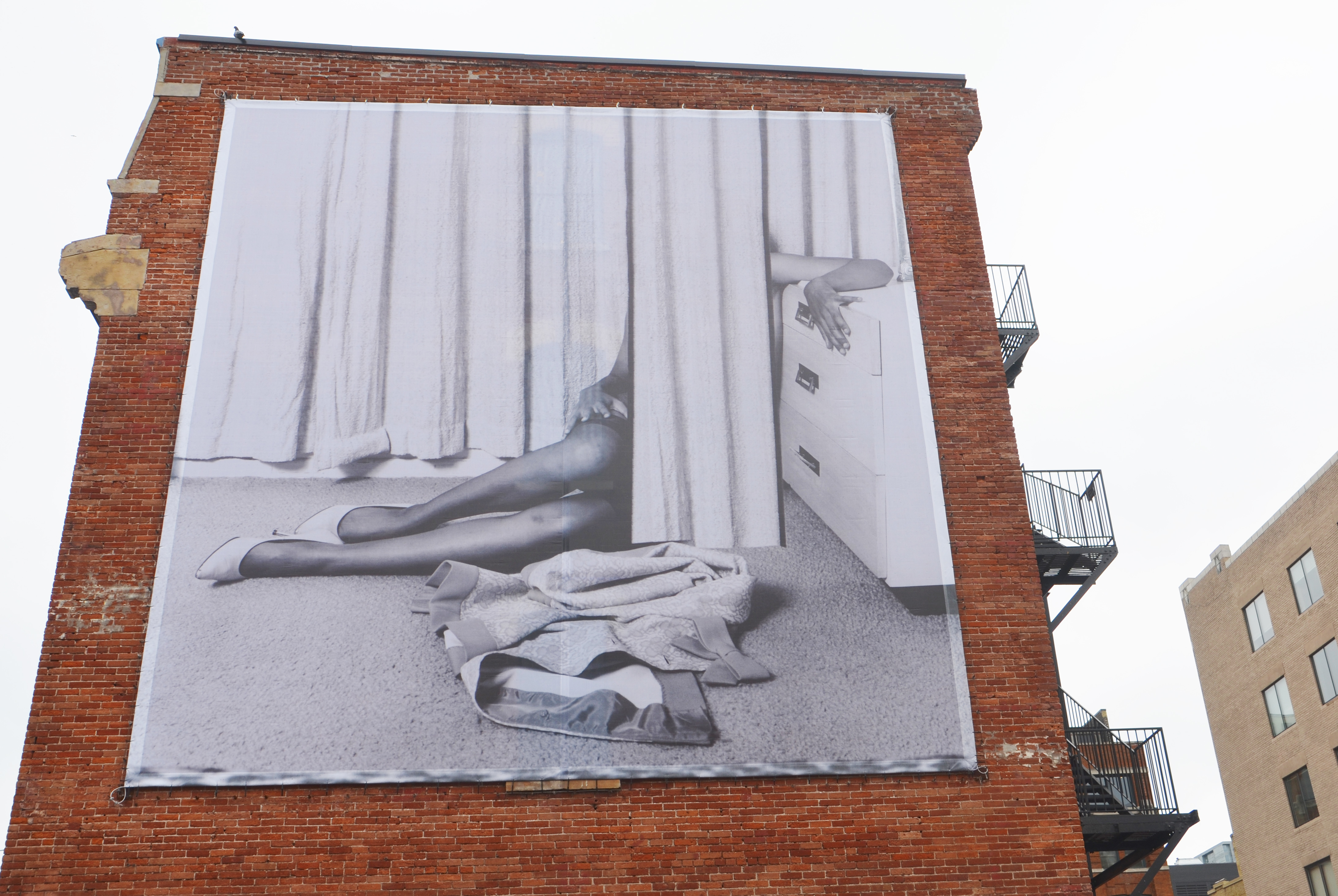
below: Up close,  ‘Drape’ by Eva Stenram.  Stenram has taken a 1960’s pin-up photograph of a woman and manipulated it.  She has brought the background, the drapery, forward and has covered up the original subject in the picture.

large black and white photo by Eva Strenram called 'Drape'. It is mounted on the upper level of a three storey red brick building. It shows a woman sitting on the floor partially obscured by drapery. Her upper body and head can not be seen.

below: Looking west on Wellington from Spadina.  The light grey building is the Old Press Hall (Globe and Mail) which will be demolished in the near future.

looking down the street past parked cars. A large black and white photo is on the side of the building.

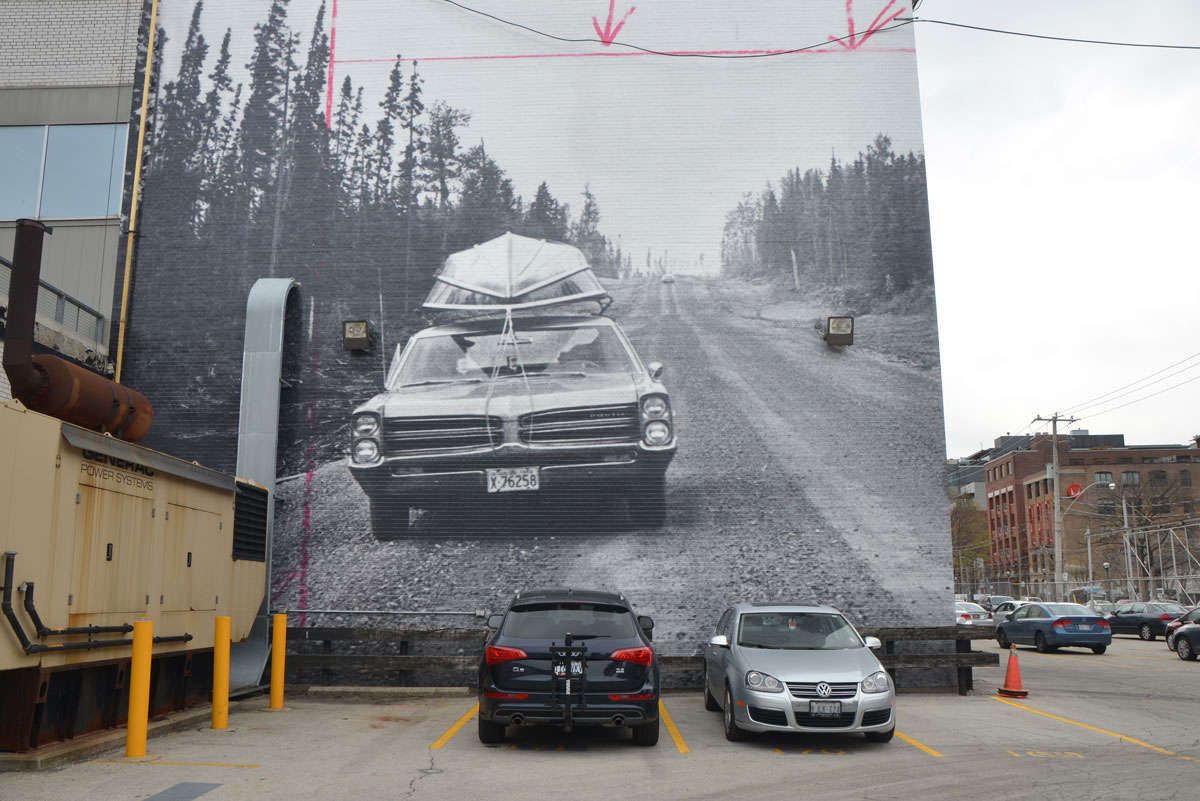
below: Up close, ‘Stopping Point’ by an unknown photographer.  The original title and description was: ‘Along the new Highway, which runs from Smooth Rock Falls to Fraserdale, Ontario, there’s no sign of human habitation apart from one empty lumber camp, c.1966. 

A very large black and white photograph from the 1960's of a car on a two lane road with pine trees on either side. There is a boat tied to the roof of the car. The photo is on the side of the Globe and Mail building with cars parked around it.

The above photograph is one of 750,000 photos in the Globe and Mail’s picture library.   100,000 of their old photos are being digitized to create a new historical archive.  From these, a collection of 20,000 prints will be donated to the newly formed Canadian Photography Institute at the National Gallery of Canada.

More of the photos from the Globe and Mail’s collection are on view inside the Old Press Hall.

I usually take a dim view of conceptual art largely because the importance given to the “words on the wall” has eclipsed the consideration given to the artwork itself.   Mediocrity in technique or creativity hides behind big jargon words and convoluted language in the artist statement.  Often the concept that the artist claims to be exploring is at odds with the end product.

When the art doesn’t live up to words that sound learned and meaningful then it degrades the work and makes the artist, and those curating the exhibit, seem pompous and out of touch.

For example, if you read that certain videos by an artist “cast a hitherto unexampled light on the conventional North American city”,  what would you expect to see?  Would you expect to see a video shot from a helicopter as it circled a city at night?  A video that looks familiar to anyone who has flown over a city after dark.   That’s what you get with Aude Moreau’s ‘The End in the Background of Hollywood 2015’ now showing at The Power Plant gallery.   I don’t have a photo of it but I do have a picture of three of her other photographs also on display.

below: From left to right (discounting the small picture farthest from the camera): 1. ‘Untitled (Hollywood Sign)’ 2015, 2. ‘LAPD (Los Angeles Police Department)’ 2015.  It’s a picture of a tiny helicopter in a large grey sky.  and 3. ‘Waiting for Landing’, airplanes lined up as they approach LAX airport.   Unfortunately, the words on the wall then go on to say, about these three images, “These demonstrate visual strategies that act upon the symbolic representation of the city and the spectacular dimension of the film industry.”  Oh my.

4 pictures hanging in a contemporary art gallery. One is a picture of the Hollywood sign taken just after dark, the next is a grey sky with a tiny dot of a helicopter in the middle, the third is too far away to discern, and the last is a picture of Los Angeles at night taken from a helicopter

And with that I left The Power Plant gallery.  Growling silently to myself and shaking my head with a mix of disdain and and frustration.   Imagine my surprise when once outside I encountered another of Moreau’s photographs.  A very lovely one.

below:  A picture of the Toronto skyline by Aude Moreau mounted on an exterior wall at The Power Plant Contemporary Art Gallery.  A picture with visual impact.

A photograph by Aude Moreau of the Toronto skyline as the sun starts to set, sunlight reflected off the buildings, darkening blue sky. The picture is mounted on an exterior wall and there is a tree in front of it as well as a couple of picnic tables

below:   You can play “spot the building” and test your knowledge of Toronto geography.   You can line up the DBRS building, the Hilton Hotel and the Canada Life building on University Avenue along with the Sheraton Hotel on Queen street.   The blue addition on the AGO is farther north on Dundas.  Can you think of where the photo was taken?  Apparently, it was taken from Toronto Fire Station 315 at College Street and Bellevue Avenue.  It was taken just after sunset but when there was still enough light in the sky to reflect off the taller buildings.   Moreau makes the city sparkle.

A photograph by Aude Moreau of the Toronto skyline as the sun starts to set, sunlight reflected off the buildings, darkening blue sky. The picture is mounted on an exterior wall and there is a tree in front of it

I must have seen this picture very shortly after it was installed.  It is part of the CONTACT photography festival that starts this weekend but there was no accompanying sign, no words that attempted to a explain the image.  Perhaps that was for the best.  In fact, I now have the CONTACT catalogue with their description of the artwork but I think I won’t read them.  I’d rather enjoy the picture just the way it is.

Have you ever noticed how many trees there are in this city?
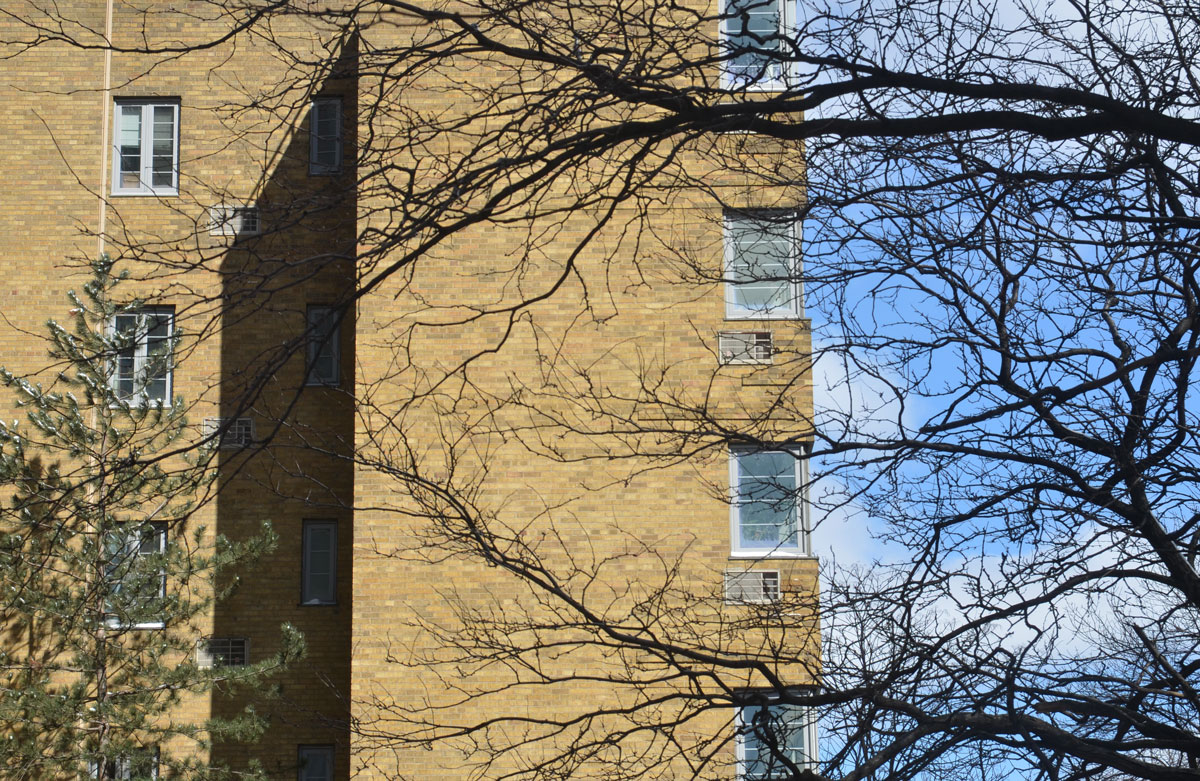
Have you ever stopped to examine the visual relationship between trees and architecture, the patterns of leafless branches superimposed on straight man-made lines?

Horizontal branches of a tree growing in front of a low rise yellowish brown brick apartment building. Balconies, jutting out with the bright blue sky behind.

For the past couple of weeks I have been keeping an eye open for such relationships while I walk.   As it turns out, there are lots to be found…. and some are even interesting  🙂

Part of a mature tree, looking upwards, the greenish steeple of St. Basils church can be seen through the branches. No leaves on the tree. A very tall condo building under construction is also in the picture.

Just for fun I googled “How many trees are there in Toronto?”.  I got answers!  One link was particularly useful:  available in pdf from the City of Toronto’s website is a report titled, “Every Tree Counts: A Portrait of Toronto’s Urban Forest” (updated in 2013).   It is estimated that Toronto has about 10.2 million trees and they provides a tree canopy over between 26% and 28% of the city.

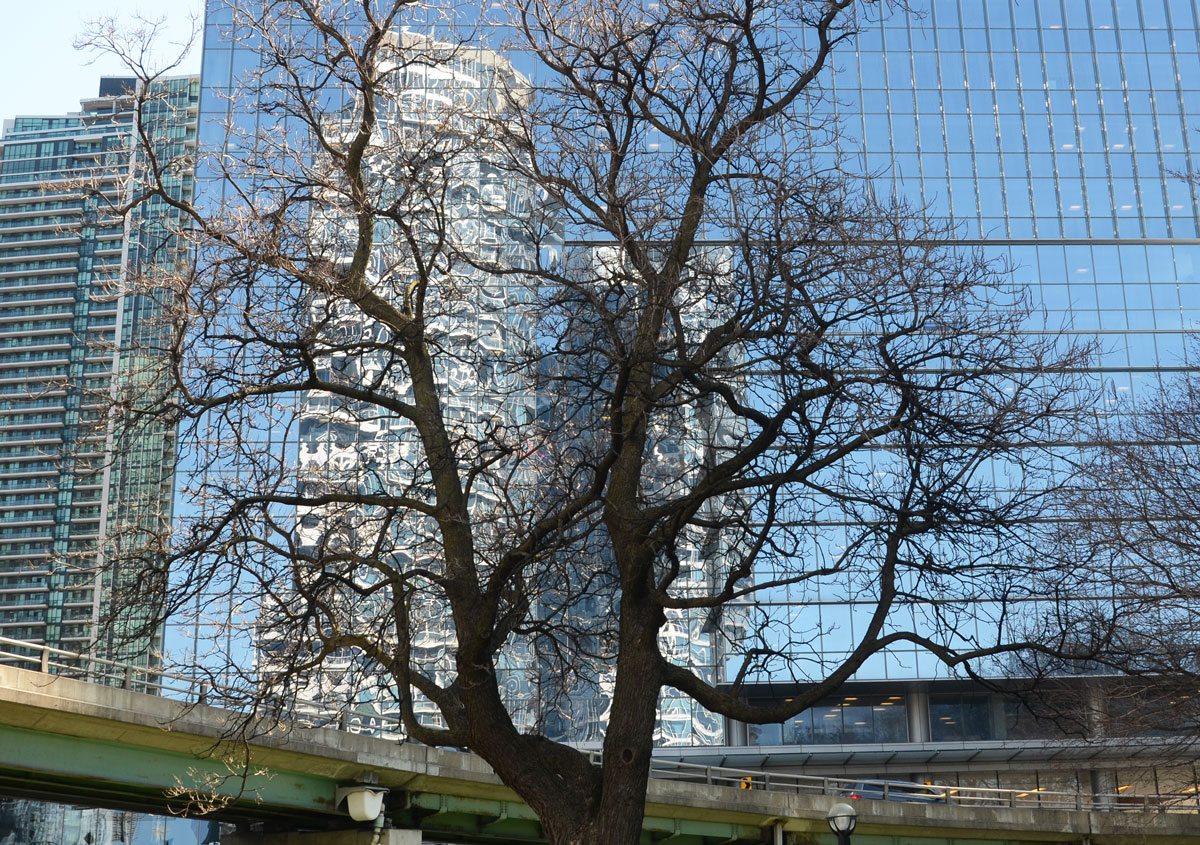
A large mature tree with no leaves, early spring, grows in front of a large glass building that has a reflection of another large building its windows.

There are at least 116 different tree species in the city.  The 10 most common species account for close to 58% of the total.   We have a lot of maple trees – Norway Maple, Sugar Maple, and Manitoba Maple were the top 3 species.  Next in the list were Green Ash, White Spruce, Silver Maple, American Elm, Eastern White Cedar, Austrian Pine, and White Ash.

When Dutch elm disease devastated the city’s elm trees in the 1960s and 1970s many were replaced by Norway maples.  These proved to be hardy but they were also very invasive and damaging to ravines and other natural spaces.  As a result they are rarely planted on city property anymore.  Still, they represent 15% of Toronto’s tree coverage.

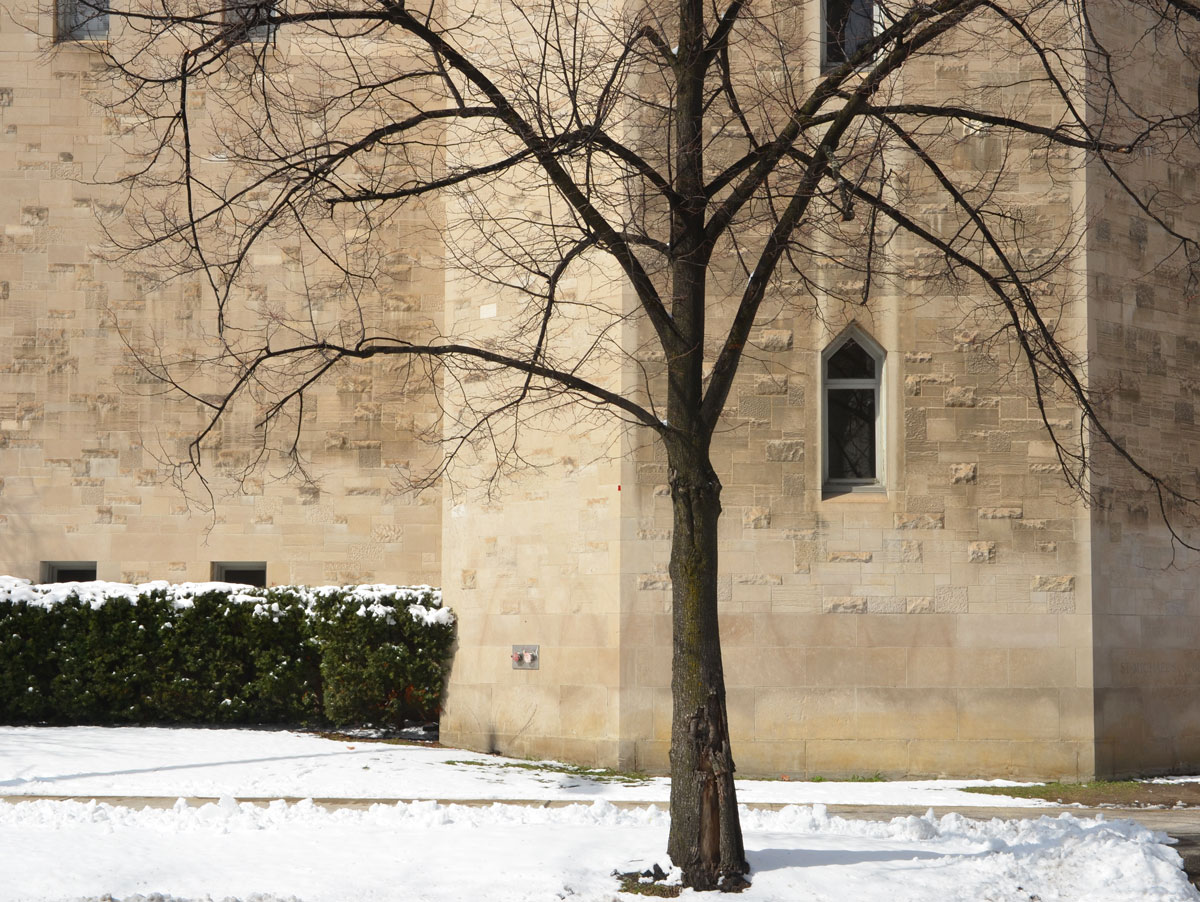
A lone smallish sized tree in winter is growing in front of a stone building on the University of Toronto campus, snow on the ground.

Of the total tree population, 6.1 million (60%) trees are on private property, 3.5 million (34%) trees are in parks and ravines, and 0.6 million (6%) trees are on city streets.

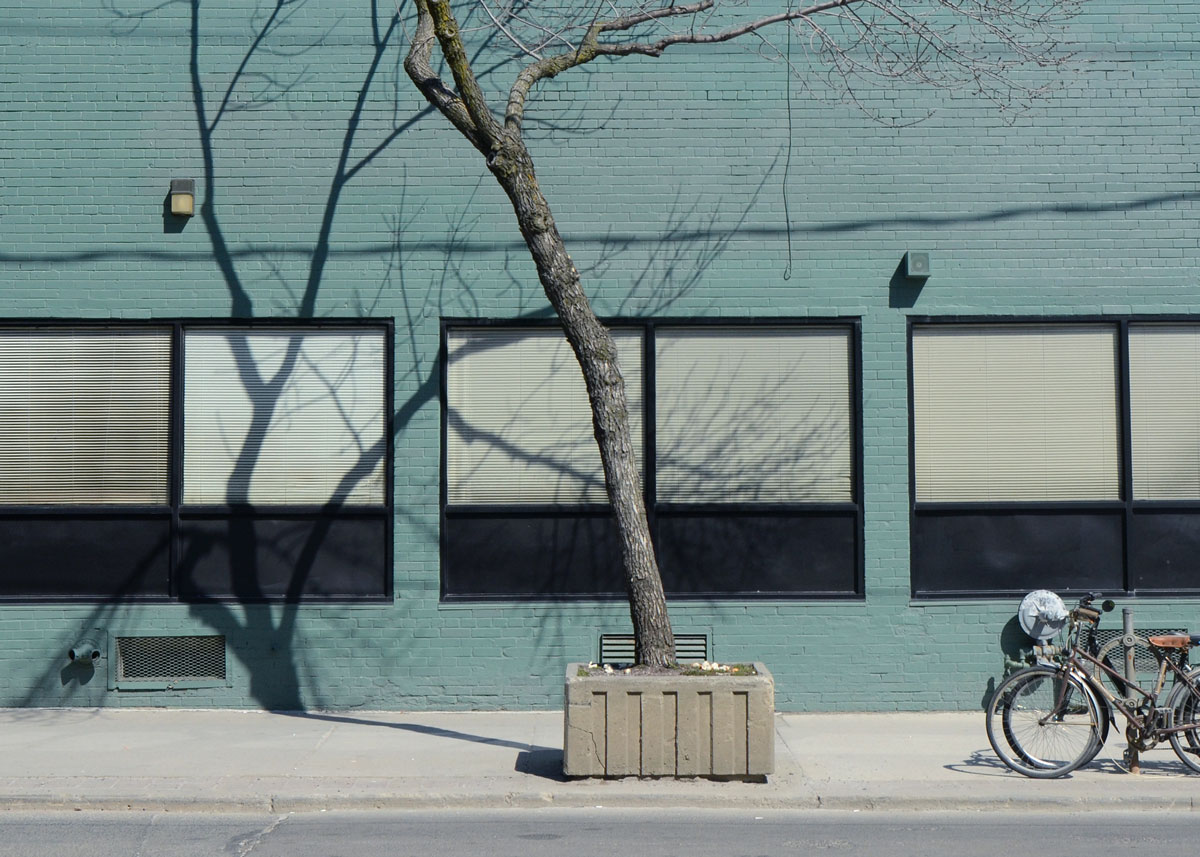
A tree in a concrete planter in front of a tral coloured building. It's a sunny day so there is a shadow of the tree on the building.

Trees make a significant contribution to our life.  Not only do they look nice, but they also provide benefits.  They provide shade in the summer and they help improve the air quality.  They help prevent erosion in our ravines and they provide habitat for insects, birds and animals.  Our parks would be poorer places without trees.

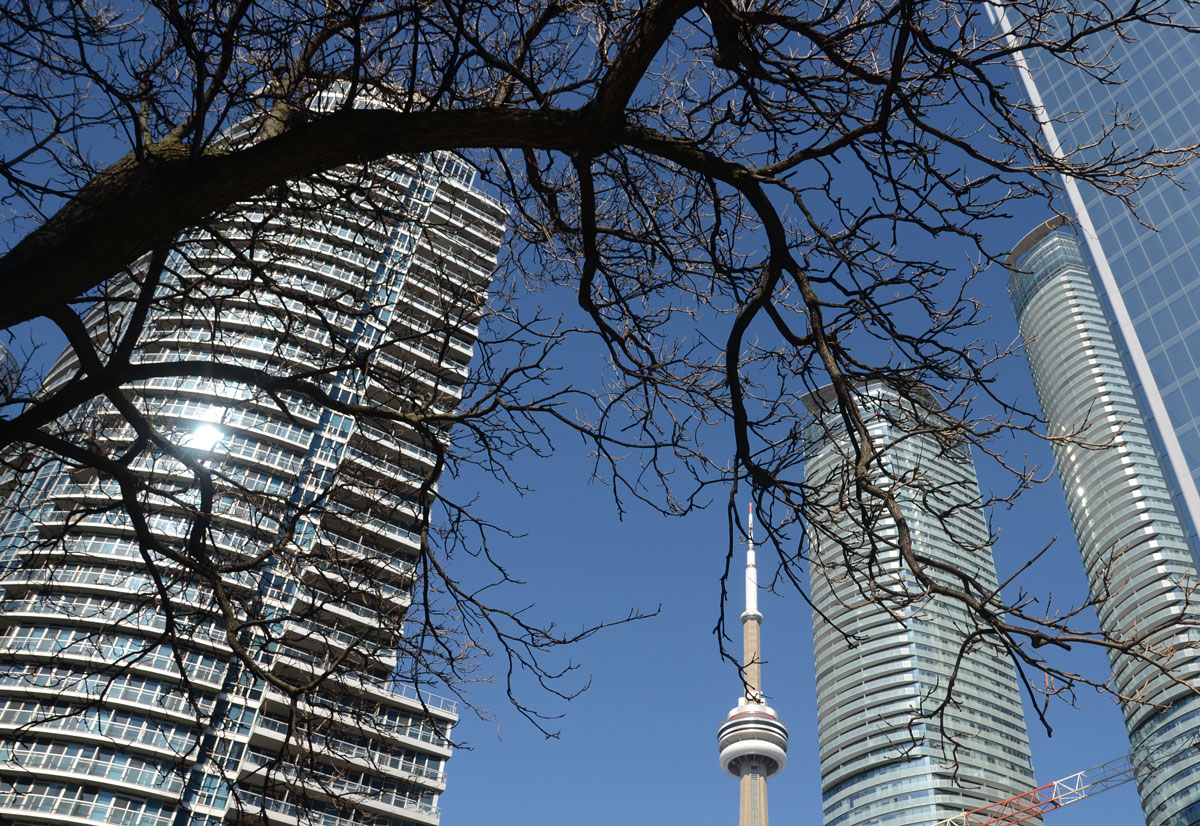
A large branch of a tree in the foreground, condos and the CN tower in the background. The curve of the tree branch looks like its wrapping itself around one of the tall condos.

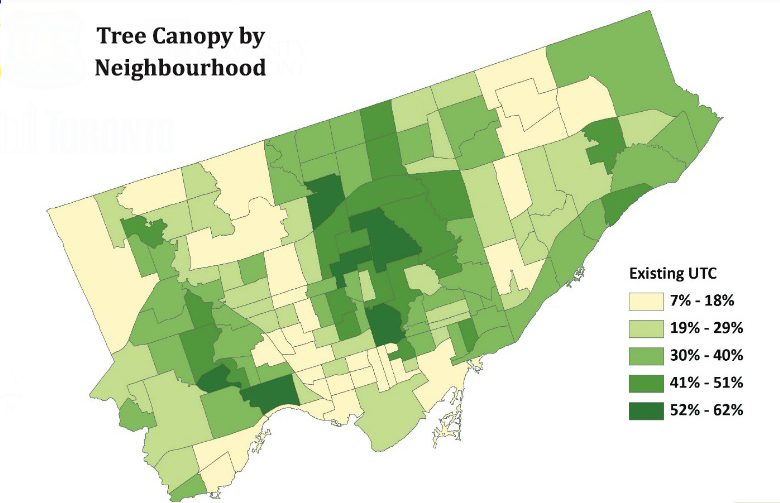
One goal that the city has is to increase the canopy cover over Toronto to 30%.  To this end, between 2004 and 2012 the city and its partners planted almost 100,000 trees per year.   That’s almost 900,000 trees.   Not all survive but progress is being made.  Tree cover increased slightly (1.3%) between 1999 and 2009.

below: A map of Toronto showing the tree canopy in each neighbourhood

A map of Toronto showing the percentage of each neighbourhood covered by tree canopy from almost white (very few trees) to dark green (a lot of trees)

in winter, some snow, part of a large leafless tree in front of an office building with a sloght curve in it.

Take a moment to look at the trees you pass, yes, look up!  Especially in the next week while the branches are still bare.  Better still, look up often and watch the changes unfold as the trees bud and bloom.  At this time of year the trees change quickly and before you know it the city will be transformed.

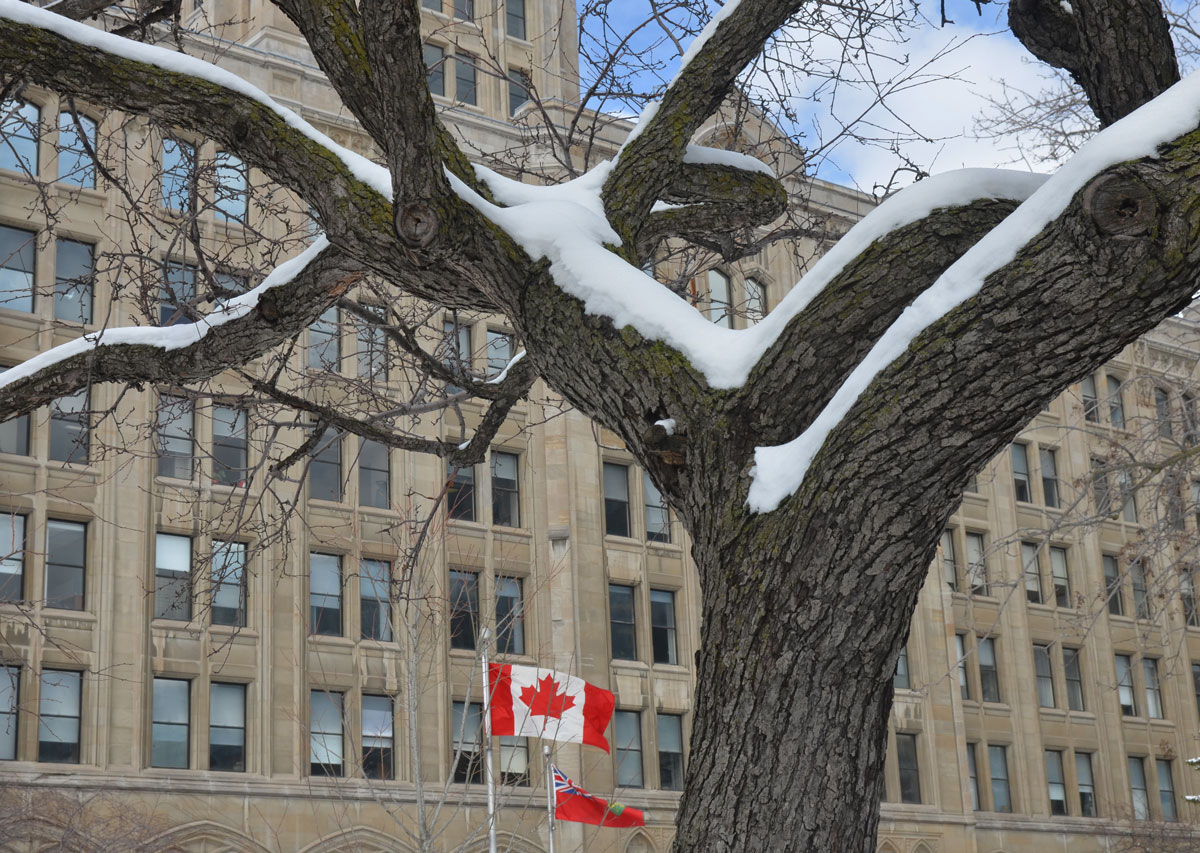
winter tree in front of a stone government building on Queens Park Circle, A Canadian flag and an Ontario flag are flying in front of the building.

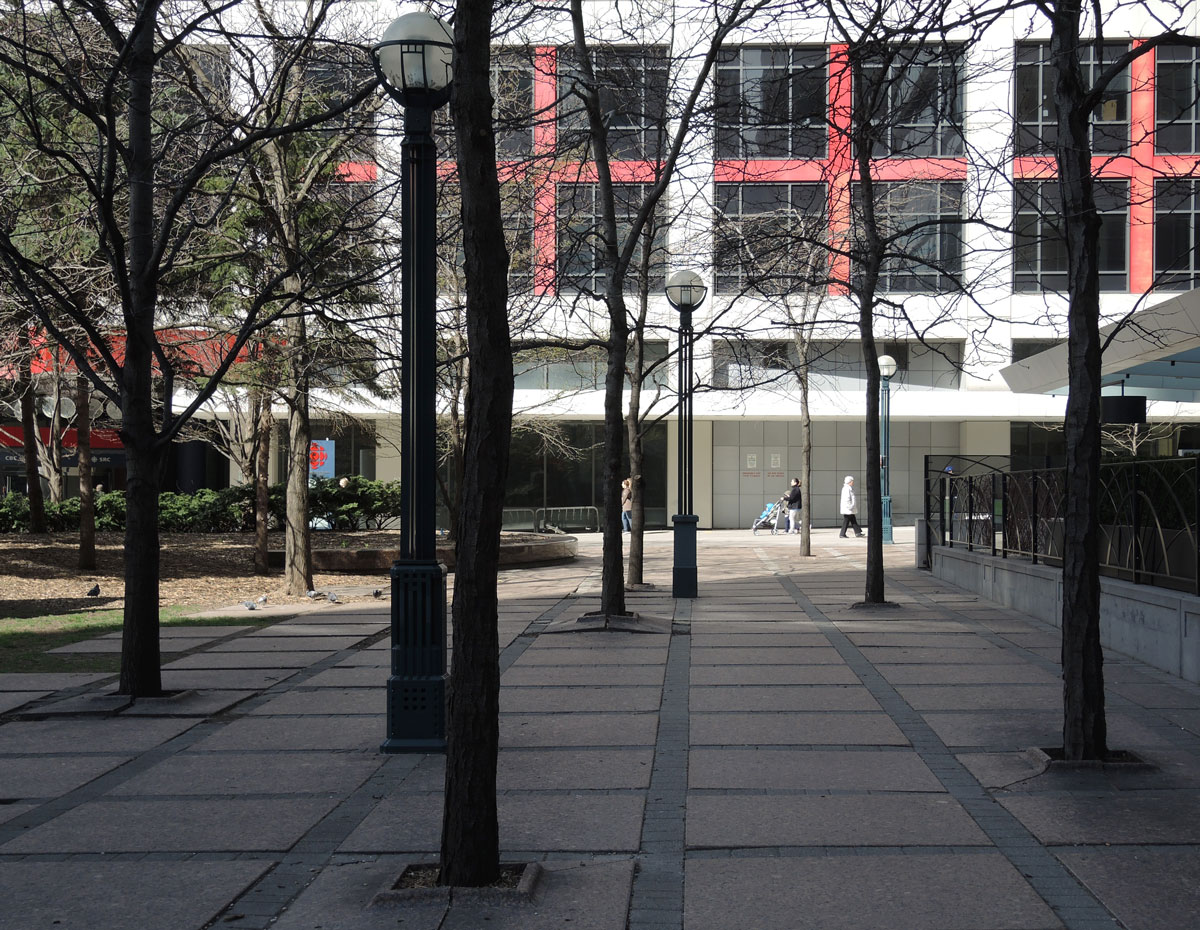
A number of leafless trees and three lamp posts in Simcoe Place, downtown Toronto, with the CBC building in the background

A man's legs as he walks across the pond on Ryerson campus. Very little water is therem lots of reflections of the trees and buildings around. He is wearing jeans and bright orange running shoes.

leafless tree branches above an older red brick house with a mansard black slate roof and a feww yellow brick details

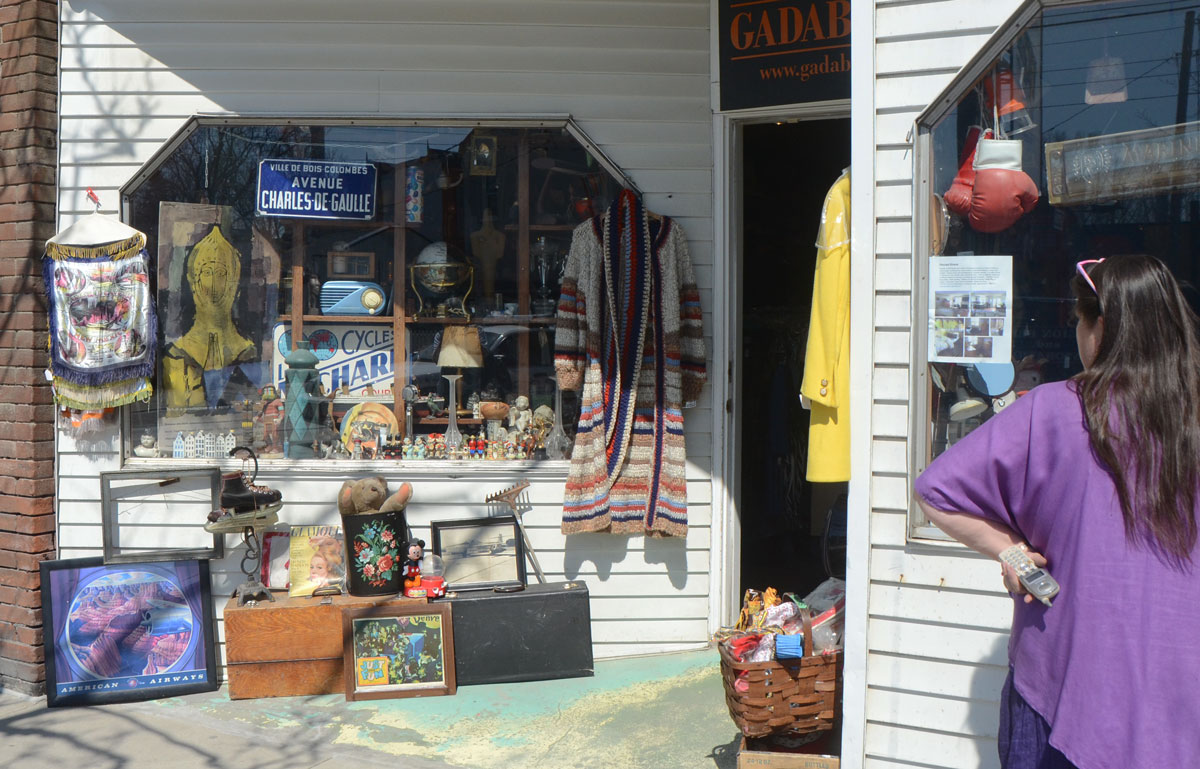
First, a big thank you for being welcomed into Gadabout to explore and take pictures.  Gadabout is a store on Queen St East and it is home to “vintage clothing, nostalgia, ephemera, textiles and curios.”  It is packed full of old things.  Interesting things.

Exterior of the Gadabout store on Queen St East showing the window display and entrance. The window is full of things for sale and there are also a few things sitting outside the store that are also for sale - old glamour magazine, old men's skates, a teddy bear, a crocheted coat,

below: And when I say packed, I mean it!  Floor to ceiling.

Against a wall in Gadabout store, shelves with small cubbyholes all filled with small items, curios, b=vintage, treasures, such as old producs, toys, figurines, household items,

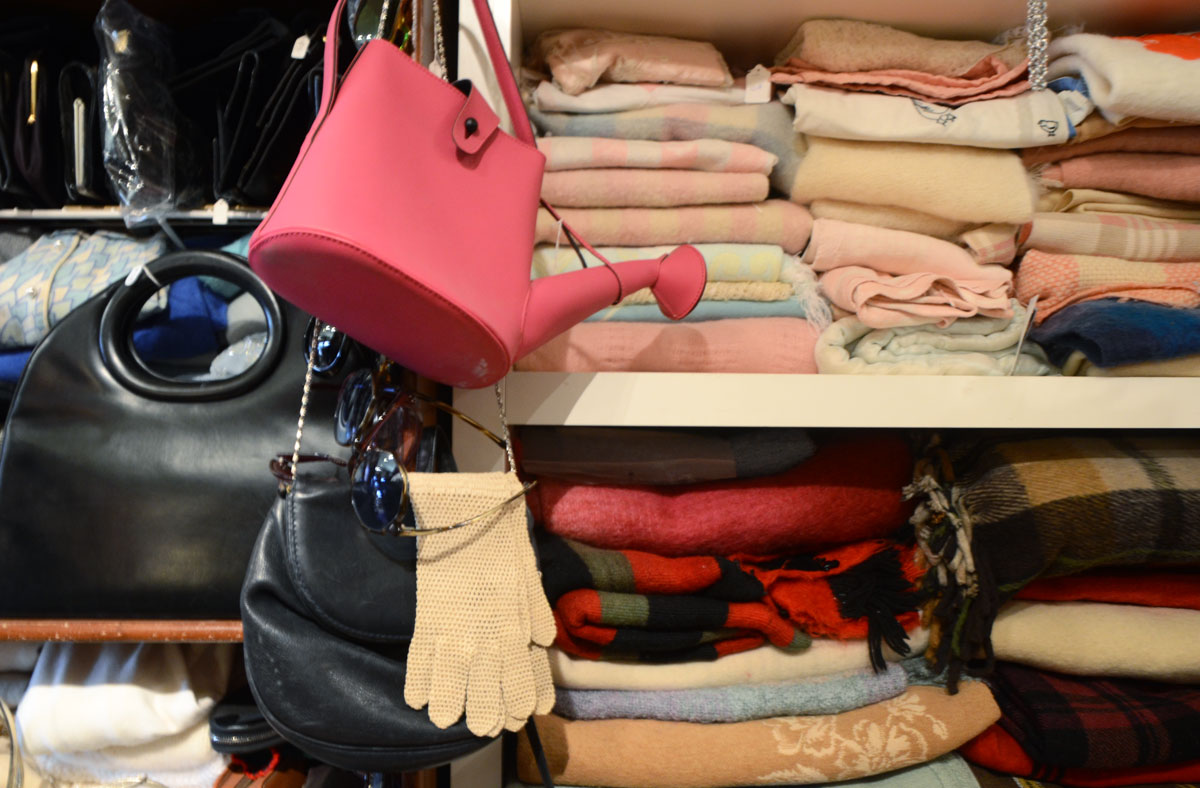
below: Who could resist a watering can purse?  In pink even.

a pink purse in the shape of a watering can hangs from a hook on a wall. A pair of beige gloves hangs below it. Folded fabric items are on the shelves beside the bag and gloves. Blankets or sweaters.

A small doll with a very lifelike face is looking towards a shelf filled with small ceramic and porcelain items such as vases and figurines

below: Containers and packaging for Mennen baby powder, 40 cents for J.R. for Athlete’s Foot, Silvo silver polish, a tire repair kit, 6-12 insect repellent, and wintergreen oil.  The latter is used topically to relieve muscle aches and pains.  It’s labelled as a poison as it is easy to overdose on it if ingested.

A small section of shelf in a store selling vintage items, on this shelf are old drug store and household products such as wintergreen oil, silvo silver polish, baby powder, athletes foot treatment,

below: Knights Templar black bicorne hat with feather along with matching cuff.

An old black military hat with a white feather in it sits on a head mannequin. Beside it is another mannequin wearing a tartan kilt and a white shirt. The shirt has a brownish leather cuff with a red cross on it.

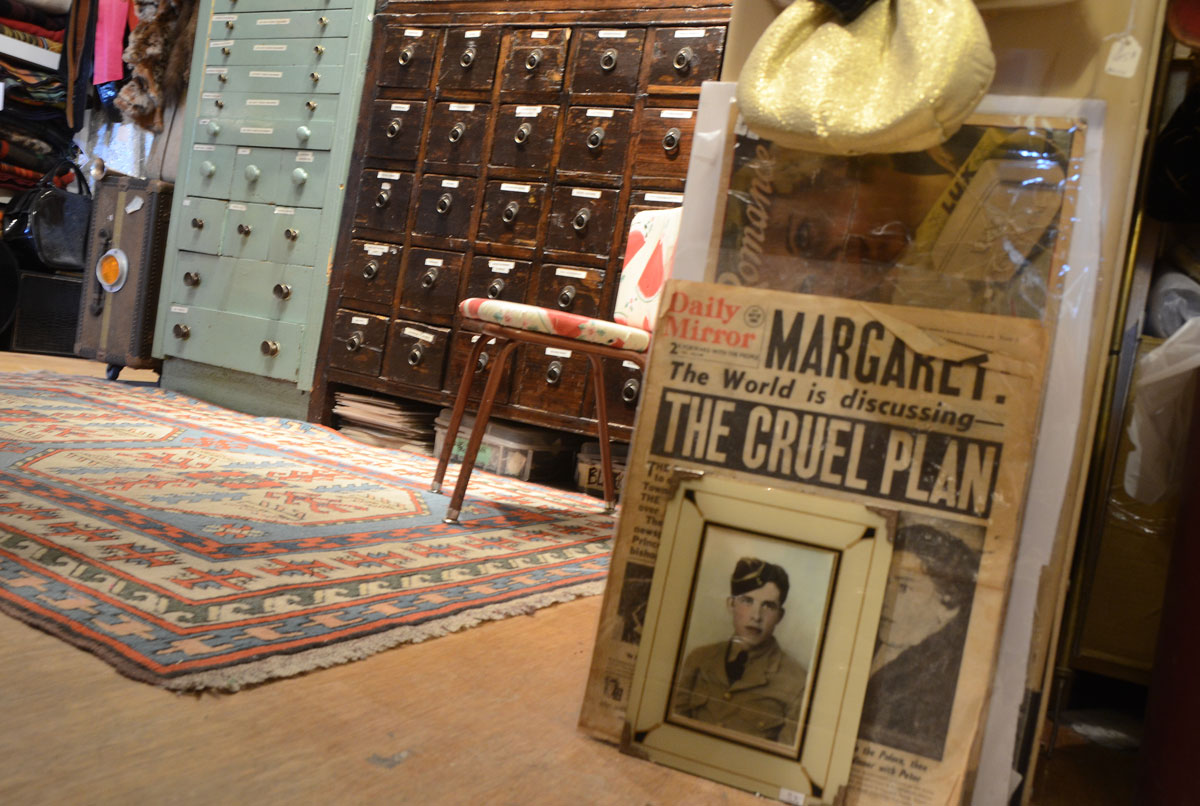
below: All those drawers are filled with old photographs.

old wooden drawers filled with old photographs, a mirror, and an old chair with a vinyl watermelon print fabric on it.

old photograph of a man in uniform, a front page of the Daily Mirror newspaper, more drawers, all in a store filled with vintage items.

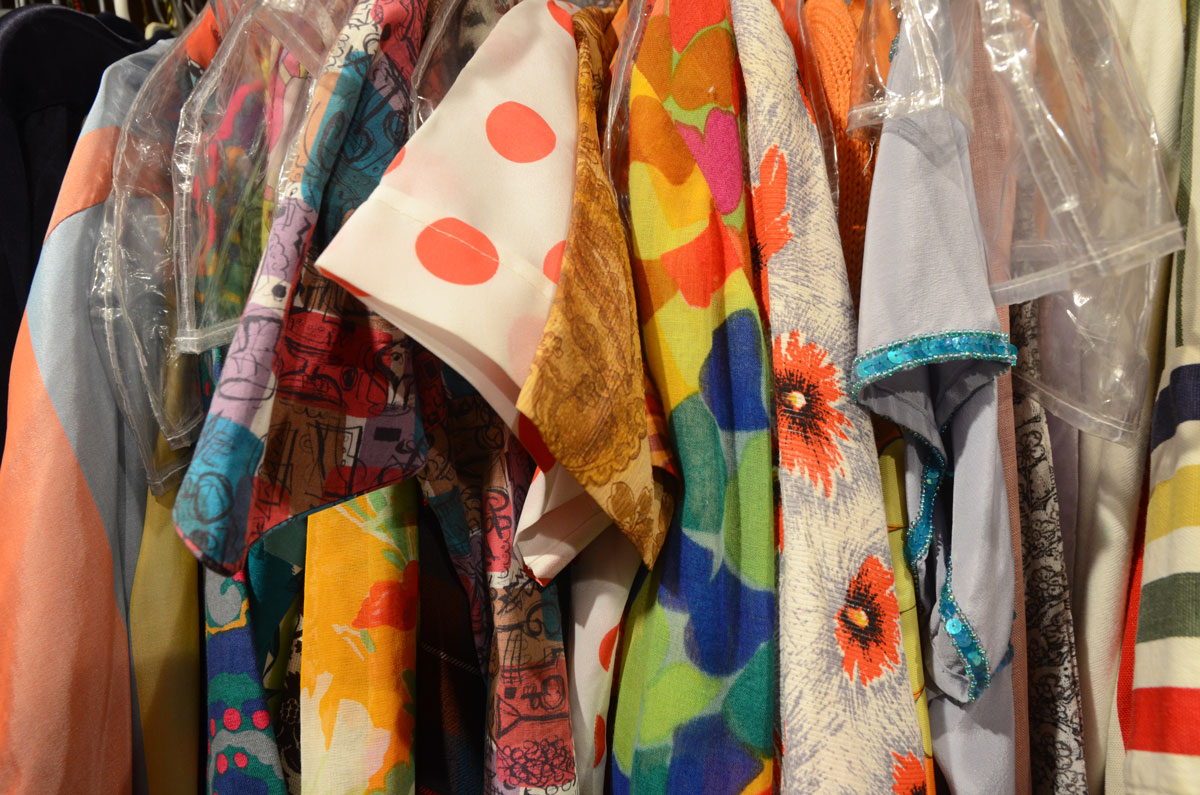
below: Vintage clothing

sleeves of colourful shirts and blouses hanging on a rack. Orange polka dots, red poppies, wild prints, all vintage clothing

a teddybear sites in a can with a painting of flowers on it. An old Glamour magazine with a yellow cover
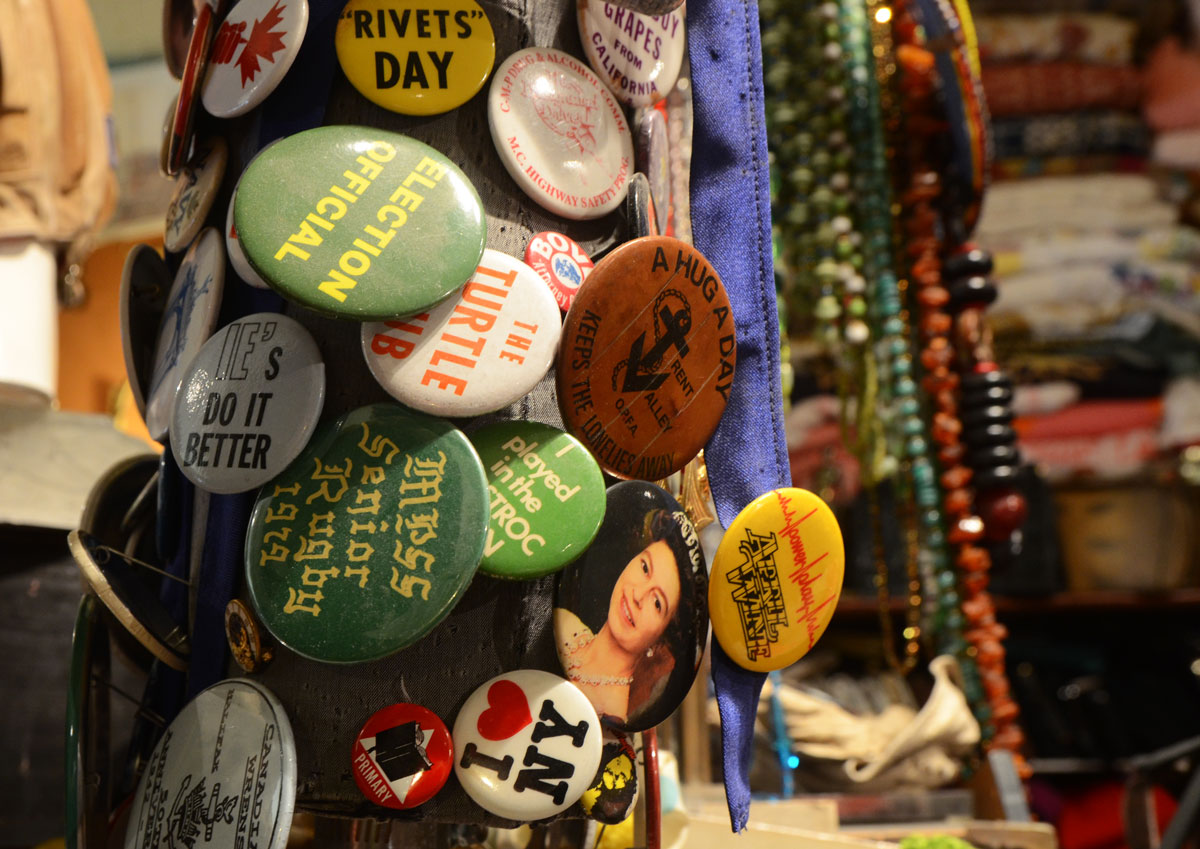
Old pins (buttons) in the foreground with beaded necklaces in the background.

below:  Fancy handbags and shoes.

items in a vintage store on Queen St East in Toronto, on the wall there are some small handbags, as well as some high heeled shoes. Some of the bags are beaded and one is a shiny gold colour.

Gadabout website

An art installation ‘Nest Egg’ by Brendan McNaughton
at the Corkin Gallery, Distillery District

The title of this blog post is taken from a description of McNaughton’s work on the Corkin gallery website, “The relationship between plutocrats and proletariats is central to his art practice.”  A plutocrat is a person who is powerful because they are wealthy.  Money equals power.  Proletariat on the other hand is a class of people, the working class, a class without money and without power.

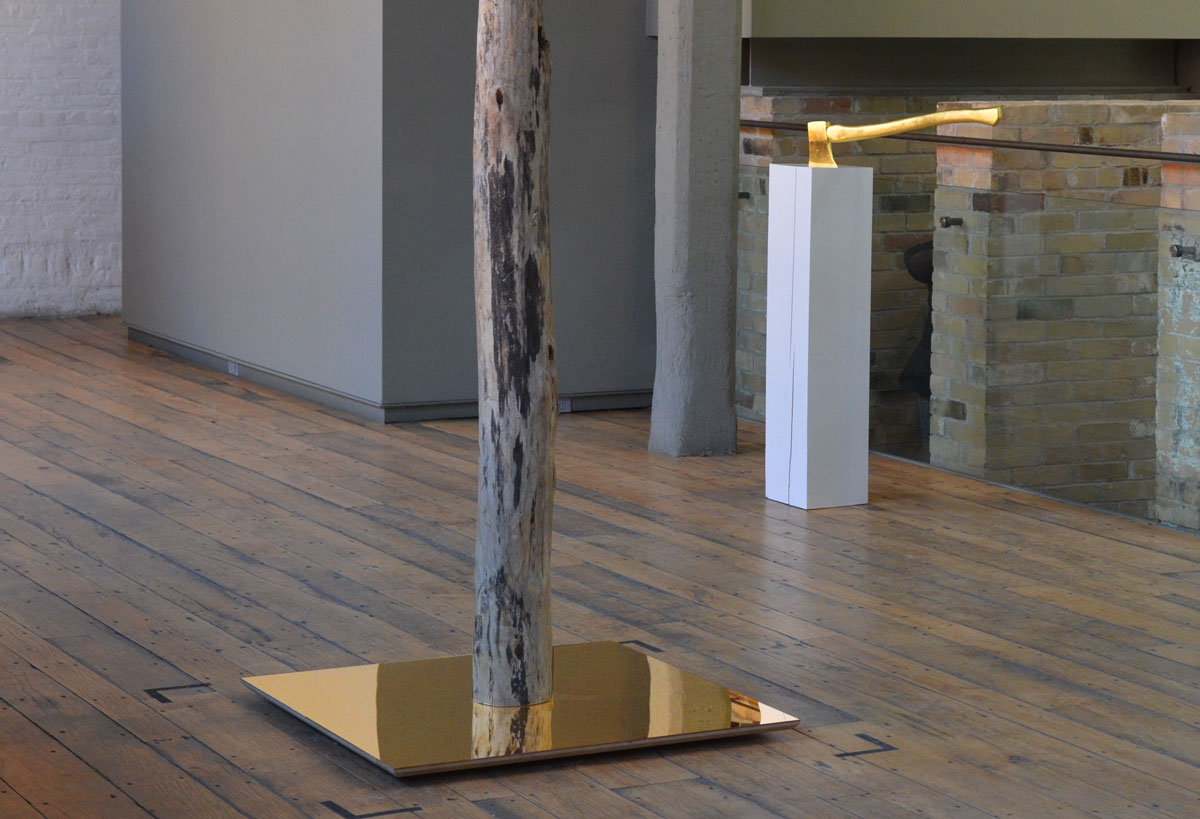
below: A gold axe.  With its blade in a column, on a pedestal?  That’s not a passive positioning of the axe, i.e. it’s not just lying around.  Someone has swung it.
Axe as a symbol of the working class?  Juxtapositioned with gold, a symbol of money?

picture taken inside an art gallery - a tree trunk stands in the middle of a gold toned mirror, in the background, a gold plated (or gold colured) axe with its blade in the top of a white rectanguar column

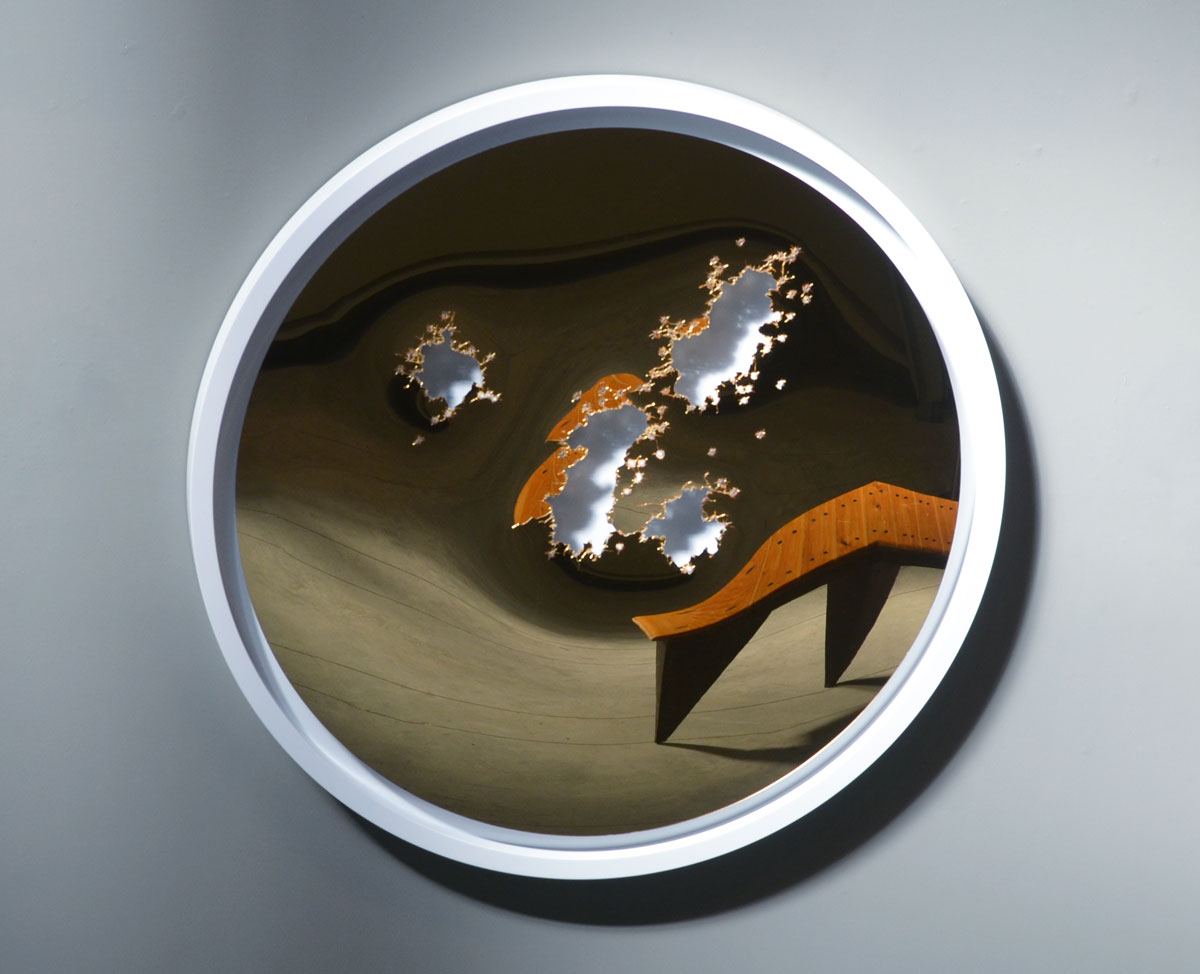
below: A couple of the pieces were mirrors. But they were mirrors with a difference – slightly concave in shape, with a hint of gold, and marred by ragged shaped holes.  The resulting reflections are distorted and flawed.

an artwork by Brendan McNaughton of a slightly concave mirror but with a few torn holes in it. A bench is reflected in the mirror but because the mirror isnt't flat, the bench is distorted.

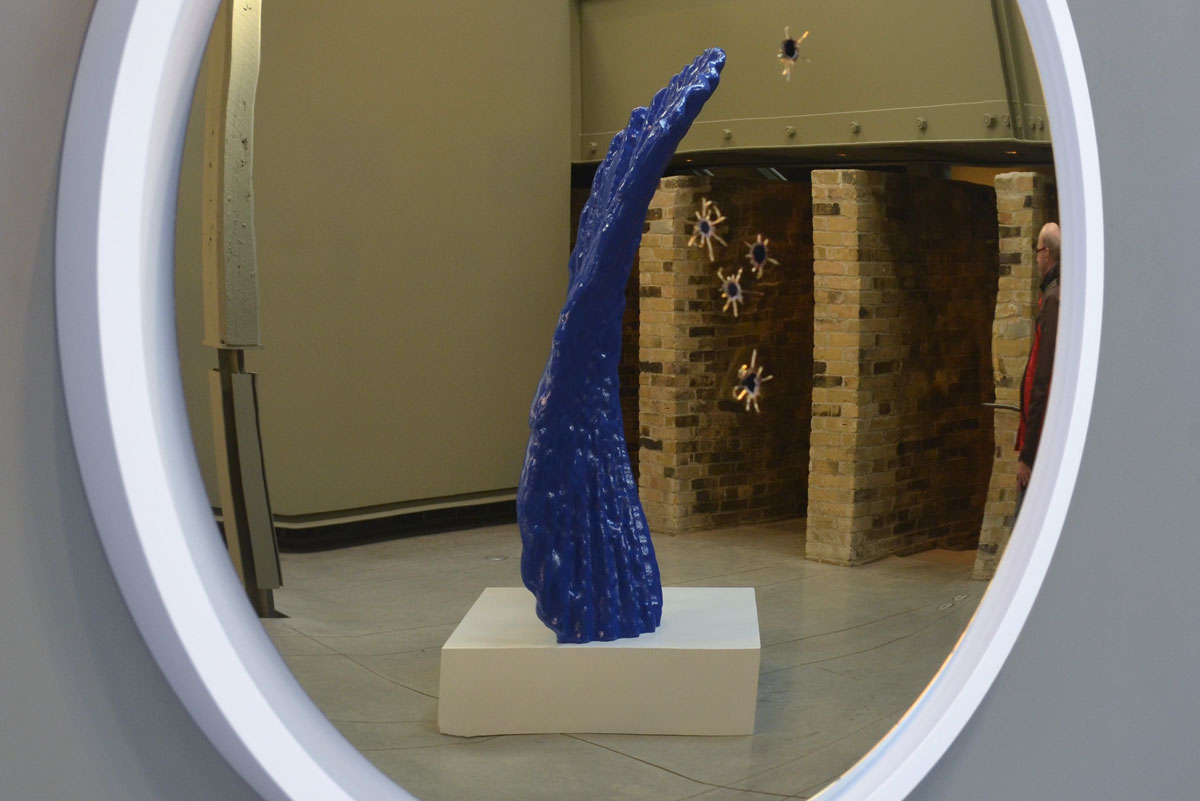
below: ‘Blue Chip’ a sculpture by Brendan McNaughton as viewed through one of his mirrors.  The expression ‘blue chip’ has become synonymous with high quality stocks, usually ones from the New York Stock Exchange.   Originally the expression meant stocks with higher prices because, if the story is correct, blue chips in poker are traditionally associated with the highest value.

Blue Chip, a sculpture by Brendan McNaughton, as viewed through an oval shaped mirror which is actually another art piece by the same artist.

below: The colour gold is very prevalent in this installation as are reflective surfaces.

picture taken inside an art gallery - a tree trunk stands in the middle of a gold toned mirror, also a mirror is on the top of each trunk, in the background are four panels of wrinkled gold

below: Parts of three wrinkly gold panels. There are actually four of these reflective square panels.  They are all the same size and colour but the surface patterns are slightly different.  Once again, the reflections are distorted.  Wealth distorts your view?

three square panels of reflective gold, wrinkled, material with reflections of people in them.

below: There was a group of what appeared to be photography students visiting the gallery at the same time that I was there. As I was standing beside this piece, looking for different and/or interesting angles and reflections, one of the students remarked on how he liked it when ordinary items were used in out of the ordinary ways. He then said that he wondered if it was …. and then he paused. I finished his sentence with the word ‘art’. He laughed and said yes, but that he was always afraid to say such things out loud. I gave him permission to ask “is it art?” as loud and as often as he wanted.

picture taken inside an art gallery - a tree trunk stands in the middle of a gold toned mirror,

picture taken inside an art gallery - a tree trunk stands in the middle of a gold toned mirror,

Installation ends May 1st

There is a railway bridge, just west of Caledonia Rd where the GO line to Aurora passes over St. Clair West.
On the north side of the underpass is a mural in black, white and grey tones.

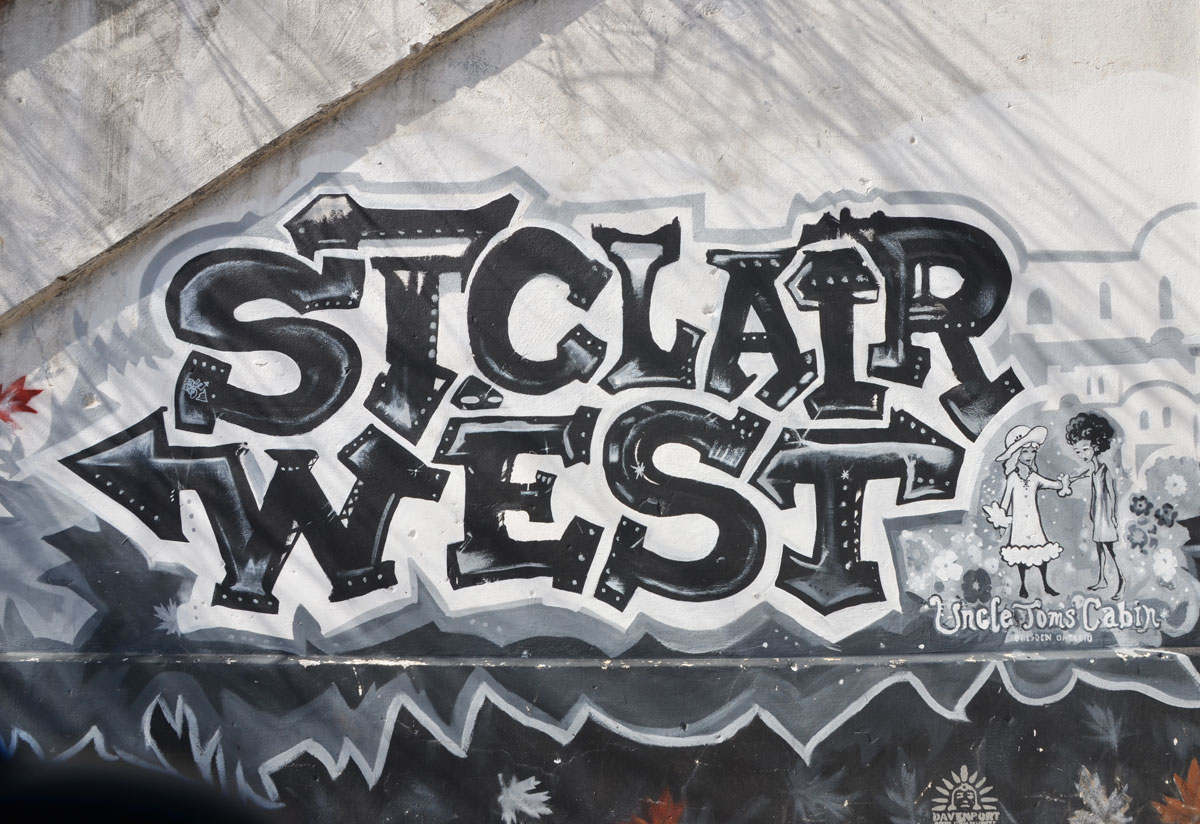
mural in black, white, and grey about the first railway in Ontario, 1853, that was built here, and where the railway still runs as the GO line to Aurora - the words St. Clair West in large letters

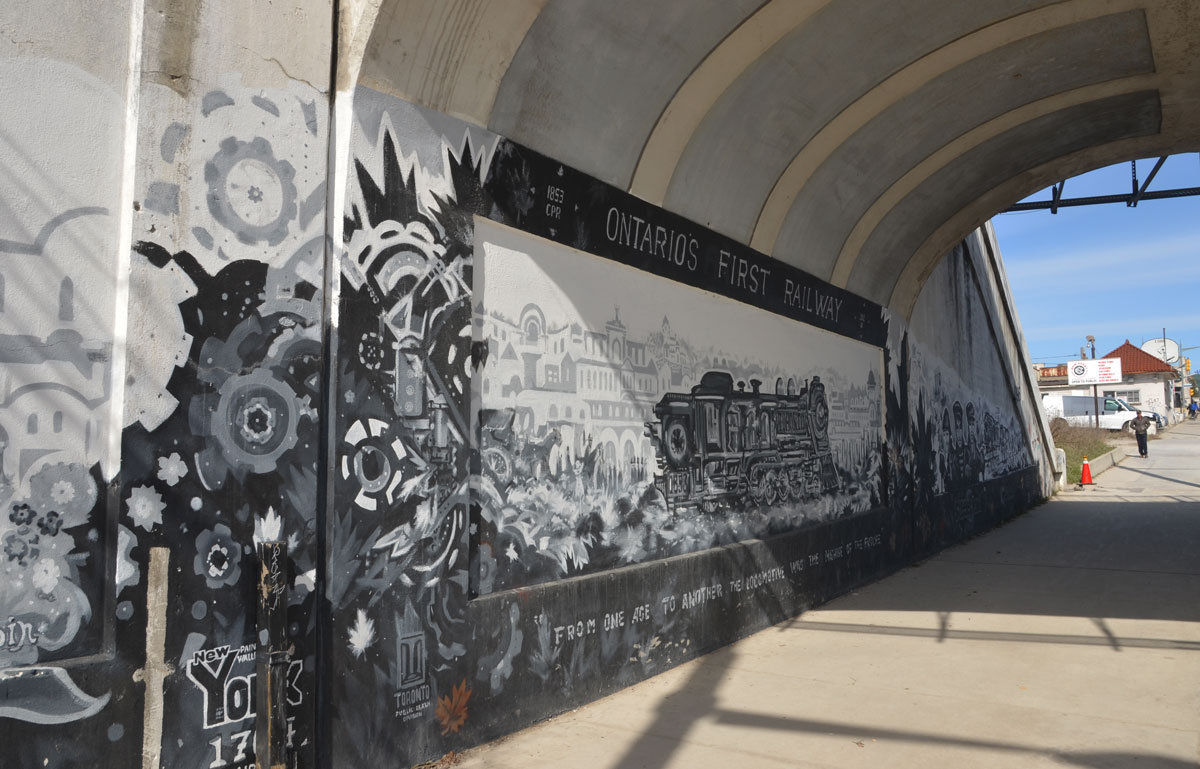
The theme of the mural is “Ontario’s first railway” as this railway line has been in operation since 1853 when the Ontario, Simcoe and Huron railway was built here.

mural in black, white, and grey about the first railway in Ontario, 1853, that was built here, and where the railway still runs as the GO line to Aurora - a photo of the mural from across the street, with its three parts, the words St. Clair West on the left, the locomotive in the middle and the railway workers on the right
The first locomotive built in Canada was a steam powered engine built by the Toronto Locomotive Works, a company founded by James Good.  Named “Toronto”, it was finished in April 1853 and in mid-May 1853 it pulled a short (4 cars) train from downtown Toronto 30 miles north to Machells Corners (now Aurora).   Service on the Ontario, Simcoe and Huron line had begun!

below: “From one age to another.  The locomotive was the machine of the future.”
mural in black, white, and grey about the first railway in Ontario, 1853, that was built here, and where the railway still runs as the GO line to Aurora - a painting of an old locomotive with the words 'Ontario's First Railway' on the top of the mural and the words: "from one age to another. The locomotive was the machine of the future. " at the bottom

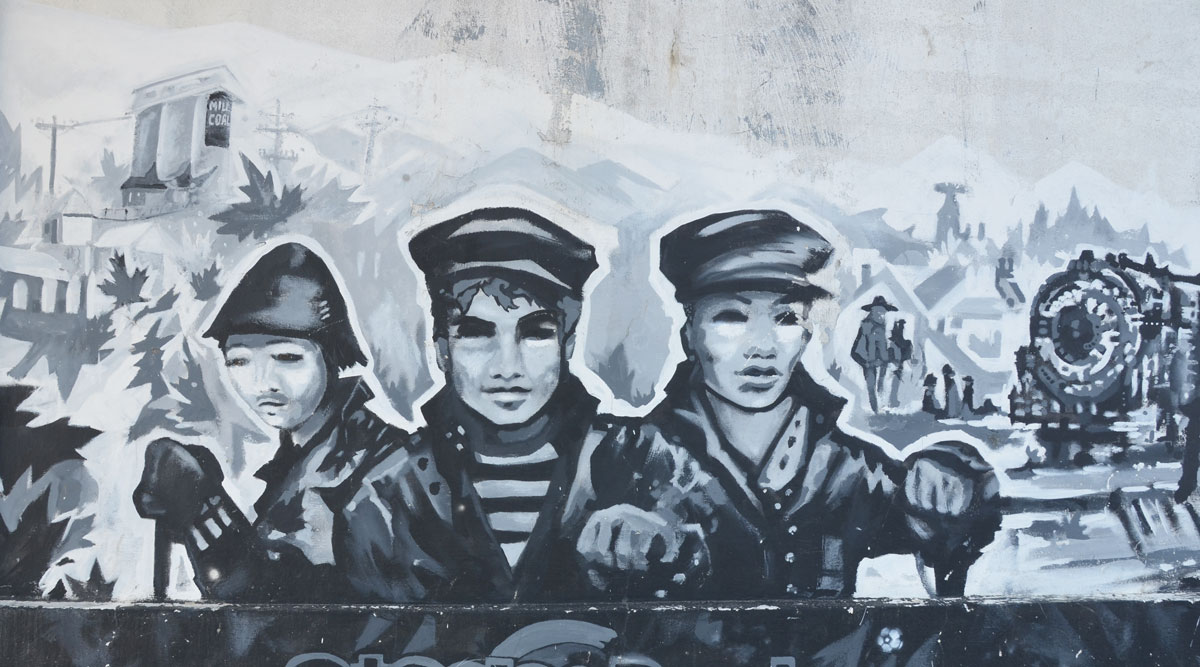
mural in black, white, and grey about the first railway in Ontario, 1853, that was built here, and where the railway still runs as the GO line to Aurora - three railway workers in jackets and caps

The mural was painted in September 2012 by Marcelo Pinero, Aelwynn Swanson, and Pia Ferrari from the Davenport Arts Community.

blog_mural_first_railway

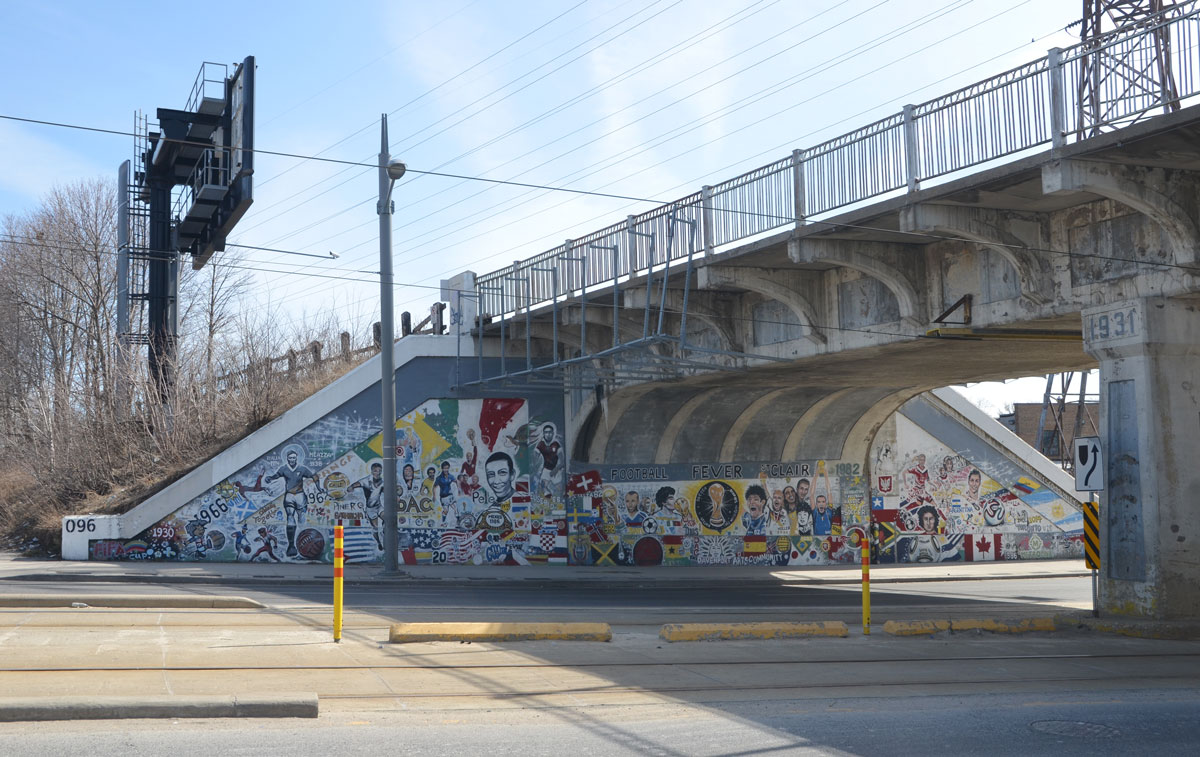
There is also a mural on the south side of the underpass; it has a soccer theme.

mural on a railway bridge underpass that has a soccer theme. Flags of different countries, soccer players, words,

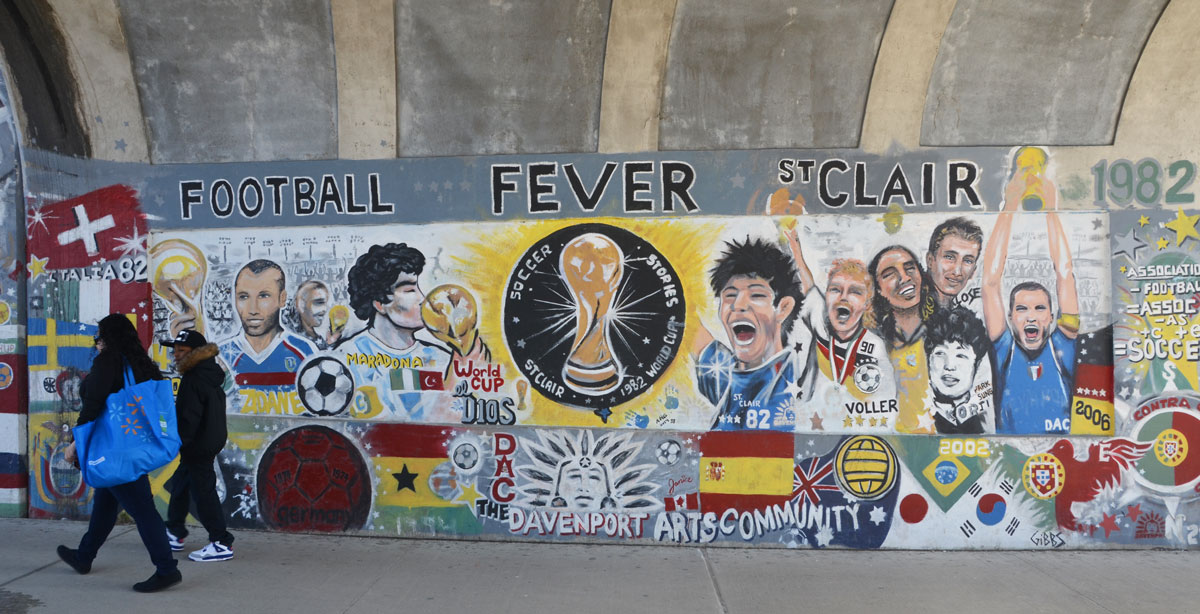
It too was painted by Davenport Arts Community.

part of a mural with a soccer theme with words that say Football Fever St. Clair 1982. also with pictures of football players and flags from different countries.

part of a mural with a soccer theme with words that say Football Fever St. Clair 1982. also with pictures of football players and flags from different countries.

below: Silverthorn Sunrise mural painted late in 2012 by Marcelo Pinero and Aelwynn Swanson.  It is painted on the side of Whiteside Pharmacy which is on the NE corner of St. Clair and Silverthorn.   Silverthorn was also the name of this neighbourhood prior to 1998 when it was amalgamated into the City of Toronto.

Silverthorn Sunrise mural by the Davenport Arts Community, with the word Silverthorn, a sun rising over a bridge while a new TTC streetcar passes under the bridge, the words "shop St. Clair". The mural is on the side of a red brick building, beside a pharmacy.

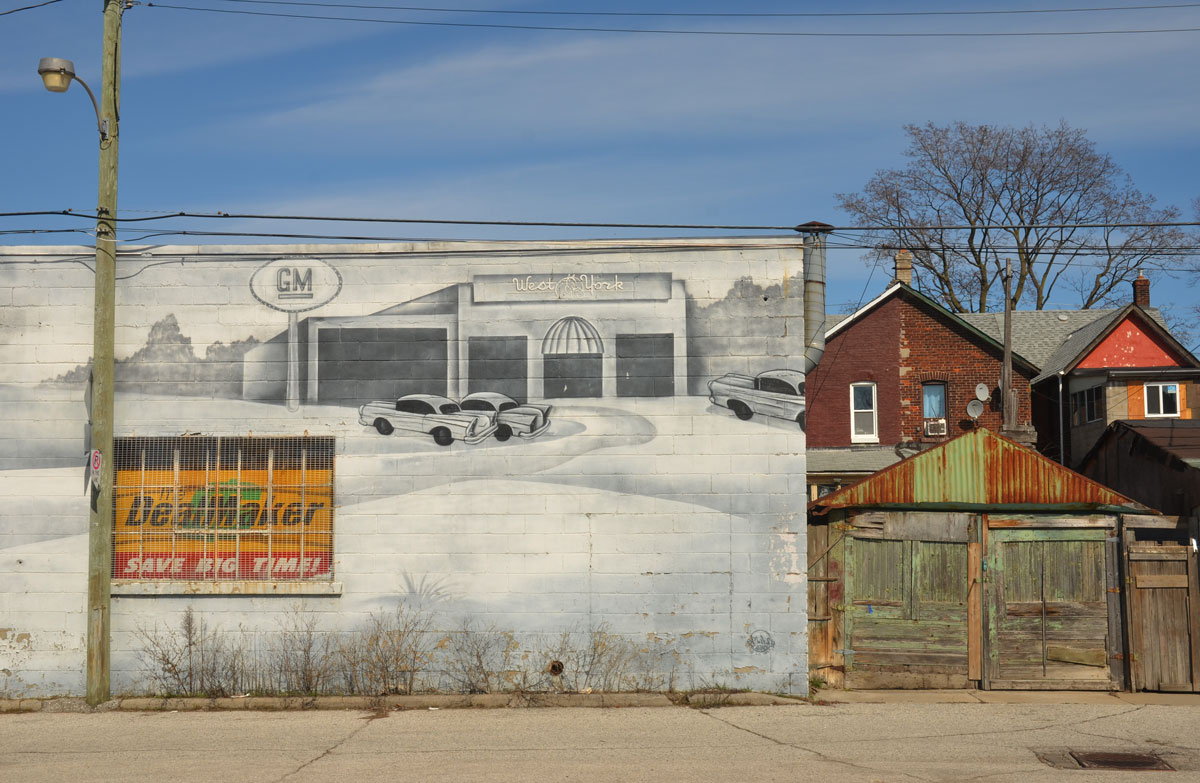
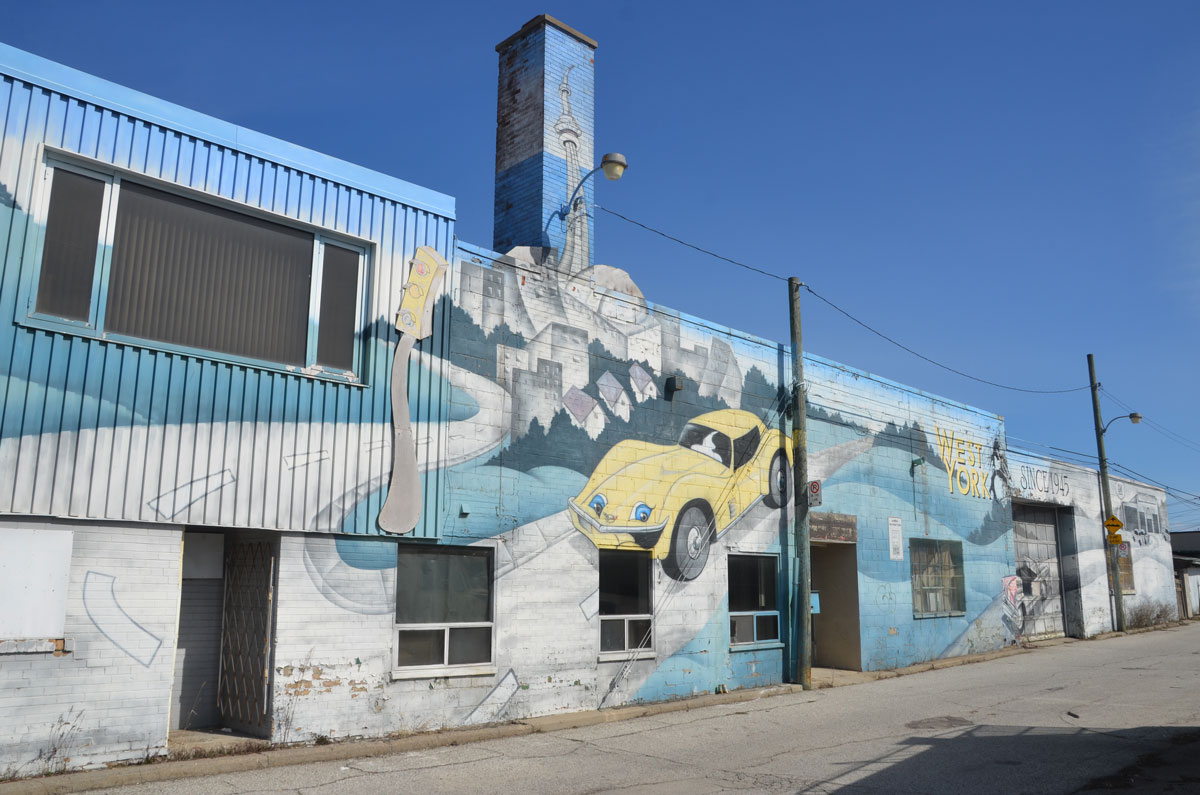
And last, a mural that is actually on the side of business, West York Motors, which is located on St. Clair West between Ford and Osler streets.
It was painted by Splash Murals.

mural on the side of West York motors on St. Clair West - a view of the mural from across the almost empty parking lot.

mural on the side of West York motors on St. Clair West near Osler - south end of the mural showing cars parked in front of a garagethe backs of two houses are also in the picture,

mural on the side of West York motors on St. Clair West - looking down the length of the mural including the narrow chimney on which the CN TOwer is painted.

mural on the side of West York motors on St. Clair West - the part of the mural with the words "West York since 1945" also an old convertible with its door open and top down.

mural on the side of West York motors on St. Clair West - a yellow sports car is painted on the wall near the entrance to the building

more information about the Davenport Arts Community

A walk along Queen Street East from Broadview to Greenwood.

A no smoking sign written on a piece of paper that is upside down, as viewed from the other side of the window. Looking out onto a patio.

below: Welcome to Riverside, mural at the corner of Queen and Grant streets featuring the sign on the Queen bridge as it crosses over the Don River.

People walking past the intersection where there a mural for Riverside area of Toronto, TTC streetcar in the mural. It is on the upper floor of a two storey brick building.

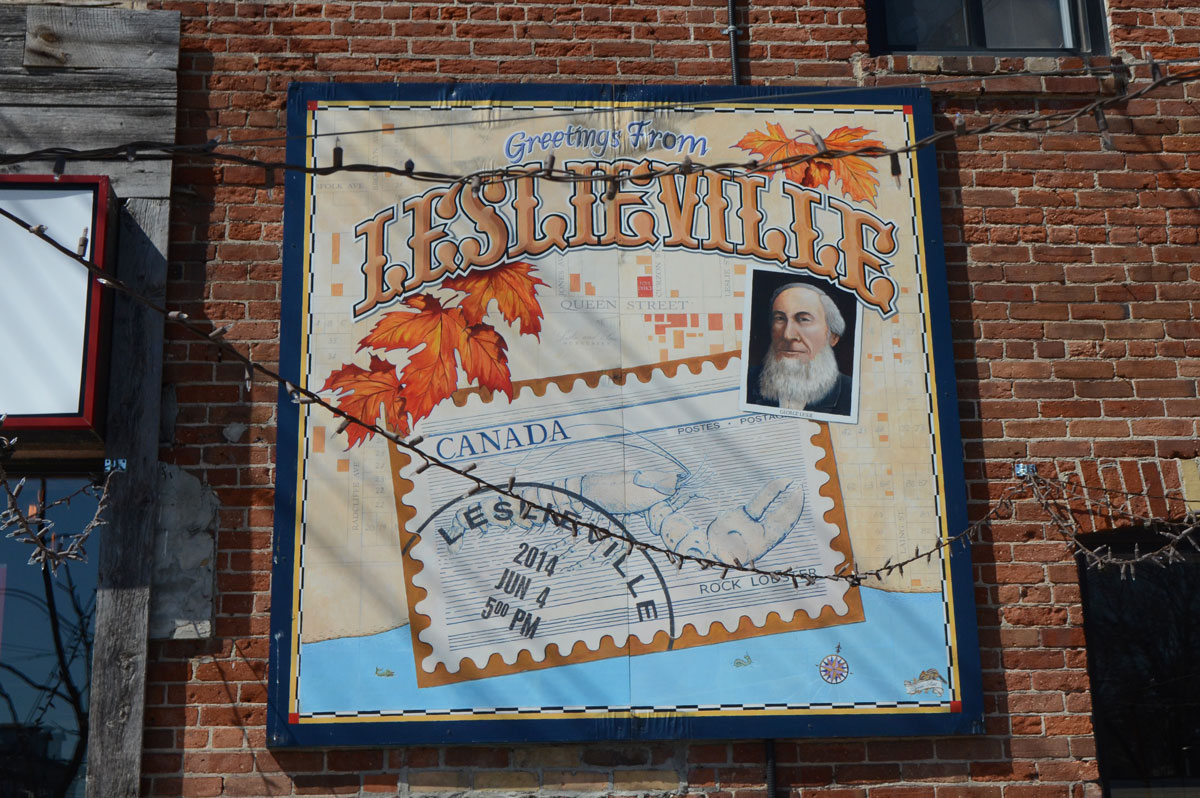
below: Farther east on Queen Street, at Curzon,  there is this ‘Greetings from Leslieville’ mural.
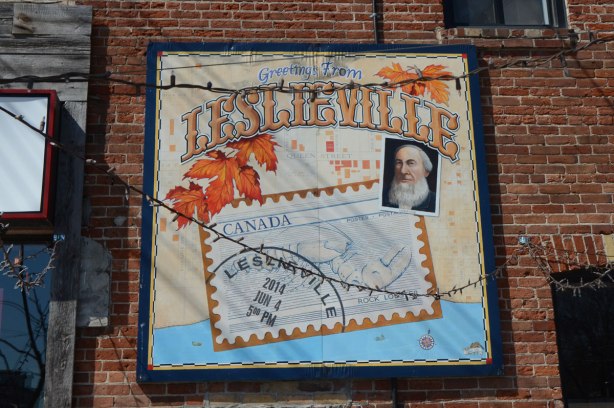
One of the Leslieville murals. Greetings from Leslieville with a postcard on it.

There are many interesting little stores on this stretch of Queen Street.
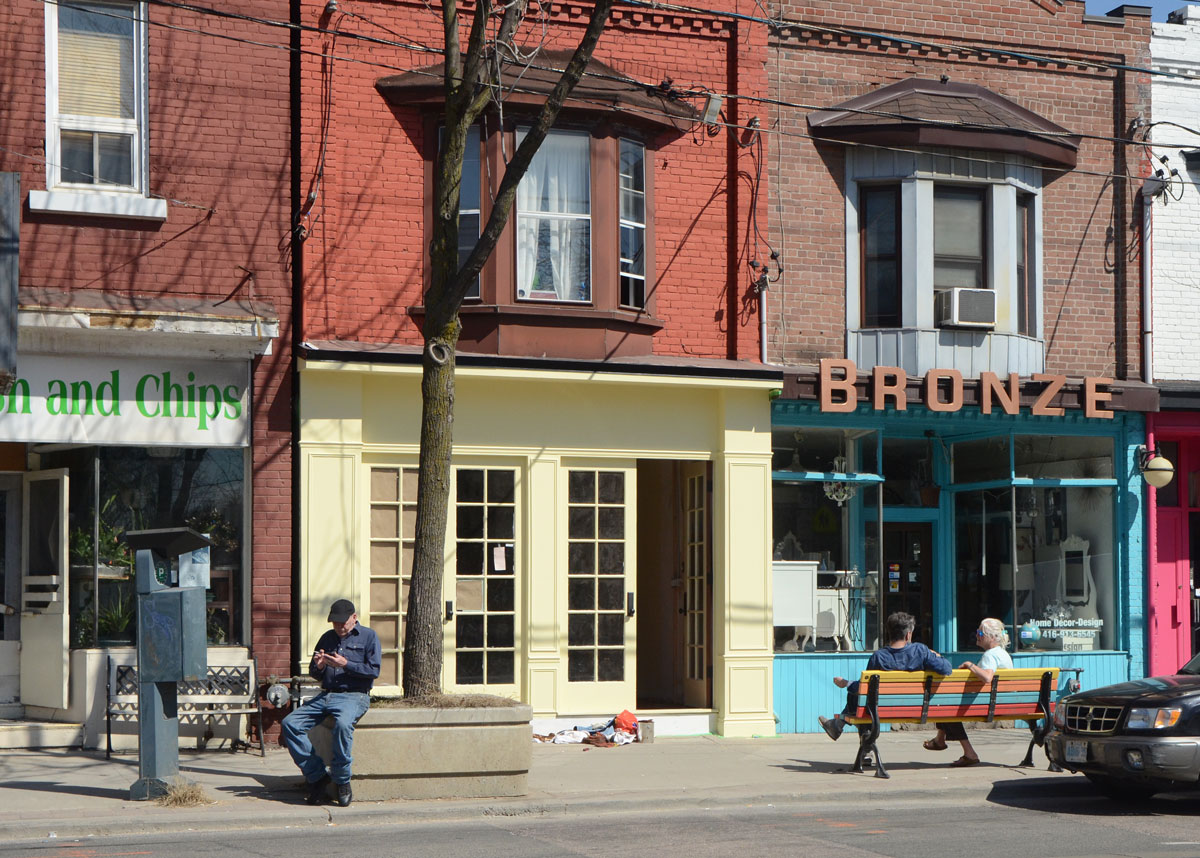
All the benches have been painted in cheerful colourful stripes.
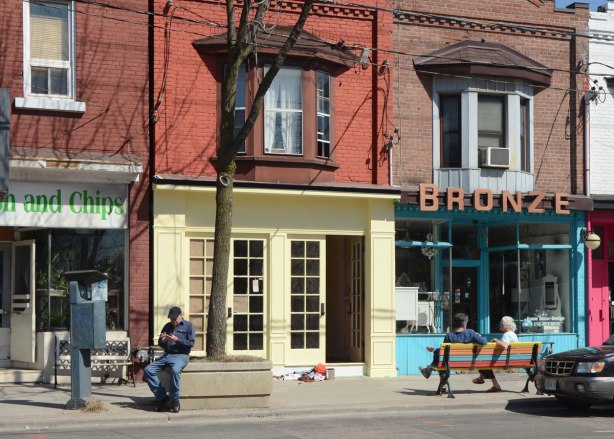
Looking across the street at a man sitting on the edge of a concrete planter for a tree as well as a multicoloured striped bench with two women sitting on it. They are in front of two storey brick buildings with stores on the bottom level and apartments on the top. One of the stores is Bronze.

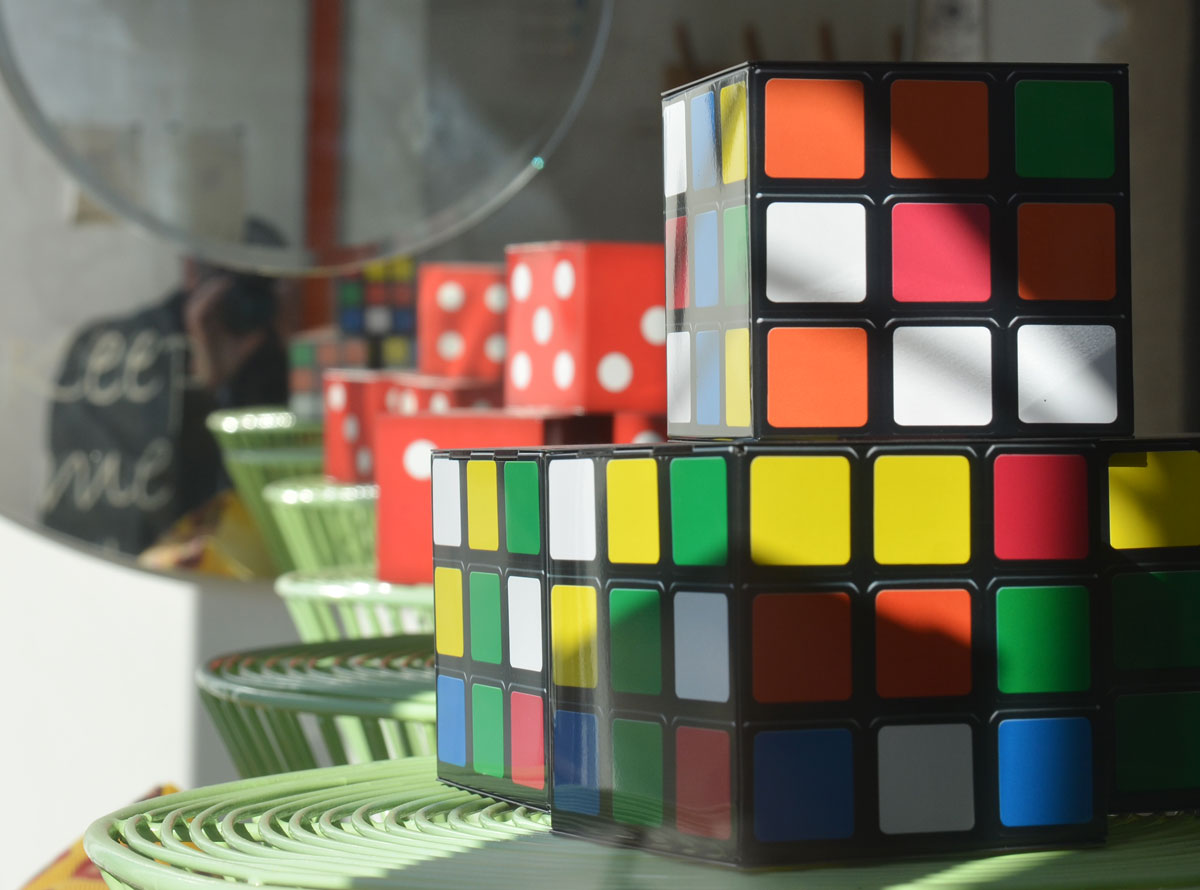
Rubiks cubes and large red and white dice in a store window, some real and some reflected in a a mirror on the wall.

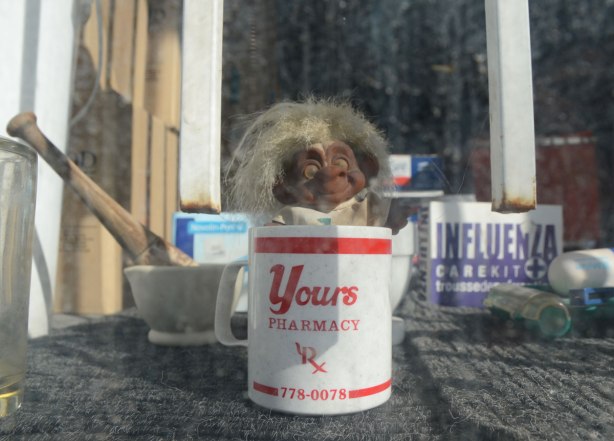
looking into the window of a pharmacy, a toy troll is in a white mug. The mug has red lettering - Yours pharmacy. Also a mortar and pestle in the window along with a box with medicines for influenza

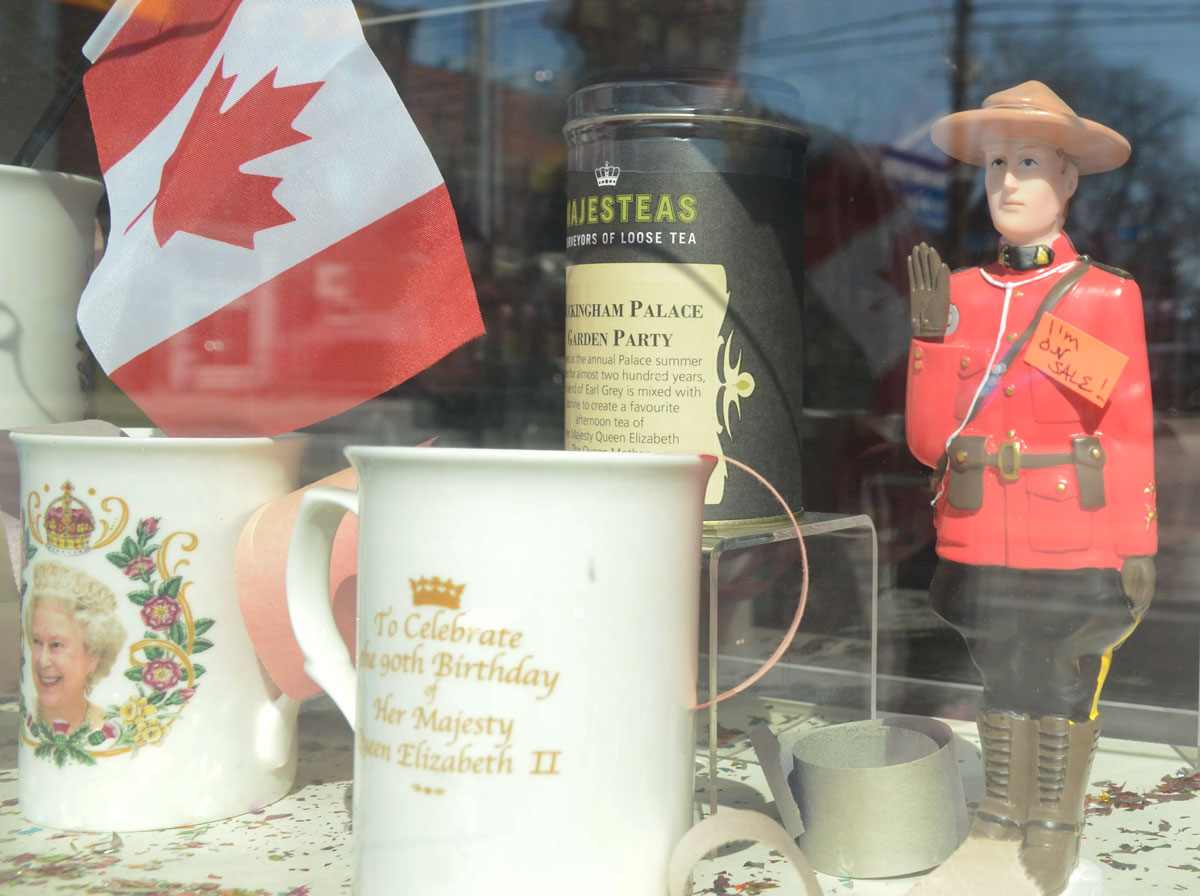
below: On the 21st of April (yesterday), Queen Elizabeth II celebrated her 90th birthday.
A number of stores and restaurants had displays in her honour.

items in a store window. A Canadian flag, a mountie figurine that waves, two mugs featuring Queen Elizabeth and a container of tea.

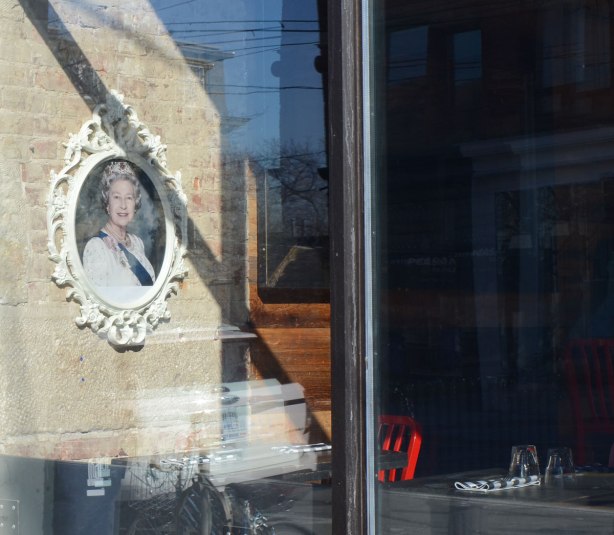
A picture of Queen Elizabeth hangs on a wall in a cafe, seen through the window with reflections of the sky. There are red chairs in the cafe

Queen Street East was developed as long ago as the mid 1800’s and remnants of various decades can be found as one explores the area.
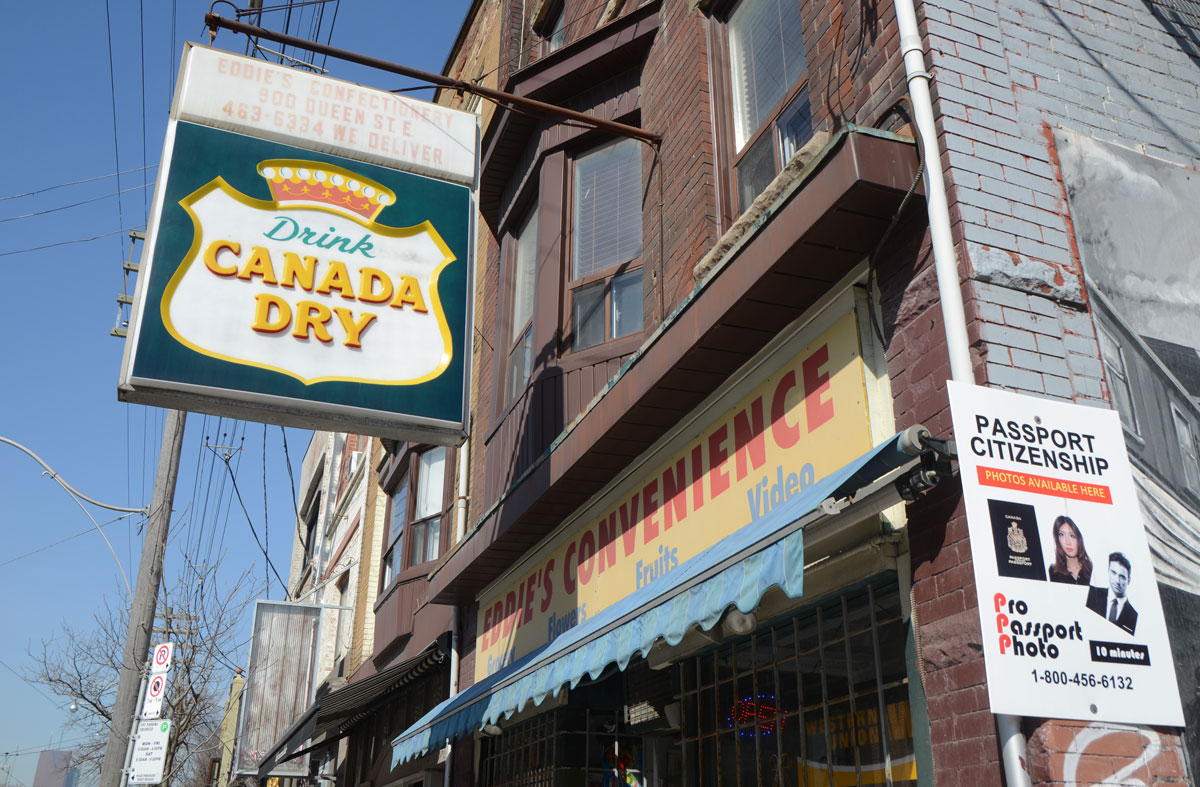
below: … details such as this fading Canada Dry sign.  The formula for Canada Dry ginger ale was developed in the early 1900’s by John J. McLaughlin, of the same McLaughlin family whose early automobile factory led to the start of General Motors.  This ginger ale was patented in Toronto in 1907.  Usually the words ‘Canada Dry’ are written in red, not yellow.   Is there a time when Canada Dry used yellow lettering?

An older Canada Dry advertisement sign hangs over the entrance to Eddies Convenience Store on Queen St East.

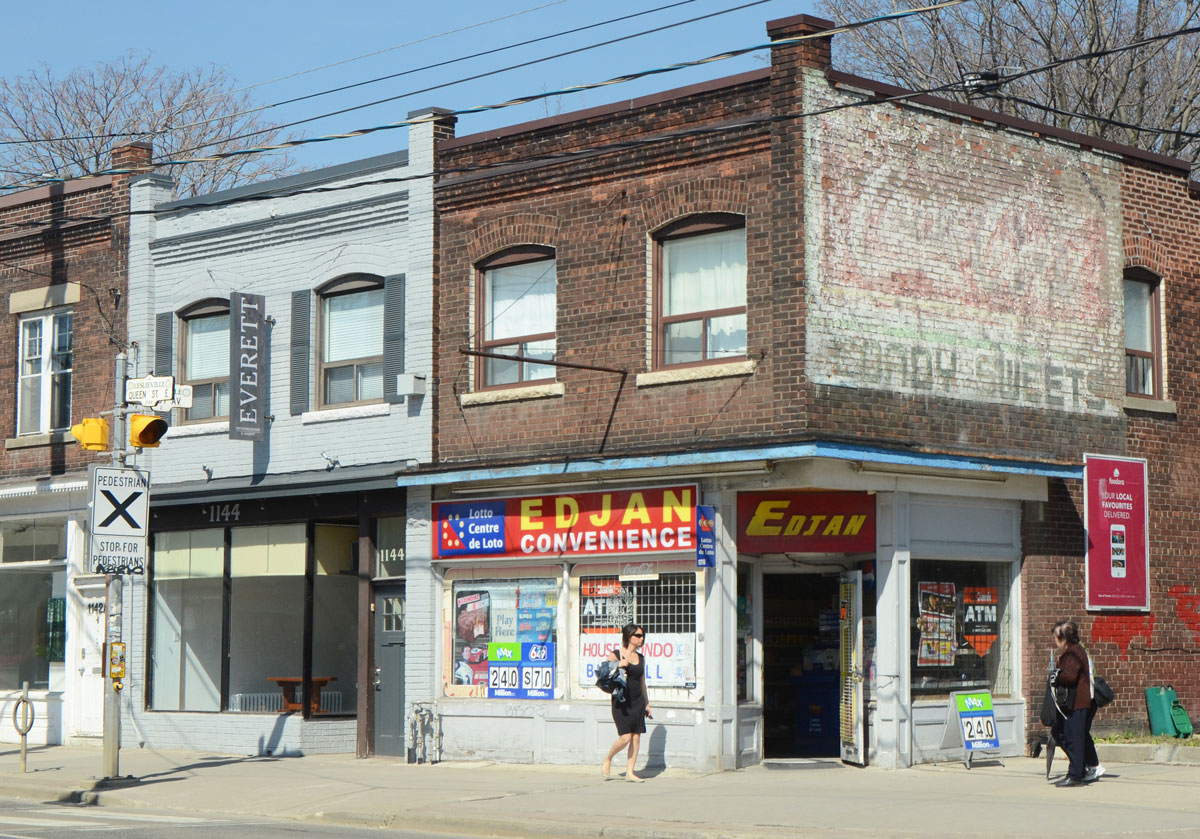
below:  At the corner of Queen and Coady there is also a ghost sign for Coady Sweets as well as an advertisement for Coca-Cola.

On a corner, Edjan Convenience Store with people walking past it. On the side of the upper floor of the two storey brick building is a ghost sign advertising coca cola and Coady Sweets. At the corner of Coady and Queen St. East in Leslieville Toronto
  below: Call it luck – even a vintage car drove past while I was there.
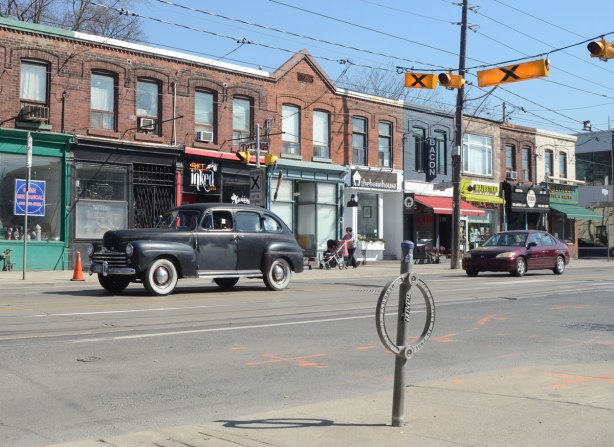
A black vintage car drives by on Queen St East

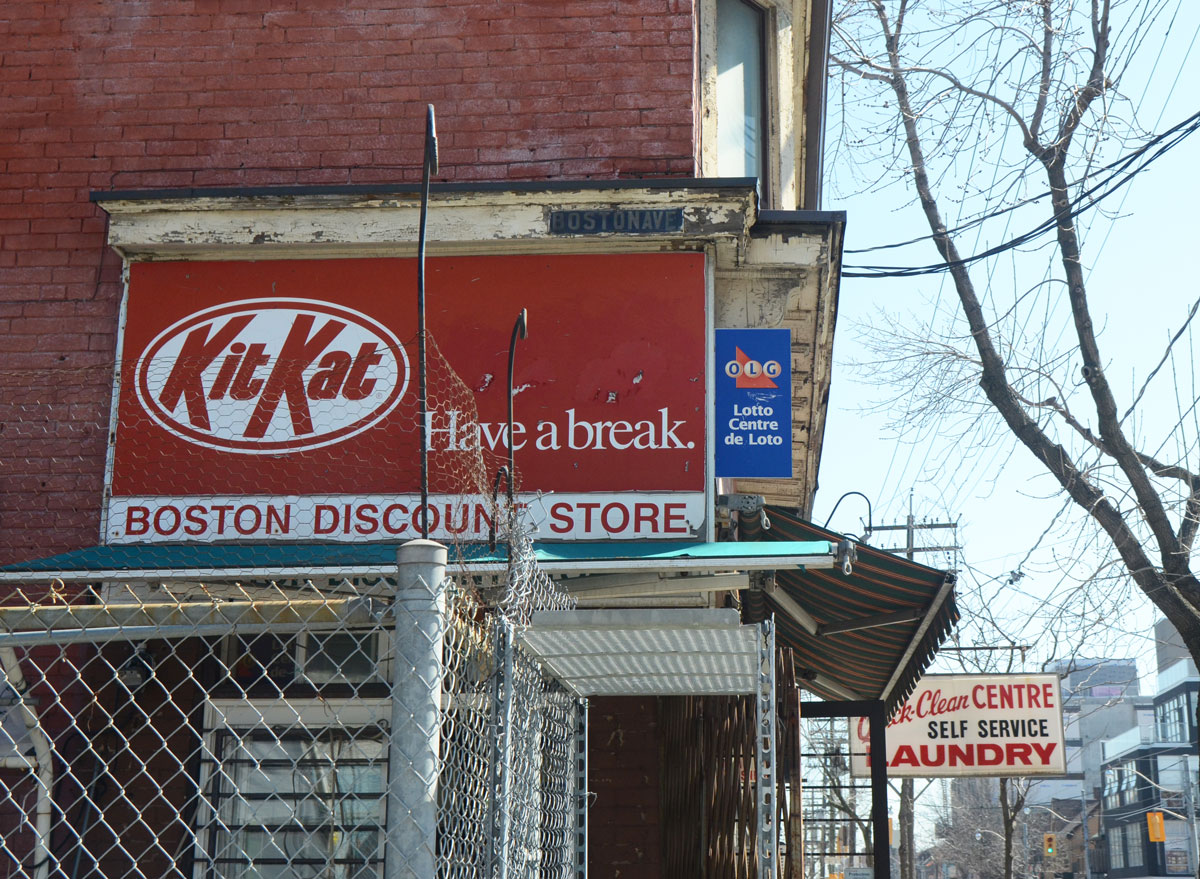
below: An old KitKat advertisement on the side of Boston Discount Store.  If you look closely, there is also an original Boston Ave street sign at the top right of the KitKat ad.

Side of a convenience store with an ad for KitKat, have a break, is painted on the side. Boston Discount Store on the corner of Queen St. East and Boston Ave

below: Even older are the buildings in the mural of Queen St. East circa 1926.  I am not sure if this an accurate depiction of a particular stretch of Queen Street.  It might be interesting to do some research to find out if the picture can be retaken, 90 years later.  So far I have been unable to find out anything about a Jackson Brothers store on Queen East.

Black and white mural of historical picture of Queen St East

below:  A sign of the new, some of the new TTC streetcars are now running along Queen Street.
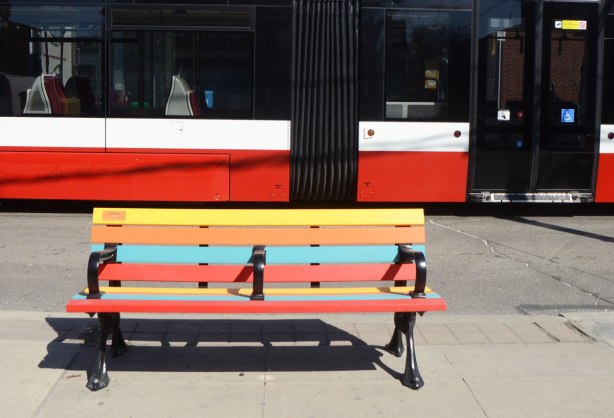
The side of a new TTC streetcar behind a striped bench on a sidewalk

below: A mural depicting Frank Zappa along with the words
“Stupidity has a certain charm.  Ignorance does not.”

A mural of Frank Zappa on the upper floor of a two storey building. Also includes the words Stupidity has a certain charm, ignorance does not.

below: Like so many places and streets in Toronto, there are condos going up here too.

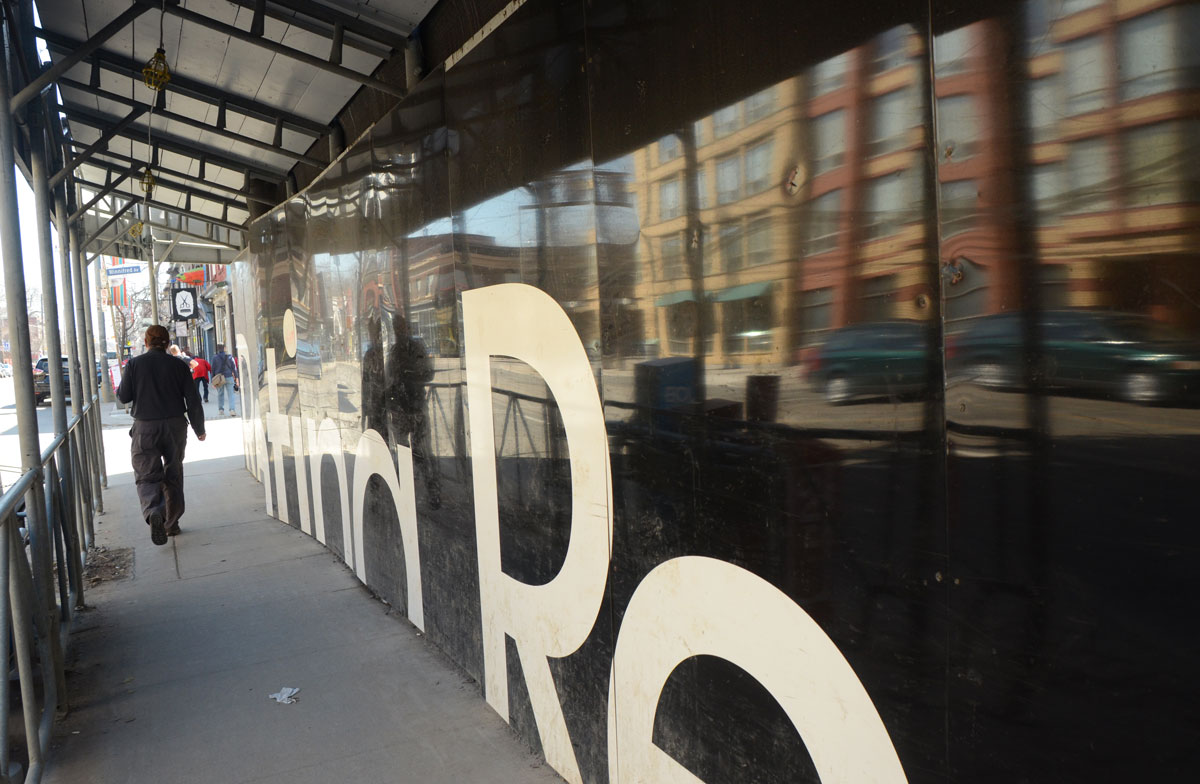
reflections in the shiny black hoardings around a condo construction site. buildings, car, people

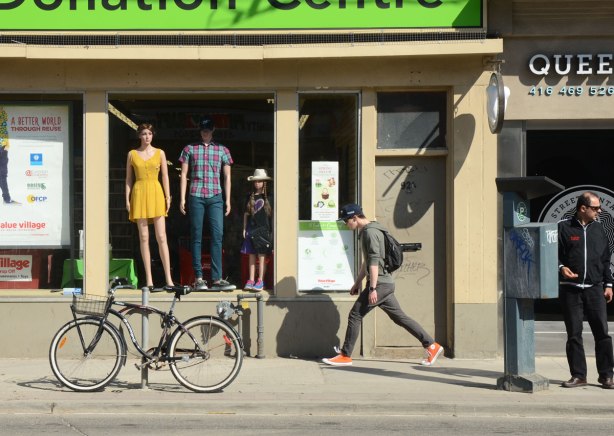
A young man walks past the Value Village Donation Center that has a large window with 3 mannequins in it. A bike is parked in front.

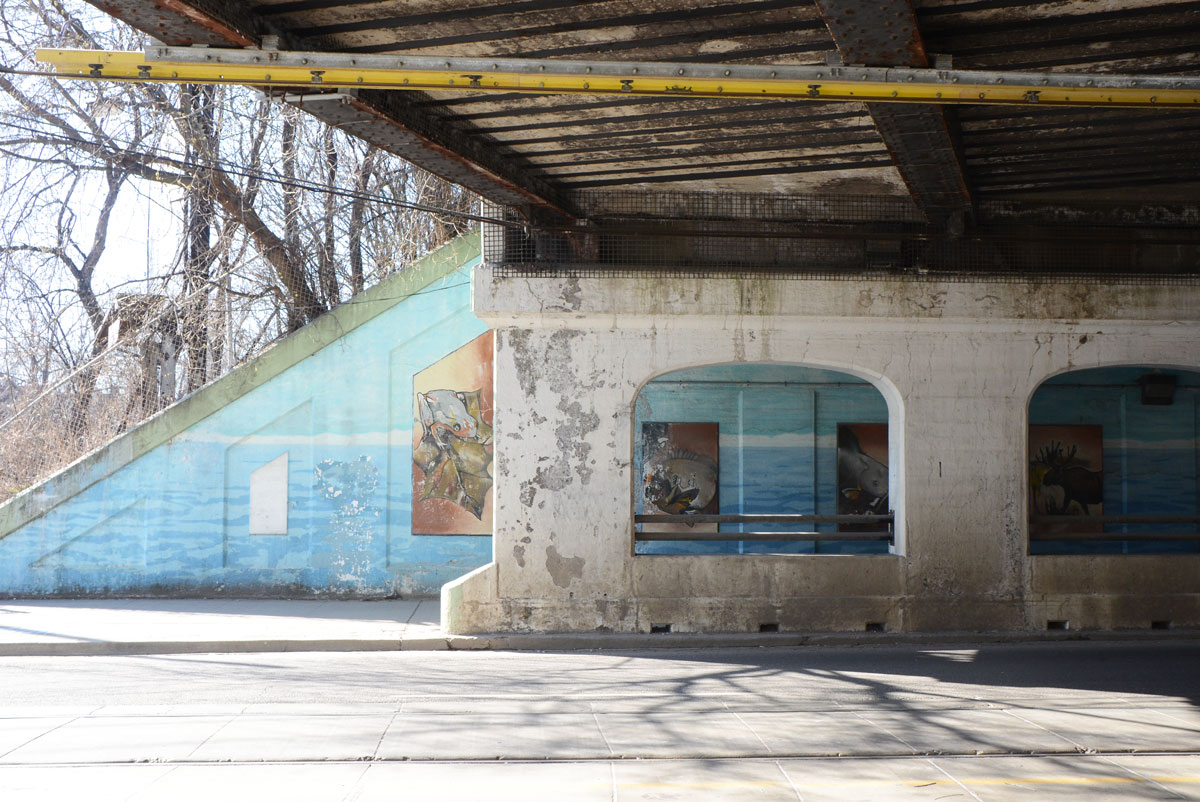
below: The railway tracks pass over Queen Street.  A number of years ago the underpass was decorated with paintings of different animals and those paintings remain in good shape.
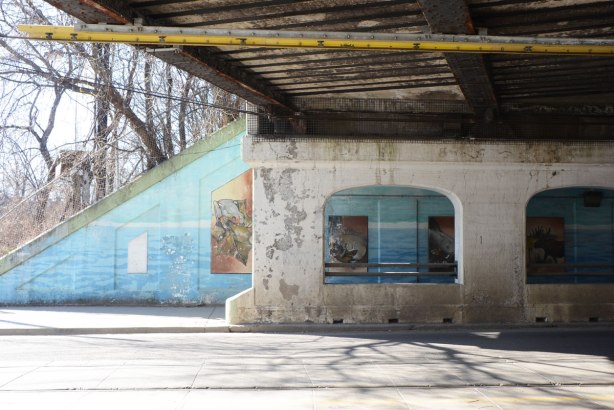
A small section of the railway bridge over Queen St. East near De Grassi. The far wall is painted light blue and there are picture of animals on it.

below: Once upon a time trains served this area.  There was a railway station here but it is long gone.

historical plaque describing the history of Riverdale train station at Queen St. East and De Grassi St in Toronto

transcription:

“In 1896, the Grand Trunk Railway opened its Queen East Station to serve Toronto’s growing east end.  Renamed Riverdale Station in 1907, the building stood here on De Grassi Street at Queen Street East.  Its dramatic turret, bay window, and a deep overhanging roof were defining features typical of small railway stations of the period.

In 1904, a streetcar collided with a freight train at the level crossing on Queen Street East, killing three people and injuring 18.  This and subsequent accidents led to the elevation of the new Union Station railway corridor above city streets and sidewalks.  The station was moved in 1927 to accommodate the new embankment for the underpass, the first of nine to be completed.  Dwindling passenger numbers during the Great Depression led to the closure of Riverdale Station in 1932 and its demolition in 1974.”

below: Looking west from under the railway bridge.
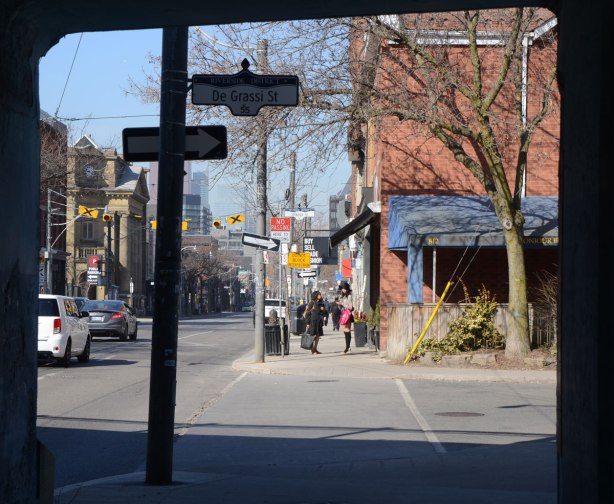
Photo taken from under a bridge, looking west along Queen St. East, cars on the street, a restaurant on the corner, and some women on the sidewalk.

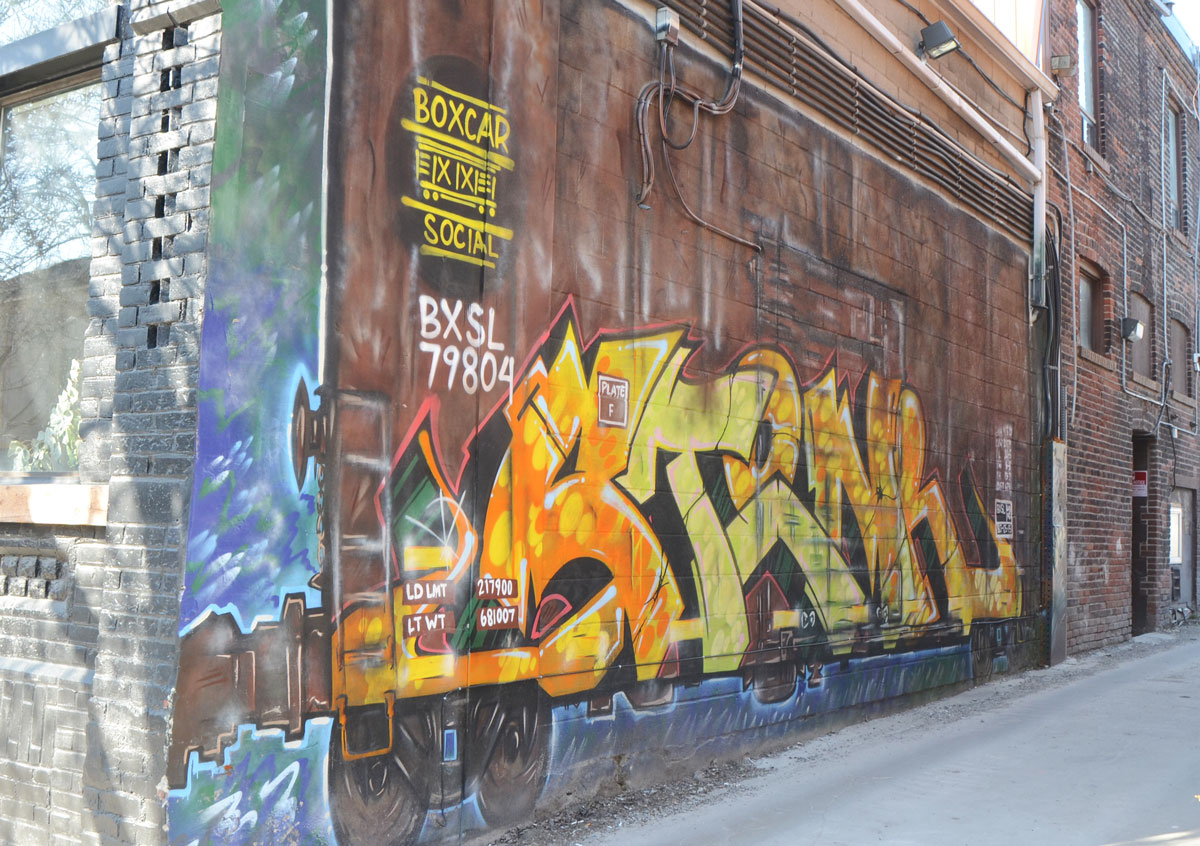
below: A train themed mural in an alley just off Queen Street.

Street art painting of a brown train boxcar, with a yellow and orange tag on it, on the side of a building in an alley.

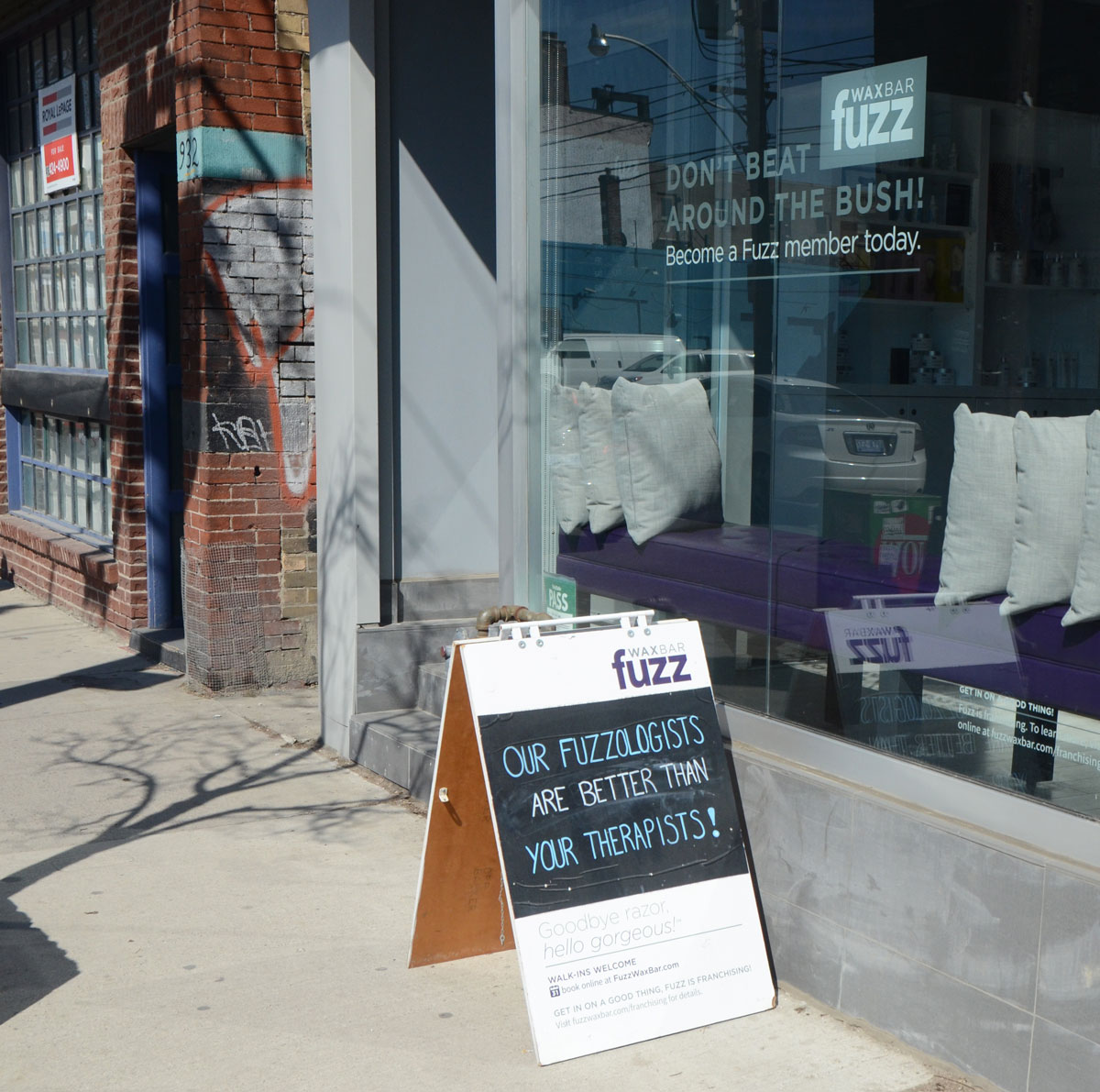
board outside Fuzz salon.

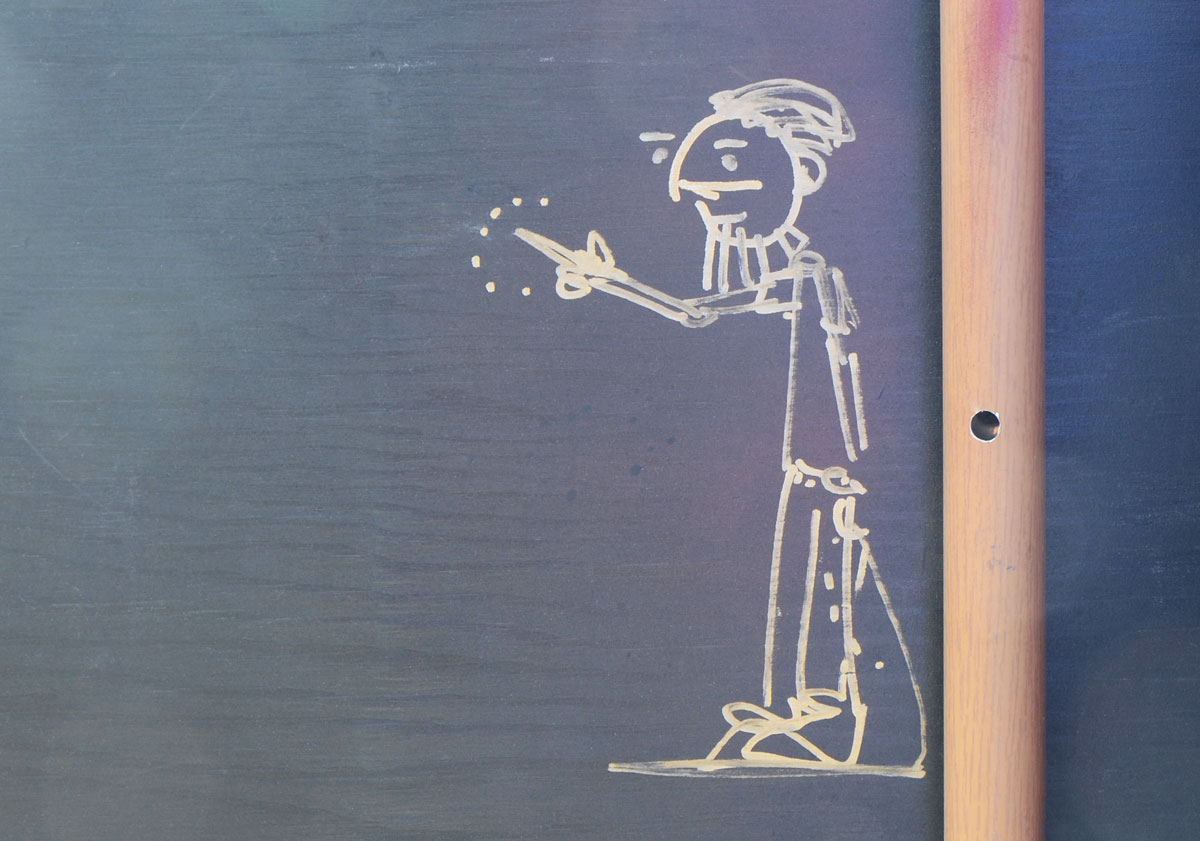
graffiti, white stick drawing of a man with a beard pointing his finger, or giving someone the finger, hard to tell

Two brick stores on Queen St East, two storey. One is the OKOK diner with a mural on the side of it that features an older version TTC streetcar.
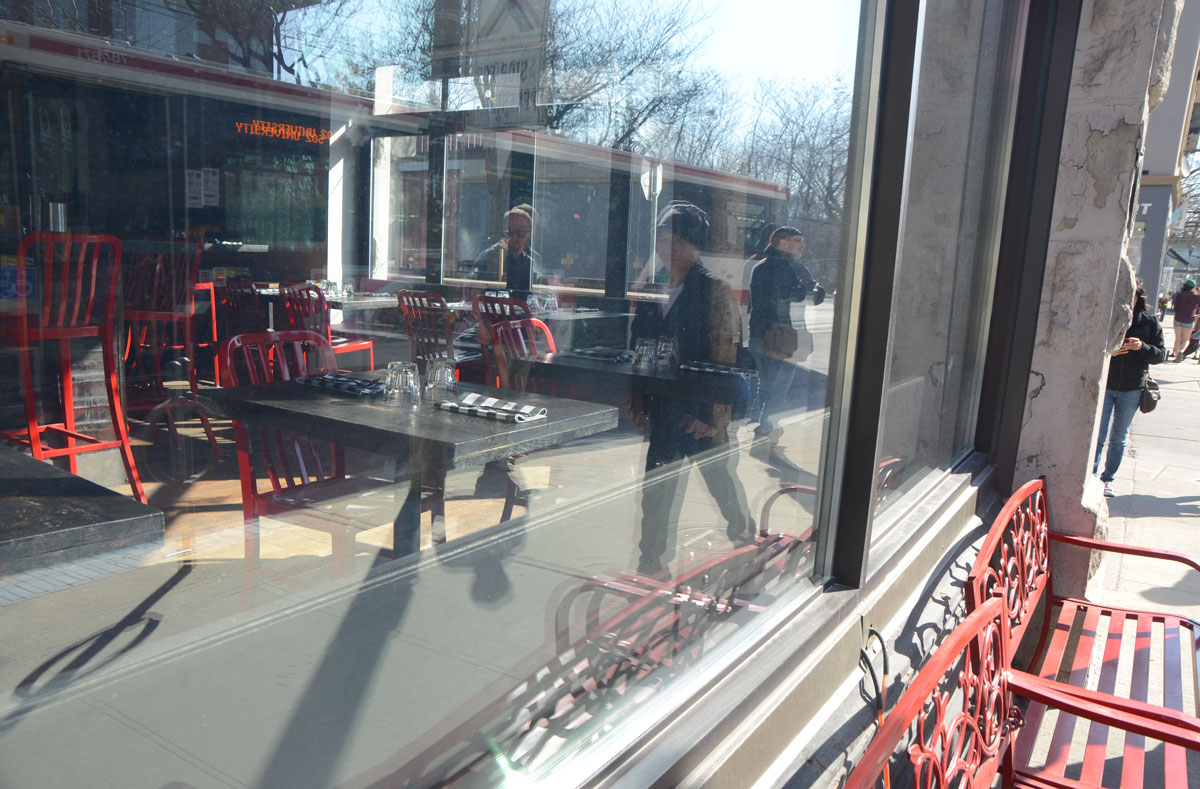
reflections in the window of a cafe. Red benches are outside the window. People, TTC streetcar

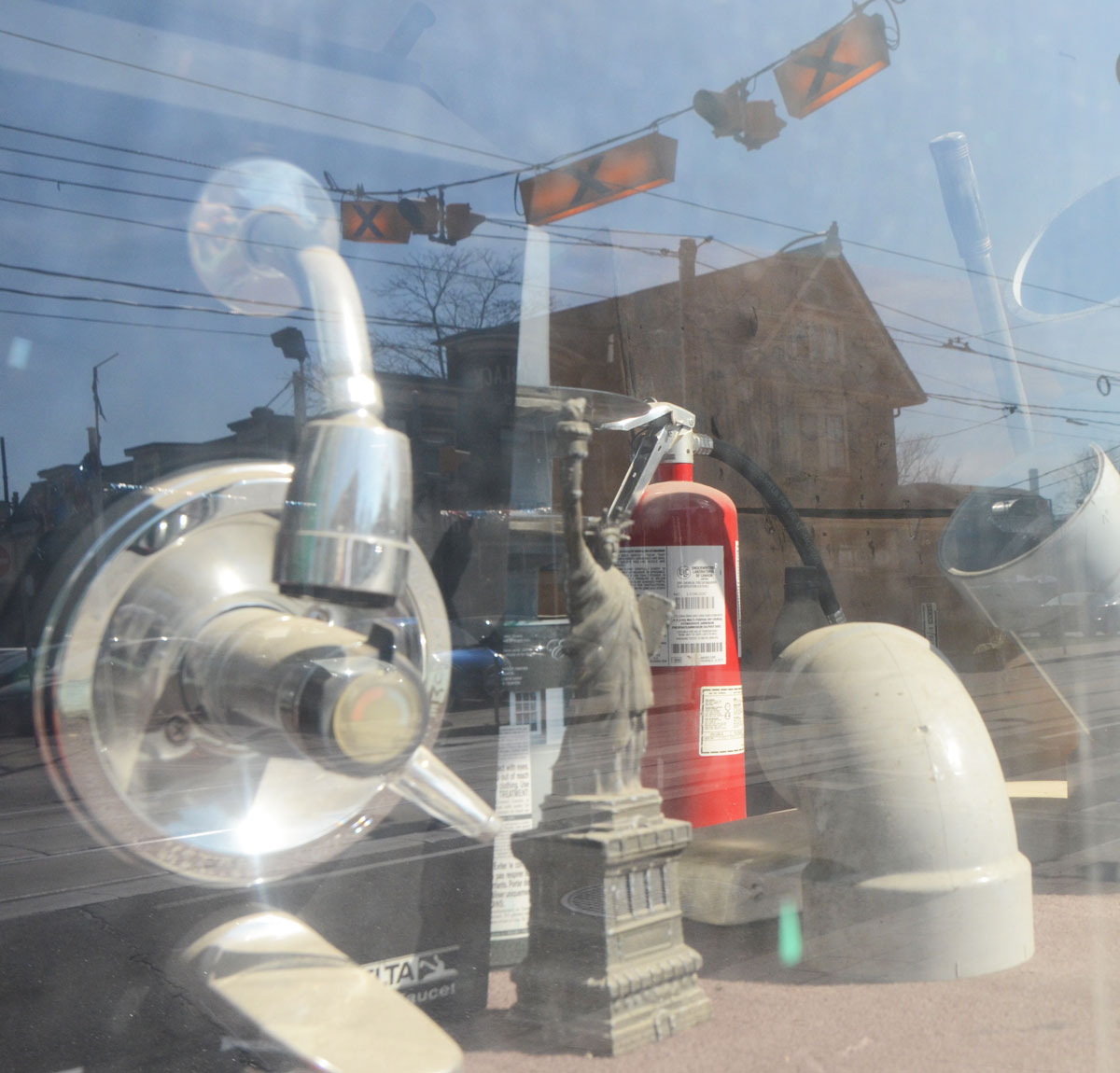
Looking into a store window. A small model of the Statue of Liberty, a fire extinguisher, a pump and some PVC pipe parts. Reflections of sky, buildings from across the street and a yellow set of lights above a cross walk.

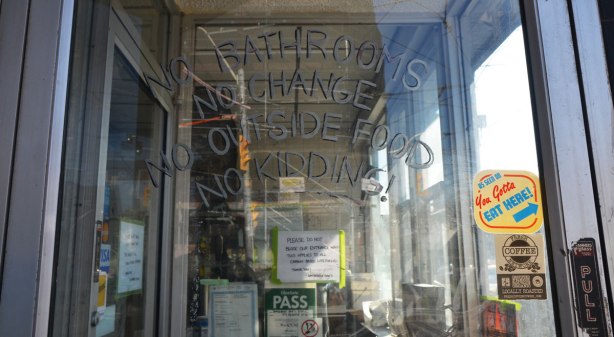
The painted sign on the door of Dangerous Dan's restaurant that says, No bathrooms, no change, no outside food, no kidding.

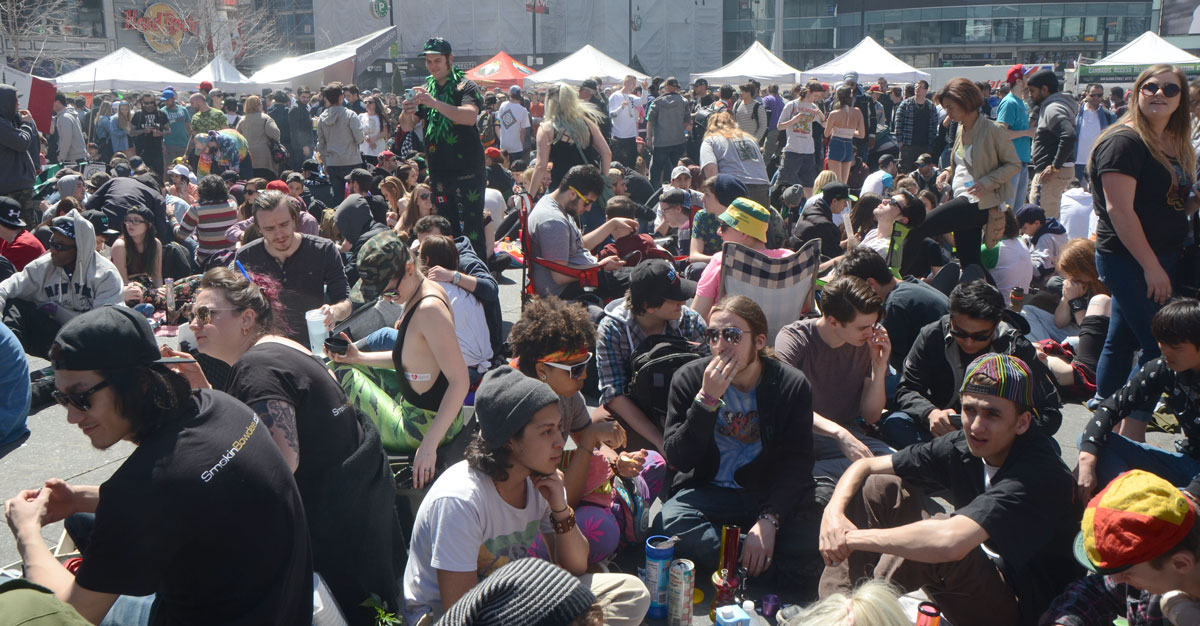
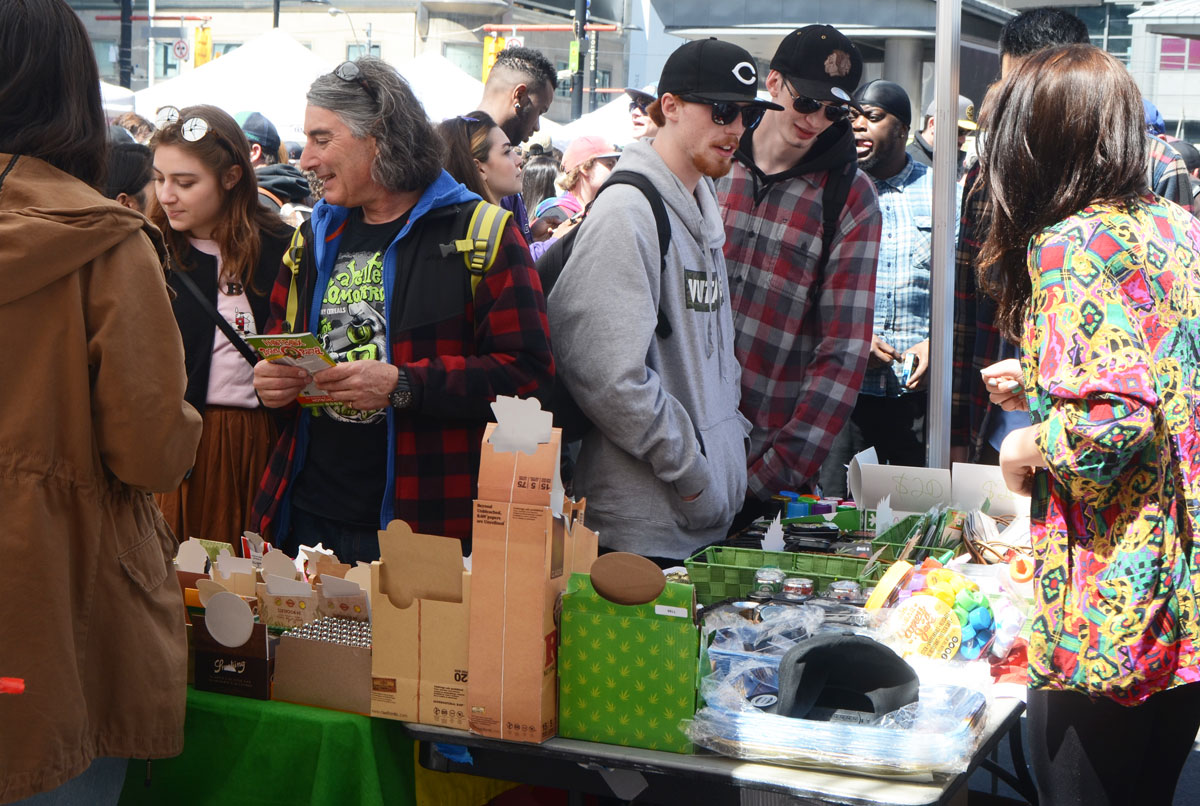
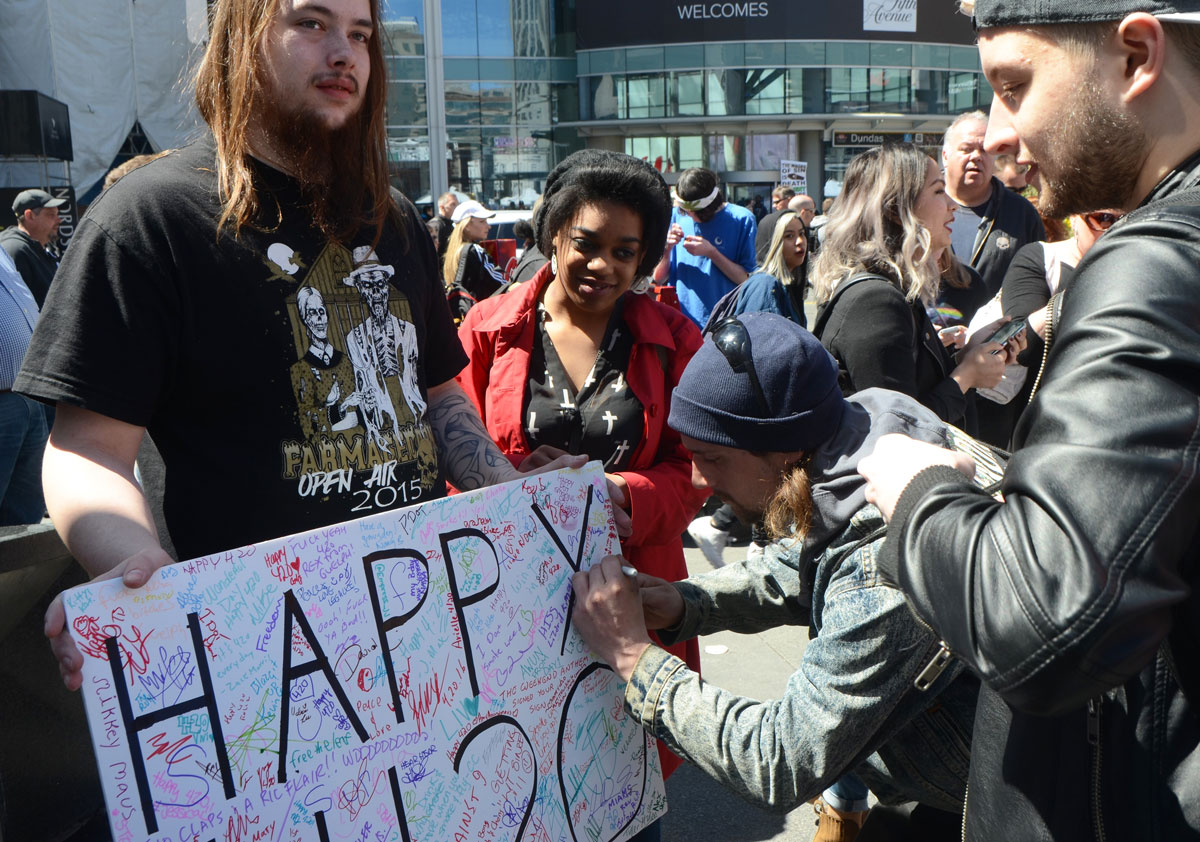
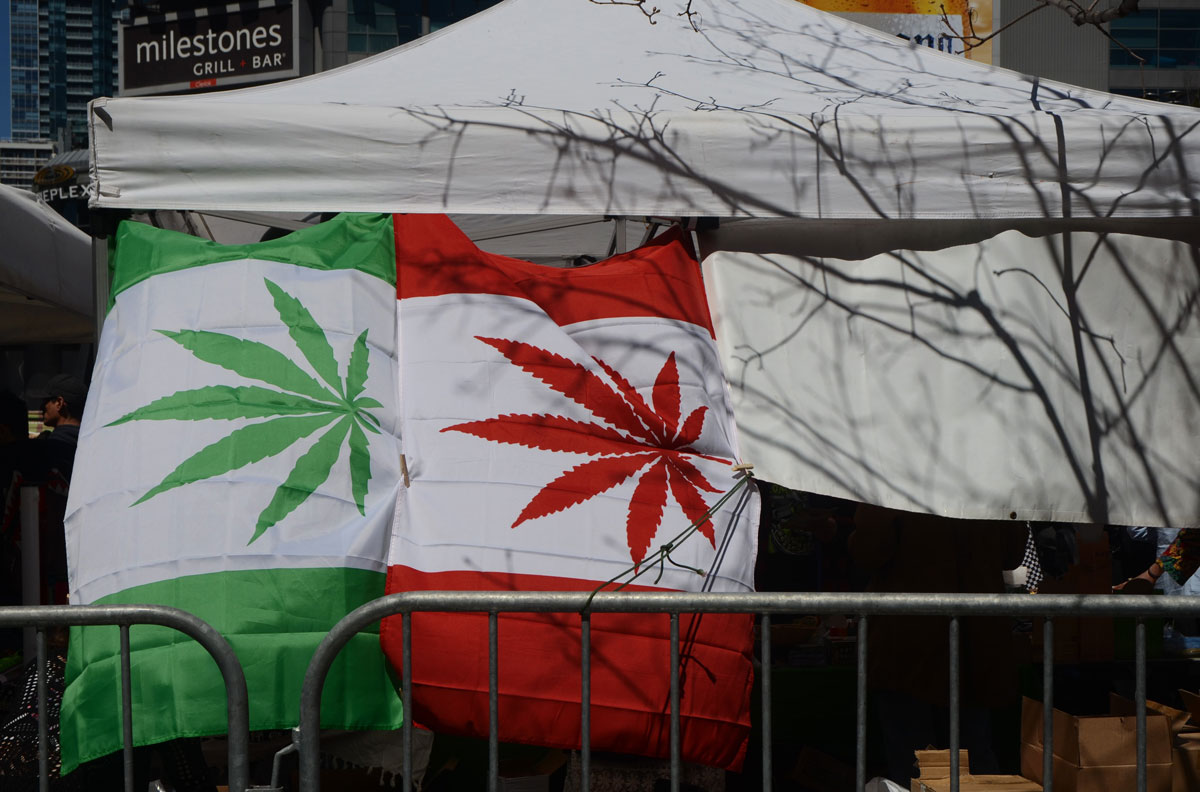
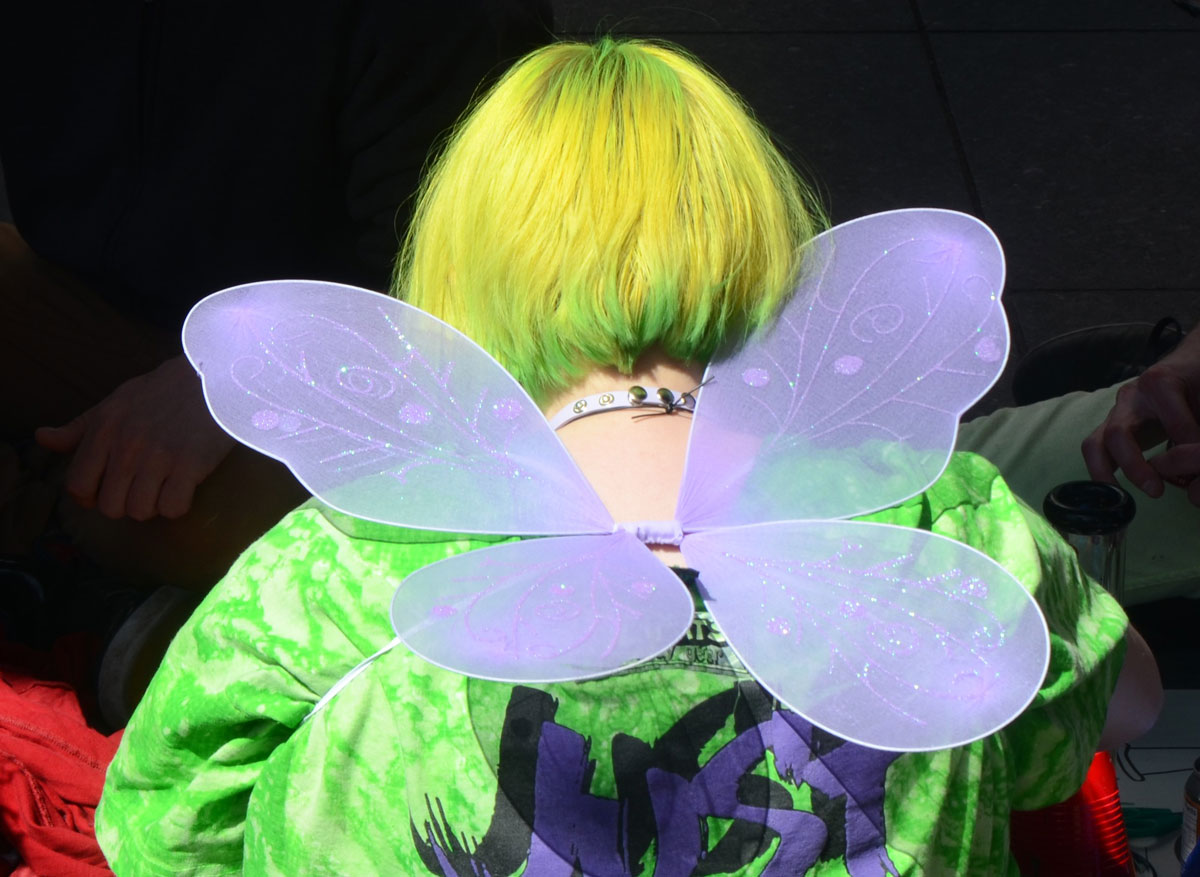
The 10th annual 420 Day celebration in Toronto was held this year at Yonge Dundas Square.
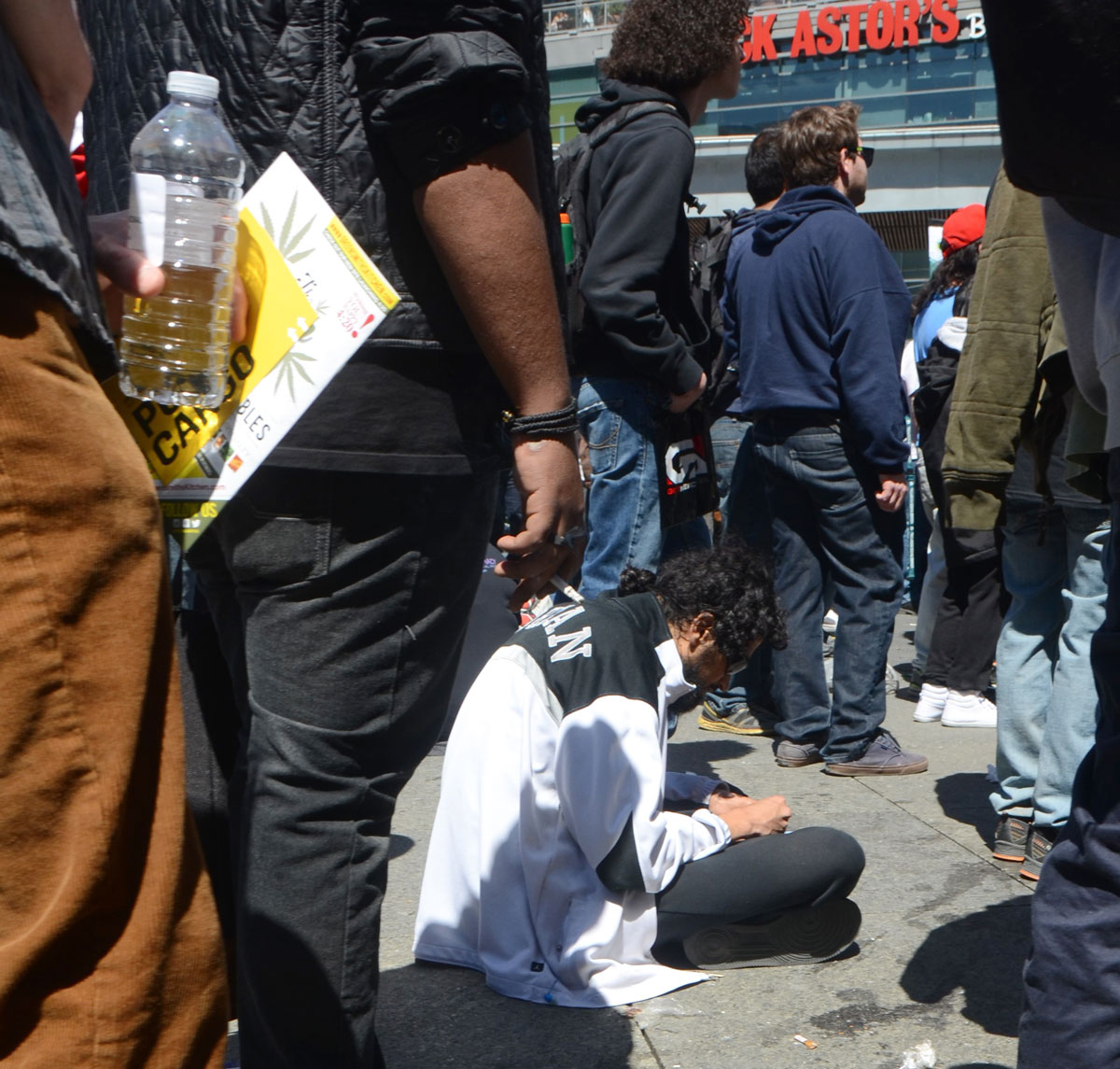
By mid-afternoon the square was very crowded but most people didn’t seem to mind.

Part of 420 day celebrations at Dundas Square - a black Tshirt for sale. It has 420 Toronto on it, with a cannabis leaf in the middle of the zero

People at Yonge Dundas Square in Toronto celebrating 420 day - a young woman in a jean jacket is holding up a black sign advertising twinkies for sale.

People at Yonge Dundas Square in Toronto celebrating 420 day - a young woman walks through the crowd, holding part of her grey sweater over her nose

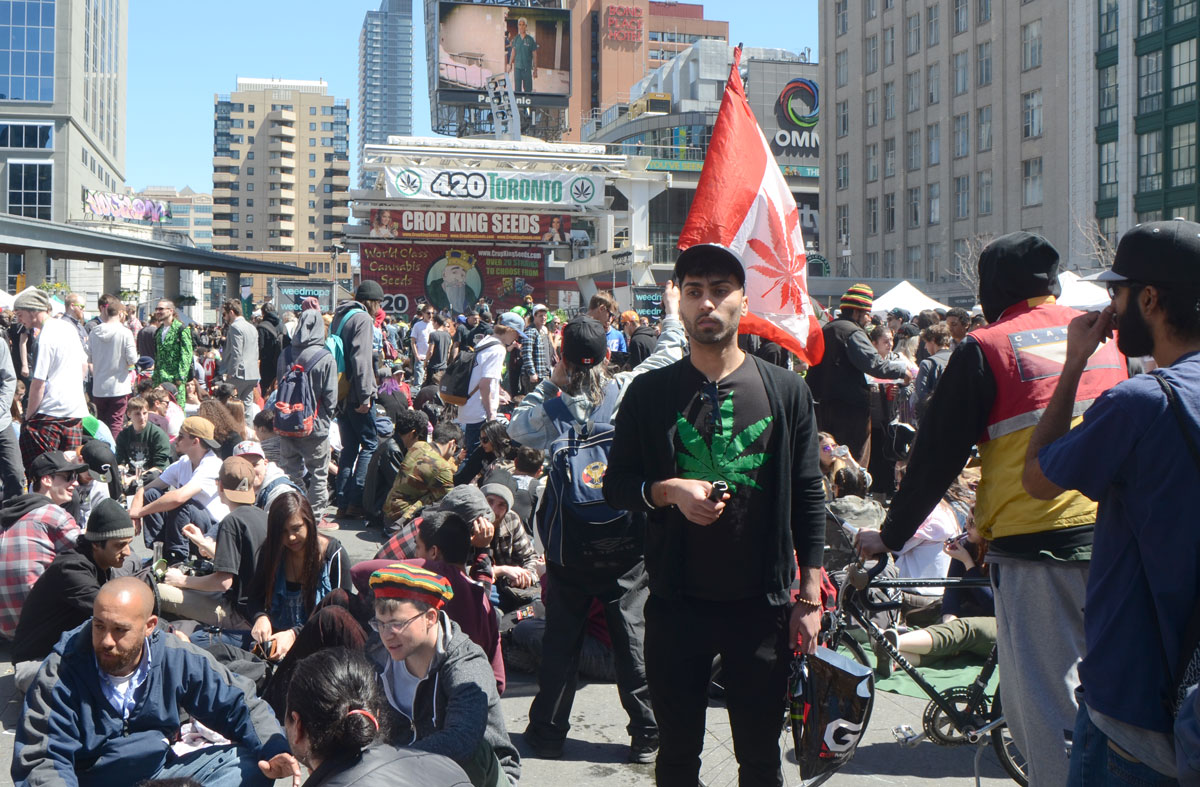
People at Yonge Dundas Square in Toronto celebrating 420 day - a young man stands amidst those who are sitting on the ground

People at Yonge Dundas Square in Toronto celebrating 420 day - a group of young men sitting around on the ground with a couple of bongs

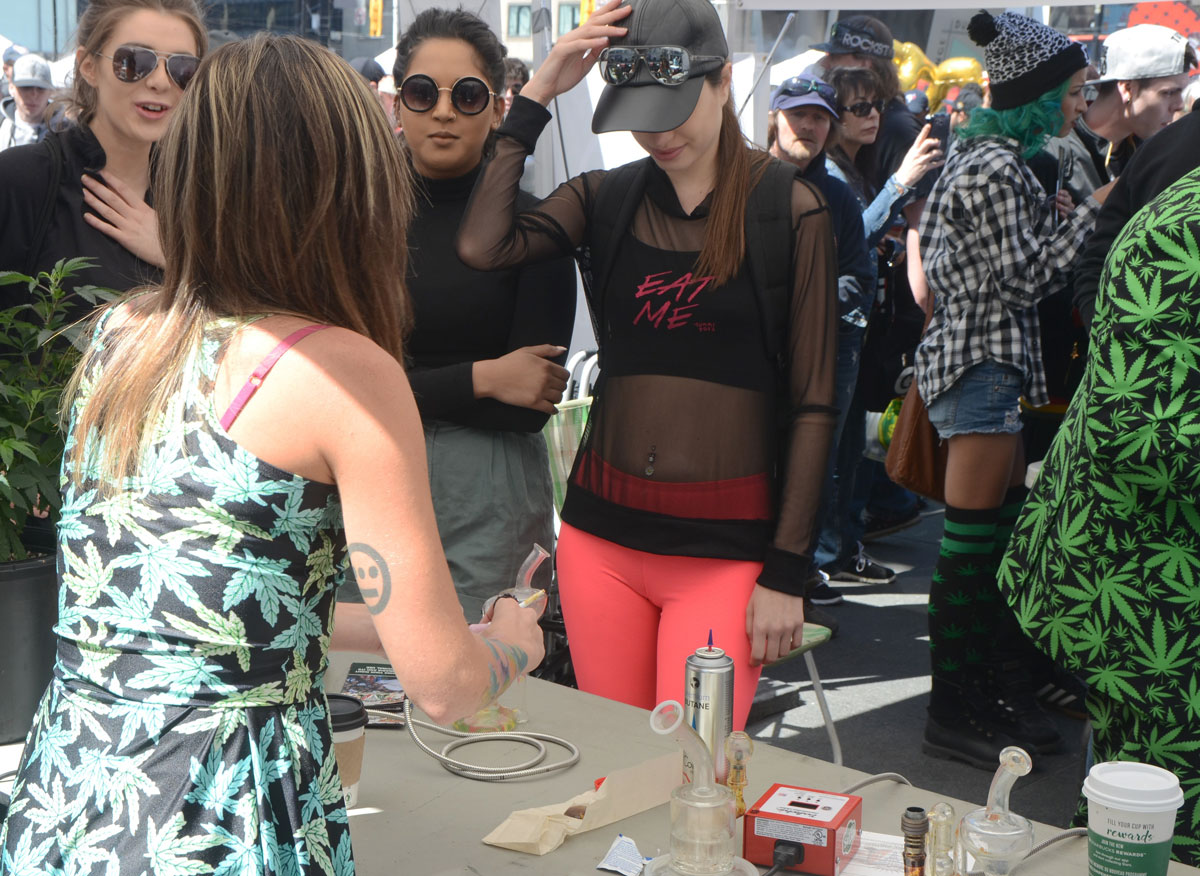
People at Yonge Dundas Square in Toronto celebrating 420 day - three young women in sunglasses are talking to a vendor at the event. One is wearing bright orangish pink tight pants and a black top with the words eat me on it.

three older people share joints while a red haired woman plays a violin, Dundas Square, 420 day event

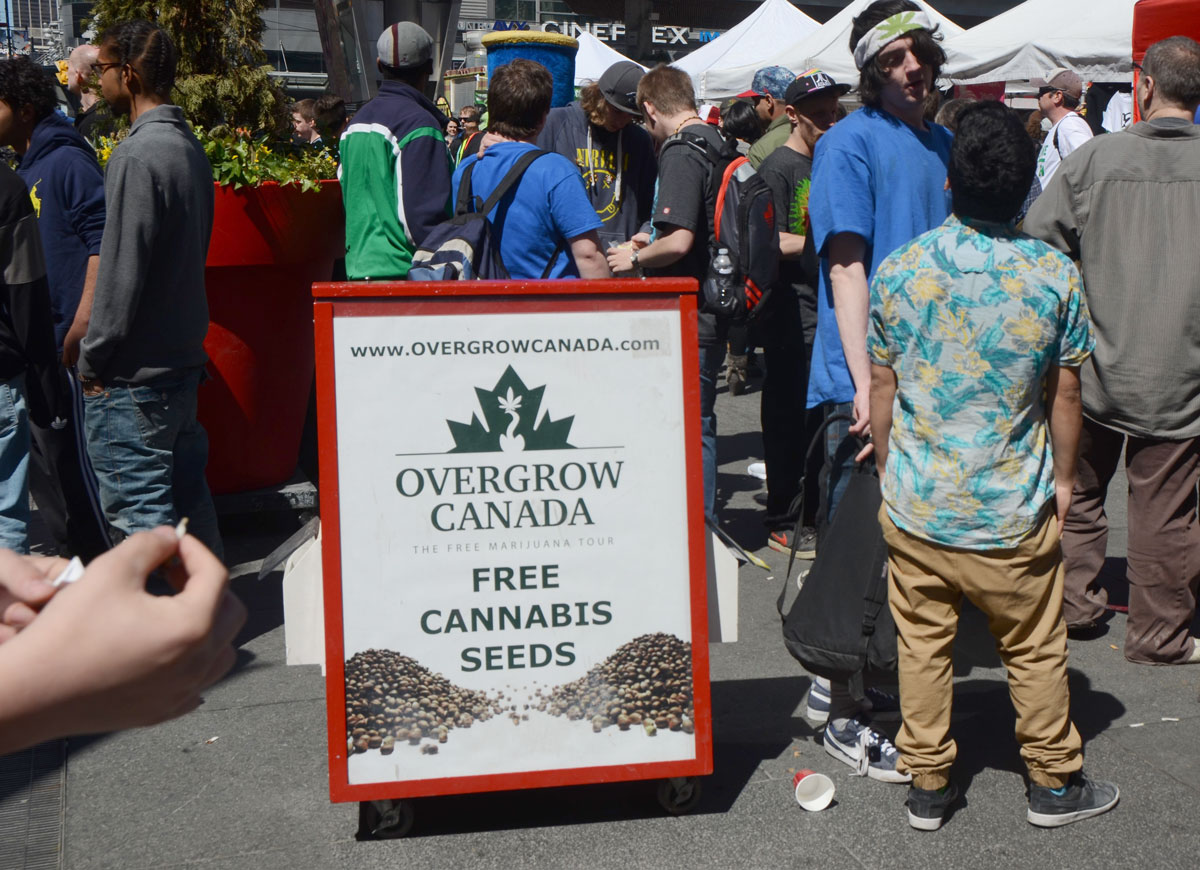
People at Yonge Dundas Square in Toronto celebrating 420 day - people mingling around a sign that is advertising free cannabis seeds

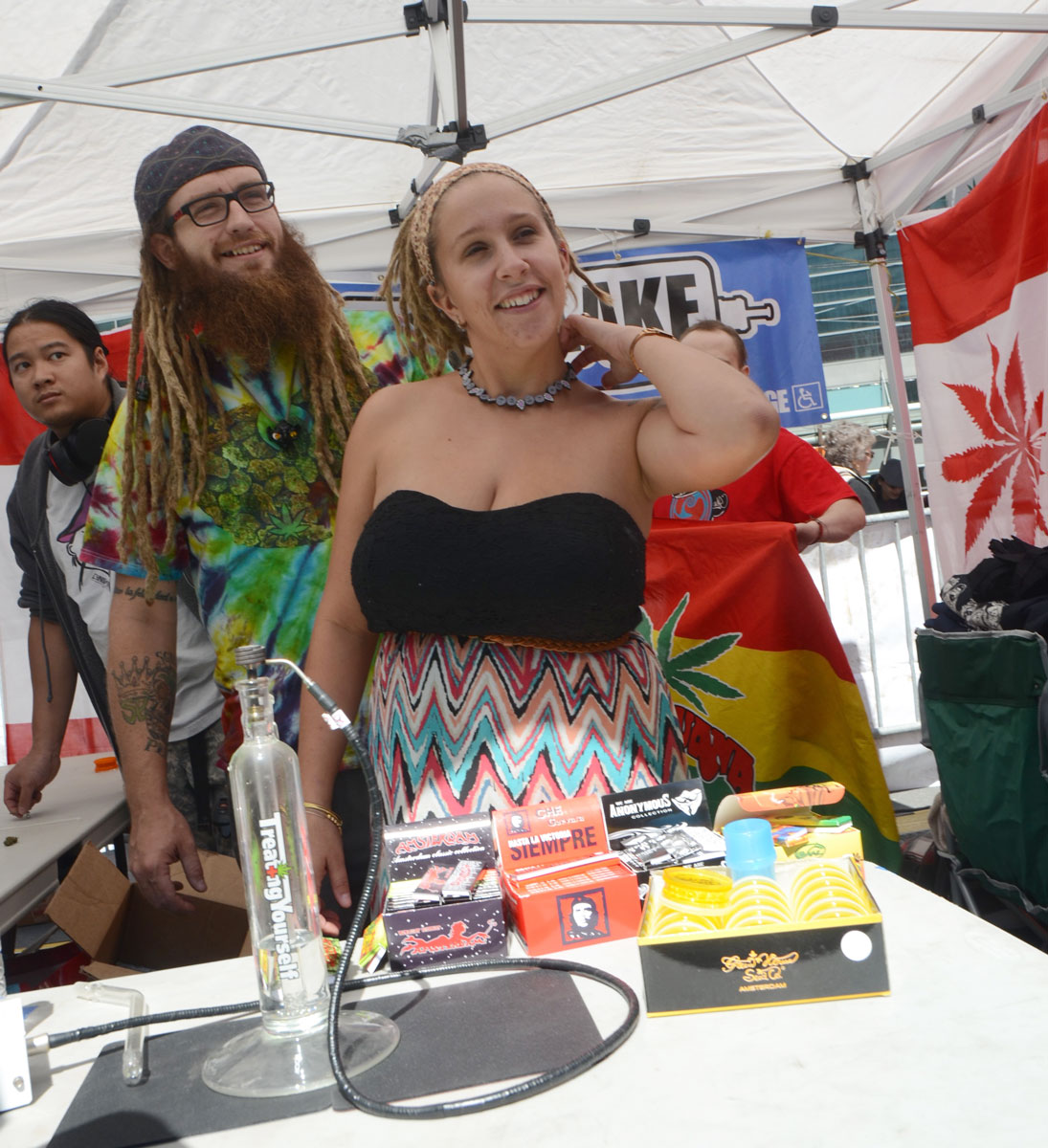
pot smoking paraphenalia for sale at a 420 day event,

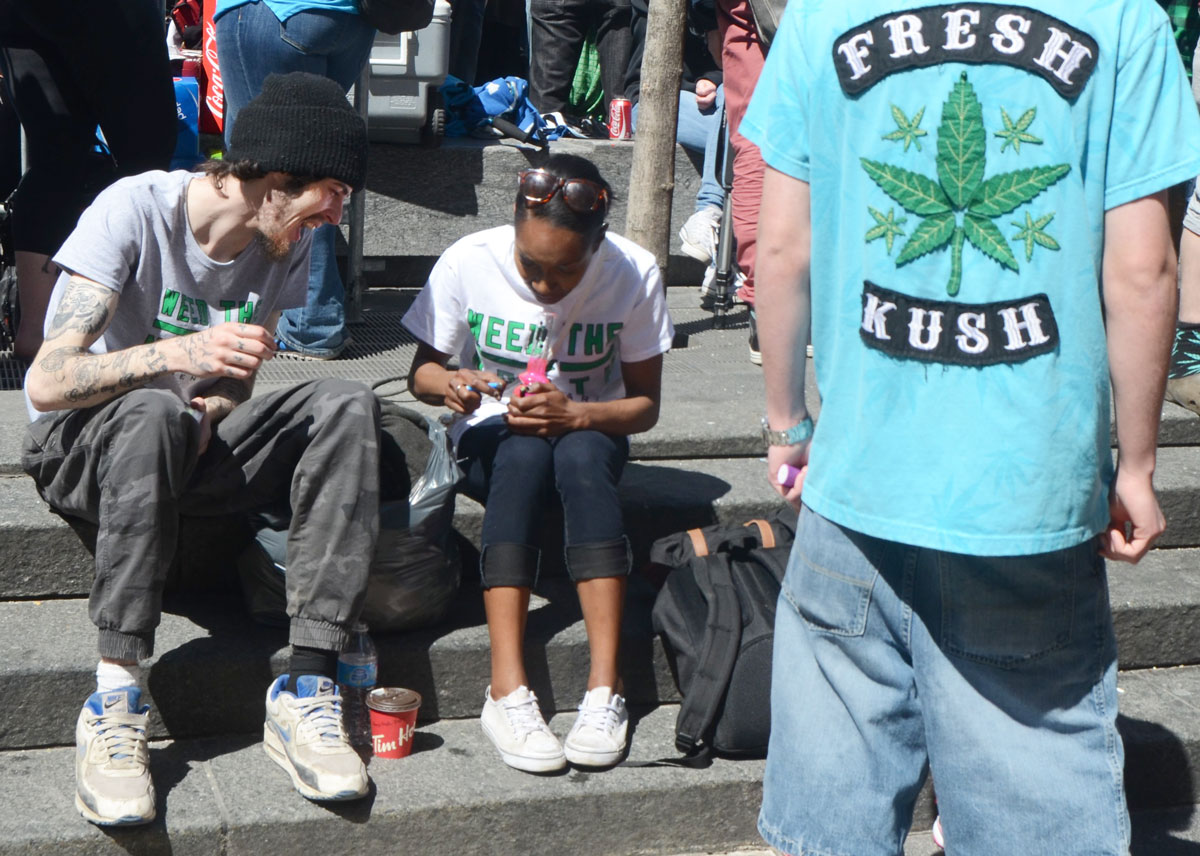
People at Yonge Dundas Square in Toronto celebrating 420 day - two people sitting together and talking, a man's back is to the camera and on the back of his tshirt are the words fresh kush and a picture of a cannabis leaf

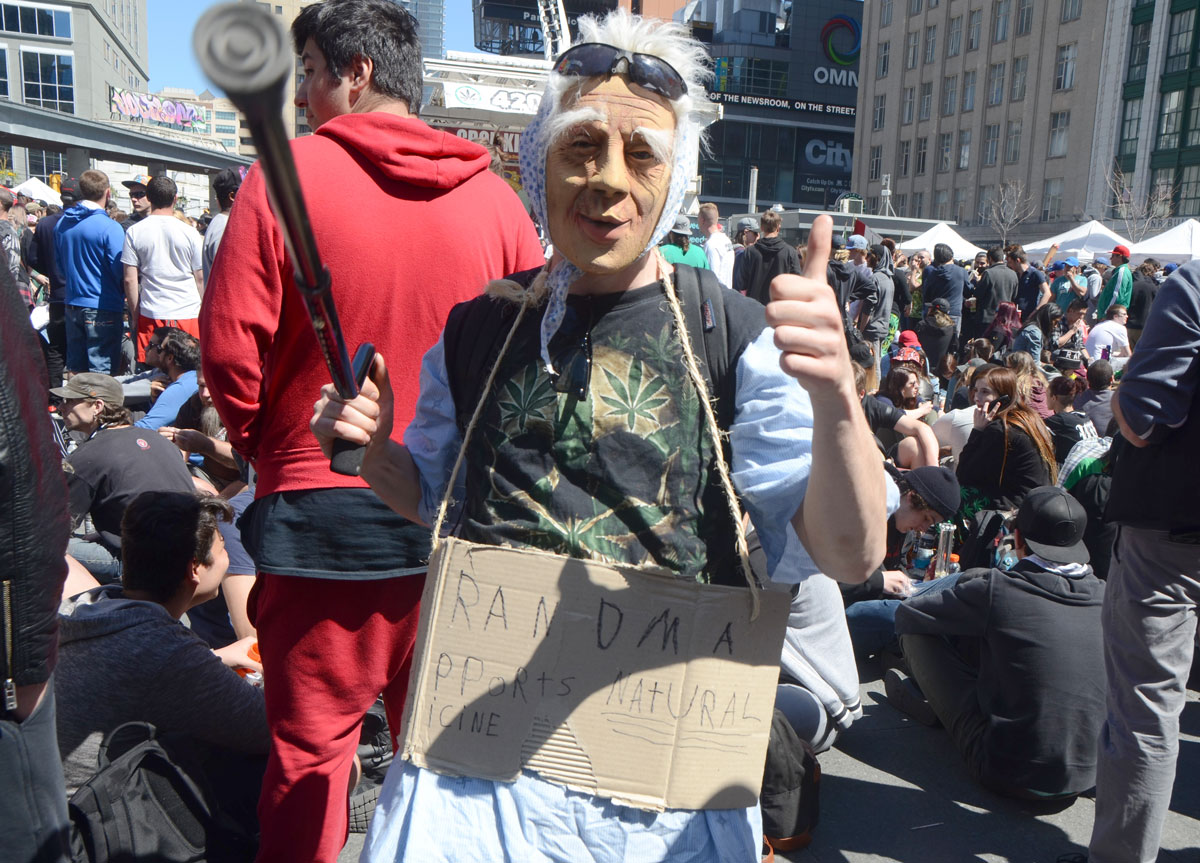
a person with an old person mask and a carboard sign that says grandma likes her natural medicine, is waving a cane at the camera

Crowds at Yonge Dundas Square celebrating 420 day

a young woman with long green hair walks through the crowd. she has a hula hoop in her hand.

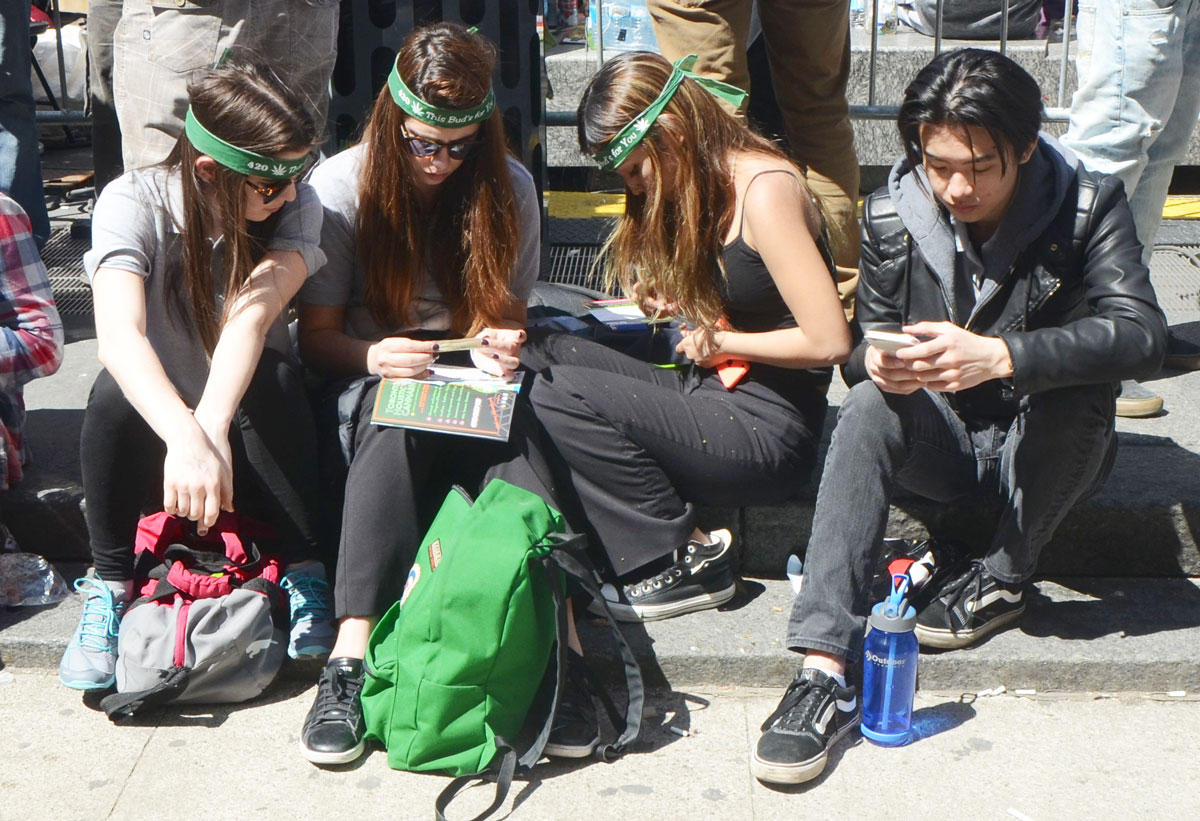
three young women with long hair and green headbands are sitting together. A young man on a cellphone is sitting beside them.

A couple, vendors, he has dreadlocks and a long beard.

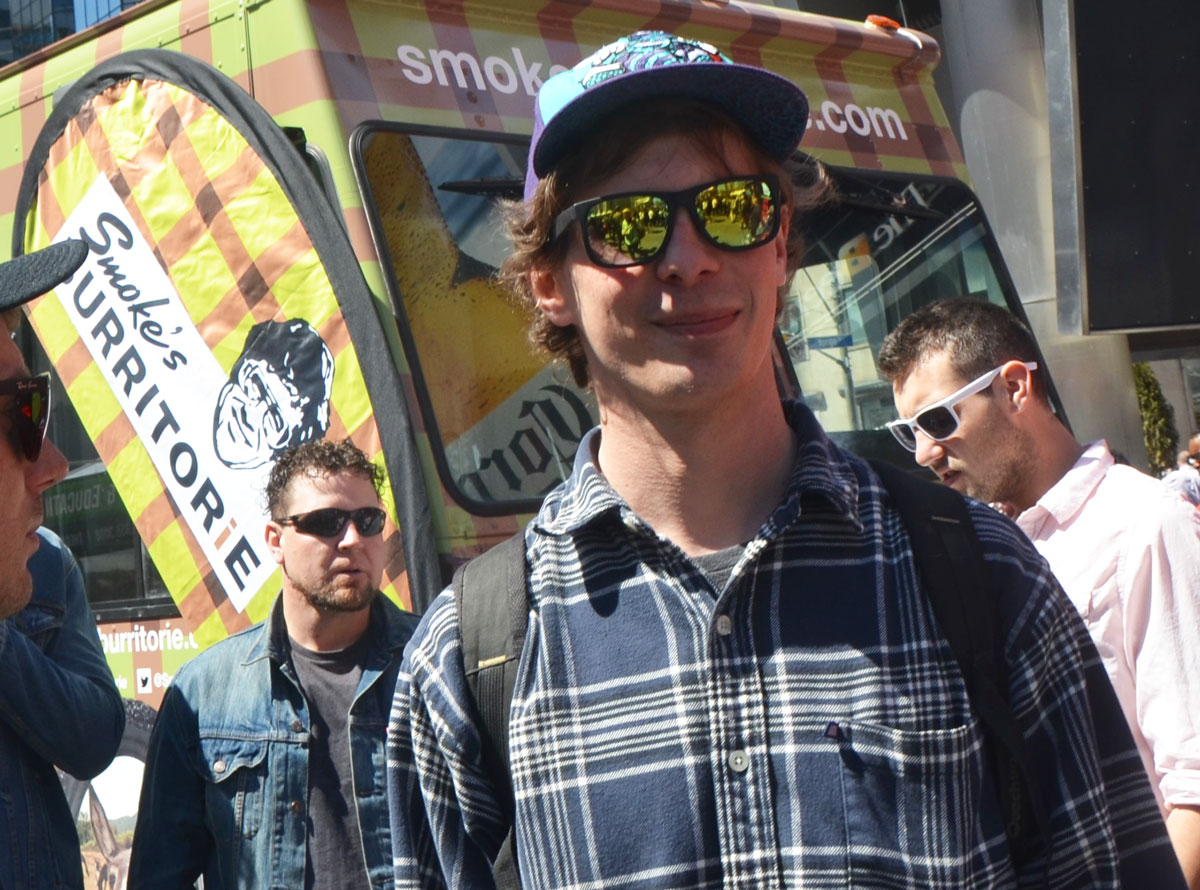
People at Yonge Dundas Square in Toronto celebrating 420 day - 4 young men, one of whom has yellow reflective sunglasses on.

People at Yonge Dundas Square in Toronto celebrating 420 day - a group of people checking a vendor's wares.

blog_happy_420_signatures

blog_cannabis_420_flags_canadian

blog_420_day_camera_rolling_joint

blog_420_day_butterfly_wings

Part of 420 day celebrations at Dundas Square - two young women are dressed up in cannabis themed clothes with make up on their faces. One woman has 420! written on her forehead, the other woman has half her face painted green

People at Yonge Dundas Square in Toronto celebrating 420 day - a young man sits on the ground while others around him are standing

People at Yonge Dundas Square in Toronto celebrating 420 day - a red haired woman in a green cap is laughing

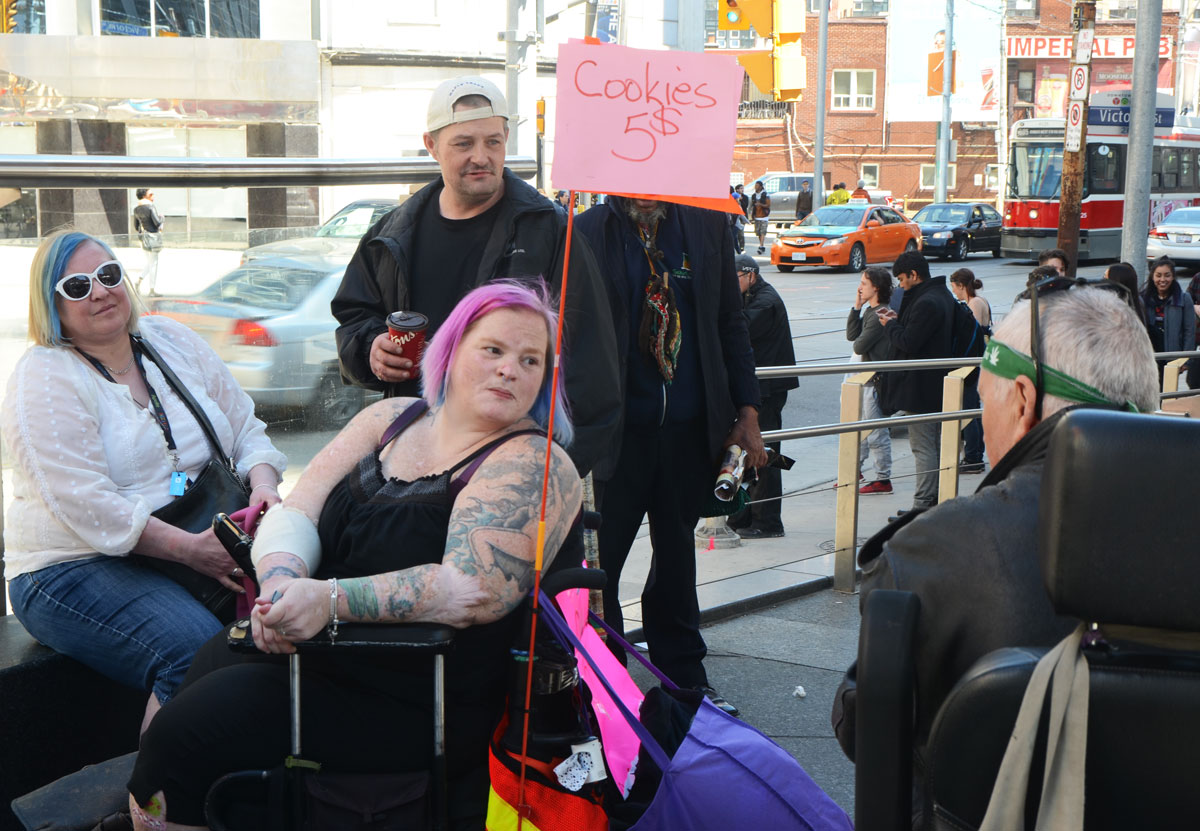
People at Yonge Dundas Square in Toronto celebrating 420 day - a young woman in an electric wheelchair with bright pink hair is selling cookies for $5

People at Yonge Dundas Square in Toronto celebrating 420 day - a person poses with someone who is dressed up in a superhero costume, similar to Superman, but is a super bong instead

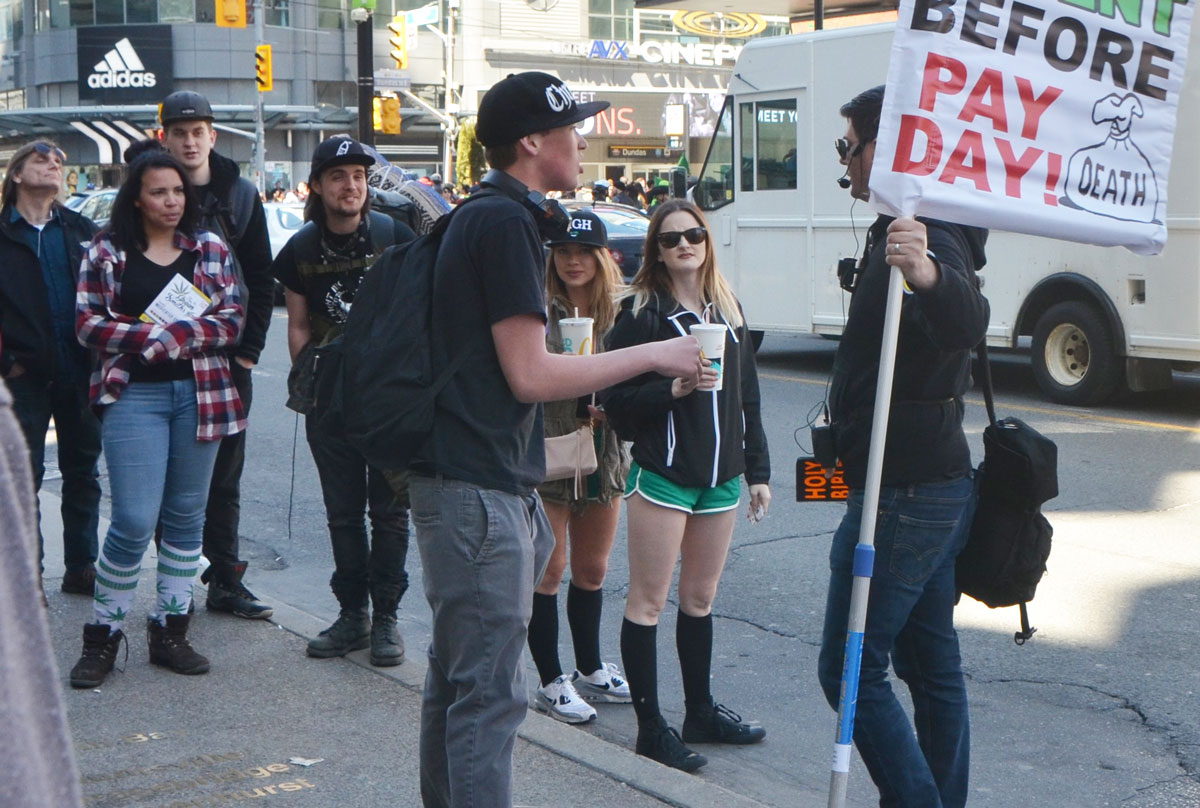
outside the Eaton Centre, across the street from Yonge Dundas Square, a man is carrying a sign that says pot smoking leads to hell but that Jesus can save you. He is holding a bible. A young man is arguing with him while other people stand around and watch

outside the Eaton Centre, across the street from Yonge Dundas Square - a young man wearing a cannabis t-shirt is posing for a camera, he is standing in front of a man is carrying a sign that says pot smoking leads to hell but that Jesus can save

#420day | #420toronto | #420toronto2016

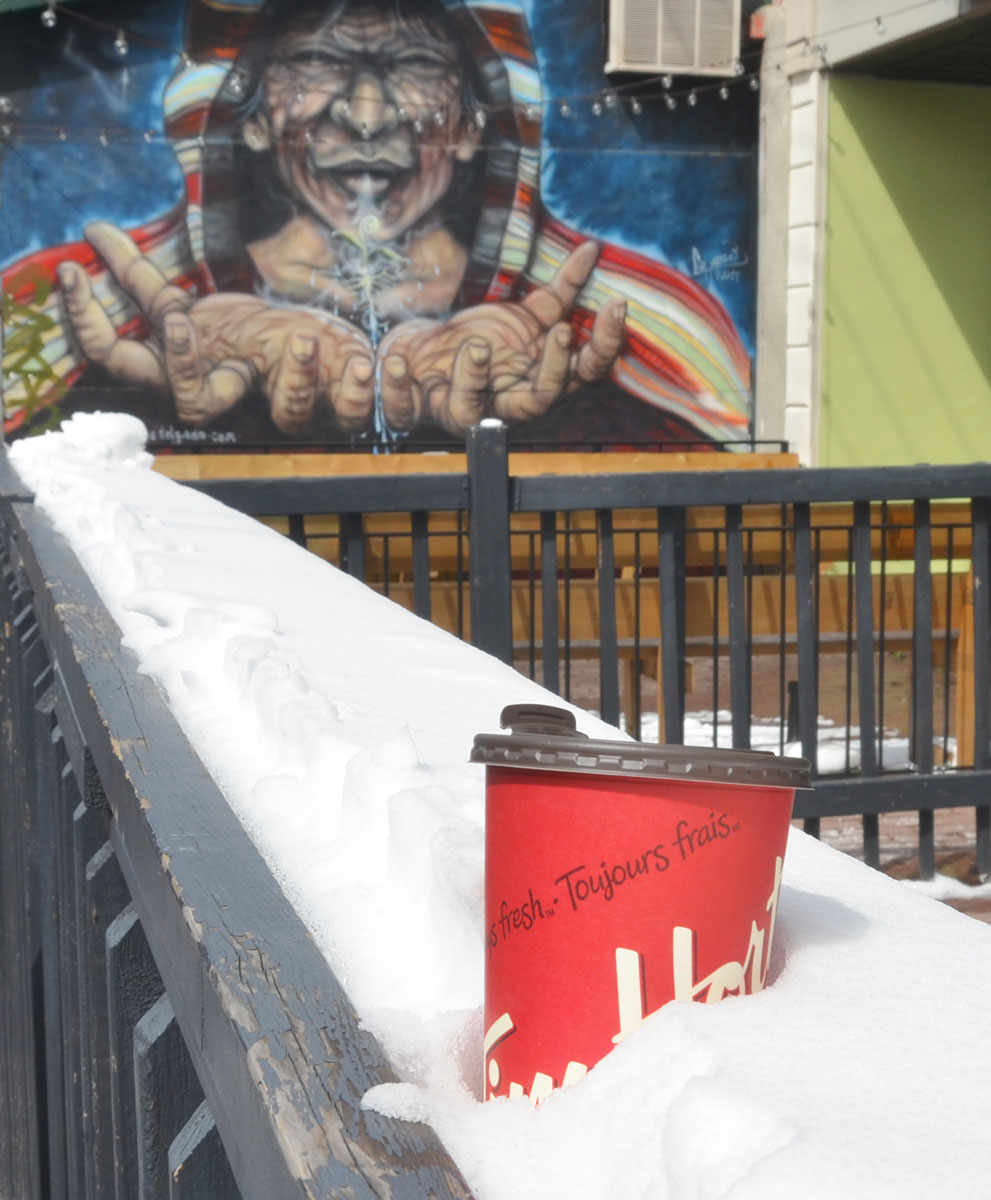
Behold, I give you the Tim Hortons cup.  Empty.

an empty paper coffee cup from Tim Hortons that has been discarded - in the snow on top of a grey wood railing in front of a store. A street art painting of a man with outstretched hands is in the background.

Always fresh.  Toujours frais.
They even come in a number of handy sizes, usually small, medium, large, and extra large.

an empty paper coffee cup from Tim Hortons that has been discarded - on a wooden horizontal beam on a grey wall below a large red door, industrial building
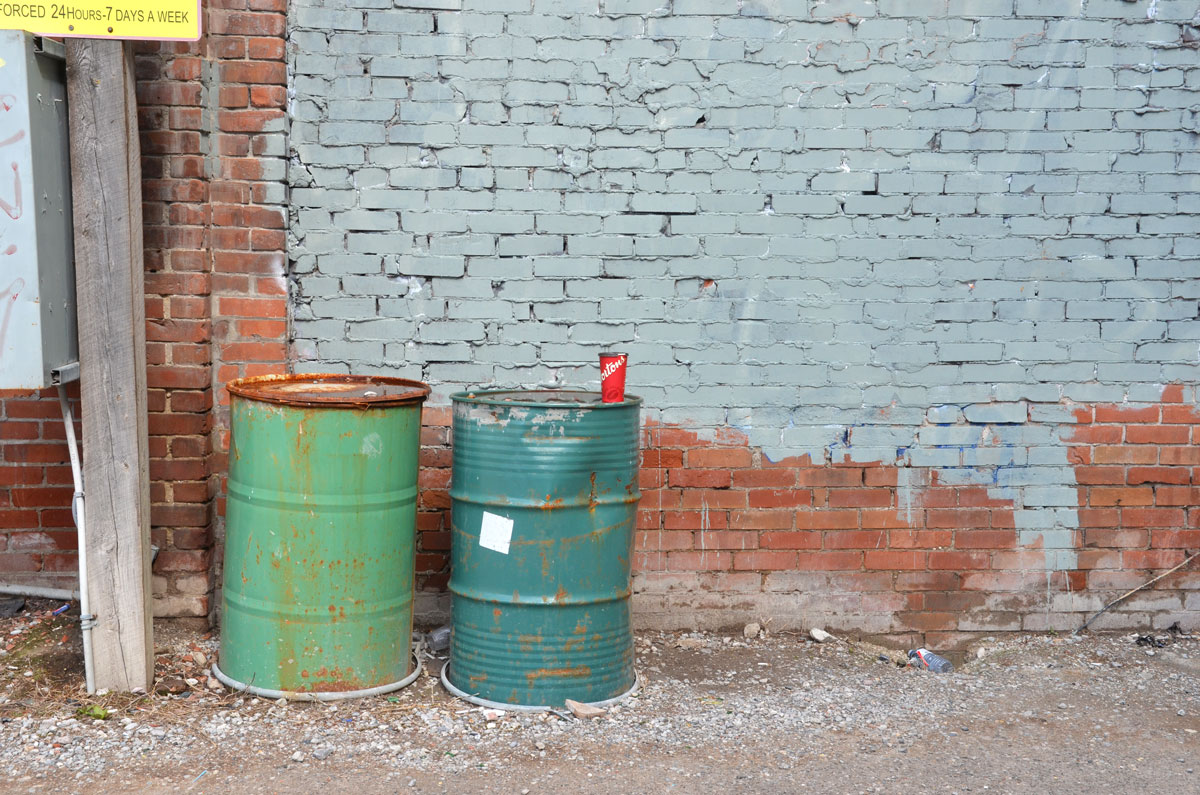
They are found all over town,  compositional elements splashed onto the urban canvas.

an empty paper coffee cup from Tim Hortons that has been discarded - on top of a dark green barrel that is beside a lighter green barrel, in front of a red brick wall that has been partially painted grey

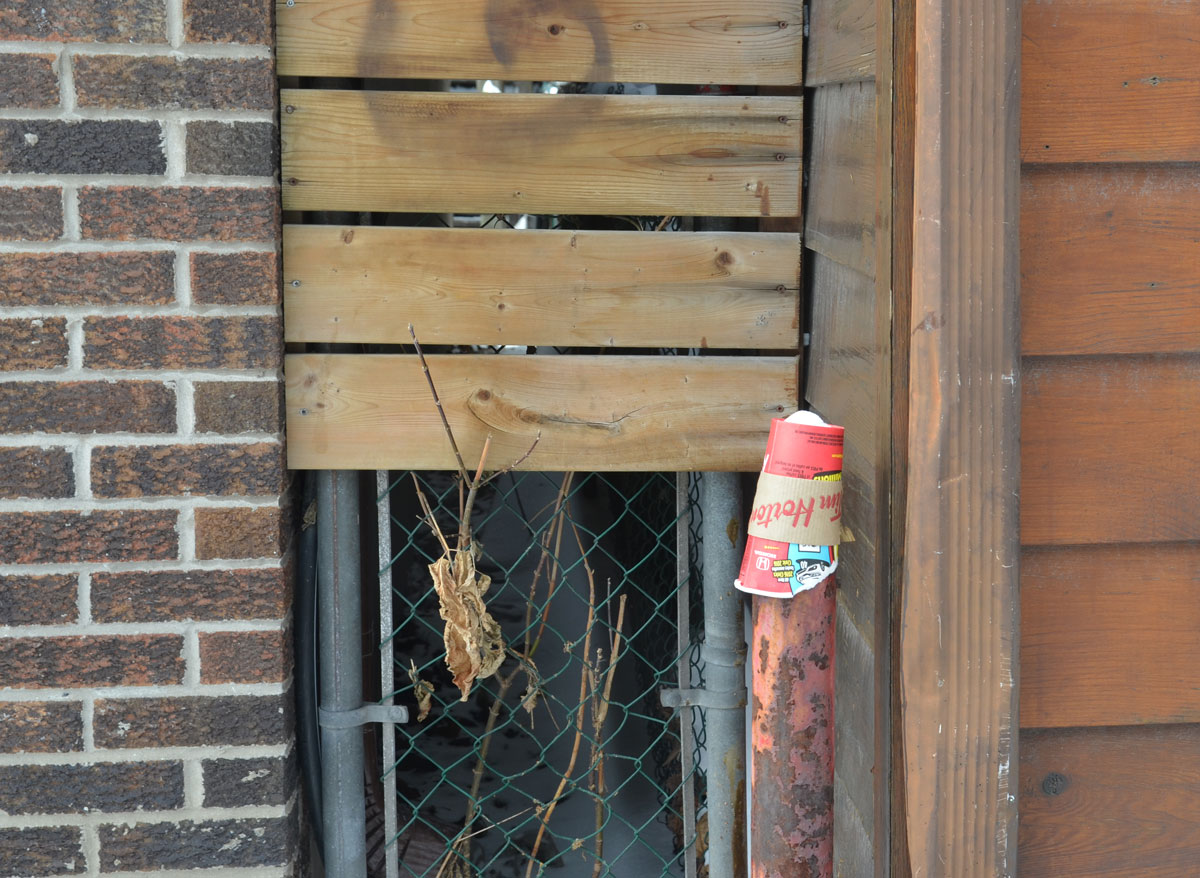
Some are carefully placed little art installations.  They certainly didn’t get there on their own!

an empty paper coffee cup from Tim Hortons that has been discarded - upside down on top of a metal pole that is about a meter high, in an alley, beside a gate

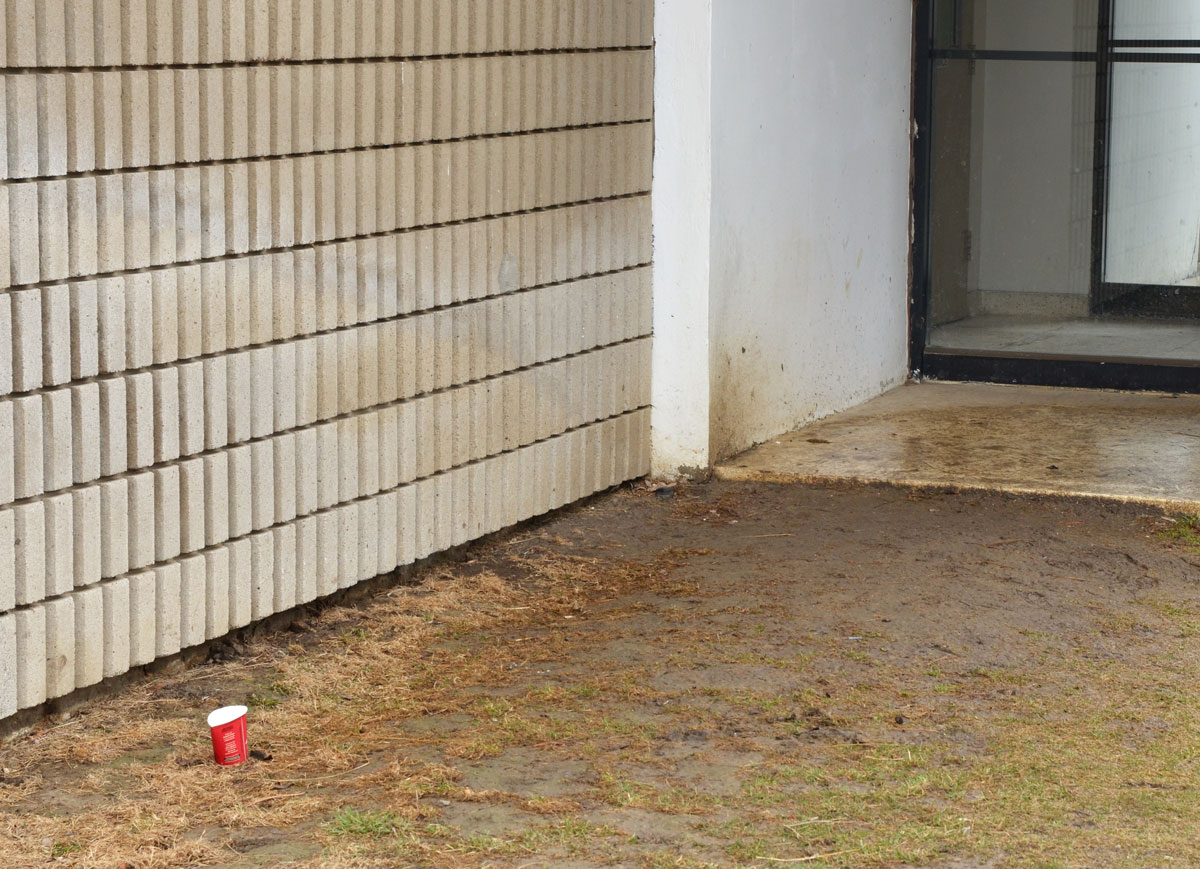
And others are willfully abandoned.   Often left on their own.  Alone.  Empty. Lidless.

a small red empty Tim Hortons coffee cup sits on the muddy ground outside the back entrance of an older grey brick apartment building

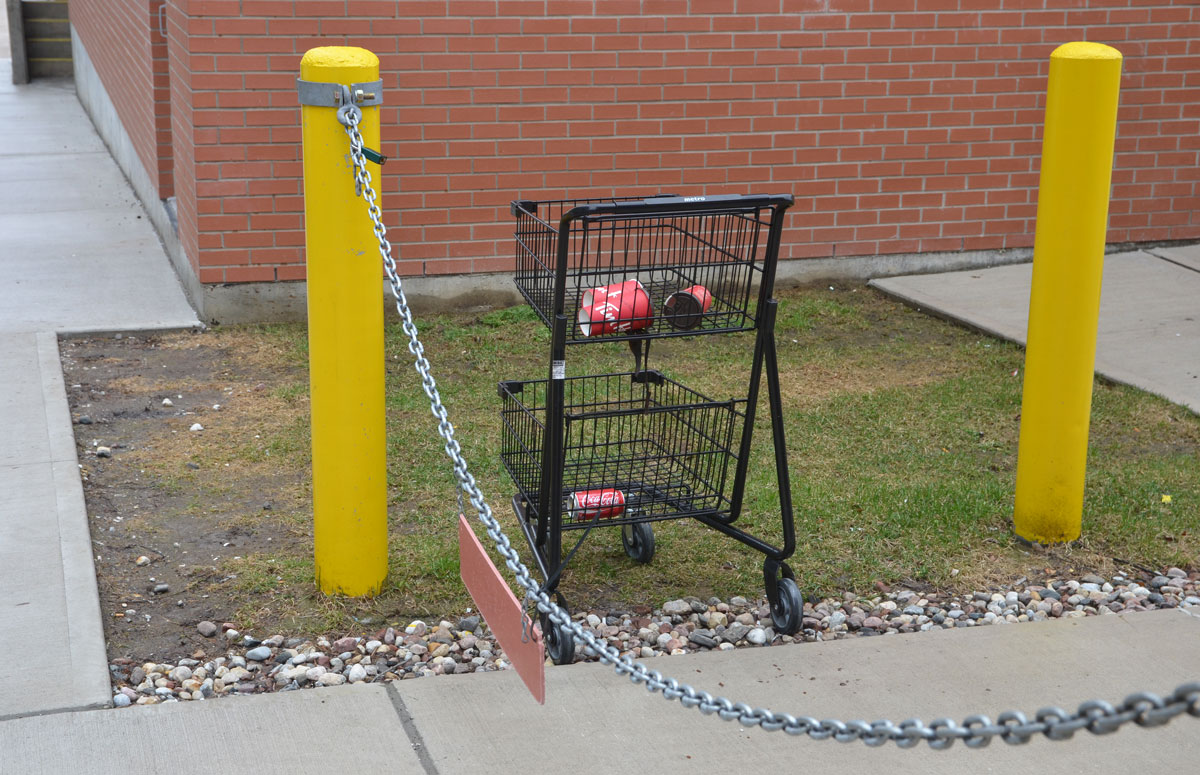
Sometimes they are found in groups.  Carried away and then forgotten.

a stolen shopping cart, black metal, sits on a piece of grass, beside the sidewalk, but behind a chained off driveway. In the top part of the cart are 4 TIm Hortons cups and in the bottom part, an empty coke can.

Sigh.  The Tims cup.  The omnipresent Tims cup.

One day I got tired of trying to decide whether or not to photoshop out a coffee cup that had been discarded on a sidewalk.  Maybe it would be better to take on a “if you can beat them, join them” attitude.  Instead of avoiding or removing cups, I should focus on them.  Make them part of the picture.  The redness of the coffee cups that Tim Hortons has been using recently adds to the appeal of making them the subject matter and not the subject of scorn and cause of exasperation.