Posts Tagged ‘Sherbourne St.’

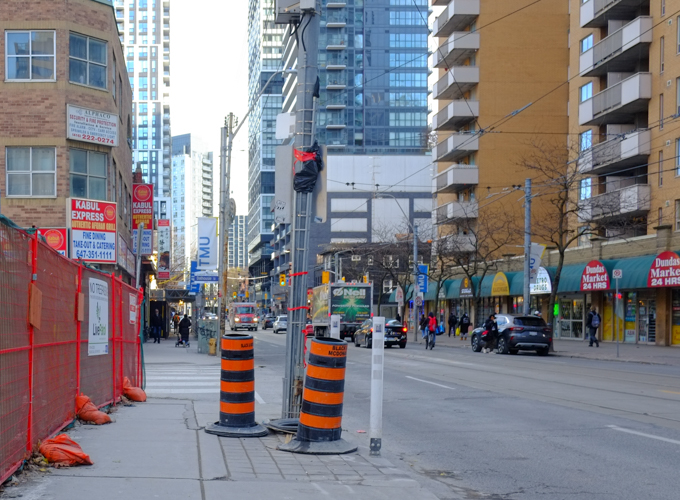
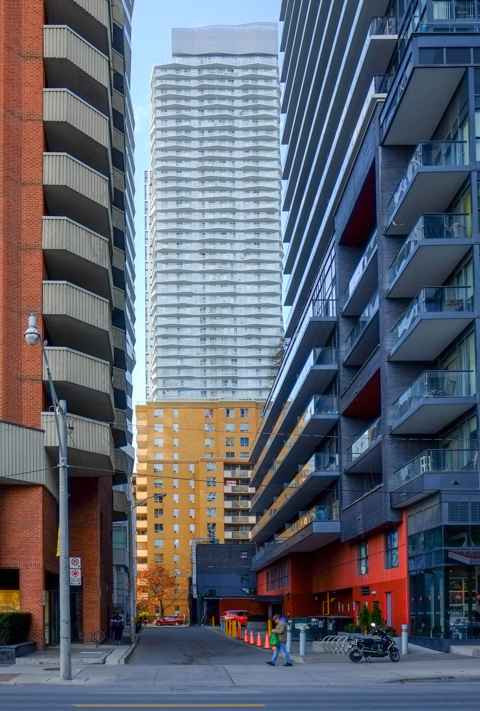
and other little observations along Dundas Street East – a street that has seen intensive redevelopment in the central core.  These changes are slowly moving east with the consequent mixing of old and new.

Once there were large red hearts on the sign, as well as on the building, but they have disappeared.
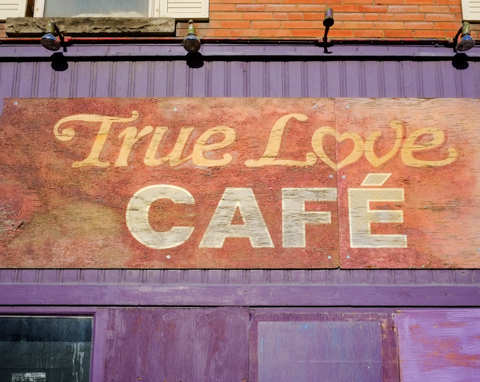
sign on True Love Cafe, a bright purple building

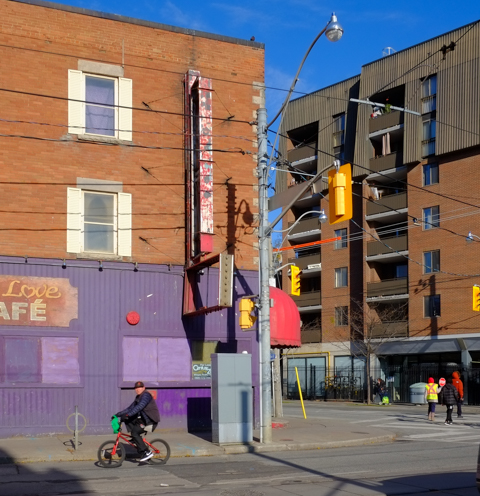
The True Love Cafe opened at the corner of Dundas East & Sherbourne back in 2004.  The outside was purple and apparently so was the inside.  Before that (since the 1950s), the space was George’s Spaghetti and Jazz Bar.
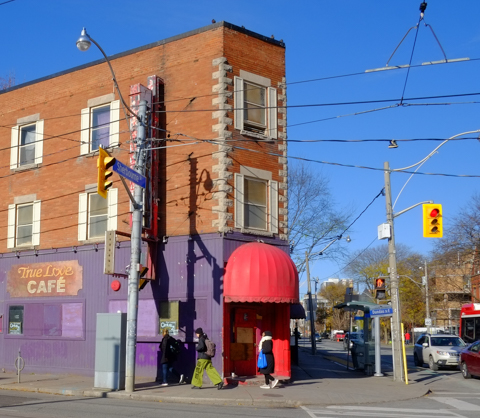
Once there were messages like, “I love you” on the walls as well as menu items written inside heart shapes, but these too are no more.
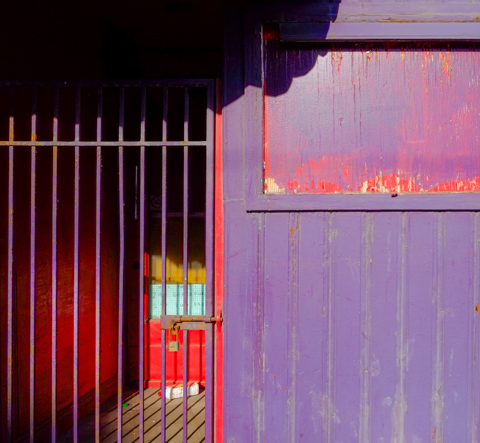
gate across entrance to true love cafe, red door, purple building, painted over window,

man on a bike cycles past true love cafe, a purple building with red awning over door

attached to side of purple building, empty frames that once held signs.

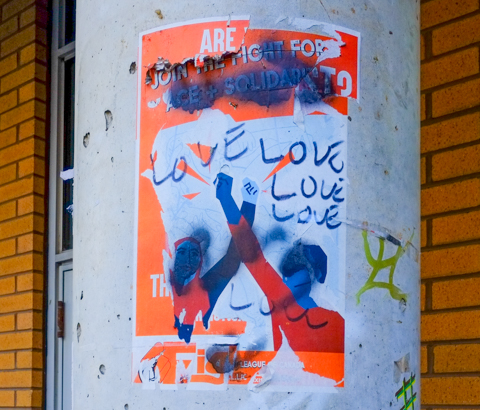
graffiti on a pole with two people with arms upraised, lone has written love, love, love, on it in black marker

below: South side of Dundas at Sherbourne.

church on southeast corner of dundas and Sherbourne, Lahore Hakka Chinese restaurant on the south west corner of same intersection

below: Also at Dundas and Sherbourne are the most famous telephone boxes in the city – or at least most photographed
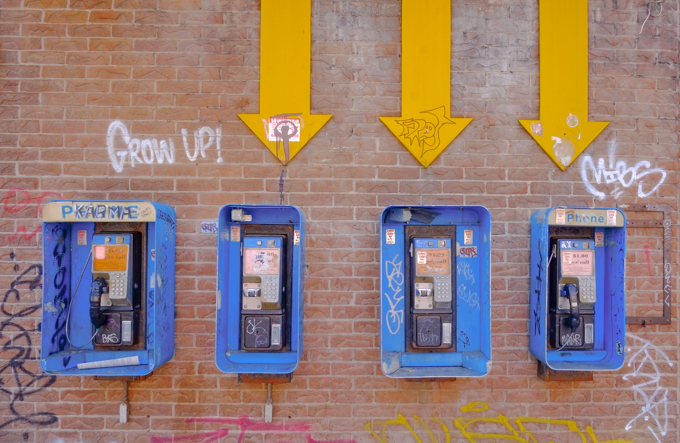
exterior of front of hair salon with pictures of men and women with their hair cut

West of Sherbourne, some of the original large old brick houses still stand. Some converted to commercial uses long ago; some are still residences.

upper level of bay and gable house on Dundas East

front of old convenience store, bars over windows and gate across entrance, faded coca cola sign, green trim, magenta painted bricks,

jumble of items in a store window, metal bars over window, red coca cola boxes, potted plants, reflections of buildings across the street,

old brick houses on Dundas East

old yellow brick house behind a metal fence, green frontyard

part of lower floor of old brick building painted white

part of older white brick house, two storeys, each with one window, small part of house that juts out and is near back of yard

below: (Dundas and Pembroke) Another blue and white development notice – with another very tall condo.  Yet again, all these residences but only 6 car parking spots compared to parking for bikes; Doug Ford screams about closing bike lanes while the city actively discourages car parking.  Great for the developer as car parking costs more money to build than bike spaces.  The sign says 49 storeys, the latest Toronto paperwork on the site says 55 storeys).  The facades of the 4 heritage houses that the condo replaces will be saved.
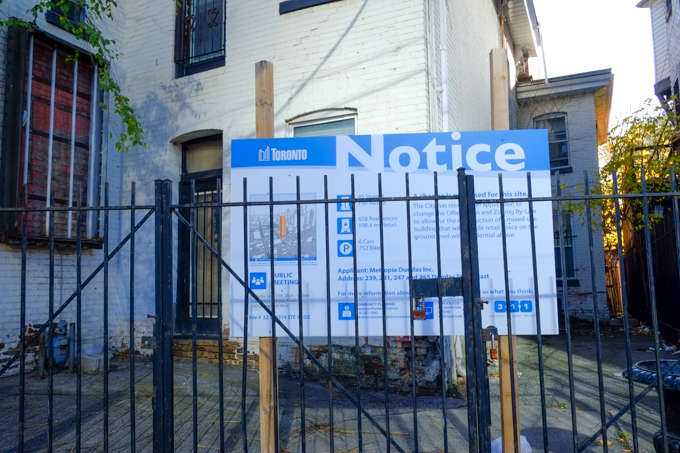
blue and white city of toronto development notice sign on front yard of a house on dundas east

below: Nearby, another closed restaurant.

looking through window into empty and permanently closed restaurant. some reflections of buildings across the street in the window as well

below: North side of Dundas, just east of George Street.   It’s looked shabby for years but it’s still in one piece.  George’s Pizza, George’s BBQ, and  Piassa Injera and Takeout (Ethiopian).  The sign in the window of the pizza restaurant says “open” but the whole building is for sale.   No price given on the realtors’ website, but its 6000 SF with 3 retail units and 10 residential apartments.  It’s probably a candidate for demolition?
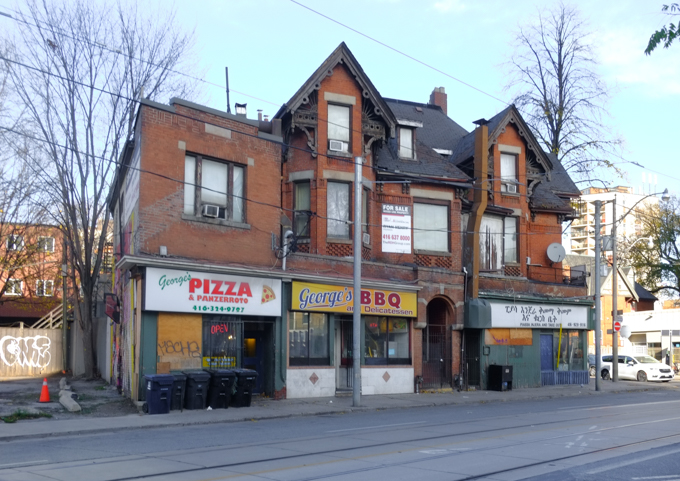
old brick houses on Dundas converted to businesses awhile back, George's Pizza, George's BBQ

below: Looking westward at Dundas and George

looking westward along dundas at george, new condos, one old second empire brick building on the southwest corner, now a King Place BBQ and curry restaurant

below:  King Place BBQ and Curry stands its ground
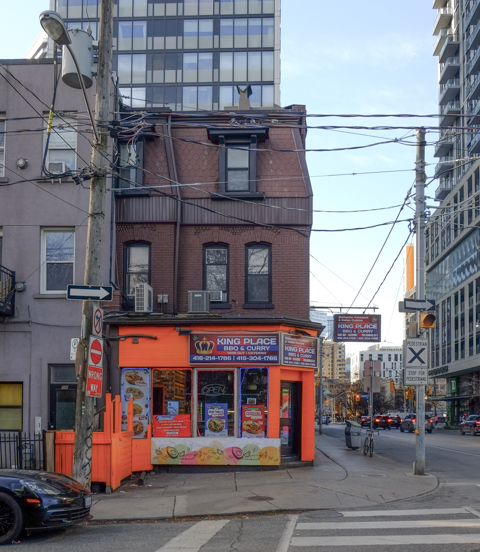
King Place BBQ and Curry restaurant, painted orange, in an old second empire brick building at Dundas and Dalhousie,

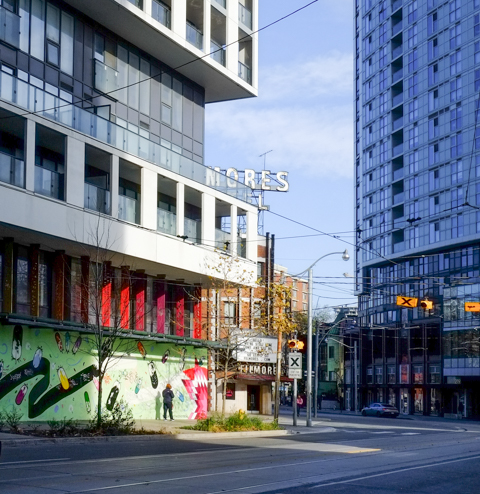
below: The Filmore Hotel still stands at George and Dundas East
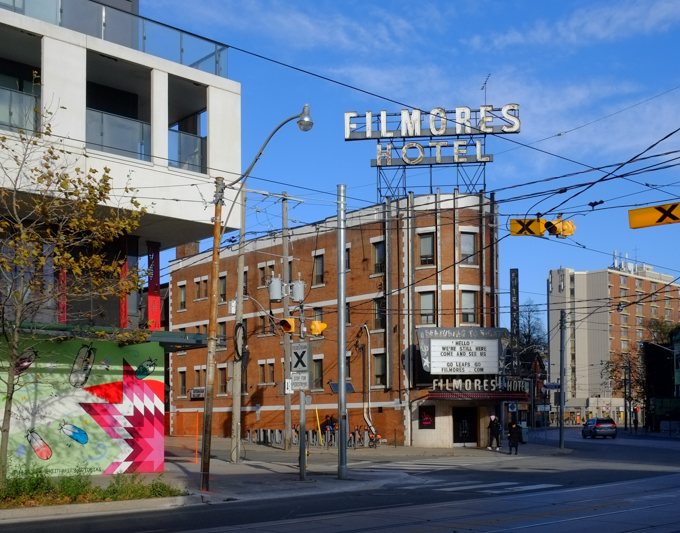
filmore hotel at the corner of george and dundas east

dundas street looking east towards george street, old filmore hotel can just be seen behind newer condo development

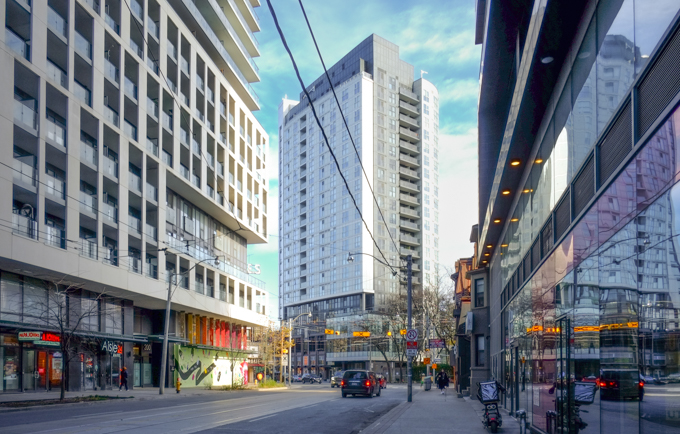
below: Looking east along Dundas

dundas street east, looking eastward towards george street, new condos on both side of dundas, window reflections on the right hand side

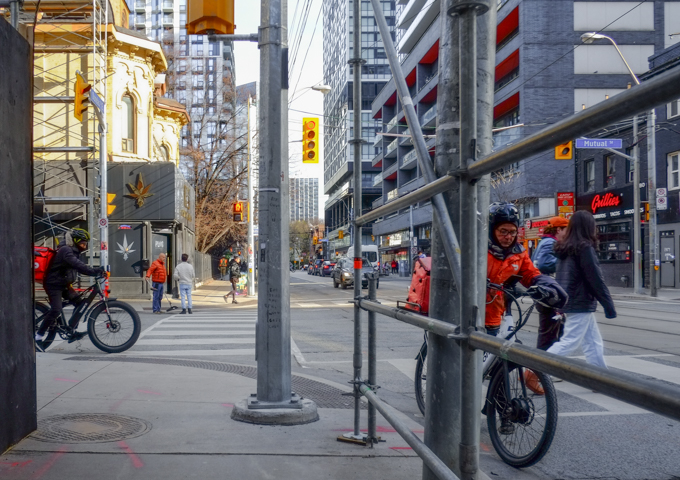
below: Southeast corner of Dundas and Mutual
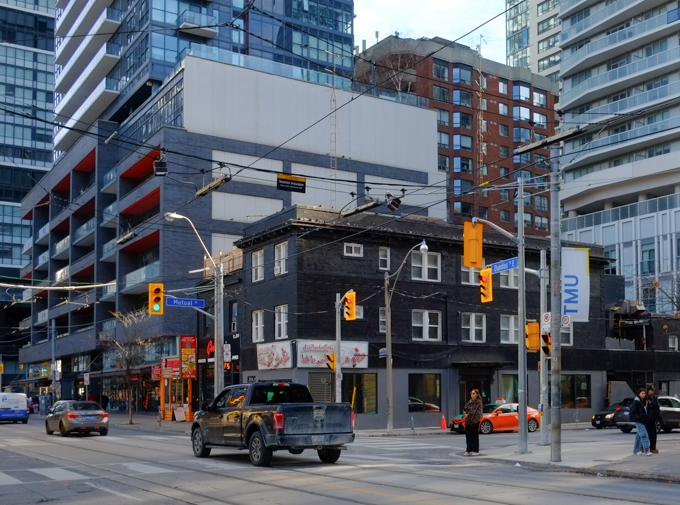
southeast corner of dundas and mutual

cyclists at the corner of dundas and mutual

below: Dundas and Mutual, northeast corner

two men talking, at the corner of Dundas and Mutual where old building is now behind scaffolding

upper storeys of older building, second empire style, mansour roof, brick, painted yellow, ground floor has addition for a store front, now cannabis store

below: Old City of Toronto Archives photo from 1978 showing the northeast corner of Dundas and Mutual back when the building was pale bluish grey and not yellow; it was home to Denys Barbecue and not a cannabis store.  The Warwick Hotel (built 1910) is long gone.
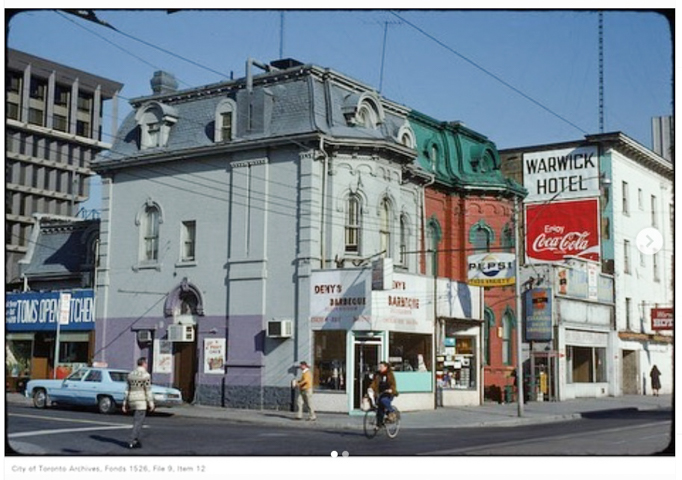
City Archives 1978 colour photo of northeast corner of Dundas and Mutual, Warwick Hotel,

below: Where the Warwick Hotel once stood is now part vacant lot and part parking lot. This concrete building (partially seen in the photo above too) was built for Sears Canada, completed in 1971.   It features cantilevered blocks to form an upside down ziggurat.   What is a ziggurat?  It is a building where each subsequent floor is smaller than the one below it with the result being a pyramidal shape.
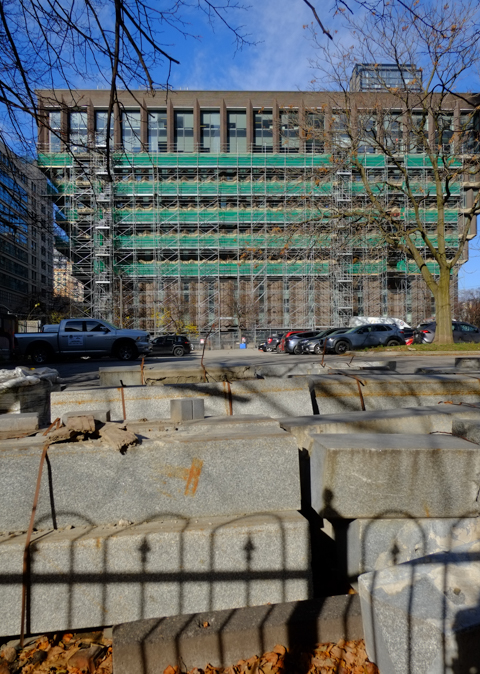
wrought iron fence in front of a large parking lot which is front of a modernist concrete building in upside down triangle shape

below: Reflections at Dundas and Jarvis

reflections in a large window at dundas and jarvis, showing 222 Jarvis, inverted ziggurat building being renovated,

man walking along dundas at jarvis

below: Dundas and Dalhousie
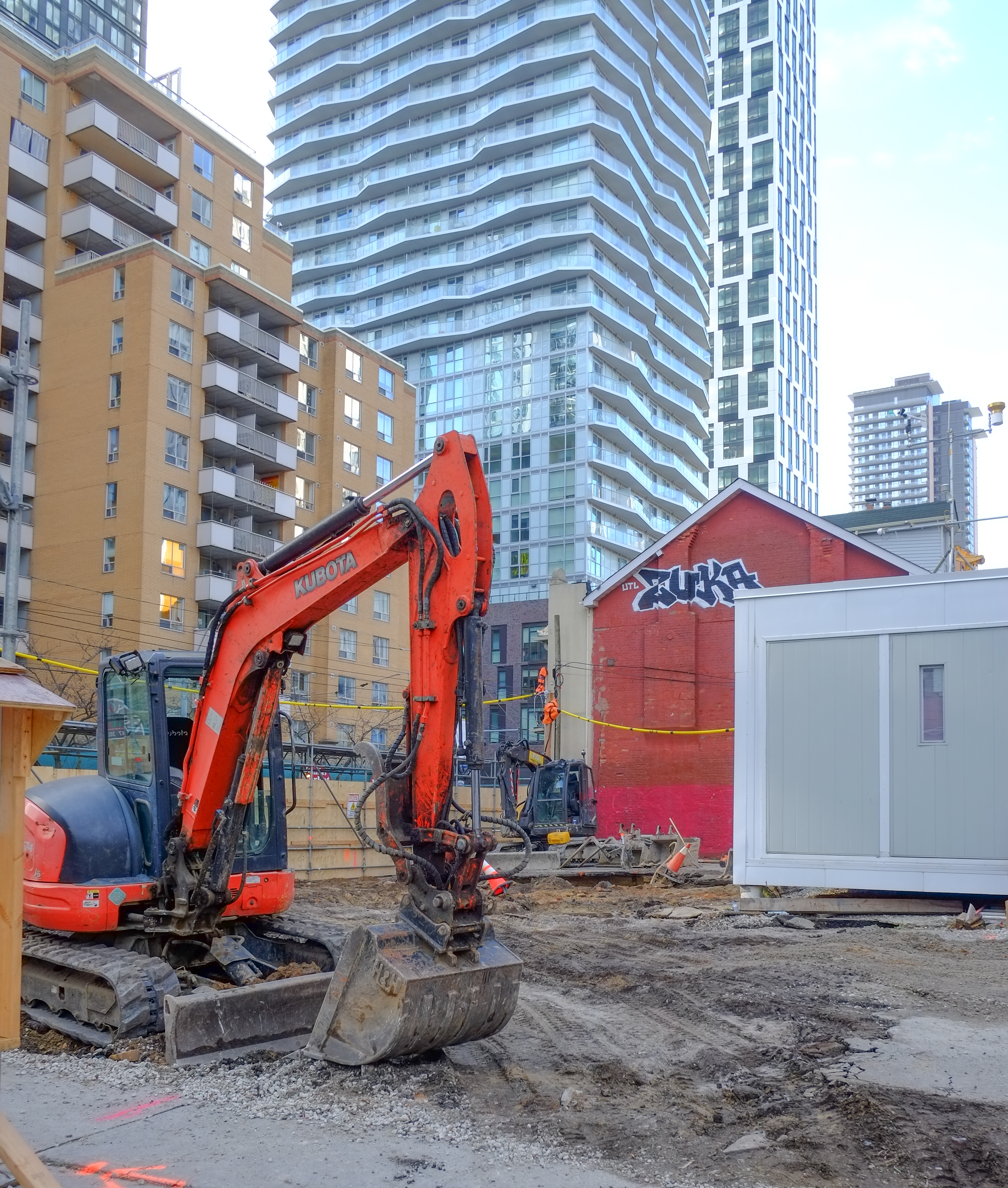
looking east along dundas from dalhousie street, construction traffic cones, tall buildings,

tall condos, new development, downtown

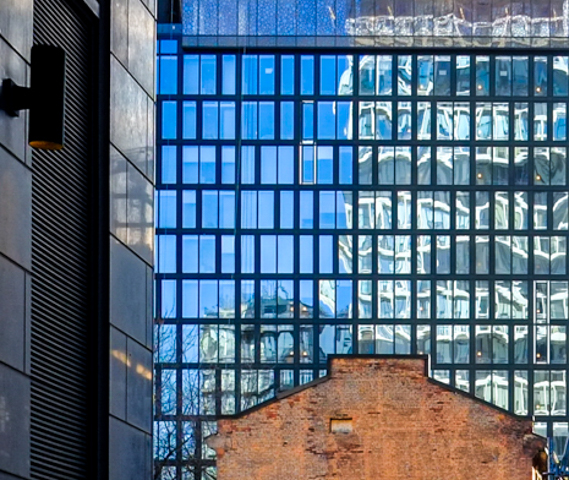
side of an old red brick smaller building in front of a wall of new condo glass and steel with many reflections in the windows

machinery with giant drill, at a construction site

digger in vacant lot at dundas and mutual, old red brick structure with new condos in the background

old smaller red brick building on dundas, with brick taller building behind

below: Church and Dundas – closing in on Yonge Street and TMU
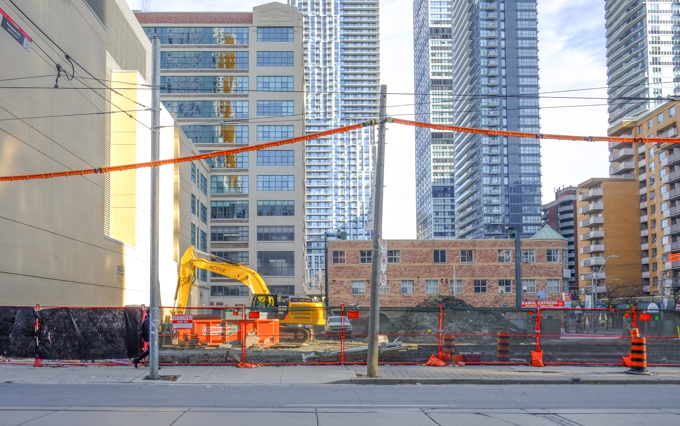
vacant lot at church and dundas, now a construction site

cyclist rides past construction site at Church and Dundas, looking east, with many new condos rising in the background, yellow construction machinery

new building clad with wood tones and dark blue, with orange bollards outside door

below: Birdo mural on Church Street.

birdo mural

below: A squirrel with a nut (or other edible) on the ramp to one of TMU’s buildings on Church Street.   He’s not waving goodbye, but perhaps he’s thinking “Gotta run!”
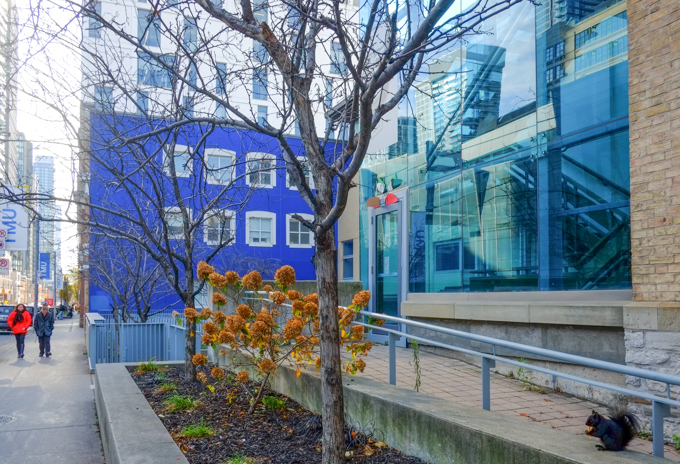
black squirrel on concrete ramp entrance to glass fronted building, a bright blue building beside it

As this has turned into the first post of January 2025…  Wishing everyone a healthy and prosperous New Year with many walking and/or photographic opportunities!  Have a good one!

Eastward from Bay with a diversion or two.

These photos were taken on two different walks and you will have no trouble figuring out which images belong to which day! The first walk was on a damp morning back in September; the second walk was on a pleasantly warm and sunny October afternoon.
below: Looking up Bay Street to Old City Hall and its clock tower.

looking up Bay street from Adelaide including old city hall tower

below: New public art  “Dreaming” by Jaume Plensa made of polyester resin and marble dust.  Brilliantly white.

large white head public art on Adelaide, side view

large white head public art on Adelaide

Hidden by scaffolding …   par for the course that no matter where you walk there will be construction.

construction on Adelaide, front of building covered with scaffolding

Even though there have been a lot of changes on Adelaide, there are some old details that have been preserved such as these mosaics that are temporarily behind scaffolding. They are above the entrance to the Bell Canada Building at 76 Adelaide West. Five panels, each twenty feet tall and five feet wide, of glass mosaic tile are embedded in the cement of the building. They were designed by York Wilson and installed in 1965 when the building was constructed. The theme of the piece is communication and each panel represents a different form of communication – writing, drawing, music, voice, and satellites.

mosaic tile decorations on exterior of building, behind scaffolding

At 100 Adelaide West is the remains of the Concourse Building. When the area was redeveloped recently, only the front and east facade of the original Art Deco 1928 building were preserved. The original entrance way on Adelaide remains; they feature mosaics created by Group of Seven member J.E.H. MacDonald and his son Thoreau.

art deco doorway - tile mosaics, carved stonework, and metal decorations on window and door,

Art Deco stonework

art deco details carved in stone on exterior of building

The remains of a metal fence or railing.

old metal railing outside entrance of a building

below: Looking east, at Sheppard Street.

street scene

pressure cleaning, with water, outside a building downtown

below: It looks like a splash of paint – like someone threw a can of paint at the building.

exterior of Deloitte building at Adelaide and Yonge, glass exterior has new artwork that looks like a large splash of water

below: The octagonal entrance to 1 Adelaide East (at Yonge) with its stained glass roof is being renovated.

below: Distraction!  Film crew on King Street (looking down Victoria St).

street scene to film crew working

below: Film trucks line both sides of Toronto Street

film trucks parked on both sides of Toronto street

below: Toronto hieroglyphics

yellow hydrant on sidewalk, with pink lines spray painted beside it

below: A short, tidy alley off Adelaide near Victoria

short tidy alley between two older stone and brick buildings

below: Fountains and public art in Adelaide Courtyard.  Collectively, the work is “Synthetic Eden” and it was created by Stacey Spiegel back in 1991.   The fountain with the metal mesh covering it – the mesh is supposedly the head of Adam.

fountains and public art in Adelaide Courtyard

below: The snake lurks over the garden.  The entrance to Adelaide Courtyard is beyond the etched glass panels.

Adelaide Courtyard

below: St. James Cathedral from the corner of Church and Adelaide.

St James Cathedral seen from the intersection of Church and Adelaide

below: Slight diversion north on Church where there is now a large vacant lot at Lombard.  How many cranes?

Church and Lombard vacant lot

below: Church Street, north from Adelaide.  A vacant lot on one side, a partial development on the other.

street scene with TTC street car

people walking past the ontario heritage plaque for the York Mechanics Institute at the corner of Adelaide and Church, now a patio for Tim Hortons

“The Mechanics’ Institute movement began in Britain and soon spread to North America. Its aim was to teach workers the applied technology behind new methods of manufacture and craftsmanship introduced during the Industrial Revolution. The first Institute in Ontario was established at York (Toronto) in 1830. It sponsored lectures, held classes and operated a lending library. It moved from rented quarters into its own new building on this site in 1861. After passage of the Free Libraries Act in 1882, the Institute transferred its assets to the municipal government. Its book collections formed the foundation of the Toronto Public Library, which opened in the former Institute building in 1884.”

below: Circa 1900, the music room of the York Mechanics Institute as a newspaper reading room

old black and white picture of the interior of the York Mechanics Institute that became a public library, newspaper reading room

photo credit: Photographer unknown, image from digital archives of the Toronto Public Library.

.

below: “Brickman” by Inges Idee stands outside a residential building at Jarvis and Adelaide.  He stands 10m tall and is actually made from precast concrete, not brick.


very tall brick sculpture of a man shape, called Brickman, outside a brick building

below: Looking northwest from the corner of Adelaide and Jarvis

looking northwest from the corner of Adelaide and Jarvis

looking through the glass windows of a gelato and coffee shop on a corner, two women walking past, chairs inside, sunny day, park across the street

below: Old Post Office.  This building was opened in 1832, before Toronto became a city.  According to Wikipedia “It is the oldest purpose-built post office in Canada that functioned as a department of the British Royal Mail and the only surviving example. After its initial use as a post office, it became part of a Roman Catholic boys’ school” until 1913.  It was used for various things (offices, cold storage, etc) until 1971 when it was closed up and left vacant.  When it was (re)discovered to be the old post office, it was designated as an Ontario Heritage Site as well as a National Historic Site.  Since 1982 it has been a museum as well as a functional post office.

Torontos first post office on adealide street, 3 storey brick building with Canadian flags flying on either side of the entrance

below: Future chefs, George Brown College

looking in the windows on the 2nd storey of George Brown College into the kitchen of the cooking school. students in chef outfits, white, with hats, standing around a class

below: Looking west from Frederick Street.  At this point we are in the old town of York, laid out by John Graves Simcoe in 1793.  At that time, Adelaide Street was called Duke Street, after the Duke of York.  Richmond Street, one block north was Duchess Street for his wife.  The Duke of York at that time was the second son of King George III, Prince Frederick.

Adelaide East, looking west towards downtown

below: Looking west from Sherbourne.  This was originally Caroline Street, named after  Caroline of Brunswick who was the wife of Prince George in 1793 (and later George IV).  When she became too unpopular, the street name was changed to Sherbourne, after the town in England with the same name but a different spelling, Sherborne.

people crossing Adelaide at Sherbourne, looking west on Adelaide towards downtown

I stopped to take a picture of an old car (remember when diesel cars were going to take over the world?) and I found an old shoe.  Keep walking and keep your eyes open because you never what you’re going to find along the way!

an old beige diesel mercedes parked on the side of a street, a single abandoned shoe on the pavement behind it

Let’s follow the fish! 🐟 It’s pointed east along Queen’s Quay and by coincidence that the direction I’m headed too… 😃

a metal life like fish embedded on the paving stones on the ground, boot toes beside the fish

The seagull is not amused.

seagull standing on a short post beside Lake Ontario, with the back end of a boat in the background

front end of boat, Empress of Canada, white and black hull, dirty, tied to pier with yellow rope, reflections of it in the water of the harbour

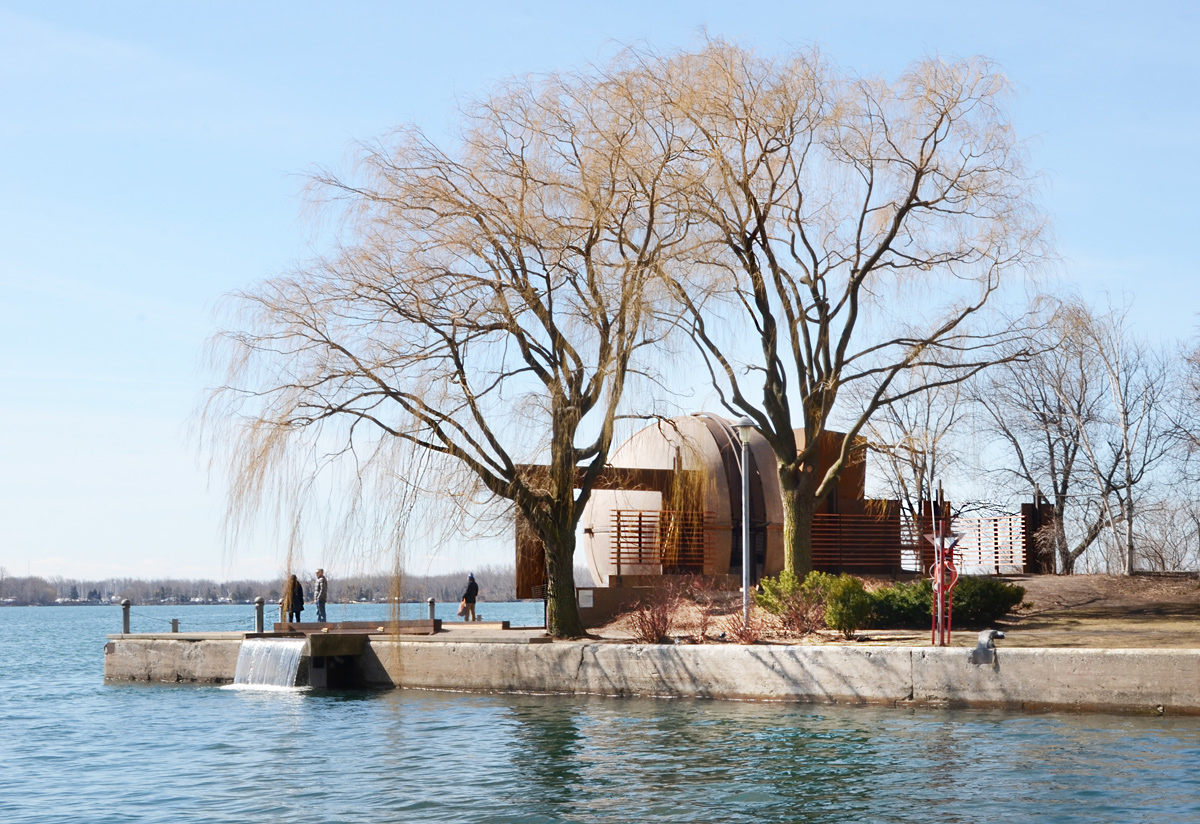
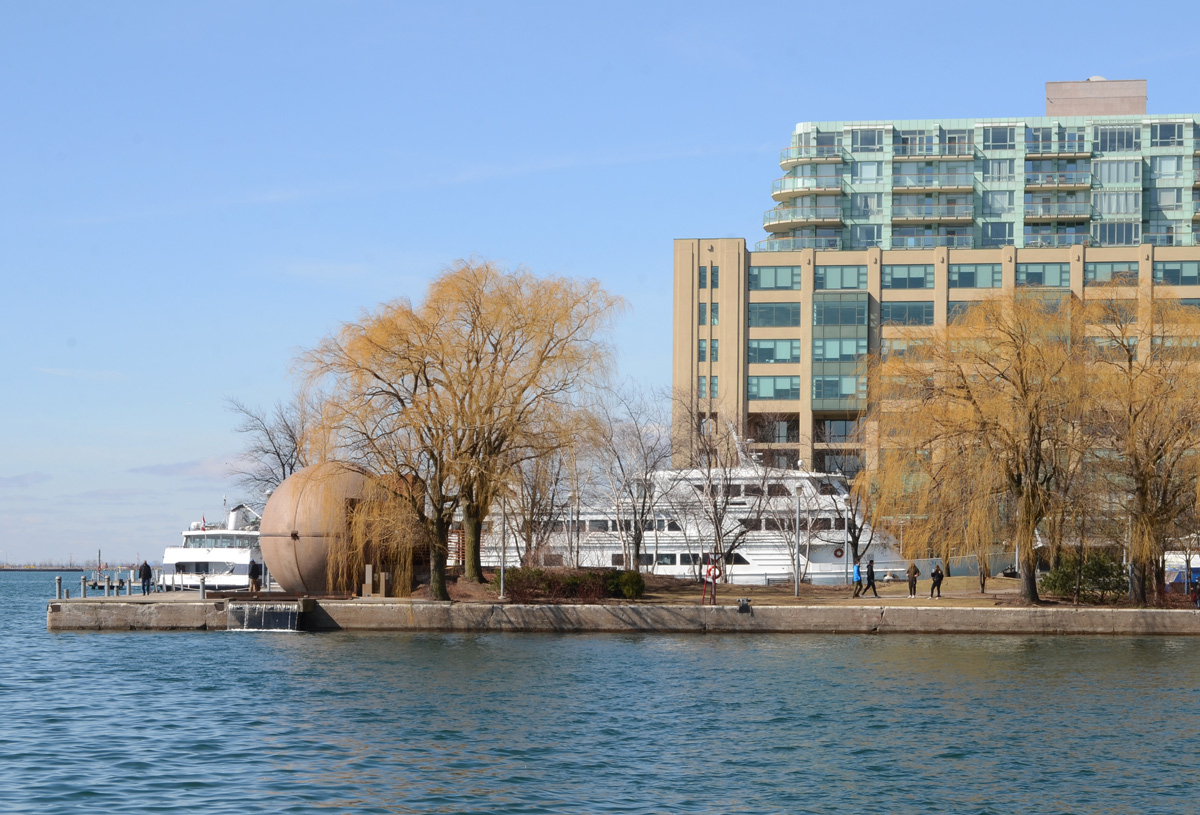
below: Harbour Square Park with “Sundial Folly” at the water’s edge.  This art installation is the work of John Fung and Paul Figueiredo.  It has recently been cleaned up.  The sphere is hollow and there is a walkway that runs through it.  An opening at the south side (water side) acts as a sundial.

Toronto waterfront looking westward

Toronto waterfront looking westward

below: Looking east from Harbour Square towards the Westin Hotel tower and the park by the ferry docks.

Toronto waterfront looking eastward towards Westin Hotel tower and park by ferry docks

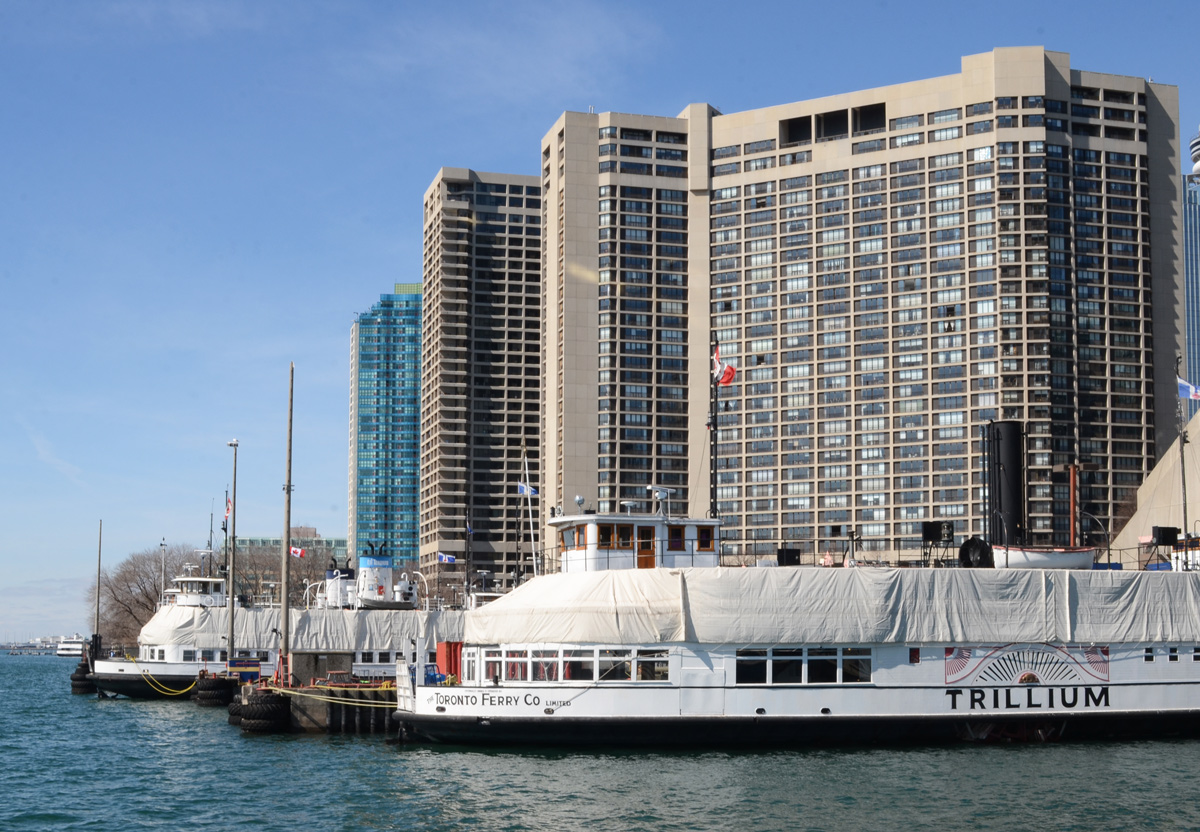
below: Tour boats and ferries still under wraps for the winter months.

Trillium tour boat and other boats and ferries parked on Toronto waterfront, covered for winter storage, tall condos in a line along the waterfront in the background

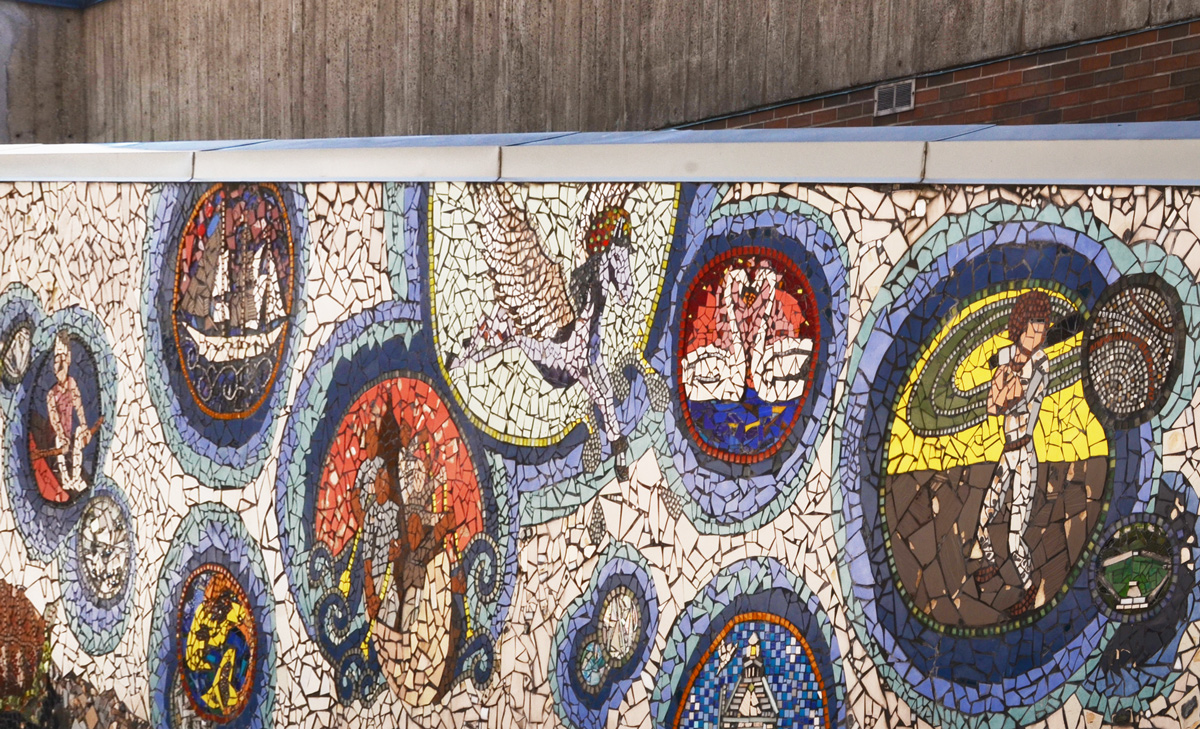
below: “Shore Stories” a mosaic located by the Jack Layton Ferry Terminal. It was made in 2012 by youth from the community under the guidance of AFCY (Arts for Children and Youth, an organization that may or may not still exist).

mosaic pictures in circles forming a mural, Shore Stories, at ferry dock in Toronto

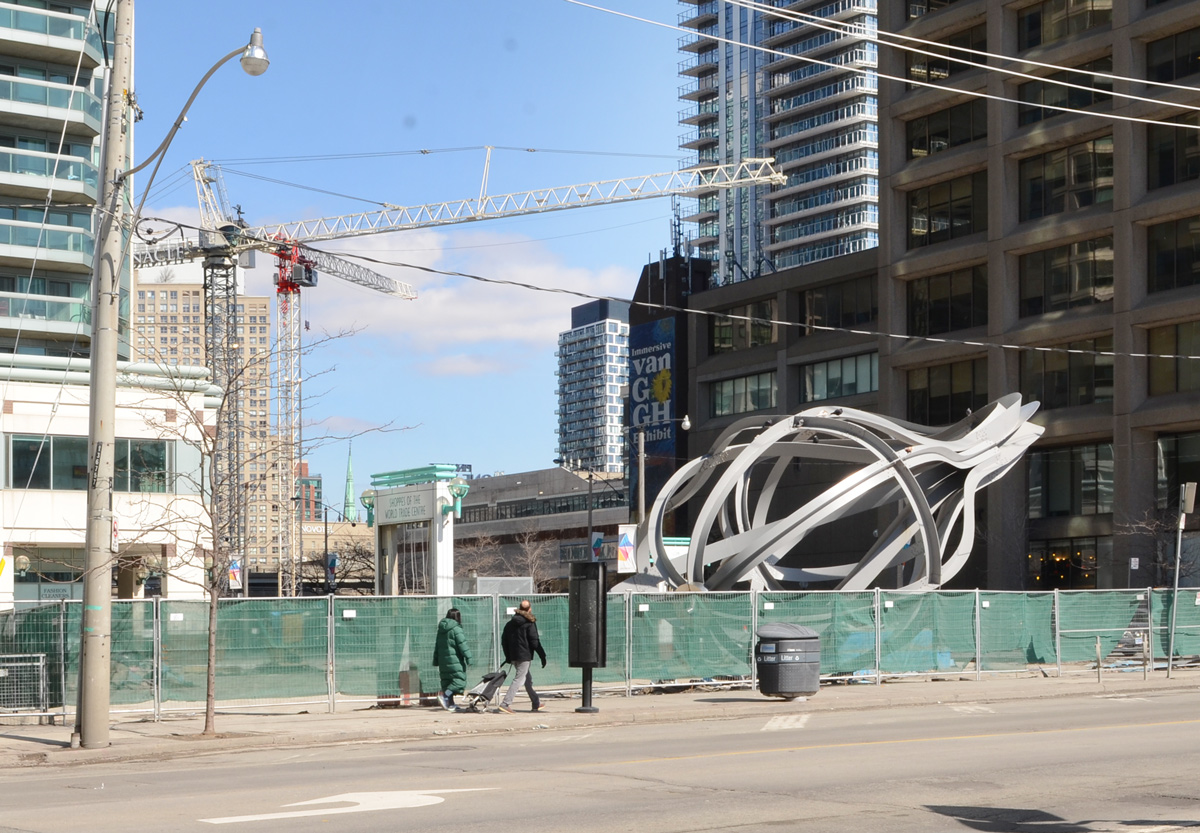
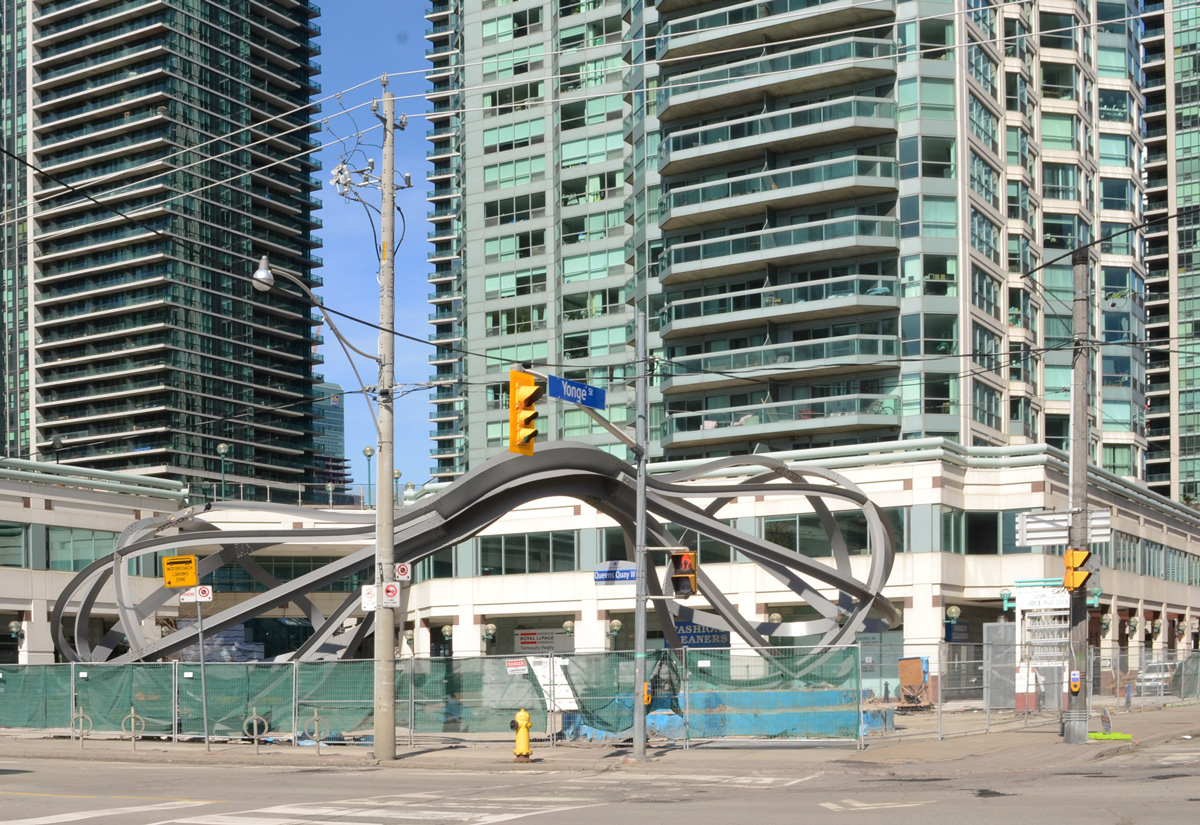
below: The “egg beaters” at 1 Yonge Street are now behind a fence. The installation is actually called “Between the Eyes”, and is by Richard Deacon.

two people walking past a site with a green fence, a sculpture behind the fence, new buildings and new construction in the background

Between the Eyes, a sculpture by Richard Deacon on Queens Quay East

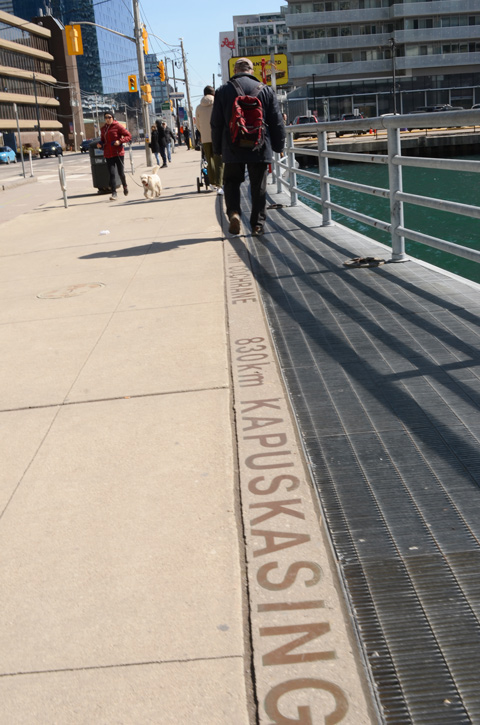
below:  It’s 830km to Kapuskasing and even farther to Cochrane, just keep following Yonge Street northwards.

brass letters embedded in the concrete of the sidewalk, distances to different places on Yonge street,

a very big muddy puddle in a parking lot with reflections of the condos around it

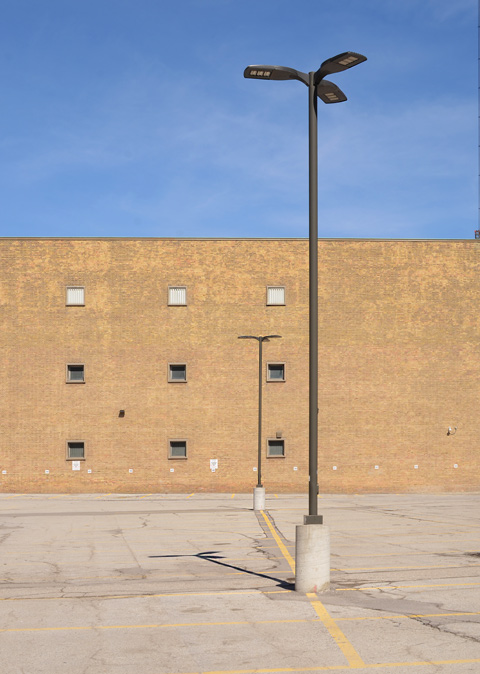
empty parking lot with two light standards. on the other side of the lot is a light brown brick building with small square windows

an empty bench on the waterfront with new condos behind

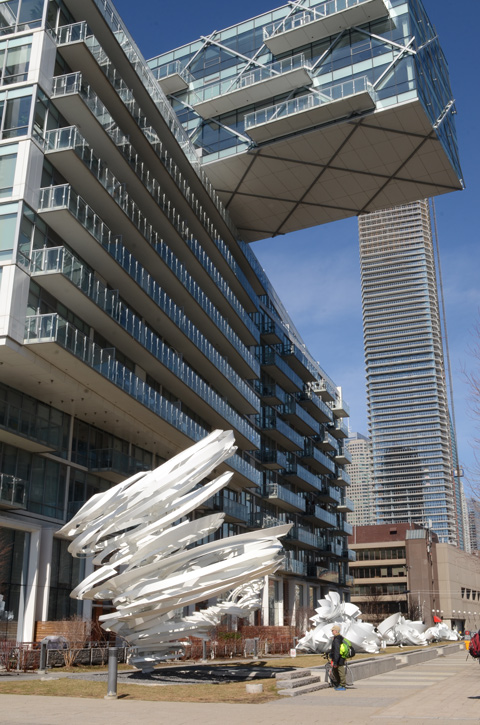
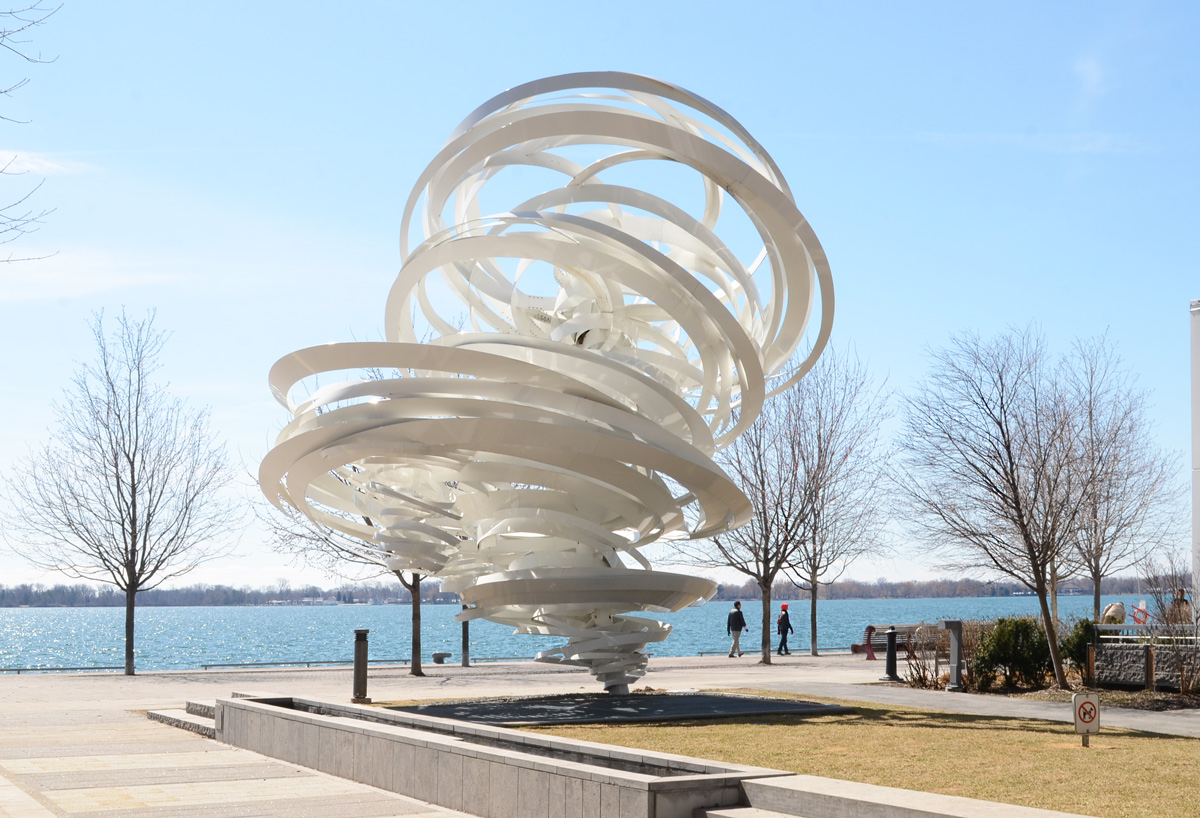
below: “A Series of Whirlpool Field Manoeuvres for Pier 27”. by Alice Aycock

whirlwind, a white metal sculpture between two condos, with an elevated section above it, taller condo in the background

along the waterfront, whirlwind, a metal white sculpture, tornado swirls of metal, by Lake Ontario,

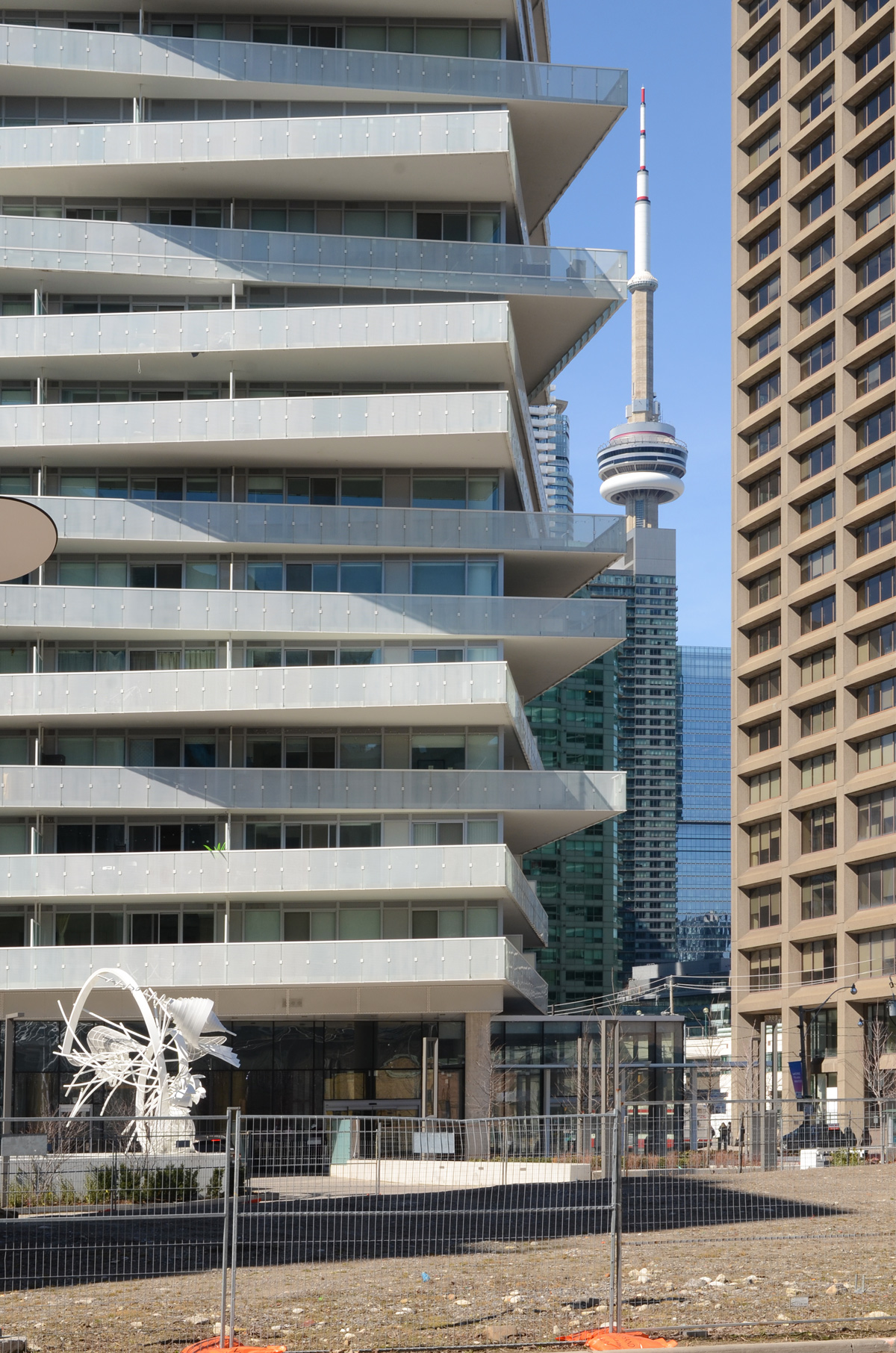
CN Tower in the background, peaking through between a new glass and metal condo with different angled balconies, and an older concrete highrise

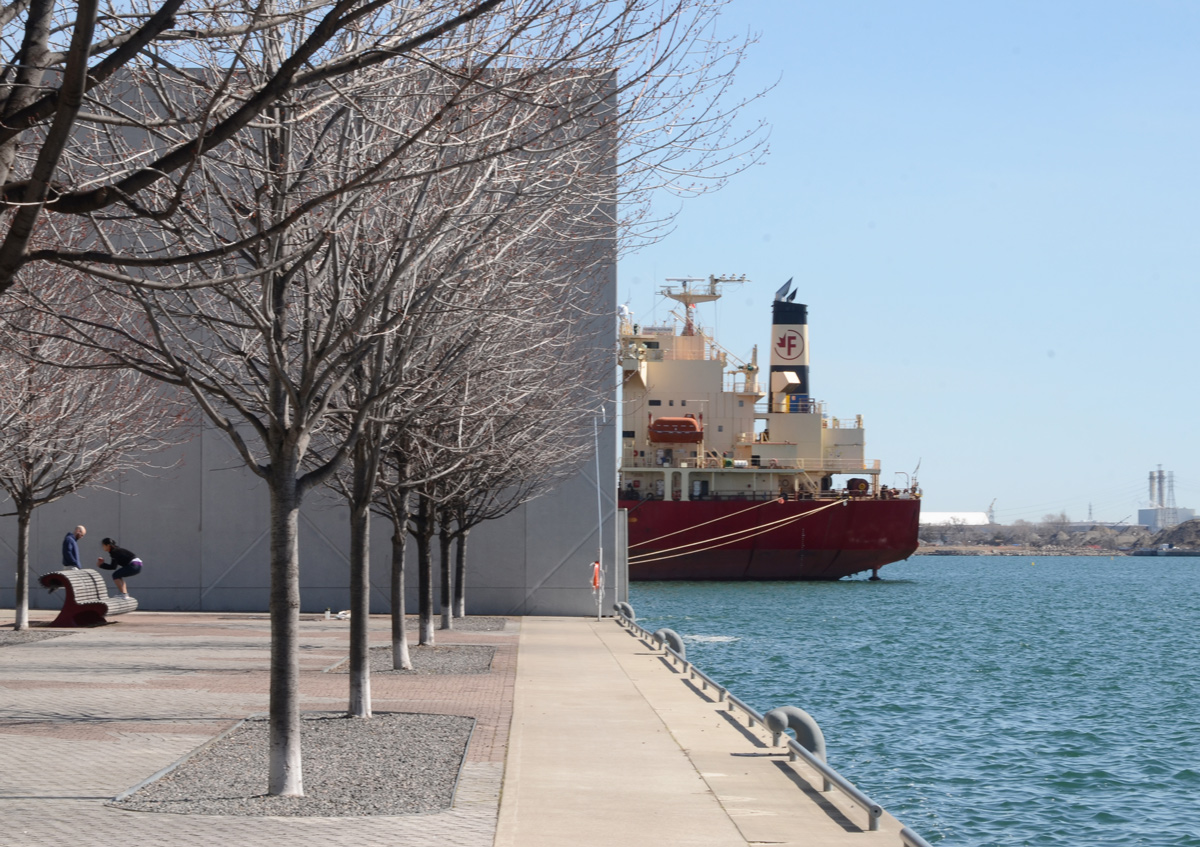
below: The walkway along the waterfront comes to an end where a very high concrete wall separates Redpath Sugar from the public space.

Toronto waterfront, public path ends at a large high concrete wall by Redpath Sugar, the back end of a red ship is visible jutting out from behind the wall

below: Que Rock murals, water theme, “Water Clans (Nbii Dodem)” four panels at Redpath Sugar.

two Indigenous themed murals on exterior walls of Redpath Sugar on Queens Quay

2 indigenous themed murals on Queens Quay by Que Rock a k a Quentin Commanda

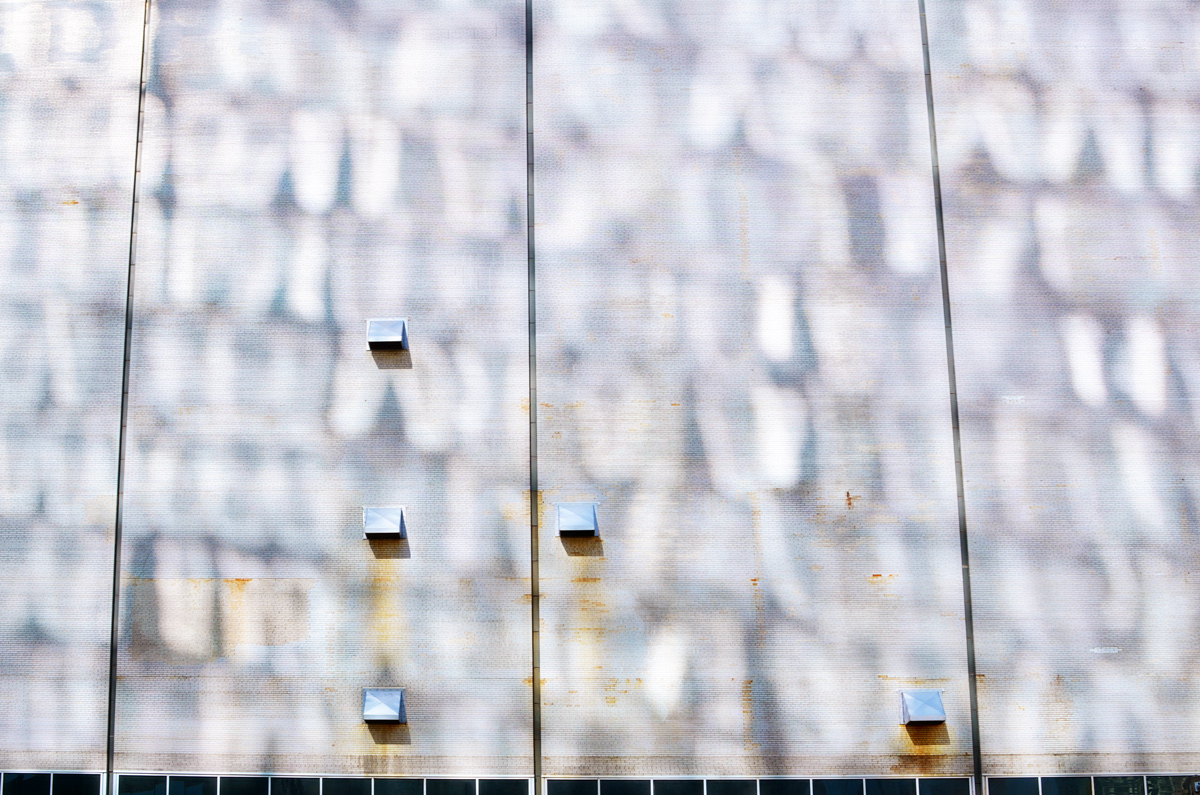
reflected light against a grey exterior wall, with 5 small vents

view from sugar beach, willow tree in front of a red ship parked at Redpath Sugar, city buildings behind

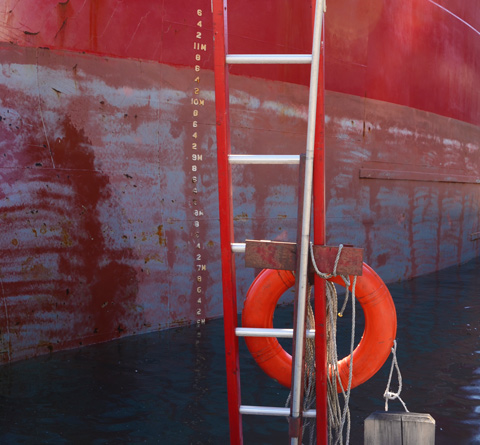
orange life saving ring by a ladder on shore in front of a parked red hulled ship, harbour

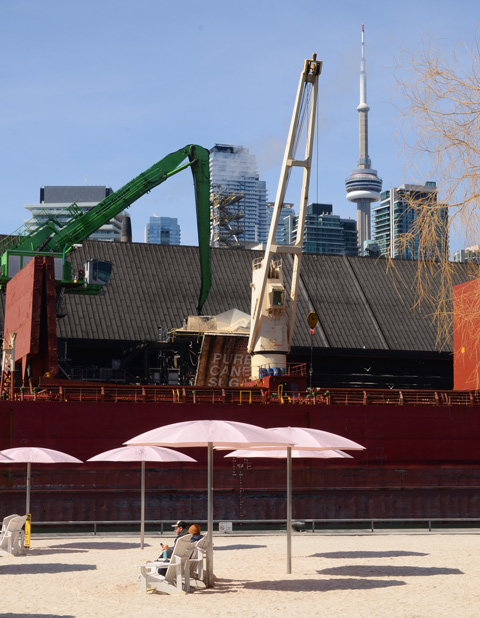
below: Pink umbrellas and sugar filled ships, at Sugar Beach.

sugar beach with pink umbrellas in the foreground, a sugar ship unloading at Redpath in the background, Toronto skyline with CN Tower in the distance

below: Queens Quay East at Dockside

new construction, new condo, at Dockside Dr. and Queens Quay East, Corus Quay, waterfront, new street,

below: Sherbourne Commons

Sherbourne Commons as seen from the waterfront, large grey building with washrooms and change rooms

a person sitting in a muskoka chair on the waterfront near a water work site with barge, and rusty metal pylons in the water, port lands in the distance

below: New construction on Queens Quay East where many parts are  being made of wood.   A new park, Aitkens Place Park lies between the new building and the waterfront.

Aitken Park in front, new condo building built behind it, concrete core but rest built of wood

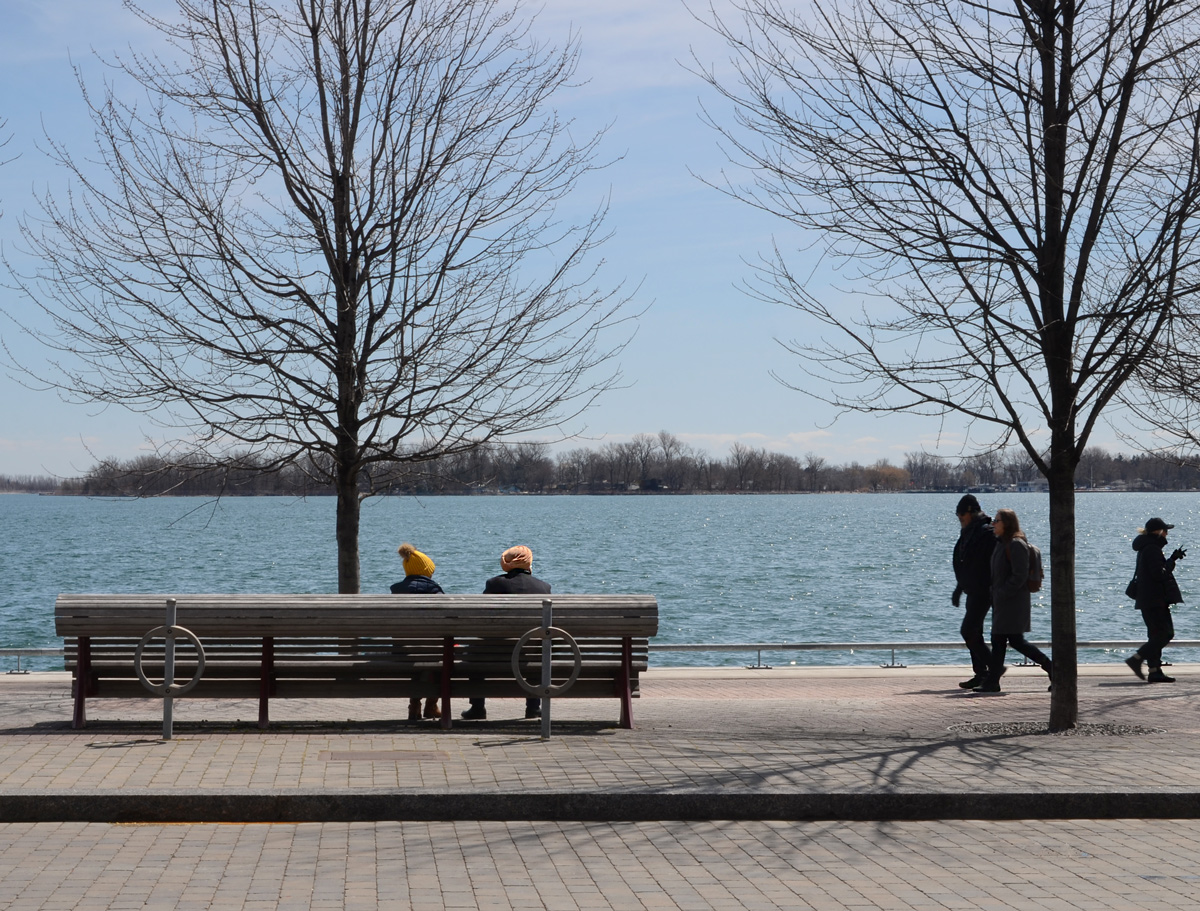
two people sitting on a bench, one with yellow toque and the other with yellow turban, other people walking past, on the waterfront

below: Vacant lot on the corner of Queens Quay East and Small Street.

northwest corner of intersection of Queens Quay East and Merchants Wharf, large billboard, vacant lot parking lot

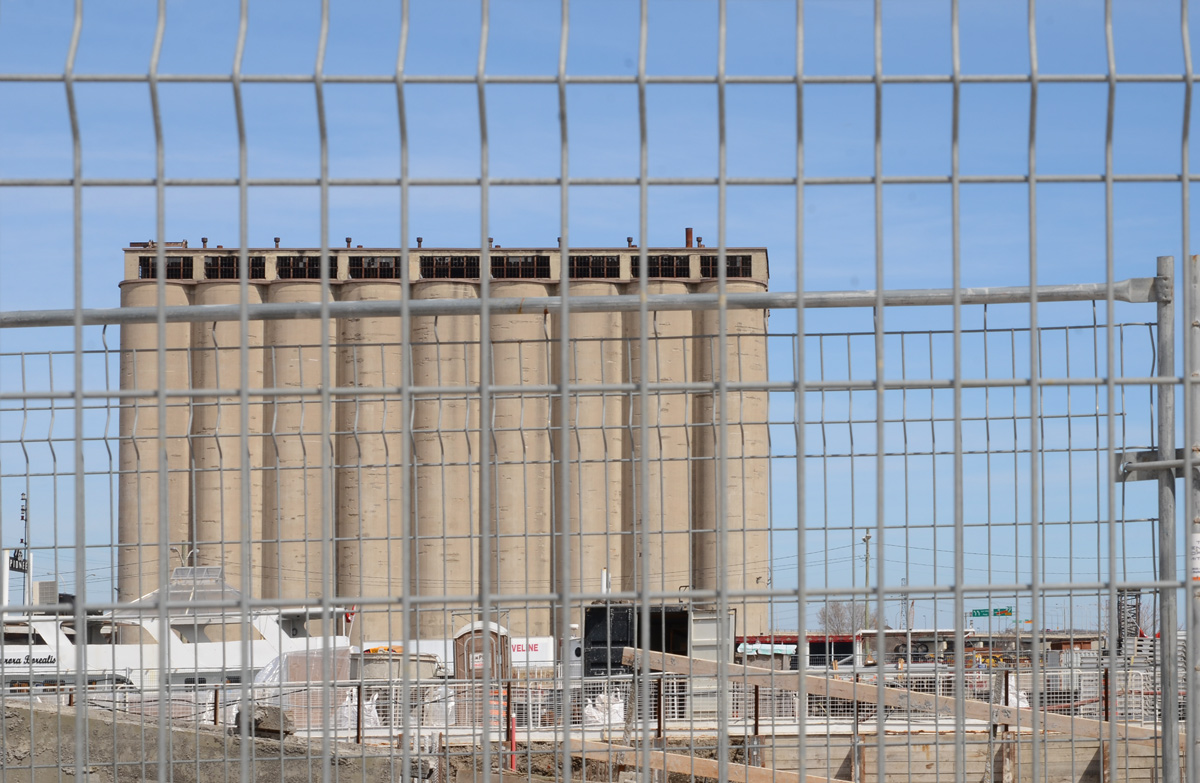
small temporary bridge, concrete silos in background, construction fence in front,

concrete silos in background, construction fence in front,

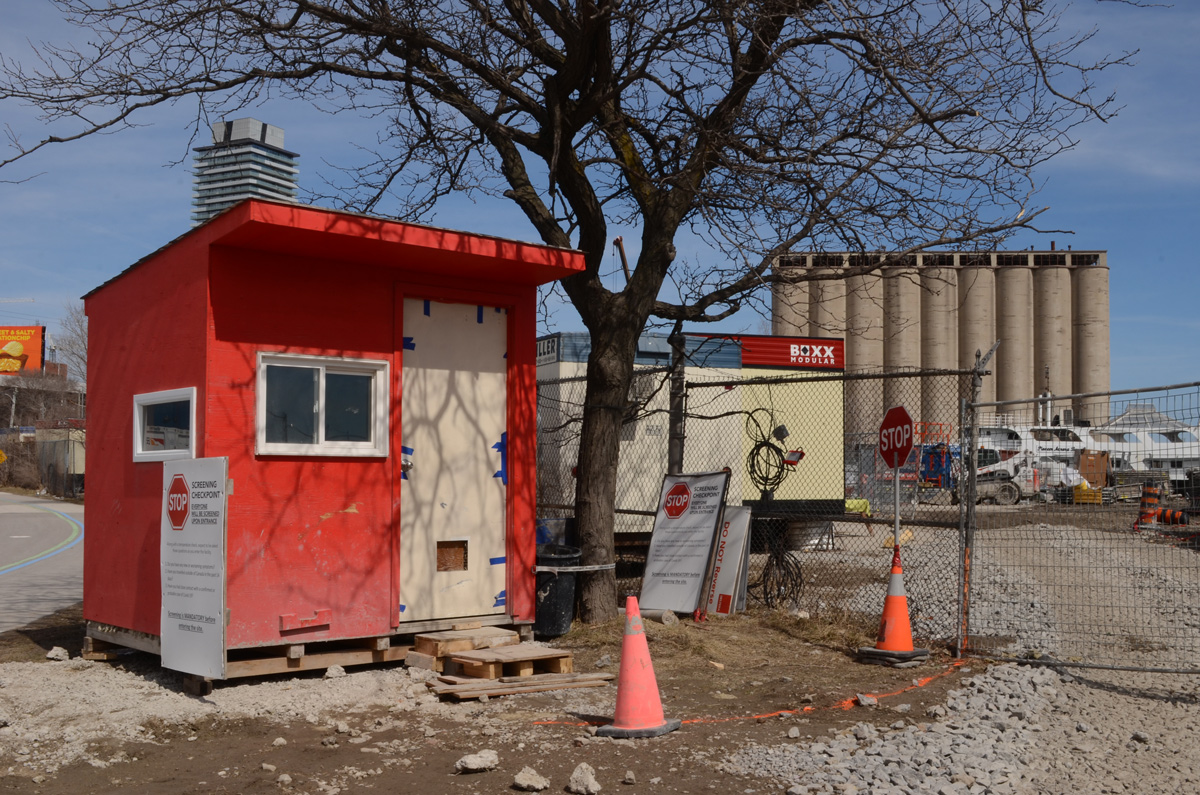
below: At the foot of Parliament Street.

small red cabin beside entrance to parking lot and construction site, concrete silos in the background

below: Anser eyes

old anser eyes graffiti on a piece of concrete leaning against a fence

below: Sweet and salty at the Distillery

large billboard in front of tall condos, a sweet and salty relationship, reeses peanut butter cups with potato chips

Today’s walk took me past three art installations that were new to me.  All three had nature as the theme; I saw a giant abstract tree,  upside down animals, and a walk in the forest.

The giant tree is ‘Red, Orange and Green’ by Michael Snow.  This 14 metre high, stainless steel sculpture stands in a small park on Huntley Street.  The gate of the park was locked, apparently closed for the season.   I took a few pictures through the metal bars of the fence and made a note to myself to return next season for a closer look.

large stainless steel tree sculpture by Michael Snow, consisting of three planes intersecting. 14 metres high, in a small park

When I first started researching this piece, I read that it’s title was because of the way it reflected street lights.  This didn’t make any sense – it sits in a park.  In the early 1990’s the city of Toronto commissioned Snow to design a sculpture for the corner where Jarvis meets Mt Pleasant at Bloor St. East and this work is the result.    When Rogers subsequently bought the building on that corner, they insisted on moving the sculpture to its present location.  The building in the background of these photos is the Rogers building at Bloor and Jarvis (although that stretch of Jarvis has been renamed Ted Rogers Way).

large stainless steel tree sculpture by Michael Snow, consisting of three planes intersecting. 14 metres high, in a small park

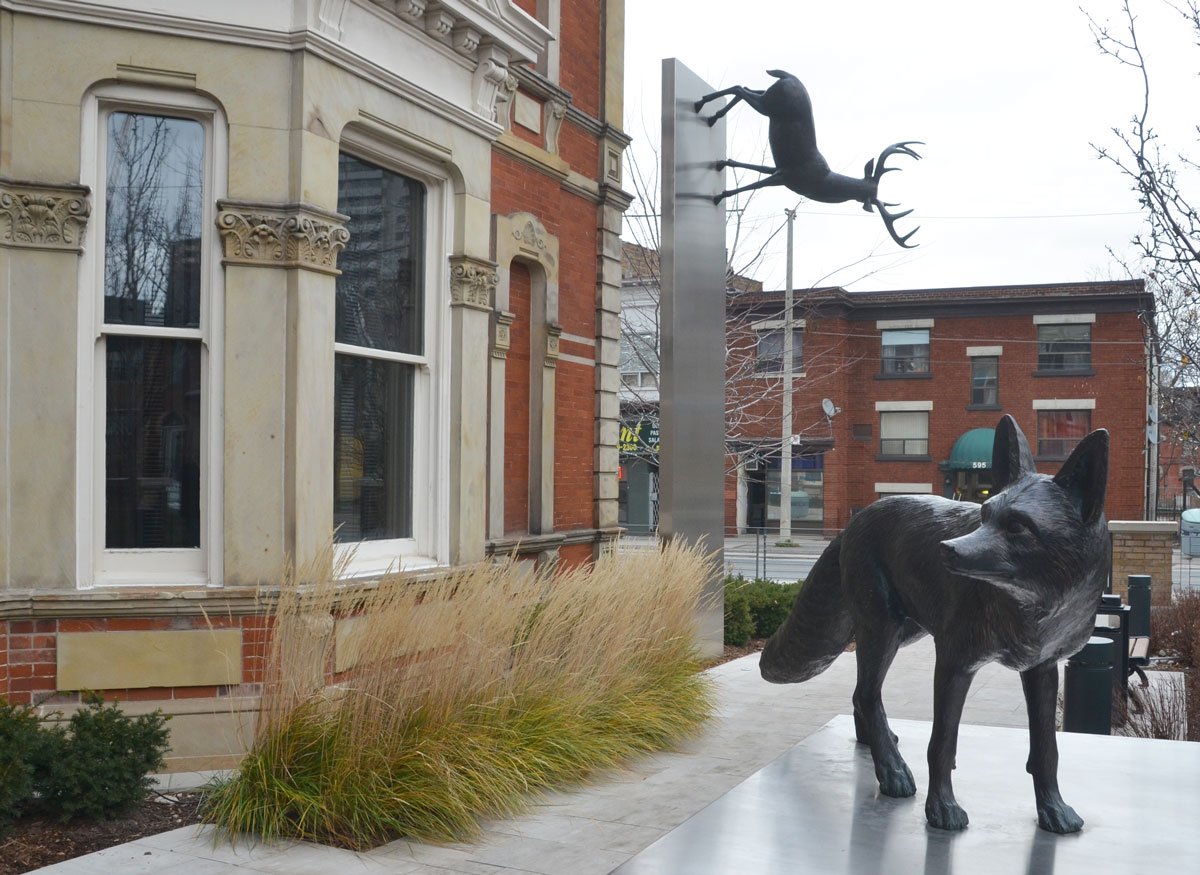
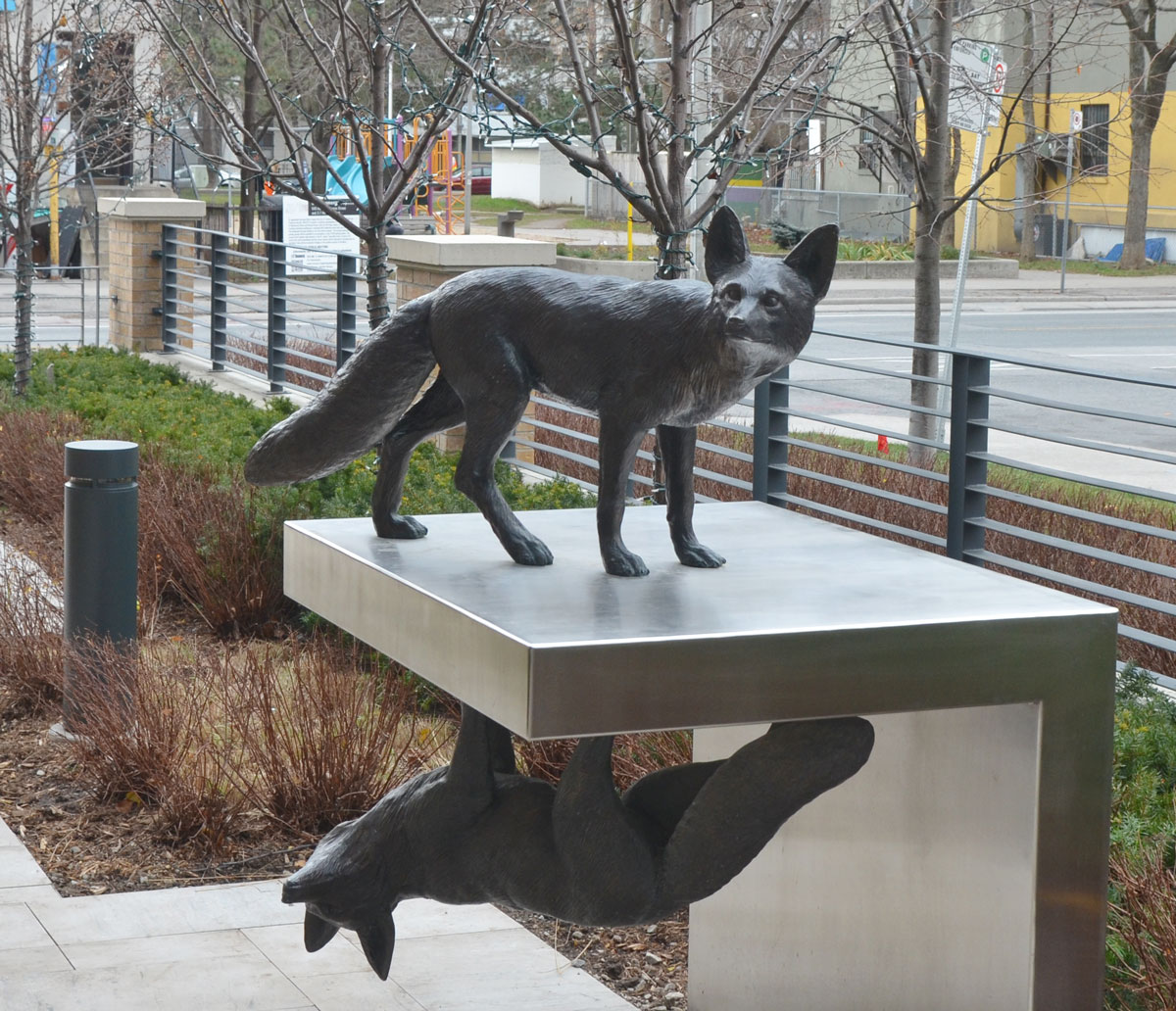
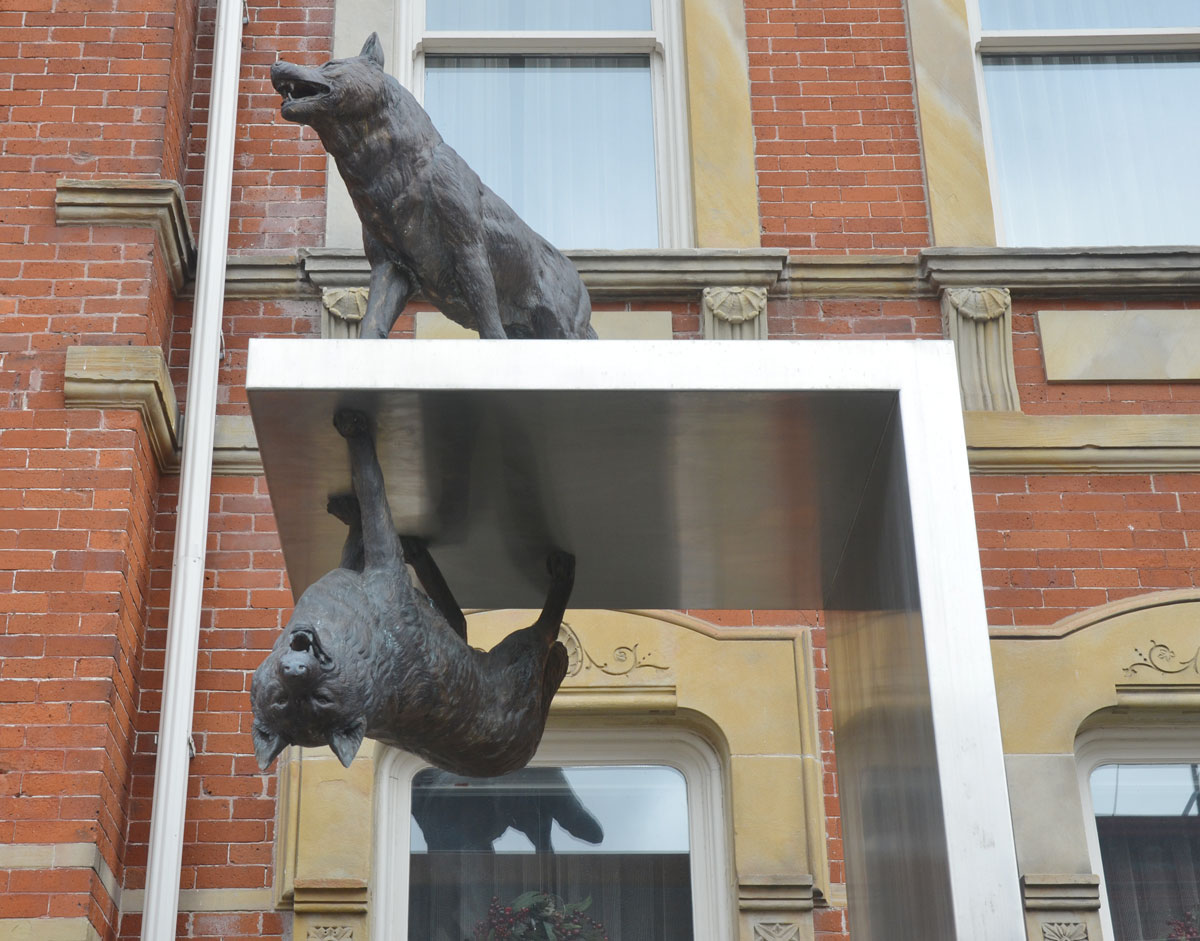
Just around the corner on Sherbourne Street is an art installation by Eldon Garnet.  It sits, or rather stands, on a condo development that incorporated the James Cooper Mansion at Linden and Sherbourne streets.

part of an art installation by Eldon Garnet called inversion -
The house was built for James Cooper in 1881.  He was a partner in Cooper and Smith, a company that imported, made, and sold footwear.   The house had eight bedrooms and was built in the Second Empire style with a mansard roof and dormers.  The house was purchased by the Knights of Columbus in 1910

part of an art installation by Eldon Garnet called inversion - a large moose seems to be standing against the side of an old mansion that has been renovated and incorporated into a new highrise condo development

part of an art installation by Eldon Garnet called inversion - two foxes, one on top of the other on a metal platform. The bottom one is upside down

part of an art installation by Eldon Garnet called inversion - the head of a deer in front of a building

part of an art installation by Eldon Garnet called inversion - A deer in front of a building and a wolf hanging upside down part way up the side of the building

part of an art installation by Eldon Garnet called inversion - a wolf on a metal platform and a second wolf upside down under the same platform

Just a little farther south there is a quiet park just to the west of Sherbourne Street, Wellesley Magill Park. This park was named in honour of Wellesley Central Hospital and Dennis Magill.  Magill was a founder of the Wellesley Institute and the first community Director of the Wellesley Hospital.   The park is situated on the site of the old Wellesley Central Hospital which was demolished in 1998.

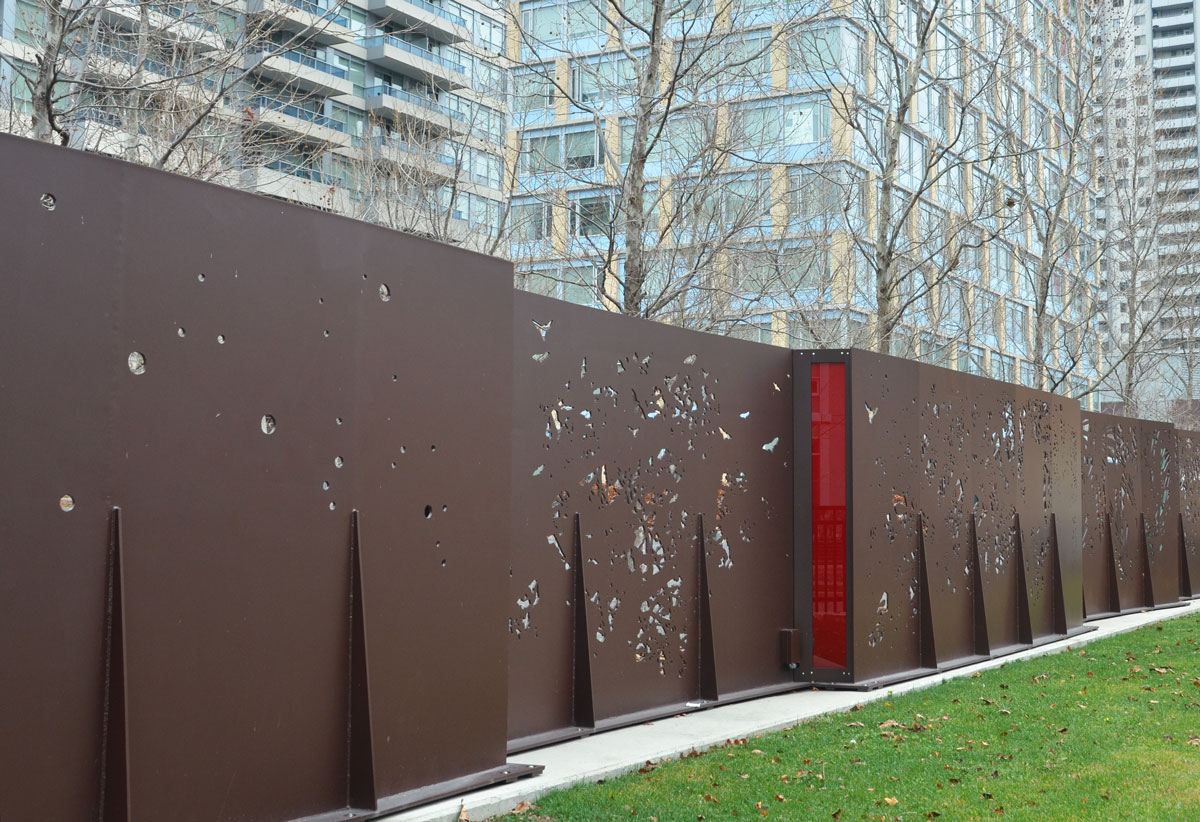
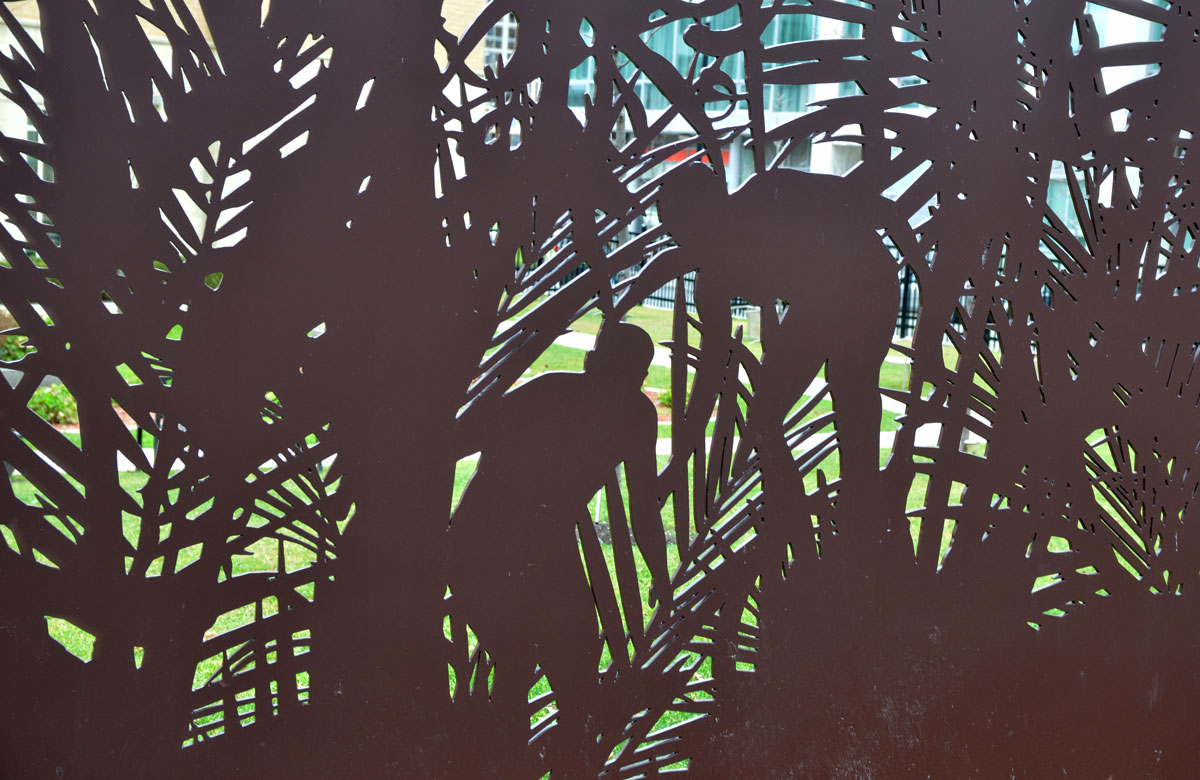
Running east-west along the park’s southern perimeter is a public artwork created in 2010 by Ed Pien.  It is called ‘Forest Walk’ and it is 45 meter long wall comprised of eight sheets of painted steel.  Each panel contains cut outs of a forest scene, or a scene of people walking through a forest.

cut outs in a metal wall of people walking through a forest

below: The back of the fence. The park is on the other side of the fence.

a steel wall between a park and a residence

cut outs in a metal wall of people walking through a forest