Posts Tagged ‘photographs’

But not a running, or even a jogging, track!  No, yesterday’s walk was an oval-ish loop at walking pace from Dundas West station, up one side of the railway tracks and back down the other.

below: Just past the subway station I saw the mural on “The Friendly Trini’s” which is now closed.  If the mural is telling the truth, they once served butter chicken, curried goat roti, jerk chicken with rice and peas, as well as drinks in coconuts and pineapples.  Feeling hungry already, and I’ve only just begun my walk.

a mural on the side of the Friendly Trinis restaurant that is now closed. Two women are walking on the sidewalk by the restaurant, a sign for Jennys bar and restaurant is in the background. The mural has drinks in coconuts and pineapples as well as a list of some of the food they served

below: Also on Dundas West, the King’z Convenience and Dollar Store which sells Filipino products and delicacies is adjacent to the Slovenija meat & delicatessen.  Multicultural.  I regret not taking pictures of the window of the Slovenian store – juice and beer brands that were unfamiliar to me.

two storefronts on a street, one is a slovenian grocery store and the other is a convenience store

below: Detail, boy riding an old fashioned bike on a little hook above a door.

a decorative ornament hanging high on a brick wall, a hook that extends from the wall about 8 to 10 inches, on top is a flat rendition of a boy on an old fashioned bicycle

below: And someone has decorated their balcony.

a balcony railing has been decorated with different colours of fabric that has woven between the rails

below: Just before I reached the bridge over the railway tracks I saw these words on a wall.

graffiti on a wall, in white paint on grey wall, the words "I have a dream'

below:  The dream theme continues on the metal steps up to the bridge.  This one was small and I almost missed it.  I’m not sure if it was painted black to blend into the background, or if the painting was an attempt to “clean up” the graffiti when prying off the letters proved to be too difficult (the D is broken so maybe someone tried).  Insert words about killing other people’s dreams here.

a raised word, 'dream' in cursive that has been stuck on the side of a set of stairs and then painted black to match the steps

below: From the top of the steps looking south.  The minimalist new Bloor GO and UP (Union Pearson) station is finished, top left of the photo.  Don’t you think we should call it ‘Get UP and GO’?  The street is Dundas West and yes, that mural is new.
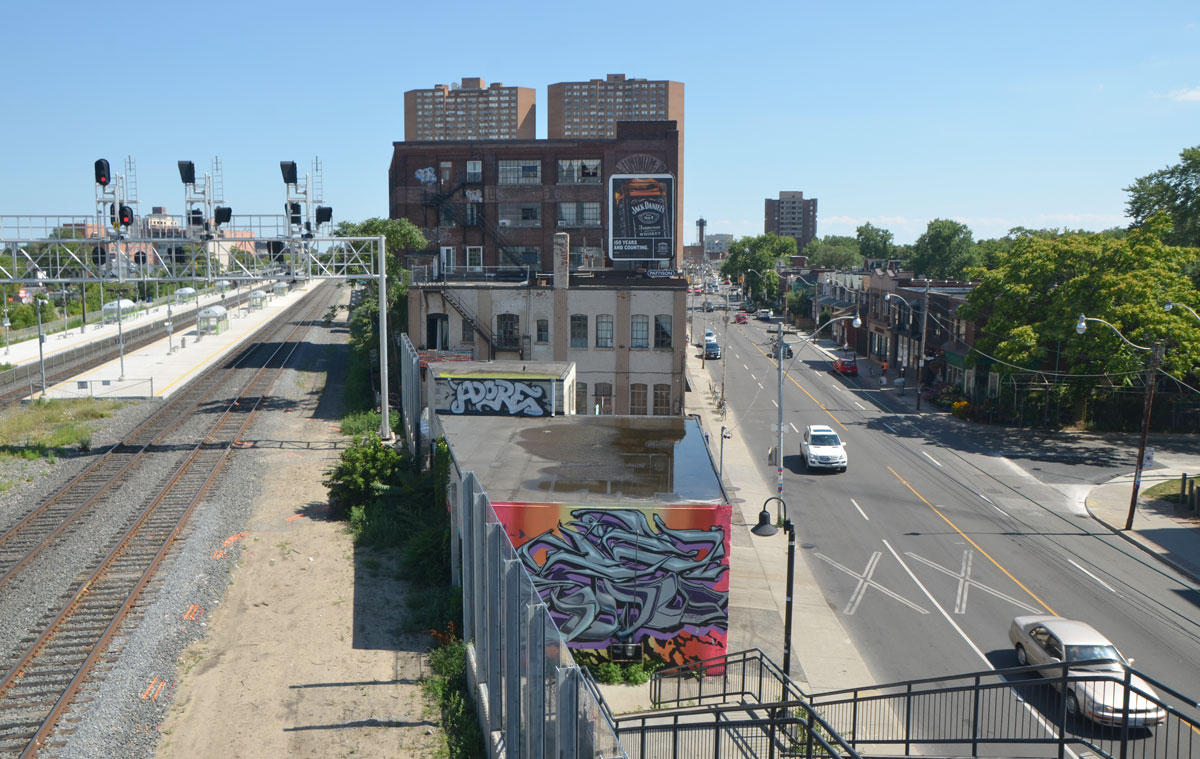
view from a bridge, a street, and a railway and some buildings in between. There is a mural at the bottom of the steps.

below: Helping to hold up the bridge, west side of the tracks.  He’s carrying the weight of the world, or maybe just the bridge, on his shoulders.

mural on the concrete base supporting metal struts bridge supports.

After crossing the bridge, I walked north along the West Toronto Railpath. The fencing along the path has all been upgraded.  There used to be some spots where you could get through the fence (non-railway side) but those are gone.  Between the tracks and the path there is a new clear (glass? plastic?) fence.  Of course it has already been ‘vandalized’ or ‘tagged’ – choose your verb.  Because I was there on a sunny afternoon, the sun was shining through the ‘artwork’ and making interesting designs.  A few thistles and other weeds added some compositional elements.

glass that has been spray painted yellow and orange, with some black that has run, weeds are growing in front of it, the sun is shining from behind it

a bright red heart has been sprayed painted onto a glass wall, weeds growing front, train tracks behind, the sun shining through the glass.

There were quite a few hearts on my route, especially around the Dupont exit of the Railpath.

below: Many hearts on the fence.
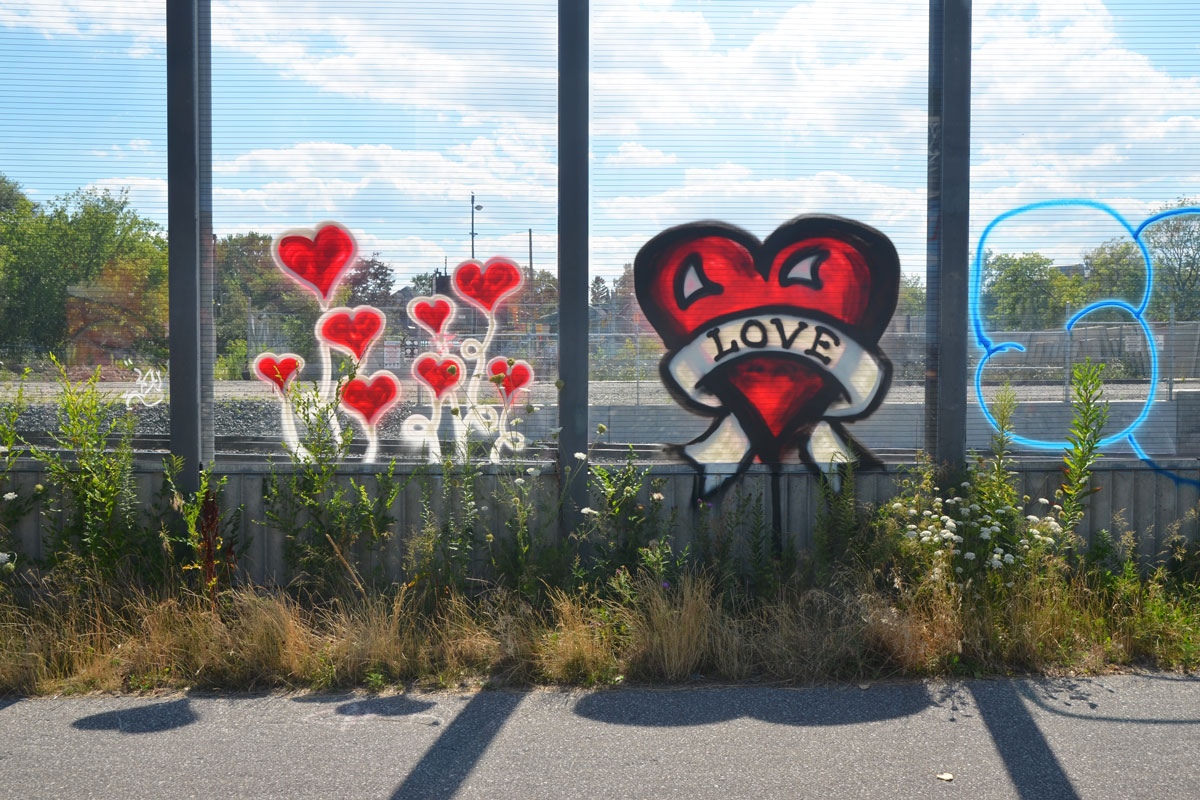
two street art pieces painted on a glass wall. the first is a red and black heart with a white banner across it on which the word love is written. the other is 8 little red hearts on white stems growing from the ground below.

below: A heart for Hex and Nish wherever, and whomever, they may be.

a bright red heart painted on a man made boulder, words hex and nish written on it

below: Three heart balloons on the Dupont sign.  You can get a good view of the fence here.

glass fence beside railway tracks, path, trees, also a metal sign on which three red hearts on white stems have been painted.

below: Part of the West Toronto Railpath runs alongside Planet Storage, an large old brick building.  There used to be a lot of street art along the side of the building but it’s all been painted over.   A few tattle tale remnants remain.
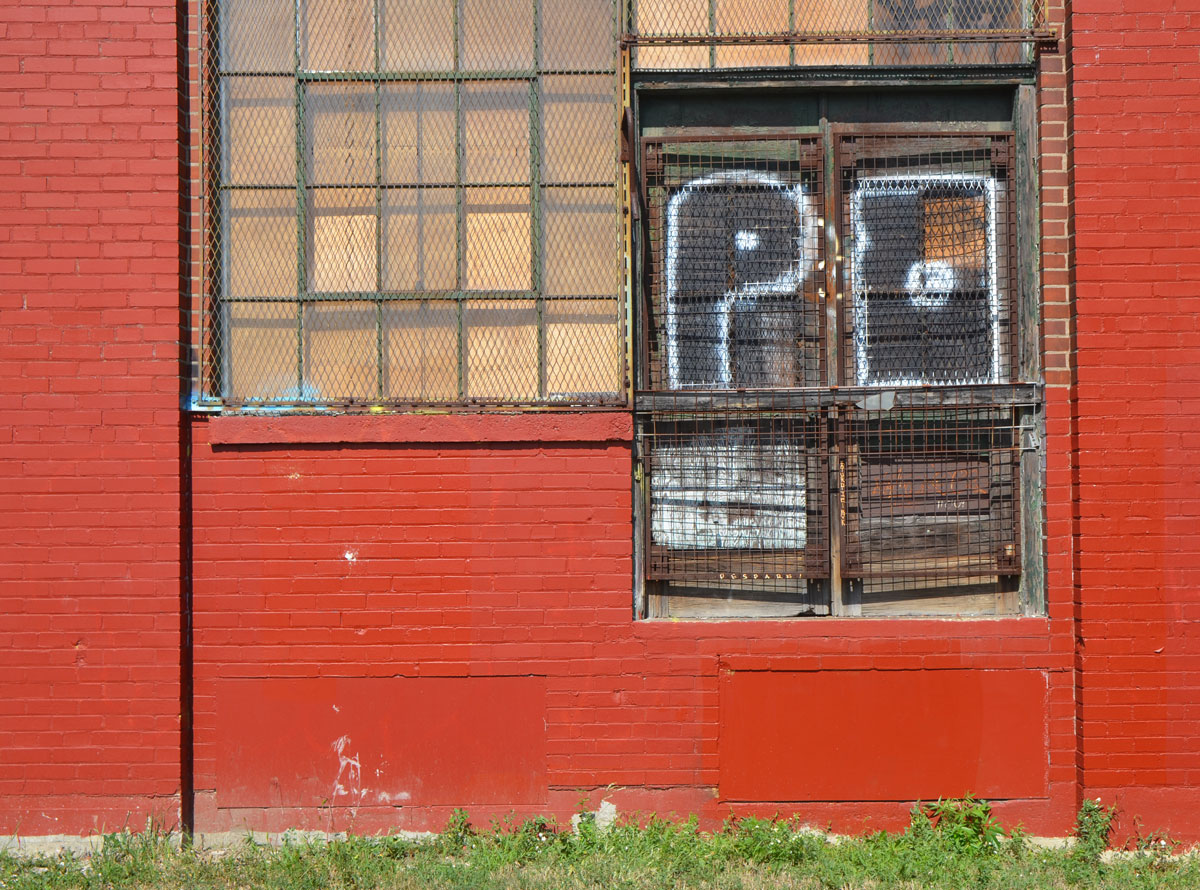
wall, part of an older brick building that has been painted a rust colour, with windows, some of which have metal grilles over them. Remnants of old graffiti on the metal grilles.

below: My favorite, little details like the bright yellow giraffe looking at the clouds.
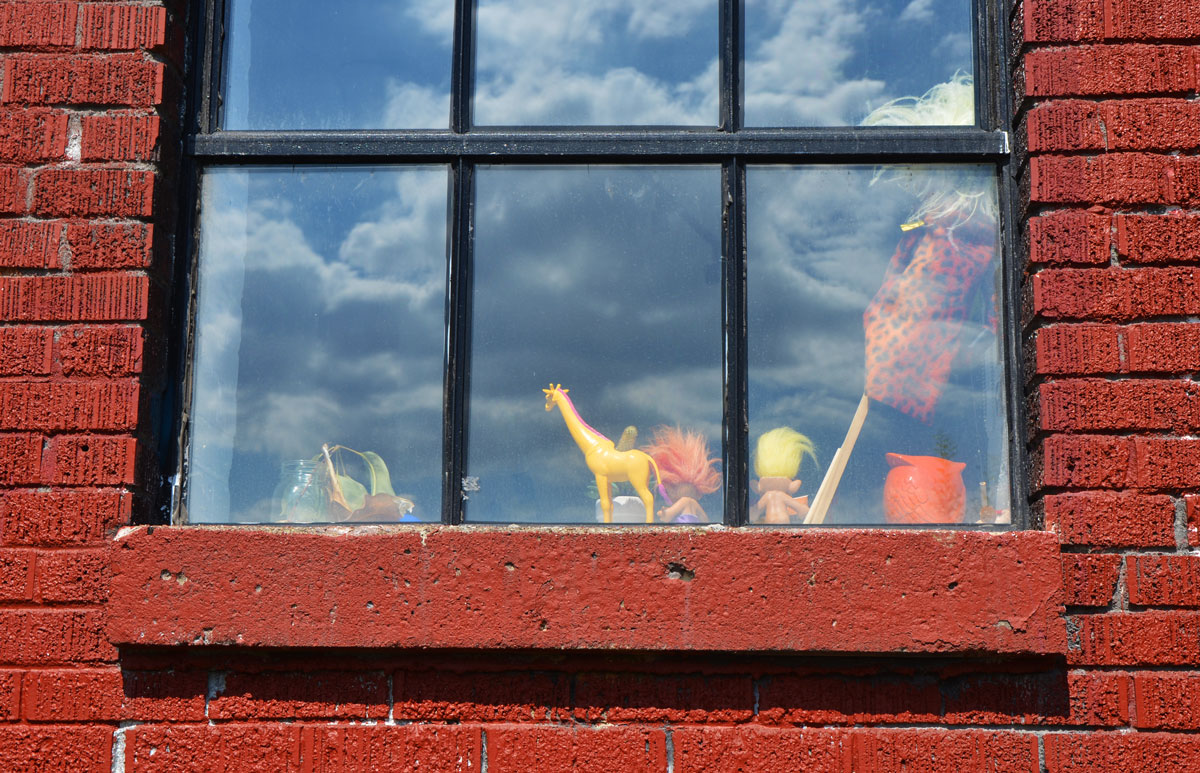
looking into a window, toy yellow giraffe on the window sill as well as two toy trolls, one with yellow hair and the other with orange. Reflections of clouds in the window

below: There is one mural on the Railpath, the back of Osler’s Fish Market is covered with a fish and fishing themed mural.
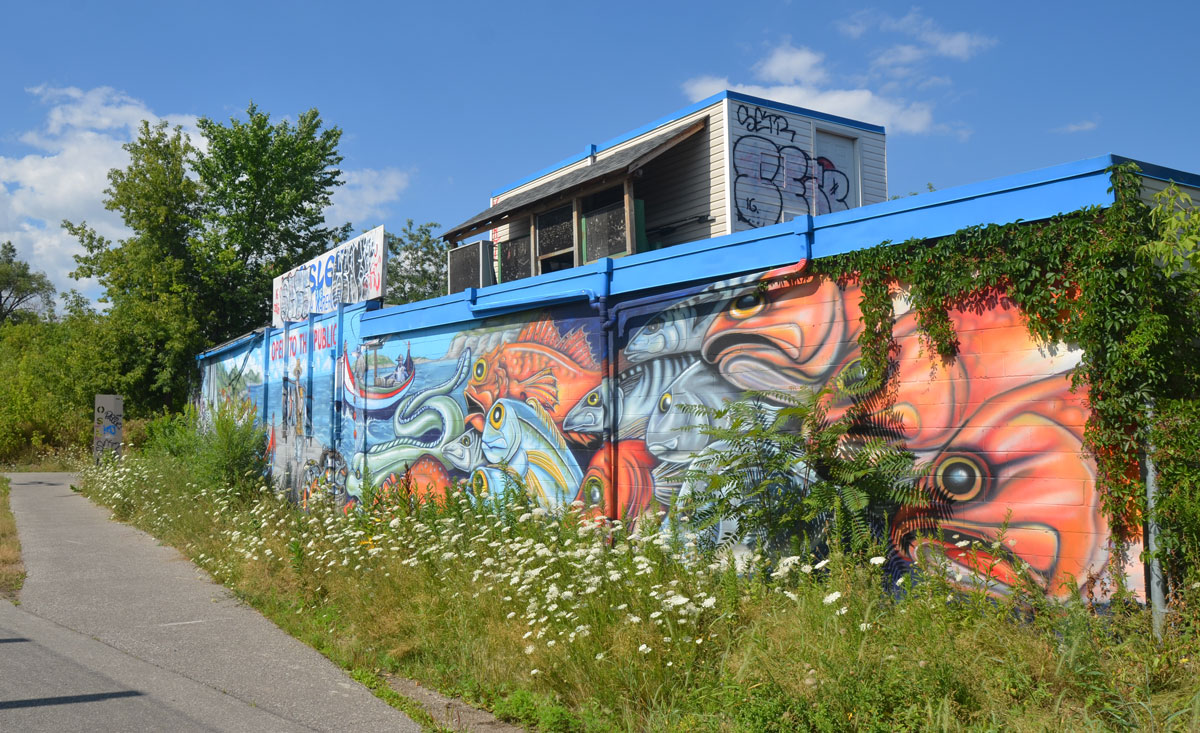
back of Osler Fish Market covered with a fish and fishing mural

below: Fish heads in the weeds.  Queen Anne’s lace, that plant with the white flowers, was growing in abundance along the path.  You might know it by its other name, Wild Carrot.

detail of a mural, fish heads, on a wall with Queens Annes lace and other weeds growing in front.

mural with fisherman bringing in a load of fish to the shore, boat in the background, more fish in the foreground.

mural, man sitting, mending fishing nets, woman on the shore carrying a bundle towards some fishing boats.

below: A splash of red on a street just off the railpath.
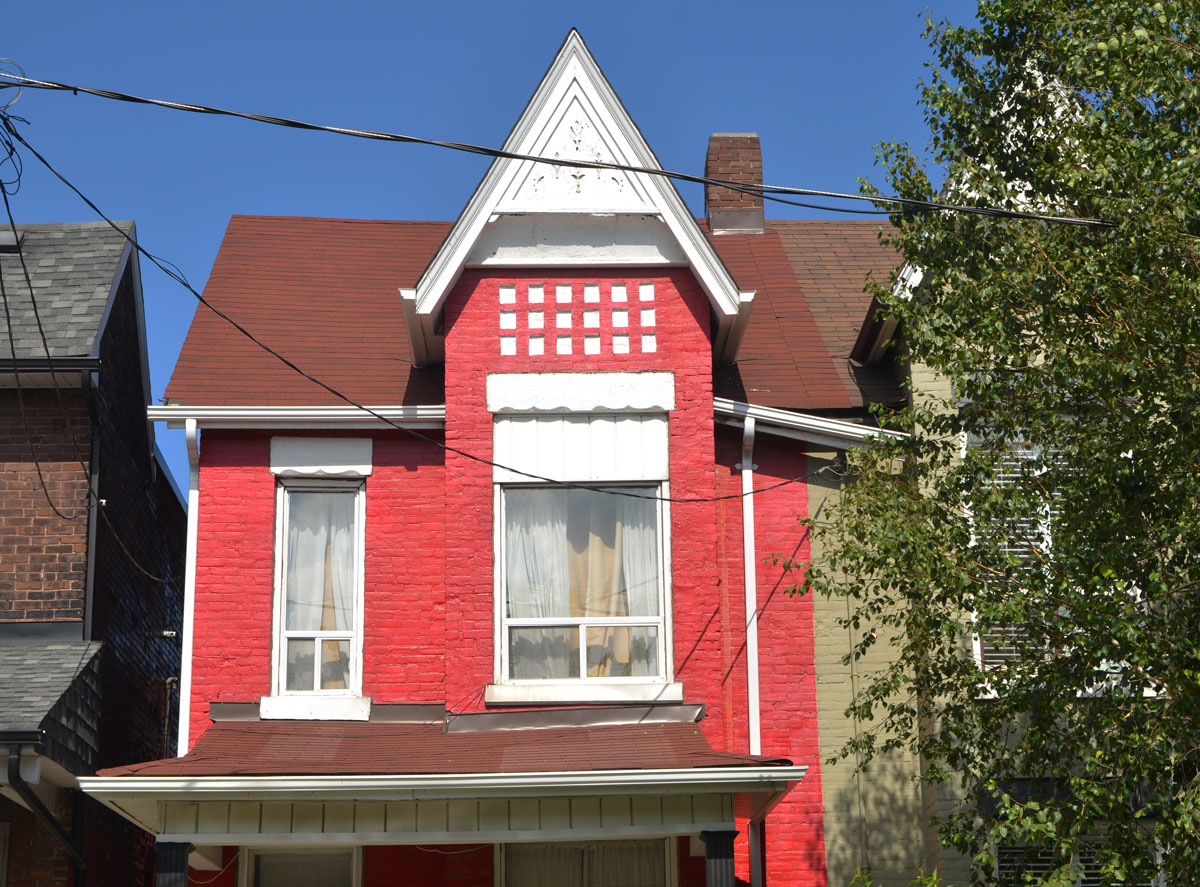
the top part of an old Victorian brick 2 storey house, painted red with white trim

below: The sign on the table says: “Hi! La Witch Cat here.  Enjoy the space, but PLEASE do not litter.  I provided a garbage can. Use it!  This includes cigarette butts.  Put in trash once extinguished.  Thanks!  XXO”.  Marvellous!  I sooo agree with the part about cigarette butts.  Why do people who don’t litter still consider it okay to throw cigarette butts wherever they please?  I smiled but I didn’t stop to rest.

In a veryshady spot, against a metal fence, two old chairs with a white table between them, a sign on the table and a small garbage can to the left.

below: At one point I found myself at this intersection.  What is a pedestrian to do? It’s possible I walked where I shouldn’t have, or at least where foot traffic is rare.  All the roads in the photo are Dundas West; it’s where the street splits as it approaches Dupont and Annette.  There was a small park behind me, called Traffic Island park.  The name sums it up I think.

wide intersection where two roads meet in a V shape. not much else in the picture, only the nose of one car, no other traffic. hydro poles and wires in the picture

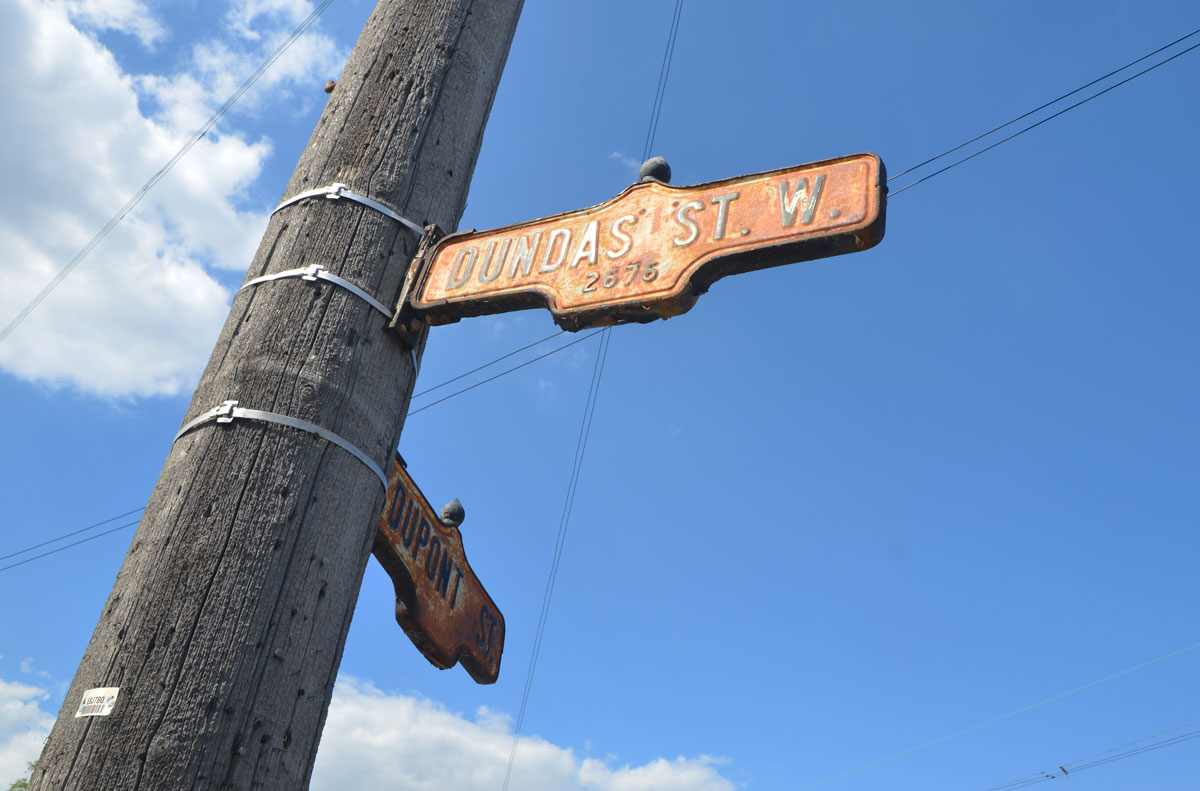
two old Toronto street signs, slightly rusted, on a hydro pole, one for Dundas St. WEst and one for Dupont street

below: A lament for the streetscape.  One more line in an elegy to public spaces.  The result of a half hearted attempt.  Massive hydro poles on the narrow sidewalk.  A large ad. A green space that needs attention.  If you look carefully, you can see  a plaque on a small stand.

sidewalk right beside a road, with hydro poles on the sidewalk, a small stretch of green space (about a metre) befoew a large fence that is concrete on the bottom and glass on the top. A couple of small trees that are dying are in the green space.

below: This is the plaque.  According to the words, this strip of land was replanted in 2001-2003 with a number of native species with the plan that they would spread and “create an oasis in the middle of the city”.   It mentions three plants – Nannyberry tree, Staghorn sumac, and Bottlebrush grass.   Disconnect alert.
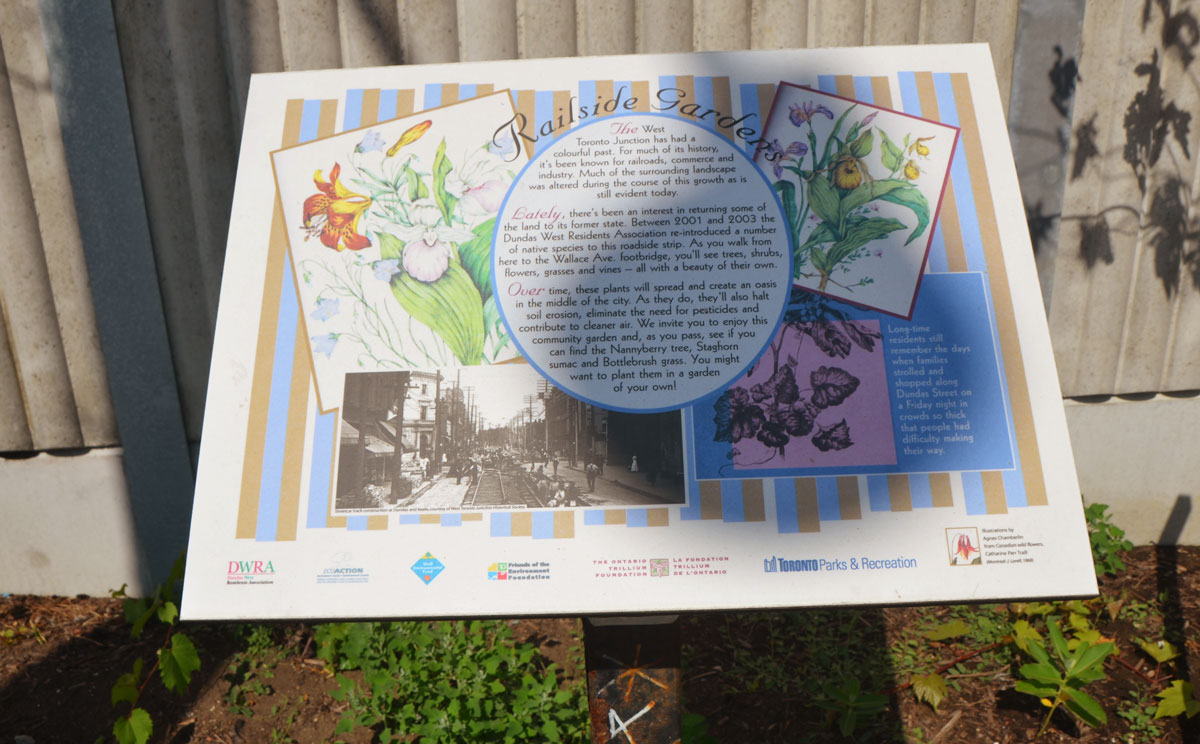
plaque describing the railside garden with words about its history and some picture of the plants that grow there

below: On my way back to the subway station I spotted this 24 hour lovebot.

a lovebot sticker on a TTC bus stop pole, between the sign that says 24 hours and the symbol of a bus, older industrial building behind it.

…. that was where I walked yesterday but before I leave, a few small details.  Ciao!
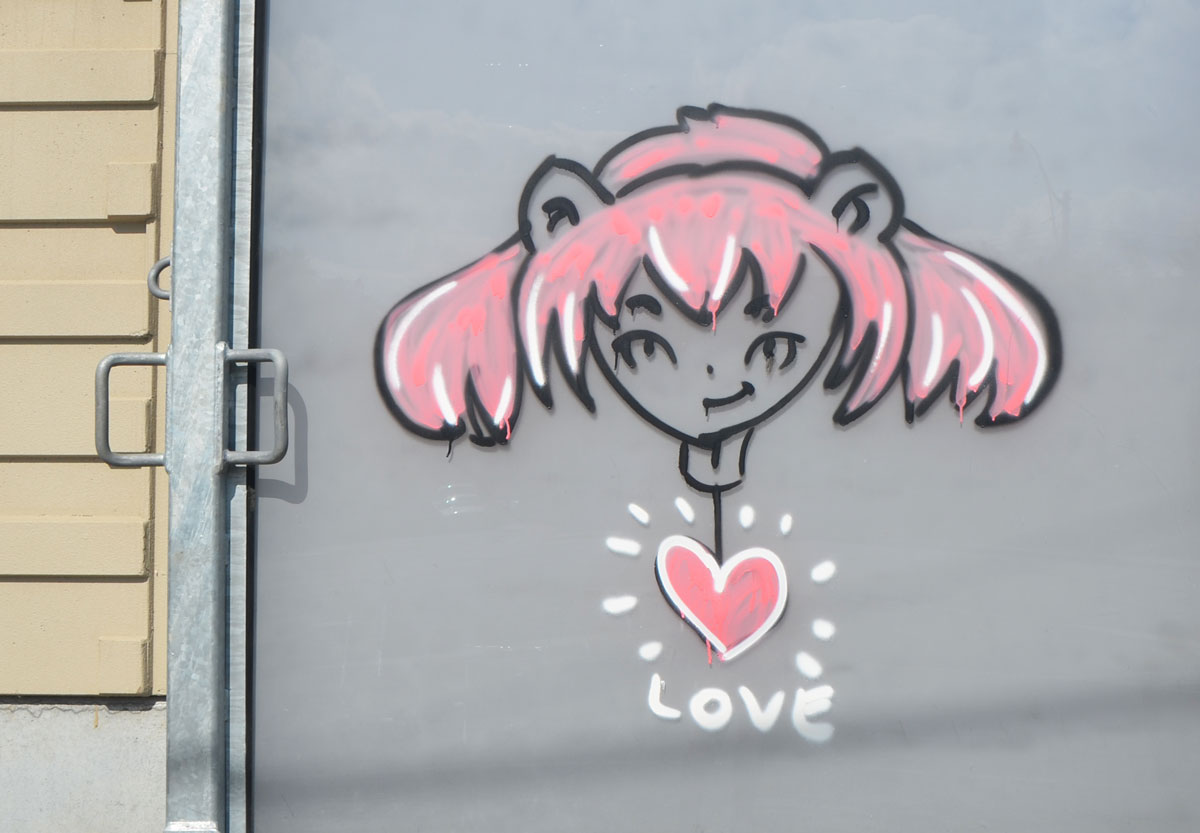
graffiti on a grey metal door of a girl's head with lots of pink hair. A pink heart beneath her with the word love under that

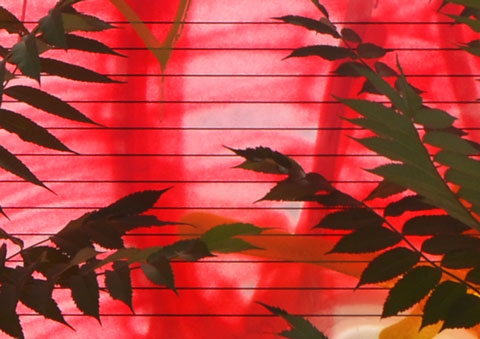
red background, silhouette of sumac leaves

blue background, graffiti drawing of man's head, wearing large crown, sad eyes, heart in word bubble

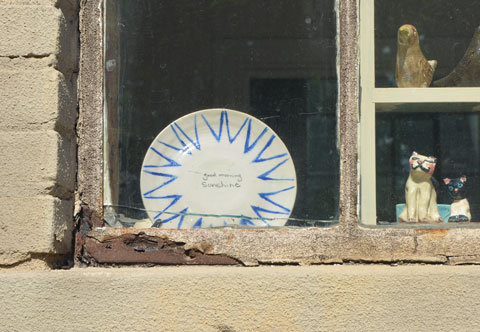
a plate in a window that says Good Morning Sunshine, also two small ceramic figures of cats, and one ceramic dog

‘Cutlines’, an exhibit of old photographs from the Globe & Mail,
part of the CONTACT Photography Festival

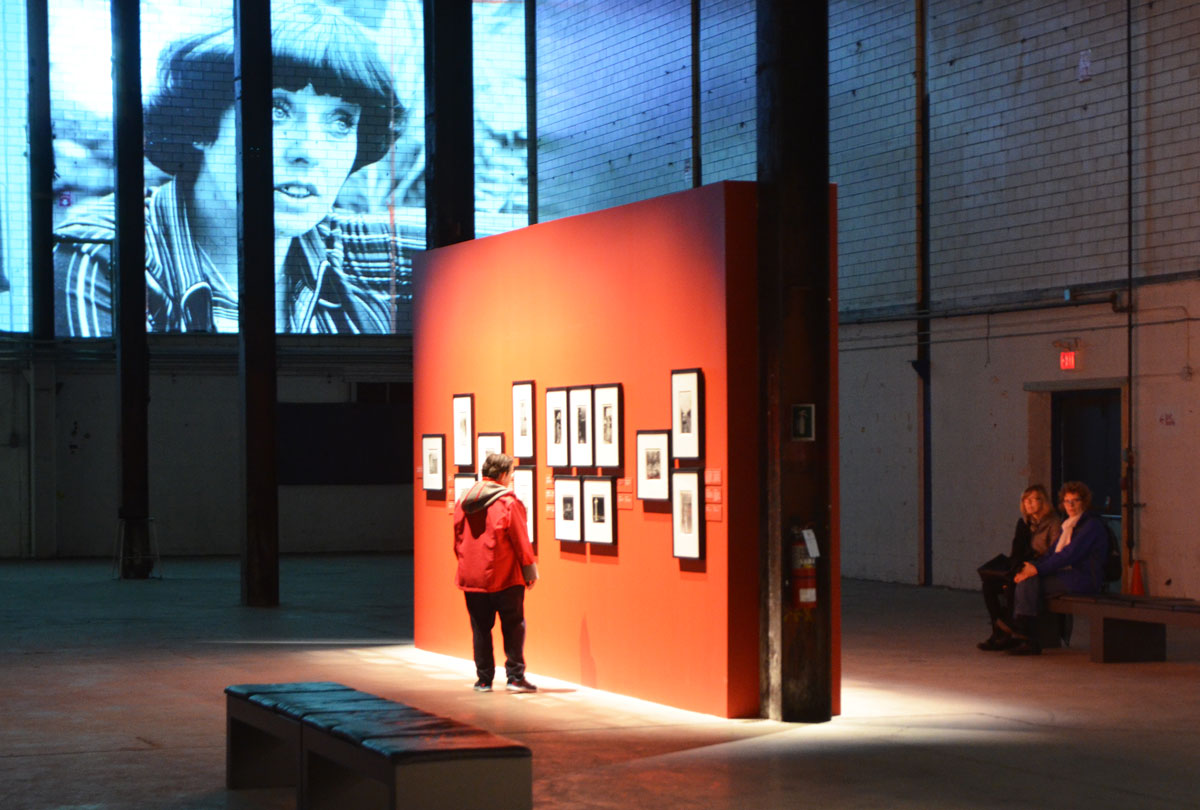
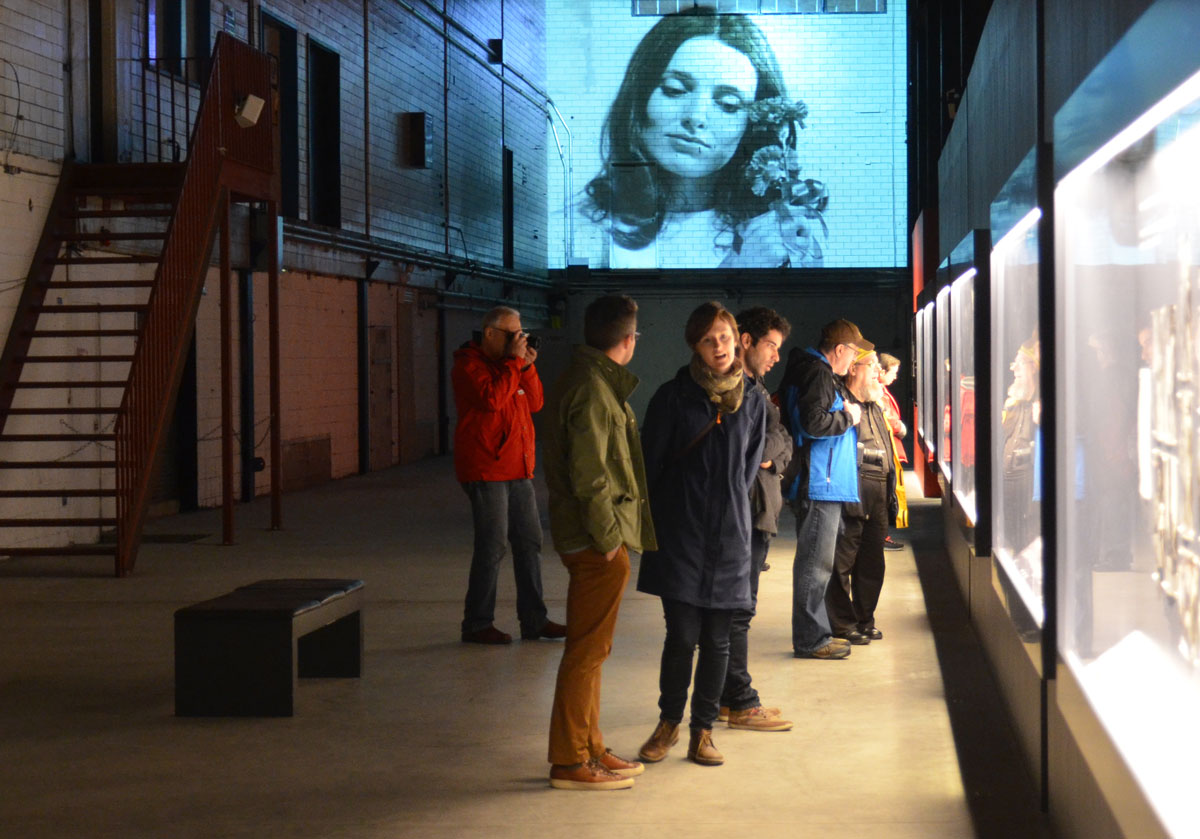
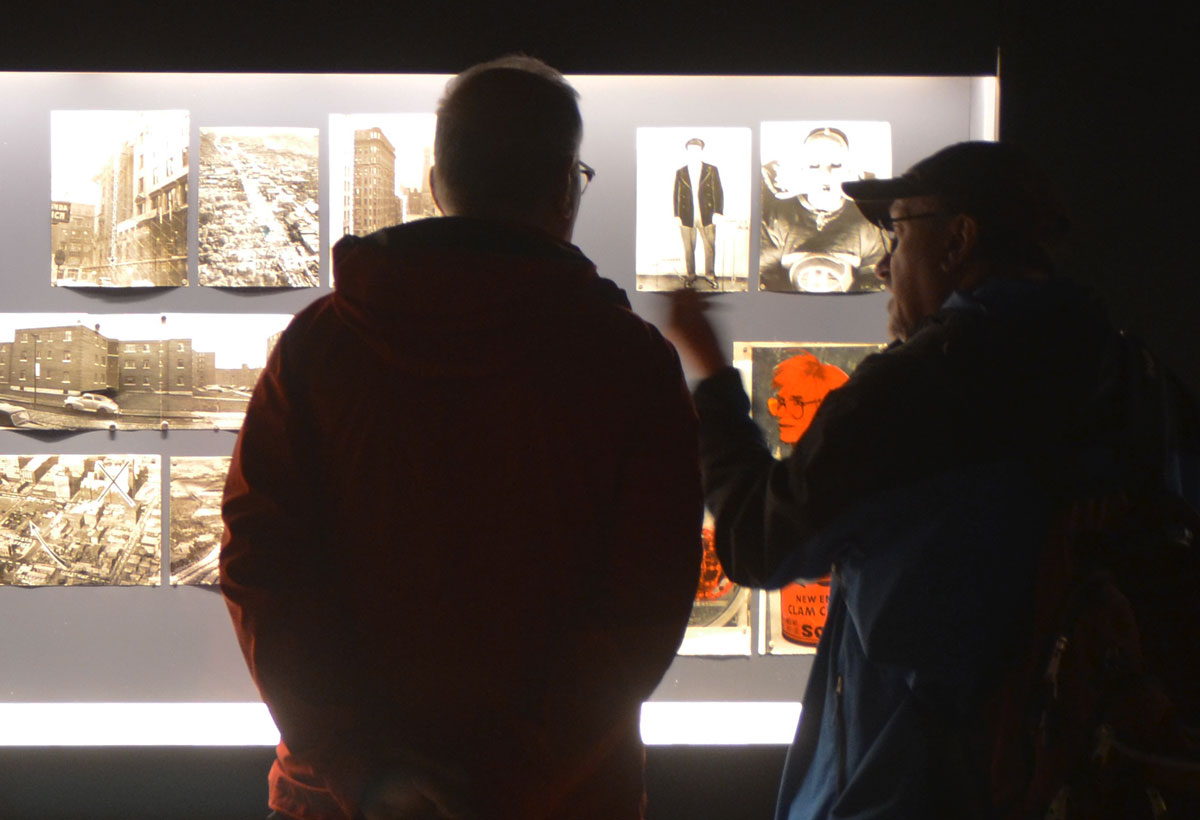
people standing in a large room, the old Press Hall at the Globe and Mail newspaper, looking at an exhibit of old photos. Some photos are being projected onto a wall

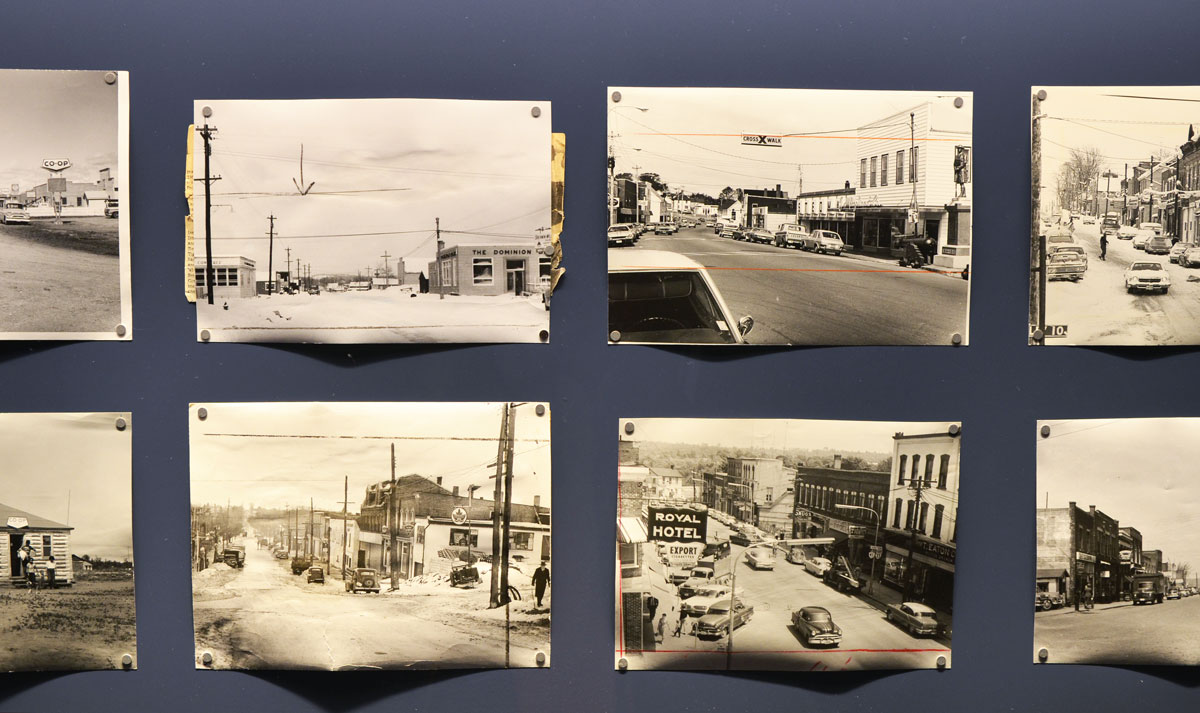
below: A small sample of the 175 vintage black and white photos from the vast collection held by the Globe and Mail newspaper on display.

old photographs, black and white, of small towns, in a display case, as part of an exhibit called Cutlines, old photos from the Globe and Mail collection

below:  The exhibit is being held at the Press Hall on Wellington Street (near Spadina).  This old building is slated for demolition in the near future as the Globe and Mail is in the midst of moving to a new home.  Prints were in cabinets in the center of the room while other images were projected high on the walls.

people standing in a large room, the old Press Hall at the Globe and Mail newspaper, looking at an exhibit of old photos. Some photos are being projected onto a wall

The Globe & Mail has amassed a collection of about 750,000 photographs.  As they transition from print to digital images, they are ‘cleaning house’ with respect to their photo archives.  About 100,000 of the prints are going to be digitized and a portion of those donated to the new Canadian Photography Institute at the National Gallery of Canada in Ottawa.

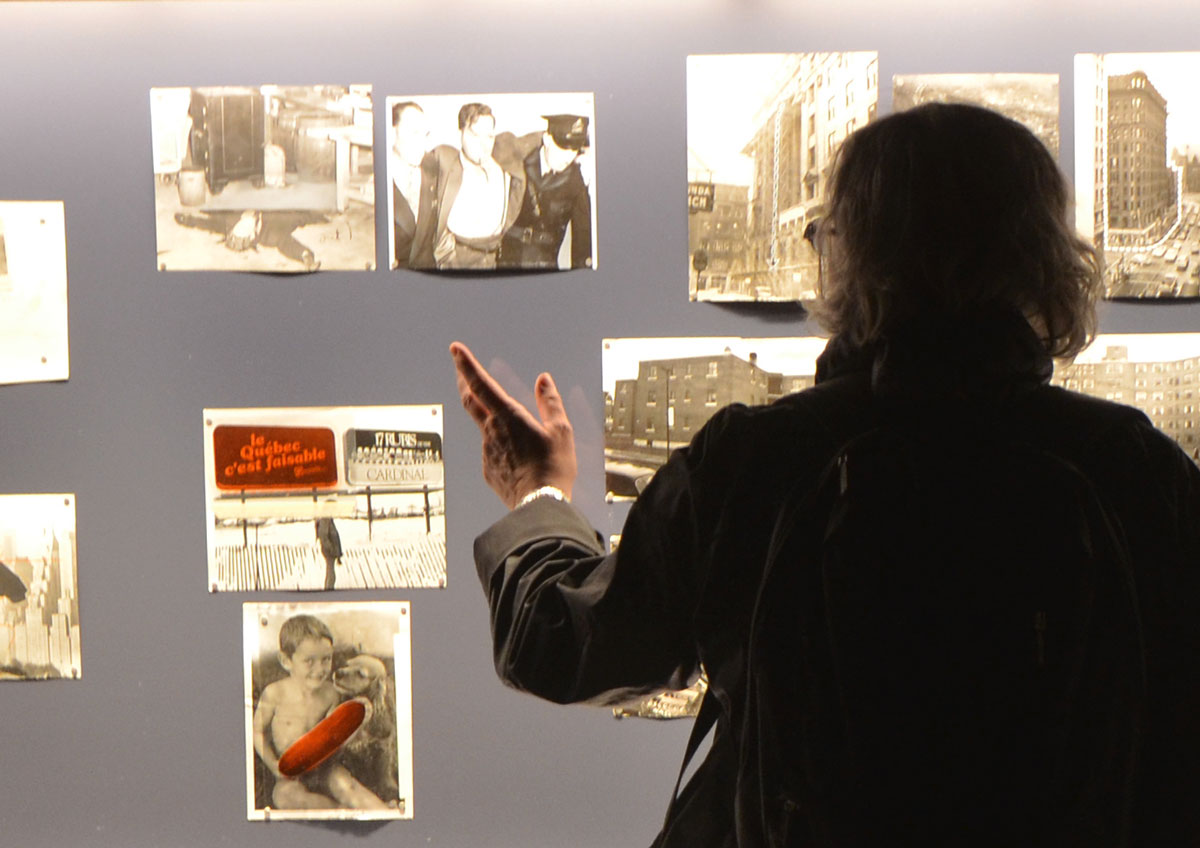
below: Some of the pictures were covered with red, with what is known as a rubylith mask.  When the images were printed, the portions covered in red remained as they were while the rest of the picture could be changed to suit the needs of the story of the day.

silhouette of a woman standing in front of a lit display case of old photographs

people standing in a large room, the old Press Hall at the Globe and Mail newspaper, looking at an exhibit of old photos. Some photos are being projected onto a wall

people standing in a large room, the old Press Hall at the Globe and Mail newspaper, looking at an exhibit of old photos. Some photos are being projected onto a wall

people standing in a large room, the old Press Hall at the Globe and Mail newspaper, looking at an exhibit of old photos. Some photos are being projected onto a wall

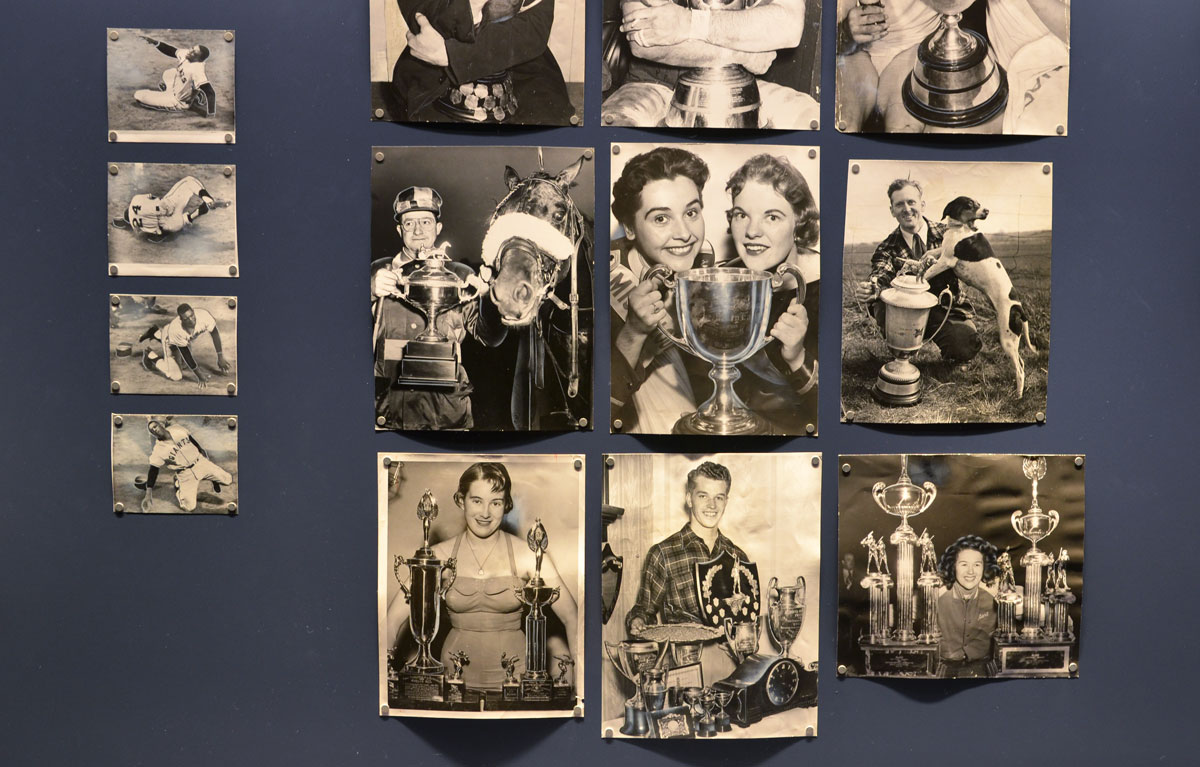
below: The woman with the two trophies, bottom left, is Marilyn Bell who swam across Lake Ontario.  I know that the man beside her is from a story about a cowboy championship of some sort in Calgary and my apologies for not remembering more of the details.

old photographs, black and white, of people with trophies, in a display case, as part of an exhibit called Cutlines, old photos from the Globe and Mail collection

silhouette of two men standing in front of a lit display case of old photographs

On view at 425 Wellington St. West until 26 June 2016

#CONTACT16

May is photography month in Toronto.  It is the month when there are numerous exhibits in public spaces and in galleries, all part of the CONTACT Photography Festival.   Over the next few weeks I hope to visit many of the exhibits and blog about some of them.   From past experience I have discovered that a lot of the public installations appear before May 1st so I went exploring yesterday.

below: Looking south from Spadina and Adelaide….  Partially obscured by a building, on the right in this photo, is the first large black and white photo that I saw.

view from the NE corner of Spadina and Richmond streets. a small parking lot is directly across the street, two large billboards loom over the lot. Once is for Lorne's coats showing two people wearing coats. The other is for Maple flavoured iced capp at Tim Hortons.

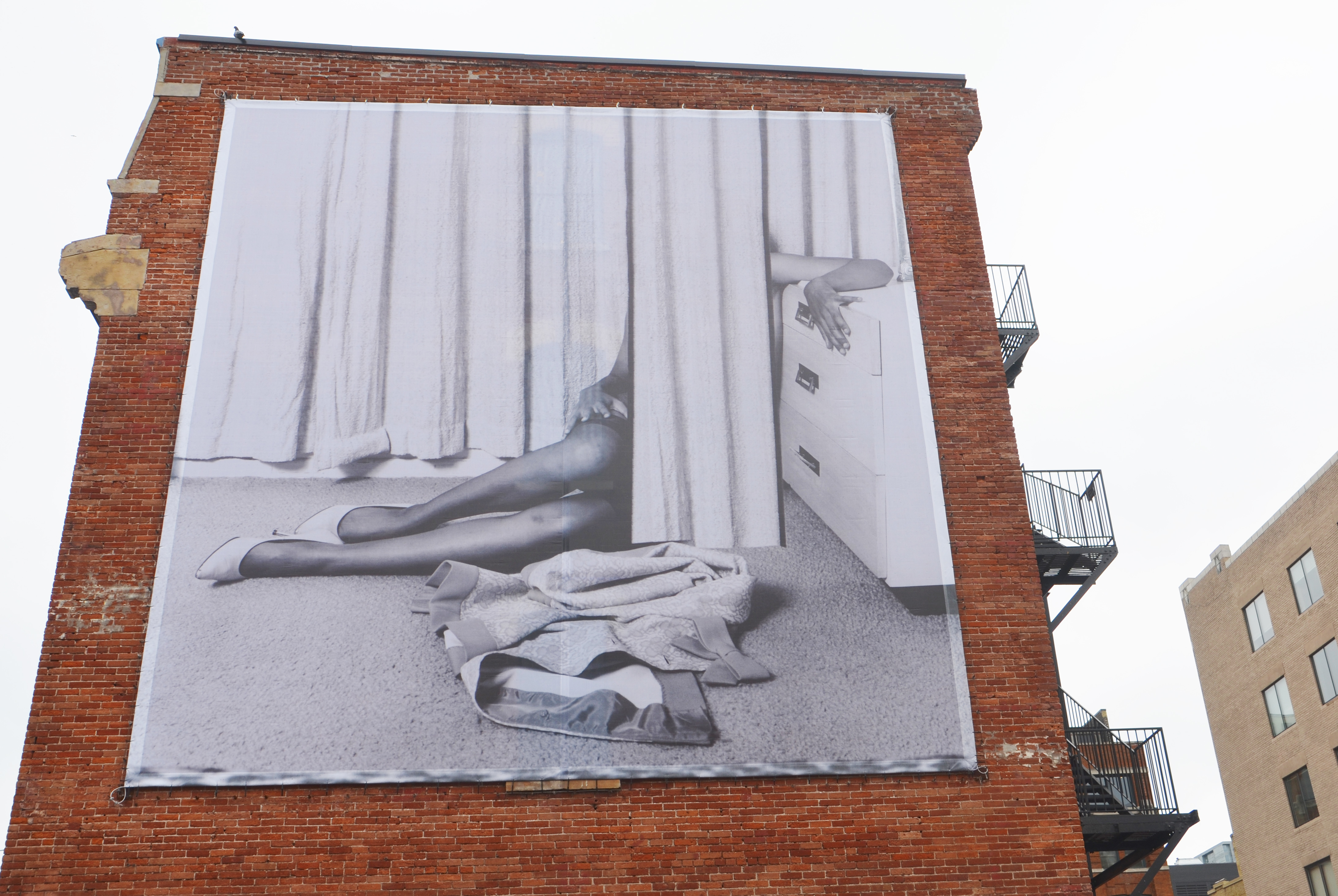
below: Up close,  ‘Drape’ by Eva Stenram.  Stenram has taken a 1960’s pin-up photograph of a woman and manipulated it.  She has brought the background, the drapery, forward and has covered up the original subject in the picture.

large black and white photo by Eva Strenram called 'Drape'. It is mounted on the upper level of a three storey red brick building. It shows a woman sitting on the floor partially obscured by drapery. Her upper body and head can not be seen.

below: Looking west on Wellington from Spadina.  The light grey building is the Old Press Hall (Globe and Mail) which will be demolished in the near future.

looking down the street past parked cars. A large black and white photo is on the side of the building.

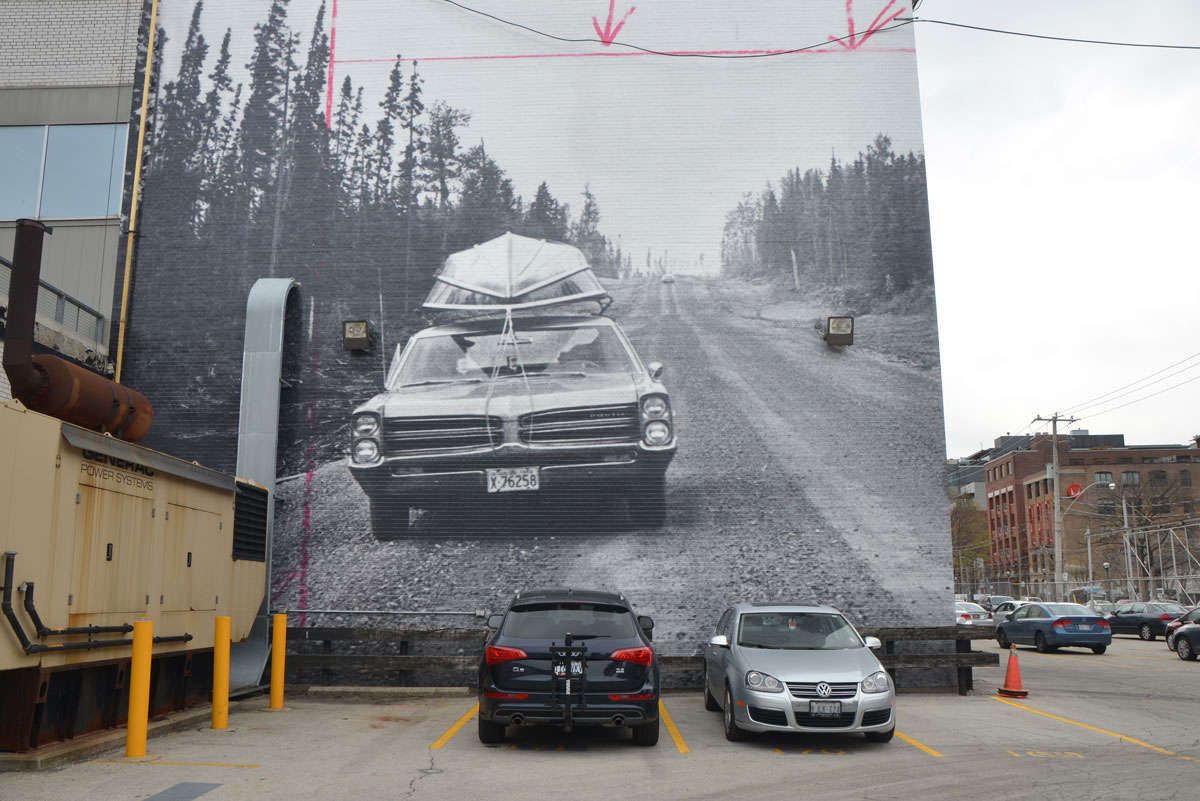
below: Up close, ‘Stopping Point’ by an unknown photographer.  The original title and description was: ‘Along the new Highway, which runs from Smooth Rock Falls to Fraserdale, Ontario, there’s no sign of human habitation apart from one empty lumber camp, c.1966. 

A very large black and white photograph from the 1960's of a car on a two lane road with pine trees on either side. There is a boat tied to the roof of the car. The photo is on the side of the Globe and Mail building with cars parked around it.

The above photograph is one of 750,000 photos in the Globe and Mail’s picture library.   100,000 of their old photos are being digitized to create a new historical archive.  From these, a collection of 20,000 prints will be donated to the newly formed Canadian Photography Institute at the National Gallery of Canada.

More of the photos from the Globe and Mail’s collection are on view inside the Old Press Hall.

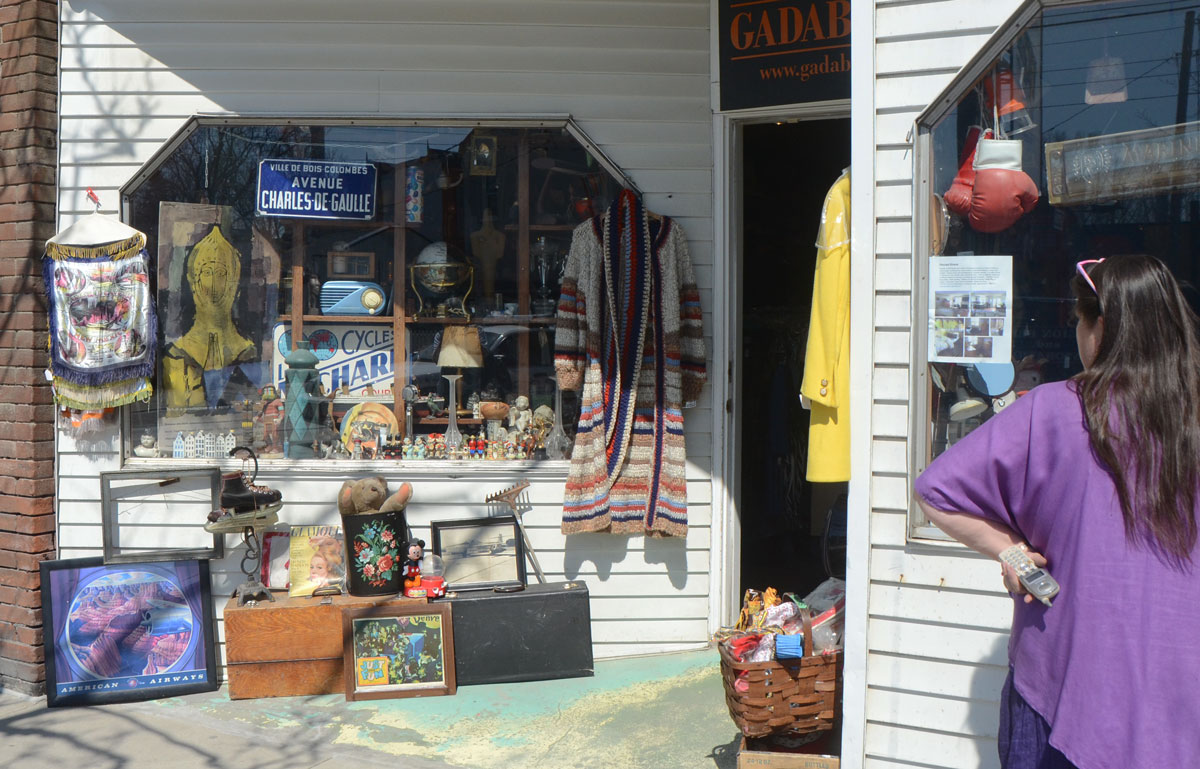
First, a big thank you for being welcomed into Gadabout to explore and take pictures.  Gadabout is a store on Queen St East and it is home to “vintage clothing, nostalgia, ephemera, textiles and curios.”  It is packed full of old things.  Interesting things.

Exterior of the Gadabout store on Queen St East showing the window display and entrance. The window is full of things for sale and there are also a few things sitting outside the store that are also for sale - old glamour magazine, old men's skates, a teddy bear, a crocheted coat,

below: And when I say packed, I mean it!  Floor to ceiling.
Against a wall in Gadabout store, shelves with small cubbyholes all filled with small items, curios, b=vintage, treasures, such as old producs, toys, figurines, household items,

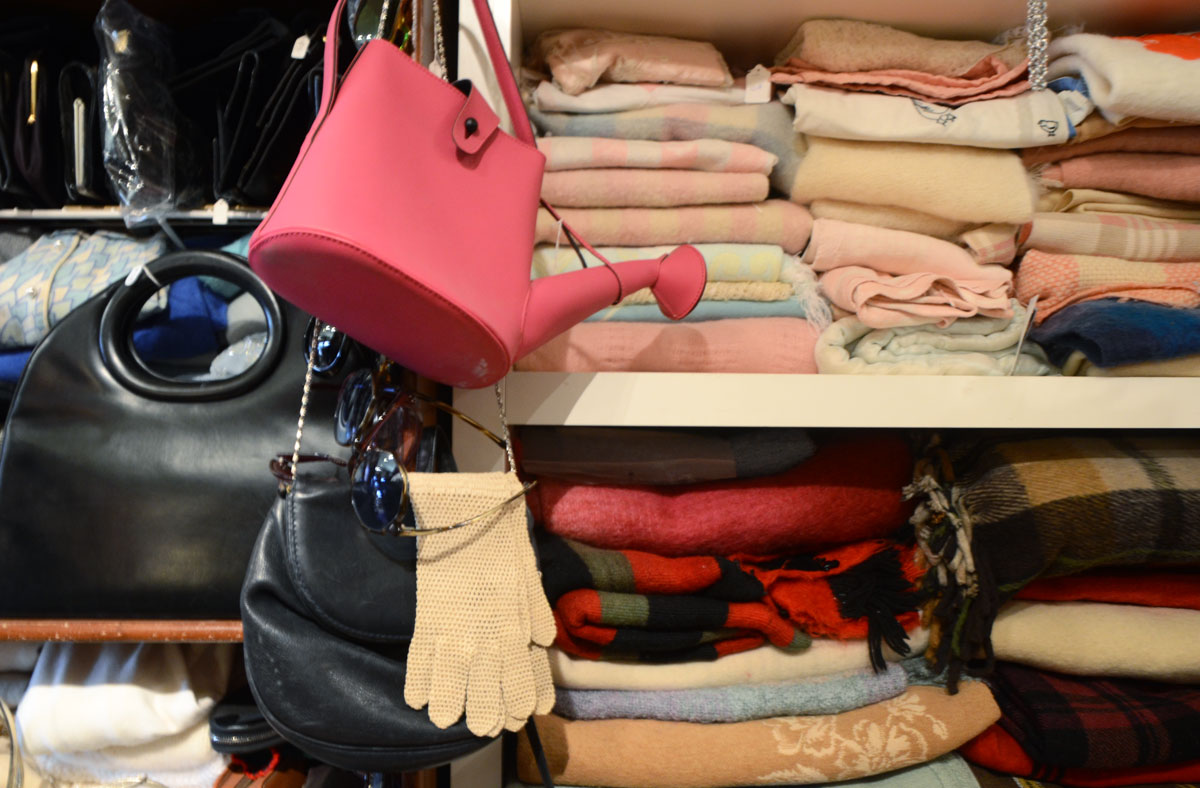
below: Who could resist a watering can purse?  In pink even.

a pink purse in the shape of a watering can hangs from a hook on a wall. A pair of beige gloves hangs below it. Folded fabric items are on the shelves beside the bag and gloves. Blankets or sweaters.

A small doll with a very lifelike face is looking towards a shelf filled with small ceramic and porcelain items such as vases and figurines

below: Containers and packaging for Mennen baby powder, 40 cents for J.R. for Athlete’s Foot, Silvo silver polish, a tire repair kit, 6-12 insect repellent, and wintergreen oil.  The latter is used topically to relieve muscle aches and pains.  It’s labelled as a poison as it is easy to overdose on it if ingested.

A small section of shelf in a store selling vintage items, on this shelf are old drug store and household products such as wintergreen oil, silvo silver polish, baby powder, athletes foot treatment,

below: Knights Templar black bicorne hat with feather along with matching cuff.

An old black military hat with a white feather in it sits on a head mannequin. Beside it is another mannequin wearing a tartan kilt and a white shirt. The shirt has a brownish leather cuff with a red cross on it.

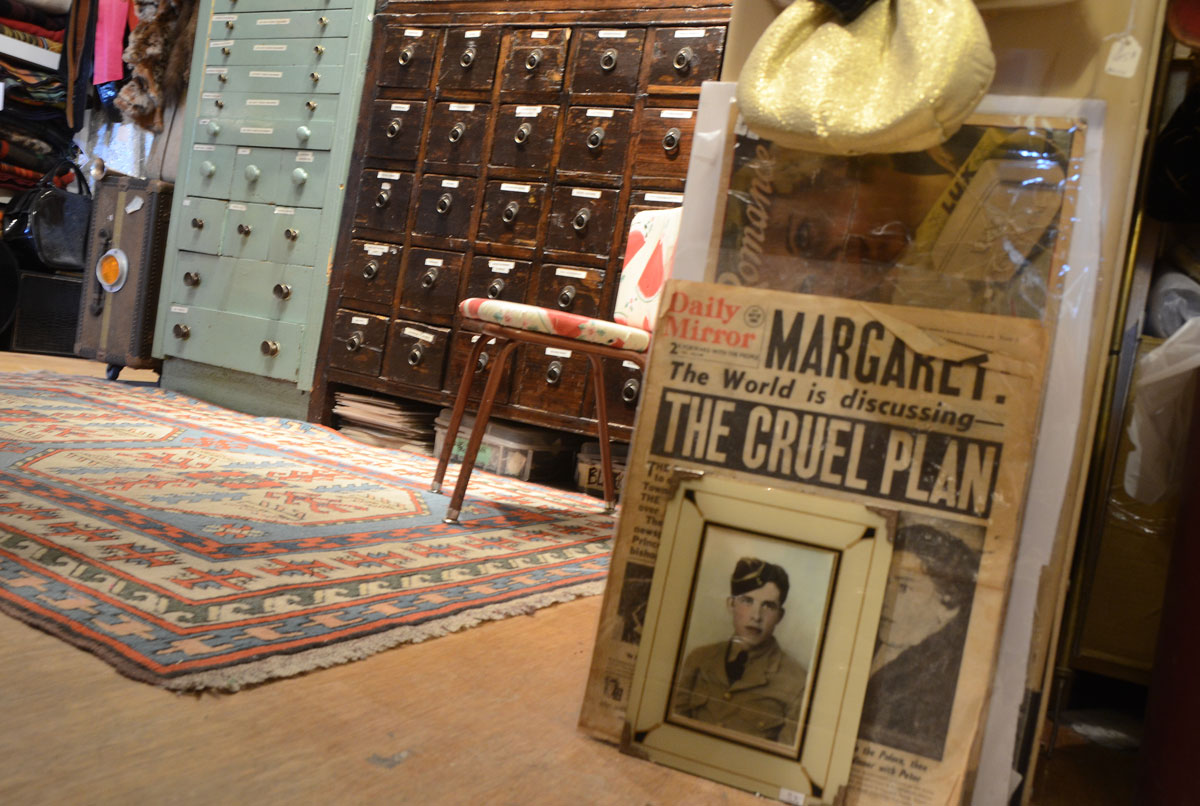
below: All those drawers are filled with old photographs.

old wooden drawers filled with old photographs, a mirror, and an old chair with a vinyl watermelon print fabric on it.

old photograph of a man in uniform, a front page of the Daily Mirror newspaper, more drawers, all in a store filled with vintage items.

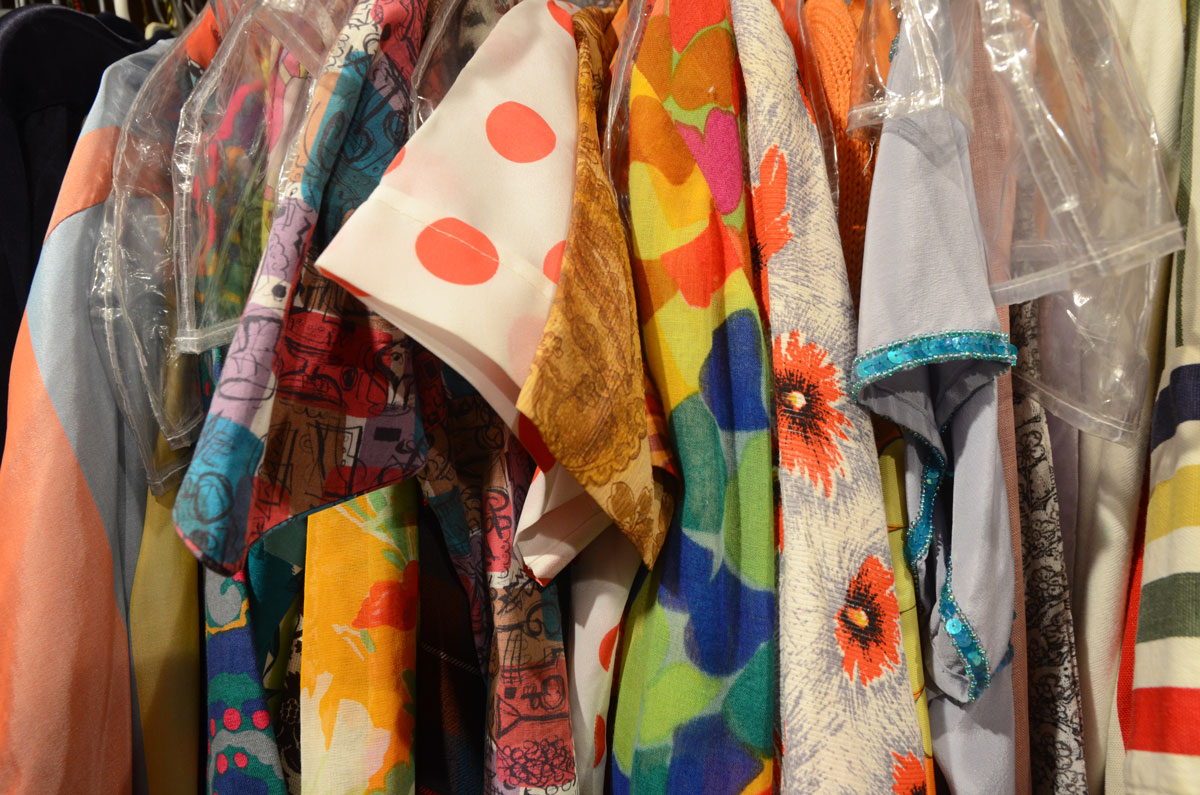
below: Vintage clothing

sleeves of colourful shirts and blouses hanging on a rack. Orange polka dots, red poppies, wild prints, all vintage clothing

a teddybear sites in a can with a painting of flowers on it. An old Glamour magazine with a yellow cover
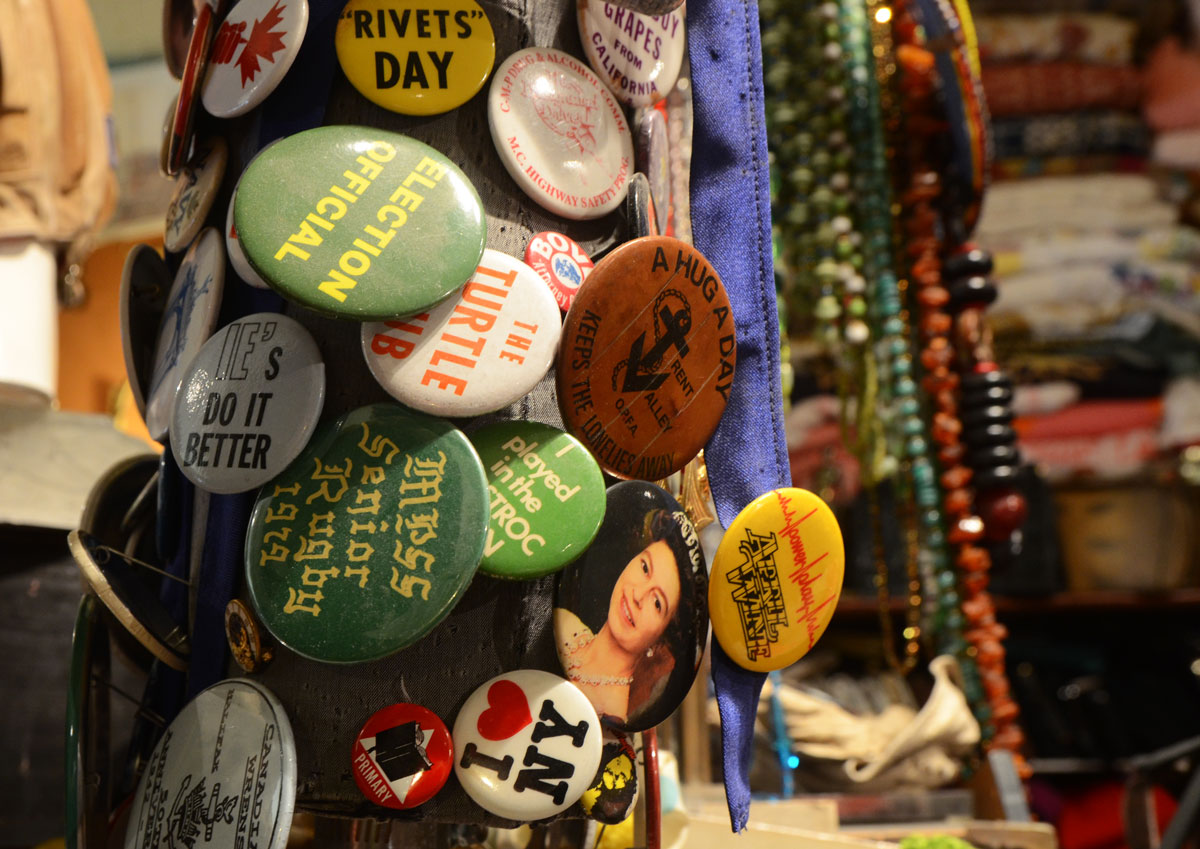
Old pins (buttons) in the foreground with beaded necklaces in the background.

below:  Fancy handbags and shoes.

items in a vintage store on Queen St East in Toronto, on the wall there are some small handbags, as well as some high heeled shoes. Some of the bags are beaded and one is a shiny gold colour.

Gadabout website

 Food is an important part of our lives and there is a lot that we take for granted about the food we eat. Food, and all that accompanies it, is the theme of a collection of art exhibits at Harbourfront’s Artport.   On display is work by a number of artists who have been examining different food related issues.   How we see food, it’s role in our lives, how healthy is it,  it’s production, and how we obtain it, are just a few of the questions that are explored.   We eat food but what about the parts we usually waste?

Below is a sample of what is on offer.

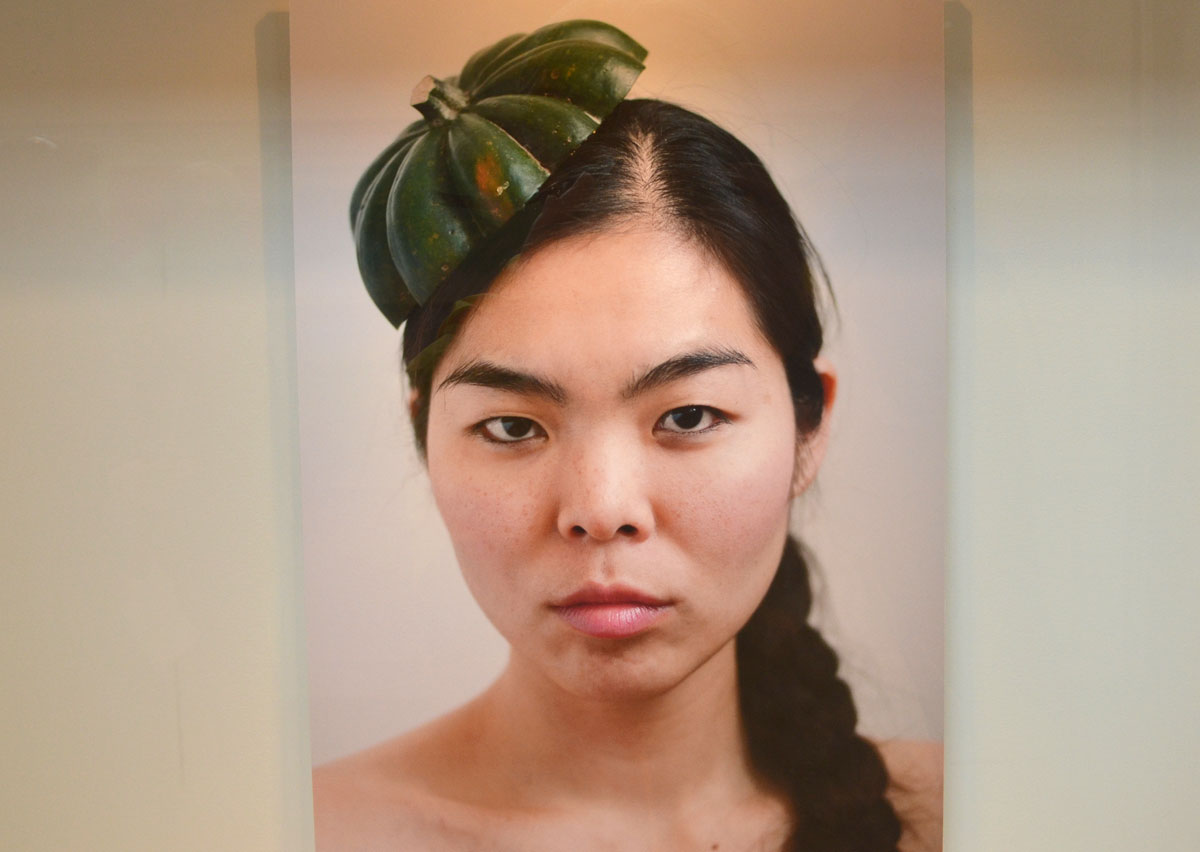
below: ‘Wearable Food – Hat’, 2014, by Sooyeong Lee, part of a series of photographs that displays food in atypical and unexpected ways.   An acorn squash fascinator is precariously perched on her head.

A picture of a photo of an Asian woman with her hair in a braid, a stern expression on her face, and the top of an acorn squash on her head in place of a hat

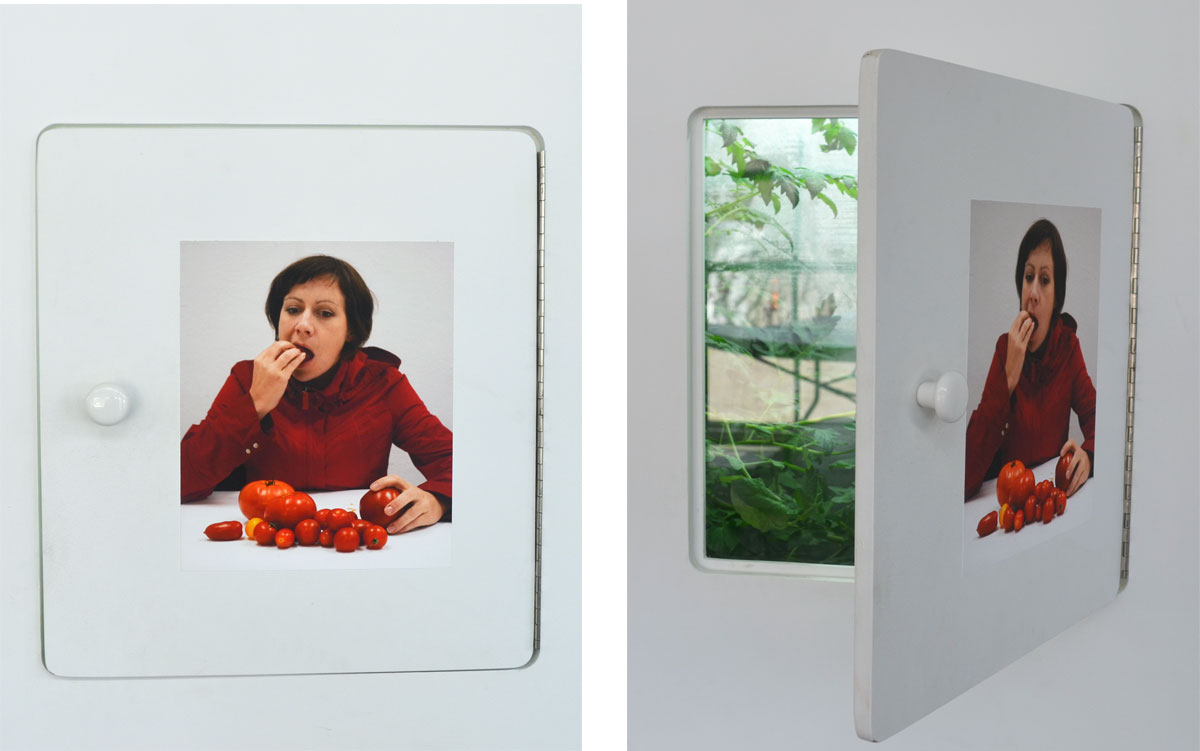
below: ‘Frugivore Project’, 2011-ongoing, by Amanda White, an attempt to communicate biologically with tomato plants.  White bought tomatoes from the grocery store and ate them.   She harvested the seeds after they had passed through her digestive system and then planted them.  After the plants bear fruit, it is eaten and the cycle continues.

Two pictures of one art installation. On a small door is a picture of a woman eating a tomato and with a pile of tomatos in front of her. Open the door and it reveals a small space with a tomato plant growing there.


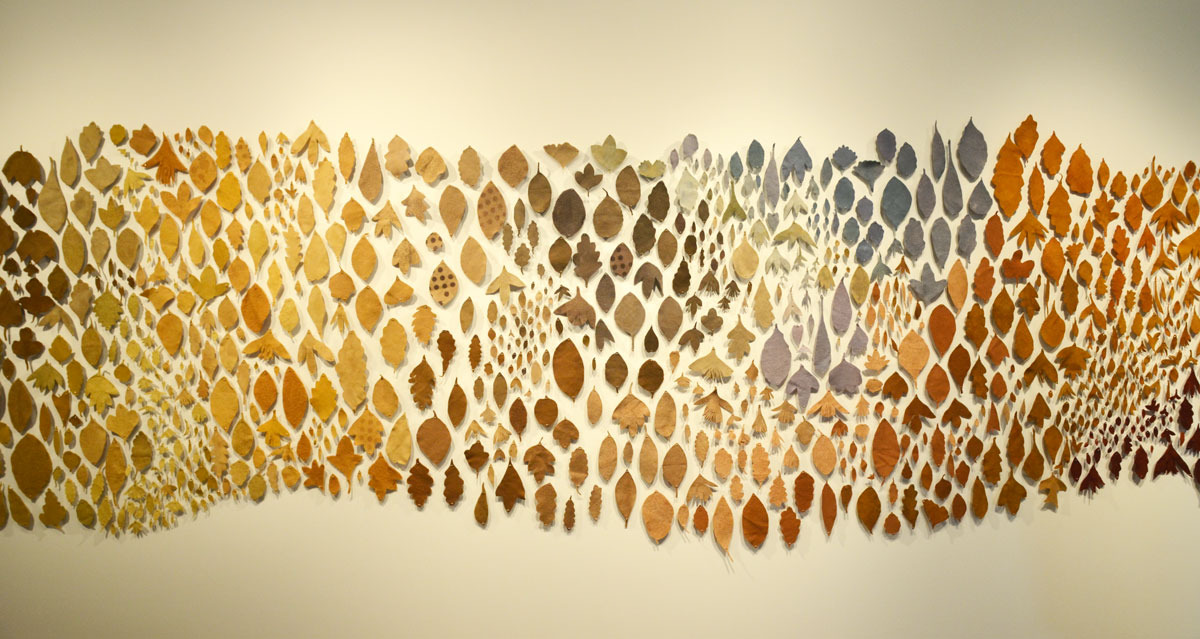
below: ‘Foraged Palette’, 2015, Thea Haines, made with wool, silk, linen, hemp and cotton with natural dyes.   The dyes are made from food waste such as carrot peels, onion skins, pomegranate skins and avocado pits.

A pattern of hand dyed, hand cut leaves in varying shades of yellows oranges and browns is displayed on a wall

close up of A pattern of hand dyed, hand cut leaves in varying shades of yellows oranges and browns is displayed on a wall

below:‘Strain to Absorb, 2015, by Lisa Myers, three digital files running simultaneously. Blueberries contain the pigment anthocyanin which the artist produces from strained fruit.

Three video screens displayed horizontally on a wall.

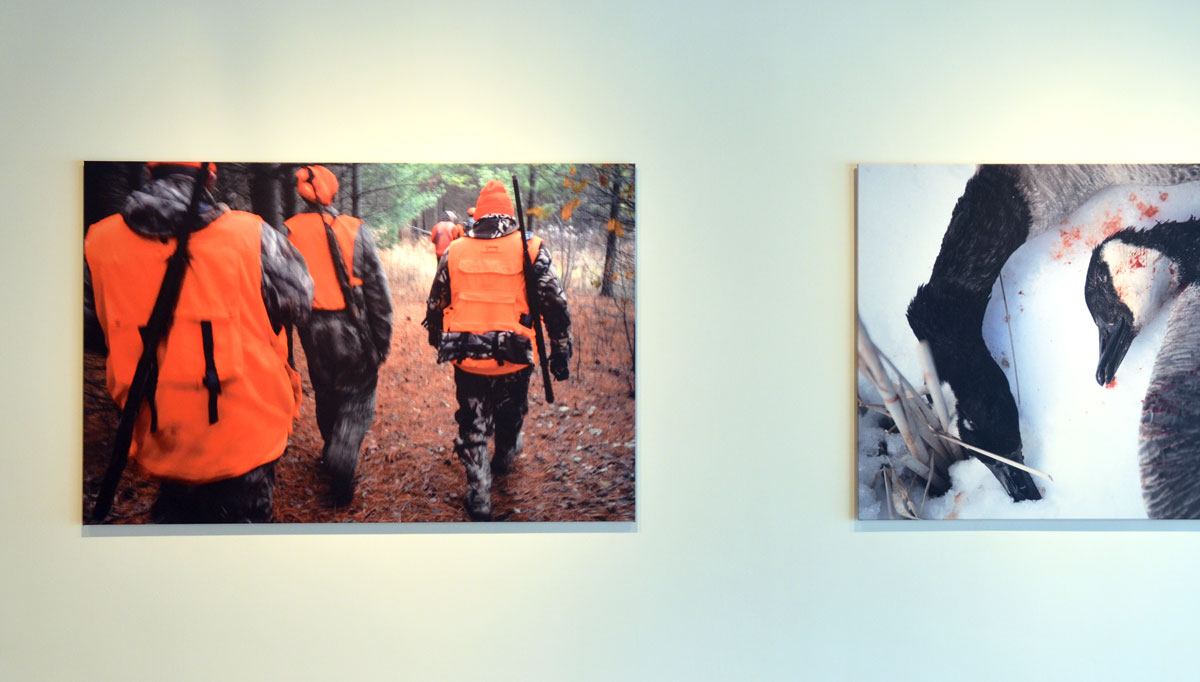
below:‘Accidental Hunter’, 2014, by Erin Riley, hunting with a rifle received as a gift from her father and taking pictures of the event.

A picture of a large photograph of people in orange vests and hats as they set out with their rifles on a hunting trip. To the right is part of a picture of dead geese but only part of it is visible

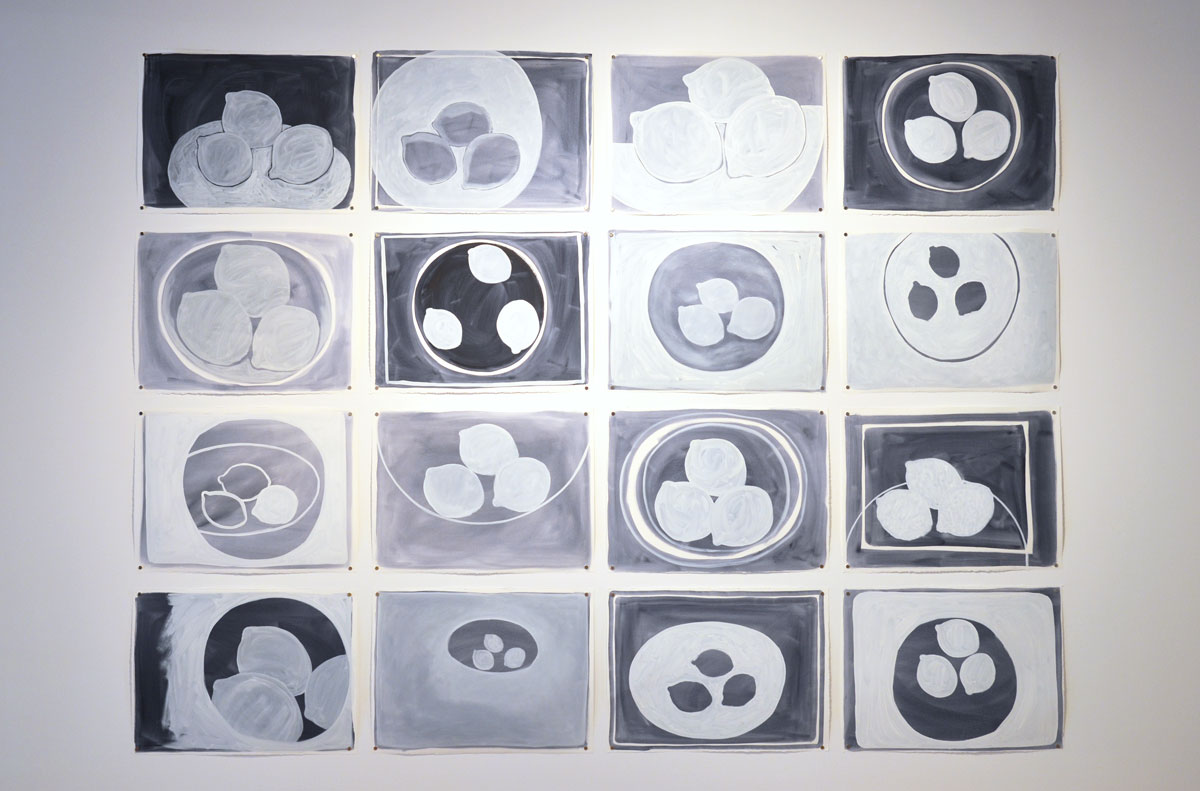
below: ‘Delicate merchandise!”, 2014, by Lynn Price, oil on paper.  The title comes from a poem called ‘Ode to a Lemon’ by Pablo Neruda (see bottom of post)

A grid of 16 black and white paintings of three lemons in a bowl , on an art gallery wall

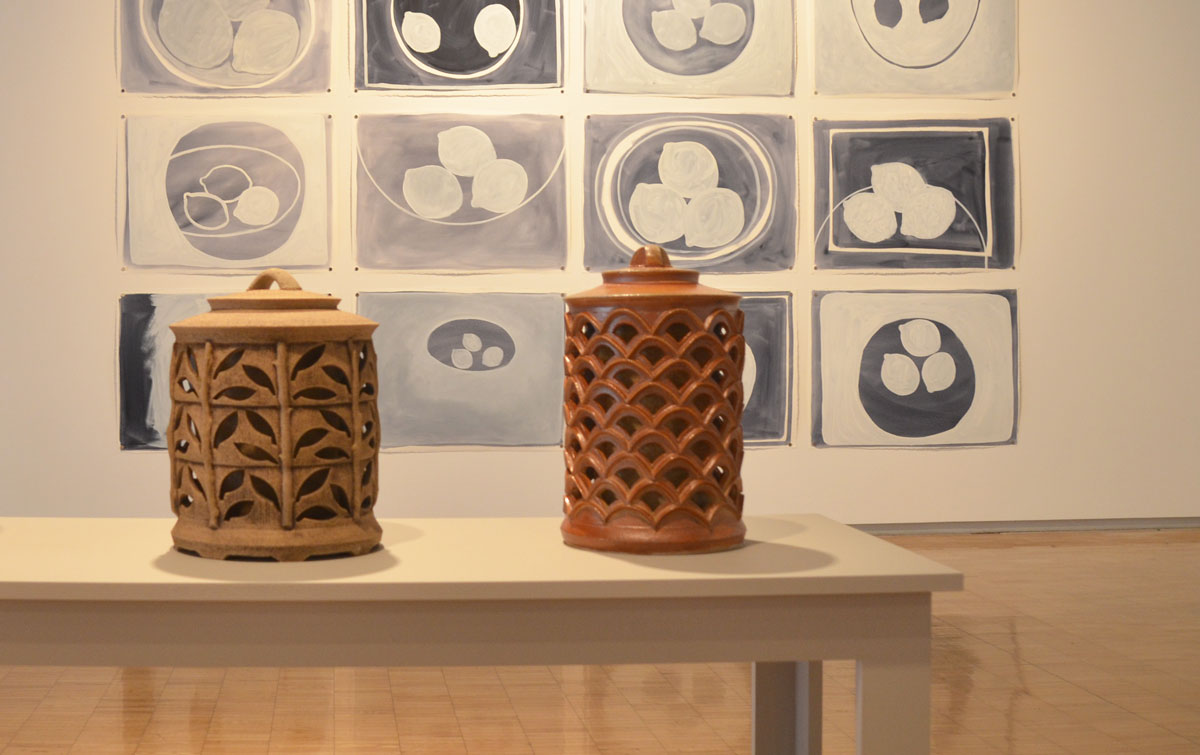
below:Functional Ceramic Tableware, 2005-2015, by Bruce Cochrane

Two intricately designed ceramic containers on a table in front of a series of pictures of lemons in a bowl

Two artistic ceramic pieces by Bruce Cochrane on a small shalef

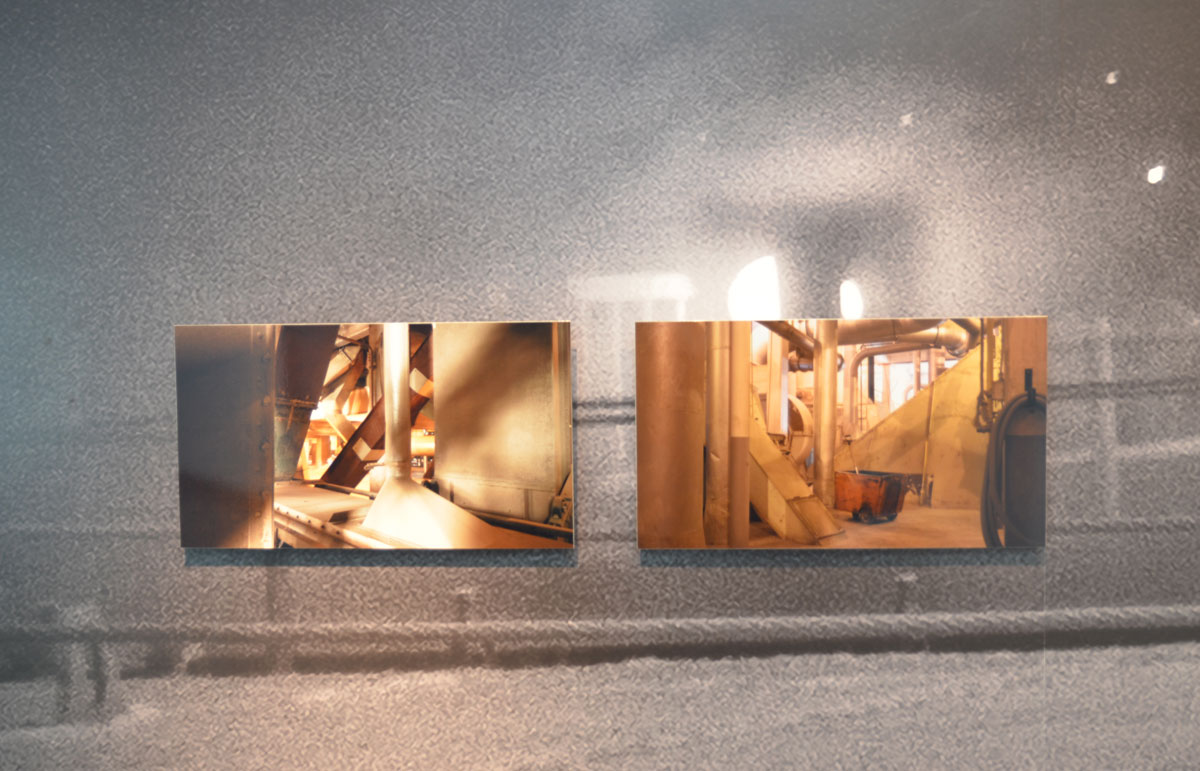
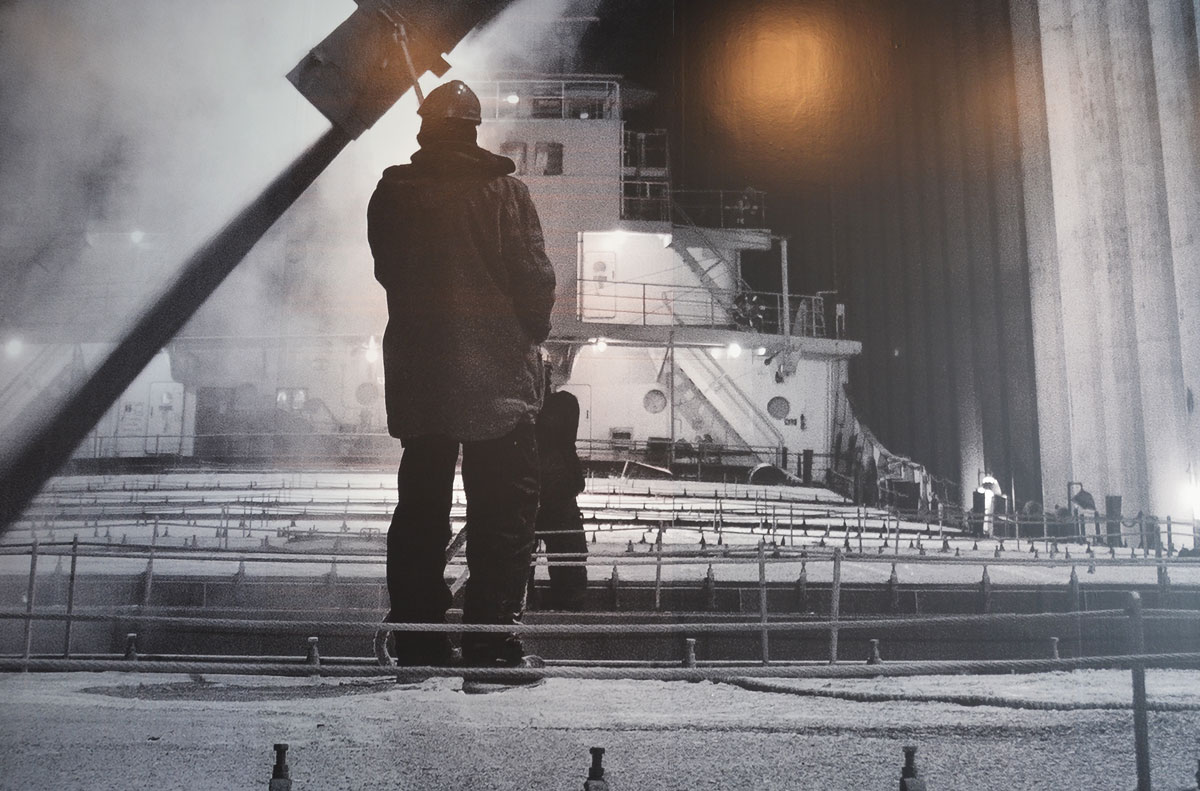
below: Trading Places, Victoria Piersig.  A series of photographs from a journey spent onboard a ship transporting wheat from Thunder Bay to Montreal.

close up of part of a very large black and white photograph of a man standing on the deck of a lake freighter at night in the winter

Two photographs of parts of a ship mounted on a wall that is covered with a large black and white photo

below: cookie cutter rings and brooches, by Andree Wejsmann

six little rings and broaches made to look like cookie cutters, a shovel, a squirrel, a rabbit, a heart, a duck and a snail.

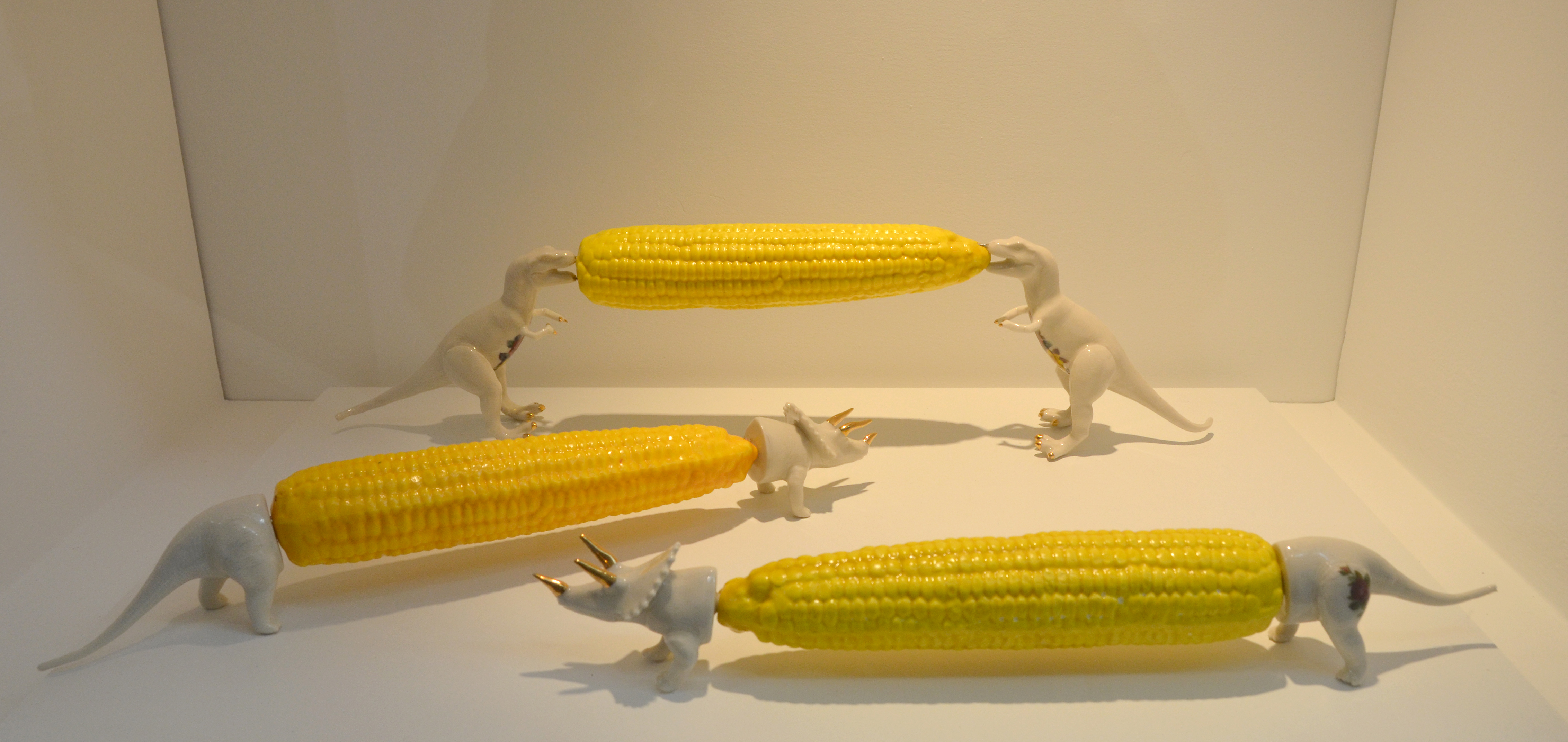
below: Teerex and Triceratops Corn Cob holders, 2012, by Lana Filippone

sculptures of cobs of corn, three, each with dinosaur corn cob holders.

***

‘Ode to a Lemon’ by Pablo Neruda

Out of lemon flowers
loosed
on the moonlight, love’s
lashed and insatiable
essences,
sodden with fragrance,
the lemon tree’s yellow
emerges,
the lemons
move down
from the tree’s planetarium
Delicate merchandise!
The harbors are big with it –
bazaars
for the light and the
barbarous gold.

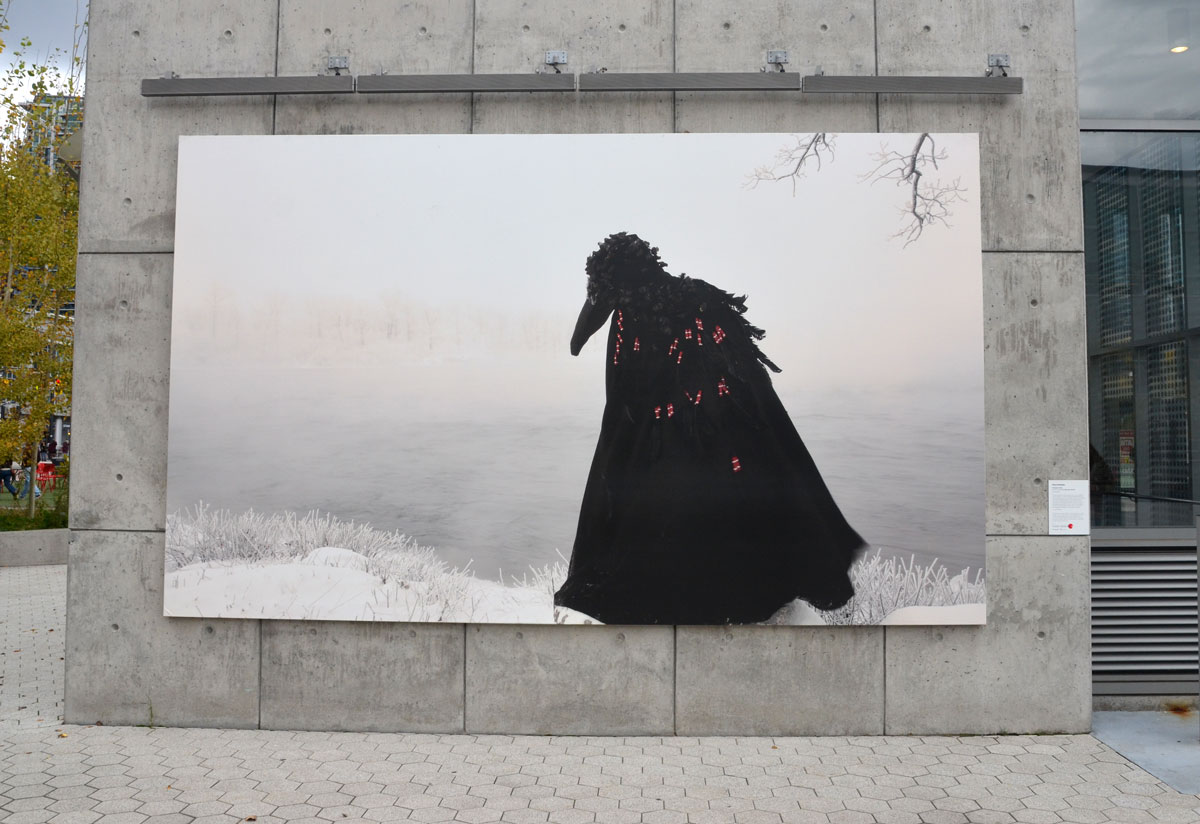
‘In-Between Worlds’ is a series of photographs by Canadian photographer Meryl McMaster.   This series centres around the role of McMaster’s dual heritage in her search for self;  The images represent her being part of, and also being between, two different cultures as she is part Cree and part ‘European’.

Three of the images are on display at Ontario Square by Queens Quay West and Lower Simcoe St.

below: Horse Dance.  The bright red and blue of the shaggy hobby horses against a winter landscape makes for an eye catching picture.  On closer look, you realize that there is a person’s head inside one of those horses’s head.  Heads that have no eyes to see or mouths to speak.

A large photograph of three red hobby horses with long blue mane, taken outside in the winter in the snow, with bare trees in the background. A mix of the real (outdoors) and the unreal (hobby horses instead of real horses). Photo is Mounted on a concrete wall outside.

below: Wingeds Calling.  Around the corner there is another picture of a person in costume, playing the role of a real, yet not real, animal.  A large black bird-like figure walks on the frozen ground, perhaps too big and awkward to fly.

A photograph Mounted on a concrete wall outside of a person draped in a large black cape and wearing a head piece that looks like a large black bird. Photo taken outside in winter so the background is all white and grey like a foggy winter day.,

below: Wind Play Variation.  The third picture baffles me a bit.  Although this is another picture of a person assuming a role,  this time the creature is totally of the artist’s imagination.  A blue hairy thing that is slightly blurry as it walks amongst the pine trees.   Is it coming or going?

Photo of a blue furry creature taken in winter with snow covered evergreens in the background. Mounted on a concrete wall outside.

Totally unexpected… walked past Yonge Dundas Square this afternoon and happened upon Shopper’s Drug Mart’s 15th birthday party for their Optimum program.   There was a DJ, music playing, and a couple of people dancing.  There were acrobats but I just missed their performance.  The main attraction was a large clear plastic bubble filled with many bits of coloured paper the people were lining up for…. a life sized confetti globe.

blog_optimum_bubble_balloon
Once inside, people were posing for photographs.

Two women stand inside a large clear plastic bubble with many bits of coloured paper. They are posing for a photograph.

Pictures were printed on the spot for those who wanted them.

A man stands inside a large clear plastic bubble with many bits of coloured paper. He is posing for a photograph. In the foreground is part of the back of the photographer, his camera, and the laptop showing the photo.

It was also part of a contest for gift cards and vacations.

A woman stands inside a large clear plastic bubble with many bits of coloured paper. She is posing for a photograph.

A boy stands inside a large clear plastic bubble with many bits of coloured paper. He is batting at the papers and smiling.

I didn’t go in the bubble but I did score a loot bag by showing my Optimum card.
I now have some candy and a small bottle of brown nail polish.

blog_optimum_loot_bags

#15daysofhappy

Camera Atomica
a photography exhibit at the Art Gallery of Ontario

below: The first photograph of the bones of the hand, by Wilhelm Rontgen in 1895.    Rontgen was a German physicist who discovered x-rays (or Rontgen rays) in 1895 and he produced this image of his wife’s hand shortly after.  The green in the picture below is a reflection of the chandelier that the AGO has hanging in the room where this exhibit is being shown.

An xray picture of a hand.

The exhibit consists of more than 200 works that all fall under the category of nuclear – topics such as atomic weapons, Cold War politics, nuclear energy, and the mining of uranium.  The photographs cover the history of these topics from 1945 to the present, from the development of the atomic bomb to the meltdown at Fukushima Daiichi in Japan in 2011.

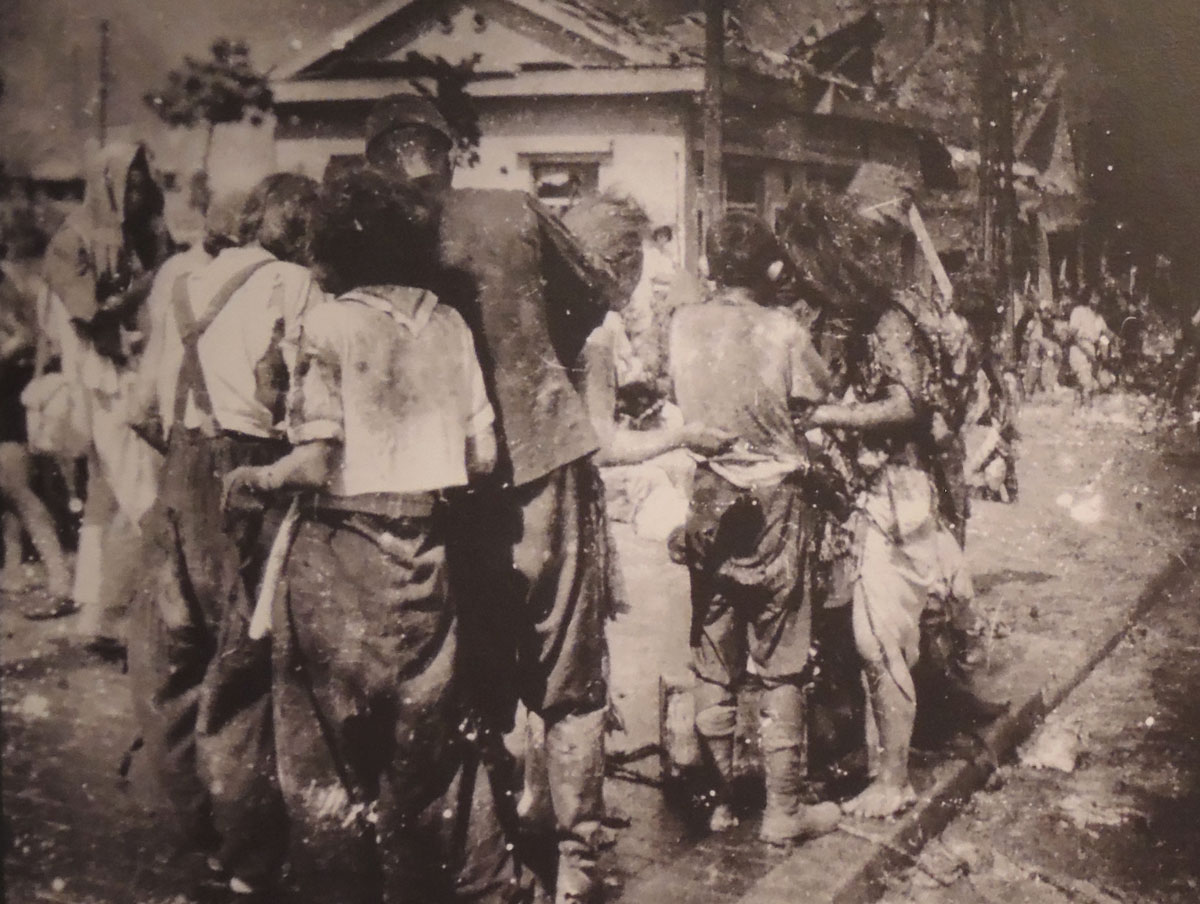
below: Hiroshima Japan, photo by Yoshito Matsushige, taken 6 August 1945.
The first atomic bomb was detonated at the Trinity test site in New Mexico USA on 14 July 1945.  Shortly after, American bombers dropped two atomic bombs on Japan.  The first bomb was dropped 6th August 1945 on the city of  Hiroshima and second one three days later on Nagasaki.

An old black and white photo taken in Hiroshima after the dropping of the atomic bomb during WW2

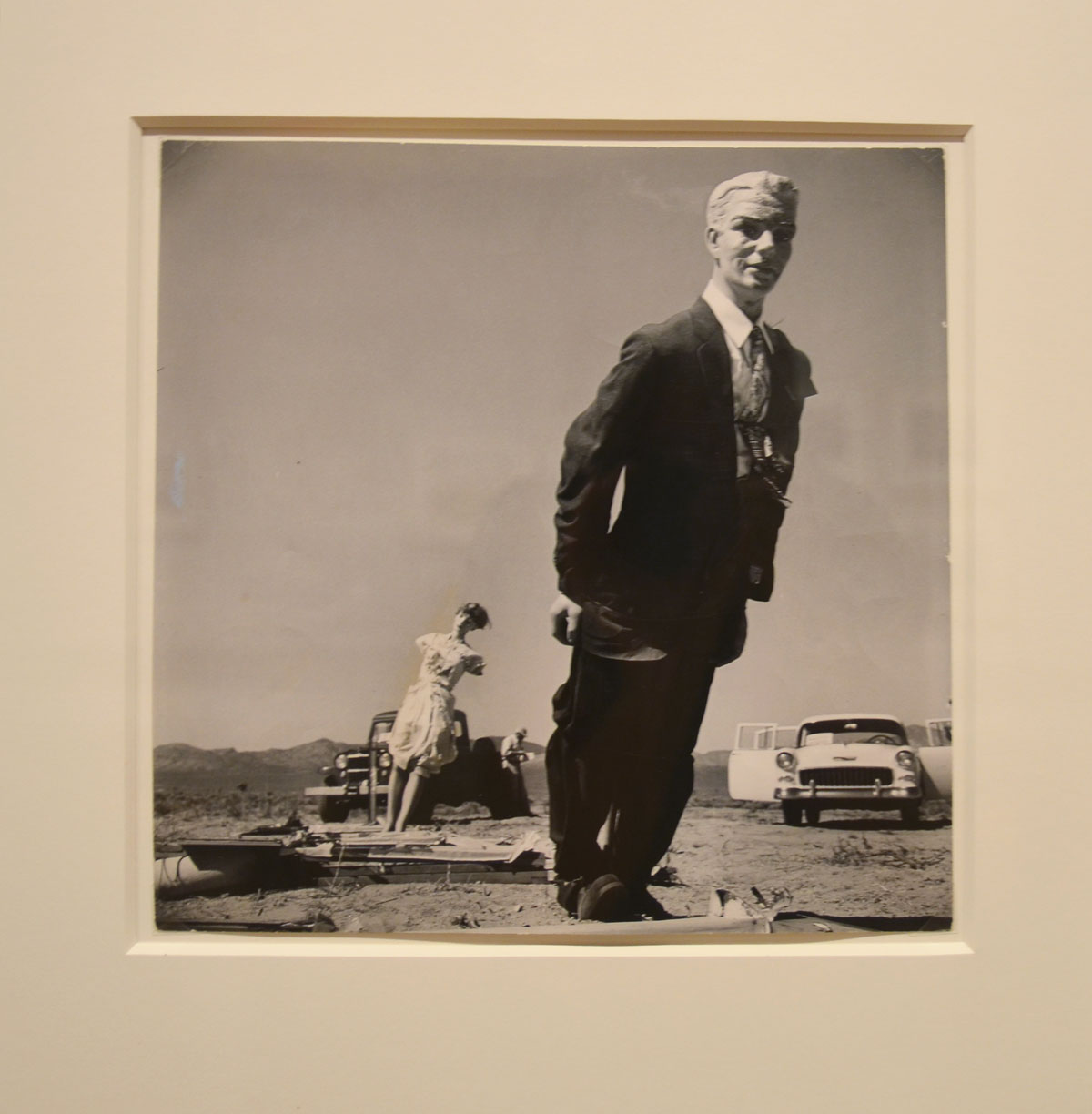
below: Photo by Dean Loomis, 7 May 1955 of scorched male mannequin standing in the desert 7,000 feet from the 44th nuclear test explosion at Yucca Flat Nevada.  Photo taken the day after the blast.  Apparently mannequins were used to test the effects of the nuclear blasts on people and this photo shows that people at 7000 feet from a blast could be burnt but alive.

Picture of a black and white silver gelatin print from 1955 by Dean Loomis showing a male mannequin in a black suit who has been partially knocked over by a nuclear test blast in the Nevada desert.

below: Mushroom clouds on a wall

A collage of photos of nuclear blast mushroom clouds. There are about 25 colour and black and white photos hanging on a wall of the Art Gallery of Ontario

below:  Part of  ‘Uranium Tailings #2, Elliot Lake Ontario’ a photograph by Edward Burtynsky.

Eliot Lake was established in 1955 as a mining town after uranium was discovered in the area.  In the early 1990’s the mines closed because of depleted reserves and low prices for uranium.

Tailings are the materials left over after the valuable part of an ore has been removed.  The uranium ore found at Eliot Lake had very little uranium in it, only about 0.1% of the ore was uranium.

Close up of part of a photograph by Edward Burtynsky titled Uranium Tailings #2, Elliot Lake Ontario. It is a picture of a desolate swampy looking terrain where all the vegetation is dead. The trees have been reduced to dead poles.

below:  Inkjet prints by David McMillan, part of four on display from his series of photographs of places abandoned because of the Chernobyl disaster in 1986.   The photograph on the right is of the nursery at Pripyat Hospital taken in 1997.   Beside it is a picture of a classroom in a Pripyat nursery school.

Pripyat is an abandoned city in northern Ukraine.  It was built in 1970 to service the Chernobyl Nuclear power plant.  Following the explosion and fire at Chernobyl on 26 April 1986, the city’s 49,000 people were evacuated

Two photographs on a wall. The one in the foreground shows an abandoned hospital nursery in Pripyat Ukraine, abandoned after the Chernobyl nuclear disaster.

A young man is half squatting as he leans back to get a better look at the words on the wall of an art gallery that accompany three black and white photographs.

The exhibit continues until 15th November.

#atomicAGO

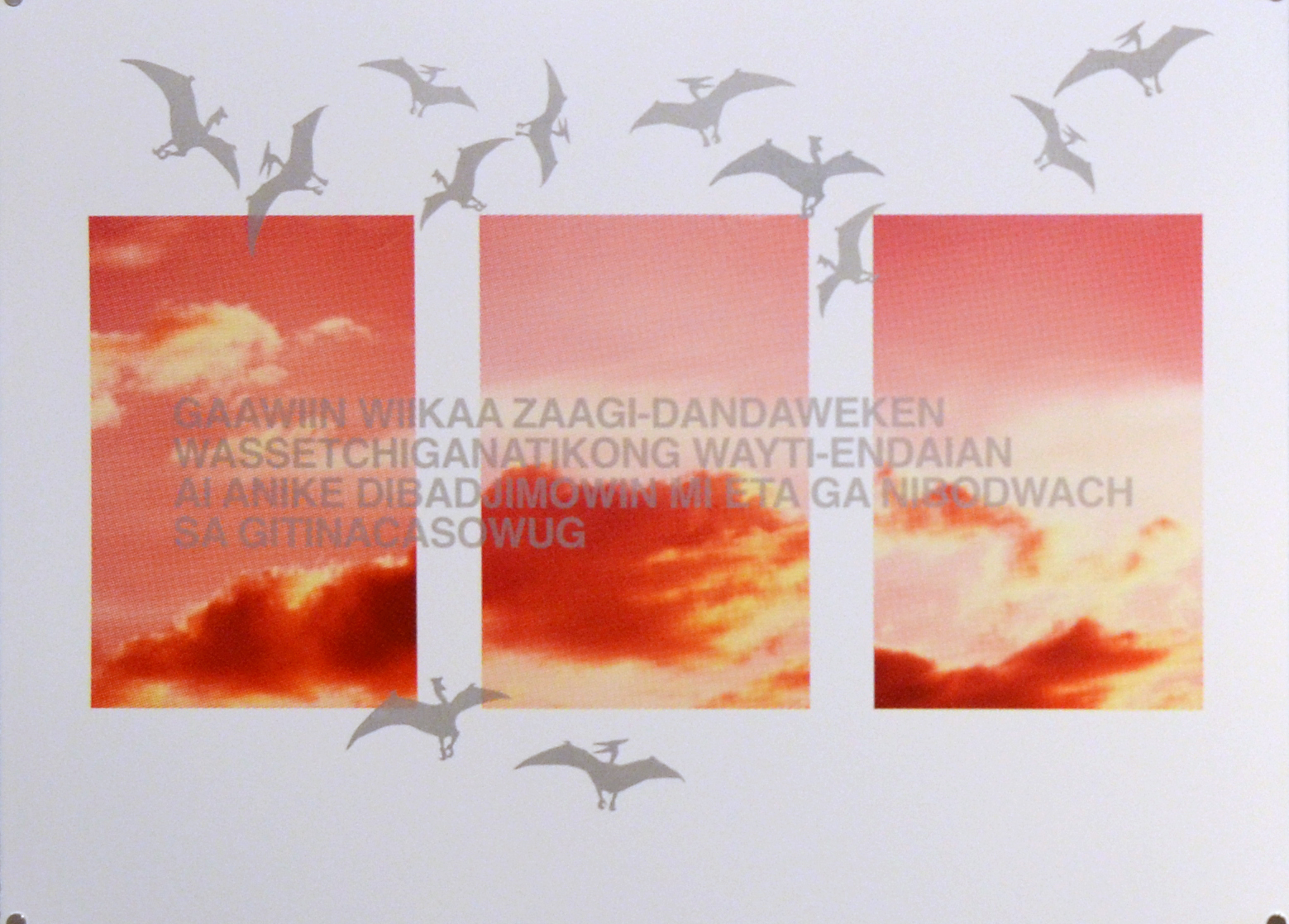
 Planet IndigenUS is a ten day festival co-produced by the Harbourfront Centre in Toronto and the Woodland Cultural Centre in Brantford. It features 300 artists with dance and music performances as well as visual art exhibits at a number of venues.  One of the venues is the gallery at Harbourfront Centre where a number of artists of Anishnabe heritage are showing their work.  Two of the artists are Christian Chapman and Scott Benesiinaabandan, and a sample of their work is presented here.


 Screenprints by Christian Chapman

print of an evergreen forest, a text in Ashishnabe language on top of the trees, hanging on a gallery wall gaawiin wiikaa ji gwerina-ka-nawich
miskwadessi opixwanak misa oi kitimagia
miskwadessi wag dash awessiwag
ji manaadji-a-ka-ni-watch

 never turn a turtle on its back so that it is helpless
turtles and all other animals are to be accorded respect


print of asky with clouds in red and orange tones, a text in Ashishnabe language on top of the trees, hanging on a gallery wall gaawiin wiikaa zaagi-dandaweken
wassetchiganatikong wayti-endaian
ai anike dibadjimowin eta ga nibodwach
sa gitinacasowug

never climb out a window in your house,
traditionally, only dead people are brought out like that

***

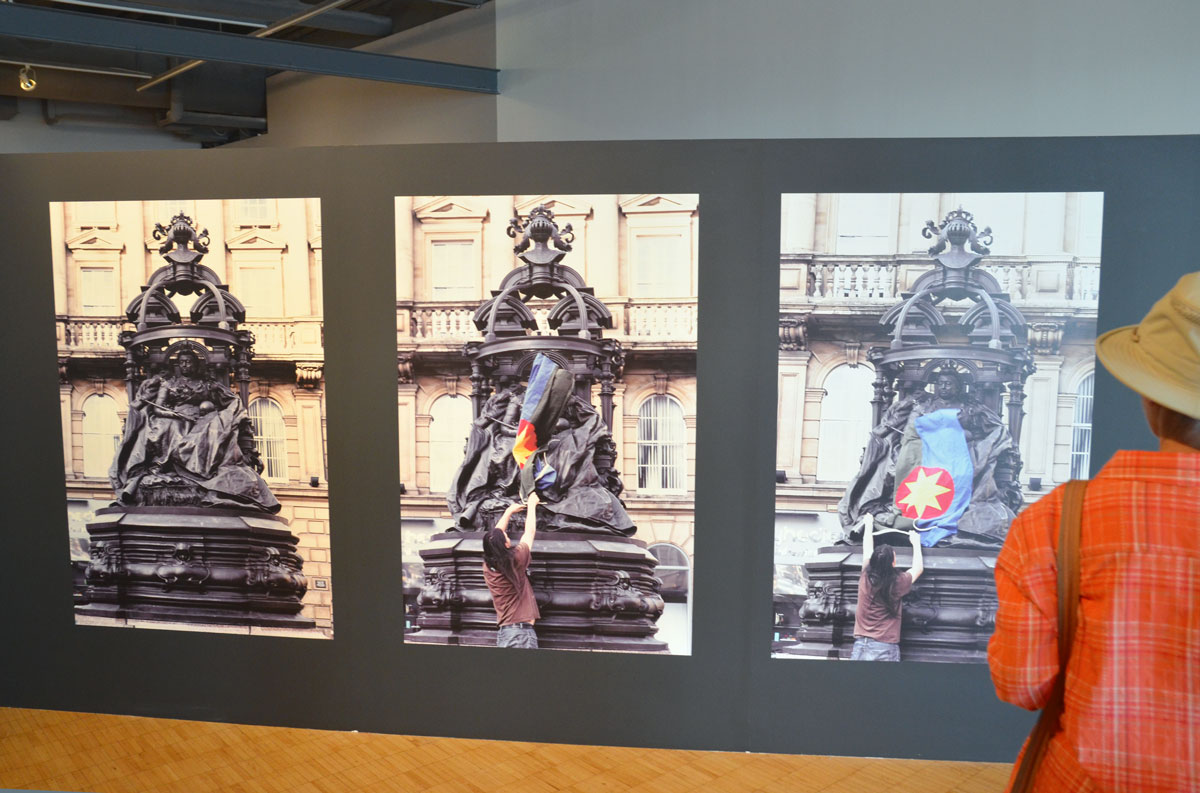
below: ‘God Save the Queen’ by Scott Benesiinaabandan
a series of photos in which the queen is partially covered by the artist’s Solidarity Flag

In an art gallery, a series of three large photographs of a statue of Queen Victoria.  THe first picture is just the statue, the middle picture is a man starting to put a  flag over the bottom part of the statue and the third picture is the flag on the statue.  Flag is solidarity flag created by Scott Benesiinaabandan, black and blue background, red circle in the middle, yellow sun in the red circle


Water’s Edge
A Pan-American photography exhibit

produced by No.9: Contemporary Art & the Environment.

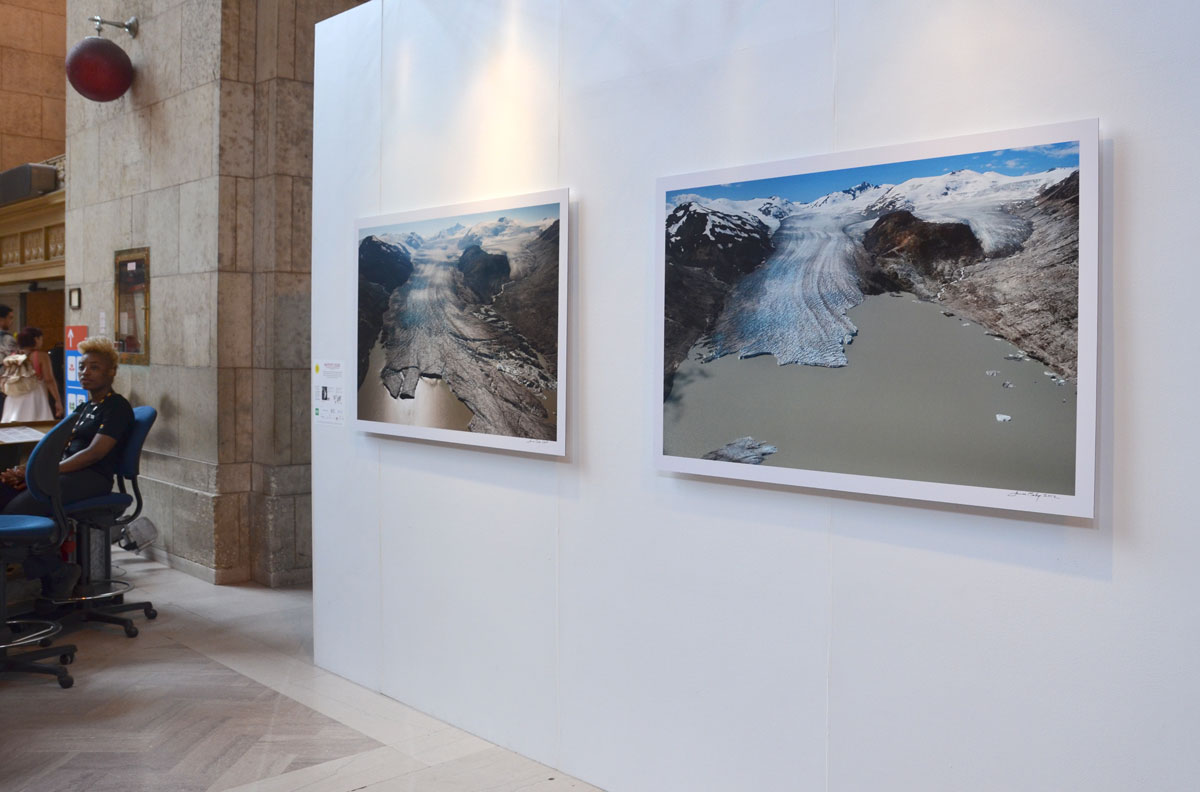
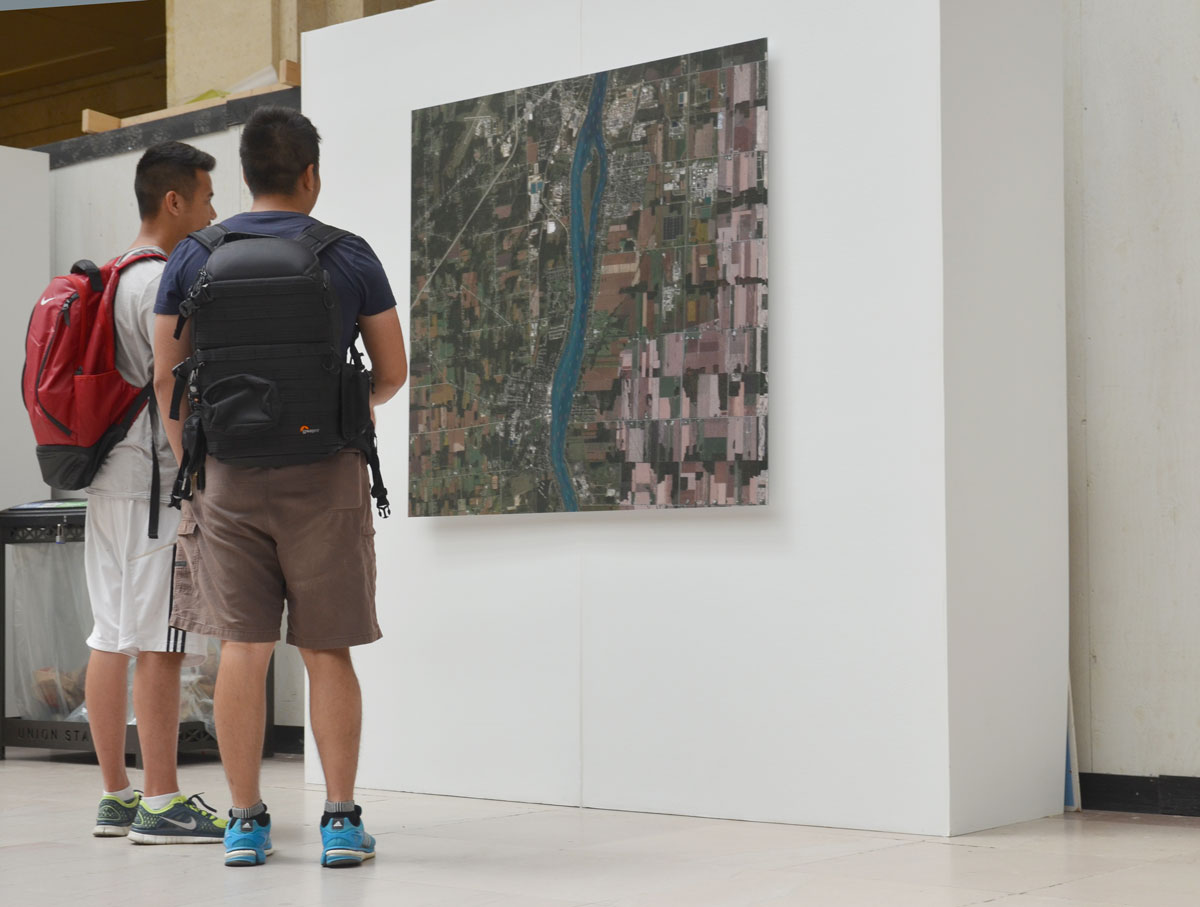
Two venues are involved, Union Station and Pearson Airport.  The photos below represent a sample of the photos on show at Union Station.


below: Bridge Glacier, British Columbia 2012, by James Balog, part of his study of vanishing glaciers.

large photographs, part of an exhibit at Union Station in Toronto -

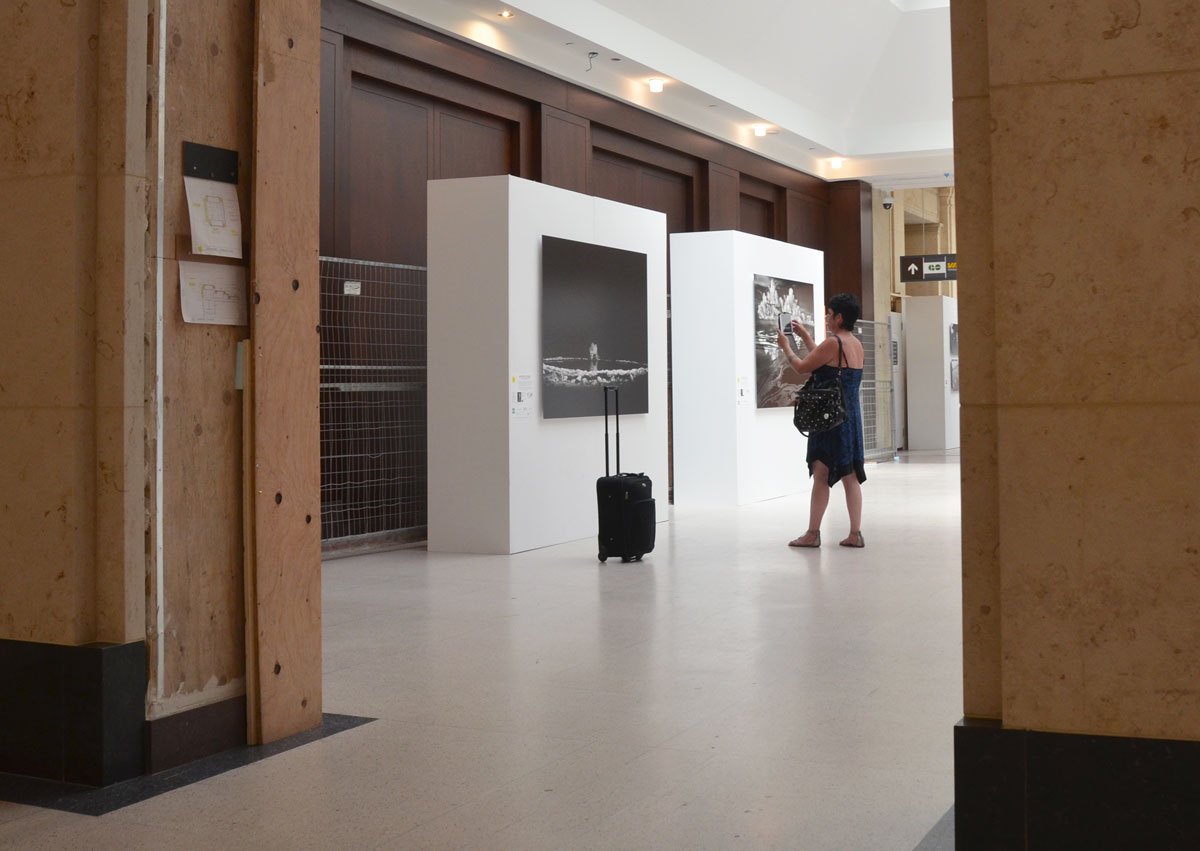
below: Two black and white photographs by Sebastiao Salgado,
part of a photographic project titled ‘Genesis’.
One aim of ‘Genesis’ was to examine “the fragile beauty and grandeur of nature”.

large photographs, part of an exhibit at Union Station in Toronto -

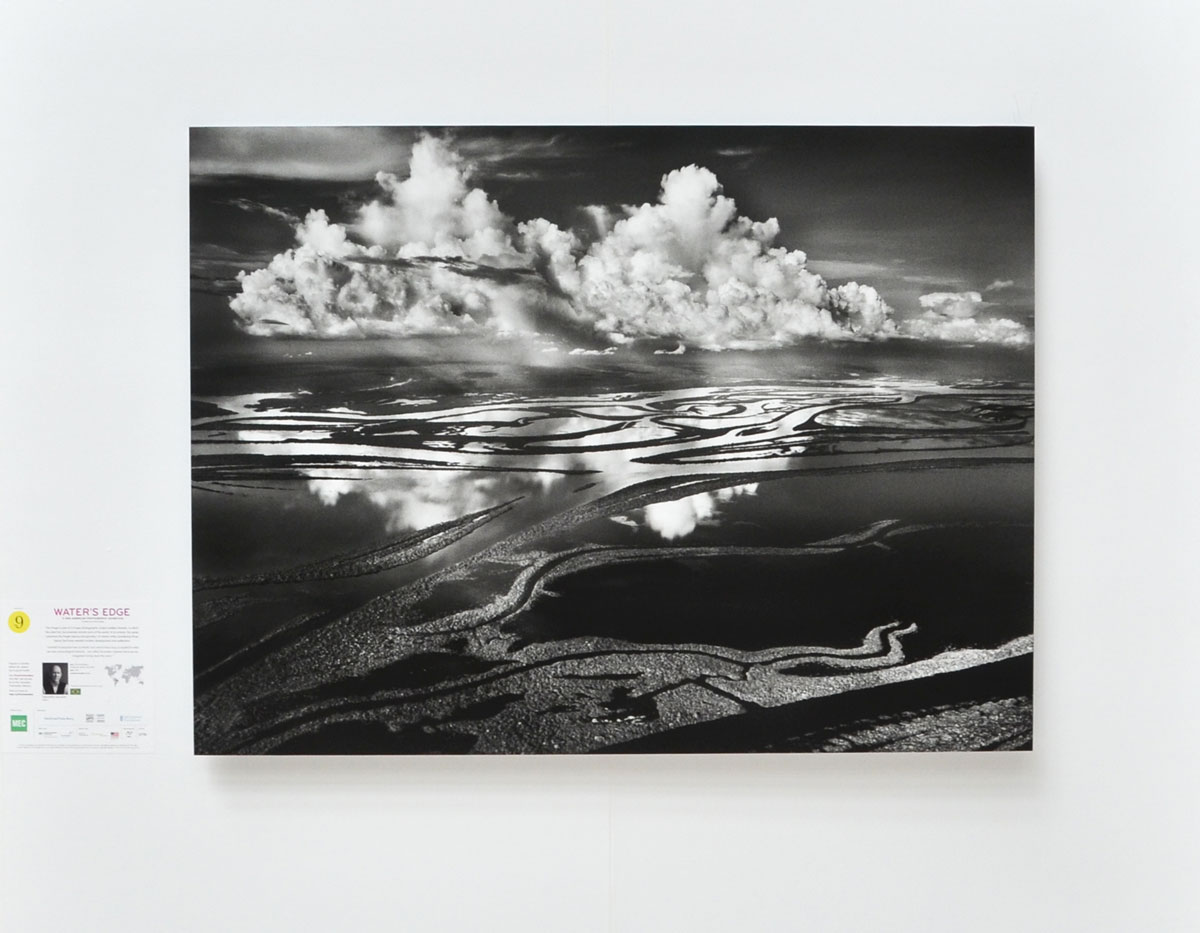
below:  ‘The Anavilhanas’ taken in Amazonas Brazil, 2009 by Sebastiao Salgado.
Located on the Rio Negro, the Anivilhanas Archipelago is the world’s largest fresh water archipelago.  It is an unique ecosystem with over 400 river islands spread over 90 km.  The Rio Negro is 27 km at its widest point. During the rainy season (November to April) many of these islands are underwater.

large black and white photograph, part of an exhibit at Union Station in Toronto -

below: ‘Sarnia’ by Gustavo Jononovich, taken in Sarnia, from his “Free Shipping” series.

large photographs, part of an exhibit at Union Station in Toronto -

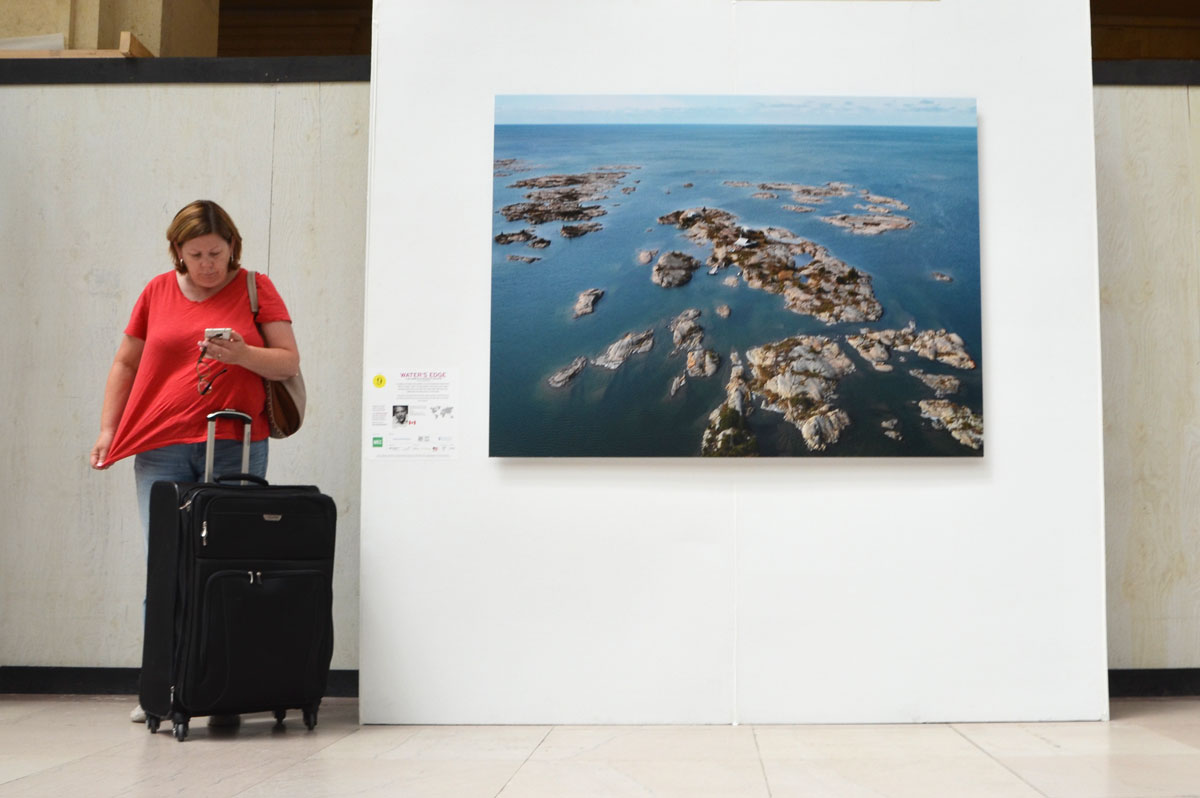
below: ‘Georgian Bay #1, Four Winds’, Point-au-Baril, Ontario  2009, by Edward Burtynsky.
This picture is part of his Water Series, a series that looks at changing water systems around the world as well as the relationship that we have with these water systems.

large photographs, part of an exhibit at Union Station in Toronto -

The exhibit ends on the 15th of August.

#myhomewaters