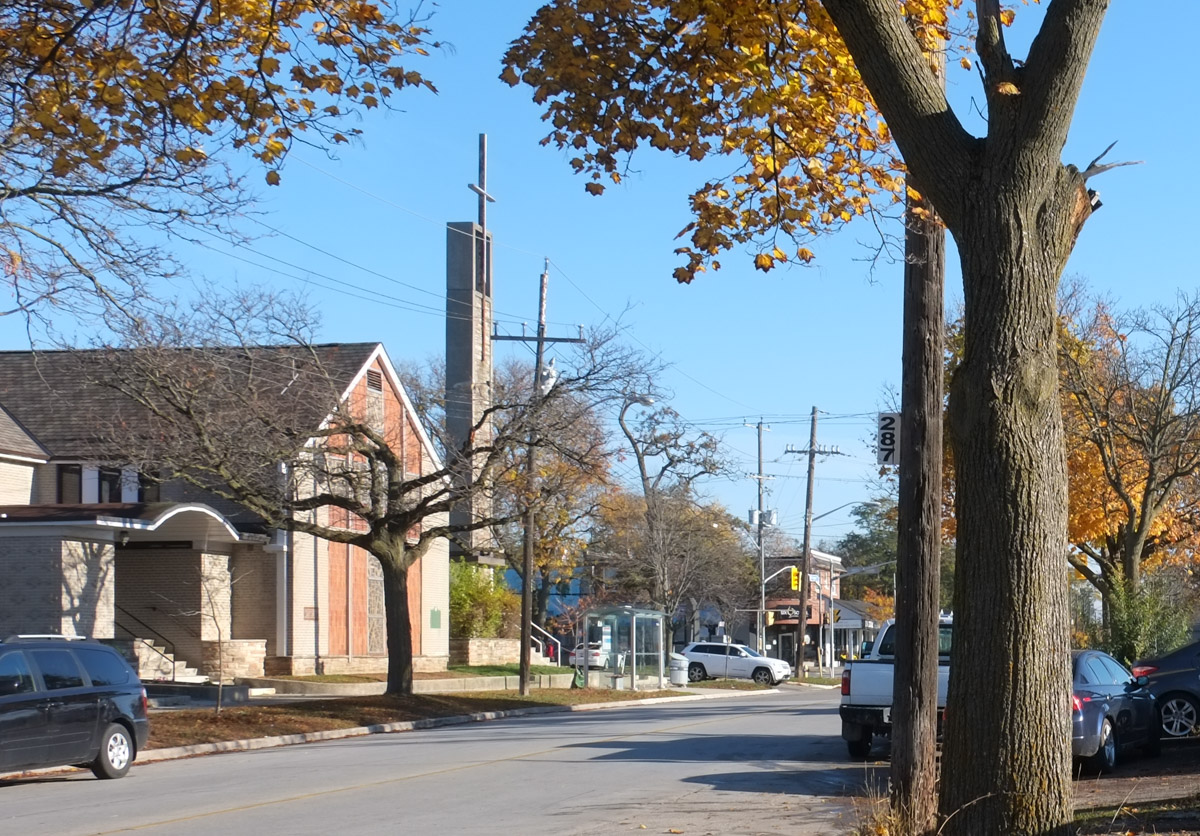
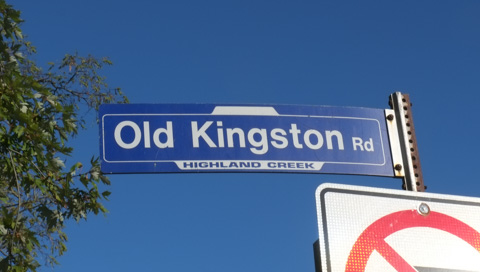
Going east to Scarborough again…. You can find Highland Creek village at the east end of Old Kingston Road while the West Hill neighbourhood is at the other end of Old Kingston Road. This short stretch of road winds down to the Highland Creek and then back up the hill on the other side. It was bypassed when a new wider and higher bridge was built over the river.
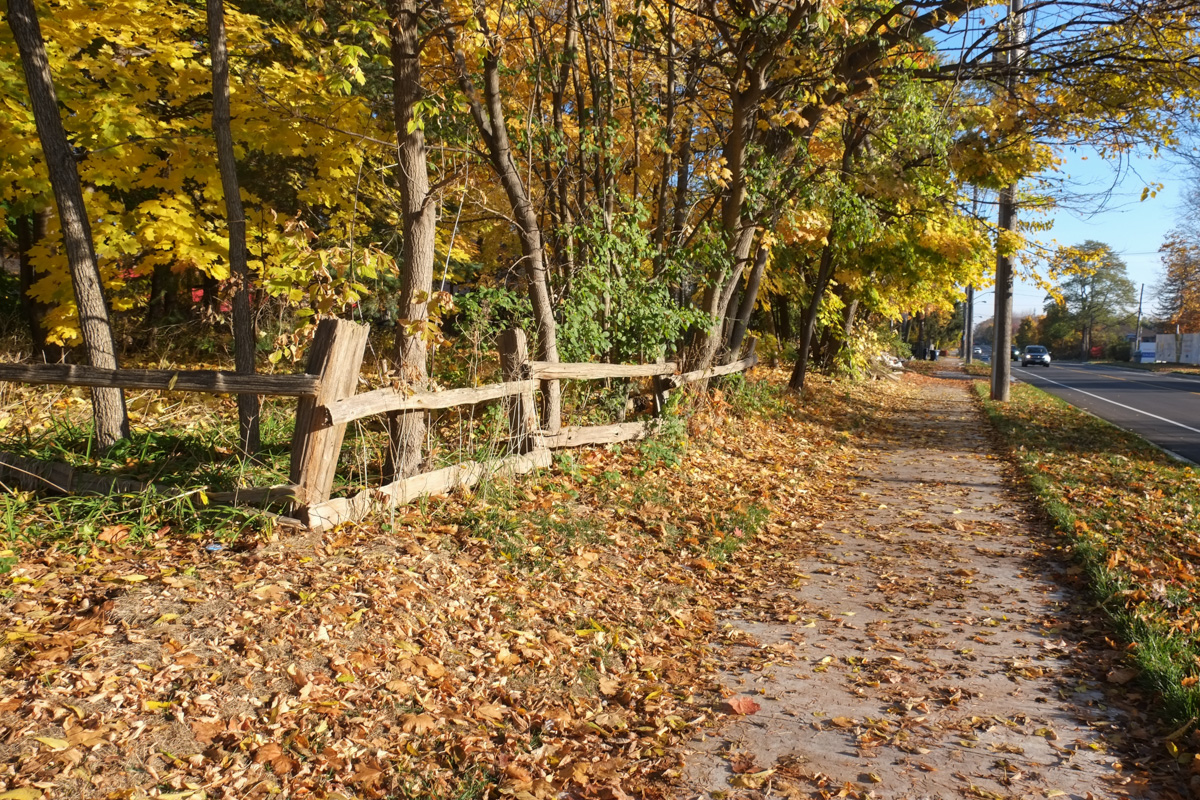
Although this area was one of the first parts of the city that was settled, there are still lots of signs of the rural nature of the area.

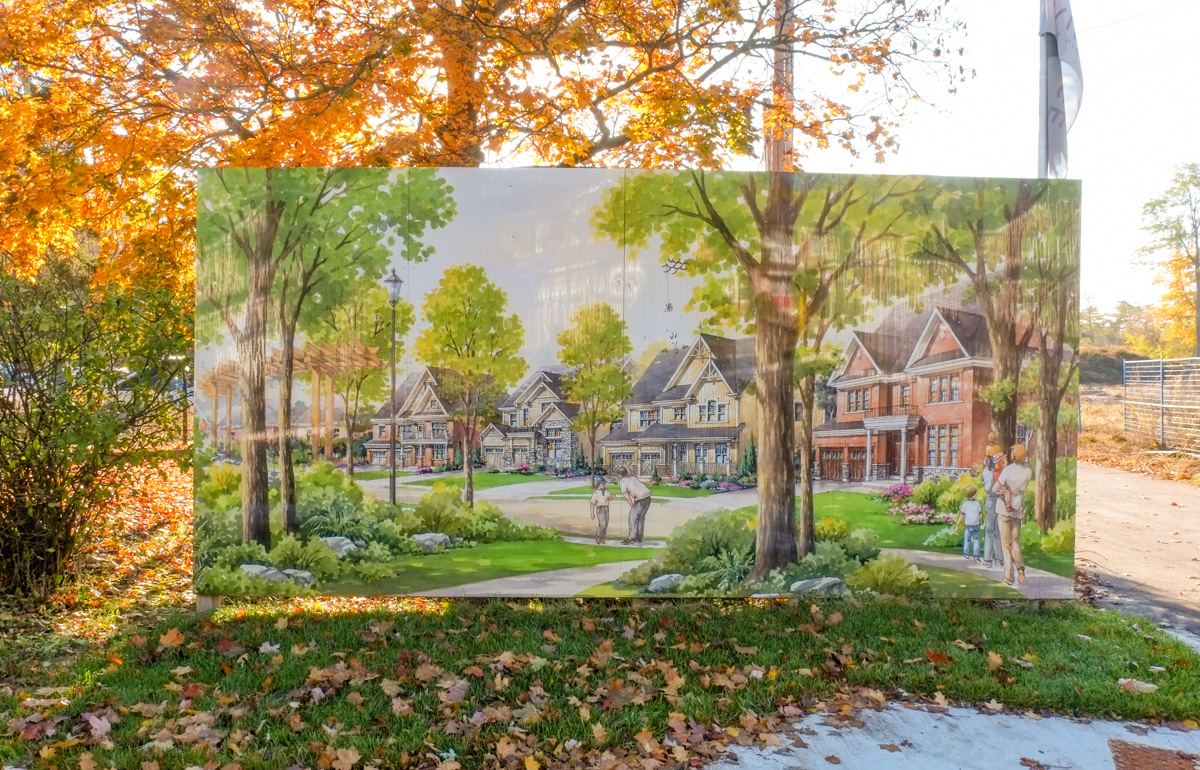
There are plenty of signs of changes too…. but there are no glass and steel highrise condos being built out here (in Highland Creek) where the developments are just as likely to be single family homes.

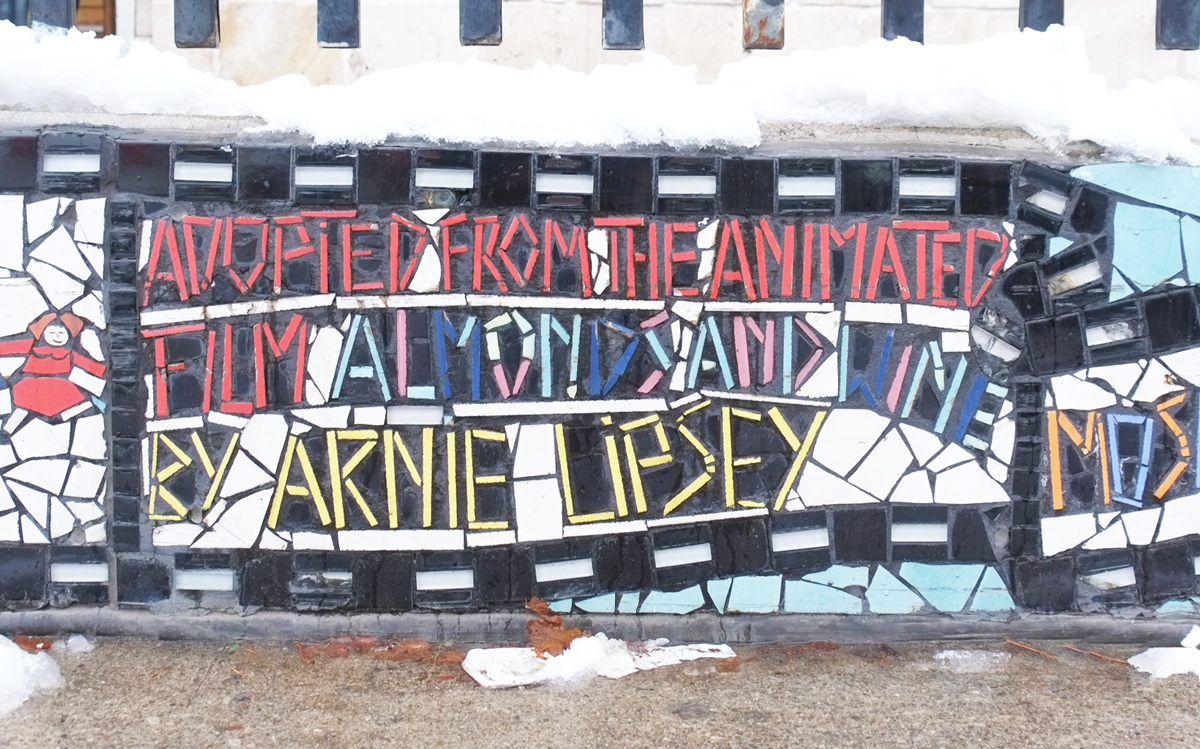
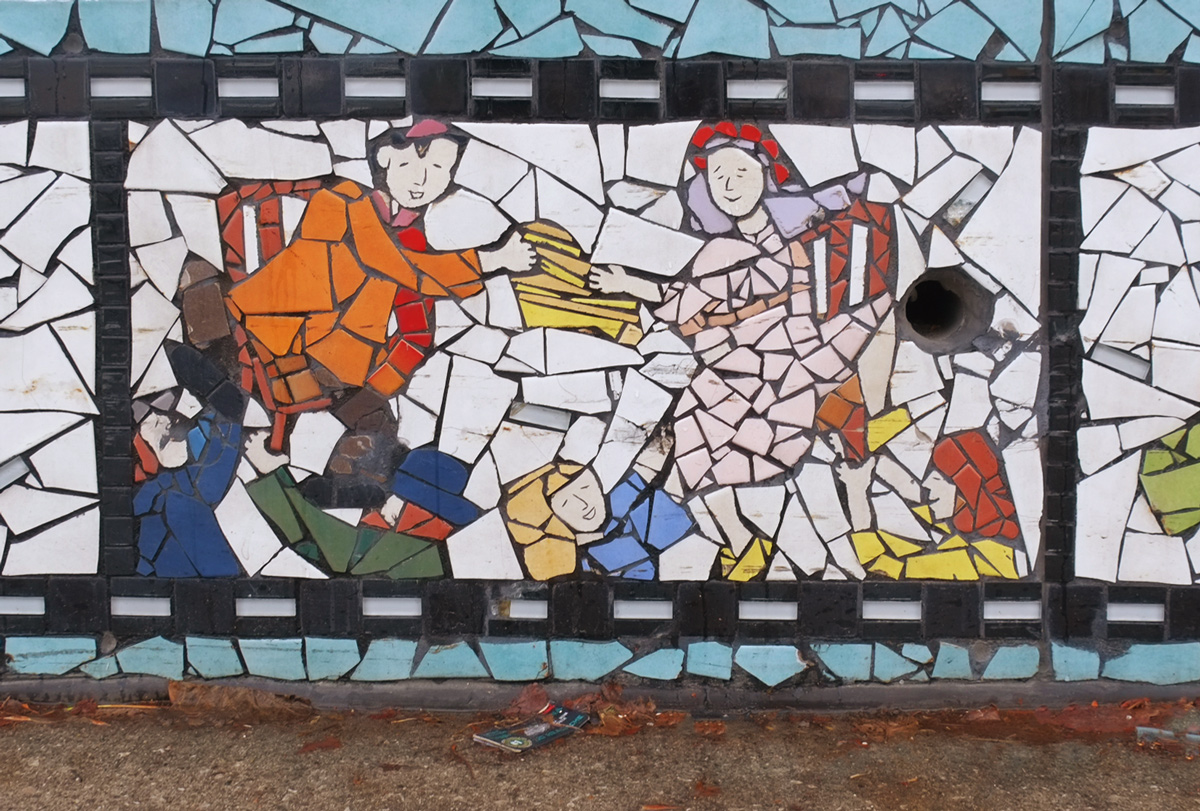
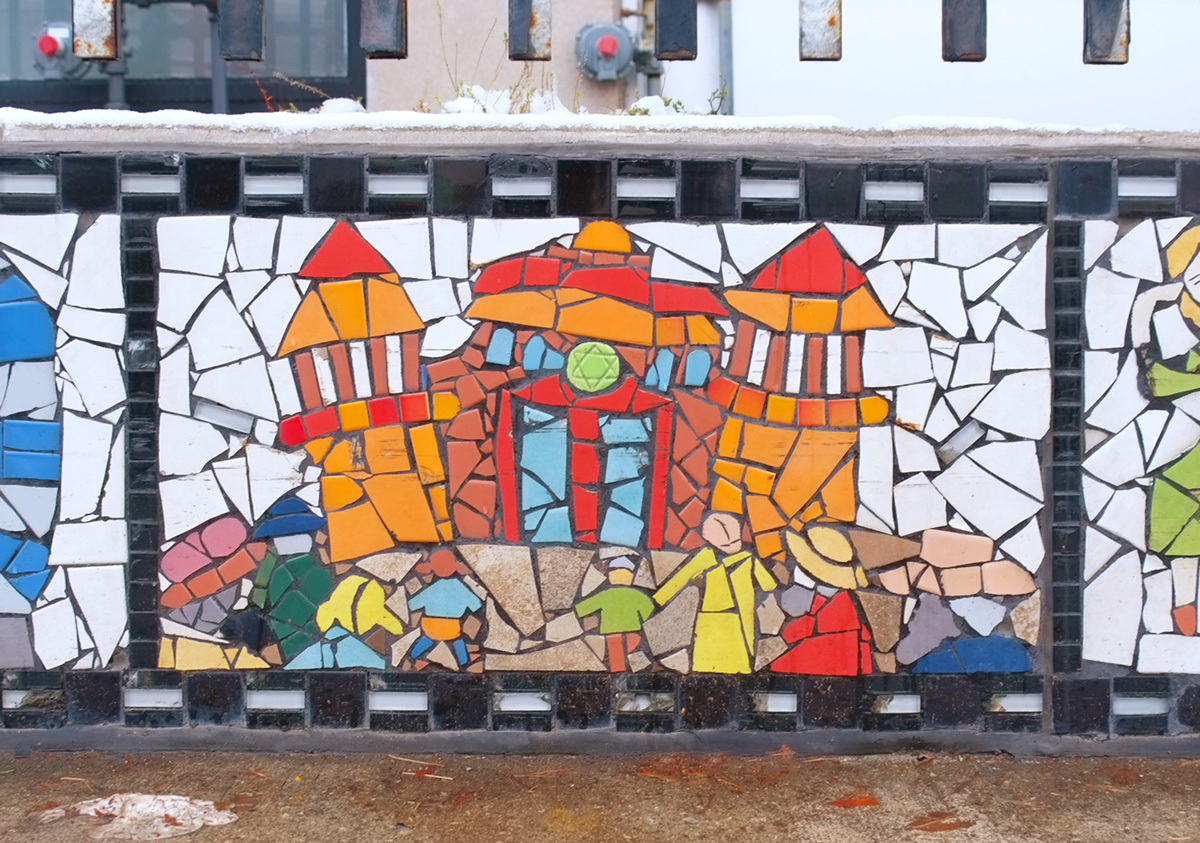
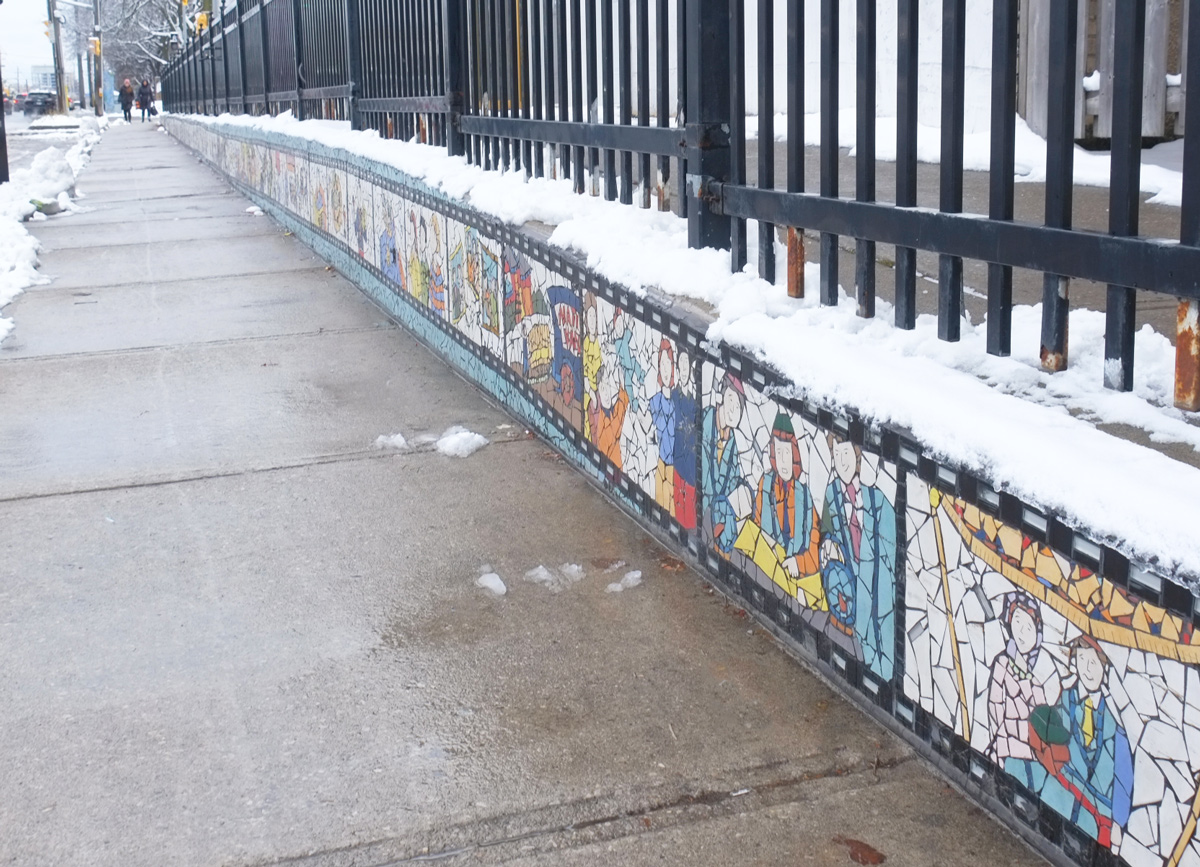
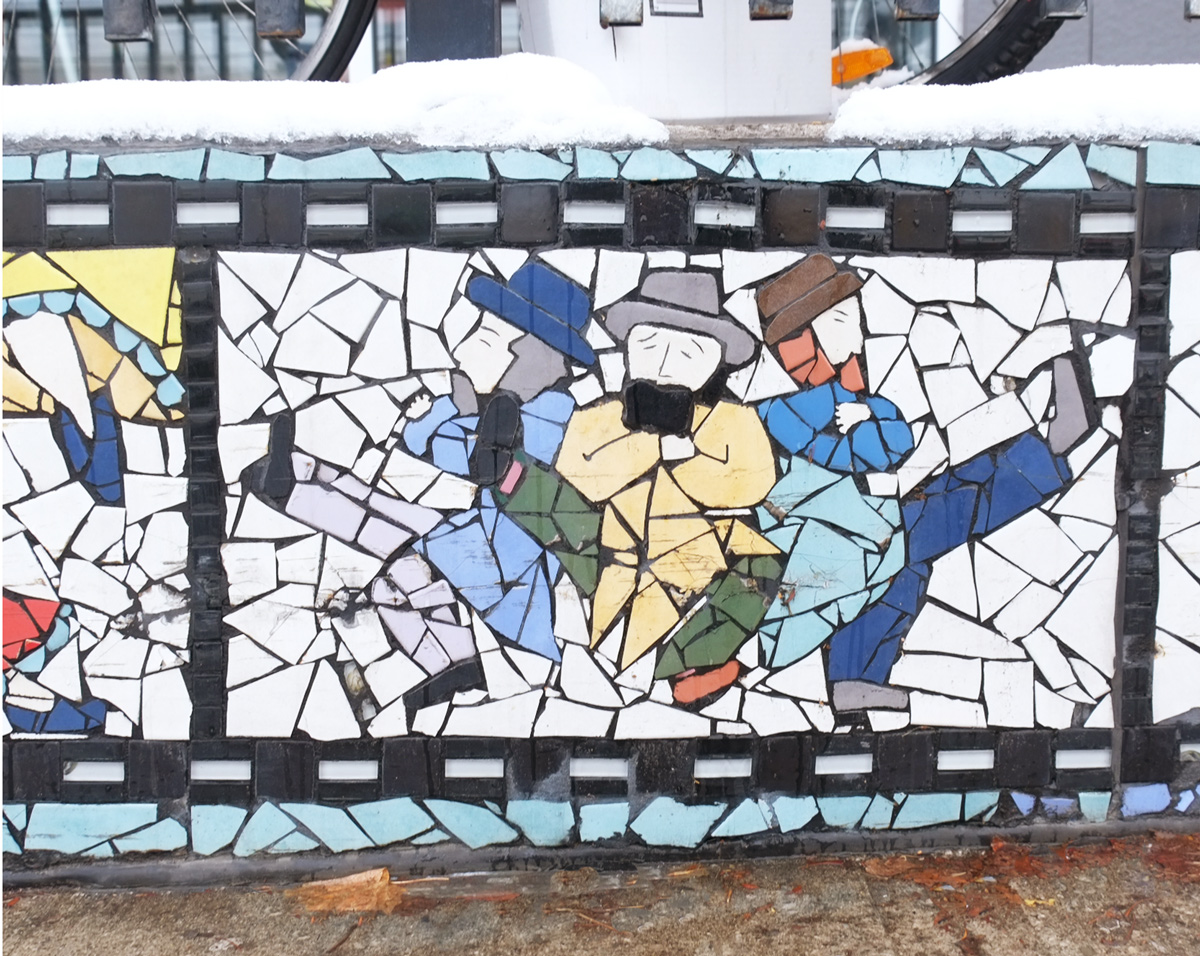
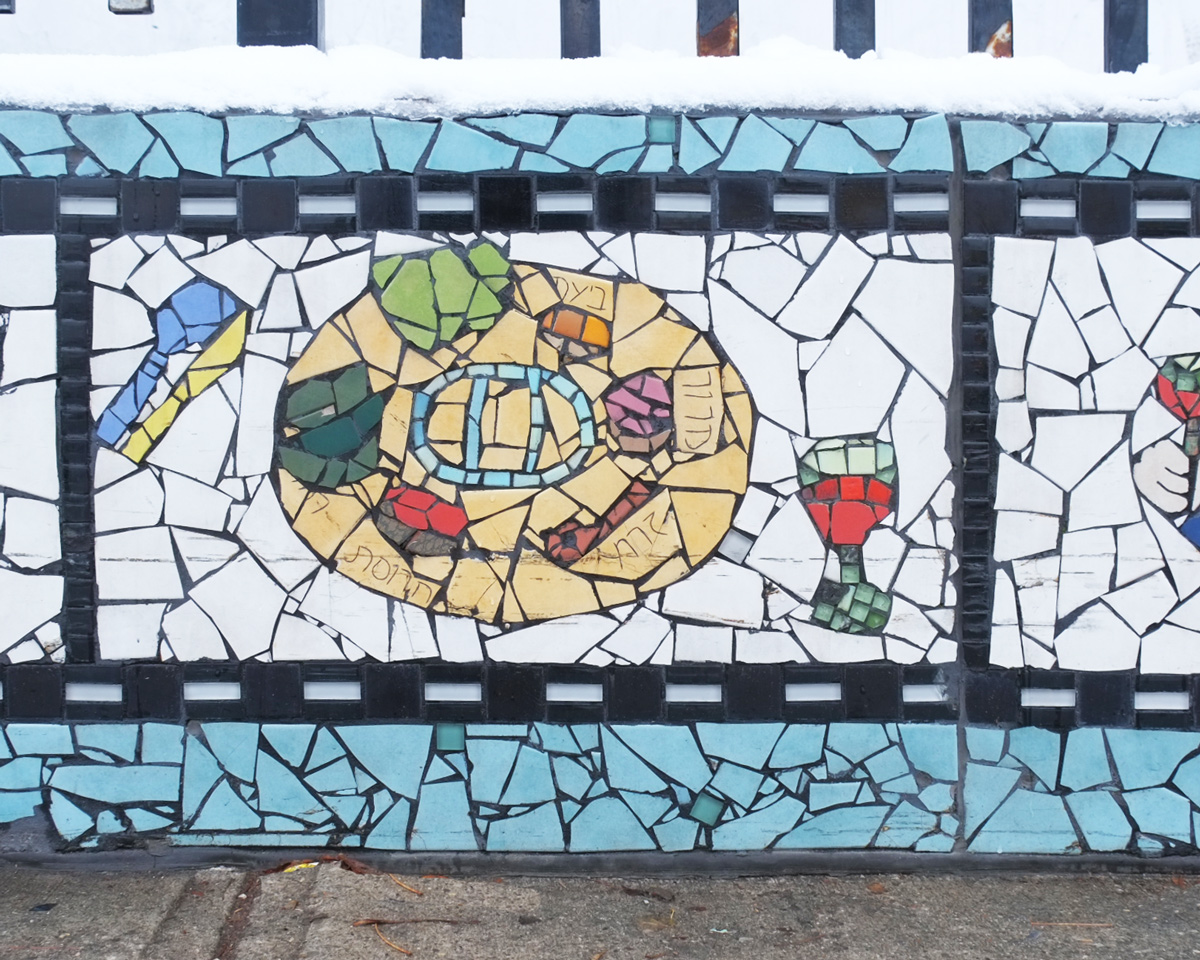
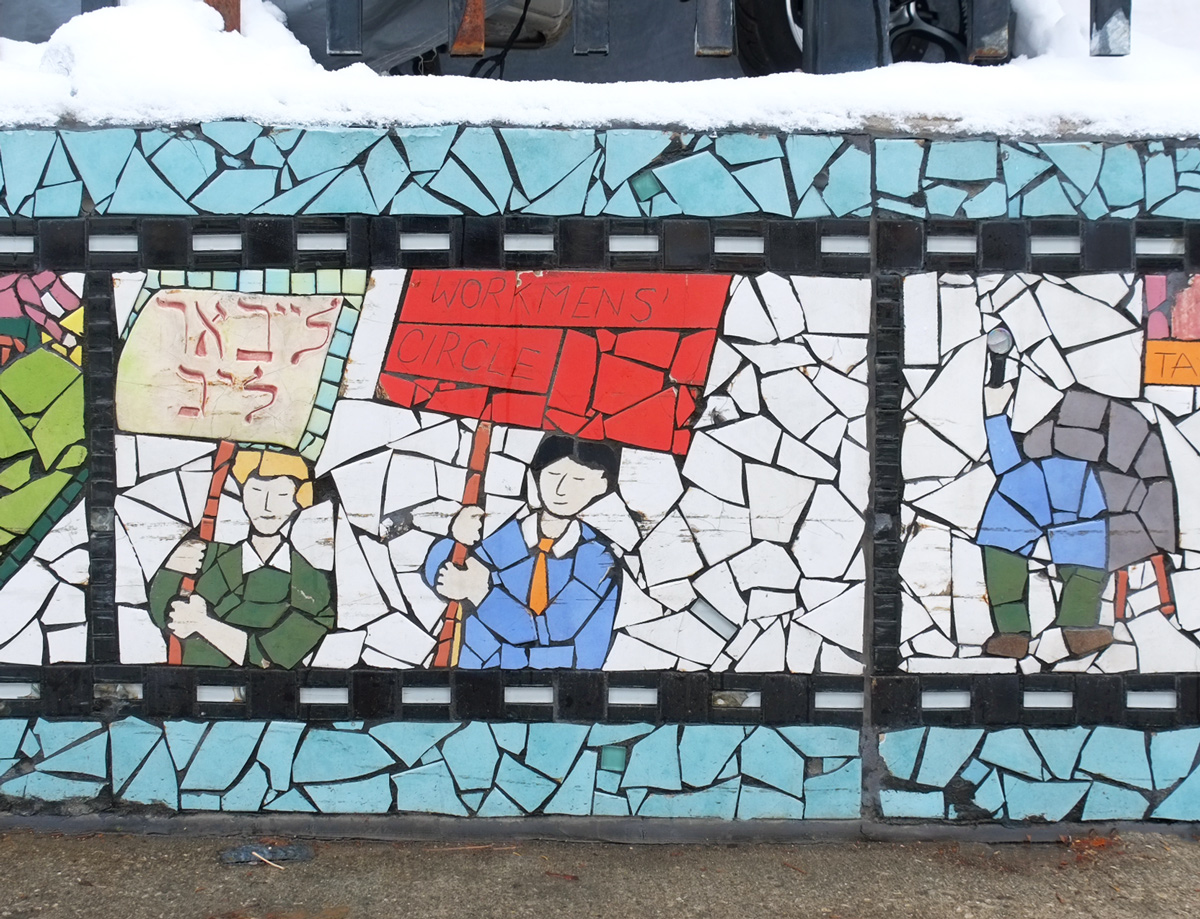
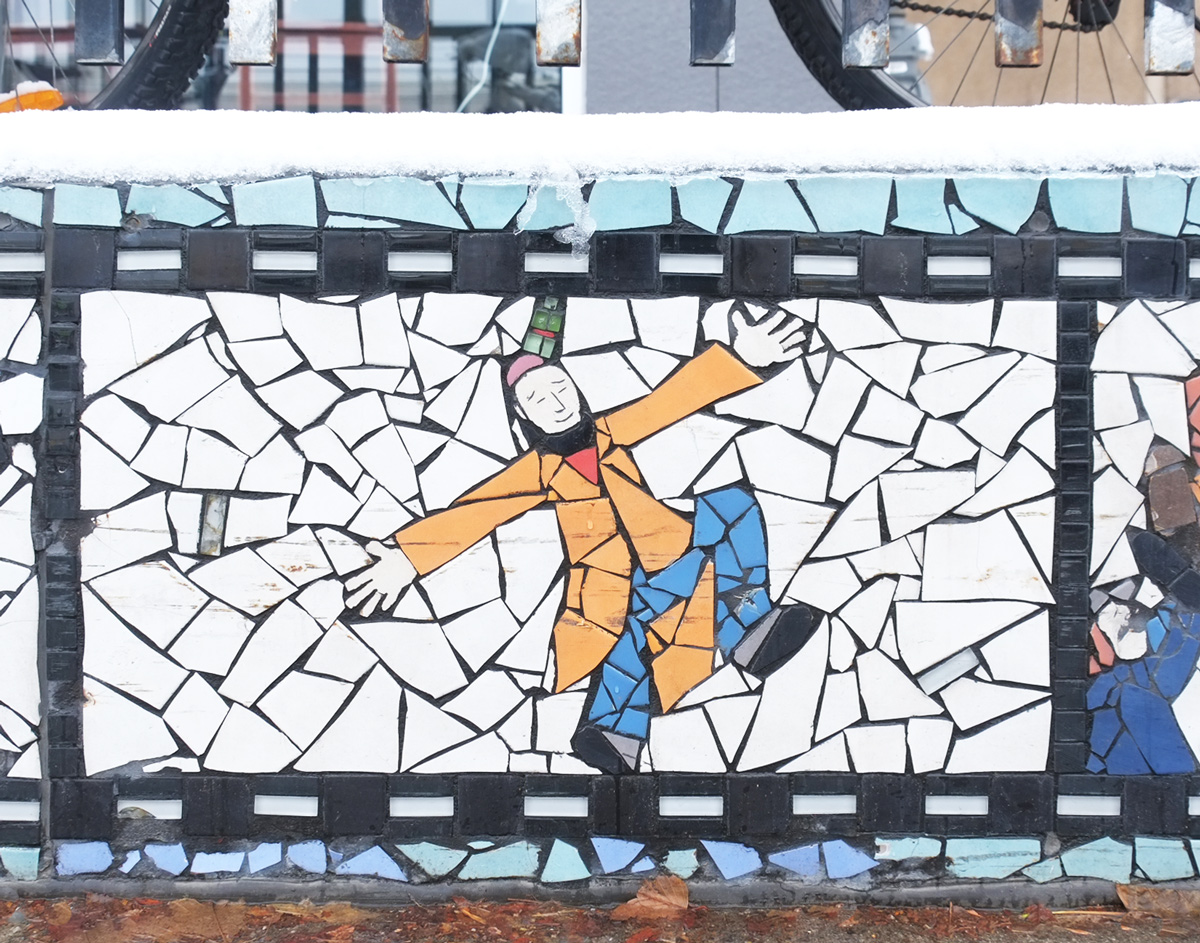
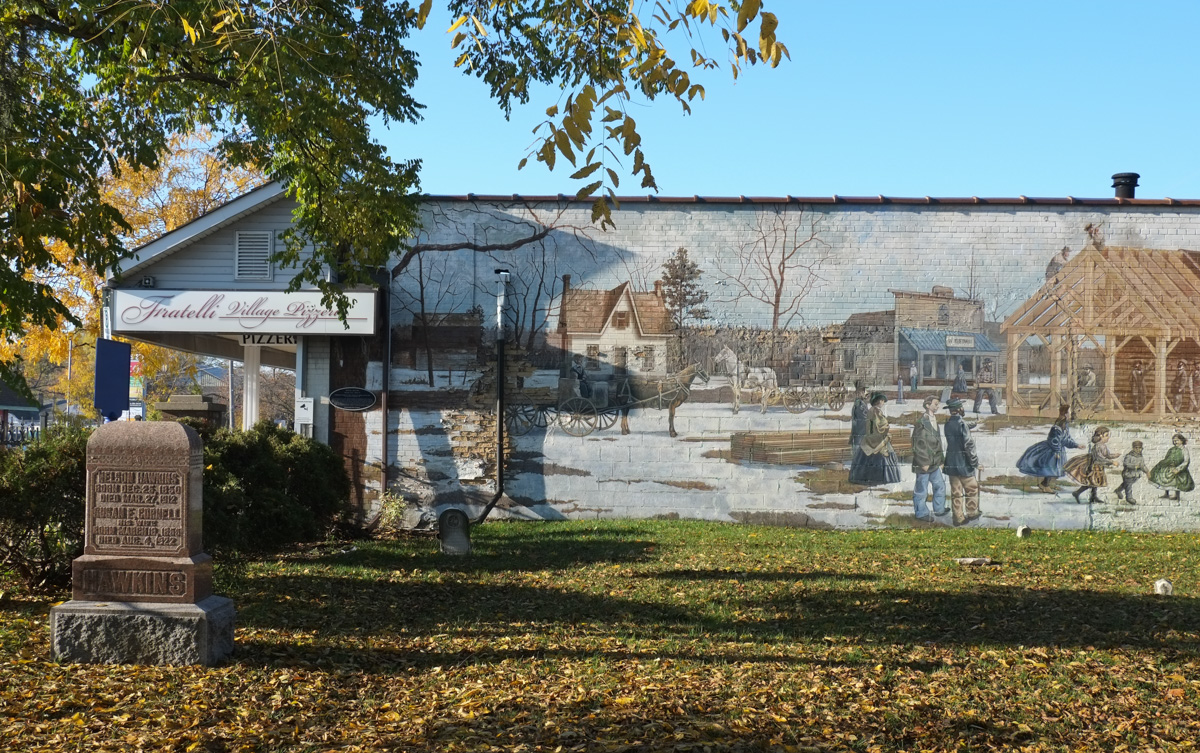
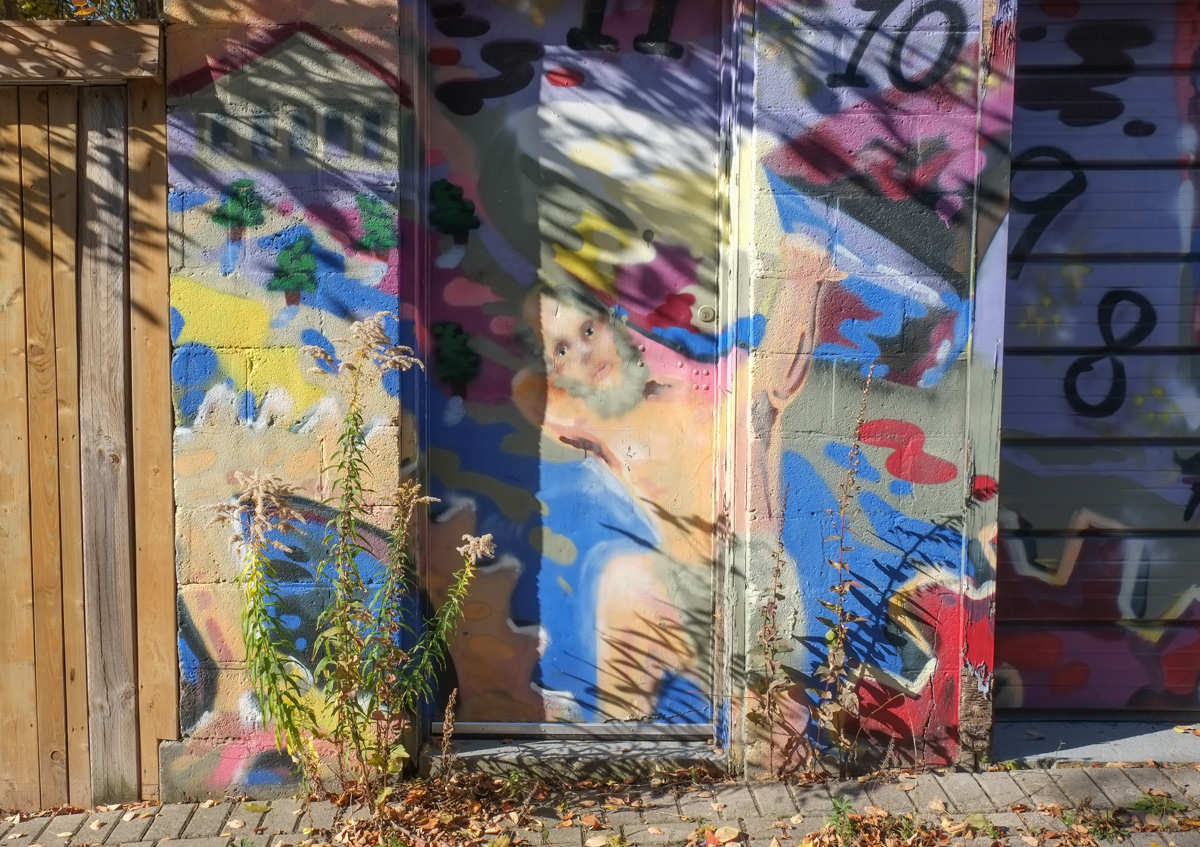
There is a mural on the side of one of the stores, it also happens to be beside the cemetery. This is Mural 8 in the Heritage Trail by Mural Routes. “Community Spirit in Early Highland Creek, Winter 1867” the building of the Wesleyan Methodist Church. It was painted in the summer of 1994 by John Hood, Alexandra Hood, and Zeb Salmaniw. For more information, see a previous blog post from 2017 Heritage Trail, mural 8
The tombstone in front of the mural is for Nelson Hawkins and his wife Susan Cornell who were married in 1877. Nelson was a farmer and he and Susan raised 6 children in the area (not all lived to adulthood).


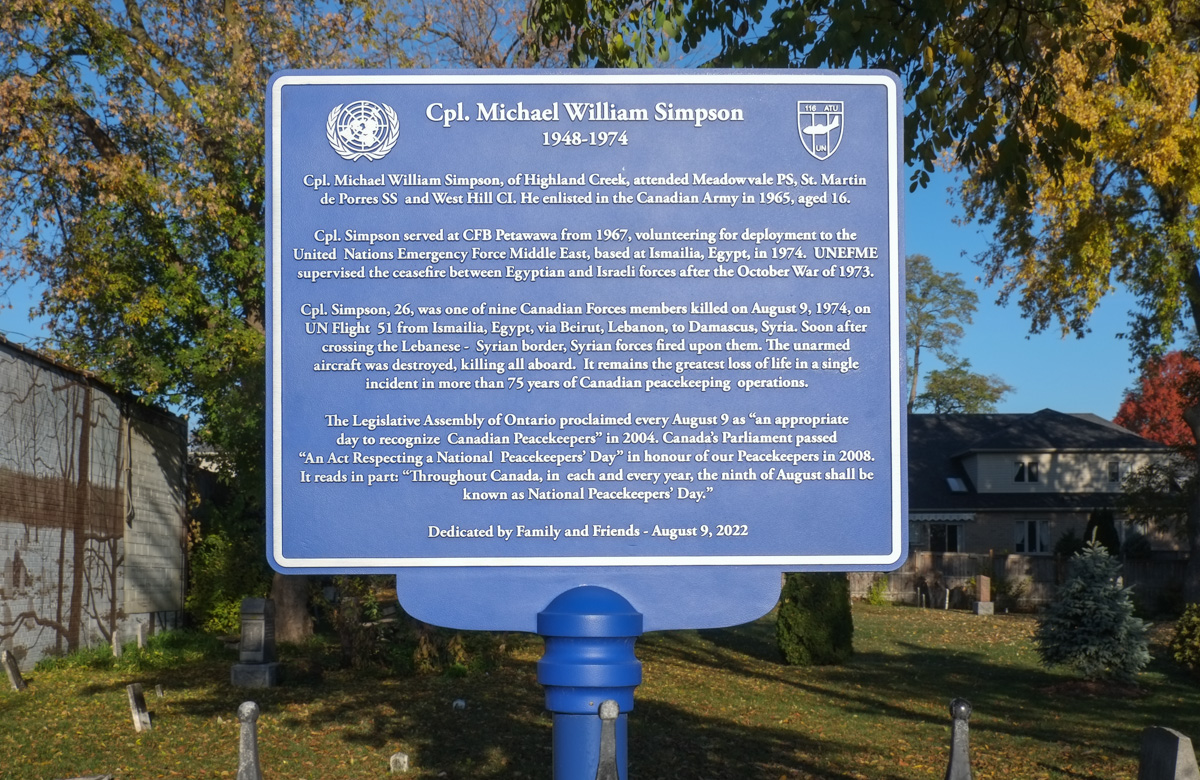
Also in the cemetery is a plaque to commemorate the life of Cpl. Michael William Simpson (1948-1974) who died in Syria while on a UN peacekeeping mission – all nine Canadians on UN Flight 51 died that day.

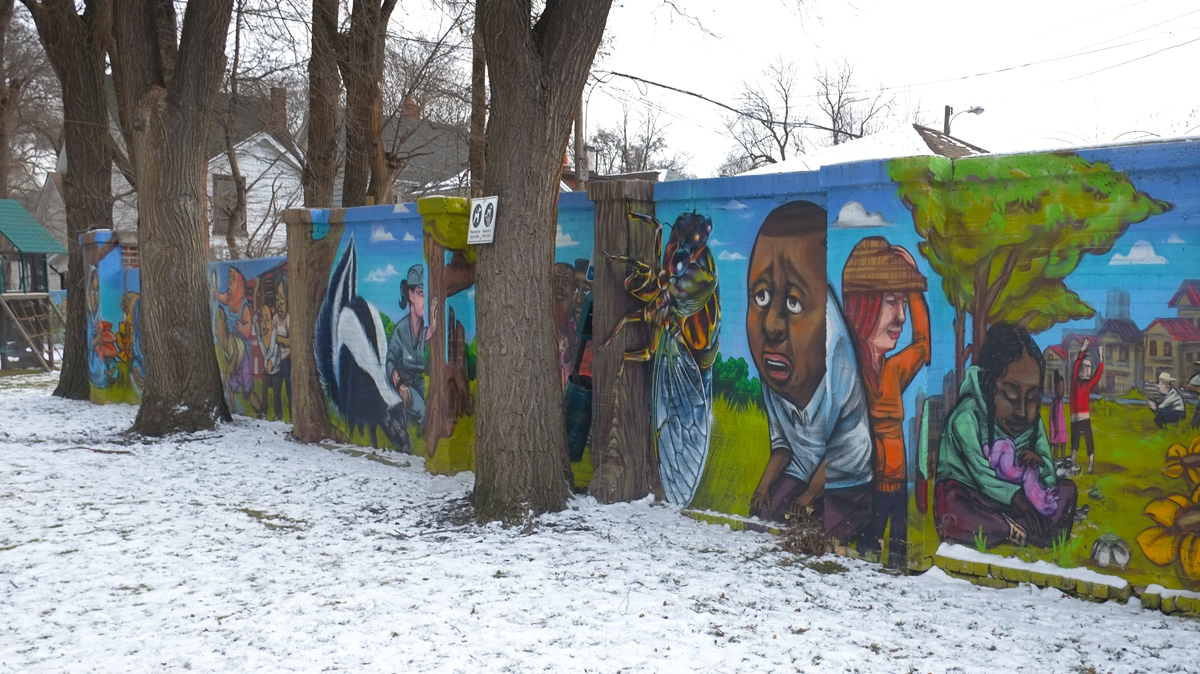
below: Deer by the creek in “Creekside” designed by Emily Harrison and painted by a group of youth and local volunteers in 2014.

The Scarborough Historical Society website tells the story of William Knowles who purchased land in Highland Creek in October 1802 and moved his family from New Jersey. … “Knowles was a blacksmith and built the Township’s first smithy, making the nails for the first frame barn in Scarborough and planting one of the first orchards. His son, Daniel, kept the first store in Highland Creek, was a Commissioner for the straightening of Kingston Road in 1837 and was a prominent member of the Scarborough, Markham and Pickering Wharf Company which did an excellent business in shipping grain, timber and cord wood from Port Union to Oswego, New York and other Lake Ontario ports.”
below: Shadows on the door of St. Josephs Church. This Roman Catholic church first served the influx of Irish immigrants who started arriving at the time of potato famine in 1847. It was the first RC community in Scarborough.


The early history of these communities is dominated by families with roots in England, Scotland, and Ireland but like the rest of Toronto, it has become much more multicultural.
below: On a quiet corner in Highland Creek, Baitul Afiyat Mosque

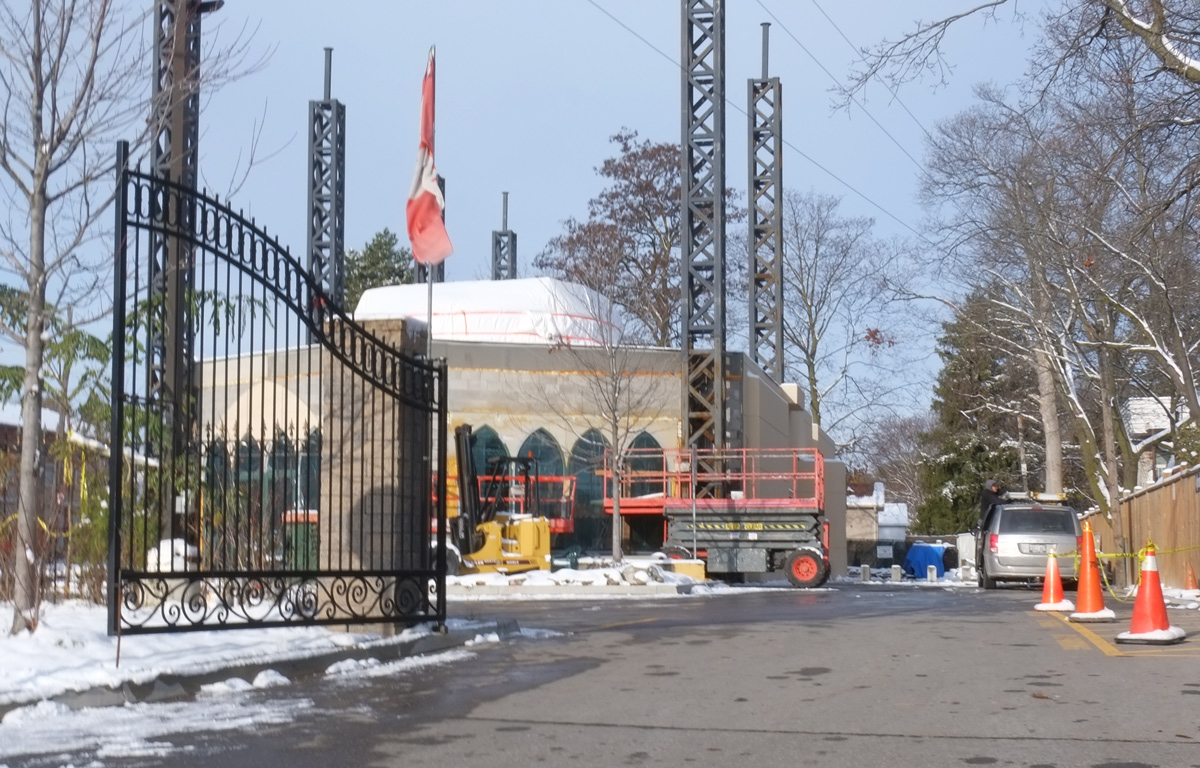
below: And another mosque under construction in West Hill

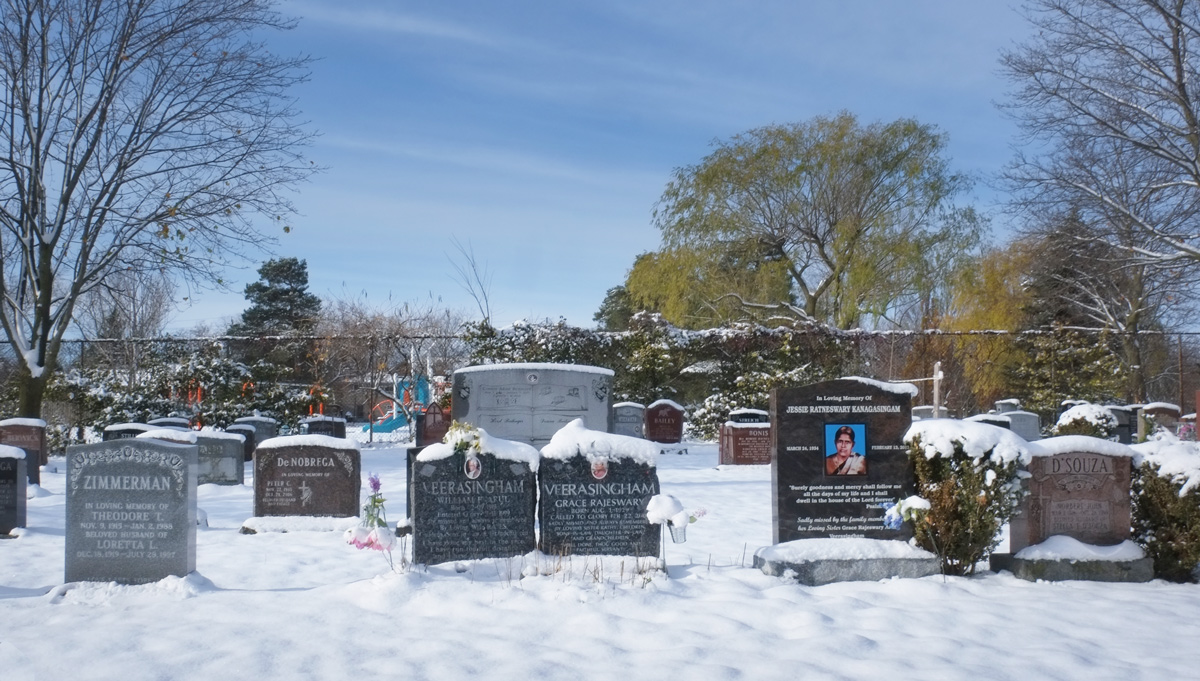
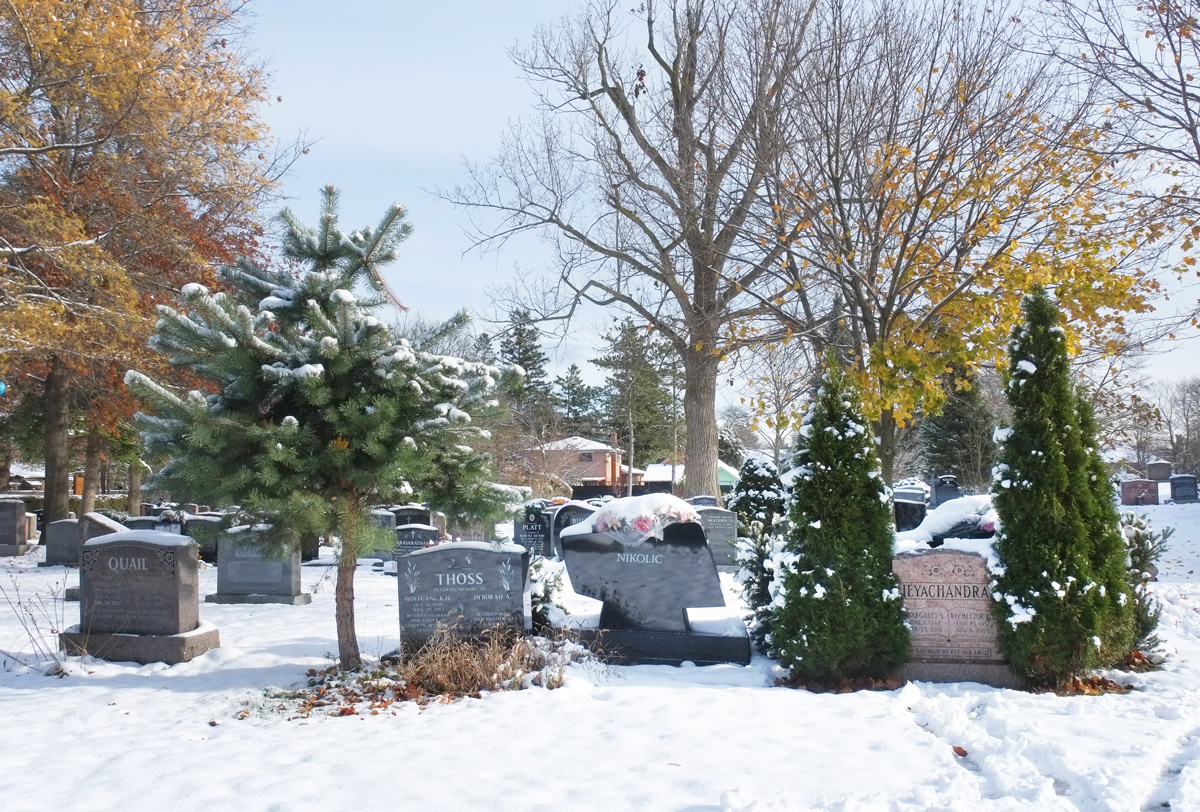
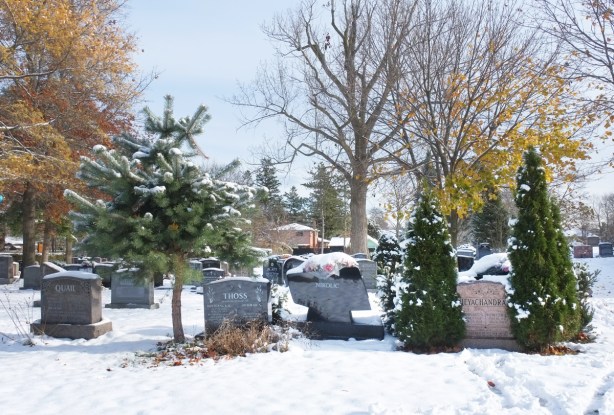
below: A short walk through St. Margarets (Anglican) cemetery reveals a more multi-cultural side of the neighbourhood. This is just a small sample of the diversity of surnames found there.

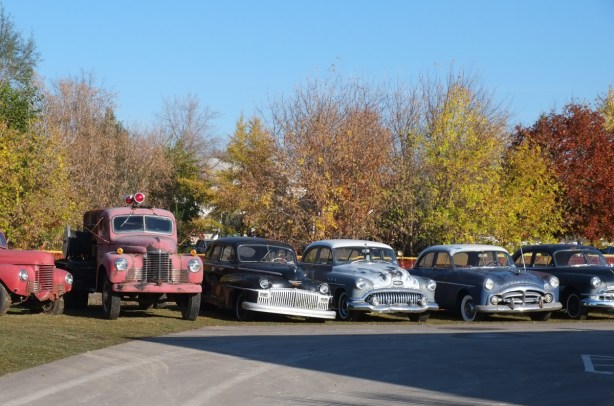
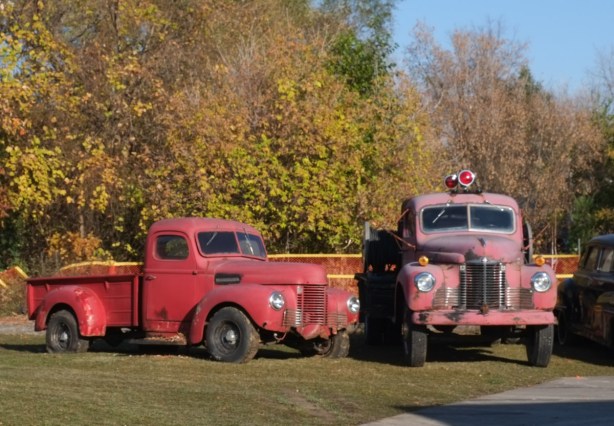
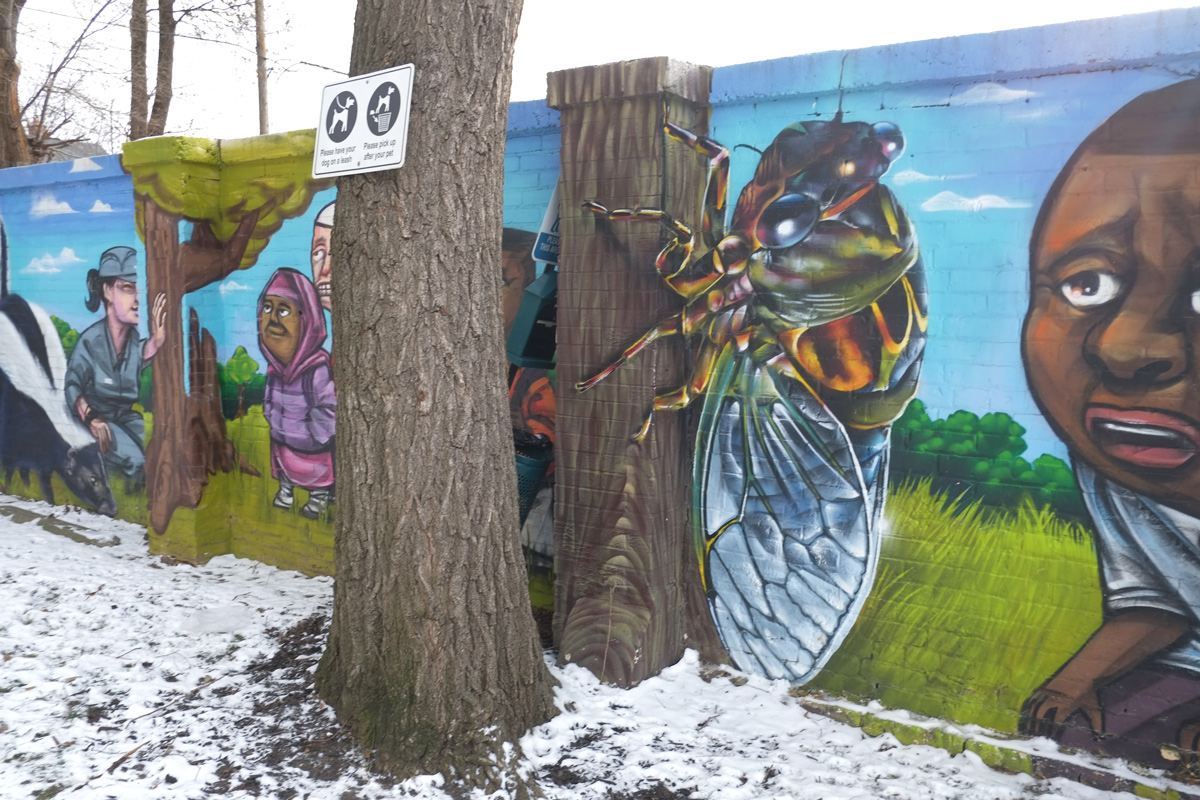
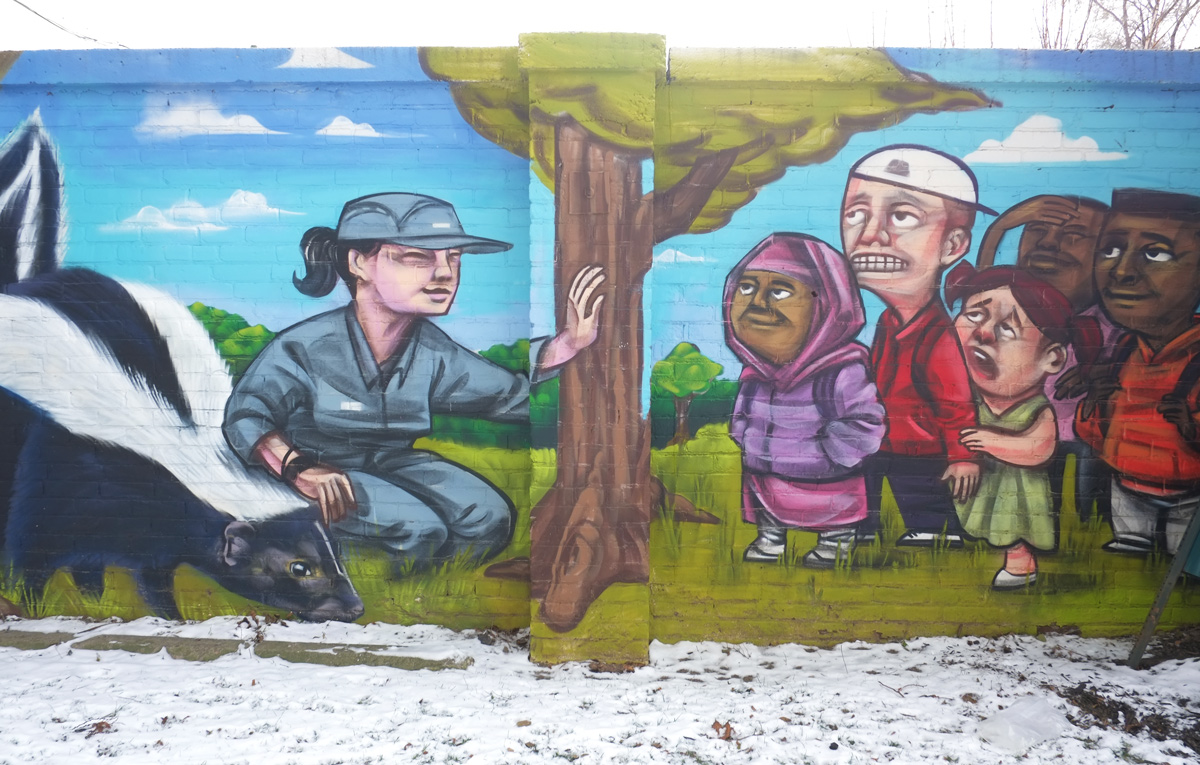
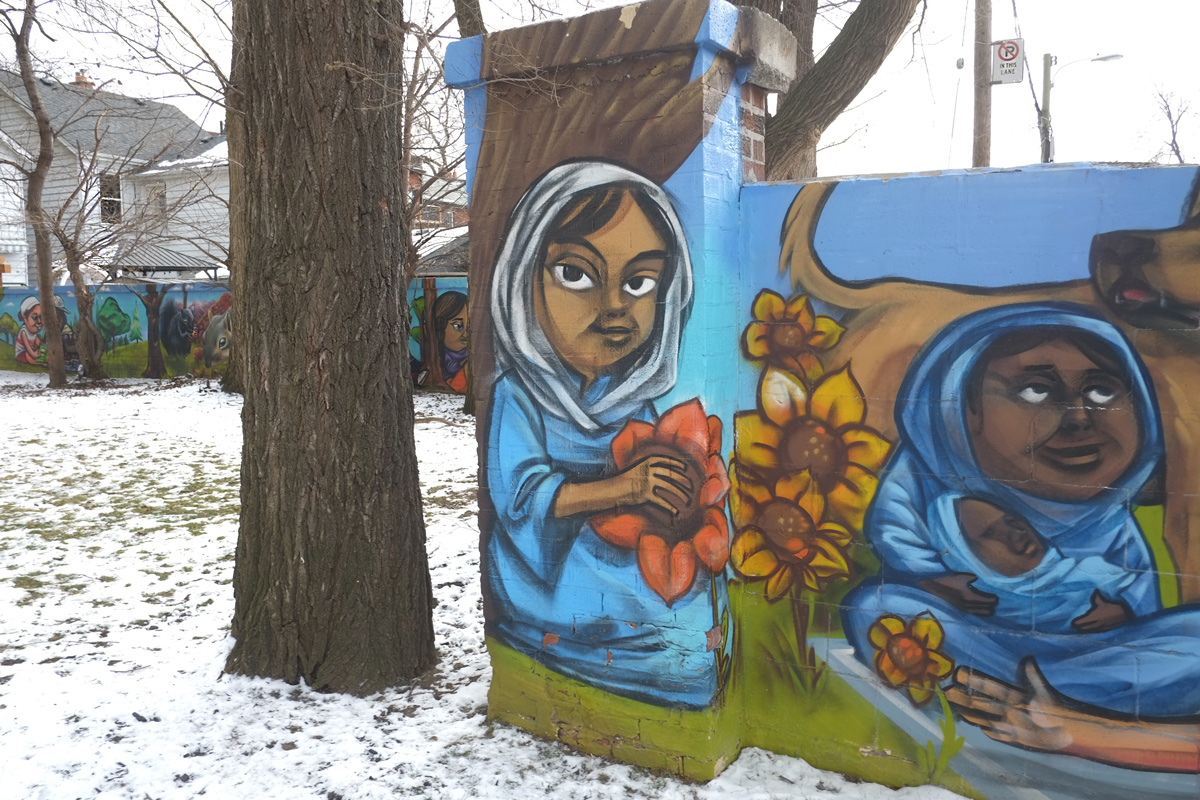
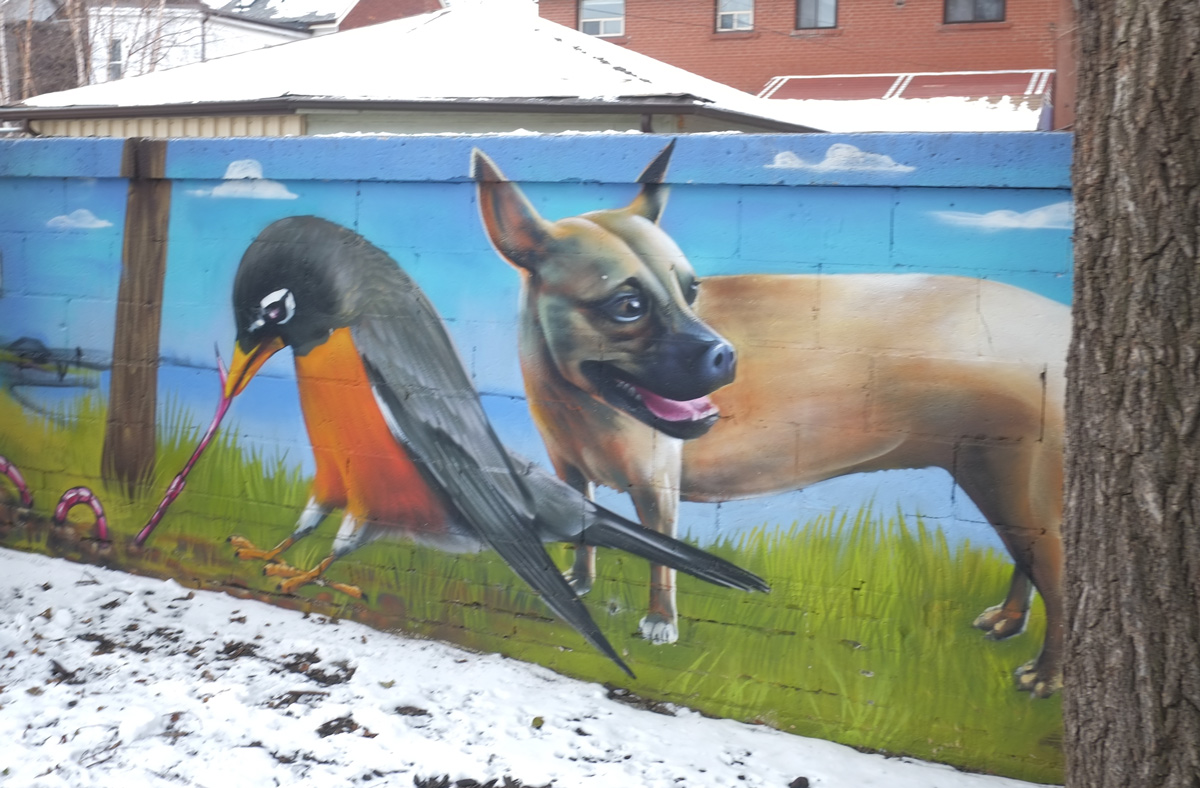
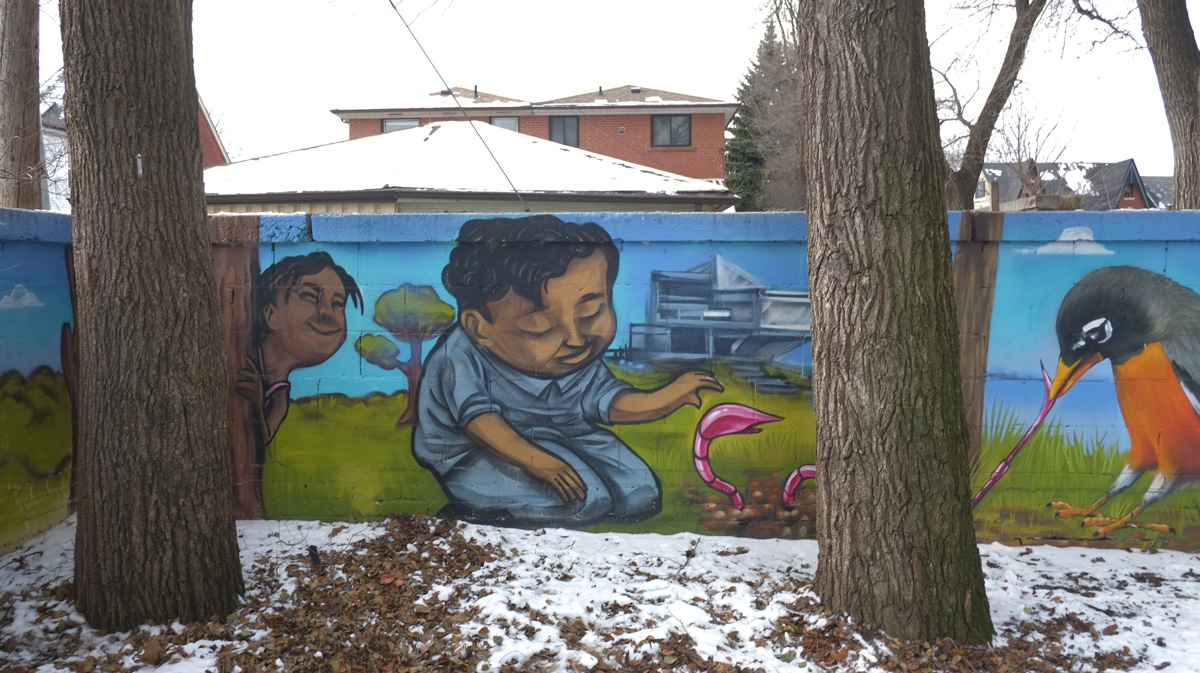
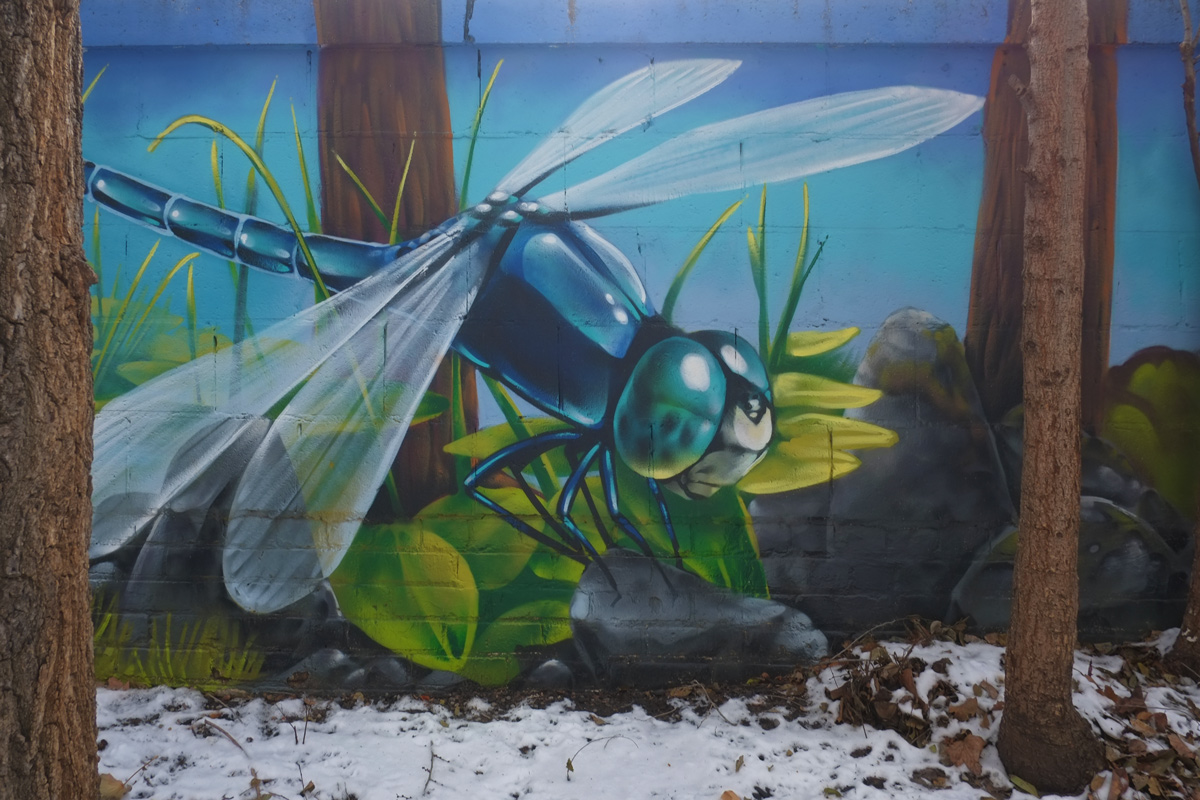
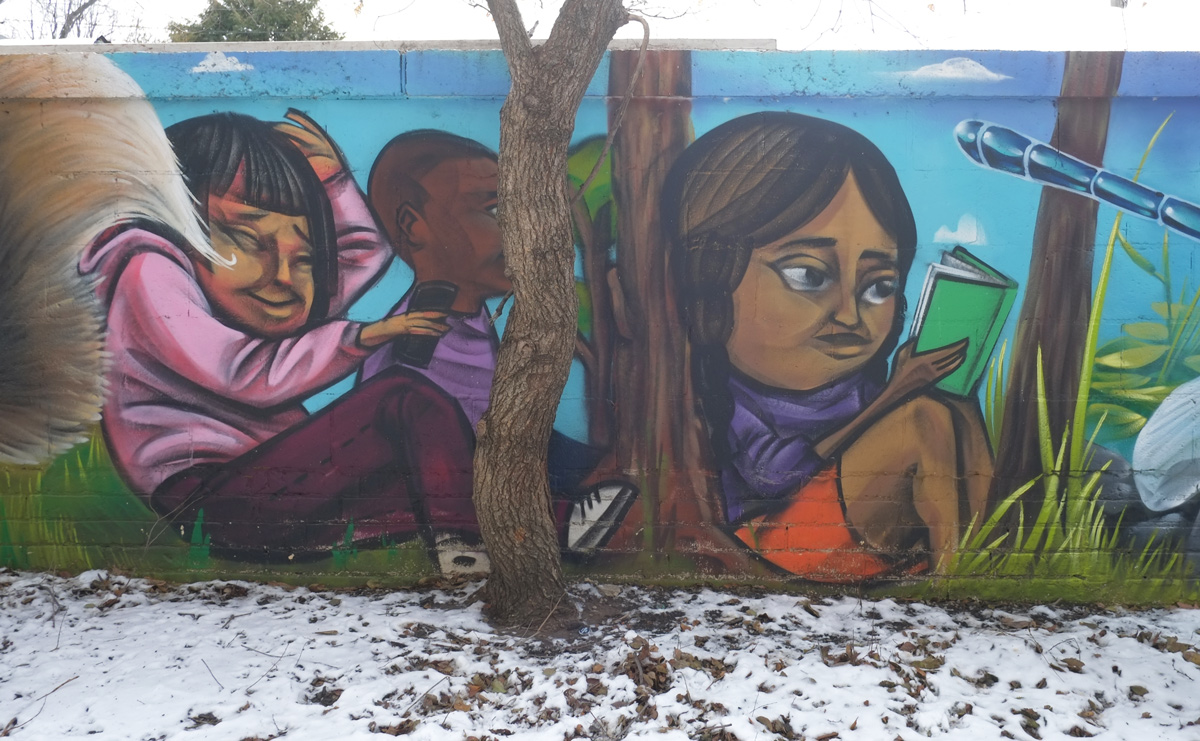
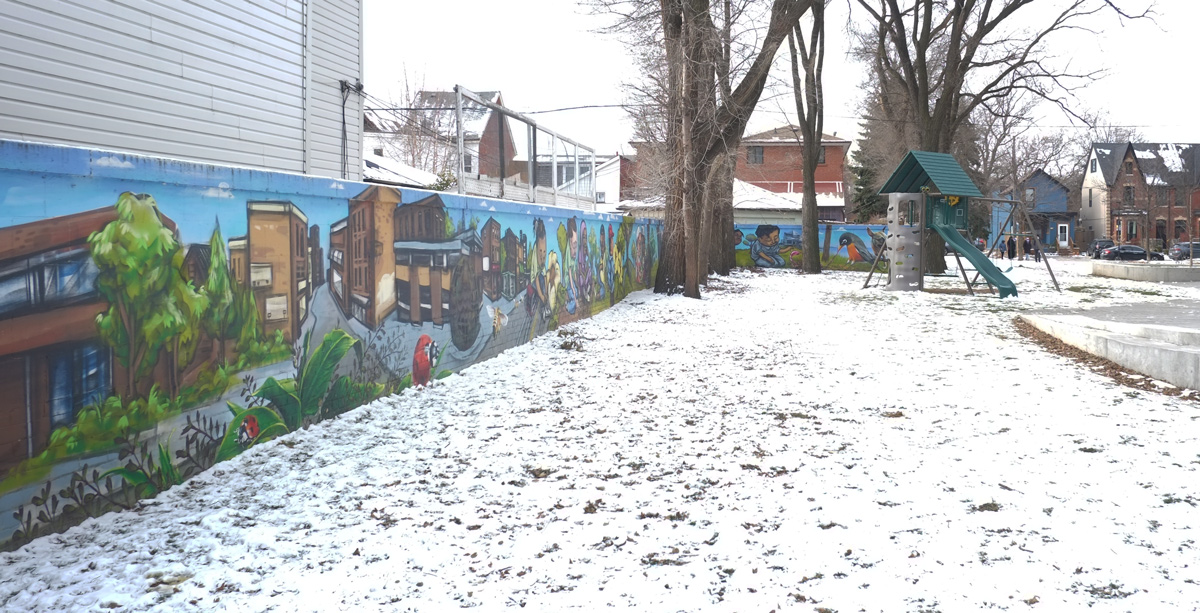
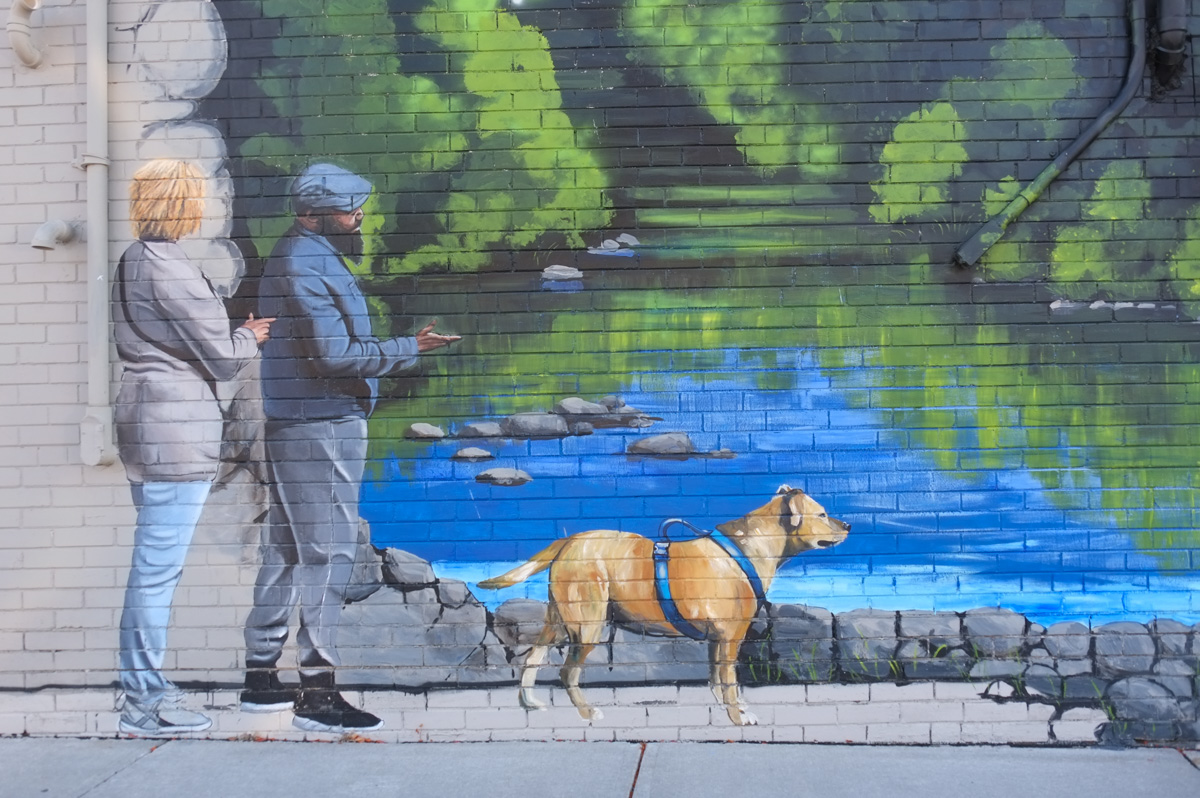
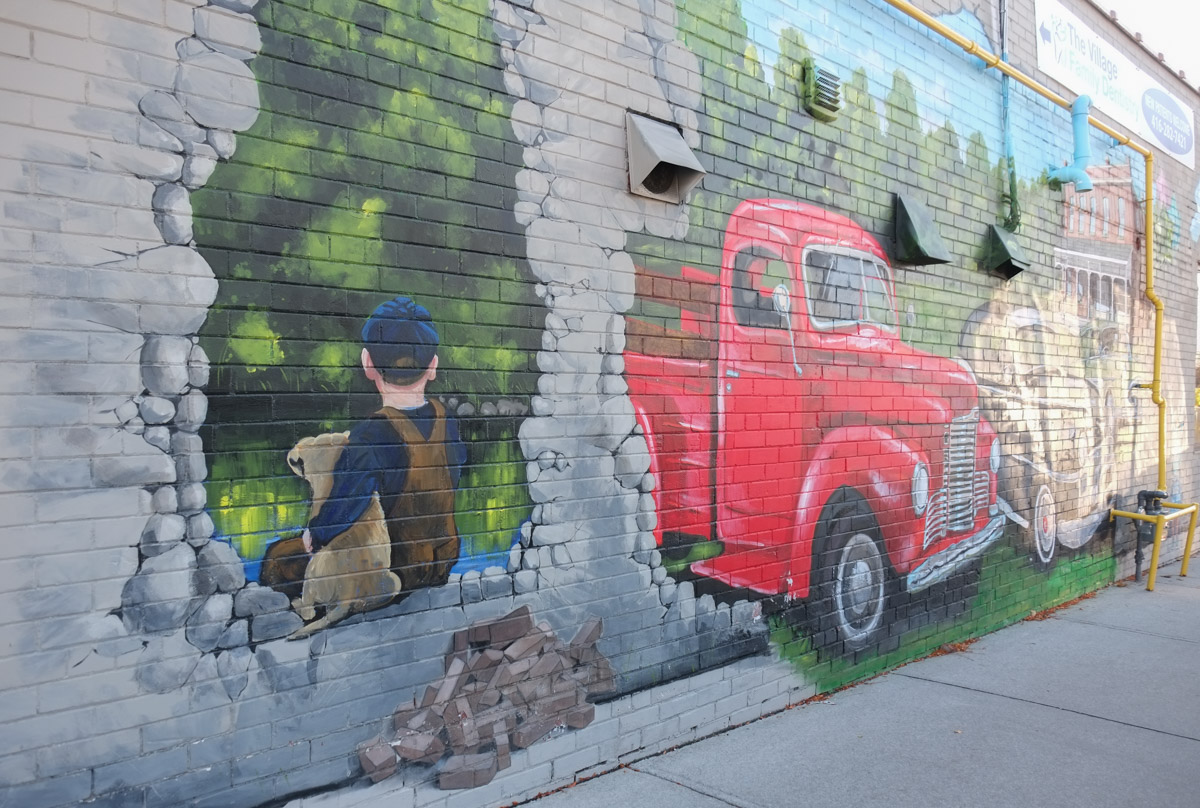
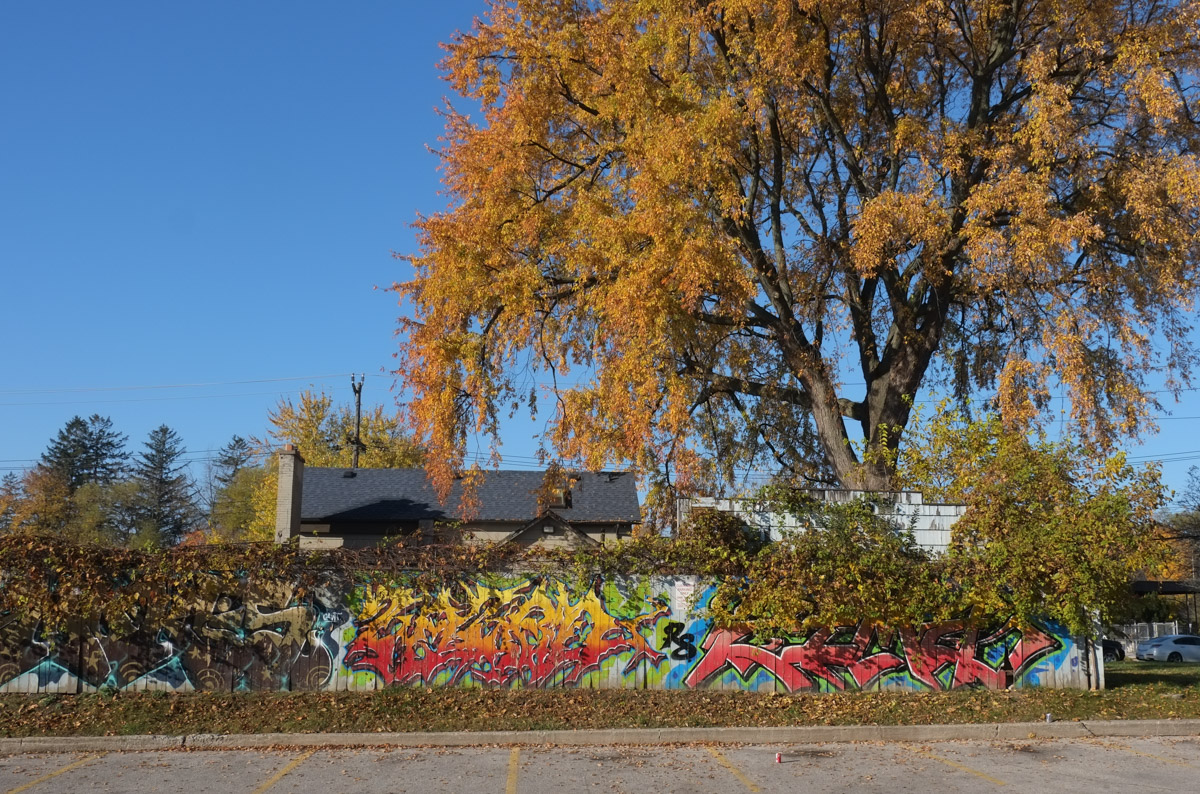
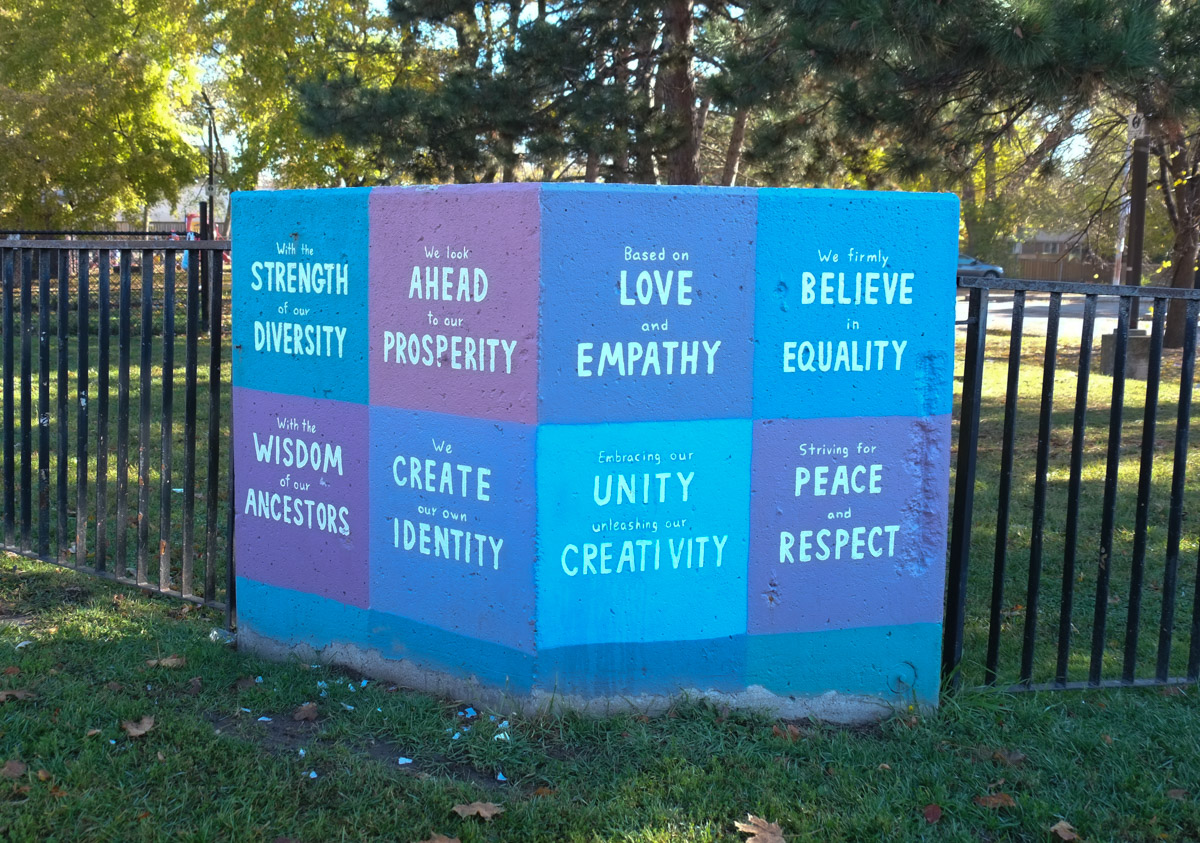
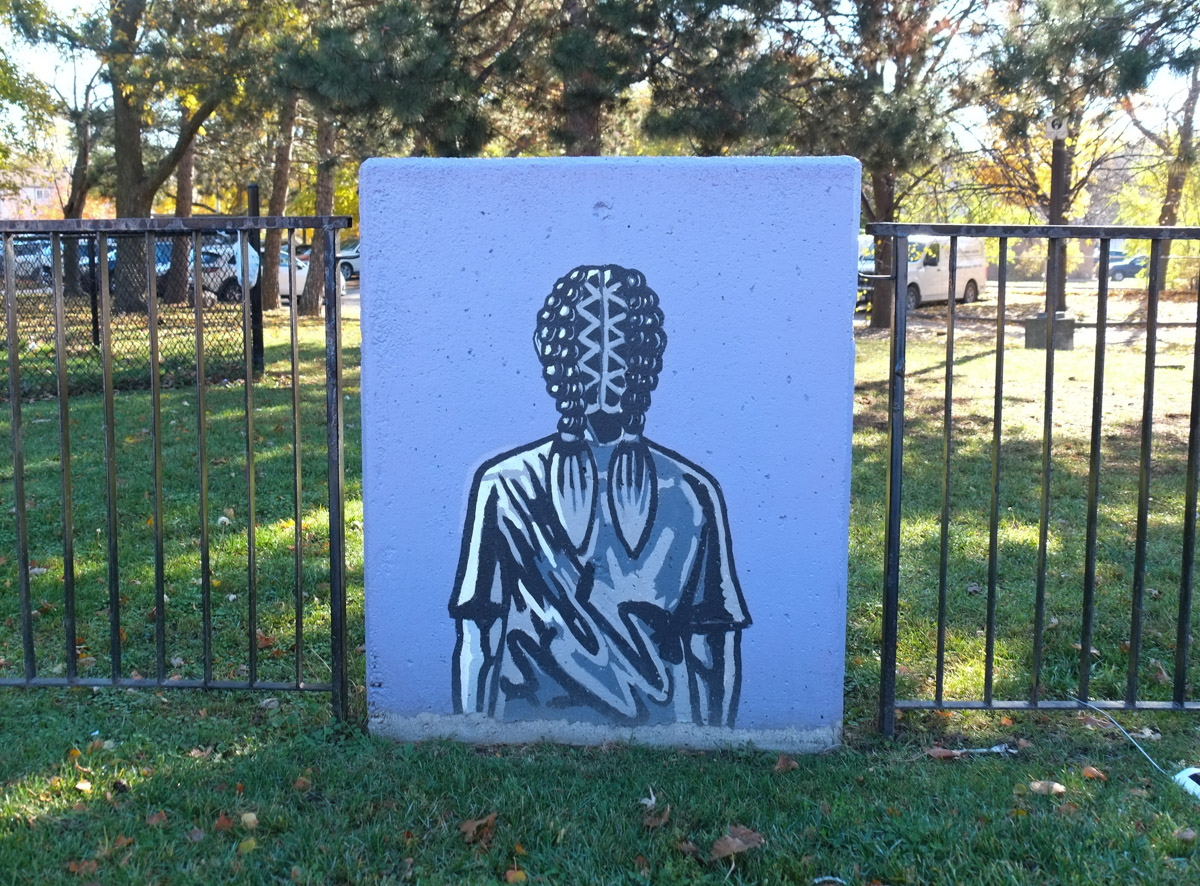
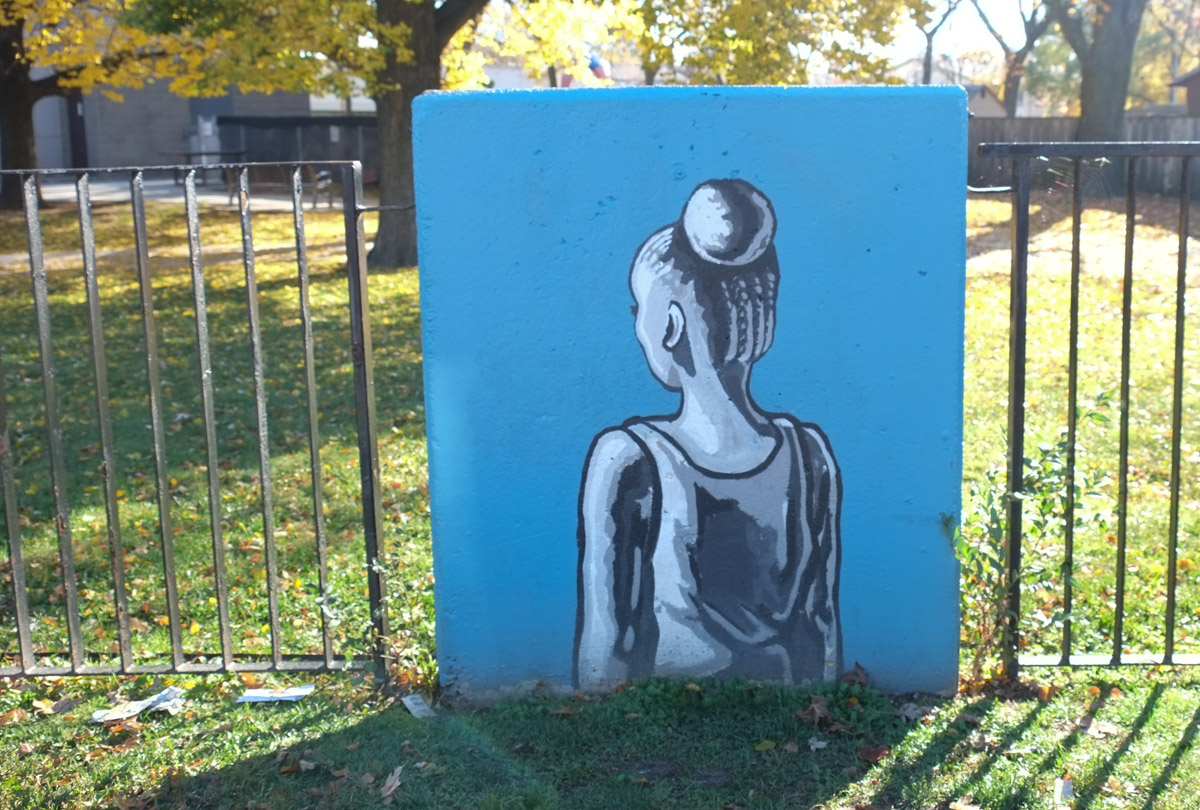
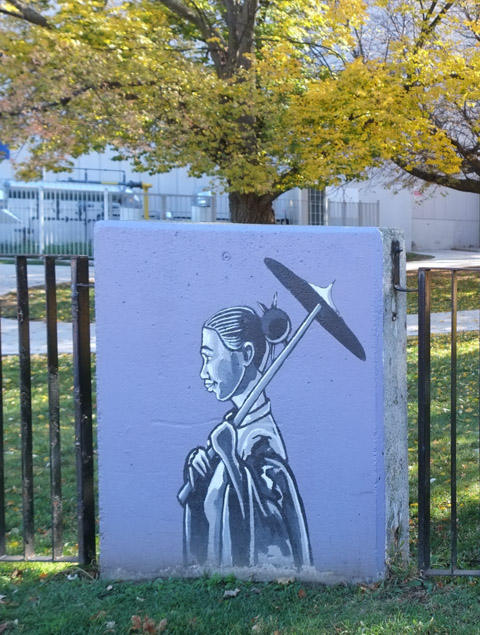
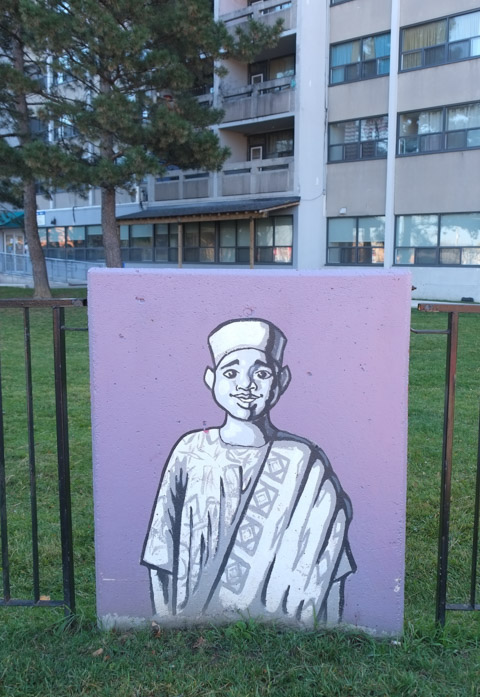
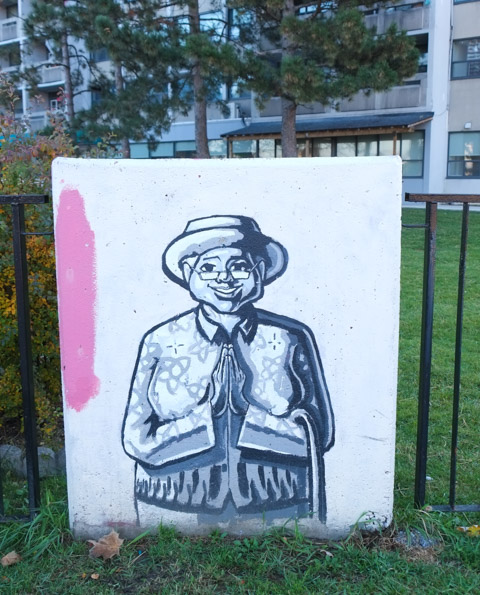
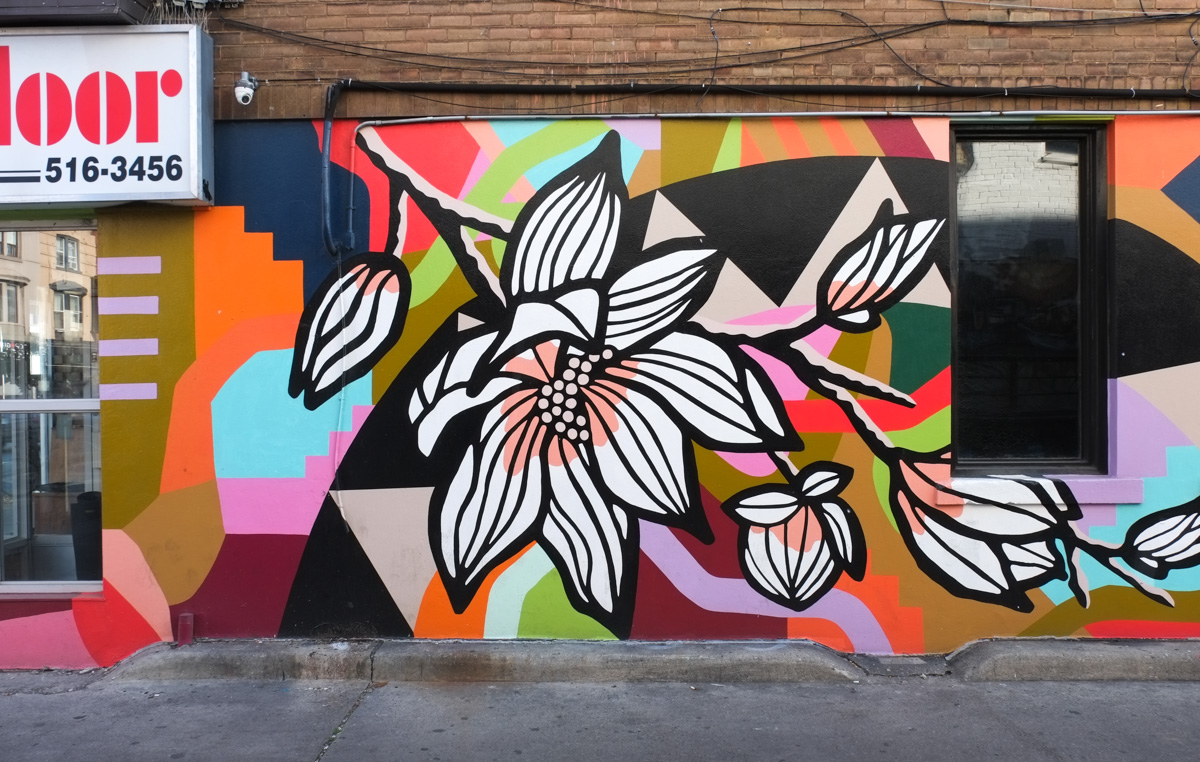
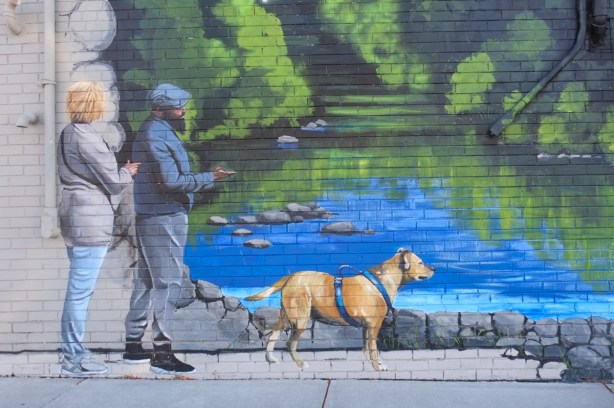
below: Another Highland Creek mural.



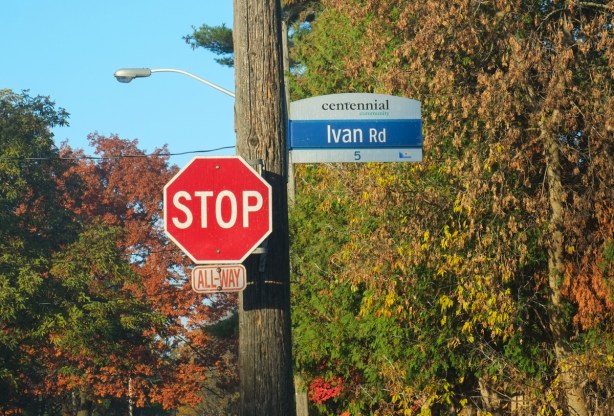
below: Centennial Community Scarborough consists of the southeast corner of Scarborough and includes both Port Union and Highland Creek Village neighbourhoods.
below: This is the intersection of Kingston Road with Military Trail and Morrish Road, looking southwest towards a wide bridge over the Highland Creek. There is an entrance to Colonel Danforth Park on the other side of Kingston Road (off the left side of the photo) but getting there is very difficult. In the background, right side of photo, are hoardings. Construction has begun on two 8 storey buildings, Highland Commons.
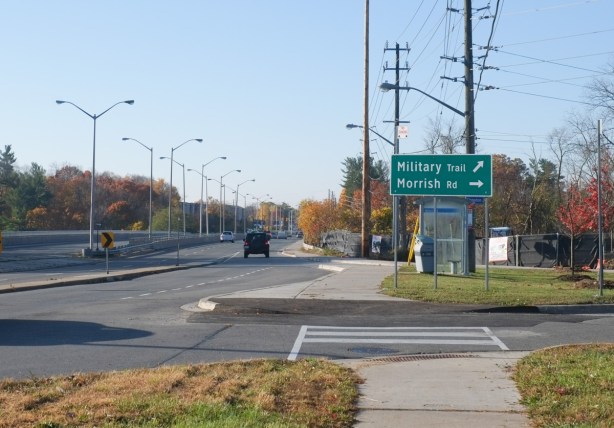
Military Trail is a remnant of Scarborough’s first “highway built in Scarborough in 1799 by American Colonel Asa Danforth Jr. It was a highway to connect the new town of York (i.e. Toronto) to Kingston. The story is that the finished road was considered substandard and Danforth didn’t get fully paid. Or maybe it was a backlash against American entrepreneurs trying to make a quick profit in Upper Canada. Whatever the truth was, Danforth returned to the USA shortly after.
Kingston Road became Hwy 2 and was the main route to Kingston until the 401 was completed in the 1960s.
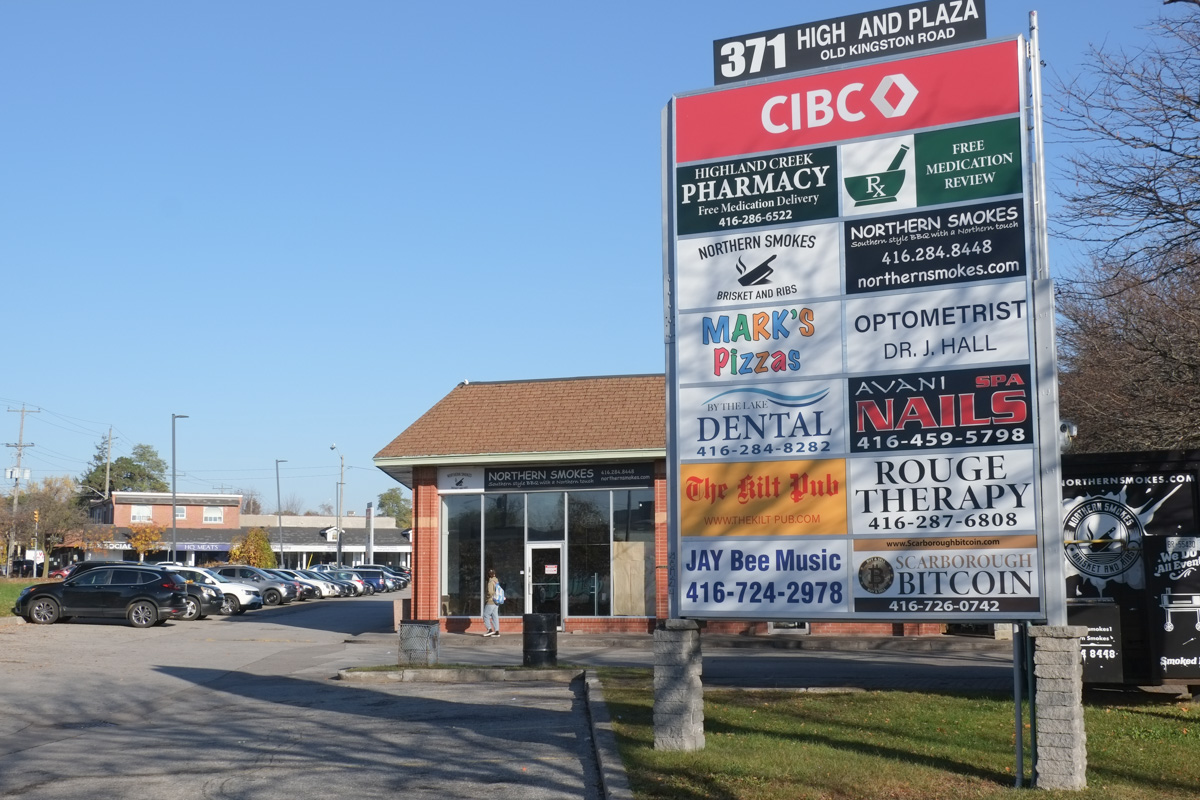
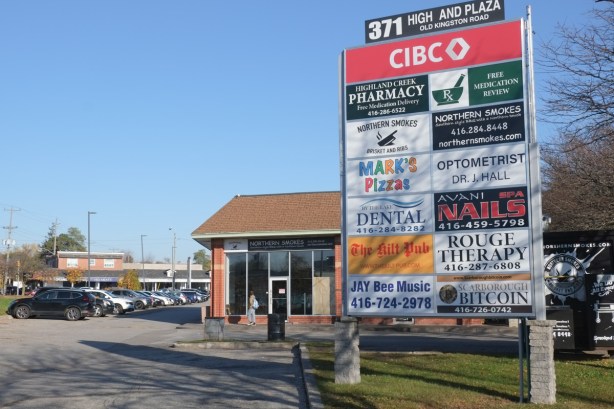
below: High And Plaza. Strip malls or strip plazas are still plentiful. There is talk of an Eglinton East LRT and many TTC express buses serve the area but cars still rule.
below: Proposal for a 9 storey building with 143 residential units plus retail at street level. City infill on major routes…. and no Greenbelt is affected.

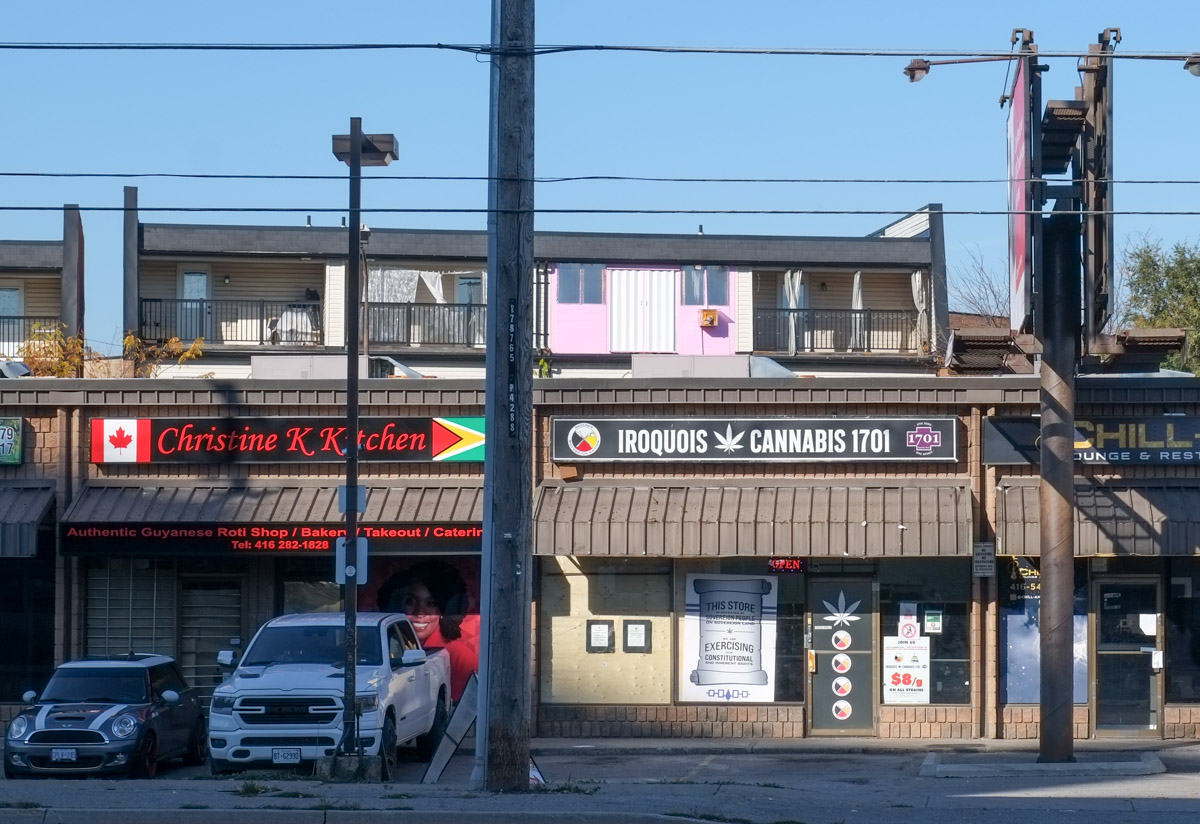
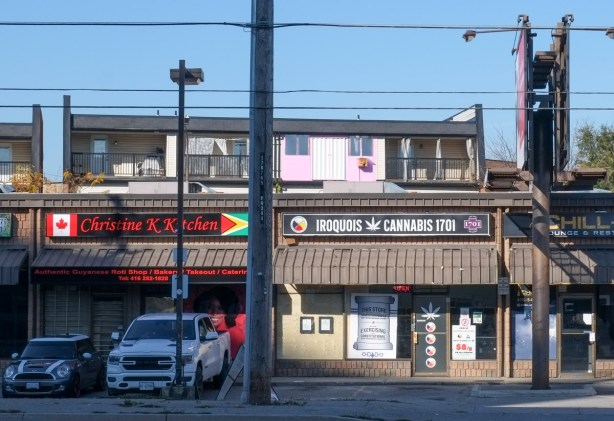
below: Sign in the window: “This store is operated by Sovereign People on Sovereign Land. We are exercising our constitutional and inherent rights.”
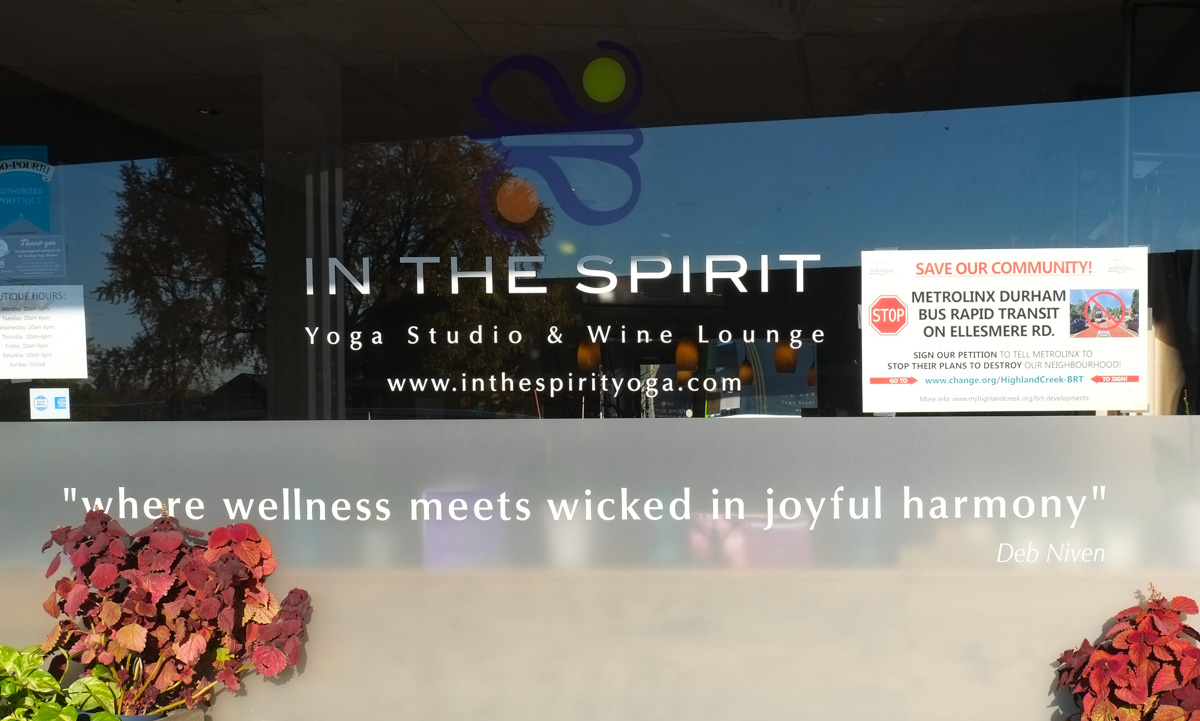
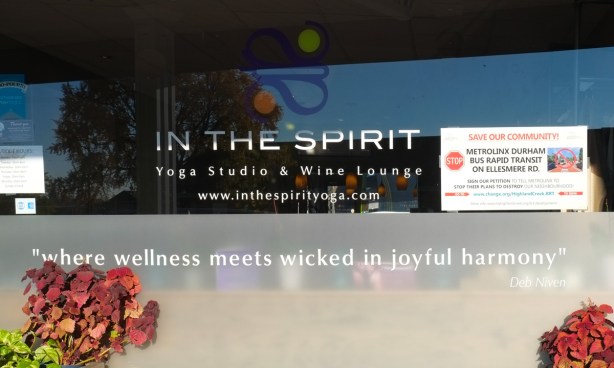
below: Wine and yoga! Note the poster in the window about Metrolinx LRT plans on Ellesmere (just to the north).
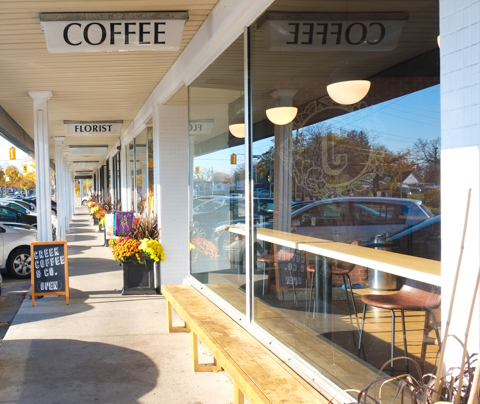
below: Morningside Ave with its red bus lanes. Looking north towards Ellesmere

below: Another stretch of Morningside, closer to Kingston Road. Certainly not designed with pedestrians in mind. It’s scene like this that give credence to Scarborough’s nickname Scarberia.

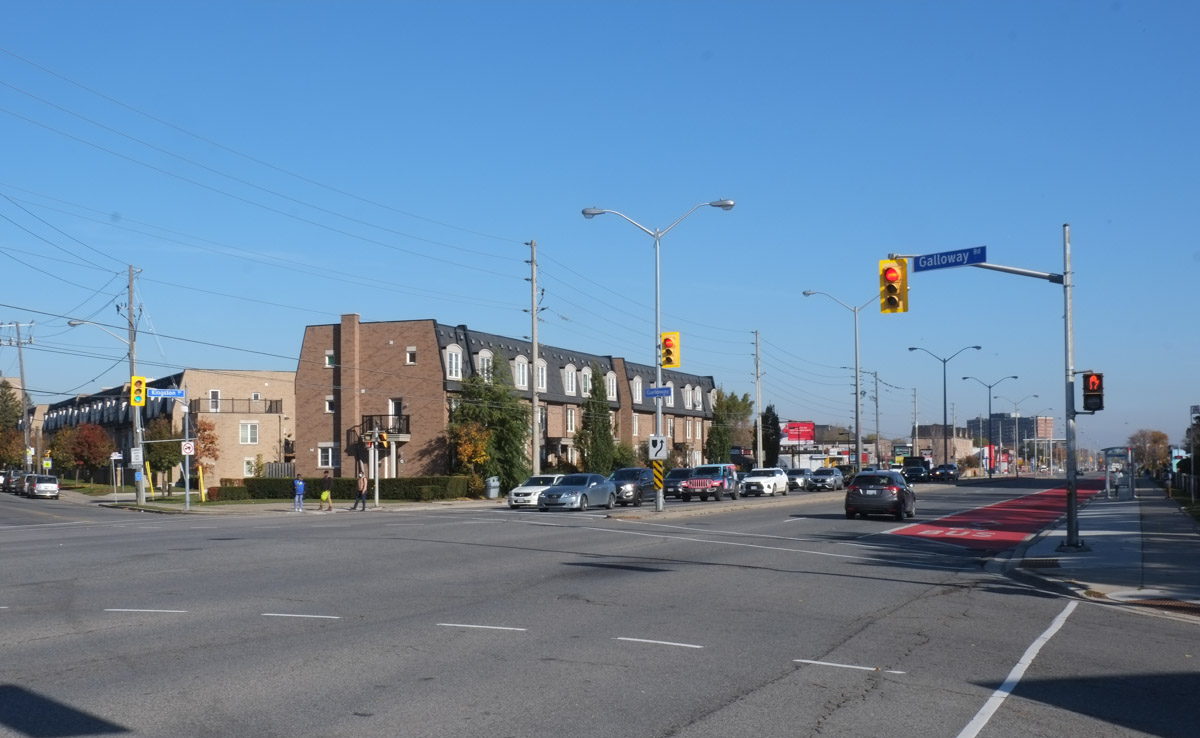
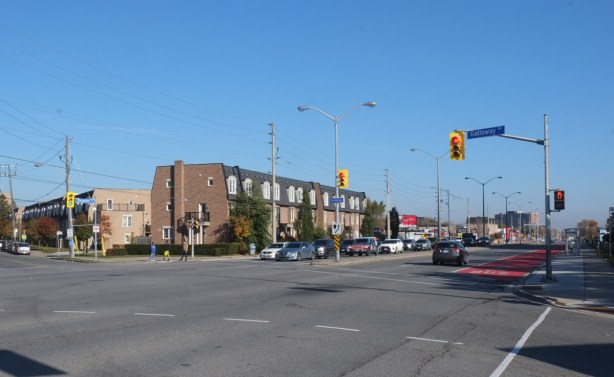
below: Looking northeast at Galloway Road and Lawrence
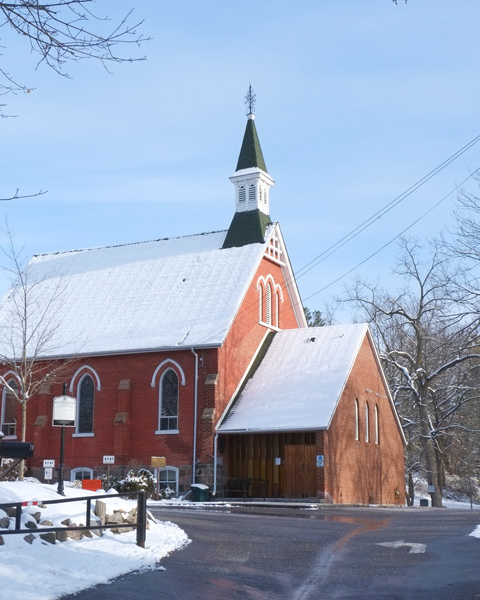
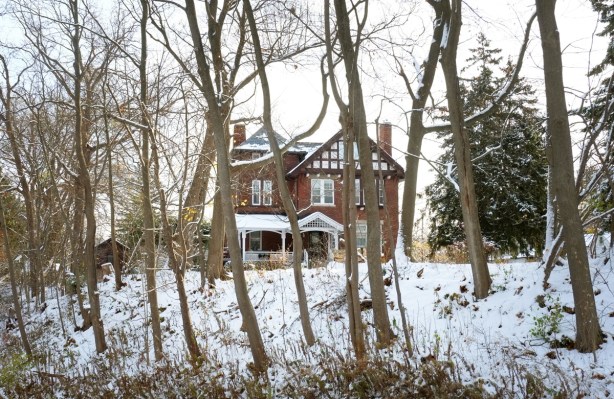
below: Melville Presbyterian Church on Old Kingston Road. It was built in 1852.

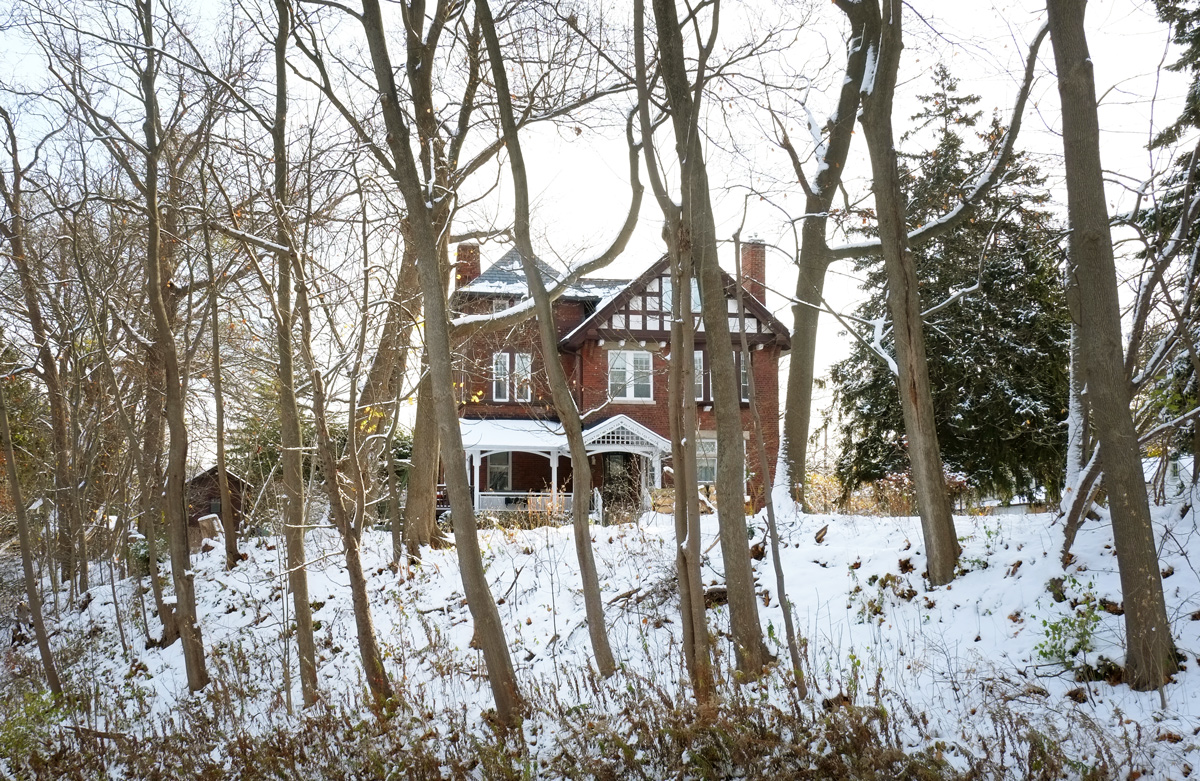
below: Very few traces of old West Hill remain. The village got its own post office in 1879 (prior to that it was part of Highland Creek).
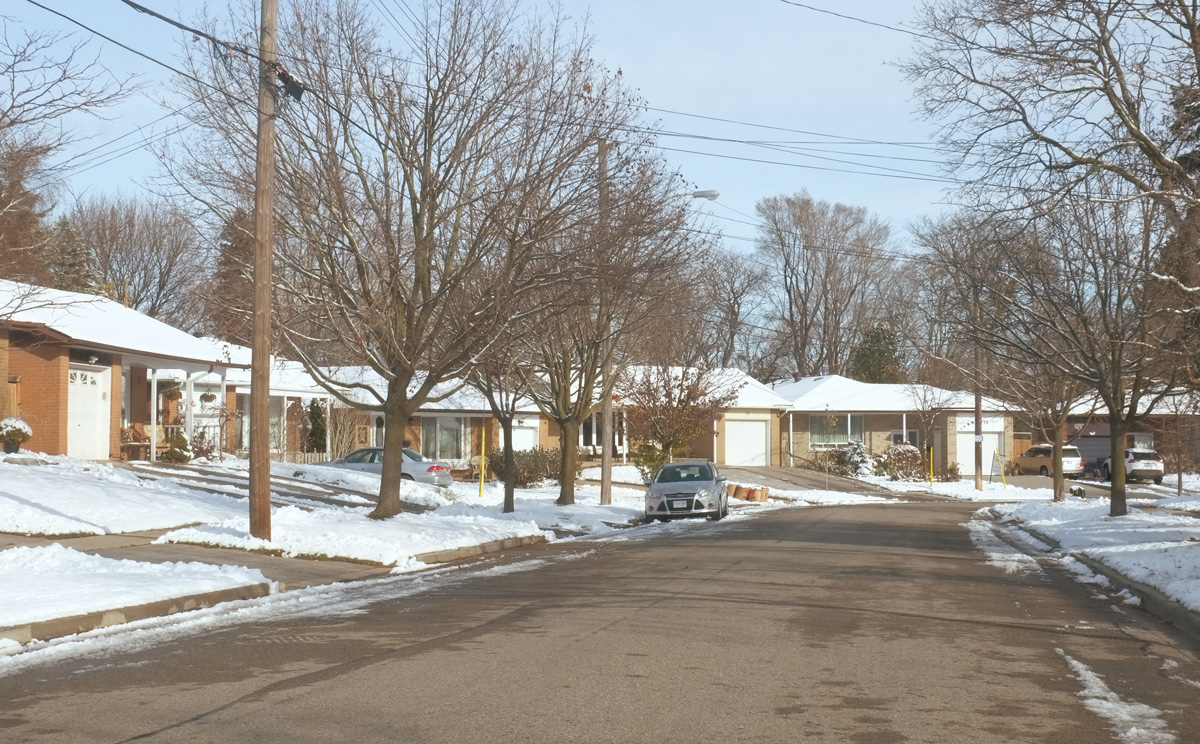
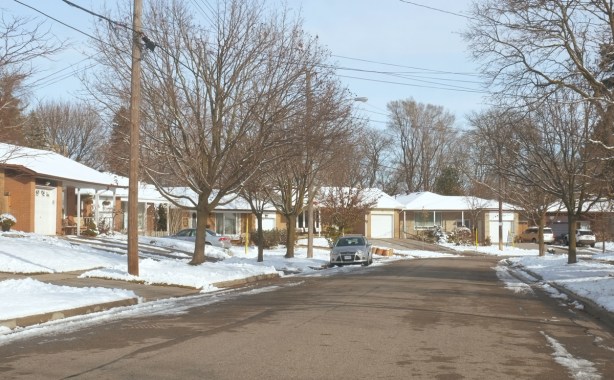
below: West Hill suburbia. There must be thousands of houses like these 1960s bungalows in Toronto and the GTA. This street could be in Richmond Hill, Willowdale, or Rexdale. West Hill must have had a major growth spurt in the 1960s and 1970s.

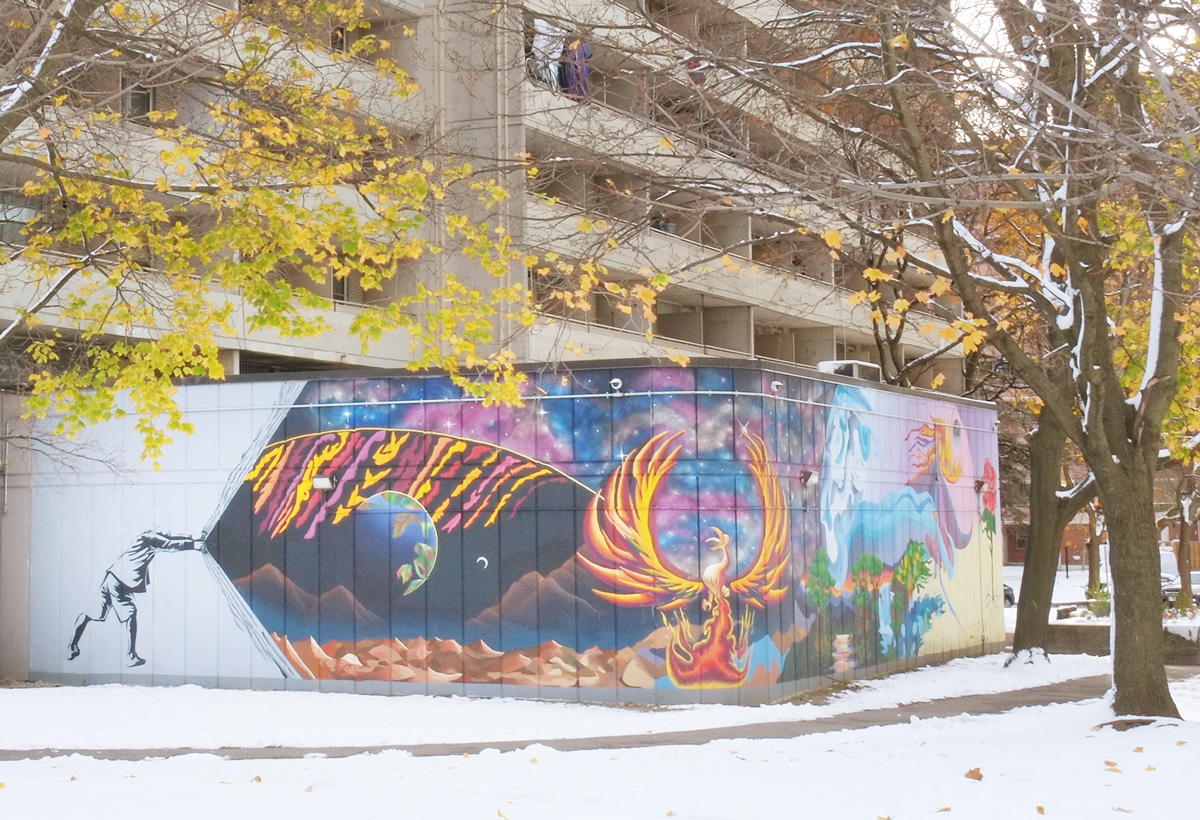
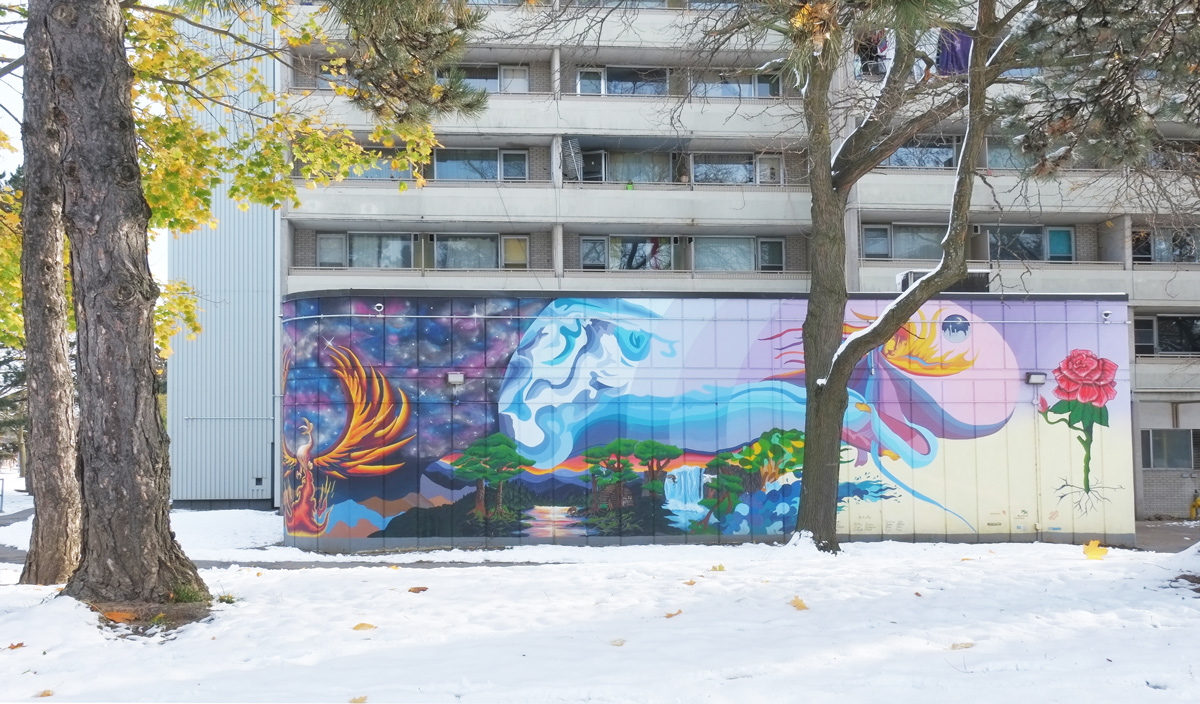
below: On the southeast corner of Morningside and Lawrence is a mural painted in 2018 by BEHIND the Lines in collaboration with the Boys and Girls Club of East Scarborough.

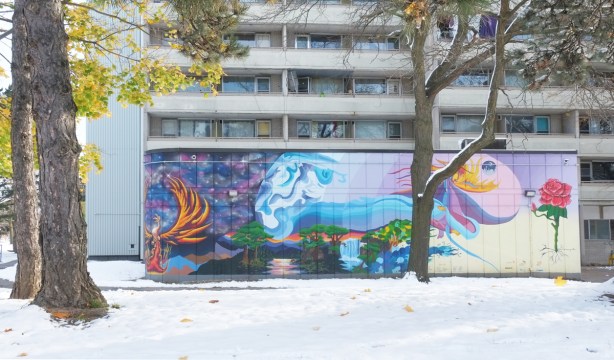
below: Northwest corner of Morningside and Lawrence
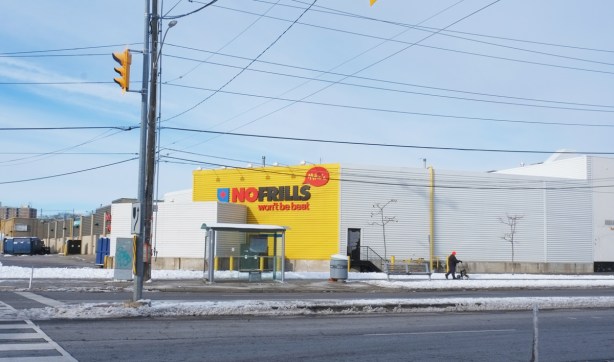
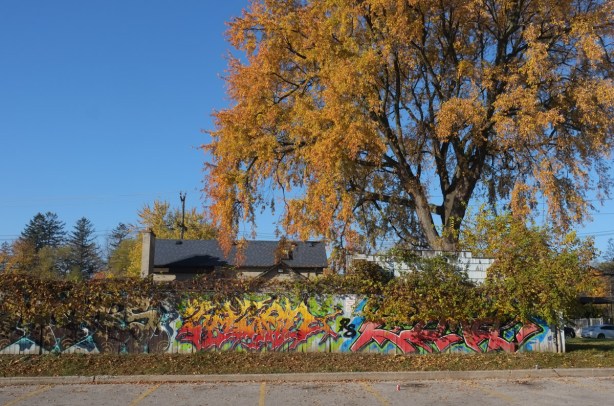
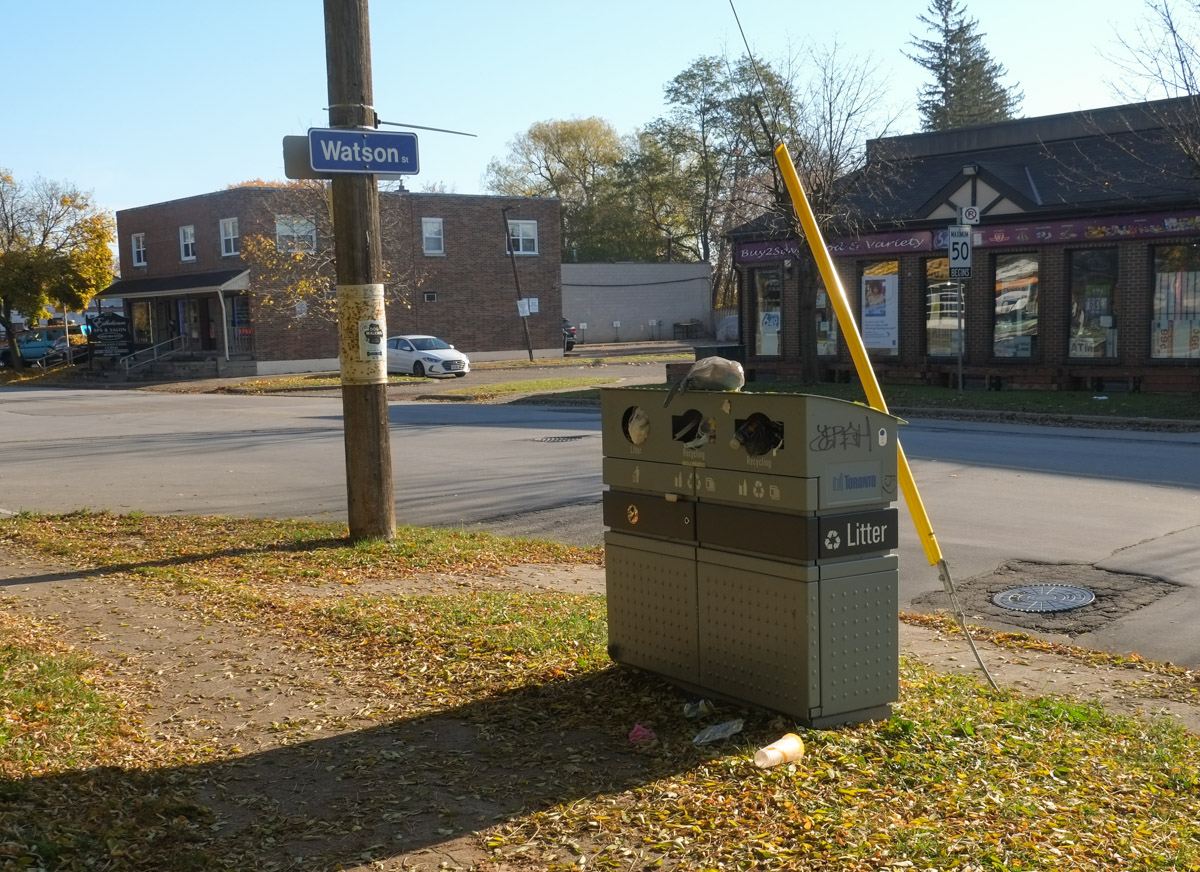
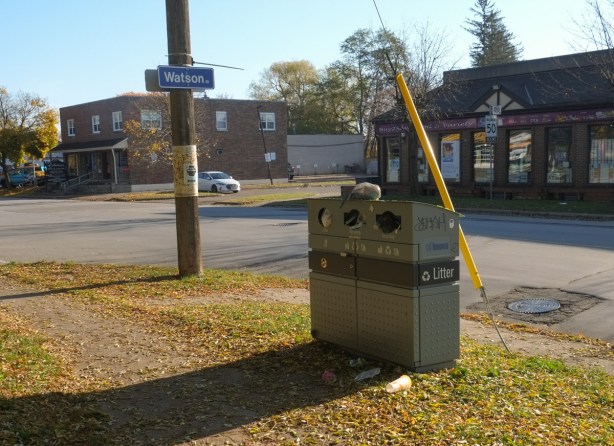
below: garbage overflowing. In the recent municipal elections there was a lot of talk about how something as simple as garbage collection was messed up in the city. Although it is outsourced, it has always been problematic. Bins get broken and never repaired. Bins get filled and never emptied. Now when I walk around I see how much of an issue this is.
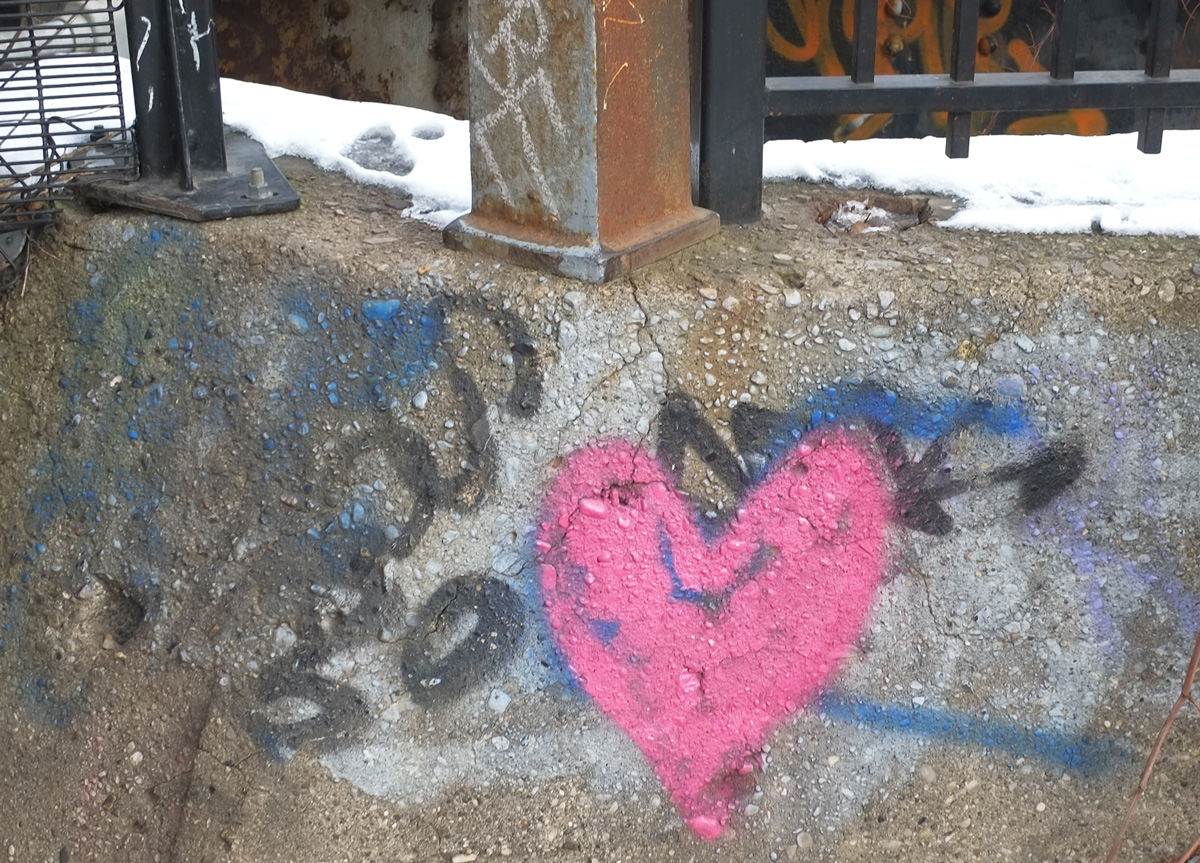
below: Mayday SOS alert for a love emergency. Whoever scrawled this message probably had a more personal reason but I will use this image as my little prayer to the city. Do better. We can be more. The potential is there if we are willing to reach for it.




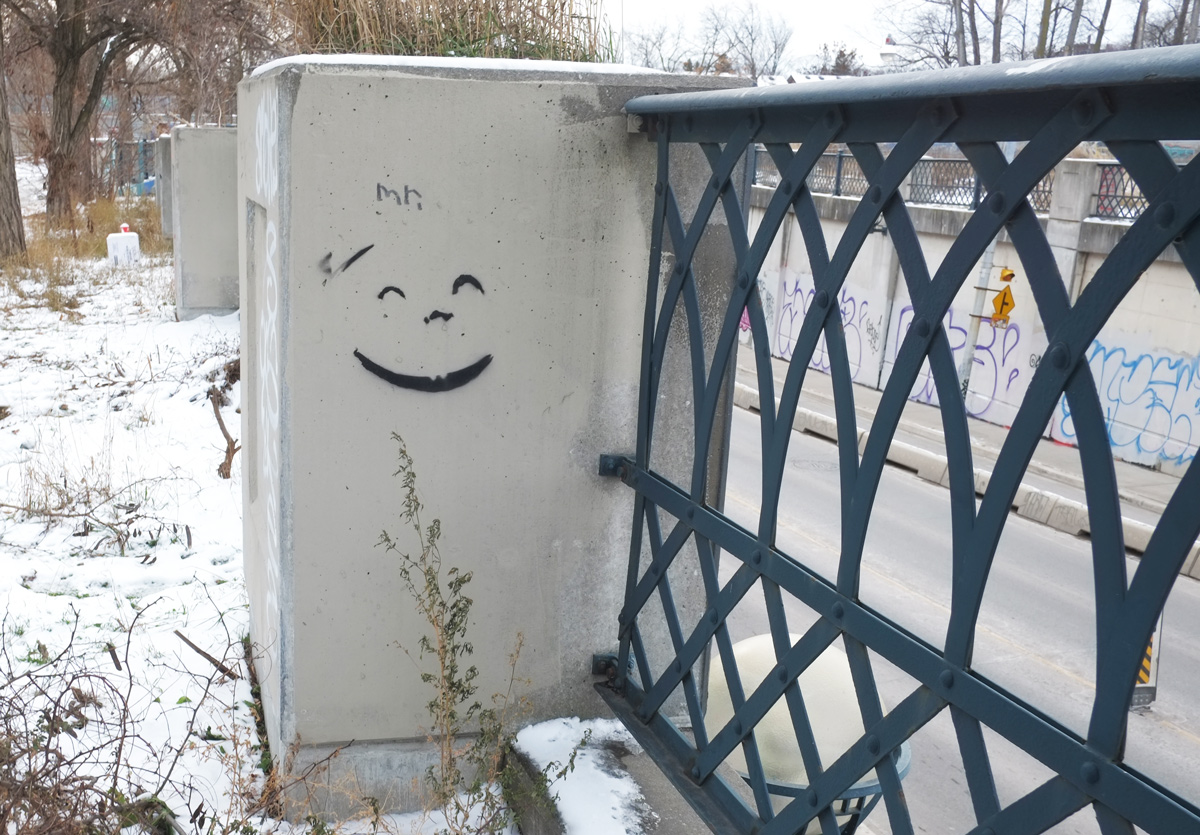
 Pink hearts to put a smile on your face.