Irene Ave. is a short street that runs behind the north side of Bloor Street West between Carling and Shaw streets, just east of Ossington Avenue.  Irene Avenue Parkette takes up most of the south side of Irene Avenue.  There is an alley that runs between the park and the back of the stores on Bloor West.

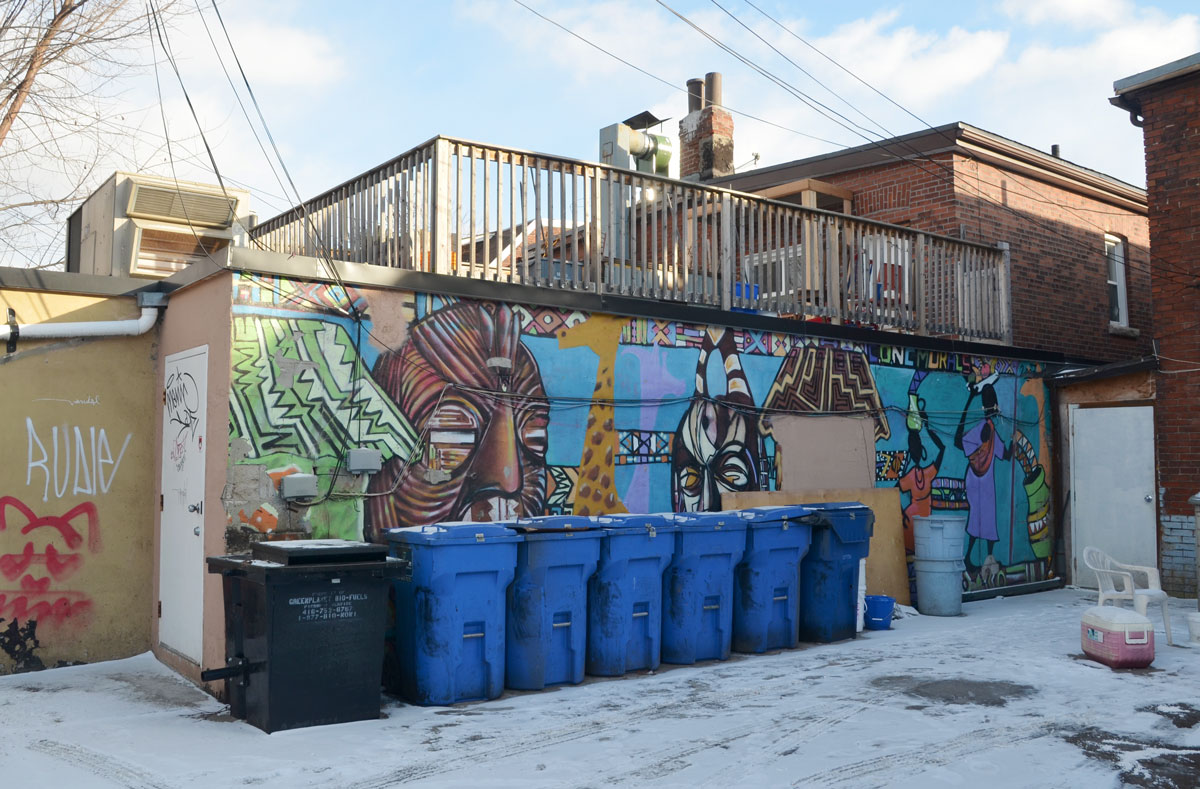
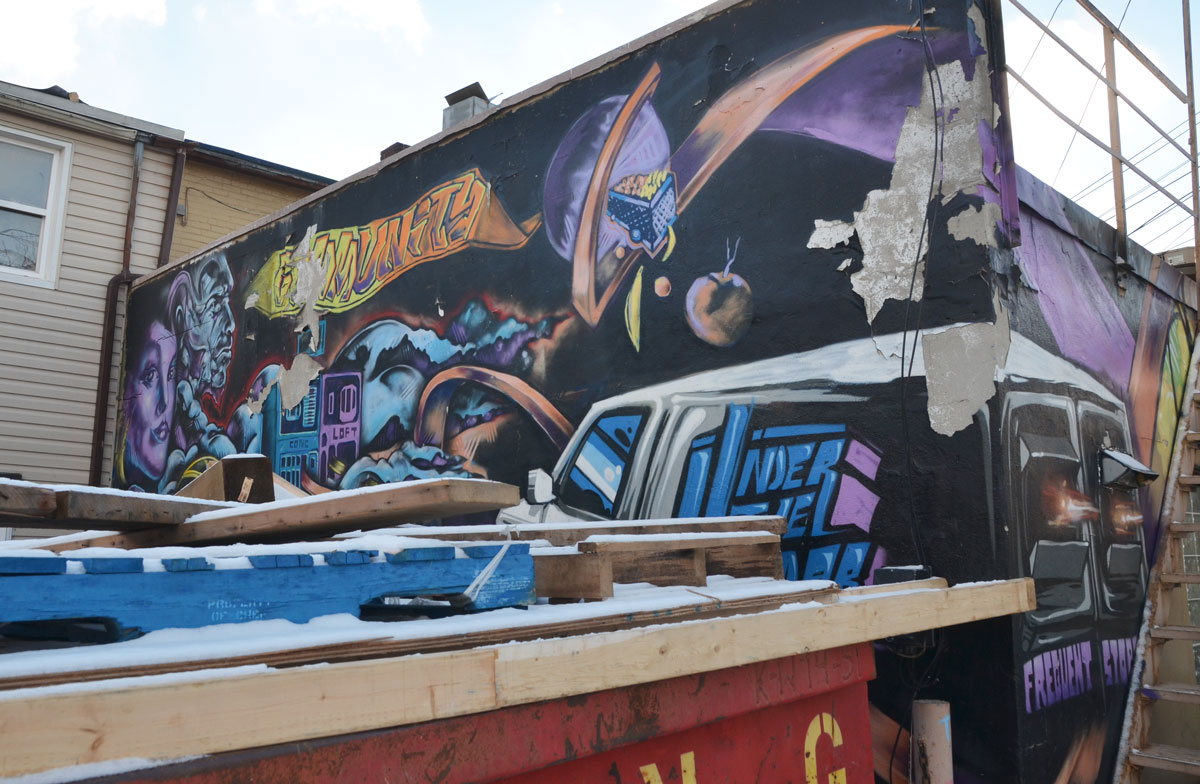
The Christie Ossington Neighbourhood Centre, through the Graffiti Arts portion of their LOFT program, has sponsored a number of murals in this alley.

This is what it looked like on a cold afternoon last week.

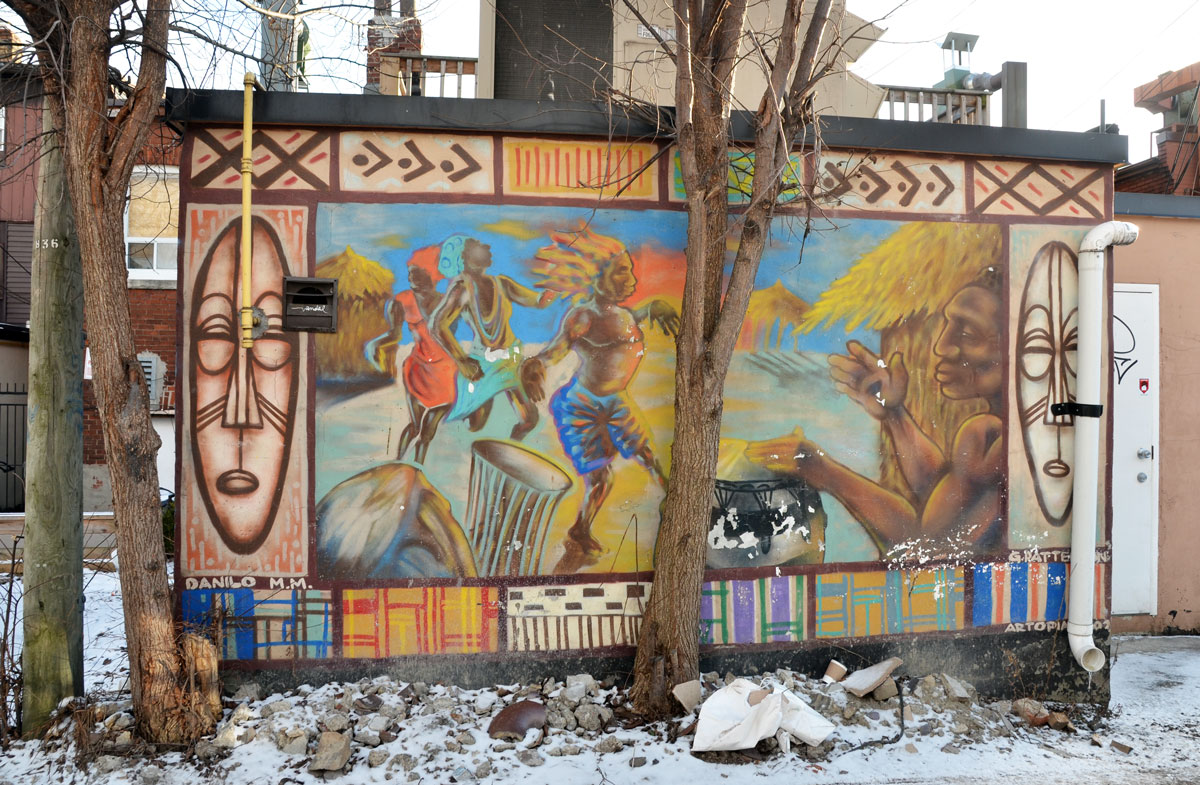
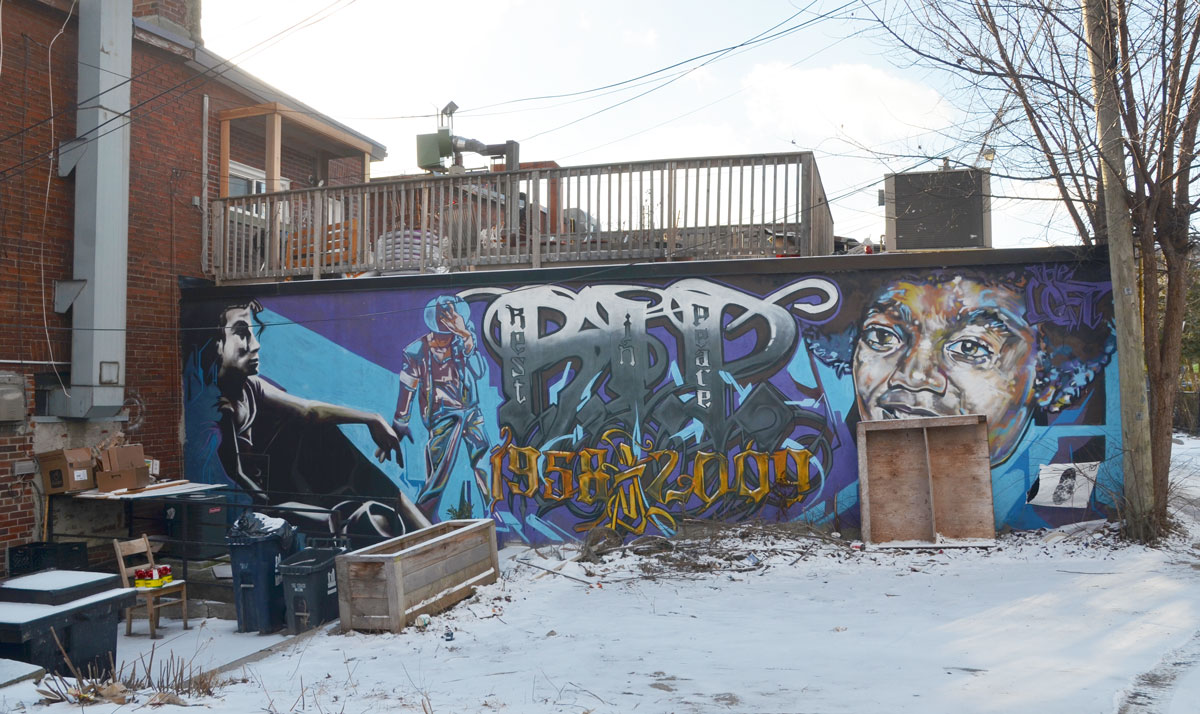
laneway in winter, some snow and ice on the ground.  Three cars parked.  A mural on the side of a two storey building.  Reddish rust coloured background with two faces, one woman and one man.

blog_irene_africa

blog_irene_lion

blog_irene_mj

blog_irene_mos

blog_irene_trash

blog_irene_frequent

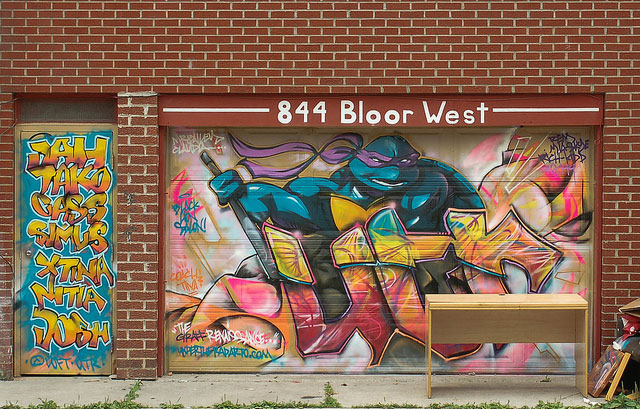
The next picture was taken in June of 2012.
The mural is still there but I couldn’t take a proper photo of it last week as there was a car parked too close.

A mural of Teetnage mutant ninja turtles painted on a garage door.

When I walked around the block to check out the fronts of these buildings, this is what I found

Street art mural by elicser of three men on a bench.  One is smoking a cigarette, one is reading and one is holding a lunch box in his hands.

A mural by Elicser and to the right the LOFT Youth Centre for Social Enterprise and Innovation.

#jesuisCharlie Toronto version.
Rally & march, Sunday 11 January.
Nathan Phillips Square

Close up photo of two small flags, one Canadian and the other French, on the end of a guitar.

flags, music and people

Close up of a sign that says 'Je suis Charlie Toujours en vie!  I am Charlie' in black letters on white paper.  The sign is being held by someone who is wearing red mitts with big CAN on them in white.

One of the many Je Suis Charlie signs.

Overview of Nathan Philllips Square in front of Toronto City Hall showing a large number of people gathered on a winter day in January to rally in support of Je Suis Charlie.

The crowd part way through the rally.

Part of a crowd of people at the Je Suis Charlie rally.  Many are holding signs that say Je Sui Charlie.  Most are dresssed for winter weather.

Crowd scene, listening to speeches.

A man is wearing yellow clogs and holding a sign that says Je Suis CHarlie. Ik ben Theo Van Gogh

Theo Van Gogh was a Dutch film producer, writer and actor.   He helped create a short film depicting the mistreatment of  Islamic women after which he received death threats.  In November of 2004 he was murdered in Amsterdam.

A large TV camera is filming a reporter from CP24.  People behind the reporter are holding Je Suis Charlie signs.

Many TV reporters were on the scene, including CP24

crowd

Je Suis Charlie signs and a few flags

A crowd in front of the stage at Nathan Phillips square on a January day when the Christmas tree in front of City Hall is still there.

The view from behind the stage.

A man is holding a sign that says Ich Bin Charlie

German participants too

Crowd at a rally in the winter

more crowd scene

A man is holding three signs.  One says 'Je Suis Charlie' and two are in arabic.  He standing behind a large white sign withblack letters.  The words can't be read in this photo.  An Iranian flag is being held by someone standing behind him.

There was also a group there with a large sign that said ‘Free all Political Prisoners in Iran’.  A number of Iranian flags were being carried, but they were the flag with the lion in the center.

People are walking through the intersection of Queen and Yonge streets as they march in the Je Suis Charlie rally.  A policeman in a yellow jacket is standing in the intersection to help prevent the cars from interfering.

The crowd walked from Nathan Phillips Square to Dundas Square.

Two women.  One is holding a Je Suis Charlie sign in one hand and a Starbucks cup in the other.  THe other woman has a large pencil shaped sign.

at Dundas Square

.

St. Clair Ave East passes over a ravine just east of Yonge St. 

a view of the bridge from a path in the ravine from a short distance away.  It is winter so there is some snow and ice on the path and the trees have no leaves.

Looking south towards St. Clair

The Yellow Creek flows through this ravine.
To the north, the creek is underground until the south side of Mount Pleasant cemetery. 

A view under the bridge, looking from one side to the other across a creek.  The curved metal supports under the bridge are visible.  There is snow on the ground but the creek is not frozen.

The ground was slippery and the water in the creek was flowing quickly. 
  In other words, I didn’t cross over to the other side of the bridge.

At some point in the past year the graffiti that was under this bridge must have been “cleaned up”.  Since then, new tags have appeared.
Whether they are an improvement over what was there previously is a matter of opinion.

looking up towards the top of a bridge from a path along the ravine below.  two concrete supports are visible as well as part of the road way across the top of the bridge.  There is a graffiti tag on one of the supports.

southwest corner of the bridge

Two colourful tags on a concrete bridge support, each one is on a different side of the support

SORT and BEGIN

Graffiti tags under a bridge

Graffiti tags under a bridge

Honest Eds, a Toronto icon, at the corner of Bathurst and Bloor since 1948

Standing on Bloor street looking south through the alley beside Honest Eds store.  There is a glass covered walkway between the buildings on either side of the alley.  On the side of the wwalkway is a sign that syas 'Honest Ed Alley'.  The alley leads to a parking lot.

Looking south from Bloor Street towards the parking lot behind Honest Eds.

There are a few murals on the buildings that back onto the parking lot.

mural on a two storey light grey brick building showing musicians.

Trumpet players on the back of the Victory Cafe at the corner of  Markham and Lennox Streets

large mural of a woman with boxing gloves on.   Beside her is a picture of a large dog's face.

Woman with boxing gloves has been on the back of Trainers Fitness for a few years.  The newer dog is painted on the back of A Leg Up Pet Services. 

The back of two buildings with a narrow passageway between the two.  Both are two storeys high.  The one on the left is painted light purple and has the words Southern Accent written in yellow letters.  The one on the right is a mural of a man paddling a canoe down a tropical river, with a monkey and a parrot also in the picture.

Purple behind Southern Accent restaurant and a mural painted by Christie Ossington Neighbourhood Centre through their LOFT program. 


Construction, it’s everywhere.
I’m not sure if it’s my imagination but 2014 seemed to be the year that the city was torn apart in the name of changes, development and/or improvements.

A white hard hat sits on the end of a large wooden spool.   Blue gas cylinders are behind it.

on break

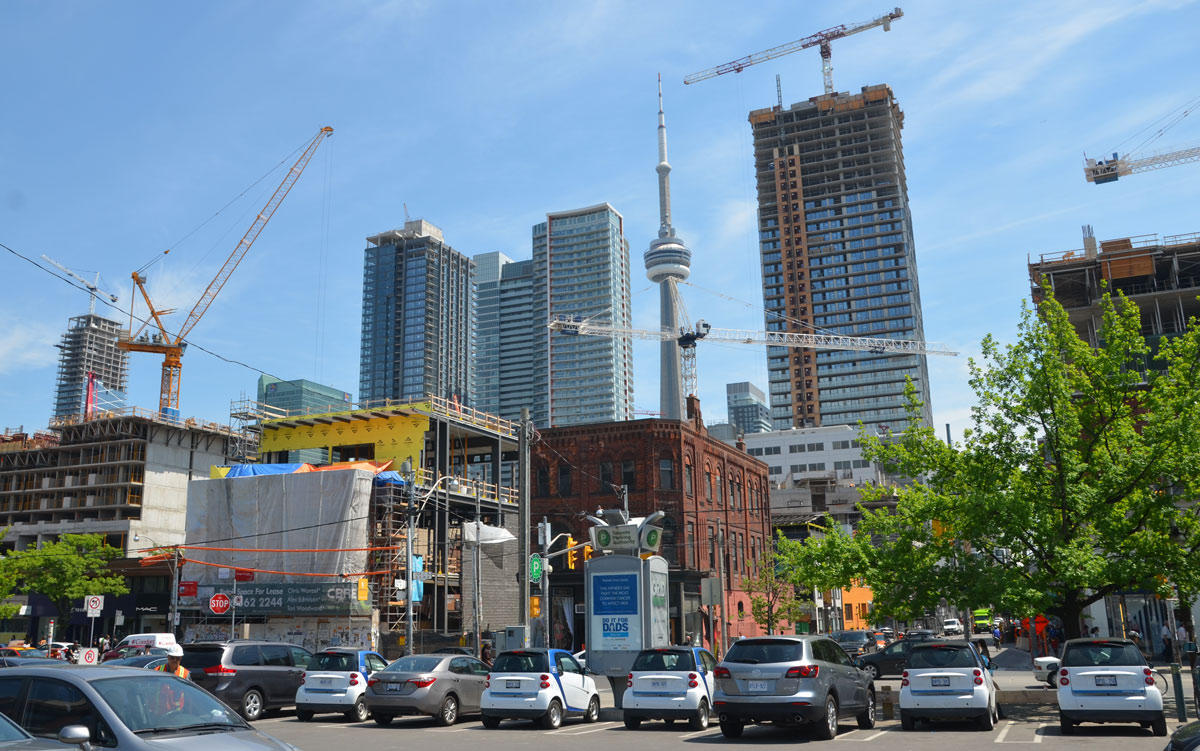
How many cranes are in the sky?

downtown cityscape with tall buildings as well as the CN Tower.  Lots of construction cranes in the picture.

looking towards the CN Tower from Soho St., just north of Queen West.

Men on a crane working above a hole in the ground where a new condo is being built.

Yet another crane at work, on Adelaide West.

How many kilometres of road have been dug up or blocked off?

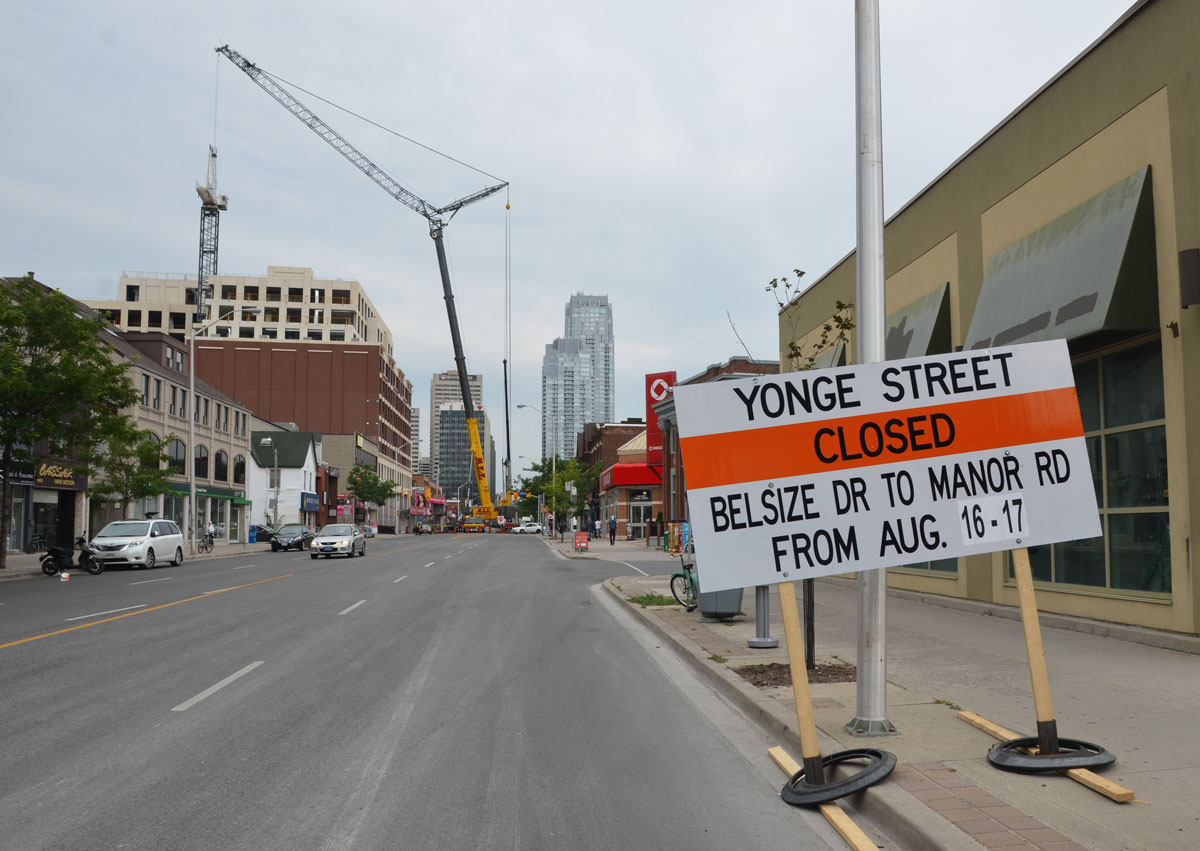
Yonge street is closed by a large crane that is parked in the middle of the street.

Yonge north of Davisville one summer day.  Removing a crane that was used in condo construction.

Near Eglinton West subway station.  Construction of the Eglinton LRT impacts traffic on Eglinton Ave.

Near Eglinton West subway station. Construction of the Eglinton LRT affects traffic on Eglinton Ave.

Cars trying to merge from three lanes to one.  Large sign with arrow pointing left.  Tall buildings on either side of the street.  Yellow leaves on the trees because it is October.

Adelaide St. West

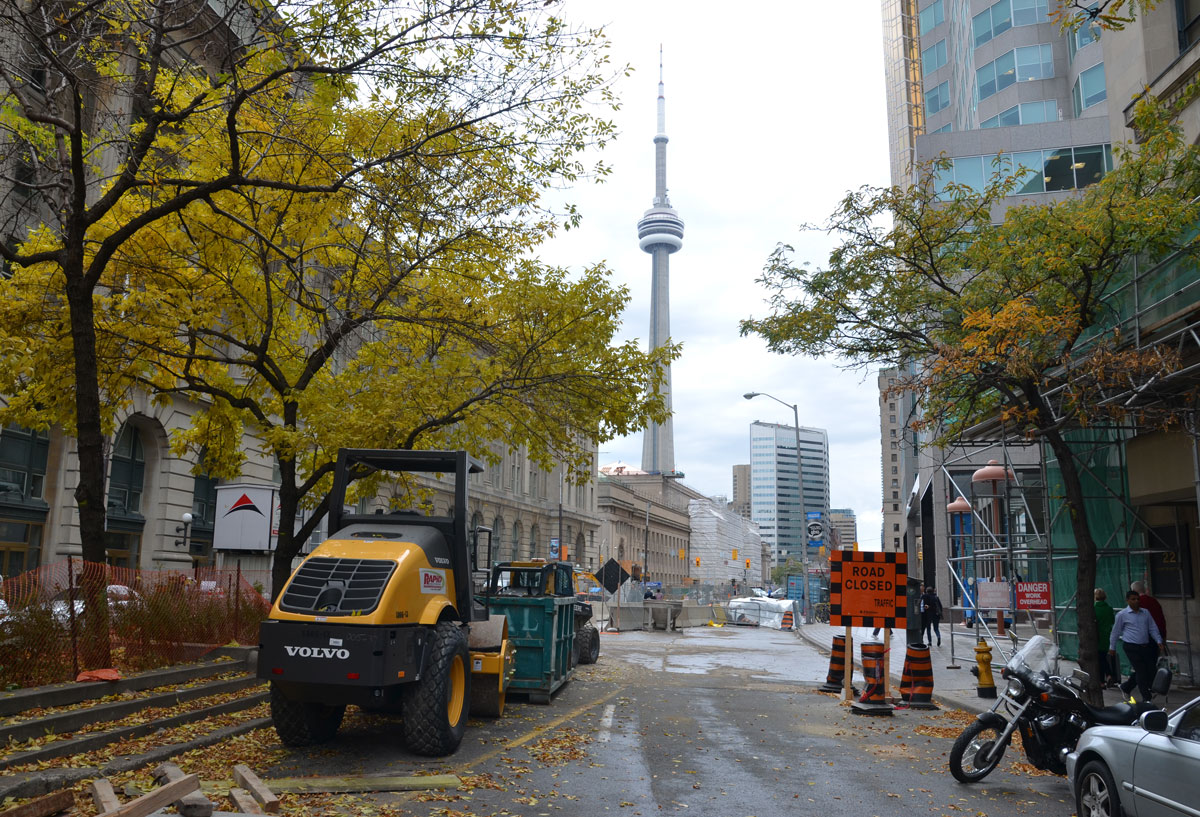
a section of city street is being renovated.  The pavement has been removed, construction equipment and vehicles are in the picture.  There is a 'road closed' sign.

Another street under repair.  York St., looking south towards Queen St. and Richmond St.

How many holes have been dug?

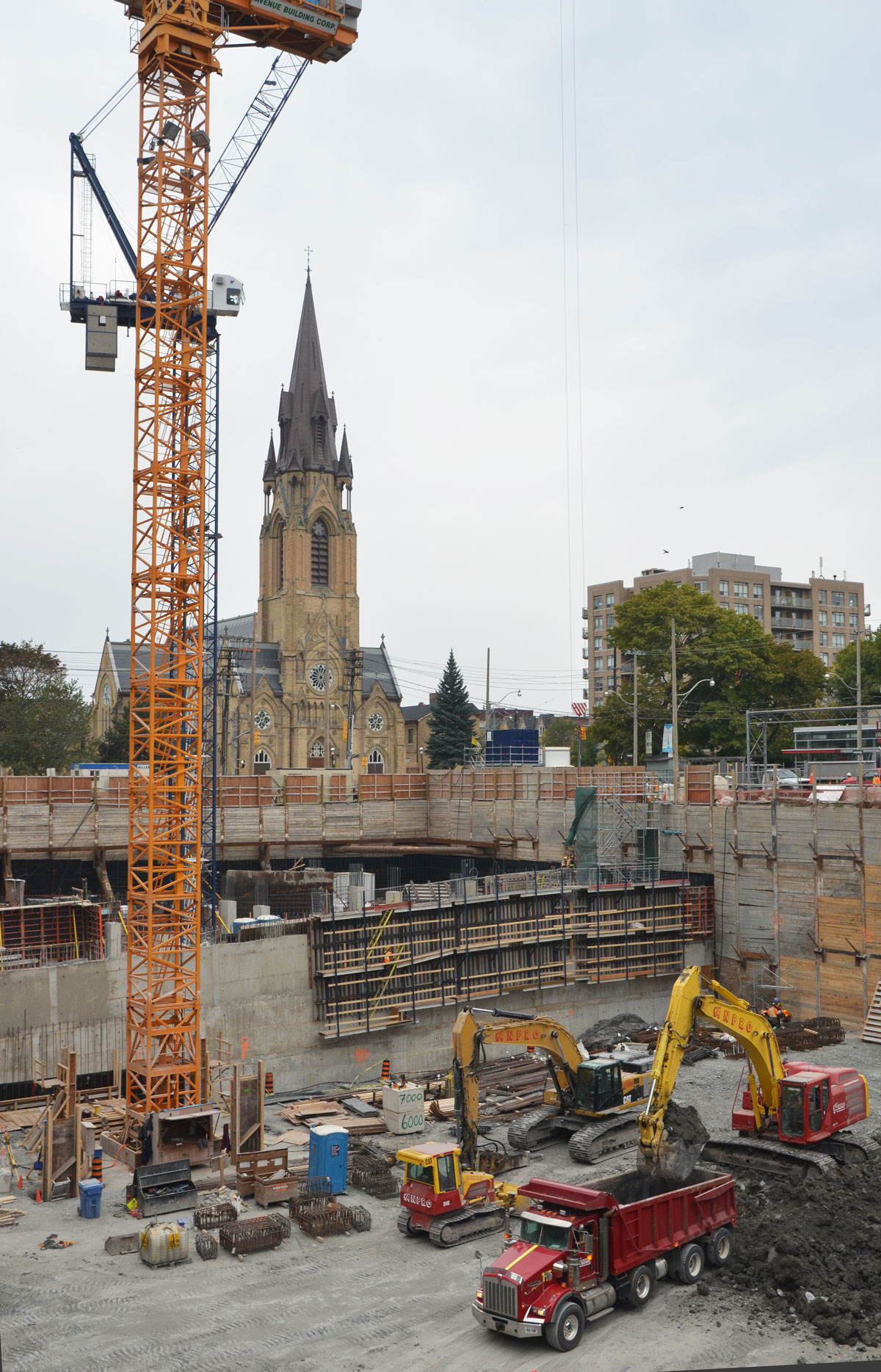
A construction site, hole in the ground, large yellow crane, red dump trunk and a large fence around the site.  A church is in the background.

Dufferin and Adelaide

How many orange and black cones adorn our streets?

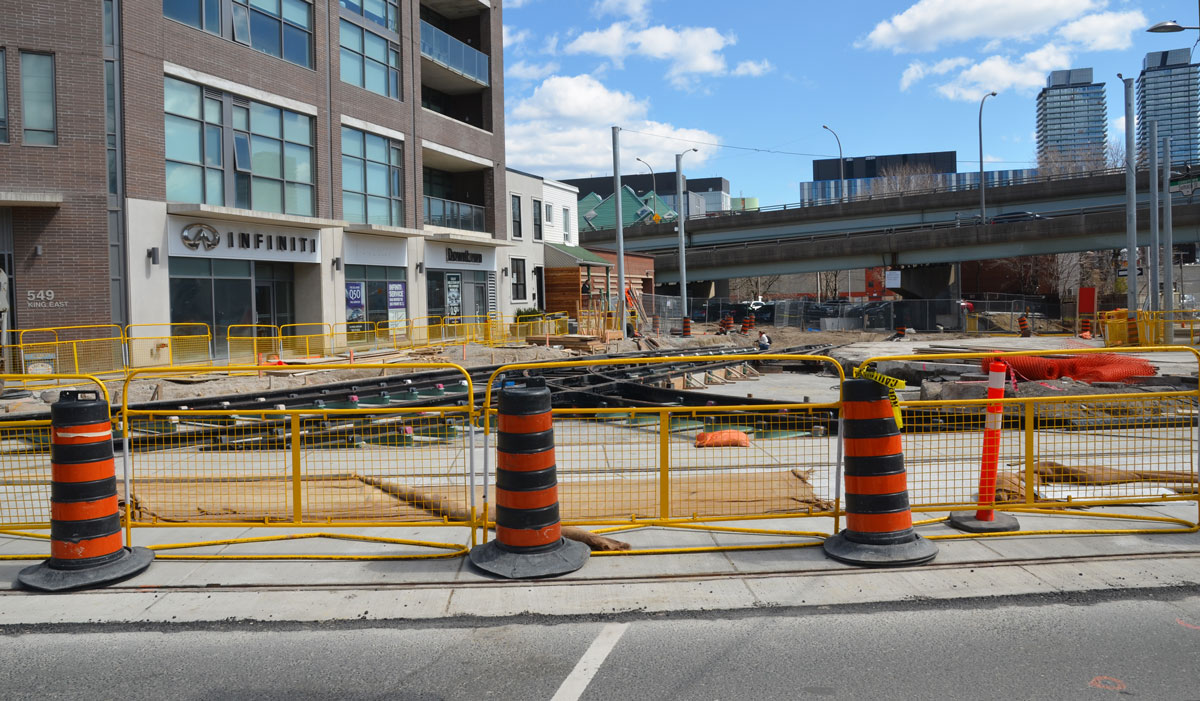
Black and orange traffic cones along with a yellow fence block traffic from entering a construction site at an intersection where new street car tracks are being laid.

New streetcar tracks at King and Sumach.

How many kilometres of fencing have been erected?

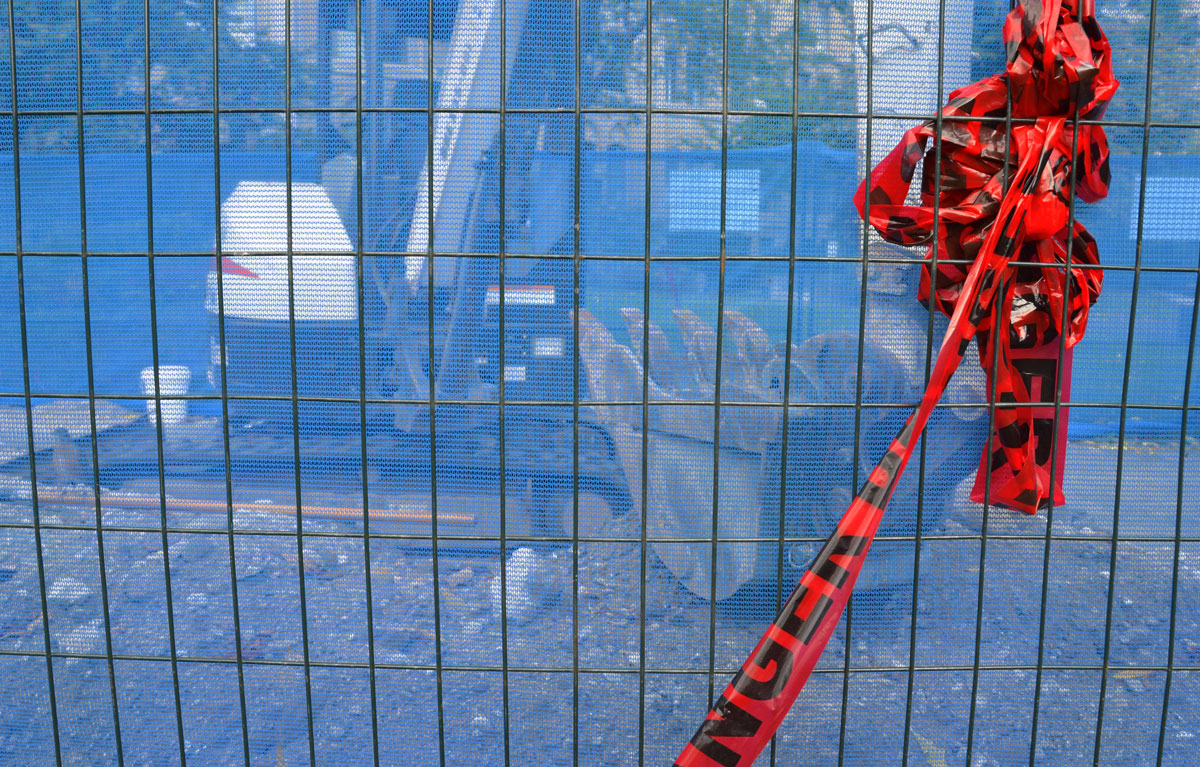
construction site surrounded by both metal fence and blue mesh fence

double fenced

How many years will it take to finish Union Station?

looking west on Front St. towards Union Station.  Construction equipment is in the foreground of the photo.  The CN tower is in the background.

Looking west on Front St.  The renovation and upgrade of Union Station and it’s impact on Front Street has been ongoing for a long time now. Maybe one day it will be finished!

What construction will 2015 bring? 

wandering away

Posted: December 17, 2014 in general Toronto
Tags: , , , ,

We’ve disappeared again, escaped.

This time we’ve gone looking for Marys in Malta……

Trace is the name of a mural on Gerrard St. East near Main Street. 
It was painted by Mat Hand in 2009.

mural of a very large grey and white face on the side of a brick building

mural of a very large grey and white face on the side of a brick building

website for more information about the artist

Along Dundas St. West between Islington and Kipling there are a series of more than twenty murals that depict scenes from the history of the area. 

In 1793, Simcoe’s Queen’s Rangers cut a route through the forest for Dundas Street.  It was meant to serve both as a military route in case of war with the U.S. and as a route to increase settlement in the area.   Settlement of what became the village of Islington began a few years later with the arrival of the Johnston family in 1808.

The first mural was a picture of the Methodist church painted on plywood.  It no longer exists.

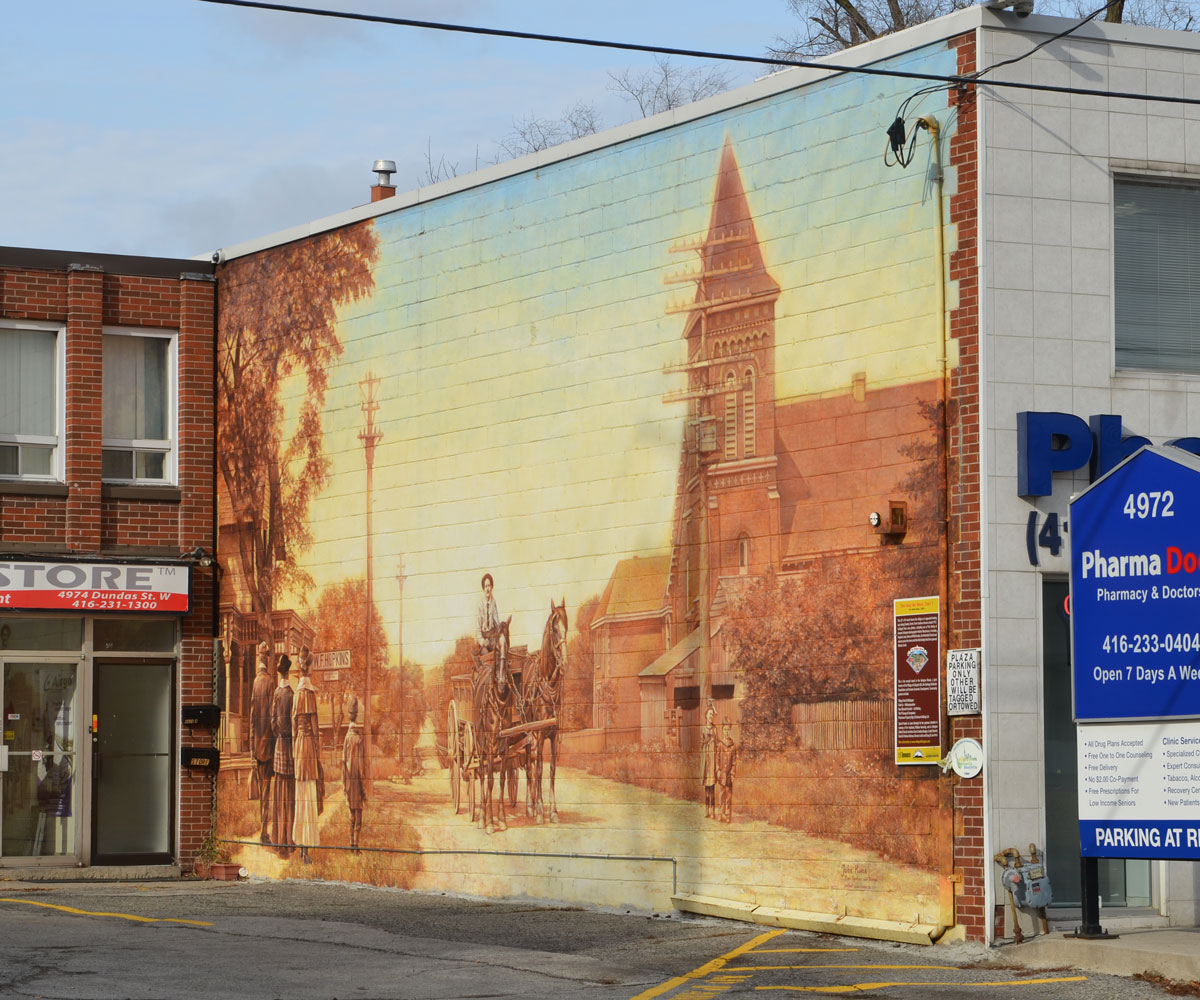
mural 2 – The Way We Were, part 1 by John Kuna, 2005.
Looking east along Dundas St. towards Cordova Ave in 1912.  It includes Hopkins store and the Methodist church.
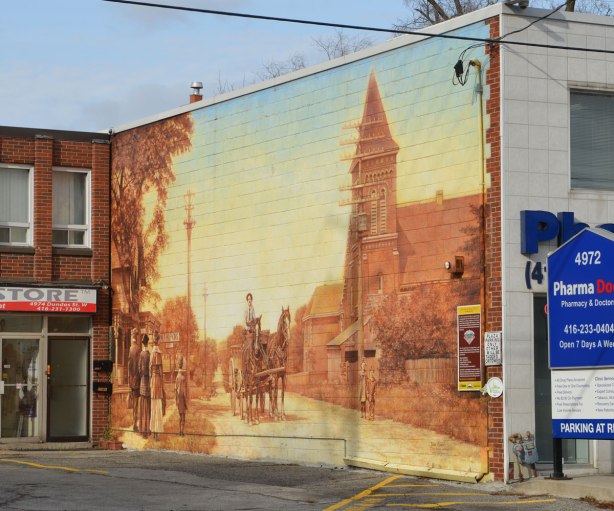
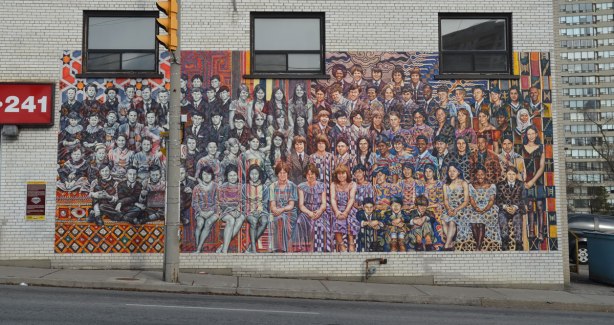
large mural on the side of a building that shows people in old fashioned clothes walking down a street.  A man in a horse drawn wagon is coming down the street.

part of a large mural on the side of a building that shows people in old fashioned clothes walking down a street.  A man in a horse drawn wagon is coming down the street.

mural 3 – They Way We Were part 2, 1912, by John Kuna, 2006.
Because of the car that was parked next to it, I don’t have a good photo of the whole mural.
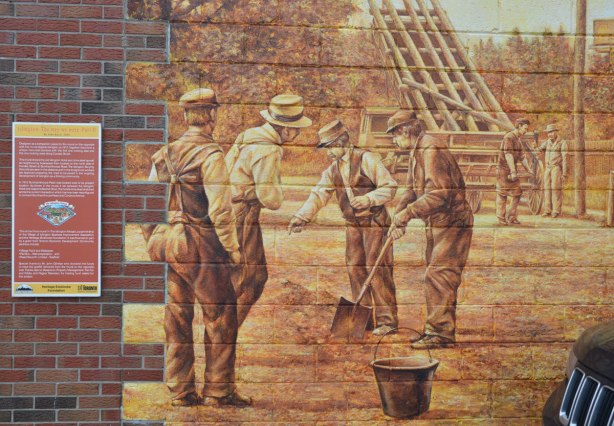
a mural showing a group of men in clothing from the 1930s shoveling in the dirt.

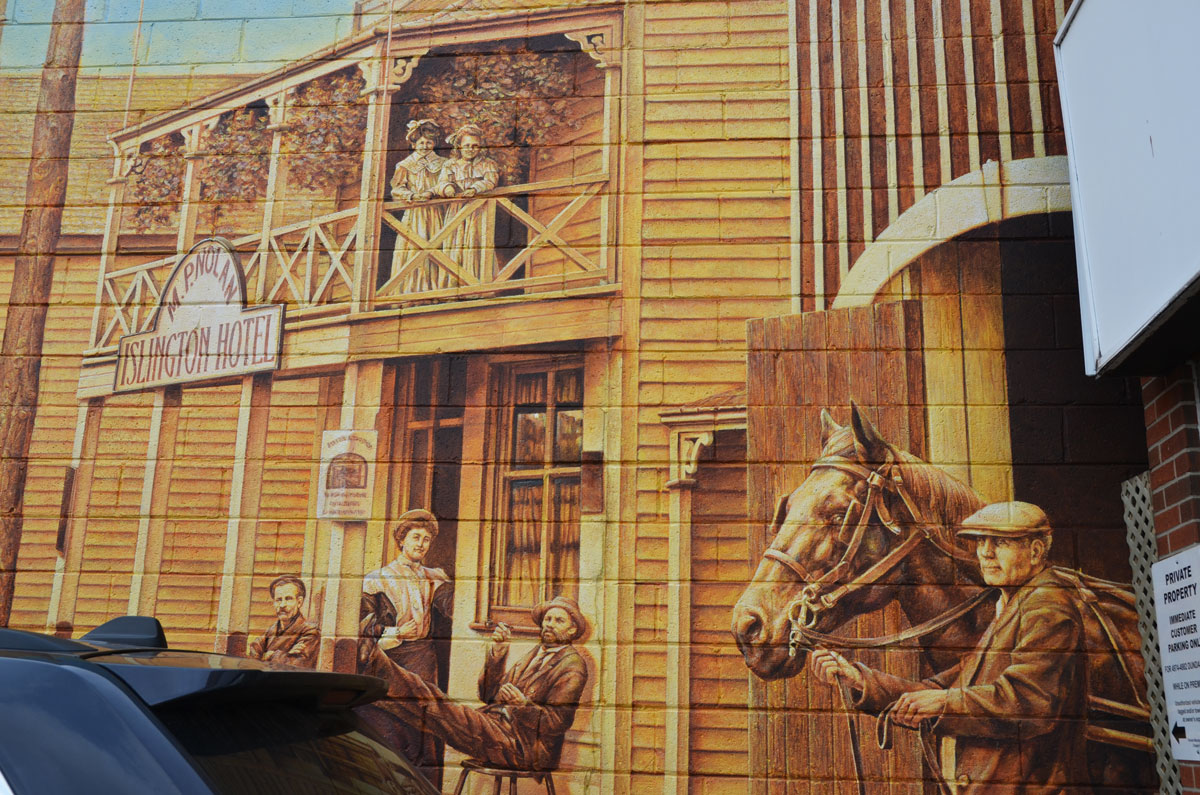
part of a mural, a man leading a horse out of the stables, the Islington Hotel behind.  Two ladies are standing on the balcony of the second floor of the hotel.  A man is reclining on a chair on the front porch of the hotel.

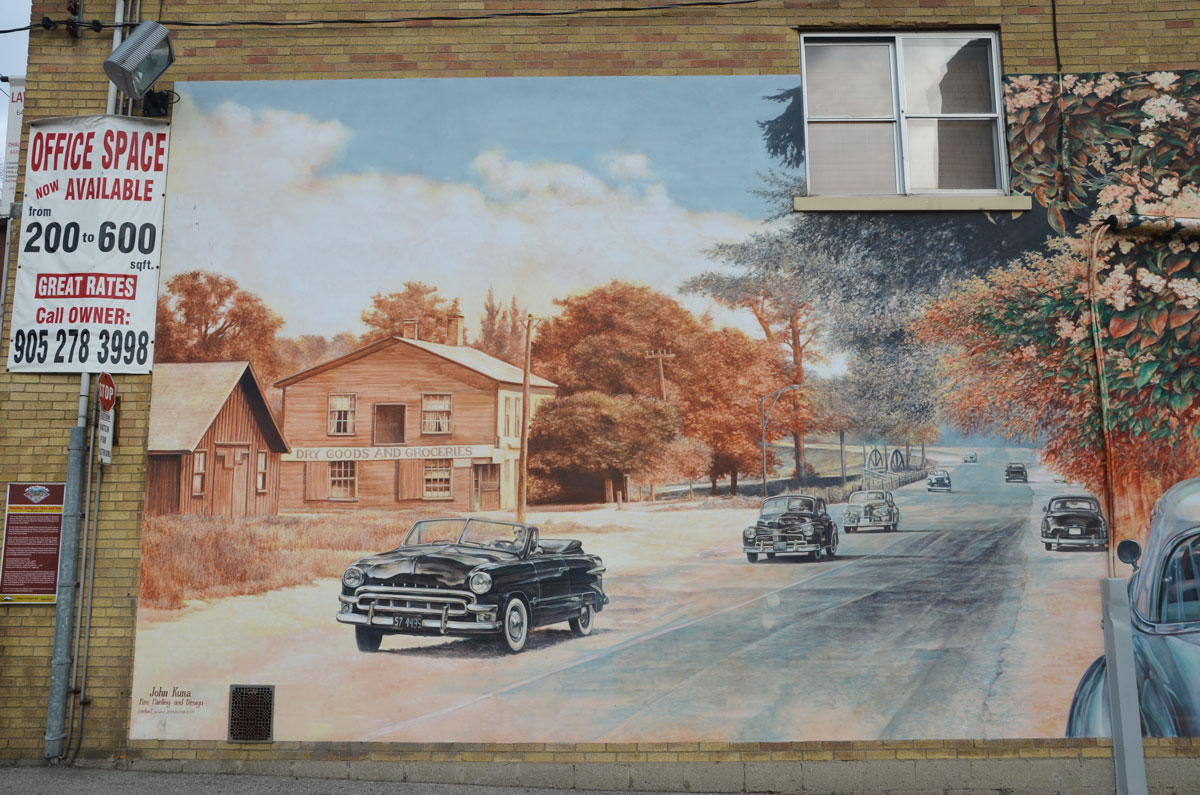
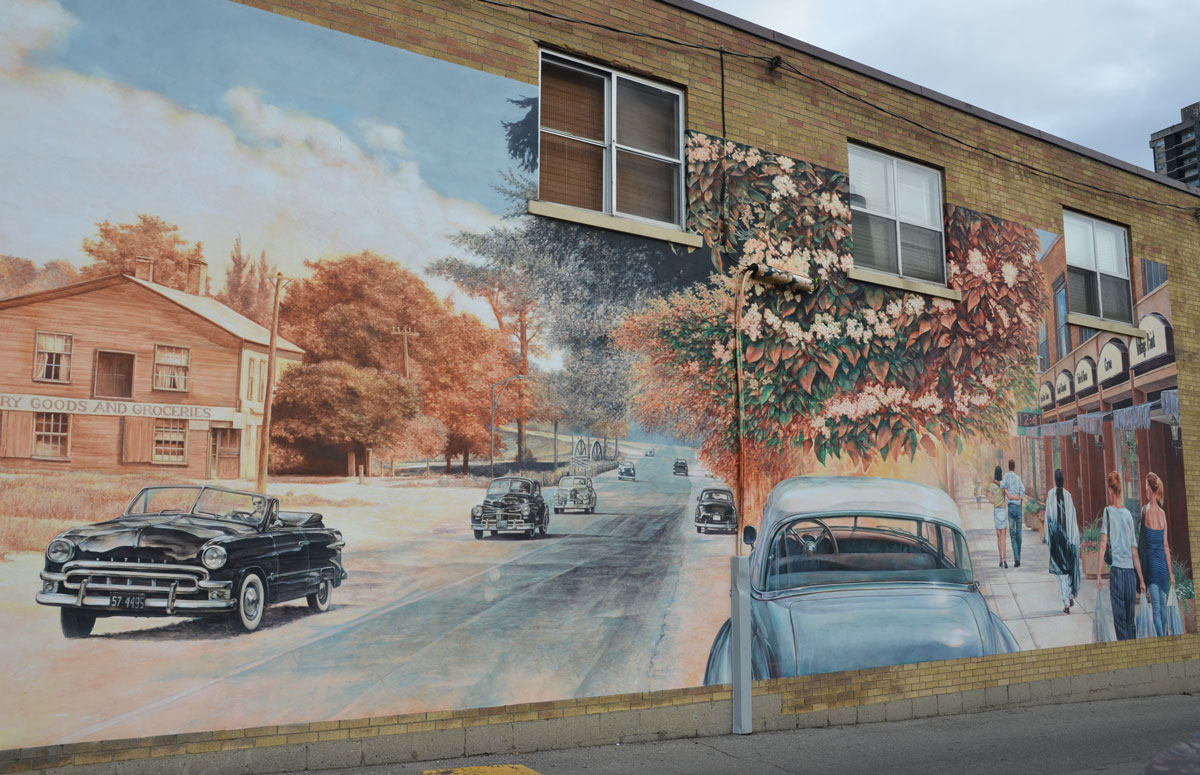
mural 4 – Timeline: Islington Then and Now, by John Kuna, 2006.
Showing Dunn’s store (NE corner of Dundas & Burnhamthorpe Cres) as well as the flowering catalpa trees that used to line the street (on the right in the picture)

part of a mural depicting the main street of town as it was in the 40s and as it was in 2006.  cars, street, people shopping,

blog_islington_here_right

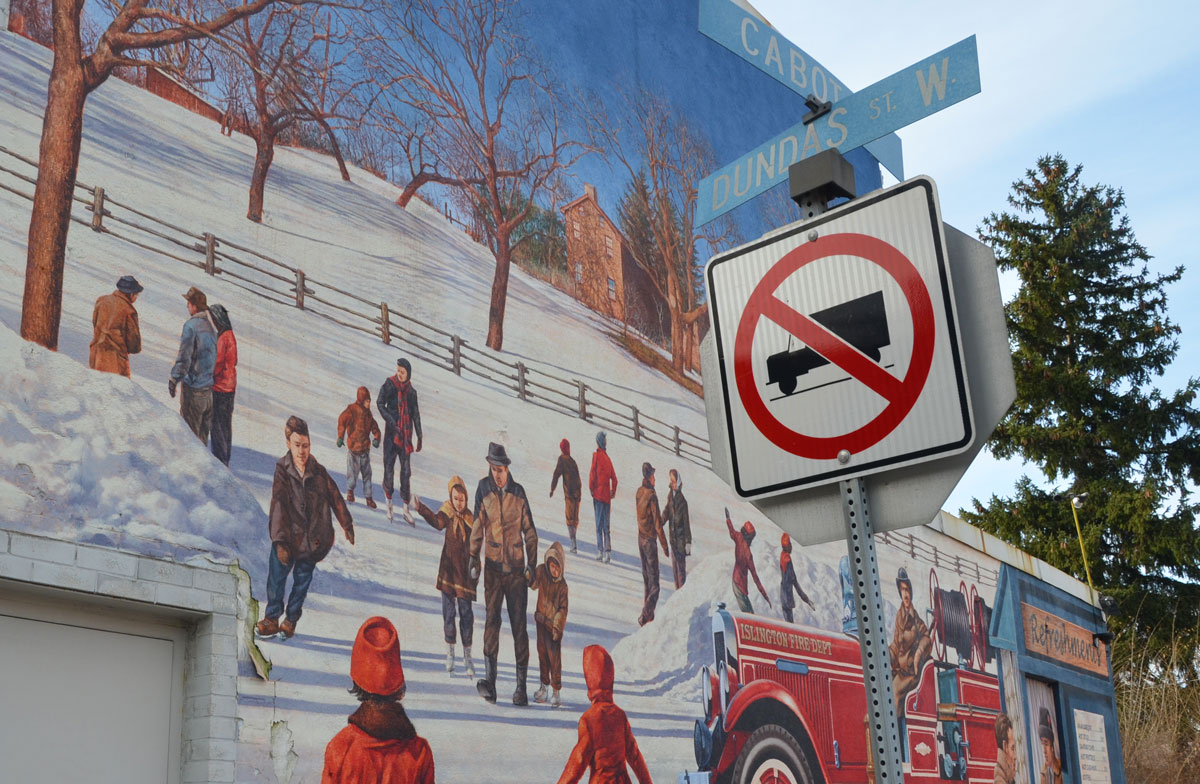
mural 5 — Honouring Islington’s Volunteer Fire Brigade, by John Kuna, 2007. 
Islington had its first motorized fire truck in 1931.  In the 1940s and 1950s the volunteer firefighters would use water from the Mimico creek to flood part of Central Park, on the west side of the creek, to create a skating rink.
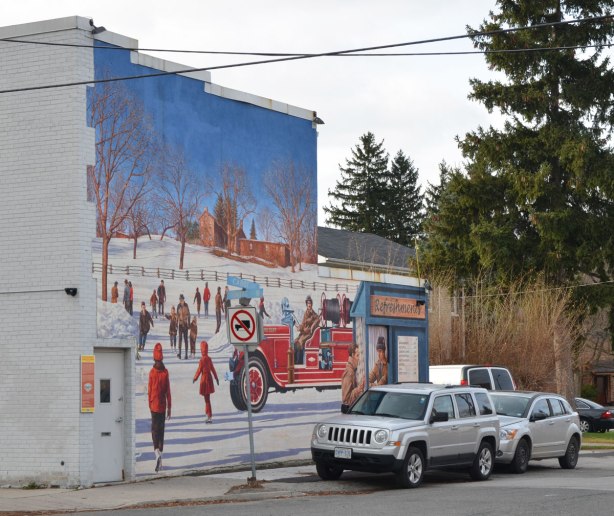
looking across the street at a mural on the side of white brick building, a winter scene, some people are skating, lots of bright red jackets, there is also an old fashioned fire engine with firefighters sitting in it.  At the right edge of the picture is a small wood hut with a sign that says Refreshments on it.

close up of a mural showing people skating on a frozen pond in the winter.  In the foreground is a traffic sign that says no trucks, also blue street signs for Cabot St. and Dundas Street West

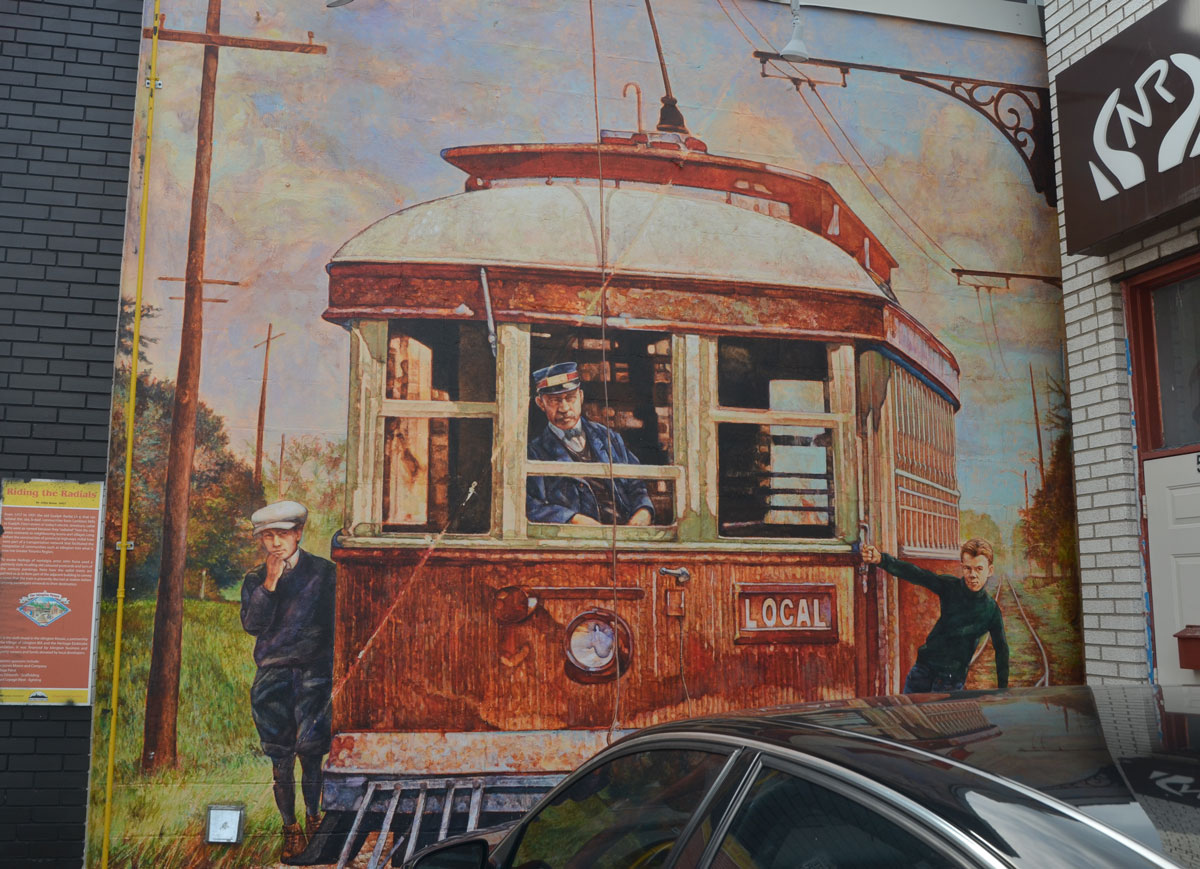
mural 6 – Riding the Radials, by John Kuna, 2007.
From 1917 to 1931 the old Guelph Radial Line (or Toronto Suburban Railway) ran close by this site.  It was an electric rail line between Toronto and Guelph.

A mural showing the front of an old electric train car with the conductor sitting in front.  Two boys are hanging out the doors, one on each side of the train car.

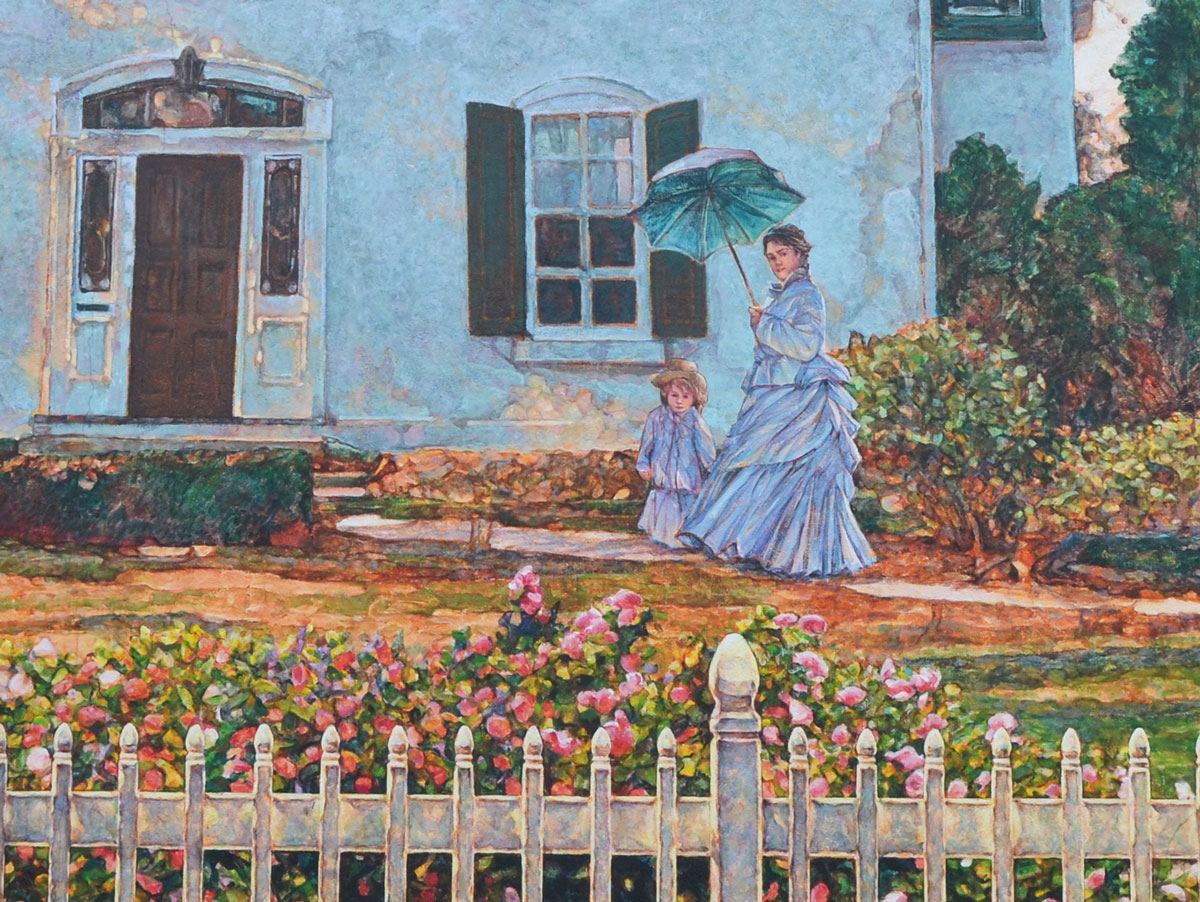
mural 7 – Briarly, Gone but not Forgotten, by John Kune, 2007.
Briarly, also known as Gunn House was built in 1840s. From 1870 to 1985 it was owned by the Montgomery family and their descendents.
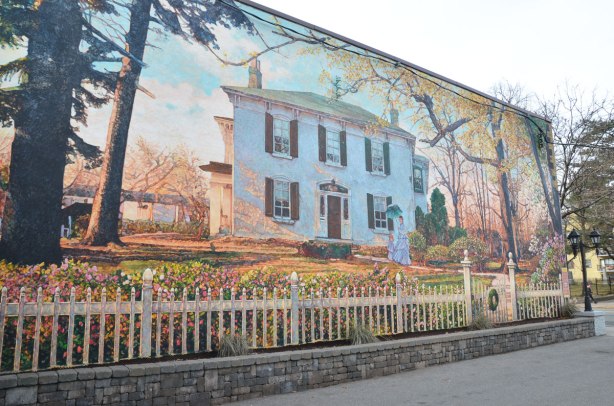
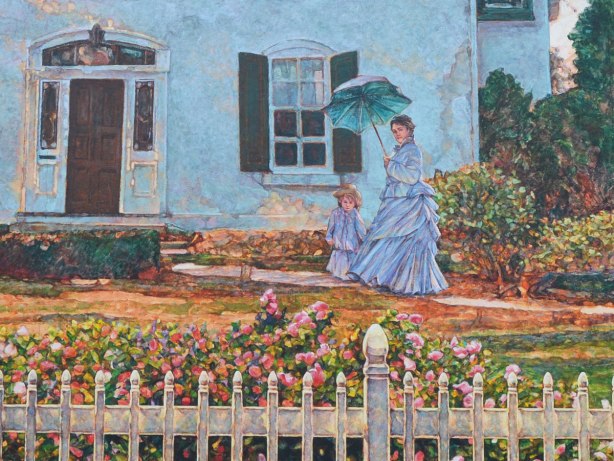
mural 7 - Briarly, Gone but not Forgotten, by John Kune, 2007.  Briarly, also known as Gunn House was built in 1840s.  From 1870 to 1985 it was owned by the Montgomery family and their descendents.

A woman and a girl in long light blue dresses are walking in front of a house.  The woman is carrying a blue parasol.  There is a white picket fence and flowering shrubs in the foreground of the picture.

mural 9 – Harold G. Shipp’s Firt High Flier, by John Kuna, 2008.
The story behind this mural: “In 1944 Harold Shipp convinced a Lancaster bomber pilot who ferried supplies from Toronto to England during the war, to fly over the school’s football field and drop hundreds of leaflets, a few of which could be traded for tickets to the school dance. Unfortunately, a rogue wind scattered the leaflets across the Chinese market gardens near Montgomery’s Inn. In the ensuing mayhem, excited football fans frantic to secure a winning ticket, stormed the field and trampled the carefully tended cabbages”

mural showing men playing football in the 1920s, with a low flying airplane overhead.

mural showing men playing football in the 1920s, with a low flying airplane overhead, as seen from an angle - form this perspective you can see that the mural is actually two pictures.

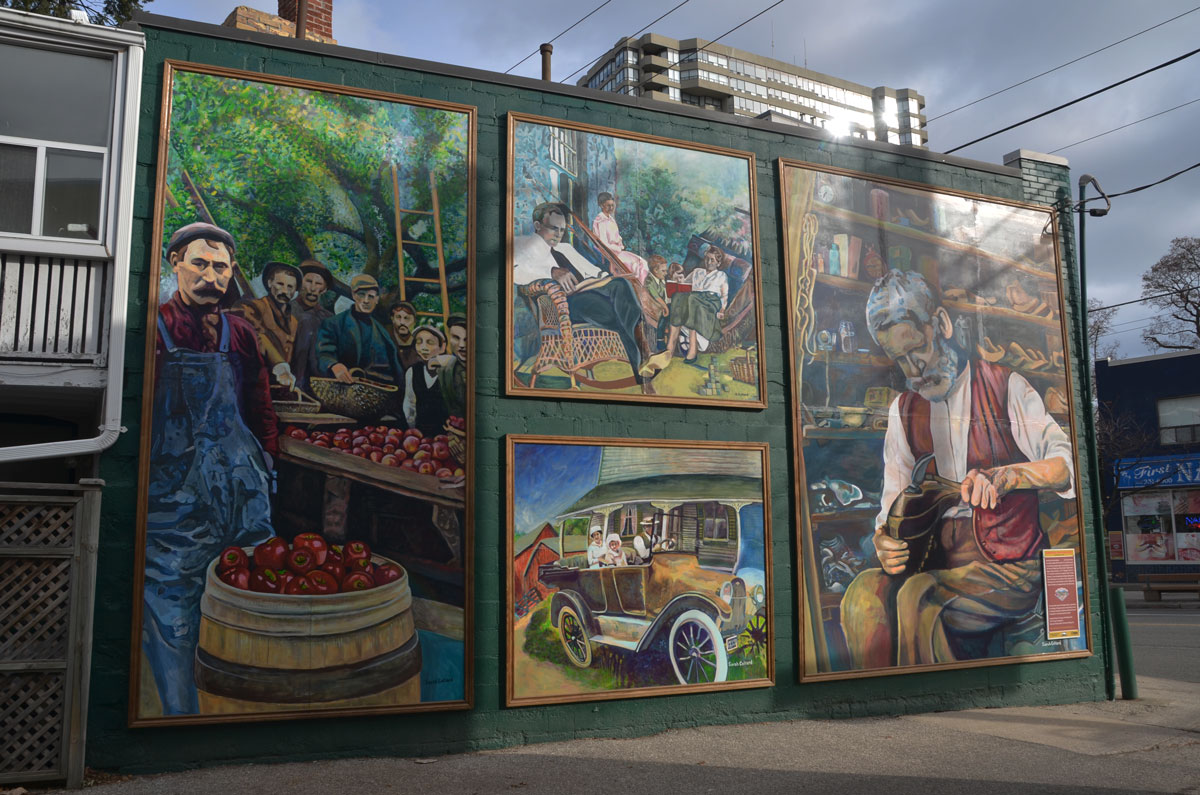
mural 10 – Portraits from our Past by Sarah Collard, 2008.
Inspired by pictures taken in the early 1900’s. “These include: Apple Packers at Bigham family orchards, Rathburn and Martingrove ~1917; Sunday Afternoon, a scene showing the family of famous Islington photographer Walter Moorhouse on their veranda at 34 MacPherson Ave. (now Aberfoyle); Islington’s First Car, a 1917 Chevrolet owned by the Appleby family; and the Village Shoemaker, Mr. Nelson in the 20th century.”
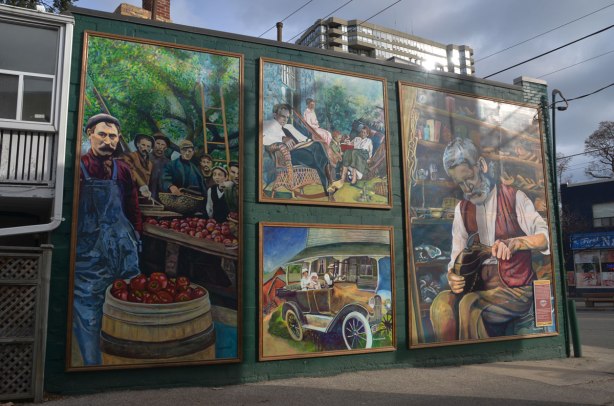
mural in 4 parts, 1 on the left, 1 on the right and 2 in the center.  The left depicts a man selling apples, the right depicts a cobbler fixing shoes.  In the center: bottom, a family in old fashioned car.  Center top - a family sitting in a livingroom including a man in a rocking chair

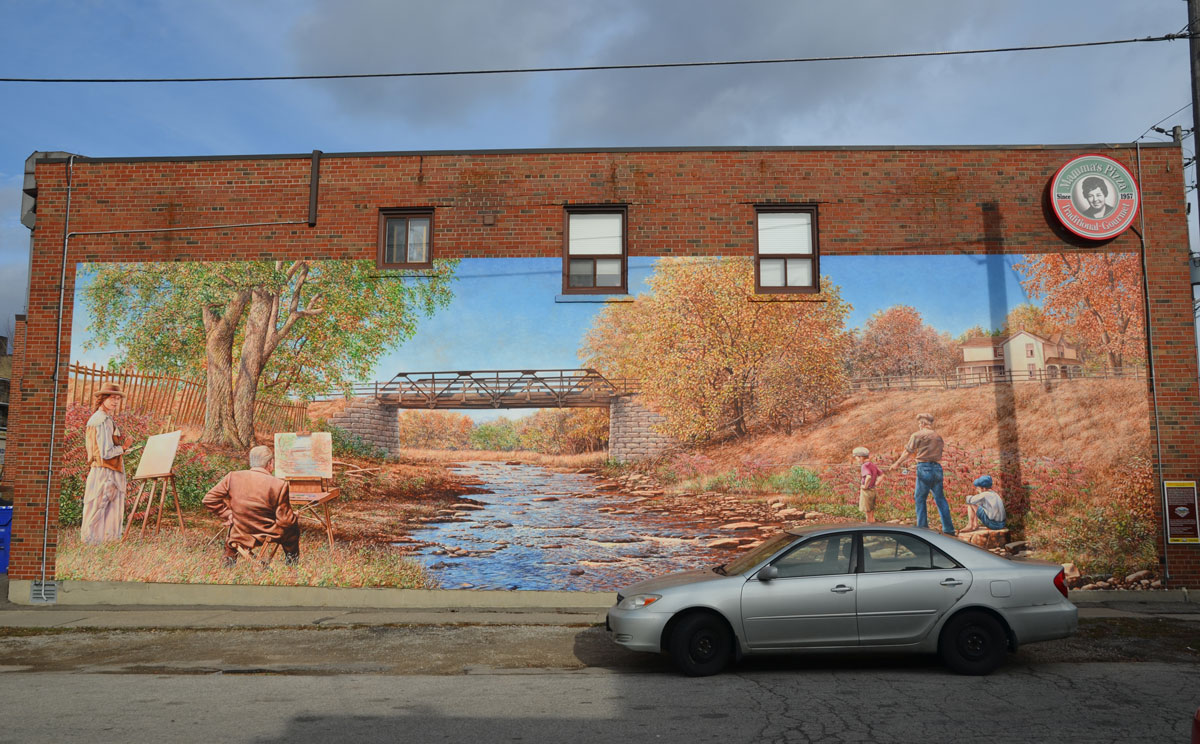
mural 11 – Mimico Creek in Fall, ca 1920, by John Kuna, 2008.
Looking north towards the Dundas Street bridge.
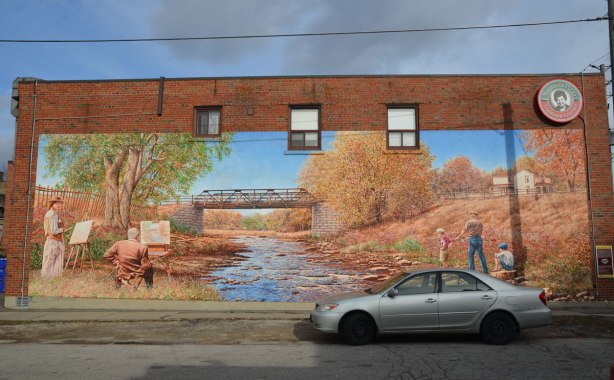
A large mural of a creek.  On the left back are two painters with their easels set up beside the river.  On the right bank are two boys and a man

Gordon’s Dairy, by John Kuna, 2008.

A mural on the front of the Islington Senior's Centre showing dairy carts.

mural 13 – The Old Swimming Hole by June Kuna, 2009.
Swimmers at the mill pond.

large mural of people swimming in a creek in bathing costumes from the 1920s

closer view of part of the mural of people swimming in a creek.  In this part of the picture, kids are climbing on a water wheel.  The mural is reflected in the window of the store next to it.

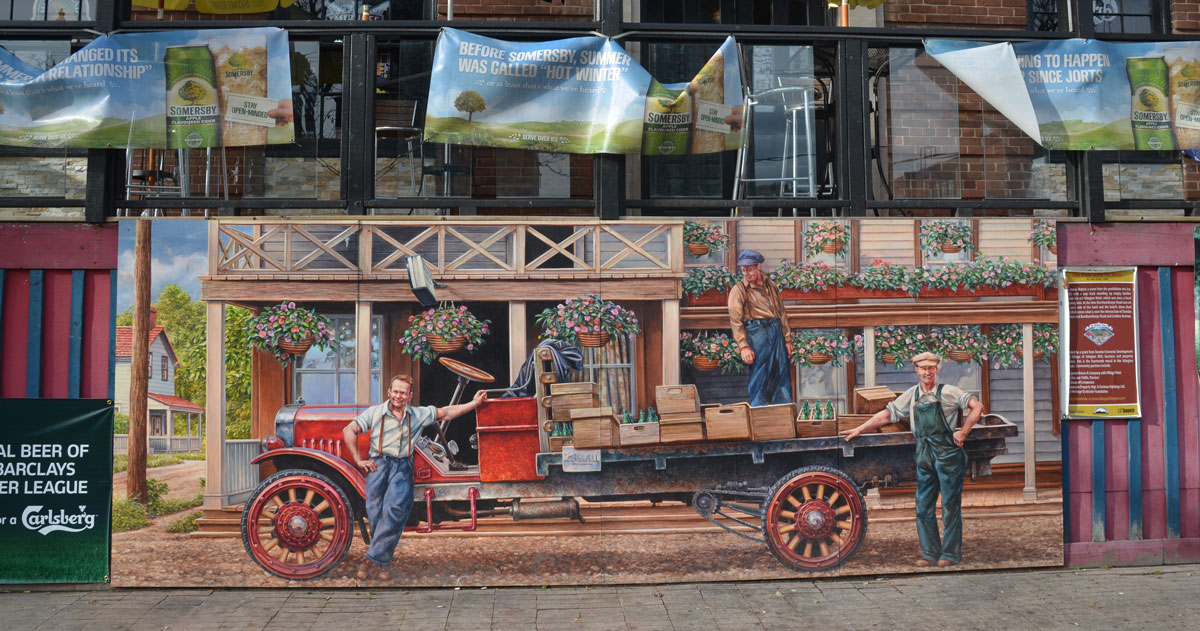
mural 14 – The Pub with no Beer, by June Kuna, 2009. 
A scene from the Prohibition Era in the late 1920’s.   Men collecting empty pop bottles from outside the Islington Hotel.
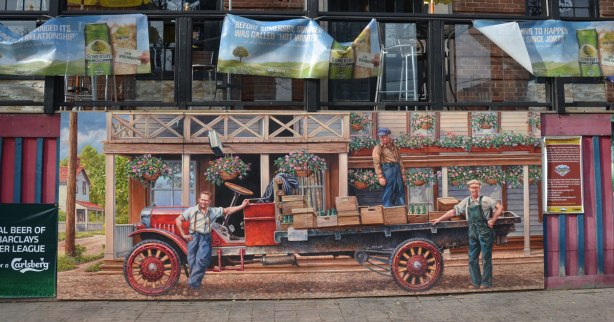
mural showing men loading an old flat bed truck with crates of empty pop bottles, 1920s

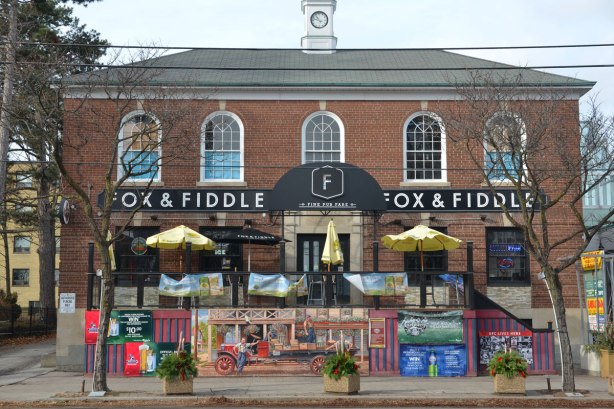
Fox and Fiddle bar, a two storey brick building,

mural 15, Faith of Our Fathers, part 2, by John Kuna

mural showing the building of a chirch

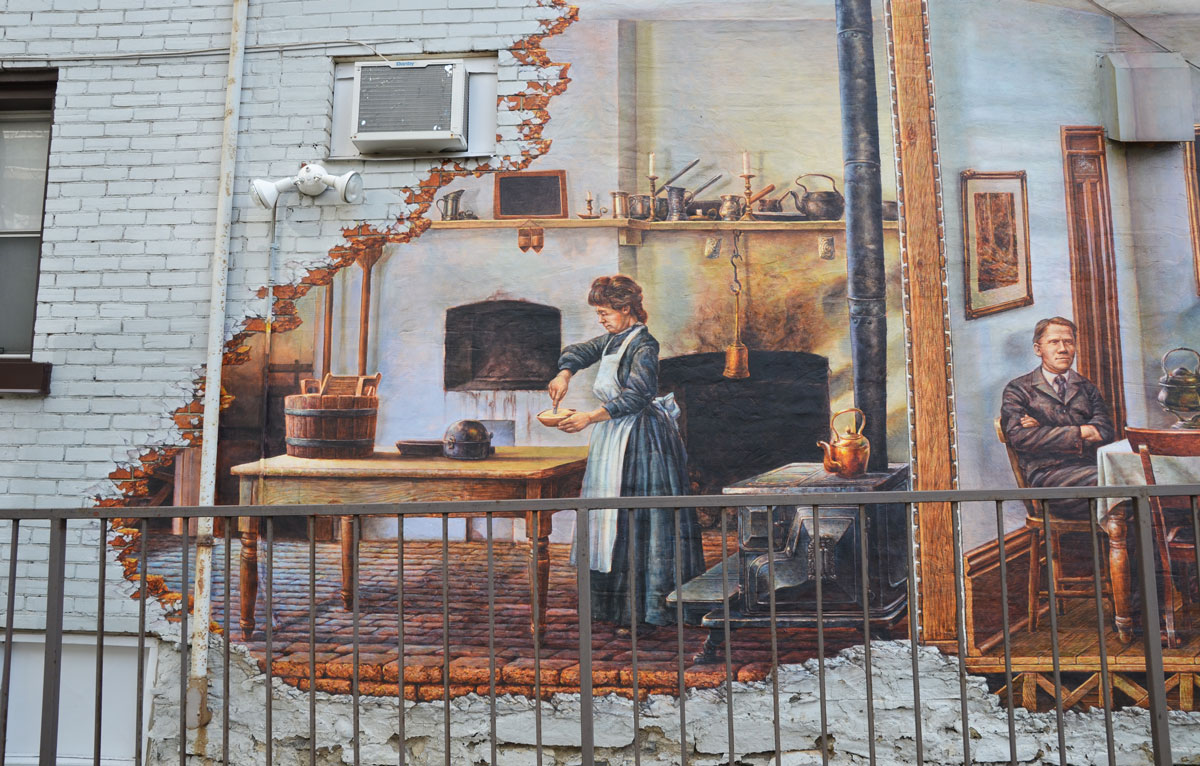
mural 16 – The Manse Committee by John Kuna 2010
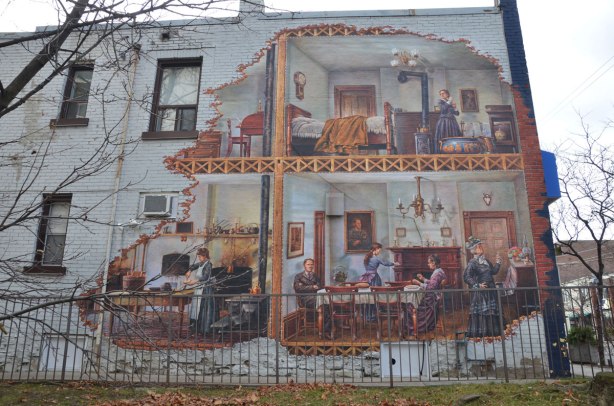
mural on the side of a two storey white brick building.  The picture looks like the outer wall has been removed to reveal a family house from the early 1900s.  A cook is working in the kitchen,

blog_islington_16kitchen

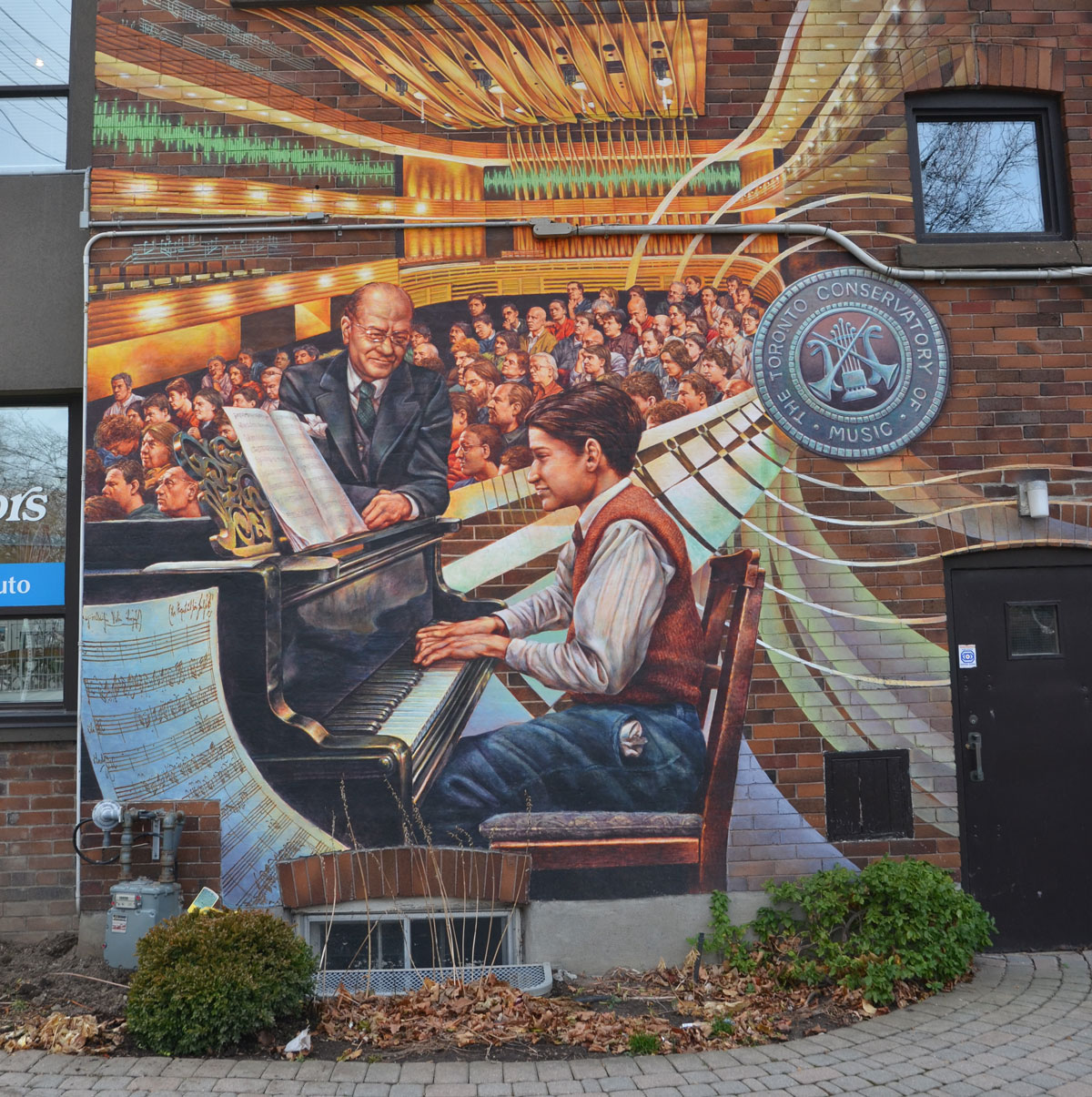
The Prodigy, by John Kuna, 2011
A satellite branch of the Royal Conservatory of Music was located in this building from the 1950s through the 1980s.
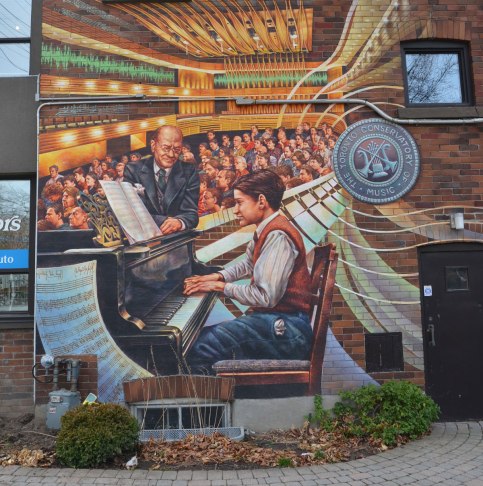
mural depicting a boy playing a piano in front of an audience.  A man is helping to turn the pages of the music.

mural 19 –  Aftermath by John Kuna, 2011.
After Hurricane Hazel on 15 Oct 1854, most of Islington Golf Course and the low lying areas around Mimico Creek were flooded.
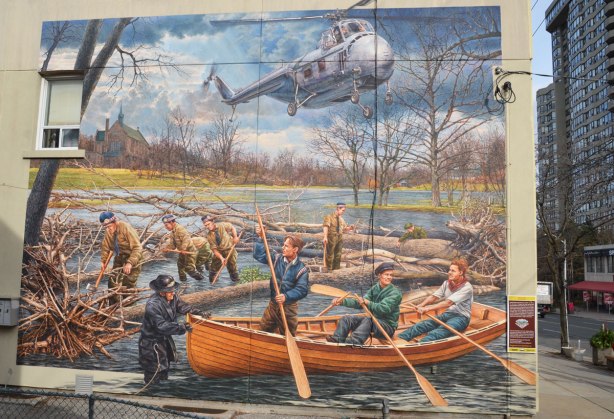
large painting of men in boats, helicopter overhead

mural 20 – Ontario Gothic, by John Kuna, 2011
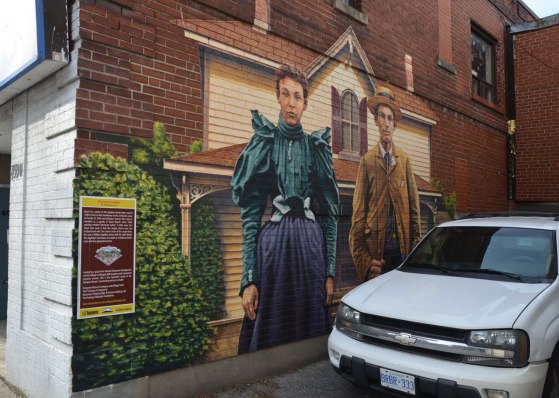
A mural of a man and a woman standing outside a two stroey farm house.  A white car is parked in front of the mural and it blocks the bottom right of the picture.

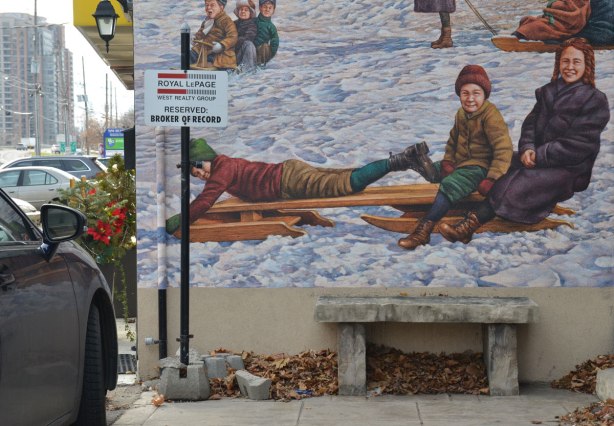
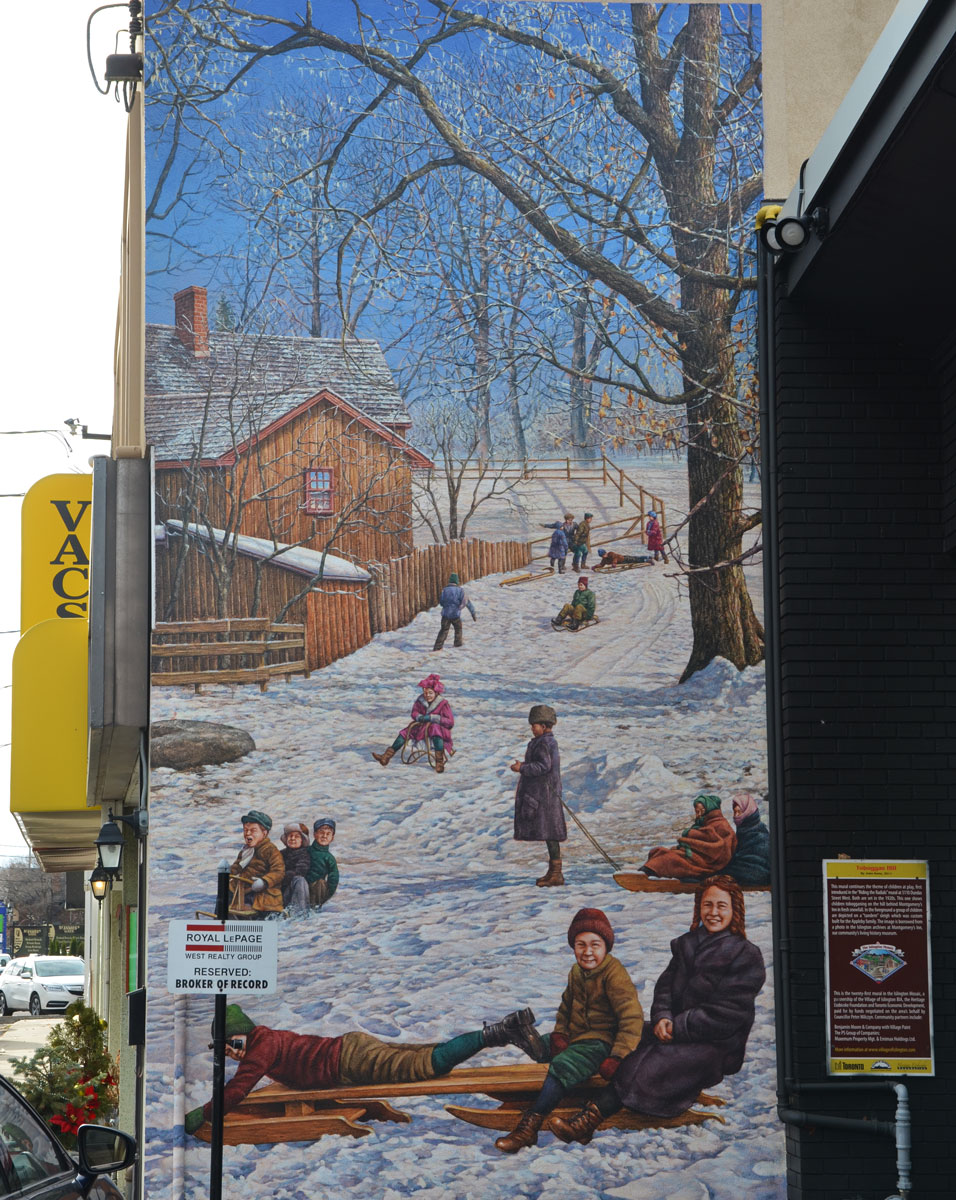
mural 21 – Toboggan Hill, by John Kuna, 2011
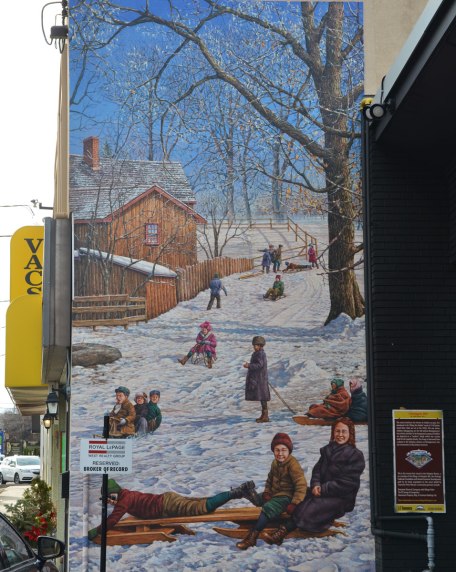
large vertical mural depicting a hill in winter.   Bare trees, kids on tobaggons.

Close up of the bottom part of a mural whowing kids on old fashioned wooden sleds, or toboggans.

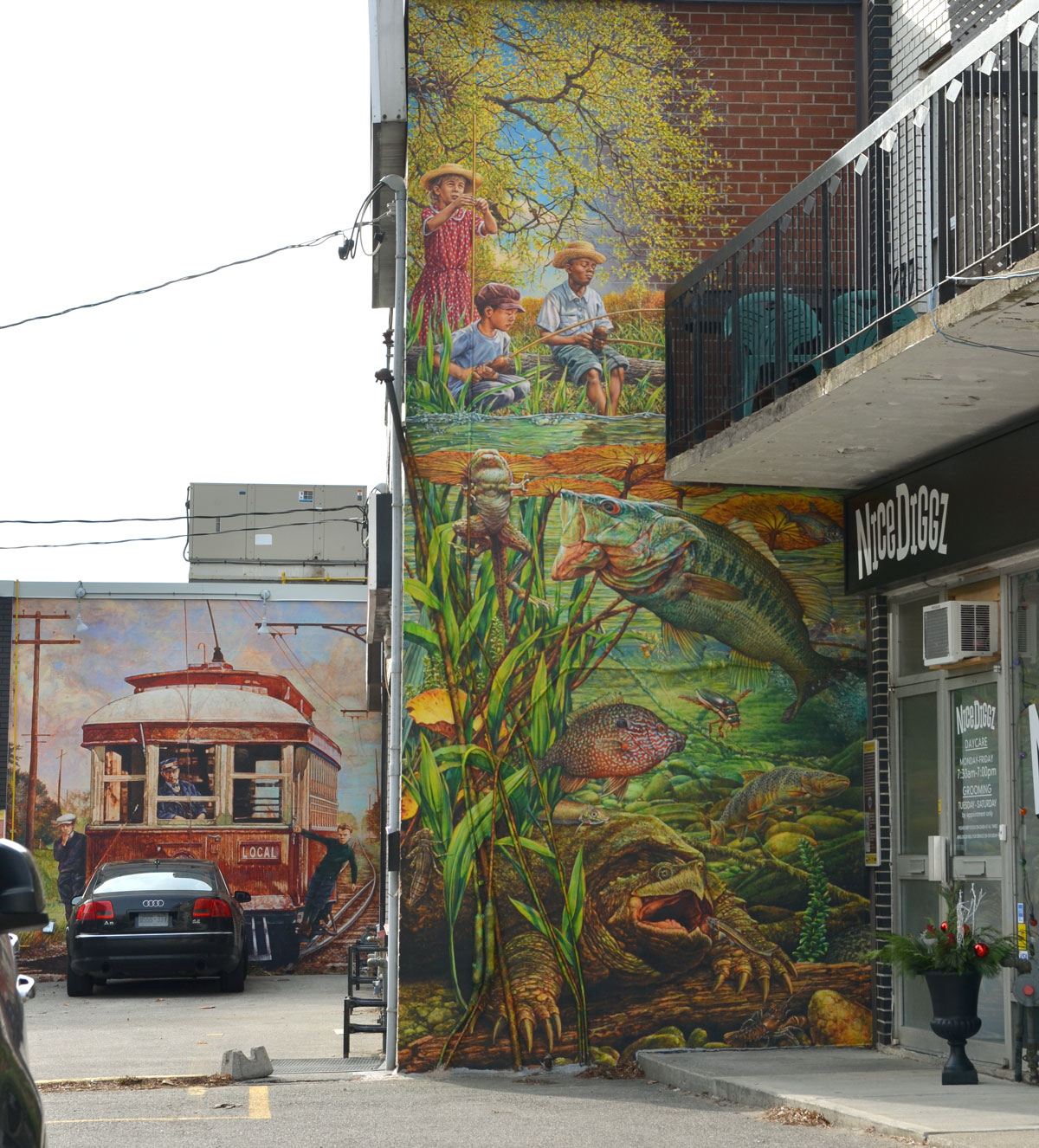
Fishing in Mimico Creek, by John Kuna, 2012,
with Riding the Radials seen in the background.

 includes largemouth bass, rainbow trout, pumpkinseed sunfish

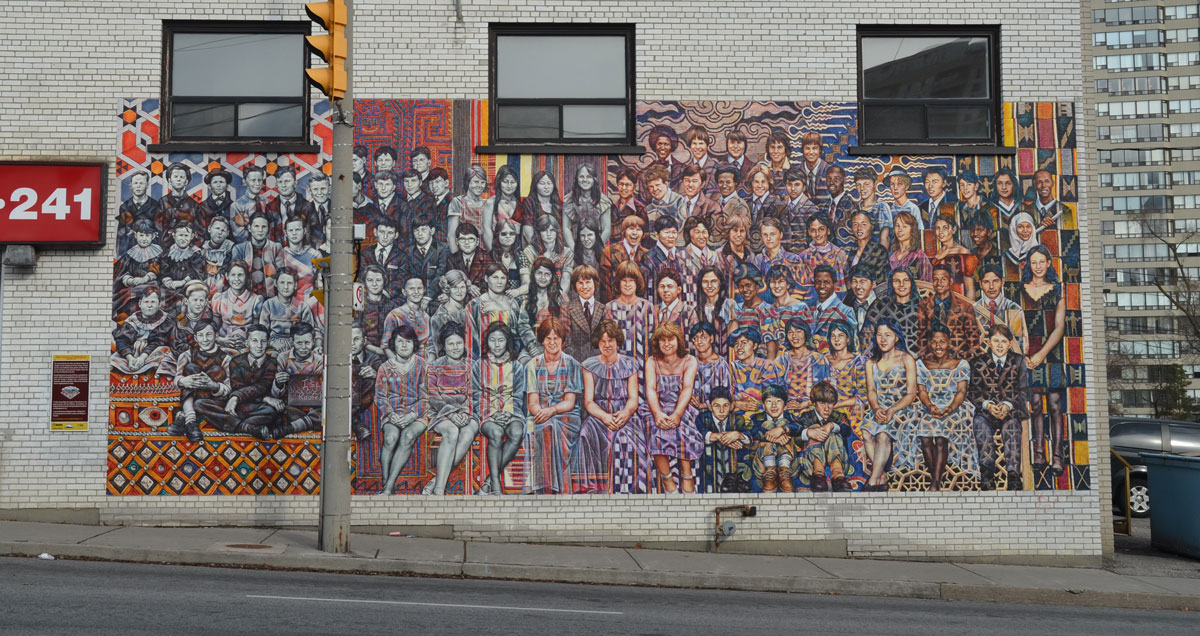
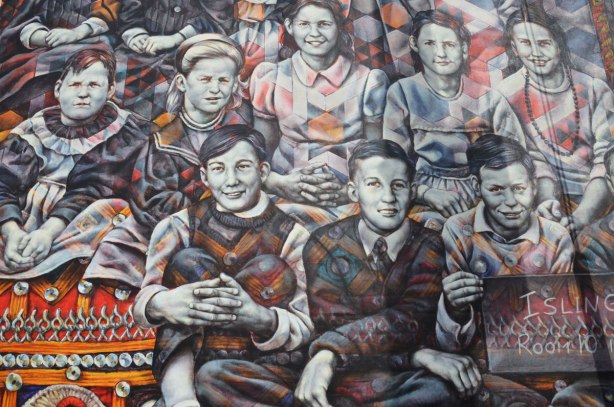
The Faces of Islington, by John Kuna, 2013
The Faces of Islington, by John Kuna, 2013
blog_islington_21part

the mural with no sign

mural of a group golfing in clothes typical of the 1940s

 more information – village of Islington murals website

Four-D, a mural on Woodfield at Gerrard East in Little India
by artists Alexa Hatanaka and Patrick Thompson, October 2013
supported by the city of Toronto and Gerrard India Bazaar

 mural on the side of a one storey building showing 4 brightly coloured panels.  Turquoise in the background.  Each panel shows an archway between pillars.  Each of the 4 has a brightly coloured pattern

part of a mural, one of four panels painted to look like a yellow and red arch.  under the arch is a bright multicoloured pattern reminiscent of South Asian fabrics and embroidery

part of a mural, one of four panels painted to look like a yellow and red arch.  under the arch is a bright multicoloured pattern reminiscent of South Asian fabrics and embroidery

part of a mural, one of four panels painted to look like a yellow and red arch.  under the arch is a bright multicoloured pattern reminiscent of South Asian fabrics and embroidery

part of a mural, one of four panels painted to look like a yellow and red arch.  under the arch is a bright multicoloured pattern reminiscent of South Asian fabrics and embroidery

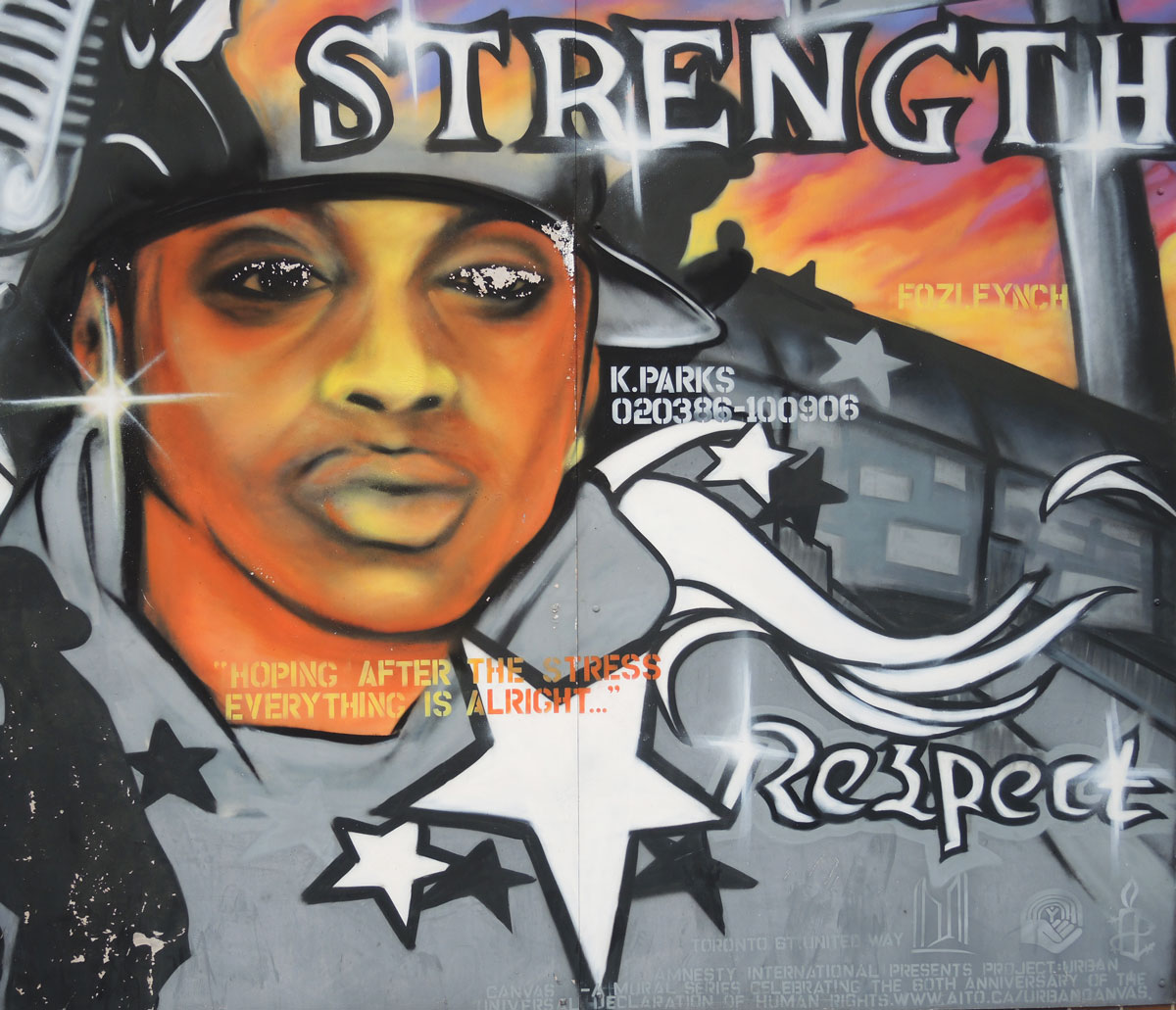
Amnesty International Toronto Organization is a group that works in the to raise public awareness of human rights issues. One of the projects that it supports is ‘Project: Urban Canvas’.  This project involves 30 murals.   One mural for each of the articles in the Universal Declaration of Human Rights (UDHR), a United Nations

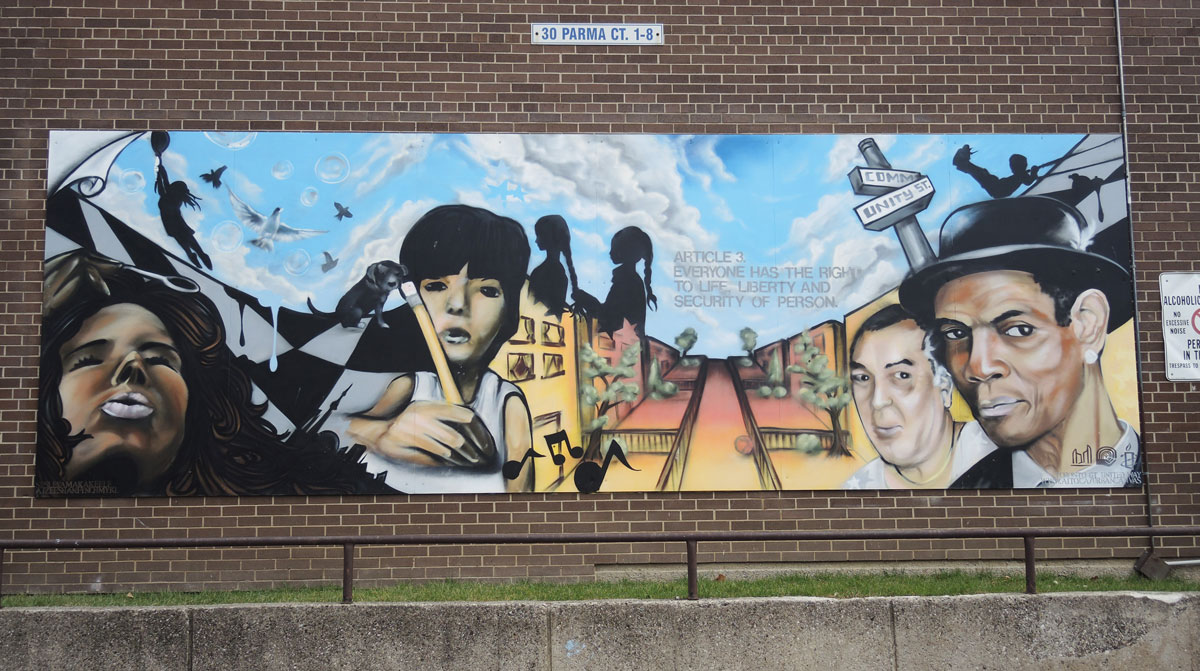
Urban Canvas was begun in 2008 which was the 60th anniversary of the UDHR. Not all of the murals are complete yet.  Two of those that are finished are located on Parma Court near Victoria Park and O’Connor.

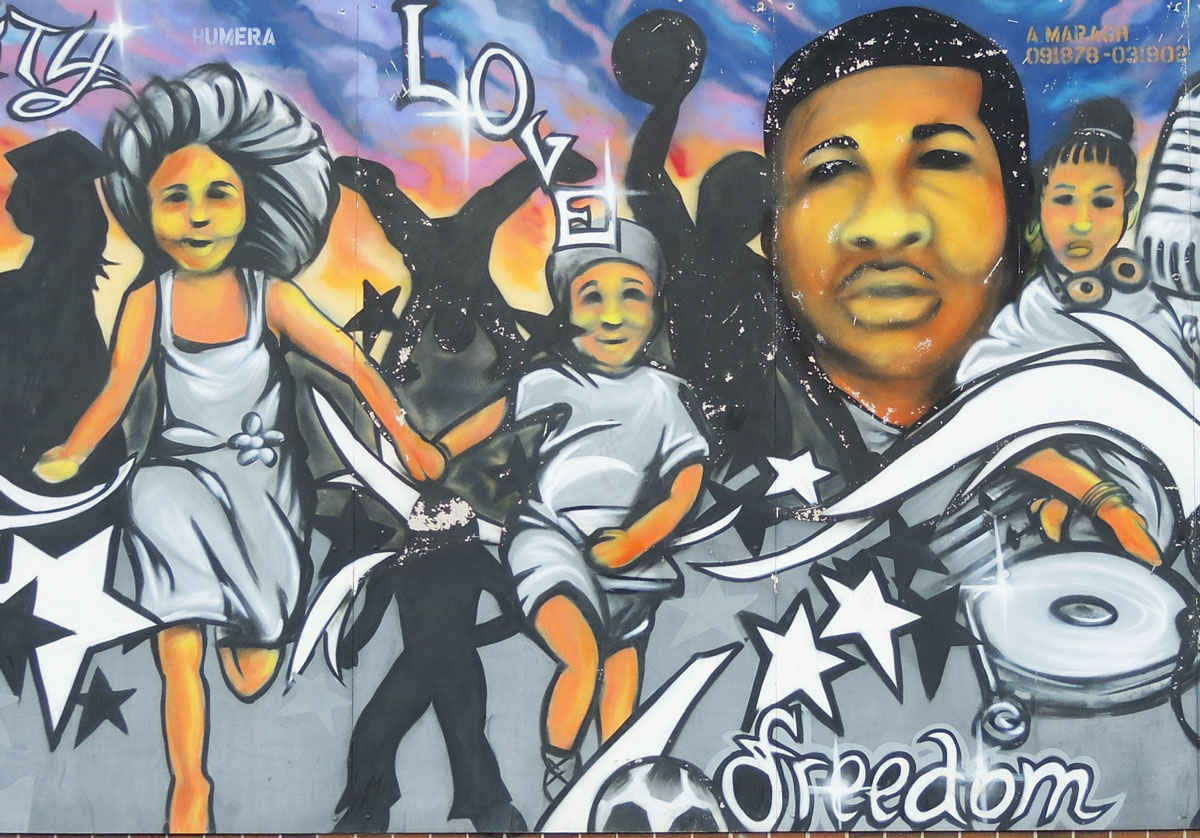
One celebrates Article 19 which states: “Everyone has the right to freedom of opinion and expression; this right includes freedom to hold opinions without interference and to seek, receive and impart information and ideas through any media and regardless of frontiers.”

A large mural on a red brick building, painted to celebrate the United Nations Universal Declaration of HUman Rights.  This one includes the words strength, love, respect, unity.  It shows a 5 people engaged in various activities. painted by Michael Reyes as well as  Fozi, Humera, and Sabeehah

part of a mural showing a boy and girl holding hands as they run.  Also, in the top right corner is a black man with a microphone.   The words 'love' and 'freedom' are also written on the mural.

Part of a mural showing a black man's face.  The words strength and respect are written there.  Also 4 white stars, and the words "hoping after the stress everything is okay."

The words say “hoping after the stress everything is okay.”


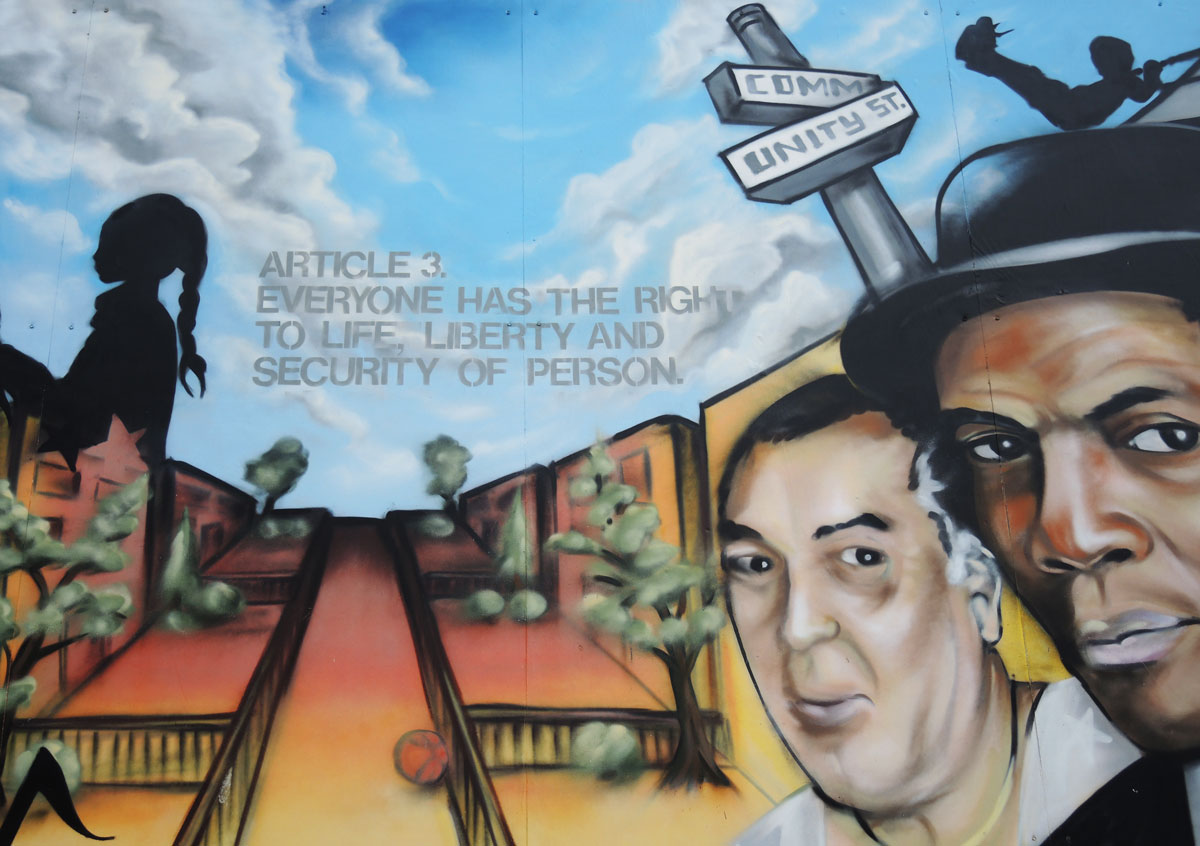
The other mural celebrates Article 3 of the UDHR. 
“Everyone has the right to life, liberty and security of person.”

mural illustrating article 3, it shows people

blog_parma_3


website for Amnesty International Toronto Organization Urban Canvas project

This project is also supported by the Working Women Community Centre,  the United Way, and the city of Toronto.
 Other murals in this project on this blog: