Posts Tagged ‘photography’

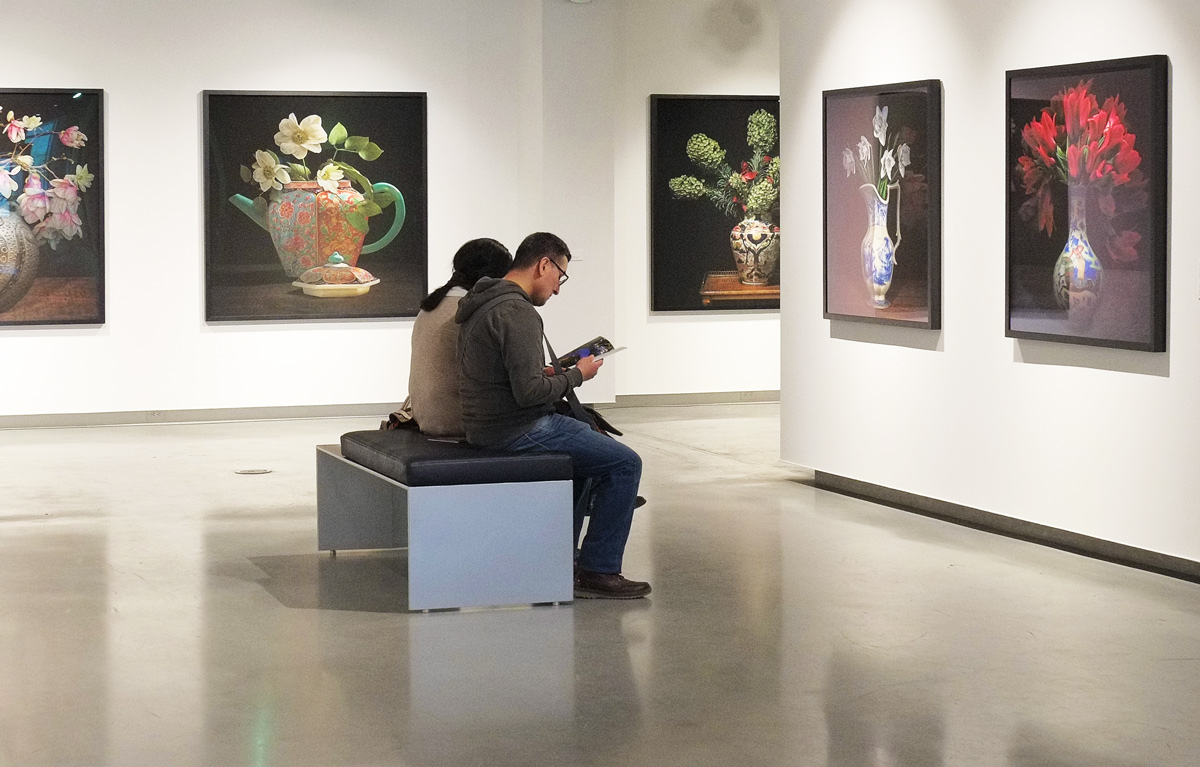
Now showing at the Onsite Gallery, is an exhibit of photography by T.M. Glass called “The Audible Language of Flowers”.  Glass’s work is inspired by 17th and 18th century northern European still life flower paintings.

below: On the back wall is  “Clematis in a Chinese Teapot”, 2017 (The teapot is from the Gardiner Museum).   The photograph on the right (with the red flowers) uses a vase from the Royal Ontario Museum, “Tulips in a Persian Vessel”, 2017.

people sitting on a bench in a gallery, reading, large photos of flower bouquets on the walls around them

But they are not just large photographs.   They have been enhanced in a process that has become known as digital painting.  This technique involves enlarging the image to the pixel level.   Attributes such as sharpness, colour and vibrance are then manipulated  giving the finished image more of a painted look.

below: Part of “Anemone Canadensis in an Italian Pharmaceutical Vessel”, 2017 (The ‘vase’ is from the Royal Ontario Museum). 

white flowers and greenery in a vase with a picture of a young man on it, part of a larger photograph by T.M. Glass in a gallery

below: Close up of some of the flowers in one of the photographs where you can see the “brush strokes”.

close up of photo of a red flower and a white flower that has been manipulated using digital painting techniques

below: Glass has also been experimenting with 3D printing.  On display are some sandstone and resin sculptures that were created from digital files, including these two.

2 white 3 D printed sculptures of flowers in a vase, in a gallery, with large pictures, in colour, of bouquets of flowers in vases on tables

The exhibit continues until August 18th.
Onsite Gallery is part of OCADU and is at 199 Richmond St. West.
This exhibit is part of the CONTACT Photography Festival.

picture of a blue vase with red and white flowers, framed on a gallerywall, reflections of other pictures in the glass, black background

The merging of events, the overlap of months.
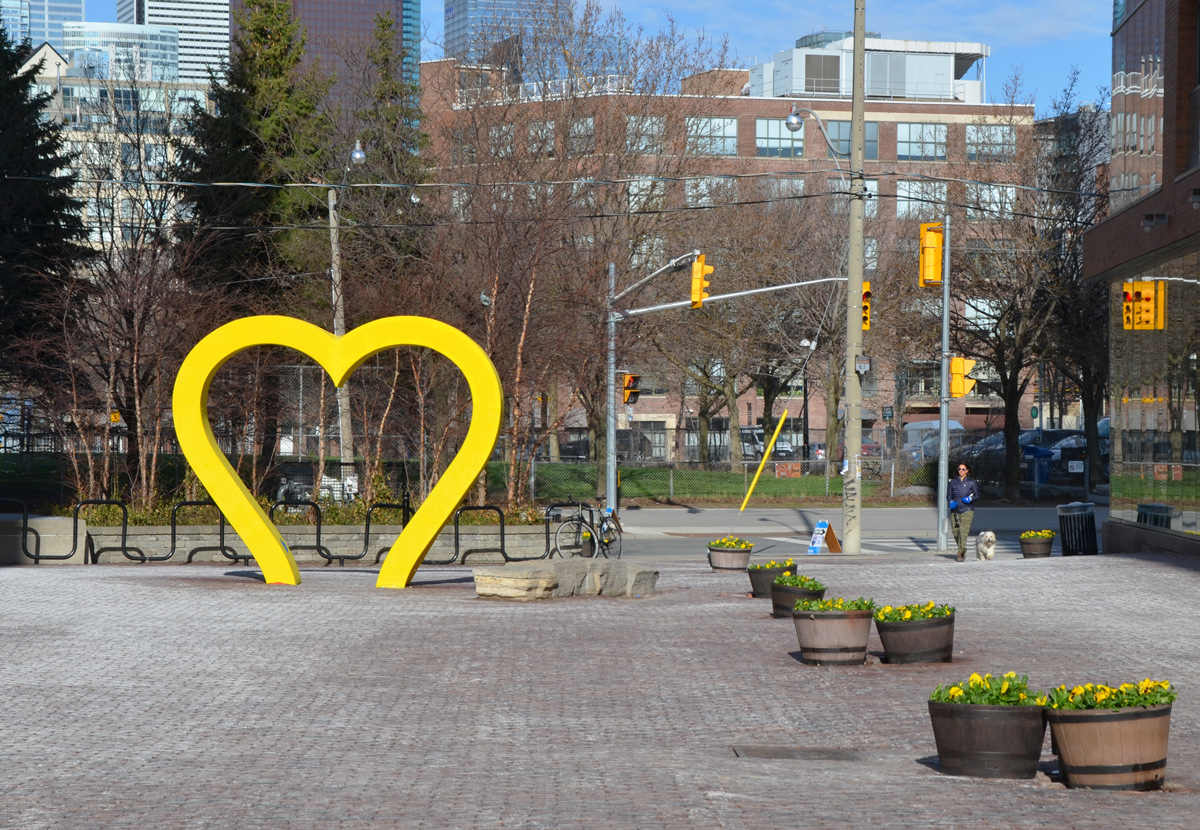
At the Distillery District, many features were made yellow in April in honour of cancer awareness month.

the heart at the Parliament street side of the Distillery District that is usually red has been made yellow

Towards the end of that month, some large pictures began appearing on the brick walls.  An early installation for CONTACT month, May, these are Sage Szkabarnicki-Stuart’s  “Good Stuff Bad Stuff” which is a series of conceptual photographs attached to the exterior walls of some of the buildings.

From the CONTACT website:  “a series of bizarre self-portraits that connect concepts of home and identity. The artist’s own grungy apartment and various public spaces serve as the backdrop to the photo series. Using physical experiences and found objects, the photographs in this exhibition explore the relationship between ourselves and the personal objects we buy, inherit, and throw away.”

picture on a wall at the Distillery District

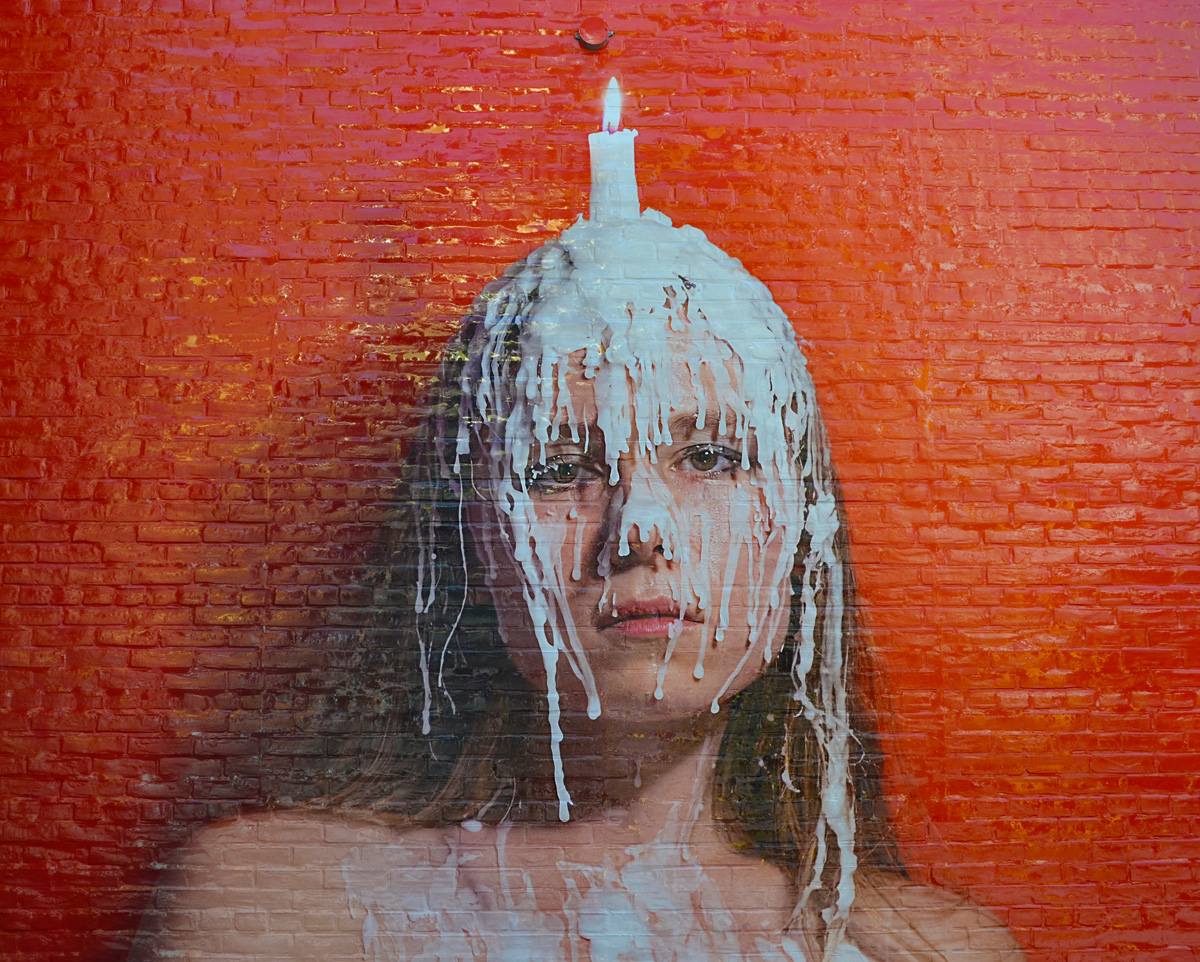
below: I’m not sure that a candle on one’s head ‘explores’ anything… but maybe I was missing something?

a woman's head with a lit candle on it, melted wax has run down her face and hair, bright orange wall in the background.

And so we go off on a bit of a google tangent to see what there is for ‘candle, head’.  I find candles as a Christian symbol for light in the darkness.  There is also an image of a black man with a real lit candle on his head with melting wax running down his forehead, lit by his pastor “to deliver him from the spirit of homosexuality”.  Searches also yield skulls as candle holders (or candle holders in skull shapes) used as a novelty item, or as method of casting spells if you believe in such things.   And last, Tim Burton made a music video for “The Killers” (a group) where at the end, two people are sitting across from each other at a table, both with a lit candle on their head.  In this last case there is melding of reality and fantasy as one character is a wax figure that occasionally comes to life.   Whether this has anything to do with the image above, I have no idea.   But I’m sure that my ramblings, although entertaining (ha!) are probably just a detour.
below: Hope floats. One of the photographs on a wall surrounded by “graffiti” ( of the fake kind).  No candles here?  It’s the paper boats that are burning.  If there were candles, they are long gone.
a head partially submerged in water, surrounded by little white trays with flames


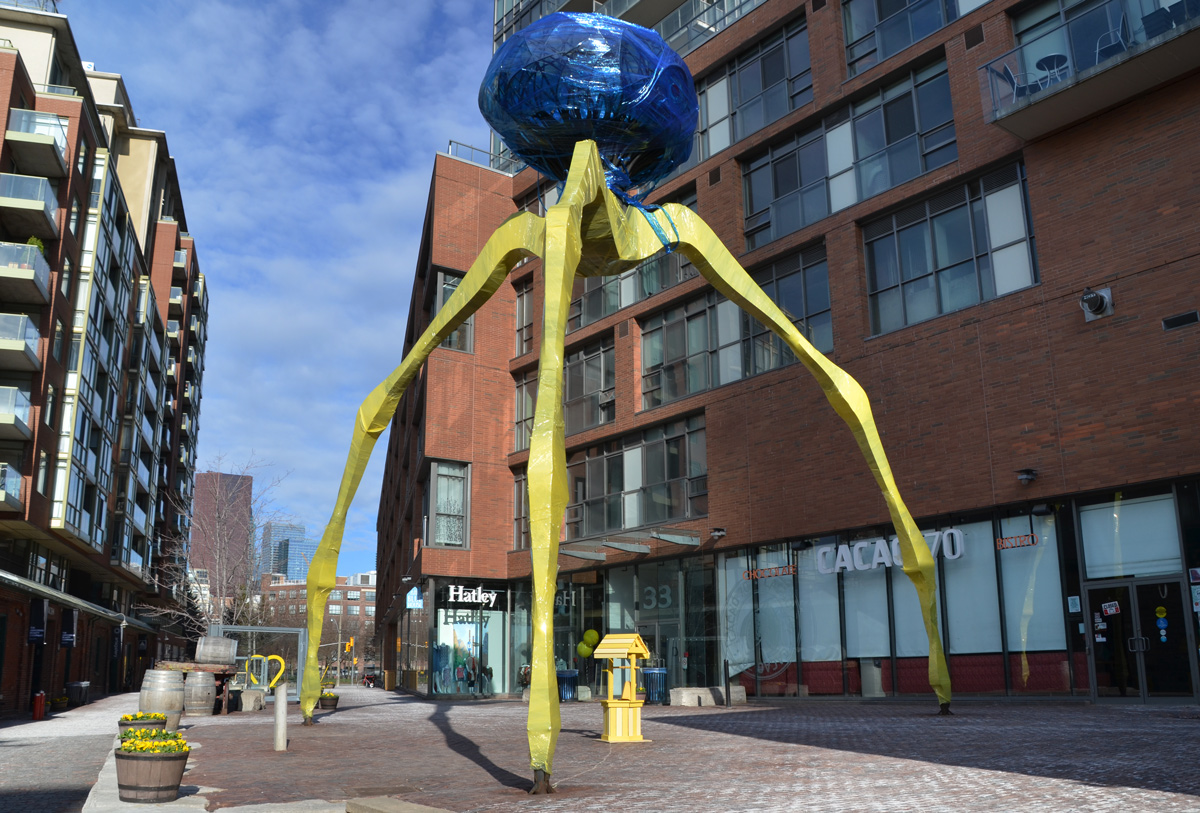
below: More yellow

the four legs of the large spider-like sculpture at the Distillery District are yellow and the head part is wrapped with blue plastic

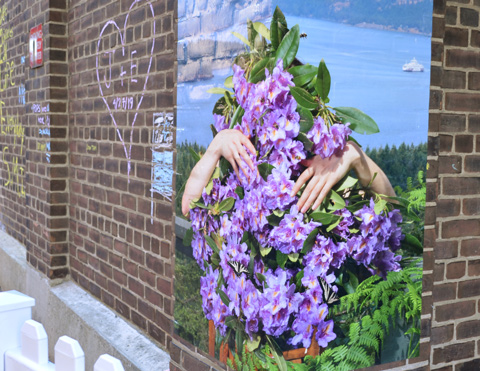
below: Another picture.  Flowers and hands.

a large poster attached to brick wall, outside, hands coming out of a large bush with purple flowers on it.

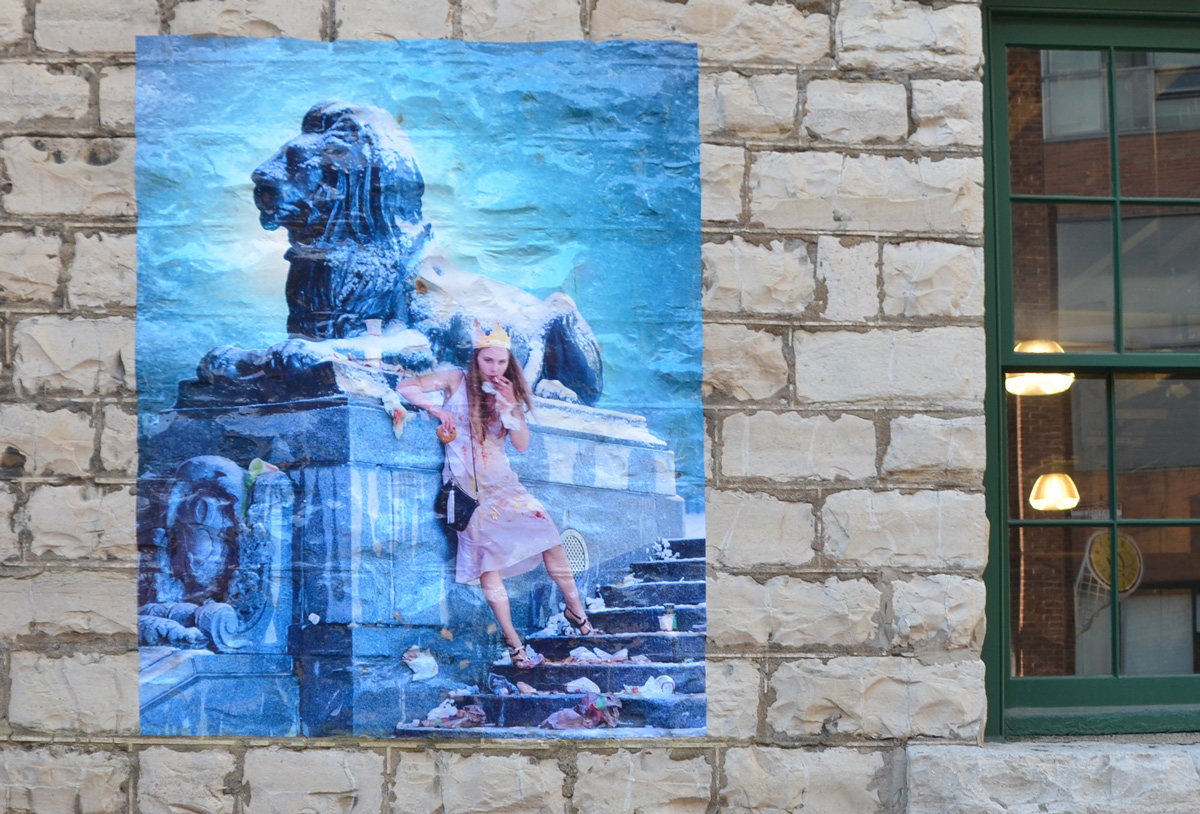
below: More picture.  This time an ode to junk food and trashiness by the looks of it.  The lion is blue but unmoved.  With a fast food paper crown on her head and a cigarette in her mouth.  Garbage randomly strewn but carefully placed so there is no product placement.

picture on a stone wall, blue tones, lion sculpture, sitting beside flight of stairs, woman leaning against lion, cigarette in her mouth, food in the other hand, garbage strewn on the stairs around her feet

below: The last bit of yellow for today.

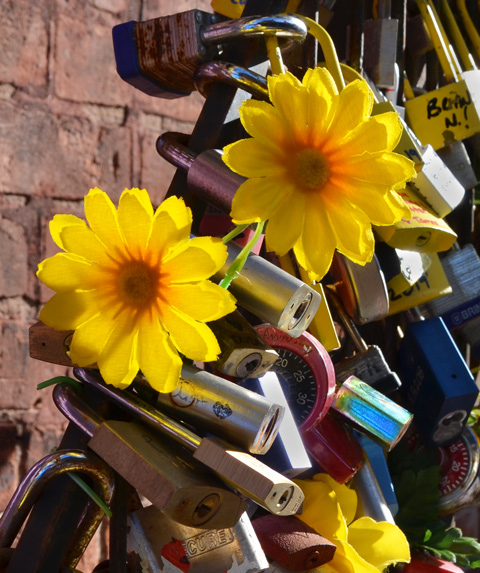
distillery district, love sign for locks, the heart has been decorated with a lot of yellow flowers

fake yellow flowers placed by some locks

below: And one last photograph to give you some ideas of what to do with the photos of Venice that you might have, you know, the ones that look like everyone else’s.   There are many more on display at the Distillery District.   As I type this I am warming up to the pictures but I am still torn.   Does anyone want to offer an opinion?

large photo on a brick wall, taken by a canal in Venice, of a woman covered from head to toe in black weeds as she stands beside the canal

Sage Szkabarnicki-Stuart is on Instagram

I happened to visit Artscape Youngplace this afternoon just after their latest hallway gallery exhibits were hung.   Showing on both the second and third floors are images produced by the graduating class from Etobicoke School of the Arts contemporary photography course.  I tried to find information about the exhibit online but nothing about it was mentioned on the Artscape Youngplace website or on the Etobicoke School of the Arts website.  If you know of something that has appeared online since this afternoon (29th April) or something that I missed, please let me know.

This is a selection of the pictures on display.  Not all of the labels were up yet and some I didn’t get a clear picture of so my apologies to the photographers whose images that I haven’t credited here.  Also, there was no criteria for selecting these images over the many others also being exhibited.

below: The finishing touches

part of the third floor hallway gallery space at Artscape Youngplace with large colour photos tacked to the wall, a man on a ladder adjusts the lighting

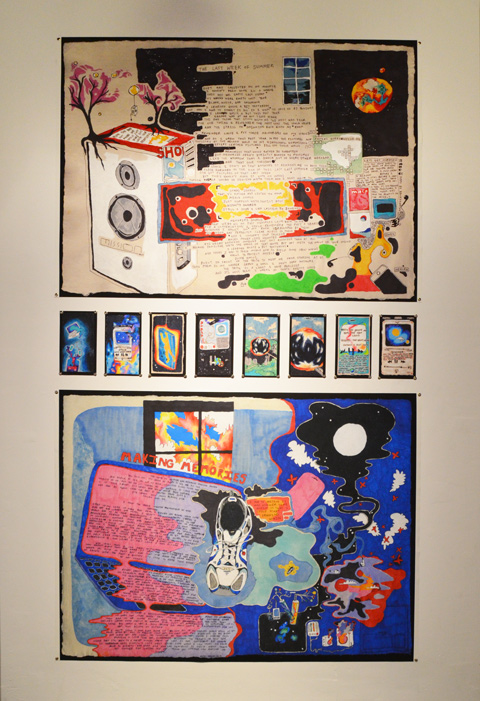
below: By Owen Herlin.  “The Last Week of Summer” on top and “Making Memories” on the bottom.

two photographers by student photographers, horizontal, one on top of the other. The top image is of a skateboarder doing a jump, in three sections, same man but in different stages of the jump

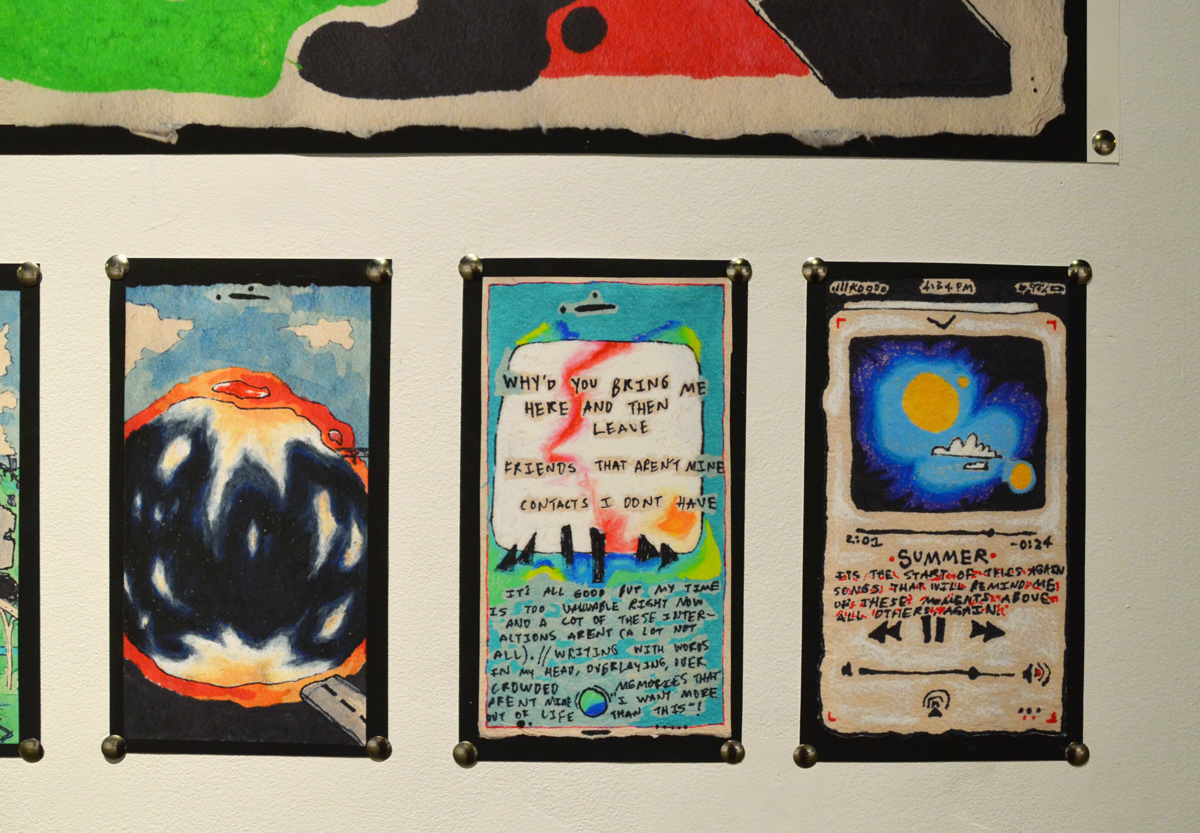
MIDDLE: Why’d you bring me here and then leave. Friends that aren’t mine. Contacts I don’t have.  It’s all good but my time is too valuable right now and a lot of these interactions aren’t ( a lot not all). // writing with words in my head, overlaying over crowded memories that aren’t mine.  “I want more out of life than this”!
LEFT: “Summer. It’s the start of this again, songs that will remind me of these moments above all others again. :


below: In the middle, a photograph by Tomoka Taki.  It is flanked by two images by Julia Kerrigan called “Unnatural 1” and “Unnatural 2”.   The opening sentence in the description of Taki’s work is: “I attempt to bridge a gap in communication between myself and older generations within my family.”

three photographs hanging on a wall. On either side is a picture of a woman in a pose, on green grass outside by Julia Kerrigan. In the middle is a black statue, Asian lion, in front of a light pastel coloured circular pattern

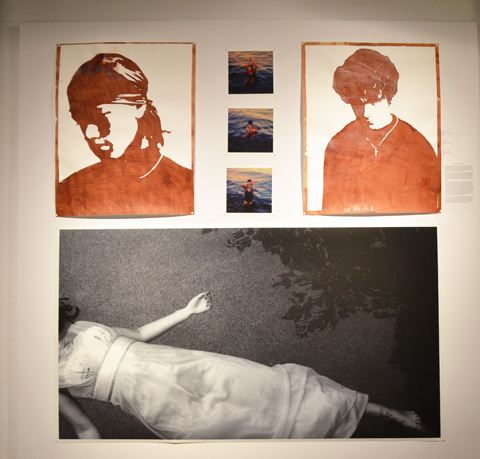
below: By Meredith Tudor-Doonan

six images. On the bottom is one large black and white photo of a woman (no head shown) in a long white dress that looks like she's washed up on the beach, lying on her back, arms out streteched. upper level has 5 photos, on the sides are large brown and white images of men's head and shoulders, with eyes looking downward. In the middle of the top part are three snapshots of a person coming out of the lake after swimming

two photographers by student photographers, horizontal, one on top of the other. The top image is of a skateboarder doing a jump, in three sections, same man but in different stages of the jump

below: by Kaya Joubert Johnson

large white wall hanging with long black fringe on top and bottom. words on the wall hanging say Do Not Touch the art, a work by Kaya Joubert

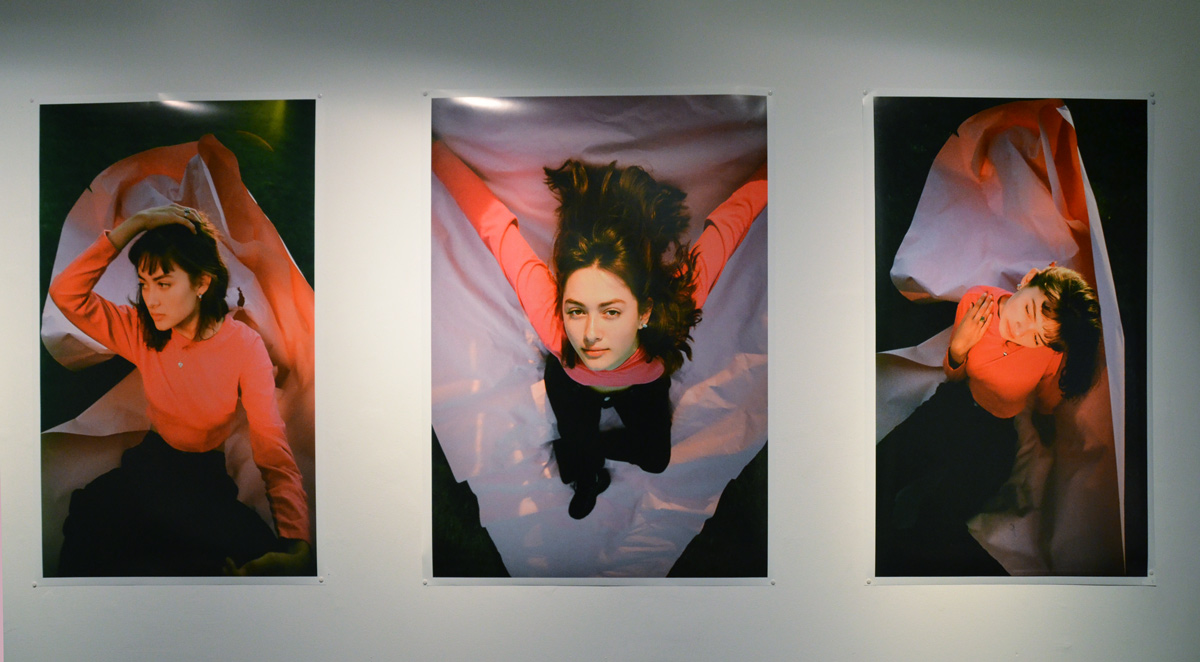
a triptych, three photos, of a woman in an orange long sleeved top, long brown hair, black pants, in three different poses,

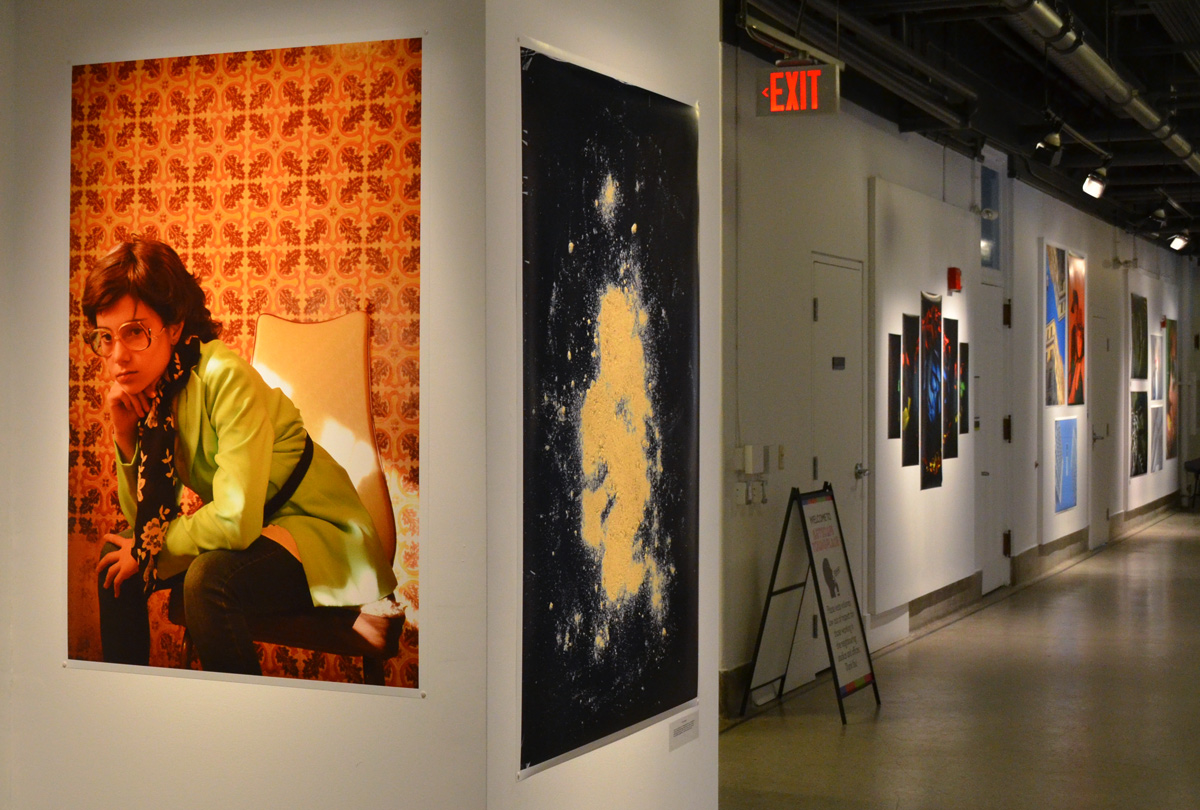
below: by Ethan Wilder, “Why complicate the physical world when I can do so in an imaginary one?”

black and white photos by Ethan Wilder

closest to the viewer is a portrait of a young woman sitting on a chair, leaning forward, very orange patterned wallpaper wall behind her

I’ve decided to put together two exhibits that are on at the moment in one blog post.  The first is ‘Same Dream’ by Omar Ba at the Power Plant Gallery and the second is ‘Reflections of Love’ by a group of photographers next door at one of the  Harbourfront galleries   The two exhibits don’t have a lot in common except the close proximity of the two galleries and the fact that I saw them on the same afternoon last week.

First, Omar Ba was born in 1977 in Dakar Senegal.   He studied art in Dakar and then in Geneva where he now spends part of his time.

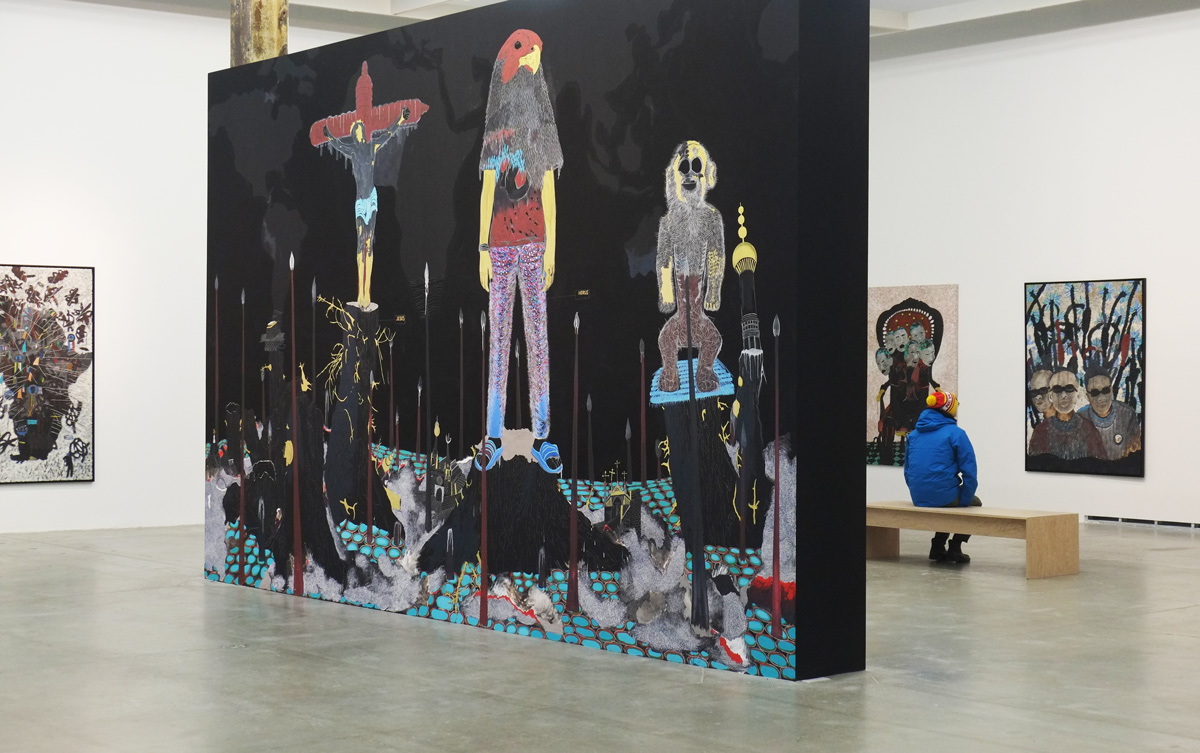
below: The large work in the middle of the gallery was painted in place.  That is Jesus on the cross.  The center figure has the word”Horus” painted beside it.  Horus was an Egyptian God who was usually depicted with a falcon’s head on a human body.   The painting depicts “a recurrent motif of birth, death and reincarnation across different cultures today” according to the description of the exhibit on Power Plant’s website .

gallery at Power Plant Contemporary, show of works by Omar Ba, large painting of Jesus and Horus in the middle of the room, a man sitting on a wood bench looking at some of the paintings on the wall

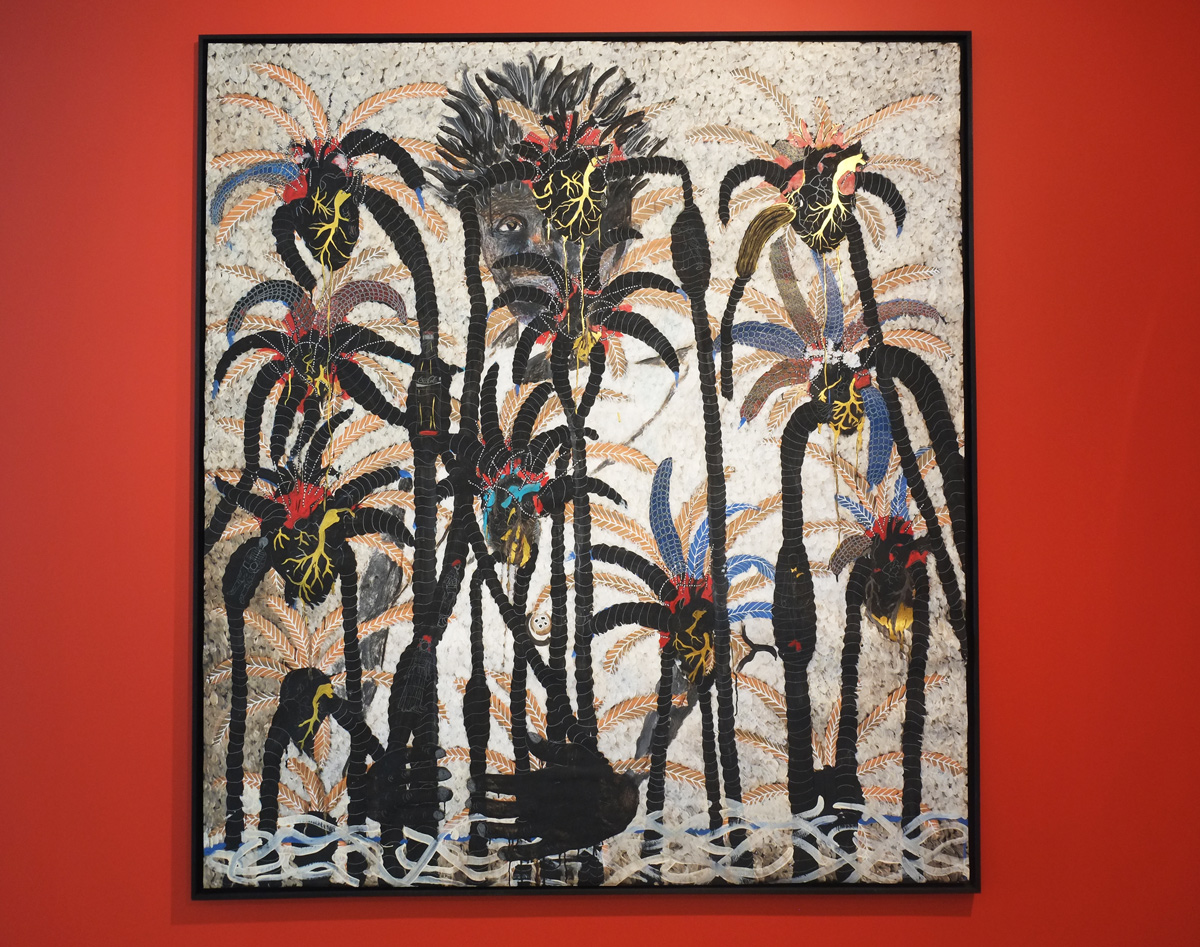
below: ‘Naufrage’ 2014.  Dictators, despots, and authority figures can be seen in many of his paintings, often mixed in with scenes of plants and/or animals.

Naufrage, a painting by African artist Omar Ba on display at the Power Plant Contemporary Art Gallery, a black man in uniform peaking out from behind a lot of plants and their stems

below: Similar to the one above, except hear the plants are based on fairly realistic human hearts with black aortas and yellow blood vessels.

Omar Ba painting of a man behind plants with human hearts on top of them

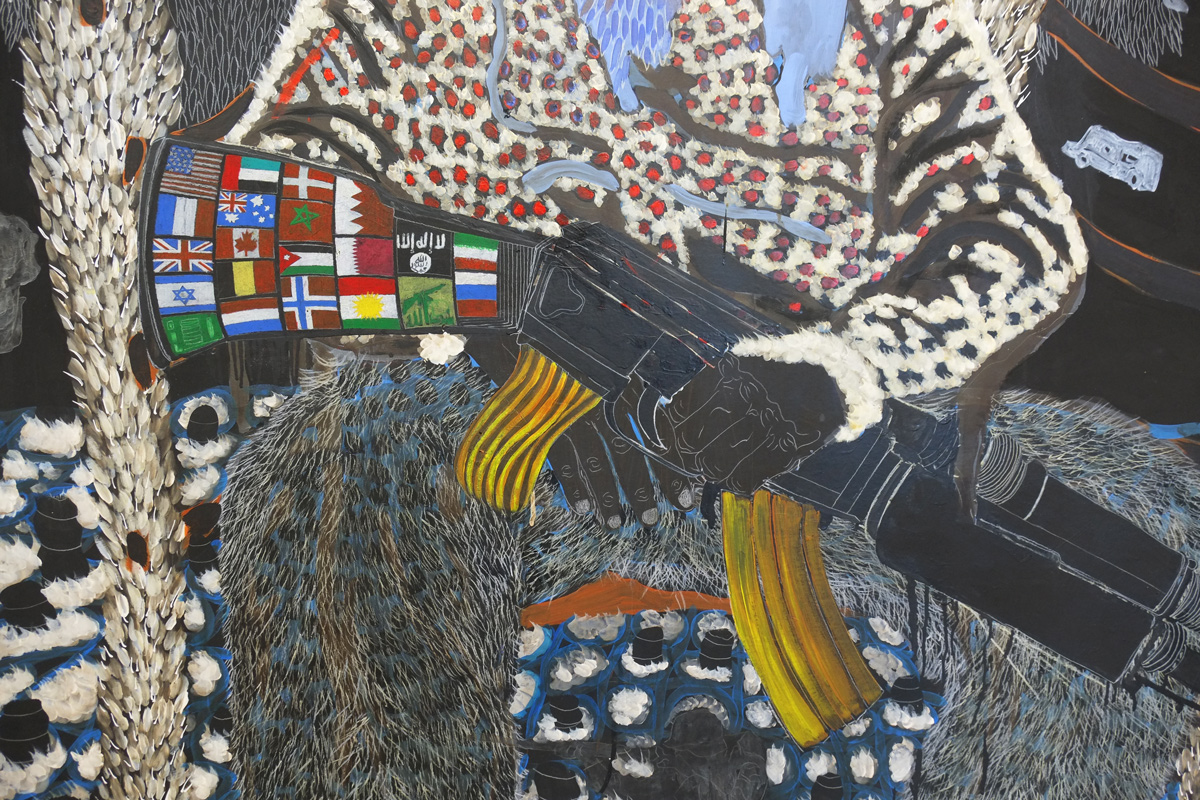
below: Ba’s paintings are full of small details as can be seen in this close-up of part of ‘Autopsie de nos consciences 2’, 2018.   Name the flags?

detail from an Omar Ba pinting, a black man holding an automatic rifle. The butt of the gun is covered with small flags from different countries

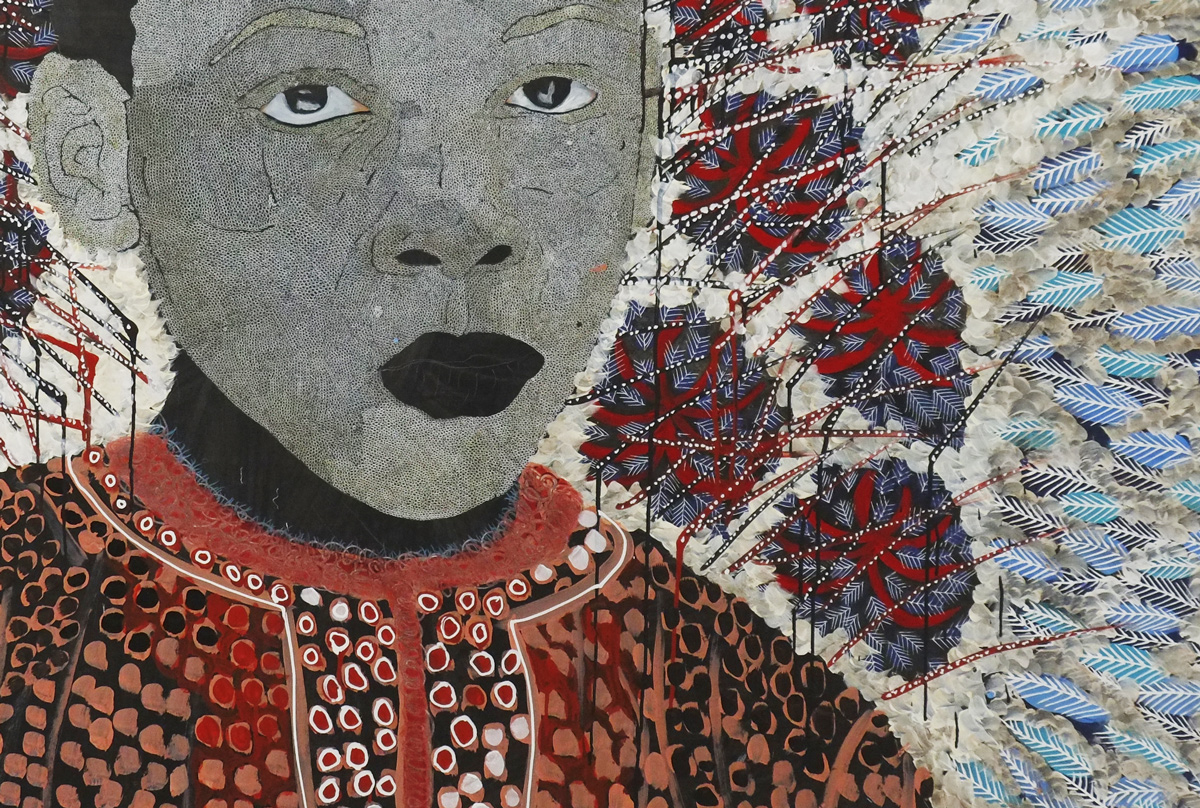
below: More details but from a different painting.

close up of a painting by Omar Ba of a boy's face in grey dots, wearing a patterned shirt

***

‘Reflections of Love’ is a photography exhibit on at Harbourfront for the month of February that features the work of five artists.

As you enter the gallery, the words on the wall say, “In honor of Black History Month, this thoughtful photography exhibit explores the many forms of love found within our black communities through reflections of self, identity and acceptance. Power within vulnerability and healing can only come through togetherness and conversation. This is a true celebration of exemplified strength in people with deep roots and heritage.”

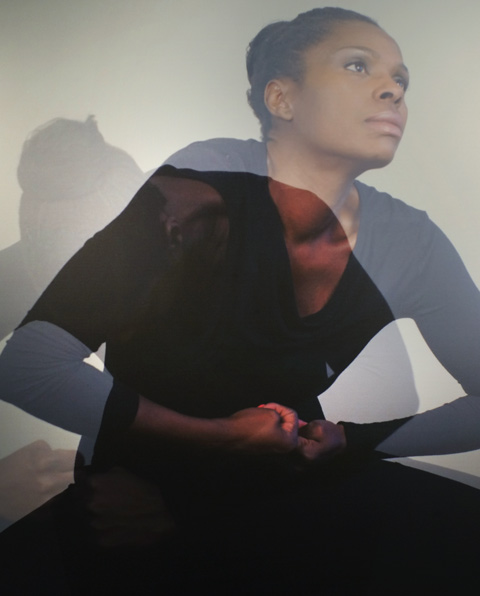
below: On the back wall, a series of images by Stella Fakiyesi.  Fakiyesi was born in Nigeria and raised in Toronto.

part of art gallery at Harbourfront, wood floors, black bench in the middle, some photos on the two side walls, four large photos on the back wall, a series of four photos by Stella of the same black woman in a number of poses.

part of a photo by Stella Fakiyesi of a black woman, two images superimposed on one another

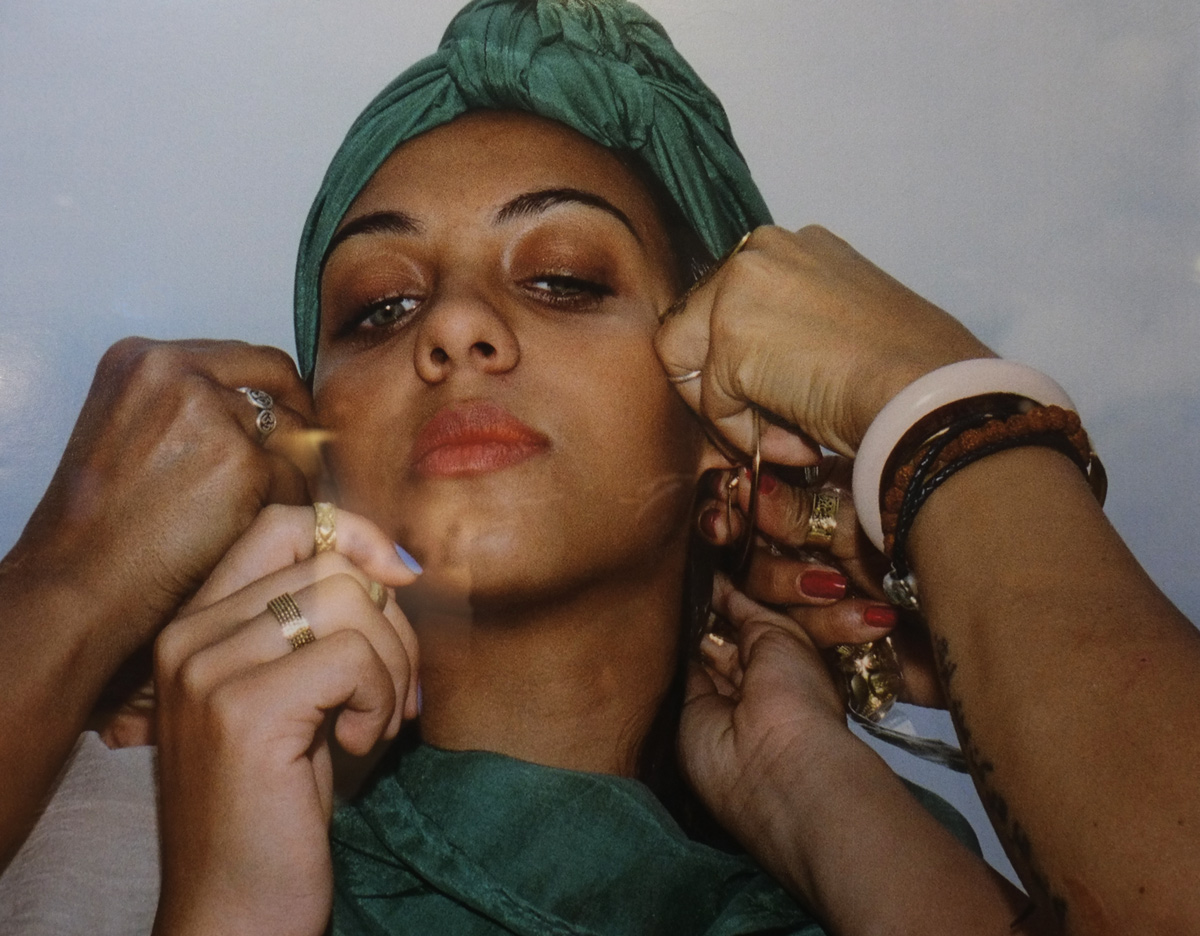
below: Photo by Sean Brown

photo by Sean Brown of a black woman wearing a green turban, a number of hands are tugging at her ears.

below: Photo by Jah Grey

black and white photo by Jah Grey of a black man holding a large round mirror over his head and in front of his face

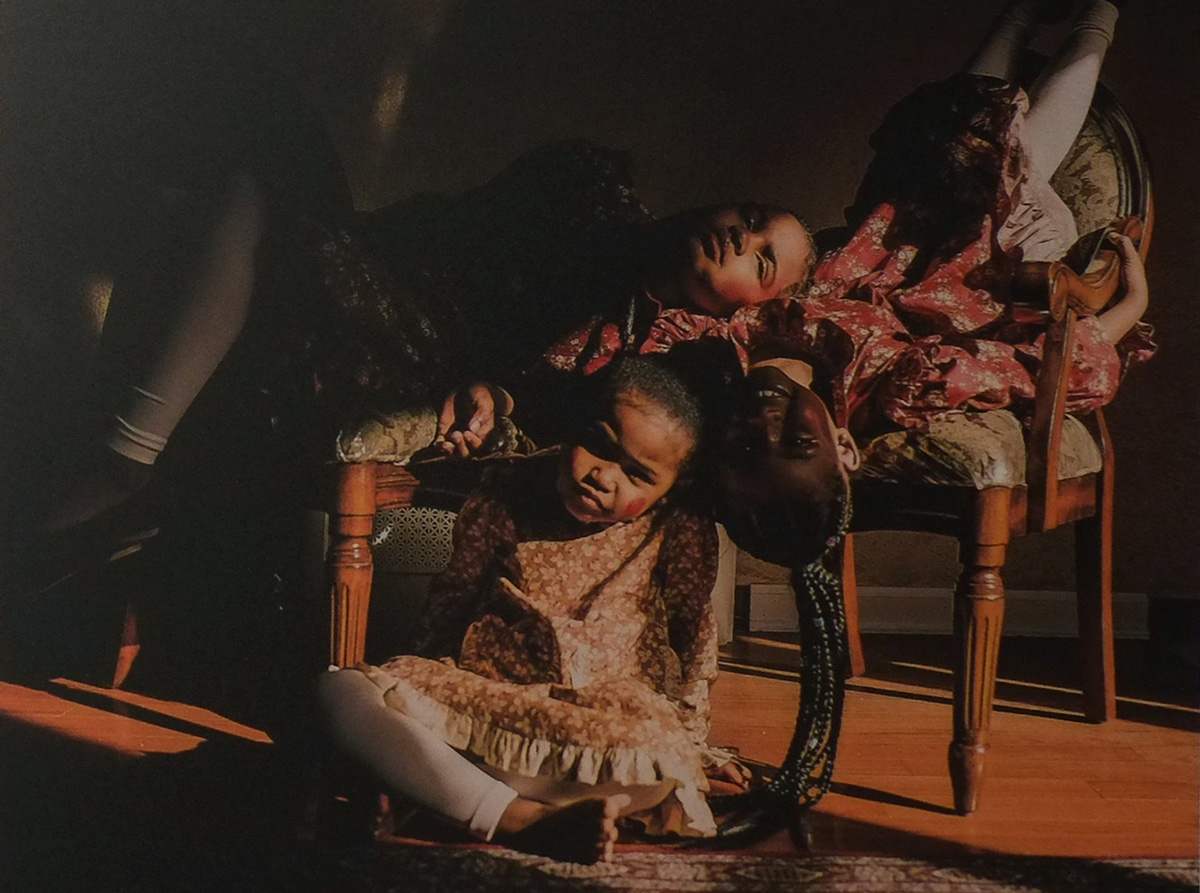
below: Two photographs by Quil Lemons

two portraits by Quil Lemons, on the left is a black woman and on the right, three black girls

below: A closer look at the one on the right shows a wonderful tangle of three girls.

a close up of portrait of three girls by Quil Lemons


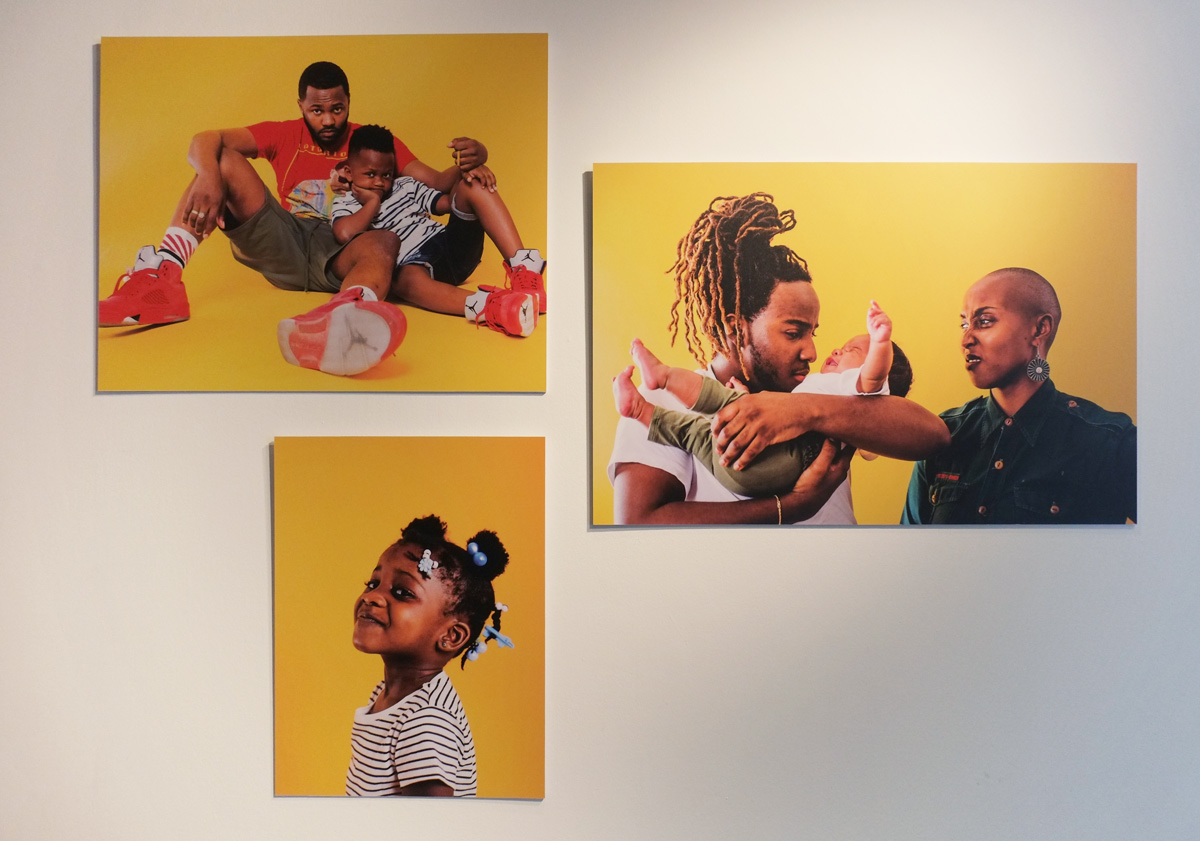
below: Three portraits by Yannick Anton

three photos by Yannick Anton hanging on a gallery wall. All three are portraits of black people with bright yellow backgrounds, one is a father and young son, one is a young girls and one is a young child with parents.

***

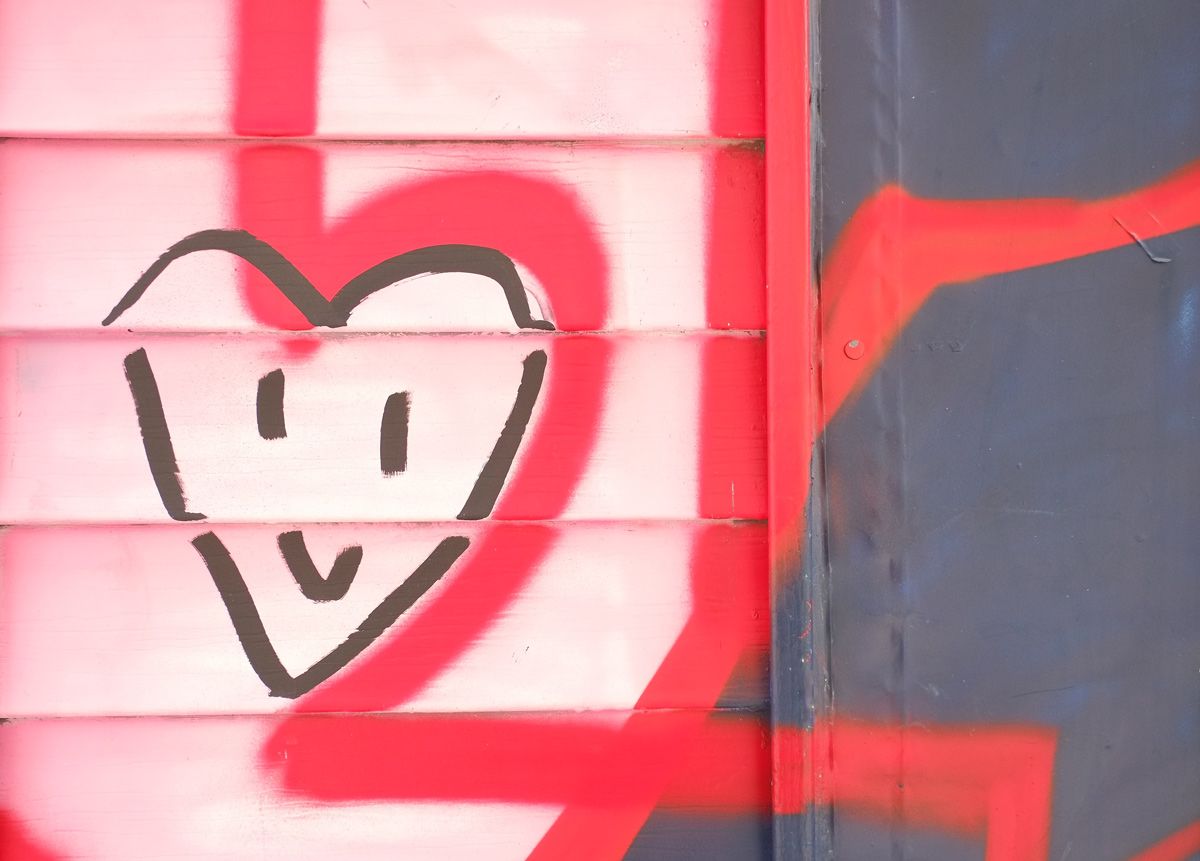
Happy Valentines Day!

smiley heart on pink wall with red spray paint lines around

the backs of two people, a man and a woman, as they look at framed photographs hanging on a wall at the Ryerson Image Centre

On display at the Ryerson Image Centre at the moment is a collection of more than 200 photographs called “True to the Eyes”.  These photos were part of a collection amassed by Howard and Carole Tanenbaum over the past forty or so years.  The images span the history of photography.  There is a bit more information on the Ryerson Image Centre website.


below: An old tintype of three hunters and their dogs.   The process was developed in 1853 and was popular during the 1860s and 1870s.  Tintypes were printed directly on metal (but not actually on tin)- a photographic emulsion was applied to a metal plate.

an old tintype photo of three male hunters in sepia tones, framed in an elaborate picture frame and hanging on a dark grey gallery wall

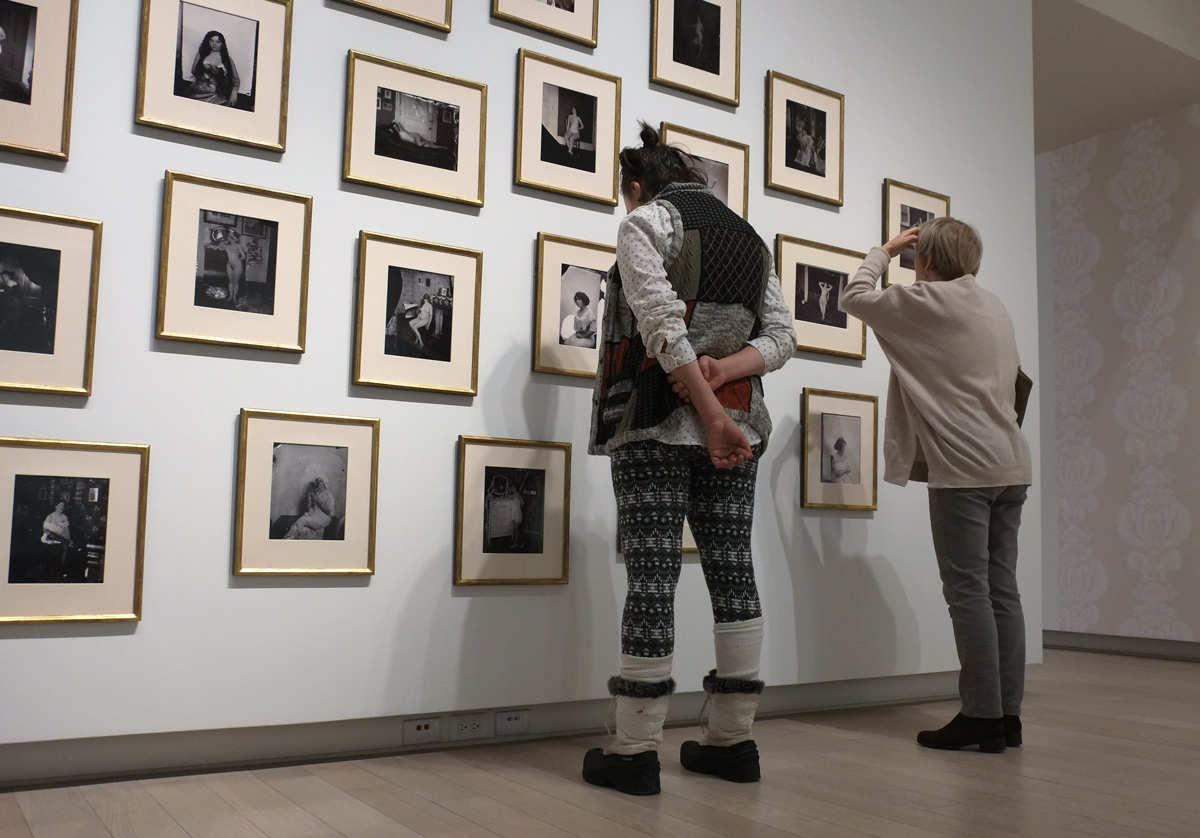
Two women are looking at a wall covered with framed black and white photos at the Ryerson Image Centre

below: Two wonderful portraits by Rafael Goldchain

two colour portraits by Rafael Goldchain on a gallery wall.

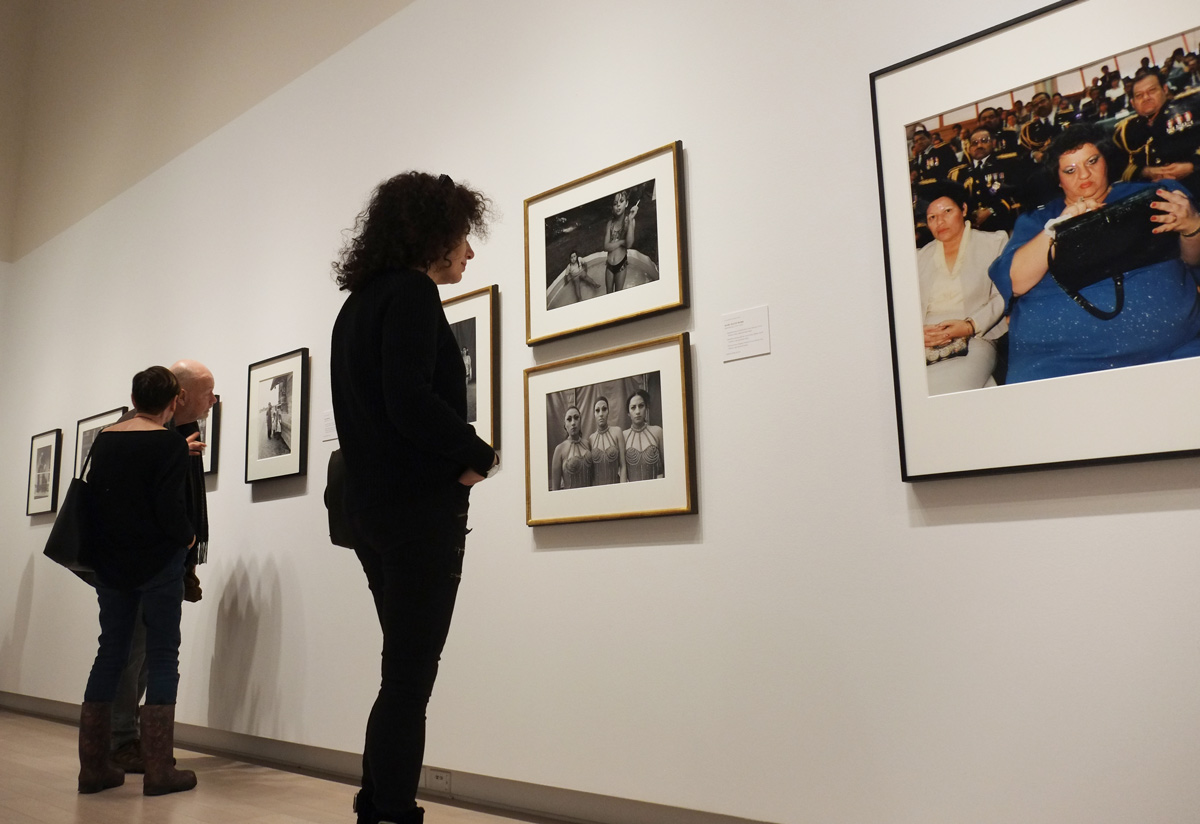
people looking at framed photographs being exhibited at Ryerson Image Centre

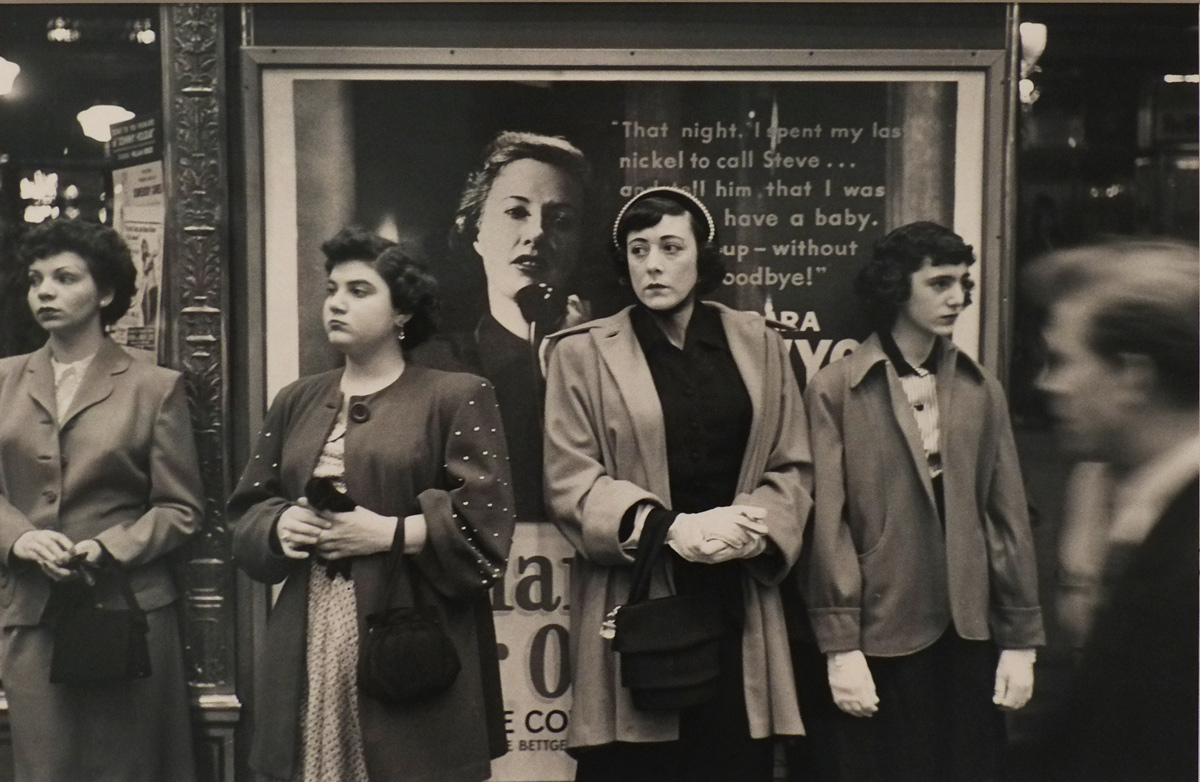
below: New York City, 1947, a black and white photo by Louis Faurer (1916-2001, American).  Faurer did a lot of fashion photography for magazines of the day but he is best known for his street photography in New York City and in Philadelphia.

black and white photo from New York City in 1947, by Louis Faurer, hanging on the wall at the Ryerson Image Centre - part of the Howard and Carole Tanenbaum collection.

below: Also on display at the Ryerson Image Centre is a small collection of photos and items from the history of Kodak in Toronto.  The exhibit was organized by Ryerson students.

photo of a large billboard advertising the new home of Kodak in Kodak Heights, Keele Street, Toronto, back when it was being built.

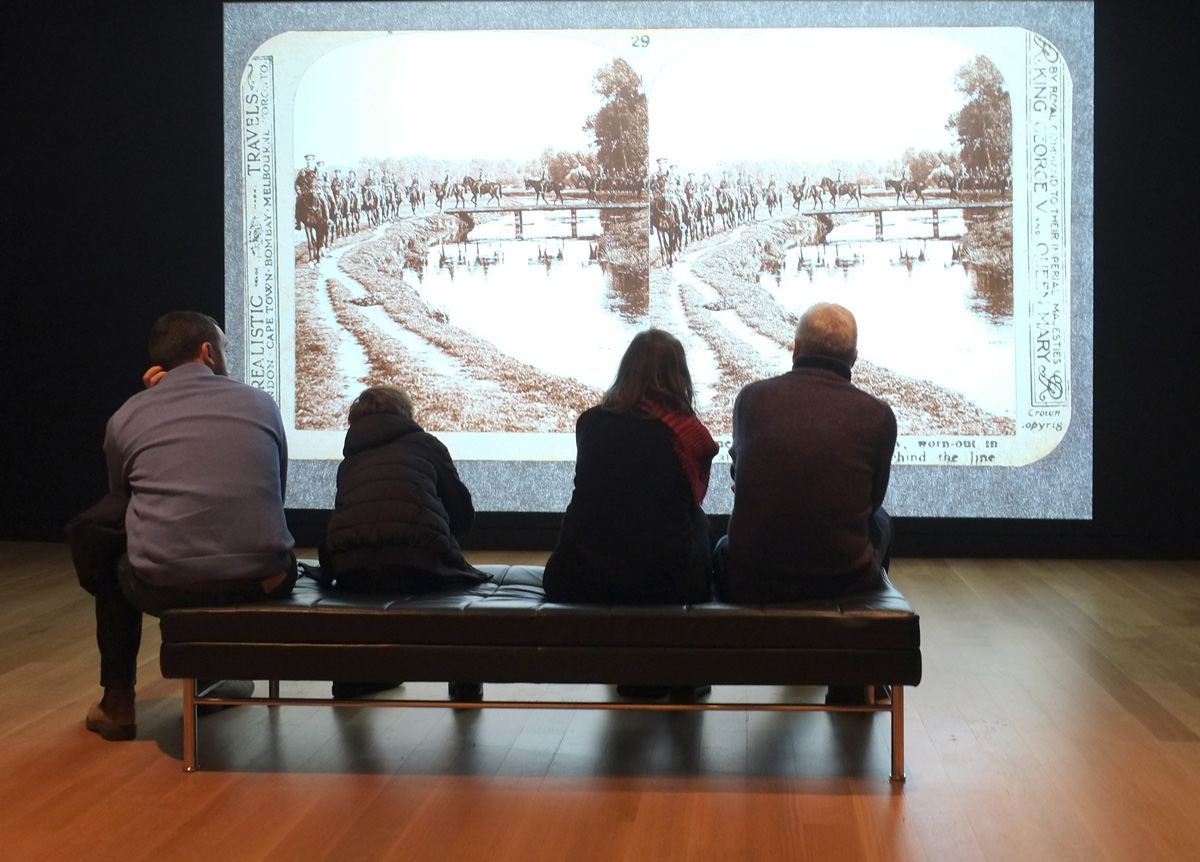
If you are interested in the history of photography or in vintage photos, part 2 of the exhibit of photos from the WW1 era is on display at the Art Gallery of Ontario.

four people sitting on a bench in a gallery looking at a large video screen that is showing images of world war one era stereoscope pictures.

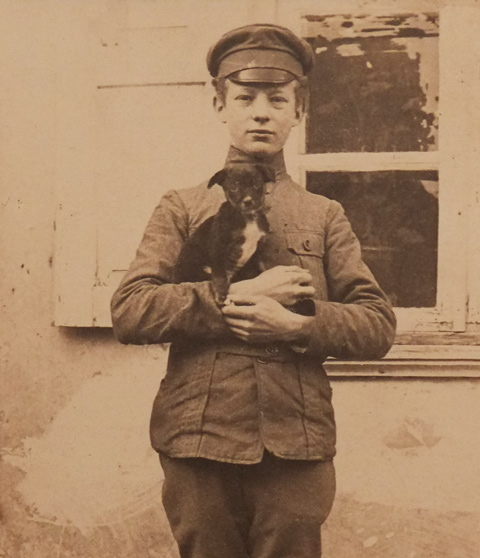
part of an old sepia tone photo of a young man in a soldier's uniform, holding a small dog, World War 1 era, hanging on a wall at the Art Gallery of Ontario

“True to the Eyes” ends 7th April 2019
Part 2 of Photography: First World War ends 14th April 2019,

Anthropocene
an exhibit of photographs by Edward Burtynsky
highlighting the mark that man is leaving on the environment.

below:  Lithium Mine #1, Salt Flats, Atacama Desert, Chile, 2017 .  The Salar de Atacama is the largest salt flat in Chille, located in the driest non-polar desert in the world.  This is also the world’s greatest source of lithium.  The shades of yellow, green, and blue represent the different stages of lithium evaporation.

coloured ponds in a lithium mine in Chile, shades of yellows, greens and blues

below: A plastics recycling plant, Dandora landfill in Nairobi, Kenya, 2016

in an art gallery, a large photo of people and a dog among a large garbage dump

people viewing art exhibit at AGO, photos by Edward Burtynsky

below: Uralkali Potash Mine #4, Berezniki Russia, 2017.  This Russian mine includes about 3000 km of underground tunnels created by machines called combines used in the potash extraction process.   These spaces are dark.   The spiral patterns are left by the combines.

photo by Edward Burtynsky of the interior of an underground tunnel in a potash mine in Russia.

below: Morenci Mine #2, Clifton Arizona USA, 2012.  Part of this photo shows the liquid reserves of waste left over from the copper extraction process.  The marble like colours are the result of leached heavy metals.   Copper smelting requires between 1500 and 3000 litres of water for every to of processed ore.

large copper mine photograph

people viewing large coloured photos by Edward Burtynsky at the Art Gallery of Ontario


The annual World Press Photo Exhibit is on at the Alan Lambert Galleria once again.

below:  Finding Freedom in the Water by Anna Boyiazis, 2nd place, People stories.

World press photo exhibit at Alan Lambert Galleria - a woman stands in front of a series of photos of African women learning how to swim

below: Walking past four photos by Luca Locatelli about the environment, 2nd prize stories.   These were taken in the Netherlands, a country that is the world’s second largest exporter of food (by value, after the USA).

World press photo exhibit at Alan Lambert Galleria, a group of people walk past 4 of the photos from the environmental category, photos taken at an experimental farm in the Netherlands

below: On the right is “Jump”, by Thomas P. Peschak featuring a group of Rockhopper Penguins on Marion Island.   Second prize, nature singles.

World press photo exhibit at Alan Lambert Galleria, a man comes up the escalator towards some of the photos in the nature category and the people who are looking at them.

below: ‘Rohingya Refugees Flee into Bangladesh’, by Kevin Frayer.  General news, 2nd prize stories.

a woman stands in front of a photo of a crowd of people, with a boy in the front of the crowd who is crying

below: “Wasteland” by Kadir van Lohuizen.  A look at garbage in different countries.   First prize, environment stories.

World press photo exhibit at Alan Lambert Galleria, two men looking at one of the photos, one man is pointing to something in that photo

below: First prize winner in Long Term Projects,  stories, “Ich Bin Waldviertel ” by Carla Kogelman –  The life of two rural Austrian girls since 2012.

World press photo exhibit at Alan Lambert Galleria - a black and white series of photos about two girls in Austria.

looking down Hazelton Ave towards Yorkville Ave., two older houses, now used as commercial businesses, one half painted blue and the other half is red.

It’s still May and the CONTACT Photography Festival is still on so I am still trying to see as much as possible.   Yesterday afternoon I went wandering in Yorkville where there is lots to see and do besides a couple of CONTACT exhibits.

below: Captain Canuck.  I started with the TD Gallery at the Toronto Reference Library.  It wasn’t that long ago that I was there (April I think) but the exhibit has changed.   It is now ‘Alter Ego: Comics and Canadian Identity’.  Isn’t Captain Canuck the most famous Canadian superhero?  He first appeared in 1975.

painting of Captain Canuck, from the chest up, one arm raised to shoulder height

below: Not so well known – The cover of the book ‘Nelvana of the Northern Lights’ by Adrian Dingle (1911-1974).   Nelvana was Canada’s first female superhero; she first appeared in 1941, a few months before (American) Wonder Woman.  Nelvana’s superpowers included turning invisible and traveling at the speed of light along a ray of the Northern Lights.  According to Wikipedia, she “visited lost kingdoms under the ice, journeyed to other dimensions, and fought against the Axis Powers during World War II, eventually taking on the secret identity of secret agent Alana North.   Her last adventure was published in 1947.

book cover, book called Nelvana of the Northern Lights, a comic book by Adrian Dingle, 15 cents, 68 pages, hard cover

below: This structure was built in 1876 as a Carpenter Gothic Revival Style church – the Olivet Congregational Church.  It has been the home of the Heliconian Club since 1923.  This women only club was formed in 1909 and is still active today supporting women in the arts.  There is a photo exhibit on there at the moment but viewing is by appointment only (it is a club not a gallery after all).

pale blue wood building, originally a church, now the home of the Heliconian Club on Hazelton ave. Bright blue doors, two, rose window,

below: For CONTACT, the Lomas Gallery on Yorkville Ave is featuring a few large photos of cityscapes that are full of tall buildings.  The one behind the red couch is ‘NoMad New York’ by Christopher Woodcock.

Lomas Gallery in Yorkville, bright red oval shaped couch in front of a wall with a large photo of a city scene, lots of skyscrapers with lots of windows, by Christopher Woodcock, plus words on the wall that say Contact Festival, City Obscure, Windows on either side of the wall with people passing by

below: On the wall beside is ‘[a]DCLXI’ by Amyn Nasser.

on a gallery wall, Lomas Gallery, a large photo, [a]DCLXI by Amyn Nasser of a wall of glass skyscrapers with lots of windows, on the wall beside is another photo in which Nasser's photo is reflected.

below: It’s not a sculpture or a statue, but this red faced mannequin caught my eye. Maybe next time he’ll remember his sunscreen.

two male mannequins in a mens wear store window, one has a very red face, also a picture of a man in a black suit with a bright blue background is in the window

below: The clock tower of the Yorkville firehall. One side seems to missing its clock face.

the clock tower of Yorkville fire station with a reflective glass building behind it. A Canadian flag is flying on top of the firehall clock tower.

below: Brendan Meadows’ black and white portraits hang on the walls of the Liss Gallery in an exhibit titled ‘Ipseity’.  These were printed as silver gelatin selenium-toned lith prints by Bob Carnie from negatives made from digital images.  The images were also  manipulated with the Sabatier effect (solarization); this results in an image that is wholly or partially reversed in tone. Dark areas appear light or light areas appear dark.

interior shot, Liss Gallery, frames black and white portraits on the walls

below: Posters on hoardings add a little life at street level to the construction sites in the area.  This set features businesses and sites in the area including the ROM.

posters on hoardings in front of a construction site - picture of the ROM at night, picture of the interior of a menswear store, man trying on a suit

below: Some colourful art deco style posters.

art deco posters on hoardings in front of a construction site

art deco posters on hoardings in front of a construction site inclujding a Vogue picture

below: Prepared for anything!  With a yellow duckie, handcuffs and binoculars, Batman and his Robin hand puppet prepare to take on the forces of evil!  These are sculptures by Patrick Amiot.

a metal junk sculpture by Patrick Amiot, outside, by the front door of an art gallery, batman, with a very small robin in one of his hands.

below: Part of the Miraim Schiell gallery is devoted to Amiot’s work.

a wall mounted artwork by Patrick Amiot of a man ice fishing with his dog, created from junk

an artwork on a gallery wall, by Patrick Amiot, of the front of a Spadina TTC streetcar, crowded with driver, man, and dog,

below: This large RCMP mountie and his dog stand behind the gallery.

metal junk sculpture by Patrick Amiot of a mountie and his dog, outside, behind a gallery in Yorkville

below: Enjoying the wonderful spring afternoon on Cumberland.

outside, park in Yorkville, tall trees with leaves just coming out, spring, people sitting on chairs under the trees, talking, reading, phones, drinking,

statue of a bear outside, life size, a painting in a glass enclosed box is behind him

below: Oh.. that second mountie that I alluded to in the title of this post – he was on the wall at the Alter Ego exhibit.  This one.   Just don’t call him Dudley Do-Right.

large picture of a mounti on a horse with a gun in his hand, on a wall in a gallery

below:  This is either ironic or sad.  The first few lines of text say “In the the 1960s and 1970s, Yorkville village was the heart of Canada’s bohemian, counterculture community”.  As I took this picture a new Bentley with dealer plates drove past.  I looked around and the ‘counterculture’ of 40 to 50 years ago has been replaced by designer boutiques, high end stores, fine art galleries, and restaurants with linen napkins.  Not a lot of music happening here.  Full transcription is below.

plaque to Yorkvilles music scene, Heritage Toronto black and white plaque, from 2016

“In the the 1960s and 1970s, Yorkville village was the heart of Canada’s bohemian, counterculture community. More than 40 clubs and coffee houses nightly featured folksingers-songwriters, including Ian & Sylvia, Gordon Lightfoot, Joni Mitchell, and Neil Young, who performed some of their first compositions in these smoky venues.
Yorkville’s first coffee house, Club 71, was opened by Werner Graeber in 1959. By 1964, Yorkville had become a nurturing environment not only for folk music, but also for pop, blues, and later, psychedelic rock. Hippies and teenagers flocked to these unlicensed venues, which offered an alternative to Yonge Street bars.
Yorkville was also home to three sound-recording studios, taping major acts such as The Guess Who, Lighthouse, and Ann Murray. With its vital role in fostering a wealth of talent, the Yorkville scene inspired a generation of songwriters and led to the rise of a new Canadian sound.”

outside pizza pizza, man inside eating, another man outside looking at mural on the wall

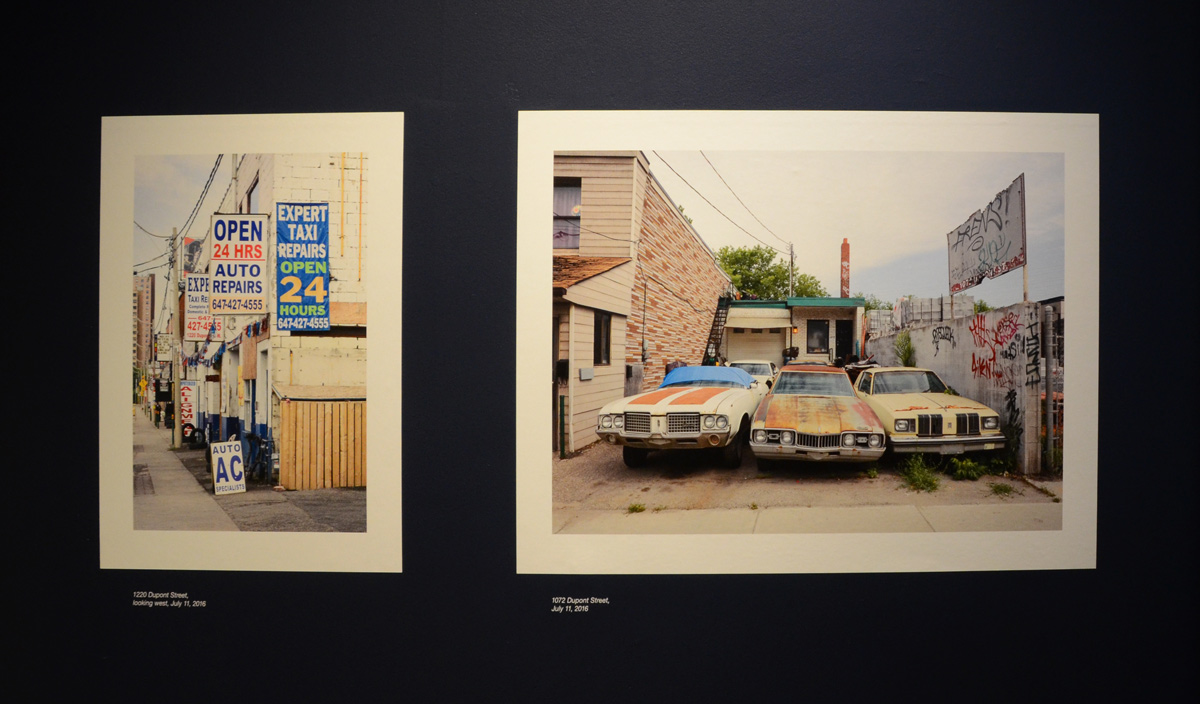
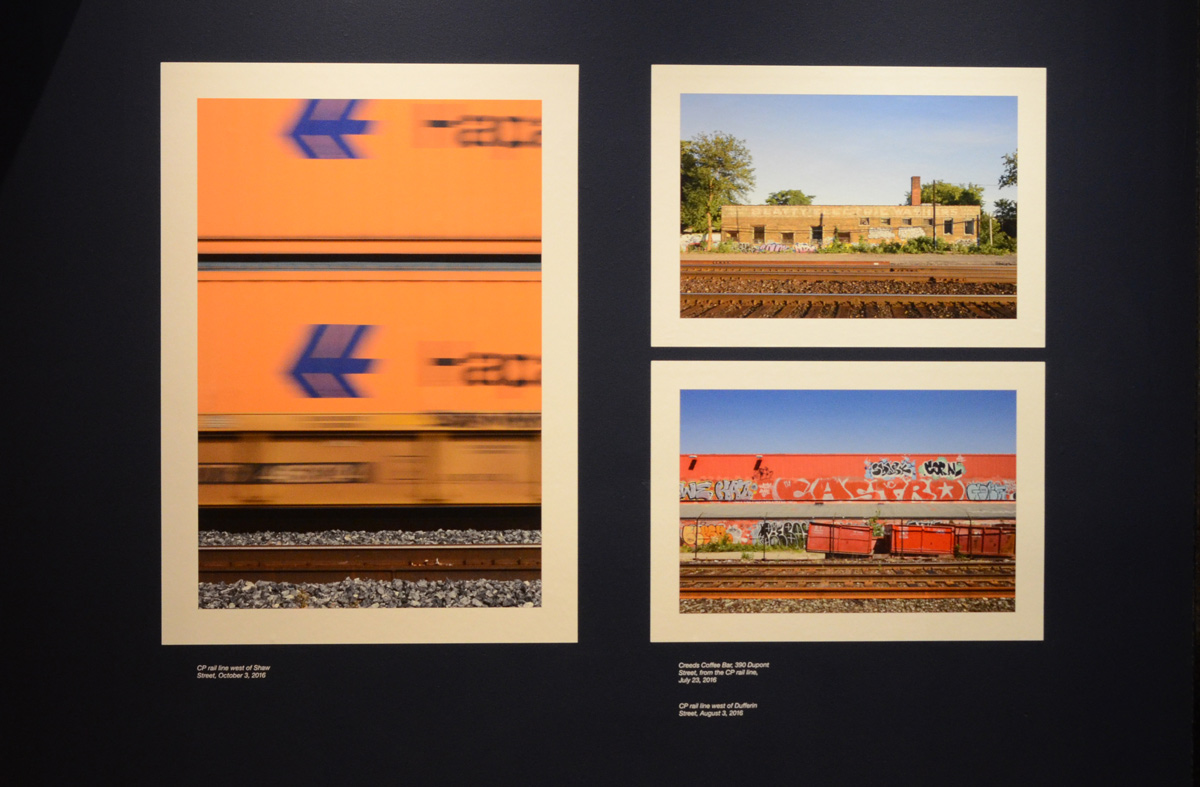
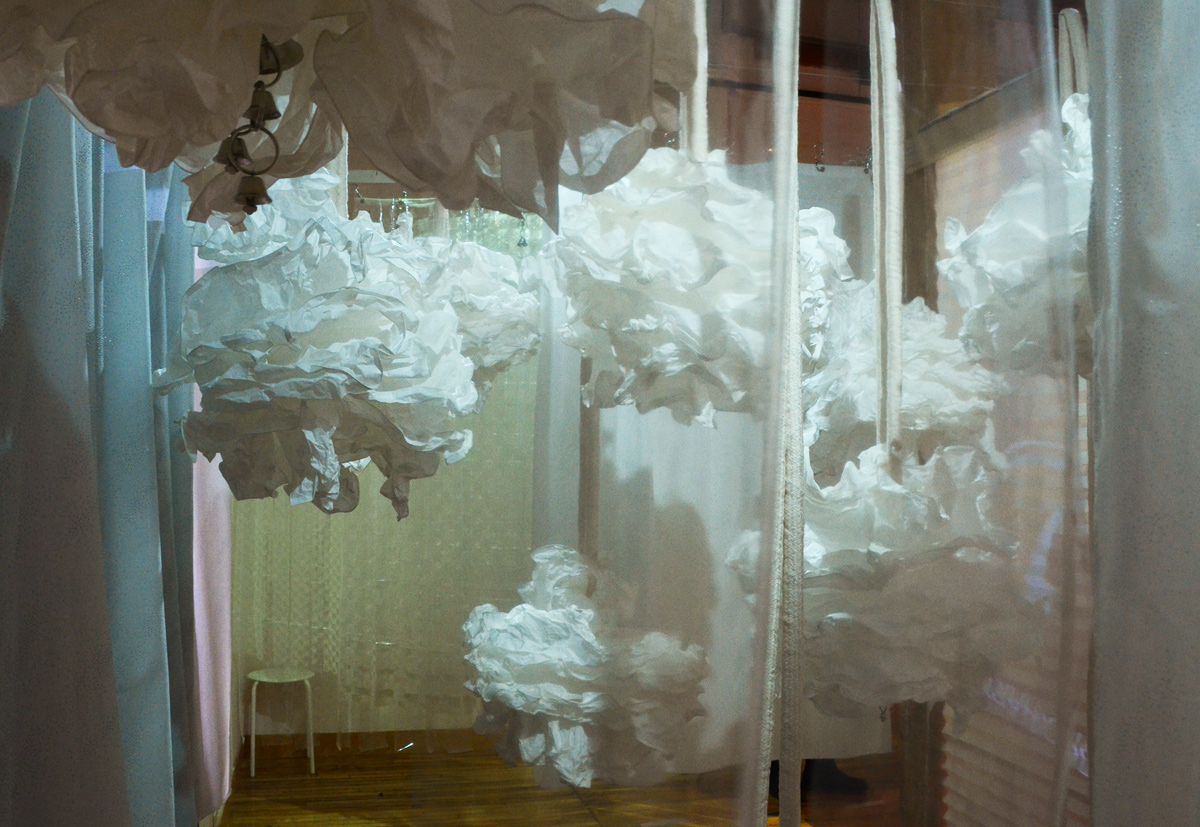
This little walk starts with the artwork of Marleen Sleeuwits and her ‘Not the Actual Site’ exhibit at Brookfield Place (Allan Lambert Galleria).

A short walk from Brookfield Place westward along King street towards Metro Hall….

where pictures from John Edmonds ‘Hoods’ series are on display (as are the people who walk past!).

Across the street from ‘Hoods’ is Caroline Monnet’s, ‘History shall speak for itself’.  These photos are the south and west wall of TIFF.

caroline Monnet's large mural on the side of TIFF building, King street, people walking past, bikes parked in front of the art.

Just a bit farther west (at Spadina) you can find a large purple hued image by Felicity Hammond on the north wall of 460 King St. West.

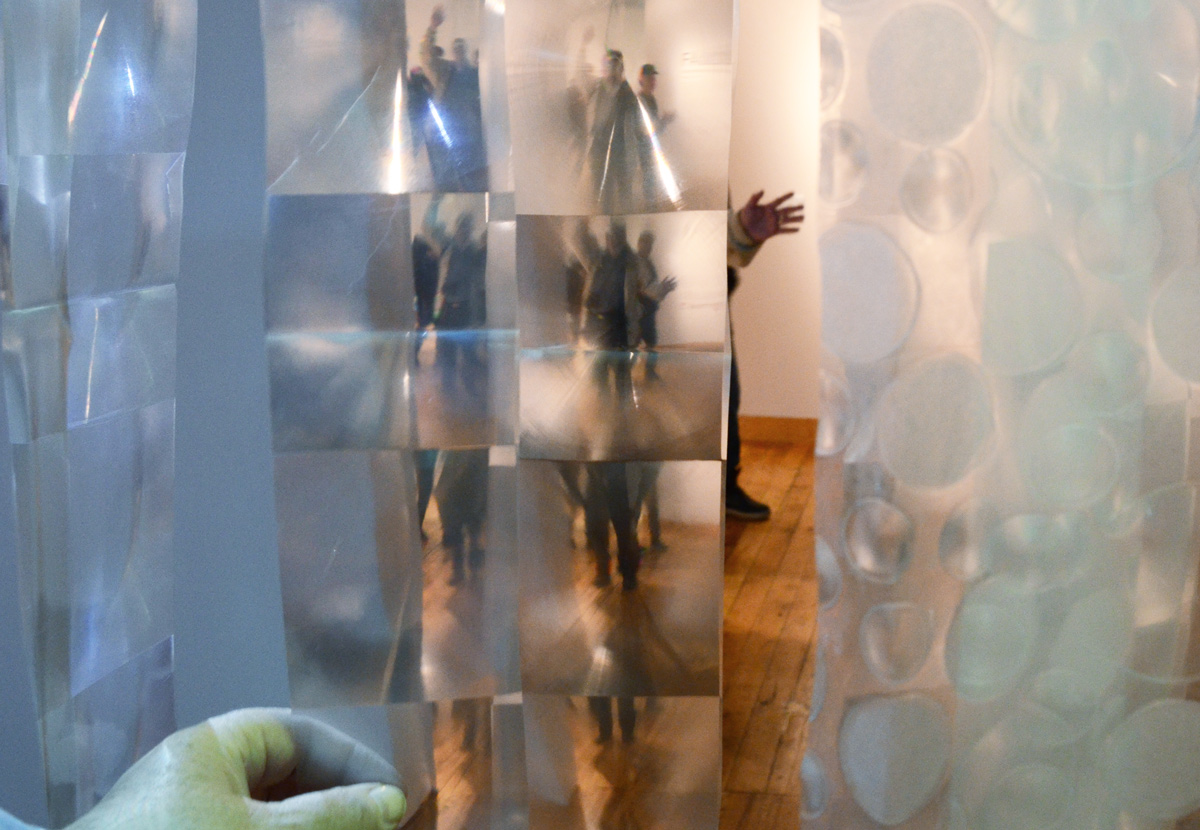
A few more smaller works by Felicity Hammond are in the Contact Gallery at 80 Spadina – the building immediately north of the parking lot where you can find the image above.    The gallery glowed in pink and purple light.

below: Object shapes are cut outs from a thin sheet of acrylic on which photos were printed.  These shapes are held up by clay blobs.

And that’s our tour for today!

May is CONTACT Photography month in Toronto and like in previous years, some galleries start the month early.  One of these galleries is the Ryerson Image Centre.  This year, in the main gallery they are featuring the work of Shelley Niro, the 2017 winner of the Scotiabank Photography Award.  You may have seen some of her work at the AGO where her shirts series of photos is also on display.   Outside the building, in Devonian Square, there are large colourful abstract images glued onto large rocks.  These are the work of Scott Benesiinaabandan, a Montreal-based artist from the Obishikokaang Anishinabe First Nation.

below: First, the poster/sign at the entrance to the Ryerson Image Centre.  The four images on the left are from Niro’s shirt series of pictures – the full series is shown inside the gallery.  There is also a video from 2003 that features this woman and the T-shirts standing in this location.

4 photos by Shelley Niro, of indigenous woman wearing a white t shirt with words on them, plus aboriginal/original pictures of the artist.

below: A series of three photos framed together titled ‘Mohawk Worker’.  It is one of a series of six triples called ‘This Land is Mime Land’ (Apparently there are 12 in the series, but only 6 are on display here).  Each set in the series has an old sepia toned black and white photo in the center, a casual posed photo on the right (of the same woman in each), and a posed, hand coloured ‘parody’ photo on the left.  In this case, she is dressed in working clothes and a hard hat, but she’s applying lipstick and has a small compact mirror in her left hand.   Other works in this series include,  ‘Love Me Tender’ with the woman dressed as Elvis, and ‘Final Frontier’ with the woman dressed in a Star Trek outfit.

three pictures frames together, on the left is a woman in workmen's clothes and hard hat but putting on lipstick, in the middle is a vintage black and white photo

below: One of another set of pictures.  Hand painted black and white photos of these women posing (hamming it up) for the camera.  They are on the yellow brick road, and like Dorothy on her way to see the Wizard, they are wearing red shoes.  “Red Heels Hord” 1991.   It, like a lot of her work, challenges the stereotypes and cliches of Native American women.

a colourized black and white photo of three women hamming it up for the camera. All wearing red shoes and walking on a yellow sidewalk, beside a metal fence. by Shelley Niro

Shelley Niro was born in 1954 in Niagara Falls NY and grew up on the Six Nations of the Grand River Reserve near Brantford.  She graduated from OCA and a masters in Fine Art from the University of Western Ontario.

below: Four photos from “Are You My Sister?” 1994.   This is only part (4/12) of the series.  The glass was very reflective so you can see the shirt series that was on the opposite wall.  Like most of her work, the matte has been hand decorated.  In this case, patterns are made with performations in the matte.

four pictures of women, standing, matted in orange, orange tone to the photos, relfections of other photos in the glass, art by Shelley Niro

Scott Benesiinaabandan’s installation, ‘newlandia: debaabaminaagwad’  is in two parts.  First, on the sidewalk in front of the statue of Egerton Ryerson, the man who founded the University, is an image that has been glued to the ground.   Parts of that statue have been used in the making of the image – it’s not too easy to see in this photo, but the top part of the image is the same shape as the top of the statue of Ryerson.  Maybe you can see the purple draped head and the outstretched arm.  It’s like the statue has been draped with cloth and/or pictures.  In fact, the images used to create this were taken from photographs that Benesiinaabandan took of three First Nations flags.

below: The other part of ‘newlandia: debaabaminaagwad’ consists of large images adhere to rocks in the square, taking on the texture of the rocks.

Devonian Square in Toronto, large open area with wading pool (empty at the moment) and large boulders, small trees growing around the edge of the pool, two people walking through the pool area, a woman walking her dog on the sidewalk beside, rocks covered with artwork

rock covered with a digital image, glued on it, outside, trees around

Both of these artist have their own websites:
1.  Scott Benesiinaabandan
2.  Shelley Niro