Posts Tagged ‘GO’

Oriole GO station is on the Richmond Hill line.  It is located at Leslie and the 401 highway and for many years the parking lot for the station was under the 401.  With the recent changes to the Leslie/401 interchange, and all the construction that that entails, this parking lot is gone.   Also, the old station building is no longer in use and the platform has been moved slightly north.  A new metal pedestrian bridge has been built over the tracks south of the station to replce an older wood structure – this provides access to the residential area to the south.
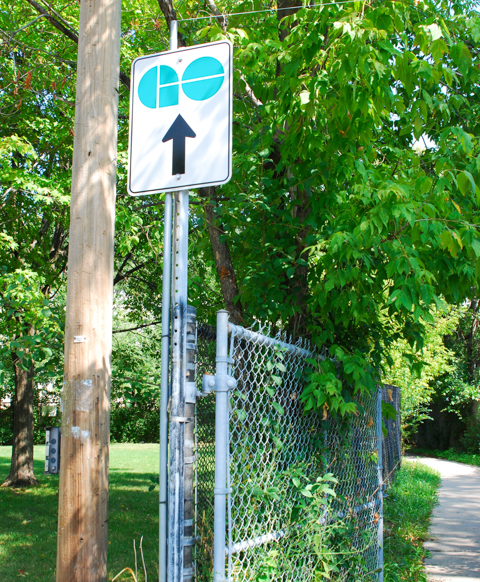
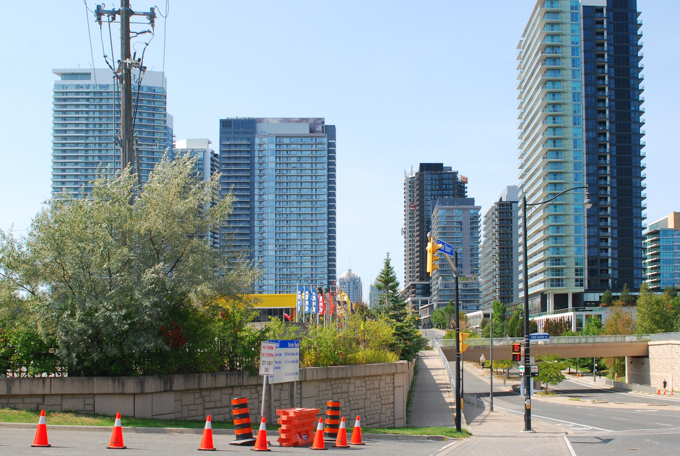
sign pointing to GO station, in park,

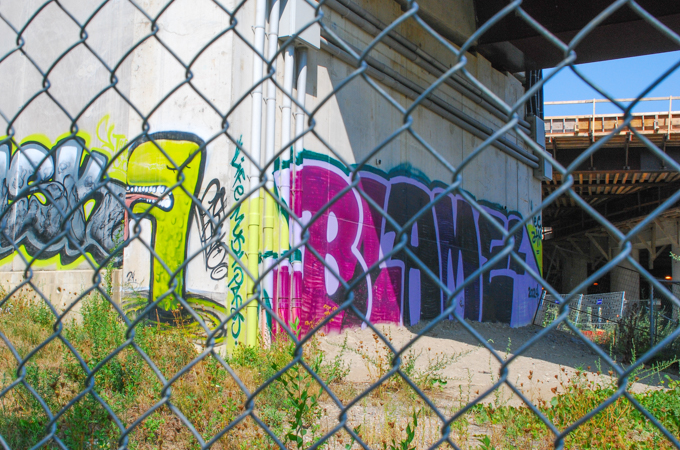
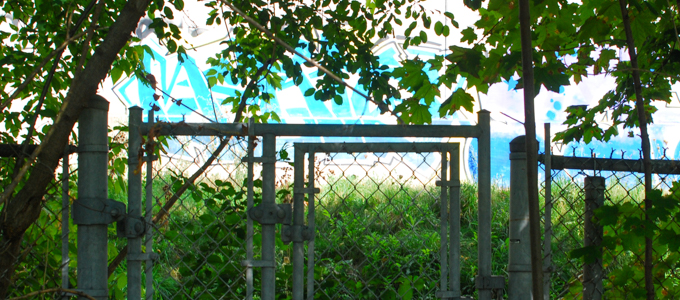
graffiti on concrete on the side of elevated portion of 401 highway. green space between concrete and chainlink fence and gate

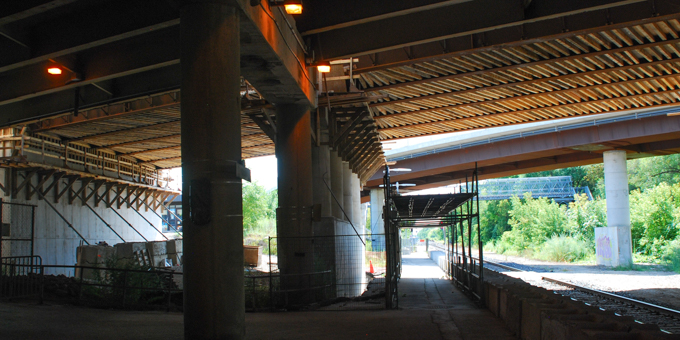
below:  Under the 401 highway

behind chainlink fence, graffiti on concrete pillars holding up the 401 highway

below:  Access to Woodsworth park involves getting over the tracks via a new pedestrian bridge.

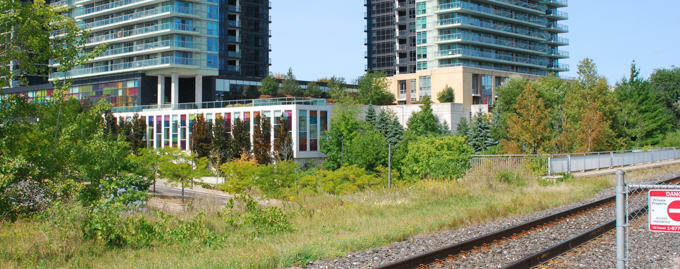
looking across tracks at oriole GO station, near new pedestrian bridge over the tracks

below:  Caged!

cage enclosing top level of metal pedestrian bridge

below:  The bridge is high! The top of it is level with the traffic on the ramp between the eastbound 401 and Leslie Street.  This is the view north and slightly west from the bridge.

cars on ramp between eastbound 401 and Leslie Street, highrise glass and steel condos behind, GO train tracks under the ramp, view from pedestrian bridge over the tracks

below:  Another view from the bridge, this time looking northeast
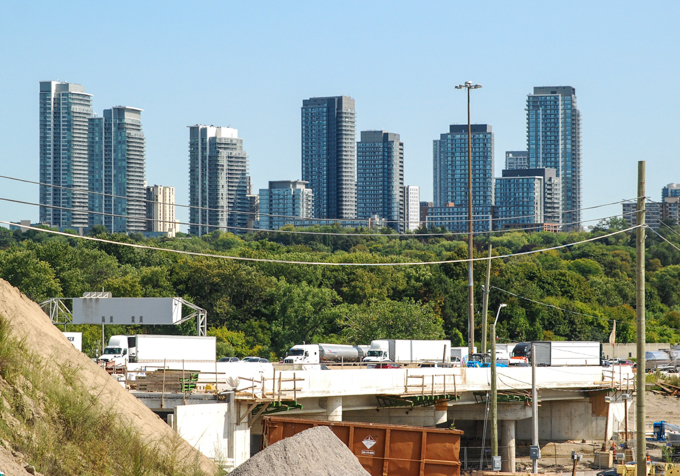
looking northeast from pedestrian bridge over GO tracks at oriole station, looking over the 401 to highrises in the distance

below:  Looking east over all the lanes of the 401, including the new Leslie Street on-ramp on the south side.
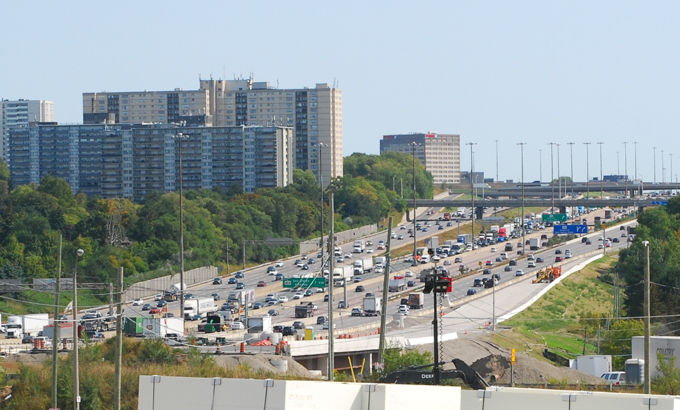
highway 401, east from Leslie Street

below:  At track level

track level, platform for oriole GO station, under the 401,

It was very quiet here.  Oriole station is the first stop north of Union but trains only run during rush hours.  There are four trains that run southbound in the morning and five trains for northbound trips in the afternoon.  No trains stop here between 8:35 a.m. and 4:14 p.m.  There don’t seem to be any stats online re the number of people who use this station.
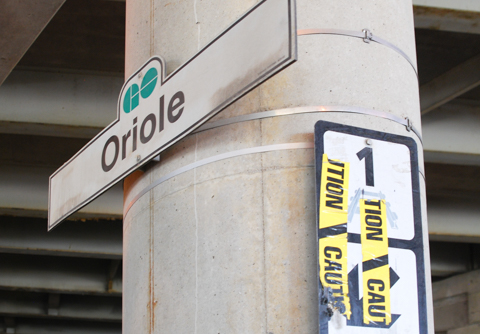
sign for Oriole go station

below:  Old station building in the background that is no longer is use (i.e. there are no washroom facilities here at the moment).
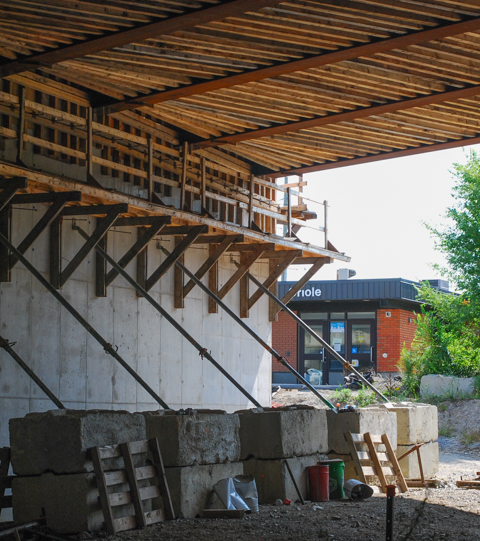
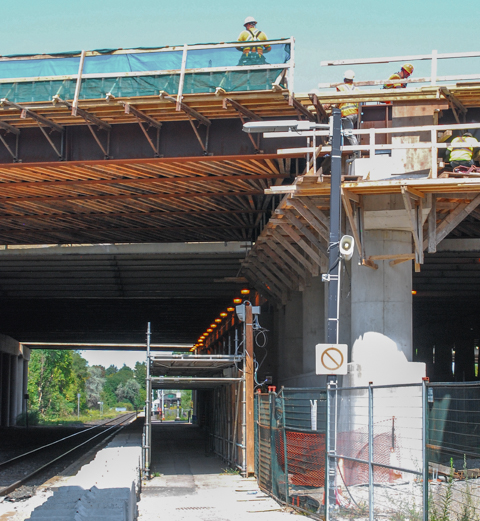
construction of new off-ramp from the 401 eastbound at Leslie Street, with old GO station building in the background

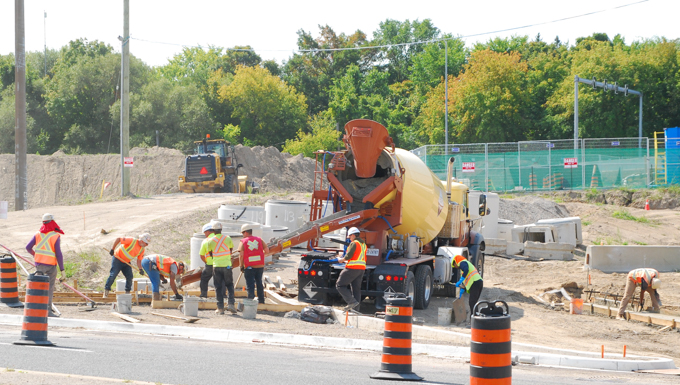
construction of new off-ramp from the 401 eastbound at Leslie Street

below: You may have seen this giant billboard if you have driven past on the 401.  It stands beside the Oriole station platform.  Recently, the platform was under under the 401 and therefore, protected from the rain.  It has been moved slightly north to bring it closer to Leslie subway station (TTC)
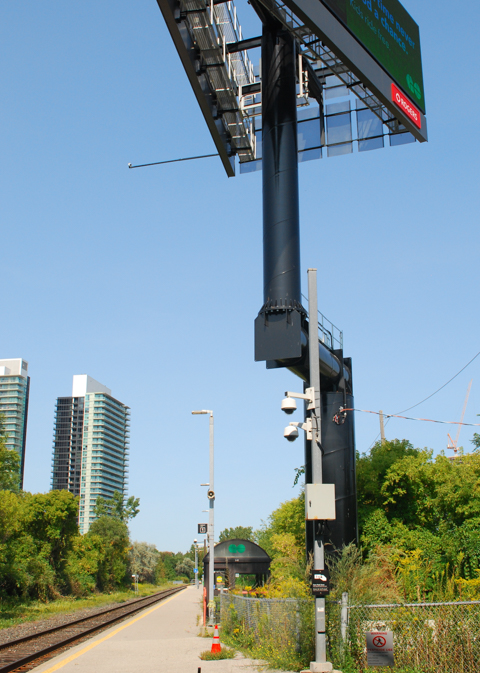
massive billboard on large metal support, at the side of GO station tracks, highrise condos in the background, Oriole,

Oriole Go station platform under the 401 highway, with construction

below: All pedestrian access to the old station as well as the parking lot has been closed.

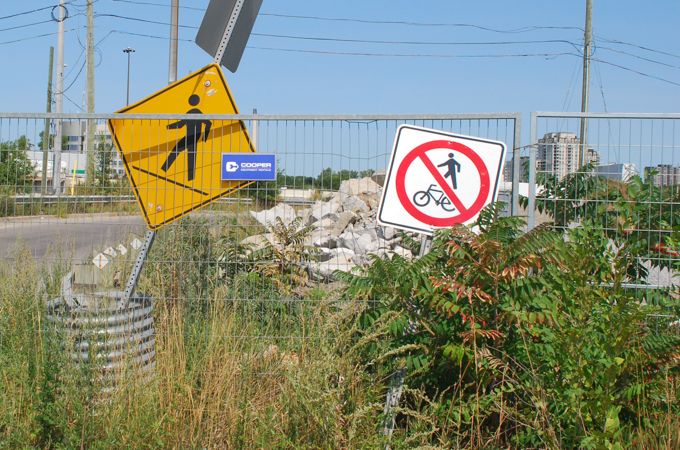
danger do not enter signs, no pedestrians sign, blocking sidewalk passage under bridge at oriole GO station

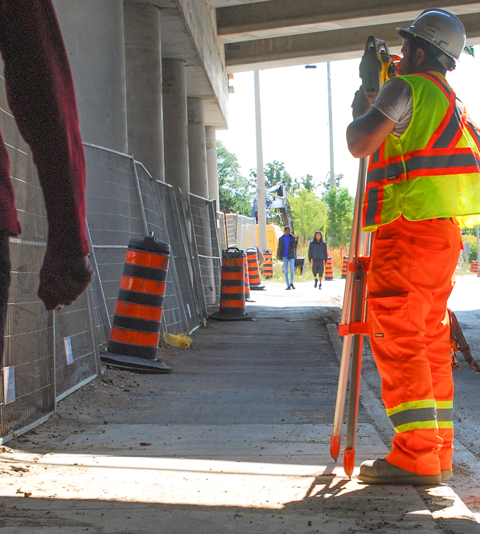
workmen, construction of new off-ramp from the 401 eastbound at Leslie Street

below: There is another entrance to the station at the north end where the tracks cross Esther Shiner Blvd. [extra note: Esther Shiner was a North York municipal politician who was first elected in 1972.  She served as councilor, as well as a short stint as Deputy Mayor until her death in 1987.]
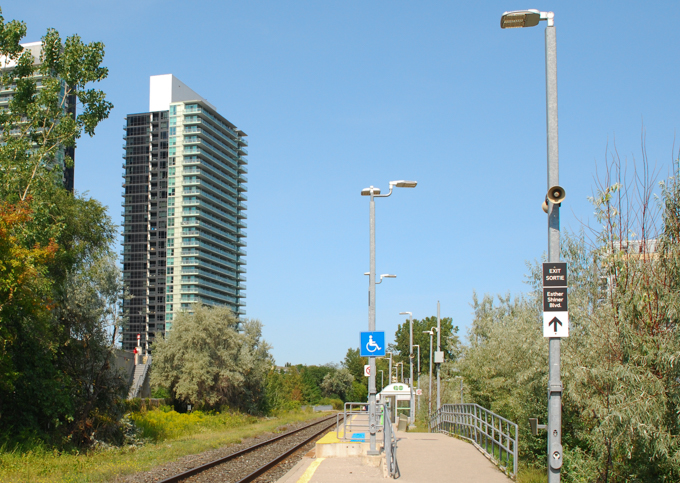
north end of Oriole GO station platform, with sign pointing to exit at Esther Shiner Blvd

Not everybody walks to IKEA!

IKEA store and flags, on Esther Shiner Blvd, beside GO railway tracks,

looking northwest across railway tracks just north of oriole go station

below: The tracks cross Esther Shiner Blvd, but the sidewalk doesn’t and all pedestrian traffic is routed to the south side.   If you want to transfer to the TTC (Leslie station), there is a walk involved.   It takes about 10 minutes I think.

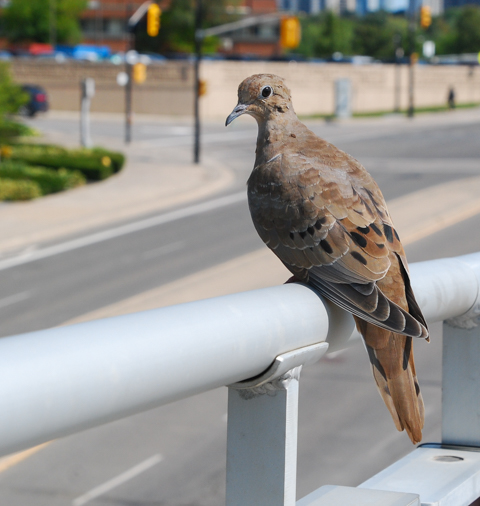
pigeon sitting on railing overlooking esther shiner blvd, TTC bus in the background, looking east towards Leslie street

esther shiner street, looking west towards ikea, under train tracks,

two signs with arrows, TTC Leslie to the left and GO Oriole to the right

below: Turn left at Old Leslie if you are looking for the TTC subway.  Straight through gets you to Leslie Street (at North York General Hospital, north of the 401 highway and south of Shepard).

Old Leslie Street sign on post along with other signs for TTC and GO,

below: The signs still direct you to the GO station via under the 401….
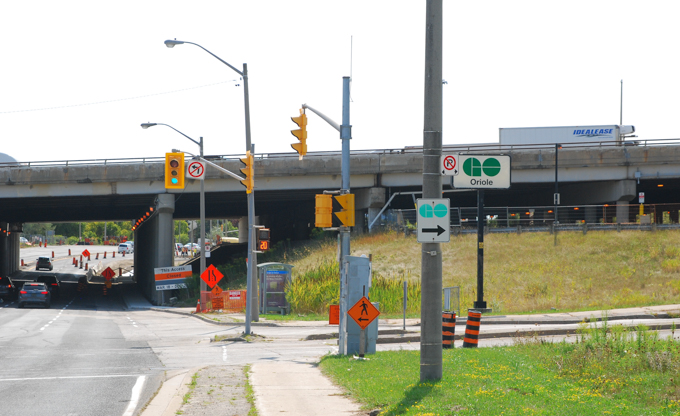
leslie looking south at 401, construction and Oriole GO station

below: …. but the road is actually closed to traffic.
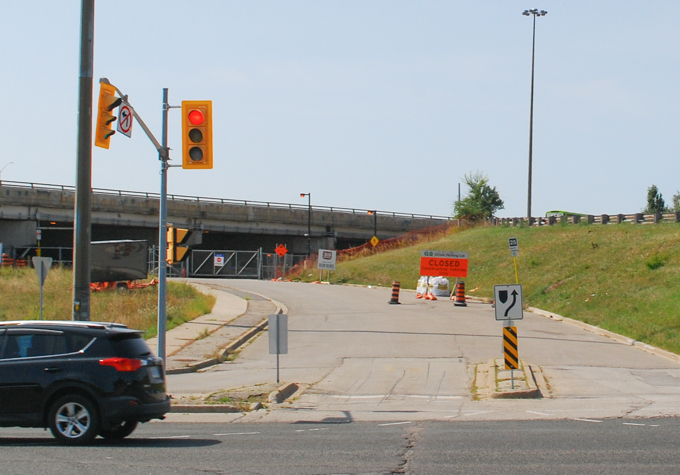
workman under the 401, by sidewalk, a couple are walking towards him

4 different tall lights,

below: Looking northwest across Leslie, south of the 401 (towards Yonge & Shepard).
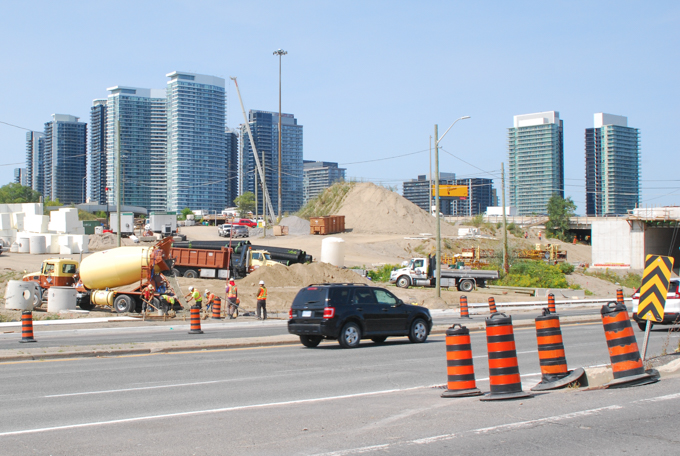
leslie street, south of the 401

below: Making sidewalks.

workmen pouring cement for new kerbs and sidewalk, along Leslie street at 401

below: Old and faded, rules and regulations for prevention of the spread of COVID-19
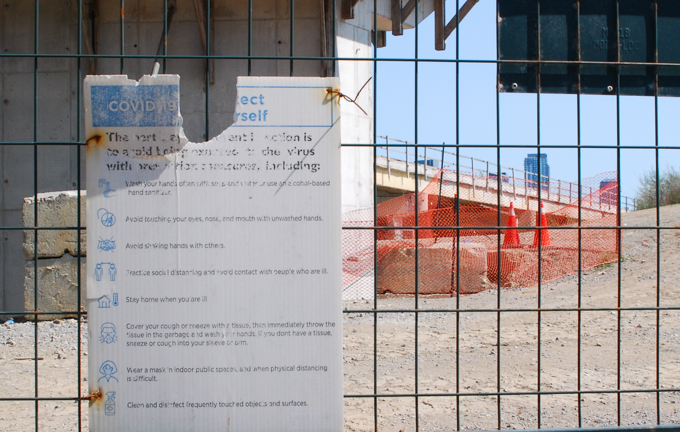
old COVID 19 rules and regulations poster, weathered, on fence at construction site
red lines spray painted onto sidewalk, beside a crack in the cement

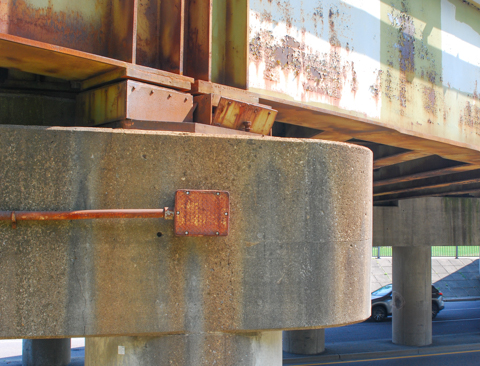
concrete support, and part of rusty metal train bridge over Leslie street

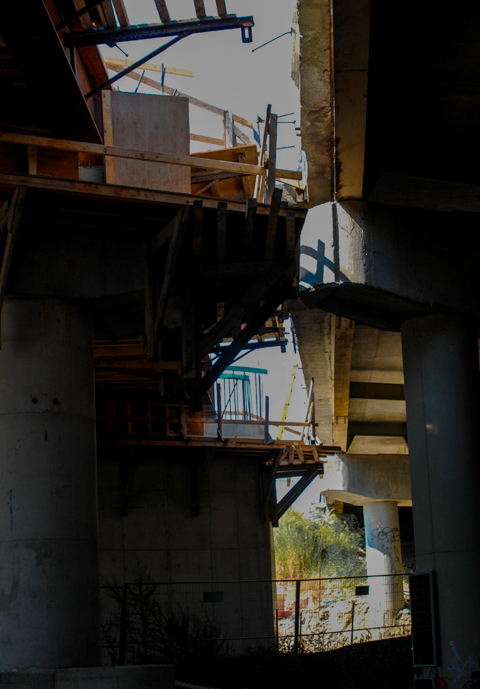
light and shadows between portions of highway being constructed and renovated

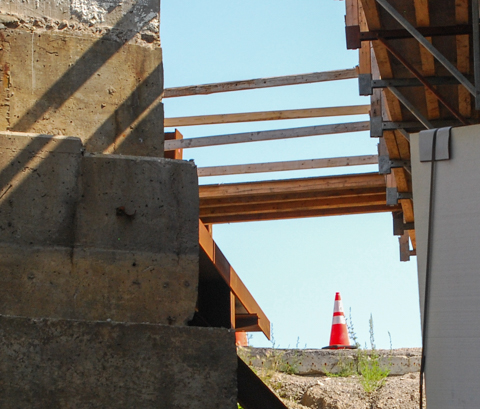
construction site light and shadows, and small orange cone

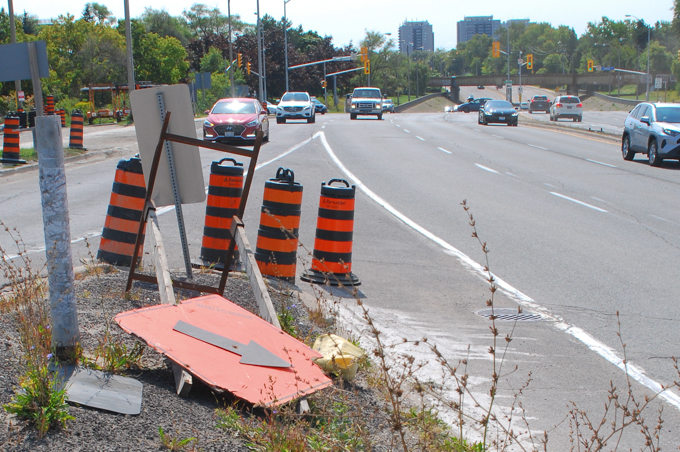
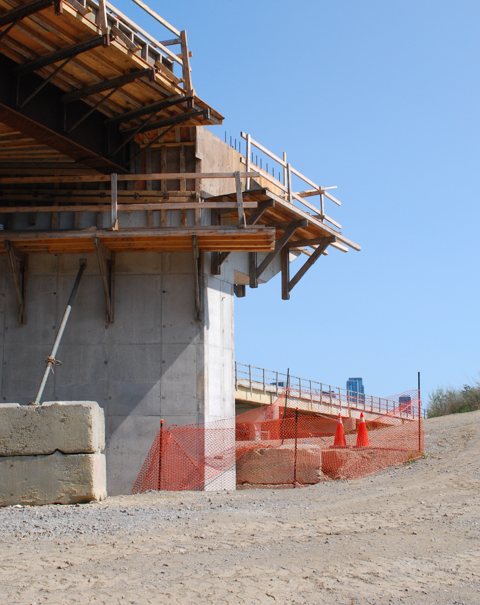
construction of new ramp, 401 and Leslie

no entry sign on pole, overgrown with shrub,

brown pigeon sitting on a grey metal round hand rail overlooking city street

It was a beautiful day on Monday when I visited the “Winter Stations” (scroll down to next blog post), cold but sunny.   I decided to walk north on Woodbine since I haven’t done that for a while.

below: Playing with mirrors while waiting for the washroom at Woodbine Beach because there is only one women’s washroom (why is there only one?)

a mirror shaped like a porthole with a green frame, on a bright blue wall, reflection of another porthole but on an orange wall in the mirror

below: From portholes to demolition holes – I made it as far as Queen and Woodbine where there is a large hole in the ground

at the intersection of Queen and Woodbine, a hole in the ground on the north east corner and a Pizza Pizza restaurant on the south east corner

… because just north of there I discovered alleys and small streets that I don’t remember walking.  Who can resist the allure of a red door?

looking down an alley in winter, two brown tire tracks for the cars, but lots of snow. Fences, trees, and a house on a street at the end with a red front door.

below: I went to Norway

street signs on a post. a one way sign pointing left, a green and white sign that says Norway Ave continues to the right ahead

below: And I passed the North Pole

a lawn decoration in a snow covered front yard, a flat wood snowman with red and white striped hat and scarf and a sign that says north pole

below: I even walked past this No Trespassing sign.  The old cars parked the house behind caught my eye but this was as far as I ventured.

a no trespassing sign on a wire fence, snow covered driveay, two old cars parked in the backyard, beyond the fence

When there is no planned route and you’re only following your nose or sticking to the sunny side of the street, you can run into some surprises.  There were a lot of older houses – here are a few of them:

below: There are still some of these Victorian rowhouses closer to downtown but I wasn’t expecting to find any here.   As it turns out, this was part of the village/town of East Toronto.  In 1888 it was a village with about 800 residents.  It became part of the City of Toronto twenty years later (and with 4200 more people).

two semi houses with gabled roofs and covered porches, from the 1800's. snowy street scene, large trees, winter

As it turns out, one of the streets that I walked on, Lyall Avenue, is a Heritage Conservation District.  The street was surveyed in 1884 and by 1888 a few houses were built on some of the fifty yard lots.  Most of the development occurred between 1909 and 1924.  It was definitely a middle class neighbourhood.   The full report published in 2006 appears on the City of Toronto planning department website.

an upper storey oriel window with curved edges

below: This house stands alone.  A very typical older Toronto house.

a typical old Toronto two storey house with peaked roof, reddish brick, two wondows upstairs, one large window downstairs, white front door with a small roof over the door, lots of yard

below: This tidy well-kept workers cottage can only be accessed from the lane.

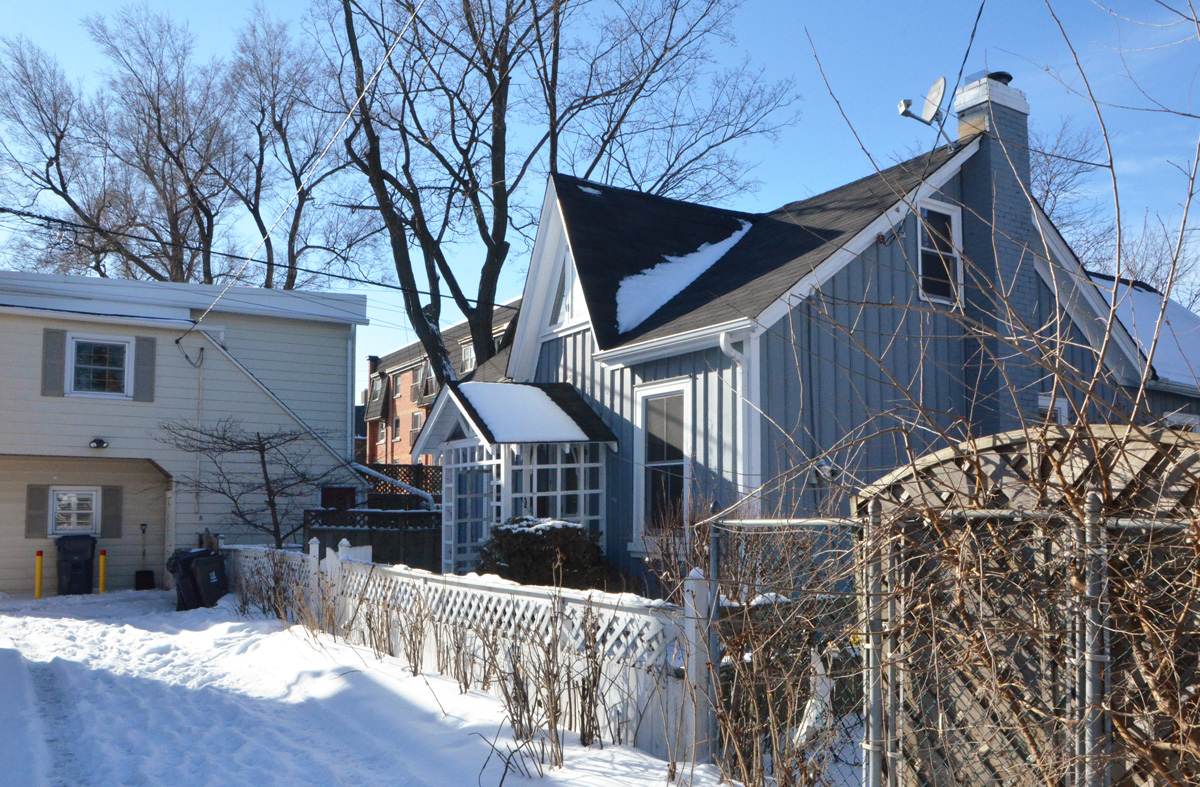
a workers cottage that fronts onto a snow covered lane, grey vertical wood paneling on the outside, black roof

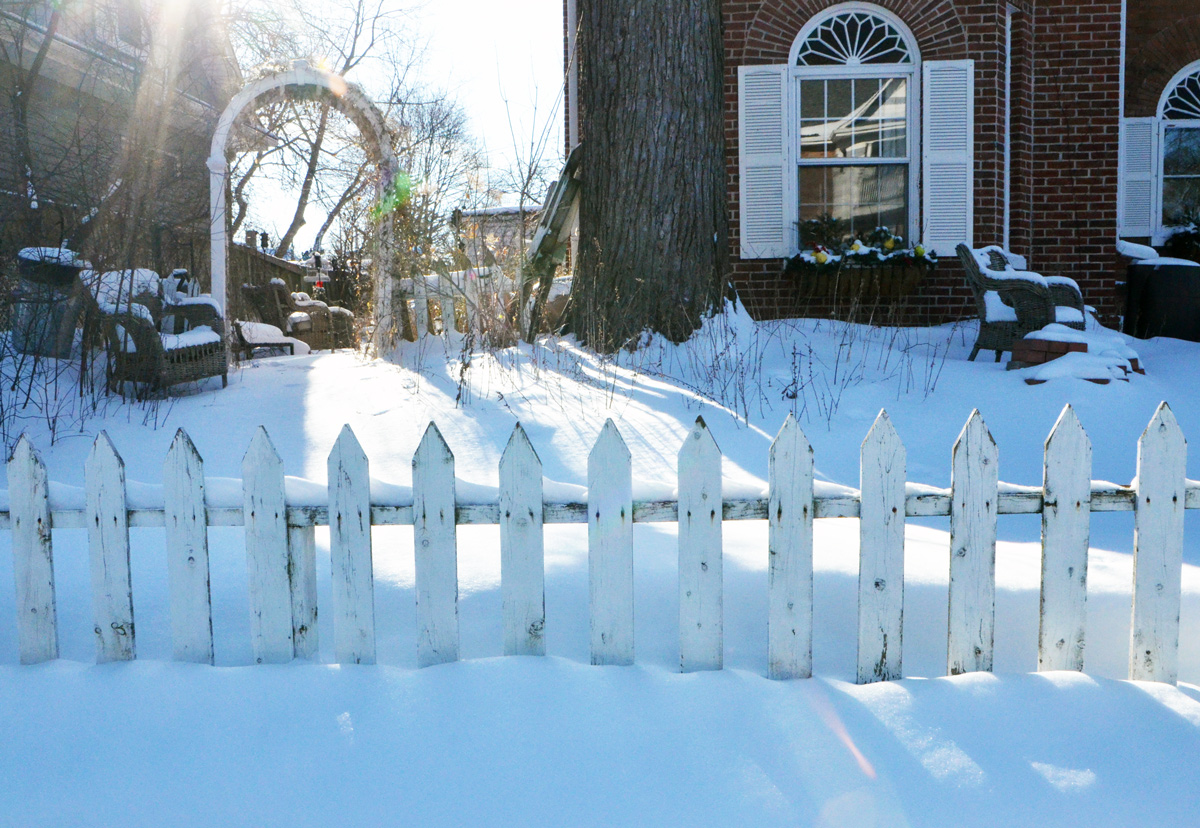
below: A white picket fence and wicker furniture waiting for spring.

a white picket fence in the snow, wicker chairs in the yard covered with snow

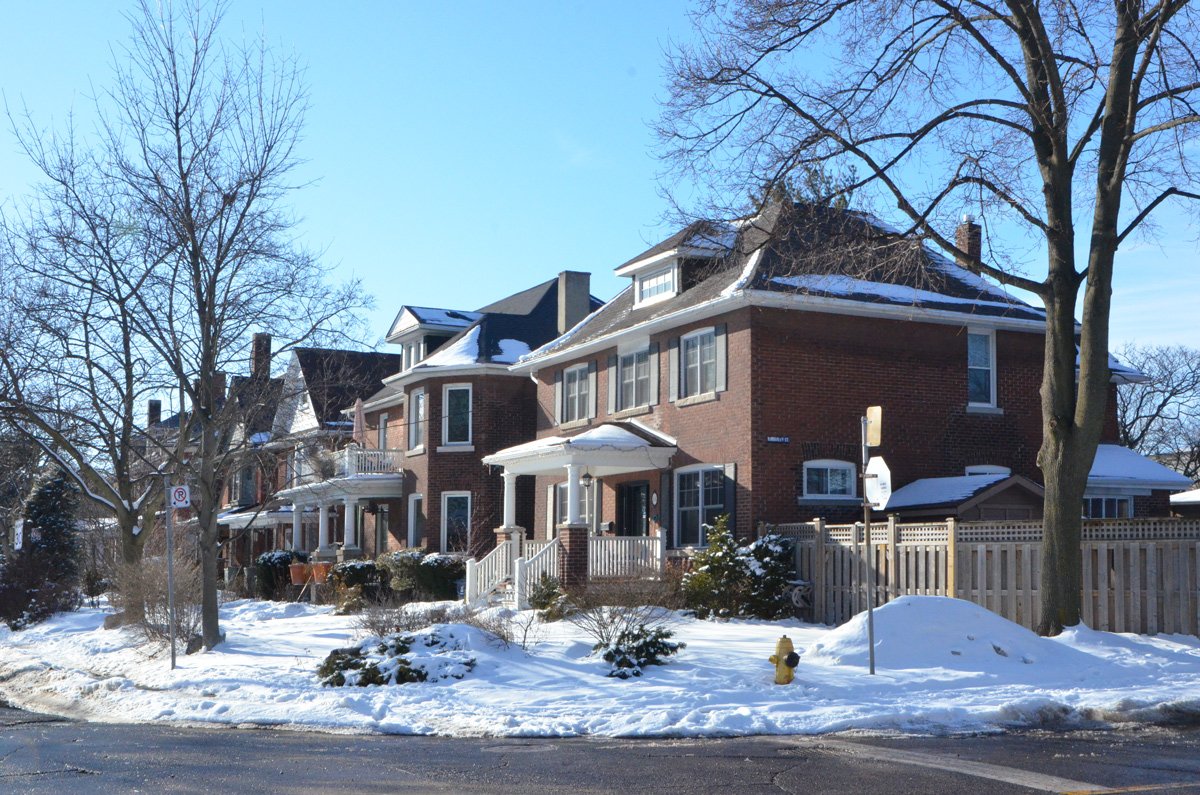
large two stroey brick houses, winter, street,

All of the above houses were north of Kingston Road where the lots sizes were fairly big.  South of Kingston Road, the houses are narrower and close together. (or joined together).

the backyards and back of houses in a row, winter,

below: This square, substantial sized brick building is on Kingston Road.  Between Woodbine Avenue and Main Street, Kingston Road runs along the crest of a ridge.

large old brick house on Kingston Road, three stories,

below: Newer residential buildings on Kingston Road.

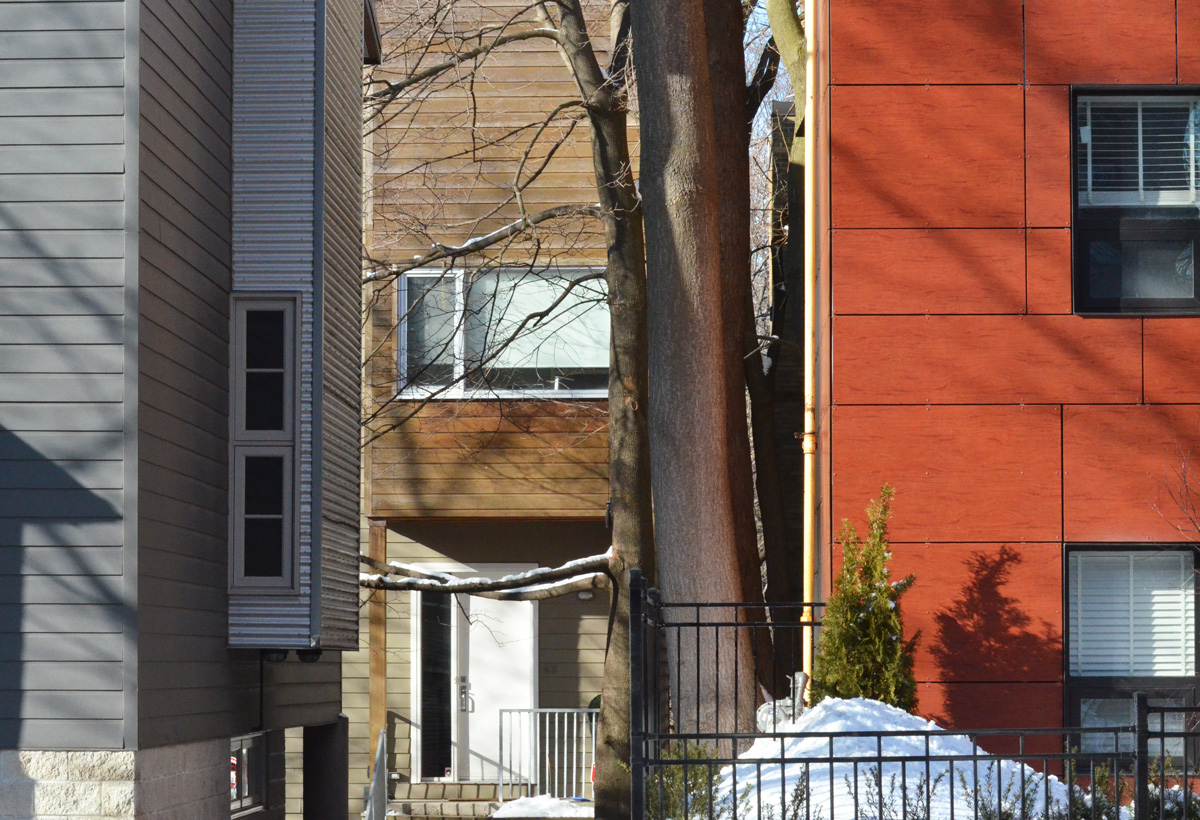
part of three new buildings

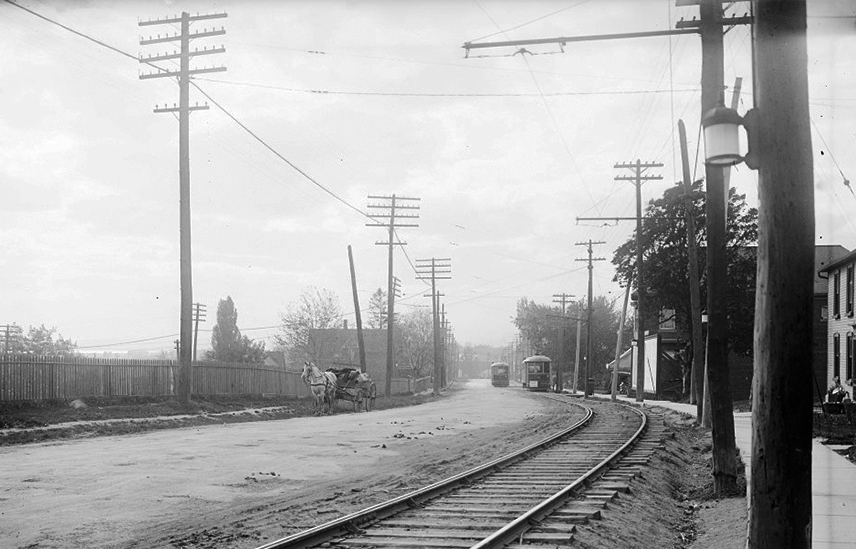
below: 1922, looking west along Kingston Road from Main street.  That’s almost 100 years ago, and there were streetcars running here even then.  No cars, just a horse and wagon.

old black and white picture from 1922 of a dirt street with a street car track, hydro poles beside the road and a house

Photo credit: City of Toronto Archives. Found online in a ‘Beach Metro’ article where you’ll find more history of the area.

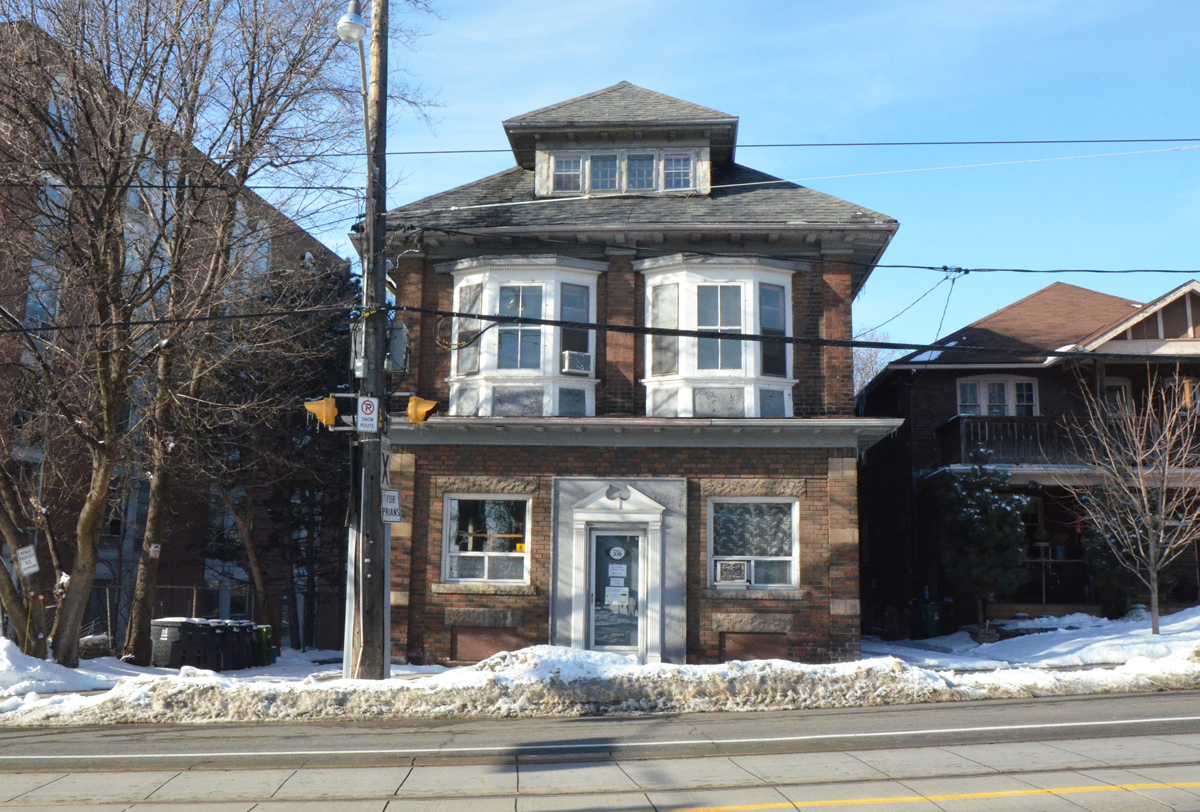
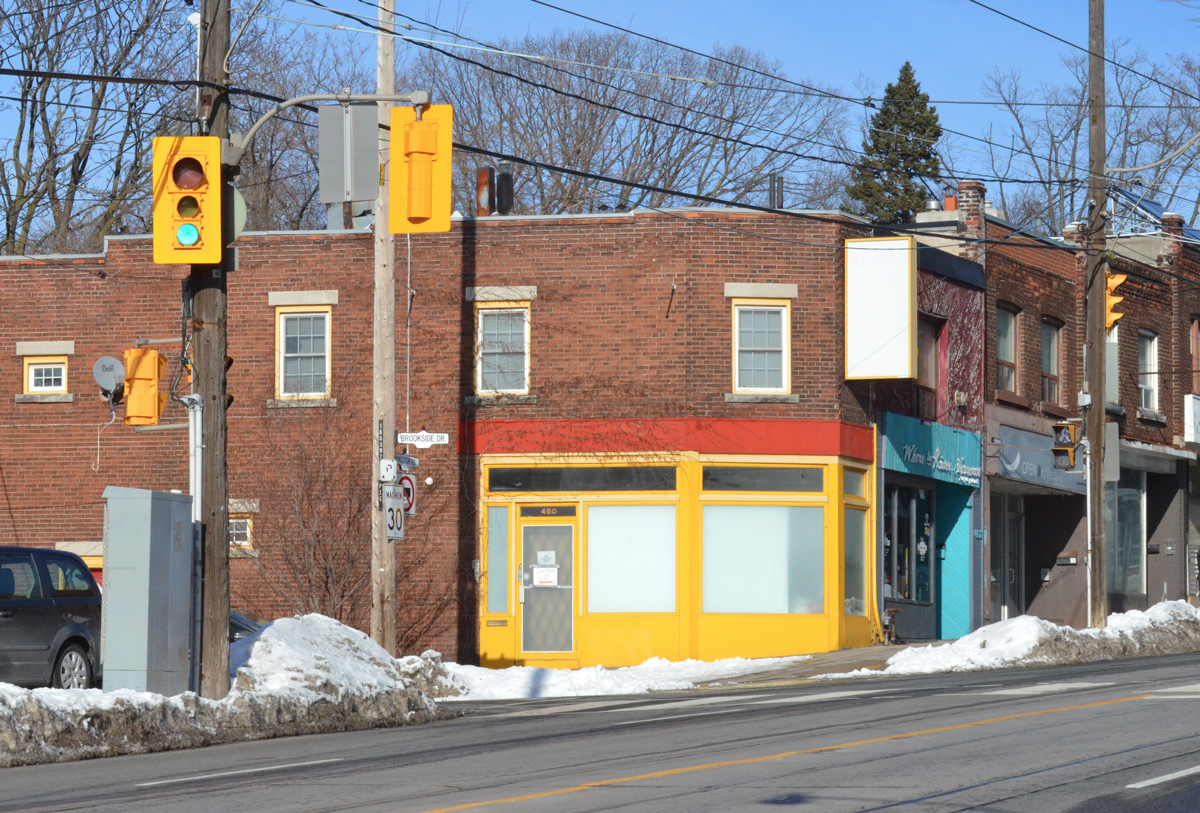
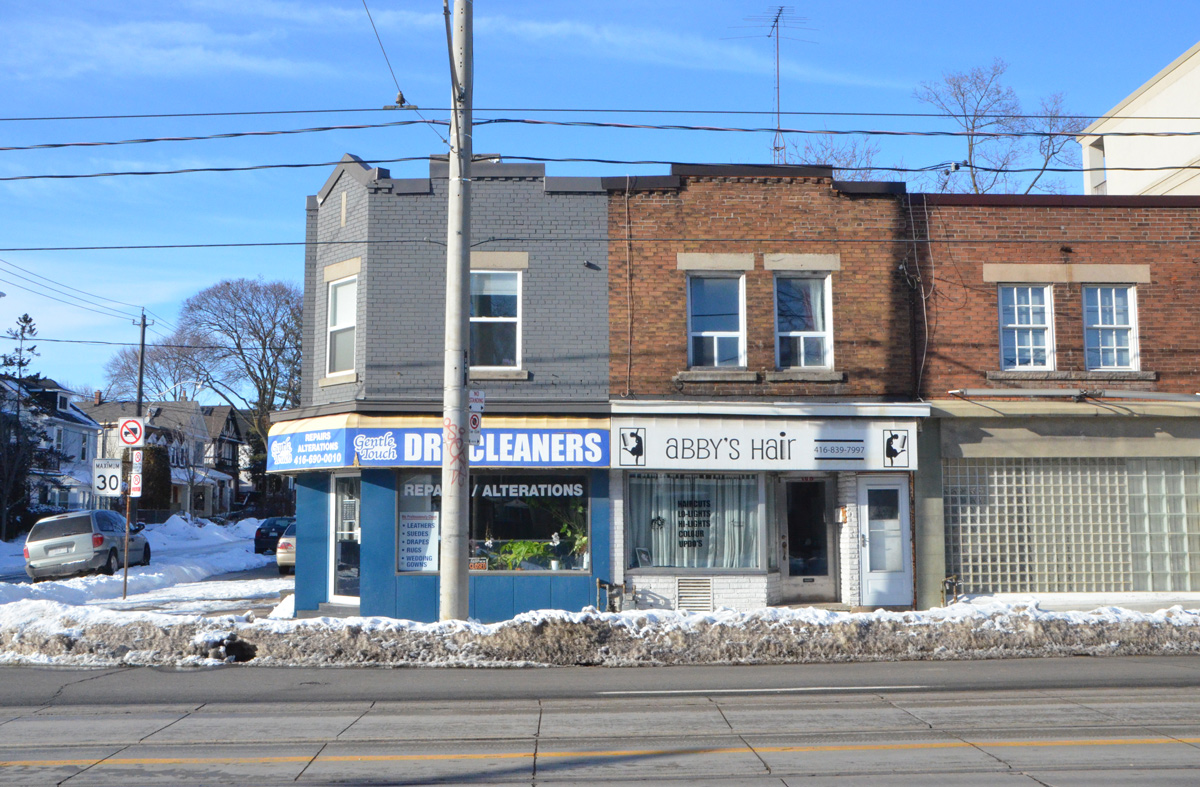
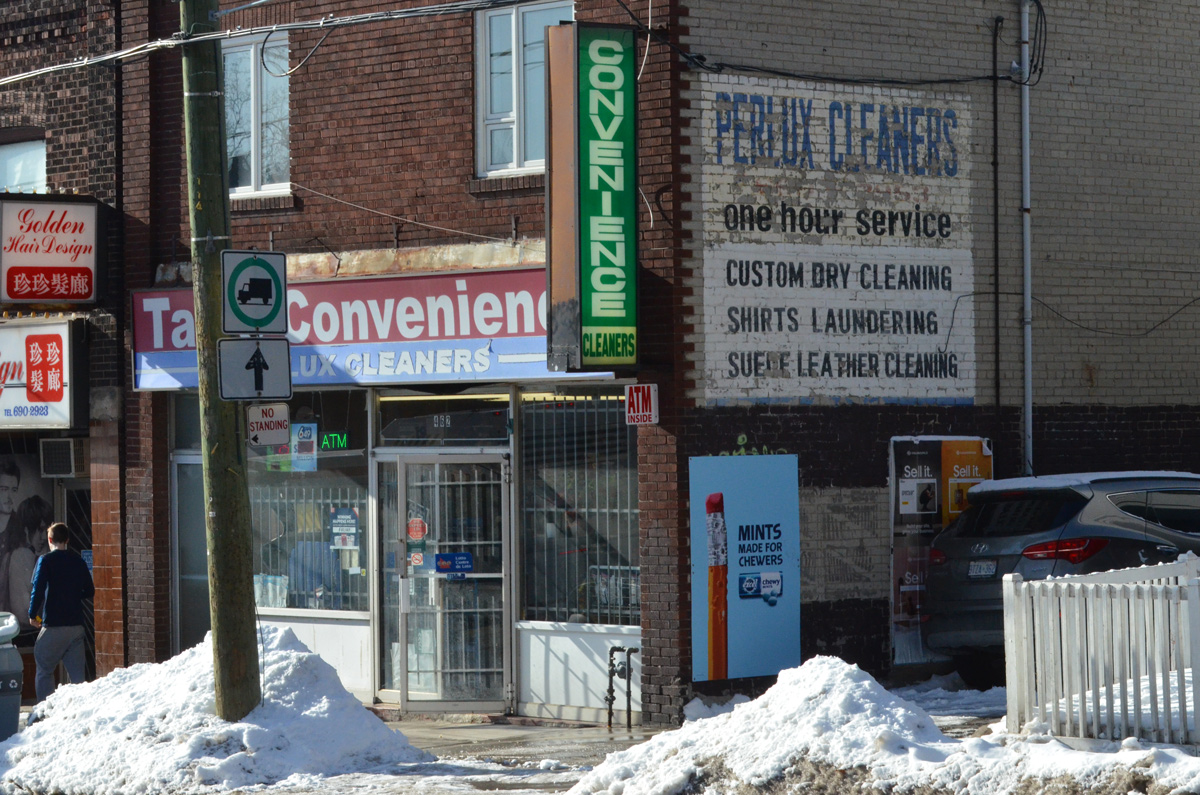
The next three photos are some of the typical two storey, flat roofed, brick, all in a row, stores and businesses that were built in Toronto in the early 1900’s and later.   If I remember correctly, these were all on Kingston Road.

a storefront trimmed in bright yellow and angled at the corner, intersection of Kingston Rd and Brookside

two stores, old architecture, two storey buildings with apartments on top

Perlux cleaners, old sign painted on side of building, convenience store, mounds of snow by the sidewalk

below: A warm and colourful summer scene painting behind a chainlink fence that surrounds the playground at  Kimberley Junior Public School.

colourful painting behind a chainlink fence in a school yard, winter, snow on the ground around it, picture is of three kids in large yellow hats, playing on green grass

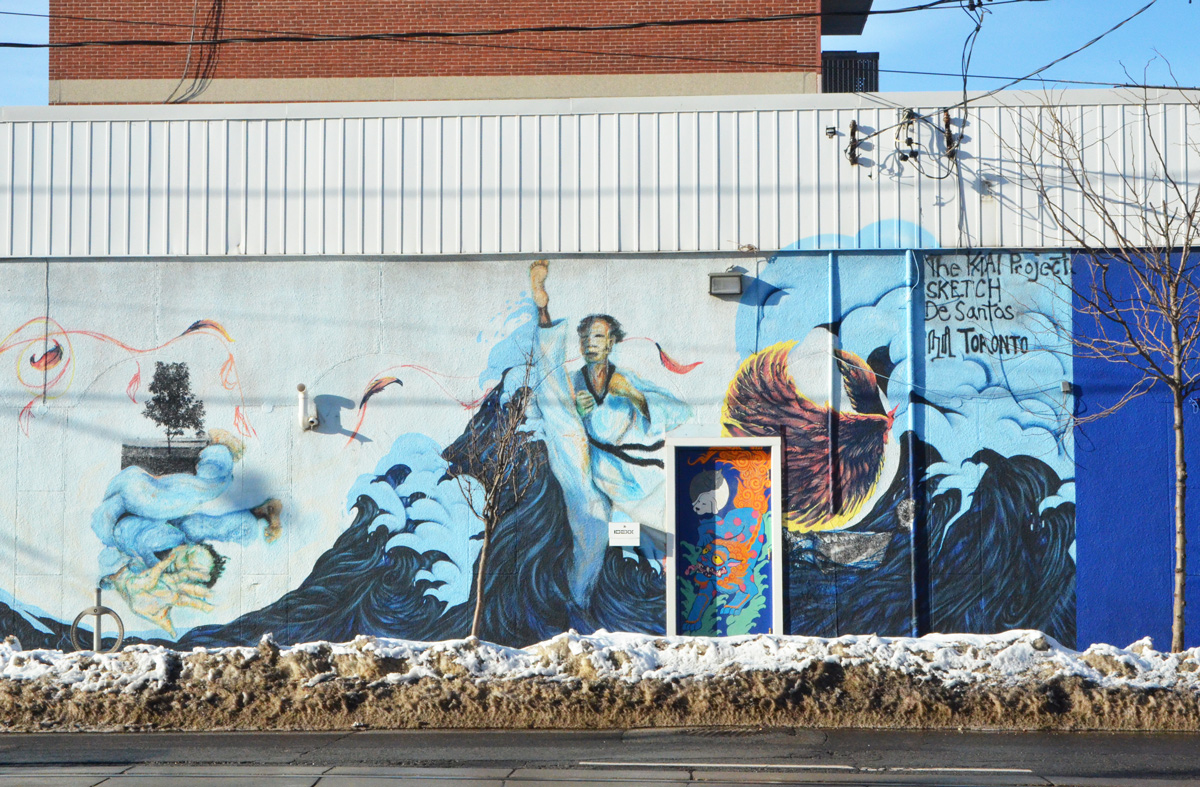
below: Mural at Gerrard and Main.

karate, martial arts mural on a wall

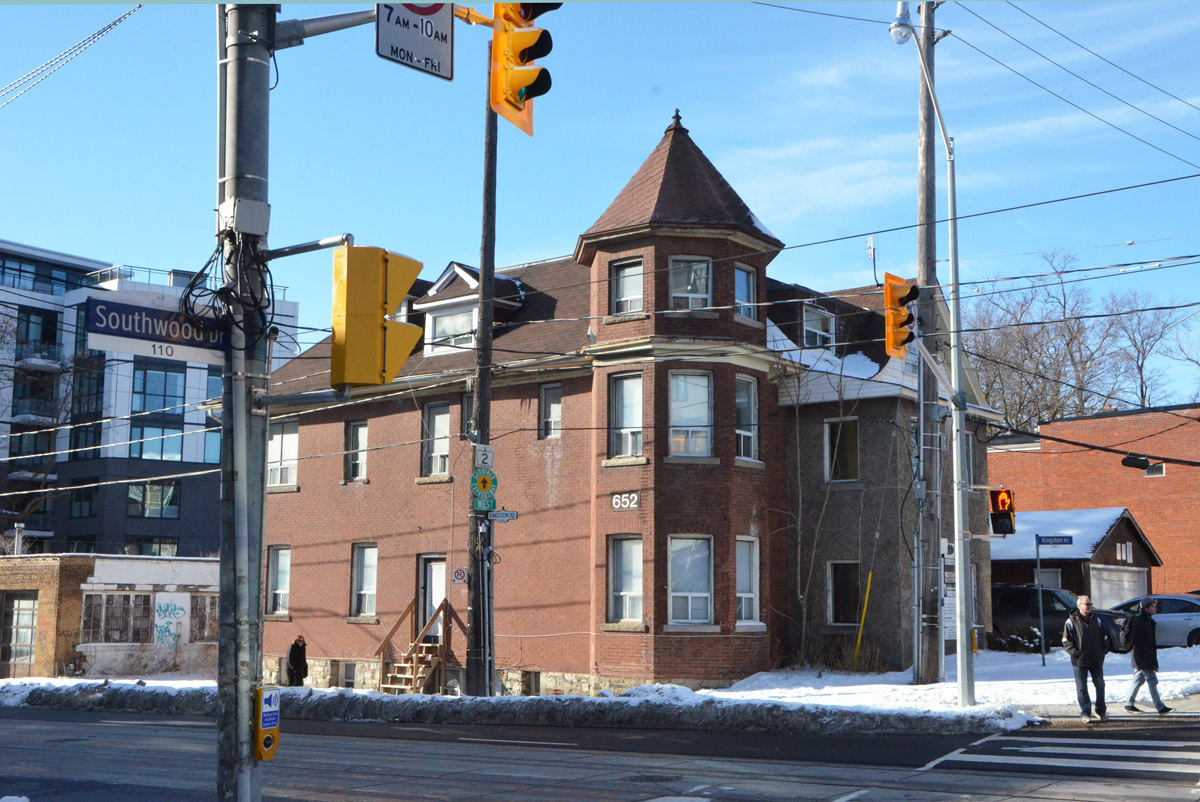
below: The last architecture picture – this building with a turret at Kingston Road.  Here Main Street becomes Southwood Drive.

commercial building with a turret at an intersection

below: Looking north on Main Street from Gerrard.  Here the streetcar turns towards Main subway station.  The bus shelter in the middle of the street is definitely old style – one of the few remaining in the city.  From here Main street is a bridge over the railway tracks.

looking north up Main street from Gerard, streetcar tracks with a bus shelter in the middle of the street. old style bus shelter, Main street then goes up, as a bridge over the train tracks. Highrise apartment building in the background.

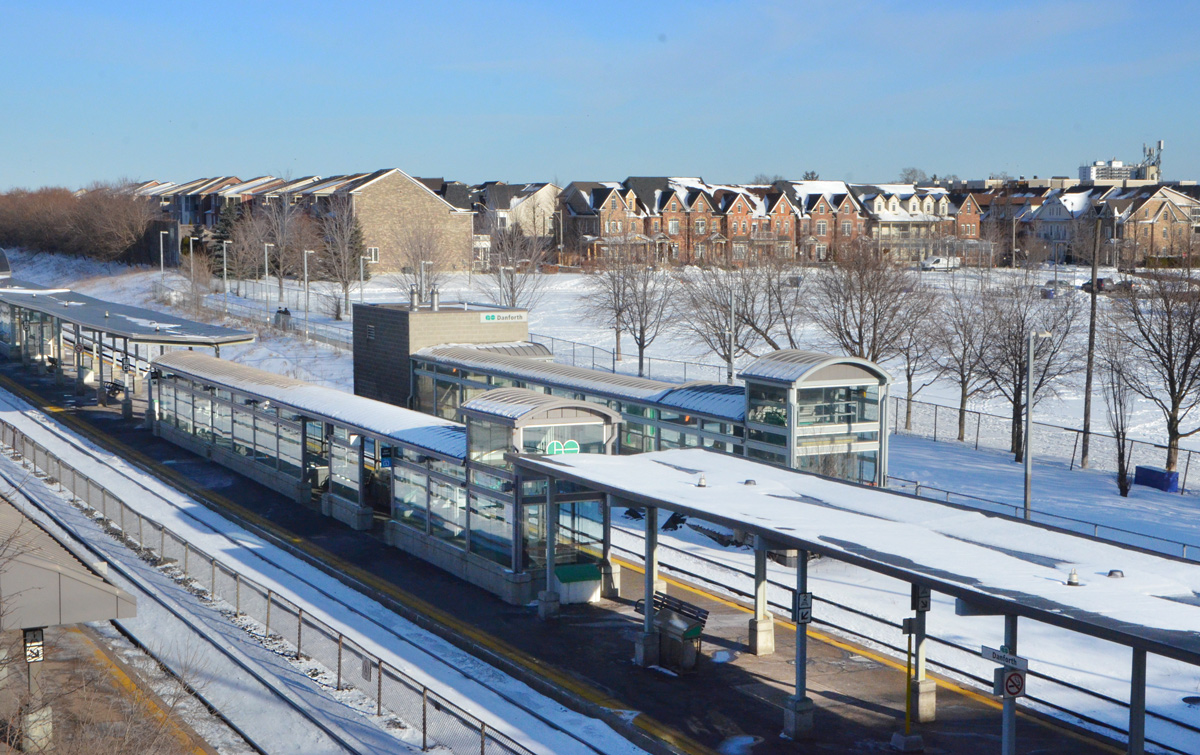
below: From the bridge, looking southeast over Danforth GO station. Prior to 1940, this was the location of York Station as well as the Grand Trunk Railway’s main freight yard.  The yard stretched along Gerrard Street and employed several hundred people.   At that time, Gerrard Street was called Lake View Avenue (could you see Lake Ontario from there?).

view from a bridge over railway tracks, Danforth GO station below, houses beyond. covered platforms between two sets of tracks

below: York station in 1890.  It was renamed Danforth in 1922 and demolished in 1974 to make way for the GO station.  The freight yard is to the right.

york railway station in 1890. train is letting off passengers

Photo credit: Toronto Public Library. The picture was found online in an article on Danforth station that appears on the Toronto Railway Historical Association website


below: Hanging out on the Danforth

large white sign with green GO logo, Danforth station. a group of pigeons is sitting on top of the sign.


But I didn’t hang out for long.  From here to Main Street subway station is only a few steps and that was enough walking.
My writing can be almost erratic as my walking!  I hope that I didn’t lose you along the way.


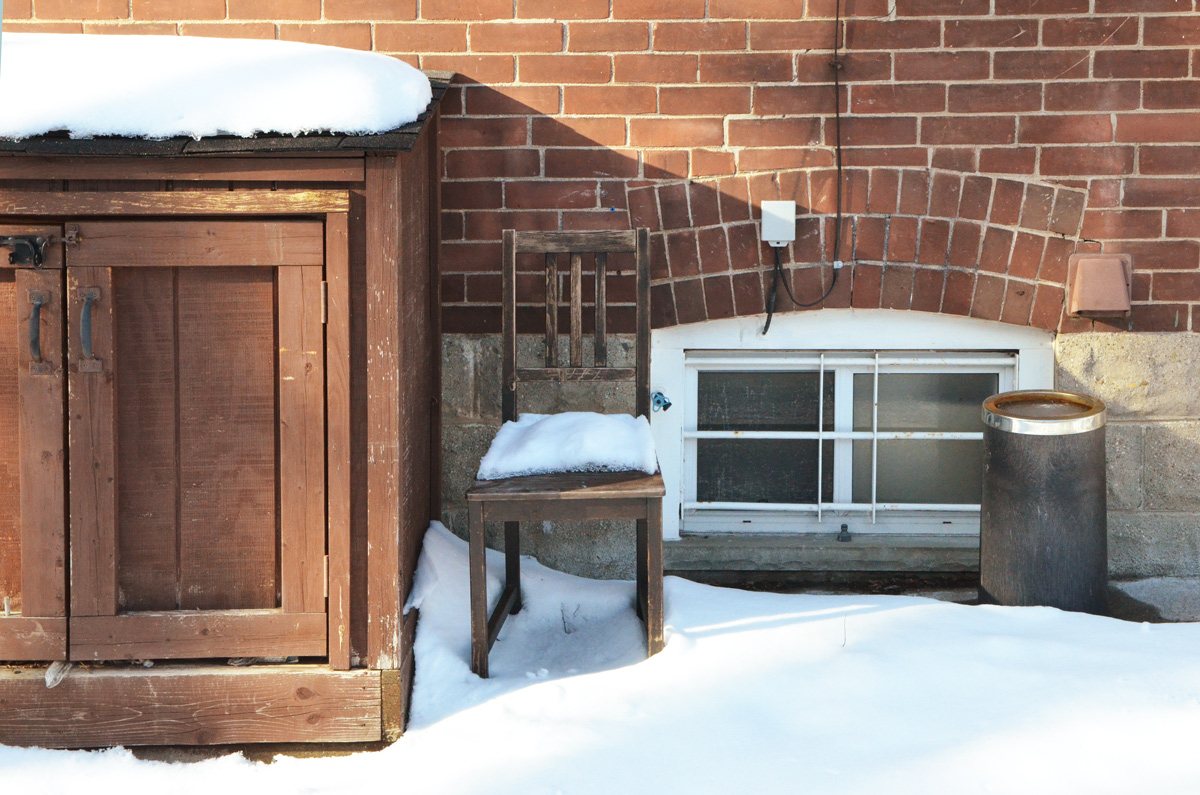
wooden chair outside, against the side of a house, snow on it.