Posts Tagged ‘Art Gallery of Ontario’

One of the exhibits now on at the Art Gallery of Ontario features the work of two Impressionist painters. One is Helen McNicoll who born in Toronto in 1879 but raised in Montreal. When she was two years old she contacted scarlet fever which left her deaf. After a few years of art studies in both England and Montreal, she moved to Europe in 1908. She was elected to the Royal Society of British Artists in 1913 and was created an Associate of the Royal Canadian Academy of Arts in 1914. In 1915 she died. Over her short career she contributed over 70 works to exhibitions in both Canada and Britain.

a father and daughter witting on a bench looking at paintings in an art gallery

below: “The Open Door” about 1913, by Helen McNicoll.  The words beside the painting end with this sentence: “(The) title asks us what it means to stand next to an open door and not walk out.”  Also, note that there is no reflection in the mirror.

Painting with title The Open Door

people looking at paintings on a wall in an art gallery

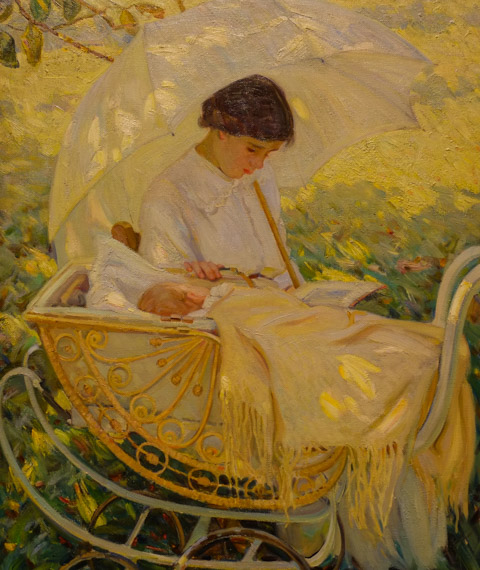
below:“In the Shadow of a Tree” by Helen McNicoll.

painting of a young woman sitting and reading beside baby who is asleep in carriage

woman looking at two impressionist paintings, back to camera

woman with a cane looking at paintings in a gallery

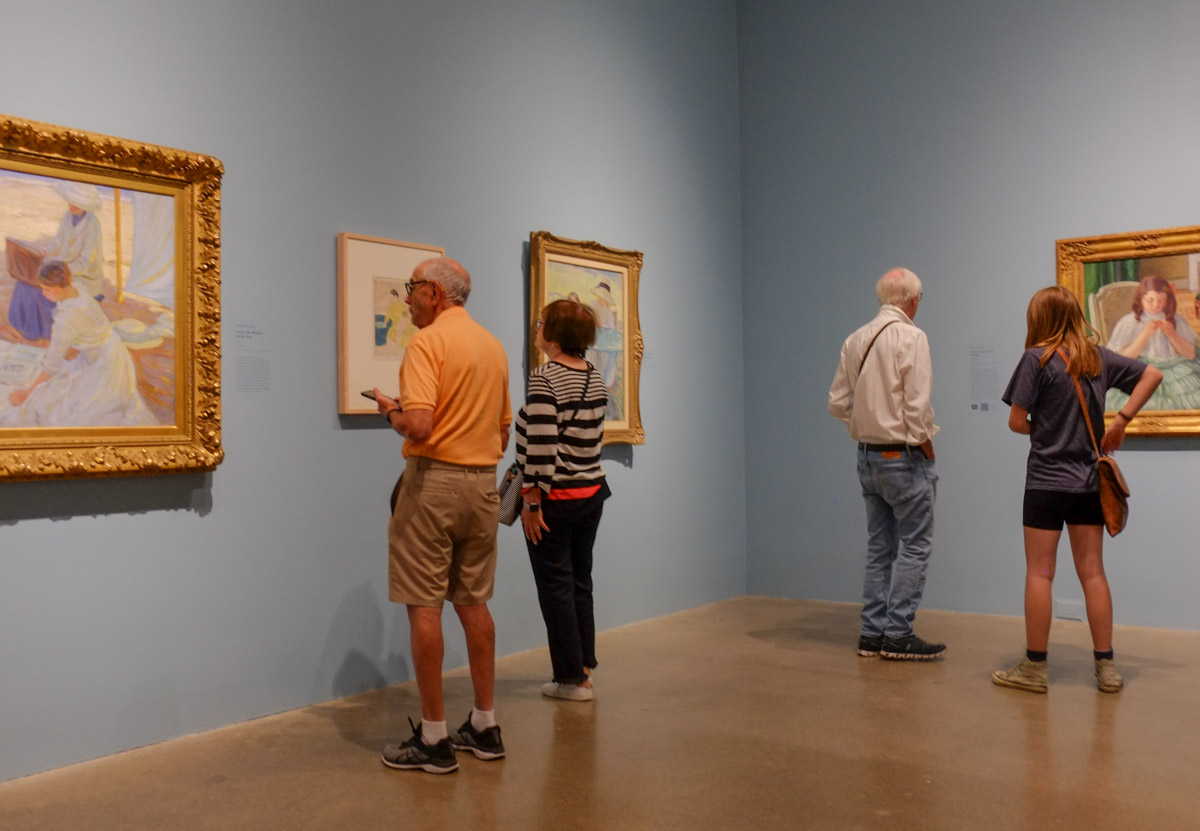
In this exhibit, McNicoll’s work is shown along side some of Mary Cassatt’s paintings. Cassatt (1844-1926).  Both artists were women and both painted in an Impressionist style.  Cassatt was at least a generation older as she was showing her paintings in Europe a few years before McNicoll was born.

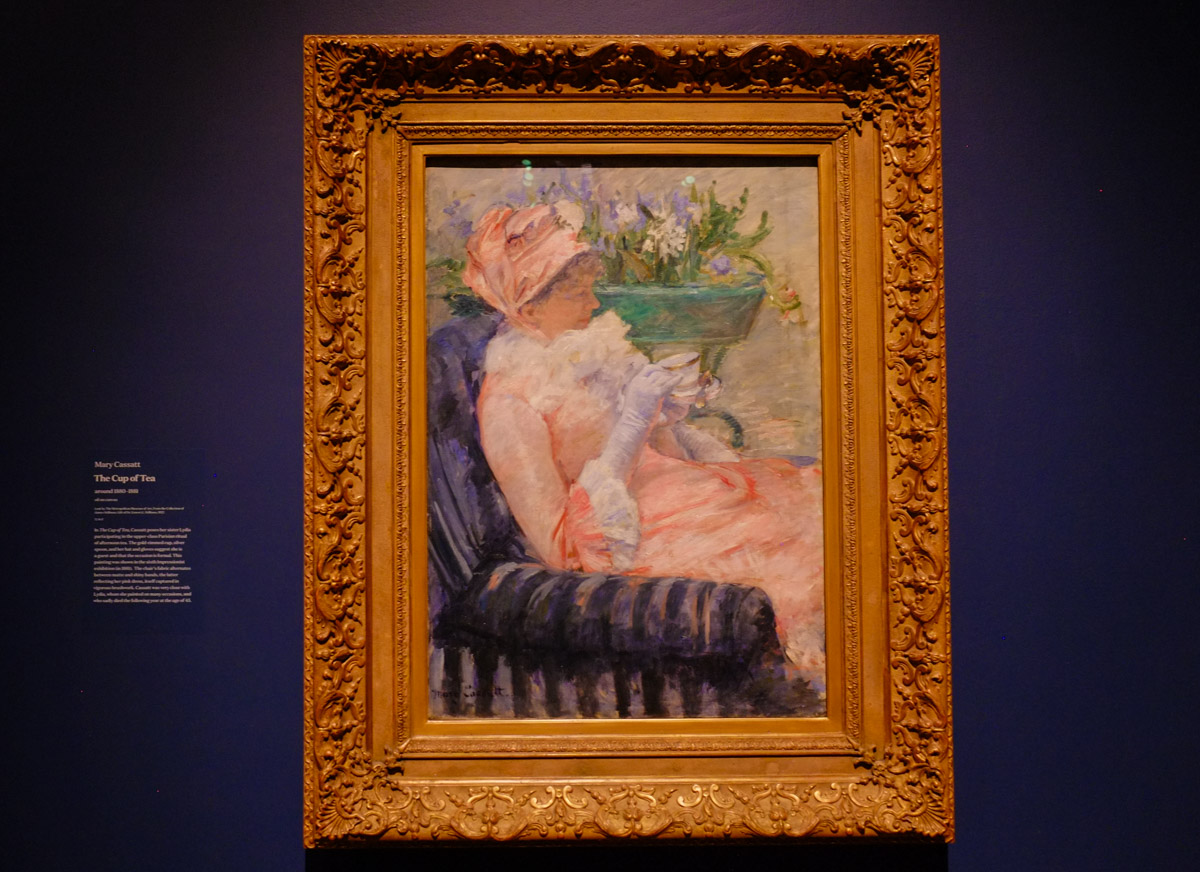
below: “The Cup of Tea” by Mary Cassatt, about 1880 to 1881.   This painting was shown in the Sixth Impressionist Exhibition in Paris in 1881.  It is a portrait of Cassatt’s sister Lydia as she partakes in a Parisian afternoon tea with white gloves and pink finery.  The pink of the dress is reflected in the shiny fabric of the purple chair.  (note: between 1874 and 1886 there were 8 exhibits featuring Impressionist paintings.  Cassatt had paintings in many of these exhibitions.)

painting on a wall in a gallery, woman all dressed up in pink with a cup of tea in her hand

an older couple looking at paintings in a gallery

below: “Montreal in a Snowstorm” by Helen McNicoll.  Although McNicoll spent most of her adult life in Europe, she returned home to visit her family in Montreal frequently.

Painting of Montreal in a snowstorm

This exhibit is on until 4th Sept 2023.

Earlier in May there was a collection of works by Vancouver based Jin-Me Yoon at the Image Centre (Toronto Metropolitan University).  She was a 2022 Scotiabank CONTACT Photography award winner.

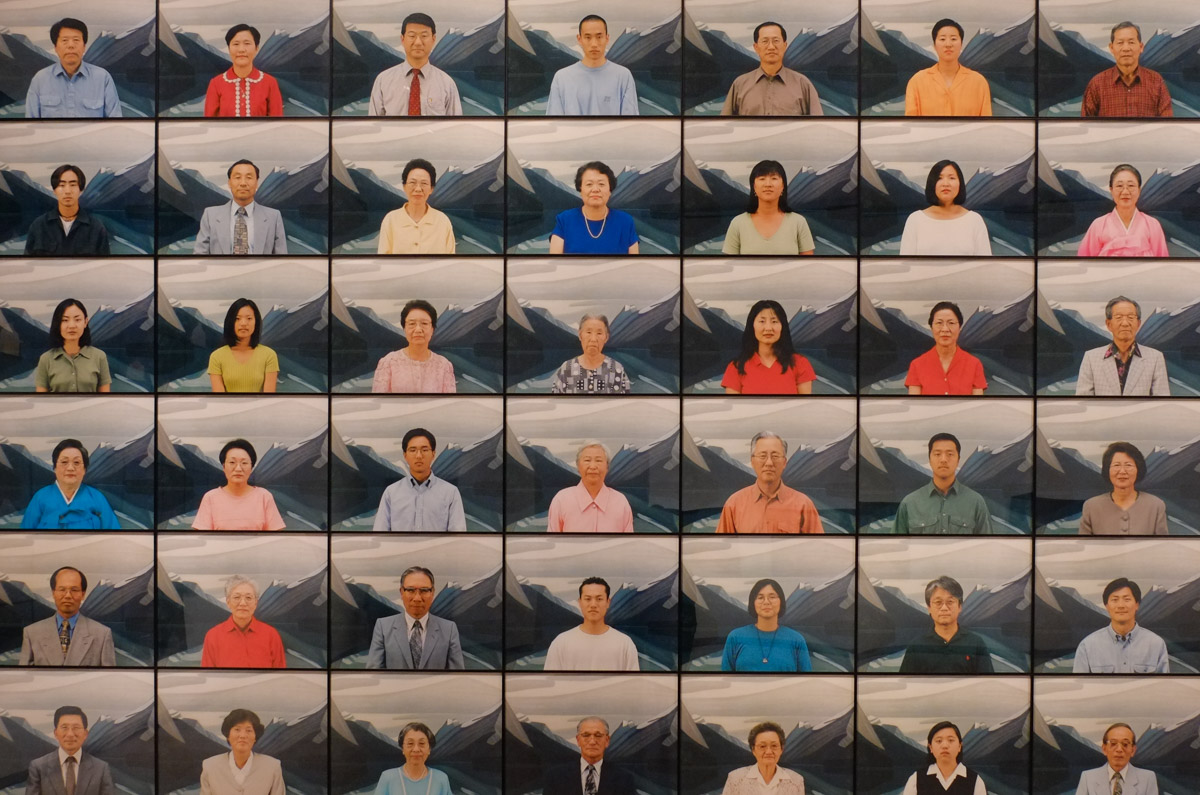
below: Part of the large work, “A Group of Sixty-Seven”, 1996.     These are members of the Korean-Canadian community in Vancouver and they are all standing in front of the same painting, “Maligne Lake Jasper Park”, 1924 by Lawren Harris.  There is a companion piece that shows the back of each person’s head instead of the face.

Many of the images on display featured people in masks.

below: “Untitled 6 (Long Time So Long)”, 2022, inkjet print.

The words on the all for this exhibit describe the ‘Long Time So Long’ series as “absurd satirical elegy to a broken world”.  In each photo, one person is seen in a mask, posing at different sites creating little stories, little dramas just like Korean talchum mask dances and theatre.  Masks to facilitate stories; masks as entertainment.

below: Is it the inside or outside of the mask?

At the Art Gallery of Ontario (AGO) at the moment is another set of photos with masks.  This time the series is “Acts of Appearance” and the photographer is Gauri Gill (b. 1970, India).  Gill had traditional mask makers create a series of masks for her.   Instead of the usual religious masks that they make, she asked them to make masks of themselves or of ordinary things in their lives.

close up of photograph on a gallery wall, a couple sits on a bench, both wearing hindi masks. The man is in navy shorts with white stars on them and a long sleeved buttoned shirt, woman is in red leggings and an animal mask

Gill’s subjects, as well as the mask makers, were from an indigenous community (Adivasi) in Maharashtra India. They are known for their papier-mâché objects especially the traditional sacred masks that depict deities and are worn during festivals.  The main festival is the three day Bohada Festival (usually in May) where people wear masks of 52 different gods and goddesses.

two photos on a red wall at the Art Gallery of Ontario, photos by Gauri Gill, people wearing Hindi masks


people in a white truck, photo in India by Gauri Gill, person looking out of back seat window has a large white happy face mask on

Masks appear in many cultures and feature in many religious activities.  The practice goes back many millennia and probably finds its roots in shamanistic activities.  Shamanism played an important part in primitive societies as the channeler of spirits for healing, purification, and protection of those under his supervision. Masks helped the shaman embody one of the spirits (or gods/goddesses) and use it to heal the sick, drive away evil influences, and help people through events that might be affected by the spirit world. When hung in a house, the mask served a protective function.

below: One-eyed shaman mask made of wood, on display at the Art Gallery of Ontario.

very old wood shaman mask with one eye on display at the art gallery of ontario

below: “Raven Steals the Moon”, 2021, by David Ruben Piqtoukun.  Art Gallery of Ontario.  From the words on the wall beside the artwork: ” In this sculpture the Shaman appears as both human and bird, with pieces of the moon stuck in his beak.  Piqtoukun tells the story of a Shaman who was not respected by the people in his community because they did not believe in his powers.  In order to prove himself, he tells them that he will steal the moon an bring it back.  He asks everyone to cover him with rocks and snow, and uses his powers to steal the moon from the sky.”

He accomplishes this by turning into a raven and flying to the moon.  Once there he grows very big and eats the moon, piece by piece, until it is gone.  The world goes dark and people can not hunt or fish.  [My note: why can’t they hunt and fish during the day?]  Shortened version of the ending: people repent and change their ways so raven spits up the moon piece by piece and makes it whole again.

sculpture of a mask with two sides of the face different

Masks bridge the spiritual and earthly worlds.  They also connect religion to art as well as to other aspects of culture.  They become part of theatre and drama and allow us to become different people or different creatures.   They help us tell stories and both Gill, with her use of masks to alter the ordinary, and Yoon, with her masks that highlight the absurd, are part of that age-old tradition that transcends cultures.

Under the masks are faces.  And faces play a large role in   how we see ourselves,  how we look to others,  and often more importantly, how we want to be seen by others.   Jin-Me Yoon’s portraits of Korean-Canadians puts very Asian looking people in a static pose in front of a scene created by a very iconic Canadian painter.    How do we portray ourselves and our communities especially when we want to move beyond the physical?  These are just some of the things that I thought about as I walked through the AGO (having just seen the Yoon exhibit that morning).

below: “Her Blood Spoke in Creole, in Gaelic, in Twi, and in Yoruba”, 2021, Alberta Whittle (b. Bridgetown Barbadoes, 1980).

painting in predominantly purple, two headed serpent, one head at each side of face of a person with a white halo, Alberta Whittle, at AGO

But art looks more than one way.  Like the purple Whittle piece above, we use it to look inward and to express ourselves and our situations.  But we also look outward as we explore and document the world around us.

below: Photo by Louie Palu (b. Toronto 1968),  “Afghan civilians by a graffiti-ed wall with machine guns and anti-coalition slogans in Pashto (‘Death for America’, ‘Death for London’). Helmand Afghanistan 2008.

photograph in a gallery, three young men, one is looking at camera, Arab clothing,

What makes us want to look at the images produced by other people?

a man with a red backpack stands in an art gallery

What makes us want to stop and take a closer look?  The average person looks at a painting in a gallery for about 15 to 25 seconds (depending on which study you read).   Admit it, you scan through these photos fairly quickly!  Maybe you catch a few words; maybe you don’t.

a young man in a gallery stands close to a photo of a man with his hands partially covering his mouth and chin and nose

woman looking closely at a wall full of photos

The self portrait – artists have been creating them forever.

below: “Self Portrait with Blue Handkerchief”, 1941, by Alma Duncan (b. Paris Ontario 1917, d. Ottawa 2004).

painting in a gallery, self portrait

Of course technology has made it possible for everyone to “take selfies” whenever they want.  Whether it’s art or not is an entirely different question!  If you could paint (or other medium) a self portrait of yourself how would it differ from a photo?   How could you convey something more about yourself?  What stories would you want the world to know?

a young woman sits on a bench taking a photo while a man waits with her at the other side of the bench

This blog post has veered in a different direction from most and has been a bit weird to write.  It’s not often that I get distracted by thoughts and questions.  But I hope that you’ve had a chance to think along with me at least for a short time.

reflection of a person in a patterned reflective wall

And maybe the next time you’re out walking you’ll start thinking about some of the stories that are swirling around us.

two men walking through the art gallery of ontario

I’d like to end this with a quote that is displayed on a wall at the AGO: “All that we are is story.  From the moment we are born to the time we continue our spirit journey, we are involved in the creation of the story of our time here.  It is what we arrive with.  It is all we leave behind.  We are not the things we accumulate.  We are not the things we deem important.  We are story.   All of us.  What comes to matter then is the creation of the best possible story we can while we are here; you, me, us, together.  When we can do that and we take the time to share those stories with each other, we get bigger inside, we see each other, we recognize our kinship – we change the world, one story at a time.”  Richard Wagamese (1955-2017) Ojibwe author and journalist.

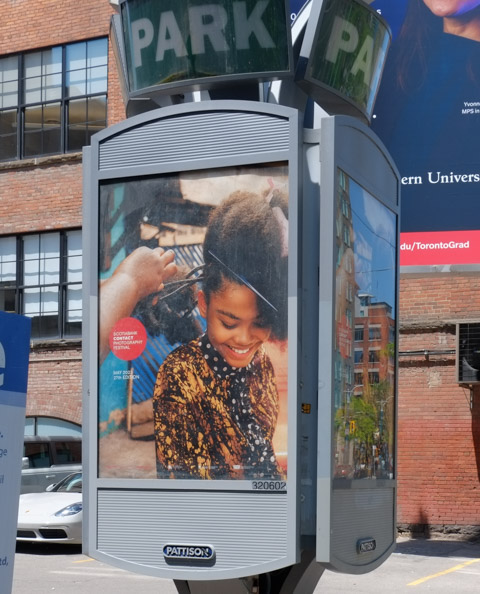
… an art project by Sunday School,  a creative agency formed in Toronto in 2017 by Josef Adamu.  At the moment there are billboards at a few locations around the city including here at Dundas and Lansdowne where there are 3 images.

billboards above a vacant lot. The boards feature 3 large images by Sunday School. On the far left is a reclining woman with arm supporting head. In the center is a billboard with two images. Someone is brushing the hair of a young black woman in one photo. In the other, a person is sitting in a small orange car, viewed from the drivers side of the vehicle.

close up of images on billboards. two images. Someone is brushing the hair of a young black woman in one photo. In the other, a person is sitting in a small orange car, viewed from the drivers side of the vehicle.

Other photos by the group are on display at the Art Gallery of Ontario.  Two examples are:

below: “Jump Ball” is an ongoing project that explores the relationship between basketball and the African Diasporic communities.  Home is not restricted to private spaces, it is also found in unity. Here, in “Jump Ball: Toronto (2019)”,  you can see carefully composed pairings of young men in vibrant Ghanaian Kente cloth or a Senegalese boubou on the basketball court (what is identity?  how does basketball bring young men together?).  These were photographed by O’shane Howard.

photographs on a gallery wall, two in colour, and a group shot in black and white. the coloured photos are of young black men in traditional african clothing on a basketball court

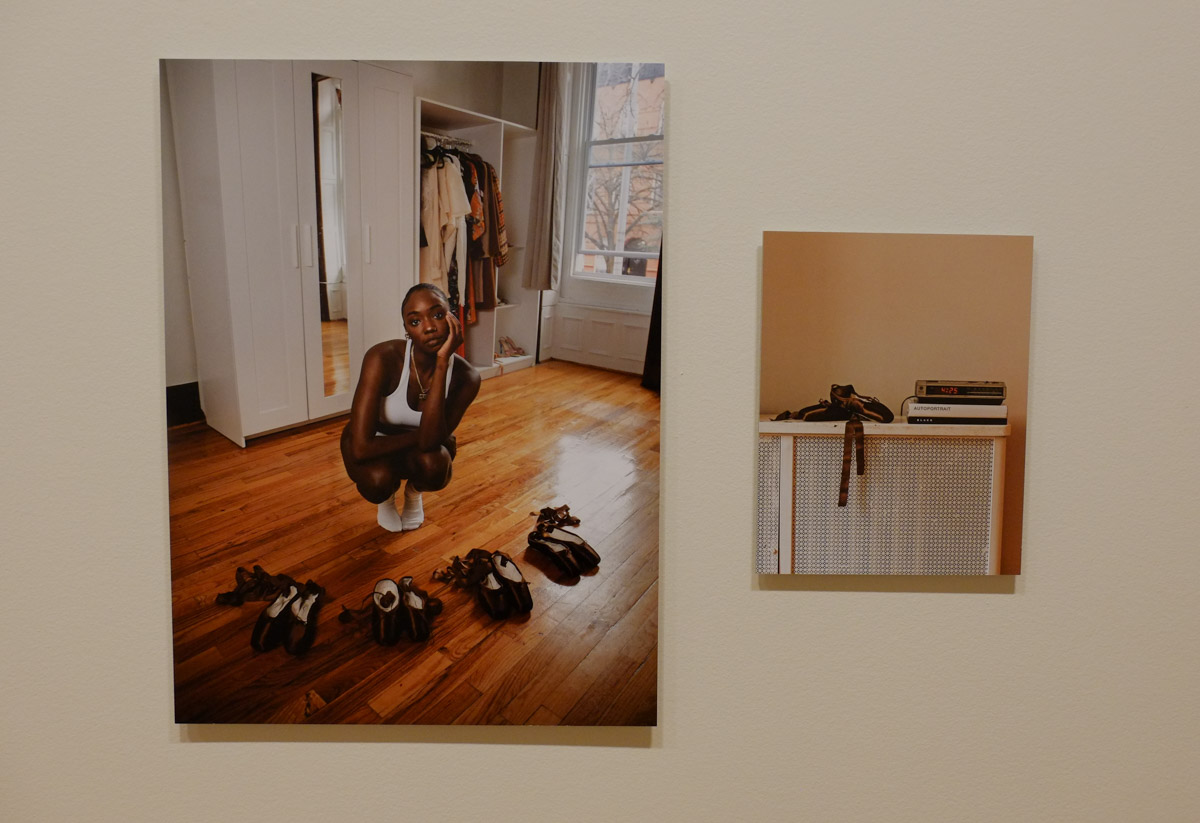
below: Another series of pictures is “Ten Toes Down”, photographed by Kreshonna Keane.  This series features a ballet dancer in her home – a Black dancer in a field that is almost exclusively white.  Home is not just a building.  Home is the body; home is self expression.

two photographs on a gallery wall. on the left a black woman, a ballet dancer, sits on her floor surrounded by pairs of ballet shoes or slippers. the other picture is shoes and books

below: This image by Carlos Idun-Tawiah can also be seen in a parking lot by 80 Spadina Ave (see above, at Lansdowne & Dundas).

image of a young black woman

Sunday School website

Sunday School’s Instagram page

Toronto is a city of surprises; a city of variety.  If you are bored with one street, just walk another block or turn at the next intersection and chances are you’ll encounter something different.  The scenery will change.  For instance, on Dundas West you leave the downtown core just after University Ave., walk past OCADU, the Art Gallery of Ontario and Grange Park… next, through a section of Chinatown at Spadina and then immediately into the Kensington Market area.   Just south of Kensington is the redevelopment of Alexandra Park….  and you’ve only walked a few blocks.

traffic signs and pedestrian crossing signs on Dundas with downtown highrise in the background and Ocadu banner on pole

below: The newly renovated OCADU annex building on the southeast corner of Dundas and McCaul is now called the Rosalie Sharp Pavilion.  The curve of the roof contrasts nicely with the sharp edges of the neighbouring buildings

Rosalie Sharp pavilion on the southeast corner of Dundas and McCaul, shiny metal facade on the building,

below: The northeast corner of Dundas and McCaul is yet another hole in the ground.  The Art Gallery of Ontario and Rosalie Sharp Pavilion are in the background.  I am beginning to feel like a broken record player when I mention yet another condo construction site (tangent – is there a 21st century equivalent to “broken record player”?).

construction site, orange plastic, hole in the ground, St. Patricks church on right, AGO in the background, at Dundas and McCaul, northeast corner

below: The demolition of the buildings on Dundas West opens up new views of St. Patricks RC Church.

on Dundas West, just east of McCaul, hoardings around a construction site with St. Patricks RC Church behind

below: Around the corner from St. Patricks, is Our Lady of Mount Carmel Church and its bilingual signage and beautiful red door.

entrance doorway to Our Lady of Mount Carmel Church, red wood door, signs on right side in English, signs on left side in Chinese

below: Krispy Kreme (yes, they still exist!) and Jimmys Coffee on McCaul in almost identical buildings.  Like twins but with a dash of their own personality.

old buildings on McCaul street, two remaining rowhouses, three storeys, one is Krispy Kreme at street level, the other is a Jimmys Coffee. A larger squarer brick building on the right, also three storeys

below: Thing 1 and Thing 2 running down the alley

mural with Thing 1 and Thing 2 from Sr. Suess Cat in the Hat book

below: …but not this alley.   That’s a lot of stairs!

Toronto downtown alley backs of houses, exterior stairs up to third floor, fences, brick, concrete,

below: Each building has it’s own character from years of changes and modifications as people come and go.  They may not be good looking but they are often unique – someone’s little piece of the city.

back of houses in alley, tree, fence,

below: Front yard patio

loveseat and armshair outside on grey mat, door to building is double red door, storefront,

below: Critters in the window

three stuffie toys in the middle window of a bay window set in a beige stucco house, behind a wood fence, rusty metal roof on bay window

below:  An old TTC streetcar loses its load.  By the looks of it, this image will disappear once the ivy comes back to life in a few weeks.

painting on concrete wall of a TTC street car leaning over and people falling out

Super star written on the window of a hair salon in china town, large red Chinese letters too, reflection in the window

below: Put together by the ‘Long Time No See Photo Project’, “Chinatown, the Best” is a collection of portraits that highlights seniors in the Chinatown area along with their thoughts and opinions on what makes Chinatown great.

Chinatown poster series on residents, in windows and door on Dundas

below: The posters are on display over eight locations on Spadina and Dundas West.

Chinatown poster series on residents, in windows and door on Dundas

Left to right:
1. Come and work out in Chinatown.
2. Chinatown is my looking glass. Newcomers come thru finding support to enter Canada & I go back thru to understand where my ancestors and I come from. Keep Chinatown strong!
3. Chinatown is my ancestral village. In 1892 Great-Grandfather Charlie Yep laid down family roots in Montreal – but the early years of international racism gave way to self-loathing Kungfu? Chinesey food? Aiiyah!! Standing defiant in a martial arts pose is a testimony to overcoming my denial. I am Chinese-Quebecois Canadian. Au bout!
4. For making Chinatown the Best, Lily draws on her spiritual energy medicine knowledge to develop a healing relationship with the living landscape and its inhabitants to foster the restoration of the area’s sluggish energetic anatomy and amplify its vibrational health and wholeness.
5. deu say lin yeung im ah im duck!

below:  In another Chinatown window is this display – pictures of food with four old black and white pictures.

picture in window in Chinatown, collage of food photos and old black and white photos. One black and white is old Shanghai Bund

below: The picture on the far right depicts Shanghai Bund and river waterfront so it is possible that the other photos are also of Shanghai?  Or at least cities in China?

close up of a picture of sliced meat on a platter, as well as two old black and white photos. Photo on right is Shanghai Bund with boats docked along the river shore.

below: Another window with pictures – this time The Kensary, a cannabis store in Kensington.

window of the Kensary cannabis store in Kensington, full of Toronto landmarks

below: A close up of part of the window showing Casa Loma, Roy Thomson Hall, Hughs Room, the El Mocambo, the Silver Dollar, Massey Hall, and gabled Victorian era houses

close up of picture in window of The Kensary, Toronto landmarks, Casa Loma, Roy Thomson Hall,

below: Hoardings on Spadina where a skeleton reaches out for passers-by.

man on sidewalk on Spadina, walking past hoardings with graffiti and street art and adverts, one mural is a large skull with outreached bony arms,

below: Kensington view of the CN Tower

CN Tower in background, large hydro wood structure in foreground, view from Kensington

below: Facilities at Bellevue Park – more than just “all gender”

a blue and yellow porta potty covered in macabre street art, in bellevue park

in blues, mural by elicser of an older man with white beard, a hook for a hand, smoking a pipe, wearing a cap

a dead end in an alley where all the fences and gates are covered with murals, a large tree, the backs of two storey houses in different materials and colours, brick, wood,

below: Wanted poster for Putin the war criminal

two stencils on hoardings, one is a pink woman's head and the other is a wanted poster for putin, war criminal, Russian leader for his invasion of ukraine

street art on hoardings with word war, black hands and red flames, yellow building tower,

below: There’s at least one Maple Leafs fan left!

sticker on a pole, a stick figure person with a happy face and a realistic blue Maple leafs hockey jersey

bke parked at bicycle stand with graffiti slaps on it, across street from fruit and vegetable market with green walls and red and white striped awning, Kensington market area of Toronto

poster graffiti of a white skull on black background, large red border, on a pole, with alley street art in the background

a woman taking pictures of street art in an alley

below: Jumblefacefoto collages

two large jumblefacefoto collages on walls of empty storefront, open door, with large sign saying coming soon, someone has written in black marker, large letters, freedom in back

in an alley, a door painted black, part of a callligraphy mural with black writing on magenta and orange background

below: Alexandra Park redevelopment progresses. Dundas West is the northern edge of the 16 acre site owned by TCHC (Toronto Community Housing Corp). Most of the original units that were built in the 1960s are now gone.

orange digger working behind a fence, beside older brick apartment building, sign on fence that says you are not your mistakes.

on a pole, twp graffiti slaps, on top is an intricate line drawing of flowers and on the bottom is a bruha, intergalactic in many colours

below: Apparently it’s okay to be white. Actually it’s okay to be brown, or black, or any shade in between too.

on the back of street traffic signs, two slaps. On top is one with words It's okay to be white, and on the bottom a small face with a round surprised mouth

below: Anarchist piano lessons?

poster on hoardings that says Anarchist piano lessons

below: “They say death takes you to a better place but I doubt it”  Me?  I’m in no hurry to find out.

square slap graffiti, small, with text crammed into it that says They say death takes you to a better place but I doubt it

small black and white sticker of a screaming face, on a pole with street art, beside a wood utility pole with lots of orange paint

on a wooden fence, a sign that says warning CCTV cameras, surveillance, you are being watched

Two exhibits at the Art Gallery of Ontario feature the colour blue.  One is “Blue View” consisting of paintings created by Canadian artist Matthew Wong between 2017 and 2019.  The other is an exhibit of Picasso paintings at the beginning of the 20th century especially his “blue period” 1901-1904.

******

Matthew Wong (1984-2019)

two women in an art gallery looking at paintings by Matthew Wong

below: “Starry Night”

starry Night, a painting by Matthew Wong

a small painting by Matthew Wong of an open doorway into a bathroom from a darkened bedroom

women looking at blue paintings by Matthew Wong

Matthew Wong paintings at the Art Gallery of Ontario

******

Pablo Picasso (1881-1973)

below: Nudes painted before the Blue Period… and when Picasso was only 19 or 20 years old.

man looking at Picasso paintings at the AGO

In 1901 Picasso was given access to Saint-Lazare prison-hospital in Paris where he painted many of the inmates, especially the women who were there as a result of their participation in the sex trade.  They were impoverished and forgotten women living in deplorable conditions, often with young children.  Picasso painted them in shades of blue and green and in his paintings sex work, motherhood and syphilis become intertwined.  They can be compared to images of the Virgin Mary with an infant Jesus, a secularized Madonna.

below: “Mother and Child by Fountain”

Picasso's painting Mother and Child by a Fountain, on wall at Art Gallery of Ontario

below: “Woman and Child by the Sea”, 1902

painting by Picasso

below: “The Soup”, 1902

young woman looking at Picasso painting, The Soup

below: “The Blue Room”, 1901

two women with grey hair looking at Picasso painting from his blue period, woman getting a bath in small tub in middle of her room

below: “The Frugal Repast”.  Not in blue but still with the theme of the working poor.  This was an etching that Picasso first made in 1904.  Later, in 1913, he printed 250 copies of it.

older couple looking at picture by Picasso, in greys and browns,

two women looking at pictures at AGO

With thanks to Alice and Arlene for spending a couple of hours looking at paintings with me.

“Picasso, painting the blue period” continues until 16 Jan 2022.

Matthew Wong paintings are on display until 18 April 2022

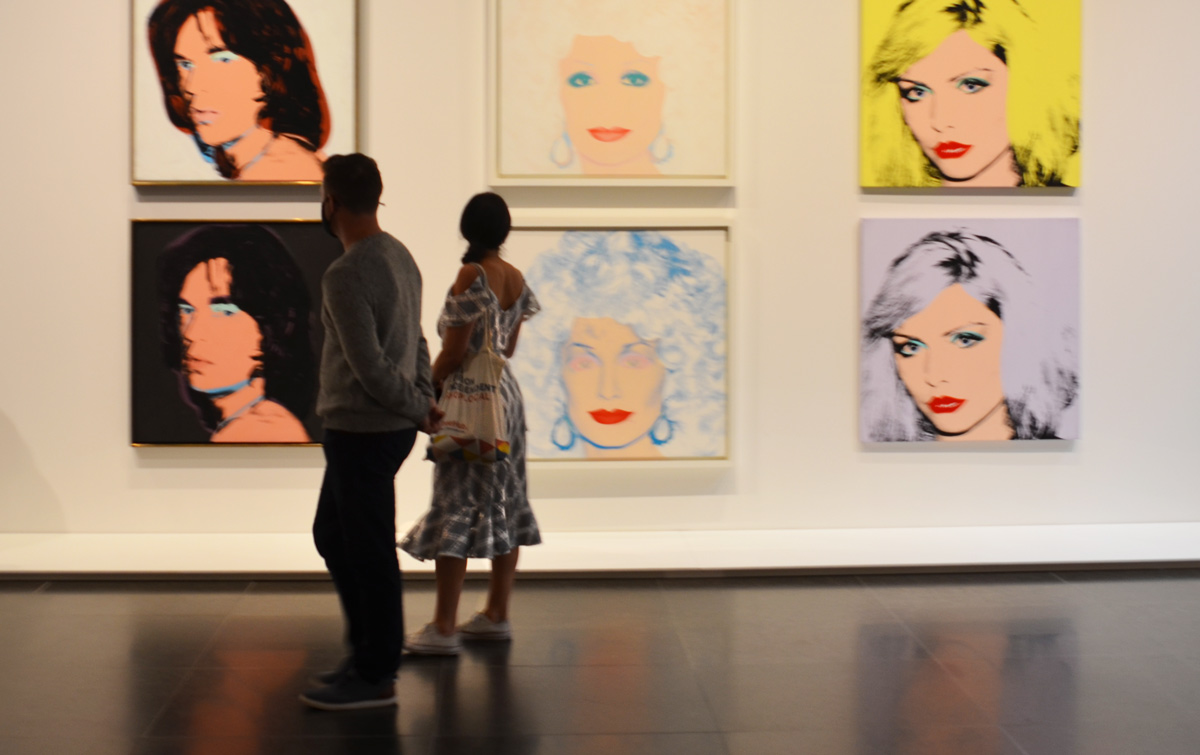
The Art Gallery of Ontario has re-opened after several months of COVID lockdown. They have created an all new Andy Warhol exhibit in celebration.

This is some of what can be seen:


people standing in an art gallery looking a three large and colourful paintings by Andy Warhol of faces

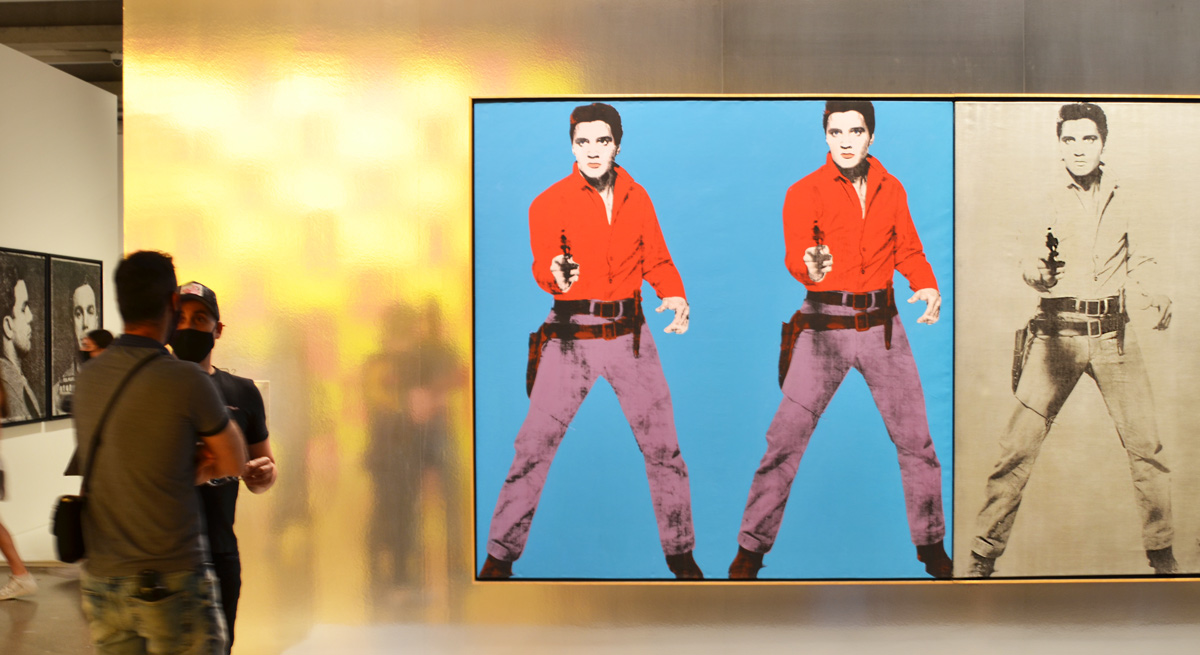
below: Elvis Presley

a man in pale blue jacket and baseball cap stands in front of a portrait by Andy Warhol

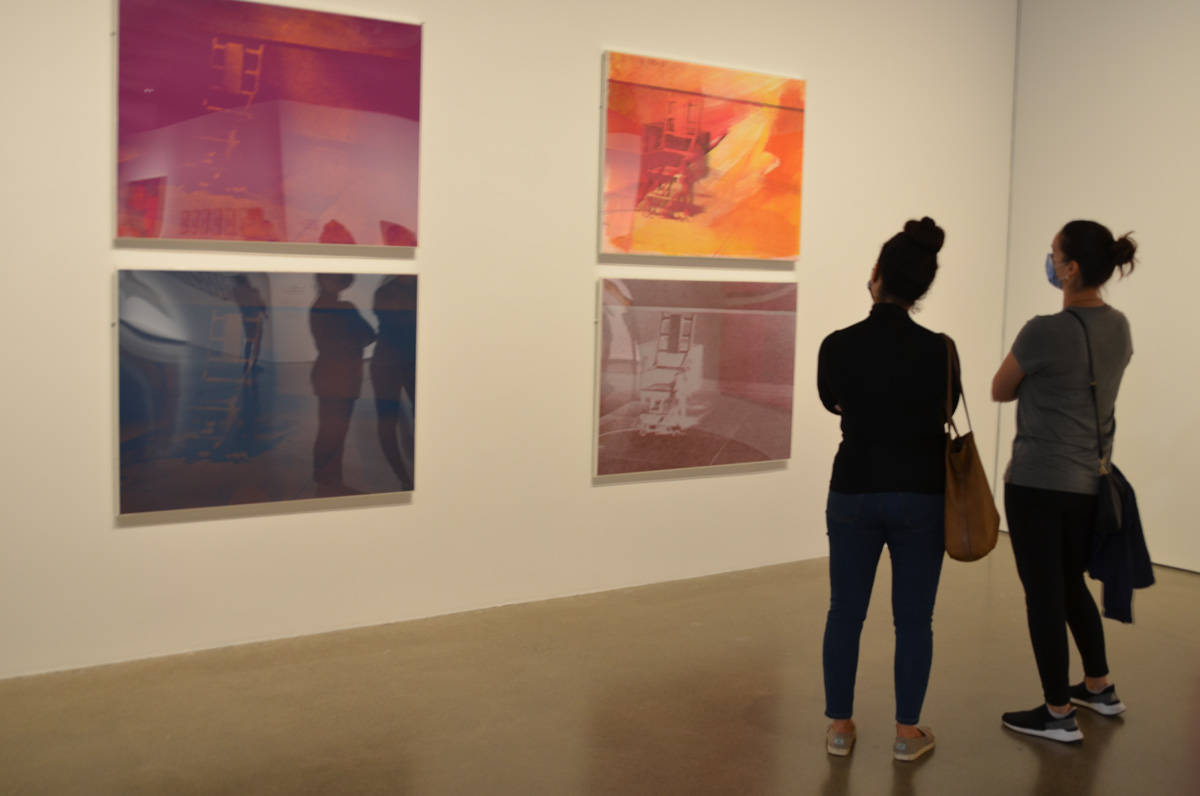
below: Part of a series of images of an electric chair in different colours

two women look at prints of electric chair in 4 different colour tones

three young women look at two paintings of guns by Andy Warhol, large and on a gallery wall

a couple pass by six Andy Warhol paintings. Two of Debbie Harry and two of Dollie Parton and two of Mick Jagger

below: Debbie Harry

Andy Warhol portrait of Debbie Harry

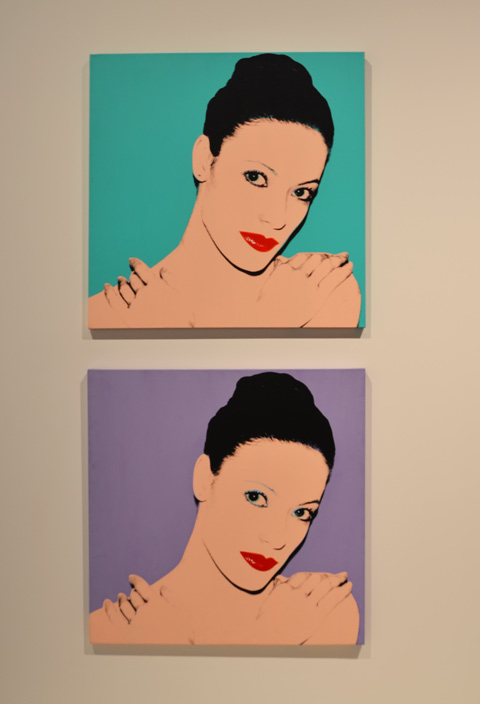
below: Karen Kain

two portraits of Karen Kain, one on turquoise background and the other on light purple background

The exhibit is on until October 2021.

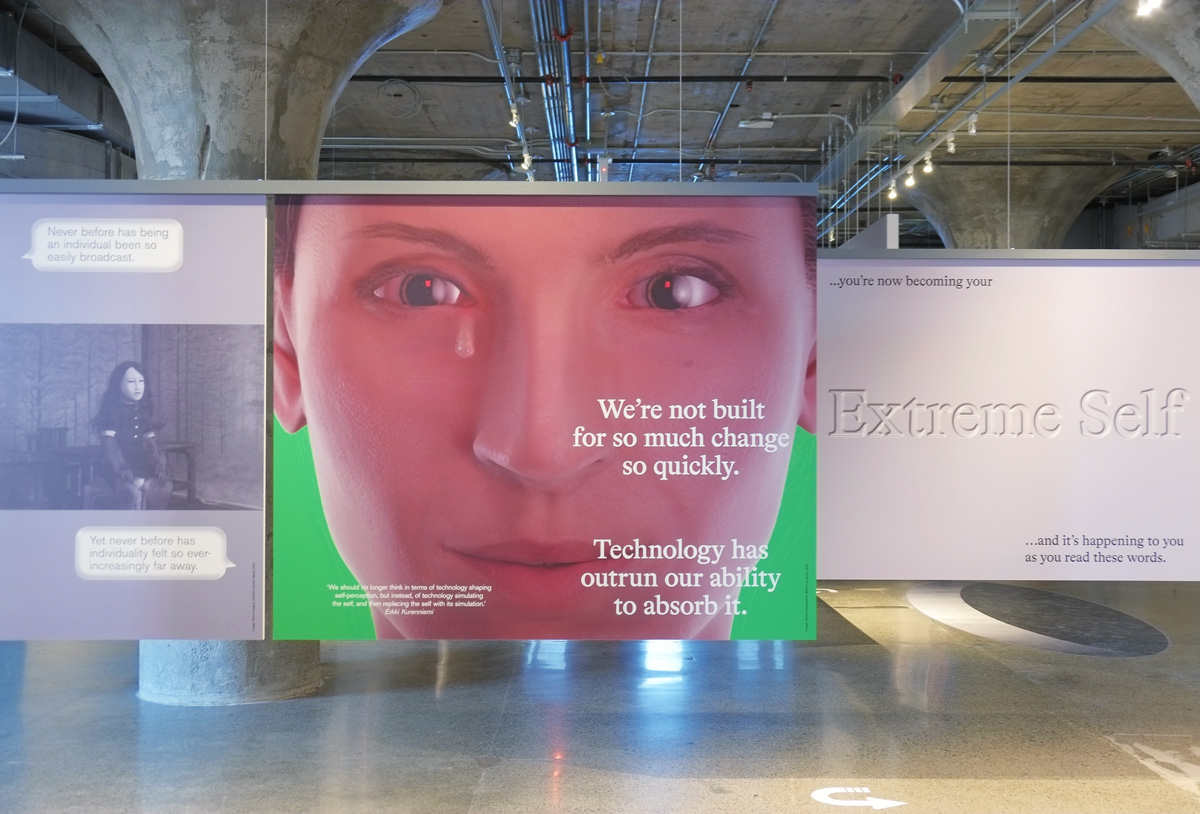
Now at MOCA (Museum of Contemporary Art) is the exhibit “Age of You”. Part of the show is “The Extreme Self” based on a forthcoming book by Shuman Basar, Douglas Coupland, and Hans Ulrich Obrist, of the same name.   Large panels covering two floors of MOCA, lead the viewer through the storyline using graphics, pictures, and a lot of words.  Other works by other artists can be seen among the panels but the panels definitely dominate the space.

Why the title “Age of You”?  What is that all about?  As we increase are use of technology and our dependence on it, our data seems to have become important.   Information about our habits, likes & dislikes, online behaviour, etc. is now a valuable resource.  Our profiles and data can be used to create a model of  ‘you’.   Google knows where you’ve been if you have a smartphone.  They also have an advertising profile for you ostensibly so they can target their ads.  (Check the ads that they insert into these blog posts).  This technology advances faster than our ability to adapt to both it and its consequences.

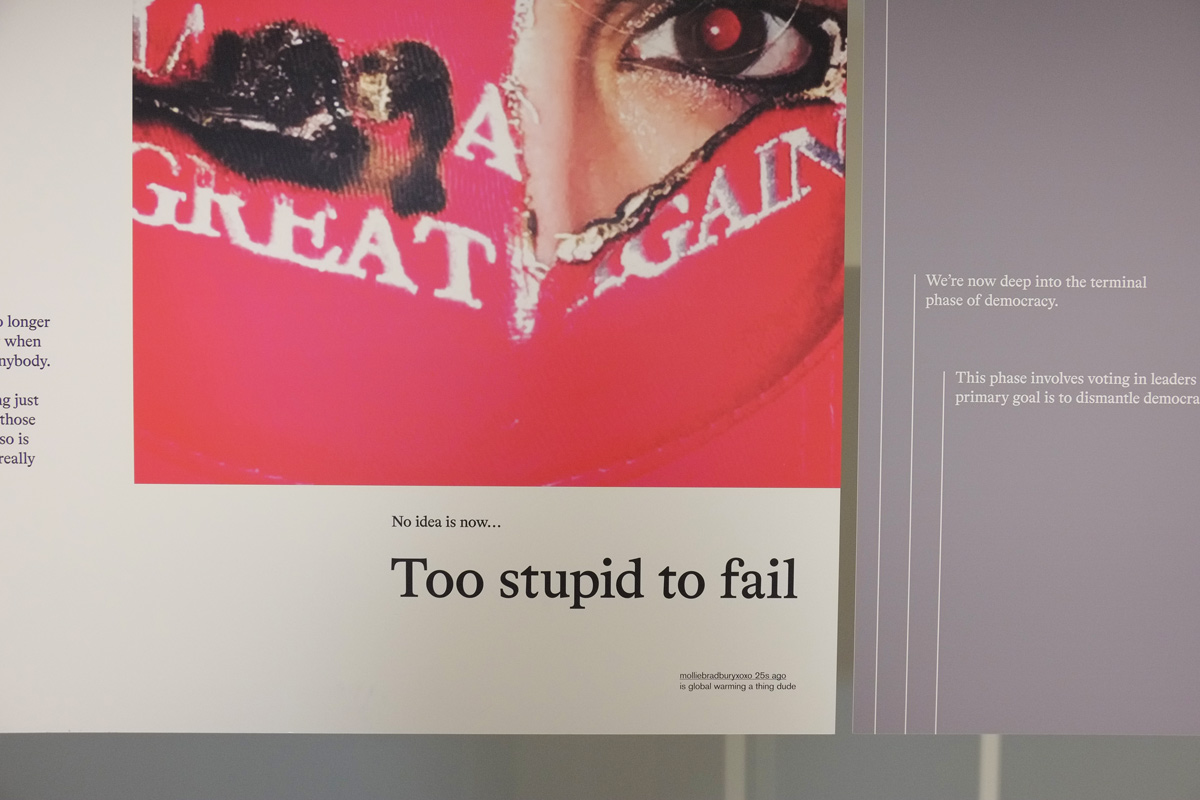
below: “You’re now becoming your extreme self… and it’s happening to you as you read these words.

large panels hanging in an art gallery, MOCA, three panels. In the miiddle is a large picture of a woman's face with a single tear. Also some words. On the right is Too stupid to fail. On the left

Technology and its effects on people, individually and collectively, has been discussed since the advent of technology.  Often it is the negative effects that are discussed the most.  Today, we use the word “disruptive” to describe companies such as Amazon and Uber, companies that use technology to change the way we do business, and the way we interact with other people, and the way we go about our daily lives.
As I was thinking about technology and its effects, I remembered the Marshall McLuhan quote, “Every technology necessitates a new war”. When I looked up that quote (to make sure my memory was correct), I found this as well: “‘Any form of continued and accelerated innovation is, in effect, a declaration of war on one’s own civilian population.”

below: “We’re now deep into the terminal phase of democracy.  This phase involves voting in leaders whose primary goal is to dismantle democracy.”

large panels hanging in an art gallery, MOCA, Too stupid to fail,

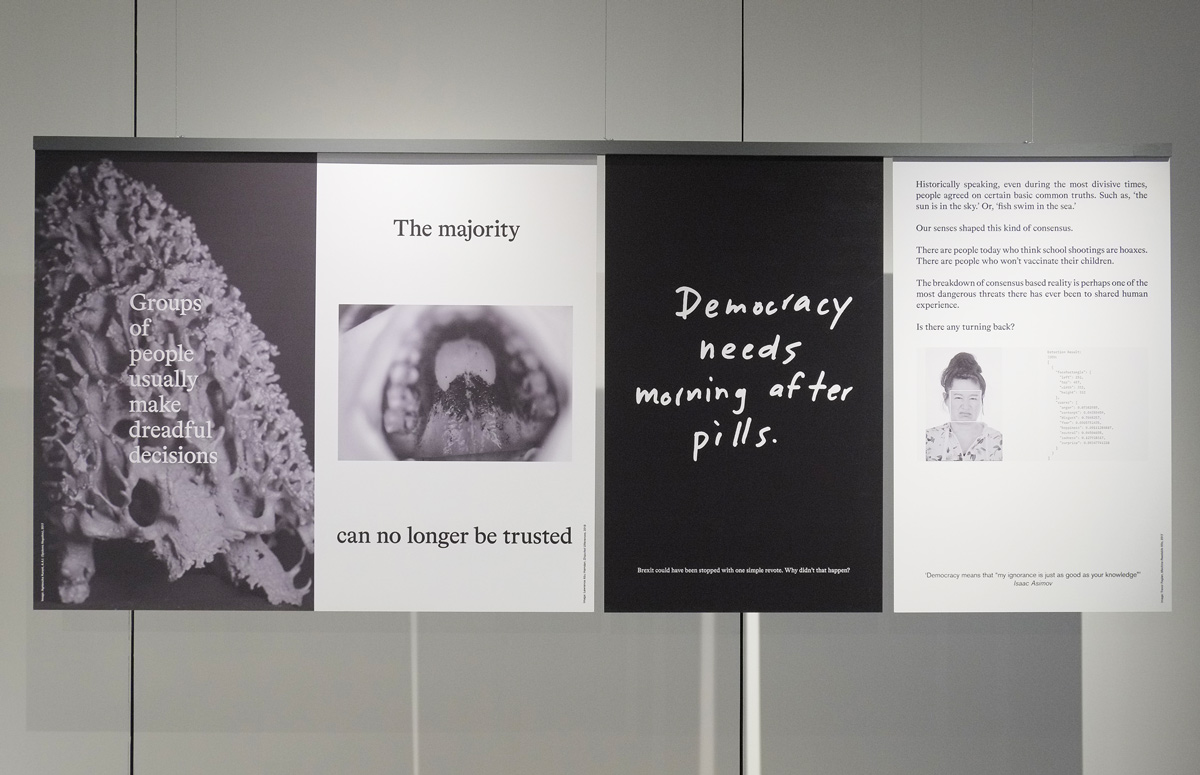
below: Four panels. Four ideas in words in pictures.  “Groups of people make dreadful decisions.” “The majority can no longer be trusted.” “Democracy needs morning after pills.” and finally, on the right, a few sentences on the breakdown of reality-based consensus.

large panels hanging in an art gallery, MOCA, four in black and white

The exhibit references a quote by Isaac Asimov : “Anti-intellectualism has been a constant thread winding its way through our political and cultural life, nurtured by the false notion that democracy means that ‘my ignorance is just as good as your knowledge.’   But, can’t this be extended to ‘my scribbles are just as good as your fine art?’ And then along comes social media with its anonymity and global reach …. 

So what does all this mean for the future?

Is it art?

One can’t deny that it is thought provoking but part of the reason I asked, “Is it art?” is because of the heavy reliance on words and text.  It’s a book hung from the ceiling.  It also relies on quotes and ideas that originated elsewhere, words that that the artists have collected, not created.
Text is considered to be a design element but words have the added quality of conveying meaning.  Some images carry symbolism but only words can be manipulated into phrases and sentences with different meanings.   There seems to be a trend that involves the use of more text in art.  Art is now a “teaching moment”, like an essay (or book) laid out in a format that suits a gallery.  It’s not enough to be just looked at but it has to be educational too.

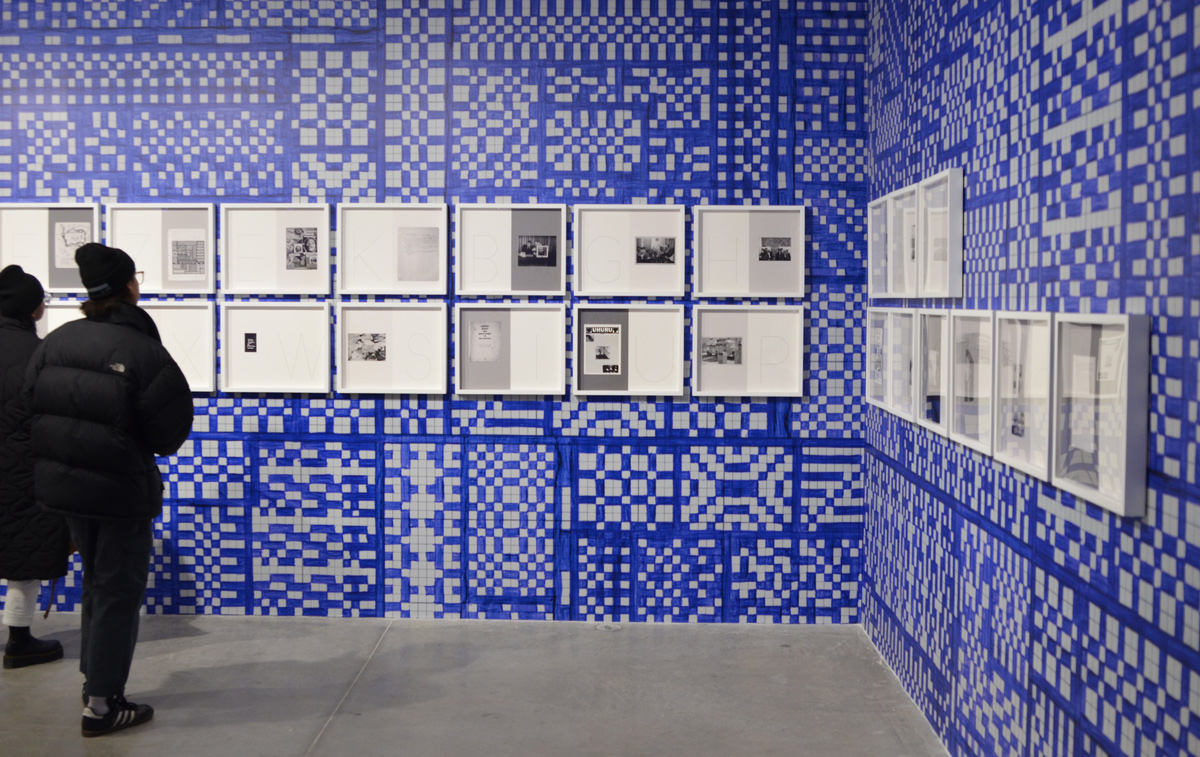
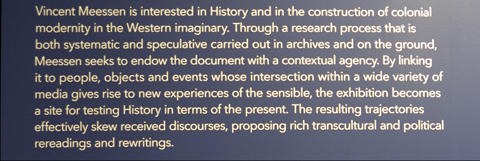
The next few pictures are from Vincent Meessen’s exhibit “Blues Klair” now on the Power Plant gallery.  It doesn’t deal with future like Coupland et al. above, instead it’s more a link to the past; it’s a history project.   This is the first paragraph of the words on the wall at the entrance to the exhibit:

words on the wall accompanying an exhibit by Vincent Meessen

A plea to all writers of such words:  Please stop. We’re not stupid but we’re also not ‘experts’ in the latest jargon and this just goes over our heads. …. I found a video on youtube of Vincent Meessen talking about this exhibit – and now it makes more sense.  It’s still a history project though.  It’s also a case, again, of the artist turning a collection of other people’s work into ‘art’.

two people looking at framed pictures and pages of text on a wall that has been painted in blue and white squares

blue and white papers strewn over the floor, discarded, with a framed picture on the wall, and a blue desk in the middle

Jumping back to the future – jumping to Hito Steyerl’s exhibit “This is the future” at the AGO to be more specific.   She too uses words.  And multimedia.  And she too pushes the limits of what art is.  (Or can you argue that those limits are long gone?)

below: Two parallel stories, one on top and the other below.   The upper story is about a community where windows are purposely broken, “people are smashing windows tirelessly to generate power”. The other story tells the opposite, windows are left alone and “police with big wooden horses are guarding every window”.  It turns what we believe about society upside down – the ‘good’ people who don’t break windows are living in a gloomy police state.  The ‘vandals’ have sunshine and art.

room at the Art Gallery of Ontario with words written around the walls, and a flat screen TV laying a video in the middle of the room

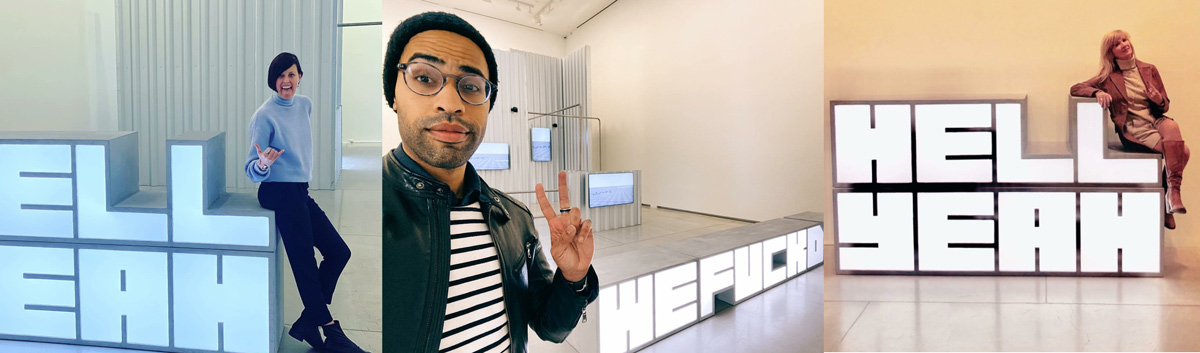
below: Hell Yeah.  Well okay then, if you say so.  It probably says a lot about me and/our times when my first impression is that it would make a great background for an instagram photo.   There are other blocks of words too (not in the picture) and the whole sequence is Hell, Yeah, We, Fuck, Die.  Why these words?  They are the “five words that have appeared most frequently in the titles of songs in English-language music charts over the past decade”.  And yes, I looked it up.

large blocks, lit from inside, put together to form the words the words hell yeah

And yes, I checked instagram….  The “L” does make a perfect seat!

composite of three photos of people that have been posted on instagram showing them at the Hito Steyerl exhibit hell yeah we fuck die at the Art Gallery of Ontario

Five words.  What do they mean? What five words would you use?


‘Age of You’ continues until 5th January 2020.

‘Blues Klair’ is at the Power Plant until 5th January 2020.

‘This is the future’ ends on 23 February 2020

Twice in two days at two different galleries I have encountered white, or almost totally white pieces of art.

This is “Untitled (Basel)”, 1969, by Robert Ryman (1930-2019) now on display at the Art Gallery of Ontario (AGO).  Yes it is 5 white panels on a white wall.   Before you scoff at this, one square similar to these sold in 2015 for more than 20 million dollars.

5 white squares arranged in a row on a gallery wall, an artwork by Robert Ryman

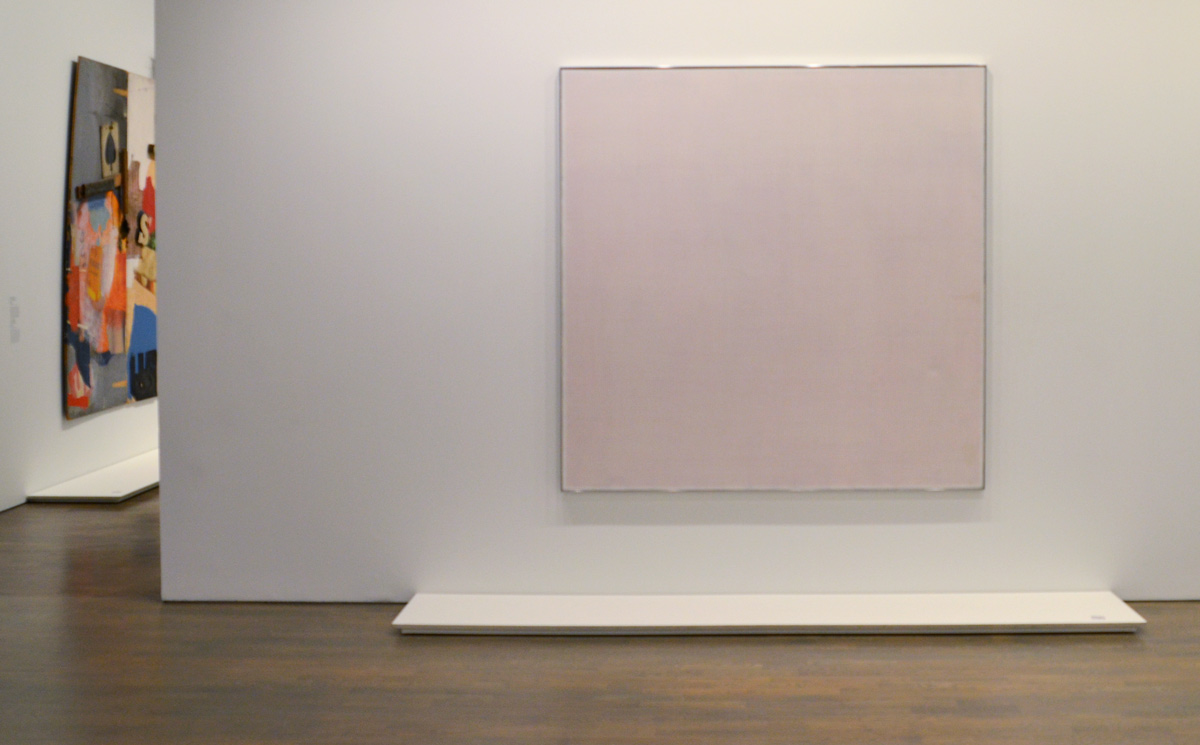
In the same room as the above is “The Rose”, 1964, by Canadian-born artist Agnes Martin (1912-2004).   There is a pale pink colour to this one.  The pink is made by a grid drawn by hand with red and black pencil, hundreds of red lines in all that “dissolve into a rose-coloured atmosphere”.

rose, a large canvas by Agnes Martin on a wall at the Art Gallery of Ontario, red pencil lines in a grid, it looks pink when viewed from a distance

This is the view that greets you when you walk into the Olga Korper Gallery.

art on the walls of a gallery, all frames are white, the artwork is all very pale

The art on the wall is an exhibit, “the laughter between two miles” by Ken Nicol.  The pale grey pieces on the far wall were made with hundreds of pencil lines.  Although the lines are in patterns of vertical and horizontal lines that aren’t quite a grid like the Agnes Martin piece above, the effect is the same.  The lines are too close together so the eye sees it as a single colour.

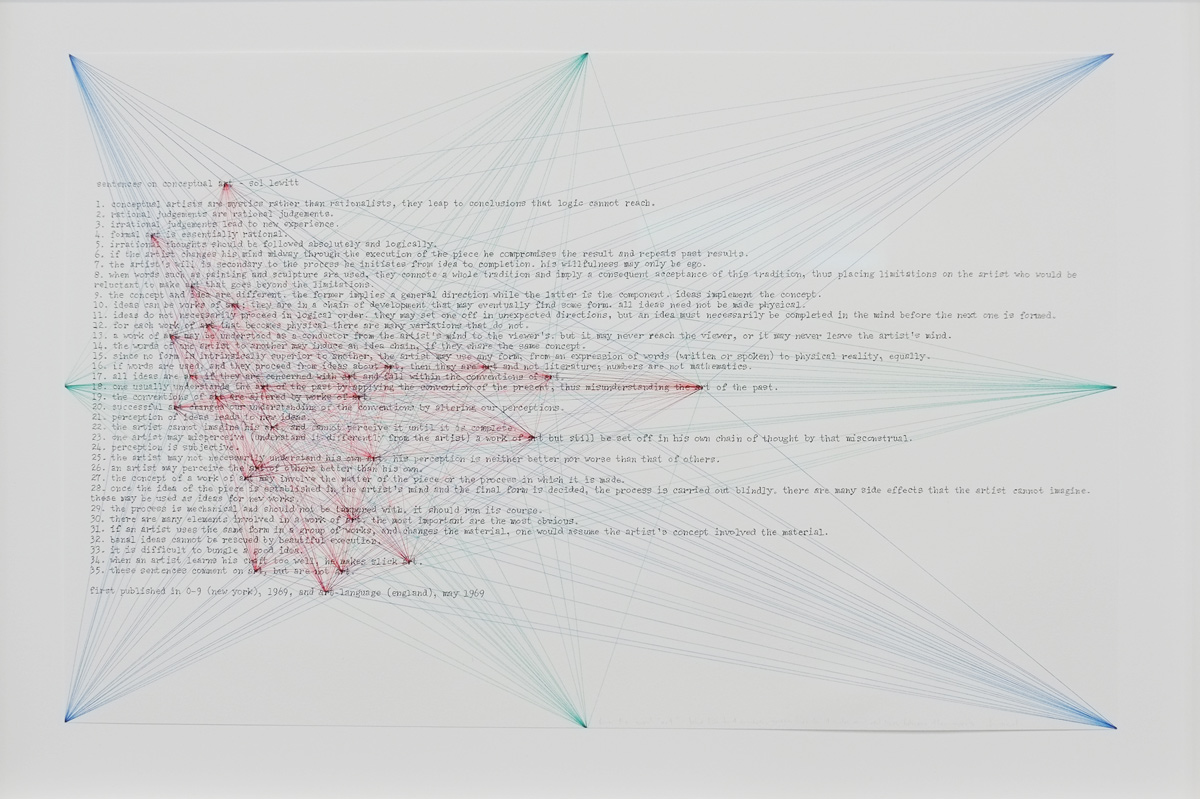
In the example below, green, blue, and red lines make a design over letters.  The letters are hand written (are you impressed?  Do you care?) and they are “Sentences on conceptual art” written by Sol LeWitt and first published in 1969.  LeWitt (1928-2007, American) is considered one of the founders of Conceptual Art.  Apparently he once created something similar where all the if’s, and’s & but’s were connected.  Here, the red lines connect all the art’s.

words in lines, sentences about conceptual art, overlaid with green, red, and blue lines

Text as a major element in a piece of art seems to be more prevalent these days, but that’s a subject for another day.

Instead, one last look at the Olga Korper Gallery before leaving – it’s a gorgeous gallery space.

walls of a gallery, white, with some all white artwork on the walls, also a large old double door that is the exit


women looking at paintings at the Art Gallery of Ontario

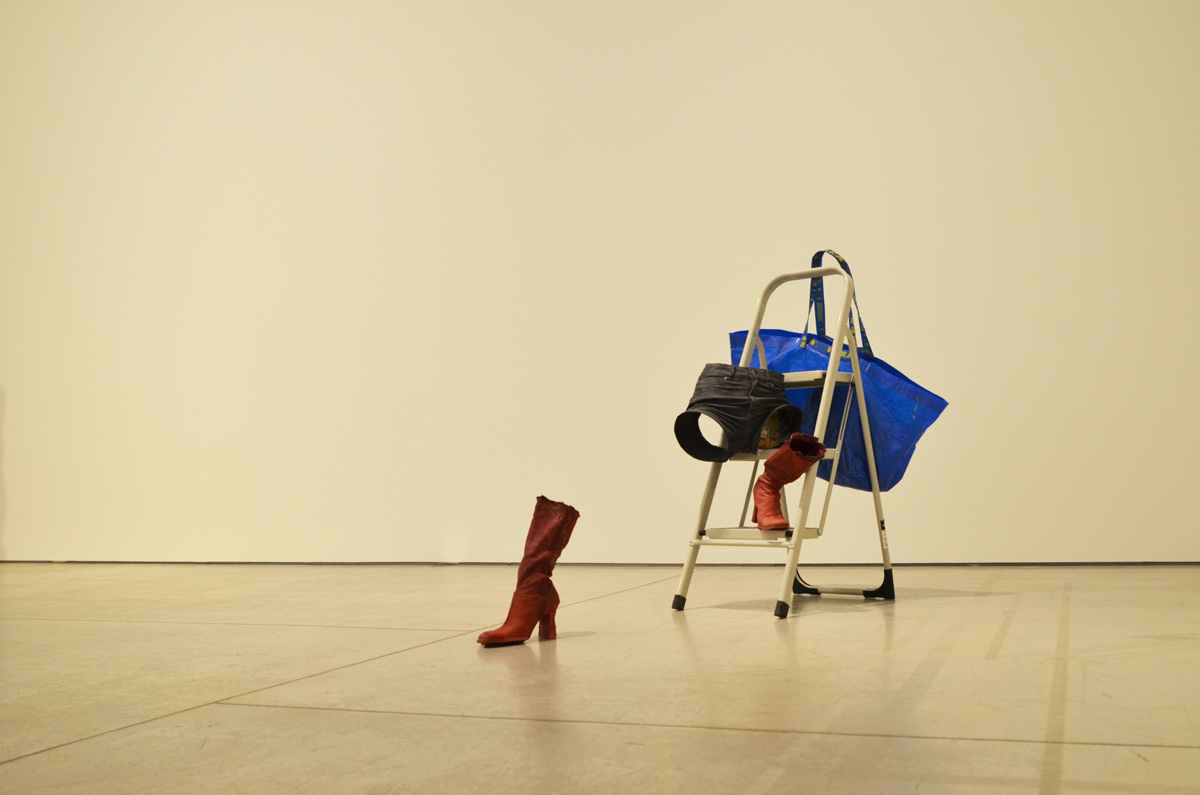
below: Two pieces by Valerie Blass from her collection titled “The Parliament of the Invisibles”.   Blass used plaster casts of body parts,  dressed them in clothing, and then arranged them in little installations.  (On the fourth floor of the AGO until 1st Dec)

art by Valerie Blass, a parliament of invisibles, clothes taking the form of people

below: Stepping out in denim shorts and red boots.

artwork by Valerie Blass at the Art Gallery of Ontario, one red boot, a pair of denim shorts and a blue ikea bag on a step stool

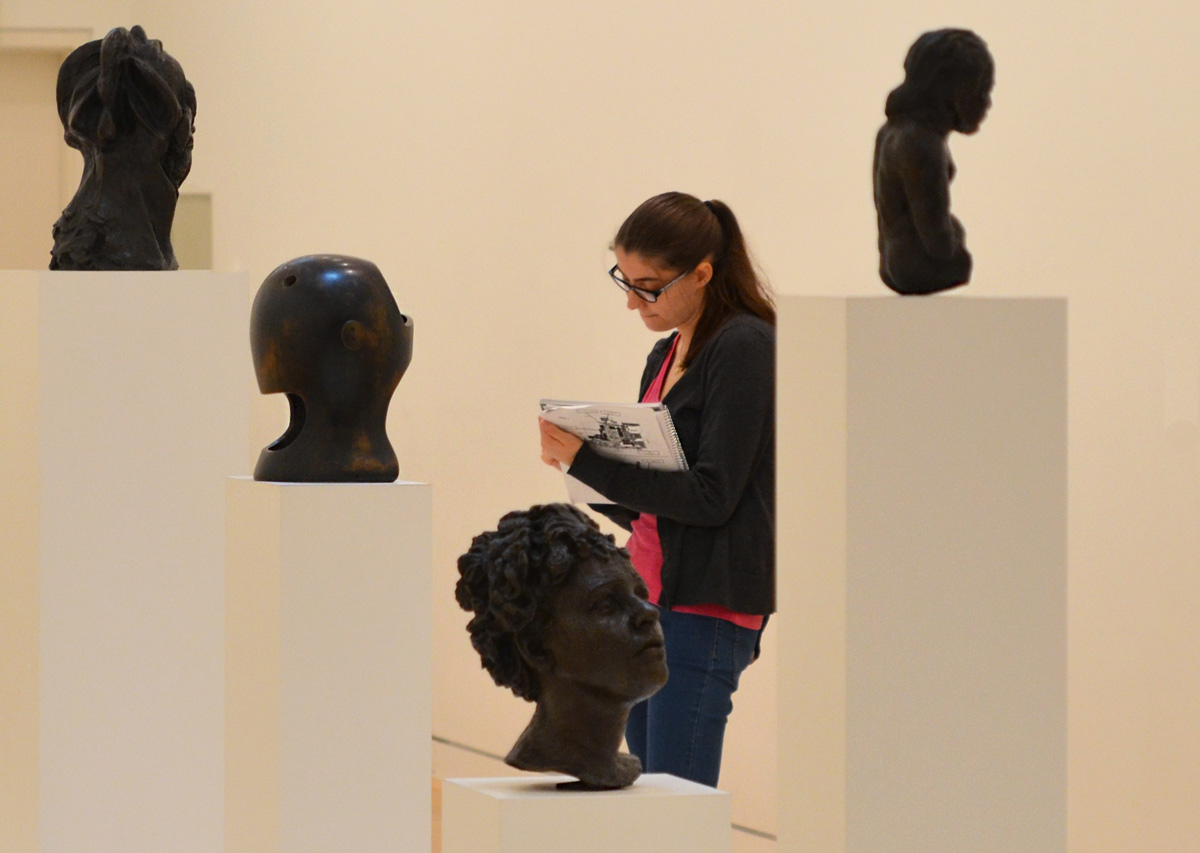
below: Working among the heads

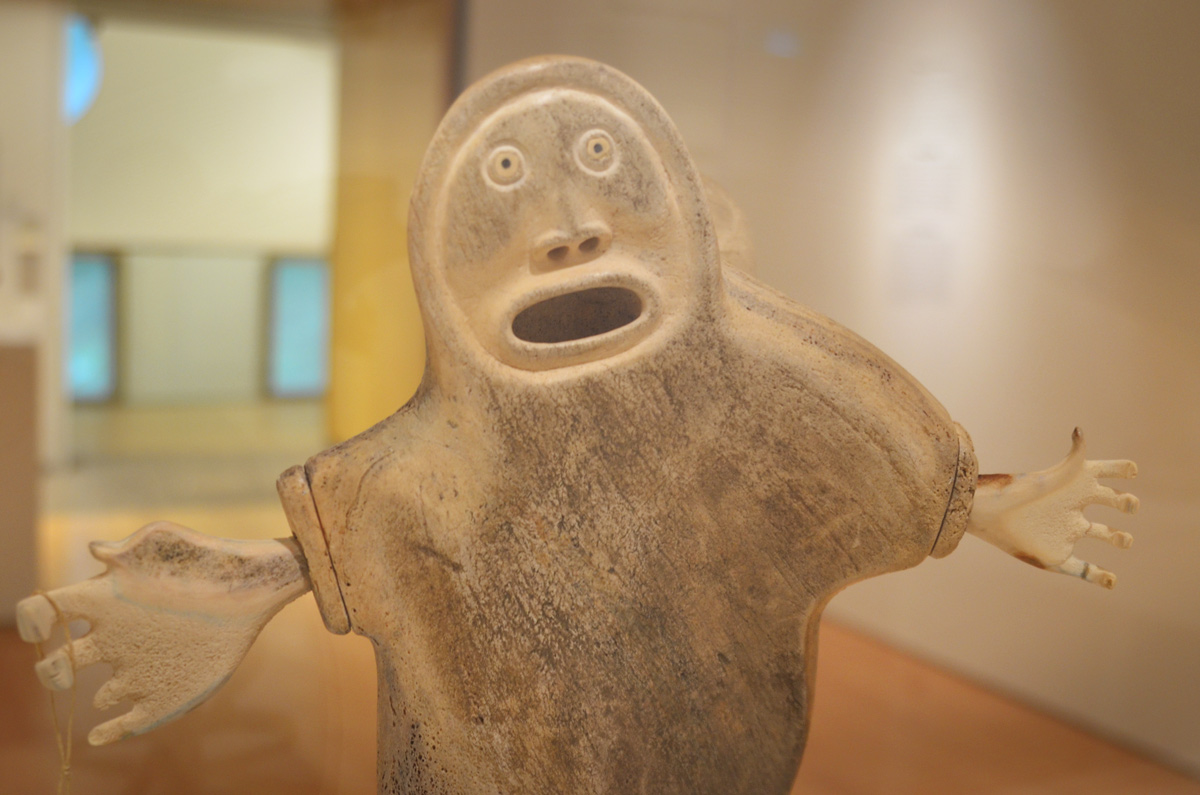
below: Part of “Mother and Child with Pulled Tooth”, a sculpture made of whale bone, antler, grey stone, ivory, and sinew by Karoo Ashevak.

whale bone sculpture in art gallery, mother and child, large round face with open mouth and two outstretched arms with large hands

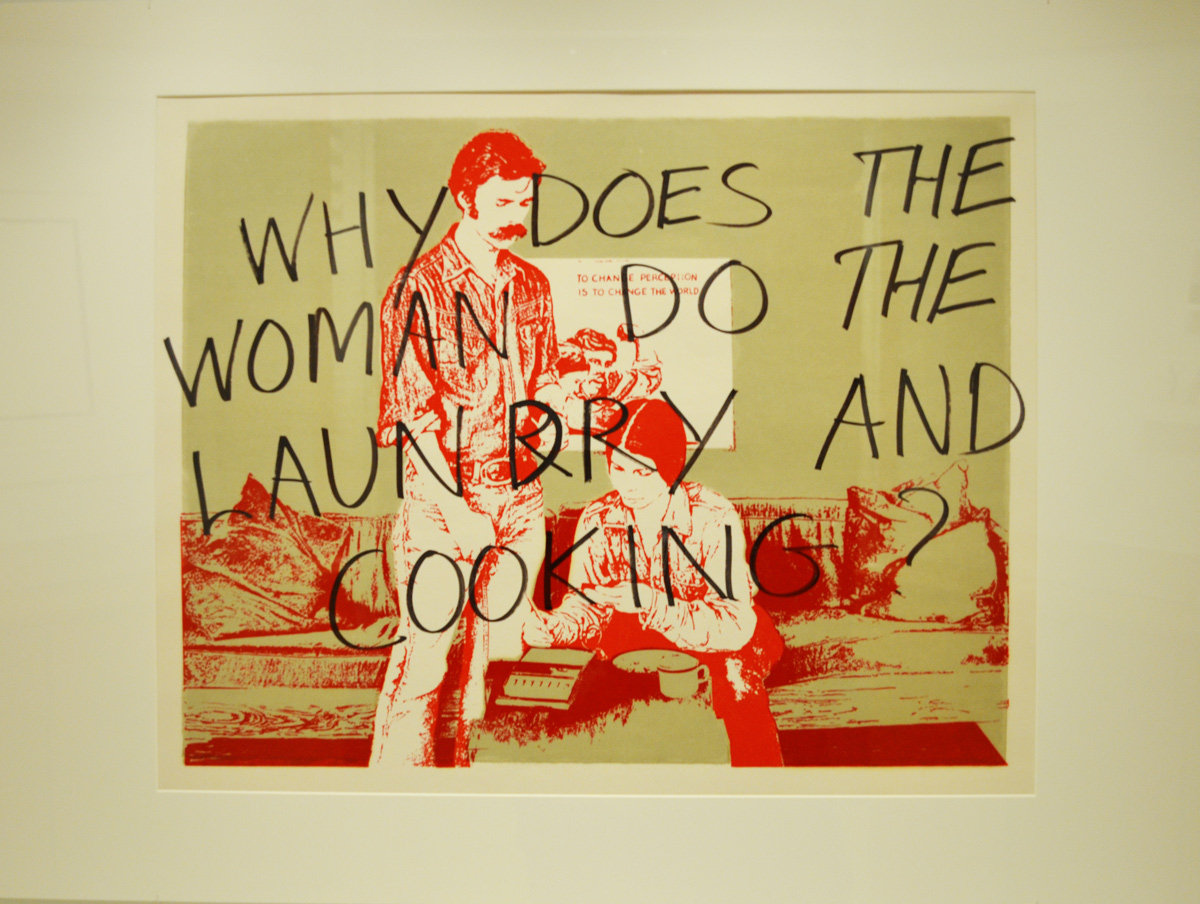
below: A print by Carole Conde and Karl Beveridge, Screenprint and ink on paper, about 1975. “Why does the woman do the laundry and cooking?”  Although in the image the woman is using a tape recorder and is no where near the kitchen.

q print that shows a woman working, in red ink on green background, with black words written on top of it, why does the woman do the laundry and cooking

below: Part of “Blur” by Sandra Brewster – a collage of more than 80 black and white “portraits” of people out of focus and uncentered.

a collage of many black and white blurred and uncentered portraits of people on a wall in an art gallery, part of Blur series by Sandra Brewster

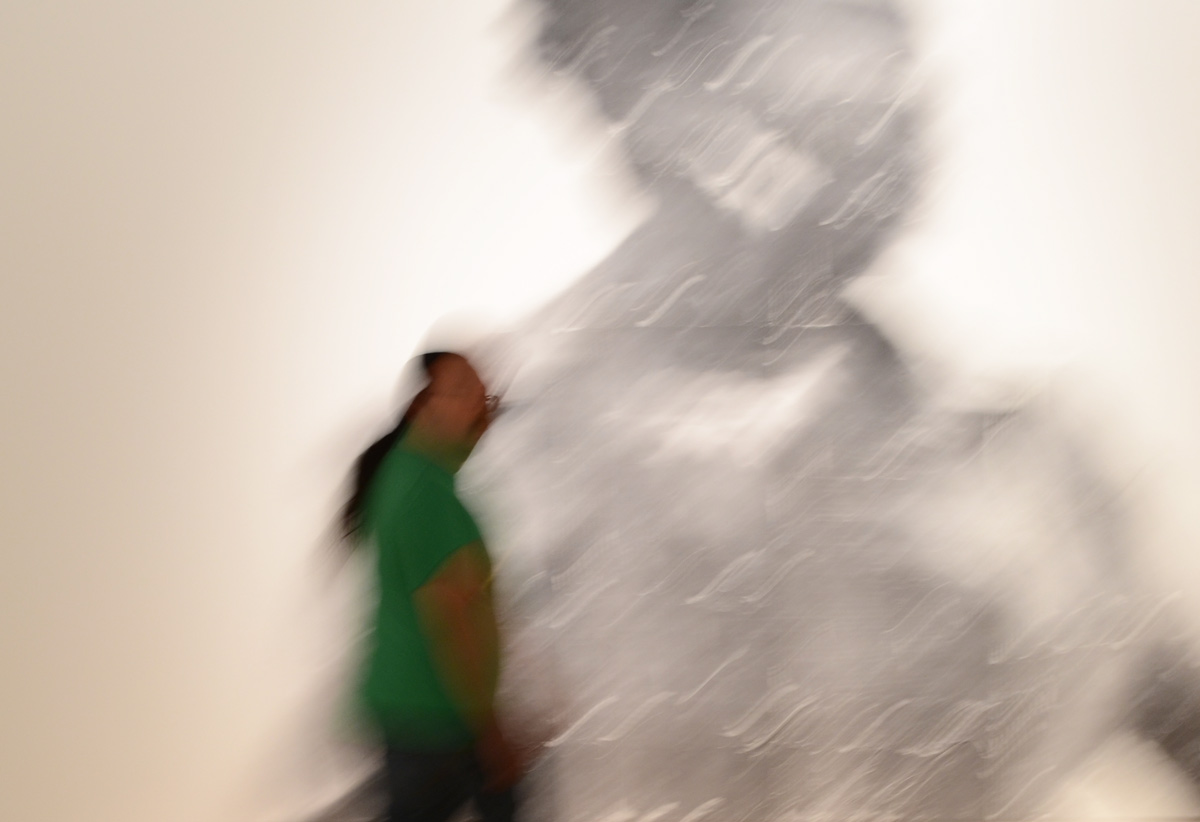
below: There is also a very large out of focus image on a wall of its own.  The photo on its own wasn’t very interesting but it provided a wonderful backdrop to some experiments of my own.  There are those who stop and look and linger and those who pass by without a second glance.

people, out of focus, walking past a large out of focus picture of a woman, a photo by Sandra Brewster as part of her blur series

a couple holding hands with the woman leading the man, out of focus, walking past a large out of focus picture of a woman, a photo by Sandra Brewster as part of her blur series

people, out of focus, walking past a large out of focus picture of a woman, a photo by Sandra Brewster as part of her blur series, three men, two are together and the third is walking in the opposite direction

people, out of focus, walking past a large out of focus picture of a woman, a photo by Sandra Brewster as part of her blur series, a man in a green shirt

people, out of focus, walking past a large out of focus picture of a woman, a photo by Sandra Brewster as part of her blur series, a man pointing

Sandra Brewster’s “Blur” is on exhibit until 20 March 2020.

In honour (or in celebration) of the start of the impeachment process in the US of A, here a couple of images from a small exhibit at the Art Gallery of Ontario on political satire over the years.   These are illustrations by American artist Sandow Birk that appear in a collection of ten lithographs titled “The Horrible & Terrible Deeds & Words of the Very Renowned Trumpagruel”.   This project was based on illustrations by Gustave Dore (1832-1883) for a series of books that were first published a few centuries earlier about the adventures of Gargantua and Pantagruel, two bumbling giants, written by Francois Rabelais.

a lithograph, political satire, of Trump on his cell phone as he looks towards Russia, lots of demons and unsavoury characters playing in the sewer and swamp behind him

In Birk’s adaption, President Donald Trump is the clueless giant who is oblivious both to the havoc he is causing and to the problems of the world. He is firmly attached to his cell phone.  In the background little gremlins, or demons, or swamp dwellers, cavort and make off sacks of goodies. At the time that I was taking these pictures, I didn’t realize that I had chosen two that were so similar.  If you check the link on Birk’s name near the beginning of this post you should be able to see other examples.

Donald Trump on his cell phone overlooking a polluted environment

“The Horrible & Terrible Deeds & Words of the Very Renowned Trumpagruel” was printed by John Pusateri in New Zealand in 2017.