Yesterday Toronto got a brief respite from the frigid temperatures that we’ve been experiencing.   Instead, more snow fell.   I think that most of us are getting tired of this thing called winter, including me.  So, here are a few photos from inside the conservatory at Allan Gardens to brighten your day.

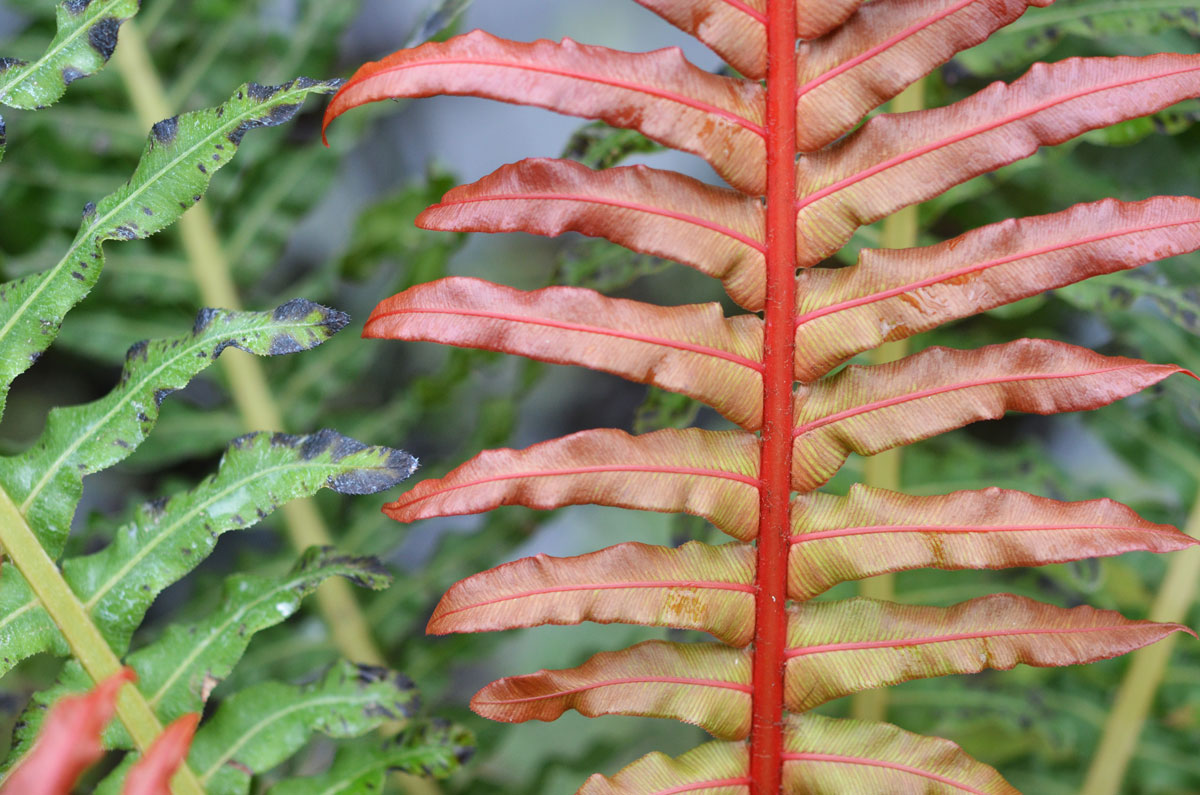
fan shaped arrangement of fern fronds in green and red, Allan Gardens conservatory

reddish coloured new growth on a green plant

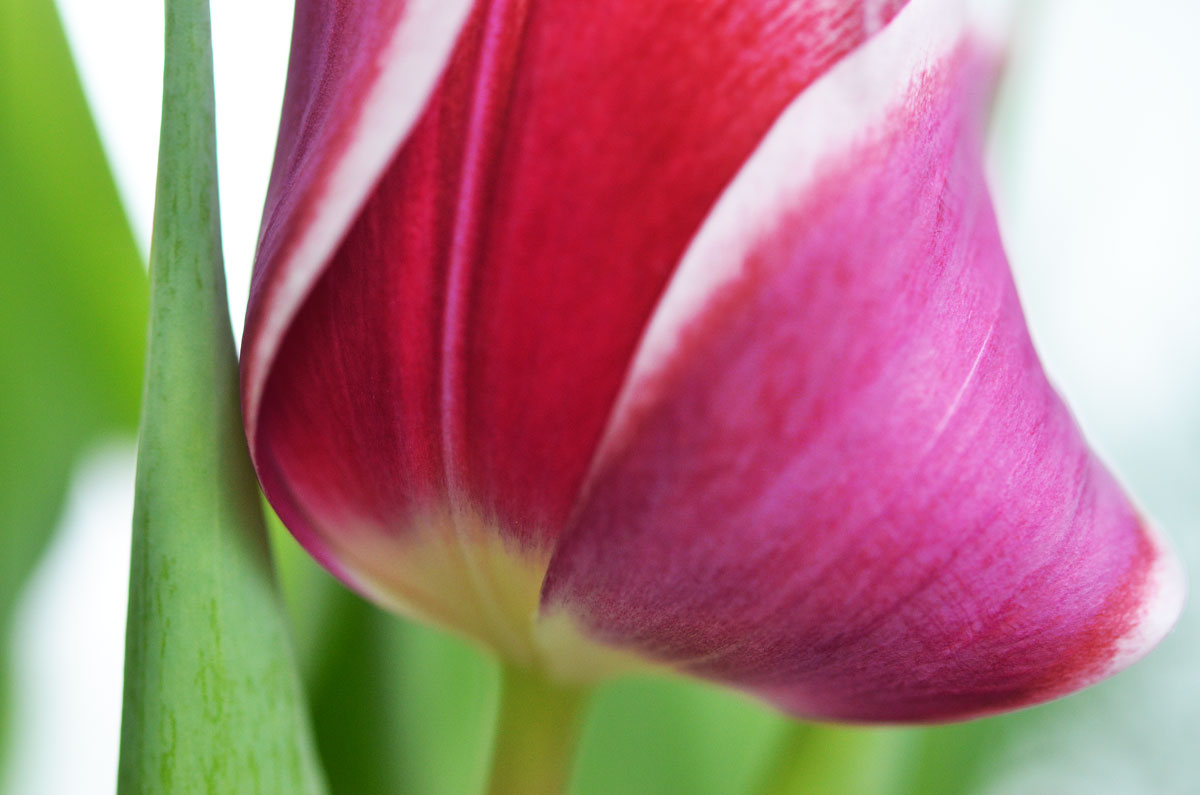
close up shot of a dark pink and white tulip in bloom

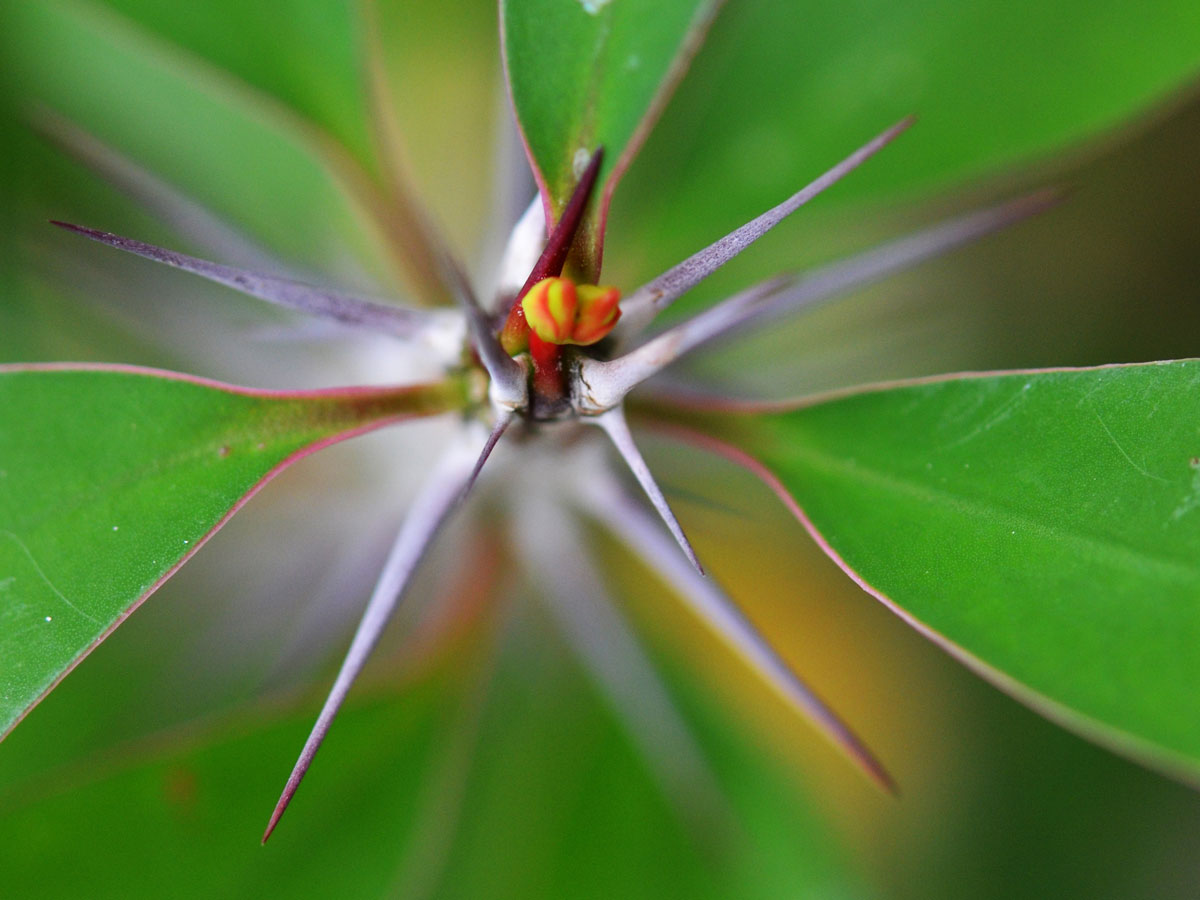
close up macro photo of a bud on the end of a thorny stem

close up macro photograph of the center of a red poinsettia showing the stamens and other parts

three yellow daffodils

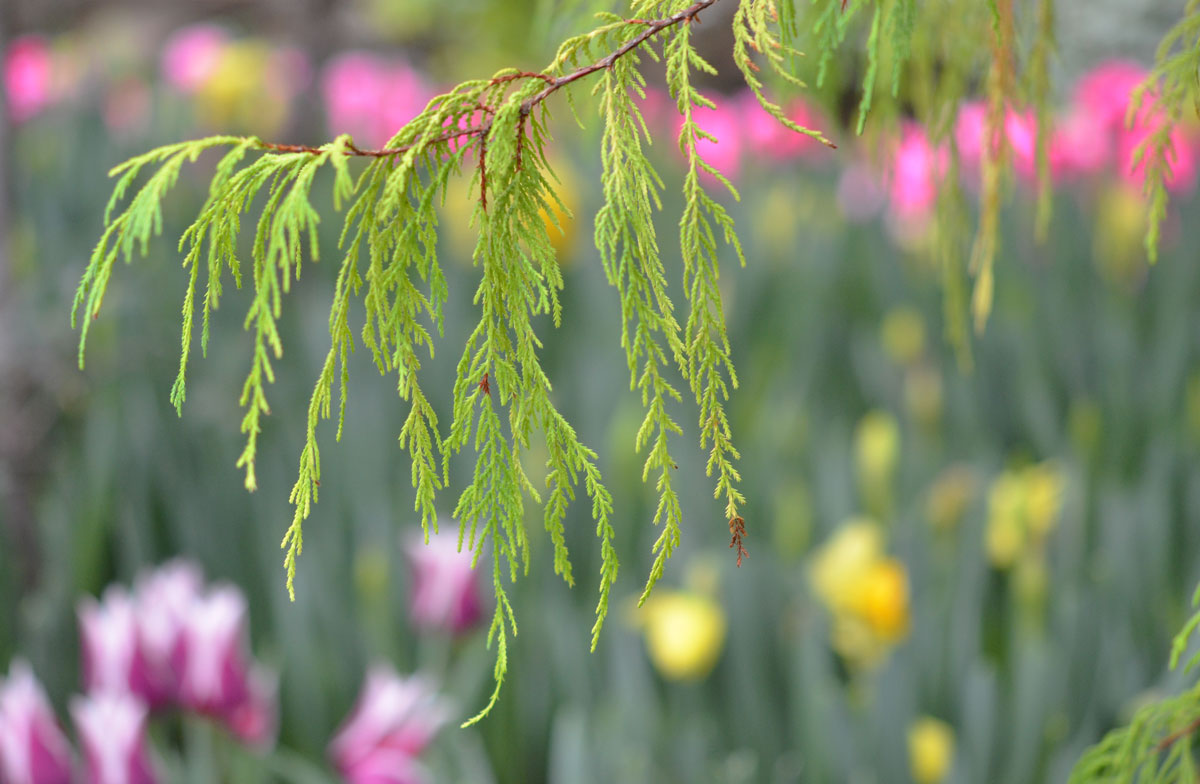
cedar branch in focus in the foregound with a bed of pink and yellow flowers out of focus and blurry in the background

A succulent plant with wide narrow leaves, view from the top, looking down at the top edges of the leaves
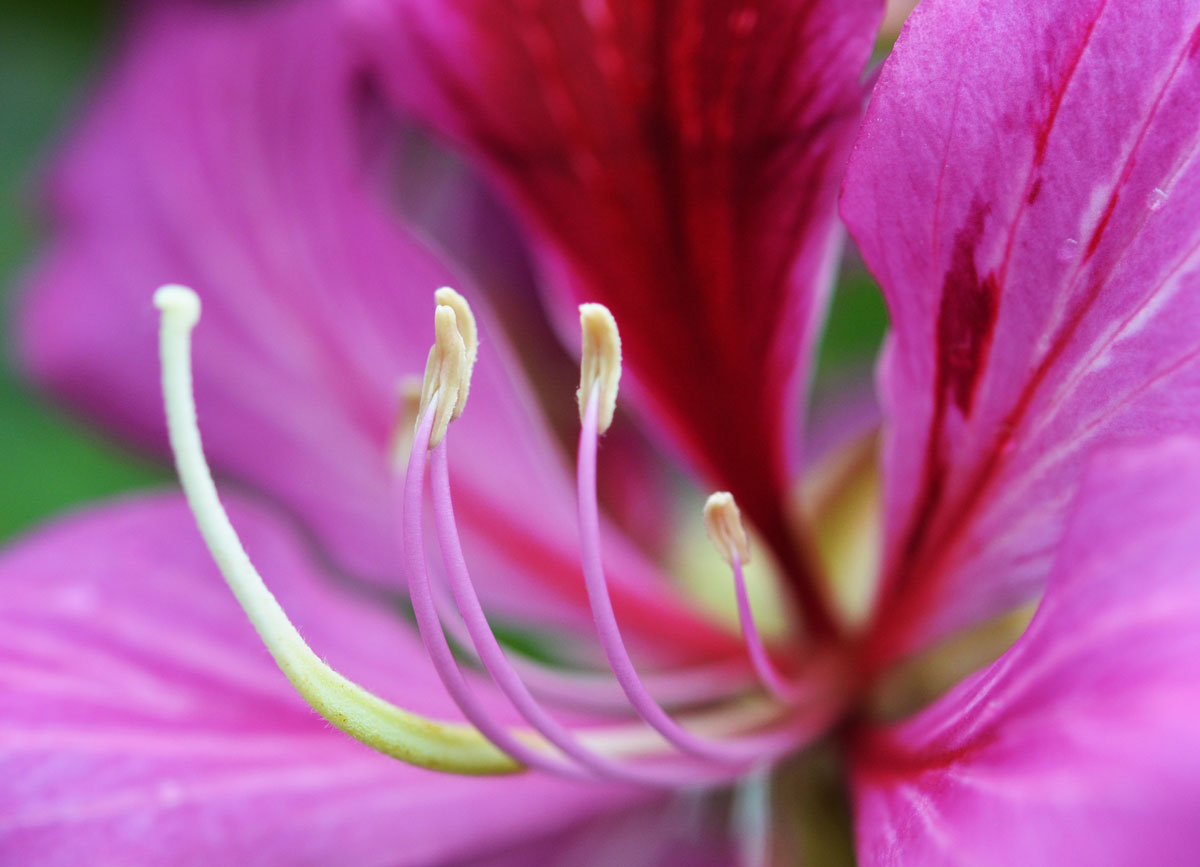
close up of the inside of a dark pink hibiscus flower with focus on the stamens.

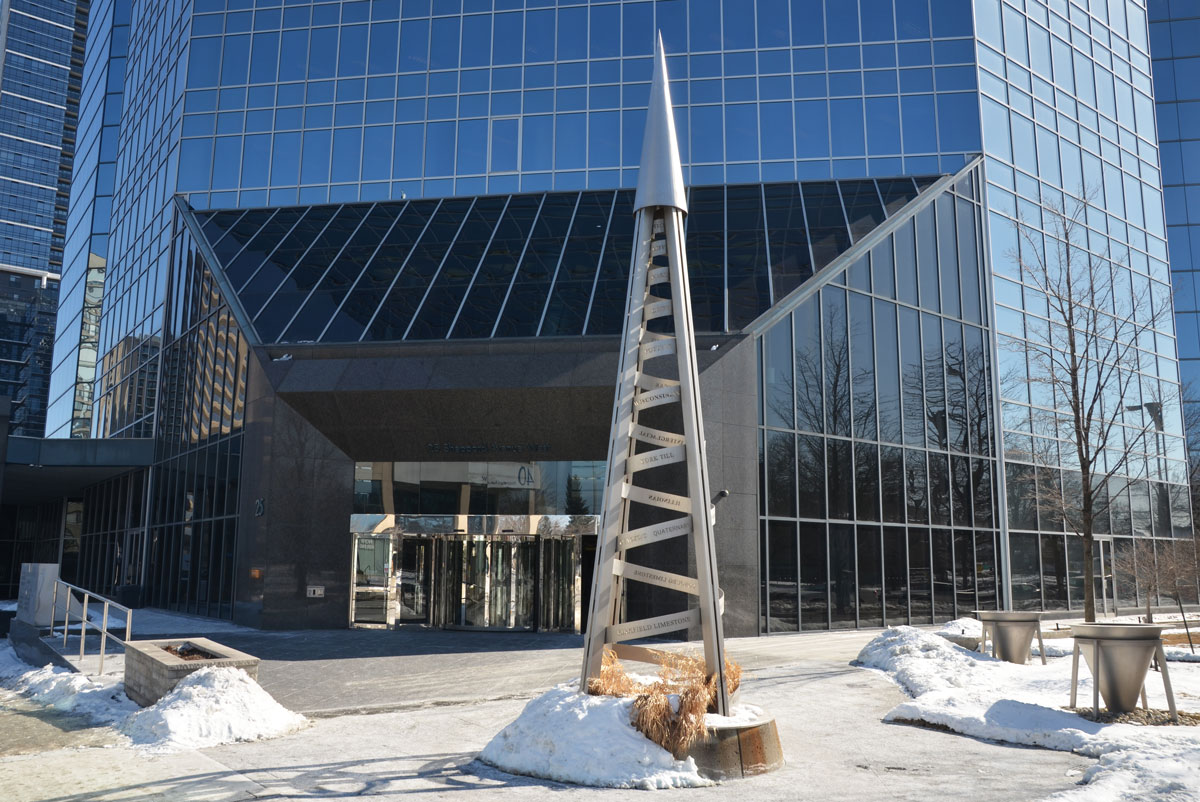
Time Cone
by Brad Golden and Lynn Eichenberg, 1996.
With help from Christopher Dewdney, poet.

In front of 25 Sheppard Ave West on the SE corner of Sheppard and Beecroft.

A tall bluish coloured glass building takes up the background.  A tall conical shaped sculpture is in front of it.

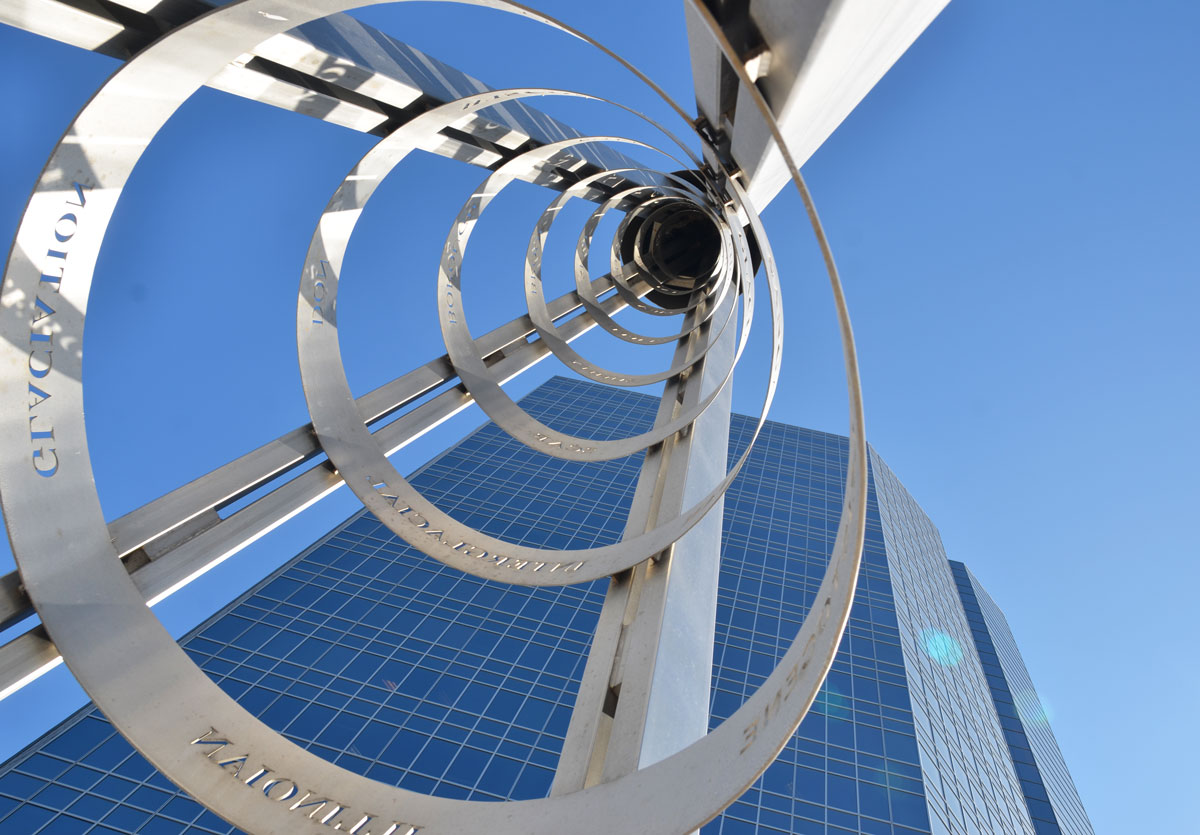
A 15 cm stainless steel ribbon, supported by four steel beams, winds its way up to the cone at the top.   Cut out of the steel are words that pertain to the geology of  the area.  ‘Precambrian’ is the bottom word.  Other words include Pleistocene Glaciation, Gull River Limestone, Cenozic, Don, and Thorncliffe Till.

Looking up inside a sculpture that is a ribbon of stainless steel that winds up a conical hape, supported on 4 sides by stainless steel bars.

extra: In geology, ’till’ is unsorted unstratified material deposited directly by glacial ice.

5 lifeguard posts
5 art installations
5 places to sit and/or get out of the wind

All in one place – along the waterfront at Kew & Balmy Beaches
until 20 March 2015

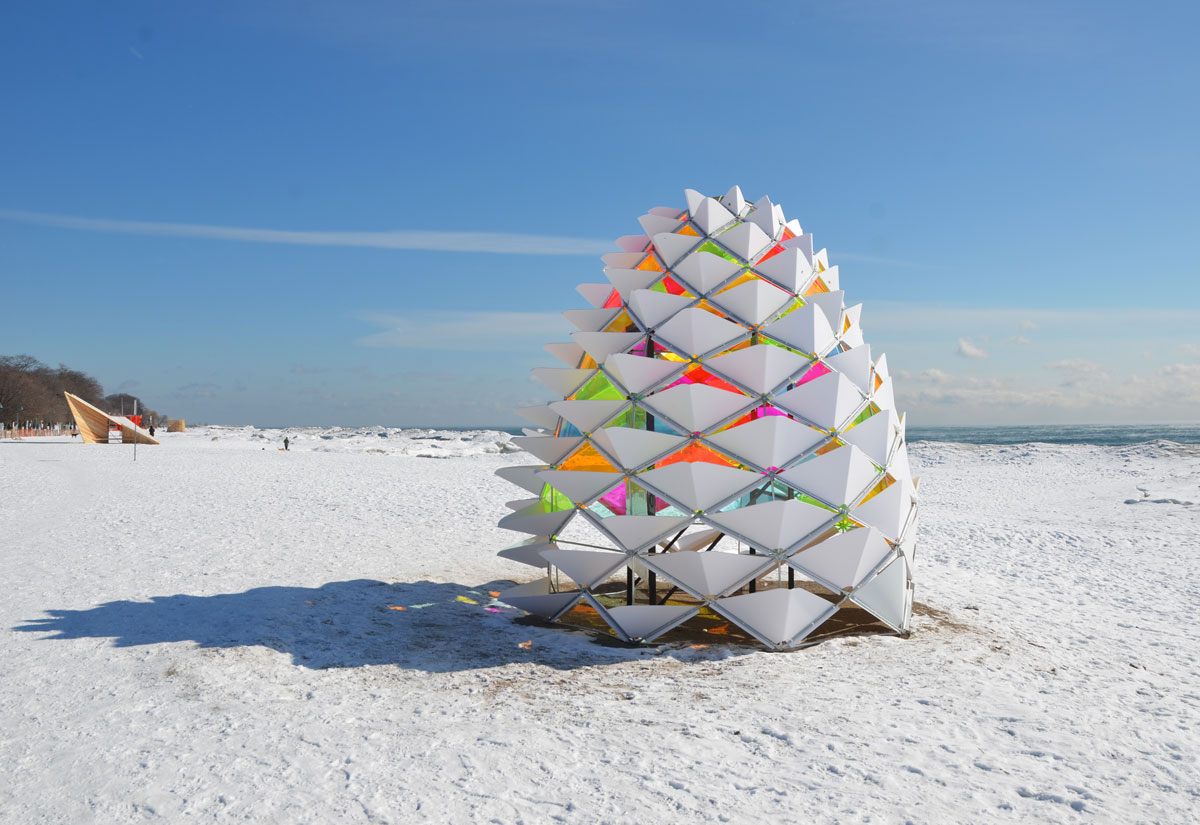
1. Snowcone by Lily Jeon and Diana Koncan

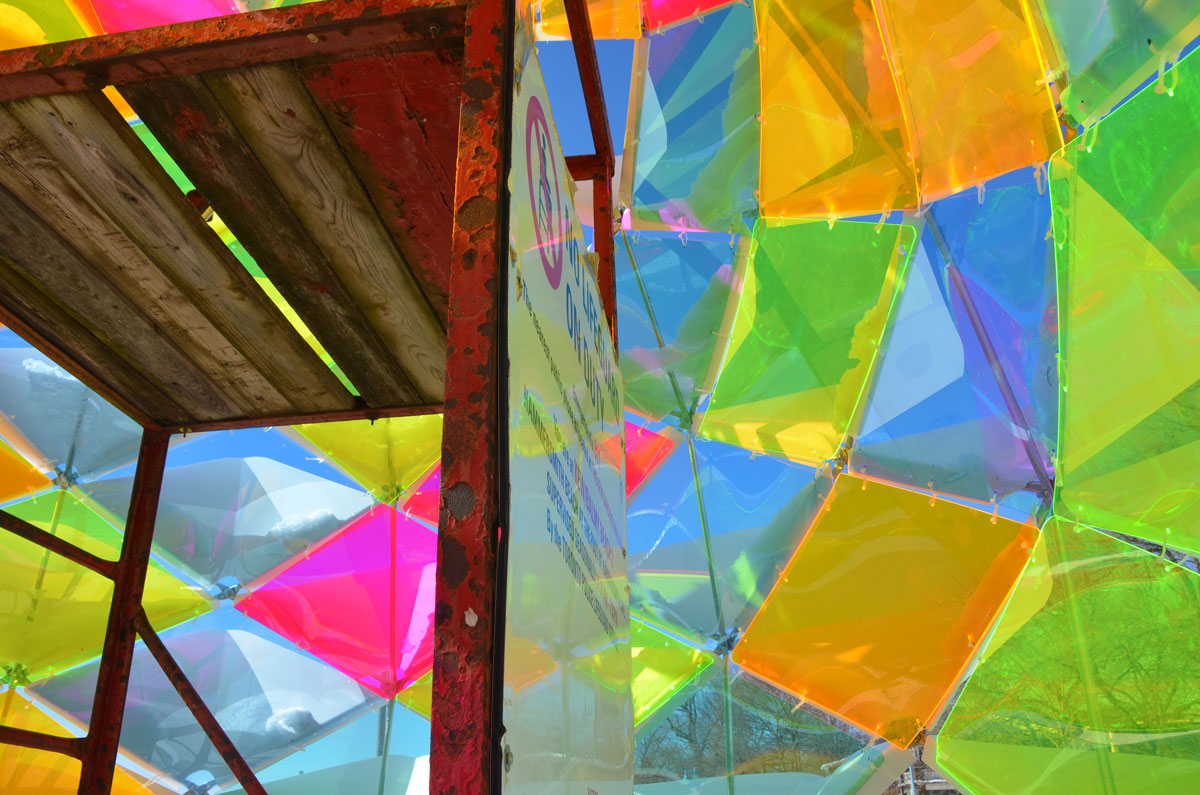
Art installation that looks like a giant white pinecone on the beach in winter.  The inside of the parts of the cone are bright translucent coloured plexiglass

Looking from inside a dome shaped structure that is made of geometric shapes of coloured plastic, looking to the bright blue sky, with snow on some of the pieces of plastic.  Lots of bright colours.

From the inside of the Snowcone, looking up through the center.

 metal frame of a lifeguard stand surrounded by brightly coloured shapes of translucent plastic
2. Driftwood Throne by Daniel Madeiros

Beach in winter, snow, snow fence and lots of blue sky.  There is a wooden art installation that is also seating for those who want to sit and look out over the cold lake.

Lifeguard station that has been partially enclosed by a wooden structure.  Two people are sitting on the lifeguard chair with their backs to the camera

3. Sling Swing by Ed Butler, Daniel Wiltshire and Frances McGeown

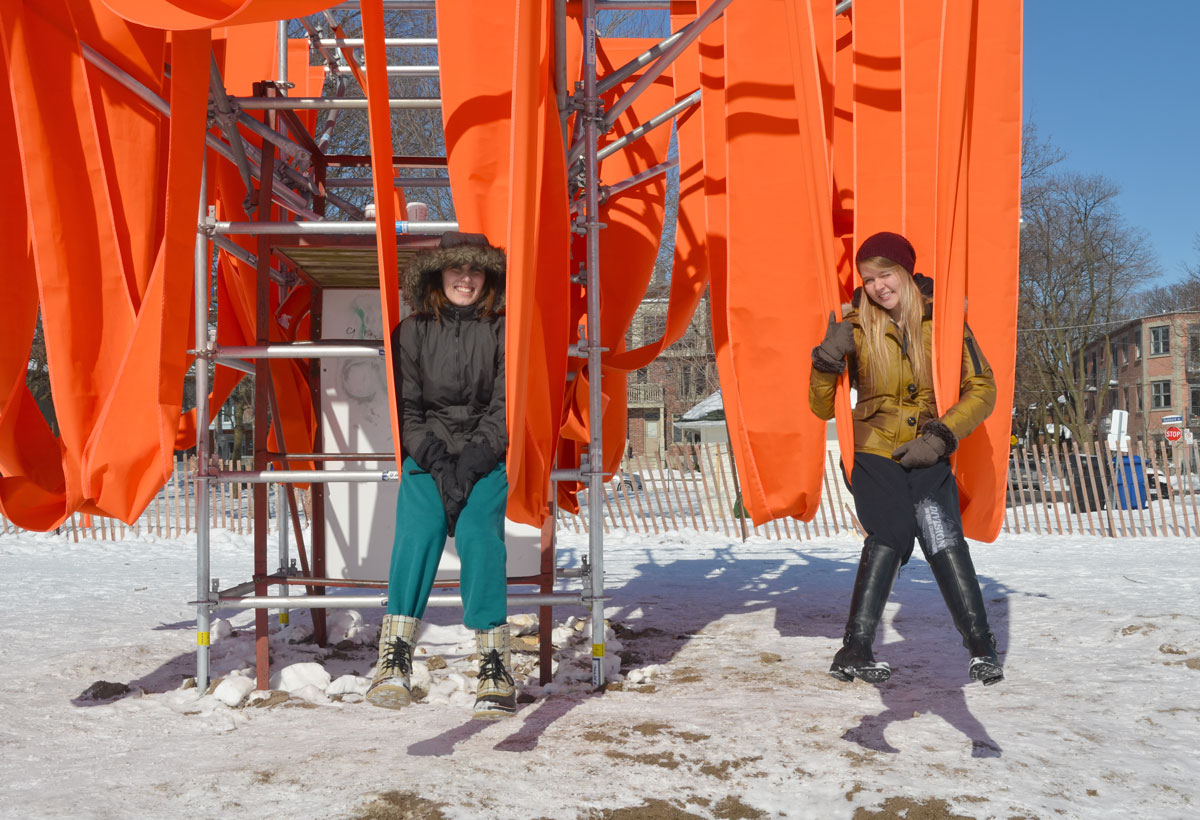
The art installation, Sling Swing, in the breeze on a frozen snow covered beach.  It consists of large pieces of orange fabric slings hanging from a metal frame. One can use the slings as swings.

Two women sitting on the orange sling swings on a cold winter day at the beach

orange lovebot sticker inside an orange life ring on a lifeguard chair.  Pieces of orange fabric are draped around the chair.

4.  Wing Back by Tim Olson

Wooden structure on a winter beach between a snow fence and the lake

wooden structure on the beach in winter.   Part in painted red.  It is supposed to be a large chair, semi-circle, can seat a number of people.

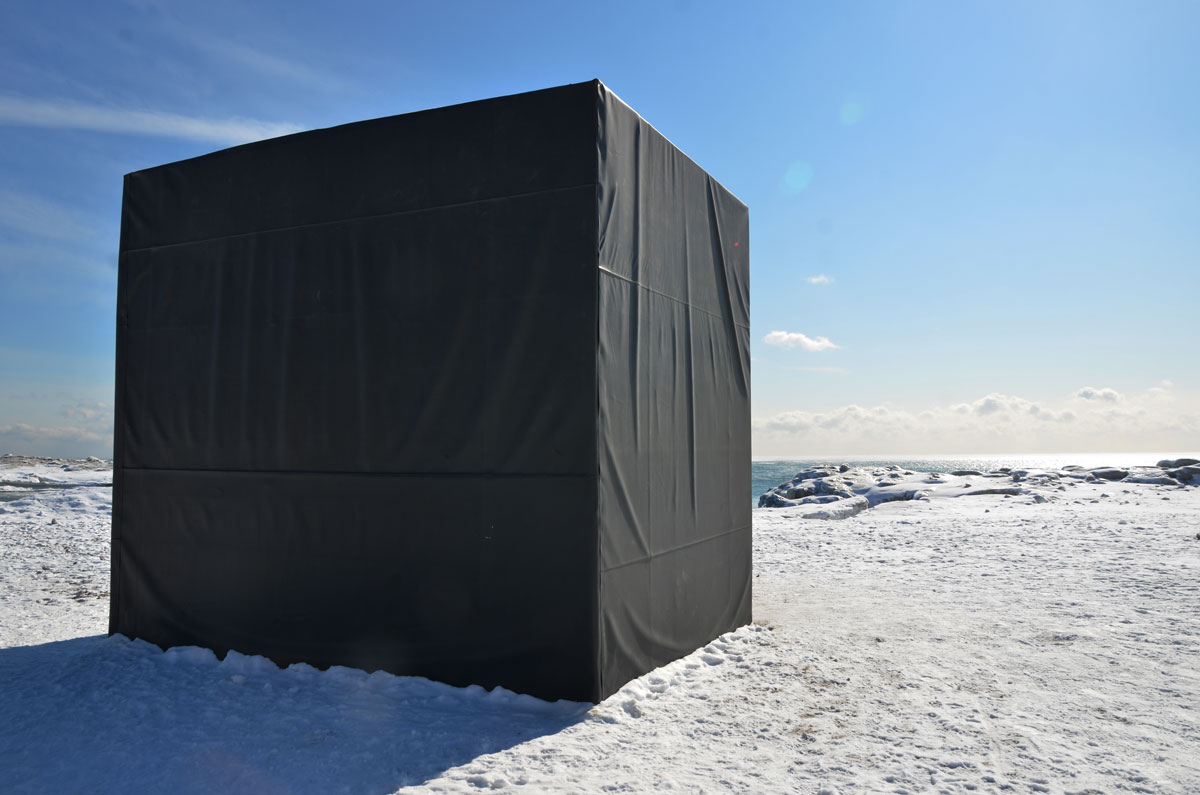
5. Hot Box by Michaela MacLeod and Nicholas Croft

A large black box on a winter beach.  The box is large enough to fit several people inside it.

This one feels creepy inside. No windows. Interior walls form narrow passageways.

Amnesty International Toronto Organization is a group that works in the to raise public awareness of human rights issues. One of the projects that it supports is  Urban Canvas.  Thirty murals were planned, each based on one of the thirty articles of the Universal Declaration of Human Rights.

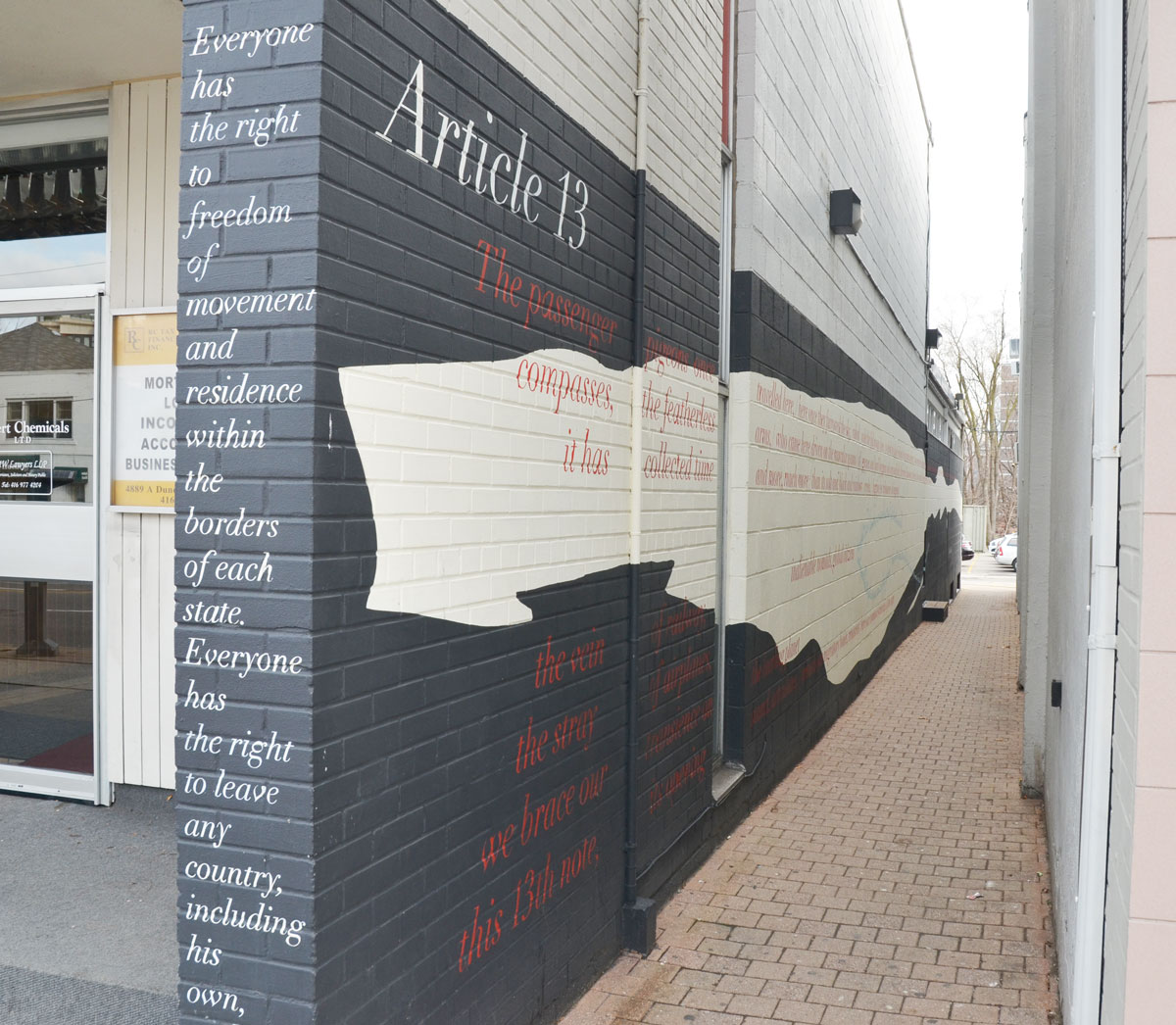
The Art Alley Mural Project produced by Arts Etobicoke in 2010 was designed by  Susan Rowe Harrison and painted by William Lazos.  It incorporates a poem by Dionne Brand, Toronto’s Poet Laureate  in 2010 that is based on Article 13.   This article states: “Everyone has the right to freedom of movement and residence within the borders of each state.”

A narrow lane, or pedestrian walkway, between two buildings.  On the left hand side wall there is a mural with a black and white background, and red letters.  The words are a poem about freedom of movement as stated in article 13 of the Declaration of Human Rights.

The mural is on the wall of 4893A Dundas St. West, alongside a narrow pedestrian walkway.


See also a previous post on two of Urban Canvas project murals at Parma Court 

Also, a mural celebrating education, article 26.

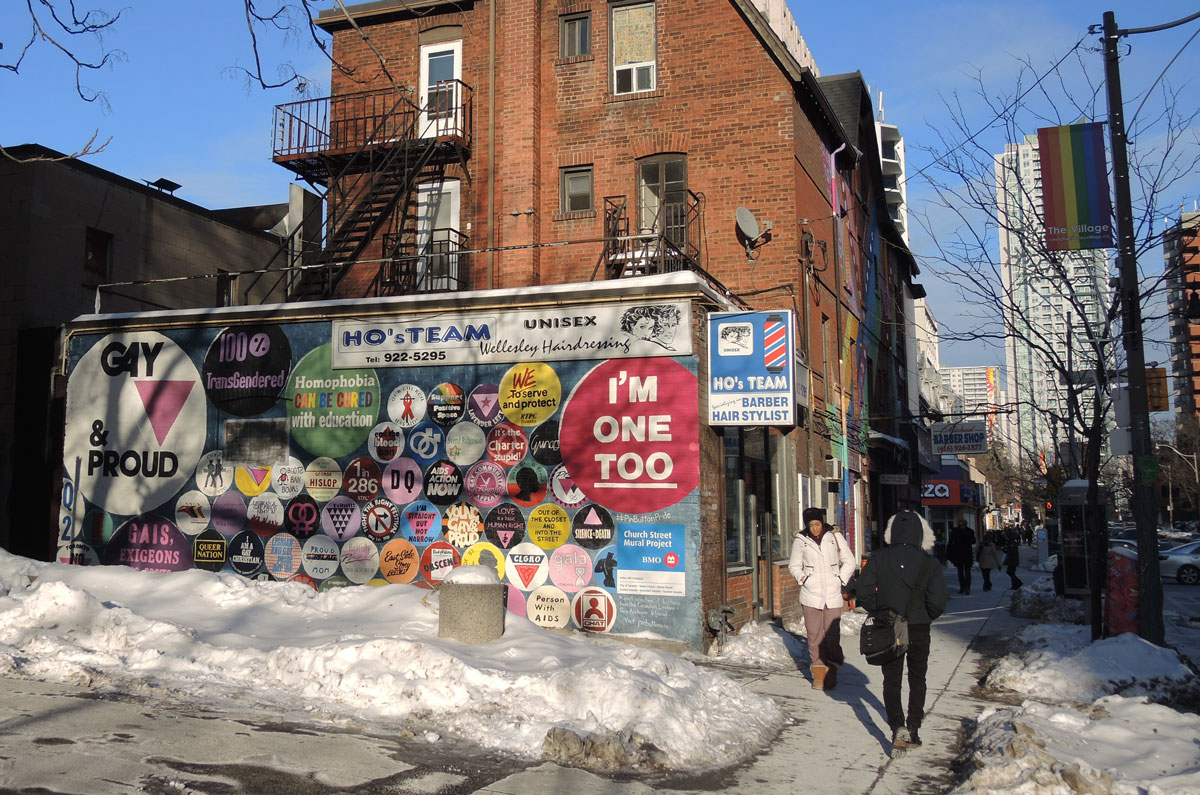
As you walk east on Wellesley towards Church St., you can’t miss the large mural on the side of Ho’s Team Barber and Hairstylist.  The red circle with it’s white words “I’m One Too” catch your attention.   The mural, by Will Craddock, is part of the Church Street Mural Project.

  street scene in winter, looking along the sidewalk with a couple of people on it.  On the left is a three storey red brick building in the background.  In the foreground is a shorter building (seen from the side) covered with a mural depicting buttons with slogans and sayings on them.

The circles in the mural are paintings of buttons from the Canadian Lesbian and Gay Archives.

 Close up of part of a mural that is circular buttons from the gay and lesbian community with slogans and sayings on them.

There is actually a small lane that runs beside the button mural.  If you walk a little but down that lane and then look at the wall on the other side, you will see another artwork from the Church Street Mural Project.  ‘Kiss and Tell’ by Natalie Wood is a series of silhouette couples with their heads close together, either talking or kissing.

Two men talking to each other on a wall.  The men are shown from the waist up.  They are made of paper and pasted on the wall.  The paper is actually a collection of prints of book covers.

silhouettes of four couples either kissing or close together talking.  The silhouettes are collages of prints of book covers.


.

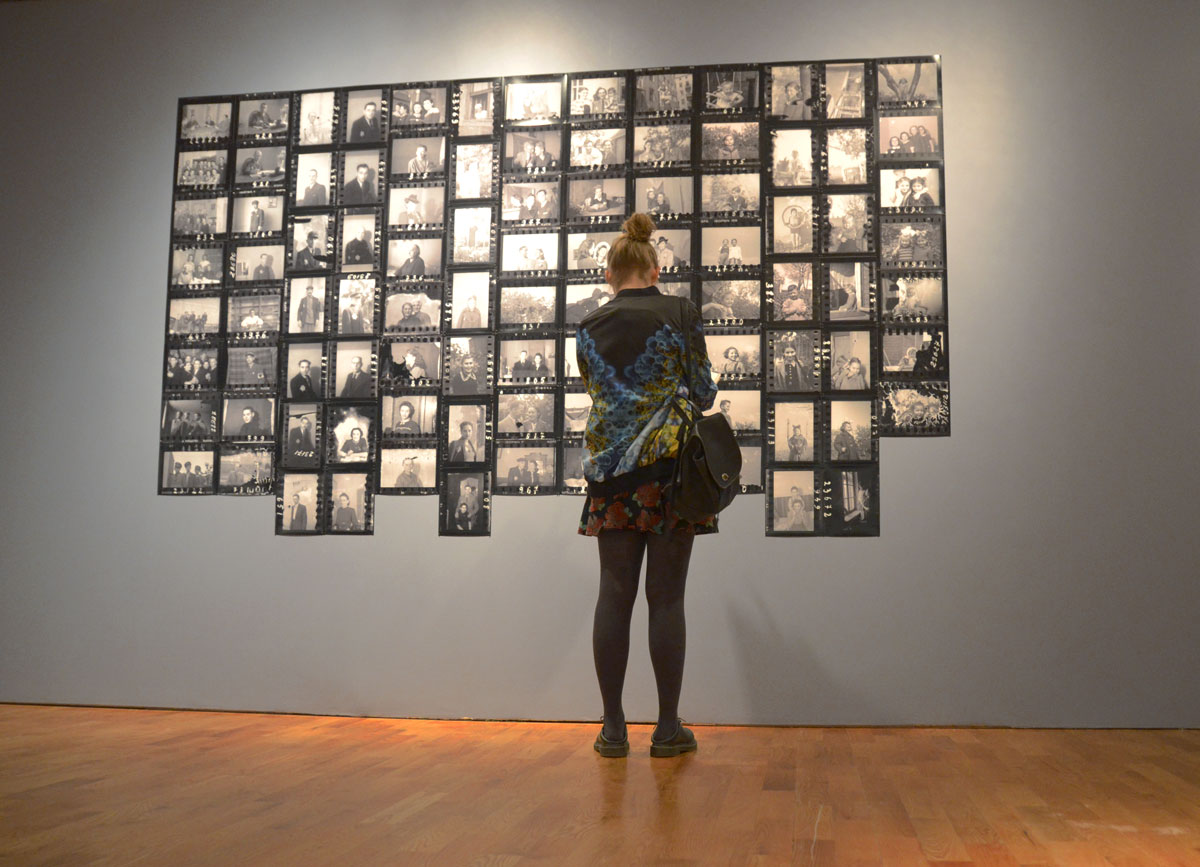
Photographs of the Lodz Ghetto (Poland 1940-1945)
by Henryk Ross,
at the Art Gallery of Ontario until 14 June 2015

Ross was a Polish Jewish photographer and one of the official Lodz ghetto photographers under the Nazi regime.

A girl is standing in front a photography exhibit where many black and white photos are grouped together to form one big picture.

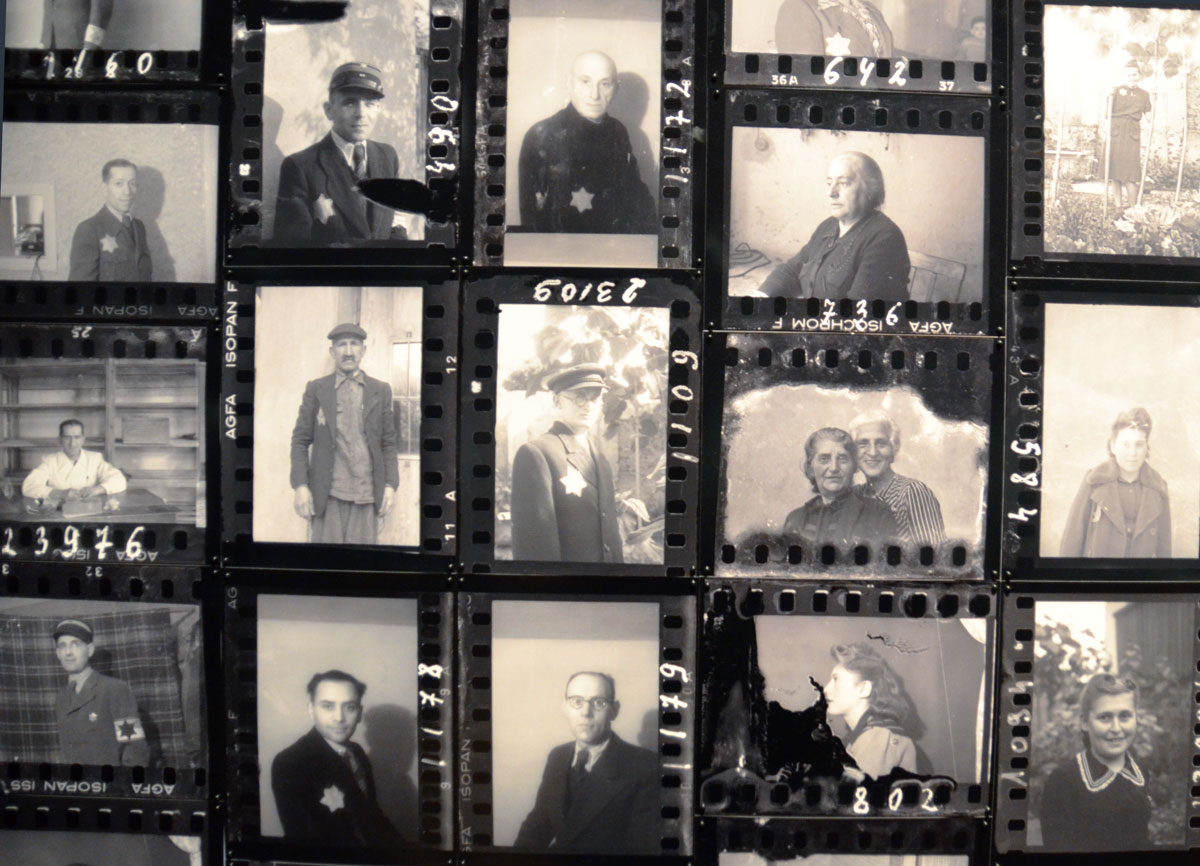
In the autumn of 1944 as the Lodz ghetto was being shut down, Ross buried his 6000 negatives in jars.  The Red Army liberated Lodz in January of 1945 after which Ross unearthed his negatives.  Water damaged about half of them.  Of the surviving 3000 negatives, about 200 form the ‘Memory Unearthed’ exhibit.

Close up of photo display showing black and white photos of people in portrait like photos.

Some of the photos are ordinary pictures – portraits of people, children playing.  Other photos look ordinary until you learn the context, what is really happening in the picture.  Many photos document suffering and despair.  They elicit a lot of uncomfortable emotions but as an historical record the collection is excellent as well as much needed.

Last Folio, A Living Monument to the Holocaust
An exhibit of photographs by Yuri Dojc,

at the Art Gallery of Ontario

Yuri Dojc was born in Slovakia but is now based in Toronto.
Starting in the 1990’s he has returned to Slovakia a number of times in search of traces of Jewish life from prior to WW2.

a close up of a photograph of an old book, open, with the pages on one side all curled up.   The photo is taken from the top of the book.

Details of one of the photographs in the exhibit.

There are only eight photographs in this exhibit but each one tells a story.   Narratives of loss and of life interrupted.
But also stories of memory and remembrance.

 More information about the Last Folio project.


There will probably always be some controversy surrounding graffiti and and street art.  Some people like it and some don’t.  There is street art with a lot of artistic merit.  There are a number of drab grey places in the city that are improved by adding street art.

Graffiti is temporary by nature.    Time and weather affect it.  Sometimes it evolves over time as others add stickers or comments.   This is a strength and a weakness.  All it takes is a marker or a can of spray paint to make your mark on a wall, a doorway, or any surface you want for that matter.  Unfortunately, there are people who destroy rather than create.

There are many examples of the juvenile nature of some taggers so these are just a few.

blog_anti_croft

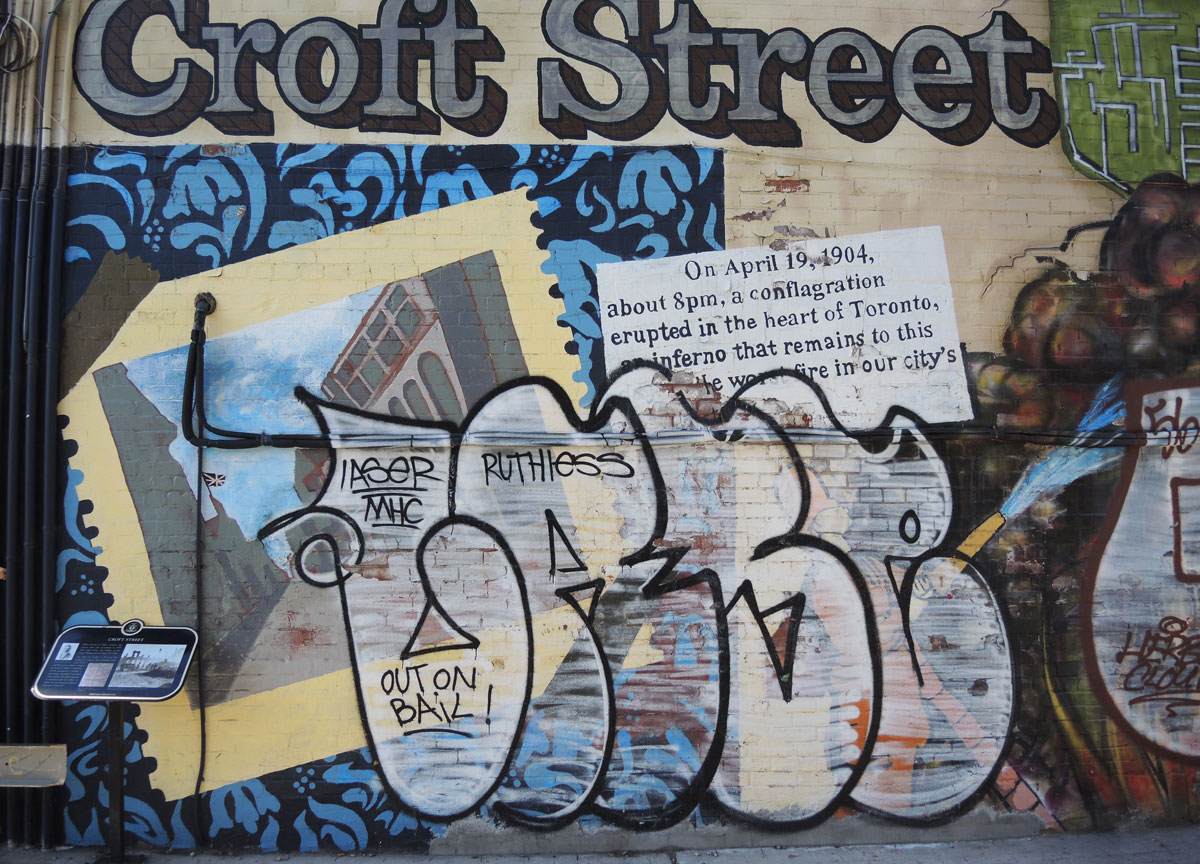
Stupid and clueless. The mural on Croft street commemorating the Fire of 1904 has also been tagged over.


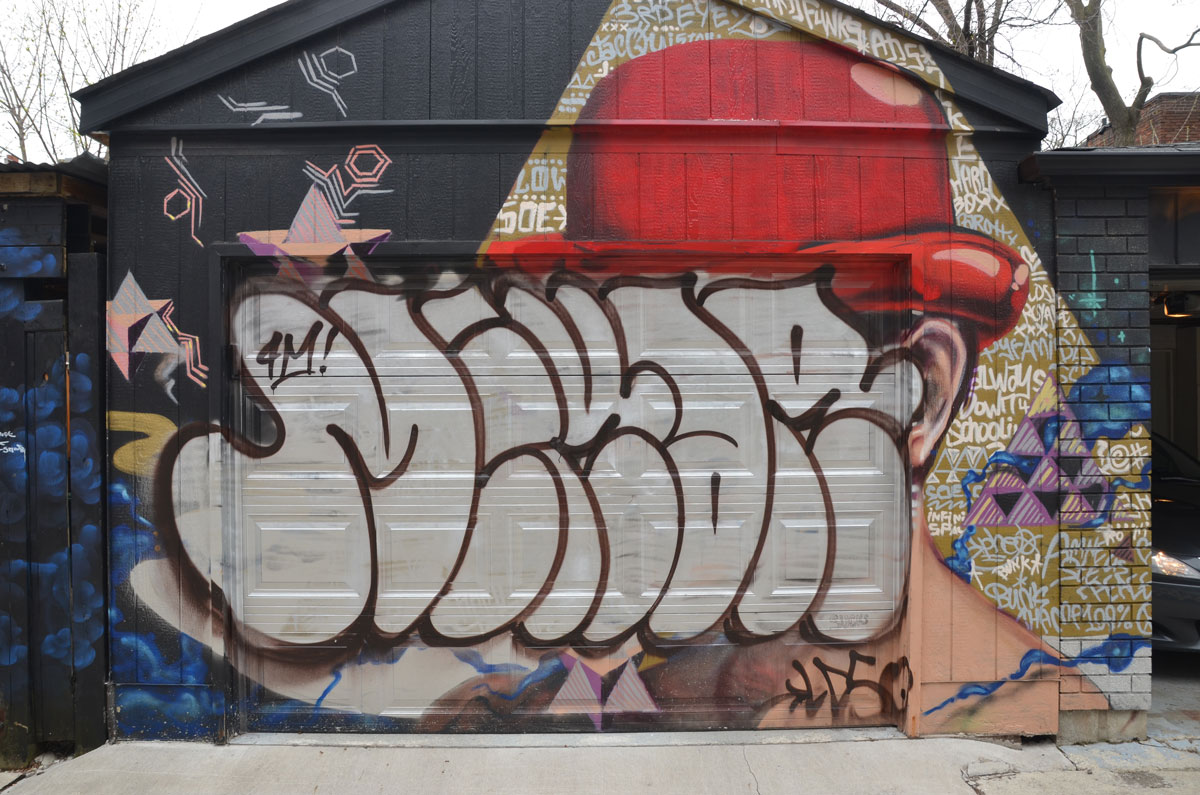
blog_anti_red_hat

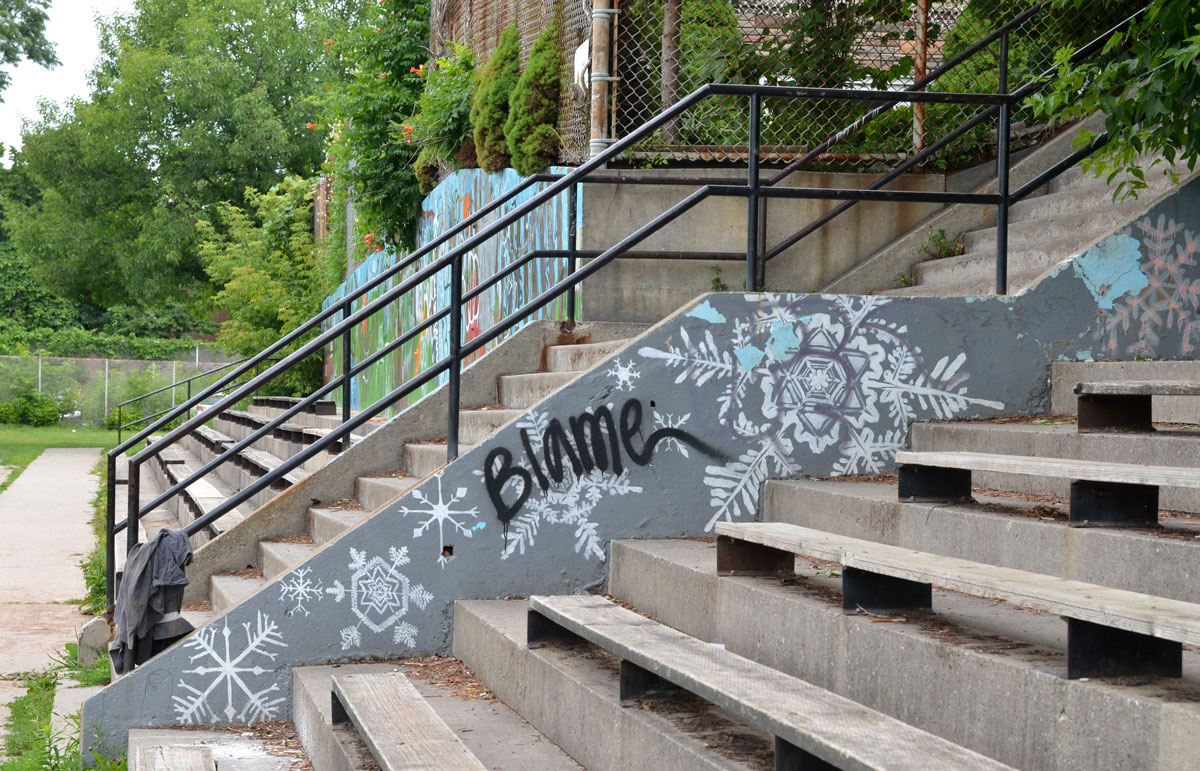
a black tag over a grey and white painting on the side of a set of stairs

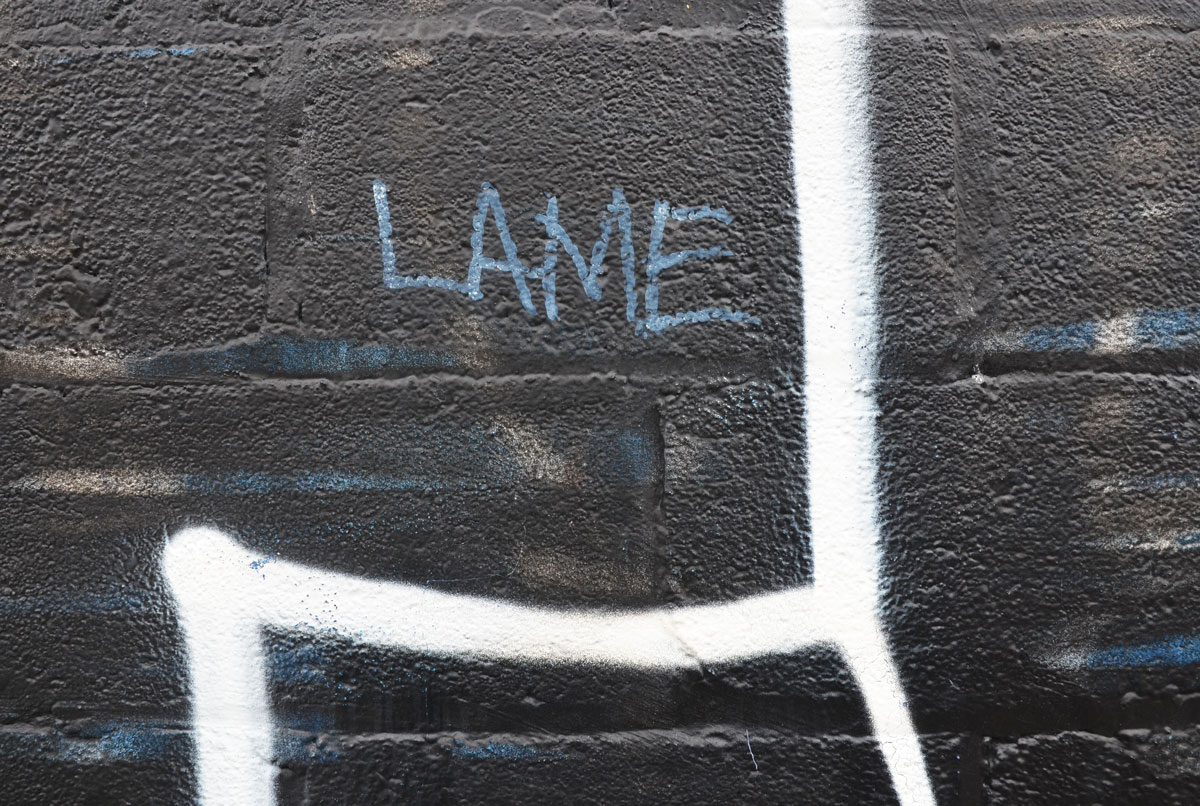
The word 'lame' is written on blue letters on a large black and white tag.

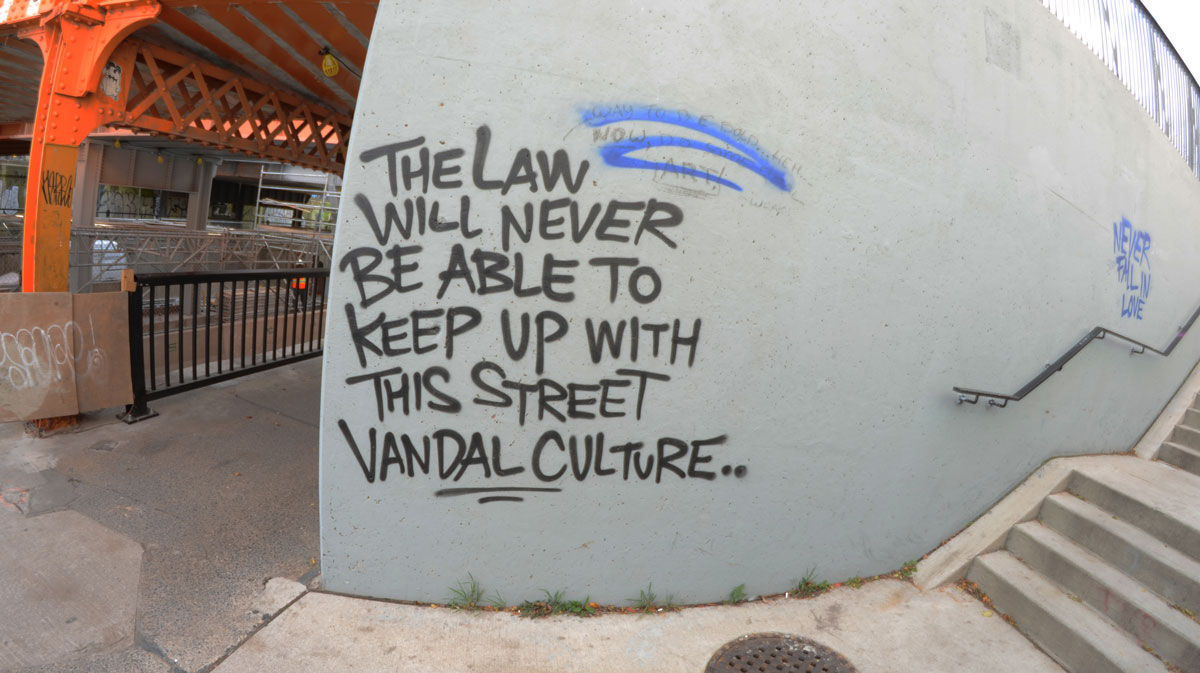
Great comment. Written on a black and white tag that was painted on top of a street art picture


The City of Toronto has a Graffiti Management Plan.
They try to encourage Graffiti Art while getting rid of Graffiti Vandalism.

Where the West Toronto Railpath meets Dundas West.

Where the West Toronto Railpath meets Dundas West.  The graffiti and street art that were here were painted over with grey paint, probably by the city.


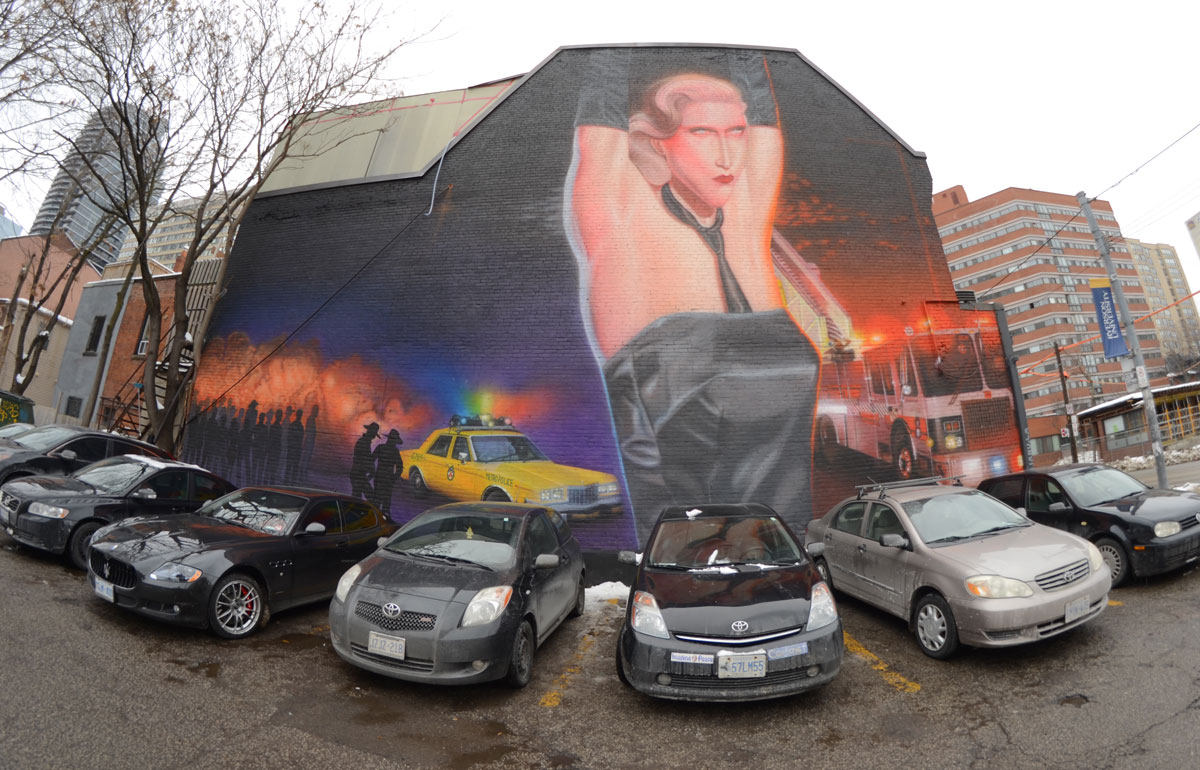
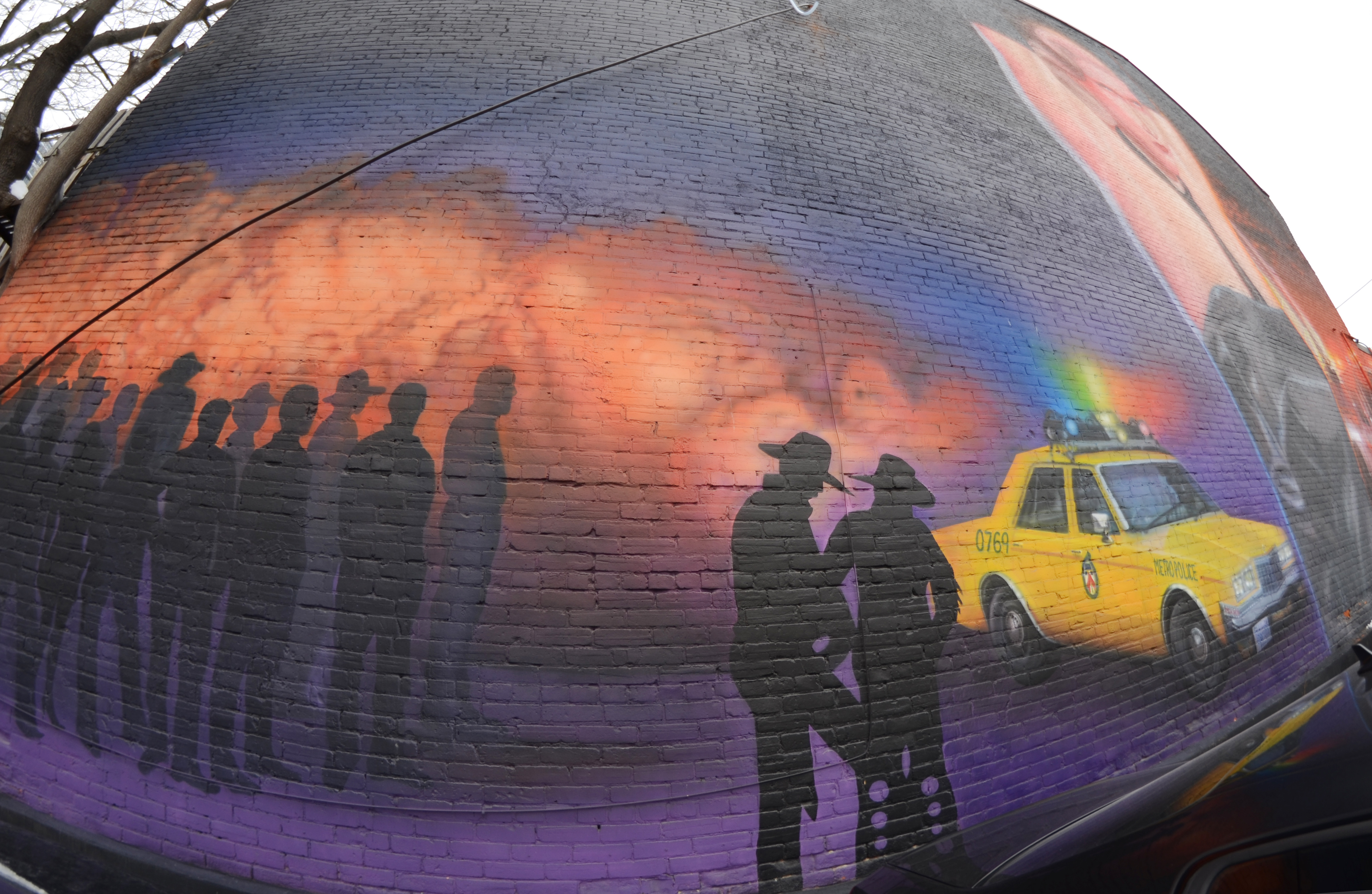
The Bathhouse Raids by Christiano De Araujo is a mural on Church Street just south of Carlton.
Completed in the fall of 2013, it was the largest of the Church St. Mural Project pieces commissioned for WorldPride 2014.

The following photos were taken with a very wide angle lens
because of the size of the mural and because there are always cars parked in front of it.

large mural on the side of a building.  A number of cars are parked in front of it.  The mural depicts the bathhouse raids, an event in Toronto's history where police raided gay bath house and arrested those they found inside.  A yellow Toronto police car, a fire truck with its lights on are both in the picture.  An oversized person is in the center, hands held over her/his head.

On the 5th of February, 1981, Toronto police raided four bathhouses in what was known as ‘Operation Soap’.
Around 300 men were arrested.  Most charges connected to the incident were eventually dropped or discharged, although some bathhouse owners were fined.

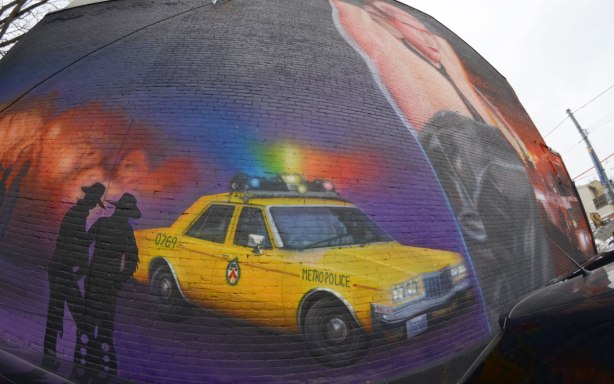
part of a large mural showing a yellow Toronto police car from the 1980's, a couple of policemen and a crowd of men standing just back of the police car

part of a large mural showing a yellow Toronto police car from the 1980's, a couple of policemen and a crowd of men standing just back of the police car

The event marked a major turning point in the history of the LGBT community in Canada.
The raids led to protests – the night after the raids, 3,000 people marched on 52 Division police headquarters and on Queen’s Park, smashing car windows and setting fires.  That spring the city held its first Pride Parade.
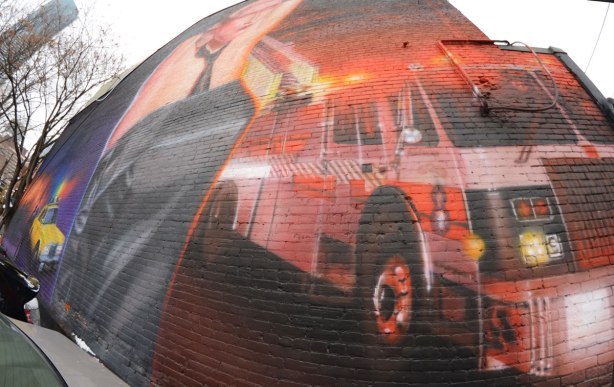
right hand side of the bathhouse raid mural on Church St. showing a firetruck with its red flashing lights on

Graffiti on a wall on Queen St. West
at the west side of Trinity Bellwoods park.

A graffiti face high on a grey wall, with a pine tree branch  partially obscuring it

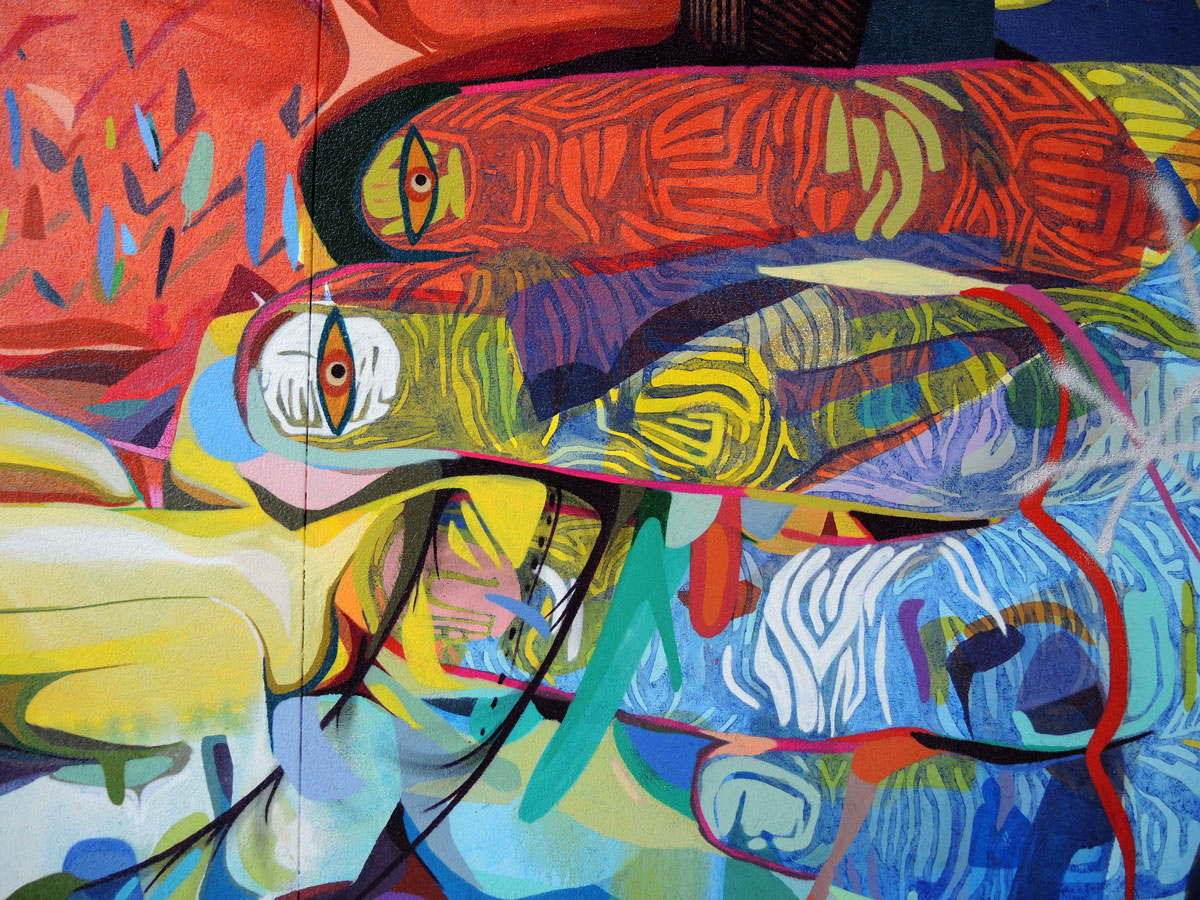
Close up of graffiti painted fingers in many bright colours.  They are very large.  Each fingernail has an eye.
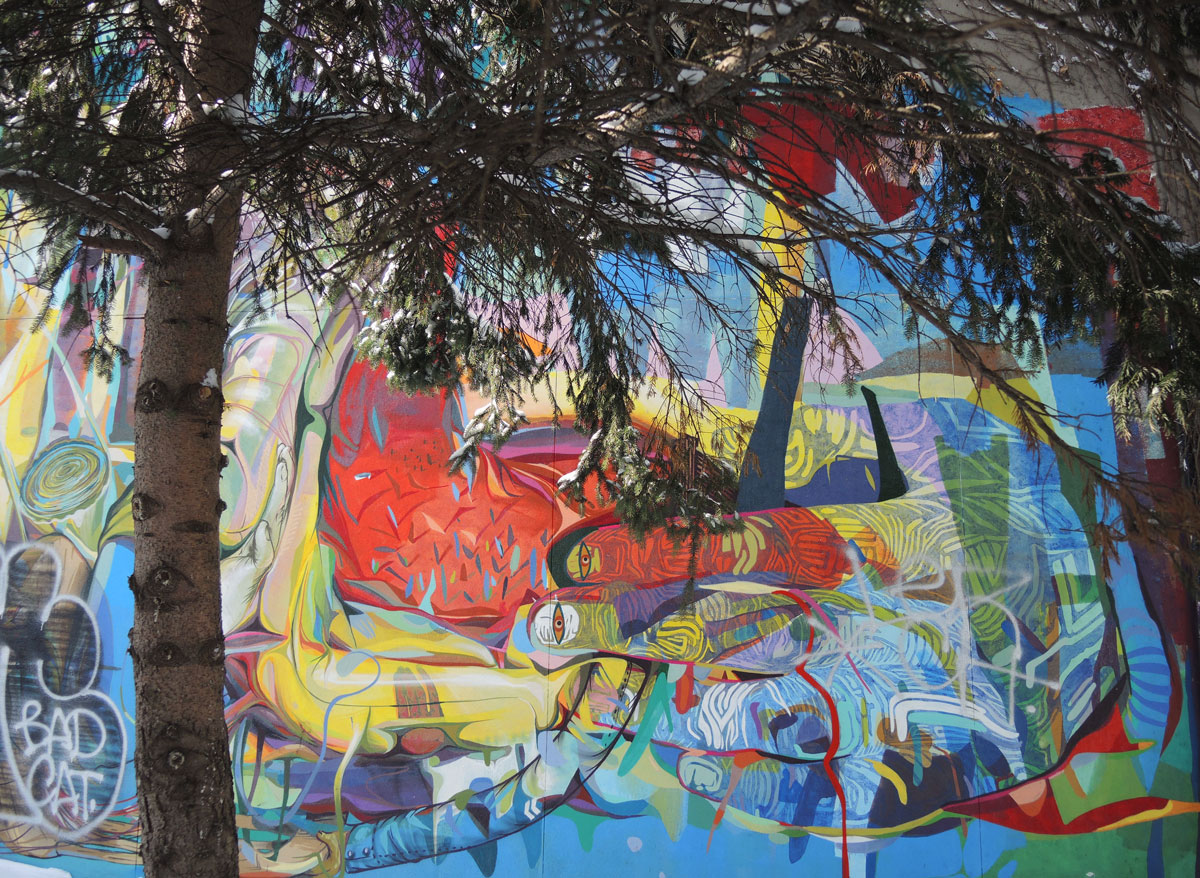
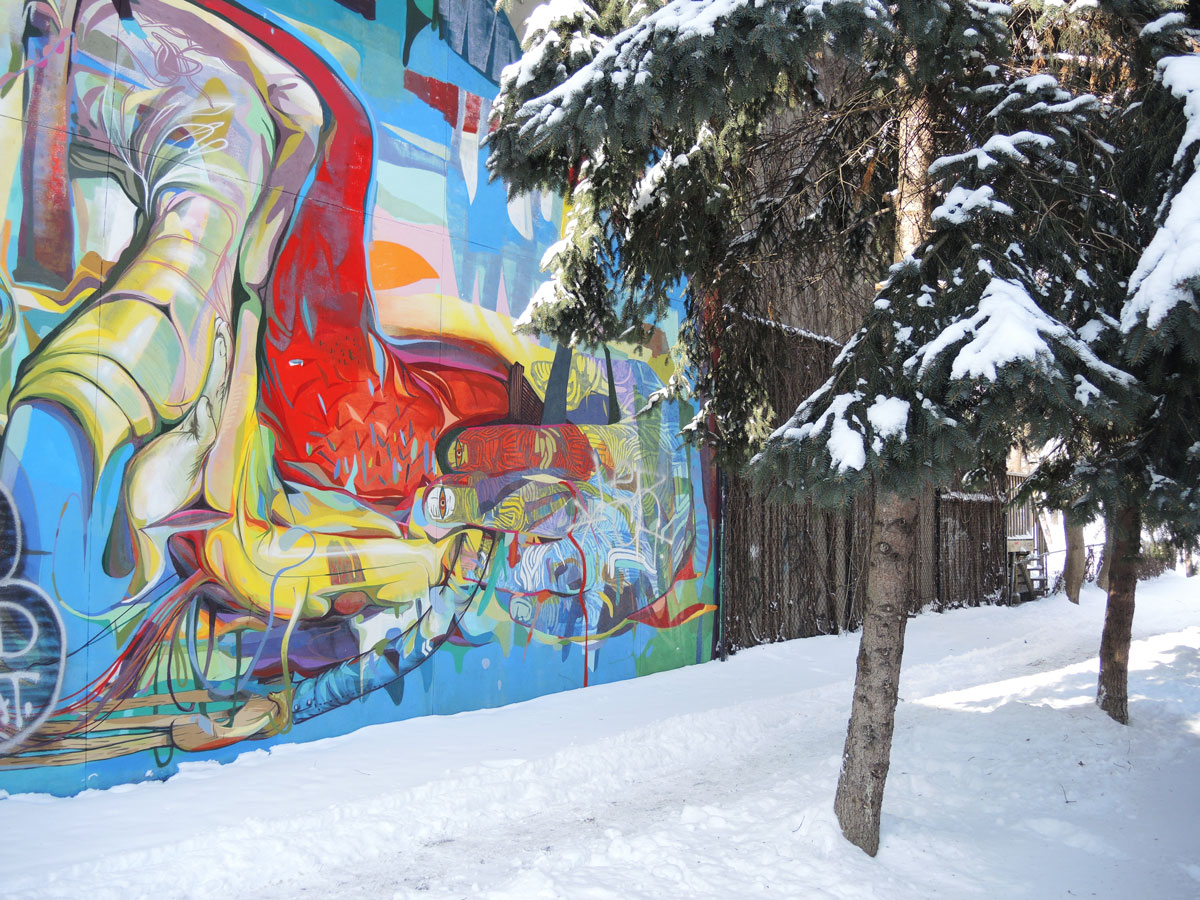
Close up a piece of street art featuring brightly coloured fingers, with eyes on the fingernails.  Partially hidden behind pine trees.  Snow on the ground.

Close up a piece of street art featuring brightly coloured fingers, with eyes on the fingernails.  Partially hidden behind pine trees.  Snow on the ground.

Unfortunately, there is now an ugly black tag on the lower left corner.

Graffiti painting of a man high up on a grey wall, partially hidden behind two trees.  Unfortunately someone has painted a black tag over the lower left corner of the painting

In the corner of a piece of graffiti with a blue background is a signature of the artists, in blovk letters, LEXR & EVOKE