Archive for the ‘galleries’ Category

… and you’ll find it at the Aga Khan Museum.

a group of people walk past the front of the white wall of the Aga Khan museum, between the museum and the reflecting pool

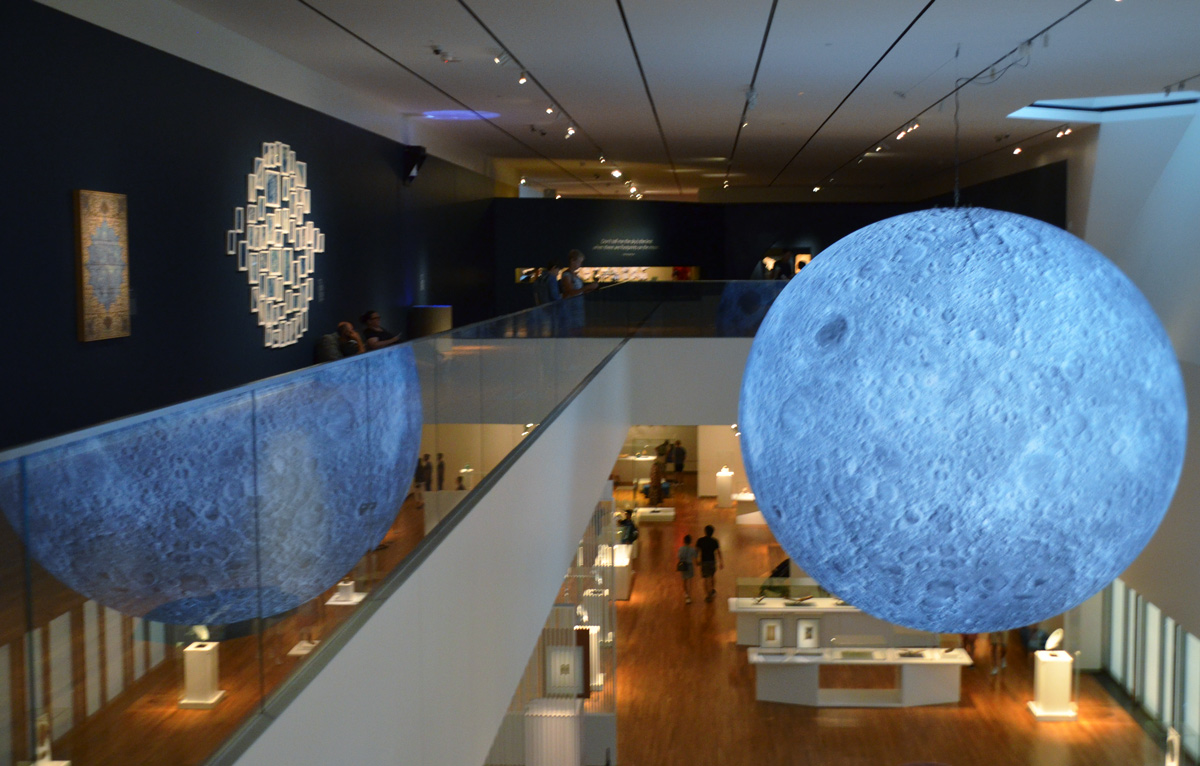
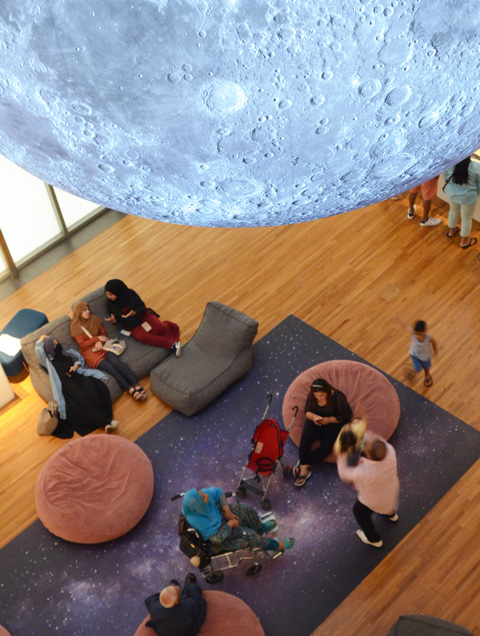
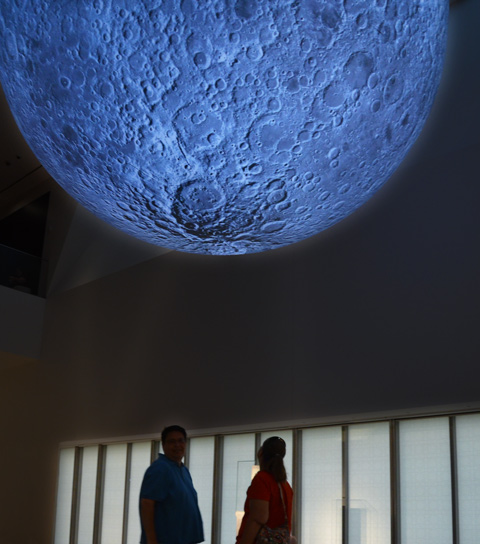
The centerpiece of the latest special exhibition at the Aga Khan Museum is a large moon created by British artist Luke Jerram from detailed NASA imagery of the lunar surface.  It measures five metres in diameter and is illuminated from inside.

a large model of the model hangs from the ceiling at the Aga Khan museum and is reflected in the railing that separates the second floor balcony area from the open high ceiling of the first floor

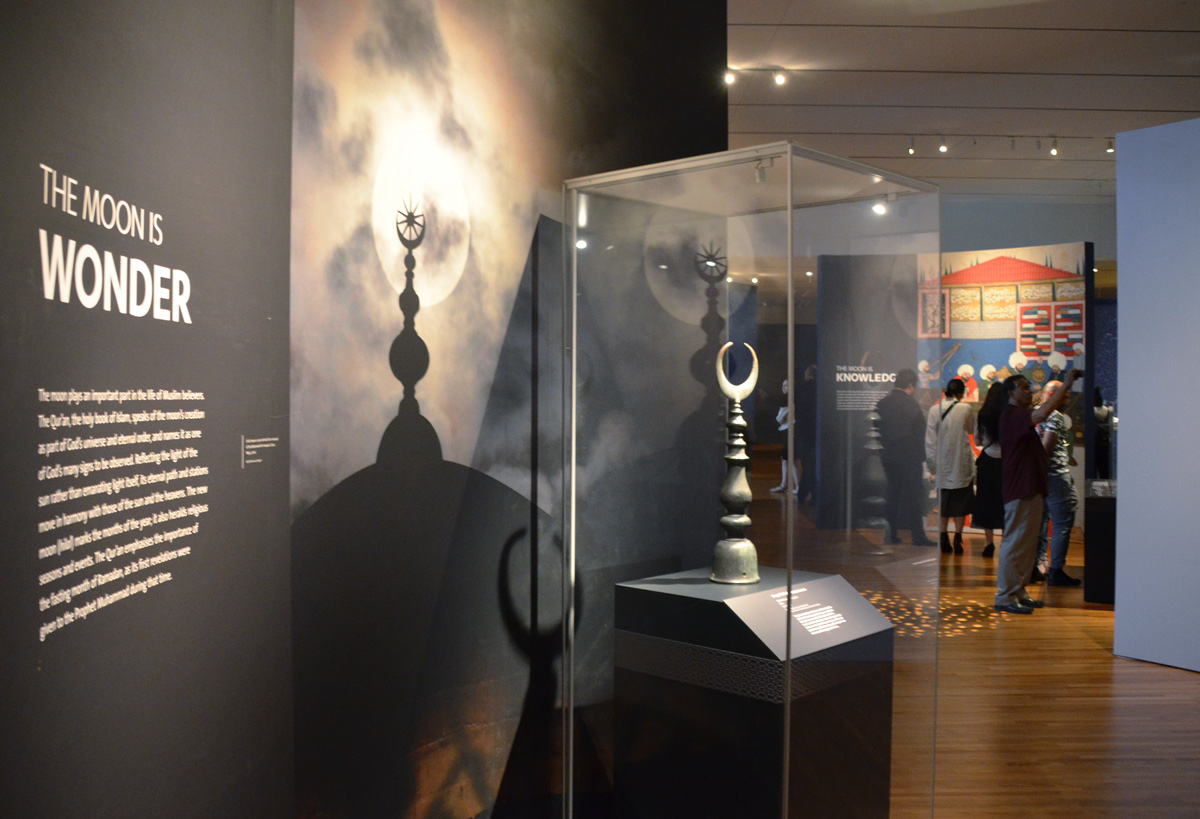
Since the dawn of civilization, the moon has captivated cultures and inspired people.  Along with the large moon, the Aga Khan Museum has put together an assortment of paintings, texts, and scientific objects that have been produced over the centuries that together give a glimpse into mankind’s fascination with the moon.

exhibit about the moon and the crescent shape, museum

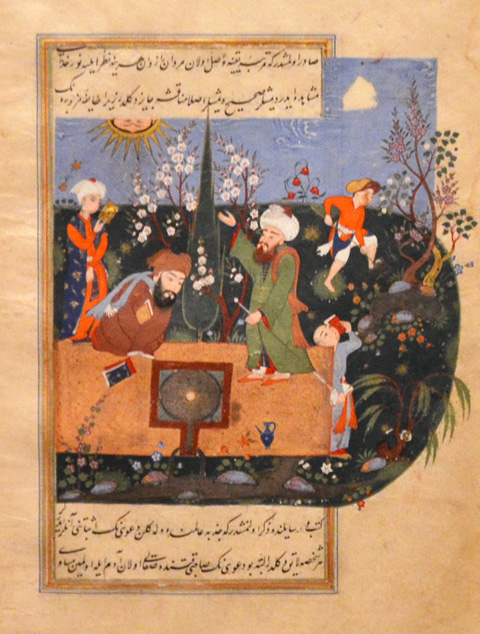
below: An illustrated page from “A Translation of Stars of the Legend”, from Baghdad 1590-1599 (Ottoman-period Iraq).  Watercolor, gold, and ink on paper.

illustrated page, with Arabic text, from an ancient book about stars and legends

a groupof people sit on bean bag chairs under a large model of the moon, and on a carpet that looks like the night sky with stars

below: Many Indian palaces included moonlight gardens with white marble walkways and pools to reflect the moon.  Night blooming flowers such as jasmine were grown.  The illustration below is from the 18th century, Murshidabad, Lucknow, watercolour and gold on paper.

illustrated page of an old book depicting people sitting in a moonlit garden in India, two men on cushions

two people stand under a large model of the moon

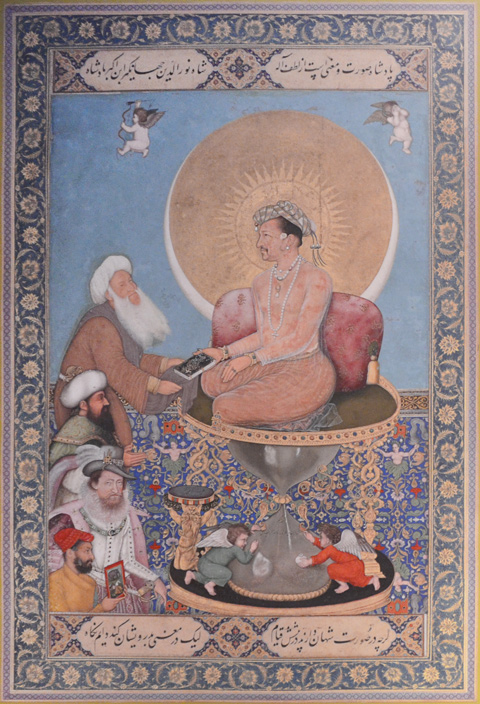
below: “Jahangir Preferring a Sufi Shaykh to Earthly Kings”, painted by Bichitr, India, 1615-1618.  The Emperor’s halo combines the sun and the crescent moon – a slim crescent moon hugs most of the sun’s border and this day and night are brought together.    Mughal emperors, such as Jahangir, considered a harmonious relationship between the sun and moon to be essential for the fortunes of their kingship.  Sufi Shaykh, from the title, is the man receiving a book from the Emperor.   Small, and therefore less important, are the Ottoman Sultan and King James I of England.  The smallest man in Bichitr, the painter.  This is a large reproduction of a painting that is 18 cm x 23 cm.

old painting

below: Plaster cast of Queen Ahmose carrying a fly whisk (The original was excavated at Deir-al-Bahri in Egypt, from the reign of Queen Hatshepsut, 18th dynasty ca 1473-1458 BCE).  Queen Ahmose was the mother of Hatshepsut and her name means “born of the moon”.   In ancient Egypt, the crescent moon symbolized Isis, goddess of fertility, women, and the mother of gods.

an old stone tablet from Ancient Egypt with picture of woman's profile

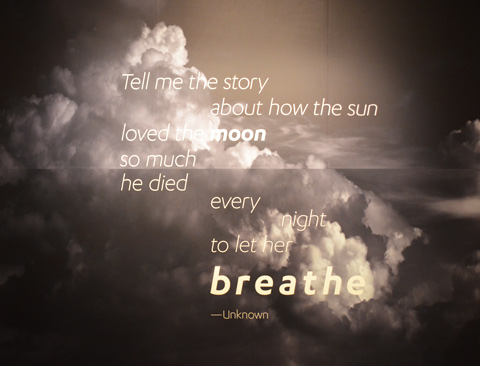
below: “Tell me the story about how the sun loved the moon so much he died every night to let her breathe”

a quote is painted on a wall, with pictures of clouds

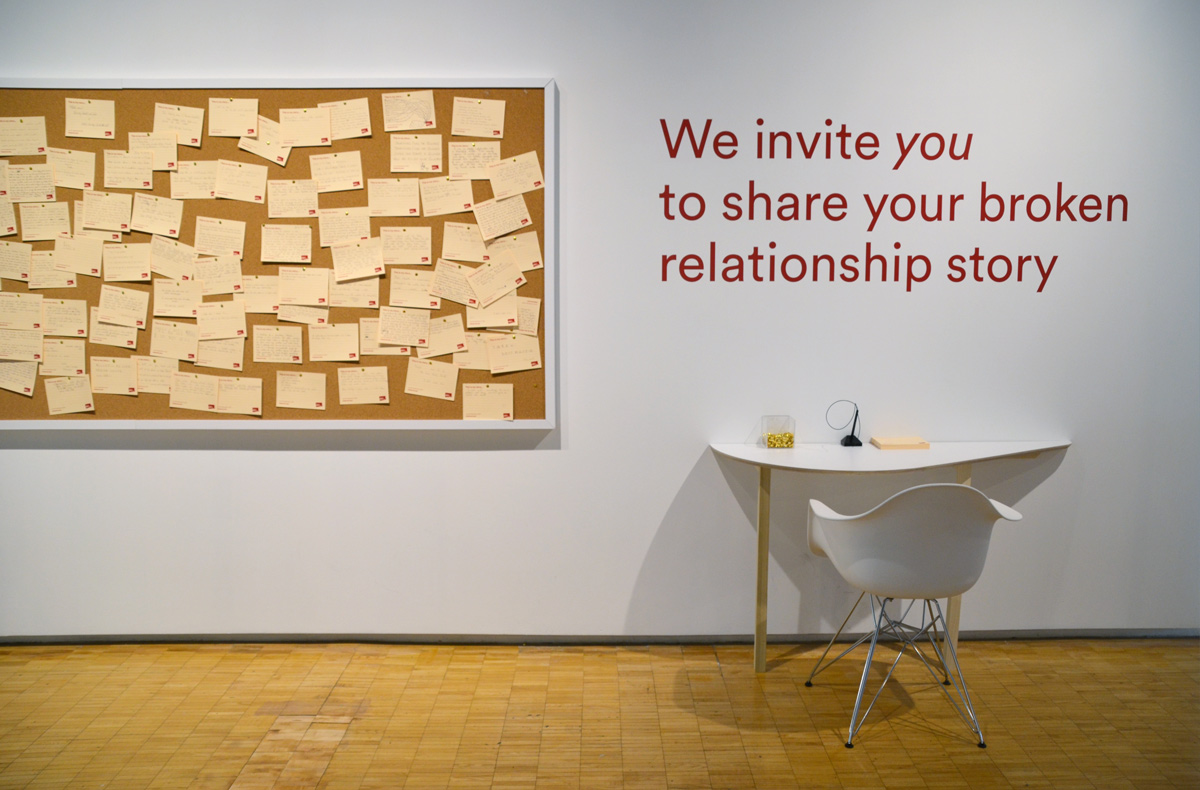
The Museum of Broken Relationships is now appearing at Harbourfront. The stories that accompany the items run the full gamut of emotions – sad, funny, mundane, strange, creepy, sweet, and, you get the picture. There are two permanent museum sites, one in Zagreb and one in Los Angeles. Toronto is one of several traveling exhibits. Zagreb is the hometown of the couple that started the collection, Olinka Vištica and Dražen Grubišic, when their own relationship fell apart.

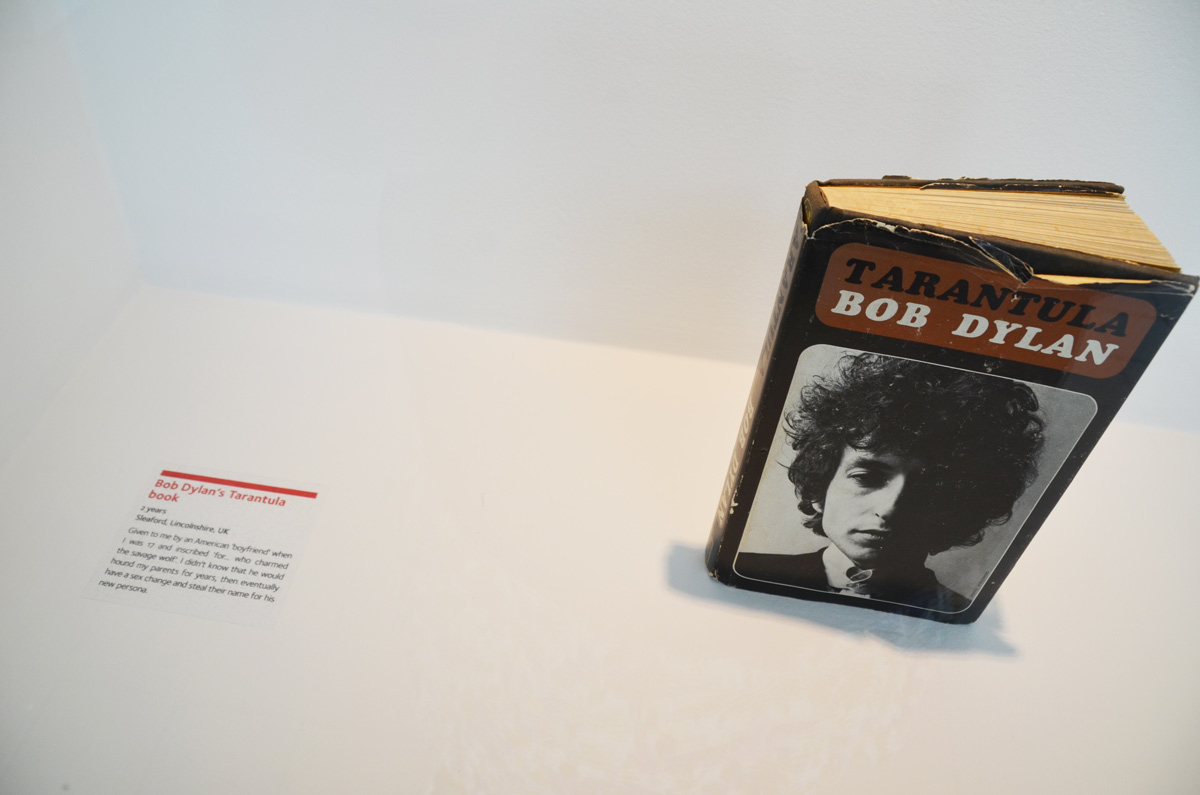
below: “Given to me by an American “boyfriend” when I was 17 and inscribed “for… who charmed the savage wolf.” I didn’t know that he would eventually hound my parents for years, then eventually have a sex change and steal their name for his new persona.” I’ve never heard of this book before today and I thought maybe I’d like to read it. Curiosity. But then I googled it and discovered that it’s “experimental prose poetry” and written in a stream if consciousness style – so now I’m not so curious. 😎

A book by Bob Dylan called Tarantula on display in a museum show

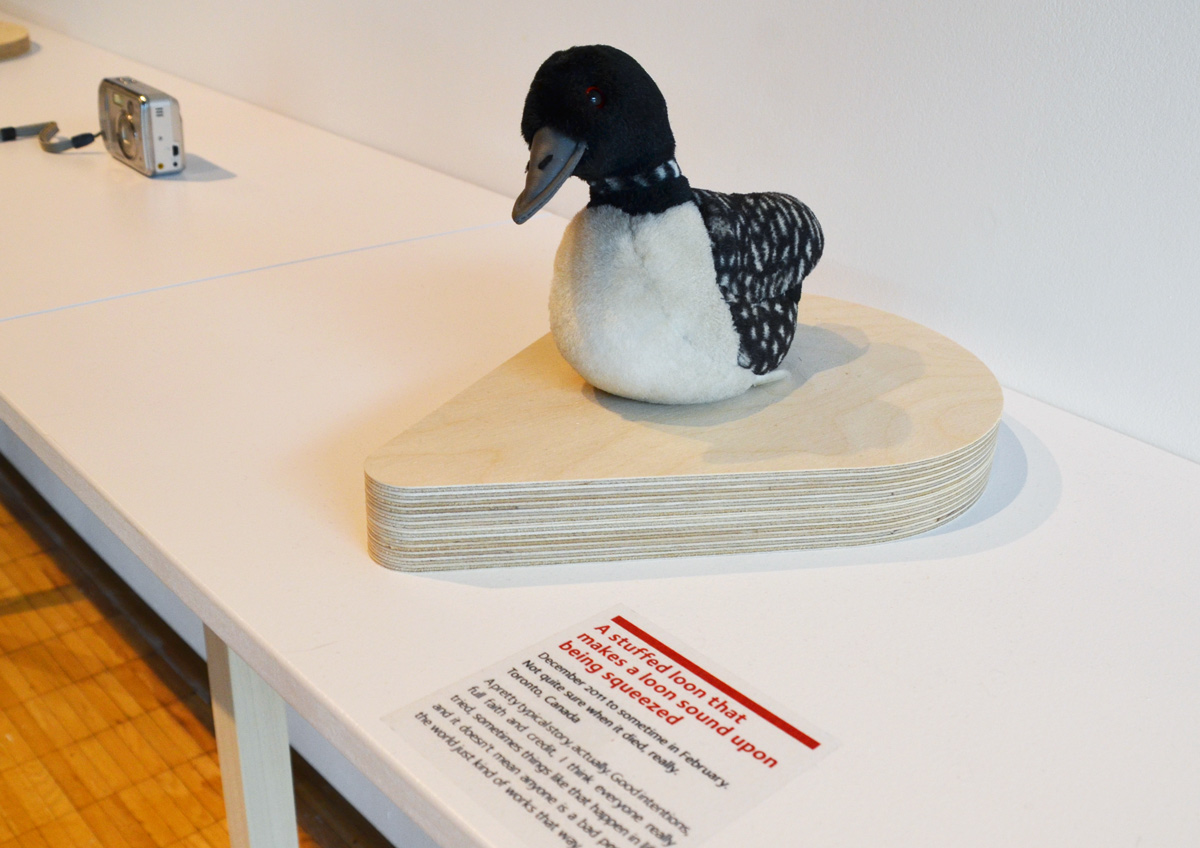
below: “Not quite sure when it died really… the world just kind of works that way sometimes.”

a small stuffed loon toy on display in a museum show

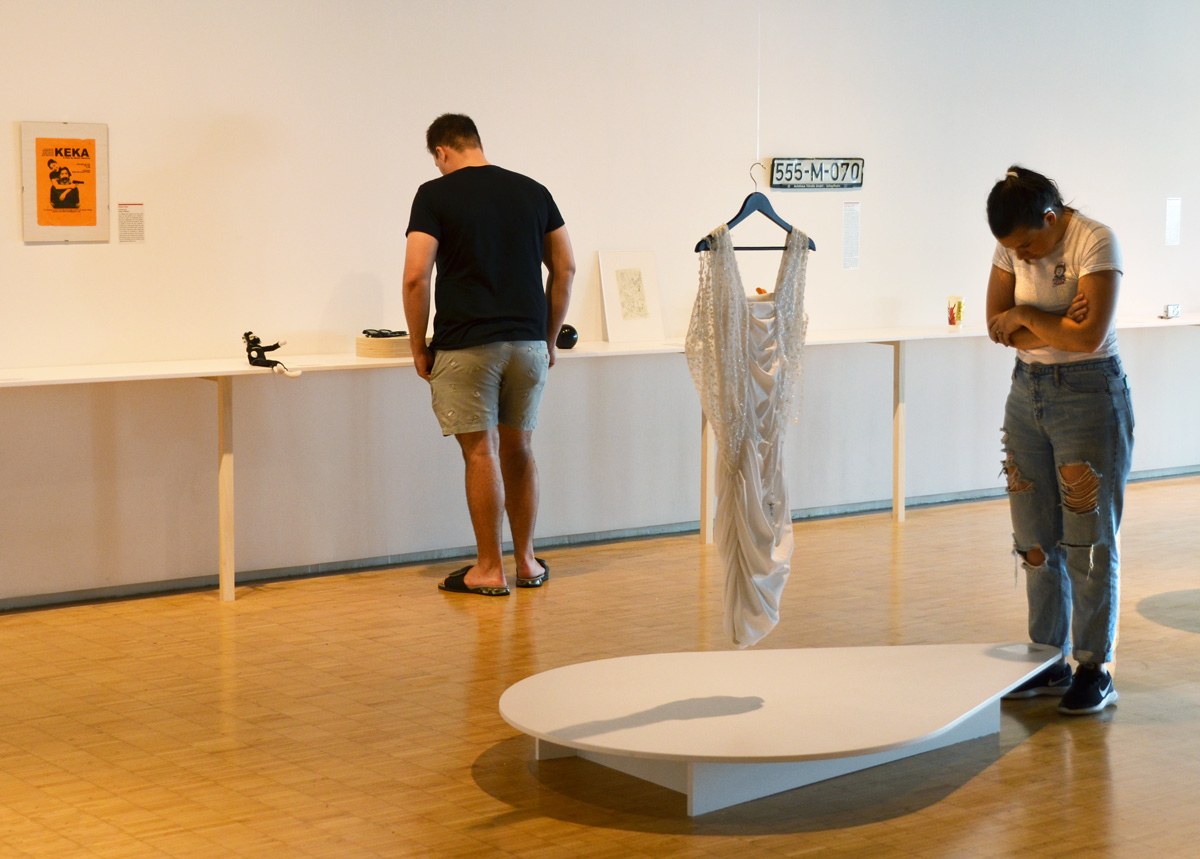
a man and a woman looking at objects and reading the stories on display at the museum of broken relationships

below: “Empty bag of fortune cookies attached to a Starbucks cup. You were my first love. And I wished you would also be my last. When we got those fortune cookies and I opened mine, it read ‘You have to learn to read between the lines’. I should have followed that advice because between those lines there was you cheating on me over and over. Isn’t that ironic? “

An empty cup with an empty fortune cookie wrapper glued onto the outside of it,

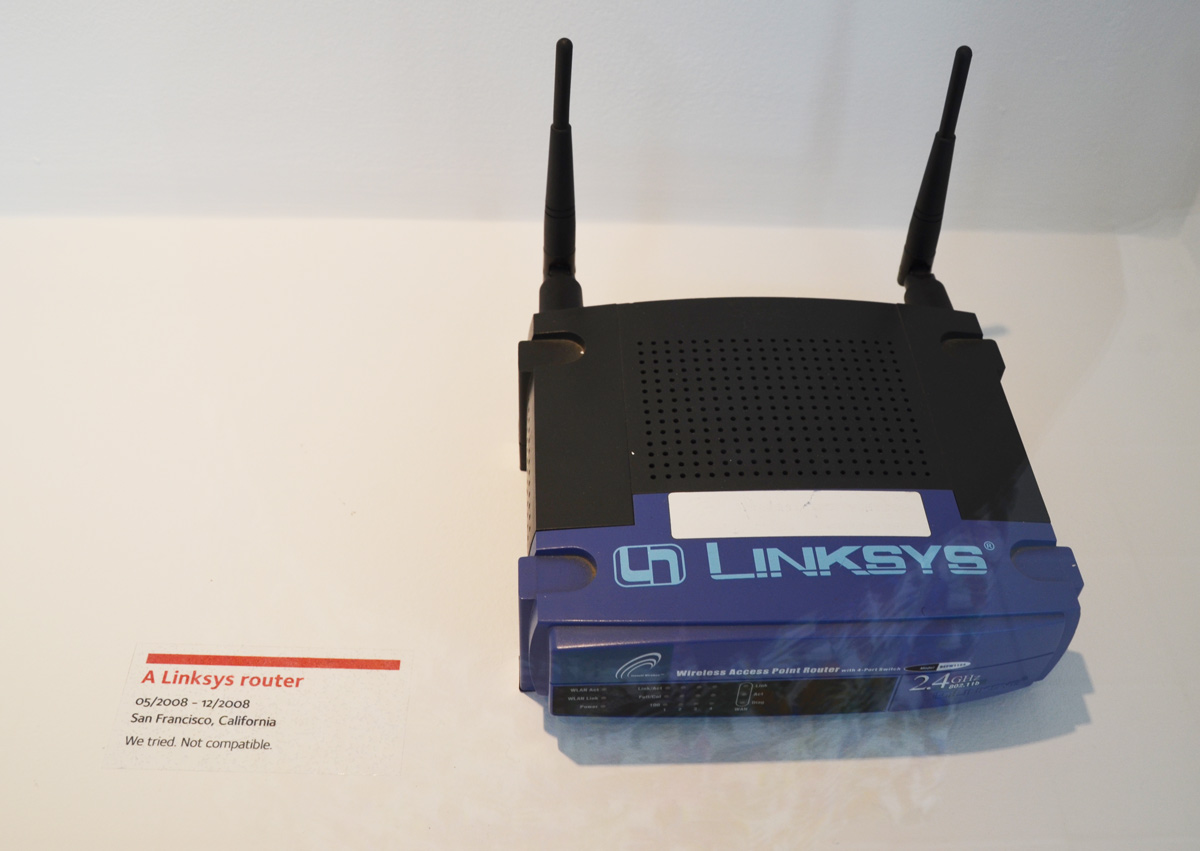
below: “A Linksys router. We tried. Not compatible”. Droll. Succinct.

an old Linksys router on display in a museum show

below: “A spectrum of a star. We are both astronomers. On my 26th birthday he sent me a spectrum of a star in the Orion constellation as my birthday gift. This star, names pi3, is 26 light years away from the Earth. He said, “Look, at the time when you were born, the light left this star, passing through the endless interstellar space, the countless dust and nebula, arriving here after a 26 light year journey. So, have you. Here you meet your starlight, and I meet you.”

a small blue and white image that is a

below: What would you write? What have other people left behind in your life? What symbolic little keepsakes from past relationships do you have buried away?

The story that I don’t have a photo for is that which goes with a broken pair of handcuffs. A sample of the story: “What is left of the fake handcuffs is the result of a particularly passionate night/morning in bed…. I remember one morning when he had me handcuffed to the bed and the phone rang. It was the man who would, several months later, become my next boyfriend.”

At least that’s not as bad as one man’s account of life after breaking up with his wife… when a year later she committed suicide. There is only one side to the story presented here and it made me want to know the other side.

The Museum of Broken Relationships is also online. Here you will find the 1487 heart breaking stories that have been collected so far. Together they form a larger story about the way we love and lose. You can also add your contribution if you want. If you do read the stories, may you not stumble across something written by an ex!

This exhibit has also be described in Toronto Life and Now Magazine
It continues until 8th September.

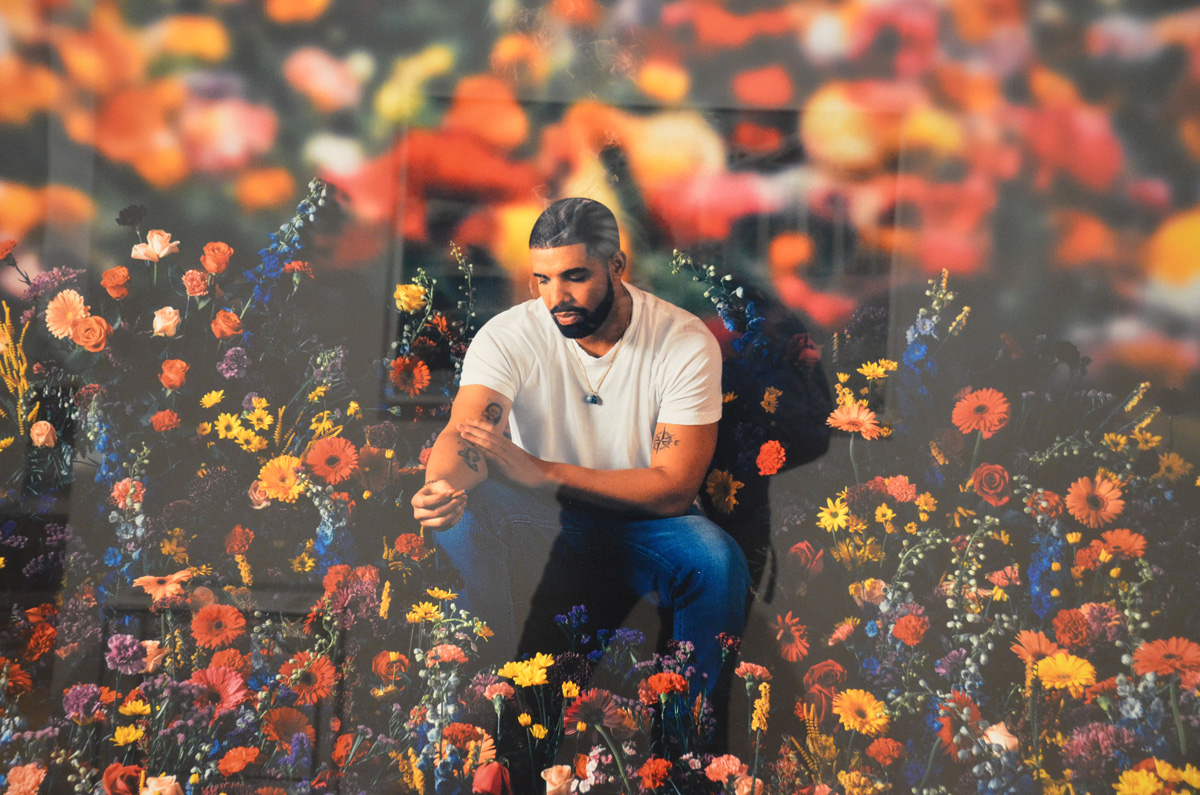
At the Coldstream Fine Art gallery near King & Spadina is an exhibit of photographs by Caitlin Cronenberg called ‘Strange/Beauty’.  Among the photos are some of Drake, Toronto’s own rapper and most visible Raptor fan. two photos by Caitlin Cronenberg. On the right is a night time photo of Drake, the singer, standing beside a car that has its front headlights on. The photo on the left is of 4 men, including Drake, sitting at a table, all dressed in suits. a photo of Drake sitting among many colourful flowers

Cronenberg was the photographer who produced the image for the album cover for Drake’s “Views from the Six” album. The cover shot, of Drake sitting on top of the CN Tower, is also in this show.  Some of these photos appear in the digital booklet that accompanied the album.  The album was released in April 2016.

A winter scene, Drake, holding the leash of a dog, outside, standing beside a rolls royce car that has been out in the snow, and standing in front of a large house with white columns in the front


Remember that these photos are behind glass, hence the reflections.  In other words, these photos on this page are merely representations of the real thing.  They look much better in real life.

The exhibit is on until June 8th.

Each year the CONTACT Photography Festival spotlights a few artists.  This year, Carrie Mae Weems is one of them.  As I’ve walked around Toronto the past month I have tried to check out all the place where Weems’s work is on display.

below: On Spadina, just north of King is a large portrait of Mary J. Bilge (singer and actor) in red with the title “Anointed”.  In the photo, Bilge is being crowned by Weems.

a large red photo of a woman being crowned, sitting in profile, the word anointed is written in large letters on the picture. Mounted on the side of a red brick building

below: A small pink photo of a girl in the parking lot that is adjacent to the building where the above photo is mounted.  The marks on the girl’s face are problems with the display case, not with the photo.

a pink and black photo of a girl's head, on a small display in a parking lot, with a Huawei ad behind it. Ad features that head of a model

***

below: At the Contact Gallery, 80 Spadina Avenue, part of ‘Blending the Blues’ which is collection of images from a few different projects that Weems has done over her thirty year career.  The picture shown here is “Untitled” 2017.

detailed picture of a woman sitting at a table with lots of things around her, on the table, behind her, and in front of the table, by Carrie mae Weems, the photo is only in blues and black

below: From ‘Blue Notes” 2014-2015 which involves blue toned images of people with coloured rectangles obscuring part of their faces.   The picture on the right is a copy of the Booking Sheet for Sandra Bland who was charged with assaulting a public servant (i.e. police officer) in July 2015.  She was died in police custody a three days later.

park of an exhibit in a gallery showing the picture of a black boy with a large red rectangle acros his face, beside it is an enlargement of the arrest record of a black man in Ferguson Missouri

***

“Scenes and Take”, 2016, is composed of two large photos (“Director’s Cut” and “The Bad and the Beautiful” below) on the outside walls of the TIFF Bell Lightbox at the corner of King West and Widmer Streets.  Each photograph is accompanied by text which reads as a summary for movie.  For instance, the text for “The Bad and the Beautiful” starts as “The Plot: Bright and beautiful, a young would-be starlet in Hollywood seeking fame and fortune.  Along the way, she encounters erroneous assumptions, bad luck, and dangerous men.”

large photo on a wall outside, of a woman in a long black dress, back to camera, one hand on door sill as she stands in open doorway, by Carrie Mae Weems

The photos are of Weems as a muse, or the embodiment of the black female gaze.  She places herself on the set of ‘Scandal’, a series created by Shonda Rhimes and starring Kerry Washington.

two large photos mounted on two walls that meet at the corner of King West and Widmer, two people walking them including a woman in a head scarf

‘Slow Fade to Black’, 2010,  is a series of large posters on King Street West near Metro Hall – black performers slowly fading from fame and memory.   They address the representation of Black women in popular culture

series of large panel photos by Carrie Mae Weems, Slow Fade to Black, each photo is a person or a face that is blurry, done with one colour on black

‘Slow Fade to Black’ was also the name of a book subtitled, the Negro in American Film 1900-1942 written by Thomas Cripps and published in 1977.

two men walk past two large photos on King Street, Slow Fade to Black photo by Carrie Mae Weems, one is blue and black and the other is burgundy and black

Performers, all black women, portrayed in this series: Katherine Dunham, Koko Taylor, Eartha Kitt, Abbey Lincoln, Dinah Washington (twice), Ella Fitzgerald, Shirley Bassey, Josephine Baker (twice), Mahalia Jackson, Leontyne Price, and Nina Simone.

people sitting in a streetcar with their back to the window, can see large photo on exhibit on opposite sidewalk through the windows of the streetcar

***

And last, at the Justina M. Barnicke Gallery (the Art Museum at the University of Toronto), is ‘Heave’.  From the gallery’s website, “multi-part installation Heave combines photography, video, news media sampling, as well as ephemera to probe the devastating effects of violence in our life and time. The complex installation explores the spectacle of violence in our contemporary lives relocating this present within sustained histories of conflict and uprising.”

a collection of pictures on the wall and Life magazines on a table, part of Heave, an exhibit by Carrie Mae Weems at University of Toronto art museum and gallery

living room furniture arrangement as part of a gallery exhibit, heave, by carrie Mae Weems

4 people watching a video on a large screen, one person is standing while 3 people are sitting on a bench with their backs to the camera

‘Women in Focus’ is the name of a photography exhibit on at the Art Gallery of Ontario (AGO) at the moment.  I want to talk about that exhibit in this blog post but I also want to expand the post to include a few other women at the AGO that caught my eye the other day when I was there.

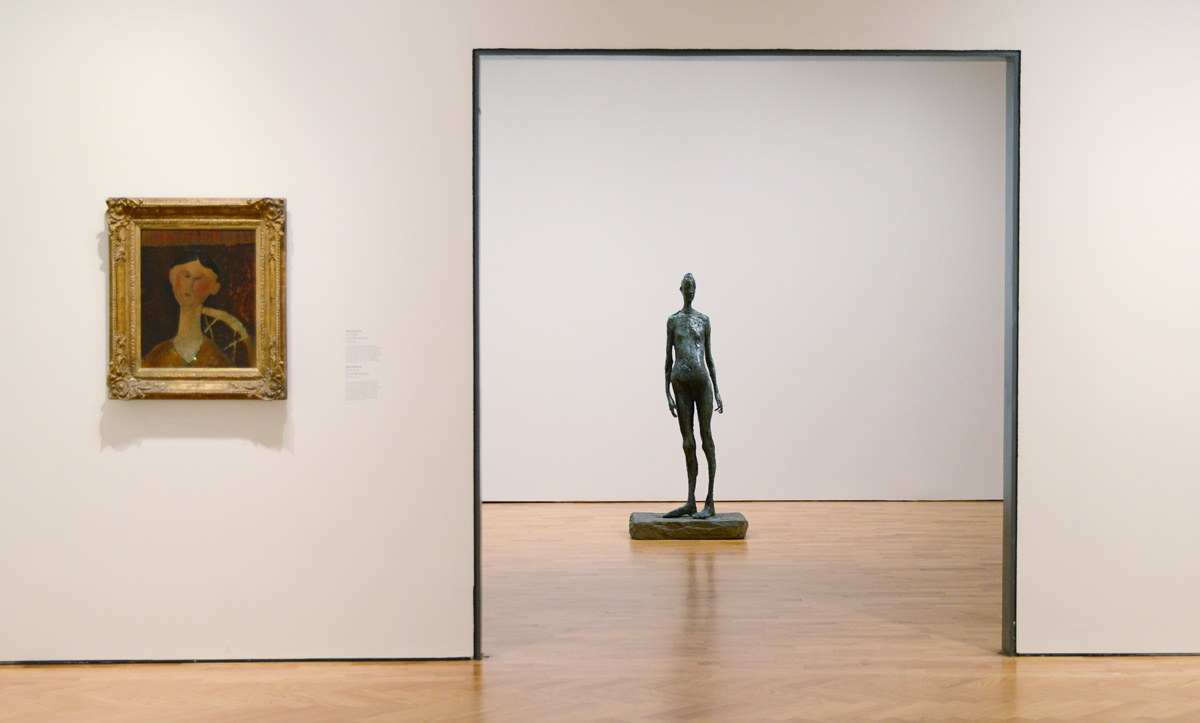
below: A woman’s portrait by Modigliani and a sculpture of a female form in the room beyond. The latter is “The Leaf”, 1948, by Germaine Richier.  She’s a forlorn figure, standing naked and all alone.

a painting of a woman's head by Modigliano on a gallery wall in a fancy gold frame and a sculpture of a woman in the room beyond

***

The ‘Women in Focus, 1920s – 1940s,’ exhibit is fascinating. The history, not only of photography but also of the subject matter, is wonderful. The world was changing. Photography was there to be a part of that change as well as document it. Cameras and processing techniques advanced. Magazines flourished. The way that we looked at the world and at ourselves evolved. Photography became an artform.

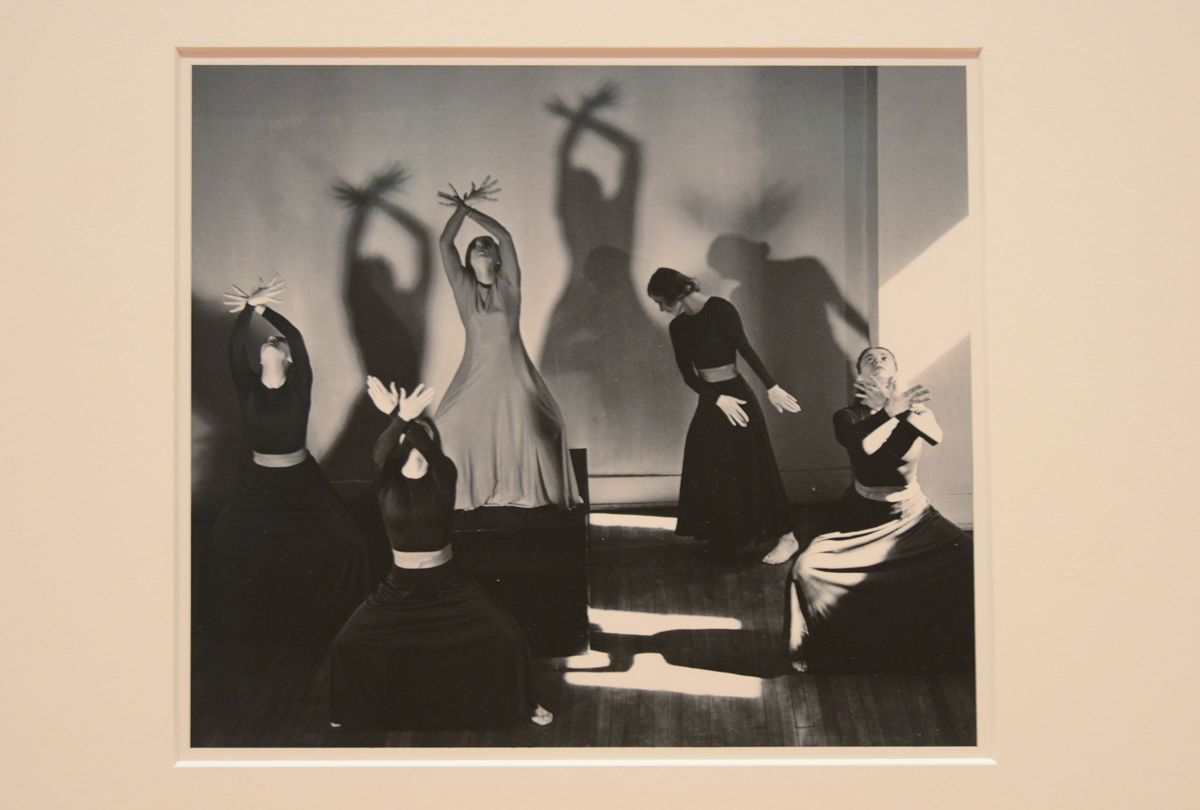
below: ‘Hanja Holm with dance group, New York’, around 1938, by Lotte Jacobi. Gelatin Silver print. The photo is actually sepia toned and not as ‘black and white’ as shown here. Hanja/Hanya Holm (1893-1992) was the stage name of a German born choreographer and dancer; she was Johanna Kuntze (nee Eckert) but considered her name “too heavy” for a dancer. She is also considered one of the founders of American modern dance.

photograph from 1938 by Lotte Jacobi, of women dancing, light and shadows on the back wall

below: ‘St. Moritz, Frau Wernod-Gtoffel with a modern film camera’, 1932, by Alfred Eisenstaedt (1898-1995). Eisenstaedt began his career in 1929 with the Associated Press in Germany. Because of the war he emigrated to the USA in 1935 where he became a photographer for ‘Life’ magazine. I love the old camera… and what’s that in her mouth?

old sepia tone photo of a person with an old fashioned movie camera

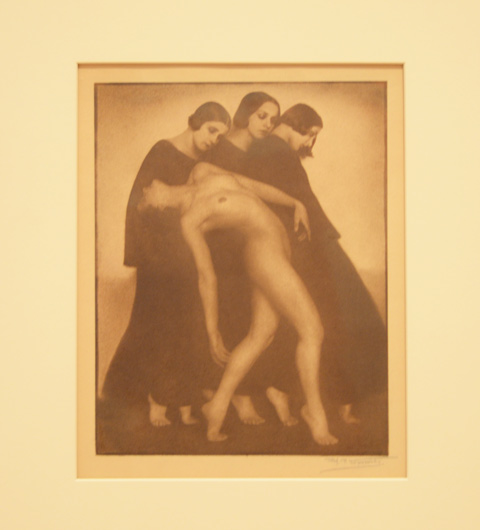
below: ‘Bewegungsstudie’ (‘Movement Study’) 1926 by Rudolph Koppitz (Austrian, 1884-1936), bromoil print. Koppitz was a leading avant-garde photographer of his time. Bromoil prints are slightly fuzzier than other photographs as the image is produced with an oil based paint.

vintage sepia toned photo of four women moving together, 3 are dressed in long plain dresses and they are close together and supporting a naked woman who has her back arched while she walks (with her head looking backwards)

below: ‘Sea of Ice (Genevieve)’, 1935, by Ilse Bing (1899-1998). Bing was born in Frankfurt Germany. She spent the early part of her career in Paris before moving to the USA in 1941. The exhibit at the AGO includes more of her work (and it’s all good).

anold photo by Ilse Bing of a woman standing on a rock high upon a mountian. She's looking down over the valley below

below: “Good Night Marie’, 1932, by Herbert Bayer (1900-1985). It looks very contrived, doesn’t it? The study of the nude as a photographic skill – getting the skin tones right and all that. Or is it just soft porn?

old photo of a man's hand on a door handle as he opens the door to expose the backside of a nude woman

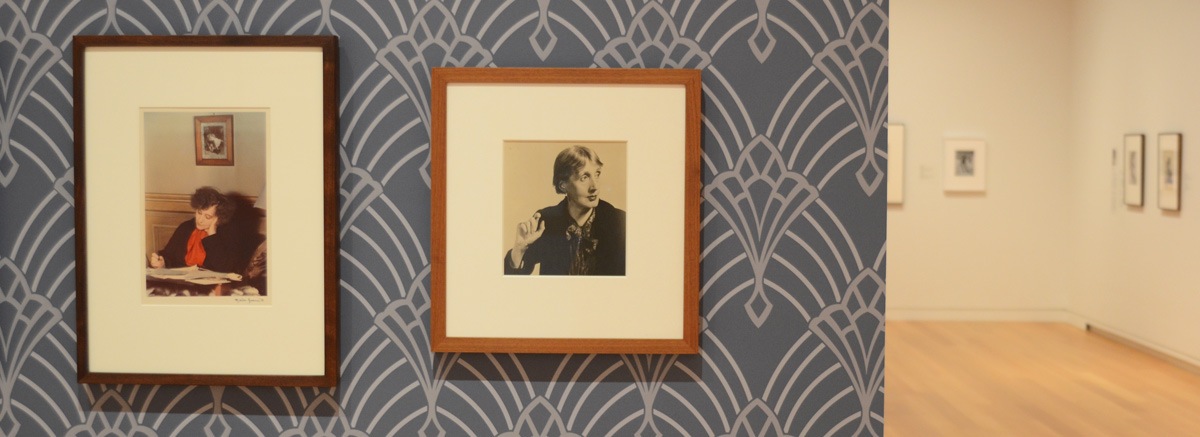
below: On the left is ‘Colette’, 1939, by Giselle Freund (1908-2000). Colette (1873-1954) was a French author and in this picture she is writing in bed. Her best known book was ‘Gigi’. She was nominated for a Nobel Prize in Literature in 1948. The other picture is a portrait of Virginia Woolf, also a writer, by Man Ray (1890-1976).

framed photographs on a gallery wall

***

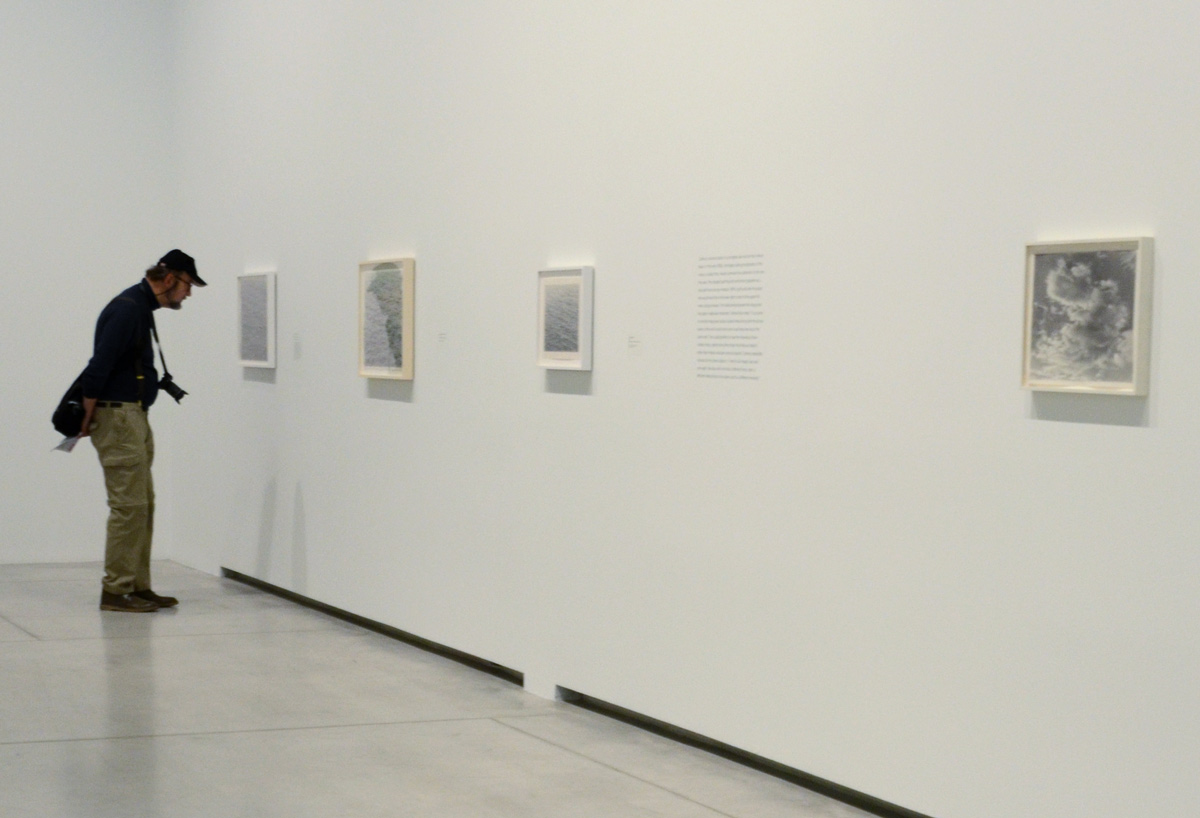
Vija Celmins was born in Latvia just before the Soviets invaded during WW2.  She emigrated to the USA and settled first in California and then in New York City.  ‘To Fix the Image in Memory‘ is a retrospective of her work at the AGO (until 5th August).  Most of her work is in very muted tones if not shades of grey.

a man in an art gallery is looking closely at a pencil drawing that is hanging on the wall

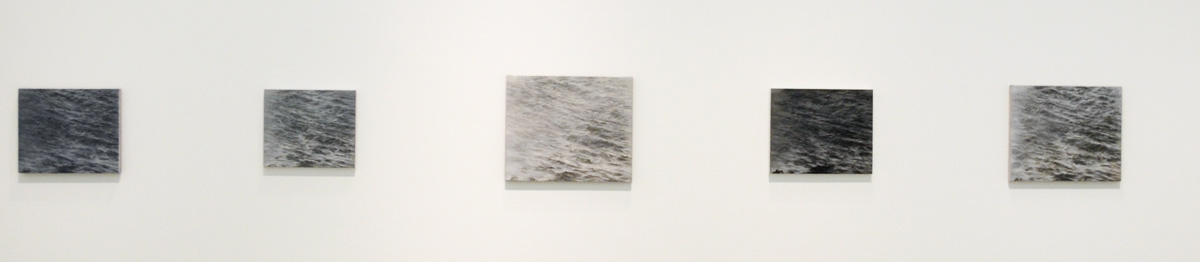
below:   Five of a series of drawings (there are 6 in the series) of water done in graphite (i.e. pencil).  One is the original and five are copies of it.  These photos are small but I think that you can see that they are of the same waves.   A lot of her work was intense – detailed drawings of water and the desert floor.  She also did a series of drawings and paintings of stars in the sky.

five similar drawings of water

below: A spider web painted in oils on linen. Celmins experimented with pictures of spider webs done in different media on different surfaces.  This was my favorite – muted and slightly blurry.

a painting of a spider web in shades of grey

below: I’ve cheated a bit here…. this is a screenshot of the top part of the results of a google image search on Celmins’ name.  It gives you a much better sense of her work that I can convey.

screenshot of images of artwork by Vija Celmins

***

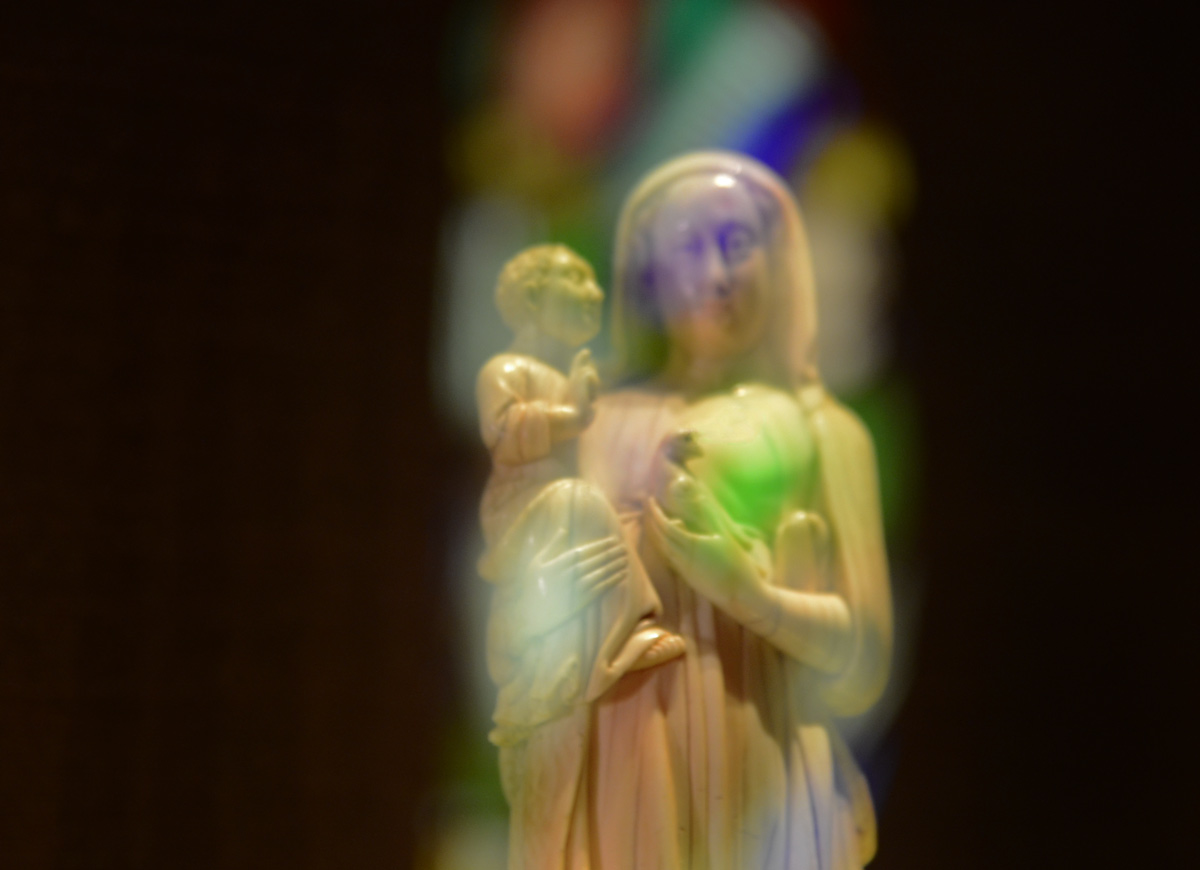
As I was walking towards the exit of the AGO I was still thinking about how women are portrayed in art. I found myself in the ‘religious art’ section of the gallery, from a time in history when the church was a major patron of the arts in Western culture. Apparently, it wasn’t a good time for women. There are plenty of Mary’s either in her virgin mother role or seen weeping at the foot of the cross, but there is a dearth of other women. Ponder that for a while but try not to get too depressed. And while you ponder, here is a photo of a small white statue bathed in light coming through a stained glass window. Mary’s watching over you.

a small white statue of Mary holding the baby Jesus, lit by light coming through a stained glass window behind it

401 Richmond is a renovated industrial building that is now an arts and culture hub; it includes many little galleries. The building was built in stages between 1899 and 1923 for the Macdonald Manufacturing Company who made lithographed tinware such as biscuit tins and containers for tea and  tobacco.

Many of the galleries are participating in the CONTACT Photography Festival and what follows is a selection of what is on display at the moment.  A few non-photography installations have snuck in as well.

One of the galleries is the Red Head Gallery. Their exhibit, titled ‘Pentimento’, is a collection of work by some of their members.    From their website: “The work presented is a diverse commentary on the idea of photography and the definition, role & relevance of the photograph, both directly & indirectly, in the act of image and object making.”

below: ‘Untitled’ by Tonia Di Risio. The photos have been printed on vinyl and then stuck to the gallery wall.

an artwork that is a collage of photos of cookies, tables, and bungalows, stacked on top of each other to make a large tower

below: “Still Life with Paper’ by Jim Bourke
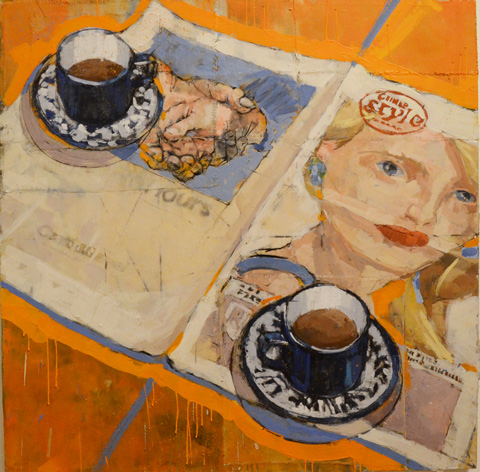
image on a gallery wall, orange table cloth, an open newspaper with illustraion of a woman's head, two partially filled cups of tea, with saucers

below: ‘Process’ by Sally Thurlow is 6 photographs of a demolition and renovation of a house (prompted by a rotting roof) and the upheaval that that causes.   Each little frame is made from something from the job site including Tims cups and yellow caution tape.

Process, and artwork by Sally Thurlow, of photos in a wood frame and each photo is framed with found objects

The word pentimento means “a visible trace of earlier painting beneath a layer or layers of paint on a canvas.”  The last blog post dealt with palimpsest which is erased text that becomes visible and it seems to me that pentimento is very similar, but with pictures not words, paint not ink.

***

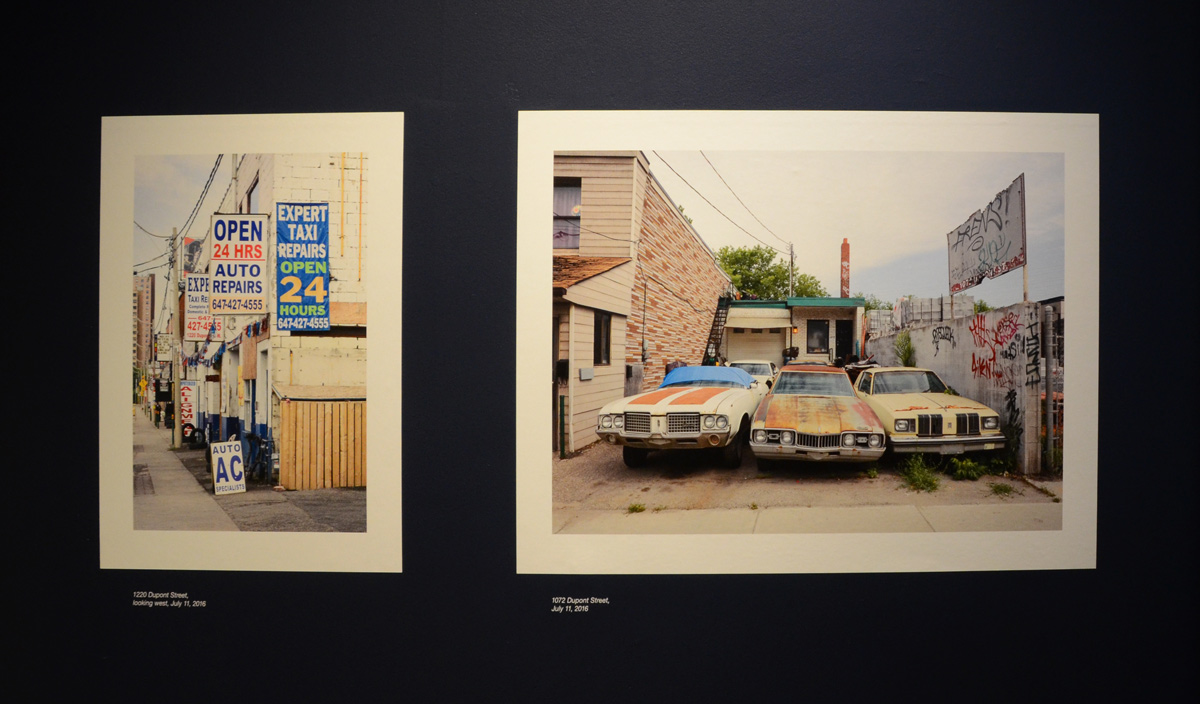
Urbanspace Gallery, “Further Along the Road”, an exhibit of photos taken on Dupont Street in Toronto, by Eliot Wright.

below: Left: 1220 Dundas St looking west.  Right: 1072 Dundas Street West.  Both photos were taken in July 2016
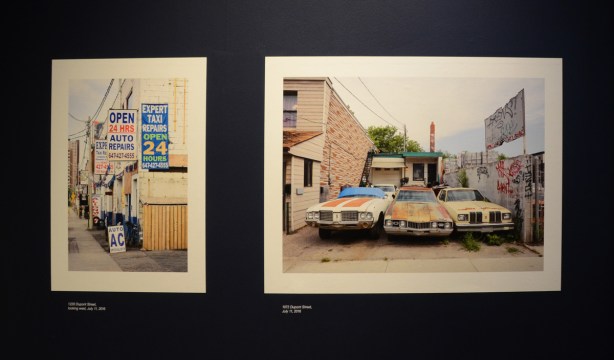
two photos taken on Dupont street, the one on the right is of 3 old cars parked in a driveway. The other is of signs for taxis and car repair shops

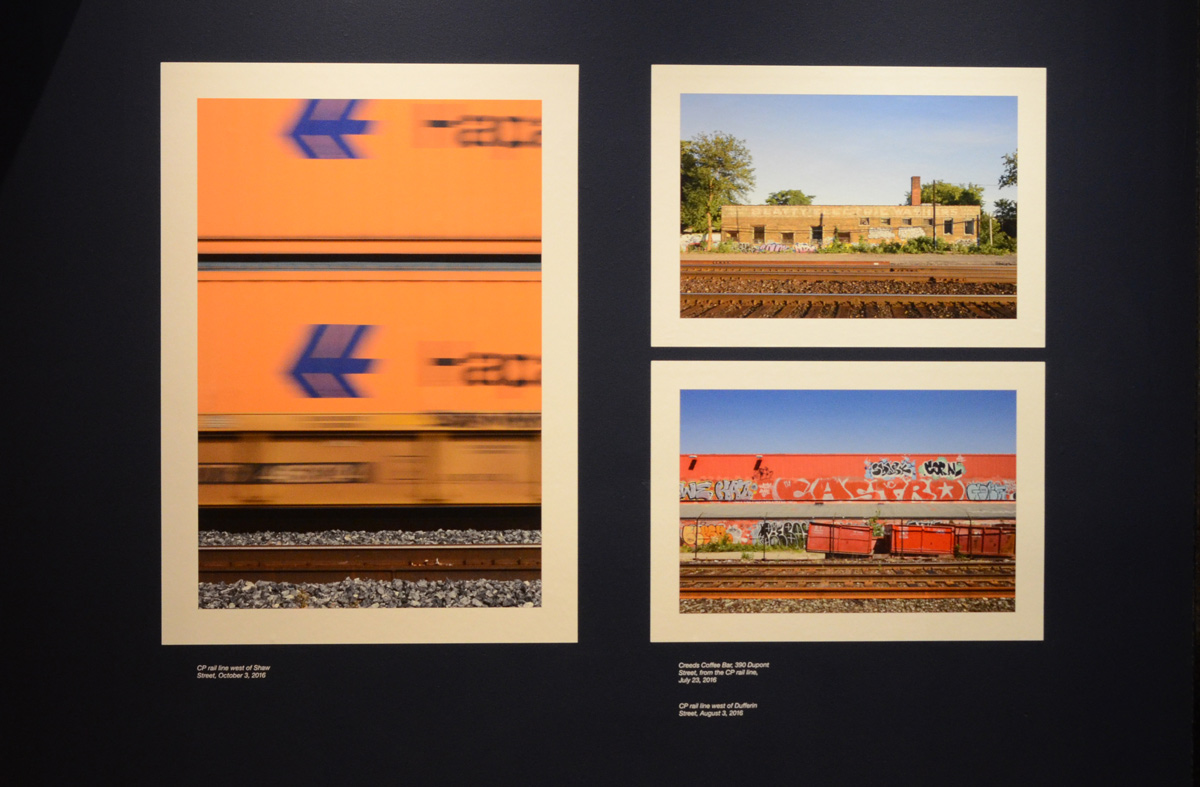
below: Left: CP railline, west of Shaw.  Right top: Creeds coffee bar, 390 Dupont St., taken from the CP tracks, July 2016.   Right bottom: CP rail line west of Dufferin, August 2016
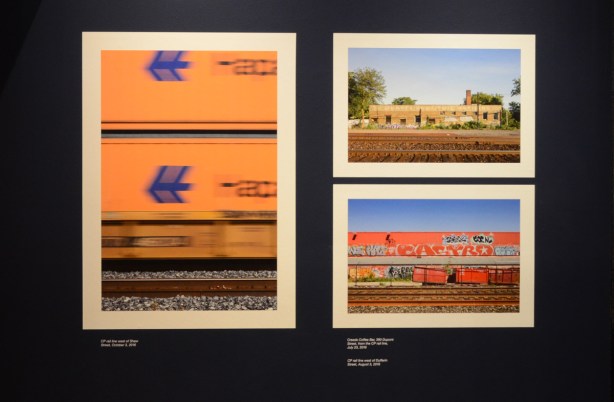
Three photos of trains and train tracks on Dupont Street

***

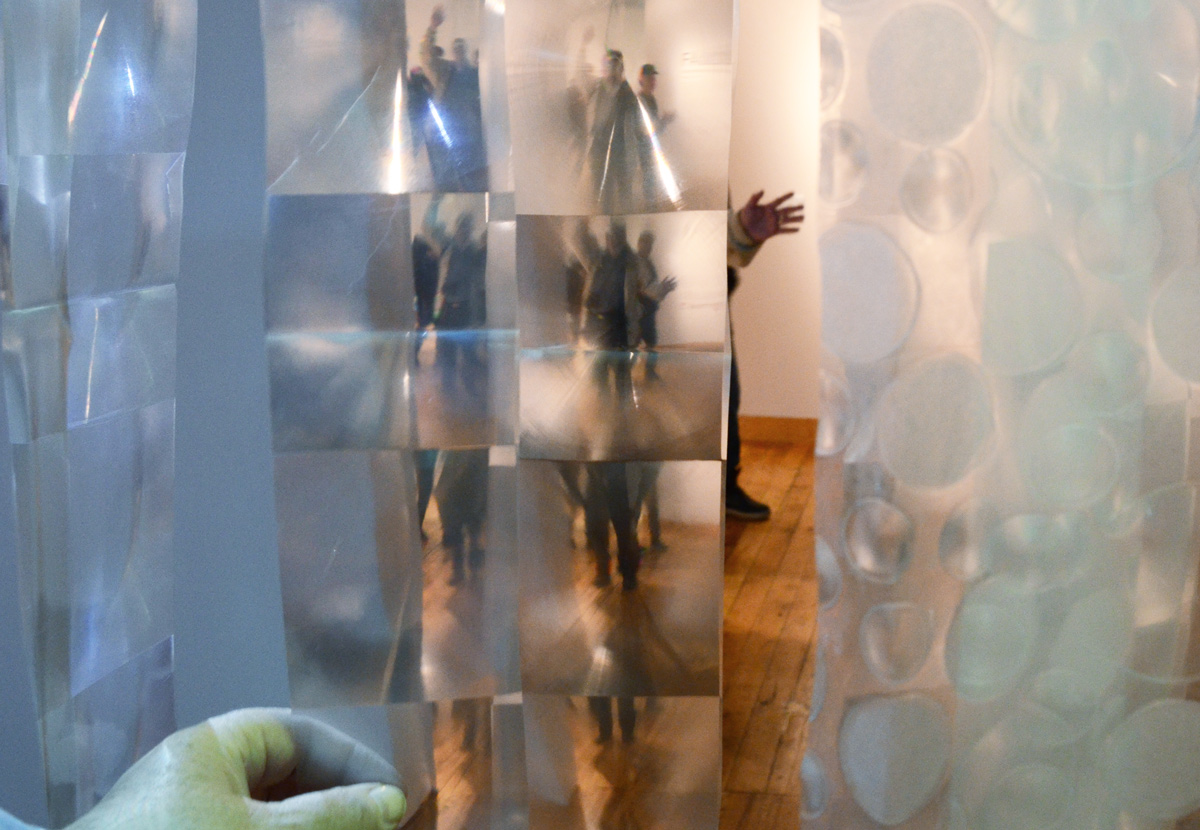
below: Laura Shintani, Bodywashi! at Tangled Art Gallery

art installation that uses strips of plastic shower curtain. The squares in the plastic make the person on the other side appear many times - one each in every square

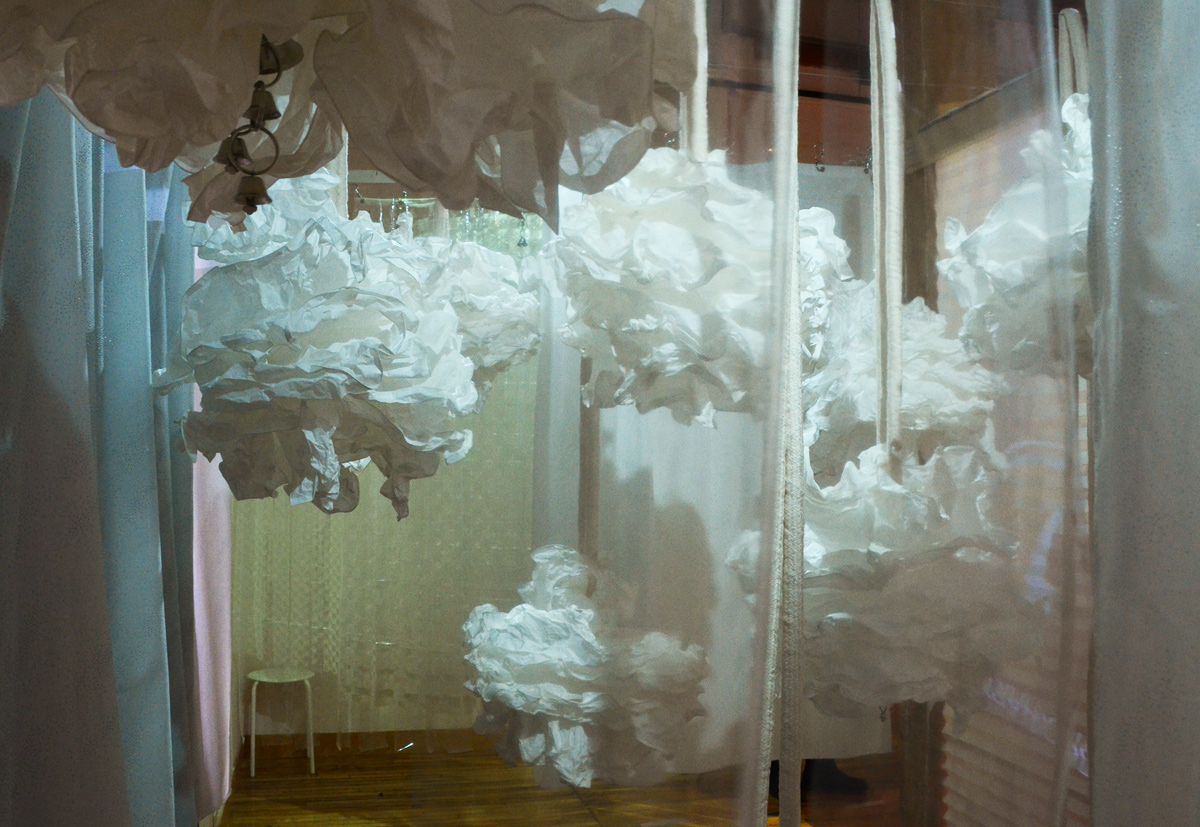
It’s like a car wash for people although no water is involved.  Strips of translucent plastic (shower curtain material?) hang from the ceiling.   After walking through the plastic you encounter the scene below.
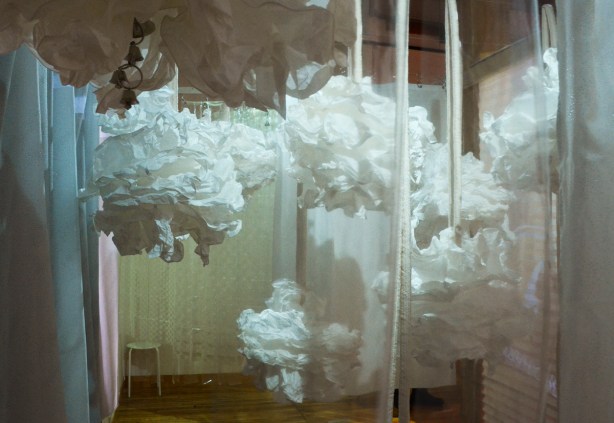
an art installation that looks like the puffy pieces in a car wash

***

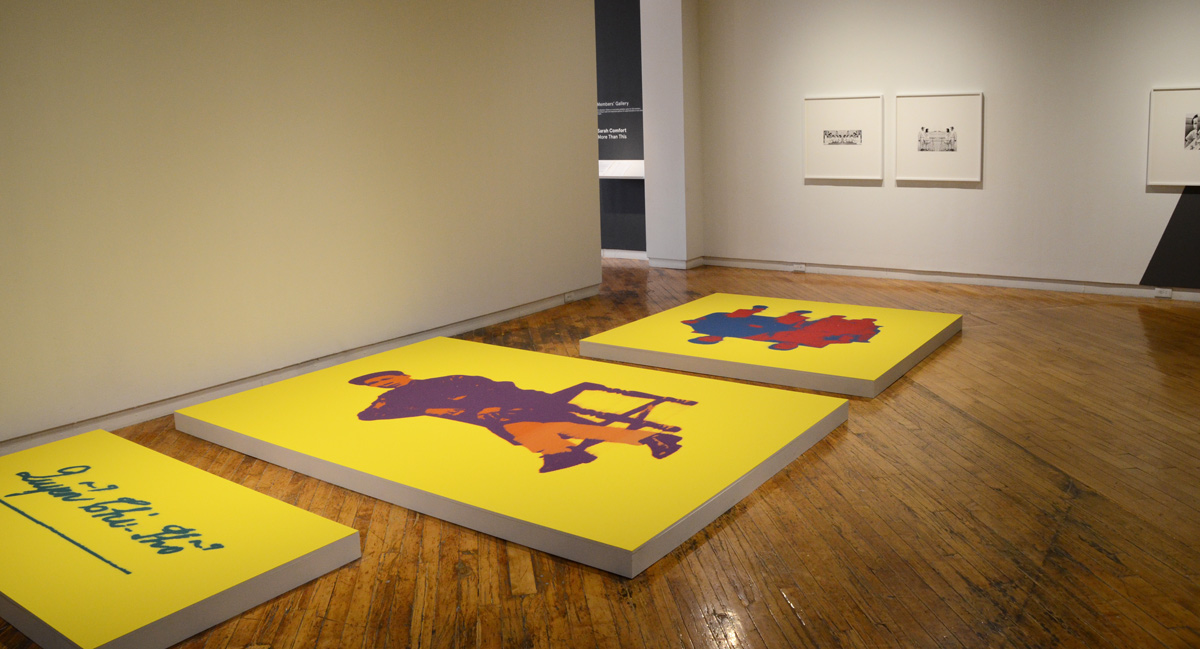
Gallery 44, “Developing Historical Narratives”

art gallery room with three large canvases on the floor, all wth bright yellow backgrounds


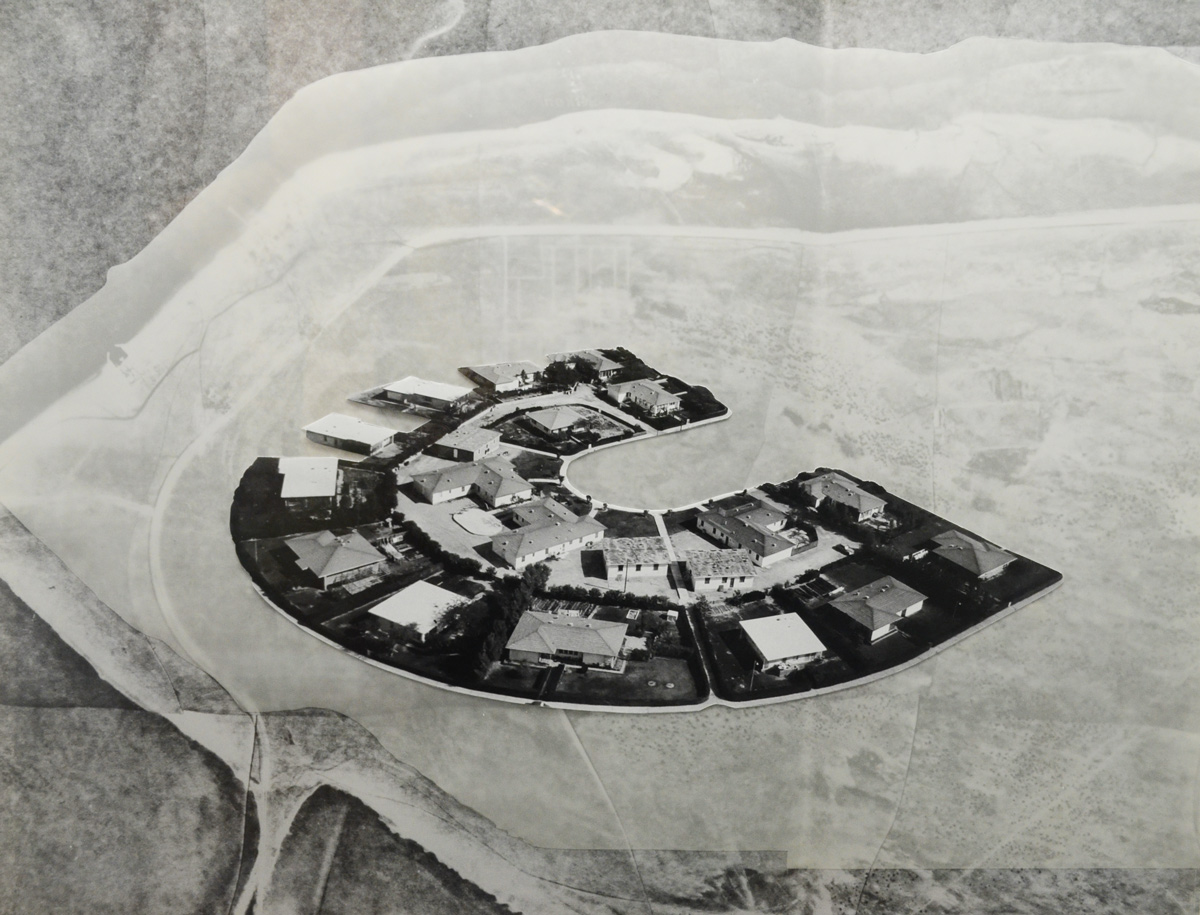
below: One of the images in ‘Petro Suburbs’, a series of black and white images by Hajra Waheed, also Gallery 44.   The subject matter is based on old aerial photos of Dhahran Saudi Arabia, a town that the artist grew up in.  It was also a gated town built for Saudi ARAMCO (Arabian American Oil Company).  Dhahran was protected by airbases, both US & Saudi, as well as by the CIA and such.  Access and privacy were strictly controlled and photography and filming were not allowed.

an aerial photo of a U shaped street of suburban houses, surroundings are blacnked out with translucent paper or something similar


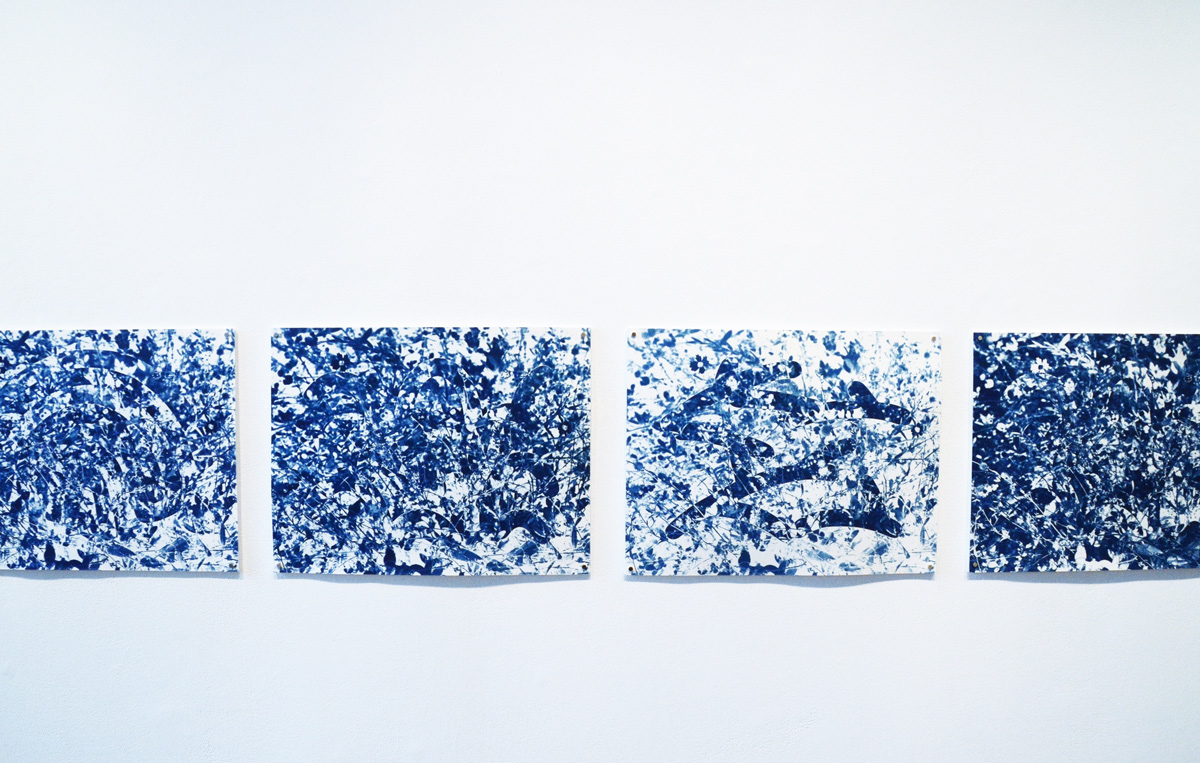
below: Untitled cyanotypes by Sarah Comfort, part of a series called “More Than This”.
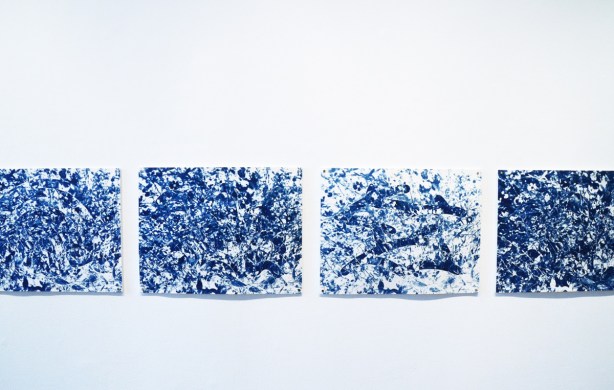
4 cyanotype prints (blue) on a gallery wall

***

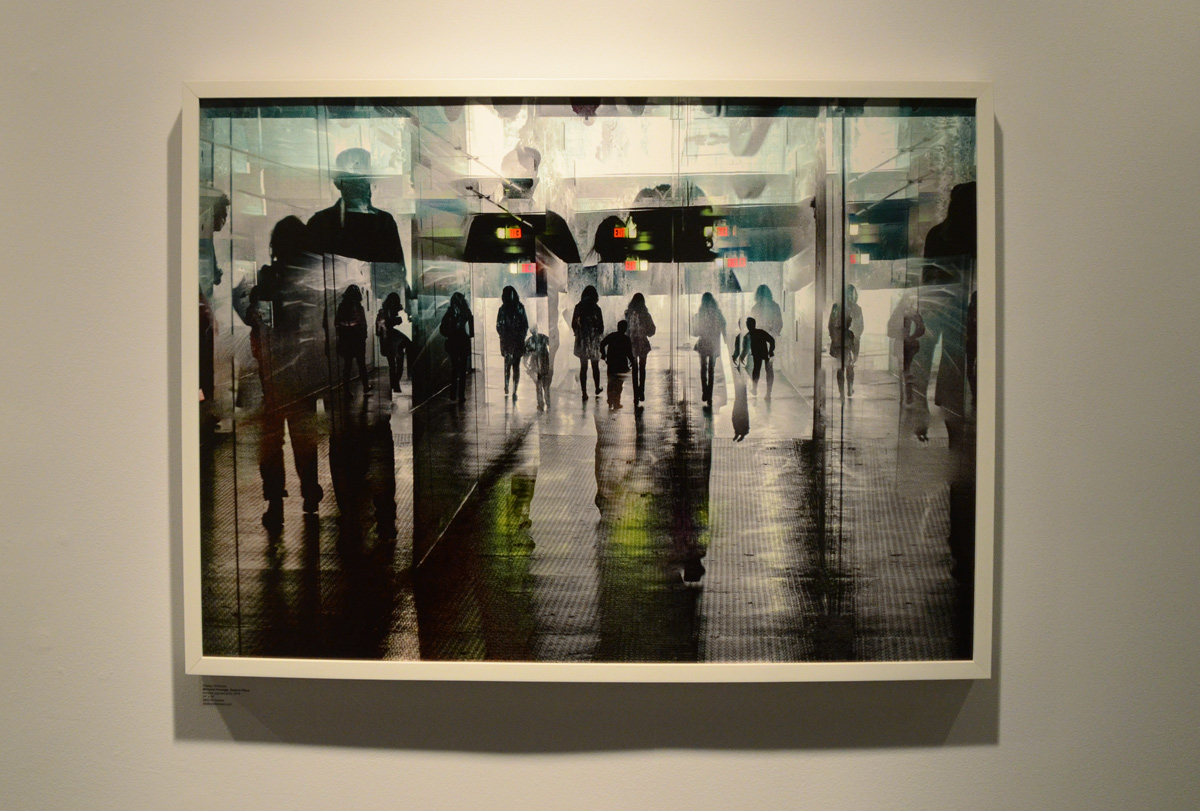
below: An image by Shelley Wildeman, superimposed people in the hallway.
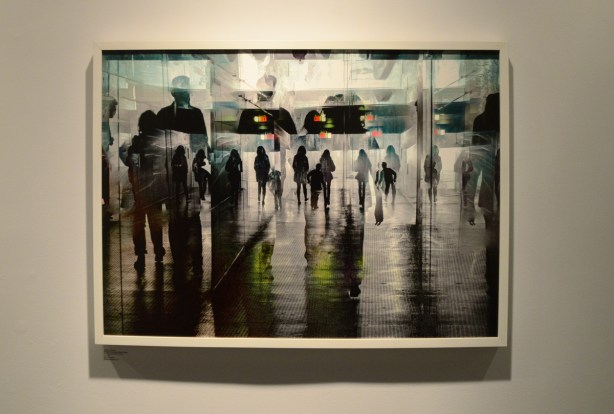
a photo of a large entrance way, lots of glass, and many people superimposed over each other.

***

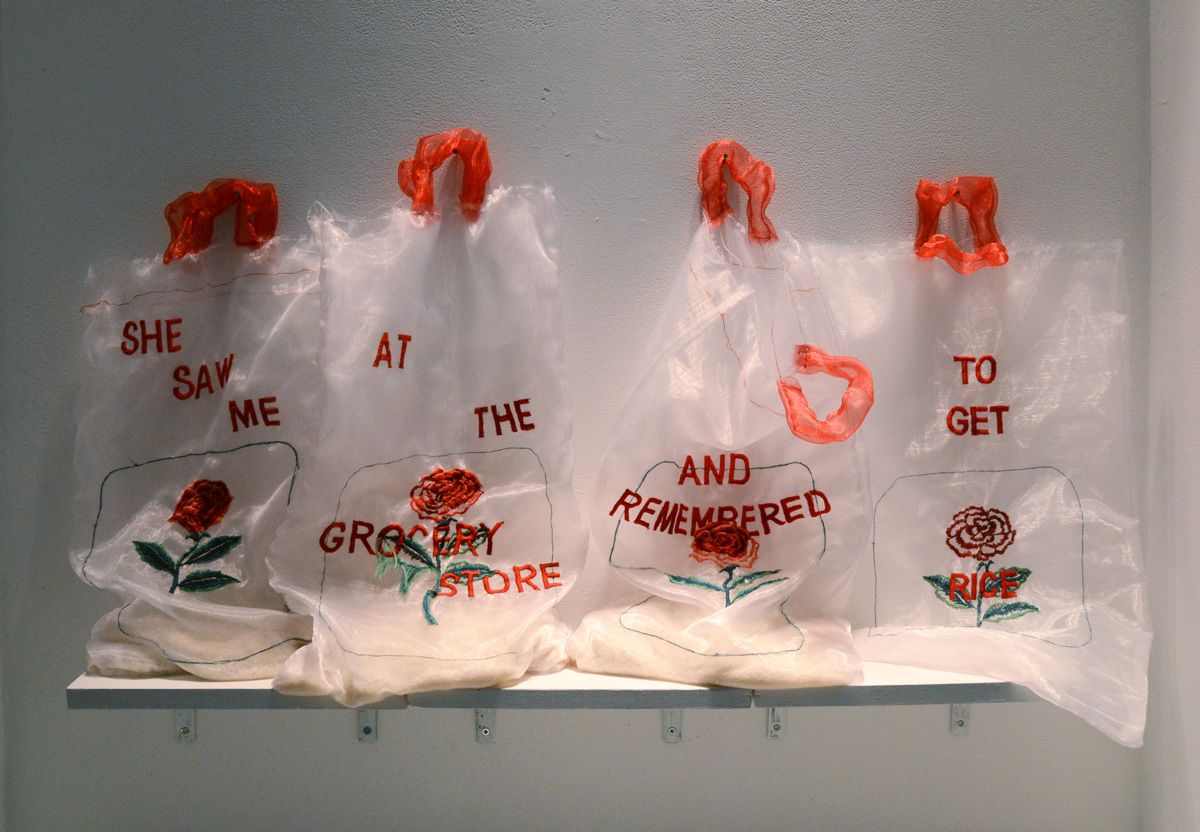
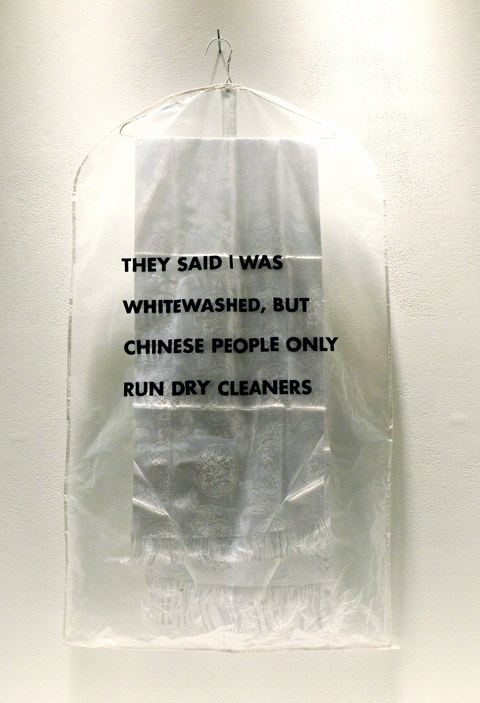
below: Two pieces by Florence Yee, who introduces herself on her website as: “Florence Cing-Gaai Yee is a queer Cantonese visual artist based in Tkaronto/Toronto and Tiohtià:ke/Montreal.  These hang in the Space Gallery which are windows in the hallway on the ground floor at 401 Richmond.

4 rice clear rice bags with red handles, with embroidery on them, red words that say, she saw me at the grocery store and remembered to get rice

artwork by Florence Yee, a plastic dry cleaners bag hanging on a hanger on a wall with a white fringed piece of cloth inside, on the outside of the bag are the words, They said I was whitewashed by Chinese people only run dry cleaners

***

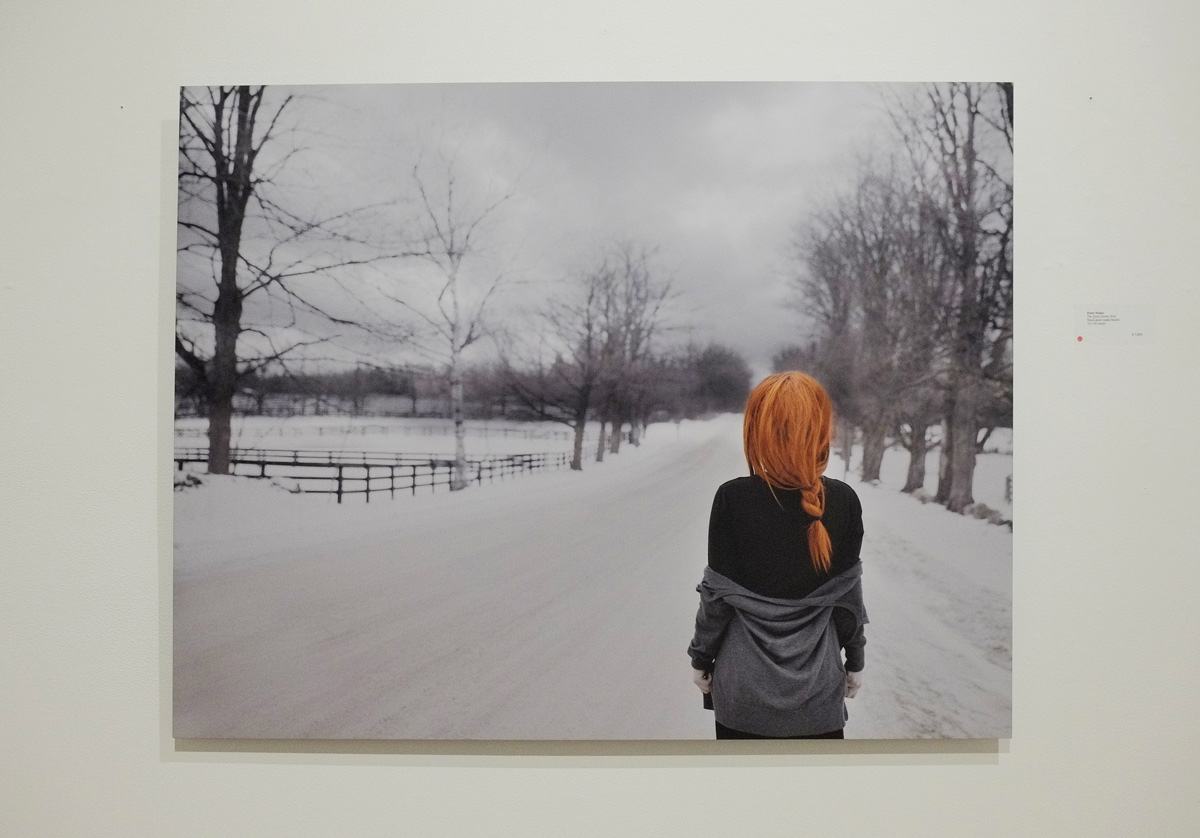
The last of the 401 Richmond galleries that I explored this past week is the Abbozzo Gallery where Patty Maher’s exhibit “The Sky as my Witness ” is now being shown.

below: “The Quiet Storm”
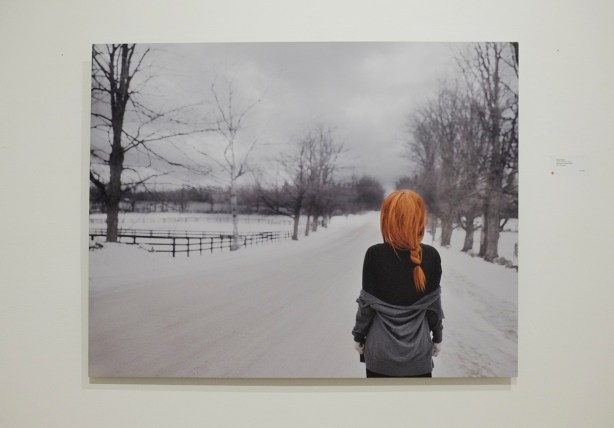
a large photo of a red headed woman, long hair, in a braid, standing on a snow covered road with her back to the camera, in the countryside

below: “Parallel Universe”.  Because we are all just dots in the universe.  The same but different.
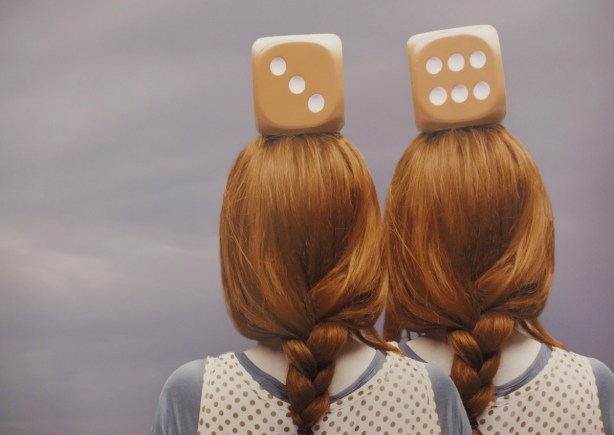
close up of a Patty Maher photograph, Parallel Universe, the back of two red headed women, both with large dice on their head, one die per head,

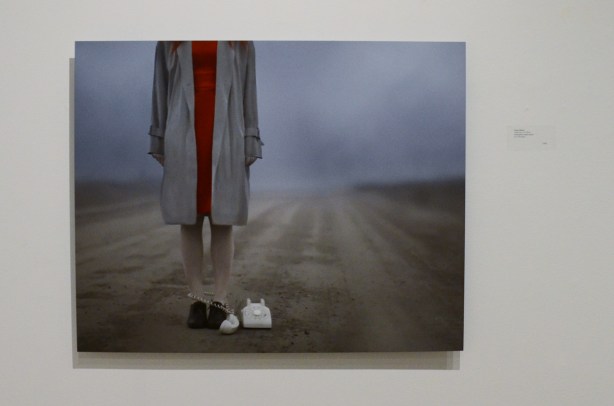
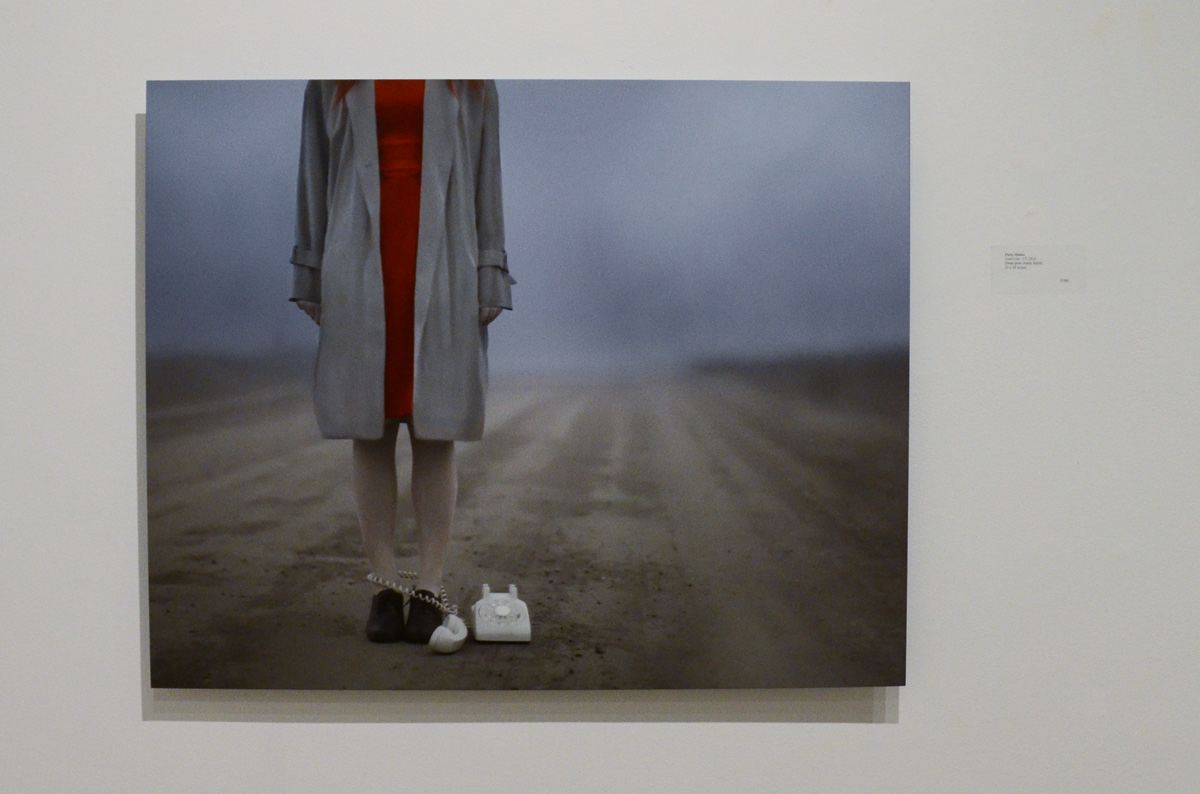
below: “Land Line”.

A Patty Maher photo of a woman standing on a deserted country road with an old rotary phone at her feet, her head has been cropped out of the photo, foggy in the background

The above photo is from a series called ‘The Liminal Field’.  On her website, Maher describes the series thusly: “This staged self portrait series is an exploration of the state of liminality that occurs in midlife.  It is an attempt to symbolically describe the transformation that needs to take place when moving from youth to the second half of life.  The field depicted here is a construct and does not exist in real space.  It has been constructed to indicate a place that is both personal an intangible.  Each photo symbolically depicts an internal struggle that is necessarily part of this transition.”


As you can see, there is a a wide selection of images and ideas lurking in the galleries at 401 Richmond.   Most exhibits change over every month or so – so there is always something to see.

Palimpsest.  I had to look up the word too.  No, it’s not the superlative form of palimps.  As it turns out, palimsest has to do with surfaces that have been reused or altered while still retaining traces of its earlier form.

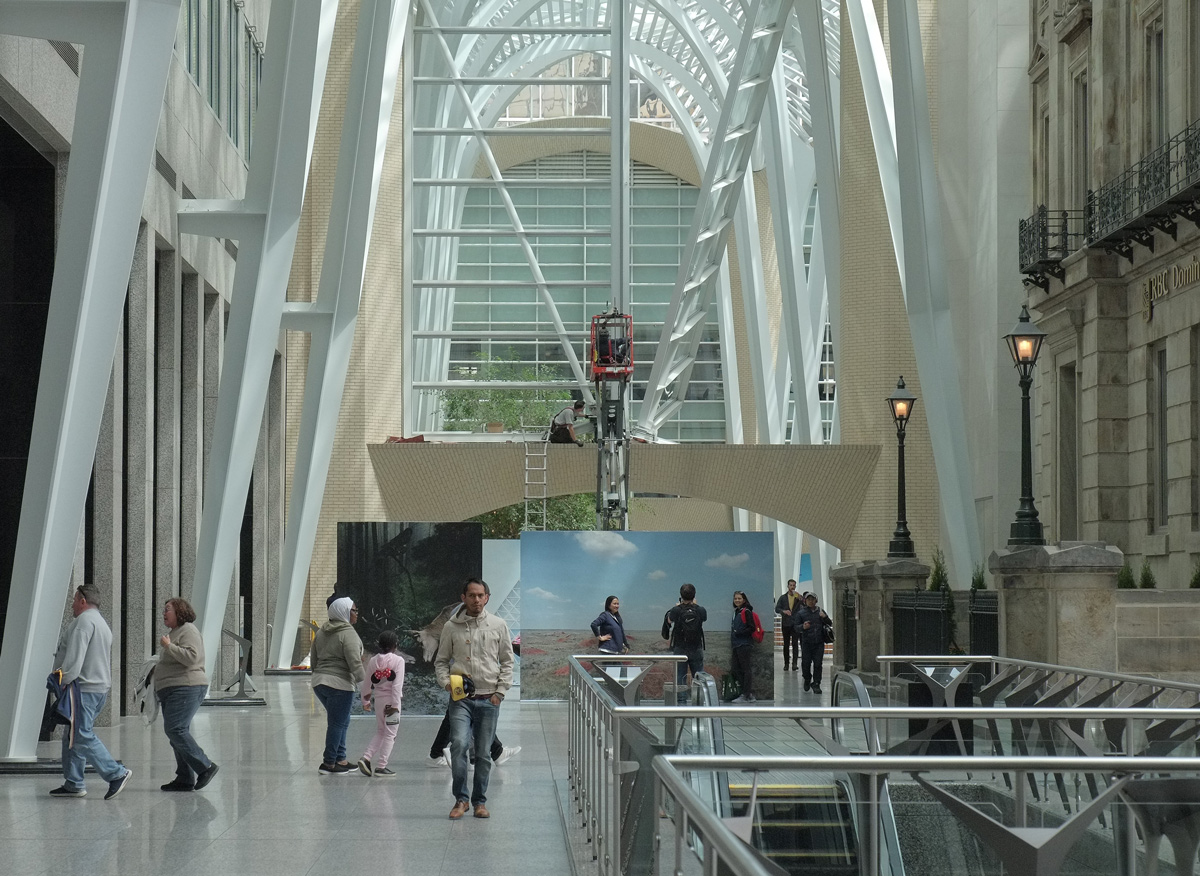
What does it have to do with this blog post?  It is the name of an exhibit of photos by a Poland-based collective, Sputnik Photos.  Between 2008 and 2016 this group compiled their ‘Lost Territories Archive‘; this is a project that documents the “physical, political, and sociocultural” aspects of the former Soviet republics.  Some of the thousands of images that they collected are on display in the Allan Lambert Galleria at Brookfield Place as part of this year’s CONTACT Photography Festival. It is on view for the month of May.

people in Allan Lambert Galleria, a couple of large photos, a workman on a crane,

below: “A sculptural model in a student atelier, Spitak Armenia, 2014”.

large picture of an old white statue, Brookfield Place, 2 men looking at it. Photo's title is A sculptural model in a student atelier, Spitak Armenia

below: “Cafeteria at the Heydar Aliev Centre, Gobustan Azerbijan, 2016”.   In 2013, to mark the 10th anniversary of the former president of Azerbijan, Heydar Aliyev, his son and successor, Ilham Aliyev, ordered the country’s 70 district capitals to each build a monumental centre named after his father.

people walking past a large photo in Allan Lambert Galleria at Brookfield Place. Photo by Sputnik Photos, title is Cafeteria at the Heydar Aliev Centre, Gobustan Azerbijan,
below: “Semipalatynsk Nuclear Test Site, Kazakhstan, 2016”.  The Soviet Union conducted over 400 nuclear tests at this site in northeast Kazakhstan between 1949 and 1989.  The impact of radiation exposure was hidden by Soviet authorities and didn’t become known until the site closed in 1991.
a couple walk past a large picture, small reddih mounds of dirt on a barren grassy field, flat land, no trees or other plants

 below: ‘Homemade construction for growing grapes, Yerevan Armenia, 2013’.  Urban farming was popular during the post-Soviet crisis in the 1990’s.  Today grapes are grown in every neighbourhood using homemade constructions for supporting the vines.

a large picture on display in Allan Lambert Galleria of a homemade structure to hold up grape vines in a back yard in Yerevan Armenia

below: “Anaklia Georgia, 2013”  Anaklia is a village on the Black Sea.  In 2011, Mikheil Saakashvili, the president of Georgia, announced a program to transform the village into a luxury resort.  Construction began in 2012.  Saakashvili’s party lost the parliamentary elections in 2013 and he fled the country.  Work on this project was discontinued.

large photo of a oval shaped structure on the top of a tower, on the coast, surrounded by barren land, abandoned building, in Anaklia Georgia (former USSR republic)

below: “Slutsk Belarus, 2013”.  This image is of ‘Cultural Space’, an installation in the sugar factory Saharny Zavod.  The factory was given an award for best ideological work in a contest organized by a regional committee for ‘admiration structures’.

two large photos on exhibit, with a woman standing in front of one of them.

Members of Sputnik Photos: Andrej Balco, Jan Brykczynski, Andrei Liankevich, Michal Luczak, Rafal Milach, Adam Panczuk, and Agnieszka Rayss.

***

More about the word palimpsest:

In Ancient Greek, it was παλίμψηστος (palímpsēstos) and in Latin it was palimpsestus meaning “scraped clean and ready to be used again”.  It was originally applied to wax covered tablets that the ancient Greeks and Romans used to “write” on by scratching out the letters with a stylus.  Smoothing the wax would erase the words.   Around the 6th century vellum, or parchment prepared from animal skins, became more commonly used.  It was expensive.  Early on, writing on parchment could be washed away using milk and oat bran but over time it would come back, but faintly.   In the later Middle Ages, writing was removed with powdered pumice which was more permanent.

Along with the historical definition, palimpsest has a more modern definition.  The Merriam-Webster Dictionary gives this newer meaning as, “something having usually diverse layers or aspects apparent beneath the surface”  while the Cambridge English Dictionary uses these words, “something such as work of art that has many levels of meaning, types of style, etc. that build on each other.”

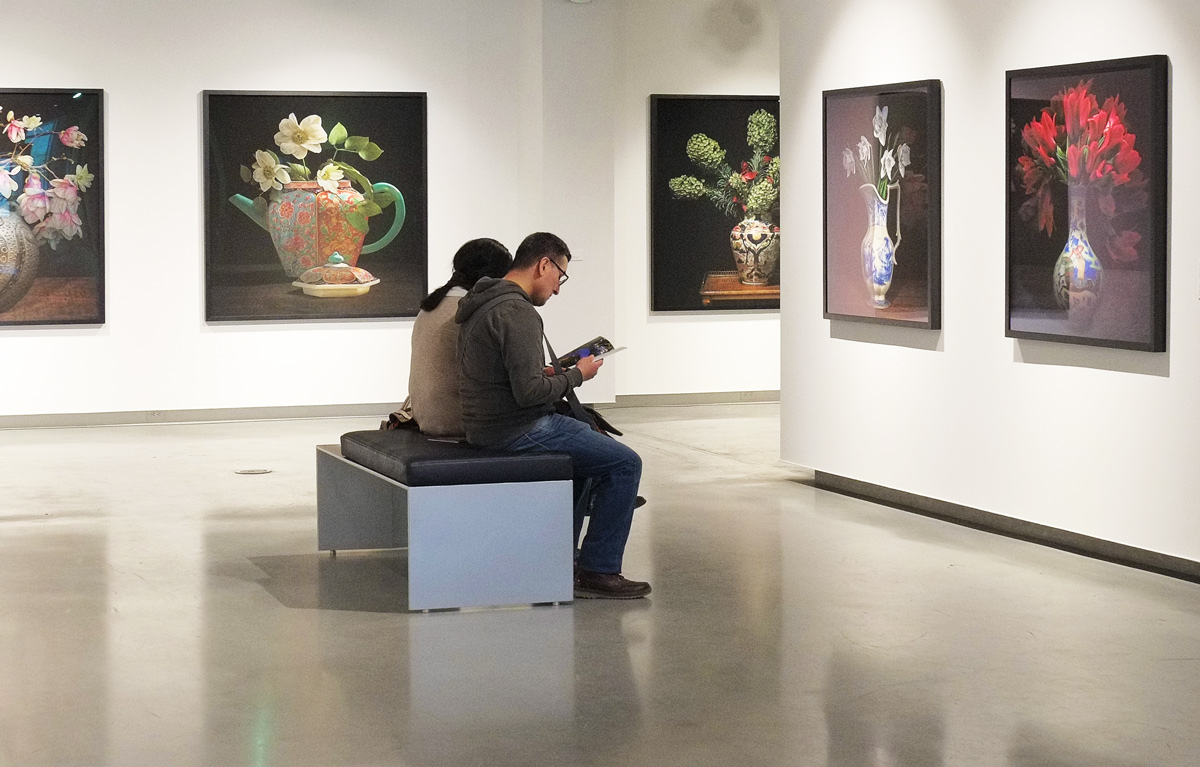
Now showing at the Onsite Gallery, is an exhibit of photography by T.M. Glass called “The Audible Language of Flowers”.  Glass’s work is inspired by 17th and 18th century northern European still life flower paintings.

below: On the back wall is  “Clematis in a Chinese Teapot”, 2017 (The teapot is from the Gardiner Museum).   The photograph on the right (with the red flowers) uses a vase from the Royal Ontario Museum, “Tulips in a Persian Vessel”, 2017.

people sitting on a bench in a gallery, reading, large photos of flower bouquets on the walls around them

But they are not just large photographs.   They have been enhanced in a process that has become known as digital painting.  This technique involves enlarging the image to the pixel level.   Attributes such as sharpness, colour and vibrance are then manipulated  giving the finished image more of a painted look.

below: Part of “Anemone Canadensis in an Italian Pharmaceutical Vessel”, 2017 (The ‘vase’ is from the Royal Ontario Museum). 

white flowers and greenery in a vase with a picture of a young man on it, part of a larger photograph by T.M. Glass in a gallery

below: Close up of some of the flowers in one of the photographs where you can see the “brush strokes”.

close up of photo of a red flower and a white flower that has been manipulated using digital painting techniques

below: Glass has also been experimenting with 3D printing.  On display are some sandstone and resin sculptures that were created from digital files, including these two.

2 white 3 D printed sculptures of flowers in a vase, in a gallery, with large pictures, in colour, of bouquets of flowers in vases on tables

The exhibit continues until August 18th.
Onsite Gallery is part of OCADU and is at 199 Richmond St. West.
This exhibit is part of the CONTACT Photography Festival.

picture of a blue vase with red and white flowers, framed on a gallerywall, reflections of other pictures in the glass, black background

I happened to visit Artscape Youngplace this afternoon just after their latest hallway gallery exhibits were hung.   Showing on both the second and third floors are images produced by the graduating class from Etobicoke School of the Arts contemporary photography course.  I tried to find information about the exhibit online but nothing about it was mentioned on the Artscape Youngplace website or on the Etobicoke School of the Arts website.  If you know of something that has appeared online since this afternoon (29th April) or something that I missed, please let me know.

This is a selection of the pictures on display.  Not all of the labels were up yet and some I didn’t get a clear picture of so my apologies to the photographers whose images that I haven’t credited here.  Also, there was no criteria for selecting these images over the many others also being exhibited.

below: The finishing touches

part of the third floor hallway gallery space at Artscape Youngplace with large colour photos tacked to the wall, a man on a ladder adjusts the lighting

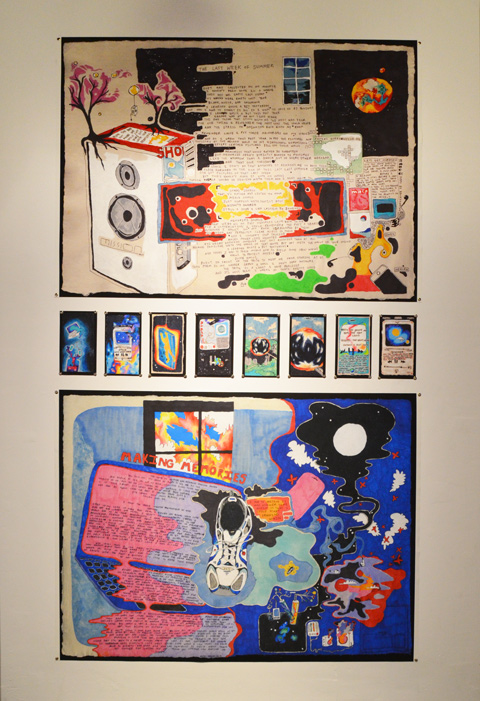
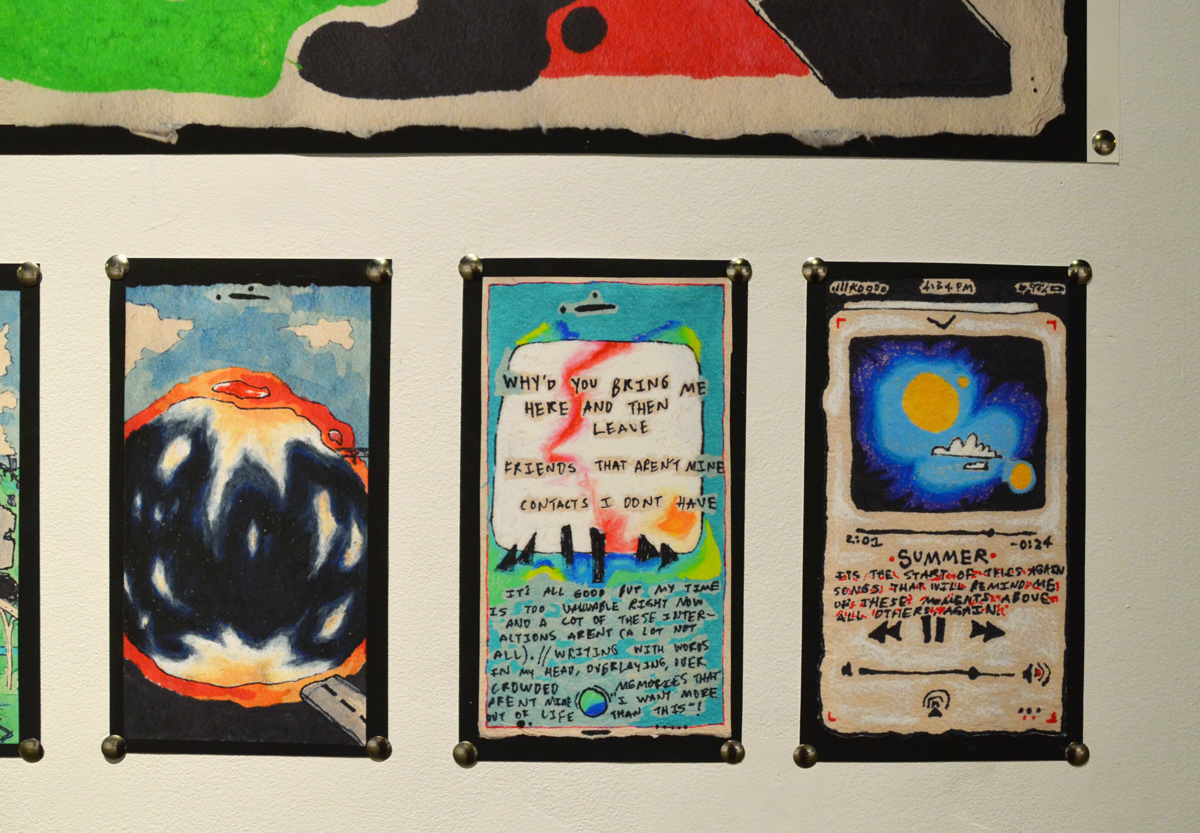
below: By Owen Herlin.  “The Last Week of Summer” on top and “Making Memories” on the bottom.

two photographers by student photographers, horizontal, one on top of the other. The top image is of a skateboarder doing a jump, in three sections, same man but in different stages of the jump

MIDDLE: Why’d you bring me here and then leave. Friends that aren’t mine. Contacts I don’t have.  It’s all good but my time is too valuable right now and a lot of these interactions aren’t ( a lot not all). // writing with words in my head, overlaying over crowded memories that aren’t mine.  “I want more out of life than this”!
LEFT: “Summer. It’s the start of this again, songs that will remind me of these moments above all others again. :


below: In the middle, a photograph by Tomoka Taki.  It is flanked by two images by Julia Kerrigan called “Unnatural 1” and “Unnatural 2”.   The opening sentence in the description of Taki’s work is: “I attempt to bridge a gap in communication between myself and older generations within my family.”

three photographs hanging on a wall. On either side is a picture of a woman in a pose, on green grass outside by Julia Kerrigan. In the middle is a black statue, Asian lion, in front of a light pastel coloured circular pattern

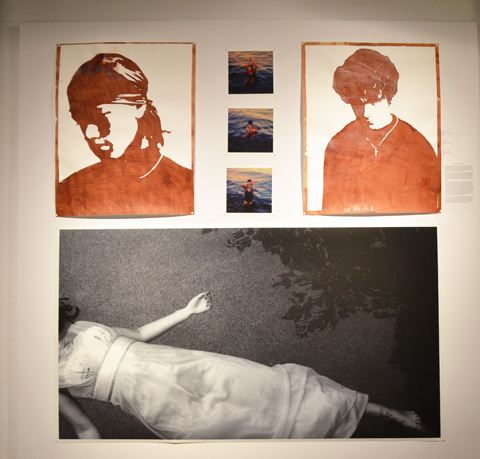
below: By Meredith Tudor-Doonan

six images. On the bottom is one large black and white photo of a woman (no head shown) in a long white dress that looks like she's washed up on the beach, lying on her back, arms out streteched. upper level has 5 photos, on the sides are large brown and white images of men's head and shoulders, with eyes looking downward. In the middle of the top part are three snapshots of a person coming out of the lake after swimming

two photographers by student photographers, horizontal, one on top of the other. The top image is of a skateboarder doing a jump, in three sections, same man but in different stages of the jump

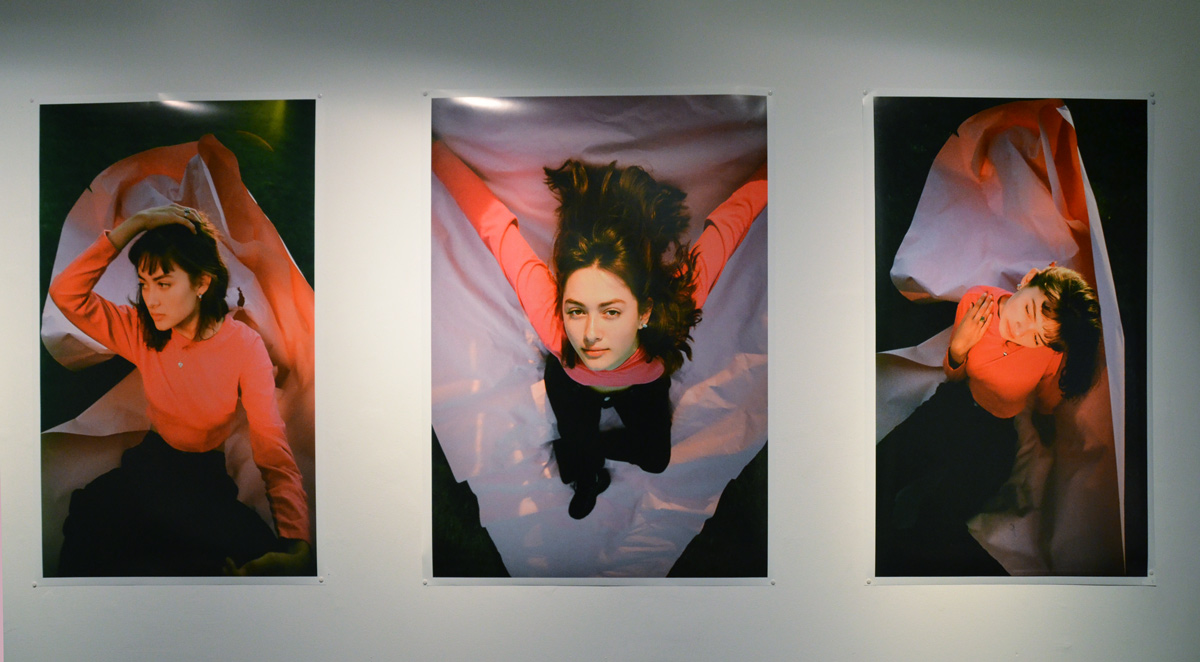
below: by Kaya Joubert Johnson

large white wall hanging with long black fringe on top and bottom. words on the wall hanging say Do Not Touch the art, a work by Kaya Joubert

a triptych, three photos, of a woman in an orange long sleeved top, long brown hair, black pants, in three different poses,

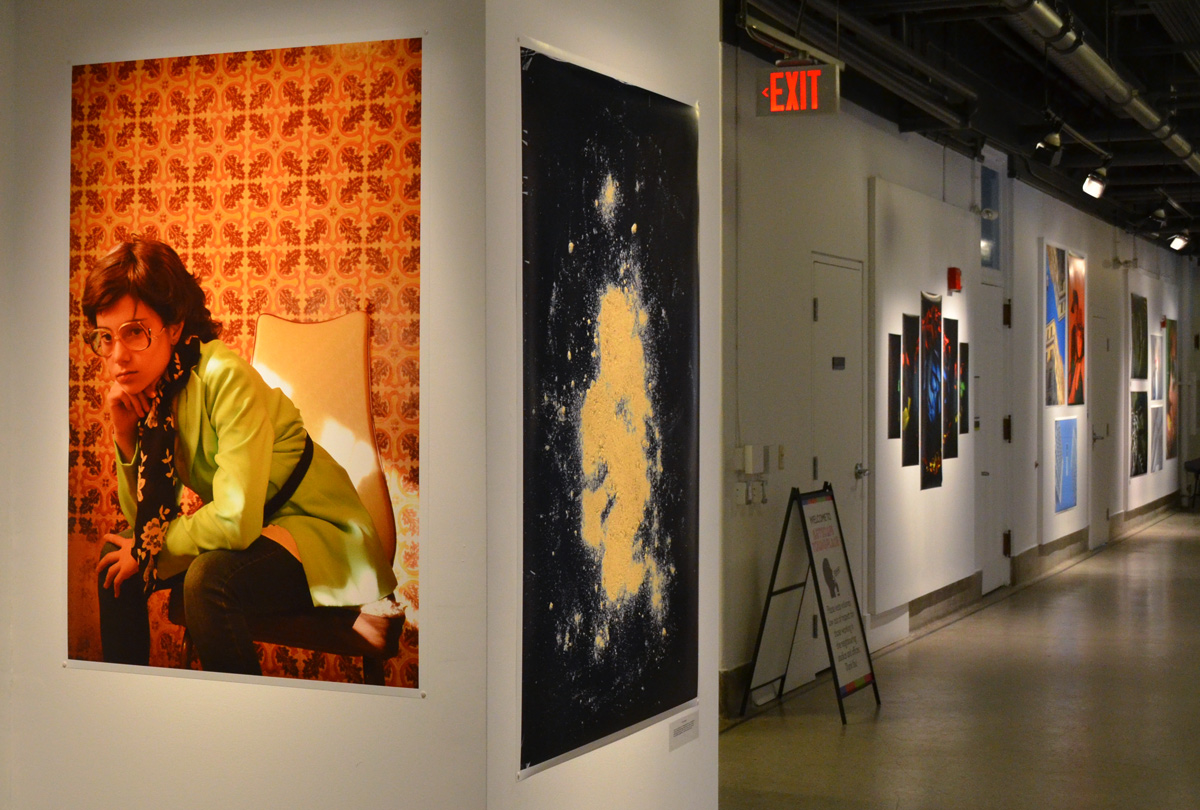
below: by Ethan Wilder, “Why complicate the physical world when I can do so in an imaginary one?”

black and white photos by Ethan Wilder

closest to the viewer is a portrait of a young woman sitting on a chair, leaning forward, very orange patterned wallpaper wall behind her

red circular sticker on a window, marking a gallery that is participating in contact photography festival

It’s almost May and that means that the Scotiabank CONTACT Photography Festival is just around the corner. Some of the participating galleries are already showing their CONTACT exhibits so I paid them a visit. Along the way, there were a couple of other galleries so I checked them out too.

below: Some artwork created by Chris Curreri is being exhibited at the Daniel Faria Gallery.    This ‘man’ stands alone in the corner, in fact he stands alone in the room.   It is called ‘Christopher’ and it is hand puppet, hollow and lifeless, and waiting for its ventriloquist.  ‘Ventriloquist’ is the name of the whole exhibit.

a mannequin top, of a bald man, on a frame with black loose fitting clothes, stands on a red carpets facing the corner, nothing else is in the room

below: There are some Curreri photographs on the walls and they are all of animal entrails….  a bit gruesome (and on the gallery website).  Exhibits lasts until the 1st of June.

three people stand in a large open gallery space, looking at a large red piece on the floor, two hands, and two feet, fill the four corners, and a black harness connects them through the center, a photo is on the wall beside them - it is of entrails. It is the work of Chris Curreri

below:  At the Clint Roenisch Gallery there are some paintings by Dorian Fitzgerald, some large and some very small.   I thought that I had more photos than these but, sorry, they will have to do.  The large one at the back is of fish swimming among coral.  The seven small pictures on the side wall are very detailed paintings in black and white.  Exhibit lasts until 18th May.

a large horizontal painting on a beige wall, of fish and coral in an aquarium, also some smaller paintings in black and white along the side wall

below: The wonderful work of Emmanuel Monzon hangs on the walls of the Robert Kananaj Gallery (but only until the 4th of May).

three paintings by Emmanuel Monzon on a wall in gallery, pictures of empty places, or where urban sprawl seems to take over deserted places

below: The quality of his photographs is much better than this!  The graininess of this photo is my fault.

a large frames photo on a wall of rock formation in Monument Valley USA with a stop sign in the foreground

below:  In a room at the Arsenal Contemporary Gallery is a display of Caroline Monnet’s work titled ‘A Whole Made of Many Parts’.  One wall is covered with this intricate black and white pattern.  In the middle is a video monitor showing kaleidoscope-like movements of more black and white patterns.

a wall covered with black and white pattern, a video monitor in the middle of a wall playing a video of more black and white patterns

below:  From the gallery website, “In a new series of ‘Fragment’ portraits, Monnet has developed individualized masks that overlay the faces of chosen subjects. Mixing facial features with geometric shapes, new identities are forged through abstraction and interference.” 

portrait of a man wearing a clear cube over his face. cube has black geometric drawings all over it so part of man's face is obscured

part of a monitor on a papered wall with a reflection in the monitor as well as an intricate pattern in blue

below: Sharing space with Arsenal, is the Division Gallery. At the moment, and until 8th June, they are featuring the work of Alex McLeod.  Division is aligned with Galerie Division in Montreal and they share the same website.

two pictures on a gallery wall by Alex McLeod. One is white shapes on turquoise and the other is pinks, oranges and yellows on blue like a landscape from above

below: McLeod’s work is colourful and playful.

two little lumpy statues, one blue and the other green, on a white podium, in the background are two photographs, one in reds and the other in brownish orange shades

below: This is from a video (which can be seen on McLeod’s website).  In my opinion, it was the highlight of the show.

ornate circular shapes like beads and flowers in shades of blue and purple on a black background, a video playing on a wall

below: “Deux Soeurs Qui Ne Sont Pas Soeurs” is one of the videos by Beatrice Gibson now playing at Mercer Union. A photograph doesn’t do it justice.

picture from a video, a woman's reflection in the side mirror of a car, long hair, long dangly ear rings

below: On display outside Mercer Union is, Joi T. Arcand’s “i was born with butter in my mouth” (2019). Arcand is from Muskeg Lake Cree Nation, Saskatchewan.

a poster on display on an exterior wall. Mercer Union Contemporary Art Gallery

Locations:
1. The following galleries are on St. Helens Ave – Daniel Faria, Clint Roenisch, and Robert Kananaj.    There is another gallery there, TPW, but it was closed because they are setting up their next exhibit (opening 4th May).
2. Mercer Union is on Bloor, just east of Lansdowne station
3. Arsenal Contemporary Gallery and Division Gallery share space on Ernest Avenue (close to West Toronto Railpath)

***

below: Playing with reflections.  ‘Christopher’ by Chris Curreri reflected by an interior window at Daniel Faria Gallery.

reflections in a window, vague shape of a man, blue background on top and orangey brown on the bottom

a red exit sign lights up a dark doorway, all red