Posts Tagged ‘stories’

Queen Street East, old brick building in front of new glass and steel condo tower

“My Go to Places” was recently a photo challenge from John at Journeys with Johnbo, another wordpress blog.  Because my blog is very Toronto centered, I don’t usually play along with such games but last week I thought that I would make an exception because “my go to place” is/are the streets and alleys of Toronto.

Every street has a story to tell, you just have to get out there and explore.

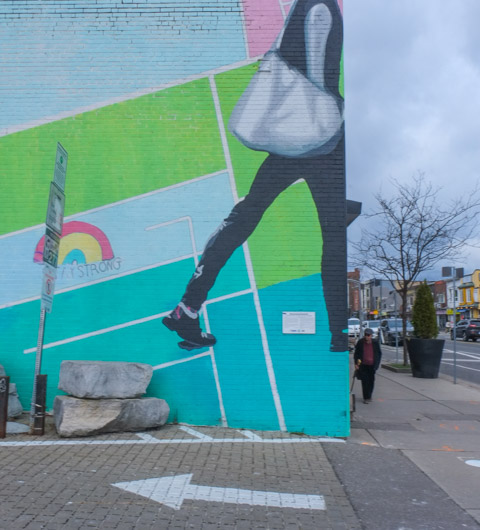
part of a mural on the Danforth, a larger than life person in white jacket and dark jeans, walking off the wall

On the Danforth, part of a mural by Monica on the Moon (aka Monica Weikler).

I enjoy finding the quirks of the city – humorous signs in store windows,  bizarre or funny graffiti, the quirky things people put in their front yards, and more.  I like stumbling upon surprises that make me smile (or wince!).

A happy face and poetic words on a TTC bus stop pole – “She lives to see the sun and feel the wind and drink the rain”.  Not bad words to live by!

But sometimes the joy is found in the ordinary.

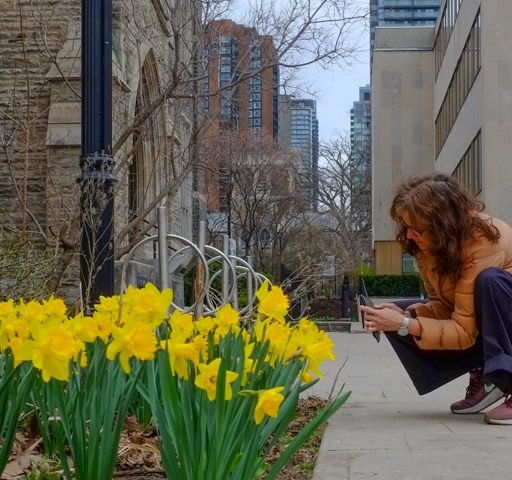
a woman is crouching down on a sidewalk to get a better photograph of a garden full of bright yellow daffodils, with the stone buildings of Emanuel College, U of T, in the background

Bright yellow signs of spring, and hope, in front of the stone buildings of Emanuel College, University of Toronto.

.

Out on the streets the cliche of ‘the good, the bad and the ugly’ holds true – it’s all there (have I complained recently about the street level ghastliness of some new condos?).  And not just the on the streets, but also underground, wandering through buildings, or crossing above

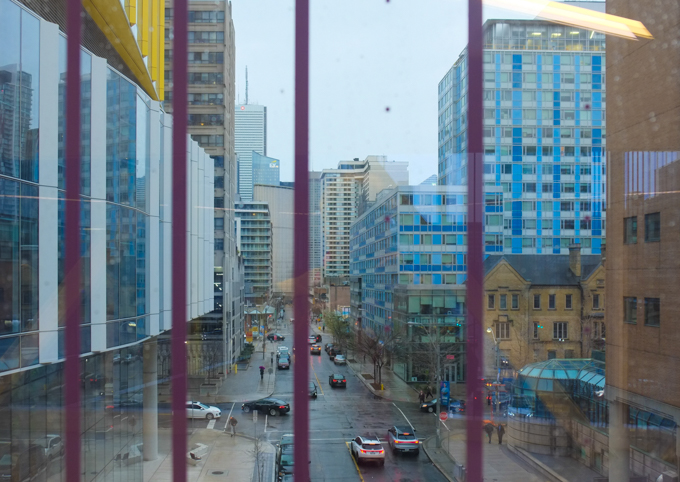
looking out an elevated pedestrian bridge, enclosed in glass, looking out to street, and downtown Toronto

Sick Kids Hospital, crossing over busy streets

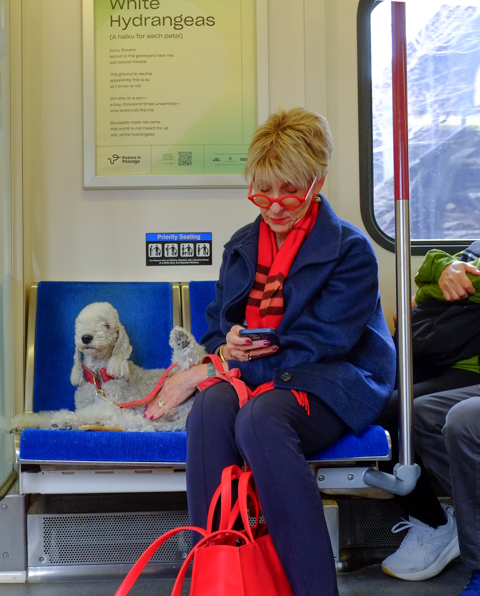
below: Behaving well on the subway.

small white curly haired dog sitting on a blue TTC subway car seat, with a woman in a blur coat, red scarf, and large red bag, she is looking at her phone

White Hydrangeas (A haiku for each petal)

Ivory flowers
sprout in the graveyard near me
soil-bound miracle

This ground is neutral
apparently this is so all I know is not

Dirt sits on a son –
a boy, thousand times unearthed –
who looks just like me

Bouquets mask his name
this world is not meant for us
still, white hydrangeas

I walk through ravines and along the lakefront….. past places that everyone recognizes as well as places that are hidden away.

GO train on tracks, repair and maintenance trucks parked beside the tracks, CN Tower and downtown Toronto in the background

A GO train travels just west of the CN Tower in downtown Toronto. A small piece of the white roof of the SkyDome (Rogers Centre) can be seen at the base of the tower.

.

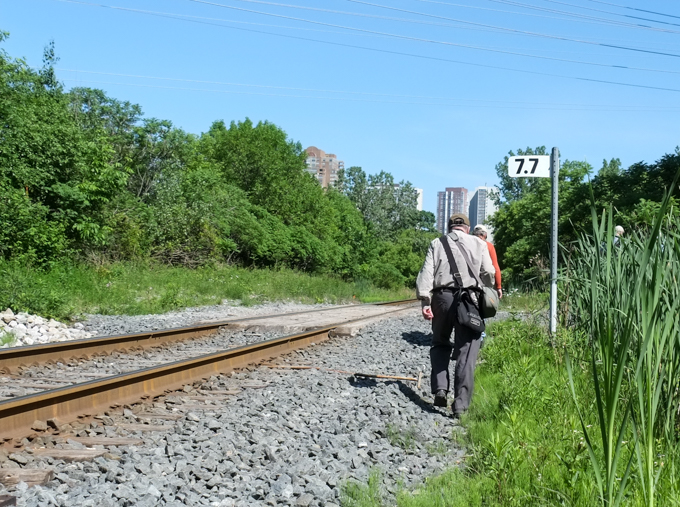
two people walking along the side of the railway tracks, apartment buildings in the background,

Walking beside the railway tracks, somewhere in Toronto.

I’ve seen the streets where we work, where we play, and where we live.


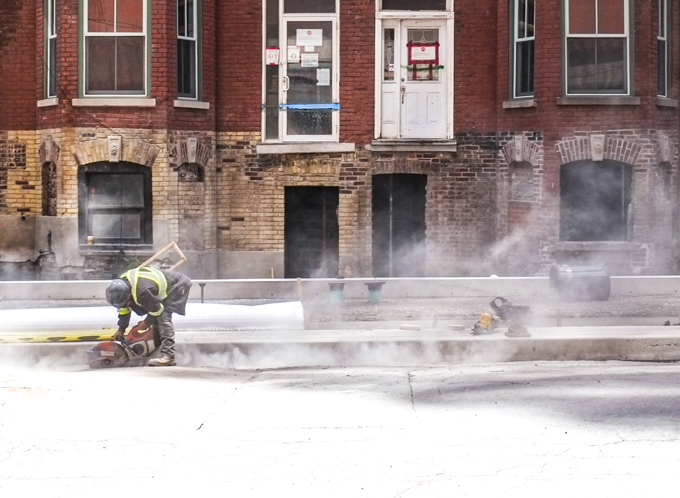
workman, cutting pavement, or sidewalk, outside, making lots of dust,

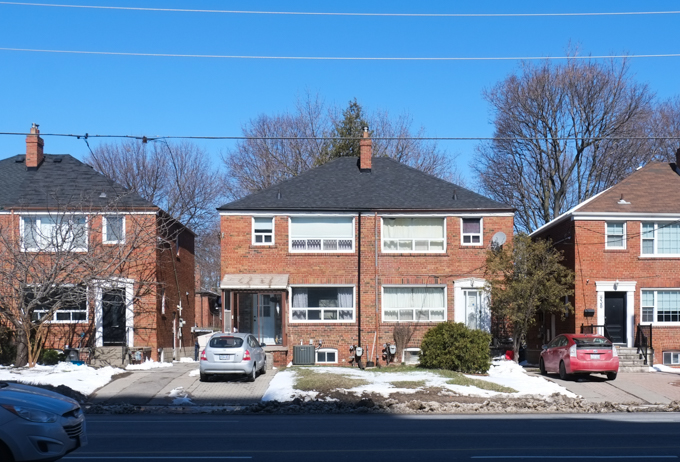
three brick duplex houses in a row

Duplexes on Eglinton

.

large inflatable Santa Claus on a front yard of a large house with dark blue shutters

Santa Claus visits the west end.

.

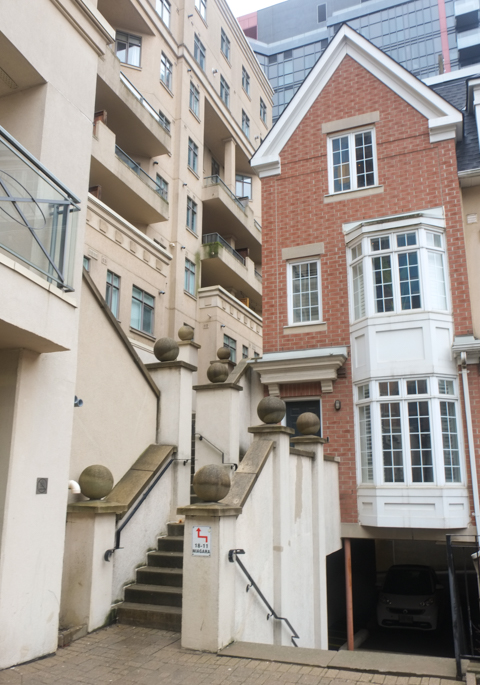
downtown row house with larger apartment building behind

Urban living downtown

.

And I know that good things usually happen when you get out and be a part of the city.  Of course we have problems (that Eglinton LRT is a mess isn’t it? and it’s a shame about the Science Centre, right?)  It’s a friendly place.

pedestrians and one cyclist crossing on a green light at college and spadina

Pedestrians, a few cars, and one cyclist, crossing at College and Spadina.

.

beside uber 5000 mural on the side of the Toronto Humane Society, people crossing Queen Street towards THS, people standing in bus shelter beside the mural, big orange cat and large dog, both in the mural

At River and Queen East, cats and dogs in a mural by Uber 5000.

Like all story tellers, I bring along my history and my biases.  If you were to walk with me, you might notice different things than I do.  Or if we see the same things, you might offer a different perspective. You would possibly write a different story but that’s okay.   Sometimes I wonder if I am writing stories about Toronto or if I am just writing my own story and Toronto just happens to be the setting!

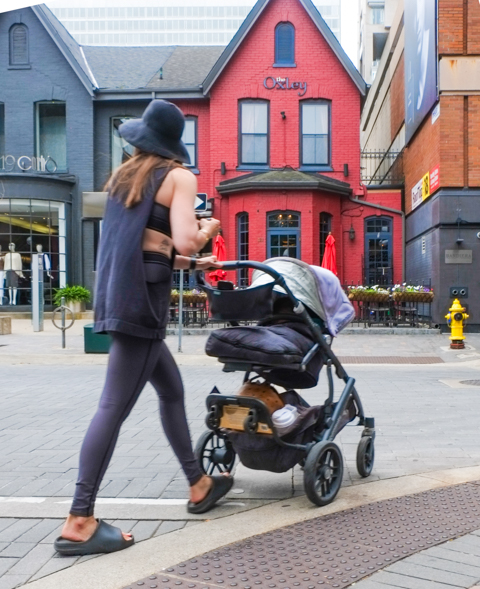
A young woman in floppy navy blue hat and holding a cup of coffee, pushes a stroller along a Yorkville downtown sidewalk, bright red building across the street,

Yorkville

.

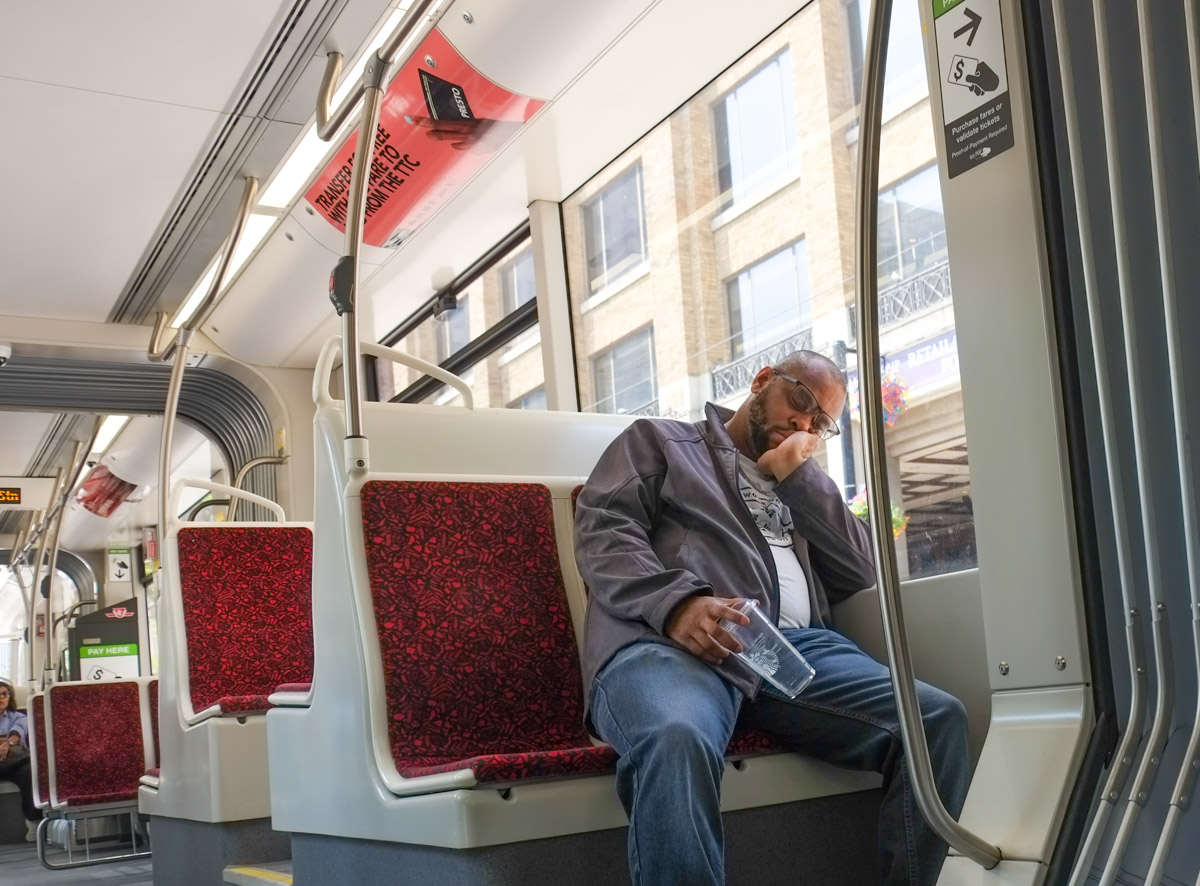
man sleeping on a TTC streetcar

Riding the TTC

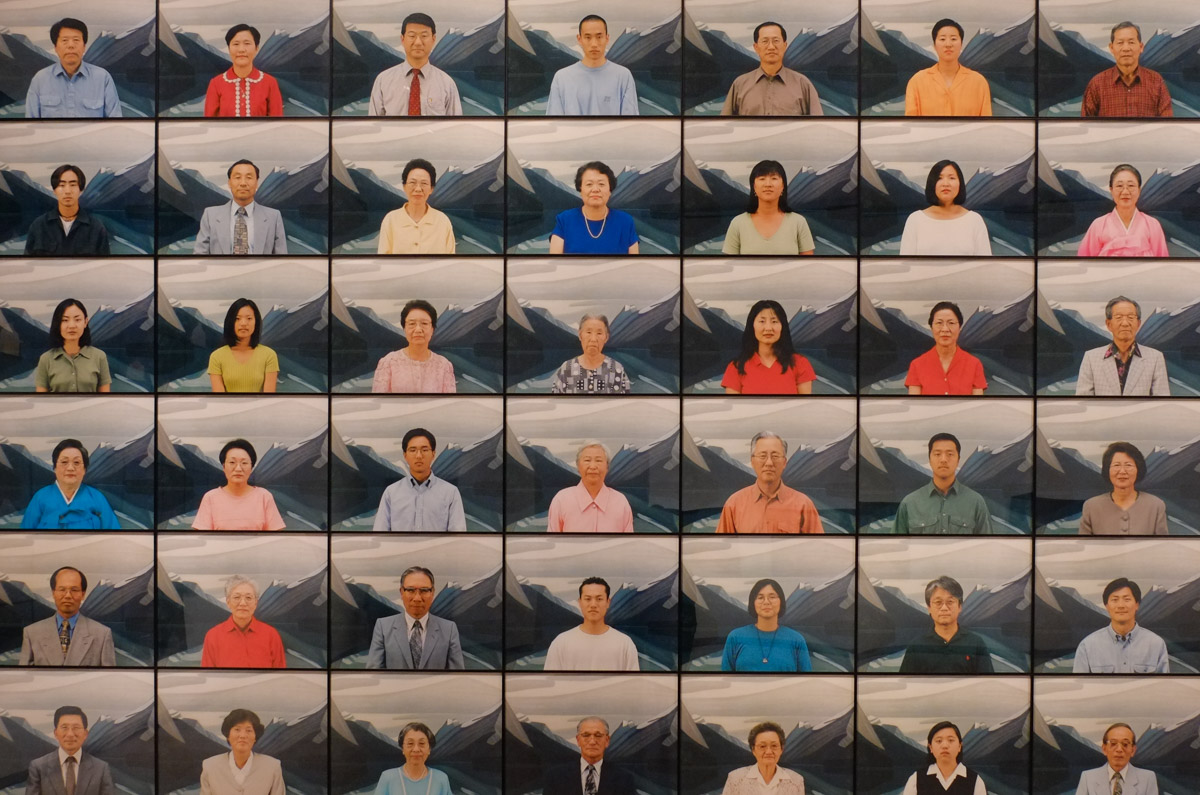
Earlier in May there was a collection of works by Vancouver based Jin-Me Yoon at the Image Centre (Toronto Metropolitan University).  She was a 2022 Scotiabank CONTACT Photography award winner.

below: Part of the large work, “A Group of Sixty-Seven”, 1996.     These are members of the Korean-Canadian community in Vancouver and they are all standing in front of the same painting, “Maligne Lake Jasper Park”, 1924 by Lawren Harris.  There is a companion piece that shows the back of each person’s head instead of the face.

Many of the images on display featured people in masks.

below: “Untitled 6 (Long Time So Long)”, 2022, inkjet print.

The words on the all for this exhibit describe the ‘Long Time So Long’ series as “absurd satirical elegy to a broken world”.  In each photo, one person is seen in a mask, posing at different sites creating little stories, little dramas just like Korean talchum mask dances and theatre.  Masks to facilitate stories; masks as entertainment.

below: Is it the inside or outside of the mask?

At the Art Gallery of Ontario (AGO) at the moment is another set of photos with masks.  This time the series is “Acts of Appearance” and the photographer is Gauri Gill (b. 1970, India).  Gill had traditional mask makers create a series of masks for her.   Instead of the usual religious masks that they make, she asked them to make masks of themselves or of ordinary things in their lives.

close up of photograph on a gallery wall, a couple sits on a bench, both wearing hindi masks. The man is in navy shorts with white stars on them and a long sleeved buttoned shirt, woman is in red leggings and an animal mask

Gill’s subjects, as well as the mask makers, were from an indigenous community (Adivasi) in Maharashtra India. They are known for their papier-mâché objects especially the traditional sacred masks that depict deities and are worn during festivals.  The main festival is the three day Bohada Festival (usually in May) where people wear masks of 52 different gods and goddesses.

two photos on a red wall at the Art Gallery of Ontario, photos by Gauri Gill, people wearing Hindi masks


people in a white truck, photo in India by Gauri Gill, person looking out of back seat window has a large white happy face mask on

Masks appear in many cultures and feature in many religious activities.  The practice goes back many millennia and probably finds its roots in shamanistic activities.  Shamanism played an important part in primitive societies as the channeler of spirits for healing, purification, and protection of those under his supervision. Masks helped the shaman embody one of the spirits (or gods/goddesses) and use it to heal the sick, drive away evil influences, and help people through events that might be affected by the spirit world. When hung in a house, the mask served a protective function.

below: One-eyed shaman mask made of wood, on display at the Art Gallery of Ontario.

very old wood shaman mask with one eye on display at the art gallery of ontario

below: “Raven Steals the Moon”, 2021, by David Ruben Piqtoukun.  Art Gallery of Ontario.  From the words on the wall beside the artwork: ” In this sculpture the Shaman appears as both human and bird, with pieces of the moon stuck in his beak.  Piqtoukun tells the story of a Shaman who was not respected by the people in his community because they did not believe in his powers.  In order to prove himself, he tells them that he will steal the moon an bring it back.  He asks everyone to cover him with rocks and snow, and uses his powers to steal the moon from the sky.”

He accomplishes this by turning into a raven and flying to the moon.  Once there he grows very big and eats the moon, piece by piece, until it is gone.  The world goes dark and people can not hunt or fish.  [My note: why can’t they hunt and fish during the day?]  Shortened version of the ending: people repent and change their ways so raven spits up the moon piece by piece and makes it whole again.

sculpture of a mask with two sides of the face different

Masks bridge the spiritual and earthly worlds.  They also connect religion to art as well as to other aspects of culture.  They become part of theatre and drama and allow us to become different people or different creatures.   They help us tell stories and both Gill, with her use of masks to alter the ordinary, and Yoon, with her masks that highlight the absurd, are part of that age-old tradition that transcends cultures.

Under the masks are faces.  And faces play a large role in   how we see ourselves,  how we look to others,  and often more importantly, how we want to be seen by others.   Jin-Me Yoon’s portraits of Korean-Canadians puts very Asian looking people in a static pose in front of a scene created by a very iconic Canadian painter.    How do we portray ourselves and our communities especially when we want to move beyond the physical?  These are just some of the things that I thought about as I walked through the AGO (having just seen the Yoon exhibit that morning).

below: “Her Blood Spoke in Creole, in Gaelic, in Twi, and in Yoruba”, 2021, Alberta Whittle (b. Bridgetown Barbadoes, 1980).

painting in predominantly purple, two headed serpent, one head at each side of face of a person with a white halo, Alberta Whittle, at AGO

But art looks more than one way.  Like the purple Whittle piece above, we use it to look inward and to express ourselves and our situations.  But we also look outward as we explore and document the world around us.

below: Photo by Louie Palu (b. Toronto 1968),  “Afghan civilians by a graffiti-ed wall with machine guns and anti-coalition slogans in Pashto (‘Death for America’, ‘Death for London’). Helmand Afghanistan 2008.

photograph in a gallery, three young men, one is looking at camera, Arab clothing,

What makes us want to look at the images produced by other people?

a man with a red backpack stands in an art gallery

What makes us want to stop and take a closer look?  The average person looks at a painting in a gallery for about 15 to 25 seconds (depending on which study you read).   Admit it, you scan through these photos fairly quickly!  Maybe you catch a few words; maybe you don’t.

a young man in a gallery stands close to a photo of a man with his hands partially covering his mouth and chin and nose

woman looking closely at a wall full of photos

The self portrait – artists have been creating them forever.

below: “Self Portrait with Blue Handkerchief”, 1941, by Alma Duncan (b. Paris Ontario 1917, d. Ottawa 2004).

painting in a gallery, self portrait

Of course technology has made it possible for everyone to “take selfies” whenever they want.  Whether it’s art or not is an entirely different question!  If you could paint (or other medium) a self portrait of yourself how would it differ from a photo?   How could you convey something more about yourself?  What stories would you want the world to know?

a young woman sits on a bench taking a photo while a man waits with her at the other side of the bench

This blog post has veered in a different direction from most and has been a bit weird to write.  It’s not often that I get distracted by thoughts and questions.  But I hope that you’ve had a chance to think along with me at least for a short time.

reflection of a person in a patterned reflective wall

And maybe the next time you’re out walking you’ll start thinking about some of the stories that are swirling around us.

two men walking through the art gallery of ontario

I’d like to end this with a quote that is displayed on a wall at the AGO: “All that we are is story.  From the moment we are born to the time we continue our spirit journey, we are involved in the creation of the story of our time here.  It is what we arrive with.  It is all we leave behind.  We are not the things we accumulate.  We are not the things we deem important.  We are story.   All of us.  What comes to matter then is the creation of the best possible story we can while we are here; you, me, us, together.  When we can do that and we take the time to share those stories with each other, we get bigger inside, we see each other, we recognize our kinship – we change the world, one story at a time.”  Richard Wagamese (1955-2017) Ojibwe author and journalist.

The Museum of Broken Relationships is now appearing at Harbourfront. The stories that accompany the items run the full gamut of emotions – sad, funny, mundane, strange, creepy, sweet, and, you get the picture. There are two permanent museum sites, one in Zagreb and one in Los Angeles. Toronto is one of several traveling exhibits. Zagreb is the hometown of the couple that started the collection, Olinka Vištica and Dražen Grubišic, when their own relationship fell apart.

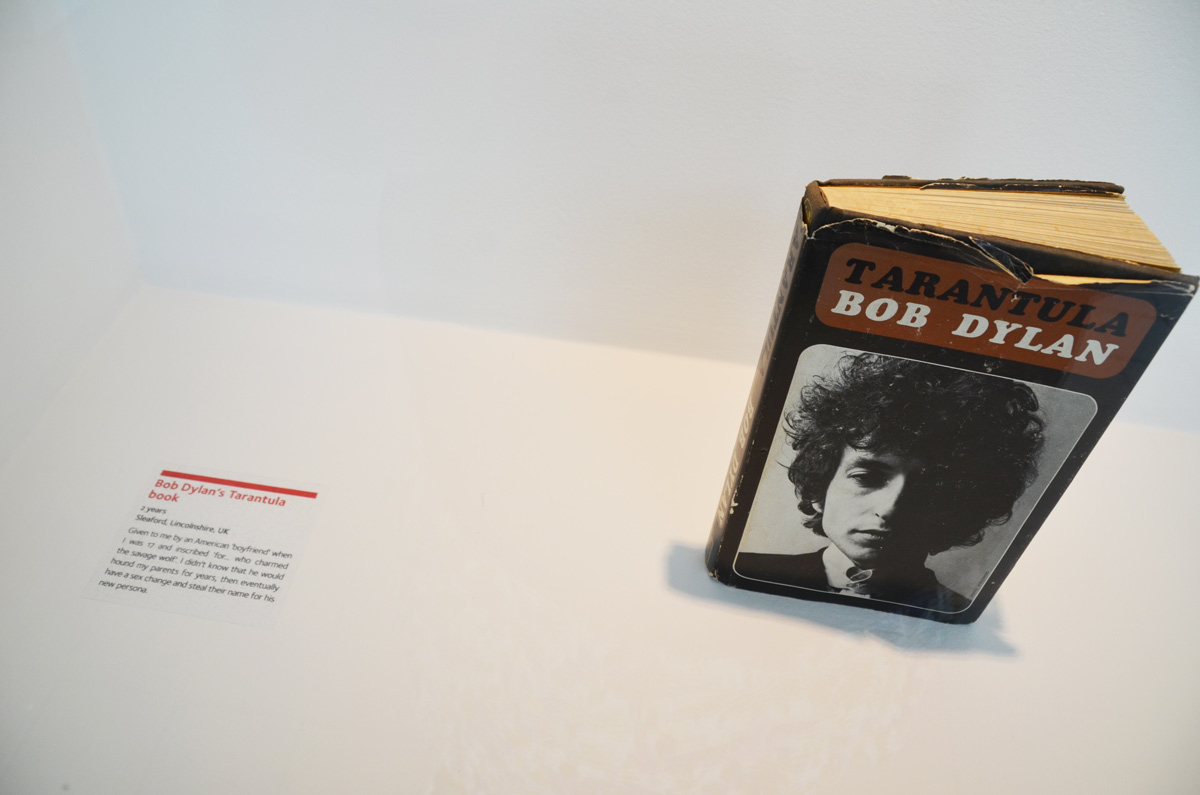
below: “Given to me by an American “boyfriend” when I was 17 and inscribed “for… who charmed the savage wolf.” I didn’t know that he would eventually hound my parents for years, then eventually have a sex change and steal their name for his new persona.” I’ve never heard of this book before today and I thought maybe I’d like to read it. Curiosity. But then I googled it and discovered that it’s “experimental prose poetry” and written in a stream if consciousness style – so now I’m not so curious. 😎

A book by Bob Dylan called Tarantula on display in a museum show

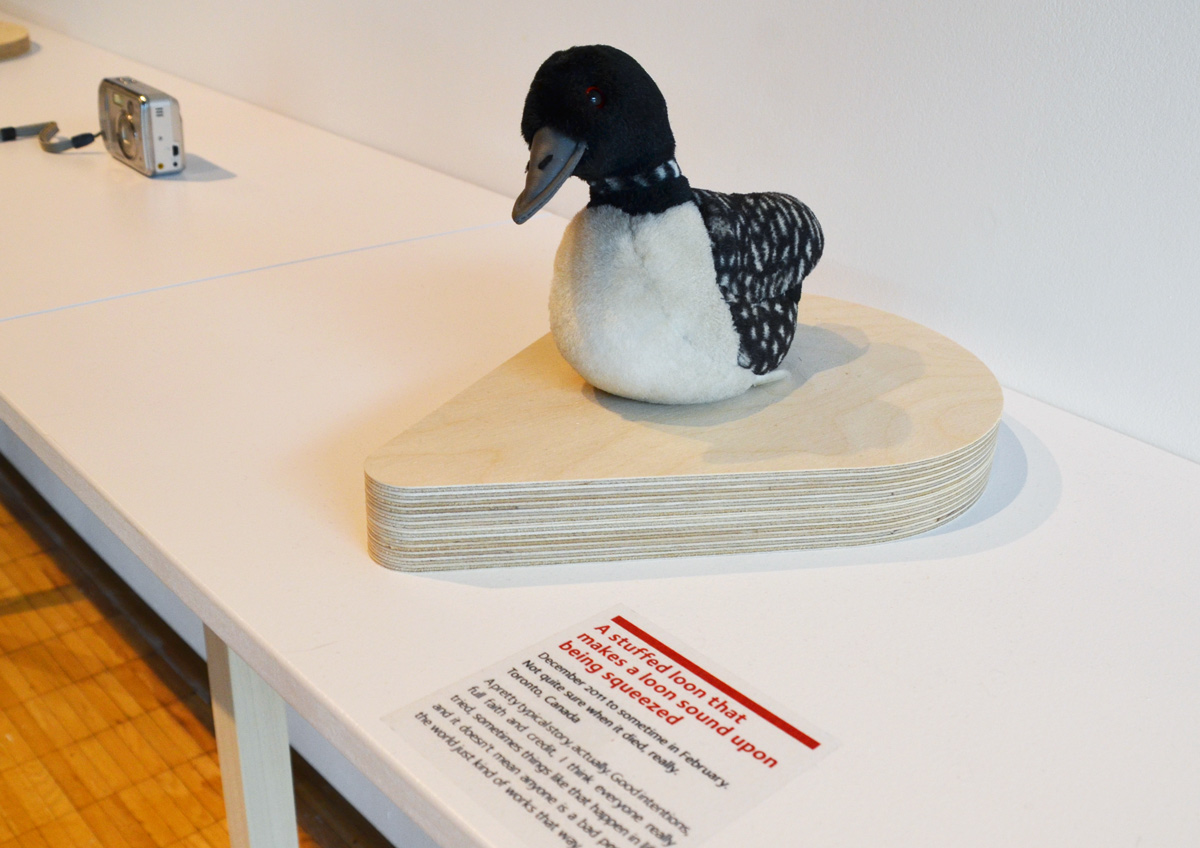
below: “Not quite sure when it died really… the world just kind of works that way sometimes.”

a small stuffed loon toy on display in a museum show

a man and a woman looking at objects and reading the stories on display at the museum of broken relationships

below: “Empty bag of fortune cookies attached to a Starbucks cup. You were my first love. And I wished you would also be my last. When we got those fortune cookies and I opened mine, it read ‘You have to learn to read between the lines’. I should have followed that advice because between those lines there was you cheating on me over and over. Isn’t that ironic? “

An empty cup with an empty fortune cookie wrapper glued onto the outside of it,

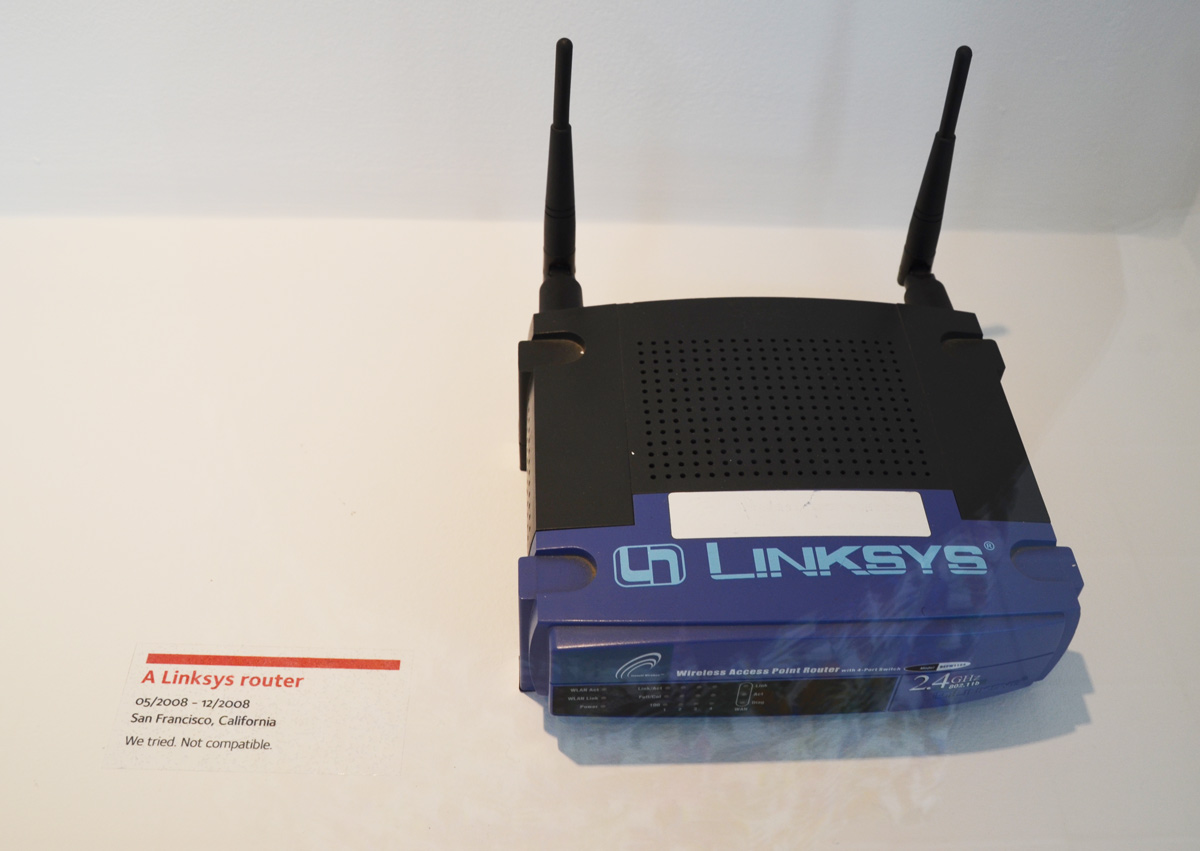
below: “A Linksys router. We tried. Not compatible”. Droll. Succinct.

an old Linksys router on display in a museum show

below: “A spectrum of a star. We are both astronomers. On my 26th birthday he sent me a spectrum of a star in the Orion constellation as my birthday gift. This star, names pi3, is 26 light years away from the Earth. He said, “Look, at the time when you were born, the light left this star, passing through the endless interstellar space, the countless dust and nebula, arriving here after a 26 light year journey. So, have you. Here you meet your starlight, and I meet you.”
a small blue and white image that is a

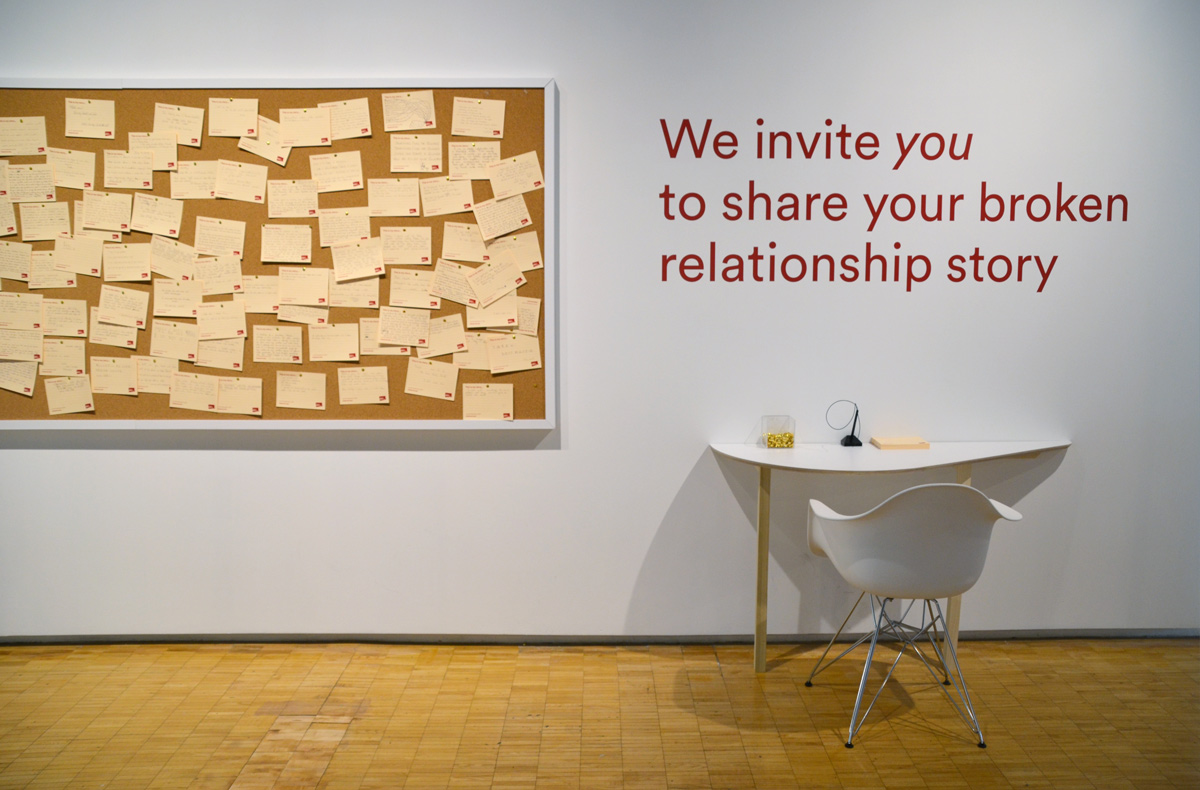
below: What would you write? What have other people left behind in your life? What symbolic little keepsakes from past relationships do you have buried away?

The story that I don’t have a photo for is that which goes with a broken pair of handcuffs. A sample of the story: “What is left of the fake handcuffs is the result of a particularly passionate night/morning in bed…. I remember one morning when he had me handcuffed to the bed and the phone rang. It was the man who would, several months later, become my next boyfriend.”

At least that’s not as bad as one man’s account of life after breaking up with his wife… when a year later she committed suicide. There is only one side to the story presented here and it made me want to know the other side.

The Museum of Broken Relationships is also online. Here you will find the 1487 heart breaking stories that have been collected so far. Together they form a larger story about the way we love and lose. You can also add your contribution if you want. If you do read the stories, may you not stumble across something written by an ex!

This exhibit has also be described in Toronto Life and Now Magazine
It continues until 8th September.

Myseum of Toronto is a fairly new addition to the cultural fabric of the city.  It is a museum without walls.  It is an organization that helps deliver programming to different locations in the GTA.  Last night, March 6, at City Hall, Myseum of Toronto launched its second annual festival of events and exhibitions.  This festival, Myseum Intersections,  consists of 36 different events and exhibits spread around the city throughout the month of March.   “One Toronto.  Infinite Perspectives” is the motto of this year’s festival.

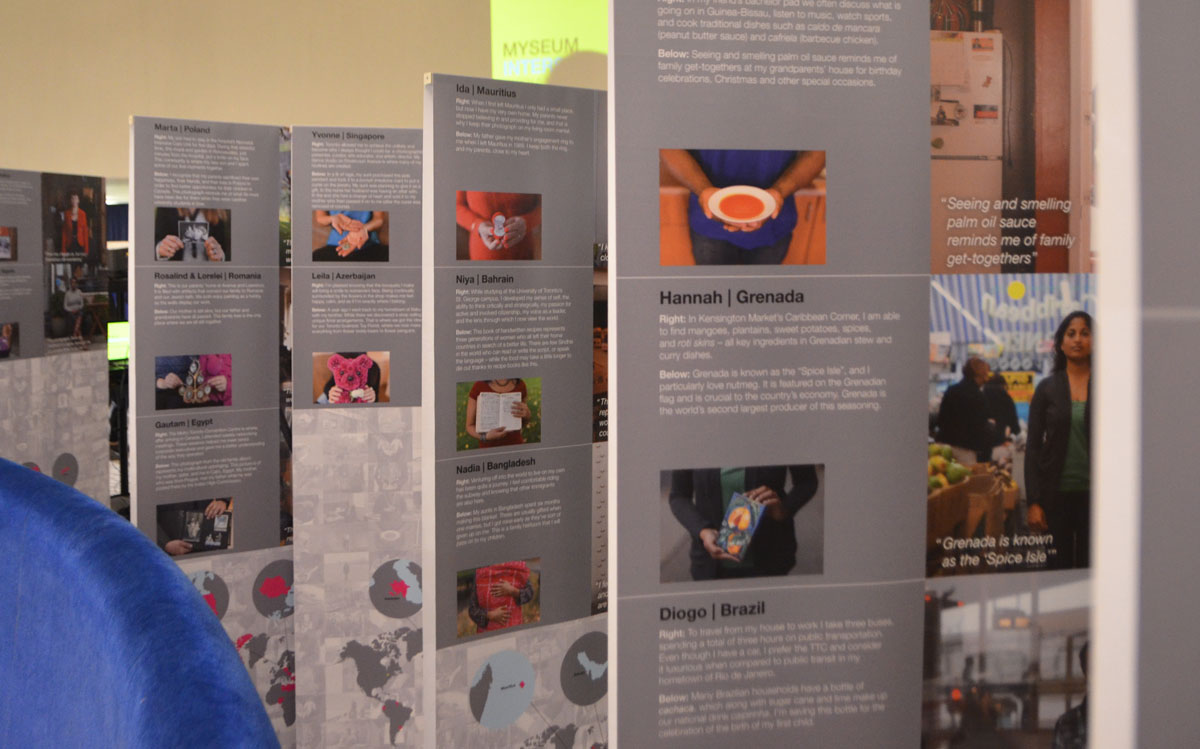
In keeping with that motto is an exhibit called ‘Cosmopolis Toronto: The World in One City’.   It was showcased at the Myseum Intersections launch party.   A few months ago it was on display at 18 libraries around the city but it has been brought together in one exhibit for the festival.   At the moment it can be seen on the ground floor of City Hall but it will also spend some time at Metro Hall and then end the month at the North York Civic Center.   (schedule at the bottom of the post).

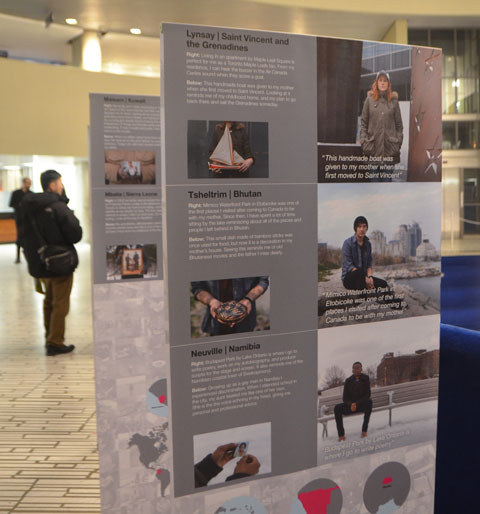
people looking at an exhibit of photos and stories that are printed on upright posters standing on the floor.

“Cosmopolis” consists of a series of portraits and interviews by Colin Boyd Shafer.   The goal was to find a person from every country in the world who now calls Toronto home, hence its tagline “Photographing the world, one Torontonian at a time”.   I am not sure if that goal was attained, but the series is a fascinating look at a very diverse group of people.

Cosmopolis posters on display at City Hall as part of Myseum Intersections festival

Cosmopolis posters of Andrea from the Congo and Nevena from Serbia

Two photos were taken of each person.     The first was a portrait taken in a Toronto location where they felt “at home”.  The second was of an object that they felt connected them to their country of birth.

cosmopolis posters of immigrants to Toronto from different countries

The Cosmopolis website has more information as well as the portraits and stories of many more new Torontonians.

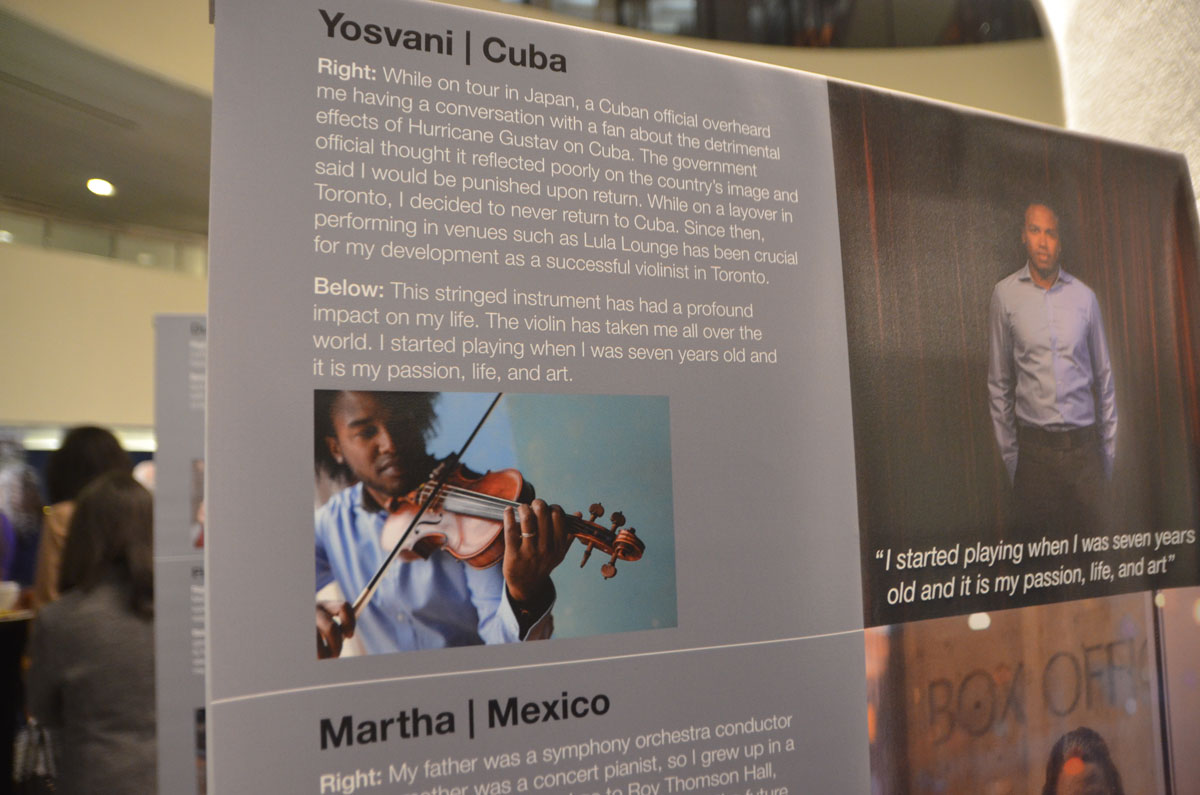
portrait and story about Yosvani from Cuba, a violin player

cosmopolis posters of immigrants to Toronto from different countries

***

EXHIBITION DATES & TIMES:
MARCH 5 – 8 & 13 – 19
MONDAY – FRIDAY, 8:30AM – 4:30PM
City Hall
100 Queen St W, Toronto

MARCH 9 – 12
MONDAY – FRIDAY, 7:30 AM – 9:30 PM
SATURDAY & SUNDAY, 8AM – 6PM
Metro Hall
55 John St, Toronto

MARCH 20 – APRIL 2
MONDAY – FRIDAY, 7:30AM – 9:30PM
SATURDAY & SUNDAY, 8AM – 6PM
North York Civic Centre
5100 Yonge St, Toronto

#myseumTO | #myseumX


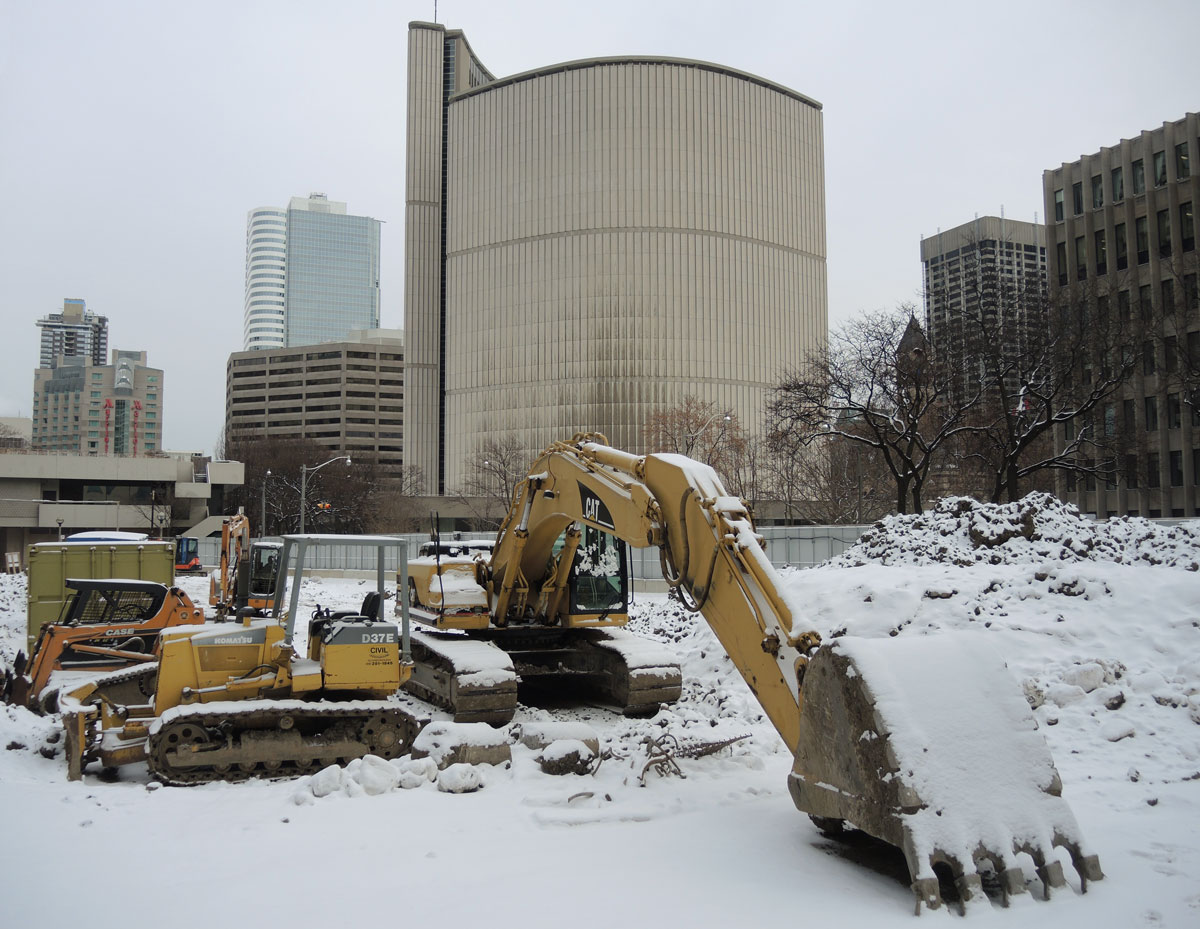
Tucked into a space between City Hall and the Court House, is a construction site.  Up until recently it was a parking lot.  Soon it will be a new Court House.  Like all construction sites in Toronto, it is surrounded by hoardings to separate it from the streets and sidewalks.
a yellow digger, not working at the moment, sits in a vacant lot, slightly snow covered, the back of Toronto City Hall is in the background.

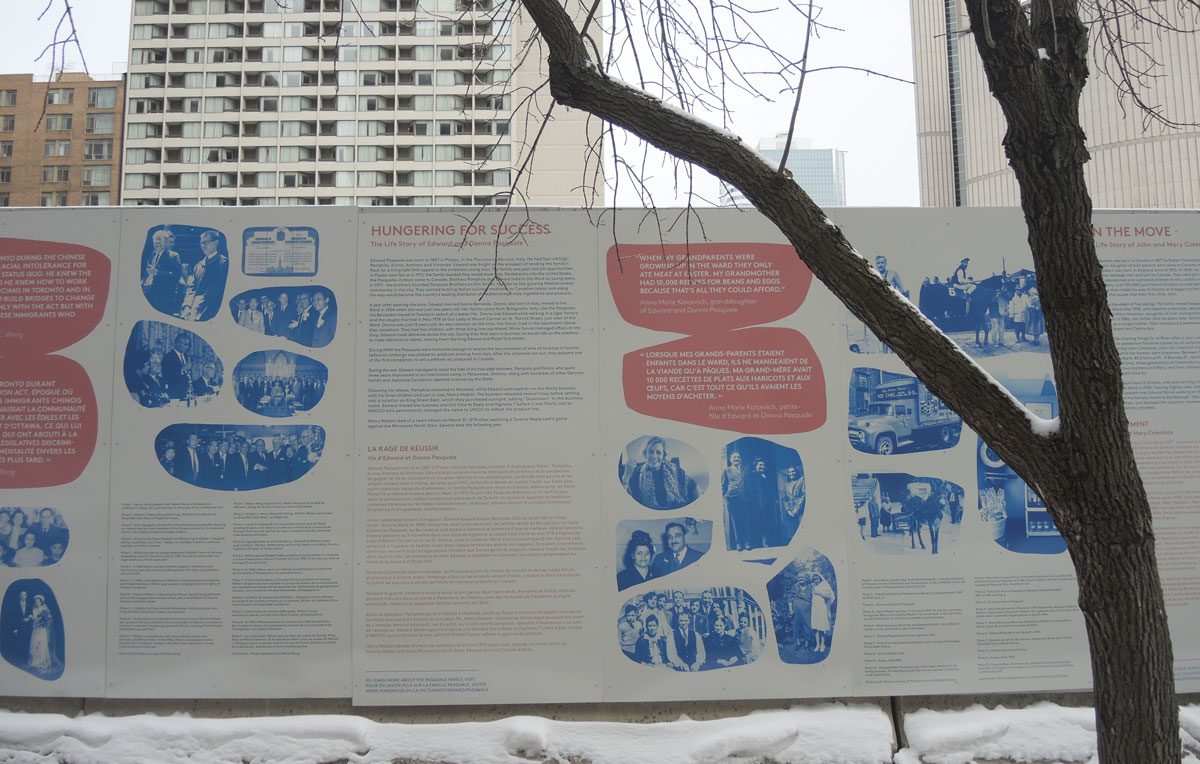
On two sides of the lot, the hoardings have been covered with a mural that was commissioned by Infrastructure Ontario.  It is “Picturing the Ward”and it is an exhibit about the area that once existed here, The Ward.  It was an area where many immigrants first settled.  It was roughly in the rectangle formed by College St., Yonge St., Queen St., and University Ave.   In the 1830’s it was home to Blacks escaping slavery, it saw waves of Irish, Eastern European Jews, Italians, and Chinese to name a few.

On the west side (along Centre Avenue), there are old photos, newspaper clippings, and stories of individuals who once lived in the area.   The content was collected and curated by the Toronto Ward Museum, a new ‘museum without walls’  in the city.   PATCH (part of The STEPS Initiative) designed and installed the mural.  The stories are in both English and French.

below: A segment of the mural with a story titled “Hungering for Success”.   It is the story of Edward and Donna Pasquale nee Bernardo.  Both were born in Italy and both were brought to the Ward by their parents.  They met here and married in 1918.  Edward and his brother Pamphilo founded Pasquale Brothers store on Elm Street.   During WW2 Pamphilo spent three years imprisoned in an internment camp in Petawawa along with other Italian, German, and Japanese Canadians that the government considered enemies of the state.  Edward remained in Toronto running the store.

part of larger mural, small tree branch in front, tall office building behind, mural has old photos in blue tones as well as a lot of words about the history of the area

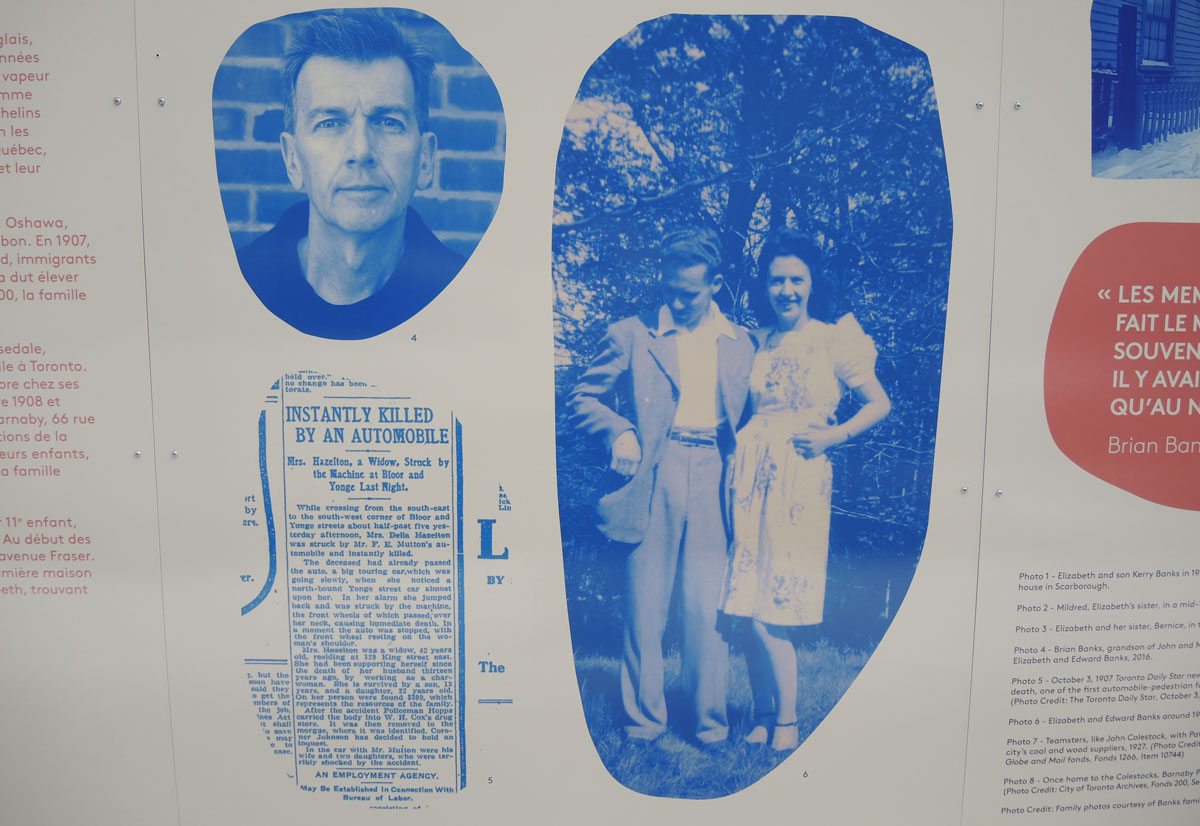
below: The newspaper story from ‘The Toronto Star’ of 3rd October 1907 describes the death of Mrs. Hazleton, a widow with two children, who was hit by a car at Yonge & Bloor.  The car was driven by Mr. F.E. Mutton.  Yes, back then the driver of the car was named in the newspaper.

old photos in blue tones on a mural, along with a picture of an old newspaper clipping describing an automobile accident at Yonge & Bloor in which someone died.

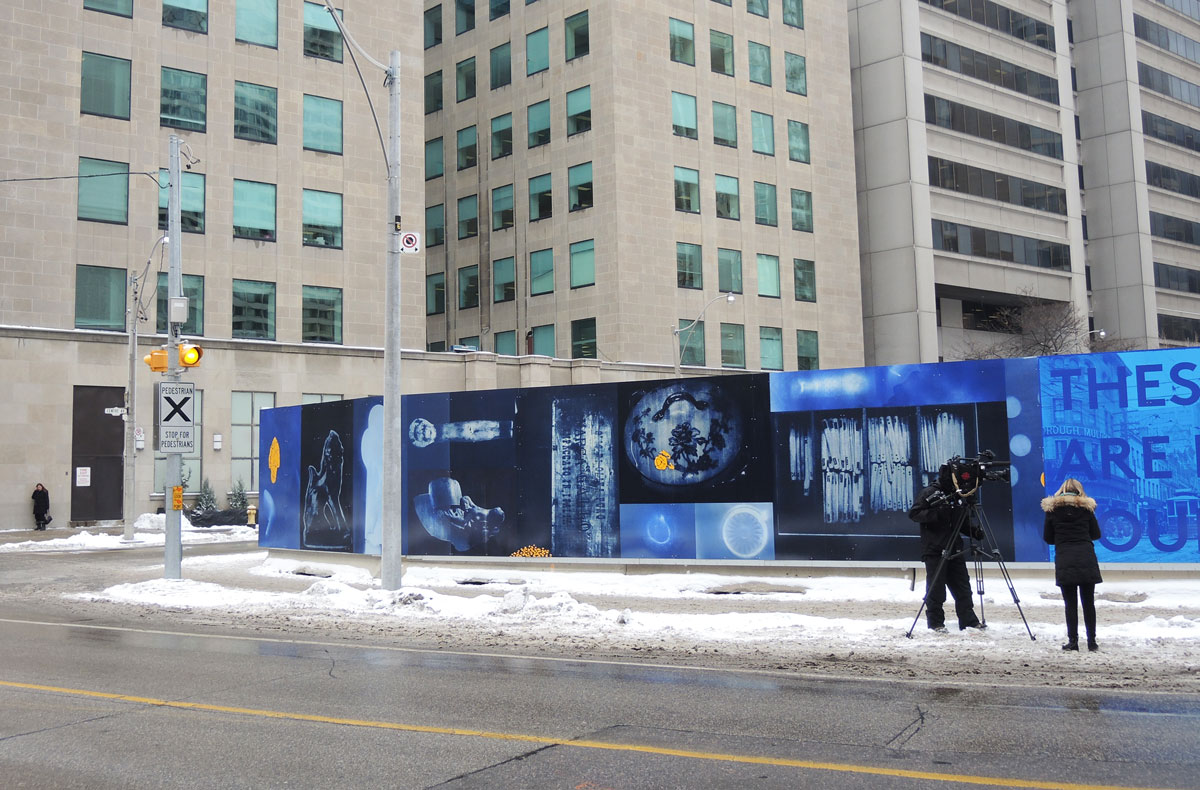
below: The middle section is a collage of cyanotypes (an old photographic process which results in blue pictures) produced by PA System (aka Alexa Hatanaka and Patrick Thompson) .  The images are of artifacts uncovered during the excavation of the area along with some heirlooms contributed by former Ward residents.  A couple of CBC people were braving the cold that day too!

part of mural on a snowy corner, photos in blue tones, a CBC cameraman and reporter are standing on the sidewalk in front of the mural

below: The south side of the hoardings are along Armoury Street.  This section is called, These Stories Are Not Unlike Your Stories. Old photographs of the area have been reproduced in shades of blue.  Orange ‘bubbles’ contain stories.  Most of the photographs are from the City of Toronto Archives although some come from private sources.

part of a larger mural in Toronto, blue photos, with words written in large capital letters, These Stories Are Not Unlike Your Stories

below: On one side, the pictures are printed in reverse and the accompanying words are in French.  The French stories are translations of the English ones.

part of larger mural, reprints in blue tones of historical photos from city archives of ould buildings from the part of the city called The Ward that was demolished in the 1950's to make way for new City Hall

below: The people who lived in The Ward were poor and their housing was sub-standard.  In 1911 a report by the city’s Department of Health described how bad the living conditions were for the people here.  Largely because of that report, demolition of the area started soon after to make space for office towers and government buildings.  I’m not sure how long parts of The Ward survived, but it was in the 1950’s that the original Chinatown along Elizabeth Street was demolished to make way for Nathan Phillips Square.

part of larger mural, reprints in blue tones of historical photos from city archives of ould buildings from the part of the city called The Ward that was demolished in the 1950's to make way for new City Hall

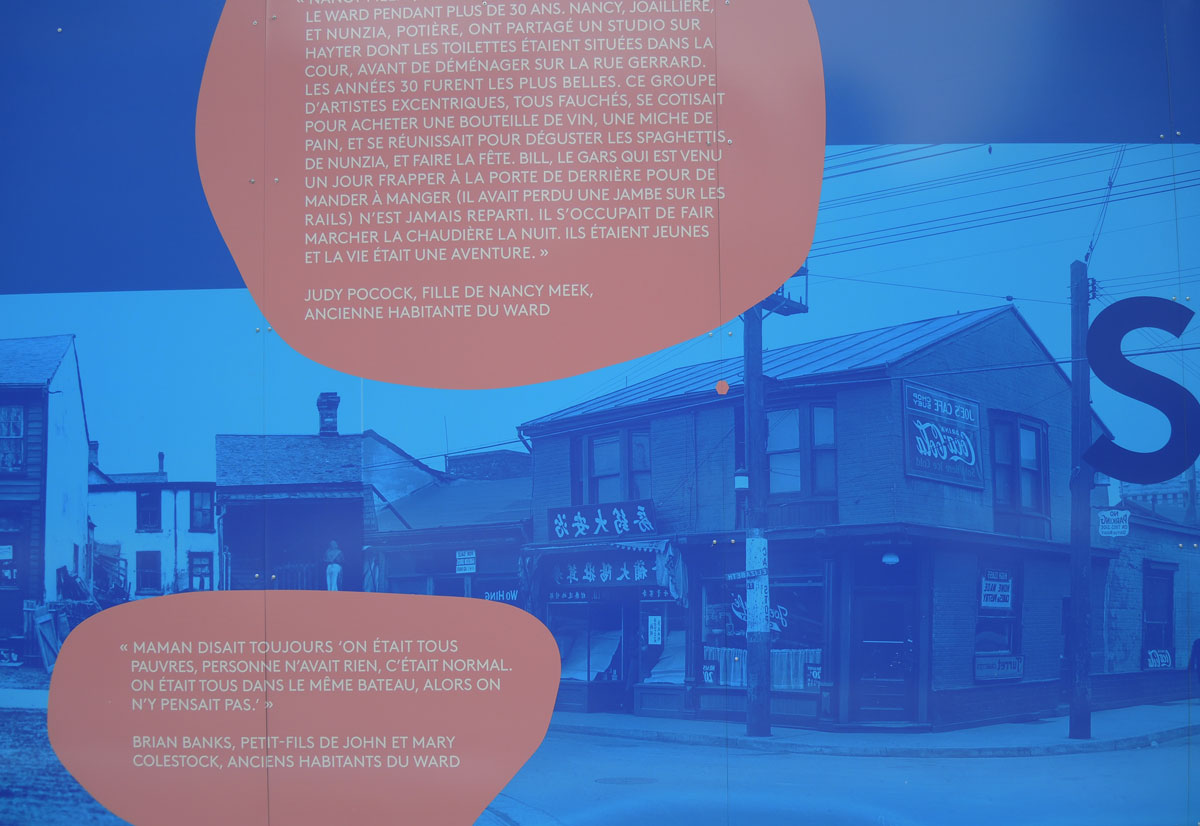
below: Some of the orange bubbles contain quotes from descendants of former residents of the area.  The bottom quote is: “My mom use to say, ‘We were all poor.  No one had anything.  It was normal.  Everyone was in the same position so we didn’t worry about it too much.'”  by Brian Banks, grandson of John & Mary Colestock, former residents.


part of larger mural, reprints in blue tones of historical photos from city archives of ould buildings from the part of the city called The Ward that was demolished in the 1950's to make way for new City Hall

below: There is still a lot of work to be done on the site!   The mural will be on view until at least October of next year. If you are interested in the details of the mural, more about the people featured, or the events described, then the best place to start looking is the section of the Toronto Ward Museum website that is devoted to this project.

two red diggers on top of a pile of dirt on a snow covered vacant lot, large multirise buildings in the background

In the lead role, the hero of our story, the Tim Hortons coffee cup, a bright red Canadian icon with its usual black top and brown sleeve.  He gets around.  The city is his playground.  Whether it’s standing out against a minimalist black and white background….

an empty red Tim Hortons coffee cup sits on a white ledge on a white wall with a black door on either side of it.

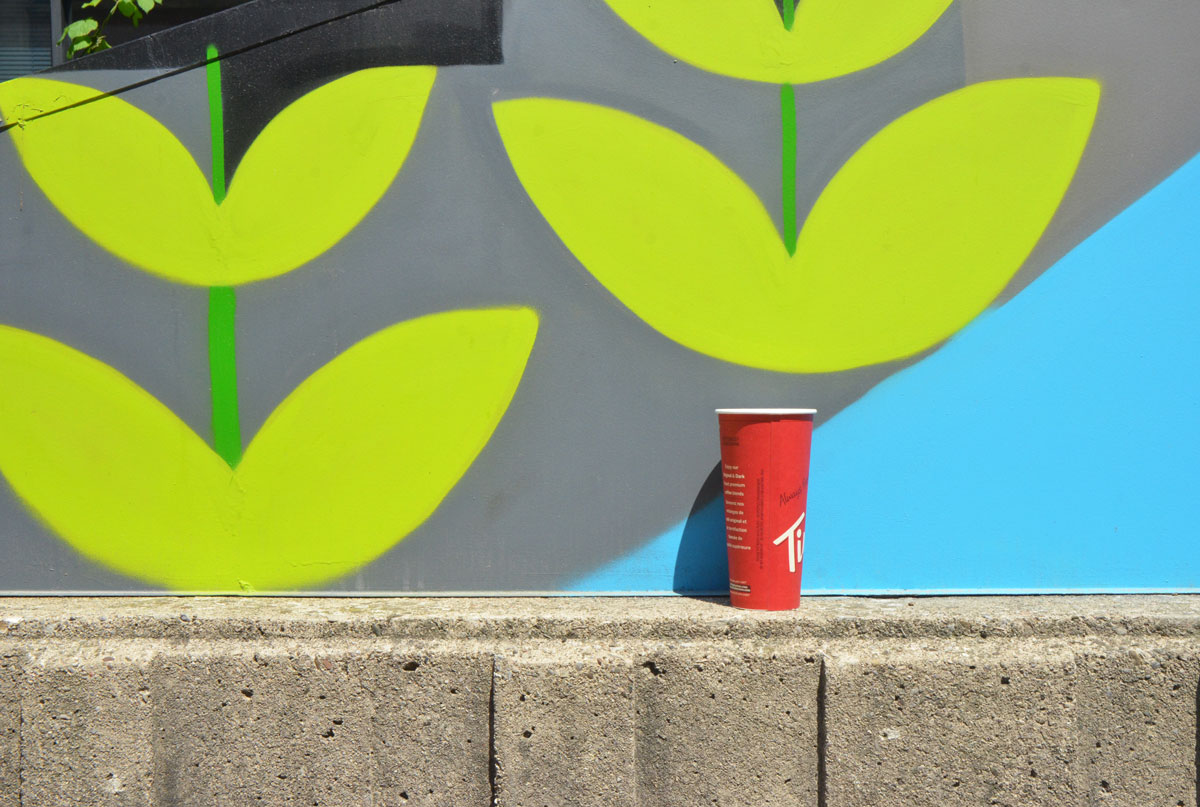
or trying hard to fit into the colours of the city.

painting of stems with leaves, stylized, with a red Tim Hortons coffee cup at the bottom of one of the stems.

There are times when he’s on top of the world. King of the castle so to speak.

a red tim horton cup on a grey metal box on the street, traffic including a TTC streetcar are in the background

.. and he rides in style with his private seat on the TTC.

an empty red tim hortons coffee cup lies on a red TTC streetcar seat. No one is sitting there.

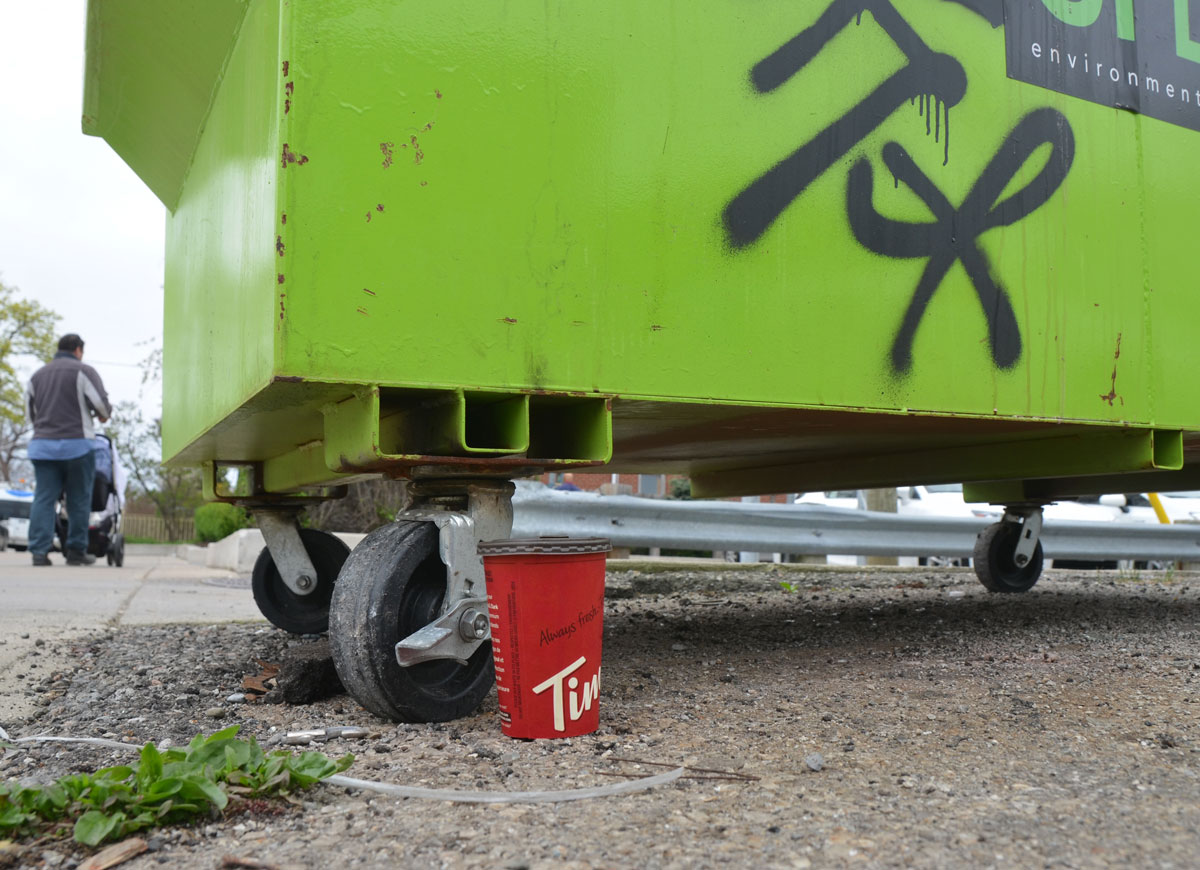
But it’s not always an easy life. Sometimes he’s down in the dumps facing hurdles that are too high.   He’s left feeling abandoned and neglected.  Vacant.

a tim hortons cup discarded onto a gravel section of a vacant lot, behind a chainlink fence

And he has even considered ending it all.

a red tim hortons cup standing on the ground beside a green rubbish bin

But he’s an urban guy.   He knows that life is what you make of it.

a red ti hortons coffee cup sits on a ledge, people around it, all with their backs to the cup

 And there are always others just like him that he can count on for a chat or for a shoulder to cry on.

Two red Tim Hortons coffee cups beside two water supply

He has many fine traits.  He can be a curious fellow but he knows his limits.

an empty red tim hortons cup lies discarded on the ground, beside yellow police tape

He knows that sometimes you have to be patient… but that doors usually open.

a red tim hortons coffee cup sits on the stone step in front of a double set of doors. on a street

He’s frequently warm and often ready to lend a hand.  In case of fire, he’s there!

a red tim hortons cup sits on a red shelf beside fire emergency equipment

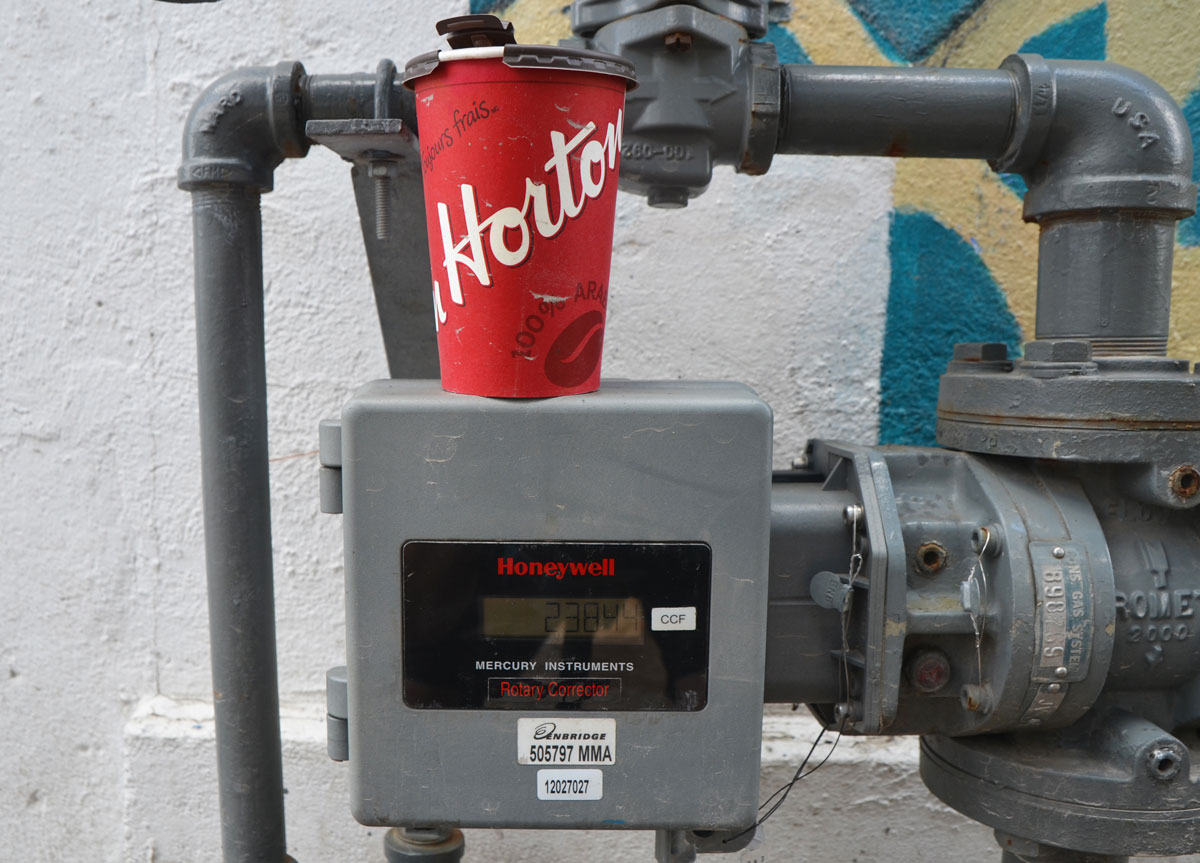
You’ll find him in many places around the city, watching, waiting, and keeping an eye on the situation in his own quiet way.  He too is part of this city.

a red tim hortons coffee cup sits on top of a grey Honeywell meter outdoors

Casting by Tim Hortons.
No cups were disturbed in the making of this story.
Look for the sequel, ‘A Tim’s Christmas’ playing in a street near you.