Archive for the ‘galleries’ Category

One of the special exhibits at the Art Gallery of Ontario at the moment is a selection of the works of Keith Haring (1958-1990).   Haring started as a graffiti artist in New York City, drawing over advertisements in the subway.   Over the course of his short life he also had many solo gallery showings and participated in numerous group exhibitions.   After being diagnosed with AIDS in the autumn of 1988, much of his work was geared to raising awareness about the disease.

This is a small selection of the art on display at the AGO.


a group of five Keith Haring paintings at the Art Gallery of Ontario, AGO, mounted on a red wall

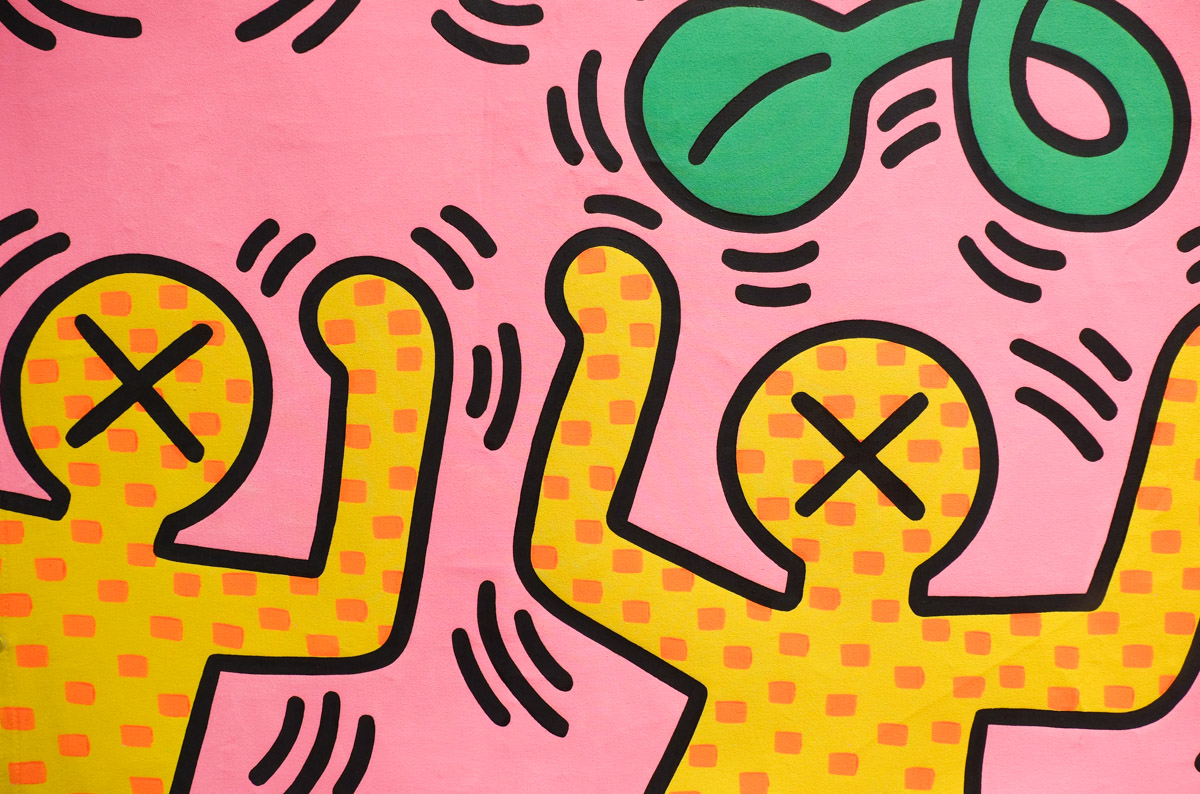
His figures are very stylized and simplified.  Lines show movement.

Keith Haring painting at the Art Gallery of Ontario, AGO, polka dot dogs jump through hole in middle of yellow human figure

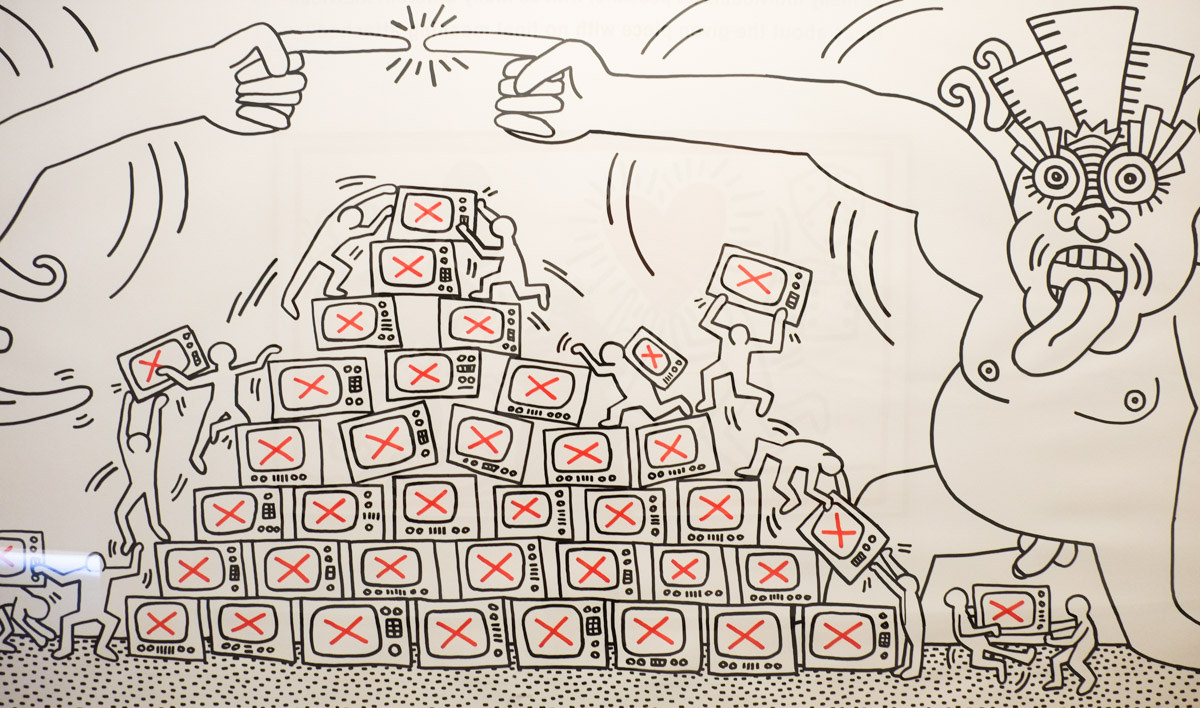
Keith Haring painting at the Art Gallery of Ontario, AGO, many little white men building a mountain of televisions, each tv has a red x on the screen

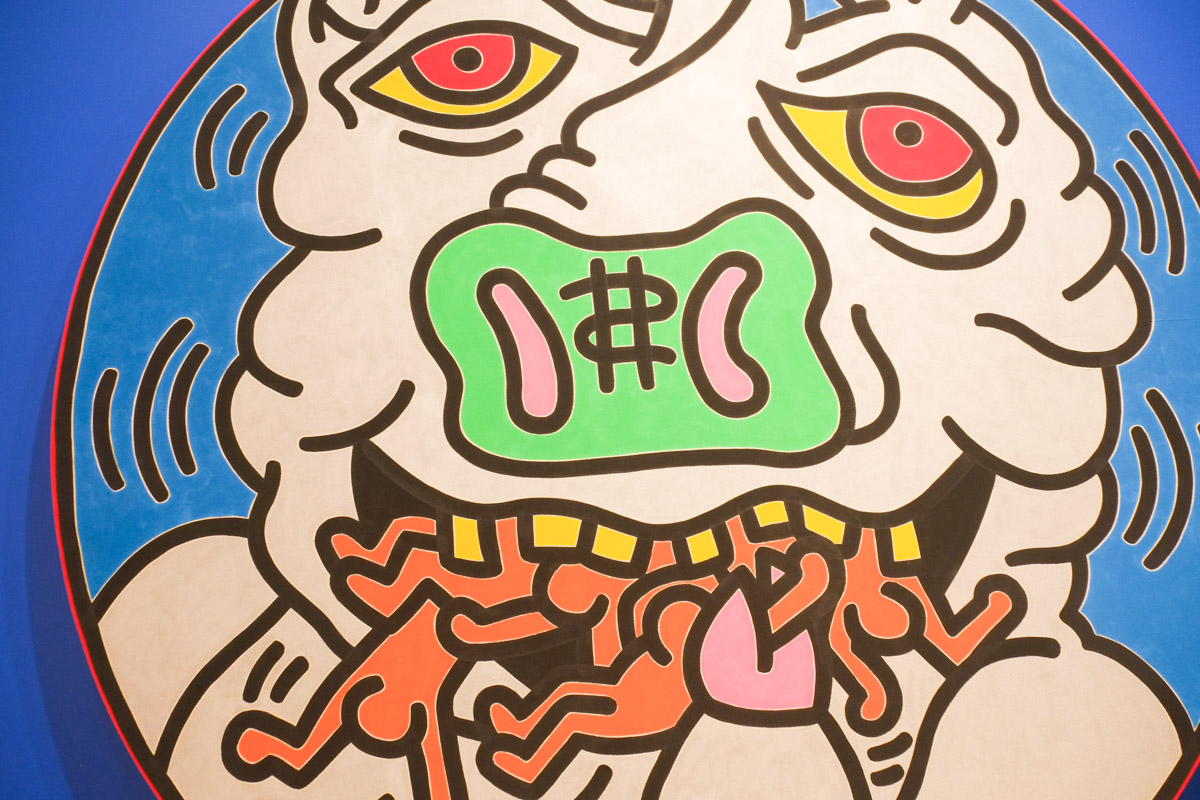
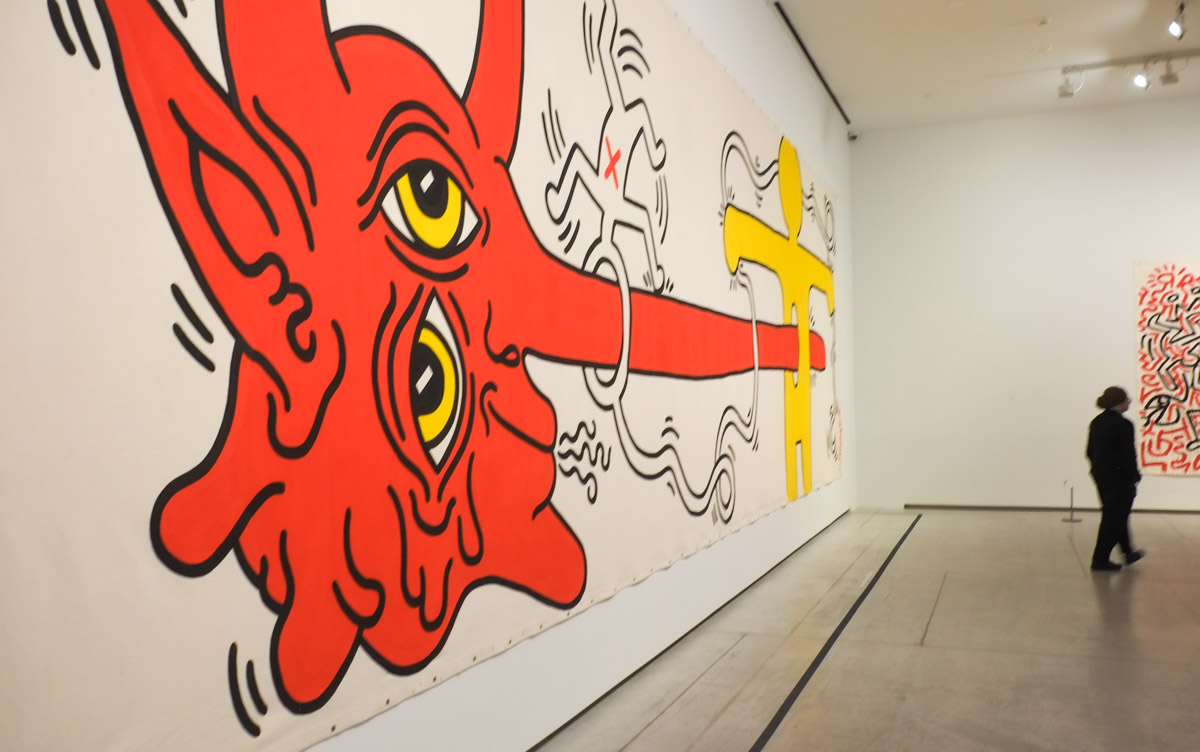
below: By the look of it, capitalism is eating people, devouring the masses.

part of a Keith Haring painting at the Art Gallery of Ontario, AGO, big blue monster with dollar sign on nose, mouth open and many little people partially in its mouth

part of a Keith Haring painting at the Art Gallery of Ontario, AGO, red object going through hole in the middle of yellow stomach

Keith Haring painting at the Art Gallery of Ontario, AGO,

red and green painting on white

part of Keith Haring painting at the Art Gallery of Ontario, AGO,

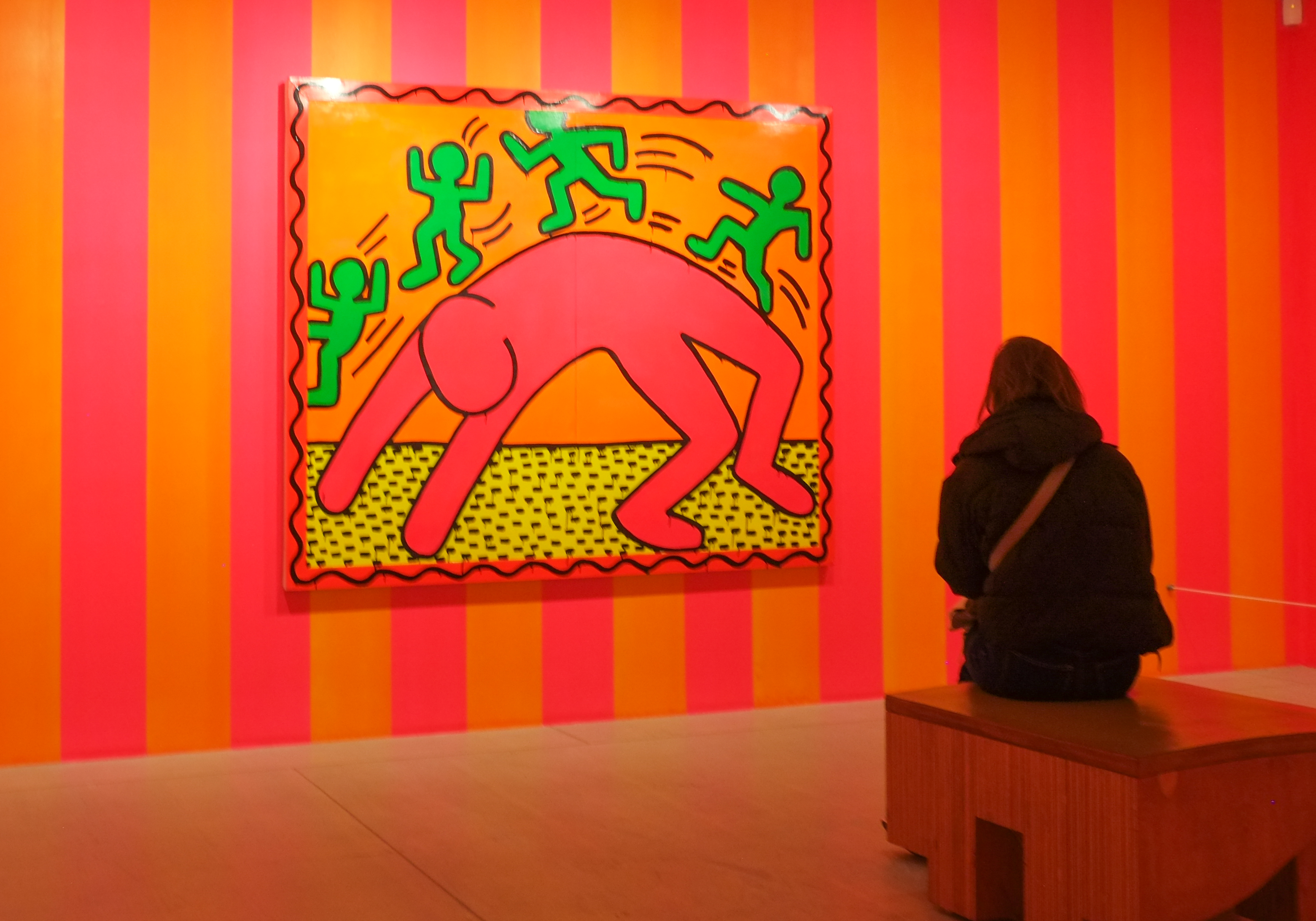
a woman sits on a bench, looking at Keith Haring painting at the Art Gallery of Ontario, AGO, a human figure is bent over backwards while other smaller figures use him as a bridge

a very large Keith Haring painting at the Art Gallery of Ontario, AGO,

two women standing beside a wall painted in orange and pink stripes

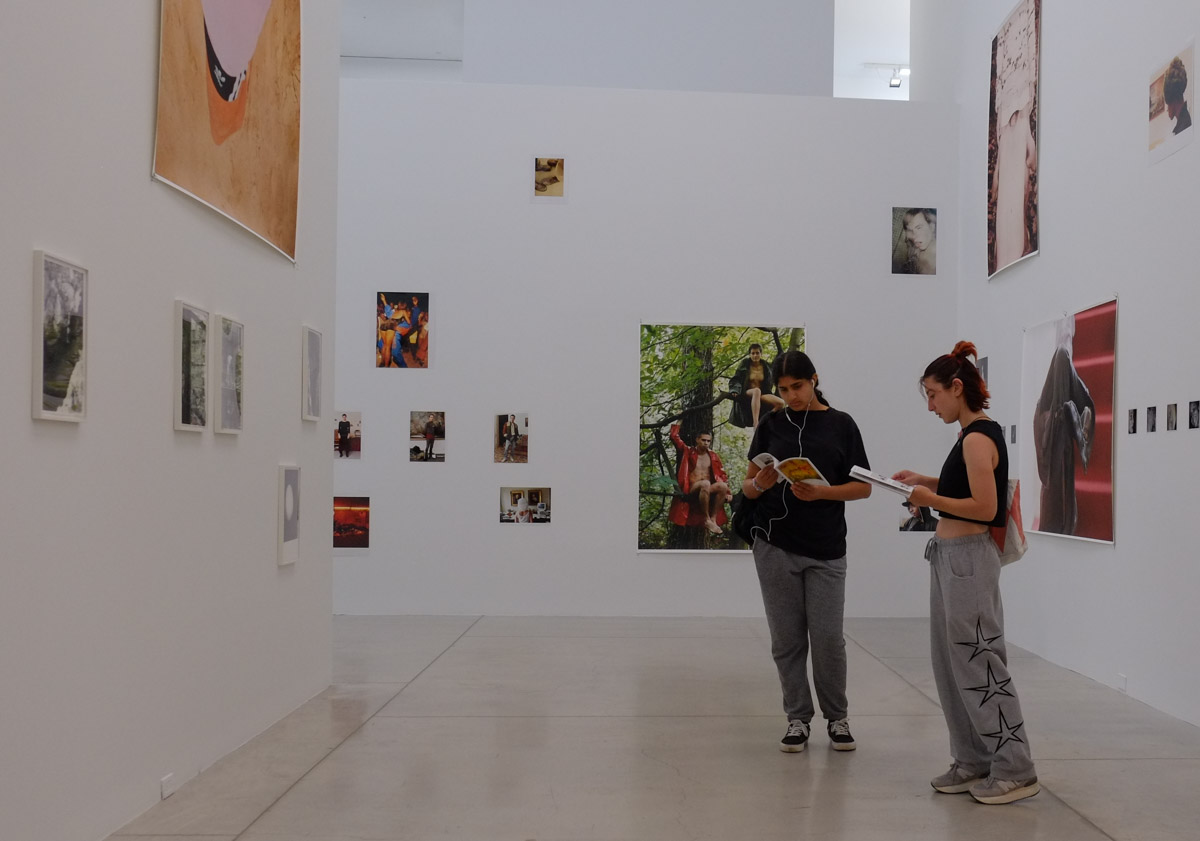
The photography of Wolfgang Tillmans (b. 1968 in Germany), “To Look Without Fear” is on display helter skelter on the walls of the upper floor of the Art Gallery of Ontario.  Breathtaking in its audacity, but to speak without fear, overwhelming in its mediocrity.

view through an open door into a gallery room where people are looking at papers displayed on a table

There are some outstanding moments of brilliance and/or technique but they are swamped by lesser pieces.

Wolfgang Tillmans black and white photo of a man encountering a deer on a beach

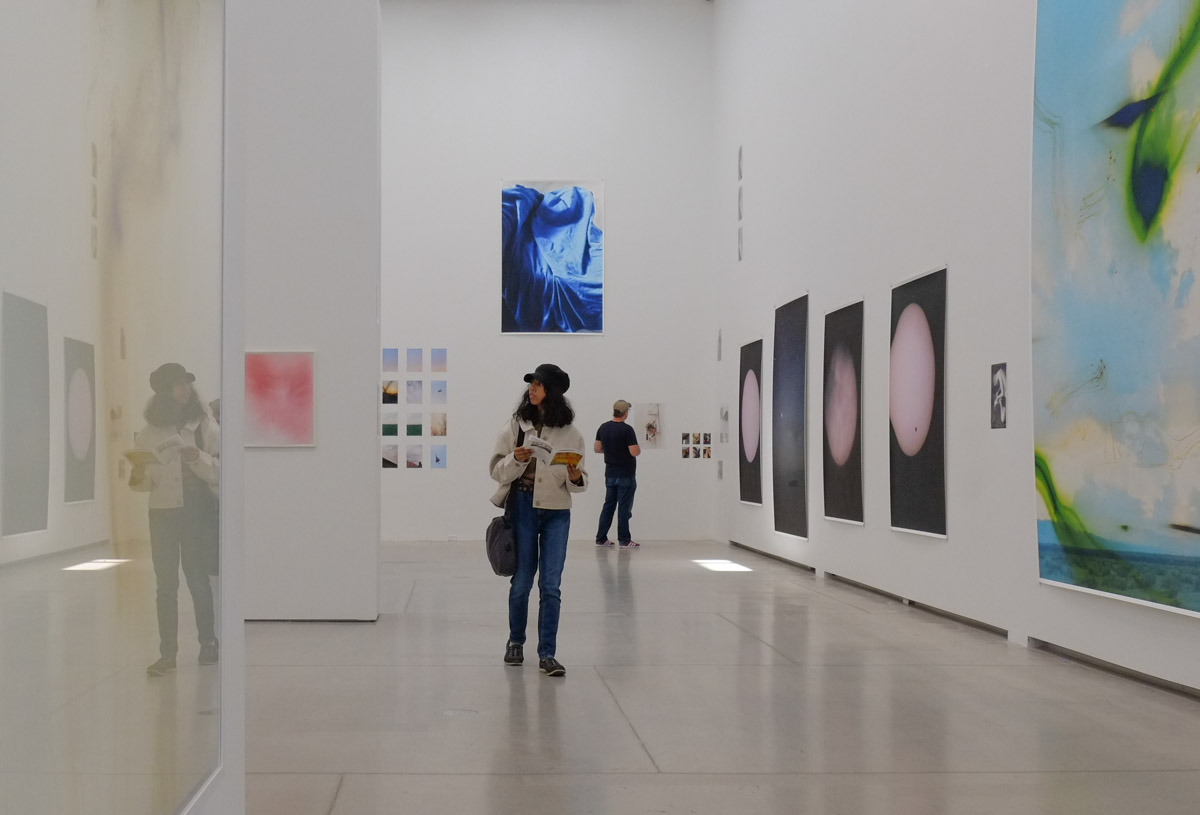
people in an art gallery

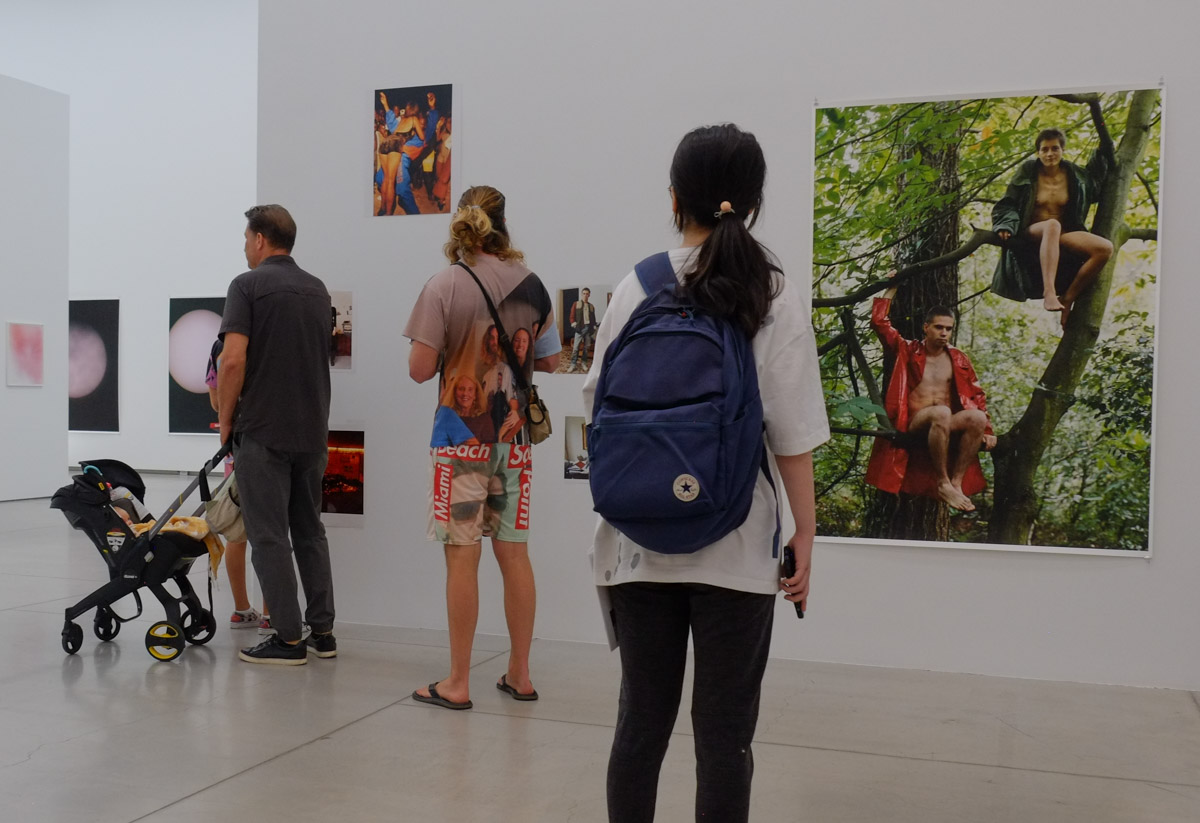
people in an art gallery looking at photos by Wolfgang Tillmans including two scantily clad men up in a tree

Some of the best photos were those that had been printed in newspapers such as this photo of refugees in East Timor.

newspaper picture of refugees in East Timor, large boot of a soldier in the foreground

people in an art gallery looking at photos by Wolfgang Tillmans

people in an art gallery looking at photos by Wolfgang Tillmans

people in an art gallery looking at photos by Wolfgang Tillmans

looking at photos on a gallery wall

people in an art gallery

Exhibit continues until then end of September 2023

One of the exhibits now on at the Art Gallery of Ontario features the work of two Impressionist painters. One is Helen McNicoll who born in Toronto in 1879 but raised in Montreal. When she was two years old she contacted scarlet fever which left her deaf. After a few years of art studies in both England and Montreal, she moved to Europe in 1908. She was elected to the Royal Society of British Artists in 1913 and was created an Associate of the Royal Canadian Academy of Arts in 1914. In 1915 she died. Over her short career she contributed over 70 works to exhibitions in both Canada and Britain.

a father and daughter witting on a bench looking at paintings in an art gallery

below: “The Open Door” about 1913, by Helen McNicoll.  The words beside the painting end with this sentence: “(The) title asks us what it means to stand next to an open door and not walk out.”  Also, note that there is no reflection in the mirror.

Painting with title The Open Door

people looking at paintings on a wall in an art gallery

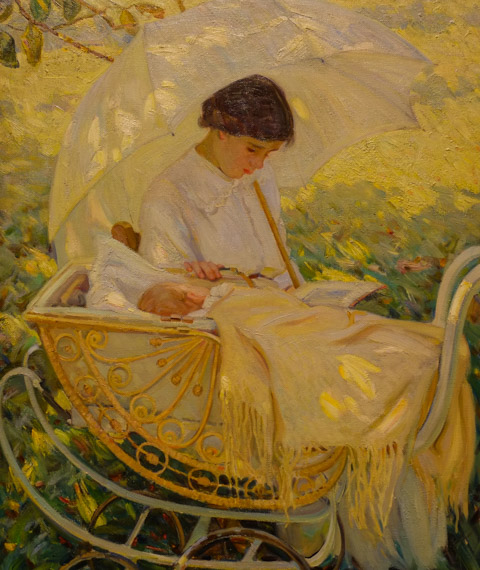
below:“In the Shadow of a Tree” by Helen McNicoll.

painting of a young woman sitting and reading beside baby who is asleep in carriage

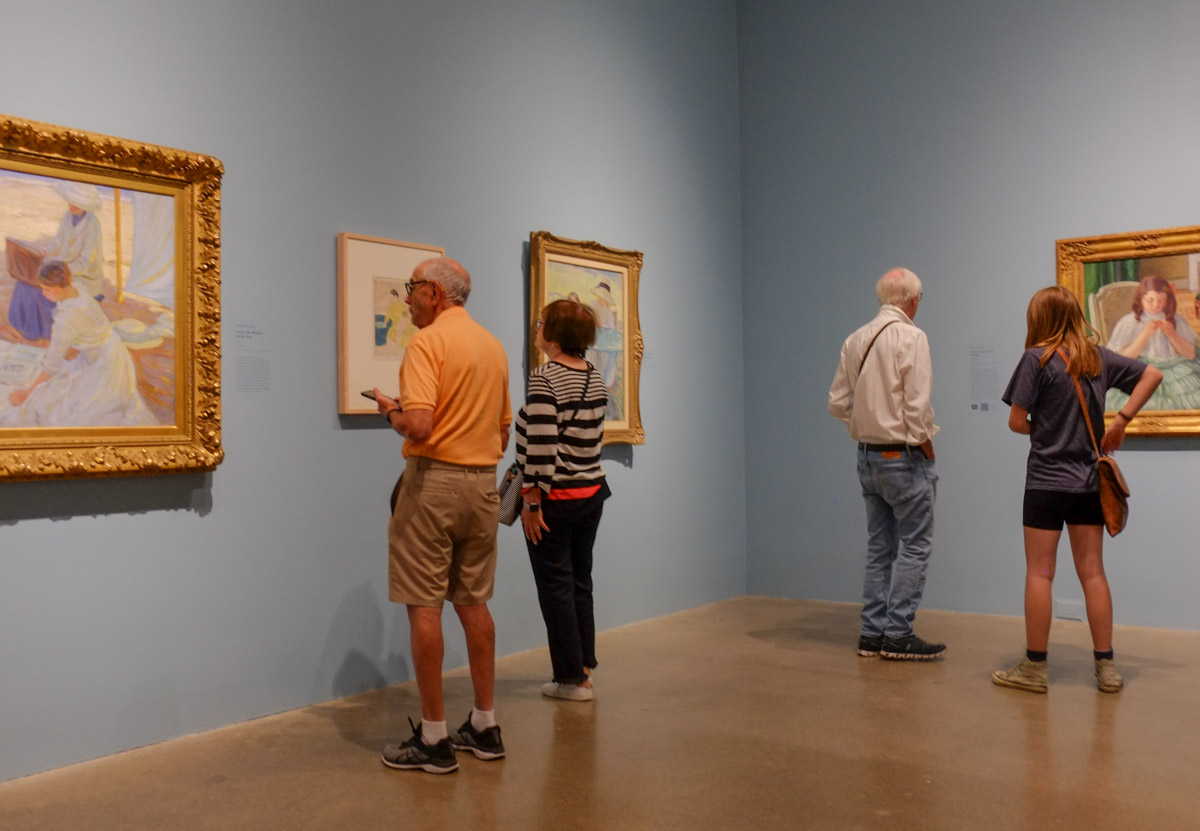
woman looking at two impressionist paintings, back to camera

woman with a cane looking at paintings in a gallery

In this exhibit, McNicoll’s work is shown along side some of Mary Cassatt’s paintings. Cassatt (1844-1926).  Both artists were women and both painted in an Impressionist style.  Cassatt was at least a generation older as she was showing her paintings in Europe a few years before McNicoll was born.

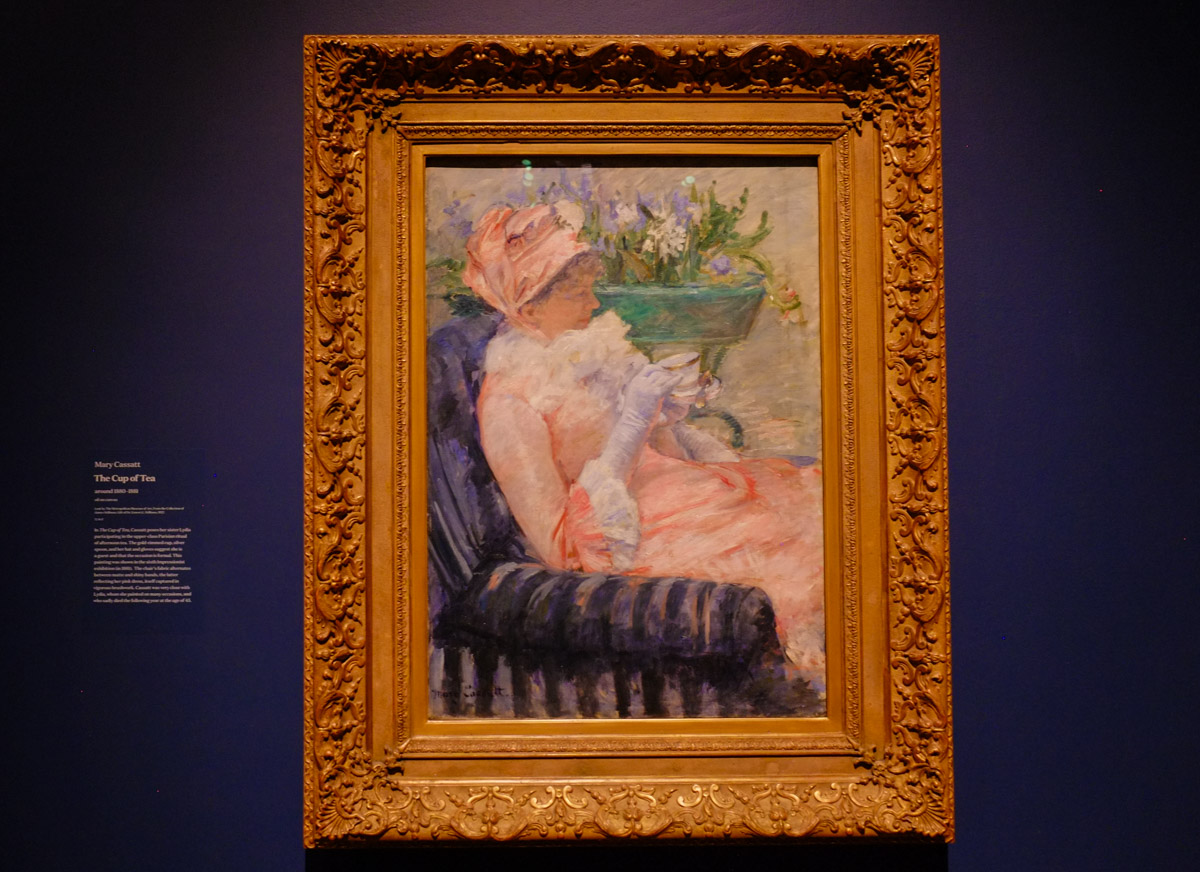
below: “The Cup of Tea” by Mary Cassatt, about 1880 to 1881.   This painting was shown in the Sixth Impressionist Exhibition in Paris in 1881.  It is a portrait of Cassatt’s sister Lydia as she partakes in a Parisian afternoon tea with white gloves and pink finery.  The pink of the dress is reflected in the shiny fabric of the purple chair.  (note: between 1874 and 1886 there were 8 exhibits featuring Impressionist paintings.  Cassatt had paintings in many of these exhibitions.)

painting on a wall in a gallery, woman all dressed up in pink with a cup of tea in her hand

an older couple looking at paintings in a gallery

below: “Montreal in a Snowstorm” by Helen McNicoll.  Although McNicoll spent most of her adult life in Europe, she returned home to visit her family in Montreal frequently.

Painting of Montreal in a snowstorm

This exhibit is on until 4th Sept 2023.

Earlier in May there was a collection of works by Vancouver based Jin-Me Yoon at the Image Centre (Toronto Metropolitan University).  She was a 2022 Scotiabank CONTACT Photography award winner.

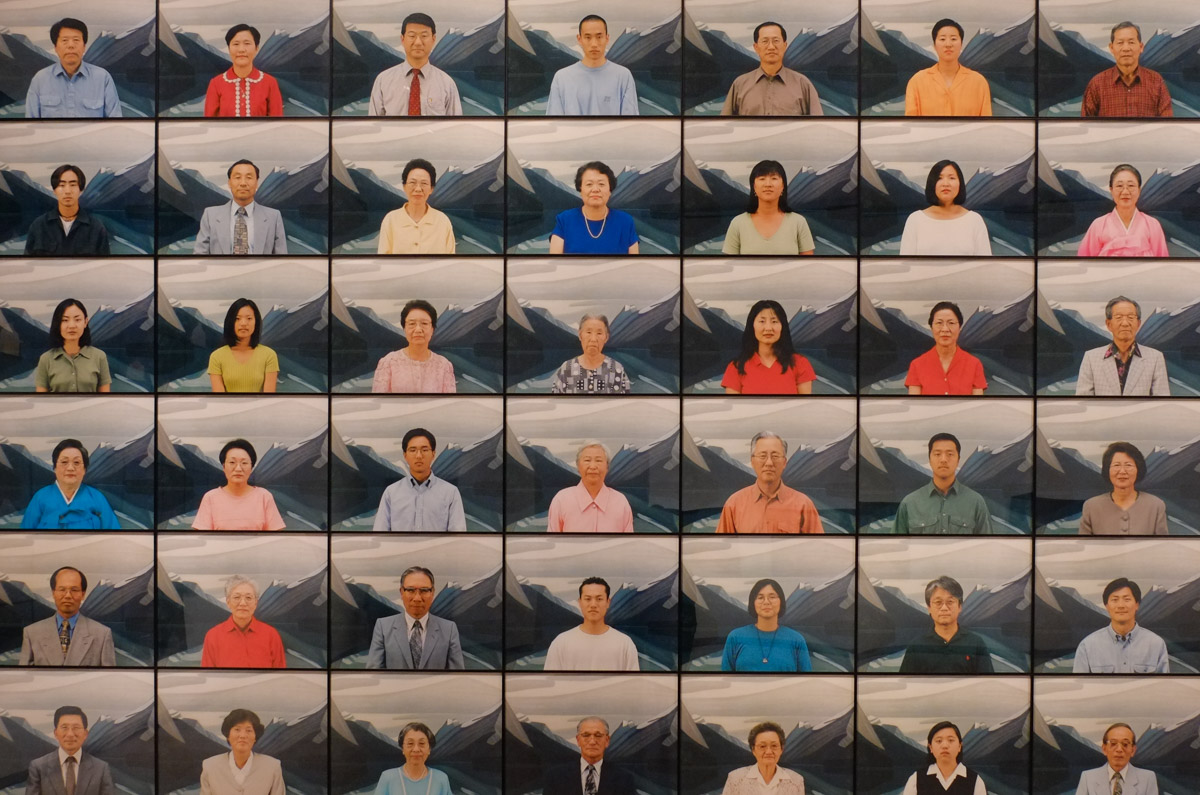
below: Part of the large work, “A Group of Sixty-Seven”, 1996.     These are members of the Korean-Canadian community in Vancouver and they are all standing in front of the same painting, “Maligne Lake Jasper Park”, 1924 by Lawren Harris.  There is a companion piece that shows the back of each person’s head instead of the face.

Many of the images on display featured people in masks.

below: “Untitled 6 (Long Time So Long)”, 2022, inkjet print.

The words on the all for this exhibit describe the ‘Long Time So Long’ series as “absurd satirical elegy to a broken world”.  In each photo, one person is seen in a mask, posing at different sites creating little stories, little dramas just like Korean talchum mask dances and theatre.  Masks to facilitate stories; masks as entertainment.

below: Is it the inside or outside of the mask?

At the Art Gallery of Ontario (AGO) at the moment is another set of photos with masks.  This time the series is “Acts of Appearance” and the photographer is Gauri Gill (b. 1970, India).  Gill had traditional mask makers create a series of masks for her.   Instead of the usual religious masks that they make, she asked them to make masks of themselves or of ordinary things in their lives.

close up of photograph on a gallery wall, a couple sits on a bench, both wearing hindi masks. The man is in navy shorts with white stars on them and a long sleeved buttoned shirt, woman is in red leggings and an animal mask

Gill’s subjects, as well as the mask makers, were from an indigenous community (Adivasi) in Maharashtra India. They are known for their papier-mâché objects especially the traditional sacred masks that depict deities and are worn during festivals.  The main festival is the three day Bohada Festival (usually in May) where people wear masks of 52 different gods and goddesses.

two photos on a red wall at the Art Gallery of Ontario, photos by Gauri Gill, people wearing Hindi masks


people in a white truck, photo in India by Gauri Gill, person looking out of back seat window has a large white happy face mask on

Masks appear in many cultures and feature in many religious activities.  The practice goes back many millennia and probably finds its roots in shamanistic activities.  Shamanism played an important part in primitive societies as the channeler of spirits for healing, purification, and protection of those under his supervision. Masks helped the shaman embody one of the spirits (or gods/goddesses) and use it to heal the sick, drive away evil influences, and help people through events that might be affected by the spirit world. When hung in a house, the mask served a protective function.

below: One-eyed shaman mask made of wood, on display at the Art Gallery of Ontario.

very old wood shaman mask with one eye on display at the art gallery of ontario

below: “Raven Steals the Moon”, 2021, by David Ruben Piqtoukun.  Art Gallery of Ontario.  From the words on the wall beside the artwork: ” In this sculpture the Shaman appears as both human and bird, with pieces of the moon stuck in his beak.  Piqtoukun tells the story of a Shaman who was not respected by the people in his community because they did not believe in his powers.  In order to prove himself, he tells them that he will steal the moon an bring it back.  He asks everyone to cover him with rocks and snow, and uses his powers to steal the moon from the sky.”

He accomplishes this by turning into a raven and flying to the moon.  Once there he grows very big and eats the moon, piece by piece, until it is gone.  The world goes dark and people can not hunt or fish.  [My note: why can’t they hunt and fish during the day?]  Shortened version of the ending: people repent and change their ways so raven spits up the moon piece by piece and makes it whole again.

sculpture of a mask with two sides of the face different

Masks bridge the spiritual and earthly worlds.  They also connect religion to art as well as to other aspects of culture.  They become part of theatre and drama and allow us to become different people or different creatures.   They help us tell stories and both Gill, with her use of masks to alter the ordinary, and Yoon, with her masks that highlight the absurd, are part of that age-old tradition that transcends cultures.

Under the masks are faces.  And faces play a large role in   how we see ourselves,  how we look to others,  and often more importantly, how we want to be seen by others.   Jin-Me Yoon’s portraits of Korean-Canadians puts very Asian looking people in a static pose in front of a scene created by a very iconic Canadian painter.    How do we portray ourselves and our communities especially when we want to move beyond the physical?  These are just some of the things that I thought about as I walked through the AGO (having just seen the Yoon exhibit that morning).

below: “Her Blood Spoke in Creole, in Gaelic, in Twi, and in Yoruba”, 2021, Alberta Whittle (b. Bridgetown Barbadoes, 1980).

painting in predominantly purple, two headed serpent, one head at each side of face of a person with a white halo, Alberta Whittle, at AGO

But art looks more than one way.  Like the purple Whittle piece above, we use it to look inward and to express ourselves and our situations.  But we also look outward as we explore and document the world around us.

below: Photo by Louie Palu (b. Toronto 1968),  “Afghan civilians by a graffiti-ed wall with machine guns and anti-coalition slogans in Pashto (‘Death for America’, ‘Death for London’). Helmand Afghanistan 2008.

photograph in a gallery, three young men, one is looking at camera, Arab clothing,

What makes us want to look at the images produced by other people?

a man with a red backpack stands in an art gallery

What makes us want to stop and take a closer look?  The average person looks at a painting in a gallery for about 15 to 25 seconds (depending on which study you read).   Admit it, you scan through these photos fairly quickly!  Maybe you catch a few words; maybe you don’t.

a young man in a gallery stands close to a photo of a man with his hands partially covering his mouth and chin and nose

woman looking closely at a wall full of photos

The self portrait – artists have been creating them forever.

below: “Self Portrait with Blue Handkerchief”, 1941, by Alma Duncan (b. Paris Ontario 1917, d. Ottawa 2004).

painting in a gallery, self portrait

Of course technology has made it possible for everyone to “take selfies” whenever they want.  Whether it’s art or not is an entirely different question!  If you could paint (or other medium) a self portrait of yourself how would it differ from a photo?   How could you convey something more about yourself?  What stories would you want the world to know?

a young woman sits on a bench taking a photo while a man waits with her at the other side of the bench

This blog post has veered in a different direction from most and has been a bit weird to write.  It’s not often that I get distracted by thoughts and questions.  But I hope that you’ve had a chance to think along with me at least for a short time.

reflection of a person in a patterned reflective wall

And maybe the next time you’re out walking you’ll start thinking about some of the stories that are swirling around us.

two men walking through the art gallery of ontario

I’d like to end this with a quote that is displayed on a wall at the AGO: “All that we are is story.  From the moment we are born to the time we continue our spirit journey, we are involved in the creation of the story of our time here.  It is what we arrive with.  It is all we leave behind.  We are not the things we accumulate.  We are not the things we deem important.  We are story.   All of us.  What comes to matter then is the creation of the best possible story we can while we are here; you, me, us, together.  When we can do that and we take the time to share those stories with each other, we get bigger inside, we see each other, we recognize our kinship – we change the world, one story at a time.”  Richard Wagamese (1955-2017) Ojibwe author and journalist.

… an art project by Sunday School,  a creative agency formed in Toronto in 2017 by Josef Adamu.  At the moment there are billboards at a few locations around the city including here at Dundas and Lansdowne where there are 3 images.

billboards above a vacant lot. The boards feature 3 large images by Sunday School. On the far left is a reclining woman with arm supporting head. In the center is a billboard with two images. Someone is brushing the hair of a young black woman in one photo. In the other, a person is sitting in a small orange car, viewed from the drivers side of the vehicle.

close up of images on billboards. two images. Someone is brushing the hair of a young black woman in one photo. In the other, a person is sitting in a small orange car, viewed from the drivers side of the vehicle.

Other photos by the group are on display at the Art Gallery of Ontario.  Two examples are:

below: “Jump Ball” is an ongoing project that explores the relationship between basketball and the African Diasporic communities.  Home is not restricted to private spaces, it is also found in unity. Here, in “Jump Ball: Toronto (2019)”,  you can see carefully composed pairings of young men in vibrant Ghanaian Kente cloth or a Senegalese boubou on the basketball court (what is identity?  how does basketball bring young men together?).  These were photographed by O’shane Howard.

photographs on a gallery wall, two in colour, and a group shot in black and white. the coloured photos are of young black men in traditional african clothing on a basketball court

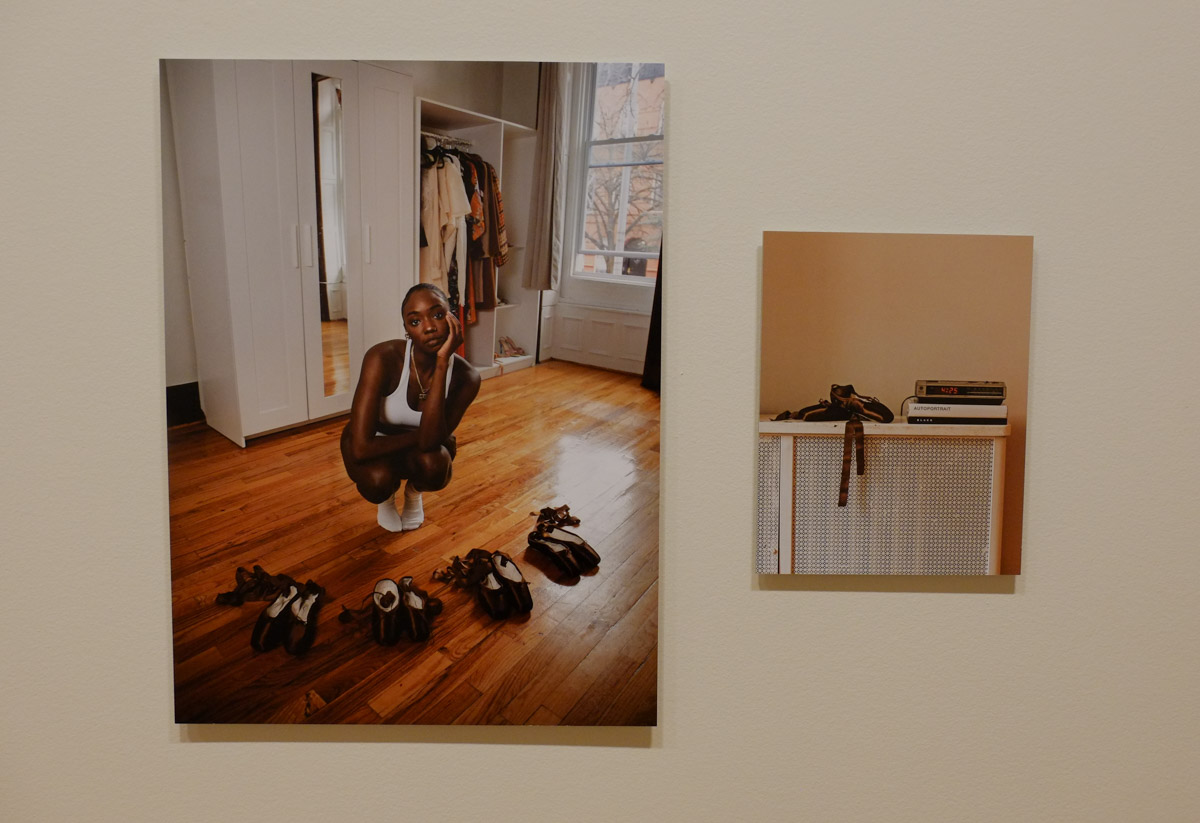
below: Another series of pictures is “Ten Toes Down”, photographed by Kreshonna Keane.  This series features a ballet dancer in her home – a Black dancer in a field that is almost exclusively white.  Home is not just a building.  Home is the body; home is self expression.

two photographs on a gallery wall. on the left a black woman, a ballet dancer, sits on her floor surrounded by pairs of ballet shoes or slippers. the other picture is shoes and books

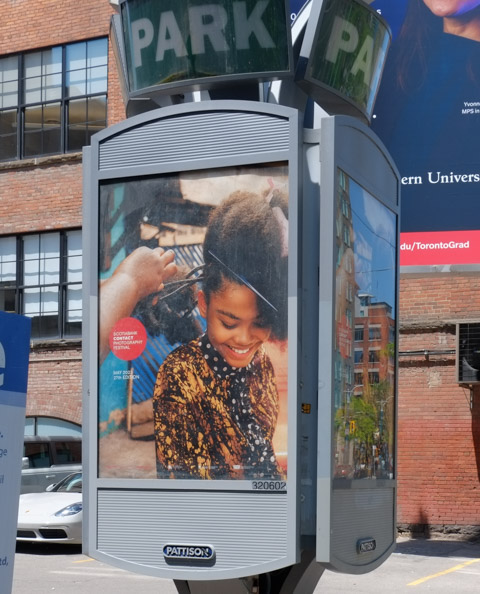
below: This image by Carlos Idun-Tawiah can also be seen in a parking lot by 80 Spadina Ave (see above, at Lansdowne & Dundas).

image of a young black woman

Sunday School website

Sunday School’s Instagram page

May 2023 edition

woman sitting in a chair in an art gallery

below:  “In the Comfort of Embers” by Amartey Golding. Photography, video, objects, all in a darkened red space.

Amartey Golding installation at the Power Plant art gallery, red lights,

photograph on red wall, person helping to light a cigarette for man in a hoodie

below: “Drink from the River” by Brenda Draney – a collection of her paintings.

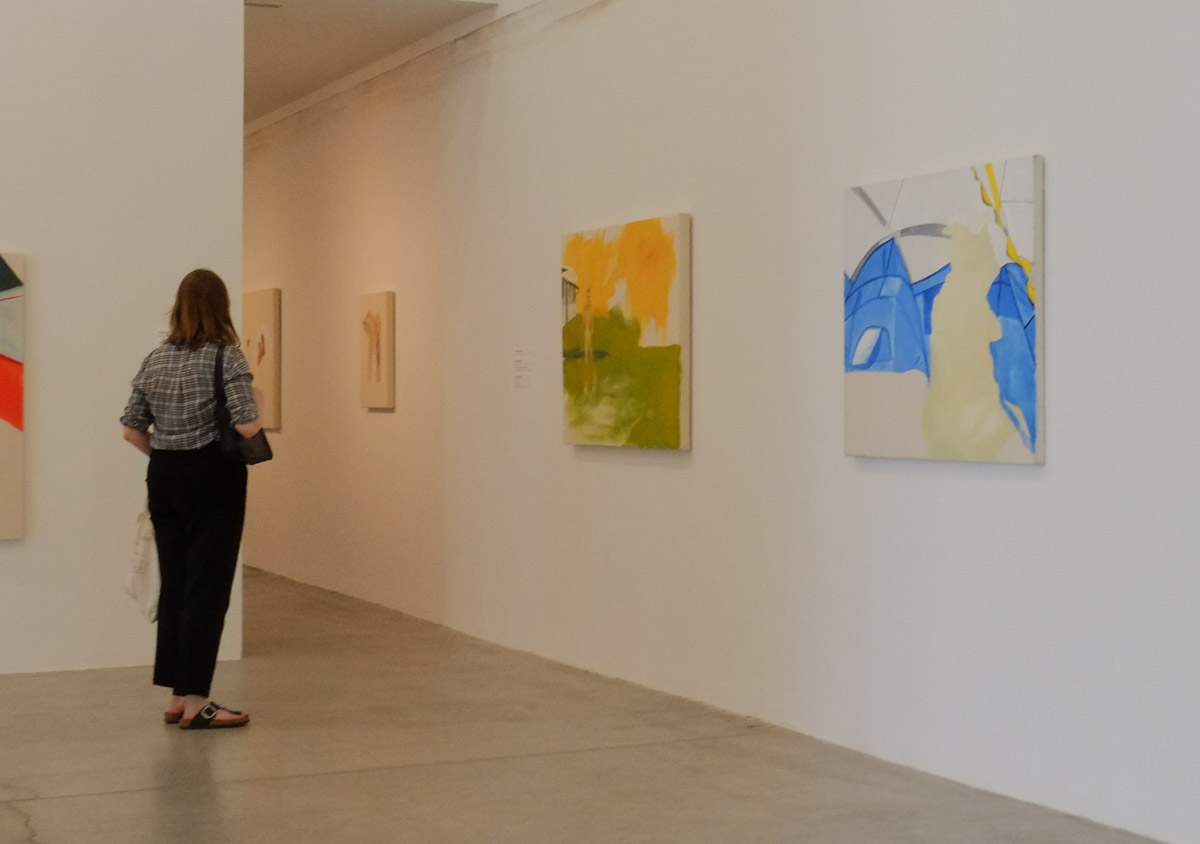
woman in an art gallery looking at some paintings

painting by Brenda Draney of two women at a table

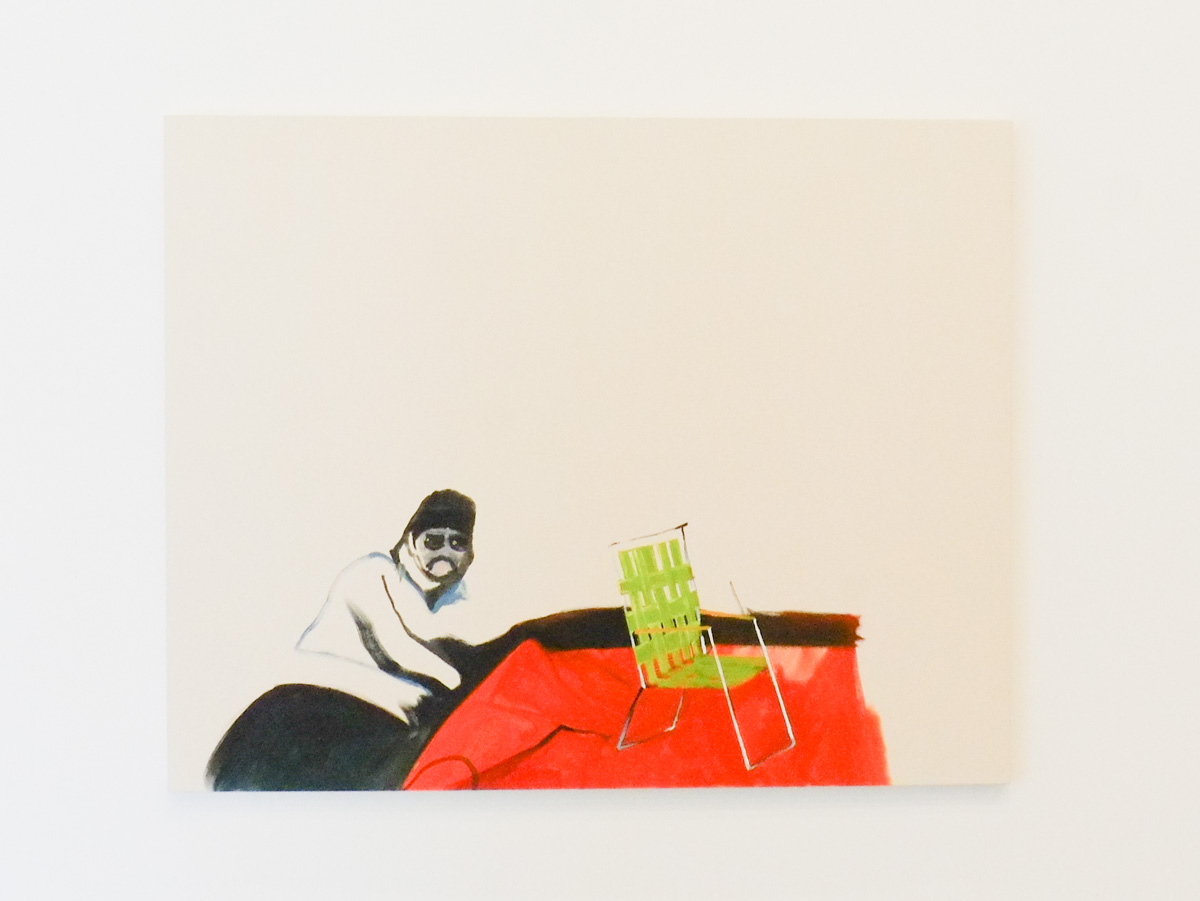
below: A lime green webbed folding lawn chair on a red surface dominates this picture and overpowers the large negative space.

painting on a wall in a gallery, a man in white cap sitting beside a green lawn chair on a red table

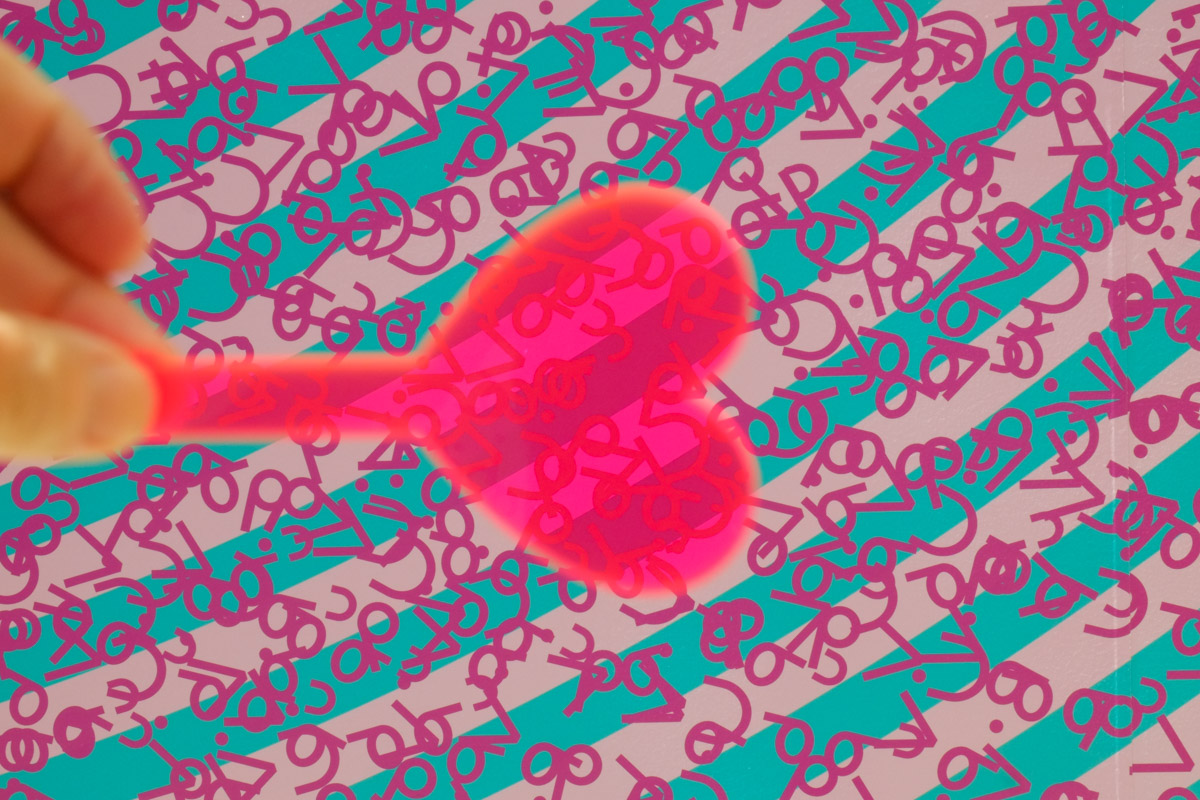
below: “Decoded” by Joi T. Arcand.  The walls are covered by this blue and pink striped design.  Using the pink plastic hearts, one can look at the wall  and see things differently – can you find the words, can you decode the message?

pink heart shaped plastic beside a wall of blue and pink stripes

below: Black and white photographs by Anique Jordan both inside the gallery. “Glitches”, a woman on a bed holding two large chunks of watermelon.

black and white photo by Anique Jordan, woman sitting on a bed with half a watermelon, black and white

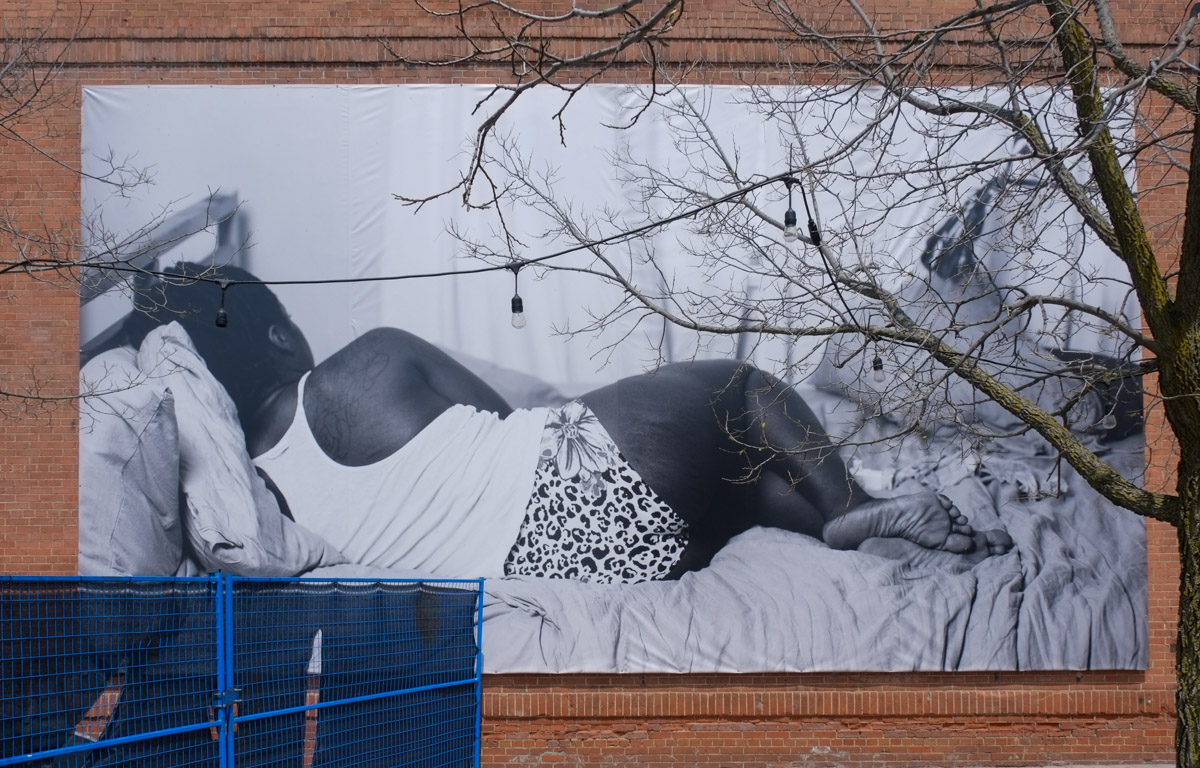
below:  … and on the exterior south wall.  “These Times 2019” by Anique Jordan

large black and white photograph on an exterior wall, black woman lying on bed with back to the camera, in white t shirt and black and white patterned shorts

two people sitting on a bench by the waterfront, beside boat with a lifeboat

Just outside the Power Plant Contemporary Art Gallery is Ontario Square.  There is another art installation there – Double Pendulum by Maggie Groat.  Photos of that display are in a previous blog post (Double Pendulum, 19 May)

an exhibit at Doris McCarthy Gallery, U of T Scarborough.

“Bringing together artists who consider the power dynamics of image-making in their distinct practices, Now You See Me includes Black, Indigenous, and artists of colour, who variously identify as women, femme, and non-binary. They use photography to explore issues related to gender and cultural identity, asserting themselves as directors of their own images to pose questions about the complex cultural and gender-related politics that underlie self-representation.”

The above quote comes from the Doris McCarthy Gallery website where you can find more information about the exhibit.

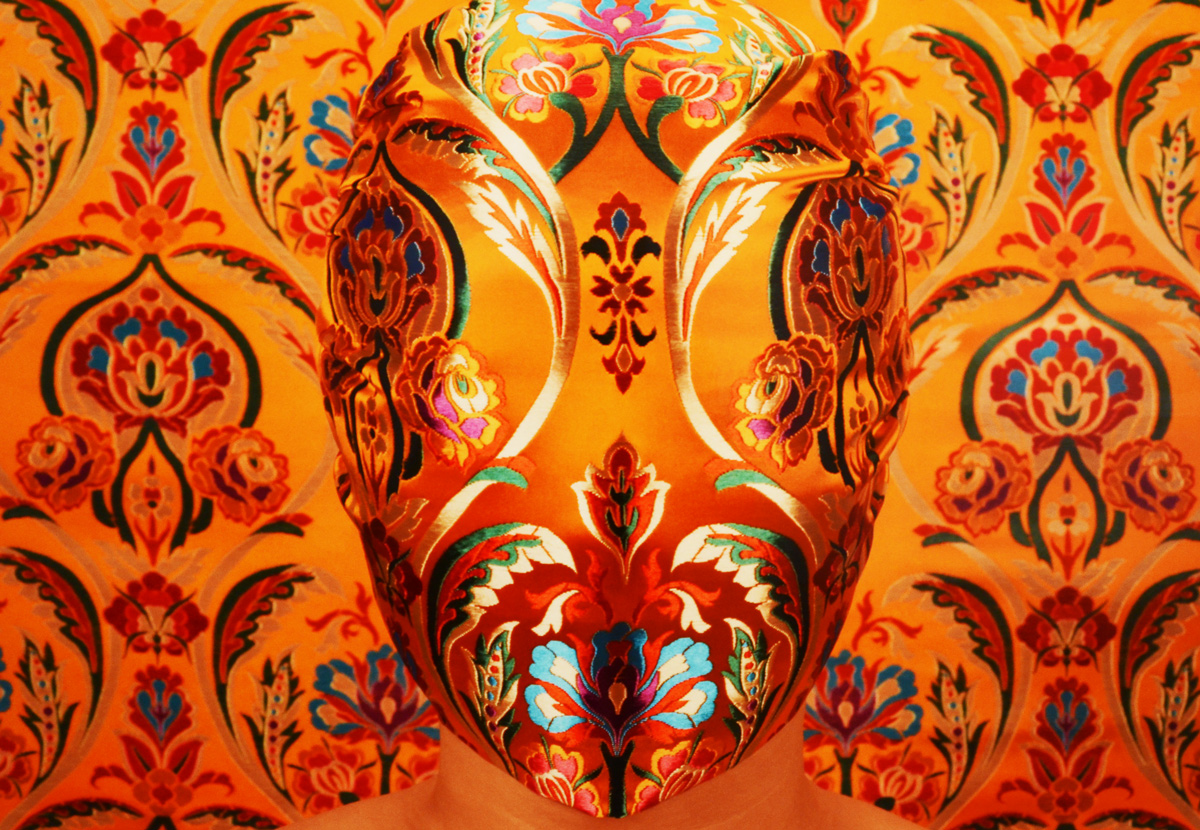
below: “Skin Deep” by Chun Hua Catherine Dong shows self-portraits ‘masked’ in Chinese silk fabrics, a gesture that implies submission.

two pictures on a gallery wall, embroidered masks that blend in with their background, one in blues and the other in reds, golds, and orange, by Chun Hua Catherine Dong

elaborately embroidered mask, reds and greens and black on orange background

below: A video by Vivek Shraya titled “Legends of the Trans” is a photoessay based on “Legends of the Fall”, a 1994 movie starring Brad Pitt.  Throughout the essay, the main character, Tristan, wears a bindi (coloured dot) on his/her forehead.

2 images from a video, during a fade in and fade out, person sitting in long grass with mountains in the background

below: Meryl McMaster juxtaposes a self-portrait with a hand written copy of a poem called ‘Onondaga Madonna’ written by Duncan Campbell Scott in 1898. Scott was the deputy superintendent of the Department of Indian Affairs from 1913 to 1932.  He played a predominant role in the establishment of residential schools; under his direction the forcible removal of Indigenous children from their homes to attend residential schools was made compulsory,

Meryl McMaster portrait, in the woods in winter, alongside a hand written poem called Onondaga Madonna

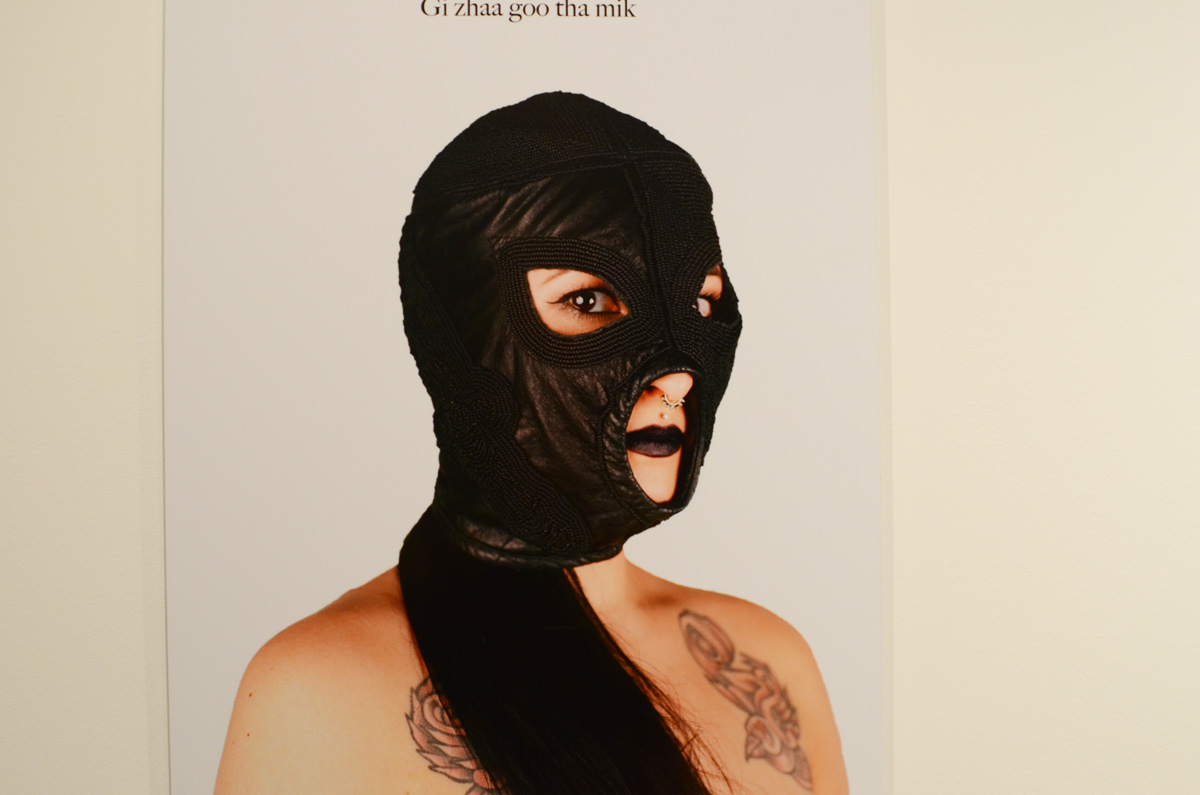
below: Danya Danger presents three photos of women in embellished black leather fetish masks as she explores the relationships between sexuality, gender, and power.

photo of upper torso and head of a woman with tattoos, blackish lipstick and heavy eye makeup, wearing a black bdsm type mask covering most of her head and face. beaded black leather fetish mask

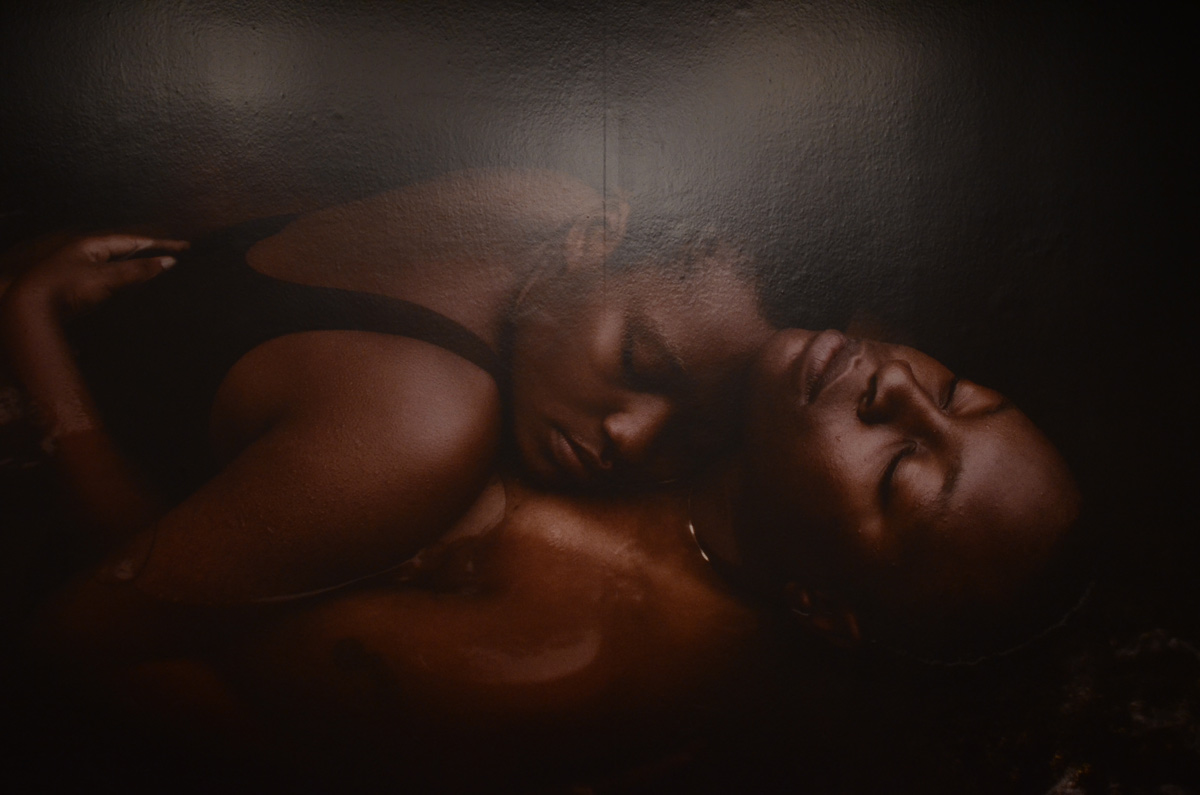
below: Gaëlle Elma has a couple of large photos in this group exhibit. Her work deals with perceptions of sexuality, human bodies, and blackness.

two black people with eyes closed in inimate embrace

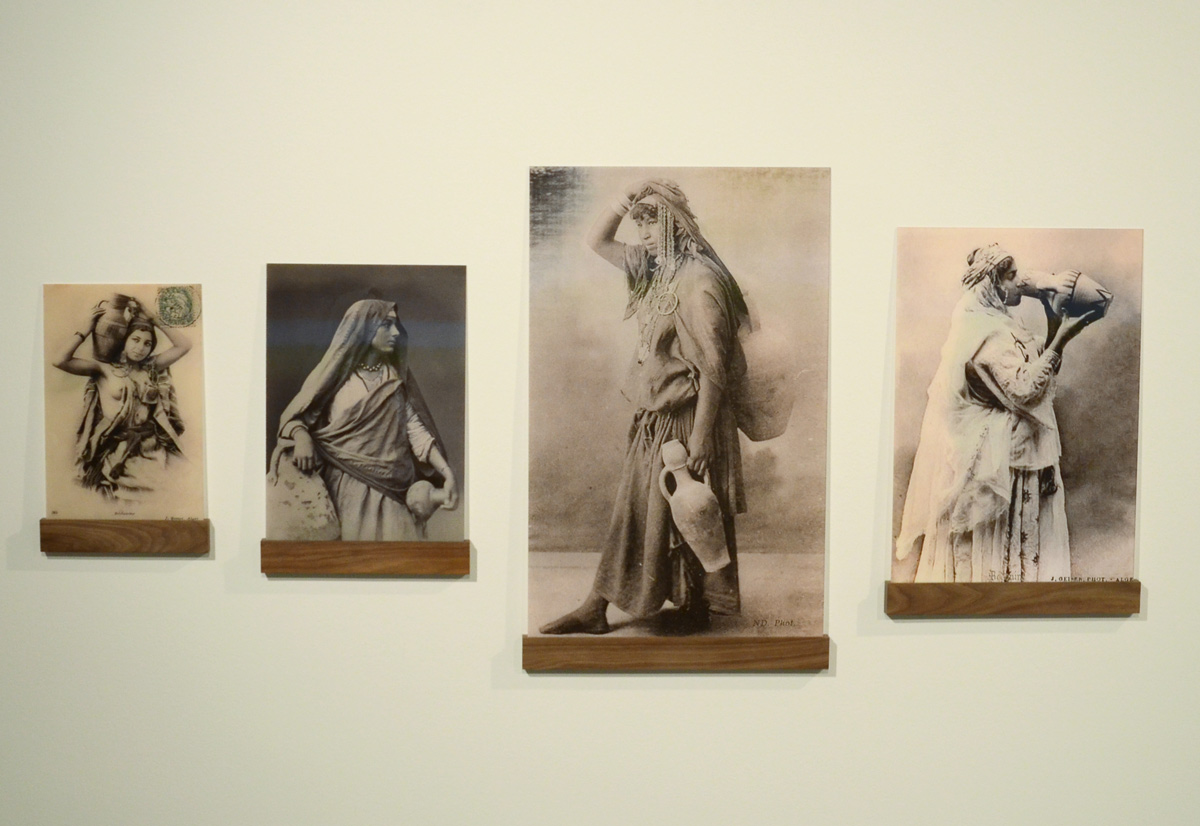
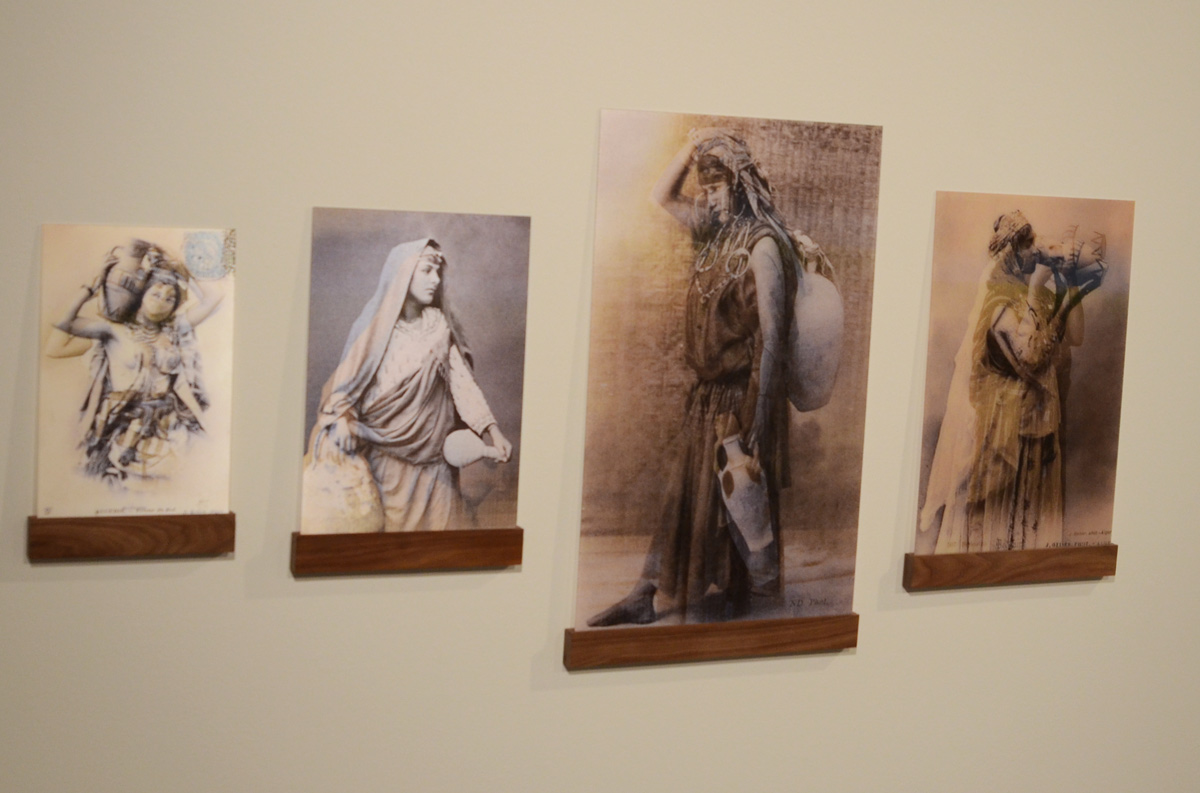
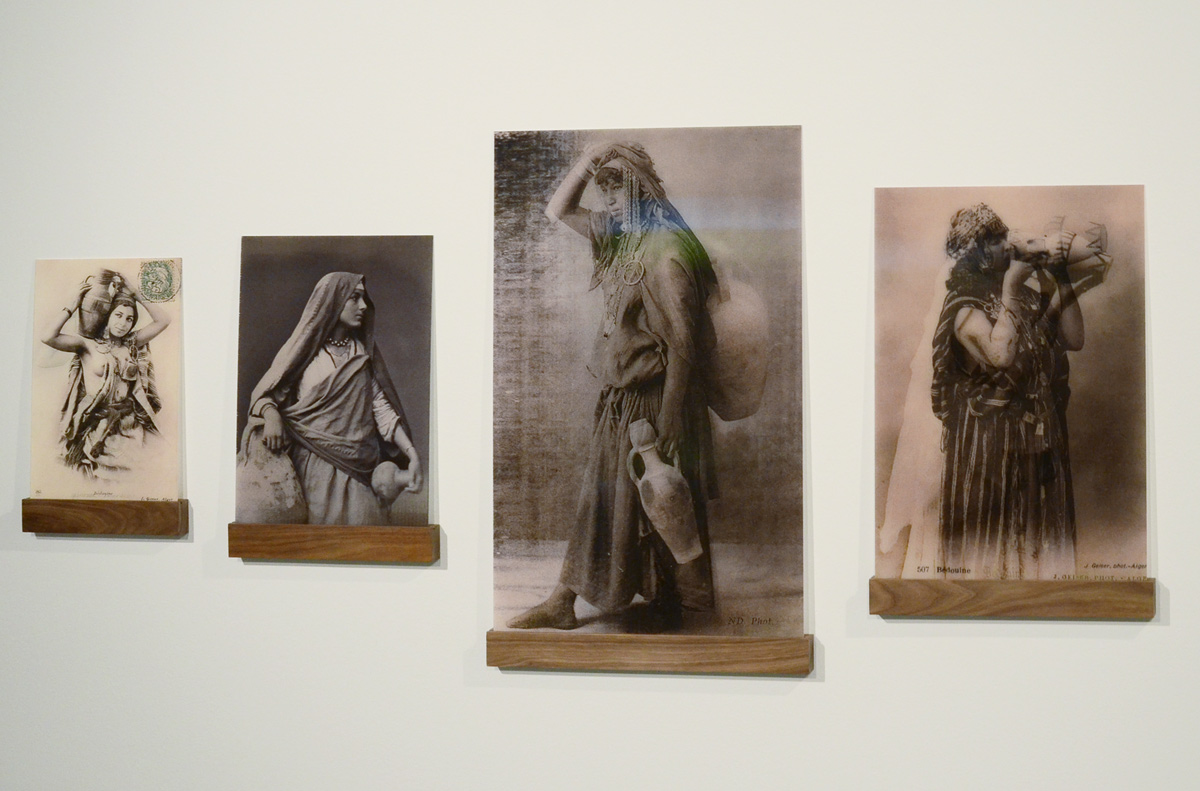
below: Leila Fatemi has centered her exhibit around vintage postcards of Muslim women.  Here they are printed such that the image depends on the angle from which you view the picture.

4 pictures based on old postcards of Muslim women, project by Leila Fatemi

4 pictures based on old postcards of Muslim women

4 pictures based on old postcards of Muslim women

“Generated from different perspectives and experiences, these works share a reckoning with the historical and contemporary uses of the camera as a tool to perpetuate degradative narratives.”

Shona Illingworth at The Power Plant

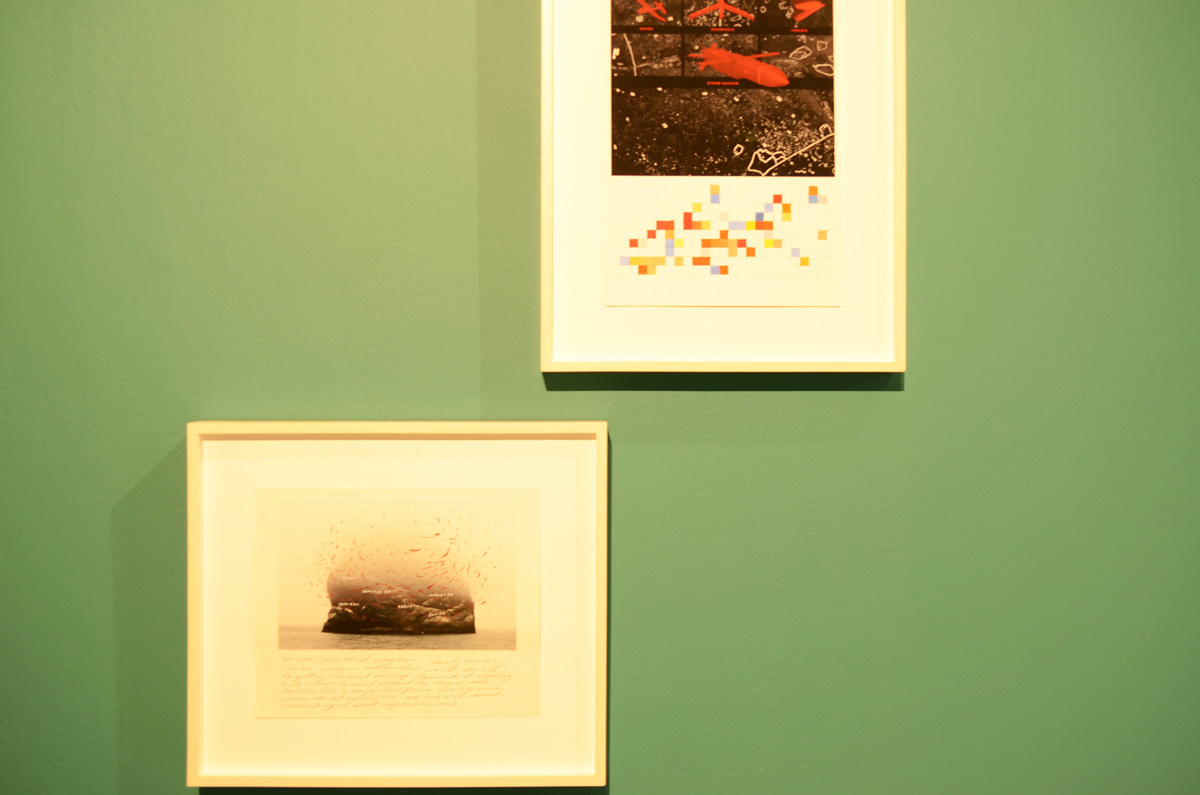
This blog post looks at a portion of one of the exhibits now on at The Power Plant Contemporary Art Gallery. “Topologies of Air” by Shona Illingworth was commissioned by The Power Plant; it involves some video pieces that I have not included here. “Amnesia Museum” is a series of small works exploring how memory and forgetting intermingle. A sample (with apologies for the poor quality of the image):

two pieces of artwork on a green wall. by Shona Illingworth, part of her amnesia museum series

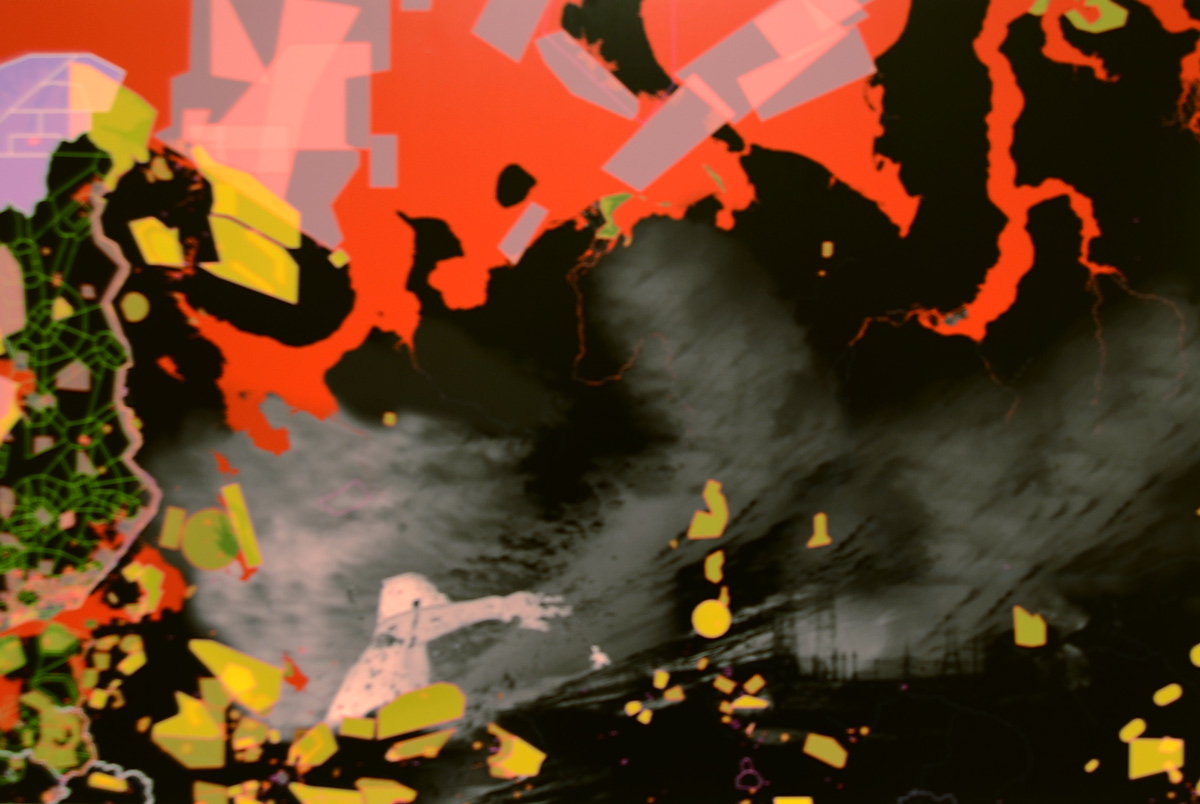
below: Paintings from “Topologies of Air”

Three images by Shona Illingworth at Power Plant Contemporary Art Gallery

an image by Shona Illingworth in an art gallery from her Topologies of Air series

below: The full title is “The Right to Live Without Physical or Psychological Threat from Above” and it fills a wall.  Across the top the images are related to satellites and the solar system.  Images of people and human activity are on the bottom.  The words fill the air gap between the two.

part of a full wall covered with words and black and grey images, on psychology of air space and the struggle for human rights to have no interference from above - such as military, drones, etc

Some of the text:
“Airspace also encompasses shared radio frequencies, our electromagnetic commons. Each drone is operated by a team of a dozen or hundreds who watch video and audio-track cell phones. Companies operate powerful algorithms in military command centers half a world away to decide who is a combatant and is not. But never forget that these are almost indistinguishable from the algorithms that are used by Facebook and Twitter to categorize us and profit from us. There algorithms are often staggeringly inaccurate. The margins of error built into these powerful databases are huge. ” and
“Humans need protecting. We’ve got an air gap. We’ve always lived with an air gap, which is simply the unconnected world. The ability to conduct your activities of any kind, in any way you want, without any form of connectivity, surveillance or control.”

We can argue as to whether or not this wall is art;  we can argue as to the validity of some of the statements.  But as I stood looking at the wall, it was thoughts of Ukraine that went through my head.  The idea that air supremacy over that country was being fought over at that moment and that the Russians would love to control those skies.  Not for the first time. Countries have used air power throughout recent history, from the time of the invention of the zeppelin and the airplane through to the introduction of drones into the modern arsenal.

We can also argue over the merits of living in a connected world but I’ve already ventured far from the focus of this blog. I’ll just end with three short notes. First, without a connected world, you wouldn’t be reading this. And second, how do you separate the good uses from the bad? Lastly, is this art’s role?

The Airspace Tribunal website

Power Plant Contemporary Art website

Two exhibits at the Art Gallery of Ontario feature the colour blue.  One is “Blue View” consisting of paintings created by Canadian artist Matthew Wong between 2017 and 2019.  The other is an exhibit of Picasso paintings at the beginning of the 20th century especially his “blue period” 1901-1904.

******

Matthew Wong (1984-2019)

two women in an art gallery looking at paintings by Matthew Wong

below: “Starry Night”

starry Night, a painting by Matthew Wong

a small painting by Matthew Wong of an open doorway into a bathroom from a darkened bedroom

women looking at blue paintings by Matthew Wong

Matthew Wong paintings at the Art Gallery of Ontario

******

Pablo Picasso (1881-1973)

below: Nudes painted before the Blue Period… and when Picasso was only 19 or 20 years old.

man looking at Picasso paintings at the AGO

In 1901 Picasso was given access to Saint-Lazare prison-hospital in Paris where he painted many of the inmates, especially the women who were there as a result of their participation in the sex trade.  They were impoverished and forgotten women living in deplorable conditions, often with young children.  Picasso painted them in shades of blue and green and in his paintings sex work, motherhood and syphilis become intertwined.  They can be compared to images of the Virgin Mary with an infant Jesus, a secularized Madonna.

below: “Mother and Child by Fountain”

Picasso's painting Mother and Child by a Fountain, on wall at Art Gallery of Ontario

below: “Woman and Child by the Sea”, 1902

painting by Picasso

below: “The Soup”, 1902

young woman looking at Picasso painting, The Soup

below: “The Blue Room”, 1901

two women with grey hair looking at Picasso painting from his blue period, woman getting a bath in small tub in middle of her room

below: “The Frugal Repast”.  Not in blue but still with the theme of the working poor.  This was an etching that Picasso first made in 1904.  Later, in 1913, he printed 250 copies of it.

older couple looking at picture by Picasso, in greys and browns,

two women looking at pictures at AGO

With thanks to Alice and Arlene for spending a couple of hours looking at paintings with me.

“Picasso, painting the blue period” continues until 16 Jan 2022.

Matthew Wong paintings are on display until 18 April 2022

Toronto street sign for St. Patricks Square, in background is CP24 car that looks like it has crashed through the wall of a building

The building at St. Patricks Market on Queen Street West is empty but the exterior walls are now a pop-up outdoor gallery.  It is part of Art On Queen West.  Some of the artwork that is on display:

below: “I See You” By Peru143

image on display at outdoor pop-up gallery, St. Patricks market, by Peru 143, stylized text says Toronto

below: “Bouquet” by Curtia Wright

image by Curtia Wright, woman with purple skin and pink hair, head and shoulders portrait

below: “The Queen” (representing Queen West) by Andrew Patterson

image by Andrew Patterson, white line drawing on blue, purple, and orange background, a human-like figure with crown on head and objects in upraised arms

below: “Pies, para que los quiero si tengo alas para volar?” Or in English: “Feet, what do I need you for when I have wings to fly?” by Alejandra Paton

image of Frieda Kahlo

below: “The Reimagining of the Steps” by Jenelle Lewis

an illustration by Janelle Lewis of many people on circles of stairs and steps

below: “Untitled” by Jenelle Lewis

illustration by Janelle Lewis, a woman getting onto the back of a blue and purple tiger with black stripes

below: “Pizza Night” by Jieun June Kim

stylized marine scene, pink and yellow striped octopus, fish, starfish,