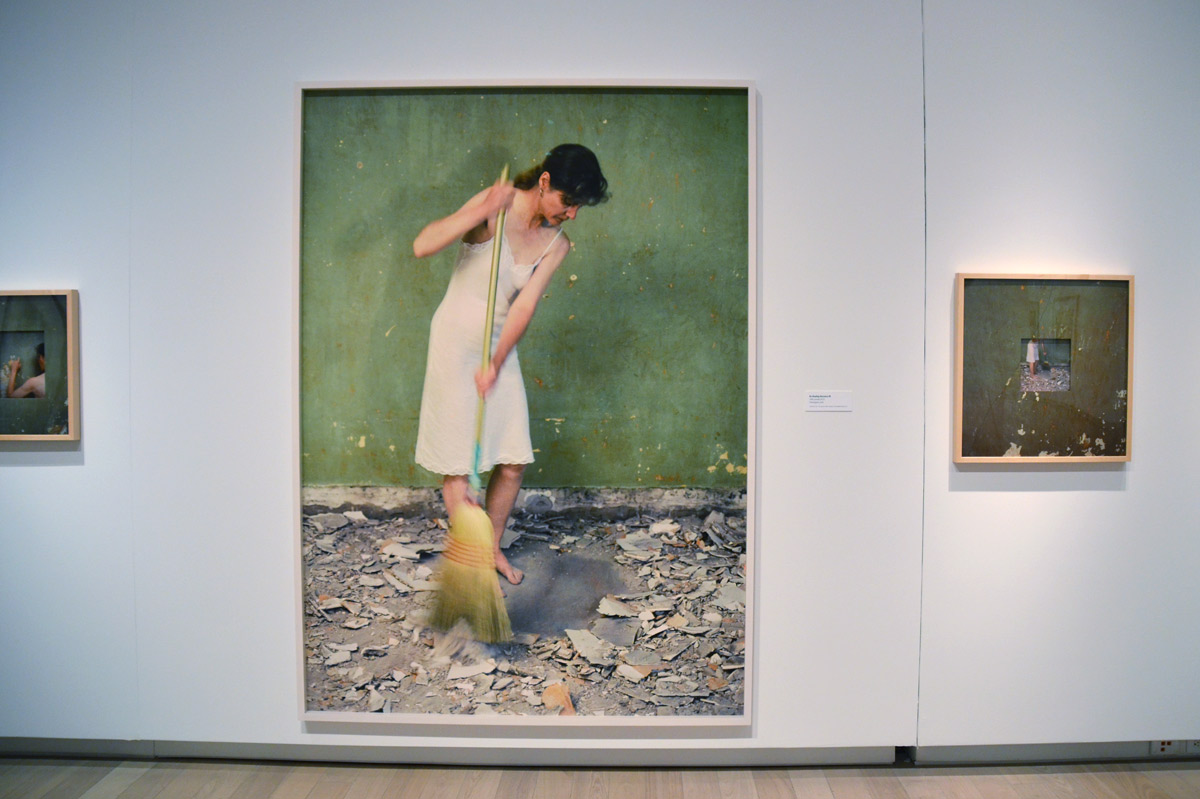
Identity. What springs to mind when you hear the word identity? And how does that relate to art?
Let’s now take those general questions and narrow it down to the work of three artists, or photographers to be more precise: Suzy Lake, Lori Blondeau, and Shelley Niro. I haven’t chosen those women randomly; I’m writing about them because their work is on view if you go to the Ryerson Image Centre. Suzy Lake’s photos are on display in the main gallery inside while Lori Blondeau and Shelley Niro’s are showing outside. The latter two were installed as part of the CONTACT Photography Festival.
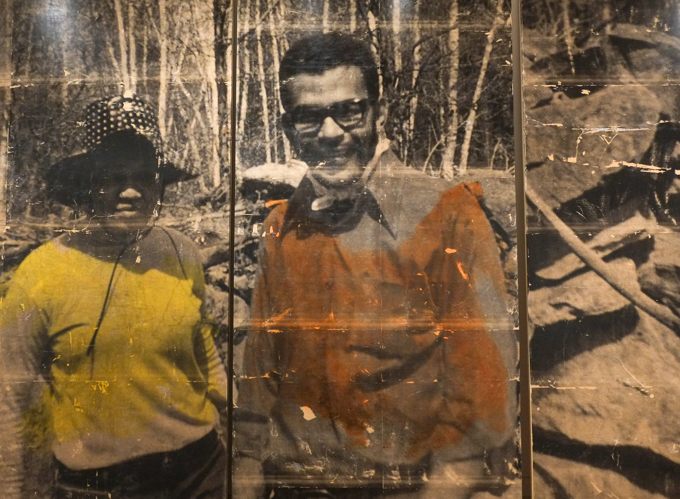
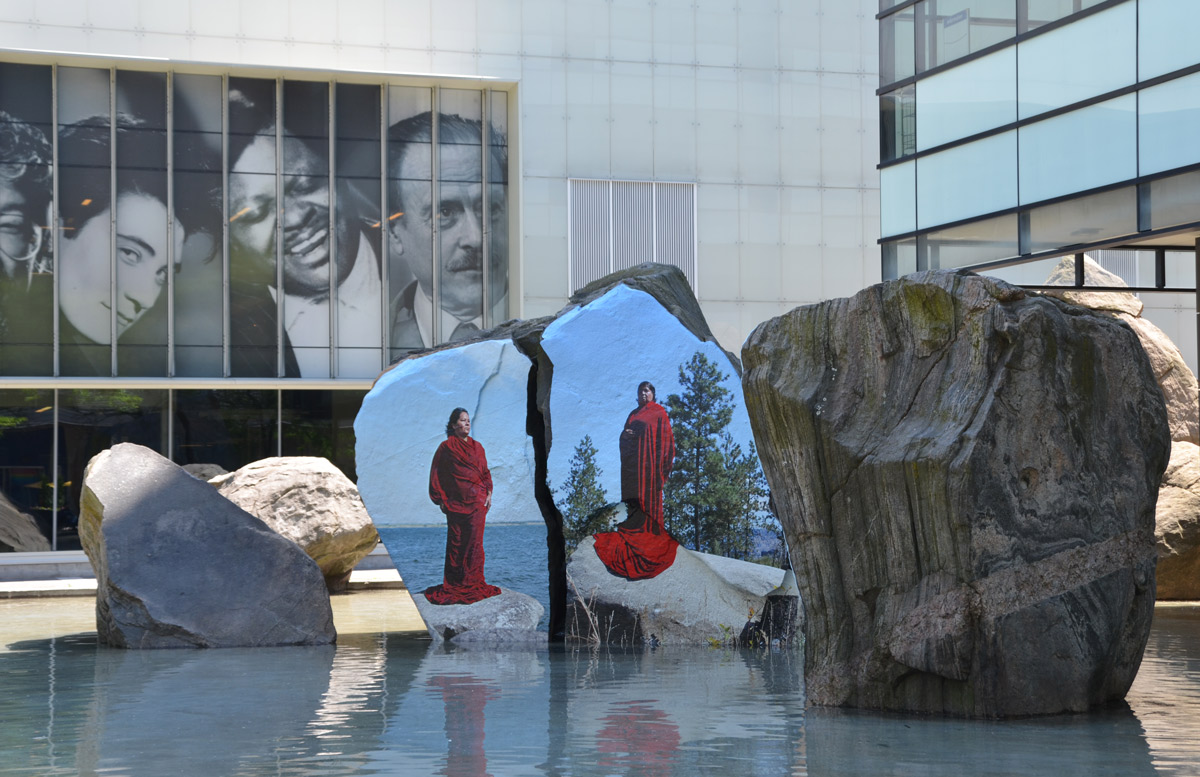
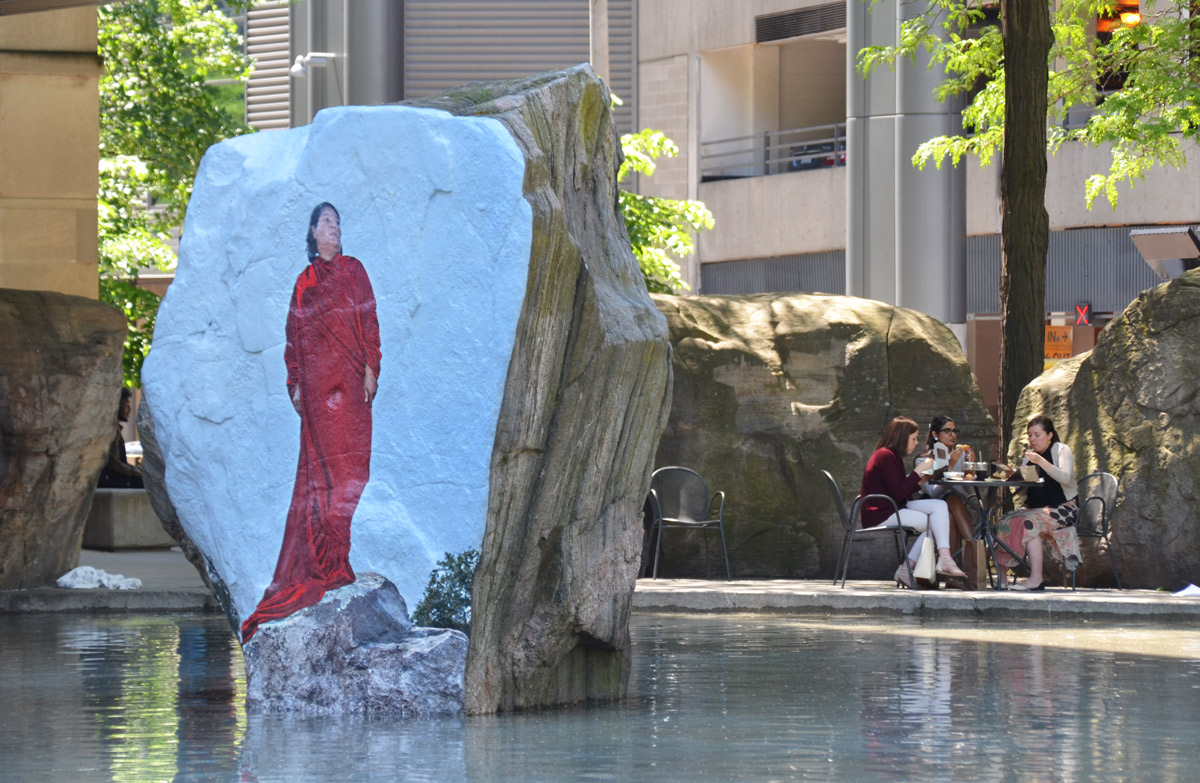
below: Three large images of the Lori Blondeau draped in red while standing on a rock adorn three of the large boulders in Devonian Square. They are part of her “Asiniy Iskwew” work. The title is Cree and translates to “Rock Woman”. In this work, the rocks on which she stands refer back to Mistaseni which was a large sacred boulder that once marked a gathering place. The Saskatchewan government dynamited it in the 1960’s to make room for a man made lake.
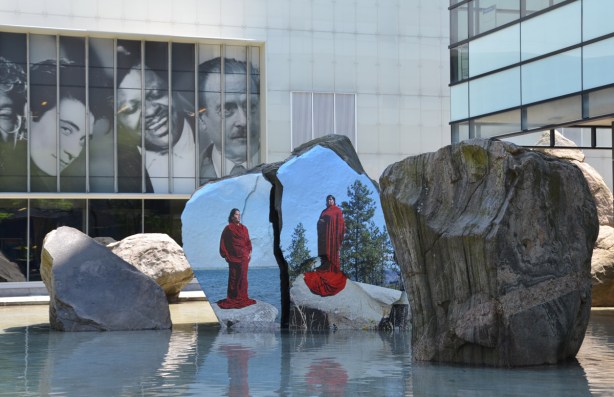
The words on the wall say that Blondeau questions (“interrogates”) how the definitions of Indigenous identity are influenced by popular media and culture, not just in this exhibit but in the rest of her art as well. Her point here is that pictures of strong woman run counter to how popular culture portrays Indigenous women.
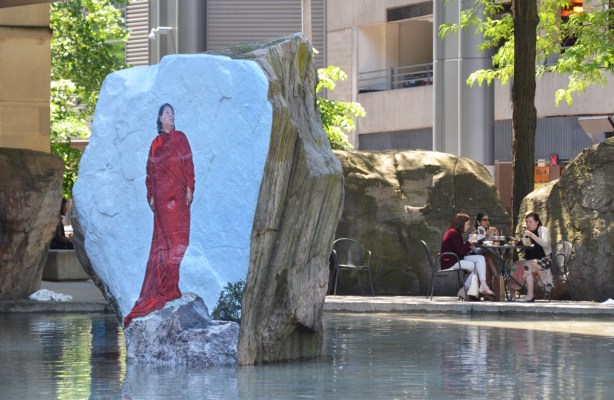
My questions – What and/or who shapes your identity? That question can mean “Your” as in you the individual and it can mean “Your” as in some collective group that you belong to. How does identity evolve? Can it be changed?
How does history affect your identity? As one who has done a lot of genealogy research I understand the importance of history to some people. I have traced my Canadian ancestors – I know where they’re buried and I know where they lived. For me that is a comfort. But I also know that if you want to kill a conversation just bring up the subject of genealogy. Not everyone is interested.
Back to photography and history –
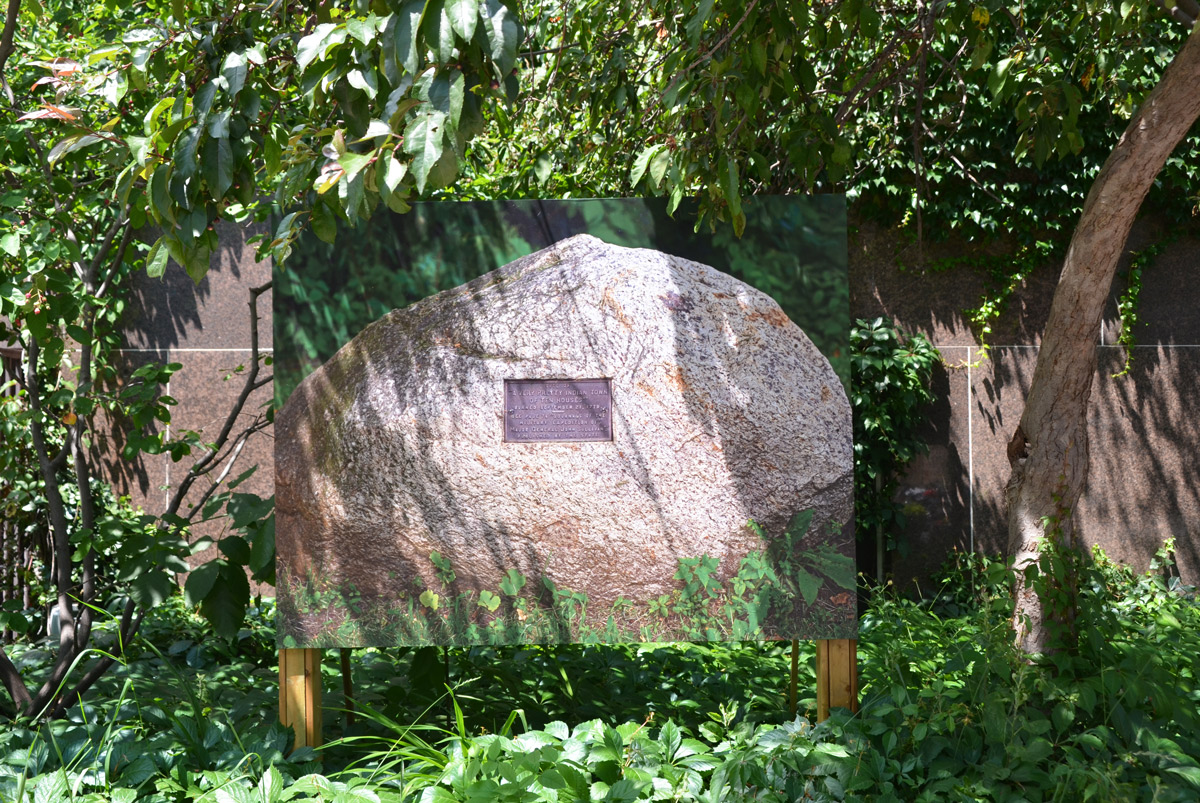
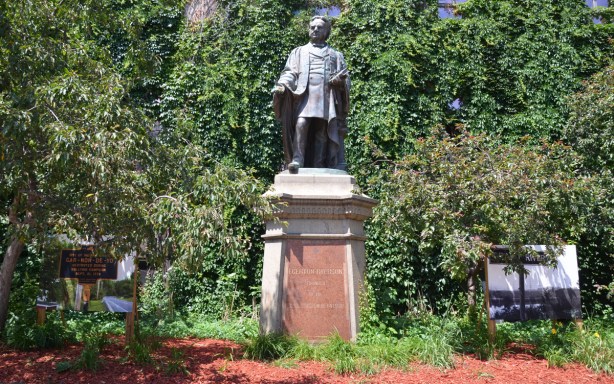
A second indigenous woman artist is Shelley Niro whose work is titled “Battlefield of my Ancestors”. It consists of 6 photographs that were taken in upstate New York and in southwestern Ontario. The pictures are in the garden with the statue of Egerton Ryerson (1803 – 1880), the man who Ryerson University is named after. He was many things including a Methodist minister, a founder of Victoria College (part of the University of Toronto), a Chief Superintendent of Education for Upper Canada, and the person who wrote a report/study on Native education (1847) that became the model for the residential schools thirty years later.
below: Ryerson standing in the greenery with a picture on either side of him. On the left is a picture of a plaque in New York state that says: “Site of Indian village Gar-Non-De-Yo destroyed during Sullivan campaign Sept 21, 1779”. On the right is a black and white picture of the Mohawk River in New York state.
below: Photo taken of a rock at Cayuga Lake.
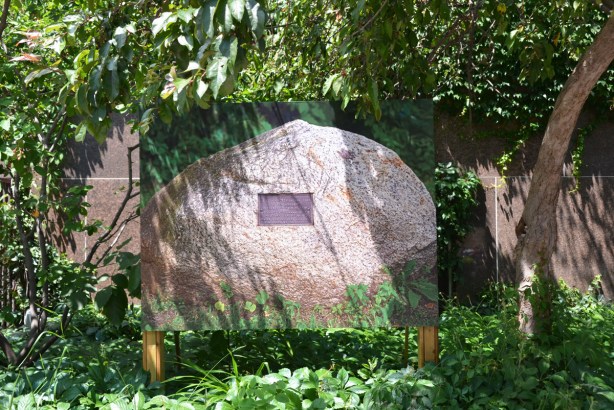
The plaque says:
Site of “A very pretty Indian town of ten houses” burned September 21, 1779. See page 76 “Journals of the military expedition of Major General John Sullivan” published by the state
Back a few lines I called Niro an “indigenous woman artist”. I don’t know if she’d be comfortable with that. Maybe yes, maybe no. I used those words because they help to understand her work in the context of this blog. Should I then use the description “white woman artist” to talk about the third person, Suzy Lake?
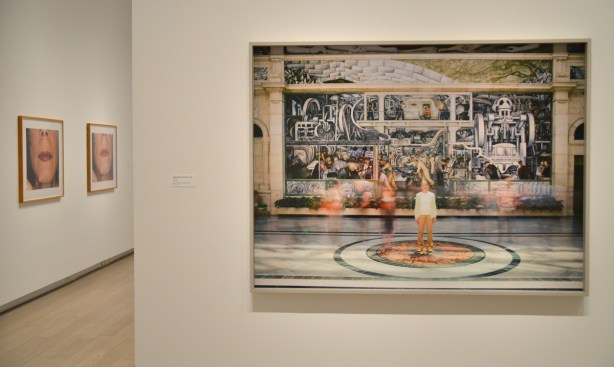
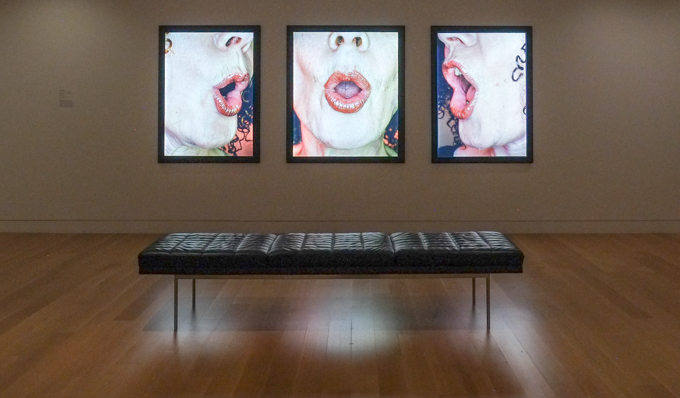
Lake’s photography career began in the 1970’s and for the first two decades was primarily concerned with female identity. In almost all her photos, she is the subject. The 1970’s were the days of Women’s Lib and the rise of “Feminism” – the quest for political reforms on issues such as reproductive rights, domestic violence, maternity leave, and equal pay. It was also a time of increased questioning of cultural norms with regard to women’s roles. In many ways it resembled the increase of awareness of indigenous identity, rights, and problems that we see today.
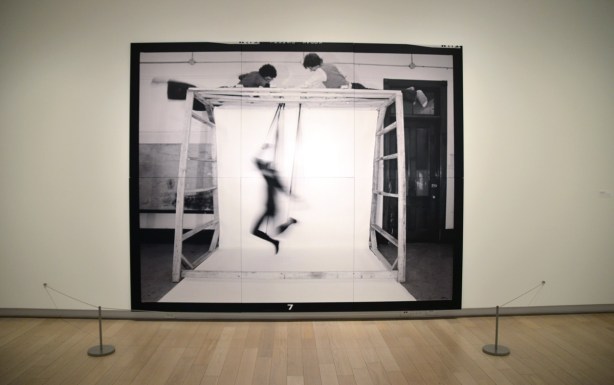
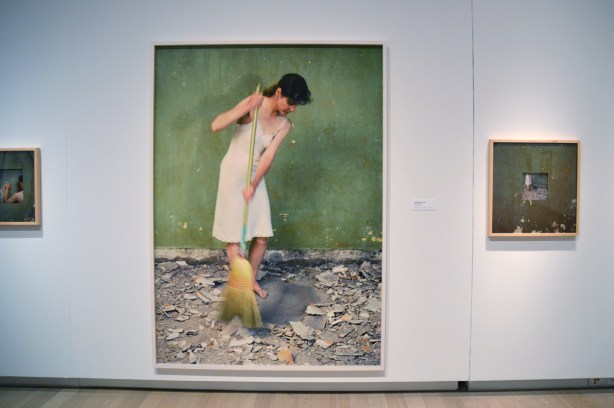
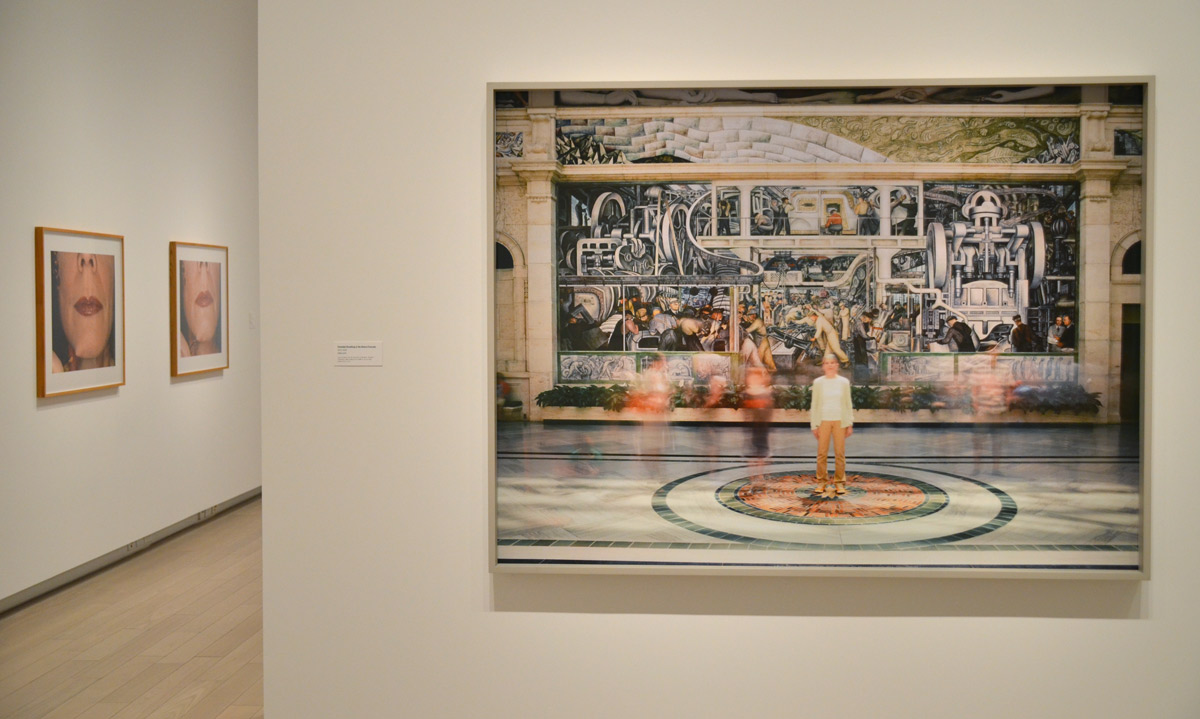
below: Her most recent work involves pictures of her standing in an environment of some sort. The photo is a one hour exposure and the end result is an image where only she and inanimate objects are present and in focus. Here is “Extended Breathing in the Rivera Frescos” 2013-2014. The painting behind her is one in a series by Mexican artist Diego Rivera at the Detroit Institute of the Arts.