


Happy Hallowe’en!





Happy Hallowe’en!
‘Women in Focus’ is the name of a photography exhibit on at the Art Gallery of Ontario (AGO) at the moment. I want to talk about that exhibit in this blog post but I also want to expand the post to include a few other women at the AGO that caught my eye the other day when I was there.
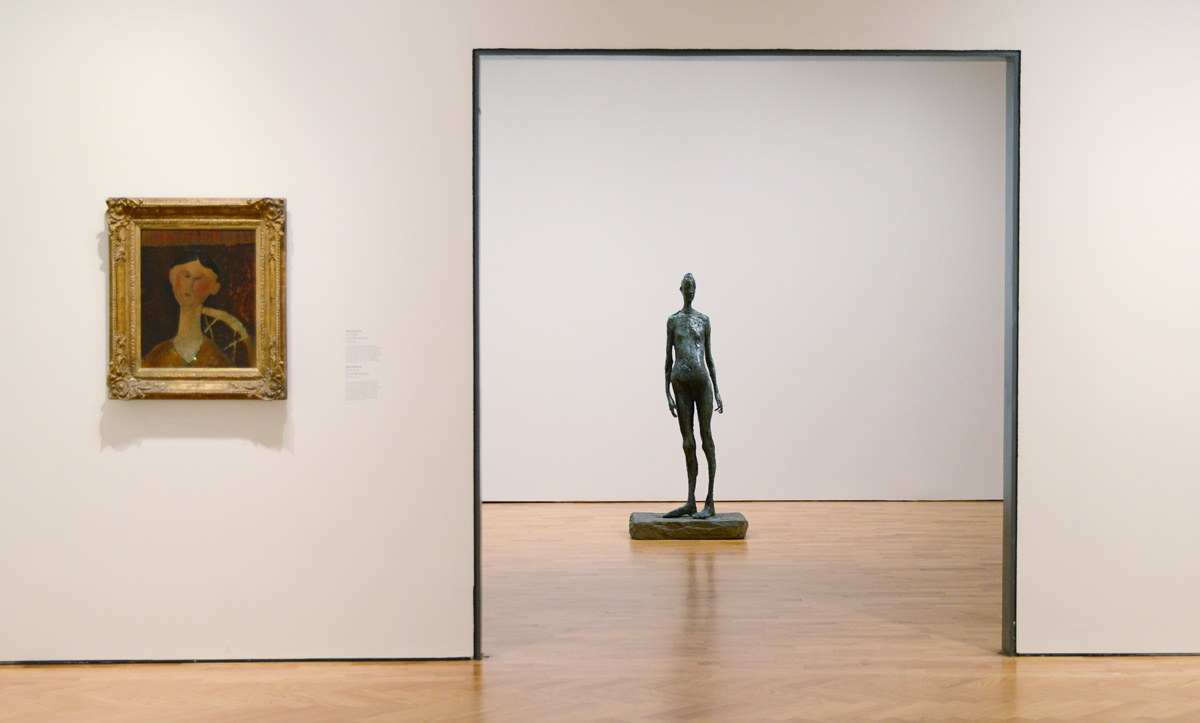
below: A woman’s portrait by Modigliani and a sculpture of a female form in the room beyond. The latter is “The Leaf”, 1948, by Germaine Richier. She’s a forlorn figure, standing naked and all alone.
***
The ‘Women in Focus, 1920s – 1940s,’ exhibit is fascinating. The history, not only of photography but also of the subject matter, is wonderful. The world was changing. Photography was there to be a part of that change as well as document it. Cameras and processing techniques advanced. Magazines flourished. The way that we looked at the world and at ourselves evolved. Photography became an artform.
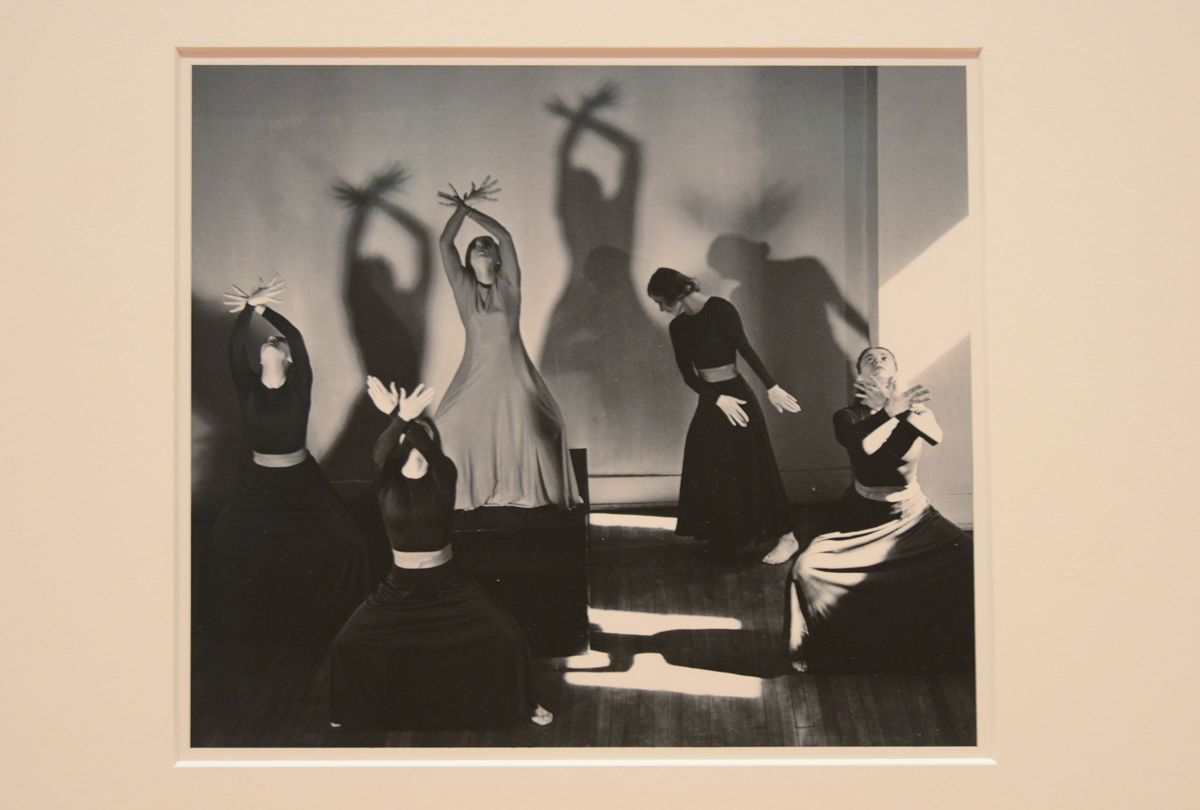
below: ‘Hanja Holm with dance group, New York’, around 1938, by Lotte Jacobi. Gelatin Silver print. The photo is actually sepia toned and not as ‘black and white’ as shown here. Hanja/Hanya Holm (1893-1992) was the stage name of a German born choreographer and dancer; she was Johanna Kuntze (nee Eckert) but considered her name “too heavy” for a dancer. She is also considered one of the founders of American modern dance.
below: ‘St. Moritz, Frau Wernod-Gtoffel with a modern film camera’, 1932, by Alfred Eisenstaedt (1898-1995). Eisenstaedt began his career in 1929 with the Associated Press in Germany. Because of the war he emigrated to the USA in 1935 where he became a photographer for ‘Life’ magazine. I love the old camera… and what’s that in her mouth?

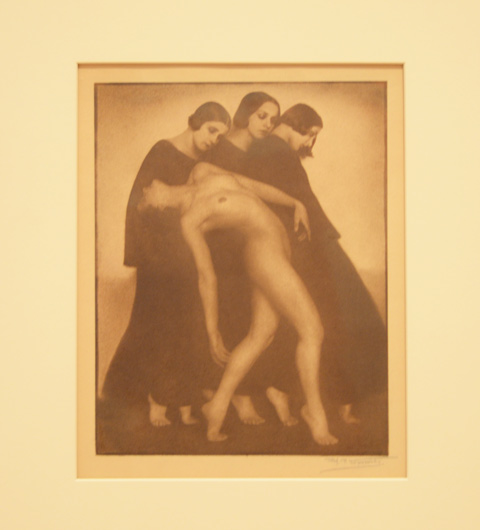
below: ‘Bewegungsstudie’ (‘Movement Study’) 1926 by Rudolph Koppitz (Austrian, 1884-1936), bromoil print. Koppitz was a leading avant-garde photographer of his time. Bromoil prints are slightly fuzzier than other photographs as the image is produced with an oil based paint.
below: ‘Sea of Ice (Genevieve)’, 1935, by Ilse Bing (1899-1998). Bing was born in Frankfurt Germany. She spent the early part of her career in Paris before moving to the USA in 1941. The exhibit at the AGO includes more of her work (and it’s all good).

below: “Good Night Marie’, 1932, by Herbert Bayer (1900-1985). It looks very contrived, doesn’t it? The study of the nude as a photographic skill – getting the skin tones right and all that. Or is it just soft porn?

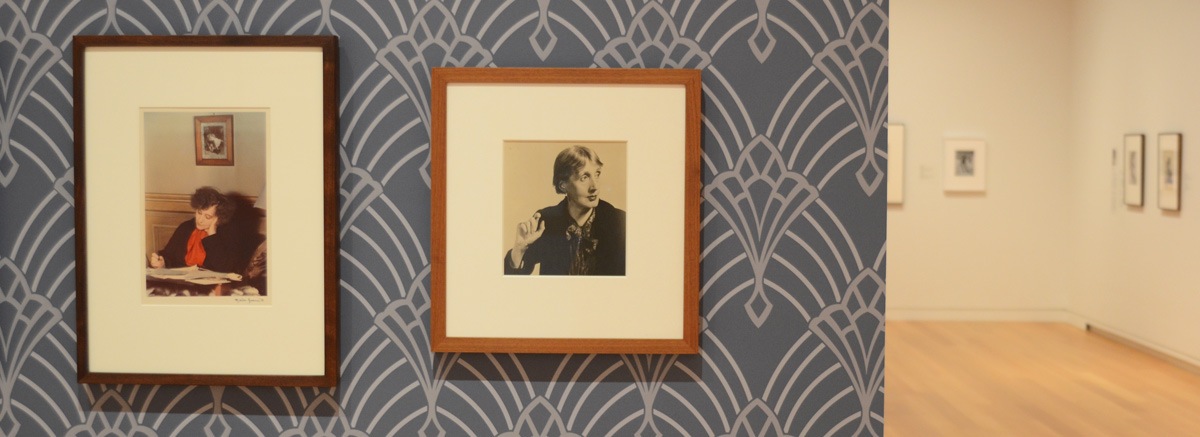
below: On the left is ‘Colette’, 1939, by Giselle Freund (1908-2000). Colette (1873-1954) was a French author and in this picture she is writing in bed. Her best known book was ‘Gigi’. She was nominated for a Nobel Prize in Literature in 1948. The other picture is a portrait of Virginia Woolf, also a writer, by Man Ray (1890-1976).
***
Vija Celmins was born in Latvia just before the Soviets invaded during WW2. She emigrated to the USA and settled first in California and then in New York City. ‘To Fix the Image in Memory‘ is a retrospective of her work at the AGO (until 5th August). Most of her work is in very muted tones if not shades of grey.
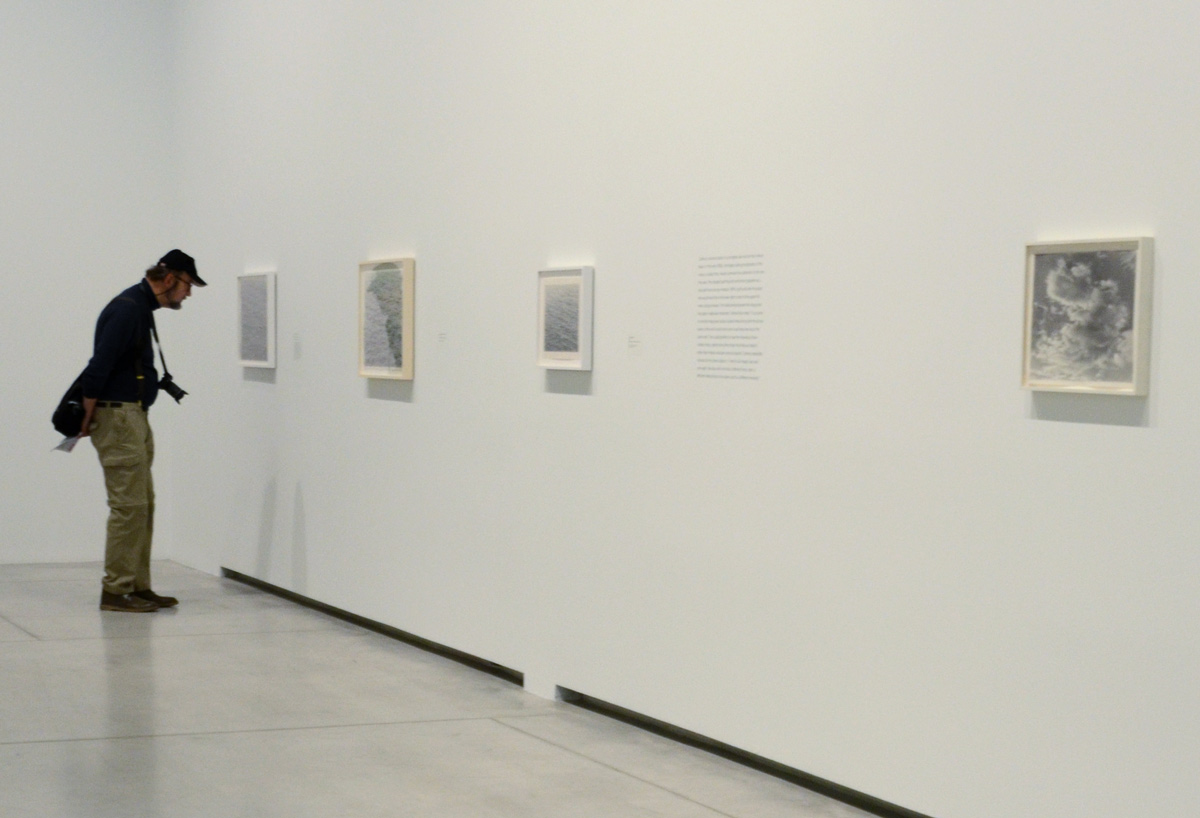
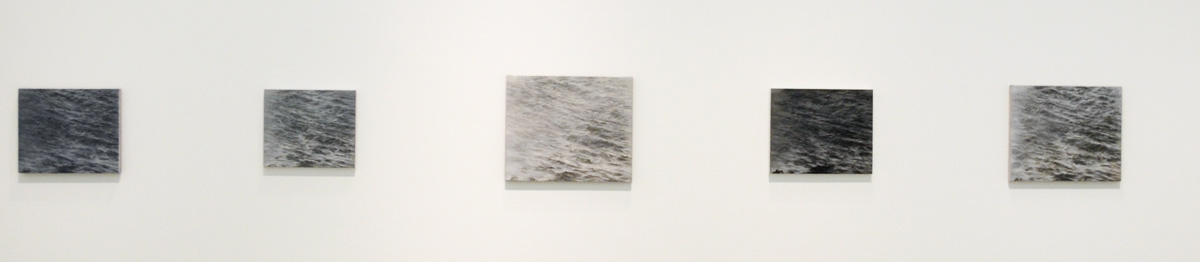
below: Five of a series of drawings (there are 6 in the series) of water done in graphite (i.e. pencil). One is the original and five are copies of it. These photos are small but I think that you can see that they are of the same waves. A lot of her work was intense – detailed drawings of water and the desert floor. She also did a series of drawings and paintings of stars in the sky.
below: A spider web painted in oils on linen. Celmins experimented with pictures of spider webs done in different media on different surfaces. This was my favorite – muted and slightly blurry.

below: I’ve cheated a bit here…. this is a screenshot of the top part of the results of a google image search on Celmins’ name. It gives you a much better sense of her work that I can convey.

***
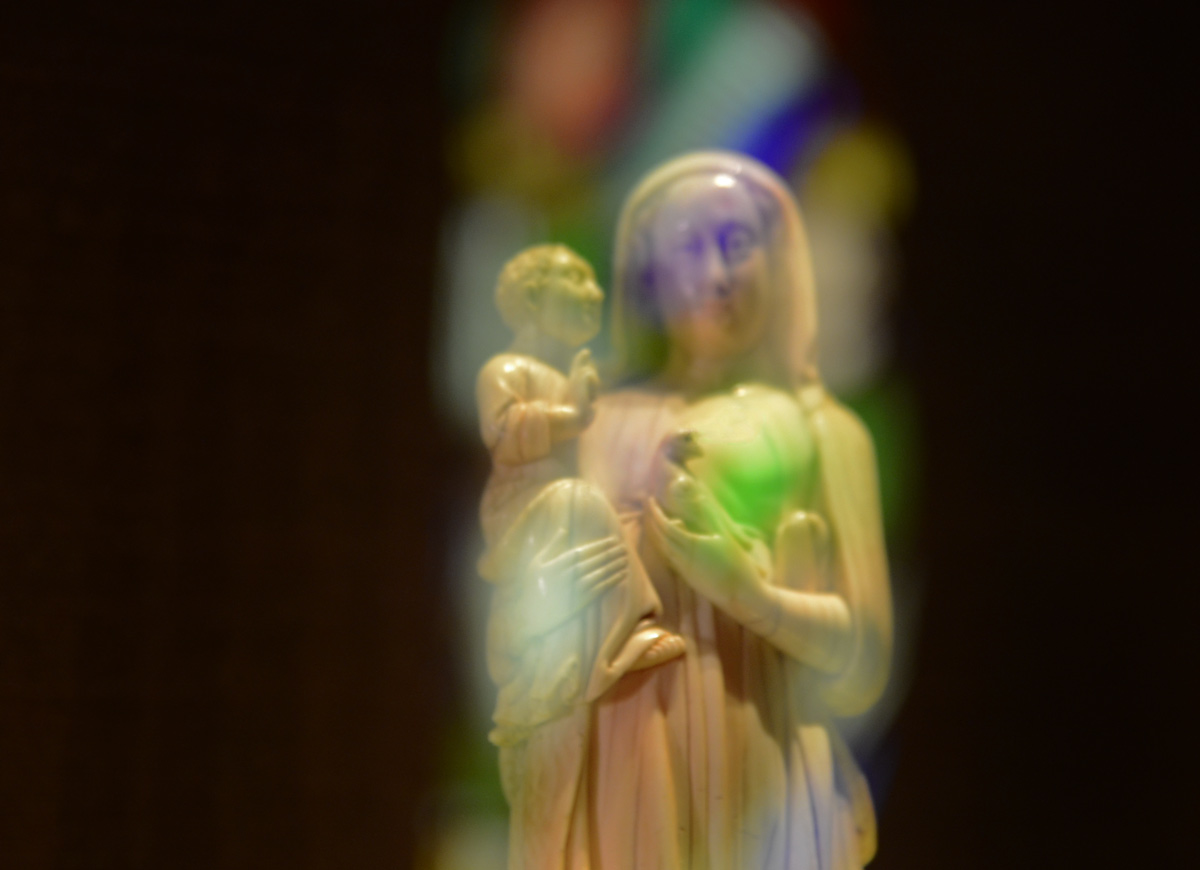
As I was walking towards the exit of the AGO I was still thinking about how women are portrayed in art. I found myself in the ‘religious art’ section of the gallery, from a time in history when the church was a major patron of the arts in Western culture. Apparently, it wasn’t a good time for women. There are plenty of Mary’s either in her virgin mother role or seen weeping at the foot of the cross, but there is a dearth of other women. Ponder that for a while but try not to get too depressed. And while you ponder, here is a photo of a small white statue bathed in light coming through a stained glass window. Mary’s watching over you.
Wilson subway station is nestled between the northbound and southbound lanes of the Allen Expressway. It’s functional, but not pretty. All that concrete!
below: Wilson subway station from the parking lot on the SW corner of Wilson and the Allen.
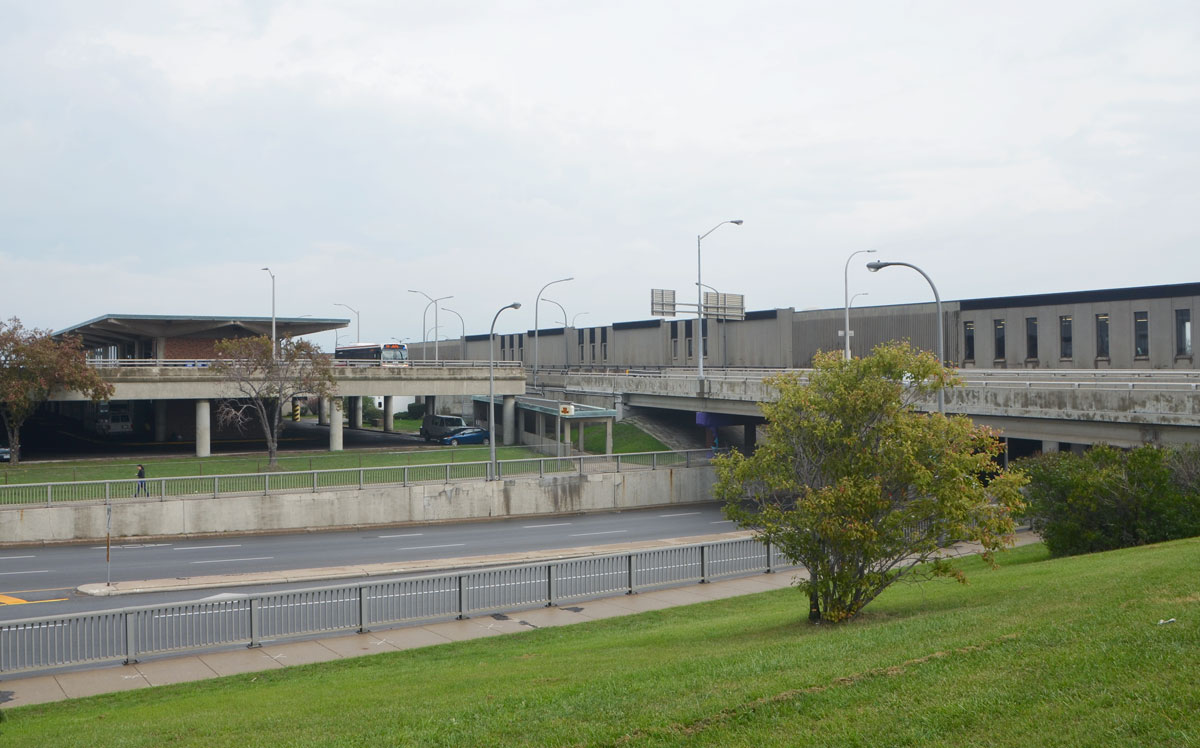
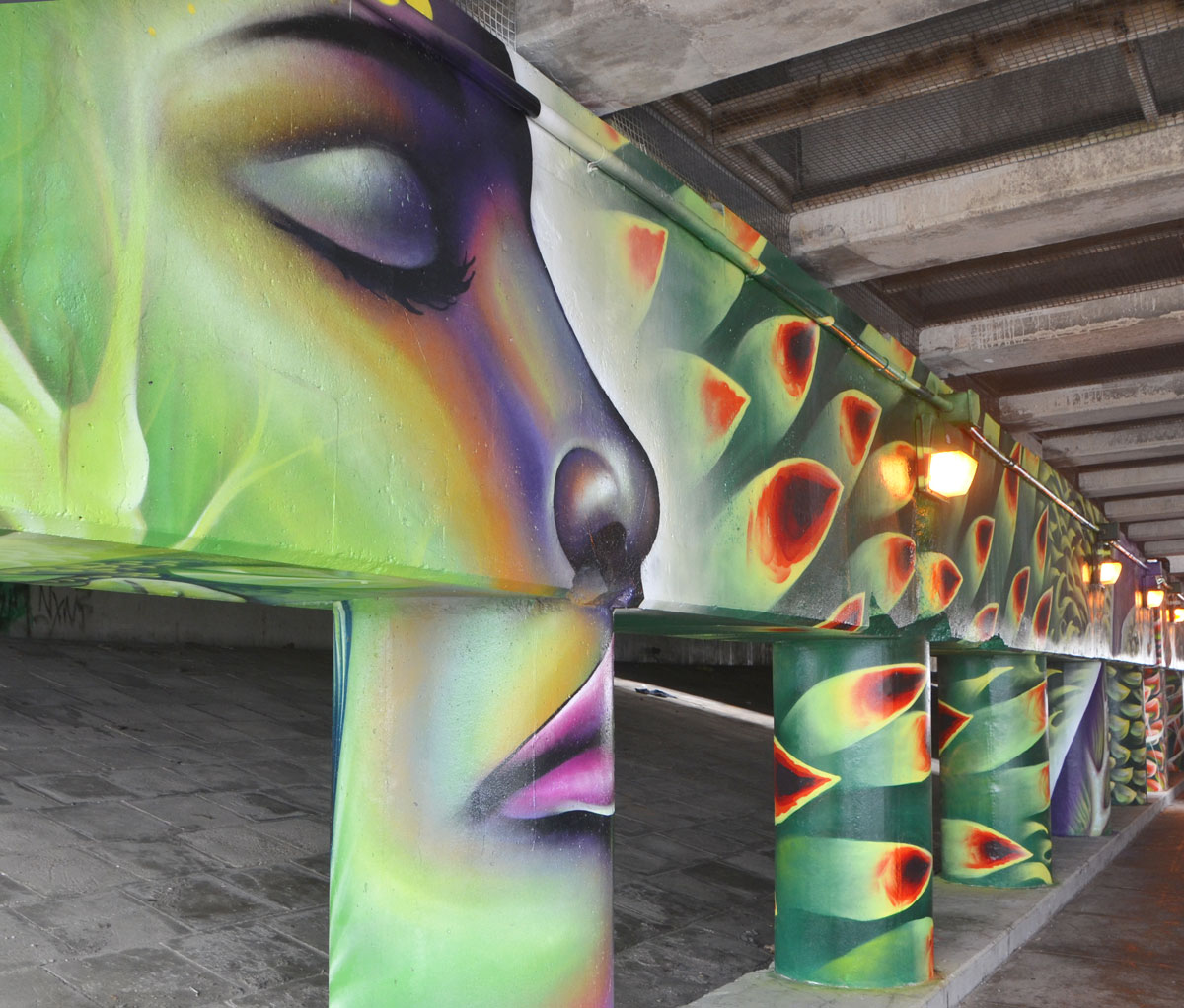
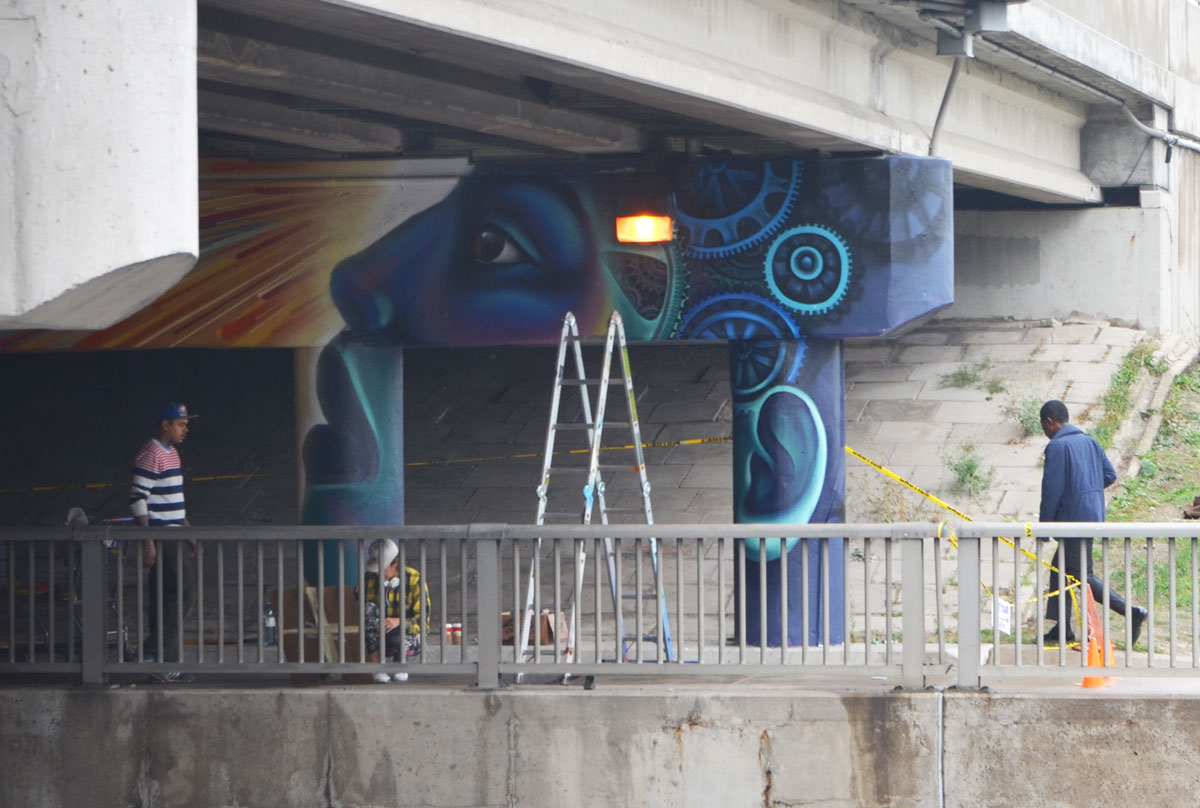
If you look closely at the above picture, you might be able to see that one of the pillars holding up the Allen has been painted purple. That’s part of the latest mural painting project by Shalak Attack, with help from Bruno Smoky. What you can’t see is that the mural covers all of the underpass supports on both sides of Wilson Ave.
below: The mural on the south side of Wilson Ave has been painted on all sides. Here, a face is between two hands gripping the poles.


below: More pillars on the south side.
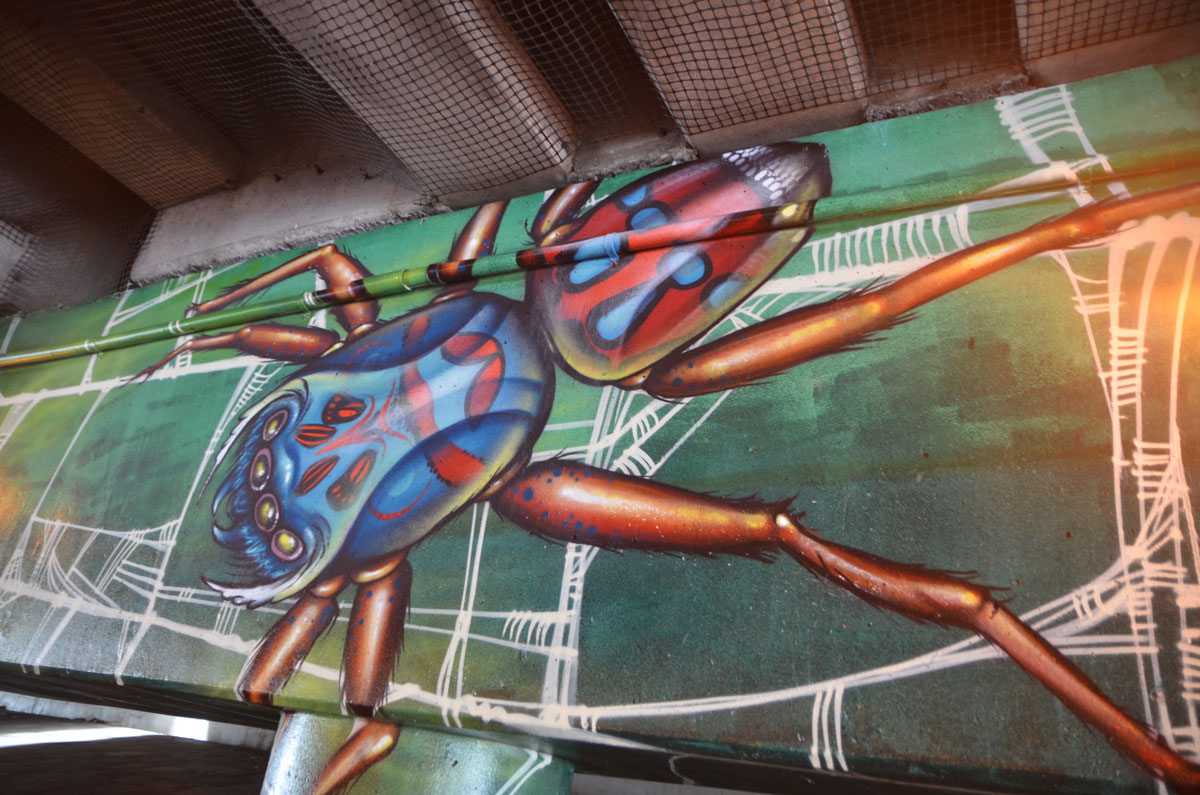
below: A large spider on a web is in the center of the mural.
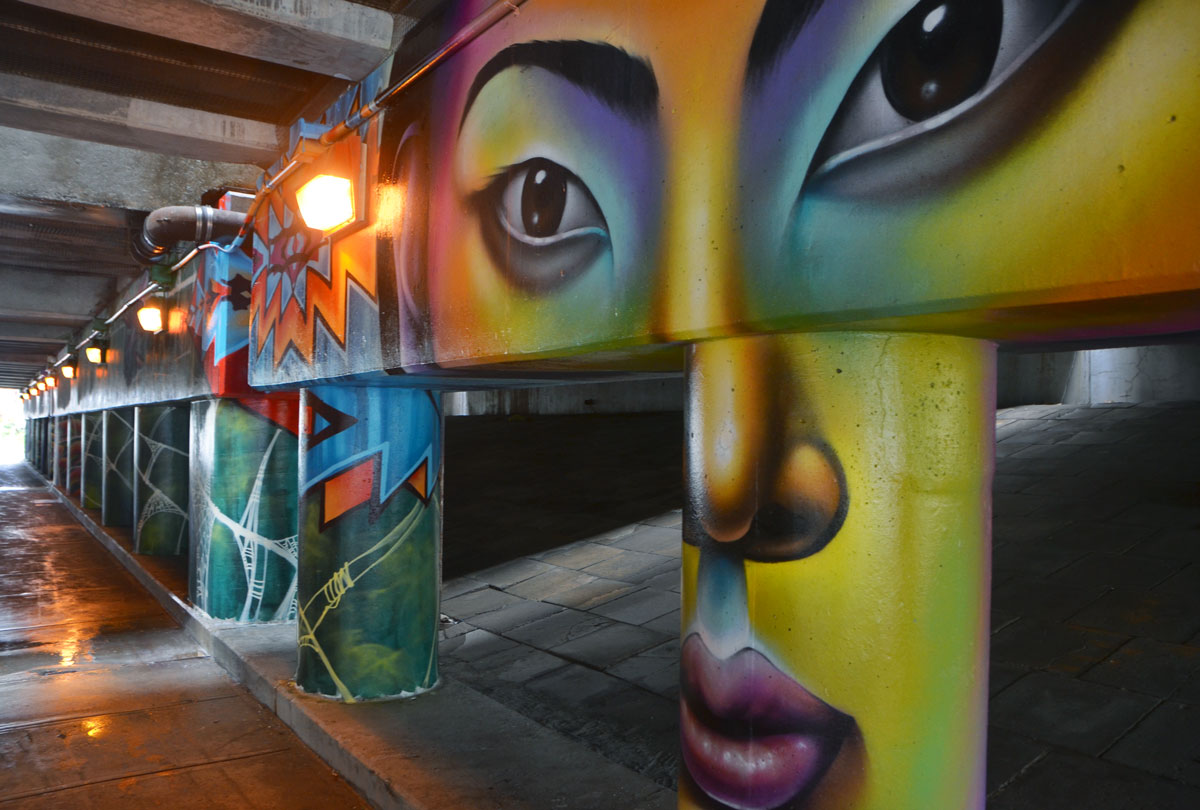

below: The back side of the supports have also been painted. Just be careful not to bump your head on the road above if you want to get a closer look!


below: The north side of the underpass is being painted at the moment. Stay tuned for updates!

 as I walk Toronto