Posts Tagged ‘Louis Temporale’

This blog post is the result of a walk along Bloor Street East between Yonge & Glen Road (with the usual diversion or two).  Bloor Street acquired its name about 1855 and is named for Joseph Bloor (or Bloore).
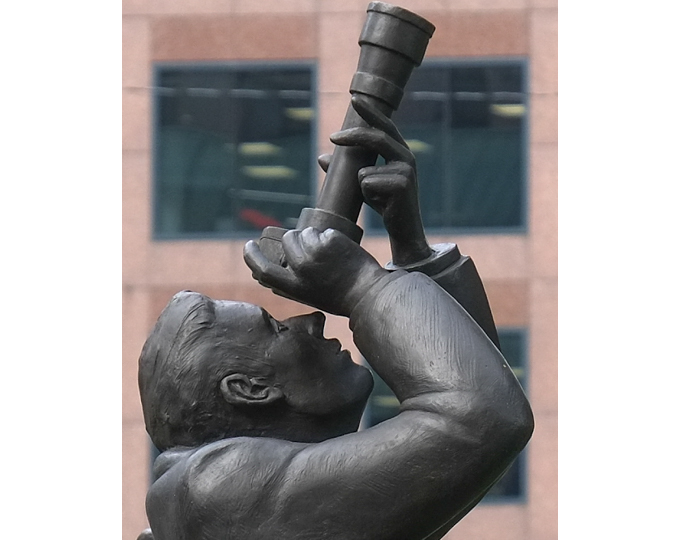
man with camera pointed upwards, part of a sculpture called Community, by Kirk Newman

below: Bloor Street, looking west towards the intersection of Yonge & Bloor.
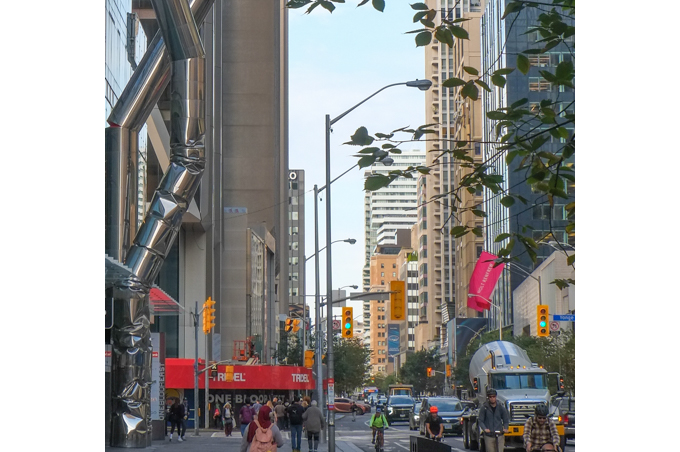
downtown Toronto, tall buildings at Bloor and Yonge, glass and steel condo towers

below: “Safe Hands” by Ron Arad, towering 88 feet over Bloor Street in front of One Bloor East (at Yonge).  Look up… way up!!
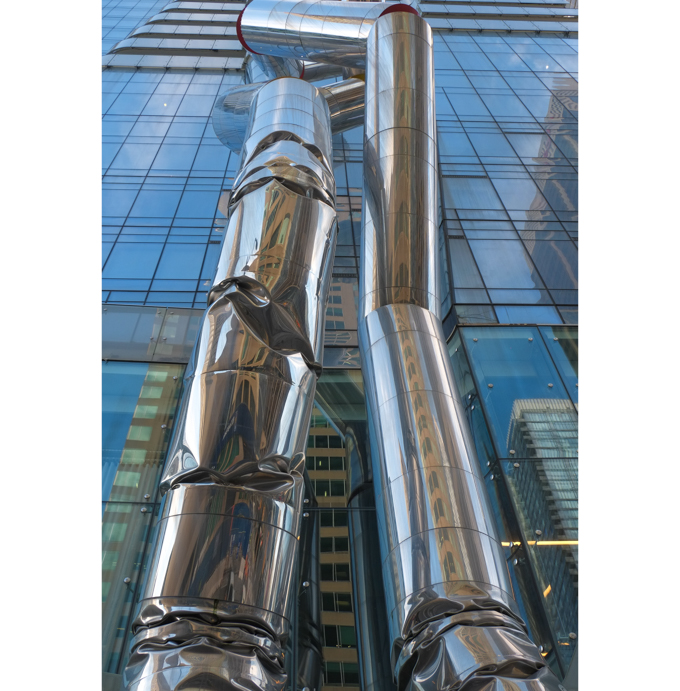
metal sculpture on Bloor Street, Safe hands by Ron Arad

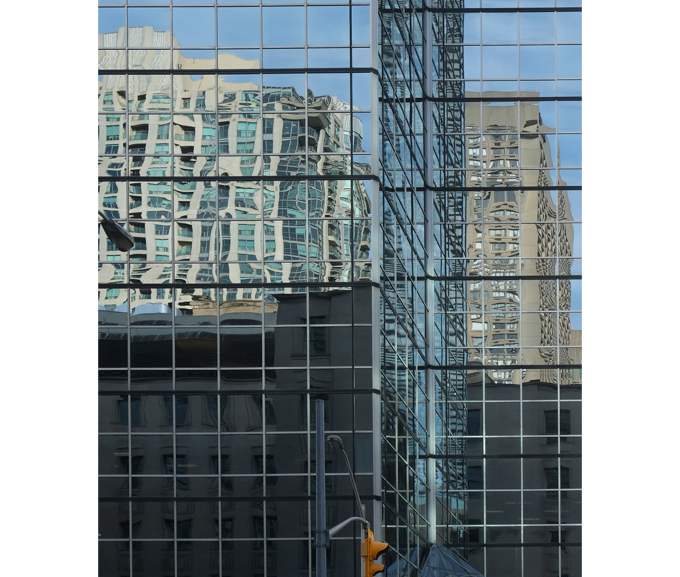
below: More up!  Glass and steel towers at Yonge and Bloor.
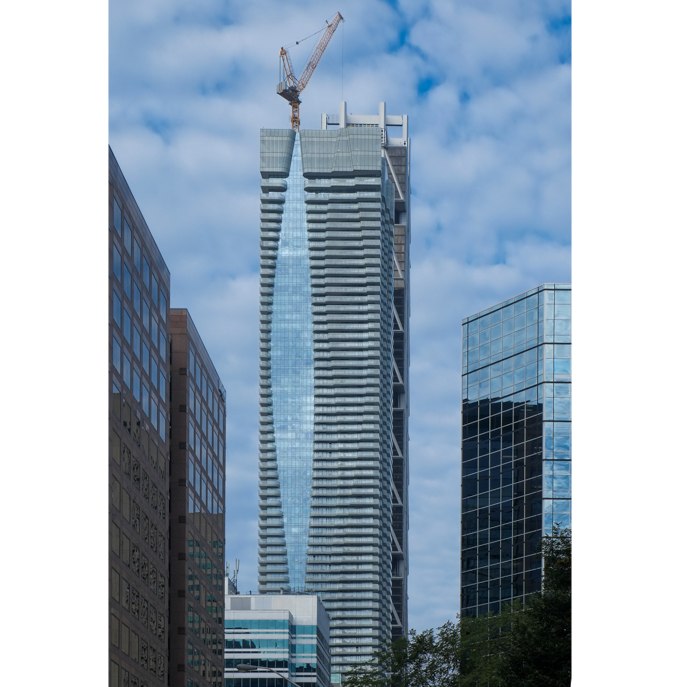
downtown Toronto, tall buildings at Bloor and Yonge, glass and steel condo towers

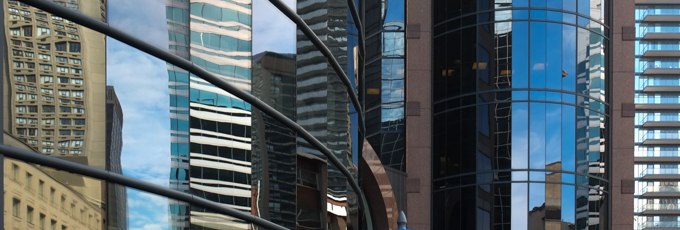
reflections in tall city glass buildings

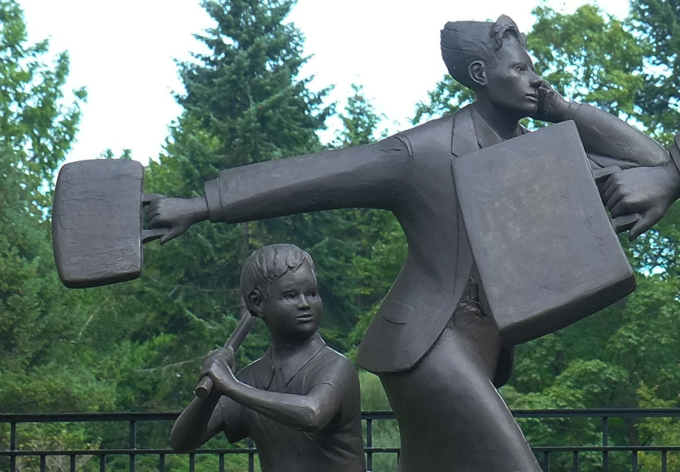
below: “Community” by Kirk Newman.  Busy people going about their day.
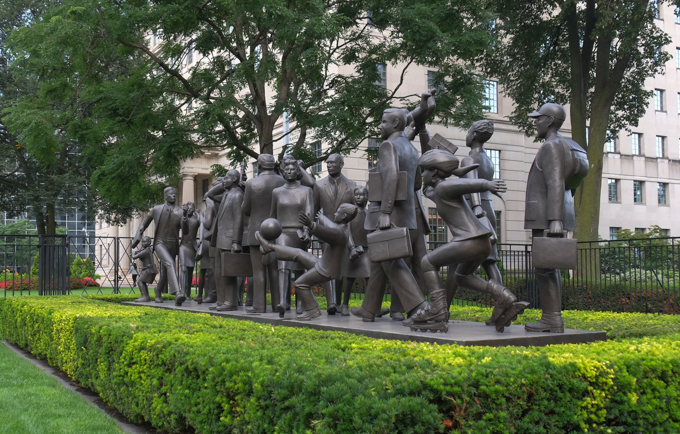
sculpture, Community by Kirk Newman, many people walking or running down the street,

part of sculpture titled community, by Kirk Newman, life sized people going about their day, woman carrying briefcase, boy with a baseball bat

below: Not an art installation, but large ventilation shafts (for the subway?) just behind Bloor
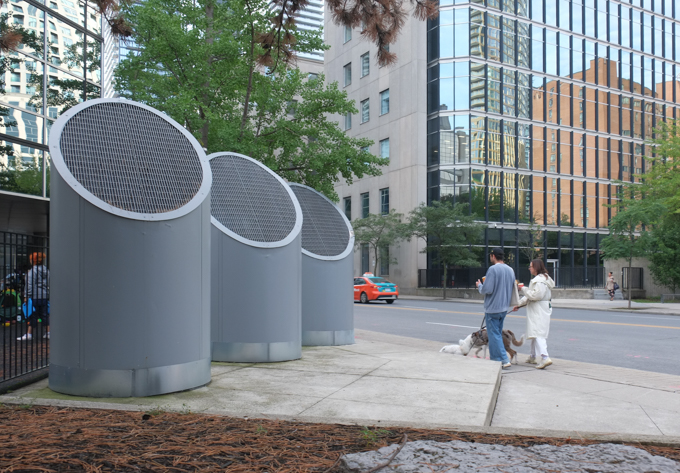
large grey ventilation shafts rising from the sidewalk behind 160 Bloor East, people walking past

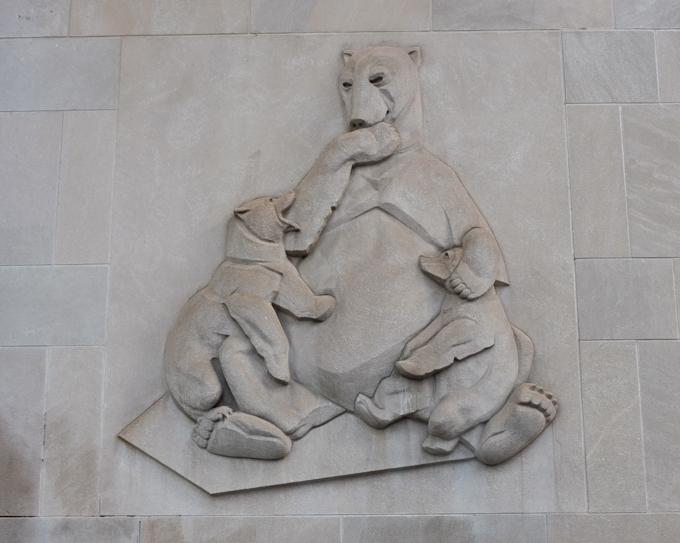
below: Relief sculptures on the limestone exterior of the former Crown Life Building.  They were designed by Canadian sculptor Cleeve Horne and carved by stone cutter Louis Temporale in 1953.
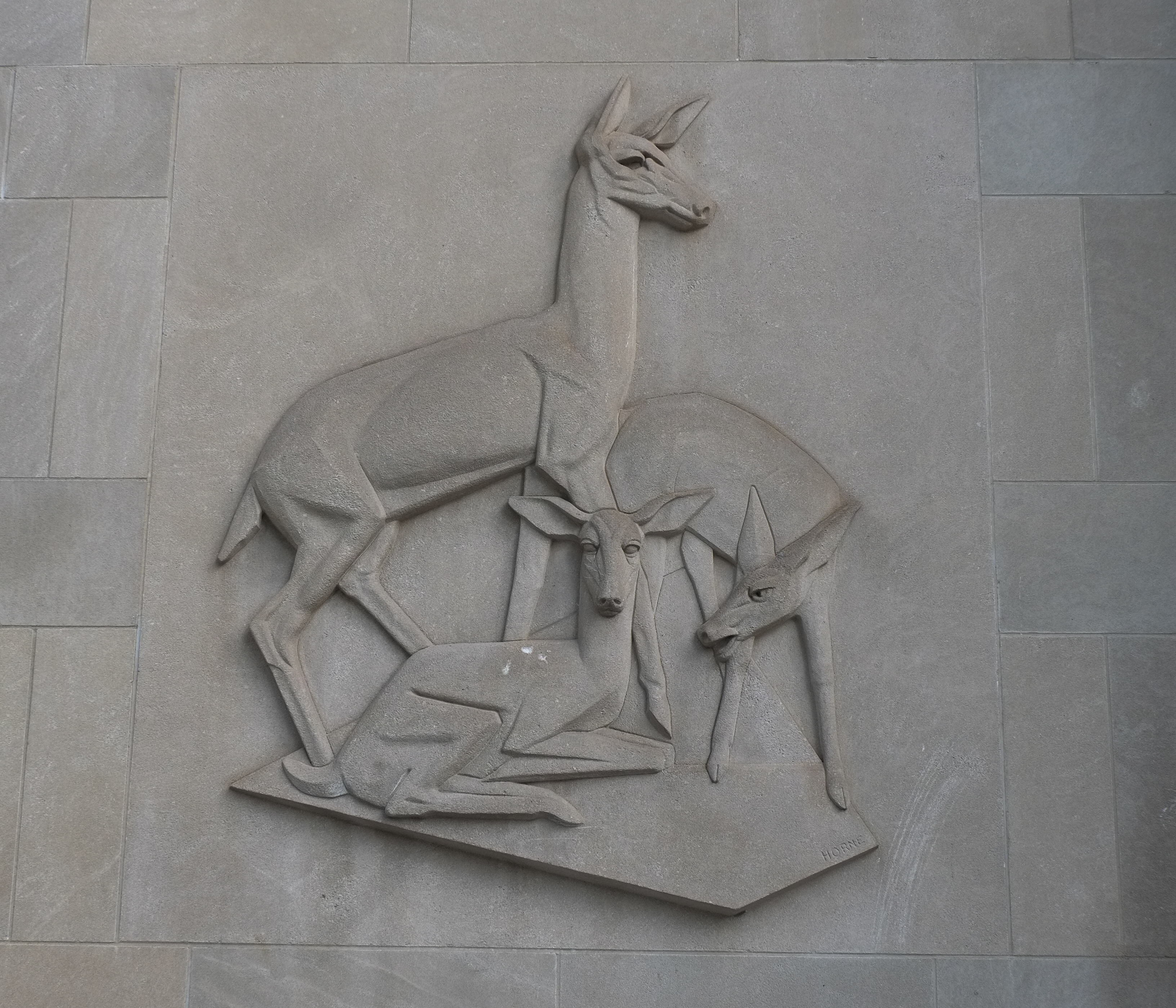
stone relief sculptures on side of building, deer family

stone relief sculptures on side of building, bear family

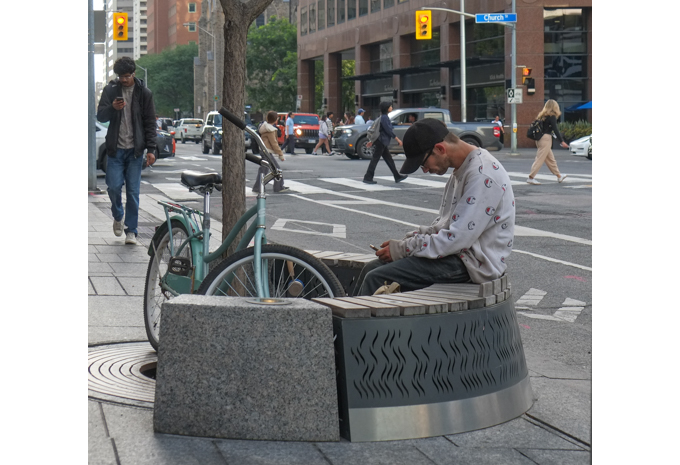
young man sitting on round seat outside, uner small tree, bike parked nearby, reading on phone

below: Sculpture by Kosso Eloul on the northeast corner of Church and Bloor.
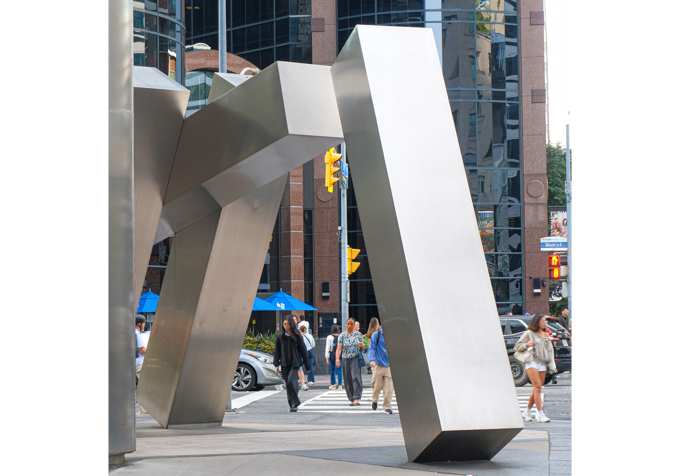
sculpture by Kosso Eloul, at northeast corner of Church and Bloor

below: St. Pauls Bloor Street, Anglican church.   The original church was built in 1842 and has undergone a few expansions and renovations since then.
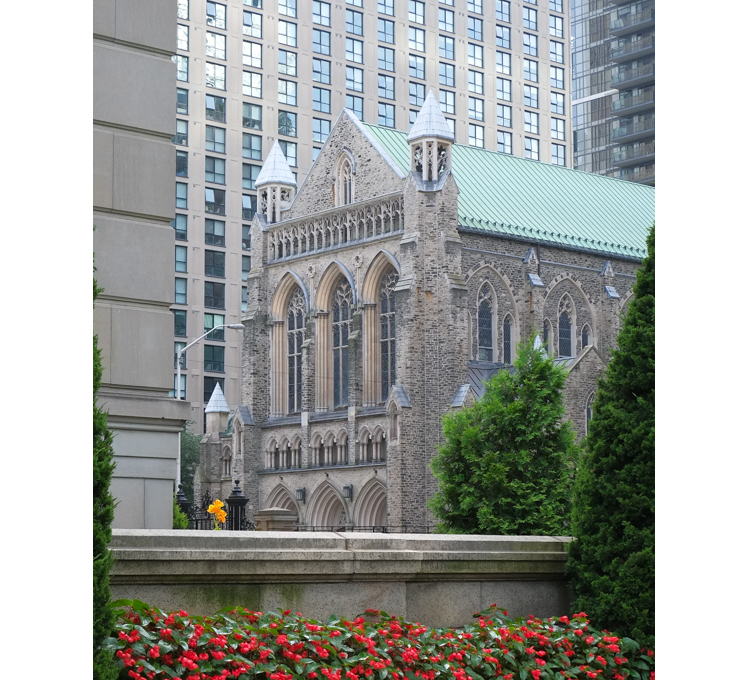
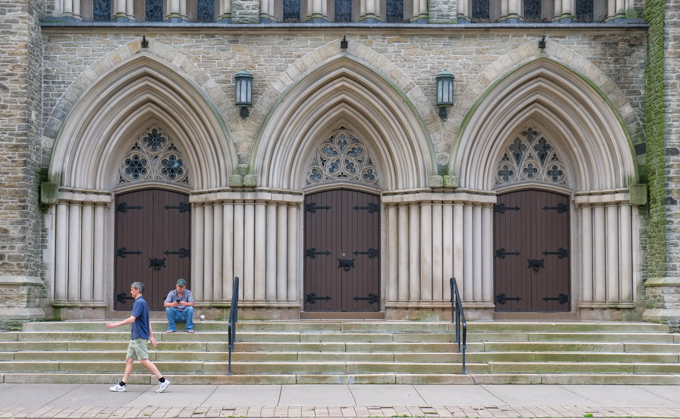
St. Pauls Bloor Street, church, stone,

man sitting on steps of St. Pauls church, wide steps, three doors, another man walks past

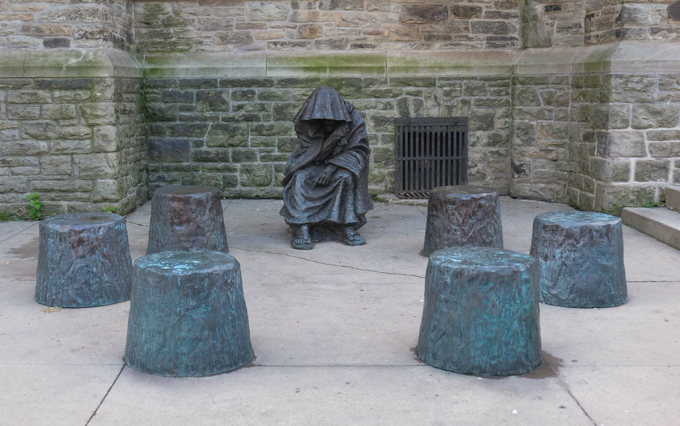
below: A space to sit.

sculpture of homeless person begging, covered in hooded robe

below: Just down the street from St. Pauls Bloor Street, but set back from the street,  is St. Andrews United church. Joseph Bloore lived at Bloor and Park Road, across the street from what was then Bloor Street Methodist Church.   This tablet is a replica of the one that was  installed in the Methodist Church late in 1862.  In the 1980s, the church that this memorial was in was demolished and the tablet moved to the city archives.  Because of a number of church mergers, this was St. Andrews United Church.  He is buried nearby in the Toronto Necropolis.
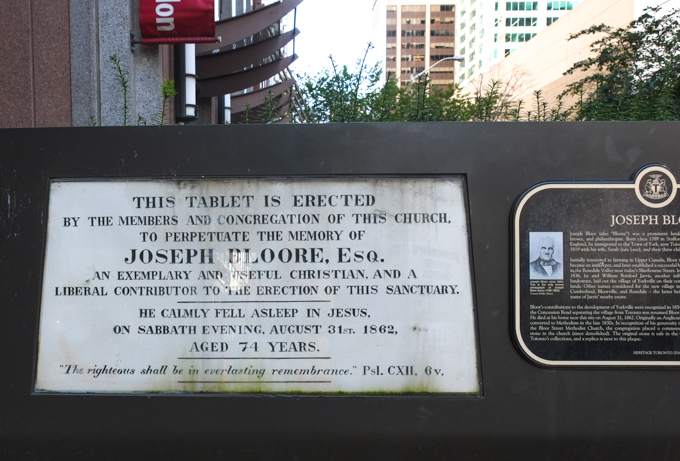
stone tablet memorial to Joseph Bloore that used to be in a church

“This tablet is erected by the members and congregation of this church, to perpetuate the memory of Joseph Bloore Esq., an exemplary and useful Christian, and a liberal contributor to the erection of this sanctuary.  He calmly fell aslepp in Jesus on Sabbath evening, August 31st 1862, aged 74 years,  The righteous shall be in everlasting remembrance.  Pslam CXII, 6 v.”

below: St. Andrews United church with its front courtyard.
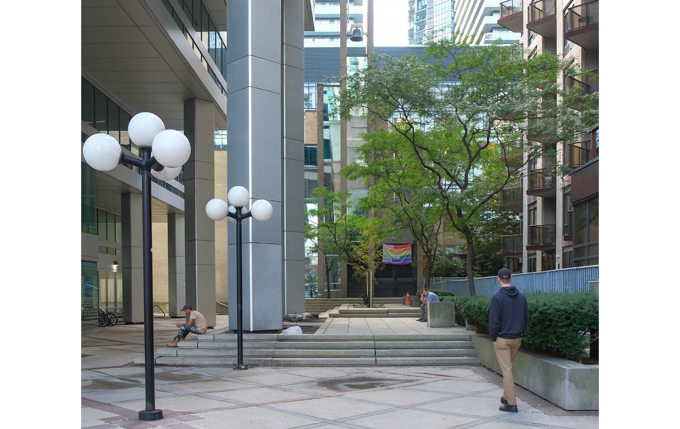
courtyard in front of St. Andrews United church on Boor street

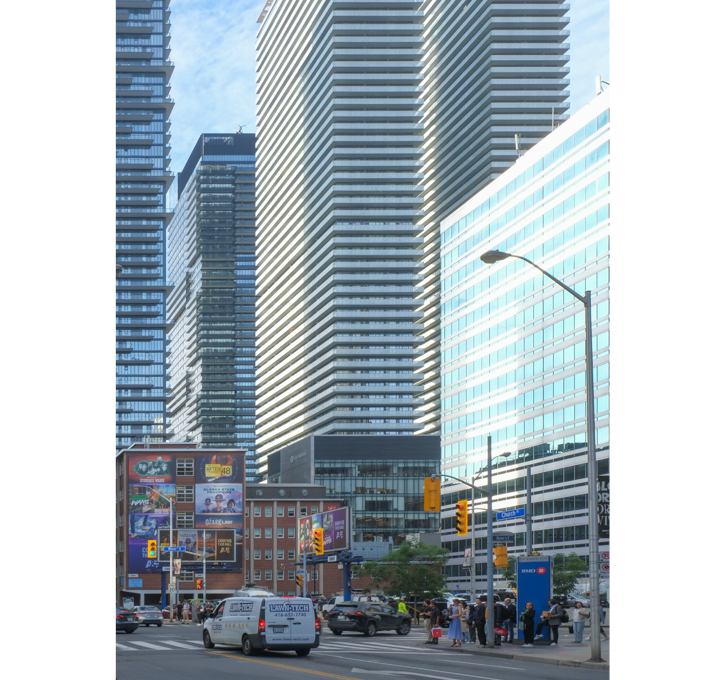
below: Bloor and Church streets, looking southwest
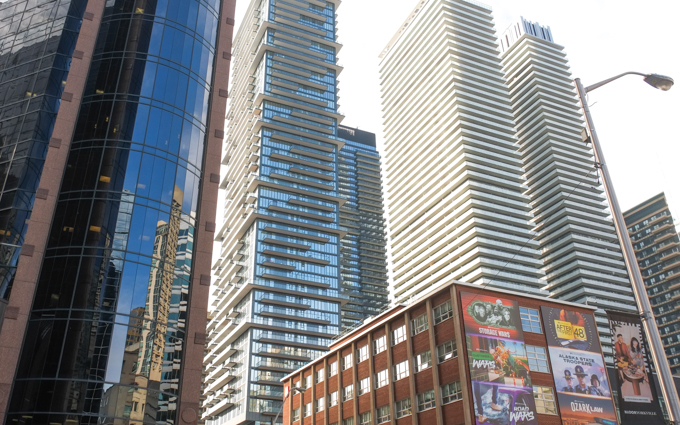
Bloor and Church looking southwest

reflections in glass buildings, bloor and church

Bloor and Church, south on Church towards Bloor

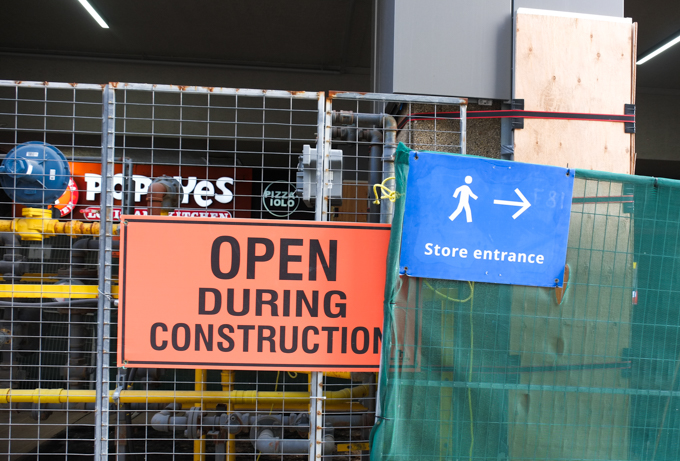
sign that syas stores open during construction, mounted on hoardings

below:  A couple of 1960s/70s brutalist concrete buildings with recessed windows – a fairly common Toronto architectural style.
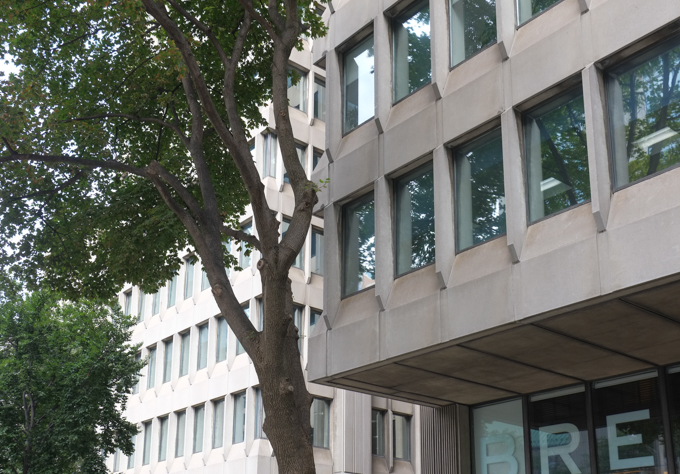
A couple of 1960s/70s brutalist concrete buildings with recessed windows

below: Sherbourne Street bridge, north of Bloor, over Rosedale Valley Road.  This is the first bridge referred to in the title (yes, it took a while to get here!)
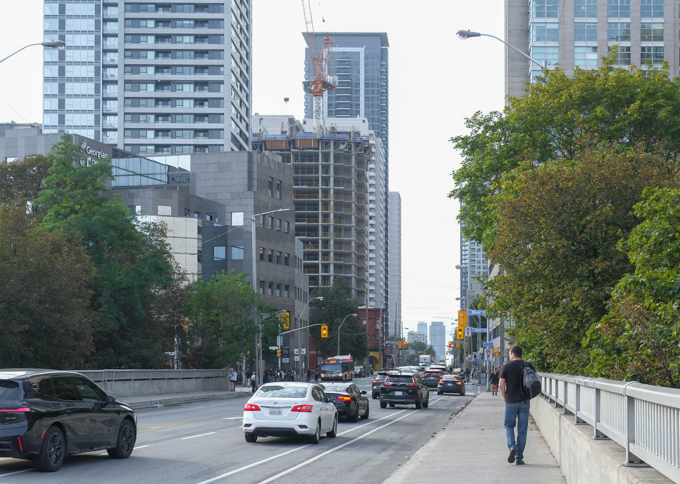
bridge, sherbourne street over the Rosedale ravine

below: Rosedale Valley Road passes under Sherbourne Street as it winds its way along the bottom of the ravine from Bayview to Yonge (approximately!).
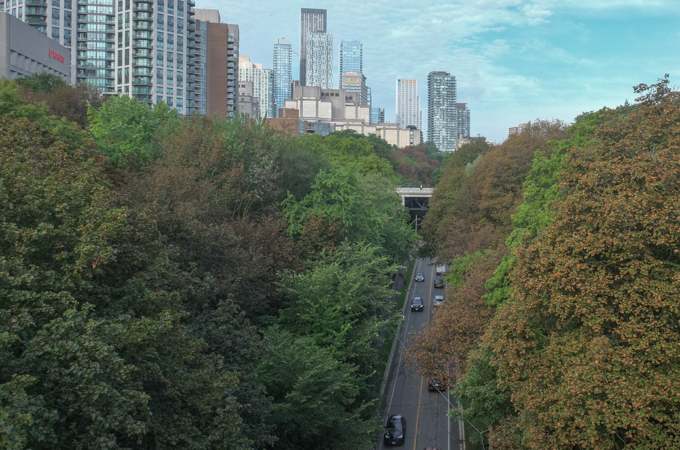
Rosedale Valley Road passes under Sherbourne Street, buildings of downtown Toronto in the distance

below: Once upon a time, the corner of Bloor and Sherbourne was home to the Sherbourne Blockhouse, shown here in a drawing by R. J. Brough (October 1862).  There isn’t much to the road!…. but there is a church steeple in the background.  This blockhouse was one of three built to defend the city from possible ‘invasion’ by rebels  and other rabble rousers in 1837.  That was the time of the Upper Canada Rebellion led by William Lyon Mackenzie against the British colonial government and the  Family Compact (the unelected local ‘government’ of the day).  The blockhouse wasn’t needed for defense and fell into disrepair. It is long gone.
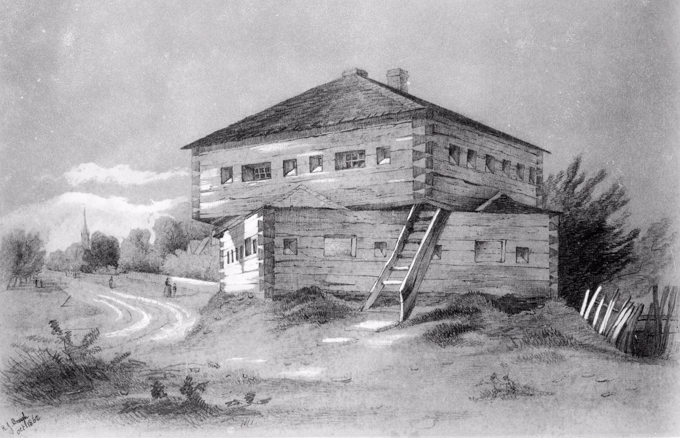
pencil drawing by R. J. Brough in 1862 of Sherbourne Blockhouse,

. Photo Credit: Toronto Public Library file E4-82a, Public Domain (found on Wikipedia).

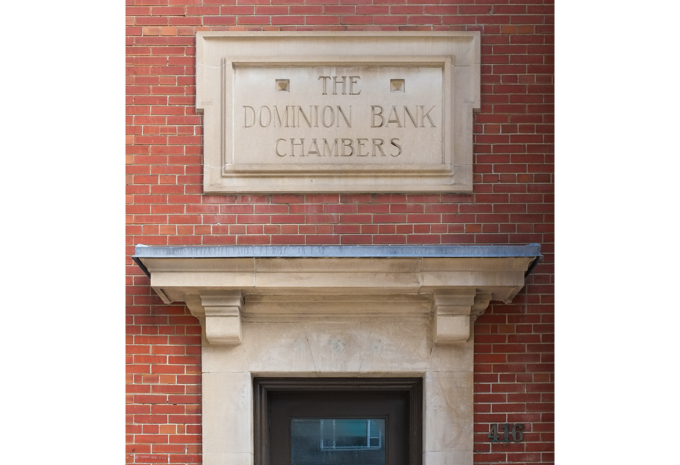
below: Part of the Bloor and Sherbourne intersection today.  The red brick building on the right was once a Dominion Bank building – and is now a TD (Toronto Dominion) bank.   The Dominion Bank was formed in the late 1860s.  In 1955 it merged with the then 100 year old Bank of Toronto to form the Toronto Dominion bank.
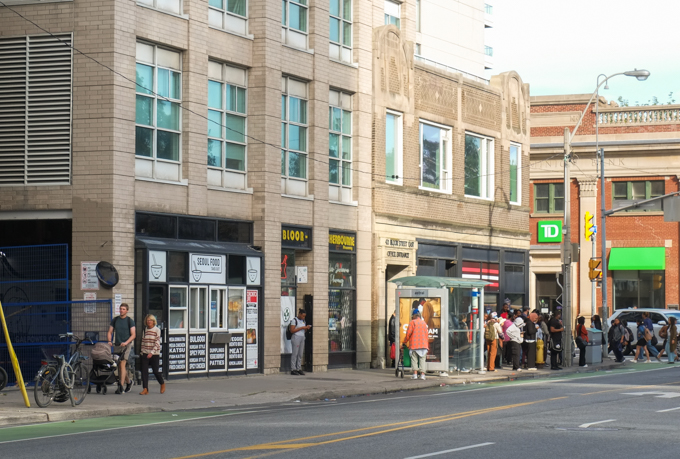
doorway in red brick bank building with sign over door carved stone, that says The Dominion Bank Chambers

below:  The beginnings of Bloor Street east of Sherbourne – This photo was taken about 1908 and as you can see there wasn’t much of a road there.   It would be 10 or 11 years later that the Prince Edward Bridge (aka the Bloor Viaduct) opened to the east thereby providing easy access across the Don River via Bloor.   But that’s a whole other bridge, and a whole other story best left for another day.  Note the Dominion Bank building at Bloor and Sherbourne – still there more than 100 years later.  Also, there was already a Sherbourne Street bridge over the ravine.
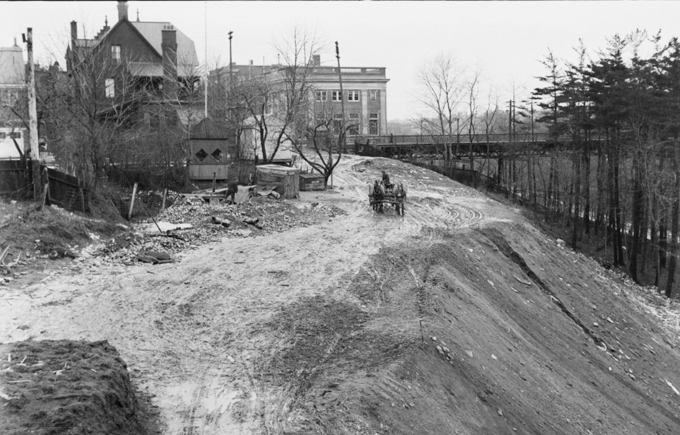
old black and white photo from about 1908, by William James, from City Archives, showing Bloor east of Sherbourne when it was a dirt road

Photo credit: City of Toronto Archives, fonds 1244, item 7244

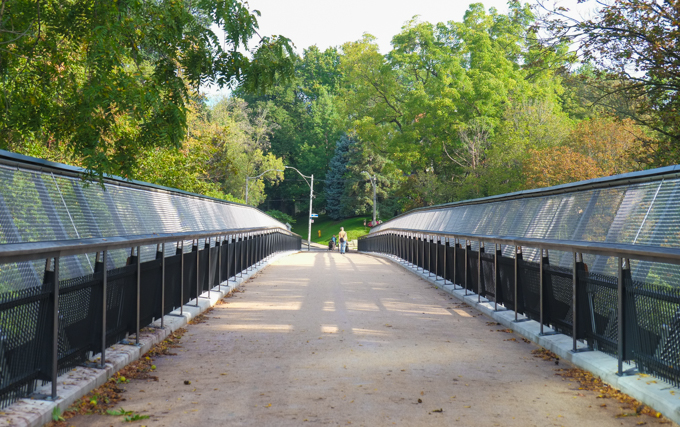
below: Glen Road Pedestrian Bridge connects Rosedale to St. James Town.  It is officially called the Morley Callaghan Footbridge and for our purposes, it is bridge number two.
below: “Rise together thru these clouds, as on wings”  This is actually part of the lyrics to a song, “Sunday” by David Bowie.
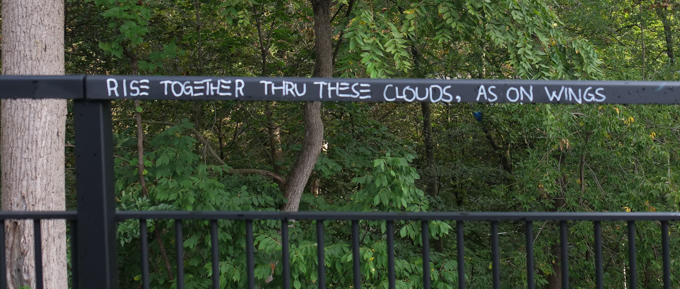
written graffiti in white on black railing on bridge

below: This is the plaque that is mounted on a wall near the bridge.  It mentions Edgar Jarvis, one of the early land owners in the area.  It was Jarvis who teamed up with Joseph Bloore to develop the land that became the village of Yorkville.   The plaque’s title mentions the name Morley Callaghan then says nothing about him in the write-up.  Callaghan (1903-1990) was a Toronto novelist/writer; he also appeared on TV and radio.
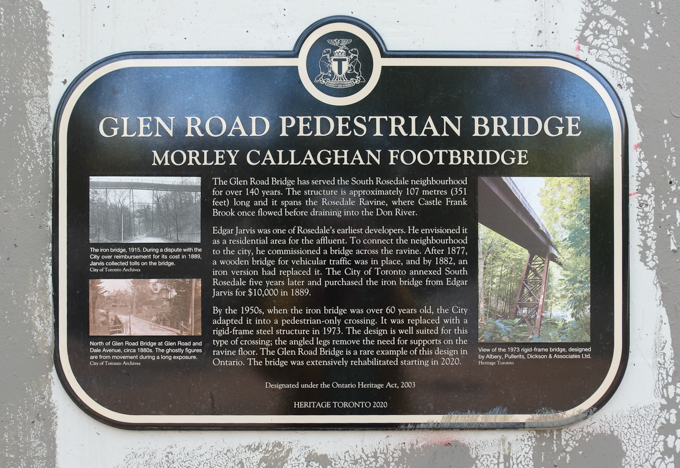
plaque by Glen Road bridge, also known as Morley Callaghan bridge

Glen Road Pedestrian Bridge – Morley Callaghan Footbridge. The Glen Road Bridge has served the South Rosedale neighbourhood for over 140 years.  The structure is approximately 107 metres (351 feet) long and it spans the Rosedale Ravine where Castle Frank Brook once flowed before draining into the Don River.  Edgar Jarvis was one of Rosedale’s earliest developers.  He envisioned it as a residential area for the affluent.   To connect the neighbourhood to the city, he commissioned a bridge across the ravine.  After 1877, a wooden bridge for vehicular traffic was in place, and by 1882, an iron version had replaced it.  The City of Toronto annexed South Rosedale five years later and purchased the iron bridge from Edgar Jarvis for $10,000 in 1889.   By the 1950s when the iron bridge was over 60 years old, the City adapted it into a pedestrian only crossing.  It was replaced with a rigid-frame steel structure in 1973.  The design is well suited for this type of crossing; the angled legs remove the need for supports on the ravine floor.  The Glen Road Bridge is a rare example of this design in Ontario.  The bridge was extensively rehabilitated starting in 2020.  Designated under the Ontario Heritage Act, 2003.

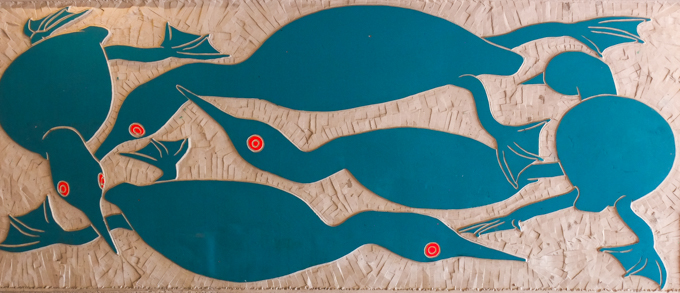
below: At the south end, the Glen Road bridge leads to a tunnel that goes under Bloor Street.  The walls of the tunnel have recently been renovated and are now lined with three new pieces of art by Inuit artist Couzyn van Heuvelen .
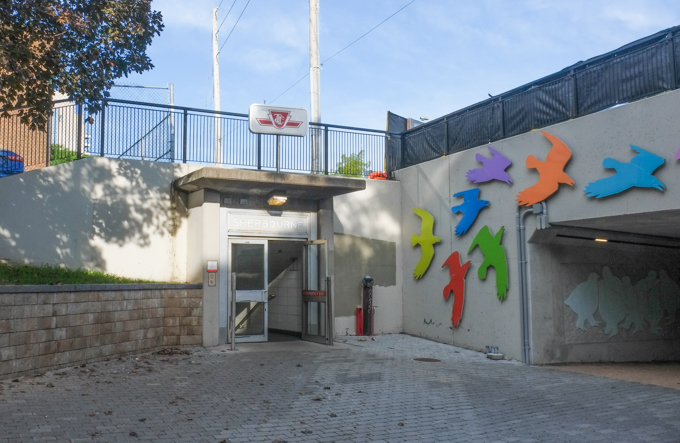
below: The Glen Road entrance to Sherbourne subway station.
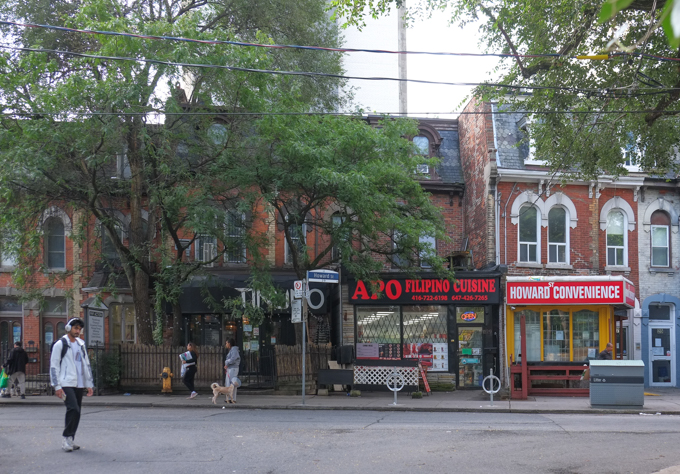
below: Glen Road ends at Howard where a few old houses still remain.
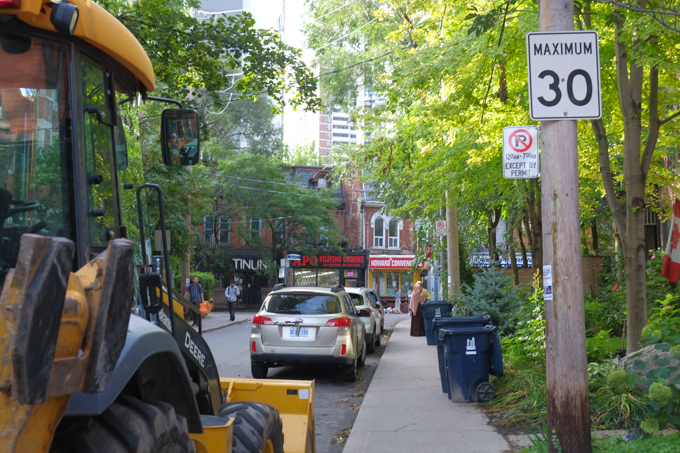
 few businesses on Howard St., in old brick houses, including Apo Filipino restaurant and Howard convenience store

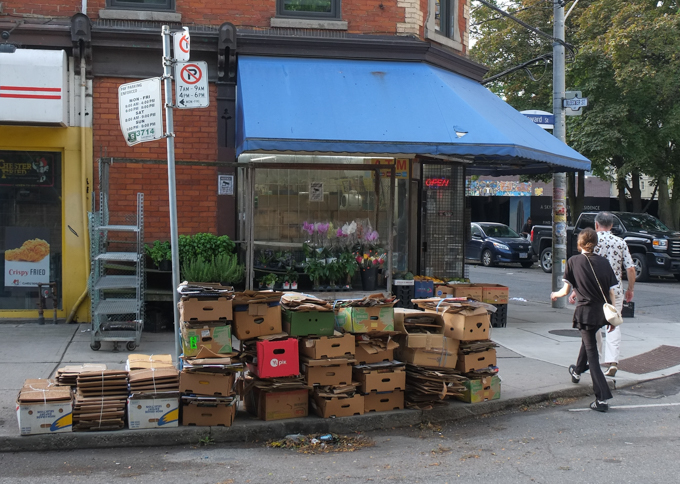
empty cardboard boxes stacked up on the sidewalk outside of a store, waiting for garbage or recycling collection
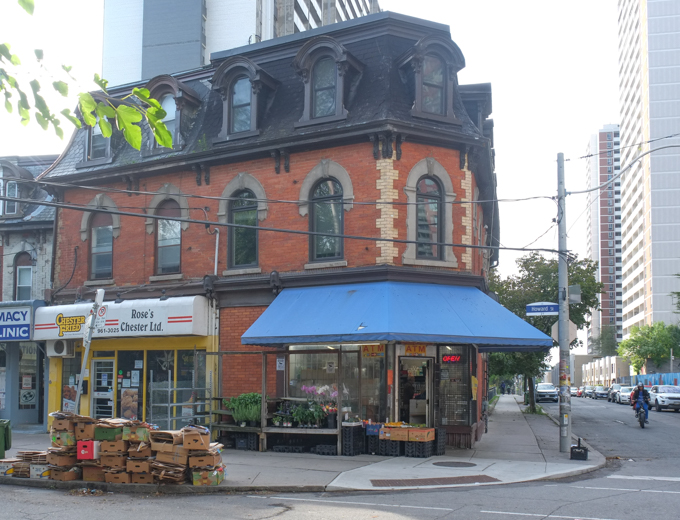
old brick building, second empire style, with black roof, large blue awning over front door,

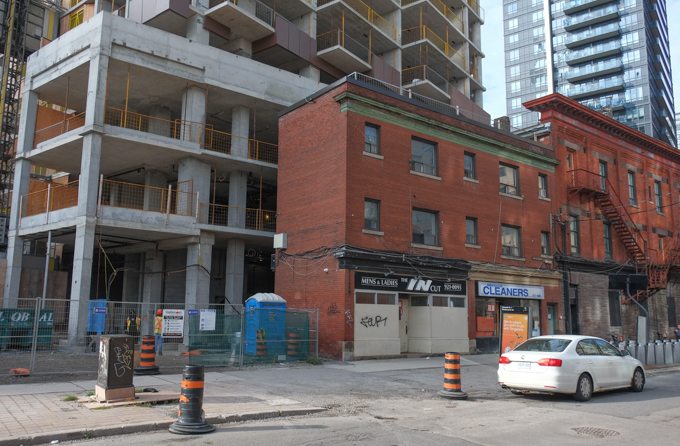
redevelopment of older buildings on Howard Street, building more housing

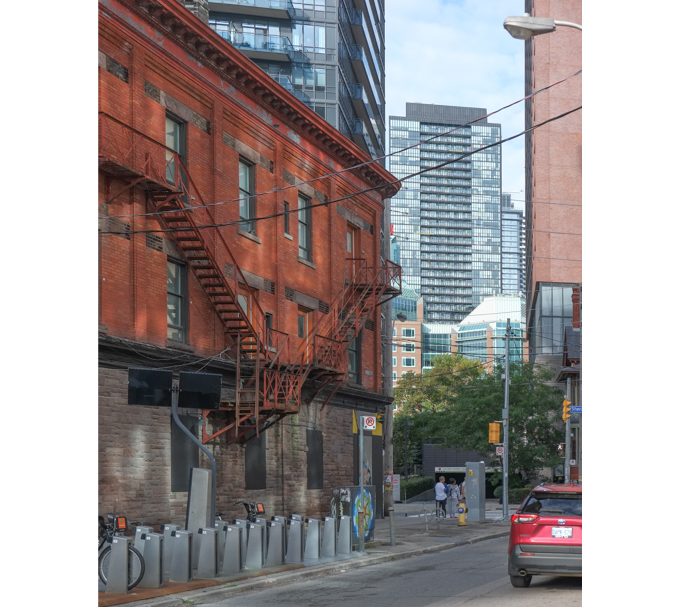
older three storey red brick building on Howard Street, with newer buildings in the background, a red car on the street

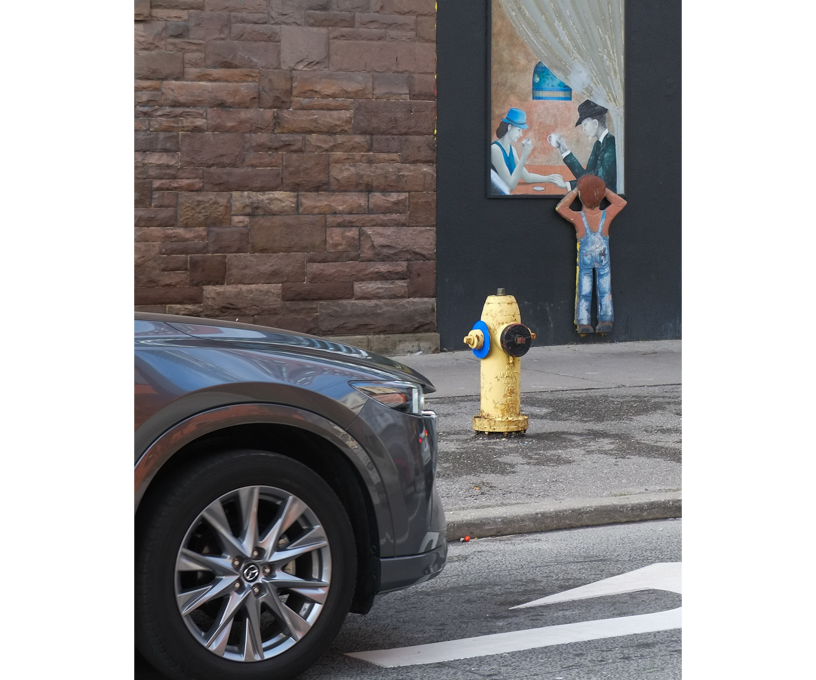
car parked in front of building where fake window with a painting of a young boy looking into the window of a restaurant

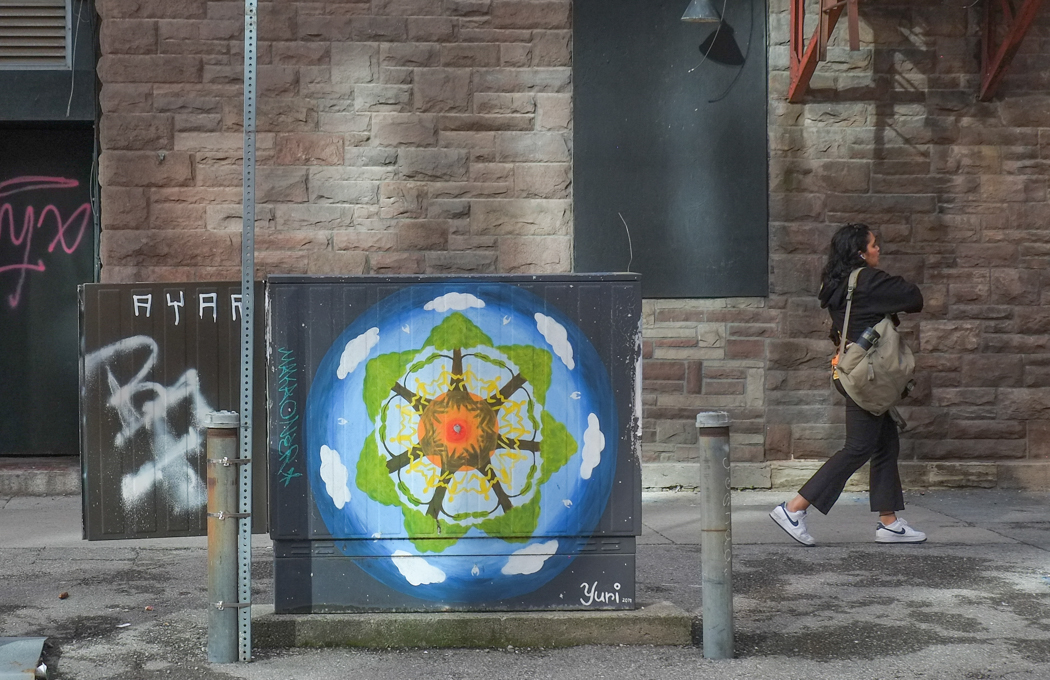
woman walking past a sidewalk box that has been painted

below: The view from Howard & Sherbourne, looking west, a mix of old and new.
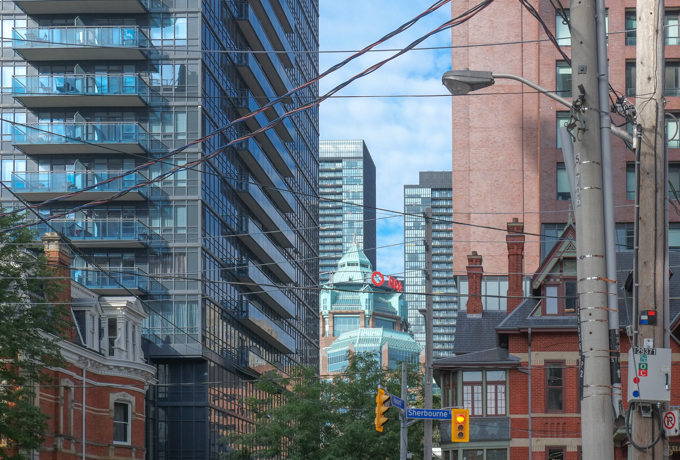
below: Maison Selby, on Sherbourne, this Queen Anne Revival-style building has is now a French restaurant.  It has seen many changes over its 140 year history.  The first occupants were members of the Gooderham family (the whiskey people).  It was briefly home to Branksome Hall girls’ school before they moved to a larger space.  In 1912 it became a hotel and it has generally been a hotel, bar, or restaurant space since then, albeit under many different owners.
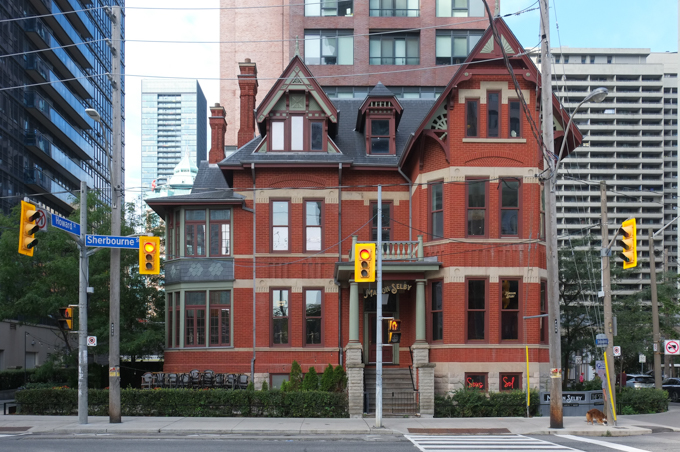
Maison Selby, old Victorian brick building

below: Trinity Lutheran Church, also on Sherbourne.
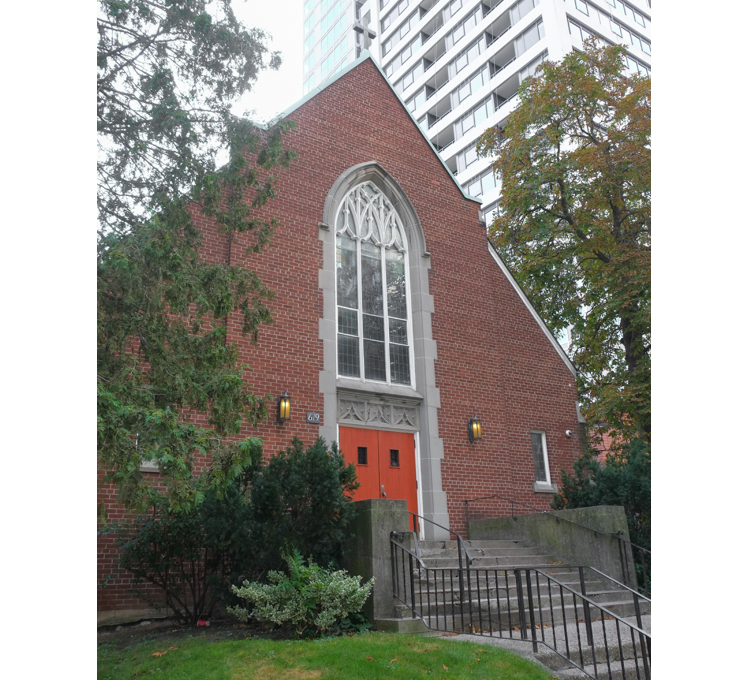
Trinity Lutheran church on Sherbourne

below: “For Sinners Only” says their sign – very inclusive!
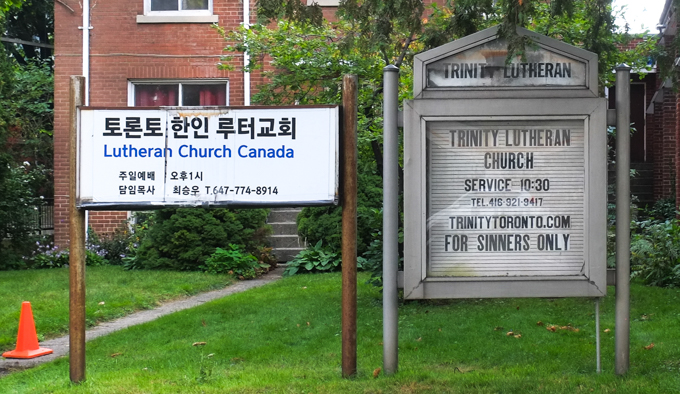
sign in front of Trinity Lutheran church that says for sinners only

below: Back on Bloor Street where Rogers dominates the corner of Bloor and Mount Pleasant (another of those concrete buildings with recessed windows).
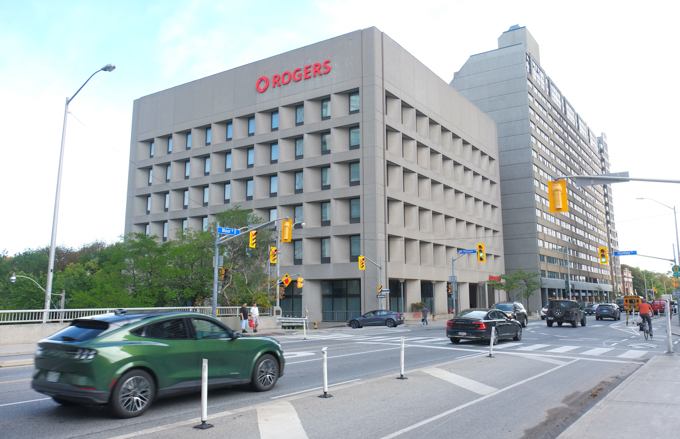
Rogers building at Bloor and Mount Pleasant

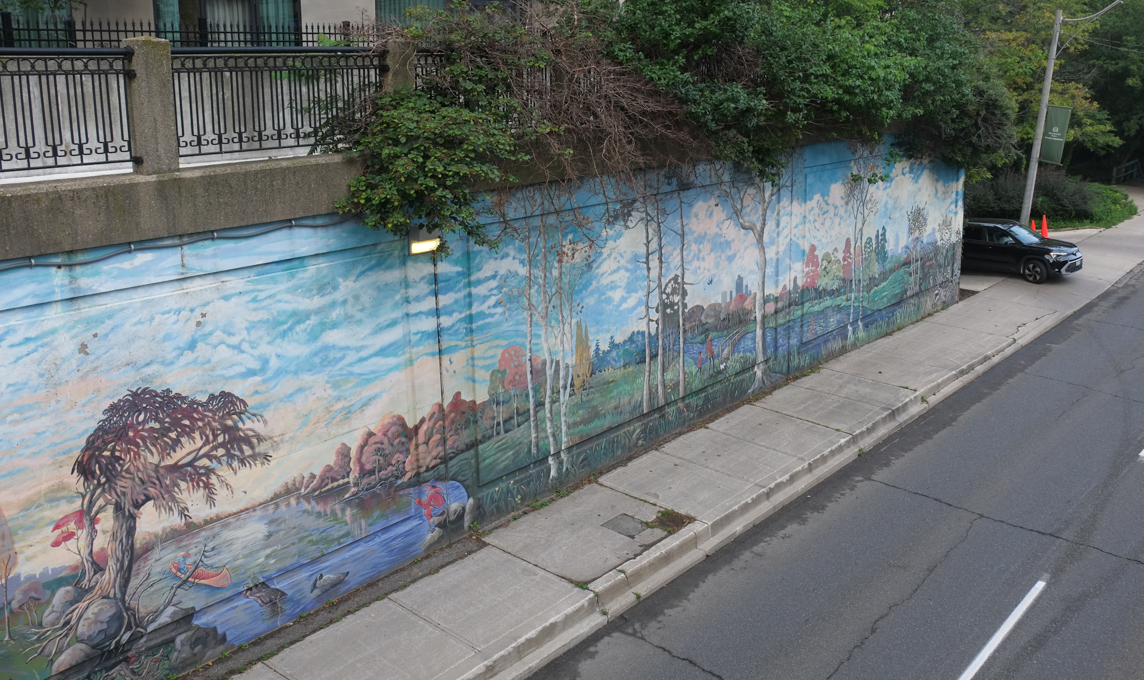
below: Mount Pleasant passes underneath Bloor.  The walls are covered with murals by Ian Leventhal.
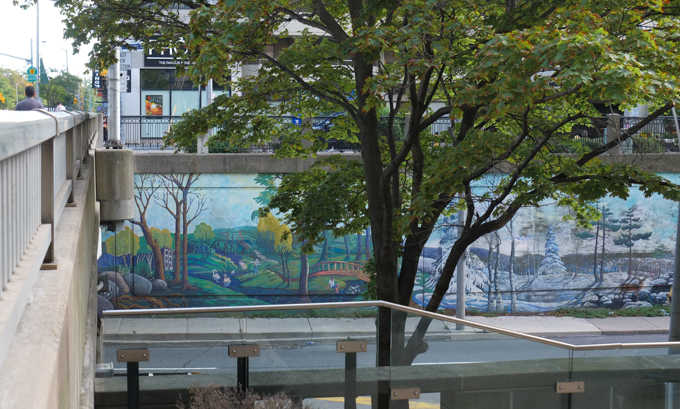
mural by Ian Leventhal, landscape, on walls of bridge, bloor over mount pleasant

mural by Ian Leventhal, landscape, on walls of bridge, bloor over mount pleasant

below: The south end of Mount Pleasant just before it becomes Jarvis Street…  and that makes bridge number three.
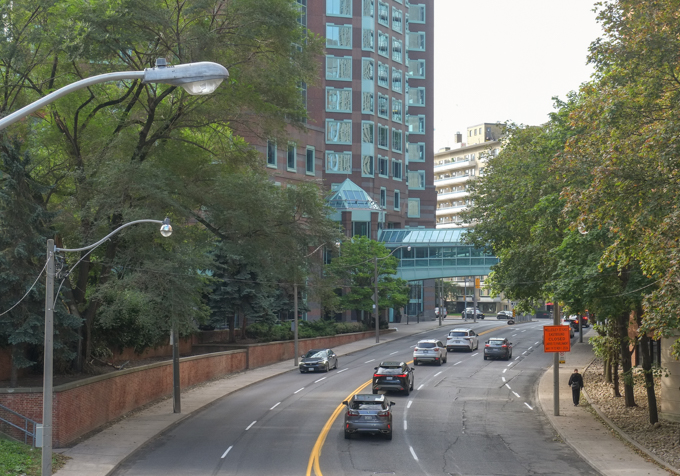
Mount Pleasant Avenue as it passes south of Bloor

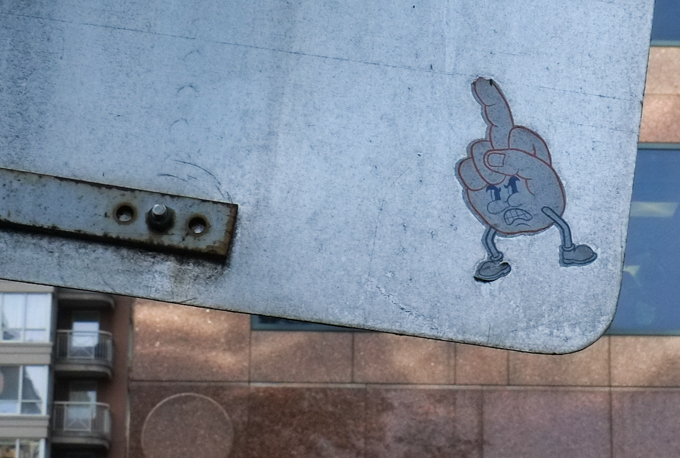
below: It’s not the most positive note to end on but hey, someone took the time to make this sticker and then find a home for it.  May they change their mind one day!
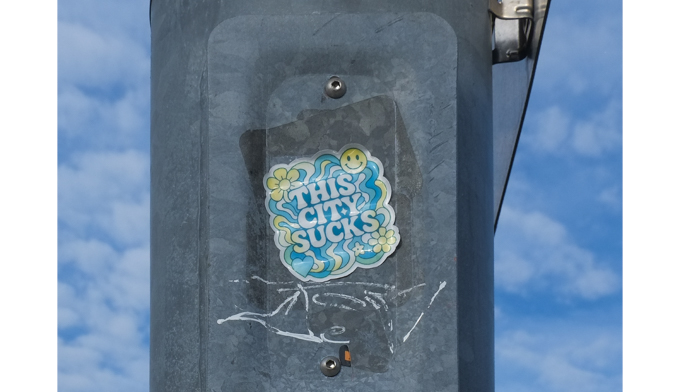
graffiti sticker

graffiti on the back of a city sign that is a growling character made of a hand giving the figure

Summer in Toronto.  Those days where it doesn’t matter where you walk, you will always encounter something interesting.

This weekend is the Taste of the Middle East festival at Yonge Dundas square, one of the many ethnic based festivals in the square over the summer.  As usual, there were performances, activities, and food.

woman in a pink top and sunglasses turns her head towards the camera with a big smile, behind her is a performance on a stage and a man in an orange baseball cap clapping with his hands above his head, at Yonge Dundas square Taste of the Middle East festival

Products like date syrup were also available.

a man stands behind a display of bottles of date syrup that are for sale at an outdoor event

4 women watching a performance on an outdoor stage, three are wearing head scarves, and two are laughing

below: Young artist at work at Yonge & Dundas.

a young black boy sits on a chair at Yonge and Dundas and paints small pictures while people stop to watch him

below: Adelaide Street was blocked between Yonge and Bay all weekend for a film shoot involving a large number of police cars, police officers, and dummies that look amazingly like real police officers.

part of a film set on Adelaide, a red pick up truck with propane tanks in the back, with another tank wired to the back of a white panel truck

below: When the Netflix series ‘Zeus’ comes out, you can play spot the Toronto locations!

looking through the window of a restaurant with two empty tables, to a scene where a film set is setting up to shoot a scene involving exploding buses and police cars

blurry picture of peoples' legs and feet and shoes as they walk on a sidewalk

below: In the Allan Lampert Gallery at Brookfield Place is an art installation “Into the Clouds”, four large, happy inflatable clouds created by ‘Friends with You’, a Los Angeles based group.   They bring a positive message of light, love and happiness.

art installation in Brookfield Place of 4 large white clouds, three of which have happy faces on them, suspended from the ceiling over the escalator from the lower level,

below: In front of the RBC building at the corner of Front & Bay.

three people in front of the R B C building on Front St.., with its gold coloured reflective windows, An Asian couple stopped to look up and a black woman taking a picture, reflections of other buildings nearby. All people are wearing shorts

below: Relief sculpture on an exterior wall of the Scotiabank Arena (formerly ACC).  A series of these sculptures were made by Louis Temporale Sr. in 1938-39 on what was then the Toronto Postal Delivery Building.

relief sculpture in concrete on exterior of wall, cavemen scene, with palm trees, three people dressed in animal skins. One is cooking - stirring with a stick in a large pot over a fire, one is standing and shouting with hands cupped around his mouth. A ladder made of wood pieces lashed together leans against a rock

below: At the foot of Bay Street, a TTC bus stops beside the Westin conference centre.  The top part of the concrete building is covered by a large photographic art installation – “Milky Way Smiling” by Elizabeth Zvonar.

a red and white TTC bus stops beside a concrete building with a very large photograph pubic art installation on the upper part of the building,

below: Sitting on Jack Layton’s shoulders

a boy in an orange T-shirt, grey shorts, and black crocs sits on the shoulders of Jack Layton sculpture by the ferry terminal, holding onto Layton's head, and smiling at the camera

below: Broken. A gigantic bubble.

a young boy breaks a very large bubble that a man has made, outdoors

below: An oversized picnic table

a group of people sit on an oversized picnic table painted in camo colours in a park

below: 25 figures in bright orange clasping onto black inner tubes – an art installation by Ann Hirsch and Jeremy Angier call SOS (Safety Orange Swimmers)

two small boats on Lake Ontario, Toronto harbour, pass by the art installation S O S or Safety Orange Swimmers

below: Ahoy matey!  We be rainbow pirates!

a pretend pirate ship, as a harbour cruise boat passes by the public art installation, SOS, or Safety Orange Swimmers

below: The spotlight seems to shine on a sleeping body.  The location is Harbour Square Park inside the large concrete sphere that is “Sundial Folly”  created by John Fung and Paul Figueiredo and installed in 1995.  Whether it’s because of high water levels, or for other reasons, access to the interior of the structure is closed to the public. 

a person is asleep, on back, under a maroon sleeping bag, inside a spherical art installation with a slit in it that lets in light such that sleeper is spotlit

waterfront beside Harbour Square Park, walkway, trees, and boats

below: Queens Quay at the foot of Yonge Street is not my favorite intersection.  It’s not uncommon for cyclists to not realize that there is a red light and for pedestrians not to realize that just because they have a walk signal doesn’t mean that there won’t be a bicycle whizzing past.

woman on a bike cycles through a red light at Yonge and Queens Quay

below:  … and that shape on the sidewalk across the street? That is “Between the Eyes” by Anita Windisman.

cars, cyclists, and pedestrians at an intersection

below: Future buskers

two young girls pretending to make music with large plastic inflatable guitars while a woman pushing a man in a wheelchair look on.

below: The public art at Pier 27 condos on Queens Quay East lies in an elevated garden between two condo buildings. This sculpture is the work of American artist Alice Aycock and it consists of a whirlwind (or tornado) form and what looks like whorls of paper.   Litter blowing from the lake?  It’s title is “A Series of Whirlpool Field Manoeuvres for Pier 27”.

a long white sculpture in a garden in front of a condo

part of a large sculpture, sheets of white material curve and join together like the shape of a rose

white sculpture that looks like a very large whirlwind or tornado in front of a condo building

below: Basketball players on the Esplanade.

a group of boys playing basketball on a court that has a mural of two hands forming a heart shape with their hands, the heart is under the basket, mural is on wall

subtitle: Finding treasures

Hidden behind ivy, on a building at Ryerson University, are three relief sculptures of men in athletic poses.   There’s also a line of trees beside the building that they are on.  No wonder I’ve missed them on previous walks down Nelson Mandela Way.  Today the light was shining on them just the right way .

below: Javelin thrower.  Does his left arm look a little awkward?

on a wall, covered with ivy plant (early spring so no leaves), relief sculpture of a man from the side, about to throw a javelin,

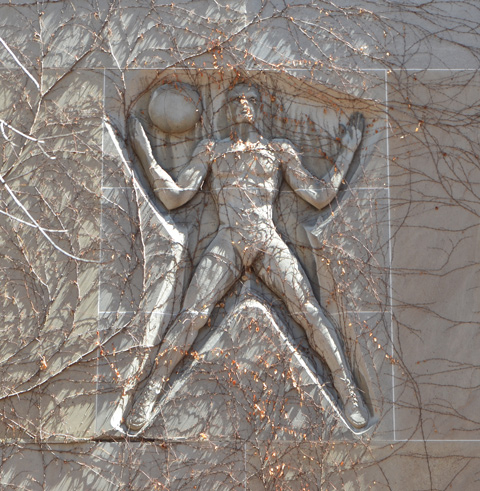
below:  Man with a ball, and covered with ivy vines which was designed in 1962 by Elizabeth Wyn Wood (They are all the work of the same artist?)

on a wall, covered with ivy plant (early spring so no leaves), relief sculpture of a man with legs spread apart, with a ball on his shoulder, arms bent upwards at elbow

below: Lifting weights.

on a wall, covered with ivy plant (early spring so no leaves), relief sculpture of a man with legs spread apart, and holding barbells across his shoulders, weight lifter,

Elizabeth Winifred Wood (1903-1966), also known as Elizabeth Wyn Wood, was born in Orillia.  She graduated from OCA (Ontario College of Art) in 1925.  Throughout the 1940’s and 1950’s, many new buildings in Toronto were decorated with relief sculptures on their exterior walls.  Although many of these buildings have since been demolished, you can still see some sculptures as you walk around downtown.   By the time that Wyn Wood designed these (and other) sculptures for Ryerson in the early 1960’s, the use of relief sculptures in this context was fading.