Posts Tagged ‘Image Centre’

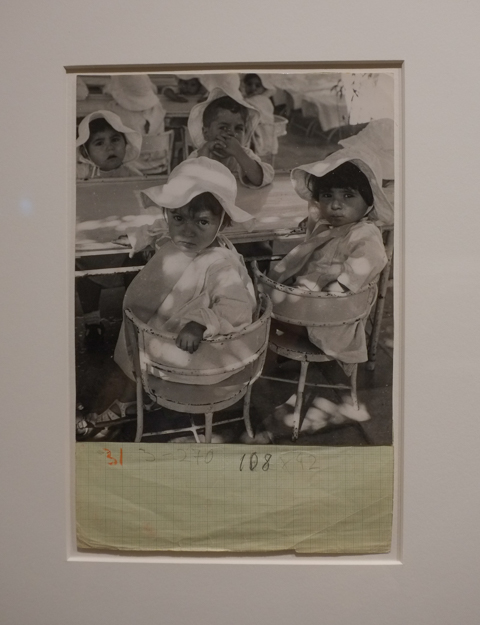
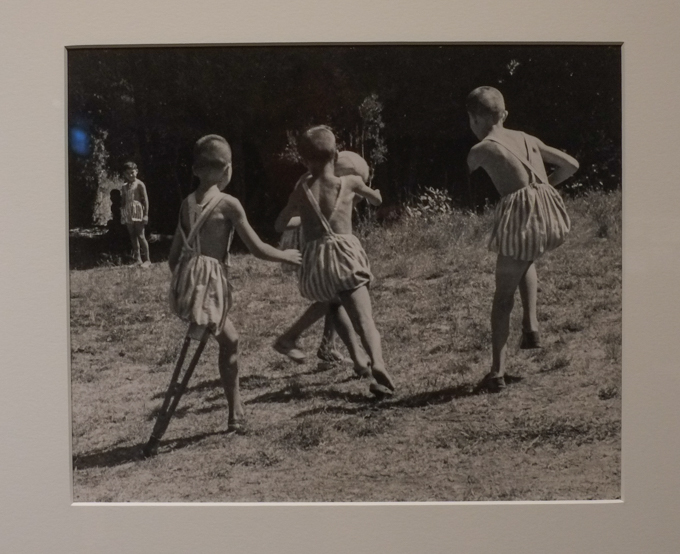
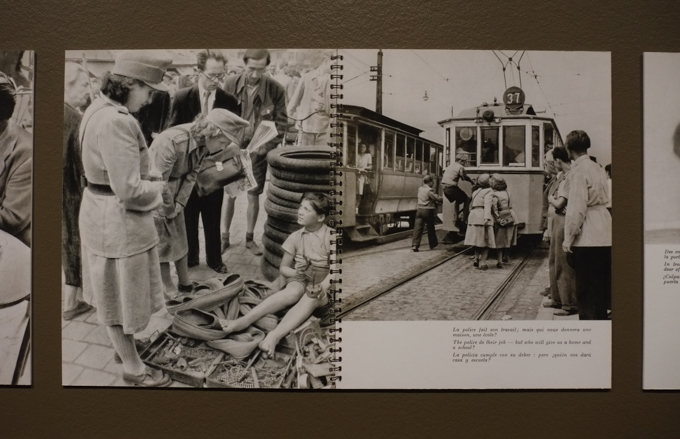
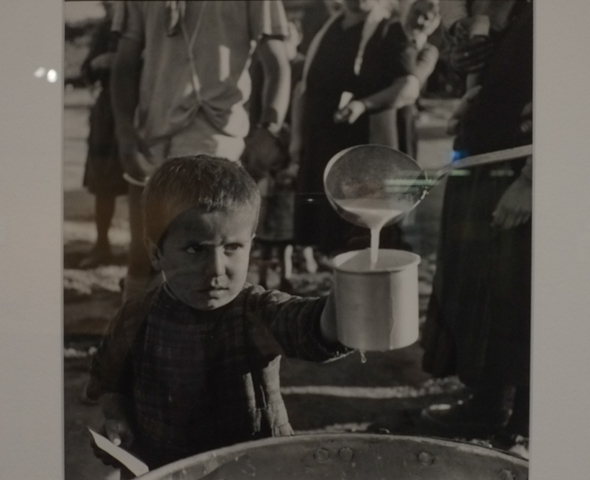
The previous post, Face of Time, was about the recent Magnum Photos exhibit at TMU’s Image Centre.  There was another exhibit of post war photographs that was shown at the same time.  This second set were taken by David “Chim” Seymour (a co-founder of Magnum Photos) and they feature some of the 13,000,000 orphaned or abandoned European children.   His work was commissioned by UNESCO and took him to Germany, Austria, Italy, Greece, Poland, and Hungary.  Seymour was Polish, born Dawid Szymin (1911-1956); he died in Egypt at the close of the Suez Crisis.

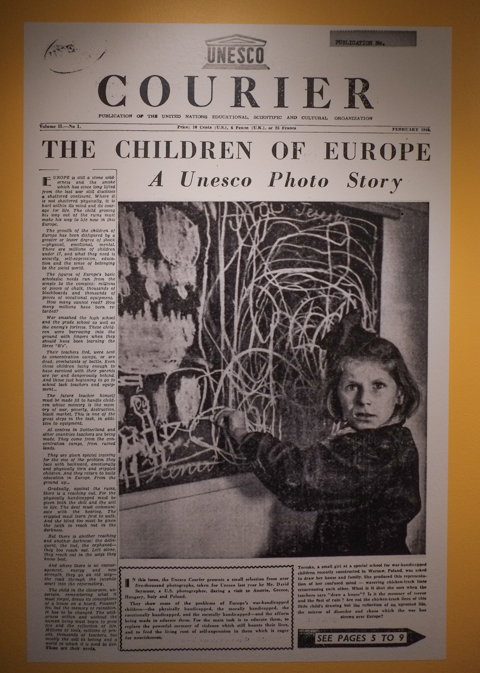
below:  Some of David Seymour’s photos ended up in the UNESCO publication “Courier”.  This is the front cover of the February 1949 edition, with the headline ‘The Children of Europe’.  The photo was taken in a Warsaw orphanage.   The printed story starts with: “Europe is a stone wilderness and the smoke which has since long lifted from the last war still discloses a shattered continent.  Where it is not shattered physically, it is hurt within its mind and its courage for life.  The child groping his way out of the ruins must make his way to life now in this Europe.”

front cover of Courier magazine, with a black and white photo of a young girl

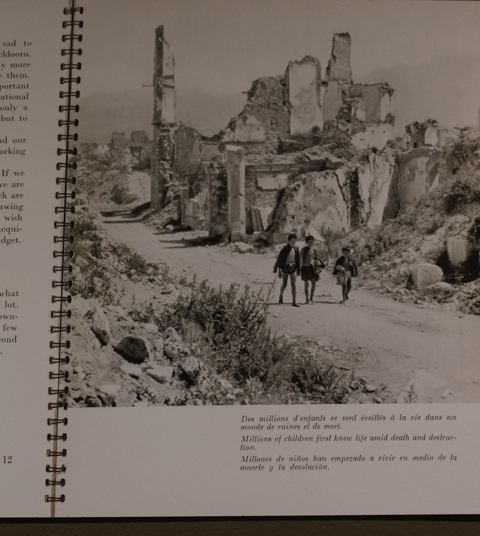
below: “Millions of children first knew life amid death and destruction.”

black and white photo by David Seymour, children walking along a road among bomb ruined buildings

below: Rehab hospital, Vienna Austria

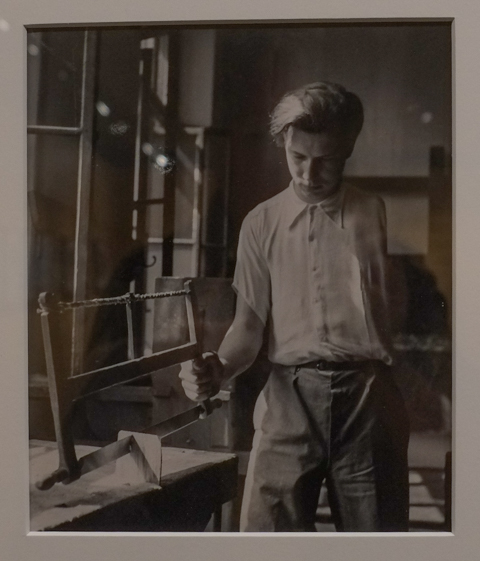
black and white photo by David Seymour, boy with only one arm learning to use a saw

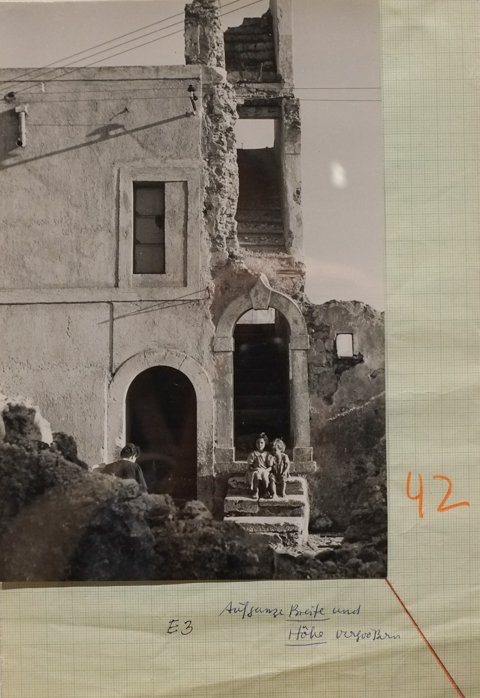
black and white photo by David Seymour, bombed house, ruined

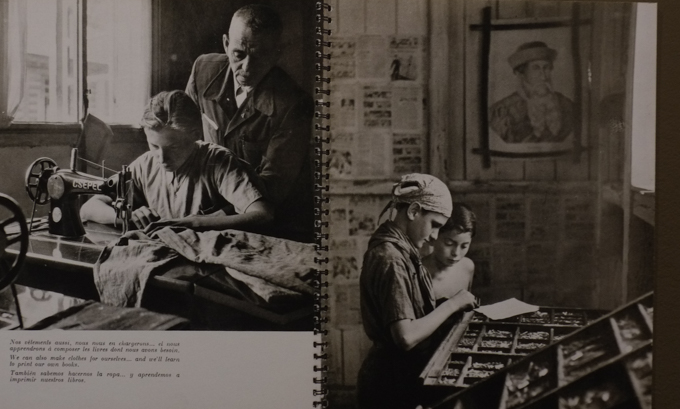
below: We can also make clothes for ourselves, and we’ll learn to print our own books.”

black and white photo by David Seymour, children learning skilled trades, sewing, printing

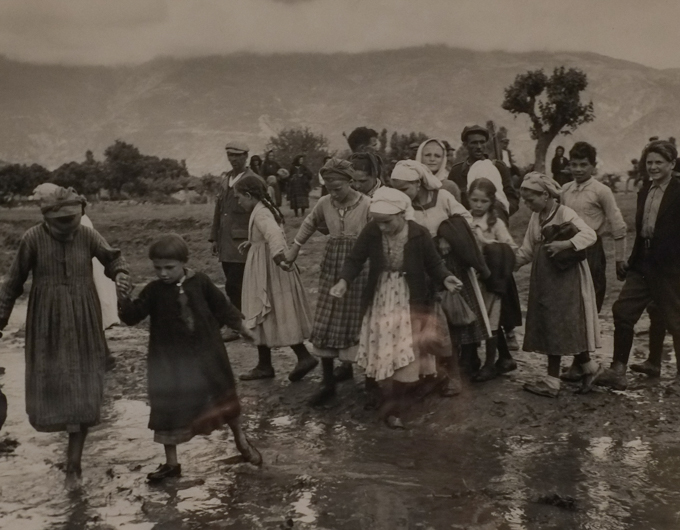
black and white photo by David Seymour, a group of children being led on a walk, crossing a river

black and white photo by David Seymour

black and white photo by David Seymour, children wearing rompers, playing outside

black and white photo by David Chim Seymour

below: Ionanina Greece

black and white photo by David Chim Seyour

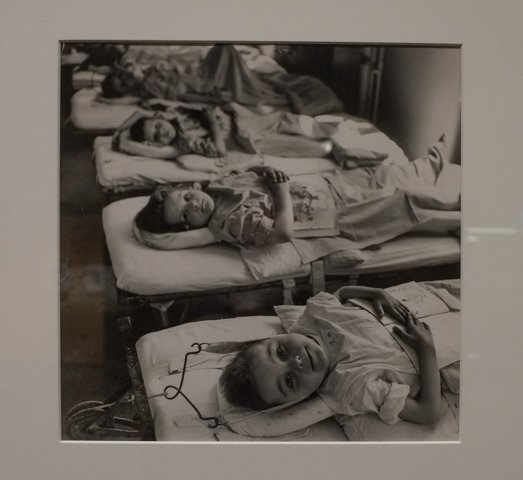
below: Tuberculosis Sanitorium, Otwock Poland

black and white photo by David Seymour, young children in a tuberculosis sanitorium, laying on cots

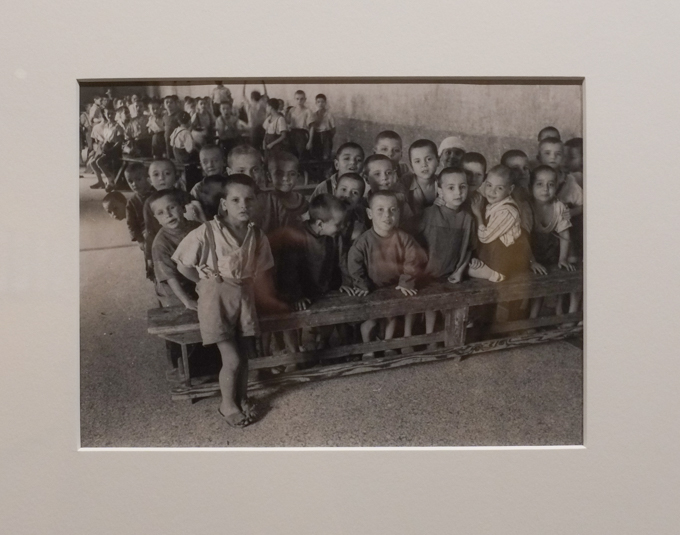
black and white photo by David Seymour, boys sitting on benches

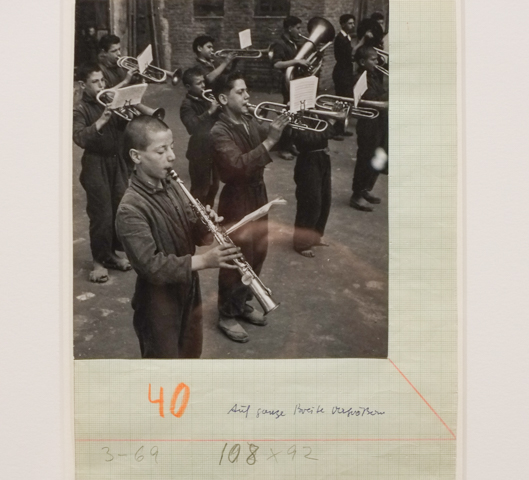
black and white photo by David Seymour, children playing musical instruments, trumpets and clarinets

“Children of Europe” is online on a UNESCO website

Face of Time, or in German, Gesicht der Zeit, was a photography exhibition that was shown in Europe in 1955.  Afterwards, it was packed away and forgotten in an Innsbruck basement for fifty years.  The participating photographers were early members of Magnum Photos, a collective of documentary photographers that had been formed in 1947.  A selection of these images have been used to create a renewed ‘Face of Time’ and features photos by Robert Capa, Jean Marquis, Henri Cartier-Bresson, Erich Lessing, Inge Morath, Marc Riboud, and Ernst Haas.


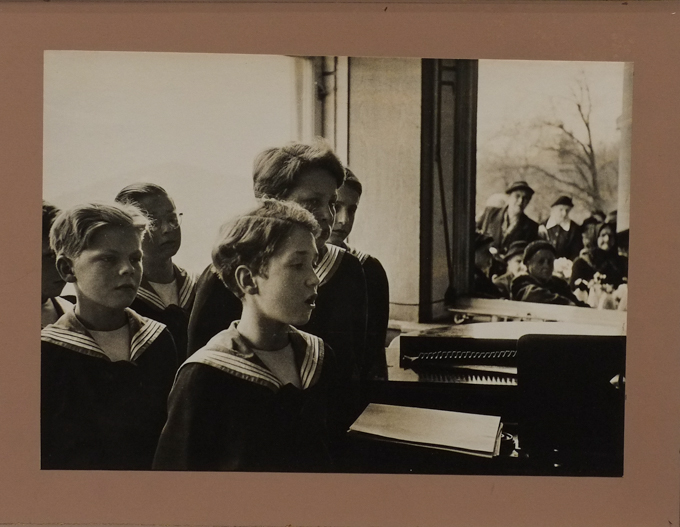
below: By Erich Lessing (1923-2018), Vienna Boys Choir 1955.

black and white photo on gallery wall, by Erich Lessing, 1955, boys in Vienna Boys Choir

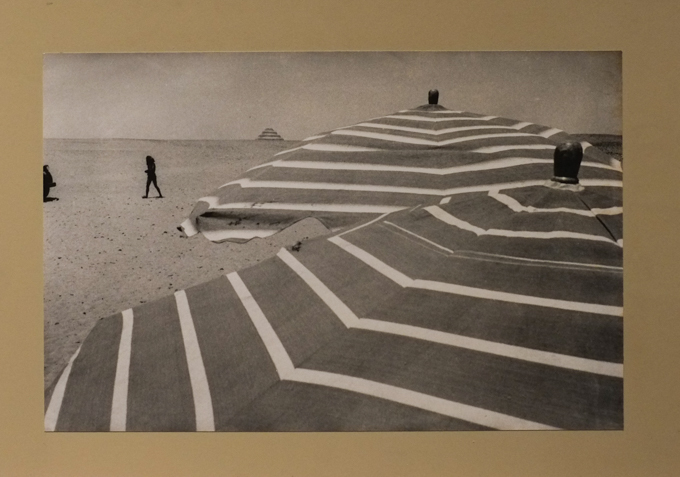
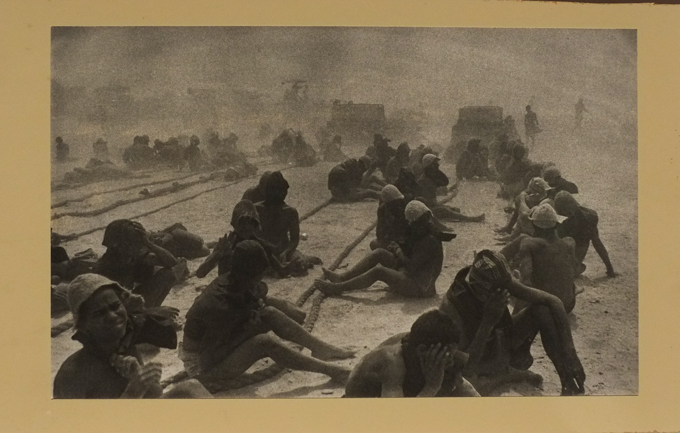
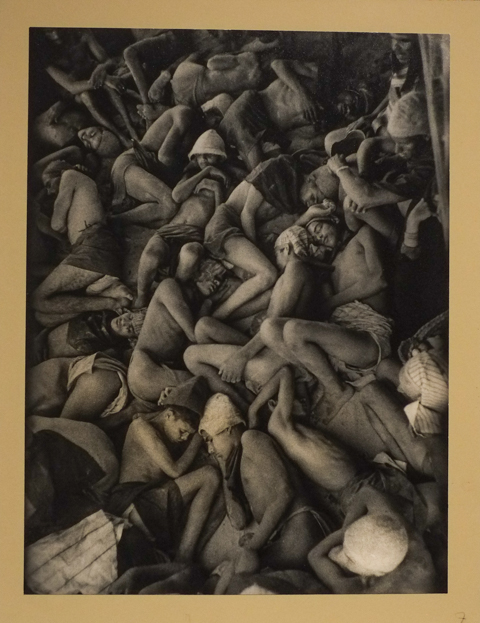
below: Ernest Haas (1921-1986).  Haas was the on-set photographer for 1955 film ‘Land of the Pharaohs’ that was filmed in Egypt.

black and white photo on gallery wall by Ernst Haas, on set during production of film 'Land of the Pharaohs'
black and white photo on gallery wall by Ernst Haas, on set during production of film 'Land of the Pharaohs', people sitting on ground, very dusty with dust in the air
black and white photo on gallery wall by Ernst Haas, on set during production of film 'Land of the Pharaohs

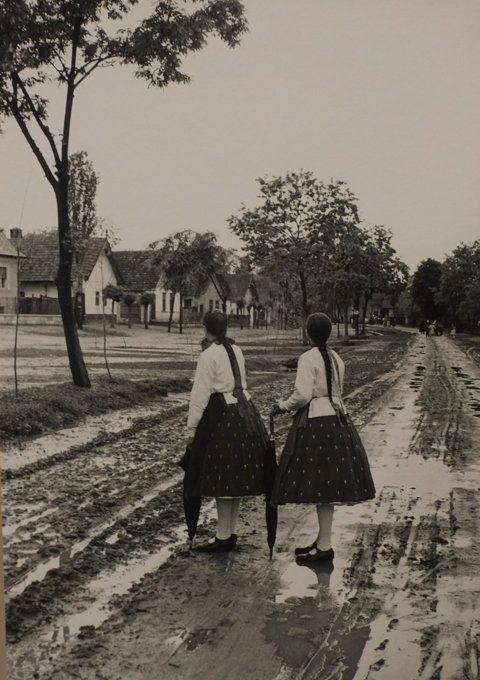
below: Jean Marquis (1926-2019), both pictures taken in Hungary in 1954


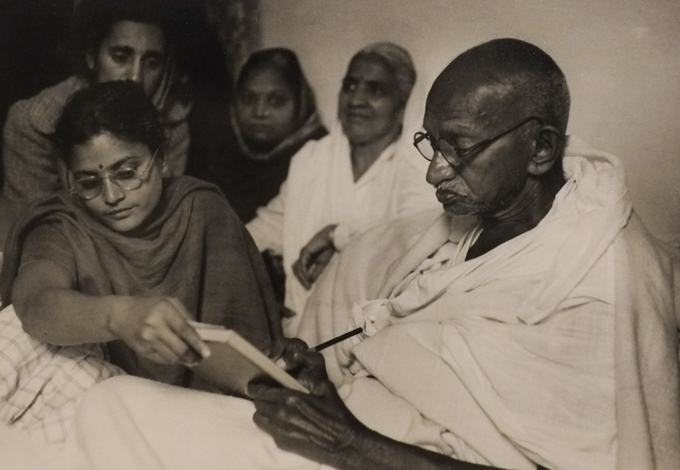
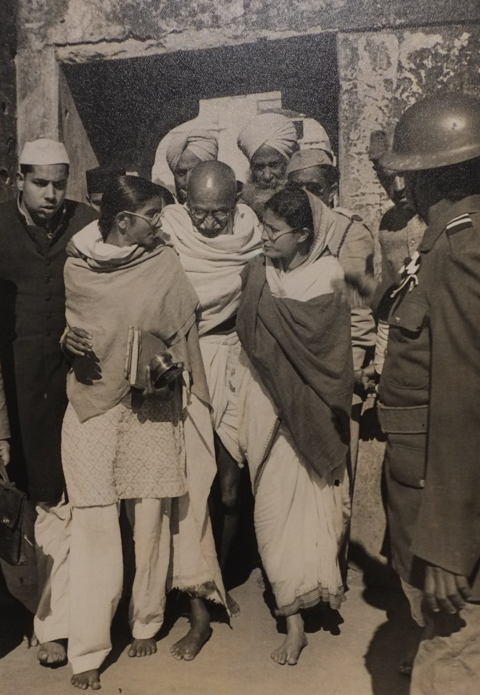
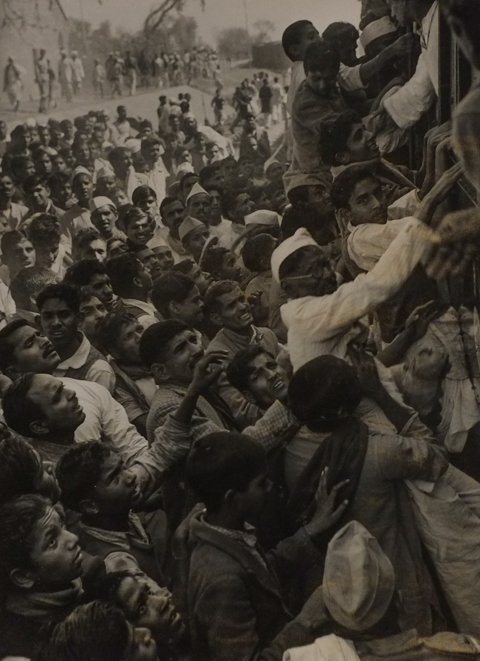
below:  Henri Cartier-Bresson’s (1908-2004)  photos of Mahatma Gandhi

 Henri Cartier-Bresson's 1947 photo of Mahatma Gandhi in India, sitting in a bed writing on a book that a woman is holding

 Henri Cartier-Bresson's 1947 photo of Mahatma Gandhi in India, walking between two other people

crowds in India following Mahatma Gandhi,, many are clinging to the side of a train, and many more are following along beside the train

“To take a photograph is to align the head, the eye and the heart. It’s a way of life.”
– Henri Cartier-Bresson

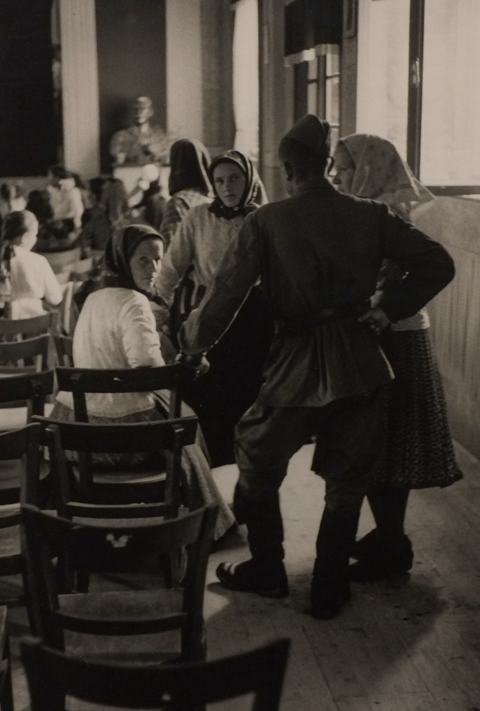
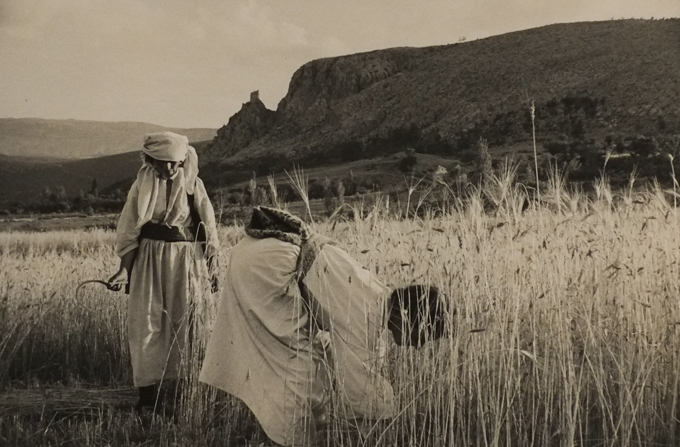
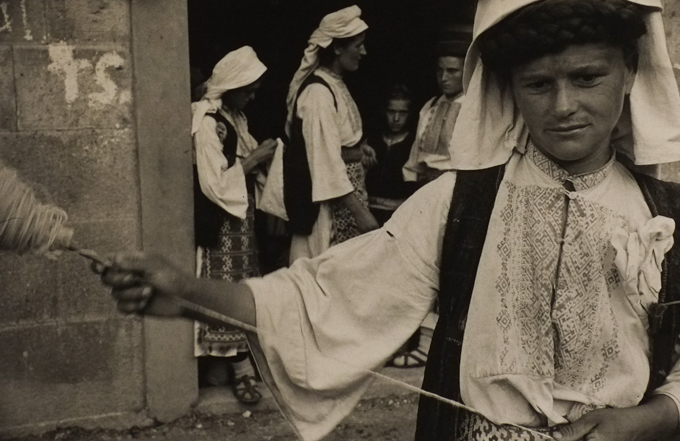
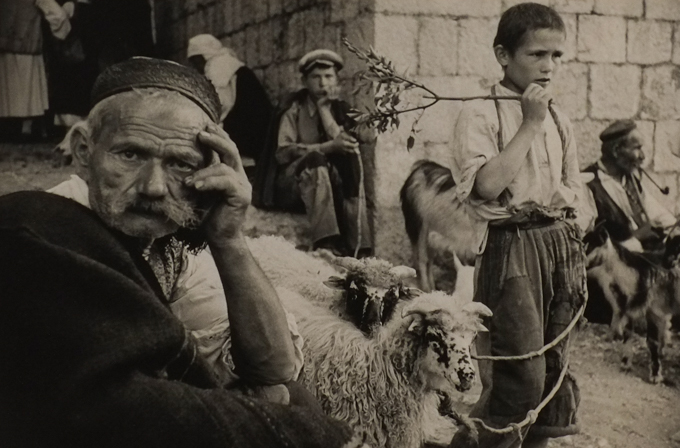
below: Marc Riboud (1923-2016), photos taken in Dalmatia region of Yugoslavia (now Croatia) – scenes of post-war rural life, working in the fields, spinning wool, and meeting at a cattle market.

Marc Riboud Magnus Photo, black and white photos taken in Dalmatia region of Yugoslavia (now Croatia), people working in wheat field, Cetina Valley

Marc Riboud Magnus Photo, black and white photos taken in Dalmatia region of Yugoslavia (now Croatia), person spinning wool

Marc Riboud Magnus Photo, black and white photos taken in Dalmatia region of Yugoslavia (now Croatia), people at cattle market in Vrilka

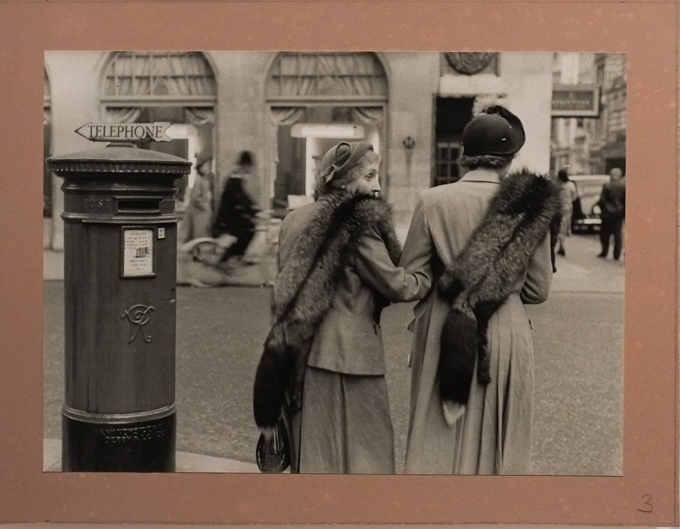
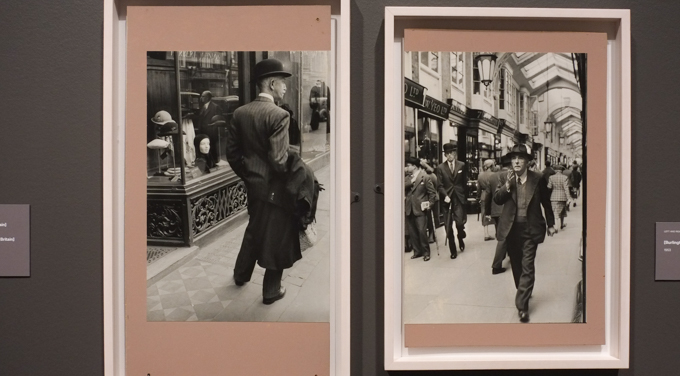
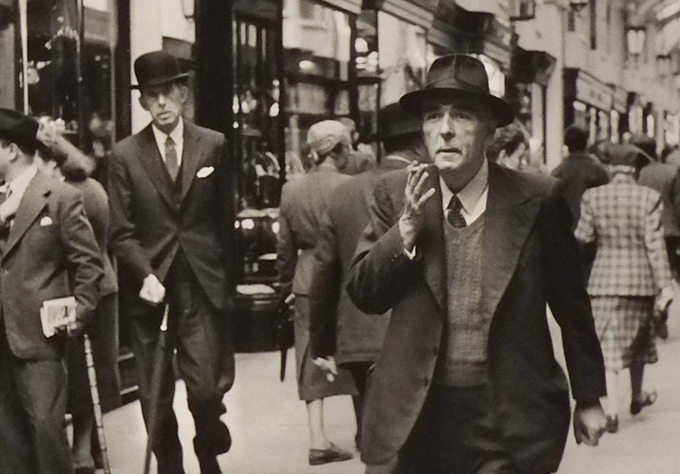
below: A few images taken by the lone woman photographer in the exhibit, Inge Morath (1923-2002) – all taken in London England.

post war, London England, black and white photo by Inge Morath of two women on New Bond Street, both wearing fox stoles around their necks

two post war, London England, black and white photos by Inge Morath

closer up view of people on the street, in a post war, London England, black and white photo by Inge Morath

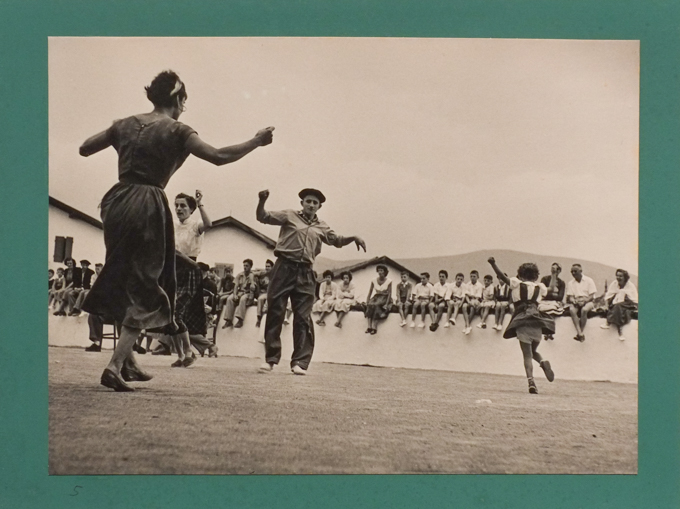
below: And last, but not least, by Robert Capa.  He died in 1954 when he stepped on a landmine in Vietnam while working on a feature for “life” magazine.  The photo show here is a village festival in Basque country.

black and white photo pf people dancing, by Robert Capa, village festival, Basque, post war

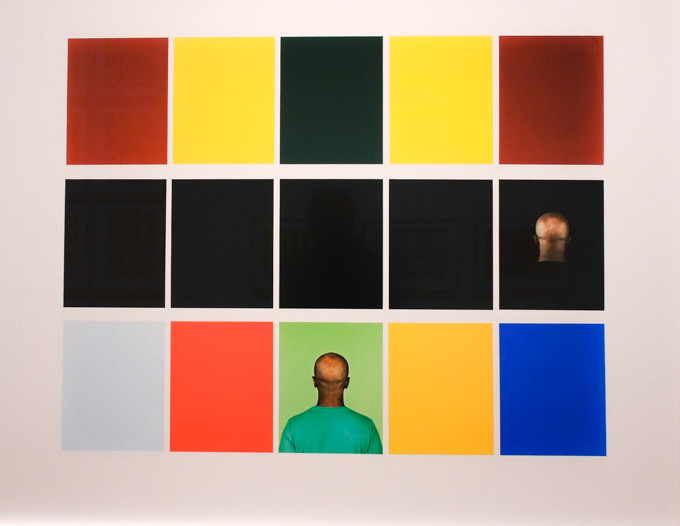
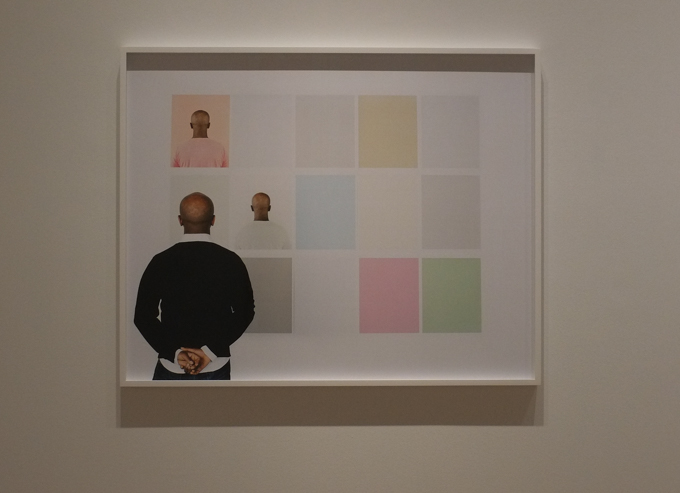
Originally shown at the TMU Image Centre at the end of 2025, it remained until 4th April of this year.   Unfortunately the exhibit is now over and the centre is closed while it prepares for next month’s exhibits.  May has been CONTACT Photography Festival month here in Toronto for quite a few years now and one of the events is a showing by the previous years winner of the Scotiabank Photography Award at the TMU Image Centre.  Last year’s winner, and this this year’s feature photographer is Dawit L. Petros.


Lee Miller: A Photographer at Work is the title of a recent exhibit at TMU’s Image Centre,

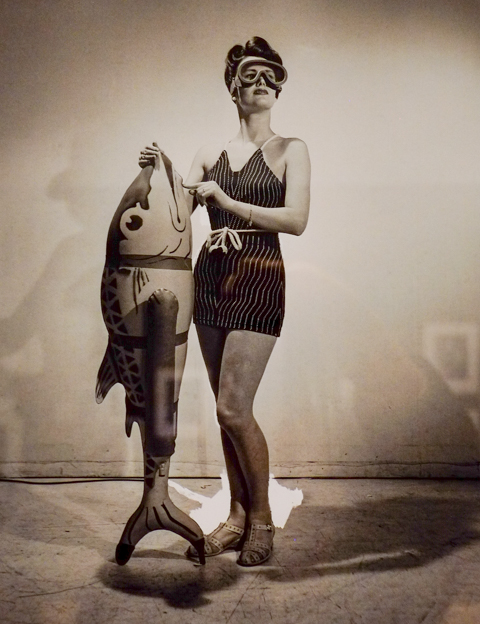
A brief synopsis of her long and storied life – Miller (1907-1977) started her career as a model in New York in the 1920s. She went to Paris in 1929 where she became a fashion photographer. She also tried her hand at conceptual photography in the 1930s when she was living in Egypt with her first husband.  During WW2 she was a war correspondent for Vogue magazine in Europe.

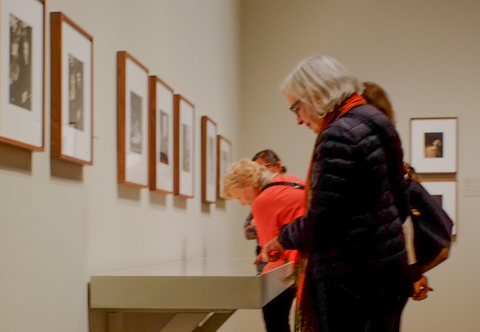
two people looking at black and white photos in an art gallery, an older man and a woman with long red hair

black and white photo in a gallery, of a woman in old fashioned bathing suite standing beside and posing with a large fake fish

below: Fashions for Factories with the subtitle: “Every picture tells a story of streamlined,  uncompromising chic for a vital job.”  One of the paragraphs is this: “A woman is apt to be much what she looks. Fix her up smartly and she’ll be smart at the job.  The factory people know this.”

page from Vogue magazine from the early 1940s, spread on fashion in the factories, and what women were wearing at work, hat like turban, short sleeved shirt

women looking at an exhibit in an art gallery

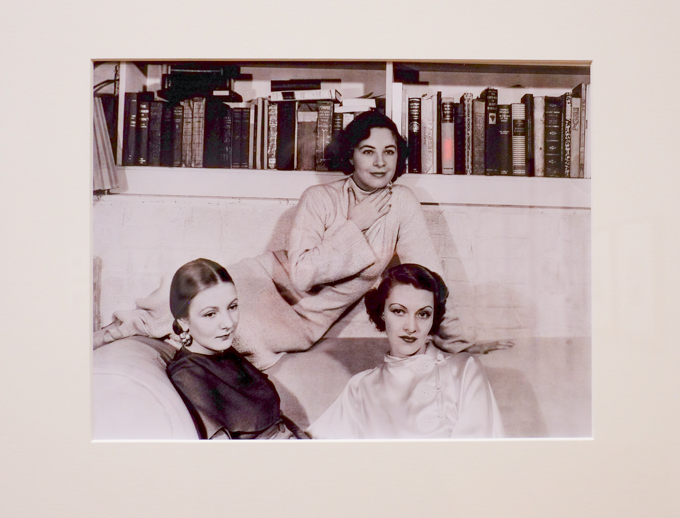
below: Three actresses and models in a photo taken in New York in 1933.  One woman is unidentified and the other two are Dorothy Hale  (1905-1938) and Kendall Lee Glaenzer (1903-1978)

Lee Miller photo of three women, two sitting on a couch and the other standing behind it. Book case behind couch

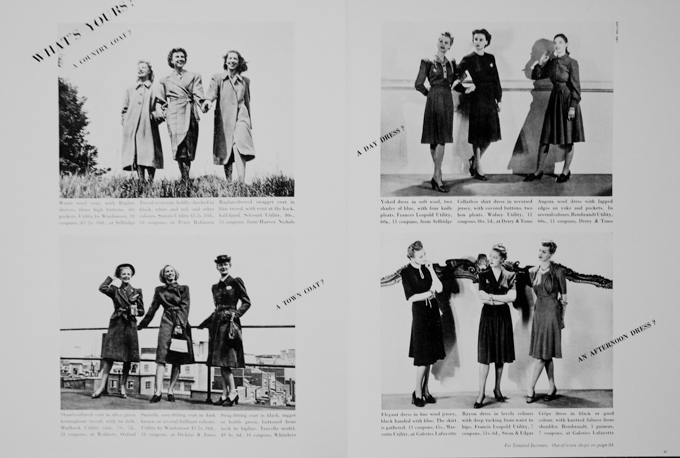
below: “What’s Yours?” a double page spread in Vogue magazine with coats on the left and dresses on the right. Country coats and town coats… day dresses and afternoon dresses from a time and place when those details might have been important.

double page spread in Vogue magazine showing three women in each of four photos with different kinds of coats

black and white photo from vogue magazine, young woman holding a tennis racquet. Part of a tennis net is on the wall behind her

below: From an article, Six for Dinner”.  The six refers to six long, simple yet stylish dresses for the well dressed woman of the time.

three back and white photos on a green gallery wall, by Lee Miller

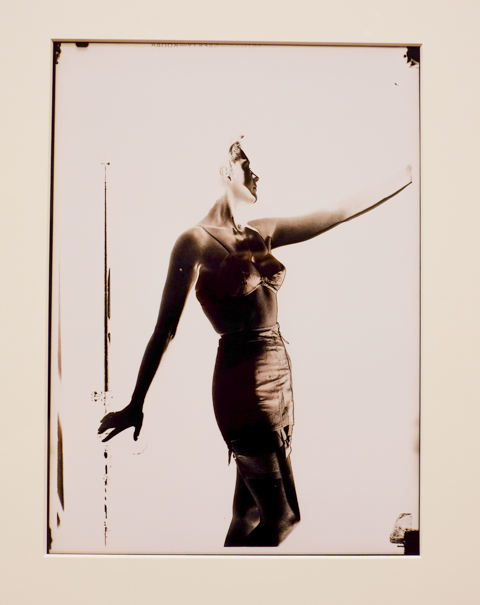
below: Advertising ‘intimate apparel’ but staying modest and discrete (r very coy?)  The age of the girdle! (even though this model doesn’t really need one!) – so glad that that phase has passed (sigh of relief).

black and white lee miller photo for vogue magazine, showing corset, or under garments for women, bra and girdle, slip, hard to tell because details are hidden

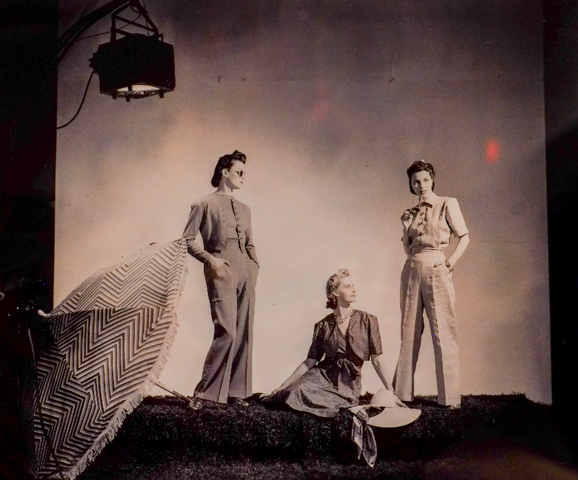
old black and white photo by Lee Miller, of three women, fashion photography, 2 standing are wearing slacks, woman witting on ground is in a dress

below: From 1945, chronicling the liberation of Europe by the Allied troops.

two photos, on left is a cover of vogue magazine from 1945, a woman in a head scarf, with bright red lipstick, on right a large photo of a recently liberated part of Europe and an article describing the liberation

below: November 1944, Paris.  “Ah Madame! Merci!  The article is written in French and it is a thank you to all the women who played a role in winning the war.  Like her fashion work, her focus during the war years was also on women and how the war affected them and their place in the world.

two photos on a gallery wall, on left is woman on a motorbike by the eiffel tower in Paris and on the right are a group of black and white photos of women working, article is thanking women for their role in winning world war 2

Her documentation of WW2 and its aftermath was extensive.  She was one of the first photographers into Hitler’s residence (and there is a photo of her in his bathtub).  She also documented the liberation of many of the concentration camps.  After the war, she continued working for Vogue, taking pictures of models and celebrities.

two people looking at photos on the wall of an art gallery

Unfortunately, this exhibit ends today, 2nd December.