Almost 200 hundred years ago plans were made for a new park in a very new city.
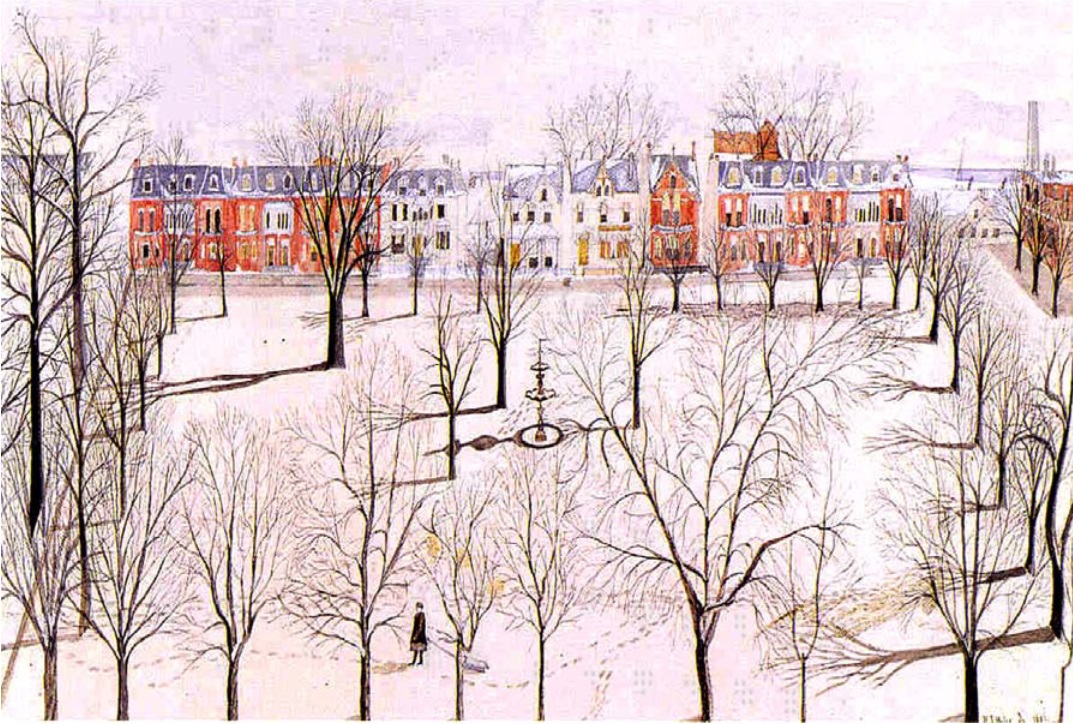
Colorized print, Clarence Park with houses on north side and a fountain in the middle. Image found on a Heritage Assessment document for the park, no credit given there.
The park, named Clarence Park for the Duke of Clarence, was part of a planned community conceived of in the 1830s that included a church, a market, and building lots for houses. The land that it was on was part of a military reserve (i.e. it belonged to the British). In 1860 ownership of the land, already developed as a park, was transferred to the city by means of a Crown grant containing a restrictive covenant to maintain it as a public square.
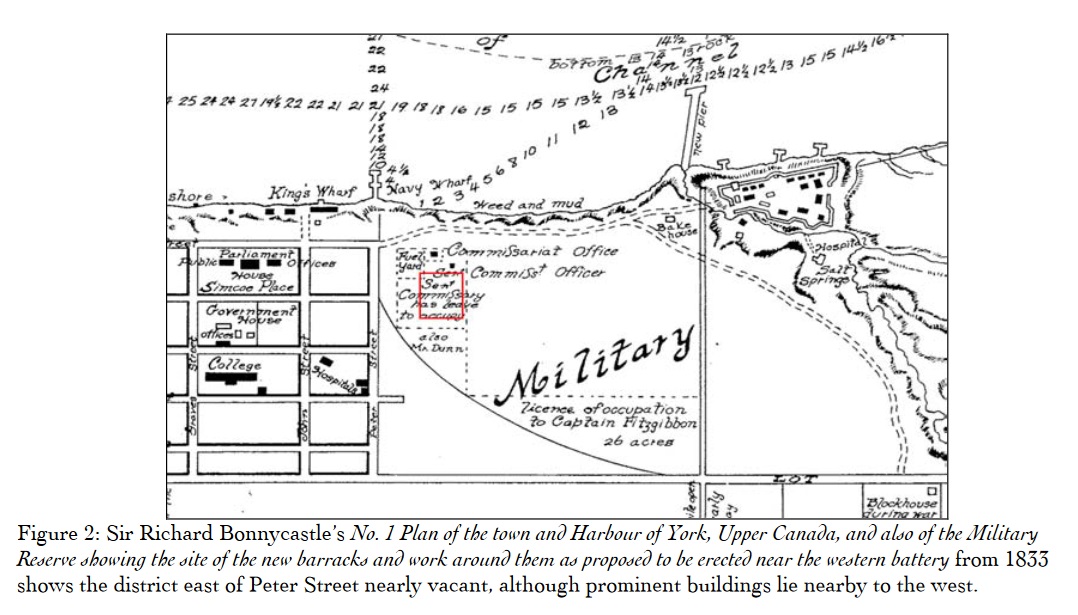
below: A map of the area circa 1833. Lake Ontario to the south is at the top of the map. Fort York, on the right was actually on the waterfront at the time. On the left are some of the original streets – Peter St. and John St. being two of them that are still with us today. The red square on the map is the location of the present day Clarence Park.
below: Clarence Park fountain these days. I have mentioned before that I think that Toronto does a horrible job with fountains but this one probably wins an award for worst maintenance job ever. And you say it’s been this way for at least four years? Is the original fountain (see the painting at top) hiding under here?
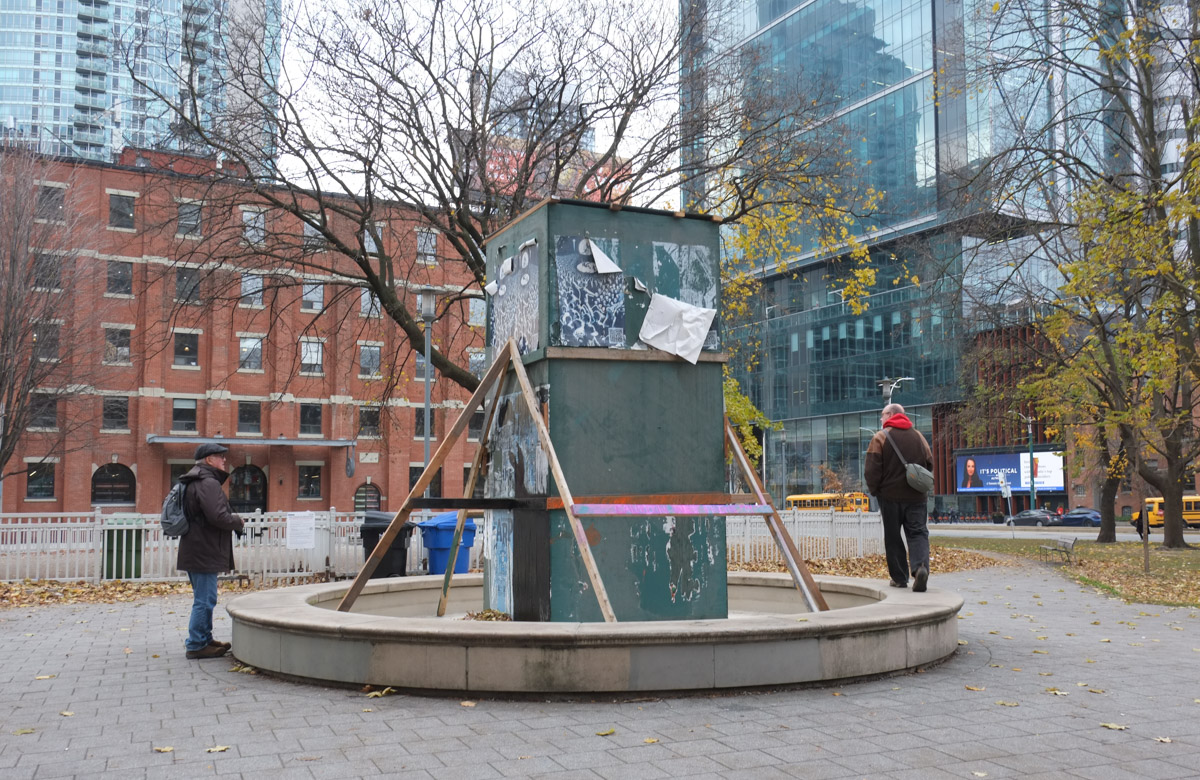
below: So nice of the city to provide more canvas space for graffiti. Public art at its finest!


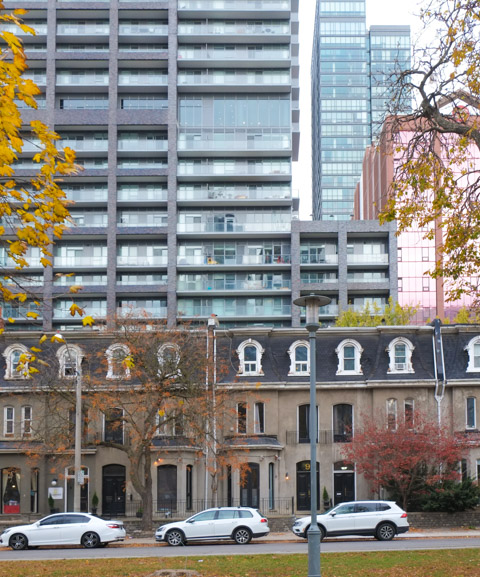
below: Not that long ago, this type of picture was not that common in the city. Now, this layered look is everywhere. The houses of Clarence Square, north side, built 1879 – 1885.
below: Part of the homeless encampment of Clarence Square. Since this picture was taken (mid-November) some of the other encampments in the city have been cleared, specifically Kensington and St. Stephens church on College Street. Yes, we have a housing problem. No, we haven’t got any solutions, or at least none that we can agree on or are prepared to pay for. Are tents in parks a good idea? Probably not. But they are there because it’s an “easy” solution that costs the city nothing.

below: Does anyone recognize this view? There are a view clues that suggest this is just another view of Clarence Park. But when did those towers appear? Turn around and someone alters the landscape while you’re not looking, playing tricks with your memory.

below: Now turn 180 degrees, and the view changes…. sort of. The new LCBO on Spadina that replaces the one at King & Spadina (that building is still standing and still vacant by the way). Also, across the street is The Well that I blogged about previously.

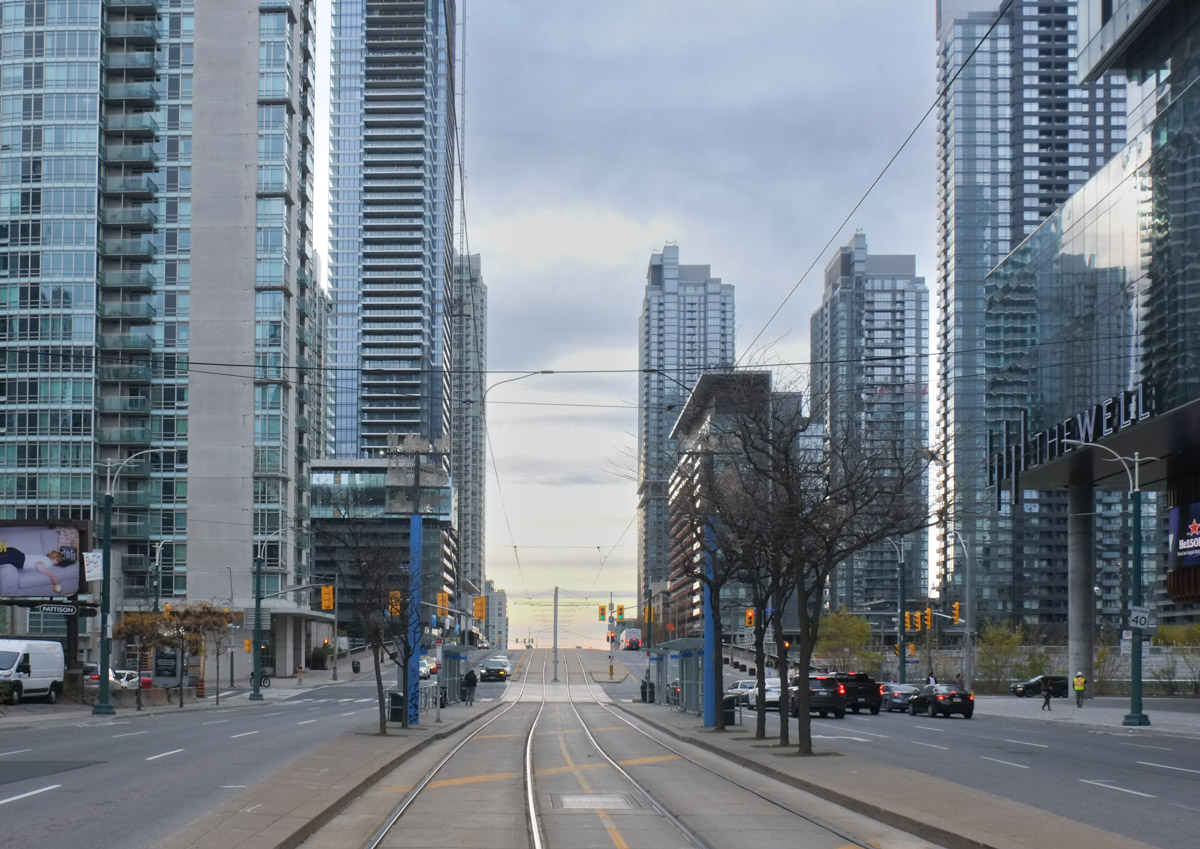
below: Looking south on Spadina at Front Street – I love the way that Spadina seems to disappear into the distance. Into the great beyond.

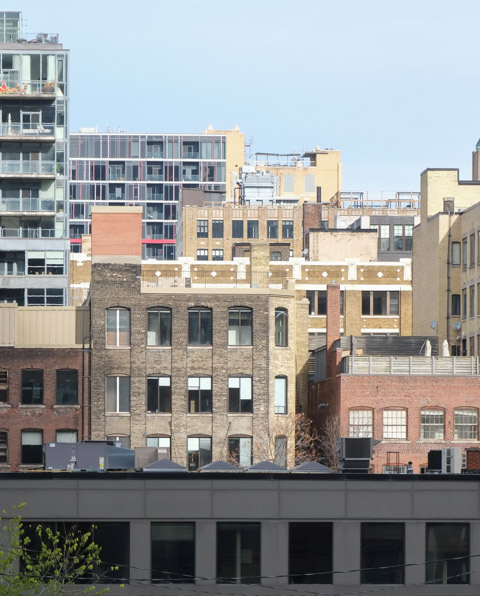
below: If you walk through The Well, at one point this is the view to the north with an interesting jumble of roof lines, window styles, and brick patterns.
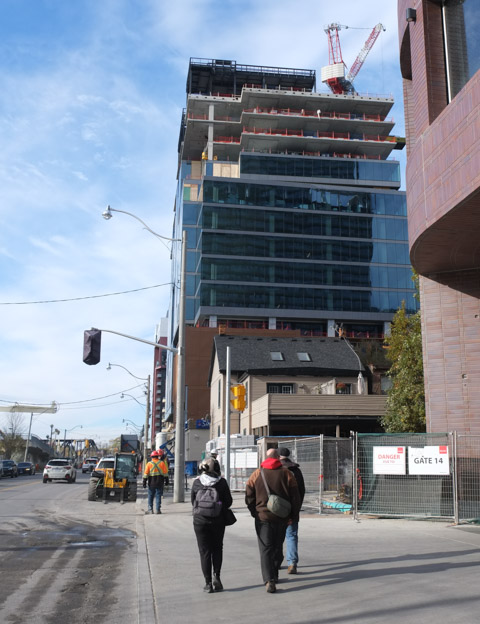
below: Front St., putting the finishing touches on the sidewalk outside The Well development.

below: Front Street, walking west towards Bathurst.
below: “Dance all night till you can’t feel your legs”

below: So many possible captions! Tossing happiness aside … Empty promises of happiness…

below: In the midst of all the new development along Front Street and the railway corridor, Draper Street remains. It is one block of old houses, many of them heritage row houses.
below: Draper Street houses – a smaller version of the houses seen on Clarence Street (see above). They are of a similar vintage with almost identical rooflines and window shapes. The Empire Style.


“DRAPER STREET – Draper Street’s Empire-style cottages were built in 1881 and 1882, while its larger homes were constructed between 1886 and 1889. The street – a Designated Heritage Conservation District – is unusual because its residential character survived the overall industrialization of the King-Spadina neighbourhood in the twentieth century. Draper Street has been a haven for people of many backgrounds, such as Lincoln Alexander, who was born here in 1922 to West Indian parents, and who served as Lieutenant-Governor of Ontario from 1985-1991. The name of the street honours William Henry Draper (1801-1877), a pre-Confederation lawyer and Conservative politician, who was the virtual “Prime Minister” of the United Province of Canada from 1844 to 1847. He subsequently became a judge, eventually being appointed Chief Justice of post-Confederation Ontario in 1869. “
The new condos at The Well loom over a new park (2021), Draper Park. It’s small, the equivalent of two housing lots; numbers 19 and 21 once stood here. The original owner of 19 Draper Street (1881) was George Hickey, a railway manager. It was demolished in 1942 and was replaced by a small factory owned by Farrell Plastics. At that time, a factory would not be out of place as the area was more industrialized. The building was destroyed by fire in 1969.

below: Draper and Front, looking east
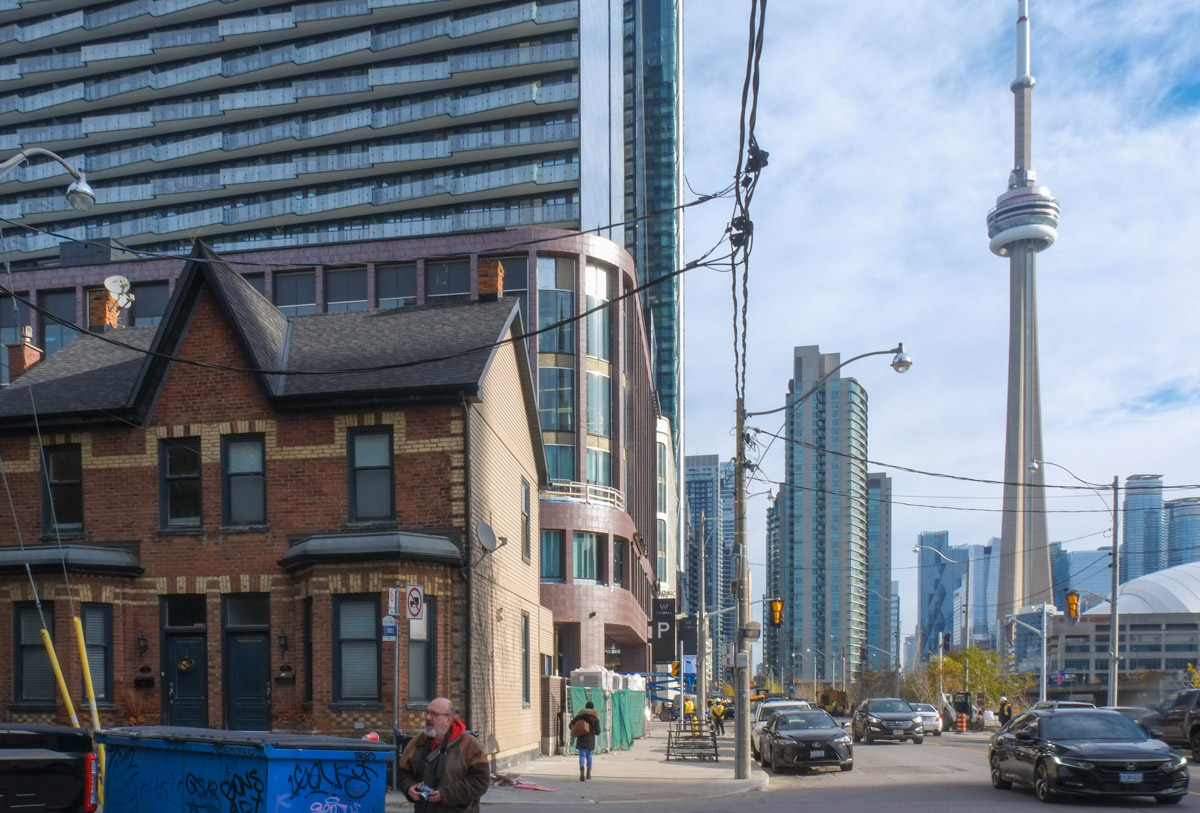
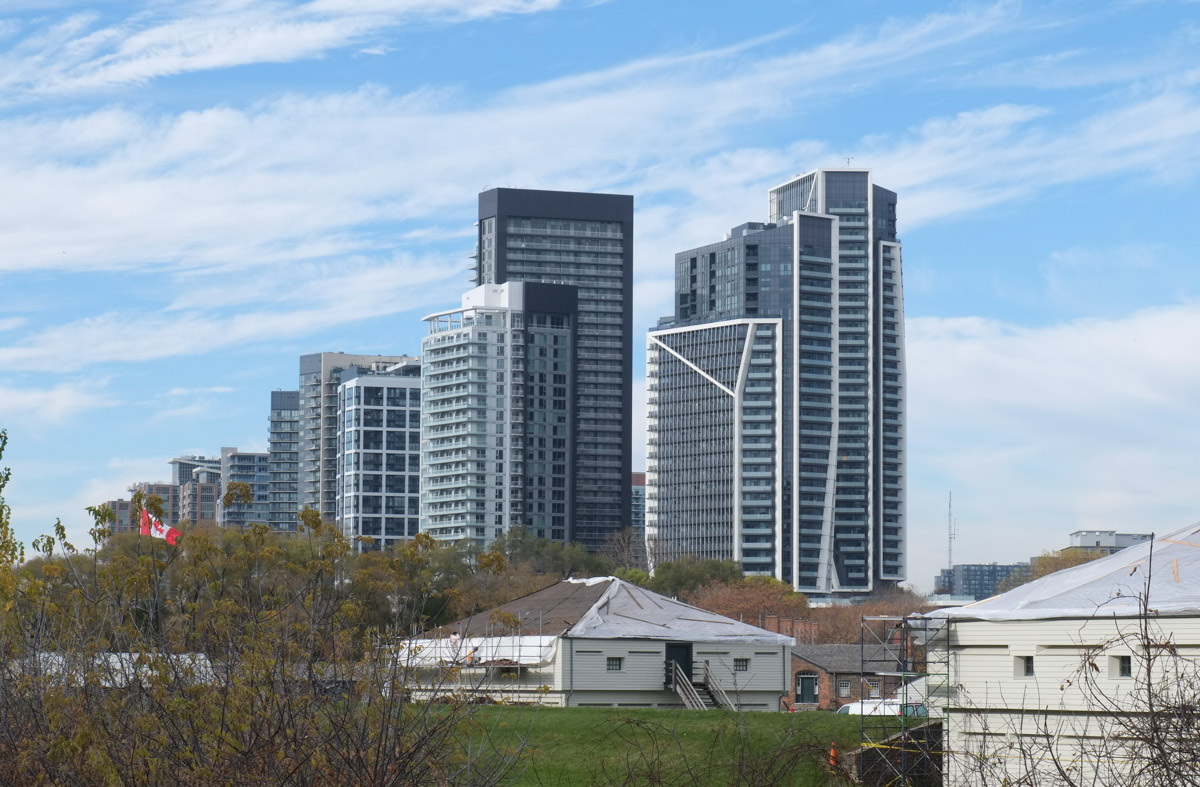
Since I mentioned the fact that this land was once owned by the British military, and the fact that Fort York was once “in the middle of nowhere”, I’d like to add a couple more photos that show much development has occurred in the area.
below: New development along Front Street. The bridge is at Bathurst. Draper Street is just outside the photo on the righthand side. All the railway corridor and the lands to the south were not there in 1833 when Sir. Richard Bonnycastle drew his map – but that’s a whole other story for another day!

below: View from Bathurst – the white buildings here are part of Fort York while the new condos are just beyond, closer to Strachan Ave.

 as I walk Toronto
Everywhere there are so many new skyscrapers, most of them uninspired, it’s like a cancer attacking every quarter of the city rather than creating a new district outside with good means of communication. There’s a planning failure here!
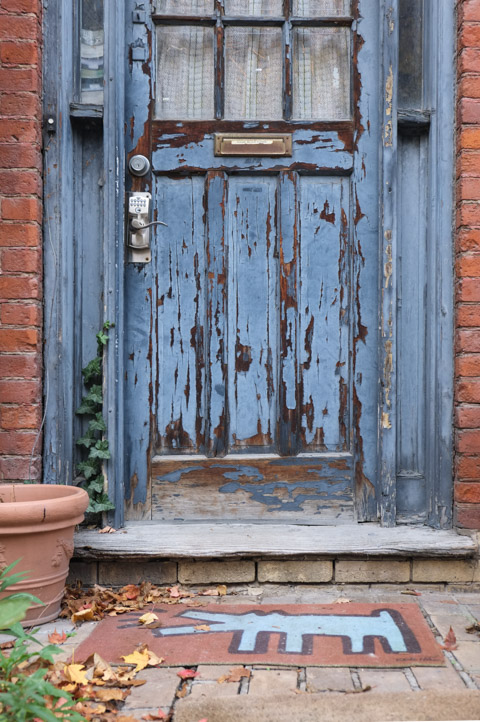
Shocked by the park neglect; delighted by the juxtaposition of peeling blue doorway (on Clarence?) with its snappy Keith Haring dog doormat
A very nice walk. I believe Clarence Square was supposed to be the centre of the New Town, when Toronto shifted west away from the original town. And Draper Street is so picturesque.