


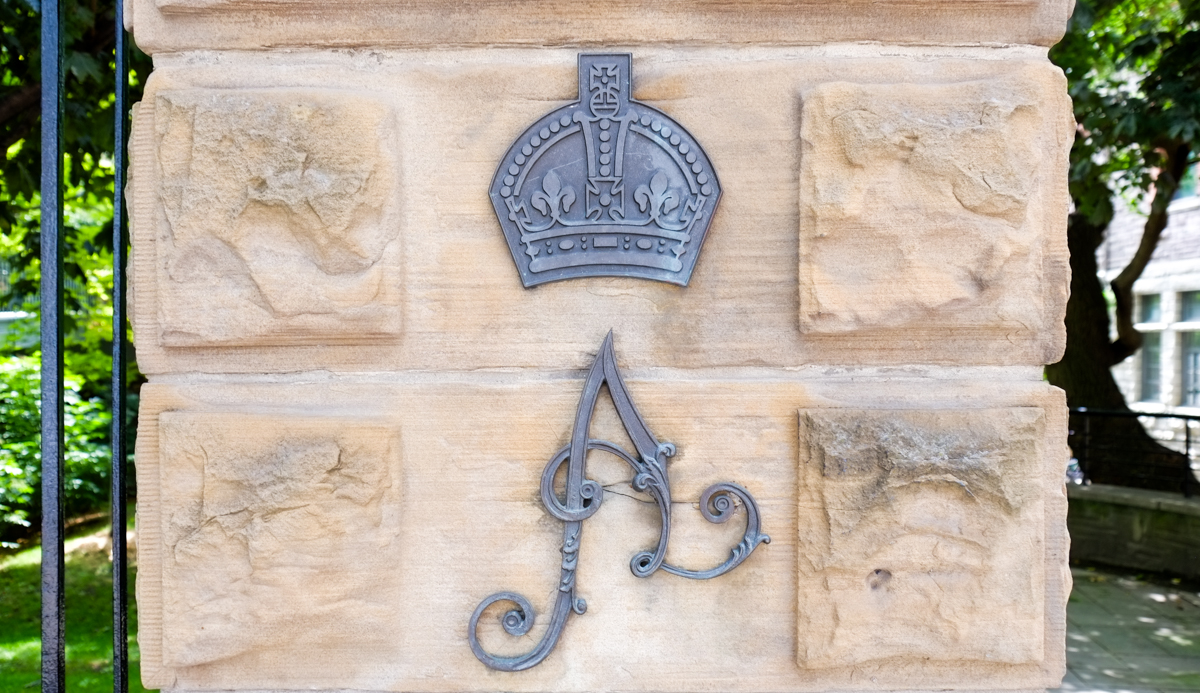
In this case A is a very fancy letter and A is for Alexandra – as in Queen Alexandra. This is a post on one side of the Queen Alexandra Gateway at the north end (at Bloor Street) of Philosophers Walk. A little bit of history – This gate was built by the Imperial Order Daughters of the Empire to commemorate the visit of the Duke and Duchess of Cornwall in 1901. Originally it stood slightly to the east, at the north end of Queens Park Drive (at Bloor). The names and relationships of the British monarchy can get confusing! The Duke of Cornwall was also Prince George (who later became King George V). Queen Alexandra was his mother – the wife of King Edward VII
Or maybe A is for Architecture.
below: There is plenty of that as you walk along Philosophers Walk including this juxtaposition of old stone and new glass. The reddish structure was built in 1897 to house the Toronto Conservatory of Music. The glass addition to the now Royal Conservatory of Music opened in 2009.
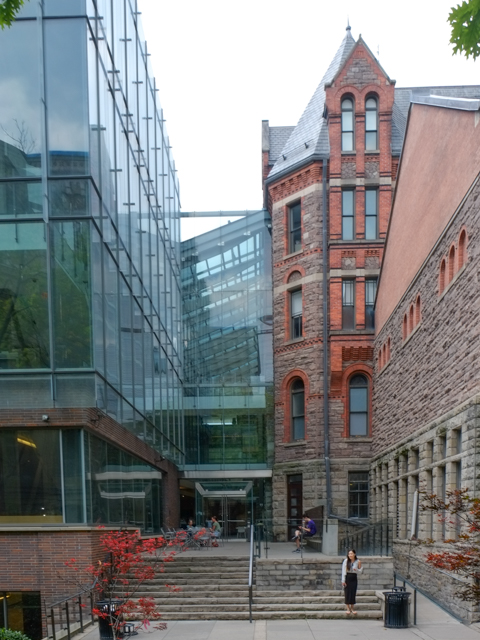
below: The aged copper at the top of Trinity College (built 1920s) is another example of the architectural details to be seen here.

… and now A is for Academia as we find ourselves surrounded by the University of Toronto.
below: Front of Trinity College

below: Ivy covered walls.

below: Hart House – financed by Vincent Massey and named after his father, Hart Massey (of Massey Ferguson). Vincent Massey was the 18th Governor General of Canada (Feb 1852- Dec 1859).

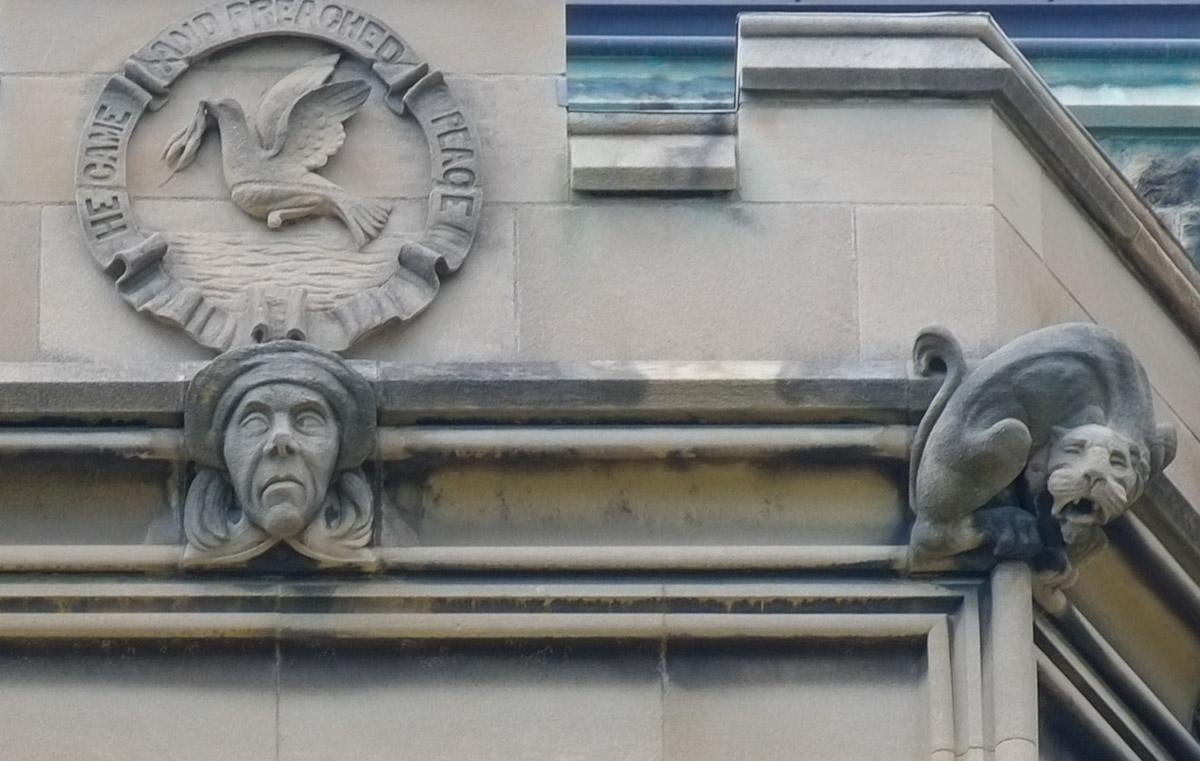
below: “He came and preached peace. ” Faces and felines above a Knox College window.
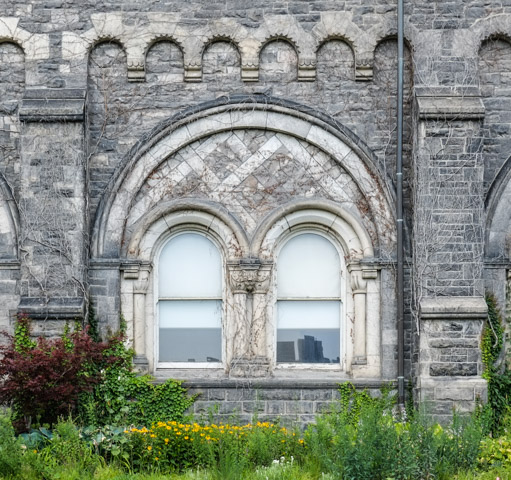
below: Impressive stonework around a University College door.

below: University College window.
below: Purple prairie clover in front of University College (and no, sadly it doesn’t start with A).


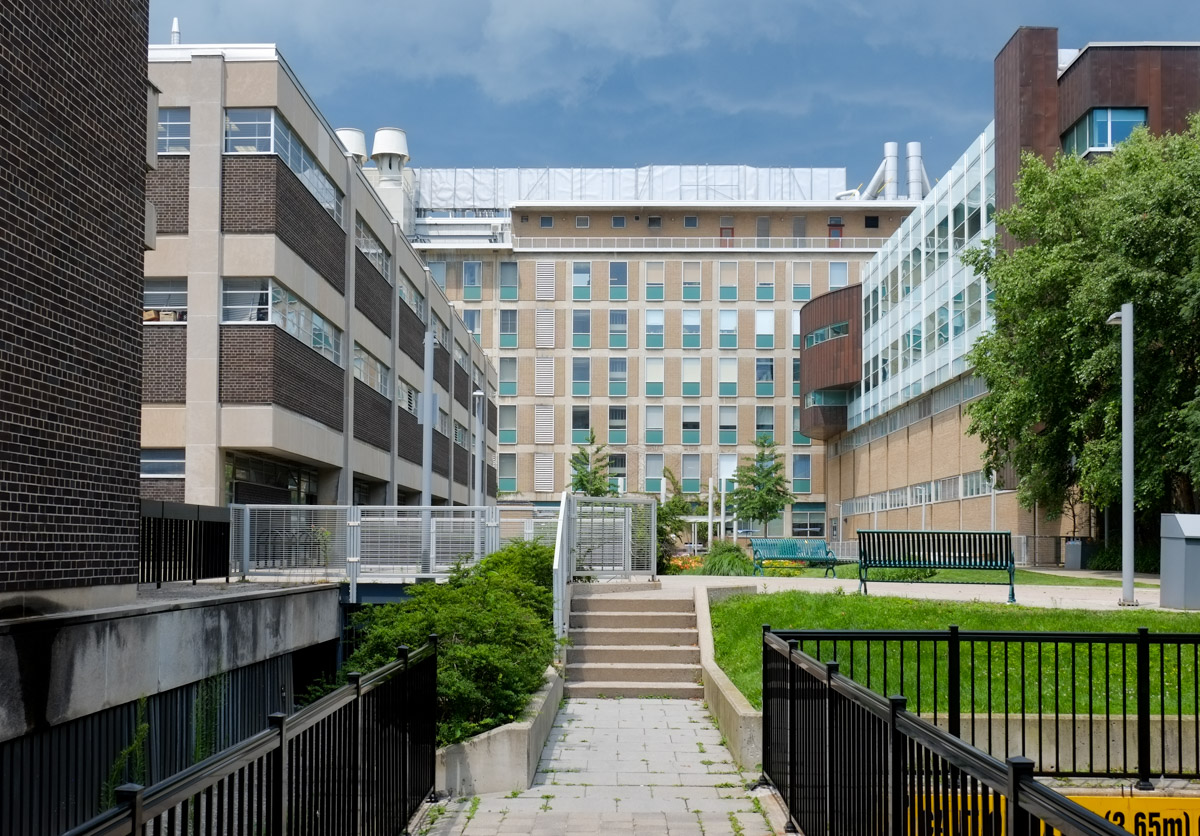
below: Not all University buildings are old and built of stone. This is the McLennan Physical Laboratories building (originally from 1967 but with many updates).
A is for Art.
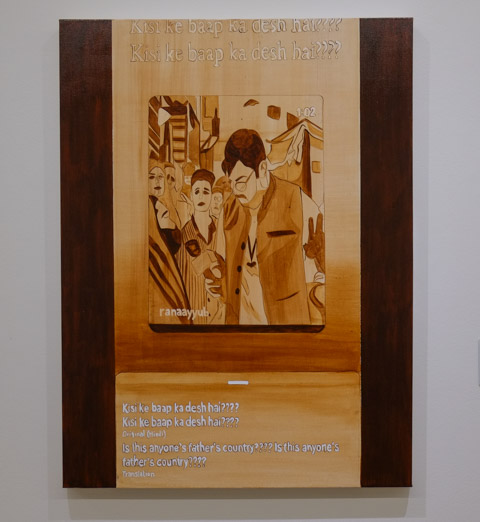
When I walked this route, the Art Museum at the University of Toronto (in University College) was showing a few artists including the graduating projects of the 2023 Master of Visual Studies graduate students Durga Rajah, Nimisha Bhanot, Omolola Ajao, and Sarah Zanchetta. That exhibited end on the 22nd of July (I am a bit behind in posting). Here is an example – I leave it to you, A the Audience, to decide if it is A for Art in this case.
below: Title: “@ranaayyub Proud of the Muslim women in India who are sticking their neck out and speaking against the tyranny of the Indian state, (Rana Ayyub)” 2023 by Nimisha Bhanot. The image is taken from a short video posted on Instagram in April 2022 by Rana Ayyub who is a journalist at the Washington Post (born in Mumbai India).
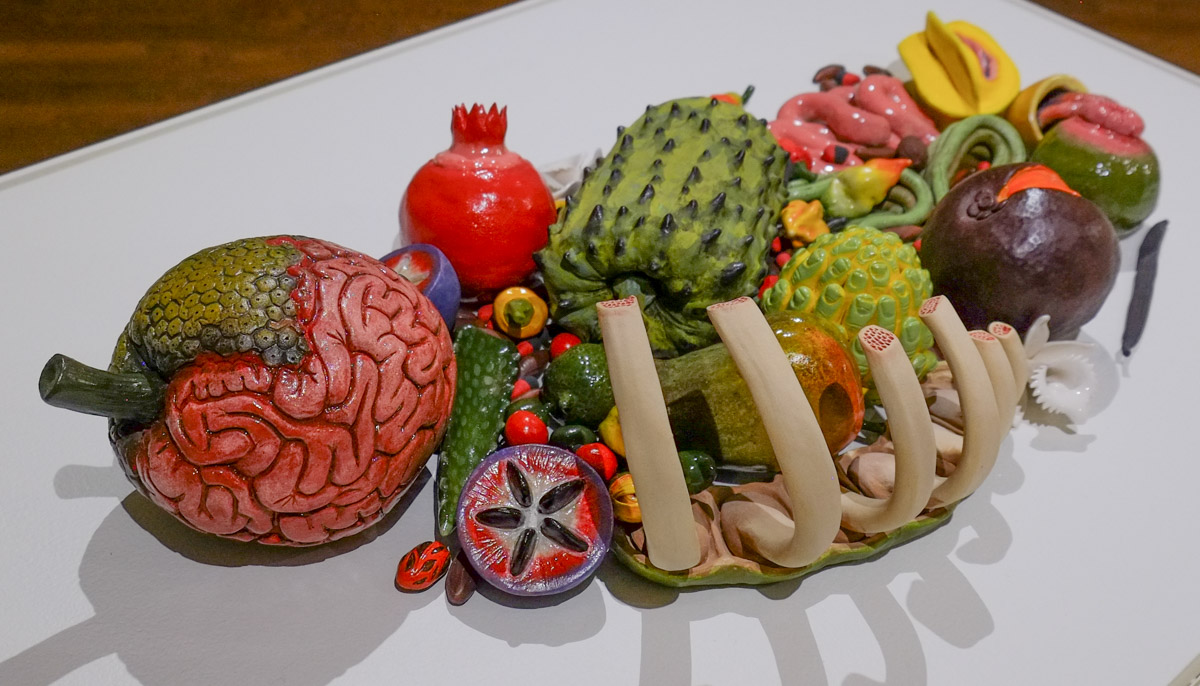
A is for Anatomy. But yikes, the anatomy is not where you’d expect it to be!
below: Part of “Consuming Caribbean” series by Thomas Haskell.
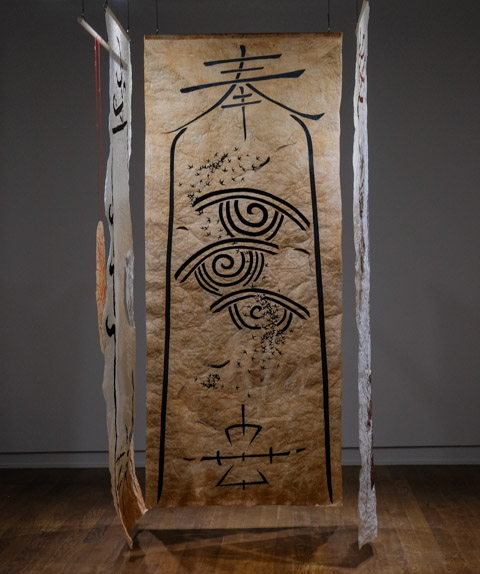
A is for Artefacts although I may be grasping at straws here…. (Art -efacts perchance?)… “Resurgent Artefacts” is the name of another of the installations at the U of T Art Museum. It consists of words written on the wall as well as spoken plus a visual aspect. The words begin with: “this morning, a hole appears in your stomach. you rinse dishes that roll inward. sprinkle flowers which disappear. your heart beat ragged like stems rotting in still water. it is no small devastation. sprung without antecedent or count in. just a slow sink. a mossy bog.”… there is more, 8 feet high. Full text on artist’s instagram page
below: The visual part of Jasmine Gui’s “Resurgent Artefacts”, floor to ceiling designs on Japanese paper. A single picture probably doesn’t do it justice.
A is also for Astronomy.
Or in this case, the Louis B. Stewart Observatory on Hart House Circle. The original building was the Toronto Magnetic and Meteorological Observatory. From Wikipedia: “The original building was constructed in 1840 as part of a worldwide research project … to determine the cause of fluctuations in magnetic declination. Measurements from the Toronto site demonstrated that sunspots were responsible for this effect on Earth’s magnetic field. When this project concluded in 1853, the observatory was greatly expanded by the Canadian government and served as the country’s primary meteorological station and official timekeeper for over fifty years. The observatory is considered the birthplace of Canadian astronomy.”


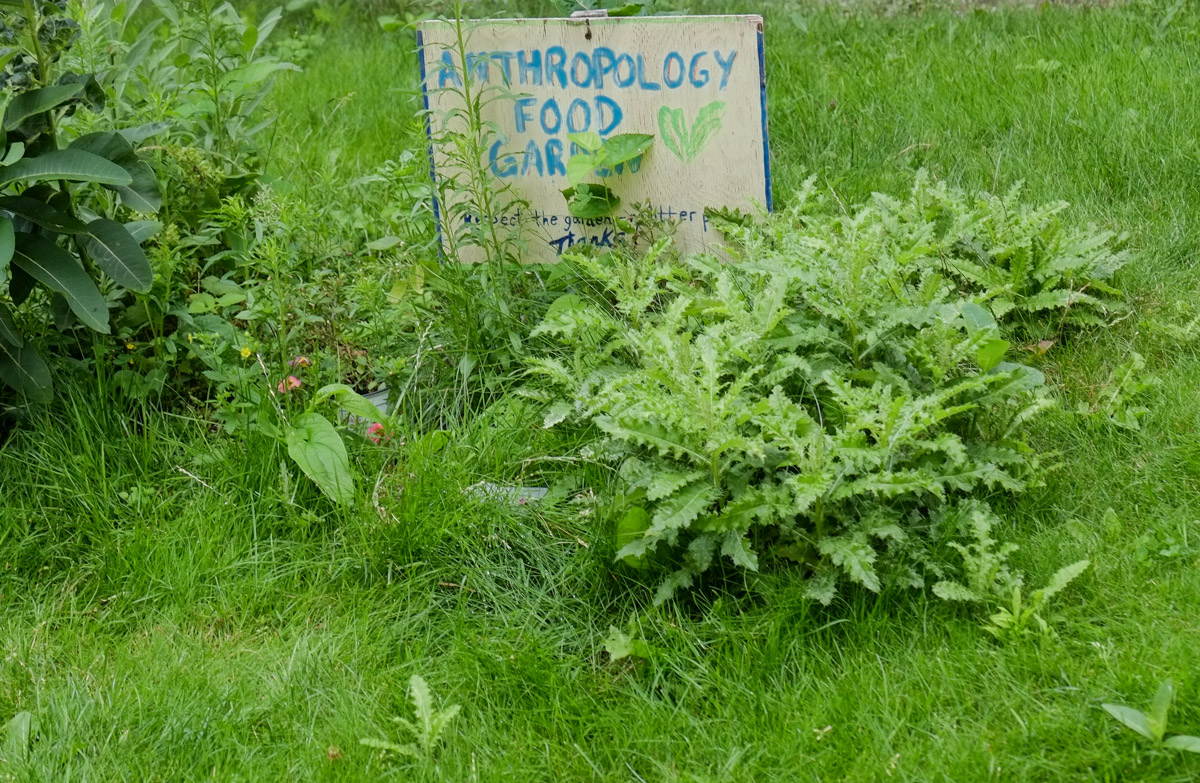
A is for Anthropology. That’s the study of humanity, or what makes humans human. You could say it’s the study of cultures and societies and how they develop or interact. Here someone from the Anthropology Department has planted food? I am not sure what is growing here….
below: Also outside the Anthropology building is this cast-bronze sculpture called ‘Cedars’ (1962) by Walter Yarwood.

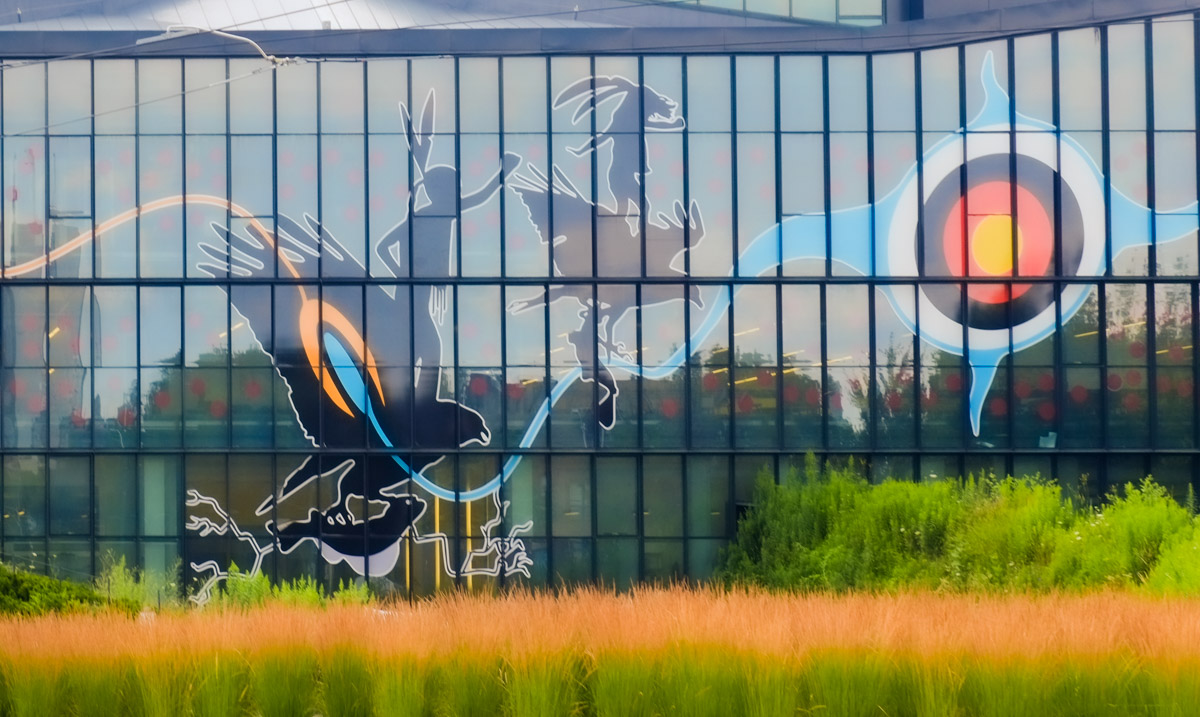
A is for Anishinaabe
It is also our last stop on this wander through part of the University of Toronto. Now we are at Spadina, just north of the Daniels Building/Architecture faculty where this design was painted on the large north window in November 2021 by Que Rock.
Anyone for B?
 as I walk Toronto