


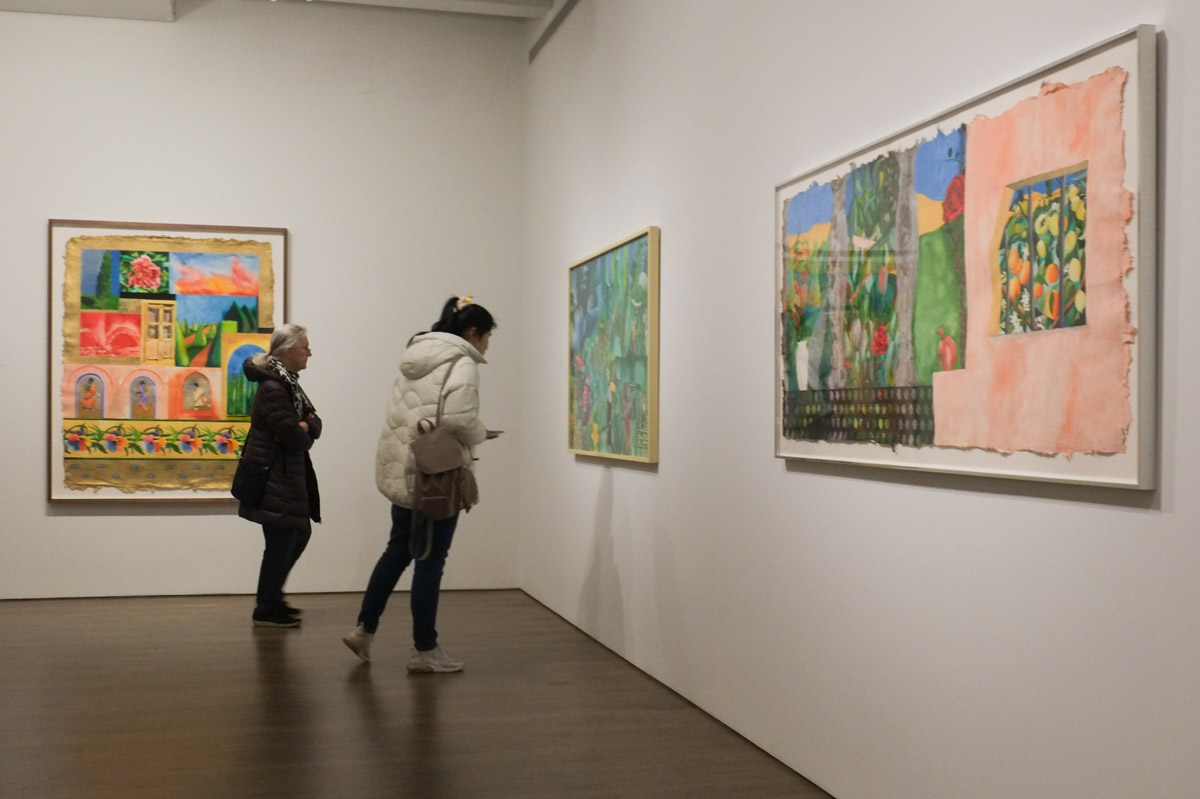
For more than 40 years, Sarindar Dhaliwal has been creating works of art. She was born in Punjab India but grew up in Southall London England. The family moved again when Sarindar was 15, this time to rural Ontario. Her work is colourful – vibrant and full of life. Many of her pieces are being exhibited at the Art Galley of Ontario at the moment. This is a sampling of them.
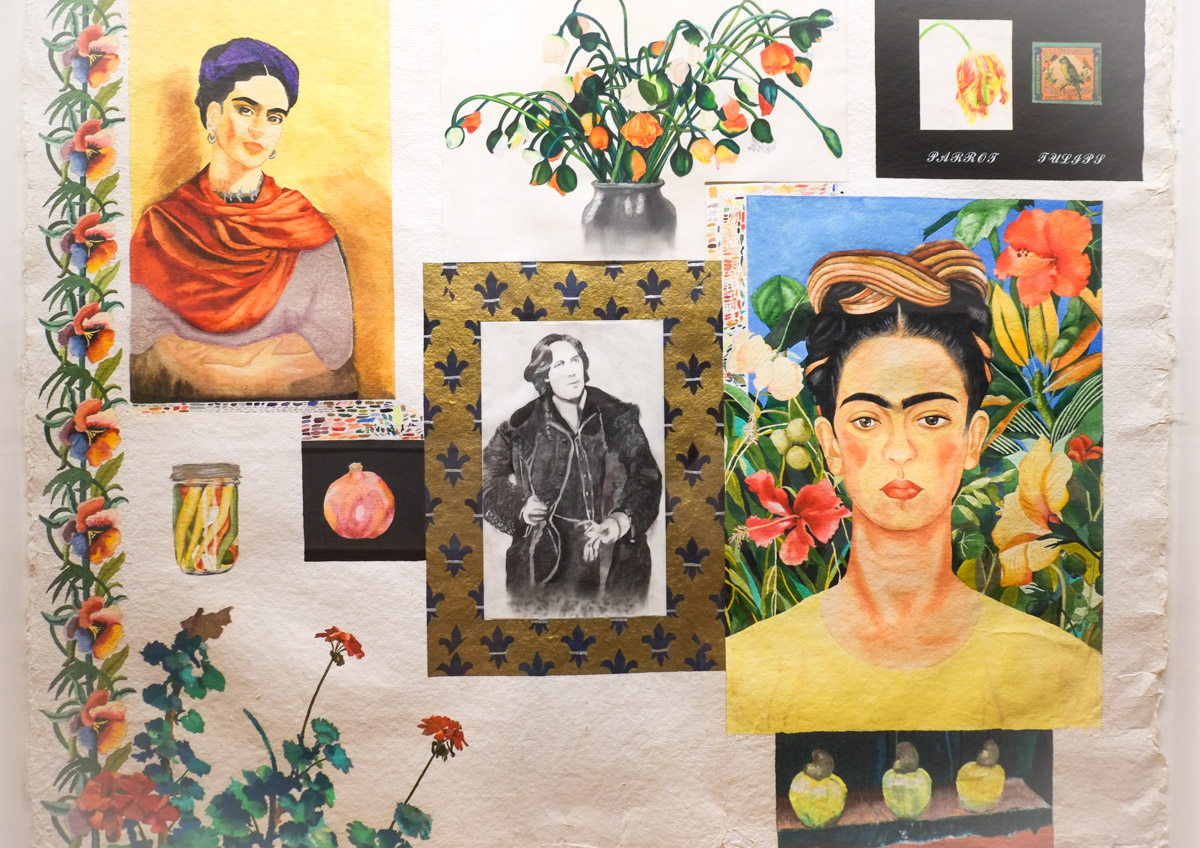
below: “Oscar and the Two Fridas”, 1991. Oscar Wilde and Frida Kahlo are two artists that Dhaliwal admires.
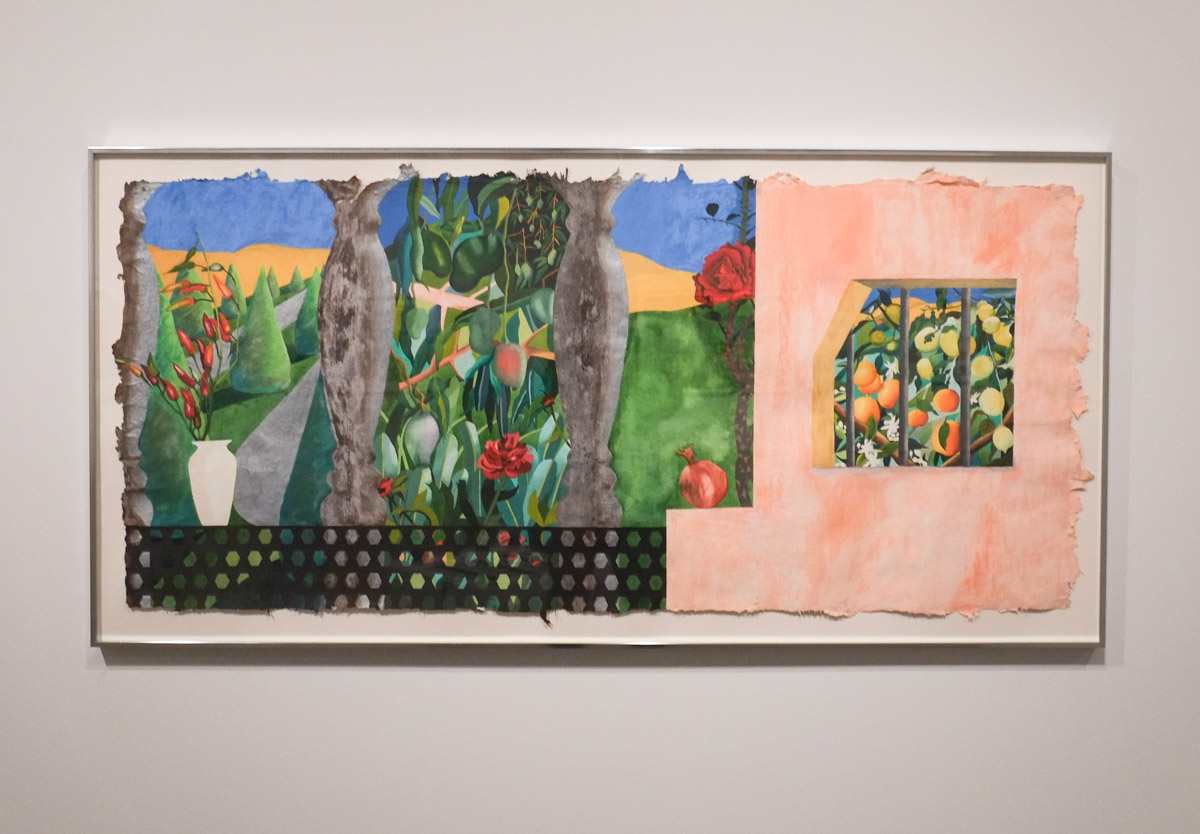
below: The garden outside, and the window through which you can view it… An interesting way to present perspective.
below: A part of “At Badminton” another mixed-media collage-like work on paper; here woman in traditional saris are playing badminton.

below: “When I Grow Up I Want to be a Namer of Paint Colors”. If you look closely, the names don’t always match the colour. There are pinks called ‘powdered baby lemon’ and ‘chalky eggshell’ while some reds are “imperial indigo” and “periwinkle”. A work of imagination – ‘vanilla twilight’! A work that ignores the rules and norms.

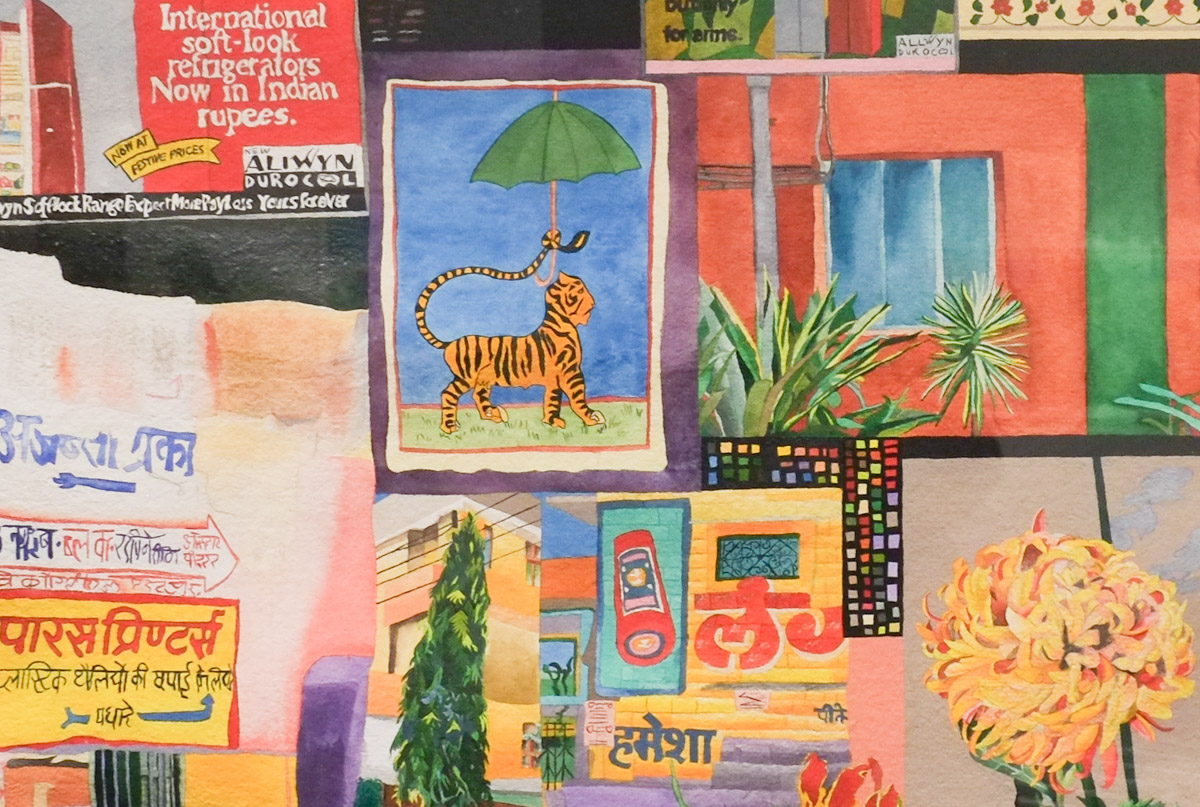
below: “Indian Billboard” 2000.
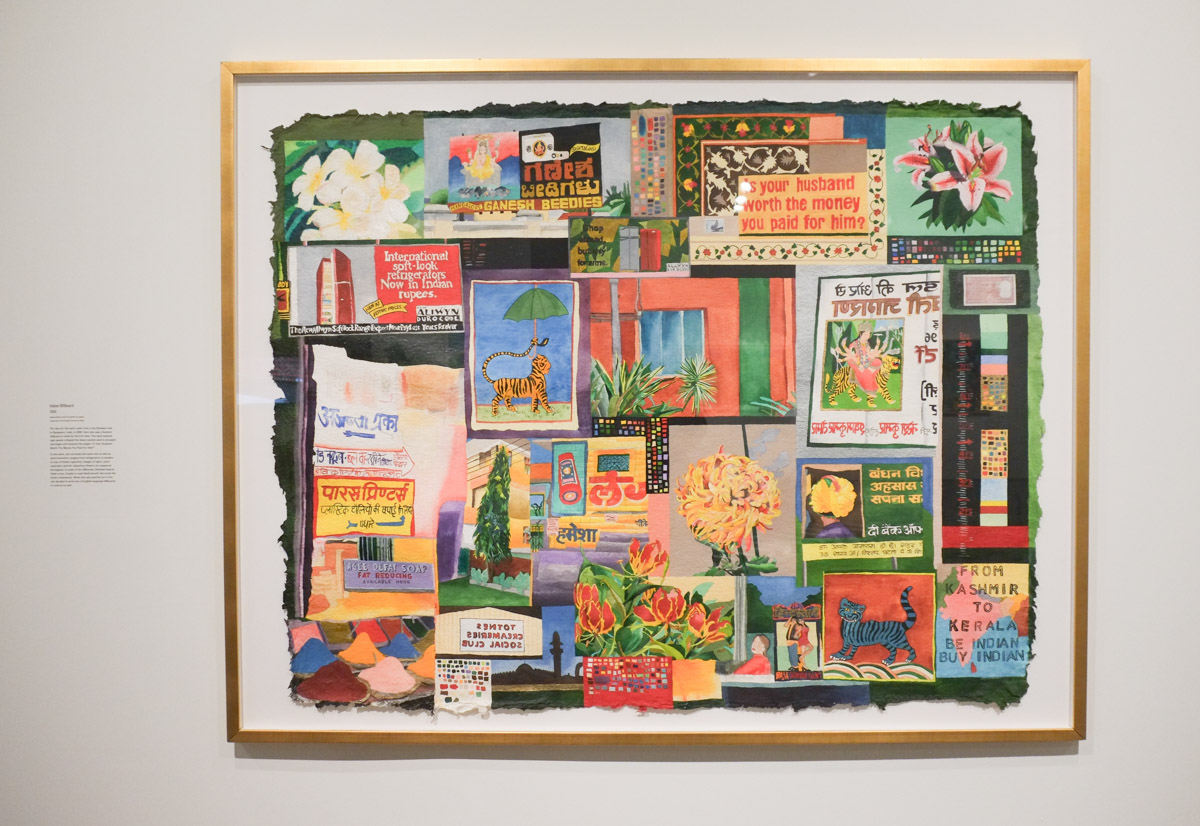
From the words on the wall, “The idea for this work came from a trip Dhaliwal took to Bangalore India in 1996. Here she saw a feminist billboard in India for the first time. The hand-painted sign openly critiqued the dowry system used in arranged marriages and featured the slogan “Is Your Husband Worth the Money You Paid For Him?”.
“In this work, she recreates the same text a well as advertisements ranging from the refrigerators to beedies (a type of Indian cigarette). Images of tigers, paint swatches, and her ubiquitous flowers are peppered throughout. In some of the billboards, Dhaliwal depicts Hindi script. Unable to read Hindi herself, she wrote the letters backwards. When this was pointed out to her, she decided to write one of the English language billboards in reverse as well.”
below: Closer view of some of the billboards.

below: Dhaliwal’s work consists of more than these mixed-media ‘collages’. There is video as you can see. There are also large panels that tell a story. This one in English and a second in . The story starts with a sick child whose mother and aunt took her from village to village, “the embroidered cuffs of their baggy pants encrusted with…”.

below: These are some of the women whose photographs were incorporated into a work called “Hey, Hey Paula”. What do they have in common? They were all featured in the Sunday edition of the ‘New York Times’; they were the brides-to-be in the Engagement Announcements section between 1989 and 1992.

below: There were many women! The wall most easily seen in the photo is a grid of 9 x 27 photos, with no duplicated that I can find. That makes 263 women represented on that wall… and that’s only part of the whole.

below: If you pick up the receiver on the red phone you can listen to a recording of the 1963 hit song ‘Hey Paula’ recorded by Ray Hildebrand and Jill Jackson under the name of Paul and Paula.


“…that [art] is a world that can belong to you and in it, you can make your imagination come alive.”
is a quote by Dhaliwal in an interview by the CBC.
This exhibit continues until mid-July 2024
 as I walk Toronto